Shadowy Detroit duo The Fantasy continue to offer up "secret mixes fixes" - high-grade, sonically spectacular re-rubs inspired by the original reel-to-reel re-edit era and the now iconic DJs behind the movement (Ron Hardy, Danny Krivit and Larry Levan included). The Motor City twosome kick off volume 5 in their ongoing series with 'Working Girl', a throbbing, San Francisco style electro disco workout peppered with spacey synth riffs, before turning a Bay Area drum machine workout into a breathless peak-time percussion-fest. Over on the reverse, 'On Fire Warp' is another percussion-laden revision of what sounds like a post-punk era industrial funk gem, while 'Lovefingers' is a break-driven translation of an ancient psychedelic rock workout.
ALERT: BIG 90s ITALIAN RAVE COMP - a lot of very in demand tunes on here.
Navigators
Franco Falsini and the Interactive Test Universe
There are musicians who follow their time.
And then there are those who seem to move along a different trajectory—like navigators crossing sonic eras without ever truly belonging to any one of them. The story of Franco Falsini belongs to the latter. It is a story that begins long before raves, before techno, before the word “electronic” had even become a recognizable musical genre. A story that moves across continents, technologies, and sonic visions, eventually arriving at a small creative laboratory born in Italy in the early 1990s: Interactive Test. This compilation is a fragment of that universe. But as often happens with the hidden histories of music, understanding it requires going back. Far back.
The Beginning: Machines, Tape and Space
In the late 1960s Franco Falsini leaves Italy and moves to the United States. It is not merely a geographical journey—it is also a journey into a new idea of music. At the time, synthesizers are only just emerging from research laboratories. Multitrack tape recorders allow musicians to build entire sonic worlds on their own. Technology is still far from standardized: every studio is almost an experimental workshop. In Virginia, Falsini builds one of his own. Among cables, oscillators, electric guitars and reels of magnetic tape, a kind of music begins to take shape that resembles nothing else being made at the time. It is not simply rock, and it is not yet truly electronic. It moves somewhere in the space between the two. Out of these explorations emerges Sensations' Fix, the project through which Falsini releases a series of albums during the 1970s. Records that seem to come from a parallel dimension: cosmic landscapes, electronically treated guitars, synthesizers drifting like satellites. Many years later those albums would be rediscovered as visionary works. But at the time they were simply the result of relentless curiosity. A curiosity that would never fade.
The City That Never Sleeps
In the 1980s Falsini’s trajectory leads him to New York. The city is a sonic organism in constant transformation. In its clubs and recording studios something entirely new is beginning to take shape: music built from drum machines, sequencers, and samplers, created for the body before the living room. It is the dawn of modern dance culture. Falsini works as a sound engineer, producer and experimenter. From close range he observes electronic music transforming into a global language. Machines become more accessible, computers begin entering studios, and rhythm takes on an increasingly central role. Yet even in this phase Falsini does not simply follow what is happening. He absorbs. Observes. Reimagines. When he eventually returns to Italy, he brings back not only technical experience but also a clear vision: the conviction that electronic music is an open space, a territory still waiting to be explored.
Tuscany, Early 1990s
At the beginning of the 1990s something is happening in Italy as well. In clubs, abandoned industrial warehouses and clandestine parties, a new scene is beginning to form. It is rave culture: a spontaneous movement bringing together DJs, producers and listeners in a collective experience driven by rhythm, technology, and creative freedom. It is within this context that Franco Falsini, together with his brother Riccardo, creates Interactive Test.
The name almost sounds like a scientific experiment. In many ways, it is. Interactive Test does not emerge as a traditional record label. It begins as a laboratory—a place where ideas, sounds and musical identities can be tested and explored. Around the Falsini studio in Tuscany a small constellation of artists and DJs begins to gather, helping to shape the sound of Italy’s emerging electronic scene. Among them are Andrea Giuditta, Francesco Farfa, Gabry Fasano, Roby Mastelloni, Roby J and many others. Each brings a different musical sensibility. But they all share the same intuition: electronic music is not a genre. It is a language.
The Laboratory of Identities
One of the most fascinating aspects of the Interactive Test universe is its constant play with identity. Franco Falsini releases music under several different names: Open Space, Youth Wave, Agent Fylfoyt, Man Myth Magic. These are not simply pseudonyms.
They are different sonic perspectives, as if each project were a window opening onto a parallel musical universe. Open Space, for example, explores more atmospheric and visionary territories. Youth Wave moves between electronic groove and club-oriented rhythms. Other projects experiment with digital psychedelia or hypnotic techno textures. Interactive Test becomes something more than a label. it becomes an ecosystem.
Domestic Machines, Infinite Worlds
Looking back today at the technology used in those productions, one might almost smile. Many tracks were created on Amiga computers, MIDI sequencers and analog synthesizers wired together in home studios—tools that appear modest when compared to today’s digital possibilities.
Yet precisely these limitations became a creative force. Every sound had to be built, shaped and reinvented. Sequences developed slowly, almost like living organisms. The tracks did not always follow traditional dance music structures; often they felt like genuine sonic journeys. Music built from space.
A Hidden Constellation
Many of the records released by Interactive Test in the 1990s remained for years almost invisible objects, circulating quietly among DJs, collectors, and devoted listeners. Yet it is precisely this underground existence that helped preserve them. Listening again today, one perceives something rare: the feeling of music that does not fully belong to its own time. Music suspended between different eras. Perhaps because it comes from a vision that both precedes and transcends trends.
Continuing the Journey
Looking at Franco Falsini’s entire path—from the electronic psychedelia of Sensations’ Fix to the rave culture of the 1990s—a surprisingly coherent line emerges.
A line defined by exploration.
Each project, each pseudonym, each record appears as a new route within the same great sonic voyage.
Interactive Test was one of its stations.
A laboratory.
A community.
A creative platform.
This compilation gathers some of its traces.
Not as a simple archive of the past, but as a map of a musical territory that continues to expand even today.
Googling “paradise house”, the first results to pop up are an endless list of European b&b’s with whitewashed lime façades, all of them promising “…an unmatched travel experience a few steps from the sea”. Next, a little further down, are the institutional websites of a few select semi-luxury retirement homes (no photos shown, but lots of stock images of smiling nurses with reassuring looks). To find the “paradise house” we’re after, we have to scroll even further down. Much further down.
It feels like yesterday, and at the same time it seems like a million years ago. The Eighties had just ended, and it was still unclear what to expect from the Nineties. Mobile phones that were not the size of a briefcase and did not cost as much as a car? A frightening economic crisis? The guitar-rock revival?! Certainly, the best place to observe that moment of transition was the dancefloor. Truly epochal transformations were happening there. From America, within a short distance one from the other, two revolutionary new musical styles had arrived: the first one sounded a bit like an “on a budget” version of the best Seventies disco-music – Philly sound made with a set of piano-bar keyboards! – the other was even more sparse, futuristic and extraterrestrial. It was a music with a quite distinct “physical” component, which at the same time, to be fully grasped, seemed to call for the knotty theories of certain French post-modern philosophers: Gilles Deleuze, Félix Guattari, Paul Virilio... Both those genres – we would learn shortly after – were born in the black communities of Chicago and Detroit, although listening to those vinyl 12” (often wrapped in generic white covers, and with little indication in the label) you could not easily guess whether behind them there was a black boy from somewhere in the Usa, or a girl from Berlin, or a pale kid from a Cornish coastal town.
Quickly, similar sounds began to show up from all corners of Europe. A thousand variations of the same intuition: leaner, less lean, happier, slightly less intoxicated, more broken, slower, faster, much faster... Boom! From the dancefloors – the London ones at least, whose chronicles we eagerly read every month in the pages of The Face and i-D – came tales of a new generation of clubbers who had completely stopped “dressing up” to go dancing; of hot tempered hooligans bursting into tears and hugging everyone under the strobe lights as the notes of Strings of Life rose up through the fumes of dry ice (certain “smiling” pills were also involved, sure). At this point, however, we must move on to Switzerland.
In Switzerland, in the quiet and diligent town of Lugano, between the 1980s and 1990s there was a club called “Morandi”. Its hot night was on Wednesdays, when the audience also came from Milan, Como, Varese and Zurich. Legend goes that, one night, none less than Prince and Sheila E were spotted hiding among the sofas, on a day-off of the Italian dates of the Nude Tour… The Wednesday resident and superstar was an Italian dj with an exotic name: Don Carlos. The soundtrack he devised was a mixture of Chicago, Detroit, the most progressive R&B and certain forgotten classics of old disco music: practically, what the Paradise Garage in New York might have sounded like had it not closed in 1987. In between, Don Carlos also managed to squeeze in some tracks he had worked on in his studio on Lago Maggiore. One in particular: a track that was rather slow compared to the BPM in fashion at the time, but which was a perfect bridge between house and R&B. The title was Alone: Don Carlos would explain years later that it had to be intended both in the English meaning of “by itself” and like the Italian word meaning “halo”. That wasn’t the only double entendre about the song, anyway. Its own very deep nature was, indeed, double. On the one hand, Alone was built around an angelic keyboard pattern and a romantic piano riff that took you straight to heaven; on the other, it showcased enough electronic squelches (plus a sax part that sounded like it had been dissolved by acid rain) to pigeonhole the tune into the “junk modernity” section, aka the hallmark of all the most innovative sounds of the time: music that sounded like it was hand-crafted from the scraps of glittering overground pop.
No one knows who was the first to call it “paradise house”, nor when it happened. Alternative definitions on the same topic one happened to hear included “ambient house”, “dream house”, “Mediterranean progressive”… but of course none were as good (and alluring) as “paradise house”. What is certain is that such inclination for sounds that were in equal measure angelic and neurotic, romantic and unaffective, quickly became the trademark of the second generation of Italian house. Music that seemed shyly equidistant from all the rhythmic and electronic revolutions that had happened up to that moment (“Music perfectly adept at going nowhere slowly” as noted by English journalist Craig McLean in a legendary field report for Blah Blah Blah magazine). Music that to a inattentive ear might have sounded as anonymous as a snapshot of a random group of passers-by at 10AM in the centre of any major city, but perfectly described the (slow) awakening in the real world after the universal love binge of the so-called Second Summer of Love.
For a brief but unforgettable season, in Italy “paradise house” was the official soundtrack of interminable weekends spent inside the car, darting from one club to another, cutting the peninsula from North to centre, from East to West coast in pursuit of the latest after-hours disco, trading kilometres per hour with beats per minute: practically, a new New Year’s Eve every Friday and Saturday night. This too was no small transformation, as well as a shock for an adult Italy that was encountering for the first time – thanks to its sons and daughters – the wild side of industrial modernity. The clubbers of the so-called “fuoriorario” scene were the balls gone mad in the pinball machine most feared by newspapers, magazines and TV pundits. What they did each and every weekend, apart from going crazy to the sound of the current white labels, was linking distant geographical points and non-places (thank you Marc Augé!) – old dance halls, farmhouses and business centres – transformed for one night into house music heaven. As Marco D’Eramo wrote in his 1995 essay on Chicago, Il maiale e il grattacielo: “Four-wheeled capitalism distorts our age-old image of the city, it allows the suburbs to be connected to each other, whereas before they were connected only by the centre (…) It makes possible a metropolitan area without a metropolis, without a city centre, without downtown. The periphery is no longer a periphery of any centre, but is self-centred”.
“Paradise house” perfectly understood all of this and turned it into a sort of cyber-blues that didn’t even need words, and unexpectedly brought back a drop of melancholic (post?)-humanity within a world that by then – as we would wholly realise in the decades to come – was fully inhuman and heartless. A world where we were all alone, and surrounded by a sinister yellowish halo, like a neon at the end of its life cycle. But, for one night at least, happy."
out of Stock
Last delivered 3 months ago available to reorder, subject to availability
Volume 1 of this expertly curated project of 90s Italian House - put together by Don Carlos.
If Paradise was half as nice… by Fabio De Luca.
Googling “paradise house”, the first results to pop up are an endless list of European b&b’s with whitewashed lime façades, all of them promising “…an unmatched travel experience a few steps from the sea”. Next, a little further down, are the institutional websites of a few select semi-luxury retirement homes (no photos shown, but lots of stock images of smiling nurses with reassuring looks). To find the “paradise house” we’re after, we have to scroll even further down. Much further down.
It feels like yesterday, and at the same time it seems like a million years ago. The Eighties had just ended, and it was still unclear what to expect from the Nineties. Mobile phones that were not the size of a briefcase and did not cost as much as a car? A frightening economic crisis? The guitar-rock revival?! Certainly, the best place to observe that moment of transition was the dancefloor. Truly epochal transformations were happening there. From America, within a short distance one from the other, two revolutionary new musical styles had arrived: the first one sounded a bit like an “on a budget” version of the best Seventies disco-music – Philly sound made with a set of piano-bar keyboards! – the other was even more sparse, futuristic and extraterrestrial. It was a music with a quite distinct “physical” component, which at the same time, to be fully grasped, seemed to call for the knotty theories of certain French post-modern philosophers: Gilles Deleuze, Félix Guattari, Paul Virilio... Both those genres – we would learn shortly after – were born in the black communities of Chicago and Detroit, although listening to those vinyl 12” (often wrapped in generic white covers, and with little indication in the label) you could not easily guess whether behind them there was a black boy from somewhere in the Usa, or a girl from Berlin, or a pale kid from a Cornish coastal town.
Quickly, similar sounds began to show up from all corners of Europe. A thousand variations of the same intuition: leaner, less lean, happier, slightly less intoxicated, more broken, slower, faster, much faster... Boom! From the dancefloors – the London ones at least, whose chronicles we eagerly read every month in the pages of The Face and i-D – came tales of a new generation of clubbers who had completely stopped “dressing up” to go dancing; of hot tempered hooligans bursting into tears and hugging everyone under the strobe lights as the notes of Strings of Life rose up through the fumes of dry ice (certain “smiling” pills were also involved, sure). At this point, however, we must move on to Switzerland.
In Switzerland, in the quiet and diligent town of Lugano, between the 1980s and 1990s there was a club called “Morandi”. Its hot night was on Wednesdays, when the audience also came from Milan, Como, Varese and Zurich. Legend goes that, one night, none less than Prince and Sheila E were spotted hiding among the sofas, on a day-off of the Italian dates of the Nude Tour… The Wednesday resident and superstar was an Italian dj with an exotic name: Don Carlos. The soundtrack he devised was a mixture of Chicago, Detroit, the most progressive R&B and certain forgotten classics of old disco music: practically, what the Paradise Garage in New York might have sounded like had it not closed in 1987. In between, Don Carlos also managed to squeeze in some tracks he had worked on in his studio on Lago Maggiore. One in particular: a track that was rather slow compared to the BPM in fashion at the time, but which was a perfect bridge between house and R&B. The title was Alone: Don Carlos would explain years later that it had to be intended both in the English meaning of “by itself” and like the Italian word meaning “halo”. That wasn’t the only double entendre about the song, anyway. Its own very deep nature was, indeed, double. On the one hand, Alone was built around an angelic keyboard pattern and a romantic piano riff that took you straight to heaven; on the other, it showcased enough electronic squelches (plus a sax part that sounded like it had been dissolved by acid rain) to pigeonhole the tune into the “junk modernity” section, aka the hallmark of all the most innovative sounds of the time: music that sounded like it was hand-crafted from the scraps of glittering overground pop.
No one knows who was the first to call it “paradise house”, nor when it happened. Alternative definitions on the same topic one happened to hear included “ambient house”, “dream house”, “Mediterranean progressive”… but of course none were as good (and alluring) as “paradise house”. What is certain is that such inclination for sounds that were in equal measure angelic and neurotic, romantic and unaffective, quickly became the trademark of the second generation of Italian house. Music that seemed shyly equidistant from all the rhythmic and electronic revolutions that had happened up to that moment (“Music perfectly adept at going nowhere slowly” as noted by English journalist Craig McLean in a legendary field report for Blah Blah Blah magazine). Music that to a inattentive ear might have sounded as anonymous as a snapshot of a random group of passers-by at 10AM in the centre of any major city, but perfectly described the (slow) awakening in the real world after the universal love binge of the so-called Second Summer of Love.
For a brief but unforgettable season, in Italy “paradise house” was the official soundtrack of interminable weekends spent inside the car, darting from one club to another, cutting the peninsula from North to centre, from East to West coast in pursuit of the latest after-hours disco, trading kilometres per hour with beats per minute: practically, a new New Year’s Eve every Friday and Saturday night. This too was no small transformation, as well as a shock for an adult Italy that was encountering for the first time – thanks to its sons and daughters – the wild side of industrial modernity. The clubbers of the so-called “fuoriorario” scene were the balls gone mad in the pinball machine most feared by newspapers, magazines and TV pundits. What they did each and every weekend, apart from going crazy to the sound of the current white labels, was linking distant geographical points and non-places (thank you Marc Augé!) – old dance halls, farmhouses and business centres – transformed for one night into house music heaven. As Marco D’Eramo wrote in his 1995 essay on Chicago, Il maiale e il grattacielo: “Four-wheeled capitalism distorts our age-old image of the city, it allows the suburbs to be connected to each other, whereas before they were connected only by the centre (…) It makes possible a metropolitan area without a metropolis, without a city centre, without downtown. The periphery is no longer a periphery of any centre, but is self-centred”.
“Paradise house” perfectly understood all of this and turned it into a sort of cyber-blues that didn’t even need words, and unexpectedly brought back a drop of melancholic (post?)-humanity within a world that by then – as we would wholly realise in the decades to come – was fully inhuman and heartless. A world where we were all alone, and surrounded by a sinister yellowish halo, like a neon at the end of its life cycle. But, for one night at least, happy.
out of Stock
Last delivered 81 days ago available to reorder, subject to availability
PURE GARAGE RETURNS WITH A CAREFULLY CURATED SELECTION OF COLLECTIBLE CLASSICS.
Pure Garage, the best-selling UKG compilation of all time, returns with a fresh stack of high value collectible classics on DJ friendly vinyl.
With a host of gold & platinum selling compilation albums under it’s belt, plus countless sold out events across the UK, Pure Garage is known and trusted by both hard-nosed purists & the casual listener.
This latest foray coincides with an incredible resurgence in interest for the UK Garage sound, bringing together 8 high collectible infectiously funky cuts, spread across a DJ Friendly 2 slices of vinyl.
Pure Garage Collectible Classics Volume 1 opens with Buggin Me by garage pioneer Zed Bias alongside Al Brown, a groovy bassline, funky beats and a great vocal hook combine perfectly to showcase the mighty Zed Bias at his funky best.
Set It Off, by Chris Mack / Flavour, is a truly collectible record. Originally only available on vinyl as a limited white label press, copies of Set It Off have been trading hands on sites such as Discogs for as much as £130… It’s worth buying this compilation purely to get hold of this track on vinyl!
Another track that is going for big money on reseller sites is Romantic 2001 by DJ Deller. With this minimal 2 step riddim having sold for up to £120. This is definitely one for the collectors.
Funkaholics aka Jeremy Sylvester rounds off the first piece of vinyl on this album with the bass heavy Down 2 Da Ground.
Vinyl 2 kicks off with the sing-a-long classic from 1998, Anthill Mobs’s track Don’t Leave Me, followed hotly by the speed garage sounds of Body Grooving by M.F. Project.
Finally, Deep Impact drops My Fantasy followed up with a regular name of the Pure Garage live event line ups, Scott Garcia drops his soulful club classic Music Takes You, rounding out an impressive batch of tracks representing everything exciting about the UK Garage genre.
PURE GARAGE COLLECTIBLE CLASSICS VOL 1 will be released on double vinyl 16th December 2022!
ICE CASTLES, Larry Heard's downtempo ambient, deep house masterpiece available on vinyl again. After nearly three decades out of print, Larry Heard's Ice Castles is finally getting the reissue people have been asking for. Originally released in 1995 (as Sceneries Not Songs - Volume Tu), Ice Castles stands out as one of the most overlooked, but essential records in deep house and downtempo. A hazy, RnB, jazz-inflected suite of tracks from the genre's original architect. Forming a blueprint for his release in the decades to come. From the shimmering ''Crystal Fantasy'' to the aching title track, this is Heard at his most intimate: less dancefloor, more personal. Now, for the first time since 1998, it's back on vinyl. Remastered and expanded to a full double LP with all tracks.
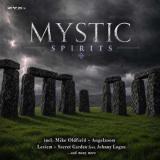
Tauchen Sie ein in eine faszinierende Welt voller mystischer Klänge, sphärischer Melodien und geheimnisvoller Atmosphären. „Mystic Spirits“ entführt den Hörer auf eine musikalische Reise zwischen Meditation, Mystik und entrückten Klanglandschaften.
Sanfte elektronische Sounds, eindrucksvolle Arrangements und geheimnisvolle Stimmen verbinden sich zu einer außergewöhnlichen Klangwelt, die zum Träumen, Entspannen und Abschalten einlädt. Die Compilation vereint
stimmungsvolle Titel, die eine ganz besondere Atmosphäre zwischen Spiritualität, Fantasy und New Age schaffen.
Mit dabei sind hochkarätige Künstler wie Mike Oldfield, Lesiem und Angelzoom, deren charakteristische Sounds perfekt in das mystische Konzept dieser Zusammenstellung passen. „Mystic Spirits“ – eine musikalische Reise in geheimnisvolle Klangwelten für alle, die außergewöhnliche Musik mit Tiefe und Atmosphäre lieben.
„ZIRP!“ ist das fünfte Studioalbum von DIIV und zeigt die New Yorker so zugänglich wie je zuvor. Produziert vom Hyperpop-Pionier A. G. Cook (Charli XCX, Caroline Polachek) begeben sie sich dabei in neue
Sound-Gefilde: Zwar bleiben die für DIIV typischen Shoegaze-Elemente erhalten, doch nun steht zum ersten Mal der Gesang von Frontmann Cole Smith im Mittelpunkt des Mixes. „ZIRP!“, benannt nach der
Niedrigzinspolitik, die uns in eine Welt gescheiterter Start-ups geführt und uns alle zu „Nutzern“ gemacht
hat, baut mit einer neu gewonnenen Leichtigkeit auf den Themen des Vorgängers „Frog In Boiling Water“
auf. Durchweg konzentrieren sich DIIV bei ihrem neuen Album auf ihre bisher kraftvollsten und einprägsamsten Melodien; jeder neue, in sich geschlossene Hook und jeder beiläufig eingestreute Ohrwurm zeugen von
einer Band, die mehr als bereit ist, ihr Potenzial im Mainstream voll auszuschöpfen.
„ZIRP!“ ist das fünfte Studioalbum von DIIV und zeigt die New Yorker so zugänglich wie je zuvor. Produziert vom Hyperpop-Pionier A. G. Cook (Charli XCX, Caroline Polachek) begeben sie sich dabei in neue
Sound-Gefilde: Zwar bleiben die für DIIV typischen Shoegaze-Elemente erhalten, doch nun steht zum ersten Mal der Gesang von Frontmann Cole Smith im Mittelpunkt des Mixes. „ZIRP!“, benannt nach der
Niedrigzinspolitik, die uns in eine Welt gescheiterter Start-ups geführt und uns alle zu „Nutzern“ gemacht
hat, baut mit einer neu gewonnenen Leichtigkeit auf den Themen des Vorgängers „Frog In Boiling Water“
auf. Durchweg konzentrieren sich DIIV bei ihrem neuen Album auf ihre bisher kraftvollsten und einprägsamsten Melodien; jeder neue, in sich geschlossene Hook und jeder beiläufig eingestreute Ohrwurm zeugen von
einer Band, die mehr als bereit ist, ihr Potenzial im Mainstream voll auszuschöpfen.
Nippon Psychedelic Soul 1970-1979 is Time Capsule’s continuation of the deep dive into Japan’s rich history of folk and psychedelic soul music.
Vinyl LP with 4 page insert, original artwork and photos
The kaleidoscopic psychedelia of 1970s Japan captured a fragile and fertile moment as the country sought its future in funk grooves, heavy reverb and lyrical hallucinations.
The follow-up compilation to Time Capsule’s Nippon Acid Folk, Nippon Psychedelic Soul takes myriad pathways into the tripped-out undergrowth of 1970s Japan. Finding their feet at home and looking for inspiration abroad, the musicians featured here were engaged in the communal soul-searching that followed the breakdown of the 1960s protest movements. Some made it big, others drifted into oblivion. The music they left behind shimmers with intensity.
At the core was Happy End, the first project of YMO’s Haroumi Hosono, whose distortion-heavy guitar and crisp back-beat laid the foundations for Japanese lyrics that flipped the paradigm of Japanese rock music on its head. With it came a new found sonic ambition, such as in the bold Philly-soul style arrangements of producer Yuji Ohno, whose work with occult wandered Yoshiko Sai shares some of the bittersweet grandeur of Rotary Connection or David Axelrod.
Then there was Jun Fukamachi, a pioneer of Japanese synthesis, whose debut album was a carnival of orchestral funk, euphoric horn lines and rich production, complete with soaring guitar solos, psychedelic organ and a truly cinematic finale. The first and only time Fukamachi would sing on record, ‘Omae’ rips like the ultimate end-of-nighter.
Influenced by giants of the US soul scene, maverick composer Hiroshi “Monsieur” Kamayatsu (otherwise known as ‘the Brian Wilson of Japan’) went one step further, enlisting Tower of Power to play on ‘Have You Smoked Gauloises?’ The B-side to Monsieur’s biggest-selling single, it coasts with sophisticated cool - a liquid bassline and suave keys comping under a roaring trademark ToP sax solo. No surprise it found favour once more on the Acid Jazz dance floors of ‘90s London.
Such was the spirit of experimentation that big studio productions and private press releases sat side-by-side, with the likes of Momotaro Pink and Kazushi Inamura, taking their hopes of success into their own hands with the resources available to them. More reflective but no less robust, theirs was a heavy, fat-backed drum sound, soaked in dramatic, soulful psychedelia.
If some were dreamers and others space cadets, none were further out than sci-fi writer, musician, activist and self-made scientist Tadashi Goino, who transformed his own fantasy novel Messenger from the Seventh Dimension into an operatic prog odyssey with few discernible musical reference points – a majestic and completely bonkers outlier even among company as strange and brilliant as that which is collected here.
Less a compilation of a scene, as a compilation of a sentiment, Nippon Psychedelic Soul is a wild ride from start to finish, shattering the narratives of the Japanese folk and rock tradition into a million tiny pieces.
The Sound Of Slip ’n’ Slide, Vol. 1 launches a brand-new series from the legendary Slip ’n’ Slide catalogue, bringing together a selection of timeless house and deep house cuts from some of the genre’s most respected artists.
Featuring standout productions from Blaze, Cassio Ware, Black Rascals and Alex & Rai, the release captures the soulful, vocal-led sound that helped define underground house music across the 90s and beyond. Including favourites such as Blaze’s Moonwalk and Cassio Ware featuring Sajaeda’s Fantasy (Klubhead Mix), this first volume brings together a selection of proven dancefloor records in one DJ-friendly vinyl package.
With warm grooves, uplifting vocals and timeless club arrangements throughout, these tracks continue to resonate with both long-time house collectors and DJs looking for reliable dancefloor material.
As the first edition in The Sound Of Slip ’n’ Slide series, this release offers a strong opening chapter for the new compilation run, now available on fresh black 12” vinyl. A strong catalogue addition for stores supporting classic house, deep house and soulful underground sounds.
Connecters Vol. 1: Original Recordings, 1992-1999 ist die erste Veröffentlichung von Larrison, dem Pseudonym des bildenden Künstlers und Musikers Larrison Seidle aus dem Mittleren Westen. Larrison komponierte, programmierte und nahm alles komplett auf einem Casio CZ-5000 auf, während der guten alten Zeit der selbstgemachten Experimente und Entdeckungen in den frühen 90ern. Er lebte in einer Traumwelt, die er selbst erfunden hatte, mit Soundtracks aus Space-Age-Pop-Vignetten, gespickt mit hypnotischen, überschwänglichen, vielschichtigen Synthesizer-Melodien. Mit 26 Tracks, die alle neu restauriert und aus den Originalquellen gemastert wurden, erfindet sich Connecters Vol. 1 Song für Song neu, überwindet die Zeit und trotzt der vorbestimmten Vergessenheit dieser brillanten, diskreten Musik, die vor drei Jahrzehnten entstanden ist. Larrison Seidle wuchs in den 70er und 80er Jahren in Greenwood, Indiana, einem Arbeitervorort von Indianapolis, auf. Er stammte nicht aus einer Musikerfamilie, aber aus einem Haushalt, in dem Musikalität gefördert wurde. Sein Vater kaufte eine elektrische Orgel, in der Hoffnung, dass Larrison und sein älterer Bruder das Instrument lernen würden. ,Am Ende saß mein Vater einige Abende an der Orgel, improvisierte und spielte immer wieder dieses eine Lied, von dem ich mich noch an die ersten Takte erinnern kann", erinnert sich Larrison. Möglicherweise war es in diesem Moment, in dem es zwar keine formale Ausbildung gab, aber viel Ermutigung und Entdeckungsfreude, dass der Künstler seine ersten musikalischen Experimente machte. Diese Erlaubnis, sich auszuprobieren, sollte seine kreative Arbeit in den folgenden Jahren deutlich prägen. Während in Larrisons Elternhaus klassische Rockplatten leicht zugänglich waren, lieh sich sein Vater 35-mm-Dokumentarfilme aus der Bibliothek aus, um sie im Wohnzimmer zu zeigen, die alle mit skurrilen Instrumentalstücken unterlegt waren. Als Teenager nahm er John Carpenters und Alan Howarths Endthema aus ,Die Klapperschlange" mit einem kleinen Kassettenrekorder neben dem Fernsehlautsprecher auf und liebte Tangerine Dreams Beiträge zu Ridley Scotts düsterer Fantasy ,Legend". Seine Faszination für diese weitgehend textlosen, synthesizerbasierten Kompositionen führte zu einem eigenwilligen Verständnis davon, wie Musik nicht nur das ergänzt, was wir vor uns sehen, sondern auch das, was wir in den Tiefen unseres Bewusstseins erleben. 1985, als er dreizehn Jahre alt war, überzeugte Larrison seinen Vater, ihm ein Casio CZ-5000-Keyboard zu kaufen. Wie zuvor die Orgel war auch dieses Instrument eine Neuheit im Haushalt der Seidles. Erst nach seinem Highschool-Abschluss 1991 und dem Beginn seines Studiums an der Herron School of Art in Indianapolis entdeckte er den in das Casio integrierten Sequenzer und begann, seine Kompositionen auf Band aufzunehmen. ,Das CZ-5000 und sein 8-Spur-Sequenzer sind die einzigen Musikinstrumente, die ich benutzt habe. Es hat eine fast unbegrenzte Funktion zur Erzeugung neuer Klänge", erklärte Seidle. Während seiner Zeit an der Herron School of Art freundete sich Larrison mit seinem Kommilitonen und Klangkünstler Michael Northam an, den er bei einem Konzert auf dem Campus kennengelernt hatte. Nachdem Northam Larrison für die Musik von Severed Heads, Throbbing Gristle und Roger Doyle begeistert und damit seine Zuneigung und sein Vertrauen gewonnen hatte, überredete er ihn, nach Austin, Texas, zu ziehen, das in den frühen 90er Jahren für seine lebendige Kunst- und Musikszene bekannt war. Die beiden wohnten zunächst bei Northams Freund Daniel Plunkett, dem Herausgeber und Verleger von ND, einem einflussreichen Magazin, das sich von 1982 bis 1999 mit DIY-Musik und Tape-Trading beschäftigte. In seiner Blütezeit hatte ND Tausende von Lesern, und Plunkett verschickte die Ausgaben weltweit. In den letzten Monaten des Jahres 1993 und Anfang 1994 schrieb und nahm Larrison mit begrenzten Mitteln und grenzenloser Intuition eine Reihe von Songs mit seinem CZ-5000 in einer kleinen Wohnung nördlich der Innenstadt von Austin auf, bastelte eine farbenfrohe, illustrierte Beilage, in der einige Songtitel durch Linien oder Pfeile dargestellt waren, und gab sie an Plunkett weiter, damit er sie für ND rezensieren konnte. Diese einzelne Kassette mit dem Titel Connecters sic war eine von 1200, die im Laufe des Bestehens der Publikation bei ND eingereicht wurden und die Jed Bindeman, Mitbegründer von Freedom To Spend, 2020 erworben und fast wie durch ein Wunder entdeckt hat. ,Ich hatte große Schwierigkeiten, mir die Kassetten in dieser Sammlung anzuhören", gibt Bindeman zu. ,Aber dann legte ich Larrisons Connecters ein und dachte sofort: ,Wow! Was höre ich da?' Die Kassette war von Anfang bis Ende einfach fantastisch." Mit Musik von genau dieser Kassette und anderen Aufnahmen aus Larrisons Experimenten in den 90er Jahren ist Connecters eine Übersicht über Instrumentalmusik, die sowohl durch vielfältige konzeptionelle Strategien als auch durch spielerische Neugierde geprägt ist. Seidle arbeitete unter Bedingungen, die viele Musiker als Einschränkung empfinden würden, und entwickelte technisch innovative Ansätze, um die Klänge und integrierten Effekte des CZ-5000 zu modifizieren. Das Gerät ermöglichte es ihm, die Wellenform, die Hüllkurve und die Tonart von Klängen mithilfe der Phasenverzerrungssynthese zu verändern und so im Grunde genommen Instrumente zu schaffen, während er Songs komponierte. Die Tracks zeichnen sich durch eine durchdachte impressionistische Vielfalt aus, die mal lo-fi, mal symphonisch klingt. Inmitten der Zerlegung und Verstärkung der Fähigkeiten des CZ-5000 gibt es auch einen geschmackvollen Rückgriff auf eine kindliche Interaktion und Erfahrung von Klang. Vielleicht ist es diese Erfahrungsqualität, die es so schwierig macht, Larrisons Projekt einfach als Ambient oder Elektronik zu verstehen. Sein Wille, die ihm zur Verfügung stehenden Werkzeuge zu transformieren, hebt die daraus resultierenden Kompositionen auf eine persönliche Ebene und verleiht der Musik einen bezaubernden Sinn für Mystik. Connecters ist ein Beweis für eine künstlerische Vision, die sich nicht durch Grenzen einschränken lässt und keine Angst vor Informalität hat. Diese Aufnahmen, die dreißig Jahre nach ihrer Dokumentation auf magische Weise an die Oberfläche kommen, zeigen, wie personalisierte Produktionsmittel die Zeit ausdehnen und verkürzen können. Larrison lädt die Zuhörer ein, sich auf die Wunder der auditiven Vorstellungskraft einzulassen - eine Brücke zwischen visueller Erinnerung, emotionaler Resonanz und der grenzenlosen Möglichkeit, mit den uns zur Verfügung stehenden Mitteln Musik zu machen. Larrison's Connecters Vol. 1: Original Recordings, 1992-1999 wird am 3. April 2026 von Freedom To Spend als Vinyl- und Digitalausgabe veröffentlicht.
The electronic producer Franz Kirmann returns to Bytes for his eighth solo album. The “Almadies” are long wooden boats used by Senegalese fishermen. It is also the name of the neighborhood where Kirmann grew up, in the suburbs of Dakar, Senegal, near the Atlantic Ocean. "These new compositions are the result of sound experiments conducted over the past few months and reflections on the concept of mind-constructed geographies," Kirmann explains. "The way memories and souvenirs shape an image of a place or country that is part reality, part fantasy, part cliché, yet also deeply personal. This experience is influenced by education, social background, history, and other socio-economic factors. " The ten tracks are crafted from collages of electronic sounds blended with field recordings from various places Kirmann has visited — from Dakar to the Caribbean, as well as London and Paris. His aim is to blur the line between electronically generated sounds and real soundscapes, creating music where it becomes difficult to distinguish the real from the constructed. All the sounds on the album were produced using synthesizers and field recordings. No drum machines, percussion or traditional acoustic instruments were used. Influences include Brian Eno and John Hassell’s Fourth World, Vol. 1: Possible Musics (1980), described by Hassell as "a unified primitive/futuristic sound combining features of world ethnic styles with advanced electronic techniques" , which also works in the context of Almadies. Another big influence was Ariel Kalma’s Le Temps Des Moissons (1975) as well as artists including O Yuki Conjugate and Robert Aiki Aubrey Lowe to Susumu Yokota and Michael Banabila.
Daryl Systems: The Wall Street Investor Turned Synth Maestro_
Daryl Systems, a former Wall Street stockbroker, found his true calling in music after a successful career in finance. Born and raised in the heart of New York City, Daryl made his fortune in the high-stakes world of stocks during the booming 90s. By the mid-90s, he had amassed significant wealth, allowing him to retire early and turn his attention to his lifelong passion: music.
Daryl relocated to Sweden, a country known for its rich history of electronic music, and began amassing a vast collection of vintage synthesizers. Inspired by the analog sounds of 70s and 80s synth music, Daryl became deeply immersed in the world of electronic production, creating lush, nostalgic melodies with a modern edge. His music blends the warmth of classic synths with innovative soundscapes, capturing a sense of retro-futurism.
Daryl's work is rooted in the tradition of vintage synth music, drawing influences from early electronic pioneers, while adding his own contemporary twist. He quickly gained a reputation within the underground scene for his impeccable taste in synthesizers and his ability to weave intricate, atmospheric tracks. His unique background and sound have made him a sought-after producer within the global electronic music community.
Mr. Fantasy: The Latin Italo Lover and Synth Collector
Mr. Fantasy is a true embodiment of the Italo disco movement, with a deep love for the genre and a keen passion for synthesizers. Hailing from Latin origins, Mr. Fantasy’s music is a vibrant tribute to the golden era of 80s Italo disco, blending nostalgic melodies with rich, rhythmic layers. With a particular obsession for collecting vintage synthesizers, Mr. Fantasy's music brings the analog warmth of the past into the present, creating a captivating blend of melodic hooks and captivating synths.
He grew up listening to the Italo disco classics, developing a fascination for the genre's distinctive sound, which he now incorporates into his music. Mr. Fantasy’s tracks are filled with pulsating beats, dreamy synths, and smooth basslines, all influenced by the golden age of Italian disco and electronic music.
His passion for synthesizers is matched only by his dedication to creating the perfect track. By blending his Latin roots with the shimmering sounds of Italo disco and the energy of modern electronic dance music, Mr. Fantasy has carved a niche for himself in the underground electronic scene.
The Collaboration: "Sensazione Elettronica" EP
In a highly anticipated collaboration, Daryl Systems and Mr. Fantasy have teamed up to release a new EP for the Italian record label Maledetta Discoteca. This collaboration brings together their shared love for vintage synthesizers, the Italo disco influence, and a passion for deep, atmospheric electronics.
Sensazione Elettronica features four electrifying tracks that blend retro vibes with fresh, forward-thinking production. Drawing from their unique backgrounds—Daryl's transition from the world of finance to full-time music production, and Mr. Fantasy’s deep connection to Italo disco—they have created a sound that is both nostalgic and innovative.
The EP showcases their mastery of classic synthesizers, with catchy melodies, driving basslines, and smooth, atmospheric textures that transport listeners to a world of neon-lit discos and timeless electronic rhythms. It’s an exhilarating project that marks the beginning of an exciting new chapter in both of their musical journeys.
We’re back from a DITN hiatus! Starring Club Mayz, Bizarre Billy & James Rod, Ricardo Baez and Seth Booth. Through darkness diamonds spread their richest light…
As the tenth candle flickers atop the torta alla panna, Archeo Recordings play the Uno reverse card, breaking with tradition to give us a gift in celebration of its birthday: the first in a series of exquisite EPs on which the label's favourite contemporaries pay homage to past masters. Each re-polished gem is plucked either directly from the beatific back catalogue of the fine Florentine label or is at least Archeo-adjacent, perhaps a sign of future wonders to come. Like a musical version of Janus, who can be found at the heart of Bertoldo di Giovanni's frieze in the Medici villa, Archeo Recordings will continue to look forwards and backwards to provide sublime sounds for us all.
Pepe Maina officially joined the Archeo family in 2019 with the much-needed reissue of his 1979 masterpiece Scerizza (AR015), but his astounding music has been a constant companion to label head Manu for much longer. An inter-dimensional, multi-instrumental maverick, Maina weaves the frayed edges of prog rock, new age, organic jazz and global minimalism into a shimmering tapestry all of his own. The results are spread across fifty years and almost as many albums, largely self-released and always absolutely untarnished by commercial concerns.
Based in a small village in the hills of Brianza, just north of Milan, Maina translates the beauty of his surroundings into transformative tone poems, and the folkloric fusion of "The Infinite", originally released on his 2014 CD Tales From The Hill, is the perfect example of his practice. It opens with a recitation of Giacomo Leopardi's 1825s poem "L'Infinito" by famed Italian actor Vittorio Gassman. A leading figure in the romantic movement, Leopardi explores the idea of time and space within the natural world, and the peace that comes with an appreciation of the immensity of eternity. Manu, longtime digger and now a burgeoning producer, expands upon the original with tribal percussion, chirping electronics and a spheric bassline, folding Maina's elegant strings and gossamer pads into a new arrangement suited for a slow dance under the stars.
Unless you had a well-trained ear tuned to Italy's avant-jazz scene, chances are your first encounter with innovative flautist Roberto Aglieri came via the 2017 Archeo reissue of hisalmost untraceable LP Ragapadani (AR011). It's a true testament to Manu's digging credentials that he snatched this masterpiece out of the esoteric atmosphere and brought it attention it so richly deserved. A delicate union of digital synthesis and versatile flute - be it soft and silvery or
brilliant and clear - the 1987 album was a shapeshifting masterpiece, replaying scenes from Virgil, Verdi, Visconti and Pasolini with a neon glow. Quintessentially Italian, but uncanny and previously unimagined - Penthouse and Portico perhaps. Powered by a percolating prototechno sequence, cascading keys, hallucinogenic vocal snippets and a variety of tonal timbres from Roberto's reed, "Danza N. 1" long deserved the praise reserved for Jean-Luc Ponty's pinnacle, so many thanks to Manu for our collective introduction. The tall task of reinterpreting this particular paragon falls to Perugian polymath Daniele Tomassini AKA Feel Fly, whose peerless skills as both producer and musician have delighted DJs and dancers alike. Hot on the heels of his diverse and definitive remixes of Tony Esposito for AR027, Daniele delivers a radical rework of "Danza N. 1" perfect for both day rave sunshine and full moon party alike. Enhanced by snapping breaks and a rattling kick, the bassline gurgle emerges as a progressive powerhouse, laying the foundation for the trilling flute and circular keys to cast a psychedelic spell. As the slow-Goa revival picks up pace, this one is way ahead of the pack.
Archeo take us all the way back to the start of its story here - well almost. Though it bore the stamp AR001 (2015), this Radio Band reissue actually hit shelves months after Tony Esposito's "Je-Na' / Pagaia"; a false start perhaps but a true classic all the same. Radio Band were a group of DJs from Florence who all sailed the airways of Radio Fantasy in 1984 and whose one and only release was this super groovy slice of Italo-boogie. Following the example of Milanese DJs Band of Jocks but far surpassing their formulaic funk fizzle, Radio Band employed an intergalactic bassline, cosmic keys and that undeniably Italian style of rapping to deliver a sophisticated party-starter which even found its way to disco deity Ron Hardy. Back to the here and now, and if you've found yourself pumping an ecstatic fist to a supercharged Italian epic of late, chances are its from the mind of the mysterious Radiomarc. Operating on the ascendent Popcorn Groove imprint, this shadowy figure steers his country's lost classics into peaktime territories, finding a sweet spot between late Italo-disco, early Italo-house and contemporary cool. Pushing the tempo with a club-ready 4/4, setting the sequencer to stun and supplementing the original melodies with a series of synth riffs, the mystery producer send this one into orbit. Radio Band - Radio Rap - Radiomarc, the circle is complete.
Few have done more to develop cross-cultural musical exchange than Futuro Antico. A collaborative venture from musician, archeologist and ethnomusicologist Walter Maioli, keyboardist and tonal theoretician Riccardo Sinigaglia and multi-disciplinary artist and composer Gabin Dabiré, Futuro Antico formed in Milan in 1979, combining ancient international folkloric traditions with otherworldly electronics. The result is an arresting melange of Mediterranean, African and Asian instrumentation, mimicked by esoteric synth tones and hypnotic minimalism, which the group perfected on their acclaimed 1990 LP Dai Primitivi All'Elettronica. The meditative and transportive "Pan Tuning" belongs to their largely overlooked 2005 CD only release Intonazioni Archetipe, and has been amongst Manu's most loved tracks from the first moment he heard it. Who else is better placed to reshape this evocative opus into an immersive, transcendental dance floor journey than label favourites Mushrooms Project? The duo sows the original elements into a sprawling fifteen minute fusion of séance and science, at times propulsive with a ritualist rhythm of tuned percussion and crunching drum machine at others drifting off into ethereal ambience. Mushrooms Project continue to push the boundaries of the Afro-cosmic style, and this remix marks a new zenith.
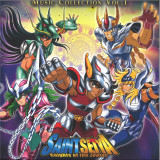
First vinyl issue of the Saint Seiya Anime's cult Soundtrack. Limited Edition.
Seiya is an orphan who, as a young boy, was selected by the Kido Foundation to bring legendary bronze armour back to Japan. He succeeds, along with 10 other orphans. Forced by the foundation to take part in a "show", the knights embark on a tournament before the prize, the golden armour, is stolen. Little by little, they realise that their problems stem from the Sanctuary in Greece, home to the 12 most powerful knights, the Golden Knights, and their leader, the Great Pope. His target is the young Saori Kido, heiress to the foundation and reincarnation of Athena.
The series was a huge success and spawned an extensive franchise, with TV series, films and video games. This album features the best music and songs from the anime, composed and arranged by Seiji Yokoyama (GATCHAMAN).
«The Rarities» ist eine Zusammenstellung von Fan-Favourites, Raritäten und bisher unveröffentlichten Songs, die alle von Mariah selbst handverlesen wurden. Auf der zweiten CD gibt es als Zugabe die noch nie zuvor in voller Länge veröffentlichte Audioaufnahme von «Live at the Tokyo Dome», Mariahs erstem Konzertauftritt in Japan, welcher anlässlich ihrer Daydream-Welttournee 1996 stattfand
Calendar Crowd was the duo of Alan Heaton and Terence tiernan who met in their hometown of Widnes, Cheshire as schoolboys and played together in various bands in the '70s. In the '80s they formed a 6-piece band called Room For Humans 0and recorded one single'Telephone Telephone / Girlfriend'. When the band split and Alan and Terence continued as Calendar Crowd in a more experimental direction. Their influences were wide reaching: Kraftwerk, Neu, Cabaret Voltaire, Eno, PIL, and Joy Division.In 1982 they released their debut single 'Perfect Hideaway/Perfect Hideaway Dub' on 7'. Guitarist David Knowles joined them as they toured the UK and recorded and released their follow up EP 'Listen in to the Heart' in 1985. A reviewer at the time called Calendar Crowd 'A Moody Merseyside trio with strong atmospheric tunes and haunting lyrics.' For this reissue we've compiled both singles on one EP featuring all four songs. Perfect Hideway is a evocative and dreamy, the music escorts you on a tour of icy landscapes, with Terrance's deep, rich vocals guiding the way accented by bright brass stabs. Meanwhile the Dub has stripped back the vocals, added delayed samples and heavy pounding drums. On the B-side 'Listen in to the Heart' and 'Questions Answers' are darker electronic rhythm tracks with layers of ethereal keyboards and guitar melodies. All songs have been remastered by George Horn at Fantasy Studios in Berkeley. The record is housed in an exact replica of the original Perfect Hideaway jacket featuring black and white October 1982 calendar with the tile hand written in red pen. Each copy includes a double-sided 8x11' insert with lyrics, notes and photos.
Alésia Cosmos was a collective of musicians led by Bruno de Chénerilles formed in the early 1980s in Strasbourg, France. The group consisted of Pascal Holtzer (guitar, synthesizer, tapes, drum machine, vocals), Pierre Clavreux (vocals, gong), Marie-Berthe Servier (vocals), Bruno (guitar, tapes, synthesizer, drum machine, vocals) and Tunisian percussionist Lotfi Ben Ayed (darbukas, bendir). In 1981 Bruno composed and wrote some sci-fi radio plays for French state radio channel France Culture. Under the influences of William Burroughs, John Cage, Pierre Henry and others, he developed tape music studio work. By 1982 he appeared for the first time under the name Alésia Cosmos Furi Show. It was a solo performance on guitar, voice, analog synth and tapes. This experimental show lead to a music project based on Bruno and Pascal's compositions to be performed and recorded with other musicians in the beginning of 1983.
Exclusivo! was the group's debut album recorded and self-released in 1983 on Planetarium. Pascal and Bruno would compose tunes in their personal home studios. Then they would bring the tapes, electronics, guitar lines and lyrics to experiment and rehearse with the other members of the group. Improvisations and adaptations brought more ideas and the album was recorded in a few days. The result was a musical mixing of electronic music, field recordings, North African and Asian percussion, electric guitars and voices, compositions and free improvisations. All four musicians take turns singing onomatopoeic phrases and backing vocals, even sometimes in an unknown language, a sort of mixed bag between Breton and Japanese. All songs have been remastered cut by George Horn at Fantasy Studios in Berkeley. Each LP is housed in a replica of the 1983 cover and includes a 6-page insert with photos, lyrics, reviews and liner notes by Bruno de Chénerilles.
Cute Heels is the solo project of Victor Lenis, a contemporary artist living in Barcelona, Spain. He grew up in Bogotá, Columbia during the 1990s, surrounded by the radial punk scene. Over the years, Victor's passion and fascination for synthesizers and drum machines to produce and compose resulted in various digital-only releases as well as his debut album Spiritual" for Dark Entries in 2014. Cute Heels has been called ''the new blood and spirit for the next step in techno music'' by Electro/Techno pioneer Juan Atkins. Third Skin' is a 4-track EP that connects the dots between Detroit techno, early Chicago house and Belgium electronic body music. Inspired by equal parts Liaisons Dangereuses, Drexciya and Black Devil Disco Club. On the A-side are two fresh compositions recorded in 2015. Third Skin' kicks things in a metallic EBM funk with a pounding bottom end. Lipstick Information' takes the listener on a dark, psychedelic and twisted journey through thrillingly intense arpeggiations. On the flip we present two remixes. The first is from Steffi, House and Techno DJ and producer born in The Netherlands and residing in Berlin. She picks up the pace for an uplifting, percussion-driven, DAF-eque dystopian stomper. The second remix comes from Michel Amato aka The Hacker, French born DJ and producer and frequent collaborator with Miss Kittin. His early musical influences of bands such as Cabaret Voltaire, Throbbing Gristle and Front 242 shine through on this pumping and sophisticated remix ready for any dance floor.
All songs have been mastered for vinyl by George Horn at Fantasy Studios in Berkeley. The record comes in a custom-made jacket designed by Eloise Leigh featuring a photograph by Corinne Schiavone printed with hi-gloss finish. Each copy includes a postcard with with notes and image for fetish lovers
First track will direclty show-up a geography. The Obscur 07 first track : a killer ! Bloody Acid Anonymous brain-digger... It never let you down... Keeping on... Acid Fantasy !
A2 is a Deviant Behavious 01 repress. Skanking Hardtek :)
B1 is a self-remix of the Mackitek HS 07, getting it even more ACID !
And B2 is again a remix from Mackitek HS 07. Going to a more slamming tom/snare breaky way.
All repressed tunes are remixes or somehow remastered...
Surprises !
out of Stock
Last delivered 36 days ago available to reorder, subject to availability
Andy Bell, Erasure-Frontmann und Electro-Pop-Legende, veröffentlicht mit "Extended Blue" sein Solo-Debütalbum "Electric Blue" (2005) als limitierte Deluxe-Edition auf dreifarbig-blauem Vinyl neu. "Electric Blue" - samt den Duetten mit Claudia Brücken (xPropaganda) und Jake Shears (Scissor Sisters) - wurde gemeinsam mit Manhattan Clique geschrieben und produziert, einem Duo, das zwei Jahrzehnte lang die Welt der Pop-Dance-Club-Remixe dominierte und mit Weltstars (Katy Perry, Britney Spears, Lady Gaga, OneRepublic, Moby) und wegweisenden Electronic-Acts (The Human League, Soft Cell, OMD, The B-52s und natürlich Erasure) zusammenarbeitete.
Die Deluxe-3LP enthält zudem sämtliche Bonustracks & B-Seiten der "Electric Blue"-Sessions erstmals auf Vinyl. Das Deluxe-Booklet kommt mit ausführlichen Liner Notes des Classic Pop-Autors John Earls samt Interviews mit Andy Bell und den Manhatten Clique-Produzenten Philip Larsen & Chris Smith, sowie unveröffentlichten Fotos aus der 2005er Session mit dem renommierten britischen Fotografen Tim Flach. Bei Erasure- und Electro-Pop-Fans zählt "Electric Blue" weithin als 'verlorenes Juwel', da kurz nach Veröffentlichung das damalige Label Sanctuary Records zusammenbrach und dieses herausragende Album sein Potential nicht vollständig ausschöpfen konnte.
Eine streng limitierte Erstauflage der 3LP enthält zusätzlich die CD "Extended Blue" mit dem identischen Tracklisting des Vinylformats.beitete.
Es sind fünf hektische, chaotische, zermürbende, völlig durcheinander gewirbelte Jahre. Es sind all die mühsamen Missverständnisse einer fünfjährigen Beziehung, verzerrt und zu einer absurden schwarzen Comedy-Miniserie auf Vinyl gedehnt. Es ist der Klang all unserer Streitgespräche, die gleichzeitig erklingen. Es sind mehrere aufeinanderfolgende Sprachnachrichten, die nicht angehört, sondern stattdessen als Transkript gelesen wurden. Es sind fünfzehn Songs des ikonoklastischen Rappers Mike Eagle und des innovativen Produzenten Kenny Segal. Es ist das weltweit erste halb skurrile Trennungsalbum. Es ist "DOOMED!", es ist auch LA. Vielleicht nicht in erster Linie, aber Los Angeles ist tief in der Gegenwart und der Geschichte dieses Albums verwurzelt. Die Geschichte jeder Großstadt ist auch eine Geschichte von Zugezogenen. DJ Premier in New York, Tupac in Kalifornien. Wenn man es aufbaut, werden sie kommen. Mike und Kenny kamen beide als junge, aufstrebende Künstler nach LA, angezogen von der Szene rund um die bahnbrechende Rap-Crew Project Blowed. Sie sind seit fast zwanzig Jahren befreundet - und arbeiten gelegentlich zusammen. Trotzdem ist "DOOMED!" das erste Mal, dass die beiden ein komplettes Werk gemeinsam geschaffen haben. Aber alles geschieht zu seiner Zeit, und das Schicksal hat sie genau in dem Moment zusammengeführt, der es dem Duo ermöglichte, etwas Außergewöhnliches zu schaffen. Mike, der gerade eine Reihe von Alben mit mehreren Produzenten hinter sich hatte und das Ende einer turbulenten Beziehung verarbeitete, brauchte eine kreative Katharsis. Kenny hingegen hatte sich nach einer Reihe von hochgelobten Kollaborationen - nicht nur mit Rappern wie billy woods und K-the-I??? - sondern auch mit dem Jazz-Trio Human Error Club und dem bluesigen Indie-Rocker Benjamin Booker - auf seine nächste Herausforderung festgelegt. "In den letzten Jahren machte Kenny sehr deutlich, dass er nicht einfach weiterhin ein oder zwei Beats für meine Projekte beisteuern wollte; er wollte etwas aufbauen", erklärt Open Mike Eagle. "Ich konnte ihn davon überzeugen, mir ein paar Beats für Neighborhood Gods Unlimited zu überlassen, mit der Maßgabe, dass wir uns als Nächstes auf unser gemeinsames Projekt konzentrieren würden. Dann zerbrach meine Beziehung, gerade als wir mit der Arbeit begannen, und ich dachte mir: Perfekt, dazu habe ich eine Menge zu sagen."
Es sind fünf hektische, chaotische, zermürbende, völlig durcheinander gewirbelte Jahre. Es sind all die mühsamen Missverständnisse einer fünfjährigen Beziehung, verzerrt und zu einer absurden schwarzen Comedy-Miniserie auf Vinyl gedehnt. Es ist der Klang all unserer Streitgespräche, die gleichzeitig erklingen. Es sind mehrere aufeinanderfolgende Sprachnachrichten, die nicht angehört, sondern stattdessen als Transkript gelesen wurden. Es sind fünfzehn Songs des ikonoklastischen Rappers Mike Eagle und des innovativen Produzenten Kenny Segal. Es ist das weltweit erste halb skurrile Trennungsalbum. Es ist "DOOMED!", es ist auch LA. Vielleicht nicht in erster Linie, aber Los Angeles ist tief in der Gegenwart und der Geschichte dieses Albums verwurzelt. Die Geschichte jeder Großstadt ist auch eine Geschichte von Zugezogenen. DJ Premier in New York, Tupac in Kalifornien. Wenn man es aufbaut, werden sie kommen. Mike und Kenny kamen beide als junge, aufstrebende Künstler nach LA, angezogen von der Szene rund um die bahnbrechende Rap-Crew Project Blowed. Sie sind seit fast zwanzig Jahren befreundet - und arbeiten gelegentlich zusammen. Trotzdem ist "DOOMED!" das erste Mal, dass die beiden ein komplettes Werk gemeinsam geschaffen haben. Aber alles geschieht zu seiner Zeit, und das Schicksal hat sie genau in dem Moment zusammengeführt, der es dem Duo ermöglichte, etwas Außergewöhnliches zu schaffen. Mike, der gerade eine Reihe von Alben mit mehreren Produzenten hinter sich hatte und das Ende einer turbulenten Beziehung verarbeitete, brauchte eine kreative Katharsis. Kenny hingegen hatte sich nach einer Reihe von hochgelobten Kollaborationen - nicht nur mit Rappern wie billy woods und K-the-I??? - sondern auch mit dem Jazz-Trio Human Error Club und dem bluesigen Indie-Rocker Benjamin Booker - auf seine nächste Herausforderung festgelegt. "In den letzten Jahren machte Kenny sehr deutlich, dass er nicht einfach weiterhin ein oder zwei Beats für meine Projekte beisteuern wollte; er wollte etwas aufbauen", erklärt Open Mike Eagle. "Ich konnte ihn davon überzeugen, mir ein paar Beats für Neighborhood Gods Unlimited zu überlassen, mit der Maßgabe, dass wir uns als Nächstes auf unser gemeinsames Projekt konzentrieren würden. Dann zerbrach meine Beziehung, gerade als wir mit der Arbeit begannen, und ich dachte mir: Perfekt, dazu habe ich eine Menge zu sagen."
out of Stock
Last delivered 26 days ago available to reorder, subject to availability
Anlässlich des 45. Jahrestags seiner Veröffentlichung bringt Secretly Canadian Yoko Onos bahnbrechendes Album ,Season of Glass" aus dem Jahr 1981 in einer erweiterten CD-Version sowie erstmals seit mehr als 45 Jahren wieder auf Vinyl heraus, ergänzt durch ein erweitertes und überarbeitetes Coverdesign. ,Season of Glass", das zu den Top 200 Alben der 1980er Jahre von Pitchfork zählt, erschien im Juni 1981, nur sieben Monate nach dem sinnlosen Mord an Onos Ehemann und kreativem Partner John Lennon. Voller Songs über Liebe, Verlust, Wut und Angst spiegelte das Album Onos Erfahrungen in aller Deutlichkeit wider und schuf so fast ein Pendant zu den ,Primal Scream"-Alben der Plastic Ono Band von Ono und Lennon aus dem Jahr 1970. ,Season of Glass war eigentlich einfach nur ich selbst, denke ich", sagte Ono 1982 gegenüber Newsweek. ,Irgendwie war es in gewisser Weise wie ein Urschrei; weißt du, etwas ist in meinem Leben passiert, und ich musste es einfach sagen. Und ich glaube, es war für mich mehr als alles andere therapeutisch. Und ich war ziemlich ehrlich, nehme ich an." Onos fünftes Studioalbum, ,Season of Glass", war auch das bis dahin kommerziell erfolgreichste der Künstlerin und schaffte es in die Top 50 der Billboard-Albumcharts, war jedoch nicht ohne Kontroversen. Das Cover des Albums zeigte ein Foto von Lennons blutgetränkter Brille, so wie sie Ono vom Roosevelt Hospital nach seiner Ermordung zurückgegeben worden war. Obwohl David Geffen, der Chef von Geffen Records, der im November 1980 Onos und Lennons ,Double Fantasy" veröffentlicht hatte und auch die Originalversion von ,Season of Glass" herausbrachte, Ono eindringlich bat, das Cover zu ändern, blieb Ono standhaft. ,Ich werde das Cover nicht ändern", erinnerte sich Ono, Geffen gesagt zu haben. ,Das ist es, was John jetzt ist." Begleitet von derselben Band, die bereits auf ,Double Fantasy" gespielt hatte, reiht sich der Sound von ,Season of Glass" nahtlos an dieses Album an, das zu dieser Zeit bereits als künstlerischer Triumph für Ono galt, die junge Künstler wie die B-52s und Sonic Youth inspirierte. In den Jahren seit seiner Veröffentlichung hat das Album ,Season of Glass" aufgrund der ehrlichen, liebevollen und manchmal erschütternden Natur seiner Songs nur noch an Bedeutung gewonnen. Heute wird es allgemein als kraftvolles künstlerisches Statement über Trauer und Verlust gewürdigt und gilt als Meilenstein sowie als eines von Onos besten Werken - ein vollendetes künstlerisches Statement.
Ever since the late 1950s bossa-nova revolution, Brazil’s influence on French music has been undeniable. Pierre Barouh, Georges Moustaki and a vast array of lesser known artists, all made the Musica Popular Brasileira (MPB) an axis of promotion at the service of a cool and metaphysical, modern and mixed Brazilian lifestyle. Some were seduced by the poetic languors of the bossa, some were looking for fun, and others just loved the American hybridization of jazz-bossa, jazz-samba.
What is bossa nova? One of its creators, Joao Gilberto said: "Its style, cadence, everything is samba. At the very start, we didn't call it bossa nova, we sang a little samba made up of a single note - Samba de uma nota so .... The discussion around the origins of bossa nova is therefore useless”. It is nevertheless useful to remember that these magnificent Brazilian songs, which the guitarist describes as samba, were shifted and balanced around improbable chords. "I like things that lean, the in-betweens that limp with grace," said Pierre Barrouh, quoting Jean Cocteau.
With emotion, arrangements for violin and supple guitar licks, bossa nova rapidly changed. A transformation that can be heard in the Tchic, tchic, French Bossa Nova 1963-1974 compilation, the result of a cultural reappropriation, which traveled through the United States and supplemented itself in France.
A musical revolution that has remained significant, bossa nova was born in Rio. From 1956 to 1961, Brazil lived through its golden years. In five years, the country had invented its modernist style. Elected president in 1956, Juscelino Kubitschek de Oliveira, an elegant man with a broad forehead, brandished a promising slogan: "Fifty years of progress in five years". He quickly got to work. Not worried about increasing debt, he launched the project for a new federal capital, Brasilia, designed by the communist architect Oscar Niemeyer. Volkswagen opened state-of-the-art factories and created the “fusquinha”, the Beetle. In Rio, the Vespa made its first appearance. The Arpoador Surf Club crew run into the “girl” from Ipanema, Helô Pinheiro - the tanned garota ("chick"), between a flower and mermaid, who at 17 walked by the Veloso bar, where the fiery author and composer, Tom Jobim and Vinicius de Moraes, were getting drunk on whiskey. From then on, bossa symbolized cool.
In 1958, Joao Gilberto recorded Chega de Saudade, which the directors of Philips denied, calling it "music for fagots". The marketing director, who believed in it, secretly pressed 3000 78-inch vinyls and distributed them at schools around Rio, creating a tidal wave.
American jazzmen then took over. In particular, trumpeter Dizzy Gillespie and guitarist Charlie Byrd. In November 1962, the Brazilian Ministry of Foreign Affairs funded a "Bossa-Nova" concert at Carnegie Hall in New York, inviting the genre’s pioneers. Unprepared, the show soon turned to disaster. But the troupe was invited to the White House by Jackie Kennedy. The first lady loved "the new beat" and in particular Maria Ninguem, a song by Carlos Lyra, later covered by Brigitte Bardot.
In Brazil, the 1964 military coup quickly ended this euphoria. The destructive atmosphere that ensued pushed many Brazilian musicians to leave, if not to exile. Thus, Tom Jobim, Sergio Mendes and Joao Gilberto arrived to the United States. In New York, Joao Gilberto met saxophonist Stan Getz. At the time, he was married to the Bahianese Astrud Weinert Gilberto, who had a German father. She had never sung before, but she knew how to speak English. Getz therefore asked her to replace her husband on The Girl From Ipanema. The Getz/Gilberto record with Tom Jobim on piano, was released in March 1964. Phil Ramone, the "pope of pop" was in charge of sound.
Bossa nova arrived in Paris through the classic “guitar-voice” channel (Pierre Barouh, Baden Powell, Moustaki…) But France loved jazz and Paris had already welcomed its American contributors. All these good people were to pass through Saint-Germain-des-Prés. The cabaret l'Escale became the Mecca of Latin American sound where one could find Pierre Barrouh and his friends, such as the Camara Trio, samba-jazz aces, whose only record was published by the Saravah label. With a band strangely called Les Masques (a band that included Nicole Croisille and Pierre Vassiliu, among others), the Camara Trio recorded an interesting Brazilian Sound, including the track Il faut tenir which is present on this tasty compilation of rarities.
Other enlightened musicians can also be found on the compilation, such as Jean-Pierre Sabar (songwriter for Hardy, Auffray, Leforestier ...) and the French pop rock organist Balthazar. In 1975, Sabar recorded Aurinkoinen Musiikkimatka on a Finnish label, which featured the crazy Vai, Vai, included on this record. We are now following the footsteps of Brazilian electronic musicians such as Sergio Mendes, Eumir Deodato or Marcos Valle who created funk and disco sounds on their keyboards and synthesizers. A style that influenced Véronique Sanson when she wrote Jusqu’à la Tombée de la nuit in 1969 for Isabelle de Funès, the niece of Louis and a great friend of Michel Berger - Sanson did end up singing this track on her 1992 Sans Regret record.
The pinnacle of exoticism and travel, Sylvia Fels’ Corto Maltese includes bongos, sea mist and ocean sounds. The title was taken from Jacky Chalard’s concept album written in 1974, Je suis vivant, mais j’ai peur (I am alive, but I am scared), based on Gilbert Deflez’s science fiction novel.
However, bossa nova extended the scope of popularity. "In the 1970s, I was a fan of Sergio Mendes, Getz / Gilberto. I fell in love with this music that I knew because I had been an orchestral singer, " explained Isabelle Aubret, who in 1971 delivered a composite record of covers by the very funky Jorge Ben, Orfeu Negro, Tom Jobim, Vinicius de Morais and Jean Ferrat. "I recorded this album for Meys Records in Paris, far from Brazil, with wonderful musicians, François Raubert, Roland Vincent, Alain Goraguer...". The latter wrote the arrangements for Casa Forte, a very percussive title borrowed from Edu Lobo, one of the initiators of the bossa who spent time in California. "Jazz and bossa came together and produced very rhythmic music. I love singing, it allows me to dream, to have fun, to feel a high on stage, and these songs brought me joy, made me swing, my singing felt like a dance.”
The world tours of French singers and their desire for the tropics, often brought them to Rio with its hills, forests, caipirinhas and tanned bodies. There are surprises though, like this Iemenja (Iemenja is the goddess of the sea in the Afro-Brazilian candomblé religion). Not unlike the composer and musician Jean-Pierre Lang, based in Sao Paulo, Claire Chevalier taught Brazil to Brazil. In 1970, the singer and painter published a 45-inch vinyl, Mon mari et mes amants (My husband and my lovers), under the improbable pseudonym of Clarinha (little Claire). She was then living in Rio, with her husband, Joël Leibovitz, who founded a band called Azimuth, and who owned a record label specialized in "sambas enredos" songs for samba school parades.
For its B side, she asked Pierre Perret to come up with lyrics for a song composed by Carlos Imperial: "Oh goddess of the sea, o goddess Iemenja, I bring a white rose to adorn your long hair ..." . "Perret came to see us, and we had fun, remembers Joël Leibovitz. We wrote Lemenja for fun, we recorded it at the Havaí studio, behind the Central do Brasil the central station. Erlon Chaves, the arranger who worked with Elis Regina, joined us" adding his share of Afro-Brazilian percussions and funky brass to the mix.
There is a common misunderstanding in Franco-Brazilian history: that bossa, admittedly hedonistic, is perceived as funny, even though the poets who wrote the texts are often philosophizing on the human condition. Its French interpreters pull it towards a carnival inspired universe, far removed from its fundamental essence. Thus, Jean Constantin covered the famous Samba da minha terra, an ode to the art of samba written by the classic Bahian composer Dorival Caymmi, renaming it with the enticing title of Pas tant de tchi tchi pompon: "On your pier there is no tchi tchi / when you arch your back, you know everything is alright ”(lyrics by Gérard Calvi). This expedited bossa aims for the absurd, but retains a certain elegance.
Indeed, Jean Constantin was not an idiot, the rather large man had a huge mustache and liked fantasy, (Les pantoufles à papa, Le pacha, inspired by cha-cha-cha-cha, salsa and jazz) but he was also the lyricist of Mon manège à moi interpreted by Edith Piaf, the composer of Mon Truc en plume by Zizi Jeanmaire and the soundtrack of François Truffaut’s 400 Blows. Le Poulpe, published in 1970, from which this bossa is extract, was arranged by Jean-Claude Vannier, an accomplice of Serge Gainsbourg’s Melody Nelson. In short: "There is enough of samba / By looking at the parasol / Because my poor cabeza / Is going to die in the sun".
Even the American actress Marpessa Down, who was at the heart of the bossa nova revolution with her role as Euridyce in Marcel Camus’ film Orfeu Negro, winner of the 1959 Cannes Palme d'or, fed the clichée with Je voudrais parler au petit cuica - "Tell me how you manage to always make people want to dance / It's true, I must admit that I cannot resist your magic" - in consequence, once can hear the cuica, a little drum inherited from the Bantu.
But bossa nova had many angles. Societal, of course, pushing actresses who were symbols of women's liberation like Brigitte Bardot, Jeanne Moreau, or Sophia Loren to engage in the exercise of accelerated bossa. In February of 1963, Sophia Loren made a record in French in Rome, Je ne t'aime plus, featuring the song De jour en jour, a bossa written by two Italians, Armando Trovajoli and Tino Fornai, which was released a little later by Barclay. Bossa accompanied the 1960s, a decade of moral liberation. Ann Sorel, who interpreted La Poupée des favellas, caused a sensation with L’amour à plusieurs, a provocative song written by Frédéric Bottom and Jean-Claude Vannier. As for the actress Andrea Parisy, she displayed her bourgeois cheekiness in Marcel Carné's Les Tricheurs before interpreting Les mains qui font du bien. And Magalie Noël, the friend of Boris Vian, who sung Johnny fais-moi mal, was hired to sing Une énorme Samba, composed by Alain Goraguer (arranger to Gainsbourg, Bobby Lapointe and Jean Ferrat) with lyrics by Frédéric Botton.
But in the end, of what wood is bossa nova made of? The answer is given by Christianne Legrand, daughter of Raymond the conductor, and sister to Michel the composer: "With me, with jà" - jà means "immediately" in Portuguese. In 1972, the singer, an expert in vocal jazz and a member of the Double Six, published Le Brésil de Christianne Legrand. Two songs included on the Tchic Tchic compilation that demonstrate how bossa, jazz, funk, rock, etc. work like a swiss army knife: the music is used to denounce broken systems, or miracles, HLM et ciné roman, Cent mille poissons dans ton filet, two songs from the O Cafona soundtrack, a successful telenovela broadcast, at the time in black and white, on TV Globo. The first was adapted in French by the fighter and friend of the Legrand tribe, Agnès Varda. The second is content with a play on words, jostling them into a summer fun.
Véronique Mortaigne
out of Stock
Last delivered 3 months ago available to reorder, subject to availability
Reissued! Transcendence through repetition beamed via an aesthetic vision steeped in mystery: welcome to the world of Newcastle-Upon-Tyne's Smote, an entity opening up uncanny new psychic pathways. `Genog' - the outfit's second release on Rocket Recordings following 2021's eerie transmission `Drommon' - shows that Smote's elliptical casting of bleak magick is only growing more powerful as it gathers momentum. The brainchild of Daniel Foggin, Smote has evolved seemingly of its own volition. "I had the idea for years" he relates, "I love Pärson Sound, Träd, Gräs Och Stenar, Traditional Irish Folk and all sorts of different Drone and Folk music. It was simply finding the opportunity to sit down and get recording. A very heavy influence that affects Smote is fantasy as a genre, and the atmosphere that can be created via story-telling." The musical approach of Smote may have started out as a resolutely DIY one, yet from the humble origins of bedroom and rehearsal room recordings, the band has now become a full-fledged and powerful live band, whose appearances at festivals like Roadburn, Le Guess Who and Brave Exhibitions have already caused a considerable stir.The five vivid extrapolations on Genog conjure differing spiritual realms, yet combine and coalesce to offer one unified vision, building furious momentum in a manner that unites the pastoral with the arcane and otherworldy. Earthy, ritualistic and richly cinematic in aspect, Genog is an avatar guiding the listener to dark and beguiling imaginary landscapes. 2026 bone colour vinyl repress
New album by french rapper Sheldon, including featurings with Chilly Gonzales, Jazzy Bazz, Tuerie, Asfar Shamsi...
Monsters are never where we expect them to be. They take shape in silences, in vague fears, in the baggage we carry without always understanding it. Sometimes, we also encounter them along the course of a life. On this new album, Sheldon chooses to dance with them, to tame them with wit, grace, and a sense of peace.
Following a powerful return with Grünt 75, an iconic format to which the 75e Session collective brought particularly ambitious visual staging, Sheldon unveils a fourth album that unfolds across fourteen tracks like a chiaroscuro landscape, revealing the full depth of his emotional and musical range. Through intimate narratives, the record explores identity (Être une fille), family and fatherhood (La Fenêtre and Les Monstres, the title track), as well as friendship (Eh le reuf). These are themes that run through all of us, approached here with writing that is vivid, demanding, and deeply sensitive.
Driven by a strong narrative arc, the album features songs like Être une fille, which challenges and questions us. On it, Sheldon reflects on his relationship to gender, his doubts and discomfort with the codes of masculinity, and the idea that he has sometimes imagined himself elsewhere. Tracks like La Fenêtre and Avec ça illuminate the album like moments of communion, sincere, warm, and unifying, carried by a childlike lightness that makes tomorrow disappear.
True to his open minded and ever curious artistic approach, Sheldon draws from a wide range of musical genres while keeping rap as the album’s guiding thread, giving each song its own singular identity and contributing to the balance of the whole. To shape the project, Sheldon surrounded himself with a new generation of musicians and beatmakers whose influences span rap, indie rock, pop, and experimental music. Among them are Johnny Ola, who has notably composed for Zamdane, Jazzy Bazz, and Edge, Rodolphe Babignan, Carbonne’s flamenco guitarist, and Jeune Oji, an artist signed to Friends of Friends Music. Together, they bring melodic and acoustic richness, as well as a collective generosity that deepens the album’s intimacy.
This new album also opens the door to new collaborations.
On L’école primaire, Chilly Gonzales joins Sheldon for an unconventional piano and vocals piece, driven by cinematic, deeply intimate storytelling. Using his primary school as a point of reference, Sheldon retraces his path from childhood to adulthood, somewhere between nostalgia and serenity.
On Cowgirl, Tuerie joins Sheldon for a soft, melodic ballad with an 80s tint, capturing the weightlessness of a sunlit summer.
On Sidequest, Sheldon reunites with Asfar Shamsi, who had already appeared on his Grünt. Over a delicate cloud trap production, the two artists open up about everyday pain, finding in introspection a way to put things into perspective.
Finally, Vol de nuit brings Jazzy Bazz and Sheldon together for an intimate exchange over an ethereal, mysterious production, as both artists look back on their journeys with calm and clarity.
Conceived alongside Sheldon’s closest circle, the project celebrates family, friendship, and love as its founding pillars. Sheldon chooses to step away from the images, allowing his story to be embodied instead through the faces and gestures of those around him. This approach runs through all of the project’s visuals. Rejecting the excess of spectacular image making, he chose instead to hand a camera to his loved ones so they could offer their own vision of a song from the album. By opening a small window onto his intimacy, and that of the people closest to him, Sheldon finds a way to say a great deal with very little, turning deeply personal trajectories into something universal.
Like the music videos, the album cover is rooted in a deliberately simple approach, where the fantasy of childhood disrupts reality. Designed by Tenzin, the graphic designer behind Sheldon’s recent projects, Ptite Sœur, and also work for Jul, it is based on an archival photograph taken during a traditional carnival in Tenzin’s native village. With no staging involved, the image captures children in costume mid parade, caught in a spontaneous burst of movement, embodying the free innocence of childhood.
Les Monstres marks a new chapter in Sheldon’s journey. Like a rainbow after the storm, this fourth album reveals new colours in the artist’s discography, as he delivers a record that is both demanding and accessible, intimate and open, one in which music becomes a love letter to friendship and to love itself. Set for release on April 24, 2026, the album will be followed by a tour culminating at La Cigale in Paris on December 3, 2026.
„Introducing Lee Morgan“ ist eine Hardbop-Platte aus dem Jahr 1956 des gefeierten Jazztrompeters, die
ursprünglich auf dem Label Savoy veröffentlicht wurde. Auf dem Album, das Morgan im Alter von nur 17
Jahren aufgenommen hat, sind auch Hank Mobley, Hank Jones, Doug Watkins und Art Taylor zu hören.
Es enthält sieben Titel, darunter den von Mobley komponierten Song „Hank’s Shout“. Diese Neuauflage
des Albums erscheint als Teil der Original Jazz Classics Series auf 180-Gramm-Vinyl, gepresst bei RTI,
mit vollständig analogem Mastering von den Originalbändern bei Cohearent Audio und einer Stoughton
Tip-On-Hülle.
Über Original Jazz Classics:
Original Jazz Classics wurde 1982 unter Fantasy Records ins Leben gerufen und 2023 mit einem Schwerpunkt auf audiophilen Wiederveröffentlichungen wegweisender Jazzaufnahmen wiederbelebt. Mit bisher
über 850 neu aufgelegten Titeln aus den bahnbrechenden Katalogen von Prestige, Riverside, Galaxy, Contemporary, Jazzland, Milestone und anderen bleibt OJC eine zuverlässige Quelle für die Entdeckung und
Wiederentdeckung des Jazz.
Get The Hose is the fabled, long awaited debut release from Montreal duo Plumbing, featuring Martyn Bootyspoon aka Jason Voltaire (Fractal Fantasy/LuckyMe/Fool’s Gold Records) and Stephen Ramsay of Young Galaxy (Paper Bag Records/Smalltown Supersound).
Born in 2018 as a live, analog hardware-based studio project, the duo worked quietly on the periphery of the left-field electro scene, only venturing out to do occasional, legendary winter warehouse DJ sets and a still-vaunted live set at MUTEK in 2021, which was so visceral that it knocked every person present into their seats simultaneously.
As cheeky and playful as it is gritty, relentless and overdriven, Plumbing’s new EP showcases their love of the raw and grimy, bare-bulbed basement aesthetic of underground dance music, where Paranoid London, Drexciya, MMM and Blawan meet to steal your drink and ignite the dancefloor.
It’s getting hot in here, it’s time to Get The Hose…
out of Stock
Last delivered 6 months ago available to reorder, subject to availability
Splatter Vinyl, limitiert auf 800 Exemplare. Das Schweizer Quartett Lone Assembly präsentiert mit "Knots & Chains" ein Debütalbum voller in Schmerz, Entfremdung und Trauer getränkter Hymnen, die dennoch Hoffnung, Stärke und Mut entfalten. Im dunklen Goth-Gewand gehüllt, ist das Album eine Wave/Synth-Pop-Erkundung von Kontrolle in all ihren Facetten: sei es durch andere, uns selbst oder die Umstände und Orte, die uns prägen. Bereits mit ihrer EP "That Never Happened" (2024), einer Hommage an eine verlorene geliebte Person, reifte die Band zu weit mehr als einem musikalischen Projekt. Lone Assembly wurden zu einem Raum der Heilung, der Nähe und der Notwendigkeit. Diese existenzielle Dringlichkeit, die die Band zusammenschweisst, durchzieht auch das Debütalbum - noch intensiver und deutlicher als zuvor. "Knots & Chains" ist ein Spiel mit chiaroscuro und wirft Licht auf Songs, die aus tiefer Dunkelheit hervorgehen. Jede Komposition untersucht eine Form von Kontrolle: die Macht anderer, wie in "You're Pulling at the Same Strings", wo der Protagonist das Unheil im Gegenüber zu begreifen versucht, das in diesem schlummert; die Herrschaft über das eigene Ich, eindrucksvoll dargestellt in "The Pain Keeper" und "My Life's Solid"; die Macht von Orten, die über uns bestimmen, etwa in "The City Works Like This", wo die Stadt zum atmenden Organismus mutiert - absorbierend, verzerrend, abstossend. Trotz der düsteren Themen blitzen immer wieder Hoffnungsmomente auf, am stärksten im unbändigen "In the Open". "Das Album formt sich zum Zyklus zwischen Erstickung und Aufatmen, wandert von erdrückender Enge zu befreiender Weite", so Sänger Raphaël Bressler.
NA ZAROT opens a portal into a universe of darkness, chaos and spiritual upheaval. The sound is raw, jagged like cold iron and radically unpolished-an antithesis to any romanticized or völkisch fantasy, firmly rooted in an anti-fascist stance. NA ZAROT shapes lo-fi black metal infused with traces of punk as a counter-space: a place where archaic directness meets a dense, spiritually charged atmosphere that unfolds a hypnotic pull even within the noise. The production remains deliberately fragmented and unrefined-a kind of emotional excavation protocol that exposes the core of the genre without glorifying it. Lyrically, the tracks revolve around death, decay, isolation, spiritual disintegration and those threshold moments in which the abyss releases a strangely unsettling calm. Musically, sawing guitars, brutal screams, driving drums, sickly strings, ghostly voices and a distorted piano collide. Above it all lies a weight of leaden sorrow, until sudden ruptures drag the pieces without warning into even deeper darkness. Side A presents the tracks from the On Death and Dying tape, where literary spaces intersect with personal experiences. The lyrics brush against literary references such as Mallarmé's death poems, the legend of La Llorona or motifs from Romain Gary's The Dance of Genghis Cohn.Side B offers new, previously unreleased material titled "Alpensterben." The four songs preserve those unheard screams that would otherwise vanish into nothingness. Alpensterben becomes a blood-marked journey through the final hours of an existence scraping against its own ending-an intense, haunting echo of lived despair. Comes with printed 28page 10" magazine!
NA ZAROT opens a portal into a universe of darkness, chaos and spiritual upheaval. The sound is raw, jagged like cold iron and radically unpolished-an antithesis to any romanticized or völkisch fantasy, firmly rooted in an anti-fascist stance. NA ZAROT shapes lo-fi black metal infused with traces of punk as a counter-space: a place where archaic directness meets a dense, spiritually charged atmosphere that unfolds a hypnotic pull even within the noise. The production remains deliberately fragmented and unrefined-a kind of emotional excavation protocol that exposes the core of the genre without glorifying it. Lyrically, the tracks revolve around death, decay, isolation, spiritual disintegration and those threshold moments in which the abyss releases a strangely unsettling calm. Musically, sawing guitars, brutal screams, driving drums, sickly strings, ghostly voices and a distorted piano collide. Above it all lies a weight of leaden sorrow, until sudden ruptures drag the pieces without warning into even deeper darkness. Side A presents the tracks from the On Death and Dying tape, where literary spaces intersect with personal experiences. The lyrics brush against literary references such as Mallarmé's death poems, the legend of La Llorona or motifs from Romain Gary's The Dance of Genghis Cohn.Side B offers new, previously unreleased material titled "Alpensterben." The four songs preserve those unheard screams that would otherwise vanish into nothingness. Alpensterben becomes a blood-marked journey through the final hours of an existence scraping against its own ending-an intense, haunting echo of lived despair. Comes with printed 28page 10" magazine!
Blu:sh back in Kalahari orbit for a third bite of the cherry.
This one’s dark and dank, with sultriness off the scales. The antithesis of the Frenchman’s output as Terra Utopia, it’s everything we’ve come to love from the project in 6 deadly traxxx.
Moody but never unruly. Taught, tough and rendered in the same seductive, turbulent vortex that’s defined all the Blush material to date.
Strapping earworm grooves set pace, as is tradition with these records. Not sparing on the menace either. Some of it sounds like Blu:sh on a villain arc. Whether you’re a cut-throat stalking the backstreets or looking for a mean streak of pure sci-fi dystopia, we got you covered.
Proper late nite hedonism. Oscillating between sensuous clubland fantasy and a volatile astral kinda flex, the sense of impending danger is unabating.
out of Stock
Last delivered 5 months ago available to reorder, subject to availability
15 years since their fantasy disco scene-defining 1st volume, Johnny Jewel’s IDIB lasso Sally Shapiro, Desire, Farah, Lovelock and the kreme of their field for a 27-song, 2-hour re-up
Where previous volumes took their sweet time to arrive, ‘Volume 4’ graces the ‘floor only two years since the last, and nobody’s complaining. From its slo-mo, dry-iced covers of Jennifer Lopez’ ‘Waiting For Tonight’, Don Henley’s ’Boys of Summer’ and even flipping R.E.M.’s ‘Losing My Religion’, thru to exclusive pearls by our disco queen crush, Sally Shapiro, and Johnny Jewel as Desire, it’s the ideal soundtrack for late summer into silly season.
out of Stock
Last delivered 10 months ago available to reorder, subject to availability
SAGENBRINGER weaves fantasy and emotion, joy and sorrow into the 12 stories on ‘Zwischen den Welten’ (Between Worlds) through words and sound. All of this is packaged in a modern musical guise that has been forged from folk and metal elements into a hot iron. Stories are everywhere. They are countless and come from all corners of the worlds we know and don't know. But they always manage to stimulate the mind, touch the heart or send the soul on a journey. This is the calling of SAGENBRINGER: to spread these stories and not let them fall into oblivion. After establishing themselves in the German folk and pagan scene with their first two albums, ‘Sagenbringer’ and ‘Zeit der Geschichten’, and becoming a recurring name on festival posters across Germany, the young skald troupe are now releasing their third studio album on 30 January 2026. Zwischen den Welten (Between Worlds) transports listeners to the most diverse corners of mythology, legends and human emotions.
Mit ihrem selbstbetitelten dritten Album schreiben Fickle Friends ihre Geschichte neu. Die LP erscheint über das eigene Label Palmeira Music und ist eine strahlende Indie-Pop-Platte über Glück. Chaotisches, kompliziertes, hart erkämpftes Glück. In ihren 11 Tracks fängt die Band Euphorie und Chaos des Lebens im Hier und Jetzt ein und verbindet eine gemütliche Produktion und große Hooks mit Texten, die sowohl zutiefst persönlich als auch unglaublich nachvollziehbar sind. Komplett in Eigenregie produziert und kreativ geleitet, ist "Fickle Friends" ein echter DIY-Triumph – ein Beweis dafür, was passiert, wenn Künstler ihrem Instinkt vertrauen und sich völlig unabhängig fühlen. Es ist ein Liebesbrief an Freude, Freundschaft und daran, den Weg zurück zu den Dingen zu finden, die einem das Gefühl geben, lebendig zu sein.