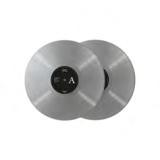
DOUBLE-DISC EDITION OF DARKTHRONE'S 1993 PURE NORWEGIAN BLACK
METAL MASTERPIECE, INCLUDING THE 30TH ANNIVERSARY MASTER, PLUS
ADDITIONAL DISC WITH COMMENTARY FROM FENRIZ
Darkthrone began life in the late 80's as a thrash/ death metal act & progressed
through technical death/doom metal experimentation to become legends of the black
metal world & one of the original leading bands of the Norwegian scene, as well as
inspiring a whole generation of metal bands, as they continue as strong as ever to this
day.
'Under A Funeral Moon', Darkthrone's third album, was originally released by Peaceville
in 1993. The album is a bleak reflection of contemporary times, featuring harsh guitar
riffage & hateful vocals in what was the band's first 100% pure black metal opus; a
work completely stripped of the death metal traces of former releases & in its place, a
stark & primitive execution. This was aided by an intentionally lo- fi sound that is
powerfully cold & entirely unconcerned with any modern- day aesthetics. 'Under A
Funeral Moon' is the album that many Darkthrone fans hail as the ultimate manifesto
for Black Metal.
This edition of 'Under A Funeral Moon' is presented on double- disc CD format &
includes an audio master created for the album's 30th anniversary in line with the
original 1993 version, plus the 2013 commentary disc from Fenriz with his
recollections on the tracks & the time period.
Поиск:fen
Все
TOTEMIC MODULATIONS, UNEARTHED FROM WIND AND WORDS
“The album Chênes mainly brings together songs. These songs are narratives of scenes that unfold in the forest, or in the city but with animal and plant protagonists. One song also tells the story of a solitary walk in the mountains. They are like zoomed-in snapshots of the world of insects, amphibians, birds, and mammals. They are also celebrations of growing life, and the pleasure and joy it brings.
Composed over the course of about two or three years, it was a deliberate choice to bring them together for this album, even though they were not initially connected to one another. One of them is an exception and is more of a collection of vocalizations and cries without actual words, composed in a language incomprehensible to humans because it is nonverbal.
This collection of imitated chants and sung songs had to be illustrated by the collages of my friend Fen. Even though the stories describe real species and elements, they are indeed imagined tales. Her collages are, too. There’s also the violin that adds a wandering touch to the pieces, and other instruments that shape the environment and setting of these stories. Bells, bird calls, whistles, flutes, jaw harp, harmonica — all imitate more or less imaginary species. Each has its role and its life, down to the horsehair of the bow that rubs the strings of my violin to bring forth the sound.
Chênes is a title that pays homage to trees I love so much, though without preference over others. They have embodied several giants that I’ve often come across, greeted, and embraced” ~ Roxane Métayer
Even now, as he reaches his eighth decade, with a lifetime of accolades and a
seminal body of music behind him, Robin Trower is still chasing the biggest
high he knows
It always starts the same way, with a road-scuffed Fender Stratocaster and a revvedup Marshall amplifier, those skilful fingers exploring the fretboard until a riff sticks and
a new song ignites. And from the cultural flashpoint of Sixties London with Procol
Harum, through 1974's stadium- filling Bridge Of Sighs, right up to this year's
acclaimed Come And Find Me, it's these addictive moments of creation that have kept
the guitarist vital, relevant and contemporary while his peers trade on past glories.
"Some people say I'm driven, but I think it's just the love of doing it," reflects Trower of
a multi- million- selling solo catalogue fast approaching thirty releases (and that's
before you compute his collaborations with everyone from Jack Bruce to Bryan Ferry).
"I play guitar every day and just through messing around, ideas happen. I can never
feel the songs coming. But all of a sudden, you get a sliver of an idea and you think,
'Oh, what's this...?'"
Die Herzschmerz-Verkäufer Nature TV verkaufen von Tür zu Tür ein Elixier aus Jangle-Indie und melancholischem Yacht-Rock. Ihr Debütalbum "Unlucky For Some" ist eine Sammlung von 7 EPs, die ewig liebeskranken Dream-Pop mit klassischer Soundinnendekoration und kompositorischen Wendungen paaren. Die reichhaltigen Songs setzen das Thema Liebeskummer in High-Fidelity fort. Das Ergebnis ist eine LP, die mit akribischer Liebe zum Detail summt und sich dennoch so benommen anfühlt wie die Einnahme von Beruhigungsmitteln im Whirlpool. Eine Indie-Jangle-Partyband auf dem Höhepunkt ihres Könnens, nur dass die Party vorbei ist und sie mit dem Soundtrack für das Aufräumen beauftragt wurden. Jemand liegt bewusstlos im Gartenstuhl, Zigarettenstummel stecken in leeren Dosen, eine Tür ist aus den Angeln gerissen, der Pool ist halb versickert, Regen strömt an den Fenstern herunter und alle müssen morgen früh arbeiten. FFO-Immobilien, Ducktails, Glitzerparty.
- "Verträumt schöner Indie-Pop mit einem subtilen Hauch von Introvertiertheit." - CLASH
- "Ein Song für die Heimreise am späten Freitagabend, wenn Ihre Hoffnungen zerstört wurden und Sie etwas Zuneigung brauchen." - Line Of Best Fit
- "Indies neuste strahlende Sterne." - DIY
- Of Furor And Ecstasy
- Aratron
- Walls Come Closer
- A Thousand And More
- Akasha
- On Pyre
Nach einigen Jahren Stille sind MORAST mit ihrem dritten Album FENTANYL zurück. Getragen von Trauer, Verlust und dem Abgrund des emotionalen Schmerzes, haben sie es geschafft, diese Energie in eine feierliche Auferstehung zu verwandeln. Ihr Drang, eine düstere und unheimliche Atmosphäre zu schaffen, ist immer noch vorhanden, aber dieses Mal scheint ihr Ansatz aggressiver, ekstatischer und roher zu sein. Eine sechs Songs umfassende Reise in die düstersten Ecken der menschlichen Existenz. Ein Monolith aus Abscheu und Dreck.
- 01: Es Ist Immer Sommer Irgendwo
- 02: Song Für Die Alu
- 03: Picknick Auf Schloss Mühlenhof
- 04: Ein Dienstag In Dur (Es Ist Frühling)
- 05: Sonniges Süd Schwabing
- 06: Wenn Du Ein Problem Hast
- 07: Ich Geh Lieber Allein
- 08: Ist Gunther Da?
- 09: Paare Vorm Kino
- 10: Hedy Lamarrs Siebter Mann
- 11: Chez Delmonico's
Black 2LP[31,05 €]
Die Liga der gewöhnlichen Gentlemen, vulgo DLDGG, 2012 aus den Ruinen der verblichenen Superpunk entstanden, bestechen auf ihren nun sieben regulären Alben (+einer Best Of) mit ihrer Version von Popmusik an der sie mit einer erfrischenden Sturheit festhalten. Beherzt setzen sie sich seitdem zwischen alle Stühle. Beseelt von der Idee des ursprünglichen Punk (Man muss kein Virtuose sein um tolle Musik zu machen), veröffentlichen sie seit Jahren großartige Popsongs, stark beeinflusst von den drei großen "M"s (Madness, Motown, Modern Lovers). Mit einer herzerfrischenden Kompromisslosigkeit Umarmen und Zementieren sie ihren Außenseiterstatus gleichermaßen. Auf Anbiederung an den Zeitgeist zwecks Erfolgsmaximierung haben sie entweder keine Lust oder, was auch sein kann, da haben sie einfach noch nicht drüber nachgedacht. Ziel der Liga war und ist es immer, dass jeder Albumtrack auch eine Single sein kann. Auf "Egg Benedict" haben sie es eigentlich geschafft. Erfrischend weit weg ist DLDGG vom zeitgenössischem Staatstheater- und Feuilletonrock welcher hierzulande so beliebt ist. Immer wenn ein neues Liga-Album erscheint ist es so, als würde in einer etwas vermufften Wohnung am ersten warmen Frühlingstag das Fenster geöffnet werden und eine herrlich leichte Brise weht herein. Toll, dass es sie gibt!
- Gummy
- Etch
- Chainsaw
- Heaven's Leg
- Philadelphia Get Me Through
- Mainstage
- Snare
- Uno
- Bonehead
- Ring Size
Growing up is painful, brutal, and sometimes beautiful _ something Brooklyn-based indie-rock band Bedridden knows all too well. The band's name is even a nod to that ineffable period between childhood and the jagged edges of the real world. "When I was 21, I kind of lost my home," says frontman/guitarist Jack Riley. "I was couch-surfing. I was having a hard time.The next iteration in the band's maturation, then, is their debut, LP Moths Strapped To Eachother's Backs, 10 fuzzed-out (and sometimes gnarly) ruminations on dating, drugs, and survival out April 11 on Julia's War. The title came from a mysterious missive Riley received on astrology app Co-Star. "Last year I was way too reliant on other people _ my partner at the time, my friends," he says. "I was strapped to them in a weird way _ and flying in circles. This album is about that time."The current incarnation of Bedridden encompasses a patchwork of styles, influences, and friends Riley accumulated over the years. A Chicago native who first started making music at age five on a thrift-store guitar emblazoned with Kurt Cobain's name, Riley moved to New Orleans for college where he dabbled in punk before falling in love with shoegaze. There, he launched the first version of Bedridden. Sebastian Duzian (bass) _ a jazz musician and Pasadena native _ linked up with Riley in NOLA along with his bandmate, drummer Nick Pedroza. Pedroza, from Claremont, grew up on rock, metal, and jazz, honing his style after joining the band. Wesley Wolffe _ a guitarist fed on a steady diet of New Wave and `90s alt _ rounded out the crew just a few months back. Bedridden's previous lineup released their first EP, Amateur Heartthrob, in 2023 _ a noise-washed blend of shoegaze, DIY, and indie that Riley says is a "coming-of-age EP _ these formative stories about not having a bed, dating, being kind of a jackass. I was making fun of myself a lot." That release caught the attention of Douglas Dulgarian from Philly Label Julia's War (and TAGABOW), who signed them for Moths."Some of these songs have been around for years," says Riley, adding that they were recorded last February at Studio G Brooklyn; the album was produced by Aron Kobayashi Ritch (Momma). "As opposed to Amateur Heartthrob, we attempted to blend more clean guitars into a driving sound to capture more clarity _ one that also sounds live_ and raw," Riley says. That rawness thrums through the record, which kicks off with the thrashed "Gummy," about an incident when Riley had to gently fend off a co-worker's unwanted advances while both drunk and high on an MDMA gummy. And then there's mournful rager "Etch," which sees Riley daydreaming about beating up a meddler in his personal life _ in the minor key.The annihilating "Chainsaw" revs in next, a lightning-fast Lemonheads-inspired track that recalls Riley moving in with new roommates who were unnaturally obsessed with purchasing a lamp. "For some reason that pissed me off," he laughs; that rage is evident in the album cover, which shows said power tool demolishing a lampshade. Heavy-shredding "Heaven's Leg" showcases the band's affinity for `90s mainstays like Smashing Pumpkins while telling the tale of a gig at a local church. "The lyrics are about a pastor I had met that had lost his leg," Riley says. "The church had signs about not cussing and I had a feeling that neither of us had anything to talk about without potentially offending the other."The band's not afraid to get confrontational, though, on the anger-fueled, drum-heavy "Philadelphia, Get Me Through," which deals with a dead-end relationship and the mistaken assumption that getting drunk in the titular city would be a balm against the pain. And the nasty, brutist, and short hardcore-adjacent "MainStage"? "It's about being disrespected at a show on New Year's and how I lashed out," Riley says. "I then began to take it out on other people, which was a quality that I despise."Things get contemplative and mournful from here on out _ the emo-edged "Snare" is about bringing flowers to a hospital room where you're not welcome, while the Smiths-inspired "Uno" wrestles with self-loathing. "I guess the big finale of that song was my response to dealing with this recurring experience of feeling like I wasn't good enough by getting really into whippets," Riley says. Nu-metal bop "Bonehead," then, recalls an embarrassing dinner that turned into an argument _ the name applies both to that incident and the delicious simplicity of the guitar parts.After all that turmoil and pain, the band caps everything off with their eyes to the future on the jangle-pop "Ring Size." "All my friends are getting married _ do I follow in their footsteps? Or is it all a waste of time?" Riley says of the song. "At the end, through it all, I guess that's what I've been trying to figure out _ how to grow up, how to move on. I'm trying to navigate things as an adult and I'm not very good at it. But this is just the first record. This is just the beginning."And, hey, at least now he has a bed.
Here's a killer disco 12" with a Jazz-Funk edge from new exciting French producer Bisou.
The A side's 'More More More!' gets you from the very first second and sounds like a blend of independent library funk and EU disco...with an edge!
On the B 'Dudule Rocks' continues with more EU disco and comes equipped with big horns, sexy vocals and thumpin' fender Rhodes.
Both tracks guarantee floor action - 100% GAMM approved!
Scheurneus EP is Vunks latest 12 inch vinyl release on his own legendary imprint Moustache Records. This release is a tribute to the underground scene, no hipster house only pure electro techno acid EBM sounds. This release is part of his 30 year anniversary as a DJ. Produced in his atomic basement Baan Studios downtown Rotterdam. A1 has a crazy funky 303 bassline, 606 hi-hats, 909 toms and more cowbell, vocoder voices and some italo-ish Legowelt-ish melody , this all blends together for this "You Sexy Bassline". When David played it in a B2B with Tom Trago, Tom said are you kidding me, is this your track? A2 "Sorry ain't enough" is a musical tribute to the legendary Emmanuel Top from Belgium. Electro acid and a building up deep track. Expect some extra cut off frequency and resonance. Already played on National Dutch Radio 3FM by the best and funniest radio DJ the Netherlands has to offer; Justin Verkijk. B1 provides a tribute to the EBM wave scene, originally made for a VA compilation that was never released. Now brought to you on Moustache Records because we don't want you to miss this! Expect TR909 hats, vocoders, modular Fenix 4 system and more modular. A hit from the legendary Paradisco Festival in Belgium. B2 is filled to the brim with Flangers, TR 606 Drums and a sharp bassline form the Roland SH101, Davids first and favorite synthesizer ever! He paid 37,50 euro for it back in the days SH101 :) This is a tribute to Robert Armani and Chicago house pumping, jacking and goes up, up, upper, upperst! A pure club banger.
traverse is proud to announce the release of its first record - a compilation of six tracks from various artists, inspired by Pembroke King’s poem moving silhouettes, written for this occasion.
As the fourth volume of the compilation series “traversée”, moving silhouettes encourages artists to explore all corners of listening music and creative avenues that aren’t tied to any one convention.
Pembroke King’s poem sheds light on the mood of the compilation, and even though each artist brings its own interpretation of it, there is a beautiful harmony of it all - from Kate Miller’s atmospheric sounds to Teqmun’s drums-made-of-rain-drop-recordings or Ghjuliú’s nostalgic melodies, the listener travels around Pembroke’s words with each track.
As our first physical release, we feel honoured to collaborate with artists who have been involved in a way or another on traverse before such as Officium, Mika Oki and Alohn, but Kate Miller, Teqmun, and Ghjuliú, that we’ve been keeping close to our heart for a long time already.
Credits:
artwork: Gabriel Sauvageot
tracks produced and mixed by (in order of appearance): Alexis Tytelman, Tijmen Blokzijl, Alban Mercier and Yolek, Kate Miller, Ghjuliú, Mika Oki
mastered & cut: Marco Pellegrini at Analogcut
digital master: Umvral
distribution: Kuroneko
- Stone
- La Pelea Del Gobernador
- Pobre Gato
- Nunca Cambias
- Nada De Nada
- Algun Dia
- Swarlb
- Sookie Sookie
- Coge Mi Mano / Gimme Little Sign
- No Time
Discover the groundbreaking sound of Los Texao, a legendary Peruvian rock band that helped shape the music scene in the 1970s. Born in the culturally rich city of Arequipa, Los Texao's journey to stardom was paved with innovation, passion, and an undeniable connection to their roots. Their music fused the energy of psychedelic rock with Latin American influences, captivating audiences across their native Peru, Los Texao's psychedelic phase was marked by experimentation with new sounds and instruments. This release comprises their complete recordings, including all their singles and also covers of some of the most influential rock bands of the era, most of them previously unavailable on vinyl. Formed in 1969, the band took their name from Arequipa's emblematic flower, the nasturtium, and made an immediate impact with their debut at a local band contest. Soon after, they recorded their first 45 RPM single, which included covers of tracks by Chilean group Los Beat 4. But it was in the early 70s when Los Texao truly found their voice. With a dynamic lineup, including the talented Fernando "Feño" Humbser and Juan Núñez on guitar, Víctor Dibán on vocals and bass, and Edgar "Chito" Manrique on drums, their musical evolution began to take shape. The addition of Julio Torres, a keyboardist and guitarist from the iconic bands Los Beatniks and Los Dig It, further elevated their sound. Los Texao's psychedelic phase was marked by experimentation with new sounds and instruments. They embraced the emerging trend of playing rock in English, despite the language barrier, and incorporated cutting-edge gear. With the help of the legendary Peruvian jazz musician Jaime Delgado Aparicio, they created hypnotic tracks like 'Algún día' and 'Nunca cambias,' capturing the essence of 70s rock with swirling textures and atmospheric vibes. But it wasn't just the melodies that set them apart - their electrifying rhythms and powerful arrangements, like those heard in 'Stone' and 'La pelea del gobernador,' showcased their refined musicianship and intense dedication. Los Texao quickly became a sensation in Peru, performing in cities like Puno, Moquegua, and Arica (Chile), and sharing stages with iconic bands like Los Shain's, Traffic Sound, and Telegraph Avenue. Their infamous hit 'La pelea del gobernador' tells a tale of generational conflict and rebellious youth, captured in a live performance that still resonates with audiences today. The band's wild live shows became the stuff of legend, with fans packing into intimate venues to experience the raw energy of their loud, unapologetic rock. In addition to their 45s, Los Texao also recorded covers of some of the most influential rock bands of the era, including Cream, Steppenwolf, and The Guess Who, showcasing their versatility and love for classic rock. Unfortunately, this session remained lost for years and some of these covers have never been available on vinyl before. Despite their growing success, Los Texao eventually disbanded in 1975 due to personal and professional challenges. But their legacy never faded.
- Pharaoh's Dance
- Bitches Brew
- Spanish Key
- John Mclaughlin
- Miles Runs The Voodoo Down
- Sanctuary
Listen to This.” As the original working title for Bitches Brew, the instruction and invitation remains to this day as the best way to approach a record that shattered conventions, altered music history, and, 55 years later, still sounds far ahead of its time. The template for jazz fusion, Bitches Brew is rightly ranked by virtually every significant outlet among the 100 greatest albums ever made. Sewn together with vibrant colors, voodoo textures, and ethereal moods, the 1970 landmark emerges with supreme detail and nonpareil feeling on Mobile Fidelity’s UltraDisc One-Step 180g 33RPM 2LP vinyl set.
Sourced from the original master tapes, strictly limited to 5,000 numbered copies, and pressed at Fidelity Record Pressing in California, this definitive-sounding 55th anniversary reissue enhances every element of a double album that established new possibilities for studio recording techniques. You’ll hear wide and deep soundstages, separation between instruments, and an extremely broad dynamic range. If ever a jazz album can be said to have gone to outer space and back, this is it.
Davis conceived Bitches Brew by having the musicians stand in a semi-circle. There, he pointed at them with vague directions for tempo, solos, and cues. The collective improvisation and interplay spawned a galaxy of melodies and grooves that were later spliced together by producer Ted Macero. Benefitting from the ultra-low noise floor and superb groove definition of this pressing, these distinct creations take shape with utmost realism. Compositions stretch across jet-black backgrounds and paint canvases laden with millions of colors and shades. Juxtaposed percussion, loose jams, and melodic segues explode with impressionistic verve.
Bitches Brew also boasts visionary artwork. By design, the lavish packaging and gorgeous presentation of the UD1S Bitches Brew set call attention to such matters. Housed in a deluxe slipcase, it features special foil-stamped jackets and faithful-to-the-original graphics that illuminate the splendor of the recording. It is made for discerning listeners who desire to fully immerse themselves in everything surrounding the album, from the images to the tones. And this is one effort where every last detail matters.
Gathering a Hall of Fame-worthy lineup of musicians and tweaking it according to his desires, Davis follows through on his idea to “put together the greatest rock and roll band you ever heard.” Central to his proposition is the presence of two (and sometimes three) drummers and two bassists, a tactical move that makes rhythms a central focus. Akin to the futuristic album cover art, the drum-driven suites head toward distant universes and uncharted territories. At once hypnotizing and grooving, they chart maverick adventures via quixotic rock, funk, and R&B elements.
A without-a-net experiment involving interchangeable double-quintet lineups, Bitches Brew explores the previously unimaginable with electrified instruments — Fender Rhodes piano, processed trumpet, dissonant guitars, and bass among them — and an emphasis on feeling over composition. Mesmerizing and soothing, jarring and smooth, overt and subtle: The music seemingly covers an entire map of emotions and sensations, and like no record before, ties together the groundbreaking creativity of the multiple disciplines that were changing popular culture at the end of the 1960s and dawn of a new decade.
Conceptually, Davis described Bitches Brew as “a novel without words” and “an incredible journey of pain, joy, sorrow, hate, passion, and love.” The vast psychedelic expanses of warped echoes, liquid reverb, and tape loops confirm such ambitious contrasts of light and dark, fear and hope. Yet the most absolute characteristic of the watershed effort lies in how it resists definitive interpretation and encourages free thought — the very principles Davis used to conceive Bitches Brew.
More About Mobile Fidelity UltraDisc One-Step and Why It Is Superior
Mobile Fidelity Sound Lab’s UltraDisc One-Step (UD1S) technique bypasses generational losses inherent to the traditional three-step plating process by removing two steps: the production of father and mother plates, which are created to yield numerous stampers from each lacquer that is cut. For UD1S plating, stampers (also called “converts”) are made directly from the lacquers. Since each lacquer yields only one stamper, multiple lacquers need to be cut. Mobile Fidelity's UD1S process produces a final LP with the lowest-possible noise floor. The removal of two steps of the plating process also reveals musical details and dynamics that would otherwise be lost due to the standard multi-step process. With UD1S, every aspect of vinyl production is optimized to produce the best-sounding vinyl album available today.
- A1: Lean Beef Patty
- A2: Steppa Pig
- A3: Scaring The Hoes
- A4: Garbage Pale Kids
- A5: Fentanyl Tester
- A6: Burfict!
- A7: Shut Yo Bitch Ass Up / Muddy Waters
- B1: Orange Juice Jones
- B2: Kingdom Hearts Key (Ft Redveil)
- B3: God Loves You
- B4: Run The Jewels
- B5: Jack Harlow Combo Meal
- B6: Hoe (Heaven On Earth)
- B7: Where Ya Get Ya Coke From?
SCARING THE HOES ist das erste Kollaborationsprojekt von JPEGMAFIA und Danny Brown.
Nachdem das Album über ein Jahr lang gehänselt worden war, erschien es im März 2023 und fand großen Anklang bei der Kritik. Beide Künstler verfügen über eine breite und etablierte Fangemeinde und ein Renommée in der Alt-Hip-Hop-Welt.
Ihre Online-Präsenz ist mit zusammen über 1 Mio. Instagram-Followern riesig und der Podcast von Danny Brown erreicht eine große Hörerschaft. Neuauflage auf weißem Vinyl.
- Broken City Seance
- Systol Nightshade
- Vanish Always
- Colza
- The Glass Curtain
- Shadow Through The Eyelit
- Armistice
- Arise And Perish
- Sundial
Nach einer Reihe von zunehmend elektronisch geprägten Veröffentlichungen, kehren Billow Observatory mit einer völlig ambienten, schlagzeuglosen Perle von einem Album zu den Soundgefilden ihres Debüts aus dem Jahr 2012 zurück. Indem sie den Zufall und die Zufälligkeit umarmen, erheben sich spektrale Gitarren, flirren und knistern in staubige Partikel, während das Konzept der Zeit in jedem Track aus dem Fenster geworfen wird. Eine zunehmend feindselige Gesellschaft trägt zweifelsohne zum Gefühl der Introspektion und der Suche nach dem ,Anderssein" bei. Grübelnd, unheimlich, und wunderschön, werden die Hörer mit einer sehr detaillierten Sammlung von Songs belohnt, die Visionen von sich langsam drehenden Kugeln hervorrufen die leicht aus der Achse geschleudert werden. Das Duo, bestehend aus Jason Kolb (Michigan, USA) und Jonas Munk (Dänemark), begann 2006 mit der Zusammenarbeit und schickte sich gegenseitig Tracks über den Atlantik, was schließlich zu einer Veröffentlichung führte. Was zunächst als Nebenprojekt begann, wurde langsam zur Haupttätigkeit der beiden Künstler. Inzwischen haben sie insgesamt vier Alben veröffentlicht. Ihre Musik hat sich im Laufe der Jahre weiterentwickelt und ein Level der Perfektion erreicht, das sonst nur Produzenten zugestanden wird, die schon seit Jahrzehnten im Geschäft sind. Billow Observatory stehen mittlerweile für Ambient-Musik auf höchstem Niveau.
Hermon Mehari and Tony Tixier first met in 2010, in their early twenties, in a club on Paris's Rue des Lombards for a concert with saxophonist Rodolphe Lauretta. Over the next decade, the two musicians took opposite paths, while continuing to collaborate on two continents. The American trumpeter moved to France to discover European culture and the world cultures that coexist there, while the Parisian pianist of Martinican origin spent several years in the USA, immersing himself in the roots of jazz and Afro-American music.
In June 2024, the two musicians, who had been working for fifteen years on numerous albums and collaborations, and whose musical understanding had continued to be forged in clubs, festivals, and on recordings, met again for a duet at the TOC-TOC festival in the Puisaye region, where Antoine Rajon was a collaborator. Enthusiastic about the idea, the artistic director of the KOMOS label invited them back to his home in this corner of Burgundy to record this Fender Rhodes/trumpet formula. He called on sound engineer Christian Hierro, who traveled with his mobile studio for the album recording, then mixed and produced the master in his studio in Lyon, using the best analog equipment and his expert ear.
At dusk on November 12, 2024, the duo played eight tracks in a single, direct take on a 33-minute magnetic tape.
Four unusual cover versions were carefully chosen. "Maimoun" is a composition emblematic of pianist Stanley Cowell's style, also recorded by Marion Brown. George Duke's "The Black Messiah" was captured live by Cannonball Adderley's band on an album of the same name but has never been released as a studio version. "Hello To The Wind" was created by Bobby Hutcherson in 1969, sung by Eugene McDaniels. Finally, "Laini," dedicated by the great Martinican pianist Marius Cultier to one of his daughters, is a mazurka dear to Tony's heart.
Each of the musicians also contributed a composition: Hermon with "This Is Our Fantasy," written especially for the session, and Tony with "Poem For The Oppressed," a moving composition with an explicit title. Lastly, the duo improvised two tracks, without repetition, in mutual symbiosis and echo.
SOUL SONG captures a moment without enhancement, transformation, or additives, far removed from contemporary virtual technologies.
- Kopuk Uçurtma
- Karargah
- Feel
- Bekledigim Gibiyim
- Oh Be!
- Pazartesi
- Siraze
- Defne Kalbim 96
- Yangin Akvaryum
Gegründet im Jahr 2008, hat sich Büyük Ev Ablukada zu einer der einflussreichsten Bands der türkischen Alternativ-Musikszene entwickelt. Mit ihren metaphorischen und fröhlichen Liedern haben sie schnell eine große Fangemeinde gewonnen und durch ihre mutige, originelle und genreübergreifende Musik, der Stadt Istanbul und dem Land neues Leben eingehaucht. Büyük Ev Ablukada ist eine der populärsten und erfolgreichsten alternativen Bands Istanbuls, die den dynamischen kulturellen Puls Istanbuls auf den Punkt bringt. Mit jedem Album ist es ihnen gelungen, ihre Hörer mit einem anderen Musikstil und einer innovativen Herangehensweise zu überraschen. Die Reise, die mit ihrem ersten Album ,Full Faça" begann, setzte sich mit ,FIRTINAYT" fort und fand zuletzt mit ,Defansif Dizayn", an dem sie jahrelang gearbeitet haben, ihren nächsten Höhepunkt. Ihr genreübergreifender Sound spiegelt die sich ständig verändernde Energie der Stadt wider und schafft eine innovative und mutige Darstellung des modernen Istanbul. Ursprünglich im August 2024 exklusiv in der Türkei veröffentlicht, markierte "Defansif Dizayn" die mit Spannung erwartete Rückkehr der Band mit ihrem ersten Studioalbum seit sieben Jahren. Dieses Album ist mehr als nur Musik - es ist ein Fenster in die zeitgenössische Klangwelt Istanbuls und ein Spiegelbild einer Stadt in ständiger Entwicklung. Es hat sicherlich das Potenzial, sowohl kulturell als auch künstlerisch, eine starke Anziehungskraft auf ein europäisches Publikum auszuüben. Und sicherlich wird auch die große in der EU ansässige türkische Gemeinschaft, die eine tiefe Verbindung zur pulsierenden Musikszene Istanbuls pflegt, diese Album jetzt (nochmal) warnehmen. Im Frühjahr 2025 wird die Band eine Europatournee starten, die sie in einige wichtige Städte führen wird. Zur Unterstützung dieser Tournee wollen die Band und das Label nun eine spezielle Europa-Edition mit einem neuen, alternativen Cover-Artwork präsentieren und wieder Vinyl erhältlich machen. Das Mastering der Platte wurde von Shawn Joseph in den Grammy-prämierten "Optimum Mastering"-Studios in Bristol durchgeführt, in denen auch schon Namen wie Massive Attack und Portishead gearbeitet haben. Hergestllt wurde die EU Edition bei Optimal. Das Label CAZ PLAK stammt aus Istanbul, und verbindet konzeptionell Jazz mit anderen Genres um neue, hybride Klänge für die 2020er zu finden, am besten in ihrer idealistischsten und künstlerischsten Form. Obwohl das Büyük Ev Ablukada-Album musikalisch von Caz Plaks üblichem Jazz-orientierten Katalog etwasabweicht, fügt es sich in Geist, Haltung und musikalisch nahtlos in die Vision des Labels ein.
- Stay
- Rollin Dice
- Backdown
- Interlude
- Walkslow
Black Vinyl[22,48 €]
Lean back on the beat. Inhale, exhale. A new voice from an old soul. Kick drum rolls deep with Fender Rhodes. Charlotte Day Wilson sparking up a blunt, skateboarding at midnight with Brittany from Alabama Shakes. Jazzy intonation on a funky tip. Utterly confident in its own sense of time. Just in time.
You may not have heard of GC O'Connor before, but ask any working musician in Sydney and they know her name. A stalwart of the scene, multi-instrumentalist and composer O'Connor has been putting in the work for years, quietly dropping gems as she readies her debut EP, a self-described 'bedroom soundtrack'. Soul Lament is the kind of assured, accomplished record we delight in putting out into the world. It's representative of a fertile scene in Australian music that deserves celebrating.
Includes an individually-numbered, specially-designed obi strip.
Web Web mit ihrem sechsten Album in sieben Jahren und mit einem neuen Touch. Mehr psychedelisch, mitunter krautiger als zuvor.
Dazu haben sich WEB WEB diesmal (wieder) in Originalbesetzung (ohne Max Herre) einen besonderen Gast ausgesucht: JJ Whitefield (The Poets Of Rhythm / Karl Hector & The Malcouns / Syrup), der den fantastischen Gitarrensound beisteuert. Seine Riffs sind manchmal funky wie bei den Poets Of Rhythm oder Syrup, oder psychedelischer wie bei Karl Hector & The Malcouns oder seinen vielen Live- und Studioaufnahmen mit Embryo. Die Soundfarbe seiner Gitarre gibt dem Album den Schub in die wunderbare Atmosphäre spaciger Jazz-Kraut Bands der Siebziger. Das Konzept des Albums sollte das exakte Gegenteil zum vorigen WEB MAX Album (WEB MAX II) darstellen: Wieder zurück zu den (WEB WEB-) Wurzeln, mit spontanen, improvisierten Stücken, Fragmenten, Ideen, die größtmögliche Freiheit und Live Spirit bedeuten. Und genauso unvorhersehbar und improvisiert war auch die Idee, JJ Whitefield mit ins Boot zu holen: Einen Tag vor der Session dachte sich Roberto Di Gioia: "JJ und ich leben seit jeher in München. Wir sind uns aber leider nie wirklich über den Weg gelaufen. Ich bin ein großer Bewunderer seiner Kunst, seiner Musik, seiner Art zu spielen. Er ist so inspirierend, weil er keine Kompromisse eingeht. Er spielt auf seine so eigene Art und Weise, er ist keine Kopie von irgendwem und irgendwas."
Die 14 Kompositionen entstanden an zwei Tagen, aufgenommen von Jan Krause (Beanfield) in München. Die energetische Live-Session ging über zweimal 10 Stunden, und alle - Roberto Di Gioia (Rhodes, Fender Precision Bass, Moog, Mellotron, Percussion), Christian von Kaphengst (Fender Precision Bass, Rhodes), Peter Gall (Drums, Percussion, Fender Rhodes), Tony Lakatos (Tenorsaxophon, Querflöte) - waren bis ins Mark "on fire". Dabei wechselten die Musiker die Instrumente, um einen vollkommen anderen Gesamtklang zu erzeugen: Kaphengst am Fender Rhodes klingt anders als Roberto, sein Spiel hat einen anderen harmonischen Aufbau, und Roberto am Bass kennt man von zahlreichen Max Herre Aufnahmen, oder von Till Brönners Album "Till Brönner", und natürlich auch bei dem von ihm produzierten "Let Yourself Be Loved" von Joy Denalane, das auf Motown Records erschienen ist.
The Ibex Band, with Giovanni Rico and Selam Woldemariam at the creative helm, provided the musical backbone for legends like Aster Aweke, Girma Beyene, Tilahun Gessesse, Mulatu Astatke, and Mahmoud Ahmed, including the iconic album Ere Mela Mela, shaping modern Ethiopian music as we know it today. This 1976 album (Ge’ez Year 1968) played a pivotal role in that legacy and has now resurfaced to set the record straight.
There’s a tendency to talk about the seventies as a golden age of Ethiopian music. There are good reasons for that, and just as good reasons against it. However, the notion of a golden past privileges the role of Western explorers and suggests that the pinnacle of Ethiopia’s musical culture is something only a foreigner can appreciate and unearth. It downplays the complexities of Ethiopia’s culture and history, creating an artificial divide between then and now. And it underestimates the constantly evolving sound that has followed.
The legendary musical outfit The Ibex Band, later metamorphosed into The Roha Band, has played a central role in defining the sound of many of the greatest stars on the music scene of Ethiopia from the mid-seventies onwards–but their golden output has never really waned. The story of the origins of the band that provided the musical backbone for greats such as Aster Aweke, Girma Beyene, Tilahun Gessesse, backing the solo career of group member Mahmoud Ahmed as well as backing Mulatu Astatke and many others has yet to be properly told.
Two misconceptions plague the image of Ethiopian music, one is that the music is pure because it is, by some notion, unexploited, the other is that it is all traditional. To begin with, a combination of political changes between the late sixties and the mid-nineties created an environment where only the most dedicated and skilled musicians struggled on and pursued a musical career against fierce odds. The whole Ibex Band, with Giovanni Rico and Selam “Selamino” Seyoum Woldermarian at the creative helm, are arguably the origo of the vibrant scene in the mid-seventies, and the said pair are foremost responsible for not only navigating the band through troubled times, but also modernizing the 6/8 chickchicka rhythm to a contemporary form. Giovanni laid the rhythmic foundation with heavy looped basslines that reinvented traditional melodies as dance music, and with Selamino’s innovative guitar work they influenced scores of musicians from Abegaz Kibrework Shiota to Henock Temesgen. Even Giovanni’s Fender bass and Selamino’s Gibson guitar inspired younger musicians in their choice of instruments. Not only in choice of instruments but also in sound–even as the digital revolution hit Ethiopian music, a lot of popular music still took its cue from the masters from Ibex and Roha.
Ibex emerged out of the ashes of the sixties group the Soul Echos band, adding Giovanni and Selamino to their ranks and taking their cues from a slew of influences, such as Motown and The Beatles, fused with traditional music. A tighter-knit unit than most bands at the time – Ibex has remained six to seven members throughout their whole career, compared to many bands that were as large as fifteen or sixteen men strong when Ibex set out. Their playing has been viciously focused, economical yet heavy. Just a year before the recording sessions of the album in your hands, Giovanni and Selamino made a contribution to the popular musical lexicon of Ethiopia that was simply defining the popular sound: their arrangement and recording of bandmate Mahmoud Ahmed’s solo effort and real commercial breakthrough tune and eponymous album, Ere Mela Mela, from 1975.
Selamino has never limited himself to being an adroit lead guitarist, but has always been a scholar of history, and as such he has probably contributed as much to modern Ethiopian music with his guitar playing and compositions as with a deepened understanding of modern or contemporary – Zemenawi – Ethiopian music. Selamino’s contributions serve as a metaphor for those of the whole band, at one and the same time creating and defining a new, danceable and updated sound anchored in Giovanni’s bass, whilst also elevating the broader scene through their support for others on the scene and on top of that, increasing the understanding of the music.
There is an understandable desire to romanticize the musical heyday Ibex and Roha were at the forefront of, because so much of the output is sorrowfully hard to come by. Ibex creativity was nothing short of ridiculously fierce compared to many of their Western contemporaries. Based on their sheer recorded output alone they could have usurped the title “hardest working in show business” from James Brown, recording more than 250 albums or 2500 songs in the seventies and eighties. Some only surface as cassettes today, others were never given full LP release, and some are simply impossible to find today. In the light of that, it’s nothing short of a miracle that the recording Stereo Instrumental Music from 1976 (Ge’ez Year 1968) has resurfaced. Unearthed in perfect condition on a chrome cassette, this is musical history comes alive–to set the future straight. Stereo Instrumental Music was recorded in collaboration with Karl-Gustav Lundgren, a Swedish national working for the Radio Voice of the Gospel. It took two sessions at the Ras Hotel ballroom in Addis Ababa. The Ibex Band was the first band in Ethiopia to employ a four-track recorder for their recording (the first available in the country, lent by Karl-Gustav). Later the same week, Giovanni and Selamino realized that, lengthwise, the recorded material fell short of what they wished for, so they recorded four more tracks in one more session on a single-track recorder. The Ras Hotel and Ghion Hotel, where the Ibex Band held musical residencies were to Ethiopia in general and Addis Ababa in particular what Motown was to the USA and Detroit a few years earlier – a hotbed of musical creativity and showmanship.
The most astonishing thing about Ethiopian music of the last half century is how tradition and modernity are intertwined. Because of this feature, it’s kind of hard to tell when there ever was or when we are in a “golden age”. So much of music from the past has been criminally neglected, but because of the hardships in the past, it would be an oversimplification to say that said past was a golden age. Probably, the golden age is what we are approaching, because for the first time both the past and future are accessible, and the monumental contributions from before can lay a firm foundation for a thriving music scene today. The Ibex Band stands firmly in the past, present and the future. That, if anything, is golden.
The detailed history of Stereo Instrumental Music is in many ways unique. To begin with, it couldn’t have been recorded earlier (there were no four-track recorders available) and it really couldn’t have been recorded afterwards either, at least not in the years directly following, because of the toll the musical scene took from the unfavorable political climate that followed when the nascent Derg regime and rival groups tried to assert themselves, the musical equipment lent from The Voice of Gospel Radio simply disappeared from Ethiopia when the radio station folded in 1977. Karl-Gustav Lundgren,
the Swedish foreign national who assisted during the recording, worked with the Ethiopian Evangelical Church Mekane Yesus at the time, recalls how they only had about fifteen minutes to get the microphones in place for the recording as to not alert neither the management at Ras Hotel nor the authorities and most importantly, to complete the recording before the curfew came into effect at midnight. In leaping to the opportunity to use previously unavailable equipment to push their sound forward and improvising to meet the logistical challenges, the Ibex Band displayed the very avant-gardism and adaptability that explains their longevity as a band through the years. The recording of Stereo Instrumental Music is from a given time in history, but it sounds as beyond time.
Much of the energy that burst out of the scene that Stereo Instrumental Music came out of dissipated or got sidetracked during the societal changes Ethiopia went through in the 1970s and 80s. Whilst leaders might have professed to be revolutionary, the work ethic of the Ibex Band can truly be described as that. They never called it quits, but adapted, toured extensively abroad in Africa, Europe, and the Middle East, and found ways to work even in the face of the curfew that curtailed a lot of musical life. They even played major arenas in the nineteen eighties, despite said curfew and restrictions. The whole extent of their legacy has never been told, but their music speaks louder than words, so therefore… tune in to the Ibex Band’s Stereo Instrumental Music.
- A1: Kamic, L'artiste
- A2: Générique Début
- A3: Jo Vient Vendre Ses Trucs À Moreno
- A4: Kamic Au Bord De La Seine
- A5: Spaghetti Drums And Tuna Sax
- A6: La Patek, Je L'ai Vendue
- A7: Kamic Devant La Fenêtre Du Musée
- A8: Kamic Dévisse, Démonte Et Observe
- A9: Moreno Calls
- A10: Cobb Découvre Les Oeuvres
- A11: Jo Devant Son Brasero
- B1: C'est Qui M ?
- B2: Cobb Achète Le Modigliani
- B3: Jo Chez Cobb
- B4: Arrestations
- B5: Cobb Détruit Les Œuvres
- B6: Interrogatoires
- B7: Épilogue
- B8: Cobb En Panique Avec Sa Femme
- B9: Late, I Wanna Run Home
- Original soundtrack of "Les Règles de l'art". 100% new original songs by The Liminanas/Lionel Liminana & german -french music composer David Menke .
- Black LP, gatefold sleeve
- Exclusive Record Store Release
Defiant Life – die zweite Duo-Aufnahme von Vijay Iyer und Wadada Leo Smith für ECM – ist eine tiefgründige Meditation über den Menschen in der Gesellschaft und das damit verbundene Leid, aber auch die
Resilienz. Zwischen Leo Smiths unverwechselbaren Trompetenflügen und Vijays feinfühligen Erkundungen
an Klavier und Fender Rhodes schimmert ein ätherisches Funkeln durch mehrdimensionale Räume hindurch,
die Platz für nachdenkliche musikalische Konversationen schaffen. ”Wir arbeiten mit unseren individuellen
Sprachen und Materien”, schreibt Vijay in seinem ausführlichen Begleittext, „aber auch mit unseren Methoden der akustischen Einstimmung und mit dem, was ich als eine gemeinsame Ästhetik der Notwendigkeit
bezeichnen würde”. Eine Notwendigkeit, die sowohl von Dringlichkeit als auch Frieden gezeichnet ist, sich
im ersten langen Stück „Sumud” unheilvoll äußert, dann mit bluesigen Untertönen auf „Floating River
Requiem” wieder auftaucht, immer noch zweifelhaft, aber mit Silberstreifen auf „Elegy: The Pilgrimage”
zu hören ist und schließlich auf dem abschließenden ”Procession: Defiant Life” schrecklich schön zum
Ausdruck gebracht wird. Defiant Life wurde innerhalb von zwei Tagen im Auditorio Stelio Molo in Lugano
aufgenommen und von Manfred Eicher produziert.
Tornamented Walls is the first result of a collaboration that began in 2022. The album is a freeze-frame of emergence: personal preparations prior and minor aside, the album was live and improvised. Rosa Anschütz sings, speaks, plays harmonium, and utilizes a looper as an instrument in itself. Her symbolic prose is at the heart of the music, emotionally direct yet haunted by a translucent potential of meaning. In lockstep with the voice, Tennota dissolve the dense rhythmic complexity of their recent work into a creeping mantra, the material interrogated until the patina of the sound is the music itself.
Tornamented Walls floats on top of a wave of slow-motion techno influences, a deepened ambient and experimental perspective, and a feel of subtle and subdued lyricism not strictly limited to its vocal parts. It is a record of darkly ambient and abstracted techno pop, listening music to be played loud. More disenchanted than dark, it is confrontational through its fearless incorporation of a widely varying set of different states of mind.
Tennota are Tom Wheatley & Grundik Kasyansky. Since 2019, they have been reimagining the relationship between physical and digital worlds through music, using gut strings, sine waves, tree sap, and feedback, and flexing them over contemporary technologies into an elemental suspension. Not futuristic, but rather an alternative present.
Rosa Anschütz is an artist and musician whose sound-based practice is framed by sculpture, installation, and scenography. Her meditative and sometimes haunting compositions combine the dark ambiance of post-punk and cold wave with ethereal polyphony, synth-driven melodies, and spoken word.
Теnnota & Rosa Anschütz will be touring in April, stopping over in Eupen on April 18th for a concert night at the Galerie vorn und oben. Further on the bill that night will be Tristwch Y Fenywod.
Spandau20, an imprint named after the Western Berlin district and focused on artists from the area, delivers techno in all diverse forms - from warehouse and electronic peak time beats to breaks and IDM, balancing the old and new school sounds flawlessly. With a focus on vinyl releases, for the collectors, Spandau20 has lately also focused on its label nights, with showcases at Fabric, Bassiani and many others. The label's 10th release features 10 tracks that epitomise the musical diversity of Spandau20 and the progressive musical mindset of its roster, calling on the label favourites and Spandau natives to deliver brand new and exciting music. This special release even features one track that all artists have worked on together: 'Come Closer', a swarming, slithering beginning featured as the VA's opener. Its barely coherent female vocal echoing amidst a cacophony of demon-like effects. The chilling ambience captured at the offset transcends into the first full length track by Elli Acula, 'Floating Eyes', a cur characterised by an authoritative, pounding bass featuring calculated percussive rolls and metallic overtones to make for a face-scrunching opener to this devilish collection of works. FJAAK follow for the first of twin cameo appearances, partnering up with fellow live supremo and hardware aficionado KiNK. On 'Overbridge' the trio deliver a cavernous, rolling number driven by a deep thrumming bass in addition to a razor-edged lead synth, and pulsating technopattern. Dajusch is known for incorporating his years of classical study in with his immersive musical style - and with his VA effort the Berlin native neatly showcases this. Easing the energy slightly, 'Move' escalates from its warm, melodic intro into rumbling goliath of a beat comprising a looping, slew of gassy harmonics. The momentum of the release shifts considerably with the introduction of acutely versatile producer, DJ and sound artist Claus. The artist from Spandau leans his track 'Bloomscroll' towards sparse, dubby sonics in which he intricately ties together to form churning, burgeoning soundscape. FJAAK jolt proceedings back into the techno groove with their signature blend of arresting sub-bass and reverberating rhythms, which come thick, fast and heavy on 'Jackfruit'. The abstract wonder of Anna Z's broken-beat like stylings is fully explored on 'Icy Liq'. It's outlandish and amorphous in its execution, causing a clattering percussive chaos that's choicely pieced together by the modular-extraordinaire. Nikk stealthy moves into breaks territory with his track 'Down In The Shadows', packing a trap-like snare with an acid-flecked melody and dawn-breaking, dream-like textures. The penultimate track on the VA is 'Tufted'. J.Manuel expertly employs a chorus of robot-like sonics that course through a short-circuiting low-end to produce a pacy, inescapable journey via a whirling, merciless beat. He is joined by the legendary producer Tobi Neumann for their menacingly ambient number titled 'Fennec.' In parts a nod to UK dubstep, the duo concocts a fierce admixture of styles bolstering tribal-like components with industrialised overtones and methodically crafted drum-fills.
- A100:
- Carry No Thing
- Careful
- Please Slow Down
- The White Light Of The Morning
- Wake
- Heavy Hearts
- How It Was It Will Never Be Again
- Something Beautiful And Bright
- Heartbreakdown
- Nobody Lives Here
SYML is the solo venture of artist Brian Fennell. Welsh for “simple”—he makes music that taps into the instincts that drive us to places of sanctuary, whether that be a place or a person. Born and raised in Seattle, Fennell studied piano and became a self-taught producer, programmer, and guitarist. Says Fennell about his album Nobody Lives Here, "We change, the world changes, and there is so much unknown. About a year ago I started writing songs that represent the change that is happening in front of my face, a group that have emerged to become the third SYML album. Many of these songs are about getting older, and the intimate, and sometimes frightening, passing of time. Some are about how getting older revolves around looking forward to things happening, and when they don’t happen, or they feel different than anticipated, we can be left with surprise and sadness. I’m actually reminded of this watching my 2 year old! We learn to live with disappointment. I recorded some of these songs with kids and dogs making noise in the background, and others in silent studios with musicians I’ve listened to and admired for many years. These songs are meant to be pieces of clothing to wear as you need (or I need). Some are bright and bold and others are gentle, but they were all made with a sense of comfort in mind, even when things feel bleak. My wife jokes that when our friends hear some of these songs, they might think we are not “ok”. Thankfully, putting myself inside a sad song is still a good place to feel happy. There's this generally unspoken feeling that musicians don’t listen to their own music. That isn’t true for me. I love living with my songs because their meaning changes as I change. There is as much fear and beauty in the big questions as there is wonder and possibility in the simple, everyday shit we live through.”
Wie Hip-Hop nach Hamburg kam
Die Compilation ist als Zeitreise zu den Anfängen der Hamburger Hip-Hop-Kultur konzipiert und umfasst über 100 weitgehend unveröffentlichte Songs und Skits. Begleitet wird das Triple-Vinyl von einem 96-seitigen Booklet, das von den frühen Jahren von Hip-Hop, Rap und DJing in Hamburg erzählt. Präsentiert wird das Werk von den Herausgebern des Buchs und den Kuratoren der Museumsausstellung EINE STADT WIRD BUNT.
Kennt eigentlich noch jemand Easy Business? Was wie ein Ratgeber Video auf YouTube klingt, ist der Name einer der ersten Hamburger Rap-Gruppen. Die vierköpfige Formation aus Steilshoop gründete sich schon in den späten 1980er Jahren und begann bald erste englischsprachige Texte zu schreiben. 1989 nahmen sie gemeinsam mit Mario von Hacht den Song „Money“ in einem Jenfelder Jugendzentrum auf.
Als House-Produzent verfügte Von Hacht über ein vergleichsweise schon recht ansehnliches Produktions-Equipment. Selbst die legendäre Roland TR-808, analoger Drumcomputer und Allzweckwaffe von Hip-Hop-Produzenten, war bereits 1989 Teil seines Maschinenparks. Nur hatte er sie eben nicht für Rap genutzt – bis Easy Business anklopften. Und so öffnete ein Musik-Nerd und Technik-Freak dem Hip-Hop eine Tür in Hamburg. Von Hachts Offenheit für den neuen Musikstil sollte sich auszahlen: 1995 produzierte er mit „Nordisch by Nature“ den ersten Chartstürmer von Fettes Brot.
Es sind Geschichten wie diese aus der Gründerzeit des Rap in Hamburg, um die sich die 3-Vinyl-Compilation EINE STADT WIRD BUNT dreht. Unter den über 100 Songs und Skits aus den frühen Jahren des Rap in Hamburg finden sich neben dem Song „Money“ von Easy Business auch ein Mitschnitt eines Auftritts der Gruppe in der Fabrik im Mai 1991.
Von frühen Aufnahmen von MC Africa True, der später unter dem Namen Nana einige Hits landen würde, bis zu den Britcore-Veteranen von Readykill, von 2 Ruff, deren Mitglied Simple Simon zu den ersten Hip-Hop-Produzenten der Stadt gehörte, bis zu den Reim Banditen, die als eine der ersten hiesigen Bands mit einem Majorlabel-Vertrag als Hamburger Antwort auf die Fantastischen Vier positioniert werden sollten, vereint das Triple-Vinyl eine einzigartige Sammlung musikhistorischer Zeitdokumente. In Kombination mit dem begleitenden Booklet vermitteln sie ein authentisches – und überaus unterhaltsames – Bild von den Anfängen des Rap in Hamburg.
Nach dem preisgekrönten, 2021 erschienenen Buch „EINE STADT WIRD BUNT. Hamburg Graffiti History 1980-1999“ und der gleichnamigen Ausstellung, die bis Anfang Januar 2024, als eine der erfolgreichsten aller Zeiten, im Museum für Hamburgische Geschichte gezeigt wurde, folgt mit der Compilation nun also eine weitere Dokumentation Hamburger Subkultur Geschichte der 1980er und 1990er Jahre. Im Fokus diesmal: die Pioniere des Rap in der Hansestadt.
Zum Team hinter dem Triple-Vinyl gehören neben den vier Herausgebern von EINE STADT WIRD BUNT. Oliver Nebel, Frank Petering, Mirko Reisser und Andreas Timm drei ausgewiesene Kenner der deutschen Hip-Hop-Szene. Oliver Herbst, einst DJ der Hip-Hop-Band City Nord, betreibt heute ein Musiklabel, auf dem die Platte erscheint, und konnte im Zuge der Recherche an viele alte Kontakte anknüpfen. Ebenfalls mit an Bord: der langjährige Chefredakteur des Hip-Hop-Magazins Backspin Dennis Kraus und der Musikjournalist und Moderator Falk Schacht.
Über einen Zeitraum von über zwei Jahren hinweg hat sich das Team auf Recherche begeben. Sie nahmen Kontakt zu Bands, Rapper*innen, DJs und Produzenten auf, die in den 1980er und 1990er Jahren in und um Hamburg aktiv waren. Sie sichteten und archivierten unzählige Stunden von Radio-Shows, Tapes, Demo-DATs und Live-Mitschnitten und führten Interviews mit Hip-Hop-Pionieren aus der Hansestadt. „Unser Ziel war es, ein kaum beleuchtetes Kapitel Hamburger Subkulturgeschichte zu erzählen“, sagt Mirko Reisser.
Begleitet werden die Platten deshalb von einem rund 80-seitigen, reich bebilderten Booklet im Vinyl-Format, das in aufwändig recherchierten Texten nachzeichnet, wie der neue Musikstil ab Mitte der 1980er Jahre in Hamburg langsam heimisch wurde. Zu den zentralen Themen dieser Erzählung gehört die Abwesenheit von technischem Equipment – und der Umgang der jungen Szene mit diesem Mangel.
Ein Vierspur Kassettenrekorder musste für die ersten Aufnahmen im Kinderzimmer reichen. Und wer DJ werden wollte, übte Scratchen mit dem Plattenspieler der Eltern. Anders als heute, wo man mit einem Smartphone in der Hand theoretisch ein Millionenpublikum erreichen kann, stellte die Aufnahmetechnik damals eine große Hürde dar. Wer jedoch über die technischen Voraussetzungen verfügte, Songs aufzunehmen, wurde schnell zur Anlaufstelle für die junge Rap-Szene.
Parallel zu dieser Ära der Technik-Autodidakten, öffneten die Rapper*innen der frühen 1990er Jahre ebenfalls ein Fenster in eine neue Welt: Indem sie anfingen, auf Deutsch zu rappen, grenzten sie sich bewusst von den amerikanischen Vorbildern ab und schufen ein ganz neues Selbstbewusstsein der jungen Subkultur. Und ganz nebenbei auch ein ganz neues Bewusstsein für die Möglichkeiten der deutschen Sprache. „Hier wurde etwas gänzlich Neues erschaffen“, sagt Oliver Herbst.
Viele Künstler, die auf der Compilation vertreten sind, dürften heute nur noch echten Hip-Hop-Nerds bekannt sein. Doch es finden sich auch bekannte Namen auf der Tracklist. Jan Eißfeldt etwa, der heute solo als Jan Delay oder als Teil der Beginner Konzerthallen füllt. Oder Fettes Brot, die von einem Hip-Hop-Trio aus dem Hamburger Umland zu einer der erfolgreichsten deutschen Popbands der Gegenwart heranwuchsen. Oder Deichkind, die zu einem massentauglichen Universal Kunstprojekt avanciert sind.
Wie schon das gleichnamige Buch und die Museumsausstellung, so blickt auch die Compilation EINE STADT WIRD BUNT. hinter die Kulissen einer jungen Subkultur – und erzählt parallel spannende Kapitel Musik-, Technik- und Stadtgeschichte aus der Hip-Hop-Hochburg an der Elbe.
INTERPRETEN
Fettes Brot, Absolute Beginner, Deichkind, Das Bo, Ferris MC, Mr. Schnabel, Sleepwalker, Kastrierte Philosophen, Mellow Mark, David Fascher, Easy Business, Reim Banditen, Readykill, TobiTob, I.L.L. Will, City Nord, MK Cram (Poets of Peeze), Dialektik, 2 Ruff, Nina, Flashmaster Ray, Dennis Deutschland, 2BIAS, MC Africa True alias Nana, Vers Chaoten, Die Erstausgabe, THC (Ter Hartchor), R.A.F. (Reimende Antifaschisten), Direkt Aktion, Fogmoor, Syren, Mental Disorda (Crime Code Barets), Dennis the Menace, Selma, 08/15, Hamburg Royal, Skunk Funk, B-Low, Gizmo, AJ, SMG, Phantom Black, Leon Le Pro alias EL’OMC, Paolo 77, Monti, Hanseknaller, Schlechta Umgang u.v.a.
ZITATE VON
André Luth, Jan Eißfeldt, Mathias Arfmann, Ale Dumbsky, David Fascher, Fatih Akin, Carsten Bohn, Schiffmeister (Björn Beton), Pasha Kamber (DJ MPK), Boris Ekambi, Sleepwalker, Mr. Schnabel, Nana Abrokwa, Simon Vegas u.a.
PRODUCER
Mario von Hacht (Super Mario), Sleepwalker, B-Base, Bubblez, TobiTob, X-Ray, Simple Simon
- E Mawehe Ana Au
- Kei Te Marama
- Aua Atu Ra
- Me Uaua Ke
- Korero Maori
- Ko Tena Ua
- Whakamaettia Mai
- Nga Ara Aroha
- Huri Te Whenua
- Kuru Pounamu
- Kahore He Manu E
- Panaki
- Rere Mai Nga Rau
- Pokaia Ra Te Marama
"Ko te reo Maori, he matapihi ki te ao Maori" lautet das Maori-Whakatauki (Sprichwort), an dem sich der Aotearoa-Singer/Songwriter Marlon Williams (Kai Tahu, Ngai Tai) bei seinem vierten Soloalbum "Te Whare Tiwekaweka" orientiert hat. Übersetzt bedeutet es "Die Maori-Sprache ist ein Fenster zur Welt der Maori" und drückt Marlons Motivation für sein erstes Te Reo Maori-Album aus. "Durch den Entstehungsprozess dieser Lieder", sagt Marlon, "habe ich eine Möglichkeit gefunden, meine Freuden, Sorgen und meinen Humor auf eine Art und Weise auszudrücken, die sich sowohl deutlich neu anfühlt, als auch mich mit meinen Tipuna Vorfahren und meinem Whenua Land, Heimat verbindet." Diese Verbindung steht im Mittelpunkt von "Te Whare Tiwekaweka", der Marlon wieder mit seiner Familie, seinen Freunden und seiner Heimatstadt Lyttelton zusammenbringt, nachdem er ein Jahrzehnt lang um die Welt gereist ist, um seine Karriere aufzubauen. Das Album stellt einen weiteren Schritt in Marlons Reise mit seiner angestammten Sprache dar. Seine Fähigkeiten in dieser Sprache entwickelten sich in den Stunden, die er mit seinem engen Freund und Co-Autor, dem Rapper KOMMI, verbrachte. Die Sprache brachte sowohl eine neu entdeckte lyrische Ehrlichkeit als auch eine großartige klangliche Vision hervor. Unterstützt von der langjährigen Tourband The Yarra Benders, dem Co-Produzenten Mark Perkins (Te Whanau-a-Apanui), den Sängern von He Waka Kotuia und einer Zusammenarbeit mit Popstar Lorde, durchquert das Album Marlons vertrautes Folk-Country-Bluegrass-Territorium, während er gleichzeitig seine Erkundung poppigerer Gewässer und der inhärenten Rhythmen der Maori-Musik fortsetzt. Das Ergebnis ist eine Sammlung, die zeitgemäß und zeitlos zugleich ist.
- Dusty
- Draggin
- Mountain
- Earthstar
- Rag
- Una Spiaggia
- Summer Sweat
- Shoe
- Baby You're Lying
- Dog Years
Es fragt, was es bedeutet, ein Leben zu führen: Wie entscheiden wir, welche Richtung wir einschlagen? Wie bleiben wir dort? Und was passiert, wenn uns der Boden unter den Füßen weggezogen wird? Wieder einmal arbeitet sie mit ihrem Partner und Kollegen Sam Evian in ihrem Heimstudio Flying Cloud zusammen. Hannah Cohens viertes Album „Earthstar Mountain“ ist ein Andenken an Cohens Zeit in den Catskills, entstanden im Zeitraum 2020–2024, als verschwommene, schimmernde Erinnerungen scharf werden und eine Collage aus Echos und akustischen Souvenirs entstehen.
Featuring Mit Beiträgen von Sufjan Stevens, Clairo, Sean Mullins, Liam Kazar, Oliver Hill und anderen ist Earthstar Mountain ein Liebesbrief an die Catskills und an die Vernetzung aller Dinge: an ihre Vergangenheit, Gegenwart, Zukunft und ihr alternatives Selbst, an ihre Freunde – hier und verschwunden – und an den Berg, der durch sie hindurch blickt Fenster.
- What Can I Give You
- Something's Wrong With The Morning
- I Love
- Sunday Morning
- Can You Tell
- Think Of Rain
- Sun
- Most Of My Life
- The 8:17 Northbound Success Merry-Go-Round
- Love Songs
- Thoughts
- I Don't Intend To Spend Christmas Without You
- Come To Me Slowly
- Timothy Gone
- It's Alright Now
- Values
- I Think A Lot About You
- The Hum
- Please Believe Me
- Yes I Am
- I'd Like To See The Bad Guys Win
- California Shake
- Shine
- Hold Me Dancin
- Under My Umbrella
- I Ought To Stay Away From You
- Goodbye July
- Why Do I Cry
SUN RED VINYL[28,78 €]
Wenn sie nicht gerade aus dem Fenster auf die stürmische Skyline von Manhattan blickte, verbrachte Margo Guryan ihre dreißiger Jahre damit, Ohrwürmer für Leute wie Bobbie Gentry, Jackie DeShannon, Claudine Longet, Carmen McCrae und Julie London bei CBS's April Blackwood Music zu schreiben. Guryans zeitlose Gedanken über Liebe, Sonntage, Erdbeben, Weinen und Jungs namens Timothy haben unzählige Filme und virale Videos unterlegt. Meisterwerke aus früheren Zeiten. 28 ihrer Songwriting-Demos aus den 60er und 70er Jahren sind auf dieser 25-jährigen Jubiläums-Doppelalbum-Edition.
- A1: The Rose Of Laura Nyro
- A2: Little Richard's Bible
- A3: Swing For The Fences
- A4: Never Too Late
- A5: You Without Me
- B1: Who Believes In Angels?
- B2: The River Man
- B3: A Little Light
- B4: Someone To Belong To
- B5: When This Old World Is Done With Me
Coloured Vinyl[27,94 €]
Genau genommen stammt die Idee zu Who Believes In Angels? von drei befreundeten Musiker:innen:
Neben Elton John und der 11-fachen GRAMMY-Gewinnerin Brandi Carlile aus dem US-Staat Washington
war auch der vielfach preisgekrönte US-Produzent und Songwriter Andrew Watt (zweifacher GRAMMYGewinner) von Anfang an am kreativen Prozess beteiligt. Ihre Vision war eine echte Zusammenarbeit: Sie
wollten einen Longplayer aufnehmen, der ein echtes Gemeinschaftsprojekt ist, der durch und durch auf den
Faktor Kollaboration setzt. Konkret schwebte ihnen ein Mix aus Stücken vor, bei denen mal Elton, mal
Brandi am Mikrofon den Ton angeben sollte, wobei die Songtexte sowohl von Brandi als auch von Eltons
angestammtem Kreativpartner Bernie Taupin stammen sollten. Als Produzent und Co-Songwriter kam
obendrein Andrew Watt ins Spiel, dem als kreatives Bindeglied und Vermittler eine zentrale Rolle zukam.
Schon im Oktober 2023 kamen sie alle in den Sunset Sound Studios in Los Angeles zusammen, und nach 20
Tagen war schließlich alles im Kasten. Unterstützung bekamen sie dabei von weiteren Weltklasse-Musikern
– u.a. von Chad Smith (Red Hot Chili Peppers), Pino Palladino (Nine Inch Nails, Gary Numan, David
Gilmour) und Josh Klinghoffer (Pearl Jam, Beck).
Erhältlich als CD I LP I CD Box (CD & DVD & Aufklappbare Box)
- A1: Pattugliamento Aereo
- A2: Tunnel Sotterranei
- A3: Collina Silenziosa
- A4: Militari In Allarme
- A5: Plotone Di Esecuzione
- A6: Filo Spinato
- A7: Imboscata
- A8: Lettere Dal Fronte
- B1: Sognando La Pace
- B2: Pattugliamento Aereo #2
- B3: Dietro Le Linee Nemiche
- B4: Spettri
- B5: Fiori Tra Le Macerie
- B6: Disertori
- B7: Evasione
- B8: Evasione #2
- B9: Evasione #3
- B10: I Sopravvissuti
Four Flies Records is proud to present Paesaggio Bellico, a collection of unreleased music from legendary composer and multi-instrumentalist Alessandro Alessandroni.
Available digitally starting on the centenary of the maestro's birth on 18th March 2025 and on vinyl on 21st March, Paesaggio Bellico is a true gem hidden within the vast treasure trove of Italian film scores and library music.The album brings together themes and atmospheric pieces inspired by the world of war, viewed not just from a military standpoint, but also through a deeply human and existential lens.
The LP version features 18 tracks, while the digital release expands to 29, including alternate takes and thematic variations. These compositions were meticulously unearthed from scores written and recorded by the maestro between 1969 and 1978 for television documentaries and war films.
Alessandroni's war-inspired music masterfully balances action, suspense, and introspection. Expansive, panoramic themes give way to anxious, tormented moments. Horrifying visions are countered by calmer atmospheres, and glimmers of hope soften the intensity of pain.
Each track embodies the unique sound that has made Alessandroni an irreplaceable figure for soundtrack and library music enthusiasts. His signature whistle – so unmistakable for generations of fans of the genre – soars above delicate 12-string acoustic guitar arpeggios. More dramatic pieces feature his iconic Fender Stratocaster, equipped with a fuzz distortion pedal. And, of course, Alessandroni's vocal group, the Cantori Moderni, a constant presence in his arrangements, contribute, this time lending their voices to the more unsettling aspects of military psychology. An elegant string section adds depth and emotional impact to the more orchestral tracks, completing the picture of this monumental work.
The result is a sonic journey that delves into the darkest, most martial sides of war, but also explores its intimate and deeply painful dimensions, creating a powerful dialogue between the atrocities of conflict and the human emotions it evokes.
The release is enriched by original artwork from Eric Adrien Lee, who reimagined the 1970s graphic design of Italian war-themed library albums. The vinyl LP is housed in a tip-on hard cover (the kind used for higher-end productions during the golden age of Italian soundtracks), with an inner sleeve featuring a color-inverted variation on the cover art, which makes the physical record even more unique.
50th ANNIVERSARY EDITION
Heavyweight Vinyl 45 RPM Cut / Original glued prints on Thick Cardboard 700 gram / 2 Separated parts hand-glued / Glossy lamination / PVC outer / 30x30 cm insert with interview to Steve Kuhn by Tony Higgins printed on 250 gram Favini Lanilla Yellow / 20 Pages 21 x 30 cm "Real Book" with transcripts of the songs in the "Real Book" style, handwritten by The Maestro Carlo Spanò with main theme, chords and lyrics printed on 120 gram Shiro Eco paper, 100 gram Favini Crush Alghe. Carlo also edited an introduction with technical analysis of the session, which solves some of the little mysteries around this music gem.
Personnel:
Steve Kuhn - Vocals, Piano
Airto Moreira - Percussions
Billy Cobham - Drums
Ron Carter - Bass
Gary McFarland - Arranged by
Notes:
The album features the group playing Gary McFarland arrangements of Kuhn's compositions, accompanied by a string section on several tracks, with Kuhn delivering stream of consciousness lyrics in an unplanned and largely improvised fashion in the studio. However, that wasn't the only surprising aspect to the session. Airto Moreira's appearance was more by chance than design, he having just popped by the studio, again, unplanned. The 'Steve Kuhn' album is all the stronger for these extemporaneous and serendipitous elements and showcases a band at the top of their game; tight and funky yet relaxed and flowing like molten gold, with stabs and washes of keyboard from Kuhn. Splashes of free playing enter the session, but the band never stray too far from a melodic and harmonious centre of gravity. Kuhn's deft keyboard skills provide melodic embroidery to the impressive rhythmic textures and tonal colours of Carter, Cobham and Moreira. As if the music wasn't enough, the album is given extra significance by the fact that, within a few months of the recording, McFarland would die after being mysteriously poisoned by methadone in a New York bar. In a sense, it is a valedictory album from McFarland, channeled by Kuhn and the band.
It's among the hardest of Kuhn's albums to find so this reissue is most welcome. Luxuriate in the glow of Kuhn's Fender Rhodes and the pliant funky bass of Ron Carter; immerse yourself in the percussive interplay of Moreira and Cobham, a pairing that has rarely sounded so good. This is such an exquisite album; you will lose yourself in its delicate power and find yourself coming back to it again and again.
Single Mat
After a year-long creative process fueled by collective composition and live jam sessions, Gin Tonic Orchestra returns with "Let The Children House" on Floors Records. The EP is a testament to their ever-evolving sound, deeply rooted in live improvisation and the spirit of club music.
Recorded in the heart of the Alps at "Maison des Artistes" in Chamonix, the band surrounded themselves with legendary analog synthesizers—ARP 2600, ARP Odyssey, Clavinet D6, Fender Rhodes MKII, Jupiter 4, Jupiter 8, JX-8P, Korg M1, Moog Subsequent 37, OB-X, Oberheim SEM, Roland MV8000, Wurlitzer—to sculpt a sound pulsating with the hypnotic grooves, euphoric synths, and raw underground spirit of '90s house music. Each track was shaped with care, influenced by the group's diverse influences and their shared vision of an immersive dancefloor experience, embracing the hypnotic trance of repetitive music that blurs the line between consciousness and surrender.
Much like children lost in play, Gin Tonic Orchestra embraced chaos, letting their creativity flow freely, drawing inspiration from their mentors, and the stories passed down through club culture. The result is an EP that not only embodies their musical identity but also carries a bold statement: "Let The Children House" is a call to let artists create without constraints, a message of artistic freedom in an industry often driven by formulas.
With a background that includes a debut EP on Mother Tongue, a standout performance at Nuits Sonores ranked in Resident Advisor's Top 5, and collaborations with UK jazz-funk legend Kaidi Tatham, deep house master Ron Trent, and the H2H project led by Chez Damier & Ben Vedren, Gin Tonic Orchestra continues to push boundaries between live music and electronic culture. Their new release is both a tribute to the past and a step into the future—a journey where house music is not just played, but lived
Pierre Bujeau is an expert at creating temporary escape zones—musical structures to evade the everyday. Sometimes he works collectively as part of the mysterious French groups Omertà and Tanz Mein Herz. But it’s when he’s on his own, performing as Megabasse, that he offers the most complete break from reality. His kit is simple: a few bottles of cheap lager, twin Fender amps, and his double-necked guitar. An instrument like this normally signals maximum rockist excess—think Jimmy Page, Geddy Lee, or that dude from the Eagles. In Pierre’s hands, it becomes more like a zither or a dulcimer, producing soft chiming patterns that build against themselves until the sound of the room, passed back and forth between his two amps, starts to blur everything, and we are away in another world. Wait, though—let down your yoga bun and don’t light the palo santo yet. The new space he creates has nothing to do with smug wellness. It’s a rough, do-it-yourself psychedelia, scuffed but hopeful. Not a perfect blank space to be your best self in, but instead a communal dreaming, an uncanny place where all are welcome.
Until now, without catching him live, the Megabasse experience has been difficult to find: CD-Rs, short-run tapes, and one blink-and-you-missed-it LP. Thankfully, this record on Efficient Space, a reissue of some pieces that were previously only available on a small cassette edition, will put that right. Here are two long, intricate pieces, and something new—a shorter track that hints at a move toward beautiful, burnt-out guitar soli.
Unless you are very lucky, wise, or rich, life imposes its structures on you. Maybe a record of shimmering, tranced guitar is all you need to get out from underneath?
- 1: I Can Lie
- 2: Rolling Backwards
- 3: Charred Grass
- 4: Right Thing By Me
- 5: God Fax
- 6: Cutting A Cake
- 7: Led Through Life
- 8: Dorset Area Of Natural Beauty
- 9: Pearl Through A Funnel
- 10: Designed In Hell
- 11: Crush Me
- 12: Twisted Up Fence
Cross Record's new album, Crush Me, is steeped in the pressures and wonders of existence—a profound statement, especially coming from artist and death doula Emily Cross. A two-and-a-half-year gestation period offered challenges, disappointments, and joys reflected in the cramped space of the album, which explores how we handle the weights we carry. Emily Cross had held hundreds of Living Funerals and was as many episodes deep into her podcast, What I’m Looking At. She was five years into serving clients as a death doula and fresh off a tour with Loma, her band with Jonathan Meiburg (Shearwater) and Dan Duszynski, when she began work on her fourth album. After moving from Austin, TX to Dorset, UK, she established the Steady Waves Center for Contemplation (named after a track from her second record, Wabi-Sabi ), where she hosted Living Funerals, met clients, scheduled mindful tea sessions, and showcased experimental music nights. All the while, she was scribbling down song ideas. Cross’s Tascam four-track demos finally reached readiness, and she sent them to an interested major independent label. She was encouraged to push her imagination to the limits of what a record could be. So, unlike her usual process of recording as inexpensively as possible, she prepared a two-week recording session in Germany with a group of skilled musicians from around the world. True to her previous work, Cross left plenty of room in her demos for experimentation, collaboration, chance, improvisation, and complete obliteration, then resurrection when necessary. Comfort and traditional structure were eschewed in favor of unaccountable magic, prayers whispered into The Void. Cross is comfortable with the chaotic and unpredictable, a perspective demanded by her work and writing style. The Berlin Airbnb was packed with people, instruments and luggage. During a ride down in a tiny elevator to the studio, Cross realized how central the sense of being crushed was to the album. “I thought of it later and it dawned on me that ‘Crush Me’ perfectly embodied the record,” says Cross. Yes, the weight of a body laying limply atop yours, or the tight squeeze of a hug, can be pleasant. Go too far, and you’re in the hands of a cruel, adolescent god. Upon leaving Germany, the record was unfinished, and without a roadmap. As passages were recorded as isolated parts, Cross and musician Marcin Sulewski collaborated, facing a haphazard brick pile, waiting to be assembled. Work dipped in and out of view like a buoy bobbing in a violent sea over many months. During that time, the aforementioned interested label went radio silent, suddenly not seeming so sure of a thing. Collaborators disappeared, continuing the themes of abandonment, surrender, and disarray that followed the project. Cross physically felt her entire body go numb: In a twist of fate, the record was rescued by long-time friend and supporter Ben Goldberg at Ba Da Bing Records who was eager to help realize the project. Cross worked for months on the album, all the while nursing a pregnancy and continuing her full-time funeral work. The last minute participation of Seth Manchester of Machines with Magnets, who mixed and mastered, was an essential liferaft. He gave true final form to the abstracted songs. Crush Me has the effect of a spell being cast, with songs balancing heaviness and levity. Vocals, guitars, and keyboards float above, as drums and upright bass (often bowed) lurch beneath. On “Rolling Backwards” percussion wanders about while feedback squeals and persists in the distance. “Dorset Area Of Natural Beauty” starts with a thick, unhinged church organ progression punctuated by the disquieting sounds of laughter reaching the point of hysteria. “God Fax” is a slow-moving panic attack, with shallow breaths in and out framing a guttural cacophony like a wooden freighter encountering increasingly turbulent waters and vocals struck emotionless by autotune. The album ends with “Twisted Up Fence,” a reflection on life from outside the wall--wistful, warm, and comforting. Cross, likely with a smile on her face, sings: “You say it’s an endless abyss” “And I say the abyss is the best”
- Rise
- Running
- Two Hands In My Pocket
- Wescott
- Thrush Song
- I Made A Lovers Prayer
- Dawn Birds
- Buffalo
- Reliever
- Ambassador Cathedral
- Appalachia Borealis
Im Herbst 2022 lebte Phil Cook allein in einem kleinen Haus am Rande von Feld und Wald in North Carolinas Piedmont. Die meiste Zeit seines Leben lang lebte er in der Nähe der Herzen der Städte, die er sein Zuhause nannte, in der Nähe des ächzenden Verkehrs und des Trubels in den Coffee Shops. Diese Nähe Nähe trug dazu bei, dass der gesellige Cook ein produktiver Mitarbeiter wurde, als Mitbegründer von Megafaun bis zur Zusammenarbeit mit The Blind Boys of Alabama, Bon Iver, Hiss Golden Messenger und unzähligen anderen. Aber Cooks nächster war ein Wanderweg, und so ging er hin und lauschte, hingerissen erst von der Stille und dann von den vielen Vögeln. Er begann, sein Fensterbrett jede Nacht einen Spalt offen zu lassen, damit der Chor der Vögel im Morgengrauen ihn begrüßte. Cook begann, diese verworrenen Vogelstimmen aufzunehmen, und er schloss sich ihnen an. Wenn die Sonne schließlich hoch stand, hörte Cook sich die Aufnahmen des Tages an und improvisierte in Echtzeit auf dem Instrument, das seine erste und unerschütterlichste Liebe seines musikalischen Lebens geblieben ist: das Klavier. Als Cook diese Hütte nach einem Jahr verließ, zog er in ein eigenes Haus in Durham, mit viel Platz für seine beiden Jungs zum Spielen und für etwas, das er noch nie besessen hatte: ein richtiges Klavier. In den nächsten Monaten verbrachte Cook unzählige Stunden damit, an diesen Stücken zu feilen. Während des Unterrichts beim großen Südstaaten-Gospelpianisten Chuckey Robinson hatte dieser Cook aufgefordert, weniger Noten zu halten und seine Melodien nicht mehr durch die Verwendung der Pedale des Instruments als Krücken zu benutzen. Seine Musik hatte plötzlich mehr Klarheit, und die Klänge und Gefühle, die sie transportierten, hatten mehr Raum zum Funktionieren. Cook grub sich in die Gefahr und Freude, in die Idee, dass wir unsere Körper zu Knoten verdrehen um zu verstehen, was das Beste für unsere Herzen ist. Im April 2024 kehrte Cook in das Chippewa Valley in Wisconsin zurück, wo er aufgewachsen war. Sein lebenslanger Freund und Bandkollege, Justin Vernon, hatte gerade die Renovierung von April Base abgeschlossen, dem Studio, in dem Cook in den letzten 15 Jahren an mehr als einem Dutzend Platten gearbeitet hat. Cook bat Vernon, Appalachia Borealis so einfach wie möglich zu produzieren, nur zuzuhören und in zwei ausgedehnten Nachmittagssitzungen Feedback zu geben, um die richtigen Takes auszuwählen, die, die das Herz erfasst haben. Natürlich wurde das Ganze komplizierter, als sie anfingen in dem Prozess zu experimentierten. Vernon fügte die Vogelstimmen zu Cooks Kopfhörern hinzu oder entfernte sie, um zu sehen, wie sie sich auf sein Spiel auswirkten. Oder sie leiteten seine Noten durch eine massive Hallkammer und Cook reagierte darauf mit hauchzarten Improvisationen. Appalachia Borealis ist eine zutiefst ergreifende und persönliche Sammlung von 11 Klavier Meditationen, die die emotionale Bandbreite einer vollen und offenen Existenz abbilden. Inspiriert von diesen Improvisationen auf der Fensterbank, spiegelt es nicht nur die Aufruhr und die Traurigkeit einer schwierigen Zeit für Cook, sondern auch die Hoffnung, das Licht und die Freude, nach der anderen Seite zu schauen. Manchmal kann man noch die Vögel hören, deren Melodie und Zeit so viele dieser Lieder inspiriert haben. Selbst wenn sie nicht in Hörweite sind, bleibt ihre Essenz bestehen.
It has been over a decade since Anthony Mills created Wildcookie, his most celebrated project. With tracks like Heroine and Serious Drug, the album Cookie Dough gained worldwide recognition, landing on numerous radio playlists, including Gilles Peterson’s show. Even after all these years, it remains a favorite on streaming platforms. Now, fourteen years later, Mills returns, teaming up with Marek “Latarnik” Pędziwiatr to create Crack Rock—a bold evolution of Wildcookie’s legacy.
While Wildcookie’s signature warm, jazzy Fender Rhodes sound defined its identity, Crack Rock shifts toward 1980s-inspired compositions crafted by Pędziwiatr, known for his work with EABS, Błoto, and Zima Stulecia. The duo explored yacht rock, drawing inspiration from Fleetwood Mac and Michael McDonald, maintaining the genre’s clean vocals and catchy melodies. However, their experimental spirit pushed the sound further, distorting the polished yacht rock aesthetic—leading to Crack Rock, a clever wordplay reflecting both the music and its themes.
Anthony Mills is known for layered wordplay, and the album’s name nods to deeper personal struggles. “I listened to the song Crack on repeat—it brought me to tears. Growing up in the crack era was painful. The PTSD I endured is now a powerful source of inspiration.” This raw emotional backdrop adds an edge to Crack Rock’s themes of love and human relationships—what Mills calls “cold love”: alluring, grand, yet ultimately destructive. Like an addiction, you keep coming back for more.
This idea of addiction shapes the duo’s sonic exploration—beneath the catchy melodies lie deeper, pain-laden themes wrapped in metaphor. “I see this album as therapy, a testament to the magic we create in the studio,” says Pędziwiatr. “Our process is a mix of musical mastery and deep conversations about life. For me, it feels like soul cleansing.
- Anonymous Iv
- Blest Age!
- Richmond Rd
- Courante
- Anonymous V
- Materiadiscipuli
- Novus Lumen
- Pentaarc
- Flit
- Arislei Bone
- Strewn
T. Gowdy returns with a major statement and luminous stylistic expansion on his third album for Constellation. Trill Scan is an exquisite suite of songs literally and figuratively about alchemy, where Gowdy melds his background in choral and medieval music with his trademark analogue electronics. Following the acclaimed Miracles (Bleep Album of the Week / Albums of the Year 2022), Gowdy's bar-raising new LP centers human voice for the first time. Choral set-pieces and solo lead vocals, along with his own lute playing, are novel elements in Gowdy's work, and draw on strains of Middle Ages polyphony and the Baroque "broken style" to further distinguish Trill Scan from anything in his discography to date. Gowdy sees "the modal language of medieval Europe as a less distant cousin to indigenous traditional music practice" compared to a Classical-colonial "patriarchal order of tonality that honours a system of domination." The 12th century Notre Dame School of choral music and 17th century style brisé each carry tonal materiality, heterodox technique, and cultural-historical symbolism central to Trill Scan's conceptual and compositional alchemy. Gowdy coheres these beautifully into his palette of serpentine slowburn electronics, a minimal analogue-driven techno shaped by aleatory strategies and tinged with post-punk grit. Gowdy's sound has been aptly described as "gently transportative, flickering like a busted halogen lamp" and his overriding pursuit of psychoacoustic immanence likened to "getting your brain massaged" and praised as "blissful work that bristles with effervescent energy, like brain waves coming in and out of focus." Trill Scan expands this sonic sensibility with more conspicuous harmonic complexity, stylistic variety, and humanistic narrative arc. Alternately sacramental and intimately personal vocals, sometimes wordless and sometimes lyrical, are worked into superlative instrumental tracks, yielding a warmly immersive concept album that's equally Gowdy's most musical. Gowdy sings explicitly of alchemy on the hypnotic album centerpiece "Novus Lumen" with lyrics that gesture at these medieval processes of material investigation. The tension between the scientific and esoteric is crucial; the separation and synthesis of physical substances in medieval alchemy maps onto his fixation with the interplay between the materiality of sound and psychoacoustics. Gowdy follows the Jungian interpretation of classic alchemical texts as an historical bridge to theories of the psyche, where consciousness itself is treated as materiality and similarly subjected to methodical analysis and experimentation, to deconstruction, dissolution, transformation, reintegration, metamorphosis. Song titles like "Arislei Bone" and "Materiadiscipuli" further reference these mythopoetic throughlines from medieval alchemy to modern psychology. Gowdy chooses disruptive forms from the history of Western music that symbolize and prefigure the modern psychological subject and its struggle for/against order, even as they also evoke liturgy and the Renaissance court. The sacramental adds a potent dimension to his pursuit of psychoacoustic activation, meditation, and transcendence, as choral passages intersperse with electronic drone and pointillism throughout the album. His gorgeous Fennesz-meets-lute rendition of the Baroque composition "Courante" by François Dufault offers idiomatic salon-secular counterpoint. Album closer "Strewn" is bookended by a final recurrence of choral invocation, with pulsing earworm motorik techno in between, over which Gowdy whisper-sings a dreamlike vision quest of mythic-alchemical imagery: "as I washed my eyes they turned to metal / and the memories melted to the metal / the metal of my heart." A mesmerizing final song that explicitly invokes Gowdy's search for materialized abstraction and substantive musical immanence wrought from his own psycho-therapeutic subjectivity, and encapsulates the album's turn towards more harmonic, historicized, and humanistic elements. Trill Scan commingles empyrean and earthly electronic songcraft to genuinely original and absorbing effect. Thanks for listening. RIYL: Coil, Nicolás Jaar, Alessandro Cortini, Pantha Du Prince, Fennesz, Visible Cloaks, Actress,