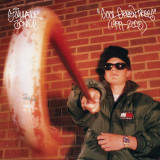
Southern-bred, alternative R&B singer-songwriter Mereba artistically embodies self-understanding on The Breeze Grew a Fire, her grandest work and first release on Secretly Canadian. To hone in on this latest album, it was necessary for Mereba to reconnect with her whole many-sided self, from her inner child to her inseparable relationships. Mereba peacefully transmutes her beginnings, looking upon her closest kinships and friendships with a keen understanding of their steadying, inspirational force. Surrounded by the gentle Breeze of these relationships and recollections, Mereba is empowered as both an artist and mother, while also being reminded to nurture her childlike wonder. Mereba gracefully shines on the follow-up to her bounteous 2019 debut, The Jungle Is the Only Way Out. In escaping the Jungle, Mereba faced the paradigm shift of birthing a son in 2021 and getting accustomed to a rapidly changing self-outlook. Mereba's creative output has always relied on her innermost reflections and ideas on whatever was happening around her; but in motherhood, the singer's perspective widened while her inspiration became more focused, and more individually powerful. "Even though I'm fully an adult, I had to grow up in a way overnight when he my son came," Mereba explains. "The process of watching him open up to the world, learn how to engage with the world, it is very tender. I feel like it's the most reminded I've ever been of when I was a child and the first memories I have of life." The transformation brought Mereba to the intimacy of DIY recording sessions, providing an honest and organic foundation to Breeze. Mereba tapped her longtime production collaborator Sam Hoffman to co-assemble the album's rich production, which parallels its folk-like warmth. Although Mereba is a true double Earth sign-Virgo and Virgo rising-the development of Breeze was anchored by experiences and memories that span from Atlanta to L.A., Addis Ababa to Greensboro, an intention that speaks to the album's fluid nature. While nowhere near the end of her musical trek, The Breeze Grew a Fire is a loving, inspiring return to origin, one where Mereba frees a painful past, eases into future possibilities, and goes with life's flow.
Поиск:fire at work
Все
Southern-bred, alternative R&B singer-songwriter Mereba artistically embodies self-understanding on The Breeze Grew a Fire, her grandest work and first release on Secretly Canadian. To hone in on this latest album, it was necessary for Mereba to reconnect with her whole many-sided self, from her inner child to her inseparable relationships. Mereba peacefully transmutes her beginnings, looking upon her closest kinships and friendships with a keen understanding of their steadying, inspirational force. Surrounded by the gentle Breeze of these relationships and recollections, Mereba is empowered as both an artist and mother, while also being reminded to nurture her childlike wonder. Mereba gracefully shines on the follow-up to her bounteous 2019 debut, The Jungle Is the Only Way Out. In escaping the Jungle, Mereba faced the paradigm shift of birthing a son in 2021 and getting accustomed to a rapidly changing self-outlook. Mereba's creative output has always relied on her innermost reflections and ideas on whatever was happening around her; but in motherhood, the singer's perspective widened while her inspiration became more focused, and more individually powerful. "Even though I'm fully an adult, I had to grow up in a way overnight when he my son came," Mereba explains. "The process of watching him open up to the world, learn how to engage with the world, it is very tender. I feel like it's the most reminded I've ever been of when I was a child and the first memories I have of life." The transformation brought Mereba to the intimacy of DIY recording sessions, providing an honest and organic foundation to Breeze. Mereba tapped her longtime production collaborator Sam Hoffman to co-assemble the album's rich production, which parallels its folk-like warmth. Although Mereba is a true double Earth sign-Virgo and Virgo rising-the development of Breeze was anchored by experiences and memories that span from Atlanta to L.A., Addis Ababa to Greensboro, an intention that speaks to the album's fluid nature. While nowhere near the end of her musical trek, The Breeze Grew a Fire is a loving, inspiring return to origin, one where Mereba frees a painful past, eases into future possibilities, and goes with life's flow.
Recorded in 1997, Mountain Top features the commanding vocals of Tony Roots, backed by the legendary Firehouse Crew and produced by the visionary Fada Waz (Clifton Carnegie). This record’s release was driven by the people, evidenced and encouraged by the countless wheel-ups and sing-alongs during King Original’s international tour dates over the last three years whenever this seminal recording was dropped in the set.
Tony Roots, known for his cultural and spiritual themes, delivers a powerful vocal performance, reminding us that life’s most important journey is overcoming obstacles to find ‘Jah Love on the Mountain Top.’ This message is as relevant in today’s fast-paced, easy-come-easy-go consumer culture as it was when recorded three decades ago.
The Firehouse Crew renowned for their work with iconic acts like Luciano and Sizzla—shine brightly on this riddim, with the MPC drum machine-centered sound of 90s Jamaican roots reggae. An up-tempo 4/4 steppers beat layered with rich analogue textures and soulful instrumentation defines this timeless recording.
The first of many collaborations between Studio 55, Before Zero Records, and Footsie, the King Original legacy continues into the future, honouring the enduring contributions of Fada Waz and his collaborators.
Clifton Carnegie aka Ras Wazair aka Fada Waz - Clifton Carnegie, known as Ras Wazair, founded King Original Sound System in 1973, establishing it as East London’s foremost reggae sound. Operating under his Studio 55 moniker, he collaborated with legends like Johnny Osbourne, Barry Brown, Michael Prophet, Cornell Campbell, and Frankie Paul through imprints such as Original Sounds, Studio 55, and Original International. A mentor to many of the UK’s top sound systems and a key figure in London’s RasTafari community, Ras Wazair’s connections with prominent Jamaican artists, bands, and producers like Fattis Burrell ensured that Jamaican music remained an influential force in the UK sound system scene.
King Original
Founded in 1973 by Fada Waz, King Original Sound System shaped East London’s reggae scene for over two decades. Fada Waz and his son Footsie—a UK Grime pioneer who in later years expanded the legacy through his KO LP series and sold-out King Original mixed-genre events at London’s top venues—worked together until Footsie assumed full control following Fada Waz’s passing in 2021. Having worked with artists such as Dizzee Rascal, Arctic Monkeys, The Prodigy, D-Double E, Wiley, and Skepta, Footsie’s dedication to King Original has reinvigorated the legacy that underpins all UK bass music—the reggae sound system. Joining Footsie is his brother, Wazair’s last born Ras D also Jah Model, and long-time collaborator Sir Spyro, producer of two UK number-one hits with Stormzy and son of UK reggae stalwart Nerious Joseph. Armed with cutting-edge QSS sound system technology, King Original continues to set trends, shaping the future of UK bass music.
Tony Roots
Hailing from Manchester, Jamaica, in the 1980s, Tony Roots emerged alongside iconic figures like Garnet Silk and Tony Rebel. While his peers remained in Jamaica, Tony moved to the UK, where he went on to release ten albums and numerous singles, including hits like Grow Your Natty Dread Locks and Hola Zion. A steadfast champion of Rastafari, Tony has collaborated with legends such as the Firehouse Crew, earning worldwide respect and a devoted following within both the reggae community and the UK sound system scene.
The Firehouse Crew
Formed in 1986, The Firehouse Crew became a cornerstone of the 1990s roots-reggae revival. Initially associated with King Tubby’s Firehouse label before establishing their own, the band rose to prominence through collaborations with producer Philip “Fattis” Burrell at Xterminator Records. Their contributions to timeless albums like Luciano’s Where There is Life highlight their extraordinary musicianship. Over the years, The Firehouse Crew has backed iconic artists such as Sizzla, Buju Banton, and Beres Hammond, cementing their legacy as masters of roots reggae.
Miki Yui is a musician, artist, and composer, originally from Tokyo, who has been based in Düsseldorf since 1994. Her whose work has long explored multiple forms of media, while documenting liminal zones of perception. On her latest album, As If, Yui creates a subtly connected suite of electronic music, drawn from improvisations and randomised processes that she has engaged with modular synthesis. Deeply poetic in its expression, even at its most minimal, the six pieces on As If have a curious tenor – they are, each of them, intensely sensuous, almost haptic listening experiences, as though the laser focus that Yui displays towards her compositions allows her to engage them as almost physical presences in the world.
One of the keys that unlocks the intimate complexity-in-simplicity of As If was Yui’s encounters with the Amazonian rainforest in Manaus, Brazil in 2018. Finding that the sounds in the rainforest both shadowed and echoed the music she had been making for two decades, she embraced the possibilities of modular synthesis, the sounds of which she discovered “have astonishing similarities to the sounds I experienced in the rainforest.” There is, indeed, something natural about the way these sounds bloom in real time; in their dedicated focus to the subtle development and mutation of several discrete parameters of sound, they grow slowly, gradually, their rhizomic structures suggesting that we are always situated within the middle of sound.
Sometimes, the material here has a kind of febrile energy, as on the ticking, clacking electronics of “Generativ”, a track that seems to rotate in the air in front of the listener, the light reflecting off its multiple surfaces as we catch the intricacies of its micro-patterns. Elsewhere, we slide into a cooled but welcoming environment, like the late-night fire-fly horizon of “Song 4”; there’s also the humid, dripping tropical sunset that’s documented on “Summernight”. It’s a music that’s hard to locate external coordinates for, though there are, perhaps, some parallels with the work of Laurie Spiegel, Eliane Radigue’s Vice Versa, and Pauline Oliveros’s “Roots of the Moment”. But As If is an extraordinary collection of naturally developing, rich studies for slowly mutating, enveloping, elemental electronics.
Efficient Space honours the memory of producer and MC Ali Omar with Hashish Hits, a posthumous selection from the dub rebel’s self-released discography.
One of ten children in working-class Liverpool, Omar drew deep influence from his father's Arabic heritage—a thread central to his identity and sample origins. After art school and a spell clubbing during Manchester's halcyon days, he relocated to Sydney, where he cofounded the blunted downbeat duo Atone with fellow British expatriate Andy Fitzgerald. As an MC, he infiltrated the city’s house, dub, jungle, and bass circuits, becoming a regular fixture at the Bentley Bar, where he commanded the mic with his versatile, rumbling baritone and charisma.
Freakishly talented in the studio, Omar was a pioneer of the Akai sampler and Atari, deftly recording live sessions straight to DAT. Drawing on industry insights from his sister, Merseybeat firebrand Beryl Marsden—who supported The Beatles on their final UK tour and was signed to Decca and Columbia—the non-conformist sought to build a self-sufficient business model. Between 1998 and 2004, he independently issued four albums on CD through his Hashish Studios imprint, hustling copies directly to local record stores and live shows for instant returns, even hand-sewing screen-printed hessian sleeves for his final release.
Uncompromising in his principles and refusing to suffer fools or charlatans, Omar relished the opportunity to collaborate with those who embodied the same spirit. Hashish Hits offers a snapshot of his inner sanctum—Fitzgerald on the opening track's billowing smoke stacks, the serpentine vocals of Gina Mitchell and the magic hands of mixer Louis Mitchell on 'On Release,' and Wicked Beat Sound System’s Kye on 'Poor Man Beggar Man Thief'. Meanwhile, 'Suicide Bomber' smoulders with the tension of a lost Muslimgauze relic, as the instructional 'Roll Up' and 'The Last Straw' spiral deeper into Omar’s signature production vortex— where space stretches in slow motion and walls reverberate with ricocheting delay.
A true icon of Sydney’s underground scene, the larger-than-life Omar passed away on 23 June 2009 after a valiant battle with cancer. He is remembered for his assertive spirit, larrikin humour, wild anarchic personality, and enduring mantra: “Love and live your life”.1
‘In Session’ is the new album from platinum selling & MOJO Awards winning artist Rumer. Having moved to the USA for a period of time, Rumer began working on a studio project to celebrate the work of Joni Mitchell. It was then that she first collaborated with London based, funk band Redtenbacher’s Funkestra, the original and mostly instrumental wall-to-wall Jazz Funk Collective of world class players who have previously collaborated with esteemed musicians such as Brand New Heavies, Cory Wong (Vulfpeck) and Andy Snitzer (Paul Simon).
Through new arrangements of music that emerged during their work together, the idea of presenting an ‘In Session’ record was born. Coming together at James Welch’s Masterlink Studios, the songs that made her a worldwide million-seller like soulful singles “Slow” and “Aretha,” have been re-recorded here with Redtenbacher’s
Funkestra to offer a timeless collection for the seasoned fan and newcomer alike.
‘In Session’ is the new album from platinum selling & MOJO Awards winning artist Rumer. Having moved to the USA for a period of time, Rumer began working on a studio project to celebrate the work of Joni Mitchell. It was then that she first collaborated with London based, funk band Redtenbacher’s Funkestra, the original and mostly instrumental wall-to-wall Jazz Funk Collective of world class players who have previously collaborated with esteemed musicians such as Brand New Heavies, Cory Wong (Vulfpeck) and Andy Snitzer (Paul Simon).
Through new arrangements of music that emerged during their work together, the idea of presenting an ‘In Session’ record was born. Coming together at James Welch’s Masterlink Studios, the songs that made her a worldwide million-seller like soulful singles “Slow” and “Aretha,” have been re-recorded here with Redtenbacher’s
Funkestra to offer a timeless collection for the seasoned fan and newcomer alike.
Following the launch of his new music label, Early Morning, in September 2024, Guy J sets the stage for its sophomore release-an immersive two-track concept by acclaimed producer Roy Rosenfeld.
Roy, an artist whose productions often transcend genre boundaries, offers near-17-minute material with an imaginative work that captures attention and a creative depth.
The opening track, "Forgotten," evolves with a measured intensity, layering elements that cultivate a ritualistic atmosphere. The arrangement unfolds through indigenous-percussive influences, steadily progressing towards a resonant climax. By the third act, rich, deep chords punctuate the experience with a sense of calm, only to transition into a melodic break followed by the tribal-inspired crescendo.
Equally compelling, the closing "Hello" begins with an 80s arcade-inspired, lo-fi aesthetic juxtaposed against high-fidelity beats. Driven by ethnic percussion, it conjures the raw energy of ancient rituals, evoking primal imagery of witch doctors dancing around fires to honor the cycles of life.
Here, Rosenfeld merges traditional, futuristic, and vintage synth elements in a call to fellow producers, challenging them to innovate while empowering dancers to embrace nights of hedonistic freedom.
MANOWAR is an American heavy metal band from Auburn, New York. Formed in 1980, the band is known for lyrics based on fantasy and mythology . The band is also known for a Loud and Bombastic sound. In 1984 the band was included in the Guinness Book of World Records for delivering the loudest performance, a record which they have since broken on two occasions. They also hold the world record for the longest heavy metal concert after playing for five hours and 1 minute in Bulgaria (at Kavarna Rock Fest) in 2008. MANOWAR have also been known for their slogan "Death to false metal » and have maintained a very strong following with dedicated fans worldwide as referred to by the band as "Metal Warriors", "Manowarriors", "Immortals" or "Brothers of Metal". The band signed with Atlantic Records in 1987. Via Atlantic, they released 'Fighting the World', which enjoyed more extensive distribution and increased the band's prominence in the international heavy metal scene. Album art was designed by Ken Kelly. In 1988, MANOWAR released the album 'Kings of Metal', which is the band's best known work. Songs like "Heart of Steel", "Kings of Metal" and "Hail and Kill" are performed regularly in concerts. 'Kings of Metal' is MANOWAR's highest-selling album worldwide. A new musical unit after the recent changes, MANOWAR released The Triumph of Steel in 1992. It gained some great success and was particularly famous for the presence of a suite lasting no less than 28 minutes entitled "Achilles, Agony and Ecstasy in Eight Parts", inspired by the events of the Iliad and the hero Achilles. After this release, the band went on a world tour for two years. Those MANOWAR’s album have become legendary and are still must have in any metal fan record collection . Vinyls formats Having been very rare and reaching high prices online, those three albums are now being made available again in quality coloured vinyls; Grab them now while you can !!
The latest from prolific producer and trumpeter Michael Leonhart (Steely Dan, Mark Ronson, El Michels Affair, Elvis Costello). The Leonhart Brass Band features members of Antibalas, the Dap-Kings & Red Baraat. The Leonhart Brass Band was conceived during the 2020 COVID-19 quarantine when trumpeter/composer/producer Michael Leonhart was unable to perform with his 18-piece orchestra at NYC's famous Jazz Standard. Leonhart began composing music for a small brass band that would be capable of playing outdoors without amplification. Building on the foundation of the classic brass bands (Dirty Dozen Brass and Rebirth Brass Band), Leonhart has infused elements of hip-hop and funk to create his own sound. The Leonhart Brass Band features members of Antibalas, the Dap-Kings & Red Baraat. "Jabbar" – Dedicated to and inspired by hooping legend Kareem Abdul Jabbar (aka Lew Alcindor), whose father was a transit police officer/jazz musician and whose mother worked as a department store price checker. In addition to Jabbar's storied career on the hardcourt, Jabbar grew up surrounded by jazz and has been a die-hard music fan his entire life, tragically losing his vast record collection in a 1983 fire that destroyed his LA home. Leonhart's tribute centers around an infectious bass riff in C minor, punctuated by brass stabs and solos by Leonhart on trumpet and Jason Marshall on the seldom-heard bass saxophone. "The Iceman" – The title is taken from basketball great George Gervin's famous nickname given to him during his years playing in both the ABA (American Basketball Association) and the NBA (National Basketball Association) for teams such as the Virginia Squires, San Antonio Spurs and Chicago Bulls. Legend has it the name came from Gervin's cool temperament on the court and his rare ability to play incredibly hard without breaking a sweat. "The Iceman" sees the Leonhart Brass Band horn section dividing into two groups as they play counterpoint melodies against one another. The tape echo effected bari sax solo is performed by Stuart Bogie
Repress!
Louie Vega remixes the seminal Sam Records Disco hit 'Bourgie', Bourgie'' by John Davis & The Monster Orchestra.
12' vinyl release on Nurvous Records on Sept 9, 2016
House Music legend Louie Vega continues to light fire to select tracks from the Sam Records 1970's Disco Catalogue. He previously remixed Vicky D's 'This Beat Is Mine' and Convertion's 'Let's Do It.' Now he has added his unique and legendary production skills to a remix of the Ashford & Simpon penned 'Bourgie', Bourgie'' by John Davis & The Monster Orchestra.
Originally released on Sam Records in 1979, 'Bourgie', Bourgie'' also features background vocals by Ashford & Simpson.
Louie Vega continues to be one of the most dynamic and respected dance music producers in the world. With a body of work that combines his timeless and trend-settings production with Kenny Dope as Masters At Work, and his own distinctive and equally impactful Louie Vega productions, he has always had a great knowledge and respect for the R&B and Disco music that laid the foundation of the current soundtrack of nightlife. The Sam Records catalogue is owned and administered by Nervous Records, with which Louie has a long history, dating to his creation with Kenny Dope of the label's signature tune, The Nervous Track by Nuyorican Soul. The distinctive string sections of 'Bourgie', Bourgie'' along with the Ashford & Simpson lyrics caught Louie's ear, and he has created a remix that has been destroying dancefloors and festival summer.
MAMMOTH is a grabber right out of the gate, every step they take is unleashed with deadly economical precision. They may flash on Lynyrd Skynyrd and other vintage southern rock traditions but the brilliant way the vocals are recorded and the to-the-point interlocking guitar moves will fire up anybody into any sort of hard rock. They can rip it up with hot leads, probably jammed out on these songs at live shows but lucky us, they laid them down for all times here with the sort of thought out unified force and construction that screams hit radio. Loads of personality, accessible, produced and mixed with the clarity of classic rock that never loses it's perfectly deployed impact. The uncluttered arrangements leave plenty of space, crafted with the kind of balanced mojo in the mix where every detail adds to the whole. Down and dirty but also achieving a universal pop-friendly appeal! The Mammoth LP was recorded in 1981 at Relayer Studios in DeLand, Florida with the two guitars, bass and drums quartet line-up sounding like it could have been a decade earlier. Buzz Fetters on lead guitar, Bill Abell on rhythm guitar, Joey Costa on bass and Ron Herman on drums… with everybody contributing to the vocals. Rather than having a strong up front emotive singer the lead vocals here are multi-tracked and integrated into the songs with plenty of attitude but also a genre-transcending presence… you can imagine the vocal ambience working in punk, glam, even psychedelic contexts. Mammoth have a sound informed by roots music but it is really in the rear-view mirror the way they roll. The songwriting here is terrific, they have a way of saying things that comes off as sincere but not too serious. You get plenty of in-your-face hard rock action but also several melodic tracks that have a more reflective charm to round out the trip. AND… when you hear their brilliant ode to southern rock titled "Southern Sounds" I challenge you to find any song about the subject more delightful. These guys keep it real, whether they're being bad ass or vulnerable they express themselves with 100% genuine feeling as contagious and life affirming as it gets!
- Ascend
- Drift
- Astray
- Barren
- Nyctophobia
- Wreckage
- Scavenge
- Animal
- Phantasmagoria
- Torment
- Perish
The intrepid composer and field recordist Jacob Kirkegaard is no stranger to perilous and hostile regions of the world. His 4 Rooms invoked the radioactive decay through the amplification of architectural resonance in Chernobyl, Ukraine; and he has ventured to the arctic environments of Greenland on a number of occasions to document that barren, icy territory. His recurrent use of shadow and mystery through his work both as metaphor and as extended sonic technique reflects the complex, existential conditions that cross-contaminate what we consider civilization and what we consider wilderness. Waste disposal, firearms, the decomposition of dead bodies, the eerie stillness of morgues. These have also been the source material in Kirkegaard's formidable work.
With Snowblind, Kirkegaard turns to history, and a poetic, failed attempt for a team of Swedish explorers to reach the North Pole by balloon in the late 19th Century. Perhaps driven by blind adventurism, perhaps consumed by his own delusions, S.A. Andrée launched this ill-fated flight in July 1897, registering only two days in the air before crashing into the ice and ultimately failing to navigate the frigid waters and ice floes. Yet documentation of their expedition - photographic, scientific, and diaristic - survived, to be discovered some thirty years after their deaths.
"I wanted to created a cold and hostile album, where there is no escape, no warmth and no happy ending," as Kirkegaard explains about Snowblind. "Yet, I wanted to leave out any immediate drama. It is the creeping shock, the icy feeling from realizing what has been lost and that there's no escape."
Yes, Snowblind is a very bleak album, but one that eschews the isolationist, long-form drone of conceptually similar works by Thomas Köner, Lustmord, Werkbund, and Lull with interconnected constellations of cryptic tone, thrumming reverberation, arctic bluster, and a plethora of harrowing sonic proclamations.
- Prologue Amateur
- Sax Addict
- Notre Soleil Est Mort
- Tinder Surprise
- Igor Stravestit
- Amoureuse
- 5: Th
- Ok Boomer
- Ouais
- Je Cours
- En Conversation
- Laura Palmer
- Yahourt A L'italienne
- Ou T'es?
'OK Crooner' the debut LP from French drummer and percussionist Vincent Taeger under his own name (after previous album under his alter ego Tiger Tigre) and his debut on vocals - mixes avant pop with jazz-fink and AOR.
Taeger, who has worked with Air, Damon Albarn, Justice, Lenny Kravitz, Skepta, Tony Allen, Oumou Sangare, Jeff Mills, Archie Shepp and Sampa the Great, during COVID started frantically listening to French vocalists such as Alain Souchon, Alain Chamfort, Richard Gotainer, and Christophe. Inspired by his elders, while not renouncing his attachment to the meticulous arrangements reminiscent of Alain Goraguer's soundtracks, he picked up a pen to jot down snippets of songs to accompany his increasingly sophisticated compositions. Coming from rap, he has a knack for punchlines. Throughout the album, he alternates between risque humour, Gaulish wit, and poetry.
While Vincent Taeger is the chief fireworks maker, playing most of the instruments, some of his longtime collaborators come to support him on a few tracks, forming the Jazz Kamasutra: Ludovic Bruni (bass), Sylvain Daniel (bass), Arnaud Roulin (piano, synth), Fred Soulard (synth), Maud Chabanis (vocals), Bettina Kee (vocals), Mathias Allamane (double bass), Emile Sornin (ondioline), and Remi Sciuto (saxophones). Vincent Taurelle, mixed the abum. Recently, he has worked on albums by Justice, Seun Kuti, Raphael, and Clara Luciani.
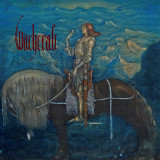
MANOWAR is an American heavy metal band from Auburn, New York. Formed in 1980, the band is known for lyrics based on fantasy and mythology . The band is also known for a Loud and Bombastic sound. In 1984 the band was included in the Guinness Book of World Records for delivering the loudest performance, a record which they have since broken on two occasions. They also hold the world record for the longest heavy metal concert after playing for five hours and 1 minute in Bulgaria (at Kavarna Rock Fest) in 2008. MANOWAR have also been known for their slogan "Death to false metal » and have maintained a very strong following with dedicated fans worldwide as referred to by the band as "Metal Warriors", "Manowarriors", "Immortals" or "Brothers of Metal". The band signed with Atlantic Records in 1987. Via Atlantic, they released 'Fighting the World', which enjoyed more extensive distribution and increased the band's prominence in the international heavy metal scene. Album art was designed by Ken Kelly. In 1988, MANOWAR released the album 'Kings of Meta’l, which is the band's best known work. Songs like "Heart of Steel", "Kings of Metal" and "Hail and Kill" are performed regularly in concerts. 'Kings of Metal' is MANOWAR's highest-selling album worldwide. A new musical unit after the recent changes, MANOWAR released The Triumph of Steel in 1992. It gained some great success and was particularly famous for the presence of a suite lasting no less than 28 minutes entitled "Achilles, Agony and Ecstasy in Eight Parts", inspired by the events of the Iliad and the hero Achilles. After this release, the band went on a world tour for two years. Those MANOWAR’s album have become legendary and are still must have in any metal fan record collection . Vinyls formats Having been very rare and reaching high prices online, those three albums are now being made available again in quality coloured vinyls; Grab them now while you can !!
- A1: Jimmy Carter & Dallas County Green - Travellin
- A2: Mistress Mary - And I Didn't Want You
- A3: Plain Jane - You Can't Make It Alone
- A4: Dan Pavlides - Lily Of The Valley
- A5: Angel Oak - I Saw Her Cry
- B1: Kathy Heidiman - Sleep A Million Years
- B2: Deerfield - Me Lovin' You
- B3: Arrogance - To See Her Smile
- B4: Jeff Cowell - Not Down This Low
- B5: Kenny Knight - Baby's Back
- C1: The Black Canyon Gang - Lonesome City
- C2: Allan Wachs - Mountain Roads
- C3: Mike & Pam Martin - Lonely Entertainer
- C4: Bill Madison - Buffalo Skinners
- D1: White Cloud - All Cried Out
- D2: Ethel Ann Powell - Gentle One
- D3: Sandy Harless - I Knew Her Well
- D4: Fj Mcmahon - The Spirit Of The Golden Juice
- D5: Doug Firebaugh - Alabama Railroad Town
Over 19 tracks, Wayfaring Strangers: Cosmic American Music mines gold from dollar bin country-rock detritus to reconstruct events as seen from the genre's wild west - Americana's vast private press substructure. As progenitor and contemptuous poster boy for the music that came to be Cosmic American, Gram Parsons found himself mired in a recording career spent mostly in scouting the perimeters of chart success. "He hated country-rock," Parsons collaborator Emmylou Harris would later reflect. "He thought that bands like the Eagles were pretty much missing the point." Parsons had been orbiting the idea of Cosmic American Music for some time. In 1968 he'd parted ways with the Byrds and was looking to take air with a new project. "It's basically a Southern soul group playing country and gospel-oriented music with a steel guitar" he told Melody Maker, on the subject of The Flying Burrito Brothers. So it was that when A&M's Burrito Brothers debut The Gilded Palace of Sin made it to shelves in February of 1969, early adherents to the Cosmic American gospel were already echoing its message from areas flanking Gram Parsons' Southern California hills and canyons. There was F.J. McMahon in coastal Santa Barbara, Mistress Mary further inland in Hacienda Heights, and Plain Jane of Albuquerque, New Mexico, each responding by committing their own private readings to tape before day one of the 1970s. Parsons himself might've disdained them, had he even been aware of such minor ripples, shimmering at the edges of his desert oasis. But these were true believers all the same, given over fully to his roots music concept, each filling vinyl grooves with non-rock instrumentation like fiddle, banjo, and pedal steel guitar, the last undoubtedly Cosmic American Music's most distinguishing stringed signifier. Only too predictably, big labels did the grunt work of confining and defining the movement, as ABC, United Artists, RCA, and more played catch-up with Asylum's raptor rock juggernaut, via backwoods crossover also-rans with names like Gladstone, American Flyer, and Silverado. Twang reigned, the shitkickers kicked shit, and the vaguely western-sounding guitar records piled up. Country-rock became "the dominant American rock style of the 1970s," as Peter Doggett's comprehensive Are You Ready for the Country put it much later. Wayfaring Strangers: Cosmic American Music picks up and dusts off golden ingots from the dollar-bin detritus of that domination, to reconstruct events as seen from the genre's real Wild West-America's one-off private press label substructure.
Out of the murky, mystic world of Komodo Kolektif slides the Gamma Knife.
In the corner of a dank, dark mind, a nebulous notion condenses and solidifies, featureless and blind...and from that Komodo Klay a new kreature is hacked, molded and (mal)formed.
“The foundations of some of these pieces were laid almost a decade ago, others more recently. All of them came into being as sketches intended as Komodo Kolektif tracks to develop but for various reasons this didn't happen. The Seven Heavenly Elements was first presented to the group in 2019 but partly through personal differences in musical taste as well as COVID throwing a spanner in the works it was put aside and never worked on collectively. The two Disciple of the Drum 'dubs' are essentially rhythm tracks using the rhythm and percussion of Disciple Of The Drone, also from 2019, stripping away the drone, the gamelan melody and finally, even the bass line, which was initially intended to be the fundamental driving force of at least one of these dubs. In the end neither of these two tracks became anything like the idea that I had in mind, but that's how creativity works sometimes. The vocal parts in Cantation Dub were added most recently, just a few months ago. Fire Dub is just an exercise in me trying to rein in some insane delays and barely managing. The Ghost of Water is an anomaly because many of the fundamental parts are taken from the same jam session recorded in 2015 that led to Djakarta 3001 from the first EP. If you listen closely you'll hear Graeme Miller on guitar (back when guitar was still featured in our weekly jam sessions). I discovered this unedited hour-long jam session on an older hard drive in late 2023 and decided to fashion something from it until what became Ghost of Water materialised: the heavily delayed saron instruments, the jaw harp, the percussion and so on. What makes the track an anomaly is that it is in some ways both the oldest and newest piece of the five. The Seventh Element takes one of the seven elements of The Seven Heavenly Elements (in this case the Mopho synth tuned to the Indonesian pelog scale and ran through the Boss DE-200's depth modulator) to which I then added some gong parts and field recordings from Bali.
Once complete, I realised with an album's worth of material sitting there which was more “Komodo Kolektif” than anything I would normally produce solo, there came the problem of trying to work out what to do with this distinctly Komodo-esque, non-Komodo material. I came up with the idea of releasing it under the name Komodo Kuts...but a part of me felt I'd be cashing in on the Komodo name so ditched that part entirely...but the kuts remained, which seemed appropriate when used alongside my Gamma Knife moniker (which has a long story of its own...in a nutshell I had a benign brain tumour which only 1 in 10,000 people get and which is most frequently removed with a gamma knife (radiation). In medical parlance the device used in this treatment is often shortened to GK machine. I had been using the DJ name GK Machine, which came from my signature GK Mackinnon, since 1994, in other words long before this diagnosis. In the end I had brain surgery in Spain without use of gamma radiation...but the synchronicity of the name connection fascinated me nevertheless. Sometimes the world works in mysterious ways).
Lastly, now that I've sent these tracks out into the world, I feel somewhat liberated and can move on from this fairly niche and specific sound. The gamelan instruments have been returned to Gamelan Naga Mas, from who we'd borrowed them, and the masks hung up. This does not mean that Graeme Miller and I won't work together again in future...I'm sure we will...it just means we won't be tied to working within the constraints of gamelan, synths, percussion and dub that we became known for. So stay tuned...surely something lurks around the corner” GKM, November 2024
Celebrating the 20th anniversary of Callisto's impactful debut album, Svart Records is proud to bring it to you for the first time ever on wax! Callisto is a post-metal band from Turku, Finland formed in 2001. They've headlined several tours in Europe, opened for High On Fire on their UK tour, and showcased in Canada and the United States. Whilst their early works are hardcore and metal, the debut album True Nature Unfolds has a strong sludge metal and doom influence. It was recorded in 2004 by the late Mieszko Talarczyk (Nasum) and introduced to Earache Records a year later through Johannes Persson (Cult Of Luna), earning the band worldwide distribution. True Nature Unfolds was originally released only on CD in 2004 by Fullsteam Records in Finland and Earache Records in the US and UK a year later. The album delivers a breathtaking mix of atmospheric soundscapes, heavy riffs, and haunting melodies. Each track invites you on an emotional journey, blending post-metal intensity with introspective lyricism. Don’t miss this powerful musical experience—let the journey begin! The 20th anniversary edition of True Nature Unfolds is presented on double vinyl in a glorious gatefold cover, with new album art by the band's drummer Ariel Björklund. Available versions are the Svart exclusive green/red/black marble vinyl, limited golden yellow vinyl, and classic black vinyl. Release date December 13th, 2024.
"This is the time that we, who have benefitted from the Last Poets shouldbe able to say, 'it's the Last Poets. It's them we should be honouring, because we did not honour them for so many years_"
KRS One wasn't just addressing the hip hop fraternity when he uttered
those words by way of introducing the video for Invocation - a poem
written thirty years ago, around the time of the Last Poets' last significant comeback. He was speaking to everyone who's been affected by the word, sound and power issuing from the most revolutionary poetry ever witnessed, and that the Last Poets had introduced to the world outside of Harlem at the dawn of the seventies.
In 2018 the two remaining Last Poets, Abiodun Oyewole and Umar Bin
Hassan, embarked on another memorable return with an album -
Understand What Black Is - that earned favourable comparison with theirseminal works of the past, whilst showcasing their undimmed passion andlyrical brilliance in an entirely new setting - that of reggae music. Trackslike Rain Of Terror ("America is a terrorist") and How Many Bullets demonstrated that they'd lost none of their fire or anger, and their essential raison d'etre remained the same.
"The Last Poets' mission was to pull the people out of the rubble o f their lives," wrote their biographer Kim Green. "They knew, deep down that poetry could save the people - that if black people could see and hear themselves and their struggles through the spoken word, they would be moved to change."
Several years later and the follow-up is now with us. The project started when Tony Allen, the Nigerian master drummer whose unique polyrhythms had driven much of Fela Kuti's best work, dropped by Prince Fatty's Brighton studio and laid down a selection of drum patterns to die for. That was back in 2019, but then the pandemic struck. Once it had passed, the label booked a studio in Brooklyn, where the two Poets voiced four tracks apiece and breathed fresh energy, fire and outrage into some of the most enduring landmarks of their career. Abiodun, who was one of the original Last Poets who'd gathered in East Harlem's Mount Morris Park to celebrate Malcolm X's birthday in May 1968, chose four poems that first appeared on the group's 1970 debut album, called simply The Last Poets. He'd written When The Revolution Comes aged twenty, whilst living in Jamaica, Queens. "We were getting ready for a revolution," he told Green. "There wasn't any question about whether there was going to be one or not. The truth was many of us still saw ourselves as "niggers" and slaves. This was a mindset that had to change if there was ever to be Black Power." He and writer Amiri Baraka were deep in conversation one day when Baraka became distracted by a pretty girl walking by. "You're a gash man," Abiodun told him. The poem inspired by that incident, Gash Man, is revisited on the new album, and exposes the heartless nature of sexual acts shorn of intimacy or affection. "Instead of the vagina being the entrance to heaven," he says, "it too often becomes a gash, an injury, a wound_" Two Little Boys meanwhile, was inspired after seeing two young boys aged around 11 or 12 "stuffing chicken and cornbread down their tasteless mouths, trying to revive shrinking lungs and a wasted mind." They'd walked into Sylvia's soul food restaurant in Harlem, ordered big meals, then bolted them down and run out the door. No one chased after them, knowing that they probably hadn't eaten in days. Fifty years later and children are still going hungry in major cities across America and elsewhere. Abiodun's poem hasn't lost any relevance at all, and neither has New York, New York, The Big Apple. "Although this was written in 1968, New York hasn't changed a bit," he admits, except "today, people just mistake her sickness for fashion." Umar is originally from Akron, Ohio, but had arrived in Harlem in early 1969 after seeing Abiodun and the other Last Poets at a Black Arts Festival in Cleveland. That's where he first witnessed what Amiri Baraka once called "the rhythmic animation of word, poem, image as word- music" - a creative force that redefined the concept of performance poetry and stripped it bare until it became a howl of rage, hurt and anger, saved from destruction by mockery and love for humanity. When Umar's father, who was a musician, was jailed for armed robbery he took to the streets from an early age where he shined shoes and raised whatever money he could to help feed his eight brothers and sisters. By the time he saw the Last Poets he'd joined the Black United Front and was ready to join the struggle. Once in Harlem, Abiodun asked him what he'd learnt in the few weeks since he'd got there. "Niggers are scared of revolution," Umar replied. "Write it down" urged Abiodun. That poem still gives off searing heat more than fifty years later. In Umar's own words, "it became a prayer, a call to arms, a spiritual pond to bathe and cleanse in because niggers are not just vile and disgusting and shiftless. Niggers are human beings lost in someone else's system of values and morals." And there you have it. It's not just race or religion that hold us back, but an economic system that keeps millions in poverty and living in fear - a system born from political choice and that's now become so entrenched, so bloated on its own success that it's put mankind in mortal danger. It was many black people's acceptance of the status quo that inspired Just Because, which like Niggers Are Scared Of Revolution, was included on that seminal first album. Along with their revolutionary rhetoric, it was the Last Poets' use of the "n word" that proved so shocking, but it would be wrong to suggest that they reclaimed it, since it never belonged to black people in the first place. There's never any hiding place when it comes to the Last Poets. They use words like weapons, and that force all who listen to decide who they are and where they stand. Umar's two remaining tracks find him revisiting poems first unleashed on the Poets' second album This Is Madness! Abiodun had left for North Carolina by then where he became more deeply enmeshed in revolutionary activities and spent almost four years in jail for armed robbery after attempting to seize funds related to the Klu Klux Klan. Meanwhile, the 21 year old Umar was squatting in Brooklyn and had developed close ties with the Dar-ul Islam Movement. A longing for purity and time-honoured spiritual values underpins Related to What, whilst This Is Madness is a call for freedom "by any means necessary," and that paints a feverish landscape peopled by prominent black leaders but that quickly descends into chaos. "All my dreams have been turned into psychedelic nightmares," he wails, over a groove now powered by Tony Allen's ferocious drumming. Those sessions lasted just two days, and we can only imagine the atmosphere in that room as the hip hop godfathers exchanged the conga drums of Harlem for the explosive sounds of authentic Afrobeat. Once they'd finished, the recordings and momentum returned to Prince Fatty's studio, since relocated from Brighton to SE London. This was stage three of the project, and who better to fill out the rhythm tracks than two key musicians from Seun Anikulapo Kuti's band Egypt 80? Enter guitarist Akinola Adio Oyebola and bassist Kunle Justice, who upon hearing Allen's trademark grooves exclaimed, "oh, the Father_ we are home!" Such joy and enthusiasm resulted in the perfect fusion of Nigerian Afrobeat and revolutionary poetry, but the vision for the album wasn't yet complete. He wanted to create a new kind of soundscape - one that reunited the Poets with the progressive jazz movement they'd once shared with musicians like Sun Ra and Pharoah Sanders. It was at that point they recruited exciting jazz talents based in the UK like Joe Armon Jones from Mercury Prize winners Ezra Collective, also widely acclaimed producer/remixer and keyboard player Kaidi Tatham, who's been likened to Herbie Hancock, and British jazz legend Courtney Pine, whose genius on the saxophone and influence on the UK's now vibrant jazz scene is beyond question. The instrumental tracks on Africanism are in many ways as revelatory and exciting as the Last Poets' own. It's important to remember that the kaleidoscope of styles and influences we're presented with here aren't the result of sampling but were played "live" by musicians responding to sounds made by other musicians. That's where the magic comes from, aided by Prince Fatty's peerless mixing which allows us to hear everything with such clarity. Music fans today have grown accustomed to listening to all kinds of different genres. Their tastes have never been so broad or all- encompassing, and so the music on this new Last Poets' album is as groundbreaking as their lyrics, and perfectly suited to the era that we're now living in. John Masouri
- 1: Peach Blossom Paradise
- 2: Demon Cicadas In The Night
- 3: The Cold Curve
- 4: Saying Yes To Everything
- 5: Lighthouse
- 6: Revisionist Mystery
- 7: The Meander
- 8: The Wheel Of Persuasion
- 9: Another Tomorrow
- 10: Common Exotic
Prairiewolf make easy listening music for an age of fracture. They almost do it in spite of themselves. No one can seriously question the head music bona fides of the members of this Colorado-based trio.
Guitarist Stefan Beck has already assembled a formidable discography of jewel-toned guitar zone-outs under his Golden Brown moniker. And keyboardist and guitarist Jeremy Erwin and bassist Tyler Wilcox have both made their reputations as chroniclers of the vast world of out-music. Erwin helms the indispensable Heat Warps blog, a performance-by-performance archive of Miles Davis’s labyrinthine electric period. And Wilcox has been covering the ragged edges of psychedelia and experimental rock at Aquarium Drunkard and other publications, not to mention his own virtual basement for heads, the great bootleg blog Doom and Gloom from the Tomb.
These guys come by it honestly. And yet, given their backgrounds, Prairiewolf’s self-titled debut last spring was remarkably free of face-melters, brown acid blowouts, and ascendant spiritual jazz odysseys. Instead, they dropped a record of beautiful, elegant, low-key cosmic groovers that sounded like the piped-in background music to a resort hotel on Jupiter. It was an unlikely psychedelia, brocaded with mid-twentieth century sonic threading from the hi-fi era: vintage synthesizers, smears of spaghetti western, luxe tropical details, the faint schmaltz of space age pop. Imagine something like a Harmonia residency in the airport lounge. And yet somehow it all worked brilliantly. Prairiewolf became last summer’s cool-down standard. After a year woodshedding around Colorado’s Front Range region, the Prairiewolf boys have fired up their trusty Korg SR-120 drum machine for another outstanding collection of suborbital exotica. The appropriately titled Deep Time operates in its own chronology, unspooling at its unhurried pace. All its incongruous period and stylistic references—the new age pulses, Hawaiian steel, shaggy hippie rambles, lysergic guitar spirals, and orchestral synthesizer flourishes—float atop the album’s own singular temporality. Deep Time makes its own time.
From the moment Beck folds his slide guitar, origami-like, into a sound resembling the call of gulls on the tranquil album opener, “Peach Blossom Paradise,” there is a sense of departure from everyday life. The shimmering “Lighthouse” has a similar sunbaked nonchalance, like an afternoon passed day-drinking in a seaside bar. That they named their lush, kaleidoscopic downtempo track “The Meander” pretty much says it all. The ranging, propulsive “Saying Yes to Everything” seems like a nod in the direction of Rose City Band’s brand of wookie krautrock. And the motorik noir of “Demon Cicadas in the Night” also goes hard. Beck and Erwin’s intertwined guitar jam on the eerie album standout “The Cold Curve” evolves into something that sounds like primitive computer music. A genteel bassline from Wilcox on another album highlight, “Revisionist Mystery,” sets the stage for a loopy space jazz turn from guest clarinettist Matt Loewen of Rayonism. The title of post-rock cowboy tune “Another Tomorrow” might refer to the alternative future that so many critics heard in the music of Prairiewolf’s first album. Or it might simply refer to the persistence of time, however deep. Either way,
I’m thankful for the way Prairiewolf make each of their tunes a little oasis or sanctuary, each subsisting according to its own crystalline little logic for a few minutes. It is no simple task to filter out the omnipresent anger and anxiety of everyday life these days. But Prairiewolf are out here making it seem easy.
Brent S. Sirota
- Opening Drive
- Walking To The Grave
- Attacked
- Flight From The Cemetery
- Refuge
- Trophy Room
- The Clothesline
- Dead Connection / Corpse On The Stairs / Ben Arrives
- Panic
- Blood From The Landing
- Smashing The Headlight
- Tire Iron Attack
- Don't Look At It!
- Back Porch Bonfire
- Searching The House
- The Music Box
- Boarding Up The House
- Knocked Out
- Fireplace And Torch
- Lounge Chair Bonfire
- The Cellar Door
- Finding The Rifle
- Ben Comforts Barbra
- Cleaning Upstairs
- Grasping Hands
- Ghouls Approach The House
- Down To The Cellar
- Up From The Cellar
- Escape Plan
- Tom And Judy
- Unboarding
- Molotov Cocktails
- Escape From The House
- Truck Escape
- Truck On Fire
- Feeding Frenzy
- Lights Out
- Final Siege
- Breakthrough
- Helen's Death
- Ghouls Overrun
- Cellar Nightmare
- The Posse
- Bonfire
- End Credits
- Bonus Night Of The Living Dead 1968 Radio Spot
- New Arrivals
- Attack At The Window
B&W[48,95 €]
"Waxwork Records is honored to present the release of the Original Motion Picture Soundtrack to George A. Romero’s horror classic, NIGHT OF THE LIVING DEAD. Written, filmed, and released in 1968 by a rag tag group of Pittsburgh based misfits, NIGHT OF THE LIVING DEAD is an American independent horror film that follows the story of seven people trapped in a rural farmhouse that is besieged by a large and growing group of living dead ghouls. The film is regarded as a cult classic by critics, film scholars, and fans and has garnered critical acclaim. The film has been selected by the Library Of Congress for preservation in the National Film Registry and is deemed “culturally, historically, and aesthetically significant”.
Filmed and released on a shoestring budget, NIGHT OF THE LIVING DEAD became a smashing success earning over 250 times its budget. The film is a first of its kind and ushered in a new way of writing, directing, and filming horror films. The overused script of romantic, fantastical tales of otherworldly monsters and creatures was completely flipped and tossed aside by visionary George A. Romero. As the film’s writer and director, Romero created a new, obvious threat, and one that is universally recognizable - Our very own neighbors. Due to an unseen force beyond man’s control, the recently deceased arise from the dead in seek of living human victims. These ghouls kill and feast upon the flesh of their victims, and the only way of stopping them is by destroying their brains.
From 2015 to 2018, Waxwork Records worked closely with the remaining members of the independent production company that made NIGHT OF THE LIVING DEAD, Image Ten, to produce a definitive soundtrack album featuring all music from the film. Much of the film’s music was thought to be lost or destroyed but was located in its entirety and faithfully restored and re-mastered for vinyl. This special release of NIGHT OF THE LIVING DEAD features the complete soundtrack, double LP “Black & White Hand Poured” colored vinyl, all new artwork by Robert Sammelin, a booklet featuring never before seen production photos, liner notes by Daniel Kraus (co-author of THE SHAPE OF WATER with Guillermo Del Toro), liner notes by Night Of The Living Dead’s dialogue recorder and sound engineer, Gary Streiner, and deluxe packaging."
"Long sought-after by those in know, this essential Irish jazz album finally gets a vinyl reissue on Outernational Sounds! Fully licensed from producer John D’Ardis, remastered at Abbey Road from the original tapes, and with lacquers cut at Dubplates and Mastering, the Noel Kelehan Quintet’s stunning 1979 Ozone is presented with unseen photographs of the band and commentary from original band members.
Featuring moody, modal jazz of the first order, subtle and original composing and world- class playing, Ozone was the creation of Ireland’s most respected jazz composer and musician, pianist Noel Kelehan (1935-2012). The only small-group album under his name, and arguably the first ever Irish jazz LP, Ozone was a landmark recording, but it was far from Kelehan’s only achievement. Born in Dublin, Kelehan had studied music from an early age. From the mid-1950s he worked at state-broadcaster Radio Éireann (RÉ, later RTÉ – Radio Telefis Éireann), and from the early 1960s he fronted Dublin’s first be-bop unit, the Jazz Heralds. A busy professional career saw him compose for numerous Irish pop stars, arrange and conduct many of Ireland’s Eurovision entries, and even contribute string arrangements to U2’s Unforgettable Fire LP.
But jazz was Kelehan’s first passion, and he never stopped playing in both small modernist units and composing for his own big band. The late 1970s saw him fronting the Noel Kelehan Quintet, alongside drummer John Wadham, saxophonist Keith Donald, bassist Frank Hess and trumpeter Mick Nolan. Playing weekly in Dublin for several years, they opened for visiting stars including Dollar Brand and the Ronnie Scott Orchestra, and eventually played a two-week residency at Ronnie Scotts in London. Though Kelehan had recorded a big-band LP of traditional Irish songs arranged as easy jazz in 1970, Ozone was his first album of modern jazz. Released on John D’Ardis’s independent Cargo imprint and press on blue vinyl, it featured original compositions such as the deep collectors cut ‘Spon Song’, subtle Latin flavours on ‘Spacer’s Delight’ and a beautiful modal arrangement of the traditional Irish air ‘Castle of Dromore’. A legendary recording in Ireland, Ozone reflected Kelehan’s keen appreciation of classic quintet-era Miles, with touches of the cerebral fusion of Ian Carr and the arranging genius of Neil Ardley. Not just a landmark Irish jazz set, Ozone is a lost classic of European jazz more widely."
- Will You
- Rain
- Alone With People
- Addiction
- A Mess Like This
- Remember
- Waves
- Kill Me Twice
- You're Lying
- Jasmine
- Love
Hailing from Nancy, France, Cyann is a young artist aged 19. She is preparing a debut album that will surprise you with its maturity, so abundant is her work and her imagination fertile.Cyann or Wysteria, her stage name, has been immersed in the world of musical environment.A multi-instrumentalist, she began her musical career learning to play the harp at the age of four, then violin at Nancy Conservatoire. Dedicated and passionate Cyann went on to teach herself piano and acoustic guitar, two instruments that are now at the heart of her creative process. A singer-songwriter, Wysteria is the heir of a light, airy and genuine folk sound and modern Pop, from Vashti Bunyan to Billie Eilish. Yet her music remains coherent in the themes it tackles. If Cyann is naturally gifted as a composer, she is also an excellent lyricist.She writes stories as well as poems.At ease in both English and French, her texts are a true declaration of love to nature and life. Water, air, fire and all the natural elements are inexhaustible sources of inspiration for Cyann, who succeeds in associating an imagery and an atmosphere with simple, meaningful sensations.Cyann is a spontaneous artist, and her voice doesn't betray her. Her singing comes straight from the heart, natural, unadorned singing, comparable to that of Beth Gibbons (Portishead). Bold and inspired, Cyann has many strings to her bow. The breathtaking freshness and the wide range of her repertoire will surprise many a listener
- A1: Runway
- A2: Track Of The Time
- A3: Reaching Through
- A4: Holy Low
- A5: Just To Feel Alive
- B1: Seasons Change
- B2: Some Are Lucky
- B3: Ruby
- B4: Call The Days
- B5: Holy Loud
8/10 FULL-PAGE LEAD REVIEW IN UNCUT: “TALENTED ARTISTS SUCH AS ALDOUS HARDING , DELANEY DAVIDSON, IVY ROSSITER AND MARLON WILLIAMS REPRESENT A FRESH COUNTRY-FOLK/AMERICANA MOVEMENT IN AND AROUND CHRISTCHURCH AND DUNEDIN. NADIA REID'S IMPECCABLE DEBUT WILL MAYBE SET A WIDER ORBIT IN MOTION.”
4/5 LEAD REVIEW IN MOJO: “INSPIRED DEBUT BY A YOUNG NEW ZEALAND SINGER-SONGWRITER YOU'LL FEEL YOU'VE KNOWN FOREVER. A WONDERFUL ALBUM"
SUNDAY TIMES DEBUT OF THE WEEK: "SHE RANKS ALONGSIDE LOW AND THE COWBOY JUNKIES FOR DELIVERING SLOW-BURN EMOTION"
"It has all that well-smoked wisdom, that mingling of strength and yearning that seems to charge the work of all my favourite female artists – Laura Marling, The Weather Station, Sharon Van Etten and Tift Merritt, to name but four. Reid is just 23, and since I am loathe to run that “old beyond her years” line, let us simply say that when I hear a young artist making an album as soulful and rich and self-possessed as Listen to Formation, Look for the Signs, I feel so thrilled not only for the existence of that record but for all the music they will make over all the years to come.” THE GUARDIAN PLAYLIST
6MUSIC ALBUM OF THE WEEK
A richness of voice; a depth of emotion; and wise beyond her years; with Listen To Formation, Look For the Signs, 23-year-old New Zealand native Nadia Reid has claimed her place as one of the country’s most evocative and profound young songwriters. Her music traces the sharp mountain peaks, azure coastline, and mirrored images of the land and sky that pinpoint her home country’s vast open landscapes.
Whether nerding about with friends, stunning audiences into silence with her spellbinding live shows or unwinding in the tranquillity of her favourite hometown spot overlooking Port Chalmers’ harbour through her large-rimmed spectacles, Nadia Reid has achieved a gloriously fresh and eloquent new folk sound. “I’ve been in New Zealand my whole life and guess at times I take for granted the serene beauty that I live so closely with,” she says of her music’s majestic affiliation with nature. Mapping out tales of change and loss, whilst drawing inspiration from reading, writing, the human condition, falling in and out of love, death, and birth - it all lends to a superbly balanced album that moves surreptitiously between sparse and fragile melancholia to beautifully brutal lyricism with a philosophical maturity that bellies her years.
Born in Auckland, Nadia’s acoustic roots stem from an upbringing in a musical household where attending folk clubs and festivals were regular occurrences on the family calendar. “I was lucky to witness a lot of live music and theatre performances because my mum was an actress. I was encouraged to learn piano and guitar, and attended a Steiner school where we spent a lot of time in nature, singing songs.” Before long Nadia was listening to The Be Good Tanyas with friend and fellow recording artist Aldous Harding, which spurred her chosen career path. “There was something spiritual about the Tanyas’ records - I vividly remember the goose-bump feelings up my arms, a true connection to the lyrics and vocals,” she recalls. “Aldous was the first person who told me I had a good voice and I thank her for that. I admire her as an artist and writer, and we like to keep up with what each other is up to.”
Creating her own enchanting wonderworld, each of Nadia’s songs explores the elements; truly organic, her vocals ebb, flow and soar but are always ignited with fire from the gut. Her lyrics clearly reference lush landscapes but equally reflect alienation provided by the surrounding Pacific Ocean and mortality of living in such close proximity to Mother Nature’s wrath, as experienced whilst living in Christchurch at the time of 2011’s devastating earthquake. “It shook the city to its core,” Nadia recalls. “I’m sure living through it has shaped my personality and writing. My first EP was recorded just months afterwards, it was a strange time. We were all quite fragile, but I was braver somehow.”
Boldly infusing folk with full flavour, Listen To Formation, Look For The Signs was produced by Ben Edwards, owner of Lyttelton Records in his Sitting Room studios with Nadia’s band consisting bassist Richie Pickard, guitarist Sam Taylor and percussionist Joe McCallum. Whilst 'Reaching Through’s rich but unhurried nature evokes She Hangs Brightly -era Mazzy Star and intricate nuances of Beth Orton are recalled on lead single ‘Call The Days’ which talks of moving to a new town and was the first song penned after Nadia moved from Christchurch to Wellington; spurred on by a “panic attack” and being “worried about making the right choices in life”. Elsewhere ‘Runway’ and ‘Some Are Lucky’ immediately channel Nadia’s love of TBGT’s Jolie Holland and appreciation for New Zealand’s Maori music by Maisey Rika and Anika Moa, plus the inspirational narratives of Kenyan-born Somali poet Warsan Shire.
- Once Upon A Time
- Come To Me
- Premonition
- Herr Knock
- Ellen's Dream
- Incantation
- Goodbye
- The Inn / Moroi
- Shrine
- A Carriage Awaits
- Come By The Fire
- Destiny
- The Castle
- Covenant
- The Crypt
- Lost
- Hysterical Spell
- Devourance
- The Monastery
- Solomonar
- Increase Thy Thunders
- The Professor
- Dreams Grow Darker
- Possession
- An Arrival
- A Return
- Grünewald
- Despair In My Coming
- A Curious Mark
- Orlok's Shadow
- The Vampyr
- The First Night
- Death, All Around Us
- I Know Him
- The Second Night
- These Nightmares Exist
- A Priestess Of Isis
- Last Goodbye
- Never Sleep Again
- The Third Night
- The Prince Of Rats
- Daybreak
- Liliacs
Oxblood Vinyl[30,04 €]
Robin Carolan's latest soundtrack for Robert Eggers' highly anticipated Nosferatu is a haunting, gothic-infused and meticulously crafted work that draws from a vast palette of sounds, instruments, and inspirations. Following their successful collaboration on The Northman, Carolan reunites with Eggers to bring the legendary tale of Nosferatu to life, infusing the film with a score that is as complex and nuanced as the story itself. With Daniel Pioro, one of Britain's most exciting young classical musicians, at the helm as the orchestra leader and first chair for a vast majority of the recording, the soundtrack features a vast orchestration, including 60 string players, a full choir, various horns and woodwinds, a harpist, and two percussionists. Despite the grandeur of the orchestration, one of the most challenging pieces was the music box used at the film's beginning. Carolan and Eggers struggled to perfect its sound, a process marked by their meticulous attention to detail, which Carolan describes as almost telepathic. Set in the 1800s, Nosferatu allowed Carolan to incorporate contemporary instrumentation, though he made a deliberate effort to ensure the score didn't sound overly modern. Letty Stott, who also worked on The Northman, contributed ancient horns and pipes, enhancing the soundtrack's eerie atmosphere. Additionally, percussionist Paul Clarvis custom-built a toaca-like instrument for added authenticity. Carolan's inspirations for the soundtrack were as eclectic as they were profound. He frequently drew upon the works of Bartok and Coil, while films like The Innocents, Angels and Insects, and Eyes Wide Shut provided cinematic inspiration. Additionally, he explored the more obscure side of Hammer Horror soundtracks and found a deep connection to the music of the Ukrainian film The Eve of Ivan Kupalo, which helped shape the score's otherworldly tone. Carolan intentionally moved beyond the typical horror score, focusing on capturing the tale's melancholy and tragic elements while weaving in a sense of warped romanticism. The result is a soundtrack that not only complements the film but also stands on its own as a testament to Carolan's artistry and the enduring power of collaboration.
- A1: Once Upon A Time
- A2: Come To Me
- A3: Premonition
- A4: Herr Knock
- A5: Ellen's Dream
- A6: Incantation
- A7: Goodbye
- A8: The Inn/Moroi
- A9: Shrine
- A10: A Carriage Awaits
- A11: Come By The Fire
- A12: Destiny
- A13: The Castle
- B1: Covenant
- B2: The Crypt
- B3: Lost
- B4: Hysterical Spell
- B5: Devourance
- B6: The Monastery
- B7: Solomonar
- B8: Increase Thy Thunders
- B9: The Professor
- B10: Dreams Grow Darker
- C1: Possession
- C2: An Arrival
- C3: A Return
- C4: Grunewald
- C5: Despair In My Coming
- C6: A Curious Mark
- C7: Orlok's Shadow
- C8: The Vampyr
- C9: The First Night
- C10: Death, All Around Us
- C11: I Know Him
- D1: The Second Night
- D2: These Nightmares Exist
- D3: A Priestess Of Isis
- D4: Last Goodbye
- D5: Never Sleep Again
- D6: The Third Night
- D7: The Prince Of Rats
- D8: Daybreak
- D9: Liliacs
Black Vinyl[28,78 €]
Robin Carolan's latest soundtrack for Robert Eggers' highly anticipated Nosferatu is a haunting, gothic-infused and meticulously crafted work that draws from a vast palette of sounds, instruments, and inspirations. Following their successful collaboration on The Northman, Carolan reunites with Eggers to bring the legendary tale of Nosferatu to life, infusing the film with a score that is as complex and nuanced as the story itself. With Daniel Pioro, one of Britain's most exciting young classical musicians, at the helm as the orchestra leader and first chair for a vast majority of the recording, the soundtrack features a vast orchestration, including 60 string players, a full choir, various horns and woodwinds, a harpist, and two percussionists. Despite the grandeur of the orchestration, one of the most challenging pieces was the music box used at the film's beginning. Carolan and Eggers struggled to perfect its sound, a process marked by their meticulous attention to detail, which Carolan describes as almost telepathic. Set in the 1800s, Nosferatu allowed Carolan to incorporate contemporary instrumentation, though he made a deliberate effort to ensure the score didn't sound overly modern. Letty Stott, who also worked on The Northman, contributed ancient horns and pipes, enhancing the soundtrack's eerie atmosphere. Additionally, percussionist Paul Clarvis custom-built a toaca-like instrument for added authenticity. Carolan's inspirations for the soundtrack were as eclectic as they were profound. He frequently drew upon the works of Bartok and Coil, while films like The Innocents, Angels and Insects, and Eyes Wide Shut provided cinematic inspiration. Additionally, he explored the more obscure side of Hammer Horror soundtracks and found a deep connection to the music of the Ukrainian film The Eve of Ivan Kupalo, which helped shape the score's otherworldly tone. Carolan intentionally moved beyond the typical horror score, focusing on capturing the tale's melancholy and tragic elements while weaving in a sense of warped romanticism. The result is a soundtrack that not only complements the film but also stands on its own as a testament to Carolan's artistry and the enduring power of collaboration.
Continuing our quest to get all of the classic early AMT albums released on vinyl, we turn to 2004’s 'Mantra Of Love’, and with the help of Makoto Kawabata’s studio wizardry, we’ve made it possible.
This latest instalment in the ‘Acid Mothers Temple Vinyl Archives - First Time On Vinyl’ series (as with the three previous SOLD OUT releases in the series) have all been meticulously put together with the help of Makoto Kawabata with the original CD artwork recreated for these vinyl editions from archive photos stored in the vaults at the Acid Mothers Temple in Osaka, Japan and the original audio remastered by James Plotkin.
Here’s what others had to say upon it’s original CD only release back in 2004 …
“Acid Mothers are strong folk. You'd think they'd tire quickly, all tucked away on their island, strewn about on tree roots while baking their lungs and throats to a knotty green tinge. But instead of waltzing through life like hippies, they manage to not only tour and put out records every year, but also to fill those albums with 30-minute jams and assorted freakouts. And while evil jam bands would fill that space with guitar work taken from the Classic Rock Manual of Clichés, Makoto Kawabata and company assault listeners with frighteningly dense walls of white noise, psychedelic swirl effects and, yes, even guitar solos-- albeit ones that are more Merzbow or Keiji Haino than Gary Rossington. Truly, AMT's endurance and threshold for cosmic lashings are both worthy of admiration.
But how much AMT can you take in one sitting? If there's anything this band has taught us-- via records such as 2002's Electric Heavyland and the ferocious Acid Mothers Temple & the Melting Paraiso U.F.O-- it's that they're not afraid to reach for the upper regions of consciousness. On Mantra of Love, they offer two titles over the course of one hour, never faltering along the way, and it's as if we listeners are just brief visitors passing through a never-ending, spontaneous group trip. For all I know, Kawabata has hundreds of hours of this stuff on his hard drive-- at any single moment, this record's sheer volume of sound is a clamor to behold. However, if you aren't dialed into that the particular space AMT inhabits (for me, it's the mystical fire-baptism standby), you might not hear their glorious noise for all the, well, glorious noise.
"La Le Lo" begins as a lengthy psychedelic ballad sung by Cotton Casino (who doubles on "beer & cigarettes"), who is accompanied by her own ghostly backing vocals. The band is playing a mantra as Casino waxes earth-mother stylings to the moon. The serenity is broken by a patented AMT rave led by Kawabata's electric sitar (!) solo. Ace rhythm section Tsuyama Atsushi ("monster bass") and Koizumi Hajime hold things together, as does the generally decent recording quality (not a given for these guys), but the real money is in effects-- lots and lots effects. Much like France's Richard Pinhas or AMT's countrymen in Les Rallizes Denudes and High Rise, the band understands the collaborative power of solo + overdriven Moog sirens and screams. And, also like those artists, Acid Mothers can go on all night if need be. About 25 minutes into this piece, any hell that hadn't already broken loose gets its due, and the band speeds to a fiery climax before winding down into glimmering astro-ambience.
The second track, "L'Ambition dans le Miroir", also begins as a minor ballad featuring Casino's haunting solo vocal. The Mothers set her up with a faux-blues drag and a thick buffer of synth-rays; when Casino actually enters, she fights for airtime with an array of falling stars and cosmic dust. However, this time there is no overwhelming solo to power the comedown. Casino intermittently coos in the background while droning horns keep the auxiliary pixie haze from evaporating. As they showed on In C and La Novia, AMT are more than adept at creating calmer storms-- listeners just have to catch them in the right light. Mantra of Love doesn't necessarily capture the most inspired moments in their canon but as usual with this band's records, it's rarely at a loss for moments of horror or grandeur.”
Acid Mothers Temple & The Melting Paraiso U.F.O. : Cotton Casino - Vocal, Beer & Cigarettes - Tsuyama Atsushi - Monster Bass, Vocal, Cosmic Joker - Higashi Hiroshi - Synthesizer, Dancin' King - Koizumi Hajime - Drums, Percussion, Sleeping Monk - Kawabata Makoto - Guitar, Bouzouki, Electric Sitar, Violin, Hammond Organ, Speed Guru
Black Vinyl[38,61 €]
The drums of fire scorch the age. With his young and talented Sound Limited, Takeshi Inomata heralds the arrival of the golden age of jazz rock in high spirits. Drummer Takeshi Inomata, who led the Japanese jazz scene with his precise stick work and musicality with an eye on the times, formed Sound Limited at the end of the 1960s, influenced by the brass rock music that was flourishing at the time. He said, “I wanted to fuse jazz and rock and bring together young musicians to play music with vitality. I want this group to be a group with a large scale that is not confined to the small frame of modern jazz,” he said, launching a new axis. Their first album, “The Sound of Sound Limited” (1970), became their masterpiece. It is a masterpiece that is full of energy and enthusiasm throughout the album, starting with “Theme~Mustache,” which has become one of the most beloved and iconic songs of the band.
Drums, Music Director – Takeshi Inomata
Electric Bass – Jun Suzuki
Electric Guitar – Ryo Kawasaki, Shigenori Kamiya
Flute – Toshiaki Yokota
Mixed By – Eiji Uemura
Organ – Yusuke Hoguchi
Tenor Saxophone – Takao Uematsu
Trombone – Shigemichi Domoto, Takashi Imai
Trumpet – Shunzo Ohno, Takashi Kumagai
- 1: Summer Bodies
- 2: That Thing You Did
- 3: Canines
- 4: Back From Tour
- 5: Yearning And Pining
- 6: Banger #7
- 7: No Souvenirs
- 8: Inferno
- 9: My Best Me
- 10: Eating For Two
- 11: Paddling Pool 12. 30
12” paddling pool blue vinyl, is an edition of 500. CD Digifile. Following the runaway success of their critically acclaimed 2021 second album Contender, the question for fast-rising London four-piece Fightmilk was always going to be “what next?” With a tight indie-pop sound that defined their early recordings, the answer was obvious to a band who seem hellbent on the notion of evolve or die… The band originally formed in 2015 in a Brixton pub garden by Lily and Alex, who had both, separately, just been dumped and thought being in an angry punk band would cheer them up. Then they found Nick and Healey to hold the rhythm down and make them sound good. With three albums under their belt, they’ve perfected their chaotic, melodic brand of joy and rage-filled pop with full-throated yelling and sparkling guitar riffs as their trademark. They’ve graduated from angsty whippersnappers in their mid-twenties to overgrown teenage 30-somethings with mild ongoing back and shoulder pain. Their previous 2 albums Not With That Attitude (2018) & Contender (2021) marked them out as an ambitious and rising prospect, and now on their forthcoming new album No Souvenirs the band eschew their former Britpop ties and edge further into DIY punk and heavier rock influences to reveal a leaner, meaner, more abrasive side to their cathartic lo-fi anthems. Whilst collectively diving into their passion for Jimmy Eat World, frontwoman Lily Rae made a conscious decision to strengthen her “big loud yell” with influence from Alicia Bognanno (Bully), Nat Foster (Press Club), and Missy Dabice (Mannequin Pussy). “My voice is the biggest it’s ever been and I’m constantly thrilled when people are surprised at how loud I am, considering I’m so small in stature,” she grins. “Lyrically I always look to Bruce Springsteen for inspiration but I also really enjoyed the angsty candour of Sour by Olivia Rodrigo, and Kacey Musgraves’ impeccable one-liners.” There are a few genre experiments on the record—Yo La Tengo in ‘Paddling Pool’, ‘Canines’ is part The Strokes and part Neu!, and ‘Back From Tour’ was heavily influenced by long term friends Johnny Foreigner. “You could probably make a case for ‘Inferno’ having a bit of Counting Crows to it, but we were never writing to emulate,” explains guitarist Alex. “The references and touchstones just happened along the way. As far as we’re concerned, they just sound like Fightmilk - and that’s a really nice place to be nearly a decade in.” “That said, we’ve also been REALLY picky with the songs that made it onto the album - there’s probably an-other album’s worth of songs that didn’t feel right, even if we loved them. We got really good at finding the “magic thing” in each song that made it work.” Spilling over with candid lyrics about death, doomed love, and dog bites, framed by endless punk energy and the kind of full-throated riff-rock that sounds just at home in a giant stadium as it does in a sticky-floored toilet bar, No Souvenirs is a triumphant return from the band, who are equally enthused by the album. “I only realised after we put the songs together how personal to me this album was,” explains Lily. “Not just because I’m writing about extremely specific sitcom episodes in my life (getting fired from bridesmaid duty, being bitten on the arse by a dog, being relentlessly asked when I’m going to have kids), but because whilst we were making it, I turned 30. It’s a significant age for women, especially in music, because aside from being something called a ‘geriatric millennial’, there’s an unspoken rule that there’s a cut-off point for you to have ‘made it’ and after that you have to settle down and be normal.” For Lily, writing for the album also aligned with the 10th anniversary of the death of a close friend, with the resulting track ‘No Souvenirs’ lending its title to the album as a whole. “It had taken me that long to write about it in a way I felt ok with. But I realised that I couldn’t have written it before,” she explains. “I needed that distance, and that maturity, to be able to articulate those feelings. It feels to me now like the album is about scorched earth, moving on, taking nothing with you for the next ‘thing’ - and realising that getting older is a privilege.” Bringing a huge amount of energy and joy with them whenever and wherever they hit a stage, interacting with the audience is a vital part of the Fightmilk live experience. “Without people singing and dancing at us we wouldn’t have gigs at all, so we want everyone to get involved!” says Lily of the band’s future tour plans
- A1: Blue Verb
- A2: Nauseous/Devilish
- A3: That Ain't No Dang Cat!
- A4: Aspenz
- B1: Cowboy Allstar
- B2: Thoughts Of Offing One
- B3: Debold
- B4: Fake Life
- C1: I Don't Owe U Nything
- C2: Fire Like Tyndall
- C3: Unknown, Forever Unknown
- C4: Retro Otw
- D1: When I Strike, I Strike Hard
- D2: You Owe Me
- D3: It's Nice To Be Alive
- D4: Blue Verb (Reprise)
Repress!
There was huge demand on the first issue - now released in a standard edition. Limited. Be Quick!
Hot double LP of beats and scattered rhymes (JPEGMAFIA, Retro X & Jeshi feature) from this highly inventive producer. Having gained notoriety for his work with Frank Ocean and Travis Scott among others, Only Diamonds Cut Diamonds is overjoyed, heady and nervous at once. It offers a proper introduction to the massively imaginative sound of Vegyn.
Disrupt Records makes its return to the Jungle world with the first of several releases planned for 2023. Kicking off the new year is a killer 4 track EP from Lithuania's hardware don: IJO!
IJO AKA 300 degrees is a veteran producer who's musical output has spanned broadly across the electronic spectrum over the last 30 years. In recent times he has concentrated on the sounds that he says changed his life in the mid 90's: Hardcore Jungle - made the old school way using analogue hardware equipment!
With releases on Amenology and Straight Up Breakbeat he has already began to make waves in the scene. This EP is created using his trusty Akai S1000 sampler and cements his status as one of the producers to watch in 2023, bringing you two tracks of lo fi modern Jungle filled with chopped up breakbeats, effects manipulation, haunting melodies and atmospheric vocal samples.
This release is in true Disrupt style backed with remixes from two certified OG's and absolute legends of the modern Jungle movement.
First up is one of Jungle's pioneers - Equinox! His label Scientific Wax has become the benchmark for hard edge drum work and beat manipulation. Equinox brings us a remix that might surprise a few in its subtlety, starting of on a mellow tip it grows into a monster, full of the intricate drum edits and breakbeat destruction we expect, a beautiful melody and hard hitting beats.
On the flipside we have the Lo Fi don and Green Bay Wax head honcho - Kid Lib! Bringing the fire with an absolute banger featuring dancefloor destroying amens juxtaposed with lush pads, perfectly crafted breakdowns and killer drops.
- Pressure
- High Time
- Regrets
- Fafo
- Caroline Light Up
- Madison
- You Could Be So Pretty
- Lover
- Hold My Hand
- Call Your Momma
- And Here A Garden
Discovered while working as a publishing assistant at Mute Records, Nerina Pallot signed to Polydor Records and released her first album in 2001. The release of her critically acclaimed second album, Fires, drew comparisons with Joni Mitchell, Fiona Apple and Tori Amos, and spawned hit singles Everybody's Gone To War and Sophia, plus Brit Award and Ivor Novello nominations.
Now two decades into her career, Pallot's rich and varied back catalogue suggests an artist determined to carve her own path. She has lent her distinctive vocals to songs like Circus from Amazon's Modern Love and her version of Love Will Tear Us Apart on BBC/RTE's Normal People.
The creation of her latest album, A Psalm for Emily Salvi, is a deeply personal endeavour. Born from an unexpected connection, the record is both a love letter to those who have supported her over the years and a tribute to the power of music in the face of adversity. One day, Pallot received a message from a woman named Emily (not her real name), who shared how Pallot's music had been a lifeline during her darkest moments. That message became the catalyst for the album, a reminder of the importance of perseverance, connection, and vulnerability. Recorded in London and featuring a stellar cast of British musicians from the jazz and soul scene, it is an album of light and dark and steeped in the classic singer-songwriter tradition.
Marbled[15,76 €]
2017 album now available at a cheaper price. Limited colour vinyl 12” (Marled colour) DL card included is for indie stores only. Standard LP + DL. CD digipack. Under license from Lakeshore Records. A Fire Records release. Back in 2006, Richard Linklater’s film adaptation of Philip K Dick’s sci-fi novel A Scanner Darkly was greeted with suspicion. No one had done justice to the “master” (Bladerunner, Minority Report, Total Recall, The Adjustment Bureau had or have all met with mixed reviews). And, movies attempting to conjure up the effects of drugs were met with derision from the stoned cognoscenti. How could a story of dependence on Substance D (“Death” for short) be created with multi-million dollar stars in the frame anyway? Linklater had a plan; He’d use rotoscoping (an effect that falls somewhere between Kiki Picasso’s sketches brought to life and Disney on ‘ludes). The celebrities would be shrouded in mystery, in fact Keanu Reeves’ skin suit would make him almost invisible at times, a mumbling wreck swaying centre stage. A waste of talent? A waste of money? To complete the experience, a left field musical score was needed to ensure that everything wasn’t as it seemed. The phone books are full of creative composers but Graham Reynolds And His Golden Arm Trio jumped off the page. The band name is from a Frank Sinatra film where he plays a drug-addled muso. Perfect. Graham Reynolds works in extremes, he’s collaborated with DJ Spooky, the Austin Symphony Orchestra and with live film collage creator Luke Savisky. More importantly his Golden Arm Trio are never three and never the same people twice. For the movie he created short sound bytes – a surf-like instrumental, a country-tinged breather, the sound of stuttering insects crawling through your hair. The resultant soundscape is itchy and scratchy, full of mood swings and musical metaphors, an ever changing and unpredictable set of highs littered with reflective undertones and occasional soft, almost super numb realities. THE SOUNDTRACK: “Strands of post-rock, electronica, jazz, and vintage rock are woven and recombined throughout the album for unusual juxtapositions.” All Musi // “A tactile, emotional resonance often missing in contemporary scoring.” Soundtrack.ne // The music in isolation is bold and uncompromising, shifting as it moves through genres and sounds. THE COMPOSER : Graham Reynolds works in extremes; Short take moments of sound – whether it be a surf-like instrumental, a country-tinged breather or the sound of stuttering insects crawling through your hair – are all in his tick box. The resultant soundscape is itchy and scratchy, full of mood swings and musical metaphors, an ever changing and unpredictable set of highs littered with reflective undertones and occasional soft, almost super numb realities.
Steve Leach's Balearic beach-funk beast Ocean Potion, recorded with the Crystal Grass Orchestra is an absolutely ace, Ned Doheny-adjacent funky AOR / blue-eyed soul BBQ classic from 1976.
Who is Steve Leach, you ask? None other than Seasick Steve in a previous life! A French-only release on Philips, it's a hugely immediate, pop-funk firecracker. It features a wonderfully lush, full orchestral sound throughout, underpinning Steve's gorgeous voice and an army of brilliant backing vocalists.
The supporting cast is phenomenal and is arguably the salient reason this is such a fantastic record. We're talking legendary players from the French scene (think Arpadys, Voyage, Kongas, CCPP, Giant, Swing Family) such as Don Ray with his arranger-conductor hat on as well as synths, Marc Chantereau on percussion, Slim Pezin on guitar, André Ceccarelli on drums, Christian Padovan on bass and Pierre Halation on flute.
With these snakes behind the scenes, it remains a mystery how Ocean Potion is so relatively unknown. Hopefully, this long overdue reissue rectifies this and puts a stop to people dropping $200 on it.
Triumphant, horn-forward opener "The Light Of The Mind" has that uniquely Ned Doheny fidgety funk feel with a fantastically irresistible chorus and great harmonies. Just magic. The insouciant, swaggering "Hey! Hey! What You Doin To Me" is straight up white-hot feel-good funk with by turns sweeping and stabbing strings and a neck-snapping break. Crucial. Coming off like something off The Beach Boy's Surf's Up or Holland (including a sneaky "reason to live" reference that surely nods to "The Trader") is the brilliantly ominous, driving wall of sound of "Take Strength". Cavernous drums, urgent strings and a staggeringly good vocal performance make this a real highlight amongst an album of highlights. The blissful folk-funk of "The Lady Of The Sea" is a real naked heartbreaker, melancholic vibes and a beautiful flute line complementing each other perfectly. Side A closes out with "All My Life", a groovy island-funk white-reggae-tinged lilter which just about lands the right side of acceptable.
Side B opens with the gorgeous "You're The Only One Girl" before the propulsive Philly soul of "At Least We Got Love" elegantly glides into focus. Pulsing beats and piano working with that irresistible orchestra of grass. Glacial ballad "All Love's Children" has a deep New Orleans soul feel that truly soars whilst the breezy "Get Out In The Sun" owes a debt to "Crocodile Rock". It's pure pop for now people and wouldn't have been out of place on a late 70s Nick Lowe effort. Deep late-period Beach Boys gem "Golden Hues" is another heavy melancholic down lifter that really beguiles before the real reason you're all here. Pastoral closer "I Meditate Each Day" is just beautiful, and likely the reason this reissue is giving you that special feeling. Another gorgeous flute-led, folk-funk groover, it featured in a memorable mix from the Creme2laCreme crew (Raphael Top-Secret, Jerome Qpchan and Antoine Kogut) live on Red Light Radio over a decade ago and has been top of many heads' wants list never since. Just mellow out.
As ever, the audio for Ocean Potion has been carefully remastered by Be With regular Simon Francis, ensuring it sounds better than ever. Cicely Balston's expert skills have made sure nothing is lost in the cut whilst the records have been pressed to the highest possible standard at Record Industry in Holland. The original, iconic sleeve featuring a topless Steve reclining next to his piano on a flatbed truck on the beach (of course?!) has been restored here at Be With HQ as the finishing touch to this long overdue re-issue.
Black[15,76 €]
Back in 2006, Richard Linklater’s film adaptation of Philip K Dick’s sci-fi novel A Scanner Darkly was greeted with suspicion. No one had done justice to the “master” (Bladerunner, Minority Report, Total Recall, The Adjustment Bureau had or have all met with mixed reviews). And, movies attempting to conjure up the effects of drugs were met with derision from the stoned cognoscenti. How could a story of dependence on Substance D (“Death” for short) be created with multi-million dollar stars in the frame anyway? Linklater had a plan; He’d use rotoscoping (an effect that falls somewhere between Kiki Picasso’s sketches brought to life and Disney on ‘ludes). The celebrities would be shrouded in mystery, in fact Keanu Reeves’ skin suit would make him almost invisible at times, a mumbling wreck swaying centre stage. A waste of talent? A waste of money? To complete the experience, a left field musical score was needed to ensure that everything wasn’t as it seemed. The phone books are full of creative composers but Graham Reynolds And His Golden Arm Trio jumped off the page. The band name is from a Frank Sinatra film where he plays a drug-addled muso. Perfect. Graham Reynolds works in extremes, he’s collaborated with DJ Spooky, the Austin Symphony Orchestra and with live film collage creator Luke Savisky. More importantly his Golden Arm Trio are never three and never the same people twice. For the movie he created short sound bytes – a surf-like instrumental, a country-tinged breather, the sound of stuttering insects crawling through your hair. The resultant soundscape is itchy and scratchy, full of mood swings and musical metaphors, an ever changing and unpredictable set of highs littered with reflective undertones and occasional soft, almost super numb realities. THE SOUNDTRACK: “Strands of post-rock, electronica, jazz, and vintage rock are woven and recombined throughout the album for unusual juxtapositions.” All Musi // “A tactile, emotional resonance often missing in contemporary scoring.” Soundtrack.ne // The music in isolation is bold and uncompromising, shifting as it moves through genres and sounds. THE COMPOSER : Graham Reynolds works in extremes; Short take moments of sound – whether it be a surf-like instrumental, a country-tinged breather or the sound of stuttering insects crawling through your hair – are all in his tick box. The resultant soundscape is itchy and scratchy, full of mood swings and musical metaphors, an ever changing and unpredictable set of highs littered with reflective undertones and occasional soft, almost super numb realities.
Latin funk at its finest. A kingpin player of Miami’s Cuban music scene, Ray Fernandez, brought together his ‘court’ for this sensational Afro-Cuban funk triumph. Largely a family affair, the album features his wife, two sons and a range of other talented musicians including Rickey Washington on saxophone, father of the contemporary jazz maestro Kamasi Washington. Originally released in 1973 on Manuel J. Mato’s iconic and collectible Sound Triangle Records, Ray & His Court is a dose of Miami heat fuelled by a Cuban fire, taking in salsa, soul, funk, calypso and Afro-Cuban rhythms.
A kaleidoscopic album that draws influence from a range of different genres and scenes blended together in true Ray Fernandez style. Side A, showcases an array of traditional Latin workouts including the addictive enticing opener 'La Señorita Lola' and the pulsating 'Lo Sabia' with its punchy horns and Ray’s wonderful, quirky bubbling organ groove. The tantalising ‘Venimos Acabando’ and bouncing organ stabs of ‘El Alacran’ are two further tickets to get a dancefloor vibing.
The B-side then steps things up, slipping a hit of heavy-weight Miami funk into the mix. Take the DJ favourite ‘Cookie Crumbs’ with its fiery bassline, tripped-out voiceovers and breakbeat drums. Or the amazing, memorable and truly unique funk instrumental ‘Soul Freedom’ with some mighty fine bass clarinet work courtesy of Gary Gottfried. Also featured is a seductive organ-led Cuban funk rework of Bobby Hebb's 'Sunny' (are there any bad versions of this song?), with a sumptuous female vocal that combine to serve up a seductive take us this much-loved classic.
'Ray And His Court' is a brilliant blend of Afro-Cuban gems and Miami funk heat from an influential group on Miami’s Latin music scene. A majestic and magnetic classic where every track is a surefire winner.
Selection of all winners from the Music Team label - mid 80s to early 90s gems on here!
One of South Africa’s biggest independent labels for more than a decade, Music Team offered working musicians a shot at fame via access to top studios, producers, songwriters and session musicians, as well as distribution via a number of imprints: CTV, Red Label, Solid, Spinna, Mambo Music and others. Artists in the stable who tasted success would typically release a few albums over as many years before moving on to other labels or falling off the radar as times changed. At their peak, according to label boss Maurice Horwitz, Music Team was selling a million records a month, and was at the forefront of South African pop music as it evolved from soul to disco and beyond.
Afrosynth Records’ ‘Music Team Sampler’ dusts off six rare and long-forgotten gems from the Music Team catalogue, originally released between 1986 and 1992. Four are typical of the label’s take on the popular ‘bubblegum’ sound of the day — Isaac ‘Cool Cat’ Mofokeng’s ‘Candy’, ‘I Won’t Let You Go’ by Linda Oliphant, Jappie Lebona’s ‘My Love is Yours and ‘Instant Love (Eyami Lendoda)’ by Thandi Zulu (aka TZ Junior). Two instrumentals — Mr. Ace’s ‘Ace 1’ and ‘Axe Chop’ by The Hard Workers, a studio project by Music Team’s in-house producer Tom Mkhize — meanwhile hint at the imminent rise of kwaito and house.
Forged in the fire of a cruel and volatile political system that was gradually unraveling, instead of addressing political realities these indelible pop songs sought to provide an escape to a world where love and music were all that mattered.
Mustard Yellow Vinyl[33,82 €]
“Do you still believe it?” John Ross asks that question after journeying through the wreckage. The genesis of Dulling The Horns goes back to late 2022, when Ross began workshopping new material during soundcheck on the ILYSM tour. Last summer, Wild Pink decamped to western Massachusetts to reunite with engineer Justin Pizzoferrato. Ross decided to record Dulling The Horns live in the room, in an effort to capture Wild Pink’s onstage style — rawer, grainier. Gone are the glimmering atmospherics and studio affectations of recent Wild Pink outings. Instead, Ross’ voice is haggard against the humid distortion coating every song. “I wanted to make economical songs,” Ross explains. “Music that is very much at its core three or four people rocking.” If before, Wild Pink took notes from Springsteen and Petty, they’ve now entered their Crazy Horse era. On Dulling The Horns, you can hear him rediscovering the fire in real time. Tropes discarded along the roadside, songs pulled from the formative DNA of rock music, all filtered through years of messy fog. “There is no answer to these problems,” Ross says, having eventually yielded. But as far Dulling The Horns is concerned, there’s at least one path forward: Burn it all away, and keep moving. The album was mixed by Alex Farrar in Asheville NC, mastered by Greg Obis in Chicago, IL and is out in October on Fire Talk.
Black Vinyl[33,82 €]
“Do you still believe it?” John Ross asks that question after journeying through the wreckage. The genesis of Dulling The Horns goes back to late 2022, when Ross began workshopping new material during soundcheck on the ILYSM tour. Last summer, Wild Pink decamped to western Massachusetts to reunite with engineer Justin Pizzoferrato. Ross decided to record Dulling The Horns live in the room, in an effort to capture Wild Pink’s onstage style — rawer, grainier. Gone are the glimmering atmospherics and studio affectations of recent Wild Pink outings. Instead, Ross’ voice is haggard against the humid distortion coating every song. “I wanted to make economical songs,” Ross explains. “Music that is very much at its core three or four people rocking.” If before, Wild Pink took notes from Springsteen and Petty, they’ve now entered their Crazy Horse era. On Dulling The Horns, you can hear him rediscovering the fire in real time. Tropes discarded along the roadside, songs pulled from the formative DNA of rock music, all filtered through years of messy fog. “There is no answer to these problems,” Ross says, having eventually yielded. But as far Dulling The Horns is concerned, there’s at least one path forward: Burn it all away, and keep moving. The album was mixed by Alex Farrar in Asheville NC, mastered by Greg Obis in Chicago, IL and is out in October on Fire Talk.
“A huge thing for this record was to make it feel as close to our live show as possible,” says Tom Sharkett of W.H. Lung’s latest album. “We didn’t want it to sound live but we wanted to capture the excitement of the live performances.”
This is something that has become paramount to the group in recent years as they have undeniably blossomed into one of the most joyous and arresting live bands in the country. “The reason I’m in a band is to play live music,” says singer Joe Evans. “For me, music is live music. That’s what it’s for, to be played with people.”
The five-piece band, also featuring Chris Mulligan, Hannah Peace, and Alex Mercer-Main, decided to try something new on their third album after two incredibly successful collaborations with previous producer Matt Peel. In order to capture the energy, spirit and dynamism of their live shows, they relocated to Sheffield to work with Ross Orton (MIA, Arctic Monkeys, Working Men’s Club) who was able to harness this side of the band to remarkable effect. “Ross is the Sheffield Steve Albini,” says Evans. “He’s the king of not overthinking it and trusting the process of the art of recording songs. He was always there to stop us fucking around with cerebral stuff and get it down.” Sharkett echoes this too: “He was the exact producer we needed without us even realising. His productions and mixes are bombastic, lively and in your face and that’s exactly what we wanted.”
However, while this album is rooted in a sense of capturing a moment and a sparky liveness, that’s not to say it’s a raw or ragged record. It is still a meticulously composed, delicately layered and pristinely produced piece of work that, in true W.H. Lung style, runs the gauntlet from dance to pop to indie while still capturing that distinctly unique quality that is unquestionably their own. “It was a really big thing for me to realise what made us sound like us on this record,” says Sharkett. “I think the album sounds a lot more confident and self assured because of it. Some songs sound just so much like Lung and I’m really proud of that. I’m not sure we’ve done that as consistently across the other records.”
While the band have drilled deeper into finding their own singular identity, it’s not a record resting on its laurels. It’s a significant leap forward, expanding on their solid foundations while also breaking new ground. “The big difference with this record is its directness in every sense,” says Sharkett. “The songwriting is more upfront. Previously we’d focused a lot on vibe and production as opposed to just writing songs. The overall mission here was to revert to a classic songwriting structure and for the production to come afterwards.” And so what you have on this record are deeply considered and well-crafted songs, then recorded with blistering intensity in the moment, and then given a touch of experimentation afterwards. Then throw in Orton’s contributions to the band and it’s proven to be a real winning formula. “He brought a real dose of magic to the songs we’d written,” says Sharkett. “And brought an extra bit of wonk and quirkiness each time.”
The band’s ability to write more traditional and conventional songs is clearly a skill they’ve taken to with ease, at times there’s an almost Springsteen-like quality – but if he'd ever had an ecstasy period – to tracks such as ‘Thinner Wine’ and ‘Bloom and Fade’. While ‘How to Walk’ was constructed with one thing only in mind: that it would absolutely slay on stage. “I can’t wait to play this live,” says Evans. “We wanted a song to represent our live set, a new big one, and this is it.” Once again it leans towards the anthemic, with its driving, propulsive charge complete with incandescent synths and vocal melodies so irresistible you can already hear them being sung in unison by a crowd.
It’s an incredibly difficult feat to pull off a record that is more rooted in traditional songcraft while also capturing the power of a live performance, as well as pushing sonics into experimental new directions while working with a brand new collaborator. But here the band has managed to do just that. And the album’s closing song ‘I Will Set Fire To The House’ is a perfect example of such a thing. It’s a song that feels immaculately constructed but also very much alive and of the moment as its radiating synths engulf from the off, and Evans’ vocal is silky but powerful and in perfect symbiosis with Peace’s. It’s a song that captures the endless joys of music playing long into the night. “It may be a bit of a bloody bombastic way to end an album saying ‘and we’ll dance into the sunrise’,” says Evans. “But fuck it.”
MORE PRESS ON ‘VANITIES’ (MELO131)
"Vanities artily refines an exhilarating brand of up-front electro-dance" MOJO ⅘
'Idiosyncratic yet euphoric electronic pop on triumphant second LP' 9/10 Uncut
''One of the most effective alternative pop albums of the year'' 4/5 Record Collector
'Dance music for the modern age' - The Times (4*)