This is a recorded document performed by Mark Holub, Johanna Pärli and Sofía Salvo.
As a trio, they had not met until sound-checking for their gig at Berlin’s Cashmere Radio on September 1, 2023 — a fact that may be concealed by their immediate understanding as a musical entity but is obvious by their artistic freedom and curiosity towards each hoc encounters, flexible and steadfast in its performance, and that culminated in an experience that shook the floor of the radio station’s headquarters.
The day after, Sofía, Johanna and Mark gathered in Adam Asnan’s studio and deepened their quest for a communal language. They ignored any musical fetters or conventions, enjoyed the possibilities of a wider time frame without a live audience — and exceeded all hopes of what three personalities can achieve when they are given the space and time to experiment, detached from any restrictions.
Mark Holub is a drummer of outstanding versatility and responsiveness, full of ideas and quick on his feet. Through his playing as well as his experience as a band-leader and composer he is able to steer this coequal group towards thundering crescendo, but sits equally comfortable in the centre of complex and fine rhythm probing in response to impulses thrown in by his companions.
Johanna Pärli makes use of her double bass’s entire body, extracting an armada of multi- layered sounds with an immensely high sonic spectrum that is also reflected in the diversity of her musical projects. She is both patient and wildly adventurous in her performance, and in this trio her contribution wanders from considerate bow work to brisk fingerpicking, gnarly string strikes and pedal use to startling effects.
Sofía Salvo unleashes the full unbounded potential of her voice by taking advantage of her baritone saxophone’s broad range of possibilities. She is one of Berlin’s most singular musicians and her widely proven capabilities cover gentle additions to support and underline pulsive interplay just as masterfully as rapid licks and roaring bursts of noise, spurring the collective to unpredictable intensity.
If music of this particular kind often gives the impression of a constant search, this international trio certainly managed to find common ground and capture a special moment in time for listeners to (re-)discover. Contrary to what frequent misconception sometimes suggests, it’s also tremendous fun.
NERR — Filling Open Spaces was instantly composed and performed live in studio by Mark Holub on drums, Johanna Pärli on double bass and Sofía Salvo on baritone saxophone, recorded in Berlin on September 2, 2023 and mixed by Adam Asnan. Mastered and cut by Rashad Becker, vinyl pressed at Pallas. Artwork and design by Stefan Lingg, produced by Christoph Berg and Stefan Lingg.
The Trails label appeared as a natural continuation of the crew’s parties. By joining minds with select producers they aim to showcase pieces that capture their collective vision of electronic music.
On TRAILS001, they bring us their close friend and graphic designer Bogdan Năstase going by the alias DJ Bogdan. As a reflection of the label’s philosophy and taste, the EP presents themes of melancholy, introspection, mystery and hope, all wrapped in a sound aesthetic reminiscent of 2000’s electro-techno with a touch of synth-pop. Shade Detector kicks off the A side with enough energy to entice crowds during those peak hours of the night. Next up comes the title track, Freakshow Parallax, a melancholic piece for the afterhours. Moving on to the B side we find Videofreex. This one’s a creative and flexible tune suitable at any point of the party. We wrap up with Fântâna Carteziană, a wonderfully twisted minimal techno track that pays homage to a lost period of Bucharest’s history.
out of Stock
Last delivered 9 months ago available to reorder, subject to availability
"In Decay" bietet eine faszinierende, alternative Route für die idiosynkratische Reise des Produzenten SETH HALEY aus New Jersey - aka COM TRUISE -durch die Geschichte der elektronischen Musik. Als Compilation bisher unveröffentlichter, früher Aufnahmen umfasst ,In Decay" 13 Titel, die bisher nur als Online-Demos erhältlich waren und gänzlich ungehörte Titel, die aus der Zeit vor Haleys offiziellen Veröffentlichungen stammen - sein Debüt, die ,Cyanide Sesterz" EP, ihr Nachfolger, das Langspiel-Album ,Galactic Melt" und die ,Fairlight" EP aus dem letzten Jahr. Während die 80er Synth Sounds, die flexiblen Basslinien und Sci-Fi Aromen, die Haleys spätere Arbeiten prägen, hier schon unverkennbar sind, bleibt ,In Decay" aber auch vollwertig als für sich stehendes Album und gleichzeitig ein Einblick in die Entwicklung des einzigartigen COM TRUISE Sounds. Der Produzent erforscht eine ganze Reihe von Soundfacetten, von 8-bit inspiriertem Experimentalismus zu eindeutig tanzbaren Beats - oft innerhalb nur eines einzigen Songs. ,Controlpop" zum Beispiel kündigt sich selbst mit einem Intro an, das nach einem Commodore 64, der mit einem Hammer geschlagen wird, klingt, um sich dann zu einem langsamen flüssigen Synth. Funk weiter zu entwickeln, der an ,Galactic Melt" Highlights wie ,VHS Sex" und ,Flightwave" erinnert. Die langsam schwelende Dance Vibe wird von vielen anderen Tracks geteilt - wie zum Beispiel von ,Colorvision" und ,Yxes" - während HALEY das Tempo an anderen Stellen drosselt und die psychedelischen, kosmischen Abschweifungen von Ahnen wie TANGERINE DREAM und POPOL VUH beschwört. ,Dreambender" klingt nach einem Soundtrack zu einer Reise in unerforschte digitale Zwischenräume, während ,Video Arcade" eine wirr steigende und fallende Bassline sein Eigen nennt - ein Song wie eine Fahrt auf einer Achterbahn der virtuellen Realität. Wie jedes Werk HALEYs ist auch "In Decay" eine Pforte zu einer seltsamen, digitalen Parallelwelt - einem Ort, der aus bekannten und doch durch und durch frischen Klängen konstruiert ist; ein Ort, den es zu besuchen lohnt.
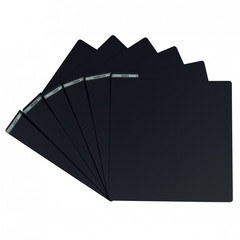
Für übersichtliche Ordnung in der Vinyl-Sammlung. Die Vinyl Divider haben einen überstehenden Reiter für Beschriftung und Aufkleber. Unentbehrlich für jeden Plattenladen.
FEATURES:
für Ordnung in der Schallplatten-Sammlung
mit Reiter für Beschriftungen oder Sticker
TECHNISCHE DATEN:
* aus flexiblem, dicken PVC
* 1 Glorious Vinyl Divider pro Lieferenheit
LOS ANGELES—To celebrate the 40th anniversary of the celebrated Talking Heads and Jonathan Demme’s concert film Stop Making Sense, the set will be re-released as a 2LP and 2CD/Blu-ray set this summer.
Released last year, the sold-out Deluxe Edition of the soundtrack will return as a 2-LP black vinyl on Rhino and 2-LP crystal clear vinyl at retail. Both variants feature a 12-page booklet with liner notes from all four band members –Tina Weymouth, David Byrne, Chris Frantz, and Jerry Harrison—and band photos. The 2CD/Blu-ray version includes the entire 28-page booklet from last year’s Deluxe Edition and a Dolby Atmos mix of the complete concert, mixed by Jerry Harrison and E.T. Thorngren, who also mixed the original release. Both will be available on July 26. Pre-order now.
The band appeared together for a sold-out screening and Q&A last night at the Pantages Theater, the same theater at which Stop Making Sense was recorded. They were joined by Blondshell, who performed “Thank You For Sending Me an Angel.” Another special screening with the band will occur in Brooklyn at the King’s Theater on June 13, with the Q&A hosted by Questlove and The Linda Linda’s performing “Found a Job.” The two events cap off a banner year of celebrations for what many consider to be the best concert film of all time.
The inspiration for Stop Making Sense came when director Jonathan Demme saw Talking Heads perform during the band’s 1983 tour for Speaking in Tongues. Afterward, he approached them with the idea of making the show into a concert film. They agreed and worked together over the next few months to finalize the details. Ultimately, Demme filmed three shows at Hollywood’s Pantages Theater in December 1983 to create Stop Making Sense.
The concert film presents a retrospective of the band up to that point, with a performance that weaves together songs from all six of its studio albums. The show progresses methodically, opening with Byrne onstage performing “Psycho Killer” alone with a drum machine. After each song, he’s joined by a new band member until Weymouth, Frantz, and Harrison are all on stage with him. The group continues to grow throughout the concert as members of the stellar touring band are added: keyboardist Bernie Worrell, percussionist Steve Scales, guitarist Alex Weir, and backup singers Lynn Mabry and Ednah Holt.
The band performs 18 songs in Stop Making Sense, including its recent single at the time, “Burning Down The House.” That summer, the song was in heavy rotation on radio and MTV, helping the song become the band’s first top 10 hit in America. It was, however, a different song from Speaking in Tongues that was destined to deliver one of the film’s signature moments. Talking Heads would perform “Girlfriend Is Better” wearing the now iconic, oversized suit inspired by costumes worn in traditional Japanese theater. For good measure, a picture of David Byrne in the suit also graces the album cover.
Stop Making Sense focuses mainly on music by Talking Heads but does include a few songs recorded outside the band: “Genius Of Love” by Tom Tom Club, “What A Day That Was” and “Big Business” from Byrne’s 1981 album, The Catherine Wheel. Limited edition vinyl versions of both of these albums, along with Harrison’s The Red And The Black, were released for this year’s Record Store Day.
When it arrived in September 1984, Stop Making Sense was an artistic and commercial triumph. The film had people dancing in theatre aisles, and the soundtrack sold over two million copies. Just last year, the Library of Congress added Stop Making Sense to the National Film Registry in recognition of its cultural, historical, and aesthetic significance.
Weymouth praises Demme as a collaborator: “…Jonathan was a very enthusiastic, highly adaptive, and imaginative guy who was just as good a listener as he was a talker and collaborator. From the get-go you just got the impression he was as flexible as he was disciplined. Being team players, that boded well for a great relationship and a great film!”
Harrison says the film still holds up today: “To me, Stop Making Sense has remained relevant because the staging and lighting techniques could have been created in a much earlier time period. For example, Vari-Lights, lights with motors to re-aim them, had just come into vogue. Had we used them, there would have been a timestamp on the film, and it eventually would have felt dated...The absence of interviews, combined with the elegant and timeless lighting, created a film that can be watched over and over.”
Byrne says it’s interesting that this album was – for many people – an introduction to Talking Heads. “We had done a live album before this, but coupled with the film, and with the improved mixes and sound quality, this record reached a whole new audience. As often happens, the songs got an added energy when we performed them live and were inspired by having an audience. In many ways, these versions are more exciting than the studio recordings, so maybe that’s why a lot of folks discovered us via this record.”
Frantz recalls the sheer joy surrounding the entire Stop Making Sense experience. “I’m talking about real, conscious, transcendent joy… I’m talking about what the Southern gospel people call ‘getting happy,’ which means ‘to be filled with the Spirit.’ That is what happened to us onstage every night, and from my seat behind the drums, I recognized that this was happening to the audience too. Joy was visible in front of me and all around me every night.”
out of Stock
Last delivered 2 years ago available to reorder, subject to availability
1993 Chick Corea - the venerated 27-time Grammy winner and National Endowment for the Arts Jazz Master - unveiled the second incarnation of the Elektric Band. With the brand new lineup of guitarist Mike Miller, bassist Jimmy Earl and drummer Gary Novak, and saxophonist Eric Marienthtal (the lone holder over from the first iteration of the Elektric Band,) Corea, approached this ambitious outing in the same way he had done everything throughout his career, by pushing the boundaries of what modern jazz is.
With material written with these specific players in mind, Corea gathered this group of remarkably flexible musicians into Mad Hatter Studios in Los Angeles. Recorded almost entirely live in first takes, the album is notable for its “less is more” approach to Corea’s particular style of genre bending composition. Though the focus may have been more on acoustic piano than synths, the same proficiency, spontaneity, impeccable execution and jaw-dropping display of chops that characterize the five first Elektric Band albums applies.
Of special note here is the inclusion of the track “Final Frontier”, originally released exclusively on the Japanese and European editions. This all out burner is the lone tune on the record featuring Corea on a synthesizer.
Written as an answer to “Got A Match” from 1986’s The Chick Corea Elektric Band album, it’s an uptempo showcase for the players to stretch out and the kind of track that exemplifies the jazz fusion that Corea and his groups came to define."
Für übersichtliche Ordnung in der Vinyl-Sammlung. Die Vinyl Divider haben einen überstehenden Reiter für Beschriftung und Aufkleber. Unentbehrlich für jeden Plattenladen.
FEATURES:
für Ordnung in der Schallplatten-Sammlung
mit Reiter für Beschriftungen oder Sticker
TECHNISCHE DATEN:
* aus flexiblem, dicken PVC
* 1 Glorious Vinyl Divider pro Lieferenheit
When it comes to musical performance, Charlie Bereal has done it all. Over the course of his 20+ year career, he's performed with and written for some of the greatest Hip Hop and R&B artists of our time (JAY-Z, Aaliyah, Snoop Dogg, and Missy Elliot to name a few). Now, he's shifting gears to focus on his career as a solo artist. On 5/10/2024, Charlie will re-release his second full-length record entitled 11-11-11 via Karma Chief and Colemine Records. Originally released in 2019, 11-11-11 was recorded over the course of a few casual hangs in Los Angeles. Charlie invited his friends Jairus Mosey and Raphael Saadig to join him in the studio and the trio started to jam. "We were just recording for fun - it wasn't for a specific project at first. Afterward, I listened back and decided to turn the best parts into individual songs." This flexible approach combined with Charlie's masterful production resulted in a soulful, psychedelic blend of original R&B. Think Sly and the Family Stone or Funkadelic. Charlie was born in Los Angeles and raised in Pasadena, CA. Musical talent runs in his family. He started performing at his grandfather's church at a very young age. "My grandfather was a pastor, and my dad was a preacher," he explained. "I started playing in the church band when I was 10, and I was drumming even earlier than that." When he was 16, Charlie and his brother Kenneth started making music professionally. He still works on music with his cousins on a regular basis. "I come from a very talented family. I can count at least seven family members who play professionally these days." Beyond the re-release of his second record, Charlie plans to record another album at Colemine's studio in Ohio. Stay tuned for more original music from this Grammy nominated legend.
When it comes to musical performance, Charlie Bereal has done it all. Over the course of his 20+ year career, he's performed with and written for some of the greatest Hip Hop and R&B artists of our time (JAY-Z, Aaliyah, Snoop Dogg, and Missy Elliot to name a few). Now, he's shifting gears to focus on his career as a solo artist. On 5/10/2024, Charlie will re-release his second full-length record entitled 11-11-11 via Karma Chief and Colemine Records. Originally released in 2019, 11-11-11 was recorded over the course of a few casual hangs in Los Angeles. Charlie invited his friends Jairus Mosey and Raphael Saadig to join him in the studio and the trio started to jam. "We were just recording for fun - it wasn't for a specific project at first. Afterward, I listened back and decided to turn the best parts into individual songs." This flexible approach combined with Charlie's masterful production resulted in a soulful, psychedelic blend of original R&B. Think Sly and the Family Stone or Funkadelic. Charlie was born in Los Angeles and raised in Pasadena, CA. Musical talent runs in his family. He started performing at his grandfather's church at a very young age. "My grandfather was a pastor, and my dad was a preacher," he explained. "I started playing in the church band when I was 10, and I was drumming even earlier than that." When he was 16, Charlie and his brother Kenneth started making music professionally. He still works on music with his cousins on a regular basis. "I come from a very talented family. I can count at least seven family members who play professionally these days." Beyond the re-release of his second record, Charlie plans to record another album at Colemine's studio in Ohio. Stay tuned for more original music from this Grammy nominated legend.
The RIOT DJ-Stashpack XL Plus is a versatile and lightweight gig bag that and was designed to be flexible in order to accommodate a variety of equipment. It features a practical, height-adjustable Rolltop opening to easily stash a battle-mixer, records, production gear or a DJ-controller. With its durable material, solid processing and a unique design, the new RIOT DJ-Stashpack XL Plus is perhaps the most versatile gear bag in the market.
+ FITS
Laptop up to 17"
Akai MPK-25
Akai MPC Renaissance
Denon MC-4000
NI Kontrol S4 MK3
NI Kontrol S2 MK3
NI Kontrol S5
NI Kontrol S4
NI Kontrol S2
NI Kontrol Z2
Numark NS6II
Numark NV2
Numark Mixtrack Pro 2
Numark Mixtrack Pro 3
Rane Seventy-Two
Rane Sixty-Two
Rane Sixty-Eigth
Reloop Elite
Reloop Terminal Mix 4
Roland DJ-202
Pioneer DDJ-REV1
Pioneer DDJ-SR2
Pioneer DDJ-RR
Pioneer DDJ-SB2
Pioneer DDJ-RB
Pioneer DJM-S11
Pioneer DJM-S9
Pioneer DJM-S7
Pioneer DJM-900 SRT/NXT
Vestax VCI-400
Vestax VCI-380
12“ Vinyl
Accessories
+ BASICS
Crafted from hardwearing and 100% waterproof PVC Tarpaulin
Soft-fleece lining
PVC-coated (waterproof zippers)
Lockable zippers on main and laptop compartment
Flexible height adjustment through variable Rolltop Closure
Main compartment includes removable bottom foam and padded side walls
The included (removable) Protection Panel protects jog wheels and faders and the folding top part works like an additional lid when e.g. battle-mixers are stowed.
Separate side entry compartment provides quick access to your laptop (up to 17’’)
Large front pocket with internal zip-pouches and organizers
1 side quick-access side pocket for small accessories and personal belongings
1 side bottle holder
Padded back panel with airflow system, ergonomic backpack straps and chest straps
Detachable trolley sling
Hand-luggage compatible (up to 56 cm height)
High Llamas present Hey Panda - a modern pop music/deep listening experience that could only issue forth from their personal quadrant of the galaxy. Hey Panda projects soulfully through an enervating abstract of today"s popular music; the sound of the Llamas" stately melodies and expressive ditties laid open - blissfully shattered - with drums and vocals hitting different, burning sounds and contemporary production twists pulling the ear at every turn. For the past few decades, High Llamas have trafficked in contemporary pop sounds directed toward the avant end of the spectrum as much as not. But here the message was clear. Llamas" composer-in-residence Sean O"Hagan was determined to let go. Hey Panda does just that, with a set of tunes reflecting on multiple levels how definitions change over the course of a lifetime, radiating an optimism derived from the diverse conundrums of today. Eight years since their last release, the pop musical Here Come The Rattling Trees, High Llamas have reinvented themselves again, mixing their peerless harmonic voice with what Sean regards as the "extraordinarily good" production sounds of today on Hey Panda. Choosing not to look backward to former golden ages celebrated in earlier Llamas eras, Sean"s instead found himself opened up by the sounds of music brought into the house by his adult children and the sounds encountered at sessions for which he"s recently written arrangements. In addition to the more traditional contributions he made to The Coral"s Sea of Mirrors album, plus his score for the Safdie brothers" 2022 film production, Funny Pages, Sean"s drawn great inspiration through working with Fryars, Rae Morris, King Krule, Pearl and The Oyster, while also soaking up the work of Tierra Whack and Chicago"s Pivot Gang, and being cheered on from a distance by longtime admirer Tyler The Creator. Thus, Sean"s producer procedural has evolved again, with upgrades first detected in his 2019 solo effort, Radum Calls, Radum Calls. With a cover of Billie Eilish"s "Wish You Were Gay" arranged for Bill Callahan and Bonnie Prince Billy"s Blind Date Party, along with his COVID-era solo single, "The Wild Are Welcome", Sean has leveled up again and again, leading to the delirious revelations of Hey Panda. Hey Panda"s wide reach is aided by two co-writes from Bonnie "Prince" Billy, (who bonded with Sean over a shared love of gospel soul during writing sessions), guest vocals from Rae Morris and Sean"s daughter Livvy, production twists from Fryars and the stalwart, flexible presence of High Llamas. For all of its sense of departure, Hey Panda is a movement in the High Llamas oeuvre that"s been a long time in development. Aspects of soul music were addressed at the time of Can Cladders; similarly, aspects of electronic dance music were in the mix in the late 90s, around the time of Cold and Bouncy. But nothing up to now has refocused the music of High Llamas so completely. Sharing the impulse of late-period Miles Davis and Quincy Jones, with further inspiration from Steve Lacy, SZA, Sault, No Name and Ezra Collective, among many others, Sean O"Hagan and High Llamas are living joyfully in the new and the now, with Hey Panda.
Parisian quintet En Attendant Ana's third album "Principia" is without a doubt their best yet. Bandleader Margaux Bouchaudon's voice anchors many of the songs on "Principia". The songs were composed from a place of confusion about the state of the world and their place in it, looking outward and inward for answers. Guitarist Max Tomasso - newly joined just before the recording of "Juillet" - feels more "moved-in", his guitar-work gliding effortlessly through. New member Vincent Hivert's bass-work is rubbery & flexible, urging on drummer Adrien Pollin's metronomic swing. The band's secret weapon, multi-instrumentalist Camille Frechou's trumpet & saxophone add a new layer of sophistication to the group's debonair indie pop. Bouchaudon says "One of the most important points we tried to focus on was the place given to each instrument. For the first time, we withdrew parts, we were careful not to play everyone at once and I think that the result is a much lighter album in which every musician has a specific place and moment". "Principia" is a great step forward without sacrificing the things that make the band unique, and absolutely feel like the next great phase of an already great band.
Oscar Peterson’s trio with Ray Brown and Ed Thigpen is widely regarded as Peterson’s “classic trio,” considered by fans as the most popular and in-demand of his long and storied career (featured on releases such as 1963’s Night Train and 1964’s We Get Requests). Recorded during their creative peak in 1964 (5 years into their collaboration), this previously unheard and unreleased live performance is destined to become a fan favorite from the Oscar Peterson vaults. In his memoir Peterson reflects on the dedication that Ray and Ed brought to the group:
"In addition to our trio rehearsals, therefore, Ray would call his own rehearsals in his or Ed’s room and they would simply practice ‘time.’ They created a flexible and multi-faceted rhythmical language that they could apply to any musical statement I might make and enhance any direction I might choose. In short, they practiced ‘all the possibles.’” - Oscar Peterson
On October 20, 2023, Anetha will release her third tempetuous compilation on her label Mama told ya entitled MTY-AIR «Mille attaques, les vents contrèrent», just one year after MTY-TERRE «Contre tout, toutes et tous, la terre demeure» and two years after MTY-EAU «L’eau repousse les feux agressifs».
Through air element, the compilation comes up with the collaboration of 22 artists with 20 tracks, divided into 4 vinyls: Once again, Anetha carried away with her a generation of electronic artists from around the world to simply blow our mind.
------
ON AIR: After twelve successful releases on Mama told ya, Anetha paraglides in our skies with the stormful MTY-AIR, a volatile new compilation: 4 swirling vinyls, 20 aerodynamics tracks, 1 wind blowing perfume.
Entitled «Mille attaques, les vents contrèrent», it will be the third of a series around the four elements. Capricious yet vigorous, air sweeps out everything on its way. Nothing can save you when you’re in the eye of the cyclone: prepare to fly hard. Alongside our windbreaker artists, skydive into the celestial vastness of sound: Gusts of disturbed techno, squalls of groove, mental tornado, minimal bass hurricane, cloudburst of psytrance… Time to get some fresh air.
Piercing pampero, mad mistral, forceful cierzo are blowing, blazing khamsin, steady sirocco, sharp shamal, dank nor’wester are entwining… Techno winds from all around the world are joining the fight against humanity. This is « Endgame » (B2). Final chapter, twisters and typhoons are cleansing the surface of earth, overthrowing everything on their path. Poor soul, don’t try to confront air’s blast as it will « Facelift » (D2) the shit out of you in less than a second. Take shelter as air is untouchable, unpredictable, unstoppable. Or if you’re brave enough, you’ll jump into the sky, looking for the currents to carry you up, sailing whirlwinds, riding airwaves, on the road to the « Temples of Quantum » (H2). Now jump!
The artwork has been once again entrusted to visual artist Karin Kimel, who worked on MTY-EAU’s artwork. She delivers an aerial scenery where supernal wafts are swirling, embalming our air. Diplomatie Studio took care of the design, mastering was entrusted to Sixbitdeep. And for the second time, with a direct message from earth to Earth, we opted for recycled vinyls.
out of Stock
Last delivered 15 months ago available to reorder, subject to availability
Bob Dylan was at several crossroads in the mid-1970s. Artistically, he was largely written off as being past his prime. Emotionally, he was suffering through a painful divorce from his then-wife Sara Lowndes. Creatively, he appeared at a stalemate, his previous decade's unprecedented run of transformational brilliance finished. Then came Blood on the Tracks.
A start-to-finish cycle that documents a lover's pursuit of, entanglement with, and loss of a woman, the bracingly intimate 1975 effort remains one of the most encompassing break-up albums ever made and ranks as the most personal statement of the Bard's career. To hear it is to experience the agony, frustration, trauma, highs, lows, confusion, sadness, and, ultimately, requisite redemption associated with intimate relationships gone astray. Dylan maintains it's a work of fiction, but it's evident close-vested autobiographical premise is what helps make it universal: It's the icon singing through tears, going out of his mind, battling hallowing emptiness, firing shots across the bow, and accepting culpability. It is, in short, a consummate expression of love's darker sides and the consequences of what happens when dreams unravel.
As part of its Bob Dylan catalogue restoration series, Mobile Fidelity is thoroughly humbled to have the privilege of mastering the iconic LP from the original master tapes and pressing it on dead-quiet LP at RTI. The end result is the very finest, most transparent analogue edition of Blood on the Tracks ever produced – and the first-ever proper analog reissue. Fantastically presenting both the solo acoustic and band-supported songs with the utmost clarity, dynamics, presence, immediacy, spaciousness, imaging, and balance, this version shines a high-powered light on the fluid vocal phrasing, timbral shifts, functional rhythms, and inward-looking strumming that contribute to every song here serving as a wound-exposing confessional.
For all the melancholic pain, unresolved questions, shattered memories, wasted times, unrequited dialogues, and weary regret within, Blood on the Tracks remains as daring as it is reflective. Rather than follow for a monotone caustic vibe, Dylan's songs burrow into the subconscious for the manners in which they are even-keeled, mellow, and occasionally, even peaceful. Dignity, honour, poignancy, and fairness – all traits uncommon in any situation in which partners dissolve histories, change hearts, and attribute blame – instil the record with equilibrium on par with the consistency of the flowing melodies.
Throughout, tunes come on and proceed as if they could continue forever, Dylan spinning poetic verses and conversations amidst finely tied knots of acoustic notes, chords, and fills, the deceivingly simple architecture conjuring the intertwined refractions of a bezeled jewel, various angles, colours, and textures conjoining into a gorgeously inseparable whole. Backed by Tony Brown's flexible albeit subtle bass, Buddy Cage's country-streaked pedal-steel guitar, and Paul Griffin's soul-baring organ – an instrument used to shadow, tuck-point, and illuminate here as effectively as any time in rock history – Dylan pours soulful emotion, open his veins, and bleeds.
Ranked 16 on Rolling Stone's list of the 500 Greatest Albums of All Time, and replete with existential thought, piercing directness, raw singing, and majestic arrangements,
Given the sonic and artistic merit of this album, we anticipate huge demand.
Abstrakce recover this lost gem recorded in 1999 and published by Keliehor himself in a very short-run CD named "Create Music", which had almost no diffusion.
An outstanding collection of exotic tracks with a wide range of influences from primitive cultures all over the world. An unexplored region where the Minimalism concepts developed by Steve Reich, La Monte Young, or Terry Riley and renewed by Midori Takada meet Jon Hassell's 4th world ideas.
You will find here repetitive patterns that evolve and transform the sound space, unlikely instruments gathered together in a perfectly harmonic way, making flow an unusual melodic sense when the uncommon combinations of these instruments interact with one another. Simple instruments, yet exotic, primitive sound makers with complex personalities, timeless sound treasures unchanging a hundred years. Crude or sophisticated, most of the instruments, compel us to listen to them. A more flexible and wider range of tonality is discovered by limiting the number of instruments that play together and choosing those whose tones and harmonics resonate together.
The record results from a didactic project for nursery and primary school environments while searching for ideas to guide children in following the details of music. The music architectures are often transparent, even repetitive, but the culminative effect soon becomes more than that. These pieces are aural landscapes for dreams and adventures, doorways to imaginative worlds.
The Artists:
Jon Keliehor and Signy Jakobsdottir performed together in Seattle, Venezuela, and Scotland. During their stay in Seattle, both had studied gamelan music with Gamelan Pacifica under the direction of Jarrad Powell. After returning to Scotland, they continued to study and perform with Gamelan Naga Mas, in Glasgow, in projects directed by dhalang Joko Susilo, dancer/director Nyoman Wenten, and Professor Matthew Issac Cohen.
In Scotland, they created adult and children's workshops under the banner of Luminous Music. Preceding the formation of Luminous Music, Keliehor had worked as percussionist and composer with contemporary dance companies, both in London and Seattle. Following on studies in percussion music at Dartington College of the Arts, Signy moved to Seattle to begin work with Jon. The partnership that ensued brought them to Caracas, Costa Rica, Brazil and Spain to create music for the dance company DanzaHoy. In 1996, they returned to Glasgow, and continued to work together at the newly created Luminous Music Studios. Signy's involvement with musicians/groups has continued beyond this to include genres in Scottish/Celtic traditions, in Jazz, as well as music innovations of her own design.
The next chapter of the Natural Information Society is here. Since Time Is Gravity, credited to Natural Information Society Community Ensemble with Ari Brown, presents a newly expanded manifestation of acclaimed composer & multi-instrumentalist Joshua Abrams nearly 15 year, 7 albums &-counting flagship ensemble. Joining the core NIS of Abrams (guimbri & bass), Lisa Alvarado (harmonium) Mikel Patrick Avery (drums) & Jason Stein (bass clarinet) are Hamid Drake (percussion), Josh Berman & Ben Lamar Gay (cornets), Nick Mazzarella & Mai Sugimoto (alto saxophones & flute), Kara Bershad (harp) & Chicago living legend of the tenor saxophone Ari Brown. Recorded live to tape at Electrical Audio & The Graham Foundation, cover painting Vibratory Cartography: Nepantla, by Lisa Alvarado. 2xLP on Eremite USA, 2xLP & CD on Aguirre/Eremite Europe. Out 14-04.
Since first developing Natural Information Society in 2010, Joshua Abrams has been gradually expanding the group’s conceptual underpinnings, its musical references & the sheer number of the group’s members. Its music is, in a sense, an expansive form of minimalism, based in repeated & overlaid rhythmic patterns, ostinatos & modality. Its roots, its scale & its meaning become clearer in time. If time is gravity, it also allows us to carry more. Having begun as fundamentally a rhythm section with Abrams’ guimbri at its core, the version here can stretch to a tentet, including six horns.
Abrams has been expanding his minimalism gradually, but he has long understood a key to minimalism’s potential: the breadth of its roots in the late 1950s & early 1960s, ranging from the dissatisfaction of young European-stream composers with the limitations of serialism to the simultaneous dissatisfaction of jazz musicians with the dense harmonic vocabulary of bop & hard bop. The former began exploring rhythmic complexity & narrow tonal palates in place of harmonic abstraction (Steve Reich’s Drumming, Philip Glass’ Music with Changing Parts; perhaps above all Terry Riley’s In C & his late ‘60s all-night organ & loop concerts); the later reduced dense chord changes to scales (signally with Miles Davis' Kind of Blue, but rapidly expanding with John Coltrane’s vast project). In the 1950s the LP record opened the world with documentation of Asian & African musics, key influences on both minimalists & jazz musicians. If John Coltrane’s soprano saxophone suggested the keening shehnai of Bismillah Khan, the instrument was rapidly taken up by two key minimalists, LaMonte Young & Riley, similarly appreciative of its flexible intonation, the same thing that kept it out of big bands.
If the guimbri, the North African hide-covered lute that Abrams plays with NIS, involves a rich tradition of hypnotic healing music associated with the Gnawa people, Abrams’ music also touches on other musics as well — other depths, memories & healings, different drones, rhythms & modes. As the group expands on Since Time Is Gravity, he has made certain jazz traditions in the same stream more explicit as well. If there is a mystical & elastic quality involved in the experience of time, both in direction & duration, you will catch it here. The parts for the choir of winds expand on the roles of Abrams’ guimbri, Mikel Patrick Avery & Hamid Drake’s percussion & Lisa Alvarado’s harmonium: at times, the winds are almost looping in the tentet version, each hitting a repeating note in turn, at once drone & distinct inflection on temporal sequence. The brilliance of the work resides in Abrams’ compositions, the NIS’ intuitive execution & in Ari Brown’s singular embodiment of the great tenor saxophone tradition, including the oracular genius of Eddie “Lockjaw” Davis, & Yusef Lateef. The three pieces by the expanded NIS featuring Brown —the opening “Moontide Chorus” & “Is” & the ultimate “Gravity”— have an immediate impact, & togther might be considered a kind of concerto for tenor saxophone. Here Brown presses almost indistinguishably from composed melody to improvised speech, getting so close to language that he might have a text. Everything here is a sign. Note the tap of the Rhythm Ace that links “Moontide Chorus” to “Is”, the attentive heart always present, even when signed by a machine. There’s a link here to the methodologies & meanings of dub music & the linear & vertical collage of beats, textures & tongues: treated with reverence, a sample of a beat-box can be as soulful, as hypnotic, as a mbira or a tamboura. If those pieces with Brown are heard as a suspended concerto, the three embrace & enfold the other works, like the sepals of a flower. That placement will also touch on the mysteries of our perception of time.
Particularly in “Is”, but elsewhere as well, a phenomenon of transcendence arises in which time appears to be tripartite, at once moving backwards & forwards & standing still. This is an act of technical brilliance certainly, but also an illumination of music’s ability to represent temporal consciousness through polymetrics. This particular listener has only heard it before in a few places, including the horn shouts & bowed basses of Coltrane’s Africa, in moments of Charles Mingus’ The Black Saint & the Sinner Lady, in certain pieces where tapes were literally running backwards, & earlier still in Dizzy Gillespie’s Cubana Be, Cubana Bop, in which the composer George Russell & conguero Chano Pozo found a music that spoke at once in the voices of Stravinsky’s Rite of Spring & the vestigial rites, rhythms & songs of the Yoruba language & Santeria religion of inland Cuba.
In Joshua Abrams’ compositions & the realization of them by the NIS, in the time of one’s close listening & memory thereof, distinctions between the “natural” & the “social”, the “quotidian” & the “transcendent” are erased, suspended or perhaps irrelevant. Consider two of the ensemble pieces, one named for nature, the other social science. In “Murmuration” the repeated wind figures of flute & alto saxophone combine with the interlocking patterns of harp, guimbri & frame drum (tar) to create a perfect moving stillness, not an imitation but a witness to the miracle of the starlings’ astonishing collective art, a surfeit of beauty that might be the ultimate defense tactic.
“Stigmergy” takes its name & concept from the Occupy movement’s Heather Marsh, who proposes a social system based on a cooperative rather than competitive models, one in which ideas are freely contributed & developed as ideas rather than an individual’s property. In its form, Abrams’ “Stigmergy” is the closes thing to traditional jazz, a series of accompanied solos by each of the wind players. However, the composed accompaniment is a radically collectivist notion: a repeated rhythmic figure, call it ostinato or riff, in which the different winds each play only a note or two of the figure, a concept both more collectivist & individualistic in its conception than any typical unison figure. It suggests another of the underlying recognitions that propel the Natural Information Society, the group as social organism, the teleology of hypnotic anarchy, all parts in place, functioning systematically, evolving & expressing itself, its nature & society, as a transformative organism.
George Lewis has described music as “a space for reflection on the human condition”. This suggests that, rather than a “distraction”, at least some music might serve as a distraction from distraction. It’s a focus, a clarity, a awareness, an external invitation to interiority, as if music itself is a model for form & contemplation, an organism contemplating for us or as us. If that is a possibility, & I am sure I have heard such musics, than this music is among them. How many of our rhythms, melodies & harmonies (cultural, historical, biological, psychic) might such music carry, translate & transform in the particulate ecstasy of our own murmuration? (Stuart Broomer, April 2022)
out of Stock
Last delivered 3 years ago available to reorder, subject to availability
FÜR FANS VON: HEAT, Eclipse, Nestor, Hardline, Brother Firetribe
Mit ihrem neuen Album „Code Red“ schlägt die deutsche Hard Rock Band DEVICIOUS aus Karlsruhe ein neues Kapitel auf. 2017 gegründet, veröffentlichen sie nun ihr 5. Album in fünf Jahren. Nach einigen Klangexperimenten auf dem Vorgängeralbum „Black Heart“ kehren sie nun zurück zu ihren Wurzeln, zu dem, was sie am besten können. Große Arena-Melodien kombiniert mit bombastischen Chorarrangements und einer großen Produktion.
Das Album wurde von Bandleader und Songwriter Alex Frey selbst produziert und in den Mastersound Entertainment Studios in
Steinheim, Deutschland von Alexander Krull gemischt und gemastert. Er ist der Hauptakteur hinter den Bands ATROCITY und LEAVE’S EYES sondern steht auch auf der Producer- und Mastering-Liste von Bands wie ATROCITY, LEAVE’S EYES, DORO, CREMATORY, VELVET VIPER oder ZAR. Das neue Kapitel von DEVICIOUS beinhaltet auch einen neuen Sänger. Antonio Calanna verließ die Band nach dem letzten Album auf freundschaftlicher Basis, um sich auf andere Projekte zu konzentrieren. Sein Nachfolger ist niemand geringerer als der ehemalige TNT-Sänger Baol Bardot Bulsara, der bereits
auf dem „Black Heart“-Album einige Backing-Vocals gesungen hat und bei einigen Black Heart-Headliner-Shows an Bord war. Mit Baol ist die Band flexibler, da er eine breitere Bandbreite hat und alles von melodischen Balladen bis hin zu Power Metal-Melodien singen kann.
Mit „Code Red“ liefern DEVICIOUS ihr bisher kraftvollstes und ausgereiftestes Werk ab. Ein melodisches Meisterwerk mit allen DEVICIOUS-Markenzeichen.
Coherence is overrated. Especially if keeping things hazy, and not smoothing away all the rough edges, and allowing all the seeming contradictions to find their own unique harmony with each other in their own time can result in the heady magic of Lock Eyes & Collide, the second EP from South London-based quintet Moreish Idols. Across these four tracks, Moreish Idols deal in tangles of hyper-melodic guitar, sleepy-eyed murmurs glowing with unassuming poetry, blossoms of wise saxophone, rhythms that pulse and purr to their own inarguable logic. You could spend days trying to define what exactly it is they are doing over these fifteen or so minutes, but you’d be wiser to just lose yourself within Lock Eyes & Collide’s laser-guided twists and turns.
Pulling into focus. They passed tracks from initial collaborative song-writing sessions along to Dan Carey, who signed Moreish Idols to his Speedy Wunderground label and produced their first release on the label, the Float EP, in the summer of 2022 (they’d released a pair of self-released 7”s before lockdown). Restless, jerky, jagged and rhythmically centred, many of Float’s energetic pleasures bore the influence of their earlier flirtation of post-punk, but the ruminative When The River Runs Dry spelled deeper treasures lay within, while the erratic, wonderful Speedboat spoke to Moreish Idols’ essential gift for mystery. Lock Eyes & Collide is something else altogether, though – a looser constellation of ideas, a clearer hint of the group’s future.
The elements that compose the EP – swooning tremolo guitars, prickly melodic riddles, erudite saxophone improvs, loose and flexible rhythms – make perfect sense together, on vinyl if not on paper, sounding like Watery, Domestic-era Pavement one second and some bucolic Canterbury Scene prog the next, but always, always like Moreish Idols most of all.
The future that is undefined is limitless. If Lock Eyes & Collide captures Moreish Idols’ present, what do they see in their future? “If we’d just made Float II for our second EP, people would be, ‘Oh, they’re the band that does that,” says Tom. “I’m so glad we’ve made this weird alter-ego of our first EP; now we feel we can do whatever we want.”
Tape
Parisian quintet En Attendant Ana have dazzled since day one. From the muted strains of their 2016 EP "Songs From The Cave", to the assured 2018 TiM debut "Lost & Found", to the sparkling refrains of "Juillet"; released just before the world collapsed around us, and which stood as the band's rebirth and purest statement of their music ambitions - until now. "Principia" is the band's third album and is without a doubt their best yet. Bandleader & principal songwriter Margaux Bouchaudon's voice anchors many of the songs on "Principia", her crystalline delivery ringing out like a bell as the band swoons & sways beneath her. The songs on "Principia" were composed from a place of confusion about the state of the world and her place in it, looking outward and inward for answers. They question our perception of others, the one they have of us and finally the one we have of ourselves in a society where the individual is king and the group is forgotten. Guitarist Max Tomasso - newly joined just before the recording of "Juillet"- feels more "moved-in" on these tunes, his sly guitar-work gliding effortlessly through. No showboating - only prickling at the precise moment necessary in suit of the song itself. New member Vincent Hivert (their touring sound man, Hivert joined the group just as touring was underway for "Juillet", replacing founding member Antoine Vaugelade)'s bass-work is rubbery & flexible, bouncing around and thru the melodies on a rhythmic sugar-high, practically urging on drummer Adrien Pollin's metronomic swing. The band's secret weapon, multi-instrumentalist Camille Frechou's trumpet & saxophone are more present & considered in the arrangements, adding a new layer of sophistication to the group's already debonair indie pop. Her beatific harmonies add a yearning to Bouchaudon's lilting phrases; sometimes uplifting, other times melancholic. Bouchaudon says "One of the most important points we tried to focus on was the place given to each instrument. For the first time, we withdrew parts, we were careful not to play everyone at once and I think that the result is a much lighter album in which every musician has a specific place and moment". But this album is also the first one to have been shaped entirely by the band, from the conception to the production. The meeting of Vincent Hivert and Margaux Bouchaudon gave birth to a duet in which the technical and artistic aspects were intertwined from the very beginning of the conception of "Principia". Apart from reshaping En Attendant Ana's dynamic, Vincent Hivert was able to think as a musician and producer as soon as they started working on Margaux Bouchaudon's demos which brought a new dimension to their music. The two of them recorded and mixed the album together reuniting their references and artistic goals. "Principia" is a great step forward without sacrificing the things that make the band unique. The nods to French pop (both current & classic) still permeate the proceedings, and the group's penchant for Anglo-Saxon indie pop from The Nineties (think Electrelane, Stereolab, American Analog Set) still rings out, but there's an air of - dare we say - maturity in "Principia"s twelve songs. The group always felt a little 'out-of' and 'ahead-of' its time, but tunes like "Wonder" "The Cutoff" and "Same Old Story" are cinematic and romantic, and absolutely feel like the next great phase of an already great band.
Parisian quintet En Attendant Ana have dazzled since day one. From the muted strains of their 2016 EP "Songs From The Cave", to the assured 2018 TiM debut "Lost & Found", to the sparkling refrains of "Juillet"; released just before the world collapsed around us, and which stood as the band's rebirth and purest statement of their music ambitions - until now. "Principia" is the band's third album and is without a doubt their best yet. Bandleader & principal songwriter Margaux Bouchaudon's voice anchors many of the songs on "Principia", her crystalline delivery ringing out like a bell as the band swoons & sways beneath her. The songs on "Principia" were composed from a place of confusion about the state of the world and her place in it, looking outward and inward for answers. They question our perception of others, the one they have of us and finally the one we have of ourselves in a society where the individual is king and the group is forgotten. Guitarist Max Tomasso - newly joined just before the recording of "Juillet"- feels more "moved-in" on these tunes, his sly guitar-work gliding effortlessly through. No showboating - only prickling at the precise moment necessary in suit of the song itself. New member Vincent Hivert (their touring sound man, Hivert joined the group just as touring was underway for "Juillet", replacing founding member Antoine Vaugelade)'s bass-work is rubbery & flexible, bouncing around and thru the melodies on a rhythmic sugar-high, practically urging on drummer Adrien Pollin's metronomic swing. The band's secret weapon, multi-instrumentalist Camille Frechou's trumpet & saxophone are more present & considered in the arrangements, adding a new layer of sophistication to the group's already debonair indie pop. Her beatific harmonies add a yearning to Bouchaudon's lilting phrases; sometimes uplifting, other times melancholic. Bouchaudon says "One of the most important points we tried to focus on was the place given to each instrument. For the first time, we withdrew parts, we were careful not to play everyone at once and I think that the result is a much lighter album in which every musician has a specific place and moment". But this album is also the first one to have been shaped entirely by the band, from the conception to the production. The meeting of Vincent Hivert and Margaux Bouchaudon gave birth to a duet in which the technical and artistic aspects were intertwined from the very beginning of the conception of "Principia". Apart from reshaping En Attendant Ana's dynamic, Vincent Hivert was able to think as a musician and producer as soon as they started working on Margaux Bouchaudon's demos which brought a new dimension to their music. The two of them recorded and mixed the album together reuniting their references and artistic goals. "Principia" is a great step forward without sacrificing the things that make the band unique. The nods to French pop (both current & classic) still permeate the proceedings, and the group's penchant for Anglo-Saxon indie pop from The Nineties (think Electrelane, Stereolab, American Analog Set) still rings out, but there's an air of - dare we say - maturity in "Principia"s twelve songs. The group always felt a little 'out-of' and 'ahead-of' its time, but tunes like "Wonder" "The Cutoff" and "Same Old Story" are cinematic and romantic, and absolutely feel like the next great phase of an already great band.
Parisian quintet En Attendant Ana have dazzled since day one. From the muted strains of their 2016 EP "Songs From The Cave", to the assured 2018 TiM debut "Lost & Found", to the sparkling refrains of "Juillet"; released just before the world collapsed around us, and which stood as the band's rebirth and purest statement of their music ambitions - until now. "Principia" is the band's third album and is without a doubt their best yet. Bandleader & principal songwriter Margaux Bouchaudon's voice anchors many of the songs on "Principia", her crystalline delivery ringing out like a bell as the band swoons & sways beneath her. The songs on "Principia" were composed from a place of confusion about the state of the world and her place in it, looking outward and inward for answers. They question our perception of others, the one they have of us and finally the one we have of ourselves in a society where the individual is king and the group is forgotten. Guitarist Max Tomasso - newly joined just before the recording of "Juillet"- feels more "moved-in" on these tunes, his sly guitar-work gliding effortlessly through. No showboating - only prickling at the precise moment necessary in suit of the song itself. New member Vincent Hivert (their touring sound man, Hivert joined the group just as touring was underway for "Juillet", replacing founding member Antoine Vaugelade)'s bass-work is rubbery & flexible, bouncing around and thru the melodies on a rhythmic sugar-high, practically urging on drummer Adrien Pollin's metronomic swing. The band's secret weapon, multi-instrumentalist Camille Frechou's trumpet & saxophone are more present & considered in the arrangements, adding a new layer of sophistication to the group's already debonair indie pop. Her beatific harmonies add a yearning to Bouchaudon's lilting phrases; sometimes uplifting, other times melancholic. Bouchaudon says "One of the most important points we tried to focus on was the place given to each instrument. For the first time, we withdrew parts, we were careful not to play everyone at once and I think that the result is a much lighter album in which every musician has a specific place and moment". But this album is also the first one to have been shaped entirely by the band, from the conception to the production. The meeting of Vincent Hivert and Margaux Bouchaudon gave birth to a duet in which the technical and artistic aspects were intertwined from the very beginning of the conception of "Principia". Apart from reshaping En Attendant Ana's dynamic, Vincent Hivert was able to think as a musician and producer as soon as they started working on Margaux Bouchaudon's demos which brought a new dimension to their music. The two of them recorded and mixed the album together reuniting their references and artistic goals. "Principia" is a great step forward without sacrificing the things that make the band unique. The nods to French pop (both current & classic) still permeate the proceedings, and the group's penchant for Anglo-Saxon indie pop from The Nineties (think Electrelane, Stereolab, American Analog Set) still rings out, but there's an air of - dare we say - maturity in "Principia"s twelve songs. The group always felt a little 'out-of' and 'ahead-of' its time, but tunes like "Wonder" "The Cutoff" and "Same Old Story" are cinematic and romantic, and absolutely feel like the next great phase of an already great band.
Formed in 2014 in Chicago by partners Joshua Condon
and Eliza Weber, Glyders have kept busy, lighting up
shows around town and country ever since then with their
mystery sound, on the road when and where they could
from here to Europe, taking time also to self-release a
couple of EPs (‘DIM’ and ‘Lend a Hand’).
Fuelled by Josh’s spectral vocals and the liquidity created
by his guitar and Eliza’s bass, Glyders’ mazy spacecraft
takes to the air from the empty parking lot out back of the
roadhouse and finds in its arc an anodyne of the trippy and
the wiggy / ghostly places lost and found. Glyders have it
both ways, rocking the white line with fervour but also
stopping to soak up the fragrance of the purple sage and
the queen of the night by the side of the road.
They’ve cut their records at home, with Josh delving deep
in the pleasures of analogue recording, finding the
embodiment of their subterranean fascinations with twists
and turns of the dial in a space they’ve dubbed the Juicy
Lagoon. Steeped in the pop and psychedelic enigmas of
rock and roll yore, the buzzing of tubes and transients and
uncontainable rumble, Glyders make it shake and live in
front of the tape machine and real audiences alike with a
flexible, expansive palette of sounds and a tight bunch of
songs.
For their first vinyl full-length, the watchword, as ever, is
‘maximal minimal’. These kids are up around the bend and
in it for the long haul. After a few line-up shifts over the
years, they’re settled down with drummer Joe Seger and
are fixing their sights on the far horizons. If you see
Glyders choogling down the track, pull up and get set for
‘Maria’s Hunt’.
Formed in 2014 in Chicago by partners Joshua Condon
and Eliza Weber, Glyders have kept busy, lighting up
shows around town and country ever since then with their
mystery sound, on the road when and where they could
from here to Europe, taking time also to self-release a
couple of EPs (‘DIM’ and ‘Lend a Hand’).
Fuelled by Josh’s spectral vocals and the liquidity created
by his guitar and Eliza’s bass, Glyders’ mazy spacecraft
takes to the air from the empty parking lot out back of the
roadhouse and finds in its arc an anodyne of the trippy and
the wiggy / ghostly places lost and found. Glyders have it
both ways, rocking the white line with fervour but also
stopping to soak up the fragrance of the purple sage and
the queen of the night by the side of the road.
They’ve cut their records at home, with Josh delving deep
in the pleasures of analogue recording, finding the
embodiment of their subterranean fascinations with twists
and turns of the dial in a space they’ve dubbed the Juicy
Lagoon. Steeped in the pop and psychedelic enigmas of
rock and roll yore, the buzzing of tubes and transients and
uncontainable rumble, Glyders make it shake and live in
front of the tape machine and real audiences alike with a
flexible, expansive palette of sounds and a tight bunch of
songs.
For their first vinyl full-length, the watchword, as ever, is
‘maximal minimal’. These kids are up around the bend and
in it for the long haul. After a few line-up shifts over the
years, they’re settled down with drummer Joe Seger and
are fixing their sights on the far horizons. If you see
Glyders choogling down the track, pull up and get set for
‘Maria’s Hunt’.
CAUSTIC CASANOVA, die psychedelischen Heavy-Riffonauten aus Washington, DC nutzen auf ihrem fünften, das Gehirn schmelzenden Album die starke Kernkraft ihres hyperkinetischen Zentrums, um diverse Soundpartikel in die musikalische Wechselwirkung einzubinden und in einer kaleidoskopischen Heavy-Rock-Extravaganz explodieren zu lassen. Im Jahr 2005 als Trio gegründet, schlagen Schlagzeugerin und Sängerin Stefanie Zaekner, Bassist und Sänger Francis Beringer sowie Gitarrist Andrew Yonki, mit CAUSTIC CASANOVA immer wieder neue Wege ein, um ihre ebenso packende wie unvorhersehbare Musik spannend zu verfeinern. In ihren Klangräumen verbindet sich sardonischer Noise-Rock und proggiger Sludge im Stile von BARONESS, RED FANG und TORCHE mit der gewaltigen Wucht der MELVINS, der Experimentierfreude von BORIS und flottem Gitarren-Heldentum sowie einem Hauch von verdunkeltem Post-Punk. Mit der Aufnahme eines zweiten Gitarristen in der Person von Jake Kimberley im Jahr 2019 machte sich das nunmehrige Quartett auf eine Abenteuerreise mit dem erklärten Ziel, das waghalsigste und rockigste CAUSTIC CASANOVA Album aller Zeiten zu erschaffen. Dabei nutzen die Amerikaner geschickt alle erweiterten Möglichkeiten, die sich aus ihrer Verstärkung mit einer zweiten Gitarre ergeben. Gleichzeitig unterstreichen die Vier auf "Glass Enclosed Nerve Center" auch all ihre bisherigen Stärken: Beringers straffer, melodischer Bass pumpt heftig die beiden heiß-bruzzelnden Gitarren auf, die den gesanglichen Dreiklang flankieren. Zaenkers flexibles Schlagzeugspiel treibt die fünf mäandrierenden Songs des Albums einfallsreich an und fühlt sich sowohl im swingenden Bill-Ward-Stomp als auch in der Hibbeligkeit des Math-Rock wohl. Langjährige Reisende in CAUSTIC CASANOVAs Fahrwasser dürfen "Glass Enclosed Nerve Center" als eine Art von berauschender Rückkehr empfinden, zu der auch das ehrgeizig ausufernde, 22-Minuten-Epos 'Bull Moose against the Sky' erheblich beiträgt, welches die gesamte B-Seite des Albums in Beschlag nimmt. Doch auch wer den massiven Sound dieser galoppierenden Psychedelic-Sludge-Büffel noch nicht kennt, bekommt hier herausragendes Songhandwerk und eine reiche lyrische Erzählkultur geschenkt, die jede Sekunde und unzählige Wiederholungen wert sind. Drei, zwei, eins... nun geht es rund!
CAUSTIC CASANOVA, die psychedelischen Heavy-Riffonauten aus Washington, DC nutzen auf ihrem fünften, das Gehirn schmelzenden Album die starke Kernkraft ihres hyperkinetischen Zentrums, um diverse Soundpartikel in die musikalische Wechselwirkung einzubinden und in einer kaleidoskopischen Heavy-Rock-Extravaganz explodieren zu lassen. Im Jahr 2005 als Trio gegründet, schlagen Schlagzeugerin und Sängerin Stefanie Zaekner, Bassist und Sänger Francis Beringer sowie Gitarrist Andrew Yonki, mit CAUSTIC CASANOVA immer wieder neue Wege ein, um ihre ebenso packende wie unvorhersehbare Musik spannend zu verfeinern. In ihren Klangräumen verbindet sich sardonischer Noise-Rock und proggiger Sludge im Stile von BARONESS, RED FANG und TORCHE mit der gewaltigen Wucht der MELVINS, der Experimentierfreude von BORIS und flottem Gitarren-Heldentum sowie einem Hauch von verdunkeltem Post-Punk. Mit der Aufnahme eines zweiten Gitarristen in der Person von Jake Kimberley im Jahr 2019 machte sich das nunmehrige Quartett auf eine Abenteuerreise mit dem erklärten Ziel, das waghalsigste und rockigste CAUSTIC CASANOVA Album aller Zeiten zu erschaffen. Dabei nutzen die Amerikaner geschickt alle erweiterten Möglichkeiten, die sich aus ihrer Verstärkung mit einer zweiten Gitarre ergeben. Gleichzeitig unterstreichen die Vier auf "Glass Enclosed Nerve Center" auch all ihre bisherigen Stärken: Beringers straffer, melodischer Bass pumpt heftig die beiden heiß-bruzzelnden Gitarren auf, die den gesanglichen Dreiklang flankieren. Zaenkers flexibles Schlagzeugspiel treibt die fünf mäandrierenden Songs des Albums einfallsreich an und fühlt sich sowohl im swingenden Bill-Ward-Stomp als auch in der Hibbeligkeit des Math-Rock wohl. Langjährige Reisende in CAUSTIC CASANOVAs Fahrwasser dürfen "Glass Enclosed Nerve Center" als eine Art von berauschender Rückkehr empfinden, zu der auch das ehrgeizig ausufernde, 22-Minuten-Epos 'Bull Moose against the Sky' erheblich beiträgt, welches die gesamte B-Seite des Albums in Beschlag nimmt. Doch auch wer den massiven Sound dieser galoppierenden Psychedelic-Sludge-Büffel noch nicht kennt, bekommt hier herausragendes Songhandwerk und eine reiche lyrische Erzählkultur geschenkt, die jede Sekunde und unzählige Wiederholungen wert sind. Drei, zwei, eins... nun geht es rund!
Deep-listening organ piece from Malaysia-born, Berlin-based composer Rishin Singh, performed by Martin Sturm on the Lizst organ in Thuringia, Germany. RIYL: Kali Malone, Anna von-Hausswolff - "An endless and captivating exploration of one organ's timbres and tones. Both whispered and shouted, large and small, close and far, Singh's work is both unsettling and a balm, and has invited me to reconsider pitch, consonance, dissonance, tension and release." – Clarice Jensen, artistic director of the American Contemporary Music Ensemble (ACME) In the 1850s the influential composer Franz Liszt, who was living in Weimar, Germany at the time, carried out, with the famous cantor Alexander Wilhelm Gottschalg, a series of “ländlichen Orgelexperimente” (rural organ experiments) in Thuringia – investigating various instruments and their capabilities for contemporary music. They eventually settled on the organ in Denstedt because of its high quality. Many years later, award-winning organist Martin Sturm would invite the Berlin-based composer Rishin Singh to repeat these “ländlichen Orgelexperimente” with him and they again chose the organ at Denstedt, now named in honour of Liszt, as the best instrument – the most flexible and expressive – to perform and record Singh's music for organ. mewl infans is a contemporary classical piece that invites modern listeners to ponder the enduring pull of an instrument that was first conceived more than 2,000 years ago and has, in recent years, been rediscovered by a new generation of composers and listeners. Throughout the larger architecture of the four movements, melodic motifs return over and over, fractured by noise, fragmented by carefully calibrated alternate tunings, dissolving into thin air, and generating drones which then transform into new melodic variations. Over the 44 minutes of the piece the organist at times attempts to exert complete control over the instrument, and at other times relinquishes all control entirely. Conceptually rigorous and emotionally charged, mewl infans rewards deep listening and patience. At times conjuring a sense of doom, at other times suspense, pastoral drift, or aquatic submersion, the album is a universe of tiny details comprised of noise and air, of the journey each tone takes from birth to expiration. HIGHLIGHTS: – Singh has been commissioned by the GRAMMY-nominated JACK Quartet. Premiere in NYC Spring 2023 – Collaborations between Singh and Sturm are ongoing: Sturm will premiere Singh’s concerto for organ, timpani, and string orchestra later this year – Sturm is the youngest professor of organ in German history – The debut album from Singh‘s ensemble Leider, A Fog Like Liars Loving, was released by Beacon Sound in May of 2021 Bios: Martin Sturm, born 1992 in South Germany, in an International award-winning organist (ION, Schwäbisch Gmünd, Festival St Albans, Haarlem, Bavarian Culture Prize, and Keck-Köppe Foundation). He performs regularly as an interpreter and organ improviser at festivals, churches, and concert halls around the world. In 2019 he was appointed Professor for Organ and Organ Improvisation at the University of Music “Franz Liszt” in Weimar (Germany), after teaching at the Universities of Music in Würzburg and Leipzig. Rishin Singh (b. Kuala Lumpur, Malaysia) is a composer and trombonist living in Berlin. He has been commissioned to compose for the JACK Quartet (US), Piano+ (US), Claire Edwardes (AUS), DNK Ensemble (NL), Prof. Martin Sturm (DE), the Amsterdam Wandelweiser Festival (NL), Quiet Music Ensemble (IE), and others. Upcoming premieres include “every day” a concerto for organ, timpani, and string orchestra (Martin Sturm, Thuringia, 2022), and “melancholy objects” a string quartet (the JACK Quartet, New York, Spring 2023). He is currently working on his first chamber opera and is the composer and lyricist for the art song ensemble Leider.
Radio Diaspora works on the concept of cultural identity, which is flexible and dynamic. This provocation is generated by referring to all African ancestry moved by the diaspora and its sonorous, vocal, polyrhythmic, and polyphonic codes - all the ancestral heritage that has spread throughout the world following expropriations, genocide, and slavery - sampling and amplifying references that become triggers of energetic approaches. A heavy core of representations and senses aims to exorcize through noise and strangeness all secular violence against people of the African diaspora. In the title song of this album, 'Negro Humor', the respected Brazilian actor Grande Otelo highlights the contradiction of the clown, which awakens joy in everyone but is a sorrowful, lonely figure, ridiculing himself and putting himself in the most embarrassing situations. Relieved, loud laughter echoes in the audience because it is not the target of ridicule. In 'Despacho', Radio Diaspora explores the dichotomy of society by introducing a speech by Brazilian lawyer Hédio Silva Júnior specialised in Afro-Brazilian religion. He questions a rule under discussion in Brazil's Congress that would prohibit the use of chickens in Candomblé and Umbanda rituals. Silva Júnior points out that everyone takes a stand to protect the rights of animals, but the same cannot be said of the defense of young black people and outlying societies. The track 'Meia-Noite' evokes a celebrated point of Umbanda, an Afro-Brazilian religious syncretic cult, permeated by free jazz and electronic atmospheres developed by the duo. The other songs on the album are divided into two parts. They feature the voices of North American icons of the black struggle for civil rights: The tracks 'A.H.M. Al-Shabazz 1 and 2', amid sonic dissonances, use extracts from speeches by the American leader Malcolm X, and in 'Muhammad Ali 1 and 2' we hear quotes from famous interviews given by the boxer and activist. Ali ironizes the questions he asked his mother as a child, why all good and positive things are associated with white. "Mother, how come is everything white? Why is Jesus white with blonde hair and blue eyes? Angels are white, the Pope, Mary, and even the angels. When we die, will we go to heaven? She said naturally we go to heaven. So, I said, what happened to all the black angels they took from the pictures." His Inquiry, however, is seen as a joke by the white audience present at the TV show, which laughs off Ali's scathing criticism. Radio Diaspora uses art as an instinctive force to reject submission to traditions and culture as taming. Music is the weapon. "The (album) sound means to exorcise racism out of our minds and make us ready to act". - Rômulo Alexis
Group Theory: Black Music is a stunning new statement from South African drummer and composer Tumi Mogorosi who is one of the foremost drummers working anywhere in the world, with a flexible, powerful style that brings a distinctive South African inflection to the polyrhythmic tradition of Elvin Jones, Max Roach and Art Blakey.
7" Black Vinyl in Kraft Board Company Sleeve (300 made). Broadside Hacks release their brand new single “Barbry Allen”, a fresh take on the traditional folk ballad which has its earliest recorded reference in a 17th century diary entry. Broadside Hacks means many different things. It is a sprawling collective of young musicians who meet regularly for casual, open-to-all jam sessions at a South London pub. It is their live iteration, a more fixed – but nevertheless still flexible group of players who have been performing acclaimed shows across Britain for the last year, bringing in local musicians as they go. There is also the Broadside Hacks record label, which put out the compilation ‘Songs Without Authors Vol. 1’ last September: a diverse array of left field artists injecting fresh life into songs whose original authors have been lost in time. Beyond even that, there is the film ‘The Broadside Hack’, exploring a wider network of London musicians employing traditional folk influences in vastly different ways, from caroline’s multi-genre experimentalism to Shovel Dance Collective’s forthright politics, of which Broadside Hacks are just one crucial part.
After lurking on the internet as an outlet for Dreamlogicc's solo and collaborative work, cheeky Peak Time Dance Music launches its physical imprint with a half dozen tracks of drum-driven madness. Drawing raw rhythms and rugged sound design from gqom, integrating elements of electro, grime, and techno, these flexible beats absolutely stomp. While the core sound remains, the moody grooves from his Kimochi Sound releases and bassy halftime from Main Drain Studios take the back seat here: it's a 12" for the club.
out of Stock
Last delivered 4 years ago available to reorder, subject to availability
Munich’s most flexible shapeshifter comes equipped with three new weapons. Needless to mention he’s got full support of the RFR squad for his subversive revolutionary plans.
„Don’t try this at home“- a warning that has always been more of an encouragement to do forbidden things than inspire cautiousness. But basically correct, and for want of a booming club life, you better enjoy this Detroit burner with a proper car system or in an abandoned warehouse that is gettin cut into pieces by stroboscope lightning. Of course, under the correct appliance of all hygiene measures.
No, this ain’t a Trumpesque call to arms in order to charge for the Reichstag. On the contrary, it shows how any stable foundation can be undermined with a healthy dose of 90s acid. If you don’t believe it, just listen to Rakim’s „Stay in bed remix“ of „How to bring down your government“.
For the end of our adventure we are given a nice „Sidequest“. As for the reward, there’s a shiny loot box with legendary items, beautifully wrapped in trancey techno. Lovers of Aril Brikha might find some valuable treasure here.
out of Stock
Last delivered 3 years ago available to reorder, subject to availability
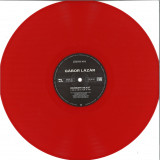
Gábor Lázár’s “Boundary Object” is a collection of eight real-time recorded, unedited tracks made in Budapest and Prague between 2020 and 2022 using a self-designed compositional interface. It's Gábor Lázár’s second album for Planet Mu following “Source” in 2020. The title comes from the idea of a Boundary object as a flexible concept of sociology and computation of how collaborations could happen between groups of people who have different kinds of backgrounds and different levels of knowledge. A Boundary object could be anything which translates between these groups to make a collaboration happen. Boundary objects are plastic, interpreted differently across communities but with enough common identity across social words and contexts to maintain integrity. This is a neat summary of how Gábor’s approach and working process led to his music on this album. Prismatic, flexible, and functioning on different levels of interpretation. On “Boundary Object”, the shiny surfaces and uniformity of “Source” have collapsed inward, leaving intact the recognisable pulse and frames of his music. While each individual track has a non-linear structure, the album as a whole has a strong narrative. Passages that start out Trance-like and familiar warp and weft into different shapes as if Gábor is examining the music like a 3d object, pulling at the edges, breaking and rebuilding what he examines, turning expectations inside-out. “Boundary Object” is intense, full-spectrum and a lot of fun.
out of Stock
Last delivered 4 years ago available to reorder, subject to availability
The US-born, Norwegian-Mexican musician and producer Carmen Villain, real name Carmen Hillestad, has spent the last nine years and four albums gently unraveling song into the sound of emotional impulse. From the tilt and croon of her first two albums to the expansive warmth that flows and pulses beyond ambient in her more recent output, Hillestad's journey is artful musical deconstruction but also somehow spiritual growth.Hence new album Only Love From Now On, her fourth full-length and the culmination of a build-up that really began with the turn in sound evident from third album Both Lines Will Be Blue (2019, Smalltown Supersound) and the subsequent releases Affection In A Time Of Crisis (2020, Longform Editions) and Sketch For Winter IX: Perlita (2021, Geographic North). While the seed of her aesthetic was planted earlier, it has blossomed into something unexpected, benevolent in its composure and altogether luxuriant in its sensuality. If her themes, especially now, are wide, philosophical, and occasionally abstract, the emotional tenor of Hillestad's music is clear and purposeful. Makes sense that her key musical touchstones are dub, ambient, and cosmic jazz - flexible vehicles for tranquil wonder. While it may not contain voice or lyrics, as her two earliest records do, she describes it as, "wishing to maintain a sense of careful optimism for the future, while on the cusp of something unknown." Listening to Only Love From Now On is simultaneously comforting and alluringly strange. Partly it's the contributions of guests Arve Henriksen (trumpet, electronics) and Johanna Scheie Orellana (flutes). Partly it's the fluidity between instruments - such as clarinets - field recordings, the studio, jam, and careful composition. She calls the process a conversation with sound that occurs in her deliberate attempts to experiment with new methods, like granular synthesis, for her music-making. But mostly that strange comfort is in the peace and grateful contentment she has found via the stark recognition of her own privilege - laid bare by the pandemic. Only Love From Now On is fueled by the sense of scale in feeling small in the face of things so large, the contemplation of how the biggest impact we can have is in the people close to us, the attempt to make sure that impact is a positive one, and the choice to try to focus on love instead of fear.
out of Stock
Last delivered 2 years ago available to reorder, subject to availability
‘Expressions of Interest’ is the debut album from Melbourne/Naarm post-punk group screensaver.
Sonically, the 10 track album is rich and detailed, and pays homage to its era of inspiration (late 70s-mid 80s post-punk and new wave) with gripping vocals, dissonant guitar, melodic basslines, washes of synths and motorik drumming. Engineered by Julian Cue alongside band member Chris Stephenson and recorded over multiple studio sessions between 2020-2021
The album opens with the ominously titled ‘Body Parts’, an immediately arresting song that showcases the bands penchant for blending classic post-punk elements, leaning into a sound somewhere between the Banshees and Protomartyr.
Maynard doubles down on these themes in the frenetic second track, ‘No Movement’. Guttural organ tones swim under overdriven guitar, jagged and intense. Additional textures and sound effects are used percussively to embellish the dynamics, creating a feverish atmosphere with some Martin Hannett like flourishes.
The album takes a surprising turn into electronic driven krautrock on track three with 'Buy, Sell, Trade' - a rollicking piece of danceable ephemera, dominated by swirling synth sounds and punctuated with electronics reminiscent of Sparks/Moroder collaborations. Chris Stephenson's masterful guitar work begins with Greg Sage-esque determination before a crescendo into a lush Frippertronics outro.
'MEDS' transports us back to the foundation established on 'Body Parts', a gothy piece, full of tribal toms and dirge-y synths. Industrial punk rock nearly swallowed whole by the keys in the middle and slowly building back to complimentary guitar and vocal hooks.
It's from this point in the album that the band let's their other influences rise to the surface, as they explore touches of EDM on 'Static State' - a brutal, death-disco style track, Krystal Maynard's lead synth and gloomy vocal complimenting the pounding drums and dub-esque bass line culminating in a track worthy of the dancefloor.
Opening side two we have 'Skin', beginning with a solid and simple backbeat, James Beck’s post-punk percussion provides a steady and minimal framework for the rest of the band to colour in with great depth and detail. Giles Fielke’s bass guitar wobbles brilliantly leading the verse melody, whilst Chris Stephenson’s guitar drives the chorus that folds neatly in on itself.
In ‘Attention Economy’, Krystal Maynard is flexible with her lyrical style, and knows how and when to lend her voice to the greater backdrop of the composition. ‘Attention Economy’ has an almost Kraftwerkian structure - repetitious, but engaging with its constant tom driven beat, lush synth lines and minimal bass tones.
Just when you thought things had slowed down, screensaver ramp things right back up again with ‘Overnight Low’ - a no holds barred thumper. Giles Fielke underpins the hard-edged sound with his bassline, keeping things smooth and tight. It brings to mind a hybrid of PiL’s ‘Annalisa’ and Wire’s ‘Two People In a Room.’
Before you can catch your breath, we have ‘Regular Hours’ - another industrial track, and perhaps the sister song to ‘Static State’ heard earlier on side one. Seething electronic drum samples cut through an abyss of growling synths, Giles Fielke hanging up the bass temporarily to accompany Krystal Maynard on synth duties.
The album closes with the fittingly titled ‘Soft Landing’, literally bringing the listener back down...softly. The song is heavy on atmos, and resembles the aesthetics previously encountered on ‘Attention Economy’ a few tracks earlier.
‘Expressions of Interest” was recorded at various locations across Melbourne, with a handful of songs being captured before the start of the Covid pandemic in January 2020. With the recording timeline being drastically altered, the band shifted focus to work on what would become their first single ‘Strange Anxiety’, throughout the first months of the Melbourne 2020 lockdown.
out of Stock
Last delivered 4 years ago available to reorder, subject to availability
LP on light blue marbled vinyl.Steiger eagerly explore the outer margins of jazz and dive into other universes (contemporary music, electronica, pop, free improvisation), yet remain faithful to the genre's long-standing core principle; that of a flexible transformation.
Caught somewhere between environmental sound studies and surrealist sonic architecture, SUGAI KEN helps mark the 30th release of Field Records with an ambitious new album. Commissioned by the Dutch Embassy in Tokyo, Tone River is the product of a year’s intensive work between artist and label, created in part to examine the relationship between Japan and the Netherlands with regard to water management.
While its doors to the Western world were closed during the 17th and 18th centuries, Japan kept abreast of Western science via a Dutch trade post in the bay of Nagasaki. When the country changed from a feudal society to a modern democracy through the turn of the 19th century, Dutch engineers lent their expertise to large-scale water management projects. One of the most prestigious projects of the time was the Tone River, which stretches 322 kilometers across Honshu, Japan’s largest island.
For this project, SUGAI KEN travelled to three points across the Tone River and used regular, binaural and underwater microphones to record environmental sounds, seeking to express the change in landscape of the river in its flow into the Pacific Ocean. On Tone River, these varied recordings are interspersed and juxtaposed with Ken’s distinctive take on synthesis, where raw and precisely sculpted textures and tones interact in stark, neutral space.
On this conceptually rigorous, yet beguiling and free-flowing record, SUGAI KEN glides between the elemental and hyper-synthetic in a flexible exploration of sound and story
out of Stock
Last delivered 5 years ago available to reorder, subject to availability
Society is shaped by its history, stories that have evolved over time and held to be true. Stories of the imagination, stories from the ill-informed, stories conjured by favored subjects, but all loosely wrapped in the truth. Systems such as morals, religion, politics, and a culture are powerful enough to influence the mind of one and the minds of many and therefore direct the evolution of the species. Unseen Forces is a conceptual work that dissects this idea. A collection of four songs cause the listener to re-examine not only what they believed to be real and true but also why. Side A dives head first into testing your belief system by introducing the first stage of influence - Disruption and Experimentation. Introducing a simple question into the belief system that cannot be answered and observing the result. The Disruptor - subtle but powerful making its point with eerie, off center synth lines, and synthesized drums. Driving a wedge between the listener and the comfort of familiarity. Dr. Blowfin's Experiment - a long time and highly revered classic previously released on SID, continues to re-evaluate beliefs with modifications to the original. The question of why is still unanswered. Beliefs are broken and chaos ensues. Side B begins to take direct the chaos with another classic - Crossphaze - injecting live funk and modulated filters with this flexible floor mover previously released on Accelerate. Crossing into another realm unfamiliar to the listener as new beliefs are formed. Deconstructing the Immortals - leaves the listener with no other choice but to eagerly leave their old world behind and everything they know in ruins. This offbeat and mesmerizing anthem makes the question of why unimportant, because the answer is what now.
out of Stock
Last delivered 5 years ago available to reorder, subject to availability
On this record, the little-known Charles Brackeen brings his saxophone to a party with most of Ornette Coleman's band. As might be expected, while Brackeen certainly holds his own, it's Ornette's boys who bring the thunder, playing around Brackeen's muscular alto as if they were a gang jumping on a new member. Haden's bass playing provides the frantic pulse, here and there ceding the stage to Blackwell's flexible drumming and dropping out to provide rolling sheets of sound by bowing his instrument. Brackeen and Cherry wrestle across this solid bedrock, with results that are often surprising and never short of beautiful.
Only four releases into it's blossoming back catalogue, and Molly's RDV label continues to establish itself as an unmissable outlet for contemporary house and techno with an EP from long-established, always-vital German producer, Dana Ruh.The twitchy, rhythmic 'Natural High' sets the rhythm, ideal for those easily seduced by Ruh's indelibly tight drum work (or those about to be converted to it nonetheless). 'Moonday' then expands the sound with a deeply satisfying bassline that blossoms in myriad evocative directions, incorporating trippy acid fluctuations, haunting vocals and a general sense of strobe-lit urgency.On the flip, and 'Vattenfall my A' establishes the energy which which it shares its namesake, trading in a minimal but flexible bassline and eeking out each ounce of tension, in the confident, minimalist style Dana Ruh is beloved for. To close the EP, Molly herself takes 'Vattenfall my A' to task, tunneling deeper still with a remix that establishes several shades of fresh, sensual ambiguity, not to mention, an ominous bassline that flirts with the edge.
out of Stock
Last delivered 2 years ago available to reorder, subject to availability