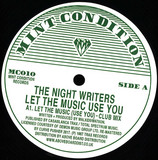
Leon Dinero returns with "One Way Love", another magical rendition from the James Hunter catalogue. Dinero, along with the Inversions and produced by Victor Axelrod, transforms the uptempo R&B classic into a rocksteady mover whose relaxed groove and soulful vocal give the track an authenticity that may have folks scratching their head as to which version came first. A testament to the incomparable songwriting savvy of Mr Hunter, "One Way Love" is a track that defies the constraints of genre labelling with unfettered elegance and lyrical prowess.
Buscar:folks
Garrett T. Capps & NASA Country are dissolving the boundaries that keep some folks safe and complacent and angry and pointing their fingers at each other. Ya know, the standard divides: the underground vs. the overground, jeans vs. slacks, boots vs. birkenstocks, left vs. right, tacos vs. burritos. This vision is apparent on their new album titled Everyone is Everyone. It builds off the American roots and country traditions, while incorporating psychedelia, punk and even Krautrock.
DE MANNEN BROEDERS ist die erste Zusammenarbeit feat. Colin van Eeckhout und der flämischen Folk-Ikone Tonnie 'Broeder' Dieleman aus Zeeuws.
Ersterer ist der Frontmann der belgischen Post-Metaller AMENRA, einer Band, die für ihre überwältigende Härte in Sound und Gefühl bekannt ist.
Letzterer ist ein holländischer Folksänger, dessen Musik von der Kultur seiner seeländischen Heimat inspiriert ist und der bereits mit Baby Dee und
Bonnie Prince Billy zusammengearbeitet hat. Als die beiden sich trafen, spürten sie sofort eine Verbindung.
Das Ergebnis ist das 9-Track-Album Sober Maal (was übersetzt 'nüchternes Mahl' heißt und sich auf die Praxis bezieht, eine einfache Mahlzeit zu
essen, um Dankbarkeit zu üben), das unter dem Namen DE MANNEN BROEDERS veröffentlicht wird. Es wurde in weniger als fünf Tagen in der
Doopsgezinde Kerk aus dem 18. Jahrhundert in Middelburg in den Niederlanden geschrieben und aufgenommen.
Klanglich ist Sober Maal eine eindringliche, emotionsgeladene Reise, die sich in einer vergangenen Welt verwurzelt fühlt, aber dennoch völlig
eigenständig klingt und eine melancholische, aber dennoch hoffnungsvolle Note hat. Der Gesang von Colin und Tonnie verschmilzt mit dem Chor und
einer sparsamen Auswahl an Instrumenten, darunter ein Banjo, ein Klavier, eine Drehleier und die mächtige Zentralorgel - alles vermischt mit den
Klängen und dem Echo der Kirche.
Back to Back captures the instrumental aspect of the ’67 Stax-Volt European tour (“Volt” is the name of Stax’s subsidiary label). Immediately apparent is that the live versions of these songs are played much faster than the recorded ones. Exuberant? Definitely! These folks were racing across unfamiliar cultures and landscapes, reimagining their place in this world, looking down at the clouds for the first time. The pace was faster because their lives were — quickly — getting so much larger. In these recordings, you can hear all of that emotional exhilaration, all of that savoring of personal respect, that thrill of the new. Many of these songs were several years old, but they shine on Back to Back like they’re being performed for the first time. Over and over, you hear the musicians throwing in something extra, curlicues and tangents that express their excitement.
DE MANNEN BROEDERS ist die erste Zusammenarbeit feat. Colin van Eeckhout und der flämischen Folk-Ikone Tonnie 'Broeder' Dieleman aus Zeeuws.
Ersterer ist der Frontmann der belgischen Post-Metaller AMENRA, einer Band, die für ihre überwältigende Härte in Sound und Gefühl bekannt ist.
Letzterer ist ein holländischer Folksänger, dessen Musik von der Kultur seiner seeländischen Heimat inspiriert ist und der bereits mit Baby Dee und
Bonnie Prince Billy zusammengearbeitet hat. Als die beiden sich trafen, spürten sie sofort eine Verbindung.
Das Ergebnis ist das 9-Track-Album Sober Maal (was übersetzt 'nüchternes Mahl' heißt und sich auf die Praxis bezieht, eine einfache Mahlzeit zu
essen, um Dankbarkeit zu üben), das unter dem Namen DE MANNEN BROEDERS veröffentlicht wird. Es wurde in weniger als fünf Tagen in der
Doopsgezinde Kerk aus dem 18. Jahrhundert in Middelburg in den Niederlanden geschrieben und aufgenommen.
Klanglich ist Sober Maal eine eindringliche, emotionsgeladene Reise, die sich in einer vergangenen Welt verwurzelt fühlt, aber dennoch völlig
eigenständig klingt und eine melancholische, aber dennoch hoffnungsvolle Note hat. Der Gesang von Colin und Tonnie verschmilzt mit dem Chor und
einer sparsamen Auswahl an Instrumenten, darunter ein Banjo, ein Klavier, eine Drehleier und die mächtige Zentralorgel - alles vermischt mit den
Klängen und dem Echo der Kirche.
Mayday is the third LP by Montreal-based artist, Myriam Gendron. It follows her earlier, critically acclaimed albums, Not So Deep As A Well (2014) and Ma délire - Songs of love, lost & found (2021). Myriam began exploring the complex folk traditions of Quebec (and beyond), with Ma délire, which combines traditional and original songs with arrangements that make space for avant-garde musical interludes by such folks as guitarist Bill Nace (Body/Head) and renowned jazz percussionist Chris Corsano. Mayday presents an even more syncretic fusion of the elements Myriam uses to create her sound. Most of the songs are original, sung in both English and French, and they blend traditional and avant elements with abandon. She is often accompanied on this album by the guitarist Marisa Anderson and drummer Jim White (Dirty Three, Xylouris White), whose work provides a quietly aggressive sort of free-rock base. Additional players include Montreal bassist Cédric Dind-Lavoie, Bill Nace and saxophonist Zoh Amba. Mayday is a thoroughly thrilling effort that manages to create new vistas of sound while maintaining a feel that is both intimate and familiar. The music here certainly possesses a richly serious tone, but Myriam Gendron (like Leonard Cohen) is able to infuse her darkness with a subtle, powerful light that reminds us that even the most pitch-black night is but a transitional state. Beautiful work.
"Dunya", der Titel von Mustafas meisterhaft ausgearbeitetem und atemberaubend zärtlichem Album, bedeutet aus dem Arabischen übersetzt so viel wie "die Welt mit all ihren Fehlern". Ein hochtrabendes Thema für einen jungen Songwriter, aber wie bei jedem Thema, das im Mittelpunkt der Arbeit des sudanesisch-kanadischen Künstlers steht - von religiöser Hingabe bis zu Kindheitstraumata, von Bandengewalt bis zu romantischer Intimität - nähert er sich durch eine persönliche Sichtweise. Er mischt Genres und Stimmungen, verwebt romanhafte Details in einprägsame Folksongs und hat ein Album geschaffen, das sich wie eine Reihe persönlicher Durchbrüche anfühlt, die einer nach dem anderen eintreffen. Was zuerst an Mustafas Musik auffällt, ist seine Art zu schreiben: ein einfacher, durchdringender Ton, der jede Geschichte so roh und ernsthaft wirken lässt wie die Worte eines Liebesliedes. Mit seinem leisen Vortrag, der seine Umgebung zum Schweigen bringen kann, entwickelte sich Mustafa schnell vom Wunderkind, das in seiner Heimatstadt Toronto Gedichte rezitierte, zu einer Kraft, die hinter den Liedern steht und Popsongs schreibt. Auf "Dunya" ist er zu einem eigenständigen Autoren gereift. "Ich versuche, das gewöhnliche Leben im Ghetto zu bewahren und zu feiern", beschreibt Mustafa seine lyrische Inspiration. Die Songs, in denen er sein Aufwachsen und seinen weiteren Lebensweg beschreibt, sind gleichermaßen entwaffnend in ihrer Einfachheit und vielschichtig in ihrer emotionalen Bandbreite. Durch die Zusammenarbeit mit Aaron Dessner, Rosalía, Clairo, Nicolas Jaar und anderen sowie Mustafas langjährigem kreativen Partner Simon Hessmann offenbart die Musik eine selbstbewusste, unverwechselbare Stimme, die noch nie so massenkompatibel geklungen hat.
- Blues Run The Game
- Milk & Honey
- Soho
- It Ain't Me Babe
- East Virginia
- Geordie
- In Memory
- Love My True Love
- Let No Man Steal
- Ethusel
- Setting Of The Sun
- Boxful Of Treasures
- Who Knows Where Time One 1967
- Carnival
- Don't Seem To Know You
- Gerrard Street
- Motherless Children
- Moves Through The Fair
- Time Has Come
- Little Bit Of Rain
- Go Your Own Way My Love
- Seven Virgins
- Blue Tattoo
- Cradle Song
- Fotheringay
- Who Knows Where Time Two 1968
- Quiet Land Of Erin
Black Vinyl[31,05 €]
Dieses 2-CD bzw 2LP-Set mit dem Titel Early Home Recordings versammelt 27 alte Aufnahmen aus den 1960er Jahren (hauptsächlich 1966-67) der Vor-Fairport Convention Sandy Denny. Sorgfältig remastered, enthält dieses Paket ein exklusives neues Essay des Fairport Convention-Biographen Patrick Humphries - der Sandy persönlich kannte. Enthalten sind zwei verschiedene seltene Demos ihres Klassikers 'Who Knows Where the Time Goes' von 1967 (bevor sie ihn mit den Strawbs aufnahm) und ein weiteres von 1968. Sie hatte dieses unglaubliche Talent, diese unglaubliche Stimme - sie spielte 'Who Knows Where the Time Goes', und ich fiel fast vom Stuhl. - Linda Thompson. Außerdem gibt es eine Reihe von Liedern aus Sandys Feder, darunter 'Boxful Of Treasures', das später in den Song 'Fotheringay' umgeschrieben wurde (von Fairport Convention's What We Did On Our Holidays Album). Fotheringay" erscheint hier auch in Demoform. ,Sie muss neu bewertet werden. Sie hat eine Art von Song geschrieben, die heute nur noch sehr selten geschrieben wird - emotional, musikalisch interessant, wirklich gut gesungen - ernsthaftes Songwriting. Sie war dem Rest haushoch überlegen. Und das bleibt sie auch." - Ashley Hutchings (Gründer von Fairport Convention). Außerdem gibt es gefühlvolle Coverversionen von Jackson C. Frank, Fred Neil, Anne Briggs, Dylan und vielen traditionellen Folksongs. Die endgültige Sammlung von Dennys frühen Demos, die von ihrem Nachlass autorisiert wurden, mit Sandys Tochter Georgia Lucas' eigenen charmanten Zeichnungen ihrer Mutter, die zum ersten Mal auf einer offiziellen Denny-Veröffentlichung erscheinen, sowie bisher unveröffentlichten Bildern Sandys der 1960er Jahre. Linernotes von Reissue-Produzent Pat Thomas.
Long time in the vaults, soon out in pop heaven: Andrea & Alexander, a handsomely nostalgic pop project by Andrea Noce aka Eva Geist and Alexander Arpeggio. Originally launched in 2014, revitalized in 2023, the project originated as a live set-up consisting of synthesizers, ePects pedals, and analogue drum machines. From there it slowly metamorphosed into a crew of songs with raw minimal-wave grooves and romantically haunting English and German pop lyrics, loosely evoking the aura of Siouxsie Sioux, Gudrun Gut or Nadine Bal. After becoming a live mainstay in the Berlin based underground club Sameheads, they went on a tour through Lithuania and soon after several unfortunate troubles led to the break-up of the band, prompting both Andrea and Alexander to focus on their solo careers. Andrea became Eva Geist and released for various international labels, played live and formed the female duo As Longitude. Alexander founded his own label Eine Welt, took over the management of the renowned underground festival Camp Cosmic and created two musical projects with Cid Hohne, Otto and Aufgang B. Now, years later, almost becoming a Soundcloud corpse some Andrea & Alexander recordings caught the attention of the R.i.O. folks and just seconds later they offer six freshly recorded cuts of Andrea & Alexander tunes that stood the test of time as authentic, soulful pop music. “What are we going to wear for tonight’s party?” Andrea Noce asks in their song “Tiney Party”. The answer is “Loved Up” a musical celebration outfit of six sincere recorded, emotionally accorded songs, who make the dance, give verve a chance, to be there, in that moment of all moments. An album for the listener that likes to dance. In his head, on the local carpet. “Loved Up” humming Andrea & Alexander tunes.
"Locust Abortion Technician" was relased for the first time in 1987. Without anyone looking over their shoulders, the band really rose to the occasion with "Locust Abortion Technician." From the opening track, "Sweat Loaf," which quotes Black Sabbath with results both hilarious and bowel-stomping, to the scuzz-guitar riven "found" vocals of "22 Going on 23," "Locust" is a non-stop face-full of hallucinogenic gas. Maniacal sludge guitar figures and Gibbytronix vocals are smeared everywhere, with most "Locust..." LP OLE-2058-LP 191401205818 excellent results. For many folks. "Locust" represents the album with which the Buttholes fully fulfilled their insane potential.
Recorded in 1956 for the EmArcy label, Vaughan joins with Hal Mooney and his orchestra to dive head-first into a collection of iconic ballads and standards. Opening with Billy Strayhorn’s “Lush Life”, Vaughan weaves her way through the set, which showcases her at her best. Rodgers & Hart’s “My Romance” is a notable performance, and the raw emotion in “I’m Afraid the Masquerade Is Over” is palpable. Verve’s Acoustic Sounds Series features transfers from analog tapes and remastered 180-gram vinyl in deluxe gatefold packaging.
Repress! Before he developed into a star composer and arranger, Tom Scott was an ambitious 19 year-old saxophonist looking for his big break in 1967. The opportunity came when legendary jazz label Impulse paired Scott with 9-piece vocal group The California Dreamers and allowed the young musician to take the helm as a band leader, with The Honeysuckle Breeze as the spectacular result. This rare and long out-of-print album features Scott leading a stellar lineup of sessions players—Bill Plummer (sitar), Glen Campbell (guitar) and Carol Kaye (bass) among them—through warm, smooth versions of songs by The Beatles (“She’s Leaving Home”), Donovan (“Mellow Yellow”), Joan Baez (“North”) and Jefferson Airplane (“Today”), which many will recognize from it’s sampling in the Pete Rock & CL Smooth classic “T.R.O.Y.” Resurrected, refurbished and remastered by the talented folks at Get On Down, Scott’s debut record sparkles with a high quality digital audio transfer from the original master tapes and is packaged in a gatefold paste-on case with a dust sleeve and obi strip. Don’t let this “Breeze” pass you by.
Keyboardist/composer Doug Carn was the
biggest star on the legendary Black Jazz Records
label, with four releases to his credit (all reissued
by us at Real Gone Music), and remains a
touchstone for spiritual jazz fans and musicians
alike. But very, very few folks have heard his
debut record, cut for the venerable Savoy label
back in 1969. In fact, it’s so rare that we couldn’t
even find a copy to use for artwork, so, with
Doug’s help, we enlisted his daughter Eroniffa
Ibrahim to create illustrations for our reissue
based on the original cover photos. But you know
what we did find? That’s right…the original master
tapes! So, not only is this the first LP reissue for
The Doug Carn Trio, but it’s an all-analog edition to
boot, pressed at Gotta Groove Records with their
proprietary GrooveCoated stampers to minimize
high-frequency loss with each successive pressing.
And, we’ve added an insert with liner notes by Aaron
Cohen based on an exclusive interview with the man
himself. As for the music, it’s a tight organ trio set
that starts cooking right from the get-go with a groovin’ cover of Gus Cannon’s “Walk
Right In,” which became a folk hit for The Rooftop Singers. Carn’s fluid, forward-thinking
playing anticipates Larry Young’s future keyboard forays, and originals like “Butter from
the Duck” and “Yna Yna’s Delight” presage the compositional prowess he flashed on the
Black Jazz releases (note: that’s Don Hales on guitar, not Gary Starling as credited on the
original record). The opening salvo from a scintillating career, finally available again!
Die vier norwegisch-schwedischen Musiker von Kalandra haben ihre Wurzeln im melancholischen nordischen Folk und düsteren Gitarren, die
ätherische Melodien in raue und unheimliche Musiklandschaften weben. Wie es sich für Kalandra gehört, erzählt das neue Album der Band, "A Frame
Of Mind", nicht nur eine Geschichte, sondern verkörpert sie auch.
Das Norwegisch-Schwedische Quartett hat Elemente des nordischen Folks, des skandinavischen Pops und des Alt- und Progressive-Rocks miteinander
verbunden. Im Laufe des Prozesses und dank des erhabenen, schwebenden Gesangs von Frontfrau Katrine Stenbekk, der in die gleichen feinen
Gefilde gehört wie der von Künstlern wie Eivør, Aurora und Gåtes Gunnhild Sundli, haben sie ihre eigene rastlose und doch eindringliche Welt
geschaffen.
Die vier norwegisch-schwedischen Musiker von Kalandra haben ihre Wurzeln im melancholischen nordischen Folk und düsteren Gitarren, die
ätherische Melodien in raue und unheimliche Musiklandschaften weben. Wie es sich für Kalandra gehört, erzählt das neue Album der Band, "A Frame
Of Mind", nicht nur eine Geschichte, sondern verkörpert sie auch.
Das Norwegisch-Schwedische Quartett hat Elemente des nordischen Folks, des skandinavischen Pops und des Alt- und Progressive-Rocks miteinander
verbunden. Im Laufe des Prozesses und dank des erhabenen, schwebenden Gesangs von Frontfrau Katrine Stenbekk, der in die gleichen feinen
Gefilde gehört wie der von Künstlern wie Eivør, Aurora und Gåtes Gunnhild Sundli, haben sie ihre eigene rastlose und doch eindringliche Welt
geschaffen.
Green Vinyl
Die norwegische Alternative-Folk-Band Gåte schließt mit ihrem neuen Full-Length-Album Nord eine akustische Ära ab.
Gåte hatten Anfang 2000 mit ihren fesselnden Darbietungen und ihrer bahnbrechenden Mischung aus traditionellem Folk und modernem Rock einen nationalen Durchbruch. Mit großem Respekt vor Folk und beispiellosem Talent gelang es Gåte, traditionelle Folksongs zu interpretieren und einer ganz neuen Generation von Zuhörern zu vermitteln. Im Jahr 2020 beschloss die Band, zu ihren Wurzeln zurückzukehren und in die riesige traditionelle Musikgeschichte Norwegens einzutauchen. Das Ergebnis ist eine sorgfältig schöne und emotionale Sammlung von Songs, die tief in die musikalische Vergangenheit ihres Landes eintauchen, mit einem zeitgenössischen Ansatz.
Human Worth are proud to present the killer debut EP 'God Pile' from Leeds duo Grub Nap, featuring members of Thank, Dvne and Cattle, with a portion of proceeds donated to charity. Grub Nap are a 50/50, double headed, four legged, semi haggered, party at the front business at the back mash up of Dan Barter (Dvne, Joe Pesci) and Steve Myles (Thank, Cattle, Groak, Khuda). They first played together in a hardcore band in their late teens and have teamed back up to churn out sludgecore for folks with short attention spans and no interest in wizards or flag waving. A reunited earful, a midlife distraction, a questionable whiff from the back of the fridge. Crawl on in, the water’s foul. 'God Pile' is a golden brown, 15 minute, crumbly, introspective riff lattice. Snappy(ish) songs about greed, crippling anxiety, suburban nuclear mishaps and flagellant rozzers – 6 knuckle dragging clods of down tuned insolent rage. So pummelling is their racket, that they caught the ears of "supergroup" Empire State Bastard (featuring members of Biffy Clyro, Oceansize and Slayer) who invited the duo on the debut UK tour. Human Worth have pressed up a limited edition of black vinyl, with a stunning etching on side B featuring the art of Steve Myles, with 10% of all proceeds donated to Leeds Mind – promoting positive mental health and wellbeing and providing help and support to those who need it most.
This album was a self imposed ambitious project for us. Something to kick in the creative flow. The last few years, having been a challenging time in general, felt like a good time for a pivot. The last two albums were so guitar and keyboard centric, I wanted a weird and fun set of parameters for us to work with. I demo’d everything at home on cassette 4 track (harkening back to simpler times) using drum loops, and just had at it 'til I had a pile of “songs”. Tom and I chose one sound each using synths and created a range of 3 octaves of that sample, then loaded them into Roland SPD-SX samplers and learned the transcribed songs using drum sticks. The idea was to change the way we wrote and to have 4 people along the front of the stage essentially playing percussion. So no guitar, no keys. As we were recording I kept thinking how the sounds, when paired up, sounded a bit like brass. So, we added a saxophone horn section to round out the horniness of the sound with a bit of reedy bell tones. Thanks to Cansfis Foote & Brad Caulkins on tenor and Baritone saxophones :) Sort of a Dexy’s Midnight Runners meets Von LMO meets The Flesh Eaters meets the Screamers kinda punk junk. Poppy and hooky, heavy at times.. Sort of vacuous and maybe a bit sci-fi in sound. Boneheaded in riff and heady in lyrics. Recorded at Stu-Stu-Studio by me on 8 track 1/4” tape . So pretty hot and raw. Lots to write about today. A lot of these lyrics were taken from things people said in passing about taking on life right now that stuck with me. Things that made me reflect. Things that made me laugh. Things that made me WTF. Some folks are kind, genuine & give you love and energy. Some are greedy manipulative ghouls who hang off your veins. You must be strong, composed and take care of yourself. Be self aware and check your mind for cracks. Learn to relax and be well. There are moments of beauty and redemption. Its not all bad news and there’s always hope. People continue to surprise me one way or another. Anyhow, Hope you enjoy and good luck out there. — John Dwyer
- A1: Go To The Floor (Intro)
- A2: Bring The Pain Featuring – Method Man
- A3: Gossip Folks Featuring – Ludacris
- B1: Work It
- B2: Back In The Day Featuring – Jay-Z
- B3: Funky Fresh Dressed Featuring – Ms Jade
- B4: P***Ycat
- C1: Nothing Out There For Me Featuring – Beyonce Knowles
- C2: Slide
- C3: Play That Beat
- D1: Ain't That Funny
- D2: Hot
- D3: Can You Hear Me
- D4: Work It Remix
This band hit the metal scene like a (sorry) house afire, going double platinum with their 1990 debut and charting with three singles from the album: “Don’t Treat Me Bad,” “All She Wrote,” and the power ballad to end all power ballads, the
5 hit “Love of a Lifetime.”
The accolades soon followed: FireHouse won the American Music Award for Best New Hard Rock/Heavy Metal Band and best newcomer nods from a host of music mags. And you can see, er hear why: this is glam metal perfectly polished (by producer Dave Prater of Dream Theater fame) for pop radio, with hooks and harmonies galore. But it’s never been out on LP in North America; now, we at Real Gone are bringing one of signature metal albums of the ‘90s to “smoke and fire” vinyl as a tribute to lead vocalist C.J. Snare, who just passed away from cancer this year. Includes inner sleeve with lyrics. Folks have been waiting for this one!
A holy grail for fans of French boogie, early hip hop, Arabic funk and Balearic bops,"Ettika" has been seriously sought after since Vidal Benjamin found it in the 1€ bin back in 2006. Teasing the ears of the underground via Vidal's 'Balearic Nightmare' mix for Noncollective, copies of the original were soon snapped up completely, and the later adopters were sated by a Blackdisco edit from Alexis Le-Tan (himself gifted Vidal's second copy), which is now also rare as hen's teeth. The fervour for the track is easy to understand. Underpinned by an endlessly buoyant bass groove, chanted female vocals dart out the speakers like a post- modern mantra while synth vamps flare in stuttering stereo.
Middle-Eastern motifs add an air of mystery, but this truly belongs in a dance floor utopia. That the track was the product of a 'back-to-work' scheme aimed at unemployed immigrant youth in Rouen only adds to the appeal. Led by teacher Bernard Guégan, a quartet of students delivered lyrics in French and Arabic inspired by their rejection letters, serving a little social commentary and a lot of funk. If you're mad on Ahmed Fakroun and Shams Dinn, or even those folks in the Bush of Ghosts, then this is a must have for you.
Archeology isn't just about excavation, there should be interpretation too, and in this case it comes from Italian duo Hear & Now and Leeds' The Veteran Delinquents. The former furnish the 12" with two radical takes, the dreamy downtempo stroll of their French Remix - all unhurried percussion, Gilmour-riffing and coastal élan - and the peaktime pump of their Arab Remix, which transports the original vocal into a land of desert new beat and Balearic trance with a little space left for some frazzled fretwork. If you've followed their work with Claremont you know the quality on show.
The Veteran Delinquents, the collaborative vehicle of Leeds stalwarts Craig Christon and Tim Hutton, condense a lifetime of club experiences into their remix, establishing the infectious groove of the original before subverting with chugging bass and winking acid, all augmented with their own slick synth work. The original was an all time classic at Craig's Joe's Bakery nights way back when, and this new interpretation is both respectful and revolutionary.
This album was a self imposed ambitious project for us. Something to kick in the creative flow. The last few years, having been a challenging time in general, felt like a good time for a pivot. The last two albums were so guitar and keyboard centric, I wanted a weird and fun set of parameters for us to work with. I demo’d everything at home on cassette 4 track (harkening back to simpler times) using drum loops, and just had at it 'til I had a pile of “songs”. Tom and I chose one sound each using synths and created a range of 3 octaves of that sample, then loaded them into Roland SPD-SX samplers and learned the transcribed songs using drum sticks. The idea was to change the way we wrote and to have 4 people along the front of the stage essentially playing percussion. So no guitar, no keys. As we were recording I kept thinking how the sounds, when paired up, sounded a bit like brass. So, we added a saxophone horn section to round out the horniness of the sound with a bit of reedy bell tones. Thanks to Cansfis Foote & Brad Caulkins on tenor and Baritone saxophones :) Sort of a Dexy’s Midnight Runners meets Von LMO meets The Flesh Eaters meets the Screamers kinda punk junk. Poppy and hooky, heavy at times.. Sort of vacuous and maybe a bit sci-fi in sound. Boneheaded in riff and heady in lyrics. Recorded at Stu-Stu-Studio by me on 8 track 1/4” tape . So pretty hot and raw. Lots to write about today. A lot of these lyrics were taken from things people said in passing about taking on life right now that stuck with me. Things that made me reflect. Things that made me laugh. Things that made me WTF. Some folks are kind, genuine & give you love and energy. Some are greedy manipulative ghouls who hang off your veins. You must be strong, composed and take care of yourself. Be self aware and check your mind for cracks. Learn to relax and be well. There are moments of beauty and redemption. Its not all bad news and there’s always hope. People continue to surprise me one way or another. Anyhow, Hope you enjoy and good luck out there. — John Dwyer
- A1: Psycho Killer
- A2: Heaven
- A3: Thank You For Sending Me An Angel
- A4: Found A Job
- A5: Slippery People
- A6: Cities
- B1: Burning Down The House
- B2: Life During Wartime
- B3: Making Flippy Floppy
- B4: Swamp
- C1: What A Day That Was
- C2: This Must Be The Place (Naive Melody) (Naive Melody)
- C3: Once In A Lifetime
- C4: Big Business/I Zimbra
- D1: Genius Of Love
- D2: Girlfriend Is Better
- D3: Take Me To The River
- D4: Crosseyed & Painless
LOS ANGELES—To celebrate the 40th anniversary of the celebrated Talking Heads and Jonathan Demme’s concert film Stop Making Sense, the set will be re-released as a 2LP and 2CD/Blu-ray set this summer.
Released last year, the sold-out Deluxe Edition of the soundtrack will return as a 2-LP black vinyl on Rhino and 2-LP crystal clear vinyl at retail. Both variants feature a 12-page booklet with liner notes from all four band members –Tina Weymouth, David Byrne, Chris Frantz, and Jerry Harrison—and band photos. The 2CD/Blu-ray version includes the entire 28-page booklet from last year’s Deluxe Edition and a Dolby Atmos mix of the complete concert, mixed by Jerry Harrison and E.T. Thorngren, who also mixed the original release. Both will be available on July 26. Pre-order now.
The band appeared together for a sold-out screening and Q&A last night at the Pantages Theater, the same theater at which Stop Making Sense was recorded. They were joined by Blondshell, who performed “Thank You For Sending Me an Angel.” Another special screening with the band will occur in Brooklyn at the King’s Theater on June 13, with the Q&A hosted by Questlove and The Linda Linda’s performing “Found a Job.” The two events cap off a banner year of celebrations for what many consider to be the best concert film of all time.
The inspiration for Stop Making Sense came when director Jonathan Demme saw Talking Heads perform during the band’s 1983 tour for Speaking in Tongues. Afterward, he approached them with the idea of making the show into a concert film. They agreed and worked together over the next few months to finalize the details. Ultimately, Demme filmed three shows at Hollywood’s Pantages Theater in December 1983 to create Stop Making Sense.
The concert film presents a retrospective of the band up to that point, with a performance that weaves together songs from all six of its studio albums. The show progresses methodically, opening with Byrne onstage performing “Psycho Killer” alone with a drum machine. After each song, he’s joined by a new band member until Weymouth, Frantz, and Harrison are all on stage with him. The group continues to grow throughout the concert as members of the stellar touring band are added: keyboardist Bernie Worrell, percussionist Steve Scales, guitarist Alex Weir, and backup singers Lynn Mabry and Ednah Holt.
The band performs 18 songs in Stop Making Sense, including its recent single at the time, “Burning Down The House.” That summer, the song was in heavy rotation on radio and MTV, helping the song become the band’s first top 10 hit in America. It was, however, a different song from Speaking in Tongues that was destined to deliver one of the film’s signature moments. Talking Heads would perform “Girlfriend Is Better” wearing the now iconic, oversized suit inspired by costumes worn in traditional Japanese theater. For good measure, a picture of David Byrne in the suit also graces the album cover.
Stop Making Sense focuses mainly on music by Talking Heads but does include a few songs recorded outside the band: “Genius Of Love” by Tom Tom Club, “What A Day That Was” and “Big Business” from Byrne’s 1981 album, The Catherine Wheel. Limited edition vinyl versions of both of these albums, along with Harrison’s The Red And The Black, were released for this year’s Record Store Day.
When it arrived in September 1984, Stop Making Sense was an artistic and commercial triumph. The film had people dancing in theatre aisles, and the soundtrack sold over two million copies. Just last year, the Library of Congress added Stop Making Sense to the National Film Registry in recognition of its cultural, historical, and aesthetic significance.
Weymouth praises Demme as a collaborator: “…Jonathan was a very enthusiastic, highly adaptive, and imaginative guy who was just as good a listener as he was a talker and collaborator. From the get-go you just got the impression he was as flexible as he was disciplined. Being team players, that boded well for a great relationship and a great film!”
Harrison says the film still holds up today: “To me, Stop Making Sense has remained relevant because the staging and lighting techniques could have been created in a much earlier time period. For example, Vari-Lights, lights with motors to re-aim them, had just come into vogue. Had we used them, there would have been a timestamp on the film, and it eventually would have felt dated...The absence of interviews, combined with the elegant and timeless lighting, created a film that can be watched over and over.”
Byrne says it’s interesting that this album was – for many people – an introduction to Talking Heads. “We had done a live album before this, but coupled with the film, and with the improved mixes and sound quality, this record reached a whole new audience. As often happens, the songs got an added energy when we performed them live and were inspired by having an audience. In many ways, these versions are more exciting than the studio recordings, so maybe that’s why a lot of folks discovered us via this record.”
Frantz recalls the sheer joy surrounding the entire Stop Making Sense experience. “I’m talking about real, conscious, transcendent joy… I’m talking about what the Southern gospel people call ‘getting happy,’ which means ‘to be filled with the Spirit.’ That is what happened to us onstage every night, and from my seat behind the drums, I recognized that this was happening to the audience too. Joy was visible in front of me and all around me every night.”
- A1: Psycho Killer
- A2: Heaven
- A3: Thank You For Sending Me An Angel
- A4: Found A Job
- A5: Slippery People
- A6: Cities
- B1: Burning Down The House
- B2: Life During Wartime
- B3: Making Flippy Floppy
- B4: Swamp
- C1: What A Day That Was
- C2: This Must Be The Place (Naive Melody) (Naive Melody)
- C3: Once In A Lifetime
- C4: Big Business/I Zimbra
- D1: Genius Of Love
- D2: Girlfriend Is Better
- D3: Take Me To The River
- D4: Crosseyed & Painless
LOS ANGELES—To celebrate the 40th anniversary of the celebrated Talking Heads and Jonathan Demme’s concert film Stop Making Sense, the set will be re-released as a 2LP and 2CD/Blu-ray set this summer.
Released last year, the sold-out Deluxe Edition of the soundtrack will return as a 2-LP black vinyl on Rhino and 2-LP crystal clear vinyl at retail. Both variants feature a 12-page booklet with liner notes from all four band members –Tina Weymouth, David Byrne, Chris Frantz, and Jerry Harrison—and band photos. The 2CD/Blu-ray version includes the entire 28-page booklet from last year’s Deluxe Edition and a Dolby Atmos mix of the complete concert, mixed by Jerry Harrison and E.T. Thorngren, who also mixed the original release. Both will be available on July 26. Pre-order now.
The band appeared together for a sold-out screening and Q&A last night at the Pantages Theater, the same theater at which Stop Making Sense was recorded. They were joined by Blondshell, who performed “Thank You For Sending Me an Angel.” Another special screening with the band will occur in Brooklyn at the King’s Theater on June 13, with the Q&A hosted by Questlove and The Linda Linda’s performing “Found a Job.” The two events cap off a banner year of celebrations for what many consider to be the best concert film of all time.
The inspiration for Stop Making Sense came when director Jonathan Demme saw Talking Heads perform during the band’s 1983 tour for Speaking in Tongues. Afterward, he approached them with the idea of making the show into a concert film. They agreed and worked together over the next few months to finalize the details. Ultimately, Demme filmed three shows at Hollywood’s Pantages Theater in December 1983 to create Stop Making Sense.
The concert film presents a retrospective of the band up to that point, with a performance that weaves together songs from all six of its studio albums. The show progresses methodically, opening with Byrne onstage performing “Psycho Killer” alone with a drum machine. After each song, he’s joined by a new band member until Weymouth, Frantz, and Harrison are all on stage with him. The group continues to grow throughout the concert as members of the stellar touring band are added: keyboardist Bernie Worrell, percussionist Steve Scales, guitarist Alex Weir, and backup singers Lynn Mabry and Ednah Holt.
The band performs 18 songs in Stop Making Sense, including its recent single at the time, “Burning Down The House.” That summer, the song was in heavy rotation on radio and MTV, helping the song become the band’s first top 10 hit in America. It was, however, a different song from Speaking in Tongues that was destined to deliver one of the film’s signature moments. Talking Heads would perform “Girlfriend Is Better” wearing the now iconic, oversized suit inspired by costumes worn in traditional Japanese theater. For good measure, a picture of David Byrne in the suit also graces the album cover.
Stop Making Sense focuses mainly on music by Talking Heads but does include a few songs recorded outside the band: “Genius Of Love” by Tom Tom Club, “What A Day That Was” and “Big Business” from Byrne’s 1981 album, The Catherine Wheel. Limited edition vinyl versions of both of these albums, along with Harrison’s The Red And The Black, were released for this year’s Record Store Day.
When it arrived in September 1984, Stop Making Sense was an artistic and commercial triumph. The film had people dancing in theatre aisles, and the soundtrack sold over two million copies. Just last year, the Library of Congress added Stop Making Sense to the National Film Registry in recognition of its cultural, historical, and aesthetic significance.
Weymouth praises Demme as a collaborator: “…Jonathan was a very enthusiastic, highly adaptive, and imaginative guy who was just as good a listener as he was a talker and collaborator. From the get-go you just got the impression he was as flexible as he was disciplined. Being team players, that boded well for a great relationship and a great film!”
Harrison says the film still holds up today: “To me, Stop Making Sense has remained relevant because the staging and lighting techniques could have been created in a much earlier time period. For example, Vari-Lights, lights with motors to re-aim them, had just come into vogue. Had we used them, there would have been a timestamp on the film, and it eventually would have felt dated...The absence of interviews, combined with the elegant and timeless lighting, created a film that can be watched over and over.”
Byrne says it’s interesting that this album was – for many people – an introduction to Talking Heads. “We had done a live album before this, but coupled with the film, and with the improved mixes and sound quality, this record reached a whole new audience. As often happens, the songs got an added energy when we performed them live and were inspired by having an audience. In many ways, these versions are more exciting than the studio recordings, so maybe that’s why a lot of folks discovered us via this record.”
Frantz recalls the sheer joy surrounding the entire Stop Making Sense experience. “I’m talking about real, conscious, transcendent joy… I’m talking about what the Southern gospel people call ‘getting happy,’ which means ‘to be filled with the Spirit.’ That is what happened to us onstage every night, and from my seat behind the drums, I recognized that this was happening to the audience too. Joy was visible in front of me and all around me every night.”
2024 Restock
(180 gram pressing) A great 70s album by Os Novos Baianos - a wonderfully youthful group that was one of the bright spots in Brazilian music after the Tropicalia years. Titles include "Sorrir E Cantar Como Bahia", "Dagmar", "Vagabundo Nao E Facil", "Cosmos E Damiao", "Com Qualquer Dois Mil Reis", and "Os Pingo Da Chuva".
A great 70s album by Os Novos Baianos - a wonderfully youthful group that was one of the bright spots in Brazilian music after the Tropicalia years. The band had a style that mixed folksy percussion with honest personal songwriting, plus occasional touches of elements gleaned from the larger influences in Brazilian rock at the time. The album has a sound that's a lot more intimate than later work, with some especially great work on guitar and bandolim, and great production on the band's vocals. Titles include "Sorrir E Cantar Como Bahia", "Dagmar", "Vagabundo Nao E Facil", "Cosmos E Damiao", "Com Qualquer Dois Mil Reis", and "Os Pingo Da Chuva".
Real Gone Music is proud to present the original mono version of what most folks consider to be the single greatest postwar album of Western music, Marty Robbins’ 1959 record Gunfighter Ballads and Trail Songs. Everything about this album is iconic, from its “quick draw” cover art to the songs it contains—“Big Iron,” “Cool Water,” “The Master’s Call,” “Billy the Kid,” “The Strawberry Roan,” and, of course, “El Paso” (here in its rare, full-length version)— that have come to define the Western genre. And the music has never sounded better than it does here: this silver and red “Bullets ‘n’ Blood” pressing was remastered from the original tapes by Vic Anesini at Battery Studios in New York. Comes complete with the amazing original album art, too…a classic album now even collectible than before!
The twelfth issue of We Jazz Magazine, "Worldwide" for Gilles Peterson. 128 pages, 170 x 240 mm in size and printed on 140g Edixion paper with laminated 300g Invercote covers. All articles presented in English. Includes Gilles Peterson by Anton Spice, Ingrid Laubrock by Stewart Smith, Hannibal Lokumbe by Bret Sjerven, Universal Folks Sounds by Magnus Nygren, Spoken Word / Free Jazz by Alex Coles, Dutch Jazz Archive by Danny Veekens, Takuya Kuroda by Rob Garratt, Jan Roder and Michael Griener of Die Enttäuschung by Bill Meyer, divr by Daryl Worthington, Astro Can Caravan by Wif Stenger, Discaholic Column by Mats Gustafsson, J Jazz 1955-88 by Tony Higgins + album reviews & more.
“Joe McPhee’s first international release, Black Magic Man, was issued on the newly formed Hat Hut imprint in 1975. It was a watershed moment for the 35-year-old musician. Based in Poughkeepsie, New York, he was too far away from Manhattan to have participated extensively in the Loft Jazz happenings of the decade. European exposure, however, would give McPhee an alternative circuit, something of an escape route from the trappings of American cultural myopia. “In support of the new record for this Swiss label, McPhee invited John Snyder on a European tour in October 1975. Snyder was a synthesizer player with whom McPhee had made the duet LP Pieces Of Light, released a year earlier on CjR. The two musicians developed an extensive repertoire, playing diverse spaces in the Hudson Valley. Geographically close gigs were a plus, since it took extra energy to hoist Snyder’s ARP 2600. “McPhee and Snyder were invited to play at the Willisau Jazz Festival in Switzerland. If you compare this live record with Pieces Of Light, a studio effort, it’s considerably more open. South African drummer Makaya Ntshoko is rolling thunder on the choral ‘Voices,’ shuffling under Snyder’s bubbly beat on ‘Bahamian Folksong.’ It is quite a special combination, enough so that Hat Hut chose to release it as their next LP, Hat Hut B in their alphabetical series. The Willisau Concert represents the sound of Joe McPhee opening up, opening out, expanding his field of operations to include new figures, fresh experiences, new continents of sound.” —John Corbett (excerpt from the liner notes)
What might appear to be the most unlikely collaboration of 2024 proves also to be one of the most invigorating listens of the year! Shackleton & Six Organs of Admittance are in full aural/metaphysical alignment in their mutual effort to become Jinxed By Being. On first listen, it becomes immediately clear that this fusion of Shackleton"s bass heavy cosmic dread and Six Organs" ritual folksong makes total sense. Longtime listeners know that both Shackleton and Six Organs of Admittance have been unafraid to pursue their muse into any and all encroaching depth of darkness or outer boundary of potential dissonance - in fact, that has always been their default mode, finding more of resonance way out there in the process. They also share that ol" maverick psychedelic ritual transcendental music vibe, don"t they? And a fascination with repetition and cycles. And a mutual inspiration drawn from alternative tunings and literature...all this considered, it"s been basically inevitable that Ben Chasny and Sam Shackleton would work together. It took a while for them to find each other-and once they did, it was almost eerie, how preordained it felt. When the music started coming, though-that"s when it got really eerie. The mood rises from the music like smoke, a sure signal of total integration. Jinxed by Being finds Shackleton & Six Organs of Admittance delighting in their synthesis. Reveling in the unique sonic textures found in the collage, they launch small details that unfold into a massive space and often multiply into lines of dimensional space, crossing the stereo spectrum with enervating motility. Here lies all the proof you need against the danger of categorizing by perceived genre rather than intention-encounters like Shackleton & Six Organs of Admittance might never have found the linear space in which they sit next to each other, beyond alphabets and other institutional organizing principles. Rearrange your libraries-or you might miss getting Jinxed By Being.
*REMASTERED ROUGH TRADE 4 TRACK E.P LIMITED TO JUST 500 COPIES*
Everything on “Up Home!” is bigger, richer; the guitars are huge, as though they’re being played through the clouds, massive gusts of blue-green noise that move across the stereo spectrum like weather systems. “Baby Milk Snatcher” is built around face-flattening dub bass, with glinting piano and shards of guitar ricocheting through the song. “W.O.G.S.” is delirious to the point of expiration; “One Way Mirror” is their attempt at weird, lopsided ‘anti-funk’, the song’s melody crushed by avalanches of six-string interference. And the closing “Up” is AR Kane’s masterpiece, a disembodied thud pulsing at its heart as a six-note guitar melody spirals ever onward, Ayuli’s voice lost in its own reverie, hymning escapism via references to Jamaican political activist Marcus Garvey’s ‘black star line’.
• Jon Dale, lead review in Uncut Magazine
who grew up together in Stratford, East London. From the off the pair were outsiders in the culturally mixed (cockney/Irish/West Indian/Asian) milieu of the East End, with Alex and Rudy’s folks first generation immigrants from Nigeria and Malawi, respectively. The two of them quickly developed and fostered an innate and near-telepathic mutual understanding forged in musical, literary and
artistic exploration. Like a lot of second-generation immigrants, they were ferocious autodidacts in all kinds of areas, especially around music and literature. Diving deep into the music of afro-futurist luminaries such as Sun Ra, Miles Davis, Lee Perry and Hendrix, as well as devouring the explorations of lysergic noise and feedback from contemporaries like Sonic Youth and Butthole Surfers, they also thoroughly immersed themselves in the alternate literary realities of sci-fi and ancient history (the fascination with the arcane that gave the band their name), all to feed their voracious cultural thirsts and intellectual curiosity.
It was seeing the Cocteau Twins performing on Channel 4 show the Tube that spurred A.R. Kane into being - “They had no drummer. They used tapes and technology and Liz Fraser looked completely otherworldly with those big eyes. And the noise coming out of Robin’s guitar! That was the ‘Fuck! We could do that!
The duo debuted with the astonishing ‘When You’re Sad’ single for One Little Indian in
1986. Immediately dubbed a ‘black Jesus & Mary Chain’ by a press unsure of WHERE to put a black band clearly immersed in feedback and noise, what was immediately apparent for listeners was just how much more was going on here – a tapping of dub’s stealth and guile, a resonant umbilicus back to fusion and jazz, the music less a conjuration of past highs than a re-summoning of lost spirits.
The run of singles and EPs that followed picked up increasingly rapt reviews in the press, but it was the ‘Up Home EP’ released in 1988 on their new home, Rough Trade that really suggested something immense was about to break. SimonReynolds noted the EP was: Their most concentrated slab of iridescent awesomeness and a true pinnacle of an era that abounded with astounding
landmarks of guitar-reinvention, A.R. Kane at their most elixir-like.
If anything, the remastered ‘Up Home’ is even more dazzling, even more startling than it was when it first emerged, and listening now you again wonder not just about how many bands christened ‘shoegaze’ tried to emulate it, but how all of them fell so far short of its lambent, pellucid wonder. This
remains intrinsically experimental music but with none of the frowning orthodoxy those words imply. A.R. Kane, thanks to that second generation auto-didacticism were always supremely aware about the interstices of music and magic, but at the same time gloriously free in the way they explored that connection within their own sound, fascinated always with the creation of ‘perfect mistakes’ and the possibilities inherent in informed play.
Art-Aud is back with some hot new tunes! Five mesmerizing modern dancefloor tunes by talented new artist Shai FM, straight outta Philadelphia who is dropping his debut record called "Motion Blur". Comes with a remix by one of our Japanese favorites, T5UMU5UMU! Art designed by Leoxdema. Forward-thinking stuff from the folks who brought you the Secret Raves series. Limited supplies!
Introducing Jahnah Camille (pronounced Hannah), a young artist emerging from the DIY scene of Birmingham, Alabama. Camille's songs capture the rollercoaster of teenage angst, heartbreak and introspection over a well-made bed of driving guitars and catchy, compact melodies. A five-track EP infused with anxiety and grit, i tried to freeze light, but only remember a girl, is a shining introductory project smoothed over by Camille's sugar-sweet voice and cutting lyricism. Much of the EP's songs were written and recorded while Camille was still in high school, taking trips back and forth from Atlanta to record. In the time following, Camille dug into the local DIY scene, steadily gaining an impressive resume of opening slots as she cut her teeth supporting acts like Clairo, Soccer Mommy, Cryogeyser and Wednesday as they came through town. Now 19 years old, Camille delivers an excellent snapshot of those uncertain and wildly hopeful late teen years. i tried to freeze light captures Camille approaching heartbreak and self-perception from a variety of angles-each track playing slightly with genre and cadence and infused with influence from her musical heroes, like Liz Phair and Fiona Apple. The EP pulls at a range of alternative rock and pop threads, there's the 90s alternative rock opener "flesh" and the country-gaze-tinged "roadkill." Camille then softens on the swooning synth-layered ode to love lost, "elliot," before relaxing into a folksy, acoustic "paper doll."I wanna talk and not spill out carnival sounds" Camille confides on closer "carnival sounds"--a track that illuminates the singer's art-pop influences and knack for revealing tender and at times searing admissions through her lyricism. While misunderstandings color the emotional sentiment of the EP, Camille's artistry and expression come through clear as day on i tried to freeze light, presenting her as a promising young voice with real talent and a hunger for musical experimentation.
NEW LABEL ALERT!!!
Tropical Pop arrive on the scene to serve peak-time refreshment to the stale dancefloors of the world.
Bursting with flavour, artificial sweeteners and a whole load of E numbers, these cuts deliver totally tropical disco pump and tangy technoid madness - teased, tweaked and transformed for maximum sugar rush.
LIMITED EDITION - ILLICIT INGREDIENTS
Feel the fizz, folks.
Chicago was a hotbed for talent in the 1970s (well, it always has been and always will be, to be honest) and one of the groups to emerge at that time was Heaven & Earth, a vital soul vocal collective. They released four high-quality albums and this one, 'I Can't Seem To Forget You', was the first on Clarence Johnson's G.E.C. Label. It is packed with super sweet vocals and Dwight Dukes' lush falsetto and has never before been reissued. This version from the good folks at P-VINE has an extra bonus cut 'Promises,' which has previously only been available as a single from 1975.
Cher and Christina Aguilera, together? On the same soundtrack? Who cares that the Burlesque film garnered mixed reviews at best (though a lot of folks now regard the 2010 feature as a camp classic)? The soundtrack had no such difficulties; the album release went Top 20 on the charts, won a Grammy nomination, and Cher’s performance of “You Haven’t Seen the Last of Me” won a Golden Globe Award for Best Original Song. Aguilera’s star turn was something of a coming-out party, too; not only did she enjoy critical acclaim for her first leading role in a film, but her musical contributions—featuring a couple of Etta James songs and a cover of Marlene Dietrich’s “A Guy What Takes His Time’’—were sassy, jazzy, and brassy, not unlike her work on her #1 album from 2006, Back to Basics. In short, this one’s a must for fans of either artist, and for this pressing, we at Real Gone Music have created a bling-y metallic gold vinyl edition housed inside a gatefold cover boasting some sensational production stills!
For Fans Of: Naked Raygun, The Brokedowns, Fugazi, Pegboy, The Methadones, Dillinger Four, Lookout Records. Brand new music from Sludgeworth?! We're as surprised as you are. When we reissued their LP in 2022, they promised us they would not be playing live as they were disbanded... then they changed their minds (yay!) and their comeback show sold out in six minutes. Six minutes! They went from R.I.P. to BTS. Then the folks at Riot Fest offered Sludgeworth a slot on the big outdoor stage, and it was a happy ending for the old friends... except it wasn't the end. Singer Dan told us the band had no plans for new material, but they were jamming at rehearsal, and as Dan explained to us, "It just happened organically. It felt natural, and the songs felt good." And these are those songs. Sludgeworth is a special band from a special time in Chicago punk, and it's rare to witness an authentic comeback, but the "Together Not Together" 7” is a second chance for us to appreciate their renewed greatness
A holy grail for fans of French boogie, early hip hop, Arabic funk and Balearic bops,"Ettika" has been seriously sought after since Vidal Benjamin found it in the 1€ bin back in 2006. Teasing the ears of the underground via Vidal's 'Balearic Nightmare' mix for Noncollective, copies of the original were soon snapped up completely, and the later adopters were sated by a Blackdisco edit from Alexis Le-Tan (himself gifted Vidal's second copy), which is now also rare as hen's teeth. The fervour for the track is easy to understand. Underpinned by an endlessly buoyant bass groove, chanted female vocals dart out the speakers like a post- modern mantra while synth vamps flare in stuttering stereo.
Middle-Eastern motifs add an air of mystery, but this truly belongs in a dance floor utopia. That the track was the product of a 'back-to-work' scheme aimed at unemployed immigrant youth in Rouen only adds to the appeal. Led by teacher Bernard Guégan, a quartet of students delivered lyrics in French and Arabic inspired by their rejection letters, serving a little social commentary and a lot of funk. If you're mad on Ahmed Fakroun and Shams Dinn, or even those folks in the Bush of Ghosts, then this is a must have for you.
Archeology isn't just about excavation, there should be interpretation too, and in this case it comes from Italian duo Hear & Now and Leeds' The Veteran Delinquents. The former furnish the 12" with two radical takes, the dreamy downtempo stroll of their French Remix - all unhurried percussion, Gilmour-riffing and coastal élan - and the peaktime pump of their Arab Remix, which transports the original vocal into a land of desert new beat and Balearic trance with a little space left for some frazzled fretwork. If you've followed their work with Claremont you know the quality on show.
The Veteran Delinquents, the collaborative vehicle of Leeds stalwarts Craig Christon and Tim Hutton, condense a lifetime of club experiences into their remix, establishing the infectious groove of the original before subverting with chugging bass and winking acid, all augmented with their own slick synth work. The original was an all time classic at Craig's Joe's Bakery nights way back when, and this new interpretation is both respectful and revolutionary.
True audiophile joy — now cut at 45 RPM 2LP for better tracking, exceptional bass!
Remastered by Kevin Gray at Cohearent Audio from the original master tapes
Plated and pressed on 180-gram vinyl at Quality Record Pressings!
Stoughton Printing gatefold tip-on heavyweight cardboard jacket
Praise for the 33 1/3 version of The Smoker You Drink, The Player You Get:
"(Side one) ends with the appropriately titled 'Happy Ways,' a Latin-tinged guitar-fest with lovely chunky bass lines that sounds absolutely glorious on this Analogue Productions pressing. The zing of steel string guitar almost sounds dead on the CD and tired on my ancient vinyl pressing, so this is clearly not one of those remasters that's based on an umpteenth generation copy of the tapes. ... You owe it to yourself to hear this album — and it will not sound any better than this spectacular pressing." — Recording = 8/10; Music 10/10 — Jason Kenedy, Hi-Fi+, Issue 148
"An outstanding new 180gm LP reissue from Analogue Productions, with improved sound thanks to a sparkling new remaster by Kevin Gray at Cohearent Audio, makes it clear that this 1973 release remains — with the possible exception of 1978's But Seriously, Folks . . . — the undisputed highlight of Walsh's solo career. ... Another week, another beautiful-sounding, wonderfully packaged reissue from Analogue Productions." Read the whole review here. — Robert Baird, May 2017
In between his stints with the James Gang and the Eagles, Joe Walsh tackled his second solo studio album The Smoker You Drink The Player You Get which became his most successful solo outing. The 1973 LP continued the heavy and light rock mix of tracks found on his previous release, Barnstorm.
Analogue Productions has done reissue justice to the album that AllMusic decries "features some of the most remembered Joe Walsh tracks, but it's not just these that make the album a success. Each of the nine tracks is a song to be proud of. This is a superb album by anyone's standards."
To obtain the best sound possible we turned to Kevin Gray at Cohearent Audio to remaster this superb album from the original analogue tapes. Next we plated the lacquers and pressed LPs on 180-gram audiophile vinyl at the world's best LP maker, Quality Record Pressings. Top it all off with a deluxe Stoughton Printing gatefold tip-on jacket and you've got the makings for audiophile joy.
But would we stop there? Hardly. Now with our 45 RPM release, the best-sounding version of this rock music gem gives listeners an even richer sonic experience. The dead-quiet double-LP, with the music spread over four sides of vinyl, reduces distortion and high frequency loss as the wider-spaced grooves let your stereo cartridge track more accurately.
This amazingly eclectic rock album has Joe's smash "Rocky Mountain Way," his hit "Meadows," plus "Bookends," "Wolf; Dreams" and more! Walsh's ability to swing wildly from one end of the rock scale to the other is unparalleled and makes for an album to suit many tastes.
With Folksong Distortions, Pauwels and Van der Aa create a journey of lament through the soul of times gone by. Their radical renditions of works by Larry Polansky and Christopher Trapanido not distort the more upbeat rhythm and tradition of folk songs, but rather reveal and highlight the essence of hard lives, imposed choices - choices that were illusions in the first place - and the difficult times and conditions they have always depicted.
Christopher Trapani arranged two classics from the U.S. South, effects. The work, developed in collaboration with Tom Pauwels and Liesa Van der Aa, was originally made and featured on ICTUS' American Lament programme. The duo was given considerable room for improvisation and interpretation in the process. The first song, 'Wayfaring Stranger', is a well-known folk/gospel melody in A minor. The lyrics contrast an aimless journey through a harsh, hostile world, with the Christian promise of heaven as a 'home' and reunion with lost loved ones. The second song, 'Freight Train', was written by Elizabeth Cotten, a left-handed guitarist who held her guitar upside down, resulting in a very recognisable strumming style.
Sweet Betsy from Pike and Eskimo Lullaby are taken from Larry Polansky's 2005 'Songs and Toads', a five-section piece that computer-composed pieces. The work was originally written for guitar, more specifically for the national steel guitar, refretted in a specific intonation designed by Lou Harrison. Each piece explores a different guitar tuning. A significant intervention to the original work is made to accommodate Liesa Van der Aa's violin with effect pedals, opening to an epic re-reading of the work as conceived by the American composer Larry Polansky. What this set-up enables is a melancholy, slow-paced approach that quite radically opposes the more upbeat and joyful nature of the folk songs.
Mayday is the third LP by Montreal-based artist, Myriam Gendron. It follows her earlier, critically acclaimed albums, Not So Deep As A Well (2014) and Ma délire - Songs of love, lost & found (2021). Myriam began exploring the complex folk traditions of Quebec (and beyond), with Ma délire, which combines traditional and original songs with arrangements that make space for avant-garde musical interludes by such folks as guitarist Bill Nace (Body/Head) and renowned jazz percussionist Chris Corsano. Mayday presents an even more syncretic fusion of the elements Myriam uses to create her sound. Most of the songs are original, sung in both English and French, and they blend traditional and avant elements with abandon. She is often accompanied on this album by the guitarist Marisa Anderson and drummer Jim White (Dirty Three, Xylouris White), whose work provides a quietly aggressive sort of free-rock base. Additional players include Montreal bassist Cédric Dind-Lavoie, Bill Nace and saxophonist Zoh Amba. Mayday is a thoroughly thrilling effort that manages to create new vistas of sound while maintaining a feel that is both intimate and familiar. The music here certainly possesses a richly serious tone, but Myriam Gendron (like Leonard Cohen) is able to infuse her darkness with a subtle, powerful light that reminds us that even the most pitch-black night is but a transitional state. Beautiful work.