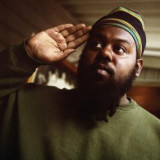
Bon Iver's debut full-length For Emma, Forever Ago has been making major waves in critics circles based on the strength of an early artist-pressed advance cd and a couple awe-inspiring sets at CMJ in October 2007. The New York Times called it "irresistible" and Pitchfork stamped its early review of the album with a Recommended tag. For those of you hiding away in a cabin of your own, it's time that you hear the story, and more importantly, the music. Bon Iver (pronounced: bohn eevair; French for "good winter" and spelled wrong on purpose) is a greeting, a celebration and a sentiment. It is a new statement of an artist moving on and establishing the groundwork for a lasting career. For Emma, Forever Ago is the debut of this lineage of songs. As a whole, the record is entirely cohesive throughout and remains centered around a particular aesthetic, prompted by the time and place for which it was recorded. Justin Vernon, the primary force behind Bon Iver, seems to have tested his boundaries to the maximum, and in doing so has managed to break free from any pre-cursing or finished forms. It wasn't planned. The goal was to hibernate. Vernon moved to a remote cabin in the woods of Northwestern Wisconsin at the onset of winter. He lived there alone for three months, filling his days with wood splitting and other chores around the land. This solitary time slowly began feeding a bold, uninhibited new musical focus. The days slowly evolved into nights filled with twelve-hour recording blocks, breaking only for trips on the tractor into the pines to saw and haul firewood, or for frozen sunrises high up a deer stand. All of his personal trouble, lack of perspective, heartache, longing, love, loss and guilt that had been stock piled over the course of the past six years, was suddenly purged into the form of song.
out of Stock
Last delivered 18 months ago available to reorder, subject to availability
Mit "Glory" veröffentlicht Mike Hadreas aka Perfume Genius sein siebtes Studioalbum. Zusammen mit seinem Partner Alan Wyffels und Produzent Blake Mills ist eine Platte entstanden, die nach außen hin strahlt, in seinen makabren Bildern und seinem aufgewühlten Innern aber das Tor in eine Welt von Entfremdung, Sehnsucht und Verlangen aufmacht. Es ist der Konflikt zwischen dem Außen und dem Innen, der Hadreas beschäftigt, der Widerspruch zwischen einem künstlerischen Leben in der Öffentlichkeit und dem Wunsch nach Isolation. In seinen Charakterskizzen betrachtet der US-Künstler mit der Sorgfalt eines Schriftstellers Szenen von Freundschaft, Verlangen und Intimität durch eine queere Prima, während er sich musikalisch geöffnet und in seinem Songwriting-Prozess mehr Raum für Gruppendynamik gelassen hat: "Es ist auf eine Weise kollaborativ, die es besser macht", so Hadreas, "aber auch beängstigender - es fühlt sich verletzlicher an". Dass Glory dennoch ein zutiefst persönliches Album geworden ist, liegt auch daran, dass Hadreas seine eigenen Ängste vor dem Hintergrund der Entwicklung einer den Zeitgeist durchdringenden, allgemeinen Paranoia reflektiert. Mit seinen fein gesponnenen Tracks wirkt "Glory" beizeiten wie eine Kollektion neuer Standards für queere Romantiker und alte Seelen im Tumult der Gegenwart.
out of Stock
Last delivered 18 months ago available to reorder, subject to availability
During their short but prolific career, A2L released two albums & numerous EPs on labels such as 1st Bass / Big One and Force Inc between 1988 and 1990. This is a collection of early and rare underground British psychedelic house gems from 1989, blending the trippy, mind-expanding sounds of machine funk, new beat, industrial/ebm, samplers and turntables techniques, with the birth of acid house wonderlandand and captures the raw energy of the UK rave scene.
During their short but prolific career, A2L released two albums, one of which strangely landed on a South African label. They also dropped numerous EPs on labels such as 1st Bass / Big One (home to acts like Deskee, Longsy D, and King Bee) and the German label Force Inc (which hosted artists like Alec Empire, Porter Ricks, and Mike Ink), between 1988 and 1990.
While Acid House is synonymous with the Roland 303, A2L is unlikely an acid house act. Instead, they stand as one of the finest examples of British psychedelic house music from the late 80s, falling between the likesof S-Express, Funtopia, Eon, and Acid Angels. With standout tracks like "Even Though It's Make Believe" and "Come On," A2L delivers infectious grooves over strobelight sample jams.
This here is a collection of early and rare underground British psychedelic house gems from 1989, blending the trippy, mind-expanding sounds of machine funk, new beat, industrial/ebm, samplers and turntables techniques, with the birth of acid house wonderlandand and captures the raw energy of the UK rave scene.
This is one testament to the creative freedom and experimental nature of that era.
For fans of the burgeoning British psychedelic and acid house scene.
out of Stock
Last delivered 10 months ago available to reorder, subject to availability
Patrick Conway crossed the threshold to find a new hope. This is his third offering for the ESP Institute. On side A, 'Loss' sets an overall melancholic tone for the record. A single repeating high note on the piano establishes a guiding element, which is eventually supported by a tear-jerking yet resolving chord progression, a trailing choir of angelic voices, and a filter-modulating synth that pads the widest zones of the mix with the occasional counter-melody. Robust in and of itself, Patrick’s melodic arrangement floats gracefully over an otherwise antagonistic rhythm section built from his signature corroded dancehall arsenal. This hornets nest of boxed live kick drums, piccolo snares, and high-pitched toms is held together by a dry veneer of saturation, sitting at safe distance from but in natural harmony with the bulbous low-frequency atmospherics. On the flip, 'Silencio' employs a similar statement at the top of each measure, this time an anthemic polyphonic synth stab as opposed to the singular piano note, however, unlike the layered melodies throughout 'Lost', here Patrick explores the narrative possibility of negative space—call and response, rhythmic dialogue, and the implied notes that leave the listener’s or dancer’s intuition to complete a phrase. In the game “musical chairs,” children run around manically until signaled to find a chair, at which point their diverse personalties must urgently synchronize, until set free to run again and repeat the process. Patrick's approach for 'Silencio' conjures said metaphor—his melody and rhythm are unleashed to meander and spasm within the confines of each respective bar, until that anticipated synth stab unifies everything “on the one”—controlling the chaos, calling on muscle memory and affirming logic. These two songs will be with you always as they always have been.
out of Stock
Last delivered 18 months ago available to reorder, subject to availability
Folding the ambient techno tradition into neatly arranged packets of rhythm and space, Delsin proudly presents a striking new collaboration from Tobias. and Doltz. A project developed from a chance encounter, Versus combines classic synth and drum machine configurations with needlepoint sound design to create a quintessential electronica listening experience. Tobias. is the lead alias from Tobias Freund, the celebrated German techno pioneer who has been actively exploring new territories in electronic music production since the early 1980s. As Doltz, Shun Watanabe has quickly developed his own impressive artistic stamp in the field of leftfield techno and ambient since debuting in 2020. After seeing Doltz perform a live set at Eden Festival 2024 in Japan, Freund instantly invited him to collaborate. After the success of the first collaboration, they went on to develop five of the tracks on Versus together, while Jiawen Wang performed additional vocals on 'We Are Not Alone'. Versus is an album that balances variety and consistency across its finely sequenced run time, maintaining a focus on pointillist, exploratory rhythm from crisp drum machines and twitchy digitalia alike, all backed up by richly rendered atmospherics from gaseous pads to icy drones. It's a warm and inviting sound world, but also fearlessly futuristic, speaking to both Freund's decades of refinement and the startling clarity of Doltz's vision.
out of Stock
Last delivered 9 months ago available to reorder, subject to availability
Googling “paradise house”, the first results to pop up are an endless list of European b&b’s with whitewashed lime façades, all of them promising “…an unmatched travel experience a few steps from the sea”. Next, a little further down, are the institutional websites of a few select semi-luxury retirement homes (no photos shown, but lots of stock images of smiling nurses with reassuring looks). To find the “paradise house” we’re after, we have to scroll even further down. Much further down.
It feels like yesterday, and at the same time it seems like a million years ago. The Eighties had just ended, and it was still unclear what to expect from the Nineties. Mobile phones that were not the size of a briefcase and did not cost as much as a car? A frightening economic crisis? The guitar-rock revival?! Certainly, the best place to observe that moment of transition was the dancefloor. Truly epochal transformations were happening there. From America, within a short distance one from the other, two revolutionary new musical styles had arrived: the first one sounded a bit like an “on a budget” version of the best Seventies disco-music – Philly sound made with a set of piano-bar keyboards! – the other was even more sparse, futuristic and extraterrestrial. It was a music with a quite distinct “physical” component, which at the same time, to be fully grasped, seemed to call for the knotty theories of certain French post-modern philosophers: Gilles Deleuze, Félix Guattari, Paul Virilio... Both those genres – we would learn shortly after – were born in the black communities of Chicago and Detroit, although listening to those vinyl 12” (often wrapped in generic white covers, and with little indication in the label) you could not easily guess whether behind them there was a black boy from somewhere in the Usa, or a girl from Berlin, or a pale kid from a Cornish coastal town.
Quickly, similar sounds began to show up from all corners of Europe. A thousand variations of the same intuition: leaner, less lean, happier, slightly less intoxicated, more broken, slower, faster, much faster... Boom! From the dancefloors – the London ones at least, whose chronicles we eagerly read every month in the pages of The Face and i-D – came tales of a new generation of clubbers who had completely stopped “dressing up” to go dancing; of hot tempered hooligans bursting into tears and hugging everyone under the strobe lights as the notes of Strings of Life rose up through the fumes of dry ice (certain “smiling” pills were also involved, sure). At this point, however, we must move on to Switzerland.
In Switzerland, in the quiet and diligent town of Lugano, between the 1980s and 1990s there was a club called “Morandi”. Its hot night was on Wednesdays, when the audience also came from Milan, Como, Varese and Zurich. Legend goes that, one night, none less than Prince and Sheila E were spotted hiding among the sofas, on a day-off of the Italian dates of the Nude Tour… The Wednesday resident and superstar was an Italian dj with an exotic name: Don Carlos. The soundtrack he devised was a mixture of Chicago, Detroit, the most progressive R&B and certain forgotten classics of old disco music: practically, what the Paradise Garage in New York might have sounded like had it not closed in 1987. In between, Don Carlos also managed to squeeze in some tracks he had worked on in his studio on Lago Maggiore. One in particular: a track that was rather slow compared to the BPM in fashion at the time, but which was a perfect bridge between house and R&B. The title was Alone: Don Carlos would explain years later that it had to be intended both in the English meaning of “by itself” and like the Italian word meaning “halo”. That wasn’t the only double entendre about the song, anyway. Its own very deep nature was, indeed, double. On the one hand, Alone was built around an angelic keyboard pattern and a romantic piano riff that took you straight to heaven; on the other, it showcased enough electronic squelches (plus a sax part that sounded like it had been dissolved by acid rain) to pigeonhole the tune into the “junk modernity” section, aka the hallmark of all the most innovative sounds of the time: music that sounded like it was hand-crafted from the scraps of glittering overground pop.
No one knows who was the first to call it “paradise house”, nor when it happened. Alternative definitions on the same topic one happened to hear included “ambient house”, “dream house”, “Mediterranean progressive”… but of course none were as good (and alluring) as “paradise house”. What is certain is that such inclination for sounds that were in equal measure angelic and neurotic, romantic and unaffective, quickly became the trademark of the second generation of Italian house. Music that seemed shyly equidistant from all the rhythmic and electronic revolutions that had happened up to that moment (“Music perfectly adept at going nowhere slowly” as noted by English journalist Craig McLean in a legendary field report for Blah Blah Blah magazine). Music that to a inattentive ear might have sounded as anonymous as a snapshot of a random group of passers-by at 10AM in the centre of any major city, but perfectly described the (slow) awakening in the real world after the universal love binge of the so-called Second Summer of Love.
For a brief but unforgettable season, in Italy “paradise house” was the official soundtrack of interminable weekends spent inside the car, darting from one club to another, cutting the peninsula from North to centre, from East to West coast in pursuit of the latest after-hours disco, trading kilometres per hour with beats per minute: practically, a new New Year’s Eve every Friday and Saturday night. This too was no small transformation, as well as a shock for an adult Italy that was encountering for the first time – thanks to its sons and daughters – the wild side of industrial modernity. The clubbers of the so-called “fuoriorario” scene were the balls gone mad in the pinball machine most feared by newspapers, magazines and TV pundits. What they did each and every weekend, apart from going crazy to the sound of the current white labels, was linking distant geographical points and non-places (thank you Marc Augé!) – old dance halls, farmhouses and business centres – transformed for one night into house music heaven. As Marco D’Eramo wrote in his 1995 essay on Chicago, Il maiale e il grattacielo: “Four-wheeled capitalism distorts our age-old image of the city, it allows the suburbs to be connected to each other, whereas before they were connected only by the centre (…) It makes possible a metropolitan area without a metropolis, without a city centre, without downtown. The periphery is no longer a periphery of any centre, but is self-centred”.
“Paradise house” perfectly understood all of this and turned it into a sort of cyber-blues that didn’t even need words, and unexpectedly brought back a drop of melancholic (post?)-humanity within a world that by then – as we would wholly realise in the decades to come – was fully inhuman and heartless. A world where we were all alone, and surrounded by a sinister yellowish halo, like a neon at the end of its life cycle. But, for one night at least, happy."
out of Stock
Last delivered 3 months ago available to reorder, subject to availability
Because Sound Matters' meticulous One-Step process creates the definitive sounding audiophile version of k.d. lang Ingénue. This all-analog release comes from the original first-generation master tapes for the first time. Vinyl guru and editor Michael Fremer says, "This k.d. One-Step is insane – It's otherworldly great!"
This One-Step version is strictly limited to 3,000 copies. The album is housed inside a top-quality, foil-stamped, uniquely designed numbered slipcase. The enclosed gatefold jacket will feature an "old style" tip-on jacket with the original artwork.
Special care has been taken to faithfully preserve the original sound with exceptional clarity and depth, capturing the recording's nuances and subtleties at every step to create the best sounding record possible.
The One-Step process is highly regarded among audiophiles and collectors for its unparalleled sound fidelity and represents the pinnacle of vinyl manufacturing craftsmanship.
Ingénue was originally released March 17, 1992 and is k.d. lang's second solo album.
Upon release, the album charted at #18 in the US, #13 in Canada, #3 in the UK and Australia and #1 in New Zealand. Nominated for six Grammy® Awards with the breakout single "Constant Craving" winning a Grammy® Award for Best Female Pop Vocal Performance. "Miss Chatelaine" and "The Mind of Love" were follow-up singles.
k.d. received universal critical acclaim for the album from publications like Mojo, Pitchfork, Rolling Stone, Uncut and dozens more! Today, Ingénue is a true classic album and considered one of the great audiophile recordings of the modern era. This One-Step version certainly proves that!
Notes for This Release:
Ingénue was originally recorded and mixed on analogue tape and produced by Greg Penny, Ben Mink and k.d. lang. The original analogue master tapes were directly used as the audio source for this One-Step pressing! This is the first time the analogue tapes have been used as a vinyl source for this brilliant recording. The results are stunning.
Because Sound Matters used the Neotech VR900-D2 180g High-Performance vinyl compound, which is the same as what is known as Super Vinyl – the best in the world.
Chris Bellman at Bernie Grundman Mastering cut the lacquers with meticulous care! He also did the original mastering of the CD release in 1992.
Dorin Sauerbier at Record Technology, Inc (R.T.I.) has been plating records for decades and is considered the best in the world – he also has done more One-Step processing than anybody. This is a vital step in the process to ultimately delivering the absolute best sounding version of Ingénue ever.
Record Technology, Inc did the pressing – using the exact pressing machine used for so many other One-Step releases. The QC team is constantly monitoring each copy as it comes off the press.
Because Sound Matters' slipcases and gatefold "old style" tip on original art jackets were printed by world-renowned Stoughton Printing Company.
This new all-analogue edition will draw you into the music as never before—at least it did me. The sonic picture is rich, well-textured, harmonically saturated, spatially deep and all the rest of the audiophile buzzwords that no doubt the producers (who include lang) intended to give listeners but until now couldn't fully deliver. The musical flow will have you swooning in your seat. Before the opener 'Save Me' concludes you may already feel overwhelmed and in need of lifting the stylus to catch your emotional breath...What a treat!
-Michael Fremer, Tracking Angle, Music 11/10, Sound 11/10
Kaum ein Ereignis hat die deutsche Gesellschaft im noch jungen Jahr 2024 so sehr bewegt, wie der Tod von Fußballlegende und Sportikone Franz Beckenbauer. Als einer der größten Namen ging „Der Kaiser“,
wie er oft genannt wird, sowohl als Spieler als auch später als Trainer und Funktionär in die weltweite Fußballgeschichte ein.
Unvergessen sind, im Angesicht seiner außergewöhnlich erfolgreichen Karriere, aber nicht nur seine Leistungen und Erfolge auf dem Platz oder seine Einflüsse als Funktionär, sondern auch im Bereich der Musik hinterließ Franz Beckenbauer seine Abdrücke in der deutschen Kulturlandschaft.
All diese Umstände ergeben in Summe eine regelrechte Aufforderung zur Neuauflage von Franz Beckenbauers größten Hits, oder besser gesagt: ”Des Kaisers schönste Lieder”. So lautet nämlich auch der
offzielle Titel der neuen 10“-Vinyl, die alle alten Titel aus der Zusammenarbeit mit dem Polydor-Label enthalten und pünktlich zum Fußball-Highlight des Jahres erscheinen wird. Universal Music wird diese feine Schatztruhe an Liedern zudem auch erstmals digital veröffentlichen und für Streaming verfügbar machen.
Die strikt auf 1.000 Stück limitierte Edition in transparentem 10”-Vinyl wird am 14.06.2024 erscheinen.
out of Stock
Last delivered 18 months ago available to reorder, subject to availability
MMOTTORR is a new collaborative project between Tr One and New Jackson and the 1st EP marks an exciting fusion of both artists' sounds combined with a fresh take on machine music, blending influences from Chicago and ghetto house, deeper acid textures, techno and use of classic samplers and voice modulation to create 4 dancefloor orientated tracks.
EP 1 features four tracks from the Irish artists that push the boundaries of hardware based production, offering a captivating exploration of sound and influences from both artists.
The lead track U LIKE IT RAW (RED HOT) offers a ghetto house influenced track with a booming low end and persistent bassline containing a dual pitched vocal to devastate dancefloors.
Following that is RED EYE DRIVE a high tempo 4/4 drum machine and tom driven track with hints of hi tech soul and classic acid.
On the B side we have WANNADO - A booming 808 and snare combination contains a powerful yet melodic acid line which ups the heat and energy with a crescendo of sampled sound and fizzing low end.
Finally on a deeper level HEADZ VOL.3 takes it back to a classic "plus 8" and Detroit influenced track with a recurrent wave of sound and synthesis building and weaving towards the end of the record.
The EP will be available on limited vinyl and digital starting exclusively with bandcamp. Thanks for supporting underground music. "
out of Stock
Last delivered 18 months ago available to reorder, subject to availability
If every significant artist has an underrated gem in its catalog, then Mirage is that album for Fleetwood Mac. An obvious return to relative simplicity after the dramatic tension of Rumours and experimental ambitions of Tusk, the 1982 album finds the band re-grouping after a brief hiatus and again climbing to the top of the charts. Extremely well-crafted, well-produced, and well-performed, the double-platinum effort distills the group’s hallmark strengths into a filler-free set that never runs short of addictive pop hooks or daft accents.
Sourced from the original analog master tapes, pressed at Fidelity Record Pressing in California, and housed in a Stoughton jacket, Mobile Fidelity’s numbered-edition 180g 45RPM 2LP set presents Mirage in reference sound for the first time. The efforts co-producers/engineers Ken Caillat and Richard Dashut went to capture the splintered albeit formidable band can be heard with stunning accuracy, range, depth, and detail.
Though Rumours understandably gets a permanent spot in the audiophile hall of fame, the smooth, clear, and dynamic sonics on Mirage confirm that the record that stood as Fleetwood Mac’s last effort for five years deserves a place in the same vaunted arena. The presence and imaging of Mick Fleetwood’s percussion alone on this reissue might have you wondering how this slice of soft-rock bliss has gone under-noticed for decades. Other prized aural aspects — separation, definition, impact, tonal balance — are also here in spades.
Like much surrounding Fleetwood Mac in the 1980s, arriving at Mirage was not easy. Caillat searched for studios located outside of Los Angeles on a mission to change up the vibe of the band’s prior recording sessions. Everyone settled on Le Chateau in France, where relations between some members remained icy — and cooperation with the producers strained. Battles with exhaustion, bitterness, and addiction further informed the proceedings at the 18th century complex in the French countryside, where even communal meals were allegedly eaten in silence.
Inevitably, the feelings that co-producer Lindsey Buckingham, Stevie Nicks, Christine McVie, and company harbored — as well as the situations in which they found themselves — drifted into the songwriting. In its rapid ascent to rock-star royalty status, Fleetwood Mac drifted apart, embarked on solo pursuits, and found it was lonely at the top. Emptiness, the illusion of dreams, the longing for love, the want to escape to bygone times of innocence and happiness: Such themes inform a majority of the narratives. Even if the lyrics regularly take a back seat to easygoing arrangements that allow Mirage to come on like a refreshing breeze on a sunny summer afternoon.
Home to three Top 25 singles in the U.S. and having occupied the pole position of the Top 200 album charts for five weeks, Mirage rightfully resonated with the mainstream and attracted listeners on both sides of the pond. And how, via a smart blend of sugary melodies, warm harmonies, interlaced notes, nimble rhythms, taut structures, and passionate vocals. Not to mention the presence of what arguably remains Nicks’ signature song, the biographical “Gypsy,” a meditation on the loss of her close friend Robin Anderson that teems with majesty, mystery, and mysticism — and which gets an assist from Buckingham’s shaded tack piano and richly strummed guitar chords.
Its ranking as an all-time classic aside, that No. 12 hit has plenty of company when it comes to brilliant pop turns on Mirage. On the subject of Nicks, the raspy singer gets a little bit country on “That’s Alright.” Its clip-clopping pace and two-stepping progression complement subtle vocal swells that emerge during the final verse of a tune that is ostensibly about leaving but still conveys forgiveness and grace. And what would a Fleetwood Mac record be without Nicks drawing on the tools of the supernatural — cards, dreams, wolves, and the like — on the twirling “Straight Back.”
Despite the potency of Nicks’ primary contributions, Mirage seemingly unfolds as a tight competition between Buckingham and McVie — and one that ultimately ends in a draw. Buckingham’s salvos include the contagious “Can’t Go Back,” a yearning to time-travel back to the past that’s complete with hall-of-mirrors backing vocals; “Oh Diane,” out-of- left-field ear candy sweetened with hiccupped vocals and salt-and-pepper-shaken grooves; the chiming “Eyes of the World”; and “Empire State,” a delightfully fluttering track whose high-range vocals, lap harp notes, and ringing xylophones hint at the galaxies of sound that would erupt on Tango in the Night.
Then there’s McVie. As elegant, understated, and coolheaded as she’s ever been on record, she pours her heart out on cuts that revolve around her inevitable split with Beach Boy Dennis Wilson. In the process, she punctuates Mirage with a characteristic not always associated with catchy pop music: emotional weight, and the sense of dreaded acceptance in the face of dreams deferred.
“I wish you were here/Holding me tight,” McVie sings over a delicate melody on the album-closing piano ballad “Wish You Were Here.” Though they hoped otherwise, for the members Fleetwood Mac, distance and separation were always close at hand. Believing otherwise, inviting nostalgia, and pretending everything was fine only amounts to a mirage.
Ramu Records presents their third release – ‘S Gytis - Aš Čia’ (translated as ‘I Am Here’). It’s a full-length double vinyl album, which is S Gytis’ second release. The sound of Gytis’ creation evolves alongside his life. Having swapped city noise for a rural setting, he began exploring new directions and this time settled on acoustic instruments. The deep experimental sound is infused with freshness and vitality. The entire album spans diverse spaces and emotions. Each track tells a unique story – a story about feelings or the spaces that Gytis wants to introduce us to.
Earthly Measures are very excited to bring to you 'Doroja', an album by Santiago Córdoba & The Bauls of Bengal. Different to past releases, EM explores another part of the world, introducing you to the traditional sounds of Bengal & its talented musicians.
Doroja, is the third album by Argentinian musician Santiago Córdoba, this time in collaboration with The Bauls of Bengal. Recorded at the Hansadhwani Studio in Calcutta, India, where Santiago arrived with only a synthesiser, some effects, and a Legüero Bass Drum (an Argentine percussive instrument used mostly in local folklore) - this album was first conceived in December 2017 during a residency in this mythical city, together with The Bauls of Bengal.
The Bauls believe the body and mind are the sources of all truths and that the expression of freedom cannot be restrained by the labelling of genres or religions, something which is evidently expressed in their music. This provides the perfect foundations for this album to develop without limitations and too effortlessly flow to whichever realms both Santiago and the Bauls of Bengal wish to take us too.
The album combines traditional songs of the Bauls, rhythmic Jhumar instrumental improvisations with the Argentinian legüero bass drum, and other compositions created together in the studio. The result is a melodic mixture/dialogue of cultures, folklore and ancestral sounds with modern influences that help create an experimental and addictive sound full of electronic textures.
Participating in these first recordings: Arpita Chakraborty (vocals), Chandan Ray (dotara), Pijush Baul (Vocals, Dubki) and Tanmoy Pan (percussion), who later, are joined by other artists from different latitudes to achieve a captivating fusion: Matías Romero on strings (Formosa, Argentina), Guilherme Peluci from Mineiro on winds and Daniel Guedes on percussion (Belo Horizonte, Brazil), Porteños Walter Broide on tabla and Cobra Rod on bass (both members of Poseidotica), and the Spanish Ángel Calvo on trumpet.
The album was mixed by Rodrigo Cursach at Delta Uno Estudio, mastered by Daniel Ovie, and the fascinating cover art is by Alejandro Sordi. It will be released on vinyl by the UK based label Earthly Measures, in addition to being available on all digital platforms.
‘Doroja’ means portal, and this album is indeed a magical portal to music, song and dance. Santiago's only means of communication with Bengali colleagues functioned as an astral portal to build the sounds of this journey through strange and unfathomable landscapes that captivate and surprise by building bridges between different cultures of our planet.
Santiago Córdoba is a multi-instrumentalist musician born in the city of Buenos Aires who has been developing his unique sound both with his solo project and with prominent bands from the Argentinian independent music scene. He has been developing his solo career through deep musical and spiritual searching, with the infinite journey as a primary objective.
In recent years, he has lived in places such as Madrid, Beirut and Berlin and has released two albums: ‘Corso’ (2015) and ‘En Other Places’ (2019).
out of Stock
Last delivered 4 years ago available to reorder, subject to availability
'It begins with a shoebox of mysterious provenance, full of recordings from the Vendée department on France’s western seaboard: songs of love and war, life and death, played out on land and sea. Songs passed down and sung by ordinary men and women, gracefully delivered with the poetic economy which unites the folk song of all peoples.
Next it takes a group of contemporary musicians to make selections from this treasure trove and sing these old songs anew; to sing them for their beauty, of course, and to reclaim the people’s tradition from those who would seek to exploit it for nefarious political ends. Who better for this task than Tartine de Clous, a singing trio from Vendée’s neighbouring department of Charente-Maritime, who burst into national and international consciousness with their debut album "Sans Folklore" in 2015? The result of their shoebox rummagings, the new album "Compter les dents", recorded in 2019 and finally seeing the light of day, is bound to delight old fans and win them many new ones.
Time makes many’s the alteration, and "Compter les dents" finds 'les garçons' - Geoffroy Dudouit, Thomas Georget and Guillaume Maupin - in a different state of being from their debut release. The trio, friends since youth, have certainly matured between albums, as one would expect; consequently the newer performances are more considered and poised, unfolding with a patient confidence. A relaxed domesticity prevails, something to do with the fact that the album was entirely recorded chez les amis, in contrast to the first album, which was mostly recorded at live performances in bars and night-spots across France.
Lending gravitas to the grain of their voices we mark a deepened richness, doubtless born of the various vicissitudes of daily existence which these gentlemen - and we too as citizens of this turmoiled globe - have weathered in the intervening years. Not too dissimilar, in fact,
from some of the vicissitudes detailed in those old Vendée songs. Plus 'ça change', right?
There’s a greater complexity and subtlety to their unique three-part harmonising, too. Their voices mesh in even stronger - almost telepathic - 'fraternité' than ever before: now commanding and mighty as a full-rigged counter-vessel, now gentle and lulling as a mother’s
cradle-croon, or as the whisper in a lover’s ear.
Three legendary figures of French traditional music, now sadly departed, preside as tutelary spirits over Compter les dents. They are: the late Claude Flagel, musician and ethnomusicologist; and the late Jean-Loup Baly of the well-known 1970s band Mélusine. Most of the album was recorded by Claude in the Brussels home he shared with his late wife Lou Flagel. The album is dedicated to the memory of Jean-Loup, Claude and Lou.
For the first time there are several guest instrumentalists working their magic to expand the Tartine de Clous sound. Jean-Loup plays a characterful accordéon on the song ‘La Veuve'. The other guests are: Maurice Artus (voice), Robert Thébaut (violin), Quentin Manfroy (piccolo, contrabassoon), Marceau Portron (cigar box guitar). Their contributions add even more conviviality to that which the trio of singers already share, a sensation which will doubtless be shared by those who happen to find a place in their lives for "Compter les dents".'
Second volume of tributes from Kutmah.
A beat tape for the brotha from anotha planet, the most high Ras G & the Afrikan Space Program
All beats by Kutmah / Cover Photos By Kevin Ramos
After a health-induced hiatus, Popa Chubby, the legendary blues-rock guitarist, roars back with "I Love Freddie King," a heartfelt tribute album to the late great Texas Cannonball himself. Produced by Popa Chubby and Gulf Coast Records' executive producer Mike Zito, this 11-track masterpiece was recorded at G.B.'s Juke Joint and features contributions from an all-star roster of modern guitar heroes: Joe Bonamassa, Mike Zito, Christone "Kingfish" Ingram, Eric Gales, Albert Castiglia, Arthur Neilson, and V.D. King. Reflecting on the album, Popa Chubby calls Freddie King his lifelong muse, whose music "changed my soul forever." The album brings King's legacy roaring back to life, spanning his early instrumental hits, Shelter Records era, and more. With a core band of Mike Merritt (bass), Andrei Koribanics III (drums), and Mike DiMeo (keyboards), this record captures the sweat, soul, and unrelenting energy of Freddie King. Tracks like "I'm Going Down" (ft. Joe Bonamassa) and "Big Legged Woman" (ft. Christone 'Kingfish' Ingram) explode with fiery guitar work and passionate vocals. Other standouts include "She's A Burglar" (ft. Mike Zito) and "Hideaway" (ft. Arthur Neilson). Each collaboration brings something special to the table, making this album a must-listen for blues fans and guitar lovers alike. Despite battling a rare spinal disorder during production, Popa Chubby pressed on to create what he calls "a journey of love and homage." His raw determination, combined with the extraordinary talent of his guest musicians, resulted in a fitting tribute to Freddie King--the bridge between blues and rock, who forever altered the genre's course. The Texas Cannonball's legacy brought to life, grab your copy of "I Love Freddie King" today and let the blues thunder on!
Im Lateinischen bedeutet das Wort Gemini "zwei zusammen" oder "Zwillinge". Astrologisch gesehen sind Zwillinge unter anderem dafür bekannt, dass sie neugierig und vielseitig sind. Für die 9-köpfige (meist) instrumentale Combo The Sure Fire Soul Ensemble aus San Diego waren Jazz und Funk schon immer die beiden Genres, die sie konsequent und effektiv miteinander verschmolzen haben und die das Fundament ihres Sounds bilden. Mit ihrer stilistischen Neugier und Vielseitigkeit haben sie dieses Fundament auf ihrem neuen 11-Song-Longplayer für Colemine Records weiter ausgebaut. Aufgenommen zwischen Ende 2021 und Anfang 2024 im The Kitchen II in ihrer Heimat Lemon Grove, Kalifornien, lenken SFSE ihre ,introspektive Partymusik" in neue klangliche Gefilde. Während ihr Breakbeat-lastiger Funk-Soul-Jazz immer noch der Eckpfeiler ihres Sounds ist, wie er in Stücken wie ,Makin' Moves", ,TheGrifter" und ,Don't Trip" zum Ausdruck kommt, haben sie begonnen, mehr und mehr Einflüsse von Library-Musik-Labels wie KPM Music, spirituell orientierten Jazz-Labels wie Tribe & Black Jazz Records und exotisch angehauchten Jazz-Künstlern wie Cal Tjader und Dorothy Ashby aufzunehmen. Jetzt lehnen sie sich mehr an den ,introspektiven" Teil ihres Sounds an, insbesondere bei ,Mother Earth", ,Freddie" und dem Titeltrack, und beschwören die Geister von Freddie Hubbard, Phil Ranelin, Wendell Harrison, Bubbha Thomas, Chester Thompson und sogar Cannonball Adderley in seiner kopflastigsten und kosmischsten Zeit herauf (hören Sie sich Adderleys Alben ,Soul Zodiac" und ,Soul of The Bible" als Referenz an). ,Corporatocracy" geht noch einen Schritt weiter mit einem ausgedehnten Tabla-Solo, das auf der perkussiven Welle reitet, bevor es in seinen funkgetriebenen, modalen Vibe übergeht. In der aktuellen Besetzung mit Tim Felten an den Tasten, Jake Najor am Schlagzeug, Omar Lopez am Bass, Kiko Cornejo Jr. an Conga/Percussion, Aquiles ,Lito" Magana an der Gitarre, Wili Fleming an der Posaune, Sheryll Felten an der Percussion, und Jesse Audelo und Travis Klein am Saxophon und an der Flöte. SFSE bleibt dem Funk treu, traut sich aber auch, neue Wege zu gehen, die sie bisher noch nicht beschritten haben, und betritt damit faszinierendes Neuland in ihrem Gesamtsound.
out of Stock
Last delivered 18 months ago available to reorder, subject to availability
Im Lateinischen bedeutet das Wort Gemini "zwei zusammen" oder "Zwillinge". Astrologisch gesehen sind Zwillinge unter anderem dafür bekannt, dass sie neugierig und vielseitig sind. Für die 9-köpfige (meist) instrumentale Combo The Sure Fire Soul Ensemble aus San Diego waren Jazz und Funk schon immer die beiden Genres, die sie konsequent und effektiv miteinander verschmolzen haben und die das Fundament ihres Sounds bilden. Mit ihrer stilistischen Neugier und Vielseitigkeit haben sie dieses Fundament auf ihrem neuen 11-Song-Longplayer für Colemine Records weiter ausgebaut. Aufgenommen zwischen Ende 2021 und Anfang 2024 im The Kitchen II in ihrer Heimat Lemon Grove, Kalifornien, lenken SFSE ihre ,introspektive Partymusik" in neue klangliche Gefilde. Während ihr Breakbeat-lastiger Funk-Soul-Jazz immer noch der Eckpfeiler ihres Sounds ist, wie er in Stücken wie ,Makin' Moves", ,TheGrifter" und ,Don't Trip" zum Ausdruck kommt, haben sie begonnen, mehr und mehr Einflüsse von Library-Musik-Labels wie KPM Music, spirituell orientierten Jazz-Labels wie Tribe & Black Jazz Records und exotisch angehauchten Jazz-Künstlern wie Cal Tjader und Dorothy Ashby aufzunehmen. Jetzt lehnen sie sich mehr an den ,introspektiven" Teil ihres Sounds an, insbesondere bei ,Mother Earth", ,Freddie" und dem Titeltrack, und beschwören die Geister von Freddie Hubbard, Phil Ranelin, Wendell Harrison, Bubbha Thomas, Chester Thompson und sogar Cannonball Adderley in seiner kopflastigsten und kosmischsten Zeit herauf (hören Sie sich Adderleys Alben ,Soul Zodiac" und ,Soul of The Bible" als Referenz an). ,Corporatocracy" geht noch einen Schritt weiter mit einem ausgedehnten Tabla-Solo, das auf der perkussiven Welle reitet, bevor es in seinen funkgetriebenen, modalen Vibe übergeht. In der aktuellen Besetzung mit Tim Felten an den Tasten, Jake Najor am Schlagzeug, Omar Lopez am Bass, Kiko Cornejo Jr. an Conga/Percussion, Aquiles ,Lito" Magana an der Gitarre, Wili Fleming an der Posaune, Sheryll Felten an der Percussion, und Jesse Audelo und Travis Klein am Saxophon und an der Flöte. SFSE bleibt dem Funk treu, traut sich aber auch, neue Wege zu gehen, die sie bisher noch nicht beschritten haben, und betritt damit faszinierendes Neuland in ihrem Gesamtsound.
Patricia Kaas' 2012 album Kaas Chante Piaf is a heartfelt tribute to the legendary French singer Édith Piaf, celebrating the 50th anniversary of her passing. The album features Kaas’ interpretations of 16 iconic Piaf songs, including classics like "La Vie en Rose," "Non, Je Ne Regrette Rien," and "Hymne à l'amour." Kaas infuses each track with her own unique style, while honoring the emotional depth and power of Piaf’s timeless music. Known for her smoky voice and dramatic delivery, Kaas breathes new life into these chansons, creating a nostalgic yet contemporary homage. Kaas Chante Piaf is more than just a cover album—it’s a celebration of Piaf’s enduring legacy and an opportunity for Kaas to showcase her deep connection to French musical heritage. For fans of French chanson, this album is a must-listen, capturing the spirit of both Piaf and Kaas. Kaas Chante Piaf is available as a limited edition of 1500 numbered copies on light green coloured vinyl.
OHYUNG aka Lia Ouyang Rusli describes their new album as “my trans self and my former self in conversation, from both perspectives.” The record represents their lengthy, complicated, but crucial journey between lives, strewn with both doubt and excitement. It is an ecstatic, pop-oriented shift in direction from an artist primarily known for noise, experimental hip-hop, and ambient music, but carried with sleek confidence, maturity, and a silvery, hallucinogenic shimmer that reveals Rusli’s experimental background. It is, writes Rusli, “sometimes written from a dark place and other times from a place of happiness.” Throughout, darkness and light rise and fall in layers of phased strings, trip-hop drum production, and earworming vocal lines.
Also a film score composer, Rusli’s songwriting craft is meticulous and nuanced. You Are Always On My Mind was, perhaps surprisingly, formed primarily from processed “generic string loops” found in online sample packs - a strange and wilfully jarring reminder that what seems to be is not always what is. Recontextualised, these string loops enshadow the simplicity of their origins and reveal a grace and purposefulness perhaps not even imagined by their authors, subtly drawing out euphoria and tension in equal balance.
Rusli also writes of the influence of rave culture central to their transition, and of the record’s production and theme. “It’s a declaration of love for raves and the dark hazy rooms that helped me to be free and true with myself— seeing other people who are so free and beautiful and thinking that one day that can be me— that’s me in the future.” But there is also a fear and unease present. Key moment “no good” explores “the worst version of myself as a trans person, feeding doubt to my pre-transition self” with its core lyric anyone can see / I’m no good for you, delivered over a relentless beat, swooning strings, and glistening synthesis.
Later, “i swear that i could die rn” renders a Spectreish Motown beat lamenting and lush with breathy synths and knife-edge melodies that eventually yield a hazy, gliding string section, created again from mutated, spliced, and transitioned royalty-free sample packs. The track is about “seeing my beautiful friends at raves and feeling at home appreciating the harsh noises of hardcore techno and acid. Feeling that I could die at this moment and be happy.”
"Daft Punk brought me here, he brought me Daft Punk"
Just knowing that this slice of hyper-rare disco dynamite was crafted by Thomas Bangalter's dad should be enough for you to buy this on sight, if only to understand a little bit more about Thomas and Daft Punk's background. But this is so much more than a Daft Punk family curio.
Born Bangalter in 1947, Daniel Vangarde is a French songwriter and producer. In 1975, Vangarde founded his label, Zagora Records, who we have worked closely with on this lovingly curated reissue. For years, Vangarde wrote and produced songs that remained underground, under several pseudonyms and for various artists. Dubbed "the secret father of French disco" this here groove-fulled firecracker - using his Who’s Who moniker - is for disco-funk, library music and cosmic beat lovers.
The intense, evocative opener "Palace Palace" positively throbs with raw energy and sounds, honestly, like something off Daft Punk's Discovery. The title refers to the fashionable Parisian club Le Palace, essentially the Parisian Studio 54. "I’d been to a nightclub in New York, a big ring where people were roller skating with a whistle. The atmosphere was great. The music was all disco. I made this song when I came back. A vocoder transformed my voice. Back then, it wasn’t used much." The track rides a killer groove and is deceptively complex, with layers of fantastic percussion and ace synth work going on all over it. Listed to on repeat, it's brilliance is simply undeniable.
The louche, slo-mo heater "Hypno Dance" is, in Be With's opinion, *the* deadly dancefloor track. A svelte slice of ace space disco again geared towards the roller skating dance mania of the day. So deep, so disco, so instrumental. An unreal track and, as the title hints at, totally hypnotic. The side closes with the somewhat throwaway "Popeden" - it's a jaunty number that you're probably best skipping, in all honesty. Have we ever steered you wrong?
The B-Side opens with the frankly enormous "Roll Jacky Roll" is another thrilling, high class roller-rink jam with beautiful melodies that's adored the world over. The wonky, abstract "Ad Libitum 80" is a super dope, swirling, staccato electro-funk bounce which sounds light years ahead of its time. This might be the real lowkey sleeper gem on this record. CHECK! This remarkable LP rounds out with the huge "Dancin' Machine". It's got sleek drums that emit an absolutely ace swagger and elements of Italo synth funk feels. A relaxed, slow rhythm throughout ensures you can't help but get your funk on when this crashes soundsystems. We'll leave the final word on this to Daniel: "It amuses me to think that my son Thomas was influenced by "Dancin’ Machine" for "Around The World", he says. Both songs being based on an hypnotic repetitive refrain. Both songs being, of course, timeless pieces of Euro genius.
Who's Who really is a fantastic late-70s-early 80s roller disco-funk essential. The audio has been carefully remastered by Be With regular Simon Francis, ensuring it sounds better than ever. Cicely Balston's expert skills have made sure nothing is lost in the cut whilst the records have been pressed to the highest possible standard at Record Industry in Holland.
When it came to the sleeve for this we were presented with an unusual problem: we usually have to rely on an original sleeve as the starting point for the restoration, but instead we were able to scan the original 35mm transparency of the front cover photo. The problem is that with a modern scanner the results were far sharper than when they made the original sleeve. We’ve played around with the exposure and the colour grading but we’re sorry to say that our version of the front cover still ended up looking too good! Don’t hate us.
out of Stock
Last delivered 18 months ago available to reorder, subject to availability
Songbook by Masha Qrella, released 28 March 2025, includes the following tracks: "Heart Failed ", "Countryside (again)", "Erinnerungen an gestern", "I want to break free" and more.
Patricia Kaas' 2008 album Kabaret is a tribute to the glamorous world of 1930s cabaret, blending elements of French chanson, jazz, and pop. The album features a mix of original songs and covers, all delivered with Kaas' signature smoky vocals and dramatic flair. Standout tracks like "Et s’il fallait le faire" and "Le jour se lève" showcase her emotional depth and ability to evoke nostalgia, while the arrangements bring a modern twist to classic sounds. Inspired by legendary performers like Marlene Dietrich, Kabaret reflects themes of love, passion, and melancholy, all set against a backdrop of sophisticated, retro-inspired melodies. With its cinematic atmosphere and elegant production, Kabaret is a must-listen for fans of Patricia Kaas and lovers of classic French music, offering a timeless journey into the cabaret era. Kabaret is available as a limited edition of 1500 individually numbered copies on turquoise coloured vinyl.
Patricia Kaas’ 2016 self-titled album Patricia Kaas marks her return to original material after a long hiatus. The album showcases a more personal and introspective side of Kaas, blending elements of French chanson, pop, and jazz. Known for her smoky vocals and emotional depth, Kaas explores themes of love, heartbreak, and resilience through tracks like "Le jour et l’heure" and "Madame tout le monde." The album's modern production enhances Kaas’ signature sound, offering a fresh yet familiar experience for longtime fans. Patricia Kaas reflects her maturity as an artist, highlighting her ability to connect with listeners on a deeply emotional level. For fans of French music and soulful storytelling, this album is a must-listen, embodying Patricia Kaas' timeless appeal and musical evolution. Discover Patricia Kaas for a captivating journey through heartfelt melodies and poignant lyrics. Patricia Kaas is available as a limited edition of 1500 numbered copies on blue coloured vinyl.
Straight outta Montreal, Canada, Spleen is a one supergroup featuring members of local royalties such as punk bands Béton Armé and Puffer and black metal acts Conifère and Vespéral.
Formed in 2022 and taking their name from Paris Spleen by Charles Baudelaire, they released their first cassette on Roachleg Records in 2023 delivering five post-punk cuts inspired by the colder aspect of french bands like Camera Silens, DEM and later-era Blitz.
Having added a new, sixth member on synthesizer, their second demo was released on Roachleg again just one month ago, taking on new influences from 60’s and 80’s psych garage rock and developing a unique sound not easily categorizable.
Not unlike the latest Duke of Oi! EP by Criminal, picture French skankin’ punk rockers from the 80s (I’m thinking Identité X) meeting somewhere cold with the California dreamers from the Paisley Underground (The Dream Syndicate, of course) and you’ll get the vibe.
And if you think this is odd for people playing also in Oi and BM groups just remember that Blitz first covered Lou Reed’s Vicious back in 1982 so you should not be surprised.
With everything just said we simply couldn’t back out of pressing both EPs on one tasty 12” vinyl compilation, one demo per side, with new sci-fi-influenced artwork by the band’s own Dan and Mathias.
In July 1983, the Hebrew Israelite vocalist and multi-instrumentalist Margeeah Aharon recorded her debut album "Looking For Love", a melange of devotional jazz, soul, funk and reggae. Reissued on Frederiksberg Records for the first time and a very much sought after soul / funk / reggae record.
out of Stock
Last delivered 17 months ago available to reorder, subject to availability
Ventura (Lausanne, CH), started in 2003, and has released 4 albums so far, with Superheld being the proud fifth. It was recorded with Serge Morattel again, and displays a slightly more aggressive and intense sound than its predecessor, even if it explores a few new paths with songs like the semi-acoustic "Freeze In Hell" or the motorik "Optimistic". The line up still consists of the same three guys, Diego (bass), Grégoire (drums) and Philippe (guitar and vocals) as on the previous album, Ad Matres.
Two killer tracks of erotic psychedelia with a jazzy twist and touches of acid rock by the French cabaret star Rita and Chilean rock pioneers Aguaturbia. A perfect soundtrack to an imaginary sexploitation film, half-way between the classic sound of library records and a progressive and hypnotic musical journey driven by fuzzy guitars. French actress, model, dancer and singer Rita Cadillac, local star at well-known Parisian cabarets like Crazy Horse or Folies Bergère, recorded several 45s in the 1960s. In 1969, and most likely following the success of the Welsh band Man (from whom they "took inspiration" when recorded this 'Erotica'), released this song that could have easily worked as the perfect soundtrack for a sexploitation movie. Rita's sensual voice is wrapped in a piece of background music that could have been taken from a classic library record from the KPM, Chappell or Montparnasse 2000 catalogues. Hammond-driven prog jazzy passages, subtle fuzzy guitar solos and a contagious bassline all delivered by some anonymous studio band accompanied by Rita's provocative whispers and moans. This 7"-only rarity has been compiled many times over the years, but we thought it would be nice to have it reissued in its original format. What better than another song in a similar vein and identical title, 'Erotica' by Chilean rock pioneers Aguaturbia, to complete this single? Denise's alluring vocals dance harmoniously with Carlos' electrifying guitar loaded with fuzz and wah wah effects, building up a progressive and hypnotic musical journey. This song was included in their much sought-after debut LP and we present it here again as the perfect accompaniment to the sensual Rita.
"Night Sketches" is the follow-up to French pop duet Papooz's first album "Green Juice". The album spawned single release 'Ann Wants To Dance' (alongside a video directed by French artist & musician SoKo), which has since clocked over 12 million streams online and counting.
After selling out both Moth Club & The Sebright Arms, Papooz headlined Scala in London in December 2018. Produced by Adrien Durand of Bon Voyage Organisation, Night Sketches finds Papooz perfecting their gift for wonky, exotic pop balanced with surreal, character-driven lyricism.
"We had this romantic idea of capturing the essence of night life: its stories, its suspicious characters, its highs & lows and put them into pop songs." Whilst Night Sketches continues to keep Papooz' tongue firmly in cheek, there's real precision at play in Armand Cottin and Ulysse Penicaut's assimilation of soft rock, jazz and Brazilian music, leavened with an unmistakably British sense of humour (those lyrics sung in English are not by chance).
An air of ancient ritualism cloaks Modern Love’s midnight meeting between UK producer MOBBS and French-Egyptian spellcaster Susu Laroche, carving out a channel between hexed trip hop and shoegaze that’s one part DJ Screw, one part MBV, operating within a long shadow of influence cast by Curve, Leila, Cocteau Twins, Nearly God.
Clasping chiral energies on their debut collab, MOBBS brings a history spanning shadowy production work for big name artists to the grimly stylised vein of performance art and musick explored by Susu Laroche, an Egyptian-French with strong binds to chthonic contemporary London.
Their maiden sacrifice heightens the senses to blends of monotonic, sandalwood scented incantations and carpet-burned downbeats swept in slurred dub. Songs are subtly variegated in tone to spell out shifting plays of light evoking bedsit antechambers and warehouse innards lit by iPhone candle or extractor hood and emergency light bulbs on their last lumens.
It's music that's as elaborately serrated and blemished as early MBV, but positioned in a vastly different cultural landscape, drawing from hip-hop, drone, psych and basement noise. The pair’s range of cultural obsessions maintains a precarious balance between shadowy histories and an asphyxiating present; all too often, when the past is projected it's thru a mollifying, nostalgic lens, so their critical, prudent hybrid sound is a vital, chilling corrective.
From the bell-ringing, chain-rattle jag of ‘Throne’ thru the sleepwalker drift of ‘Roam’, and concrete plangency of ‘Forest’, the marriage of MOBBS’ illusive textures with Laroche’s feel for analog image and film (as evinced in her art for the likes of Blackhaine and Mica Levi) imprints their sound in gauzy layers that leave fleeting impressions on the mind’s eye. At their heaviest, Laroche’s arcane declarations descend in impressive enactments, undressing the excesses of over-glossed trip hop to reveal and revel in the sound at its starkest, sexiest, for new waves of washed up souls.
Apollo / R&S are delighted to welcome back The Primitive Painter, aka the duo of Roman Flügel and Jörn Elling Wuttke for a timely reissue of their 1994 lost classic self-titled album of sonorous IDM.
Growing up in Frankfurt, in the 80s and 90s the duo met at an indie rock club in their home town of Darmstadt, bonding over their shared obsession with the first wave of acid, Chicago house and early Detroit techno as well as their patronage of now iconic Frankfurt club nights like The Omen or Dorian Gray or the infamous Delirium Record shop run by scene stalwarts Ata (Robert Johnson) and Heiko MSO (Playhouse).
Taking inspiration from the likes of The Black Dog and Transmat as well as seminal compilations such as Planet E’s Intergalactic Beats and Warp’s Artificial intelligence compilation the duo honed their inventive take on the Detroit techno blueprint under the monicker Acid Jesus, debuting on their freshly minted Klang Elektronik label. The label was started in conjunction with Ata and Heiko after Fluegel & Wuttke (regular patrons of the Delirium store) pressed a demo on them, muttering the immortal line; “Please listen to the tape, we are big Mr. Fingers fans.”
Through the mid ’90s the project flourished giving rise to a classic album and a brace of singles that number amongst the best of the era’s techno, winning them a influential fans most notably Sven Väth, David Holmes and Andrew Weatherall who invited them to play live at one of the legendary Sabresonic parties in London.
Alongside the success of the Acid Jesus project, the duo found great inspiration in outside of the club, including an ambient happening when the KLF came to play Frankfurt; “There were live sheep eating grass on stage while they played at Mark Spoon’s club XS”, as well as cinematic influence from the likes of Jim Jarmush and Wim Wenders. It was however the euphonic IDM grandeur of Apollo Recordings self titled compilation of 1993 that really got their creative juices flowing: “It was a ten track compilation with artists like David Morley, Model 500, Aphex Twin which still sounds so good today,” Jörn enthuses. “ It was really the trigger to go away from the Detroit sound and more towards the big melodies of B12 etc.”
Deciding to make their tribute to this style of music the duo turned out 10 tracks of gauzy, melodious electronica in a white hot fever, one after another over the ensuing months. Settling on a name for the new project they picked ‘The Primitive Painters’ taking inspiration from the band Felt. “We are both children of the C86 movement,” explains Jörn. “this attitude of noisy art school influenced rock like Primal Scream, MBV, The Jesus & Mary Chain really inspired us to take a DIY approach to our music.”
They sent the resulting demo cassette to Renaat at R&S / Apollo. “We really had no expectations,” Jörn explains. “So we were shocked and delighted when we received a fax saying that he wanted to release it”.
The resulting release was bungled by an R&S mix up that attributed the album to the duo’s own Klang Elektronik label which confused both fans and distributors alike, denying the release the critical boost and attention that it so richly deserved. Accordingly the release slipped out without much fanfare, with a chastened Fluegel & Wuttke returning to their Acid Jesus activities which would eventually lead to their blockbusting success as Alter Ego.
Over the ensuing years the reputation of The Primitive Painter album has only grown, with second hand copies (only 500 vinyl were pressed) changing hands for exorbitant amounts on Discogs, leading us to this opportune moment of a richly deserved ‘first’ release on the label for which the project was started, Apollo / R&S.
“This really brings us full circle,” says Jörn. “Apollo / R&S meant and means so much to us as artists and so it was bittersweet to not have the official release - to put that right all these years later feels really good.”
This new vinyl release comes in re-created original gatefold artwork and includes all original 10 tracks (Stoned Soul Picnic was previously on the CD only).
out of Stock
Last delivered 14 months ago available to reorder, subject to availability
Das Universum hat alles in ihrer Macht stehende getan, um dieses Album zu verhindern: die harte Hand des Kapitalismus geschwungen, Nachwuchs hervorgerufen, gar Siechtum ins Leben gesandt. Genützt hat es alles nichts, denn das Prinzip Freundschaft und zweieinhalb Hände voller Lieder waren stärker. Kurzum: Herrenmagazin veröffentlichen nach neun Jahren Pause ein neues Album. Wieso tun sie das? Um einen Punkt zu setzen? Eine Klammer zu schließen? Einen Strich unter irgendetwas zu machen? Vielmehr geht es um die Freude an der Musik und an der gemeinsam verbrachten Zeit. So einfach kann es sein und ist es diesmal auch.
Was ist ein "Boogie"? In der Umgangssprache ist es ein Tanz oder eine Gelegenheit zum Tanzen. Da es sich hier um ein Destroyer-Album handelt und nicht um den allgemeinen Sprachgebrauch, sind die Implikationen eines Titels wie "Dan's Boogie" verführerischer und gefährlicher zugleich. "Ein Boogie ist ein Täuschungsmanöver, ein Betrug, der nicht ganz funktioniert, die Bewegungen, die wir machen, wenn wir damit konfrontiert werden", erklärt Dan Bejar. "Ich denke an Spionage, Doppelagenten, die mit einem offenen Auge schlafen und die Ausgänge im Auge behalten. Aber ich denke auch an kleine Siege und Niederlagen auf der Straße und an Improvisation". Um "Dan's Boogie" aufzunehmen, musste Bejar eine Reihe von gewollten und ungewollten Hindernissen überwinden, um die Songs zu schreiben. Die Monate nach der Fertigstellung von "LABYRINTHITIS" wurden zu einem Jahr und dann zu zwei Jahren, in denen Bejar sich selbst den Neujahrsvorsatz gab, jeden Tag eine Stunde lang Klavier zu spielen. Das hat ungefähr vier Tage gedauert, aber die Songs, die Bejar als Ergebnis dieses Vorsatzes bezeichnet - darunter "Cataract Time", "Hydroplaning Off the Edge of the World", "Bologna" und "Dan's Boogie" - sind allesamt Destroyer-Songs aus dem breiten Spektrum, das Bejar und seine Mitstreiter für sich selbst geschaffen haben: Spektakuläre Pop-Epen, persönliche Piano-Balladen und schwelende Stimmungsbilder, die die Grenzen zwischen Song, Roman und Kino verschwimmen lassen, jedes voll von der Dringlichkeit eines Staatsgeheimnisses im Kopf eines gequälten Spions. Die Leadsingle "Bologna" ist der radikalste Rahmen für diese Energie, denn es ist das erste Mal, dass Bejar einen Song schreibt, in dem er sich selbst als Nebenfigur vorstellt. In der Hauptrolle ist Simone Schmidt von Fiver zu hören, deren Stimme - hart und ausdrucksstark, durchdringend durch die Düsternis der Szene - ein Sirenengesang ist, der das ganze Album durchdringt. Die Schwere ihrer Stimme ordnet "Dan's Boogie" um ein Gefühl des drohenden Untergangs herum, so wie das Versprechen einer Fatale auf das Ungewöhnliche und Ekstatische die Hauptfigur eines erotischen Thrillers zum Verhängnis wird. "Hydroplaning Off the Edge of the World" ist ein köstlicher Widerspruch, ein schwungvoller Song, der aus der Verwüstung entstand, die Bejar absichtlich mit sich selbst anrichtete. "We are now entering a new phase", intoniert Bejar und führt Schichten von Gitarren und Synthesizern ein, die die Palette erheblich verdunkeln, während er zwischen Gesang und Sprache wechselt. Der Nebel, der Bejar umgibt, wird durch die Reibung zwischen konkurrierenden Wahrheiten und Geschmäckern erhellt, etwa wenn sein Interesse an jazzigen Balladen auf das Interesse des Produzenten und Bassisten John Collins an Bands wie Led Zeppelin und Scritti Politti trifft. Als Bejar Collins erzählte, dass er an Sammy Davis Jr. dachte, entstand der Titeltrack, in dem Bejar mit fast wahnhafter Freude einen Rat Pack-Swagger vor einer verträumten Klangkulisse aus schwebenden Gitarren, üppigen Bläsern, Jazz-Drumming, spacigen Synthesizern und - vielleicht am ehesten dem Selbstverständnis Bejars entsprechend - einem klimpernden Lounge-Piano annahm. Das Herzstück von "Dan's Boogie" ist vielleicht "Cataract Time", ein achtminütiges Epos, das zu den schwersten Texten gehört, die Bejar je geschrieben hat, und eine der musikalisch komplexesten Kompositionen von Destroyer ist. Getragen von einem lässigen Groove, sind Bejars Texte verklärt, ihre Melancholie schmeckt fast widersinnig nach Hoffnung. Es ist ein intimer Song, der Destroyers übliches urbanes Fabel-Milieu gegen eine erfrischende Innerlichkeit eintauscht, aber sein beschwingter Groove lässt eine Zukunft erahnen, der Bejar und seine Band entgegenfiebern. Wo frühere Destroyer-Alben mit der Welt kämpften, tanzt "Dan's Boogie" mit ihr, und seine neun Träumereien verschmelzen zu einem einzigen langen Treiben. Dan Bejar mag die Ausgänge im Auge haben, aber er wird nicht so bald abreisen.
Pacific Coliseum (aka Jamison Isaak) also known as Teen Daze releases his new album : ‘Voice Wave’ ; his first release since 2020’s ‘How’s Life’. The winner of the Juno Awards for Electronic Album of the Year 2023 presents a new work even more immersive than before. Across 12 tracks, the album weaves through a kaleidoscope of different genres and sounds, all with Isaak's characteristic warm production.
‘Voice Wave’ is the new album from Pacific Coliseum (aka Jamison Isaak) also known as Teen Daze, his first release since 2020's, How's Life. Across 33 minutes, the album weaves through a kaleidoscope of different genres and sounds, all with Isaak's characteristic warm production. The album features collaborations with balearic legend Ruf Dug and Italian party starters, Eternal Love. Influenced by his love of All Things Balearic, the theme of the album is succinctly summed up in the repeated phrase of the track, "Understanding": "Let go of what you're feeling." Let go, and let the sounds of Voice Wave crash over you.
out of Stock
Last delivered 18 months ago available to reorder, subject to availability
Bria Salmenas Solo-Debütalbum "Big Dog" erzählt eine Geschichte der Transformation - eine zutiefst persönliche Erkundung der Widerstandsfähigkeit und eine Erklärung der künstlerischen Unabhängigkeit, die durch Zusammenarbeit geschmiedet wurde. Lange Zeit als Frontfrau der kanadischen Post-Punk-Band FRIGS und als Sängerin in Orville Pecks Live-Band gefeiert, erreicht Salmena mit "Big Dog" den vorläufigen Höhepunkt ihrer künstlerischen Entwicklung. Getragen von ihrer souveränen Stimme, die abwechselnd zart, rau und trotzig ist, durchquert das Album das Terrain der Verletzlichkeit und Verbundenheit und markiert die Ankunft einer Künstlerin, die mutig zu sich selbst findet. "Big Dog" ist ein Album mit großen Gefühlen und großen Ambitionen. Musikalisch vereint es Elemente von hypnotischem Krautrock und schimmerndem Shoegaze, opulentem Gothic und pulsierendem Darkwave mit einer Mischung aus elektronischen Texturen zu einem ausgefeilten und oft unheimlichen Sound. Inmitten dieser weitläufigen Klanglandschaft stehen Salmenas kraftvolle lyrische Bilder und ihr großartiger Gesang im Mittelpunkt. Für Salmena ist es unmöglich, die persönliche Reise, die "Big Dog" darstellt, von der Zusammenarbeit zu trennen, die zu seiner Entstehung führte. Salmena arbeitete mit dem Produzenten und Multiinstrumentalisten Duncan Hay Jennings zusammen, der sowohl bei FRIGS als auch in der Band von Orville Peck spielte. Vor "Big Dog" gaben die beiden auf Brias zwei "Cuntry Covers" EPs klassischen und modernen Americana-Songs eine Gothic-Dream-Pop-Behandlung. Jennings, der nicht nur Salmenas engster kreativer Mitarbeiter, sondern auch ihr engster Freund ist, schrieb "Big Dog" mit Salmena über mehrere Jahre hinweg, in denen Salmena in LA und Jennings in Toronto lebte. Graham Walsh (Holy F**k, METZ, Debby Friday, Alvvays) half den beiden, ihre aufkeimende Mischung aus Rock und elektronischer Musik weiter zu verfeinern, während Meg Remy (vom von der Kritik gefeierten experimentellen Pop-Projekt U.S. Girls) sich vor allem auf Salmenas Gesang konzentrierte. Remy half dabei, die unvergesslichen Darbietungen, die im Mittelpunkt von "Big Dog" stehen, durch eine Reihe von kathartischen Treffen herauszukitzeln und drängte Salmena dazu, noch tiefer in die Bedeutung ihrer Texte einzudringen und wirklich über verschiedene Möglichkeiten des Einsatzes ihrer Stimme nachzudenken. Als "Big Dog" zusammenkam, wurde deutlich, dass Salmenas Songwriting eine rohe und intime Wendung genommen hatte, die weit über die Arbeit von ihr und Jennings auf ihren vorherigen EPs hinausging. Der Sound von "Big Dog" schwebt zwischen zwei Welten, düstere Punk-Ehrlichkeit, die immer unter einer glänzenden Atmosphäre brodelt, die man nicht ignorieren kann. Es gibt Anklänge an den Alternative Rock - man denkt an Holes "Live Through This", The Distillers, Mazzy Star - und mit Lee Ranaldo von Sonic Youth steuert eine echte Alternative-Rock-Ikone die Gitarre zu "See'er" bei. Aber es gibt auch eine Geschmeidigkeit, die ebenso sehr an den Coldwave der 80er Jahre erinnert wie an ekstatische Formen der Tanzmusik. Salmenas satte Stimme ist allgegenwärtig, ein konstantes warmes Glühen in einem Geflecht aus mechanischen Klängen. In seinem Kern ist "Big Dog" mehr als nur eine Platte über die Entdeckung, wer man ist, indem man schmerzhafte Erfahrungen verarbeitet. Es ist eine Platte über die Entdeckung, dass man nie wirklich allein ist.
15 Years Of Dame-Music Vol.1 is an ode to the unmistakable sound of the TB-303, a core element of Bloody Mary’s widely respected sound and label. Above all, it celebrates fifteen years of quality dance music, set to continue across its three excellently curated volumes in 2025.
The first volume, releasing 28th March 2025, features a track from Bloody Mary and welcomes back Thomas P. Heckmann, E-Bony, and Hardfloor to the imprint.
15 Years Of Dame-Music Vol. 1 with label regular Thomas P. Heckmann’s ‘Days Of Buzz’ electrifying the dancefloor with waves of mind-melting acid over a resolute beat.
Label head Bloody Mary then drops ‘Fractal Waves’, playful, 303-licked, and comfortably switching between straight 4/4 and raw, crunched-up breaks; this is a raveready cut showing Mary at her best.
On the flip, artist E-Bony returns to Dame-Music after closing the label’s 2024 schedule with the ‘Machine Code’ EP. His ‘303 Elements’ builds from a low-slung groove to an intense climax as acid drips, oozes and rains over crisp drums while hoover sounds create an otherworldly atmosphere at its peak. Closing out the first volume is 90s Acid Techno duo Hardfloor with ‘I’ll Never Own A Helicopter’, providing a hands-in-the-air club track to work the dancefloor into a frenzy.
Mastered by Thomas P. Heckmann
Artwork by Philip Mercieca
(c) Dame-Music 2025, all right reserved
out of Stock
Last delivered 10 months ago available to reorder, subject to availability
Mit "Glory" veröffentlicht Mike Hadreas aka Perfume Genius sein siebtes Studioalbum. Zusammen mit seinem Partner Alan Wyffels und Produzent Blake Mills ist eine Platte entstanden, die nach außen hin strahlt, in seinen makabren Bildern und seinem aufgewühlten Innern aber das Tor in eine Welt von Entfremdung, Sehnsucht und Verlangen aufmacht. Es ist der Konflikt zwischen dem Außen und dem Innen, der Hadreas beschäftigt, der Widerspruch zwischen einem künstlerischen Leben in der Öffentlichkeit und dem Wunsch nach Isolation. In seinen Charakterskizzen betrachtet der US-Künstler mit der Sorgfalt eines Schriftstellers Szenen von Freundschaft, Verlangen und Intimität durch eine queere Prima, während er sich musikalisch geöffnet und in seinem Songwriting-Prozess mehr Raum für Gruppendynamik gelassen hat: "Es ist auf eine Weise kollaborativ, die es besser macht", so Hadreas, "aber auch beängstigender - es fühlt sich verletzlicher an". Dass Glory dennoch ein zutiefst persönliches Album geworden ist, liegt auch daran, dass Hadreas seine eigenen Ängste vor dem Hintergrund der Entwicklung einer den Zeitgeist durchdringenden, allgemeinen Paranoia reflektiert. Mit seinen fein gesponnenen Tracks wirkt "Glory" beizeiten wie eine Kollektion neuer Standards für queere Romantiker und alte Seelen im Tumult der Gegenwart.