Perhaps known as the frontman of Sunfruits and as the drummer for Jade Imagine, Winter McQuinn’s solo music explores psychedelic country and folk rippling with a free-ness similar to Nick Drake, Syd Barrett, Kevin Ayers and more modern 70s soft rock purveyors like Michael Rault and Drugdealer. His impressive 2021 debut album ‘A Rabble Of Bees’ marked the beginning of Winnie’s solo wanderings, showcasing his songwriting talents and DIY inventiveness. Winter McQuinn’s sophomore solo album 'Move To The Trees' is set for April 5th via Third Eye Stimuli Records and Echodelick Records (USA). McQuinn recorded the new album in April 2022 over one weekend in Anglesea, Victoria with Jesse Williams (Leah Senior, Grace Cummings, Traffik Island) as engineer and producer. 'Move To The Trees' showcases a more refined and sonically sophisticated side to Winter McQuinn’s solo music. Featuring talented musicians Jack Kinder and Lewis Mosley from fellow Third Eye Stimuli family, Hot Apple Band, as well as Elena Jones from Sunfruits and Jaspar Robinson, McQuinn and co create a unique space through their artful intersections of hope and tragedy. A series of anthems for the future, settled in a post psych-folk and 70s soft rock energy, McQuinn takes influence from the new-wave of 70s folk and rock influenced artists from the USA's West Coast such as Sylvie, Cut Worms, John Andrews, Anna St Louis, The Lemon Twigs and more. This album showcases a step up in songwriting and production for Winter McQuinn who’s ever evolving style and commitment to creating is inspiring. The album cover design was hand painted by renowned folk / baroque pop artist Leah Senior and portrays McQuinn in different settings around Anglesea and the studio.
Buscar:free energy
-Entire album produced by HAVOC of Mobb Deep.
-Having a West Coast lyrical perspective by Ras Kass on this production is like having Kendrick Lamar on a QTip track.
-Features from Method Man, Twista, Philly Freeway, Fame (MOP) Kurupt (Dogg Pound) Raekwon the Chef, and more.
-Appearances by Sway, DJ Kid Capri, KD Aubert, Kxng Crooked, and other celebrity personalities.
GUTTR is not only a collective of respected legendary Hip Hop emcees and up and up-and-coming artists, but also a mindset. GUTTR is a collective, and in a sense, Rap’s first unionization. The entire project was produced by HAVOC from Mobb Deep and spearheaded by Executive Producer, Storm. This debut project is front-manned by West Coast renowned lyricist Ras Kass and Philly's newest buzz, R.J. Payne. The two share sharp bars along with a star studded list of stellar guest features. With HAVOC supplying the entire album's soundscape, the music is respectfully reminiscent of the classic Mobb Deep albums we all know and love. Having a West Coast lyrical perspective by Ras Kass on this production is like having Kendrick Lamar on a QTip track. This combination creates a sound that is different, unique, and magical.
To quote Ras Kass, "We all miss P(rodigy) and that classic Mobb Deep Energy, there is no replacing that or him, period! I did want to pay homage to them and channel that vibe. Havoc being on board to set the musical canvas on an entire album for brothers to paint these bars has been the opportunity of a lifetime."
Coming in hot with 11 tracks of straight up BARS, this album marks a once-in-a-lifetime collab that has been years in the works.
A live act renowned for their free improvised performances, BIOS have markedly changed their approach since the debut release Fluorescent Minerals five years ago. To serve as a reliable basis for improvisation, the duo began to play with prearranged themes. Far from being limiting, on Powers of Ten these foundations become structures that are as full of change as they are playful. A single track can seem like a medley moving through sections of drama // reverie // fun without dwelling too long on either so as not to be at the expense of the whole. Fractured yet coherent, these emotions are professed in utmost seriousness and also half in jest.
Powers of Ten also marks a change in sound >> a new prominence given to rhythm and melody. Both members of BIOS claim not to listen to dance music much, but incidentally what they achieve on their new record is a kind of evermoving anxious dub. Its energy endures even after the rhythms and motifs dissolve in distant soundscapes, so that those too seem genuinely kinetic.
If the listener decides to follow this movement, they will be led on a journey into the record, framed and imagined as a quest through parallel variations of one environment. Powers of Ten is a decidedly adventurous album >> a spatial and hypnotic work of music composed by graphic designer Jozef Tušan and visual artist Boris Sirka, and the eighth release by the label Weltschmerzen.
This is the assumption; what are the facts?
In an exhilarating convergence of sonic exploration, experimental noise guitarist Nina Garcia and danish trombone virtuoso Maria Bertel have teamed up to create a heavy-hitting, collaborative record that pushes the boundaries between extreme improvisation and harsh noise. Both renowned in their respective fields, Garcia and Bertel bring their unique styles and influences to create a masterpiece of collaborative improvisation.
Known for her fearless approach to the guitar and her ability to conjure otherworldly sounds, Nina Garcia has carved a niche for herself in the experimental music scene. With a minimal setup consisting of only guitar, pedal & amp; constantly touring, collaborating and evolving, Garcia has established herself as a trailblazer, challenging conventional norms and redefining the possibilities of the guitar beyond tonality. There‘s as much free improvisation in her playing as it is informed by no wave and the energy of free jazz, but most of all, this is kinetic music.
And this might be the intersection where Garcia and Maria Bertel meet.
Bertel, an accomplished trombonist active in the free noise rock monolith Selvhenter and in the duo Gud Er Kvinde (God Is A Woman), is no stranger to pushing the limits of her instrument. Known for her dynamic performances and innovative approach, Bertel has earned international acclaim for her ability to seamlessly blend genres and traverse musical landscapes - from delivering the low end in Selvhenter to the drone explorations of G.E.K., together with Nina, she focuses on rhythmic possibilities of her instrument. The distorted, feedbacking trombone is as controlled and precise as it is sonically explorative.
KNÆKKET SMIL (meaning „broken smile“) is a living, breathing, moving entity. It‘s a testament to the raw and emotive power of these two players. Bertel and Garcia‘s practice of mutual listening, reacting and merging is as radically tender as lovers exploring each other‘s scars.
This approach to collaboration is also reflected in every other part of that record. It‘s a joint effort of three labels, french label No Lagos, which is a home to many of Garcia‘s ventures (and the graphic work of Helene Marian), germany‘s Otomatik Muziek, where Maria previously released with G.E.K., and belgian experimental stalwarts Kraak as focal point.
Janis Joplin wouldn't be denied on Pearl. The powerhouse vocalist had kicked her addictions, teamed with a stupendous band, and partnered with a producer that knew how to best showcase her voice on record. She came to the sessions with an armload of astonishing songs, and a burst of creative energy that mirrored her rejuvenated emotional state and undeniable spirit. You can hear it on every note of the 1971 record. Ranked #135 on Rolling Stone's 500 Greatest Albums of All Time list, Pearl sold more than four million copies and stands as the first female rock superstar's definitive studio work.
Mastered from the original master tapes, cut at 45RPM, and pressed on dead-quiet vinyl at RTI, the iconic audiophile label's reissue takes Joplin and Co.'s stupendous performances to newly transcendent levels. Boasting a fidelity that further magnifies the singer's passion and producer Paul A. Rothchild's clear production, this pressing benefits from increased spaciousness, dynamics, and openness afforded by the wider grooves. Joplin's husky, strong, and penetrating singing has never sounded so vibrant or made deeper connections. Warm, organic, and free of any artificial ceilings, this version lets you step into Sunset Sound Recorders with the performers, such is the degree of realism and authenticity. Indeed, few, if any words, describe Joplin better than "authentic," and her spirit comes to life on this 2LP set in positively transcendent fashion. Like its headliner, this pressing leaves it all on the floor.
While Joplin's electrifying vocal prowess is universally lauded – she's recognized as the greatest white female blues singer the world has ever seen – her mix of compassion, confidence, and charm play as large a role in attracting listeners and keeping them ensnared more than four decades after her tragic death. And on Pearl, she burrows into deeper stylistic veins, teasing out sides of her persona and craft she'd never previously displayed. Her signature desperation, sadness, and vulnerability remain – the harrowing, lonely wail that begins her soul-ravishing take on Jerry Ragovoy's "Cry Baby," underlined with a Wall of Sound-like piano accompaniment, could only come from a person severely scarred by loss and disappointment – yet Joplin also reveals a sense of humour and beatnik innocence that helped propel the album to the top of the charts for nine straight weeks.
Playfully introduced as "a song of great social and political import," the acapella "Mercedes Benz" reflects Joplin's throaty timbre as well as her enhanced, sunnier mood. Similarly, her definitive read of Kris Kristofferson's "Me and Bobby McGee" signals a laidback demeanour and a move into country strains, with the delivery as natural, carefree, and loving as any in the rock canon. As she does throughout the record, Joplin invests her all in the narrative so that there's no line between the performer and the song. She makes everything on Pearl feel autobiographical, and by extension, gut-wrenchingly honest, and devastatingly intimate. Joplin achieved these feats often during her brief career, yet there are differences on Pearl, chiefly among them her balance of impeccable timing and raw emotion. Heart-aching anthems such as "A Woman Left Lonely" offer both grit and control, subtlety and attack, resulting in cathartic releases distinguished with originality, personality, and instinctual passion.
Pearl remains Joplin's finest hour, with credit also owed to the Full Tilt Boogie Band – the only group she ever considered to be her own – as well as the Doors alum that sat behind the boards. Joplin and Rothchild both admitted to sharing a common bond and understanding, with the latter inheriting the role of teacher and Joplin, a willing student ready to discover how she could use her voice in new, more expressive ways. The fruits of the pair's labours fill Pearl, be it the guardedly optimistic "Get It While You Can" or assertive, fleet-footed "Move Over."
Experienced in the new light brought to fore by this definitive Mobile Fidelity edition, Joplin's swan song is no longer about a masterpiece that its creator never lived to see finished. Rather, it's about a once-in-a-lifetime vocalist realizing mammoth potential and wringing passion out of every note. It's not a tragedy, but a triumph. Get it while you can.
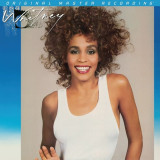
Whitney Houston’s self-titled debut album has few parallels. Viewed solely through the lens of sales numbers, Whitney Houston is a watershed statement on par with the most commercially successful and culturally dominant LPs ever released. Having sold more than 14 million copies in the U.S. and upwards of 25 million units worldwide, the 1985 LP became the equivalent of the television show or blockbuster film that everyone collectively experiences and discusses. Nearly four decades later, it’s lost none of its appeal or magnetism — and its artistic significance and historical import have only grown.
Sourced from the original master tapes, pressed at RTI on MoFi SuperVinyl, and strictly limited to 4,000 numbered copies, Mobile Fidelity's 180g SuperVinyl LP of Whitney Houston presents the breakthrough in audiophile sound for the first time. The signature traits Houston exhibits on every song — her three-octave range, radiant warmth, personal conviction, impossibly controlled register — come across with exceptional clarity, focus, and presence. Free of artificial ceilings and constricted dynamics, this reissue plays with an openness, airiness, and balance that put the singer’s once-in-a-lifetime instrument and immortal artistry into proper perspective.
It does the same for the songs’ cascading melodies and captivating arrangements. Individually produced by one of four renowned industry veterans — Kashif, Micheal Masser, Jermaine Jackson, and Narada Michael Walden — each composition feels grander, closer, more genuine. A vocal spectacular, Whitney Houston benefits from the high-end characteristics of SuperVinyl, which include a nearly inaudible noise floor, superb groove definition, and dead-quiet surfaces. This is how an album that changed the direction of popular music — opening previously inaccessible doors for Black artists; bringing smooth-singing vocalists back into the mainstream; kickstarting a movement that soon included several “divas” who would command the charts through the early 21st century — should look and sound.
Though Houston’s seemingly effortless performances suggest otherwise, creating the record Rolling Stone ranks as the 257th Greatest Album of All Time wasn’t easy. Nearly 18 months were required to identify songs suitable for a still-unknown singer who did not fit into the conventional frameworks of the mid ‘80s. Confident, powerful, and prodigiously talented, Houston would forge her own parameters with Whitney Houston. In the process, she obliterated the stubborn lines between R&B and pop, Black and white radio. She dared to reimagine who could be a superstar and then went out and defined the role. Recorded for nearly $400,000 and released on Valentine’s Day, the LP exceeded the wildest expectations of those most closely associated with it — save for Houston and her family.
Having made her first public appearance at the age of 11 singing at a Baptist church, Houston understood pressure and knew her way around, inside, and through a song. The invaluable guidance and support she received from her mother, Cissy, an accomplished gospel vocalist who backed Aretha Franklin and Elvis Presley, are on display throughout Whitney Houston. They arrive in the types of authoritativeness, discipline, and diction rare for even most seasoned veterans — and unheard-of for a 21-year-old newcomer. Houston brings a soulful elegance, understated glamour, and in-the-moment rapture to every note. Moving up, down, or staying in the middle of the vocal ladder; channelling softness or sweetness; showing restraint or increasing the volume, she is a marvel of emotionalism, a dynamo who can seamlessly transition from one mood to another within a verse.
Though the 10-track LP largely concerns itself with the ballad tradition, Houston covers the bases, getting into an R&B groove on the fleet “Thinking About You,” turning up the heat on the duet “Take Good Care of My Heart,” and investing the contagious dance-pop confection “How Will I Know” with all the anxiety, hope, energy, and enthusiasm its lyrics demand. Featuring her mom on background vocals and Houston’s pitch-perfect tone, uncanny precision, and skyscraper highs (no AutoTune here, friends), the synth-based anthem propelled Whitney Houston into the stratosphere, the vocalist into regular MTV rotation, and the term “crossover” into popular parlance. The double-platinum single reached No. 1 on the Hot 100, Hot R&B, and Adult Contemporary charts — a trifecta that foreshadowed accomplishments that would ultimately crown Houston as the most-awarded female artist of all time.
Whitney Houston became the first album by a Black female performer to top the Billboard charts. It remained there for 14 non-consecutive weeks en route to claiming the title of the best-selling LP of 1986. It stands as the first debut and first album by a solo female artist to spawn three No. Hits, as well as the first album by a Black female artist to top the year-end charts in Australia and Canada. These are just a handful of the accolades — along with four Grammy nominations — that surround a set that also contains the unforgettable ballad “Saving All My Love,” string-accompanied “Greatest Love of All,” and sensual “You Give Good Love.”
As TIME observed in an article written two years after the album took the world by storm: “This is infectious, can't-sit-down music, and her performance dares the listener not to smile right back.” We’re still smiling.
- A1: Intro 0 50
- A2: Wordplay 3 17
- A3: Spontaneity 4 08
- A4: Rugged Ruff 3 08
- A5: Interlude 0 29
- B1: I Confess 4 06
- B2: Uknowhowwedu 3 35
- B3: Interlude 1 09
- B4: Total Wreck 3 26
- B5: Innovation 3 23
- C1: Da Jawn 5 19
- C2: Interlude 1 05
- C3: True Honey Buns (Dat Freak Sh*T) 3 41
- D1: 3 Tha Hard Way 4 12
- D2: Biggest Part Of Me 4 51
- D3: Path To Rhythm 3 24
Bahamadia’s 1996 debut album Kollage is rightly regarded as one of the greatest rap albums of the 1990s. For the first time ever, Be With present the definitive double LP version of this eternal hip-hop classic, including the legendary "Path To Rhythm" which never appeared on the original LP or on vinyl, anywhere. An indelible VIBE from start-to-finish, Kollage presents Bahamadia's swirling rhymes delivered with an irresistibly butter flow and razor-sharp assuredness over a steady slew of smoothed-out, jazzed-up, blunted beats. Achingly cool and effortlessly funky throughout, it's an absolute must for true 90s hip-hop fanatics.
The entire Kollage project was recorded at D&D Studios and the ties to Gang Starr are keenly felt, with DJ Premier producing five tracks in addition to the killer songs Guru had already produced with her. Working with the cream of the mid-90s East Coast sound, Kollage is, accordingly, a record that demonstrates a varied musical taste with disparate influences, as Bahamadia has previously stated: “The title Kollage was a reflection of my state of mind. I first got interested in music from playing my parents’ and grandparents’ records, as well what I heard on the radio. I wanted Kollage to reflect that diversity both lyrically and sonically."
With intelligent, poetic lyricism and a laconic verbal style bursting with both warm texture and deceptive energy, Bahamadia’s flow was as inspired by Aretha and Nancy Wilson as it was Q-Tip, Schoolly D and Lady B. Swaggering out the gate, "WordPlay" finds Bahamadia confidently showcasing her considerable old-school battle-rhyme skills over a Guru beat that utilises an infectiously bouncy bassline with splashes of sultry jazz horns and a Jeru vocal snatch for the hook. Up next, the quietly shimmering and ruggedly beautiful "Spontaneity" is one of the most alluring on the record, Da Beatminerz crafting a brilliantly soulful and jazzy soundscape for Bahamadia's effortless vocals to float across. It's followed by "Rugged Ruff", where the rapper carefully constructs a swift off-beat flow over Premier's raw jazzy fire.
With smooth spacey synth vibes overseen by former Geto Boys producer N.O. Joe, "I Confess" is, without question, a fly love song and soothing (p)-funk groove. "UKNOWHOWWEDU" is an airy, chilled tribute to her hometown. Produced by Ski Beatz & DJ Redhanded, it rides a gloriously mellow break. It's a true Philly anthem, shouting out a who’s who of the entire city’s scene. Early banger "Total Wreck" follows, presenting a murky Guru instrumental elevated by jazzy horns. Bahamadia invokes the title's suggestion, firing her brilliant bars more aggressively than we’re accustomed to. More Beatminerz-brilliance comes in the way of "Innovation", an opportunity for the MC to invoke Freestyle Fellowship in her forward-thinking and literary verses. "Da Jawn" features hometown buddies The Roots, with Black Thought gliding into a back-and-forth with Bahamadia over ?uestlove’s warm, snapping percussion. With the strut club banger "True Honey Buns (Dat Freak Sh*t)", DJ Premier provides some laidback vibrant boom bap for Bahamadia to share a wild, cautionary tale about a night out with her girl, Kia.
Fan favourite "3 Tha Hard Way" is a hypnotically sinister cut, with Bahamadia, K-Swift and Mecca Star taking star turns to coast over DJ Premier’s raw beat whilst the tender "Biggest Part Of Me" is a heartfelt stunner dedicated to her son. Incredibly, only the European and Japanese CD versions of Kollage was released with the brilliantly breezy “Path To Rhythm”, featuring Ursula Rucker. Whilst ostensibly a "bonus track", it's anything but, to our ears. Very much in sonic conversation with KRS-One's stretched-out sleeper classic "Higher Level", it's absolutely essential so we had to include it, appearing on wax for the first time here, exclusively. Quite a coup.
Somewhat predictably, whilst Kollage was released to significant critical acclaim, it suffered from disappointing sales. In the intervening years - and for far too long - it was a criminally underrated record, an increasingly hidden gem. We hope this double LP reissue - which looks and sounds amazing - will go some way to correct this. This 2024 Be With double LP re-issue has been mastered for vinyl by Simon Francis, cut by Cicely Balston and pressed at Record Industry. It's too bold and beautiful to remain overlooked and underserved.
More about the world has changed than not in the decade since dance production dyad Frank & Tony released their last full-length record, 2014’s You Go Girl. Despite, or perhaps in spite of, this shifting landscape, house music has managed to stay fundamentally reliable (either a bug or its greatest feature, depending on who you ask). Where previously, Frank & Tony have been celebrated for their contemplative, studious approach to the genre, with 2024’s Ethos, the Brooklyn/Biarritz-based duo return amidst metastatic cultural upheaval to prove out those scholarly credentials — with an album that serves to remind listeners why dancefloors and liberatory politics consistently share the language of movements and revolutions.
Undoubtedly, Ethos is tremendously influenced by the multitude of projects originating from, and supported by, the duo and their label in the decade since You Go Girl– releasing records from a vast diversity of artists (including Nadia Khan, Gry, Villete, Darand Land, Alex Albrecht, DJ Sprinkles and CCL), and Harris becoming curatorial voice of Brooklyn’s premiere venue for audiophiles, Public Records, where he continues to amplify work across a global diaspora (and where the duo maintain a residency of wide praise).
It is this bright energy and focus on the necessity of community and relationships that animates the aptly-titled Ethos. If past Frank & Tony releases have been lauded as ‘a coloring book in which someone has exclusively drawn inside the lines… with extreme precision,’ Ethos deviates by inviting friends in for a game of exquisite corpse. From singer and pianist Eliana Glass, whose androgynous, double-reeded voice freestyles across album opener Olympia, to distinct track features from fellow house masterminds DaRand Land, DJ Aakmael and Lawrence over half of the album’s nine tracks highlight artists in the larger Scissor & Thread circle.
Violist, violinist and singer-songwriter Marla Hansen returns to Karaoke Kalk with "Salt", her second full-length album to date. Building upon the sonic palette the Berlin-based musician established with her debut "Dust" in 2020, "Salt" takes the delicate mixture of acoustic instruments such as viola, violin, piano and guitar combined with subtle electronics to the next level. The new album is both a remarkable departure and at the same time sheds a new yet reassuring light on Hansen's work and creativity. "Salt" features numerous collaborations with like-minded musicians and friends, e. g. producer and composer Simon Goff, The Notwist's drummer Andi Haberl and the renowned artist DM Stith.
The "Dust" has settled. After having recorded her solo debut of that name, in 2020 the world came to a grinding halt, leaving Marla Hansen left to her own devices in her adopted home of Berlin. For Hansen, who previously had lent her talent to many creative minds such as The National, Sufjan Stevens, The Hidden Cameras, Jay-Z and Ravi Coltrane, the collaborative aspect of writing and producing music had always played a crucial part in finding her own path as a solo artist.
"I started to explore synthesizers and electronic production myself," she remembers of the time when meeting other musicians in person was out of the question. "I am proud that I accomplished many of the electronic elements of the new album by myself, and otherwise laid the groundwork for the final electronic structures through my own experiments. I always wanted to record a 'big' record, one that has a lot of power and sound, and this one is 'bigger' than anything I have done so far."
"Salt" is big, indeed. The opener "Chains" is driven by a gliding bass line, bobbing 808 snares, deep chords and a mesmerizing chorus doubled by luscious strings, marking the beginning of a new chapter in her creative journey. A stark statement, both musically and lyrically. Meanwhile, the title track of the album is an almost abstract sounding ambient miniature, sketch-like, dark and haunting, showcasing Hansen's voice in a shy, brittle and fragile state. If This Mortal Coil/The Hope Blister were ever to record another album, these songs should be high up on the shortlist of tunes to pick. "The One Time" - a duet with Hansen's long-time friend DM Stith - gently meanders between a Philip Glass-inspired piece for chamber orchestra and a vocal ensemble performing on Top Of The Pops. In this range of styles and approaches, Hansen's vision is more present than ever.
For refining and finishing the songs, Hansen turned to Simon Goff, who produced the album and engineered much of the recording, merging Hansen's newly-found songwriting approach with the artistic delicacy which made her debut album an exceptional piece of work. Features include among others: Alice Dixon (Oriel Quartett) on cello, Kyle Resnick (The National, Beirut) on trumpet, Benjamin Lanz (The National, Beirut) on trombone and tuba, and Miles Perkin on bass. And then there is The Notwist's Andi Haberl, who "crafted perfect drum and percussion parts to move the songs wherever they needed to go, either into their driving grooves, slow-build explosions or gentle swells of feeling."
But what are songs actually about? "The themes revolve around a feeling of being trapped. Having to stay inside during the pandemic, with all the silence and stillness coming with it. Simultaneously, I was caught up in a professional situation that was not working for me, yet it required a lot of energy and time. I was thinking a lot about how to break old habits and patterns. Patterns in my life, patterns I saw my friends and loved-ones stuck in. There are a lot of ways that people can be trapped, and breaking out of that requires a lot of courage and energy - on all levels. The title 'Salt' seemed to fit, ocean themes showed up naturally in some of the songs, and I thought often about the quote: 'The cure for anything is salt water: sweat, tears or the sea.' Maybe I was just dreaming of the ocean, since it was inaccessible for the first time! But I wanted a cure for this feeling of being trapped, in a time of uncertainty and anxiety, salt as a remedy seemed to have some truth in it: sweat, tears or the sea."
Perseverance and the urge for freedom prevailed in the end. "Salt" is a bold artistic achievement, with songs as big as the biggest waves imaginable. With melodies as alluring as the most comfortable breezes. Perfect from start to finish.
Jards Macalé’s biography is a testament to the electrifying energy of music and the unwavering spirit of artistic rebellion. Macalé has remained true to his vision, unapologetically embracing the unconventional and challenging the status quo. His music, a conduit of emotion and a mirror to society, continues to weave a sonic tapestry that resonates with the souls of listeners.
In 2022, Macalé celebrated the momentous 50th anniversary of his debut solo album, a groundbreaking masterpiece released by Philips in 1972. This iconic record gifted us timeless tracks such as “Vapor Barato”, “Mal Secreto”, “Farinha do Desprezo”, “Revendo Amigos”, and “Hotel das Estrelas”. Its sheer brilliance united the realms of Brazilian music, infusing samba and bossa nova with the fiery essence of rock, classical harmonies, and the improvisational spirit of jazz. As the years passed, a new generation of musicians and fans discovered this gem, fueling its resurgent popularity and inspiring fresh collaborations.
Last year, Jards Macalé assembled a formidable new band, igniting stages across Brazil with a tour that now sets its sights on Europe. Together with Gui Held on guitar, the Paulo Emmery on bass, and Thomas Harres on drums, Macalé conjures an exhilarating homage to his illustrious body of work. This live performance embodies the untamed spirit and boundless musical freedom that define this visionary artist, transporting audiences to a realm where the past intertwines with the present in a breathtaking display of artistic prowess.
Miles Davis' A Tribute to Jack Johnson is the best jazz-rock record ever made. Equally inspired by the leader's desire to assemble the "greatest rock and roll band you have ever heard,” his adoration of Johnson, and Black Power politics, Davis created a hard-hitting set that surges with excitement, intensity, majesty, and power. Bridging the electric fusion he'd pursued on earlier efforts with a funkier, dirtier rhythmic approach, Davis zeroes in on concepts of spontaneity, freedom, and identity seldom achieved in the studio — and just as infrequently accepted by the mainstream.
Sourced from the original analog master tapes, pressed on MoFi SuperVinyl, and housed in a Stoughton jacket, Mobile Fidelity's 180g LP reissue brings it all to fore with startling realism. Benefitting from SuperVinyl’s nearly inaudible noise floor, superb groove definition, and clean, ultra-quiet surfaces, this 180g LP showcases everything — from the bold tonality of the headliner's white-hot trumpet solos to the decay of crashing cymbals, carry of wiry guitar notes, and echoes of the studio — in reference fashion.
Bristling with exuberance, Davis' high-register passages explode with authority and commanding presence. Around him, a barrage of urgent backbeats, knifing riffs, and supple bass lines emerge amidst black backgrounds. One of the most prominent differences long-time fans will notice is how much more aggressive, immediate, and vibrant the music sounds, with those aspects central to the composer's original desires.
Utilizing wah-wah and distortion, the go-to instrumentalist of the performances— guitarist John McLaughlin — attacks with a nasty edge, slashing style, and vicious streak that allows A Tribute to Jack Johnson< cross the until-then-impenetrable divide between rock and jazz. Davis puts both feet in the former camp and erases any gap. The stories of the record’s creation are nearly as legendary as the sounds within: Two sessions, multiple jams, different sets of musicians (several uncredited), and near-miraculous production perfectionism that made it all appear cohesive.
The least-well-known masterpiece of Davis' career, the 1971 record — seamlessly assembled and spliced together by producer Teo Macero — was a victim of limited record-label promotion. Audiences also didn’t immediately know what to make of its original cover art — faithfully replicated here. In addition, the powers that be at Columbia Records were directing the public’s attention to Miles at Fillmore, a completely different kind of album guided by two keyboardists. A Tribute to Jack Johnson practically lives in a different universe, one from the future. To many listeners who did manage to hear it — among them critic/musician Robert Quine, Stooges leader Iggy Pop, and renowned critic Robert Christgau — it surpassed everything that came before.
Indeed, Davis treated it as a personal manifesto: An opportunity to salute the Black championship boxer admired for his threatening image to the establishment and impeccable taste in clothes, cars, women and music. Davis explains in the liner notes his affinity for Johnson — a stance mirrored by the defiant music, which hits with a prize fighter's force and reflects the graceful elegance with which a pugilist navigates the ring — and closes the album with a Johnson quote read by Brock Peters.
Inspired not only by Johnson but by Jimi Hendrix and Sly Stone, Davis changed his approach and his band. He surrounds himself with a cadre of musicians in their 20s and, in the case of bassist Michael Henderson, a 19-year-old fresh from touring with Stevie Wonder. Henderson gives Davis what he requested: boogie-based grooves that don’t lose shape or direction. Soprano saxophonist Steve Grossman, drummer Billy Cobham, and organist Herbie Hancock adhere to a similar aesthetic that prizes brazenness, innovation, and energy.
In that vein, during a portion of “Yesternow,” Davis segues into a separate performance (which became known in its entirety as “Willie Nelson”) played by guitarists McLaughlin and Sonny Sharrock, bass clarinetist Bernie Maupin, keyboardist Chick Corea, bassist Dave Holland, and drummer Jack DeJohnette. Dig it!
Talking with jazz scholar Bill Milkowski — who himself noted how McLaughlin’s unrestrained style, decibel-forward volumes, and rapid-fire power chords engendered himself to the rock crowd at the same time that his harmonics and syncopation still definitely made him a jazz player — guitarist Henry Kaiser summed up part of the appeal of A Tribute to Jack Johnson as well as anyone, saying: “It’s a jazz record that way way more open than other jazz records at the time, but still not free jazz. McLaughlin’s rhythm guitar playing on ‘Right Off’ — the use of different chords in a rock shuffle than what anybody had used before — was revolutionary.”
And to think that’s just one aspect of a record that contains multitudes. “Never let them forget it.” Indeed.
The lost tapes have surfaced, bringing with them a walloping new stereo mix! A sonic cocktail of acid garage, blues & psych rock from one of Detroit’s finest – featuring Ted Nugent! Dominated by gritty head-swirlers and heavy, fuzz guitar licks, their debut is considered to be an early innovator of heavy metal. Their five and a half minute version of “Baby Please Don’t Go” is an absolute acid garage classic with some fantastic feedback and great guitar sustain. Nugent creates some serious guitar noise on this number and shows off his brilliant chops. The album closes with another garage classic, “Gimme Love.” This song has some laser fuzz guitar riffs and angry Mike Drake vocals. In between these two garage monsters are many other great compositions. There are a few covers, two work really well (the splendidly bluesy “Let’s Go Get Stoned” and the gritty Who cover “It’s Not True”). They also hit real hard with “Colors,” a furious acid rock song with some sinister soloing. “Phillip’s Escalator” is very Syd Barrett era Pink Floyd with brit vocals, clanging chords and first class guitar scrape. It’s a true classic on this exceptional outing. The guitar freakouts, Who-like energy and great songs make this debut a prime slice of early Detroit rock. – The Rising Storm
- Trio Rosario - Cuando Yo Muera
- Fefita La Grande - Cana Brava
- Aristides Ramirez - Los Lanbones
- Bilo Y Sus Tipicos - La Negra
- Negrito Figueroa - Por La Mananita
- Trio Royecell - La Pasion De Cristo
- Victor Suriel Y Trio Rio Verde - La Mecha
- Rafaelito Roman - Que Mala Suerte
- Bilo Y Sus Tipicos - Cuande Baje De La Loma
- Trio Ramirez - Me Gustan Las Pegajosas
Merengue Típico: Nueva Generación! delves into the heart of Dominican merengue, a genre whose significance often eludes the spotlight. Bongo Joe's venture into unexplored terrain takes us to the Caribbean, specifically the Dominican Republic, shedding light on its musical tapestry. Curated by Xavier Daive, aka Funky Bompa, the compilation unveils rare '60s and '70s gems, providing a glimpse into a transformative period following the fall of the Trujillo regime.
With over 20 years in the Dominican Republic, Xavier Daive meticulously sources original 45s, offering a snapshot of merengue's evolution during a creatively charged era post-Trujillo. The genre's roots, dating back to the 19th-century Dominican Republic, predate salsa, establishing its unique identity with the introduction of accordions via German trade ships. The genre's classic típico configuration emerged in the mid-'60s, leaving a lasting impact on its evolution.
Focused on the explosive '60s and '70s merengue típico scene, influenced by genre pioneers like “Tatico” Henríquez and Trio Reynoso, the compilation showcases technical finesse and high-speed rhythms. Tracks like Rafaelito Román’s "Que Mala Suerte" embody the genre's infectious energy. Aristides Ramírez’s "Los Lanbones" adds a touch of humor, cautioning against pub freeloaders. Merengue Típico: Nueva Generación transcends the realms of a typical reissue; it's an immersive journey into mthe roots of Dominican merengue, expanding its narrative beyond borders to enrich the global musical landscape.
This compilation goes beyond individual tracks, providing a historical and cultural context, enriching our understanding of the genre's evolution in the Dominican Republic during a crucial period. Designed for both connoisseurs and wild dancefloors, this compilation is not only a historical and cultural exploration but also a treasure trove for DJs seeking to infuse their sets with the vibrant rhythms of merengue típico.
- A1: Armin Van Buuren - Am I Ai? (A State Of Trance Year Mix 2023 Intro)
- A2: Gareth Emery - Missing You (Feat Maria Lynn)
- A3: Above & Beyond - 500
- A4: Armin Van Buuren - Love Is A Drug (Feat Anne Gudrun)
- A5: Dim3Nsion - Stronger Now
- A6: Armin Van Buuren & Matoma - Easy To Love (Feat Teddy Swims - Tanner Wilfong & Assaf Remix)
- A7: Estiva - Via Infinita
- A8: Aname - Escape
- A9: Super8 & Tab & Crowdplusctrl - Incomplete (Feat Jess Ball)
- A10: Miss Monique & Avira - Subterranean (Feat Luna)
- A11: Laura Van Dam - Needing You
- A12: Maor Levi & Magnificence - Let You Go
- A13: Kasia - Universal Nation
- A14: Hel Slowed & Amber Revival - If You Only Knew
- A15: Aname - Anywhere (Road Trippin’) (Road Trippin’)
- A16: Armin Van Buuren - Dayglow (Feat Stuart Crichton)
- B1: Dekkai - Firmament
- B2: Armin Van Buuren - In & Out Of Love (Feat Sharon Den Adel - Innellea Remix)
- B3: Orjan Nilsen - 9910
- B4: Armin Van Buuren - Motive
- B5: Chicane - Saltwater (Feat Moya Brennan - Ilan Bluestone Remix)
- B6: Seven Lions & Above & Beyond - Over Now (Feat Opposite The Other)
- B7: 7 Skies - Tokyo777
- B8: The Blizzard - Kalopsia (Matt Fax Remix)
- B13: Dim3Nsion - Adagio In G Minor
- B14: Giuseppe Ottaviani Vs Alex Sonata & Therio - Tears Of The Kingdom (Feat Tishmal)
- B15: Giuseppe Ottaviani & Ilan Bluestone - Futuro
- B16: Hel Slowed & That Girl - Hold Onto This
- B17: Gareth Emery - Vertigo (Feat Sarah De Warren)
- C1: Ahmed Helmy - Glitch
- C2: Ferry Corsten - Mind Trip
- C3: Cubicore - Bifrost
- C4: Lostep - Burma (Aname Am Remix)
- C5: Armin Van Buuren - Vulnerable (Feat Vanessa Campagna)
- C6: Ahmed Helmy - R4Ve 201
- C7: Achilles & Wintersix - Night Vision
- C8: Fergie - Here Comes That Sound
- C9: Dod - So Much In Love (Armin Van Buuren Remix)
- C10: Ferry Corsten - Yes Man
- C11: Ahmed Helmy & D72 - Analogy
- C12: Ben Gold & Ruben De Ronde - Bliksem
- C13: Bryan Kearney Vs Karney - Compromise
- C14: Achilles, Semblance Smile & Sharon Valerona - Never Lost
- C15: Orjan Nilsen - Xiing (Nilsix Remix)
- C16: Maarten De Jong, Frank Spector & Luca Morris - Minuetto
- C17: Asteroid - Free
- C18: Murzo - Kiss The Night
- C19: Xijaro & Pitch - Invisible (With Adara)
- B9: Luke Bond Vs M6 - Nexus
- C20: Bryan Kearney & Bo Bruce - Shine A Light
- B11: Eelke Kleijn - Time Machine
- C21: Paul Van Dyk & Ciaran Mcauley - Someone Like You
- D1: Paul Van Dyk, Marc Van Linden & Sue Mclaren - Beautiful Life (Shine Ibiza Anthem 2023)
- D2: Miyuki - Love Again Like That (Feat Tara Louise)
- D3: Xijaro & Pitch - Chasing Dreams
- D4: Binary Finary - 1998 (Victor Ruiz Remix)
- D5: Emma Hewitt Vs Roman Messer - Fallen
- D6: Will Rees Vs Asteroid - Exhilarate
- D7: Artento Divini Vs Davey Asprey Presents Adda & Ontune - Divas
- D8: Whiteout - Adsr
- D9: Mhammed El Alami - Healing
- D10: Ciaran Mcauley & Susie Ledge - You’re Never Alone (Uplifting Mix)
- D11: Driftmoon - Feel The Waves
- D12: Allen Watts & Rene Ablaze - On My Way (Feat Cari)
- D13: Xijaro & Pitch - Time (With Cari)
- D14: Trance Wax - Artificial Intelligence
- D15: John O’callaghan - Riverside
- D16: Alex Morph & Amy Wallace - Surrender
- D17: Allen Watts - Set Me Free
- D18: Giuseppe Ottaviani - Angel (Feat Faith - Yelow Remix)
- D19: Aly & Fila Vs Chapter 47 Vs Richard Bedford - Edge Of Tomorrow
- D20: Sneijder Vs Cari - You Take My Breath Away
- D21: Ben Gold - Follow The King (Feat Madelyn Monaghan - David Forbes Remix)
- D22: Solarstone - Solarcoaster (Maarten De Jong Remix)
- D23: Daxson - Who We Are
- D24: Giuseppe Ottaviani - To The Stars (A Dreamstate Anthem) (A Dreamstate Anthem)
- B10: Uufo - Energize
- B12: Armin Van Buuren & Punctual - On & On (Feat Alika)
- D25: Haliene - Reach Across The Sky (Ben Gold Remix)
- E1: Trance Wax - Ascend
- E2: Emma Hewitt Vs Xijaro & Pitch - Everlasting
- E3: Craig Connelly & Christina Novelli - Black Hole (Giuseppe Ottaviani Remix)
- E4: Andrew Rayel - One More Memory
- E5: Craig Connelly - Nathan’s Song
- E6: Armin Van Buuren, Ferry Corsten, Rank 1 & Ruben De Ronde - Destination (A State Of Trance 2024 Anthem)
- E7: Ardi - Mystical
- E8: John Askew - Aces Hi
- E9: Giuseppe Ottaviani - Conscious Mind
- E10: Armin Van Buuren & Just Us - Make It Count
- E11: Bk - Xtc Nation
- E12: Bryan Kearney - Encanta
- E13: Somna & Sarah De Warren - Satellites (Will Atkinson Remix)
- E14: Emma Hewitt Vs Daxson - Warrior
- E15: Craig Connelly & Haliene - Other Side Of The World
- E16: Ram & Cari - What Matters
- E17: Sneijder Vs Nat Conway - Everybody’s Free
- E18: John Askew - Running In The Dark
- F1: Ben Gold - Ultrasonic (Maarten De Jong Remix)
- F2: Armin Van Buuren - Computers Take Over The World (Maddix Remix)
- F3: Will Atkinson - Cosmic Heartbreak
- F4: Armin Van Buuren Vs Xoro - God Is In The Soundwaves (Feat Yola Recoba)
- F5: Armin Van Buuren & Vini Vici - When We Come Alive (Feat Alba)
- F6: Bk - You Are The Master
- F7: David Forbes - Dreamstate
F8 . Liam Melly - Energy
F9 . Armin Van Buuren - Space Case
F10 . The Obsessed - Free Yourself
F11 . Ie Shuuk & B Stylezz - Konje
F12 . Armin Van Buuren - Lose This Feeling (Maddix remix)
F13 . Armin Van Buuren - Lose This Feeling (Dimension remix)
F14 . Armin Van Buuren - AI Vs Humanity (A State Of Trance Year mix 2023 outro)
Hot wiring dancefloors with their immersive orchestration of uplifting sonic waves, Soft Crash sets out to soundtrack the unified, euphoric heartbeat of the crowds they foster with their mechanical yet fantastical, Italo Body Music. Presenting their highly anticipated EP ‘NRG’, the Berlin-based collaborative project of Berghain resident and BITE label head Hayden Payne (aka Phase Fatale) and French prolific producer Pablo Bozzi works to forge Soft Crash’s unique vocabulary of post-humanist production with the harmonic grandeur of their rhythmic, machine-made anthems.
Fresh off the back of their 2022 debut album ‘Your Last Everything’, Soft Crash present their latest 4 track EP ‘NRG’, chronicling their synonymous surrealist visuals infused with the contagious punch of Italo and Synth-wave. Geared towards the dancefloor from a fresh perspective, Bozzi and Payne pull from their respective wheelhouses to curate a sound additionally influenced by Wave-Pop, Acid House and Post-Punk sensibilities.
Procuring their cerebral yet zealous indentation of dance music, the EP features sanguine vocals from Kyiv-based singer and musician Ready in LED on the first single ‘Free Yourself’. She comments about the track “I became captivated instantly with the idea of the track that Hayden and Pablo sent me. At that moment, I was a bit tired of carefree disco and wanted to reveal my dark side in music. The demo sounded very daring. This track demands attention to itself from the first seconds. My sources of inspiration were glam rock and grunge. I had a blast in the studio, and I hope the people on the dance floors will feel that energy too.”
While full throttle vitality and booming grooves on the title track ‘NRG’ showcase Soft Crash’s take on 90’s sample-filled techno. Closing the extended play with an updated cut of the bewitching ‘Your Last Everything’, featuring Canadian musician and producer Marie Davidson, Soft Crash breathe a new life into the namesake track from their preceding album, concluding with an additional remix of the track by cult favourite producer Alen Skanner. The intrinsic dance floor vigour emulated in NRG further fleshes-out the pair’s recognisable DNA of nurturing a revitalised techno sound, cementing them as pioneers of the Italo Body genre.
Written and produced by Hayden Payne & Pablo Bozzi
Mastered by Conor Dalton at Glowcast Mastering
Fire! have always been about finding the essence by getting to the core of the music. Their 8th album sees the trio - for the first time on record - stripped down to the bare-bones essentials; with no flutes, no electronics, no guests and no extras, recorded live in the studio to analogue tape - the Steve Albini way - with the master himself at the controls in Electrical Audio in Chicago. Thus, this album stands as a true testament to the group's expressive power and glowing intimacy. Musically, Testament can be seen as an extension of their previous full length album Defeat, released two years ago, to the month. A solitary bass figure from Johan Berthling, quickly joined by a stout drum groove, gets it all going in a familiar fashion before Gustafsson adds desolate cries and whispers from his baritone sax. This approach is even more honed on the second track, with the most simplistic groove you're likely to hear in jazz and Gustafsson shifting between extended, lonely, tortured lines, only once abrupted by a series of short bursts. The third track starts with loose and relatively lively drums that continue throughout, but the mournful saxophone maintains a subdued atmosphere. Track four is a real beauty with the trio slipping into a trance-like dream state before shifting gear halfway into its nine minutes. The final track is the most dynamic of the lot, shifting between bursts of energy and lyrical beauty. Fire's debut album, You Liked Me Five Minutes Ago, was released in 2009 to wide international acclaim. "The basic strategy of pairing the expressive energy of free jazz with a sturdy sense of groove has yielded something potent and self-contained" (New York Times). Between this and Testament there's been six albums, including collaborations with Jim O'Rourke (Unreleased?) and Oren Ambarchi (In The Mouth A Hand), as well as the Requies EP with Stephen O'Malley and David Sandström in 2022. Testament was recorded and mixed during a three-day stint at Steve Albini's Electrical Audio studio in Chicago in December 2022. Mats Gustafsson - baritone sax Johan Berthling - bass Andreas Werliin - drums.
Maybe your demands of punk are a little too high. Maybe they're a little too exacting - you know what you want, but you don't know how to get it. Maybe you've got an itch that's needed scratching since you first heard '(I'm) Stranded' (sounds like a doctor needs to look at that, mind). Maybe all or none of these things are true and you're just in search of three or four chords and some righteous snot. Reader, you have come to the right place. Split System came sauntering out of Melbourne back in 2022 with a self-titled 7" and a debut LP (the sensibly-titled 'Vol. I'), and as a listener of exquisite taste, one or both of those items will have carved out their own spaces within easy access of your record player. With members of acer-than-ace garage punkas Stiff Richards and Speed Week among their number, not to mention the redoubtable Jackson Reid Briggs, they deal in a gloriously back-to-basics take on punk that's part Undertones, part Royal Headache and part Chris Bailey - all hooks and glory, all the time. They're so much more than the sum of their parts and they make this shit sound effortless. Well, here's an update for you: they're back! Second album (the equally-sensibly-titled 'Vol. II') is now upon us, and a thoroughly tremendous follow-up it is too. As soon as opener 'The Wheel' slams into your speakers, it's clear that they've lost none of the pep or power that made their debut such an essential listen; if anything they're even more raucous and revved-up than before. Yep, that's jargon for 'they rule hard', and let me add here that you could listen to this album 100 times in a row or simply try inserting dynamite sticks with lit fuses into your ear canal; either way, your poor little mind is gonna blow. It's an album made entirely of bangers (still on that explosion metaphor, are we?) - the concise questioning of 'End of the Night' is as pure a punk rock nugget as you could ever wish to uncover, and 'The Drain' is just energy distilled to a perfect series of hooks - with a passion for rock'n'roll in its most scintillating form. Just listen to it. That's all you need to do. Your demands have been met - here's your new favourite record.
DJ and producer Gratts returns to his own imprint with the third instalment of the "Balearic but bumpin'" trilogy. Here, the Belgian puts forward a captivating piece of organic, Body & Soul NY inspired deep house, assisted by Cata Mansikka-aho on vocals. As always, an instrumental is provided for maximum nightclub daydreaming. On the flipside, British duo Faze Action up the energy levels with an equally musical disco version that hits in all the right spots. Artwork once again by Mads Cooke.
Glenn Underground:
"Bad Ass'd Project, The whole thing"
Laurent Garnier:
"Really cool tracks :) Looking forward to hearing more stuff in the future."
Colleen Cosmo Murphy:
"Great release! I like the original best! I will be supporting on the show once I’m back in February."
Groove Armada:
"Sounds great and Faze remix is great too!"
Severino (Horse Meat Disco):
"Great stuff and amazing remix!"
Kevin Reynolds (Transmat):
"I remember this voice! Both tracks are incredible, has this classic Dinosaur L vibe that is super dope!"
Gareth Sommerville (Athens Of The North):
"Love Gratts’ productions - this is no exception. Spiritual for optimists."
Shane Johnson (Fish Go Deep):
"Really enjoying the original mixes here... such a relaxed, musical groove that perfectly suits that lovely, drifting vocal. Looking forward to playing."
Co-Accused Records kick off 2024 with some sonic grooves from French duo Human Rebellion. Their 'Kosmik Trip EP' has four spacey, electro cuts with wicked remixes from Sync 24 & Co-Accused.
Human Rebellion launch the EP with the title track 'Kosmik Trip' a mind-bending intergalactic destroyer. Sync 24s remix sees the trip take a dark turn with sinister vocals and hypnotic builds. Co-Accused take it into techno territory with a relentless, high energy take on the original. 'Censored Truth' opens the portal to the B side with free-radical synths intertwining with dark machine funk. The punchy drums in 'Hybridization' pull you towards a distress beacon, with face-hugging builds and chest bursting drops. Human Rebellion round off the release with the dystopian, driving sounds of 'Jupiterians'
Returned to us from early 90s Japan are the holy holy sounds of Ghost. Their collective, clearly inspired by various forms of transcendental music throughout history, created a new syncretic psychedelia with these albums, mixing the texture and vibe of multinational forms of traditional music, with strummed antique stringed instruments and the haunting wail of a recorder on top of their heavy beats and guitars. The considerable depth of this approach was explored through 2014 over another five Ghost LPs, as well as the further explorations to the present day of leader Masaki Batoh, as a solo artist and with The Silence, Damon & Naomi, Helena Espvall and most recently, nehan. These first three Ghost titles were originally released by P.S.F. on CD in 1990, 1992 and 1994, respectively, radiating enigma and energy in palpable waves with their original sound. After the acclaim that greeted Drag City"s 1996 US release of Lama Rabi Rabi, we quickly reissued all three on vinyl - and they quickly went out of print! At which point, Ghost had Snuffbox Immanence and Free Tibet ready to go. And then, Hypnotic Underworld. And then, and then . . . . Now, it"s been 25 years since they were last offered on vinyl. In the twenty-year sweep of Ghost history, these first three releases qualify as primitive early Ghost - sort of like a German Os Mutantes (or perhaps a Brazilian Amon Düül). The subterranean presence of a diversity of progressive/avant classic rock influences (Pink Floyd, Incredible String Band, Captain Beefheart, Scott Walker, Led Zeppelin, Popol Vuh, Third Ear Band, to name but a few) provokes further synthesis, making for an entirely new meditation on the traditional order of psychedelic music. The first two studio albums, each one an iteration of Ghost"s unique lysergic folk music, were followed by the monolithic "live in various places" happening of Temple Stone, which raised the trippiness levels considerably. But this was only the end of the beginning . . .
Warehouse find!
Since emerging in the early 2000s with releases on the seminal Merck label, Proswell (Joseph Misra) has proven to be one of the most original voices in IDM. People Are Giving And Receiving Things At Incredible Speeds (PAGARTAIS), his debut on Sheffield's Central Processing Unit, is another Proswell record which overflows with creative energy. Containing five widescreen electronic epics, PAGARTAIS showcases some of the most ambitious work in the discographies of both artist and label.
The core sonic palette of PAGARTAIS is one schooled in the IDM and electronica sounds of imprints like Rephlex Records, B12 and Skam. These tracks are helmed by thick washes of keys, an array of playful synth tones and drums so deft it's sometimes hard to tell whether they have been programmed or played live. However, across almost forty minutes of music here Proswell explodes preconceptions about genre and form, his music gleefully jumping from one new sound to the next while assimilating electro, prog, computer game music, post-jazz and pretty much everything in between.
Opener 'PAGARTAIS I' sets the tone for the rest of the record. This is a track which never sits still - beginning with a distorted melee of drums that comes off like a strange new version of breakbeat, 'PAGARTAIS I' moves through some thrillingly idiosyncratic takes on Rephlex-school IDM, stargazing Detroit electro and The Comet Is Coming's futurist electronic jazz across its near-ten-minute runtime. Following number 'PAGARTAIS II' is no less impressive, referencing the hyper-modern computer sounds of Iglooghost and Kai Whiston while containing a driving opening section which could have soundtracked one of the legendary Wipeout games.
Although this fabulously unpredictable record often zips along at high speeds, Proswell is also able to dial things back when he needs to. Indeed, the second half of PAGARTAIS finds him slowing down a tad in order to deliver some of the album's most atmospheric material - 'PAGARTAIS III' blends cutting-edge electronics with sonorous jazz harmonies and fizzing improvised lead lines, the mysterious 'PAGARTAIS IV' is a sort of freeform variation on the maximalist, colourful electronica of Galaxy Garden-era Lone, and the slinking computerised Braindance number 'PAGARTAIS V' recalls Calum Gunn's recent CPU drop Addenda.
Really, though, none of these comparisons quite do justice to the inventive capacity of this music - Proswell's in a lane of his own here. An incredibly innovative fusion record that takes in IDM, prog, computer music, electro and plenty more besides, People Are Giving And Receiving Things At Incredible Speeds (PAGARTAIS) is the sound of a unique musical mind in full flight.
RIYL: Calum Gunn, Kai Whiston, Iglooghost, Rustie, Bogdan Raczynski
Repress!
HI-LO returns to Adam Beyer’s label for a sharp new outing ‘WANNA GO BANG’. The new track comes almost a year on from his energetic Drumcode debut ‘Hypnos’, which was followed by his remix of Adam Beyer & DJ Rush’s ‘Restore My Soul’. Oliver Heldens’ techno alias HI-LO has been building steam over the last 12 months, remixing Nina Kraviz’s ‘Skyscrapers’, sharing line-ups with everyone from Erol Alkan to PanPot and Enrico Sangiuliano on the world’s biggest stages, while also collaborating with Reinier Zonneveld, Eli Brown, and Space 92. All the while he’s kept in contact with Beyer, a sophomore offering on Drumcode always on the cards. ‘WANNA GO BANG’ is a high-powered Chicago-influenced weapon, that takes its vocal from the DJ Deeon classic ‘2 B Free’. HI-LO’s cut sees the vocal combine with a volley of drums throughout the mid-section, which adds a clever dynamic energy to the track. Already teased in HI-LO’s sets, and widely supported by the underground’s finest including Beyer, Amelie Lens, Enrico Sangiuliano, ANNA, and many more, ‘Wanna Go Bang’ is set to dominate clubs worldwide. Included in the pack, ‘LOKOMOTIF’ is five minutes of pure machine funk as HI-LO crafts a fantastic little groover driven by 90s house synths stabs. The track which has been in the works for the past two years has been teased in HI-LO’s sets over the summer, also garnering support from Carl Cox. On both tracks, Oliver Heldens says “‘WANNA GO BANG’ is my take on Chicago legend DJ Deeon’s classic vocoder vocal sample (from his 1992 song “2 B Free”, but it’s pitched down 5 semitones now which gives it such a dark vibe). I’ve always wanted to make my own DJ weapon version of it since I heard Bjarki’s trippy version in 2015, and I’m really happy with how it turned out, it’s such a monster! “LOKOMOTIF” is a high-energy groover, driven by 90s House synth stabs, funky percussion and banging drums, and it sits very nicely in between Techno and House. Both are really ‘dance floor’ focused, so I’m very pleased that many noteworthy DJs have been banging out these tracks in their sets already pre-release. And I couldn’t be happier than to see them released on one of my all-time favorite labels, Drumcode!”
repressed !
It is a smart and airy groove of atoms in space that rules this mesmerizing album, leading off with an irresistibly deconstructed downbeat monstrosity deceptively tagged as the 'Modern Hit Midget' as opposed to actually being a giant. One giant of seven, to be precise: safe in harbour are the seven giants of free Funk who proceed through a variety of way-out psychedelicacies. Which increase in flavour under headphones. The wane of Villalobos' and Loderbauer's free-floating energy of their Re:ECM work is more than offset here by the increase in rhythmic push through sensual syncopation and eruptive bass energy. The duo is the impetus in Perlon's great new swinging machine.
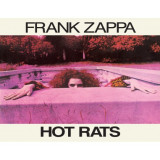
The second solo album by Frank Zappa, Hot Rats (October 1969) is one of the most influential Jazz fusion albums ever. It marked Zappa's first recording project after the dissolution of the original version of The Mothers of Invention. Multi-instrumentalist Ian Underwood is the only member of the Mothers to appear on the album and was the primary musical collaborator.
Other featured musicians include bassists Max Bennett and Shuggie Otis; drummers John Guerin, Paul Humphrey and Ron Selico; and electric violinists Don "Sugarcane" Harris and Jean-Luc Ponty. The first Frank Zappa album recorded on 16-track equipment, Hot Rats was included in the book 1001 Albums You Must Hear Before You Die, and was given a rating of 4½ stars in Al/Music, with Steve Huey stating that "few albums originating on the rock side of jazz-rock fusion flowed so freely between both sides of the equation, or achieved such unwavering excitement and energy". The model on the cover is Miss Christine, from the group GTO's.
Skylax Welcome Back Nicolas Aftalion With Another Powerful Ep "Spirit of House Ii" After His Sensational Debut on the Label, Acclaimed by the Queen of the Genre Cinthie. Deeply Inspired by the New Jersey House Sound Popularized by Tony Humphries, and the Vibrant Energy of the New York Scene. This Release Embodies the Essence of Original House Music, Delivering an Exhilarating and Impactful Experience. Following the Success of "Spirit of House I", This Sequel Is a Natural Progression in Aftalion's Musical Journey. Prepare to Be Transported by the Enchanting Tracks Within. "Cruise in Paradise" Blends Jazz and Spanish Influences, Reminiscent of the Iconic Moments on the Album "Forever Changes" by the American Band Love (As Crazy as It Sounds), Fusing Original House With Free Jazz in an Improbable Yet Captivating Manner. "A Message to Mad Mike" Pays Homage to the Visionary Dj and Producer of Underground Resistance, Expressing Profound Admiration and Love. This Is a Monumental Record That Encompasses Everything Contemporary Electronic Music Has Forgotten. "Paris Is Burning" Serves as an Ode to the Voguing Culture of the '90s, a Celebration of Queer Expression and Vitality. "Soulful in Paris" Takes Us Back to the Soulful and Rhythmic Sounds of Strictly Rhythm and the Timeless Energy of Ultra Naté. as a Digital Bonus, Indulge in the Excellence of "Baby Driver" and "Blaster." "Spirit of House Ii" Is a Masterpiece That Captures the Essence of House Music's Roots While Embracing Innovation and Artistry. Prepare Yourself for an Extraordinary Musical Journey That Showcases Nicolas Aftalion's Profound Understanding of the Genre and His Ability to Create Timeless and Groundbreaking Compositions....
- A1: Brainticket - Places Of Light
- A2: T.j. Lawrence - Fireplay
- A3: Robert Rental - Double Heart
- B1: African Head Charge - No, Don't Follow Fashion
- B2: Keith Hudson - Nuh Skin Up Dub
- C1: Smokin' Cheeba - When I Was A Youth
- C2: The Wad - 15 Inches
- D1: Idjut Boys & Laj - Foolin' (Beatin On Dave)
- D2: Jbb Et Soprann - Tibi Lap
Part 2.[29,83 €]
Optimo (Espacio) started life as a weekly club night. It was born at The Sub Club in Glasgow on a wet, windy, wintry November Sunday night in 1997. Run by JD Twitch and partner in crime Jonnie Wilkes. Optimo was a reaction against what felt like an increasingly conservative musical soundtrack in clubs here at that time. Clubland felt as if it had become very bland and a bit too serious; it was the era of the dawn of the Superstar DJ. Clubs often felt like bastions of male energy. It seemed dance music and culture was going somewhere far, far away from where it was meant to be. The notion of fun had got lost.
It was no longer the world they had devoted ten years of their lives to already, and lots of their friends felt the same. When the opportunity came up to do a Sunday night at The Sub Club it felt like the perfect opportunity to rip it all up and start again. So they did. There was nothing in the city (or possibly anywhere) like it. As the club believed wholeheartedly in what they were doing, there was no pressure from The Sub Club to fill the club. So, they embraced the freedom. Groups of people who had never been in the same room at the same time before came together. A community of kindred spirits started to emerge.
Word spread, slowly. Lots of people checked it out. Many loved it, some hated it. The core of the Optimo idea was to embrace music they loved that might work on the dancefloor from whatever era or genre they thought felt right. It might not seem very radical now but at that time it was revolutionary.
After about a year and a half, the club went from having 100 people attending most nights to suddenly one week having 500 people turn up. It was very weird. It was as if a collective light bulb went off in people’s heads in Glasgow. From that week on, until the very last weekly Sunday night at the Sub Club, in 2010, over a decade later, it was packed.
There were 550 Sunday Optimo nights. A LOT of music was played. So, what was the music? People often find it hard to pin down exactly what Optimo is. This has been a positive but also a negative as we live in a world where people want easily defined “brand identities”. The simplest definition of the music played is “music for dancing”, which of course is a very broad definition. Even better than trying to define it in words, we have these 2 volumes of music that give a hint of what that might be.
This is not a “Best of Optimo” or a “Greatest Hits of Optimo” compilation. For people who come to, or used to come to the nights there are of course “Greatest Hits”. But, over such a long timespan they are “hits” belonging to a certain moment in time and space. Someone who came to Optimo in 1997 would have a completely different notion of the big tracks at the club to someone coming in 2003, or 2010, or today. This compilation is just a snap shot missing several genres that might make up the DNA of Optimo. There is though a broad sweep through lots of music Optimo loves, that they believe is amazing. Music that they know will rock a dancefloor, that they have played between 1997 and 2023. Of course Optimo nights were not all about rocking the dancefloor. The first hour was always a time for them to play music they loved that often was far removed from the dance. Side 1, Volume 1 of this compilation is the kind of music one might hear at the very start of an Optimo night.
Optimo have always loved a good slogan. The most long lived, and fitting Optimo slogan is "We Love Your Ears", which is in essence what it is all about to them.
- A1: Chris & Cosey - Take Control
- A2: Isolators - Concentrate On Us
- B1: Mike Dunn - Life Goes On
- B2: Kc Flight - Voices (Original Dub Mix)
- C1: Faze Action - Good Lovin' (Special Disco Mix)
- C2: Hannah Holland - Ekotypic
- D1: Divine - Shake It Up
- D2: Xs-5 - I Need More (Extended Dance Version)
- D3: Liquid Liquid - Optimo
Part 1.[29,83 €]
Optimo (Espacio) started life as a weekly club night. It was born at The Sub Club in Glasgow on a wet, windy, wintry November Sunday night in 1997. Run by JD Twitch and partner in crime Jonnie Wilkes. Optimo was a reaction against what felt like an increasingly conservative musical soundtrack in clubs here at that time. Clubland felt as if it had become very bland and a bit too serious; it was the era of the dawn of the Superstar DJ. Clubs often felt like bastions of male energy. It seemed dance music and culture was going somewhere far, far away from where it was meant to be. The notion of fun had got lost.
It was no longer the world they had devoted ten years of their lives to already, and lots of their friends felt the same. When the opportunity came up to do a Sunday night at The Sub Club it felt like the perfect opportunity to rip it all up and start again. So they did. There was nothing in the city (or possibly anywhere) like it. As the club believed wholeheartedly in what they were doing, there was no pressure from The Sub Club to fill the club. So, they embraced the freedom. Groups of people who had never been in the same room at the same time before came together. A community of kindred spirits started to emerge.
Word spread, slowly. Lots of people checked it out. Many loved it, some hated it. The core of the Optimo idea was to embrace music they loved that might work on the dancefloor from whatever era or genre they thought felt right. It might not seem very radical now but at that time it was revolutionary.
After about a year and a half, the club went from having 100 people attending most nights to suddenly one week having 500 people turn up. It was very weird. It was as if a collective light bulb went off in people’s heads in Glasgow. From that week on, until the very last weekly Sunday night at the Sub Club, in 2010, over a decade later, it was packed.
There were 550 Sunday Optimo nights. A LOT of music was played. So, what was the music? People often find it hard to pin down exactly what Optimo is. This has been a positive but also a negative as we live in a world where people want easily defined “brand identities”. The simplest definition of the music played is “music for dancing”, which of course is a very broad definition. Even better than trying to define it in words, we have these 2 volumes of music that give a hint of what that might be.
This is not a “Best of Optimo” or a “Greatest Hits of Optimo” compilation. For people who come to, or used to come to the nights there are of course “Greatest Hits”. But, over such a long timespan they are “hits” belonging to a certain moment in time and space. Someone who came to Optimo in 1997 would have a completely different notion of the big tracks at the club to someone coming in 2003, or 2010, or today. This compilation is just a snap shot missing several genres that might make up the DNA of Optimo. There is though a broad sweep through lots of music Optimo loves, that they believe is amazing. Music that they know will rock a dancefloor, that they have played between 1997 and 2023. Of course Optimo nights were not all about rocking the dancefloor. The first hour was always a time for them to play music they loved that often was far removed from the dance. Side 1, Volume 1 of this compilation is the kind of music one might hear at the very start of an Optimo night.
Optimo have always loved a good slogan. The most long lived, and fitting Optimo slogan is "We Love Your Ears", which is in essence what it is all about to them.
***After birthing Street Riffs, their hi-definition, hi-energy, statement from 2020, CCR Headcleaner turned inward. The retreat from the pro-studio to the home studio was partially by design and partially decided by global events. Cleaner is very much a pandemic album, more of a homespun head trip than its predecessors. At the same time guitarist, songwriter and spiritual center of the group, Lacey Emmanuel, left the Bay for the shores of Lake Michigan. By most accounts an apocalyptic live-band became by and large a home recording animal. This is most apparent when Headcleaner turns up the balladry. “Don’t Feel the End” is a proto-metal campfire anthem, and “Everyday” hovers somewhere between keyboard misfit John Bender and the White Album. Make no mistake, the record will still be filed under “Punk” at your local record shop. It kicks off with “the brining pt. 2” the hottest slice of Funhouse free-rock that the band has committed to record. “Too Much” gives us its jail abolition rap over a two chord hardcore stomp. In a town (San Francisco) that is experiencing something of a DIY pop renaissance, Headcleaner has always fought to establish the fact that they have actual songs. This is no 70s throwback, but instead an attempt to up the ante. Without all the rock histrionics, technical arrogance and misogyny can the rock riff deliver on its ultimate promise: heavy music for total liberation. All tracks were mixed and lovingly fucked with by none other than Eric Bauer at his Bauer Mansion (RIP) Chinatown SF.
The Bony King of Nowhere is the artistic alias of Belgian artist Bram Vanparys. He made a mark in 2018 with the release of his critically acclaimed album Silent Days. The record received consistent 4- and 5-star press reviews and was hailed as his best album to date. It also earned Vanparys a Music Industry Award (BE) for 'best author-composer'. Silent Days revealed the full potential of the singer-songwriter and his commitment to never repeat himself and keep surpassing his creative abilities.
The new album, entitled Everybody Knows, has been a long time coming, partly due to Vanparys' aforementioned pledge to artistic evolution. The first two tracks he unveiled give a definite hint of what to expect from this album. 'Are You Still Alive' and 'Almost Invisible' carry the quality mark, known colour scheme and scent of The Bony King of Nowhere, but add many more hues and details. The new record showcases the new league Vanparys is playing in. Themes like rusted patterns in society, the obedience of the everyday man, the structural false ignorance of big shots, the toxicity of online communication and other very recognisable but not always pleasant subjects. Inspired by the observations of many sociologists, Vanparys dissects our society, the loneliest ever. This album is not just disconcerting though, in its strength lies a sense of hope and vigour.
The first singles promise a new album with lots of punch and energy, while Vanparys is unveiling the complete complexion of his voice whilst remaining vulnerable and honest. On the album, he is accompanied by multi-talent guitarist Vitja Pauwels (Naima Joris), pianist Hendrik Lasure (Tamino, Bombataz), drummer Simon Segers (Sylvie Kreusch, Stadt) and bass player Jasper Hautekiet.
While the songwriting legends, particularly Neil Young and Bob Dylan, have always kept Bram company, his latest compositions also draw inspiration from more contemporary artists. The influence of PJ Harvey, Blur and Nick Cave are unmistakable when you listen to his music. While staying true to his heartfelt songwriting style and captivating voice, The Bony King Of Nowhere embarks on a journey into uncharted musical and thematic realms.
The last time this band was on tour in support of 'Silent Days', they took a big leap forward while touring 75 shows across renowned venues and festivals in Belgium, The Netherlands, Germany, and France, with a packed Ancienne Belgique in Brussels as one of the highlights. Now the five-man-band, consisting of Jasper Hautekiet, Simon Segers, Thijs Troch (Nordmann), Gertjan Van Hellemont (Douglas Firs), will start this tour with shows in Ekko, Utrecht on March 6 and Ancienne Belgique, Brussels on March 8.4
The Bony King of Nowhere is the artistic alias of Belgian artist Bram Vanparys. He made a mark in 2018 with the release of his critically acclaimed album Silent Days. The record received consistent 4- and 5-star press reviews and was hailed as his best album to date. It also earned Vanparys a Music Industry Award (BE) for 'best author-composer'. Silent Days revealed the full potential of the singer-songwriter and his commitment to never repeat himself and keep surpassing his creative abilities.
The new album, entitled Everybody Knows, has been a long time coming, partly due to Vanparys' aforementioned pledge to artistic evolution. The first two tracks he unveiled give a definite hint of what to expect from this album. 'Are You Still Alive' and 'Almost Invisible' carry the quality mark, known colour scheme and scent of The Bony King of Nowhere, but add many more hues and details. The new record showcases the new league Vanparys is playing in. Themes like rusted patterns in society, the obedience of the everyday man, the structural false ignorance of big shots, the toxicity of online communication and other very recognisable but not always pleasant subjects. Inspired by the observations of many sociologists, Vanparys dissects our society, the loneliest ever. This album is not just disconcerting though, in its strength lies a sense of hope and vigour.
The first singles promise a new album with lots of punch and energy, while Vanparys is unveiling the complete complexion of his voice whilst remaining vulnerable and honest. On the album, he is accompanied by multi-talent guitarist Vitja Pauwels (Naima Joris), pianist Hendrik Lasure (Tamino, Bombataz), drummer Simon Segers (Sylvie Kreusch, Stadt) and bass player Jasper Hautekiet.
While the songwriting legends, particularly Neil Young and Bob Dylan, have always kept Bram company, his latest compositions also draw inspiration from more contemporary artists. The influence of PJ Harvey, Blur and Nick Cave are unmistakable when you listen to his music. While staying true to his heartfelt songwriting style and captivating voice, The Bony King Of Nowhere embarks on a journey into uncharted musical and thematic realms.
The last time this band was on tour in support of 'Silent Days', they took a big leap forward while touring 75 shows across renowned venues and festivals in Belgium, The Netherlands, Germany, and France, with a packed Ancienne Belgique in Brussels as one of the highlights. Now the five-man-band, consisting of Jasper Hautekiet, Simon Segers, Thijs Troch (Nordmann), Gertjan Van Hellemont (Douglas Firs), will start this tour with shows in Ekko, Utrecht on March 6 and Ancienne Belgique, Brussels on March 8.4
Following the success of Eric B & Rakim covers on 45, touching Hip Hop and rare groove fans, Medline explores new horizons. Well known to be free from styles boundaries, the French Chilean multi - instrumentalist unveil a two side Afro Funk killer.
Marked with the "universal power" title on the label, third 7 inch on My Bags catalog, this new 45 shows Medline's abilities to produce high quality music in a wide range of styles. The compositions are produced with a brilliant contrast. The uptempo "Run For Cover" is a huge Afro beat runner with a hardcore feeling while "Azul", is a heavy downtempo soul funk anthem, and shines like a massive solar energy boost.
Medline brings back the 70's West African sound signature, carried by a hot drum and bass couple, leaded by the Farfisa organ and harmonized with a powerful brass section. The rhythm is wild, mastered by dynamical arrangements when the breaks are hitting loudly around. And yes as always Medline is the ONE playing all.
The artistic fate offered beautiful colors and forms to the music. Clément Laurentin's elegant painting "Run For Cover" reminding Bob Marley and Lee Perry's records, baptized the first composition which includes a "Jamaican" surprise. "Azul" (Blue in Spanish) is the main color of Clément's creation which remind the look of the famous azulejos. The link happens without any previous consultation, all was here to be done this way, connecting cultural areas and eras. To end, the acrylic painting on linen canvas is the perfect organic mirror to this new 7 inch.
My Bags is happy to offer this "tratra" (Ivorian pancake), designed with all the elements of a ready to dig holy grail, Soul inspired, Afro beat to the core.
- Thoughts In Sound (Instrumental)
- All I Got (Instrumental)
- All My Life (Instrumental)
- Cash Money (Instrumental)
- Go Head Wid Ya Self (Instrumental)
- Thug Livin (Instrumental)
- Dumb Hot (Instrumental)
- Crime Time (Instrumental)
- Still Wanna Ride (Instrumental)
- Ac Skit (Drums)
- Crown (Instrumental)
- Theme For London Town (Instrumental)
- Females (Instrumental)
- Keep It On The Low (Instrumental)
- Bullseye (Instrumental)
- Torpedo (Instrumental)
- How Ya Livin (Instrumental)
- Dealing With Times (Instrumental)
Original[34,41 €]
KingUnderground Records present the instrumentals version of Lewis Parker’s sought after hip-hop record ‘Frequency Of Perception’ - a record that continued to cement Parker as a stalwart of the 90s hip-hop sound, think Tribe, Slum Village, The Pharcyde et al.
The prolific UK born hip hop legend, proves to be as tapped into the feel of a pocket as he was when he came on the scene in the 90s. “All I Got”, the album's first track, has a groove to the bassline that you won’t forget. The spacey keys show themselves early in the record and are a constant that give the record a dreamy feel, adding a mystical and psychedelic energy. Whereas “All My Life” is a well executed balance between that energy found in the flute held up by a taught backbeat, allowing it to maintain a free spirit.
The attention to detail and the intent in the sequencing and production on “Frequency of Perception” is best noticed when listening front to back.
The whole album touches on dynamics in line with the iconic sound that Parker built his reputation on for decades. All while finding new ways to tell stories by further exploring instrumentation. Lewis remains consistent in his craft, continuing to cook up beats and productions with classic techniques and fresh ingredients. There is no sense of reaching, the productions exude an attitude that reaps a true passion for his craft.
- Interruption Introduction
- Passé Composé
- Les Orpailleurs
- Vitesse & Précipitation
- Octopolis
- La Ligne Claire
- The Coordinates Of A Soul
- Sens Dessus Dessous
- Catamaran Cameraman
- Une Minuscule Effervescence
- Le Devoir De Vacances
- Stereogrammes
- The Patterns Of A Hand
- Ainsi Souffle Le Vent
- Schmall Talk
- Maritime Jazz
- The Laws Of Subtraction
- Le Dictionnaire Des Sentiments
- Passé Decomposé (Bonus)
- Les Murènes (Bonus)
- The Contrast Of Characters (Bonus)
Jakarta Records is proud to present “Les Grandes Vacances” courtesy of Beirut’s Cosmic Analog Ensemble, aka multi-instrumental phenom Charif Megarbane. The LP is an expansive musical odyssey, one that paints a melodic tapestry woven from an eclectic panorama of sonic tools. Funky beats, dreamy melodies + cinematic flair combine to create an experience that transcends time. From vibrant funky energy to introspective moods and library-inspired tunes, “Les Grandes Vacances” captures the essence of past and present, inviting you to indulge in the perfect balance of “groove-stalgia.” Out January 19, 2024.
Cosmic Analog Ensemble (1.6k Spotify Monthly Listeners – SML), the prolific one-man band helmed by Charif Megarbane (61.5k SML), the staggeringly prolific producer, instrumentalist, and all-around musical mastermind, returns to his “Ensemble” with LP “Les Grandes Vacances.” Megarbane's artistry has garnered widespread recognition, with notable placements in Spotify Editorial Playlists like "Global Groove" (679k) and "Folk Fabrique" (162k), along with coverage from esteemed platforms / publications such as BBC Radio, Bandcamp, The Vinyl Factory, Time Magazine, and Esquire, among others. Building on the success of his debut solo release “Marzipan” in 2023 via Habibi Funk, “Les Grandes Vacances” is a sonic journey that captures the full scope of Megarbane’s sonic habitus. As a composer and producer, Megarbane touts hugely versatile, sometimes volatile musicianship — his 100+ catalogue of projects (including legendary groups like the Cosmic Analog Ensemble, Free Association Syndicate, Monumental Detail, etc.) features a huge domain of sonic direction. Now, Jakarta Records presents a new expansion in the Megarbane sonic universe.
In the enchanting sonic world of “Les Grandes Vacances,” Cosmic Analog Ensemble expertly combines diverse musical elements to craft an immersive experience. From vibrant funky energy to introspective moments and library-inspired compositions, the album's sonic palette is rich and varied. The meticulously designed artwork by Simone Cihlar (known for collabs with Anderson Paak., Tom Misch, Ivan Ave, Tapioca and others) complements the album's thematic depth, enhancing the visual and auditory journey for listeners.
First single is the thrilling sonic escapade, “La Ligne Claire,” set to release on November 10th in conjunction with LP pre-order. The track immerses listeners in vintage spy movie ambiance, featuring groovy drums, warm keys, thematic guitars, and strings that create an unforgettable car chase scene. As part of the rollout schedule, this single offers a glimpse into the album's captivating fusion of nostalgia and innovation, promising a musical adventure that lingers and resonates in your ears. Second single, the lush and groovy “Le Dictionnaire des Sentiments,” follows in the sonic footsteps of Serge Gainsbourg (complete with beautifully poignant French lyricism), out December 8th to round out the year. The track jerks the listener towards a more meditative state and expanding, cinematic sound.
Kicking of 2024 will be the absolute funkified single 3 “Maritime Jazz,” out January 5th. The track transports you to a groovy marina where the movement of the sea and boats sways you along a Madlib / Yesterdays New Quintet-esque groove.
Reflecting on his creative process, Megarbane cites a stream of consciousness approach to the Cosmic Analog Ensemble: “It’s a very spontaneous, playful, and diary-like approach and workflow…I trust my instinct because instinct is based on experience.”
Van Halen did more than announce to the world the earthshaking arrival of a revolutionary guitarist. Performed by an enterprising California quartet that took its name from two of its principal members, the 1978 debut ripped headlines away from punk, injected fresh energy into a then-moribund rock 'n' roll scene, reimagined how heavy music and throwback pop could coexist, and invited everyone to experience the top-down pleasures of a beach-front Saturday night every day of the week no matter where they lived. Painstakingly restored by Mobile Fidelity Sound Lab, and the first of a multi-album series in an exciting partnership between the famous reissue label and Van Halen, Van Halen delivers feel-good thrills and hormonally charged desires like never before.
Limited to 12,000 numbered copies, pressed on dead-quiet MoFi SuperVinyl at RTI, and mastered from the original analogue master tapes, Mobile Fidelity's ultra-hi-fi UltraDisc One-Step 180g 45RPM 2LP collector's edition pays tribute to the record's merit and allows fans to experience Van Halen's original blend of raw power, Hollywood flair, and vaudeville fun for generations to come. Playing with reference-setting sonics that elevate a 10-times-platinum landmark whose importance cannot be quantitatively measured, this definitive version provides a clear, clean, transparent, balanced, and turn-the-volume-up-to-11 view of an album that birthed entirely new styles. Since MoFi's unique SuperVinyl compound allows you to crank the decibels to your wildest desires without risking noise-floor interference, prepare to not only hear but feel Van Halen in your chest, no fifth-row concert seat necessary.
The premium packaging and gorgeous presentation of the UD1S Van Halen pressing befit its extremely select status. Housed in a deluxe box, it features special foil-stamped jackets and faithful-to-the-original graphics that illuminate the splendor of the recording. No expense has been spared. Aurally and visually, this UD1S reissue exists as a curatorial artefact meant to be preserved, touched, and examined. It is made for discerning listeners that prize sound quality and production, and who desire to fully immerse themselves in the art – and everything involved with the album, from the iconic cover art to the meticulous finishes and, yes, of course, Eddie Van Halen's pioneering fretwork and his brother Alex's double-bass percussion.
Indeed, could a piece of music that transformed how countless guitarists approached their instrument be more fittingly named than "Eruption"? Likely not, and in just 102 seconds, Eddie Van Halen rewrote, reimagined, and reconfigured a vocabulary last significantly updated a decade earlier by fellow six-string wizard Jimi Hendrix. Akin to the Washington State legend, Eddie Van Halen developed his own techniques and tones all the while making his seismic accomplishments seem effortless. Devoid of the pretence, ego, and showiness that infected many of his imitators, the Dutch native sticks to a straightforward approach that underlines the authority, prowess, and visionary scope of his playing and then-unheard-of finger-tapping skills. Throughout Van Halen, he establishes himself as an instant idol – a savant whose otherworldly combination of breadth, poise, feel, speed, force, and melody seems beamed in from another galaxy.
As does nearly every song on the record, whose cohesiveness and dynamic put into perspective the advanced chemistry and one-for-all spirit the youthful band had out of the gates. Having paid its dues for years in bars and clubs – going as far as recording a 24-track demo for Kiss bassist Gene Simmons at Village Recorders only to be spurned by management companies that felt its music wouldn't go anywhere – Van Halen finally got a deserved break when Warner Bros. executives signed the group in 1977. The subsequent recording sessions further testify on behalf of the band's synergy and alignment. Completed in just a few weeks with producer Ted Templeman, Van Halen was primarily cut live in the studio with minimal overdubs and edits. The explosiveness, energy, and electricity remain definitive, and as heard on this UD1S set, put the group on a private stage – humming amplifiers, Frankenstrat guitar, bright spotlights, sweaty headbands, and then some.
Van Halen yielded just one hit in the form of a Top 40 single (a breathless cover of the Kinks' "You Really Got Me") but practically every song on the revered LP has become a staple. Named the 202nd Greatest Album of All Time by Rolling Stone and considered by countless experts as one of the best debuts in history, the record displays what can happen with four distinct talents gel and strive for the same purposes. In Van Halen's case, the latter almost always involved partying, freedom, sex, and, in the immortal words of singer David Lee Roth, living "life like there's no tomorrow." The celebration manifests from the opening notes of the strutting "Runnin' with the Devil" – announced with the blare of droning car horns, Michael Anthony's robust bass line, and Alex Van Halen's thumping drumming – and continues through the conclusion of the white-hot "On Fire," goosed by Eddie Van Halen's race-track-ready lines, Roth's flamboyant deliveries, and the rhythm section's cat-like pounce.
Picking out individual highlights on Van Halen is akin to trying to count all the stars in a clear nighttime desert sky: There are far too many to identify, once you see one you notice another dozen you didn't spot before, and the cluster is best enjoyed as a whole. What's evident over repeat listens is the sheer diversity, a fact that's often overlooked: The high harmonies and background funk of "Jamie's Cryin'"; the insistent cane-and-a-tophat shuffle and doo-wop shoo-bop vocal break on "I'm the One"; the throwback acoustic blues that spreads into fast-paced, single-entendre wildfire on the Roth-led standout interpretation of John Brim's "Ice Cream Man." Like the man says, on Van Halen, all the flavours are guaranteed to satisfy.
More About Mobile Fidelity UltraDisc One-Step and Why It Is Superior
Instead of utilizing the industry-standard three-step lacquer process, Mobile Fidelity Sound Lab's new UltraDisc One-Step (UD1S) uses only one step, bypassing two processes of generational loss. While three-step processing is designed for optimum yield and efficiency, UD1S is created for the ultimate in sound quality. Just as Mobile Fidelity pioneered the UHQR (Ultra High-Quality Record) with JVC in the 1980s, UD1S again represents another state-of-the-art advance in the record-manufacturing process. MFSL engineers begin with the original master recordings, painstakingly transfer them to DSD 256, and meticulously cut a set of lacquers. These lacquers are used to create a very fragile, pristine UD1S stamper called a "convert." Delicate "converts" are then formed into the actual record stampers, producing a final product that literally and figuratively brings you closer to the music. By skipping the additional steps of pulling another positive and an additional negative, as done in the three-step process used in standard pressings, UD1S produces a final LP with the lowest noise floor possible today. The removal of the additional two steps of generational loss in the plating process reveals tremendous amounts of extra musical detail and dynamics, which are otherwise lost due to the standard copying process. Every conceivable aspect of vinyl production is optimized to produce the most perfect record album available today.
MoFi SuperVinyl
Developed by NEOTECH and RTI, MoFi SuperVinyl is the most exacting-to-specification vinyl compound ever devised. Analogue lovers have never seen (or heard) anything like it. Extraordinarily expensive and extremely painstaking to produce, the special proprietary compound addresses two specific areas of improvement: noise floor reduction and enhanced groove definition. The vinyl composition features a new carbonless dye (hold the disc up to the light and see) and produces the world's quietest surfaces. This high-definition formula also allows for the creation of cleaner grooves that are indistinguishable from the original lacquer. MoFi SuperVinyl provides the closest approximation of what the label's engineers hear in the mastering lab.
- A1: Donna Summer - I Feel Love
- A2: Earth, Wind & Fire With The Emotions - Boogie Wonderland
- A3: The Trammps - Disco Inferno
- A4: Chic - Good Times
- A5: Sister Sledge - He's The Greatest Dancer
- A6: Tavares - More Than A Woman
- A7: Yvonne Elliman - If I Can't Have You
- A8: Odyssey - Native New Yorker
- B1: Gloria Gaynor - I Will Survive
- B2: Village People – Ymca
- B3: Sylvester - You Make Me Feel (Mighty Real)
- B4: Patrick Hernandez - Born To Be Alive
- B5: Grace Jones - I Need A Man
- B6: Liquid Gold - Dance Yourself Dizzy
- B7: Kelly Marie - Feels Like I’m In Love
- B8: Leo Sayer - You Make Me Feel Like Dancing
- C1: Amii Stewart - Knock On Wood
- C2: Candi Staton - Young Hearts Run Free
- C3: Chaka Khan - I'm Every Woman
- C4: A Taste Of Honey - Boogie Oogie Oogie
- C5: Alicia Bridges - I Love The Nightlife (Disco 'Round)
- C6: Cheryl Lynn - Got To Be Real
- C7: Labelle - Lady Marmalade
- C8: Diana Ross - Love Hangover
- E5: Mcfadden & Whitehead - Ain't No Stoppin' Us Now
- E6: The Whispers - And The Beat Goes On
- E7: Baccara - Yes Sir, I Can Boogie
- E8: Sheila & B Devotion - Singin' In The Rain
- F1: Eruption - I Can't Stand The Rain
- F2: Boney M - Daddy Cool
- F3: Ottawan - D I.s.c.o
- F4: Village People - In The Navy
- F5: Viola Wills - Gonna Get Along Without You Now
- F6: Gloria Gaynor - Never Can Say Goodbye
- F7: Lipps Inc - Funkytown
- F8: Space – Magic Fly
- G1: Dee D Jackson - Automatic Lover
- G2: Sarah Brightman And Hot Gossip - I Lost My Heart To A Starship Trooper
- G3: Frankie Valli & The Four Seasons - December, 1963 (Oh, What A Night)
- G4: Meco - Star Wars Theme / Cantina Band
- D1: Melba Moore - This Is It
- G5: Leif Garrett - I Was Made For Dancin
- D3: Odyssey - Use It Up And Wear It Out
- G6: The Michael Zager Band - Let's All Chant
- D5: Patrick Juvet - I Love America
- G7: Kc & The Sunshine Band - That's The Way (I Like It)
- D7: Elton John - Are You Ready For Love
- G8: Heatwave - Boogie Nights
- E1: Barry White - You're The First, The Last, My Everything
- H1: Kool & The Gang - Ladies Night
- E3: The Real Thing - Can You Feel The Force
- H2: Dan Hartman - Instant Replay
- H3: Frantique - Strut Your Funky Stuff
- H4: Musique - Keep On Jumpin’
- H5: The Three Degrees - Givin' Up Givin' In
- H6: Sparks - Beat The Clock
- H7: Voyage - Souvenirs
- H8: Chic - Le Freak
- I1: Sister Sledge - We Are Family
- I2: Sheila & B Devotion - Spacer
- I3: Diana Ross - Upside Down
- I4: Earth, Wind & Fire - September
- I5: Candi Staton - Nights On Broadway
- I6: The Emotions - Best Of My Love
- I7: Amii Stewart - Light My Fire
- I8: Belle Epoque - Black Is Black
- J1: Amanda Lear - Follow Me
- J2: Patsy Gallant - From New York To La
- J3: Vicki Sue Robinson - Turn The Beat Around
- J4: Andrea True Connection - More, More, More
- J5: Rose Royce - Car Wash
- J6: Tina Charles - I Love To Love
- D2: Rose Royce - Is It Love You're After
- D4: Irene Cara - Fame
- D6: Stephanie Mills - Never Knew Love Like This Before
- D8: George Mccrae - Rock Your Baby
- E2: The Spinners - Working My Way Back To You / Forgive Me, Girl
- E4: Edwin Starr - Contact
- J7: Cher - Take Me Home
- J8: Thelma Houston - Don't Leave Me This Way
NOW Music is proud to announce NOW Presents…Disco, a stunning 5LP boxset featuring 80 of the greatest Disco classics ever!
Kicking off with the genre defining #1 from Donna Summer ‘I Feel Love’ followed by Earth, Wind & Fire with The Emotions and their timeless hit ‘Boogie Wonderland’, this boxset features the most enduring tracks from dance-floor legends, including Chic, Sister Sledge, Gloria Gaynor, Village People, and Grace Jones - together with Saturday Night Fever gems - ‘Disco Inferno’, ‘More Than A Woman’, and ‘If I Can't Have You’.
LP 2 opens with Amii Stewart’s stunning version of ‘Knock On Wood’, followed by Candi Staton’s ‘Young Hearts Run Free’ and Chaka Khan’s hugely successful debut solo single ‘I'm Every Woman’. Other massive debuts include ‘Boogie Oogie Oogie’ from A Taste Of Honey, Alicia Bridges’ ‘I Love The Nightlife (Disco 'Round)’, and Cheryl Lynn’s ‘Got To Be Real’. Up next is the often-covered ‘Lady Marmalade’ together with Diana Ross’ ‘Love Hangover’ which lead into #1s from Frankie Valli & The Four Seasons, (‘December, 1963 (Oh, What A Night)’), Tina Charles (‘I Love To Love’), Odyssey (‘Use It Up And Wear It Out’) and Irene Cara (‘Fame’).
LP 3 Side A is packed with groovy and romantic chart-toppers from Elton John (‘Are You Ready For Love’), George McCrae (‘Rock Your Baby’), Barry White (‘You're The First, The Last, My Everything’), and The Spinners with their ‘Working My Way Back To You / Forgive Me, Girl’ medley. Flipping over to the other side, we have the timeless smash from Baccara ‘Yes Sir, I Can Boogie’, Boney M. with ‘Daddy Cool’, and Village People’s ‘In The Navy’. Viola Wills’ Hi-NRG cover of ‘Gonna Get Along Without You Now’ and Gloria Gaynor’s ‘Never Can Say Goodbye’ bring LP 3 to a close.
Lipps Inc., Kool & The Gang, Frantique, and KC & The Sunshine Band keep the dance-floor energy levels high on LP 4 with ‘Funkytown’, ‘Ladies Night’, ‘Strut Your Funky Stuff’, and ‘That's The Way (I Like It)’. The disco-mania of the late-70s also saluted the late-70s craze for Space themed movies & tv with early Electro-pop-dance, and included here from Space and Dee D. Jackson, before Sarah Brightman’s debut with Hot Gossip, ‘I Lost My Heart To A Starship Trooper’, and Meco’s remake of the ‘Star Wars Theme / Cantina Band’ as a dance-floor classic… Giorgio Moroder productions for Sparks with ‘Beat The Clock’ and The Three Degrees with ‘Givin’ Up Givin’ In’ lead the side to a close with ‘Souvenirs’ from Voyage.
LP 5 is filled with truly monster sized dancefloor-fillers, beginning with a run of Nile Rodgers & Bernard Edwards productions: ‘Le Freak’, ‘We Are Family’, ‘Spacer’ and ‘Upside Down’ from Diana Ross. It wouldn’t be a Disco album without Earth, Wind & Fire’s ‘September’, the Bee Gees-written ‘Nights On Broadway’ covered by Candi Staton, and the Grammy award-winning ‘Best Of My Love’ from The Emotions, before another hit cover from Amii Stewart, ‘Light My Fire’. Side B features some fabulous European Disco, including Belle Epoque and Amanda Lear, and signature hits from Patsy Gallant and Vicki Sue Robinson before drawing to a close with Rose Royce’s celebrated ‘Car Wash’, and Cher’s biggest disco hit ‘Take Me Home’ – and the last dance is left to Thelma Houston with her defining anthem ‘Don’t Leave Me This Way’.
NOW Presents…Disco – the perfect collection and collector’s item for every 70s Disco lover.
Freestyle Records releast eine dringend benötigte und vollständig lizenzierte 12"-Reproversion von 'Front Line s/w Saving All My Love' von Midnight Energy, die 1984 ursprünglich auf Wal-Brooks Records erschien. Zwei Knallerseiten mit teurem Electro-Boogiefunk aus New Jersey, geschrieben und produziert von Tony McLachlan von der Fresh Band (bekannt durch 'Come Back Lover').
With their 2018 debut album, ”Windborne”, Oslo based trio Kanaan quickly established themselves as one of the most important groups in the youngest generation of psychedelic impro-rockers. As accomplished players – all three educated in jazz – they marry fiery energy with musical intricacy, and possess a rare ability to balance power and delicateness. They devote as much energy to exploring airiness and atmosphere as they do to intensity. On this set the trio join forces with Causa Sui guitar player and producer Jonas Munk, for a series of semi-improvised sonic excursions. Recorded in Jonas Munk's Odense studio, where most of the El Paraiso magic happens, the band explores a looser side of their sound. Jonas Munk joins on guitar on every track, and occasionally synths as well, unlocking new modal possibilities and a Grateful Dead-esque dual-guitar flow that suits the band well. These four tracks unfold in a panoramic slow burn, only occasionally exploding in blazing leads. They know just when to hold back and when to let loose. On the final track, ”Urgent Excursions To The Tundrasphere”, the four eventually let it all rip, creating a complete sonic meltdown. For fans of freeform psychedelic rock this is as essential as it gets.
White Vinyl Repress
The 12 track album was written and produced since the turn of 2013 and mixed with Erol Alkan at 'The Phantasy Sound', the label's own studio in London.
A difficult trick to master but like Carl Craig's 'More Songs About Food And Revolutionary Art', Plastikman's 'Consumed' or more recently the work of Four Tet, the album works as a cohesive whole rather than a disparate collection of tracks. Innovative and forward thinking, Drone Logic manages to draw influences from beyond the dancefloor via My Bloody Valentine, NEU! and Chris Carter while still having the techno pulse to scale the walls of any club. The wide array of plaudits and early adopters of Avery's music is proof of this, ranging from acid house legends like The Chemical Brothers, Andrew Weatherall and Richie Hawtin to the best of the new breed in Maya Jane Coles, James Holden and Factory Floor.
Scandinavian jawbreakers Harmagedon offer up a nightmare future on their debut album Dystopian Dreams, with a refreshingly modern concoction of melodic death metal and crust punk. Three piece riff machine from Stockholm Sweden, Harmagedon is a raw festering carcass of dynamic grind and roll. Featuring members of Martyrdöd and Freedom raising hell once again, Harmagedon’s debut record Dystopian Dreams is a fusion of heaviness that is difficult to pin down but makes all the damn sense in the world! With focus on primal minimalism but maximum animalism, Dystopian Dreams is the ground zero of an explosive power trio summoning raw energy into being. With no frills and no gimmicks, just relentless heaviness, Harmagedon is a matured brew of “crust punk” or “d-beat” (“kängpunk” for the diehards) infused with ravishing death-metal. Dystopian Dreams is made by adepts of distortion and grime to be imbibed by connoisseurs of rage and chord-fury. Recorded live at their own studio, Dystopian Dreams was conjured with the help of Fred Forsberg of Mass Worship at the controls, capturing Harmagedon’s wildfire and blending this dense stew together. With the addition of Magnus Lindberg of Cult of Luna mastering it, Dystopian Dreams has that exceptional flavour of a future classic, where all the cogs and wheels of this merciless weapon fire on all cylinders. Black Sabbath, Entombed, Neurosis & High on Fire spring to mind, as the calibre of Harmadgedon’s riff whirlwind is of the finest quality, the antithesis of royalty but epic and majestic in delivery. Dystopian Dreams’ hulking magnetism leads you expertly to headbang and worship at the altar of timeless metal, without the slightest remnant of doubt. Songs like Reptilian and Controlled Chaos groove and churn, but pack a hell of a concrete punch, with nihilistic, gravelled guitars and spewing vocals of molten brimstone. Guitarist and vocalist Tim Rosenquist says: “Controlled Chaos is about propaganda actions and distractions but Reptilian is about how hard work makes you into this emotionless beast of a being. That song is best served blasting on the factory floor or in the car on your way to the office! Reptilian’s themes are at the core of what Harmagedon is about”. Look to the masters to deliver true heavyweight metal when the current scene lacks enough muscle and teeth. From a band made up of underground titans, Harmagedon is drawn from the well of eternal heaviness, living in death forever, what nightmares are made of. Harmagedon is: Tim Rosenquist - Guitars & Vocals Magnus Berglund - Bass Jens Bäckelin - Drums
Die 14 explosiven und inspirierenden neuen Songs vereinen eine Vielzahl von zeitgemäßen Stilen, ohne ihre Wurzeln zu verleugnen.
Das Album überrascht mit einer Vielzahl von Tönen, Stimmungen, Dynamiken und Tempi, begleitet von ihrer nie versiegenden Energie und positiven Einstellung.
Die bikontinentale Besetzung von DOG EAT DOG und ihre einzigartige Herangehensweise an Sound und Performance haben die Band schon immer zu einem Live-Act gemacht, den man gesehen haben muss.
"Free Radicals" erinnert die Zuhörer daran, warum die Band von vielen als einer der Pioniere des Crossover-Genres angesehen wird.
Das Albumcover stammt von dem in Barcelona lebenden Künstler Marcos Cabrera.
- I Feel Free (Ft. Deborah Bonham, Bernie Marsden And Malcolm
- White Room (Ft. Pete Brown, Malcolm Bruce And Clem Clempson)
- Theme For An Imaginary Western (Ft. Pete Brown, Malcolm Bruc
- We're Going Wrong (Ft. Malcolm Bruce And Clem Clempson)
- Sunshine Of Your Love (Ft. Ginger Baker, Joe Bonamassa, Malc
- Deserted Cities Of The Heart (Ft. Joe Bonamassa, Bernie Mars
- Sweet Wine (Ft. Ginger Baker,Nathan James,Pee Wee Ellis,Bern
- Tales Of Brave Ulysses (Ft. Ginger Baker, Nathan James, Pee
- Crossroads (Ft. Ginger Baker, Bernie Marsden, Joe Bonamassa
- Take It Back (Ft. Maggie Bell, Bernie Marsden And Malcolm Br
- Spoonful (Ft. Bobby Rush, Bernie Marsden And Malcolm Bruce)
- Sitting On Top Of The World (Ft. Bobby Rush, Maggie Bell, Be
- Badge (Ft. Deborah Bonham, Bernie Marsden And Malcolm Bruce)
- Politician (Ft. Pete Brown, Bernie Marsden And Malcolm Bruce
- Born Under A Bad Sign (Ft. Paul Rodgers, Bernie Marsden And
Heavenly Cream 'An Acoustic Tribute To Cream' features Ginger Baker, Cream lyricist the late Pete Brown, Free front man Paul Rodgers, Bernie Marsden, Joe Bonamassa, Bobby Rush, Malcolm Bruce (son of Jack Bruce), Debra Bonham, Maggie Bell and others.
For a band that only existed for two and a half years, the influence and fame of Cream seems to have only grown and grown over the decades.
One of the highlights of this project was the participation of Cream's original drummer Ginger Baker. It turned out, sadly, that these were the last recording sessions he ever did.
Another big plus was getting the great Bobby Rush. The 85 year old blues/ funk master verve and energy is spectacular.
Joe Bonamassa didn't quite realize that we were all- acoustic, but plugged in for his slide work on "Sunshine" to great effect.
The powerful vocals of Deborah Bonham gracefully shook the walls of Abbey Road studios when she came in to lay down a couple of tracks. Her husband Peter Bullick also added to the mix, displaying his guitar finesse with great ease.
Maggie Bell's performances were a welcome reminder that she is still one of the greatest British blues/ soul artists of our time. And multi- instrumentalist and singer Malcolm Bruce, who played on every track, did some magical work that his late father Jack would surely have been very proud of.
If that wasn't enough, the phenomenal voice of Paul Rodgers puts the sweetest icing on this fine collection of tracks with his unmistakable presence.
In 2006 Cream won the Lifetime Achievement Award at the Grammys. Features Joe Bonamassa 3 times Grammy Nominee, Bobby Rush 2 time Grammy Winner, Son Of Jack Bruce, Malcolm Bruce, plays on every track.
Produced by Rob Cass, also producer of Silver Rails, Jack Bruce's final album.
- A1: Freedom
- A2: Isla Nostalgia
- A3: Poundland Anthem
- A4: Amore (Feat Baccus)
- B1: Fearless
- B2: Voyage (Feat Amadou & Mariam)
- B3: Birds (Feat Emmanuel Jal)
- B4: Manifesto (Feat Jungle By Night)
- C1: My People
- C2: Friends (Feat Tim Ayre)
- C3: City Life
- C4: Heartbroken (Feat Khazali)
- D1: Alive
- D2: Deafened
- D3: When A Piano Saves The Day
"This Is a Manifesto of My Love of the Free Human, and My Affection for Those Sparks That Arise From Our Friction. When,
when We Are Open to Each Other, We Manage to Draw From Them a Friendship and a Sharing That Will Build Us Even More." Folamour Discover Manifesto , the New House & Pop Album Recorded in the Hustle and Bustle of Marseille and Amsterdam. This Album Conveys A
message of Peace and Communion, a Mix of Electronic Pop and Club Anthems. Funk/house Artist and Outstanding producer,
Folamour Draws on a Variety of Encounters to Express His Musical Desires and Ideas. Amadou Et Mariam ; Family Habits ; Tim Ayre ;
Khazali; Baccus; Emmanuel Jal and Jungle by Night Bring Their Talent and Energy to This Brand New Project. ...
Découvrez "Manifesto", le nouvel album house & pop enregistré dans l'effervescence de Marseille et Amsterdam. Cet album transmet un message universel de paix et de communion, un mix de pop électronique et d'hymnes club. Artiste funk/house, et producteur hors pair, Folamour se nourrit de rencontres diverses pour exprimer ses envies et idées musicales. Amadou et Mariam ; Family Habits ; Tim Ayre ; Khazali ; Baccus ; Emmanuel Jal ou encore Jungle By Night viennent apporter leur talent et leur énergie sur ce tout nouveau projet. En presque 10 ans, Folamour a cumulé plus de 600 dates dans plus de 30 pays ! Après une tournée en Amérique et en Australie, il a pris la route des festivals cet été, avec des performances inoubliables à We Love Green, Glastonbury, Primavera et dans toute l'Europe ! "Manifesto", double gatefold, artwork de Misterpiro.
By the early '70s, Milford Graves had more or less stopped gigging. Having learned his lesson the hard way in multiple-night runs like a legendary Slugs' residency with Albert Ayler, he knew that the level of energy that he put out during a performance would be difficult to sustain over the long haul. A concert was a kind of absolute ritual for him, after which he would be totally spent, emotionally and physically. Graves rarely left anything on the table. Any musical performance was an opportunity to present an amalgamated version of all the things he had learned. He was an innovator and a teacher at his core, and the concert venue was one of his first classroom settings.
In March 1976, Verna Gillis invited Graves to perform on WBAI's Free Music Store radio show. For the date, he chose to present a trio lineup which he had been occasionally playing – featuring two saxophonists who were dedicated to the drummer's vision. Hugh Glover is almost exclusively known for his work with Graves, while Arthur Doyle would gain exposure later for an obscure record that he made two years later, Alabama Feeling, which would become a highly collectable item among free jazz enthusiasts.
Originally released in 1977, Bäbi remains one of Graves' most seminal recordings. The music played by the trio was ecstatic. Extreme energy music, buoyant and joyful. It relied on Graves' new way of approaching the drum kit, in which he had opened up the bottoms of his skin-slackened toms and eliminated the snare. Graves' art was always unblemished by commercial interests, and this album is its finest mission statement.
- A1: Àbáse - Bamba (Part 2)
- A2: J Lamotta - Seven Weeks
- A3: Flofilz X Bokoya - Makali
- A4: Zeitgeist Freedom Energy Exchange Ft King Owusu - Obana
- B1: Liraz - Bia Bia (Jm Version)
- B2: Karaba - Orbit Autounfall
- B3: The New Love Experience Ft Eric Owusu - Telemo
- B4: Wolf Müller & Niklas Wandt - Der Vogel Aus Der Unterwelt (Jm Version)
- B5: Mc Yallah X Bokoya X Debmaster - Moto Itawaka
Cultural power house Jazz Montez is back with the second edition of its compilation series "Jazz Montez Presents". The album comprises nine tracks by artists from around the world: Àbáse, Bokoya, Debmaster, FloFilz, J.Lamotta, Karaba, King Owusu, Liraz, MC Yallah, The New Love Experience, Wolf Müller & Niklas Wandt and Zeitgeist Freedom Energy Exchange. Inspired by the tradition of jazz, they collectively channel the power of music to transcend all borders and push the boundaries of pre-conceived genres. Each track was recorded in the analogue sanctuary Lotte Lindenberg in Frankfurt, Germany, mixed by D&B legend Kabuki and mastered by renowned producer and audio technician Wolfgang Gottlieb. The vinyl cover was designed by artist Clara Sipf and includes a booklet featuring texts by all participating artists as well as a picture story on music as a universal connecting force.
Singer-songwriter Thom Morecroft releases his sophomore album, “Waiting For Leo.” Drawing inspiration from the rich songwriting style of 1970s folk-rock and infusing it with the distinctive aesthetic lens of Glasgow’s C86 scene, Morecroft delivers a captivating lo-fi experience that pays homage to the past while carving its own unique path. Think Crosby, Stills, Nash & Young meets the infectious energy of Teenage Fanclub’s “Bandwagonesque.” During the pandemic-induced lockdowns of 2020 and beyond, Thom embarked on a remarkable creative journey, offering his Patreon subscribers a new digital album every month. It is within these prolific collections that the songs for “Waiting For Leo” were born. With an abundance of time and the freedom to explore his creative impulses, Morecroft crafted a collection of songs that are reflective, philosophical, and deeply personal. Some look towards the future with hope, others reminisce about the past, while some capture the essence of the present moment, and a few wander into realms of pure fantasy. As Thom navigated the challenge of selecting the final tracklist, he honed and refined each composition, adding production elements and creating a cohesive sonic tapestry. “Waiting For Leo” is an album that manages to strike a delicate balance, emanating a sense of contentment and carefree spirit while simultaneously delving into themes of family, alcoholism, grief, and loss. The introspective nature of these songs, born out of a period devoid of external stimulation, allows listeners to embark on a thought-provoking journey alongside Morecroft. Reflecting on the album’s title, Thom shares, “The album is called ‘Waiting for Leo’ because the songs were written and recorded during the period before my partner and I discovered we were expecting our son. There is also the famous Samuel Beckett play called ‘Waiting for Godot,’ which I must confess I have never seen. Is it good?” “Waiting For Leo” stands as a testament to Thom Morecroft’s artistic growth and showcases his ability to merge captivating songwriting with a distinct sonic aesthetic. As listeners immerse themselves in the intimate world he has created, they will discover a tapestry of emotions that resonate deeply.
Spirit of Sundaze Ensemble (SOSE) is the latest evolution from London based DJ / producer, label and party series Secretsundaze. Sitting at the intersection of live music and electronic music innovation, leading contemporary musicians reimagine, record and perform a selection of tracks which have been foundational across Secretsundaze’s 20+ year history, embracing a myriad of influences from Balearic to synth pop to Brit funk.
EP 1 opens with their first single, a re-imagination of Photek’s seminal ‘Mine to Give’. Featuring Wayne Snow on vocals and garnering wide support from the likes of BBC 6 Music heads Gilles Peterson and Nabihah Iqbal, through to NTS and Worldwide FM tastemakers including Zakia, Moxie and Colleen ‘Cosmo’ Murphy, the tempo is slowed and explored in a more synthy 80s production style.
Next is their take on Joyce Sims’ (RIP) ‘Come into My Life’, moving the original Mantronix production into a more contemporary UK / Street Soul / Balearic territory.
The B-side sees them take on beloved Phil Asher (RIP) production, Nathan Haines’ stunning ‘Earth is the Place’, a classic Secretsundaze record if ever there was one. Featuring the vocals of Cherise, the SOSE version is a dance floor ready update which will appeal to all lovers of proper deep, soulful-leaning house music, one for the heads.
Closing the record is a flip of Wbeeza’s ‘Coast Spotting’. Featuring synths from the excellent Hinako Omori, this one goes in with an extended late night transcendental electronic / jazz rework with the original’s looped lead line modulating throughout the piece.
Leading musicians feature on the record including Myele Manzanza (Theo Parrish, Sound Signature), Lewis Moody (Zeitgeist Freedom Energy Exchange), Nikos Ziarkas (Theon Cross, Chelsea Carmichael), Oli Savill (Basement Jaxx), and Johnny Brierley (Fofoulah).
Following their debut sold out show at Southbank’s Centre Queen Elizabeth Hall, the Ensemble next take to the London stage at the iconic EartH Theatre, Dalston on September 21st for an EP launch party as well as a headline open-air concert at Las Dalias, Ibiza as part of Beat Hotel on September 30th.
All in all, an impressive debut showcasing the breadth and scope of this exciting new live project from Secretsundaze founder James Priestley, one to watch.
Prisoners Of Love And Hate' is an offering to community, to desires that imprison and liberate, to people in all their divinity and ugliness. Apostille - aka Night School Records’ captain Michael Kasparis - presents is third album with a bang, a bursting ball of NRG, empathy and bristling living.
Like its predecessor 'Choose Life', 'Prisoners…' was recorded at Full Ashram Celestial Garden in Glasgow with Lewis Cook (Free Love) through 2022. A nine song treatise on pop music, trauma, ecstasy and the mundanities between the extremes, Kasparis takes on classic 80s synth pop, 90s house music, 00s trance, wistful balladry, 70s power pop. The thread that runs through the album is a boundless energy, an openness to the moment, to living
the pains and joys equally, open armed.
This is a place of no judgement, of possibility, challenge and comfort. The nine songs on 'Prisoners…' can be read as separate ruminations on the feelings and desires that imprison our experience. Through it all the narrator struggles against them, transported and fooled by love and longing, peering through the bars of anguish, flailing in a cell of emotions. 'Saturday Night, Still Breathing' breaks the album open with an invigorating scream and pounds into the night with a nod to Whigfield, Kasparis’ punk roots and house music. Over a thumping 909 kick and bassline, Kasparis pens a love letter to being with people, the collective energy of hearts in a room, thrumming together, making it through together. Written as private ritual magic, manifesting community during a time of isolation, it’s as if the party is the most important thing in the world. 'Rely On Me' imagines 80s Mute synth pop, Erasure fronted by Bruce Springsteen, romance doomed and forever perfect in the mind. 'Spit Pit' completes the opening triptych of fast paced rollercoasters, an ode to childhood forged out of change and discomfort told with a bold, epic production by Lewis Cook, AFX breakbeats, 160BPM kicks and a commanding vocal performance.
On 'People Make This City', Kasparis eases off the gas, lets the mist blowing in from the Clyde River blow over his version of Glasgow. A wistful ballad about small town gossip and coming through anger to leaving it all behind, it provides some shadow to the bright light of the vibrancy of the album. 'Natural Angel' owes much to 70s and 80s power pop, guitar melodrama, Thin Lizzy and Rick Springfield through the prism of co-dependence in relationships. It’s a theme that’s picked up in slow burner 'Nothing But Perfect', a hazy synth soul-inflected song about building your own mythology, constructing a dream to hide in, to hold on to. The most surprising track of the album, 'Summer of ’03' re-imagines the trance music of early noughties Europe into a lament for an eternal summer or as a fan once put it, “Meat Loaf with a donk on it.” A recognition that all ecstasy has tragedy laced within it, it’s a theme that is sewn throughout the LP and continued on the final song 'Feel Good (You Can Make Me)'. Referencing Shalamar’s 1982 mega hit by way of N-Trance’s piano riffs, the epic closer is riddled with heartbreak, vulnerability and power. It’s a testament to the new confidence in Kasparis’s songwriting, sure, but also to the enduring power of people to come together in mutual dependence and love. If ecstasy is always laced with tragedy, then 'Prisoners of Love and Hate' can always reach out between the bars to meet in the middle, the eternal now.
The evolution of Swampmeat Family Band continues apace. When the Birmingham outfit released
their incendiary third album, Muck, three years ago, it marked the culmination of the kind of vision that
frontman Dan Finnemore had always had for them; having returned from the U.S. after a spell as a key
member of Philadelphia rockers Low Cut Connie, he was burning with ideas and inspiration,
channeling a renewed creative energy into a new-look version of the garage band he’d formed, as
simply Swampmeat, with drummer T-Bird Jones in 2006. Muck certainly felt like a family affair, one
that saw the group expand to a five-piece and broaden their musical palette, boldening their bolshier
side with brass, lending their forays into country some authenticity with the addition of pedal steel and,
by welcoming vocalist Joni Coyne into the fold, providing Finnemore with a new foil. The new
accoutrements came together to form the basis of Swampmeat 2.0, a slicker, sharper band anchored
by Finnemore’s handsome arrangements and melodic sensibilities. Polish Your Old Halo continues
Finnemore’s hot vein of songwriting form with Muck and capitalises upon that album’s creative
momentum, without being afraid to try new things and remove old ones; the brass and strings that
made it on to Muck have been left to one side, propelling Finnemore’s writing to the fore. The
freewheeling blues rock that came to define their last album is still alive and well. But there’s also
progression, something particularly evident in the album’s bookends; ‘Do It All’ brings the curtain up
with juddering, synth-led punk energy, while closer ‘Plant Your Feet Correctly’ is a swooning acoustic
cut, initially envisioned as having a string section but now presented in vulnerable, bare-bones fashion.
The last twelve months have been a whirlwind for Henry Counsell and Louis Curran, the men who make up Joy (Anonymous). Having established themselves during the Covid-19 era by playing impromptu meet-ups on London’s South Bank, they have graduated to bigger venues, travelled to far-flung locales and recorded their second album, Cult Classics, while maintaining the spontaneous energy and irrepressible joy that made their name. Their music revels in the euphoria of being alive and all the feelings, good or bad, that come with it. It invites us into a community, draws us close and promises the night of our lives.
Recorded over the course of a year, the blueprint for Cult Classics was laid down over a two-week span at Imogen Heap’s Round House in east London. Joy (Anonymous) invited friends old and new to visit - they’d record live instruments in jam sessions upstairs and then retreat to a second room to flip and loop and generally mess with the sounds, moulding them into sizzling dance tracks. “Loads of people were coming up to me like ‘I thought this was going to be a dance record?’” Louis says, remembering the quietly beautiful music they’d be recording. “I’d be like, don’t worry about that, just keep playing.” He’d send it back to people later and they’d be floored - “That was my bit and you’ve made it... jungle!”
It was an organic and creatively fulfilling approach, one that didn’t allow any of the music to get stale or stagnate. As they built the tracks from the sounds they’d collected, Joy (Anonymous) would weave the new songs into their famously improvised live sets, testing them, refining them, taking note of the audiences’ reactions. In a year punctuated by a lot of travel, they’d also incorporate the voices of people they met along the way - “Beazley’s Poem”, which opens the record, features the words of a man who was working security at a Fred Again show at New York’s Terminal Five. “He was basically doing the opposite of his job and being a hype man, climbing on the fence and ramping up the crowd - we ended up hanging out with him - like, who’s this legend?” Louis explains. “He just speaks really amazingly about his life, all these amazing thoughts and opinions - he started jumping on the mic when we were playing, preaching these amazing messages to the crowd, like that we all need to be nicer to each other. The first time we played the record in its entirety, he introduced us and that’s the recording we’ve used.”
Joy (Anonymous) remain dedicated to the spirit of spontaneity. They shut a street down with a surprise waterside party in New York. On a trip to Copenhagen they played an impromptu set in a cafe, which turned into a house party and a night-long good time. In Lithuania, they ended up playing in a decommissioned prison. It’s harder, perhaps, to keep that spirit alive now that they are operating more within the confines of the music industry but they will keep lugging their kit to wherever the party calls for as long as they can. “I think if we lose that, we’ve kind of lost what makes us us,” Henry says.
Bursting with multi-genre reference points and disparate influences, Cult Classics is very much a dance album. The samples we made ourselves or we took from music that is quite different to dance music, but we definitely wanted to shout out a lot of the dance influences that we love,” Henry says. They listened to a lot of Daft Punk and Basement Jaxx as well as The Prodigy (“more rage stuff”), taking songwriting tips from their dance forebears, but also recording bits that felt more like jazz and motown (see: A Place I Belong and the lovely album closer, You’re In Or You’re Out). Emir Taha’s gentle classical guitar runs like a thread throughout Cult Classics, washing into the undertones of the record, tying it all together.
The album follows the beat of a night out, from frenetic, sweaty movement to the gentler winding down as the dawn breaks. At times it is euphoric, celebratory and pure, whirling fun, at others it seeks the joy in the darker emotions that life throws our way. 404 is designed to encapsulate everything about the Joy (Anonymous) journey so far. Skittering beats and ghostly vocals give way to vibrating house chords: sirens blare as we approach a dubstep drop. It’s dramatic and wild, ratcheting up, seeming to settle then hitting you with an intense and frantic breakdown before the ghostly vocal returns to lull us back into the world. It has the feel of a hungry cat playing with a mouse, toying with it before letting it get away.
What sounds like someone playing the spoons on playful, housey How We End Up Here is actually Louis’ restless habit of clicking his rings on everything, one of a myriad of calling cards and easter eggs that day one fans will recognise. They rework Miley Cyrus and Swae Lee’s Party Up The Street into a French-electro-inspired future classic, adding a note of melancholy to a tune that you can imagine hearing blaring from every car on a summer drive. The lyrics on Cult Classic are generally reassuring, inspirational, originally drawn from Henry in stream-of-consciousness freestyles. You’re fine the way you are, they seem to say - the repeated “No need to try” of A Place I Belong, the assurance that “It’s in me all the time” on In Me All The Time. Even the summery but regretful Did You Wrong hints at the growth that is possible from less than ideal behaviour. For Joy (Anonymous), joy isn’t about just being “happy” all the time - it’s about relishing every element of your being.
The name ‘Joy (Anonymous)’ is taken from the work Henry did with Alcoholics Anonymous groups: it is a way to build a community around sharing joy. Their impromptu live sets are known as ‘meetings’; they encourage fans to share moments of joy to their website. They care deeply about the scene they’ve come up in and are determined not to leave it behind. Every show is another chance to reach out and connect with people who love to come together and revel in music as loud as it can go.
Support slots for Fred Again and The Streets, wild B2Bs with Fred and Skrillex, and a set at Four Tet’s Finsbury Park all-dayer this summer have given the duo the opportunity to live out childhood dreams and introduced their infectious live shows to new audiences at huge venues.
With an album as assured and joyful as Cult Classics on the horizon (and a killer collab with The Blessed Madonna coming up), they’re only going to reach higher heights. But the essence of Joy (Anonymous) remains on the South Bank. Between shows at Ally Pally in September, they dragged their camping chairs and gear back down to the banks of the Thames: and it just felt right.
Founded and curated by DJ and producer Samantha Togni, Boudica is a platform that aims to give visibility to women, trans* and non-binary artists. Since the platform was first launched in 2019, Boudica has evolved into a series of club events in London at venues like The Pickle Factory, Fold and E1, a radio show, a music conference and a record label.
Boudica's mission is to promote greater gender equality within the music industry. By showcasing diverse role models from marginalised communities across the music industry, they aim to engage and inspire young and upcoming artists to pursue music careers irrespective of their background and experience within the field.
In 2020, they launched the inaugural Boudica Music Conference at Freemasons' Hall. The full day included educational panels, workshops and live music designed to encourage more artists from marginalised genders to pursue careers in the music industry. In 2022, Boudica not only held London's edition of the conference at the same venue, but they also expanded to Europe. In partnership with Pioneer DJ, they held their first edition of the conference abroad in Bologna at the Museum of Modern Art. Boudica Music Conference is touring in Europe in 2023, featuring talks, workshops alongside Pioneer DJ and club nights.
Last year, they launched the Boudica label, to support and celebrate female, trans+ and non-binary producers. Supported by Arts Council England, the label features artists such as Feminyst, Nur Jaber, Wanton Witch, OCD, Infinity Dreams, Peachlyfe, Yazzus and founder Samantha Togni. Their previous releases have garnered support from major music publications such as RA and Mixmag, resulting in a third VA release.
The third vinyl, 'Dark As It Gets', is a reflection of Boudica's continual musical evolution. The release marks a first for the platform, as they issued a callout for trans+ producers across the world to send in a track to be included on the vinyl. 'Dark As It Gets' by MIIIA was selected, and the title not only encapsulates the EP's energy but also Boudica's drive to support upcoming artists in the electronic music space.
The third vinyl commences with Rotterdam-based duo Animistic Beliefs' 'Vu Sua La Gi?'. The atmospheric track begins with menacing synths that are soon after enmeshed with vogue, gqom and percussive vocal chops that build towards a rewarding, melodic breakbeat cadence at its close.
New York-based Jasmine Infiniti's 'Top Shop' is the second track on the release. Skittish breaks and warped vocals skip across brooding, muted chords that eventually dissipate to reveal a hypnotic synth melody.
The vinyl's B-side begins with Metaraph's 'Emotional Intelligence'. The track marries pummelling kick drums, heady chords and transcendent melodies, all of which serve to guide the listener from triplet hard bass to trance bliss.
Finally, the title track, 'Dark As It Gets', produced by competition winner MIIIA, delivers a powerful sonic ending to the vinyl. In her own words, the track's relentless momentum and intricate incorporation of sampling leads listeners on a 'hypnotic, sassy and intense' techno journey from beginning to end. The uncompromising track's fierce groove emblematizes Boudica's third vinyl commitment to forward-thinking, idiosyncratic production.
The third vinyl concludes the initial Boudica trilogy, depicting members of the Boudica community as contemporary royalty, drawing inspiration from the queen herself.
The rising Tamil-Swiss artist Priya Ragu is set to release her long-awaited debut album ‘SANTHOSAM’ on October 20th.
‘SANTHOSAM’ (the Tamil word for ‘happiness’) is a standout dynamic album which takes her raguwavy sound – simmering R&B, masterful pop hooks, earthy soulful vocals, dance beats, and the warm tabla rhythms, and spiralling melodics of Tamil music – to even more adventurous heights. Defined by Priya’s contagiously positive spirit, it pulsates with gorgeously varied musical textures and urgent political themes. Once again crafted in collaboration with her brother and producer Japhna Gold, it’s an album that originates from Priya’s quest for self-discovery.
‘SANTHOSAM’ opens with ‘Ammama’s Note’, which features a voice recording in which Priya’s grandmothers is questioning why she isn’t married. Like many young South Asian women, Priya felt like she wanted to achieve much more before she settled down, regardless of other people’s preconceptions of what direction her life should take. That ability to write one’s own destiny continues the euphoric ‘School Me Like That’, set to a rumbling tambla beat and breezy synths. More universal issues are explored in the blazing anger of ‘Black Goose’, which was written in the wake of the murder of George Floyd and the Black Lives Matter protests, and ‘Let Me Breathe (Reprise)’, a spiritual call for freedom, emancipation, and peace.
Elsewhere, the record brims with highlight-after-highlight, taking in everything from the dancefloor disco energy of ‘One Way Ticket’ to ‘Power’ which features a rousing string arrangement that was written by Indian composer Bala and recorded with an orchestra in Budapest. It closes with ‘Mani Osai’, a song which continues a yearly family tradition in which Priya, Japhna and their father write a song together. Never intended to be a Priya Ragu track, it nonetheless felt like the perfect way to close the album – especially as the concluding “santhosam” chant conveys the meaning of the word with life-affirming zest.
Jorja Smith is officially back. Further to making a recent return to the musical sphere with her singles ‘Try Me’ and ‘Little Things’, today she has confirmed the details of her highly anticipated second album, ‘falling or flying’, set for release globally on September 29th 2023 via FAMM and available to pre-order now - here.
Alongside the announcement, Jorja has also unveiled the album's poignant artwork; a stunning portrait of her, shot on film by the prestigious British photographer, Liz Johnson Artur. In addition, Jorja has also announced a series of UK live shows in September, commemorating the release of the album. Further details below.
Through her new record, Jorja has delivered an undeniable modern classic, effortlessly condensing any number of disparate styles and genres into music which thrillingly broaches any gap between Jazz, Soul, R&B and Funky House. A bold, brave and courageous leap forward from her critically acclaimed debut album ‘Lost and Found’ - ‘falling or flying’ is an album that speaks to the musical and emotional era where Jorja is now, and how she got here. It isn’t so much an exploration of how she’s found herself but more a statement that she has arrived, and that her understanding of her life, her relationships, and her feelings, have deepened, matured and crystallised as she enters her twenty six year. ‘And despite it all,’ she says, ‘it's definitely a journey I've just started. That's what's crazy.
It's only just begun.’ Sonically, this album, a no-skips body of work, isn’t like anything you’ve heard before. It sits masterfully in this same space of excitement, self-exploration and self-assertion that Jorja does. Compromised of deep, thumping drums, racing basslines, irresistible hooks and distinctive beats, ‘falling or flying’ runs at the same pace that Jorja’s mind does. ‘I don't slow down enough’ she says. ‘This album is like my brain. There’s always so much going on but each song is definitely a standstill moment.’
Much of the creative energy that shaped the album emerged from studio sessions with the producer duo DAMEDAME* back in her hometown of Walsall, where, to Jorja, the heart is. The album is both a sonic and an emotional tour of where she’s been, and what she’s been about, in the two years since she dropped her latest offering, ‘Be Right Back’. ‘It touches on breakups, relationships with my friends, relationships with old friends, relationships with myself.’ She says. ‘It's definitely about a lot of relationships, but every song I write I can sing it to myself.’
Of the many British voices in music today, Jorja is among the most commanding, writing at a pitch of intensity and urgency that few can match. Over the past five and half years, since the release of her debut album ‘Lost & Found’, she has been celebrated unanimously across the world for her evocative song-writing, powerful delivery, pure emotion and unbridled talent as a young woman navigating her way through life and in 2021 was the year Jorja’s hiatus from music was broken. Enter ‘Be Right Back’, the holding space between the sensation that was ‘Lost & Found’, and ‘falling or flying’. ‘Be Right Back’ was born from playing, jamming, freestyling, and sounding out what Jorja had been on the edge of expressing all her life. It was a project entirely for her fans. “Be Right Back did exactly what I wanted it to do. It was a little waiting room so people knew I was coming back.”
And come back she has - entering a chapter of her return to music that’s certain to draw in and intoxicate Jorja’s fans and new listeners alike. And what has changed for her, in the five years since ‘Lost & Found’ dominated the charts and the soundscape? “I like this world that I've just come into. And I’m still figuring things out. Always figuring things out.” Jorja says. “This is the first time I’m putting stuff out there that I can connect with right now.” Over the last few years, it’s been a reflective and transformative step into her mid twenties for her.
She’s been able to step into herself and evolve as a songwriter and a woman despite an ever-changing musical landscape.
While she recognises that the global pandemic has been completely devastating, she acknowledges that it allowed her to stay still, to come more into herself, and to be more in control of the person she is, and of her musical output. Like some of the legendary musicians that came before her, Jorja is looking at the chaos and disorder in the world right now with resourceful, refined eyes, and she sees the glorious opportunity and enormous responsibility that affords. The net result is that while ‘falling or flying' sounds very much like Jorja Smith, it sounds like no Jorja Smith album you have ever heard before.
‘falling or flying’- released on September 29th
It delves further into studio production, further blurring the line between the acoustic and synthetic worlds. Extreme metal elements are thrown into the mixture of traditional Bugandan percussion and club sounds they've become synonymous with.
The distorted, chaotic energy of the record is channelled into a direct critique of the hostile immigration and freedom of movement policies implemented in the UK, as well as across the world. Fuelled by their frustrations with this intentionally convoluted system, the group have produced their most cataclysmic effort to date.
"Linking the high intensity drumming of the Ugandan Nilotican Ensemble with UK producers Spooky-j and pq, Nihiloxica's off the hook energy has been laying waste to tours and dancehalls since pre- pandemic days...the title track provides a vehement answer in the form of four minutes of corrosively headbanging Afrotech. A hostile environment for fascists." - The Wire
- A1: The Definition
- A2: Stunna Anthem
- A3: Lightswitch
- A4: Good (Feat. Larry June)
- A5: Viral (Feat. Michael Sneed)
- A6: The Roof (Feat. Too $Hort & Michael Sneed)
- A7: Mental Health (Feat. Lucky)
- B1: My Bitch (Feat. Kamaiyah)
- B2: Goes Well (Feat. Michael Sneed)
- B3: 22Nd Ways Interlude (Feat. Allblack & 22Nd Jim)
- B4: One Thing
- B5: Again (Feat. E-40 & Larussell)
- B6: My Ghetto Report Card Freestyle
STUNNA is the 4th studio album from Bay Area Heavyweight and Certified Legend, P-Lo. Known for being one of the main pioneers of the modern West Coast Hip Hop sound, P-Lo assembles an all-star cast to deliver not just an album, but a frequency – an energy. With standout tracks like "Good (feat. Larry June)," "Again (feat. E-40 & LaRussell)," & "Stunna Anthem," STUNNA continues P-Lo's mission in spreading positivity and shining a light on what makes the Bay Area a special place. The album features appearances by Larry June, Michael Sneed, Too $hort, Lucky, Kamaiyah, ALLBLACK, 22nd Jim, E-40, & LaRussell.
Lower-case and higher-vibes, loket is the saxophonic alias of Tahl Klainman, a versatile presence in Berlin’s alternative and underground scene, whose diverse productions have traversed ambient, trance, techno and jazz on labels such as Mama Told Ya, Hot Concept and Tax Free Records. More recently loket also guested on Massimiliano Pagliara’s LP ‘See You In Paradise’, which received the 2023 German Record Critics’ Award, as well as establishing Klainman as one of the few saxophonists to have jammed live to a peak-time Panorama Bar dancefloor.
Reigniting the languid futurism of trip-hop and downtempo, ‘All Ages’ ably delivers the most inclusive distillation of loket’s sound thus far, paying respect to the influences such as William Orbit and Moby, as well as fourth-world innovator Jon Hassell’s philosophy of blending traditional instrumentation with contemporary electronic experimentalism. Mixed in collaboration with Angus Finlayson, aka Minor Science, each of ‘All Ages’ four pieces transmit the wonder and free-spirited optimism reflected on photographer Jordan Kirk’s wide-eyed cover art.
Title track ‘All Ages’ prizes open a saxophonic wormhole to beckon an infectiously baggy groove, unexpectedly referencing the optimistic rhythm of acid-house inflected Madchester, only with gnarlier guitars to contrast a seriously insistent bassline. ‘Afternoon at Bärenquell’ boldly teases out sonic pleasure from even more idiosyncratic means, melding baroque strings and twinkling new-age melodies to loket’s emotive brass, culminating in a neo-classical finale that seems to suspend itself mid-air.
‘Sanders Groove’ sees loket’s sax step back on a bed of soft, jazz-inflected percussion and unpredictable electronics, melting as one into a slow-motion riff that’s equal parts indie jam and musique concrete. Finally, ‘Soft as Moonlight’ makes good on its romantic namesake with a swelling arrangement that free floats into deft percussion, dreaming and teeming with positive energy.
If the name of this collection of traxxx offends you, move on — there’s no hope for you here. If, on the other hand, Toribio’s salacious fun-pun cracked your cool exterior, here’s an introduction to a set of bangers that helps exemplify New York’s increasingly exuberant dancefloor, and what producer/DJ Cesar Toribio brings to it. His is a ribald, rhythmic take on dance music, neither for the weak of musical character (purists need not apply) nor for the weak of ass (-shaking). In fact, the proof is right there, in Toribio’s label’s and monthly party’s name: Bring Dat Ass. This command is not optional, but *the* key ingredient for a good time.
The five songs Toribio has created for “Tongue In Cheeks,” BDA’s first release, comprise a horny melting pot of tribal house and Linn-drum plug-ins, minimalist synth textures and basslines, hi-hats reminiscent of electro and freestyle classics, some of which are infused with New York’s Latin club history and futures. The lead-off track, “No Pare,” is based on the producer’s 808-driven reinvention of the call-and-response hook from Proyecto Uno’s 1993 merengue-house smash “El Tiburón,” marking the first time the group has ever cleared a sample of this Nuyodominican classic. We predict that “No Pare” will be a Fall 2023 monster.
Guest vocal appearances by The Illustrious Blacks and Maluca, cornerstones of different dance-floor scenes in a city currently hitting peak-energy levels, show the breadth of Toribio’s regard for community: There is a lot of crossover to how the punky Dominicana MC from Washington Heights chooses to slang-tastically “Werk It Out,” and how the Neo-Afro-Futuristic-Psychedelic-Surrealistic-Hippys Monstah Black and Manchildblack infuse a dollop of booty into “Work Dat Shit.” And the two different metallic beats point at seemingly separate parts of Toribio’s musical heritage uniting. There’s no formula, but if there was, it would be: Make it sexy. Make it (consensually) grindy. Make it funny to the point of ridiculous but so funky that the laughter becomes more fuel to the joyous momentum propelling the movement. Then make it home — or try to.
Cesar Toribio’s home is, originally Tampa — and the DR, where he’d spend summers with family. He was a drum-corps prodigy who went to Berklee to become a jazz drummer and be like Gil Evans. He idolized Miles’ orchestral arranger’s work as much as Dilla’s beats, but then discovered house music, so it was a wrap. The 2021 band album Toribio made under the name Conclave — which included his sister Sharin and musicians from such great projects as Standing On the Corner, No Regular Play and Irreversible Entanglements — unearthed the work of a singer-songwriter-arranger-producer of immeasurably nuanced, soulful jazz-house music. But when Toribio started DJing more and more, he decided to listen to the devil on his shoulder who told him to Bring Dat Ass. As Cesar damn-well knows, it’s the devil who has the better jokes and holds the better parties, so his ears perked up. “Tongue in Cheeks” is the music Toribio says he made to play at these parties, because he can’t find it anywhere else. It’s hard to disagree.
The 2007's Blackbird marked the creative launch of Alter Bridge, the follow-up project to Rock radio's favorite Creed. After Creed's demise Mark Tremonti, Scott Phillips and Brian Marshall teamed up with singer Myles Kennedy, and formed Alter Bridge as an outlet for their creative energy.
Kennedy contributed a considerable amount to the overall songwriting process of Blackbird, which resulted in a heavy, groovy and aggressive album. Alternating acoustic interludes and hard-hitting choruses, the band's new found songwriting freedom resulted in a fresh start for this Florida based Rock band.
The D-side contains a beautiful etched artwork - must be seen to believe!
This 10th Anniversary Edition is limited to 1.000 numbered copies on red vinyl.
. The genre-defying Welsh group define their vision with a breath-taking new album, Islet’s ‘Soft Fascination’ is an ecstatic experience in music, an explosion of emotion subsumed in sound. The album is filled with high energy cadence and meditations on collective joy, a balancing act underpinned with glorious melodies and Emma Daman Thomas’ evocative vocals that swirl in the symphonic surf. Self-produced, and with instruments recorded live with few overdubs, the effect is direct, it veers from the upfront and immediate to the spacious and challenging. The first half is intentionally fast, intense, almost relentless. The second half is more spacious, as the album unravels and becomes more hazy. There is excitement and fascination and a willingness to show a lack of restraint in realising it, traversing hailstorms, hedgerows, broken promises and poisoned prayers; constantly breathing real life all in. Featuring standout singles: the pulsating ‘Euphoria’, the liberating flow of energy on ‘River Body’ and the recurring conundrum of choice of ‘Hat Person’, ‘Soft Fascination’ is an album of rare beauty. “A bewildering psychotropic storm” The Line Of Best Fit. // “Free-flowing experimental pop.”
Jorja Smith is officially back. Further to making a recent return to the musical sphere with her singles ‘Try Me’ and ‘Little Things’, today she has confirmed the details of her highly anticipated second album,
‘falling or flying’, set for release globally on September 29th 2023 via FAMM and available to pre-order now - here.
Alongside the announcement, Jorja has also unveiled the album's poignant artwork; a stunning portrait of her, shot on film by the prestigious British photographer, Liz Johnson Artur. In addition, Jorja has also announced a series of UK live shows in September, commemorating the release of the album. Further details below.
Through her new record, Jorja has delivered an undeniable modern classic, effortlessly condensing any number of disparate styles and genres into music which thrillingly broaches any gap between Jazz, Soul, R&B and Funky House. A bold, brave nd courageous leap forward from her critically acclaimed debut album ‘Lost and Found’ -
‘falling or flying’ is an album that speaks to the musical and emotional era where Jorja is now, and how she got here. It isn’t so much an exploration of how she’s found herself but more a statement that she has arrived, and that her understanding of her life, her relationships, and her feelings, have deepened, matured and crystallised as she
enters her twenty six year. ‘And despite it all,’ she says, ‘it's definitely a journey I've just started. That's what's crazy. It's only just begun.’
Sonically, this album, a no-skips body of work, isn’t like anything you’ve heard before. It sits masterfully in this same space of excitement, self-exploration and self-assertion that Jorja does. Compromised of deep, thumping drums, racing basslines, irresistible hooks and distinctive beats, ‘falling or flying’ runs at the same pace that Jorja’s mind does. ‘I don't slow down enough’ she says. ‘This album is like my brain. There’s always so much going on but each
song is definitely a standstill moment.’
Much of the creative energy that shaped the album emerged from studio sessions with the producer duo DAMEDAME* back in her hometown of Walsall, where, to Jorja, the heart is. The album is both a sonic and an emotional tour of where she’s been, and what she’s been about, in the two years since she dropped her latest offering, ‘Be Right Back’. ‘It touches on breakups, relationships with my friends, relationships with old friends,
relationships with myself.’ She says. ‘It's definitely about a lot of relationships, but every song I write I can sing it to myself.’
Of the many British voices in music today, Jorja is among the most commanding, writing at a pitch of intensity and urgency that few can match. Over the past five and half years, since the release of her debut album ‘Lost & Found’, she has been celebrated unanimously across the world for her evocative song-writing, powerful delivery, pure emotion and unbridled talent as a young woman navigating her way through life and in 2021 was the year Jorja’s hiatus from music was broken. Enter ‘Be Right Back’, the holding space between the sensation that was ‘Lost & Found’, and ‘falling or flying’. ‘Be Right Back’ was born from playing, jamming, freestyling, and sounding out what Jorja had been on the edge of expressing all her life. It was a project entirely for her fans. “Be Right Back did exactly what I wanted it to do. It was a little waiting room so people knew I was coming back.”
And come back she has - entering a chapter of her return to music that’s certain to draw in and intoxicate Jorja’s fans and new listeners alike. And what has changed for her, in the five years since ‘Lost & Found’ dominated the charts and the soundscape? “I like this world that I've just come into. And I’m still figuring things out. Always
figuring things out.” Jorja says. “This is the first time I’m putting stuff out there that I can connect with right now.” Over the last few years, it’s been a reflective and transformative step into her mid twenties for her. She’s been able to step into herself and evolve as a songwriter and a woman despite an ever-changing musical landscape.
While she recognises that the global pandemic has been completely devastating, she acknowledges that it allowed her to stay still, to come more into herself, and to be more in control of the person she is, and of her musical output. Like some of the legendary musicians that came before her, Jorja is looking at the chaos and disorder in the
world right now with resourceful, refined eyes, and she sees the glorious opportunity and enormous responsibility that affords. The net result is that while ‘falling or flying' sounds very much like Jorja Smith, it sounds like no Jorja Smith album you have ever heard before. ‘falling or flying’- released on September 29th
"The Flying Guillotine 2" is the bloody sequel to Serenace's first appearance on Shaw Cuts in 2019, continuing the head-lopping violence with a group of freedom fighters lead by the heroic Ma Teng battling against the evil despot Emperor Yung and his reign of terror.
Teng has developed a protective device, similar to a spiky metal umbrella, that allows him to defend against the deadly flying guillotine attacks of the violent regime. "Current", its bombastic drum patterns, razor-sharp synth waves and vicious vibe strengthens the rebels to resist the brutal assaults.
But the Emperor immediately reacts, creating a double flying guillotine to counter Ma Teng's iron umbrella and the rebel union is left defenseless again. "Aiming From A Distance", a vivid breakbeat cut combining rolling percussion, arpeggiated synth chords and sirens from hell, raises the rebels' hopes to give them another answer.
Secret insurgent Na Lan infiltrates the Emperor's inner circle by gaining his trust with a group of female warriors whom he allows to train with the flying guillotine palace guards. However, Na Lan only wants to steal the plans of the improved weapon and deliver it to the rebel squad, in order to devise another counteracting force. With the crisp bassline and the energy-filled breaks of "Test 21", the rebels can gain an insight into the elaborated guillotine and find a possible way to defeat it.
Farron's profound techno version of "Current" brings in the necessary tension for the final showdown. The improved double flying guillotine VS a new secret defensive system. Will the rebels be able to team up and defeat the tyrant once and for all? No matter what happens, the saga continues.
What comprises a dream?
An astral plane of our own making where thoughts, love, and desires of the inner mind abound with irreverence - ripe with connection & perspective beyond constraints of time, set, and setting.
Azu Tiwaline exists within the wonders of these interstitial worlds, diving deeper towards inner sanctums of mystic imagination, sublime intrigue, & profound understanding on her second full length LP “The Fifth Dream”.
Released again through her beloved partnership with I.O.T Records, “The Fifth Dream” finds Azu painting an expansive vision towards unified multitudes, mercurial realities, & abundant inner sanctums.
Where her first album “Draw Me a Silence” was a loving ode to her family & upbringing in the form of an elegant diptych, “The Fifth Dream" is the enactment of actualizing her roots into new routes, taking her multifaceted identity into new means of communication towards herself, the world, & the cosmic unknowns that surround her.
Throughout The Fifth Dream’s 54-minute runtime, we hear all elements of the uniquely transcendental sound that Azu is beloved for worldwide. “Antennae Opening”, “Blowing Flow”, & “Amen Dub” embody her talents for tectonic, dubwise soundscapes that channel the innately maternal elements of bassweight into bold & abstracted pulsations, indebted to the most psychedelic & body activating ends of dubstep.
Still attuned to the spatial awareness of dub sonics but giving way to the hypnotic syncopation & synaptic frequencies of techno, “Reptilian Waves”, “Long Hypnosis”, & “Mei Long” bring forth her spectacular expertise for entheogenic rave rhythms - guiding us warmly towards trance-inducing hyper states of dance & delight. Fluctuating between an adventurous velocity and enveloping stasis, the expansive abyssal planes of “Golden Dawn”, “Night in Palm Tree”, & “Canope Imaginaire” conjures a wondrously invigorating rhythmic enlightenment & celestial comprehension - simultaneously moving us forward, inwards, & outwards through Azu’s uniquely omnidirectional & kaleidoscopic musical visions.
Adorned with sampled field recordings of her deeply inspiring home in the desert of El Djerid in South Tunisia, Azu opens a portal into the synergistic inner sanctums of being, self, and the world around us that’s essential to her work as an artist - from the macro levels of humanity’s naturally intimate connection to the Earth we share, down to each of our own micro levels of culture, ancestry, and belonging. All of this is alchemized through a combination of timeless Saharan knowledge & modern cybernetic tools, creating new dimensions of bewitching, euphonious sonic energy. This is music that gives back as much as the listener wants to give themselves unto it - detailed and layered, orbiting a steady core as ethereal swirls and intonations of the natural world embrace us warmly within a spellbinding journey.
8 of the album’s 9 tracks feature a deep level of collaboration from innovative Franco-Iranian percussionist Cinna Peyghamy. Cinna’s use of Tombak, the principle drum of Iranian music throughout time, is beautifully sonorous - channeling the passion of centuries of Southwest Asian rhythm & expression into his own personalized flourishes, with Azu adding her own electrifying frequencies & undiluted artistic freedom to their shared interplay. This profoundly communicative diasporic essence is transmuted between Azu & Cinna, their expression, & the listener. Both are music lovers, intimately connected to their respected Iranian and Tunisian cultures - concurrently acknowledging the wisdom of their resonant pasts, while proudly bringing the sounds of their heritage into the present & future.
“The Fifth Dream” embodies a cosmic anodyne for those feeling caught in between life’s abyssal inbetweens, whilst aiming for a consonant awareness of where our home truly lies in the swells of life’s spiritual maelstrom. This dream belongs at once to none & to many, that of a common language unified in concentric depth - finding beauty in all aspects of our world, and ultimately, within oneself.
Jorja Smith is officially back. Further to making a recent return to the musical sphere with her singles ‘Try Me’ and ‘Little Things’, today she has confirmed the details of her highly anticipated second album, ‘falling or flying’, set for release globally on September 29th 2023 via FAMM and available to pre-order now - here.
Alongside the announcement, Jorja has also unveiled the album's poignant artwork; a stunning portrait of her, shot on film by the prestigious British photographer, Liz Johnson Artur. In addition, Jorja has also announced a series of UK live shows in September, commemorating the release of the album. Further details below.
Through her new record, Jorja has delivered an undeniable modern classic, effortlessly condensing any number of disparate styles and genres into music which thrillingly broaches any gap between Jazz, Soul, R&B and Funky House. A bold, brave and courageous leap forward from her critically acclaimed debut album ‘Lost and Found’ - ‘falling or flying’ is an album that speaks to the musical and emotional era where Jorja is now, and how she got here. It isn’t so much an exploration of how she’s found herself but more a statement that she has arrived, and that her understanding of her life, her relationships, and her feelings, have deepened, matured and crystallised as she enters her twenty six year. ‘And despite it all,’ she says, ‘it's definitely a journey I've just started. That's what's crazy.
It's only just begun.’ Sonically, this album, a no-skips body of work, isn’t like anything you’ve heard before. It sits masterfully in this same space of excitement, self-exploration and self-assertion that Jorja does. Compromised of deep, thumping drums, racing basslines, irresistible hooks and distinctive beats, ‘falling or flying’ runs at the same pace that Jorja’s mind does. ‘I don't slow down enough’ she says. ‘This album is like my brain. There’s always so much going on but each song is definitely a standstill moment.’
Much of the creative energy that shaped the album emerged from studio sessions with the producer duo DAMEDAME* back in her hometown of Walsall, where, to Jorja, the heart is. The album is both a sonic and an emotional tour of where she’s been, and what she’s been about, in the two years since she dropped her latest offering, ‘Be Right Back’. ‘It touches on breakups, relationships with my friends, relationships with old friends, relationships with myself.’ She says. ‘It's definitely about a lot of relationships, but every song I write I can sing it to myself.’
Of the many British voices in music today, Jorja is among the most commanding, writing at a pitch of intensity and urgency that few can match. Over the past five and half years, since the release of her debut album ‘Lost & Found’, she has been celebrated unanimously across the world for her evocative song-writing, powerful delivery, pure emotion and unbridled talent as a young woman navigating her way through life and in 2021 was the year Jorja’s hiatus from music was broken. Enter ‘Be Right Back’, the holding space between the sensation that was ‘Lost & Found’, and ‘falling or flying’. ‘Be Right Back’ was born from playing, jamming, freestyling, and sounding out what Jorja had been on the edge of expressing all her life. It was a project entirely for her fans. “Be Right Back did exactly what I wanted it to do. It was a little waiting room so people knew I was coming back.”
And come back she has - entering a chapter of her return to music that’s certain to draw in and intoxicate Jorja’s fans and new listeners alike. And what has changed for her, in the five years since ‘Lost & Found’ dominated the charts and the soundscape? “I like this world that I've just come into. And I’m still figuring things out. Always figuring things out.” Jorja says. “This is the first time I’m putting stuff out there that I can connect with right now.” Over the last few years, it’s been a reflective and transformative step into her mid twenties for her.
She’s been able to step into herself and evolve as a songwriter and a woman despite an ever-changing musical landscape.
While she recognises that the global pandemic has been completely devastating, she acknowledges that it allowed her to stay still, to come more into herself, and to be more in control of the person she is, and of her musical output. Like some of the legendary musicians that came before her, Jorja is looking at the chaos and disorder in the world right now with resourceful, refined eyes, and she sees the glorious opportunity and enormous responsibility that affords. The net result is that while ‘falling or flying' sounds very much like Jorja Smith, it sounds like no Jorja Smith album you have ever heard before.
‘falling or flying’- released on September 29th
In 1995 the self-titled full-length debut of Die Anarchistische Abendunterhaltung (DAAU) was released. The band consisted of four young, 'classically derailed' musicians who played their own compositions with acoustic instruments such as violin, cello, clarinet and accordion. Their work contained influences from Roma music, Eastern European folk, klezmer and jazz, but was performed with the energy, rebellious spirit and Sturm und Drang of a bona fide punk band. DAAU was part of the fertile Antwerp scene, which also produced dEUS, Zita Swoon and Kiss My Jazz, and soon signed an international record deal with Sony Classical.
The group's influential first record, which has been out of print for a while, is now finally being released again and is available on vinyl for the very first time.
In those early days, DAAU consisted of four young, classically trained musicians who tackled their instrumental compositions with a true punk spirit. 'If we'd had guitars, bass or drums at that time, we would probably have been just another rock band', says accordionist Roel Van Camp, who, together with his schoolmates Buni Lenski on violin, the latter's brother Simon on cello and Han Stubbe on clarinet made up the Antwerp quartet. 'With our acoustic instruments we tried to create our own version of the music we loved listening to, from sixties rock and prog to new wave.'
The quartet, which initially played in streets and cafes, appealed to a diverse audience and sometimes joked that they were a classically trained unit that had 'gone off the rails'. 'As befits teenagers, we wanted to shake things up', Stubbe remembers, 'even though we always kept cherishing our classical backgrounds.' Van Camp: 'Our education was never supposed to feel like a straitjacket. We were free-spirited enough to ignore the laws and regulations of the music academy and to create our own sound. Our compositions were open to influences from Roma music, Eastern European folk, klezmer and jazz'. 'That eclecticism was a direct result of the zeitgeist', Han Stubbe adds. 'We loved different styles and happily mixed them together'.
The monniker Die Anarchistische Abendunterhaltung was derived from Steppenwolf, a novel by German writer Hermann Hesse about a character who was outside society. 'In the book, the narrator talks of a theatre', Van Camp explains. 'And at the entrance there is a warning sign sign that says: if you go in here, you are guaranteed to lose your mind. That was an apt description of the way our music worked'.
Almost all tracks on DAAU's first album were 'Drieslagstelsels' (or 'three-course rotations'). The term referred to an agricultural method of the early Middle Ages, but also to the fact that each song of the group consisted of three major movements. Van Camp: 'The titles of those pieces referred to our method of writing. We piled up a huge bunch of ideas, because we wanted to tell more than just one story. With each composition, we took the listener for a ride'.
In 1995 the self-titled full-length debut of Die Anarchistische Abendunterhaltung (DAAU) was released. The band consisted of four young, 'classically derailed' musicians who played their own compositions with acoustic instruments such as violin, cello, clarinet and accordion. Their work contained influences from Roma music, Eastern European folk, klezmer and jazz, but was performed with the energy, rebellious spirit and Sturm und Drang of a bona fide punk band. DAAU was part of the fertile Antwerp scene, which also produced dEUS, Zita Swoon and Kiss My Jazz, and soon signed an international record deal with Sony Classical.
The group's influential first record, which has been out of print for a while, is now finally being released again and is available on vinyl for the very first time.
In those early days, DAAU consisted of four young, classically trained musicians who tackled their instrumental compositions with a true punk spirit. 'If we'd had guitars, bass or drums at that time, we would probably have been just another rock band', says accordionist Roel Van Camp, who, together with his schoolmates Buni Lenski on violin, the latter's brother Simon on cello and Han Stubbe on clarinet made up the Antwerp quartet. 'With our acoustic instruments we tried to create our own version of the music we loved listening to, from sixties rock and prog to new wave.'
The quartet, which initially played in streets and cafes, appealed to a diverse audience and sometimes joked that they were a classically trained unit that had 'gone off the rails'. 'As befits teenagers, we wanted to shake things up', Stubbe remembers, 'even though we always kept cherishing our classical backgrounds.' Van Camp: 'Our education was never supposed to feel like a straitjacket. We were free-spirited enough to ignore the laws and regulations of the music academy and to create our own sound. Our compositions were open to influences from Roma music, Eastern European folk, klezmer and jazz'. 'That eclecticism was a direct result of the zeitgeist', Han Stubbe adds. 'We loved different styles and happily mixed them together'.
The monniker Die Anarchistische Abendunterhaltung was derived from Steppenwolf, a novel by German writer Hermann Hesse about a character who was outside society. 'In the book, the narrator talks of a theatre', Van Camp explains. 'And at the entrance there is a warning sign sign that says: if you go in here, you are guaranteed to lose your mind. That was an apt description of the way our music worked'.
Almost all tracks on DAAU's first album were 'Drieslagstelsels' (or 'three-course rotations'). The term referred to an agricultural method of the early Middle Ages, but also to the fact that each song of the group consisted of three major movements. Van Camp: 'The titles of those pieces referred to our method of writing. We piled up a huge bunch of ideas, because we wanted to tell more than just one story. With each composition, we took the listener for a ride'.
Banshee is the new record label from internationally renowned DJ/producer Brianna Price (B.Traits/Baby T). Drawing “esoteric aggressive feminine energy” from the folkloric figure that gives Banshee its name, the imprint will focus on the output of Price’s Baby T alias.
Brianna knows her way around a dance. Years spent producing, DJing, and touring under the B.Traits alias have given Price a vast knowledge of rave culture. Now, all of that experience has been put to good use as part of Baby T’s “hardcore junglist shit only” approach. Anyone who has encountered a Baby T tune in a dark basement over the years should know that there will be no messing around with Banshee’s output. Baby T specialises in hardcore rave tackle schooled by junglism, electro and darkside techno, the project’s sound was honed via releases on labels like Samurai Music and Central Processing Unit. It’s a style at once wild yet focused, untamed yet laser-precise - This is music that will make the hairs on the back of your neck stand up – not unlike a banshee’s shriek, in fact…
The first Banshee release is not a collection for the faint of heart. Each of these four cuts is primed for deployment at the point of the party when things really kick into overdrive. Fiercely danceable, and unapologetically abrasive, Baby T’s productions here can school any challenger in the electro, techno, and jungle fields yet also carry themselves with a punkish spirit that sets them apart from the pack.
This is where it all starts. Without any reminiscing about their former band Operation Ivy, Matt Freeman (bass) and Tim Armstrong (guitar/vocals) blast through their debut without any hints of ska or blatant Clash plagiarizing. On the contrary, this album rips through 15 tracks of high-energy punk that"s accompanied by heavy bass leads and Armstrong"s permanently slurred vocals. And to top it all off, the lyrical content deals with urban blight and the lifestyle of being a public nuisance. With this trademark sound, Rancid provides the perfect soundtrack for any car chase that includes massive property damage; is it a wonder MTV wouldn"t touch this? -Mike DaRonco
The Strangers brings together Hervé Salters AKA General Elektriks and two exceptional rappers: Frenchman Leeroy (ex-Saïan Supa Crew) and American Lateef The Truthspeaker (Blackalicious) in a new project. Evolving in the year 2222, "The Strangers" is a testament from the future in the form of hip hop with a strong funk undertone, a timeless and playful sound where the languages of Shakespeare and Molière combine and clash to describe a world of tomorrow in 2023 that no one has yet heard of: requiring the earthlings of the future to travel from an early age, society abolishes the fear of the unknown. Lateef, Leeroy and General Elektriks have therefore chosen to set their narrative in the future to better speak of today"s world. The environment, individual freedom, police violence and communitarianism are all subjects that permeate the record. But the 3 Strangers inject a healthy dose of humour and energy into their music. This album is a sonic road movie of anticipation, zig-zagging between athletic and poetic flows soulful choruses, and darker downtempos. The sound developed is fluorescent and infectious, speaking to the hips as much as the head.
In the Red Records will proudly present the U.S. edition of Rantings from the Book of Swamp, the freewheeling eighth studio release by Australia’s magnificent and unpredictable Kim Salmon and the Surrealists, as a two-LP. The Surrealists were formed by the Scientists’ singer-songwriter-guitarist Kim Salmon in 1987, betwixt the last two tours by the original incarnation of that pathfinding Perth-bred band. The Surrealists had been dormant in recent years, as the bandleader focused his energy on recording and touring with a reunited lineup of the Scientists featuring guitarist Tony Thewlis, bassist Boris Sujdovic, and drummer Leanne Cowie, who had recorded the career-summarizing 1986 LP Weird Love. (In 2021, In the Red issued Negativity, a new album by that unit, to wide acclaim.) In 2020, as the COVID-19 pandemic lockdown settled around the globeSalmon reconvened with bassist/baritone guitarist Stu Thomas and drummer Phil Collings, who had appeared on the Surrealists’ 2010 release Grand Unifying Theory, the group’s most recent record. As with that work, the new material was created live on the studio floor, and emphasized improvisation in both its structure and content. “The premise for this recording,” Salmon explains, “was that at its commencement the band members would come prepared with no other material than whatever ideas they might be able to individually bring. The lyrical content was all derived from my notebooks (Book of Swamp) from sketches I’d been jotting down over the last couple of years. There was to be no consultation about musical forms until the event began. Once the event began, the band had carte blanche to do whatever necessary to salvage compelling performances over the two live events @ 7PM AEST 6/13/20 + 6/14/20 respectively…….i.e., we had to make it up from scratch!” Captured at Rolling Stock Recording Rooms in Collingwood, Victoria, Australia, by Myles Mumford, the music heard on Rantings from the Book of Swamp was originally presented as a pair of live streams directed by Andrew Watson at Semiconductor Media. The resultant album comprises 13 brain-bending tracks characterized by Salmon’s percolating lyrical imagination and the raw, unfettered interplay of the three seasoned musical collaborators. After the world began to emerge from the pandemic lockdown in 2022, the Surrealists hit Australian stages on the double-barreled “You Gotta Let Me Swamp My Rantings” tour, which featured two different lineups performing two albums in toto: the Rantings from the Book of Swamp trio, and the threesome of Salmon, Thomas, and drummer Greg Bainbridge, who played the material from You Gotta Let Me Do My Thing, the 1997 Surrealists album they cut together. Offbeat, off the street, off the map, and off the wall, Rantings from the Books of Swamp serves as a potent reminder that Kim Salmon and the Surrealists remain a puissant force in boundary-pushing rock music.
Brussels-based power trio Don Kapot are set to release their rousing new album 'I Love Tempo' on the 15th of September via W.E.R.F. Records - NEWS distribution.
A lifeboat of free jazz, afrobeat and krautpunk sailed by Giotis Damianidis (bass), Viktor Perdieus (baritone saxophone) and Jakob Warmenbol (drums), the album follows the release of their critically acclaimed 2022 album 'Un Peu Live' recorded with Dutch multi-instrumentalist, vocalist and composer Fulco Ottervanger, and described by Bandcamp Daily as a 'very fun mix of modern jazz and krautrock.'
Don Kapot strike hard with their fourth album, mixed and co-produced by Greg Saunier (Deerhoof). Using a wide range of instruments, they evolve their sound into a solid complex rhythmic wave, shaken by demented samples and punk attitude.
From the vibrant, pounding rhythms of opening track 'Me Pig' to the off-kilter, whimsical beats of 'Macarona' and 'Terryble,' Don Kapot integrate new instruments and sounds into their repertoire, including keyboards and sampling. The groove remains a central element to the sound as the trio deliver a palpable blend of high tension and joyous energy where genres are demolished.
Elsewhere, the funk-heavy 'Bernadette' allows the magical, freestyle sax work of Perdieus take centre stage while 'Don Be No' is an urgent, flippant blast of vigour and zest before the album title track 'I Love Tempo' is an exhilarating and hypnotic journey that combines the freedom and verve of free jazz with the trance-like zeal of artists such as Tony Allen, Fela Kuti and Kologbo
Releasing their self-titled debut album in 2018 via Mr. Nakayasi Records, in 2021 they signed to Flemish record label W.E.R.F. Records and have released three albums under the label and have performed sold-out shows across Belgium and the Netherlands.
The players in Don Kapot also extend their musical adventures to other projects. Damianidis leads Punk Kong and has performed with Akira Sakata, Sakis Papadimitriou, Oghene Kologbo, Tony Allen, Baba Ani, Balasz Pandi and Gonzalo Almeida among others. Warmenbol was a member of The Unrevealed Society, Robbing Millions and M(h)ysteria. He also performs with Ruth Tafebe & the Afrosoul Messengers (with Giotis), Under The Reefs Orchestra and Monolithe Noir. Perdieus performs in Punk Kong and with Pompelmoes and The Milk Factory and took part in Ifa y Xango, Laia Arkestra, Bolhaerd, Nest and VVolk. He has also recorded and played with Andrew Cyrille (Bambi Pang Pang).
- A1: Yantra
- B1: Tor 8
- B2: Temple
- C1: Black Jack
- C2: Astra
- D1: Gamma (Alternate Mix)
- E1: Sexuality (My Reality)
- E2: Space Cowboys I
- F1: Raum 422
- G1: Friedrichshain Funk
- G2: Solar
- I1: Hymn (In The Name Of Fantasy)
- I2: Gamma (The Other Side)
- J1: Don't Be Stupid Day (Extended Album Mix)
- K2: Waver
- L1: It's Time (To Move Your Body)
- M1: Shri Yantra
- M2: Make Me Scream
- N1: Liyah
- O1: Halide Part 1
- O2: Voices
- P1: Halide Part 2
- K1: Space Cowboys Ii
EACH COPY Personally SIGNED BY LEN FAKI
Len Faki has always been a defining character of the techno underground. His unique approach to DJing, the consistent work as a producer and the quality output of his label Figure has all shaped the current environment.
Starting out as a clubber in the 90's, his inspirations have always reached back to the first encounters with electronic music, when new worlds opened and everything seemed possible.
While these experiences have always influenced Faki's productions and used to be released under many different aliases back in the day, they have been waiting since to be made into a proper album under the Len Faki moniker.
After quickly climbing to the top of the international DJ circuit, busy touring schedules never quite allowed for it. Finally faced with the opportunity of a long overdue creative break, Faki decided tackle the life-time venture with the necessary dedication and focus.
Excited about the new project, he also took the time and energy needed to expand his production methods. Finding new techniques allowed him to truly bring all his different influences to the surface. The process was one of following his own heart, occasionally challenging and surprising himself. Naturally the result emerged as two parallel experiences, which are now presented across two discs. Both still carry all the signature features of Faki's style but with added layers of depth and detail. There's that special contrast of dark and heady grooves, paired with dreamy melodies that transport the listener to places beyond the mind. But we also see all strains of his previous work being incorporated, mixed and molded into something new altogether.
While the first disc focuses on the kind of techno, which Faki has been brought up by and given back to for so many years of his life, the second is more loose and experimental, with forays into house, ambient and broken beats - the sounds he has always kept very passionate about.
It creates two distinct experiences, showcasing the entire breadth of Faki's cosmos. Where some ideas stay straight and kick hard, like the neon bleep opener Tor 8 or joyfully booming Astra, others take the newfound freedom to inspire a wistful broken beat ballad such as Hymn (In the Name of Fantasy) or the soulfully subdued Drum & Bass closer Voices.
Many songs even exist as pairings, with their respective counterpart on the other disc. For example, the duo of Shri Yantra/Yantra, where similar soundscapes have been looked through different lenses, making for a more straight-laced or shuffled rhythm. Also noteworthy are Faki's appearance as a veritable house producer on Hymn (In the Name of Freedom) as well as the inclusion of two very personal pieces:
The Halide tracks were made in remembrance of Faki's late mother, who passed away during the final production stage of the EP. These delicate tracks capture the intense sadness Faki was feeling at the time and helped him to process his grief and eventually to finish off the album.
By doing so Faki has given us a complete artistic statement, one that proves him to be as curious and driven now as ever, taking his sound to all-new realms.
Following nearly 20 years of working together as a trio, and numerous cross-collaborations in different configuration between them, Ideologic Organ presents Placelessness, the debut full-length by Chris Abrahams, Oren Ambarchi, and Robbie Avenaim, comprising two long-form works at juncture of ambient music, minimalism, rigorous experimentalism and improvisation, and machine music. Having carved distinct pathways across a diverse number of musical idioms for decades, Chris Abrahams, Oren Ambarchi, and Robbie Avenaim are each, respectively, among the most noteworthy and groundbreaking figures to have emerged from Australia's thriving experimental music scene. Ambarchi and Avenaim first encountered Abrahams when seeing the Necks - the project that has served as the primary vehicle for his singular approach to the piano since its founding in 1987 - together during the late 1980s, not long after having met in Sydney's underground music community. The pair's collaborations date back more than 35 years, criss-crossing Ambarchi's pioneering solo and ensemble work for guitar and Avenaim's visionary efforts for SARPS (Semi Automated Robotic Percussion System), robotic and kinetic extensions to his drum kit. In 2004, fate brought the three together in a trio performance at the What Is Music? Festival, the annual touring showcase of experimental music founded and run by Ambarchi and Avenaim between 1994-2012. For the nearly two decades since, Abrahams, Ambarchi, and Avenaim have intermittently reformed in exclusively live contexts, in Australia and abroad, cultivating and refining the fertile ground first tilled in that early meeting. Placelessness is the first album to present this remarkable trio's efforts in recorded form. Placelessness is the joining of three highly individualised streams, working in perfect harmony; the point at which friendship, mutual respect, and decades of creative exploration produce a singular spectrum of sound. Featuring Abrahams on piano, Ambarchi on guitar, and Avenaim on drums, the album's two sides draw on each artist's enduring dedication to long-form composition. Its two pieces, Placelessness I and Placelessness II, initially began as a single, 40 minute work, before being divided and reworked into distinct, complimentary gestures for the corresponding sides of the LP. Beginning with restrained clusters of reverberant piano tones, Placelessness I progresses at an almost glacial pace, with Abrahams' interventions increasing met by sparse responses, darting within vast ambiences, on guitar and percussion by Ambarchi and Avenaim. Remarkably conversational within its convergences of tonal, rhythmic, and textural abstraction, over the work's duration a progressive sense of tension unfurls and contracts, refusing release, as each of the ensemble's members contribute to an increasingly tangled sense of density at its resolve. While an entirely autonomous work, Placelessness II rapidly realises a distillation of the energy hinted at across the length of its predecessor. Following a luring passage of harmonious calm, Abrahams' launches into shimmering lines of repeating arpeggios, complimented at each escalation of tempo by Avenaim's machine gun fire percussion work and Ambarchi's masterful delivery of tonality and texture, as the trio collectively generate dense sheets of pointillistic ambience within which individual identity is almost lost, before slowly unspooling into unexpected abstractions and dissonances that deftly intervene with the work's inner logic and calm. What could easily be termed a maximalist take on Minimalism, Placelessness is a masterstroke of contemporary, real time composition, that blurs the boundaries between ambient music, experimentalism, free improvisation, and machine music. Drawing on Chris Abrahams, Oren Ambarchi, and Robbie Avenaim's decades of respective solo and collaborative practice, and the culmination of nearly twenty years of working together as a trio, it's two durational pieces - Placelessness I and Placelessness II - take form with a startling sense of effortlessness and grace, neither shying away from explicit beauty or rigorously tension within their forms.
Banshee is the new record label from internationally renowned DJ/producer Brianna Price (B.Traits/Baby T). Drawing “esoteric aggressive feminine energy” from the folkloric figure that gives Banshee its name, the imprint will focus on the output of Price’s Baby T alias.
Brianna knows her way around a dance. Years spent producing, DJing, and touring under the B.Traits alias have given Price a vast knowledge of rave culture. Now, all of that experience has been put to good use as part of Baby T’s “hardcore junglist shit only” approach. Anyone who has encountered a Baby T tune in a dark basement over the years should know that there will be no messing around with Banshee’s output. Baby T specialises in hardcore rave tackle schooled by junglism, electro and darkside techno, the project’s sound was honed via releases on labels like Samurai Music and Central Processing Unit. It’s a style at once wild yet focused, untamed yet laser-precise - This is music that will make the hairs on the back of your neck stand up – not unlike a banshee’s shriek, in fact…
The first Banshee release is not a collection for the faint of heart. Each of these four cuts is primed for deployment at the point of the party when things really kick into overdrive. Fiercely danceable, and unapologetically abrasive, Baby T’s productions here can school any challenger in the electro, techno, and jungle fields yet also carry themselves with a punkish spirit that sets them apart from the pack.
- A1: Us Against The World
- A2: Holding On
- A3: Candle Flame - Jungle, The Architect
- A4: Dominoes
- A5: I've Been In Love - Jungle Featuring Channel Tres
- A6: Back On 74
- A7: You Ain't No Celebrity - Jungle Featuring Roots Manuva
- B1: Coming Back
- B2: Don't Play - Jungle Featuring Mood Talk
- B3: Every Night
- B4: Problemz
- B5: Good At Breaking Hearts
- B6: Palm Trees
- B7: Pretty Little Thing - Jungle Featuring Bas
‘VOLCANO’ follows Jungle’s previous album ‘Loving In Stereo’, which proved to be a landmark moment for the acclaimed UK duo. It achieved their highest domestic UK chart position to date debuting at #3, while also achieving their best ever album chart positions in key international territories such as Australia, Germany, Switzerland, Belgium, Netherlands; and in the US it catapulted to #1 on the Billboard Dance Albums chart which led to major Arena shows as guests to Billie Eilish.
The free-spirited energy that runs right through ‘VOLCANO’ reflects how organically it came together. J and T had written most of the record on tour before starting the recording process while staying in an Airbnb in Los Angeles. It was later completed back home in London at their favourite location, Studio B at Metropolis Studios. This time around, the duo wanted to include a wider variety of voices within the album. In addition to Erick The Architect, they reunited with Bas (who previously featured on the ‘Loving In Stereo’ single ‘Romeo’) for ‘Pretty Little Thing’, as well as calling on talents in the shape of Roots Manuva, Channel Tres and JNR Williams.
What started as a one off project for a bit of fun on the Fuzzbrain Records Compilation LP in 2019, quickly mutated into a fully fledged band made up of four UK heads with plenty under their collective belts: Ben Woolf (Blind Authority, Lawful Killing, Frame Of Mind, Stages in Faith, Layback), Bobby Cole (The Annihilated, Churchgoers), Jon Osbourne (Mastermind), and Ollie Hudd (Fortbragg Zine). When QC heard this ‘demo’ it was so in your face we just knew we had to put it on wax, because this blend of Krackdown and Outburst era NYHC with a still distinct London hardcore sound will blow your fuckin’ face off! Live expect some crazy energy and antics that’s hard as nails. Who else is gonna do a hardcore version of the James Bond theme? Stay warned, friends.
Black Truffle is pleased to welcome free jazz legend Joe McPhee back to the fold with Oblique Strategies, a wild trio recorded in Antwerp in 2018 in the company of Mette Rasmussen’s fire-breathing alto saxophone and Dennis Tyfus’s post-Fluxus antics on tape, voice, and percussion. Rasmussen and Tyfus have previously recorded together as Bazuinschal, and some similar strategies are on display here: mysterious metallic scrapes, extended tones in which voice and sax become indistinguishable, comic explosions of varispeed tape. With McPhee on board, however, proceedings are more sumptuous, with the two horns moving fluidly from expeditions into the extremes of their instruments’ registers to pointillistic note-splatter and Ayler-esque folk melodies; we even get to bask in some of the slow-motion free blues that McPhee has now been playing for half a century. McPhee is heard primarily on tenor, Rasmussen mainly on alto, but with Rasmussen doubling on sundry objects, and the whole trio contributing vocals, certainty about who is doing what becomes nigh impossible.
The recording and production add to this hazy unclarity. Where much contemporary improvised music aims at dryly clinical hi-fi, the lively reverberant space of Oblique Strategies calls to mind the less-than-pristine sonics of classic free jazz artefacts like John Tchicai’s Afrodisiaca or McPhee’s own Underground Railroad. A further dimension of oblique unpredictability is added by subtle changes in the sense of space: at times merely a reverb tail glimpsed between phrases, at other points the whole mix seems to be momentarily swallowed up in slap-back, blurring the lines between acoustic instruments and the decayed fidelity of Tyfus’ tape playback. Spread across four pieces ranging from four to nineteen minutes in length, Oblique Strategies moves with anarchic swagger from explosions of clattering cymbals and bellowing horns to near-silent episodes of mysterious rumble and clunk. ‘Death or Dinner?’ opens the record with a lovely duet of climbing melodic patterns shared between the two saxophones, played with a buzzing oboe-like tone. A long, wavering note sung by Tyfus cues the first of countless changes of direction, eventually leading to a crescendo of watery splutters and duelling saxes. At points Tyfus’ keening resemble the signature moves of his friend and collaborator, Ghédelia Tazartès; at others, his tape-sped huffs and puffs possess a rawness reminiscent of Henri Chopin or Gil Wolman. The dialogue between wailing saxophones and vocal cries, punctuated by percussive thuds and crashes, can at times feel less like a musical performance and more like the calls of some mysterious forest creatures, possessing a primordial energy that might remind some listeners of the outdoor antics of Brötzmann and Bennink’s Schwarzwaldfahrt.
Oblique Strategies can also be delicate at times, as on the beautiful third piece, ‘Destilled Edible’, dominated by a slow, microtonal melody played with a breathy tone resembling a shakuhachi. The closing side-long ‘Light My Fire’ ranges across classic improv call and response, skittering trumpet blurts, inept cymbal clatter, mock-operatic vocals, and crude tape manoeuvres. Momentarily pausing at the ten-minute mark for an interlude of ghostly room sound and crackling texture, its closing moments unfurl a glorious dual saxophone finale, the almost epic tone subtly undermined by Tyfus quietly tapping out swing rhythms. Arriving in a striking sleeve adorned with Tyfus’ drawings, Oblique Strategies is an invigoratingly free-spirited blast of improvisation.
Downloads
- A1: I Wanna Dance With Somebody (Who Loves Me) (Who Loves Me)
- A2: Just The Lonely Talking Again
- A3: Love Will Save The Day
- A4: Didn't We Almost Have It All
- A5: So Emotional
- B1: Where You Are
- B2: Love Is A Contact Sport
- B3: You're Still My Man
- B4: For The Love Of You
- B5: Where Do Broken Hearts Go
- B6: I Know Him So Well
Whitney did more than turn Whitney Houston into a pioneering sensation known around the world by her first name. Originally released in June 1987, the singer's blockbuster sophomore record became the first album by a female artist to debut at No. 1 on the Billboard 200 chart — a position it claimed for a total of 11 weeks en route to selling more than 10 million copies in the U.S. The Diamond platinum effort also contains four No. 1 Hot 100 hits that, when combined with the three chart toppers from her 1985 debut, gave her seven consecutive No. 1 singles — an accomplishment that no other artist has accomplished. Commercially and creatively, Whitney stands on hallowed ground — especially now that the record plays with a sound that puts into perspective just how extraordinary, engaging, and vital Houston's music remains.
Mastered from the original master tapes and pressed on MoFi SuperVinyl at RTI, Mobile Fidelity's 180g 33RPM SuperVinyl LP of Whitney invites listeners to experience the Rock & Roll Hall of Fame inductee's pivotal album in audiophile quality for the very first time. Free of the dynamic limitations and tonal flatness prevalent on prior vinyl and CD pressings, it lets the music breathe and reveals the copious detail, nuance, and texture within the immaculately produced songs. MoFi's SuperVinyl profile offers further advantages in the forms of a nearly inaudible noise floor, dead-quiet surfaces, and superb groove definition.
In addition to featuring extreme clarity and immediacy, this numbered-edition reissue does wonders for the attribute that inspired more than 20 million people around the globe to add Whitney to their record collections: that inimitable voice. Houston's trademark mezzo-soprano — an acrobatic instrument equally capable of taking off on fantastic flights and unwinding for hushed meditations — benefits from the fantastic airiness and transparency afforded by this meticulously restored edition. Whitney has never sounded or looked better. The crossover landmark deserves nothing less.
Issued just two years after Houston's breakthrough debut, Whitney immediately signalled the genre-defying singer's intent to continue to push ahead and expand her palette. Shot by photographer Richard Avedon, the album cover depicts an iconic image of Houston — captured with a gleaming smile, bright eyes, teased-out afro, toned arms, and a right hand that appears to wave a friendly hello — whose active, athletic profile stands in contrast to the extremely formal sit-down shot of her that graces her '85 record. The change is telling: Whitney overflows with unfettered joy, rhythmic vibes, and deep-seated emotions that forever endeared her to the hearts and minds of countless listeners — and which set the standard for the wave after wave of divas that followed in her footsteps.
It's no coincidence that the first track on Whitney is the declarative "I Wanna Dance with Somebody (Who Loves Me)." Like Michael Jackson's "Billie Jean" and Madonna's "Material Girl," the feel-good smash is one of the quintessential '80s gems — a lithe, melodic, celebratory release of pent-up energy and loneliness that glides across club floors, shouts to the rooftops, and shrugs off any concerns about vulnerability or embarrassment. Houston's swooping voice moves in sync with the sleek beats and dipping-and-diving synths. She practically takes her fellow musicians by their hand and leads them in a blissful dance that nobody would dare sidestep. Focusing on Houston's singing — a task made challenging only because of the impossible-to-ignore hooks and grooves — showcases the virtuosic facets of not only her register but her control, discipline, smoothness, and warmth.
That she replicates those feats for the entirety of the nearly 53-minute-long album makes Whitney that much more special. Houston reaches back and channels her childhood gospel training on the R&B-flared "So Emotional"; effortlessly slips into Quiet Storm mode on the duet with her mother, gospel great Cissy Houston, on "I Know Him So Well"; flirts with smooth jazz and collaborates with tenor saxophonist Kenny G on the lush "Just the Lonely Talking Again"; conjures dreamscapes and shadow-boxes with supple funk on a romantic cover of the Isley Brothers' "For the Love of You"; and, for the majestic power ballad "Didn't We Almost Have It All," displays the sky-scraping reach of her vocals amid a grand arrangement made even bigger by Houston's sweeping performance and triumphant finish.
Houston's once-in-a-generation talents weren't lost on the adoring public, radio deejays, or industry experts. In addition to harbouring four No. 1 hits and receiving nominations for four Grammy Awards, Whitney generated another Top 10 success in the guise of the Afro-Cuban-leaning "Love Will Save the Day." The album also netted Houston four American Music Awards; two Billboard Music Awards; back-to-back People's Choice Awards; a Soul Train Award; and various other accolades. It all makes the crux of the Washington Post's July '87 review of the album appear prophetic: "Her voice sounds stronger still and the songs are varied but so consistent she could garner 10 Top 10s out of a field of 11."
That claim still holds true. A brilliant fusion of pop, R&B, smooth jazz, and soul, Whitney is a showstopper – and one of the key reasons Houston is the most-awarded female artist of all time.
- A1: Maroon Commandos - Bi Sophia N°1 (El Sofia)
- A2: Issa Juma & Waanyka - Ateka (El Corín Tellado)
- B1: Orchestre Shika-Shika - Diabanza (La Gallina Java)
- B2: Viva Makale - Safari (La Mecedora)
- B3: Les Mangelepa - El Trouble Pt 1 (El Trouble)
- C1: Nairobi Matata Jazz - Dada Mwajuma (La Pistola)
- C2: Les Volcano - Hakuna Dawa Ya Mapenzi (La Guitarra Sónica)
- D1: Lawi Somona - Safi (El Mapache)
- D2: Les Kilimambogo - Wakumbuke Wazazi (El Coyote)
- D3: Les Mangelepa - El Trouble Pt 2
This compilation takes us on a journey to the Colombian coast where the passion for African music burns bright.It's impossible to understand this love affair without first looking to San Basilio de Palenque - the first free town in colonial Latin America, established in 1691 as a place of refuge and autonomy for black slaves. It's a place where pride in African heritage and culture could be kept alive, just 50 km away from Cartagena de Indias.
The Afro Caribbeans' connection to their roots gave rise to the "picós" - artisanal, high-powered sound systems akin to those found in Jamaica. These music aficionados have a keen ear for African melodies, leading to a vibrant collector's scene that brought Afro sounds to the streets of Barranquilla, Cartagena, and Santa Marta. This compilation showcases the best of Kenyan Benga music - a unique style with a distinct guitar-picking method that draws from traditional instruments like the nyatiti and orutu. Learn everything about the history and stories behind these African tracks, from the carefully guarded "exclusives" to the piconema - the practice of renaming songs in Spanish based on their lyrics or the reaction of the dancefloor.
The project has been led by Spanish vinyl collector Joan Pujol aka Golfo De Guinea surrounded by a team of passionate music lovers including Don Alirio, a musicologist from Barranquilla who offered a coastal perspective, and George Ouma, a Kenyan DJ, collector, and Benga advocate who helped with track selection and securing rights. The result is a compilation that captures the joy and energy of sub-Saharan polyrhythm, bringing together a vibrant mix of genres that are sure to move your feet. So sit back, turn up the volume, and let yourself be transported to the vibrant streets of the Colombian coast and the shores of Lake Victoria.
"Hi there, I'm really happy to present my new EP "Kernel Panic" released on one of my favorite labels "Yuku". I've been discovering a lot of great music and new artists thanks to Yuku and I'm really happy to join the family.
My first release ever was a footwork release 8 years ago, and I wanted to experiment with this 160 bpm vibe again and merge it with a lot of different personal influences. I've been experimenting a lot with crazy polyrhythm sequencers and Euclidean algorithms for this EP. It was a lot of fun but my laptop didn't like it at all. During the whole process, I experimented a huge amount and experienced loads of bugs and laptop freezes, so I decided to dedicate this EP to "Kernel Panics".
It might be the most hybrid EP I've done. You can hear breaks, electro, footwork, grime, percussive, and dub ingredient within. I also had the pleasure to collaborate with the very talented Kenyan rapper, Nah Eeto, for Piga Makofi, and I can't wait to play this one live with her.
I asked my friend Vica Pacheco to create the artwork and she built this psychedelic 3d world based on "the hypnotic and dynamic energy" of the EP.
Big thanks to Yuku for following me into these new areas of experimentation."
- Le Motel
Groundbreaking early work from drummer Milford Graves and pianist Don Pullen – a set of long, free improvisations that were originally issued on Graves' Self-Reliance Productions label! The music is even more striking than sounds from the time on the ESP label – and also really predates some of the freer work of this type from the European scene – as Graves is a monster on the drum kit and a range of percussion, reaching out with this scope of sound and deft command of his hands that's simply breathtaking – matched by energy from Pullen that really surpasses some of his later work too – almost Cecil Taylor-like vibes at points, mixed with other elements that are in a more familiar mode for the pianist.
- 1: Splitterty Splat
- 2: Wreck And Roll
- 3: You?Re Full Of Shit
- 4: Tidal Wave
- 5: Refrigerator (Alt)
- 6: Cold Meat
- 7: Spinach Blasters
- 8: Jaguar Ride
- 9: Zoot Zoot
- 10: Giganto (Cyclotron)
- 11: Bunnies
- 12: Roll On, Big O
- 13: You Crummy Fags
- 14: No No
- 15: Sewercide (Alt)
- 16: Silver Daggers
- 17: As If I Cared
- 18: Natural Situation
- 19: Cards And Fleurs
- 20: Agitated (Orig)
- 21: Cyclotron
- 22: Black Leather Rock
- 23: Dead Man?S Curve
- 24: Safety Week
- 25: Accident
- 26: Anxiety
- 27: No Nonsense
The electric eels were the first punk band, full stop. They may not have “started” the genre, but they were the first to tick all the boxes. The eels rejected every 1970s rock convention—professionalism, virtuosity, subject matter, image. Dave E.’s caustic vocals, complete with an aggressive lisp and a head full of snot, would become de rigeur a few years after the group disbanded. Meanwhile, the songs’ focus on car crashes, suicide, neuroses, and generally hating people were as far out of the mainstream as possible. The two eels tracks that do approach the subject of romance couch it in terms of not really caring that much about it (“Jaguar Ride”) or placing it in the context of a grisly murder (“Silver Daggers”). Also consider John Morton’s signature guitar sound, a nails-on-chalkboard tone with brutally free soloing inspired more by Albert Ayler than the blues or aspirations to technical facility. Ditto Dave E.’s clarinet playing and affection for lawnmowers and vacuums during live performance. They were notoriously violent not only among themselves, but towards audiences, police, and anyone unfortunate enough to be around them when things went south. Then of course there are the leather jackets, the clothing festooned with rat traps or safety pins. And no bass player, why bother. There is simply no other “proto” band to have had all these pieces in place circa 1973- 1975. Yet it is a mistake to consider the eels exclusively in such a context. Yes, the eels could and did shock anyone who encountered them, but they also had great songs. While both Dave and John were visionary writers, they also had rhythm guitarist Brian McMahon, a melody and riff machine who wrote many of the band’s signature songs. And they were no one-trick pony. Although much of the band’s material is appropriately high-energy, there is also the downer eels—morbid, harmonically risky, and in full existential crisis. Although it’s not a focus of this compilation, the eels also had a penchant for completely free improvisation. Over the last forty plus years, there have been several electric eels compilations. Spin Age Blasters is quite simply the best one ever assembled, every single key track is here in its best version, properly mastered by John Golden, and sequenced with an eye towards both flow between tracks as well as individation between sides. A true monster of an album.
Purple Vinyl[36,56 €]
Cassette[14,08 €]
Black triple LP[38,61 €]
White triple LP[38,61 €]
Dexys are back! 11 years since the release of their last album of original music, the acclaimed One Day I'm Going to Soar, the band return with a stunning new record, The Feminine Divine, out July 28th on 100% Records.
The Feminine Divine’s arrival is heralded by today’s release of the glorious first single ‘I’m Going To Get Free’, soaked in horns and with a heavy dance-hall feel. "The character is optimistically breaking free from internalised trauma, depression and guilt," Kevin Rowland said of the track.
The Feminine Divine is Dexys’ fifth album of original material produced once again by Pete Schwier, along with acclaimed session musician and producer Toby Chapman. After taking some time out to refocus his energy, Kevin Rowland came back to music with a fresh perspective and new-found positivity. A personal, if not strictly autobiographical, record portraying a man whose views have evolved over time. Not just on women, but the whole concept of masculinity he had been raised with: an education and an un-learning that is traced across the arc of The Feminine Divine with dizzying effect.
With two tracks on the album with Goddess in the title in ‘My Goddess Is’ and ‘Goddess Rules’, it’s no surprise Kevin chose to use a painting inspired by Pele, the Hawaiian goddess of fire and volcanoes, for the artwork.
Dipping into the archives for a song he’d originally written in 1991, the album’s opener, ‘The One That Loves You’, is a tough-guy feint before he lifts the curtain on “what I really feel”, as announced by a classic bit of Kevin spoken word that leads into the second track, ‘It’s Alright Kevin (Manhood 2023)’.
The record’s first half is full of music hall-esque swagger, much of it written with original Dexys’ trombonist Big Jim Paterson. The second side of the record is like nothing Dexys have done before. A saucy, synth-heavy cabaret, written in collaboration with Sean Read and Mike Timothy. It’s steamy, fizzing and sultry, at times doom-laden and heavy and at other times raunchy and funky. Quite a heady mix.
Today the band is more of an “organic” assemblage – Kevin, Jim (a non-touring band member), Sean Read and Mike Timothy. “It’s always just natural with me,” says Kevin. “The inspiration comes first, I think about what I can do, what songs I’ve got, then approach the band.” He describes their current lineup as “very much the nucleus, these days.”
With over a billion worldwide streams, three top 10 albums in the UK, two number 1 singles, a Brit Award and a multi-platinum selling album with their sophomore release Too-Rye-Ay (as Dexys Midnight Runners), Dexys are as vital and exciting today as ever. With live shows set to be announced shortly in support of the record, The Feminine Divine marks a new chapter in a book that just keeps getting better and better.
“I’ve been doing this a long time,” says Kevin. “But I feel I’ve got to it now.”
Black Vinyl[32,98 €]
Cassette[14,08 €]
Black triple LP[38,61 €]
White triple LP[38,61 €]
Dexys are back! 11 years since the release of their last album of original music, the acclaimed One Day I'm Going to Soar, the band return with a stunning new record, The Feminine Divine, out July 28th on 100% Records.
The Feminine Divine’s arrival is heralded by today’s release of the glorious first single ‘I’m Going To Get Free’, soaked in horns and with a heavy dance-hall feel. "The character is optimistically breaking free from internalised trauma, depression and guilt," Kevin Rowland said of the track.
The Feminine Divine is Dexys’ fifth album of original material produced once again by Pete Schwier, along with acclaimed session musician and producer Toby Chapman. After taking some time out to refocus his energy, Kevin Rowland came back to music with a fresh perspective and new-found positivity. A personal, if not strictly autobiographical, record portraying a man whose views have evolved over time. Not just on women, but the whole concept of masculinity he had been raised with: an education and an un-learning that is traced across the arc of The Feminine Divine with dizzying effect.
With two tracks on the album with Goddess in the title in ‘My Goddess Is’ and ‘Goddess Rules’, it’s no surprise Kevin chose to use a painting inspired by Pele, the Hawaiian goddess of fire and volcanoes, for the artwork.
Dipping into the archives for a song he’d originally written in 1991, the album’s opener, ‘The One That Loves You’, is a tough-guy feint before he lifts the curtain on “what I really feel”, as announced by a classic bit of Kevin spoken word that leads into the second track, ‘It’s Alright Kevin (Manhood 2023)’.
The record’s first half is full of music hall-esque swagger, much of it written with original Dexys’ trombonist Big Jim Paterson. The second side of the record is like nothing Dexys have done before. A saucy, synth-heavy cabaret, written in collaboration with Sean Read and Mike Timothy. It’s steamy, fizzing and sultry, at times doom-laden and heavy and at other times raunchy and funky. Quite a heady mix.
Today the band is more of an “organic” assemblage – Kevin, Jim (a non-touring band member), Sean Read and Mike Timothy. “It’s always just natural with me,” says Kevin. “The inspiration comes first, I think about what I can do, what songs I’ve got, then approach the band.” He describes their current lineup as “very much the nucleus, these days.”
With over a billion worldwide streams, three top 10 albums in the UK, two number 1 singles, a Brit Award and a multi-platinum selling album with their sophomore release Too-Rye-Ay (as Dexys Midnight Runners), Dexys are as vital and exciting today as ever. With live shows set to be announced shortly in support of the record, The Feminine Divine marks a new chapter in a book that just keeps getting better and better.
“I’ve been doing this a long time,” says Kevin. “But I feel I’ve got to it now.”
Black Vinyl[32,98 €]
Purple Vinyl[36,56 €]
Black triple LP[38,61 €]
White triple LP[38,61 €]
Dexys are back! 11 years since the release of their last album of original music, the acclaimed One Day I'm Going to Soar, the band return with a stunning new record, The Feminine Divine, out July 28th on 100% Records.
The Feminine Divine’s arrival is heralded by today’s release of the glorious first single ‘I’m Going To Get Free’, soaked in horns and with a heavy dance-hall feel. "The character is optimistically breaking free from internalised trauma, depression and guilt," Kevin Rowland said of the track.
The Feminine Divine is Dexys’ fifth album of original material produced once again by Pete Schwier, along with acclaimed session musician and producer Toby Chapman. After taking some time out to refocus his energy, Kevin Rowland came back to music with a fresh perspective and new-found positivity. A personal, if not strictly autobiographical, record portraying a man whose views have evolved over time. Not just on women, but the whole concept of masculinity he had been raised with: an education and an un-learning that is traced across the arc of The Feminine Divine with dizzying effect.
With two tracks on the album with Goddess in the title in ‘My Goddess Is’ and ‘Goddess Rules’, it’s no surprise Kevin chose to use a painting inspired by Pele, the Hawaiian goddess of fire and volcanoes, for the artwork.
Dipping into the archives for a song he’d originally written in 1991, the album’s opener, ‘The One That Loves You’, is a tough-guy feint before he lifts the curtain on “what I really feel”, as announced by a classic bit of Kevin spoken word that leads into the second track, ‘It’s Alright Kevin (Manhood 2023)’.
The record’s first half is full of music hall-esque swagger, much of it written with original Dexys’ trombonist Big Jim Paterson. The second side of the record is like nothing Dexys have done before. A saucy, synth-heavy cabaret, written in collaboration with Sean Read and Mike Timothy. It’s steamy, fizzing and sultry, at times doom-laden and heavy and at other times raunchy and funky. Quite a heady mix.
Today the band is more of an “organic” assemblage – Kevin, Jim (a non-touring band member), Sean Read and Mike Timothy. “It’s always just natural with me,” says Kevin. “The inspiration comes first, I think about what I can do, what songs I’ve got, then approach the band.” He describes their current lineup as “very much the nucleus, these days.”
With over a billion worldwide streams, three top 10 albums in the UK, two number 1 singles, a Brit Award and a multi-platinum selling album with their sophomore release Too-Rye-Ay (as Dexys Midnight Runners), Dexys are as vital and exciting today as ever. With live shows set to be announced shortly in support of the record, The Feminine Divine marks a new chapter in a book that just keeps getting better and better.
“I’ve been doing this a long time,” says Kevin. “But I feel I’ve got to it now.”
In an era defined by futility, isolation, and precarity, it can be difficult to envision a utopia. But on Skeleten’s thrilling, immersive debut album, Under Utopia, the Sydney musician dares to imagine new ways of being that are not characterized by doom or despair. Across eleven tracks of free-flowing, transcendent, and often euphoric electronic music, Skeleten praises the power of comradery and community; while dreaming of a future that is joyously boundless.
Skeleten, real name Russell Fitzgibbon, has always been fascinated by the ideas of utopias. He’s thought a lot about how the concept has shifted and morphed throughout history, and how the goal post for a utopia is always moving further and further away. “We're more familiar with the idea of a dystopia in the modern world - that's more close to our consciousness. I think on this album I wanted to explore the importance of imaging and embodying a new world.”
Written before and during the pandemic, the album was born out of a desire to connect with others and to shake the mantle of introspection that had been placed on his previous works. From the opening notes of the otherworldly album opener “Generator”, it's clear that this record prioritises immediate pleasures without forgoing intimacy. The lyrics are also more explicit, reaching outward with inviting choruses and mantra-like melodies. “I think the album came out of the experience of feeling this great desire to reconnect and dreaming of the power of community,” says the musician.
This is especially present in lead single ‘Sharing The Fire’, a song that crackles with optimism. A sprawling dance track with pulsating synths and Fitzgibbon’s gentle, warm vocals, the song is about futures that are full of brightness and bliss. As the artist repeats in the song’s chorus: “for all that you know, summer could be around the corner.” The song is about an “almost frustrated desire to connect with more people and feel that sense of community through shared goals.” The accompanying video clip, shot on 35mm, is similarly invested in ideas of companionship and gathering. Shot in a clinical, drab office space, friends and revelers fill the space with warmth and energy.
Elsewhere, this invocation of paradise is infused in the stripped-back, singular title track “Under Utopia”. The song was significant to Fitzgibbon, as it allowed him to gather all his thoughts and ideas about his new music under one message. “It’s something I wrote when I had this collection of songs and wanted to give it a single voice, which was about seeing the world entirely new, full of hope and beauty, and all of us underneath pushing it upwards.”
An antidote for gloom presented in Under Utopia is the transformative power of love. There’s “Heart Full Of Tenderness”, a woozy, languorous love song, awash with cloudy vocals and glistening synths; the truncated beats and hypnotic pleading of “Territory Day” and “Right Here It’s Only Love” which explores the icier and ambient side of R’n’B.
Another hallmark that characterizes Under Utopia is Fitzgibbon’s airy and spacious mix, which gives his songs room to sprawl out and simmer; as well as allowing his calming baritone to come to the fore. This is notable in the contemplative, synth-laden “Colour Room”, the funk-tinged “Walking On Your Name,” the previously released “No Drones in the Afterlife,” and the beloved early single “Mirrored,” which speaks of finding yourself through a connection to those around you.
Fitzgibbon has been enmeshed in the Sydney music scene for years. Skeleten emerged out of a need to experiment and make music without worrying about the outcome. “It was just me making music that felt right, and very much focusing on this kind of meditative aspect of exploring without any goal,” says Fitzgibbon. But as the project has evolved, the artist has gained clarity on what he hopes his music will achieve: bringing people together, and creating an atmosphere of elation. Or as Fitzgibbon puts it on Under Utopia’s hallucinatory album closer “We’re gonna get everything we need in the world.”
Born from their shared love for heavy music and 20 years of experience in playing together, THE GORGE consists of four jazz musicians who use the project as a creative outlet besides their day jobs as session musicians and music educators. Triangulating the chaotic yet groovy energy and the guitar masterclass of Botch with the riffage of Mastodon and the nimble instrumental intricacy of Animals as Leaders or Intronaut, Mechanical Fiction is an immensely ear-pleasing collection of tasty riffs and complex compositions that are nonetheless free-flowing like a river smoothly carving its winding path through a rugged landscape. With their third full-length album, THE GORGE take you on a giant voyage of discovery from which an incredible amount of joy can be experienced. Besides being wizards at their instruments, the quartet from St. Louis also prove to be incredible composers who know when to shine and when to take a step back, which is a rare feat in progressive music these days. The final track «Wraith» offers a sublime moment in which the band's compositional skill and emotional lyrics come together to offer one last opportunity for respite and consideration. Among the giant synthesizers, slow syncopated riffing and dying screams we are all laid to rest with our faces towards the sunset. Having come to the end of a life's journey, THE GORGE ofer us the thing that we have all longed for: release from the bonds of our Mechanical Fiction. Ltd Orange Red Marble (Beneath The Crust Ed.) Vinyl!
Crackazat & Heist present: “Senses”. A stunning mini album that sees the artist deliver a heartwarming perspective on contemporary electronic music
On “Senses”, we see the pure talent of Crackazat come to life like never before. We’ve all danced to “Alfa” or his most recent hit on Heist “Demucha” and have heard his venture into the more poppy side of things with his 2022 album ‘Evergreen’ on Freerange. “Senses” however, is on another level. Crackazat takes you on a sonic journey exploring his musical personality with live keys, vocals, bass and production all coming from his studio in Uppsala, Sweden. The
jazzy horns that are featured throughout are recorded by Adeev and Ezra Potash, better known as the Potash twins. The duo took a sidestep from their recordings with John Legend, Robert Glasper and even Diplo to dive into this project with Crackazat and help him deliver arguably his best work to date.
The 6-track album starts off with the low-slung groove of ‘I need to know’. The whole atmosphere is warm, dreamy and seems to be written to lift your spirits, no matter where you are in life. Plucked strings, arpeggios and long horn notes give this song its energy, which is subtly supported by lo-fi drums and sparse bass licks.
“Do you think about me”, keeps the energy tight with a lovely drum groove and a sparse bass section. From the first note of the track, you get the feeling like the energy could change any moment. Halfway through this is exactly what happens, when uplifting keys and a buzzing lead take control of the track. The string arrangement is subtle enough to never overshadow the other instrumentation, but simply adds a beautiful layer to a track that’s already filled with
emotion. It’s all smiles when the energy of this track is set loose!
If “Do you think about me” is Crackazat in pop mode, “Freddie’s Groove” is Crackazat in full-on jazz mode. The nod to Freddie Hubbard is clear, and Crackazat cleverly takes ideas from both the jazz legend and his legendary French sampler, Pepe Bradock for this track. The horns are deep and moody, the groove is jazz-house at its best and Crackazat’s soft vocals have the perfect amount of fragility to fit the groove. The changeover into a stabby synth section
halfway through the track is a subtle reminder from the skilled producer that – even with all these musical elements – he can direct you to the front of the dancefloor with the twist of a note.
“Phantom” sees Crackazat move into a shuffling Latin-dance vibe. Here, the song reaches its full potential through the horn section, so it’s only fitting that this is the feature track for the Potash Twins. The Latin rhythms are lush, the key progression is on point and the energy on this track just keeps on going with layers and layers of horns, powerful vocal chops, and subtle but effective percussion changeovers.
“Endless life” is a track that feels like it’s building up momentum with every repetition. Whether it’s the broken beat groove, the offbeat keys or the sparse horn hits, chord hits or leads, there’s a certain energy in this track that takes a hold of you and simply doesn’t let go.
The outro “When we last met” is built around vibey drunk keys and a downtempo hip-hop groove. There’s a hint of old school D’angelo in this track and you can clearly hear the artist feels at ease with the path he’s taking the listener on. It’s a perfect ending to a record that showcases the beautiful world that Crackazat has crafted through his compositions and one thing is for sure: This is an album we will all keep coming back to for a long time to come.
Yours Sincerely,
Maarten & Lars
Habibi Funk is excited to share “Marzipan” - our first full length contemporary release courtesy of Beirut’s multi-instrumental phenom Charif Megarbane, also known as the man behind prolific Cosmic Analog Ensemble. The LP is a journey into Charif’s styling, one he terms “Lebrary”: a vision of Lebanon + Mediterranean expressed through the kaleidoscopic sonics of library music. Drawing from artists that encapsulates the HF sound, such as Ziad Rahbani, Ahmed Malek and Issam Hajali, Charif translates these influences into an LP that is equally at home in ’23. We always wondered why Charif’s music stayed under the radar for so long, that all changes with “Marzipan”.
Charif Megarbane, the staggeringly prolific producer, instrumentalist, and all-around musical mastermind returns with full LP “Marzipan.” Following his previous release of EP “Tayara Warak” in 2022, “Marzipan” is a sonic journey that seeks to capture the full scope of Megarbane’s habitus. As a composer and producer, Megarbane touts hugely versatile, sometimes volatile musicianship — his 100+ catalogue of projects (including legendary groups like the Cosmic Analog Ensemble, Free Association Syndicate, Monumental Detail, etc.) features a huge domain of sonic direction. This collection was previously developed in Megarbane’s own Hisstology label which hosts a wealth of collaborative efforts. Now, Habibi Funk represents Megarbane under his own name. Megarbane finds a sonic through-line in his surrounding soundscapes as he draws on the chaotic energy of the crowded Beirut metropolis (“Souk El Ahad”), the warm atmosphere of the Lebanese countryside (“Chez Mounir”), or the lushness of a Mediterranean beach resort (“Portemilio”). Reflecting the aural composition of his direct surroundings into kaleidoscopic instrumentation provides a unique insight into how one musical phenomenon transposes sight into sound. Habibi Funk is thrilled to share “Marzipan” and finally throttle this under-theradar phenomenon into the solo spotlight. Despite the magnitude of his catalog, Megarbane’s LP sounds as fresh—as resolutely inspired—as a debut record. “Marzipan” continues down the winding path he trod on EP “Tayyara Warak” (released Decmber, 2022) which features solid footing in the hectic city sounds Megarbane hears as home. Despite his obvious musical acumen, Megarbane’s greatest talent seems to be his open ears. In many ways, “Marzipan” is a cartographic feat — it travels and traces a journey across many dimensions (both sonic and physical). Megarbane’s instrumental catalogue is vast: toy glockenspiel, harpsichord, pedal steel, a classic Wurlitzer, et al are used liberally on the record. The resultant sound is as sprawling as the musician’s instrumental dexterity. “Marzipan’s” closing track “Bala 3anouan” can be translated loosely to “without address” — a fitting final word. Despite the entire record being a sincere testament to Megarbane’s environmental approach to music-making, the record is not bound to any particular coordinates, or any particular sound for that matter. The vastness of his influences — beloved artists like Ahmed Malek and Issam Hajali (both Habibi Funk veterans); West African funk deep cuts; European cinematic scores; et al — result in a record of somewhat unparalleled expansiveness. Floating melodies and frantic rhythmic interludes both find natural homes across “Marzipan.” The record is tinged with psychedelic elements—fuzz-drenched guitar, sliding microtonal interludes, hypnotic rhythmic breakdowns. Reflecting on his creative process, Megarbane cites a stream of consciousness approach: “It’s a very spontaneous, playful, and diary-like approach and workflow…I trust my instinct because instinct is based on experience.” Lead single “Souk El Ahad” opens the roll-out with a raucous energy, out June 12. Megarbane abstracts busy city sounds into a psychedelic framework, casting technicolor hues on everyday experience. Following is second single “Pas de Dialogue” out June 23. The track jerks the listener towards a more meditative state with lulling harpsichord and expanding, cinematic sound. “Marzipan” will be available physically and digitally everywhere on July 14, 2023. Be sure to listen for focus track “Chez Mounir” that captures the warmth of community in a joyful, laidback groove.
Uncover greater insight into the world of Charif Megarbane in the booklet accompanying the LP
»Outside of the world«, the second album by Japanese trio Usurabi, is a rare pleasure – a guitar pop album that’s deep with spirit, bristling with energy, melodically rich and precious: full of life. It’s even more thrilling than its predecessor, 2021’s Remains of the Light, also released by An’archives, its eight songs falling together just perfectly. If you’ve ever swooned to the sound of rattling, humming organs on countless ‘60s garage rock sides, the wistful beauty of David Roback and Kendra Smith’s music as Opal, the brittle immediacy of those 80s EPs from New Zealand acts like The Clean and The Chills, you’ll find plenty to love here.
The line-up’s still the same: the songs are written by Toshimitsu Akiko, previously a member of Doodles and Aminome; playing behind her is drummer Morohashi Shigeki and bass player Kawaguchi Masami, who’d previously played together in Kawaguchi’s legendary Broomdusters, where Kawaguchi really started to establish himself as one of Japan’s greatest rock guitarists. But Usurabi is very much Toshimitsu’s vehicle, a space for her to gift her gorgeous songs to the world, with Kawaguchi and Morohashi helping guide the songs into the light. Indeed, one thing that’s particularly noticeable about »Outside of the world« is the way all three musicians act in service to what the songs demand.
So »Meet again, outside of the worl«” opens the album with a beautiful 60s garage sway, all buzzing organs and Toshimitsu’s beautifully clear voice. »Even if it’s a lie« bristles with energy and tension, its driving rhythms recalling groups like The Feelies, but with Toshimitsu’s surf rock guitar riding the waves. »Pura« is pensive and melancholy, its graceful slow motion dissolving into a free-form section where Kawaguchi and Morohashi drill down into the earth, a fiercely responsive rhythm duo, while waves of coruscating noise guitar soar out into the ether; »Waves« is a stately closer, crushing guitars cossetting a slow, martial rhythm.
Recorded over 2021 and 2022, »Outside of the world« is a more than worthy follow-up to both »Remains of the Light «and the limited cassette, »Further closer«, released in 2022 on Kawaguchi’s Purifivia imprint. It has Usurabi stretching out, letting their songs breathe when they need, and tightening the screws on other songs so they become perfect pop statements. There’s plenty of joy and pleasure here, and a gentle but determined melancholy; inviting and beautifully sculpted, Outside of the world is a quiet masterpiece.
Edition of 400, comes in a 2 colors (gold & black) silkscreened on heavy jacket with obi (black or patterned light pink), with inserts and a postcard. Special A3 (fold out) full color & duotone insert by Andrew Chalk. Printed by Alan Sherry. Liner notes by Jon Dale.
Long time Leng recording artists 40 Thieves are back with one of their most notable singles to date – a surprise collaboration with two NYC disco originals, storied vocalist Cinnamon Jones and multiinstrumentalist/producer Gary Davis.
San Francisco outfit 40 Thieves has been serving up cosmic, dubbed-out and otherworldly contemporary disco treats since the mid 2000s, and have been part of the Leng family since 2011. The crew, headed up by Layne Fox, Jay Williams and Corey Black, have released countless killer cuts on the label, as well as an expansive
debut album, 2014’s The Sky Is Yours.
They’ve worked with other artists before, but nobody at the same legendary level as Cinnamon Jones and Gary
Davis. The latter cut his teeth as a musician working with iconic disco producers Patrick Adams and Peter Brown at their P&P Records stable, before becoming a producer and artist in his own right writing and arranging the disco classic ‘Got To Get Your Love’ performed by Clyde Alexander & Sanction.
Jones, meanwhile, has enjoyed a hugely successful career both in her native New York (as Joyce Jones, an original member of First Choice) and on the West Coast, where she not only became an in-demand performer, but also snagged a role in the Supremes biopic Dream Girls.
‘The Gift’ is one of Jones’ most cherished solo songs – a joyful celebration of a new day dawning that has long been popular in her live sets. With input and instrumentation from Davis and a fantastic delivery of her own lyrics by Jones, 40 Thieves has successfully re-framed the track as a sunrise-ready future Bay Area free party
favourite; a dubbed-out, suitably cosmic creation that’s presented in three potent versions.
Leading the charge, and stretched across side A of the vinyl version is the band’s ’Disco Mix’ which boasts a fully realised instrumental arrangement and extensive use of passages from Jones’ vocals. Not all the lyrics are present as the Bay Area band has chosen to focus on selected lines that most neatly fit their musical vision and
celebrate the joys of dancing at sunrise. There are more spaced-out keyboard solos, sharper guitars (smothered in effects in true 40 Thieves fashion) and sound design that’s as immersive as it is heady and intoxicated.
On the flip is the ‘Disco Dub’. A bona-fide dub disco chugger rich in relentless synth-bass, addictive guitar licks, echo-laden vocal snippets, sparkling nu-disco electronics, tactile, deep house style electric piano stabs and cosmic effects aplenty, it’s a track tailor-made for slowly shuffling while the sun peeps over the horizon.
To complete an inspired package, 40 Thieves have also included a killer DJ tool: a ‘Beats’ take that wraps energy packed percussion hits, trippy electronic noises, trailing dub delays and sparse melodies around a metronomic drum machine beat. It’s a wavy, groovy and pleasingly mind-altering way to conclude one of 40 Thieves’ most magical EPs to date.
Bonded over the struggles of the pandemic and a mutual love for Motown, Soul and Afrobeat, Denmark"s renowned outlet for jazz, April Records proudly presents "Moko Jumbie", the debut by it"s latest outfit "A Plane To Catch". The vibrant Danish jazz scene came to a crashing halt along with the rest of the world in early 2020, and a tight-knit community of up-and-coming musicians were thrust into a void, robbed of the largest part of their livelihood and joy, live performance. Gathering in a graffiti-smudged artist"s space in an old industrial facility in Copenhagen"s outskirts, they created a space for themselves to improvise in a funky, groove-based setting. What came out was an expression of longing for all that was lost during the pandemic - a musical antidote to the loss of fun, joy, community, movement, travel and youthful abandon that the pandemic had temporarily put a halt to. Exploring the rich exchange between West African musical traditions and Western funk and soul, this is music meant for dancing, transporting the listener to dance floors both real and imagined. Featuring warm, raw production the record creates a real sense of energy and intimacy, as if the listener is in a dark club with an electric jam band. Through the eight compositions the quintet joyfully navigates familiar harmonic clichés from 70"s soul tunes, a variety of infectious toe-tapping grooves, playful improvisations and melodic duo horn arranging. Explorations of darker tonalites popularied be Ethio-Jazz legend Mulatu Astatke provide a welcome departure through harmonic contrast and propulsive polyrhythmic groove. The title "Moko Jumbie" derives from a mythical character in Afro-Caribbean folklore. During carnival season masked Moko Jumbies can be seen dancing on stilts in colorful garments, towering over the crowds. Part gods, part healers, part ghosts, and most importantly: moving expressions of freedom and the perfect mascot for this celebratory album.
"Existences" is the highly anticipated first album by Neurocore, a talented French artist known for his thought-provoking compositions. This album is a culmination of years of introspection and exploration into the complexities of human existence. During the Covid lockdown, Neurocore found himself with the precious gift of time, allowing him to delve deep into his creative process and tackle profound questions through music.
Each of the 13 tracks on the album tells a story, evoking emotions and painting vivid sonic landscapes. The cover art, meticulously crafted by URRU, captures the essence of the album's concept - a mesmerizing blue vortex symbolizing the unknown and the powerful energy that draws us towards it.
Neurocore breaks free from the confines of being labeled solely as a "speedcore producer." Instead, he presents a diverse array of electronic compositions that transcend trends and embrace the full spectrum of human emotions. Rejecting the notion that hardcore music is only dark and brutal, Neurocore sees it as a representation of the inner beauty within every human being.
"Existences" invites listeners to interpret and create their own stories, as music has the power to evoke personal experiences and emotions. With this remarkable album, Neurocore celebrates the diverse facets of existence and invites us to embark on a profound sonic journey.
3x12" album + digital release
Including an A5 insert with a personal note from Neurocore
PUTAS VAMPIRAS Vol.1 is the debut release of PUTAS VAMPIRAS, a DJ and producer who is an icon of Sao Paulo's queer underground scene.
As the organizer and mother of the infamous VAMPIRE HAUS raves and its community of vampires, her work is a celebration of DIY culture, resistance and an unapologetic commitment to inclusion and the freedom of the Brazilian LGBTQIA+ community.
Over the last decade VAMPIRE HAUS has become much more than a rave, its an aesthetic, a mind-set and a movement that spans across the whole of Latin- America. After almost 10 years, it is finally debuting as a record label.
In this first release, PUTAS VAMPIRAS reimagines post-punk attitudes and the frenzied energy of a rock and roll mosh pit through the lens of the queer Sao Paulo underground. The album's tracks were built to withstand the heat of the VAMPIRE HAUS raves, and to satisfy the legions of dissident ravers, drag monster queens, techno lovers, and "vampiras" from all around the world. She describes her sound as VAMPIRE TECHNO, the perfect soundtrack to a kinkier and queerer alternative reality version of Tony Scott's "The Hunger" movie.
All the tracks on this compilation are anthems at the VAMPIRE HAUS raves and part of PUTAS VAMPIRAS' live performances in recent years, with the track "Puta Vampira Bixa Loka" becoming the soundtrack of LGBTQ freedom and empowerment in Sao Paulo.
Using a hybrid setup of analog drum machines, modular synths and vinyl during her performances, PUTAS VAMPIRAS made thousands of "vampiras" dance like there was no tomorrow.
She has performed on BOILER ROOM and extensively toured across the world, playing amongst many places in the UK, USA, India, Turkey, Ukraine, Chile, and Paraguay and being the first Brazilian to perform a hardware live set on the main floor of Berghain.
PUTAS VAMPIRAS has become a household name and a symbol of LGBTQ+ empowerment, liberation, and resistance and her music will carry the VAMPIRE TECHNO spirit into more corners of the world.
Bunker New York luminary Abby Echiverri joins the Patterns of Perception imprint with her Deformation EP, a diverse collection of playfully psychedelic techno tracks infused with a radiant cosmic energy.
Produced in 2021-22, Abby drew inspiration from the captivating physics simulations her partner was working on at the time, ultimately imbuing the music with an ethereal atmosphere that permeates the entire EP, and from which the tracks derive their names.
PTN03 presents a cohesive yet diverse collection of tracks, blending psychedelic energy with delicate and profound moments. Abby's music carries an almost hopeful quality, with drum programming that leans towards groove and shuffle, and the incorporation of diminished chords and progressions that pose questions to the listener. The Deformation EP is an intricate record that showcases Abby Echiverri's distinctive, three-dimensional approach to techno: one that never feels oppressive, but calls to mind a sense of exploration and freedom.
From Elvis in Memphis retains the distinction of being the most cohesive, passionate, mature, and emotionally invested record Elvis Presley ever made. Named one of the 500 Greatest Albums of All Time by Rolling Stone, the white-soul landmark features backing by "The "Memphis Boys" and teems with rhythm-heavy country, gospel, R&B, and blues. Lauded for its natural, open sonics, the 1969 set now comes across with remarkable clarity, presence, and warmth courtesy of a premium restoration befitting a king.
Mastered from the original master tapes, pressed on MoFi SuperVinyl at RTI, and strictly limited to 10,000 numbered copies, Mobile Fidelity's UltraDisc One-Step 180g 45RPM 2LP box set of From Elvis in Memphis unearths the ravishing inner detail, sticky rhythms, and brilliant arrangements of Chips Moman's inspired production. In short, this unparalleled reissue unlocks the spirit and gestalt of the recording and takes you inside American Sound Studio. It also brings you up close and personal with Presley's singing – widely considered by many to represent the finest of his career – located dead-centre amidst the instrumental hurricane. Equally impressive are the contributions of the aforementioned Boys, and how their Southern-brewed playing – a balance of leisure with swiftness, grandiosity with concision, freedom with control – dovetails with Presley's vernacular.
The lavish packaging and gorgeous presentation of the UD1S From Elvis in Memphis pressing befit its extremely select status. Housed in a deluxe box, it features special foil-stamped jackets and faithful-to-the-original graphics that illuminate the splendor of the recording. No expense has been spared. Aurally and visually, this UD1S reissue exists as a curatorial artifact meant to be preserved, pored over, touched, and examined. It is made for discerning listeners that prize sound quality and production, and who desire to fully immerse themselves in the art – and everything involved with the album, from the images to the finishes.
Sharing much in common with the full, rich, orchestrated Stax Records sound, From Elvis in Memphis oozes with choice nuances and distinctive flourishes that on this ultra-hi-fi edition not only arise with previously unheard transparency and sharpness, but complement and serve the whole. Take the specific tonalities and blending of violas, cellos, and horns that communicate mood and serve as counterpoints. Or lively performances of the backing quintet, and how the piano and Hammond organ trace the lines of the melodies and Presley's lead. Listen to the uplifting support provided by the cadre of backing vocalists (more than a dozen credited), unrivalled in Presley's canon and a precursor to the approach he'd soon adopt in Las Vegas.
Of course, From Elvis in Memphis precedes the icon's transition into his glitzy jumpsuit phase – and follows his merciful move away from the hoary soundtrack work that consumed nearly a decade of his creative life and prompted a rebirth that began in 1968. As the bridge between eras, the record seizes on Presley's rejuvenated attitude and commitment to quality, facets that drip from the fervency with which he delivers every word. For the same reasons, and for the fact it traces back to Presley's original roots and hip-shaking guise, the album further remains a cornerstone of American music history.
Writing about the work's 40th anniversary for Rolling Stone, James Hunter correctly observed: "From Elvis in Memphis represented the full-on immersion in the Memphis idea of Elvis Presley, the American singer second only to Frank Sinatra for the ability to conjure a particular sonic universe with his merest vocal utterance. And from the album's first song, in which a bluesy Elvis espies a woman 'Wearin' That Loved On Look,' to its last, in which a more straight-up-pop Elvis regrets the injustices of life 'In the Ghetto,' his fully engaged, newly energized voice finds its most logical album setting in years."
Incredibly, Presley and company completed more than two dozen cuts for From Elvis in Memphis. One, "Suspicious Minds," turned into the vocalist's final chart-topping single and lingers as one of his most beloved rock n' roll numbers. Even though it never formally appeared on the record, the non-album song is included here as a bonus track and attains newfound depth, energy, and swagger. Coupled with the other dozen tracks – including the sultry "Power of My Love," balladic take of Dallas Frazier's "True Love Travels on a Gravel Road," and driving cover of Hank Snow's I'm Moving On" – it makes for the finest Elvis listening experience available.
From Alehouse to Playhouse Bjarte Eike and his barnstorming Barokksolistene capture the vital spark of Restoration London’s entertainment scene with a captivating new recording for Rubicon Classics! The Playhouse Sessions will be released on 23 September 2022 to coincide with Barokksolistene’s concert double-bill at London’s Southbank Centre.
‘A smattering of Purcell, dances from Playford’s Dancing Master, shanties, reels and ballads succumb to a nine-piece ensemble drawing on Baroque, jazz and folk styles for a no holds barred hooley of riotous improvisatory give and take,’ (BBC Music Magazine review of The Alehouse Sessions, August 2019)
London’s musicians, pushed in the 1650s, to the margins of society by order of Oliver Cromwell, found room for new forms of entertainment in city-centre taverns and alehouses. They remained there long after the restoration of the monarchy, performing sets of dances, theatre songs and bawdy ballads to audiences glad to be free from Puritan constraints on pleasure.
Norwegian violinist Bjarte Eike and his Barokksolistene have restored the spirit and substance of those long-forgotten performances with their Alehouse Sessions, hailed by The Times as ‘irresistible’ and ‘fabulously unrestrained’ by The Guardian. Five years ago the Norwegian violinist and his band scored a best-selling album with The Alehouse Sessions on Rubicon Classics. They return to the label with another compelling collection of music and words of the kind on offer more than three centuries ago at Henry Purcell’s favourite Westminster watering holes. The Playhouse Sessions, set for release on Rubicon Classics on 23 September 2022, reflects the uplifting energy and engaging emotional contrasts of Barokksolistene’s Alehouse performances.
“The album contains a sort of inner narrative that runs through the recording,” says Bjarte Eike. “It has become like a play in its own right, with each track being a small tale within a larger story.” The recording’s tracklist includes Eike’s beguiling arrangements of music from Purcell’s semi-opera The Fairy Queen and his own original compositions on words from the play on which it is based, Shakespeare’s A Midsummer Night’s Dream; popular songs and ballads such as ‘The Irish Washerwoman’, ‘I often for my Jenny strove’ and ‘The Three Ravens’; tunes from Purcell’s welcome odes and stage shows, Come ye sons of art and Dido and Aeneas among them; the ‘Willow Song’ from Shakespeare’s Othello; Eike’s own voice in Puck’s monologue from Act 5 of A Midsummer Night’s Dream; and John Dowland’s sublime air ‘Can she excuse my wrongs’.
London’s theatres were closed at the start of the English Civil War in 1642 and remained shut until the Restoration. Alehouses offered redundant musicians, actors and dancers a place to scrape a precarious living and soon became their creative refuge. “Although a few surviving theatres reopened in 1660 with the return of Charles II, there was little money around to rebuild those that had been demolished,” observes Bjarte Eike. “And a generation of musicians had already found an audience in places like the Black Horse in Aldersgate Street. So popular were their alehouse sessions that Cromwell tried to abolish them! But they outlived him and became part of Restoration musical life.” The form of a Barokksolistene Alehouse, he adds, is like a creative room. “Within its framework I can frequently refurbish the show with new contents. The Playhouse project is likewise an extension of the ever-evolving Alehouse Sessions. Together they tell the story of music and theatre in London during Cromwell’s time and after the Restoration. Of course there’s an historical context to what we do. But there’s also the practical context – which is even more important to me – of connecting with a contemporary twenty-first century audience. An Alehouse / Playhouse performance is not something for the museum; it's about music made in the present moment, just as it was in the London alehouses of Purcell’s day -- with their playhouses annexed to the rear of the beer-drinking saloons. The encounter of musicians onstage and the audience in the hall is the real magic of it. We have to fuse the audience into the action of our performance!”
The Playhouse Sessions will be launched on Friday 23 September with a late-night concert at the Purcell Room and a post-concert Alehouse Session in the foyer of the Queen Elizabeth Hall. Soprano Mary Bevan is set to join Eike and his Alehouse Boys for the first half of their Southbank Centre double-bill, offering unique interpretations of songs from Purcell shows and other hits from the late seventeenth-century London stage. “The Southbank Centre is a direct descendant of concerts given in the 1650s in the alehouses of London,” notes Eike. “These alehouses after all staged some of the world’s first public concerts. Later, after the Restoration, it became common for promoters to advertise alehouse concerts in the press and offer subscription tickets. Purcell and his fellow musicians were thus just as at home performing there as they were in the chambers of the royal court or in London’s new theatres.”
Bjarte Eike launched his Alehouse Sessions in company with like-minded musicians 15 years ago. The ensemble comprises a core of regular performers, all of whom have committed to memory a huge setlist of up to four hours of music. Typically they meet a day or so before a concert tour to share a meal and make music together; then next day, re-grouping thirty minutes before the show, they discover Eike’s select-menu for the evening. “That ensures that every show is fresh,” he notes. “I make sure we never repeat the same programme twice. It’s therefore essential to work with people who share my outlook and dare to adventure. We’re into a high-risk sport, with lots of traps and places where the unexpected appears - for good or for ill. And so the audience knows we’re vulnerable. But our skill is seen in how we re-act on the hoof to the unpredictable. That’s authenticity and honesty - and above all it’s a performance that’s genuine.”
Armed with a classical training and a background in folk music and improvisation, Bjarte Eike was drawn naturally to Early Music in all its stylistic variety. “I never really felt at home with only one genre,” he recalls. “Early Music allowed me to study profound, complicated compositions, but performing it has also opened up the chance of rebellion and uproar! Early music offers wide, multi-faceted areas of musical exploration for me. You find, for instance, links to different types of music wherever you look in seventeenth-century English repertoire. And I am fascinated by all these connections. They offer a foundation for the Alehouse Sessions and for all Barokksolistene performance more generally. Every member of the group plays, sings, dances and improvises without limitation. We’re all interested in the many different fields of being a stage performer and pushing hard at the ‘normal’ boundaries of what it means to be a classical musician.”
Brian Jonestown Massacre, Velvet Underground, TOY. “Upon the highways of Freedom, where Evil is like a Ferrari… “ Unbeknownst to its members, Index For Working Musik was born on an evening in late 2019 amidst the discovery of a collection of faded b&w photocopies that had been marinating on the floor of a urine-alley in the Gothic Quarter of Barcelona. An assortment of sacred and profane imagery were crumpled amongst an essay on early Christian hermits, entitled Men Possessed by God, the meaning of which was enticingly vague. Received together, they planted the seeds for a new endeavour. Though Max Oscarnold and Nathalia Bruno were already engaged in a creative ping-pong of sorts, the results to this point had only totaled a 30 min long ½ inch tape containing one track and four interludes. They needed a page and they needed ink, and they needed a place and it needed energy. Suddenly by chance or divine intervention, their experimental venture had been given form and direction. Back home in London’s cursed smog, they moved themselves and their 8-track studio into a basement in E8, where the project’s gravitational pull gained strength, quickly developing into an unexpected collective with the incorporation of drummer Bobby Voltaire, double bass player E. Smith and guitarist J. Loftus. As the world shifted around them and the Plague Years followed, it became increasingly clear that they were not going to leave that small basement room. The scarcity of light or outer world presence was less a limitation, instead the main tool at hand, allowing the recording to stretch for boundaryless days in architectural isolation, and forcing them to make straight forward free guitar music, adopting a ‘first thought, best thought’ approach. 35 minutes of repeat phrased guitars, slow-clipped drums and dulcet vocals where the recurring landscape is the desert. Reel-to reel-loops of Afghan music compete with the found sound overlays of voices recorded at the queue of the pharmacy and drum machines borrowed from Spanish heroes, channelling both far-off climes and snippets from a closer reality. It’s a strange psychic brew, built of imagined mysticism and domestic realities, of fever dreams and days that stretched into weeks of months. What was sparked by that discovery in the Gothic Quarter was actually a realisation that what they were looking for was with them all the while, buried as it was in piles of voice memos and recorded guitar feedback. Men Possessed By God they may be not: it was self-possession that was to guide their way in the end. “Life, despite all its destructive changes, remains indestructibly powerful and joyful
Greg Paulus joins forces with fellow Brooklynite Taylor Bense for a new Freerange EP showcasing their left field, raw house sounds across three original tracks plus a bonus Martinez Brothers edit.
With previous releases appearing on labels as diverse as Soul Clap, Let’s Play House, Ghostly International and Kompakt, the producer, DJ and trumpeter is perhaps best known for being one half of No Regular Play who have recorded LP’s and EP’s for Wolf & Lamb, Crew Love, and Let’s Play House. Never one to be confined to one genre, Greg takes influence from Jazz, Funk, Hip Hop and underground house to form a unique sound primed for discerning dance floors. Taylor Bense is an in-house composer and producer at the highly regarded Hyperballad Studios in Brooklyn, where he works and records a wide spectrum of music for everything from high end commercial work to EP’s for Wolf + Lamb and Soul Clap Records. The entire EP was recorded and produced at Hyperballad Studios over the past few years.
Title track Heat Make Sense wears its Prince inspiration on its sleeve with a hooky whistled tune, crunchy live bass fills and punchy, raw beats. Next up we have Switch which features Brooklyn MC’s Stimulus and Malik Work on vocal duties and Greg’s own trumpet adding top lines to the deep pads and rolling groove.
Marino takes us back to golden era jacking Chicago house of the 00’s but with Greg’s trumpet flourishes bringing a live, jazzy energy to the track. Fellow NYC mainstay Big $exy provides his trademark deep baritone vocal to give a little hip house flavour. Closing out the EP we have NYC’s Martinez Brothers providing an uptempo minimal edit of Do You Love Me, a track from Greg’s previous Freerange EP. The MB’s keep things rolling and stripped back for maximum club impact creating a useful DJ tool whilst allowing Greg’s musical and vocal parts to shine.
The first ever release of electronic Jaglara, an obscure dance music being innovated in an area near the Sudan, Ethiopia, and Eritrea border called Fashaga.
Among the most raucous, hypnotic, addictive, and celestial dance styles being made anywhere in Africa, this heavy, mysterious sound is being led by one man: Jantra, which translates as "craziness," a moniker bestowed to celebrate both his personality and sound. Jantra is a rather unknown quantity even in Sudan, outside of the circles which have granted him cult status to perform at their humble gatherings or at street parties far from the gaze of the cities.
Jaglara, which roughly translates as improvisation, has no songs. Jantra simply freestyles a combination of his melodies incessantly for hours on end, acting as a live producer and DJ for emphatic crowds, where the energy of his 155 - 168 BPM music is known to inspire the odd gunslinger to raise and fire his pistol in the middle of the dance floor. His music is hopeful in a hopeless world, uplifting in spirit, ancient and new, childish and mature, familiar yet refreshingly obscure, fueled by the hypnotic Sera rhythm. His Yamaha keyboard is specially tweaked to achieve what you're hearing — the perfect, sweet key tone, literally universal in its appeal.
A hybrid reissue-contemporary album, Ostinato combined extracted individual melodic patterns, rhythms, and MIDI data from Jantra's Yamaha keyboard with his older cassette and digital recordings to recreate his lengthy sessions into individual dance tracks for a worldwide audience to reach the enviable frenzy of Sudanese crowds. This promising new dance music emerging from the deepest reaches of Sudan has never made its way outside of Jantra's parties, let alone outside of the country.
This record is confirmation that the many electronic styles being exported from Africa have a worthy sibling and rival—Jantra's signature electronic Jaglara from the Fashaga underground. It is a privilege of the highest order to be exposed to this unheralded, incredibly well kept rural Sudanese secret.
Black Truffle is pleased to announce Symphony No. 107 –The Bard, a previously unheard archival recording of the legendary improvising ensemble MEV (Musica Elettronica Viva), captured in concert at Bard College, New York in 2012. Formed by a group of American expat composers in Rome in 1966, the MEV ensemble played an important role in the development of free improvisation, bridging the live electronics tradition begun by Cage and Tudor and the high-energy squall of free jazz. Early recordings like Spacecraft or The Sound Pool unleash volleys of metal and glass amplified with contact microphones, howling winds, primitive synthesizer bleep and raucous audience participation, the intensity of which puts much later ‘noise’ to shame. In later decades, the ensemble would go through many iterations, often including legendary free players like Steve Lacy and George Lewis. In its final years, MEV settled into the core trio of founding members heard here: Alvin Curran, Frederic Rzewski, and Richard Teitelbaum, using piano, electronics, and small instruments.
Curran, Rzewski, and Teitelbaum were life-long friends blessed, as Curran says, with ‘incompatible personalities’: major figures in the post-Cagean experimental tradition, they explored countless divergent and even contradictory paths as composers and performers, from agitprop songs to brainwave-controlled synthesis. MEV is the sound of these three personalities coming together, their contributions radically individual yet attaining a state of ‘fundamental unity’ that Rzewski, in a text written in the collective’s earliest years, defined as the ‘final goal of improvisation’. Of course, listeners familiar with aspect of the trio’s individual works might hazard some guesses about who is doing what: the crisp piano figures are probably Rzewski’s, the cut-up hip-hop samples most likely Curran’s, the sliding, squelching synth possibly Teitelbaum’s. But often these identities are dissolved in a constantly shifting hall of mirrors, the listener unable to tell which of these pianos is live and which is a sample of a past virtuoso, or whether a horn blast derives from ethnographic documentation or Curran cutting loose on Shofar. The two side-long sets here occupy a similar terrain of constantly shifting texture and instrumentation, unexpected interruptions, and moments of sudden beauty. The first set is sparser, at times almost ominous, as a bell repeatedly sounds across wheezing harmonica, seasick orchestral textures, and creaking wood, making room for episodes of yodelling and delicate prepared piano before exploding into a storm of buzzing synth and piano fragments. The second set is more frenetic, moving rapidly across centuries and continents: cars crash into post-serial piano pointillism, wailing voices collide with chopped and screwed hip-hop samples, Hollywood strings are buried under layers of electronic gurgles. The performance slows in its final moments, making way for a sampled voice repeating the phrase ‘protest and the good of the world’, reminding us that MEV’s idea of freedom was always more than musical. Symphony No. 107 –The Bard is a beautifully recorded example of the endlessly multi-layered later MEV sound, accompanied by new liner notes by Alvin Curran (now the only surviving member of the group) and a selection of previously unseen photographs from across the many decades of the group’s activity. Arriving in an elegant sleeve bearing a beautiful photograph by Francis Zhou of the Olin Hall at Bard College where the concert was recorded, this is an essential document from a major group in the history of experimental music. As Rzewski wrote, this music is ‘like life, unpredictable, sometimes making sense, mostly not’.
- 1: The Wild Horses Of The Revolution Have Arrived Without A Knight
- 2: Central Crisis Management Cell
- 3: Painful Memories From The Past Need To Be Acknowledged
- 4: Dancing On The Head Of An Eagle
- 5: He Worked With His Eyes Lowered
- 6: Starting Something You’re Not Able To Finish
- 7: Diplomatic Cocktail Circuit
Repress!
N0!zy blighter Russell Haswell returns to Diagonal 5 years after his label debut with a spontaneously combusting follow-up to ’37 Minute Workout’ generated again from a mix of analog/digital synths and modular systems edited on a computer. It was inspired by a visit to CERN, The European Organisation for Nuclear Research, in Geneva; and dinner with Ted Nelson, whose theories of interwingularity and transclusion chimed with the direction recordings took.There are few artists who can genuinely make music that sounds like your needle and/or record is melting, but Russell Haswell is one of them. His 2nd volume of extremely kinky calisthenics is a potent example of daring to be different in a world where exponentially increasing production options are leading producers of all stripes to the exact same conclusions. But, with thanks to Russell’s iconoclastic intent, restless nature and ascetic aesthetics, he still sounds quite like nobody else, and, even better yet, doesn’t give a shit if you like it or not. For the record (this one in particular), we’re all over it like a hot rash.
Since reincorporating his early love of freestyle electro and Industrial dance music into his patented n0!ze matrices circa the 1st volume of ’37 Minute Workout’, Russell has steered that rhythm-driven style into a string of fizzy bangers for Diagonal and even applied it to his production for Consumer Electronics with typically radical results. Russell’s 2nd volume of ’37 Minute Workout’ is cut from similarly (but never the same) ragged material as the first batch, and spits, kicks and claws with equal amounts of eething, pent energy and rambunctiousness ready to jab the ‘floor in the eye or dissolve a party where needed.
Crowbarring cues ranging from the Latin Rascals to Incapacitants and Jeff Mills into 7 wickedly awkward designs, Haswell keeps his avant aerobics radically irregular as he hops from the tendon-twitching angularity of ‘The Wild Horses of the Revolution have arrived Without Knight’ to steel-hoofed clatter in ‘Central Crisis Management Cell’ and the lacquer-eating dynamics of ‘Painful
Memories From The Past Need To Be Acknowledged’, before toning a proper nasty acid special in the UR inversion ‘Dancing on the Head of an Eagle’, and seemingly sucking your brain out thru a straw with ‘Starting Something You’re Not Able To Finish’, with the dry witted, skeletal jazz-funk squirm of ‘Diplomatic Cocktail Circuit’ closing the party down in style.
- A1: Psychonautic Escapism (Cold Alienation) (Cold Alienation)
- A2: Acetoxyhexorchid I (Cluster Phase) (Cluster Phase)
- B1: Lattice Dysmorphism Of Lysothymic Oneiroid
- B2: Ultraviolet Circumzenithal Arc
- C1: Trench Through Pink Death
- C2: Acetoxyhexorchid Ii (Dispersed Phase) (Dispersed Phase)
- D1: Sirencipher Eidolon In Chimeric Photisms (Cascade Xenofluora Entwining) (Cascade Xenofluora Entwining)
- D2: Sun Shimmer Repeater
Born from the fractal innerworld of Vymethoxy Redspiders,
better known as Urocerus Gigas from Leeds-based xenofeminist
crisis energy rock duo Guttersnipe, The Ephemeron Loop's
debut is a synaesthetic acid bath that cracks open the doors of
perception to reveal a sonic landscape of ineffable beauty,
divine femininity and continual transformation.
"PsychonauticEscapism" sublimes Guttersnipe's teeth-gnashing spacegrindaesthetic leaving washes of dream pop ambience, dilated
speedcore fusillades and shapeshifting psychedelic dub effects.
It's an album that lodges itself creatively between Cocteau
Twins, Arca, Basic Channel and Napalm Death, lysergically
fluxing imperceptibly between seemingly contradictory sonics
and philosophies. Miss VR took 14 long, difficult years to write
the album, which developed cautiously as she broke through
the misery of her pre-transition life with shoegaze music, rave
and psychedelic drugs in Leeds' queer underground. An
existence languishing in negativity, soundtracked by extreme
music was replaced with the opportunity to experience
euphoria, elation and ecstatic freedom, emotions that coalesce
sensually on "Psychonautic Escapism".
These formativeexperiences are the album's initial building blocks, assembled between 2007 and 2018 as Miss VR came to grips with her
reality as an autistic/ADHD trans woman and the multidimensional psychotropic experiences that assisted that realization. And as V's worldview expanded and shifted as she lived a fresh life, the music itself developed spiritually. In 2018,after being impressed with producer Ross Halden's work with Guttersnipe, Miss VR asked him to assist her with developing The Ephemeron Loop's fragmented songs and visions. "I learned a lot about why people don't usually combine various kinds of sounds or styles in music," she admits. "It is very difficult to get it to all work together!" But after two-and-a-half years of the duo navigating a "labyrinth of fragmented Reason 5 and Logic
projects," re-recording and processing, and working tirelessly on
complex arrangements and compositions, they eventually found
a light at the end of the tunnel. The finished album is towering
and ambitious, Escher-like in its illusory reconstruction of
familiar elements into brain-altering forms. The album begins
with 'Psychonautic Escapism (Cold Alienation)', decorating Miss
VR's disembodied moans with throbbing dub techno synths,
insectoid digital percussion and disorientating high-BPM
electronics.
Her vocals hover weightlessly between My Bloody Valentine's Bilinda Butcher and Cocteau Twins' Elizabeth Fraser, and on 'Lattice Dysmorphism of Lysothymic Oneiroid Cytoterrain' drift against grinding industrial hardcore kicks, serrated bass and Lorenzo Senni-esque trance pointillism. On 'Trench Through Pink Death', Miss VR's voice mutates into a shrill scream as she directs the music from splattered freeflowing doom into harsh hyper-speed death metal and
breakcore. Woven together with both precision and delicacy, "Psychonautic Escapism" turns a rough patchwork of ideas,
experiences, feelings and vivid emotions into a glorious neon
tapestry. In living and exploring the realities of autism, ADHD
and trans identity, Vymethoxy Redspiders has masterminded a
sonic language that feels fresh, urgent and shockingly honest.
Psychedelic is a term that gets thrown around far too loosely at
the moment - in this case there's just no better way of
describing the album's scope.
- A1: Armistice Day
- A2: Read About It
- A3: Hercules
- A4: Section Five (Bus To Bondi)
- A5: Treaty (Feat. Yirrmal)
- B1: Beds Are Burning
- B2: Ships Of Freedom
- B3: Warakurna
- B4: Us Forces
- C1: Blue Sky Mine
- C2: Stand In Line
- C3: Power And The Passion
- C4: Forgotten Years
- D1: Redneck Wonderland
- D2: Don’t Wanna Be The One
- D3: Put Down That Weapon
- D4: Kosciuszko
- D5: Only The Strong
- E1: The Dead Heart
- E2: No Time For Games
- E3: Short Memory
- F1: Truganini
- F2: Dreamworld
- F3: Golden Age
- F4: Sometimes
- F5: King Of The Mountain
In February 2017, Midnight Oil announced The Great Circle World Tour from the Sydney Harbour. The tour was the band’s first in over 15 years, commenced in Sydney, travelled to 16 countries, completed 76 performances in six months and concluded at The Domain in November 2017. The performance of their final show at the Domain was recorded and now available on 3 LPs. They performed both their gigantic solo hits, such as “Beds Are Burning” and “Blue Sky Mine”, as fan favourites like “Read About It” and “Only the Strong”. It’s a fantastic live experience full of energy and with much attention to their often political subjects. Armistice Day: Live At The Domain, Sydney showcases Midnight Oil at their absolute finest.
This release is available as a limited edition of 2000 individually numbered copies on transparent red vinyl and the package includes an extensive 12-page booklet.
The leader of the European Dancehall/Shatta scene is still as productive as ever after his latest project Mad Ting 2 and a Europe/Latin America tour in 2022. By delivering multiple hits and appearing at major festivals, Blaiz Fayah is starting 2023 the same way he ended the previous year. The hit maker confirms his notoriety through his appearance in mixes played in clubs by the best DJs of the moment. His exponential growth on social networks, especially Tiktok, is also noteworthy.
A few digits: Blaiz Fayah has 850k monthly listeners on Spotify, 36M Spotify listens and 56M views YouTube for his hit "Bad", more than 9 million TikTok videos under the #blaizfayah.
For his upcoming project "Mad Ting 3" scheduled for June 2, 2023, which concludes the "Mad Ting" series, Blaiz Fayah highlights the vast range of his musical references by bringing in Dancehall, Kompa, Moombahton, Reggae, Shatta and Zouk influences.
For the occasion, some of the most renowned artists of their genre have been invited, such as Busy Signal, Jahyanai King and Nesly.
More than a mere sensation, the artist has seduced Dancehall fans all over the world with hits powered by a dancing energy that only he knows the formula. A unique energy that he was able to spread on some of the best European stages in 2022 (Solidays, Garorock) and that he will be able to continue to broadcast during some fifteen European dates in 2023 (Dour Festival, Reggae Sunska, No Logo...).
By collaborating with international DJs for the production of the tracks on his album (Netherlands, United Kingdom, Mauritius, West Indies...), the artist from the Parisian suburbs extends his influence across different international music stages, as shown by the success of his tour in Latin America (Colombia, Costa Rica, Chile...) and in the Indian Ocean (Mauritius, Reunion, Seychelles...).
London-based producer Prayer is set to release a 3-track EP titled "Io" on Rua Sound's SPHERES series. Following previous releases on esteemed imprints such as Hooversound, Black Acre, and Grade 10, Prayer is known for creating atmospheric jungle with an emotive energy that can range from poignant to ecstatic.
Prayer flexes that muscle on opening track 'Set Me Free' with layers of vocals over euphoric breakbeats. "Break Through" takes a turn towards trance-influenced synths, building to a four-on-the-floor finale that reaches for the sky.
On the B-side, Reteoric takes over with an epic jungle track that clocks in at just under 12 minutes. The emotive energy of this track is aptly described as "epic" and serves as a fitting conclusion to the EP. Tim Reaper comes through with a remix of this track as a digital bonus.
Named after the third-largest moon of Jupiter, "Io" is the third release in Rua Sound's SPHERES series. The EP will be available on June 16, 2023.
Following on from the Bergisch-Brandenburgisches Quartett’s anarchic Live ’82 (BT095), Black Truffle continues its deep dive into the archives of legendary drummer/accordionist/photographer/composer/conceptual prankster Sven-Åke Johansson with Scheisse ’71. Recorded in November 1971 during the Berliner Jazztage at a heavy-hitting concert that also included the Spontaneous Music Ensemble and groups led by Peter Brötzmann, Manfred Schoof, and Masahiko Sato, Scheisse ’71 is the only document of a wild, otherwise unrecorded quintet featuring Johansson on drums, accordion and oboe d’amore, legendary free jazz vocalist Jeanne Lee, her husband Gunter Hampel on vibes, flute and bass clarinet, live electronics pioneer Michael Waisvisz on modified Putney (VCS 3) synthesizer, and the unknown Freddy Gosseye on electric bass. Part of a festival centred on giants of jazz like Duke Ellignton and Dizzy Gillespie, the radical performance shocked its audience, who can be heard heckling and yelling abuse at points, including the titular exclamation of ‘Scheiße!’ Clocking at just over half an hour and recorded in raw but detailed stereo by Johansson himself, the music burns with intensity while also making room for spacious passages and frequent dynamic movement. Beginning with Lee’s voice, Hampel on flute and Johansson on oboe d’amore in a bird-like game of call and response, the unexpected entry of Waisvisz’s tortured, squelching synth bursts prompts the first of many changes in energy and instrumentation, as Gosseye’s busy, roving bass enters and Johansson moves to the kit, his swinging cymbal work and juddering toms extending the approach of Sunny Murray or early Milford Graves. The presence of synthesizer, electric bass, and Lee’s highly amplified voice moves the quintet away from conventional free jazz textures, at times pushing into zones of abstract free sound reminiscent of what groups like MEV, AMM or Johansson’s MND were exploring in the same years. But the energy and joyful melodicism of the music keep it rooted in the tradition of American fire music and its European inheritors. Capable of changing gears in an instant from ferocious blow outs to fragile tapestries of chiming vibes and fizzing synth, the music finds space for Lee’s post-bop free scat (which integrates shrieks and howls just as a post-Ayler saxophonist might), Gosseye’s virtuosic bass runs (a rare attempt to apply the classic free jazz style of players like Alan Silva or Henry Grimes to the electric instrument), Johansson’s folkish accordion interjections, and even a sustained passage of unison bass clarinet and electric bass riffing in its second half. Special mention should be made of Waisvisz’s Putney performance, one of the earliest documents of this under-recorded instrument inventor and player, here playing a major role in giving the music its wildly exploratory, primordial air, his buzzing glissandi and bubbling filter sweeps at times howling like a distressed monkey. Arriving in an austerely stylish sleeve with beautiful black and white photographs by Johansson, Scheisse ’71 is an essential recording that adds yet another layer to our appreciation of this golden era of radical free music.
A stone’s throw from the church where Desmond Tutu organised the escape of the most wanted antiApartheid activists of Soweto, BCUC rehearses in a shipping container-turned-community restaurant,
where their indomitable outspokenness echoes in a whole new way.
Like its elders, Bantu Continua Uhuru Consciousness sees its music as a hedonistic trance, but also as a weapon of political and spiritual liberation.
Bantu means people, Uhuru means freedom - the 7- pieces band led by vocalist Jovi Nkosi rekindle the freedom of awareness, giving contemporary voice to the ancestral traditions of indigenous peoples.
Jazz sounds of 1970s and ‘80s productions replaced by hip-hop in!uences and punk-rock energy, taking the listener on an intriguing epic journey.
With only a few releases under their belt, BCUC took the world by storm with their mesmerising performances, winning crowds at festivals such as Glastonbury (West Holts), Roskilde, Dour, Worldwide, Womad, Fusion and Sziget to name a few, while collaborating with legends like Femi Kuti and Saul Williams.
‘Millions Of Us’ is their first full-length album and most ambitious work to date - distilling their magic on record, summoning mainstage festival-energy and stewing down, casting spells for the intimate
audience. Recorded in Soweto, post dubbed and mixed in London the album is the coming together of this unique band and London’s On The Corner Records, a label that has been traversing underground
sounds worldwide.
Aptly titled, ‘Welcome’ is the debut album from Don Glori. A kaleidoscopic free dive into his world, featuring 8 recordings of revolving jazz, Brazilian, soul and funk inspired compositions spinning together and blurring into a genre bending slew of new music.
There is an intangible element of joy and connection sitting just outside the grasp of description or definition that can be felt throughout this album. Each song on this album captures the spirit and irrepressible energy that underpins the core of the Don Glori project.
Imperfections are captured along with the moments of transcendence. Layers of vocal harmonies oscillate next to pulsating samba rhythms while spiritual overtones permeate throughout. Congas and percussion form a holy union with the drum kit, co-piloted by Don Glori’s own bass lines.
Saxophones, horns and flutes flutter in between the musical canyons carved out by the piano and vibraphone. When you press all of these forces together you can start to feel the intangible; the intrinsic human elements existing in the creases. The sweat, excitement and willingness of each musician to dedicate their spirit and take risks on every track of this album.
It’s clear from the outset that this is an expansive body of work, from the spiritual jazz opener ‘Maiden Waters’ to the bubbling street party that is ‘Dlareme’, and ending on the unashamedly seductive ‘Commodore’. This is the kind of record that will translate equally well to both the dance floor and the lounge room rug.
Following in the footsteps of 'L'Espròva', a record released in 2018 by and 'Mantras', a body of long instrumental pieces, Ernest Bergez joins Jacques Puech, Elisa Trebouville and Loup Uberto to explore the possibilities of a collective energy. L'Herbe De Détourne achieved to catch the vivid energy of the band playing live and combined it with all the sonic explorations the musicians had in mind for a long time, in a completly free state of mind. Themes and songs are wound up in complex rhythmic gears and follow one another in a continuous momentum. Freely digested, the traditional repertoire from the Massif Central mutates and hybridises with invented forms, inspired by traditional Greek, Persian and North African music... The result is music that is as much for the ears, the feet, as for the guts and perhaps the heart.
It can be a ball, a concert, or a spontaneous ceremony. The Occitan language takes a central place, both as musical material and as a poetic and emotional springboard. Inspired by traditional canvases, a poetic form emerges and makes its way through the old words, passed from mouth to mouth.
Irish-born, Manchester-based Kerrie is a multi-disciplinary artist, incorporating live sets, DJing, producing and running her label Dark Machine Funk across her repertoire of work. Now, Kerrie follows up last year's 'Raw Regimen' (BP063) with a second EP for James Ruskin's seminal Blueprint Records.
Having garnered a rich musical education through working at and holding a DJ residency for one of the UK's most respected record shops Eastern Bloc, Kerrie's in-depth knowledge and unwavering dedication to music shines through her notable back catalogue and bolshy, unforgiving DJ and Live sets. Honing her craft for over a decade, Kerrie has played worldwide in celebrated venues such as Tresor, Berghain, fabric, FOLD, Elsewhere NYC and festivals including Freedom Medellin, Freerotation, Drift and Basilar.
First learning to mix via her brother's turntables in the early 2000s, it wasn't until 2009 that Kerrie invested in her own set-up and built an extensive record collection, covering everything from ambient, electronic, house, EBM, acid, electro, and her go-to genre, techno. Kerrie delivers tough moods from the turntables, as conveyed in her mixes for Reclaim Your City, Bassiani, SLAM and Crack, where she carefully blended high-energy styles of UK, Detroit, and European techno, many of which stem from the 90s and the 00s. It's frequent to hear Kerrie weave broken elements into her mixes too, chopping up the 4/4 groove at just the right moment to keep things propulsive. Kerrie's Live sets are fast becoming renowned for their trippy motifs and high impact on the dancefloor, applauded by Berlin's long-running club Tresor, where she made several appearances with her Elektron machines. Kerrie's Live set at Freerotation in 2019 was one of the festival's most talked-about debuts, and this year, Kerrie will return to and debut at multiple festivals and clubs across Europe and the Americas.
Following well-received releases on labels such as Don't Be Afraid, Cultivated Electronics, I Love Acid and Symbolism, Kerrie launched her imprint Dark Machine Funk DMF in 2020. The label homes her distinctly raw aesthetic and honours her love for dark, gritty, metallic and industrial sounds melded with elements of funk, heavily influenced by second-wave Detroit artists, UK techno and music by some of her favourite artists; James Ruskin, Blawan and Surgeon. Kerrie's first release on DMF, 'Inner Space PT1', was praised by Resident Advisor, who credited her ability to make "lean, fierce techno that knows how to groove."
2022 was a watershed year for Kerrie's productions. She debuted on the monumental UK techno label Blueprint with her EP 'Raw Regimen', which landed acclaimed reviews. Truly welcomed to the Blueprint family, Kerrie shares her second EP on the label in May and joins the crew at Blueprint showcases around the globe. This year marks the release of Kerrie's 10th EP on vinyl, and considering her consistent output on DMF, Blueprint and many more labels, the producer shows no sign of slowing down.
Coming to international prominence in more recent years, regardless of her decade-long tenure in Manchester's vibrant scene, Kerrie is deeply invested in the culture of electronic music, starting from her teenage era as a raver in Ireland up to her innovative projects today. In 2017, she founded Eastern Bloc's in-house event space to nurture local talent, which remains at the heart of Manchester's music community. Having ended her 11-year stint at the shop in 2023 to fully commit to the studio and accommodate her increasingly busy tour schedule, Kerrie is forging a long-lasting path fuelled by drive, passion, authenticity and a community-first way of thinking.
Secretsundaze are back with their first label release in 2023: the follow up to Zeitgeist Freedom Energy Exchange’s 2021’s 'Kreuzberg Kix EP 1'. The team is very much present and correct with artist Wayne Snow once again joining the party on the deep house trip 'Take Your Time'. It comes complete with a stunning remix by Secretsundaze long time fave, NYC based producer and DJ Jenifa Mayanja, and the jazzy, uptempo, instrumental 'Bleached'.
- A1: Erstes Kapitel (Verschliffen)
- A2: Zweites Kapitel (Ruckartig)
- A3: Drittes Kapitel (Ungesagt, Dann Vergessen)
- A4: Viertes Kapitel (Bewusstseinsfrei)
- B1: Fünftes Kapitel (Kreuzweis)
- B2: Sechstes Kapitel (Herausgewunden)
- B3: Siebentes Kapitel (Verflochten)
- B4: Letztes Kapitel (Halb Vermutet, Halb Gesehen)
11th album by the one-of-a-kind collective: psychedelia and free form jazz (not jazz) trigger a sophisticated excursion into weird textures with drastic turns. Dislocated dense music full of secret connections!
Kammerflimmer Kollektief – "Schemen"
Before reason prevails, invoked by those who want everything to remain as it is, Kammerflimmer Kollektief disrupts the established supply chains of sound. It seeks more interesting ways to assemble them. Trusting in this, because of the fact that every sound that still comes out of a guitar, a bass, a harmonium, drums and electronic devices has already been taken into the common mangle of meaning anyway. Enough of all that. Here, nothing is explained. Here we speak in schemes. Polished and jerky.
The images that Kammerflimmer Kollektief conjures up therefore happen not in the focus of consciousness, but rather in its outer realms. In those to which one does not give one's full attention at the moment, but which are nevertheless perceived. For example, when a leaf falls from the ground back up to the tree in the corner of your eye, and for an instant you think this is possible, before you realize it was a small bird flying into the tree; it is in just such irritating moments between perception and realization that the art of the Kollektief also unfolds. On "Schemen", familiar fragments float gently around their core – a Fender Rhodes tone, a bass figure, a guitar motif, a masterful drum shuffle, a moment of icy stasis borrowed from the harmonium playing of Christa 'Nico' Päffgen. Triggering brief associations, they slowly rush off in other directions through free jazz-informed editing work, whereupon such zones can also arise in which perception has a few tricks ready and earlier experience suddenly breaks into the now in a completely different way. Half suspected, half seen.
Half-music like Can from Cologne – also masters of improvised editing – sometimes produced a few decades ago in their in-between moments. The first minutes of "Future Days" for example, which fade in gently, sketch a barely graspable figure emerging from all directions of the room. Kammerflimmer Kollektief also engages in similarly open moments of development. Loosely, it eludes the first formative impressions, keeping itself ready for moments that do not follow any logic of appointment. This looseness in handling makes Kammerflimmer Kollektief so fluidly audible, even when dissonant peaks and free playing arise. What Karlheinz Stockhausen is to Can's understanding of composition, the recordings of The Cocoon are to Kammerflimmer Kollektief. The Cocoon, a meeting of garage psychedelics from the Hannover area with free jazzers from the Galaxie Dream Band, whose album "While The Recording Engineer Sleeps", recorded in 1985 in unguarded moments, operates in a very similar way with decentralized perceptual ambivalences and only appeared more or less secretly four years later on Wilhelm Reich Schallspeicher. Other traces of "Schemen" lead to the debut album of Quicksilver Messenger Service. The guitars of Gary Duncan and John Cipollina, which refer to themselves in an unforced manner, are instructions to let go. They don't want to be traced in every note as a solo, but they give their music a sense that the essential takes place off center, in the mutual and intuitive gift of loving attentions. Consciousness-free.
Loving turns like the little guitar phrase that, like a kind of leitmotif, is repeatedly ghosting more or less unchanged through all of the Kammerflimmer Kollektief albums. A Coricidin induced, very catchy slide idea filtered out of ancient Æther, which – who knows – maybe even centuries ago found its way from somewhere to America – the old, the eerie – and from there wafted on through the ages to southern Germany, to a smoky studio in the Upper Rhine lowlands. A memory of which even the memory no longer knows what it once reminded. Unsaid, then forgotten.
In Kammerflimmer Kollektief you will also find a friend of slowly building, unhurried music, which probably would have been appreciated by the old Franz Mesmer, who 200 years ago, after tranquilizing treatments, sometimes used to play for his patients ambient melodies on the enormous glass harmonica. However, in order not to surrender completely to the flow of one's own life energy, as Mesmer had in mind with his therapies, Kammerflimmer Kollektief occasionally adds hectic tensions, gently embraced by the droning of a sine wave generator, as if a trance could briefly refesh. This old analog sine wave generator is new in the Kammerflimmer assortment of sounds. So, the art of the Kollektief likes to dock occasionally in modern times, yet with the past in mind. Mental states begin to flicker between imagination and certainty, between culture-bound art expression and coincidences: A cawing and scraping can always just be a cawing and scraping with Kammerflimmer Kollektief, the way Andy Warhol's mushroom eater just eats a mushroom.
Heike Aumüller's cover works, which illustrate all the Kammerflimmer Kollektief albums, additionally act as amplifiers of unexplained refractions. Her style consists of eye-corner art that remains so, even when looked at directly. Her shots remain disquieting because they do not jolt themselves into a reassuring order, even in retrospect. Rather than evading the fear that arises when looking at them by trying to impose some irrational rhyme or reason, that fear must simply be endured. This strategy of endurance is equally applicable to the music. The trick is to let parts be parts without compulsively seeking delusional patterns that lull us into a false sense of security and in doing so, possibly delude ourselves. In this context, freedom means not having to anxiously attach a fantasized superior meaning to everything. "Schemen" has an conspiracy disintegrating effect.
b A2 Zweites Kapitel (ruckartig) [feat. Heike Aumüller]
Repress!
Jamuse Records from Switzerland is honoured to announce its first vinyl release in collaboration with Denis Kaznacheev.
"It Can Be" is one unique long minimal house musical story full of surprising energy.
"It Can Be About A Drug" on side A is a wild ride, not only with a perfect blend of bass and treble but also with a warm variety in glitch, percussion, and drums. The good balance of the texture gives a very pleasant lead in Denis's vocals.
"Or It Can Be About A Woman" on side B delivers a deeper tone that remains very dynamic and groovy. Lows are clear and chords are free float which guides us in a real dream-like atmosphere. A light touch of madness concludes this incredible musical journey.
Thanks to Denis Kaznacheev’s talent, this release embellishes Minimal in general with rich and dynamic tenderness and it suits perfectly well to dance-floors, without losing its extraordinary musical sensitivity.
“Dancing Around Fire” is the new album by LA-based drummer and composer Tommaso Cappellato in partnership with Pavimento Fertile, the Italian break dance collective founded by Paolo “Frigo” Montesi. Inspired by the energy of dance and improvisation, this album serves up a dynamic fusion of experimental soul and timeless grooves that command the body to move. This unique collaboration between dancer and musician was born out of Cappellato’s live performance at the Pavimento Fertile dance jam in 2021.
Seeing how Cappellato’s rhythms brought out new layers in the dancers’ movements inspired Montesi to commission an album of original music that celebrates the culture of drum breaks and sampling which fuel freestyle dance. The album’s seven tracks, composed by Cappellato in as many days, take the listener straight to the dance floor.
Cappellato weaves the soulful vocals of Lalin St. Juste (on “Made of Golden Light”) and Cameron Kinghorn (on “Heart to Mend”) alongside percussive electronic tracks (like “Battle Moves”) that emphasize the importance of the drum in unleashing the power of human expression.
Mammal Hands announce spell-binding new album 'Gift from the Trees', their fifth studio album, pointing to subtle shifts and exciting new departures for the unique trio
"We're at a point now where playing and writing together can sometimes feel almost telepathic, that as individuals we can tune in to a collective resonance..."
Mammal Hands fifth album 'Gift from the Trees' offers a fresh perspective on the unique trio's singular music. The first to be recorded in a residential studio, the band enjoyed the opportunity to go late into the night searching for a deeper, more organic experience, closer to both their writing process but also their trance-like live performances. While some of the music was pre-composed and had even been performed live, the band also enjoyed the opportunity to improvise ideas in the studio. Drummer Jesse Barrett explains:
We wanted to have a more immersive experience that felt closer to our writing process. One thing that was really important to us was feeling free to jam out ideas as they came to us. We're at a point now where playing and writing together can sometimes feel almost telepathic, that as individuals we can tune in to a collective resonance and just follow that thread where it wants to go. Sometimes it's something as simple as a rhythmic, textural flow, like in Sleeping Bear.
There was also a conscious decision to move away from the sound and ambiance of the recording studio, with the band opting to engineer the record with their go-to live engineer Benjamin Capp before mixing the sessions with Greg Freeman in Berlin. The idea was to try and capture more of the energy of the band's captivating shows, saxophonist Jordan Smart explains:
Considering the group of tracks we had, it made sense to try and capture this process as organically and honestly as possible, and so a change in studio environment felt like the right move to us. Some of the tracks have a raw joy and energy that came with being able to play together again after a long period of time of having been apart, and capture that feeling of just being happy to be in a room with our instruments altogether again.
Whereas for pianist Nick Smart there was also the chance to really go deep into the band's music:
The new studio environment really opened us up to different ways of working and thinking because we could record at any hour of the day or night. I think this allowed us much more freedom to try unusual ideas and push elements of the music to extremes because we had the time to really focus in on the detail and work on things without time pressure. With some tracks, we were trying to find the boundaries of our playing ability and push beyond that point. With others, it was just getting into the right mindset and putting as much energy and emotion into the take as possible.'
The Welsh environment outside the studio doors seeped into the music presented on Gift from the Trees, with two recording sessions (one in winter and one in the spring) bringing different moods: one bleak and wintery, the other more hopeful and bright – an energy that permeates through tracks such as Kernel and Dimu.
Gift from the Trees opens with wonderfully elevating The Spinner which grew from one of Nick's piano parts and was developed and arranged into a complete tune without losing the feeling of constant flow and motion. It is almost like a dance, with the interaction of different melody parts and the doubling of certain parts melding together and fitting into the overall energetic flow, while Jesse's drums are both floating and deeply melodic. Riser aims to capture the band's raw energy and intriguingly is influenced by both breaks and modern drum production but also minimalist classical composition. Nightingale features the band at their most delicate and lyrical – a band favourite it draws heavily on modern folk with a beautifully realised melody that came unforced to pianist Nick Smart before being jammed out together. It was recorded early one morning, bringing an extra light and brightness to this beautiful performance.
Another album highlight is Dimu which utilises one of drummer Jesse Barret's favourite rhythmic devices from the Tabla repertoire and draws inspiration from Indian, Greek and Arabic music as well as modern folk arrangements. Dimu starts with saxophone over a bed of drones and percussion and moves through many different sections that frame and present the melodies in unique ways. The beguiling, intimate Deep within Mountains aims to place you in the room with the band as they play; it was recorded late at night to capture a dreamlike, liminal ambiance. The piano solo really reflects this mood and energy while the tenor is some of the softest and closest on the recording. Elsewhere, the remarkable Labyrinth started with what Nick describes as "some weird recording on my phone from a soundcheck, where Jordan was playing some crazy sounding bass clarinet part and I quickly recorded him", giving birth to a captivating, complex slice of propulsive 'almost' contemporary classical that like so much of the music on Gift from the Trees really couldn't be any other band than Mammal Hands.
Finally, the album draws to a close with the glorious Sleeping Bear, a tune that was wholly improvised in the studio. Nick and Jesse entered a simple but 'weird' locked groove and Jordan improvises melodies over the top. The track came about without any planning or thought; it was one of those special things that came by surprise and the band felt offered the perfect ending to their latest gift to us all: a deeply enthralling album that captures so much of what makes Mammal Hands a special band while mapping out new routes and paths for their beautiful, beguiling music.
On Garden Party, Rose City Band"s country psychedelic rock evokes the wide-open spaces of the American west and free spirits who call it home. Led by acclaimed guitarist and vocalist Ripley Johnson, Rose City Band are some of the best players in contemporary rock: pedal steel guitarist Barry Walker, keyboardist Paul Hasenberg, bassist Dewey Mahood (aka Plankton Wat), drummer Dustin Dybvig, and features Sanae Yamada of Moon Duo on Synthesizer. Garden Party is both a celebration of summer and all it brings: friends gathering at backyard BBQs, cold beers on a hot porch, 12-foot sunflowers, and an exaltation of the value and respite of a moment of calm; the pleasures of time in the garden to appreciate the beauty of a contorted carrot, or a morning on a stoop watching a hummingbird. Freedom, contentment, and joy were the sources for the songs; they certainly bring the listener right there. From the soaring guitar solos to the driving rhythms, the elegant pedal steel lines to the organ grooves, Garden Party has a live band"s energy captured in exquisite detail. Garden Party is an invitation, a welcoming hand extended, and a joyous ride. Like all great music, the album taps into the listeners" emotional center and takes them to their happy place - their sunny spot. Recorded at Center for Sound, Light, and Color Therapy in Portland and mixed by John McEntire, the band"s sounds surround and embrace you. Garden Party"s last two tracks feature special guest Sanae Yamada (Moon Duo) who added some synth magic to the final two tracks. Ripley says it best "I always like when an album starts in one place and ends in another" What a beautiful journey it is!
Eliott Litrowski and Voiski’s could have done so 15 years ago, after a first meeting in Paris on the Island of Swans, during a ‘Free Party’ event shut down by the police. But it didn’t. Each one followed his own way, and if their paths crossed many times, they only began collaborating in 2021.
Cracki Records’s 10th anniversary Compilation was the trigger: the two artists locked themselves in the studio to create what has become since their signature sound: The Friendship Spacecake, a perfect alliance, driven by their common love for analogic synthesizers, between Eliott Litrowski’s hybrid electro and Voiski’s post-trance.
Neither of them wanted to stop at this stage. One is living in Copenhagen, the other in Paris, yetcreating an album together quickly became the next obvious step.
This common desire led to the beginning of the suitably called Superski duo: a great name that encapsulates both artists’ committed live performances, their unusual musical language, between electro, trance and Italo, and their vision of an uncompromising, colorful and positive club culture.
Oberheim 6, Jupiter 8, TR808, Roland JX8P, Microwave XT and FutureRetro XS, all synthesizers are limitlessly pushed to their last breath, creating an almost retro-futuristic decor for the artiststo evolve in.
Their debut album “Mondo Moderno” will be out March 31st
- A1: Heaven Is Here - Live At Madison Square Garden
- A2: King - Live At Madison Square Garden
- A3: Ship To Wreck - Live At Madison Square Garden
- A4: Free - Live At Madison Square Garden
- A5: Daffodil - Live At Madison Square Garden
- B1: Dog Days Are Over - Live At Madison Square Garden
- B2: Girls Against God - Live At Madison Square Garden
- B3: Dream Girl Evil - Live At Madison Square Garden
- B4: Cassandra - Live At Madison Square Garden
- B5: Morning Elvis - Live At Madison Square Garden
- C1: June - Live At Madison Square Garden
- C2: Choreomania - Live At Madison Square Garden
- C3: Kiss With A Fist - Live At Madison Square Garden
- C4: Cosmic Love - Live At Madison Square Garden
- C5: My Love - Live At Madison Square Garden
- C6: Restraint - Live At Madison Square Garden
- D1: The End Of Love - Live At Madison Square Garden
- D2: Never Let Me Go - Live At Madison Square Garden
- D3: Shake It Out - Live At Madison Square Garden
- D4: Rabbit Heart (Raise It Up) - Live At Madison Square Garden
"Dance Fever was recorded predominately in London over the course of the pandemic in anticipation of the world’s reopening. It conjures up what Florence missed most in the midst of lockdown -clubs, dancing at festivals, being in the whirl of movement and togetherness -and the hope of reunions to come. It’s the album that brings back the very best of Florence – the festival headlining Boudicca, wielding anthems like a flaming sword.
Just before the pandemic Florence had become fascinated by choreomania, a Renaissance phenomenon in which groups of people - sometimes thousands - danced wildly to the point of exhaustion, collapse and death. The imagery resonated with Florence, who had been touring nonstop for more than a decade, and in lockdown felt oddly prescient.
The image and concept of dance, and choreomania, remained central as Florence wove her own experiences of dance - a discipline she turned to in the early days of sobriety - with the folkloric elements of a moral panic from the Middle Ages. In recent times of torpor and confinement, dance offered propulsion, energy and a way of looking at music more choreographically."
Mammal Hands announce spell-binding new album 'Gift from the Trees', their fifth studio album, pointing to subtle shifts and exciting new departures for the unique trio
"We're at a point now where playing and writing together can sometimes feel almost telepathic, that as individuals we can tune in to a collective resonance..."
Mammal Hands fifth album 'Gift from the Trees' offers a fresh perspective on the unique trio's singular music. The first to be recorded in a residential studio, the band enjoyed the opportunity to go late into the night searching for a deeper, more organic experience, closer to both their writing process but also their trance-like live performances. While some of the music was pre-composed and had even been performed live, the band also enjoyed the opportunity to improvise ideas in the studio. Drummer Jesse Barrett explains:
We wanted to have a more immersive experience that felt closer to our writing process. One thing that was really important to us was feeling free to jam out ideas as they came to us. We're at a point now where playing and writing together can sometimes feel almost telepathic, that as individuals we can tune in to a collective resonance and just follow that thread where it wants to go. Sometimes it's something as simple as a rhythmic, textural flow, like in Sleeping Bear.
There was also a conscious decision to move away from the sound and ambiance of the recording studio, with the band opting to engineer the record with their go-to live engineer Benjamin Capp before mixing the sessions with Greg Freeman in Berlin. The idea was to try and capture more of the energy of the band's captivating shows, saxophonist Jordan Smart explains:
Considering the group of tracks we had, it made sense to try and capture this process as organically and honestly as possible, and so a change in studio environment felt like the right move to us. Some of the tracks have a raw joy and energy that came with being able to play together again after a long period of time of having been apart, and capture that feeling of just being happy to be in a room with our instruments altogether again.
Whereas for pianist Nick Smart there was also the chance to really go deep into the band's music:
The new studio environment really opened us up to different ways of working and thinking because we could record at any hour of the day or night. I think this allowed us much more freedom to try unusual ideas and push elements of the music to extremes because we had the time to really focus in on the detail and work on things without time pressure. With some tracks, we were trying to find the boundaries of our playing ability and push beyond that point. With others, it was just getting into the right mindset and putting as much energy and emotion into the take as possible.'
The Welsh environment outside the studio doors seeped into the music presented on Gift from the Trees, with two recording sessions (one in winter and one in the spring) bringing different moods: one bleak and wintery, the other more hopeful and bright – an energy that permeates through tracks such as Kernel and Dimu.
Gift from the Trees opens with wonderfully elevating The Spinner which grew from one of Nick's piano parts and was developed and arranged into a complete tune without losing the feeling of constant flow and motion. It is almost like a dance, with the interaction of different melody parts and the doubling of certain parts melding together and fitting into the overall energetic flow, while Jesse's drums are both floating and deeply melodic. Riser aims to capture the band's raw energy and intriguingly is influenced by both breaks and modern drum production but also minimalist classical composition. Nightingale features the band at their most delicate and lyrical – a band favourite it draws heavily on modern folk with a beautifully realised melody that came unforced to pianist Nick Smart before being jammed out together. It was recorded early one morning, bringing an extra light and brightness to this beautiful performance.
Another album highlight is Dimu which utilises one of drummer Jesse Barret's favourite rhythmic devices from the Tabla repertoire and draws inspiration from Indian, Greek and Arabic music as well as modern folk arrangements. Dimu starts with saxophone over a bed of drones and percussion and moves through many different sections that frame and present the melodies in unique ways. The beguiling, intimate Deep within Mountains aims to place you in the room with the band as they play; it was recorded late at night to capture a dreamlike, liminal ambiance. The piano solo really reflects this mood and energy while the tenor is some of the softest and closest on the recording. Elsewhere, the remarkable Labyrinth started with what Nick describes as "some weird recording on my phone from a soundcheck, where Jordan was playing some crazy sounding bass clarinet part and I quickly recorded him", giving birth to a captivating, complex slice of propulsive 'almost' contemporary classical that like so much of the music on Gift from the Trees really couldn't be any other band than Mammal Hands.
Finally, the album draws to a close with the glorious Sleeping Bear, a tune that was wholly improvised in the studio. Nick and Jesse entered a simple but 'weird' locked groove and Jordan improvises melodies over the top. The track came about without any planning or thought; it was one of those special things that came by surprise and the band felt offered the perfect ending to their latest gift to us all: a deeply enthralling album that captures so much of what makes Mammal Hands a special band while mapping out new routes and paths for their beautiful, beguiling music.
All the best music has a community underneath it. The extended family around London’s Total Refreshment Centre (TRC) connects continents and generations, creating the rich relationships in full effect on Transmissions From Total Refreshment Centre. It’s an eclectic and electric collection that draws from new school jazz, hip hop, dub, soul, funk, and drill: sounds you’ll hear trailing out of cars as they spin up the Kingsland Road or spiraling out of doorways like so much smoke. Turn it up loud to hear the widescreen young cousins of Guru’s landmark Jazzmatazz in full effect: top players from London, Chicago, and Melbourne seeking out new collaborations, new ways of working, or just new tunes, always coming back to that central truth – that we all need each other.
The roots of JuJu started in San Francisco after Plunky had met his musical mentor, Zulu musician Ndikho Xaba, helping to form his band Ndikho and The Natives. Three members of The Natives (Plunky, bassist Ken Shabala and vibes / flute player Lon Moshe) then joined Marvin X’s theatrical production The Resurrection Of The Dead, joining local musicians Al-Hammel Rasul (keyboards), Babatunde Lea (percussion) and Jalango Ngoma (timbales).
When the production ended, the six musicians formed Juju. “We had high-energy rehearsals that lasted for hours and, as a band, we became powerful and began gigging around the Bay Area,” remembers Plunky. Although orientated towards Black Nationalism, the
band fed off the Bay Area’s culturally diverse communities as Plunky shaped an inclusive worldview based on collective political, social and artistic activities. During this time, the Soledad Brothers case and Angela Davis were prominent and the band supported Professor Davis and the cause. Juju’s music matched the fire of their activism. “As a band, we blew, pounded and stroked our instruments like there was no tomorrow, like our life’s work was wrapped up in each session. We approached our performances like religious rites and the music mesmerised, informed and awakened people.” The band’s first album, a Message from Mozambique, was intentionally political. While the anti-war movement focused on Vietnam, Juju looked towards wars being waged in South Africa, Angola and Mozambique over issues of white supremacy and control of natural resources. A second album, ‘Chapter Two: Nia’ would follow before the birth of Oneness Of Juju during the mid-‘70s. This definitive reissue is fully remastered by The Carvery from the original tapes and features original artwork and a new interview with Juju bandleader James “Plunky” Branch.
The Well & The Gentle, two of the major works of Pauline Oliveros, are presented here in a first time reissue on double vinyl in a gatefold sleeve with extensive liner notes.
If Oliveros had followed a more conventional path she may have, all social obstacles aside, been considered among the major composers of her time. However, Oliveros approached composition in a more egalitarian manner. She wrote music for musicians to interact with or, in the composers words, she wished to create "an inclusive and interdependent and unfolding world of relationships."
Oliveros' propensity towards inclusion is part of what makes this work so remarkably distinctive. The Well & The Gentle is carefully crafted, allowing performers to participate in the creation of the work. Players are asked to collaborate, focus, react and make imaginative choices. Only then can the performers "pass through stages of awakening to the possibilities inherent in making music, working together, leading to the essence of what can shape musical impulses and individual freedom simultaneously."
Unlike most major composers of the era, Oliveros' work focuses on collaboration and improvisation. For Oliveros, the processes involved in making music are as fundamental as the music itself. Oliveros creates, as Arthur Sabatini put it so eloquently in the liner notes, "A world in which sound and the practices entailed in making music merge; become, at once, source and atmosphere, energy and essence, presence and dynamic."
Pauline Oliveros was an electronic music pioneer, accordionist, composer and educator who resided in Kingston, New York. Her instrument was tuned in Just Intonation and she often included it in her meditative improvisational music. Her music is not meditative in the sense that it is intended for listening to while meditating, rather each piece is a form of meditation, such as her aptly titled Sonic Meditations.
A central figure in post-war electronic art music, Oliveros is one of the original members of the San Francisco Tape Music Center (along with Morton Subotnick, Ramon Sender, Terry Riley, Steve Reich and Anthony Martin), which was the resource on the U.S. West coast for electronic music during the 1960s. The Center later moved to Mills College, where she was its first director, and is now called the Center for Contemporary Music. Oliveros often improvised with the Expanded Instrument System, an electronic signal processing system she designed, in her performances and recordings.
- 1: Deep 6 - We’re Going Deep
- 2: Ralph Falcon - Every Now And Then
- 3: Papermusic Issue One - Downtime
- 4: Global Goon – Fin
- 5: Kgb – Detroit 909
- 6: Angel Moraes - The Cure (12" Megamix By Angel Moraes & Tom Moulton)
- 7: Omegaman -Into The A.m
- 8: Da Rebels - House Nation Under A Groove
- 9: Lectroluv - Dream Drums
- 10: Joi Cardwell - Trouble (The Vibe Mix)
- 11: The Afrodizzyact – Strange
- 12: Dewayne 'Powermix' Jensen – Don’t Go
- 13: Louie Balo - Don’t Shut Me Out
- 14: Benji Candelario – Can’t Turn My Back
- 15: Kings Of Tomorrow - Untitled
- 16: Kings Of Tomorrow Feat. Sean Grant - I Hear My Calling (Vocal Mix)
- 17: Iz & Diz - Down 4 U
- 18: Presence – How To Live
- 19: Glenn Vernon – Can’t We All Get Along
- 20: Jovonn Featuring Krystine – Better Love
- 21: Low Key – Try Me Baby (Low Key’s Original Mix)
- 22: Free Energy - Happiness
- 23: Wam Kidz - In Love Again
- 24: Tronic Pulse – Early A.m
Tape
The next issue in the on-going Mastermix series features a centerpiece of Frankfurt’s club history: Wild Pitch Club.
A predecessor to the esteemed Robert Johnson and a stepping stone for Panorama Bar’s very own nd_baumecker.
Founded by Playhouse masterminds Ata and the late Heiko M/S/O it was a Thursday club night that heavily featured house music as a prescription to the ongoing techno fever. Enamored with the US-American roots of it and all things deep, it not only presented the right records, but also their creators and protagonists. With a string of guest DJs from Robert Hood and Claude Young to Kerri Chandler and Theo Parrish as well as talent from the UK and Europe, it was one of the culture’s hubs at the time.
Here you have its testimony. Selected and mixed by Ata and nd_baumecker, it’s an authentic snapshot of the club’s vibe and spirit, spread over a collectable tape (download included) and a pleasant streaming version, it’s the full dosage. Like Roach Motel confessed: Wild Pitch, I love you.
Russell Small and DNO P jump on remix duties delivering an upbeat house music interpretation that will put your feet firmly on the dance floor and a smile across your face.
Russell Small has had a string of chart topping tunes with Phatts and Small and the Freemasons so this remix has a pedigree that is second to none.
LazerGirl is a Brighton based European Electronic Dance Music singer and songwriter. She is bright and full of sass, just like her music. Her pulse racing dance music with a euro twist allows her to stand out from the crowd as her style is fresh and catchy and each song is packed full of energy.
Brighton producer and DJ Steve Mac delivers a full on acid house excursion with his stylish remix of LazerGirl's "Tocarme".
Steve Mac has a prestigious bio and discography that most producers can only dream about and this remix exudes all the class you would expect from an artist of this calibre.
With its feet planted firmly in 2020, the remix effortlessly transports you back to the second summer of love combining the old school with the new decade.
Pure Class!
Finnish bassist Antti Lötjönen returns in February 2023 with his second Quintet East album on We Jazz Records. With Verneri Pohjola on trumpet, Mikko Innanen and Jussi Kannaste on saxes, and Joonas Riippa on drums, Quintet East is a hard-hitting ensemble of Helsinki scene A-listers. The new release sees the quintet work with Lötjönen's inspired new music with remarkable spirit, spreading out on a quest for new sounds and ideas, and returning to base with a fresh batch of acoustic creative music, wild to the bone even when sounding completely in control.
Circus/Citadel is essentially a coherent album, rather than a series of loosely connected compositions. There's plenty of diversity within Lötjönen's compositions and the band's dynamics, yet it all flows into one effortlessly, creating a suite of sorts, even outside of the title composition which consists of three parts. During the course of the album, the quintet often gets together in smaller formations: in trios and duos of different combinations of the players. The music breathes and maintains its energy at all times, leaving plenty of headroom for the all-out quintet "attacks" when needed. It all comes together in a shape that feels unified and cyclical, leaving the listener hungry for repeated listens in order to get deeper into the many layers found within.
Antti Lötjönen says:
"These compositions vary in terms of form and density, with each player having enough room to re-invent and expand on the music within the pieces. I wrote this music over a relatively brief time span. This, I think, is something you can also hear on the album, as the temporal closeness of the ideas brings with it a certain kind of unity. The world we live in sometimes feels like and absurd circus, from which you need to get away from to get new ideas and energy. Everyone needs their citadel, whatever it may be. This pairing of the two words Circus/Citadel is inspired by a poem by the Romanian-born German-language poet Paul Celan (1920–1970)."
Circus/Citadel is released by We Jazz Records on 24 February, 2023, as white and black vinyl editions, on CD and digitally. The artwork displays a freeform graphic score of the music by We Jazz artistic director and designer Matti Nives. The vinyl versions are housed in heavy duty tip-on sleeve with silver-embossed lettering, and the CD comes in a matte digisleeve with silver-embossed lettering. Antti Lötjönen Quintet East performs live in Finland in January and February.
Finnish bassist Antti Lötjönen returns in February 2023 with his second Quintet East album on We Jazz Records. With Verneri Pohjola on trumpet, Mikko Innanen and Jussi Kannaste on saxes, and Joonas Riippa on drums, Quintet East is a hard-hitting ensemble of Helsinki scene A-listers. The new release sees the quintet work with Lötjönen's inspired new music with remarkable spirit, spreading out on a quest for new sounds and ideas, and returning to base with a fresh batch of acoustic creative music, wild to the bone even when sounding completely in control.
Circus/Citadel is essentially a coherent album, rather than a series of loosely connected compositions. There's plenty of diversity within Lötjönen's compositions and the band's dynamics, yet it all flows into one effortlessly, creating a suite of sorts, even outside of the title composition which consists of three parts. During the course of the album, the quintet often gets together in smaller formations: in trios and duos of different combinations of the players. The music breathes and maintains its energy at all times, leaving plenty of headroom for the all-out quintet "attacks" when needed. It all comes together in a shape that feels unified and cyclical, leaving the listener hungry for repeated listens in order to get deeper into the many layers found within.
Antti Lötjönen says:
"These compositions vary in terms of form and density, with each player having enough room to re-invent and expand on the music within the pieces. I wrote this music over a relatively brief time span. This, I think, is something you can also hear on the album, as the temporal closeness of the ideas brings with it a certain kind of unity. The world we live in sometimes feels like and absurd circus, from which you need to get away from to get new ideas and energy. Everyone needs their citadel, whatever it may be. This pairing of the two words Circus/Citadel is inspired by a poem by the Romanian-born German-language poet Paul Celan (1920–1970)."
Circus/Citadel is released by We Jazz Records on 24 February, 2023, as white and black vinyl editions, on CD and digitally. The artwork displays a freeform graphic score of the music by We Jazz artistic director and designer Matti Nives. The vinyl versions are housed in heavy duty tip-on sleeve with silver-embossed lettering, and the CD comes in a matte digisleeve with silver-embossed lettering. Antti Lötjönen Quintet East performs live in Finland in January and February.
The 2LP Great Moments With documents the music of Pharoah Sanders from 1983 to 1990, showcasing both the raw energy and tender nature of his music. It contains 12 of his recordings, including “Africa”, “Naima”, “You’ve Got To Have Freedom” and also the previously unreleased version of “Central Park West”. Featured guest musicians are John Hicks, Idris Muhammad, Curtis Lundy, Benny Golson, Cedar Walton, Ron Carter and more jazz masters. For this compilation, Bret Primack has written new liner notes and Timeless Records founders Ria and Wim Wigt here share additional great moments from Sanders’ sublime work.
Great Moments With is available as a limited edition of 1500 individually numbered copies on translucent blue coloured vinyl, housed in a gatefold sleeve.
Repress !
The long-awaited reissue of the best ever album of rare Eastern and psychedelic Jazz music by this famous Hungarian guitarist
Gabor Szabo, originally released in 1968. For the first time as extended edition with 2 bonus tracks: radio versions of Fire Dance
/ Ferris Wheel from the 1969 7” single 7”. Deluxe 8-sided Digipak CD and Gatefold Vinyl come with long, exclusively written
inner notes by the famous researcher and biographer Douglas Payne. Remastered by Martin Bowes at Cage Studios (UK).
Gabor Szabo was one of the most original guitarists to emerge in the 1960s, mixing his Hungarian folk music heritage with a deep
love of jazz and crafting a distinctive, largely self-taught sound. Born in Budapest, on March 8, 1936, Szabo was inspired by a Roy
Rogers cowboy movie to begin playing guitar when he was 14 and often played in dinner clubs and covert jam sessions while still
living in his hometown. He escaped from his country at age 20 on the eve of the Communist uprising and eventually made his way
to America, settling with his family in California.
He attended Berklee College (1958-1960) and in 1961 joined Chico Hamilton's innovative quintet featuring Charles Lloyd. Urged
by Hamilton, Szabo crafted a most distinctive sound; as agile on intricate, nearly-free runs as he was able to sound inspired during
melodic passages. Szabo left the Hamilton group in 1965 to leave his mark on the pop-jazz of the Gary McFarland quintet and the
energy music of Charles Lloyd's fiery and underrated quartet featuring Ron Carter and Tony Williams.
Szabo initiated a solo career in 1966, recording the exceptional album, Spellbinder, which yielded many inspired moments and
"Gypsy Queen," the song Santana turned into a huge hit in 1970. Szabo formed an innovative quintet (1967-1969) featuring the
brilliant, classically trained guitarist Jimmy Stewart and recorded many notable albums during the late '60s. The emergence of
rock music (especially George Harrison, Eric Clapton, and Jimi Hendrix) found Szabo experimenting with feedback and more
commercially oriented forms of jazz.
During the '70s, Szabo regularly performed along the West Coast, hypnotizing audiences with his enchanting, spellbinding style.
From 1970, he locked into a commercial groove, even though records like Mizrab occasionally revealed his seamless jazz, pop,
Gypsy, Indian, and Asian fusions. Szabo had revisited his homeland several times during the '70s, finding opportunities to perform
brilliantly with native talents. He was hospitalized during his final visit and died in 1982, just short of his 46th birthday.
Repress !
The long-awaited reissue of the best ever album of rare Eastern and psychedelic Jazz music by this famous Hungarian guitarist
Gabor Szabo, originally released in 1968. For the first time as extended edition with 2 bonus tracks: radio versions of Fire Dance
/ Ferris Wheel from the 1969 7” single 7”. Deluxe 8-sided Digipak CD and Gatefold Vinyl come with long, exclusively written
inner notes by the famous researcher and biographer Douglas Payne. Remastered by Martin Bowes at Cage Studios (UK).
Gabor Szabo was one of the most original guitarists to emerge in the 1960s, mixing his Hungarian folk music heritage with a deep
love of jazz and crafting a distinctive, largely self-taught sound. Born in Budapest, on March 8, 1936, Szabo was inspired by a Roy
Rogers cowboy movie to begin playing guitar when he was 14 and often played in dinner clubs and covert jam sessions while still
living in his hometown. He escaped from his country at age 20 on the eve of the Communist uprising and eventually made his way
to America, settling with his family in California.
He attended Berklee College (1958-1960) and in 1961 joined Chico Hamilton's innovative quintet featuring Charles Lloyd. Urged
by Hamilton, Szabo crafted a most distinctive sound; as agile on intricate, nearly-free runs as he was able to sound inspired during
melodic passages. Szabo left the Hamilton group in 1965 to leave his mark on the pop-jazz of the Gary McFarland quintet and the
energy music of Charles Lloyd's fiery and underrated quartet featuring Ron Carter and Tony Williams.
Szabo initiated a solo career in 1966, recording the exceptional album, Spellbinder, which yielded many inspired moments and
"Gypsy Queen," the song Santana turned into a huge hit in 1970. Szabo formed an innovative quintet (1967-1969) featuring the
brilliant, classically trained guitarist Jimmy Stewart and recorded many notable albums during the late '60s. The emergence of
rock music (especially George Harrison, Eric Clapton, and Jimi Hendrix) found Szabo experimenting with feedback and more
commercially oriented forms of jazz.
During the '70s, Szabo regularly performed along the West Coast, hypnotizing audiences with his enchanting, spellbinding style.
From 1970, he locked into a commercial groove, even though records like Mizrab occasionally revealed his seamless jazz, pop,
Gypsy, Indian, and Asian fusions. Szabo had revisited his homeland several times during the '70s, finding opportunities to perform
brilliantly with native talents. He was hospitalized during his final visit and died in 1982, just short of his 46th birthday.
Recorded in just one day, Tripwire is the latest album from saxophonist and composer Will Vinson. Realising a long-held ambition to record a chord-less trio album, Vinson is joined here by bassist Matt Penman, one of today"s most adventurous bass players, and drummer Eric Harland, known for his impressive work with the world"s jazz luminaries. Special guest tenor saxophonist Melissa Aldana also joins for two tracks. The record captures the energy of returning to the studio and playing for the first time since the Covid-Pandemic lockdowns, and further cements Vinson"s reputation as a virtuosic risk-taking leader. Tripwire skilfully brings together Vinson"s vision of freedom and collaboration into a cohesive album that documents the highly charged reunification of musicians, masterfully captured during a one-off recording session.
Repress !
Sudi Wachspress returns to Tartelet Records with Dance Planet, a third LP of emotionally-charged house music to welcome us back to the dancefloor. The spirit of true house runs deep in the sound of Space Ghost. Oakland native Sudi Wachspress is intuitively plugged into the romantic, mystical energy of 4/4 club music as a unifying force of empowerment and liberation, carrying the torch from vital forebears like Larry Heard, Alton Miller, and Blaze.
His new album, Dance Planet, carries a greater responsibility to spread spiritual affirmations. As the global dancefloor community emerges from a mentally-taxing recess and confronts their social self like it’s the first day of school, Space Ghost’s message couldn’t be more supportive.
“Don’t be afraid to be yourself, don’t be afraid to let go,” he intones on “Be Yourself.” More than just a beat and a hook, his music is pointedly created to heal and energize. “I’m a big fan of old-school house vocals that have a positive message,” says Space Ghost, “tracks that can perhaps enhance your mood or strengthen your confidence in yourself.”
Wachspress has always represented a beacon of musical uplift, both on his previous Endless Light and Aquarium Nightclub LPs for Tartelet and on his swathes of self-released music and last year’s Free 2 B on Apron. Compared to most house-oriented artists, he places emphasis on the long-player format to create an encircling experience for the listener, smoothing out psychic wrinkles and massaging areas of tension for a fully holistic hit.
Eva Louise Goodman’s Nighttime project locates itself on a musical tree planted on the British Isles, perched atop the branch of folk leaning into sixties rock. Her upstate New York environs don’t stray far from that image. With tempered percussion, floating mellotron, and singing that evokes Bleecker & MacDougal on a fervent Saturday afternoon, her new album Keeper Is The Heart reaches deep into the essence of musicians such as Vashti Bunyan, Sibylle Baier and Pentangle, breaking down the decades into a sound thoroughly and bizarrely modern.
Through her years performing with Mutual Benefit, Goodman fell in love with life on the road and the collaborative energy of a band. In this third Nighttime album, she channels these experiences into her own music. The creative journey from writing to recording to mixing drove her deeper into a sense of self while expanding her sound. In the process, she put aside lo-fi origins and challenged herself to achieve the same intimacy with a bigger production.
Like most paths of self-discovery, the journey started with displacement. In October 2019, Goodman set out to record the album on her own, while cat-sitting at a friend’s empty Brooklyn apartment. Rather than recording, she was drawn to the overgrown garden, where she spent her days listening to music and reading old journals. Charlie Megira, The Incredible String Band and Roy Montgomery invoked the spirit of the album, as she realized that a new, more collaborative approach would be necessary to bring the songs to life.
In March 2021, after a pandemic year immersed in sound experimentation and writing, she entered the upstate New York studio of recording engineer Rick Spataro (Florist). Together, Spataro and Goodman dove into creating the album, recording one song a day, letting the spark and excitement of spontaneity be their guide. “I've always been fascinated with ‘automatic’ arts,” Goodman says, “where things are created intuitively and without premeditation, from the subconscious.” In this light, they worked with abandon–pushing through the heaviness of songs written years earlier with the same energy as songs which were not yet fully developed. Taking chances, improvising, they sought to strip away pretense, and elude perfectionism at all cost.
Among their experiments, the duo manipulated tape speeds–slowing or speeding up different instrument tracks, imbuing passages with altered perspectives. Improvisation was the key in track five, ‘The Way,’ a song about “the magical act of carving out a path through life, amidst all possibility.” After a long day of recording, the song was feeling heavy and uninspired. As night fell, Spataro picked up the Stratocaster and, in one take, laid down a rolling, roiling guitar line that defined the track.
This spirit of surrender weaves through the album. “Break free from time, and sink in the pool of the mind,” begins ‘Garden of Delight’, an energetic highlight, propelled by 60’s-era organ and Jefferson Airplane-esque vocals. The song was accidentally deleted after the first day of recording. By luck or fate, the one surviving file captured the song’s loose and free-wheeling essence. Inspired, Goodman encouraged her circle of collaborators to work similarly: “I gave everyone trust and total freedom to contribute as they felt called to, encouraging an intuitive approach of simply improvising, playing through the song a few times and then sending over the results.” Synth, cello, violin, saxophone and flute all appear, but often in unconventional ways.
Keeper Is the Heart reflects Goodman’s process towards greater creative freedom. The first words she sings: “Lift the veil of all of this hate/To see the fear at its base.” Her last lines: “We’ll follow the fates across the great expanse of time/To the source of the light within our mind.” In between is a work of art awash in personal awakenings that revel in the freedom of intuition, the lifting of veils, and the beauty of transformation. As Goodman states, “What is it you find when you look inward to see beyond, past your fears, to your heart's true desires?”
The increasingly vital Jorkes makes a big step up to the acclaimed Live at Robert Johnson label with her standout Sweet Dreams EP. As with all Jorkes EPs, the artwork features photography shot by Daniel Rajcsanyi.
Jorkes has been making big and bold moves recently. She is the co-founder of the unique Freeride Millenium label which is a hotbed for queer dance music. German-born but Austria based, she has an influential residency at Radio 80000 alongside ParisBöhm and is a resident at Stuttgart's Romantica where she plays a thrilling mix of disco, house, techno and everything in between. She is someone who always serves to highlight the importance of the dance floor as a place of sexual and cultural liberation and this new EP is another innovative statement that comes as she rides a wave of high profile radio, DJ and media support for recent outings on her own label.
Opener 'You Will be Mine' is a song about obsessing after an unattainable stranger on the dance floor who disappears into the night. It's a silky disco house sound with chords that sing and a floating bassline that lifts you off your feet. The melodic motifs bring charm and cosmic energy and the whole track has a lush, musical feel. The equally excellent 'Robot Lover' muses on human detachment in this technological era of internet porn, dating apps and screen obsessions and how a robotic lover might be a better fit than a real life partner. It is another elastic and disco-tinged rhythm, with elegant chords and dancing keys over a suspensory bassline. Intimate vocal whispers bring tenderness to this timeless track.
On the flip side, 'Sweet Dreams' layers up infectious claps and tinny percussion over an irresistible deep house groove. It's a widescreen, symphonic sound that brings very real but subtle joy and closer 'CDEvaLo' is the name of a crossdressing male-to-female and sex-worker friend of Jorkes. She sings the introduction lyrics in Greek and they translate as "It was a very beautiful day, while we were sitting at the park we thought of going out for a coffee and realized we have no money and are absolutely broke. So we discussed about who is gonna put the wig on to "go and make a visit“ Greek slang for sex work so we'll have money again." It is a comment on the number of young people who arrived in Athens over the years to do cross-dressing sex work after being kicked out by their Orthodox Christian homes. The track flips the script with a more playful disco sound, characterful vocoder vocals and glossy synths over a jacked house beat.
This is an expansive EP that shows off the different sides to Jorkes's unique sound.
Following the release of the limited edition gatefold edition last summer, Ferry Djimmy's obscure afro masterpiece 'Rhythm Revolution' sees its original-form reissue for the first time on 20 January. Number 2 among Rough Trade's 'Reissues of the Year' for 2022, this edition is pressed on red vinyl. The album was originally recorded in the mid-1970s in support of Benin's revolutionary leader Mathieu Kérékou. Rumour has it that less than two hundred copies survived a late-'70s fire. It is one of the toughest and deepest slices of African funk ever cut, combining raw African rhythms with distortion, energy and wit. In spite of obvious nods to James Brown, Fela Kuti, George Clinton and Jimi Hendrix, Ferry managed to create something very unique.
In 2021, nyMusikk's annual festival of sound, "Only Connect", commissioned an interpretation from I LIKE TO SLEEP of the first movement of Olivier Messiaen’s Turangalila symphony. A project which initially led to a 15-minute piece performed at the festival, with the trio re-writing the music of Messiaen, but also rewriting the music of their own. Messiaen as a reference and compositional tool may be heard in the album for those really listening for references. With “Sleeping Beauty” the trio also explore even heavier riffs than before, seasick grooves and tempi, and deeper ambient soundscapes. Through extensive improvisation, the effects and processing of the sounds are way more extreme than before, almost awakening the sleeping beauty. During the pandemic, the band also had to find new ways to write music without the presence of every member, introducing the vibe-samples from the old Mellotron sound gallery to the band. Quarantillity, one of the themes which appears several times throughout the album - almost used in a similar way as the flower theme in the Turangalila symphony - is a direct result of sitting alone in quarantine, playing the Mellotron while listening to vibraphone extraordinaire Bobby Hutcherson. This theme could also be seen as a continuation of the previous album tracks named Pause I & Pause II from “Bedmonster” (2017) and “Daymare” (2020). Like “Daymare”, “Sleeping Beauty” was recorded in Duper Studio in Bergen, co-produced with the band’s all-time favourite sound wizard Jørgen Træen. It is also mixed and mastered by Træen, making the music sound as brutal, intense and intimate as experiencing I LIKE TO SLEEP in a live setting. “Infernal, scrotum-shrivelling energy sorely missing in today's music” said Jazzwise about their previous album, mentioning King Crimson, Magma, Tony Williams Lifetime, electric Miles and 60s free energy jazz as possible references. But that’s only one side of the story, there are plenty of quieter moments at work here, and the dynamic range is wide. Nicolas and Øyvind first met in high school in Trondheim before they joined up with Amund in a youth big band. It soon became apparent that they shared the same musical background centered around 70s progressive rock, classical music, jazz and improvisation. Taking their name from a Thelonious Monk quote, I LIKE TO SLEEP was formed, first for fun, but soon with higher ambitions, winning the prestigious "Young Jazz Musicians of the Year" award in 2018. Still only in their early 20s and still studying jazz at NTNU in Trondheim, they are also active as composers, freelancers and in other projects and are among the most promising on Norwegian scene. Amund Storløkken Åse – vibraphone and Mellotron Nicolas Leirtrø - baritone guitar, bass-VI and Mellotron Øyvind Leite – drums Tracks
With its name indicative of the music's boundary-testing diversity and Southwestern inspiration, On the Border finds the Eagles leaving everything on the table and embracing a harder edge that takes the band out of more relaxed territory and establishes it as a group that knows how – and wants – to rock. Glenn Frey, Don Henley, new member Don Felder, and company immediately announce their intent on the defiant album-opening hit "Already Gone" and never look back, crafting a gem of a record that from start to finish is arguably their most consistent and balanced effort.
Limited to 10,000 numbered copies, pressed on dead-quiet MoFi SuperVinyl at RTI, and mastered from the original analogue master tapes, Mobile Fidelity's ultra-hi-fi UltraDisc One-Step 180g 45RPM 2LP collector's edition pays tribute to the record's significance and enhances the experience for generations to come. Playing with reference sonics that elevate an effort revered by audiophiles, it provides a lively, dynamic, transparent, and intimate view of a release whose contemporary importance continues to grow. The opportunity to zero in on the particulars of the Eagles' golden harmonies, distinct vocal timbres, and cohesive interplay has never been better.
Visually, the premium packaging and gorgeous presentation of the UD1S On the Border pressing befit its select status. Housed in a deluxe box, it features special foil-stamped jackets and faithful-to-the-original graphics that illuminate the splendor of the recording. No expense has been spared. From every angle, this UD1S reissue exists as a curatorial artefact meant to be preserved, touched, and examined. It is made for discerning listeners that prize sound quality and production, and who desire to fully immerse themselves in the art – and everything involved with the album, from the iconic Navajo cover painting to the meticulous finishes.
And with On the Border, there's plenty to take in and soak up. Declared by famed critic Robert Christgau as "the Eagles' best album," the 1974 set claims a rich backstory. Initially recorded amid tumultuous sessions with producer Glyn Johns in London shortly after the release of the group's sophomore Desperado set, On the Border took a new turn after the band elected to scrap most of the prior work, return to its native California, and team with producer Bill Szymczyk to give the material less of a smooth, polished sheen and more toughness. Szymczyk also afforded the Eagles more input and freedom in the arrangements, and suggested adding another guitarist to play on "Good Day in Hell." Felder got the call, and so won over the Eagles with his skills, he quickly became the fifth member of the band.
While the late-arriving Felder only plays on one other album cut, "Already Gone," his mates more than prove their muster on the remainder of a double-platinum affair that established the Eagles as a force whose range transcended the calmer country-leaning style it perfected on their first two LPs. Primarily written by Jackson Browne and shelved during the Desperado sessions due to its higher-energy nature, the throttle-twisting "James Dean" ricochets with barbed riffs and rebellious swagger. Listen without limits to how Szymczyk's raw production stamps the song with a leather-and-jeans cool befitting its protagonist. Similarly rugged, the slide-guitar-fueled "Good Day in Hell" boasts its own mean streak. And the funk-laced, boot-stomping title track cautions "don't you tell me 'bout your law and order." Throughout On the Border, the Eagles are in no mood to mess around.
Not that the band skirts sentimental territory. On one of the era's finest covers, the Eagles nail the bittersweet feelings and bring high-definition detail to the vivid scenery of Tom Waits' "Ol' '55," a song the group makes its own. The rustic ballad "My Man" serves as a tribute to the recently deceased Gram Parsons, with singer-guitarist Bernie Leadon taking the lead on the microphone as he pours his heart out to his former Flying Burrito Brothers mate. And when it comes to romance, is it possible to top "Best of My Love"? Graced with Henley's honey-dipped vocals, refined wordless group harmonies, brushed drums, and the gentle strum of acoustic guitars, the Johns-produced cut soared to Number One and set the stage for what would soon be the Eagles' reality: global dominance.
More About Mobile Fidelity UltraDisc One-Step and Why It Is Superior
Instead of utilizing the industry-standard three-step lacquer process, Mobile Fidelity Sound Lab's new UltraDisc One-Step (UD1S) uses only one step, bypassing two processes of generational loss. While three-step processing is designed for optimum yield and efficiency, UD1S is created for the ultimate in sound quality. Just as Mobile Fidelity pioneered the UHQR (Ultra High-Quality Record) with JVC in the 1980s, UD1S again represents another state-of-the-art advance in the record-manufacturing process. MFSL engineers begin with the original master recordings, painstakingly transfer them to DSD 256, and meticulously cut a set of lacquers. These lacquers are used to create a very fragile, pristine UD1S stamper called a "convert." Delicate "converts" are then formed into the actual record stampers, producing a final product that literally and figuratively brings you closer to the music. By skipping the additional steps of pulling another positive and an additional negative, as done in the three-step process used in standard pressings, UD1S produces a final LP with the lowest noise floor possible today. The removal of the additional two steps of generational loss in the plating process reveals tremendous amounts of extra musical detail and dynamics, which are otherwise lost due to the standard copying process. The exclusive nature of these very limited pressings guarantees that every UD1S pressing serves as an immaculate replica of the lacquer sourced directly from the original master recording. Every conceivable aspect of vinyl production is optimized to produce the most perfect record album available today.
Jackson Ryland comes in focused and ecstatic with his first vinyl release under his technoid alias JR2K. Jackson is based in Washington DC as one-half of both Superabundance and Rush Plus. He’s recently released on Peach Discs and Pleasant Life, showcasing his knack for presenting energy as a delicacy. JR2K “Walking Backward” is another illustrious highlight in the savvy DC producer’s already-accomplished underground career. Played on Hör Radio by Kush Jones and supported by Peach, Ciel, Clarisa Kimskii, Ryan Elliott, CMD, Davis Galvin, livwutang, Furtive, Golden Medusa, Lychee, Miley Serious, and Jialing!
The A side opens up whooshy and hard with “ExoGeni Approach”. This illustrates perfectly what I love about Jackson’s style(s)...it sounds like the sickest mid-90s techno track, full of energy and movement while taking in the atmosphere with repose. After the rollercoaster intro, the acidic up-ticks, lush synth layering, and perfectly crunchy closed-hats sink your ass straight through the dance-floor to tumbling free-for-all in the green-screen collage of your daydreams. Wake up…A2 “Call Back” splashes you with a glass of refreshing water…you still got hours at the party, and you’re coming up on some healthE shit…time to get back to that business of dancing your soles and soul away to this driving monorail of euphoric acidic techno. Choo choo choose your own dance destiny, baby!
Bongos, bouzouki and Farfisa organ galore ! The explosive cocktail of rock'n'roll and traditional Tsifteteli hailing from 1960's Greece is still alive thanks to Deli Teli : the Marseille-based quartet performs a string of forgotten hits that once set Athens on fire, with a contagious energy and a subtle dose of Mediterranean drama.
Half a century ago, while French seasiders would dance to « Yéyé » sounds and dig the Beatles or Pink Floyd, a whole other scene was happening further along the coastline. Notably, Greek artists were a huge influence beyond the Mediterranean cradle ; Aris San's version of « Boum Pam » (a.k.a. « Bros Gremos Kai Piso Rema »), brilliantly interpreted by Deli Teli on this record, was a n°1 hit from Southern Europe to the tip of India ! Far from being an exclusive Greek sound, Tsifteteli music has travelled through borders for centuries and means « double string » in Turkish. In the 1960's, it mixed with rock'n'roll, surf and Latin-american influences, and gave birth to the typical « Laïko » sound.
With their powerful electric bouzouki (Greek lute) and the distinctive sound of the Farfisa organ, Deli Teli have carved their style while digging through the incredible goldmine of the late 60's and early 70's Tsifteteli/Laïko singles. The 4 musicians met in 2019 with a burning desire to dive into electric sensations – bassist Christos Karypidis used to play oud and keyboardist Arthur Bacon played accordion in most of his former projects – and made the most of 2020's « lockdowns » by building their repertoire and thinking up Deli Teli.
On this mini-album, they also interpret Koko's « Chily Chily », a groovy belly-dance mover ; « Ekso Dertia Kai Kaïmi », an intoxicating and frenetic floor shaker ; « Tsiftetelli 1969 », a cool organ-lead surfing instrumental ; and 2 slightly freer and more psychedelic numbers, « Taksim Deli » (improvisation) and « Bournelis », a creative re-arrangement of 2 tracks by Leonardos Bournelis.
Deli Teli preach a collective, sensual and solar hip-wiggling across the continents and beyond ; they are ready to shake our minds and bodies until we all gel together... Join the « Tsifteteli Club » now !
To confuse parts for the whole is inevitable with Palm. Drummer Hugo Stanley, bassist Gerasimos Livitsanos and guitarists/vocalists/high school sweethearts Eve Alpert and Kasra Kurt started making music together as teenagers, and spent much of their twenties in the kind of proximity unusual for adults, outside of touring bands and the International Space Station. For a number of years the band consumed the lives of its members to a point of exhaustion: “To be honest I think we got a little burnt out. There were times where it wasn’t clear if we’d make another record,” says Alpert. It was only after multiple freak injuries followed by a pandemic, forced a pause - from touring but also from writing, rehearsing, even seeing each other- that the four were able to regroup and see a way forward again.
On their latest effort, Nicks and Grazes, Palm embrace discordance to dazzling effect. “We wanted to reconcile two potentially opposing aesthetics,” Kurt says. “To capture the spontaneous, free energy of our live shows while integrating elements from the traditionally gridded palette of electronic music.” In order to avoid what Kurt refers to as “Palm goes electro,” the musicians spent years educating themselves on the ins and outs of production by learning Ableton while also experimenting with “the percussive, textural, and gestural potential” of their instruments. To this end, the band continued the age-old tradition of instrument-preparation, augmenting guitars with drumsticks, metal rods and, at the suggestion of Charles Bullen (This Heat, Lifetones), coiling rubber-coated gardening wire around the strings. The unruliness of the prepared guitar on songs like “Mirror Mirror” and “Eager Copy” contrasts with the steadfast reproducibility of the album’s electronic elements.
While Palm cite Japanese pop music, dub, and footwork as influences on this album’s sonic palette, they found themselves returning time and again to the artists who inspired them to start the group over a decade ago. “When we were first starting out as a band, we bonded over an appreciation of heavy, aggressive, noisy music,” Alpert reflects. “We wrote parts that were just straight-up metal.” Kurt adds, “I found myself rediscovering and re–falling in love with the visceral, jagged quality of guitars in the music of Glenn Branca, The Fall, Beefheart, and Sonic Youth, all important early Palm influences.” Returning to the fundamentals gave Palm a strong foundation upon which they could experiment freely, resulting in their most ambitious and revelatory album to date.
Debut album by Dutch producer w1b0, who passed away in August, to be released in November on U-TRAX.
Wibo Lammerts' sudden death on August 15thshocked the worldwide electro community, and also left the record label, that had been working on the debut album with the artist known as w1b0 for the past two years, dumbfounded and in grief.
Wibo had jokingly always called his upcoming debut album 'his legacy', which now sadly has become a painful truth. With the support of Wibo's family, U-TRAX is now doing the only thing that doesn't feel totally wrong: proceed as planned, and release 'When Humans Ruled The Earth' on November 11.
W1b0 made quite a name for himself with heavy electro tracks that he released on labels like Bass Agenda, Hilltown Disco and Discos Antónicos. Standing at 202 meters, and combined with a cheerful character, most people remember him as the gentle giant of electro.
For this album, Wibo wanted to steer away from the dark and heavy electro he mostly made until then. The idea of having a platform to create delicate electronic music in different styles, and make it a showcase of his versatility, was very appealing to him. And that is where he and U-TRAX found each other.
The full-length album (over 75 minutes on cd and digital) comes after 'The Pilex Program EP', released in October, that featured a remix by Detroit's Ectomorph of 'Pilex Driver' and saw 'Program Yourself To Feel' remixed by a well-known Dutch producer that recently created the new 'techno alias' Human Form.
As usual with U-TRAX, the album comes in three different editions, with the 11-track double vinyl version containing the Ectomorph and Human Form remixes. The CD and digital version boast original versions only, plus four additional tracks: 'Alternate Reality Interface', 'Mixed Matter Fluctator', 'Synthetic', and 'In There'. The cassette version more or less has the same track list as the CD/digi version, but has both aforementioned remixes and a bonus track in the incredibly hypnotizing 'I Wanted You', a track that unfortunately couldn't be on the CD and vinyl versions.
Buyers of the physical releases get treated on superior quality products, another trademark of U-TRAX. The vinyl edition boasts over one hour of music, on two 180 grams, green vinyl discs, in a black & white & neon green gatefold sleeve. The eye-catching artwork is created by Utrecht artist Leffe Goldstein, known amongst others for his psychedelic beer can designs for Utrecht brewery Maximus. Wibo, being the beer lover he was, had zero doubts about having Leffe Goldstein do the cover for his album. The CD has a total playing time of 75 minutes and comes in a beautiful 6-panel digipack, while the cassette will have full-color on-body print and comes in a plastic-free Maltese cross fold-up sleeve.
Opener 'Acid Whip' is one of the oldest compositions on this album, in which a dark 303 bassline hums over layers of spacey strings. Wibo named it after the legendary Whip It party in Amsterdam's De Melkweg. 'Alternate Reality Interface' then presents bouncy rhythms toying around with all sorts of analog (bass) synthesizers, before we go really deep with the epic ambient techno track 'Wandering Souls'.
Then things get a little lighter spirited: 'Mixed Matter Fluctator' is an electro track that builds on sounds created by Matt Buggins. It has very strong Detroit influences, the city Wibo loved so much and that he made a pilgrimage to with a group of friends that called themselves 'The Techno Tourists'. The tempo goes up a notch in 'Program Yourself To Feel', that halfway opens up in wide science fiction strings that evoke memories of Star Wars, the movie series that Wibo was a great fan of, and that was the source of many of his tracks' names. The Human Form remix opens the vinyl edition of this album and is a downright belter of a track.
Next is a somewhat experimental intermezzo named 'Synthetic'. Erratic beats and pounding bassdrums get accompanied by very subtle eerie-sounding strings, before melancholic synthesizers and piano chords take over. This is an excellent prelude to the epic 'Hologram Computing', a track that is one of our favorites. It slowly and softly builds and builds, before a pounding bassdrum breaks loose and a hypnotic arpeggio takes you to higher planes.
Not ready to letting the listener relax, w1bo then serves 'Beilstein Reference', which again presents his trademark cocktail of down-to-earth electro rhythms and catchy melodies, covered in all sort of little sounds and noises, giving the song a lot of energy. What follows is 'Hit me', a track loosely based on a song by Dutch indie rock band Mr. Joe Abe. Wibo met the band's singer on a camping site while being on holidays and the two decided Wibo should do a remix of one of their songs. Nothing was left of the original except the vocals, and the result is a remarkable cheerful, poppy electro song.
'Anticipated Input' is one of the more recent tracks Wibo made for this album, combining electro, acid and, yes: epic strings. But not all is peace and quiet on this album, as 'Pilex Driver' shows. This is w1b0 going experimental in a danceable fashion: Industrial sounds make the track sound like we're passing a construction site that is playing loud electro music. On the vinyl version of this album, Ectomorph totally decomposed the original and made it into a mysterious, almost subdued, and totally brilliant electro track that sees a main role for the retro Roland CR drum machines sounds.
TFHats, Wibo's fellow member of the Transhumanism collective, added lyrics to 'Cartesian Coordinates'. His vocals add a pleasant New Wave flavor to this song, that has breaks that remarkably reminds one of Nirvana's 'Smells Like Teen Spirit'. What follows is the most personal track on this album. 'Fornan' is a song that Wibo made for his wife Nanette, and was added as the last piece of the puzzle that creating an album is. The warm Detroit techno atmosphere in this electro song couldn't be a more beautiful tribute to his love, and mother of their two young boys.
The album then takes a surprising detour through a 1980s landscape with 'In There', that features the Joy Division-esque vocals of another one of Wibo's friends, indicated only as Vincent. The super slow and gloomy track is a treat for anyone that loved the darker side of New Wave. The album has a worthy closer in the sensitive, yet playful 'Schlegel Diagram'.
h 08: Hit Me (w1b0's Slugfest Assault Dub) feat. Mr Joe Abe
White Lung are back! This winter brings their fifth and final,
chaotic, bold and hook-driven album, ‘Premonition’. It’s a
whirlwind of driving drums, intricate guitar work, and noholds-barred lyrics about motherhood, pregnancy, and
growth. The themes are deeper. The interplay between
guitarist Kenneth William and drummer Anne-Marie
Vassiliou is more complex, the sound more cohesive.
During an unintentional five year hiatus, White Lung
managed to grow up without settling down, and the trio
has emerged out of its transformative period with raw, feral
energy.
When the members convened in their hometown of
Vancouver in 2017 to begin work with long-time producer
Jesse Gander on their fifth album, they had no idea what
kind of changes were in store for them. Frontwoman Mish
Barber-Way was in the studio preparing to record vocals -
when she realized she was pregnant with her first child. A
pandemic followed, then another baby, then the series of
massive societal meltdowns that we’ve all come to call
“everything that’s been going on.”
‘Premonition’ is about birth and rebirth. It’s about leaving
behind nihilism while refusing to give up the freedom that it
offers. It’s about raging against the world while still finding
space within it for hope and love.
CD into printed inner wallet into outer wallet and 8-page
folded poster booklet.
LP includes 24” x 36” poster.
Press - Reviews in MOJO, Loud & Quiet, Uncut. Features in
Stereoboard, Upset, NME, DIY, The Line of Best Fit, Our Culture,
CMU, Yahoo, The Guardian, Pitchfork, Rolling Stone, The FADER,
SPIN, Stereogum, Consequence, Brooklyn Vegan, Alt Press,
Exclaim!, Treblezine, Femmusic, Ultimate Guitar, Broadway World,
Northern Transmissions.
Radio - BBC 6 Music.
2022 Repress
It's been three years since Swiss producer Michel Cleis conjured a storm with 'La Mezcla", a Cadenza hit cemented into house canon as it was swiftly reissued by Strictly Rhythm, bringing the sabor latino into clubs worldwide. Some more 12s and a number of high-profile remixes (going from tracey thorn to skunk anansie,for labels like rekids , bronswood or Aus) later, he's now teaming up with DJ Koze's crew for his next move: a colorful, crescendoing 12-minute tune that's ready to make a splash in your summer soundtrack. 'Mir a Nero' begins with a steady, upbeat kick underlying a simple piano arpeggio - like if Philip Glass make dance music - but then some accents of vibrant hand percussion loosen up the vibe, soon progressing into rhythmic layers that cause the energy to swell. By the 4-minute mark, a subtle, buzzing synth permeates the background, contrasting the track's overall organic feel, leading into the playful piano chords and colombian vocal hook. Simply put, this is Latin House with that anomalous Pampa Records swagger, drenched with flavor like Sangria-soaked mango. Flip that baby over and you get 'Amaranthus", named after the famed flower that represents immortality. This piece stands as a color-negative of 'Mir a Nero", an unwavering stomp with just shadows of the piano sample heard earlier. Freeze-dried rather than sun-ripened, 'Amaranthus' is a dubby, more technofied counterpart to the A-Side, crafted for deeper and darker moments on the dancefloor.
For Fans Of: Bacao Rhythm & Steel Band, Menahan Street Band, El Michels Affair, The Poets Of Rhythm. Debut LP from The Winston Brothers! Featuring members of Bacao Rhythm & Steel Band. Hot on the heels of their debut 45 released on Colemine Records, German funk powerhouse The Winston Brothers re-up with their first-ever full length LP. “DRIFT” is the name of the game, presenting eleven versatile cuts to invite listeners on an all-instrumental trip back to the future of funk. But make no mistake: Though audibly steeped in the deep funk tradition, this retrophile outfit is anything but dusty. The Winston Brothers are a modular studio project by Hamburg-based multi-instrumentalist and producer Sebastian Nagel (The Mighty Mocambos, Bacao Rhythm & Steel Band) and drummer / percussionist extraordinaire Lucas Kochbeck (The KBCS, Bacao Rhythm & Steel Band, Hamburg Spinners). Industry veterans with a penchant for analog music production, the two combine a boom bap state of mind with well-rounded funk acumen and able frequent collaborators to create dynamic arrangements that are both an audible nod to the genre’s past as well as a contemporary blend of like-minded organic styles. Lacing heavy drums with juicy breaks, headnodic grooves, scorching riffs and melodic instrumentation, “DRIFT” draws on the raw energy inherent to ‘60s / ‘70s funk and takes it from there. Catchy, repetitive motifs gain musical momentum as they evolve into vibrant and autonomous soundscapes with a distinct drive of their own, ranging from incendiary to more laid-back and almost dreamlike. Strutting an irresistible bounce to their step, The Winston Brothers are poised to light up dance floors, river cruises and backyard BBQs alike. Catch our drift? Tracks: 1. Winston Theme 2. Boiling Pot 3. Hang On 4. Drift 5. Northern Light 6. Metering 7. One Thing 8. Free Ride 9. High Life 10. Think 11. Brother's Strut
Formidable psychic warriors, channelers of the mystic and proponents of a spiritual quest that transcends this realm, Goat remain a band shrouded in mystery. Travelling from their inscrutable origins in the Swedish village of Korpilombo across the stages and festivals of the world in the last decade, this band has created their incendiary music entirely according to their own co-ordinates. With all this in mind, the casual observer might have guessed from its title that ‘Requiem’, their beatific and melancholic album of 2016, was to be their last. Yet the ancestral spirits summoned by their art are always restless. Thus the eternal cycles of rebirth have triumphantly produced ‘Oh Death’ - a ceremonial conflagration as powerful as any this band has made. Invigorated by forces we can only guess at the origins of, ‘Oh Death’ is a party to which all are welcome. Blithely waving away easy classification, these heat-hazed serenades are just as comfortable in the headspace of vicious ‘70s funk as they are in zesty ZE records post-punk. Folk-haunted incantations and free jazz skronk here find common ground, buoyed by relentless forward motion and raucous energy. Yet all of the above is locked into a delirious gnostic groove that threatens to throw the whole shebang spiralling into orbit. ‘Oh Death’ is driven by a supernatural charge that unifies, invigorates and transcends borders, whether geographical, musical, or between this world and the next. In the hands of these sages and soothsayers, this is just the beginning.
Outsider, alt, psych, power trio Jemma Freeman and The Cosmic Something are the aural equivalent of a distorted photograph capturing the hinterland found between emotions and actions. Emerging like joyous sci-fi warriors, the songs either overtly or indirectly demonstrate solidarity with anyone that’s ever identified feeling off kilter with the rest of the universe and needed an equally wonky soundtrack to back it. An introspective journey through psychedelic glam-rock nightmares, woozy flows of self discovery and beguiling lyrics delivered with subtlety and intensity. Jem, Samuel Nicholson (bass) and Jason Ribeiro (drums) are your astral guides in this strange country, illuminating a path, in reality they’re as lost as the listener. In this limbo, thoughts tumble on top of each other through twisted rhythmic guitar, bass and drum lines that interchange and play with each other in a frenzied cosmic dance. // “An onslaught of guitar...” – Popoptica // "lush guitar work and rapid fire energy.. part Kate Jackson part PJ Harvey.” - For The Rabbits // Tracklisting: 1. Big Bread 2. Easy Peeler 3. Nobody Ever 4. Huge 5. Lump 6. Maersky 7. Bugles 8. I Thought Too Much 9. Sicilian Mousse 10. Take Me
Hot on the heels of their debut 45 released on Colemine Records, German funk powerhouse The Winston Brothers re-up with their first-ever full length LP. "DRIFT" is the name of the game, presenting eleven versatile cuts to invite listeners on an all-instrumental trip back to the future of funk. But make no mistake: Though audibly steeped in the deep funk tradition, this retrophile outfit is anything but dusty. The Winston Brothers are a modular studio project by Hamburg-based multi-instrumentalist and producer Sebastian Nagel (The Mighty Mocambos, Bacao Rhythm & Steel Band) and drummer / percussionist extraordinaire Lucas Kochbeck (The KBCS, Bacao Rhythm & Steel Band, Hamburg Spinners). Industry veterans with a penchant for analog music production, the two combine a boom bap state of mind with well-rounded funk acumen and able frequent collaborators to create dynamic arrangements that are both an audible nod to the genre's past as well as a contemporary blend of like-minded organic styles. Lacing heavy drums with juicy breaks, headnodic grooves, scorching riffs and melodic instrumentation, "DRIFT" draws on the raw energy inherent to `60s / `70s funk and takes it from there. Catchy, repetitive motifs gain musical momentum as they evolve into vibrant and autonomous soundscapes with a distinct drive of their own, ranging from incendiary to more laid-back and almost dreamlike. Strutting an irresistible bounce to their step, The Winston Brothers are poised to light up dance floors, river cruises and backyard BBQs alike. Catch our drift?
- A1: Kush Clouds 03 03
- A2: Görlitzer Park 02 56
- A3: Palmistry 02 49
- A4: Fra – Chi 02 22
- A5: 44.20 Fm 03 19
- A6: Sekundenschlaf 02 51
- B1: Gästeliste (Skit) 00 25
- B2: A Dream In A Dream In A Dream 02 11
- B3: Room #421 01 55
- B4: Long Havel Beach 02 44
- B5: Good Bye 02 08
- B6: K-Hole (Skit) 00 21
- B7: You Got Me 02 28
- B8: Rip Txl 03 30
“A Dream In A Dream” is the debut LP by DJ Piper, also known as Felix Wagner of techno superstar duo FJAAK.
One might be surprised about this all hip-hop instrumental album looking at Felix’ all dance music focussed musical resumé. Nevertheless, he has been crafting rap beats ever since he started producing as a teen, but had his childhood friends freestyle over the tracks solely. It took until 2020 when he teamed up with Lukas and
Jonathan Nixdorff of Kommerz Records to release his first solo track “Iluminay”, which was part of “Kommerz Season 1: Anti-Virus” compilation and shared by B-Real of Cypress Hill right away.
Now, 2022, marks the right moment to share his debut album, a waltzing ode to hip-hop’s golden era. The Berlin- Spandau original merges the legacies of both Pete Rock and Dr. Dre, while funky breakbeats meet laid back SoCal “Chronic” vibes. 12 instrumental tracks and 2 skits strong, his album tells the story of a young man, who lives up to his wildest teenage dreams. Most of the track ideas came up while being on tour with FJAAK. Between international transit areas, making inspirational new friends and bizarre encounters all over the world, beat making became DJ Piper’s safe space to process all the positive madness around him. As a result, “A Dream In A Dream” breathes that raw, untamable creative energy around Felix’ extraordinary day-to-day life, while being heavily influenced by the sound of his childhood, 90s and 2000s rap.
To visualize “A Dream In A Dream” DJ Piper and Kommerz Records joined forces with Raman Djafari, a childhood friend of the artist, who illustrated music videos for Dua Lipa and Elton John (no joke!) and worked for New Release Information Adult Swim. Raman’s supernaturalistic aesthetics bring life to DJ Piper’s somewhat psychedelic, somewhat nostalgic fantasy, locating the album in an otherworldly version of Spandau, hometown to both of the artists.
As one half of FJAAK Felix became an icon of Berlin techno conquering major festival stages and mainstream audiences while heavily representing underground D.I.Y. mentality up to this very day. As an initiator of Spandau20 label and collective, Felix pushes his creative family and day 1’s regardless of commercial potentials.
The same ethos and love for culture fuels the DJ Piper project. No matter if it’s FJAAK or DJ Piper, techno or hiphop… Integrity is key!
Wenn ,Black Stabat Mater" das Album ist, mit dem sich das HEDVIG MOLLESTAD TRIO auf neues Terrain wagt, dann ist ,Evil In Oslo" die Zusammenfassung der früheren Jahre, obwohl es tatsächlich auch eine klare Verbindung zwischen beiden Alben gibt. Während die neun Performances hier von den ersten drei Studioalben stammen, sind die meisten längere Workouts, die HEDVIG als selbstbewusste und talentierte Gitarristin zeigen. Aufgenommen in den Osloer Clubs ,John Dee" und ,Buckley's" ist ,Evil In Oslo" ein kraftvolles Livealbum, das sich auf ein hohes Level an musikalischem Können stützt und eine perfekte Balance zwischen Freiheit und Disziplin eingeht. Diese qualitativ hochwertigen Aufnahmen fangen sowohl die pure Energie als auch die kleinsten Details auf ganz großartige Art und Weise ein. Mit Linernotes von Richard Williams. ENG Reissued! If "Black Stabat Master" can be seen as moving into new terrains, then "Evil In Oslo" can serve as a summing up of the previous years, although there is also a clear link between the albums. While the nine live performances presented here all come from their first three studio albums, most are lenghty workouts again showing Hedvig as a very confident and accomplished solo guitarist. Recorded at Oslo clubs John Dee and Buckley's, "Evil In Oslo" is simply a kick ass live album (never thought we'd ever use that expression, but there you go), with a very high level of musicianship and a perfect balance between freedom and discipline. The hi-res recordings capture both the energy level and all the details in a marvellous way! Liner notes by Richard Williams.
The Jive Aces are the UK's top jive and swing band and are renowned for their high-energy jump jive and spectacular stage show in their hallmark yellow suits. The band’s repertoire stretches from the timeless tunes of the swing era to the glitz of the Rat Pack, with a dash of rhythm & blues, swinging jazz and the roots of Rock ‘n’ Roll and Elvis.
Originally forming in London the band gained steady success year by year and are the first live band to reach the semi-finals of "Britain’s Got Talent" famously putting grumpy Simon Cowell “in a good mood”. This was followed by a performance to the late Her Majesty The Queen as part of her Diamond Jubilee celebrations. They are unquestionably the UK’s finest band in their genre.
They performed at hundreds of festivals including Glastonbury, Montreux Jazz Festival and The Hop Farm Festival to name a few. They also headlined and sold out the first ever swing dance at the Royal Albert Hall. By popular demand the band will be featuring in their own show in London’s West End at the Aldwych Theatre this December.
During the pandemic, the band performed consecutively for over 500 days with free concerts on line to cheer people up and help get through the tough times.The band has a one month US tour scheduled for 2023 and diary full of shows throughout UK and Europe. They are in constant demand.
FIRST VINYL (VOL. 1)
SIDE 1:
1. I’m Gonna Sit Right Down And Write Myself A Letter
2. On A Slow Boat To China
3. Sweet Sue, Just You
4. On The Sunny Side Of The Street
5. Jeepers Creepers
6. It’s Been A Long, Long Time
SIDE 2:
7. I Can’t Give You Anything But Love
8. It Had To Be You
9. Wrap Your Troubles in Dreams
10. Ain’t She Sweet
11. I’m Confessin’ That I Love You/ It’s Only A Paper Moon
12. Ain’t Misbehavin’
SECOND VINYL (VOL. 2)
SIDE 3:
1. Rock ’n’ Roll Movie Star
2. Feeling Happy
3. Mama, He Treats Your Daughter Mean
4. No. 13 (Fruit Boots)
5. Choo Choo Ch’Boogie
6. Giddy Up A Ding Dong
SIDE 4:
7. Bad News
8. Alright, OK, You Win
9. I Want You to Be My Baby
10. Rock ’n’ Roll Boogie
11. Ain’t Nobody Here But Us Chickens
12. Jump, Jive and Wail
Wenn ,Black Stabat Mater" das Album ist, mit dem sich das HEDVIG MOLLESTAD TRIO auf neues Terrain wagt, dann ist ,Evil In Oslo" die Zusammenfassung der früheren Jahre, obwohl es tatsächlich auch eine klare Verbindung zwischen beiden Alben gibt. Während die neun Performances hier von den ersten drei Studioalben stammen, sind die meisten längere Workouts, die HEDVIG als selbstbewusste und talentierte Gitarristin zeigen. Aufgenommen in den Osloer Clubs ,John Dee" und ,Buckley's" ist ,Evil In Oslo" ein kraftvolles Livealbum, das sich auf ein hohes Level an musikalischem Können stützt und eine perfekte Balance zwischen Freiheit und Disziplin eingeht. Diese qualitativ hochwertigen Aufnahmen fangen sowohl die pure Energie als auch die kleinsten Details auf ganz großartige Art und Weise ein. Mit Linernotes von Richard Williams. ENG Reissued! If "Black Stabat Master" can be seen as moving into new terrains, then "Evil In Oslo" can serve as a summing up of the previous years, although there is also a clear link between the albums. While the nine live performances presented here all come from their first three studio albums, most are lenghty workouts again showing Hedvig as a very confident and accomplished solo guitarist. Recorded at Oslo clubs John Dee and Buckley's, "Evil In Oslo" is simply a kick ass live album (never thought we'd ever use that expression, but there you go), with a very high level of musicianship and a perfect balance between freedom and discipline. The hi-res recordings capture both the energy level and all the details in a marvellous way! Liner notes by Richard Williams.
With I was born by the sea, Richie Culver brings to a close a period of intense introspection and emotional reckoning with a debut album that serves as both an optimistic statement of intent and a final glance back at the painful places it explores. Following recent work with Blackhaine and Pavel Milyakov, I was born by the sea picks up where Culver’s EP for Italian label Superpang, Post Traumatic Fantasy, leaves off, painting an unabashed portrait of contemporary malaise, detailing a life lived behind closed doors, pinned under the crushing weight of austerity, sapped of the strength to do anything other than gaze out to sea and all the grey possibilities it represents. Where Post Traumatic Fantasy saw Culver returning to his hometown of Hull after a period spent entangled in London’s relentless sprawl, his first full length project reaches further back to his formative years working in a caravan factory and going to raves in and among Hull’s outskirts. Unspooling like a fever dream, I was born by the sea is the anxious clutter of a racing mind spoken clearly, a stark reflection on how it feels to have too many ideas and too much time to act on them.
Though unquestionably a snapshot of a time of significant difficulty, Culver reflects on this period with tender empathy and pitch-black humour, stitching together unflinching observations from England’s neglected corners, ‘there’s more mobility scooter repair shops and bookies than there are bookshops,’ and devastating vignettes of everyday struggle, ‘tears on the tin foil’, with surreal depictions of industrial grit, ‘skimming stones in a small pond by the slaughterhouse’. His DIY approach to production stretches the rough sinew that connects these fragments of memory, a process he describes as using a paired back collection of synths and drum machines to the best of his ability, ‘but to the least of their capabilities,’ wringing out visceral sound with self-taught urgency. During the album’s most impressionistic passages it’s as though Culver has transposed past internal turmoil into powerfully resonant noise, the Sisyphean sonics of ‘Create A Lifestyle Around Your Problems’, which evokes in its concrète clatter and MRI machine barrage the sound of making the same mistake again and again, or the stuttered jumble of ‘Its Hard To Get To Know You,’ its garbled vocal modulation and frayed edges of distortion channeling the paranoia of somebody listening to muffled voices through thin plaster, climbing the walls of their bedroom with the curtains closed, a nervous breakdown in stereo.
In counterpoint to this glides the ever-present spirit of the dance floor, which haunts the record from the moment it is invoked in its first few seconds. Opening onto a sea wall of bright synthesis, the stuttering vocals and bass tone chops of ‘Nervous Energy’ dump us directly into post rave ecstasy, the echoing cry of a voice amplified by loudspeaker carrying the loose energy and surge of crowds moving in darkness. The incessant, dead phone line beep of ‘Pigeon Flesh’ builds to a pulse that suddenly swells into an anxious technoid surge, shapeshifting at lysergic speed into head shrinking audio hallucinations, a descent into the void of the present via machine music hypnosis. Even ‘Its Hard To Get To Know You’ summons the ego death drive of hardcore techno within its scorched textures, flickering indiscernibly between attritional noise and frazzled hardware stomp. Paying homage to both the parties of his youth and a countless succession of Sundays spent offering himself up within Berghain’s hallowed architecture, Culver’s experiments in addressing his formative relationship with rave provide an energetic glimpse at where he might take his sound next.
Between spikes of propulsive energy and grim mood pieces Culver returns to suspended passages of aching, glacial drift, the cold swell of the North Sea, accompanied by some of his heaviest testimonials. The gauzy ebb of ‘Daytime TV,’ its tumbling loops reminiscent of boats bobbing off a distant shore, sees the artist at his most checked out, slumped in front of his television, seven days a week. ‘I used to dream of doing something,’ he admits, ‘anything to get out of this town.’ ‘Love Like An Abscess’ pairs swirling currents of ambient shimmer with violent images of baseball bats lying next to beds and blood-stained mattresses, next to which Culver pleads in a desperate mumble, ‘let our love grow, like a broken abscess.’ Yet it’s with the album’s final word and title track that Culver reveals a glimmer of cautious optimism, a parting gesture of exposition and closure. ‘I knew I had to get away,’ he asserts, ‘so I did and I never looked back.’ What follows builds from a low throb, the flutter of a tiny heartbeat, to a resonant glow, embellished with unfurling synthetic burbles, oil rigs sparkling in the distance, golden light spilling across the sea. In reckoning with the place he had to escape, Richie Culver is now free to look towards the promise of something new, something hopeful.
Saft's X series signs up accomplished French house artist Pablo Valentino for a new EP that features Patchworks and includes a remix from Seb Wildblood. Valentino hails from East France but his work has made a global impact. He runs FACES Records and is A&R for the cult MCDE Recordings. Next to that he DJs around Europe and has produced both solo and as part of collectives such as Creative Swing Alliance and Hipster Wonkaz for labels like MCDE, Eureka and Room With A View.
Atmospheric opener "Look Deeper" is a rough and steamy deep house cut for cosy basements. The drums are raw and alive, the lead synth is haunting, and the keys bring a jazz feel while vocal coos add some serious soul. French jazz, soul and deep house artist Patchworks guests on "X Rousse", a freewheeling jam with loose-limbed drums and funky chords. It channels the spirit of Moodymann and is sure to bring heat to any party. The final original is "Bagaco"; a bubbly and percussive number underpinned by warm bass stabs. The dynamic groove never rests and raw claps amp up the energy throughout.
Seb Wildblood is a driving force in the South London scene thanks to running Church, All My Thoughts and Coastal Haze. From house to downtempo, leftfield to techno, he has a broad stylistic range that always looks forwards. His remix is a celebratory broken beat workout. It's all about big stabs, soulful smeared chords and cutting loose on the dance floor without a care in the world. Once again, The Saft X
dreamcastmoe is the recording project of singer, songwriter, producer, and DJ Davon Bryant, a lifelong resident of Washington, DC. His music moves freely between moods and modes, hypnotic, romantic, traversing electronic, R&B, funk, soul, and hip-hop... Resident Advisor dubs it "soulful, cross-genre dance music." This ability to adapt and finesse, to twist in different directions while staying true and coherent in vision, can be traced to his home city and its complex cultural history. "Most Black kids in DC don't ever get to this point," he says. "This is what I am making this music for, in the DC tradition of soul and empathy and love that is rooted in this city. My music is for real people dealing with shit every day." A versatile, modern artist and collaborator, dreamcastmoe has thrived in the underground since his first uploads to Soundcloud and Bandcamp in 2017 and subsequent releases with labels like People's Potential Unlimited, Trading Places, and In Real Life Music. Bryant's laid-back personality, emotional honesty, and infectious energy shine through his work and how he talks about it, as Crack Magazine notes in their 2021 Rising feature: "a steady combination of confidence, creativity, and calmness." He grew up playing drums in church; he's worked dead-end jobs, had ups and downs, even sold off all his gear one time, but never stopped reinvesting in himself. He is quick to praise his co-producers, rattle off influences _ the visual feel of NBA 2K, the comedic timing of Bernie Mac, the savvy legacy of Duke Ellington, for starters _ and credit resourceful DC breakouts like Ankhlejohn that showed him the roadmap. His voice, a steady instrument, seemingly connects it all, capable of slow falsetto flow, swaggering talk-rap, and outright croon. His storytelling style is choppy yet fluid, like a mixtape, which is how Bryant sees Sound Is Like Water, his debut on Ghostly's International's freeform label, Spectral Sound. The two-part project culminates as a full-length LP release in November 2022. The first side, released as Part I, opens on the blurred beats of "El Dorado," which dreamcastmoe dedicates to his journey. It's a head-nodder, an off-kilter earworm co-produced by Max D (Future Times, RVNG Intl, etc.), with Bryant harmonizing hooks with synth jabs and a pitched-down presence. "Complicated" is the slow jam, delivered smoothly from a Saturday night crossroads. dreamcastmoe is contemplative and committed... gliding and locking ad-libs into skittering rhythms courtesy of co-producer Zackary Dawson _ but also willing to let something go, "acknowledging that everything in life IS NOT easy." "RU Ready" takes off from the jump as a tribute, challenge, and promise to his partner and his city ("The times you sat with me when I needed you the most / Told me the things that I needed to see / Young black man, really trying to be what I can be / And I'm really from DC). In its potent two-plus minutes, the sonics (co-produced by ZDBT) press the message, all cymbal crashes, breakbeats, and serrated synth lines. "Cloudy Weather, Wear Boots" is a blitzing dance-punk track made in collaboration with Jordan GCZ on Bryant's first trip to Amsterdam. The album's flipside opens on "Much More," the first of two synth-and-beat ballads co-produced by ZDBT. Later on "Long Songz," he claims, "I'm not writing love songs no more," prioritizing the vibe with "all my day ones." He calls it "a cry for more normal moments. Everything doesn't have to be a fantasy love story, more time spent getting to the money, growing, and making a way." He saves two of his most propulsive cuts for the finale, co-produced by Sami, co-founder of DC dance label 1432 R. As their titles suggest, "Take A Moment" and "Make Ya Mind" operate as anthems for movement, with Bryant free-flowing commands above wildly-styled percussion. Per Bryant, the latter is both "wake & bake jam" and a "dance floor bomb." His parting line: "Action / You got to show me action / Reaction." The world of dreamcastmoe straddles virtual reality and the realness of DC, images both imagined and lived-in. Bryant has a knack for unexpected melodies but what makes his music so exciting is his capacity to defy the expectations of genre and image. A fluid ingenuity and vulnerability bottled by Sound Is Like Water, and this is just the beginning.
- A1: Love Song
- A2: Young Bastards
- A3: Stop It
- A4: Blind Man
- A5: Skin O Daayba - Complex Habits No.3
- A6: We Are Waiting
- B1: Mantra
- B2: Skin O Daayba - Feedbackless World
- B3: Cupping Glass
- B4: Half Monk Half Herring
- B5: Ukoidm - Fishing (Edit)
- B6: Eric
- B7: In The Garden
- B8: Sequencer
- C1: Who Are We
- C2: Hit
- C3: Yozti 2
- C4: Voices Cricket
- C5: Attempt To Raise Hell
- C6: Anna's Assignment
- D1: In Our Culture (Surname Version)
- D2: Lesson 4 Voices
- D3: Intermission
- D4: Chicken
- D5: Untitled
- D6: Against Soap
- D7: Bereshit
- D8: Caretakers
Black Truffle is pleased to announce Uri Katzenstein’s Audio Works, produced in collaboration with Holon’s Centre for Digital Art. Spanning sculptural installation, performance, video art, and many other media, Katzenstein’s absurdist, poetic, and often hilarious work made extensive use of sound and music. This, however, is the first release dedicated to the artist’s audio work, collecting 28 tracks produced between the early 1980s and 2017. Compiled from dozens of hours of recordings left uncatalogued (and in some instances unheard) at the artist’s death in 2018, these four sides are a treasure trove, offering a captivating glimpse into a uniquely uninhibited creative practice. Predominantly recorded alone, with some contributions from regular collaborators such as Ohad Fishof on the later pieces, many of these tracks stem from Katzenstein’s time living in New York in the 1980s. Feeding on the cross-pollination of post-punk energy, radical art practice, and new media possibilities that characterised the New York scene at this time, many of Katzenstein’s recordings squeeze multilayered vocal experimentation into synth-based miniatures with a distinctively pop twist, their forms ruptured with anarchic bursts of free-form electronics, sounds from self-built instruments, and field-recorded snatches of the outside world. Katzenstein’s electronic production calls up touchstones of skewed 80s art pop like Laurie Anderson, Ambitious Lovers, and Scritti Politti, but imbued with DIY directness and economy of means. The arrangements of synths, percussion, and noise elements are invigoratingly raw and, at times, almost austerely minimal. On ‘Intermission’, thick distorted chords accompany a wandering portamento melody, inhabiting the wayward carnival space of Roedelius’ most unhinged efforts. Many of the tracks centre on Katzenstein’s multi-tracked vocal performances, often moving between multiple languages, (most commonly English, German, French, and Hebrew). A bewildering range of vocal approaches are present on these pieces, from sweet wordless harmonies to hammed-up growls and monastic recitations. On ‘Skin O. Daayba – Complex Habits no. 3’, improvised resonance singing against a backdrop of echoing electronics and radio snatches. ‘Half Monk Half Herring’ layers multi-lingual syllabic fragments, crossing sound poetry techniques with melodic invention in a way rarely heard outside of Caetano Veloso’s Araçá Azul. On ‘Attempt to Raise Hell’, Katzenstein’s distorted voice spits out streams of alliterative nonsense (‘the hemlock of Henry, he was a hermit…purple pumpkin pulsates to pops’), while on the hilarious ‘Eric’, Katzenstein appears to instruct a small boy simultaneously in basic French and German conversation. On ‘Chicken’, vocal harmonies accompany the pecking and clucking of the titular fowl. Moving from bent, outsider synth pop to snatches of Jo Jones-esque automated instrumental clang and absurdist linguistic experiments, these are far more than footnotes to an artist’s gallery works. Accompanied by extensive, beautifully written liner notes by Roee Rosen and the little information that exists on the individual tracks, Katzenstein’s Audio Works inhabits an outer fringe of DIY pop and sonic experiment reminiscent of Pascal Comelade or Die Welttraumforscher, where accessible forms convey radical interrogations of song, word, and sound.
With a new album about to be released on Alcopops Records a timely reissue of Pulled Apart by Horses 2017 album which reached number 12 in the UK charts. The Haze includes the bands most popular song on Spotify, The Big What If with 2.4 million streams. “Empowering-ly brazen and addictively wild, Pulled Apart By Horses may take a slightly different shape on their latest album, but the energy they embody proves more freewheeling than it ever has been. Forging strength in the wake of confusion, The Haze is the rapturous escape you've been craving.” -The Line Of Best Fit. Track list. 1. The Haze 2. The Big What If 3. Hotel Motivation. 4.Price Of Meats 5.Neighbourhood Witch 6. Lamping 7.Flashlads. 8.Moonbather 9. What’s Up Dude? 10. Brass Castles.11. My Evil Twin.12. Dumb Fun
Horse Lords return with Comradely Objects, an alloy of erudite influences and approaches given frenetic gravity in pursuit of a united musical and political vision. The band's fifth album doesn't document a new utopia, so much as limn a thrilling portrait of revolution underway. Comradely Objects adheres to the essential instrumental sound documented on the previous four albums and four mixtapes by the quartet of Andrew Bernstein (saxophone, percussion, electronics), Max Eilbacher (bass, electronics), Owen Gardner (guitar, electronics), and Sam Haberman (drums). But the album refocuses that sound, pulling the disparate strands of the band's restless musical purview tightly around propulsive, rhythmic grids. Comradely Objects ripples, drones, chugs, and soars with a new abandon and steely control. This transformation came, in part, due to circumstance. Sidelined from touring their early 2020 album The Common Task in a world turned upside down, Horse Lords promptly returned to their Baltimore practice space and began piecing together the music that became Comradely Objects (Bernstein, Eilbacher, and Gardner have since relocated to Germany). Removed from their tried and true method of refining new music on the road, the quartet invested less energy ensuring live playability and more rehearsing and recording. The deliberate writing and tracking process, a rarity since the band's earliest days, led to a collection of pieces that signal a new peak of creativity and musical heft without devolving into studio sprawl or frippery. Comradely Objects reflects familiar elements of Horse Lords' established palette_the mantra-like repetition of minimalism and global traditional musics, complex counterpoint, the subtleties of microtonality, a breadth of timbres and textures drawn from all across the avant-garde_with some standout stylistic innovations. At different moments, the album veers closer to free jazz than anything else in the band's catalog, channels spectral electroacoustic tones, and throbs with unexpected yet felicitous synth. While these new elements are evidence of additional studio time and care, Comradely Objects retains the dizzying obsessive rhythmic energy that galvanizes the best moments of the band. Music for people who like Mdou Moctar, This Heat!, Battles, Ndagga Rhythm Force, Can, Captain Beefheart, Art Ensemble of Chicago, LaMonte Young.