Bill Wymans viertes Soloalbum wurde ursprünglich nur in Japan und Argentinien veröffentlicht.
Unterstützt wurde er diesmal vom ehemaligen Elton John Band-Perkussionisten Ray Cooper und dem ewig treuen Terry Taylor. Der ehemalige Rolling Stone Bill Wyman arbeitete an einer Reihe von Original-Songs für diese Veröffentlichung. Aber vor allem "Stuff (Can not Get Tough)", einem exzellenten R & B / Soul-basierten Track, mit eindringlichen Backing-Vocals und einem lockerrhythmischen Schub, gelang ihm hier hervorragend.
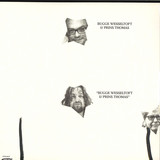
A long time ago, in a Norway far far away in time, keyboardist Bugge Wesseltoft introduced his New Conception of Jazz to the world. We're talking about the late 90s, when Bugge's cosmopolitan blend of jazz, hiphop and techno beats was pretty much the coolest music coming out of Norway at that moment. That was a golden time for Norwegian music, in fact, when the rest of the world began to sit up and take notice that something was stirring up north, and realised the music was more than just glacial tones hurtled from icy mountaintops and frozen lakes. This was the sound of urban Scandinavia.
A few years later came the electronic dance genre 'space disco'. Along with Todd Terje, Bjørn Torske and Lindstrøm, Prins Thomas was at the epicentre of this next big wave to surge out of Norway. Now, the two generations have come together in this exclusive collaboration between Bugge and Prins Thomas on the Smalltown Supersound label. Jazz and electronics combine for that energising vitamin D shot of Nordic sunshine.
The Rainbow Studio in Oslo is a familiar name to anyone who follows the ECM label - many of its classic 1970s jazz albums were recorded there under the eye of resident producer Jan Erik Kongshaug. Bugge and Thomas booked a couple of sessions at the legendary space with Kongshaug at the controls, and improvised some tunes in the style and spirit of some of their favourite ECM moments, like the fresh, open sounds of Codona, Egberto Gismonti, Oregon and Kenny Wheeler. Bugge had previously done a remix of Thomas's 'Bobletekno' in 2015 but this is the first time they have worked together as active musicians. The results - also partly taped at Thomas's home studio - fuse programmed rhythms, live synths and percussion, all captured in a sumptuously spacious acoustic.
For an even more authentic touch they called up one of their all time local heroes and one of Norway's most famous jazz drummers, Jon Christensen, who's been the go-to guy for Jan Garbarek, Terje Rypdal, Keith Jarrett and many more. At 75 years he's still pretty spry behind the kit, as you'll hear on several tracks here.
Make no mistake, though, this is not retro pastiche but contemporary music, coasting on gently insistent programmed grooves and bubbling basslines. The whole thing feels not so much like a consciously hip fusion of DJ and jazz musician, more like two great musicians totally enjoying themselves. Which is exactly what it is.
Key facts:
Bugge Wesseltoft is one of Norway's leading jazz figures. He set up Jazzland Recordings in 1996. His solo Christmas LP It's Snowing On My Piano remains Norway's best selling jazz album!
Prins Thomas's real name is Thomas Hermansen. His label, Full Pupp, means 'full breast'. He's released several albums under his own name, as well as collaborations with Bjørn Torske and Lindström. Check out his amazing Paradise Goulash mixtapes.
Taking a turn to some of its roots, Emotional Rescue offers a reissue of Ramjac Corporation's UK house/breaks anthem Cameroon Massif!. First released on the increasingly cult-status Irdial Discs in 1990, this was very much the sound of the big bang explosion of Acid House morphing and splintering, as subsequent multi-genres developed, formed, imploded and reformed in new ways that still subsists today.
Within the melting pot of anything goes, chemically-enhanced optimism that spread across the UK during that return to the summers of love from 1987 onwards, the nascent sounds coming from Chicago and Detroit were mixed with a hybrid of 80s British influences, taking in European synth pop, US electro, new beat, hip hop and reggae. Out of this appeared a new sound, mixing that love of techno and house with dub bass and break beats into a proto-jungle swirl.
Like many growing up through the ever-evolving 60, 70s & 80s British music scene, Paul Chivers' early years of learning piano and guitar, moved from Beatles era pop to take in punk, jazz and anything an eager musical mind could explore. Developing a long-term interest and study of Cuban and Afro-drumming, his acquisition of an Atari and sampler soon moved to programming of both drum machines and TB303 and with that, Ramjac Corporation was born.
Playing live at some of the earliest raves in 1988, as often through luck and "right time, right place", including the infamous Back To The Future and Energy parties, Ramjac went from playing from 50 to 10,000 ravers in a matter of months, as the nation was gripped, depending on your cultural standing, by either a mixture of drug apocalypse paranoia or ecstatic celebration.
It was a meeting with Akin Fernandez, founder of Irdial Discs, that led some of the first studio experiments and creation of Cameroon Massif!. Utlising Akin's in-house studio and production skills, alongside Chivers' jazz influenced outlook of improvisation over arrangement, the track took shape, mixing the live programmed percussion, heavy doses of phase, delay and reverb and Sun Ra inspired keys that resulted in a number of mixes of Massif!.
Collected here are the original 12" "Massive" and "Massing" mixes, plus a special live version taken from the "Live At The Brain" reunion gig of 2009. The sought after 1990 versions and original Live mix are taken a step further with this 13 mins + mix, in essence a resampling and remixing reversion with didgeridoo and live on mic MCing, that gives a real glimpse of those early live sets. With more Ramjac Corporation material upcoming and a live reel-to-reel show appearing soon, the return of Cameroon Massif! is now.
Dalmata Daniel continue their work with the 7th release in the main flow, and this time they assigned the new experiment to the Teslasonic lab.
In this research, Teslasonic examined the case of 'Quantum Paradox' with the help of another well-known scientist: The Hacker.
The code name of the project is DD007, in which Teslasonic, a citizen of the world, has invented certain new and useful tracks. These tracks are not just sounds, they also create visions, because while we're listening to 'Quantum Paradox' and 'Aether', we feel the energy of the melody, and in our minds, we travel with them through space and time to discover new things. Furthermore, through Blitz Ciphers' and Unified Field Theory's dark and raw electro sound, we find ourselves in the cold and sterile laboratory of the spaceship, where the miracle is born and science is cultivated.
However, thanks to The Hacker, we get a new viewpoint, as in his remix, he re-examines the main theme and at the same time he invents something different - a perfect echo of the original 'Quantum Paradox'.
Echocord sub-label Echo Echo continues this July with Orbite's 'Interstellar' EP, a threetracker from the Berlin- based producer. Orbite is a brand new project founded in Berlin, Germany with a nod towards the raw, dubby sounds often heard across the clubs in the city, and where better to inaugurate things than the recently launched sub-label of Copenhagen's Echocord, one of the leading imprints in the realms of Dub Techno, home to pioneering acts like Rod Modell/Deepchord, Pole and Fluxion who have paved the way for Orbite's own twist on the genre. The ethereal pad textures of 'Skylar' lead on the package, deftly evolving alongside bubbling synth tones, swelling chords and shuffled percussion to create a create dynamically unfolding six and a half minute cut. 'Moment' follows, edging things further into dubbed-out territories with heavily delayed dub echoes and mesmeric spoken word poetry intertwining to create a, hypnotic beatless soundscape. 'Organi' closes the record with emotive, billowing pads, warm bell like tones and vocal murmurs running alongside swinging shakers and stripped-back micro-house percussion.
At last, the vinyl reissue of this masterwork, adding two hitherto unreleased gems recorded solo for Charles Fox's Radio 3 programme Jazz in Britain, in the same few months of 1980 as the stunning Aida performances.The phrase 'in the moment' is often bandied about with reference to free improvisation, and indeed there's no better way to describe Derek Bailey's playing. The acoustic guitar is notoriously lacking in natural reverberation — notes barely hang in the air for a couple of seconds before they disappear — which explains the almost non-stop flow of new material in these stellar performances. Bailey knew from one split-second to the next exactly where to find the same pitch on different strings, either as a stopped tone or a ringing harmonic, and there's never a note out of place. 'He who kisses the joy as it flies,' in the words of William Blake, 'Lives in eternity's sunrise' — and this music is forever in the moment, constantly active but never gabby, kissing the joy.One of the special pleasures of the BBC set is the guitarist's own laconic commentary, a deliciously deadpan description of what he's doing while he's doing it — 'I like to think of it... as a kind of music' — and the interaction between words and music is a particular delight. 'You may have noticed a certain lack of variety,' he quips, while unleashing a furiously complex volley. Is it a coincidence that the final seconds recall the famous cycling fifths of the coda to Thelonious Monk's Round Midnight Surely not — for Bailey, like Monk, was a note man par excellence. And they're both still alive and well in eternity's sunrise.
Salvador Font studied violin, clarinet, composition and harmony at the Conservatori Municipal de Barcelona, but very soon started to gain notoriety as a saxophonist in the rich jazz scene of 1940s Barcelona. Font would soon be playing tenor sax and clarinet in the Orquesta Gran Casino. He was in his early twenties and his hot swing technique was already praised through the citiy's scene, he would grow to be considered the best saxophonist in Spain by playing in many orchestras and combos, among them: José Puertas', Antonio Vilá's Virgina, Bonet de San Pedro's band, Pierre Michel, El Lirio Campestre, Los Marios, Luis Rovira y su orquesta, Orquesta brasileña Fon-Fon, Jaime Camino, Los Embajadores, Italo Leone's... With these and others, Font toured constantly, visiting many countries and even staying on some for long seasons: Mexico, Morocco, Switzerland, Egypt... Hungarian violinst of Turkish ancestry Kurt Dogan gave him the "Mantequilla" surname - he felt "Mantequilla" (which means "butter") fit Font's mellow yet swinging improvisation style.
Mantequilla y su conjunto
In the early sixties, "Mantequilla" had the chance to lead his own combo, Mantequilla y su conjunto, with which he was to record the three splendid EPs that are compiled on the present album. All these 7" have become elusive collector pieces in the record market, with sellers demanding from 200 to as much as 950 euros per copy.
In 1961 "Mantequilla" was at his best moment, his gigs at the Jamboree Jazz Cava had brought him back to the first line of Barcelona's jazzmen after he had been working abroad for a long time, and was approached by the Belter label to record an EP. On the sessions he was accompanied by Manolo Mercedes on trumpet, Pedro Ferré on piano, Rafael Lizandra on double bass and Rafael Verdura on Drums. The material chosen for the disc were four original compositions by Salvador Font which had a high West Coast flavour all over: "La Tuna Club", "Whisky Jazz" and "Jamboree" named after famous jazz clubs and "Azul Trompeta", dedicated to Manolo Mercedes.
In late 1962, after spending some time in Madrid working as members of the Italo Leone combo, "Mantequilla" and pianist Manuel Gas came back to Barcelona for the recording of the second "Mantequilla" EP, also on Belter. We find again Manolo Mercedes on trumpet, Pedro Ferré on piano and Rafael Lizandra on double bass, the drummer this time was José Farreras. Another news is that Manuel Gas also sat on piano and vibraphone. The songs chosen for the occasion were two tunes from the Art Blakey Jazz Messengers repertoire: Bobby Timmons' classic "Moanin'" and the Jacques Marray track "No Problem" from the soundtrack of the Les liaisons dangereuses film (mispelled "Not Problem" on the sleeve and label), plus the Salvador Font penned "Blue Note" and "Full de ases" - on "Full de ases" "Mantequilla" trades his sax for the violin, which he also mastered under high influence from Stephane Grapelli. The record was released on Belter in early 1963 and showed "Mantequilla" adding a certain aggressivity to his sound, in a soloist style which has been compared to that of tenor saxophonists Barney Wilen or Benny Golson.
1965 was the year of release of Mantequilla y su conjunto's third EP, now on the Discophon label. Mercedes and Farreras are again present in the recording sessions, joined by Ricardo Miralles on piano and Enrique Ponsa on double bass. Four original Font compositions make up the fantastic EP: "Blues 3/4", "Atmósfera", "Vat 69" and "Balada".
There would be a further EP on Belter, released in 1971 as Mantequilla Group it was a cash-in operation to take some redits of the ye-yé discothèque phenomenon, it gets quite afar in style from the jazz works of Mantequilla y su conjunto, so we just left it aside for the present edition.
"Mantequilla"'s career would continue, in 1968 he would settle in Majorca and form a swing band with Bonet de San Pedro and Manuel Bolao. He played in local orquestras and also with first class world acts like Gerry Mulligan, Tete Montoliu, Errol Gardner, a.o. He was even approached by Henry Mancini to play sax on The Pink Panther Theme in a gig Mancini did with his orchestra in Palma de Mallorca in 1975, He also joined his son Salvador Font (a demanded drummer himself who has played with Máquina!, Orquestra Mirasol, Música Urbana, Gary Burton Quartet, Georgie Fame, and many others) and his peers Carles Benavent, Emili Baleriola, Josep Mas 'Kitflus' and Jordi Bonell with whom he recorded his acclaimed "Mantequilla" album in 1987.
Now, for the first time ever, the legendary three ultra rare and imposible to find EPs by Mantequilla y su conjunto are compiled in a lavish vinyl LP with remastered sound, featuring liner notes and photos and a fantastic period inspired, three backflaped, front laminated sleeve. It is a stricly limited edition of only 500 copies and they are expected to sell out very soon, do not miss your chance of getting yours - it may be the last chance of chasing the Mantequilla sound on vinyl at a reasonable price!
2017 saw the arrival of Pin Up Club here at the Bordello with a superb three tracker, Friends of the Vortex. Now the Dutch partnership are back. This time a quartet of tracks has been selected to produce The Forever Machine. The bold bars of Friends of the Vortex, the romantic rushes and soundtrack silhouettes are all present with new elements being introduced to further develop a truly unique style. Breathy vocals and melancholy are countered by warm synthlines in the brooding 'Valis' before the lonesome 'Is There Anybody Out There' blooms into a daringly bright work of disco dimensions. Opening the flip is the title piece. Smouldering, 'The Forever Machine' burns with quivering chords that rise ever skyward on a column of tight rhythms as lyrics spiral ever upward. 'A Deepness In The Sky' is a perfect illustration of Pin Up Club's ability to transform burgeoning sombre sounds into tempered elation, rumbling strings and fragile percussion intermingling for a heady finale. Welcome back to Bordello A Parigi guys, welcome back to Pin Up Club.
Prayer returns to Black Acre with the 'Vital' EP, a heavy four tracker which blurs the lines between sorrowful sounds and high voltage club energy - limited to 200 hand stamped vinyl.
'A four track EP that delves further into his defiantly outsider sound. Living somewhere near the intersection of classical, jungle and ambient' - The Ransom Note
'This atmospheric modern jungle track has a bit of Burial's sad-but-sweet emotional tinge to it' - Resident Advisor
PRAYER blurs the lines between sorrowful sounds and high-voltage club energy in VITAL; a piece of art that refuses to be boxed off by genre or stereotype.
Opener FEAR explores the producers love of film music; a dark sci-fi landscape punctuated with drums and melodic synths, a Bladerunner-esque track. Moving on, A2 'I'M STILL HERE' is an anthem, a nostalgic mix of hardcore, jungle and classical influences with a DIY, rough and ready feel.
On the other side, PRAYER shows his talent for the piano with B1 - KIND, finessing the skills that reflect his first adventures in sound. It's an emotive, stripped back number. The final track is B2 - VITAL, another drum-heavy, weighty track that sounds only like PRAYER - as ideal for the club as it is for headphones
When Ann Arbor's Tadd Mullinix began exploring hip-hop under the name Dabrye 20 years ago, he soon honed in on a startling vision of what the genre could be: ingenious, refined, daring. This vision came to life across two albums for Ghostly International — 2001's One/Three and its 2006 follow-up Two/Three— with each record further positioning the quiet Michigan producer as one of his generation's best, equally comfortable creating minimalist instrumental meditations or sharp rap salvos. In the late 2000s, following critical acclaim and accolades from both peers and inspirations (including the late Jay Dee with whom Mullinix collaborated before his untimely passing), Mullinix put the Dabrye moniker on ice and dedicated himself to other genres and ideas. All the while the influence of his work on a new generation of electronic musicians continued to make itself felt in subtle but meaningful ways.
All this changes in 2017 as Dabrye makes his long-awaited return with Three/Three, a razor-sharp rap album that brings to completion a prophetic trilogy. Mullinix's incisive productions provide the backdrop for equally acute rhymes that run the gamut from intergenerational observations and being your best self to back alley deals and having fun in the ride. Guests include indie rap legend DOOM, whose previous collaboration with Dabrye remains a point of reference for many, Wu Tang storyteller Ghostface Killah, L.A word fanatic Jonwayne, and Long Island's rugged surrealist Roc Marciano. Most importantly Three/Three is, much like its predecessor, an unfettered celebration of Detroit-area talent with Guilty Simpson, Phat Kat, Kadence, Quelle Chris, Danny Brown, Shigeto, Clear Soul Forces and more all lending their touch to Dabrye's return.
The blend of American and British dance music, hip-hop sampling, and Jamaican sound clash energy that underpinned Two/Three remains a quiet, guiding principle. At the same time Mullinix rejoices in a refreshed perspective, having had time to incubate ideas and find clarity in the distance between albums and the evolution of scenes.The beats are looser and less angular, more embracing of repetition. Organic techniques inspired by soul and jazz round off some of the harsher sonics. The resulting broad palette of tracks reflects both this evolution and the range of the Dabrye persona: relaxed headnod ("Tunnel Vision"), nervous, slow-motion electro ("The Appetite"), glacial motifs ("Emancipated"), jazzy, cut-up funk ("Sunset"), minimal brutalism ("Electrocutor"), intricate layering ("Culture Shuffle").
Three/Three marks the return of an innovator after close to a decade of silence. Despite what the title might imply, the album isn't the end of the story but rather the completion of a creative arc. Expect more Dabrye in the near future. The game is far from over.
- Final installment of the /Three series, started in 2001
- Guests include Ghostface Killah, Jonwayne, Doom, Danny Brown, Shigeto, and more.
- Media support from: The Wire, FACT Magazine, The Detroit Free Press, Pitchfork, XLR8R
- Past collabs with Jay Dee (J Dilla), MF DOOM, Beans & more
- Vinyl is housed in a matte jacket with black hot foil and includes 24-page zine designed by Michael Cina.
One of our humble imprint's closest allies and a longstanding pillar of Philadelphia's electronic music community, Billy Werner has been a constant presence in the booth at parties throughout the Northeast Corridor since 1998. We debuted his M//R alias in 2014 with the 'Gathering Response Data' 12" . Since he's been busy bringing the grit to points beyond the City of Brotherly Love, putting in work for the likes of DetailsSound, L.I.E.S. and JackDept. Most recently, he turned out a remix of Karen Gwyer's 'Why Does Your Father Look So Nervous' for the 'Rembo' remixes on Don't Be Afraid, as well as another for Chaperone's 'Grit Neglect' on the aforementioned 'SnapbackBalaclava'EP.
Written, recorded, and mixed over a period of 15 months,'Among The Methods' is in no small part a reflection of the affinities and sensibilities Billy holds as both selector and producer. Referencing a variety of influences from jazz to dub to electro, the album's allure stems from his deft ability to recontextualize those genres' disparate aspects into a familiar-yet fiercely idiosyncratic-musical context.The end result is at once wildly fractured and precision-focused as 'Among the Methods' finds its own seductive rhythm within a matrix of dub echoes and modulated low-end. It's heady ground,to be sure;as well as the most declarative aesthetic statement fromM//R to date.
Presented without further comment. The music is the message
Winter thaw marks the return to Furanum of Uncto, the Silesian dyad Domink Muller and Rafal Furst, with their first full release of collaborative material since 2013's seminal FU009. Like its predecessor, Unctuous offers four cuts of viscerally engineered and rhythmically exacting dystopias, each ably situated within a striking 'synth-etic' narrative. It is this latter aspect of each arrangement that perhaps most noticeably demonstrates the pair's singular and evolving approach to composition, born out in the calculated emphasis on hardware-based expressionism.
The opening title track stands as a testament to the above: while deceptively sparse at the outset, its ponderous advance, both heavyset and indomitable as it gathers pace, is framed in the midst of an unfolding panorama of stark analog wails. Further interspersed with resonant timbres more akin to the vocalizations of some hell-beast luring its prey, the eponymous behemoth ingratiates its listener, beckoning submission to its will with the promise of exhilaratory assimilation. Such a hive-mind state attained, exhilaration does follow, yet so does a concomitant loss of agency, leaving one thoroughly subjugated and enslaved to its cadence. Perhaps as a manifestation of dramatic resistance to such a fate, 'Trust No One' daringly defies the impositions of its predecessor. Instead, it animates and emboldens the beholder through its rhythm, ineluctably driven by a sense of accelerating linear intensity. Thus arriving at a climactic percussive build whose isochronal blows shatter any remnants of doubt, angst transforms into raw conviction as one is propelled into a delirious realm of solipsistic certitude.
Situated amidst the foreboding sound of blade clashing with blade, 'Cold Knife', on the other hand, is driven by an entirely disparate off-beat progression. As its anticipatory rhythmic thrusts cut through an advancing fog of shivering drones with frigid precision, one seemingly undergoes a cyclical plunge into a state not unlike one marked by the visceral dopaminergic rush of contact with extreme cold. Finally, 'Metzgers Tochter' ('Butcher's Daughter') closes the EP with a ruthless exploration of the contrast between the gruesome and the feminine. In a similar way to the opener, the track's meter is staggered and undulating, yet also steadily punctuated with breathing room between its crushing blasts. Such scenery thus serves as a canvas for the expression of the titular character's 'beauty and the beast': a paradoxical synthesis of attraction and aural brutality, held in tension by the unceasing throbbing of the composition's beats.
Mastered & cut by CGB at Berlin's Dubplates & Mastering,
New age music from West Africa. Lush and hypnotic dreamscapes combine traditional instrumentation with sweeping electronics and field recordings. Bamako based composer Luka Productions delves into avant-griot, transforming ancient music for the 21st century. The songs are meditative and sage, as voices guide the listener through ways of living, from the village life to the modern world. Inspired by early electronic music, library records, and new age, this is easily one of the most leftfield recordings to ever come out of Mali. Limited to 500.
Der Leipziger Produzent Kolja Gerstenberg hat bereits hervorragende Tracks für die Suol "Summer Daze" Compilations der Jahre 2016 und 2017 beigesteuert. Schiggeria, das Projekt bei dem Kolja mit seinem Kollegen Atbin Milani zusammenarbeitet, ist auch auf unserer neuen "Hallo Montag" Compilation mit der wunderbar souligen Partybombe "Muggelhausen" vertreten. Und weil die beiden die ganze Zeit hochqualitative Tracks raushauen als wäre es nichts, ist es nun höchste Zeit für ihre erste, eigene Suol-EP. Die "Saver Flex" EP wartet mit nicht weniger als vier überaus eingängigen Housetracks auf. Wir sind beeindruckt!
On A side, electronic music wizards Kompozyt team up with a Dub Legend Lee 'Scratch' Perry to bring you a heavy-hitting and instant bounce-inducing Dub Techno track 'Hidden Force'. Lee Scratch Perry's amazing and charismatic Dub poetry blends superbly with the neat fusion of spacey and subterranean sounds of Kompozyt productions. The single is not to be missed this summer.
On B side, Kompozyt brings you a 7' version of 'Homesick' - Dub and Trip-hop inspired Experimental Electronica with Olgierd Dokalski on the trumpet. Olgierd's incredible performances of real haunting beauty further reinforce the analog, live and improvisational aspect of Kompozyt's music.
Both tracks come from Kompozyt's debut album: 'Synchronicity' - out everywhere now on CD and DL.
Selected Reviews of Kompozyt's Debut Album and the Single
5/5 Decoded Magazine: 'Incredible album 10/10'
4/5 Lars Berhenrot (Deepershades): 'LOVE THIS .. never-ending deepness ..'
5/5 Pierre Ravan: 'Amazing work from the heart'
5/5 Queensradio.org: 'I'll definitely be playing these guys on air'
4/5 Garth Trinidad (KSRW Radio) 'Exquisite score without a film'
5/5 Hoxton FM (London): 'Incredible release!'
4/5 Stereo MCs: 'Nice vibes refreshing'
4/5 Robert Babicz: 'I love dub. in all forms'
5/5 Adam Hannibal (Balanced) : 'Neat fusion of spacey and subterranean sounds. Reminiscent of the Beyond Recs Ambient Dub compilations with some freshness... Well done'
5/5 Al Bradley (3amrecordings): 'This needs full love because it's excellent :) I can really picture myself just letting this play from the first sound to the last & becoming utterly immersed as it flows through! Gorgeous.'
5/5 Bartlomiej Blesznowski- 'One of the best electronic music albums this year'
4/5 Neil Brown (RMFM; Pro Mobile Magazine): 'Some nice tunes to get your head in gear to.'
5/5 Jorn Kirk (DJ Jay Kay) (Faith Sundays): 'very nice album !!! a joy to listen to'
King Coya ist das digitale Alter Ego des argentinischen Musikers, Produzenten und Komponisten Gaby Kerpel. In den Neunzigern entwickelte Kerpel die furiose Theater-Performance "De la Guarda" mit, später setzte er seine Kreativität für das preisgekrönte Showprojekt "Fuerza Bruta" ein. Abgesehen davon ist er bekannt für die innovative Verbindung lateinamerikanischer Folklore mit moderner elektronischer Musik. Seit seinem 2009 veröffentlichten Solodebüt "Cumbias de Villa Donde" fertigte der König Remixe für Acts wie Amadou & Mariam, Brazilian Girls, Julieta Venegas, Luzmila Carpio, Chancha Via Circuito, Tom Tom Club, Petrona Martinez und Magin Díaz an. Weiterhin beteiligte er sich als Mitglied der Band Terraplén an den Aufnahmen zu "Tira Torito" (2010). Mit "Tierra de King Coya" setzt Kerpel den eingeschlagenen Pfad weiter fort. Zur Geltung kommen neben kolumbianischer Cumbia und argentinischem Folk insbesondere traditionell in den Anden gebräuchliche Instrumente wie das Zupfinstrument Ronroco oder die Schnabelflöte Tarka. Natürlich werden alle Sounds vom King so lange am Computer aufbereitet, verfremdet und geschichtet, bis sich explosiv-tanzbare Songs ergeben. Neun Stück sind es auf "Tierra de King Coya" geworden. Bei diesen wird er von La Yegros, Iara Nardi, Isabel Pinedo Rengifo, La Walichera, Balvina Ramos und Queen Colas am Mikrofon begleitet.
Bruno Pronsato hat schon länger erfolgreich Erwartungen in der Techno- und House-Szene untergraben. Im früheren Leben war er Schlagzeuger einer Speed-Metal-Band mit einer ernsthaften Leidenschaft für Zwölftonmusik. 2005 zog er nach Berlin und eroberte die Aufmerksamkeit der elektronischen Musikwelt mit seiner LP "Why Can't We Be Like Us". Pronsato kehrt nun mit seinem neuen Album zurück ins Rampenlicht. In Zusammenarbeit mit Yonatan Levi hat er "A Face Wasted On The Theatre" geschrieben und produziert. Diese Verbindung ist bereits bestens eingespielt: Seit 2014 arbeiten die beiden immer wieder zusammen. Das neue Album entstand in zwei verschiedenen Studios im Prenzlauer Berg, der Wahlheimat des Texaners Steven Ford, wie Pronsato bürgerlich heißt, - und zwar meist nachmittags und nicht etwa in tiefer Nacht. Auf sechs der acht Songs ist Levi alias L.A.Teen erneut am Bass zu hören, weitere Gäste sind der Komponist und Produzent Peter Gordon und der israelische Saxofonist Yonatan Yudkowitz. Auch Levi stammt aus Tel Aviv und ist klassisch ausgebildeter Gitarrist und Bassist. Er ging einst in die USA und machte sich in der New Yorker Jazz-Szene einen Namen.
From the incredible Robb Scott album Siren' comes a new single Neptune Atmosphere (You Didn't Feel My Love)'. Robb Scott is a UK musician, singer, songwriter, composer and producer who on this single features Gina Foster on lead vocals. With the album version already established as a soul gem, this new single takes the song further into the dance sphere with new mixes by Phil Asher/Mighty Zaf and 2000 Black. Phil, from Restless Soul, is one of the most prolific DJ/remixers over the last 25 years, Mighty Zaf has become renowned for his DJ edits and take on Disco & Boogie as a DJ, remixer, compiler (Deep Disco & Boogie, Private Wax etc). The 2000 Black mix is by Dego who has been on the broken beat scene since the 90s with 4 Hero and continues to be one of the most exciting remixer/producers in that genre
Mehmet Aslan returns to his own Fleeting Wax imprint, in order to deliver the first in a series of releases as part of a new project, ghost station, including a collaboration with fellow Turkish singer, songwriter and vocal producer, Idil Mese.
Efsun, translating to enchantment in Farsi, is the sound of Idil Mese transforming an understated, somewhat folksy instrumental of Aslan's into a bewitching and subtle musical spell. Initially tense,
Idil Mese's vocal spell wraps beautifully around a brittle guitar motif, inches above a sea of atmospheric ambience. In it's second half, synthesis and sitar unite, taking efsun into more revelatory territory, employing a playful melody and warm, cosmic textures.
Meanwhile, on 'ghost station', from which the project takes its name, layers of meaning and recording slowly unravel, revealing a compelling soundscape. Recorded in one take, and completed across one night, 'ghost station' began with Aslan and his sampler surfing the busy radio waves of Berlin, eventually settling on a beautiful score broadcast on one of the city's classical stations. Just as soon as Aslan had the frequency on lockdown, the signal disappeared unable to be retrieved quickly enough, if ever. Loosely inspired by the work of Swiss visual artist and musician Pipilotti Rist, the track instead unfolds woozily like a dream, undulating through offbeat bleeps, ghostly voices and improvised swells of noise, while still maintaining it's own quietly propulsive groove.
Sounding more like himself than ever on his own Fleeting Wax outlet and incorporating an impressive range of musical techniques over just two tracks, 'ghost station' further establishes Mehmet Aslan as a restlessly inventive musical talent. -Text by John Thorp
WHITE RING mark a triumphant return with a brand new full-length Gate Of Grief, due out on Rocket Girl on 22 June 2018. Their debut album arrives a full eight years since their benchmark EP, Black Earth That Made Me, which sold out almost instantly, making their records some of the most highly sought after on the underground scene and earning them a cult following across the globe. Swerving from aggressively abrasive to beautifully ethereal, musically they draw from varied and challenging palette, whilst tackling themes of loss and acceptance due to struggles with drug addiction and existential dread on a broader scope.
WHITE RING were originally formed by Bryan Kurkimilis and Kendra Malia, before they were joined by Adina Viarengo, with Bryan and Adina currently touring as a duo. One of the most acclaimed proponents of the "Witch House" movement, WHITE RING blend heavy, distorted electronics with eerie, unsettling vocals. However, their new material, created over the course of seven years, pushes the boundaries further, subverting genre ideas and mashing them all together, with industrial, metal, rave, chopped and screwed, rap, grunge, neo folk, post punk and new wave all in the mix. As Bryan Kurkimilis explains; 'We treat our influences like tools to create a certain feeling. We are interested in covering more ground than sticking to a certain formula.'
Bryan and Kendra originally met on Myspace in 2006. At the time Bryan lived in New Orleans and Kendra was in New York, and they didn't even meet face-to-face until 2008 after they had already released a few singles. In 2010 they released the EP Black Earth That Made Me, which was a collection of songs that they mostly recorded before they met in person. The record confounded expectations by selling out immediately on pre-order, making it very rare and highly sought after, with copies going on Ebay for large sums. It was reissued by Rocket Girl in 2011 and still continues to sell in voluminous amounts.
They started playing live in 2009 and rapidly grew a reputation for their captivating performances, usually bringing their own lighting equipment and putting on a spectacular laser show. They have played for large crowds in their hometown of NYC and toured the UK in 2010 in support of their sold out split 7" with oOoOO, playing InTheCity and SWN festivals - which were their first shows outside of New York. They have since shared the stage with the likes of Cold Cave, araabMUZIK, Liturgy, Blank Dogs, Gatekeeper, Blondes, oOoOO, Clams Casino, and others.
They started recording Gate Of Grief in 2010, with the hope of exploring new musical territory, however they took a while to find their path. Bryan and Kendra had some tough personal battles to fight, a sense that pervades the whole album. Thematically it delves in to some pretty dark places whilst exploring the concept of time and what it does to people, relationships and society. As Bryan explains; 'There is a lot of tragedy in this album but there is also hope at the end of it.'
By 2016 pressure was building to finish recording, however due to Kendra's ill health, they needed to bring in someone new to assist with vocals. Fortunately they found Adina Viarengo, who had played in various bands and gave them the impetus needed to complete the album. Shortly after meeting in Brooklyn, Bryan and Adina moved to Joshua Tree, California to finish recording the album, before settling in Massachusetts. Her vocal style fitted in seamlessly with what Kendra had been doing, and although she sang on half the songs, it's almost impossible to tell who is singing on which track, thus making her the perfect addition to the band.
Gate of Grief can be considered the second part of Black Earth That Made Me, or rather, they are the first two chapters in an overarching trilogy about evolution. As Bryan explains; 'First you are born but then you realize what you are and what is against you and it's a flood of emotion that you can only hope to hold on for and let it pass.'
The album title, Gate of Grief, refers to the real gate between Africa and Saudi Arabia that is believed to be the spot where the first humans migrated out of Africa and went on to populate the rest of the world. The album art ties in with this concept, with an image depicting a group of settlers in the USA in early 1900 during a parade. They were actually from a cult in the early 1900s in Bryan's hometown of Fort Myers, Florida.
Teste returns with The Box Man, a five-track EP that marks their first release of original material in 25 years. Formed during the early nineties in Hamilton, Ontario, they put out only three official records between 1992-1993 on Probe Records, most notably 'The Wipe,' which is regarded as a genre defining classic, while the follow-up 'Regions' also served as a template for the ensuing sonics of contemporary techno. With only a handful of live actions, the final chaotic show (public disturbance) occurred for Pure in Glasgow 1994. Afterwards, the original Teste lineup of juvenile delinquents disbanded but unwittingly ended up defining the hypnotic and drugged out strains of today's afterhours techno parties. The project vanished for decades until reactivating the chaos in 2014, promoting a slew of remixes 'The Rewipes,' by artists such as Rrose and Terence Fixmer, on the Edit Select imprint.
Since then, original member David Foster, still at large as //HUREN//, has been slugging it out in the fringes with influential output on the seminal Zhark Recordings Berlin and has collaborated as O/H with Rich Oddie of Orphx. First meeting on Mayday 2017 in Berlin, a new alliance with Martin Maischein aka Goner formed. Goner is likewise a veteran with essential output under various monikers on imprints such as Force Inc., Editions Mego, and Hospital Productions. From that pairing, The Box Man came into being for the second release on BITE, the Berlin techno label run by Hayden Payne and Florian Engerling.
The Box Man picks up where Teste last left us with their revolutionary vision of techno and continues to further their interdimensional manifestation of insanity and formation. Pure techno serving as a method of psychic expulsion and self-reckoning. From the opening, the eponymous track approaches full panoramic throttle as metallic synths creep 360 degrees around the listener, setting the tone for panic and loss of cognitive control. Teste then moves into the stealthier outpatient techno rhythms of 'The Long Term Care Facility' and 'Thieves Are Operating In This Area'. The EP contrasts its propulsion with different interpretations of its blueprint. 'Foaming At The Mouth' delves into Cabaret Voltaire-alike rhythm box violence until all is closed with the comedown melodies of 'Lyubov'. Through highly adept methods of sound design and neural interpretation, Teste once again cuts apart reality with their music, expressing nightmares and visions via new rituals and mind control techno.
RSN ist Produzent, DJ und Musiker aus der griechischen Metropole Athen. "Strange Eyes" ist bereits sein viertes Album und gleichzeitig sein Debüt auf Agogo. Es enthält 13 Songs, die von Electronica und Trip-HopSounds beeinflusst sind, die typische Elemente aber mit ganz ungewohnten Klängen zusammenbringen. HipHop-Beats mit fetten Basslinien treffen auf effektvoll melodische Gitarren, eine Hammond-Orgel und atmosphärische, analoge Synthesizer schaffen einen idealen Klangraum für die Musik des Griechen. RSN hat zudem zahlreiche außergewöhnliche Sänger und Musiker als Gäste für diese Produktion eingeladen. Seit 2009 ist er als DJ bei der bekannten britischen Band Belleruche aktiv. Mit diesen Meistern des Souls tritt er regelmäßig bei vielen Konzerten in Griechenland und im Ausland auf, sei es in Serbien, in der Türkei, Russland, Schweiz, Frankreich, England oder Ukraine. In den vergangenen Jahren ist er so auf den großen Festivals in der ganzen Welt zu Gast gewesen. Als DJ hat er selber die Live-Shows von Top-Künstlern wie Alpha Blondy, Wax Taylor, DJ Krush, Parov Stellar und anderen eröffnet.
Debütalbum des britisch-nigerianischen Electronic-Produzenten und Singer/Songwriters Tony Njoku, ein Globetrotter, aufgewachsen zwischen Lagos und London, dessen bewegende Klangbilder aus den kürzesten Popsongs epische Abenteuer machen. Vocal-Club-Beats für Ästhetiker. "Exciting blends of African percussion, falsetto croons and dark synths." - Fact. "Fusing abstract beats with his angelic tones." - Mojo. "Expansive electronics flirting with psych and soul." - Clash.
Warm return once again... One of the most consistent and influential agencies to have operated in the 2000s, the collective continue to develop their original agency, events and record label, and things are heating up very nicely. Following soul-arresting releases from Elliot Lion and Face + Heel comes this four-track odyssey from Belfast's Lunar Orbit Rendezvous AKA LOR. Ready for take-off
Our mission is set with 'Mystery To The Viewer', but what is the main mystery Is it the gravity-defying thrust of our engines or the identity of the anonymous (yet well spoken) narrator Listen closely for clues amid the heavy pulsating chords as we break away from the earth orbit and plunge deeper into the stars.
'In This Detail' sees us hurtling further and further into the dark unknown. There's a deep chilling aesthetic at play here as LOR makes his 808s weep with the loneliness only a long-stay astronaut can sympathise with. In perfect contrast, the isolation is balanced by the direct and vital 'Oriole'. One of LOR's earliest projects, updated with all the skills and techniques he's learnt on labels such as Exit Strategy and Cin Cin, it's a vital composition that rises and rises as we engage hyperspeed through the cosmos.
Finally we land back on our home planet to the marching momentum of 'White Light'. Almost stately in its pace and rhythmic stride, things suddenly take a turn for the intense as a warping bass siren triggers a much darker direction and a series of spasmodic kicks and heavily shelved filters. Welcome home...
Travel agents for inner journeys Seahawks take us on a voyage ever deeper into the new age vortex. Their last album 'Escape Hatch' described by Vice as a 'modern masterpiece' only hinted at the transcendent power of Seahawks music. Eternal Beams goes 'further' to create a whole new harmonial experience. Side one: the listener immersed in a soft storm of tape saturated raindrops and distant thunder...numinous waves of sound cascade to create whirlpools of womb-like warmth with gentle pulsations. Side two: enter Laraaji... flocculent flows of golden zither, rich vocal vibrations, dolphin tones in phantasy phase - all coalesce generously, bringing feelings of rebirth and light. To conclude: a wondrous journey of resonant oscillations, inner exploration, a portal to other dimensions.
For his inaugural EP under new guise 'Yem Gel', NTS Manchester resident and visual artist Alecs Pierce comes through with a four-track cacophony of sounds for Dave Maclean (Django Django) run label Kick + Clap.
From previous experimental outings as Obsidian Pond, gristed petunia and, Handi Dogh he returns with this new project based solely on electronic compositions, giving the multi-instrumentalist artist a chance to further explore his electronic leanings. Operating with a clear mission statement, Yem Gel moniker seeks to live up to its name's reference to malleable 'fictional future plastics' by offering a set of genre-spanning compositions, drawing from multiple influences from ambient, drum 'n' bass or grime and leaving us wondering where he might take us next.
Way back in 1967, an animated superhero cartoon was released into the world. It was created by Grantray-Lawrence Animation and was based on a web-spinning, crime fighting blue and red dressed character that had originated in1962, in Marvel Comics by Stan Lee and Steve Ditko. This amazing series (that we're not allowed to mention the name of for legal reasons) ran on ABC TV in the USA, then Canada, then a few years later started to spread its web further, running here in the UK throughout summer holidays, after school and possibly early mornings at weekends in the late 1970s. The series then got released on VHS video (and probably Betamax too) in the mid 1980s and still continues to spin its animated magic around the world through further broadcasts, YouTube and DVDs.
The series was notoriously low budget, with animated errors everywhere and numerous scenes, sequences and backgrounds being re-used all the time, often across the same episode. Even a certain spider logo on a costume would appear with six legs, then eight legs later on, then back to six again in the same show.
Series One opened with a newly written spider theme, a classic, hooky song all about doing whatever spiders can, and had, as Big George (RIP) once pointed out to me, a set of session singers falling slightly out of time with the backing track after the first verse. Series One also featured background music by jobbing composers Bob Harris and Ray Ellis but these cues and master tapes are now believed to be lost.
After Series One the company Grantray-Lawrence went bankrupt, so the amazing spider series (that we're not allowed to mention for legal reasons) was taken on by producer Steve Krantz. He brought in new talent, including animation director Ralph Bakshi who later went on to turn a Robert Crumb strip cartoon into the feature Fritz The Cat. Krantz also slashed the already cripplingly small spider budget, and brought in the idea of using economic library music. Here, thanks possibly to an independent sync agent (it has been suggested that a company called Music Sound Track Services may have been the one) production turned to the KPM catalogue. This was one of the few really established library catalogues around at the time with a modern edge, it was full of fabulous, modern dramatic music tracks - often all on the same LP. But more importantly all the tracks were far longer than the one minute musical cuts that many of the fledgling USA library companies were issuing at the time. Not only would this KPM music be efficient, affordable and very easy to use, it would also mean syndication worldwide would not be held up by any future musical issues. Krantz produced two amazing spider series (that we're not allowed to mention for legal reasons), and both were smothered with KPM music. In fact barely a spider second goes by without music playing in either the background or foreground.
For many years I - and many nostalgic others - have been thinking about putting this vinyl album together. For many enthusiasts this really is formative music - a junior foray into hip swinging crime jazz and esoteric musical grooviness. I've also read on line accounts by DJs from WFMU on the trail of original spider master tapes, and there's even a whole forum dedicated to Spidey-Jazz'. Then recently I was looking at an old spider tracklist and realized that several of my favourite KPM cues were there including Syd Dale's Hell Raisers' and Walk And Talk', both from one of the most elusive and desirable KPM albums of all time (yes, you just try and find yourself a copy of KPM 1002 right now), so I decided to push on and get the album made.
So, what features on this Spider-Jazz Lp Well it's music from the amazing TV series we are not allowed to mention for legal reasons, BUT, not music from Series One. No, but it is all from Series Two and Series Three. From looking at archival cue sheets, over 50 tracks from various early KPM 1000 series albums were used across episodes. I've distilled this down into one exciting and enthralling LP, and if this works a further Spider Jazz album may well swing in to production. If you're interested (and I'm sure you may well be) cues here came from KPM1001, KPM1002, KPM1015, KPM1017, KPM1018 and KPM1043 and were composed by master library composers of the era - Dale, Hawkshaw, Hawksworth, Mansfield etc.
And if you are listening over there in the USA, you may well recognize many of the cues here not just from the amazing TV series (that we're not allowed to mention for legal reasons) but also from classic 1960s and 1970s NFL highlight shows that we are allowed to mention.
It's been over 10 years since the release of Gui Boratto's breakthrough full length debut 'Chromophobia'. As to what its title suggests, he shook up the techno game with a contrast of lushly coloured minimal grooves and melody, whilst many will recall that the album included the highlight single Beautiful Life' which became a dance floor anthem for that era. Four albums in and countless EPs and remixes under his belt, the Brazilian producer's unique savoir-faire in carving out a functional album out of diversely routed singles and features is back at it on his fifth studio LP, 'Pentagram'. Here Gui Boratto lays down a nuanced 12-track narrative that reinvigorates his signature sound into a refreshingly different perspective that feels all too familiar - including the return of Beautiful Life' vocalist (and Gui Boratto's wife) Luciana Villanova on the single "Overload".
Through his signature kaleidoscopic approach, Boratto delivers an album built as a far-reaching hub-and-spoke system, broadly inclusive as can be. From the opening cut, 'The Walker' - hot on the trail of Tears For Fears 'Elemental' (one of Boratto's "favourite 80's bands") - to the hi-NRG euphoria of 'Forgotten' and its pounding tech alter ego 'Forgive Me'. "I was going into 2 different directions", Boratto says, "the typical indie- electronic-rock' Boratto kind of production like It's Majik' or Like You' and a much more techno approach." He goes on, "I decided to split them into two twin sister songs. When I play live I always put these two songs together."
The Brazilian Producer further embraces the pop-friendly essence of his past work on tracks like 'The Phoenix', featuring vocalist Nathan Berger, and 'Overload', both melding acidulous synthlines with laser-precise breaks, vox hooks and drops calibrated for extended radio and club use, although sieved through his distinctive rainbow-hued musical prism. For the symbolists out there, the album's pared-down closer '618' duration accidentally happens to equate the proportions of the said pentagram. "Coincidence" Boratto questions, and capsulises, "not so ufanista and supporter of Brazilian neo-concretism, but I guess the brazilian sculptor Lygia Clark also inspired me a lot. Not the meaning of her sculptures, but the shape of the hinge of most of her work. I've wanted to transmit the scientific pentagram's point of view. It's not a religious kind of thing."
Whereas 'Spur' (a field-tested 808 and 909-heavy "purist track", "very, very old school" Boratto insists) and 'Alcazar' are sheer smooth-edged four-to- the-floor epics, the album also shares its lot of startling moments, such as with the John Barry'esque 'Scene 2' (with a hint of Amon Tobin, 'Easy Muffin' style, throw in) and its refined string-laden buildup, 100% fitted for a 007 opening credit sequence, or with 'Hallucination' (feat B.T.) and the further James Holden-ish title-track 'Pentagram' (think 'The Idiots Are Winning'), "one of those exercises I did when I got my Buchla modular synth" Boratto analyses, "I think I've used more then 30 different snares, with different delays and reverbs. The whole song is alive". And so is 'Pentagram' in its entirety: alive and definitely just as manifold and hopeful as its architectonics are the stuff of science and dreams all at once.
Es ist zehn Jahre her seit der Veröffentlichung von Gui Borattos bahnbrechendem Debütalbum - Chromophobia . So wie der Titel vermuten ließ, war das Album mit seinen kontrastreichen Minimalgrooves und den üppig gefärbten Melodien ein Schocker im besten Sinne. Ihr erinnert euch sicher noch an die Hit-Single - Beautiful Life , eine Dancefloor-Hymne aus dieser Zeit. Nach vier Alben und unzähligen EPs und Remixen ist das einmalige Savoir-faire des brasilianischen Produzenten, aus vielfältigen Singles und Features stimmige Alben zu schaffen, auch auf seinem fünften Studioalbum - Pentagram zu hören. Hier legt Gui Boratto ein Zwölf-Track-Narrativ vor, das seine Handschrift auf erquickende Weise wiederbelebt. Wiederbelebt wird auch die Stimme von - Beautiful Life (die der Frau Gui Borattos gehört) auf dem Stück - Overload .
Durch seinen charakteristisch kaleidoskopischen Ansatz liefert Boratto ein Album, das gebaut ist wie die Speichen deines Fahrrads, von dem Opener - The Walker - direkt auf der Spur von Tears For Fears - Elemental (einer von Borattos - favourite 80's bands ) - zur Hi-NRG-Euphorie von - Forgotten und seinem stampfenden Counterpart - Forgive Me . - Ich bin in zwei unterschiedlichen Richtungen gegangen , sagt Boratto: - den typischen ,Indie-Electronic-Rock'-Weg wie in - It's Majik oder - Like You und den Techno-Weg. Er fügt hinzu: - Ich hab mich entschieden jedem Track seinen Zwillings-Track an die Seite zu stellen. Immer wenn ich live spiele lege ich die zwei Stücke zusammen.
Der brasilianische Produzent erschließt weiter die Pop-Essenz seiner vergangenen Arbeit auf Tracks wie - The Phoenix (feat. Nathan Berger) und - Overload . Beide kombinieren zwitschernde Synthi-Melodien mit lasergenauen Breaks, Hooklines, Drops und sind wie gemacht für die Rotation und den Club. Und für die Symbolisten da draußen: die Länge des reduzierten Closers - 618 beträgt zufälliger Weise genau die Proportionen des besagten Pentagramms. - Fügung , fragt Boratto und fasst zusammen: - Ich bin kein Anhänger des brasilianische Neo-Konkretismus , aber ich glaube die brasilianische Künstlerin Lygia Clark hat mich sehr inspiriert. Nicht die Bedeutung ihre Skulpturen aber die Form der meisten ihrer Arbeiten. Ich wollte den wissenschaftlichen Blickwinkel auf das Pentagramm übersetzen. Nicht im religiösen Sinne oder so."
Während - Spur (ein erprobter - purist track auf der Basis von 808 und 909, - sehr, sehr old school , wie Boratto betont) und - Alcazar glatte Vierviertel-Epen sind, hält das Album auch Überraschungsmomente bereit. Z.B. das John Barryschen - Scene 2 (auch eine Spur von Amon Tobins - Easy Muffin ist darin zu hören) und seinem Streicher-Aufbau, der hundertprozentig geeignet wär für eine Eröffnungssequenz in einem Bond-Film. Auch - Hallucination (feat. B.T.) oder der James-Holden-hafte Titeltrack - Pentagram (wir denken da an - The Idiots Are Winning ) wäre da zu nennen. - Einer dieser Übungen, die ich gemacht habe, als ich meinen Buchla-Modular-Synthesizer bekommen habe, war , erinnert sich Boratto, - mehr als 30 verschiedene Snares, Delays und Reverbs zu verwenden. Der ganze Song sollte am Leben sein. Und so ist - Pentagram im Ganzen: lebendig und sicher genau so vielfältig wie sein Bauplan, der auch der Wissenschaft und den Träumen zugrundeliegt.
out of Stock
Last delivered 3 years ago available to reorder, subject to availability
Archie Hamilton touches down on Fuse once more for the 'Mercury Rising EP'. Right Hook kicks things off in typical Archie style with a snaking groove, resplendent with another one of his trademark catchy b-lines. 'Limbo' is the EPs VINYL ONLY track and delves a slightly deeper furrow with a headier vibe whilst 'Mercury' rounds off the package; a brisk tech-houser with warm attitude via blissed out pads and a charmingly understated synth riff.
out of Stock
Last delivered 5 months ago available to reorder, subject to availability
Benny Blanco debuts with a five-tracks "Staraya Ep" onto his Valkea Music. Every detail has been taken care, from mixing
to the master from the WHITE 180 GRAMS vinyl press to artwork. Following a short description about "Staraya EP"
STRY 1 by Ricky L Red "Is Not Dead Mix" intense and majestic, the track of rare and profound beauty.
STRY 2 "Original Mix" it's a tribute to Benny Blanco's origins and to the electronic/progressive sound of the mid nineties
that had great influence on him and became his trademark from the very beginning.
STRY 3 by Giammaria Coccoluto & Luca Vera "As Soul Sonic Remix" an ethnic rhythm full of grooves thanks to the addition
of percussive elements and a masterly used organ, which won't keep you still.
STRY 4 "The THC Revenge Remix" an atmosphere that captures and hypnotizes, where it extrapolates and magnificently
enhances the most melodic part.
STRY 5 "Erly Tepshi Dark Vision Mix" an esoteric and astral journey in the furthest and most remote corners of your mind.
This original project to the artwork that will in essence, satisfy your eyes and especially the ears.
Giovanni Damico keeps amazing things coming and takes it with this release on the mighty label Kalakuta Soul Records to the next level. Joining forces with the mighty Gabriele Spagnuolo and Francesco Di Domenico on guitars and Saxophone, the italian boogie doctor brings to life three filthy stompers inspired by amazing artists from the african continent who have shaped what we now call (dance) music. To Fela's People is one of three stompers delivered for this joint teaming up with Mr. Villy Odili - Lead singer of the amazing nigerian band Villy and the extreme Volumes - who's precise lyrics and drifty voice joins forces with a charging afrobeat rhythm hailing from Giovanni Damico's bad ass laboratory. Afro Stomp and Baba on the other side come with the most furious drums and bassline one could ever imagine accompanied by a celestial instrumentation that hits the mind, the soul and the hips. Vital Sales Points: - Limited to 500 copies - Great feedback from Nomad, Lakuti and Antal
Two of Russian electronic music's rising stars, Phil Gerus and Alexander Lay-Far, invite you to join them at the Solitary High Social Club. While table service is provided, they'd much rather you throw caution to the wind and head to the dancefoor.
Before joining forces in the studio, both Moscow-based musicians have delivered a string of memorable solo productions. Lay-Far has previously released a wealth of material on such labels as Local Talk, City Fly, Lazy Days and 4Lux Black, while synthesizer fetishist Gerus has showcased his electrofunk and disco-fred cuts on Futureboogie Recordings, Sonar Kollektiv, Public Release
and Superior Elevation Records.
The fve tracks that make up Solitary High Social Club deliver a perfect marriage of the two producers' distinctive solo styles, combining the rich musicality of Lay-Far's house productions with the spacey, intergalactic electronics of Gerus's discoid adventures. In many ways, it's a marriage made in heaven - or in Lay-Far's celebrated In-Beat-Ween Studio, at least.
The duo's spacey and melodious musical fusion is arguably best exemplifed by lead cut City 2 City, Star 2 Star', a widescreen, mid-tempo disco epic rich in tactile Rhodes riffs, supernova synth solos, delay-laden drum beats, tumbling melody lines and heavy analogue bass. Fittingly, the track returns in Reprise' form - think sweeping, weightless ambient bliss - to round off the EP.
Elsewhere, the duo provides further proof of their combined musical talents.
Check, for example, the gentle drum machine electro beats, cascading new age melodies and sparkling, stretched-out synthesizer chords of the impeccably beautiful Am I Tripping', or the devilishly percussive, mind-altering brilliance of Love Life', where mutant electro bass, wide-eyed chords and alien melodies rise above a heavy, Afro-infuenced groove. As for Snowfakes On Her Lips', you'll struggle to fnd a more confdent and positive dancefoor workout all year. Blessed with killer piano parts, darting analogue synth-bass and a range of disco-tinged musical fourishes, it's by far and away the most celebratory moment on an already happy-go-lucky EP. It confrms, too, our initial hunch: at the Solitary High Social Club, life is always good.
Only those who read all the credits on record liner notes will know the full details: Areski is of course Brigitte Fontaine's partner in life, but also her creative alter ego, and the composer of the music of most of her songs. Even though it was his wife Brigitte and not him who wrote the lyrics, Areski is a poet in his own right. Furthermore, he is polyvalent: composing, arranging, singing, improvising, playing every possible instrument and even acting! Areski, to sum up, is the perfect mix of the tradition of Munir Bashir with the European sophistication' of someone like Jean-Claude Vannier, one foot permanently in Versailles (where he was born) and the maghreb. Areski, is left bank French songs without the stylistic effects, revised and updated through contact with arab-andalusian music. He is a Living Theatre style happening with a dose of cosmic free jazz, surrealist poetry viewed through the prism of Kabyle culture... All that and a lot more!
Areski honed his talent observing the stars of traditional chaâbi, testing it out in bars and dives before meeting, during military service, the singer Jacques Higelin with whom he would record his first cult album, and who would present him to his wife-to-be, Brigitte Fontaine. Between 1969 and 1980, with her, Areski would contribute an essential chapter to French underground music including classics such as Comme à la radio (with the Art Ensemble of Chicago), Je ne connais pas cet homme, L'Incendie, Le Bonheur and Vous et nous. For all that, Areski has never really tried to have a career under his own name, in spite of the wonderful Un Beau matin first published in 1970, and which it is high time to de (re)discover (better late than never). Those already in the know will not be surprised to see, especially, Jean-Charles Capon, author of the inspired L'Univers-solitude, Brigitte Fontaine of course, or Daniel Vallancien, author of a no-less inspired duo with saxophonist Philippe Maté. All contributing to an acerbic poetic universe, concerned but never militant, and open to worldwide influences long before they became a fashion.
Inspired, poetic, in a word essential: Un Beau Matin is one of the best albums of the French underground produced by Pierre Barouh on his label Saravah, alongside those by Maurice Lemaître, Catharsis, Claude Yvans, Mahjun, Barney Wilen, Cohelmec Ensemble et Michel Roques.
Camea's latest release on her imprint Neverwhere pays homage to her hometown Seattle's original underground rave warehouse, NAF Studios, where she went dancing in the late 90s and began her journey that ultimately landed her in Berlin. Also where Nirvanna's 'Smells Like Teen Spirit' video was filmed (and ironically now a Catholic publishing house), the hedonistic venue is legendary to those who picked up rave flyers scattered on the streets of Seattle and took a chance on an emerging new electronic music scene. Both originals reflect the raw warehouse vibe of this era, and Matrixxman and Markus Suckut have weighed in with heavy remixes. Markus puts his signature on the NAF 97 original with a deep space atmospheric techno banger, and Matrixxman reworks the original 303 recordings in Jack U, sending it into another dimension - and even further.
Enfant Terrible was one of the first labels to give recognition and attention to the pioneers of minimal electronics / proto-elektro / avant-garde pop / experimental pop music from the late 1970's and early 1980's. Next to that it is one of the few labels in this field of music that truly invests in the development of new talents in this music tradition. In short: Enfant Terrible has been mapping the field of this counter culture and contributing to its development since the very start of its activities.
But in this world of followers and copycats we have an agenda of our own. We go furthur and dare to move into new territories. Both when it comes to content and ways of organizing the business part we are at the forefront of independent music culture. We keep it real, stay ourselves and a hundred percent independent.
While Enfant Terrible for an important part has built the current niche of minimal electronics we also have always looked beyond rigid style definitions and established artists. All our compilation releases have been highly acclaimed for this.
The time is now... we go for the logical next step... supporting and contributing to the local music scene.
'Kamp Holland' is an overview of the current independent electronic music scene from Holland. Some of the artists on this compilation have been inspired by the music tradition we have been building. Others are inspiring Enfant Terrible in its current development. Always furthur we go...
with »redsuperstructure«, robert lippok created a new foundation for his musical endeavors. now - 7 years later - this system properly comes to life on »applied autonomy«. the title of the new album is a clear indicator as to what the berlin-based producer has been up to during the last couple of years, both on a conceptual level as well as how he molds his ideas into tracks.
»applied autonomy« orchestrates a certain state of frantic standstill, which occurs once a structure is set. has this state been reached, the artist is free to focus on other equally important aspects, balancing the various shades, pushing ideas even further to really make them shine and blossom in their self-declared autonomy. the more light one lets in, the more layers become visible.
layers are key when it comes to understanding »applied autonomy«. big chunks of the material with which the album has been produced derive from sketches specifically made for a club performance. rather than meticulously devising each and every detail, lippok focussed instead on recording as many fragments as possible in a short period of time, elements which he could later combine and layer on stage. based on this material and his experience experimenting with it in a live environment, the album slowly began to shape. an album culminating in a collaboration with klara lewis, with whom lippok spent 2 days at the EMS studios in stockholm, approaching the idea of autonomy from yet another angle. during the session, both musicians played and performed simultaneously, yet not explicitly together, lost in their own thoughts and ideas, only subconsciously taking in what the other one was coming up with. the result is »samtal«, 14 minutes of a constantly evolving state of poise, magically connecting all the dots Lippok had already defined as »applied autonomy«.
Prairie is the project of multi-instrumentalist and producer Marc Jacobs, hailing from Brussels with roots in The Netherlands. He previously released an EP (I'm so in love I almost forgot I survived a Disaster - 2013) and an LP (Like a Pack of Hounds - 2015) on the Berlin imprint Shitkatapult. On stage, Prairie plays with two or three musicians and together they re-create a free association of musical ideas and atmospheres. Prairie has played in selected venues and festivals across Europe and toured with Apparat in 2016.If the apocalypse was painted in several layers of pastel gouache, its soundtrack might be PRAIRIE's Flash Flood. Listening to the album, we drift through a series of frozen landscapes that gesture at a post-apocalyptic ambience. This is a kind of blackened music that has been left to sediment, excavated from traces in ice core samples. Flash Flood showcases a deep sensitivity to narrative and rich cinematic textures as Marc Jacobs returns with palimpsestic sonic layers. It has been three years since PRAIRIE's last release—the 2015 Cormac McCarthy-inspired Like a Pack of Hounds—and it is clear that it has been several years of pensive reflection. Now, PRAIRIE takes the sentiment of his 2012 debut, I'm So In Love I Almost Forgot I Survived A Disaster, several steps further: it is after the apocalypse, and no one has survived. And yet with Flash Flood, we can hear the hum of this impossible future.
'After the Flash Flood' introduces the sonic ruins of distorted guitars, field recordings, drum programming and synths that create the textures of the entire album. The melancholic and subdued black metal churn of 'Raindeath' becomes the cold backdrop for unnerving, paranoiac speech. The third track, 'Sisters', foregrounds this coldness while slowly moving away toward alternate vistas where the acoustic timbres of the saz-driven 'A Permanent War Economy' take over. 'Underwater Body Hunting' and 'Rabid Ibrahim' are hard hitting beat-oriented tracks that insist on burning slow. There is a patience with PRAIRIE's FLASH FLOOD that is difficult to deny. The lamentation of 'Elephants Will Rise Again' perhaps signals that it is not only the human that is lost after catastrophe. The album closes with 'Hard Water: Cracked Ice' and 'Hayashi Clock'. The former is a beautiful coalescence of clean harmonious tones and softly overdriven drums, while the latter brings us back to a meditative state, drifting through the final pastel tapestry.
"... his cosmos is located somewhere between Bohren & der Club of Gore and Sunn O))), ambient is as familiar to him as brachial sounds, and he is as much acquainted with guitars as with synths and modern technology" (GROOVE)
"... Like Ben Frost, (Prairie) exudes a certain harshness while tempering his work with moments of sublime beauty. This isn't club material, it's music for the hammer in one's hand, the confrontation of the demon, the soul-shattering revelation." (A Closer Listen)
Bell Towers is finally back with a new record for Public Possession. IKEA HACK origi-nally produced for the runway, was too good not to explore further.
Once again perfectly showcasing BT`s abillity to transform emotions into melodies, bridging gaps between various musical influences - the revisited and extendend ver-sions presented here, will leave you with two choices: CHILLOUT & DANCE MIX. In ad-dition the material was handed over to Baba Stiltz, who delivered his very own more minimalistic, extremly hypnotic take on the IKEA HACK.
Mgun, Or Manuel Gonzales To His Friends, Has Long Been A Fixture Artist For Dba. Since Making His Uk Debut On The Label In 2012, Having Already Featured On Detroit's Celebrated Wild Oats Imprint, He Has Smoothly Yet Slowly Progressed Through The Presses Of Fellow Dance Music Tastemakers Third Ear Recordings And Kiev's Wicked Bass. Following 2016's Warmly Received 'gentium', 'axiom' Finds Manuel Gonzales Back On Dba With An Index Of Offbeat Jams That Couldn't Have Emerged From The Mind Or Studio Of Any Other Producer.
Once More Envisioned And Engineered In His Native City Of Detroit, The Record Finds Mgun In More Auspicious And Domestic Circumstances. Now Firmly A Father And A Homeowner, 'axiom' Allows Gonzales To Flex His Party Muscle, While Further Pushing The Elastic Boundaries Of His Notoriously Unpredictable And Brilliantly Raw Production Style. Across Twelve Tracks, Listeners Are Offered An Unpredictable Trip Into The Restlessly Experimental Snatches Of Studio Time Gonzales Is Afforded Away From His Day Job At The Legendary People's Records Store. It's Here That Gonzales Absorbs Endless Releases And Rediscoveries Passing Through The Stock, Trading The Occasional Tip With Some Of Detroit's Best Known Producers.
Beginning With The Off-kilter Funk Of 'you Inside Me', 'axiom' Expertly Toes The Line Between Full-bodied, Soulful Club Weapons ('you're Never Home', 'nichrome'), And The Sort Of Lo-fi Tinged Jams That Enable Gonzales's Unusual Weirder Hooks And Rhythms To Extend Into Something Altogether More Hypnotic And Psychedelic ('kartwheel', 'sil').
There Are New Sounds And Approaches Throughout. Centrepiece Track 'see It For Myself' Finds Gonzales On Vocal Duties For The First Time, And The Dystopian Tinted 'vap' Finds His Sound Expanding Into Weightless, Dreamlike Electro. And While Certain Tracks Date Back Years, Having Slowly Matured To Full Funk, Others, Such As The Gloriously Unhinged '359' Were Rapidly Produced To Capture The Inspiring Energy Of A Late-night Glaswegian Rave.
Simply Put, 'axiom' Does The Work Of Representing Mgun At His Musical Best, An Analogue Celebration Of Pure Party Potential.