The final installment of the GIANT SKY trilogy, Giant Sky III, will be released on October 2nd, 2026, preceded by the single "Fleeting Glimpse", which offers the first taste of the new album. A companion postlude album, The Further We Go The Deeper It Gets, will follow on October 16th, 2026. Together, the two records complete an ambitious body of work that has seen Viken explore a broader and more introspective musical landscape than ever before. "Fleeting Glimpse" provides an evocative introduction to the final chapter of the GIANT SKY trilogy. While Viken"s band Soup has become renowned for its emotionally charged, crescendo-driven soundscapes, GIANT SKY allows him to embrace an even wider palette of influences. Drawing from alternative art rock, post-rock, electronica, ambient music, indie, folk, and progressive rock, the project balances immersive atmospheres with memorable melodies. In an era increasingly dominated by algorithms, artificial intelligence and digital perfection, Viken has consciously taken the opposite path. GIANT SKY is built around the human element of music-making, embracing imperfections and authenticity as artistic strengths. "This album has been with me for a long time. Some of the ideas on Giant Sky III go back many years, and in a way it feels like a cross section of the last 25 years of my life as a composer. We live in a time where music is increasingly shaped by algorithms, AI and endless digital possibilities. I suppose this record is my way of walking upstream a little bit - taking the slower route, trusting the human imperfections, and letting the music find its own shape. It wasn"t a quick album to make, but I"m proud of what it became: ambitious where it needed to be, modest where it should be, and above all, honest." - Erlend Viken
Initially forming under the moniker of Black Death back in 1986, the star of Darkthrone has ascended with reverence & a degree of infamy over the course of four decades, to become one of the most notable metal bands to have emerged from Norway. Highly inspirational to a whole generation of bands, & also uncompromisingly steadfast throughout their now extensive catalogue, the long-standing duo of Fenriz & Nocturno Culto have remained dedicated to the art of the riff & forging their own path, relentlessly steering the band against the tide of trend. From the death/ doom technicality of 1991's debut masterpiece 'Soulside Journey', through the spearheading of the notorious "second wave of black metal" period of the earlier 1990s, & the integration of punk & heavy doom elements along with way, the Nordic titans have undoubtedly carved an exquisite & eclectic legacy. After a sequence of albums under the Moonfog label throughout the mid-latter 90's & into the new millennium, Darkthrone made the leap back to their original home at Peaceville, for a spectacular return in the shape of 'The Cult Is Alive', released in 2006. With the band's own newly-established Necrohell 2 studio in operation, this allowed the duo to make everything purely on their own terms & in their own time. Creative boundaries were also further removed in order to embrace some of the punk influences which had to date been more subdued, & in the process, created the beginnings of a new era for the band, first revealed in the form of lead track 'Too Old, Too Cold'.
The story of each re-release begins with the original. In the late 90s, Uwe Zahn (Arovane), along with Robert Henke (Monolake) and Stefan Betke (Pole), began releasing music on Torsten Pröfrock’s (Dynamo) newly launched DIN label. This was a very inconspicuous undertaking, but fans of the flourishing IDM, glitch, and constantly evolving abstract techno genres quickly picked up on the quality of sound coming out of Germany. After a few successful EPs, Zahn began working on his debut full-length, Atol Scrap. The release was a success, at least in the underground circles, where followers of the melodic harmonies, stuttering off-beat rhythms, and, most importantly, advanced sound design feverishly consumed the imprint’s output. There was only one thing missing – the album was never pressed on vinyl, and for decades remained in the digital domain. The fans, of course, inquired. There were multiple offers on the table, but Zahn retained control until he was assured that it was properly attained. “I thought of taking everything into my own hands and releasing the record myself,” says Zahn, “but at the end of last year, Matthias from Keplar asked me to re-release Atol Scrap on vinyl.” The label and its owner revolve in the Morr Music universe, and so it made sense for Zahn to trust the platform to treat the record right.
Listening to Atol Scrap over twenty years later it is inane not to admit how well it has held up. Where other genres clearly aged, becoming stale, bland, and dull, the music on eleven tasty tracks still keeps the neurons tickled with each note. More than an echo of the past, the bottled sound truly has matured. Many of the newly evolving techniques are recognizable on the album. “I created the digital artifacts with a digital multi-track recorder, the Fostex D80,” recalls Zahn. “The thing had a scrub wheel with which I could achieve wonderful glitch effects by winding through the audio data. I have sampled and further processed these artifacts.” And this approach is still embedded in Zahn’s sound design. “I still use my 24-track analog desk from Tascam to mix my audio. I love to use hardware synths and samplers. I’ve definitely built upon my studio experience in the 90s.” From this debut to the most recent output, Arovane’s sound has evolved to become more intricate, detailed, and pronounced. “My music has become much quieter and much slower. But that’s probably also due to the noise in the world.” And just as Atol Scrap reminds Zahn of the past, retaining charm preserved in a container traveling through time, it also jitters memories of long ago, when we were twenty years younger, less experienced, and bold. For me, among the many records of the time, this album held a special place in life, my heart, and many CD boxes moved across the world. And now I’m only happy to restock the vinyl space, where Atol Scrap belongs among the beloved records. Welcome home. - Mike Lazarev
Remastered and cut to vinyl by Kassian Troyer @ D&M. Cover art by Jim Kühnel based on a photograph by Uwe Zahn.
out of Stock
Last delivered 14 days ago available to reorder, subject to availability
Since the release of DAMAGED in 2024, Michael Fiedler aka GHOST DUBS has been surfing intensifying waves of adulation, earning praise from such diverse underground legends as Justin Broadrick (Godflesh/Jesu), Regis, Stefan Betke (Pole) and Steve Von Till (Neurosis). With second album Oblique, his mastery of sculpting sound waves results in a spellbinding set of alien soundscapes: larger in scale, richer in tone and considerably more cinematic than its predecessor. Lower, deeper and moodier, its cloudy abstractions, shadowy pulsations and submerged rhythms find Fiedler reaching further into his own sonic void, crafting blurred melodies and addictive narco loops into something simultaneously heavyweight and hypnotic. Album opener "Low Times" sets the atmospheric pressure to maximum, resembling a dream date between prime dirt-house era Andy Stott and Berlin dub-tech pioneers Basic Channel. From there, Oblique descends into a series of enchanting mood scenes: the furtive, balletic gyrations of "After All", the haunting ambience and buried heartbeat throb of "Soft Collapse", and the noirish atmospherics of "Blackout Dust", which worms its way into the mind like some forgotten David Lynch scene. The spirit of reggae is more distanced here than on DAMAGED, but the ghost of Jamaican dub still permeates these foggy soundscapes, particularly on "Bombed Suburbs", where Augustus Pablo-style melodicism is chopped, screwed and slowed into a magnetic lock groove. Superficially minimal but maximal in its minute detail, Oblique is a record of contorted reflections, mesmeric echoes and tantalising audio mirages. By the vaporous mist of closing track "Almost a Structure", obvious rhythm has been craftily filtered away, leaving a blurred and blunted residue full of mystery and implied narrative. Dense in the best possible sense and crushing when played loud yet equally potent played quiet, Oblique imagines dub techno burning its own rigid rulebook: sensual, funky and concussive rather than dry or alienating. "Second album from electronic producer Michael Fiedler's GHOST DUBS project. "Follows up from the highly-acclaimed 'Implosion' album with The Bug from 2025. "Debut album 'Damaged' sold out its three initial pressings and has just been repressed "Michael Fiedler recently scored 'Sound of Falling' which won a Cannes award in 2025 and made the shortlist for an Oscar, too.
out of Stock
Last delivered 14 days ago available to reorder, subject to availability
The fifth instalment in the label’s well-established Fluid Files series, this new mosaic of sun-streaked joints summons the voices of faces old and new, sewn together with that similar Chicago-typical, laid-back attitude and a thread of unstoppable funkiness.
Diving first with a slice of velvety, looped out piano house boogie on a solid French filtered house tip, Dutch outfit Fouk lays down a proper enticing number for the late summer hours, packed with elastic bass jack, anthemic stabs and a sun-kissed shimmer straight out a blissed out coastal escape. Label alum Danou P follows up with a further bouncy number, dishing out a seriously infectious mix of acid-abraded bass and warped floor dynamics, ready to knock dancers askew with its lush, synth-flooded hooks and fun-loving, oddball swing.
More on the muscular side of things, Ben Diggins clocks in with the steroid-fueled balearic hoodoo of ‘Mascotte’ - a tune built for the undying after vibes, when the sun begins to rise and the crowd’s levels of serotonin hit a new high. Prismatic and powered-up, Diggins’ track injects any heavy-lidded engine with his own concoction of driving percussion, utopian motifs and fluttering, ambient-leaning harmonics.
Rounding off this four-part sonic journey, Colombian vibist DFRA teams up with Argentinian singer Denise Izaguirre on the heavily Latin jazz-informed, ‘Impulse’. Soulful and oneiric, the song taps in both artists’ musical heritage whilst pushing for new directions through the combined use of electronic and acoustic instruments (congas, trumpet, synths, drum machine…) - contrasting and complementary, shaping an entirely new and singular vision that is drenched in a bittersweet blend of warm melancholy and bracing hopefulness
out of Stock
Last delivered 14 days ago available to reorder, subject to availability
Interdance returns in 2026 with its fourth vinyl release, continuing a journey that began in 2023 and further strengthening a distinct sonic identity rooted in hypnotic club experimentation and meticulous sound design. This time, the spotlight falls on Dani Labb, a true architect of sound, delivering four original tracks, including one reimagined by Z@p. The EP is deeply focused on repetition as a language of its own, building groove through carefully layered textures and surgical precision. Music designed to be fully experienced on sound systems capable of embracing the entire frequency spectrum, where every detail reveals its purpose.
The journey begins with Phase Two, a restrained yet immersive acid cut that slowly draws the listener into Dani Labb’s universe. Its progressive structure unfolds gradually, revealing tranceinfused nuances and vocal passages that feel like moving through levels inside a parallel dimension. A2 brings Nordark, following the narrative established by the opening track. Heavy low-end pressure, resonant highs, and a sonic architecture where drums retreat into the background, sketching rhythmic contours while the synth work takes full command. The B-side opens with Enbad, where tension rises and the energy becomes more forceful. The drums gain weight and the sound leans further into techno territory, while acid remains the guiding thread throughout. Closing the record, Z@p reshapes Enbad with his unmistakable signature of mystery, tension, and hypnotic arpeggios that push the experience to the edge. A producer who needs no introduction.
out of Stock
Last delivered 15 days ago available to reorder, subject to availability
The long-awaited vinyl re-issue of ‘Hawk’ from Isobel Campbell and Mark Lanegan.
Isobel Campbell (ex-Belle & Sebastian) and Mark Lanegan (ex-Screaming Trees, Queens of the Stone Age) third album Hawk, will be reissued on November 6th on LP and CD.
Hawk builds on the critical acclaim of 2006’s Mercury Prize-nominated Ballad of the Broken Seas and 2008’s Sunday at Devil Dirt, solidifying the duo's signature dynamic—Campbell’s ethereal, whispery arrangements juxtaposed against Lanegan’s deep, gravelly baritone. Written, arranged, and produced entirely by Campbell, Hawk was recorded across studios in Scotland, England, and the United States. The 13-track record expands their sonic palette far beyond classic country-folk, venturing into dusty Southern soul, garage-rock stomps, and soaring gospel arrangements. "With this record, I wanted to stretch the canvas further," says Isobel Campbell. "Mark and I have built a true shorthand together over the years, which gave us the freedom to push into heavier grooves, raw blues, and sweeping orchestral textures while keeping the core intimacy intact. Album Highlights & Key Collaborations "You Won't Let Me Down Again" — The album’s lead single, driven by a hypnotic rhythm and featuring a searing guitar solo from former Smashing Pumpkins guitarist James Iha. "Come Undone" — A moody, slow-burning Southern soul ballad showcasing Lanegan at his most vulnerable. Townes Van Zandt Covers — Faithfully rendered versions of "Snake Song" and "No Place To Fall," the latter featuring guest vocals from American singer-songwriter Willy Mason. "Lately" — A cinematic album closer that swaps the pair's vocal interplay for a rousing, brass-tinged gospel choir.
Following the success of Denshi Ongaku No Bigaku Vol. 1 and Vol. 2, Cosmocities returns with the third instalment of its celebrated compilation series dedicated to the rich and ever-evolving world of Japanese electronic music. Compiled by label owner Matt Soulie, Denshi Ongaku No Bigaku Vol. 3 continues the journey through Japan’s diverse sonic landscape, bringing together pioneering artists, cult favourites and contemporary innovators across ambient, house, jazz-infused electronics and experimental sound design.
A carefully curated snapshot of Japanese electronic music past and present, Denshi Ongaku No Bigaku Vol. 3 showcases the depth, innovation and enduring influence of one of the world’s most inspiring musical cultures.
Since its inception, the Denshi Ongaku No Bigaku project has paid tribute to a musical culture that has profoundly influenced the Cosmocities vision. Where the first volume explored dreamy ambient textures and deep electronic moods, and the second shifted focus towards boogie-laden rhythms and jazz-fuelled dancefloor excursions, Volume 3 finds a natural balance between introspection and movement.
The compilation opens with Yosi Horikawa’s sublime “Bubbles”, an ambient masterpiece whose delicate organic textures gently set the tone. Chari Chari’s “Luna de Ritmos” follows with deep, ethereal house atmospherics before Force Of Nature’s hypnotic “Skyy High” guides listeners further into immersive territory.
The journey continues through the experimental electronics of XTAL’s “Skygazer” and the analogue warmth of Takuya Matsumoto’s “Jump Rope Music”, while regular Cosmocities contributor Yuu Udagawa delivers the sophisticated high-tech jazz house groove of “Little Secrets”.
On the second half of the collection, Kuniyuki’s remix of Slow Didi’s “Follow Me” brings rich jazz-inflected elegance, leading seamlessly into the futuristic techno-swing fusion of DJ Eiji Takehana featuring Yusuke Nakamura’s “Deep Track Jazz”. Tominori Hosoya’s “Summer Dreamers” adds a deeply emotional and dreamlike house moment before Azzurro’s “Just A Touch Of Love” shifts the focus firmly towards the dancefloor with a hypnotic late-night thumper.
Closing the compilation is AcidGelge’s “Fatality 4”, a beautifully spacey and atmospheric finale that leaves the listener suspended somewhere between the club, the cosmos and the imagination.
out of Stock
Last delivered 16 days ago available to reorder, subject to availability
Soul II Soul's classic gets the Cinthie treatment. The Berlin based DJ, producer and label owner behind 803 Crystal Grooves, Collective Cuts and We R House, and the mind behind the influential Elevate record store, turns her attention to one of British soul's iconic collectives. Missing You, originally released in 1990, gets stripped back to its raw emotion and rebuilt for the floor. The Club Mix retains the original's emotion while driving it with low-end and a peak-time arrangement. The two dubs go further; raw, tool-ready cuts built for DJs.
A classic reworked with real house lineage. Missing You is built for 2026 club sets.
out of Stock
Last delivered 7 days ago available to reorder, subject to availability
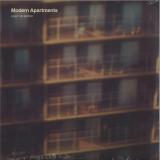
Modern Apartments arrive on Dark Entries, with Light on Water, an LP featuring 8 cuts of instrumental cosmic-kosmische analog synth workouts. Modern Apartments is Ryan Ambridge, the musician and producer best known for his work with dark synth projects Linea Aspera and Lust Pattern. While both of those outlets lean towards the greyscale and robotic, Ambridge wanted to explore a more colorful palette with Modern Apartments, a livelier, looser sound. The medium of film plays a major role here; Ambridge works as a projectionist, screening archival prints of 35mm and 16mm films, and the textures and temporality of the medium fed directly into the Modern Apartments aesthetic. But it isn’t all blurry edges and fuzzy optimism on Light on Water. Says Ambridge, “Regular beats from old rhythm boxes and the sharp angles of post-punk found their way in. The contrasting imagery from those old film prints, of dense cities and open countryside, is reflected back in the dialog between looser sounds and rigid stylistic choices.” This tension shines through on tracks like album opener “Completely,” which pairs the icy minimalism of John Foxx with the meandering grooves of Cluster, or the eponymous “Light on Water” which leans even further into the sun-bleached vibes of Roedelius. Artwork for this record was designed by Eloise Shir-Juen Leigh. Light on Water is perfect late-summer listening, as the last gasps of seasonal radiance fade into autumnal splendor.
out of Stock
Last delivered 17 days ago available to reorder, subject to availability
*Re-release of Holy Fuck’s 5th album originally released in 2020, now on clear vinyl limited to 500 copies*
Holy Fuck have today announced details of new album 'Deleter', which will be released on January 17th and is further previewed with the video for acclaimed latest single 'Luxe' (ft. Alexis Taylor). Having just concluded a US tour alongside Hot Chip, the seminal Canadian band will play a selection of European headline dates later this month (with a London show at Moth Club on October 23rd selling out immediately).
Arriving at a moment where attention spans are shot and anxieties are going into overdrive, 'Deleter', Holy Fuck’s fifth studio LP, is a defiantly full-bodied affair. Polyrhythmic and pleasure- focused, 'Deleter' sees Brian Borcherdt, Graham Walsh, Matt Schulz, and Matt “Punchy” McQuaid utilises their signature sound - seamlessly fusing the gauzy drive of krautrock and deep house’s dreamy ineffability, expertly blending purring motorik percussion with the sort of fuggy synthetic fizz and tang they are renowned for.
From the thrusting minimalism of opener ‘Luxe’ through to the triumphant chug of closing track ‘Ruby’, via club-ready rollocker ‘Free Gloss’ and the cosmic clatter of ‘San Sebastian’, Deleter is a record that joins the Holy Fuck dots within their widescreen, technicolour, crescendo- heavy sound.
Founded in Germany in 2019, CONSVMER. have spent the last few years carving out a space that’s entirely their own: progressive metal, beatdown, and metalcore delivered entirely in German, with an unflinching focus on subjects most people would rather look past. Their 2024 record Seelenfrieden turned heads inside and outside the German metal scene, with coverage from outlets including Nik Nocturnal and a collaboration with Paleface Swiss that confirmed the band were operating at a level far beyond their years. Live, they have earned their place on stages at Summer Breeze, Core Fest and Bembel X Core Festival. Now, with new vocalist Jacques Gronert and a vision sharpened to a point, CONSVMER. return with Abgrund.
Where Seelenfrieden refined the template, Abgrund dismantles it. Across eleven tracks the band push further into territory that feels genuinely unique and uncompromising: the title track opens the record on collective collapse and a society steering towards the edge with no intention of stopping, while songs like "Gier" tear into systemic greed and exploitation with brutal clarity, "Willenlos" descends into dissociation and the erasure of identity, and "Sucht" confronts addiction and self-destruction with a rawness that is hard to shake. Closer "Gottverlassen" leaves the listener exactly where the title suggests. The collaboration with brutal deathcore veterans Acranius on "Sucht" hits like a freight train, their English-language verses locking into CONSVMER.'s German delivery to devastating effect. Fellow German hardcore outfit DOGBITE also appear, adding another dimension to a record that never loses focus.
Radically exploratory, Raphael Loher’s Figuren is an album shaped by process and experimentation. Guided by intuition, listening, and a deliberate distancing from his primary instrument—the piano—, the LP marks a decisive step in the Swiss pianist and composer’s artistic development, expanding his sonic vocabulary while maintaining a distinct and personal language.
Figuren draws on ten intimate concert recordings from Keemuun—Loher’s debut for Three:four Records—created during the pandemic and performed in his studio for just one or two listeners. This source material was subsequently developed during a residency in the Blenio Valley, where Loher deconstructed melodic elements, isolated individual tones, and extracted resonances, reassembling them into new configurations. The process generated around 30 initial pieces and also informed his sophomore album, Hug of Gravity, released by Hallow Ground in 2025.
In a further stage of transformation, Loher processed these fragments through a Revox B77 tape machine, subtly altering their pitch before digitizing and reshaping them once again. This iterative cycle of manipulation and recombination forms the core of Figuren’s sonic language.
Departing from the more structured frameworks of his earlier work, Figuren foregrounds experimentation as both method and aesthetic. The compositions range from finely layered rhythmic microstructures to sparse, evolving melodic fragments, each unfolding with a precise sense of restraint.
Montréal-based sound artist Steve Bates expands his strategies and stylistic influences on An Infinite Antenna, his second solo album for Constellation, giving freer reign to melodic components and textural dynamics: leftfield synth work, deconstructed drum machine, pointillist electric guitar, and radiostatic blur are all part of the new brew swirling around his bruitist signal-bending and field-recording sensibility. Arguably a more ambient album than his acclaimed 2022 Constellation debut, An Infinite Antenna is at the same time more densely packed with ideas, dynamics, evocations and earworms. Coming out of the anarcho-punk scene of the Canadian Prairies in the 1990s, Bates founded Winnipeg’s experimental sound festival Send + Receive in 1998 before moving to Montréal to become Sound Coordinator at Hexagram (Concordia University), delving further into sonic research and theory, tape-based composition, and installation work. Alongside the curatorial arc of his own sound art label The Dim Coast, Bates released several solo and collaborative albums on ORAL_records leading up to All The Things That Happen, the 2022 Constellation debut praised by Boomkat for its “grittily iridescent ambient billow rendering maximalist panoramas” and by Backseat Mafia as “extraordinary soundscapes of unstable, destructive cacophony and tender calm, echoes of the threat of power.” Where that album was noisier and single-minded, made with the self-imposed limit of a Casio SK-1, Bates plays more widely with instrumentation and atmospheres on An Infinite Antenna, also drawing on his post-hardcore roots in seeking a sort of track-by-track concision nonetheless driven by the album’s coherence as a seamless work. “I was trying to set durations I associate with punk rather than the longer, sprawling music coming from more ambient styles (that I very much love), and while I wasn’t able to quite pare it down to Minutemen durations, I had that reduction to essential elements as a sort of whisper over my shoulder.” Incorporating source recordings made throughout 2023-2025, including at artist residencies and site-specific sound installation visits in Bosnia and Herzegovina (the album’s cover photo was taken in Sarajevo), Austria, Greece, and Saskatchewan, An Infinite Antenna combines Bates’ “idea of slowly scanning a radio dial” with a soundworld of recurring timbral and textural touchstones that forge an integrated whole.
The album’s 12 tracks work effectively as stand-alone pieces, replete with shifting undercurrents, buried melody, and stuttering kinetics, and as a sequential flow where the brief interstitial silences between them are like short pauses to flip the next page in a sketchbook of perspectival studies of a wide but singular tableau. The glistening atonal synth expressionism of opener “Pink pink pink pink…pink pink” drifts gently toward submerged ambience, darkened by the noised rumble and static interference of “Green as a ghost”, which introduces broken beats and piano chords in its denouement. Tracks like “Battles and sieges and street trees” and “Easier sad than done” work the foundations of low-end field-recording resonance, but dappled with lovely melodic droplets of treated guitar and synth. “Waste, songs of the world” and “Disaster loans” are among the album’s most explicit stylistic references to posthardcore, with distorted ambient bass and gently abrasive drum sampling. Closing track “Swamps and factories”, the album’s longest piece, is perhaps most reminiscent of Bates’ previous record with its sustained dissonant glimmer-drone, but the journey An Infinite Antenna traces to get there is Bates at his most dynamic, diverse, distinctive, and engaging. Thanks for listening.
Montréal-based sound artist Steve Bates expands his strategies and stylistic influences on An Infinite Antenna, his second solo album for Constellation, giving freer reign to melodic components and textural dynamics: leftfield synth work, deconstructed drum machine, pointillist electric guitar, and radiostatic blur are all part of the new brew swirling around his bruitist signal-bending and field-recording sensibility. Arguably a more ambient album than his acclaimed 2022 Constellation debut, An Infinite Antenna is at the same time more densely packed with ideas, dynamics, evocations and earworms. Coming out of the anarcho-punk scene of the Canadian Prairies in the 1990s, Bates founded Winnipeg's experimental sound festival Send + Receive in 1998 before moving to Montréal to become Sound Coordinator at Hexagram (Concordia University), delving further into sonic research and theory, tape-based composition, and installation work. Alongside the curatorial arc of his own sound art label The Dim Coast, Bates released several solo and collaborative albums on ORAL_records leading up to All The Things That Happen, the 2022 Constellation debut praised by Boomkat for its "grittily iridescent ambient billow rendering maximalist panoramas" and by Backseat Mafia as "extraordinary soundscapes of unstable, destructive cacophony and tender calm, echoes of the threat of power." Where that album was noisier and single-minded, made with the self-imposed limit of a Casio SK-1, Bates plays more widely with instrumentation and atmospheres on An Infinite Antenna, also drawing on his post-hardcore roots in seeking a sort of track-by-track concision nonetheless driven by the album's coherence as a seamless work. "I was trying to set durations I associate with punk rather than the longer, sprawling music coming from more ambient styles (that I very much love), and while I wasn't able to quite pare it down to Minutemen durations, I had that reduction to essential elements as a sort of whisper over my shoulder." Incorporating source recordings made throughout 2023-2025, including at artist residencies and site-specific sound installation visits in Bosnia and Herzegovina (the album's cover photo was taken in Sarajevo), Austria, Greece, and Saskatchewan, An Infinite Antenna combines Bates' "idea of slowly scanning a radio dial" with a soundworld of recurring timbral and textural touchstones that forge an integrated whole. The album's 12 tracks work effectively as stand-alone pieces, replete with shifting undercurrents, buried melody, and stuttering kinetics, and as a sequential flow where the brief interstitial silences between them are like short pauses to flip the next page in a sketchbook of perspectival studies of a wide but singular tableau. The glistening atonal synth expressionism of opener 'Pink pink pink pink_pink pink' drifts gently toward submerged ambience, darkened by the noised rumble and static interference of 'Green as a ghost', which introduces broken beats and piano chords in its denouement. Tracks like 'Battles and sieges and street trees' and 'Easier sad than done' work the foundations of low-end field-recording resonance, but dappled with lovely melodic droplets of treated guitar and synth. 'Waste, songs of the world' and 'Disaster loans' are among the album's most explicit stylistic references to posthardcore, with distorted ambient bass and gently abrasive drum sampling. Closing track 'Swamps and factories,' the album's longest piece, is perhaps most reminiscent of Bates' previous record with its sustained dissonant glimmer-drone, but the journey An Infinite Antenna traces to get there is Bates at his most dynamic, diverse, distinctive, and engaging. Thanks for listening
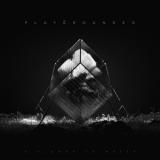
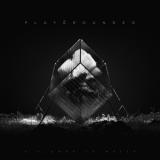
A Flower to Water, the staggering new album from Greek Progressive-Post Metal outfit Playgrounded, finds the five-piece pushing their boundaries even further; welcoming the unquantifiable depths of loss, grief and finitude into their meticulous, fractal process as friends in defiance of neglect. Hailing from Athens, Greece but predominantly based in Rotterdam, Netherlands, Playgrounded have never ceased to push the envelope of Post Metal with genre-defying contemporary electronic and cinematic neo-classical elements since the band's inception almost two decades ago. A Flower to Water is Playgrounded's third full-length offering and sees the band thriving in their creative relationship with Pelagic Records. Recorded and produced by the band across multiple studios back home in Athens and Rotterdam, Playgrounded enlisted the help of longtime collaborators C. Cederberg (Leprous, Anathema) who mixed the album at Cederberg Studios in Kristiansand, Norway and George Tandero (Madrugada, Satyricon, Jaga Jazzist) who mastered it in Oslo. A profound sense of patience is keenly felt throughout the album. The deliberate spaces between each hammerblow guitar riff, pulsing bass line or hypnotic drum groove; each heavy, breathless pause and fizzing glitchy whisper all tell of unspoken loss and absence as an indelible part of A Flower to Water and indeed of Playgrounded forever more. In marking this absence however, in embracing loss head on, Playgrounded reify memory in defiance of neglect. By extracting such a colossal, breathtaking piece of work from a seemingly unassuming collection of sounds, clips and sonics; the quintet slow time to a standstill to present grief in bloom; a beautiful, perpetual flower with its roots in loved ones lost. FOR FANS OF Karnivool, Katatonia, Nine Inch Nails, Deftones, Moderat, The Ocean, Vola, Leprous, Skyharbor, Anathema
A Flower to Water, the staggering new album from Greek Progressive-Post Metal outfit Playgrounded, finds the five-piece pushing their boundaries even further; welcoming the unquantifiable depths of loss, grief and finitude into their meticulous, fractal process as friends in defiance of neglect. Hailing from Athens, Greece but predominantly based in Rotterdam, Netherlands, Playgrounded have never ceased to push the envelope of Post Metal with genre-defying contemporary electronic and cinematic neo-classical elements since the band's inception almost two decades ago. A Flower to Water is Playgrounded's third full-length offering and sees the band thriving in their creative relationship with Pelagic Records. Recorded and produced by the band across multiple studios back home in Athens and Rotterdam, Playgrounded enlisted the help of longtime collaborators C. Cederberg (Leprous, Anathema) who mixed the album at Cederberg Studios in Kristiansand, Norway and George Tandero (Madrugada, Satyricon, Jaga Jazzist) who mastered it in Oslo. A profound sense of patience is keenly felt throughout the album. The deliberate spaces between each hammerblow guitar riff, pulsing bass line or hypnotic drum groove; each heavy, breathless pause and fizzing glitchy whisper all tell of unspoken loss and absence as an indelible part of A Flower to Water and indeed of Playgrounded forever more. In marking this absence however, in embracing loss head on, Playgrounded reify memory in defiance of neglect. By extracting such a colossal, breathtaking piece of work from a seemingly unassuming collection of sounds, clips and sonics; the quintet slow time to a standstill to present grief in bloom; a beautiful, perpetual flower with its roots in loved ones lost. FOR FANS OF Karnivool, Katatonia, Nine Inch Nails, Deftones, Moderat, The Ocean, Vola, Leprous, Skyharbor, Anathema
L’Eclisse is the third studio album by Garden City Movement. Drawing from psychedelia, alternative R&B, leftfield electronic music and lo-fi indie songcraft, the album weaves together guitars, synthesizers, layered vocal arrangements and groove driven rhythms into a richly detailed collection of songs. Bringing together different facets of the band's sound into a cohesive body of work, the album reflects a decade of musical exploration while further developing Garden City Movement's distinctive musical language.
Garden City Movement are the duo of Roy Avital and Johnny Sharoni. Over the past decade, they have built an international audience through a distinctive blend of dream pop, electronic music and immersive production. Their releases have received support from Pitchfork, The FADER, Clash, Stereogum and KCRW, while their music has appeared in FIFA 22 and major television productions. Alongside extensive international touring, the band has performed at festivals including Glastonbury, Primavera Sound, Pukkelpop and Lollapalooza India, and shared stages with artists such as Alt J, RÜFÜS DU SOL, SOHN and Cults.
Violeta García & Hora Lunga return with 4ever, their second album and the follow-up to I’ll Wait For You In The Car Park. Released in 2025 on -ous, their debut received airplay on BBC and NTS and was selected for Bandcamp’s Best Experimental Music year-end list. 4ever picks up where that record left off: in ordinary moments, small scenes and the strange emotional weight of being somewhere between places. But here, these moments are stretched across a much larger, darker screen. A night flight, a terminal, a bad connection. When too many feelings are carried from one place to another, everyday situations begin to feel epic, empty, or apocalyptic.
Built from García’s cello and Hora Lunga’s synths, samples and field recordings, the album pushes further into emotion, letting fragile melodies, orchestral cello gestures, heavy low-end and compressed noise melt into something both dystopian and strangely familiar. Its warmth is not meant to be an escape from this world, but something that appears within it. Acoustically, the album lives through the closeness of the materials, the way sounds stay with each other, and in the feeling that even the most unstable moments are being carried together. The album presents itself in scenes that fade into each other: quiet melodic fragments that are interrupted and restarted, unpredictable changes of direction, held together by an inevitable melody, a bright synth harmony unfolding into an almost orchestral cello arrangement. Later, a broken organ-like sample turning in circles, cello melodies appearing as if they were trying to remember a song that never belonged to one voice alone. An endless loop that is placed under changing lights, briefly opening into emotional chords, then slipping back into emptiness.
It is this instability that Violeta García and Hora Lunga place at the center of their collaboration. They do not decorate the cello with production, or place electronics around an acoustic centre. They explain: “On 4ever, we become part of the same unstable surface. What holds the record together is not resolution, but the trust in staying together as things distort, overload, disappear and return.”
Violeta García, an Argentinian cellist known for her solo work and for her role in the punk band Blanco Teta, brings the instrument close to the body, as melody, pressure, texture, noise and sudden emotional weight. García has brought her distinct musical voice to KEXP, Rewire, Le Guess Who?, Bad Bonn Kilbi, Silent Green, TransMusicales, Roskilde and more.
Hora Lunga, a Zurich-based producer and composer working across unstable song forms, treats electronics less as a frame than as a weather system: something that can hold a scene together, distort it or make it disappear. In recent years, his compositions have ranged from experimental song forms, sound performances, ensemble compositions and film music. His ensemble WIRREN consists of up to fifteen performers.
Deas joins the CROWD family with 'Silent Tension', a refined EP that channels the Polish producer's signature blend of hypnotic groove and hardware driven production. Known for his precise studio craftsmanship and deeply intuitive approach to groovy techno, Deas has steadily built a reputation as one of the standout figures of the contemporary Polish scene. Through years of releases and international touring, he has developed a sound that feels both timeless and unmistakably personal, as proven on the label's 12th record. Opening track 'I Won't Cry' immediately sets the tone with classy vocal sampling from Loleatta Holloway, warm chord progressions and rolling swung percussion anchored by Deas' characteristically rich bass. Following up, 'Waterfall' introduces bleepy modular sequences and chopped vocal fragments, with a sweeping drone synth cutting through the mix above the track's rolling bass. On the flip side, 'Silent Tension' continues deeper into minimal territory, combining crisp clap fills, subtle vocal chops and delayed chord repetitions into a slow burning groove. The vinyl's closing cut 'Where Do They Go' brings dense low end weight and fast dubby chord stabs, accompanied by sharply placed vocal cuts, creating a track that balances restraint and impact. The digital addition 'Here Again' is a classic Deas production, characterised by repetitive synth stabs that gradually transform the cut into a hypnotic hook, while stripped back percussion and a powerful kick give the track a commanding presence. Throughout CROWD012, Deas remains firmly focused on groove and subtlety, while retaining a strong impact. The tracks unfold patiently, with a focus on tension, repetition and gradual escalation, maintaining the hypnotic functionality that has become both Deas' trademark and a defining characteristic of the sound of the label founded by FJAAK and Ellie Acula. The 'Silent Tension' EP stands as a sophisticated and deeply effective club record that further cements Deas as one of the most distinctive voices in contemporary techno.
out of Stock
Last delivered 6 days ago available to reorder, subject to availability
Cello player and electronic artist Martina Bertoni returns with her 2nd album for Karl: Hypnagogia delivers six new, masterfully crafted tracks between experimental ambient, drone and modern composition.
Cellist and composer Martina Bertoni started playing the cello at a very young age. Classically trained, her career further developed around experimental and film music, for which her cello has been featured in numerous records, works and soundtracks for films and series. After two EPs and her debut full length All The Ghosts Are Gone (2020), Bertoni joined the Karl roster where she released Music For Empty Flats in January 2021 to critical acclaim (a.o. one of the Top Ten drone albums of 2021).
On her new album Hypnagogia she continues to explore the sonic possibilities of her cello which she uses as primary source for composition and sound processing through reverbs, feedbacks and sub-bass frequencies, thus crafting sonic sculptures, rich of atmospheres and frictions, fed by ambient as much as drone and modern composition.
In the words of Martina Bertoni:
"The six tracks that constitute Hypnagogia have been written during 2021 and partially inspired by the reading of Stanislaw Lem's book Solaris. The title refers to a transitional state of consciousness from wakefulness to sleep, during which one might experience sensorial hallucinations and lucid dreaming, and can tap into the pristine structures of the subconscious. Hypnagogia portraits an imaginary cosmic journey of the Self that crash ends into a blinding sun."
Featuring a prestigious line-up of guests, the album Sonars brings together iconic voices alongside Maxime Dangles and Tommy Rizzitelli: Oxmo Puccino (Continent plastique), Craig Walker, former lead singer of Archive & Power of Dreams (Bug and Delusion), and Aur (Reef).
Conceived during the Art/Science project of the same name, Sonars draws inspiration from reflections on ecology and the shifting biodiversity of our oceans and rivers. It was in Rimouski, on the shores of Quebec’s Saint Lawrence River, that the duo immersed themselves in the imagery and sensations that breathe life into this record. The result is a collection of breathless, driving tracks—a masterly fusion of machines and drums where organic textures meet the urgency of the climate crisis.
Tape Source’s Romain Da Silva Santos further enriches the album with his guitar work, while the visual identity is graced by the work of photographer Jean Gaumy, whose iconic photography features on the cover.
out of Stock
Last delivered 24 days ago available to reorder, subject to availability
Following earlier appearances on Time Horizon IV and a remix for Pushlock's "Journey at the end of the Brain", Low End Activist returns to further cement his link with XCPT — this time with a full-length that extends into a shared message.
It’s a record that deals in pressure and placement where the rhythms carry weight without dominating, allowing tones to dissolve at the edges. Space isn’t decorative here, it’s structural — carrying as much intent as the low-end itself.
A respectful and meticulous approach emerges in the spectral handling of samples — spooked, finely cut, and quietly rooted in a jazz-derived sphere.
The album stays locked into its own logic of reduction, control, and tension. What emerges is a fluid listening experience less about peaks, more about persistence, 8 Tracks spanning the various palette of bass music through the art of good sampling; both for the floor but also for intimate momentum of introspection. A Journey into the sound merging the new with the old school.
out of Stock
Last delivered 24 days ago available to reorder, subject to availability
Two of the most prolific remixers in the world of Disco,Dave 'Love' Lee and John Moraleshave teamed up for one of their biggest projects to date - 'Mixed To The Maxxx'. After gaining access from the legendary original artists, the pair take the multi-track tapes of many classic Disco, Funk & Soul tracks and re-work them...to the Maxxx!
Where Remixed With Love stands as Dave Lee's own gold-standard body of work, Mixed To The Maxxx sets that legacy alongside Morales' own decades-deep M+M body of work: Lee brings his musically dense, groove-first touch to the likes of Harold Melvin, Syreeta, Lenny Williams and The Brand New Heavies, while Morales applies his extended, dancefloor-built M+M treatment and crushes the likes of Barry White, The Temptations and Loleatta Holloway, plus Dennis Coffey's breakbeat classic "Scorpio" for the DJs and collectors alike. Both work from original tapes, surfacing parts barely audible or entirely unheard in the source mixes, and both know when to let a classic breathe rather than bury it under modern production. It's a pairing a long time in the making. Lee and Morales first talked about working together around a decade ago, and getting Mixed To The Maxxx off the ground took five years of patient work: tracking down usable stems, securing approvals, and navigating a licensing landscape where much of the best material is now tied up with major labels increasingly cautious about clearing remixes. What's landed here is the product of that graft as much as the pair's shared ear for a great record, the sound of two people who know exactly what they're looking for and are willing to put in the time to find it.
A double 12" sampler in summer 2025 previewed the record's range. A bass-driven overhaul ofThe Brothers Johnson's "The Real Thing" and an extended mix of Philly legends Bell & James' "Livin' It Up (Friday Night)" showcased Lee's side, while an anthemic take on Inner Life's "Ain't No Mountain High Enough" and a tempo-lifted Light Of The World"London Town" flew the flag for Morales. Both drew strong early support ahead of the full LP.
out of Stock
Last delivered 2 days ago available to reorder, subject to availability
DE-CMG / DE15YR Dark EntriesBooks21.09.202621.SEP.26
Dark Entries Collected Music Graphics Compiled by Josh Cheon and Eloise Shir-Juen Leigh To celebrate 15 years of Dark Entries, this zine showcases the label’s visual aesthetic, bringing together some of the most iconic designs that we’ve released. While Dark Entries’ sonic mission has included sounds as diverse as synth-pop, Italo disco, darkwave, house, and techno, it is equally staggering to see the breadth of visuals the label has encountered and collected over the years. Included here are selected typography, logos, and illustrations from the label’s extensive catalog — well over 300 releases to date. Designs have been created using DIY analogue techniques as well as more contemporary digital approaches. A full discography is included at the end for reference and an essay by Shawn O’Sullivan (Led Er Est, Further Reductions). This zine serves as a source of inspiration for artists as well as a means of preserving and documenting these distinct graphics. DARK ENTRIES RECORDS is a San Francisco-based record label that was born in July 2009. Helmed by Josh Cheon, a vinyl-focused DJ and collector, the label has focused largely on excavating the 1980s underground era – but releases have spanned from sultry vintage disco to bleeding-edge contemporary techno. Graphic designer Eloise Shir-Juen Leigh has been responsible for most of the label’s artwork, whether reproducing original designs accurately for reissues or creating exciting new ones. Much care and attention is given to each release to represent the music in a memorable way as well as tell the stories behind these projects. Hand-stamped and limited to 200 numbered copies. 64 pages with neon cardstock covers. Measures 5×7 inches.
Houston’s premier street griot is stepping into his most profound chapter yet with his highly anticipated upcoming album, O.Y.N. Throughout a decorated career that spans over 1.2 billion global streams and a fiercely loyal fanbase, Maxo Kream—born Emekwane Ogugua Biosah, Jr.—has established himself as one of rap’s most authentic, uncompromising storytellers. From the raw trenches of Alief to the critically acclaimed triumphs of Punken, Brandon Banks, Weight of the World, and his triumphant 2024 independent pivot Personification, Maxo has long been celebrated by Pitchfork, NPR, and Complex for his cinematic, hyper-detailed world-building. Now, O.Y.N. finds the Houston icon turning his gaze inward, pairing his signature Texas grit with an expansive, global perspective that redefines his artistic boundaries.
If his previous work was about Maxo taking full creative control as an independent force, O.Y.N. is about him uncovering who he is at his core. Following the passing of his father, Maxo found himself searching deeper for his family origins, leading to a pivotal moment of artistic and personal rebirth. For the first time in his life, Maxo traveled to Lagos, Nigeria, anchoring his new music in a profound celebration of his Nigerian heritage. The emotional centerpiece of this journey is the JPEGMAFIA-produced single “Time Out,” an introspective track that moves away from the frantic energy of his past releases to offer a stripped-back look at love, loss, and legacy. Featuring a heavy, resonant drum presence on the outro, the song’s accompanying music video was filmed on location in Lagos, capturing Maxo navigating his ancestral roots in real-time.
While O.Y.N. reaches new emotional depths, it doesn't sacrifice the hard-hitting, volatile street persona that made Maxo a star. The album expertly balances soul-baring vulnerability with cutting-edge hip-hop experimentation, showcasing elite chemistry with some of the genre's most forward-thinking visionaries. Look no further than “Fake Jeezy,” a collaborative explosion featuring Denzel Curry and masterminded by JPEGMAFIA. The track is a masterclass in industrial chaos, combining sharp lyricism and early-2000s trap imagery with cold, surreal visual aesthetics. This duality highlights Maxo's unique positioning in the culture as a trusted street general who can effortlessly trade bars with rap's avant-garde elite.
From his early days flipping Kendrick Lamar's “Rigamortis” to sharing marquee tracks with the likes of A$AP Rocky, Travis Scott, and Tyler, The Creator on hits like “Big Persona,” “Cracc Era,” and “Cracc At 15,” Maxo Kream has always been a rapper's rapper. O.Y.N. represents the ultimate synthesis of this incredible journey. It is an album born from the soil of Alief but elevated by the spirit of Lagos—a raw, beautiful, and heavy-hitting testament to an artist who has survived his past, honored his losses, and fully embraced his destiny.
The album title, Bachar Mar-Khalifé Plays Christophe, inevitably comes as a surprise: the Lebanese composer, singer, and multi-instrumentalist ventures into the world of the pop dandy who escaped the yé-yé era… From the very first notes, one thing becomes clear: splendor flows effortlessly from melodies restored to their fragility and simplicity. Bachar Mar-Khalifé explores the hypnotic melancholy of a world that is both sophisticated and crystal clear. A fascinating plunge “into this collapsing luxury,” as the lyrics of Paradise Lost say. Seven tracks with his collaborators Dogan Poyraz on drums and Aleksander Angelov on bass, seven narratives unfolding the musical richness of Christophe’s songs as much as that of Bachar Mar-Khalifé’s playing and singing. A captivating journey, both on record and on stage. It all started there, in fact. In April 2025, BMK dared to pay tribute to Christophe at the Fragile Festival, at the Cirque Zingaro, five years after his death. At first glance, it wasn't his familiar world. "I haven't idolized him my whole life," he explains. "I really knew Christophe personally before I knew his work in detail." During his childhood in Lebanon, and then after arriving in France in 1989 at the age of six, the music played at home left little room for Christophe's pop. "We listened more to Brassens, Brel, Ferré, Barbara. I hardly knew anything more than 'Les Mots bleus.' Then we met. Christophe loved the night, young musicians, exploring together..." In 2018, Bachar and Christophe recorded a Unik session for FIP, which involved recording a 45 rpm single live, followed by a concert at the Maison de la Radio. The younger brother has the opportunity to discover a legend, but also how it works: “His melodies allow you to go very far—even him, who seems to be searching for a new version with each interpretation, as if he wanted to return to the organic aspect of the song. A researcher who, out of a need for freedom, wants to escape the image people have of him.” So there was no question of overproducing these covers as one might do with the stage fright of tackling an intimidating work. “I tried to go very fast to deliver each song, as if I had composed it myself.” Working instinctively, very spontaneously, the bulk of the album comes from the trio's rehearsals and the concerts that followed. “I chose songs that moved me. Very beautiful melodies and very beautiful lyrics.” Whether the lyrics are by Jean-Michel Jarre or Alain Kan, “they often speak of love in danger.” “I like to hear this quote from Paradise Lost: ‘Dandy, a little cursed, a little aged / In this crumbling luxury.’ Here and there, he pruned the lyrics, as if to make them more audible, in Les Mots bleus, ‘The winter wind blows in April / I love the still silence’ – an evocation of the month of Christophe’s death. And he chose a little-known song from the yé-yé era, Les Amoureux qui passent, in which we hear the young trumpeter Siméon Petrov, who further expands the play on the archetypes of vintage romantic song. Between accepted fragility and the vertigo of feeling, between virtuosity of lightness and unfathomable depths, Bachar Mar-Khalifé unfolds an unexpected kinship with Christophe.” A kinship of silences and sonic surprises (a synthesized zurna sound in "Emporte-moi," for example) that will continue on tour. He is also preparing an album of original songs, his first since 2020, after many compositions for film and collaborations with other artists. He writes songs of love and dance, at a time when Lebanon and the world are experiencing such dark times. Perhaps this is yet another lesson from Christophe: to love and sing "in this crumbling luxury."
Brazilian artist Rubel isn’t one to be pigeonholed and typecast into staying in one sound. Casas, the follow-up to his debut album Pearl from 2015, brought a bigger, more epic, and richer production quality to the table. Fusing the worlds of MPB and hip hop, Rubel’s sophomore LP built on the momentum of its predecessor, gaining a Latin-Grammy nomination along the way. Mr Bongo is proud to be giving Casas its first worldwide release on vinyl and CD outside of Brazil and Japan.
The cliché they say is that the second album is always the trickiest; however, Rubel doesn’t seem to have had any problems on Casas. It’s a fountain of creativity and originality, marking an artist in full flow.
Conceived after Rubel spent six months living in Los Angeles, Casas is MPB-leaning at its core but is also driven by a hip hop inspired pulse. There is a clear influence from hip hop’s aesthetic across the 2010s woven subtly but fundamentally throughout. Nods to Frank Ocean, Kendrick Lamar and Tyler, The Creator can be heard across an album full of playful edge and personality. Luscious string-led arrangements and tracks that explore the rich folkloric rhythms of Brazil, sit next to songs with low-fi drum machines and features from acclaimed Brazilian rappers.
One of the highlights of the album, ‘Mantra’, starts with a traditional Brazilian rhythm that morphs into a hazy hip hop beat. A sublime song with a hooky call and response chorus, it features a guest appearance and verse by the Brazilian MC Emicida. Another highlight is the epic ‘Colégio’ (College) which further showcases the melding of stripped back drum machine beats with cinematic, sweeping arrangements. Elsewhere, ‘Partilhar’ is a swaying, heartwarming hug. A tale of longing and love that has become a singalong fan favourite at Rubel’s concerts.
Casas also shines a light on a string of key players in Brazil’s new vanguard, such as Pedro Fonte, Gus Levy, and Brazilian rapper / poet Rincon Sapiência to name a handful. The record has pop sensibilities yet also feels underground. It beats with the heart of a singer-songwriter, a feeling that was felt so strongly on Pearl, yet this time is bolstered by a level of arrangement and richness of sound that take it to another dimension - soaring horn and string sections elevating the songs from home recording to stadium-ready anthems. Keeping that intrinsic beauty and simplicity of a well-constructed song yet reframing it within a pop context is the true gift of this album.
Casas cemented Rubel’s status as one of Brazil’s leading contemporary talents and a key figure enriching the country’s already effervescent scene.
There was an immediate buzz surrounding This Is What I Know About Being Gigantic, the 2001 debut EP by Seattle indie phenomenon Minus the Bear. It wasn’t the kind of viral interest that translated into a string of sold-out tour dates, but it meant that the tuned-in crowd eagerly anticipated their next move. To help stir up the excitement for their first proper full-length, the band followed up Gigantic with a promo CD featuring two tracks from their upcoming album, a short instrumental interlude, an exclusive new song, and a demo version of another album track. Packaged in a cardboard slipcase, it was the kind of cheaply manufactured promotional item that could be handed out for free at shows or thrown in as a bonus in online orders—a relic of the final years of the CD age before the advent of the iPod and mp3. The sampler CD was christened Bands Like It When You Yell “YAR!” At Them in a nod to the upcoming album Highly Refined Pirates.
While these kinds of promotional items typically had an ephemeral existence, filed away in some neglected binder of CDs or tossed out during one of the many apartment-to-apartment moves of the band’s principal demographic of urban twentysomethings, Bands Like It When You Yell “YAR!” At Them had a curiously persistent presence. Perhaps it was because it was packaged more like a proper EP than a sampler. It certainly helped that it was a free release, meaning anyone who came to a show likely walked away from the evening with the cardboard slipcase tucked in their jacket pocket. It’s also noteworthy that the EP showcased three songs from the back half of Highly Refined Pirates rather than the album’s live staples and fan favorites from side A. Whatever the combination of factors at play, “YAR!” took on a life of its own and was ultimately re-packaged in a jewel case and sold as a proper EP in 2004 in the wake of Highly Refined Pirates’ success. And now in 2026, it’s getting its first proper release on vinyl.
Opening with the driving beat, chirping guitars, and funky low-end of “Spritz!!! Spritz!!!,” Bands Like It When You Yell “YAR!” At Them quickly cements Minus the Bear’s foundation of sophisticated revelry, a spirit further emphasized in the Highly Refined Pirates title choice. Part of the Bear’s lore involves them playing their first show three days after 9/11, and just as New York City’s indie rock scene took a sharp turn towards nightclub debauchery and a rejection of ‘90s rock’s dour fatalism in the wake of the World Trade Center tragedy, so did the Bear turn away from the Seattle’s scene’s penchant for gloom and angst towards a cerebral after-hours pop sound. The inclusion of “Women We Haven’t Met Yet” helped elevate what could have otherwise been seen as an album deep cut into a lead track. The fact that these first two songs essentially served as preview singles over future Pirates hits like “Monkey!!!Knife!!!Fight!!!” and “Absinthe Party At The Fly Honey Warehouse” speaks to the high quality of every song the band cranked out in their early years. The EP’s exclusive track “Drop It Like It’s Hot” presaged Snoop Dogg’s mega-hit single of the same name by two years, but whereas Snoop leaned into restrained minimalism, the Bear unleashes some of their fiercest work here, building off of interwoven riffs and electronic layers to a climax of stabbing guitars and hollered vocals. Much like Nirvana’s Hormoaning EP, Minus the Bear’s Bands Like It When You Yell “YAR!” At Them was initially more of a marketing gimmick than a proper release, but given the popularity of the pivotal studio albums that stemmed from the same recording sessions, these extended plays serve as compelling companion pieces that have earned a special spot in their respective fanbases’ hearts. Suicide Squeeze is proud to offer Bands Like It When You Yell “YAR!” At Them on vinyl on September 18, 2026, nearly 25 years after the band’s first show.
Remastered for vinyl by Bernie Grundman with lacquers cut at 45rpm, this limited edition pressing of 1000 copies on Puget Sound-colored vinyl helps document and preserve the exciting early years of one of American indie rock’s most beloved acts.
Spiral code is the second album released on An’archives by the Japanese trio archeus, after 2023’s Kusōzu: Nine Death Stages, and their seventh release altogether. It’s also the most staggering evidence yet of the single-minded pursuit of group-sound explored by Keiko Higuchi (voice, drums, percussion, trombone), Shizuo Uchida (4 strings), and TOMO (hurdy gurdy). For two tracks, “awakening, beyond recurrence” and “where points and lines intersect”, they’re joined by Kiyotaka Moriuchi, an improviser who’s played with the likes of Shoko Numao and Ensemble Shippolly, on percussion and darbuka (a goblet-shaped drum played widely across South East Asia).
Always able to scour magic from both their relationships with their instruments, and their non-idiomatic interplay, on spiral code they’ve widened their net further; the results oscillate from humid and claustrophobic blocks of noise to rivulets of tone coursing across post-volcanic landscapes, and on into simple gestures suspended in arctic space. Spiral code was recorded in a single day, on March 20 th 2025, at a studio in Koenji, Tokyo, the morning session with the original trio, and afternoon and evening session with Moriuchi – the first time archeus have played with a guest musician.
When asked about the music archeus makes together, TOMO is quick to isolate the singular characteristics of their collaboration: “we are trying to explore some new, unknown musical vocabulary every time we play. And what we are trying to achieve from every session is something unique, an interesting chemistry or, I should say, alchemical reaction among the three of us.” You can certainly hear that alchemy in the dynamic arc of their performances, the way they seem to be able to switch on a dime and push the music into unexpected terrain, all while sounding intimately archeus. “We have been playing for many years,” TOMO continues, “so I think that among three of us, we can telepathically sense, feel and understand what each of us is trying to express while we are playing.” It’s telling that guest musician Moriuchi fits so effortlessly into the archeus soundworld, able to hitch a ride on the intimate telepathy of Higuchi, Shizuo and TOMO; “I think he gave us some fresh air to our music,” the latter smiles. But that telepathy extends, even, to the name of the album itself, with all members pointing toward spiral imagery when naming the title track, whether TOMO’s evocation of Kundalini serpent imagery and Caduceus, to the spiral shape of DNA, what TOMO calls “the code of life.” It’s certainly deeply entwined music: spiral code is a helix of sound, a cylindrical coiling of possibility.
Pressed to "beer" color vinyl, features remastered audio & original packaging. The first band on Fat Wreck Chords, Lagwagon pioneered the modern pop-punk movement. Hoss (1995) is a foundational pillar of 90s skate punk that helped define the signature "Fat Wreck Chords" sound_fast, melodic, and technically proficient. Frontman Joey Cape introduced introspective, melancholic songwriting to the genre on iconic anthems like "Violins," proving aggressive punk could carry emotional weight. Furthermore, Derrick Plourde's innovative, lightning-fast drumming raised the technical bar for the entire scene, heavily influencing generations of punk drummers worldwide.
Pioneering Ghanaian musician King Ayisobareturns September 4, 2026 with his forthcoming seventh album Pure Confusion, recorded and produced by On-U-Sound’s Adrian Sherwood.
Ayisoba is one of Ghana’s most distinctive musical voices. The world’s foremost player of the kologo - a homemade two-string lute fashioned from a calabash and covered in goatskin - he delivers fiercely political and socially observant songs using three different voices, including the voice of his grandfather that possessed him as a child. Sherwood meanwhile is the pioneering British producer and founder of On-U Sound whose hugely influential career has connected dub, post-punk, industrial, hip hop and experimental music through collaborations with artists including Lee “Scratch” Perry, Mark Stewart, Horace Andy, Sinéad O’Connor, Nine Inch Nails and Depeche Mode.
Ayisoba and Sherwood first collaborated during a BBC Radio 3 Late Junction session at Maida Vale in 2017, organised by Ayisoba’s long-time collaborator Arnold de Boer/Zea of The Ex. The pair immediately connected, and during the pandemic, when Adrian’s long-time African Head Charge collaborator Bonjo Iyabinghi Noah was in Ghana looking for musicians to collaborate with Sherwood suggested Ayisoba, who eventually featured on two tracks on African Head Charge’s 2023 album A Trip To Bolgatanga (Bolgantanga is the region Ayisoba is from). Ayisoba then returned to the UK in late 2024 and travelled to Sherwood’s Ramsgate studio where the pair laid down the songs that would become Pure Confusion: “All the songs were already in my head,” says Ayisoba. “This album is all recorded live, over one afternoon. Adrian only plays live, and I like that. And he works hard - he doesn’t sleep. I woke up in the night and he was still working.”
“In my role producing it, I just let it roll to make a good vibe,” says Sherwood. “We recorded it completely live, did some programming and processing on some tracks, using dub techniques live on the mixing desk and adding some slick touches. We wanted the colours on the album to swing off what Ayisoba was doing, so we invited some friends to participate. Doug Wimbish (Sugar Hill Gang) arrived from America and lent his services playing bass on a couple of tracks; the wonderful Ivan Hussey (Celloman) played bass, keyboards and cello - cello is not really featured on African recordings so we thought it would be really cool to try it. I'd been working with Alex White (Fat White Family/Primal Scream) on my album (The Collapse of Everything) and so he added sax to a few tracks and I brought Alan Glenn down especially - Alan was in Little Axe but also Nine Below Zero and played in the Yardbirds – to add some mouth organ; Mark Bandola added a bit of flavour with his Juno, Ayisoba’s long-time Ghanian collaborator Ayuune Sule added some percussion and vocals and Matt Smith did some programming.”
“King Ayisoba is quite amazing, so unique,” Sherwood continues. “He’s got his own handmade instrument and three different voices - when you’re listening you think it’s three different people. He’s a breath of fresh air, full of love for the music which he wants to share with everybody. Some tracks we kept very straight and others we experimented with - adding dubby psychedelic little touches to trip you out a bit. The added production we did at On-U has given it a shine while still keeping it vibrant, live and spontaneous. I’m really proud of this record”.
On Pure Confusion, Ayisoba documents the anxieties, contradictions and changing social realities of contemporary Ghana. “Land is a problem for everyone,” says Ayisoba of the opening track “Property”. “If you don’t build on your land they will take it away. Plenty corruption in Ghana, plenty confusion. They sell the land to two, three, four people and then everybody fights.”
Elsewhere Ayisoba explores illness, spirituality and social stigma on “Bemba”, warning against hiding sickness out of shame or fear of “bad juju”: “People hide their sickness and the sickness kills them.” “Tewigiloge” reflects on cultural difference and open-mindedness encountered through world travel: “We will tour the whole world and we will see many things we may not like or understand… your eyes will see, but don’t talk - you have to be open-minded.”
Spirituality runs deeply throughout the album. Ayisoba’s grandfather was a respected spiritual healer whose presence the musician says still guides him today. “The grandparents’ spirits are the ones you can contact,” he explains of the spiritual chant “Nkaase”. “This song talks about the forefathers.” The closing track “Leeda-Mampanga (It’s Not My Strength)” acts as a statement of humility and gratitude: “You have to be humble, even if you have talent. God gives you the power.”
For more than two decades, King Ayisoba has been one of Africa’s most distinctive musical innovators, transforming northern Ghanaian kologo traditions into a bold contemporary sound rooted in hypnotic rhythms, social commentary and spiritual intensity. Since the breakthrough success of 2006’s Modern Ghanaians, Ayisoba has built an international following through acclaimed albums, relentless touring and collaborations with artists including Lee “Scratch” Perry, Orlando Julius and African Head Charge. Performances at Roskilde, WOMAD, Le Guess Who? and the Barbican have further cemented his reputation as a singular live performer and cultural force.
Portugal's Dextro returns for second EP of stylish deep techno on Mutual Rytm with ‘Planets And Stars’. Dextro’s tunes have long been a staple of Mutual Rytm label head SHDW's sets, with the esteemed veteran previously landing on the label with his ‘Covil Dos Abutres’ EP last year. His return with ‘Planets And Stars’ features a selection of his most requested IDs from recent times, with the Portuguese DJ/producers featuring as a longstanding favourite within the European underground since the 90s through his stripped-back, economical sound that is rooted in masterful design and intuitive grooves. He is a true studio craftsman, whether going deep or more destructive, and that range is on show here as he makes a splash for his sophomore outing. SHDW notes, “‘Planets And Stars’ feels like his most refined and focused work to date. It also further strengthens our relationship, rooted in a shared vision and values around music and how it should be presented.” The EP kicks off with the heavyweight ‘1000 Places’, a track that will rattle walls as eerie synth whispers and sonar blips snake through the mix. ‘Industria Acéfala’ is just as hypnotic with a deep blend of rolling bass and rooted kicks, while unsettling tension comes in the one-note synth loops and scratchy texture. ‘Planets and Stars’ provides an intergalactic trip with cosmic dust, conscious spoken words and an infinite horizon that has you gazing off into the distance. The all-consuming ‘Perpendicular’ is shadowy with impish motifs darting about the mix as watery droplets fall into cavernous kicks. ‘Winter Letter’ is the final 12”cut and is perfectly deep, linear techno with gorgeous ambient details that turn your thoughts inwards. Three digital bonuses expand the trip: ‘Torresmos com Pão’ is unsettling and sparse, ‘Historia da Vida’ ramps up the tension with oversized hi-hats and rising synth turbulence and finally ‘Ghost Particles’ has shimmering bell sounds evoking a spooky moon-lit church in the dead of night.
out of Stock
Last delivered 8 days ago available to reorder, subject to availability
With Random Constraint Satisfaction Problems, the ever elusive and shape-shifting Thomas Bush offers up a new album of category scrambling song craft. Since earlier solo efforts like Old And Red (2018), Preludes (2022) and The Next 60 Years (2024), Bush—currently based in Malmö—has traced a digressive path that has proven him capable of everything from murky wobbling dirges to uptight head-bopping laments to crystalline synth chords that hang precariously in the air over your new favourite bass line. Like its title, the album's songs/tunes/opportunities for pleasure offer the listener further evidence of a sensibility that is equal parts ambiguity and clarity.
In addition to his solo work, Bush has worked with a range of collaborators in one-off configurations and longer term projects like RAP (with Guy Gormley) and cATHOLIC CHURGH (with Jon Auman). Critical responses to Bush's output have often focused on his predilection for certain folk-ish impulses and instrumentation, but, judging from releases like 2026's guld, his definition of "folk music" seems to have as much to do with A Guy Called Gerald as it does with Shirley Collins or John Martyn.
For all of its diversity, what unites Bush's ever-expanding body of work is its dual commitment to experimentation and a job well done.
“Random Constraint Satisfaction Problems was recorded at Vista Studio 1, Malmö between 2022 and 2025. After creating an account at academia.edu for the purpose of reading a text now forgotten, I began to get emails asking me questions such as ‘Thomas Bush, did you write “Brucellosis and Sacroiliitis: A Common Presentation of an Uncommon Pathogen”?’ or ‘Are you the Thomas Bush who wrote “ATR-dependent phosphorylation of FANCA on serine 1449 after DNA damage is important for FA pathway function”?’, which began to make me wonder if I was, or if not, perhaps I should.
The resulting work is an attempt to find meaning in this, and other chaotic and ambiguous situations through analysis using materials and equipment available to hand. Being sensitive to signs and following them with enthusiasm. Both the source material and evaluation is presented.”
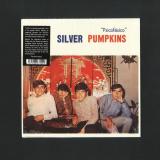
"Psicofásicos" by The Silver Pumpkins is a unique document: an EP that is virtually impossible to find in its original edition, offering an essential glimpse into Bolivia's thrilling 1960s rock scene-raw, wild, and unlike almost anything else. Beyond the ubiquitous covers of Cream and Jimi Hendrix recorded by countless South American bands, this EP features the far less common 'Pushing Too Hard' by The Seeds and, most notably, the dark, powerful 'You're Gonna Miss Me' by the 13th Floor Elevators. Bolivia boasts an extraordinary musical legacy of raw, garage-driven '60s sounds. Alongside Peru, it was one of the South American countries where the greatest number of recordings in this style were released-captured with limited resources but overflowing with spontaneity, energy, and attitude. The difficulty of obtaining the records that were shaping the latest Anglo-American rock trends of the 1960s in many Spanish-speaking Latin American countries led to a proliferation of local bands covering their musical heroes. Well-known artists such as Cream, Jimi Hendrix, and Iron Butterfly were reinterpreted by countless groups, making these songs available to local audiences without having to rely on imported records reaching their countries. By doing so, these bands helped spread the cutting-edge rock music already making waves elsewhere in the world. What makes this release particularly unusual is that the band chose to cover second-tier cult acts rather than the obvious classics-groups that only briefly cracked the U.S. Top 50 in the late '60s, such as The Seeds and 13th Floor Elevators. Originally released on the Bolivian Psicofásico label, this exceptionally rare EP pairs The Seeds' garage anthem 'Pushing Too Hard' with the ferocious, immortal 'You're Gonna Miss Me' by Roky Erickson and the 13th Floor Elevators. The raw power of the original songs is pushed even further here by the rudimentary recording techniques and the limited instrumental skills of the very young members of The Silver Pumpkins. The result is a one-of-a-kind document-virtually impossible to find in its original pressing-that helps complete the picture of Bolivia's fascinating '60s rock scene. First-ever reissue.
out of Stock
Last delivered 28 days ago available to reorder, subject to availability
A deep cut from the extensive back catalogue of South African group Splash, significant artists in the narrative of the country’s fiercely independent Gallo Record Company, CWPT presents two uplifting mixes of 1990’s ‘An Eye For An Eye’, arranged by a modern day hero of the craft, Lipelis.
Originally released in parallel with the official beginning of the end of South Africa’s decades-long Apartheid, lead vocalist Daniel Tshanda dispels the philosophy of the track’s title, instead offering a still poignant call for unity; “An eye for an eye is no good… Let’s live together as one.”
Lipelis’s carefully crafted take retains this sentiment front and centre, while nudging the arrangement toward contemporary dancefloors, enriching a steady and bubbling mix of colourful keys, bubblegum percussion and a lifting backing chorus that includes another Gallo sensation, Dalom Kids.
These same voices form the spiritual centre of Lipelis’s 12” dub version, which further demonstrates the track’s irresistible rhythm, making space for complimentary piano melodies from Lipelis, alongside collaborator Eugene Piankov. Here, sunsetting piano lines dance with the analogue techniques of Lipelis’s own production instincts, forging a blissful tribute to a potent moment in South African musical history.
out of Stock
Last delivered 29 days ago available to reorder, subject to availability
Celebrating dubwise origins, Mole Audio delivers two fresh remixes of their very first release: Andy Martin ft. Gavsborg's Plato & Caves.
Gavsborg is a towering figure in Jamaica's dancehall scene. So when Andy found an acapella, he set to work on a renegade edit. Subsequently approved and embraced by Gavborg himself, Andy's interpretation provided the launch point for Mole Audio - and is re-envisioned twice more here.
Paired with the original A-side, the B-side remix comes courtesy of south London’s legendary Dub War. Benny ill & Bill Robin are progenitors of the original London Dubstep sound, and their Dub War releases on Tempa are highly prized among collectors.. Pairing hypnotic beats with spacious textures, an insistent analog bass line weaves its way through an infectiously dystopian atmosphere.
Taking a minimalistic house-driven approach, Andy's all-new Mad Magnetism Version brings Gavsborg's original vocal to a prime time environment. Sizzling high hats and diving bass drops combine to keep the dancefloor in motion before insistent dub chords further elevate the urgent atmosphere.
Combined with the original and Nit Yardman's remix, the resulting package once again showcases Mole Audio's unique approach to modern dub aesthetics.
out of Stock
Last delivered 17 days ago available to reorder, subject to availability
Two deep, meditative house tracks built on warmth and repetition. Comes with insert in a silver sleeve.
On “Ritual of Dance,” Nhojj’s voice guides the listener onto a (makeshift) dance floor, as the track builds in intensity, mirroring the rising energy of a dance session. On the flip, “Groove Extracts” leans further into a stripped, hypnotic space. Driven by percussion, bass, and a wandering key solo. It draws you inward towards the more meditative side of losing yourself in the groove. Inviting the body to take over where the mind dissolves.
Ritual of Dance EP is about the journey of dancing alone or together.
out of Stock
Last delivered 31 days ago available to reorder, subject to availability
“I like to work with a variety of instruments and set ups,” says Mark Van Hoen, sometimes known as Locust or Autocreation but here working under his own name on the excellent Plan For A Miracle, his first physical release of solo music since 2018’s Invisible Threads. ”Sometimes it’s literally in my studio, with all the hardware electronics available. Sometimes the laptop, using software instruments. Some of the tracks on this record were recorded in the desert (Joshua Tree) using a 4-track tape machine and small modular synthesiser set up. Each track was recorded in different location using different instruments, which accounts for the distinction between each piece. It’s also about my own reaction to my environment, and what’s going on in my life at the time.”
The Croydon-born Van Hoen started musical life in the early 1990s, signing for R&S records in 1993 but developing his own, myriad and distinctive style across a range of releases on Touch, Editions Mego and other labels, using a battery of instruments, including analogue synthesizers and taking a number of different approaches to recording, rather than ploughing a single sonic furrow. He has worked on a number of collaborations, including with Nick Holton and Neil Halstead of Slowdive, under the moniker of Black Hearted Brother - their Stars Are Our Home was released in 2013. “I have known Neil Halstead since 1992,” says Van Hoen. “He shared a house with me for a couple of years, and the music I was making and listening to along with clubs I was attending had an influence particularly on Pygmalion, the final Slowdive album on Creation.”
Each track on Plan For A Miracle does indeed sound like a world unto itself, a mini-environment, a weather condition, an ecosystem created for the moment. It’s a collection of tracks recorded over the past few years, released on Bandcamp - despite his apparent absence, Van Hoen works constantly. Opener “Climates”, in its exquisite limpidity, feels like a homage to Brian Eno, one of his most formative influences in his teen years, commencing with Music For Films, which he bought in 1979. “This Is For Them”, feels like a ghostlike throwback to early drum & bass or electronica, reminiscent of his own, earliest outings. “There have been a number of requests from labels to make some more music like my very early releases on R&S,” says Van Hoen. “This is part of ‘letting go’ and realising that there’s nothing less creative about going back to those styles again.”
“Pencil Of Spheres” is something else again, a magnificent, imaginary glass structure, shimmering, refracting, without visible means of suspension, a thing of impossible beauty. “Electric Lights” evokes an abandoned fairground, its lights still pulsating, its music lingering. “The Underpass”, meanwhile, insofar as it reminds of anything at all, is faintly reminiscent of Cluster or Neu’s! West German ambience, the urban mundane rendered magical, the sodium lights, the whitewashed walls. The reverberant, faintly oriental chimes of “Insight” transport us yet again, burgeoning and intensifying.
The landscapes, the skyscapes rendered on Plan For A Miracle feel unpopulated as a rule - but when he does introduce vocal elements, Van Hoen has a history of doing so to spectacular effect - think of “Real Love” from 1998’s Playing With Time, the seductive intonation of its title recurring throughout like a series of massive holograms, echoing, stuttering, breaking up, surging. Here, there are just the faintest of vocals, barely distinct, disquieting. “There’s been a bit of a game changer in recent times,” explains Van Hoen. “AI software that enables you to extract vocals and instrument parts from virtually any recording. That means sampling individual parts from existing sources is no longer limited to the original mix exposing certain parts soloed. The vocal parts I use are from multiple sources and often pitch shifted altered rhythmically and melodically.“ There’s further vocal chatter on “I Really Do”, proceeding at a faster pace as if giving chase, or being pursued - distant, enigmatic. “The Music”, meanwhile, its beat tolling, lost in its own fog of static, features a curious intonation, like the ghost of a lost Walker Brother.
Sadly, the album’s title is in reference to a personal tragedy on Van Hoen’s part - the loss of his wife. Titles such as “I Won’t Give Up”, which faintly reminds of another Eno masterpiece, Another Green World, in its nautical hurly-bury, or the pastoral strains of “Mrs Who”, heavily clouded with sadness, seem to allude to this. “In fact the record was recorded entirely before she passed away,” says Van Hoen, “most of it before she even became very ill. The title was given to the album when it started to look like she wasn’t going to make it beyond a few months. It was something Osho said - “plan for a miracle” - so it was a statement of hope. Unfortunately it was not to be.” Although the album is non-thematic, non-specific in its atmospheres, sound paintings, elegant structures it most certainly stands as a magnificent monument to Osho’s memory.
-David Stubbs.
out of Stock
Last delivered 31 days ago available to reorder, subject to availability
Tapper Zuki's debut album 'Man Ah Warrior' was originally released in 1973.It's classic Dee Jay style has been copied by many but bettered by few. An album that more than most shows that raw talent with little resources can still be a great, great thing.
Tapper Zukie (b.1956,David Sinclair , Kingston, Jamaica) was raised in the rough and tough West Kingston area of Jamaica between the districts of Trench Town and Greenwich Farm.
Living pretty much on the streets from an early age the youth including the young Tapper had no choice but to fall into the hands of the political parties that controlled the various ghetto areas of the town.
Fear of landing in even more trouble, a plan was devised by Tapper's Mother ,Brother ,Reggae producer 'Blackbeard' and family friend Bunny 'Striker' Lee .The plan was to send the wayward Tapper to England to cool his ways.
A UK tour with the number 1 Reggae Dee Jay U-Roy was already arranged on his arrival, Bunny Lee got the young Tapper to toast over a Slim Smith rhythm, the London crowd loved it
He also caught the eye of producer Larry Lawrence who took Tapper on and cut his first single 'Jump and Twist'
Nine further tracks were recorded for producer Clement Bushey that would result in this album 'man ah Warrior.
We hope this introduction to Tapper Zukie's music inspires you to look further into his catalogue of great music.
An artist ahead of his time, whose music has influenced many........
as Patti Smith stated 'Music of the Most High'............