During the pandemic, The Ophelias transformed uncertainty into Spring Grove, their fourth album and most dynamic offering yet. Named after a Cincinnati cemetery, the album blends nostalgia with fresh perspective, reflecting on themes of relationships, identity, and power dynamics. Singer-songwriter Spencer Peppet draws from her OCD diagnosis during the pandemic and the clarity that comes with growing older, resulting in lyrics that explore the cracks and complexities of human connection.
Produced by Julien Baker, who adds lush textures and harmonies, Spring Grove marks a turning point in the band’s evolution. Recorded at Young Avenue Sound in Memphis, the album centers on the core quartet—Peppet, violinist Andrea Gutmann Fuentes, bassist Jo Shaffer, and drummer Mic Adams—with arrangements that balance cinematic intensity and delicacy. Gutmann Fuentes’s violin provides striking countermelodies, while Shaffer’s bass lines, inspired by doom metal, explore melodic depth. Adams’s drumming reflects his first project after transitioning, offering nuanced rhythms that blend power and tenderness.
With one queer and two trans members, the band has moved beyond the reductive label of an “all-girl” group, delving deeply into themes of womanhood and identity. Tracks like “Salome” and “Parade” examine power dynamics and friendship, while nature imagery in songs like “Cumulonimbus” and “Vulture Tree” mirrors lived experience. Across 13 tracks, the album’s cinematic and introspective journey scavenges the past for meaning, ultimately embracing transformation. On the closing track, “Shapes,” Peppet reaches serene acceptance, singing, “I see what’s coming after... a reflection in the water. I am rippling forever.”
Spring Grove captures the band’s evolution, offering a transcendent meditation on self-awareness, identity, and growth, leaving listeners with a sense of profound discovery.
Buscar:g transition
- A1: Montego Bay - Everything (Paradise Mix) 04 59
- A2: Atelier - Got To Live Together (Club Mix) 06 06
- A3: Golem - Music Sensations 04 56
- B1: The True Underground Sound Of Rome Feat. Stefano Di Carlo - Gladiators 05 26
- B2: Eagle Parade - I Believe 04 26
- C1: Dj Le Roi - Bocachica (Detroit Version) 05 28
- C2: Green Baize - Synthetic Rhythm 01 41
- C3: M.c.j. Feat. Sima - Sexitivity (Deep Mix) 05 30
- D1: Kwanzaa Posse Feat. Funk Master Sweat - Wicked Funk (Afro Ambient Mix) 06 31
- D2: Progetto Tribale - The Bird Of Paradise 06 29
- D3: Mbg - The Quite 06 59
Vol 1[28,99 €]
Googling “paradise house”, the first results to pop up are an endless list of European b&b’s with whitewashed lime façades, all of them promising “…an unmatched travel experience a few steps from the sea”. Next, a little further down, are the institutional websites of a few select semi-luxury retirement homes (no photos shown, but lots of stock images of smiling nurses with reassuring looks). To find the “paradise house” we’re after, we have to scroll even further down. Much further down.
It feels like yesterday, and at the same time it seems like a million years ago. The Eighties had just ended, and it was still unclear what to expect from the Nineties. Mobile phones that were not the size of a briefcase and did not cost as much as a car? A frightening economic crisis? The guitar-rock revival?! Certainly, the best place to observe that moment of transition was the dancefloor. Truly epochal transformations were happening there. From America, within a short distance one from the other, two revolutionary new musical styles had arrived: the first one sounded a bit like an “on a budget” version of the best Seventies disco-music – Philly sound made with a set of piano-bar keyboards! – the other was even more sparse, futuristic and extraterrestrial. It was a music with a quite distinct “physical” component, which at the same time, to be fully grasped, seemed to call for the knotty theories of certain French post-modern philosophers: Gilles Deleuze, Félix Guattari, Paul Virilio... Both those genres – we would learn shortly after – were born in the black communities of Chicago and Detroit, although listening to those vinyl 12” (often wrapped in generic white covers, and with little indication in the label) you could not easily guess whether behind them there was a black boy from somewhere in the Usa, or a girl from Berlin, or a pale kid from a Cornish coastal town.
Quickly, similar sounds began to show up from all corners of Europe. A thousand variations of the same intuition: leaner, less lean, happier, slightly less intoxicated, more broken, slower, faster, much faster... Boom! From the dancefloors – the London ones at least, whose chronicles we eagerly read every month in the pages of The Face and i-D – came tales of a new generation of clubbers who had completely stopped “dressing up” to go dancing; of hot tempered hooligans bursting into tears and hugging everyone under the strobe lights as the notes of Strings of Life rose up through the fumes of dry ice (certain “smiling” pills were also involved, sure). At this point, however, we must move on to Switzerland.
In Switzerland, in the quiet and diligent town of Lugano, between the 1980s and 1990s there was a club called “Morandi”. Its hot night was on Wednesdays, when the audience also came from Milan, Como, Varese and Zurich. Legend goes that, one night, none less than Prince and Sheila E were spotted hiding among the sofas, on a day-off of the Italian dates of the Nude Tour… The Wednesday resident and superstar was an Italian dj with an exotic name: Don Carlos. The soundtrack he devised was a mixture of Chicago, Detroit, the most progressive R&B and certain forgotten classics of old disco music: practically, what the Paradise Garage in New York might have sounded like had it not closed in 1987. In between, Don Carlos also managed to squeeze in some tracks he had worked on in his studio on Lago Maggiore. One in particular: a track that was rather slow compared to the BPM in fashion at the time, but which was a perfect bridge between house and R&B. The title was Alone: Don Carlos would explain years later that it had to be intended both in the English meaning of “by itself” and like the Italian word meaning “halo”. That wasn’t the only double entendre about the song, anyway. Its own very deep nature was, indeed, double. On the one hand, Alone was built around an angelic keyboard pattern and a romantic piano riff that took you straight to heaven; on the other, it showcased enough electronic squelches (plus a sax part that sounded like it had been dissolved by acid rain) to pigeonhole the tune into the “junk modernity” section, aka the hallmark of all the most innovative sounds of the time: music that sounded like it was hand-crafted from the scraps of glittering overground pop.
No one knows who was the first to call it “paradise house”, nor when it happened. Alternative definitions on the same topic one happened to hear included “ambient house”, “dream house”, “Mediterranean progressive”… but of course none were as good (and alluring) as “paradise house”. What is certain is that such inclination for sounds that were in equal measure angelic and neurotic, romantic and unaffective, quickly became the trademark of the second generation of Italian house. Music that seemed shyly equidistant from all the rhythmic and electronic revolutions that had happened up to that moment (“Music perfectly adept at going nowhere slowly” as noted by English journalist Craig McLean in a legendary field report for Blah Blah Blah magazine). Music that to a inattentive ear might have sounded as anonymous as a snapshot of a random group of passers-by at 10AM in the centre of any major city, but perfectly described the (slow) awakening in the real world after the universal love binge of the so-called Second Summer of Love.
For a brief but unforgettable season, in Italy “paradise house” was the official soundtrack of interminable weekends spent inside the car, darting from one club to another, cutting the peninsula from North to centre, from East to West coast in pursuit of the latest after-hours disco, trading kilometres per hour with beats per minute: practically, a new New Year’s Eve every Friday and Saturday night. This too was no small transformation, as well as a shock for an adult Italy that was encountering for the first time – thanks to its sons and daughters – the wild side of industrial modernity. The clubbers of the so-called “fuoriorario” scene were the balls gone mad in the pinball machine most feared by newspapers, magazines and TV pundits. What they did each and every weekend, apart from going crazy to the sound of the current white labels, was linking distant geographical points and non-places (thank you Marc Augé!) – old dance halls, farmhouses and business centres – transformed for one night into house music heaven. As Marco D’Eramo wrote in his 1995 essay on Chicago, Il maiale e il grattacielo: “Four-wheeled capitalism distorts our age-old image of the city, it allows the suburbs to be connected to each other, whereas before they were connected only by the centre (…) It makes possible a metropolitan area without a metropolis, without a city centre, without downtown. The periphery is no longer a periphery of any centre, but is self-centred”.
“Paradise house” perfectly understood all of this and turned it into a sort of cyber-blues that didn’t even need words, and unexpectedly brought back a drop of melancholic (post?)-humanity within a world that by then – as we would wholly realise in the decades to come – was fully inhuman and heartless. A world where we were all alone, and surrounded by a sinister yellowish halo, like a neon at the end of its life cycle. But, for one night at least, happy."
- A1: Phunk Baton
- A2: Take Me To A Silent Place Original Mix
- A3: Phantom Dubmix
- B1: Midi Lightning
- B2: Transmission Interlude
- B3: Transmission Damaged
- B4: Morse Phunk
- B5: Take Me To A Silent Place Exterior Mix
- C1: Forever Syncopation
- C2: Mission Damage Trance
- C3: Midi Blitz
- C4: Our City Is Never Utopia
- D1: Transfusion
- D2: Midi Voyage
- D3: Take Me To A Silent Place Sun Mix
The iconic DJ Sotofett comes with a real treat--a 12-track album on Clone West Coast Series that showcases a playful take on electronic music. Immerse yourself in the vibrant world of DJ Sotofett & The Colours of Computer Generated Instruments. With 12 electrifying electro tracks that blend a wide spectrum of rhythms with 80's Nintendo console vibes and holy grail analog vs digital synthesis, this album is a jubilant celebration of that sound. Prepare for an exhilarating journey filled with surprises, seamlessly transitioning from acid infected vibes and catchy electronic pop to groundbreaking avant-garde electro cuts. Each track intricately weaves together influences from over 40 years of electronic dance music, inviting listeners to explore the rich tapestry of genres that have shaped the landscape. As you delve deeper, you'll uncover the intricate layers and innovative production techniques that define Sotofett's distinctive style, transforming this album into more than just a collection of tracks -- it's a true sonic adventure that beckons you to listen, dance and dream.
OHYUNG aka Lia Ouyang Rusli describes their new album as “my trans self and my former self in conversation, from both perspectives.” The record represents their lengthy, complicated, but crucial journey between lives, strewn with both doubt and excitement. It is an ecstatic, pop-oriented shift in direction from an artist primarily known for noise, experimental hip-hop, and ambient music, but carried with sleek confidence, maturity, and a silvery, hallucinogenic shimmer that reveals Rusli’s experimental background. It is, writes Rusli, “sometimes written from a dark place and other times from a place of happiness.” Throughout, darkness and light rise and fall in layers of phased strings, trip-hop drum production, and earworming vocal lines.
Also a film score composer, Rusli’s songwriting craft is meticulous and nuanced. You Are Always On My Mind was, perhaps surprisingly, formed primarily from processed “generic string loops” found in online sample packs - a strange and wilfully jarring reminder that what seems to be is not always what is. Recontextualised, these string loops enshadow the simplicity of their origins and reveal a grace and purposefulness perhaps not even imagined by their authors, subtly drawing out euphoria and tension in equal balance.
Rusli also writes of the influence of rave culture central to their transition, and of the record’s production and theme. “It’s a declaration of love for raves and the dark hazy rooms that helped me to be free and true with myself— seeing other people who are so free and beautiful and thinking that one day that can be me— that’s me in the future.” But there is also a fear and unease present. Key moment “no good” explores “the worst version of myself as a trans person, feeding doubt to my pre-transition self” with its core lyric anyone can see / I’m no good for you, delivered over a relentless beat, swooning strings, and glistening synthesis.
Later, “i swear that i could die rn” renders a Spectreish Motown beat lamenting and lush with breathy synths and knife-edge melodies that eventually yield a hazy, gliding string section, created again from mutated, spliced, and transitioned royalty-free sample packs. The track is about “seeing my beautiful friends at raves and feeling at home appreciating the harsh noises of hardcore techno and acid. Feeling that I could die at this moment and be happy.”
Black Vinyl[33,82 €]
A crisp, spellbinding intro sets the mood for the first song on 'Maintenant Jamais', Population II's third album. With the guidance of producer Dominic Vanchesteing (Marie Davidson, Chocolat, Peter Peter), the turbulence of the band’s previous releases is structured and refined. The result is a sophisticated rock album that surprises with its languorous grooves, as heard on "Le thé est prêt", while staying true to the raw power for which the band is renowned, as demonstrated on vigorous tracks such as "La Trippance" and "Rédemption naturelle".
The album follows with "Prévisions", a song that ripples with finesse before abruptly transitioning into the instrumental number "Macavélique rock". While "Haut-fond" and "Cardinaux" are true feats of elegant prog rock, "Mariano (Jamais je ne t'oublierai)" and "homme étoilé" prove that Population II is also endowed with a profound melodic sensibility capable of creating catchy and explosive hooks.
On this new album, the trio fine-tunes the distinctive style they’ve been developing for several years, thanks in part to a fusion of shared influences – from Soft Machine to MC5 to L'Infonie – but also to a rare complicity that can only blossom between such close friends. This creative chemistry is what makes the band's complex songwriting seem so fluid and supple. Population II breaks through their previous sonic frontiers while remaining true to their roots. Therein lies the achievement of 'Maintenant Jamais'.
Coke Bottle Green Clear Vinyl[36,56 €]
A crisp, spellbinding intro sets the mood for the first song on 'Maintenant Jamais', Population II's third album. With the guidance of producer Dominic Vanchesteing (Marie Davidson, Chocolat, Peter Peter), the turbulence of the band’s previous releases is structured and refined. The result is a sophisticated rock album that surprises with its languorous grooves, as heard on "Le thé est prêt", while staying true to the raw power for which the band is renowned, as demonstrated on vigorous tracks such as "La Trippance" and "Rédemption naturelle".
The album follows with "Prévisions", a song that ripples with finesse before abruptly transitioning into the instrumental number "Macavélique rock". While "Haut-fond" and "Cardinaux" are true feats of elegant prog rock, "Mariano (Jamais je ne t'oublierai)" and "homme étoilé" prove that Population II is also endowed with a profound melodic sensibility capable of creating catchy and explosive hooks.
On this new album, the trio fine-tunes the distinctive style they’ve been developing for several years, thanks in part to a fusion of shared influences – from Soft Machine to MC5 to L'Infonie – but also to a rare complicity that can only blossom between such close friends. This creative chemistry is what makes the band's complex songwriting seem so fluid and supple. Population II breaks through their previous sonic frontiers while remaining true to their roots. Therein lies the achievement of 'Maintenant Jamais'.
- Glistening
- She Emerges
- Bold And Undaunted Youth
- I’d Rather Be Tending My Sheep
- The Fancy Cannot Cheat So Well
- Only The Diceys
As a founding member of Dublin experimental folk group Lankum, Ian Lynch explores submerged leylines of music and song. Forging a musical path that is all at once dark, mysterious and foreboding, but ultimately transcendental. His new solo project One Leg One Eye sees him taking a fresh approach to musical arrangement culminating in a sound that is more rooted in the raw aesthetics of second wave black metal than contemporary folk. The project was born across 2021, a period in which Lynch was able to enjoy the freedom of experimenting and exploring different paths of sound design without expectation or pressure. Seeking out interesting settings to record music and gather field recordings, there are several environments, external and interior, whose respective essence have seeped into the spirit of the music and come to represent Lynch’s artistic approach and development with this singular debut album, …And Take The Black Worm With Me. Rediscovered spaces in Dublin and the familiar enclave of his bedroom are intrinsic to the distinct and sometimes harrowing atmosphere conjured throughout the album’s five enveloping compositions. One particular location, an abandoned factory where his father worked when Ian was a child, provided a space of great inspiration and intrigue during this time. Lynch frequently visited the large abandoned warehouse and sang with his shruti box, contented in his solitude. ‘I’d Rather Be Tending My Sheep’, grew into existence from those initial sessions, eventually finding a home as an emotive centrepiece to the album. Reflecting on the overall recording of …And Take The Black Worm With Me, Lynch says, “Everything I was doing with these songs was all kind of new to me; experimenting with different sounds, textures and palettes and seeing what I could come up with by piecing it all together. I spent about a year making the album. I loved the whole process because it was basically just me in my bedroom recording everything. The experience of recording like this and having my own time to do it was amazing. I could focus on recording a specific element and happily spend all day working on that one part, doing it as many times as I wanted. At the end of the day if it didn’t feel right, I could just try it again the next day. When you’re on your own you can spend as much time as you want on particular parts until you feel that it’s absolutely perfect. I found that to be a really liberating experience. It was probably my favourite experience recording music.” The collection of songs (and their chronology) featured on …And Take The Black Worm With Me tell a story unique to Lynch’s experiences with anxiety and recognising his shadow self. Whilst the album became an outlet of personal expression for Lynch, the overarching themes and subsequent journey to confront one’s internal dichotomy of light and dark before accepting this inherent duality is universally shared. The eerie and often unsettling world contained within the album’s texturally dense opener ‘Glistening, She Emerges’, driven by the captivating drone of distorted uilleann pipes, immediately immerses the listener in this transportive work. It descends with a great heaviness, yet woven throughout the arrangement is a fascinating and indescribable entity that draws you further into this otherworldly dimension. This mood continues as the tracklist progresses and transitions into Lynch’s haunting realisation of ‘Bold and Undaunted Youth’ which further demonstrates a cinematic influence to Lynch’s compositional style. Sonically, Lynch effectively builds an impressively vast terrain with brilliantly murky lo-fi recording techniques and an unshakable curiosity to move beyond conventional structures and play with the timbre of the instruments available to him. From recording hurdy-gurdy or concertina to tape and experimenting with loops and effects pedals to stitching field recordings together, there’s an intimacy established between Lynch and his audience established through the simultaneously eerie and beautiful tones courting through …And Take The Black Worm With Me. This culminates in ‘Only the Diceys’, the extraordinary closing track in which we reach a place of resolution mapped into the album’s narrative structure. Mixed by longtime collaborator John ‘Spud’ Murphy in his Dublin-based Guerrilla Sounds Studio and mastered by Harvey Birrell …And Take The Black Worm With Me features contributions from Ruth Clinton (Landless) on church organ and vocals by Laurie Shanaman (Ails, Ludicra). Of Shanaman’s participation, in particular, which further illustrates the lo-fi and DIY ethos to the recording, Lynch says, “Laurie is my favourite black metal vocalist of all time and so I reached out to her hoping to have her involved in some way. She did, and she features on the opening track by providing some incredible screams. She recorded them into her phone and sent them over to me; what appears on the album is literally a phone recording of her screaming in her kitchen!” …And Take The Black Worm With Me continues Ian Lynch’s groundbreaking work with Lankum; recontextualising traditional forms and generating new spheres of music in his wake, confirming his status as one of the most interesting and innovative artists working in Ireland today.
SATYA is thrilled to announce the next chapter in its vinyl-only catalog: an evocative EP by São Paulo-based producer Dru. Scheduled for release on March 21, 2025, this record captures the serene yet dynamic energies of Dru's distinctive sound, blending aquatic themes with dubby textures and grooves.
Dru is a producer and DJ with a passion for minimal and microhouse. He has steadily risen through the scene, earning the support of luminaries such as Mihai Pol, Arapu, and Barac. With previous releases on his own labels, Totoyov and Microdots, Dru has honed a sound that is both personal and universal, reflecting his unique journey.
Rooted in the calming beauty of Brazil’s pristine beaches, Dru explains that the EP emerged during a reflective chapter of his life. "I was looking to produce tracks on a more dubby vibe," he shares. "The aquatic and fresh feel of the tracks reflects my connection to the sea and the tranquility I find there." This theme flows through the EP, offering listeners a refreshing escape into soothing yet intricate soundscapes.
The EP comprises two standout originals:
"Lax" captures a serene moment in Dru’s life, characterized by personal harmony and simplicity. The title itself is an
abbreviation for "Relax," reflecting the calm state of mind during its creation.
"Afterbreak" marks a transitional period post-breakup, yet the track maintains a composed energy, symbolizing growth,
renewal, and forward momentum.
Dru draws on a broad spectrum of influences for this EP, from the African-reggae-inspired percussive touches to the intricate dubby aesthetics of Andrey Pushkarev’s Luck of Access label. These elements intertwine with Dru’s Brazilian roots, creating a fusion of global sounds with a personal twist.
One of the most exciting milestones during the production process was securing remixes from Nicolas Duvoisin and Superlounge, both of whom enthusiastically joined the project early on. With contributions from these respected artists, the EP transcends boundaries, bridging dubby minimalism and deep house groove.
The vinyl-only release marks an exciting new chapter for Dru and SATYA. With its aquatic themes, dubby energy, and heartfelt storytelling, this EP promises to captivate both seasoned collectors and fresh ears alike.
- A1: Do U Fm
- A2: Novelist Sad Face
- A3: Green Box
- A4: Dusty
- A5: The Linda Song
- A6: Dm Bf
- B1: I Tried
- B2: Melodies Like Mark
- B3: Wildcat
- B4: How U Remind Me
- B5: Pocky
- B6: Bon Tempiii
- B7: Pt Basement
- B8: Alberqurque Ii
- B9: Mary's
Kneading dough is tricky – you should know how it’s supposed to feel. If you try too hard you could make it worse. It’s a beautiful practice – creation with a gentle touch, to work at something so it can be left alone. “If it’s too drawn out it’s awful. It’s easy to give too much.” Dance in the mirror. Contemplate your veiny hands. Who do they remind you of?
You begin by mixing flour and water. “What happens when your people die? Why’d they move the rock to the other side of Ulster Park?” Eliza Niemi asks two seemingly unrelated questions in a rising melody with guitar accompaniment, like fingers playing spider up to the nape of your neck. Gentle pressure. Strands of gluten form to bind the mix. A new question lingers in the binding. When she admits “but I don’t know how to tell if I’m feeling it or not,” that question surfaces through the text. It is reiterated throughout the album. When I’m working with dough I think the same thing to myself.
On Progress Bakery, her second album as a solo artist, Eliza knows to leave some questions alone – to let juxtaposition and tension be the proof. It doesn’t have to be hard. The feelings and revelations they provoke rise in the heat. The smell is sweet. Crispy on the outside and soft all the way through. She playfully slip-slides through words and sounds and images, delighting in surprise, skimming ideas like stones cast across clear water, touching down briefly with uncommon grace.
The question provoked between those opening lines resurfaces in the strands between songs – “Do U FM” is fully formed and beautifully layered, while “Novelist Sad Face” is a short, acapella rendering of gentle curiosity. What is holding these ideas together? Some songs demand more, seem to carry a whole load – eventually the skipping stone will halt to sink and resume its idle duty – while others drift in and out of focus, the way thoughts and dreams become interwoven before the mind is sunk into true sleep.
Music and words don’t always have to interact. Where she decides to keep them apart gives a new contour to where and how she puts them together. The kind of thing you’re supposed to take for granted with songs and their singers comes alive in Eliza’s hands – the little miracle of mixing, kneading, stretching, and stopping.
So often on Progress Bakery, Eliza teases out truth and meaning by asking questions. “Do I wanna be crying?” “Do you want me good or do you want me bad?” “Do I need an eye test?” “I’m writing songs in my head while you’re going over stuff with me — is that cruel??” In “Pocky” Eliza ends with a question that feels to me like the actual biography, succinct and revealing:
I don’t wanna be made to see
I just wanna ask “what’s that?”
Grace that ought to be rare, but in its care and precision is offered humbly, with great generosity, and without announcing itself. Eliza’s simple, miraculous music is given further form and shape by a group of collaborators – invaluable guest musicians Jeremy Ray, Evan Cartwright, Steven McPhail, Kenny Boothby, Ed Squires, Carolina Chauffe, Dorothea Paas, Louie Short, and Avalon Tassonyi. Together with Louie Short, who recorded, mixed, and produced the album along with Jeremy Ray and Lukas Cheung, Eliza has cultivated a richness in sound and texture that prods and provokes the ticklish ear. Barely audible guitar tinkering, a brief lo-fi field recording of trumpets, the harmonic clicking of a looped synthesizer, a flourish of reeds, a child’s conversation, each uncanny sound perfectly placed, rippling out under a soft breeze.
Lay in bed alone at night and ask aloud to the stillness,
“What were you doing at the Albuquerque Airport?
What were you doing there??”
And hear your question answered by a dream of swelling, undulating cellos. Try to grasp at the melody and structure. It’s not an answer (if there could be one), but it moves deeper, closer to the weird layer of fleeting moments and disconnected images, barely perceptible at its core. Wait for the dream reel to click into place.
Eliza took me for a ride in Nicole (her beloved Dodge Grand Caravan) and told me she’d been thinking of the album as an embodiment of transition – and I think every transition, known or unknown, carries the weight of new meaning, skittering off the surface tension of life as you know it, creating ripples, sometimes bouncing off and sometimes breaking through. There is a trick you can use to tell if a dough is glutinous enough. You’re supposed to stretch it out as thin as you can without breaking it and hold it up to the light. If you can see through, even if it renders the world murky and uncertain, you should leave it alone. I love this trick. It’s one that Eliza seems to know intuitively: work gently and ask questions and don’t always expect answers, and when you can, take a glimpse at something new, and then leave.
For his next Token EP, Kr!z delivers squelchy synth sequences over robust kicks, reinforcing his no-nonsense approach to club music. Classic in its conception yet psychotic in effect, Ipso Facto is a record built for powerful sound systems during thenight's most delirious moments.
First impressions are important; the Belgian producer has never been one to waste time, and this record is no exception. What you hear is what you get-an anxiously slithering synth line makes his intentions clear in Defeat the Purpose, driving people to the dancefloor. Dry drum machine work thunders throughout, locking in the Token style with precision. Moving into the next track, 'Chrome Dust' focuses more on the tonal side of things and its irresistible groovemakes it an instant ear catcher. Playful rides and snares shape the progression, with Kr!z swapping percussion elements to keep the movement lively.
The title track is a true hip swinger on the B1 as he reaches in the low end of the synth sequence to establish a very compelling rhythm. Everything in its right place, and not a hair more, the percussion transitions are reminiscent of his 4 channel DJ sets, the energy always being on the move. Equilibrium closes the EP with high energy, opening up filters over a reliably bouncy rhythm. Years of experience behind the decks can be very instructive for a perceptive producer, and Kr!z proves us just that in this track and in the whole EP.
2025 Repress
The ongoing importance of this album is indisputable, essential both to techno and to Tresor. It is a history intertwined. This work elevates its maker as master, and remain a cherished moment in the Tresor story, sharing an irrefutable singular magic, sounding as present and indispensable as when first created. To understand this work fully is to stand back and celebrate its impact.
Originally released in 1994, 'Internal Empire' marks a point of transition for Robert Hood moving on from his previous collaborations within Underground Resistance. Robert Hood advanced uncovering the power of true minimalism. Deep soul through a simplicity that showed how much could be done with so little. The devastating rhythms of this album forge the unmatched spirit of this sound, influencing generations to come.
15 years after it's original release, Freestyle Records serve up reissue for The Apples' Kings LP - fully remastered with a fresh new cut, it's sounding better than ever!
In a musical first for the band, they wrote, arranged and recorded Kings with specific collaborators in mind. They held sessions with two of their heroes; a congregation with two musical and spiritual father figures from opposite ends of The Apples rich spectrum: Fred Wesley (pioneer of funk trombone in particular and funk horn arranging in general with James Brown, The JBs) Shlomo Bar (vocalist, percussionist, godfather of Israeli world music).
The exciting process of these recordings exposed the band's many roots and influences; elements of The JB's funky foundations, cut 'n paste, soul, middle eastern and dub are all clearly displayed - strained through the band's unique decks-horns-sfx-bass-drums lineup. This release signified the next step in The Apples ever thickening groove stew, primed for festival and club stages with a relentless live set filled with runaway grooves, countless twists and turns, dizzying transitions, spontaneous arrangements, the occasional reworking of early 90's alt-rock fist shakers - plus the basic jump-up-and-down crazyness for which The Apples are known across dancefloors, soundsystems, playlists, films, televisions, cars and ears worldwide.
e B1 | Batash (Alwoojdi) feat Shlomo Bar
Joni Void, the artistic persona of Montréal-based French-British producer Jean Néant (he/them) returns to songcraft on their warmest and most welcoming record yet, where the acclaimed sampledelic sound collagist chills out with an emotionally resonant song cycle tinged by downtempo, lo-fi, avant-pop, and trip-hop. Guests include Haco, Ytamo, Sook-Yin Lee, Pink Navel and N NAO. Every Life Is A Light expands on Void's recent stylistic turn towards more languorous and mellow lo-fi production, foreshadowed by the drifting looseness and ambient bricolage of their preceding experimental sound-art record. This transitional sensibility now shapes more defined song structures and styles, with loops are given time and space to unspool, and rhythms shot through the softer-focus lens of trip-hop and dub. Every Life Is A Light swaps the twitchy insistence of Void's acclaimed early albums for a newfound lightness and suppleness, still imbued with all the restlessness, sonic detailing, and emotional resonance that made their name. The neurotic brokenmachine kinetics of earlier Void, summarized by Sasha Geffen as "drawing despair and wonder from within the vast unfeeling of digital communication" in an 8.0 Pitchfork review, may be chilling out, but Void is becoming an ever better conjurer of hauntological feeling. Every Life Is A Light summons this in a comparatively buoyant, benevolent, head-nodding journey more open to tenderness and modest joys. Perhaps it's the sound of Void at greater peace with themselves and the world, despite the bittersweet cost: even as it channels grief, memorializing comrades and companions recently deceased, this album wants light. Void's raw materials continue to draw heavily from samples (their own Walkman cassette fieldrecordings and songs by others) and from a wide community of musical guests. Vocalists Haco on "Time Zone" and Ytamo on "Cloud Level" help levitate what could be lost tracks from a mid-90s Too Pure Records compilation of skewed-lounge electronica. Canadian musician Sook-Yin Lee sings on lead single "Vertigo," a sinewy 80bpm tape-loop and bassline groove propelled by psychedelically-layered lyrics that eventually turn the song in on itself entirely, like Grace Jones' "Nightclubbing" covered by Animal Collective. One of Void's greatest hip-hop loves is the Ruby Yacht collective; charter member Pink Navel drops some brilliant verses on "Story Board." The album's two minimal tracks, an extended piano loop set to a slow beat and shimmering electronics on "Muffin-A Song For My Cat" and the languid sampled bass riff and breakbeat of "Event Flow," are perhaps most overtly `lofi chill.' Indeed the whole album could be said to sit adjacent to those viral (if not already AI-generated) genre trends, which maybe begs the question on a lot of our minds: can specificity and authenticity of musical materials still be heard, still meaningfully signify substance and difference, still matter? Perhaps a question that fades in comparison to the career break Void could catch by landing on generic streaming playlists. More likely, these tracks remain too off-kilter, too genuinely lo-fi and ineffable, and too disqualified by the status of its peasant rights-holders, to catch the algos. Context remains the poor cousin of content. Meanwhile Void marches on, as a tireless organizer of local music events, bouncing around and often living in DIY venue, depending on the latest apartment eviction. With an ubiquitous polaroid camera in tow, they also document each communal happening with a single shot (and often a blinding flash bulb): a memory and metaphor for lives illuminated preciously, singularly, `imperfectly' in the moment. Dozens of these polaroids adorn the album's back cover and inner sleeve art in grid-like montages, as a fitting analog for the careful construction, grainy intimate materiality, and ephemeral feeling of these songs. Every Life Is A Light is Joni Void's most coherent and congenial record while relinquishing none of their experimentalist acumen as a producer or emotional attunement as a composer. Instead these qualities flourish, on an album that lights a humble flame for the fragile promise of homespun creative collaboration as unalienated labour and therapeutic communion, making an enchantingly idiosyncratic contribution to downtempo sample music along the way. Thanks for listening.
Bárbara Salazar aka Barbarelle is an experimental multidisciplinary artist from Buenos Aires, known for her conceptual work as a DJ, creative director, and curator.
‘Celesta’ marks Barbarelle first foray into composing and producing her own music; a debut that reveals the intimate, heartfelt territories of her creative universe. The culmination of years of composing for herself - ‘behind closed doors’ - ‘Celesta’ is a deeply personal, self-guided masterstroke of beguiling, free-flowing ambient soundscapes and DIY electronics. With ‘Celesta’, Barbarelle artfully transitions from ardent music aficionado to fully-fledged artist, unveiling an enchanting sonic world that has quietly matured over time.
‘Celesta’ is an exquisite odyssey of sound, assembled from fifteen tracks recorded between 2022 and 2024 in Buenos Aires and Los Angeles. Conceived as spontaneous and intuitive explorations, many of these tracks were recorded in one take without technically-minded premeditation. The product of organic experimentation rather than concrete intention, ‘Celesta’ is an authentic, candid record of emotions, memories, and profound interiorities.
Over time, the pieces in this tapestry found a common thread: a conversation with the ethereal, defined by emotional intensities and softly spoken utterances. ‘Celesta’ is an invitation to immerse yourself in soundscapes that merge to the point of dissolution, evoking the transparency of water and the lightness of a dreamlike world that transcends matter. Like the song of a siren, the voice becomes just another instrument, beyond language yet full of significance. A collection of songs that feels like opening a secret diary; a direct pathway to the centre of the heart.
In addition to her work as an artist, Barbarelle is the founder of Atlas, a platform dedicated to active listening through radio, live performances, listening sessions and more. She is also known for her radio show of the same name on Dublab, where she shares her unique approach to sound with eclectic selections and interviews with the likes of Air, BADBADNOTGOOD, Lucrecia Dalt, Juana Molina & more.
- Creed Of Love
- Bye Bye Baby
- The Grand Camel Suite
- No World For Glad
- Lady Love
- Words
- Place Of Dreams
- Oranges & Apples
- Anytime
- Bitter Wine
- Misery Loves Company
PURPLE VINYL[26,01 €]
Orange/Black/Sunburst Vinyl "Choice Quality Stuff/Anytime," released in 1971, marked the third studio album by It's a Beautiful Day, a band celebrated for their eclectic blend of rock, jazz, folk, classical, and world-beat influences. Formed in 1967 in San Francisco during the height of the city's vibrant music scene, the band initially featured vocalist Pattie Santos, violinist David LaFlamme, and keyboardist Linda LaFlamme. Their distinct sound, highlighted by David's five-string violin, set them apart from their contemporaries, even though they never reached the same level of fame as Jefferson Airplane or Santana. By the time of this album, the band's lineup had shifted significantly. Founding members Mitchell Holman and Hal Wagenet had departed, replaced by bassist Tom Fowler (later known for his work with Frank Zappa) and guitarist Bill Gregory. The album, recorded amid these transitions, reflects both the band's creative maturity and their ability to evolve while staying true to their signature style. Tracks like "Creed of Love" and "Anytime" exemplify their musical diversity and lyrical depth. "Choice Quality Stuff/Anytime" was a continuation of the band's legacy, cementing their place as a unique voice in the late 60s and early 70s rock scene, even as their lineup and fortunes changed.
Purple Vinyl. "Choice Quality Stuff/Anytime," released in 1971, marked the third studio album by It's a Beautiful Day, a band celebrated for their eclectic blend of rock, jazz, folk, classical, and world-beat influences. Formed in 1967 in San Francisco during the height of the city's vibrant music scene, the band initially featured vocalist Pattie Santos, violinist David LaFlamme, and keyboardist Linda LaFlamme. Their distinct sound, highlighted by David's five-string violin, set them apart from their contemporaries, even though they never reached the same level of fame as Jefferson Airplane or Santana. By the time of this album, the band's lineup had shifted significantly. Founding members Mitchell Holman and Hal Wagenet had departed, replaced by bassist Tom Fowler (later known for his work with Frank Zappa) and guitarist Bill Gregory. The album, recorded amid these transitions, reflects both the band's creative maturity and their ability to evolve while staying true to their signature style. Tracks like "Creed of Love" and "Anytime" exemplify their musical diversity and lyrical depth. "Choice Quality Stuff/Anytime" was a continuation of the band's legacy, cementing their place as a unique voice in the late 60s and early 70s rock scene, even as their lineup and fortunes changed.
The lost companion EP to The Unbearable Tightness of Being, by Ohio's,
Sweetheart
Recorded by the band in a warehouse in Columbus, Ohio, spring 2005.
A single sided 12" record containing one 12 minute song. Limited to 300 copies on
180 gram vinyl and digital.
This record is meant to go together with EW017- Sweetheart- The Unbearable
Tightness of Being LP. We highly suggest getting both records.
Sweetheart's latest offering, "The Process Of Making Us Well," serves as an intricate
sonic landscape woven with a fearless fusion of genres, defying the established
norms of post- hardcore. This one- track EP, released under theExpert Work Records
banner, is not just an auditory journey but a rock-solid proof of their ability to blend
post-hardcore, noise rock, punk, screamo, emo, and indie influences into an immersive
sonic experience that transcends conventional boundaries. Setting themselves apart
from the early noughties post- hardcore scene, Sweetheart skillfully navigate away
from the cliches that often haunted many underground acts of the era. "The Process
Of Making Us Well" unfolds as an epic composition, a 12-minute sonic odyssey that
takes the listener on a transformative journey. The band showcases a mastery of
dynamics, skillfully transitioning from serene, ethereal instrumentations to intense,
powerful crescendos, creating an emotional landscape that captivates the listener
from scratch to finish.
Released as part of Expert Work Records' series, "The Process Of Making Us Well"
holds the distinction of being Sweetheart's longest recorded piece. The record arrives
in a high- quality cardboard sleeve, decorated with an entirely minimalistic lettering,
leaving audio content in the sole focus. It's a wise choice, considering that
Sweetheart's music deserves your utmost attention. "The Process Of Making Us Well"
is an essential exploration into endless possibilities of post- hardcore, noise rock,
screamo, and emo music. Sweetheart, sadly overlooked amidst a sea of similar bands
during their era, emerges as a beacon of innovation with this remarkable release. "The
Process Of Making Us Well" solidifies Sweetheart's status as one of the best bands of
their time, a hidden gem deserving of retrospective recognition and appreciation
Members went on to Sinkane, and Pompeii, This Morning. Originally recorded in the
summer of 2005 out west, while on tour, by Vince Tennant. The recording had been
shelved and unreleased. In 2023, Expert Work Records reached out to Sweetheart and
got the recording re-mastered. It will be released on limited vinyl and digital.
This is also a companion piece/ record with EW018 (Sweetheart- The Process of
Making Us Well). We highly suggest getting both records.
Sweetheart's "The Unbearable Tightness Of Being" is one of those records you should
put on your radar as soon as possible. A rediscovered artifact from 2005, the album is
a sonic panorama that intricately incorporates post- hardcore, noise rock, punk,
screamo, and indie elements into an innovative and complex sonic landscape. The
guitars, wielded with finesse, serve as the driving force behind Sweetheart's sonic
assault. From the opening chords to the closing refrains, they deliver a relentless
barrage of riffs that defy predictability. The interplay between the two guitarists
manifests as a dynamic dialogue - a musical conversation that seamlessly transitions
from chaotic dissonance to moments of clarity. Catchy, intricate, and hypnotic chord
progressions unfold, evoking the spirit of At The Drive-In and Fugazi while carving a
distinct sonic identity.
However, it's not merely about sonic assault; Sweetheart infuses the album with a
nuanced approach to melody. Amidst the aggressive riffage, this material treats
listeners with moments of harmonic beauty and unexpected melodic twists. Themes,
leads, melodies, and harmonies intermingle, creating a rich auditory experience that
transcends the boundaries of conventional post-hardcore.
The production quality of this long- lost gem further accentuates its brilliance.
Recorded in 2005 but kept in the shadows due to financial constraints and a desire for
perfection, the album has now found its moment in the sun. Expert Work's decision to
release the LP in 2024 has allowed audiences to appreciate the intelligent
craftsmanship that went into its creation.
"The Unbearable Tightness Of Being" is more than a musical journey; it's a sonic
exploration transcending all the possible sonic boundaries. Sweetheart's commitment
to experimentation and honesty, as emphasized by band members reflecting on their
creative process, is palpable. The act of listening, treated as a discipline, is evident in
the careful construction of each track - a result of repetitive practice, internalization,
and an unwavering dedication to their craft. In the grander narrative of the album's
release, the band's reflections on the passage of time and the meaning of their work
imbue the music with a poignant depth.
"The Unbearable Tightness Of Being" is a mandatory addition to any record collection.
It's not just a revival of the early 2000s scene; it's a sheer example of Sweetheart's
enduring brilliance and a celebration of a significant part of their musical legacy.
And another! One Eye Witness rounds up 4 more acts to deliver the latest instalment of their V/A series, WITNESS07. The EP brings together names from across Europe: here fresh faces — the likes of Bristol’s JoeLy — rub shoulders with more established dancefloor exponents such as SameSame from Germany and Rome’s Christopher Ledger, all utilising the hypnotic tech house aesthetic championed by O.E.W.
Young Adults’ “It’s Only Temporary” kicks the EP into gear, a perky cut loaded with bounce. The The Hague duo employ a rubbery bassline and sound palette with plenty of boing, whilst working in a playful nod to a certain 1997 Loveparade anthem. Christopher Ledger gets classy on “Change That”, its slinky, steady break keeping hips in motion whilst tricky dubwise FX swirl across the stereo field. JoeLy slows things down and reigns it in with “Transitional”: beneath the filter sweeps, a seductive, sliding acid bassline is accompanied by augmented 303 action. As punchy as it is textural, the fittingly titled “Novel End” by SameSame seems draped in gauze — delicate drones wrap the drums in a soft cocoon, offering something a little more cerebral. WITNESS07: A tech house Tour de Europe, brought to you by Amsterdam’s all-seeing eye!
ICYKOF ANNOUNCES LIMITED-EDITION VINYL RELEASE OF DEBUT EP ‘ZERO SUGAR’
“For ICYKOF, fashion is out, music is in.” - Hypebeast UK
“Euphoric, free, and firmly planted on the gritty warehouse dancefloor, the project is a far cry from Kofi’s high-flying fashion world – ego-death never sounded so funky.” - Dazed
Electronic music fans and vinyl collectors, take note: ICYKOF’s debut EP, ‘ZERO SUGAR,’ is coming as a limited-edition vinyl on April 3 via RAVE NUIT. The pressing captures ICYKOF’s gritty blend of Detroit techno and Chicago house, with influences from pioneers like Underground Resistance and Robert Hood.
The vinyl features standout tracks such as the acid-infused ‘PAYDAY,’ the hypnotic ‘SHE KNOWS’ (remixed by MoMa Ready), and ‘BRING IT BACK’ (+ Bambounou remix), praised by heavyweights like Josh Wink, DJ Bone, and HAAi.
Having transitioned from creator of The Unknown Vlogs to one of London’s most exciting new DJs and producers, ICYKOF brings a fresh perspective to underground music. This exclusive vinyl is a must-have for fans of raw, warehouse-ready techno.
Baby Rose makes healing music for the aimless and heartbroken. The Grammy-nominated singer/songwriter and producer's uniquely rich voice naturally lends itself to her powerful, smoke-filled ballads lamenting lost loves and broken futures. "I make music to help myself get through things," she says. The piercing honesty and vulnerability she brings to her lyrics in turn helps others process their feelings and find a place of healing. For Rose, it's a journey that's still ongoing. "If I'm going to leave anything behind, it's going to be getting people back to themselves," she says. "As I get back to myself, it's a constant reset: Remember who you are, remember who you want to be." You can hear the impact of this approach in Baby Rose's upcoming second album, Through and Through. Take the hypnotic "Fight Club." Over the track's simmering baseline and crashing cymbals, she declares, "I don't need no one else to show me the way." She describes the song as a "breaking of the shell. It encourages me to just go for it and not care about what anyone else thinks." Therein lies Baby Rose's strength: a determination to live, love, and create on her own terms. "I'm not just a singer with a unique voice," she says. "I'm somebody that has something to say." In the years since releasing her last album, To Myself, Rose has been painstakingly piecing together its sequel. Started almost immediately after its release, her new body of work finds her in a state of musical and personal transition. It's a subtle merging of new sounds_stirring rock, upbeat r&b, psychedelic funk, pop, and soulful ballads_, all mastered through analog tape to make the music feel warmer and all-encompassing. It's also a journey inward as she battles past fear and self-doubt to finally discover_and love_who she is, where she is. Finishing an album with such peace and firm resolution is a first for Rose, but she makes it clear: She's nowhere near done writing her story. "I think as long as I'm being raw and trying to push past my comfort zone, it will feel rewarding," she says. "I don't want to be the type that doesn't take risks because I'm afraid. I have to trust that as long as the music is honest and innovative, it'll be timeless."
- A1: Fiesta En La Jungla
- A2: Fuga En La Selva
- A3: Tu Partida
- A4: Agua De Cachilde
- A5: La Chicharra
- A6: Dolor Y Pena
- B1: Izango
- B2: El Shiringuero
- B3: A Jenny
- B4: Linda Tocachina
- B5: Para Mi Gente
- B6: Tragedia En Uchiza
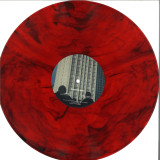
Carrying the torch of psychedelic cumbia, with a healthy dose
of surf guitar and Amazonian dancefloor flourishes from Peru
and Brazil alike, Fiesta en la Jungla by Los Dexter’s de Uchiza
is the first release from the newly formed London-label Ritmo
del Barrio. Originally released in 1982, it captures the finest
cumbia being made in Peru at the time, decked out with
frenetic surf-rock guitar riffs, rhythms floating on crisp
cumbia percussion and occasionally punctuated by carimbó
breakdowns native to the Pará region of north-eastern Brazil.
The album is filled with energy, a gem that was always
intended to animate any dancefloor. Peruvian cumbia came to national attention in the late 60s
through the recordings of Juaneco y su Combo, Los Destellos
and Los Wembler’s de Iquitos, but it’s had many revivals, and
Fiesta en la Jungla arrived when the style was going through a
major transition. In 1977, a passenger plane carrying most of
the members of Juaneco y su Combo crashed, killing everyone
on board. In 1980, Los Destellos retired, and Los Wembler’s
released their tenth and final record, they were ready for a
break. This left a big void in Peruvian music. Wasting no time,
Los Dexter’s Emerson Ruiz Mosquera took the opportunity and
gave his band new life, filling the band’s ranks with young and
energetic musicians who were hungry for success. He built the
new band around a solid base of dexterous guitars, a dynamite
rhythm section, and added oodles of percussion and an electric
organ, giving them a powerful psychedelic sound that called
back to the sounds of the original chichamasters, but added a
new sheen. Along with bands like Los Shapis and Los Walkers
de Huánuco, Peruvian cumbia was reborn as chicha in the
1980s, and was now the sound of Peru’s barrios up and down
the country.
Based in the city of Uchiza, on the edges of the Amazon basin,
Los Dexter’s were uniquely located in central Peru, closer to the
largest urban centres of the country than Amazonian outposts
like Pucallpa or Iquitos, and therefore better positioned to
travel to the furthest reaches of the country with ease. In a
sense, Los Dexter’s were a bridge between the Amazon and the
rest of Peru, a bridge over which the sounds of Amazonian
cumbia could travel to the rest of the country on their way to
becoming one of the most ubiquitous elements of Peru’s musical
identity. Fiesta en la Jungla represents Los Dexter’s in their third
iteration. Led by Emerson Ruiz Mosquera, who was just a
young boy in 1970 when his older brother founded the group
with four of his friends, the ensemble by the time of Fiesta en la
Jungla included Orlando Abad on the timbales and lead vocals,
Lucho Bendezú on lead guitar, Javier Quiroz as second
guitarist, Alejandro Almeira on bass, Rufino Bustamante on
keyboard, Ramon Siu on bongos and bells, Ivan Rios on conga,
and Emerson as musical director and composer. Remarkably,
most of the group’s members helped to write at least one
track, Los Dexter’s were a collective endeavour.
Reissued on vinyl for the first time by Ritmo del Barrio, this
record is essential for any collector of Peruvian cumbia.
Showcasing the unique sound of Los Dexter’s, it carries hits
like “Fuga en la Selva” and “El Shiringuero”, which are sure to
set any dancefloor on fire, combined with slower, carimbó-
infused cumbias like “Fiesta en la Jungla,”and “Agua de
Cachilde.” Its closing track, “Tragedia en Uchiza'', is a key
piece of local history and tells of the flooding of the
Chontayacu River in 1982, a mortal tragedy that affected
thousands of people. Despite the subject matter, the album
maintains a joyful vibe throughout, with high energy riffs and
irresistible rhythms, contrasted with terse love ballads, like “A
Jhenny.” It is both a piece of musical history, and a sure-fire
tool for the dance floor.
Los Dexter’s became a fixture of festivals and celebrations in
the provinces of San Martin and Huánuco, and from expanded
across the country, taking Amazonian cumbia from the
Peruvian Amazon, to the heights of the Peruvian sierra, the
coastal plains, and the capital city of Lima.
Portland-based ambient architect and far afield sound technician Graintable, aka James Cooke returns with his debut outing on Music To Watch Seeds Grow By and his fourth in the R$N stable; 'Blue Flax'. Following his acclaimed and sold out cassette releases 'Herons', 'Universal Ash' and ‘The Rain In The Trees’ on Ransom Note Records, this new collection sees Cooke delving deeper into the intersection of natural processes and liminal organic electronics.
'Blue Flax', the resilient flowering plant celebrated for its delicate blue blooms and medicinal applications, is native to the Pacific Northwest - the region Cooke calls home. This plant has long grown on the ancestral lands of the Wasco, Klickitat, Warm Springs, Cayuse, and Umatilla tribes. Its connection to this landscape underscores the album’s themes, weaving together ten intricate ambient pieces that reflect the plant's dual nature of part healer, part object of wonder. Recorded during the transitional hours of dawn and dusk in his Portland studio, Cooke’s soundscapes capture both the meditative aspects of watching plants grow and the gradual transformation of organic matter into usable forms. The centrepiece of the album Cerulian FIelds, reminds of the early morning light, those inspiring hours before the rest of the world wakes and the first shoots break through the soil into the new dawn. It’s a beautiful crystallisation of what is Cooke’s most comprehensive collection of meditative compositions to date.
For fans of: Steve Roach, Alessandro Cortini, Suzanne Ciani, Davis Galvin
Early support including: Courtesy, Laurent Garnier, Massimiliano Pagliara, DJ Harvey, Domenic Capello
Mannequin Records is thrilled to announce the upcoming release of Chromium Industries, a double LP (MNQ 162) capturing the innovative spirit of two pioneers of electronic music: Andrew Lagowski and Paul (Howie D) Howard. This long-anticipated album marks a return to the seminal sounds of the Chromium Industries label, which emerged as a crucial platform for boundary-pushing techno and electronic music in the early 1990s.
Andrew Lagowski, a name synonymous with exploration in electronic music, has been at the forefront of sound innovation since the early 1980s. Known for his work under various aliases, including Lagowski, Legion, and S.E.T.I., his early output in experimental and industrial sounds paved the way for his later techno-focused ventures. Albums like Knowledge (S.E.T.I.) and Nadir (Lagowski) highlighted his pioneering approach to unconventional sound sources and production techniques. In the 1990s, his work with Chromium Industries brought him into the techno spotlight, with a series of influential 12” singles that helped shape the electronic music landscape. With over 60 albums and 10+ singles to his name, Lagowski’s versatility and dedication have garnered him a loyal following and lasting influence across genres.
Paul Howard, aka Howie D, brought his DIY ethos from the punk scene of the 1970s into electronic music. As a founding member of The Frames and co-founder of the Brain Boosters and Spacematic labels, Howard has consistently pushed boundaries. His early forays into hip-hop saw him release the genre-pioneering jazz-rap track Miller Light as Fission. The transition from punk and hip-hop to electronic music was a natural one, culminating in his creation of Chromium Industries after a fateful night hearing Lagowski’s Vermilion at a London party. The label brought some of the most unique techno releases to the scene, with tracks like Blue Anomaly causing near-riots on the dancefloor. Since then, Howard’s work has evolved to include multiple aliases, including The Legend That Is, Phase Collective, and Skulpture.
Chromium Industries 2xLP will be available for purchase from January 2025 through Mannequin Records and select distributors.
This is an essential release for collectors, DJs, and anyone who reveres the legacy of 1990s techno and early rave.
Walter Astral's debut album tells the story of Light, its journey through the day and catalyzes it in the Éclispe, a suspended moment when space and time stop to contemplate the universe.
Over the past two years, the two druids have transmuted light into sound in the form of a concept album that explores all facets of Walter Astral, from folk and techno to pop, drum & bass and psychedelic rock, always in the presence of their totem banjo.
Sound explores and is explored, to represent light; magic and the everyday, between digital and analog sounds expressing the natural and the supernatural, humans and the cosmos. Transposing the invisible, the presence of absence, the Eclipse, into silence and sound.
“Eclipse” questions the shadows hidden by light, and the glimmers hidden by shadows, the ambivalence of a state, its capacity to transform, to mutate. Like ancient alchemists, Walter Astral set to music the transitions of states, stars, humans and emotions.
Reissue!
WRWTFWW Records is honored to reissue revered UK electronic duo Ultramarine’s best kept secret from their discography, the superb A User’s Guide album, available as a limited double LP housed in a beautiful heavyweight sleeve with inside out printing.
On the rare occasions that Ultramarine’s story is told, the duo’s fifth album, 1998’s A User’s Guide, tends to get omitted from the narrative. Radically different to anything the duo released before or since, it has remained a slept-on, timeless and inherently futurist classic ever since.
Unavailable on vinyl since the year it was released – in part because the label it originally came out on, New Electronica, folded shortly afterwards – A User’s Guide was the result of a conscious decision by Ultramarine members Paul Hammond and Ian Cooper to change their working methods and the “sound palette” that underpinned their work.
Out went the partially improvised hybrid electronic/acoustic sounds and the collaborations with guest musicians they’d become famous for. They were replaced by painstakingly created electronic sounds and textures, metallic motifs, spaced-out chords, rhythms rooted in contemporary techno and drum & bass culture, and nods aplenty to pioneering music of the period, from the post-rock atmospherics of Tortoise, and the hazy dub techno of Basic Channel, to the tech-jazz of Detroit, the minimalism of Berlin, and the musically expansive warmth of Chicago deep house.
It may have taken a year to create – part of which was spent developing this head-spinning new sound – but the results were undeniably unearthly and effortlessly forward-thinking. Over a quarter of a century may have passed since it first appeared in record stores, but A User’s Guide still sounds fresh and modern – a remarkable achievement given the relatively sparse and basic equipment used in the making of the album.
As this first vinyl reissue conclusively proves, the material showcased on A User’s Guide has lost none of its sparkle in the 26 years that have passed since its release. For proof, check the head-nodding IDM bubbliness of opener ‘All of a Sudden’, the queasy, lopsided tech-jazz of ‘Sucker For You’, the locked-in beats and mind-mangling motifs of ‘Zombie’, the ghostly, out-there electro of ‘Ambush’, the Autechreesque ‘Ghost Routine’ and the triumphant closing cut ‘What Machines Want’, a classic of minimalistic, jazz-flecked techno futurism.
Fully remastered from the original DATs by Jason G at Transition Studios, the 2024 vinyl edition of A User’s Guide thrusts Ultramarine’s most overlooked album back into the spotlight. This WRWTFWW edition also features brand new contextualizing sleeve notes, complete with new quotes on the production process from Ultramarine, by dance music historian Matt Anniss (author of Join The Future: Bleep Techno and the Birth of British Bass Music, and founder of online electronic music platform Jointhefuture).
Points of interests For fans of electronic, leftfield, postrock, tech-jazz, IDM, minimalism, futurist electronica, dub techno, house, experimental, Autechre, Tortoise, Basic Channel, forgotten gems from superb discographies, very good music, and very very very very good music.
Official vinyl reissue of legendary UK electronic’s duo Ultramarine’s timeless and radical album A User’s Guide.
- A1: Dogman
- A2: Shoes
- A3: Pretend
- B1: Flies And Blue Skies
- B2: Black The Sky
- B3: Fool You
- C1: Don’t Care
- C2: Sunshine Rain
- C3: Complain
- C4: Human Behavior
- D1: Cigarettes
- D2: Go To Hell
- D3: Pillow
- D4: Manic Depression
Dogman is the fifth studio album by American rock band King’s X, released in 1994. The album was produced by Brendan O’Brien (who had recently worked with Pearl Jam, Stone Temple Pilots and The Black Crowes). Dogman was considerably heavier than previous albums and marked a transition in the band’s sound. In 1999, Doug Pinnick reflected, “For me personally, the Dogman record is what King’s X really sounds like. The self-titled record was a step and an eye-opener and after that we could just make our music.”
FELT welcomes back Civilistjävel! with »Följd«, the follow-up to last year’s »Brödföda«. 7 tracks further chronicling his melancholic murk, ever drifting towards that faint dub glow. Features a collaboration with Thomas Bush Jolly Discs.
Uncanny are the nocturnal sounds that ebb patiently from Tomas Bodén and his machines. His music continues to uncover equal parts beauty and dread from isolation, a purposeful slow pace guiding those gentle noises through the arctic air surrounding its author. No matter the weather, these expressions as Civilistjävel! continue to find a loving home on Fergus Jones’s FELT imprint.
On »Följd«, he naturally develops on the inclinations found on »Brödföda«. »XIII«’s unsettling warble melts into the dusky spurts of »XIV«. Further on, the dew-glowed ambience of »XV« precedes »XVI«’s dub trudge which casts a hypnotic grey shadow. »XVII«’s wind-swept acid redux then quietly transitions into the stunning introspective drone of »XVIII« before closer »XIX« comes into view, its positive dawn enacted through Thomas Bush’s croons lilting amongst organs, guitars and tempered sound design.
Civilistjävel! continues to emote a great deal with very little, a reliable abstract practitioner that posits »Följd« as an arresting audio tale within his celebrated oeuvre.
- A1: Progetto Tribale - The Sweep
- A2: Onirico - Echo Giomini
- A3: Open Spaces - Artist In Wonderland
- B1: Alex Neri – The Wizard (Hot Funky Version)
- B2: M C.j. Feat. Sima - To Yourself Be Free - Instrumental Mix Energy Prod
- B3: Mato Grosso - Titanic Expande
- C1: Dreamatic - I Can Feel It (Part 1)
- C2: Carol Bailey - Understand Me Free Your Mind (Dream Piano Remix)
- C3: The True Underground Sound Of Rome - Secret Doctrine
- D1: Don Carlos - Boy
- D2: Lazy Bird – Jazzy Doll (Odyssey Dub)
Vol 2[28,99 €]
Volume 1 of this expertly curated project of 90s Italian House - put together by Don Carlos.
If Paradise was half as nice… by Fabio De Luca.
Googling “paradise house”, the first results to pop up are an endless list of European b&b’s with whitewashed lime façades, all of them promising “…an unmatched travel experience a few steps from the sea”. Next, a little further down, are the institutional websites of a few select semi-luxury retirement homes (no photos shown, but lots of stock images of smiling nurses with reassuring looks). To find the “paradise house” we’re after, we have to scroll even further down. Much further down.
It feels like yesterday, and at the same time it seems like a million years ago. The Eighties had just ended, and it was still unclear what to expect from the Nineties. Mobile phones that were not the size of a briefcase and did not cost as much as a car? A frightening economic crisis? The guitar-rock revival?! Certainly, the best place to observe that moment of transition was the dancefloor. Truly epochal transformations were happening there. From America, within a short distance one from the other, two revolutionary new musical styles had arrived: the first one sounded a bit like an “on a budget” version of the best Seventies disco-music – Philly sound made with a set of piano-bar keyboards! – the other was even more sparse, futuristic and extraterrestrial. It was a music with a quite distinct “physical” component, which at the same time, to be fully grasped, seemed to call for the knotty theories of certain French post-modern philosophers: Gilles Deleuze, Félix Guattari, Paul Virilio... Both those genres – we would learn shortly after – were born in the black communities of Chicago and Detroit, although listening to those vinyl 12” (often wrapped in generic white covers, and with little indication in the label) you could not easily guess whether behind them there was a black boy from somewhere in the Usa, or a girl from Berlin, or a pale kid from a Cornish coastal town.
Quickly, similar sounds began to show up from all corners of Europe. A thousand variations of the same intuition: leaner, less lean, happier, slightly less intoxicated, more broken, slower, faster, much faster... Boom! From the dancefloors – the London ones at least, whose chronicles we eagerly read every month in the pages of The Face and i-D – came tales of a new generation of clubbers who had completely stopped “dressing up” to go dancing; of hot tempered hooligans bursting into tears and hugging everyone under the strobe lights as the notes of Strings of Life rose up through the fumes of dry ice (certain “smiling” pills were also involved, sure). At this point, however, we must move on to Switzerland.
In Switzerland, in the quiet and diligent town of Lugano, between the 1980s and 1990s there was a club called “Morandi”. Its hot night was on Wednesdays, when the audience also came from Milan, Como, Varese and Zurich. Legend goes that, one night, none less than Prince and Sheila E were spotted hiding among the sofas, on a day-off of the Italian dates of the Nude Tour… The Wednesday resident and superstar was an Italian dj with an exotic name: Don Carlos. The soundtrack he devised was a mixture of Chicago, Detroit, the most progressive R&B and certain forgotten classics of old disco music: practically, what the Paradise Garage in New York might have sounded like had it not closed in 1987. In between, Don Carlos also managed to squeeze in some tracks he had worked on in his studio on Lago Maggiore. One in particular: a track that was rather slow compared to the BPM in fashion at the time, but which was a perfect bridge between house and R&B. The title was Alone: Don Carlos would explain years later that it had to be intended both in the English meaning of “by itself” and like the Italian word meaning “halo”. That wasn’t the only double entendre about the song, anyway. Its own very deep nature was, indeed, double. On the one hand, Alone was built around an angelic keyboard pattern and a romantic piano riff that took you straight to heaven; on the other, it showcased enough electronic squelches (plus a sax part that sounded like it had been dissolved by acid rain) to pigeonhole the tune into the “junk modernity” section, aka the hallmark of all the most innovative sounds of the time: music that sounded like it was hand-crafted from the scraps of glittering overground pop.
No one knows who was the first to call it “paradise house”, nor when it happened. Alternative definitions on the same topic one happened to hear included “ambient house”, “dream house”, “Mediterranean progressive”… but of course none were as good (and alluring) as “paradise house”. What is certain is that such inclination for sounds that were in equal measure angelic and neurotic, romantic and unaffective, quickly became the trademark of the second generation of Italian house. Music that seemed shyly equidistant from all the rhythmic and electronic revolutions that had happened up to that moment (“Music perfectly adept at going nowhere slowly” as noted by English journalist Craig McLean in a legendary field report for Blah Blah Blah magazine). Music that to a inattentive ear might have sounded as anonymous as a snapshot of a random group of passers-by at 10AM in the centre of any major city, but perfectly described the (slow) awakening in the real world after the universal love binge of the so-called Second Summer of Love.
For a brief but unforgettable season, in Italy “paradise house” was the official soundtrack of interminable weekends spent inside the car, darting from one club to another, cutting the peninsula from North to centre, from East to West coast in pursuit of the latest after-hours disco, trading kilometres per hour with beats per minute: practically, a new New Year’s Eve every Friday and Saturday night. This too was no small transformation, as well as a shock for an adult Italy that was encountering for the first time – thanks to its sons and daughters – the wild side of industrial modernity. The clubbers of the so-called “fuoriorario” scene were the balls gone mad in the pinball machine most feared by newspapers, magazines and TV pundits. What they did each and every weekend, apart from going crazy to the sound of the current white labels, was linking distant geographical points and non-places (thank you Marc Augé!) – old dance halls, farmhouses and business centres – transformed for one night into house music heaven. As Marco D’Eramo wrote in his 1995 essay on Chicago, Il maiale e il grattacielo: “Four-wheeled capitalism distorts our age-old image of the city, it allows the suburbs to be connected to each other, whereas before they were connected only by the centre (…) It makes possible a metropolitan area without a metropolis, without a city centre, without downtown. The periphery is no longer a periphery of any centre, but is self-centred”.
“Paradise house” perfectly understood all of this and turned it into a sort of cyber-blues that didn’t even need words, and unexpectedly brought back a drop of melancholic (post?)-humanity within a world that by then – as we would wholly realise in the decades to come – was fully inhuman and heartless. A world where we were all alone, and surrounded by a sinister yellowish halo, like a neon at the end of its life cycle. But, for one night at least, happy.
UK-based producers b.mod and Essentia debut on Rhythm Werk's Collaborative Series with a four-track EP blending powerful four-to-the-floor rhythms and intricate broken beats. Known for their releases on labels such as Arts, Soma, Liberta Records, and Suara, the duo bring a precise, high-impact sound engineered for dance floor energy and dynamic set transitions.
Each track is meticulously crafted, offering versatility for DJs--whether building intensity, maintaining flow, or creating reflective moments. This 12-inch record is a must-have for those seeking forward-thinking club tools.
The Tonarium is an idiosyncratic instrument comprising of two sets of modular synthesizers: Serge by Random Source, and another one by Bugbrand, both of which operate alongside a mixer constructed by Piotr Ceglarek and Jan Dybała. This intertwinement facilitates precise control over audio and CV signals and integrates technology with analog sound, offering the artists a distinctive sonic palette to delve into.
The present record unfolds in two parts, each exploring the fluctuating nature of sound. Both equally contribute to the work’s immersive imaging characterized by sound intensity, continuity and endless flow. Within its sonic tapestry lies a space for listeners to uncover subtle nuances, pulsations, and moments of harmony flickering through each chord’s firm surface.
In Part I, a formidable force consisting of chord progressions pierced by abrupt shifts and transitions unfolds. This deliberate disruption of harmonic continuity invites listeners to immerse themselves fully in each musical entity, uncovering the intricate details of the chords’ overtonal structure, drifting and steadily glimmering inside their glowing cores.
Part II, on the other hand, presents a more closed form—a recurring four-chord motif that evolves and transforms with each iteration until it finally fades out into whisper-like serenity. Here, the bass pulsates with greater intensity, like a wave enveloping the listener in a froth of feelings, which prevails and swells throughout the composition. In contrast to Part I, it exudes a sense of warmth and intimacy, inviting listeners to reflect over the dimensions of their own inner landscapes.
The Tonarium is to serve as a conduit for expression—a vessel through which the artist Aleksandra Slyz is enabled to channel her creativity and emotion into the music. Both Part I and II of the work have the capacity to drag listeners into a sonic odyssey that transcends time and space, therefore leaving an indelible impression on one’s trembling soul.
Performed & recorded on December 18-19th 2023 while in residence at The New Media Laboratory in Katowice, Poland.
Organized by The Soundscape Foundation
Composed & produced by Aleksandra Słyż
Mastered by Rashad Becker
Photographies by Kacper Krzętowski
Design by Maks Posio
Executive production by Christian Di Vito
Cassette[21,81 €]
Cello player and electronic artist Martina Bertoni returns with her 2nd album for Karl: Hypnagogia delivers six new, masterfully crafted tracks between experimental ambient, drone and modern composition.
Cellist and composer Martina Bertoni started playing the cello at a very young age. Classically trained, her career further developed around experimental and film music, for which her cello has been featured in numerous records, works and soundtracks for films and series. After two EPs and her debut full length All The Ghosts Are Gone (2020), Bertoni joined the Karl roster where she released Music For Empty Flats in January 2021 to critical acclaim (a.o. one of the Top Ten drone albums of 2021).
On her new album Hypnagogia she continues to explore the sonic possibilities of her cello which she uses as primary source for composition and sound processing through reverbs, feedbacks and sub-bass frequencies, thus crafting sonic sculptures, rich of atmospheres and frictions, fed by ambient as much as drone and modern composition.
In the words of Martina Bertoni:
"The six tracks that constitute Hypnagogia have been written during 2021 and partially inspired by the reading of Stanislaw Lem's book Solaris. The title refers to a transitional state of consciousness from wakefulness to sleep, during which one might experience sensorial hallucinations and lucid dreaming, and can tap into the pristine structures of the subconscious. Hypnagogia portraits an imaginary cosmic journey of the Self that crash ends into a blinding sun."
2022 VINYL REPRESS….
Waveform Transmission Vol.3 initially came out in 1994 on Tresor Records.
The eight titles on the album marked a turning point for Jeff Mills. It indicates a transition from the straightforward sound he had created through the early 1990's, into the different facets and sound pallet he will develop through the remainder of the decade. It is a significant piece within Jeff Mills' masterwork.
Ten years on, Joana Gama and Luís Fernandes show no signs of slowing down. Over the past decade, the duo has released five albums, composed soundtracks for film and television, and created pieces for performing arts. With “Strata”, they embark on a bold exploration of their musical identity, breaking new ground by seeking the primordial, the raw, and forging a deeper creative synergy. This evolution makes their music feel less like a conversation and more like a unified, introspective monologue.
Until now, their work has largely been defined by dialogue - a dynamic exchange of ideas evident in their earlier records. However, in their relentless drive to push boundaries, they now turn inward, embracing a monologue as a pathway for growth, innovation, and celebration of their journey so far. Two key elements shape this transition: Joana’s growing affinity for synthesizers over piano, a direction initiated in “There’s no knowing”, and her integration of field recordings gathered from diverse locations around the world. Rather than stepping into each other’s domain, the duo finds common ground, creating music that thrives on harmony and introspection.
“Strata” stands as Joana and Luís's quieter and most cohesive record to date. It reflects their desire to craft music that resonates with the natural world, unfolding as a seamless stream of sound that enhances their connection and invites the listener into their creative process. While their previous works were compelling, they often felt distant, as if the listener was observing from the sidelines. “Strata”, by contrast, draws the listener in, encouraging them to fill the spaces and find their own place within the duo’s monologue.
This process climaxes in the closing track, "Geode," where the subtle sounds of debris underscore the tightly woven structure of “Strata”. It’s a testament to the duo's commitment to evolution and their ability to surprise both themselves and their audience. A decade into their collaboration, “Strata” reaffirms Joana and Luís's creative vitality, offering a record that feels both fresh and deeply rooted in their artistic vision.
- A1: On Green Dolphin Street
- A2: Fran-Dance
- B1: Stella By Starlight
- B2: Love For Sale
Mastered by Matthew Lutthans at The Mastering Lab from a new 30 ips quarter-inch stereo master tape transferred from the original 3-track session tapes. Plated and pressed at Quality Record Pressings for flawless production and superior fidelity! Stoughton Printing Old Style tip-on gatefold heavyweight jacket with scuff-resistant matte finish.
Miles Davis's Kind of Blue was the number-one jazz album in history. It totaled five songs. There are four more songs from that same historic group, recorded in the same time period and at the same studio. And here they are. These songs deserve to stand on their own with artwork to highlight the quality of the music and that matches the time period of the recording. This is a rare opportunity to have a smash follow-up to what many consider the greatest jazz record ever!
Through the years, these four remarkable performances — all from a single recording session in 1958 and all exemplary of the sound of Miles Davis' legend-loaded sextet of that year — have not been served well. They have been largely treated as add-ons for other compilations. Now, for the first time, Analogue Productions, the audiophile in-house reissue label of Acoustic Sounds, Inc., together with Quality Record Prssings, has deservedly given these tracks a stellar stand-alone release for jazz fans to savor!
The once-in-a-generation lineup that recorded these tunes is the very same that would be immortalized for the enduring classic they would record almost a year later, Kind of Blue. Davis played trumpet sublime with his ensemble sextet featuring pianist Bill Evans, drummer Jimmy Cobb, bassist Paul Chambers, and saxophonists John Coltrane and Julian "Cannonball" Adderley.
Undervalued since their recording, the tunes on this album reflect historial and musical significance. They offer early glimpses into the modal jazz that Kind of Blue would bring to the forefront. Using modes common in modern classical music, rather than the chords of popular songs, Miles had begun to experiment with the new approach on the Milestones recording sessions previously.
Analogue Productions is proud to present Birth of the Blue in an exclusive first-of-its-kind stand-alone release that reflects our reputation for meticulous production, capturing authentic sound with clarity, depth and fidelity that exceeds the audiophile standard.
For this release, we started with the original 3-track recording session tapes that were mixed down to a brand-new 30 ips quarter-inch stereo master tape by senior mastering engineer Vic Anesini at Battery Studios. From that stereo master tape, Matthew Lutthans at The Mastering Lab cut the lacquers at 33 1/3 RPM utilizing the legendary Doug Sax's custom all-tube system and cutting lathe. The lacquers were plated and pressed on 180-gram vinyl at Quality Record Pressings. Lastly, the Stoughton Printing tip-on gatefold jacket with a deluxe scuff-resistant matte finish is the highest quality available. The artwork has an incredible spot-on look to a 1959 Columbia records release!
Features:
• Pioneering Ensemble: Captured the same rare and short-lived alignment of jazz legends including Miles Davis, John Coltrane, Cannonball Adderley, Bill Evans, Paul Chambers, and Jimmy Cobb, as heard on the historic Kind of Blue.
• Innovative Sound: The session represented a crucial transition in jazz, blending elements of hard bop with early modal jazz influences, showcasing the ensemble's experimentation and forward-thinking approach.
• Undervalued Legacy: Despite its historical and musical significance, the session's recordings have been historically overlooked, often relegated to being add-ons in compilations rather than recognized as standalone masterpieces.
• Modal Jazz Precursor: Offered early glimpses into the modal jazz that would later be fully realized in Davis's groundbreaking album "Kind of Blue," laying the groundwork for future jazz innovation.
• Impact on Artists: Served as a critical point of development and confidence for the musicians involved, particularly Bill Evans, who noted the significant impact of this experience on his own identity and style.
• Historical Context: Occurred at a peak moment in Miles Davis's career, following his signing with Columbia Records and his critical and commercial successes with albums such as ‘Round About Midnight and Miles Ahead.
• Revealed backstory: Extensive liner notes by the Grammy Award-winning author Ashley Kahn, who also penned the estential book, Kind Of Blue — The Making Of The Miles Davis Masterpiece
Picking up where "Máquina de Vénus" (Blacksea Não Maya) left off, this is now 100% DJ Kolt at the controls. Slow, grinding power tools working their way across the complex web of ideas the producer lays down. Truly a next level thing, taking elements from recognized styles such as tarraxo, EDM, even trap, bending their accepted signifiers to suit his own creative mind instead of the crowd pleasing monster that constantly haunts Dance Music. Here we find a wonderful, twisted approach to the dancefloor, one heavy on brain activity, fantastically moody, showcasing music that we long ago quit trying to define.
"Despertar" (again) changes the game, adding secret doors and pathways previously unheard and unthought of. This right here is the mark of a unique producer. You'll have a hard time trying to compare Kolt with any other artist on Príncipe, much less on the outside world. A keen sense of groove filters through all tracks, the dance is never forgotten but you know there are certain demands - you can't just expect a straight line to "a good night out", there's an effort required, you'll have to reach out as well so you can let loose and connect with the universal Master Plan.
The album is all made up of liquid transitions as much as rock-hard foundations, perfectly capable of being explicit when honouring the roots but so committed to a new stance that one may feel thrown off balance by the sheer genius of
Following the launch of his new music label, Early Morning, in September 2024, Guy J sets the stage for its sophomore release-an immersive two-track concept by acclaimed producer Roy Rosenfeld.
Roy, an artist whose productions often transcend genre boundaries, offers near-17-minute material with an imaginative work that captures attention and a creative depth.
The opening track, "Forgotten," evolves with a measured intensity, layering elements that cultivate a ritualistic atmosphere. The arrangement unfolds through indigenous-percussive influences, steadily progressing towards a resonant climax. By the third act, rich, deep chords punctuate the experience with a sense of calm, only to transition into a melodic break followed by the tribal-inspired crescendo.
Equally compelling, the closing "Hello" begins with an 80s arcade-inspired, lo-fi aesthetic juxtaposed against high-fidelity beats. Driven by ethnic percussion, it conjures the raw energy of ancient rituals, evoking primal imagery of witch doctors dancing around fires to honor the cycles of life.
Here, Rosenfeld merges traditional, futuristic, and vintage synth elements in a call to fellow producers, challenging them to innovate while empowering dancers to embrace nights of hedonistic freedom.
- A1: Lapse
- A2: Violetor
- A3: Absurdist
- B1: In Recent Times
- B2: I I I
- B3: Used Future
- C1: Counterfate
- C2: Serene Day
- C3: Lonefall
- C4: Transition
- D1: Stigmatizer
- D2: Lesser Lights
PINHEAD ist mehr als eine Band. Dahinter steht ein eigenwilliges und einzigartiges Kunstprojekt, dessen alleiniges Mitglied Multiinstrumentalist,
Produzent, Songwriter & Sänger Ilja John Lappin ist. PINHEAD ist ein Ventil für seine Gefühls- und Gedankenwelt. Dunkle Sehnsüchte manifestieren
sich so in atmosphärischem Progressive Metal und melancholischen, sehr persönlichen Texten. PINHEAD – schon der Name lässt Raum für
Interpretationen und Phantasie. Die bekannte Filmfigur aus „Hellraiser“ gilt für manche als Inkarnation des Bösen, anderen erscheint sie als
Heilsbringer. Für Lappin wurde sie zur Identifikationsfigur bei der Realisierung seiner musikalischen Ideen, vor allem aber bei der gnadenlosen
Auseinandersetzung mit dem schönen und schrecklichen Prozess der menschlichen Individuation – insbesondere seiner eigenen. Ein Sinnbild. Für die Aufspaltung des Selbst, welches vor den Schaudergottheiten bestehen muss. Für das Wettrennen mit dem eigenen Schatten um den ersehnten
Seelenfrieden. Diese Dissonanz prägt das Debutalbum „Egomessiah“. Es besteht eben nicht nur aus dämonischen Schreien und Growls, aggressiven
und treibenden Metalriffs, sondern auch aus sanften, eingängigen Melodien und klaren, hingebungsvollen Gesängen. Akustische Klangwelten,
umwoben von Synth-Elementen, die einen mellow Gothic Vibe erzeugen, machen jedes Stück unvorhersehbar. Es entsteht ein experimentelles
Wechselspiel zwischen den Genres. Die Kompositionen stecken voller Harmonien, Symbiosen und durchlaufen komplexe, aber am Ende doch
nachvollziehbare sich auflösende Entwicklungen.
Repress!
5 Years Anniversary Release - Red Marbled Vinyl
- A1: Analogue Humans Feat. Chantal Acda & Stef Kamil Carlens
- A2: How I Stopped Stopping Feat. Rudy Trouvé
- A3: A+ Feat. Nathan Daems
- A4: Julany Feat. Joy Adegoke
- A5: Dragon Fruits Are Real Feat. Buni Lenski
- B1: (Higher) Heights Feat. Donai Singleton
- B2: Flat Roof
- B3: Cover Me Feat. Tour
- B4: Comedy Divine Feat. Kris Dane
- B5: Manic Colors Feat. Tour
Terry Beks and Kim Vreys, working under the name KID., bring together fiction, documentary, and abstraction in their art-house film Analogue Humans.Featuring artists for this album are Chantal Acda, Joy Adegoke, Stef Kamil Carlens, Nathan Daems, Kris Dane, Naima Joris, Buni Lenski, Stijn Segers (TOUR), Donai Singleton, Rudy Trouvé, and Yves Theeuwen.
Terry Beks and Kim Vreys, working under the name KID., bring together fiction, documentary, and abstraction in their art-house film Analogue Humans. The film captures a snapshot of the transition from the analogue to the digital age.
This film project, along with its accompanying exhibition, is the result of an artistic collaboration with Bucho (Kim Vreys), Rob Walbers, Gideon Kiefer, MELVIN, Dirk Hendrikx, Jaak De Digitale, Geert Peeten, Frits Standaert, Thijs Boonen, Kris Ercken, and Cas Van Nieuwenhuyse.
The film's music was composed by Terry Beks in collaboration with Chantal Acda, Joy Adegoke, Stef Kamil Carlens, Nathan Daems, Kris Dane, Naima Joris, Buni Lenski, Stijn Segers (TOUR), Donai Singleton, Rudy Trouvé, and Yves Theeuwen.
Born and raised in Argentina, Morita Vargas is an experimental artist and producer based in Buenos Aires. She manipulates her voice through reverbs, delays and whispers, singing in a self-invented 'language'. The sound of Morita’s voice is a portal into her thriving, dreamlike world brimming, shimmering and beating with unrefined natural sensations which stimulate something primordial yet strangely contemporary.
As far back as 2014 she began work on her first productions - early sketches which later became the basis for ‘8’. It all started off as voice memos on her phone (recorded while roaming the streets and riding the trains of Greater Buenos Aires). Later on, Morita introduced various instruments into her vision: kalimba, harmonica, keyboard, flute, tambourine, chajchas, and cajón. Composed and performed from that period until its original release in 2018, ’8’ features 10 original voice-led compositions that in scope recall evocative portraits of synthesized landscapes and rainforests, attuned to a vibrant modern pulse and enchanting vocals. Morita Vargas “8” has achieved a kind of polyphonic soundscape which evokes unfamiliar realities through voyages within and between the realms of ambient and experimental music.
In numerology the number 8 symbolizes the transition between heaven and earth, the illumination of our infinite capacity for various metamorphoses. Tackling ideas of transformation, mutation, cyclical processes, death, creation, melancholy, and joy, the album you are holding is a monumental and deeply personal statement. You are invited to walk barefoot down the mystical path and indulge in the process of spiritual expulsion and renewal that is ‘8’. The path lies along the route of infinite meanings, somewhere on the border between dream and reality.
- Limehouse Blues
- Stars Fell On Alabama
- Wabash
- Grand Central
- You're A Weaver Of Dreams
- The Sleeper
Cannonball Adderley Quintet in Chicago is revered among jazz aficionados as an essential document of late 1950s hard bop
It captures two of the greatest saxophonists in jazz, Adderley and Coltrane, at a time when they were both at a creative peak. The album is a vital recording from a golden era in jazz, featuring a rare and electric partnership between two saxophone giants. Its hard bop foundation, infused with hints of modal jazz, places it among the most important recordings of its time. The album was recorded the February 3, 1959 during a time when Adderley was playing as part of Miles Davis' group, and it captures the quintet during a pivotal moment in jazz history. On Cannonball Adderley Quintet in Chicago, you can hear Coltrane at a transitional stage, balancing between his earlier bebop style and the modal, more avant-garde approaches he would later pursue. His interaction with Adderley is fascinating because it blends his dense harmonic language with Adderley's more traditional, bluesy approach.Cannonball Adderley had been recruited by Miles Davis in 1957, joining what would become one of the most influential jazz groups of all time. Adderley's style was deeply rooted in the blues, and he brought a strong sense of soulfulness and swing to the Davis group. While Davis' style was often cool and restrained, Adderley's alto saxophone was the opposite: robust, fiery, and emotional. Adderley's command of the instrument was remarkable, and his ability to balance technical prowess with a highly accessible, bluesy feel is on full display throughout Cannonball Adderley Quintet in Chicago . His solos are expressive and lyrical, often imbued with a sense of joy and exuberance. This makes for a perfect contrast to Coltrane's playing, which at this point was becoming more dense and harmonically complex
- Where Whispers Grow 05:47
- Amber And Gold 05:15
- In Deep Despair 04:08
- Ashen Gray 04:56
- Eternity 03:07
- Beneath Us All 05:08
- Bereft Of All Light 05:52
- Wounds We've Sown 05:28
The second album by the Dutch group Our Throne marks the transition between seasons. Moving on from the cold, desolate vibes of their impressive debut, 'Withered and Forgotten', the band now welcomes the autumn with 'Amber and Gold'.
Featuring the recognizable style of "MXM"—who's also behind Cold Body Radiation and An Autumn for Crippled Children—alongside his bandmate “J.,” this follow-up album is a solid recommendation for fans of Atmospheric Black Metal and Blackgaze.
Our Throne taps into nature's raw energy to create a sound that's aggressive yet gentle. In tracks like 'Amber and Gold', it's clear how the band captures a bittersweet feeling, blending melancholy with a touch of hope—a connection that resonates deeply for those willing to immerse themselves.
'Amber and Gold' delivers on what it sets out to do, standing out as a memorable release that showcases the evolving artistry of these musicians. Released by Flowing Downward Records.
- A1: Start
- A2: Mms (Feat. Wizkid)
- A3: Mood
- A4: My Heart
- A5: Worldwide
- A6: Active (Feat. Travis Scott)
- A7: Suru (Feat. Stormzy)
- A8: Skating
- B1: Wave (Feat. Central Cee)
- B2: Mentally
- B3: Uhh Yeahh
- B4: I Swear
- B5: Ligali
- B6: Whine (Feat. Ludmilla)
- B7: Fuji Vibe
Lungu Boy is the third studio album from global superstar and Nigerian singer/songwriter, Asake. The album promises to captivate fans with its vibrant rhythms, soulful melodies, and poignant lyrics that reflect Asake's unique artistry and cultural roots. Lungo Boy showcases Asake's signature blend of Afrobeats, Amapiano, hip-hop, and highlife, creating a rich tapestry of sound that is both innovative and deeply rooted in African musical traditions. Each track on the album tells a story, weaving personal experiences with universal themes of love, struggle, and triumph. The album features collaborations with some of the biggest names in the music industry, like Travis Scott, WizKid, Central Cee, Stormzy, and LUDMILLA – adding exciting dynamics to Asake's already impressive sound.
Produced by a team of top-notch producers, Lungo Boy is a testament to Asake's commitment to quality and his relentless pursuit of musical excellence. The album also narrates the transition of Asake growing up on the streets of Lagos to becoming a global icon and living life in urban cities around the world. It identifies with the sights and sounds of Lagos (Eko, Lagos Island, Idumota Street), London (Hackney, Shoreditch, Brixton, Peckham), and New York (Brooklyn, Harlem).
Second drop of dubbed-out club experiments, soundscapes and up-tempo beats from the dark side by Doc Sleep and Delta Rain Dance
Moody cacophonies, sonic dispatches from Japan, crystalline breakbeats that are more environment than rhythm: Jake Muir’s enmixed, described by Muir as a “(re)mixtape,” is a mind-bending deep dive into the enmossed archive. Besides reflecting the history of the label, Muir’s mix is a production in its own right. A Los Angeles native based in Berlin, Muir is a DJ and field recordist who “sees mixes as a vehicle to explore narratives outside of the album format.”
In Bathhouse Blues (2023), where Muir sampled various sources to explore gay cruising culture and sensuality, his more expansive, conceptual approach to the form is illuminated. Mixes are not just a linear succession of tracks with transitions—they’re excavations that also result in the creation of new audio artifacts. Inspired by the psychedelic impulses of illbient, Muir uses DJ and sound engineering techniques to melt down genre distinctions and create alien atmospheres.
From the enmossed community, Muir pulls from artists like bad lsd trips, Angelo Harmsworth, Nick Klein, Tetsuya Nakayama, and Patrick Gallagher to coalesce a super-compendium of the global sonic underground, all viewed through his own unique lens. Muir takes major liberties with processing and effects automation to carve new worlds from the soil of these preexisting works. Some of the tracks and material on enmixed are heavily edited, emphasizing specific harmonics or bass frequencies, and some portions contain three or four layers, putting artists in direct conversation with each other.
This heady approach—using the tools of both mixtape and remix—results in a super textual and dense palimpsest of the enmossed catalog. “Because mixes are more open- source,” Muir says, “it’s easier to express some ideas since there is more material to pull from.”
- Rob Goyanes
Silver foil printed j-cards on heavyweight iridescent ('Lapis Lazuli') recycled paper Duplicated at a carbon-neutral facility
Black Truffle is back with a delicious new EP, "Gourmet Edits", which takes you on a four-course adventure through the vintage disco territory, blending Jazz-Funk and Latin elements.
Black Truffle's distinctive style is characterised by skilful reinterpretations of hidden treasures from the 70's with a passionate focus on preserving the essence of the original material...
'Disco Meringue' is a crispy piano-driven appetiser with Latin flavour. Its syncopated piano riffs imbue it with a jazzy vibe that makes it a great tool to seamlessly transition between disco, Latin, and modern deep house in your set.
'Drum Tartar' is a percussive tour de force that oscillates between groovy Jazz-Funk and spicy Bossa-Nova, culminating in a thundering drum break that continues for an impressive third of the track.
'Consomme' is the EP's bread and butter for the dance floor layering pulsing percussion, wailing organ riffs, crunchy guitars, curious vocoders and many sax and organ solos that keep on taking it higher and higher resulting in a sizzling high-energy banger.
For dessert, we have 'Souffle', a fluffy big-band Jazz number with a funky Disco beat that gradually develops into an ecstatic culmination with a choir.
Will probably ship earlier than the 14th. Up until Raising Hell, the rap juggernaut we know as Run-DMC was still in its building and breaking-down- doors phase. In 1986 that changed, and in a dramatic way. With their third long-player, the group had reached the mountaintop. It was THE record that proved hip-hop wasn't a fad. Raising Hell marked an important and significant new era for the group. Leaving producer Larry Smith for up-and- coming sonic innovator Rick Rubin (still co-produced by Run's brother Russell Simmons), they began to fully transition not only their own sound, but the sound of the entire genre. Less live playing - with some exceptions - and a slicker, tighter sonic attack. Musical aesthetics aside, though, at their core they stayed true to the essence of hip-hop: two turntables and a microphone, or two. It's impossible to talk about the album without its worldwide smash, 'Walk This Way,' which hit #4 on the Billboard pop charts and saw the group digging in the rock crates to summon Aerosmith in the flesh, combining Steven Tyler's and Joe Perry's musicianship with the group's own take on the '70s classic. The song's video cemented Run-DMC as legit MTV idols, and both groups rode its wave to new heights. Beyond 'Walk This Way,' the platter is full to the hilt with undeniable classic singles: 'You Be Illin''; 'It's Tricky'; 'Peter Piper' and the fashion-world shifting 'My Adidas.' Each song was new proof that Run-DMC's sound was indeed new, but still familiar, and full of the energy, charisma and innovation that drew fans to their first two LPs. Aside from the singles, the reason the album stands up so well is the fact that there is virtually no filler. 'Proud To Be Black' remains a pioneering and underrated cut when people talk about 'conscious' hip-hop. And to make sure they never lost the streets that gave them their start, 'Hit It Run,' 'Son Of Byford,' 'Is It Live' and 'Perfection' all bring it back to the group's early days in the park. Besides the triple platinum status the album achieved, it was more than just a pop smash. It signaled a new era for rap music, and it was
the no-turning- back point for the entire genre. This was the beginning of what we now call the Golden Era, and it still sounds as fresh today as it did three decades ago.
Acclaimed musicians Nitai Hershkovits and Daniel Dor will release their highly anticipated album, “The Garden Suite”, on Circus Company. Following their previous collaboration on Daniel Dor’s debut album, “Four Petals”, this new project sees the duo exploring uncharted musical territory with an innovative, Moog-based sound.
Inspired by the groundbreaking work of synth pioneer Malcolm Cecil, “The Garden Suite” marries electronic textures with the richness of orchestral sound. Drawing from a vast range of influences, including the works of Benjamin Britten and Fredrick Delius, Hershkovits and Dor meticulously composed each track, layering Moog synthesizer melodies to emulate various instruments from the orchestra - from French horn to percussion, guitar, brass, and woodwinds. The result is a sound that is lush yet light, deeply textured yet not dense.
“The Garden Suite” marks a significant evolution in the partnership between Hershkovits and Dor, with their new compositions shifting from the rhythmic focus of “Four Petals” to a more texture-driven approach. The album showcases their ability to create genre-defying soundscapes, blending Daniel’s rhythmic system, “The Flower,” with lush, ambient layers of sound created on the Moog.
Nitai Hershkovits, known for his extensive work in jazz and classical music, began his musical journey as a clarinetist before transitioning to piano at the age of 15. His early passion for improvisation and jazz earned him several jazz competition awards in Tel Aviv. Nitai’s career highlights include his fiveyear tenure with the Avishai Cohen Trio, and his numerous projects as a solo artist, including work with ECM and his band Apifera.
Daniel Dor, a drummer and multi-instrumentalist, was born into a family of musicians in Tel Aviv. He began exploring rhythm at the age of 10, building his first drum set out of household objects. His innovative rhythmic method, “The Flower”, gained attention with his debut solo piano album, “Four Petals”, which led to his collaboration with Hershkovits. Daniel has performed with notable artists such as NOA, Avishai Cohen, and Chano Dominguez, and regularly lectures on rhythmic symmetry and music.
With “The Garden Suite”, Hershkovits and Dor offer a unique listening experience that challenges traditional genre boundaries. Their seamless fusion of rhythm, melody, and texture creates a soundscape that is as experimental as it is captivating.
- Immersion
- Fog
- Gone Up In Flames
- The Drifter
- Nebulous
- Gleaming
- Grim Dance
- Come Undone
- The Last Experience
12 years after their debut release, Klone, hailing from central France, are back with their 6th studio effort: Here Comes The Sun shows a mature rock band whose musical universe has expanded over the years. When you take a closer look at the band's discography, their progress appears like a logical evolution: each album is unique, and each one has served to make the follow-up less predictable. The band's metal roots have slowly but confidently given way to an ethereal rock sound, substantially vintage but modern in sound and delivery; driven by heavy riffing as much as by delay-soaked guitar-reverie and careful vocal melodies... and while nowadays melancholia is the defining paradigm of the band's sound, Klone exploit a much broader emotional spectrum. 2012's The Dreamer's Hideaway already showed more progressive outlines -- with Here Comes The Sun, the six musicians continue along that path and open up a new chapter in their collective musical journey. This time, the bandreally gives each melody time to unfold... and this is where the strength of this album lies: coherence, patience, continuity. The transitions between riffs and songs never feel rushed or forced -- everything is happening at the right time, and for a reason. The music, the lyrics and the artwork reflect upon one another, and suck the listener into a universe revolving around the sun, which is the central theme of the album. With Here Comes The Sun, the band's songwriting, led by the charismatic voice of Yann Ligner, has reached the next level. Klone have opened for bands like Gojira, King's X and Orphaned Land, and have played the main stage at Hellfest. Here Comes The Sun is the album that will see Klone be thrust into the limelight. It's just too good to be ignored - take a listen, and decide for yourself.
- Prologue
- Your Band Needs Your Voice
- Gretchen's Song (Featuring Hunter Schaefer)
- The New House
- Gretchen Theme
- Bike Chase
- Hospital 1
- Crashed
- Hospital 2
- Investigations
- The Lovers Nest
- Confrontation
- The Answering Machine
- The Villa
- The Pool
- Confirmation Of Dreams And Good Intentions
- Insights
- Panic
- Shelves
- Lamento
- Sisters
- Away From This Place
Mutant, in partnership with NEON, are proud to present the premiere physical release of the original soundtrack to Cuckoo.
Tillman Singer’s follow-up to Luz is an incredibly intense and unique thriller set in the Bavarian alps, blending elements of horror and science fiction.
Composer Simon Waskow returns to score Singer’s sophomore feature, adding a distinct voice to the film. His music becomes a supporting character to the action on screen, transitioning from the intimate and delicate to neck snappingly loud and direct as needed. This is a truly masterful score that deserves to be played as loud as possible.
This limited edition soundtrack features “Gretchen’s Song” with vocals by the film’s star Hunter Schaefer.
Pressed on 140g blue vinyl, and housed in a gatefold sleeve.
Obscure & outstanding free jazz album reissued for the first time since it’s original release in 1969. Old-style gatefold sleeve LP, with liner notes by Ed Hazell.
In the late 1960s, young jazz musician Bobby Naughton, a keyboardist and vibraphonist, faced significant challenges as he sought to record his first album. With major record labels and jazz clubs catering only to big names, Naughton and other creative musicians of his generation found themselves sidelined by the mainstream music industry. They turned to self-reliance and self-production, becoming part of a movement of independent musicians. Naughton’s debut album, Nature’s Consort, was a DIY effort in every sense—recorded on home equipment and featuring a hand-printed woodblock cover. The album was distributed independently at concerts and by mail, receiving little attention initially, but over the years it gained a reputation as a rare, sought-after artifact of the period.
Though recorded during an outdoor concert in Connecticut, Nature's Consort reflected the "loft jazz" scene in New York City. This avant-garde jazz movement centered around musicians who lived and played in loft spaces in lower Manhattan. Naughton commuted from his home in Southbury, Connecticut, to play with his bandmates Mark Whitecage, Mario Pavone, and Laurence Cook in New York's lofts. These musicians regularly performed at venues like Studio We, a key gathering spot for free-form jazz, where musicians could experiment and develop their sound, often with no audience present.
Naughton’s journey into jazz was a winding one. Originally from Boston, he played rockabilly and blues-rock before transitioning into free jazz. Inspired by avant-garde artists like Carla Bley and Paul Bley, Naughton sought to explore new forms of music that went beyond traditional jazz structures. His bandmates, Mark Whitecage and Mario Pavone, were both deeply affected by the death of John Coltrane in 1967, which prompted them to quit their day jobs, attend Coltrane’s funeral, and move to New York to pursue jazz full-time.
Nature’s Consort was a collective project, with band members sharing equally in any profits. However, Naughton was the driving force behind the group’s creative direction. He composed much of the original material and selected pieces by Ornette Coleman and Carla Bley for the band’s repertoire. Jazz critic Nat Hentoff praised the album for its “high-risk improvisation” and the musicians' ability to anticipate each other’s moves. Though Nature’s Consort received little press at the time, it has since been recognized as a significant early document of the loft jazz era, representing Naughton’s disciplined, improvisational approach to music.
Continuing our quest to get all of the classic early AMT albums released on vinyl, we turn to 2006’s ‘Starless And Bible Black Sabbath’, and with the help of Makoto Kawabata’s studio wizardry, we’ve made it possible.
This latest instalment in the ‘Acid Mothers Temple Vinyl Archives - First Time On Vinyl’ series (as with the three previous SOLD OUT releases in the series) have all been meticulously put together with the help of Makoto Kawabata with the original CD artwork recreated for these vinyl editions from archive photos stored in the vaults at the Acid Mothers Temple in Osaka, Japan and the original audio remastered by James Plotkin.
Here’s what "Brainwashed" had to say upon it’s original CD only release back in 2006 …
“The title track is the meat of the beast, beginning with a minute of booms and gongs reminiscent of a thunderstorm before launching into some slow, heavy Sabbath-esque riffs. Squealing guitar and synth effects accompany the vocals of bassist Tabata Mitsuru, whose voice captures some of the sound and feeling of Ozzy's more than it does the melody. The pace is slower than most AMT fare, but things speed up considerably around the eight and a half minute mark. The group convincingly imitates the Sabbath guitar sound here and the rhythm section is particularly tight, giving listeners something on which to hang their ears or even providing them with a chance to gasp for air during Makoto's guitar explorations. Around the sixteen minute mark, everything comes to a wailing halt before the band returns to the dirge-like tempo that started the song. This pattern continues for the duration of the piece, until a couple of minutes before the ending, when the group makes a smooth transition to acoustic guitar and processed vocals to cool down.
Clocking in at nearly thirty-five minutes, the length alone may tax some listeners. However, the second track, "Woman From A Hell, "provides relief, which with a running time of six minutes is uncommon in the Acid Mothers canon for its brevity. This one condenses many of the ideas of the title track, and accomplishes much of the same evocation of Sabbath, but with the vocals in a more prominent role. The disc comes full circle, ending with thunderstorm sounds much like theones which started the album. Though the title track could have been shortened and perhaps an additional track included, this album remain some of the group's more accessible releases in some time and should please fans old and new alike.
According to the group's website, Makoto is reviving the Melting Paraiso U.F.O. line-up after a year of recording and touring with the Cosmic Inferno. This is a shame of sorts, since the Cosmic Inferno infused a much-needed vitality to the group that it had lacked since the departure of vocalist Cotton Casino. Yet the reformed Melting Paraiso U.F.O. has the potential to be even better since, if anything, Makoto seems to be the Mother of Reinvention.”
Acid Mothers Temple & The Cosmic Inferno are: Tabata Mitsuru - Bass, Vocal, Maratab - Hiroshi Higashi - Synthesizer, Dancin' King - Shimura Koji - Drums, Latino Cool - Okano Futoshi - Drums, God Speed - Makoto Kawabata - Guitars, Speed Guru
- Screenwriting An Apology
- Life On Standby
- Dissolve And Decay
- Ohio Is For Lovers
- Niki Fm
- Wake Up Call
- Sandpaper And Silk
- The Transition
- Speeding Up The Octaves
- Blue Burns Orange
- Silver Bullet
- The Transition
- Silver Bullet
- Niki Fm
- Silver Bullet
- Speeding Up The Octaves
Limitierte Neuauflage zum 20-jährigen Jubiläum des mit Gold ausgezeichneten Debütalbums von Hawthorne
Heights, The Silence in Black and White.
Dieses 2-LP-Set ist in einem Klappcover mit zwei bedruckten Innenhüllen und alternativem Artwork untergebracht. Die Band reflektiert das 20-jährige Jubiläum des Albums auch in erweiterten Liner Notes. Das elektrisierende Debütalbum der Hardcore-Giganten enthält den Gold-zertifizierten Track „Ohio is for Lovers“ und Fan-Favoriten wie „Niki FM“, „Silver Bullet“ und mehr.
After Denzel’s debut EP ‘Techniques 4 Life’ last year, the quest for finding those approaches continues. The Helsinki night owl draws from a range of influences here on his sophmore EP ‘Glorified Intake’, taking things into a murkier territory than his previous, made during a transitional period of his life between two cities, H & B.
The first track HKI 13 is an ode to roots. The track is held together by a swerving astral arpeggio combined with chants from a village dance off and stabs that liken to that one Balearic house anthem… The Sun is well on its way below.
Nightrun reduces things to a darker core, howling into the night, embodying a state rather than telling a story. Time goes by, how is it already tomorrow? An after hours tune with a bassline for a hook. Doesn’t get much sleazier than that. Getting down, getting low.
On the flipside, we’ve made it to the beginning of the end, phased out the doubts and gathered up the strength to go on — things are looking brighter. A voice inside your head — trust only yourself.
Finally on the last stretch, light has subsided and darkness has landed once again. We’ve thrown out any notion of what, where and who. Those things don’t matter anymore: we’ve perfected “the state”. It’s go time.
Five Five is the second studio album from the Miami-born underground rap pioneer, Pouya. Marking a slight transition into a more mature sound, Five Five showcases Pouya’s evolution as an artist while maintaining the raw authenticity that has endeared him to his fans. With tracks like "Suicidal Thoughts in the Back of the Cadillac Pt. 2" and "Handshakes," Pouya delves into themes of struggle, resilience, and personal growth, offering listeners a glimpse into his journey. In what became truly a solo effort, Five Five is limited to one feature in Night Lovell, with production primarily handled by Mikey The Magician (Track 4 produced by Chevali). The album draws from elements of Bone Thugs-N-Harmony, yet remains uniquely rooted in Pouya’s own style. Over the years, Pouya has developed a long lasting core fanbase, first bubbling up in Miami alongside artists such as Denzel Curry, and then becoming a nationally celebrated artist. Back in print for the first time since originally released in 2018. Pressed on Wire Wheel Picture Disc Vinyl and cut at 45 RPM.
“Music is my forever cove,” writes Portland, Oregon’s Luke Wyland of the ideas that give shape to Kuma Cove, his latest album under his own name. Though named after a real place on the Oregon coast, Kuma Cove casts its gaze far beyond the sightseer’s line of vision. Recorded live in the studio and blurring obvious lines between computer-based composition and electro-acoustic instrumentation, it is an album about flow, borders, transitory states, and shelter. Composed of discontinuous ripples and repetitions (“I’m forever searching for a better descriptor than looping, which feels too simple and flattened by overuse,” Wyland says), shaped into richly emotive arcs, and informed by his experience as a person who stutters, it is also an album about identity, self-expression, and the energies that sluice through and across what we perceive as linear time—like floodwaters seeking an exit, like streams running into the sea.
Artist’s Statement:
I made this record while spending significant time in the woods by the Sandy River in Corbett, Oregon,
where I've had my studio for the last five years. It is a diary of spontaneous live recordings edited to highlight the moments of clarity that emerge from long-form improvisations. These compositions express a slowing internal rhythm. An unwinding. A somatic recalibration as I enter middle age. A newly empowered vulnerability.
Here are the internalized cadences of my stutter, flowing freely from my fingers. The musicality of my disfluency is revealed in its frictions, elongations, and foreshortenings. Disruptions in linear time, where the bubbling cadences of my stutter find unexpected pathways, reveal the elasticity of the present moment. This is my idiosyncratic language, shaped and inspired by my disability. Subliminally mirroring internal processes, neural firings, cognitive entanglements...
The title, Kuma Cove, refers to a beloved cove on the coast of Oregon my wife and I return to yearly. There has always been something so magnetic about coves. The way they cradle one from the overwhelming enormity of the ocean beyond, muting a primordial fear. I experience these improvisations as ecosystems I'm able to inhabit for stretches of time, embodying the particular rhythms and sensorial textures within each. Music is my forever cove. Everything you hear is created live in Ableton on a setup I've been honing for 15 years. I celebrate MIDI and computer music as an extension of self and strive to make it as expressive as any analog instrument. I was a visual artist for the first half of my life and quickly adapted those skills to composing and producing on a computer. The transition felt natural within the landscape of DAW's interfaces, especially as a synesthete. Ableton and its community of Max creators continue to surprise me with its expansiveness.
I'm forever searching for a better descriptor than looping, which feels too simple and flattened by overuse. I envision sonic loops as tangled masses of time, three-dimensional knots spinning on tilted axes, or overlapping wreaths refracting out a myriad of colors. My practice is continually refocusing my ear to what is revealed in the repetitions, searching for the fingerprint of each. I find it incredible how technology lets us manipulate time like this. Nothing on this record is quantized or locked to a universal bpm. Experiencing numerous tempos at once feels important. Recordings as mirrors. Freedom from expected (conversational) flow as we hold time for each other.
-Luke Wyland, August 2024
Artist Bio:
Luke Wyland is an interdisciplinary artist, composer, and performer based in Portland, OR (USA). Wyland has been releasing critically acclaimed records for the past 20 years in the groups AU and Methods Body, as LWW, and under his own name, working with such labels as New Amsterdam, Beacon Sound, Balmat, The Leaf Label, and Aagoo Records. As a person who stutters, Wyland’s approach to music is informed by his idiosyncratic relationship with language. Wyland believes deeply in the cathartic power of live performance as a means for collective healing. Through an interdisciplinary art practice that focuses on improvisation, somatic embodiment, bespoke tuning systems, the cadences of disfluent speech, and time manipulation technologies, he’s collaborated with choreographers, high-school choirs, filmmakers, sound designers, and renowned musicians such as John Niekrasz, Holland Andrews, Colin Stetson, and Abraham Gomez-Delgado. He’s also the co-creator of the “It’s A Fucking Miracle” dance class with Tahni Holt.
Wyland has toured nationally and internationally and performed at the Whitney Museum, Ecstatic Music Festival, Issue Project Room, PICA’s Time-Based Arts Festival, End of the Road Festival, and Les Nuits Botanique, among others.
"In 1971, Dr Tree emerged as a highly innovative jazz-fusion ensemble from Auckland, formed by two of New Zealand's most seasoned session musicians, Frank Gibson Jr. and Murray McNabb - the pair had jammed together since grammar school. Drawing sizable crowds while working the Auckland circuit, the band caught the attention of EMI scout, Alan Galbraith, who wasted no time signing them up for an album. Galbraith, a trained musician and adventurous producer, brought in additional support from Julian Lee, an internationally acclaimed arranger and producer (who had recently returned to New Zealand after a decade Stateside on Frank Sinatra's insistence).
The album's an all-instrumental excursion into territory mapped out by the likes of Return To Forever, Weather Report and Tony Williams Lifetime - all acolytes of Miles Davis's late- 60s explorations. The session combines experimental studio techniques with blazing artistry, juxtapositioning trippy electronic textures and improvised jazz, creating a hypnotic kaleidoscope of sound."
Double LP featuring previously unreleased recordings and outtakes.
Restored and remastered at�Abbey Road Studios by Grammy award-winning engineer Sean Mage.
Heavyweight tip-on gatefold sleeve featuring archival band photography.
Restored and newly remastered at Abbey Road Studios.
Limited edition of 600 copies (300 in New Zealand, remaining 300 worldwide).
Santa Maria Electronics is a new label born in Italy. In the first EP, Giulio Gastaldello, the mind behind the project, tried to best express the key concepts of the label: eclecBcism, alchemy and freedom. These elements are not only present in the musical production, but can be also found in the party series by Santa Maria. The desire to merge various genres of electronic music to achieve a new sonic experience is a formula that has been happily welcomed.
We firmly believe that an artist's vision should always be as broad as possible, and this is why in our future releases, as in this one, we will consistently try to push ourself into having an open mind in order to achieve the best outcome for the listeners, besides the genre.
In more depth, side A of this Ep is opened by a DnB pitched down beat combined with an ethereal techno pad. A2 is instead a fusion of house and trancy elements.
Side B1 track, ‘Collapse’, consists of 2 basslines, synth lines, pads and stabs that come and go for the whole length of the track. B2, by contrast, is a more clubber tune with acid elements, groovy kick-sub combination and a catchy vocal.
- A1: Steven Julien - Payn Me Mind Ft Kristian Hamilton
- A2: D'eon - Transparency
- A3: Ryuichi Sakamoto - A Day In The Park
- B1: Steven Julien - Retriate Ft Dreamcastmoe
- B2: Elli - Just For Me & You
- B3: Steven Julien - Number
- C1: Brothermartino - Kah
- C2: Dam-Funk - Morphing
- C3: My Girlfriend - Uber Hype
- D1: Mr Flash - Disco Dynamite
- D2: Devin Morrison - Shesbi
- D3: Ryuichi Sakamoto - Rio
London-based DJ and producer Steven Julien’s career has always been about contrasts. Across a decade of releases on labels including Eglo and his own Apron Records, as well as club sets around the world, he’s consistently mixed light and dark, soft and heavy, yin and yang. From rough-edged house and techno to laid-back soul and boogie, or meditations on his familial and musical heritage with 2018’s Bloodline LP Julien’s music has always moved between moods, styles and emotions.
That eclecticism also defines Julien’s upcoming instalment in !K7’s iconic DJ-Kicks mix series. Featuring a broad spectrum of artists including Ryuichi Sakamoto, DāM-FunK and Todd Edwards, alongside a selection of his own exclusive productions, Julien takes us on an imagined journey from day to night: from a bucolic afternoon in nature to heady domestic vibes before a big night out, and finally the euphoric embrace of the dancefloor itself.
Julien describes his creative approach to DJing in general, and this mix in particular, as letting his energy and intuition guide him - it’s only on listening back to the finished session that he realised how often he mixes tracks in key, creating smooth transitions from one moment to the next.
That instinctive approach, where seamless mixing becomes second nature, speaks to Julien’s decade of appearances in DJ booths around the world: he cites sets at Ormside Projects in London, Doka and De School in Amsterdam, or Mitsuki in Tokyo as specific inspirations for this mix. Julien describes the feeling he’s tried to capture on tape as an out-of-body energy: just letting loose, and being yourself. “When you get in that position of doing what’s true to you, playing what’s true to you” he says, “people just resonate with that.”
Jonas Munk closes his ambient trilogy with mammoth drone pieces, multi-layered guitars and hymnal krautrock. "Mirror Phase" concludes a trilogy of minimal ambient albums in Munk's (Causa Sui) own name. These eight compositions, based on guitar and synthesizer loops, marks a return to the warmer sounds Munk is often associated with. Sonic structures that slowly and gradually evolves and changes, like cloud formations in the sky. The title track, "Mirror Phase", is Munk's most expansive drone opus so far. It's a carefully arranged piece where sounds that oscillates with the same interval, but at different phases, are continuously added, hence creating shifting patterns throughout the track's nearly 18 minute duration. Elsewhere, in "Transition", multi-layered guitars creates the sonic equivalent of waves gently splashing on the shore. "At a Distance" creates a haunting, and hypnotic, soundscape by using slightly out-of-tune analog synthesizers, summoning the transcendent krautrock of Popol Vuh. And "Rise", as well as the closing track, "Return to Nowhere", recalls the glistening sounds of his Manual releases. "Mirror Phase" might just be Munk's ambient oeuvre reaching its zenith. The CD edition comes with an extra CD with Jonas Munk's 2021 album, "Altered Light", which has previously only been released on digital download and streaming.
Lili Holland-Fricke and Sean Rogan’s debut album “dear alien” is a constellation of radiant improvised impulses, imagined in lucent fragments of cello, guitar and voice. Spacious, tender and glistening with rich electronic distortion, the record melds a spectrum of processed and natural sound as the artists invite listeners into their dreamlike world of synergetic introspections.
Cultivated through a shared spirit of resourcefulness and play, “dear alien” emerges as an organic meeting place in the compositional output of British-German experimental cellist Lili Holland-Fricke and Manchester-born guitarist and producer Sean Rogan. Having studied their respective instruments at the Royal Northern College of Music, both artists have flourished in eclectic solo and collaborative projects, creating intricate and intimate spheres of sound with a deep appreciation for songwriting and improvisation.
Holland-Fricke’s transition from the classical world to writing her own material, and later vastly expanding her palette with electronics, first converged with Rogan’s distinctive flair for production in 2022 on her EP “birdsong for breakfast” and single ‘draw on the walls’. Now, the duo present an album envisioned through true ‘50/50’ collaboration during the summer of 2023, written across two intensive weeks of improvising and experimenting at Rogan’s Greenwich home studio. A convergence of the artists’ sounds and influences, the music was fostered by the idea of making an album with ‘no plan’ and their shared recent discovery of Arthur Russell, to whom the final track is dedicated.
“dear alien” assembles eight compositions that emerged naturally as the duo created sketches with cello and pedals, guitar, tape loops and poetic vocal musings, forming songs that explore themes of waiting, circling back around, and glitchy communication. Moments of drifting through pillowy layers of sound contrast with saturated visions of electronic modification, where the record’s glowing instrumental contours are pushed to the extremes.
The plaintive shades of ‘half blue’ and meandering deliberations of ‘slow thing’ are teased by the friction of static signals and a sense of ever-mutating sonic mass – a sensibility most acutely realised in ‘dawning’, where cello-vocoder eruptions grow in magnitude, the absence of sound between them burdened with something sinister and unspoken. As the artists expand on this piece, ‘It’s the sound equivalent of squeezing your eyes shut to shield against the brightness of something you don’t want to see, only to find that each time you open them again the world is not softening but getting more relentlessly overwhelming, to the point of being totally blinding.’
Three tracks with lyrics – ‘at first’, ‘dear alien’ and ‘seem asleep’ – refract the album’s wistful and melancholic colours into poetic imagery and metaphors, ushering in reflections on relationship tensions and someone close feeling unknown, with hints towards wider unsettled feelings about climate change. In the spirit of lyrical improv, ‘seem asleep’ compiles lone lines from Holland-Fricke’s journals into a cut-and-paste collage around hopeful patience or futile lingering – either way conjuring a softness that welcomes the hazy ambience of ‘for a. r.’, the final composition which soundscapes the summer days spent making the album. As the artists describe of this track, ‘The music kind of leads somewhere, but then kind of leads nowhere, and just meanders around where it is, content to just be walking in a circle back to where it started.’
- A1: Mending Space Entering Streams Of Mist For Visible Becomes The Rays Of Light, Time Touches
- A2: The Equilibrium In Transition
- A3: Echoes Of Ephemeral Breathing To The Floating Forest
- B1: Folding Futures Present Wake The Dust In Obscurity
- B2: The Sea Brings, Waves Of Casted Silver Softly Crawls, Into Moss We Sink
- B3: Shallow Winds In Atoms Kissing, Harvest Nights Forgotten Lights Strain The End Of New Beginnings
Ben Kaczor and Niculin Barandun reveal their debut album on Dial Records, dedicated to the healing properties of sound. »Pointed Frequencies« contains six mesmerizing compositions. The collaboration between Niculin Barandun and Ben Kaczor started in 2022 with a carte blanche for an audiovisual show at Digital Art Festival Zurich. While working on the performance, a common understanding of sound aesthetics emerged and the foundation for the duo’s project was laid. At that time Ben Kaczor studied sound therapy. Niculin Barandun was intrigued by the concept, and it became subject of the album's creation.
The intention behind »Pointed Frequencies« is to explore the therapeutic potential of binaural beats and solfeggio frequencies, providing listeners with a healing experience. These elements are subtly integrated into the recordings, becoming a freeform blend of experimental and ambient music. A contemporary approach suspends the esoteric background common in this field. Instead, the focus is on crafting a unique sound that is appealing to those seeking a more accessible form of musical recreation. With the dynamics of free improvisation, Ben Kaczor and Niculin Barandun create virtuosly interwoven sound structures. Ambient timbres evoke the presence of the room and create an experience of wordless thinking. An immersive journey invites the listener to sense of intimacy and movement. Calmness and contemplation, beauty and melancholy meet unconventional and stochastic scenes of dramatic character.
- Meditation
- Going Home
- A-1 Funk
- Every Step Of The Way
- Black Magic Woman
- Gypsy Queen
- Oye Como Va
- Yours Is The Light
- Batukada Xibaba (She-Ba-Ba)
- Stone Flower (Introduction)
- Waiting
- Castillos De Arena, Part I
- (Sand Castle)
- Free Angela
- Samba De Sausalito
- Matra
- Kyoto
- Castillos De Arena, Part Ii
- (Sand Castle)
- Se A Cabo
- Samba Pa Ti
- Mr. Udo
- Toussaint L’overture
- Incident At Neshabur
One of the Most Exhilarating Live Albums Ever Released: Santana’s Lotus Documents 1973 Performances Distinguished by Passionate Soulfulness, Chemistry, and Inventiveness
Mobile Fidelity’s 180g 33RPM 3LP Set Features Reference Sound and Deluxe Trifold Packaging Faithful to That of the Original Japanese Import: Strictly Limited to 5,000 Numbered Copies, Includes Four Photo Inserts and Two Fold-Out Posters
The bizarre legacy of Lotus transcends its status as both the definitive onstage document of Santana’s career and one of the most spectacular live albums ever released. Originally issued in 1974, the triple LP contains exhilarating performances of the band recorded at two shows in early July 1973 at the 2400-seat Osaka Kosei Nenkin Kaikan concert hall. It bears witness to the eight-piece collective playing with a chemistry, inventiveness, cohesiveness, and soulfulness no other Santana lineup would ever surpass. Featuring seven previously unreleased tracks as well as remarkable renditions of material from Santana’s first four albums and the Carlos SantanaJohn McLaughlin collaboration Love Devotion Surrender, Lotus simultaneously suggests and inspires, dreams and delivers.
Transferred by original engineer Tomoo Suzuki, strictly limited to 3,000 numbered copies, and housed in deluxe trifold packaging faithful to that of the original pressing, Lotus benefits from reference audiophile treatment on Mobile Fidelity’s 180g 3LP set. Featuring rich tones, smooth dynamics, excellent separation, deep soundstages, and involving presence, this reissue pays tribute to both the virtuosic lineup and the magnetic fusion of Latin- and Afro-Cuban-influenced jazz, rock, psychedelia, R&B, and blues. The complexity of the spiritual passages, demands of the crescendos, delicacy of the calm transitions, electricity of the solos: everything is rendered with superb balance and free of the harshness, compression, and fatiguing peaks that would otherwise distract from the presentations at hand. Black magic, indeed.
The Boysnoize Records catalogue contains more than a decade of milestones in the life of Angeleno DJ and producer PILO. His signatures—a focus on sound design, and a digital crunch evocative of hardware rather than software—are present from the very beginning, but the evolution of Pilo’s skill and sophistication is clear as he stretches from electro to experimental to techno and back again in a slowly oscillating gradient. Yet despite his dozen or so releases in just as many years, G.L.A.M. (dropping November 8th, 2024 from BNR) is Pilo’s first proper album. That the record embraces the cyclical nature of time is apropos; the artist’s journey towards self-actualized mastery always ends with a new beginning.
Over the eight tracks of G.L.A.M., Pilo reaches deep into the dream that first ignited the passion that has driven him since. For a chosen few internet-connected American teens in the aughts, the sounds of European electro (and electroclash) trickled down their ethernet cables and instilled a fantasy of exotic, sartorial, sexually-fluid hedonism that felt a world away from the hard-edged masculinity of the hip-hop and skate cultures dominant at home. Pilo opens G.L.A.M. expressing this idealized fantasy with the track “Superstar DJ,” channeling the tongue-in-cheek self-celebritizing of Miss Kitten and The Hacker’s seminal work. “I’m a superstar, come meet me at the bar,” hiss Pilo’s heavily effected vocals, over a bassline of chopped mentasm synths driven by a swift, club-ready rhythm. The fingerprint of 2000’s electro a la International Deejay Gigolo Records is recognizably present, yet Pilo is too adept, too confident in his studio abilities to let his tracks rely on the retro. A great joy of this album is the future-facing richness of its production, always nodding to its spiritual guide of the past, while constantly breaking new sonic ground.
G.L.A.M. continues with “Girls Rule The World,” its vicious, droning bassline and sticky, titular hook making it the perfect electroclash soundtrack for a revenge plot on an ex-boyfriend. “What you Want” offers an instrumental exercise in “synthesizers are the new guitars,” and Pilo’s FX chops really shine as he warps and distorts his sounds into an undiscovered dimension existing somewhere between both. “Loverboy” enters the more melodic, Legowelt-inspired realm of electro, pushing above and beyond the foundation of analogue minimalism with flourishes of impressive sound design to construct something both climactic and cathartic. Scopa lends her perfect coldwave sprechgesang to titular track “G.L.A.M.,” with Pilo’s vocal processing offering surprises throughout and his FX chains wielded as instruments unto themselves.
On the track “A Slow Thinning Halo,” Pilo might be conjuring the haunting vocal chops and chiptune simplicity of early Crystal Castles, but the whiplash snap of his drums and sizzling production are all his own. “Spend the Night” is G.L.A.M.’s least nostalgic—and most unashamedly pop—offering, with the mic being passed between Sana and DEEVIOUS (previously featured on Pilo and Boys Noize’s 2023 track “Pvssy.”) DEEVIOUS’ sultry singing rides atop the bassline as it hypnotically struts across the floor, while Pilo’s skillful arrangement, deft rhythm programming, and atmospheric control elevate the songcraft into full-spectrum worldbuilding.
As the penultimate track, the contemporaneity of “Spend the Night” serves as transition away from the album’s previous, past-leaning exercises, allowing Pilo to step fully into the future with “One Last Embrace.” The closing track still references aughts sounds, but it borrows so widely and prolifically that Pilo’s reassemblage can only be described as singular. Here, Pilo pushes his engineering into psychoacoustic territory, as the eerie, beautiful melancholy of “One Last Embrace” explodes into a thrashing bassline that warbles like a drowning memory, struggling against the sinking weight of time. Pilo allows it to survive for 16 electrifying, gut-wrenching bars before letting go. In G.L.A.M., as in Pilo’s career, as in life, every ending can only be a new beginning.
- A1: That Look In Your Eyes
- A2: You Can Be
- A3: Lady In My Dream
- A4: Let Me Start Loviní You
- B1: That’s The Way
- B2: Shake Your Booty
- B3: That True Love Of Mine
- B4: We’re The Band
Disco-Soul-Funk Album With Mixed From The Original Multi-Track Tapes By Kenny Dope! Tucked in the back corner of a linen closet in Macon, Georgia since 1979 sat a box that very few people knew existed. Lost and presumed forgotten, this box contained reel-to-reel tapes of the lost album by the band that issued the lauded Black Gold as The Mighty Chevelles in 1977. By 1979, while transitioning to the name Music Makers Band, the band entered Capricorn Studios and recorded this disco funk opus, finally issued as You Can Be.Nearly all songs have been remixed from the original multi-track masters by Kenny "Dope" Gonzalez.
Ltd White Vinyl, DL card. 1992's 'Untitled' brought the band's third album that re-cemented the duo once again as the progenitors of the "lo-fi" genre. This breakthrough set transitioned "The Trux" into a never ending all-inclusive rotating cast of musicians. Continuing Fire Records' series of classic remastered albums from Royal Trux, 'Untitled' is released on white vinyl and features updated monochrome and silver artwork. As unpredictable as ever, Neil Hagerty and Jennifer Herrema shook off the next level layering and noise of 'Twin Infinitives' to embrace the history of rock 'n' roll in all its deformed grandeur. Utilizing their ever present mind set of macro-inclusivity, they allowed the subconscious "radio stations" of their lives to infiltrate, lead, and dictate. Culling from their collective minds and memories twisted tunes that touched them. After the blood rush of their much-hailed avant-garde masterpiece 'Twin Infinitives' (1988), this eight-song opus added to the lo-fi genre that originated on 'Twin Infinitives'. On 'Untitled' Hagerty uses his 5-string blues roots and hails rock's twisted potential, while Herrema slurs and snarls in ecstasy. They sound like they're locked in a fourth-floor boudoir at the Chelsea Hotel; bottles clink, an album clicks on its run-out groove, the band plays on. In the mix are the characters and casualties of the 90s, a roll call of swaggering misfits. These aren't superficial sketches, the Trux cut much deeper than that_ "'Junkie Nurse' isn't just about addiction; it's about the twisted hope that even the most broken people can somehow mend others, even when they're falling apart themselves." Jennifer Herrema, Royal Trux. With 'Untitled' Royal Trux justifiably increased their coterie of convicted followers, becoming the cult heroes for a transgressive generation, and the Rosetta Stone for male/female duos (ie:The White Stripes, The Kills etc... ) over the years inspiring everyone from The Silver Jews (David Berman) & Sonic Youth through to melodic blue-eyed soulsters like Hot Chip - "I urge and encourage you to enter the harmolodic multiverse of their music." Alexis Taylor, Hot Chip. "Royal Trux were nothing if not fearless." Pitchfork.
Highly polished, cinematic “hypernoise” melded with industrial metal /rock. Follow up to 2019’s industrial noise classic, The Origin Of My Depression. Uboa’s fifth album Impossible Light almost never made it out of the dark. From its initial conception in 2018, this record went to hell and back, dragging its immensity and too-big-to-hold emotion through the torturous process of translation to sound and returned triumphantly as a full-bodied record in a distinct new style. Impossible Light begins where Uboa’s 2019 breakout album The Origin Of My Depression left off—and ends somewhere entirely different. The Origin stunned with its methodical use of doom, harsh noise, and ambient soundscapes while documenting a raw, unhindered account of Xandra Metcalfe’s experiences with her transition and her struggles with mental health. Over time The Origin steadily grew a cult-like following which developed into a full-fledged internet community focused around noise, neurodiversity and transness. While Uboa’s signature style of highly polished, cinematic “hypernoise” is front and center in Impossible Light, there is also a daring departure into the genres of industrial metal / rock, setting it apart from any other Uboa release thus far and distinguishing it from other contemporary noise records. Metcalfe kept the lyrical content of this record as a time capsule of the catastrophic ups and downs and rapidly changing environments within herself and in the world from 2018-2023. Key collaborators include Blood Of A Pomegranate, Otay:onii, Charlie Looker and Haela Hunt-Hendrix of Liturgy. Impossible Light dives fearlessly into queer sexuality, trans embodiment, grief for those who couldn’t make it, solidarity for those facing unimaginable discrimination, the toxic spread of transphobic hatred and misinformation, and the ultimate hope of recovery from trauma and mental anguish. This is a record about the light at the end of the tunnel and the power it takes to keep moving towards it
2025 Repress !
Prepare yourselves for an electrifying journey as Temudo makes his mark on Sciahri's label Sublunar, with a mesmerizing EP that encapsulates the essence of the artist's multifaceted techno mastery.
Hailing from Portugal and renowned as the co-owner of Hayes, Temudo has left an indelible mark on the techno landscape, affiliating with illustrious labels such as Klockworks and Blueprint. With a distinctive sonic signature, this EP, unveils the various dimensions of Temudo's sonic vision.
The sonic odyssey commences with 'U where my first second choice,' a pulsating blend of energy and hypnotic allure. Transitioning seamlessly into 'Asset 2,' the track resonates with an authentic, relentless stomping groove that is nothing short of captivating.
On the flip side, the EP unveils the warmer and groovier sounds of '2029' alongside the minimalistic and unforgettable tones of 'Affection.' These tracks beckon listeners to transcend to an alternate dimension, where the boundaries of techno are pushed to their limits.
- Kitchen
- Skin On Skin
- Highfield
- Breaking In Reverse
- You Are The Morning
- Best Friend's House
- Guy Fawkes Tesco
- Dissociation
- Tall Girl
- New Shoes
- Roan
- Elephant
- Transition
- Woman
You Are The Morning was formed amid personal upheaval in 2021. "I came out as trans to my nearest and dearest," she says, "Some did not accept me, but some did." Jasmine got divorced, and a difficult home life meant she was writing while experiencing homelessness and precarious housing, sleeping on friend's couches and relying on community support. Despite the pain of some of its background, the record is an uplifting look at t4t love. Jasmine describes her first trans romance as the first time she experienced joy in a deep sense, because of her experience of living as a woman. First single `Skin on Skin' explores the new joy of physical touch. Usually a quick writer, it's a rare song that grew over time, during which a close connection with a friend began to form. "Sticking to the physical boundaries we wanted to have with each other became increasingly difficult. We were spending lots of time together, then falling in love. This song became a celebration of healing and physical catharsis found through unrepressed queer love." The first UK signee on Saddest Factory Records, the album was produced by Julien Baker, Phoebe Bridgers and Lucy Dacus. Jasmine and her band travelled to L.A. to record at Sound City Studios. It was made across 12 days in a highly collaborative and emotional process, and because Jasmine sees her songs as fluid and ever-changing, the recordings carry that free and spontaneous spirit. jasmine.4.t is supported by an all-trans band, Phoenix Rousiamanis contributes piano and strings, with Eden O'Brien on drums and Emily Abbott on bass. With Jasmine's voice and songwriting at the centre, the record incorporates a wider cast of voices. `Best Friend's House' features a chorus including her bandmates, Julien Baker, Phoebe Bridgers and Lucy Dacus ("the girls and the boys"), Saddest Factory Records label-mate Claud, Becca Mancari and E.R. Fightmaster. The song carries the communal spirit of the record's creation. On the closing track, `Woman', she is backed by the Trans Chorus of Los Angeles, a cross-generational group of trans singers who, like Jasmine, use their voice as a source of communal power. The song blossoms from solo performance to wider group catharsis. All the while, Jasmine sings unwaveringly about the power of knowing yourself at a core level: "I am, in my soul, a woman". The writing of You Are The Morning pulled from dark moments to tell its story. Surrounded by friends, the recording process was full of light. Through her performances, activism and artistry, jasmine.4.t is ushering in a new dawn.
Next up on Feral Child, sees not only a second ever release from New Zealand based VOR-STELLEN but a teaming up with one of label head dom’s favourite ever labels, the mighty Flying Nun. Despite some patchy European distribution the first VS release “Parallelograms”, was a constant player at FC HQ; 4 superb tracks of super laid back, kraut flavoured slow burners, (lead track “Voyager” especially, comes hugely recommended with its accompanying film clip), so when the band OK’d a second release for Feral Child, we were stoked. Vor-stellen is the experimental project of Brendan Moran, which blends fixated guitars and drums with ad-hoc electronic layers producing perforated waves of sustain which echoes off the fourth wall. Brendan has released work previously as part of avoid!avoid (their album “Particle and Wave” was released by Flying Nun in 2016) and The Subliminals, of which Flying Nun re-released -in 2021- a vinyl edition of their highly acclaimed album “United State”. With Vor-stellen he picks up where those other projects have left off as a foray into 'kraut' inspired compositions “which seek to transform pre-determined ideas of music into open-ended sound objects, untethered from any sense of conventional outcomes”. On this, second VS record, he teams up with his Subliminal buddies once again to continue on an exploration, “folding the weird and the eerie into a dark ecology of long-sound via indefatigable environments of modulation and improvisation, creating sonic counterpoints that hinge on a reanimation of musical gestures”. The record features two side long slow builders and are released in a beautiful Brendan Moran designed sleeve.
Red Vinyl. Listening to Fashion Club's self-produced second album A Love You Cannot Shake feels like being caught in the crossfire of a profound beam of light. You can't help but feel both enlivened and exposed as its aberrant synth lines, artful strings and disfigured guitars swell into larger-than-life crescendos, which evoke a divine yet probing spotlight. Pascal Stevenson, the Los Angeles-based musician behind Fashion Club, likens the experience of hearing A Love You Cannot Shake to staring into the sun, and though the record wasn't written with religion in mind, its heavenly sonics and emotional sagacity also make it feel like a prophetic encounter. The album was shaped by Stevenson's gender transition and sobriety journey and parses her fluid emotions surrounding these events and other personal trials and tribulations. But as much as it's a dialogue between Stevenson's current and former selves, it's also an invitation for listeners to join her in the work of discarding bitterness and re-centering hope, especially when such efforts feel futile. Musically, A Love You Cannot Shake is an unshackling of expectations, as Stevenson's previous stint as bassist in the L.A. post-punk outfit Moaning and her first record as Fashion Club, 2022's Scrutiny, didn't necessarily reflect the full range of her taste, which includes ambient, pop, classical and dance music, or embody her sensitive tenderness and femininity. A Love You Cannot Shake also thrives on a fluid sonic palette. The album's magnetic immersiveness hinges on its strange dynamic shifts, jagged production and ambitious song structures with parts that don't repeat_choices influenced by her love of left-field electro-pop and her classical music background. While Stevenson handled most of the instrumentals on Scrutiny, this LP is much more collaborative, featuring an array of contributors who lent strings, piano, pedal steel and more. Plus, this album boasts country harmonies from Perfume Genius ("Forget"), high-pitched coos from Jay Som ("Ghost") and gauzy whispers from Julie Byrne ("Rotten Mind"). Stevenson's vocal evolution is also on display with this record, embracing a softer delivery that's more reflective of her personality and identity.
"""Population Four"" is the fourth studio album by the British alternative rock band Cranes, released in 1997. This album marks a major change in the lineup. With bassist Cope leaving the band, Jim Shaw took on the role of lead guitar, Francombe transitioned to bass, and new member Manu Ros joined as the drummer. The album showcases a more traditional sound, as Cranes move away from stark and mysterious vocals toward acoustic guitars and standard drums, while maintaining their distinctive ethereal blend of dream pop and gothic rock. Alison Shaw's haunting vocals continue to take center stage, as the band embraces a more mature and refined sound. Tracks such as ""Brazil"" and ""Angel Bell"" demonstrate their ability to blend lush melodies with introspective lyrics. The single “Can’t Get Free” is a haunting and atmospheric track that encapsulates the band's unique ethereal style, cementing their status as a cult favorite. This re-release comes as a limited edition of 1000 individually numbered copies on silver & black marbled vinyl."
Onsloow burst onto the Norwegian indie scene in 2022 with their self-titled debut album. They quickly transitioned from obscurity to performing concerts nationwide, garnering rave reviews, playing at festivals, and receiving increasing radio play with each new single. As is the case for many passionate amateurs with families and day jobs, this couldn’t last indefinitely. Vocalist Johanne Rimul became busy with her master’s degree and growing family, Mathias Nylenna returned to his regular job at national radio, and drummer Morten Samdal and bassist Lasse Berg pursued their own musical projects. But Onsloow wasn’t finished. They soon returned to their practice space in Trondheim, working tirelessly on new songs for over two years. The result is their second album, aptly named Full Speed Anywhere Else.
With Rimul’s commitments making further band activity impossible, Onsloow had to search for someone who could continue the band's signature sound—distinctive, melodic vocals atop jangly pop guitars and driving drums. Fortunately, Helene Brunæs, frontwoman of the emo/pop-punk sensation Lille Venn, jumped on board without hesitation. Despite her busy schedule with regular releases, a US tour, and gigs alongside pop stars like Sigrid, she found time to join Onsloow's ambitious plans. Her warm, airy vocals perfectly match Onsloow's universe of catchy power pop, quirky indie rock, and energetic pop-punk. The new album even features hints of country and Americana. Over several sessions with producer Marius Ergo, the album took shape, with the band focusing more on details and arrangements than ever before. The goal was to elevate their music beyond their self-titled debut album.
Full Speed Anywhere Else’s ten meticulously crafted tracks form a cohesive unit, allowing the band to explore various directions, moods, and expressions without losing their essence: straightforward, catchy power pop that sticks, with plenty of nuances for those who appreciate the finer points.
Black Truffle is pleased to announce a tenth anniversary reissue of Oren Ambarchi’s Quixotism, originally released on Editions Mego in 2014. Recorded with a multitude of collaborators in Europe, Japan, Australia and the USA, Quixotism presents the fruit of two years of work in the form of a single, LP-length piece in five parts. Quixotism takes the driving rhythmic aspect of works such as Sagittarian Domain to new levels, with the entirety of this long-form work built on a foundation of pulsing double-time electronic percussion provided by Thomas Brinkmann. Beginning as almost subliminal propulsion behind cavernous orchestral textures and John Tilbury’s delicate piano interjections, the percussive elements (elaborated on by Ambarchi and Matt Chamberlain) slowly inch into the foreground of the piece before suddenly breaking out into a polyrhythmic shuffle around the halfway mark, and joined by master Japanese tabla player U-zhaan for the piece’s final, beautiful passages.
The pulse acts as thread leading the listener through a heterogeneous variety of acoustic spaces, from the concert hall in which the Icelandic Symphony Orchestra were recorded to the intimacy of crys cole’s contact-mic textures. Ambarchi’s guitar itself ranges over this wide variety of acoustic spaces, from airless, clipped tones to swirling, reverberated fog. Within the complex web Ambarchi spins over the piece’s steadily pulsing foundation, elements approach and recede in a non-linear fashion, even as the piece plots an overall course from the grey, almost Nono-esque reverberated space of its opening section to the crisp foreground presence of Jim O’Rourke’s synth and Evyind Kang’s strings in its final moments. Formally indebted to the side-long workouts of classic Cologne techno, the long-form works of composers such as Éliane Radigue and the organic push and pull of improvised performance,
Quixotism is constantly in motion, yet its transitions happen slowly and steadily, often nearly imperceptible, the diverse elements which make up the piece succeeding one another with the logic of a dream.
At the time of its first release, Quixotism was clearly a summation of Ambarchi’s work in the years leading up to it. Now, listening back a decade later, it also seems like an arrow pointing to the future, suggesting paths that would be explored further in works to come: the pulsating guitar layers of Hubris, the album-length collaboration with Jim O’Rourke and U-zhaan on Hence, Shebang’s joyous layering and percussive drive. Now sounding better than ever in a new remaster by Joe Talia, the time is ripe to rediscover its quixotic charms.
Mayday is the third LP by Montreal-based artist, Myriam Gendron. It follows her earlier, critically acclaimed albums, Not So Deep As A Well (2014) and Ma délire - Songs of love, lost & found (2021). Myriam began exploring the complex folk traditions of Quebec (and beyond), with Ma délire, which combines traditional and original songs with arrangements that make space for avant-garde musical interludes by such folks as guitarist Bill Nace (Body/Head) and renowned jazz percussionist Chris Corsano. Mayday presents an even more syncretic fusion of the elements Myriam uses to create her sound. Most of the songs are original, sung in both English and French, and they blend traditional and avant elements with abandon. She is often accompanied on this album by the guitarist Marisa Anderson and drummer Jim White (Dirty Three, Xylouris White), whose work provides a quietly aggressive sort of free-rock base. Additional players include Montreal bassist Cédric Dind-Lavoie, Bill Nace and saxophonist Zoh Amba. Mayday is a thoroughly thrilling effort that manages to create new vistas of sound while maintaining a feel that is both intimate and familiar. The music here certainly possesses a richly serious tone, but Myriam Gendron (like Leonard Cohen) is able to infuse her darkness with a subtle, powerful light that reminds us that even the most pitch-black night is but a transitional state. Beautiful work.
Danny Tenaglia’s new EP on Nervous Records features “Tonight” and “Out From Obscurity” and a remix of his prior Nervous Records release “Move That Body.”
With ”Tonight,” Danny kicks things off with the title track - treating us to both ‘No Beats Intro’ and ‘Beats Intro’ versions. And in doing so - manages to deliver, hands-down, one of the most tantalising and majestically rousing opening gambits we’ve heard in some time.
And when ‘Tonight’ finally bursts its aural banks, circa 1 minute 30 seconds - with the most seamless of transitions, we suddenly find ourselves surfing a decadent wave of hazy Rhodes, staccato bass and mesmeric vocal work - ebbing and flowing right up to it’s opulent and wonderfully soporific conclusion.
Next up we have DT’s re-rub of George Vidal’s ‘Out From Obscurity’; a veritable pressure-cooker of a track, that spins and weaves a sense of poise, tension and drama which escalates stealthily throughout. A stripped-back, rolling synth-driven’, made-to-measure for the 2024 club floor.
Finally - closing this souped-up invigorator of a release - we have ANTRANIG’s remix of Danny and Cevin Fisher’s ‘Move That Body’… a fully tribalized, menagerie-wrapped groove; which wears the sweat, the writhe and all that heat - very much on it’s visceral, live-and-direct sleeve.“
Ten years after the release of his last project, Jaco returns with a 12-track solo album, signed to Stone Milk Records. Reflecting his last five years of travel and creation, this album bears witness to major transitions. A Brazilian singer-songwriter, Jaco offers a collection of nuanced, musically rich songs, where his poetry takes us into a gentle dream world. Imbued with a certain melancholy, we also find the joyful aesthetic influences of his world music project La Macchina Volante. Triste Alegre echoes the paradoxesoftheworldandofeachindividual,asoothingandoriginaljourneyofferedbythisartist-philosopherfullofmythsandtangents.
Behind the deceptive veneer of the demure monotone artwork, something unassuming lies within this long-play waiting to be explored. Intrigued by the ironic title, enticed by the elegant text positioned alone on the beautifully tactile matte canvas, the listener will experience musical wonderment at odds with the presentation and discover that the 1976 album Colours is a powerful yet sophisticated set of electric soul-jazz. An inspired recording that bursts with warmth and texture, the pivotal recording from an exceptional jazz musician. HER name - Judy Bailey.
Over the course of a 70 year career, the pianist and composer established herself as one of the central figures of Australian jazz. Her crowning achievement Colours is a spirited and ambitious recording that captured the maturation and shifting jazz landscape of the mid 1970s Australia. Alongside other notable albums recorded mid decade including the 1975 self titled album by Melbourne's Arena (see Roundtable SIR014)) and Jackie Orszaczky's Beramiada (1975), the album signalled the countries transition from semi-acoustic jazz to electric jazz-funk. Regularly compared to the albums released on Creed Taylor's CTI label, Colours parallel these recordings with their clean production and spacious soul-jazz arrangements. In particular the crisp drums and processed bass heard on Bob James and Joe Farrell albums, the sprightly flute of Hubert Laws or perhaps the more sensual side of Flora Purim's vocals could all be suggested as a source of influence.
Continuing to celebrate and re-document Australia's jazz music legacy, The Roundtable are pleased to offer the first vinyl reissue of this seminal Australian Jazz recording. Presented in a replica gatefold sleeve with new liner notes, the full palette can once again be appreciated including the moody funk of Fall Down Dead, the Iberian Waltz Toledo, the Jazz-Dance anthem Colours Of My Dream and the spacey impressionist piece The Eleven Eight Song.
The archeological excavations into the cult Interactive Test label continues with a 4 track EP originally released by the label's Don, Franco Falsini, in 1991. Generously brought back to the bins, 3 decades later and still highly applicable to any tasteful dancefloor, a timeless expression of early italo-house.
Parisian label Chuwanaga is proud to present their latest 12-inch series release from Jéroboam, "Brexit Funk / Peckham Night". The band, also known in the streets of Paris and Montreuil as Echoes Of, is celebrating Britfunk and the rich musical heritage of Greater London, reflecting their deep appreciation for the iconic Britfunk sound. After several successful collaborations celebrating the genre with the label at the infamous New Morning venue in Paris, Jéroboam has crafted two brilliant compositions for this EP.
"Brexit Funk" is an electrifying homage to the classic London Jazz-Funk scene of the late seventies and early eighties. It is a tremendous track, reminiscent of the early sounds of Incognito and Freeez, infused with the energy of Hot Cuisine and Hi-Tension. It features a standout brass section, amazing solo performances, and a strong rhythm section. Having played in London and now across the whole UK, the band decided to ironically name this track as a musical memory of this strange transition.
On the B-side, you’ll find "Peckham Night" and its dub version, an outstanding composition that perfectly emulates the late seventies soul-jazz vibe. Beautiful vocals by singer Agyei blend seamlessly into this perfect composition. All along, you really feel the band coming together, bringing out the best of their soul. It really is the work of passionate and experienced musicians who have built strong confidence playing together for years.
Jéroboam is a group of 10 Parisian funkateers recognized as one of the biggest funk outfits on the current French scene. They already boast extensive live experience and a solid reputation between Paris and London. In addition to their original and popular tributes to American funk cities of the 70s-80s, they have also gained attention as a formidable backing band for Howard Johnson, Junior Giscombe, and Kyoto Jazz Massive. Having also released two highly acclaimed EPs on the Space Grapes label, they continue to work on their own original compositions under the name Jéroboam, with their debut album scheduled for release in 2025.
UK's Will Hofbauer, who has released on his own Third Place and other popular labels such as Wisdom Teeth, Rhythm Section International, Rinse Recordings and Aus Music, appears on Ladybug split series 'SF Traxx' These 3 dance tracks are made up of delicate rhythms and Will's unique sound.
A is Will's side, 'Cricket' transitions from breakbeats to 4/4, the experimental dance track 'Clod', and 'Cocodrilo' trips with unsettling synth and unique sound design.
All are wonderfully balanced dance floor tracks, uniquely distorted and loose.
On the flip side is Igaxx, a well-received release on Macadam Mambo and Angis Music.
It features the funky synth track '4.5 SL Trip', the floating breakbeat of 'Liquefy' and the mysterious downbeat cut with swirling bass and raspy distorted guitars 'Ray In Space'.
A split EP then, but one which highlights the individuality of both artists.
Sciahri and his label Sublunar are thrilled to present "VEIL OF ECHOES," a new project that brings together both emerging and established talents from the label.
This release showcases
a fresh dimension of techno and electronic music, celebratingf originality by combining timeless cuts from the past with cutting edge sounds of the present and future. The journey begins with "IIum" by Temudo, an entrancing track with hypnotic synths that seamlessly transitions into Troys Awakening, featuring an irresistible and cerebral groove. Neel takes over with Follow Me, pushing the boundaries with intricate sound design crafted to move your body, followed by Marcal's Ancient Swing, renowned for its unique sound and processed vocals. Kameliia's Insolitam then transports you to another dimension with its deeply immersive and mental vibes.
Kaiser kicks off the next phase with Fearless Attitude, a powerful yet refined track, while Roll Dann continues the momentum with "Area 24," offering a softer yet penetrating synth line.
On side D, Cirkle's "Mooree" showcases his talent for
creating minimalistic yet razor-sharp tracks, leading into Juri Heidemann's "Reger," a mysterious piece with a groove designed to carry you to another realm. The project culminates with Kerrie's Jump The Gun, featuring intricate synths and a mind-bending bassline.
With "VEIL OF ECHOES," Sublunar aims to share a visionary collection that encapsulates the essence of techno and electronic music, bridging past influences with future innovations.
Episode three for Leeds-Barcelona collective MASS connects both cities at the heart of their project with two artists from each scene.
A1 features the talented Leeds-based producer Ollie Burgess aka Zuul/R.O.E as he adds another alias to his belt, AS Groove. He is joined by Barcelona-based Driahn, a seasoned artist in the heart of the city and one-half of the DJ Service project.
Monile brings her dreamy visions to the B-side, an artist who continues to blossom with her infectious and spirited taste. Resident Nikol concludes the EP with a timeless breakbeat cut to finish this Leeds-Barcelona connection.
Ever-evolving the mythologies and magic of Dialect's sonic sphere, Andrew PM Hunt returns with Atlas of Green, elegantly molding unexacting details of memory and mistranslation into the framework of the British musician and composer's creative pursuit. The album imagines a young musician named Green working in a future dawning era where lost signals and enduring impulses are unearthed from the sediments of technology and time. Across twelve compositions, Green becomes the compass in an epoch of transition; one shaded with pastoral patinas and studded with the fragments of allegorical ruin. As tattered as it is tender, Atlas of Green is a patchwork of scavenged relics and bygone hues, cast through the iridescent shimmers of a mid-future in flux. Growing up on the Wirral Peninsula in North West England, Hunt was surrounded by stone age landmarks and rock carvings that infused the landscape with legend. It was beside those carvings on a residency at Bidston Artistic Research Center where he began the journey of Atlas of Green, experimenting with tape loops and exploring the center's library of sci-fi. Here Hunt also encountered the work of Italian philosopher Federico Campagna, a writer who believes we're at the end of our current world. This encouraged Hunt's exploration of how the fabric and fantasies of our current era might endure into the future of Green, as they try to make sense of the riddles of the past, utilizing broken electronics and simple acoustic instruments to create new mythic forms. This question of endurance led Hunt to inscribe Atlas of Green with its own lucid markings - sometimes almost anthemic adornments - which unfurl through the album's melancholic air as possible new metaphors for how the human spirit might persist through dark days and regain lost wisdom. As Hunt reflects, "We're not just on an endless procession through constantly better worlds. Our lack of action (on climate and inequality) feels hopeless at times. I find some comfort in the idea that maybe the world needs a new song in order to tell a new story about itself". The image of Green as a journeying adolescent in-between eras developed out of a burgeoning interest in the fantasy writing of Ursula K. Le Guin and Gene Wolfe and occurred at a point in Hunt's life where the question of starting a family was looming. Green became a device for thinking about the future, or futures, putting someone in another world and granting access to a slightly longer timeframe than one's own life. What would this person, in this as-yet-unsung world do with something as powerful as music? As Hunt notes, "I imagined them doing what we've always done with music - using it to build a map of feeling, providing boundaries and tracing the edges of our emotions, defining a space of possibility and giving voice to our intuition. This is an alternative future to the one of endless growth but one which still holds space for hopes and dreams." Mapping new folds in the passage of time, Atlas of Green is traced with an aura of sonic urgency which arises through its process-led construction. Following a series of live shows in early 2023, the record was created with an assemblage of analogue electronics and acoustic instruments, including scratched records and a broken four track, collaging studio work with recorded live recordings featuring work in progress. Where the indeterminate energies of Under~Between (2021) appeared through digital processing, Atlas of Green embraces chance encounters within the malfunctions of physical media and glitching gear. Within these interwoven clusters of organic and blemished sound, Dialect reclaims the joyfulness of the inner amateur and creates a soft landing for new seeds of magical possibility - rooted in the bounds and abundance of realism. "As a planet of people we have to deal one way or another with our finite existence. We have to deal with that loss with hope still in our hearts - our capacity to love cannot be contingent on things lasting forever, and so this image of Green is not a vision of dystopia, nor utopia but an expression of trust and an acceptance of limits."
Mariachiara Troianiello, the force behind Katatonic Silentio, continues her exploration of spatial and sound design, slicing various forms of dub while following her instincts and storytelling through each work.
Troianiello's music and live sets are known to be meditative, with each transition subliminally serving a purpose. As 'Axis Of Light' delves into five pieces for this EP, one can experience the drops and transitions connecting, gradually uncovering hidden meanings.
Written and produced by Mariachiara Troianiello
Artwork by Apolo Cacho
Layout by Takashi Makabe
Digital Master by Paul Mac
Mastered and cut by Simon at The Exchange
Mark Templeton is a Canadian media artist and the founder of Graphical, an audiovisual label dedicated to publishing his own musical and image based experiments. Mark’s audio compositions are constructed from reel-to-reel tape loops and sampled cassettes that are contrasted with contemporary sound techniques. In his published photobooks, he incorporates his own 35mm pictures and found images, focusing on intangible fantasies and realities. During his audiovisual performances, he utilizes digital instruments while projecting his own photographs, VHS footage, Super 8 film, and other sampled video.
Mark Templeton’s reinterpretation of outdated media as musical instruments makes him a compelling artist for the Faitiche label roster. For his debut on Faitiche, he browsed his old hard drives and invited Andrew Pekler to listen through and co-produce a selection of Mark’s unreleased works. The compositions act as a series of snapshots: a look back at a decade of archived sounds, re-envisioned and re-imaged for Faitiche.
The album contains nine tracks that follow an AB song structure. Each piece begins with verse A, transitions into verse B, and then ends. This simple formula creates a dichotomy that is also present in Mark’s diptych photographs, featured in the artwork. Throughout the album, both juxtaposition and inherent connections are simultaneously at play. One way or another, Two Verses provides a beginner’s guide to Mark Templeton's highly idiosyncratic catalog.
The relationship between our star, the source that gives us life and the land we occupy during this transcendental process is one of sensitivity and compassion. Topography and rock settlements are positioned as conductive posts of energy. An energy line wrapping around a planet that straddles between the past, the present and the future. And on this land, exists an engineered string of energy called the 37th Parallel. Time Travel, multi-dimensional activity, healing, spiritual transition and rejuvenations in the supernatural respect and other powers we've yet to discover and realize.
Over a catalog of six albums, Native Harrow have produced a discography of “rich, engrossing records” and “instant classics” while single-mindedly following their own artistic code, acquiescing only to the exigence of the song: each song its own world with its own rules.
Formed a decade ago, Native Harrow spent their first five or six years crisscrossing the United States and Canada on numerous tours, averaging more than 150 concerts per year in 47 states and 4 provinces, on the back of two self-released albums, Ghost (2015) and Sorores (2017). In 2019, they released Happier Now, partnering with London alt-country stalwarts Loose Records. The record garnered glowing reviews, with Rough Trade selecting it for its album of the month, writing “Beautifully soaring... rolling grooves ground languid and dreamy clearwater shimmers of sound.” The critical acclaim and Americana chart success of the album prompted three back-to-back UK tours in 2019 and early 2020, ultimately leading to a three-year stint living and touring in the UK and Europe. In this time, Native Harrow released two more critically acclaimed records with Loose; Closeness (2020) and Old Kind of Magic (2022), playing for audiences ranging from rock clubs in Norway and Sweden to opera halls in Portugal, and every stop in-between, as well as performing at festivals such as BST Hyde Park (supporting the Eagles and Robert Plant & Alison Kraus), Greenman Festival, Black Deer Festival, The Great Escape, Celtic Connections, Moseley Folk Festival, SXSW, and many more.
Following the eruption of its title track, Side A of “Divided Kind” transitions nimbly through hazy tremolo-laden dusty canyons, past an intimate soulful love letter, and towards a moody anthem of devotion buoyed by propulsive grooves, before ultimately settling on a gentle bird’s-eye-view of love and transcendence. Side B opens with the debut single, “Goin’ Nowhere” a soul transmission over incendiary bass and undulating layers of guiro, congas, tambourines, shakers, and handclaps that sidesteps into moments of infinite dial-toned burnished, Rhodes-propelled soul-jazz and self-assured blues rock à gogo before ending in a spectral folk reading on celestial meditation.
“Divided Kind” was produced and recorded by the pair, in their home studio surrounded by the vintage acoustic and electric guitars, dusty semi-functional amplifiers, and out-of-date Rhodes, B3, piano, and assorted percussion they’ve grown accustomed to. Chicago-based Alex Hall was again drafted to add drums and to mix, and Philadelphia drummer and engineer Joshua Friedman mastered the record. London-based musician Joe Harvey-Whyte added the pedal steel to “Borrowing Time”, with all other voices and instruments being performed by Tuel and Harms.
Almost exactly one year after their debut album on Sdban Ultra (2023), the pan-European trio KAU continues their energetic trip with a double single release. This release, packed with intricate synthesizer arrangements, rapid drum patterns, and deep resonant basslines, is once again focused on capturing and translating their infectious live sound to tape.
Fully playing off their energetic band dynamics, the trio draws on elements of jazztronica, combined with familiar jam sounds from acts such as Yussef Dayes and corto.alto, transitioning into a groove atmosphere reminiscent of Flying Lotus. Imagine the fusion of British jazz with the innovative, vibrant 'Brussels sound'-that's where KAU sits.
"Kaugummi" (chewing gum) is the latest original track produced by the trio. The idea evolved by combining a 'dub' bassline with an intricate drum pattern. The melody is reminiscent of the EP's other side, "Mad Kau," as it uses similar unapologetic, richly diverse, and grooving elements. Both tracks culminate in highly energetic moments distinguished by aggressive arpeggiators and synths.
"Mad Kau" is a present-day remake of their previous 2022 release "Mad Max." It's a true representation of how the track is played by the trio on stage, with its iconic melody as the heartbeat of the song. It evokes moments of madness both within the musicians and the listener, hence the title.
Comparsa is the third studio release by the musical group Deep Forest. The group consists of the duo Michel Sanchez and Éric Mouquet and are known by composing a style of world music, mixing ethnic with electronic sounds and beats. Comparsa features a pronounced focus on Latin and Caribbean grooves, provided by musicians from Cuba, Belize, Mexico and Madagascar, among other places. It became #8 French export album of 1998 and was certified Platinum by SNEP Export Awards, with more than 500,000 albums sold outside France.
If there's one musician in the last decade that you may hear in wildly diverse musical contexts it is Belgian electric bassist and sound sculptor Farida Amadou. Not only can you enjoy the unerringly skillful command she has over her instrument but also the transformative power to reinterpret and expand her material in spontaneous and unconventional ways.
Amadou is self-taught and radically aware of her idiosyncratic relationship with the bass guitar. She neither emulates the virtuosos of the electric bass, nor does she use the instrument as a pure sound generator that merely emits humming and feedback. She takes a completely independent and unique approach. This freedom enables her to create an overwhelming wall of sound, as well as simple, clear structures that are rhythmically concise yielding a wide associative space that lands somewhere between free jazz and noise.
Her work is often concentrated and circular where motifs are established and developed outward. It is an organic sound in the literal sense of the word, constantly in motion, yet resting in itself. The three solo pieces she has recorded for Week-End Records emphasize her impressive ability to ignite ecstasy from tranquility, to fan out a whole range of moods from a few potent ideas.
These attributes make her a musician who enriches every group she plays in, because she is present with her assured and crystallized sound but refrains from being domineering. However, her strengths are even more apparent when she plays solo: the contrasts between the dark, heavy clouds of sound and the rhythmic passages, and the transitions between movements which always sound "logical" yet surprising.
Her new solo album, "When It Rains It Pours" presents Amadou as an inspired improviser who follows her musical intuition and acumen to create a truly unique soundworld. Rarely has improvised music sounded so succinct and compelling.
Wenn es in den letzten zehn Jahren eine Musikerin gegeben hat, die man in den unterschiedlichsten musikalischen Kontexten immer wieder hören will: nicht weil sie eine passable Mitspielerin wäre, sondern weil sie diese Kontexte jedes Mal bereichert und auf spontane, unkonventionelle Weise erweitert, umdeutet, in neue transformiert, dann ist es die belgische E-Bassistin und Klangskulpteurin Farida Amadou.
Sie ist Autodidaktin - und sie versteht diese Selbstaneignung des Instruments radikal. Weder eifert sie den Virtuosen des E-Basses nach, noch verwendet sie das Instrument als reinen Klangerzeuger, der bloß Brummen und Feedbacks von sich gibt. Sie geht von einem völlig eigenständigen Ansatz aus. Der ermöglicht es ihr, eine überwältigende Wall of Sound zu kreieren genauso wie einfache, klare Strukturen, die rhythmisch prägnant sind und einen weiten Assoziationsraum zwischen Free Jazz und Noise eröffnen.
Ihre Musik ist konzentriert, hat einen langen Atem, kreist um Motive, entwickelt daraus neue Linien, die Amadou im Spiel weiterverfolgt. Es ist ein im Wortsinne organischer Sound, ständig in Bewegung, dabei in sich ruhend. Die Stücke, die sie für Week-End Records aufgenommen hat, unterstreichen ihre beeindruckende Fähigkeit, aus der Ruhe die Ekstase zu entfachen, aus wenigen Ideen eine ganze Palette an Stimmungen aufzufächern.
Das macht sie zu einer Musikerin, die jede Gruppe, in der sie spielt, bereichert, weil sie präsent ist, ohne zu dominieren, weil ihr Sound so prägnant ist, ohne die anderen zu übertönen. Im Solo treten die Stärken ihres Spiels aber noch stärker hervor: die Kontraste zwischen zwischen dunklen, schweren Klangwolken und den rhythmischen Passagen, vor allem die Übergänge, die immer „logisch“ klingen, aber zunächst unerwartet kommen und ihren eigenen Weg einschlagen. Ihr neues Solo-Album, “When It Rains It Pours” zeigt sie als inspirierte Improvisatorin, die sich nie bloß ihren Einfällen hingibt, sondern die Ideen zu Ende denkt, oder besser: spielt. Selten klang improvisierte Musik so kompakt und zwingend.
WWM012 is Brenko's long-awaited release, a mini album that takes you on a musical journey through various emotions and soundscapes.
The project maintains a consistent feel, making it a cohesive work of art.
Brenko showcases a great talent for blending electronic and ambient elements, creating an album that’s both innovative and deeply engaging.
The album opens with "Alpha Wave," pulling you into a hypnotic electronic vibe with its pulsing rhythm and layered sound waves, creating a calming, introspective sonic landscape. This sets the tone for the whole release, offering a deep, meditative listening experience.
The next track, "Lisolia's Voice" introduces a more structured and dynamic melody. Here, Brenko plays with complex rhythms and diverse sound textures, striking a balance between energy and melody. The smooth transitions and use of synthesizers evoke a sense of journey and discovery.
"The Sky Vanished" takes the album to a darker, more intense place. The aggressive beats and distorted sounds create a stark contrast with the earlier tracks, exploring themes of tension and release while maintaining a constant energy that keeps you hooked.
With " Subconscious Activity" the album shifts back to a reflective tone. This track features a slower rhythm and ambient sounds that float freely in space. The skillful use of sound effects and pauses creates a sense of depth and mystery, inviting full immersion in the music.
" Beginner's Luck" changes the pace significantly with its mix of precise percussion and enveloping melodies, making it more dancefloor-friendly while still fitting the album's overall vibe.
"Sirius" experiments with organic sounds and vocal samples, adding a human dimension to the album by blending elements of concrete music with electronics.
The album concludes with "I Stayed Motionless In Air" a track that captures the project's essence perfectly. The ambient sounds and ethereal melodies create a peaceful and conclusive atmosphere, inviting reflection on the journey you've just experienced.
ESCHR001 marks the debut vinyl release from eschr, featuring a collection of four tracks, resonating with aficionados of minimal, house, and techno. "routine" offers a hypnotic minimal house groove with a captivating pad hook, engineered to ignite dance floors.
"recall" stands out with its emphasis on syncopated rhythm, gradually constructing an intricate bassline that embodies the essence of the track. "breathe" transitions into techno, with meticulously sequenced hi-hats and a sharp electronic precision against the backdrop of raw textures of natural sound.
"Ki" pays homage to a cherished friend, uniting the EP with simple yet evocative melodies and a drum treatment that adds an organic texture to the structured canvas."eschr 001" is a testament to authenticity in the domain of electronic music.
More than two years after the release of 'Impressões de Outra Ilha', Discrepant's head honcho returns home under his birth name with the appropriately titled 'Exotic Immensity'. Conjured from the seeds of an exhibition of dioramas at Le Bon Accueil in Rennes, this double LP feels quietly epic in scope, a sprawling travelogue through imagined scenarios and what if possibilities. Discarding the more rough around the edges collages of previous works under a myriad of aliases - Discogs it, if you will -, Cardoso's approach here is more meticulously composed, with seamless transitions within his own personal soundworld giving way to this hallucinated landscape of field recordings, subtle electronic tweaks, cascading patterns, queasy ambiences and kösmiche-like synth harmonies.
Perfectly embodied in Evan Crankshaw's cut up poem, filled with occult and sci-fi references such as Agrippa's Book of the Occult, William Blake's Book of Urizen, Dr. Moreau or 50's pop-science books, the music on 'Exotic Immensity' transverses time and cartography in a deeply personal matter, from the cricket-like textures and reverse loops of 'Réplica(s)' until the closing moments with the touching chord progression and mangled voices of 'Pó Nuno'. In-between, the foghorn meets bass clarinet melody of 'Ossos' recalls the unassuming but essential harmonic patterns of Laurence Crane, surrounded by an almost percussive sheet of field recordings that drift into the gliding synth tones of 'Desumanização (I & II)' until tape orchestral swells carry us into the aether. 'Aquário Novo Mundo' brims in an undisplaced cartography, from electronic marimba stabs to synth choirs, the call of the loom to labyrinthine keyboard harmonies and underwater radiance. Are we still here? Somewhere? The muffled looped rhythmic sequence of 'Imagem/Miragem', cut by the glow of cascading synths doesn't offer a reply. Nor does it need to.
'Exotic Immensity' exists on the perpetual outside. Blessed be Cardoso for showing us a way in.
Am 30. August 2024 veröffentlicht der aus Kaiserslautern stammende DJ und Produzent Zedd sein neues
Album „Telos“, welches seine erste Albumveröffentlichung seit 9 Jahren ist. Nach dem großen Erfolg seines
letzten Albums „True Colors“ aus 2015, das mit Dance-Hymnen wie „Beautiful Now“ und „I Want You
to Know“ mit Selena Gomez glänzte, bietet auch „Telos“ wieder spannende Feature, u.a. auch die Single
„Out Of Time“ mit Bea Miller.
Zedd beschreibt „Telos“ als sein bisher ehrlichstes und persönlichstes Album, weiter sagt er: “With Telos, I
wanted to create a profound album listening experience that takes you on a journey beyond just the songs.
I wanted everyone to be able to feel a deeper emotional connection, like how I felt listening to my favorite
albums when I was growing up. It was the details, transitions and cohesiveness that made me want to
create a truly meaningful body of work.”
In seiner Karriere arbeitet der jetzt in Los Angeles beheimatete Zedd mit einer beachtlichen Reihe von
Künstlern zusammen und remixte Songs von u.a. Justin Bieber, Lady Gaga, Black Eyed Peas und Skrillex.
Neben fünf Nominierungen und einem GRAMMY Award (2019) für die beste Pop Duo/Group Performance seiner Single „The Middle“ feat. Grey und Maren Morris, räumte er auch noch zahlreiche weitere
Auszeichnungen ab. Das Album wird auf Vinyl am 30.08. erscheinen
Comparsa is the third studio release by the musical group Deep Forest. The group consists of the duo Michel Sanchez and Éric Mouquet and are known by composing a style of world music, mixing ethnic with electronic sounds and beats. Comparsa features a pronounced focus on Latin and Caribbean grooves, provided by musicians from Cuba, Belize, Mexico and Madagascar, among other places. It became #8 French export album of 1998 and was certified Platinum by SNEP Export Awards, with more than 500,000 albums sold outside France.
Plush, the 1982 studio album by the Eighties synth-boogie band Plush, is a standout in the genre. The band, consisting of Siedah Garrett, Tony Phillips, and Ambrose Price, was known for their smooth blend of R&B, funk, and synth-driven melodies. Garrett, who later gained fame as a solo artist and songwriter, brought a distinctive vocal presence to the band. Not long after the band broke up, she was discovered by Michael Jackson, for who she later provided backing vocals and co-wrote ""Man In The Mirror"" with. The album was produced by Bobby Watson, René Moore and Angela Winbush. It features catchy tracks like ""Free and Easy"" and ""We’ve Got the Love,"" showcasing their polished production and soulful harmonies. Despite not achieving major commercial success, Plush has garnered a cult following for its authentic early Eighties sound. It's a significant work within the disco boogie genre, reflecting the transitional period of early Eighties music and is one of the rare and sought-after albums from that era. Plush is available on coloured vinyl for the first time as a limited edition of 500 copies on red coloured vinyl and includes an insert.
Hardwood Vinyl. Narrow Head's highly anticipated new LP 12th House Rock arrives August 28th on Run For Cover Records. The Houston-based band's latest entry is the distillation of the greatest moments in 90's alternative and hard rock with a fresh set of ears, thirteen tracks of their signature brand of bludgeoning lullabies bursting at the seams with creative ideas, new directions and yes, massive, monolithic riffs. In between the sparkle and smash, open-hearted and emotionally naked songwriting showcases a core piece of the band's identity- showcasing 12th House Rock as one of the best releases of 2020.Delving into deep-seated themes of self loathing, desolation, self-medication, the loss of loved ones and hopeful redemption,12th House Rock is, as the title suggests, a rock-focused LP themed on transition- exploring the vast abyss of darkness just before the sun cracks upon the horizon. Using distorted guitars as their primary vehicle, Narrow Head's wall of riffs add stark contrast to their best quality- deceptively sweet pop melodies that channel the lessons of My Bloody Valentine, Cocteau Twins, Helmet, Deftones and Guided by Voices all at once.
- Jam
- China Cat Sunflower
- Mud Love Buddy Jam A.k.a. Mind Left Body Jam
- I Know You Rider
- Beer Barrel Polka
- Truckin
- Other One Jam
- Spanish Jam
- Wharf Rat
- Sugar Magnolia
- Eyes Of The World
- Sugar Magnolia
- Scarlet Begonias
- Big River
- To Lay Me Down
- Me And My Uncle
- Row Jimmy
- Weather Report Suite: Prelude/ Pt. 1/Pt. 2-Let It Grow
- Jam
- Jam (Cont.)
- U.s. Blues
- Promised Land
- Goin Down The Road Feeling Bad
- Sunshine Daydream
- Ship Of Fools
When we were offered the most welcome opportunity of choosing another “virgin” (as in never released on vinyl before) volume from the Dick’s Picks catalog, we did our Dead diligence, combing through the many chat rooms online to see which one the fans really wanted to see come out on LP. It will come as no surprise that opinions were varied and vehement…but a consensus emerged that Dick’s Picks Vol. 12—Providence Civic Center 6/26/74 & Boston Garden 6/28/74 was the one. Which is interesting, because that Pick is a little different, combining the second sets of two different nights instead of offering a single show. But it’s the exception that proves the rule—the playing is so extraordinary, and the repertoire so unusual, that one can understand why Dick Latvala played more curator than archivist here. Side A picks up the second set from Providence three songs in, featuring a short jam that leads into what many have labeled the most extraordinary live version of “China Cat Sunflower” ever recorded, complete with a sublime transition (“Mud Love Buddy Jam” a.k.a. “Mind Left Body Jam”) into “I Know You Rider.” The revelatory moments continue throughout the Providence set, highlighted by a dazzling, 15-minute “Spanish Jam.” But the second set of the Boston show—which appears here complete, after a superb encore performance of “Eyes of the World” from Providence—is the one that has passed into legend among Dead fans (a performance of Phil Lesh and Ned Lagin’s electronic music piece “Seastones” provides an appropriately adventurous interlude). The set boasts one of the most renowned live jams of the band’s career, a flawless, 14-minute “Weather Report Suite: Prelude/Pt. 1/Pt. 2-Let It Grow” leading into a 27-minute “Jam” that is simply one of the most far- ranging, telepathic improvisations ever played by, well, anybody. That this set also includes a separation of the “Sunshine Daydream” section from “Sugar Magnolia” for only the second time ever is just gravy. This is, of course, a “Wall of Sound” concert, so we’re working with something of a special audio source to begin with. So, we enlisted Jeffrey Norman to master the release for vinyl from the original tapes (pictured on the enclosed insert), and enlisted Clint Holley and Dave Polster over at Well Made Music to cut the lacquers. Gotta Groove Records, our manufacturer of choice, has pressed the 6 LPs on to 180-gram black vinyl housed inside a two-piece hardshell box, and we have a little stencil surprise for ya on Side L. Limited edition of 3000 hand- numbered copies!
This is the first release from "Wenha", the successor label of "Tribe", which was established by Wendel Harrison in the 70's. This album is full of spirituality and blackness, and it retains the philosophy of "Tribe", but it also incorporates the smooth feeling of the early 80's. This is the first release from "Wenha", the successor label of "Tribe". This is the first release from Wendel Harrison's "Wenha" label, the successor to "Tribe" and a collector's item that has always fetched high prices for its original version, but it has been highly acclaimed not only for its rarity but also for its content, which has made many experts in the industry gasp in delight. This is a superb gem that has made many pundits roar not only in terms of rarity but also in terms of content! The players on the side include Phil Ranelin (Trombone), Harold McKinney (Keyboards), Roy Brooks (Percussion), and many other Detroit heavyweights, including Phil Ranelin (Trombone), who founded the Tribe together. The album starts with "Take Time Out" (A1) featuring soulful vocals, followed by the spiritual jazz "Pink Snowballs And Violet Skies" (A3) with its exhilarating bellow, and then the jet-black groove-filled jazz funk number "Where Am I?" (B1) is a truly historical document that beautifully captures the transition from the '70s to the '80s!
For this reissue, the 7inch "No Turnin' Back / Rocket Love" released at the same time on "Wenha" has been added to VINYL as a BONUS DISC, and a bonus track "Patrina's Dance" (B3) has been added to the LP. This is the latest reissue of the album in a completely new guise!
[h] C1. No Turnin' Back [7-inch]
[i] D1. Rocket Love [7-inch]
- 01: Can`t Stop
- 02: Never On Time
- 03: Bad Feeling (Feat. Hila Ruach)
- 04: Ebisu Mon Amour (Feat. Sefi Zisling)
- 05: Tu Ne Reverras Plus Mes Yeux (Feat. Ninet Tayeb &Amp; Berry Sakharof)
- 06: Spinnin` (Feat. Ninet Tayeb)
- 07: Revolving Door (Feat. Dreamcast)
- 08: I Haven`t Slept In Weeks (Feat. Sefi Zisling)
- 09: Allure
- 10: You`ve Lost That Feeling (Feat. Maayan Linik)
- 11: Stay (Feat. Jenny Penkin)
- 12: Can`t Let This Happen To You (Feat. Eden Ladin)
- 13: Time Was Never Enough
Garden City Movement, the critically acclaimed Indie Pop/Rock duo who is celebrated for their
dynamic sound and experimental approach, is delighted to announce the release of three sets of
singles, paving the way for their highly anticipated sophomore album, "Never On Time",
scheduled for release on July 19 via Anova Music.
From their early days, Garden City Movement has captured hearts and minds across the globe,
earning acclaim from Pitchfork, FADER, and FACT, and gracing stages at Glastonbury, Primavera,
and Pukkelpop. Despite the challenges posed by cancer and the departure of a band member,
the duo has emerged stronger than ever, marking their territory in the music world with notable
achievements, including "Summer Night" being chosen by EA-Sports as the FIFA 22 official
soundtrack and a performance at the 2023 Formula 1 race in Singapore.
Garden City Movement, comprised of Roy Avital & Johnny Sharoni, is globally recognized for their
experimental soundscapes. They've drawn attention from prestigious platforms like Pitchfork and
FADER, and earned the title as the official soundtrack for EA Sports' FIFA 22, for "Summer Night".
Their resilience in the face of adversity, including a battle with cancer that put a temporary hold
on their music, only fueled their creative fire. In 2019, they made a triumphant return, further
solidifying their international presence with a successful tour in Japan, which earned them a spot
on the Top 100 "J-Wave" Japanese charts for "Miss You Under Shimokita Sky". A few years later in
2023, they were invited to perform at the renowned Formula 1 event in Singapore. Despite recent
changes, with Joe departing and the band transitioning to a duo, Garden City Movement
continues to evolve. Their upcoming album promises exciting collaborations across genres,
reflecting their diverse influences and the personal growth from their challenges. This next
chapter is not only a testament to their artistic innovation but also their enduring spirit.
On the jazz standard "A Night in Tunisia" composed by Dizzy Gillespie in 1942, Art Blakey and the Jazz Messengers, realised this album with a legendary ensemble the lineup includes Lee Morgan on trumpet, Wayne Shorter on tenor saxophone, Bobby Timmons on piano, and Jymie Merritt on bass. Recorded on August 7 and 14, 1960 this album is one of the most celebrated for the powerful solos and intricate arrangements, epitomizing the hard bop style. Blakey's versions of "A Night in Tunisia" are renowned for their intense energy and complexity, the piece itself features a distinctive Afro-Cuban rhythm in the introduction and the main theme, transitioning into straight-ahead swing for the improvisational sections. In summary, Art Blakey and the Jazz Messengers' renditions of "A Night in Tunisia" are celebrated for their dynamic interpretation, technical proficiency, and influential impact on the jazz genre.
Black Vinyl[16,39 €]
Info: The soulful power of Asabi Goodman's vocals is finally on vinyl! Blunted Stylus ft. Asabi Goodman s' "Rhythm's Got Soul" has "groove and style" reminiscent of the back-to-back, wall-to-wall packed dancefloors of the fever-pitched disco era, steady spinning in at 115 BPM. The highly anticipated collaboration between the renowned singer/ songwriter Asabi Goodman, and producer/arranger Geoff Boardman A.K.A. Blunted Stylus brings authority and intrigue to the dance floor, with soul.... "Free your mind and the mirror ball will follow".
Side A "Rhythm's Got Soul bursts through the stratosphere 'all frequencies blazing!"
Treating the listener to pitched horns, filtered drums, those sultry Asabi vocals, reinforced by the everlasting bass from Andrew 'Bigfoot' Leslie.
Momentum steps up with the rhythm guitar of Dave VHS, accompanied with vamp keys and hectic percussion.
The SOULICITORS are the band on this release 'sitting in the groove', syncopated and loose after the MPC4000 sample treatment, a sort of new paradigm of band-samples soul-fusion exploration!
Side B "Rhythm's Hot" (Afro Instrumental) is a monster cut on the flip, a relentlessly persuasive percussion groove, well timed transitions spread smooth like butter, akin to Midnight Marauders chords, styled across 'A Taste Of Honey' bassline for example, on an Afrocentric trip building up to the disco-fever instrumental strut.
Asabi Goodman is an American born (Oklahoma), entertainer now calling Australia home, consistently performing in stage and screen productions, and touring with bands and Broadway musicals (Hairspray! The Musical, CHICAGO). Asabi's vocal ability effortlessly elevates from 'sweet and soulful' to 'commanding and powerful', all the while showing unmistakably that her passion for the audience, and respect for the song is at the heart of every performance.
Geoff Blunted is an Australian producer, avid record collector, and co-founder of the ground breaking sample-funk group the 'RESIN DOGS' (1996-2005) extensively touring and producing. From the early days in the 80's of cutting his teeth in mixtapes, and volunteering at community radio at 4ZZZ in 1988 (arguably the golden era of hip hop) hosting Australia's first dedicated Hip Hop show "Just2Def" that aired for 1 year. Four Jazz-funk sample albums under his belt, 'Rhythm's Got Soul' arrives cued-up ready! The track highlights Geoff's ability to blend his time proven sample ethic into a resonating dynamic disco experience.
"Enjoy The Toons Records in conjunction with Lionsgate proudly present Little Monsters Original Motion Picture Soundtrack. Composed and Conducted by David Newman, the score to the 1989 film is available on vinyl for the first time. Little Monsters stars Howie Mandel, Fred Savage & Ben Savage.The fantasy comedy tells the adventures of a boy who befriends the monster under his bed, discovering a world of mischievous monsters below!
Little Monsters Original Motion Picture Soundtrack features new art by Garreth Gibson, and the 2xLP is housed in a 350gsm gatefold jacket and black poly lined inner sleeves."
The Californian funk-pop singer is due to release her new album. Remi is set to perform at Glastonbury this year and will be supporting Olivia Rodrigo on the UK leg of her world tour. She will be also headlining her solo tour later this year. Wolf previously revealed her new album was about “transition” in a press statement, focusing on her interpersonal relationships. “I think in writing this record, there was no ounce of my life that was grounded except for this one relationship I have which a lot of the record is about”, she said. “And I love writing about love and the trials and tribulations of love, and of my own mind and living in my own body, so those themes are still running very strong.”
Recorded in 1956 for producer Tom Wilson’s Boston-based label Transition Records, Byrd Blows On Beacon Hill presented trumpeter Donald Byrd in a relaxed and intimate quartet setting with Doug Watkins on bass along with Boston area musicians Ray Santisi on piano and Jim Zitano on drums. This mono Tone Poet Vinyl Edition was produced by Joe Harley, mastered by Kevin Gray from the original analog master tapes, pressed on 180g vinyl at RTI, and packaged in a deluxe tip-on jacket with a booklet.
FTB’s 1971 ‘Satori’ reissue: white vinyl edition, get it now!
Originally released in 1971, this album marked a significant milestone as the first Japanese artist's work intentionally tailored for international audiences. It made waves not only in Japan but also in the United States and Canada, where the single "SATORI PART 2" climbed to number 8 on the charts. The album's distinctiveness lies in its infusion of Eastern and Japanese musical elements, a reflection of the growing interest in Oriental philosophy across Europe and America during that time.
In the early '70s, Japan was transitioning from the pop-centric GS genre to a more folk-influenced sound, with rock still finding its niche. Despite this, FLOWER TRAVELLIN' BAND garnered support for their pioneering sound, both at home and abroad, maintaining their popularity over the years.
Blue[26,85 €]
First in a series of reissues from Pierre Jaubert’s Parisound studio archive on Strut Record IS Lafayette Afro Rock Band's elusive funk/Afro original album, 'Malik,' originally released in 1974. Transparent blue colored LP
In 1971, an undocumented seven-member Afro-American ensemble known as the Bobby Boyd Congress made a transformative journey from the United States to France. Bandleader Frank Abel recollects, "We sensed that the soul and funk market was saturated back home, and our original plan was a brief 6-month stint in Paris. Surprisingly, we ended up staying for a decade." Upon lead singer Bobby Boyd's return to the U.S., the group rebranded as Ice and crossed paths with independent producer Pierre Jaubert, a seasoned studio professional with credits on groundbreaking recordings alongside Charles Mingus, John Lee Hooker, and Archie Shepp, among others.
Drawing inspiration from Motown's work ethic, Jaubert initiated regular rehearsals with Ice. He recalled, "I didn't want to mimic Berry, but with seven talented musicians collaborating daily, something unique emerged." The band, residing in Paris and immersed in the African-dominated Barbesse district, began infusing African elements into their music frequently performing with Paris-dwelling Camaroonian and legendary composer Manu Dibango.
Under the new moniker Lafayette Afro Rock Band, the group's music transitioned to predominantly instrumental compositions, featuring a denser Afro-funk sound. Their inaugural recording with the new name, 'Soul Makossa,' included a compelling rendition of Dibango's classic and the impactful break in 'Hihache.' The subsequent release a year later, 'Malik,' refined their sound with the percussive Afro party jam 'Conga,' the atmospheric vocoder and piano-led piece 'Djungi,' and the robust funk of 'Darkest Light.' Despite a limited impact upon its initial release, 'Malik' found appreciation as hip-hop culture flourished in the '80s, establishing itself as a rich source of samples and riffs. 'Conga' was featured in the 'Ultimate Breaks And Beats' series, while the opening horn line from 'Darkest Light' became a pivotal hip-hop motif, employed by Jay-Z, Public Enemy, Wreckx 'N' Effect, and many others
Cloudy Vinyl[25,00 €]
Baby Blue & Halloween Orange Vinyl. In their decade-plus together, the four-piece_Julia Shapiro (guitar, vocals), Lydia Lund (guitar, vocals), Gretchen Grimm (drums, vocals), and Annie Truscott (bass, vocals)_have created a resonant body of work. Live Laugh Love is a natural continuation. Against the bizarre backdrop of the past few years, Chastity Belt remained a supportive space for the members to grow and experiment, drawing on the ingredients most essential to their process since the beginning: authenticity and levity. Recorded over three sessions in as many years (January 2020, November 2021 and 2022), the focus became more about enjoying their time together in the studio than making it feel like work. Their ease and familiarity with engineer Samur Khouja in LA, who also recorded their last album, made for a particularly enjoyable process. Once completed, they returned to renowned engineer Heba Kadry who mastered the album.Album opener "Hollow" sets the tone with a gently driving rhythm while guitar layers stream like sun rays through an open car window. A warmth radiates through Shapiro's voice, even while grappling with feeling lost and stuck. "The older I get," Shapiro says of the lyrics, "the more I realize that I might just always feel this way, and it's more about sitting with the feeling and accepting it, rather than trying to fight it." That wisdom seems to anchor Live Laugh Love. Chastity Belt has never shied from navigating the spectrum of difficult emotions, and an existential thread weaves throughout the subject matter. And yet the songs feel more grounded than ever; there's a sense of quiet confidence and self-assurance that comes with being less numb and more present. Facing discomfort takes more fortitude, after all.Live Laugh Love finds the members in their prime as musicians. Their parts trace intricate patterns over one another, but there's room to breathe between the layers. Everyone contributes to the writing, sometimes switching instruments, and for the first time, all four members sing a song. It's never been more apparent that they are creative siblings, cut from the same belt. "We've been playing music with each other for over a decade," says Shapiro, "so it really does feel like we're all fluent in the same language, and a lot of it just happens naturally.""Laugh" seeks in the balm of friendship, aware of the anticipatory nostalgia that hits during a good time that you're already missing before it's gone; the heavier guitar tones on "Chemtrails" streak ominous chord progressions over Grimm's precision timekeeping, lamenting memories that won't fade easily. During a transitional time, Truscott came across a note in their phone that read, "it's not hard all day, just sometimes," which inspired a poignant line in the chorus of "Kool-Aid," their first song as lead vocalist on a Chastity Belt recording. Another standout, "I-90 Bridge" shines with a silvery melody that soars as Lund belts one of the most resounding moments on the album: "Tell your girlfriend she's got nothing to fear/I'm set in my head/My body's a different story." The track "Blue" saunters nonchalantly with a wink; you can almost hear Shapiro's smile as she sings "Faking it big time/So I can hit my stride/Man, it feels good to be alive," channeling early Chastity Belt channeling early '90s before channeling the late Elliott Smith in a spiral of distortion and insight: "Don't get upset about it/It's gonna pass/Tell all your friends about it/They're gonna laugh.""We have such a strong sense of each other's musical inclinations" says Lund. "I think this allows for a lot of playfulness_we can kinda surprise each other, like a good punchline would."
- Double Trouble (Tiesto S Euro 90S Tribute Remix)
- Lion Of Love
- Coolin With Da Homies
- Volcano Man
- Jaja Ding Dong
- In The Mirror
- Happy
- Song-A-Long: Believe , Ray Of Light , Waterloo , Ne Partez Pas Sans Moi , And I Gotta Feeling
- Running With The Wolves
- Fool Moon
- Hit My Itch
- Come And Play (Masquerade)
- Amar Pelos Dois
- Husavik (My Hometown)
- Double Trouble (Film Version)
- Eurovision Suite
Eurovision Song Contest: The Story Of Fire Saga is a 2020 American musical comedy film directed by David Dobkin and written by Will Ferrell and Andrew Steele. The film follows Icelandic singers Lars Erickssong and Sigrit Ericksdóttir (Ferrell and Rachel McAdams) as they are given the chance to represent their country at the Eurovision Song Contest. Pierce Brosnan, Dan Stevens, and Demi Lovato also star in the film. ""Volcano Man"" was the first song released from the album and features vocals from Will Ferrell and Swedish singer Molly Sandén (credited as My Marianne). Towards the middle of the film, as the characters of Lars and Sigrit get fully immersed in the Eurovision magic, the audience is treated to a ""Song-A-Long"", producers mash-up iconic pop classics into a celebratory party anthem. Cher transitions into Madonna, which transitions into homages to the aforementioned ABBA and Celine Dion, capped off with a little from The Black Eyed Peas. The cherries on top are vocal cameos from Eurovision champions: Conchita, Netta, Jamala, Loreen, and Alexander Rybalk. The album also features the cult hit “Jaja Ding Dong”. The soundtrack has been nominated for Best Compilation Soundtrack For Visual Media at the upcoming 63rd Annual Grammy Awards. The soundtrack from Eurovision: The Story Of Fire Saga is available on black vinyl and contains a 4-page booklet and printed innersleeve with movie stills.
Splatter Vinyl[18,07 €]
Info: The soulful power of Asabi Goodman's vocals is finally on vinyl! Blunted Stylus ft. Asabi Goodman s' "Rhythm's Got Soul" has "groove and style" reminiscent of the back-to-back, wall-to-wall packed dancefloors of the fever-pitched disco era, steady spinning in at 115 BPM. The highly anticipated collaboration between the renowned singer/ songwriter Asabi Goodman, and producer/arranger Geoff Boardman A.K.A. Blunted Stylus brings authority and intrigue to the dance floor, with soul.... "Free your mind and the mirror ball will follow".
Side A "Rhythm's Got Soul bursts through the stratosphere 'all frequencies blazing!"
Treating the listener to pitched horns, filtered drums, those sultry Asabi vocals, reinforced by the everlasting bass from Andrew 'Bigfoot' Leslie.
Momentum steps up with the rhythm guitar of Dave VHS, accompanied with vamp keys and hectic percussion.
The SOULICITORS are the band on this release 'sitting in the groove', syncopated and loose after the MPC4000 sample treatment, a sort of new paradigm of band-samples soul-fusion exploration!
Side B "Rhythm's Hot" (Afro Instrumental) is a monster cut on the flip, a relentlessly persuasive percussion groove, well timed transitions spread smooth like butter, akin to Midnight Marauders chords, styled across 'A Taste Of Honey' bassline for example, on an Afrocentric trip building up to the disco-fever instrumental strut.
Asabi Goodman is an American born (Oklahoma), entertainer now calling Australia home, consistently performing in stage and screen productions, and touring with bands and Broadway musicals (Hairspray! The Musical, CHICAGO). Asabi's vocal ability effortlessly elevates from 'sweet and soulful' to 'commanding and powerful', all the while showing unmistakably that her passion for the audience, and respect for the song is at the heart of every performance.
Geoff Blunted is an Australian producer, avid record collector, and co-founder of the ground breaking sample-funk group the 'RESIN DOGS' (1996-2005) extensively touring and producing. From the early days in the 80's of cutting his teeth in mixtapes, and volunteering at community radio at 4ZZZ in 1988 (arguably the golden era of hip hop) hosting Australia's first dedicated Hip Hop show "Just2Def" that aired for 1 year. Four Jazz-funk sample albums under his belt, 'Rhythm's Got Soul' arrives cued-up ready! The track highlights Geoff's ability to blend his time proven sample ethic into a resonating dynamic disco experience.
Jacken Elswyth is a London-based folk musician, banjo player, and instrument builder. At Fargrounds is her third solo album, her first for the Wrong Speed label and the latest in a rich catalogue that repositions the spectral, vulnerable sound of the banjo away from its familiar role as signifier of the past and onto lands brave, new and unexplored. “The living wood is imbued with qualities that require engagement and understanding. Working with cherry, oak or walnut involves naming it an equal partner. The parallel, synchronous transformations of wood into instrument, of growing tree into resonating sound, musical tradition into musical flourishing, lie at the heart of Jacken Elswyth’s practices both as an instrument builder and as a creative musician. One might consider her primarily as a worker in wood, but whose craft and fields of expression are absorbed by those transitional and interim processes that manifest change. The traditional tunes included here have been cultivated and maintained by generations of players and collectors, pruned, grafted, and shaped over time. However, in this setting, their long-established forms seem to morph and shift. They audibly accrue unique qualities, blossoming and swelling into new modes of being, bright-stepping arrangements unfolding with a liveliness hinting at practices of ritual and community. Meanwhile, other pieces, creative cornerstones of this collection, appear fluid, partially formed. They suggest not the cultivation of new growth from established stock, but instead the actions of something on the verge of taking form. Working with raw elements of melodic and tonal abstraction, they illuminate the process of emergence and evolution. In this context, the title At Fargrounds is telling. It suggests a point set at some distance from any centre of human concerns, a liminal space in which the cultivated world encounters the world of other living things in their living state. Here, the innate strangeness of the maintained environment–vast lawns, sculpted hedges, vacant playing fields–encounters sprawling vistas of driftwood, dense thickets of brambles, stony hillsides. Across a full century-and-a-quarter, long-standing rural and pastoral musical traditions, at some distance from their origins, have been preserved, nurtured and re-shaped under the folk revival. Placed here, these artefacts now sit in alignment with unvarnished documents featuring the raw elements of sound-making. Their working-together is achieved through a universally-applied interest in musical growth and development. The juxtaposition and combination of these elements gives evidence of new, emerging approaches to community and social music: familiar, known, yet charged with an alien vitality”–CWK Joynes. “...she knows how to knit atmospheres, and does so to especially powerful effect during Scene 4b’s three minutes of stunning bowed banjo, yearning with longing and dread, while showing off her talent, curiosity and range”–Jude Rogers review of Six Static Scenes (Guardian Folk Album Of The Month July 2022) "Jacken is an emotive player with high technical ability. Further, she builds banjos and other instruments, and that intimate knowledge of the bones and fibres holding everything together means that her playing has very few cracks" - Foxy Digitalis
- Main Title
- Damien Flashback
- Outside The Church
- Headless Statue
- Dream Sequence
- It S A Wonderfull Life
- Are You My Son?
- Death Be Not Proud
- Transition To Morgue
- Noise In Priest S Study
- Father Morning
- Kinderman And Patient X
- Rites For Exorcism
- The Big Hit On Statue
- One Who Moves
- Closet Nurse
- Kinderman Realizes
- Nurse No. 1
- Nurse No. 2
- Nurse No. 3
- Nurse No. 4
- Doorbell
- Nurse Attacks Julie
- Father Morning Enters Cell
- The Cemetery
- Morgue To Cathedral
- Whispers In Corridors
- Father Morning Cue 1
- Father Morning Cue 2
- Father Morning Cue 3
- Father Morning Cue 4
- Father Morning Alt Mix
- The Exorcism Alt Mix
- Vocals Overdub (Bonus)
- Cell Scene Material
- The Exorcism
- Church Bells Ringing
Waxwork Records is thrilled to release THE EXORCIST III Original Motion Picture Score by Barry DeVorzon. THE EXORCIST III is a 1990 American supernatural horror film written and directed by William Peter Blatty based on his 1983 novel Legion. The film is set fifteen years after the events of The Exorcist (1973) and follows a character from the original film, Lieutenant William F. Kinderman who investigates a series of demonic murders in Georgetown that have the hallmarks fo the Gemini, a deceased serial killer.
THE EXORCIST III features a dark ambient score by Barry DeVorzon (The Warriors, Night of the Creeps). It was the last film score he ever created and features synth drones, sampled chanting, synthesized voices and real voices, and experimental sound design. Of the score, DeVorzon provided exclusively to Waxwork for this album's liner notes: "I was exploring a lot of synthesized sounds and textures and trying to do something that would make the scenes more chilling. Anything that was different, eerie, and had nothing to do with an orchestra. This was new territory for me - it wasn't orchestral, it wasn't rhythm oriented. It was just a really different animal."
Waxwork Records is proud to present THE EXORCIST Original Motion Picture Score for the first time in any format. Sourced from the original masters and then mixed, mastered, and constructed into a cohesive double LP soundtrack experience. The album features 150 gram purple smoke colored vinyl, exclusive liner notes by composer Barry DeVorzon, heavyweight gatefold packaging with matte satin coating, a 12"x12" four page booklet, and new artwork by Suspiria Vilchez."
Recorded in 1956 for Tom Wilson’s Transition label, Watkins At Large was the first of two albums bassist Doug Watkins made as a leader. With a first-rate band featuring Donald Byrd, Hank Mobley, Kenny Burrell, Duke Jordan, and Art Taylor, Watkins swings through a stellar set of blues, ballads and more. This mono Tone Poet Vinyl Edition was produced by Joe Harley, mastered by Kevin Gray from the original analog master tapes, pressed on 180g vinyl at RTI, and packaged in a deluxe tip-on jacket with an 8.5” x 5.5” booklet.
First time released on Vinyl. Unheard since 2007. Artwork by Maliq Griffin aka DJ Porno (Tame’s long-time collaborator and friend.)
An unreleased Stretch Armstrong HOT 97 freestyle ft. Redman and Rah Digga. Remastered production by Shape, Mishap, and others.
We’re honoured to reissue an album by a truly unique voice in hip hop and dearly missed friend, Tame One. The year is 2007, Fresh off collaborations with the likes of El-P, Cage, and The Weathermen, Tame One - one half of the Newark duo The Artifacts, was approached by a Montclair skateboard shop Division East, as he personified their East Coast new school culture of skating, graffiti, and MCing. This relationship gave way to Division East Records and their first full length release entitled "The Grudge." Despite its merits and the efforts of those involved, the album went largely unheard outside of NJ hip-hop circles. Call it a casualty of the post-CD/pre-streaming musical landscape of the early 00’s. Now, 17 years later and almost 2 years after his heartbreaking transition, issued for the time on purple vinyl, Tame One’s The Grudge
- Vigahugr - Lust For Battle
- Dagar Eru Taldir - Days Are
- Numbered
- Drenglynda Skáldið - The
- Steadfast Skald (Skaldic
- Version)
- Lof Hins Gjafmilda
- Honour To The Generous
- Helreið Oðins - Odin’s
- Ride To Hel
- Til Vinskapar - To
- Friendship (Skaldic
- Version)
- Hrafnsmál - The Words Of
- The Raven
- Hausbrjótr - Skullcrusher
- Rúnar Skaltu Kunna
- Those Runes You Must
- Know
- Vegurinn Til Valhallar - The
- Way To Valhöll
‘Assassin’s Creed Valhalla’ takes place toward the
end of the Ninth Century, a time when Norse tribes
were leaving their homes in Scandinavia and
sailing to the collection of fractured kingdoms
known as Anglo-Saxon England. It’s here, during
this age of transition, that you’ll take on the role of
Eivor and lead your people to a new land in the
search for a new home. As you embark on
Valhalla’s epic Viking journey you’ll lead deadly
raiding parties, fight in massive battles and build
up a prosperous settlement, all within the historical
backdrop of Ninth Century England.
‘Assassin’s Creed Valhalla’ went Gold weeks
before the launch.
Songs by Norwegian black metal drummer Einar
Selvik (Vikings, Gorgoroth, Wardruna), also known
by his stage name Kvitrafn (white raven).
Lyrics are sung in Old Norse and they mainly
consist of excerpts and edited Old Norse Skaldic
and Eddic poetry, except for the song ‘When Horns
Resound’, which was written by Einar.
Pressed on opaque white vinyl with printed inner
sleeve.
- Out Of The North
- Leofirth's Honor
- The Bounteous Earth
- Kingdom Of Wessex
- Son Of Fjord
- Absence Of Light
- Leaving Valhalla
- Kingdom Of East Anglia
- Shadow - Walker
- Valhalla Nights
- Silent Ambush
- Animus Anomaly
- Ezio's Family - Ascending To
- Valhalla (Featuring Einar Selvik)
- The First Departure
- The Swarming
- The Fate Of East Mercia
- Asgard Hall Of The Aesir (Feat. Einar
- Selvik)
- Blood Red Sails
- Frozen Lands
- Wave Walker
- The Sceptred Isle
- The Bearded Axe (Feat. Einar Selvik)
- Father Of Gods
- Rivers And Fjords
- Fury Of The Northmen
- To The Next World
- The Tree Of Life
- Trust The Currents
2024 Reissue
‘Assassin’s Creed Valhalla’ takes place toward the
end of the Ninth Century, a time when Norse tribes
were leaving their homes in Scandinavia and
sailing to the collection of fractured kingdoms
known as Anglo-Saxon England. It’s here, during
this age of transition, that you’ll take on the role of
Eivor and lead your people to a new land in the
search for a new home. As you embark on
Valhalla’s epic Viking journey you’ll lead deadly
raiding parties, fight in massive battles and build
up a prosperous settlement, all within the historical
backdrop of Ninth Century England.
‘Assassin’s Creed Valhalla’ went Gold weeks
before the launch.
Score by Danish composer Jesper Kid (‘Assassin’s
Creed 2’, ‘Borderlands 3’, ‘State of Decay 2’,
‘Warhammer: Vermintide 2’) and American
composer Sarah Schachner (‘Assassin’s Creed:
Origins’, ‘Call of Duty: Modern Warfare’, ‘Anthem’).
“‘Valhalla’ marks the first time the two of them
Sarah & Jesper have worked together, and the
sheer size and scale of the Viking-themed
soundtrack is all the better for it.” - spin
Double LP with Red with Yellow Splatter (LP1) and
Teal with Black Smoke (LP2) coloured vinyl in a
gatefold sleeve with printed inners.
"Espontaneamente se Tenta: Aventuras Sonoras de Djalma Corrêa is an album of deeply exploratory pieces by legendary percussionist and composer Djalma Corrêa. This double-LP set features previously unreleased recordings that cover a wide range of sonic experiments, revealing an unknown side of the prolific and groundbreaking Brazilian artist. Most of the tracks on this album were digitized for the first time – directly from the original tapes – and were compiled in collaboration with Corrêa just before he passed.
The result is a wild and unsettling collage that shows us just how original and intense Corrêa could be: from the unorthodox electroacoustic piece Evolução (Para Fita e Filme), which channels ancestral African inspirations to create a sonic cosmogonical narrative, to the proto-mixtape Exemplo de Sintetizadores, in which he transitions from transcendental drones to astral cha-cha-chas.
While the compilation might seem disjointed at first listen, it is in fact the most accurate translation or representation of his central concept: spontaneous music. Djalma's relationship with sound was always guided by his fearless approach to listening, and by his audacious and dynamic interaction with both musicians and equipment, which enabled him to work across a wide array of genres: from jazz to completely abstract music, always through a personal DIY ethic.
Corrêa developed a strong bond with experimentalist and inventor Walter Smetak, with whom he shared a studio during his formative years at Universidade Federal da Bahia. Suite Contagotas, featured in this collection, is no less than a sonic materialization of that bond: an experiment revolving around dripping water and its randomness – a tentative exploration of the ideas and possibilities envisioned by Smetak for his audacious, albeit unrealized, Estúdio OVO.
Djalma, however, is best known for his studio work in historical albums, including many by Caetano Veloso, Gilberto Gil and Jorge Ben, and for his own polyrhythmic opus Baiafro. The last track is an early recording called Bossa 2000 dC, first performed by Djalma at the 1964 Nós, Por Exemplo concert, an event which is often cited as marking the beginning of the Tropicalia movement. At the time, he was the only artist in the lineup using electronic devices to create sounds, e.g. medical oscillators and contact mics to augment his percussive palette.
The artwork is an amalgamation of material found in the Djalma Corrêa Archive (currently managed by his son Caetano Corrêa) and other material created during the period in which the record was being put together. The intention is to guide the listeners through this possibly tempestuous soundscape, giving them additional resources so that they may draw their own meanings and make their own sense of this extremely immersive and original experience – which is like nothing we've ever heard before."
Available on “Green Tea” colored vinyl, limited to 300. Remixed by Chris Teti & remastered by Kris Crummet for 10th Anniversary. Recommend If You Like: Prince Daddy & the Hyena, Into It. Over It., Blink-182. Maybe it always had to be this way. Posture & the Grizzly formed in Connecticut, in '08, and churned out a couple of demo tapes before dropping their debut LP in early 2014. Busch Hymns was scrappy and raw, all weed smoke and pent-up fury. Songs like "Egg Nog Drunk Off Hilary Duff's Piss" (yeah) and "You Know I Know What You Did Last Summer" exemplify the band's charm perfectly crystalline, wobbly leads ready to burst under bouncy hooks equal parts snarl and singalong. Just a glance at the tracklist lets you know what Posture & the Grizzly's all about: eight goofily titled songs in and out in eighteen minutes. Just in time for the LP's tenth anniversary, it's been given a remix by The World Is…'s Chris Teti, who originally produced and engineered the album back in 2013, along with remastering from Kris Crummett (Knuckle Puck, Dance Gavin Dance). Sometimes when an album like this is remastered, it loses some of its charm; the gloss crowds out the grit, the whole thing is recolored a bit too bright. But not so on Busch Hymns—these songs are crisper, but that doesn't mean they're cleaner. J. Nasty's throaty howls are as ragged as ever, but this time around they stand out against Piss Malone and Cabbage Pile's rhythm section, no longer straining for spotlight but basking in it. Their sound would get streamlined a bit over the course of their next two albums, I Am Satan and Posture & the Grizzly, replacing some of Busch Hymns's bite with a clearer-eyed sparkle and a newfound melodicism. Busch Hymns stands now as a document of the cult punks' early days, a transitional period from their throat-shredding demo days to their all-too-brief time as a pop-punk juggernaut. It's clearer than ever with the Busch Hymns remaster that Posture & the Grizzly was meant to sound like this, was meant for more than basement shows and beer-soaked floors. In this light, Busch Hymns is more than a transitional period; it's a glimpse into the greatness to come. So if you're sick of listening to modern punk too, then quit it. Listen to Busch Hymns instead
3rd release in the "LTD SERIES" imprint from SUDD WAX delivers a versatile 4 track 12" from label stalwarts STK. The dark speedy electro of A-side "STONED" gets reworked by newcomer UNIQUE REASON into something resembling jit, while jazzy breaks conjure old school London vibes on the B-side.
Mr Bongo proudly presents the debut album from Tasmania-born, Melbourne-based, Finn Rees. Gliding across a swirling palette of saturated hues, Dawn Is A Melody feels vintage yet vibrant, new but familiar at the same time. A spiritual, deep and textured jazz record, tipping its hat to greats from the past, capturing memories and reformulating them into new ideas with the help of some of Melbourne’s finest talent.
Expert keys player for the likes of 30/70 and Elle Shimada, alongside one-half of Close Counters, this debut LP was Finn’s conscious departure from the realm of groove-based jazz. Instead, Dawn Is A Melody places the piano and arrangements centre stage, giving Finn and his fellow Melbourne crew freedom to explore the spaces in between, new emotions and alternate soundscapes.
In Finn’s own words: “My intention with Dawn Is A Melody was to create a world; a microcosm of colour. Something rich and beautiful that allowed the melodies and compositions to reach their full potential. It was driven by hope, curiosity and the search for beauty and reassurance in this ever-changing world. The emotion behind the music is really about the journey of life, growing up and changing, as well as my relationship with Tasmania’s natural landscapes where I grew up, a part of the world that is incredibly unique and beautiful.”
The album arcs between opening, middle and end. Beginning with the optimism of ‘Looking Up’ and ‘Lagoon’, the former a celestial, string and harp marbled slice of positivity, the latter a spiritual journey of exuberance and hope, Finn’s fingers dancing across the ‘70s Yamaha grand piano. From there the songs blossom outwards with the cinematic soulful journey of ‘It’s Behind Me Now’ and Brazilian-inspired ‘Expansion’, as the divine ‘Crossing’ signals a transition to a new realm. The energy is transformed from the rich cosmic textures to a more intimate and personal feeling with ‘Ablaze’, ‘Between Spaces’ and ‘As It Passes’ which blissfully fades down to simply piano and strings to close out the record.
Recorded at Rolling Stock in Collingwood, Melbourne, Henry Jenkins was drafted in as recording and mix engineer, his minimal vintage mic setups giving a live aesthetic and warmth to the arrangements. Lucky Pereira and Blakely McLean Davies form the rock-solid rhythm section, with a hand-picked line-up of other Melbourne talent on display, including Cheryl Durongpitikul on tenor sax, Siwei Wong on harp, Audrey Powne on trumpet and Allysha Joy on vocals to name only a few.
Plotting a course from Alice Coltrane, through Herbie Hancock, to Arthur Verocai, this is a debut nourished by the past but firmly made in the present. A record unable to be age-stamped, casting ambiguity as to when, what era and by whom it has been crafted. Like a vintage lens capturing a current scene, Dawn Is A Melody is warm and familiar yet focused on the here now.
2025 Repress
Macedonia's own Stojche is Fuse's next guest for the club's freshly made imprint. The long standing DJ and producer has been known to keep Detroit's playfully hybrid style as the focus of his work and 'Metaphor' is the case in point. His four tracks bounce through a nostalgic balance of techno, house, and more with a modern crisp. A refreshing take on club music, Stojche keeps techno's sometimes nonchalant attitude at arms length with a charismatic record that hits its mark with every measure.
The record's first track 'Counterpunch' features heavily lined percussion but still brews up a storm far and wide with resonant dub stabs and open hi hats. The drum machine boasts a full spectrum, rolling through a light show of melodic flashes, perfect for a room compressing soundsystem. The maximalist, vintage detail that Stojche brings to his compositions blurs the lines between classic genres in a time of hasty hybridization, which gives it a sort of authenticity that can't be taken for granted. 'Chordal Tribe', on the other hand, raises the general euphoria of the EP. Luring in the listener with bright pads and full-on drums, Stochje's work is reliable main slot material that adds color to any mix while providing a persuasive low end. Shimmering hi hats give it an ethereal quality making it an appropriate interlude for almost any context. Moving on to the B side, the producer sharpens up his rhythm and emphasizes the hardgroove influence in 'Signal Drive'. Softening the pace of his drums with free use of melodic chord stabs, Stojche opens up his dance floor for a crowd bonding record once again, complete with filter transitions and pummeling toms. As the final contribution, his title track 'Metaphor' begins with a more obscure opening to conclude his EP for Fuse. Leaning more to a techno cut, the record remains flamboyant as ever with open hats and rides shuffling through his arrangement. A muted main synth becomes apparent to focus the energy of the track while allowing for liveset-like drum flickering to take shape beneath, claiming the immortality of old club records with the technical precision of a seasoned modern producer.
"Negore" is the second album by the Kenya-based duo Odd Odokko. After their debut "Auma" saw percussionist Sven Kacirek work with pre-existing recordings of singer and instrument builder Olith Ratego, the two opted for a similar approach for the ten pieces to preserve the expressiveness of the latter"s performance. Further contributions by sound artist KMRU and Angel Bat Dawid on bass clarinet expand the duo"s sonic palette which draws on the dodo music of the Luo people and enriches it with percussive, melodic, and occasionally electronic means. The record"s title translates to "petroleum lamp," signifying the transition from day to night-when the time has come to dance. In this decidedly joyful spirit, "Negore" is dedicated to transitions and venturing into the future. Ratego"s interpretation of the folk tradition is expressly contemporary, while Kacirek uses a rich variety of avant-garde and advanced electronic music techniques to propel it even further.
- A1: The Cortinas - Fascist Dictator
- A2: The Media - Wanna Be A Number
- A3: The Pigs – Psychopath
- A4: Private Dicks - She Said Go
- A5: Misdemeanor - Radio Radio
- A6: The X-Certs - Queen And Country
- B1: Apartment - The Car
- B2: 48 Hours - Train To Brighton
- B3: Noiz Boiz - Noiz Boiz
- B4: Social Security - Stella's Got A Fella
- B5: The X-Certs – Together
- B6: Talisman - Wicked Dem
We are delighted to bring you the follow up to the successful 'The Bristol Punk Explosion (1977-1979) album released in November 2023 - a twelve-track compilation entitled 'The Bristol Punk Explosion Vol 2 (1977-1981).'The sleeve notes are written by Tim Williams author of the 1977 Loaded Fanzine. Tim talks about the transition from Soul to Punk, the demise of Prog Rock and the fashion culture that sat seamlessly alongside the music. There are three previously unreleased tracks never before available on vinyl. The Cortinas were the first. They played the Roxy Club, released two singles on Mark Perry and Miles Copeland's Step Forward label, graced the front cover of Sniffin' Glue and recorded a Peel Session. Taking their cue, bands like Social Security (the first band on Heartbeat Records), The Pigs (whose 'Youthanasia' single was released by Miles Copeland's New Bristol Records), The Media, 48 Hours and Private Dicks gave Bristol one of the strongest provincial early punk scenes. The area of Barton Hill gave us The X-Certs, who by 1978 could already pull audiences of five hundred into Trinity Hall. Though we did not realise it at the time, they effectively bridged the gap between the late 70s Bristol scene and what our American cousins like to term the UK82 bands. In time bands from the suburbs of Bristol started to appear on the scene, Misdemeanor (who were managed by the late Dennis Sheehan U2's tour manager for thirty plus years), Apartment from Downend (whose photo adorns the front cover) and Noiz Boiz from Weston Super Mare, the seaside town just down the road. This compilation is designed to give all fans of Punk a snapshot of what Bristol Punk was all about during that period. We close side Two of the album with The X-Certs Clash infused /reggae single 'Together' and follow it with one of Bristol finest Roots reggae bands Talisman and their single 'Wicked Dem'. The punky/reggae party had truly started as we move into the 80's Bristol Stylee! Bristol Boys Make More Noise!
Composed by Jim O’Rourke and pieced together by Jim together with longtime collaborator and trumpeter Eivind Lønning at Jim and Eiko Ishibashi’s home in the Japanese mountains, this engrossing new album blows brass wails and tense fanfares across O'Rourke's manipulated Kyma tapestries for a deep, captivating trip into the aether.
Eivind Lønning has been sharing ideas with O'Rourke for several years: the duo collaborated on music for the Whitney's 'Calder: Hypermobility' exhibition, and Lønning played trumpet on O'Rourke's brilliant 2020 album 'Shutting Down Here'. For this new work, Lønning headed to O'Rourke and EIko Ishibashi's home studio in the Japanese mountains, where he teased unfamiliar, alien textures from his trumpet to open the labyrinthine three-part composition. O'Rourke took the material and subsequently funnelled it through his Kyma system, transforming it into a swirl of sound that hums alongside Lønning's original takes. The album was composed, mixed and mastered by O'Rourke, with everything's based on Lønning's virtuosic performance.
The album begins by cautiously introducing us to its sonic palette: wavering, bird-like horn wails that O'Rourke contorts around quiet synth oscillations and computerised swarms. Lønning's spittle-drenched blasts are given the spotlight, but O'Rourke's manipulations - often gentle and illusory, and sometimes utterly lacerating - lift the sounds into completely new territory. When Lønning begins to turn rhythmic cycles using the trumpet keys, popping with his mouth to compliment its leathery timbre, O'Rourke replies with dense, hallucinatory drones, juxtaposing unstable electronics with Lønning's breathy, sustained notes. All these sounds coalesce into a dizzy vortex, but O'Rourke is careful not to overwhelm the senses, dropping to near silence as the first act transitions into the second. O'Rourke pelts Lønning's vertiginous wails, steadily mutating them into Xenakis-like stabs until they sound like cybernetic strings and icy tones that extract the tension from Lønning's brassy harmonics.
The third act is more screwed, with O'Rourke allowing Lønning's improvisations wail into cathedral-strength reverb, accompanying the sound with glassy penetrations and throbbing subs. Here, Lønning sounds as if he's heralding the arrival of a celestial being, piercing the atmosphere with bright, sustained tones and muted, jazzy flourishes. O'Rourke hangs back, carefully spinning the notes into naturalistic fibres and orchestral drapery, before he allows the electronics to subside completely and the trumpet to echo into the imposing negative space.
'Most, but Potentially All' is a dumbfounding piece that shifts the dial on contemporary experimental music; dizzyingly complex but never showy, it's the kind of record you can spin repeatedly and hear something different each time. As an exploration of the trumpet, it's a unique expression, and as a progression of electro-acoustic compositional techniques, it draws a deep trench in the sand, setting a new standard.
Repress!
Influential jazz collective Idris Ackamoor and The Pyramids retu rn with an epic new opus, 'Shaman!', released on 7th August featuring a fresh line-up including original 1970s Pyramids member Dr. Margaux Simmons on flute, Bobby Cobb on guitar, long-term associate Sandra Poindexter on violin, Ruben Ramos on bass, Gioele Pagliaccia on drums and Jack Yglesias on percussion. The band transitions from the political and social commentaries of 2018's acclaimed 'An Angel Fell' into more introspective themes. "I wanted to use this album to touch on some of the issues that we all f ace as individuals in the inner space of our souls and our conscience," explains Ackamoor. "The album unfolds over four Acts with personal musical statements about love and loss, mort ality, the afterlife, family and salvation."
COLD HART is set to release his sixth studio project, Pretty In The Dark. As one of the co-founders of the GOTHBOICLIQUE collective, alongside artists like Wicca Phase Springs Eternal, Lil Peep, Fish Narc, YAWNS, and Lil Tracy, COLD HART played a pivotal role in shaping a bold fusion of emo and hip hop. This unique blend infused a contemporary production sensibility into guitar riffs and samples, evoking a sense of instant nostalgia for those who grew up listening to bands like Linkin Park and Blink-182. In Pretty In The Dark, COLD HART showcases his versatility by exploring dreamy guitars, energetic grooves, and lively pop-punk riffs, transitioning towards an Alternative/Indie Rock sound. Through numerous releases, his musical evolution has led him to hone in on traditional songwriting, aligning more closely with the influences of his formative years-whether it"s the stylings of The Cure or Depeche Mode. These new tracks received a positive reception during COLD HART"s extensive US summer tour, where he captivated fans while sharing the stage with The Drums.
Original Score To The Motion Picture: Run This Town is the soundtrack created by Ali Shaheed Muhammad and Adrian Younge for Ricky Tollman's 2019 political drama. Based on true events, the film exposes the story of Toronto's drug addicted mayor. With orchestration by Adrian Younge, the rich and complex score takes listeners on an unpredictable journey in to Tollman's world. All Music was recorded in Blakeslee Studios located in North Hollywood, CA. and Linear Labs, the preeminent analog studio of Los Angeles.
Nestled somewhere between the soul jazz, spiritual jazz, fusion, and post-bop subgenres, 1974’s Cosmic Funk headed, as the title indicates, in a funkier direction, with Lonnie Liston Smith’s brother Donald contributing smooth vocal stylings to John Coltrane’s “Naima” among other tunes. A transitional work but a fascinating one, with surehanded production once again from Bob Thiele. Features the original gatefold album art… another “post-fusion” masterwork fro
Der Dancefloor ist vereint, wenn I. JORDAN an den Decks stehen. Auf ihrem lang erwarteten Debütalbum, „I AM JORDAN“ zelebrieren die britischen Elektronikproduzenten fröhlich die kollektive Ekstase als eine Form der Selbstfindung. „Auf diesem Album geht es um Freude.“, sagen I. JORDAN. „Es geht um meine Freude als Trans-Person und um die Freude von Trans-Personen im Allgemeinen, mit Trans-Personen zu arbeiten und gemeinsam diese lustige Musik zu machen.“ Mit diesem Ziel fängt die Platte die Glückseligkeit und Dynamik eines wilden I. JORDAN-Sets ein. Mit ihrer langen Erfahrung als DJs und Produzierende, gibt es schwindelerregende Hommagen an nordische Dance-Sounds wie Donk und Hardstyle, euphorischen Trance und House und viel Raum für Entdeckungen. Entscheidend ist, dass die Platte als persönliches Tanzmusiktagebuch fungiert und eine Zeit des Umbruchs markiert. Nach gemeinsamen Tracks mit Fred Again..., Planningtorock und SHERELLE, Remix-Arbeiten mit Fever Ray, Romy und Eliza Roze und einer Handvoll viel beachteter EPs bleibt das Album dank des persönlichen Gewichts und der musikalischen Breite I. JORDANs größtes Unterfangen. Es folgt auch auf hohe Anerkennung für ihre Arbeit als DJ im Jahr 2023, einschließlich einer Nominierung für den Best DJ Award bei den „DJ Mags Best of British“-Awards 2023, einer Nominierung für den AIM Breakthrough Artist 2023 und einer Platzierung auf Platz 8 bei Mixmags „Top 25 DJs who Defined the Year 2023“.
Trotz ihres eigenen Titels ist „I AM JORDAN“ ein Produkt ihrer Gemeinschaft, wie I. JORDAN erklären. „Jeder ist miteinander verbunden, und die Vorstellung, ein Individuum zu sein, ist ein Mythos... Ich wäre nicht der, der ich bin, ohne alle anderen um mich herum. Meine Freunde, vor allem die, die mich während der ganzen Transition unterstützt haben, meine Trans-Freunde, auf die ich mich verlassen habe, Reddit-Gruppenchats - das ist alles so wichtig. In der Trans-Community schafft das keiner von uns allein.“
Introducing the much anticipated 7"" vinyl featuring two standout tracks from Sami Galbi. Face A is "Dakchi Hani," a poignant post-breakup anthem blending raï influences with contemporary rhythms, offering a humorous take on navigating emotions. Face B showcases "Rruina," a powerful follow-up track that delves deeper into darker, club-oriented sounds, pushing the boundaries of Swiss-Moroccan raï-chaabi fusion. Seamlessly transitioning from the raw synths and bouncing rhythms of "Dakchi Hani" to the tension-filled atmosphere of "Rruina," this vinyl promises a captivating journey through Sami Galbi"s musical evolution. With each track tailored for the dancefloors, this vinyl release is poised to explode with energy wherever it goes.
The collaboration between renowned drummer Jim White and acclaimed guitarist Marisa Anderson is a natural union of two of the most intuitive players and listeners working in music. Jim White is known for his groundbreaking trio, Dirty Three, as well as duo, Xylouris White. His list of collaborations is vast and include artists such as Nick Cave, Bill Callahan, Cat Power, Marnie Stern and Warren Ellis. Jim just released his debut solo album, All Hits: Memories. Marisa Anderson, known primarily for her solo work, in demand collaborator who has worked with Tashi Dorji, Sharon Van Etten, Yasmine Williams and Michael Hurley. She has released records with William Tyler and Tara Jane O"neal. White and Anderson are each highly sought after collaborators in no small part because of their mastery, versatility and highly expressive playing. Their sophomore album, Swallowtail, finds the duo completely attuned to each other, fluidly moving as wind and water. They avoid preconceived movements, instead focusing on their musical conversation. As Anderson puts it: "The ideas aren"t the music, they are the pathway into the musical possibilities." Their skillful interplay creates an effervescence throughout the album. The ebb and flow to the duo"s motions bring a sense of serenity and ease to spontaneous transitions, each swell and retraction sounding as free as it does inevitable. White and Anderson"s preternatural alchemy as a duo allows each fleeting gesture to feel featherlight and stirring while maintaining an inquisitive spirit. Their music is an enchanting and illuminating.
On 'Mirror, Reflect,' Amy O returns to form as she documents her transition into motherhood in the early days of the pandemic. Initially conceived as a lo-fi endeavor to record songs made with friends in those days of uncertainty, 'Mirror, Reflect' is an intimate and exploratory work that weaves collected home and field recordings with shimmering synths and Oelsner's playful lyricism. A stalwart presence in the indie-pop underground since 2012, Oelsner shifted her approach to record making on 'Mirror, Reflect' to emphasize process over product, with the resulting songs born out of a myriad of home sessions, song-a-day projects, songwriting workshops and online collaborations. This kind of patchwork, home-spun approach was familiar to Oelsner, who made her name with her sparkling, homemade pop songs before releasing three studio albums, including her most recent album, 2019's Shell. 'Mirror, Reflect' gently shrugs off the sheen of those studio albums, as an early prenatal recording of Oelsner's daughter's heartbeat opens the record in the near-ambient instrumental prelude of "Honey" -- a wonderfully nuanced dispatch from the dog days of summer that's under-bellied by both the precarity and beauty of the early months of infancy and new motherhood. Oelsner's knack for finding magic in the mundane is also deeply apparent on "Dribble Dribble," where the stick-with-you nature of the playful rhyme schemes of the children's books that became a regular part of her literary intake are worked into a lilting reflection on resilience, destruction and loss. Oelsner's initiation into motherhood is inseparable from the poetic heart of 'Mirror, Reflect', but the album is also largely informed by the shifts in Oelsner's relationship to herself. Through playful and emotionally acute observations, Amy O turns the potentially contractive experiences of motherhood, isolation, family and aging into a freewheeling work where ephemerality and humor collide over her deft lyrical phrasing, musicality and her keen observations turned poetic revelations.
The collaboration between renowned drummer Jim White and acclaimed guitarist Marisa Anderson is a natural union of two of the most intuitive players and listeners working in music. Jim White is known for his groundbreaking trio, Dirty Three, as well as duo, Xylouris White. His list of collaborations is vast and include artists such as Nick Cave, Bill Callahan, Cat Power, Marnie Stern and Warren Ellis. Jim just released his debut solo album, All Hits: Memories. Marisa Anderson, known primarily for her solo work, in demand collaborator who has worked with Tashi Dorji, Sharon Van Etten, Yasmine Williams and Michael Hurley. She has released records with William Tyler and Tara Jane O"neal. White and Anderson are each highly sought after collaborators in no small part because of their mastery, versatility and highly expressive playing. Their sophomore album, Swallowtail, finds the duo completely attuned to each other, fluidly moving as wind and water. They avoid preconceived movements, instead focusing on their musical conversation. As Anderson puts it: "The ideas aren"t the music, they are the pathway into the musical possibilities." Their skillful interplay creates an effervescence throughout the album. The ebb and flow to the duo"s motions bring a sense of serenity and ease to spontaneous transitions, each swell and retraction sounding as free as it does inevitable. White and Anderson"s preternatural alchemy as a duo allows each fleeting gesture to feel featherlight and stirring while maintaining an inquisitive spirit. Their music is an enchanting and illuminating.
Red vinyl, limited to 500 copies. Never Return is a fantastic successor to Vancouver based, melodic black metal outfit, Svneatr's previous album, Chinook, employing stellar performances all around that balance melody, fury, and riffs through its next-level songwriting. Seamless transitions between galloping riffs and blackened madness are nearly perfect, as well as its melodies and clean singing.
Mayday is the third LP by Montreal-based artist, Myriam Gendron. It follows her earlier, critically acclaimed albums, Not So Deep As A Well (2014) and Ma délire - Songs of love, lost & found (2021). Myriam began exploring the complex folk traditions of Quebec (and beyond), with Ma délire, which combines traditional and original songs with arrangements that make space for avant-garde musical interludes by such folks as guitarist Bill Nace (Body/Head) and renowned jazz percussionist Chris Corsano. Mayday presents an even more syncretic fusion of the elements Myriam uses to create her sound. Most of the songs are original, sung in both English and French, and they blend traditional and avant elements with abandon. She is often accompanied on this album by the guitarist Marisa Anderson and drummer Jim White (Dirty Three, Xylouris White), whose work provides a quietly aggressive sort of free-rock base. Additional players include Montreal bassist Cédric Dind-Lavoie, Bill Nace and saxophonist Zoh Amba. Mayday is a thoroughly thrilling effort that manages to create new vistas of sound while maintaining a feel that is both intimate and familiar. The music here certainly possesses a richly serious tone, but Myriam Gendron (like Leonard Cohen) is able to infuse her darkness with a subtle, powerful light that reminds us that even the most pitch-black night is but a transitional state. Beautiful work.
Bluesy rust-belt psych from Ohio's December's Children! Bouncing between male and female vocalists, tight harmonies, country flavor and rock 'n' roll style, their sound fit the transition between pop and heavy rock in the late '60s. Pressed on pink vinyl! This country-blues psych album was originally released near the end of 1970, and though it was their sole album, December's Children are a good example of how music was changing between the end of the '60s and beginning of the '70s. Accented by psychedelic keys & organ (especially in "Trilogy"), it's been described as Texas garage rock, with funky, hook driven guitar - particularly in "Sweet Talkin' Woman" and "Last Monday Night." Opting for a more straight forward rock 'n' roll sound, the band never considered themselves psychedelic (though that was being pushed at the time), and though they weren't as heavy as Blue Cheer, their country-blues sound is nearly a precursor to later albums by Savoy Brown and Blodwyn Pig
- 1: Me Falta La Resistencia - Tangos De La Pirula De Málaga
- 2: Al Pilarico Por Agua - Bulerías Por Soleá
- 3: Romance De Juan Osuna - Seguiriyas Tientos
- 4: Aunque Pongan En Tu Puerta - Alegrías
- 5: Se Comerá Mi Dolor - Soleares
- 6: La Corales - Cuplé Por Bulerías
- 7: Que Viene El Coco - Rumba
- 8: Bulerías Niño Ricardo - Solo De Guitarra
- 9: De Alfombra De Rosas - Liviana
- 10: Con Su Rebaño - Serrana
- 11: Que El Viento Se La Llevó - Polo
- 12: Voy A Tener Que Dejarte - Fandangos Naturales
- 13: Escucha Lo Que Te Digo - Bulerías
- 14: Con Una Rosa El Pico - Fandango Santa Eulalia
- 15: Las Estrellitas Del Cielo - Villancico Por Bulerías
- 16: Zapateado Niño Ricardo - Solo De Guitarra
- 17: Entre Compás Y Desplantes - Soleares De Cádiz
- 18: Amante De Abril Y Mayo - Cuplé Por Bulerías
- 19: Lo Que Pasó En Veracruz - Soleares De Triana/Apolás
- 20: Caminito De Alcalá - Bulerías
- 21: Soleá Niño Ricardo - Solo De Guitarra
In 1959, a family friend went to the home of Paco de Lucía and Pepe de Lucía where he made several recordings with a Grundig TK46 tape recorder. This tape disappeared in 1967 and, after a long search process, was rediscovered in 2022, when a restoration process started using AI tools.
The historical value of this recording is incalculable and it gathers in 21 pieces an anthology of flamenco where most of its variants are represented (tangos, soleá, seguiriyas, bulerías...).
It is, in short, the definitive recording to illustrate the transition from classical flamenco to modern flamenco as we know it today.
Recorded in 1955 for Tom Wilson’s Transition label, Byrd’s Eye View was Donald Byrd’s first issued album as a leader featuring the trumpeter at the helm of the line-up of The Jazz Messengers with Hank Mobley, Horace Silver, Doug Watkins, and Art Blakey plus trumpeter Joe Gordon on several tracks. This mono Tone Poet Vinyl Edition was produced by Joe Harley, mastered by Kevin Gray from the original analog master tapes, pressed on 180g vinyl at RTI, and packaged in a deluxe tip-on jacket with an 8.5” x 5.5” booklet.
It's hard to believe it's been four years since the debut release of The Goalie's Anxiety at the Penalty's kick excellent debut "Ways of Hearing." But growth takes time and rather than rush a follow-up album to market to capitalize on their newfound success, the group opted to take their time and focus their efforts at their own pace. It paid off.On their much anticipated sophomore album, ambition is key. The name of the album itself "The Iliad and the Odyssey and the Goalie's Anxiety at the Penalty Kick" spans a glorious 71 characters and is bound to swallow the screen of whatever device that attempts to display the text. The essence of the album is built upon delicate, pleading vocals that sit atop stirring dynamic movements that seem to move between small and vulnerable to full-on symphonies that are bursting with emotion. "The Iliad and the Odyssey and the Goalie's Anxiety at the Penalty Kick" will be released by veteran indie label Count Your Lucky Stars on April 25th, 2024 (an homage to their first released single of the album) during the dead time when the cold end of winter is transitioning to a hopeful and promising spring- an apt metaphor that seems to encompass the heart of the album.
Scriabin · Scarlatti creates a dreamlike meditation in which the boundaries between pieces, eras and states of mind fade away. Asal’s full performance of the Sonata is framed by a selection of Scriabin’s etudes and preludes, six sonatas by Scarlatti and two improvisatory Transitions by the pianist himself. Julius Asal chose two different Steinways for the recording, one for its sumptuous dark sonorities, the other for its clear, crisp sound. “These miniatures by Scriabin and Scarlatti are like mythical creatures from another dimension, with their own character, their own life, their own past, present and future.” Everything’s possible in a dream”, says the 27-year-old artist, who has a rare talent for innovative programme curation. “Even seemingly different materials from different times and with different densities can merge and create a new substance that’s never existed before.
DEATH LENS relentlessly seeks a place in your consciousness, a persistent presence whispering in your ear. Concealing ferocity beneath a stylish veneer, their live shows unleash energy and chaos, leaving spectators disarmed and forever transformed. After successful tours with Militarie Gun and Together Pangea and hometown support, DEATH LENS is poised to release their latest album, Cold World, on May 3rd, through Epitaph Records. In recordings, DEATH LENS forges unyielding rock, blending West Coast surf punk with Britrock"s tight, bouncy rhythms. Despite their deceptive chill and vibe-focused portrayal, live performances brim with hardcore intensity. Rooted in slick guitar sonics and sugary backing vocal harmonies, reminiscent of indie punk and shoegaze, DEATH LENS channels the energy of bands like Turnstile and Militarie Gun on stage, creating soundtracks for indelible memories of high-energy, sweat-soaked singalongs. Hailing from La Puente, the self-described "five Brown boys" transition from showcasing explosive energy in recordings to embodying a refined representation of hard work and early influences gaining traction in their scene. Growing up as minorities east of Los Angeles amidst police harassment and gang violence, DEATH LENS faced risk factors that could have led them astray. Evolving from a party garage punk band, they now serve as a platform addressing life in heavily policed and immigrant-dominant areas, advocating for immigration reforms, and utilizing resources to support their community. Their experiences form a powerful narrative within their music.
Culled from three 1985 gigs in the UK during a transitional and transcendent time in the band's story, Sonic Youth's `Walls Have Ears' appeared as a 2LP set in 1986, not just a live album but an artful tapestry full of live experimentation with songs, between-song tape segues, darkness, humor and audio verité on par with elements of side B of `Master Dik' to come later. With a bit of complexity to the situation of the release itself. But that's a different story. Deleted as quickly as it appeared then, it's now issued for the first time officially under the band's auspices. In this 2LP set brimming with primitive classics like "The Burning Spear", "I Love Her All The Time", "Death Valley 69" and "I'm Insane" (uncredited on sleeve), segues and live guitar changes ooze together threaded by Madonna tapes and vocal loops off the board. The first two sides of `Walls' are massive, cavernous, with newly-drafted drummer Steve Shelley in tow taking on past tunes and unveiling "Expressway To Yr Skull" in glorious form. They tear it up especially on one trash-fi excerpt of "Blood On Brighton Beach" (actually "Making the Nature Scene") from a legendary outdoor gig November 8th where Moore, Gordon and Ranaldo's guitars treble-blast dissonant shockwaves over the black-stoned beach of Quadrophenia fame. The record's second slab spotlights an April 1985 pre-Shelley gig supporting Nick Cave at London's Hammersmith Palais and was one of the final appearances live of Bob Bert, again featuring some molten takes on "Brother James", "Kill Yr Idols", "Flower" (Iisted as "The Word (E.V.O.L.)"), "Ghost Bitch" and others. The emergence of the Jesus and Mary Chain in the world gave Brit scribes a lazy and easy parallel, addressed here with a wink with the inclusion of "Speed JAMC", another offstage tape interlude playfully scrolling through one of that band's songs at fast-forward. This document remains an essential representation of some lean and mean years of the quartet's throttling march out into the world in the mid eighties. Coloured vinyl, one red, one yellow LP.
The first regular Dave Brubeck Quartet with Paul Desmond included Joe Dodge on drums and, alternatively, brothers Bob or Norman Bates on bass. In 1956 Joe Morello took over as the quartet’s drummer in place of Dodge (the Bates brothers would be replaced by Eugene Wright on bass a few months after the recording of this album, and with his arrival the “Classic Quartet” was born). Jazz Goes to Junior College is, therefore, a recording that shows a transitional phase of the quartet. It also marks a return to “live” albums after making various studio LPs. This was a “sequel” to the Brubeck Quartet hit Jazz Goes to College, recorded during various college concerts in 1954. THE COMPLETE ALBUM - 180-gram VIRGIN VINYL - LIMITED EDITION -
With $10 Cowboy, Charley Crockett didn’t set out to make a themed record. He had released a concept album in 2022, the critically acclaimed Man From Waco, propelling Crockett to new heights and establishing him as one of the leaders of a sparkling revival of traditional country and folk music. For the follow up album, Crockett wrote freely, over a two-month period, as he wound his way across the United States on the back of a tour bus. The resulting songs—raw, personal, vivid portraits of a country in transition—ended up being connected after all. “This material is written at truck stops, it’s written at casinos, it’s written in the alleys behind the venues, it’s written in my truck parked up on South Congress in Austin,” explains Crockett. “A ramblin’ man like me, a genuine transient, is in a pretty damn good position to have something to say about America.” As the album unfolds, you begin to understand that a $10 Cowboy is anyone who has hustled to get by, who didn’t fit in, who has slept on other people’s couches, or the street, who has fallen down, gotten up, and ventured from home chasing a paying gig, or a new start. “Being out on the road gives you a first-hand experience of how different kinds of Americans see themselves as going through some kind of great struggle,” Crockett says. “The roughneck working the oil and natural gas fields in West Texas. The single mother raising kids by herself. The young man working a street corner because he thinks it's his only option. I would be dishonest if I said I couldn’t see the thread. Each of ‘em feel invisible. I am struck by the battles they are fighting internally, and the ways they have been entrapped by what America says they are.” The album was recorded at Arlyn Studios in Austin, produced by Crockett and his long-time collaborator Billy Horton. It was recorded live to tape, with anywhere from 6-12 musicians and backup singers on each track, giving the songs the feel of a live performance. It’s a sound Crockett has been after for years. “Reason I cut it on tape is because when you got the right people in the room, and the great players rise to the occasion when that red light is on and the tape is rolling, you get the magic of a great performance.” It's exactly what he achieved with $10 Cowboy. Regular bandmates Fox, Nathan Fleming, and Mayo Valdez are joined by some of the genre’s most talented players—Rich Brotherton, Kevin Smith, Dave LeRoy Biller, T. Jarrod Bonta and others, including a string quartet. Lauren Cervantes and Angela Miller sing on the album. While the musicianship and accompaniment are exquisite, they are also subtle, placed joyously, yet judiciously across the album. No, Crockett didn’t set out to write a themed record. Or, through his studied eye, to find America. But with $10 Cowboy, he might have done both.
You get older, you have a family, and you start to slow down-that's how things are supposed to go, right? Not for Montreal band Corridor, who have returned on their fourth album, Mimi, with a sound and style that's more widescreen and expansive than anything that's preceded it. The follow-up to 2019's Junior is a huge step forward for the band, as the members themselves have undergone the type of personal changes that accompany the passage of time; even as these eight songs reflect a newfound and contemplative maturity, however, Corridor are branching out more than ever with richly detailed music, resulting in a record that feels like a fresh break for a band that's already established themselves as forward-thinkers. Mimi immediately recalls the best of the best when it comes to indie rock-Deerhunter's silvery atmospherics immediately come to mind, as well as the spiky effervescence of classic post-punk-but despite these easy comparisons, Corridor remain impossible to pin down from song to song, which makes Mimi all the more thrilling as a listen. "The goal was to work differently, which is the goal we have every time we work on a new album-to build something in a new way," Robert explains. "This time, we took our time." And so in the summer of 2020, Corridor's members-Robert, vocalist/bassist Dominic Berthiaume, drummer Julien Bakvis, and multi-instrumentalist Samuel Gougoux-holed away in a cottage to engage in the sort of creative experimentation that would lead to Mimi's ultimate creation. Corridor tinkered with the songs' raw parts digitally and remotely over the next few years, with co-producer Joojoo Ashworth (Dummy, Automatic) lending their own specific talents in the theoretical booth. The process was a byproduct of not having access to their rehearsal space due to the COVID-19 pandemic, but also a result of the four-piece leaning harder into incorporating electronic textures than on previous records. "For a long time, we identified as a guitar-oriented band, and the goal of making this whole record was trying to get away from that," Berthiaume states. Berthiaume also describes Mimi as a record about "getting older" and "figuring out new parts of life"-but despite any claims of transitional growing pains from the band, Mimi is a record bursting with new energy and life, a vibrance that's owed in no small part to Gougoux joining the band full-time after pitching in on live performances in the past. "I come more from a background of electronic music, so it was nice to involve that with the band more," he explains, and Mimi contains a distinct rhythmic pulse reminiscent of classic era-post-punk's own melding of dance and rock textures. Over bright, chiming guitars and ascending synths, Robert addresses his looming mortality on "Mourir Demain": "I wrote it when my girlfriend and I were shopping for life insurance," he laughs. With our little daughter growing up, we also considered making our will. I said to myself, 'Oh shit, from now on I'm slowly starting to plan my death." Don't mistake this as music about dead ends, though, as Mimi embraces and champions unfettered creativity while paving a way for Corridor's own bright future. "We just focused on making a record that sounded the way we wanted," Gougoux exclaims while discussing the band's aims. "There were no limitations when it came to what was possible."
Green Vinyl[22,06 €]
In many ways, the music of Writhing Squares could have only originated in Philadelphia; the city itself a microcosm of creatives, go-getters, freaks & weirdos that have coalesced into a supportive & boundary-pushing crew. Former Purling Hiss bassist Daniel Provenzano & Ecstatic Vision sax-player & vocalist Kevin Nickles' first musical missive was shot forth in 2013 (the self-released CDR "Live In Space") & various singles, split releases, albums (and a double-album) later we arrive at the duo's fourth full-length "Mythology", their third for Chicago-based Trouble In Mind Records. "Mythology" picks up the pieces left shattered by their previous double-album "Chart For The Solution" and reconnects the broken shards together like Kintsugi, the ancient Japanese technique for mending broken ceramics, infusing the breaks with powdered gold. The Squares themselves are like mad-scientists, taking the ruined detritus populating junk shops & surplus outlets & constructing their own sonic laboratories in their New Jersey basements to record, mix & tweak "Mythology"s eight tracks. Their new location allowed the band to regroup, reassess & reconstruct their sound from the ground up, shearing away the cosmic excess of 2021's "Chart For The Solution" to a sharper point. Tracks like `Barbarians' & `LEM' are classic Squares; brutal, aggressive, unwavering assault of Motorhead/Stooges-inflected sci-fi punk scree, while others like `Chromatophage's mutant funk & `Cerberus's techno-slink owe a serious debt to electric-era Miles Davis or Herbie Hancock & show that the group has more to offer than bludgeoning you with sonic force. Provenzano's bass & electronics are like a tank rolling across the terrain - a gnarly construct of Hawkwind-ian headiness & `Vincebus Eruptum's snarl - uncaring of what gets in the way. Nickles' brass vacillates between Stooges-influenced sleaze, jazzy no-wave stabs, & cacophonous sonic storms, strafing the listener into oblivion. The duo are joined on "Mythology" by drummer John Schoemaker - who contributed drums to "Chart For The Solution"s epic closing track `Epilogue' - whose percussive pulse adds an organic swing to The Square's sonics, particularly on album closer "The Damned Thing"s cosmic strut. "Mythology" tackles a multitude of themes, from fantastical tales of hellhound `Cerberus' or the comic-inspired "Eternity " to `Chromatophage's colorful/evil yarn about animals that eat colors (or a Magic: The Gathering card) to the true-life influenced `Acid Rain' that deals with the uncertainty of consuming drinking water after a chemical spill in the Delaware River. Elsewhere, `Ferrell' is an homage to the late, great Ferrell "Pharaoh" Sanders & `The Damned Thing' by a short horror story penned by Ambrose Bierce about an animal whose coloring is invisible to the naked eye. Writhing Squares are in a transitional phase, mapping out a new sonic mythology for themselves after crossing the event horizon into unknown space. "Mythology" is streaming on most DSPs & released on black vinyl & limited fluorescent green vinyl (while supplies last) on April 26th, 2024.
Black Vinyl[21,22 €]
In many ways, the music of Writhing Squares could have only originated in Philadelphia; the city itself a microcosm of creatives, go-getters, freaks & weirdos that have coalesced into a supportive & boundary-pushing crew. Former Purling Hiss bassist Daniel Provenzano & Ecstatic Vision sax-player & vocalist Kevin Nickles' first musical missive was shot forth in 2013 (the self-released CDR "Live In Space") & various singles, split releases, albums (and a double-album) later we arrive at the duo's fourth full-length "Mythology", their third for Chicago-based Trouble In Mind Records. "Mythology" picks up the pieces left shattered by their previous double-album "Chart For The Solution" and reconnects the broken shards together like Kintsugi, the ancient Japanese technique for mending broken ceramics, infusing the breaks with powdered gold. The Squares themselves are like mad-scientists, taking the ruined detritus populating junk shops & surplus outlets & constructing their own sonic laboratories in their New Jersey basements to record, mix & tweak "Mythology"s eight tracks. Their new location allowed the band to regroup, reassess & reconstruct their sound from the ground up, shearing away the cosmic excess of 2021's "Chart For The Solution" to a sharper point. Tracks like `Barbarians' & `LEM' are classic Squares; brutal, aggressive, unwavering assault of Motorhead/Stooges-inflected sci-fi punk scree, while others like `Chromatophage's mutant funk & `Cerberus's techno-slink owe a serious debt to electric-era Miles Davis or Herbie Hancock & show that the group has more to offer than bludgeoning you with sonic force. Provenzano's bass & electronics are like a tank rolling across the terrain - a gnarly construct of Hawkwind-ian headiness & `Vincebus Eruptum's snarl - uncaring of what gets in the way. Nickles' brass vacillates between Stooges-influenced sleaze, jazzy no-wave stabs, & cacophonous sonic storms, strafing the listener into oblivion. The duo are joined on "Mythology" by drummer John Schoemaker - who contributed drums to "Chart For The Solution"s epic closing track `Epilogue' - whose percussive pulse adds an organic swing to The Square's sonics, particularly on album closer "The Damned Thing"s cosmic strut. "Mythology" tackles a multitude of themes, from fantastical tales of hellhound `Cerberus' or the comic-inspired "Eternity " to `Chromatophage's colorful/evil yarn about animals that eat colors (or a Magic: The Gathering card) to the true-life influenced `Acid Rain' that deals with the uncertainty of consuming drinking water after a chemical spill in the Delaware River. Elsewhere, `Ferrell' is an homage to the late, great Ferrell "Pharaoh" Sanders & `The Damned Thing' by a short horror story penned by Ambrose Bierce about an animal whose coloring is invisible to the naked eye. Writhing Squares are in a transitional phase, mapping out a new sonic mythology for themselves after crossing the event horizon into unknown space. "Mythology" is streaming on most DSPs & released on black vinyl & limited fluorescent green vinyl (while supplies last) on April 26th, 2024.
Wolfgang Tillmans’ latest album, Build from Here, is driven by a desire to explore and to expose. It navigates joy and heartbreak amid ruin and rebuilding, embodying hopeful defiance in uncertain futures. The songs vary in style, from propulsive and catchy to contemplative, featuring lush instrumentals transitioning into danceable beats. Tillmans’ voice, whether growling and confrontational or tender and stripped down, maintains its prominence throughout, serving as the album's core.
About 20 years ago, Carlos Giffoni quickly made a name for himself both as a noise guitarist and a laptop noisician upon arriving in New York (via Florida and Venezuela). His expertly curated annual No Fun Festival, as well as his No Fun label, further solidified him as a key figure in the international noise scene. The festival's success proved the formula for experimental and improvised music fests could work with the noise underground as well, but it also capitalized on the faster rate of connections being made between geographically disparate artists as a result of the (still relatively nascent) internet. Back then Carlos would play his laptop like a pinball machine, in contrast to the static stage presence of most laptop performers, and his solo music, like many others' at that time, expressed a less dark and dour vision of the implications of harsh noise. By the close of the 2000s, he had stopped doing the festival, switched gears musically to playing the lighter No Fun Acid sets, and moved to LA. Now he has re-emerged in a big way with Dream Walker, his first full-length since 2018's Vain (and only his second since 2010). Inspired by the masterful performances and diffusions he heard at the February 2023 GRM electronic music festival in Paris, particularly sets by old friends Lasse Marhaug, Jim O'Rourke, and Eiko Ishibashi, he began conceptualizing new music of his own in response, turning to synthesizers and other hardware to produce a work more firmly in the tradition of European electronic music than anything else he's done. Intended as a late night listen that evokes the edge of consciousness, with Carlos getting as close as possible to a trance state during the actual recording and mixing, each of the eleven tracks transition into one another rather than being standalone discrete pieces, forming two side-long suites that proceed like stages of a dream. Unabashedly tonal and repetitive, the glistening opener "Now Dream," the droning "Sleep Walker," and the closing triptych of "Lost in Descanso," "Sunrise," and "The Hidden Path" occupy a power electronics-ambient nexus that feels spiritually close to the Mego label. Elsewhere, "Ticking Clock" is reminiscent of Stereolab's non-easy listening vintage electronic side, while the two-part arpeggiated "Euphoria" recalls early Oneohtrix Point Never (which Carlos released on No Fun). The contrast between "One Breath"'s crackling opening and its remarkably fluid and soaring sustained synthesized chords is a distillation of the album's lingering tension between electronics' ability to project mechanical rupture as well as the organic and the infinite _or "walking between dreams," as Carlos himself puts it. Produced by Lasse Marhaug (who also mastered Carlos' first solo album, Welcome Home, back in 2005), released by Stephen O'Malley (who I remember DJing at the No Fun fest), with cover art and photos by personal friends, Carlos considers the album a family affair. But Dream Walker most of all heralds a maturation of the artist, and stands as a record that exists out of pure desire, rather than obligation or force of habit; a statement of reconnecting with music not by merely revisiting it, but by building on what's come before, both in his own work and in the music he loves. -Alan Licht, New York, December 2023
Recorded in 1955 for Tom Wilson’s Transition label, Byrd’s Eye View was Donald Byrd’s first issued album as a leader featuring the trumpeter at the helm of the line-up of The Jazz Messengers with Hank Mobley, Horace Silver, Doug Watkins, and Art Blakey plus trumpeter Joe Gordon on several tracks. This mono Tone Poet Vinyl Edition was produced by Joe Harley, mastered by Kevin Gray from the original analog master tapes, pressed on 180g vinyl at RTI, and packaged in a deluxe tip-on jacket with an 8.5” x 5.5” booklet.
Isaiah Collier & The Chosen Few return with a new musical journey, "The Almighty". The first quartet offering since 2021's Cosmic Transition.
Collier's compositions and lyrics focus on using music to communicate deeper principles that are part of everyday. Isaiah showcases these principles through sounds that evolve within the titles: Love, Compassion, & Perspective. These principles once taken fully in are arranged to deliver the message that there is a Divine energy connecting through us all and is seen within all things. The album opens up with LOVE, featuring the legendary Chicago vocalist Dee Alexander channeling her energy to deliver the message of love to the human family. With lyrics written by Collier specific to Alexander's qualities as a maternal figure to him and other musicians, the message remains strong within the music throughout the album. Searching deeper to share more sincerely through our interactions with others, is the albums objective. Collier & The Chosen Few showcase those Principle with Musicianship and an unyielding commitment to put their all into each breath of this episodic journey. The album features the legendary Saxophonist Ari Brown, who has mentored Isaiah for over a decade in their native Chicago. The conversation between student and master evolves on the song "Compassion". Collier's steps into the vocalist roll on the infectious, Perspective (Peace & Love) which serves as Collier's acknowledgement of Pharoah Sanders for his musical contributions, that features percussive sounds that connect the ancestors of the diaspora. Throughout "The Almighty" the group explores elements heard on 2021’s Cosmic Transitions and 2022’s Beyond by I AM (Isaiah Collier and Michael Shekwoaga Ode), and streamline the sound with laser focus in this incarnation.
TIPP!
Moisk aka Pletnev & Fourmi Rouz delve into the depths of psychedelia soundscapes with their latest release “Tetris Life’’ on Terra Magica Rec. The duo skillfully balances modular sounds and shimmers through acid synthesizers with a wide range of psychedelic soundscapes from uptempo half-beat to raw, energetic techno trance, inviting you into a mesmerizing sci-fi universe.
The EP features tracks like “Tetris Life” and “A Glass of Coke with Ice”, that explore underground ambient deserts and immersive jungle improvisations. This is followed by dark and slow breakbeat cuts that transition into faster-paced, floating atmospheric IDM tunes. The 12’’ contains many choppy old-school loops and uptempo trance breakdowns, as in “Orange Button’’ and “Wrong Stability”. Featuring two weird dub/IDM/breaks remixes by Anatolian Weapons and HSDJs X Listensport to round off the wax. Don’t sleep on it!
Bite Down, the Merge Records debut of Rosali, finds acclaimed songwriter and guitarist Rosali Middleman in the midst of transition. Written after moving to North Carolina from her longtime home of Philadelphia, Bite Down is a searching, hungry record by an artist who is resolved to bite down on life, in all its horror and joy. She is joined here by Mowed Sound_David Nance (bass, guitar), James Schroeder (guitar, synth), Kevin Donahue (drums, percussion)_and in studio by Destroyer collaborator Ted Bois (keys). Bite Down is Rosali's second album working with Mowed Sound, and there is urgency and ambition in their collaboration_a band pushing each other not just to expand on what they've already done together, but to break through into altogether new territory. Among those joining Rosali and her band there is Dan Bejar of Destroyer, who waxes poetically on where she's been, where she's going, and how thrilling Bite Down is to experience: It's hard to talk about Rosali's music. Songs that reach outward like this, but then constantly disarm with their intimacy. What do you call such inner searching that is hellbent on rollicking? Songs that long for a sense of peace and songs that want romance, all on equal footing in the same plot of earth? Performed wild, but always centered around the incredible lyrical calm that is Rosali's voice. Bite Down makes me think about singers and bands that throw themselves hard into the storm, the way the Rosali quartet does. (Jim captures the tone of this perfectly, again!) The calm of her voice over top of the band's raging_it is the emblem of songs that live to put themselves in harm's way. But it's not harm. It's just that you have to play hard to get at these goods. The calm of Rosali's voice, the straight talk of her inner search vs. the wildness of the band, the sonic storm she rides in on. That's their sound. The Mowed Sound. It's hard to talk about these last couple Rosali albums without talking about them. They play free and wild and relentlessly melodious. They rip and create space and fill it up with what seems like reckless abandon, but listen carefully or listen for a while and you'll find them paying real close attention to each other and exactly what the song demands. Maybe Fairport did this, maybe VU. It's a strange telepathic brew. Breezier songs like "On Tonight" and "Rewind" sound like they've fought their way to get to that sense of ease. Maybe that's the Mowed Sound "sound"_hard-won ease. Then add to that Ted Bois' patented Rhodes sleaze (see sinuous title track "Bite Down") steering the record into late-night corners; the incredible "Hills on Fire" (maybe the centerpiece of the album), the guitar-ripping and the singing taking turns in reaching new levels of intimacy. It feels listened-in on, exposed and invented on the spot. It is also simply a staggeringly beautiful song. There are a few of those on the album. In contrast, "My Kind" is a raucous, hand-delivered classic; the band throws tables over. For the most part, this is a moodier record than No Medium. It has the same sound of "I've traveled through fire to deliver you these songs," but it is also quieter, more nocturnal. The quiet dread of staring down an open road, and the excitement of that. By the final track, "May It Be on Offer," it is the prayer uttered as you hand yourself over to the world.
Synthesizers, Tape Recorders and Analog Machines come together into an enchanting atmospheric album reminis-cent of Eno´s, Jarre´s or Vangelis´ space-romantic compositions.
Resonance is the artistic alias of Javier Pérez Rodríguez, a Canary Islands based producer who began his musical activity in the late nineties, blending cinematic experimental music with dancefloor sounds. After releasing several club-focused releases in recent times, he now presents this new departure - a synth based album for a soundtrack to a non-existent film featuring dreamlike compositions, filled with long, immersive passages that effortlessly blend ele-ments of electronic, ambient, and progressive rock music.
'Valediction' is an ambient ode, an emotional missive departing from a personal and intimate space and expands it to the universe - the cosmos expressed through a lens of ideas and concepts that contrast with its compositional com-plexity. Through this work, the author bids farewell to a stage of his life whilst presenting a new born optimistic and mature vision of parting, naturally transitioning to another phase without collision - a romantic and optimistic escape towards the reality of a recent sensitive time, which may not have been better, but perhaps it was.
'Valediction' is Resonance's spontaneous yet conscious escape to the most endearing realms of his own inner uni-verse, subsequently projecting it outward, in a sharing statement to whoever is willing to listen.
All songs by Javier Pérez Rodríguez
Mastered by Resonance, supervised by Eddy Méndez
Artwork by Aristides Garcia
Released by Keroxen records, 2024
One of the longest-serving and most consistently intriguing artists within the fold of Phantasy, U returns to the label with another two-track trip of sonic mystery and erratic magic, ‘Parade/Watchers’.
Presented on limited-pressing 12” vinyl with a sleeve riso printed by U with London's Error Press.
With the texture and earthy promise of a psychedelic mulch, ‘Parade’ presents a glorious timelapse of acid-inflected minimalism. Unfolding defiantly at nearly fifteen minutes, U’s driving but subtle composition transports from guttural, electronic uncertainty to a wide-eyed denouement in one illusionary transition.
With inverse effect but no less power, ‘Watchers’ unexpectedly drops listeners into a rough wash of digital hardcore, spinning it’s initial warehouse chords into a collage of decay and regrowth, a nephilim-scaled journey and arguably U’s most ambitious production to date.
Merzbow (aka Masami Akita), Animal Rights Activist, Writer, and Musician, an Iconic Figure in International Noise Scene
Renowned for his pioneering contributions to the noise music genre, Merzbow (aka Masami Akita) has solidified his position as one of its most significant and recognizable figures. From his groundbreaking utilization of tape loops to craft expansive industrial landscapes in the late 1970s, to his transition to laptop-generated static noise at the turn of the century, Merzbow has consistently pushed the boundaries of sonic experimentation.
Modern Obscure Music is delighted to unveil Merzbow's debut release on the label, "Tsubute Mosaic."
At once a hazy relic and a digital snapshot of the human experience, Your Day Will Come is the debut album from Chanel Beads, arriving April 19 via Jagjaguwar. The remarkable project announces the arrival of New York-based musician Shane Lavers as a new force in experimental music, capturing the many contradictions of modern existence and the strange infiniteness of the digital world. The songs feel like a memory in which you can't distinguish between what actually happened or what was a false reproduction in your mind - although the burning emotion remains intact. Lavers pushed himself to strip his own sense of ego from “Your Day Will Come”. Throughout, Lavers weaves in contributions from his live bandmates, singer-songwriter Maya McGrory (Colle) and experimental instrumentalist Zachary Paul, who offer their own layers of feeling. As McGrory offers a more full-bodied tone and Lavers often sings with his higher-pitched head voice, the two collaborators meet in the middle; it's an intermingling of identities or a subconscious pining for androgyny. In this slippery space, different perspectives merge together, and there's a sense of empathy and humility that arises from the blending of these voices. These days, Chanel Beads live shows see all three performers weaving together in absolute catharsis. This catharsis is pushed to its peak on "Idea June," which sees McGrory taking over lead vocals to project Lavers' lyrics. As McGrory sings, "The waves wash onto my shore," in a voice that's both earnest and digitally processed, it's as though she's speaking as a separate embodiment of Lavers. In under two minutes, the track of clunky acoustic guitar and gutting strings lands somewhere between detachment and kinship. Similar to the off-kilter structure of "Police Scanner," these songs are strangely affecting in their unfinished and liminal forms. Lavers, who is drawn to poor MP3 rips and transitional moments in DJ mixes, knows that these inexact musical artifacts evoke human imperfection. The title of Your Day Will Come could be read as a promise of the arrival of good karma, or it could be a reminder of one's mortality, said out of spite. Yet as Lavers unpacks the haunting feelings of the past that he must release in order to move into his future, he reminds us that grief and hope might be closer than they seem to the naked eye.