J. J. BARNES has given us a magnificent collection of Northern Soul 45s including: “Please Let Me In”, “Real Humdinger”, “Baby Please Come Back Home” and “Our Love Is In The Pocket”. But, perhaps the most beloved of all is the 1969 crossover masterpiece “Sweet Sherry” which, ironically, JJ never recorded on a single. It first appeared and became known to the scene on the Volt Records album ‘Rare Stamps Vol 1’.
JOHN GARY WILLIAMS cut this superb crossover classic in 1973 for his lone self-titled album. The single followed later that year and is reissued here almost fifty years on.
нет на складе
Последняя поставка 4 года назад доступно для дозаказа без гарантии
One of the key architects of Gospel House Music, DJ Spen, gets set to release his brand new full-length artist album, ‘The Praise Party’ on Quantize Recordings. DJ Spen’s weekly Sunday ‘Praise Party’ live stream was born in the pandemic, when a heartfelt idea from his wife Kelly, “go live and bring hope to people”, grew into a global online family united by music, faith, and irresistible gospel house edits. Six years on, that community still gathers, and ‘The Praise Party’ album carries that legacy forward, continuing to bring hope and inspiration through music. A true labour of love, this album sees DJ Spen deliver fifteen uplifting songs where joyful voices rise together in spine-tingling harmony, and stunning solo performances flow over a musical feast of heart lifting, hand clapping and roof raising Gospel grooves.
Smith war ursprünglich Sänger bei Good Times in der Andy Williams Show im Jahr 1963.
Die Aufnahmen entstanden zwischen 1967 und 1972 und wurden vom Künstler selbst auf der Straße verkauft.
Die Neuauflage wurde von Smiths Bruder Gary und dem Autor Mike Stax zusammengestellt, der Herausgeber des Ugly Things Magazine und Verfasser des Buches „Swim Through the Darkness: My Search for Craig Smith and the Mystery of Maitreya Kali“ ist Smiths Geschichte von seinen bescheidenen Anfängen bis zu seinem tragischen Tod umfassend erzählt.
Seit einer einmaligen Pressung im Jahr 2019 vergriffen.
Für Fans von Rodriguez.
LP1 weiß mit schwarzem Marmor & LP 2 transparent orange mit schwarzem Marmor (Inca), plus Bonus-7„-Single in Schwarz
Indiana Jones never dug this deep.
Church – the brainchild of Joe Washington – were a band both lucky and cursed to come up in the seventies. Lucky, because they rode a wave of community activism, uplifting messages and a moment when music truly mattered. Cursed, because those same times meant their tight, heartfelt output went overlooked.
Mid-sixties to circa 1980 soul and funk were extraordinarily rich. The era’s big releases have aged like fine wine, yet countless hidden gems remain buried. Church’s only single was one of them. Their hypnotic 1976 release “How Long” b/w “Da Da Song” arrived the same year as Stevie Wonder’s Songs in the Key of Life, Marvin Gaye’s I Want You, Diana Ross’s Diana, and at a time when Black mainstream music was shifting toward disco. Church, however, sounded like Sly & The Family Stone in an alternate timeline — gritty, focused, stripped of additives.
“Da Da Song” is pure grits and gravy: furious, tight drums and lyrics that sound like both a plea to DJs to play their record and an insistence to keep the party alive, noticed or not. It cooks from start to finish in just two and a half minutes.
“How Long” is its own universe. Where “Da Da Song” is skeletal, “How Long” blends key strands of Black music in under three minutes: touches of spiritual jazz with a Gary Bartz-like sax, gospel-blues undertones, and echoes of the era’s flower-power-tinged Black creativity — The Undisputed Truth, The Family Stone, even the poetic freedom of Nikki Giovanni. The lyrics are a timeless plea for love.
Church formed in the Bay Area in the early seventies, shaped by the movement, culture and activism of the time. Joseph Washington, based in San Jose, never chased a music career — for him, music was a way to bring people together. Before Church, he led a backing band called Wash, then added gospel singer Linda Williams (née Stephens) and New York–born Joel Como on xylophone to complete the group.
They rehearsed in Joe’s garage, spread through word of mouth and played every gig they could: Black colleges, opening slots for The Whispers, neighbourhood house parties. Some members studied at Nairobi Junior College in East Palo Alto, then a hotbed of Black community activism, with revolution in the air and messages woven naturally into the music.
This single is a message from that era, resurfacing at last — ready to be sampled just as another Joe Washington track, “Look Me in the Eyes”, was on Drake and J. Cole’s “First Person Shooter”. These rare, spirited tunes are begging for new life through samplers, again and again.
Hannah Nicholson and David Page are London based boat dwellers who have cruised the river Thames whilst writing, playing and self-producing their debut album. Named after their boat Ederlezi it became their muse, refuge and recording studio during 2023.
Ederlezi have taken inspiration from the classic songwriting of the 1960s. Hannah is influenced by songwriters such as Scott Walker, Jackson Browne, Joni Mitchell and is always looking for a story. David is influenced by the guitar based Rock'n'roll of the 50s, the psychedelic 60s and the bass styles of Serge Gainsbourg with some prog rock mixed in.
David is the bass player in The Pretenders and has worked with Jonathan Jeremiah, Young Gun Silver Fox, Rio 18, His Lordship, Nell Bryden, Edwyn Collins, The Black Pumas as a guitarist, bass player, singer and collaborator touring extensively around the world. Hannah is a solo artist in her own right, a prominent troubadour and songwriter on the London Folk scene. She has also worked with Hannah Williams & The Affirmations, Ellie Goulding, Gary Barlow, Jonathan Jeremiah and Nell Bryden as a backing singer and instrumentalist.
On Squirrel Flower's new album, Say a Prayer to the Gods of Getting Going, songwriter and multi-instrumentalist, Ella Williams, delivers her most transcendent and instantly classic record to date. It's an album full of hope and beauty, with themes of staying in constant motion, electric love, and knowing when to leave, but also when to stick around. After touring in support of 2023's Tomorrow's Fire, Williams remained on the road, following instinct over itinerary_passing through Gary, Indiana; Los Angeles; Putney, Vermont; Silver City, New Mexico; and Hudson, New York. Each stop became a site of creative renewal. She ended up recording the album at two locations: a makeshift studio in rural Wisconsin, and at Drop of Sun in Asheville, NC, featuring friends and collaborators such as Dimitri Giannpolous (Horse Jumper of Love), Sofia Jensen (Free Range), Clay Frankel (Twin Peaks, Hazel City), and many others along the way. Standouts like "Reelin" and "Highway Woman" showcase the push and pull of life as a musician; the constant need for embarking on a hero's journey in search of reflection and freedom. Others like "Not Me" and "Cleveland" are classic Squirrel Flower, but with a sharper and more concentrated writing style paired with some of Williams' strongest vocal delivery of her career. Mixed and co-produced by Alex Farrar (MJ Lenderman, Wednesday), Say a Prayer to the Gods of Getting Going is the sound of cosmic rebirth, looking behind to illuminate what's ahead. "Pack your life and your guitar," Williams sings on "Highway Woman." "You can change it as you go. You do not plan on dying." In addition to her seemingly nonstop DISABLED touring across North America and Europe, Squirrel Flower has been featured in outlets such as Pitchfork, Rolling Stone, The NY Times, Paste, and many others, as well as performances at NPR's Tiny Desk & KEXP. Williams' music has been streamed millions of times around the globe, proving her to be an undeniable force as a songwriter. FOR FANS OF Indigo De Souza, Soccer Mommy, Katy Kirby, Julia Jacklin, Tomberlin, Hand Habits, Phoebe Bridgers, Waxahatchee, PJ Harvey, Grouper, Chelsea Wolfe, Moses Sumney, Cat Power, Liz Phair, Alex G, Mazzy Star, Julie Byrne, Big Thief.
On Squirrel Flower's new album, Say a Prayer to the Gods of Getting Going, songwriter and multi-instrumentalist, Ella Williams, delivers her most transcendent and instantly classic record to date. It's an album full of hope and beauty, with themes of staying in constant motion, electric love, and knowing when to leave, but also when to stick around. After touring in support of 2023's Tomorrow's Fire, Williams remained on the road, following instinct over itinerary_passing through Gary, Indiana; Los Angeles; Putney, Vermont; Silver City, New Mexico; and Hudson, New York. Each stop became a site of creative renewal. She ended up recording the album at two locations: a makeshift studio in rural Wisconsin, and at Drop of Sun in Asheville, NC, featuring friends and collaborators such as Dimitri Giannpolous (Horse Jumper of Love), Sofia Jensen (Free Range), Clay Frankel (Twin Peaks, Hazel City), and many others along the way. Standouts like "Reelin" and "Highway Woman" showcase the push and pull of life as a musician; the constant need for embarking on a hero's journey in search of reflection and freedom. Others like "Not Me" and "Cleveland" are classic Squirrel Flower, but with a sharper and more concentrated writing style paired with some of Williams' strongest vocal delivery of her career. Mixed and co-produced by Alex Farrar (MJ Lenderman, Wednesday), Say a Prayer to the Gods of Getting Going is the sound of cosmic rebirth, looking behind to illuminate what's ahead. "Pack your life and your guitar," Williams sings on "Highway Woman." "You can change it as you go. You do not plan on dying." In addition to her seemingly nonstop DISABLED touring across North America and Europe, Squirrel Flower has been featured in outlets such as Pitchfork, Rolling Stone, The NY Times, Paste, and many others, as well as performances at NPR's Tiny Desk & KEXP. Williams' music has been streamed millions of times around the globe, proving her to be an undeniable force as a songwriter. FOR FANS OF Indigo De Souza, Soccer Mommy, Katy Kirby, Julia Jacklin, Tomberlin, Hand Habits, Phoebe Bridgers, Waxahatchee, PJ Harvey, Grouper, Chelsea Wolfe, Moses Sumney, Cat Power, Liz Phair, Alex G, Mazzy Star, Julie Byrne, Big Thief.
Das 1962 erschienene ”Big Band Bossa Nova” ist Teil einer ganzen Reihe brasilianisch geprägter Alben
von Stan Getz (1962 ”Jazz Samba”, 1963 ”Jazz Samba Encore!”, 1964 ”Getz/Gilberto”), wobei er auf
dem von Creed Taylor produzierten und von Gary McFarland arrangierten und dirigierte Album mit der
Einbettung seines Tenorsaxofons in Big-Band-Arrangements überraschte. Für die Session verbanden Stan
Getz und Gitarrist Jim Hall, Trompeter Doc Severinsen, Bassist Tommy Williams und Schlagzeuger Johnny
Rae die Rhythmen von Samba und Bossa Nova mit packenden, kraftvollen orchestralen Arrangements.
Das Repertoire greift auf brasilianische Kompositionen zurück, wie Luiz Bonfás ”Manhã de Carnaval” oder
Antônio Carlos Jobim und Vinícius de Moraes’ ”Chega de Saudade”, sowie auf Material von McFarland
(”Balanço no Samba” oder ”Street Dance”) und mehr
OOOOH! by Alex Bad Baby Lukashevsky with Cocoa Corner (2025)
Celebrated veteran of Toronto’s music scene, known for his boundary-pushing approach to folk and avant-garde music, twists rock music into strange and brilliant new shapes with the help of young jazz players, U.S. Girls, and his own immensely talented son.
OOOOH! is hard on the outside and soft on the inside. Made in the spirit of unity,
humanity, and poetry — disobediently renouncing the glory of personal triumph for the
generosity of an honest experiment. On the last track of the album you’ll hear “Or do you only ever never want to make a single enemy? / That’s not freedom or humility / It’s nothing, honestly.” Oooh, that's a bad baby!
A celebrated Toronto songwriter and performer, Alex Lukashevsky has always been disobedient. Which simply means, nothing is off the table when he’s looking for his
poetic voice; when trying to find the realest I of the teller. As he sings on the lead track “that musician that’s dead” The musician is radical/ it’s the world that’s demented/ listening with their eyes, the music looks dented/ they’re over-represented.
OOOOH! was recorded in January 2024 at Sound Department in Toronto, engineered by Patrick Lefler (ROY), mixed by Grammy-nominated producer Matt Smith. All the songs were tracked live off the floor in two days, with one extra day for recording vocals, to keep the recording fully alive and breathing. As leader of Deep Dark United, as a solo performer, and a sideman in Brodie Wests’ Eucalyptus and Luka Kuplowsky’s Ryokan Band, Alex has been an outsized influence on the Toronto music scene that spawned acts like Broken Social Scene and Owen Pallett. (Pallett, who has toured with Lukashevsky, went so far as to record an entire album’s worth of Alex’s songs, backed
by a full orchestra.)
Lukashevsky has approached each of his albums and projects as something completely new, using only the musical boundaries he creates with each song. Even when he
has recorded songs with nothing but his voice and his own acoustic guitar accompaniment, the results are never “stripped down” or “back to basics,”
Gong! How do you get to heaven / have fun! have fun!
It’s cool to approach music as a game of “spot the influence”; Burt Bacharach-meets-Black Flag; Lana Del Rey-meets-LCD Soundsystem etc. Glorified mash-ups are promising because of their conversational nature. But they can turn us into hyperboreans; blowing cold air beyond ourselves while doing what we can to remain warm. To devise a game or a narrative is to have a winner and a loser, but we all know that just as you win/ so you lose. And does anything really change? Alex Lukashevsky and Cocoa Corner are more at ease drawing blind contours or playing an old game like consequences. They let things add up without knowing particularly how. Cognition is recognition.
Lukashevsky, in addition to writing all the songs, plays guitar and sings on OOOOH!, doing both in ways that are soulful and spikey at the same time. Joining him on guitar and vocals is his oldest child, Charlie Lukashevsky, who, at 23, is already a talented performer and songwriter in his own right. Cocoa Corner also includes Aidan McConnell, an in-demand drummer and composer, Jack Johnston, a jazz bassist and Barry Harris acolyte, and percussionist Evan Cartwright (The Weather Station, U.S. Girls, Cola, Tasseomancy), who plays steel pan and marching drum.
Working with his son and with other younger musicians is central to the album’s
unpredictable aesthetic. It reinvigorated the sound in unexpected ways. Lukashevsky says, “I had to reconsider my own instincts. I had to deal with being 99 years old.”
In addition to these performers, the album includes a tasty contribution from Meg
Remy, the visionary musician and producer who is the leader of the critically acclaimed
project U.S. Girls. Remy duets with Lukashevsky on the imagistic and sprawling album
closer “things keep happening.”
About that album title: OOOOH! is taken straight from “that musician that’s dead” an
arch and unhinged comment on the exertion required to navigate a lifetime of music making.
Lukashevsky’s delivery of that one emotive word is a kind of cultural posture, but also a
hundred percent primitive expression. The impact is never less than visceral. His vocal
delivery ranges through rich baritone blues to keening falsettos to a kind of sprechstimme that periodically steps out from the music to grab the listener’s shirt. He
doesn’t sound too nice, but he is sincere. When life gives you lemons lament.
For OOOOH! his first official full-length album since 2012’s Too Late Blues, (a collection of knotty-yet-effervescent tunes built upon the enchantingly serpentine harmonies of Lukashevsky and his vocal collaborators, Felicity Williams (Bahamas, Bernice) and Daniela Gesundheit (Snowblink, HYDRA)), Alex has once again broken apart and rebuilt his own approach to music. Or rather (because that sounds too over-determined), he
has allowed his music to build itself into strange new shapes that only fleetingly and
coincidentally, but happily, resemble anything that might be called rock and roll. There is some editorializing within the song’s lyrics— Lukashevsky even cheekily contributes to the “spot the influence” game with the line “Muddy Waters, Rite of Spring!” a funny preemptive strike against anyone already reaching for some variation of avant-blues to describe what the song is up to here. In fact there are many names checked on this record (literally and in spirit); they are the lily pads that trace the path of this expression! Palestrina, Peter Pears and Benjamin Brittain, Andrés Segovia, Stravinsky, Lotte Lenya, Alice Coltrane, Skip James, Chuck Berry, D’Gary, Betty Carter, Mukhtiyar Ali, Chuck D, Yoko Ono, Hailu Mergia, David Bowie, Jane Siberry. rhythm is a skeleton mansion / haunted by melody / feckless prodigy / the world is under a spell / cast by some demon angel / Practice day and night / Try as hard as hell / no one can sing that well Musicians are often worried by the way in which they are prepared to fail rather
than how they would like to succeed; it’s such a deep concern that it tempers their creativity and shackles their process. Current cultural proclivities, tend to comfort a certain kind of artistic failure and abnegate another kind. How many testimonials, full of heartfelt care and investment, have you heard for Taylor Swift, and yet a craftsman like Chris Weisman is often dismissed easily as though he’s doing something anti-social. what’s throwing itself in my ears and my eyes / arrogant devil ad hominem christ.
The music you will hear on this recording veers off in multiple directions at once,
and features a rock and roll spirit with a divergent heart. This is no sclerotic clomp of the Average Rock Song, but in fact a flood of humanity in all its darkness and moodiness and unpredictability. If most performers make songs that are like sports cars or pickup trucks to drive around, Lukashevsky has built something more akin to a rowboat in a tree: it’s weird and beautiful.
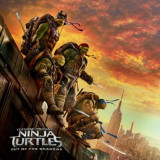
Enjoy The Toons Records in partnership with Paramount
Pictures proudly presents Teenage Mutant Ninja Turtles:
Out of the Shadows (Music from the Motion Picture),
Score by Steve Jablonksy. Michelangelo, Donatello,
Leonardo, and Raphael are back to battle bigger, badder villains,
alongside April O’Neil (Megan Fox) and a newcomer:
the hockey-masked ally Casey Jones (Steven Amell).
After supervillain Shredder (Brian Tee) escapes custody,
he joins forces with two dimwitted henchmen, Bebop
(Gary Anthony Williams) and Rocksteady (WWE's Sheamus),
to unleash a diabolical plan to take over the world. As the Turtles
prepare to take on Shredder and his new crew, they find themselves facing an even greater threat with similar intentions: the notorious Krang (Brad Garrett). Teenage Mutant Ninja Turtles: Out of the Shadows (Music from the Motion Picture) features music by Steve Jablonsky (Transformers film series, The Sims 3, Gears of War 2). Jablonsky's signature sound is present, with a unique call-back to the original theme and fun, exciting orchestration for the 2016 film score. Teenage Mutant Ninja Turtles: Out of the Shadows (Music from the Motion Picture) is a 2xLP, housed in a gatefold jacket and pressed on colorful themed vinyl. The pressing is limited to 750 copies across 3 color variants. –
Sonny Boy Williamson (Alex Miller 1912 - 1965) was one of the most inspiring
harmonica players in blues history. Though he took his name from another well-known
harmonica player, no one really sounded like him. Williamson developed his own
signature harmonica style, always showing a metronome like timing and an endlessly
inventive technique.
This release consists of Sonny Boy's complete debut LP, Down And Out Blues ,
originally released in 1959 on the Chess Records subsidiary label, Checker. Featuring
Muddy Waters, Jimmy Rogers, Willie Dixon, and Otis Spann, among others.
Sonny Boy Williamson toured England with American Folk Blues Festival in 1963 and
1965 and appeared on the iconic tv music show Ready Steady Go (8 January 1965)
backed by UK band,The T-Bones with Gary Farr.
EIGHTEEN AND I LIKE IT… (MISC. COLOURED VINYL))if you survived trips 1-17 with one tiny speck of psychedelic sunshine intact, Brown Acid The 18th Trip will be your coming of age nightmare. Vintage underground '70s hard rock, coming at you from bizarre angles, local scene wasteland America when everybody was out for themselves and the drugs went bleak. The guitars kill, the attitude is twisted, even the sex is headed down the wrong road. Real people, no compromise, pure and potent. Get stoked, take the 18th Trip and know that the artists will get paid for pulverizing your soul! "People… are you ready?, 'cause the music now is getting so heavy"… Back Jack out of St. Louis, Missouri in 1974 launch our trip with "Bridge Waters Dynamite". It's an invocation to rock flashing on Mark Farner whooping up a Grand Funk crowd, then getting to the point quickly with berserk guitar assaults. Heavy riff with power chord stalks beneath as you take their advice… get loose and blow up the past. Smokin' Buku Band dropped my jaw with the audacious track "Hot Love" coming on like some fractured fever dream burlesque of Led Zep moves out of Hollywood in 1980. Swooping elongated vocals above, a total Zep chord move at the end of each verse. Writer/producer Steve Shauger aka Shag Stevens gets a brilliantly messed up sound quality here, the ideal polar opposite of slick. The extended guitar break is an epitome of serendipitously crude virtuosity, simply outrageous! Coming at you from way outta left field is "Moby Shark" by Atlantis, a hilarious and strange Baltimore pre-punk vibed dose of D.I.Y. meets hard rock. Lon Talbot is the mastermind, the flip side of this impossibly rare Mekon Records label single was featured in an obscure 1978 B-movie titled "The Alien Factor". Follow the lyrics closely, when the ominous jaws jaws jaws start coming after you you you… the song's big hook is so preposterously catchy the shark attack feels like good news. Inquiring minds should know that the band formerly known as Atlantis can now be found by searching for the Lon Talbot Group! Tommy Stuart and the Rubberband's "Peeking Through Your Window" from 1970 opens with a spooky organ riff, slips into a gushy fuzz/organ groove akin to "Mustache In Your Face” by Pretty. The singer creates downright creepy vibes, a stalker peeking through the girl's mind like a peeping Tom at the window up to no good. The lyrics evoke a disturbing scenario. Tommy Stuart also made a strange LP titled Hound Dog Man in 1977 and some terrific rare garage singles under the names Magnificent Seven and The Omen & Their Love in the mid '60s. Nothing better than an angry two chord guitar attack with cowbell to set the stage for this rant about getting "Ripped Off" by love. Taken from their rare 1977 LP on Dynamite Records, Chicago Triangle was Marvey Esparza, Dave Guereca, Jose 'Tarr' Perez and Robert Aguilera. They unleash such strong brain-scrubbing wah wah frenzy in the guitar break here that it seems to perversely mock it's own intensity! Like I said, Brown Acid the 18th Trip comes at you from all kinds of uncanny angles. Damnation of Adam Blessing out of Cleveland, Ohio unleashed a stone killer psychedelic hard rock classic "Cookbook" in the late '60s, this track "Nightmare" from 1973 has them cooking again at full power. A different singer, name change to Damnation and then Glory, unleashing a deadly dose of dark progressive heavy rock drama peaking when spooky 'oooo-wa-oooo' background vocals emerge during a bizarre spoken bit. It unfolds like a mini-epic and includes some remarkably brutal guitar and turbulent organ, too. "Swing your sword, all aboard… bid farewell to the dreamer" Dalquist exclaims. Cynical view of human nature, idealism is over, war is coming, it always does. Opens with a cold menacing riff and atmosphere reminiscent of "Synthezoid Heartbreak" by Maya. Mournful despondent vocals ride an insistent churning groove, gnarly guitar break moves into free noise territory. This rare track is from a local various artists benefit album titled Kangaroo Jam issued for the Waco Family Abuse Center in Texas circa 1980. The Pawnbrokers "Realize" is prime proto heavy rock emerging out of psychedelic garage roots in 1968 Fargo, North Dakota. Unusual arrangement, terrific sustain guitar tones like on the first Blue Cheer LP, even a rip on Hendrix "Manic Depression" with unison voice and guitar ascent near the end. They made three 45s and were active from '65 to '69. Hats off to Blake English, Kent Richey, Paul Rogne and Steve Harrison, you nailed it in just a hair over two minutes! As pure and creative as the original psychedelic garage hard rock gets. Parchment Farm from Union, Missouri gigged with the likes of ZZ Top and Foghat back in the day and unleashed the amazing "Songs Of The Dead" in 1971. Primitive riff/chord pattern dosed with some funky prog moves, sky turning black, 'is this heaven or hell' type disoriented confusion… may as well grab your guitar and sing songs to the dead. Robert 'Ace' Williams on bass, Paul Cockrum on guitar, Gary Reed on keys and Micky Waterman on drums, replacing Mike Dulany (R.I.P.) Cool that they use the Blue Cheer misspelling from Vincebus Eruptum for the band name! Ominous organ, thick minimalist fuzz riff, funky psychedelic wah wah flashes and freaky sex combine in one twisted dance titled "Rockin' Chair" by Brothers Of The Ghetto. Out of Chicago in 1975 with some Santana atmospherics and a delicious fuzz wah screamin' guitar break, the groove is highlighted by an off the wall vocal which sounds eerily detached in a subtly sleazy way. Rene Maxwell is the writer of this hard-rock boogie-down hybrid straight out of the twilight zone. It was issued on Ghetto, a subsidiary of the peculiar Kiderian label that released the Creme Soda LP. Now that your head is totally skewered, go Back Jack and play side one again! (Words by Paul Major)
EIGHTEEN AND I LIKE IT… (MISC. COLOURED VINYL))if you survived trips 1-17 with one tiny speck of psychedelic sunshine intact, Brown Acid The 18th Trip will be your coming of age nightmare. Vintage underground '70s hard rock, coming at you from bizarre angles, local scene wasteland America when everybody was out for themselves and the drugs went bleak. The guitars kill, the attitude is twisted, even the sex is headed down the wrong road. Real people, no compromise, pure and potent. Get stoked, take the 18th Trip and know that the artists will get paid for pulverizing your soul! "People… are you ready?, 'cause the music now is getting so heavy"… Back Jack out of St. Louis, Missouri in 1974 launch our trip with "Bridge Waters Dynamite". It's an invocation to rock flashing on Mark Farner whooping up a Grand Funk crowd, then getting to the point quickly with berserk guitar assaults. Heavy riff with power chord stalks beneath as you take their advice… get loose and blow up the past. Smokin' Buku Band dropped my jaw with the audacious track "Hot Love" coming on like some fractured fever dream burlesque of Led Zep moves out of Hollywood in 1980. Swooping elongated vocals above, a total Zep chord move at the end of each verse. Writer/producer Steve Shauger aka Shag Stevens gets a brilliantly messed up sound quality here, the ideal polar opposite of slick. The extended guitar break is an epitome of serendipitously crude virtuosity, simply outrageous! Coming at you from way outta left field is "Moby Shark" by Atlantis, a hilarious and strange Baltimore pre-punk vibed dose of D.I.Y. meets hard rock. Lon Talbot is the mastermind, the flip side of this impossibly rare Mekon Records label single was featured in an obscure 1978 B-movie titled "The Alien Factor". Follow the lyrics closely, when the ominous jaws jaws jaws start coming after you you you… the song's big hook is so preposterously catchy the shark attack feels like good news. Inquiring minds should know that the band formerly known as Atlantis can now be found by searching for the Lon Talbot Group! Tommy Stuart and the Rubberband's "Peeking Through Your Window" from 1970 opens with a spooky organ riff, slips into a gushy fuzz/organ groove akin to "Mustache In Your Face” by Pretty. The singer creates downright creepy vibes, a stalker peeking through the girl's mind like a peeping Tom at the window up to no good. The lyrics evoke a disturbing scenario. Tommy Stuart also made a strange LP titled Hound Dog Man in 1977 and some terrific rare garage singles under the names Magnificent Seven and The Omen & Their Love in the mid '60s. Nothing better than an angry two chord guitar attack with cowbell to set the stage for this rant about getting "Ripped Off" by love. Taken from their rare 1977 LP on Dynamite Records, Chicago Triangle was Marvey Esparza, Dave Guereca, Jose 'Tarr' Perez and Robert Aguilera. They unleash such strong brain-scrubbing wah wah frenzy in the guitar break here that it seems to perversely mock it's own intensity! Like I said, Brown Acid the 18th Trip comes at you from all kinds of uncanny angles. Damnation of Adam Blessing out of Cleveland, Ohio unleashed a stone killer psychedelic hard rock classic "Cookbook" in the late '60s, this track "Nightmare" from 1973 has them cooking again at full power. A different singer, name change to Damnation and then Glory, unleashing a deadly dose of dark progressive heavy rock drama peaking when spooky 'oooo-wa-oooo' background vocals emerge during a bizarre spoken bit. It unfolds like a mini-epic and includes some remarkably brutal guitar and turbulent organ, too. "Swing your sword, all aboard… bid farewell to the dreamer" Dalquist exclaims. Cynical view of human nature, idealism is over, war is coming, it always does. Opens with a cold menacing riff and atmosphere reminiscent of "Synthezoid Heartbreak" by Maya. Mournful despondent vocals ride an insistent churning groove, gnarly guitar break moves into free noise territory. This rare track is from a local various artists benefit album titled Kangaroo Jam issued for the Waco Family Abuse Center in Texas circa 1980. The Pawnbrokers "Realize" is prime proto heavy rock emerging out of psychedelic garage roots in 1968 Fargo, North Dakota. Unusual arrangement, terrific sustain guitar tones like on the first Blue Cheer LP, even a rip on Hendrix "Manic Depression" with unison voice and guitar ascent near the end. They made three 45s and were active from '65 to '69. Hats off to Blake English, Kent Richey, Paul Rogne and Steve Harrison, you nailed it in just a hair over two minutes! As pure and creative as the original psychedelic garage hard rock gets. Parchment Farm from Union, Missouri gigged with the likes of ZZ Top and Foghat back in the day and unleashed the amazing "Songs Of The Dead" in 1971. Primitive riff/chord pattern dosed with some funky prog moves, sky turning black, 'is this heaven or hell' type disoriented confusion… may as well grab your guitar and sing songs to the dead. Robert 'Ace' Williams on bass, Paul Cockrum on guitar, Gary Reed on keys and Micky Waterman on drums, replacing Mike Dulany (R.I.P.) Cool that they use the Blue Cheer misspelling from Vincebus Eruptum for the band name! Ominous organ, thick minimalist fuzz riff, funky psychedelic wah wah flashes and freaky sex combine in one twisted dance titled "Rockin' Chair" by Brothers Of The Ghetto. Out of Chicago in 1975 with some Santana atmospherics and a delicious fuzz wah screamin' guitar break, the groove is highlighted by an off the wall vocal which sounds eerily detached in a subtly sleazy way. Rene Maxwell is the writer of this hard-rock boogie-down hybrid straight out of the twilight zone. It was issued on Ghetto, a subsidiary of the peculiar Kiderian label that released the Creme Soda LP. Now that your head is totally skewered, go Back Jack and play side one again! (Words by Paul Major)
Drummer Tony Williams had joined Miles Davis’ band and played on landmark Blue Note albums by the time he recorded his 1964 debut album Life Time at age 18. These five adventurous original compositions featured Sam Rivers, Bobby Hutcherson, Herbie Hancock, Ron Carter, Gary Peacock and Richard Davis. This stereo Tone Poet Vinyl Edition was produced by Joe Harley, mastered by Kevin Gray from the original analog master tapes, pressed on 180g vinyl at RTI, and packaged in a deluxe gatefold tip-on jacket.
Gary Clark Jr. releases his new studio album JPEG RAW on 22nd March 2024.
This new body of work signals a brave new world for Clark’s ever-expanding creative palette. The new music is dense and adventurous with a more cohesive synthesis of his eclectic musical universe. His samples, Thelonious Monk and Sonny Boy Williamson, decorate flourishes of African, World Music, and even Jazz while merging with rock, R&B, hip-hop and blues; familiar areas he has ventured before, this time with more unity forging a fresh new style.
Clark’s lyrics are pointed, deeply personal, outspoken and socially conscious with occasional forays into rap and spoken word from Clark himself. The sonics are immersive, verging on modern groove-oriented psychedelia with hip-hop driven beats in verses giving way to anthemic choruses, rich with power-chording and wide fuzz riffage.
JPEG RAW is Clark's first album since 2019’s critically lauded This Land, which became his third consecutive top 10 on the Billboard 200 chart and garnered three Grammy Awards, including Best Rock Song and Best Rock Performance (“This Land”) and Best Contemporary Blues Album (This Land). Clark’s first Grammy win was awarded in 2014 for Best Traditional R&B Performance (“Please Come Home”).
All true improvisation involves an element of chance: the coming together of a nexus of influences impulses and actions that result in spontaneous creation. Often in the world of jazz these creative sparks blaze briefly in performance, and then disappear as the sonic vibrations fade from the air, but sometimes chance intervenes again, and moments thought to be gone forever can resurface in unexpected ways. As master drummer Jeff Williams sorted through his archive of cassette tapes from his extensive international career, he had no idea that hidden within it would be a recording of a 1991 evening when he joined storied NYC legend David Liebman for a set of spontaneous performances. Reunited together fifteen years after the breakup of their seminal band Lookout Farm in 1976, the two players reaffirmed their deep musical bond with a set of free-flowing exploratory dialogues in front of a receptive audience. Believed lost for many years, these performances can now be experienced again, with all their fearless freshness and pure committed musicianship undimmed by the passage of time.
Jeff Williams has established a formidable reputation as a drummer, composer, educator and bandleader on both sides of the Atlantic. His relationship with Liebman was forged in the exciting, expansive atmosphere of the New York scene in the early 70s: the meeting of Williams, the laid back Midwesterner, and Liebman, the mercurial, quintessential New Yorker, was an inspired coming together of opposites that always made the creative sparks fly. Williams remembers the journey that led to the Bar Room 432 on that 1991 evening:
“Just as I was leaving my home town of Oberlin, Ohio to move to New York City in 1971, I was given David Liebman’s phone number by someone who told me that Dave had started an organisation for jazz musicians there. I knew of Dave, from Ten Wheel Drive and John McLaughin’s My Goals Beyond, but I couldn’t have imagined what a significant role he would play in my musical life. Shortly afterwards, Dave would leave Elvin Jones and Miles Davis to start his own band, with Richie Beirach, Frank Tusa, and myself, (later adding Badal Roy), naming it Lookout Farm. We released two albums on ECM and one on A&M to wide critical acclaim, and toured across Europe, Japan, India and the US.”
“Following the dissolution of Lookout Farm, Dave and I embarked on a short duo tour opening for Gary Burton. That would be the last time the two of us would play until the occasion of this recording, fifteen years later.”
“Fast forward to 1991 when I discovered an attractive bar located on the far West Side of 14th Street in Manhattan. Bar Room 432 would become a six night a week jazz club for a few years, providing me, and many others, with the opportunity to perform our music. Catching wind of this, Dave suggested we do a duo performance there.”
“Luckily, I recorded it.There was no preparation, no set music to be played - we simply improvised, picking up where we’d left off. David’s mastery of the soprano saxophone is in full bloom here, as well as his incredibly resourceful musical mind.”
The performances are revelatory, moving in pure improvisation from clear, songlike melody to furious density, from ambience to pulsing groove, from light into darkness and back again. Cleaned up and remastered by Alex Bonney, the sound of the tape captures the warm, wood-lined ambience of the room, allowing the full power and dynamics of William’s drums and the warmth and fullness of Liebmans’ soprano sax to sing out, engaging the contemporary listener just as it engaged the hip Manhattan crowd thirty three years ago.
Powerhouse R&B/Soul vocalist and Canadian Idol finalist. Gary Beals, is thrilled to be releasing his new album, The Melody Within. The Melody within is a musical journey that unfolds across two sides, much like a story that reveals new layers with each turn. The album is more than just a collection of songs; it's an emotional guide that beckons us to explore the depths of our own feelings and explores navigating emotions, self discovery, and nostalgia through soulful melodies. "This album serves as the aftermath to my previous album, "Bleed My Truth". It's a continuation of my musical journey, a fusion of soulful melodies and diverse influences that mirror both my personal and artistic evolution," said Gary Beals. "Each song is a chapter, a piece of my heart and soul, inviting listeners into my world of emotions, experiences and connection. It uncovers the melody that resides within. The anticipation is building as I look forward to sharing this collection of new music, and I hope it resonates deeply, offering a meaningful and memorable musical experience enriched with a multitude of emotions." With this new body of work, Gary had the opportunity to work with two talented primary producers,Beatchild (Drake, Justin Nozuka, Glen Lewis) and Myles "Losh'' Schwartz (Allan Rayman, Tobi, The Game, Pretty Lights). Additional production credits on the album include, Chris Guirguis, Frizzy Astro (Raz Fresco, Daniel Son), Jordan "Tempo" Farmer, Kobebeats (Rodwave, Kcamp, Sevyn),Sid Aakowa, Ty Danelley (Popcaan, Tory Lanez, Pressa) and Warren Williams, who all helped to shape the makings of the album while maintaining a consistent synergy. Side A of the album draws inspiration from the likes of Al Green, Aretha Franklin, Otis Redding, Marvin Gaye, and James Brown, and pays homage to artists who have played an integral part in shaping Gary's musical roots. This side includes Gary's previously released singles, "Good People, Good Vibes" and "All of Me," and the album's title track "The Melody Within," that commends the process of self-discovery and introspection. Also included is the album's 5th single, "Self Revolution," which will be released on October 27th along with the official music video. On Side B, you'll encounter a fusion of R&B and pop elements while still staying true to the album's soulful essence. Included on this side, is Gary's third single "I Like That," featuring JRDN and KAYO ,and the new single "How Do I Say (I Love You)," released September 22nd. "How Do I Say (I Love You)" dives into the inner conflict of conveying affection, showing vulnerability, and the bravery needed to expose one's heart to someone else. About Gary Beals: Two decades ago, Gary embarked on his musical journey when he, a small-town kid from Nova Scotia (now calling Toronto home), made a remarkable entrance onto the national stage as a part of Canada's inaugural season of Canadian Idol. This month marks the 20th anniversary of the finale where Gary was crowned as the "runner up" on the show. The experience ignited a transformative period of self-reflection and discovery that propelled Gary toward personal growth, shaping his life and musical career in lasting ways.
Fast forward through three albums and twenty years, Gary's work and talent have made a remarkable impact and received widespread critical acclaim. Among his accomplishments are debuting in the top 10 of the Canadian sales chart, being nominated for a JUNO Award for "Best R&B/Soul Recording," winning an East Coast Music Award and seven African Nova Scotia Music Awards, as well as scoring nominations for an Urban Music Award and a Canadian Radio Music Award. These accomplishments led to his home province's Premier officially designating November 22nd as Gary Beals Day in acknowledgment of his achievements.
With his return, Gary is poised to make a positive impact on the ever-expanding global community as he prepares to release his new album The Melody Within. The album will stand as a tribute to the strength that resides within all of us and a reminder that true fulfillment comes not just from achieving goals, but from discovering the intricate beauty that lies within our own hearts and souls.
Craig Charles is a big supporter of Gary Beals and spun his single 'All Of Me' for three weeks in a row on his Funk and Soul Show on BBC Radio Six
нет на складе
Последняя поставка 2 года назад доступно для дозаказа без гарантии
Drummer and composer Tony Williams’ adventurous 1965 album Spring—his second as a leader for Blue Note—found him convening a stellar line-up with saxophonists Wayne Shorter and Sam Rivers, pianist Herbie Hancock, and bassist Gary Peacock. The five Williams originals presented here offer the musicians spacious realms in which to go exploring.
This Blue Note Classic Vinyl Edition is stereo, all-analog, mastered by Kevin Gray from the original master tapes, and pressed on 180g vinyl at Optimal.
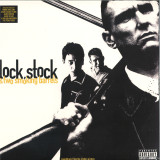
Originally released on Island Records in September 1998, the soundtrack to the box-office smash film, written and directed by Guy Ritchie, quickly became a must-own album, and is frequently cited as one of the best movie soundtracks of all time.
Lock, Stock and Two Smoking Barrels redefined the British gangster film and established Guy Ritchie as one of the greatest directing and writing talents of his generation. Using a frenetic mixture of filmic styles, humour, violence, breakdown of the fourth wall, narration, and vast amounts of swearing, it is hard to imagine a time when this film and its influence was not around. It made a star of the-then unknown Jason Statham, and, amazingly, hard man footballer Vinnie Jones, who as Big Chris, had several scene-stealing moments. Taking his cue from Quentin Tarantino, who had been meticulously curating his film soundtracks since the early 90s, Ritchie made the music to his film tell its own story, complete with memorable snatches of dialogue between many of the tracks.
It offers a beautifully eclectic selection of songs from the preceding three decades, plus then-current artists providing some of their best material, such as Hundred Mile High City by Ocean Colour Scene or E-Z Rollers' drum'n'bass masterpiece Walk This Land. Of the heritage tracks, Dusty Springfield sings her sultry take on Spooky; James Brown appears twice with The Boss and The Payback; The Stooges with I Wanna Be Your Dog, and two versions of Pete Wingfield's masterful one-hit-wonder 18 With A Bullet; in its 1975 original and a contemporary cover by Lewis Taylor and Carleen Anderson. And this is only half of it.
нет на складе
Последняя поставка 5 месяцев назад доступно для дозаказа без гарантии
Long time Leng recording artists 40 Thieves are back with one of their most notable singles to date – a surprise collaboration with two NYC disco originals, storied vocalist Cinnamon Jones and multiinstrumentalist/producer Gary Davis.
San Francisco outfit 40 Thieves has been serving up cosmic, dubbed-out and otherworldly contemporary disco treats since the mid 2000s, and have been part of the Leng family since 2011. The crew, headed up by Layne Fox, Jay Williams and Corey Black, have released countless killer cuts on the label, as well as an expansive
debut album, 2014’s The Sky Is Yours.
They’ve worked with other artists before, but nobody at the same legendary level as Cinnamon Jones and Gary
Davis. The latter cut his teeth as a musician working with iconic disco producers Patrick Adams and Peter Brown at their P&P Records stable, before becoming a producer and artist in his own right writing and arranging the disco classic ‘Got To Get Your Love’ performed by Clyde Alexander & Sanction.
Jones, meanwhile, has enjoyed a hugely successful career both in her native New York (as Joyce Jones, an original member of First Choice) and on the West Coast, where she not only became an in-demand performer, but also snagged a role in the Supremes biopic Dream Girls.
‘The Gift’ is one of Jones’ most cherished solo songs – a joyful celebration of a new day dawning that has long been popular in her live sets. With input and instrumentation from Davis and a fantastic delivery of her own lyrics by Jones, 40 Thieves has successfully re-framed the track as a sunrise-ready future Bay Area free party
favourite; a dubbed-out, suitably cosmic creation that’s presented in three potent versions.
Leading the charge, and stretched across side A of the vinyl version is the band’s ’Disco Mix’ which boasts a fully realised instrumental arrangement and extensive use of passages from Jones’ vocals. Not all the lyrics are present as the Bay Area band has chosen to focus on selected lines that most neatly fit their musical vision and
celebrate the joys of dancing at sunrise. There are more spaced-out keyboard solos, sharper guitars (smothered in effects in true 40 Thieves fashion) and sound design that’s as immersive as it is heady and intoxicated.
On the flip is the ‘Disco Dub’. A bona-fide dub disco chugger rich in relentless synth-bass, addictive guitar licks, echo-laden vocal snippets, sparkling nu-disco electronics, tactile, deep house style electric piano stabs and cosmic effects aplenty, it’s a track tailor-made for slowly shuffling while the sun peeps over the horizon.
To complete an inspired package, 40 Thieves have also included a killer DJ tool: a ‘Beats’ take that wraps energy packed percussion hits, trippy electronic noises, trailing dub delays and sparse melodies around a metronomic drum machine beat. It’s a wavy, groovy and pleasingly mind-altering way to conclude one of 40 Thieves’ most magical EPs to date.
нет на складе
Последняя поставка 20 месяцев назад доступно для дозаказа без гарантии
Before there was Saturday Night Fever there was underground disco. DJs across America went out and found the music to play; dancers went out and found the clubs. At this point, in the early seventies, the disco was the venue and not a genre of music.
By the time Nik Cohn’s short story Tribal Rites of the New Saturday Night was published by New York magazine in June 1976, disco was the biggest genre of music on the charts and was about to get bigger still, becoming an all-enveloping cultural phenomenon. Cohn sold the film rights to Robert Stigwood, and his classic club yarn became Saturday Night Fever.
“Tribal Rites Of The New Saturday Night” is the soundtrack to Cohn’s story, where disco began; a 1975 score for the underground clubs of Brooklyn and Queens that played R&B, soul and Latin beats to people who lived for the weekend.
Bob Stanley has put this collection together, sourcing what was actually played in Brooklyn discos in 1974 and 1975. Only a few specific records were mentioned in Cohn’s feature, but two of them – Ben E King’s ‘Supernatural Thing Part 1’ and Harold Melvin’s ‘Wake Up Everybody’ - were cosmically great and both are included here, alongside underground favourites like Moment Of Truth’s Four Tops-like ‘Helplessly’ and Gloria Scott’s Barry White-produced modern soul classic ‘Just As Long As We’re Together’. Ivano Fossati’s incredible ‘Night Of The Wolf’ has fans in northern soul, disco and prog circles.
Without Cohn’s original story, it’s quite possible that disco would have remained an underground phenomenon – “Tribal Rites Of The New Saturday Night” paints a scene in full flower. Saturday Night Fever would eventually, if unintentionally, wreck the underground nature of this scene, and clubs like Studio 54 would destroy the democracy of the party, but for two or three years the scene was largely undocumented and magical. This album is the sound of disco before it was captured.
The long-awaited reissue of the best ever album of rare Eastern and psychedelic Jazz music by this famous Hungarian guitarist
Gabor Szabo, originally released in 1968. For the first time as extended edition with 2 bonus tracks: radio versions of Fire Dance
/ Ferris Wheel from the 1969 7” single 7”. Deluxe 8-sided Digipak CD and Gatefold Vinyl come with long, exclusively written
inner notes by the famous researcher and biographer Douglas Payne. Remastered by Martin Bowes at Cage Studios (UK).
Gabor Szabo was one of the most original guitarists to emerge in the 1960s, mixing his Hungarian folk music heritage with a deep
love of jazz and crafting a distinctive, largely self-taught sound. Born in Budapest, on March 8, 1936, Szabo was inspired by a Roy
Rogers cowboy movie to begin playing guitar when he was 14 and often played in dinner clubs and covert jam sessions while still
living in his hometown. He escaped from his country at age 20 on the eve of the Communist uprising and eventually made his way
to America, settling with his family in California.
He attended Berklee College (1958-1960) and in 1961 joined Chico Hamilton's innovative quintet featuring Charles Lloyd. Urged
by Hamilton, Szabo crafted a most distinctive sound; as agile on intricate, nearly-free runs as he was able to sound inspired during
melodic passages. Szabo left the Hamilton group in 1965 to leave his mark on the pop-jazz of the Gary McFarland quintet and the
energy music of Charles Lloyd's fiery and underrated quartet featuring Ron Carter and Tony Williams.
Szabo initiated a solo career in 1966, recording the exceptional album, Spellbinder, which yielded many inspired moments and
"Gypsy Queen," the song Santana turned into a huge hit in 1970. Szabo formed an innovative quintet (1967-1969) featuring the
brilliant, classically trained guitarist Jimmy Stewart and recorded many notable albums during the late '60s. The emergence of
rock music (especially George Harrison, Eric Clapton, and Jimi Hendrix) found Szabo experimenting with feedback and more
commercially oriented forms of jazz.
During the '70s, Szabo regularly performed along the West Coast, hypnotizing audiences with his enchanting, spellbinding style.
From 1970, he locked into a commercial groove, even though records like Mizrab occasionally revealed his seamless jazz, pop,
Gypsy, Indian, and Asian fusions. Szabo had revisited his homeland several times during the '70s, finding opportunities to perform
brilliantly with native talents. He was hospitalized during his final visit and died in 1982, just short of his 46th birthday.
нет на складе
Последняя поставка 3 года назад доступно для дозаказа без гарантии
The long-awaited reissue of the best ever album of rare Eastern and psychedelic Jazz music by this famous Hungarian guitarist
Gabor Szabo, originally released in 1968. For the first time as extended edition with 2 bonus tracks: radio versions of Fire Dance
/ Ferris Wheel from the 1969 7” single 7”. Deluxe 8-sided Digipak CD and Gatefold Vinyl come with long, exclusively written
inner notes by the famous researcher and biographer Douglas Payne. Remastered by Martin Bowes at Cage Studios (UK).
Gabor Szabo was one of the most original guitarists to emerge in the 1960s, mixing his Hungarian folk music heritage with a deep
love of jazz and crafting a distinctive, largely self-taught sound. Born in Budapest, on March 8, 1936, Szabo was inspired by a Roy
Rogers cowboy movie to begin playing guitar when he was 14 and often played in dinner clubs and covert jam sessions while still
living in his hometown. He escaped from his country at age 20 on the eve of the Communist uprising and eventually made his way
to America, settling with his family in California.
He attended Berklee College (1958-1960) and in 1961 joined Chico Hamilton's innovative quintet featuring Charles Lloyd. Urged
by Hamilton, Szabo crafted a most distinctive sound; as agile on intricate, nearly-free runs as he was able to sound inspired during
melodic passages. Szabo left the Hamilton group in 1965 to leave his mark on the pop-jazz of the Gary McFarland quintet and the
energy music of Charles Lloyd's fiery and underrated quartet featuring Ron Carter and Tony Williams.
Szabo initiated a solo career in 1966, recording the exceptional album, Spellbinder, which yielded many inspired moments and
"Gypsy Queen," the song Santana turned into a huge hit in 1970. Szabo formed an innovative quintet (1967-1969) featuring the
brilliant, classically trained guitarist Jimmy Stewart and recorded many notable albums during the late '60s. The emergence of
rock music (especially George Harrison, Eric Clapton, and Jimi Hendrix) found Szabo experimenting with feedback and more
commercially oriented forms of jazz.
During the '70s, Szabo regularly performed along the West Coast, hypnotizing audiences with his enchanting, spellbinding style.
From 1970, he locked into a commercial groove, even though records like Mizrab occasionally revealed his seamless jazz, pop,
Gypsy, Indian, and Asian fusions. Szabo had revisited his homeland several times during the '70s, finding opportunities to perform
brilliantly with native talents. He was hospitalized during his final visit and died in 1982, just short of his 46th birthday.
нет на складе
Последняя поставка 3 года назад доступно для дозаказа без гарантии
The long-awaited reissue of this rare Eastern and psychedelic Jazz LP by the famous Hungarian guitarist, originally
released in 1968. For the first time and as extended Edition with four bonus tracks: radio version from 1968/69 7”
singles 7”. Deluxe 6-sided Digipak CD with 20 page booklet and Gatefold Vinyl comes with long, exclusively written
inner notes by the famous researcher and biographer Douglas Payne.
“The performances on this LP have a restrained, introspective quality. Szabo’s work is lyrical, rather economical, and
somewhat angular, and his tone is warm and glowing.” – Harvey Pekar, DownBeat
“Gabor Szabo is at the musical zenith of his career. This album could rank as his best to date.” - Billboard
“But for sheer lyrical beauty, few players are in Szabo’s class. His startling use of dissonance is a delight, too, and
time and again he will alter a final phrase just slightly, totally reorienting a familiar tune.” – Alan Heineman, DownBeat
“This is definitely one of my ‘go to’ Gabor albums.” Mike Stax, Ugly Things
"Gabor Szabo’s Bacchanal documents one of the earliest and finest examples of what was then known as “jazz rock.”
Years before this new jazz style evolved – or devolved, according to some – into “fusion,” jazz rock was mostly
fashioned by younger jazz players whose ears were open to the emerging sounds coming out of rock and roll,
especially those of the Beatles and, later, Jimi Hendrix. " - Douglas Payne
After recording four albums for Impulse in 1967, the distinctive guitarist Gabor Szabo cut three strongest records for
the Skye label in 1968-1969: "1969", "Dreams" and "Bacchanal" all of them became a legendary classic. This time
EBALUNGA!!! are rediscovers "Bacchanal". Szabo's regular group of the era is heard on record for the last time:
guitarist Jimmy Stewart, bassist Louis Kabok, drummer Jim Keltner and percussionist Hal Gordon. With the exception
of two Szabo originals, the material is comprised of current pop tunes including two songs by Donovan, "Love Is Blue,"
"The Look of Love" and "Theme from the Valley of the Dolls."
Gabor Szabo was one of the most original guitarists to emerge in the 1960s, mixing his Hungarian folk music heritage
with a deep love of jazz and creating a distinctive, largely self-taught sound.
Born in Budapest, on March 8, 1936, Szabo was inspired by a Roy Rogers cowboy movie to begin playing guitar when
he was 14 and often played in dinner clubs and covert jam sessions while still living in his hometown. He escaped
from his country at age 20 on the eve of the Communist uprising and eventually made his way to America, settling
with his family in California.
He attended Berklee College (1958-1960) and in 1961 joined Chico Hamilton's innovative quintet featuring Charles
Lloyd. Urged by Hamilton, Szabo crafted a most distinctive sound; as agile on intricate, nearly-free runs as he was
able to sound inspired during melodic passages. Szabo left the Hamilton group in 1965 to leave his mark on the popjazz of the Gary McFarland quintet and the energy music of Charles Lloyd's fiery and underrated quartet featuring Ron
Carter and Tony Williams.Szabo initiated a solo career in 1966, recording the exceptional album, Spellbinder, which yielded many inspired
moments and "Gypsy Queen," the song Santana turned into a huge hit in 1970. Szabo formed an innovative quintet
(1967-1969) featuring the brilliant, classically trained guitarist Jimmy Stewart and recorded many notable albums
during the late '60s. The emergence of rock music (especially George Harrison, Eric Clapton, and Jimi Hendrix) found
Szabo experimenting with feedback and more commercially oriented forms of jazz.
During the '70s, Szabo regularly performed along the West Coast, hypnotizing audiences with his enchanting,
spellbinding style. From 1970, he locked into a commercial groove, even though records like Mizrab occasionally
revealed his seamless jazz, pop, Gypsy, Indian, and Asian fusions. Szabo had revisited his homeland several times
during the '70s, finding opportunities to perform brilliantly with native talents. He was hospitalized during his final visit
and died in 1982, just short of his 46th birthday.
We are extremely excited to announce that Licorice Pizza: The Original Motion Picture Soundtrack will be released on Friday 10rd December 2021 on both CD + Vinyl. Licorice Pizza is the story of Alana Kane (Alana Haim) & Gary Valentine (Cooper Hoffman) who grow up & fall in love in San Fernando Valley (1973). Written & directed by filmmaker Paul Thomas Anderson. Sean Penn, Bradley Cooper, Tom Waits & Benny Safdi also star. Limited movie release in the U.S. Nov 26 and goes wide in US on Dec 25. Radiohead's Jonny Greenwood composed the film's score & Paul Thomas Anderson curated the soundtrack also features songs by David Bowie, Paul McCartney and many more to be revealed. The title pays homage to the California record store, Licorice Pizza.
[d] 4 Ac–Cent–Tchuate The Positive (Single Version) [feat. Vic Schoen & His Orchestra] – Bing Crosby & The Andrew Sisters
[e] 5 Blue Sands [feat. Buddy Collette] – Chico Hamilton Quintet
[g] 7 My Ding-A-Ling (Live At Fillmore Auditorium, San Francisco, CA/1967) [feat. Steve Miller Band] – Chuck Berry
We are extremely excited to announce that Licorice Pizza: The Original Motion Picture Soundtrack will be released on Friday 10rd December 2021 on both CD + Vinyl. Licorice Pizza is the story of Alana Kane (Alana Haim) & Gary Valentine (Cooper Hoffman) who grow up & fall in love in San Fernando Valley (1973). Written & directed by filmmaker Paul Thomas Anderson. Sean Penn, Bradley Cooper, Tom Waits & Benny Safdi also star. Limited movie release in the U.S. Nov 26 and goes wide in US on Dec 25. Radiohead's Jonny Greenwood composed the film's score & Paul Thomas Anderson curated the soundtrack also features songs by David Bowie, Paul McCartney and many more to be revealed. The title pays homage to the California record store, Licorice Pizza.
d 4 Ac–Cent–Tchuate The Positive (Single Version) [feat. Vic Schoen & His Orchestra] – Bing Crosby & The Andrew Sisters
[e] 5 Blue Sands [feat. Buddy Collette] – Chico Hamilton Quintet
[g] 7 My Ding-A-Ling (Live At Fillmore Auditorium, San Francisco, CA/1967) [feat. Steve Miller Band] – Chuck Berry
The forthcoming latest edition of the popular compilation series featuring long-lost vintage 60s-70s proto-metal and stoner rock singles, Brown Acid: The Thirteenth Trip will be available on Halloween 2021. Check out the first single "Run Run", released in 1970 by Montreal hard rockers Max is available to hear & share via Metal Injection HERE. (And, direct YouTube and Bandcamp)
The Brown Acid series is curated by L.A. label RidingEasy Records and retailer/label Permanent Records. Read interviews with the series curators via Paste Magazine HERE and LA Weekly HERE.
About The Thirteenth Trip:
Max, from Montreal, QC — originally known as Dawn, before Tony Orlando & Dawn forced a name change — kick things off with “Run Run” from their lone 1970 single. It’s a hard-hitting rocker with scale climbing crunching guitars and powerful Bonham-esque drumming. Sadly, the band didn’t last long due to poor management and various other factors, so this is the only surviving document according to guitarist Gerry Markman. And what a document it is, paired with the A-side “The Flying Dutchman.”
You might remember Ralph Williams and the Wright Brothers from their track “Never Again” on Brown Acid: The Tenth Trip. Here they make their return to the series with the A-side of their 1972 Hour Glass Records 45, which sounds like Blue Cheer mangling Roy Orbison’s “Pretty Woman” (that’s right, several years before Van Halen actually did so.) Alas, Ralph and these Wright Brothers soon disappeared from terrestrial airspace.
“Feelin’ Dead” is extremely heavy blues from this also extremely rare 1974 single by Detroit, MI’s Master Danse, which was only released as a promo 45. Think Led Zeppelin’s “Since I’ve Been Loving You” and you’re on the right track. A little dose of Hendrix acid blues and a heartfelt groove, and you’ll wonder why this single never even made it to official release. The unavoidable tell in the lyric, “help me get this damn thing out of my arm” hints at the post-Vietnam heroin epidemic as a potential clue why we never heard more from Master Danse.
Folks, Gary Del Vecchio is “Buzzin’” hard on this one, and from what sounds like an in-studio party of yelps and chatter at the start of the song, it seems that the whole band was in on the festivities. The funky blues riff, reminiscent of Led Zeppelin’s “Heartbreaker” and rollicking rhythmic changes certainly keep the buzz a rollin’.The recording is technically credited as Gary Del Vecchio with Max, though not the same band as the one that kicks off this Trip.
John Kitko’s 1973 heavy psychedelic rager “Indecision” is the only recording known to exist by the mysterious artist. The Twin Record Productions release features a different artist, Tom Poff on the B-side, which is truly a shame, considering the smoldering ashes Kitko leaves of the turntable by song’s end. It starts out more like a late 60s Acid Rock jam before leaping into a blazing double-time gallop, whipped into a frenzy by wailing, neck-pickup guitar squeals and Kitko’s barely audible howls.
Tampa, FL’s Bacchus made their Brown Acid debut way back on the very first Trip with “Carry My Load.” This 1972 B-side, “Hope” is a huge sounding swinging rocker replete with roadhouse piano bolstering the chunky riffs and confident vocals. After relocating to Southern California a few years later, the band morphed into Fortress, an 80s melodic metal act whose Hands In The Till album of Pomp Rock on Atlantic Records still draws chatter today.
Orchid’s “Go Big Red” is perhaps the most garage-y sounding offering here, with loose rhythms and straightforward stop-and-start riffing. Nonetheless, the stomping energy and fried-amp guitar tone make this one a charming skull thwack. The band’s 1973 single on American records, backed with a cover of Johnny Russell and Voni Morrison’s “Act Naturally” (popularized by Buck Owens and the Buckaroos) is their only release, so the world never did see this Orchid fully blossom.
By the title alone of Dry Ice’s “Don’t Munkey with the Funky Skunky” you know you’re in for a good time. The 1974 barnstormer seems aimed to the novelty tunes crowd, with its kooky lyrics and silly-voiced spoken catchphrase break, “peeyew, you’ll be sorry if you do.” But, the Ohio band’s maniacal drumming, crunching guitars and, of course, drug euphemistic lyrics make it a shoo-in for the Brown Acid series of erudite rock’n’roll.
Good Humore’s swaggering 1976 rocker “Detroit” is a slick and smooth paen to the Motor City. It most likely doesn’t predate “Detroit Rock City” by Kiss, also released in 1976, and it has more rock’n’roll swing, but it could fit comfortably alongside the era’s arena anthems. Not much else is known about the one-off release on P.V. Records, but songwriter Mike Moats is noted to also have been a recording engineer in later years and this well produced track sounds like a labor of love.
The forthcoming latest edition of the popular compilation series featuring long-lost vintage 60s-70s proto-metal and stoner rock singles, Brown Acid: The Thirteenth Trip will be available on Halloween 2021. Check out the first single "Run Run", released in 1970 by Montreal hard rockers Max is available to hear & share via Metal Injection HERE. (And, direct YouTube and Bandcamp)
The Brown Acid series is curated by L.A. label RidingEasy Records and retailer/label Permanent Records. Read interviews with the series curators via Paste Magazine HERE and LA Weekly HERE.
About The Thirteenth Trip:
Max, from Montreal, QC — originally known as Dawn, before Tony Orlando & Dawn forced a name change — kick things off with “Run Run” from their lone 1970 single. It’s a hard-hitting rocker with scale climbing crunching guitars and powerful Bonham-esque drumming. Sadly, the band didn’t last long due to poor management and various other factors, so this is the only surviving document according to guitarist Gerry Markman. And what a document it is, paired with the A-side “The Flying Dutchman.”
You might remember Ralph Williams and the Wright Brothers from their track “Never Again” on Brown Acid: The Tenth Trip. Here they make their return to the series with the A-side of their 1972 Hour Glass Records 45, which sounds like Blue Cheer mangling Roy Orbison’s “Pretty Woman” (that’s right, several years before Van Halen actually did so.) Alas, Ralph and these Wright Brothers soon disappeared from terrestrial airspace.
“Feelin’ Dead” is extremely heavy blues from this also extremely rare 1974 single by Detroit, MI’s Master Danse, which was only released as a promo 45. Think Led Zeppelin’s “Since I’ve Been Loving You” and you’re on the right track. A little dose of Hendrix acid blues and a heartfelt groove, and you’ll wonder why this single never even made it to official release. The unavoidable tell in the lyric, “help me get this damn thing out of my arm” hints at the post-Vietnam heroin epidemic as a potential clue why we never heard more from Master Danse.
Folks, Gary Del Vecchio is “Buzzin’” hard on this one, and from what sounds like an in-studio party of yelps and chatter at the start of the song, it seems that the whole band was in on the festivities. The funky blues riff, reminiscent of Led Zeppelin’s “Heartbreaker” and rollicking rhythmic changes certainly keep the buzz a rollin’.The recording is technically credited as Gary Del Vecchio with Max, though not the same band as the one that kicks off this Trip.
John Kitko’s 1973 heavy psychedelic rager “Indecision” is the only recording known to exist by the mysterious artist. The Twin Record Productions release features a different artist, Tom Poff on the B-side, which is truly a shame, considering the smoldering ashes Kitko leaves of the turntable by song’s end. It starts out more like a late 60s Acid Rock jam before leaping into a blazing double-time gallop, whipped into a frenzy by wailing, neck-pickup guitar squeals and Kitko’s barely audible howls.
Tampa, FL’s Bacchus made their Brown Acid debut way back on the very first Trip with “Carry My Load.” This 1972 B-side, “Hope” is a huge sounding swinging rocker replete with roadhouse piano bolstering the chunky riffs and confident vocals. After relocating to Southern California a few years later, the band morphed into Fortress, an 80s melodic metal act whose Hands In The Till album of Pomp Rock on Atlantic Records still draws chatter today.
Orchid’s “Go Big Red” is perhaps the most garage-y sounding offering here, with loose rhythms and straightforward stop-and-start riffing. Nonetheless, the stomping energy and fried-amp guitar tone make this one a charming skull thwack. The band’s 1973 single on American records, backed with a cover of Johnny Russell and Voni Morrison’s “Act Naturally” (popularized by Buck Owens and the Buckaroos) is their only release, so the world never did see this Orchid fully blossom.
By the title alone of Dry Ice’s “Don’t Munkey with the Funky Skunky” you know you’re in for a good time. The 1974 barnstormer seems aimed to the novelty tunes crowd, with its kooky lyrics and silly-voiced spoken catchphrase break, “peeyew, you’ll be sorry if you do.” But, the Ohio band’s maniacal drumming, crunching guitars and, of course, drug euphemistic lyrics make it a shoo-in for the Brown Acid series of erudite rock’n’roll.
Good Humore’s swaggering 1976 rocker “Detroit” is a slick and smooth paen to the Motor City. It most likely doesn’t predate “Detroit Rock City” by Kiss, also released in 1976, and it has more rock’n’roll swing, but it could fit comfortably alongside the era’s arena anthems. Not much else is known about the one-off release on P.V. Records, but songwriter Mike Moats is noted to also have been a recording engineer in later years and this well produced track sounds like a labor of love.
* Pressed on special RSD color wax.
* Includes bonus limited edition flexi of an ultra rare recording performed by Roky Erickson.
* Pressed at RTI.
Texan Roky Erickson was one of the true mind-blowing pioneers of psychedelic music. The original leader of the Austin-based 13th Floor Elevators formed in 1965, Erickson and band invented a brand new style or rock & roll, one that was slightly unhinged while it explored the consciousness-expanding influence of LSD on music. After three years, the group imploded with mental issues and legal challenges, ending with Erickson being incarcerated for several years in the Hospital for the Criminally Insane in Rusk, Texas. When he was released in the early '70s the musician continued on his own trail, recording songs that had come to him in his far-flung cerebral wanderings. Erickson, who passed away May 31, 2019, is now celebrated on this 12-track tribute to one of the most original rockers ever.
The participants range the whole world of modern music, and each chose one of Erickson's originals to stamp their own imprint on. They include Billy F Gibbons, Lucinda Williams, Mosshart Sexton (a/k/a Alison Mosshart & Charlie Sexton), Neko Case, Mark Lanegan & Lynn Castle, Jeff Tweedy, Margo Price, Gary Clark Jr & Eve Monsees, Ty Segal, Chelsea Wolfe, The Black Angels and Brogan Bentley. The album is co-produced for release by Bill Bentley, executive producer of the 1990 Roky Erickson tribute album Where The Pyramid Meets The Eye on Sire Records, and Matt Sullivan, co-founder/owner of Light in the Attic Records.
The songs range from Erickson's debut iconic original, "You're Gonna Miss Me," recorded when he was a member first in The Spades and then the 13th Floor Elevators during the early '60s in Austin, to some of Erickson's later songs, like "If You Have Ghosts," which heard him exploring some of the outer limits of the human psyche. Each new recording is a stunning modern take on the sound that Roky Erickson gave the world over a half-century of writing, recording and touring. No one has ever equaled those explorations.
This truly is the music of the spheres, as Erickson once sang about his sound, as seen through the eyes and ears of those who are united in their love and respect for a person who dedicated his life to rock & roll. Roky Erickson, through the trials and tribulations of a man both imbued with greatness and haunted by darkness, never quit in his quest to share with others what he heard and saw. As he sang on the 13th Floor Elevators last recording, "May the circle remain unbroken."
Over the last three decades, singer, songwriter guitarist and composer Gary Louris has built a deeply compelling body of music whose artists and integrity has won the loyalty of an international audience and the respect of both critics and his peers. Best known for his seminal work with The Jayhawks, he is one of the most acclaimed musicians to come out of Minnesota's teeming rock scene. Along the way, Louris has produced records by various artists, contributed songs to Grammy Award-winning albums by Tedeschi/Trucks Band and The Dixie Chicks; and recored with acts as diverse as the Black Crowes, Uncle Tupelo, Lucinda Williams, Nickel Creek, Tift Merritt and more. Jump For Joy is Gary's long awaited 2nd solo album and follow up to the 2008 release of Vagabonds. Along
Antonio L. Newton AKA Tony Newton (born 1948) is a multi-instrumentalist from Detroit, MI who began his professional career at the age of thirteen, playing bass guitar with blues legends like John Lee Hooker and T-Bone Walker. Discovered by Motown executive Hank Cosby while playing the Detroit blues circuit at the age of 18, he became the touring bassist with Smokey Robinson and the Miracles on the famed 1965 European ‘Motown Review’ tour. Within two years, Newton became the Miracles’ musical director.
Tony Newton also toured and recorded with other Motown artists such as The Supremes, Marvin Gaye, Stevie Wonder, The Jackson 5…and countless others. Earning the nickname “the Baby Funk Brother” he left his trademark of solid, hard-driving and deftly clever grooves on such timeless hits as “Where Did Our Love Go,” “Baby Love,” “Stop In The Name Of Love,” “Nowhere to Run,” “ABC,” “Never Can Say Goodbye,” “Don’t Leave Me This Way,” and many others. Next to his impressive body of work for Motown, Newton can be heard on several hit singles from labels like Invictus-Hotwax and Stax. Later, Newton gained recognition as a member of both the acclaimed jazz-rock fusion group: The New Tony Williams Lifetime (headed by Miles Davis’ drummer Tony Williams) and the British hard rock group: G-Force (with veteran guitarist Gary Moore).
Tony Newton also recorded several solo albums during his impressive career, including the two total classics: ‘Mysticism & Romance’ (1978) and ‘Novaphonia’ (1987).
On the album, we are presenting you today (Novaphonia from 1987) the listener is treated to something UNIQUE (and this is not an overstatement). Newton really puts the ‘multi’ into multi-instrumentalist, playing the synthesizers, the electric bass and the drum machine. Experimental is the keyword here, sounds vary from psych/trance (almost like a soundtrack from a space movie), to funk, fusion, rock, R&B, soul and jazz. Novaphonia has both elements of Tony Newton’s impressive musical past and his vision for the future.
Spacious synths, unusual instruments and an all-around cosmic approach make this an ‘out of this world’ and VERY intriguing album. Resonant, sonically rich, sonorous, colorful, mind-expanding sounds are what one should expect from the 20th century Novaphonic sound developed to its greatest extent. These harmonies are innately pleasing to the human ear, mind and nervous system.
Explore new musical frontiers intended to catapult the listener towards new dimensions…this is an album that just begs for a special place in your record collection!
Tidal Waves Music now proudly presents the first-ever vinyl reissue of ‘Novaphonia’ since its release in 1987. This rare & private-pressed album (original copies tend to go for large amounts on the secondary market) is now finally back available as a limited 180g vinyl edition (500 copies) complete with the original artwork.
- Rare 1987 Detroit experimental Funk/Soul album - Solo album by Tony Newton (Motown, Funk Brothers) - First ever vinyl reissue - 180g Black Vinyl Edition - Limited to 500 copies // Antonio L. Newton AKA Tony Newton (born 1948) is a multi-instrumentalist from Detroit, MI who began his professional career at the age of thirteen, playing bass guitar with blues legends like John Lee Hooker and T-Bone Walker. Discovered by Motown executive Hank Cosby while playing the Detroit blues circuit at the age of 18, he became the touring bassist with Smokey Robinson and the Miracles on the famed 1965 European 'Motown Review' tour. Within two years, Newton became the Miracles' musical director. Tony Newton also toured and recorded with other Motown artists such as The Supremes, Marvin Gaye, Stevie Wonder, The Jackson 5_and countless others. Earning the nickname "the Baby Funk Brother" he left his trademark of solid, hard-driving and deftly clever grooves on such timeless hits as "Where Did Our Love Go," "Baby Love," "Stop In The Name Of Love," "Nowhere to Run," "ABC," "Never Can Say Goodbye," "Don't Leave Me This Way," and many others. Next to his impressive body of work for Motown, Newton can be heard on several hit singles from labels like Invictus-Hotwax and Stax. Later, Newton gained recognition as a member of both the acclaimed jazz-rock fusion group: The New Tony Williams Lifetime (headed by Miles Davis' drummer Tony Williams) and the British hard rock group: G-Force (with veteran guitarist Gary Moore). Tony Newton also recorded several solo albums during his impressive career, including the two total classics: 'Mysticism & Romance' (1978) and 'Novaphonia' (1987). On the album, we are presenting you today (Novaphonia from 1987) the listener is treated to something UNIQUE (and this is not an overstatement). Newton really puts the 'multi' into multi-instrumentalist, playing the synthesizers, the electric bass and the drum machine. Experimental is the keyword here, sounds vary from psych/trance (almost like a soundtrack from a space movie), to funk, fusion, rock, R&B, soul and jazz. Novaphonia has both elements of Tony Newton's impressive musical past and his vision for the future. Spacious synths, unusual instruments and an all-around cosmic approach make this an 'out of this world' and VERY intriguing album. Resonant, sonically rich, sonorous, colorful, mind-expanding sounds are what one should expect from the 20th century Novaphonic sound developed to its greatest extent. These harmonies are innately pleasing to the human ear, mind and nervous system.
Re-mastering by: Ray Staff at Air Mastering, Lyndhurst Hall, London
This jazz recording is considered as the 'magnum opus' of master "drummer extraordinaire'', composer, arranger, producer, and leader Norman Connor's in a career that has spanned 4 decades. This recording is what many will consider the debut of the legendary vocalist Dee Dee Bridgewater who has since gone on to a brilliant career. Connor's put together an all-star group with Herbie Hancock and Onaje Allan Gumbs on piano and Fender Rhodes, Dr. Eddie Henderson on trumpet/flugelhorn, Carlos Garnett on tenor/soprano saxes, Gary Bartz on alto/soprano saxes, Buster Williams on bass, drummer/vocalist Bill Summers and Kenneth Nash on percussion, and effective, crucial cameos by master flautist Hubert Laws. On the song, "Love From the Sun'", Connors added Nathan Rubin on violin and Terry Adams on cello.
The 'best of the best' begins with the exotic theme of Hancock's "Revelation", doubled wordlessly and beautifully by Ms. Bridgewater over Williams bouncing ostinato bass pattern with flights of fancy from Hubert Laws on flute, and superb, luminous solos from Henderson's exotic trumpet, Garnett on soprano, and Hancock on Fender Rhodes. Garnett's "Carlos II" is another great composition with remarkable solos. Connors' own "Drums Around The Worlds'" is influenced by African and latin rhythms with emotional vocals from Summers and a drum-only section that builds in intensity. One of the high points of the album is Dee Dee Bridgewater's awesome, glorious vocalizing on Richard Clay's lovely "Love From The Sun", in one of the greatest performances in her career, arranged by Gumbs. Elmer Gibson's "Kumakucha" (The Sun Has Risen) is a blazing display of uptempo musicianship by Connor's driving drums, the propulsive congas of Summers and Nash, and exciting solos from Bartz, Henderson on trumpet, and Hancock's furious piano solo. The set ends with a marvelous "Holy Waters" composed and arranged by Garnett in a scorching performance by Bridgewater on vocals, Garnett unleashing one of the greatest solos in his storied career, followed by Gumbs' astute solo.
Cookin' On 3 Burners are Australia's foremost organ trio joining the dots between funk, soul, boogaloo & jazz. Long time partners Lance Ferguson (guitar), Ivan Khatchoyan (drums) and Jake Mason (organ) have taken their home brew of soulful Hammond get down everywhere from jazz festivals to after hours bars and clubs. Their top notch reputation led to them supporting Sharon Jones & The Dap Kings in Sydney, jamming live with Breakestra and becoming THE in demand band south of the equator. With a musical CV that includes names like Joe Bataan, Alice Russell, Mark de Clive-Lowe and The Quantic Soul Orchestra, as well as the world beating outfit The Bamboos, it's not surprising this latest CO3B album has generated huge interest even prior to its' release. Their first Freestyle album 'Baked, Broiled or Fried' featured the group in a hardcore funk groove but on 'Soul Messin' sees the sound, feel and influences widened further with some quite magical results. Versatile singer Kylie Auldist (Tru Thoughts Recordings) opens proceedings on the deep funk groove of 'Push It Up' but it is the Freestyle 45 'This Girl' (FSR7057) that provides the mellow, beautiful and incredibly catchy vocal highlight of the entire collection, shimmering horns ride over this laid back, future deep soul classic. We don't yet know what Gary Numan will make of CO3B's version of his 80's synth pop hit 'Cars' (CD only) but Jake Masons organ playing (including simultaneously supplying the super funky bass lines via his Hammond foot pedals and left hand) takes this track in a direction no one was expecting! Drummer and top notch singer Fallon Williams provides his gritty, searing voice on 'Hole In My Pocket' and 'Seen Through Your Disguise' sounding very much like US soul legend Robert Moore and the band display their versatility whilst doffing their caps in the direction of The Meters on the numbers 'Dog Wash' and 'Piranha' The down tempo, moody album closer 'The Proving Grounds' (CD only) once again shows the groups expanding musical textures and rounds off 'Soul Messin' the bands most varied and accomplished recording so far.
Recent Mark Lamar Live Session on Radio 1
"This Girl" has been Freestyle's top selling single of 09 so far !