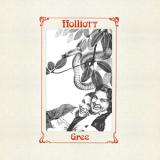
Belfast artist ffolliott draws on family archive and analogue sounds for debut album full of life and texture.
In a world awash with AI slop, here is the antidote. Written and recorded over five years in a Belfast home studio, ffolliott’s debut album Gree leaves the hiss, crackle and instability of life intact - pairing a deeply personal record with decades of artwork and sketches from his late father’s archive.
Released via Kitto Records, Gree is built from vinyl samples, analogue equipment, and intimate guitar with vocals laced with fragments of childhood memory. The album also features unexpected contributions from Grammy Award winning artist Kaidi Tatham. Gree is just the second release from the idiosyncratic artist ffoliott, following IDKWHY, which was released quietly as part of Rhythm Section's Shouts 2021 compilation, and went on to garner millions of streams and support from tastemakers across KCRW, NTS and BBC Radio.
“I generally found that the more I leaned into anything I didn’t like about my music, the more I would end up writing songs that meant a lot to me.” - ffolliott
Mit INSTINCTA, ihrer Debüt-EP auf Sony Classical, zeigt sich Suena von einer völlig neuen Seite. Die gefeierte Produzentin und Songwriterin hinter Erfolgen von Apache 207, Herbert Grönemeyer, Capital Bra und Ikkimel kehrt zu ihren musikalischen Wurzeln zurück und präsentiert erstmals eigene Kompositionen für Klavier und Streicher, die in den renomierten Emil Berliner Studios eingespielt wurden.Dabei verbindet Suena in Songs wie Primapulsa, Calma oder Adulta die Eleganz klassischer Komponisten wie Chopin und Debussy mit einer modernen, cineastischen Klangsprache sowie den feinen Produktionstechniken ihrer Pop-Karriere. Das Ergebnis ist ein emotionales Hörerlebnis voller Melodie, Hoffnung und zeitloser Schönheit, dass sich zwischen moderner Klassik und Filmmusik bewegt und zum Innehalten, Träumen und Entspannen einlädt. Als Special Guest hat sie Esther Abrami eingeladen, die sie bei Victoria auf der Geige begleitet.INSTINCTA ist die perfekte Begleitung für alle, die die poetischen Klangwelten von Ludovico Einaudi, Yiruma oder Ólafur Arnalds schätzen.Die Bubblegum-Pink Colour Vinyl von INSTINCTA enthält einen handsignierten Artprint von Suena.
GodSexy (the best unused track title in Prince’s sadly now dormant Future Titles notebook) throbs and bounces in all the right places. Positively sprightly whilst also oozing depth, it unveils itself layer after beautiful layer. In true Howells style, it sits alone and imperious in a world above and beyond mere genres, sonically cerebral yet simultaneously 100% dancefloor ready. Urgently uplifting, inspirationally intense.
Shut Down is House Heaven meets Danny Does Disco in characteristically off-kilter (and peerless) fashion. Driven by a twisted percussive loop and a seductive vocal sample, aided and abetted by hypnotically funky guitar licks and lush chords that duck and dive like the (original) Artful Dodger, it’s all about the tension between analogue evangelism and digital futurism.
Hotrocks, your bonus vinyl only offering, will have you heading through the door marked ‘Magic Black Plastic’ at a rate of techno-infused knots. This is serious heads down business, a rave monster, Joey Beltram and Patrick Cowley’s mystery lovechild. Blistering, breathless, bounteous, bloomin’ brilliant.
DJ Support: Mochakk, Joseph Capriati, Jamie Jones, Purple Disco Machine, Groove Armada, Marco Carola ,keinemusik, Adrian Roman, Bill Brewster, Rino, Ruben Mandolini, Terry Farley, Nicolas Masseyeff, Echonomist, Robosonic, Nuno Dos Santos, diskJokke, Dan Marciano Jody Wisternoff / Way Out West, Eelke Kleijn, Henry Saiz, Digitalism, Sister Bliss / Faithless, Innellea, Adriatique, Judge Jules, Sam Divine, TSHA, Simone Vitullo, Joris Voorn, Tommie Sunshine, Fahlberg, Stijn D'hont / DJ Neon
D Stone is a rising force in Amsterdam’s electronic music scene, blending live instruments with electronic production to create his unique take on house music. His sound bridges true house to proto-disco and deeper percussive elements, as showcased in his release Total Unison. A passionate DJ and producer, D Stone crafts infectious tracks by combining samples with live instruments, driving dance floors with his grooves. Born into a musical family, D Stone was immersed in sound from an early age. His father’s influence exposed him to diverse musical styles, sparking his lifelong curiosity. He began playing piano at eight, learned guitar at twelve, and by fifteen discovered electronic music, exploring house as a DJ. A year later, he ventured into production, gaining recognition and landing his first gigs. Inspired by 70s and 80s disco, funk, garage, and 90s tech house, his music blends energy, groove, and soul. With his foundation in live instruments and his forward-thinking approach to electronic music, D Stone strives to create more than tracks—he’s shaping moments that linger in the minds of his listeners.
Envision remixed by DJ & producer Julya Karma Emerging from Brooklyn’s underground and now rooted in Berlin, her practice isn’t about fitting into a lane, it’s about finding what is alive and letting it shape the moment.
Across diverse stages and platforms from Coachella and Lost Village to Berghain, Cercle, Space, The Brooklyn Mirage, DGTL, Time Warp, Audio Obscura, Tomorrowland, and within the orbit of Innervisions, Julya’s performances reflect a commitment to exploration over formula, earning recognition from artists like Laurent Garnier, Dixon, Âme, Adriatique, Rüfüs Du Sol, and Sven Väth.
Los Angeles-based producer, composer and multi-instrumentalist Dexter Story returns with his sixth album, T'som (pronounced sawm), a deeply personal work inspired by the spiritual practice of fasting. Meaning "fasting" in the Afro-Semitic languages Tigrinya and Amharic, as well as in Arabic, Tsom represents a time of prayer, reflection and discipline across northeast Africa. Guided by this tradition, Story draws on the musical heritage of the Horn of Africa and musical traditions of the Middle East to create a spiritual jazz album that reflects on devotion, transformation and the power of letting go.
Working with frequent collaborators Carlos Niño, Sudan Archives, Kamasi Washington, Jimetta Rose and Kibrom Birhane, the album touches on themes of reflection, inner poise and a quest for deeper connections, bound by explorations of traditional rhythms from the Horn of Africa.
Named after jazz saxophone legend Dexter Gordon, Los Angeles-based multi-instrumentalist, composer, arranger, music director and producer Dexter Story is one of the key figures in the city's vibrant creative music scene. Renowned for his genre-defying approach, he has collaborated with an extraordinary range of artists, including Carlos Niño, Madlib, Kamasi Washington, Build An Ark and Gaslamp Killer. His acclaimed solo albums Wondem and Bahir, released by Soundway, established him as a distinctive voice at the intersection of jazz, African music and contemporary production. Most recently, Story produced Mulatu Astatke's acclaimed studio album Mulatu Plays Mulatu, further cementing his reputation as one of today's most sought-after creative producers and musical collaborators
Pure loveliness. Proper music-making,
DIY Classical, but nothing slapdash or posey. Intimate and tentative, seamed with risk, occasional mis-steps, dodgy tuning, minor technical fuck-ups; but driven by gripping, stilled dedication and deep musical understanding.
Double bass, electric guitar, flute, melodica, singing; recorded at home in NYC, on dodgy gear, with snug, woody, shhshh-ing, analogue-style ambience.
The trio hovers between cheerful relish - who’s that giggling at the back - and hushed, humble reverence, basking in the processes of musical communion and learning. They play like they are gingerly passing on a precious, fragile gift; but without prissy conceit.
Luminous selections from the last six hundred years - John of Dunstable meets Friedrich Nietzsche - are lovingly arranged by the group, with a bent for stripped-to-the-bone, emotionally restrained sublimity, steady as she blows.
Very warmly recommended. Soul food.
SELN Recordings is proud to present Sillons, the debut release from French musician Pierre François.
Straight from Nantes with love and sadness; Sillons is the soundtrack to being shut inside and sheltered from all the dread beyond your bedroom door. What may at first appear as a collection of abstract loops unravels into something much greater throughout its entirety.
Underneath a thick atmosphere of tape hiss and crackle, minimal synth explorations emerge and float away while the occasional guitar-esq riff ebbs in and out of the foreground like waves at the shore. Percussive refrains come through with perfect timing, their occasional rudimentary timbre all in the spirit of ‘do it yourself magique’.
Picture the following: it’s been decades and you’ve forgotten how to communicate with the world outside, all you have left are message-songs which leave behind a story of what it was like to be separated from everything you’d ever known during an existential sabbatical. This is very near to the audio experience that Sillons gives and thus makes it so real. On this merit alone François deserves his flowers.
Even the shortest of songs manage to conjure up visceral imagery. For example ‘Abouile’, with an impressive runtime of 51 seconds, dives straight into the eeriest corners of a Cold-War era ‘Numbers Broadcast’ being sent out from malfunctioning military personnel venturing off into the depths of their consciousness.
All in all there is something distinctly ambitious and positive within Francois’ work. It takes you to a place where little else matters except the mood and feeling the music provides, a hopeful and emotive landscape.
After inaugurating Saibai with the Samurai Music sub label's first release in 2025, Brendon Moeller returns with a new six-track excursion into the realm of splintered dubwise electronics. 侍栽培六 arrives alongside a partner release on Samurai Music, offering a subtle distinction of expressive, internal reflections that widen the landscape of Moeller's unique, prolific take on experimental soundsystem music. There are codes of classic dub that creep through the moody hinterland shaped out across these new works, and they inject warmth into the relatively forbidding atmospheres Moeller shapes out with eerie drones and chasmic reverb decays. The bassline on 'Disintegration Suite' has a steppas-like propulsion begging out for a mammoth rig loaded with heavyweight subs, while 'Fate's Rhythm' bristles with skeletal percussion rattling in the middle distance. 'Signal Path's synthetic murmurs of melodica and liberal spring reverb come straight from the Perry-Tubby school of sound sorcery. Of course, these ancient inflections are only part of the picture. Moeller's affinity for head-nodding half-time immersion and tense scene-setting define 'Dislocation' while his techno instincts guide the psychoactive arps modulating through 'Magnetic Sleep'. Every track has its own nuanced complexities, reference points and alchemical fusions bedded into a cohesive, brooding universe of sound that exponentially expands around his studio. Alongside the steely structures of Codebreaker, 侍栽培六 adeptly pushes at the observable edge as he leads us into unexplored space.
For two decades, The Oscillation has occupied its own space within the psychedelic underground, continually reshaping a sound built as much from texture, repetition and atmosphere as it is from conventional songcraft. On 'Interference', released October 30th 2026 via Fuzz Club, Demian Castellanos pushes that approach further than ever, creating what he describes as "a painting of sound rather than music”. It’s an album where noise and melody constantly collide, dissolve and reform into something strangely beautiful: “I wanted it to be accessible but also quite extreme, a sort of beautiful noise. I did my best to push out the parameters whilst trying not to allow it to disintegrate into something with no meaning or focus.” Chasing an elusive balance between accessibility and abstraction, the result is a record that feels simultaneously immediate and disorientating: dense layers of drones, feedback and motorik rhythms give way to unexpected moments of warmth, colour and even uplifting euphoria. Across its runtime, chaos never overwhelms; instead it becomes another instrument, carefully sculpted into hypnotic, immersive compositions. Much of the album emerged through instinct rather than intention. Fragments originally conceived as intros, outros or abandoned ideas gradually eclipsed the songs they belonged to, with tracks revealing themselves organically through a process Castellanos likens to "playing Chinese whispers with musical instruments." Elsewhere, two long-forgotten compositions – ‘Stasis’ and ‘When You Close Your Eyes’ – finally found their place after lying unfinished for almost twenty years. Recorded and mixed by Castellanos at his home studio in the Czech Republic, ‘Interference’ also benefits from a key collaboration with Lorena Quintanilla of Mexican band Lorelle Meets The Obsolete, who provides a transformative presence. Her haunting vocal on ‘La Alusion’ (which she also wrote the lyrics and melody for) became the breakthrough moment that crystallised the album, turning an instrumental sketch into a dreamlike centrepiece and helping shape the final sequence. She also lends her voice to ‘Isolation Freeway’, adding another layer of mystery to an album that continually blurs the line between structure and dissolution. Perhaps most remarkably, ‘Interference’ was created during a period in which Castellanos had largely stopped listening to music altogether: “My hi-fi broke a couple of years ago so I kind of wanted to see what would happen if I didn’t listen to too much music.” Instead of consciously absorbing outside influences, he trusted instinct, memory and experimentation to guide the process. The result is one of The Oscillation's most adventurous and emotionally resonant records to date: a vivid collision of hypnotic repetition, spectral beauty and controlled sonic disruption that confirms Castellanos remains one of modern psychedelia's most singular voices.
Originally released in 2000 on Smalltown Supersound, Kim Hiorthøy’s first record Hei captures an artist who had made very little music before – yet it seemingly was the starting point of a musical career that would stay away from easy categorisation. Now, Hei (2026 Remaster) returns on blickwinkel, released digitally and on vinyl on 30 October 2026, as part of an ongoing series revisiting and reissuing Hiorthøy’s work.
Made in Copenhagen with little equipment — an Akai MPC2000, a stereo microphone and a DAT machine — Hei was assembled from samples, sequences and rhythms, with no outboard mixing or processing. Without really knowing what he was doing, the music was created intuitively while drawing inspiration from instrumental hip-hop he was listening to, the techno and drum & bass he admired but did not yet know how to make, and a broader fascination with music that felt personal, homemade and slightly uncertain of its own identity. Hei sits somewhere between those impulses. It is beat-driven without belonging entirely to beat music, experimental without announcing itself as such, but unmistakably coming from a playful series of events and decisions.
In that regard, the title of the closing track might be a fitting description of the album itself and, in hindsight, also of how we can look at Hiorthøy’s subsequent work. Taken from a story by Tove Jansson, the title evokes a state of openness and curiosity, a state where thoughts and impressions are simply given the space to unfold:
“He didn't care to get up, all day he let new images and ideas come and go as they pleased, now and then slept a little and woke up again and had no idea who he was. It was a peaceful and very exciting day.”
There is something of Hei in that state of mind: a willingness to follow an idea without knowing exactly where it might lead, a willingness to follow guts and the heart rather than ratio. Perhaps that is also what makes Hei still feel relevant today. As Hiorthøy puts it when reflecting on the music he made then and the music he makes now: “If I compare the music on Hei to music I’m making now, the general sentiment or smell or air or tree or pull of what I’m looking for and listening after when I work is, I think, for better or worse, more or less the same.”
All music by Kim Hiortøy
Mastered by Stephan Mathieu
Portraits by Kim Hiorthøy
Design by Jelle Martens
Repress of 2024’s self titled masterpiece. ‘One More Death’ and ‘Goatbrain’ are spectacular curtain-raisers, embodying a hedonistic spirit driven by incisive funk and possessed by merciless fuzz/wah-drenched guitar. Yet elsewhere, the band’s love of hip hop is the fuel for the end-credits-epic album closer ‘Ourobourus’ which marries infectious chant to breathless Lalo Schifrin-style breakbeat action. And which also means ultimately, like the titular oldest allegorical symbol in alchemy, we’re right back where we started. As Brad Dourif’s character Hazel Moates intones in the 1979 movie Wiseblood, “Where you come from is gone; where you thought you were going weren’t never there. And where you are ain’t no good unless you can get away from it”; in Goat’s eternal now of renewal and revelation, there’s never been a more potent means of escape.
EPILOGUE is the culmination of more than four decades of music-making by Japanese composer, producer and multi-instrumentalist Ken-ichiro Isoda, an album in which environmental sound, electronics, contemporary classical composition and memory converge into a deeply personal late-career statement. Isoda moved through video-game music, film composition, classical production, Okinawan music, television and collaborative projects, continually developing an approach in which acoustic instrumentation, field recordings and electronics could coexist naturally.
His collaborative album Interwoven with aus, released through WRWTFWW, further demonstrated the openness of a musical philosophy Isoda describes as being rooted in fluctuation, imperfection and organic movement.
EPILOGUE brings those threads together while refusing to function simply as a retrospective. The album consists largely of older compositions that Isoda has returned to, reconstructed and reinterpreted from the perspective of the present.
Opening track “TANEKOMA” refers to the Izu Robin, a rare bird native to Hachijō-jima, the volcanic island where Isoda lives. Its song, recorded by Isoda in the mountains, becomes part of the composition itself. Placed at the beginning of the album, “TANEKOMA” becomes both document and prayer.
Elsewhere, “Circulation 2” develops from a work created around the relationship between forest, sea and the movement of water. Flutist Dogen Kinowaki replaces Isoda’s original piano melody with a performance that gives the piece a distinctly Japanese sense of place. Kinowaki also appears on a newly reimagined version of “Beach of the Pliocene”, one of Isoda’s most recognised compositions.“STEPS”, first composed for film in 2008, looks back toward the electronica of that period. For this definitive version, Tsutomu Sonoda of maya ongaku provides vocals, bringing new emotional and lyrical depth to a piece Isoda had wanted to properly complete for more than a decade.
The title track from Isoda’s 1991 New Age album “Yume no Sazanami” is similarly reconsidered. Originally recorded with a small chamber orchestra, the new arrangement replaces elements of the harp and cello with layers of nylon-string guitar performed by Tatsuro Murakami. Perhaps the album’s clearest meeting point between past and present is “WATERWAYS.”The mysterious European ambient artist Aiko Takahashi, transforming an abandoned demo into what is simultaneously the oldest and newest work on the album.
“A Flowering Tree,” written for film in 2013, is reconstructed around multi-tracked flute performances by Dogen Kinowaki. Isoda carries that association into his own arrangement, allowing the piece to function as another quiet meditation on memory, loss and hope.
The album closes with “EPILOGUE” —less a grand conclusion than a moment of acceptance. Isoda chose it as the album’s title piece to hold what he describes as the complex emotions that accompany the twilight of a life spent making music. EPILOGUE is not simply a look back. It is the sound of older music continuing to move, change and breathe in the present: a lifetime of ideas distilled into Isoda’s own form of pure music, shaped by memory, collaboration, nature and the world immediately outside his home on Hachijō-jima.
Prolific British multi-instrumentalist William Dorey makes music emphasising traditional means of recording under the Skinshape moniker, referencing influences ranging from Ennio Morricone to The Beatles, and a variety of genres including but not limited to retro funk, soul, reggae, psychedelic rock, African music and folk. Far from carrying an anything goes attitude, Dorey's is an evocative melting pot moulded in an orderly fashion, creating output that keeps categorisation open-ended. Whilst tackling a busy tour schedule over the past 18 months, Skinshape has continued to find time to make music in his studio based in North London. The latest endeavour is titled Chapman's Pool - named after a bay on the Jurassic coast in Dorset, located walking distance from where Dorey grew up. Chapman's Pool carries a sense that Skinshape is reconnecting with the sound which formed his musical identity, drawing inspiration from spaghetti westerns, trip-hop, `60s+'70s Ethiopian Jazz, '80s South African bubble gum and so on, all while the multiple years of recording, songwriting and production experience are clearly audible.
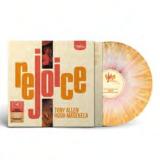
„Rejoice“ ist eine ganz besondere Zusammenarbeit zwischen Tony Allen, dem legendären Schlagzeuger und
Mitbegründer des Afrobeat, und Hugh Masekela, dem Trompetenmeister des südafrikanischen Jazz.
Die beiden weltberühmten Musiker, die sich in den 1970er Jahren durch ihre jeweiligen engen Verbindungen
zu Fela Kuti kennengelernt hatten, sprachen jahrzehntelang davon, gemeinsam ein Album aufzunehmen.
Als sich ihre Tourneepläne im Jahr 2010 in Großbritannien überschnitten, bot sich die Gelegenheit, und
Produzent Nick Gold nutzte den Moment, um ihr Zusammentreffen aufzunehmen. Kurz nach dem sehr
traurigen Tod von Hugh Masekela im Jahr 2018 und mit neuem Elan holten Tony Allen und Nick Gold
– mit dem Segen und der Beteiligung von Masekelas Nachlassverwaltung – die Originalbänder hervor und
stellten die Aufnahmen im Sommer 2019 fertig; dies geschah in jenem Londoner Studio, in dem auch die
ursprünglichen Sessions stattgefunden hatten.
Das von der Kritik gefeierte Album wurde vom „Guardian“ als „bemerkenswert stimmige Mischung aus
Swing und Afrobeat“ beschrieben, die „einige von Allens bisher besten Arbeiten am Schlagzeug sowie
Masekelas unnachahmliche Bläsermelodien“ präsentiert.
Anlässlich des 40-jährigen Jubiläums von World Circuit Records erscheint diese Veröffentlichung nun auf
„Splatter-Vinyl“ in den Farben Orange, Pink und Weiß.
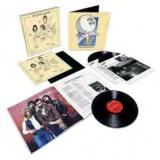
„The Who By Numbers“, das Anfang Oktober 1975 erschien, ist das siebte Studioalbum von The Who
und stellte einen Wendepunkt für die Band dar, da die Songs größtenteils introspektiver und persönlicher
waren als ihre bisherigen Veröffentlichungen. Das Album war ein kommerzieller Erfolg und erreichte Platz
8 der US-Billboard-Charts sowie Platz 7 in Großbritannien, was zum Teil auf den Erfolg eines der leichteren
Stücke des Albums zurückzuführen war: „Squeeze Box“ wurde zu einem internationalen Hit und schaffte
es in Großbritannien in die Top Ten, in den USA in die Top 20 und in Kanada auf Platz 1.
50 Jahre später wird „The Who By Numbers“ im Oktober dieses Jahres als Super-Deluxe-Edition-Box
mit 5 CDs und 1 Blu-ray neu aufgelegt. Diese enthält ein 100-seitiges Hardcover-Buch mit Fotos, Erinnerungsstücken und exklusiven Anmerkungen von Pete Townshend und dem Who-Experten Andy Neill, 92
unveröffentlichte Titel und Mixe, brandneue Atmos-, 5.1- und Stereo-Mixe von Pete Townshend, 11 von
Petes Original-Demos für das Album, Aufnahmesessions aus den Ramport- und Shepperton-Studios, frühe
Mixe, Guide-Vocals, die bislang umfassendste Version von „Live At Vetch Field, Swansea, Wales, 12. Juni
1976“ sowie auf der Blu-ray Audio- und Videomaterial von einem bisher unveröffentlichten Who-Konzert,
das auf 2-Zoll-Videoband im Metropolitan Stadium in Pontiac, Michigan, aufgenommen wurde.
" Ascending Signs Records proudly presents its third release, featuring a very special guest: Stephan Laubner, aka STL.
One of the most distinctive voices of the past two decades, STL continues his quest for sound with a new chapter, "Sign of Life".
The EP delivers four bulletproof tunes, once again showcasing STL's unmistakable style, pushing the boundaries of abstract/experimental house, dub, techno and downtempo with a raw, personal and intense sound."
Mining the rich seam between transcendental escapism and crushing physical pressure, Sciama delivers his first album for Samurai Music. Exploring an energetic pitch between half-time and full-tilt 170, the London-based producer sculpts brooding soundscapes of sheer peaks and deep pits, driven by unrelenting but light-footed forward motion and an imposing strain of sound design. As Sciama, Michael Watters has been marking out his exacting sound since 2019 with an assured run of albums on ASC's Auxiliary label. His second EP for Samurai — the Wave Interaction 12" released earlier this year — pointed to his current area of focus inspired by the teachings of electronic music pioneer Daphne Oram. Contemplating the relationship between precise electronic frequencies and human perception, Celetal Form now delivers the full findings of his exploration. Oram coined the term 'celetal' in her 1972 book An Individual Note of Music, Sound and Electronics, trying to sum up a connection between the celestial and electrical. It's this spiritual dimension contained within sound waves Watters is concerned with, and the shape of the music on Celetal Form follows suit. In an opening statement of abyssal ambience, 'Overload Into Silence' establishes an atmosphere that endures throughout the album. Caught between steely textures, vaporous reverb tails and subtle harmonic interactions, the glacial shift of the many layers under Watters' control reveals an intense amount of detail at play even before drums and bass come into play. From there on in, the intensity ramps up from one heavyweight stepper to the next. There is agile, brittle top-end percussion at work on the likes of 'Induced Resonance' and 'Consuming Pulse', perhaps the most closely connected to D&B, while 'Rational Echoes' and 'Scanning Waveband' deal in urgency and techno-coded tension. A half-time roll guides the huge kick drum undulations of 'No Panacea', and 'Celetal Emergence' opens up into more spacious surroundings to let the subtle microtonal inflections of the synth tones set a curious mood. The two 'Intermodulation' tracks bring Watters' exacting approach into sharp focus, pushing the drums back and foregrounding alien frequencies that coalesce into unfamiliar yet strangely uplifting forms. Throughout Celetal Form this uncanny sensation charges the music with a power that reaches beyond its immediate, surface level impact. This intentional reflection on Oram's visionary thinking charges the current sound of Sciama with energetic intrigue that stands apart and invites a mindful, maybe even spiritual, engagement.
The Bluesville Series from Craft Recordings and Acoustic Sounds!
Inspired by the original Prestige label imprint established in 1959
All-analogue mastering by Matthew Lutthans at The Mastering Lab
Highlighting trailblazing blues musicians from legendary labels
With his eerie, keening vocals and minor-tuned guitar, no other bluesman sounds quite like Skip James. This is perfectly encapsulated on his 1968 Vanguard Records solo release, Devil Got My Woman.
Released in partnership with Acoustic Sounds, the album has been (AAA) remastered from the original tapes by Matthew Lutthans at The Mastering Lab and pressed on 180-gram vinyl. A tip-on jacket completes the package.
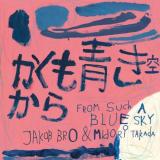
'What feels like a dream, a portal between worlds, a shimmering of ideas – that liminal space is the departure point for Midori Takada and Jakob Bro’s ever-unfolding musical friendship.
'On their second outing From Such A Blue Sky / かくも青き空から, arriving on Copenhagen's Loveland Music in October, the compositions are transformative, and the sounds travel between immediate emotional and abstract planes.
'The classically trained Japanese percussionist Midori Takada, later dubbed an ambient pioneer for the landmark 1983 album Through The Looking-Glass (another portal), left behind her Western classical training and found her own paths, drawing on African and Indonesian drumming, minimalism, theater, environmental music and instant composing.
'Similarly, Danish composer and guitarist Jakob Bro creates otherworldly sounds and beautiful, delicate melodies through intuitive creation and collective listening.
'On From Such A Blue Sky the music is co-composed and created in the studio over three days, from early morning to sundown. The compositions are increasingly open ecosystems, and the range of sound sources expands significantly from the puristic Until I Met You, with Thai gongs, heavy drums, ceramic flutes, electric guitar and pedals adding to the sonic imagery of From Such A Blue Sky.
'From Such A Blue Sky is the second album in a trilogy recorded at AVACO Studios in Tokyo, a studio in Shinjuku renowned for its sound works in Japanese film since 1952. The trilogy is an ongoing continuation of their musical friendship, which has already led them to duo performances at World Expo Osaka, Tessenkai Noh Theatre Tokyo, Pierre Boulez Saal Berlin and Roskilde Festival.'
“Carl layers willowy guitar arpeggios, foggy keyboards, and chimes over Windy’s murmured intonations and rippling basswork. Everything sounds fresh and unaffected in the careful hands of these two gentle souls. Pick it up, lie back, and allow it to lull you into an undisturbed reverie.” Big Takeover
At the time of original release it was written that the album "will transport the listener to other plains of reality.” (Acid Test). Meanwhile, Alternative Press called it “alluring and addictive.” and CMJ called it "expansive, daydream enhancing music.”
The pair have also recently released their collaborative album with Optigan Conservatory, which can be revisited here. A beautiful and hermetic energy larger than the sum of its parts was captured in the collaborative process of making this album. There are echoes of the earliest releases from Windy & Carl as well as refractions of the same opacity that surfaced in the early kranky catalog.
A fine time to be shining a light on these label stalwarts as the dark Autumn evenings roll in
byt’ continues its eclectic journey with the third release in its catalogue. This chapter sees the return of Telva, shifting into a new frequency with a story born between 11.11 and a full Taurus moon back in 2024 in Berlin. The composition recorded in a single take, is articulated through a dreamy, electronic, minimal house, and vocal infusion. Left as romantic and unrestrained as the artist’s reverie, it is preserved in its raw form to protect its intimacy.
“Every record I make is a guide towards a better understanding of all that I can be. 11:11 is a fragment of a special spark I experienced, which peeled back another layer of myself enriched by the lessons along the way, until finally holding it in my hands today. What started as an epiphany on Heideglühen’s dance-floor unfolded into a kiss of destiny, a fleeting delirious love affair, and a quest of passion that hugged my memory, compelling me to revisit my early days. An endeavor of surrender, no matter how unknown, unconventional or uncertain it all may feel. To finally have the courage to let it be messy, raw and true, so that I stand naked once again, while daring to honor the absence of order as part of the magic and mystery of life.” - Telva
In the spring of 2025, after a year of General Electrix collaboration, the other half of the duo continued working on new music with Secret Order. Recorded in two parts - May-Aug '25 and Jan-Apr '26, Myos yo on aurinko is Santtu XL's debut album. Selected works 25-26 - SOFYI-05.
"The bad news is you're falling; the good news is there's no ground."
The second album from Glasgow's Effective Dreaming (Iain P. Ross), on Texas label Aural Canyon. Six long-form pieces that build slowly, looping and folding in on themselves: glistening synthesiser leads over shifting analogue drones, field recordings surfacing at moments, and fingerpicked acoustic guitar on the opening "Physis". Listening feels like being suspended in a current, gently buffeted, as edges and definitions blur. The follow-up to Dream Catalogue Vol. 1 (Fluere Tapes, 2025). Cassette, edition of 50.
Every coastline develops its own rhythm. The Adriatic is no exception.
For decades, Italy’s eastern coast has been shaped by funk, Cosmic Disco, Balearic sounds, Italo Disco, House, Latin rhythms, Brazilian music and countless other influences. Rather than blending into a single style, these musical worlds have lived side by side, constantly inspiring new generations of DJs, musicians and dancers. For more than fifteen years, Soul Fingers and Funk Rimini have explored that landscape from different perspectives. Founded by Claudio Cavallaro in 2013, Soul Fingers grew into a vinyl-driven community where groove matters more than genre. Its philosophy has always been simple: if the groove is right, genres stop mattering. Brothers Ricky and Francesco Cardelli developed Funk Rimini into a project rooted in funk, disco, live performance and electronic production. Anima Adriatica is where these two journeys meet.
The project didn’t begin with the ambition of making an album. It began behind the turntables. As DJs, Claudio Cavallaro and Ricky Cardelli found themselves constantly searching for records capable of connecting distant musical worlds inside their sets; from Afrobeat into disco, from hip hop into Latin, from Brazilian grooves into boogie, from cosmic electronics into deep funk. Sometimes those records existed. More often, they didn’t. So they stopped searching and started writing them. Not records designed to belong to one genre, but records designed to travel between genres. That space between musical worlds became Anima Adriatica.
The music grew through spontaneous jam sessions with Ricky and Francesco Cardelli, drummer Enrico Mao Bocchini and, gradually, a wider circle of musicians, singers and longtime friends, making Anima Adriatica less a traditional band than the beginning of an open collective. Recorded at SynthPosio Studio, founded by Ricky and Francesco Cardelli inside Rimini’s iconic skyscraper, the project also carries a symbolic connection to the building itself, where many Italo Disco classics (including records by Betty Miranda, The Creatures and many others) were recorded decades earlier.
Betty Miranda returns not as a nostalgic guest, but as a bridge between generations. On the title track she performs a spoken-word text written by Claudio Cavallaro, reflecting on the invisible thread connecting the Adriatic dancefloor across time. From Baia degli Angeli to Cocoricò, from the legendary clubs of Riccione to today’s independent communities gathered around projects such as Soul Fingers and Funk Rimini, the places have changed, but the dancefloor continues to tell the same story. Much like Pier Vittorio Tondelli’s Rimini captured the Adriatic through literature, Anima Adriatica imagines its soundtrack.
Brazilian musician Daniel Plentz (Selton) expands that vision on Açúcar and Alegria, bringing another coastline into the story. Across its four tracks, the EP moves naturally between analogue funk, boogie, Brazilian music, underground disco, cosmic textures and the wider Black musical tradition, with All Down The Line paying tribute to the Paradise Garage era.
Released by Bordello A Parigi, the project found its natural home through a shared love of adventurous dance music, records and club culture. More than the title of an EP, Anima Adriatica marks the beginning of an open collective; a meeting point where musicians, DJs, producers and friends continue building bridges between genres, generations and communities.
Because Anima Adriatica doesn’t live inside a genre. It lives between genres. If soul music has always reflected the places where it was born, Anima Adriatica is simply our own Adriatic Soul.
We are very glad to present this masterpiece of contemporary leftfield music by Pieter Kock and Nate Davis under their project ‘Sports Café’. If you liked the previous 2xLP of Pieter (The End ll), you will love this new one pairing with Nate. The 2 buddies deliver the perfect soundtrack for lazy afternoons and kinky listening session: put the record on the turntable, play ON, first pop, the feelings is good, you want to chill, you go in the fridge, you open a can of beer, sit on the sofa, start to roll your cigarette, the guitars (Vini Reilly style) are playing, the acid lines show up, nice melodies are coming, nice synths too, little vocals here and there that can remind some sort of PMU’s cafe rooms vibe (it’s from where the name of the project is coming from)… it’s cool, yeah baby, you enjoy, you feel good!!, the more you listen to it the more you love it… A proper shroomy excursion if you are into the trip. Trust us this album is a must have, big TIP ;)
Based between Brussels and Berlin, Golden Hours is comprised of past and present members of Gang Of Four, The Brian Jonestown Massacre, Tricky, The Fuzztones and The Third Sound, to name just a few. A band with mileage and stories, they trade in rock’n’roll missives that are at times dark, tense and hypnotic, at others sweaty, relentless and danceable. Made up of Hákon Adalsteinsson (Guitar/Vocals), Rodrigo Fuentealba Palavacino (Guitar), Tobias Humble (Drums/Vocals) and Wim Janssens (Bass/Keys/Vocals), Golden Hours’ self-titled debut album is due for release March 31st 2023 on Fuzz Club Records. Wim says of the project and its incoming debut: “The musical backgrounds of each member are pretty broad but somehow when we come together there’s a pretty clear definition of what our music should sound like. There’s a beautiful friction between the noise we produce and the love for melody that seems to overtake at just the right moment. There never seems to be a lack of ideas when we come together. In silent agreement, every idea gets tried and will be further developed into a song or skipped in a heartbeat. No time is wasted. It all happens pretty automatically
Jonah Ellis came to the Drifters as a guitarist but was soon singing with the group and acting as their musical director.
This multitalented musician/ songwriter hailed from DC where he was born on 25 August 1947 and grew up to graduate from Springarn, Senior High in Washington.
He went on to study further at Morris Town Junior College in Morris Town, Tennessee.
Then he received a BA degree in Music from Knoxville College in Knoxville, Tennessee, and a Master of Arts in Music from Michigan State University in East Lansing, Michigan.
His first move into recording came with his group Jonah and the Whales and ‘Savannah Sun’ which sold well locally by didn’t chart nationally.
Jonah’s second single ‘I Get Hot/ Popcorn Cellar’ on Viking Records in 1970 had similar results but he was writing great songs and creating a lot of interest. In addition to penning Yarbrough and Peoples big hit ‘Don’t Stop The Music’ in 1980 which hit platinum.
Jonah was writer/ producer at Total Experience Records where he found time to cut a single under his own name ‘Christmas Won’t Be Christmas Without My Baby’ and also wrote hits for the Gap Band the biggest hit being ‘Desire’. Jonah only stayed a Drifter for about a year between 1986-87.
A short time later he joined the Temptations as their lead guitarist but didn’t stop writing songs for other artists (sometimes in his pen name Lonnie Simmons) like Alicia Keys ‘Gangsta Lovin’, Puff Daddy ‘Soul Food’, Evelyn ‘Champagne’ King ‘Shame’, Billy Paul ‘Fire In Her Love’and so many more including Aretha and sister Carolyn Franklin, Esther Phillips, Rose Royce and Burt Bacharach.
Jonah continued to write and perform internationally until his untimely death from a stroke on 22 February 2010.
Electronic music legends Soft Cell release ‘Out Come The Freaks’, the very first single from singer Marc Almond and multi-instrumentalist and producer Dave Ball’s final album ‘Danceteria’. Download and stream the track, featuring vocals from the late Dave Ball and special guest vocals from Nona Hendryx.
‘Out Come The Freaks’ is a cover of Was (Not Was)’s mutant disco classic and sends Soft Cell into prime disco territory, conjuring the hedonist spirit of early 80s Manhattan and a Danceteria floor filler spun by DJ Mark Kamins. There couldn’t be a more fitting alternative disco banger to pull back the curtain with and beckon you into the world of ‘Danceteria’. The final album is a homage to the legendary nightclub where young Marc and Dave would party until the small hours after the recording sessions for their seminal 1981 debut ‘Non-Stop Erotic Cabaret’. The final flourish of glitter to Soft Cell’s ‘Out Come The Freaks’ comes courtesy of guest vocals from Nona Hendryx, the iconic singer, one third of Labelle of ‘Lady Marmalade’ fame, and producer of Lisa Lisa and Bush Tetras.
This is the very first material to be released from ‘Danceteria’, Soft Cell’s forthcoming sixth and final album. It is also the first time new music has been released since the sad, untimely passing of Dave Ball in October 2025. Almond led the tributes, describing Ball as a “brilliant musical genius” and the world’s media hailing Dave as an electronic music pioneer. Dave finished ‘Danceteria’ very close to his passing and it is in full tribute to him that the album release goes ahead as planned. More details are to follow very soon about the release date.
The universe of Muovo Musica is a world of its own, a sonic space where Dove Quiete has learned how to make us move while holding our hand. His upcoming EP, “Guardo La Luna EP.”, explores the artist’s different facets through an unpredictable journey where minimal techno is a constant presence, but far from enough to define the release. Moving between driving tools, ghetto tech influences and trip-hop atmospheres, the tracks naturally cross genres and blend different influences. Rhythm and experimentation coexist throughout a cohesive yet unpredictable EP, always keeping impact at its core.
There are few electronic musicians as accomplished as A Guy Called Gerald From writing genre-expanding records as a member of 808 State and as a solo artist, to crafting what journalists call the greatest jungle album ever made under the moniker Black Secret Technology, AGCG has spent four decades redefining what electronic music can be. With collaborations, remixes, and tracks for the biggest names in house, techno, drum & bass, and jazz, one thread remains constant: in any decade or any genre, AGCG's music continues to be celebrated as genre-pushing excellence.
Juice Box is AGCG's label, named after his Manchester-based soundsystem. Originally established in 1992, the label went on an unofficial hiatus before the decade's end as AGCG's output demanded wider release. pairing two essential cuts from Gerald's vault that have long deserved proper vinyl treatment. On the A-side, the absolute classic "Voodoo Ray" finally returns to wax. On the flip, 1990's "I Won't Give In" resurfaces from the archive, a reminder that even Gerald's deep cuts carry the weight of lost classics. Juice Box is back, and the catalog has plenty of treasures to unearth, along with new material from one of the all-time greats.
Deluxe LP features 140g virgin vinyl; heavy-duty board jacket, artwork by Art Rosenbaum + DL. RIYL: Bob Dylan, John Prine, Townes Van Zandt, Ry Cooder, Michael Chapman, Michael Hurley, The Youngbloods & Bonnie “Prince” Billy. Jake Xerxes Fussell’s 4th album finds the acclaimed folksong interpreter, guitarist, and singer navigating fresh sonic and compositional landscapes on the most conceptually focused, breathtakingly rendered, and enigmatically poignant record of his wondrous catalog. Produced by James Elkington and featuring formidable players both familiar (Casey Toll, Libby Rodenbough) and new (Joe Westerlund, Bonnie “Prince” Billy), it includes Jake’s first original compositions; atmospheric arrangements with pedal steel, horns, and strings. One of the most striking and strangely moving moments on Jake Xerxes Fussell’s gorgeous Good and Green Again an album, his fourth and most recent, replete with such dazzling moments arrives at its very end, with the brief words to the final song “Washington.” “General Washington/Noblest of men/His house, his horse, his cherry tree, and him,” Fussell sings, after a hushed introductory passage in which his trademark percussively fingerpicked Telecaster converses lacily with James Elkington’s parlor piano. That’s the entire lyrical content of the song, which proceeds to float away on orchestral clouds of French horn, trumpet, and strings, until it simply stops, suddenly evaporating, vanishing with no fade or trace, no resolution to its sorrowful minor-key chord progression, just silence and stillness and stark presidential absence. It feels like the end of a film, or the cold departure of a ghost, and is unlike anything else Jake has recorded. In all his work Jake humanizes his material with his own profound curatorial and interpretive gifts, unmooring stories and melodies from their specific eras and origins and setting them adrift in our own waterways. The robust burr of his voice, which periodically melts and catches at a particularly tender turn of phrase, and the swung rhythmic undertow of exquisite, seemingly effortless guitar-playing here he plays more acoustic than ever before pull new valences of meaning from ostensibly antique songs and subjects. On Good and Green Again, Jake not only ventures beyond his established mastery of songcatching and songmaking into songwriting, but likewise navigates fresh sonic and compositional landscapes, going green with lusher, more atmospheric and ambitious arrangements. The result is the most conceptually focused, breathtakingly rendered, and enigmatically poignant record of his wondrous catalog. It’s also his most deliberately premeditated album, representing his fruitful return to a producer partnership after two self-produced projects, What in the Natural World (2017) and Out of Sight (2019) (William Tyler produced his friend’s self-titled 2015 debut.) This time James Elkington produced and played a panoply of instruments, bringing to Jake’s arcane song choices his own peerless sense of harmony and orchestration, balance and dramatic tension. The pair enlisted a group of formidable players including regular bandmembers Casey Toll (Mt. Moriah, Nathan Bowles) on upright bass, Libby Rodenbough (Mipso) on strings, and Nathan Golub on pedal steel. They were joined by welcome newcomers Joe Westerlund (Megafaun, Califone) on drums, Joseph Decosimo on fiddle, Anna Jacobson on brass, and veteran collaborator and avowed Fussell fan Bonnie “Prince” Billy, who contributes additional vocals. Album opener “Love Farewell” (featuring some beautiful singing by Bonnie “Prince” Billy), an elliptical tale of the folly of war, set to the world’s most heartbreaking goodbye march for a lover left behind. “Carriebelle” and “Breast of Glass” each similarly concerns, in its own way, romantic love and leavings. All three songs highlight Jacobson’s diaphanous, understated brass parts, tying them together in a true lover’s knot. “Rolling Mills Are Burning Down,” with its distant keening strings and capacious sense of space, observes and mourns the loss of work and community in the wake of elemental disaster. Nine-minute tour de force “The Golden Willow Tree,” the sole explicitly narrative song herein, is a hypnotic, minimalist rendering of a tragic maritime ballad about scuttling an enemy ship in exchange for wealth and glory and a captain’s inevitable betrayal. “Fussell is creating his own legacy within the long lineage of traditional folk musicians and storytellers that have come before him.” The New York Times // “So elegant … It’s relaxing in the way that pondering a Zen koan is relaxing, and sweet in the way that the wounded, honey-voiced blues of Mississippi John Hurt are sweet.” Pitchfork // “Music that resides at the seams of Appalachia and the cosmos.”
'You & Me', 'The Ballad of John Henry' and 'Live from the Royal Albert Hall'.
It is in a live setting where Joe Bonamassa the performer really thrives and in May
2009, he played the historic Royal Albert Hall in London. It was an incredible
memory for everyone present and one of his greatest live performances has been
remastered on high- quality 180g heavyweight triple vinyl for the first time. The
majestic evening saw him glide through his back catalogue of original hits as well
as inspired covers and featured guest performances from Eric Clapton and Paul
Jones – truly a special night to savour.
With 25 #1 albums, yearly sold-out tours worldwide and custom annual cruises,
he's a hard act to beat. These albums are a testament to his credentials and a
toast to his longtime fans who remember them originally and new fans who can
experience them for the first time. It's Joe Bonamassa at his finest, ready to rock.
Gilles Peterson: "Fascinating… love this. Thoroughly recommended"
The Observer: "The focus is on great grooves and fine playing. A band to seek out."
The Guardian: "Delightfully quirky album of folk songs reimagined from Afrobeat to reggae"
The Times: "Minyo Crusaders sound like nothing else lurking on your Spotify playlist"
(PRESS FOR PREVIOUS ALBUM)
Minyo Crusaders return with theiir highly anticipated sophomore album TOUR OF JAPAN following on from their debut that has sold 4k on vinyl since release and their runaway single smash 'Cumbia Del Monte Fuji' that has almost hit 5million streams on Spotify.
Since the release of their debut in 2019 the band have toured Europe four times playing major European festivals such as Roskilde, Best Kept Secret, Green Man Festival, WOMAD, Fusion, Les Escales, Lowlands and many, many more, succesfully road-testing the songs from this album.
On this new album which has been mixed by Mario from Frente Cumbiero, Minyo have finessed their winning formula of adapting ancient Japanese folk somgs to global rhythms with influences this time from Ethiopia, boogaloo, salsa, West Africa and jazz. Says band-leader Katsumi: "The concept of this album is the sea with various expressions".
* Dazed and Amazed Duo Color Vinyl * Fully printed inner sleeves * Liner notes by Larry Mizell Jr. // The album is named for the combs used to maintain an Afro hairstyle, and that's significant. The group's Ishmael "Butterfly" Butler said it summed up what they wanted to do with it: "It means the utilization of the natural, a natural style," he has said. Like with 1993's debut _Reachin' (A New Refutation of Time and Space)_, 'utilizing the natural' meant creating hip hop that blended jazz with the formidable rap skills of the aforementioned Butterfly, Craig 'Doodlebug' Irving and Mary Ann 'Ladybug Mecca' Vieira. Unlike that debut, it meant broadening to include guests such as Gang Starr's Guru, Jeru the Damaja, and Jazzy Joyce. Following the gold-selling commercial success of their debut, they here set out to prove their artistic prowess. This is intelligent, alternative hip hop that sounded like party music. Its lyrics are dense with wit, social commentary and politics - and its original inner sleeve was modeled on the newspaper of the Black Panther movement.
Or Kantor returns with his sophomore album Snake Island, a vivid and cinematic journey through imagined landscapes and lost love, for fans of Eden Ahbez and other seekers of sound and spirit.
Following the critical success of his 2024 debut Sarda Sarda, praised by BBC Radio 6 Music, FIP Radio, RRR Australia, WYEP, KCRW, and Songlines Magazine, Kantor continues to refine his distinctive sonic identity, grounded in instrumental storytelling.
With Snake Island, Kantor ventures deeper into what he calls Subterranean Music, an atmospheric fusion of Mediterranean ballads, desert blues, spiritual jazz, and psychedelic textures. Drawing inspiration from artists such as Gábor Szabó, Omar Khorshid, The Budos Band, Dorothy Ashby, and Tommy Guerrero, he crafts instrumentals that feel both timeless and cinematic.
"Snake Island was written as a soundtrack to a fictional film that disappeared from the world, one that most likely no one has ever seen," says Kantor. "It began as a tragic love story, imagined during my time on a remote island in the Cyclades. Every landscape felt like a scene waiting for music. Eventually, the story gave way to sound."
A respected tattoo artist and founder of the Love Light Studio, Kantor's musical path began after a chance encounter with Johnny Sharoni (Garden City Movement, A&R at Anova Records). During a tattoo session, Sharoni heard Kantor's demos and was immediately struck by their raw beauty.
Kantor now steps confidently into the next chapter of his creative journey. Snake Island is more than an album. It is a mythic, imagined soundtrack to a film that only exists in memory, rendered in tones that shimmer like heat on stone.
Mysticisms’ explores the previously unknown Dub House, Digidub and electronic Street Soul of Manchester émigré Andrew Fitzgerald aka Atone on a 6 track EP, shape shifting from dark basements to summer fields, the music is wide-screen dreams, mixing psychedelic temperaments with ecstatic memories.
Dub Dats is a compendium of a life around or making music, beats, dubs; menageries of sound that encompass a love of reggae mixed with the influences of youth. Growing up in Thatcher’s then declining Manchester housing estates, Fitzgerald found escape first as a young roadie, just aged 15, sorting ‘cigarettes and alcohol’ for visiting bands. Rubbing shoulders with the likes of The Buzzcocks, Ian Dury and The Slits, was a great way to learn the ropes, while avoiding becoming another juvenile delinquent.
A love of Bowie, Kraftwerk, Motown, film scores and the emerging electronic and industrial bands like Throbbing Gristle led to a first studio, featuring the unique and faithful DR-55 Dr. Rhythm, soon followed by Sequential Circuits Pro One, Juno 60, Roland 303 (x 2), Roland 808 and Space Echo.
Working on music solidly, a release finally appearing on Robs Records, before losing all the equipment in a robbery. Manchester was shifting, gangs and “Gunchester” meant it was time to move on and when ‘an out’ appeared, Fitzgerald was landing in Sydney and settling into a new life.
Hooking up with Ali Omar, who he’d met while doing a stint in Brixton, London; the two worked solidly on music, gigging continuously, hanging with the likes Severed Heads and living a good life of that post acid-house party era. The loss of Ali to cancer, still young, hit hard and period “quite liked the madness” ensued. Rehab and starting again, Atone has been gaining some interest.
With 2 EPs of early works recently released on Tonal Oceans, Dub Dats looks deeper, with the dubbed house grooves of title cut, Dats and, the intriguingly named, Somewhere In France With Eric Random. Complimented by the electronic dub of Keep On, the soulful, slow breaks torch song, I Be There, the sample heavy Sound Of Soul and closing, trippy Unlike You, this is a multi-genre producer of considerable capability and talents.
Finally getting his due, Dub Dats perfectly fits the Dubplate Series, broadening its soundscape, while also standing out as its own, sonic release.
The Easy Way Out is the first proper release from London's THE EASY EIGHT, sometimes shortened to just EZ8, because why the hell not?
They might be a new band, but feature familiar faces from a some of the best London hardcore punk bands of the last ten years, including THE CHISEL, ARMS RACE, STINGRAY and LAST AFFRONT to name a few. This time around they are going for a more melodic approach. Think of the more melancholic moments of the 80's RAMONES records with a touch of MISFITS and you're on the right track.
This LP compiles the first two recording sessions. Side A features the first session, originally released online last autumn while Side B is rounded out with four brand new songs. It's a great snapshot of the band finding and perfecting their sound during their first year and these songs are guaranteed to be stuck in your head for days.