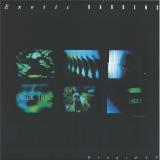
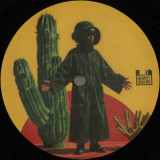
INDUSTRIAS MEKANIKAS is back with the third instalment of the ANTIKHRIST VISIONS saga. This release is particularly symbolic: it’s the ninth in the catalogue, marked by the infernal numerology that runs right through the whole series. It’s a descent into a sonic underworld, where noise becomes ritual and pleasure is just pure agony.
The artist tasked with opening this new chapter of the saga is the mighty Óscar Mulero, an essential figure on the national electronic scene and one of our biggest international ambassadors, whose career has left a deep mark on contemporary music. Here, with Faceless, he delves into dark, precise, and devastating electro territory; a spiritual machine that dictates the pulse of chaos.
Next up, we’ve got Pressurized Modulator with Reddrum: hard, crunchy, industrial electro, absolutely buzzing with electrical tension and twisted sonic matter.
Closing out the A-side is Jacko Volvone (aka Hoax Believers) with Quieren Cerrar Las Fábricas: a track that expertly blends electro, techno, and post-punk echoes, resulting in a tense, distorted, and combative sound, like a working-class echo shouting from the abyss.
Flipping over, the B-side opens with Hanging Nuts (made up of Waje Martín, Fake Robotik, and Ruben Montesco). They unleash a murky descent of filthy, distorted, primal electro, slashed through with guitars and raw, guttural vocals: a genuine chant from beyond the grave. The second cut marks the debut of Techselektah & Phil Fork with Champagne No Potable: a raging street anthem packed with fury, energy, and social criticism, where Spanish vocals emerge amidst EBM structures that have that ‘80s spirit, reinterpreted with today’s raw edge. And the big finish is down to HBK1 alongside Rigor Mortis, with Instinto Caníbal: a full-on explosion of electro-industrial and EBM that awakens the body’s most primitive urges.
Antikhrist Visions Vol. III is a sonic summoning from the lands of Hades: ritualistic matter, organic sound, and primal force. A testament to pleasure and torment—Tormento do Gostar—etched into the vinyl as if it were molten iron.
That’s a project led by a flamenco guitarist who turns out to be a talented lyricist and singer.
Billy Sharp received early support from Billie Eilish on SoundCloud and later from Nils Hoffman, who fell in love with his toplines. This first glimpse into his musical landscape reveals an intriguing personality, touching contradictions, but beyond that and more simply: a voice, a guitar, and mesmerizing melodies.
We're talking about music that moves, transcends, and resonates with the listener's emotions. All the tracks are elegantly carrying the project's message: introspective and passionately intense.
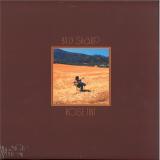
Billy Sharp unveils "Rose Tint," an EP with a strong identity, destined to be one of those timeless pieces. Billy worked meticulously on each of the 4 tracks composing this debut EP, resulting in an impressive outcome. The first notes of the opening track are sure to captivate anyone with their touching vocals and top lines. The EP builds in intensity with each performance, culminating in "2013," a danceable and nostalgic track.
The upcoming release scheduled for 2026 is made by the Irish London-based artist Cherrie Bea. Emerging electronic artist carving out a distinct space in the UK scene with thoughtful, deep and atmospheric productions that blend house, ambient textures and soulful guitar work. Their debut EP Jafar’s 21st introduced a warm, late-night sound that’s already earned support from underground tastemakers and NTS. Their latest release, Pearlescent, highlights Cherrie Bea’s playful, experimental edge, a collection of carefully crafted tracks that invite listeners to feel, interpret and experience the music in their own way Cherrie Bea stands as a reserved and introspective figure within the electronic scene, serves as a true statement piece, live instrumentation, ethereal synths, processed vocals, and dense harmonies wrapped in a late-night / early-morning atmosphere. The forthcoming “Pearlescent” EP, released on Series of Taboo, fully embraces that mindset: 4 tracks blending house, funk, and a touch of electro.
M’Bamina – African Roll (1975)
The story of an album born between Africa, Italy, and the nightclub culture of the 1970s
In the heart of 1970s Italy — a country undergoing profound social change and a music scene just beginning to open itself to distant sounds and cultures — an extraordinary, almost improbable story took shape. It is the story of a group of young African musicians who found their way to Europe, of a Turin nightclub that became a crossroads for communities and experimenters, and of an album which, released in small numbers and largely unnoticed at the time, is now considered a rare jewel of Afro-fusion.
The band called themselves M’Bamina — an ensemble of musicians from Congo, Cameroon, and Benin, who arrived in Italy in the early Seventies. Settling between northern Italy and the Pavia area, they began performing in small clubs and community events, bringing with them a vibrant rhythmic heritage: African polyrhythms, call-and-response vocals, funk-infused bass lines, and Caribbean or Afro-Latin colours absorbed along their musical journeys. Their raw, contagious energy on stage quickly drew attention.
Meanwhile, in Turin, another story was unfolding. There was a venue becoming almost legendary: Voom Voom, one of the city’s liveliest nightclubs, run by Ivo Lunardi. The club attracted an eclectic crowd — students, artists, foreigners, night owls — and Lunardi quickly understood that the dancefloor wasn’t just a place for music, but a melting pot for a new kind of cultural energy. Out of this vibrant atmosphere came his idea: to turn the club’s name into a small independent record label, Voom Voom Music, capable of capturing the spirit of those years and giving voice to unconventional projects.
When Lunardi heard M’Bamina, he immediately sensed that this was the sound he had been searching for: fresh, different from anything circulating in Italy at the time, and capable of blending African tradition with funk and European sensibility. He brought them into the studio.
Production was handled by Lunardi along with Christian Carbaza Michel, while the engineering was entrusted to Danilo Pennone, a young sound technician with a sharp, intuitive ear.
The recording sessions — held in Turin in 1975 — produced a remarkably warm and direct sound. The music feels almost live: grooves rooted in African tradition, but open to funk-rock structures and modern arrangements. It is a natural fusion, never forced. Tracks move between tribal rhythms, funk basslines, light electric guitars, congas and Afro-Latin percussion, with call-and-response vocals and melodies that echo both Congolese tradition and the lineage of Latin jazz. Not by chance, one of the album’s most striking tracks, Watchiwara, reinterprets a Latin standard through M’Bamina’s own rhythmic language.
The album was titled African Roll — a name that was already a statement of intention. It is African music that “rolls,” that moves, adapts, transforms within a new geographic and cultural setting. It is not strictly Afrobeat, nor Congolese rumba, nor Western funk: it is a spontaneous, hybrid blend, shaped more by lived experience than by any calculated aesthetic program.
When African Roll was released, the world around it barely noticed. Distribution was limited, and 1970s Italy had yet to develop a cultural framework for receiving such music. The national music press rarely paid attention to African or “world” productions. The album slipped into silence — though the band’s own story did not.
M’Bamina continued performing across Europe and Africa, even sharing a stage in Cameroon with none other than Manu Dibango. By the late Seventies, they moved to Paris, signed with Fiesta/Decca, and recorded a second LP, Experimental (1978). Meanwhile, the peculiar record they had made in Turin began to resurface quietly among vinyl collectors, Afro-funk enthusiasts, and DJs hunting for forgotten grooves.
That is when the album’s fate began to shift.
Over the decades, African Roll emerged as an almost unique document: a snapshot of an intercultural Italy before the word “intercultural” even existed, a fragment of migrant history, a spontaneous experiment in musical fusion born far from major industry circuits but rich in authenticity. Original copies began commanding high prices on the collector’s market, and the album became recognized as one of the hidden classics of European Afro-fusion from the 1970s.
Today, more than fifty years later, this reissue finally restores visibility and dignity to a project that deserves to be heard, studied, and celebrated. It is not simply an album: it is the testimony of a rare cultural encounter, born in an Italy unaware of how fertile such exchanges would one day become.
It is the story of a visionary producer, an extraordinary band, and a fleeting moment in which music, migration, and nightlife came together to create something genuinely new.
African Roll is — now more than ever — the sound of a bridge: between continents, between eras, between cultures. A record that, after rolling far and wide, has finally come home.
DJ Support: Dimitri From Paris, Dave Lee, DJ Spen, Danny Krivit, Simon Dunmore, Seamus Haji, Grant Nelson, Brian Tappert, Opolopo, Cj Mckintosh, Tedd Patterson and more...
Veteran Italian DJ Corrado Alunni makes his debut on Groove Culture 7 with “Any Time” and “Soul Groove” . Both tracks are floor-filler, packed with incredibles guitars grooves, Chucky bass lines, evil Rhodes chords, funky saxophones and flutes loops. A must Have for funky Lovers!
There’s a special kind of feeling when everything falls into place - when the drums bounce easy, the bassline rolls steady, and a bright guitar line cuts through the warmth of tape. That feeling became the heart of the FULLNESS, from Marcus I meets aDUBta. The sound of FULLNESS is built on simple, living elements: real drums, deep bass, a warm sound, and melodies that leave space to breathe. It moves between Early Reggae, Rocksteady, and Roots - sometimes straight and solid, sometimes stretching out into Dub and Echo. With its voice, from singer and lyricist Marcus I, FULLNESS carries the message about gratitude, love, freedom, and the small moments of everyday life. While Marcus’s singing style nods to the great singers, he stays grounded in his own experience, which perfectly complements aDUBta’s production, giving him space to shine. This LP is a complete, warm, balanced, and uplifting experience from start to finish.
FULLNESS grew from a steady musical exchange between Marcus I and aDUBta - two people on different sides of the Alps (Marcus I in France and aDUBta in Germany), finding a shared rhythm. What began in early 2022 with a few Riddims sent back and forth soon turned into a regular flow of songs. Every week brought new ideas, new words, and new melodies. When they finally met in person at aDUBta’s Attic Roots Studio in Bavaria, Germany, it all fell naturally into place. Most of the instruments were played by aDUBta, and the whole LP was mixed live on his Tascam 388, keeping that raw, handmade feel. With several friends helping bring even more color into the music, aDUBta brought in Viti Sanchez to lend his expressive saxophone and horn lines, Michael Salvermoser with his warm trombone tones, and members of the Black Oak Roots Allstars - King HuHa and Jannis Klenke on bass and guitars, along with Morry 'Da Baron' (Dub Inc.) on bass. FULLNESS means the fullness of music, of life, of friendship, of gratitude. It’s what happens when music becomes more than a project - when it turns into a shared space where things just flow.
Black Truffle is thrilled to announce Dalbergia Retusa, an extensive double LP selection of the solo guitar music of Hans Reichel, compiled by Oren Ambarchi. Last heard on Black Truffle as one quarter of the joyously anarchic Bergisch-Brandenburgisches Quartett, Hans Reichel (1949-2011) is one of the great figures of experimental guitar music. Though perhaps lesser known than peers like Derek Bailey, Fred Frith and Keith Rowe, Reichel’s rethinking of the instrument was in some ways the most radical of all. Early on, he dispensed with existing guitars to build a series of his own that explored the use of additional strings and fretboards, moveable pickups, extra bridges, special capos, and other innovations documented in the extensive booklet accompanying this release.
Reichel was a long-term resident of Wuppertal, the small Western Germany city that became an unlikely centre of European free jazz in the late 1960s, also home to Peter Brötzmann and Peter Kowald. His solo debut Wichlinghauser Blues was an early entry into the FMP discography and began a relationship with the label that stretched into the 1990s; all the solo performances heard here were first released on FMP. As Reichel says in the charming archival interview with Markus Müller included here, he was ‘always a cuckoo’s egg at FMP’, a label that began as an outlet for roaring European free jazz. What strikes the listener right from the opening selection on Dalbergia Retusa—‘Return of the Knödler show’, from 1987’s The Dawn of Dachsman—is the extraordinary beauty of Reichel’s music, at once alien in the shimmering sonorities and unconventional pitch relationships made possible by his invented instruments, and deeply lyrical, even romantic in its harmonic content. Growing up in West Germany in the 1960s, Reichel’s formative influences were mainly British and American rock bands, a background that shines through in many of the pieces included here: ‘An old friend passes by’ is haunted by the ghost of Hendrix’s rhythm guitar, and the wild closer ‘Heimkehr der Holzböcke’, taken from a rare 1975 7” and the only piece to use overdubbing, layers errant hammer-on and slide tones over a Canned Heat boogie chug.
Reichel was an important source for the development of Oren Ambarchi’s own extended approach to the electric guitar. Appropriately enough, his selection opens with the very first piece by Reichel he ever heard, on a flexidisc included with a 1989 issue of Guitar Player magazine. Though Reichel collaborated with others extensively in many settings and also performed on violin and his other major contribution to instrument invention, the daxophone, his music for solo guitar remains at the core of his oeuvre. Focusing exclusively on solo pieces recorded between 1973 and 1988, the 23 pieces on Dalbergia Retusa showcase the range and consistency of Reichel’s work, allowing the listener to see how his performances developed hand-in-hand with his instrumental inventions. On a piece from his very first LP, played on an 11-string instrument (partly strung with piano strings and using a schnapps glass a slide), we hear his intensive exploration of fret-hammering to create zither-like, chiming tone, which Reichel would hone further in later years with a double fretboard guitar specifically designed to be hammered rather than fretted and picked. On a piece from 1979’s Death of the Rare Bird Ymir, Reichel uses two steel-string acoustic guitars at once, with beautiful results: ‘some even say too beautiful’, he jokes in the interview included here. Many of the pieces from the 1980s make use of varieties of the ‘pick behind the bridge guitar’, instruments of uncanny harmonic richness primarily designed to be played on the ‘wrong’ side of the bridge. At times the unexpected behaviour of attacks, resonance, and decay can almost seem electronic, conjuring up the technology-assisted work of Henry Kaiser or even Fennesz, but realised solely through Reichel’s unorthodox techniques on his invented instruments. Extensively illustrated with photos and Reichel’s own plans and drawings of his instruments, Dalbergia Retusa is an essential introduction to the unique world of Hans Reichel. Rarely has music been at once so strange and so beautiful.
The breakout underground star of the past year, the deservedly hyped Thought Leadership returns with another X ideas: the deck this time chooses the suit of Cups. This new collection is closer to the Post-Punk tonality of Pentacles, than the breezy Balearic Jazz of Swords. Gone are the brushed drum samples and airy synths and in their place are BIG guitars, 808 thumps and a decidedly more prominent use of bass as a melodic device.
As the suit of Cups reflects the emotional heart of the Tarot, presented within are a further X pieces, this time displaying the full range and fervour of Thought Leadership.
You know the drill by now. Originally out on cassette only, we present the first ever vinyl issue. It's a hideously limited pressing of 300 for the world, so don't sleep on this.
Side A explores the emotional levels of consciousness; angst, joy, love, sorrow, relief, regret – they are all represented across the first seven tracks, and often within the same piece. XXI kicks us off with a huge tumbling D minor passage, layers and layers of guitar front and centre, whilst the drums pound away in the distance. Release is provided with a gorgeous G Dorian section, where we hear the bass take flight with a high melodic line.
We’re still in familiar Durutti Column meets Dif Juz territory here, but things switch up with XXII. This piece showcases a darker, more angular palette of guitars; think Alan Rankine (The Associates), or Deb Demure (Drab Majesty) in the unexpected harmonic shifts, knotty arpeggiated patterns and heavy, goth-adjacent modulation. A real love letter to 45+ years of darkly inclined guitar heritage.
XXIII enters the fray with tight, thumping 808s and Marr-esque guitar figures; and again, the bass providing heavy melodic counterpoint to the guitars. Enter chiming, lyrical lead phrasing, reminiscent of the eternal opening to "Everybody Wants To Rule The World". Another accidental perfect pop moment from the Thought Leader. Whilst on the topic of Tears For Fears, XXIV comes swinging out of the gate with some serious Sophisti-chug; we’re reminded of "Shout" in the A section, before being beautifully juxtaposed in the B section with more Vini-eqsue patterns, reminiscent of his timeless classic, Another Setting.
XXV gives us welcome pause to take stock midway through the A side. No drums this time, but instead a heartbreaking conversation between two guitars; think Kevin McCormick and David Horridge’s masterful Light Patterns, or perhaps even the early solo-Bill Connors mid-70s cuts for ECM. The moment of quiet reflection passes, and is quickly shattered by the thudding march of XXVI – this piece comes across like The Associates playing "Wicked Game"; heavy, moody, and utterly compelling. XXVII ends our journey across Side A with more Marr-inspired playing; one for the heads and already featured on mixes, this one is real testament to the vision of Thought Leadership.
Side B again takes us on a trip through three long-form semi-improvised pieces. XXVIII is like those classic Jonny Nash, early Melody As Truth releases, slowly unfurling, additional details introduced deliberately piece by piece, this idea builds across 7+ minutes culminating in some utterly joyous ebow fireworks at the end – well Balearic.
XXIX again, like XXV before it, dispatches the drums with a focus purely on melody and mood. The piece feels like a lost Save Room Theme from the Resident Evil series, pure golden age Capcom Sound Team vibes. Unadulterated aural nostalgia for hours spent with a PS1 in haze of hash.
XXX completes this majestic voyage with another Modal exercise; this time the Thought Leader has opted for the Lydian Mode. Beautifully dreamy, undeniably Soundtrack-y, and arguably the most concise distillation so far of everything this project stands for; drum machines, guitars, pedals, one-take improvised solos – XXX has the lot, and is surely destined for greatness.
So, another X epic statements for guitar, homespun with the humblest of means, for all the dreamers out there. The first ever vinyl release of IV Of Cups has been carefully remastered by Be With's engineer Simon Francis to ensure it sounds better than ever after its initial tape release. Cicely Balston's expert skills have made sure nothing is lost in the cut at Abbey Road Studios whilst the records have been pressed to the highest possible standard at Record Industry, in Holland. The original tape cover artwork, so crucial to Thought Leadership's striking visual aesthetic, has been rejigged for vinyl issue here at Be With.
An anthology born out of isolation and deep introspection, Sky Dust Drifter is a cosmic medley of sun-soaked AOR, psychedelic folk, and soft rock. This soundtrack was driven by the lonesome cowboy, a lockdown savior leaving me adrift in desert winds and dimly lit country bars.
Long-distance trades and masked meetups yielded a collection of private press LPs and 45s from ten different artists spanning 1973 to 1980. This seemingly random stack of records revealed songs living entangled in themes of hard luck, heartache, and the inevitable loneliness of existence. Adorned in cracked leather and chrome, this album is an aimless wander from the soil to the stars.
Featuring an unreleased English version of the compilation’s title track “Sky Dust Drifter” (originally released only in Hebrew), the record shifts from laconic afterthoughts to bold proclamations. From Michael Andrews’ blue-eyed soul assertion “Something Bad’s Better Than Nothin’,” to the searing electric guitars and bold synths of Sunburst’s “Special Lady,” Sky Dust Drifter thrives on solitude in a universe of unconditional self-rule where loneliness is not darkness but rather a blazing light of autonomy.
the debut solo album by henrik raabe, guitarist of the german trio wareika, who rose to prominence in the 2000s with their minimal deep house sound. departing from the cool, jazzy deep house he was known for, raabe delivers a uniquely crafted downtempo album that feels like a seamless blend of jazz, afro, dub, new age, and postmodern influences. it evokes the spirit of an imagined encounter between the durutti column and dennis bovell, with virginia astley joining in—reminiscent of the uk sound of the 1980s—yet rendered more minimal and refined, in a distinctly german way. with each listen, the album draws you deeper in. it is poised to become a defining release for mule musiq in 2026
Hate Love Trio made a low-key debut last year on this label with the slow, dreamy, dance-pop charms of 'Chan-O-Rama'. We have found out little more about the producer or producers behind it but here they or he or she returns with a full-length album of elegant and inventive downtempo and Balearic that starts off with those singles. Elsewhere, slow, mournful rhythms and melodies encourage inward reflection. 'Loosey Goosey' is a funky dancer for grown-ups, 'Billie Brownie' merges dub pacing with sunny guitar echo and 'Sunday I Don't Know' is a shimmering, jazz-flecked neo-classical warmer for intimate moments. An accomplished and adventurous album that is as good for the mind as it is body and soul.
Both multi-instrumentalists and seasoned producers, J and Peter took an all-hands-on-deck approach to these original collaborative tracks. The sonic seeds of "Underappreciated" and "Facile" were planted by Peter, JKriv cooked up the demo of "Over Suffa", and all three were completed together in J’s Brooklyn production studio. With live-recorded guitar, bass, analog synths, and drums/percussion by and a cohort of Brooklyn accomplices, the Facile EP marries live elements with modern club-ready production.
The punchy horns and no-nonsense vocals on "Underappreciated" come via Peter’s long-standing stage and studio connection with Ibibio Sound Machine, Favorite Recordings staple singer Olivya delivers the soulful EP title track performance, and Samy Love’s insistent vocal on "Over Suffa" is a pleading message to end the war and suffering in his native Cameroon.
With a remix of "Underappreciated" by French producer extraordinaire Yuksek, songs in both English and French, and influences ranging from boogie funk, 80s R&B, and classic Zouk, the Facile EP is a varied and dazzling collection of music for both listeners and DJs alike.
Daniele Baldelli
"A pleasant surprise to find in this release various atmospheres and sounds that have always been part of my DJing. It even made me rediscover M’Bamina, whom I used to play back in 1974 at the Tabù Club in Cattolica.
There are afro vibes as well, with Black Line – Myele, which is featured on one of my Cosmic tapes, and Nowhere by the Stratosferic Band recalls a track I used to play at the Baia degli Angeli…
Excellent work!"
Voom Voom Music was an independent Italian record label based in Turin, founded and managed by record producer Ivo Lunardi (Turin, December 6, 1940 – December 9, 2010). A pivotal figure in the Piedmont music scene, Lunardi was active both as a DJ and as the owner of several disco clubs.
The label operated for several years in the latter half of the 1970s, releasing mainly productions connected to the Italian dance and pop scene.
Since 2016, the original master tapes from the Voom Voom Music catalog have been owned by Gianluca Pandullo (I-Robots), a close friend of Ivo and Luca Lunardi. Through his labels Opilec Music and Turin Dancefloor Express, Pandullo oversees their preservation and historical enhancement.
The artistic direction of Voom Voom Music was marked by a distinct sonic identity — eclectic yet visionary. The Turin-based label founded by Ivo Lunardi embraced a sound that blended disco, pop, and rock influences, interwoven with African American grooves in a pioneering, international perspective.
Voom Voom Music was among the first Italian labels to introduce this kind of musical language in the country. A prime example is the Italian edition of the debut album by B.T. Express, Do It ('Til You're Satisfied), released in LP, 8-Track Cartridge, cassette, and 7" single formats.
The label’s productions clearly reflected the influence of black and funk music, as evidenced by the references and inspirations running through its catalogue. The track “Lady Pick-Up”, for instance, includes direct nods to “Do It Good” by KC & The Sunshine Band and Manu Dibango’s iconic “Soul Makossa”, revealing a musically refined and contemporary sensibility.
Among the label’s most representative works is Splash (1977) by the Stratosferic Band, a project conceived by Luigi Venegoni — producer, songwriter, and guitarist of Arti e Mestieri. Venegoni’s artistic journey spanned from progressive rock to space and Italo disco. The album artwork was designed by Piero D’Amore (1944 - 2022), a charismatic and multifaceted figure of Turin’s art scene (one of his works was even acquired by the MoMA in New York).
The record includes a disco reinterpretation of Van Morrison’s classic “Gloria”, and “Splashdown”, a track fusing the disco-rock energy of Rockets and Space. In contrast, “Nowhere” revisits the 1975 single by Hokis Pokis, a soul/disco band from Nassau County (New York), transforming it into a vibrant disco-funk number.
Another significant expression of the label’s catalogue is the afro-rock sound of M’Bamina, an Italo-Congolese group whose rhythmic energy and dialogue between African percussion and Western funk evoke the style of international formations such as Osibisa — themselves linked to a rich artistic history in Italy.
To honour the enduring appeal of a great musical rework, Hell Yeah is launching The Art of Remix. This essential new series collects the best remixes from a range of label favourites. First up is Japanese downtempo master Calm with exclusive, never-before-on-vinyl versions of originals by Cantoma, Aura Safari, DJ Sofa’s Dream Baby Dream, Seahawks, Gallo, Yuichiro Kato and more. The release comes with rich liner notes by the authoritative Dr Rob from Ban Ban Ton Ton, and a second volume from Is It Balearic's Coyote will follow soon.
Remixes have always been at the heart of Hell Yeah's output as a way of reworking classic sounds into different contexts, allowing artists to explore outside their usual remit and also to introduce new talents. Clam has long perfected the art with his famously laidback takes on all sorts of Balearic, house, dub and acid under the Mellow Mellow Acid subtitle. He's remixed many a Japanese legend but also a wealth of artists from across the world, and eight of those reimagined gems balance euphoria with solitude on this first volume.
First, his take on Cantoma's 'Way To The Sun' infuses drones and chimes with bubbly acid. 'Sur Mon Balconett' shimmers with Spanish guitar and sultry sax, ghosts of yesterday still shuffling. 'Banana Trance' jolts with breakbeats while taking a Balearic leap into hedonism. Mininn’s 'Vertigo' drifts dubwise, from monastic chants to operatic bursts. Maho’s 'Bakuhatsu' growls dark and sleazy as acid and riffs collide, 'Abysso' floats with strings and sirens in symphony, 'Blue Surround' lulls before exploding with jazz fire and Kato’s 'Kiss of Life' closes with a cosmic, romantic serenade. Calm's The Art of Remix sets a high standard for a series which will soon turn to Coyote and Scandi-house great Bjorn Torske.
About Alec Pace’s “Respiro 22:16”
Breath as rhythm. Breath as memory. Respiro 22:16, the debut album by Alec Pace, is a world suspended between intimacy and impact — where personal confessions are carried by low-end frequencies and fragile melodies are shaped into physical space.
Written, produced and mixed between London and Turin, this record reveals Alec Pace not only as a producer but as a storyteller through sound. Layer by layer, his voice, guitars, piano, synthesizers, drum machines, samplers, and field recordings converge to form a sonic diary — one that whispers, cracks, shimmers and erupts.
The album moves fluidly between dream pop, modern UK bass, breaks, jungle, and club music, yet its essence lies in emotion: love, memory, anticipation, release. Each track is a breath, an exhale, a fragment of something lived.
“The30th” opens with nostalgic warmth, darkness and breaks; “For You (Hello)” captures the tender rush of a love song over a drum & bass heartbeat; “Venus Winds” floats in a balance of techno pulse and harmonic light. “Angular Invariance” reshapes the floor beneath your feet, while “Respiro” pauses to listen inward — piano and air, fragile and close. “Anticipation” closes it all with a forward surge: emotional, propulsive, unresolved.
Respiro 22:16 is not just a collection of tracks, but a portrait of an artist learning to breathe out loud.
Alec Pace said:
“This album is about putting myself out there — letting every sound, chord and rhythm breathe,” says Pace. “Respiro is both a personal archive and a release.”
“Respiro 22:16” is available across all platforms on Friday 6th March 2026.
Since first forming in 2016, London's High Vis have steadily polished their palette of progressive hardcore with shades of post-punk, Brit pop, neo-psychedelia, and even Madchester groove, mapping a middle ground between hooks and fury, melodies and mosh pits. Singer Graham Sayle describes their third album 'Guided Tour' as an axis of competing forces: "It's trying to be a hopeful record, while also being incensed." Rounded out by drummer Edward 'Ski' Harper, guitarists Martin MacNamara and Rob Hammaren, and bassist Jack Muncaster, the band's deep roots in the UK and Irish DIY hardcore scenes have kept them grounded but growing, inspired equally by restlessness and righteous anger. As Sayle puts it, "Everyone's scratching, everyone's working all the time, and their idea of relaxing is just getting fucked and avoiding reality. This album is an escape from that."From its opening seconds of a cab door slamming, a car revving away, and a baggy rhythm swinging to life, 'Guided Tour' sounds like a band reaching for new heights, bristling with energy. Recorded across a few weeks at Holy Mountain Studios in London with producer Jonah Falco and engineer Stanley Gravett, the results feel dynamic and dialed-in, like anthems burned into sense memory through sweat and repetition. Harper cuts to the chase: "We had a clear idea going in, every moment got used. Maybe when we're 60 we can sit around and get a drum sound right, but for now it's about getting things done."The album's 11 songs span the spectrum of contemporary guitar music, sharpened by experience, camaraderie, and societal frustrations. From swaggering street punk ("Drop Me Out," "Mob DLA") to jangling indie sneer ("Worth The Wait," "Deserve It") to heavy alt ("Feeling Bless," "Fill The Gap") to shoegazey spoken word ("Untethered"), the group's chemistry transmutes any style to their unique intensity. Sayle champions this evolving fusion: "For years coming from hardcore, we had pretty clear boundaries - other scenes were separate worlds. Now things are getting more blended, drawing from different places."Nowhere is this sentiment flexed more boldly than on "Mind's A Lie," a dance- punk anthem inspired by Harper's love of house, garage, and pirate radio. Stabs of sampled female vocals (by celebrated South London singer and DJ Ell Murphy) build into a razor wire rhythm of low-slung bass, tense drums, and sparkling guitar before Sayle's staunch voice starts barking harsh truths ("Face to face with all I've known / I can't call these thoughts my own"). After a sudden breakdown, the track regroups and takes off, cruising into the horizon in a haze of chiming guitars and Murphy's ascendant voice, from the streets to somewhere beyond.
Leave it to Joe Claussell to tap into our current collective artificial intelligence anxiety and render the racket divine. Alan Parson’s 1977 I Robot—the LP from which these two new edits were culled—was a harbinger for all the technological sheen and humanistic distress that was to come. Drawing from heady science fiction and even headier musicality and studio sophistication, ’The Voice’ evoked Jeremy Bentham-like omniscient surveillance, while the original ‘I Wouldn’t Want To Be Like You’ explores the ambivalent rift in perspective between the two poles of flesh and metal. For Claussell, the dichotomy leaves more unanswered questions and artistic possibilities, for the truth is always tangled and ripe for potential. Our bodies are propelled by the same electrons which accumulate in capacitors; our hearts, as Milford Graves was so enthralled, likewise transmit the same electric impulses which not only sustain our bodies but soundtrack our eternal, internal rhythm. These edits, with their strings, synthesizers and distortion-ravaged guitars, are protracted to dynamic sublimity, and seem aware of this seemingly opposing dynamic. Claussell, himself a lifelong proponent and interrogator of man’s relationship with mechanized rhythm and sound, leaves our earthly toil and unease behind for something greater, something yet unnamed, shared between us all at our finest. It's almost a feeling you can touch in the air…
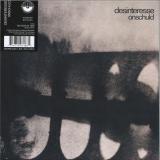
Desinteresse releases their second album Onschuld through Fabrika Records on September 9, 2025.
Desinteresse is a Dutch Coldwave act consisting of Bart Vranken (bass), Joppe de Swart (drums), and Sem van den Munckhof (vocals/synth/guitar). Formed in late 2022 as a duo, Bart and Sem released their debut album Voor Altijd in April 2023 and the EP Ik Wil Dood Als Ik Het Vergeet in November 2023, both on cassette through their own label DECADENCE. With the addition of Joppe in early 2024, they released their first work as trio in August 2024, the 7” single Grijze Dromen.
Desinteresse produces their music using original vintage equipment as a deliberate form of artistic expression and identity. Their live performances are a melancholic, but mesmerizing affair, where music and vocals amplify the weight of their message, emphasizing the non-existential and abandoned emotions that define their sound. An absolute delicacy for fans of Fad Gadget, The Normal, Joy Division and early work from The Cure.
The titles and lyrics are in their native Dutch. Onschuld (also the title of the opening track) translates to ‘innocence’. With other titles such as Niets Te Zeggen (nothing to say), Brekend Glas (breaking glass) and Grizje Dromen (grey dreams), this pensive album could be a good-bye to innocence, but it’s certainly the ideal companion for ruminations on gloom.
The short, mysterious career of the female French duo Deux Filles is bookended by tragedy. Gemini Forque and Claudine Coule met as teenagers at a holiday pilgrimage to Lourdes, during which Coule's mother died of an incurable lung disease and Forque's mother was killed and her father paralyzed in an auto accident. The two teens bonded over their shared grief and worked through their bereavement with music. However, after recording two critically acclaimed albums and playing throughout Europe and North America, Forque and Coule disappeared without a trace in North Africa in 1984 during a trip to visit Algiers. The short and terribly unhappy lives of Forque and Coule are at the root of the small but fervent cult following the mysterious duo have gained since their disappearance, not least because the placid, largely instrumental music on the duo's albums betrays no hint of the sorrow that framed their personal lives.
This would be a terribly sad story if a word of it were true. In reality, Deux Filles were Simon Fisher Turner, former child star/teen idol and future soundtrack composer, and his mate Colin Lloyd Tucker. Turner and Tucker left an early incarnation of The The in 1981 to pursue another musical direction. Turner claims that the idea of Deux Filles came to him in a dream, and he and Tucker strictly maintained the fiction throughout the duo's career. Not only did they pose in drag for the album covers, the duo once even played live without the audience realizing that the tragic French girls on-stage were actually a pair of blokes from south London. Deux Filles released two albums through Turner and Tucker's Papier Mache label, 1982's Silence & Wisdom' and 1983's Double Happiness'. Both albums are included here and blend watery piano, occasionally ghostly vocals, sheets of synthesizers, heavily processed guitars and the barest minimum of percussion. Drifting and wistful, they're a pair of lost ambient gems from a time when the genre had yet to mature, an excellent example of post-Eno, pre-Orb ambient music.
All songs have been remastered for vinyl by George Horn at Fantasy Studios in Berkeley. The vinyl comes housed in gatefold sleeve with original front covers of both albums, and a centerfold of archive images and the original liner notes. Each LP includes a sticker of the Lino cuts by Adrian Gill that was included with the original pressing.
"Like an early French film soundtrack with melodramatic overtones, the sound is jagged and disjointed but never harsh. Lilting guitars and ample use of echo smack of Vini Reilly, relying on the hypnotic qualities of the sound rather than abrasive noise" (Sounds, 03/1983)
Spider Taylor crawls over to Dark Entries with Surge Studio Music, an album of archival gay pornographic soundtracks. James Allan Taylor was born into a working-class family in Los Angeles in 1951. Nicknamed “Spider” by his father due to his frantic energy, Taylor was a natural-born guitarist, gifted with perfect pitch and a voracious musical appetite.
Throughout the 70s, he expanded his musical repertoire, playing in bands ranging from country to post-punk, like his outfit Red Wedding, while always looking for new sounds and styles to explore. During this period, Taylor also partnered with his soulmate and musical collaborator, Michael Ely. They were part of a wave of bold, young, gay couples living openly together in the years immediately following the Stonewall Riots. In the early 80s, while working at the West Hollywood gay sex club Basic Plumbing, Taylor met Al Parker, the legendary pornographic actor and director, who recruited Taylor to produce the soundtrack for a film he was working on. Parker’s partnership with Steve Scott running Surge Studios produced some of the most popular all-male films of the era. Spider’s music was a natural fit for Surge, and throughout 1985 and 1986, he composed the soundtracks for five films produced by the iconic studio. Assisted by engineer Steve Conrad and armed with a drum machine and some synths, Spider’s compositions for film veer from the expansive, reverb-drenched “Rainforest” to the Miami Vice-esque chugger “Tech.”
While Spider thought of this work as little more than a gig, tangential to his real craft, enthusiasts of VHS-era nostalgia and vintage erotica will be brought to bliss. Surge Studio Music will be available on both LP and CD, the latter of which includes a 20-minute version of “Strange Places…Strange Things!” as a bonus track. The album’s cover art was designed by Gwenael Rattke, and features stylish images from Surge Studios releases. Also included is an insert featuring liner notes by Will Lewis, a longtime friend of Spider. The music is released from Spider’s estate by Michael Ely, Spider’s partner of 43 years. The shadow of AIDS lingered over Surge; Steve Scott passed from AIDS-related illness in 1987, and Al Parker succumbed in 1992. In 2014, when it became legal for same-sex couples to marry in Arizona, Spider and Michael finally became wedded. Spider would pass away from liver cancer six months later.
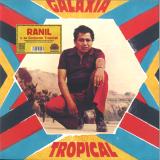
This release documents the legacy of Ranil, the Amazonian singer and bandleader who shaped a distinctive regional style blending cumbia, psychedelic textures and local rhythmic traditions. Born Jorge Raul Llerena Vasquez in 1935, Ranil rose from rural beginnings to front Los Silver's in the early 1970s before founding his own label, Producciones Llerena, to independently record his imaginative, genre-blurring music. His catalogue, long scattered across mismatched pressings, remains a vivid record of Amazonian creativity. Following his later career as a radio voice in Iquitos, this collection preserves key recordings and supports archival efforts that continue to highlight his cultural impact. Check the frisky percussion and euphoric vocals of 'Pueblo', the scratchy guitar and bustling funk of 'Bahia' or the lilting 'Albores De Mi Selva' for proof of just how irresisitble it still sounds today.
Accepting the darkness can be a liberating experience. Realising, and struggling with just who we are and what world we live in requires it. By further complicating the fractured sense of beauty found on his droning 2022 release, ‘I dreamt we found a way’, Bristol-based composer, Rob Winstone creates a language that encapsulates the lifelong reach for our own personal heavens, along with the darkness and fear on which those foundations are built.
Winstone’s instrumental palette continues to reach out far from behind his keyboards, however the sound of ‘sifting through heaven’ is stripped back and pared down, putting melody front and centre. 'postcards and loose tea', a love song written for Winstone’s partner during a period coming to terms with health difficulties had previously self-released with heavy spectral and granular manipulation from the artist. Here Winstone re-presents the original: “the stripped back recording I made in my old damp and cold studio that was in a building that has since been demolished”. It reflects the composer’s own journey, doing away with veils and histrionics, and embracing emotional bliss wherever it can be found, warts and all. Even the rumbling dark ambience of ’hospital corridor’ - where distant chimings, groans, and droplets synthesized from field recordings made nervously in a hospital waiting for test results coalesce - harbours a sacred-seeming beauty and aseptic warmth within its very bleak sense of dread.
There’s no better way to describe Winstone’s method than ‘sifting through heaven’. The hymnal organ chords, sketched out acoustic guitar phrases, scattering drum thuds, and meditative field recordings may flit between tenebrous to incandescent, but his focus is always on the embrace of love; “a view of life that embraces positive growth, yet doesn't deny immense suffering,” as he puts it. The album is bookended by two of Winstone’s most outright peaceful moments, summarising his core message: 'in spite of it all...' '...love finds a way'.
Limited edition of 2000 indivudally numbered copies on crystal clear vinyl
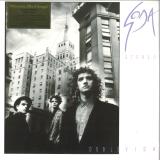
In 1988, Soda Stereo released their fourth studio album, Doble Vida. This time, they got the help of none
other than Carlos Alomar for the production. The renowned Puerto Rican guitarist has a history of collaborations
with David Bowie, Iggy Pop, and Paul McCartney.
This collaboration introduced a variety of new genres and influences, including funk, soul, and R&B. After fully recording the album in New York City, the band entered a
new stage in their career, allowing them to break into the US market. The tour to promote the album spanned the entire American continent and the album sold a million copies worldwide.
It's counter intuitive perhaps to react to the increasing noise of the world, not by adding to it, but by seeking quiet. Or something close to it.
Arrival's debut EP does just that - assembling immersive aural environments and delicately detailed backdrops - setting the scene for the perfectly pitched deeply melancholic meditations of Britain's least known and most valuable guitarist, Kevin McCormick.
Originally from Malaga but a Berlin resident for the past 13 years, Carlo is thrilled to unveil his first album released under his own record label, Bisiesto. This label stands out for its unique approach, releasing just one album every four years on leap day, February 29th. In contrast to his previous style, this album blends all his musical influences into a unique mixtape of instrumentals.
Reminiscent of Nightmares on Wax, Kid Loco, and Mushroom Jazz, this album offers a unique auditory experience. Lora Ute brings a hint of tangy mellowness to ‘Because’ balancing dreaminess with playful notes, while Jose Fernancaster, with his immaculate guitar skills, infuses ‘Todo Mal’ with sexy guitar riffs and wahs. Intr0beatz's hip-hop touch enhances ‘Lemon Haze’, while Black Loops, a percussionist at heart, collaborates on ‘Midnight Cruiser’ to encapsulate the solitude of night-time city cruising with a lo-fi sound. Piek rounds off ‘Esperanza’ with an empowering bassline, tying the track together with a golden ribbon.
Lovski, alias Igor Sekulović, is redefining the Balkan musical landscape. A master guitarist and erstwhile “Projekt Rakjia” band member, he forges an uncanny blend of traditional folk melodies with dance, electronic and rock energy.
His debut solo album, Discoteka Jugoslavija—produced in collaboration with Napoli’s producer Raffaele “Whodamanny” Arcella—ventures through Italo-disco pulses, reggae grooves and psychedelic swirls, all anchored by the call-and-response warmth of Balkan traditional instruments. Each track feels like a borderless road trip: hypnotic rhythm sections give way to soaring guitar solos that nod to ancestral folk tunes, while propulsive synth arpeggios push listeners into tomorrow’s club.
Lovski’s signature lies in his seamless genre alchemy. He honors regional roots without succumbing to nostalgia, instead reframing folk elements as raw material for global dancefloors. As a performer, his live shows pulse with communal ecstasy—drawing dancing crowds around campfires of light, smoke and bass.
In a scene ripe for innovation, Lovski stands out as both torchbearer and trailblazer—proof that the Balkans still have surprises to offer, and that the old and new can coexist in brilliant harmony.
The new album by the collective that for
over 25 years has been among the most
representative names of the Italian dance
and electronic scene worldwide.
“BLOOOM”, this is the title of the new release,
will be available in all traditional stores and
on digital platforms starting January 16.
Set against the soundscapes that have become
the Planet Funk trademark, the lyrics by Dan
Black attempt to give voice to a fragile and
contradictory condition of our time: an
intensified sensitivity that, instead of
turning into openness and connection, often
becomes emotional overload. A generation
constantly overwhelmed by excessive stimuli,
relentless information, anxieties, and fears,
called upon to find its way in a world thaoffers neither pauses nor silence. In this paradox, sensitivity is no longer just a natural gift, but
a daily effort: staying open and receptive without being overwhelmed, trying to preserve a human and
vulnerable gaze in order, despite everything, to fully appreciate life and the present moment.
The single’s artwork—like that of the album—curated by Nationhood, visually conveys this tension: the
distant sirens of a city that amplifies feelings of disorientation and loneliness even when we are
surrounded by thousands of people.
“BLOOOM”, preceded by the single “FEEL EVERYTHING”, arrives at the end of an intense, creative year
full of music, which saw Alex Neri (DJ, keyboards, synthesizers), Marco Baroni (keyboards, piano,
programming), Dan Black (vocals and guitar), and Alex Uhlmann (vocals and guitar) engaged between
studio work, collaborations, and live performances in Italy and abroad. A journey that today
transforms into new energy, into an even more open vision oriented toward the future.
Exactly one year ago, PLANET FUNK released “Nights in White Satin”, a single that reached the top
positions of the radio charts and launched a season rich in concerts and DJ sets in Italy and around
the world. The subsequent “I Get a Rush”, the collaboration with Alfa and Manu Chao on the remix of
their hit “A me mi piace”, and the track “È Naturale” together with Francesca Michielin, confirmed
Planet Funk’s ability to renew themselves and engage with different musical worlds while always
remaining true to their own identity.
Throughout this journey, music has inevitably intertwined with life. The memory of Sergio Della Monica
and Domenico “Gigi” Canu, pillars and founding souls of the PLANET FUNK project, is a living part of
this new chapter. Their vision, creative spirit, and way of understanding music continue to be a
constant guide, a deep root from which new ideas and new directions can grow.
“BLOOOM” is also this: a personal and artistic blossoming that, starting from the legacy left by
Sergio and Gigi, transforms into a living process of growth, metamorphosis, and discovery. An album
that does not look back with nostalgia, but forward with awareness, momentum, and a desire for
renewal.
Founded in 1999, for over 25 years PLANET FUNK have represented one of the most important, solid, and
influential realities in the international electronic music scene. Born from the meeting of Souled
Out! (Domenico “GG” Canu and Sergio Della Monica) and Kamasutra (Marco Baroni and Alex Neri), and
following their debut with “Non Zero Sumness” in 2002 (a gold record and a turning point for the
band), PLANET FUNK have managed to reinvent themselves over time while maintaining a unique sonic
identity. This has led them to collaborate with internationally renowned artists, deliver iconic
performances around the world, create soundtracks and international advertising campaigns, and
continue to demonstrate constant creative vitality
ATA Records are proud to present the new release by Work Money Death, A Portal to Here. This album continues WMD’s exploration of Spiritual Jazz and the sounds and styles that evolved out of the 60s New Thing, particularly the recordings of
Alice Coltrane and Pharaoh Sanders. The first WMD album released since the tragic death of ATA guitarist Chris Earl Dawkins in early 2025, all four tracks reference the journey that band members and the studio have been on – in many ways this record is a testament and tribute to Chris, his musicality and creativity.
Featuring WMD stalwarts Tony Burkill, Neil Innes, Sam Hobbs, and Sam Bell, the album introduces Sorcererskeyboardist Johnny Richards to the WMD sound. Richards brings a fresh new take to the piano role here, drawing on what is clearly a broad knowledge of jazz history and channelling that through his own unique 21st century musical perspective.
The album also features contributions from Alice Roberts on harp, bringing the spirit of Alice Coltrane, Ben Powling on baritone saxophone, Richard Ormrod on woodwind, and Kev Holbrough & Steve Parry on brass. Those Sun Ra-esque horn sections lift the mood whenever they appear.Standout tracks are the second, Dance of the Spirits, with a strong core of Baptism and The Blues and some lovely playing by Richards, and the third track, Brother Earl, which begins with Tony on flute over rhythms that are directly reminiscent of open-hearted, late-60s spirituality. Tony later moves to tenor and, as on all four tracks here, eventually builds to the peaks of shattering emotional intensity that fans of Work Money Death - and spiritual jazz in general - love.
Holy grail of Memphis Boogie Funk! Subway Featuring Wave is an absolute gem of a mini Lp and is reissued for the first time ever on Past Due Records. Original copies are known to fetch in the thousands...
Produced by Lee Moore with Stax musicians, including guitarist Michael Toles, keyboard player Lester Snell, and drummer Willie Hall, all members of the Isaac Hayes Movement. He also hired bassist Ray Griffin who recorded numerous sessions for both Stax and Malaco Records.
‘Desire’ is the sophomore full-length album by TLF Trio, following their beloved debut album ‘Sweet Harmony’ from 2022. On ‘Desire’, the group presents their signature, contemporised chamber music through their main instruments: piano, cello and electric guitar; now enhanced by a pervasive use of sampling and a distinct use of silence as musical material.
The album is an aesthetic voyage in a musical landscape of minimalism, classical music, free improvisation, left-field-electronica, and references to pop and house music. It blends into a sound that is experimental and unpredictable – yet at the same time strangely familiar and self-explanatory.
The ten pieces balance an open-ended improvisational intimacy with a tight compositional intention. Each track's repetitiveness operates as a trickling plateau of layered sentiments of times and spaces through the sampling of different acoustic rooms, the playing in specific styles and the curated selection of sounds and instrumentations; a collage of memories and associations patched together to create new meanings.
Were FEX the Wildest & Weirdest German New Wave Band in 1984?
Few cult mysteries in modern music have captured the internet's imagination quite like "The Most Mysterious Song on the Internet." Eventually identified as "Subways of Your Mind" by the elusive German band FEX, the track became a viral sensation decades after its creation-and even made its way into a recent Hollywood blockbuster (Black Phone 2).
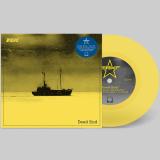
Now, two more lost FEX recordings have emerged from an old demo cassette: "Dead End" and "Sarah." And they're every bit as electrifying as the legend suggests.
On both songs, guitarist and main songwriter Ture Rückwardt joins forces on lead vocals with his former wife and musical partner Ilona Rückwardt, forming a vocal pairing that channels raw energy and eerie chemistry. What they deliver are two of the most urgent, adrenaline-fueled post-punk artifacts you're likely to hear this year-even if they were recorded more than forty years ago.
Opening with a sharp, melodic guitar solo, "Dead End" bursts forward with uptempo drive-catchy, fierce, and full of momentum. Apparently inspired by Orwell's 1984, its lyrics depict urban desolation-loneliness, homelessness, hopelessness-yet still shimmer with defiance in lines like, "Truth is amazing - hoping is like waiting."
The second track, "Sarah," dives even deeper into darkness. Mixing post-punk intensity with psychedelic textures, Rückwardt tells an imaginary story of a couple lost in drugs and spiraling through a bad trip, only to wake and realize that sobriety offers little comfort-the real world itself can be just as brutal and offers no easy escape.
Neither song makes the slightest concession to commercial trends. Instead, they feel utterly uncompromising-wild, strange, and defiantly timeless. In a world obsessed with polish and playlists, "Dead End" and "Sarah" sound like transmissions from a different planet.
Both tracks were originally recorded as demos in 1984 in the band's rehearsal room, with Hase engineering. The newly restored versions preserve the raw spirit of the original tapes while adding subtle layers to enhance their atmosphere without losing the authentic 1980s sound. FEX hint that the untouched demo versions might surface later, possibly on a second volume of their archival
Motem - a Retrospective
Unsung hero of home recording, undercover Trap lord, flag bearer of Canadian Skweee and bass guitar grunge wizard. Two decades of Motem on an album as wild and diverse as his outfits, cherry picked by Coco Bryce.
Isa Gordon and Tony Morris were first brought together through their individual releases on Optimo Music, which established mutual respect within the label’s community. While they had not previously performed live together, they were invited to take part in a fundraiser hosted by Queen’s Park Arena in support of Glasgow NW Foodbank and later for JD Twitch’s end-of-life care. Tony asked Isa to contribute guitar and backing vocals to his set, including a track then called Last Night I Had a Dream. That performance became the seed for their collaboration.
The first phase of fleshing it out, recalls Tony: “Somebody said Isa sang like Shania Twain. That got me thinking about country music and call and response, prompting me to come up with alternative lyrics.” Isa remembers: “I cycled over to Tony’s house with my guitar, and we spoke about what the tune meant. It was about him being wrapped up in dreamland, luxuriating in his subconscious, while my character — impatient and trapped in her own routines — barely had time to remember her own dreams.” Tony continues: “Brilliantly I realised that I could never collaborate with anyone in situ and so I sat in the garden for two hours watching my wife tend to plants. Every now and again I would creep up the stairs and put my ear to the door. I could hear Isa warbling away and so would resume my garden watch. After two hours I went back upstairs to see how she was getting on, only to find that she had written one of the greatest songs I’d ever heard. I still think that.” Tony adds: “My overwhelming sentiment about Wake Up Baby is pride. I can honestly say that I’m more proud of it than anything else I have done. It ticks a whole load of boxes. Isa’s singing in various Scottish modes is unique. The way her electric guitar adorns the dance beat makes it a rock song as well as a dance and a C&W song — truly multi-genre.”
The B-side of the 12” release, Syringe Moustache, is a surreal, darkly playful counterpart to Wake Up Baby. The track was inspired by a dream Tony had: “I was in a shopping mall, in a two-level shoe shop, and my attention was taken by a little girl with a syringe taped beneath her nose like a moustache. She went about her business trying on shoes, confident and wise beyond her years. In the dream, I imagined her as the daughter of cultured, intelligent parents determined to raise her independently. I was struck by my own feelings of inadequacy — I knew I could never have coped with such a contraption myself.” Isa’s take on the meaning of this song somewhat differs: “Tony sent me the tune over Instagram months before I met him, and I was spooked — as far as I knew, he didn’t know anything about me, but the story felt like it was written about me as a little girl, growing up around heroin addiction. The syringe beneath the girl’s nose became a symbol of the inescapable constraints of that environment, literally written on her face, yet something you just have to carry on through. On a buzz from the serendipity, I added a full instrumental backing to this most bizarre of works.”
The result is absurd, unsettling, and strangely empowering, staking out its own surreal, cinematic space. The 12” dance single is a format Tony had long wanted to explore — a tangible artefact to leave for family, a medium that celebrates the physicality of sound and the ritual of listening. It allowed the artists to maximise the format’s potential: a strong, multi-genre A-side, a surreal B-side, and remixes that expanded the record’s sonic world. Glasgow music staples Auntie Flo and 100% Positive Feedback were invited to reinterpret the tracks, bringing their distinctive touch — Auntie Flo transforming the A-side into a luscious, dancefloor-ready meditation, and 100% Positive Feedback twisting Syringe Moustache into absurd, playful shapes with false-start drops and over-the-top vocal editing.
The cover photograph, taken at the University Café by Harrison Reid, captures Isa and Tony embodying the characters they brought to life in the songs — a visual reflection of the record’s narrative and emotional stakes. The Café also holds personal significance: it’s where all of Isa’s meetings with Keith McIvor took place, where she first remembers visiting Glasgow as a child, and a place Tony fondly likes to go to drip egg yolk down his tie and watch the world go by. Together, the 12” format, the remixes, and the artwork create a cohesive, tactile experience, amplifying the duality, theatricality, and emotional breadth of the collaboration.
In early 2025 Oakland-based Jerod S. Rivera released his second full length Dot-Dash, featuring a collaboration with CST co-founder Cat Lauigan and Jonathan James Carr. From the beginning we were mesmerized with the result, a perfect melding of Cat's processed spoken-word and Jerod's Buchla experimentations.
The thought of remixes presented immediately, the material extra ripe for interpolation. Enlisting friends from geographically and sonically disparate locations to present an ideal remix 12". Something for everyone, something for every setting, a tool with multiple functions...
The mysterious dub/techno/leftfield mastermind behind False Aralia dives further into territory explored on iri.gram, uptempo and dancefloor-ready in a more maximal Perlon-ish way while still embracing a half-time dub feel. Philipp Otterbach (Music from Memory, Offen, RIO) goes deeper into the guitar zone he’s been exploring, channeling Earth 2, Boris, and the like for some heavy drone. Oakland duo DJ ML and Wonja adopt their Motoko & Myers moniker (Future Times, Soda Gong), zeroing in on some choice vocal snippets that mesh perfectly with a live drum break and bassline for a Seefeel-esque version that could have come from a 90’s UK studio. Finally, Slowfoam embraces the more experimental elements of the original with a remix that starts sparse and minimal but builds into a glitchy rhythmic climax.
The 12” includes a 2-sided riso insert and a download code with access to an additional remix by close collaborator Jon Carr that twists the vocals into a throbbing industrial caucaphony.
The latest release from "SALT... meets ISLAND CAFE -Sea of Love 3-" a surf music compilation curated by the magazine "SALT..." that proposes new values
for beach lifestyle and surf culture, is a killer instrumental single featuring a stellar pairing of DJ Mitsu the Beats and Half Mile Beach Club.
The new track "a day on Moorea" by renowned beatmaker/DJ/producer DJ Mitsu the Beats is an original tune themed around his time spent on the tropical
paradise of Moorea. The laid-back, jazzy beat and the chill sound of soft electric piano and guitar create an emotionally charged experience.
Half Mile Beach Club, a four-piece instrumental band that plays soothing dance music centered around Balearic elements and evokes seaside scenes,
presents "Translusent" a chill piece evoking the image of sunset by the sea. This summer tune features a beat that blends medium four-on-the-floor beats and
Latin rhythms, breezy guitar, floating synths and groovy bass, creating a feeling like endless waves.
The double jacket design also allows you to enjoy the artistic surf photos on the double A-side.
The Cosmic LP is an album that is fully part of the history of Italian dance music.
First released in 1984, it is a produc*on signed by SANGY, one of the founders of Italo-dance, who was
responsible for the composi*on, arrangement, and performance as a guitarist and mul*-instrumentalist on
most of the tracks.
Crucial to this project was the collabora*on with DJ Daniele Baldelli, who at the *me was the resident DJ of
the legendary Cosmic club in Lazise (Verona) and is s*ll considered one of the most important Italian DJs.
Collaborators also include the names of Sandy Dian, one of the most sought-a2er sound engineers of the*me, and a debutant M&G, who would later co-sign one of the most iconic Italian disco tracks, "When I Let
You Down," also in collabora*on with Sangy.
The sounds of this album were absolutely revolu*onary for the era because they blended funky, jungle,
Brazilian, disco, and fusion influences in a completely unprecedented way.
For these reasons, the Cosmic LP has remained an iconic piece of interna*onal discography, maintaining its
originality and sonic power intact more than 40 years a2er its first release.
This autumn, on the occasion of his fortieth birthday, Ibrahim Maalouf will release his 12th studio album named "40 Melodies". Maalouf has teamed up with his longtime friend and collaborator Belgian guitarist François Delporte for an intimist duet album. The duet revisits Ibrahim's most memorable melodies, through his albums, to the soundtracks, including a few exclusive new tracks.
This album includes many renowned surprise guests (Sting, Matthieu Chedid, Alfredo Rodriguez, Richard Bona, Trilok Gurtu, Hüsnü Senlendrici, Jon Batiste, Arturo Sandoval, and others). Ibrahim gets back to his roots, and to the basics: a trumpet, a guitar, and 40 melodies to celebrate his fortieth anniversary.
Mikkel Metal makes a welcome return to Echocord with his new ‘Rebuild’ EP, accompanying remixes from Luke Hess and Frenk Dublin.
Copenhagen’s Mikkel Metal is a pioneering figure in dub-techno and minimal house, known for his atmospheric soundscapes and textured production. With acclaimed releases on Kompakt and Echocord, including Close Selections, Victimizer, and Peaks and Troughs he’s cemented his place as one of Denmark’s most distinctive electronic artists. Here he continues to dispay this further diving into new sonic realms with a new EP for Echocord.
Title-track ‘Rebuild’ opens, a hazy excursion through metallic, reverberations, expansive atmospherics and crisp drums before Detroit’s own Luke Hess steps in to offer his interpretation, delivering his signature groove-driven style, extracting the essence of the original and stirring it in amongst robust drums and spiralling dub echoes. ‘Bend’ is up next and displaying Mikkel’s production prowess as he blends murky bass flutters and analogue rhythms with psychedelic guitar melodies and dynamic space echoes, resulting in something that sounds uniquely his own. ‘Steam’ continues this theme with further psychedelia infused guitar tones flowing alongside breathy vocal stylings and fluttering atmospherics tucked into the depths. Rotterdam, Netherlands based artist Frenk Dublin delivers his ‘Deep Space Rework’ of ‘Stream next, reshaping the original into something entirely different with a dropped-tempo roots dub aesthetic, weaving fragments of the original into the composition alongside swaying dub drums and heavy doses of sub. ‘Midnite’ then concludes the release, another experimental sonic foray into unique effect processing, glitched out percussion, haunting vocals, plucked bass notes and expansive atmospherics
The Roots of Chicha, compiled by Barbès Records, was originally released in 2007 and became the first recording to popularize psychedelic cumbia around the world.
From the late 60's through the 80's, Peruvians invented a new popular musical hybrid inspired by music from the Americas. In 1968, Enrique Delgado released his first record on Odeon with his new group, Los Destellos, single-handedly creating Peruvian cumbia. He codified the genre early on by using the electric guitar as the primary melodic instrument, and mixing cumbia rhythms with folkloric huaynos, criollo voicings, Cuban guarachas and guajiras, rock, boogaloo, surf, psychedelia, oriental music, classical music, and bits and pieces from Brazil, France, Chile... All Peruvian cumbia bands for the next thirty years would end up drawing from the exact same sources (Grupo Celeste, Los Mirlos, Juaneco Y Su Combo, Manzanita Y Su Conjunto...).
This new wave of Peruvian cumbia came to be known as chicha. Chicha is originally the name of an alcoholic drink, made of fermented maize, which the Incas were especially fond of. In the past thirty years, however, the word has taken on a pejorative connotation. Peruvian cumbia started being called chicha in the late 70s, around the same time that the music came to be viewed as the expression of the slums – the pueblos jovenes. Little by little, the word became an adjective, and people now talk of chicha culture, chicha press, chicha architecture, even of a chicha president, and none if it – you guessed right – is meant as a compliment. Chicha suggests corruption, shady deals, and cholos – a derogatory term for a person of Andean heritage that, of late, is being reclaimed and worn as a badge of honor by the very cholos it was supposed to demean in the first place.
It’s with great pride that we announce this amazing album on Optimo Music from Portland-based duo Natural Magic. It was the final vinyl release that Keith McIvor aka JD Twitch put into production before his untimely departure in late September this year.
Having been a long time lover of everything krautrock, space rock, experimental and psychedelic it seems more than fitting that he leaves us this LP as his parting gift; because this sublime album is all these things wrapped up into one and much more.
The album’s opening track “Galaxy Builder”, with its driving tempo, monolithic bass and screaming guitars might give the impression we’re about to hear a Neu for the 21st Century, but no, by the 2nd track we’re already on the first of several wild detours into uncharted territories: part shoe gaze, part ethereal, part psychedelia it’s a unique piece of beautiful euphoria from start to finish. By the time we reach the end of the A-side’s closing track “Distant Bells” the whole place is in tears after hearing possibly one of the most poignant pieces of electronic music of the entire year.
The B-side takes us even deeper into this trip through the duo’s homeland in the Pacific Northwest opening with “Skyward Eye”. If the Orb had ever teamed up with Slowdive and gotten Andrew Weatherall on production this could be it. “Get It Right” is a fuzz-filled epic with heavy dub leanings and meanings...it soars high up into the beyond and prepares us for “Ride”; an unashamed space voyage in the true sense…cosmic guitars, laden with FX; before returning gently down to the rolling green hills of Earth with the closing track “Chugsby’s Theme”. Whoever Chugsby is, his vibe is organic, deeply grounded and beautiful.
In the duo’s own words:
“Natural Magic II is a west coast road trip soundtrack for the fading summer. Taking inspiration from the majesty and myths of their home in the Pacific Northwest, the seven track album is culled from the late night, dimly lit, live sessions of Mike McKinnon on keys/drums and Matthew Quiet on bass. Overdubs of guitar, synths and percussion followed. All this from the same space they throw their legendary Limited Edition parties - all-night free experimentation celebrations in their own right. The album art work is handmade flower pigments, opium poppy pollen ink and wood-scrap charcoal by their friend and collaborator Pith Cocomici. Roll the widows down, tilt the seat back and turn it up. Gas, grass or black mass... there's magic in the hills.
Les Enfants Terribles presents LETM011 by DJ Real Madrid with the new EP No Smoking:
Dear readers and listeners,
My name is Tillmann Ostendarp, others know me as DJ Real Madrid. I love to play instruments, I love to play with machines. And this is something I did in May 2024, when I spent one week in my beautiful studio. Over the course of the week I recorded „NO SMOKING“ which is going to be my first Vinyl Release as „DJ Real Madrid“. No Smoking contains 4 Tracks: „Ta Ta“ which is a Juno-driven deep homage to the god of funk „Johnny Guitar Watson“. „Leave It Be“ is a big percussive jam that tells you to mind your own business. When I knocked out „GGGGGG“, I invited Dino Brandao and Mel D over to jam on the microphone, which led to a dark humorous ode to the insanity of our world. The last track is called „Merlasco“ and brings back the hope that we all will come together in the morning sunrise!
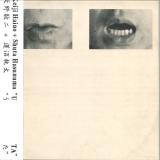
Haino sings. Hasunuma plays. It’s a minimal framework, but what emerges is a boundary-blurring sonic exploration. Across the album, Haino’s voice threads through Hasunuma’s layered soundscapes built from analog synths, electric guitar, piano, field recordings, and more. Haino entered the studio with only lyrics in hand, improvising melodies in response to Hasunuma’s evolving arrangements. The result is a work of deep trust, intuition, and sonic tension.
Keiji Haino and Shuta Hasunuma’’s creative connection began in 2017 with an impromptu performance in Shibuya—Hasunuma on a Buchla modular synthesizer, Haino responding with the Japanese national anthem, “Kimigayo.” That moment sparked their unlikely collaboration.
In 2018 Haino appeared at the Hasunuma-organized event “MUSIC TODAY IN KYOTO” at Rohm Theater, alongside Nobukazu Takemura, Manami Kakudo, Elena Tutatchikova, Kukangendai among others. In September 2021 during the pandemic, the two performed "U TA" for the first time at in Shibuya. They began planning the album soon afterwards.
For the recording of U TA, Haino entered the studio with only the lyrics in hand, with no knowledge of what sounds Hasunuma would produce. Responding to Hasunuma’s music in real time, Haino composed the melodies and layered in his voice on the spot. With additional sessions at Hasunuma’s private studio and Haino’s preferred studio, the album was completed.
All melody and vocals by Keiji Haino
All instrument, written, played, arranged, mixed and produced by Shuta Hasunuma
Recorded by zak at st-robo studio, Shuta Hasunuma at Studio i.M.O and windandwindows
Mastered by Rashad Becker at clunk
Production Management: Eishin Yoshida, Kento Ono (windandwindows)
For Temporal Drift: Yosuke Kitazawa, Patrick McCarthy
Art Direction: Aiko Koike
Special Thanks to Toshihiko Kasai, Ryoichi Kiyomiya, zAk, Yumiko Ohno
license
Between 2023 and 2025, L.F.T. split his time between Hamburg and Berlin, slowly piecing together what would become his most ambitious work to date. The result is Hell Was Boring - a double album that plays like a fever dream, unfolding as a dark, mythical tale about life, death, and the strange spaces in between.
L.F.T. - the alias of German producer and multi-instrumentalist Johannes Haas - has always thrived on tension: between punk urgency and electronic precision, between raw emotion and mechanical repetition. On Hell Was Boring, those tensions are amplified. Drawing on the spectral drama of Bauhaus, the melancholic minimalism of Linear Movement, the futuristic romanticism of Gary Numan, and even the sly swagger of Falco, the album feels at once deeply personal and part of a much older musical lineage.
The sound is stripped down to its bones: drums snap and rattle from a Roland TR-808, TR-707 and Korg KR-55; basslines growl from a Roland SH-101 and Korg MS-20; shards of guitar cut through clouds of tape hiss. Everything was tracked to a Teac Tascam 80-8 reel-to-reel, giving each track a lived-in, imperfect warmth. Nothing is overpolished - L.F.T. wanted the listener to hear the edges, the grit, the moments when the music almost comes apart.
Along the way, he invited friends and long-time collaborators into the fold - Das Kinn, Rosaceae, Felix Kubin, Children Of Leir, and Konstantin Unwohl - each leaving their own fingerprints on the record’s world of shadows and static.
Hell Was Boring isn’t a mere collection of songs; it’s a narrative that drags you into its orbit and doesn’t quite let go. It’s music for the late hours when reality feels porous, and for those moments when you’re not sure if you’re waking up or still dreaming.
Compiled by Philip King “And then came the rise of synth pop : blokes with dodgy haircuts hunched over keyboard-operated machines stuffed with wires and do-it-yourself tone oscillators making sounds like a brood of geese passing gas in a wind tunnel. Whoopee! This is the way the ‘70s ended : not with a blood-curdling bang bang but with a cheap, synthesized, emasculating whimper.” NICK KENT, NME. All The Young Droids: Junkshop Synth Pop 1978-1985 is a new compilation that charts the underbelly of the epoch-defining sound of the synthesiser in 80s popular music. Compiled by Philip King (previously seen compiling All The Young Droogs, Glitterbest and Boobs - The Junkshop Glam Discotheque), the music here connects the dots between DIY synth enthusiasts grappling with new, cheap synthesisers at the tail-end of punk and wannabe, jobbing songwriters enthral to the new music pioneered by Gary Numan, Depeche Mode and Daniel Miller’s Mute Records. Featuring rare tracks of auto-didactic progressive pop music, proto-techno punk, shoot-for-the-stars-land-in-the-gutter chart flops and heralded, underground synth classics, School Daze paints a picture of beautiful failure. Complete with extensive sleeve notes written by King and never before seen imagery, all 24 tracks were remastered by RPM in-house engineer Simon Murphy, many from vinyl copies due to lost master tapes. The story told on All The Young Droids is one of the dawning opportunity presented by both the emergence to the market of cheaper analog synthesisers and the distribution networks plus indie labels that exploded with the advent of punk music in 1976. While the music that sprouted out all over the globe in the wake of these factors was decried as fake, plastic, a refutation of punk’s guitar-led revolution, it’s telling that much of the music on All The Young Droids.. was created in bedrooms, ramshackle studios and home-made set ups with often borrowed equipment. In the era of record labels jumping to capitalise on the success of The Sex Pistols, The Clash (both on major labels, of course) these artists struggled to stand out from a new gold-rush with next to no budget or PR team. With radio and labels desperate for the new Yazoo, what resulted was a testament to necessity being the mother of invention. At the time, the synthesiser was the music of the future, a shiny new machine that could paint like an orchestra with a single finger and a 4-track. In the hands of Manchester avant-pranksters Gerry & The Holograms it’s a pulsing, sardonic weapon.. the only instrument on the Messthetics classic lampooning of New Wave fashion. In Hamburg, a 16 year old Andreas Dorau used it to write and record (with his female classmates on vocals) a global smash in Fred Vom Jupiter (later licensed to Mute Records). The hard-to-find English version (Fred From Jupiter, natch) is included here. Many artists with alreadystoried careers caught the bug and recorded synthesiser-fuelled peons to space, computers, the future and, of course, love-interests. Harry Kakoulli, late of Squeeze, recorded a solo album in 1979 that included the incredible power-synth-pop smash-that-never-smashed I’m On A Rocket. Similarly, Ian North of Neo and American Power Pop stalwarts Milk ’n’ Cookies bought a Korg MS20 and used a tape machine to record We’re Not Lonely, an absolute lost-classic of minimal synth pop. We’re Not Lonely also features on the Junkshop Synth Pop sampler 7” twinned with John Howard unreleased track You Will See, released April 12th 2025. There are plenty of compilation debuts in evidence. Sole Sister were a mysterious trio who were featured on the Scaling Triangles compilation of female-fronted, queer-adjacent post-punk / underground music that also featured The Petticoats. Selwin Image were from San Francisco and featured members of the recently defunct power pop/punk group The Pushups. Their stupidly catchy The Unknown fizzes with New Wave energy - think XTC to Sparks but remains unreleased until now. Dream Unit’s A Drop In The Ocean is an early synth wave cut, positively teaming with Joy Division instrumentation, previously only released on a long-forgotten and super rare, self-released EP. Incandescent Luminaire’s Famous Names belies an archetypal struggle of a small-town trying to make it in a cruel industry but is a thrilling New Romantic-Synth Wave cross over with a OMD gloominess that’s a joy to hear. Feminist Minimal Wave track I Am A Time Bomb by performance artist Peta Lilly and Michael Chance is a revelation destined for new found cult status. It was released on 7” and lost until now. The flipside to the subterranean, never-made-it synth pop mentioned above are the ambitious, even fruity attempts at success that have a perennial elegance to their confidence. New Jersey-ite Billy London (real name Ed Barth) tried to cash in on the synth boom with Woman, released by a major label, a lurching new wave track built on the Louie Louie rhythm and a wonderfully camp Lou Reedstyle sleazy vocal before exploding in the synthesised chorus. The song bombed but with a chorus like this, you have to wonder why? Ex-Glitter Band member John Springate’s My Life is truly epic, with doomed chord progressions and massive sounding drums turning into at least 3 different songs in the course of the track. Before you wonder what’s going on the song resolves with a glorious return to the main refrain. The dry-ice-dressed dance floor is well catered for too. Design’s Premonition and Vision’s Lucifer’s Friend are stone-cold minimal synth bangers, well loved but given a new lease of life here. The Warlord’s The Ultimate Warlord was released in 1978, a homespun proto Hi NRG banger that was later re-recorded by The Immortals in Canada who had a club hit with it. One-man- band Disco Volante’s No Motion was re-issued by Synth wave label Medical in 2012 but makes its first vinyl compilation appearance here. Close your eyes and you can imagine what Lawrence of Felt would have sounded like with some cheap Korgs a little earlier in his career. Gibraltar-based trio The Microbes imagined a computer programming people to dance - how prescient - and ended up with a propulsive, robo-funk track with splendid rubbery bass playing over a tectonic drum machine. Previously picked up by Belgian label Stroom TV, Dee Jay Bert & Eagle’s heavily Euro-accented I Am Your Master demands the listener to “come to paradise!” In a frankly terrifying manner. All The Young Droids is the first compilation to peel away from the narrative that dour, Minimal Synth and Cold Wave were the only musical children of the first rush of synth pop. Philip King and School Daze Records describe a much more complicated world: along with the austere, Brutalist children of Daniel Miller (who produced Alan Burnham’s Bowie-Low-influenced Science Fiction here) was a plethora of desperate cash-ins, accidental mainstream hits, ambitious pop dramas and major label punts that went nowhere. Crucially, the compilation blurs the line between junk and treasure. What if the two things are interchangeable. What if it’s all science fiction?
Drummer-composer Tom Skinner announces Kaleidoscopic Visions, his second solo album, out 26th September 2025 via Brownswood Recordings and International Anthem
Kaleidoscopic Visions unfolds across two distinct sonic landscapes. Side A presents entirely instrumental compositions performed by Skinner's live Bishara band—bassist Tom Herbert, cellist Kareem Dayes, and Robert Stillman and Chelsea Carmichael on various woodwinds and reeds—with electric guitar on two tracks courtesy of Portishead's Adrian Utley. A drummer-composer bringing his wealth of experience to bear on the role of bandleader, Skinner composed primarily on guitar, embracing the freedom that came with writing on his secondary instrument.
These compositions include "Auster," dedicated to late novelist Paul Auster, and "Margaret Anne," which honours Skinner's mother Anne Shasby, a former classical concert pianist prodigy who abandoned her own promising career in the face of systemic misogyny, only to impart on her son what Skinner calls "the gift of music."
Skinner’s musical world opens further on Side B, where a collection of poised vocal collaborations stretch out from jazz and improvisation towards a more dream-like, soulful sound. The centerpiece is "The Maxim," a ten-minute collaboration with Grammy Award-winning Meshell Ndegeocello, a dubby, spacious meditation on life and death, delivered with a free-spirited grace. For Skinner, working with Ndegeocello—whom he first saw at Glastonbury as a teenager in 1994—represents a full-circle moment, indicative of the indirect paths and inspirational detours that have shaped his life.
The album goes on to feature South Carolina-based singer Contour (Khari Lucas) who appears on the low-lit soul ballad ‘Logue’, and closes with ‘See How They Run’, featuring London keyboardist-vocalist Yaffra (Jonathan Geyevu). It is the album’s most overtly lyrical track, an articulate exposition of jazz-inflected spoken word that speaks not only to the genre-fluid nature of the music but the breadth of Skinner’s palette.
This should come as no surprise. On Kaleidoscopic Visions, one of London’s most vital musical figures gives us a sparkling glimpse of the multi-coloured lens through which his unique sound is now refracting.
Cat Power marks 20 years since her Memphis-shaped 2006 album The Greatest with 'Redux', a three-track EP cut in Austin with Stuart Sikes and the Dirty Delta Blues band, the same crew who toured that record. Marshall salvages material linked to The Greatest's early sessions, opening with a fresh take on James Brown's 'Try Me', attempted during the original run but never finalised. She then revisits her own 'Could We' in the looser, road-worn arrangement aired on tour. The flip holds her reading of Prince's 'Nothing Compares 2 U', recorded as a nod to Teenie Hodges, the Memphis guitarist whose playing underpinned The Greatest and whose influence threaded her writing.
Crowns by The Rebel feat. Corey James Gray is out now on 7’’ via Little Beat More!
The Rebel, aka Tommaso Taroni, producer from Rome and Founder of DJ’s Choice label, delivers a raw, soulful track that opens the door to his debut album. Crowns features the sharp lyrics and smooth, magnetic delivery by Corey James Gray (FKA Ill Spookin), riding over a sturdy groove with crisp drums and deep guitar loops.
On Side B a further explosion comes: Clap! Clap! signs a Power Trio remix of the track that flips everything on its head. With thunderous syncopated riddim and wild brass stabs, this version hits like a futuristic brass band from New Orleans: unrelenting, joyful, and rhythmically overpowering. A bold reimagining by one of Italy’s most visionary electronic producers.
Packaged in a stunning disco bag illustrated by El Moro, this 7” is both a record to play and a piece to keep. A snapshot of a fresh project in the pipeline, ready to go!
For the first time on Little Beat More, Sweden’s Cumbiasound deliver a vibrant 7” that expands their ever-evolving exploration of tropical soundscapes. Led by Daniel Fridell, the band has long been pushing the boundaries of cumbia while keeping its analogue heart beating strong, blending classic Colombian and Peruvian sounds with Afrobeat, reggae, jazz, funk, and beyond.
The A-side Mas Paz (Rework) breathes new life into one of Cumbiasound’s most beloved tracks, originally featured on their album Cosas del Universo. Vocalist Lis Flores Varela brings her unmistakable smoothness, while Chilean rapper Boogie Castillo lays down thoughtful verses with his signature flow in a track that captures the essence of the band: rooted, soulful, and globally connected. And to top it off, this new version has a fresh new vocal feature by Congolese singer José Pereelanga.
On the flip side, Jinsei, is a collaboration with Japanese cumbia band Mumbia y Sus Candelosos, led by composer and percussionist Mutsumi Kobayashi. With its breezy guitars, soft tropical groove, and the warm vocals of José Pereelanga, the track drifts like a slow river, effortlessly bridging continents and traditions.
With this 7”, Cumbiasound once again affirms its place among the most interesting projects in today’s nu-cumbia landscape with a vision that crosses borders with ease.
Made with Love by Little Beat More 2025 “We Dance We Think”
From the heart of Tamanrasset in South Algeria, Imarhan transcend Tuareg tradition, weaving hypnotic synths into desert blues. The result is a timeless work—deeply respectful of their roots, yet alive with a stirring sense of modernity.
ESSAM is the band’s fourth album, recorded with the same core lineup, but marks a significant shift in their sound and approach. Musically, it marks a departure from the rocky, bluesy, psychedelic Tuareg guitar-driven sound influenced by Tinariwen’s heritage — moving toward something more open, modern, and exploratory.
For the first time, their long-time sound engineer Maxime Kosinetz stepped in as producer. He travelled to Tamanrasset with Emile Papandreou (of the French duo UTO), a multi-instrumentalist who introduced electronic elements by sampling live instruments and reprocessing them in real time with a modular synthesizer — subtly reshaping the band's sonic identity.
The album was recorded mostly live, in one big room at Aboogi Studio — the band’s own rehearsal and recording space in Tamanrasset. The studio, a converted concert hall, has become a kind of cultural hub for the local youth. Friends dropped by during the sessions to contribute handclaps, vocals, and just be part of the energy. It’s a space where people gather, hang out, play dominoes, smoke chicha — a rare communal spot in a city that doesn’t offer many for young people, somewhat like a youth and community center.
This context — the creative shift, the live recording process, the atmosphere around Aboogi — might be interesting threads to explore in the conversation.
Welcoming London-based artist House on the Strand to the Eastern Nurseries fold following his impressive 2024 debut, "Heroine", Ruben Elbrond-Palmer channels a sombre, cinematic sense of sound with "Unrest".
Interpolating the visual sensibilities of some of his favourite artists, filmmakers, and photographers into the sonic field, Elbrond-Palmer’s palette cuts loose from the percussive elements of his previous work, blending analogue synthesis with repurposed guitars, haunting melodies, and field recordings that call to mind the hazy delirium of a dusty summer’s day. Sitting at its core, "Unrest" places harmony front and centre, with each sombre movement rising and falling as electric fences hum, helicopters hover overhead, and unknown events are set in motion.
Deceptively simple, the resultant album is gestalt—an elegy of melancholic moments, lost to the world.
Mastered by Ike Zwanniken of Hysterical Love Project - mainstay mastering engineer behind majority of INDEX, Co:Clear & Theory Therapy Releases
Established in 2019, Eastern Nurseries is a platform for deeply emotional contemporary electronic music based between Porto and Newcastle upon Tyne. Curated by Rui P. Andrade (aka Canadian Rifles) and Christopher Macarthur Owen (aka Burning Pyre).
The label has released a steady yet considered magna of records from Hasfeldt, Emma Acs, innerinnerlife and VAs encompassing the likes of Conna Harraway, Severin Black & Slowfoam.
Flanked by a team of collaborators - including Nick León, more eaze, Ultrafog and Kissen - Ben Bondy captures the Kwia-pop zeitgeist on 'XO Salt Lif3', sluicing down dappled emo and downtempo grooves with log drum thwacks, tempered field recordings and sandblasted shoegaze guitars.
Forget what you think you know about Ben Bondy; like Naemi's fuzzy 'Breathless Shorn', ‘XO Salt Lif3’ is a decisive shift away from the ambient world and towards contemporary underground pop. Last year's amapiano-tinted loosie 'Bend' serves as the album's opener and is the best taster, its slick DSP squelches, granulated drones and sub rumbles immediately swapped out for breezy acoustic guitar riffs, tuned log drum hits and Bondy's own Autotuned vocals. When Bondy turns down the temperature a little, letting the orchestral synth arrangements slip into fuller view on 'Halfmoon', a collaboration with Nick León and Aussie producer Lovefear, it's tempered by low slung emo riffs and mumbled sweet nothings.
By the time we hit 'Dreamseed', Bondy's in full swing, offsetting slow breaks and multi-tracked vocal harmonies with full-spectrum shoegaze power chords that cut into the mix like a chainsaw, with crunchy amp crackle foreshadowing the Bark Psychosis-like drop. Bondy hits a cruise when More Eaze helps out on 'There Is A Place'. Maurice's unmistakable pedal steel draws us in, used by Bondy to add an Americana accent to his euphoric fusion of amapiano and indie pop. It's music that'll make perfect sense if you've caught one of Bondy's notorious DJ sets, where you might hear anything from American Football and Jessica Pratt next to Gwen Stefani, Skinny Puppy or Sneaker Pimps. It’s this chaotic, open-hearted approach - which also plays a part in the Shineteac material - that makes 'XO Salt Lif3' so effortlessly enjoyable.
The Éthiopiques series returns! Essential archive recordings from an extremely fruitful period in Ethiopian music.
Before “Swinging Addis” took over the world, there was Moussié Nerses Nalbandian — the Armenian-born composer who shaped modern Ethiopian music. Mentor, arranger, and pioneer, he laid the foundations of Ethio-jazz.
This Éthiopiques volume revives his forgotten legacy, recorded live by Either/ Orchestra First issue ever with new exclusive photos and in depth liner 8-page insert.
“Ethiopian jazzmen are the best musicians that we have seen so far in Africa.
They really are promising handlers of jazz instruments.”
Wilbur De Paris
(1959, after a concert in Addis Ababa)
አዲስ፡ዘመን። *Addis zèmèn* **A new era.**
The time is the mid-1950s and early 1960s, just before "Swinging Addis" bloomed – or rather boomed – onto the scene. Brass instruments are still dominant, but the advent of the electric guitar, and the very first electronic organs, are just around the corner. Rock’n'Roll, R’n’B, Soul and the Twist have not yet barged their way in. Addis Ababa is steeped in the big band atmosphere of the post-war era, with Glenn Miller's *In the* *Mood* as its world-wide theme song, neck and neck with the Latin craze that was in vogue at the same period. Life has become enjoyable once again, with the return of peace after the terrible Italian Fascist invasion of Ethiopia (1935-1941). The redeployment of modern music is part and parcel of the postwar reconstruction. *Addis zèmèn* – a new era – is the watchword of the postwar period, just as it was all across war-torn Europe.
The generation who were the young parents of baby boomers** were the first to enjoy this musical renaissance, before the baby boomers themselves took over and forever super-charged the soundtrack of the final days of imperial reign. Music is Ethiopia's most popular art form, and very often serves as the best barometer for the upsurge of energy that is critical for reconstruction. Whether it be jazz in Saint-Germain-des-Prés or the *zazous* who revolutionised both jazz and French *chanson* after the *Libération*, be it Madrid's post-Franco Movida, or Dada, the Surrealists and *les années folles* that followed World War I, the periods just after mourning and hardship always give rise to brighter and more tuneful tomorrows. Addis Ababa, as the country's capital, and the epicentre of change, was no exception to this vital rule.
**Two generations of Nalbandian musicians**
Nersès Nalbandian belonged to a family of Armenian exiles, who had moved to Ethiopia in the mid-1920s. The uncle Kevork arrived along with the fabled "*Arba Lidjotch*", the** "*40 Kids*", young Armenian orphans and musicians that the Ras Tafari had recruited when he visited Jerusalem in 1924, intending to turn their brass band into the official imperial band. If Kevork Nalbandian was the one who first opened the way of modernism, pushing innovation so far as to invent musical theatre, it was his nephew Nersès who would go on to become, from the 1940s and until his death in 1977, a pivotal figure of modern Ethiopian music and of the heights it. Going all the way back to the 1950s. Nothing less. And it is Nersès who is largely to thank for the brassy colours that so greatly contributed to the international renown of Ethiopian groove. While the younger generations today venture timidly into the genealogy of their country's modern music, often losing their way amidst a distinctly xenophobic historiographical complacency, many survivors of the imperial period are still around to bear witness and pay tribute to the essential role that "Moussié Nersès" played in the rise of Abyssinia's musical modernity.
Given the year of his birth (15 March 1915), no one knows for sure if Nersès Nalbandian was born in Aintab, today Gaziantep (Turkiye/former Ottoman Empire) or on the other side of the border in Alep, Syria... What is certain is that his family, like the entire Armenian community, was amongst the victims of the genocide perpetrated by the Turks. Alep, the place of safety – today in ruins.
Before Nersès then, there was uncle Kevork (1887-1963). For a quarter of a century, he was a whirlwind of activity in music teaching and theatrical innovation. *Guèbrè Mariam le Gondaré* (የጎንደሬ ገብረ ማርያም አጥቶ ማግኘት, 1926 EC=1934) is his most famous creation. This play included "ten Ethiopian songs" — a totally innovative approach. According to his autobiographical notes, preserved by the Nalbandian family, Kevork indicates that he composed some 50 such pieces over the course of his career. This shows just how much he understood, very early on, the critical importance of song as Ethiopia's crowning artistic form. Indeed, for Ethiopian listeners, the most important thing is the lyrics, with all their multifarious mischief, far more than a strong melody, sophisticated arrangements or even an exceptional voice. (This is also why Ethiopians by and large, and beginning with the artists and producers themselves, believed for a long time — and wrongly — that their music could not possibly be exported, and could never win over audiences abroad, who did not speak the country's languages).
Last but not least, one of Kevork's major contributions remains composing Ethiopia's first national anthem – with lyrics by Yoftahé Negussié.
Nersès Nalbandian moved to Ethiopia at the end of the 1930s, at the behest of his ground-breaking uncle. Proficient in many instruments (pretty much everything but the drums), conductor, choir director, composer, arranger, adapter, creator, piano tuner, purveyor of rented pianos,... he was above all an energetic and influential teacher. From 1946 onwards, thanks to Kevork's connexion, Nersès was appointed musical director of the Addis Ababa Municipality Band. In just a few years, Nersès transformed it into the first truly modern ensemble, thanks to the quality of his teaching, his choice of repertoire, and the sophistication of his arrangements. It was this group that would go on to become the orchestra of the Haile Selassie Theatre shortly after its inauguration in 1955, which was a major celebration of the Emperor's jubilee, marking the 25th anniversary of his on-again-off-again reign.
At some point or other in his long career, Nersès Nalbandian had a hand in the creation of just about every institutional band (Municipality Band, Police Orchestra, Imperial Bodyguard Band, Army Band, Yared Music School…), but it was with the Haile Selassie Theatre – today the National Theatre – that his abilities were most on display, up until his death in 1977. To this must be added the development of choral singing in Ethiopia, hitherto unknown, and a sort of secret garden dedicated to the memory of Armenian sacred music, and brought together in two thick, unpublished volumes. Shortly before his death (November 13, 1977), he was appointed to lead the impressive Ethiopian delegation at Festac in Lagos, Nigeria (January-February 1977).
His status as a stateless foreigner regularly excluded him from the most senior positions, in spite of the respect he commanded (and commands to this day) from the musicians of his era. Naturally gifted and largely self-taught, Nerses was tirelessly curious about new musical developments, drawing inspiration from the very first imported records, and especially from listening intensely to the musical programmes broadcast over short-wave radio – BBC *First*. A prolific composer and arranger, he was constantly mindful of formalising and integrating Ethiopian parameters (specific “musical modes”, pentatonic scale, and the dominance of ternary rhythms) into his “modernisation” of the musical culture, rather than trying to over-westernise it. It even seems very probable that *Moussié* Nerses made a decisive contribution to the development of tighter music-teaching methods, in order to revitalise musical education during this period of prodigious cultural ferment. Flying in the face of all the historiographical and musicological evidence, it is taken as sacrosanct dogma that the four musical modes or chords officially recognised today, the *qǝñǝt* or *qiñit* (ቅኝት), are every bit as millennial as Ethiopia itself. It would appear however that some streamlining of these chords actually took place in around 1960. It was only from this time onward that music teaching was structured around these four fundamental musical modes and chords: *Ambassel*, *Bati*, *Tezeta* and *Antchi Hoyé*. A historical and musical “details” that is, apparently, difficult to swallow, especially if that should honour a *foreigner*. Modern Ethiopian music has Nersès to thank for many of its standards and, to this day, it is not unusual for the National Radio to broadcast thunderous oldies that bear unmistakable traces of his outrageously groovy touch.
Die drei Schwestern der Rockband „The Warning“ sind zurück mit ihrem mitreißenden Live-Album „Live
from Auditorio Nacional CDMX“.
Die in Mexico geborenen Geschwister Daniela „Dany“, Paulina „Pau“ und Alejandra „Ale“, haben inzwischen unzählige Kilometer auf Tournee zurückgelegt, hundert Millionen Streams erzielt und eine riesige
Fangemeinde begeistert.
Ihre harte Arbeit und Leidenschaft haben ihren Sound mit beeindruckender Präzision verfeinert. Sie kombinieren alternative Hymnen mit eingängigen Melodien und einem kraftvollen Hardrock-Einschlag.
„Live from Auditorio Nacional CDMX“ dokumentiert ein unvergessliches Konzert vor 30.000 Fans in MexicoCity und fängt nicht nur die mitreißenden Songs, sondern auch die einzigartige Atmosphäre des Abends ein.
Das Album ist als CD und auf Vinyl erhältlich.
Fra Lippo Lippi released six studio albums between 1981 and 1992, two of them on Virgin Records, namely "Songs" in 1986 and "Light And Shade" in 1987. All the original releases were deleted many years ago. There are two previous The Best Of Fra Lippo Lippi releases on CD (1995 and 2003), but this is the first on vinyl. With the limited playing time of vinyl, we had to make some tough decisions, but in the end the song selection very much gave itself. The dark horse here is "Stitches and Burns", an overlooked gem from the final studio album "Dreams" (1992) that didn't make the previous 15 track collection, but in mysterious ways gained new life through organic streaming, with over 70 million streams on Spotify at the time of writing. Included is also the international hit "Shouldn't Have To Be Like That" and "Angel", featuring the late, great Walter Becker on guitar and production duties. The duo is still very popular in various parts of the world and now has 1,2 mill monthly listeners on Spotify. This 2025 reissue is pressed on clear vinyl (500 ww copies).
Manizeh Rimer, founder of London’s Love Supreme Projects, announces her debut album Mahku, releasing on vinyl and all digital platforms on December 5, 2025 via LEITER.
A bold contribution to contemporary spiritual jazz, the album was co-produced by LEITER labelmate ganavya – who recently released the celebrated Daughter of a Temple and Nilam. Recorded in early 2025 at LEITER’s Funkhaus Studio in Berlin, Mahku features eight chants, including a reimagined version of Fleetwood Mac’s Landslide, with ganavya appearing on three tracks.
The album brings together a stellar cast: Grammy-nominated Jai Uttal; bassists Ben Hazleton and Doug Weiss; harpist Miriam Adefris; pianist Jay Verma; and Manizeh‘s teenage daughter, Mahku Rimer, on vocals and guitar. Tracks range from a 3,000-year-old Zoroastrian prayer (‘Ashem Vohu’) to Sanskrit and Buddhist mantras (‘Asato Ma’, ‘Gate Gate Paragate’) to the devotional ‘Avan’s Sita Ram’, dedicated to Manizeh‘s late mother.
Mahku means “eclipse” and is also the name of Manizeh’s grandmother. Developed from her long-standing chanting practice and deep creative partnership with ganavya, the album opens and closes with three generations of women’s voices, exploring music as a timeless, intergenerational loop. Recorded in a space Manizeh describes as “suspending you in an infinite river of time,” Mahku is both personal ritual and universal offering, flowing through lineage, loss, and love.
‘Get A Life, Listen To Autumns’ is a statement that tells you everything you need to know about the quality and attitude of the Irish producer’s latest EP. His DNO debut presents five tracks of steel-studded EBM and industrial run through with his trademark dub aesthetics.
A1 ‘100 Ways To Get Fucked’ — another bold title — struts its stuff to a methodical stomp; strained vocals pulled out of shape and fed back into macabre forms; low-end chugging like some smoke-billowing, grease-slicked machine.
‘Let It Melt’ picks up the pace, making judicious use of the reverse function, while subtle acid chirps and woozy arpeggios provide a chaotic, though not unpleasant, dissonance that induces a feeling of headrush.
‘Petted’ swaggers like sex incarnate, alongside snatches of diva vox and the kind of sweeping space-age pads that Holst might have used had he been born a century later, seemingly taking cues from the hot and sweaty nights of ’80s Chicago.
Over on the B-side, ‘LDRO’ sets its kicks and snares thrusting at full tilt over an inexorable bassline; Autumns’ favourite effect, delay, keeping things squelching like the jellified flesh of a ballistics dummy.
And to finish, ‘God’s Gift’ drops down to a sludgy rhythm — though with surprisingly spritely percussion — to match its tortured guitar, shrieking horns, and deadly subs. A fever dream of twisted metal and hot breath, like the gradual slowing after the climax of debauchery.
Marking a sultry new route for DNO, Autumns’ first for the label is confident, confrontational, and
not to be missed.
Rhythms of postmodern realism at the very bottom of the DNO.
After a first cosmic cruise through Mediterranean Space Disco by TORRE, Musiq Voyage returns with its second release — this time from one of its own founders, Arno E. Mathieu.
Known for his label collaborations with NYC legend Joe Claussell, for his acclaimed Circumstances Of Chaos LP, and many releases on iconic labels like Compost, Yoruba, Real Tone, Deeply Rooted and Africanism, Arno has spent over two decades jamming & crafting deep, balearic & psychedelic journeys across house and electronic realms.
With MV002, he comes home, channeling the spirit of his native Provence and the sun-drenched pulse of the Mediterranean.
Arno delivers two evocative tracks:
“Phoenix” – an 80’s-inspired electronic resurrection, rising from the ashes on waves of funky basslines, soaring synths, and cosmic guitars.
“L’Amoragie” – a cosmic disco odyssey blending “Amore” and “Hémorragie” into one passionate eruption of love and sound — powered by hypnotic drums, anthemic synths, and euphoric choirs.
Mediterranean soul, space disco energy, and emotional storytelling — Musiq Voyage continues its journey.
Enjoy the trip.
‘Açid Blüüs Räägs Vol.2’ is the latest evolution of the sound of last year’s Volume 1. The debut album was described by Joe Banks for Shindig! Magazine as; “Shivering slabs of drone blues transcendentalism…a burning junkyard of sheet metal blues… Hot stuff.” Volume 2 builds on the skronk blues guitar, sax and electronic drones of it’s predecessor, to explore cosmic free jazz, concrete exotica and dub, channelling influences of Moondog, Terry Riley, 75 Dollar Bill and Wolf Eyes. Playing like the imagined film soundtracks to a dystopian, re-wilded, post eco crash world in the style of Tarkovsky's ‘Stalker’ and ’Solaris’, Jodorowsky's surreal desert western ‘El Topo’, or the early novels of JG Ballard. This new collection sees the addition of minimal analogue drum machine loops as well as live instrumental contributions from the new players of the ever evolving Invocation band, plus some superstar guest contributors.
Featuring five brand new tracks, including the forthcoming single; ‘Cosmic Fanfare’, has already picked up BBC 6 Music support from Gideon Coe. The new album was mixed by Alex McGowan (aka Captain Future) of Space Eko Studios and features Invocation band regulars Rick Jensen of Apocalypse Jazz Unit, Skronk and Oneirologist on sax and bass clarinet, Will Emms aka Tiki Eerie on melodica, horns and claviola, plus special guest appearances from Duke Garwood on clarinet and Mikey 'Moondog' Chestnut of Snapped Ankles on bass synth. “….Acid fried kosmiche blues meets drone raag transcendentalism”. Jonny Halifax is a primitivist free blues outsider, sonic shaman of the acid fuzzed lap steel guitar, demented blower of the howling harmonica of doom. His new band project now combines avant swamp blues heaviosity with kosmic free jazz experimentalism in a fluid collective of godless raag brut improvisations - sonic visions of an hallucinatory apocalyptic near future. Inspired by Henry Flynt’s avant bluegrass experiments fusing country blues with eastern acoustic musical stylings, Spacemen 3’s contemporary sitar music, and the monolithic drone doom immersion of Sunn 0))), THE JONNY HALIFAX INVOCATION build hypnotic instrumental soundscapes using lap steel and homemade slide guitars, harmonica and alto sax. Underpinned by layers of acoustic and electronic drone instruments and fed through an arsenal of pedalboard electronics that would make Kevin Shields weep, the blues are transmogrified, unhinged, reduced and re-imagined as intoxicating, trance-inducing, feedback-drenched noise paintings. THE JONNY HALIFAX INVOCATION follows Jonny’s junkshop skronk blues one man band Honkeyfinger, and the Julian Cope endorsed gospel fuzz psychedelia of Jonny Halifax & The Howling Truth, whilst not forgetting his ambient drone metal side project; Deathenteredinerror. His musical CV also includes studio contributions to tracks by Andrew Weatherall’s Two Lone Swordsmen, UK metal behemoths Orange Goblin, Heck and Melting Hand.
After over a decade away from making music, Greek-born musician and composer Giannis Gogos is back. It was the turmoil of the pandemic that allowed him to reconnect with making music after years working in photography and now he's combining analogue and digital sound with intricate melodies and plenty of keyboards, glockenspiel, kalimba and guitars. This latest album is enhanced by oodles of delay and reverb effects and makes for an ethereal journey inspired by Henry Corbin's Man of Light in Iranian Sufism. It explores light as a symbol of divine presence through serene, introspective soundscapes.
DJ Stepmom is an LA-based producer and DJ originally from Minneapolis, and one half of the electro-funk duo King Pari (Stones Throw/PPU). His sound leans heavily on vintage drum machines, guitar pedals, and thrift-store keyboards, shaping a style that's as raw as it is playful. On his release 'Don't Give It Your All Cuz You Might Need Some Later', DJ Stepmom threads deep house foundations with soulful vocal features, weaving in a wink of P-Funk eccentricity. The result is a melodic, groove-heavy trip that feels both nostalgic and refreshingly offbeat.
Alice Deejay was the Eurodance project founded and produced by Wessel van Diepen, Dennis van den Driesschen, Sebatiaan Molijn,
Eelke Kalberg and vocals by female singer Judy. Their 1999 single "Better Off Alone" reached charts worldwide, hitting #2 in the UK,
cracking the Billboard Hot 100 in the USA and dominated dance floors across Europe. Follow-ups "Back In My Life", " Will I Ever",
"Celebrate Our Love" cemented their place as one of the Netherlands' successful dance acts of the early 2000s.
Their debut albumWho Needs Guitars Anyway? was released in 2000 and also made strong impact across international charts, including the United Kingdom where it peaked at #8. Celebrating it's 25th Anniversary, the album is now available on vinyl for the first time, featuring their chart toppers
"Better Off Alone", "Back In My Life" amongst others. Who Needs Guitars Anyway? is available as a limited edition on purple coloured vinyl, and includes an insert.
Psychedelic art-punk with garage roots.
The sound is characterized by gritty tones, guitars saturated with fuzz, warped delay effects, and tight rhythms.
The music is both raw and dreamy, consistently played at high volume and delivered with love and passion.
Hot on the heels of Luv (LuvLuv) comes a sublime new Drum Chums from midland's madlads Wrekin Havoc.
Over the years we've shared great tunes, fun times and A-grade dance floor debauchery with these permanent party people (our first encounter almost exactly like that Spiderman pointing meme) so it made more sense than we usually do to invite them aboard the V*nga bus for some Balearic-Disco edit excellence.
Things kick off with the sexy throb of 'Shine A Light', a stonewashed funk workout complete with Paisley guitars, Troutman bass grunts and some big time blue-eyed soul vocals. It's a bit like an extended and unheard collaboration between George Michael and Tears For Fears recorded immediately after a particularly heavy night at Future. Unsurprising perhaps that this one's been getting a whole lot of love from DJ Harvey.
'Mars Bar Party' grabs you by the hips from the first bar of its swaying Mediterranean house rhythm, then tugs at every single one of your heartstrings with melancholic pads and a silken vocal croon. Fuuuuuuckin' hell! Sorry, was totally bewitched by the primal power of piano house magic - it's like John Rocca was in the room for a second. Armed with an awesome arrangement and clocking in at ten massive minutes, this may be the ultimate Balearic house journey.
If all this wasn't enough to have you stocking up on 5-HTP and sinus rinse, those crafty cats close the set out with the shimmering disco euphoria of 'Leccy Meet Her'. The bottom end pulses endlessly, Cowley synths trill and a crystal clear Vox soar above, sending us far off into mirrorball orbit. If this isn't a hit at Horse Meat, we'll neck a bottle of poppers and never eat a tomato again.
Each and every track Wrekin Havoc touch is a pearler, but we're particularly chuffed with ourselves for snapping this top trio up.
Our journeys into uncharted lands of the Reducerverse continue.
Essential must-buy shit for all disciples of: The Rootsman x Muslimgauze, Love's Secret Domain era Coil, Chris & Cosey, Meat Beat Manifesto, early Reinforced Recs, Shut Up & Dance, He Dark Age, Zombies Under Stress, SPK.
If you've just joined us: Reducer ARE the greatest lost dub punks. Rumoured to have almost signed to On-U Sound but told Sherwood to stuff it when he wanted his hands on the desk. Fame never found them, cos they didn't want it anyway. Living in the obscure memories of the select squatters and weirdos lucky enough to have had their minds blown, their first recordings were scraped off the linings of the cosmic dustbin recently through a series of self-released 12"s, cassettes, USBs and strangest of all a 3D performance screened at the Cube (in association with pals Bokeh Versions).
In short: Reducer's the most thrilling fairytale resurrection these pages have been privy to, joining 23 Skidoo, Killing Joke, PiL, Slits, Terminal Cheescake etc on the Mount Olympus of the Punky Reggae Party.
This latest slice of karmic justice comes from The Human Aerial aka Reducer's guitarist and prime mover Hooly. And ohhhh what a justice it is. Drawing on 40 years of private solo recordings across 7 tracks from Abu Ama style dabke jaguar steppas punishment to thumping bass-led electro, peak Depth Charge dubby big beat to careening breakbeat hardcore, trashcan gamelan spirituals and Jamie Vex'd style maximalist beats blissouts,
Tying together this jaw-dropping range of styles and fashions is a relentless sampladelic bombardment. The Human Aerial's habitual pilfering of TV and radio for into lovingly spliced tape loops and samples showcases humanity at its best and absolute worst. Tele-evangelists rub shoulders with long dead chieftans: "there is no death, only change of worlds" "We're MAD AS HELL AND WERE NOT GONNA TAKE IT ANYMORE" "THe land is sacred, a cathedral of the spirit". These wisdoms and grave sins slip into us subliminal through the dance, the needle drops like a waking dream.
While the Reducer archives may be running low, we assure you the Human Aerial coffers are full. And long may our minds be blown by this ongoing renaissance.
Welcoming elusive Japanese guitarist, Kouhei Fukuzumi, for his 3rd solo full-length as Ultrafog. ‘A Replica Screams’ emerges as a collection of drifting memories, a chain reaction of unique combinations of elements already present in the World. It embraces the idea that existence itself is positively shaped by serendipity and meaningful coincidences, and that we are all falling together, in time, and on time.
The vinyl edition contains an original artwork poster presenting João Bragança Gil’s ‘The Origin’ (On & On), an installation on synchronicity and fossils, which materialized in conjunction with Ultrafog’s live show at Ufonic (Lisbon, September 2024).
Mastering by Giuseppe Tillieci in Rome
Design by Eunseo Kim in Seoul
Manufacturing by AFG in Rome
John Devecchi is The Owl and is well known to disco and funk heads for several great EPs and his superb Concrete Funk album from 2021. This one opens with 'I Can't Stop', which is a playful number with a deep funk vocal and big horns. 'Bad Bad Feelin' has a country feel with guitar picking and harmonica that infused the low slung beats, and last of all is a deep cut sound that is enriched with jazzy horns and lively funk vocals a la Parliament and Fatback band. All three of these will bring colour and charm to grown-up dance floors.
New York-based Patrick Sullivan AKA P-Sol has a terrific track record when it comes to refined re-edits and classy, sample-rich mash-ups. Even so, his latest effort, delivered on a tidy and must-check seven-inch, is particularly potent. On the A-side, he takes us into immersive, seductive and ultra-deep territory via the mid-tempo house headiness of 'Everybody' - a kind of 'quiet storm goes deep house' affair featuring warming electric piano chords, heady bass and selected vocal samples from a soulful classic. On 'Walk Away', he provides a warming, percussion-rich new take on R&B classic 'Don't Walk Away', adding her familiar vocals to a head-nodding instrumental full of mazy solos, rubbery bass guitar and handclap-heavy beats.
For the first time on Little Beat More, Sweden’s Cumbiasound deliver a vibrant 7” that expands their ever-evolving exploration of tropical soundscapes. Led by Daniel Fridell, the band has long been pushing the boundaries of cumbia while keeping its analogue heart beating strong, blending classic Colombian and Peruvian sounds with Afrobeat, reggae, jazz, funk, and beyond.
The A-side Mas Paz (Rework) breathes new life into one of Cumbiasound’s most beloved tracks, originally featured on their album Cosas del Universo. Vocalist Lis Flores Varela brings her unmistakable smoothness, while Chilean rapper Boogie Castillo lays down thoughtful verses with his signature flow in a track that captures the essence of the band: rooted, soulful, and globally connected. And to top it off, this new version has a fresh new vocal feature by Congolese singer José Pereelanga.
On the flip side, Jinsei, is a collaboration with Japanese cumbia band Mumbia y Sus Candelosos, led by composer and percussionist Mutsumi Kobayashi. With its breezy guitars, soft tropical groove, and the warm vocals of José Pereelanga, the track drifts like a slow river, effortlessly bridging continents and traditions.
With this 7”, Cumbiasound once again affirms its place among the most interesting projects in today’s nu-cumbia landscape with a vision that crosses borders with ease.
Made with Love by Little Beat More 2025 “We Dance We Think”
Renée was born out of The Hague-based rock ‘n roll band René And His Alligators, founded by René Nodelijk in 1959. Throughout the 60s they were moderately successful both on stage and in the studio and served as an inspiration for many bands associated with the burgeoning beat scene in the coastal city. From 1967 onwards they performed under a few different names before going on a hiatus. In 1977 he made a comeback, this time joined by his wife Anja Nodelijk, née Exterkate. To reflect this fresh feminine impulse the band name was changed to simply Renée and recorded four full-length albums and a host of singles before disbanding in 1982 to make way for Anja’s solo career.
Reaching For The Sky from 1980 is their second and has been likened to many different things: Fleetwood Mac, Dire Straits, or even a fantasy collaboration between Pat Benatar’s guitarist, Heart’s Ann Wilson, and Steely Dan. Sprinkle some reggae and funk in the mix and it is no surprise that some of the tunes on this album ended up in niche YouTube algorithms, a Japanese book about obscure records, and in DJ sets by big names like Prins Thomas, who even released an extended edit of “Change Your Style” on a 12” single. This is obscure sophisti-pop at its best. Reaching For The Sky is available as a 45th anniversary edition on translucent magenta coloured vinyl.
On his self-titled album POUYA, the Miami artist steps outside the world that built him and into one that’s been calling to him for years. Known for his hard-hitting, rapid-fire rap and underground roots, Pouya sheds expectations and dives headfirst into a grittier, more vulnerable sound—trading 808s for guitars, and hooks for raw emotion. This is not a rap album. This is something else.
Leaning into alternative rock, post-grunge, and even hints of early 2000s emo, POUYA is loud, emotional, and unfiltered. It's Pouya at his most sonically adventurous—and maybe his most personal. You can hear the freedom in his voice, the pain in the distortion, and the shift in his songwriting. It’s still Pouya through and through, but it’s a version of him that’s been brewing in the background, waiting for the right time to come alive.
With POUYA, he proves he doesn’t need to follow a formula. He never did.
1xLP, pressed on Graphite Eco Mix vinyl and housed in a single pocket jacket with polylined protective sleeves
Underground mainstay and long-time melodic and progressive champion Guy Gerber is back on his own Rumors label with Every Time We Say Goodbye, a new EP that shows he continues to evolve his style without forgetting his signature.
Gerber has been a core part of the underground for years, heading the world's most revered clubs and festivals, bringing all new party concepts to Ibiza and serving up serene and synth heavy soundscape that move people physically and emotionally on labels like Cocoon, Italians Do It Better and of course Rumors.
Every Time We Say Goodbye (feat. Blanca) is light and melodic with shimmering pads and ethereal textures. Blanca’s treated vocals float effortlessly above rolling percussion and delicate synth melodies, delivering a warm, emotional energy that feels both modern and timeless.
The 18th Floor is a hypnotic journey built on dubby low-end grooves and fluid, meandering leads. Angelic, reverb-soaked vocal fragments drift through the mix, giving the track a dreamlike atmosphere that’s equally suited for peak-time or deeper, introspective moments.
On the flip is Under the same Moon, an introspective journey through deep emotion and atmospheric house. Under the same Moon is a sonic meditation, melancholic yet hopeful, with textures that evoke twilight memories and introspective dancefloor, lastly The Bigger Person takes a more laid-back approach, driven by warm guitar lines that showcase Guy’s instrumental finesse.
Cosmic Romance proudly presents "Amour Propre", the new album by Berlin-based multinational band Stella & The Longos and 5 release on the label.
Following the acclaimed 2022 release "Détends-Toi", the first electrifying collaboration between lead singer Stella Zekri and producer Ed Longo, "Amour Propre" crowns two years of relentless touring, growth, and evolution. On the road, the duo forged a powerful live ensemble of Berlin’s finest musicians. That synergy now explodes onto record, expanding Stella & The Longos’ sound into something more organic, daring, and deeply alive.
On "Amour Propre", Stella’s sultry, magnetic voice weaves through lush layers of live drums and percussion, funky guitar riffs, shimmering keyboards, intricate brass lines, and the unmistakable hi-fi production flair of Ed Longo. The rhythms oscillate in a melting pot of musical styles, where Afro-Caribbean influences overlap with vintage boogie beats and quelching synths flirt with smoky Parisian midnight moods. Stella’s voice remains the heart of it all, sensual, husky, and brimming with raw emotion. Her lyrics explore love, longing, and reflection, while also capturing moments of dancefloor euphoria and universal connection.
With The Longos as her powerhouse backing band, every track radiates the energy of a live performance: intimate, enchanting, and unforgettable.
When Leng Records founders Paul ‘Mudd’ Murphy and Simon Purnell marked the imprint’s 10th birthday, they did so via a celebratory compilation that mixed classic catalogue cuts, remixes and exclusives. Five years on, and with the label’s 15th birthday upon us, they’ve decided to look to the future via a compilation made up entirely of fresh productions from Leng’s roster of current and new artists. Presented on limited-edition gatefold double vinyl with a bonus 10” single, the collection offers an updated showcase of Leng’s much-loved trademark sound, a distinctive fusion of mid-tempo sleazy-disco, Balearica and chugging house interspersed with elements of electronic psychedelia and synth-powered space disco. Fittingly for a compilation that wholeheartedly looks to the future, you’ll find first contributions from a handful of label newcomers.
Fast-rising duo Flying Mojito Bros give their spin on ‘Smoke Signals’ by label debutants Joe HarveyWhyte and Bobby Lee, turning in a heady and inspired revision that sits somewhere between dusk-ready cosmic disco and flash-fried desert blues. There’s also an appearance from Swedish producer Bo Wosticz with the dreamy and ultra-deep nu-jazz of ‘Bs As’. Naturally, you’ll also find plenty of heat from those who have already proved their mettle through prior releases on Leng. Danish duo Liminal, who made their debut earlier this year with the much-played ‘Keep Coming Back To Me’, open proceedings with the tactile, slow-disco flex of ‘Tzatziki Bay’ where sweet synth melodies and a heady electric piano riff ride a warming groove.
Roberto Intrallazzi and Dario Piana from Italy’s original Afro-cosmic movement return with ‘Plutos’, a typically deep dubbed-out cosmic chugger. Then there’s Rose Robinson AKA Tigerbalm, whose ‘Mexicana’ featuring singer Joi N’Juno is presented across the package in two different forms. Pete Herbert, who contributed to some of the earliest Leng releases, drops a driving dub disco take on the main compilation, while Robinson’s original mix – a more organic, percussive and horn-heavy affair blessed with plenty of hallucinatory intent – opens the bonus 10”.
There’s a welcome return to Leng for the brilliant Payfone, whose ‘Dime Algo’ is a typically classy, analogue-rich affair in which attractive Rhodes riffs, atmospheric female vocals and pitched-down house pianos rise above shuffling drum machine beats and a slow-motion bassline. Long-serving label contributor Lex (Athens) delivers the loose-limbed nu-disco breeze of ‘Stolen Dance’, while the imprint’s San Francisco connection – the ever-brilliant 40 Thieves collective – drop the dubbed-out Bay Area brilliance of ‘Such A Great Trip’.
Then there are the contributions of the label’s most storied artist, Andrew Meecham AKA Emperor Machine with ‘Eumig’, a deliciously slow, synth-rich chugger full of colourful chords, bubbly electronic melodies and jaunty electronic bass. Then, to round off the bonus 10” single, Meecham joins forces with Paul Murphy (as Mudd) on ‘Road To Nikko’, an extended, Japanese musical culture-influenced slab of pitched-down alien-funk packed to the rafters with squelchy synth sounds, effects-laden percussion, chiming melodies and rubbery bass guitar.
‘3' saw the core Lifted duo of Max D & Matt Papich unravel their visions of excess into their most divergent and wide-eyed collection to date. Presented here by Peak Oil in a vinyl edition featuring the painting of Jordan Kasey (yes, related to Martin Kasey, saxophonist on 2019’s LP 2) and packaged for a seamless listen.
First scene ‘Chefs’ places us squarely off-center, landing in a cinematic environment that feels a bit like steadycam Luis Bunuel , wine bottle whoo-ing and horn fanfare. Its music without a hard surface, defined more by its fluidity and characters, found sounds and performed dialogue. “Cymbecko” shifts gears into blissful ambient dub, and paves the way for a Luke Stewart led excursion into the uncanny that is ‘Trip Tongue’. Stewart’s upright bass never stops seeking, while Jordan GCZs Rhodes barely touches down before lifting back up into and out of Jacob Long’s (Earthen Sea, Esau) liquid tone sheets. An outside world of percussion accompanies.
The mood morphs and the scene cuts in hard with “Born in the Roof”, slacker techno that grows shimmering parts, Perlon for potheads. Voiceover slacks right with it, a half-convo caught in the billowing chorus of fx. “Macarena” snaps things into focus, working almost like an open window to airing out the heady fog. Simplicity in the vignette.
After “Mecha Perfume & Variety”, “Snow Dancing” reignites the drama, with burning guitar by Jonny Nash taking a plucky and sliding lead over wildly fused drums by Max D, we get a test of new depths for Lifted with the somber and exuberant “Whipped Cream”. Crackling like a radio but with modern propulsion in the form of richly evocative pads courtesy of Motion Graphics, it sounds like a dinner, a space trip, a storyboard, a scene, threaded together in bouncing, oblique ways.
"Bobby V" drops refreshingly, timed like a credit roll and leaving an afterglow that feels more tuned-in than ever.
Players on this album include: Luke Stewart (Irreversible Entanglements, Blacks Myths), Jeremy Hyman, Jonny Nash (Melody As Truth), Jordan GCZ, Matt Papich, Josh Levi, Mezey, Hirama, Dawit Eklund (1432 R), Motion Graphics, Max D, Jacob Long (Earthen Sea, Esau)
d 4.Born In The Roof Radio Mix
e 5.Macarena Radio Edit
Samuel Kerridge, with his signature sonic arsenal, stands alone in the worlds of rhythm and noise. A singular artist, his music is to be appreciated on its own terms. Here, he returns to James Ruskin's Blueprint Records with the eleven track album, "Memoir Of Disintegration".
The British producer has been carefully turning techno inside-out for over a decade. Taking a distinctly post-punk approach to the genre, he has become an integral part of Regis' legendary imprint Downwards. Kerridge has helped to define the label's contemporary sound: broken techno and snarling punk, informed by industrial music and metal.
Samuel Kerridge has released seven EPs and five albums (including a collaboration with Dva Damas' Taylor Burch) and his recent, "Kick To Kill", has become something of a statement of intent, blossoming into a new label and event series with a focus that broadens beyond techno tracks into full-blown song writing. Aside from his solo work, he collaborates with OAKE in what he describes as the "power metal techno" duo UF, and has recently started his own guitar band, Death Disco.
Kerridge ran the Berlin-based Contort label and party series and curated the legendary Berlin Atonal festival for three years, underlining his credentials as a stalwart figure in the world of experimental, boundary-pushing techno. He's also an accomplished live performer, most recently developing a hybrid live-DJ set that dismantles hundreds of tracks into a sampler to make new music in real time. It's an inventive process that places him in the lineage of iconic and ground-breaking techno acts, while still carrying the flag for the darkest corners of underground electronic music.
Montreal’s NAFF Recordings presents Rest Here, the sophomore album of Car Culture (also known as Physical Therapy). Across 12 tracks, Rest Here plays like a well-worn mixtape: from fuzzy dream pop to hypnotic downtempo. Layers of guitars, drums and samples build a heartsick wall of sound. Warm psychedelic shoegaze is primed for emotional projection. Featuring Patrick Holland, Priori, & J. Albert, plus vocals from Squirrel Flower and Ms Ray.
R.i.O. welcomes a new member. Straight in full length. An album created by Dorsten,North-Rhine-Westfalia based producer Aroma Von Troisdorf - a man who refuses to be putin a box. Unlike others, who politely stay in one lane, he is a tuneful shape shifter. Alreadyhis 2021 debut on the Cologne based label Papercup Records smashed Krautrock, Synthpop,Electro, Ambient, and dub together. His 2023 and 2024 Papercup Ep's "Buttergolem"and "Rodeln am Rhein" added Italo-Disco, Synth-pop and a drop of experimental Electroto his versatility. Now eight new creations, brilliantly composed, yet - even in odd flashes -effortlessly catchy. They bring once more a stylistic melting pot, now enlarged with TheCure-ish dreamscapes, stretching over guitar riffs and bass grooves, like in the closingambient-folk star "Zeiten" or the dreamy opening track "Fog Frog Green". There is themotorik krautrock pulse of "Osmopower", that boogies heavy in drum machine hypnosisunder Aroma's entrancing new-wave vocals. Tunes like "Dreams Unfold" or "AmplifyShrooms" are likewise propulsive, each one psyching in its very own rhythmic sector. Morevoices are present too. In the two-minute manic preacher "Colas", were Togolese rapperand political activist Yao Bobby chants edgy. Or in "Closer", where singer Aprico sendsspoken-word trances echoing through the cosmic jacking. And there is "Lovers Lake", ahypnotic drift of witchy vocals, bluesy chords, and endless synthscapes, that makes youswim on your feed. Shift the shapes, "Blaumilch" opens the gates.
The organist’s classic 1970 album. His third record for Blue Note and one of the key soul-jazz workouts of the era. Recorded at the Van Gelder Studio on 12th December 1969. Produced by Blue Note co-founder Francis Wolff. Featuring a red-hot backing band of tenor saxophonist John Manning, guitarist Melvin Sparks and drummer Tommy Derrick. Highlights of the album include Wilson’s dynamic originals ‘Bus Ride’, ‘Orange Peel’ and the title track, plus great covers of Eddie Floyd’s ‘Knock On Wood’ and Edwin Starr’s ‘Twenty-Five Miles’. Wilson recorded two subsequent Blue Note albums: Set Us Free and A Groovy Situation.
R.F.I. is the first collaboration between London-based drummer Andy Baxter (Robohands) and LA-based multi-instrumentalist Jack Barone. The EP focuses on Middle Eastern scales and features 100% analog instrumentation, including guitar, bass, synth, and drums. It was recorded using fully analog gear to achieve a warm, saturated sound. Trumpeter Cesar Apolinar Hernandez and vocalist Alya Olcan appear on tracks A1 and A2. The record's title references Radio Frequency Interference, and the B-side includes an etching of radio towers as a visual nod to that concept. R.F.I. was designed with a clear structure across its tracks and highlights the artists' shared interest in analog production and global musical influences.
With over 81,000 Spotify followers and nearly 10,000 vinyl records sold worldwide, Robohands has earned widespread acclaim, including support from BBC Radio 2's Jamie Cullum (Best in Jazz), Huey Morgan (Album and Beat of the Week), KCRW's Morning Becomes Eclectic, Soho Radio, and Paste Magazine. His music—an evolving blend of jazz, krautrock, and ambient—has landed on top editorial playlists such as Jazz Vibes, State of Jazz, and Mellow Morning. A prolific artist, Robohands has released five albums since 2018, beginning with his debut LP Green on Village Live Records. He has performed at leading international festivals including London Jazz Festival, Montreal Jazz Fest, and Waking Life in Portugal. Robohands' latest project sees him collaborating with LA-based composer and producer Jack Barone, known for his film scores and commercial work.
The album delivers masterful arrangements, inventive rhythms, rich harmonies, and a perfect balance of flute and saxophone interplay. Funk, Jazz, Gospel, Afro, and traditional elements all merge seamlessly into something unique and timeless.
Joshua Sithole (1947–1999) was a self-taught multi-instrumentalist and vocalist from South Africa who first started busking with the Kwela kids in 1959 and then went solo in 1978. He became popular in the 80’s, performing widely in Durban and Cape Town.
Originally released in 1975, this overlooked masterpiece is now reissued for the first time by Voom Voom Records — the first 500 copies include a poster of Vladimir Tretchikoff's painting, "The Pennywhistlers" which captures the beauty of Joshua's playing.
“Joshua Sithole, Errol Dyers, and Jonathan Butler come from some of the most influential and esteemed musical families in South Africa. You cannot write about Jazz in Cape Town and not mention some of these families and their contributions to the art form.” — Fanie Jason (Music Photographer - Cape Town)
"South African spiritual funk gem. slick guitar, banks of horns" - Chris Albertyn (Matsuli Records)
"Dynamic South African funk. An album that will make you want to dance from start to finish" - Franck Descollonges (Heavenly Sweetness)
“I Don’t Know Why”, sung by Chiara Castello, is the second single from The Dining Rooms’ next album: an urban funk ballad, with a powerful and deep rhythm accompanied by great bass lines and cinematic guitars and piano. It is an intimate reflection on the fragility of personal bonds suspended between light and shadow. On this 7” the B-side is a remix of “On And On” - taken from TDR’s previous album “Songs to Make Love to” - by FUTURESLOWDUBDISCO, a music project initiated by Roman producers Simone Ticconi and Francesco Colagrande. The duo explores soundscapes that combine downtempo, minimal techno and dub. Originally a soul ballad, it has turned into an unforgettable rhythmic, ethereal and psychedelic journey sung by Egeeno from the Tropicantesimo collective.
GATEFOLD VINYL 2LP - TRANSPARENT BLUE + ORANGE, A2 Colour Poster, 5x Film Set Photos, Flexi Disc, Sticker Sheet
Blurring the lines between fiction and documentary, the seminal film Wild Style, directed by Charlie Ahearn and developed alongside Fred Braithwaite aka Fab Five Freddy, offered an iconic snapshot of the emerging New York hip hop scene in the early ‘80s. Considered one of the first hip hop films, it documents the styles, culture, attitudes, and most importantly, the music of this evolving era. The accompanying soundtrack remains one of the most influential in hip hop history, featuring a who’s who of artists who stood out during the movement’s nascent block party days.
“Making hip hop’s first and most beloved feature film, Wild Style, with Charlie Ahearn and creating the original music is one of my proudest accomplishments.” - Fab 5 Freddy
In celebration of Arrow Films restoring the original Wild Style film in 4K, Mr Bongo is proud to present this special-edition reissue package. The release comes as a double LP pressed on transparent blue and orange vinyl, offering a freshly curated tracklist that brings together the finest songs from previous editions, the full sought-after instrumental album, and Kenny Dope’s top edits. Also included are an A2 colour poster, five film set photos, a flexi disc containing Fantastic Freaks Live at the Dixie, and a Wild Style sticker sheet.
Originally released on Animal Records, founded by Chris Stein of Blondie fame, the soundtrack focuses on the hip hop scene as it evolved from the streets to the recording studio. Co-produced by Stein and Braithwaite, it features the Double Trouble pairing of Rodney Cee and KK Rockwell, The Chief Rocker himself Busy Bee, and the mighty line-ups of both The Cold Crush Brothers and The Fantastic Freaks, to name but a few. The music offers a transportive glimpse into the streets of the South Bronx, capturing the free-form, roaming nature of the film - it’s rough around the edges, but utterly absorbing.
Behind those foundational voices of hip hop’s first wave was a selection of backing beats that have underpinned and influenced the genre ever since. Easily mistaken for lifted breakbeats from old records, the songs on the Wild Style soundtrack are all unique creations. Overseen by Braithwaite and Stein, with Stein also on guitar and effects, they were intended as a homage to those early breakbeats. Drummer Lenny “Ferrari” Ferraro, who played for Aretha Franklin before emerging on the punk scene, and bassist David Harper laid down many of the iconic grooves, two somewhat forgotten participants in shaping a legendary sound.
Over time, the Wild Style soundtrack, with its Charlie Chase and Grand Wizard Theodore scratches, recurring sounds and motifs, and indelible lyrics, has become a hip hop touchstone: endlessly sampled and referenced, the bedrock of so much music to follow. It perfectly encapsulated the essence of the film, the scene, and hip hop’s emergence from the Bronx to the attention of the wider world. It was, and remains, the blueprint.
Esteemed soul man of Panama Mr. Ralph Weeks has in recent years been enjoying a much overdue retrospective of his remarkable six decades-long musical journey with the help of Names You Can Trust. Now onto their fifth record release together since 2019, the label has covered both Weeks' original holy grail material as well as re-cuts and reimagining of some of his rarefied and unreleased songs.
One of Mr. Weeks' two iconic 45 releases on Panamanian label Sally Ruth was a funky soul side called "Let Me Do My Thing," originally recorded in 1971 as Weeks' answer to Charles Wright's big tune "Express Yourself," which had just hit the airwaves in 1970. Weeks' musical response would help define his legacy. He was gonna express himself, he was gonna Do His Thing. This golden age ultimatum recorded with the Dynamic Exciters of Panama as the backing band was a simple, straight ahead number with a defining message that would be carried on throughout Weeks' independent career. The funkified air and creative freedom of the original tune is a prime example of the crossover Combos Nationales sound that flourished in the prolific Panama recording industry of the era, and in the ensuing decades Weeks' tune would live on as a cherished rare groove for souleros, funk fans, and bootleggers alike.
Fast forward to 2023, when Ralph Weeks and Names You Can Trust prepared for a Bay Area appearance at the wonderful Latinos Con Soul weekender put on by San Francisco's Discodelic record shop, the groundwork was laid in the studio for a revival, a reawakening of Weeks' funky fan favorite. A spectacular ensemble of NYCT's All-Star artists and alumni was convened in the studio, including Caito Sánchez on drums, Victor Axelrod (Daptone Records) on clavinet and Sam Day Harmet (La Banda Chuska) on guitar. Anant Pradhan (The Skatalites), Eric Biondo (The Budos Band) and Alex Asher (Los Cumpleaños) occupied the brass section, and Ralph Weeks even lent his still formidable chops on electric bass and keyboards, a little OG flare to back up his silky voice with a deft musical touch. What came out of the sessions was a chance for NYCT to pay homage to Weeks' iconic original, without replacing it, and build a brand new version from the ground up with the maestro and composer himself!
Operating on the fringes of pure improv, organised chaos, minimal composition, lo-fi electronics and Italian spaghetti westerns, wide-eyed and with a healthy dose of DIY aesthetics lies the world of Jaan. It’s a poetic & cosmic universe, exploring “discreet music” whilst wandering on the edges of the Cat People soundtrack & Brian Eno’s more experimental output, in which you might yourself find floating, wandering or in the middle of a market place.
Jaan is a collective of one, a deliberately anonymous activistic unit with strong ties to the international art scene. Purposefully bypassing the know-it-all of the the internet & embracing the bygone mystery of dusty old archives and deep-dive searching, remarkably little is known about this project. Jaan is lead by veteran experimental sonic alchemist Jaan; they operate between Greenland, the Middle East and Europe, with frequent associates Lisqa, Mashid & Schneorr N. acting as local hubs for collaboration and exploration.
The purpose of this wilful obscurity: full focus on the actual music, whether live events or on recordings. Which brings us to Baghali, their first for World of Echo. It’s a deeply personal album, much like slowly browsing old family albums filled with vaguely remembered tales, some still very much present, some faded, leaving but a ghost-like reflection of what once was. Baghali was compiled over the course of a year on the road, trapped in snow storms, waiting for cancelled flights and stuck rides. It’s made up of snippets of diary, quick recordings on road sides, abandoned buildings, garden ruins, vast desert and focussed studio sessions, following a collage-like aesthetic and steeped in an exploration of non-lineair storytelling. There’s broken memories, a sense of displacement and an occasional yearning for what can’t be again, clouded in fever and unrest, but there is also hope, wonderment and bright colours seeping through the cracks in the wall. Jaan weaves home-made instruments, old tape loops, broken synths, beat-up reeds, dusty beat boxes and the occasional doom guitar squall into a tapestry of fractured sound, with tracks following their own inherent logic rather than following formats. Sounds crash in and out, field recordings placing the listener firmly in an environment then throwing several perspectives at once onto them, with individual elements - a wandering clarinet, a lone mandoline, a beat out of place yet perfectly in place - slowly walking in and out & doing their thing.
The whole album is alive, breathes, takes a wrong turn, gets lost, somehow finds its way again - effortless and with a unique sense of space and flow.
Baghali is released digitally and on vinyl in an edition of 300 on 3rd October 2025.
Reintroducing Soar - the alias of Christian Aebi, serial DIY taper and one-man orchestra from Langenthal, a fog-shrouded town in the Swiss provinces. Krautophobia, ambient lo-fi agriculture, analogue soul balm and slowspeed psych gelati-blitz cardboard pop only gesture towards the sound world he coaxed from his broken Tascam four-track recorder, in attics, churches, junkyards and at the kitchen table.
The spark for Soar was likely time and space, somewhere in the autumn of 1994. Armed with a cable salad of Sixties guitar/bass, fairground drums, mould-speckled organs and toy instruments, Aebi coaxed five albums, an unverified run of 25 cassettes, and a handful of gigs. Mostly issued through Zurich label Corazoo, the records arrived in hand-pasted sleeves, rough-cut reproductions of his teddy bear-fixated artwork that carried the same imperfect immediacy as the music. With Rudi Steiner, performances in galleries, clubs and halls bent into live sound-image happenings - part installation, part film, part flea-market-instrument theatre - invariably leaving the house engineers bewildered.
At the time of his untimely death in 2021, Aebi remained a village secret, his music passed quietly between friends and local ears. Now, Swiss graphic designer and Ghost Riders compiler Ivan Liechti has pieced together a portrait from the afterglow, gathering tangled audio formats, paintings, illustrations, photographs and notebooks with his family, former label and peers. What emerges is a first glimpse of Soar's intimate cosmos - brushing against Füxa, Spectrum, Dump, Stereolab and King Crimson, but orbiting a dimension entirely his own.
“I like him very much. He’s very special. He’s singing with a voice I never heard before” - Townes Van Zandt
“A conscious, soulful brother” - Horace Andy
“He’s a brother to me - one of the best singer/songwriters I’ve ever met” - Adrian Sherwood
“Unearthed mine of gems from inner Wales - a songbook of ideas - that's Jeb!” - Gilles Peterson
Jeb Loy Nichols is a bonafide Country (Got) Soul legend. The Music Maker presents 21 incredibly deep, grooving and soulful songs from the cream of Jeb's catalogue; from its earliest days to his latest unreleased gems via countless rare and unbelievably good lost-classics. This 2LP set is presented in a gatefold sleeve complete with freshly commissioned artwork courtesy of Jeb himself.
In collecting these uncut, under-heard gems, we hope to do justice to Jeb's jaw-dropping artistic brilliance. A man who, in working with Adrian Sherwood, Dennis Bovell, Dan Penn, Larry Jon Wilson and countless other legendary characters, has crafted some of the most deeply affecting folk, country, soul, funk, blues, dub, reggae, gospel, rap and electronic music, ever heard.
The first music Jeb really felt a connection with was southern soul: "I used to listen to the radio at night and fell in love with Bobby Womack and Al Green, The Staple Singers and Joe Simon – that whole Nashville/Memphis/Muscle Shoals thing.” But Jeb was so much more than a soul boy, Indeed, he "went to bluegrass festivals with my dad and come home and listened to jazz records with my mother.” And, when he was fifteen, he heard his first punk record: "God Save The Queen" by The Sex Pistols. “That and The Ramones completely changed me.” In 1979 he got a scholarship to go to art school in New York: “A great time. Punk was over but hip-hop was starting and I got into that in an obsessive way.”
His first recording, in 1980, was an unreleased rap song called "I’m A Country Boy". If that isn't an insight enough into Jeb's kaleidoscopic path through music, in 1981 he visited friends in London and found himself living in a squat with Adrian Sherwood, Ari Up (from the Slits), and Neneh Cherry. “Adrian put me to work immediately, moving boxes of records all across London. It was Adrian that was and is my biggest influence – in his complete disregard for genre purity.” So, presumably you're getting the picture? A veritable musical magpie with a voracious appetite and unimpeachable taste.
"Mine has always been a meandering career. I've done what I've done, and made the music I've made, due to chance meetings. I'm not particularly ambitious; it's more important to me that I work with friends and like-minded people. I've been a big fan of Be With for years. Everything they release is essential. When they asked about rereleasing "Countrymusicdisco45" I was both pleased and flattered. We began talking about how we'd do it; two years and twenty-one tracks later, here we are. I've always thought of the music I make as Country Music. Music conceived in the country, written in the country, recorded in the country. I left London and moved back to the country so I could live among the trees, the grasses, the animals, those things that don't go to war and get greedy. This compilation is the story of that life. Hand made, lo-fi, ramshackle, stripped down, real deal music. Heartworn and funky. Music made in the kitchen, not in the studio. As the great Skip Mcdonald said, Perfect ain't perfect. It's great to see all these tracks gathered together. It feels like a family reunion. Some older members of the tribe, some newer arrivals."
Opener "countrymusicdisco45" is a song Jeb wrote about how his crew lives, tucked up blissfully in the hills: "House parties full of country folk dancing to disco, reggae, soul, country, hip-hop. All night. I recorded it at home under the influence of Stevie Wonder." It's one of the funkiest records you'll ever hear. "Sometimes Shooting Stars" was recorded in Nashville and mixed by the legendary Dennis Bovell. It's deep, dubby, majestic. A thing of fragile, melodic beauty. The party ramps back up again with the undeniable groove of "Short Cut Home" before the profoundly moving "Disappointment" arrives. One of many songs he's recorded with good buddy Benedic Lamdin (aka Nostalgia 77): "We were going for a Leon Thomas meets Richard Brautigan meets Alice Coltrane kind of thing". We think they nailed it. "Days Are Mighty", like a lot of the tracks on this collection, "started life as a demo, an attempt to get something down while it was fresh. No frills, nothing fancy, just feel." And what feels!
The irrepressibly funky "Don't Dance With Me Tonight" is a deeply moving, slow-mo organ-drenched head-nod-funky country-ballad. Next up, the breezy "You Got It Wrong" was recorded in Wales with some of Jeb's good friends and neighbours, The Westwood All Stars, featuring Clovis Phillips and Will Barnes. Skanking fiddle-flecked gem "Ring The Bells" was the first thing Jeb recorded when he moved to Wales. A combination of all his loves; country, reggae, soul. It's followed by "Let's Make It Up", a truly sumptuous string-drenched emotional groover. "When Did You Stop Loving Me" is another Nashville track, written and recorded during a time Jeb was spending a lot of time with the Muscle Shoals crew, Donnie Fritts, Spooner Oldham, George Soule and Dan Penn: "It shows, I'm sure, their influence." Oh, you bet it does!
The swaggering country-funk of "Just Beginning" should grace many groove-focused DJs' sets whilst "Wintering Of The Year", again made with Clovis, is pastoral, campfire soul. The glacial, gorgeous "Let It Rain" is from an unreleased record Jeb made with the great British jazz bass player Andy Hamill and "We Tell Each Other Who We Are" is freaky country-soul made by a man with a love for strutting, wonky hip-hop stylings. Rounding out the side, "Trip To You" is pure, uncut amphetamine-propelled drum-machine soul.
The spare, beautiful "Dirt" is from an EP Jeb made with Julian Moore in his house in South London: "All first takes, straight to tape." Swoon! "Heaven Right Here" was a very minor league hit in America: "It was produced by the brilliant and much missed Wayne Nunes. It was started in the countryside of Missouri, finished in the countryside of Wales, and recorded in the countryside of Sussex." Double swoon! "If Later Ever Comes" is electronica meets J.J. Cale business whilst "Remember The Season" is truly wonderful and breezy guitar soul. "A Little Love" was made with Wayne Nunes as well, after a night of listening to Studio One and Northern Soul. Bouncy dub closer "Weary Traveller" was written by Bill Monroe, the hero of Jeb's youth: "Monroe's music was heavily influenced by black southern churches; I've tried to keep some of that feral feel." This was the final recording by Jeb's 1990s Country-Dub band, Fellow Travellers.
The name of this compilation comes from a time when Jeb lived in Peckham, south London and he used to DJ and sometimes perform at a local bar: "The owner of the bar, a Jamaican named Count Percy, once asked me what I called my music. I told him I wasn't sure, I guess just pop music. He thought about it for a minute and then said, 'no, more like mom and pop music'. Rather than call me a country singer or a folk singer he always referred to me as The Music Maker."
With the long overdue deluxe overview of his beloved music, we hope to finally shine a light on the unheralded genius of Jeb Loy Nichols. RIYL Larry Jon Wilson, Townes Van Zandt, Bobby Charles, country got soul artists, dub, deep soul, disco, dancing, heartbreak. This deluxe collection, spellbinding from beginning to end, should hopefully go some way to ensuring Jeb reaches an ever bigger, ever more appreciative crowd of followers. Mastering for this special double vinyl edition was overseen by Be With regular Simon Francis and it was cut by the esteemed Cicely Balston at Abbey Road Studios to be pressed in the Netherlands by Record Industry. The artwork has been lovingly put together by The Music Maker, himself, Jeb Loy Nichols. "Be With is the perfect home for this mongrel music. I am forever in their debt." The pleasure is all ours, Jeb.
The 12th release on ALIM Music, Brazilian singer-songwriter Rogê delivers a radiant and rhythmically rich reinterpretation of Talking Heads’ “Road to Nowhere,” setting the tone for BBE's Naive Melodies - a bold and visionary tribute to the music of Talking Heads, reinterpreted through the lens of Black musical innovation. Curated by Drew McFadden - the creative mind behind BBE’s acclaimed Modern Love (David Bowie tribute album) releasing this October via BBE Music. Now based in Los Angeles, Rogê, a Latin Grammy nominee and longtime torchbearer of Rio’s samba-soul vanguard - reimagines the Talking Heads classic as a soulful samba jam, infused with earthy guitar, syncopated percussion, and his signature smoky, magnetic vocals. Where the original rides on quirky tension, Rogê’s version flows with saudade and sway, steeped in the Afro-Brazilian traditions that have defined his sound for over a decade.
Produced by Tommy Brenneck (Amy Winehouse, Mark Ronson, Cuco, Charles Bradley, The Budos Band), the track carries a raw, analog warmth that nods to classic MPB (Música Popular Brasileira) and the golden age of 1970s samba-rock, while subtly weaving in the existential overtones of the song’s lyrics. Rogê's “Road to Nowhere” captures the essence of Naive Melodies: a reimagining of Talking Heads’ catalog through the rhythmic and cultural lens of the global Black music traditions that helped shape it. From samba and funk to soul, dub and jazz, the album brings together forward-thinking artists from across the diaspora to revisit, reinterpret, and revive the sounds that have always lived in the band’s DNA.
On "The Afrodub Experience," Umberto Echo takes us on a ride across four continents, exploring 50 years of Afro-Caribbean music history with numerous collaborators.
The inspiration is the Afrobeat of the 1970s, which he discovered through original musicians from Fela Kuti's "Africa 70" band in the Berlin project "Afrobeat Academy" which he began to fuse with dub and reggae.
Mitwirkende
wird veröffentlicht am 17. Oktober 2025
Recorded by Umberto Echo and the musicians in Berlin, Hamburg, Munich, New York, Melbourne,
Kingston Jamaica & São Paulo between 2008 and 2024
Mixed by Umberto Echo & Silvan Strauss, November 2024 at Apollo Studio Berlin
assisted by DJ Tobi Neumann & Robin Ludyga
Produced by Umberto Echo, co-produced by Silvan Strauss
Mastered by Umberto Echo
Artwork by aDUBta
Umberto Echo published by KKBB Publishing/Edition Dubvibes
Drums: Silvan Strauss, Giuseppe Coppola
Drum Programming: Silvan Strauss, Gengis Don, Umberto Echo
Bass: Daniel Stritzke, Oghene Kologbo, Patrick Frankowski, Giorgi Kiknadze
Percussion: Samuel Wootton, Nicholas Ado-Nettey, Umberto Echo, Djakali Kone, Giuseppe Coppola
Guitars: Umberto Echo, Mandjau Fati, Ferdinand Kirner, Oghene Kologbo, Giovanni Agostini
Cora: Sebastian Cuevas, Djakali Kone
Saxes: Ben Abarbanel-Wolff, Florian Riedl, Giovanni Pecorini, I Sax
Trumpets: Benny Brown, Philip Sindy, Sebastian Kölbl
Trombone: Roman Sladek
Keys: Barney McAll, Lionel Wharton, Markus Kuczewski, Umberto Echo, Silvan Strauss, Milo Winter
Vocals: Lenna Bahule, Gengis Don, Vimbai „Vee“ Mukarati, Mark Wonder, Tydal Kamau
Backing Vocals: Runtendo Machiridza, Tariro neGitare, Erica Nevell
Originally released in 1995, Message From Home is a captivating fusion of hip-hop grooves, African rhythms, and spiritual depth, showcasing the unparalleled artistry of jazz saxophonist Pharoah Sanders. Produced by the legendary Bill Laswell, this album brings together a remarkable ensemble of musicians, including kora virtuoso Foday Musa Suso, keyboardist and vocalist Bernie Worrell, acoustic bassist Charnett Moffett, electric pianist and vocalist William Henderson, guitarist Dominic Kanza, and keyboardist Jeff Bova. Tracks include the mystical jazz hypnotic groove “Our Roots (Began in Africa)” plus five more mesmerizing soundscapes.
Now, for the first time since its original 1995 release, Message From Home is reissued on Music On Vinyl.
'in a fugue state' finds pedal-steel guitar maestro Joe Harvey-Whyte collaborating with tape loop sound scientist Paul Cousins on a warped ambient excursion into the subconscious. Originally written and recorded in one night, the eight tracks of hypnotic electro-acoustic music explore the concept of memory and time.
The duo study how we remember and misremember things; forming an imperfect reorganisation of time, events and emotional states. This album exists at a cross- section where loss, confusion, trauma and dissociation meet moments of joy, healing, acceptance and groundlessness
Sea Oleena is the project of Montreal-based musician Charlotte Oleena. Drifting between ambient dream pop and atmospheric folk, her music is rich with textural warmth. With her softly whispered vocals and atmospheric tones, Oleena's music has been compared to acts like Grouper and Julianna Barwick, though in her more structured moments there are echoes of alternative pop icons the Cocteau Twins and Julee Cruise. Alded by her brother Luke Loseth, she released a stf-titled mini-album in 2010, followed by a second LP titled Sleeplessness a year later. Her third release, Shallow, arrived in 2014. Six years later, Sea Oleena returned with Weaving a Basket, a seven-track album that combines austere piano and guitar arrangements with ebbing swells of instrumentation and misty harmonies layered in a spectral chorus. Throughout the record, Oleena embraces the ambient backdrops of her surroundings - birds chirping, wind rustling, urban traffic - creating a close, intimate, and lived in listening experience. Released one year ago, in late fall 2020, these sounds capture the dual interiority and solemnity of that moment. The result is a wistful and impressionistic collection of songs, in turns haunting and hymnal.
Bringing together the elder statesman of the Zulu guitar Madala Kunene and internationally acclaimed Sibusile Xaba, kwaNTU pulls two generations of South African guitar mastery into a single point of focus. Under-represented on recordings outside of South Africa, Madala Kunene (b. 1951), the ‘King of the Zulu Guitar’, is revered as the greatest living master of the Zulu guitar tradition. Sibusile Xaba, whose collaboration with Mushroom Hour Half Hour reaches back to his first recording in 2017 (Open Letter To Adoniah/Unlearning), has garnered international acclaim for his unique voice and virtuoso guitar stylings, which bring together multiple South African guitar lineages in an original, spiritualised fusion. Collaborating with Mushroom Hour and New Soil for kwaNTU, the two players come together to weave a filigree sonic fabric which reaches down to the heartwood of Zulu guitar music but moves resolutely outward, building on the past to create a deeply rooted statement about present conditions and future travels. kwaNTU – which can be roughly translated ‘the place of the life-spirit’ – is also conclave of teacher and student, as Xaba has been taught by Kunene for the last decade. Meditative, rich and sonically sui generis, kwaNTU finds these two musicians linking up within the inimitable space of sound and spirit that they share through Kunene’s teaching.
The great masters of South African music have not all had equal exposure. For many years the generation of musicians who were exiled during apartheid took centre stage, as the regime made it very difficult for those at home to be heard. More recently, a new cohort of important voices, especially in jazz, has broken through to international consciousness. But for the generation of musicians in between – those who shone like beacons in the most difficult final years of apartheid and immediately afterward – international recognition has been slow in coming.
Madala Kunene, ‘the King of the Zulu Guitar’, is among this number. A revered figure for current generations of South African musicians, Kunene began his recording career in 1990, at the bitter end of apartheid, with a now classic self-titled LP for David Marks’ storied Third Ear imprint. Born in 1951 in Cato Manor, near Durban, he had determined to be a musician from early childhood, and by the time he first entered a recording studio he had already had a long career as a popular performer. His virtuoso absorption and transformation of the venerable Zulu maskanda guitar tradition and his richly spiritualised approach to music immediately marked him out as someone special, and in the years that followed, Kunene cemented his position as one of South Africa’s musical elders. He is without doubt the grand master of the Zulu guitar tradition, but his sound and sensibility ranges far beyond it into varied sonic terrain, and he has collaborated with a wide range of musicians both at home and abroad. Now in his mid-seventies, he remains a shining light for those that are making music in contemporary South Africa.
‘He is really an amazing person,’ says the guitarist Sibusile Xaba, who has been mentored by Kunene for over a decade, and now invites a collaboration with him on kwaNTU. ‘As a mentor, he's really powerful in showing us the way. For us to have this opportunity to make music together and have a project together is really a blessing to me.’
Xaba himself grew up in Newcastle, KwaZulu-Natal, where his mother had been in a band and his father sang in a church choir, and from early childhood Xaba played homemade tin guitars. He only later realised that music was his calling. ‘I just loved music. I was fortunate. My parents loved music. And when it was time for me to leave home and go to study outside Newcastle, I knew that music was what I wanted to do. There was no second option. It was just music.’ Moving to Pretoria to study music formally, Xaba committed himself to his craft, developing a unique style that draws on both US jazz masters such as Wes Montgomery and Jim Hall, and the rich and varied heritage of the South African guitar, from inspirational jazz players such as Allen Kwela and Enoch Mthalane, to the music of the Malombo groups and Dr. Philip Tabane (Xaba has previously collaborated with Dr. Tabane’s late son, Thabang), and the Zulu guitar tradition embodied by Kunene.
‘I was really in love with the jazz guitar, I really admired it, and I was digging a lot in that direction,’ says Xaba, recalling his first encounter with Kunene’s music, over a decade ago. ‘And then one day on my timeline, Kunene popped up, and I was like – “What's this sound?” I was so connected to it. It really touched me deep. I started checking out his records, and then I found out he's from the same region as I am, which is Zululand.’ After Kunene played a show at the Afrikan Freedom Station in Johannesburg, Xaba make contact with him, and visited him at home in Durban. They struck up a friendship, and Xaba became the elder’s student, as Kunene began to pass on his knowledge and his inimitable way of playing.
kwaNTU is a tribute to this relationship and the deep learning that has defined it. The album was recorded in Zululand in the town of Utrecht, at a cultural centre called Kwantu Village, which gives its name to the album. ‘It's such a broad word,’ Xaba says, ‘but the elders teach us that Ntu is basically an energy, almost chi, an energy, a force that all living beings have within them. It's a living energy, so kwaNTU is like, almost the place of this energy.’ The two men sequestered themselves for five days of jamming, improvising and planning, and then the session was recorded in one take over a single night, with Gontse Makhene joining on percussion and backing vocals and Fakazile on vocals. Other voices and overdubs were later added in the studio in Johannesburg.
The result is a rich and meditative recording that finds two generations in a deeply engaged dialogue. Teaching and passing on his knowledge, the elder Kunene has brought Xaba into a space of sound and knowledge that they now share; Xaba’s own practice of deep communion with nature and his dedication to his musical craft make him the perfect interlocutor for Kunene. The result is an album that foregrounds the two musicians engaged at the highest levels of responsive listening, sympathetic unity, and collaborative concentration. Bringing an elder statesman of South African music to an international listening audience for the first time in decades by pairing him with one of South Africa’s most important new voices, kwaNTU is a meeting of generations and a powerful demonstration of musical lineage and continuity.
‘Before music, there is sound,’ Xaba observes, speaking of Kunene’s unique approach to music. ‘And sound is like a common compartment…it's not restricted to particular people or particular geographic places, you know what I mean? It's sound. Everybody can hear it. So when he constructs that sound into music, I think everybody resonates with the energy behind his construction of sound into song. Here at home, we really love him for preserving our history through the guitar, through his stories as well the music, the songs that he writes. We really, really admire him.’
a A1 1999; Lead Vocals Co-Lead Vocal – Dez*, J.J.*;Music By All Music, Voice All Voices – Prince
[b] A2 Little Red Corvette; Guitar [Guitar Solos], Soloist [Guitar Solos] – Dez*; Lead Vocals [Co-Lead Vocal] – Dez*, Lisa*; Music By [All Music], Voice [All Voices] – Prince
[c] A3 Delirious; Backing Vocals [Background Vocal] – Lisa*; Music By [All Music], Voice [All Voices] – Prince
[d] B1 Let's Pretend We're Married; Music By [All Music], Voice [All Voices] – Prince
[e] B2 D.M.S.R.; Backing Vocals [Backgroundsinging], Handclaps – Brown Mark*, Carol*, Jamie*, Lisa*, Peggy*, Poochie, The Count (7); Music By [All Music], Voice [All Voices] – Prince
[f] C1 Automatic; Backing Vocals [Background Vocals] – J.J.*, Lisa*; Music By [All Music], Voice [All Voices] – Prince
[g] C2 Something In The Water (Does Not Compute); Music By [All Music], Voice [All Voices] – Prince
[h] C3 Free; Music By [All Music], Voice [All Voices] – Prince; Voice [Background Voices] – J.J.*, Lisa*, Vanity, Wendy*
[i] D1 Lady Cab Driver; Music By [All Music], Voice [All Voices] – Prince; Voice Actor [Lady Cab Driver] – J.J.*
[j] D2 All The Critics Love U In New YorkMusic By [All Music], Voice [All Voices] – Prince
[a] A1 1999; Lead Vocals [Co-Lead Vocal] – Dez*, J.J.*;Music By [All Music], Voice [All Voices] – Prince
[b] A2 Little Red Corvette; Guitar [Guitar Solos], Soloist [Guitar Solos] – Dez*; Lead Vocals [Co-Lead Vocal] – Dez*, Lisa*; Music By [All Music], Voice [All Voices] – Prince
[c] A3 Delirious; Backing Vocals [Background Vocal] – Lisa*; Music By [All Music], Voice [All Voices] – Prince
[d] B1 Let's Pretend We're Married; Music By [All Music], Voice [All Voices] – Prince
[e] B2 D.M.S.R.; Backing Vocals [Backgroundsinging], Handclaps – Brown Mark*, Carol*, Jamie*, Lisa*, Peggy*, Poochie, The Count (7); Music By [All Music], Voice [All Voices] – Prince
[f] C1 Automatic; Backing Vocals [Background Vocals] – J.J.*, Lisa*; Music By [All Music], Voice [All Voices] – Prince
[g] C2 Something In The Water (Does Not Compute); Music By [All Music], Voice [All Voices] – Prince
[h] C3 Free; Music By [All Music], Voice [All Voices] – Prince; Voice [Background Voices] – J.J.*, Lisa*, Vanity, Wendy*
[i] D1 Lady Cab Driver; Music By [All Music], Voice [All Voices] – Prince; Voice Actor [Lady Cab Driver] – J.J.*
[j] D2 All The Critics Love U In New YorkMusic By [All Music], Voice [All Voices] – Prince
SiriusB002 is here—deep, raw, and full of soul. This time we welcome Albert Azar, a Lebanese producer based in Spain, known for crafting emotionally charged soundscapes that blur the line between rhythm and melody.
From bass guitar beginnings to cinematic electronic journeys, Azar brings a timeless touch to minimal music. Influenced by Pink Floyd and classic ’70s rock, his sound tells stories that stay with you.
Backed by Jay Tripwire and Herman Saiz, curators of SiriusB, this release keeps the bar high—stripped-back, expressive, and cut for the vinyl selectors.
Great Vacation! are just that: a momentary escape from a crazy world. Sunshine permeates every note, with good times abound when the band throws down. Both “Yellow Gold Diamond Fire” and “You Make It Look Easy” were recorded old school style with the whole band live in the studio to capture that special magic.
Artist Bio:
Great Vacation! was formed by Riley Geare in 2023. The lineup has rotated a bit but always includes Riley and guitarist Topher Mohr. Currently the group includes drummer Sheldon Reed (who appears on Yellow Gold Diamond Fire). Dedicated to an old school aesthetic, the band performs together live in the studio and has only ever done 2 takes of a song. Every track is recorded to tape for maximum stank. We thrive in the Southern California climate- lots of sunshine, classic cars, palm trees and love vibrations pervade the vibe.
Despite immense challenges, SOYUZ have delivered a career-defining album in KROK.
“Krok” means “step” in Belarusian - and for Alex Chumak and his band this word comes with a lot of meaning. It’s the title and theme that ran throughout СОЮЗ (SOYUZ)'s fourth album, reflecting the journeys the band has navigated in recent years, having moved to Warsaw due to political unrest in their homeland of Belarus and the outbreak of war in Ukraine. Embracing the uncertainty became both the inspiration and main lyrical theme for Alex Chumak, SOYUZ’ composer and arranger, who also decided to go a step further and change the language in which he writes songs from Russian, which is used as lingua franca in many post-Soviet countries, to his native Belarusian. The result is nine songs about dreams and outer space, ordinary miracles, things very close and very distant at the same time.
In early 2022, Chumak and original members, Mikita Arlou and Anton Nemahai, joined tens of thousands of Belarusians seeking safety abroad. Resettling in Warsaw, the band released Force of the Wind in October 2022, garnering widespread acclaim, a string of major European gigs, and led to Polish musicians Albert Karch and Igor Wiśniewski joining the band.
Deeper and more melancholic than previous works, KROK is quintessentially SOYUZ, laced with hope, dreams and a celebration of life. Given the difficulties with finding rehearsal and recording spaces in Warsaw and the departure of the drummer Anton Nemahai from the band, Chumak explored alternative options. He reached out to friend and fellow musical collaborator, Sessa, about the possibility of recording the new album in his recently finished studio in São Paulo, with Sessa and Biel Basile coming onboard as recording engineers.
At the tail end of 2024, Chumak and SOYUZ’ new drummer, Albert Karch, made the trip to São Paulo to record the first sessions for KROK. Laid down directly to tape, these sessions featured prominent Brazilian musicians Sessa, Biel Basile, and Marcelo Cabral, with a guest vocal feature by Tim Bernardes recorded at a later date. The final touches were then added back in Europe. Lush string and woodwind arrangements written by Chumak and Karch were recorded at the Polish Radio studio in Warsaw, and Rhodes parts were added by Chumak at Sven Wunder’s studio in Stockholm.
Though primarily recorded in Brazil, KROK is not a Brazilian or MPB album. It blends the band’s Eastern European roots with jazz, folk and global influences. The genre of the music is hardly identifiable: there are folk ballads and jazz-driven pop compositions covered in lush and often dissonant string and woodwind arrangements where each note is placed with care and meaning behind it.
The title track was the first song Chumak wrote in Belarusian as an adult, making for a fitting opener and one of the band’s finest tracks. Darker than most of SOYUZ’ songs, the tensions lift and lighten as the track progresses. The cinematic library jazz of 'Voo Livre', with ghostly vocals sung by Ciça Góes and Ina, feels like a modern twist on the Italian library composer Alessandro Alessandroni through its sublime choir and woodwind orchestration. Elsewhere, the heartfelt 'Lingua Do Mundo', composed, written, and sung by Chumak and the incredible Tim Bernardes, features one of the standout string arrangements from Chumak and Karch. 'Cichi Karahod' is an instant SOYUZ classic, almost Pat Metheny-esque as it opens, with the acoustic guitar and bass riff transitioning into jazzy AOR / pop-folk territory. The record closes with 'Smak žyćcia', a gentle, dreamy spoken-word poetry piece in Japanese by singer-songwriter Manami Kakudo.
Steve Moore reprises his beloved Lovelock guise by presenting his unique riff on the library breaks genre. Business And Pleasure contains grimy groove and sleazy, funk-laden lounge music.
This vinyl release is hyper-limited, with just 500 pressed for the world.
The LP is ushered in by the spacey synth-funk of the sleazy, woozy title track. This is that serious slo-mo cosmic-balearic head-nod shit. Laidback bass, heavy funk with dreamy synth and electric guitars. An outstanding opener. Up next, the dynamic, swaggering "Last Call" is a sophisticated, elegant stroll - sweeping, mellow strings, a smooth bassline and gorgeous percussion with urgent keys and swelling synths.
"Slinky Strut" is another spaced-out, sleazy funk groove with jazz rock by way of a heavy, heavy guitar riff, mellotron and bass breakdowns which build to brass crescendos. Gigantic. "First Class" closes out the side, and, like classic Hawkshaw / Bennett noir, it's got that mysterious and murky stretched out sleuth / detective soul with a great bassline and percussive elements, with swelling strings, ace synths and smooth Rhodes piano melodies entering the mix halfway through. Dramatic guitars and groovy percussion add extra intrigue. It's 7 minutes of funk!
Side B opens with the stretched-out psychedelic funk and jazz groove of "Stank 49". It takes its sweet time to unfurl, creating enormous - almost sensual - anticipation for the ensuing beauty but, as it does, we're left beguiled and straight-up hypnotised. Heaven-sent synth flourishes and a laidback bassline over smooth drums cement its simple, vivacious grace. "Dangerous Man" is that creeping crime funk we all love; heavy bass and fuzzy guitar riffs, mellow strings and sumptuous piano/synths. It's irresistible, it's ominous and it's pretty gargantuan. It's basically like an El-P hip-hop instrumental. We need to get some rappers over this stuff, stat!
"Stinkbug" is a dazzling and funky groove-fuelled jazz-rock workout with fizzing synth riffs joined by full percussion and drum breaks, building with strings to a strong swagger. Vigour! To close out this remarkable set, the breezy "Win Or Lose" is laidback soul-inflected funk, utilising urgent, skipping drums and galloping basslines. Just stunning.
This collection was written and recorded in Spring and Summer of ’24. Everything was tracked at Steve's home studio in Albany, NY except the drums and percussion, which were recorded by Jeff Gretz at his space in NYC. The whole collection is basically a rhythm section feature, so Steve's Rickenbacker 4003 and Fender Jazz Bass play very prominently. The bass guitar serves as lead instrument in a lot of these tracks. Also, lots of Rhodes and stringers (Solina, Logan etc) and guitar (Strat and Les Paul). He even dusted off my sax for this one, which he doesn’t do as often as he’d like!
This type of groove-oriented library music has been a steady part of Steve's diet since the late 90’s. In heavy rotation while writing this collection were the following classics: “Time Signals” by Klaus Weiss, “Tilsley Orchestral No. 10” by Reg Tilsley, and “Heavy Truckin’” by Simon Haseley. “Voyage” by Brian Bennett was also a big one.
Lovelock started as a dedicated Italo-disco project, but over the years Steve expanded it to include anything directly informed by the commercial/pop side of the music of his childhood (70s/80s). Writing and recording this album was, like a lot of Steve's music these days, basically a test to see whether or not he could do it.
The song titles, like the music, are meant to be evocative yet vague. But there is a bit of a travel theme. Steve imagined this record being the soundtrack to a sleazy salesman’s business trip. The kind of guy who, when asked if he’s traveling for business or pleasure, responds “both.” Beyond the traveling salesman comparison, the title directly relates to the creation of this album. This was something he wanted to do just for his own enjoyment. Yet, like our sleazy salesman, he still found a way to get paid.
The album’s cover was designed by Chris Stevenson, with no little direction from Steve. He knew that he wanted to go with something photography-based for this cover so, in true DIY/cheapskate spirit, Steve started by looking through his own photos. He found the cover image on his phone, taken through an almost empty bottle of beer, and it clicked. The whole album has a very boozy vibe (especially with titles like “Last Call”) so this shot seemed appropriate. We, hic, agree.
Mastering for this vinyl edition was overseen by Be With regular Simon Francis, and it was cut by the esteemed Cicely Balston at Abbey Road Studios to be pressed in the Netherlands by Record Industry.
Music From Memory are thrilled to announce the forthcoming release of ‘Pastoral Blend,’ a new album from the duo of N Kramer and Magnus Bang Olsen (The Zenmenn).
Recorded in Berlin between August 2023 and March 2024, ‘Pastoral Blend’ combines Kramer's improvisational process and mastery of contemporary production techniques with Bang Olsen’s emotive pedal steel guitar playing. The creative process was anchored in capturing various phrases and patterns from the instrument, which were then reshaped, reversed, and layered intricately. This meticulous approach allowed a foundational track to emerge, upon which further arrangements and developments were sculpted. This process, which builds on Kramer's earlier work as Habitat (with J. Foerster, released on Leaving Records), gives the music a gentle asynchronous flow that feels uniquely live and organic.
Merging the warmth and intimacy of instrumental Americana with the glitchy, textural processing reminiscent of early 2000s Max/MSP and influential artists such as Fennesz and Alva Noto, ‘Pastoral Blend’ is a textured drift between analog warmth and digital fragmentation, a delicate equilibrium that duo navigate with remarkable finesse and an air of effortless charm. With titles like ‘Harvest', ‘Agrarian Dawn’, ‘Grasslands’, and ‘Weathered’, Kramer and Bang Olsen evoke a musical vocabulary steeped in themes of landscape, memory, and tradition; a vocabulary that gently alludes to the more familiar and traditional musical structures lying beneath the rich layers of sound. Herein lies the essence of the 'Pastoral Blend’.
Johnny Sais Quoi releases his debut release on Music From Memory - a 7-track LP entitled ‘Love On Ice.’ Channelling the spirit of Italo-pop and New Wave, ‘Love On Ice’ was crafted in the whirlwind of spontaneity and energy that changing circumstances often bring. Born from transition and exploring themes of leaving, arriving, coming together, and breaking up, ‘Love On Ice’ serves as an outlet to process, escape, and celebrate the challenges of a new life.
Johnny crafts exquisite dancefloor-focused pop—familiar yet unique, imbued with his own touch, a distinctive sensibility, and a knack for infectious hooks. The opener, ‘No Guilty Pleasures,’ sets the tone immediately as Johnny works his magic with a palette of synths, drum machines, picked guitar, and processed vocals. The title track, ‘Love On Ice,’ delivers a classic Italo-infused dancefloor bomb, featuring a driving synth bass line overlaid by hypnotic arpeggios. There is much here for the dancer, but ‘Love On Ice’ also ventures beyond the dance floor; the closing tracks ‘Ref 23’ and ‘Let's Find A Home’ are prime examples, both showcasing Johnny’s depth and range with their melancholic, mellow atmosphere.
'Transplant Rejection’ is the work of Estonian artist and IDA Radio co-founder Robert Nikolajev, this collection of seven ‘almost’ dark ambient tracks embody the melancholy of autumn whilst hinting at the forthcoming eternal winter. A man with many hats, Nikolajev operates on the fringes of the leftfield house underground for labels such as Incienso, Collect-Call and Sad Fun as well as being one half of the sporadic DIMA DISK act with Ragnar Rahouja. Eschewing the more rhythmic side of his productions for this Muscut tape, Nikolajev taps into the fictional soundtrack atmospheres the label is known for and brings his own brand of wistful, introspective world-building by way of machine harmony to the now Tallinn based imprint.
There’s a lo-fi, grainy quality running throughout the collection, a kind of sepia-toned nostalgia that envelops the listener and disorientates any perception of time or place. Buried vocal fragments sit in the mix on ‘Stifled’ alongside decaying synthesiser drones whilst ‘DDM’ channels an edgy post-rock dirge with its use of sagged bass guitar. Overall, an inspired look into the more ‘at home’ side of this increasingly prolific Estonian artist.
Originally a jewel from Sunnyview Records (born from the legendary TK Productions). Dolos’ Night So Right was a slick blend of electronic funk and soul with an unmistakable boogie-disco swagger. Hailed by fans as a “lush, echo-drenched boogie monster” with a “pre-house” edge, it was already dancefloor gold.
Now, Dr Packer breathes new life into the classic, delivering a silky, tension-charged rework steeped in his trademark disco-house finesse. A warm, rolling bassline locks the groove as percussion pulls back, letting Rhodes chords, filtered strings, and subtle guitar licks shine. The result? A masterclass in dancefloor tease and release, pure, modern-classic disco magic.
Edition of 200 hand-numbered records, each housed in a custom Rosy womb French paper jacket with letterpress + a unique hand-cut found photo memory fragment on each cover with newsprint insert. Every copy has a different cover.
An archival release by short-lived post-punk, Brooklyn duo Möthersky. Xander Hing, with South African origins, vocals and guitar on Side A, bass + vocals on Side B. Richard Vergez, visual artist and Noir Age label owner, fuzz bass + drums on Side A and guitar + synths + drums on Side B. Played the Nothing Changes party in 2013. Shared bills with acts such as Cindytalk, Black Rain, Eric Random, Das Ding, and Drew McDowall.
Reviewed in The Wire magazine:
First single by this Brooklyn based duo named after the classic track on Can's Soundtracks LP. Their basic approach remains bottom-heavy in the vein of early Factory and 4AD units, but the guitar angles up top have gotten more slithery. Far less doom-ridden than their earlier work, this still stirs up dark waters aplenty. And it has a lovely package of which I think Peter Saville would approve."
Pingipung proudly introduces Iko Chérie, the experimental pop project of French multiinstrumentalist Marie Merlet. The 7"" single "Ghosted Ghosters of the Holy G" offers a first glimpse into her forthcoming LP, Soft Centre (Nov 2025) - a hypnotic blend of dub-infused songwriting and blissful noise. On the flipside, French electro-dub visionaries Froid Dub unravel the track into a shadowy, slow-motion version, with a solid sub-bass, flickering delays and half-heard whispers. Trained in classical piano as a child, Marie Merlet shifted to teaching herself the guitar when she discovered the DIY indie punk scene. She then studied jazz singing and electro acoustic composition in Bordeaux before moving to London to play bass in Monade alongside Laetitia Sadier (Stereolab). With her solo project Iko Chérie, she crafts a surreal sound world of woozy incantations, Casio drones, and reverb-drenched guitars, woven with processed spoken-word samples. Beyond Iko Chérie, Marie Merlet tours globally and records with Gina Birch (The Raincoats) and is the guitarist in psychedelic cumbia outfit Malphino. She also hosts a monthly Soho Radio show championing women in music and curates a film & performance series at London"s Cinema Museum.
What makes チトチック/クラクラ (CHITOTIHC/KULA-kura) so fascinating is that, in some weird way, it’s a meeting of minds and musical language of disparate artists at the forefront of a new kind of groove. There might be no “L” in the Japanese language but that doesn’t stop it from trying to find a working substitute. Similarly, Chito enlisted members from his Asiabeat and East Pulse, others from Mu-Project, K2, and Adi, and brought in Haruomi Hosono to play mercurial bass. In the great expanse of experimental Japanese-made pop music all of them might have gone in “out-there” in separate directions but on this record it was Chito who pointed their focus all on the same track.
“Bayou (バイヨー)” presents this floating idea of dance music with beats and rhythms that hover among the ethereal. Other like “Scribble Dance (らくがき)” use Harry’s acid bass lines to dig cavernous grooves that only come up for air via adrenaline-fueled jumps by Haruo Kubota’s quite Adrian Belew-esque guitar lines. Perhaps, Discipline-era King Crimson is an apt comparison to what Chito and his crew pull off here.
Where Discipline signaled a way to reconcile the most out-there polymeter music of prog with the more satisfying parts of post-punk and the new electronic wave, so to do I think チトチック/クラクラ (CHITOTIHC/KULA-kura) has that bit of heart/spirit in mind. This is the out-there of Japanese experimental music satisfying the best parts of the, then, new electronic wave. It takes a certain degree of proficiency and sheer chutzpah to go from “11” to the wonderfully impressionistic, ambient minimalism of a track like “Sanghyang (サンヤン)”.
It’s the joy of not knowing what each new track will hold and just letting yourself follow the hard-working hands of such learned musicians that brings the most out of Chito’s vision. It’s this very liquid music that keeps you on your toes on tracks like “Astral Lamp (無影灯)”. Tracks like “Jagg-chagg (ジャグチャグ)” and “Filament (フィラメント)” present a fourth world music bifurcated in exponential parts by the glitch of newer, modern, electronic modalities, intersected by expressions by differing voices. Every track you switch to presents a new way to get lost in the many phases and places Chito wants you to travel to.
In the end, as always, it’s not the destination but the journey through it that plants this album in your memory. – Diego Olivas
With their musical roots deeply immersed in the fertile soil of Afro-American music, the Buttshakers have found a new direction for their nostalgia-heavy soul music. With Lessons In Love, their third album on Underdog Records, their early heartaches and furies have faded in favor of a more composed harmony – a sound enveloped in love and soaked in the blues. Guided by their singer Ciara Thompson, the Buttshakers have taken a more intimate path, whose compass, in the chaos of emotions and the modern world, points only in one direction: the light.
Seen from the sky, the view appears limitless. Accentuated by the sun, the ochre and sandy hues of the open road only reinforce this feeling of immensity. The sky stretches and the green stands out in striking contrast. In lighter tones, a road is drawn -- without bends or contours. This is the worn and weary road of soul music, which The Buttshakers explore on each album in new and unique ways. Soul music – a rare place to find a French band.
Vast, the musical direction could have taken them to lighter pastures. Yet the Buttshakers chose to evolve in a different way; to take a heavier load. Two paths – one sparked by social unrest, the other purely sentimental, Lessons In Love explores the deep roots of soul music, in the steps of Curtis Mayfield or Al Green. It is here that the heart and mind cross paths, merge, and become one. A weary road -- that brings together the agitation of a world where good intentions never rise above the level of digital outrage, and a faith in love which, however it manifests and expresses itself, remains the only truth that never loses its power.
Less rage and more compassion, it is through the haunting words and now tempered inflection of Ciara Thompson's voice, which opens to distinct emotions and perspectives, that the listener is guided. With its gaze fixed on the horizon, the acoustic guitar of Gotta Believe invites us on an intimate stroll through the open plains, while Dream On carries us away with a clavinet riff and a possessed saxophone; reconnecting the electric heat and neurosis of a city full of dreams. The senses are moved by the conjuring potion of the guitar which distills throughout Troubled Waters; the body is brought back into a visceral dance by the keys and brass section that are put to the test by Sure As Sin and its irrepressible rhythm. Passing through clouds of dust and sand has left a bluesy imprint on their groove: the miles travelled became hundreds, then thousands.
All of this leaves the listener bewitched by the halo of resilience that now surrounds Ciara's performance, as the ten tracks let the light fade. But certainly not hope in a better day. Like the sunflower that always lifts its head towards the sun’s rays, the Buttshakers continue to resource their sounds in the deep roots of soul music. Into the rich layers of African-American music of the 60s and 70s, The Buttshakers capture the spirit as much as the musical aesthetics of the epoch. A sound that reaches into the meanderings of the soul, bringing light to dark places and hope for all. A sound for the most parched of hearts, living in a damaged world, Lessons In Love confirms that even the tiniest beam of light can illuminate one’s path.
One of the most popular French TV extracts of all time is the black and white image of a young and extremely nervous-looking Françoise Hardy being given a firm dressing-down by Mireille Hartush (the famous music teacher who ran La Petite Conservatoire de la Chanson in the 1960s). Presented here is her debut studio album Françoise Hardy (issued as The Yeh-Yeh Girl from Paris! in the USA). It was released in France in December 1962 by Disques Vogue with the catalogue number LD 600-30. Originally issued with no title, except for her name on the cover, the album has therefore colloquially become known by the title of its most successful song, Tous les garçons et les filles, and later reissues added this title. This sensational album compiles the twelve original French versions from her first three EPs released by Vogue during 1962. Hardy would also record versions of songs from the album in Italian (1962, four tracks released on singles have been added here as a bonus), English (1964) and German (1965). The iconic LP combines rockabilly, folk, jazz and blues, and has been noted for its simplicity, featuring a minimalist jazz percussion, bass, and both acoustic and electric guitar. 180 GRAM - GATEFOLD COVER - LIMITED EDITION
Flash Atkins has pulled together a crack team of musicians for Sanza Mibale Ya Bo Pemi.
It is a tribute to the golden age of Afro-Disco, when the sounds of 70's New York found their way to the continent and fused with local musical styles and rhythms.
Felix Ngindu sings in his native Lingala language from the DRC over a locked bass, congas, keys, percussion, rhythm guitar and a brass section from Haggis Horn's Atholl Ransome and Malcolm Strachan.
Funk, disco, soul and jazz all blend for a peak time jam.
The Flash Dub strips things back to the rhythm section for heads down, dubby action and a tracky take that still packs a dance floor punch.
The incomparable Bosq steps up for remix duties and knocks it out of the park. Layered drums and percussion give things a more Latin swing before the beats break, piano enters the fray, and it's a tropical-funk party-starter all the way. The dub does the beat thing, rocking a hard groove for the dancers.
A6: Anthony Hamilton & Elayna Boynton– Freedom, Acoustic Guitar – Elayna Boynton, Co-producer – Daniel Beard, Mixed By, Mastered By – Daniel Beard, Duane Allen (2), Piano, Electric Piano
B7: Don Johnson And Christoph Waltz– Five-Thousand-Dollar Nigga's And Gummy-Mouth Bitches, Written-By
B9: Don Straud– Sneaky Schultz And The Demise Of Sharp, Written-By
B12: Rick Ross With Walton Goggins And Jamie Foxx– 100 Black Coffins, Engineer
Recorded | By
C14: Samuel L Jackson, Leonardo DiCaprio And Christoph Waltz– Hildi's Hot Box, Written-By
C17: James Brown And 2Pac With James Russo (2), Christoph Waltz And Jamie Foxx– Unchained (The Payback / Untouchable), Mixed By
D19: Brother Dege– Too Old To Die Young, Lyrics By, Music By – Dege Legg, Mastered By – Bruce Barielle, Mixed By – Dege Legg, Primo (9), Tony Daigle, Producer – Dege Legg, Primo (9), Tony Daigle, Recorded By – Dege Legg, Vocals, Resonator Guitar
D20: Samuel L Jackson And Jamie Foxx– Stephen The Poker Player, Written-By
D22: Samuel L Jackson And Jamie Foxx– Six Shots Two Guns, Written-By
D23: Annibale E I Cantori Moderni*– Trinity Titoli, Composed By – Franco Micalizzi, L Stott*, Conductor
A1: James Russo (2)– Winged, Written-By
A4: Jamie Foxx And Christoph Waltz– "In That Case Django, After You ..", Written-By
A2: Luis Bacalov, Rocky Roberts– Django Theme Song (English Version), Written-By – Luis Bacalov
A3: Ennio Morricone– The Braying Mule, Written-By – Ennio Morricone
A5: Luis Bacalov, Edda dell'Orso– Main Titles Theme Song (Lo Chiamavano King), Written-By – Luis Bacalov
B8: Luis Bacalov– La Corsa (2nd Version), Written-By – Luis Bacalov
B10: Jim Croce– I Got A Name, Written-By – Charles Fox, Norman Gimbel
B11: Riz Ortolani– I Giorni Dell'Ira, Conductor – Riz Ortolani, Written-By – Riziero Ortolani*
C13: Jerry Goldsmith Featuring Pat Metheny– Nicaragua, Soloist – Pat Metheny, Written-By – Jerry Goldsmith
a A1 James Russo (2)– Winged, Written-By Dialogue – Quentin Tarantino
d A4 Jamie Foxx And Christoph Waltz– "In That Case Django, After You...", Written-By [Dialogue] – Quentin Tarantino
[f] A6 Anthony Hamilton & Elayna Boynton– Freedom, Acoustic Guitar – Elayna Boynton, Co-producer – Daniel Beard, Mixed By, Mastered By – Daniel Beard, Duane Allen (2), Piano, Electric Piano [Wurlitzer], Bass, Electric Guitar, Acoustic Guitar, Programmed By, Percussion – Kelvin Wootenm, Producer – Kelvin Wooten, Recorded By – Daniel Beard, Kelvin Wooten, Vocals, Backing Vocals – Anthony Hamilton, Elayna Boynton, Written-By – Anthony Hamilton, Elayna Boynton, Kelvin Wooten
[g] B7 Don Johnson And Christoph Waltz– Five-Thousand-Dollar Nigga's And Gummy-Mouth Bitches, Written-By [Dialogue] – Quentin Tarantino
[i] B9 Don Straud– Sneaky Schultz And The Demise Of Sharp, Written-By [Dialogue] – Quentin Tarantino
[l] B12 Rick Ross With Walton Goggins And Jamie Foxx– 100 Black Coffins, Engineer [Recording Engineer] – Isaiah Pryor, Phillip "Logann" Scott III*, Guitar – Charlie Burrel*, Lyrics By – Jamie Foxx, Rick Ross, Mixed By – Jaycen Joshua, Mixed By [Assisted] – Trehy Harris, Music By – Jamie Foxx, Producer – Ainz "Brainz" Dimilo*, Jamie Foxx
[m] Recorded By [Rick Ross's Vocals] – John Rivers*, Written-By [Dialogue] – Quentin Tarantino
[o] C14 Samuel L. Jackson, Leonardo DiCaprio And Christoph Waltz– Hildi's Hot Box, Written-By [Dialogue] – Quentin Tarantino
[r] C17 James Brown And 2Pac With James Russo (2), Christoph Waltz And Jamie Foxx– Unchained (The Payback / Untouchable), Mixed By [The Payback], Edited By [The Payback] – Claudio Cueni, Voice [As Ace Speck] – James Remar, Written-By [Dialogue] – Quentin Tarantino, Written-By [The Payback] – Fred Wesley, James Brown, John Starks*, Written-By [Untouchable (Swizz Beatz Remix)] – Anthony Henderson, Bruce Washington, Kasseem Dean*, Tupac Amaru Shakur*, Yafeu Fula, D18 John Legend– Who Did That To You?, Performer [Sample] – The Mighty Hannibal, Producer – Paul Epworth, Written-By – James T. Shaw (The Mighty Hannibal)*, John Stephens (3), Paul Epworth
[s] D19 Brother Dege– Too Old To Die Young, Lyrics By, Music By – Dege Legg, Mastered By – Bruce Barielle, Mixed By – Dege Legg, Primo (9), Tony Daigle, Producer – Dege Legg, Primo (9), Tony Daigle, Recorded By – Dege Legg, Vocals, Resonator Guitar [Slide/Dobro], Body Percussion [Stomps], Handclaps [Claps] – Dege Legg
[t] D20 Samuel L. Jackson And Jamie Foxx– Stephen The Poker Player, Written-By [Dialogue] – Quentin Tarantino
[v] D22 Samuel L. Jackson And Jamie Foxx– Six Shots Two Guns, Written-By [Dialogue] – Quentin Tarantino
[w] D23 Annibale E I Cantori Moderni*– Trinity: Titoli, Composed By – Franco Micalizzi, L. Stott*, Conductor [Orchestra Directed By] – M° Gianfranco Plenizio*
[d] A4 Jamie Foxx And Christoph Waltz– "In That Case Django, After You...", Written-By [Dialogue] – Quentin Tarantino
[f] A6 Anthony Hamilton & Elayna Boynton– Freedom, Acoustic Guitar – Elayna Boynton, Co-producer – Daniel Beard, Mixed By, Mastered By – Daniel Beard, Duane Allen (2), Piano, Electric Piano [Wurlitzer], Bass, Electric Guitar, Acoustic Guitar, Programmed By, Percussion – Kelvin Wootenm, Producer – Kelvin Wooten, Recorded By – Daniel Beard, Kelvin Wooten, Vocals, Backing Vocals – Anthony Hamilton, Elayna Boynton, Written-By – Anthony Hamilton, Elayna Boynton, Kelvin Wooten
[g] B7 Don Johnson And Christoph Waltz– Five-Thousand-Dollar Nigga's And Gummy-Mouth Bitches, Written-By [Dialogue] – Quentin Tarantino
[i] B9 Don Straud– Sneaky Schultz And The Demise Of Sharp, Written-By [Dialogue] – Quentin Tarantino
[l] B12 Rick Ross With Walton Goggins And Jamie Foxx– 100 Black Coffins, Engineer [Recording Engineer] – Isaiah Pryor, Phillip "Logann" Scott III*, Guitar – Charlie Burrel*, Lyrics By – Jamie Foxx, Rick Ross, Mixed By – Jaycen Joshua, Mixed By [Assisted] – Trehy Harris, Music By – Jamie Foxx, Producer – Ainz "Brainz" Dimilo*, Jamie Foxx
[m] Recorded By [Rick Ross's Vocals] – John Rivers*, Written-By [Dialogue] – Quentin Tarantino
[o] C14 Samuel L. Jackson, Leonardo DiCaprio And Christoph Waltz– Hildi's Hot Box, Written-By [Dialogue] – Quentin Tarantino
[r] C17 James Brown And 2Pac With James Russo (2), Christoph Waltz And Jamie Foxx– Unchained (The Payback / Untouchable), Mixed By [The Payback], Edited By [The Payback] – Claudio Cueni, Voice [As Ace Speck] – James Remar, Written-By [Dialogue] – Quentin Tarantino, Written-By [The Payback] – Fred Wesley, James Brown, John Starks*, Written-By [Untouchable (Swizz Beatz Remix)] – Anthony Henderson, Bruce Washington, Kasseem Dean*, Tupac Amaru Shakur*, Yafeu Fula, D18 John Legend– Who Did That To You?, Performer [Sample] – The Mighty Hannibal, Producer – Paul Epworth, Written-By – James T. Shaw (The Mighty Hannibal)*, John Stephens (3), Paul Epworth
[s] D19 Brother Dege– Too Old To Die Young, Lyrics By, Music By – Dege Legg, Mastered By – Bruce Barielle, Mixed By – Dege Legg, Primo (9), Tony Daigle, Producer – Dege Legg, Primo (9), Tony Daigle, Recorded By – Dege Legg, Vocals, Resonator Guitar [Slide/Dobro], Body Percussion [Stomps], Handclaps [Claps] – Dege Legg
[t] D20 Samuel L. Jackson And Jamie Foxx– Stephen The Poker Player, Written-By [Dialogue] – Quentin Tarantino
[v] D22 Samuel L. Jackson And Jamie Foxx– Six Shots Two Guns, Written-By [Dialogue] – Quentin Tarantino
[w] D23 Annibale E I Cantori Moderni*– Trinity: Titoli, Composed By – Franco Micalizzi, L. Stott*, Conductor [Orchestra Directed By] – M° Gianfranco Plenizio*
[d] A4 | Jamie Foxx And Christoph Waltz– "In That Case Django, After You ..", Written-By [Dialogue] – Quentin Tarantino
[f] A6 | Anthony Hamilton & Elayna Boynton– Freedom, Acoustic Guitar – Elayna Boynton, Co-producer – Daniel Beard, Mixed By, Mastered By – Daniel Beard, Duane Allen (2), Piano, Electric Piano [Wurlitzer], Bass, Electric Guitar, Acoustic Guitar, Programmed By, Percussion – Kelvin Wootenm, Producer – Kelvin Wooten, Recorded By – Daniel Beard, Kelvin Wooten, Vocals, Backing Vocals – Anthony Hamilton, Elayna Boynton, Written-By – Anthony Hamilton, Elayna Boynton, Kelvin Wooten
[g] B7 | Don Johnson And Christoph Waltz– Five-Thousand-Dollar Nigga's And Gummy-Mouth Bitches, Written-By [Dialogue] – Quentin Tarantino
[i] B9 | Don Straud– Sneaky Schultz And The Demise Of Sharp, Written-By [Dialogue] – Quentin Tarantino
[l] B12 | Rick Ross With Walton Goggins And Jamie Foxx– 100 Black Coffins, Engineer [Recording Engineer] – Isaiah Pryor, Phillip "Logann" Scott III*, Guitar – Charlie Burrel*, Lyrics By – Jamie Foxx, Rick Ross, Mixed By – Jaycen Joshua, Mixed By [Assisted] – Trehy Harris, Music By – Jamie Foxx, Producer – Ainz "Brainz" Dimilo*, Jamie Foxx
[m] Recorded | By [Rick Ross's Vocals] – John Rivers*, Written-By [Dialogue] – Quentin Tarantino
[o] C14 | Samuel L Jackson, Leonardo DiCaprio And Christoph Waltz– Hildi's Hot Box, Written-By [Dialogue] – Quentin Tarantino
[r] C17 | James Brown And 2Pac With James Russo (2), Christoph Waltz And Jamie Foxx– Unchained (The Payback / Untouchable), Mixed By [The Payback], Edited By [The Payback] – Claudio Cueni, Voice [As Ace Speck] – James Remar, Written-By [Dialogue] – Quentin Tarantino, Written-By [The Payback] – Fred Wesley, James Brown, John Starks*, Written-By [Untouchable (Swizz Beatz Remix)] – Anthony Henderson, Bruce Washington, Kasseem Dean*, Tupac Amaru Shakur*, Yafeu Fula, D18 John Legend– Who Did That To You?, Performer [Sample] – The Mighty Hannibal, Producer – Paul Epworth, Written-By – James T Shaw (The Mighty Hannibal)*, John Stephens (3), Paul Epworth
[s] D19 | Brother Dege– Too Old To Die Young, Lyrics By, Music By – Dege Legg, Mastered By – Bruce Barielle, Mixed By – Dege Legg, Primo (9), Tony Daigle, Producer – Dege Legg, Primo (9), Tony Daigle, Recorded By – Dege Legg, Vocals, Resonator Guitar [Slide/Dobro], Body Percussion [Stomps], Handclaps [Claps] – Dege Legg
[t] D20 | Samuel L Jackson And Jamie Foxx– Stephen The Poker Player, Written-By [Dialogue] – Quentin Tarantino
[v] D22 | Samuel L Jackson And Jamie Foxx– Six Shots Two Guns, Written-By [Dialogue] – Quentin Tarantino
[w] D23 | Annibale E I Cantori Moderni*– Trinity Titoli, Composed By – Franco Micalizzi, L Stott*, Conductor [Orchestra Directed By] – M° Gianfranco Plenizio*
[d] A4 | Jamie Foxx And Christoph Waltz– "In That Case Django, After You ..", Written-By [Dialogue] – Quentin Tarantino
[f] A6 | Anthony Hamilton & Elayna Boynton– Freedom, Acoustic Guitar – Elayna Boynton, Co-producer – Daniel Beard, Mixed By, Mastered By – Daniel Beard, Duane Allen (2), Piano, Electric Piano [Wurlitzer], Bass, Electric Guitar, Acoustic Guitar, Programmed By, Percussion – Kelvin Wootenm, Producer – Kelvin Wooten, Recorded By – Daniel Beard, Kelvin Wooten, Vocals, Backing Vocals – Anthony Hamilton, Elayna Boynton, Written-By – Anthony Hamilton, Elayna Boynton, Kelvin Wooten
[g] B7 | Don Johnson And Christoph Waltz– Five-Thousand-Dollar Nigga's And Gummy-Mouth Bitches, Written-By [Dialogue] – Quentin Tarantino
[i] B9 | Don Straud– Sneaky Schultz And The Demise Of Sharp, Written-By [Dialogue] – Quentin Tarantino
[l] B12 | Rick Ross With Walton Goggins And Jamie Foxx– 100 Black Coffins, Engineer [Recording Engineer] – Isaiah Pryor, Phillip "Logann" Scott III*, Guitar – Charlie Burrel*, Lyrics By – Jamie Foxx, Rick Ross, Mixed By – Jaycen Joshua, Mixed By [Assisted] – Trehy Harris, Music By – Jamie Foxx, Producer – Ainz "Brainz" Dimilo*, Jamie Foxx
[m] Recorded | By [Rick Ross's Vocals] – John Rivers*, Written-By [Dialogue] – Quentin Tarantino
[o] C14 | Samuel L Jackson, Leonardo DiCaprio And Christoph Waltz– Hildi's Hot Box, Written-By [Dialogue] – Quentin Tarantino
[r] C17 | James Brown And 2Pac With James Russo (2), Christoph Waltz And Jamie Foxx– Unchained (The Payback / Untouchable), Mixed By [The Payback], Edited By [The Payback] – Claudio Cueni, Voice [As Ace Speck] – James Remar, Written-By [Dialogue] – Quentin Tarantino, Written-By [The Payback] – Fred Wesley, James Brown, John Starks*, Written-By [Untouchable (Swizz Beatz Remix)] – Anthony Henderson, Bruce Washington, Kasseem Dean*, Tupac Amaru Shakur*, Yafeu Fula, D18 John Legend– Who Did That To You?, Performer [Sample] – The Mighty Hannibal, Producer – Paul Epworth, Written-By – James T Shaw (The Mighty Hannibal)*, John Stephens (3), Paul Epworth
[s] D19 | Brother Dege– Too Old To Die Young, Lyrics By, Music By – Dege Legg, Mastered By – Bruce Barielle, Mixed By – Dege Legg, Primo (9), Tony Daigle, Producer – Dege Legg, Primo (9), Tony Daigle, Recorded By – Dege Legg, Vocals, Resonator Guitar [Slide/Dobro], Body Percussion [Stomps], Handclaps [Claps] – Dege Legg
[t] D20 | Samuel L Jackson And Jamie Foxx– Stephen The Poker Player, Written-By [Dialogue] – Quentin Tarantino
[v] D22 | Samuel L Jackson And Jamie Foxx– Six Shots Two Guns, Written-By [Dialogue] – Quentin Tarantino
[w] D23 | Annibale E I Cantori Moderni*– Trinity Titoli, Composed By – Franco Micalizzi, L Stott*, Conductor [Orchestra Directed By] – M° Gianfranco Plenizio*
Metallic Life Review is the sound of two people who have collected field recordings of metal objects from around the world for years of their lives together, collaging their magpie hoard into rhythmic patterns, sometimes writing melodies and basslines, but sometimes just letting sound be sound. Patient gathering yields to ADHD editing. Painstakingly made but blink and you"ll miss it. Is it music or is it noise? It is without a doubt exceptionally beautiful music wrought from metal detritus. Metallic Life Review features Susan Alcorn"s pedal steel, Owen Gardner"s glockenspiel, Thor Harris" drumming, Jason Willett"s (Half Japanese) guitar, and Jeff Carey"s aluminum cans, which were melted, molded into custom aluminum rods, and then bowed and struck. The most dramatic difference from any previous Matmos album is that side two was recorded "live in the studio", ala Throbbing Gristle"s Heathen Earth. For the first time on recording, Matmos capture the evolving, shifting, slithering dynamic that happens when they play live and let patterns emerge out of chaos and then collapse and then re-form. Their playful blend of compositional brilliance and improvisational playfulness meld perfectly, truly capturing ecstatic moments in a way that can only happen live.
Italian producer, musician, DJ, and groove architect Sam Ruffillo drops his long-awaited debut album Tipo Così on Toy Tonics – a sun-drenched, genre-blurring statement that blends classic house with Mediterranean flair, romantic funk, and tongue-in-cheek Italo vibes. Over 11 expertly crafted tracks, Ruffillo delivers a dancefloor-ready, emotionally rich LP that connects deep musicality with irresistible rhythm and light-hearted elegance.
After three acclaimed EPs and collaborations with revered artists such as Barbara Boeing, Kapote, and Fimiani, Ruffillo has firmly cemented himself as a core artist on the Berlin-based label. Known for his unmistakable signature sound — a warm mix of vintage disco, 90s house, and Italian vocals — Sam’s music has garnered widespread DJ support from tastemakers like Gerd Janson, Palms Trax, Seth Troxler, and DJ Tennis, while becoming a staple on Italian airwaves. His infectious summer anthems like Danza Organica and Perfetta Così have soundtracked countless club nights and festivals, creating a loyal following that eagerly awaited this full-length debut.
Tipo Così is the natural culmination of a musical journey that’s both playful and profound — a travel diary written in grooves, synth stabs, and melodies that feel like postcards from a parallel Mediterranean universe. The album expands and deepens Ruffillo’s world into a fully immersive experience: lush emotional chords meet tight syncopated grooves, vintage synth textures collide with irresistibly catchy pop refrains, and the boundary between sincerity and playful irony is exquisitely blurred.
Entirely written, produced, and recorded in Italy, in his beloved hometown of Bologna, the album finds Ruffillo at the helm on keys, drum machines, and production, supported by a talented cast of musicians contributing live bass, guitar, and other organic elements — further enriching his trademark fusion of electronic grooves and natural instrumentation. There’s a tactile warmth in these tracks, a hands-on feel that adds soul and depth to every beat.
This album also marks Ruffillo’s heartfelt return to singing in Italian, with standout tracks like House Tipo Così, Mi Fa Volare, Ancora, and Dentro Di Me, where romantic naïveté meets pulsing club energy in a way that feels both timeless and refreshingly new. The vocal performances add an intimate, human touch to the music, reinforcing the personal stories woven into each song. There’s poetry in the casual, a bittersweet elegance in the way the lyrics float over groove-heavy production.
Having toured extensively across Europe, Australia, Indonesia, New Zealand, and Mexico — with sets at iconic venues like Panorama Bar and festivals such as Sónar Barcelona — Ruffillo has fine-tuned much of this album in front of live audiences. The real-world testing ground infused the record with a dynamic energy and immediacy that only comes from genuine crowd interaction. These songs weren’t just made in the studio — they were lived on dancefloors around the world.
Tipo Così is not just a collection of tracks. It’s a philosophy — playful, stylish and unmistakably personal. A modern club album bursting with heartfelt emotion and sophistication. Music for dancers with taste; for lovers of beauty, rhythm, and the little imperfections that make things feel real.
But what exactly is Tipo Così? More than just a phrase, it’s a way of being. It’s about embracing elegance without effort, mixing irony with sincerity, and letting nostalgia slip into the room without taking over the party. It’s Sam Ruffillo’s signature language: relaxed, confident, meticulous yet never rigid — where a chord progression can say as much as a lyric, and every beat carries intention.
The album’s visual identity complements this vision perfectly. The artwork and promotional materials lovingly reference Italian design from the ’80s and ’90s, combining bold graphic elements with playful pop culture nods. This aesthetic mirrors Ruffillo’s music — a fusion of vintage warmth and contemporary freshness, delivered with authenticity and charm.
Sam Ruffillo belongs to a new generation of European artists who are reshaping electronic music by blending past and present, analog and digital, groove and emotion — without nostalgia or pose. His artistic universe is coherent, vibrant, and alive; a rich tapestry of sound, images, and stories that coexist with lightness, precision, and a distinctive voice.
Reflecting on his artistic journey, Sam describes music as a vital, deeply human impulse — a tribal connection to rhythm and body that has driven him since he was a teenager. His creative process balances meticulous planning with room for spontaneity, usually sparked by clear melodic ideas that evolve naturally. Collaborations with close friends, especially vocalists like Ninfa, add warmth and authenticity, exemplified in tracks like “House Tipo Così.” For Sam, music is honest self-expression — crafted for listeners who crave memorable melodies and rhythms imbued with genuine feeling.
While technical perfection is tempting, Sam prioritizes emotion, knowing that what truly resonates is the soul behind the sounds. His long-standing partnership with Toy Tonics has been key in nurturing his vision, offering a blend of creative freedom and professional support. Looking ahead, Sam Ruffillo is excited to broaden his live performances, and release new projects that continue to blend electronic grooves with organic, heartfelt sounds — maintaining the delicate balance between playful irony and sincere emotion that defines Tipo Così.
Kurzversion:
Italian DJ, producer and musician Sam Ruffillo drops his debut album Tipo Così on Toy Tonics - a sunny blend of house, funk, Italo and pop, full of groove and emotion. Written and recorded in Bologna with live instruments and Italian vocals, it’s a playful, elegant journey shaped on dancefloors worldwide. A stylish, sincere club album where nostalgia, irony and rhythm meet in perfect harmony.
- Mi Fa Volare
Road-tested across continents and now finally released, “Mi Fa Volare” channels 90s uplifting euphoria with big breakbeats, lush chords, and Italian vocals built to stick. Somewhere between balearic bliss and piano house nostalgia, it’s a feel-good club weapon made for peak-time moments - already sung back by crowds after just one listen.
- Ancora
“Ancora” is a vibrant hi-NRG track inspired by 80s Italo disco, sung entirely in Italian. It blends driving rhythms with dreamy melodies, capturing the radiant spirit of the decade. This fresh yet nostalgic song delivers euphoric vibes and timeless energy, making it a perfect fit for both dancefloors and reflective listening moments worldwide.
- Dentro Di Me
“Dentro Di Me” channels ‘90s sensuality through a fast-paced, UK house-inspired lens. Entirely in Italian, it’s a bold and contemporary dance track where hypnotic vocals meet high-energy grooves. Blending nostalgic textures with forward-thinking production, the result is a seductive and euphoric trip - equal parts emotional and club-ready.
- Amigo
“Amigo” blends Latin groove, acoustic guitar-driven rhythm, and Mediterranean flair into a warm, magnetic, cross-cultural dance anthem. Sung in Spanish and Italian, it celebrates connection, inclusivity, and the joy of moving together - whether stranger or friend. With its unstoppable rhythm and vibrant energy, it’s a feel-good track with a unifying spirit.
- Ma Sei Fuori
“Ma Sei Fuori” is a tongue-in-cheek dancefloor bomb blending raw house energy with catchy vocal phrases and a nod to classic French touch. Driven by hypnotic vocal lines and a playful attitude, it doesn’t take itself too seriously - while still proving serious club impact. Built for late-night moments, it’s bold, bouncy, and impossible to ignore.
DJ support: Michael Bibi, Solomun, ANOTR and more
Rising duo Moontalk step into the spotlight on Planet X with ‘Hot Line 84’, a track that channels tightly wound grooves, warped guitar licks and infectious vocal touches into a rolling dancefloor cut. Built with a sharp focus on rhythm and texture, the single captures the duo’s forward-thinking approach and delivers a fresh statement of intent on one of the underground’s most closely watched labels.
Planet X head Ben Sterling completes the release with his own reinterpretation, steering ‘Hot Line 84’ into darker, hypnotic territory. Crafted live using various guitars and analogue synths, Sterling’s remix brims with raw energy, tunnelling its way through Indie Dance textures while retaining the future-facing edge of the original. A track already championed by the likes of Michael Bibi, Solomun, ANOTR and more, it’s another bold showcase of Sterling’s versatility as both a producer and label curator — and a reminder of Planet X’s commitment to cutting-edge, cross-genre sound.
Together, the original and remix strike a balance between groove-driven immediacy and late-night depth, capturing two distinct yet complementary sides of the Planet X universe. ‘Hot Line 84’ stands as a compelling snapshot of where the label is heading next: innovative, immersive and firmly in tune with the dancefloor.
Since his earliest days, Ben Frost has been fascinated by the cinematic qualities of the guitar. His output to this point has hinted at this, but with »Steel Wound« he makes a bold statement of intent.
Finding his way to a deserted stretch of Johanna Beach along the Great Ocean Road (Victoria, Australia) in early 2003 Frost set up a remote studio at a derelict cabin overlooking the icy waters of Bass Strait. With a constant wind flowing off the sea his only companion, Frost started work on a series of improvisations that would eventually become »Steel Wound«. A few months go by and Frost has made his way back to civilization. He begins editing the masses of treated guitar from the Johanna Beach improvisations and before long a theme takes hold - one that very much reflects the isolation of the environment where the tracks were created.
Each of the pieces on »Steel Wound« is a epic journey, coloured with a deep sense of filmic narrative and suggested dialogues. The textural quality of the works, laced with field recordings and lost vocal fragments, sketches out the emotional soundscapes Frost had unwittingly gathered during his time at Johanna Beach. Each piece is a splintered fragment in time – a forgotten memory beautifully rediscovered in a moment of introspection.
After an initial European release in 1976 on the Isadora label Age Of Earth was re-issued on Virgin Records in Summer 1977 and fast became a beacon for electronic music and what was becoming known as ambient - Some cite its very title as helping introduce 'new age' music - This re-issue faithfully replicates the original 1977 Virgin Records release and is pressed on 180g heavyweight vinyl.
Guitarist and synthesiser player Manuel Göttsching formed Ashra after disbanding Ash Ra Tempel, the outfit he had led since 1971. Moving away from the space rock of his previous group, Ashra was a far more electronics-based project. Recorded in Berlin, between March and June 1976, the four pieces on the album represent the very best of what became known as Kosmiche: dreamily repetitive, glancing to the stars while keeping feet firmly on the ground.
New Age Of Earth is a record full of contrasts: the throbbing, techno-predicting Sunrain opens the album; with its waves and crickets sound effects, Ocean Of Tenderness pulses gently like a space-age early Fleetwood Mac; Deep Distance brings elements of surf music into glacial electronica. At 21 minutes long, Nightdust occupies all of the album's second side, a ruminative, slowly unfolding piece that, after its crescendo, gives way to Göttsching's impressively celestial electric guitar solo.
Australian post-grunge band Silverchair released their debut album Frogstomp when the band members were only 15 years of age. In just 9 days they recorded a fantastic album, in which they show that even young teenagers know how to rock. In the tradition of Pearl Jam and Nirvana they recorded an album sounding like Stone Temple Pilots. Daniel Johns is not only a great vocalist, but also a good guitar player, both playing slow as fast songs. Yes, this is definitely one of the best efforts you can make when you’re still this young. And even now almost 15 years after its release it sounds fantastic.
"It has a death curse! Waxwork Records is thrilled to release FRIDAY THE 13TH Original Motion Picture Score by Harry Manfredini!
We went back to Crystal Lake to bring you a deluxe repress complete with a fresh vinyl cutting master of the classic 1980 score, pressed to “Silver with Black, Red and Metallic Gold splatter colored vinyl, with liner notes from director Sean Cunningham and composer Harry Manfredini, inserts, and art by Jay Shaw and Jacqui Oakley!"
Next up on Bosconi, the ever-persistent Italian outpost helmed by DJ sorcerer Fabio della Torre, comes a bold new chapter from label mainstay Lapucci—a familiar name to heads who remember his trippy debut Levitated Sensor Detector (LSD).
With Level of Control, the Florence-based Burbi Dub dubplate conjurer delivers a four-track EP that travels across moody electronics, psychedelic grooves, and off-world rhythms.
Kicking off the A-side is “Radio Controller”, a dark and melodic new beat jam with deep ‘80s roots—think obscure synths, rolling drum-machine funk, and a haunting vocoder line that crackles like forgotten transmissions.
Next up, “Einstein”. This one’s a jacking electro-techno burner, all drive and tension—built for those peak-time moments where things feel like they could go off the rails. There’s a cinematic sense of anticipation here, a nod to the cosmic weight of relativity and dancefloor gravity.
Flip to the B-side for “Level of Reality”—a trance-soaked electro weapon, laced with a screaming guitar-like lead and a soaring, emotional melody. It’s peak-time power with sunrise sensitivity—equal parts rave and revelation.
Closing things out is “Irabijanti”, a stripped-back, hypnotic afterhours tool with a fresh, effortless groove. Subtle nods to Middle Eastern scales and rhythms give it a dreamlike, drifting feel—like getting lost in the dunes of some alien desert.
Another must-have from the Bosconi mothership—Lapucci pilots us further out, not with a bang but with a slow magnetic pull into somewhere weird, warm, and wired.
Following a string of sought-after singles, a twice-pressed debut LP and previous remixes from artists including XL Middleton and Qrion, Japan-based indie funk duo Milk Talk returns with “Medusa”, a tape-tinged track anchored by a fat Minimoog bassline. Milk Talk vocalist Q.i’s sensual Japanese lyrics seemingly emerge from a smoky cloud of phased-out guitars, courtesy of multi-instrumentalist Hair Kid. On the vinyl-exclusive instrumental flipside, the track’s vocoder layers come out on display.
Hard Times and DJ Spen go back decades. The Baltimore house veteran has long been a fixture at the label’s parties, on the remixes, and now under his Muthafunkaz alias he cements the bond with a set that’s as much a time capsule as it is a renewal. The Muthafunking Hard Times EP revisits a clutch of Spen’s early-to-mid-2000s jams that, till now, have never been committed to wax. True to form, Spen hasn’t simply dusted them off: he’s remastered, refreshed, and imbued them with a 2025 gleam, bridging past and present in one irresistible sweep.
The A-side opens with the Funkee Kole Cappin’ Mix of 2008’s “(You Make Me Say) Woah!”, a gospel-fired stormer whose call-and-response vocals climb skyward while a cheeky Fab Four nod keeps things buoyant. “Holy Ghost” follows in its Holy Spirit incarnation, wringing church-floor catharsis from tribal percussion and sanctified chants - a blast of kinetic, almost Faya Combo-like fervor.
Flip the record and you’re hit with the swing and strut of 2010’s “Gotta Hold On Me,” Spen’s Vocal Mix turning horns and jazzy drums into a pure adrenaline surge. The closer, “Doin’ The Best I Can,” is a tonal shift: harmonica and guitar sketches circling loose-limbed beats, equal parts after-hours reverie and Sunday-morning balm.
Too vibrant, too joyous, too Spen not to press - The Muthafunking Hard Times EP isn’t just archival housekeeping. It’s an affirmation of what house music does best: uplift, electrify, and remind you that, even decades on, the spirit still moves.
This transcontinental techno VA gathers five forward-thinking artists from across the globe.
Icelandic techno forward Exos opens the release with "Tunis" - a no-compromise, fast-paced track that pulses with distant echoes of African tunes. This piece that moves you forward, propels through time and textures.
Hailing from Paraguay, Victoria Mussi brings "Imaginary Rush", a track that shifts the grid: behind the steady four-to-the-floor pulse hides a maze of unexpected sound accents. This is techno that demands both dancing and deep listening.
Latvian producer Ksenia Kamikaza follows with "34 hours of C" - a cinematic narrative shaped by futuristic sound design. Taking you to the sci-fi movie scene with echoing synths - it's a sonic adventure drifting across an obscure dancefloor.
Chilean artist Andrea Riffo offers "Fissure State", a fragile yet deeply intentional track that blends minimal structure with immersive depth. Thoughtful and hypnotic, it carries a subtle intensity that fits perfectly into both opening and prime time sets.
Catalan non-binary artist Basso Mata closes the record with "Open Close" - a departure from strict techno into mid-90s-influenced electro. Combining distorted guitar-like basslines with synthetic groove, it's both unexpected and irresistibly danceable.
Together, these five pieces form a cohesive yet diverse vision of modern techno - experimental, emotional, and deeply rooted in each artist's local context. This record is built for DJs who play with narrative, contrast, and surprise. A secret weapon for those who mix stories, not just beats.
Emotional Response is delighted to present the debut EP of Aaron Coyes (Peaking Lights / Leisure Connection) new project, as Exotic Gardens. An additional music universe as his love of dub expands to include new wave, goth and acid psychedelics across 5 catchy, bass heavy songs.
While the continuing journey of his duo band, Peaking Lights, with his wife Indra, earns plaudits and fans alike, his early years as a one-man lysergic music polymath that saw his youth in punk and hardcore bands, expanded during a mid-90s burst of “living in San Francisco” creative expansion, devouring music, genres, and influences for life.
Started as a sub-project to Peaking Lights and his personal dub excursions, Exotic Gardens pollinates a rich tapestry. Recording through the pandemic in their then home in Amsterdam, before being archived, assembled, and completed following the move back ‘home’ to the West Coast, California.
Re-embracing that love of his inner goth, the analogue warmth is all there, now featuring Coyes’ dub-languidity of stripped drum machines, widescreen bass, haunting guitar lines and an almost idle voice to peddle true, raw songs.
Combined, the pop layer of hooks and tight grooves instantly catch you. Opener and EP title, Drugs & TV is the perfect anthem for the Exotic Gardens sound, before the “dubwave” of Last Of The Light and Tonite shimmer that yearning melancholy of youth.
In the almost 10 minute dub house opus Organize Your Movement an appreciation and understanding of the psychoactive properties of the Roland 303 and 909, they also hark to a love of Industrial / Noise bands, a lineage from the death pulse of his cult project Rahdunes through to Sound Design and Sound System culture to the pop-dub psychedelics with Indra, now melded here to include a dark assault, whispering invocations and pulsing pads.
To close, Turn It On is a roaming multi-genre evocation, an exotic end from this constant troubadour, cassette junkie, record dealer, sound system builder, always looking to get back on the road, to live to roam.
Drummer-composer Tom Skinner announces Kaleidoscopic Visions, his second solo album, out 26th September 2025 via Brownswood Recordings and International Anthem
Kaleidoscopic Visions unfolds across two distinct sonic landscapes. Side A presents entirely instrumental compositions performed by Skinner's live Bishara band—bassist Tom Herbert, cellist Kareem Dayes, and Robert Stillman and Chelsea Carmichael on various woodwinds and reeds—with electric guitar on two tracks courtesy of Portishead's Adrian Utley. A drummer-composer bringing his wealth of experience to bear on the role of bandleader, Skinner composed primarily on guitar, embracing the freedom that came with writing on his secondary instrument.
These compositions include "Auster," dedicated to late novelist Paul Auster, and "Margaret Anne," which honours Skinner's mother Anne Shasby, a former classical concert pianist prodigy who abandoned her own promising career in the face of systemic misogyny, only to impart on her son what Skinner calls "the gift of music."
Skinner’s musical world opens further on Side B, where a collection of poised vocal collaborations stretch out from jazz and improvisation towards a more dream-like, soulful sound. The centerpiece is "The Maxim," a ten-minute collaboration with Grammy Award-winning Meshell Ndegeocello, a dubby, spacious meditation on life and death, delivered with a free-spirited grace. For Skinner, working with Ndegeocello—whom he first saw at Glastonbury as a teenager in 1994—represents a full-circle moment, indicative of the indirect paths and inspirational detours that have shaped his life.
The album goes on to feature South Carolina-based singer Contour (Khari Lucas) who appears on the low-lit soul ballad ‘Logue’, and closes with ‘See How They Run’, featuring London keyboardist-vocalist Yaffra (Jonathan Geyevu). It is the album’s most overtly lyrical track, an articulate exposition of jazz-inflected spoken word that speaks not only to the genre-fluid nature of the music but the breadth of Skinner’s palette.
This should come as no surprise. On Kaleidoscopic Visions, one of London’s most vital musical figures gives us a sparkling glimpse of the multi-coloured lens through which his unique sound is now refracting.
Ahead of the release of Hollie Cook’s fifth studio album, Shy Girl, the anthemic, feel-good title track and rootsy chugging ‘Frontline’ take either side of a 7” single.
Woven with tight grooves, beautiful vocals and catchy melodies, Hollie’s forthcoming album hears her more confident and open to vulnerability than ever before. The title track of the album ‘Shy Girl’ is a buoyant and elastic slice of lovers rock. It was written in a moment of spontaneous intuition, and bubbles with a charisma and positivity that Cook radiates. “I’m not a natural show-off,” Cook explains. “The Shy Girl theme is me. It’s just about being my most vulnerable self and being as true to the music that love as possible.” Doused in Hollie’s signature “tropical pop” sound, ‘Shy Girl’ is grounded in a vibrant bassline and classic off-beat reggae guitar struts. Hollie’s dreamy vocals radiate warmth and tenderness in equal measure, adding to the song’s soft-hued embrace.
The deep roots flavour of ‘Frontline’ takes the B side. Complete with raking electric guitar lines, a dubby bassline and weighty horn section, it’s a powerful cut that’s both ethereal and empowering. Wearing her heart on her sleeve with this beautifully melancholic piece of songwriting, Hollie opens up through her lyrics with an emotional depth and striking honesty.
Odessey One is probably one of the hottest, most appreciated and sought-after bands when it comes to caribbean funky Disco and Boogie music from Trinidad and Tobago.
These super talented musicians recorded a few incredibly good grooves in the Caribbean Sound Studio in the early 80s, which were long considered lost or very hard to find.
It was a bunch of friends around the composer, guitarist and singer Arnold Shuffler, like Nicholas Rostant, Carla Fauche and Colleen Grant, who came together in Port of Spain for a few jam sessions as a studioband.
Only a handful of vinyl copies were pressed from the tapes at KH studios pressing plant, which did not have much airplay at the time.
Sound Essence is more than happy about a renewed collaboration with mastermind Arnold Shuffler and to present this soulful island, disco, boogie synth funk to the music-lovers
community worldwide!
It began with a cassette tape entitled 'Pleased To Meet You' gifted to us at Sessa's Fasching, Stockholm show by Yann Dardenne, the multi-tasking tour manager/sound engineer/producer/merch stall worker and co-owner of Seloki Records. On first listen, the selection of underground Brazilian artists from the Seloki's roster was superb, however, one song stopped us in our tracks. The hauntingly captivating ' GOSTO MEIO DOCE' by Nina Maia and Francisca Barreto, gave us a taste of Nina's ethereal, addictive voice and we knew we needed to hear more. Born in Minas Gerais but now based in Sao Paulo, the 22-year-old has already packed a lot into a relatively short space of time. The singer, songwriter, instrumentalist, and producer, has already collaborated on the soundtracks for six Brazilian feature films, including a track with the vocalists Maria Gadu, Iza, and Liniker. But things enter a new exciting era with this, her remarkable debut album entitled 'INTEIRA', which translates to English as 'whole'.
As much inspired by Billie Eilish and Rosalia, as Milton Nascimento and Toninho Horta and not sounding like other records coming out of Brazil, 'INTEIRA' is unique. Though rich in its Brazilian heritage, inspired by samba cancao, MPB, and the Clube da Esquina movement, it also channels influence from bands such as Portishead and Massive Attack, mixed with jazz, contemporary leftfield and electronic pop artists. Musically, it is not easily pigeonholed, with beautiful, well-crafted songs, sophisticated arrangements, eloquent vocals and intimate lyrics. Each track reflects different moments and stories from Nina's youth but with dialogues, feelings, and questions that span generations and resonate with all. This ambitious debut album is Nina's vision and sound, expressing herself without constraints and making music with her friends. Featuring a lineup of Thalin (drums), Valentim Frateschi (bass), Francisca Barreto (cello and vocals), Thales Hashiguti (viola and violin), Yann Dardenne (acoustic guitar and co-producer) and Nina on piano, Rhodes, guitar and production. The album led to a nomination in Paulista Association of Art Critics (APCA) award's 'Breakthrough Artist' category, who also listed 'INTEIRA' as one of the 50 best albums of 2024.
It also received support from Bandcamp Weekly and Jamz Supernova on BBC 6 Music. Released digitally by Seloki Records in Brazil in 2024, Mr Bongo in partnership with Seloki Records now present this new, deluxe worldwide edition that includes four additional songs. These comprise the brand-new exquisite 'MANHA', as well as an original twist on Vinicius de Moraes' classic 'Serenata Do Adeus'. Elsewhere you'll find a live recording showcasing Nina's remarkable energy on stage courtesy of 'DE DENTRO' and 'GOSTO MEIO DOCE' with the amazing musician/vocalist Francisca Barreto, where our whole story began. Here at Mr Bongo, we are honoured to release music by such a remarkable new talent - one whose musical trajectory is most certainly about to soar.
Eclectic and genre-fluid, Whoosh is a masterful showcase of the expansive musical sensibilities of Vik Srinivasan—known as Vikmatic—and the finely tuned ear of co-producer and TSoNYC label head Danilo Braca. Drawing from a rich tapestry of sonic influences, the EP unfolds with effortless depth and elegance. Its title track opens with wistful spaciousness, unhurried in its approach, as layers of ambient texture float into view. Around the three-minute mark, a freeform trumpet—played by multi- instrumentalist, producer, and songwriter COULOU—enters like a gentle breeze, pairing seamlessly with a humblingly gorgeous vocal from indie pop artist Rén with the Mane. Her voice, set cool and weightless amid the atmospheric array, anchors the track in emotional resonance
In contrast, “Dream” quickens the pulse. It opens with a crisp hand drum before giving way to a forceful Italo rhythm and driving synths. The return of the meandering trumpet offers a warm counterbalance—a humanizing thread weaving through the escalating sonic tension.
“Jungle” follows with a playful sense of experimentation, placing the trumpet at center stage. It’s accompanied by a whimsically off-kilter selection of textures: crisp, deliberate percussion; a brooding electric guitar line courtesy of the ever-versatile Alvise Marino (aka Al-Veez); lush retro synth glides; and
The EP closes with “We Should Go,” where Rén with the Mane returns in more earthly form. Her vocals drift in and out between acid burbles and Italo arpeggiations, both intoxicating and charged with quiet urgency. It’s a fitting finale—elevated yet grounded, dreamy yet directive.
Across four free-flowing yet meticulously crafted tracks, Whoosh captures the essence of collaboration and creative freedom. It’s a transportive listen that resists genre boundaries, inviting the listener to drift, dance, and discover within its lush and unpredictable terrain.
Archeo Recordings is a record label. Old, lost, obscure and forgotten gems and a boundless focus on the new Balearic scene for a wider audience of collectors, DJs and music lovers. All releases are limited edition. This release is the second in a series of EPs on which the label's favourite contemporaries pay homage to past masters for ‘10 Year Anniversary’. 4 new Remixes: limited edition on black vinyl (AR032). With the first volume still singing out both in our ears and on our turntables, Archeo Recordings lifts the veil on the second chapter of its celebratory EP series - another shimmering tribute to the timeless and the timely. Once again, the torch is passed to a new ensemble of sonic sculptors, who delve into the archives and emerge with reimagined treasures, equal parts reverence and reinvention. Philosopher and musical polymath Riccardo Giagni made his name as a cultural curator for RAI TV and radio, before lending his expertise in ethnomusicology as a studio musician and songwriter. Originally released to little fanfare and long overlooked until its Archeo reissue in 2019, his 1988 debut LP Kaunis Maa is a masterwork of Balearic ethno-jazz - a guitar-led journey through imagined geographies and dreamt-up dialects. Its closing track, Passeggera, pairs Mediterranean nylon with synth halos, sampled percussion, and the unplaceable vocals of Matia Bazar’s Antonella Ruggiero, singing not in language but in emotion. Now, Claremont 56’s Paul Murphy aka Mudd lends his gentle hand to the piece, reworking its al fresco fusion into something even more languorous. Highlighting the South American sway hinted at in the original, Mudd introduces jazzy synth flourishes, airy percussion, and occasional organ bass, casting the piece anew as a hammock-swung hymn - less a remix than a relocation, from the hills of Lazio to the lush gardens of Mudd’s imagination.
Archeo Recordings is a record label. Old, lost, obscure and forgotten gems and a boundless focus on the new Balearic scene for a wider audience of collectors, DJs and music lovers. All releases are limited edition. This release is the second in a series of EPs on which the label's favourite contemporaries pay homage to past masters for ‘10 Year Anniversary’. 4 new Remixes: limited edition on black vinyl (AR032). With the first volume still singing out both in our ears and on our turntables, Archeo Recordings lifts the veil on the second chapter of its celebratory EP series - another shimmering tribute to the timeless and the timely. Once again, the torch is passed to a new ensemble of sonic sculptors, who delve into the archives and emerge with reimagined treasures, equal parts reverence and reinvention. Philosopher and musical polymath Riccardo Giagni made his name as a cultural curator for RAI TV and radio, before lending his expertise in ethnomusicology as a studio musician and songwriter. Originally released to little fanfare and long overlooked until its Archeo reissue in 2019, his 1988 debut LP Kaunis Maa is a masterwork of Balearic ethno-jazz - a guitar-led journey through imagined geographies and dreamt-up dialects. Its closing track, Passeggera, pairs Mediterranean nylon with synth halos, sampled percussion, and the unplaceable vocals of Matia Bazar’s Antonella Ruggiero, singing not in language but in emotion. Now, Claremont 56’s Paul Murphy aka Mudd lends his gentle hand to the piece, reworking its al fresco fusion into something even more languorous. Highlighting the South American sway hinted at in the original, Mudd introduces jazzy synth flourishes, airy percussion, and occasional organ bass, casting the piece anew as a hammock-swung hymn - less a remix than a relocation, from the hills of Lazio to the lush gardens of Mudd’s imagination.
More than once Jay Richford and Gary Stevan’s Feelings has been described as the greatest library record ever released. Of course Be With can’t be seen to be playing favourites, but we have to admit, it’s pretty good. Insanely rare and immensely sought-after, it’s a tough funk, street jazz masterpiece coveted for many years by collectors of all musical genres.
Since its original release on Italian label Carosello in 1974, Feelings has appeared on several labels with different sleeves and even under a different artist. Indeed cult library label Conroy put it out in one of their iconic red sleeves in 1976 and yes, Feelings has indeed had more than one modern re-issue since these “original” releases. But a record this special deserves to be kept in press and we think it deserves the Be With treatment.
No, Jay Richford and Gary Stevan aren’t two of the most Italian sounding names. As the story goes these were the pseudonyms adopted by Stefano Torossi and Giancarlo Gazzani who wrote the album but couldn’t use their real names on the original release for legal reasons. But Stefano Torossi himself later both clarified and confused the tale further by explaining that Feelings was the work of four people not just Gazzani and himself. Fellow composers and musicians Sandro Brugnolini and Puccio Roelens also worked on the album and as Torossi himself explained “we all worked together”, with all four gents “dividing the royalties in equal parts… that’s the story.” Right, so, with that all sorted out let’s get back to talking about the music. And what music it is.
Long hailed as a holy grail of library music, Feelings is the epitome of the sort of cinematic orchestral jazzy funk that is “that 70s library music sound”. Infectiously funky, deliciously melodic and with impeccible, elegant production, this record is the showcase for a stunning set of compositions and arrangements and with performances that are nothing short of virtuoso.
The record’s first side lifts off with “Flying High”, soaring brilliant and shimmering. Funk licks, menacing strings and swaggering horns combine for an ice-cold intro groove that Isaac Hayes would surely have envied, before the steady-paced drums deliver the slo-mo TKO. The string-drenched cop-funk of “Going Home” raises the tempo. All funky quick-fire bass lines and killer electric guitar soloing. A real thriller.
“Walking In The Dark” positively drips in blaxploitation-funk drama strings and horn struts, all laced with delicate drums, velvet piano and more filthy wah-wah. “Fighting For Life” is another funk-fuelled workout built around an effortlessly relentless drum track that refuses to give up until even the stiffest-necked head is nodding.
The loping, open drum break that guides the much-loved “Feeling Tense” through its early stages would be good enough on its own. The heavy bass gloss, swirling strings and ominous horns that follow take things to the next level.
The second side opens with another favourite “Running Fast”, and the track does precisely that. This is one fine rollicking chase theme underpinned by frenetic (yet funky) Fender Rhodes and skipping bass and drums. Those sweeping strings are a gorgeous extra. It’s a deliciously feel-good groove that sets the heart racing.
“Loving Tenderly” envelops us in warm, velvety night-time vibes with easy listening horns and slinky strings dialing up the seduction. Definitely one for the lithe lovers out there. The pace picks up on the electrifying “Fearing Much” where strings dart around deep bass, buzzing guitars and another funky drum break. The lush, melancholic “Being Friendly” is another easy beauty, all warm Rhodes and strings. Majestic stuff that puts an aural arm around you. The climactic “Having Fun” rides a pulsating, bass-heavy drum break with snatches of a funky guitar refrain, some luxurious keys, sweeping strings and triumphant horns. Sensational.
A remarkable release in John Lee Hooker's vast catalogue, Folk Blues, released by the Crown label in 1962, puts together tracks originally recorded for Modern Records between 1951 and 1954.
Among its many highlights are Bad Boy, one of the finest examples of Hooker's wordless humming and singing in unison with his guitar figures, and Rock House Boogie, which offers a sampling of Hooker's use of bottleneck style.
"Essential in any collection of postwar blues." - ***** Downbeat:
RedNilo is an Italian-Moroccan duo composed of Reda Zine and Danilo Mineo, two musicians based in Bologna linked by a deep passion
for world music, particularly African music. Their ongoing and tireless musical exploration has led them to collaborate for over a decade
on numerous artistic and recording projects. Their new album, eponymously titled RedNilo, features six tracks characterized by a sound
reminiscent of Gnawa, Hassani, Tuareg, and experimental rock. The psychedelic, raspy riffs of the electric guitar, the repetitive rhythms
of the percussion, and the rhythmic-melodic lines of the guembri represent and evoke their journey. The resulting sound material is the
culmination of their journey and their encounters with masters, artists, griots, artisans, and instrument makers in the Draa Valley in
southeastern Morocco, bringing together the two musicians' urban and experimental backgrounds and souls. The album's artwork was
designed by Moroccan artist Aali Wica, initiator and mentor of their spiritual and artistic journey to the southern African continent,
across the long black snake.
Réda Zine, a musician and documentary filmmaker born in 1977 in Casablanca, launched his musical career in the 1990s, contributing
to L'Boulevard, Africa's largest independent festival. Raised in the Casablanca medina, he was introduced to Gnawa music by various
Maallems. After studying at the Paris 3 Sorbonne University, he founded Café Mira, a project that has performed at several international
events.
From 2011 to 2014, Zine was artistic director for Creative Commons (Middle East and North Africa), where he won the #CC10 Korea
award in 2012 with the project "It will be Wonderful," which brought together musicians from over 12 countries. He has also been
involved in exhibitions on music and censorship, participating in events in major cities such as Paris, Buenos Aires, and Seoul. In Italy,
he continued his musical research with the Hardonik project and was part of the Afrobeat group Voodoo Sound Club, recording the
album Mamy Wata. Zine collaborates with artists such as Seun Kuti and has initiated educational activities related to Gnawa music,
contributing to initiatives such as the African Symphony Laboratory for improvisers. He is the co-founder of Fawda, a Gnawa-based
project, and is part of the Gnawa Rumi collective, which explores the music of the Moroccan diaspora in Italy. He directed the documentary "The Long Road to the Hall of Fame" about Public Enemy, which won an award at the Pan African Film Festival in 2015.
Danilo Mineo graduated as a national educator from the AMMnationalscholl music academy in Milan, with a thesis entitled "Afro-Cuban
Music and the Rhythm Section." Over the years, he has attended workshops and masterclasses with international artists and masters
of percussion and drums, including Horacio El Negro Hernandez, Airto Moreira, Trilok Gurtu, Luis Agudo, Arto Tuncboyaciyan, Dudu
Tucci, Dom Famularo, Karl Potter, Rodney Barreto, and Eno Zangoun, exploring the rhythmic language of various musical genres and
styles.
In addition to publishing several educational manuals for percussionists, music critics consider him a versatile percussionist, active in
various musical productions and recordings: Mop Mop, Fawda, Guglielmo Pagnozzi "Voodoo Sound Club," Fabrizio Puglisi "Guantanamo," Panaemiliana, The Mixtapers, and many others, with whom he has performed at numerous national and international music festivals (in Europe and Africa). As a percussionist and side man he has recorded numerous albums and collaborated with Italian and
international artists including: Giancarlo Schiaffini, Gianluca Petrella, Roy Paci, Roberto Freak Antoni, Famoudou Konate, Melaku Belay, Baba Sissoko, Kalifa Kone, Jamal Ouassini, Deda, Dj Lugi, Bioshi.
What is it about New York City, that concrete jungle that continually inspires the creative spirit? From Warhol’s Factory to Larry Levan’s Paradise Garage to David Mancuso’s Loft, collectives that celebrate and nurture unfettered, organic artistry have been absolutely intrinsic to the story of this sprawling metropolis. Its latest chapter is being written at the hands of ‘The Maestro’, Grammy Award winner Louie Vega and his Expansions NYC parties, the sound documented in his latest album Expansions In The NYC (Nervous Records).
Starting in February 2019 in Manhattan and Brooklyn venues, Vega’s Expansions NYC parties have their origin not in his revered prowess as a DJ but rather his whole-hearted appreciation of the different elements of the dance floor surrounding him: the dancers, the musicians who bring their instruments to join him ad-hoc on the night, the small, dedicated crowd of clubbers whose ears to the ground keep them informed on the underground party information. The events included 6-hour DJ Sets with Louie under his select curation, and would usually end with 3 AM jam sessions involving keyboardists, guitar players and poets all performing in front of a jam packed crowd. In just a few short years the Expansions NYC events have evolved into an NYC-clubland institution, an intimate celebration of house, funk, disco, afro, R&B and more.
As with his parties, so goes his album. The collective vibe that forms the beating heart of Expansions NYC parties is absolutely front and centre in Expansions In The NYC, Vega drawing in one of the most comprehensive lists of collaborators in recent memory. House heavyweights Honey Dijon, Joe Claussell, Moodymann, Kerri Chandler and Anané rub up against legendary vocalists Bernard Fowler, Cindy Mizelle, Lisa Fischer, Audrey Wheeler and Tony Momrelle. Gospel royalty BeBe Winans and Debbie Winans, pop icon Robyn and rising star Karen Harding sit alongside disco-era champions Unlimited Touch, Cuban jazz pianist Axel Tosca, Nico Vega, Two Soul Fusion with Josh Milan and Vega and underground legend DJ Spinna. At the centre of it all, fingerprint on every beat, touch on every groove, sits a master at work, weaving the individual threads into a rich dance music tapestry.
"In the past few years I’ve found new inspiration both from the musicians I’m working with and the audiences coming to see me at my DJ shows,” Vega says. “So for me this album represents new beginnings, bringing together a beautiful mosaic of artistic perspectives to express musically what we call Expansions In The NYC."
At its heart, Expansions In The NYC is a love letter to New York, as much as melting pot as the city it represents, the scope of its line-up possible only because of the influence and reverence of Vega the artist, the DJ, the producer, the curator. In creating this album, Louie Vega has once again utterly enriched the lives and libraries of music lovers the world over, far beyond the hustling streets of NYC that have so indelibly left their mark on his work.
Experience the magic of a timeless classic reborn: this exclusive 7" vinyl features a brand-new remake of the iconic "I Believe in Miracles", produced by French groove maestro MonsieurWilly and performed by the radiant soul vocalist Natalie Nova. With a perfect balance of vintage disco vibes and fresh production finesse, this release breathes new life into the legendary track, making it both nostalgic and clubready. Adding to its irresistible charm, the remake is infused with a Latin summerinspired rhythm—a driving, syncopated beat that designs the heartbeat of Latin music. Ment to be upbeat and danceable, the track incorporates percussive grooves, rhythmic guitars, and tasteful electronic elements to create a vibrant, sun-soaked atmosphere that feels right at home from beach bars to dancefloors. The collaboration between MonsieurWilly and Natalie Nova delivers a unique blend of soulful warmth, infectious energy, and rhythmic flair. Natalie Nova’s powerful vocals shine with emotion and style, while MonsieurWilly’s production wraps it all in a groove-heavy, analog-inspired soundscape. This 7" is pressed on high-quality vinyl and is ideal for collectors, DJs, and lovers of soul, disco, and feel-good summer anthems. Don't miss this limited edition release - proof that miracles still happen on wax.
Retrospective of British mod / fReakBeat / pop-aRt heroes the eYes including all their cult classic 45s (“When the night falls”, “i’m RoWed out”, “MY degeneRation”...) plus cool rare tRacks souRced fRoM demos and acetates.
foRmed in london in 1964, the eYes took the earlY feedback experiments and pop aRt iMage of bands like the Who one step further. the band wore dyed parkas in various pastel colouRs and bRightly colouRed rugBY shiRts with huge eye symBols on the chest.
theiR raw, eneRgetic sound and distinctive stYle comBined aggRessive, fuzz-dRiven guitaR riffs with catchy melodies and a Youthful defiance that captuRed the eneRgy of the london mod scene. theiR music bRidged rawness fReakBeat with the eMeRging psYchedelic sound that would dominate the latteR half of the decade.
tracks like the feedback-laden “When the night falls” oR the fuzzed-out “you’re too Much” sounded YeaRs ahead of its time and they would influence the mod, garage revival and indie / shoegaze scene of the folloWing decades.
the eYes only released a handful of singles betWeen 1965 and 1966. theY disBanded in 1967 and unfortunatelY they never released a full album during their shoRt lifespan. heRe it is!
*ReMastered sound / *eight-page color insert with liner notes by paul “smiler” andeRson and rare photos / memorabilia / *doWnload card
Bedouin return with their first release on their Human By Default label of 2025, ‘Heavy On My Mind’ – a super-group collaboration with London-born mainstay Robin M and Morcheeba co-founder and lead vocalist SKYE.
A masterclass in blending live instrumentation with subtle musicality for the dancefloor, ‘Heavy On My Mind’ brings SKYE’s entrancing original vocals to the fore over a grooving backdrop of organic beats, lush Spanish guitars, and rippling piano chords. The result is a seven-minute ethereal odyssey set to dazzle wide-eyed dancers as they march into the cosmic unknown.
Widely renowned DJ and producer duo Bedouin have cemented their status as global tastemakers, known for their deep, hypnotic, and worldly musical sensibilities. As they gear up for another standout summer season, including high-profile festival appearances at Sonus, Sziget, and the return of their award-winning SAGA residency on the White Isle, Bedouin team up with Robin M and SKYE to deliver one of their most intimate productions to date.
"We made this tune with summer on our mind... our new collab with Robin M and Skye is now ready to be your soundtrack on and off the dance floor" Bedouin
"I’m delighted to be part of this stunning track. It has an energised spiritual vibe. Lyrically speaks of yearning and desire. I cannot wait to hear it played loud in the club” SKYE
“Heavy on Your Mind came together in one of those rare, effortless sessions, where it just clicked. Bedouin and I went back and forth after, refining the track with such a natural flow. We knew it needed a fresh vocal to really elevate it, and the first person who came to mind was my friend Skye from Morcheeba. She absolutely nailed it and her top line brought the whole track to life" Robin M
A new Memory Remains journey on Wax: A Four-Track Vinyl That Captivated Dancefloors
After months of exclusive testing across diverse club spaces and underground venues, this much-anticipated vinyl release is finally available for all. Four tracks, each carrying its energy and narrative, come together to form a singular listening experience—crafted for dance floors, yet timeless in their emotional depth.
A1: Unknown – Naha Naha
A vibrant, hypnotic opener that merges the ethereal with the rhythmic. The vocal, a fusion of Bambara influences, drifts over the playful pulse of bongo-driven percussion, while the sitar weaves an entrancing melody. The result? A high-spirited, kinetic groove that invites movement and joy.
A2: Unknown – Haciéndome Drogado
A deep, sun-kissed journey infused with the warmth of Spanish vocals and a breezy, immersive vibe. This track captures the essence of carefree summer nights, where music, movement, and emotion become one. A deep house gem with a magnetic pull.
B1: Unknown – Mom, You Make Everything Beautiful
No words are needed—only feeling—a heartfelt tribute to the transformative love of mothers, where every touch brings beauty. Melodic, evocative, and steeped in emotion, this track resonates deeply with the soul, making it a standout moment on the record.
B2: Unknown – Whispers
Closing the journey is an enchanting, introspective piece featuring a haunting female vocal and a spellbinding solo guitar. Drifting between melancholy and warmth, this deep house masterpiece leaves a lasting imprint, wrapping the record in an aura of mystery and elegance.
Now pressed on vinyl, this collection is ready to be discovered, shared, and cherished. The wait is over—the music is yours.
It was the 90s. Paris had the blues, French rap was beginning its slow rise, and a new musical genre was emerging: Acid Jazz. Imported from England by DJ Gilles Peterson, this groovy style blended 70s funk with a certain idea of jazz tailored for the dancefloor. Its heroes were Galliano, Brand New Heavies, Incognito, and the James Taylor Quartet. Jamiroquai topped the charts, MC Solaar recorded with Urban Species, and suddenly, France was swept up in the swing whirlwind. Starting in 1993, Parisian clubs embraced this union of jazz and groove, and in 1994, a compilation was released: Paris Groove Up. Around ten groups delivered the French version of this British style: Mellowman, Mad In Paris, Vercoquin, Ready Made... and Dis Bonjour À La Dame. The band wasn’t new—their roots went back to the late 80s, when bassist Marc Israël brought together a brass section and some seasoned musicians. But the real beginning of DBALD came in 1992 with the arrival of singer Sital. "Christophe Denis joined on guitar and songwriting. In 1993, we opened for Jamiroquai and Maceo Parker, and that’s when the major labels interested in the acid jazz market started noticing us," recalls Marc. Their track Chris’tal, the centerpiece of the compilation, was released as a single, and Dis Bonjour À La Dame's album began production in late 1994 in London, at Roundhouse Studio. “We must’ve been among the last sessions there—it was demolished shortly after. It was a very 70s studio, with old gear, a Fender Rhodes, everything was vintage! We recorded for a month, all playing together live, then added the brass and finally Sital’s vocals. We were lucky to have two exceptional backing singers, Sarah Brown and Mark Anthoni, who worked with Incognito and Urban Species.” The self-titled album came out in early 1995, and it had all the ingredients of a hidden funky gem from the 90s: Hey Mama with its ironclad groove, the irresistible instrumental Sheherazade Groove opening the record, Soul Body with its R\&B sensuality... The hip-hop touch came courtesy of Lee Rick’s, the MC from Mellowman, who laid down rhymes on Hall Blues. The brass section was on fire, the bass went wild, and Sital added a sensual spark to the whole thing. In short, a solid album produced by Fred Versailles (producer of NTM’s first album) and mixed by Paul Borg (Urban Species, UFO, -M-, Mory Kanté), a testament to a time when big funky bands made Paris groove—with Dis Bonjour À La Dame leading the charge. Nearly thirty years later, it’s time to (re)discover DBALD.
Norman Connors' Mr. C is a masterclass in sophisticated modern funk and boogie-infused soul that was way ahead of its time. Originally released in 1981, the album finds the renowned jazz drummer/producer at a creative crossroads, boldly diving deep into street-level boogie-funk without losing his soulful, jazzy touch. What once might have puzzled jazz purists now delights soul/funk aficionados; it has quietly become a cult favourite and now, nearly 45 years later, Mr. C sounds fresher than ever. Brimming with infectious heavy funk, lush arrangements and soul-stirring performances, it's an album that flirts with perfection, ensuring its enduring significance in the boogie/jazz-funk-soul canon.
From its opening moments, Mr. C makes one thing clear: this is Norman Connors at his funkiest. The majority of the album is a straight-up party: think dancefloor-ready beats complemented by punchy horn riffs and slick early-80s boogie vibes. There’s heavy use of synths and drum-machines, demonstrating Connors' gleeful embrace of contemporary funk trends. Each track shines in uniquely thrilling fashion, showcasing Connors’ versatility and happy knack for blending genres whilst crafting unforgettable melodies.
Irresistible thumper “She’s Gone” opens the album with a dyno-Rhodes electric piano groove and a seriously thick boogie-funk rhythm. Lush string accents and horn stabs weave through the funky bassline, while the vocals (handled by a young Beau Williams) soar with gospel-tinged emotion. Over four decades later, it endures as a masterpiece. Living up to its name, the shimmering “Party Town” brings deep Electro-Funk Energy by layering bubbling synth bass and shiny lead synth lines. The groove is downright addictive, a brisk, brass-kissed jam that implores you to move. Up next, the sophisticated funk of “Keep Doin’ It” is a low-slung post-disco glider, propelled by a sleek vibe, leaning into the late-night boogie sound. Funky guitar, tight drumming (with Connors’ jazz-honed chops in the pocket) and smooth vocals urge you to “keep doin'” whatever it is that's working. “Stay with Me” works a bit of island flavour into the mix, riding a thick Caribbean groove complete with tropical percussion and an upbeat tempo that could almost be calypsoul. The fusion of Caribbean rhythm elements into an R&B context demonstrates Connors’ willingness to experiment with global sounds while keeping things soulful and danceable.
Side B opens with the sassy funk-deluxe workout, "Anyway You Want" dripping with that soulful strut. Bringing a real quiet storm swagger, “Sing a Love Song” slows the tempo ever so slightly into a sexy, swaying jazz-funk gem, featuring a young Glenn Jones on lead vocals. The arrangement is elegant, built on warm keys and an undeniable groove. The celestial “Love’s In Your Corner” is all about soulful uplift. Featuring the legendary Jean Carn's powerhouse vocals soaring over a brass-kissed driving funk, it's an R&B burner. The refined, jazzy instrumental “Mr. C” is a slinky, smooth, funk-filled mid-tempo groove, with sax and warm keys gliding effortlessly. Connors combines jazzy arrangements into the post-disco/boogie framework one last time, and the result is sublime. It’s sophisticated and cool and, as a finale, “Mr. C” wraps up the album in classy style.
On release, Mr. C flew under the radar but time has been exceptionally kind to this record. DJs, collectors and soul connoisseurs alike have since rediscovered its magic. As ever, this crucial reissue has been lovingly remastered by Simon Francis, cut by engineer of the year Cicely Balston at Abbey Road Studios and pressed to perfection by Record Industry in Holland. Norman Connors was something truly extra. He was a visionary. And Mr. C is proof.
Radio City EP marks the vinyl debut on DOTS. Music, showcasing three distinctive cuts from Dutch producer Pascal Benjamin, along with a standout remix by Argentinian artist Alexis Cabrera. Built around tight grooves, warm analog textures, and playful percussive details, the EP captures a rhythmic, dynamic, and dancefloor-ready energy.
Opening the A-side, Radio City blends sexy chord stabs with Rhodes keys and tiny vocal fragments that lock effortlessly into the groove. Cabrera’s remix flips the original into funkier territory, adding a gliding bassline, electric guitar riffs, and an irresistibly rolling swing that complements the original’s flow while offering a fresh twist.
On the flip, Rewind explores a more underground dimension with sharp drum programming, subtle acid touches, and chopped vocals. A groovy, short-note bassline drives the rhythm forward, while deep chords make the track equally effective in afterhours sessions or peak-time club sets.
Flat Sprite closes the EP with a forward-driving acid hook riding over rolling snares and synths — a functional groove weapon with hypnotic momentum.
With Radio City, Pascal Benjamin delivers a tightly curated selection that merges minimalistic sound design with groove-driven charm — a confident debut that balances functionality with character on the dancefloor.
Wax Digits hits release number five with a tight and tidy two-tracker from the late veteran Robert Ouimet who passed a couple of years ago. Before then he cooked up these gems with his pal and production partner Dave Godin. They are being released as a tribute to the memory of Ouimet and a fine one they are too. 'Plenty' has a raw groove and big chords with jangling guitars adding hints of melancholy that counter the big stabs. Soulful vocals are a great finishing touch then 'Funky Together' is more loose and strident with big horns leading the way under psyched-out chords. Two quality party starters.
»Reise der Schatten« (»Journey of Shadows«) is the soundtrack to the eponymous debut feature-length animation film by Swiss artist Yves Netzhammer. Composed by Anthony Pateras and released as a stand- alone album through Hallow Ground, the 29 pieces are based on »weird folk melodies ornamented with electro-acoustics to give the film a more fantastical, fairy-tale feeling,« as the composer puts it. His extensive international recording sessions with a slew of guest musicians results in a record imbued with a sense of mystical surrealism, otherworldly and haunting.
»Reise der Schatten« tells the abstracted story of a genderless being coming to terms with its identity and place in a world full of conflicts and systems of control. »The film was made with old animation software that only works on Mac OS 9. So already, we are in a very hermetic, unique space,« says Pateras. Having tried (and failed) to compose something »typically experimental,« he went for long walks in the Australian bushlands and came home with something else: the idea to create a soundtrack that would create »a kind of distance, or perceptual shift, but also a narrative drive and emotional context which is not always clear.«
While recording the album, the tētēma co-founder did not use digitally generated sound, instead workingwith live instrumentation whose sound palette was enriched by the use of feedback, tape delay, analogue synthesizers, and samples from vinyl records. Wanting to work primarily with acoustic instruments suchas the clarinet made Pateras embark on a complicated journey of his own. The initial recording sessions took place in Basel on metallophones that were designed by Domenico Melchiorre’s Lunason company and laid the foundation for everything that came after.
Pateras recorded with musicians such as guitarist Alexander Garsden, viola player Erkki Veltheim, clarinetist Aviva Endean, multi-instrumentalist Justin Marshall and Lizzy Welsh on the viola d’amore among other instruments. He recorded percussion and recorders with Rohan Rebeiro and Natasha Anderson in his hometown of Castlemaine, double bass with Benjamin Ward in Sydney, bass and flutes with Jon Heilbron and Rebecca Lane in Berlin, and electronics in Zürich with Netzhammer. »Reise der Schatten« was thus a literal journey, made with a »big, international electro-acoustic ensemble.«
As a stand-alone album, »Reise der Schatten« opens up a space of its own. Its stylistic diversity makes it atmospherically and emotionally multi-faceted. As its composer notes, »music for screen can be very virtuosic, sophisticated, and variegated!« His own work is a testament to that claim.
Iter, Calgolla's latest concept album, is an intense and layered sonic journey into the contradictions of the contemporary human condition.
With a musical language that combines alt-rock, post-rock, post-punk, spoken word and forays into performance art, the group constructs a complex work that defies any simple definition.
The record deals with themes such as migration, inner transformation, social alienation, ecological collapse and a sense of loss, layering lyrics and sounds into a coherent but fragmented narrative, like the time it tells.
The lyrics are taken and adapted from Viaticus, a graphic poem written by the singer together with visual artist Giacomo Della Maria, reshaped to adhere to tense, dense and visionary soundscapes.
The nine tracks of Iter thus form a journey that crosses different languages, styles and moods, like stages of an initiatory path that reflects the precariousness of modern life.
An album that refuses to offer answers, but invites immersion, surrender and transformation through listening. It is a meditative, multi-layered exploration of transformation, perception and resilience in the fragmented reality of modern life. With nine tracks and several languages, Iter (‘journey’ in Latin) traverses internal and geopolitical, sacred and profane landscapes, layering spoken words and sound collages into a deeply expressive experience. The guitars weave textures that are now ethereal and now abrasive, while the rhythm section builds a pulsating framework that supports and amplifies the evocative atmosphere of each piece. Iter does not merely recount the decay of our time, but attempts to bring it to life, immersing the listener in an emotional flow that blurs the boundaries between dream and nightmare, between meditation and chaos. An album that refuses to offer answers, but invites immersion, abandon and transformation through listening.
Acclaimed musician, producer, and multi-instrumentalist Kutiman returns with 'Dreams In Aspamia' - a stunning new 6-track EP of dreamy, instrumental cinematic funk, rich with trip-hop, jazz, and global music textures. Best known for his visionary fusion of groove, psychedelia, and visual art - Kutiman crafts a hypnotic journey here: jazzy guitars, double bass, analogue keys, and otherworldly manipulated vocals flow through lush, panoramic arrangements that recall Khruangbin, El Michels Affair, SAULT, and BADBADNOTGOOD.
This strictly limited one-off pressing comes on deep purple coloured vinyl with a hallucinogenic full-colour sleeve designed by Berlin-based artist Philipp Carbotta. Meticulously mixed by longtime collaborator Obas Nenor, it's a bold yet meditative listen - equally suited for audiophile immersion or chilled late-night sessions.
Waves Within is a genre-blending triumph from Mexican producers Luca Ferrand and Selva in which they serve up sounds that evolve through deep house, broken beat, jazz, nu-disco and hip-hop. Opener 'Bona Fide' pairs dusty jazz and disco-house with a slick hip-hop switch and some superbly sunny melodies. 'Zarapes (After the Rain)' marries Mexican folk and broken beat, then 'Back To That Thang' twists jazz guitar into a genre-fluid ride and the title track evokes tropical 90s house. Closer 'Lynx' is a shapeshifting house cut with bulbous bass and sophisticated sound design that really brings it to life.
In 1983, Chateau, a San Francisco based boogie funk band, won the KRE Radio Hot Fun In The Sun Battle of the Bands in Mosswood Park, Oakland. As a prize, they received $5000 (approximately 8 hours) of studio time and a pressing run of 200 45s.Chateau included Alan Ross on lead vocals and percussion, singer Damara 'Candy' Stepney, and Kevin Dailey who sang and played saxophone, bass, and guitar.
Melvin Jones was on horn and keys, Dennis Knepper played keyboard, Frank Lemon played drums, Lemon's cousin Michael Clark played rhythm guitar, Doug Hearne played guitar and Bill Ortiz (from Santana) contributed trumpet parts.Chateau only released one 7-inch single in 1984, but to this day 'Feelings' is, arguably so, one of the most sought-after West Coast slices of funk.Jerome Derradji and Past Due Records are proud to officially reissue this incredible slice of boogie. Originally released in 1984 on Quiet Storm Records, San Francisco.
Mr. Face, a four-song EP that's a terrific showcase for Segall's artfully ragged style. He plays everything on these recordings with the exception of one drum part on one song. - NPR Fresh Air / Segall appears decidedly more at ease, or even at peace, on the four tracks, but while they build upon acoustic foundations, the tracks quickly take different shapes filled with sublime guitar (and piccolo!) solos that are utterly transfixing."- Exclaim / The real testament to Segall's growing maturity as an artist, however, comes with closing track 'The Picture', one of the most subtle and moving songs in his entire catalog. Segall's guitar sounds like it's scoring a dazed carnival ride as he lays out a tale of learning to say goodbye. - Consequence of Sound
LTD SPLIT COLOUR TRANSLUCENT RED/BLUE VINYL W/ 3-D GLASSES** Back in 2015, Ty Segall released Mr. Face EP, the fantastic gatefold 2x7" was not only packed with four killer jams but was also quite possibly the world's first playable pair of 3D glasses. Now Famous Class Records is thrilled to release a 10th anniversary 12” vinyl edition. All copies are pressed on split color translucent red and blue-colored vinyl and come with special Mr. Face 3-D glasses to activate the supercharged 3D artwork.
Ode To Native Tongues” attempts to capture the feeling of coming of age between the years of 1989 -1993 (and beyond) while listening and witnessing the legendary Native Tongues crew releasing timeless classic albums and singles. Told through the experience of seeing the early episodes of “Yo! MTV Raps”, a friend sharing De La Soul’s first album, sharing that album with my cousin who in exchange shared Queen Latifah’s music or finding out about “Bonita Applebum” by Tribe at my high school’s homecoming dance. Evoking nostalgia as well as tell a story of how this music served as the soundtrack woven into the fabric of my youth, my coming of age, was the aim.
Everything’s For Sale” was inspired partly by a story of an elderly couple who went brokhaving to pay for their medicine.“Everything’s For Sale” speaks to how the value of money permeates all facets of this modern life, and as such it seemed only natural for it to reach into my creative world. This time however I wanted to make a song that cross examined how this super ficiality has affected music culture, let alone how it has rendered some in our society invisible -- a clear sign of a society void of compassion. The Platurn beat with a moving guitar riff pushed this song further, providing me the cover of a funky beat to dive into a topic that might not normally move an audience. Part cheat code for slipping in a conscious message to the audience without raising the alarm of the listener who may not be expecting anything more than entertainment.
VHF debut and second widely-available LP by Liam, part of a new generation of underground “American primitive” guitar players serving the traditions and smashing them up simultaneously. Prodigal Son is a portrait of an artist on the road, changing fast, recording things as they spring from the fountain. The sound here is raw – grass and dirt instead of pre-fab; homemade/handmade instead of high-tech, etc. There’s a visceral quality and immediacy of culture that’s being lost every day in modern life – Prodigal Son is a chance to grab some of it back. “Palmyra” has Liam on weissenborn-style lap steel, the sound fuzzed out and distorted by the guerilla recording technique. “Salmon Tails Up The River” stretches out to nearly 13 minutes, a dense meditation on 12 string that sustains a dark and heavy mood for the entire duration. On the B side, “Insult to Injury” reverses the mood, with an elegant and unhurried 12 string sequel of deep beauty. Liam’s unexpected take on Loren Conners’ “A Moment at the Door” is a perfect translation of Loren’s reverb-heavy electric drift to unadorned acoustic (and tape hiss) – a frozen moment of absolute grace. Wrapping things up is a take on “Old Country Rock,” with fiddle and banjo, just a brief taste of the barnstorming old-time sound of Liam’s touring trio.
“BLUE” is a collaborative album between Russian artist Pavel Milyakov and Kyiv-based singer Yana Pavlova. Seven pieces compiled of minimalistic guitar loops, sax (including recordings by Alex Zhang Hungtai), dubby bass guitar and shadowy vocals. Mic noises, clicks and other sonic imperfections are a natural part of these tracks, as they are all composed with the use of random and unpredictable algorithms, purely improvised. Perfect soundtrack for the troubled summer days (and nights).
Rocker’s Revenge was a studio musical project, assembled by producer Arthur Baker in 1982. The band comprised of Baker himself plus Donnie Calvin, Dwight Hawkes, Tina B and Adrienne Dupree Johnson. They are most remembered by their 1982 post-disco hit "Walking on Sunshine", which peaked at number 1 on the US Dance Chart and number 4 in the UK.
On the A side of this release, the track is reset for 2025 with a remix by post punk indie rockers Yard Act, where they have include their own guitar, synths & vocals to give their unique stamp to it. – It’s become a track they have been performing live. On the other side is an unreleased 9 minute remix by New York’s legendary Sound Factory co-founder Junior Vasquez back from 1988, to make it proto acid house bassline & driving percussion journey.
Boston-born Arthur Baker launched his music career as a Disco DJ, but soon made his way into music-making, producing classic Disco for legends Northend and TJM. Arthur is one of the most visible and widely imitated early Hip-Hop/House producers; masterminding breakthrough experimentation with tape edits, sampling and synthetic beats on such records as Afrika Bambaataa's 'Planet Rock', New Order's 'Confusion', Freeez's ‘IOU’, and his own break Dance classic ‘Breaker's Revenge'. Baker would go on to become an award-wining DJ, music and film producer, working for and with the likes Dylan, Hall & Oates, Al Green, Springsteen, The Rolling Stones, Fleetwood Mac, Diana Ross, &many more; on film music for 80s/90s classics such as Beat Street, Ferris Bueller’s Day Off, and Life Less Ordinary. Turning his hand to film documentary’s, Baker has produced Finding The Funk and 808 the Movie. Baker has also directed a documentary on Rocker’s Revenge ‘On A Mission’ along with completing their debut album.
Past Inside The Present is back with another of its quietly powerful ambient records, this time from Almost An Island, which is a collaboration between Kenneth James Gibson and husband and wife duo James and Cynthia Bernard. This black version of the self-titled oeuvre drifts through ambient, Americana and experimental soundscapes with musical elegance and tasteful restraint. Muted textures, swirling guitar, pedal steel and subtle vocals create a mood that draws you in close but is also grand in scale. Tracks like 'Quadrivium' and 'What Got Us To Our Feet' blur the line between memory and melody, while 'Palo Verde' and 'Promise to Fade' linger like a half-remembered dream. This isn't ambient as background-it's a fully formed emotional landscape that is both meditative and melancholic.
Sophomore release from the acclaimed trio of Inspectah Deck (Wu-Tang Clan) And 7L & Esoteric. Features MF Doom, GZA, Method Man, Large Professor, Juju Of The Beatnuts, Ra The Rugged Man, & Meyhem Lauren. Packaged in a 70+ Page Hardcover CD Casebook / 2LP on Clear vinyl with Lyrics & Cover Art From L'amour Supreme (Mishka NYC). Includes a comic, written by Esoteric with artwork by Gilberto Aguirre Mata (El Ultimo Codice) & L'Amour Supreme. CZARFACE - Wu-Tang founding MC Inspectah Deck and veteran Boston duo 7L & Esoteric - isn't concerned with the glitz and the B.S. that modern consumer culture is pushing. And neither are the group's fans. In 2013, the trio appeared relatively unassumingly with their self-titled debut, which was chiefly produced by DJ 7L and included guests ranging from Ghostface Killah and Cappadonna to Vinnie Paz, Action Bronson and Roc Marciano. The soon-to-be acclaimed group found out quickly that there was a groundswell of hip-hop fanatics thirsting for the lunchpail, lyrics-above-all-else rap they fell in love with in the '90s. Several pressings of the album on CD, 2-LP and even cassette later, they are back and ready to up the ante. This time around the group is the same, but it's fair to say that all three men have stepped up their game. We knew how we felt about the last album, but weren't sure how it would be received by listeners,' explains MC Esoteric. But people really responded to it, even more than we had hoped. That gave us the confidence to really spread our wings and let loose on this one. The chemistry is even tighter this time around. We know exactly what lanes we are cruising in and what weight class we are fighting in for Round 2.' Inspectah Deck adds, Czarface is like the Danger Room for the X-Men, I can use all my weapons on there. When I'm in Wu-Tang, I have to come a certain way because we have a certain style of fan, when I'm here doing the Czarface projects, it allows me to actually be an MC, it allows me to actually just spit...I love that. I love when i can just spit freely and just be an MC.' The fighting analogy - whether drawn from pugilism or '80s wrestling, both which figure into Every Hero Needs A Villain - is an apt one, considering the unrelenting lyrical attacks that Deck and Esoteric unleash on track after track, each trying to one-up the previous verse. Best of all, it is friendly camaraderie, based around a loose theme of renegade mutant MC talents running wild. DJ 7L explains, All three of us are influenced by comics, sci-fi movies, TV, wrestling. Czarface encompasses all of that, and it helps with the visuals as well.' On the production side, 7L shows yet again - as he did with the group's debut - that he remains a formidable yet underappreciated musical force, constantly providing hard, funky and alternatingly ominous backdrops for the assembled MCs to use as lyrical luge paths. If that wasn't enough, it's all iced with a ridiculously intricate and beefy 70-plus page, hardcover CD casebook with lyrics and extensive artwork by Gilberto Aguirre Mata (El Ultimo Codice) and L'amour Supreme, and with Death & Abduction,' a comic written by Esoteric, and an explosive, comic-book-inspired cover by L'amour Supreme (Mishka NYC).
01. Don The Armor
02. Czartacus
03. Lumberjack Match
04. Nightcrawler (Feat. Method Man)
05. World Premier (Feat. Large Professor)
06. The Great (Czar Guitar)
07. Red Alert
08. Junkyard Dogs (Feat. Juju Of The Beatnuts)
09. Sgt. Slaughter
10. When Gods Go Mad (Feat. Gza)
11. Ka-Bang! (Feat. Mf Doom)
12. Deadly Class (Feat. Meyhem Lauren)
13. Escape From Czarkham Asylum
14. Sinister
15. Good Villains Go Last (Feat. Ra The Rugged Man)
The Sun Trax EP marks Jonny Loves House’s return to vinyl with four dancefloor ready deep underground house grooves. With elements of funk, disco, house, and techno, it brings a crisp and crunchy sound that fuses classic underground vibes with forward-thinking production.
Feelings has a lively club vibe with its crowd noises, FX, pumping beats and funked-up synth bass holding down the groove. Classic keys and synth melodies come in and out, bouncing off the cut-and-paste female vocal loop.
Hazey Phase takes things deeper, with a minimal guitar lick, jazzy keys and dreamy synths. A subby garage bassline and hypnotic beats hold the track together as it builds up and down throughout.
What You Do To Me takes things a bit harder while still retaining the funk, with its acid-tinged synths, call-and-response rhythms mixed with tight, crispy beats and percussion, a rolling bumping bassline and vocal snippets.
Soundtrack builds a lush soundscape with rich synth textures, an arpeggiated synth, emotive keys and deep bass playing off each other. The crunchy beats and percussion keep things moving along, with spaced-out vocodered vocals drifting in and out over the top.
JULIAN JONAH featuring MARVA KING - BETTER MAKE ROOM FOR LOVE (FULL LENGTH & 7 INCH VERSIONS)
IZIPHO SOUL is thrilled to announce that producer extraordinaire JULIAN JONAH has a new creation - featuring on vocals, the marvellous MARVA KING. To have an artist of this magnitude is a massive coup - we are truly blessed.
The enchanting soulful boogie production of BETTER MAKE ROOM FOR LOVE is permeated with real instruments - lush strings, infectious bass guitar riffs, synths, horns and combined with Marva King’s soulful vocals - it’s a perfect concoction!