Suche:h de sax f

Styles
Alle
Stormzone - Immortal Beloved (2x12")
  • 01: Titanic (Steel Meets Ice)
  • 02: Tyrannosaur (Screaming In The Night)
  • 03: My Immortal Beloved
  • 04: Stand In Line
  • 05: The Hammer Has To Fall
  • 06: Hands Held High
  • 07: Iron Clad
  • 08: Blood And Tears
  • 09: The Reckoning
  • 10: The Light Of Day
  • 11: Until I Found You
  • 12: Heart On Fire
  • 13: Facing Time

Stormzone were formed in Northern Ireland in 2004 as a heavy metal band. In 2007 They released “Caught in the Act” on the Escape Music label, and it was met with critical acclaim. They have since released another 3 albums on different labels, all of which have firmly put them on the map. In more recent years the band have taken a heavier direction and attracting fans of the NWOBHM genre. Stormzone have played at many festivals including Sweden rock, Firefest and Wacken open air to name but a few, as well as playing many shows. They have also played as support to many big names, such as Saxon, Y & T, Stryper, Tesla and White Lion. They have always had a loyal following which continues to grow. Their debut “Caught in the Act” featured artwork by the Rodney Matthews art studio, who have worked with album covers by YES, Bob Catley, Magnum and many others. The distinctive style of art is a firm favourite with many, and it is with great pleasure that we announce that “Immortal Beloved” shall also enjoy such outstanding artwork. This latest Stormzone chapter boasts 13 tracks of classic heavy metal, and it will be a much anticipated release to start the new year..

vorbestellen23.01.2026

erscheint voraussichtlich am 23.01.2026

33,82
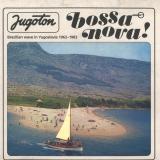
Various - Jugoton Bossa Nova  2x12"

Various

Jugoton Bossa Nova 2x12"

2x12inchEVERLAND-YU009LP
Everland
20.01.2026
 
20

Rich musical history of Yugoslavia reveals a long-lasting love for the music of Latin America.
Entwined in Afro-Cuban rhythms, ballrooms were shakin', swayin' and swingin', gathering musicians who were heavily into jazz bands and orchestras, most notably in Ljubljana, Zagreb, and Belgrade. Jazz could be heard on the streets of Split way back in 1919 when dancing became a symbol of freedom. Radio was the most loved household item, newest sheet music was in demand and collecting records was hip like today. In the aftermath of Second World War, jazz went underground but little by little, things changed and Ella, Satchmo, Dizzy and Miles came to visit, among others. Music festivals shaped the music for entertainment and variety of popular styles showed influences from all over the world. In the early sixties, one particular rhythm crashed on the coast of the Adriatic Sea: the rhythm of bossa nova!

In the whirlwind of various musical styles, Latin American music still played important part of the scene in the early sixties Yugoslavia. Beguine, tango, rhumba, samba, calypso, mambo and cha-cha-cha all found their place on the festivals inspired by famous Sanremo, festival of Italian popular song that largely shaped the musical taste of Europe. It was the era of instrumental rock, R & B and rock'n'roll - sounds of "imperialist America" now played freely on imported and hand-made electric guitars. While dancing halls had been turning into concert venues, bossa nova has come! Eydie Gorme with Blame It on the Bossa Nova and Paul Anka with Eso Besso (That Kiss!) tried to make us learn some new dance moves but it was Joao Gilberto's gentle singing and his new way of playing samba songs, along with Tom Jobim's modern dissonant harmonies and poetry of Vinicius de Moraes that created the magic. When American alto saxophonist and flautist Bud Shank visited Zagreb and Ljubljana in 1963 (with Boško Petrović in his quintet) "it was the first time we heard bossa nova!" remembers Stjepan Braco Fučkar. Jugoton, the biggest record company in Yugoslavia, released 4-track EP Bossa Nova by Bogdan Dimitrijević and his ensemble that same year! While not being fully accepted or understood completely, the archives of Jugoton reveal to us various interpretations of this new trend from their vast catalogue.

nicht am Lager

Bestelle jetzt und wir bestellen den Artikel für dich beim Lieferanten.

38,61

Last In: vor 3 Monaten
AKIRA MIYAZAWA - Yamame  LP

AKIRA MIYAZAWA

Yamame LP

12inchNAS-2168
KING RECORD
16.01.2026
  • A1: Yamame
  • A2: Memories Through Thick Glasses
  • A3: Fly Casting
  • A4: Like Someone In Love
  • B1: Out Of Nowhere
  • B2: Le Crepuscule Embaume
  • B3: Like Sonny

'Yamame' (the Japanese name for a kind of freshwater salmon) was recorded in 1962 and was Miyazawa’s first album, but the sharpness and avant-garde modernity of the music creates a completely timeless quality. Miyazawa is one of a group of musicians who laid the foundation of the Japanese jazz scene. He wanted to express his cultural heritage by doing something he felt “only someone Japanese” could do, and so he dedicated himself to a pursuit of “Japanese jazz”. Incidentally, the album was originally simply titled “Akira Miyazawa”, but perhaps due to the impression the cover art and the track titles made, it was reissued in 1977 as “Yamame”, and has gone by that title ever since. This is an historic masterpiece of Japanese jazz.

Tenor Saxophone – Akira Miyazawa
Alto Saxophone, Flute – Sadao Watanabe (tracks: B1 to B3)
Baritone Saxophone, Clarinet – Tadayuki Harada (tracks: B1 to B3)
Trombone – Mitsuhiko Matsumoto (tracks: B1 to B3), Yasuhiro Tomoto (tracks: B1 to B3)
Trumpet – Akira Nakano (tracks: B1 to B3)
Piano – Masahiko Sato
Bass – Masanaga Harada
Bass Trombone – Takeshi Aoki (tracks: B1 to B3)
Drums – Kanji Harada, Takeshi Inomata
Supervised By – Jiro Kubota

vorbestellen16.01.2026

erscheint voraussichtlich am 16.01.2026

44,12
HOTMOOD - Disco Power

HOTMOOD

Disco Power

12inchBLURWAX002
Blur
15.01.2026

Mexican DJ and producer Hotmood indeed brings the heat on his new EP for the Blur Records gang. It is a fine fusion of disco and house music with rich instrumentals, nice organic sound and plenty of smart samples. Opener 'Disco Power' is a funky and upbeat cut with a powerful bassline and big vocal stabs. Things get more deep and laidback with 'Malandro' which has big sax energy and sunny chords then 'To The Beat Y'all' rounds out the EP with real disco energy. The drums hit hard, big guitar riffs brighten up the mix and subtle filters and FX also pump things to the next level.

nicht am Lager

Bestelle jetzt und wir bestellen den Artikel für dich beim Lieferanten.

14,50

Last In: vor 83 Tagen
MULUKEN MELLESSE - MULUKEN MELLESSE WITH THE DAHLAK BAND (ETHIOPIQUES)

Swan Song

The vinyl LP at the heart of this éthiopiques 31 tracks 2 to 11 was one of the very last vinyl records ever released in Ethiopia. But above all it represents, we felt, the absolute masterpiece of the Ethiopian Groove – the Swan Song of Swinging Addis. The album leaves a clear idea for posterity of the level of sophistication and mastery that modern Ethiopian music had achieved, before being crushed under the Stalino-military heel of the Derg – as the bloody revolution that was unfolding came to be called.

Ethiopia1976.

The Revolution that broke out in February 1974 rolled on in a ruthless march. The whole of Ethiopian society was utterly stunned. The bouquets of flowers handed joyfully to the first tanks of the coup d'état were to wilt very rapidly. From September 1976 to February 1978, 18 months of Red Terror (the name given by the junta itself) spilled blood throughout the country. This fratricidal conflict took its heaviest toll among students and youth. The shift from feudalism to a cruel and primitive Stalinism left the country's citizens deeply traumatised, and snuffed out any pretence of activism, whatever the sector of society. This ice age was to last for seventeen long years.

ሙሉቀን፡መለሰ Mulukèn Mellèssè Muluqän Mälläsä

It was three tracks by Muluken that served as the opener for éthiopiques-1 more than 25 years ago. Seven more tracks appeared on éthiopiques-3 and 13, all accompanied by The Equators, which was soon to become the Dahlak Band.

The first track, Hédètch alu, also the very first piece that Muluken ever recorded, left audiences both unsettled and amazed. Reflecting the singer's extremely young age (he was just 17 at the time), this angelic voice mystified many, who thought they were in fact listening to a feminine voice. He was not yet 22 when he released his last vinyl record in 1976 with Kaifa Records (KF 39LP), one of the very last to be issued in Ethiopia, before the cassette tape became the dominant medium for music distribution – and before the new revolutionary regime put a stop to all independent musical life, via an unspeakable barrage of prohibitions and other persecutions.

Mulu qèn, literally, “A well filled day”. This tender maternal intention wasn't enough to ward off the cruelty of fate. His mother's premature death drove Muluken to leave his native Godjam, in northeast Ethiopia, to live with an uncle in Addis Ababa. Born Muluken Tamer, he took his uncle's last name – Mèllèssè.

The spelling Muluken appeared in his administrative records. Transcription of Amharic to the Latin alphabet, both in Ethiopia and for scholars, gives rise to controversies and quibbles that can never be neatly settled. French allows for a closer approximation of the original pronunciation, thanks to its battery of accent marks, confusing as they may be to anglophones.

Between rather accommodating administrative record-keepers and the various versions that pop up in interviews given by the artist, Muluken's year of birth oscillates between 1953 and 1955…

1954? One thing is certain: the artist's talent made itself known very early indeed, because he got his start in 1966-67, at the age of 13 or 14. Photos from the period attest to his extreme youth. It's a strange sort of initiation for a very young teenager to become a sensation in the heart of Addis's nightlife at the time, Woubé Bèrèha – the Wilds of Woubé. And what's more, in the club of the Queen of the Night, the Godjamé Assègèdètch Alamrèw herself, the very same that was portrayed by Sebhat Guèbrè-Egziabhér in his novel-memoir Les Nuits d’Addis Abeba2… The legendary female club owner who is remembered to this day by the capital's ageing boomers.

Muluken first tried his hand at the drums, before he grabbed the microphone. He emigrated briefly to the Zula Club, across the street from the old Addis Post Office, one of the ground-breaking bars of the burgeoning musical scene, before joining the Second Police Band in 1968, for around three years. He spent a few months with the short-lived Blue Nile Band founded by saxophonist Besrat Tammènè. As the musical scene grew increasingly successful, and pulled slowly but decisively away from its institutional ties, Muluken released his first 45rpm single in February 1972 (Amha Records AE 440). It was included in two LP Ethiopian Hit Parade compilation albums in September of the same year. All in all, Muluken released eight two-track 45s and the same number of original cassette tapes between February 1972 and 1984, the year that he departed for permanent exile in the USA. After converting to Pentecostalism in 1980, Muluken gradually abandoned all secular musical activity. In 1985, at the end of a concert in Philadelphia, he decided to quit concerts and recording for good. Mèlakè Gèbré, the historic bass player from the Walias band who was playing with him that night, recalls that everything appeared so irredeemably diabolical in Muluken's eyes, that it was to be the end of his contribution to Ethiopian Groove.

The end of the story, the beginning of a legend.

Dahlak Band, forgotten by History

Aside from his personal history and vocal talents, it must be remembered that Muluken Mèllèssè was one of the biggest names in the musical innovations that marked the end of the imperial period. These éthiopiques aim to convince those who are just discovering this hidden gem... As for Ethiopians themselves, they are to this day captivated by this singular and atypical figure in the Abyssinian pop landscape – even though he withdrew from public life some 40 years ago. Incorrigible devotees of poetic twists, of more or less hidden meanings, Ethiopians appreciate above all the care Muluken took in choosing his lyrics and the writers who penned them, such as Feqerte Haylou, Alemtsehay Wodajo and, here, Shewalul Mengistu (1944-1977). Love songs, written by women, a far cry from the conventional drivel that pleases sappy sentimentalists.

Muluken is equally acclaimed for his perfectionism when it came to music, the opposite of the overly casual approach that is all too common. He remained a faithful partner of musicians who came from a lineage that borrowed from several inventive and pioneering bands (Venus, Equators, Dahlak). Amongst them were certain artists who began their musical lives with Nersès Nalbandian at the Haile Sellassie Theatre and who come of age in around 1973 – at just the wrong time, you might say. Among them were the pillars Shimèlis Bèyènè (trumpet), Dawit Yifru (keyboards) and Tilayé Gèbrè (sax & flute). Most notably Tilayé Gèbrè, certainly one of the most important musicians, composers and arrangers of his generation, of the end of the imperial era, and of the early years of the Derg.

It was only in 1981 that a miraculous opportunity arose for Tilayé to escape the Stalinist paradise of the dictator Menguistou Haylè-Maryam. Once again it was Amha Eshèté (1946-2021) who provided a solution. The spirited and courageous producer, who had been in exile in Washington since 1975, succeeded, thanks to his incredible perseverence, in bringing the Walias Band to the USA. It was, in fact an extended Walias Band comprising ten musicians3, six of whom chose to slip away after a few concerts and the recording of an LP (The Best of Walias, WRS 100). Tilayé Gèbrè was one of these. He has been living in the USA ever since. There he joined the then-nascent Ethiopian diaspora, which lived largely unto itself, and was making only very modest headway in the American musical market. It seems unfair that Tilayé Gèbrè and the Dahlak Band were not able to benefit earlier from the public recognition that they do deserve.

A similar draining away of the top-rate talents would lead to the reorganization of the major groups of the “Derg Time”. The remaining artists spread themselves around between Ibex Band (renamed Roha Band), Ethio Star Band and a remodeled Walias Band. That spelled the end of the Dahlak Band.

With this record, produced by the essential Ali Abdella Kaifa a.k.a. Ali Tango, we can appreciate everything that the Derg not only destroyed, but also prevented from flourishing. This gem of Ethiopian-style afrobeat came out in 1976 (and, by way of a parenthesis, before the FESTAC 1977 in Lagos, which was attended by an impressive delegation of Ethiopian musicians — although Fela was already personna non grata in his own country). Despite everything that might distinguish this ethio-groove from Fela’s music – no colonial axe to grind, no question of political confrontation with the authorities, no claims to negritude or Africanism for the Ethiopian musicians, and less extrovertion! –, this LP fits beautifully into the saga of intense and electrified soul of the new “African” groove that Fela and Manu Dibango embodied so well from that point onwards.

In restoring this record to its place in the afrobeat epic, it can be seen that, if nothing else, the timeline bestows a legitimate pedigree and a historical primacy to works that had no international impact when they were originally released.

Warning! Masterpiece!

nicht am Lager

Bestelle jetzt und wir bestellen den Artikel für dich beim Lieferanten.

20,59

Last In: vor 3 Monaten
SAHIB SHIHAB - SAHIB'S JAZZ PARTY

SAHIB SHIHAB

SAHIB'S JAZZ PARTY

12inchORGMLP2284
ORG Music
09.01.2026
  • 4070: Blues
  • Charade
  • Conversations, Part I
  • Conversations, Part Ii
  • Conversations, Part Iii

Sahib's Jazz Party is an album by saxophonist/flautist Sahib Shihab, recorded live at the Jazzhus Montmartre in Copenhagen, around the same time that he relocated there in 1963. Shihab is joined by flugelhornist Allan Botchinsky, guitarist Ole Molin, drummer Alex Riel, and 17-year old bass prodigy Niels Henning Orsted Pederson. The recordings showcase Sahib's diversity and dexterity as a player, including his openness to the avant-garde style, expanding on the bop era playing he is known for. The audio has been remastered by Dave Gardner and pressed on audiophile-grade vinyl at Pallas Group in Germany.

vorbestellen09.01.2026

erscheint voraussichtlich am 09.01.2026

29,83
Filippo Ansaldi & Simone Sims Longo - Solo Suono (TAPE)

Solo Suono is the first collaboration between saxophonist Filippo Ansaldi and electronic musician Simone Sims Longo, both based in Cuneo, Italy. Solo Suono is an album between acoustic gesture and electronic treatment, beyond the classical while starting from the classical. Breath, amplified mechanics, residual sounds, expressive freedom, and different forms that integrate electroacoustic composition. Passing through looped gestures, electronic processes, and concrete sound explorations, it investigates textures that blur the line between organic and synthetic, emphasizing subtle timbral shifts, evolving patterns, and the interaction between chance and structure. Fragile, immersive, and at times meditative, the music opens a space where the listener can inhabit both the immediacy of performance and the expanded sound world of electronic manipulation. Solo Suono is a phrase open to multiple interpretations, a naïve description of music.

vorbestellen09.01.2026

erscheint voraussichtlich am 09.01.2026

12,56
JOHN COLTRANE - Coltrane Jazz LP 2x12"
  • A1: Little Old Lady
  • A2: Village Blues
  • B1: My Shining Hour
  • B2: Fifth House
  • C1: Harmonique
  • C2: Like Sonny
  • D1: I'll Wait And Pray
  • D2: Some Other Blues

Analogue Productions (Atlantic 75 Series) Celebrating the 75th Anniversary of Atlantic Records! Coltrane playing with his former Miles Davis bandmates Featuring originals "Harmonique" and "Like Sonny" 180-gram 45 RPM double LP Pressed at Quality Record Pressings Tip-on old style gatefold double pocket jacket by Stoughton Printing The first album to hit the shelves after Giant Steps, Coltrane Jazz was recorded in November and December 1959, although one of the eight tracks ("Villiage Blues") was recorded in late 1960.

On everything save the aforementioned "Village Blues," Coltrane used the Miles Davis rhythm section of pianist Wynton Kelly, bassist Paul Chambers, and drummer Jimmy Cobb AllMusic describes Coltrane Jazz as the saxophone legend's preparation for his launch into his peak years of the 1960s. There are three standards aboard, but the group reaches their peak on Coltrane's original material, particularly "Harmonique" with its melodic leaps and upper-register saxophone strains and the winding, slightly Eastern-flavored principal riffs of "Like Sonny," dedicated to Sonny Rollins. The moody "Village Blues" features the lineup of McCoy Tyner on piano, Elvin Jones on drums, and Steve Davis on bass; with the substitution of Jimmy Garrison on bass, that personnel would play on Coltrane's most influential and beloved 1960s albums. Sound excellence can be found on this definitive deluxe 180-gram 45 RPM 2LP Analogue Productions (Atlantic 75 Series) reissue of Coltrane Jazz.

vorbestellen

Der Artikel ist noch nicht erschienen. Du kannst den Artikel jetzt vorbestellen, dieser ist nach Wareneingang für dich versandbereit.

83,99
The Messthetics and James Brandon Lewis - The Messthetics and James Brandon Lewis LP
  • 1: L'orso
  • 2: Emergence
  • 3: That Thang
  • 4: Three Sisters
  • 5: Boatly
  • 6: The Time Is The Place
  • 7: Railroad Tracks Home
  • 8: Asthenia
  • 9: Fourth Wall

Neu auf Impulse! Records: Die Musik des experimentellen Jazz-Punk-Trios The Messthetics aus Washington DC, bestehend aus ehemaligen Mitgliedern der Punk-Band Fugazi (Bassist Joe Lally, Schlagzeuger Brendan Canty) und dem Gitarristen Anthony Pirog, wurde bereits mit dem ungewöhnlichen Genre-Label „Jazz-Punk-Jam“ versehen. Auf ihrem ersten Album für das ikonische Impulse!-Label haben die drei sich jetzt mit Jazz-Saxofonist, Komponist und Bandleader James Brandon Lewis zusammengetan. Gemeinsam erweitern The Messthetics und James Brandon Lewis jetzt die Grenzen instrumentaler Musik durch ungewöhnliche Überschneidungen von Jazz, Punk und Funk, Aggression und Innovation.

vorbestellen

Der Artikel ist noch nicht erschienen. Du kannst den Artikel jetzt vorbestellen, dieser ist nach Wareneingang für dich versandbereit.

27,94
ELECTRIC SATIE - GYMNOPÉDIE '99

Electric Satie

GYMNOPÉDIE '99

12inchISCHFR-001
ISC HI-FI SELECTS
Release unknown

Electric Satie is a one-off conceptual project by Japanese composer Mitsuto Suzuki, who is mostly known for his work on Final Fantasy soundtracks. Released on CD-only in 1998, “Gymnopédie ’99” reimagines Erik Satie’s beloved piano compositions in electronic form ranging sonically from downtempo bossa-nova (featuring Brazilian percussionist Marco Bosco and vocalist Silvio Anastacio) to freestyle ambience and chillout room IDM, not far from the music featured on Music from Memory’s “Virtual Dreams II” or Warp Record’s “Artificial Intelligence.” A deeply imaginative composer and arranger, Suzuki harnesses a unique mix of drum machines, synthesizers, live percussion, soprano saxophone, piano, and spoken word to craft a lush and vividly futuristic sound world that video game soundtrack enthusiasts will easily fall into.

vorbestellen

Der Artikel ist noch nicht erschienen. Du kannst den Artikel jetzt vorbestellen, dieser ist nach Wareneingang für dich versandbereit.

25,63
Miles Davis - Agharta LP 2x12"

Miles Davis

Agharta LP 2x12"

2x12inchMOVLP134C
Music On Vinyl
Release unknown
  • A1: (Part I)
  • B1: Prelude (Part Ii)
  • B2: Maiysha
  • C1: Interlude
  • C2: Theme From Jack Johnson

The capstone of Miles Davis’ electric period, Agharta reigns as a funk-rock fireball — a blazing comet streaked energy and elan, a fearless organism feasting on adventure and freedom, a seven-headed Godzilla stomping its way through Osaka, Japan. Recorded on February 1, 1975 at Osaka Festival Hall at the first of a two-show stand, the double album offers an endless abundance of surprises and shifts — as well as a road-proven ensemble whose chemistry and abilities equal that of any of Davis’ celebrated bands. If the true measure of jazz is the capacity to adapt to the moment and challenge perception, Agharta is consummate.

Sourced from the original master tapes, housed in a Stoughton gatefold jacket, and pressed at Fidelity Record Pressing in California, Mobile Fidelity’s numbered-edition 180g 33RPM 2LP set of this epic live release presents it in audiophile sound on a domestic pressing for the first time. Offering greater degrees of separation, detail, and richness than the compressed CD editions and more clarity, openness, and presence than older vinyl copies, this version of the 1975 release helps bring the concert stage to your home. Just make sure your turntable and speakers are up to the challenge of Davis and Co.’s explosive performances — and producing the decibels they demand.

Teeming with vibrant colors, tones, and pace, Mobile Fidelity’s reissue captures the hear-it-to-believe-it flow, sweep, and moodiness of the music. Though the group honors looseness and freedom with religious verve, the specificity and scale rendered by this remaster allows you to detect methods behind the alleged madness that are often otherwise harder to discern. This insight extends to the understated changes in volume, harmonics, and phrasings. In many ways, you can listen as Davis himself did that early February evening as he helped coordinate the overall direction and decided on whether to blow his wah-wah-wired trumpet or take a turn on the organ.

Tellingly, Agharta would likely never have been made if not for Davis’ ventures overseas and, specifically, to the Land of the Rising Sun. Having for years faced a backlash on his native soil for his choices to experiment and blow past all known borders, Davis was welcomed with open arms in Japan. The concert documented on Agharta — as well as the day’s later show, captured on the equally exciting Pangea — stemmed from a sold-out three-week tour that would ultimately mark Davis’ final public appearances for years, as he soon settled into semi-retirement and nursed the wounds connected to an unprecedented stretch of restless and relentless output.

For all the band-fueled merit of Agharta — and there’s plenty, given the cast of saxophonist Sonny Fortune, bassist Michael Henderson, drummer Al Foster, percussionist James Mtume, and guitarists Reggie Lucas and Pete Cosey seemingly blasts off to outer space and travels distant galaxies by the time this minimally edited record runs its course — Davis’ own playing often remains overlooked. As critics Richard Cook and Brian Morton observed, it is “often fantastically subtle, creating surges and ebbs in a harmonically static line, allowing him to build huge melismatic variations on a single note.” He attacks like a man on a mission, out to prove naysayers wrong and bent on trailblazing another new path forward. Convention and skeptics be damned.

Noisy and furious, dark and discordant, abstract and off-balance, radical and intense, abrasive and atmospheric, strangely beautiful and hypnotically eccentric: Agharta evades simple description, and refuses to be pinned down in any established category — rock, jazz, punk, ambient, prog, avante-garde, or otherwise. Shot through with trench-deep grooves, screaming riffs, scalding solos, and free-improv leads, its cosmic thrust comes on as the equivalent of an animated pointillist painting comprised of millions of textured dots, dashes, and dabs that hold your attention so raptly you want to revisit the ideas again and again.

Always steps ahead of everyone else, Davis knew what he was doing even when Agharta debuted in Japan before later hitting U.S. markets. Though “Maiysha” and “Theme from Jack Johnson” are identified in the track listing, the record contains a number of uncredited references to other Davis works, including a nod to “So What.” This decision to bypass labels only adds to the art of the reveal — the rare black magic in which Agharta expertly deals.

vorbestellen

Der Artikel ist noch nicht erschienen. Du kannst den Artikel jetzt vorbestellen, dieser ist nach Wareneingang für dich versandbereit.

46,18
Má Estrela - Tornada LP

Má Estrela

Tornada LP

12inchCREP124
Discrepant
Release unknown
  • A1: Primetime
  • A2: Turboframe
  • A3: All You Did (Feat. Elvin Brandhi)
  • B1: Top Suki Girl
  • B2: Hunter Hunted
  • B3: Cavalier

Assembled by Pedro Alves Sousa, Má Estrela is a conjuration of ideas and obsessions around dub, leftfield dance phenomena and the hypnotic potential of urban somnambulance.

In a levitating state, not exactly detached from the unease of these end times, Sousa surrounds himself by a number of accomplices from past and present endeavours to project a scrying mirror reflection of distinct languages of trance and liberation - dub's space and infinity, jungle and footwork's broken shards, DJ Screws legacy perpetually reanimated via numerous slowed down anonymous versions on Youtube and the lyricism and fire of jazz.

Temporarily a quartet, comprised of Sousa on saxophone and its electronic processing, Bruno Silva and Simão Simões on electronics and Gabriel Ferrandini on acoustic and electronic drums, after the departure of Miguel Abras, Má Estrela had in their 2022 debut album their first document of this ongoing process that’s now continued with ‘Tornada". Miguel Abras has since been replaced with Bruna de Moura and Má Estrela came back to being a five piece.

Coming out in November through Discrepant, with Miguel Abras' bass still present, 'Tornada' deepens the symbiotic connection between those rhythmic, melodic and textural particles in a mutating flux of continuities and disruptions throughout seven tracks. Featuring the invocations of Elvin Brandhi in 'All You Did', 'Tornada' makes its way amidst harmonic spectres, rhythmic debris that breathe for life and a certain, implicit idea of ritual that sustains itself liminally between the ethereal dissolution of time and the physical projection of space.

vorbestellen

Der Artikel ist noch nicht erschienen. Du kannst den Artikel jetzt vorbestellen, dieser ist nach Wareneingang für dich versandbereit.

19,12
Moodymann - Black Mahogani II LP

Moodymann

Black Mahogani II LP

12inchPFGXX57LP_NOCOVER
Peacefrog Records
23.12.2025

Released in limited numbers in tandem with Black Mahogani back in 2004 and never repressed. Black Mahogani II was a departure from Kenny Dixon Jr's usual house based music and featured cuts from Kenny Dixon Jr's late night jazz band sessions
The centrepiece is the eighteen minute 'When She Follows', a deep jazz session skittering live drum rolls into an electric Fender Rhodes, loping acoustic bass and distant saxophone all wrapped up in an amorphous vocal that drifts ever onwards like some epic detroit techno cut replayed by Gil Scott Heron's band in 1970. Incredible music.
'Rectify' follows in a similar mode, jazz in a detroit techno framework, while the final two tracks 'Dirty Little Bonus Beats' and 'When She (Reprise)' are revisions of the main cut, the former altering the bassline, adding vocal sighs and more rhythmic drums, while the latter shifts up the tempo with a wigged out techno synth element.
Stone, cold.

nicht am Lager

Bestelle jetzt und wir bestellen den Artikel für dich beim Lieferanten.

26,68

Last In: vor 59 Tagen
Kenny Rankin - Because Of You LP

Kenny Rankin

Because Of You LP

12inchEVLP082BL
CHESKY
19.12.2025
  • 1: Berimbau
  • 2: What Am I Gonna Do With You...aime?
  • 3: Haven't We Met?
  • 4: Round Midnight
  • 5: Someone To Watch Over Me
  • 6: Erienda
  • 7: I Could Write A Book
  • 8: Alwaysthis Old Man (For William Henry Rankin)
  • 9: Because Of You

Occupying a unique space where folk, rock, pop, country, and jazz elements intermingle, Kenny Rankin (1940-2009) - whose golden voice was once described by jazz saxophonist Stan Getz as "a horn with a heartbeat" - was a genre-blurring singer whose soulful sound defied categorization.

vorbestellen19.12.2025

erscheint voraussichtlich am 19.12.2025

38,24
VARIOUS - 80s German Metal Box Vol. 2

Various

80s German Metal Box Vol. 2

3x12inchGCRBOX042
GCR Zyx
12.12.2025
  • Vinyl 1
  • Morbid Jester - Until The Battle Is Won
  • Vinyl 2
  • Sphinx - Here We Are
  • Vinyl 3
  • Starstruck- Thru´ To You

MORBID JESTER „Until The Battle Is Won“ - Dieses Kleinod deutscher Metalkunst erschien 1994 auf CD und wurde von S.L. Coe in den Dust Studios produziert. Eben jener dürfte eingefleischten Metalfans noch als Sänger auf der zweiten LP von ANGEL DUST, sowie von SCANNER ein Begriff sein.

Rund 2000 CDs konnten von der Eigenproduktion (!) abgesetzt werden, darunter auch viele Exemplare in Griechenland und vor allem Japan, wo die Band ein Geheimtipp wurde. Das Coverartwork stammt von niemand geringeren als Ken Kelly (Manowar, Kiss). Auftritte mit u.a. SAXON waren nur eine logische Folge. MORBID JESTER vereinen auf „Until The Battle Is Won“ Elemente des German Metal mit einer US-MetalPräzision, was für eine ganz eigene Mischung sorgt. Die transparente und dennoch druckvolle Produktion mit einem natürlichen Drumsound, wie man ihn heute oft vermisst, lässt das Songmaterial glänzen. Das respektvolle Remastering für diese Wiederveröffentlichung bringt all die Vorteile noch ein Stück weit nach vorne. Der Stilmix aus Progressive Rock und Heavy Metal wurde von Bands wie Dream Theater kultiviert, aber keinesfalls erfunden. In ihrer Konsequenz waren SPHINX im Jahr 1981 ihrer Zeit um einige Jahre voraus. Die Band aus dem Raum Stuttgart, 1977 gegründet, bestand zum größten Teil aus italienischen Gastarbeitersöhnen, was der Gruppe einen internationalen Flair verlieh. „Rock Made In Italy“, wie man auf der Originalhülle von „Here We Are“ lesen kann, war also nur ein Promotiongag, oder eben nur die halbe Wahrheit.

Ganz besonders auch deshalb, weil der Gitarrist Thomas Metzger niemand Geringeres als Tommy Newton ist, der später mit der Band Victory, anschließend auch als Produzent bekannt wurde. „Here We Are“ erschien 1981 bei Peak, einem Label der Firma GAMA, die zu diesem Zeitpunkt noch ganz neu im Geschäft war und ein solch erstklassiges Produkt noch nicht durchsetzen konnte. 1985 erschien die LP als „Burning Lights“ ein zweites Mal. Mausoleum und auch Camel (ebenso ein GAMA Label) versuchten mit einem typischen Heavy Metal-Coverartwork und umgestellter Tracklist dem Album eine zweite Chance zu geben. 1984 veröffentlichte die Band STARSTRUCK aus Karlsruhe ihr einziges Lebenszeichen: Die LP „Thru´ To You“. Aufgenommen wurde die Platte im Spygel Studio mit Engineer Batze Kramer. Eben dieser hat auch kultige Scheiben von Bands wie Tyrant, Stormwitch, Bloody Six, Vampyr, Gravestone, Restless oder Necronomicon veredelt. „Thru´ To You“ ist purer Zeitgeist und dazu passt auch das
Cover, welches beim genauen Hinschauen viel Humor beweist. Stilistisch wechselt man geschickt zwischen Hardrock und Heavy Metal.

vorbestellen12.12.2025

erscheint voraussichtlich am 12.12.2025

41,13
Party Dozen - Mad Rooter / Ghost Rider 7"
  • A1: Mad Rooter
  • B1: Ghost Ride

Sydney punks Party Dozen (Kirsty Tickle and Jonathan Boulet) return with new single "Mad Rooter', taken from their upcoming AA-single 7" 'Mad Rooter / Ghost Rider' out Dec 5th via City Slang. The duo will be touring throughout the UK this November with shows in London, Brighton, Leeds, Bristol, Manchester and Glasgow.


On the new track, the band said, "It doesn’t always happen, but sometimes it’s your night. You feel like the maddest rooter. Every step you take is a step closer to glory. No f*cks left to give, the charisma of Jon Hamm. 'Mad Rooter' is 10 feet tall and can walk through a wall. Stuck here with all you rookies eating fortune cookies."


They added, "We didn’t record it with a click, so it has this sort of off-grid pull and push that gives it swagger. There’s a sax solo that’s giving David Letterman opening sequence. We recorded the sample with Jon’s guitar, which is old and barely hanging on. The electronics are shot, it’s missing strings, and it’s been sort of half-modified then given up on."

vorbestellen12.12.2025

erscheint voraussichtlich am 12.12.2025

15,08
Michael Garrick - Late Autumn Sunshine (2x12")
  • 1: Sons Of Art
  • 2: River Running
  • 3: Lime Blossom
  • 4: Galilee
  • 5: Robin's Rest
  • 6: Songs Of The Ainur
  • 7: Return Of An Angel
  • 8: Late Autumn Sunshine

The album is made up of two sessions recorded for BBC Radio 1 at Maida Vale Studios, from 1973 and 1978 that feature vocalist Norma Winstone, trumpeter Henry Lowther, saxophonists Art Themen, Tony Coe and Alan Wakeman, trombonist David Horler, bassists Dave Green and Jeff Clyne, and drummers Trevor Tomkins and John Marshall. The material, all composed by Garrick, includes some favourites from the classic LPs 'Troppo' and 'October Woman'. He wouldn't record the tracks "River Running" and "Galilee" until decades later, so this is the first time these '70s arrangements have been released. Whereas "Robin's Rest" and the title track are exclusive to this album - providing a fascinating insight into this uniquely talented artist.

Garrick was at the forefront of British jazz from the mid-1960s until his death in 2011 aged 78. He was a key member of The Don Rendell / Ian Carr Quintet, composing the jazz gems "Dusk Fire and "Black Marigolds" and released a series of seminal 1960s and 1970s LPs including 'Cold Mountain', 'The Heart is a Lotus' and 'Black Marigolds'. Remastered by Caspar Sutton-Jones @ Gearbox Records, 'Late Autumn Sunshine' is available as a 2LP set housed in a gatefold sleeve (a limited edition of 600 copies) and 'mini-LP' gatefold CD, with sleeve notes by Daniel Spicer (Jazzwise, The Wire). 'Late Autumn Sunshine' celebrates Michael Garrick's memory and should introduce him to many new fans.

vorbestellen12.12.2025

erscheint voraussichtlich am 12.12.2025

31,89
Marion Rampal - Song For Abbey - Tribute to Abbey Lincoln LP
  • 1: Learning How To Listen
  • 2: Wholly Earth
  • 3: Caged Bird
  • 4: The Music Is The Magic
  • 5: And It's Supposed To Be Love
  • 6: Skylark (Feat. Bill Frisell)
  • 7: Throw It Away
  • 8: Remember The People (Feat. Archie Shepp)
  • 9: Mr Tambourine Man

The project brings together a stellar cast of musicians. Guitarist and producer Matthis Pascaud who crafts a rich and colourful sonic landscape, along with acclaimed drummer Raphael Chassin, pianist Thibault Gomez, and bassist Simon Tailleu. The record shines further with the participation of special guests: iconic guitarist Bill Frisell and the legendary saxophonist Archie Shepp, whose contributions underscore both the intimacy and the grandeur of Rampal's homage. Through inventive arrangements and deep poetic sensibility, 'Song For Abbey' revisits key pieces from Abbey Lincoln's repertoire, including a luminous, modern rendition of ' And It's Supposed To Be Love' .

Marion Rampal's voice, instantly recognisable and deeply evocative, breathes new life into Lincoln's world, blending tradition and innovation across jazz, blues, and folk influences. With high-profile guest artists, Bill Frisell and Archie Shepp, who elevate the album's international visibility and media value, 'Song For Abbey' is not just an album, but a resonant contemporary statement - a vibrant crossroads of jazz legacy, emotion, and artistry. "One of the most beautiful voices of her generation brings new life to the legacy of the sublime singer and songwriter Abbey Lincoln - chills guaranteed." - Jazz Magazine

vorbestellen12.12.2025

erscheint voraussichtlich am 12.12.2025

24,79
Rieko Okuda / Mia Dyberg - Glasscut

An alto saxophone and acoustic piano engage in an intimate musical dialogue, reflecting on the current state of improvised music. Okuda and Dyberg’s album unites two artists at the peak of their musical collaboration, deconstructing jazz history into shimmering fragments, reassembling them in new forms that deliberately move away from traditional references. The music incorporates diverse influences—glimpses of classical composers like Webern and Prokofiev, abstract electronic elements reimagined acoustically, and a genuine spirit of exploration seeking a unique musical fusion.

Rooted in jazz, the Okuda / Dyberg Duo performs conceptual improvisations that include pulse, durations, interactions, natural/everyday life objects, soundalized: water dropping, light rain comes to a coffee-filter dripping, construction work or glass breaking sounds. Born in 2018. Glasscut is their third release – the first on vinyl – after Nigatsu 二月 (2019) and Naboer (2020).

vorbestellen12.12.2025

erscheint voraussichtlich am 12.12.2025

35,08
Artikel pro Seite:
N/ABPM
Vinyl