NOAHFINNCE’s ‘STUFF FROM MY BRAIN / MY BRAIN AFTER THERAPY’ is a collection of songs written before and after therapy.
The debut double EP collection features guest vocals from Chris Freeman of Hot Mulligan and builds the world of NOAHFINNCE’s unique, hyperactive brain.
The project tackles issues like depression, anxiety, ADHD, past trauma and the path toward prioritizing mental health.
Deeply personal, but always expressed with a cheeky, quirky, not-so-serious sense of humour, NOAHFINNCE showcases the big personality that has amassed a huge YouTube following and led
him toward being a leading voice in Trans/LGBTQ+ youth issues.
With songs like ‘AFTER THERAPY’ and ‘LIFE'S A
BIT’, NOAHFINNCE is poised to break out as this
year’s new star of the new wave of pop punk.
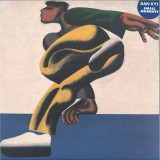
Dire Straits' arresting self-titled debut arrived in the midst of punk's reign but couldn't have been further removed from the era's slash-and-burn style. Recorded in West London in February 1978, the band's tasteful, jazz-inflected set embraces folk, blues, and pub rock while also tracing a direct line back to the beat-oriented sound of early rock n' roll. Country and roots accents further distinguish the British quartet's stripped-down music from any 1970s peers, as does the transparent production, which has remained revered among audiophiles the world over – and which has never been better than on this meticulous pressing.
Mastered from the original master tapes and pressed at RTI, Mobile Fidelity's 180g 45RPM 2LP version of Dire Straits features natural tonalities, superb balances, you-are-there imaging, deep-black backgrounds, and pristine clarity. Even if you've heard this album hundreds of times before, you've never experienced it with such lifelike sonics and premium richness. This numbered-edition collector's set immerses you within the smoky, laidback atmospherics of every song. This is how all vinyl should sound.
Crucial to every arrangement, Mark Knopfler's winding guitar lines emerge with supreme transparency and multi-hued textural detail. His intricate playing comes across as if it's being transmitted via his 60s-era Fender Vibrolux amplifier placed right before you. The cleanliness, dimensions, and live feel are that good. His bandmates, too, benefit from the extra groove space afforded by this 45RPM edition. Rhythms skate and swirl; percussive effects resonate with crispness and attack; the leading edges of notes naturally decay.
Dire Straits' strong, well-edited batch of original material further enhances the overall enjoyment and makes the record one whose pleasures go far beyond the organic sonics. Just as Knopfler's narratives pour forth with poetic and surrealist texts, the musical settings – an intoxicating combination of easygoing shuffles, back-hall boogies, and pop-honed ballads – mirror the old-fashioned soulfulness inherent in the classic recordings of the late 50s and early 60s. The lyrics are equally captivating.
Drawing from his time as a youth in Newcastle, Leeds, and London, Knopfler invests tunes with an autobiographical slant and emotional connectivity that become obvious the moment he opens his mouth to sing. "Down to the Waterline," "Wild West End," and "Lions" all feature colloquial touches that add to their reach. By extension, "In the Gallery" functions as a tribute to Leeds sculptor Harry Phillips (father of future Knoplfer collaborator, Steve Phillips) while the record's breakout smash, "Sultans of Swing," pays homage to struggling bar bands.
Through it all, Dire Straits performs with a subtle cool and clever poise that no band ever matched. Just how good is the chemistry? Bob Dylan heard the quartet and invited Knopfler and drummer Pick Withers to play on Slow Train Coming. But even Dylan himself didn't hear Dire Straits sound this magnetic back in its original heyday. Now, everyone can.
The Nu’rons were a family group consisting of two sets of brothers and cousins, the four young men in question being brothers Daryl Howard and Raymond Gibson (Daryl’s mother registered him under his father’s surname of Howard and Raymond under her maiden name of Gibson) together with Otho Bateman and Charles Bateman. They were all born and raised in Salem, New Jersey and from the age of ten and eleven began singing with a fifth member and Gibson brother Rudolph as a group called The Gospel 5. They eventually decided to crossover to secular music and as a group known for their energetic dance routines they came up with the new performing name of ‘The Nu’rons’ (taken from the word ‘Neuron’ which is a cell that transmits nerve impulses). However Rudolph was soon to leave the group due to physical illness. Also Daryl Howard and Charles Bateman had also been part of a working group known as The Devotions prior to becoming The Nu-Ron’s.Following hours of practice The Nu’rons eventually felt confident enough to put their own shows together and began to perform at local dances and parties around New Jersey and Philadelphia, often being used as a non-paid warm up act for bigger named artists. They moved between several different managers including Jimmy Bishop (Duo Dynamic Productions) until they came under the tutelage of WDAS radio DJ Georgie Woods (his wife Gilda, being the owner of the Philadelphia Gil, Dion and Top & Bottom record Labels). It was Georgie who introduced them to Manny Campbell who in turn invited them to an audition at his and partner Charles Bowen’s Emandolynn Music studio in Chester P.A. The song The Nu’rons chose to audition with was the self penned “I’m A Loner”, the audition went well, as during late January/early February of 1970 Manny and Charles took The Nu’rons into the Sigma Sound Studio’s with Tom Bell and the TSOP musicians to record “I’m A Loner” and “All My Life” which was released on the Nu-Ron label in April of the same year. The two studio takes presente don this release came short after the band moved on from the collaboration with producer Emanuel Campbell to take music matters in their own hands. Beside recording "Disco Hustle" to be part of the disco boom in Philly of the times, they recorded also “You Came Thru”, a rough yet beautiful heavy bassline driven soul funk recording, and the just amazing “Hurry Up Tomorrow”, here presented in one of the original Studio takes.
Premier release of the Never before released iconic, cult & paramount original holy grail soundtrack recording for the action packed partisansploitation movies and TV series - Otpisani and Povratak otpisanih (The written offs & The return of the written offs). This music composed by Milivoje Markovic and recorded in 1972 & 1976 represents the epitome for original Jazz Funk music recorded in ex-Yugoslavia. The series had people glued to their television screens awaiting for their own ‘Inglorious basterds’, the Belgrade guerilla group, to appear gunning down nazis by the hundreds - backed by an original deep funk soundtrack.
Djrum's first release since 2019, the Meaning’s Edge EP is an introduction to a whole new world. For the artist also known as Felix Manuel, it was created in the final stretches of six rather traumatic years work. Having carefully honed his techniques and aesthetics, and learned some hard-won emotional lessons over this time, finally he began to work in a quicker, lighter fashion – and to cleanse his palate a little by bringing in a fresh ingredient: his own flute playing. For listeners, though, it will serve as an appetiser, a way into the delights and complexities of this new phase of his creativity.
It’s a serious work in its own right, mind. The use of flutes – including Bansuri, Shakuhatchi, Western Classical, and synthesised all blending and blurring into one another – gives it a coherence and a sense of airiness that unites the five tracks over half an hour, however divergent their beats get. And as in all his music, Felix’s whole life is in here. Ethnomusicology studies, untold hours of DJing everywhere from the gnarliest squat raves to the most rarefied deep house clubs, explorations of his own neurological and emotional makeup, and the technical finesse of someone who is never not creating music or art, all roll into an experience that’s dazzling, delightful and keeps on giving.
Just the opening track ‘Codex’ alone touches on OG dubstep, Aphex Twin-like braindance, post-classical exploration, movie themes and more. The gentle tones and melodies that rise up out of it perfectly conjure Felix’s running theme of a protective bubble that provides a sense of safety and tranquillity even as the beats and acid gurgles and spurts all around it conjure up the slings and arrows of life’s difficulties.
The tone set, the EP moves through ultra-rarefied glass-like percussion in an almost ambient setting, hints of grime’s counterintuitive patterns, and even more hectic patterns influenced by Tanzania’s hyperspeed singeli style of dance music – but always with that perfect balance of chaos and control, unpredictability and protection. It rewards playing and replaying endlessly, it’s a profound and often joyous experience… and it’s only just the beginning. This is the return of a master craftsperson more focused than ever on his vision and vocation and ready to blow your mind all over again.
Mastered and cut on 140g black vinyl by legendary mastering engineer Matt Colton at Metropolis Studios, London. Pressed at optimal media, Germany.
out of Stock
Last delivered 19 months ago available to reorder, subject to availability
Originally released on CD in Japan in 2003, as a love letter & thank you to his Japanese fans. Recorded at home, produced, engineered & mixed by Matthew Sweet (bass, guirars & vocals) with the classic ‘Girlfriend’ era lineup of Ric Menck (drums), Greg Leisz (guitars) and the genius electric lead guitar of Television’s Richard Lloyd. The sleeve art is by renowned artist Yoshimoto Nara. In the liner notes, Sweet describes the album's title as an attempt at reverse English: "If I did it correctly, the title should seem a little strange or wrong, but still meaningful! The true definition is supposed to be a 'love you' life, one devoted to loving someone or something, even life itself!"
“an excellent modern guitar pop album, filled with great hooks and harmonies and irresistible ringing six-strings”
Allmusic
“Kimi crackles with Girlfriend‘s energy, as Lloyd and Sweet’s guitars provide antagonistic foils as they did more than a decade before on cuts like “Tonight We Ride.”
Rolling Stone
Tomu DJ’s debut on CST Imprint shares ten atmospheric wistful ruminations on being, living, and the spiritual undercurrents that alchemize these experiences into song. Hazy memories recalled through glitchy lush lullabies, moving through whispered skittery percussive states into warm melodic vocal confessions. Playful yet exacting productions ebb and flow between pensive indietronica pop interspersed with blissful club tracks that swing from ambient, drum and bass, breaks and house for the dancers. A sanguine daydream, to be free.
Her fourth album since 2021 but first on vinyl, Tomu’s deceptively simple compositions bely complex emotions. Minimal, every element just so, nothing unnecessary. Her ability to create ideal environments for collaboration on full display.
Since 1992, Robin Storey (founding member of the pioneering post-industrial band Zoviet*France) has been creating innovative and thought-provoking music under the Rapoon moniker. Drawing inspiration from his early days with Z*F, he continues to push the boundaries of ambient, industrial, and world music genres, earning him a dedicated following across the globe.
Originally available in 1994 as a limited-edition DAT tape through Staalplaat Records, Cidar was later included as a bonus CD in the reissue of another Rapoon classic, Fallen Gods. Now, after years of anticipation, fans can experience this mesmerizing work as a stand-alone release – remastered and expanded with three previously unreleased tracks from the original 1994 recording sessions.
Cidar showcases Robin’s signature sound – a seamless blend of Z*F-inspired drones and loops intertwined with vibrant African percussion and hauntingly beautiful Asian string instruments. This combination creates an immersive, trance-like atmosphere that transports listeners into a world of meditative sonic exploration.
With its enchanting rhythms and deeply textured layers, Cidar stands as a testament to Robin’s unparalleled ability to craft music that defies genre boundaries while remaining instantly recognizable. Fans of both Zoviet*France and Rapoon will find themselves drawn into the hypnotic sounds of this timeless masterpiece.
The standalone release of Cidar marks an important milestone in the history of experimental music, offering audiences worldwide the opportunity to rediscover or experience for the first time one of Robin Storey’s most influential works.
Manchester-based producer Lily Mumby, the creative force behind Lapalace, has chosen Lavender as her botanical muse for this sixth instalment. Like the aromatic herb that grows from tiny seeds to fragrant purple stalks, her compositions unfold with a similar patience and elegance. Her synthesisers breathe with a natural rhythm, creating textures that emerge and recede like morning dew on lavender buds waiting to bloom.
The standout track ‘new age night’ – a stunning love child of William Basinski's decaying tape loops and Aphex Twin's intricate programming—carries subtle lavender-inspired tones, balancing the plant's calming essence with hypnotic rhythms. Just as lavender requires thoughtful tending before rewarding the gardener with its distinctive aroma, Lapalace's landscapes reveal deeper complexities with each listen.
Much like gardening itself, Mumby demonstrates an innate understanding of when to intervene and when to allow natural development. This approach echoes throughout her career, from her debut EP "Ephemera" which caught the attention of Insult to Injury Records' Timothy Clerkin, through to her contributions to Chez De Milo's "So It Goes" Remix EP and Manchester label Skiptrace's various artists compilation.
Her work across BBC Introducing and fossil.radio reflects this same philosophy – creating environments where sound, space, and organic movement find their natural harmony. But this composition really feels that Mumby has come of age. "Music To Watch Seeds Grow By Vol. 6" represents the continued cultivation of Lapalace's distinctive sound and demonstrates the maturity of an artist way beyond her years. This music stands as a lighthouse through a thick fog of nostalgia, much like lavender standing tall amidst an English cottage garden.
Early DJ support including - Auntie Flo, Ruf Dug, Courtesy, Vladimir Ivkovic.
Known for his deep, melodic sound and genre- blending approach, Bop enlists the vocal talents of DRIIA and Doktor, alongside a collaboration with bass music specialist Chime. 'Cravings' sets the tone with lush melodies and deep atmospherics and a hypnotic vocal. Minimal yet powerful, this is some of Bop's drum & bass work at its finest. The second track on the EP, 'Siren Eyes', sees DRIIA's ethereal toplines intertwine with Doktor's signature dancehall energy. DRIIA, a rising star in the electronic scene, has been named one of BBC Radio 1's Future Stars for 2024, while Doktor's powerhouse vocals have graced multiple collaborations with the likes of Chase & Status, Sigma, and Friction.
'Dormant' brings a fresh twist with Leeds- based producer Chime who's influence injects a unique blend of melody and weight, crafting an immersive soundscape through mind- boggling sound design. Closing the EP, 'Fungification' dives into Bop's garage influences. Weighty and stepping, expect intricate rhythms, evolving textures and an absolute bouncer of a bassline.
Rob Smith, RSD is not only a successful dubstep producer and pioneer of the Bristol sound, but also a very popular deejay travelling the world sharing his music. Coming from a reggae background and well-versed in sound system culture, Rob kept some of his best productions for his exclusive use when deejaying, the only way you would hear these gems was being played in one of Rob's sets. Fortunately, we've managed to persuade Rob to let Reggae Archive Records share these dubplate specials with a wider audience on a limited-edition vinyl LP. Compiled and sequenced in conjunction with Rob, the LP features nine tracks newly edited and mastered by Rob to enhance the bass playback on vinyl - it's cut heavy!
The tracks were recorded between 2006 and 2011, a time when one strand of dubstep heavilyembraced reggae and dub. Rob calls these tracks reggae infused dubstep and that's what they are, but Reggae Archive Records is a reggae label and this selection of dubstep tracks will most certainly appeal just as much to reggae and dub fans. Fusing dubstep beats, reggae samples, and seriously heavy basslines, this is a joyous celebration of musical cross fertilisation that has been tried and tested in clubs worldwide. In keeping with the dubplate origins of the tracks, we have designed the labels to replicate an old school acetate, while the sleeve pays tribute to seventies pre-releases albums with a replica stamp giving just the artist and title on a plain white sleeve with aged effect.
out of Stock
Last delivered 10 months ago available to reorder, subject to availability
In 1991 Coil released the third of their early classic full-length albums “Love’s Secret Domain”, seemingly casting aside the gloom and funeral beauty of its predecessors in favour of a painstakingly multi-layered hallucinogenic electronic beast, which unlike some of their fellow ex-industrial contemporaries’ releases of the time wasn’t an attempt at easy accessibility or (the-gods-forbid) danceability, but a vibrating psychedelic masterpiece unrivalled in their discography and still a landmark album. artwork by Steven Stapleton released in co-production with Infinite Fog Prod.
out of Stock
Last delivered 3 years ago available to reorder, subject to availability
“Bâzsâzi” sees the group rearranging their oeuvre for the dancefloor, starting with a raw excerpt of Zolfonoon, taken from their first ever show in August 2023, before they had a name. Caleb dons his Wavemap alias to rework it into a tunnelling, heads-down groover, in the lineage of Mike Dehnert and Luke Hess. Raf Reza (as Raf Rizzla) sends Parisa shapeshifting through the hardcore continuum with a nod to UK Drill, in continuation from his recent debut Ekbar Telephone Explosion. Jason (as Neonlichter) turns Delkash into a jungle montage – all mutant bass and vocal tessellations.
Devotional music most often gets distilled into earthy chants and ancient folklore, it doesn't always ascend to the sky like Julinko’s ‘Naebula’ an album that from the first organ note clearly trades in terrestrial dreams for ethereal visions. A feverish quality permeates the whole record, as if a ritualistic performance was being captured from start to finish, a collection of hallucinatory doom, synthetic neo-folk hymns and ghostly art-rock.
Julinko, stage name for Giulia Parin Zecchin, has long been one of the best kept secrets of the experimental community in North-East Italy, with three records that helped define her unique blend of heavy psychedelia, slowcore and dark ambient. On ‘Naebula’ what really stands out is how powerful and soaring her voice is, a weapon of undeniable force that can transform into a vessel of raw fervour or glide effortlessly as a delicate lament. Her unconventional approach shines through on tracks like ‘Jeanne De Rien’, where a marching pulse acts as a pillar for an extended mantra, almost verging into powwow territory. ‘Peace Of The Unsaid’ uses its arrhythmical structure to create space, a crepuscular night ode that reaches the heights of Sinead O’Connor’s most intimate force-fulness while retaining a sweet composure. Whether it’s glacial murderous shrieks or gospel-esque vitality, songs like ‘Cloudmachine’ or ‘Kiss The Lion’s Tongue’ seem to draw as much from a tradition of European minimalism, the use of drones and repetition, to the tradition of folksongs as hymns, where modal harmonies make way for an apparent stasis. Another key element in Julinko’s songwriting is the seamless blend of her minimalistic approach with these dense textures borrowed from a distant outsider metal heritage, Lynchean noir on steroids or wordless exorcisms with deep undercurrents.
Joe Fujinoki centered the compositions of his latest album Glass Torso round the idea of the fragility of the human body. Fujinoki described the narrative thread of the album as that of “holding the shape of a human body as if it might shatter like glass”. The precariousness of the body, the essence of the body as defined by Fujinoki as the torso, and the object relations between the boundaries of dialectical exercises pack themselves into his creative process.
Fujinoki recorded Glass Torso exclusively with analog synthesizers, stumbling in and out of structural loops to find space for accidental discoveries. The ten pieces of recorded material feel somewhere on the edge of typified form, feeling like a vascular system pumping in and out its undulating liquidities. Maybe this is the hollowed space held together by Fujinoki’s notion of the torso where you hear a microscopic world, dubby and generative. Fujinoki is adept at organizing this realm of subtle sound sources, giving proper considerations of shared tonal space. Seemingly, this handling of the precarity of sonic material elucidates Fujinoki’s mature attention to detail.
Ambient music genre tropes often affirm the listeners vessel for escape and dissociation. It provides an intoxicating allure by respite from an overwhelming exterior reality far outside the listeners controls. Here this space becomes apolitical, or its protest vocabulary softer and subtle. Fujinoki does not aim to tackle hyperobject topics on how to course correct the world, but he does something increasingly rarer to come across. On Glass Torso an alternative space is created not as shelter, but as a meditation on negotiation and compromise. This twenty eight minutes of audio lays down a foundation for imagination, for imagining how to negotiate the fragility of the self. Zoomed out, the implications of his negotiative sonics can be a playground for broader reflections on distributive care and attention.
Fujinoki says he feels “alert” to his physicality and placement in the world amidst vast digital cultures creating impositions on him and his surroundings. On Glass Torso he creates a concretized space on a vinyl record, where the virtual and the tangible antagonize one another that create the spectacle of the listening experience. This spectacle is a soft one, a considered one, and an utmost enjoyable one. Fujinoki juggles opposing forces brilliantly, and formulates an exquisite palette of soft passing music so he can also help the listener with the exquisite burden of their own Glass Torso.”
In Gianfranco Rosi’s portrait of Naples, Sotto le Nuvole, the ground shakes periodically. Between Mount Vesuvius and the Tyrrhenian Sea, the fumaroles of the Phlegraean Fields hiss volcanic gas and steam. Below the sleeping volcano, modern day Naples emerges in black and white and fills with voices, with lives. From the traces of history and the concerns of the present, Rosi documents a city immersed in its continuous past, with Daniel Blumberg’s minimal soundscape hovering in a sonic space between liquid and air.
Tasked with creating a soundscape that would suspend space within Rosi’s film, Blumberg called upon the extended technique of saxophonists Seymour Wright and John Butcher to create a gossamer fabric of traces and sounds abstracted from their instruments. Having transitioned from theoretical physics to the saxophone, John Butcher has always deeply considered space in the context of his playing. His concerns are with flow, density and how the saxophone is situated in the living world. Zeroing in on the core sonic properties of the mechanical and acoustic components of the saxophone, Seymour Wright has integrated its every breath, reed vibration, keypad clatter and hissed microtone of his alto into his own, unique improvisational language. In his work with these two seminal players, Blumberg makes his most concentrated soundtrack to date - reinforcing the film's sense of overlapping time and space, and pushing at the limits of experimentation.
Initially recorded in Daniel’s flat in London, Butcher and Wright centre themselves around long, consistent tones, so soft that it seems breath is being gently pulled from the saxophone's bell by an invisible hand. Blumberg himself adds haunting bass harmonica, and recordings of Wright’s launeddas - a traditional and ancient triple pipe polyphonic reed instrument from Sardinia, Italy. Blumberg then travelled to the volcanic region of Baia, next to Pompeii. Once a flourishing classical Roman city loved by Nero, Baia slowly sank under hydrothermal pressure, leaving the city in a kind of geological purgatory. Using specialised geophones and hydrophones, Blumberg took those initial recordings and amplified them underwater, sending them calling out across the ruins of Baia’s mosaics, Nymphaeum statues and villas.
“It was important to me that the music was whispered in the same landscape that Gianfranco has worked for the past three years, so that you can hear the volcanic air gulping, the lapping of the waves, the steam and bubbles popping against John and Seymour’s saxophone breaths – an echo from a suspended time.”
What emerges is deeply melancholic, tender, subtle and right at the edges of audio technology. Submerged in an aquarian mausoleum, the mysterious vibrations of the saxophone and its bell become an echo of an echo, wading from the future into the past. ‘Sotto le Nuvole’ is less a soundtrack than a process of aeration - a sonic puncture in the material of the film which allows its central message to breathe, and a remarkable experiment at the limits of the saxophone’s possibility.
You wake up abruptly on cold floorboards, your body aching as if from a great fall. White light floods your vision. Where are you? Last thing you can remember you were hurtling through the Genesis Domain at breakneck speed, but this is definitely somewhere different. As your eyes come into focus you see the hall is grand, intimidatingly opulent. A full house of seated onlookers peers at you expectantly. You’re on a stage, you realize. Flames creep up the walls, engulfing the room and lighting the faces in the audience; the heat is oppressive, but nobody seems to notice. A voice booms out.
“And now, ladies and gentlemen, the moment you’ve all been waiting for! Presenting: a performer of great renown all across the land, yours for one night only… introducing—”
Tiny bells jangle around your head as you shift your weight, obscuring whatever name the announcer just called out. You try to sit up. The jester’s hat tumbles off with a clatter. Not this again, you groan. Your head spins with vertigo. You grimace, trying to remember something. You had just gleaned an urgent and existential truth in the Genesis Domain, but it’s slipping away now… what was it?
Off to your left, a whip cracks. The impresario glares at you from the wings, fist clenched around a diamond-encrusted whip, mouthing at you to get up.
You try to run, but the weight of an incorporeal authority bears down upon you. The impresario cracks his whip again, an impish smirk forming on his lips.
With resignation, you begin to work the room. What else can you do? Tendrils of giggling and gossip creep through your periphery. The heat is suffocating and the smoke stings your eyes, but the show goes on. Remembering your bag of tricks as if from a dream, you raise your hands in the air, invoking the universal call to audience participation. The crowd goes wild. You feel the rush of a familiar thrill. Being the Fool comes naturally to you, you realize, as the palace burns around you.
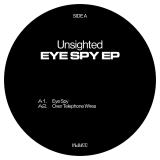
Unsighted is a remarkable New Yorker mentored by legendary New Yorker, ALONZO. Unsighted’s understanding of rhythm, funk, and texture is world class and welcomed into the Kraftjerkz family of USA electro. Kid Ginseng’s Punk Funk Remix rounds out the 12” EP nicely. Some would say that Kraftjerkz is USA’s answer to Bunker Den Haag. Let the DJ’s decide. Salute!
Das wandlungsfähige Trio Vanishing Twin präsentiert sein neues Album ,Archives" - eine Collage aus postmoderner Songkunst, die im gemeinsamen Schaffensprozess Transzendenz findet. Der Albumtitel spielt auf den unverwechselbaren Ansatz von Vanishing Twin an, tägliche Aufnahmesessions anzuhören, zusammenzufügen und neu zu bearbeiten. Gründungsmitglied Cathy Lucas beschreibt den Prozess so: ,Material sammeln, damit herumspielen, es auf den Kopf stellen, versuchen, die Teile zusammenzufügen und daraus eine Geschichte zu erschaffen". Da Lucas mittlerweile ins ländliche Frankreich gezogen ist und Valentina Magaletti sowie Susumu Mukai in London leben, verbinden sich die drei, indem sie Songs und Instrumentalfragmente in einem virtuellen Studio austauschen. Die geografische Distanz wird durch ihre kollektive Kreativität überbrückt, wobei jedes Mitglied als Multi-Instrumentalist seinen Beitrag leistet. Jeder Musiker bringt umfangreiche Erfahrung in Zusammenarbeit und Improvisation mit, wobei das Anhören und Bearbeiten von Studio-Sessions ein wesentlicher Bestandteil des kreativen Prozesses ist. Konzepte von Urheberschaft und Eigentumsrechten lösen sich in der Musik von Vanishing Twin auf, während die Mitglieder Instrumente tauschen und sich ganz dem Moment der Zusammenarbeit hingeben. Die ,Archive", die dem Albumtitel seinen Namen geben, werden zu Dokumenten der kollektiven Intelligenz des Trios. Die chaotische Energie von ,Archives" treibt Vanishing Twin in ungewohnte Formen und Richtungen. Außerhalb ihrer Komfortzonen findet das Trio neue Momente der Erleuchtung und Freude. Tief im Mix hörst du vielleicht, wie Magaletti zum Bass greift, Mukai unerwartet am Schlagzeug einspringt oder Lucas chamäleonartig durch die Lücken gleitet. ,Archives" verfeinert Vanishing Twins Modell des kollektiven Musizierens, bei dem Egos in spielerischen Mix-and-Match-Spielen in den Hintergrund treten und die Kreativität zwischen den drei Multi-Instrumentalisten fließt. Sie bewegen sich zwischen und außerhalb konventioneller Genrekategorien und reihen sich neben Weggefährten wie dem Tara Clerkin Trio und Still House Plants ein, wodurch sie die Vorstellung vom zeitgenössischen Musikensemble erweitern. Nach einem Jahrzehnt ihres Bestehens sind Vanishing Twin wandelbarer denn je.
Building up from his multiple appearances on the label, one of our closest producers, Luca Durán, makes his full studio album debut on TraTra. This work is meant to showcase the vast world of influences the diasporic experience comes with: his rhythm-driven tracks coexist in high contrast, but fluidly, with the experimental and textures of his european school of sound. The title itself works amongst these two edges of Luca's aesthetic existence, the softness from the flight of a Mariposa with the harsh hit of a death blow.
Killing Mariposas is filled with seemingly clashing techniques, field recordings, acoustic instruments, and analogue synthesis, which converge with modern and forward-thinking production tools to build heavily layered music. Constructing an emotional narration from the contemplative to the euphoric. A sort of contextual shapeshifter, with hints of cumbia, grasps of reggaetón and dembow, but always submerged deeply in a windy and fragmented memory.
This whole project gets rounded up by the packed lineup of collaborators, both vocal features and production partners. Astute minds from distinct internet niches: Kelman Durán, Gavsborg, Iceboy Violet, Debit, Rosa Pistola, BEBE YANA, Kamohelo & Kacha.
One true reflection of Luca's production abilities and sonic poetry.
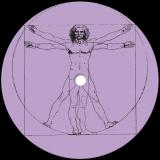
Luca Lozano has long been an artist whose output as both a producer and designer we've admired and after many years of seeing his records fly off the shelves here at Phonica, we're delighted to be releasing the 'Da Vinci' EP by the Klasse Wrecks boss on our main label. We'll let Lucas, the modern day renaissance man himself, take it from here:
"These four tracks were created over a few sessions while I was settling into a dank basement studio (which was new at the time and now long gone).
‘The Magnificent’ and ‘Delta Force’ were made just after I acquired an old Korg Delta synth, I spent a lot of time getting the 1970s beast to sync up with modern equipment and both tracks make use of it in various elements.
‘Eau De Dave’ is a cheeky homage to a UK producer legend, I’ve been digging into his various older productions recently and went back to a fidget sound for the fun of it.
‘Crunchy Nut’ was kind of inspired by early U.K. tech house, it was the last track confirmed on the EP and came together super quick. As usual it’s a mix of old drum machines like a modded 707 and a bunch of old samples I’ve had on my computer for a couple of decades now. I’m happy I managed to work some slap bass into a track finally…"
out of Stock
Last delivered 4 months ago available to reorder, subject to availability
Recently hailed by The Guardian as "British techno's great survivor," Nigeria-born, UK-based Ibrahim Alfa Jnr continues with the fine form shown on his recent Infinite Black Inside LP with this first EP on his newly minted label Infinite Black Audio. The music was made after the end of a time of bad health, which means there is a feeling of both relief and reflection here. The nameless tracks are all overtly technological in their DNA - spanned synths warp around mechanical kicks on the opener as detuned jazz keys tumble through the mix. ''Track 2' floats on skittish breakbeats, there's moody downtempo on 'Track 4' melodically-inspired hope on 'Track 6.' An adventurous and rewarding EP.
Charles Webster was one of the architects of the early UK house scene but has never got the flowers he deserves. Maybe this first win a new series of reissues from his incredible vaults, will change it. Unreleased Stuff comes on Remote and opens with a louche tech house sound that's deep and emotionally dialled in. 'Don't Work' is great advice for anyone as well as being a humid house roller for the backroom. 'How To Live' brings more of a steamy energy that encourages you to get up on your toes and then 'Bad Year' slows it down and layers in some lovely liquid West Coast chords. Two more brilliantly vibey cuts close an EP that must not be sniffed at.
A key architect of European minimal house returns here and it seems that the years have only deepened the German's craft. Following the acclaimed Belongs on the legendary Playhouse label, Losoul's latest for Logistic Records is organic and rich with musical narrative that reveals itself slowly. 'Cult Rodeo' is a deep cut and dubby swinger that teases with crowd noise and 'Shake' then gets more glitchy as sounds pan across the setter field and a jerking rhythm slowly manifests. 'No Jacks Given' swings low and heavy as a freaky vocal injects arresting immediacy and 'Some Pals Were Sleepers' slips into a more foggy and atmospheric minimal dub world. 'The Peek A Boo Scratch' is an abstraction of the afterparty kind and improves with time.
Ediciones Espectro Oculto returns with EOD003, its third release and the opening instalment of a new Split Series — a side each for two artists who deal in the shadows: Mick Wills & Blackmoon77.
Mick Wills handles the A-side in familiar territory, mining the margins of European DIY synth culture for cuts & edits. A1, “Six Six Six Sex”, resurrects a forgotten wave track laid down in 1983 by Venlo duo Carin & Henk, Carin Kollenbrander’s conspicuous, sexed-up vocals carrying the unmistakable spirit of the early-’80s minimal synth underground. A2 cuts “New York” by MCL a new beat staple first issued on German’s Boy Records, tightened into a playful, dancefloor-ready tool. Closing the side, Mick Wills turns to Folkvett’s “Kommando Kamprad” — originally out on Pater Noster Ltd. in 2012 — an ethereal, out-of-body drift that pulls the mood inward.
On the flip, Blackmoon77 doubles down on their signature across three originals: dark, raw and hypnotic wave built for bold & audacious DJs and fierce dancers.
All tracks mastered by Alden Tyrell.
As always, this is a one-time pressing of 250 copies — no repress, and no digital until the vinyl is gone.
Hackney based Hidden Sounds Records launches – with support from Emotional Recordings – it’s Dark Times label by diving in the the music of Alkahest, a short-lived project from Canadian brother-production duo Lex and Rew MacCrimmon.
For the second EP, the Twisted Up release is re-examined, with a tweaked track list to represent the times and how their sound continues in relevance today. Released in 2 years (1994-1996), Alkahest was the darker side of the MacCrimmon’s productions and allowed them to focus on twisted, psychedelic electronics, away from their main Legion Of Green Men project.
Self-described music obsessives from a young age – lying under a home-made harpsichord, with their heads in the resonator box was an early indication of a love outside the norm. Experiments with forks and pencils on strings – totally unaware of the likes John Cage – highlighted an interest in sound from unusual places.
Anything with a synth notably grabbed their attention, going to the public library to take out BBC Sound Effects and Morton Subotnick albums, sat alongside contacting European mail order catalogues, to grow their knowledge and record collections.
As early productions formed, working under the sound production name of Incarnate, their love of art was just as influential as music. The likes of M.C. Escher, Salvador Dali, Bridget Riley and the Op Art movement, was all part of brothers in their progression to form the Post Contemporary label in 1992.
Following the DIY ethos of the music they had long been buying, their “indie ethic” influences all coalesced in the label, not conforming to one sound or tempo, placed them within the electronic music coming from Canada, but also, out on their own.
Twisted Up expands the Alkahest sound, the title cut a stomping anthem, it’s unrelenting drums and lifting strings a call to arms. The compelling Shake arrives, acid techno rewiring synapsis, dub static between the beats.
On the flip, Twisted Another is just that, a reversion excursion, pushing the psychedelic synthesis to the forefront, stabs call and respond. Closing the EP with the perfectly titled, Kiss My Acid, a journey of industrial bang, reflexed, Alkahest showing their sound is pulsating, widescreen overtures.
Preceded by his reputation as a rap experimentalist, Bladee is a prolific and highly inventive entity with work spanning and intersecting the worlds of music, art and fashion.
He began his career as a teenager, trading art and lyrics with close friends. After releasing his first projects, international recognition came quickly and his network of Stockholm innovators soon arrived at the vanguard of a new era in music culture.
333 is Bladee's fourth solo album. Produced by Whitearmor, Gud, Mechatok, Lusi of Ripsquad and Joakim Benon of JJ, the album has no guest appearances.
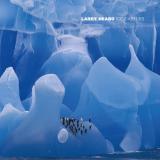
ICE CASTLES, Larry Heard's downtempo ambient, deep house masterpiece available on vinyl again. After nearly three decades out of print, Larry Heard's Ice Castles is finally getting the reissue people have been asking for. Originally released in 1995 (as Sceneries Not Songs - Volume Tu), Ice Castles stands out as one of the most overlooked, but essential records in deep house and downtempo. A hazy, RnB, jazz-inflected suite of tracks from the genre's original architect. Forming a blueprint for his release in the decades to come. From the shimmering ''Crystal Fantasy'' to the aching title track, this is Heard at his most intimate: less dancefloor, more personal. Now, for the first time since 1998, it's back on vinyl. Remastered and expanded to a full double LP with all tracks.
Paraiso has been doing vital work in Portugal - documenting the underground dance scene's history and pioneers in various mediums while also showcasing equally brilliant artists from newer generations. And they've been doing it for a decade now: we all know that a label dedicated to its local scene through and through is something rare and should be celebrated. This compilation 'X - 10 Years of Underground House Music from a Paradise Called Portugal' is a manifestation of that cross-generational spirit, with ten never-before-heard pieces of music by initiators and legends like The Advent alongside more recent veterans like Roundhouse Kick and Vil or younger talent like Phoebe or Van Der. Things start off with Salbany's 'Trax 10', oozing a techno elegance and irrefutable groove that wonderfully portrays the spirit of the Lisbon sound: raw yet ethereal, disarming in its simplicity while containing rave, romance and rhythmic complexities. Label founders Maria Amor & Shcuro firmly carry on the torch with 'Intracellular', gelled by dubby washes, syncopated drums, infectious rhythmic sense and layered with a melodic vocal motif. Vil's 'Cave' brings in stone-cold tight percussion offset by rich, evocative pads and technoid know-how for days. The Advent steps in with an ode to acid-minimalism, raw and slow-burning, with curious and twisted moments peppered with the skill of an expert. Van Der storms in with a piece of hybrid qualities, impeccably blending a swing onto industrial territories for a hypnotic-yet-banging hands in the air dancefloor moment. Scam Dust (the duo of Tiago and Shcuro, from adjacent generations) picks up on the industrial flavours, adds furious jacking rhythmics and live sonic experimentation that takes us to peak-quality effect and noise manipulation. 'Subvert' follows and goes deeper, as if into the depths of the ocean, with aquatic arpeggios and sparse drums that morph into an 303-driven state of mysterious oceanfloor mania - Roundhouse Kick sending us messages from the South. Violet and her 'Dream Machine' emerge with its mutant noisy motif, delay-drenched percussion and steady beat interrupted by keys, drum variations - and a u-turn to its paranoid loopy beginnings. Phoebe enters the chat and brings sonic sun rays in 'Galaxia 2000', a wide-eyed moment lead by colourful, open synthesisers with gates and filters taking us on a beautiful ride on tense, swingy drum patterns. The tenth track comes from Lisbon's rkeat and is full of closing act ear-candy with its beautifully chiseled, groovy as hell percussion, organic sonics and metallic instruments that seem to announce that the next decade is about to be just as good, if not better than this lovely 2016-2026 stint of boundary and scene-pushing.
Richard Sen debuts on Phantasy with ‘Space 1999 / Bergen Light Rail’, the first transmission from the illustrious DJ and producer since his vinyl-only solo LP, 2024’s ‘India Man’.
Deeply invested in electronic music for over thirty years, first at the intersection of London’s acid house and graffiti art scenes, evolving in cult duos Padded Cell and Bronx Dogs, and now generously sharing his formidable knowledge of club culture on London’s Do!! You!!! Radio, Sen is known to take listeners anywhere. On this occasion, he locks into two distinct influences from his winding creative journey, with ecstatic results.
The title of ‘Space 1999’ mirrors Sen’s own hand-painted accompanying artwork, yet its sonic influence sits much closer to our own orbit; A tribute to a slice of London nightlife history, Space at Bar Rhumba was a midweek party led by residents Luke Solomon and Kenny Hawes, whose selections helped sculpt the deep house scene at the turn of the millennium. ‘Space 1999’ transports contemporary dancers back there in no less than ten minutes, led by a deep bassline and swinging drums, while an intergalactic melody slowly takes hold, resulting in pure satisfaction.
‘Bergen Light Rail’ embraces a different kind of kosmische, looking to the northern light of space disco and following the tram route of its namesake to the Norwegian city’s beloved Club Ostre, riding a rhythm of pogoing toms and crashing drums. Conjuring a dreamy tête-à-tête between ever-expanding, heavenly synths and tightly-wound arpeggiators, Sen’s transmission to the stars is a deeply human call to dance.
Nicolas Balmer reveals the heavy silence of his soul.
Facing his own mirror.
The soundscape unfolds.
Fire sets the tone.
Kindling of the abyss, driven to go on and on.
Passion in his language contains suffering.
A silver lining, found in delicately layered noise.
A myriad of intertwined sounds paint the melodies of a life.
Holding the memories of those who danced with his shadows and light.
Nicolas releases his album “Leben” on Zürich based Subject To Restrictions Discs. While moving between New Wave, Kraut and Electronics, his intuition for ambient oozes from each composition, fast-paced or slow. As Nicolas Balmer lays bare his most intimate sources of inspiration with Leben. He holds nothing back.
The album is shaped by a sense of optimistic melancholy: restless and contradictory, yet full of hope. The music is not about arriving, but about the journey: loss and finding oneself; despair, love, guilt and forgiveness. This is an album that does not seek to explain life, but rather embraces it in all its contradictions.
Nicolas Balmer is a Zurich-based multi-instrumentalist, producer and synthesizer enthusiast who has been exploring contemporary music for over fifteen years. Working across music, theatre and interdisciplinary projects, he moves between genres and forms. His work includes the electronic project Nico Sun, the experimental duo Gūsū with Xueyan Chen, the collaborative project Konstant with Angelo Repetto and Kenel/Sonne. He also composes and produces music for theatre and performance, as well as working in mixing and production. Across his projects, Balmer is driven by raw textures, emotional authenticity and a search for an independent musical language.
Compiled onto one vinyl album for the first time, Landlocked (Numbers, 2026) presents Hallucinator’s 1999 debut album originally released under Mark Ernestus and Moritz von Oswald’s label Chain Reaction. Writing much surrounding the culture of what would be later considered ‘Dub Techno’ and its’ primary distribution center, Hard Wax, leads one down roads of shifting primary sources and decades old overheard smoke break recollections. Maybe brevity primes the listener to the paralinguistic to approach the sound on its terms; focusing on how things are uttered and not what.
This theory will remain unconfirmed. Hallucinator original press release left us with three or so gestures to consider over the years since:
“A new act on CHAIN REACTION”s distinct productional thesis. HALLUCINATOR are 3 people from he UK/London and this their first release ever- that’s all what the artists want to let us know…. This record is dedidacted to the memory of Stephen Lawrence!”
The first gesture is one of personnel. Since ’99, we’ve gotten to learn a bit more about the artists behind the Hallucinator project. All London-based, all writers, composers, and sound-designers— Anna Piva, Edward George, Trevor Mathison. These three seem to flow between parameters as aesthetic tactic and tacit structure to the work itself. For example, other collaborative shapes have come from this lineup including Flow Motion (Piva, George and Mathison) as well as the now defunct Black Audio Film Collective of which George and Mathison are founding members.
The second gesture is in the second line of the previous press release, “distinct productional thesis.” Much of Landlocked’s affect and sequencing seems to suggest an emotional study of entropy at the level of sediment. Rhythms play with space and capacity through polyvalence. The production chose subtractive vertigo, often switching and bringing back in elements that vanished from the track 6 minutes ago. Dubbing out so much of a track, one begins to associate sound akin to memories held in the experience of running your hand across a concrete block as a child. Felt (re)memberance in lieu of narrative tale. Using textures that flicker between colour and percussion, Hallucinator’s 12-tracker of loudspeaker perception music might be a mediation on the psychic wake of the Cold War. Intermittent strata of ambience and groove convects an active margin rifting event underneath a scorched geology of power in Western Europe. Again, this is all grapevine hearsay.
But it’s silence that voices the third gesture. The album’s sparse application of the written word touches on the ennui paradox of being landlocked on an island. Stuck. Trapped in the psychosis of occidental hypercentricism. A looping silence of Black British tragedy: “to the memory of Stephen Lawrence”. 18 year-old Lawrence was stabbed to death at a bus stop in southeast London by six white men in 1993. The rift of grief and implicit reiteration of modern subordination left by this hate act went legally silent for almost two decades until Lawrence’s killers were ultimately sentenced to virtually life in jail in 2012. Only six years removed at the time of Hallucinator’s initial invocation of rememory, the mind-numbing accretion of what Black Studies Professor Denise Ferreira da Silva might call “unpayable debt”, finds demonic ground across Landlocked, forming an aural sense of what continues to be refused.
The album ventures through spaces of overactive non-happenings: ‘Red Angel’’s factory floor dub flashes between smokestack and jungle visions, or the halfway mark’s stilted breath of ‘Dusk’ lending its mood to the sort of sedated dreams built from daily life under colony rule for instance. That linked rhythm links us back to our linked fates across Black and Brown folk is real, thus the syncopated signals through this work behave on the level of transnational radiotelegraphy, sounding out its windswept tension of a body negotiating a meat-grinder schema of linear production and wage for others to know that unspeakable thing can be broadcast in every drum tongue.
As the silence continues to reverb, we return to the sort of meaning-making that cannot be told but felt. Soothing to some, disturbing to others. Landlocked, a Rorschach test for a crumbled empire.
out of Stock
Last delivered 33 days ago available to reorder, subject to availability
An Elephant Eye; A Frozen Girl; and an Umbrella Man walk into an Icebox. All have been shoveled out of a Jungle-den and are covered in Mud Fleas. The Umbrella Man has been Dolt-ing around on the Machinery for Years. . .knowing it Hasn’t-Really-Rained since he threw his last Bacchanal. He thinks he owns birds; he just listens to them really. The Frozen Girl keeps away from him but moves Incredibly slow given the Circumstances. . .she’s been trying to tie her shoes for 700 years. The floating Eyeball, defying all Man Physics, Miraculously Phases himself All the way to the outside of the Icebox; Barreling through the Crisp air. He then comes to a Grinding halt before a Ginormous Totem pole of Speckled flesh, Grey and exceptionally thick, Wrinkling like telephone Wire. He quickly realizes that’s where the rest of his Body went. The only thing that’s missing is his Trunk. But he’s learned to communicate Decently Well without it. . .Using Semiotic chains of Eyelid-signifiers. . .An Eyeball shaped hole has been Burnt into the Icebox but the Frozen Girl won’t know for another 53 years and by then Big-Pants won’t even be in. The Umbrella Man doesn’t particularly so much as Notice and think its smells a lot like Burnt toast. He says he’s off to the Cemetery.
What do Them Three have in common anyway? Well they all Dig Pins; they also all Exist because of Him. And, Starting today, are Perpetually Entrapped in 10 millimeters divisions of Black resin upon a Circular Plain. I want to hear them cry and shout, You might say, because we are all Up-standers. But all crying and shouting Ourselves into the Icebox. . .
Dan Kye is the mysteriously evoked moniker from multi-instrumentalist, producer, and vocal sensation Jordan Rakei. The New Zealand-born artist - who now resides in London - presents his first long-player from Dan Kye, ‘Small Moments’, on Bradley Zero’s Rhythm Section INTL. An ode to the dancefloor, the musical project was born out of Jordan’s lockdown experience, created from the comfort of his own home. Recorded with just a laptop, extra live instruments and guest musicians, ‘Small Moments’ seamlessly transcends across electronica, jazz and funk, with each genre being effortlessly fused with Jordan’s melancholy vocals. Allowing himself to push the boundaries, Jordan’s Dan Kye moniker draws on the energetic and uplifting elements of house and techno and perfectly mixes it with the sultry vocals and emotion that come with the live elements we know and love from Jordan Rakei. The record offers listeners a journey through more floor-heavy tracks such as ‘Mogeri’ and ‘Raro’ to more groove infused offerings such as ‘Rainbow Road’ (which is named after one of the maps in Mario Kart and inspired by the energy of Prince’s iconic live concert at The Aladdin in Las Vegas), whilst tracks, like ‘Sober’, take on a more lyrical and anthemic feel.
Jordan Rakei: “Rhythm Section INTL was my entry point into dancefloor orientated music, and it was Bradley who asked me whether I could head in that direction so he could play my music out in the clubs. Dan Kye has still got melodies, but the main focus is to keep it high energy.”
After meeting Bradley Zero online whilst living in Australia, Jordan eventually moved to London in 2014. The same day he landed, he went straight to a Rhythm Section party to meet Bradley, and it was here that he first got a taste for house music. He enjoyed Rhythm Section INTL’s ability to draw on both live and electronic talent; and thus, after Bradley asked him for some productions for the parties, the idea for Dan Kye was born. ‘Small Moments’ is a musical masterpiece that can be enjoyed as much on the dancefloor as it can in the comfort of your own home and is a perfect step into Jordan’s landscape and idealism of dance orientated music.
Bradley Zero - “In around 2014 the proprietor of the famous Northside Records in Melbourne handed me a self released 12” from a new, unknown artist based in Brisbane. It was Jordan Rakei - Franklin’s Room. I’d been home almost a year before I actually got round to listening to it and I remember that moment like it was yesterday. I lay down on the sofa, put the record on and was transported! The Dan Kye project is a testament to the experimental and independent ethos Jordan lives by and is a product of an artist reaching full stride but not afraid to still try something new. This ‘Small Moments’ LP was conceived in a record store, born in a club on Rye Lane and is now flying the nest, throwing caution to the wind and making a bold statement.”
out of Stock
Last delivered 3 years ago available to reorder, subject to availability
Over the last decade and a half, Rotation Sound System’s annual gathering in the Staffordshire countryside has become one of underground dance music culture’s true success stories – an intimate gathering of like-minded friends and partygoers, powered by a custom-built six-way sound system, with music provided by a carefully curated line-up of dusty-fingered diggers, selectors and hand-picked live performers.
At the heart of the collective’s unique and much-loved approach lies a dedication to finding and sharing lesser-known gems and audio obscurities – fantastic records whose charm and quality has long been overlooked.
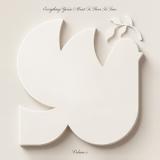
Last year, the core members of the crew – founders Dean Meredith and Ben Shenton (renowned for their productions as Mind Fair), and Wrekin’ Havoc trio Rob J, Stuart Robinson and Rich Hall – offered a snapshot of their unique musical approach via debut compilation Everything You Are About To Hear Is True, Volume 1, in the process introducing a global audience to some of the countless unknown mid-tempo classics nestled in their collections.
Fresh from another sold out edition of their acclaimed micro-festival, they’re back with volume two, another must-have collection of slept-on classics, loved-up shufflers and wide-eyed Balearic beats, all of which have played a part in Rotation’s story over the last 13 years.
Appearing on gatefold double vinyl with extensive liner notes telling the stories behind the tracks, Everything You’re About To Hear Is True, Volume 2 is full to bursting with music that sounds mind-blowing on the crew’s high-end sound system.
For proof, check the analogue-rich intergalactic shuffle of Paul Atreides’ 2015 jam ‘Arrakis Walk’, the relaxed boogie-soul of Rocky Winters’ Chaz Jankel produced ‘Vicious Circle’, the easy-listening-jazz-rock bliss of Vincent Maclin’s ‘Should’ve Took a Chance’, the 80s soul squelch of ‘Ecstasy (Centurion Mix)’ by Endgames and the immersive British dub drift of Sigma’s ‘Remember (Dub Style)’.
Everywhere you look, you’ll find eye-opening and ear-pleasing delights. There’s Pinky’s lightly acid-flecked, breakbeat-fuelled, acid house-era street soul classic ‘I Wanna Be The One (Instrumental Groove)’, the 1992 new age downtempo seduction of Linda Myers (‘Shine On Me’), the Clavinet-and-synth sporting jazz-rock/space-rock fusion of Wolfhound (1984 gem ‘Another Moon Song’), the Gallic colour of Buzy’s ‘Keep Cool (Version Maxi)’ and the guitar solo-laden electrofunk explorations of mid-80s UK act Lifesighs (‘Get Serious’, here presented in its extended instrumental form).
A raw, groove-driven selection of previously overlooked 1990s recordings by legendary Turkish jazz impresario Okay Temiz, compiled here for the first time.
As the story goes, throughout the 1990s, Okay Temiz roamed the nights of İstanbul in search of rhythm — moving through its far corners, from the seedy underbelly to gypsy neighborhoods, from the outskirts of the city to smoke-filled taverns where cigarette haze turns into a living cloud atlas — capturing a largely unknown and maverick period of his work.
Compiled by long-time producers Haluk Damar and Erinç Güzel, the album brings together Turkish folk textures, İstanbul tavern sound, spiritual jazz, raw street groove, and flashes of Turkish psychedelia — with moments shaped by Temiz’s own distinctive vocals. The result is a deep, percussive, and highly playable set.
Positioned between global jazz, rare groove, and dancefloor material, İstanbul Groove is a strong crossover release with appeal across both listening and DJ set contexts.
Reissue from the legendary Proto Garage Record Label Same People, which released some of Persian & DJ Texsta's most pioneering UKG E.P.s.
The Duo helped define the early sounds of UKG & the then unheard sound of Speed Garage, Dubstep & Grime. The Duo had massive success with records like Dangerous & Well Well Well.
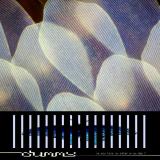
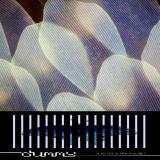
On Dummy’s new album, do you love the color of the sky?, the Los Angeles-based 5-piece deliver a breathtaking piece of work that introduces new textures and rhythms to their already varied and refined catalog. For the band’s third album, and first for new label home Polyvinyl, the group split time between self-recording at their home studio as well as Studio 22, linking up with frequent collaborator and engineer Joo-Joo Ashworth (Corridor, Automatic, Spiral XP). The band focused on intentionality and experimentation, exploring downtempo dance beats and electronic music while pushing the guitar as far as they could, using new self-sampling and processing techniques. Percussionist Alex Ewell’s overall sound design and production skills can be heard across the album, with layered drum sounds and rhythmic tremolo techniques shining throughout. Tracks like “Full Spectrum Dominance” and “Alluvial Fan” showcase the band’s tasteful pop sensibilities, while closing track “Heaven’s What You Make Of
It” features perhaps the strongest vocal delivery yet from vocalist/keyboardist
Emma Maatman. Additionally, the dynamic exchange between guitarists Joe Trainor and Nathan O’Dell is absolutely gorgeous, adding a new layer of immersion and directness that is unlike anything the band has done before. The result is Dummy’s most ethereal and sincere record to date, with more feminine and delicate undertones that sit beautifully alongside the gritty and noisy textures the band has become known for. Dummy has been praised in numerous outlets such as Paste, Stereogum, Aquarium Drunkard and Pitchfork, who described their second album, Free Energy, as “the
sound of a band turning all its potential energy into music that’s dazzlingly kinetic and powerful." The band has toured the US, UK, and EU extensively, with festival appearances at Austin Psych Fest, Treefort Music Festival, and others. In addition to larger outlets and festivals, the band’s strong ties to community and DIY ethos are ever-present, oftentimes preferring to play and connect with different local artists on tour, uplifting those around them while shining a light on the history of independent music.