Presented together for the first time, American composer John McGuire’s Pulse Music series (1975-1979) blurs the popular narrative that Minimalism was a reaction against Europe’s angular, intellectual, inscrutable high-modernism. McGuire, born in California, studied at Occidental College in Los Angeles and UC Berkeley before going to Europe to study with Karlheinz Stockhausen, Krzysztof Penderecki, and Gottfried Michael Koenig. His compositions lock serialism’s warped geometries onto an evenly spaced grid, perfectly preserving serial music’s multi-dimensionality while smoothing its wildest disjunctures and sharpest angles. If serialism is Montreal’s Habitat 67 modular housing complex, McGuire’s Pulse Music compositions are the primary-colored grids of Le Corbusier’s L’Habitation apartment complex — an exuberant expression of the same materials and principles.
Every layer of pulses is made distinct through its timbre, register, and tempo. We hear them as a plurality, organized like stars in the sky. Every so often the sky rotates and the stars appear in a different arrangement. Our ear naturally starts to draw connections and, as it sweeps between one layer and another, what was discrete becomes continuous. Pulses become flows; quantitative reality becomes qualitative experience.
Sound Transmissions returns with a bang. Fully loaded and equipped with booming basses and heartwarming synths that will melt all listening habits. Premis captures frequencies and developes soundscapes, a force to be reckoned with. The remixes from Double Precision, Thrived and Sha Ru are just showing what's possible if you explore the Transmissions minds! Don't you dare sleep on this
release!
Initially released in 2006, ‘Revep’ is the third collaboration album between Alva Noto and Ryuichi Sakamoto and the third installment of V.I.R.U.S.’s five albums series.
Remastered in 2021 in collaboration with Calyx Studio, the album’s recordings are accompanied by three new compositions titled ‘City Radieuse’, ‘Veru 1’, and ‘Veru 2’.
‘City Radieuse’ was composed for the 2012 short cinematic essay titled ‘Cité Radieuse’ and part of Carsten Nicolai’s ‘future past perfect’ series.
The video shot at le Corbusier’s Unité D’Habitation in Nantes (called ‘cité radieuse’) takes the viewer through the modular system and design applied to the residential buildings. The film’s narrative unfolds
through a sequence of images tracking the apartments’ indoor space and details, and points to the different benchmarks of standardized production as they correlate to their environment and its inhabitants.
The album’s original recordings resulted from musical exchanges that began with ‘Vrioon’ and revolved around a collaborative arrangement of Sakamoto’s classic ‘Merry Christmas Mr. Lawrence,’ the theme music
to the 1983 movie starring David Bowie, Takeshi Kitano, and Ryuichi Sakamoto himself.
In ‘Revep,’ the piano takes the lead while the padded bass and pitched electronic frequencies mark sudden change. Deeply evocative and effortlessly colliding worlds of analog beauty and digital mastery,
this album is considered another indispensable record from the duo’s ongoing collaboration.
In his foundational essay on Los Angeles, L.A. Glows, the essayist Lawrence Weschler speaks on the city's uncanny, immediately recognizable light; "The late-afternoon light of Los Angeles—golden pink off the bay through the smog and onto the palm fronds." Weschler traces the city's mysterious refracted light from the iconic paintings of David Hockney through the city's frequent portrayal on film and TV, noting its ability to put residents into a state of "egoless bliss."
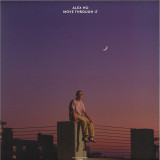
Similarly, Alex Ho's new album for Music From Memory, 'Move Through It', radiates with the unmistakable LA glow. While the Pasadena native's studio work is just now coming to light, Ho has long been a fixture in the Los Angeles dance music scene, throwing what are perhaps the city's most musically expansive warehouse events and carving out a singular voice as a DJ, as heard on his brilliant Moony Habits show for NTS. The eight-track record, however, lands in a more contemplative zone, better suited for a golden hour drive than a night out.
Though it's his first record, 'Move Through It' is the accomplished work of a fully-formed artist, produced patiently between 2017 and 2020 with help from friends including Baba Stiltz, Phil Cho, Damon Palermo and John Jones. "Mark," the Koanic track conclusion side A, is an arpeggiated slow burn reminiscent of Pino Donaggio's brilliant score for Brian De Palma's 1984 film Body Double. Ho's stunning, pure falsetto soars above gentle melodies. "Miss Suzuki," the piece that originally caught the ear of MFM's Jamie Tiller and Tako, opens the record with a blue, cinematic sway. Ho's facility for poignant melodies—easily conveyed through saxophone, vibes, various keyboards and his own voice—shines on "College Crest Drive," as well as the title track. The lyrical "Move Through It" and the restrained and beautiful closing cut, "TYFC," are abetted by glimmering Kraut guitar figures courtesy of John Jones.
While Ho's rhythms and melodies paint a crystal-clear musical vision, the music's emotional centre is more elusive, indicative of a yearning feeling synonymous with the City Of Angels. Hitting these hazy and subtle notes, Move Through It falls within a canon of sun-addled records spanning from Herb Alpert's "Rotation" to Dam-Funk's Private Life trilogy as Garrett. An immersive and concise statement, Alex Ho's 'Move Through It' is as warm and uncanny as the city that inspired it, a definitive LA album.
Kurtiss is a shadowy and enigmatic figure working on the boundaries of civilization. A sporadic figure on the House music scene with eccentric habits, Kurtiss’ music is a rarified sonic experience for those who seek it out. The Ameri-can artist is hard to pin down and his music is a tantalizing little secret only for adept diggers who appreciate the style of Hi-Def House music that the artist has cultivated. Although he’s a known Soundcloud fixture, he’s only put out a handful of digital singles as Curtis Vodka in the past, with Mutual Intentions facilitating his latest and immortalizing his music on their next set of releases. A nomadic artist, who’s worked on music ranging from Ghetto Tech to House, his music has spanned the known musical spectrum, forging uncanny relationships with everything from 50 Cent to Mall Grab. Under the pseudonym Kurtiss (or Curtis Vodka), he’s all about HIGH-Fi House, life, aliens, Jazz and no trends. It’s an attitude that he lays bare on this rare contribution to the physical, recorded format for Mutual Intentions on ‘The Curtis Vodka EP’. The EP weaves classic House music influences through a penchant for vintage sound machines and arrangements that evoke a solemn air. Elements of Gospel and New York’s deeper inclinations in House music seep through his sound as archived vocal samples and noisy machines give his work its defining character. Glistening keys and strings that slither through airy textures create dense aural experiences on ‘The Curtis Vodka EP’, calling to mind the musical masterpieces of House music’s golden era when the likes of Kerri Chandler and Mas-ters At Work were producing som
Los ingenieros oníricos se sirven de los artefactos para poder manipular su conciencia y diseñar mundos oníricos por los que viajar. De origen incierto, los artefactos se encuentran dispersos entre planos y han intentado ser rediseñados en nuestro mundo mediante el uso de frecuencias, convirtiéndose en elementos de estudio plenamente funcionales para el ingeniero onírico del plano físico. La correcta correlación de uso entre artefactos permite al onironauta saltar entre los diferentes estados de la experiencia para la formación de universos.
El artefacto Onirógeno es capaz de inducir al sueño. Sirve de puerta de enlace al mundo onírico y está presente en un estado de semi-consciencia. Dicho artefacto esférico, de naturaleza cromada, reproduce de manera cíclica el proceso de encendido de la máquina de sueños por un operador en un espacio ilusorio. El ingeniero sucumbe a un estado aletargado que permite el vínculo con otros artefactos al ser testigo de una de estas reproducciones.
El artefacto Hipnagogia es capaz de provocar alucinaciones visuales de intensidad creciente. Permite formar protomundos inconexos. Es un artefacto propio del plano semi-consciente. Debido a lo efímero de los protomundos formados, el ingeniero es incapaz de controlarlos y dotarlos de sentido.
El artefacto Efialtes es uno de los más inestables y volátiles. Este ente del plano semiconsciente provoca la incapacidad transitoria para realizar movimientos voluntarios durante la transición entre el sueño y la vigilia. Permite al ingeniero crear un canal al plano transitorio. Su presencia o interacción puede darse en los primeros o últimos estadíos. Está muy presente en el mundo semi-consciente y puede ser atraído por el uso de otros artefactos. Emite un zumbido muy característico cuando interacciona.
El artefacto Proyector, toroide derivado de Efialtes, solo presente en el plano transitorio. Crea un canal y permite al ingeniero ingresar, precediendo a la separación física, y materializar la consciencia en el nuevo plano.
Extracorpóreo es un derivado del artefacto Proyector, presente en el plano transitorio y con influencia en el plano físico. Permite a la conciencia materializada del ingeniero comunicarse con los impulsos básicos motrices y órdenes cerebrales del plano físico, traduciendo los diferentes protocolos implicados.
El artefacto Vacío es un espacio unidimensional que interconecta el plano transitorio con el plano onírico.
El artefacto Arquitecto, presente en el plano onírico, forma y diseña espacios acorde con las órdenes del ingeniero onírico en el caso de que el canal de comunicación sea lo suficientemente consciente. Es una pequeña recreación esférica del universo elevado a infinito en forma de fractal.
El artefacto Escultor, de hormigón y presente en el plano onírico, crea las diferentes imágenes e inteligencias que habitan el mundo onírico en construcción. Aunque puede ser controlado, a menudo actúa con un mayor libre albedrío, creando imágenes recurrentes.
El artefacto Programador, de código en cascada y presente en el plano onírico, es la inteligencia encargada de dotar a los mundos oníricos de acontecimientos.
El artefacto Devoramundos es el artefacto más inestable conocido y con mayor rango de influencia entre planos. Destruye el mundo creado como un agujero negro engulle todo a su paso.
El artefacto Cordón, de plata y presente en todos los planos, sirve como nexo entre el cuerpo físico y la consciencia materializada. A menudo, debido al influjo de otro artefacto, o a la inestabilidad en el canal creado por correlación, es capaz de obligar a la regresión, clausurando el canal de comunicación. Existe un artefacto Cordón que une cada una de las conciencias proyectadas con sus correspondientes cuerpos así como del cuerpo físico. Se desconoce que ocurre en caso de fisión.
El artefacto Regreso, presente en el plano transitorio-semiconsciente permite al ingeniero recuperar la consciencia y restablecer sus signos vitales.
Upsurge is the 5th LP on Ilian Tape and the musical journey of a sensitive soul.
Over the last 8 years Stenny has become one of the core artists on the label, continuously evolving his own style and exploring new territories. His debut album flows through ups and downs and reflects the highs and lows we all go through.
From playing chaotic house parties in their home city of Oxford to becoming major festival headliners across Europe, Foals' trajectory has been remarkable. They've earned critical acclaim (NME and Q Award wins, plus Mercury Prize, Ivor Novello and BRIT Award nominations) and fan devotion (1.7 million sales of their four Gold-certified albums) in equal measure. And while the majority of contemporaries have fallen by the wayside, Foals continue to hit new peaks.
After more than a decade in the game, Foals again embrace that love for the unconventional with the bravest and most ambitious project of their career: not one, but two astonishing new albums: 'Everything Not Saved Will Be Lost'. A pair of releases, separate but related, they share a title, themes and artwork. 'Part 1' will be released on March 8th, with 'Part 2' following later in the year.
'They're two halves of the same locket,' frontman Yannis Philippakis explains. 'They can be listened to and appreciated individually, but fundamentally, they are companion pieces.
Fundamentally tethered but possessing their own personalities, the two bodies capture the most compelling, ambitious and cohesive creations they've ever produced. Eager to break the traditional pop song structure which they felt they were becoming increasingly tapered to, the 20 tracks defy expectation. There are exploratory, progressive-tinged tracks alongside atmospheric segues which make the music an experience rather than a mere collection of songs. Yet the band's renowned ability to wield relentless grooves with striking power and skyscraper hooks also reaches new heights.
The album's lead single 'Exits' is a case in point, featuring Philippakis conjuring the image of a disorienting world via a contagious vocal melody. It's a fresh anthem for Foals' formidable arsenal, but also an ominous forecast.
'There's a definite idea about the world being no longer habitable in the way that it was,' says Yannis. 'A kind of perilousness lack of predictability and a feeling of being overwhelmed by the magnitudes of the problems we face. What's the response And what's the purpose of any response that one individual can have'
'Exits' signposts what to expect thematically from both instalments of 'Everything Not Saved Will Be Lost'. The title is a warning that anything - from the tiniest fleeting moment of inspiration through to the planet's own biological diversity - can be under threat of being irrevocably erased.
It's a theme that permeates throughout the album's material, as Foal mirror the public neuroses that have been provoked by our current cultural climate. Paranoia of state surveillance Fear of environmental collapse Anxiety over Trump's next potentially cataclysmic move It's all there in these apocalyptic songs.
'Lyrically, there are resonances with what's going on in the world at the moment,' summarises Yannis. 'I just feel like, what's the utility of being a musician these days, if you can't engage with at least some of this stuff These songs are white flags, or they're SOSs, or they're cries for help... each in a different way.'
The new albums' journeys began as the 'What Went Down' era ended. Founding bassist Walter Gervers departed on amicable terms after playing the Festival Paredes de Coura in Portugal in August 2017. Foals felt that he couldn't be replaced - a decision that ushered in a period of recalibration, reorganisation and, ultimately, rejuvenation.
After taking a little time out, Foals - completed by Jimmy Smith (guitar), Jack Bevan (drums) and Edwin Congreave (keys) reconvened - with Yannis on production duties, who, together with Edwin, also covered the bass parts. They began by writing in a rehearsal space before exporting those sketches into the recording phase at 123 Studios, Peckham, with the assistance of engineer Brett Shaw. They'd repeat the cycle between the two spaces, effectively creating an ongoing feedback loop as they sought to push every new idea to the finish line.
1 x 12" black vinyl 180gsm
- label 4/c
- discobag on reverse board with matt varnish
- gatefold on reverse board with matt varnish
- shrinkwrap
„Oklahoma Toad“ von 1970 war Dave Frishbergs Debüt als Sänger und Startpunkt seiner gefeierten Karriere als Pianist, Sänger und Songwriter. Die Neuauflage präsentiert erstmals auf Vinyl den vom Künstler freigegebenen Producer’s Mix aller zehn Originaltracks. Eine Bonus-7" ergänzt „Peel Me a Grape“ und den bislang unveröffentlichten Schoolhouse-Rock-Outtake „A World Without Verbs“.
Red w/black splatter vinyl "You're Weak And You Know You're Weak" is the seventh album from WEREWOLVES in seven years. The band themselves have sworn to release ten albums in ten years, or commit group suicide if they fail. Ridiculously brutal moronic caveman death metal from members of PSYCROPTIC, THE BERZERKER, ABRAMELIN, THE ANTICHRIST IMPERIUM, and THE AMENTA.
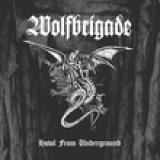
With the amps still warm from 2024's coruscating comeback Life Knife Death, veteran Swedish punk-metal masters Wolfbrigade strike back like a wounded cobra with their loudest, fullest, thickest-sounding record yet. And that's no happy accident. On their twelfth LP (the first three released under the Wolfpack monicker, 1996–99), the quintet concertedly resolved to shake up their habitual processes and interrogate their customary methodology. "As the songs started to fall into place, we decided to do something we hadn't done in many years," explains the band. "For the last decade we've recorded, produced and mixed our albums ourselves. This time we wanted to work with someone from outside the band whose work we respect and who we felt would understand what Wolfbrigade is about."
With the amps still warm from 2024's coruscating comeback Life Knife Death, veteran Swedish punk-metal masters Wolfbrigade strike back like a wounded cobra with their loudest, fullest, thickest-sounding record yet. And that's no happy accident. On their twelfth LP (the first three released under the Wolfpack monicker, 1996–99), the quintet concertedly resolved to shake up their habitual processes and interrogate their customary methodology. "As the songs started to fall into place, we decided to do something we hadn't done in many years," explains the band. "For the last decade we've recorded, produced and mixed our albums ourselves. This time we wanted to work with someone from outside the band whose work we respect and who we felt would understand what Wolfbrigade is about."
“Stankface” finds Funkmaster Ozone deep in his natural habitat: a raw, playful P-Funk workout driven by a heavy bass groove, punchy drums, elastic synth lines and his unmistakable talkbox. Packed with swagger, humor and irresistible head-nodding energy, the track connects classic Parliament-Funkadelic and Zapp influences with polished modern-funk production.
“Bust A Move” takes Funkmaster Ozone straight back to the golden era of Electro-Funk, combining hard-hitting 808 drum-machine rhythms, funky synth bass, futuristic textures and infectious vocoder vocals. Robotic, playful and built for the dancefloor, the track channels classic old-school electro and boogie energy through Ozone’s unmistakable modern production style.
Jason Dungan (aka Blue Lake) and Johan Carøe find beauty in the rhythms
and repetitions of domestic life for collaborative album, 'Routine' - out September 25
Copenhagen-based multi-instrumentalists Jason Dungan and Johan Carøe didn't set out to make an album. Instead, as the title 'Routine' suggests, they found their way there through a process of habitual making and listening, developing an intuitive musical language to reflect the dreamlike meanderings and creative play of life's quiet moments. 'Routine' blends pop orientated sounds, Avant-garde minimalism, folk and new age with the emotive depth of film-score.
Their meeting was not entirely coincidental. Previously in bands such as Squares and Triangles, Jason Dungan has since recorded multiple albums under the moniker Blue Lake, including the lauded 'Sun Arcs', pursuing his passion for self-built percussion and multi-string instruments. Johan Carøe meanwhile is a composer whose film soundtrack work has seen him collaborate with Angelo Badalamenti, Arp, and Sofie Birch, at whose Andersabo residency (curated by Dungan) the pair first met, resulting in the highly praised album 'Repair Techniques' written by Birch and Carøe.
'Routine' emerged organically over many years against the backdrop of great personal change. As Carøe said goodbye to his father and welcomed his first child, the pair sent each other fragments of melodies and patterns, working up responses when time allowed to assemble a sonic palette that combined acoustic instrumentation of zither, clarinet, cello, saxophone (among others) with the textures of tape, drum machine and Yamaha DX7 synth. Inspired by the vulnerability and DIY ethos of Arthur Russell's home recordings, the vision of labels like Disques de Crepescule, and the art pop, experimentation inherent to late '70s and early '80s recordings from NYC and Japan alike, Dungan and Carøe conjured new forms for their folk, leftfield pop and avant garde influences from the low-lit living rooms of Copenhagen and rural Sweden. "I'm very interested in the ways in which music and art emerge from our wider experiences as people, workers, parents and in the daydreaming activity of making music," Dungan explains of a process which allowed the duo's individual styles to drift apart and merge together seamlessly. "I think the process was definitely capturing moments in time, but over a long time," Carøe adds. "It was a bit like improvisation, but with time stretched."
The music floats with grace and humility, remaining sophisticated yet acutely introverted.
Whether on 'Clouds', where soft layers of zither and clarinet are moved along by a featherlight bass riff and the hypnotic clip-clop of the primitive groovebox, or the gentle grandeur of cello rising and falling through 'Routine 1', the album reveals itself over 10 instrumental tracks, evoking the ineffable calm that descends when the light changes and the world turns inwards. The act of time passing became a key creative ingredient to the evolution of the album, enriched with the exciting challenge to transform their passing rounds of home recordings via a slow release musical dialogue. Jason found creative moments in the twilight hours to lay down zither, melodica, acoustic guitar to name but few, while Johan utilising "line-in and headphones" would manipulate, stretch and pitch Jason's melodic pathways during newly born naptimes.
Carøe rhythmically plucks and slides the stringed cello instrument, leaving palpable foundations on 'Hymn' and 'Chords', in a treated, stylistic approach akin to Mabe Fratti, while 'Silence' draws to a close with a gospel touch. Dungan's harp-motion zither flourishes reveal more classical connotations on 'Reunion' with inspiration of Bedroom Community's Nico Muhly as organs rise with Moogs, culminating with a climatic choral outro from friend, mezzo-soprano Anna Caroline Olesen.
'Routine' then is their first collaboration, an album of deep and sincere reflection with inviting overtones that gesture with unrushed authenticity. A document of a new-found friendship that opens a window into the most personal of spaces, where the daily practices of music and life exist side-by-side to wondrous effect.
Mit Tove Lo kehrt eine der prägendsten Stimmen des internationalen Pop zurück: Die preisgekrönte Künstlerin und Grammy-nominierte Songwriterin steht für kompromisslos ehrlichen, emotional aufgeladenen Pop zwischen Grunge-Einflüssen und skandinavischer Klangästhetik. Spätestens mit ihrem Multi-Platin-Hit „Habits (Stay High)“ etablierte sie ihren unverfälschten, direkten Stil, der sich durch ihre gesamte Diskografie zieht.
Nun präsentiert sie mit „ESTRUS“ ihr sechstes Studioalbum: ein kraftvolles, stilprägendes Werk zwischen Euphorie und Melancholie, Verlangen und Zweifel. Auf 13 neuen Tracks verbindet Tove Lo pulsierende, körperbetonte Produktionen mit pointierten, persönlichen Texten und fängt so die ganze Bandbreite menschlicher Emotionen ein – roh, intensiv und ungefiltert.
Thematisch steht das Album für Selbstbefreiung und Individualität, visuell untermalt von einer düsteren, kultähnlichen Ästhetik mit emo-chic Einflüssen. „ESTRUS“ ist ein starkes Statement für alle, die Pop mit Haltung, Tiefgang und internationalem Hitpotenzial suchen.
Vinyl in Gatefold Jacket with Printed Inner Sleeves, 8x12 Matte Photo Insert and 12x12 Lyric Insert
Mit Tove Lo kehrt eine der prägendsten Stimmen des internationalen Pop zurück: Die preisgekrönte Künstlerin und Grammy-nominierte Songwriterin steht für kompromisslos ehrlichen, emotional aufgeladenen Pop zwischen Grunge-Einflüssen und skandinavischer Klangästhetik. Spätestens mit ihrem Multi-Platin-Hit „Habits (Stay High)“ etablierte sie ihren unverfälschten, direkten Stil, der sich durch ihre gesamte Diskografie zieht.
Nun präsentiert sie mit „ESTRUS“ ihr sechstes Studioalbum: ein kraftvolles, stilprägendes Werk zwischen Euphorie und Melancholie, Verlangen und Zweifel. Auf 13 neuen Tracks verbindet Tove Lo pulsierende, körperbetonte Produktionen mit pointierten, persönlichen Texten und fängt so die ganze Bandbreite menschlicher Emotionen ein – roh, intensiv und ungefiltert.
Thematisch steht das Album für Selbstbefreiung und Individualität, visuell untermalt von einer düsteren, kultähnlichen Ästhetik mit emo-chic Einflüssen. „ESTRUS“ ist ein starkes Statement für alle, die Pop mit Haltung, Tiefgang und internationalem Hitpotenzial suchen.
Vinyl in Gatefold Jacket with Printed Inner Sleeves, 8x12 Matte Photo Insert and 12x12 Lyric Insert
With the album 'El Ritmo' Delinquent Habits mark their 30th anniversary with 11 tracks blending West Coast vibes and Latin spirit. Featuring guests like Sick Jacken and Reverie, the album celebrates resilience, culture, and community, carrying the unmistakable spirit of East L.A. worldwide and underlining the band’s timeless impact on global hip-hop and the voice of the Latino community.
There is a pivotal scene in “August in the Water” (dir. Sōgo Ishii, 1995) where the surface of a pool turns into a stone wall. The water that gave the protagonist's life its meaning becomes a threat. As you fall through this stone wall, you appear in a set of underwater coral-reef corridors, and one of the most beautiful musical themes begins to play: Aquatic Ambience, composed by David Wise for Donkey Kong Country (1994). It's a theme that represents the weightless vibe of your new deep-sea life, where you go about your mundane errands, collecting bananas while driving on a swordfish, or, as HerzMayhem put it: "Poor monkey... always swimming, never going anywhere..."
Synthetic Water Music is the second of three compilations, following Synthetic Bird Music and timed to mappa's 10th anniversary. As with the birds, it gathers friends of the label, artists who have released with mappa or played our shows. Most of the music is new, made to measure for this compilation, much of it from Central and Eastern European hands. Birds and water mix well, so please feel invited to play them together, creating your own environments.
Where the birds were in one flock, water is dispersed across four chapters. You live your life as a droppity drop: vapour in the heavens, condensing in clouds, falling into a swamp, trickling into the deepest sea.
Tlālōcān (Cassette 1, Side A)
A place of eternal spring, of aquatic energy that nourishes everything and allows all things to bloom. Bubbly and splishy-sploshy, it is full of dripping sounds and moist caverns (“Emerald Pool” by Pauline Anna Strom), a landscape filled with living fountains (“Oh, to be a Fountain” by Eva Sajanová) and winding streams that flow through the area, forming part of its organic architecture. It is also a paradise reserved for those whose deaths were water-related, where the aquatic and terrestrial beings live in symbiosis and perspectives shift rapidly, from observing a single droplet (Shakali, Lau Nau) to dew (Feronia Wennborg & Lucy Duncombe) and on to flowing currents (Visible Cloaks) that gradually transform into river music (Ursula K. Le Guin & Todd Barton).
Nephelora (Cassette 1, Side B)
A celestial anti-gravity sound world made of evaporation, steam and the formation of clouds, as if looking at “The Sky At The Bottom of the Well” (by Natalia Beylis) or at “The Cloud That Never Rains” (by Henrique Vaz).
If a cloud never rains,
it is not a cloud at all, but a veil that parches the earth with its gaze.
It generates only its own shadow —
a looming mass of suspended longing,
a sky that hoards but never yields,
a reservoir that swallows every river and returns nothing but echoes.
The water in this world is often invisible but sometimes all the more present, as Bint Mbareh describes it: “Recently been obsessed with invisible waters because I come from a place where you have to imagine the water is there even though you cannot see a river, a sea, usually no rain, so water is in the air, the voice and the imaginal realm, drought is imagined to be negotiable.”
Žaboglach Zha-bo-glahch (Cassette 2, Side A)
A fusion of Scottish lochs and Slovak ponds: a misty, foul-smelling, swampy realm, the kind of place that swallowed Artax from The NeverEnding Story. Stagnant waters full of decay become a blooming habitat for sirens (“thereby losing the weightless delight of being swept along with it” by Adam Badí Donoval) and beings straddling the line between fauna and flora, inventing their own communication systems (“Water-lily phase” by Action Pyramid).
R'lyeh (Cassette 2, Side B)
A brooding sunken city at the bottom of the ocean. It’s a journey to get there. Let this chapter guide you, from the shore down to the depths, to the gates of an unexplored world that is inherently dark, unfathomable, and beyond the limits of human perception: starting with seasickness ("Seasick" by Nikolaienko), passing through a classic Poe-esque maelstrom ("Flurry at the Whirl-pull" by Atte Elias Kantonen), a gateway into the darkness and emptiness of the ocean floor, and finally traversing the city itself (“last waves of 2025” by Jules Reidy).
But what is pulling you to a place like this that only a few explore and even fewer leave? Maybe “the darkness that water can contain, the expanse of things we don't know and that can trigger fear instincts even as we try to rationalise them and think we are in control of the rest of nature” (“supercritical fluids” by Diane Barbé).
Dive in and surface wherever you like. Always swimming, never going anywhere. Just don’t forget to take water breaks.
P.S. Birds, then water, can you guess what comes next? Synthetic Soil Music, an elegy for insects and worms? Synthetic Glaciers, or maybe Pollinators? Which sounds would you miss the most if they disappeared? Or what if the third one never comes at all, and somebody, or something, makes Synthetic mappa Music instead. Don't you worry, with the right training data, it can all be replicated, better than the real thing.
Die Debüt-EP mit vier Songs des bayerischen Quartetts Morgan Pines, besetzt mit (ehemaligen) Mitgliedern von Point Baker, Irish Handcuffs und Worst Advice. Musikalisch bewegt sich die Band irgendwo zwischen Indie, Heartland-Rock, Country und Punk - mit eingängigen Melodien, warmen Harmonien und genau der richtigen Portion Melancholie. Wer Bands wie Limbeck, Chamberlain oder Racquet Club schätzt, sollte hier unbedingt reinhören.
Eighteen months on from the runaway success of The Only Place I Know — the debut that crashed in at #1 on the ARIA charts and #2 on the ARIA Vinyl Chart — Lake Macquarie's Surf Trash are back, and they're not watering it down. Their sophomore album No Chaser lands neat, on the rocks, no apologies: ten tracks of melodic surf-pop-punk hammered out by a band that has clearly spent the last year sharpening every edge.
It's a record you can hear the kilometres in. Between The Only Place I Know and now, Andrew Scott, Lachlan Jackson, Patrick Russell and Nick Scott have torn through a sold-out national run, criss-crossed the UK and Europe, and made a habit of leaving rooms louder than they found them. No Chaser carries the dust from all of it — bigger choruses, leaner production, a touch more bruise underneath the gloss. There's still that windows-down, salt-on-the-windscreen feel that made the debut impossible to ignore, but it's wired into songs that swing harder and cut deeper. Less wistful afternoon, more last-light drive home with the volume creeping up.
The four-piece make melodic surf-pop-punk that sounds great turned up loud — driving in your mate's car on the way back to the beach. Their debut, The Fire Note wrote, "delivers a dynamic debut… blending raw energy, introspective depth, and timeless indie rock flair." Manchester World called their first show on UK soil "epic… high energy and great song after great song," and the live reputation has only grown since: a band that's earned every inch of the ceiling it now hits.
No Chaser is the sound of them no longer waiting for permission. Singalong harmonies, fast tempo changes, good old-fashioned rock 'n' roll with a sense of urgency.
On Squirrel Flower's new album, Say a Prayer to the Gods of Getting Going, songwriter and multi-instrumentalist, Ella Williams, delivers her most transcendent and instantly classic record to date. It's an album full of hope and beauty, with themes of staying in constant motion, electric love, and knowing when to leave, but also when to stick around. After touring in support of 2023's Tomorrow's Fire, Williams remained on the road, following instinct over itinerary_passing through Gary, Indiana; Los Angeles; Putney, Vermont; Silver City, New Mexico; and Hudson, New York. Each stop became a site of creative renewal. She ended up recording the album at two locations: a makeshift studio in rural Wisconsin, and at Drop of Sun in Asheville, NC, featuring friends and collaborators such as Dimitri Giannpolous (Horse Jumper of Love), Sofia Jensen (Free Range), Clay Frankel (Twin Peaks, Hazel City), and many others along the way. Standouts like "Reelin" and "Highway Woman" showcase the push and pull of life as a musician; the constant need for embarking on a hero's journey in search of reflection and freedom. Others like "Not Me" and "Cleveland" are classic Squirrel Flower, but with a sharper and more concentrated writing style paired with some of Williams' strongest vocal delivery of her career. Mixed and co-produced by Alex Farrar (MJ Lenderman, Wednesday), Say a Prayer to the Gods of Getting Going is the sound of cosmic rebirth, looking behind to illuminate what's ahead. "Pack your life and your guitar," Williams sings on "Highway Woman." "You can change it as you go. You do not plan on dying." In addition to her seemingly nonstop DISABLED touring across North America and Europe, Squirrel Flower has been featured in outlets such as Pitchfork, Rolling Stone, The NY Times, Paste, and many others, as well as performances at NPR's Tiny Desk & KEXP. Williams' music has been streamed millions of times around the globe, proving her to be an undeniable force as a songwriter. FOR FANS OF Indigo De Souza, Soccer Mommy, Katy Kirby, Julia Jacklin, Tomberlin, Hand Habits, Phoebe Bridgers, Waxahatchee, PJ Harvey, Grouper, Chelsea Wolfe, Moses Sumney, Cat Power, Liz Phair, Alex G, Mazzy Star, Julie Byrne, Big Thief.
On Squirrel Flower's new album, Say a Prayer to the Gods of Getting Going, songwriter and multi-instrumentalist, Ella Williams, delivers her most transcendent and instantly classic record to date. It's an album full of hope and beauty, with themes of staying in constant motion, electric love, and knowing when to leave, but also when to stick around. After touring in support of 2023's Tomorrow's Fire, Williams remained on the road, following instinct over itinerary_passing through Gary, Indiana; Los Angeles; Putney, Vermont; Silver City, New Mexico; and Hudson, New York. Each stop became a site of creative renewal. She ended up recording the album at two locations: a makeshift studio in rural Wisconsin, and at Drop of Sun in Asheville, NC, featuring friends and collaborators such as Dimitri Giannpolous (Horse Jumper of Love), Sofia Jensen (Free Range), Clay Frankel (Twin Peaks, Hazel City), and many others along the way. Standouts like "Reelin" and "Highway Woman" showcase the push and pull of life as a musician; the constant need for embarking on a hero's journey in search of reflection and freedom. Others like "Not Me" and "Cleveland" are classic Squirrel Flower, but with a sharper and more concentrated writing style paired with some of Williams' strongest vocal delivery of her career. Mixed and co-produced by Alex Farrar (MJ Lenderman, Wednesday), Say a Prayer to the Gods of Getting Going is the sound of cosmic rebirth, looking behind to illuminate what's ahead. "Pack your life and your guitar," Williams sings on "Highway Woman." "You can change it as you go. You do not plan on dying." In addition to her seemingly nonstop DISABLED touring across North America and Europe, Squirrel Flower has been featured in outlets such as Pitchfork, Rolling Stone, The NY Times, Paste, and many others, as well as performances at NPR's Tiny Desk & KEXP. Williams' music has been streamed millions of times around the globe, proving her to be an undeniable force as a songwriter. FOR FANS OF Indigo De Souza, Soccer Mommy, Katy Kirby, Julia Jacklin, Tomberlin, Hand Habits, Phoebe Bridgers, Waxahatchee, PJ Harvey, Grouper, Chelsea Wolfe, Moses Sumney, Cat Power, Liz Phair, Alex G, Mazzy Star, Julie Byrne, Big Thief.
Steve Lacy returns with OH YEAH?, the self-produced follow-up to his Grammy winning Gemini Rights. The Compton native continues to push the boundaries of modern pop, alt and R&B beyond his billion streaming Dark Red and global #1 Bad Habit.
out of Stock
Last delivered 68 days ago available to reorder, subject to availability
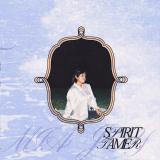
Spirit Tamer’ is the debut album from Mia Joy available on limited edition Bright Pink and Classic Black vinyl and compact disc on Fire Talk. A member of the Chicago Children’s Choir at a young age, the record sees Joy's dual backgrounds in music and poetry evolve into a juxtaposition between soaring emotional synthpop and introspective devotional harmonies. Past press has referred to Mia’s music as “warm, ethereal, endlessly layered, and beautifully expanding”. Filled with heady atmospherics and vulnerability that abounds through the shapeshifting sonic palette, fans of Ana Roxanne or Hand Habits will find much to love in this painstakingly crafted, endearingly intimate universe.
"Say What You Mean" is a feel-good albuma unique alternative country gem that blends country influences, lyrical humor, and nocturnal reflections within a captivating country-soul soundscape. The Australian band Bad Habits, formed by Hana and Jessie-Lee, crafts magnificent tracks with catchy choruses, imbued with a quintessential rock 'n' roll confidence. The missing link between Dolly Parton's early work and that of Lucinda Williams
Sam Shure debuts on Rekids with the ‘Belinda’ EP. The Berlin-based DJ and producer is joined by Deer Jade for one of its three tracks.
Berlin’s Sam Shure arrives on Rekids 3rd July 2026 with the ‘Belinda’ EP, a three-tracker including a collaboration with Swiss French DJ and producer and I AM YOU label boss Deer Jade. Since his debut release in 2016, Shure has been backed by a long list of supporters, including Pete Tong and Âme, racking up over 66 million streams via music on the likes of HABITAT and Cercle, as well as releasing Tomorrowland’s CORE label’s best-selling track.
Sam Shure’s ‘Belinda’ EP opens with the title track, where a robust, organic rhythm playfully underpins the fidgety, bit crushed sounds and stabs above, all while the titular vocal is evenly dotted throughout the arrangement. Shure then teams up with Innervisions, Diynamic and Kompakt artist Deer Jade for the aptly named ‘String Theory’, a strong and steady groove shot through with uplifting strings and synth work. Closing the offering, Sam Shure returns solo with ‘No Time To Play’, squelchy sequences winding through rich melodies that steadily build the pressure for a strobe-lit dancefloor adventure.
out of Stock
Last delivered 4 days ago available to reorder, subject to availability
Joa Joys (Joaquín Ledesma) is a visual artist and musician from Santa Fe, Argentina, now based in Buenos Aires. Since 2015, he has released solo and collaborative works on labels across Argentina, Japan, Belgium, and France — and now with Discrepant — while also composing for documentaries and installations. His music approaches sound as a habitable space, closely intertwined with a visual sensibility, creating cinematic soundscapes that oscillate between everyday observation, dream states, and surreal fantasy.
His new album Alivie explores the experience of physical pain, its different phases, and the ways we cope with it. Built from a palette that merges analog synthesizers (some hand-built by the artist) with flute, mandolin, guitar, and other textures, the record shifts between atmospheric passages, folk-like elements, and moments of energy and abstraction. Alivie is not confessional but poetic — an attempt to translate the weight of pain into images, sounds, and atmospheres that also carry humor, joy, and relief.
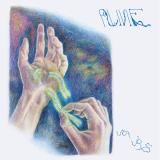
This is not a Ben Vida, Booker Stardrum, and Will Epstein record; it’s a Play Time record. That’s a subtle but important distinction, for a couple reasons. One, the sound of Magic Object—a polymetric blend of improv and pulse minimalism for saxophone, drums, and Moog—doesn’t really sound anything like any of their many other ensembles or respective solo projects. And two, it was only while making Magic Object, their debut album, that Play Time realized they were a band at all.
Let’s back up. The roots of the trio date to 2020-21, when Will and then Booker moved to the Hudson Valley, where Ben was already living. The three got into the habit of playing together at Ben’s house, and they soon realized that their hang sessions felt fundamentally different from making music in some falling-down studio in Bushwick. Where those experiences were rushed and cramped, a new sense of time and space now suggested itself. Where once they rat-raced the music, now they relaxed into it.
Early gigs yielded similar revelations. A booking at Tubby’s, the beloved Kingston venue, evolved into a kind of residency. Tubby’s is a small space, fitting around 100 people, with a bar in the front room and a stage in the back. Play Time decided that they didn’t want to play on the stage; they wanted to play in front, among the people in the bar. Rather than hogging the spotlight and overpowering the other voices in the room, they blended with the energy of their surroundings and emerged as a sort of minimalist-jazz-krautrock bar band.
Gradually, they discovered a newfound “elasticity”—Ben’s word—that reshaped the music from inside. “It’s this communal thing,” he says. “It’s vibes. And it’s embedded in the community up here, which feels really vital and nourishing.” They were jamming, but it wasn’t just a free-for-all; they found themselves listening to each other in new ways. “Ben and Booker joke that they’re always playing in different time signatures,” Will says. “We’re all going forward with our own ideas, but we’re open to each others’ as well, and they’re all sort of dancing together.”
“We all have our painterly solo projects,” Will says—where, Booker adds, “we do a lot of studio arranging and thinking and composition that takes shape over a period of time.” Play Time, on the other hand, is all about being in the moment. That spontaneity was key to the process of recording the album. They booked two days in their friend Joey’s studio, a converted wooden barn. “It’s just a live room,” Booker says. “There’s no separation or anything. So we’re all in the space together and it’s got this beautiful, woody sound, and that’s very much the sound of the record.” For two days, they just jammed, for seven or eight hours each day. When it was over, they went through, edited down the portions they liked, and added very judicious overdubs designed to enhance the original recordings without fundamentally altering them, staying true to the spirit of the sessions.
The result is something like a snapshot and a mission statement all rolled into one. “You’re hearing us discover the voice of the band in real time,” Ben says. “We finished those sessions and we were like, ‘Oh, that’s what our band sounds like now.’”
Now, with Magic Object, the rest of us get to find out too.
—
Balmat is a label with a cloudy outline. Jointly shepherded by Albert Salinas and Philip Sherburne, two friends living in Cardedeu, Catalonia, and on the Balearic island of Menorca, Balmat grew out of Lapsus Radio, a weekly show born almost ten years ago. Balmat’s mission is simple: to foster new ideas, expand upon personal obsessions, and put enveloping sounds out into the world.
“Balmat” means “empty” or “void” in Catalan. But quite apart from any negative connotations, we prefer to think of it in terms of possibility: a space waiting to be filled.
out of Stock
Last delivered 3 months ago available to reorder, subject to availability
With Frank Sinatra under pressure on the singles chart, conceptional albums became his 'weapon of choice' for continuing success. Songs for Swingin' Lovers!, conducted and arranged by Nelson Riddle, came out in March 1957 and was soon at #2 in the Billboard chart where it remained for a year. In the year 2000 the album received inauguration into the Grammy Hall of Fame. Includes the bonus tracks "Love Is Here To Stay", "When You're Smiling", and "Chicago". "Arguably the vocalist's greatest swing set. Sinatra is supremely confident throughout the album, singing with authority and joy. That joy is replicated in Riddle's arrangements, which manage to rethink these standards in fresh yet reverent ways. Songs for Swingin' Lovers! never loses momentum. The great songs keep coming and the performances are all stellar, resulting in one of Sinatra's true classics." - ***** Stephen Thomas Erlewine, AllMusic (2002)
When the first lockdown hit, Ben Westbeech ended up stranded in Walthamstow after months spent drifting through India and Thailand, unable to make it back to Ibiza. Armed with little more than an SM58, a Korg Minilogue and a soundcard, he pieced together a temporary setup in a friend’s flat and got back into the habit of writing music in splendid isolation.
Somewhere in the middle of all that, Deetron sent over a sketch that instantly hit a nerve. Ben wrote and recorded the vocal for Deep In Your Soul in one sitting, then the track quietly sat and evolved over the next couple of years until Sam resurfaced with the finished version. A final vocal session in Ibiza sealed it properly.
What emerged is one of those records that feels lived-in rather than laboured over: warm, soulful and naturally unfolding across different places, phases and points in time. Another chapter in the long-running musical conversation between Deetron and Ben Westbeech.
out of Stock
Last delivered 3 months ago available to reorder, subject to availability
Near the end of fifth grade, Eli Edwards’ mom gave him $20 and told him to go find a friend. His team had won its soccer game that day, so they were out celebrating at a local pizza parlor with games. But, more importantly, there had been one other Black kid that day on the pitch in Spanaway, WA, a Tacoma suburb and military-base town at the rainy northwest corner of the United States. That kid just happened to be Xayvien Young. An instant deep connection was formed between Edwards and Young—Eli and Xay, as they prefer to be called were inseparable— and now twelve years later they are the electrifying, boundary-skipping duo Casi.
Along the way, Eli had relocated to Los Angeles with the indie rock band Enumclaw he had helped found, but he found himself flying home maybe a little too much. He was ostensibly visiting his girlfriend, but he spent most of his time with Xay. They cut tracks in every bit of free time they found until they had an epiphany: Maybe this music they’d made together for a dozen years was actually something special. Casi’s 10-track, self-titled debut out on Carpark Records is the electrifying proof they needed.
On the record, they enthusiastically explore every musical interest they have ever had—explosive hip-hop and unbridled hardcore, high-gloss nü metal and a little bit of emo—as a pair. These songs don’t ignore genre lines; they delight in destroying them, in finding ways to slam hip-hop and hardcore, emo and nü metal together until it seems illogical that they were ever apart. Take “Jumper,” where heavy metal guitars and face-kicking drums stir the moshpit for rabid verses about crushing ICE and the lessons you learn riding the poverty line. And take closer “Bridges,” where the melodic imprint of Deftones meets the relentless confessions of Death Grips. Here are the hard, funny, and loud stories of two 23-year-olds, screaming about the world over a breathless composite of all the music they’ve ever loved.
When Eli was in Los Angeles, Xay missed his friend. But in his absence, he also felt the spark of inspiration. Music was something that had just been their childhood hobby, but now Eli was in a rock band that had press accolades and tours. He got serious about the craft. Eli would write about the dislocation and isolation he felt in California, while Xay would document the hardships of being a young Black man with a complicated family while working menial jobs in Spanaway.
This isn’t a coming-of-age album for Casi; it is, instead, a raw and riveting snapshot of that process, painful as it can be. “Eleven87” is a breakup song, a soul beat springing beneath arching emo vocals. And “Intrusive Thoughts” treats that topic like a punching bag, Eli and Xav fighting against the mental habits that keep them down. These 10 songs instantly close that gap.
Next up is Josh Brent - revered throughout the globe for releases on his own Schatrax label, Josh has been releasing records since 1994 and has built a back catalogue of exceptional consistency.
Stepping aside from his habitual sound Josh turns in 'Then Again', a 4-track collection of tumbling Breaks and Garage shuffles that have been tried and tested on Fabric's system.
out of Stock
Last delivered 46 days ago available to reorder, subject to availability
For the first time in its 27-year history, Defected compile its greatest hits, underground anthems and bonafide house music classics into a five volume triple vinyl collectors series.
Volume One collects twelve of Defected’s most established and sought after releases.
Featuring arguably ‘the' Defected anthem; Kings of Tomorrow ‘Finally’ alongside Solomon’s huge Noir & Haze remix, Ibiza anthems ‘Guitarra G’, ‘At Night’ and ‘Coma Cat’ plus productions and remixes from Louie Vega, Dennis Ferrer and Dimitri From Paris.
An essential addition to your record collection.
out of Stock
Last delivered 9 days ago available to reorder, subject to availability
Tresor Records is proud to announce forthcoming special editions of its entire catalogue of Drexciya and related projects. 2022 marks the 20th anniversary of the passing of James Stinson and the releases of the Transllusion and Shifted Phases albums. In recognition, the rightsholders, their families, and the label have commissioned Detroit-based contemporary artist Matthew Angelo Harrison to re-conceptualize the covers of Tresor's Drexciya-related catalogue. These editions will be released sequentially, bimonthly, starting early-September 2022.
The series starts with Neptune's Lair, first released in 1999, with the Hydro Doorways single arriving shortly after. In November, Harnessed The Storm and Digital Tsunami are coming. In 2023 comes the release of Transllusion in February. The series is completed by the long-awaited re-release of Shifted Phases - The Cosmic Memoirs Of The Late Great Rupert J. Rosinthrope - at the end of March.
These records, individually and as a catalogue, represent some of the most crucial moments in the Tresor label history, with the sound and mythic world of Drexciya undoubtedly inspiring generations.
out of Stock
Last delivered 88 days ago available to reorder, subject to availability