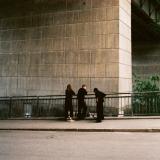
"Da fällt mir doch die Kinnlade runter - Hier in euren glücklichen Händen liegen die urzeitlichen Kassetten-Kuscheleien, die aus einem weit entfernten Keller in Baltimore von jenen - mittlerweile sicherlich fast schon mythischen - The Smashing Times heraufströmten. Erhabene Feldaufnahmen, die scheinbar die Kluft zwischen einer aufkeimenden unterirdischen Folk-Rock-Renaissance überbrücken und doch kurz auf schimmernde DIY-Jangle-Pop-Anklänge aus der Jugendrebellion dieses alten Griesgrams treffen, ohne einen Hauch von revisionistischem Ritual oder irgendetwas Trendigem (wie etwa ein emotionaler Komplex). Das besagte Quintett schreitet durch schwindelerregende Tracks voller skurriler Art-Pop-Meisterleistungen, zaubert ein Labyrinth aus großartiger Ausrüstung herbei, trotzt kultureller Langeweile - und ihr werdet schon vor dem Nachmittagstee völlig umgehauen sein und bald ins Bett müssen. Also macht euch ein Bild davon und hört euch die Smashing Times an." - Sam Knee
Futurismo proudly present a vital compilation born in the shadows of American punk; AMERICAN GRAVE Gothic Punk / Deathrock USA: 1978-1988, the third volume in their Altered Vision anthology series.
Drawing from darkest depths of the American spirit, American Grave is testament to a subculture spawned from late night savagery, graveyard hangouts and suburban isolation. Deathrock, post-punk, goth, whatever term you prefer, this compilation showcases the sounds and aesthetics of a tarnished golden era, an underground movement that took the DIY concepts of punk and the velocity of a burgeoning hardcore scene and immersed it in echoes, distortion, tribal rhythms and macabre vocals, thematically preying upon cult horror flicks, surrealism, and the manipulation of religious iconography. Whilst the UK had a counterpart scene many would hail as Goth, this was different, this was a truly American incarnation, a new breed of youth haunted by the ghosts of old blues, garage and glam, bleak theatrical imagery dressed up to evoke a response, smeared eyeliner, leather, bones…black. This was a backlash against a culture in decay, bucking against a puritanical oppression brought on by the archaic social standards set by their parents. It was aggression manifested as gloom, it was a ceremony, the celebration of death.
American Grave has been co-curated by Wesley Eisold (Cold Cave/American Nightmare/Heartworm Press) in collaboration with Futurismo head honcho Del Jae, to bring you a haunting tracklist ranging from the all important integral mainstays of the genre to those rarer and more elusive artists, including many recordings that have never been reissued before on any format. Featuring the music of Christian Death, T.S.O.L., The Cramps, Of A Mesh, The Gun Club, Twisted Roots, Kommunity FK, The Brainz, Theatre Of Ice, Burning Image, Fur Bible, PSI Com, Shadow Of Fear, Super Heroines, 45 Grave and more.
The music on this compilation is reinstated further from a visual perspective by an array of incredible images by famed punk photographer Edward Colver, and lovingly designed to the level you would expect from a Futurismo release.
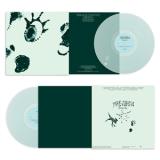
2xLP on limited edition ‘Splintered Tomb’ coloured vinyl. It is housed in a gloss laminated outer sleeve with colour inner sleeves and contains a large fold-out poster with unseen photos by the great Edward Colver, words by Lisa Fancher and liner notes by Wesley Eisold of Cold Cave/American Nightmare.
„Öd“ marks the long-awaited return of Institut für Feinmotorik - the Black Forest collective known for using eight prepared turntables to investigate acoustic micro-phenomena generated by everyday objects - with a new album and their first full-length release on Faitiche. It is also the return of their almost comical understatement as personal artistic principle: „making almost nothing out of almost nothing,“ compressed into the dots on an umlaut.
The Öd-nis, the wasteland, is a field that the collective has been ploughing in sound since their first release in 1997. Eight prepared turntables, four mixers, no records, six hands (give or take) merge into what they call the „Octogrammoticum“. A rotating organism of surfaces in friction, fed with the clutter from a drawer: rubber bands or tin foil, CDs, a discarded socket board. Under IFF's scrutinizing stylus, mundane almost-nothings get scratched open to reveal the acoustic density of negative space itself.
Last year’s „Adhesive Tape“ drew IFF closer together after an almost ten-year hiatus. An eponymous event series at Berlin's silent green set in motion what would become their most twistedly funky release since „Penetrans“ on Staubgold in 2002.
The only thing öd about „Öd" (meaning „barren" or „boring“ in German) may well be its title: layers of improvised play and randomized loops convolve around porous, dubby groove locks, tugging at each other in a call-and-response with howling static that cuts through bulbous ambient techno into a scrap-metal Dixieland phantasm. Stratified yet spacious, these sonic double exposures always hover on the verge of collapsing. What you think you hear might not be what you actually hear.
The album’s track titles resemble Conceptual Poetry, extending this psycho-phenomenological gesture into the realm of spoken language. Conceived by renowned poet Dagmara Kraus, they become word molecules - „stern,” „dies,” „lose“ - tilting delicately between German and English, constantly changing depending on the ear’s perspective and pointing back to the deeply unstable fabric connecting meaning and sound. Which also makes „Öd“ an unusual cross-disciplinary collaboration - at least in the field of electronic music.
PS: Since its beginnings in Bad Säckingen, IFF has always been more than the sum of its rotating parts, moving tirelessly between multimedia art, theory, solo projects and collaborations. With IFF Expanded, the collective now opens its eight-doored apparatus, inviting artists working with CDJs or samplers to join - an ambitious live format that loosens its former purity law while carrying forward a long-standing curatorial practice. The same thread also runs into the related event series Acephalic Headspace.
Institut für Feinmotorik (*1997), artist-group originating from Black Forest working in various fields. In musical context known for transforming turntables into instruments by removing the records and instead applying rubber bands, paper scraps, household materials – resulting in a vivid laboratory for the productive misuse of everyday objects. This approach is documented in record releases and performed live.
Ten years ago, Horse Jumper of Love released their self-titled debut, one that not only launched their career but also inspired a generation of shoegaze artists to come.
Recorded in a mill space studio by future longtime collaborator Bradford Krieger and first released in 2016 (before a re-issue by Run For Cover in 2017), Horse Jumper of Love introduced listeners to the band’s unique strain of expertly crafted minimalism and haunting lyricism. Tracks like “Orange Peeler” and “Ugly Brunette” capture a gritty melancholy and existentialism that is both youthful and timeless, angst-ridden and sincere. Now, a decade later, Horse Jumper of Love remains a beloved cult classic and a touchstone of the band’s continually developing brand of glacial, grungy indie rock.
This 10 Year Anniversary Deluxe Edition LP features new tri-fold packaging with collaged ephemera from singer and songwriter Dimitri Giannopoulos’ years in Boston while writing the record, a 20-page sewn-in booklet featuring never before seen photos and drawings, and handwritten tablature for the record’s original 9 songs. Disc one includes the original album fully re-mastered, and the brand new second disc features 13 bonus tracks recorded between the years of 2013-2015, mostly by Dimitri at home on a Tascam Portastudio, including single “Heathers (2013)” which was an early version of what would later become “i love you very much forever” and other never before heard demos, b-sides, and alternate versions of the original songs.
The record will also be released for the first time on CD, packaged in a 2-disc swing tray jewel case with a fold out poster.
Imagination Lady is the fifth long-player for Stan Webb's Chicken Shack and was originally released in 1972.
Much in the same tradition as the great British bluesmen Alexis Corner and John Mayall, Webb's revolving-door personnel landed the band several notable members. For this album, Webb (guitar/vocals) gathered a trio consisting of himself, future Gods and Jethro Tull member John Glascock (bass), and Paul Hancox (drums). As with the previous Chicken Shack long-players, this disc features several Webb originals augmented with some well-chosen cover tunes.
The album opens with a ferocious cover of B.B. King's "Crying Won't Help You." In a style akin to the Faces or even some of the rowdier moments from the Peter Green-led Fleetwood Mac, this trio grinds out the blues with a decidedly English edge, followes by the folkie "If I Were a Carpenter". "Daughter of the Hillside" & is Webb's most impressive contribution to the album. This straight-ahead rocker is an ideal trio effort recalling the intense instrumentality of Cream or early Led Zeppelin. The closing number "The Loser" is upbeat and almost pop-oriented, again displaying the immense strength of this Chicken Shack line up.
Imagination Lady is available as limited numbered edition of 1000 copies on red vinyl and comes in a gatefold sleeve.
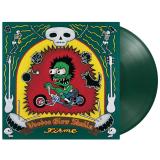
Voodoo Glow Skulls are an American ska punk band formed in 1988 in Riverside, California, by brothers Frank, Eddie, and Jorge Casillas and their longtime friend Jerry O'Neill. Voodoo Glow Skulls first played at backyard parties and later started playing shows with the Angry Samoans, The Mighty Mighty Bosstones, Firehose, Murphy's Law, and The Dickies.
Voodoo Glow Skulls' 1995 album Firme has been one of the high points in popularity for the seven-member band. Unlike some more laid-back performers in the genre, Voodoo Glow Skulls are a bit more heavy-handed on the punk part of the mix, resulting in consistently fast-paced and chugging song structures that occasionally erupt into triumphant horn breakdowns and chanted group vocals. The album also includes "Fat Randy," one of the group's more convincing ska-punk hybrids.
Firme is avavilable as limited numbered edition of 400 copies on green vinyl and includes an insert
TEMACHII creates immersive worlds where music, visual art, nature, and emotion blur together. Evoking the hazy surrealism of a once forgotten dream, the San Antonio-based multi-instrumentalist has built a devoted global audience through ethereal soundscapes, hand-crafted visuals, and songs that feel both deeply personal and universally comforting. Her music pairs ambient textures and dream-pop charm with an intimacy that feels like eavesdropping on an artist in conversation with herself—absorbing influences like Radiohead, Fiona Apple, Mitski and Aphex Twin while remaining less guided by genre than by feeling.
Her 2023 debut, flora maniia, was anchored by the 50 million-streamed hit “may you never forget me,” blending hypnotic acoustic guitar, lilting synths, and airy vocals into a reflection on love, memory, and the desire to leave a lasting impression. The follow-up LP, akrasiia, arrived later that same year, revealing a more stripped-back side of her sound while preserving the wonder at the heart of her work. Together with 2024 single “not/lost,” the releases have brought Temachii's art to fans around the world, a reach that feels especially meaningful given her Puerto Rican heritage. More importantly, they have transformed that audience into something more meaningful than simply streams and likes: a space for listeners to feel both safe and seen.
Come Back Down, the new album by Nashville experimental-pop duo Total Wife, was born from the edge of sleep. When composer and producer Luna Kupper would begin to fall asleep during late-night mixing sessions, the songs would follow her into the halfway place between dream and lucidity. Like Dale Cooper in Twin Peaks, she'd wake with a new perspective on the puzzle she was piecing together. "I'm a psychological mixer - I'm trying to think of how someone's experiencing the sound, versus getting stuck in trying to make all these different tones and using all this gear to make something sound a certain way," Kupper says. And like a spiral from waking life into dream, the songs on Come Back Down are endlessly self-referential, building whole universes from a single point. Kupper sold all of her synths to make rent before she started working on the album, and so every inorganic sound is instead built from samples of the band's own work. A guitar on one song may be reprocessed and used as a synth on the next, while everywhere on the album vocal samples are taken from a single unreleased cover of Elliott Smith's 'Between the Bars.' In tribute to this process, the album was almost named The Julia Set after the mathematical equation which feeds into itself again and again, creating beautiful fractal images. The intention was to create something complex but accessible; experimental, yet precise and without abstraction. In her lyrics, too, lyricist and vocalist Ash Richter is as straightforward as she's ever been. She drew on her experience of pandemic isolation to write about connection and disconnection, using her lyrics as a tool for the communication that was missing in everyday life. On the soaring, shoegazey track 'peaches,' a storm that forced the cancellation of a recording session became a metaphor for emotional distance. 'still asleep' chronicles Richter's euphoria after Total Wife's first tour, and watches it begin to curdle into paranoia. "Thank the full moon, my heart is overflowing," she sings, before: "Is there such a thing as too happy?" The experience of isolation was prompting Richter to think back to her childhood, a time marked for her by solitude and natural play - climbing trees, making mud pies, getting lost in the woods. On tracks like 'in my head' and 'second spring,' she uses the imagery of nature to recall that time and forge a connection with her lonely inner child. "I feel connected with transcendentalist writing and magical realism - trying to convey things in a concrete way, but with that element of psychology and mystery," she says. Richter and Kupper, friends from high school, formed Total Wife in 2016, relocating from Boston to Nashville in 2020. Both are visual artists as well as musicians, which they incorporate into their work with Total Wife via layered and purposeful visuals. A DIY streak underpins everything that they do - from handling their own artwork and music videos to recording their own music, releasing tapes through their label Ivy Eat Home, and hosting house shows in the basement they've christened Ryman 2. In Nashville they've settled into a weirdo scene living under the record industry's floorboards, a hive of collaborative and creative energy that has made them excited to call the city home. They also assembled a live band for the first time shortly after moving to Nashville, consisting of Ryan Bigelow, Sean Booz and Billy Campbell - injecting their creative process with a jolt of spontaneity and aliveness that has fed back into Come Back Down.
Come Back Down, the new album by Nashville experimental-pop duo Total Wife, was born from the edge of sleep. When composer and producer Luna Kupper would begin to fall asleep during late-night mixing sessions, the songs would follow her into the halfway place between dream and lucidity. Like Dale Cooper in Twin Peaks, she'd wake with a new perspective on the puzzle she was piecing together. "I'm a psychological mixer - I'm trying to think of how someone's experiencing the sound, versus getting stuck in trying to make all these different tones and using all this gear to make something sound a certain way," Kupper says. And like a spiral from waking life into dream, the songs on Come Back Down are endlessly self-referential, building whole universes from a single point. Kupper sold all of her synths to make rent before she started working on the album, and so every inorganic sound is instead built from samples of the band's own work. A guitar on one song may be reprocessed and used as a synth on the next, while everywhere on the album vocal samples are taken from a single unreleased cover of Elliott Smith's 'Between the Bars.' In tribute to this process, the album was almost named The Julia Set after the mathematical equation which feeds into itself again and again, creating beautiful fractal images. The intention was to create something complex but accessible; experimental, yet precise and without abstraction. In her lyrics, too, lyricist and vocalist Ash Richter is as straightforward as she's ever been. She drew on her experience of pandemic isolation to write about connection and disconnection, using her lyrics as a tool for the communication that was missing in everyday life. On the soaring, shoegazey track 'peaches,' a storm that forced the cancellation of a recording session became a metaphor for emotional distance. 'still asleep' chronicles Richter's euphoria after Total Wife's first tour, and watches it begin to curdle into paranoia. "Thank the full moon, my heart is overflowing," she sings, before: "Is there such a thing as too happy?" The experience of isolation was prompting Richter to think back to her childhood, a time marked for her by solitude and natural play - climbing trees, making mud pies, getting lost in the woods. On tracks like 'in my head' and 'second spring,' she uses the imagery of nature to recall that time and forge a connection with her lonely inner child. "I feel connected with transcendentalist writing and magical realism - trying to convey things in a concrete way, but with that element of psychology and mystery," she says. Richter and Kupper, friends from high school, formed Total Wife in 2016, relocating from Boston to Nashville in 2020. Both are visual artists as well as musicians, which they incorporate into their work with Total Wife via layered and purposeful visuals. A DIY streak underpins everything that they do - from handling their own artwork and music videos to recording their own music, releasing tapes through their label Ivy Eat Home, and hosting house shows in the basement they've christened Ryman 2. In Nashville they've settled into a weirdo scene living under the record industry's floorboards, a hive of collaborative and creative energy that has made them excited to call the city home. They also assembled a live band for the first time shortly after moving to Nashville, consisting of Ryan Bigelow, Sean Booz and Billy Campbell - injecting their creative process with a jolt of spontaneity and aliveness that has fed back into Come Back Down.
A space is often described by its dimensions. The height of the ceiling, the expanse between walls. Division into functional elements of varying density follows. We have ideas of how such dimensions should be balanced to work well for sound — the classical concert hall, a Northward mastering room.
It’s tempting to try and use this idea of space to understand Space the group (Lisa Ullén, Elsa Bergman, Anna Lund). To calculate their cartesian co-ordinates: dynamics that run from whisper soft to punishing, shaking force; Ullén’s piano running the full expanse of the frequency spectrum; the mix of sudden, surprising and suggested variations in density (the space) that generates their musical structures.
But (a) space is a social phenomenon where meaning is accumulated and possibilities created by and through a constantly shifting set of social relations and their histories and entanglement inside and beyond the physical structures of a room or building. Reduced to its raw dimensions, Cafe OTO shouldn’t sound good: the low ceiling, the hollow void underneath the stage-not-stage, the hard glass windows out onto the street. But OTO as a social space — for gathering close to listen; the serious pursuit of a convivial good time (its productive mythology that an OTO audience is both up for it but also expects more); and then the idea of all that has happened before and what will come; that this is also part of ‘the music’ and changes what sounds to the point that none of those cartesian co-ordinates matter.**
It’s less of shock that Space sound good. Lisa Ullén is easily the most singular pianist in Sweden right now and Elsa and Anna’s ability to reroute in realtime reaffirms just how well they function as a group. The trio might have got their shit together holding down the rhythm section for the first incarnation of Anna Högberg Attack — but much like Högberg’s ongoing pursuit of artistic renewal, the trio avoid being shackled to any ideas about what a piano trio should be and there is something that happens (happened) in that room, on that night, with those people that made for something beyond just good.
It’s a gift that the sound of every concert at OTO gets recorded. A choice handful of these transcend their decoupling from that social space and radiate the room’s attendant energies. This record is one of them.
** See Jack Halberstam in Fred Moten & Stefano Harney, The Undercommons (2013): “…we must refuse the idea that music happens only when the musician enters and picks up an instrument; music is also the anticipation of the performance and the noises of appreciation it generates and the speaking that happens through and around it, making it and loving it, being in it while listening."
“When the flesh gets cut off the soul, it’s not the end.”
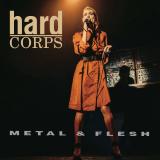
More than forty years after hardCORPS emerged from a Brixton basement, ‘Metal & Flesh’ returns in a new expanded edition on double vinyl and CD, newly remastered with the full involvement of surviving members Rob Doran and Clive Pierce. Born from the collision of punk, analogue synthesisers, sequencers, disco, reggae and experimental studio techniques, hardCORPS created electronic music that was as physical and emotional as it was mechanical. The arrival of French vocalist Regine Fetet gave the group its defining identity, placing her raw, uncompromising voice against the dense machinery of Hugh Ashton, Clive Pierce and Rob Doran. Working mainly with a Roland System 100, several Roland MC4 sequencers and later an additional MC500 and Atari ST 1040 computers, etc. pp., hardCORPS always transformed limitations, accidents, distortion and human imperfection into part of the music itself. Although rooted in the early 1980s, ‘Metal & Flesh’ refuses easy nostalgia, retaining the tension, space and character that made hardCORPS unlike their contemporaries. Yet, shall we eventually mention Kraftwerk, maybe let’s quote Ian Shirley from Record Collector magazine: „’Je Suis Passée‘ was not only a love letter to Kraftwerk but penned with such verve, passion and precision that Ralf and Florian probably would have accepted a blind date at a Düsseldorf cocktail bar (…).“ And as Martin Rushent famously said in 1990: “Hard Corps were ignored in their time. Perhaps it is the burden of the adventurous and the innovative to be ignored in their time, which is sad. Don’t ignore them now.”
This new edition has been carefully remastered to preserve that character and dynamics rather than simply making the recordings louder or more ‘modern’, while the artwork has likewise been developed to reflect the band’s original identity. Metal & Flesh’ is not merely an artefact of the 1980s, but a rare and fiercely individual document of four people discovering what happens when human instinct and machines collide.
Remastered by Martin Bowes. Graphic design by hard CORPS and Steve Lippert.
Gatefold sleeve gloss lamination, printed inner sleeves with lyrics, two double-sided hand-numbered.
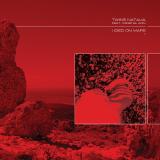
Twelve years have passed since TWINS NATALIA’s debut album, “Destiny Room”, but Dave, Marc and Steve have never really stopped working on new ideas and projects, including the release of a mini-album from Marc’s solo project SHIBUYA STATION. This featured their first collaboration with Greek artist KRIISTAL ANN (also known from PARADOX OBSCUR), who provided the vocals for the track “Madness”. This led to Anna being invited by TWINS NATALIA to perform lead vocals on their cover version of KNOW’s “Knights of Pleasure”. The results were so pleasing that, from then on, Anna was persistently ’pestered’ to work on a TWINS NATALIA EP, which slowly morphed into a complete album entitled “I Died On Mars”. The album is a journey through electronic soundscapes and pure, dark ’80s minimal synth-pop, full of melancholia, haunting melodies, elaborate synth sound design and sequencing, ranging from neat to gnarly, and, of course, KRIISTAL ANN’s charismatic voice icing the cake.
“I Died On Mars” presents us with further surprises: TWINS NATALIA version of “The Dagger In Me” by ’80s Greek post-punk legends THE HANDS OF CAIN, as well as “A Different Hum” by PARADOX OBSCUR, a song that surely needs no further introduction. Anna has not shied away from specially re-recording the vocals for this version, while both versions have been given some distinctly Twins Natalia-specific additions and treatments. Furthermore, Anna has contributed her own composition “Find Me I A Fantasy”, so you’re in for a treat or two, for sure.
Mastering by Nikolas Haldoupis at SoundCave Studios Athens.
Graphic design by Steve Lippert with some original photography by Kriistal Ann.
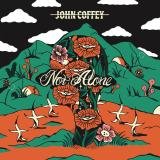
John Coffey built a reputation as one of the most explosive live bands in Europe - even becoming an internet sensation with the legendary “beer catch”. From Graspop to Sziget, Wacken to Pinkpop, Vainstream to Jera On Air, 2000trees and Hurricane/Southside - the Dutch group has played several of the biggest festivals, sold out the Melkweg in Amsterdam and even launched their own punk rock festival - Coffey Fest - to celebrate community and uncompromising music. Never shying away from the world around them, John Coffey actively uses their platform to speak out on social justice and political urgency. The new studio album "Not Alone" is about the power of connection. About discovering that there are other people who feel what you feel. Whether you find that connection through a partner, a friend, a helpline, or a room full of people feeling the same music. Talking helps. Singing helps. Screaming along helps. Armed with new music, a fierce activist ethos, and upcoming European tour dates, the band proves that engagement and heavy rock ’n roll are a perfect match.
,Es ist ein Bedroom-Album, das sich aber gar nicht wie eins anfühlt", sagt Glenn Morrow, Gründer von Bar/None Records, über ,Reseda Spleen", das lange verschollene Album von Ventilator aus dem Jahr 1996. Nach Jahren bei Permanent Green Light wurde Matt Devine klar, dass er weiterziehen musste. Devine stürzte sich kopfüber in sein neues musikalisches Kapitel: mit Earle Mankey als seinem musikalischen Mentor, Todd Rundgrens Klassiker ,Something/Anything" aus dem Jahr 1972 als konzeptionelle Inspiration und einem gebrauchten Tascam 388 - gekauft von einem Stuntman bei ,Mighty Morphin Power Rangers" -, den er in seiner Wohnung in North Hollywood aufstellte. ,Reseda Spleen" hätte bei Liebhabern von lautem, gitarrenlastigem Pop eigentlich Anklang finden müssen. Leider blieb die Existenz des Albums, wie bei so vielen Indie-Veröffentlichungen davor und danach, so gut wie unbemerkt - abgesehen von zwei begeisterten Kritiken (von ,The Big Takeover" und ,TapeOp"), die erst lange nach dem Verschwinden von ,Reseda Spleen" aus der Szene erschienen. ,Es ist so ein zeitloses Album", sagt Rob Zabrecky Possum Dixon. ,Es hat nicht diesen schrecklichen Glanz, mit dem damals so viele Bands überzogen wurden, und Matt hat nicht versucht, seine Gitarre wie Nirvana klingen zu lassen oder den Lo-Fi-Weg wie Pavement einzuschlagen; er war so im Reinen mit sich selbst und seiner Vision, dass ihn all das nicht beeinflusst hat. Es ist einfach so schön, dass diese Songs wieder herauskommen, denn ich glaube, die Leute müssen sie hören."
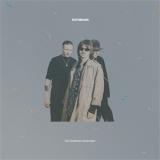
Rathmann spielen dunklen Gitarrenpop. Ungeschliffen und roh. Schmutzig, räumlich und mit einem Sinn für Romantik. Auf ihrem Debütalbum "Die Goldenen Zwanziger" haben sie zu einem klaren Selbstverständnis - einem eigenständigen Sound - gefunden und erzählen darin ehrlich und nahbar. Wenn in ihren Songs ein junges Paar ungewollt schwanger wird, Menschen aus der Bahn geraten oder sich dystopische Zukunftsaussichten breit machen - dann vertonen Rathmann abgründig und introspektiv, eingängig und wunderschön die Zwanziger. Ihre eigenen und das Jahrzehnt, in dem sie sie erleben. Vom Indierocker "Warum tut Liebe so" über den folkigen "Trauriger Geist" bis zum Italo-Western-Titeltrack des Albums - überall ist die klare Handschrift zu erkennen: Eine Band, die sich erlaubt, Band zu sein. Eine Band, die sich nicht am Zeitgeist, sondern ausschließlich an ihren eigenen Interessen orientiert. Und so findet man auf ihrem im Herbst 2026 erscheinenden Debütalbum mehr Anleihen von Leonard Cohen, Big Thief, Dr. Dog und Bands der Hamburger Schule als vom zeitgenössischen, deutschen Indiepop. Bei ihren Konzerten wie auch im Songwriting, Rathmann fangen in ihren Liedern den Moment ein: Die Unsicherheit unserer Zeit und die Tristesse einer soliden Quarter-Life-Crisis - immer aber auch die Freude an der Gemeinsamkeit und die Aufregung eines Lebens, das es noch zu entdecken gilt. Inklusive der Singles Wenn alles vorbei ist, Der Test in Deinen Fingern, Warum tut Liebe so & Trauriger Geist.
Das 1982 aufgenommene (aber erst 1986 veröffentlichte) Album *Jealous* war John Lee Hookers erstes
Album mit neuem Material seit Jahren und leitete ein Comeback ein, das drei Jahre später in dem mit
einem Grammy ausgezeichneten Album *The Healer* gipfelten sollte.
Im Gegensatz zu der Vielzahl an Gaststars, die auf den meisten Alben seiner späten Schaffensphase zu
hören waren, präsentiert sich *Jealous* als schnörkellose, erdige Produktion von Hookers eingespielter
Band. Das Album, das neu interpretierte, weniger bekannte Stücke aus seinem frühen Repertoire enthielt,
wurde schließlich mit einem W.C. Handy Award ausgezeichnet und für einen Grammy nominiert.
Der deutsch-amerikanische Violinist David Garrett veröffentlicht mit Immortal sein neues Album. Ein
zutiefst persönliches Projekt und zugleich eine Hommage an einige der bedeutendsten Komponisten der
Musikgeschichte wie W. A. Mozart, Claude Debussy und John Williams. Alle Stücke wurden von David neu arrangiert und spiegeln sein tiefes musikalisches Verständnis, sowie
seinen Anspruch an Authentizität wider. „Ich bin stolz darauf, sagen zu können, dass dieses Projekt zu
100 % handgemacht ist“, sagt er. „Ich hoffe, dass die Hörerinnen und Hörer nicht nur den Klang genießen,
sondern auch die menschliche Präsenz in der Musik spüren.“
Robert Nasveld (*1955 Utrecht) studied piano at the Utrecht Conservatory with Polo de Haas, Sas Bunge and Herman Uhlhorn, composition with Joep Straesser, and electronic music with Ton Bruynèl. After completing his piano studies, Robert Nasveld specialised in 20th-century repertoire, with a particular focus on Dutch, Russian and American music. He achieved international fame as a pianist for his interpretations of the works of the American composer George Crumb, which led to invitations to perform at various events, including the Warsaw Autumn Festival (1990). His connection with George Crumb also enabled him to produce a seven-hour live broadcast of Crumb's music for VPRO radio in 1986 and a television program with the composer. Nasveld recorded the complete works for one piano by George Crumb, which was released by the Attacca label in 1991. He has given concerts in Europe, Russia, and the United States.
Nasveld was also a member of the Orgella Quartet, founded in 1976 (with Margaret Krill, Polo de Haas, and Niek de Vente), Piano Kwadraat, and the Netherlands Pianists Quartet (with Marian Bolt, Corien van den Berg, and Niek de Vente). These ensembles specialised in performing music for two eight-handed pianos. He also collaborated with several vocalists, including Claron McFadden, Marjanne Kweksilber, and Liesbeth List (tour 1983/'84). Due to multiple sclerosis, he retired from performing in 1998.
From 1988 to 2021 Robert Nasveld worked for Dutch national radio (NOS/NPS/NTR) as a program producer for NPO Klassiek. Until 2004, he was editor of Supplement, which received the Silver Reiss Microphone in 1996, the highest award for a radio program, for its adventurous and innovative programming. Robert Nasveld also programmed concept evenings at Muziekcentrum Vredenburg, featuring contemporary music performed by soloists, ensembles, and the broadcasting orchestras for NOS/NPS. From 2019 until his retirement in 2021, he presented a series of podcasts for NTR/NPO Radio 4 about electronic music pioneers. The three compositions on this LP are the only tape pieces recorded by Nasveld. They were created at Ton Bruynèl’s studio at the Utrecht Conservatory and the Institute for Sonology in Utrecht.
A quick scan of the world’s favourite crowdsourced discography reveals that Sonic Youth co-founder Lee Ranaldo was not a total stranger to crackling electric experimentation in the years following his songwriting turns of the 20-teens. Yet »The System«, ingeniously culled and sequenced from Ranaldo’s soundtrack work for Dutch filmmaker Joris Postema’s ›eco-doc‹ of the same name, nonetheless feels like a reawakening. Quietly released in a vastly different (and much more ›filmic‹) form by Doxy Music/Riva Media Records in 2025, this LP reimagines and reconfigures the initial release, including unreleased material written and recorded for the film, to lend it new stature as both a return to drone-improv form and a reunion with introspective Downtown angst.
Given the state of the world, it’s not surprising that the film Ranaldo scores – a documentary on three climate activists bruising their fists on the black iron prison of techno-fascist deathkultur – is a study in despair and futility. But rather than wallowing in navel-gazing doom and gloom, the film documents the unstoppable spirit that has animated human resistance since the time of the Pharaohs.
As it turns out, the gorgeous scope of Lee Ranaldo’s guitar palette is a perfect manifestation of the hope and despair that animates the film. But like other high-water marks in the guitar-centric soundtrack canon – the high plains raga of Bruce Langhorne’s »Hired Hand«, Neil Young’s sparse and ghostly solo transmissions on »Dead Man«, or the monolithic mantras of Popol Vuh’s »Nosferatu« – its devotion to spectral gestures and meditative song forms launches it firmly outside of the OST orbit into a universe fully its own.
It might seem like a long journey from the Lower Manhattan rhythmic grime of the album’s opener »Tajikistan (Nice to Meet You)« (reminiscent of guitar opuses like Robert Quine and Jody Harris’s »Escape«) to the ringing cowboy chords of the final track, but the narrative logic of the LP pulls the listener along as solidly as a pack horse. As the LP unwinds, and collaborators like Jim Jarmusch, cellist Leila Boudreil, Yeah Yeah Yeahs snare shaman Brian Chase, and guitarist Yonatan Gat take their places, new vistas unfurl: the ritualistic thrum of »Berlin Blockade«, the haunted overtone palaces of »Bergelmir«, and the cavernous acoustic strumming of »Instruments of Violence«. It all winds up with the high lonesome standard »Cool Water«, each unhurried note trailing off into long-tail reverb, layers of shifting vocal harmonies pulling everything skyward – a hopeful note in an album where existential dread never lurks too deeply below the surface.
In the end, »The System« functions both as a film score and a hallucinatory (mostly) instrumental guitar record, revealing a sensibility not too often spotted in the 21st century – a liminal space where the song, the jam, and the meditation merge into a blurred whole. »The System«’s expansive fabric, emerging from a collective sound circling around Ranaldo’s signature tones, envelops and ampl amplifies the contributions of its community of creators – the perfect antidote to narcissistic despair. Much like the subjects of the film light the way towards intra-generational resistance, the music of »The System« reveals a path through gathering darkness. The world could be yours if you follow.
A quick scan of the world’s favourite crowdsourced discography reveals that Sonic Youth co-founder Lee Ranaldo was not a total stranger to crackling electric experimentation in the years following his songwriting turns of the 20-teens. Yet »The System«, ingeniously culled and sequenced from Ranaldo’s soundtrack work for Dutch filmmaker Joris Postema’s ›eco-doc‹ of the same name, nonetheless feels like a reawakening. Quietly released in a vastly different (and much more ›filmic‹) form by Doxy Music/Riva Media Records in 2025, this LP reimagines and reconfigures the initial release, including unreleased material written and recorded for the film, to lend it new stature as both a return to drone-improv form and a reunion with introspective Downtown angst.
Given the state of the world, it’s not surprising that the film Ranaldo scores – a documentary on three climate activists bruising their fists on the black iron prison of techno-fascist deathkultur – is a study in despair and futility. But rather than wallowing in navel-gazing doom and gloom, the film documents the unstoppable spirit that has animated human resistance since the time of the Pharaohs.
As it turns out, the gorgeous scope of Lee Ranaldo’s guitar palette is a perfect manifestation of the hope and despair that animates the film. But like other high-water marks in the guitar-centric soundtrack canon – the high plains raga of Bruce Langhorne’s »Hired Hand«, Neil Young’s sparse and ghostly solo transmissions on »Dead Man«, or the monolithic mantras of Popol Vuh’s »Nosferatu« – its devotion to spectral gestures and meditative song forms launches it firmly outside of the OST orbit into a universe fully its own.
It might seem like a long journey from the Lower Manhattan rhythmic grime of the album’s opener »Tajikistan (Nice to Meet You)« (reminiscent of guitar opuses like Robert Quine and Jody Harris’s »Escape«) to the ringing cowboy chords of the final track, but the narrative logic of the LP pulls the listener along as solidly as a pack horse. As the LP unwinds, and collaborators like Jim Jarmusch, cellist Leila Boudreil, Yeah Yeah Yeahs snare shaman Brian Chase, and guitarist Yonatan Gat take their places, new vistas unfurl: the ritualistic thrum of »Berlin Blockade«, the haunted overtone palaces of »Bergelmir«, and the cavernous acoustic strumming of »Instruments of Violence«. It all winds up with the high lonesome standard »Cool Water«, each unhurried note trailing off into long-tail reverb, layers of shifting vocal harmonies pulling everything skyward – a hopeful note in an album where existential dread never lurks too deeply below the surface.
In the end, »The System« functions both as a film score and a hallucinatory (mostly) instrumental guitar record, revealing a sensibility not too often spotted in the 21st century – a liminal space where the song, the jam, and the meditation merge into a blurred whole. »The System«’s expansive fabric, emerging from a collective sound circling around Ranaldo’s signature tones, envelops and ampl amplifies the contributions of its community of creators – the perfect antidote to narcissistic despair. Much like the subjects of the film light the way towards intra-generational resistance, the music of »The System« reveals a path through gathering darkness. The world could be yours if you follow.
New full-length from MINIATURa, following Geometria Prohibida (Keroxen, 2020). Espectral was recorded inside the iconic Keroxen oil tank in Tenerife — a brutalist chamber whose metallic resonance seeps into every track.
Motorik tension, post-punk restraint, shoegaze and darkwave undertow surface and dissolve throughout, but this is no genre exercise. The album feels lived-in and physical: drums hanging in open air, guitars stretching into steel-lined decay, moments of synthetic clarity torn open by abrasion. Propulsion and erosion move side by side.
There’s a rawness here that isn’t aesthetic — it’s architectural. The tank becomes a silent collaborator, shaping space as much as sound.
Lyrically, Espectral unfolds through elliptical micro-poetry, tracing life, love, death and social fracture in fragments rather than declarations. Nothing is fixed; everything hovers.
One of the strongest independent statements to emerge from the Canary Islands in recent years, Espectral finds MINIATURa operating on its own frequency — austere, immersive, and built to linger.
Individually, Justo the MC & maticulous have impressive resumes in the underground hip hop circuit. Justo, who came up under the Gang Starr Foundation, has worked with Lord Finesse, Rockwilder, Marco Polo and DJ Skizz, releasing numerous projects, most recently “Black Ops,” produced entirely by Showbiz of DITC.
maticulous, who came up under Fat Beats NY, has delivered several producer albums and instrumental projects having produced for the likes of MF Doom, Masta Ace, Your Old Droog, Fame Of MOP, Blu, RA the Rugged Man and many more.
After a chance meeting at SiriusXM studios, the duo started to craft what would become “Mind Of A Man.” This album showcases the feeling of Brooklyn hip hop that stands firm on tradition, giving you true school flavor you’ve been missing. Featuring guest appearances by Kev Brown, Rasheed Chappell, DJ Eclipse and Davenport Grimes.
Limited edition of 300 hand-numbered copies, with the first 100 pressed on black / grey A-side B-side vinyl, the remaining 200 pressed on black vinyl.
Boston based production duo and room-mates John Barera & Will Martin continue their journey into sculptural, storytelling House music, with their debut album on Dolly - ' Graceless'. The pair's work has found a wider audience since the success of 'Reality', which found its way into the hands of Berlin's Steffi, and acted as a central gear and in her 2013 Panorama 05 Mix. John Barera has been a firm disciple of the House and Techno world for the past 10 years, and after launching Supply Records in 2011 has brought an elegant, resoundingly universal mixture of underground club tracks to the fore. A fresh and fruitful partnership with close friend Will Martin grew out of the pair's rapidly growing studio, and the latest results can be found here over the 8 cool, classy and refined contemporary House tracks.
out of Stock
Last delivered 11 years ago available to reorder, subject to availability
From the discovery of her smoke 'n' honey battlecry, through her baptism of fire in the Bronx blues clubs, onto backup vocals for giants like Joe Louis Walker and Popa Chubby - before finding her own voice with the solo career that exploded in 2016 - the award-winning New York singer-songwriter's road-scuffed leather boots have barely touched the ground. Now, Schorr releases Running Wild: the highly anticipated third album whose songs pulse with empowerment in dark times. "It's about defiance, selfdiscovery, reflection, resilience and freedom," she says. "I want these songs to lift people above the grind.
Featuring timeless waltzes and polkas by Johann Strauss I & II , including "An der schonen, blauen Donau", "Kaiser-Walzer" and the festive "Radetzky March", this album captures the sparkle, elegance, and tradition of Vienna's celebrated New Year concerts. Conducted by Willi Boskovsky and Hans Knappertsbusch , these historic recordings from the late 1950s and early 1960s offer an authentic and joyful listening experience, perfect for classical music lovers and New Year celebrations alike.
Leading the charge was a young band from West London called Pressure Point, whose debut single Mellow Moods caused a real stir on its release in 1985. The Stan Getz-inspired bossa nova was released initially on Viceroy Records, and immediately punched well above its weight, thanks to the considerable talents of producer Steve James, vocalist Lydia Gayle and some of London's leading session musicians: saxophonists Jamie Talbot and Ian Trimmer, trumpeter Steve Sidwell and his brother, trombonist Neil, and keyboard player Simon Etchells. It quickly became Capital Radio's 'People's Choice', winning praise on air from the likes of Kid Creole himself - August Darnell - and went on to be re-released by Bellaphon in Germany and by Gilles Peterson's HardBack Records. It is widely viewed as a rare groove classic, with copies changing hands for hefty sums in the following decades. London- based Pressure Point's core members were Matthew Best, Anthony 'Hugo' Longden and Sean Maher, who went on to work with Soul Legend Miss PP Arnold to complete 'Dreaming', a now legendary and as yet unreleased 1989 album
Gabriella Cilmi's talents were undeniable from a young age, leading her to sign to Australia's Mushroom Records when she was just 13-years-old. Just a few years later, the breakthrough success of 'Sweet About Me' and her Gold-certified UK Top 10 debut album 'Lessons To Be Learned' took the teenager global. But she discovered that the more success she had, the more she was subjected to countless opinions on what she should do next - an awkward situation for an artist who just wanted to be herself. 'Pure Love' is a record she made having discovered the confidence and freedom to make exactly the kind of album she wants to make: a soulful organic one, on which she could sing from the heart. And it's certainly worth the wait, a triumphant return in which her warm, throaty, unmistakably expressive contralto wraps itself around the deep soul, jazz and classic rock that has always been closest to her heart.
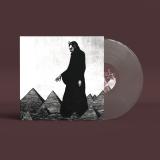
On the one hand, In Spades is as quintessentially Afghan Whigs as anything the group has ever done – fulfilling its original mandate to explore the missing link between howling Midwestern punk like Die Kreuzen and Hüsker Dü, The Temptations’ psychedelic soul symphonies, and the expansive hard-rock tapestries of Led Zeppelin and Lynyrd Skynyrd. At the same time, this record continues to push beyond anything in the Whigs’ previous repertoire – another trademark, along with the explosive group dynamic captured on the recording.
Much like a teacher, Meryl Streek imparts his knowledge and lived experiences to all who are willing to listen. His third album, ‘Stories They Don’t Teach You At School’, serves as an alternative form of education, delivered through a visceral blend of factual soundbites and raw emotion, loops and samples, guitars and bass. The lyrics resonate with core values of compassion, resilience, and community—themes rarely explored within a classroom setting or seen in today's fragmented society. By prioritising conviction over commercial success, the Dublin artist's outspokenness may invite controversy. Yet beneath the fervor lies a profound desire for positive social change at home in Ireland, and beyond.
Meryl Streek returned to Darkland Studios in Dublin to fine-tune the recordings previously made in a shed at the back of his ma's garden. Here he continued the genre-blurring nature of his earlier work, enticing listeners toward dissonant landscapes and hypnotic rhythms. Gentle piano tones collide with abrasive synths, creating a striking tension between beauty and noise. Streek tempers his rage when appropriate, integrating atmospheric textures and pop sensibilities into his ever-expanding sonic collage.
As is tradition with any Meryl Streek record, ‘Stories They Don’t Teach You At School’ unearths many uncomfortable truths. ‘Rotten Fruit’ examines media manipulation and the numbing proliferation of misinformation, all soundtracked by synth-punk. With gliding keys and a crunchy bassline, ‘Council Estates’ critiques systemic government failures affecting the working class. ‘Kelly’ is a slice of electronica that details an ongoing criminal investigation, currently classified as a “Contested Cause of Death”. The indie pop of 'The Chancer' brings much-needed attention to landlord politicians. As the album progresses, the mission remains absolute: to provide a voice for the voiceless.
To amplify these narratives, Meryl Streek handpicked a diverse group of collaborators for the project. ‘Rotten Fruit’ features Steve Ignorant of anarcho-punk collective CRASS. ‘Depression’ opens with a touching recording of the late Liam Norton, close friend and former touring companion, while Pete Holidai of The Radiators From Space contributes guitars on the song. Comedian Phill Jupitus provides the spoken outro for ‘The Chancer'. ‘Housing For All’ incorporates audio from Derelict Ireland campaigners Frank O’Connor and Jude Sherry. Venn Records owner and Gallows guitarist Laurent ‘Lags’ Barnard joins forces with Adebisi Shank bassist Vinny McCreith on the aggressive ‘Bullet,’ while Sophie Porter of Other Half provides bass guitar for ‘Life is Not a Rehearsal’. The album concludes with a three-minute spoken word piece by Frankie McNamara, the viral creator behind ‘Meditations for the Anxious Mind’.
In her 1990 protest anthem “Black Boys on Mopeds,” the late Sinead O’Connor warned, “To say what you feel is to dig your own grave”. With this release, Meryl Streek firmly holds the shovel.
Official reissue for this long lost 1966 LP, the very first to be endorsed by the Trevor Lucas estate. Pressed on orange vinyl for RSD 2022. Ultra-rare 1966 solo album by singer/songwriter Trevor Lucas of Fairport Convention, Fotheringay, and Election. This Australian born folk legend recorded his own songs and a handful of covers – mostly solo acoustic, occasionally accompanied by bass, concertina, and fiddle. This is the first ever authorized reissue (by his estate), a long lost gem from a seminal songwriter.
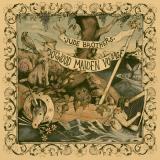
Jude Brothers sails toward a new shore with Dogwood Maiden Voyage. Created in living rooms, recording studios, and train tunnels between Tennessee and Arkansas, it's an adventurous album that's every bit as eclectic as its world-traveling creator. Here, Jude's vision of freethinking folk music — a multicultural sound that truly knows no borders, inspired by a vast array of global folk, sacred music, and pop songs— is given a lush update with string arrangements and vocal harmonies, shining new light on an artist who's always evolving.
Jude's songs are rarely linear. Instead, they explode outward in unexpected directions, exploring left-hand turns and detours before returning to their original paths. Caught halfway between the free-form, the freak-folk, and the finely-crafted, they tell stories about the complicated paths we take toward self-discovery, the push-and-pull between the desire to belong and the perpetual feeling of otherness, and the growth that emerges during times of barrenness. "You can sit with an old southerner on the porch and they’ll be telling you a story, and there are 17 different tangents," Jude says. "That's how I make music. I take all different plot lines and weave them together."
Throughout Dogwood Maiden Voyage, Jude indulges in childlike fantasy as an adult, encouraging fractured pieces of identity to communicate with one another. Much of that fantasy takes place in the woods, surrounded by trees, protected by the natural world that Jude's music so wistfully evokes. There's grief and darkness here, but there's light, too, like a forested landscape that's beginning to embrace spring after a long winter. Dogwood Maiden Voyage makes room for both sides of that divide. It's an album of multitudes — a record for all seasons.
Scottish musician Kay Logan (aka Helena Celle) self-released the prescient collection of oddball aleatoric bangers "Copy Music" in 2021, before pulling it from circulation. With the help of London imprint SWIMS, this cult album is now remastered and available on vinyl for the first time, under the new name "Endless Waltz". This will be the final Helena Celle album.
Raised on a diet of industrial queer pioneers Coil and Throbbing Gristle, occultish physics (John Dee, Aleister Crowley) and Frank Zappa, Kay's work has toyed and probed at the fringes of outsider art and technology for over ten years. Her 2016 album "If I Can't Handle Me At My Best..." established Celle's unique sonic language of unrepeatably gnarled techno, coaxed from a bewildering array of disintegrating midi controllers, Markov chains, and whatever else came to hand.
"Endless Waltz" pursues this formula to its bizarre conclusion: 18 fever loops of algorithmically crumpled dance music, pulled through a cheese cloth of obscure '90s computer game palettes and pop froth wordplay. Some of these delirious vignettes evoke a rudimentary AI regurgitating Captain Beefheart scores. Others, as one fan put it, are "sort of like if 'Commercial Album'-era Residents did an album on Rephlex". Enjoy the trip.
Recommended if you like Rezzett, Beau Wanzer, Hype Williams...
DJ Support: FISHER, ACRAZE, AFROJACK, Rebuke, ALOK, Mau P, Tchami, MEDUZA, James Hype, Joel Corry, Hot Since 82, Dombresky, Oliver Heldens, OFFAIAH, Danny Howard, MEDUZA, Bob Sinclar, Joel Corry, Groove Armada, Sam Feldt & more.
Toolroom’s next Sampler showcases 4 big releases from Malaa, Zaark, ESSEL, Cristoph, Mark Knight & Wh0.
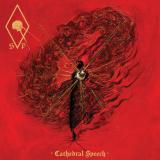
Nach drei Jahren und zehendtausend Höllen entfesseln SPIRIT POSSESSION am 2. Oktober ihr drittes Album in voller Länge: „Cathedral Speech“.
Sieben angreifende Labyrinthe weitreichenden Black Heavy Metals, bei denen alle Turmspitzen nach unten zeigen.
Wo „Of the Sign…“ aus dem Jahr 2023 noch einen messerscharfen Blick auf unberechenbare, abenteuerliche Hymnen warf, erweckt „Cathedral Speech“ die bisher stechendste, am stärksten deragierte und erzählerisch epischste Form von SPIRIT POSSESSION. Spiralförmige Gitarrenstürme und explosive Schlagzeug-Hämmerungen kanalisieren Black-/Death-Metal-Angriffe der ersten Welle im selben Atemzug mit ausladenden 70er-Jahre-Kompositionen.
Mit vier Schritten in den Wahnsinn, gefolgt von einer seitenlangen Suite, sind dies bösartige elektrische Gesänge, ebenso hochragend wie gotteslästerlich.
Besetzung: S. Peacock (Black Curse / Ulthar / Mastery) an Saiten und Gesang sowie A. Spungin (Ormus) an Schlagzeug und handgefertigten Synthesizern. Aufgenommen in den Tiefen des S•P-Dungeons und gemischt von Colin Marston in den New Menegroth, The Thousand Caves. Cover-Artwork von Luciana Lupe Vasconselos.
"Burning Down Paradise", das sechste Studioalbum der NWOBHM-Legende Tokyo Blade, erblickte ursprünglich im Jahre 1995 über Fresh Fruit das Licht der Welt. Fresh Fruit war ein Sublabel von SPV in Hannover. High Roller Records legt »Burning Down Paradise« jetzt zum allerersten Mal als Vinyl auf.
Die Platte markierte die Wiedervereinigung von Gitarrist Andy Boulton und Sänger Alan Marsh, die das erste Mal seit dem Debütalbum von Tokyo Blade im Jahre 1983 wieder gemeinsame Sache machten. Die damalige Besetzung wurde komplettiert von John Wiggins an der zweiten Gitarre, Colin Riggs am Bass und Marc Angel hinterm Schlagzeug.
„Ich denke, alle zwölf Songs haben den Test der Zeit gut überstanden“, kommentiert Gitarrist und Gründungsmitglied Andy Boulton heute. „Allerdings war es eine schwierige Zeit für Hardrock und Heavy Metal. Der musikalische Geschmack hatte sich drastisch verändert. Das Album wurde in einem kleinen Studio direkt außerhalb von Marlborough in Wiltshire aufgenommen. Zusammen mit einem Tontechniker namens Nick Beer. Ich nehme an, man könnte sagen, dass die ganze Band »Burning Down Paradise« produziert hat. Als Hauptsongwriter hatten Alan und ich am Ende aber wohl den größten Einfluss auf den Sound der Platte.“
Laut Aussage des Gitarristen erntete das Album zum Erscheinungszeitpunkt unterschiedliche Reaktionen: „Die Meinungen gingen auseinander, einige alte Fans mochten unsere neue Richtung nicht, während andere positiver eingestellt waren. Und was die Kritiker an sich betrifft, auf die höre ich eh nicht. Meine Einstellung ist: Wenn dir die Musik nicht gefällt, hör sie dir einfach nicht an.“
Nach der Veröffentlichung von "Burning Down Paradise" gingen Andy Boulton und Alan Marsh abermals getrennte Wege. Tokyo Blade lösten sich (zwischenzeitlich) auf: „Wir hatten die Schnauze voll, ohne Unterstützung von irgendwoher weiterzumachen. Es war eine schlechte Zeit für unsere Art von Musik, und wir sahen keinen Sinn darin, die Band weiterhin am Leben zu halten und unsere Kraft zu vergeuden.“
Remastered von Patrick W. Engel at TEMPLE OF DISHARMONY im März 2026.
DIGITiSE knüpft dort an, wo HAAis Album HUMANiSE aus dem Jahr 2025 aufgehört hat, und versetzt uns direkt auf die Tanzfläche. Die zehn Tracks bewegen sich klanglich über verschiedene Genres und Stilrichtungen hinweg und sind von HAAis legendären All-Night-Long-DJ-Sets inspiriert.
Mit DIGITiSE setzt HAAi ihre Auseinandersetzung mit der Frage fort, was es bedeutet, in einer zunehmend digitalen Welt Mensch zu sein. Das Album beleuchtet das rasante Tempo von KI und technologischer Entwicklung, die Spaltungen, die dadurch entstehen, sowie die Belastungen, die damit einhergehen. Gleichzeitig bietet es ein Gegenmittel: Gemeinschaft. Menschen in einem Raum oder auf einer Tanzfläche zusammenzubringen, ein Gefühl von Zusammenhalt und Zugehörigkeit zu schaffen – dafür steht HAAi seit jeher mit voller Überzeugung. DIGITiSE öffnet sich diesem Geist vollkommen.
Für das Album arbeitet die in London lebende, australischstämmige Produzentin, Songwriterin und DJ mit neuen Kollaborateur:innen wie Echonomist, Skybreak und Cantoalegre (einem Kinderchor aus Medellín, Kolumbien) zusammen. Darüber hinaus sind auch Künstler:innen vertreten, mit denen HAAi bereits zuvor gearbeitet hat, darunter Pat Alvarez, ILA, James Messiah und Kaiden Ford.
DIGITiSE nimmt HUMANiSE an die Hand und führt es direkt in den Club.
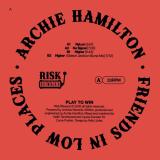
Risk/Reward’s fourth release sees one of the UK’s most prolific and recognizable Producer/DJ’s take the elevator all the way down to the basement of the Tech House sonic spectrum…
Archie Hamilton has achieved superstar status after over a decade of consistently excellent musical output. As the name suggests, Friends in Low Places sees him return to the underground with the rolling, acid-laced, “for the heads” sound that first saw him explode on to the scene 10+ years ago, supplying 3 original tracks that will surprise and delight in equal measure!
A1: NyLon blends the dreamy shades of 90s Italo with the rugged bounce of golden era UK Tech House, to create a beautiful, bold fever dream. Intricate synth melodies, rudeboy vocal cuts and transcendant pads play out over crunchy swinging drums. A bold opening statement to kick off the EP.
A2: The energy kicks up to 11 on Trance-Tech bomb No Signal, a certified weapon of mass dance floor destruction! Vintage Archie rolling 303 bass layered with complex acid lines, haunting siren calls and relentless, gritty drums make for a powerful peak time standout that will have jaws dropping!
B1: On the flip side Archie takes you Higher with another signature roller that’s instantly familiar yet enigmatic. Punchy yet intricate drums, deeply groovy bass, a variety of ear worm melodies and an oh so familiar voice take you up, up and away in to the atmosphere. An instant classic from a man who’s made his fair share.
B2: Returning to the scene he played a key role in building after almost a decade out, UK Tech House DON Gideon Jackson delivers a gargantuan remix that could very easily reduce the club to rubble if not handled carefully. No element of Higher was spared in this rework, but the weight and pressure get cranked up to the absolute fullest - tougher than tough stuff from the OG!
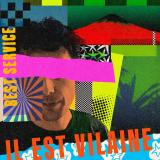
Four years after Les Mystères de Lorient, Il Est Vilaine returns with Best Service, a rich and cosmopolitan album that broadens horizons in a bleak era.
Twelve tracks and interludes crafted with the aesthetic the duo has been refining since its inception: a blend of analog electronics, techno, vintage rock, and synth-pop.
Tailor-made atmospheres, oscillating between raw energy, groove, and dark romanticism, provide perfect spaces for unexpected guests.
out of Stock
Last delivered 4 days ago available to reorder, subject to availability
Long overdue reissue of classic Scottish ambient techno banger ‘Mindweeds’, originally released in 1993 on the Pure-affiliated T&B Vinyl label run by Keith McIvor (JD Twitch) and Andy Watson (Brainstorm). With a Discogs demand ratio at about 300 have : 2000 want, and used prices peaking at over £100, now seems to be the right time for a re-release.
State of Flux were Roger Elliott and Dave Clark (aka Sparky, LUMA, Truffle Club and main man behind Kübler-Ross). They first met at Glasgow’s Strathclyde University in 1990, bonding over a shared love of weasel racing, German sausages and “man-duos” like The KLF and The Shamen. Dave was fully pubescent and already had a synth and drum machine, while Roger – a late developer – bought “another cheap synth, a Commodore Amiga for sequencing and a tiny mixer with no EQ”. For two long years they concentrated hard on “churning out unlistenable pish”, admittedly clueless about what they were trying to do.
Then – out of nowhere in the summer of 1992 – a flatmate’s Jello Biafra spoken word CD (‘I Blow Minds For A Living’) provided the inspiration to unlock the spark of dynamite that set the raving world on fire. Sampled using a Walkman* cassette** tape*** on playback (a decision the pair soon came to regret every time the track was subsequently performed live), Jello’s pilfered rant would soon become the crucial glue that held together the burgeoning kaleidoscopic helicopter spliff that is ‘Mindweeds’, loaded as it was – and indeed still is – with a veritably seething morass of cheeky electronic blims, nasal filter cheese and gay Caledonian spunk.
* a vintage portable listening device roughly the size of 4 iPhones stacked on top of one another and weighing the same as a small tub of yoghurt
** a plastic cartridge enclosing 2 miniature spools of magnetically coated, polyester-type plastic film (magnetic tape), notoriously convenient for pirating copyright material and secreting in one’s underpants for transporting between illicit market trader stalls
*** thin ribbon coated with ferromagnetic particles, usually ferric oxide but also chromium dioxide, "pseudochrome" ferricobalt or iron-cobalt-nickel “metal” formulations – with the latter types sounding marginally less crap
Playing demos of the track to friends, one thing led to another and a copy arrived with Twitch. Meeting the legends behind Pure in late 1992, a release was scheduled for summer 1993… but not before a promotional live gig in February of that year, supporting their heroes The Black Dog. Confessing that they “didn’t have a clue how to play live”, the duo played it safe, “went to a studio near Edinburgh airport to record the ‘live’ show” and then “mimed it off a DAT” at the gig, “standing in front of unplugged synths”. Soon after this, they recorded the full EP at Finitribe’s ‘Finiflex’ studio in Leith, Edinburgh and the record came out as planned that summer – the same week as Underworld’s ‘Rez’.
The record received high praise, appeared in many big-name DJ charts, sold out very quickly and was repressed within a few weeks, selling several thousand copies by the end of 1993 – no mean feat in an era when people had to use landline phones ****, faxes ***** or good old-fashioned carrier pigeons ****** to ascertain literally anything about the outside world, what was cool, where to buy the cool shit, or how to meet people and have fun.
**** a fixed communication device that connects to a telephone network using physical wires, cables, or a stationary base unit tied to a specific geographic address, using a handset incorporating a mouthpiece featuring a small metal disk and carbon grains, converting sound pressure from the human voice into a flow of electrical waves caused by these grains being squeezed together, before the variable signal is transmitted down DC voltage-powered copper wire and rerouted by a central exchange to arrive at the earpiece magnet of the target receiver’s handset, moving a small speaker cone accordingly so the message is intelligible WITHOUT THE PERSON SPEAKING ACTUALLY BEING PRESENT
***** as above, but for the d/Deaf
****** flying vermin riddled with diseases and capable of surviving nuclear armageddon
Soon Roger and Dave became sick of the Walkman being the only instrument played live in their set: with their new found fame and riches, they invested in a case for their Amiga to transport it around Scotland, while also putting in the hours on how to pretend to play live better with a sequencer and synths that were FINALLY plugged in. Following the release of ‘The Mercury EP' in April 1994, they embarked on a full tour of the UK and even managed to part ways and end the band by June that year.
This reissue includes the two original mixes of ‘Mindweeds’ recorded at Finiflex (‘Original’ and engineer ‘Fred's Fancy’), the original cassette demo (mastered directly from the actual recording sent to Twitch & Brainstorm in 1992) and a live version recorded at the Birmingham club night 'Oscillate' in April 1994.
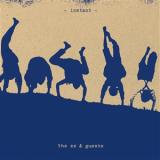
ERSTMALS AUF VINYL! Ursprüngliche 2-CD-Veröffentlichung: 1995. 32 Improvisations- und Dub-Tracks von The Ex! Die Verbindungen zwischen einer Punkband und improvisierter Musik liegen also auf der Hand: Ablehnung von Autorität, Hinterfragung traditionell gepriesener Maßstäbe, Erforschung von Kreativität jenseits der Zwänge kommerzieller Verkäuflichkeit. Kein Instantkaffee, kein Instant-Frühstück, kein Instant-Geld - INSTANTS, DIE BEWIRKEN. Momente, die bekräftigen: ,Das ist jetzt; hier sind wir, das tun wir." Auch improvisierte Musik braucht so einen Energieschub, um nicht engstirnig, verfestigt, elitär, kleinlich oder elitär zu werden. Wie Misha Mengeberg sagte: ,Ich bin im Moment sehr weit davon entfernt, Aussagen zu treffen wie ,Komposition sollte so oder so sein` oder ,Improvisation war bisher so und so`. Das hebe ich mir für den Moment auf, in dem ich tatsächlich in eine musikalische Aktion einsteige. In solchen Momenten habe ich vielleicht ein paar Definitionen. Aber jetzt noch nicht." - John Corbett ,32 Miniaturen. Manche sind ehrlich gesagt faszinierend, andere auf jeden Fall umwerfend. Aber es wird nie langweilig oder glatt. Praktisch ohne Gesang reisen The Ex durch eine Traumwelt, in der Überraschungen sich gegenseitig überraschen und in der sich neue und bisher verborgene Welten offenbaren." - The Wire THE EX: Terrie, Luc, Andy, Katrin, Han Buhrs, G.W.Sok & Gäste: Ab Baars, Wolter Wierbos, Han Bennink, Dolf, Tristan Honsinger, Michael Vatcher.
out of Stock
Last delivered 6 days ago available to reorder, subject to availability
Have Isaac Carter & Callum Asa made the most tasteful tech house EP of recent memory? The short answer is
yes....
Isaac and Callum, known for their respective club nights: OCHI and Planet People have been quietly chipping away at the coalface of underground dance music for quite some time now.
Isaac - perhaps known more widely as a regular at Circoloco & Phonox has shared bills with the likes of Moodyman, DJ Bone, Kai Alce, Laurent Garnier and Marcellus Pittmann whilst being championed by Joy Orbison, Ben UFO, Moxie, Seth Troxler, Raresh and Floating Points to name but a few. With such an impressive CV and wide ranging support, it’s wild to note that the first EP released on his own label, OCHI only came out in 2023. His star is clearly ascending with rapidity - so when we throw long term collaborator Callum Asa into the mix, things start to get really interesting. Calum has been running Planet People for the last couple of years, welcoming incredible names such as Shed, Surgeon, Willow, Ploy, Cooly G, Rroxymore and so many more. Steel sharpens steel and having been surrounded by such esteemed talent, it’s clearly rubbed off on the pair who present 4 polished, meticulously constructed, club ready masterpieces, each with their own distinct feel and an insatiable groove.
‘Feel Me’ sets the scene with a descending baseline that would eek a wiggle out of the most reluctant spectator. The twisted dub eeks out even more groove, locking in a more sinister bounce for the heads. By The time ‘Understand’ get’s into full swing, we’re already under the spell of Carter & Asa, this is the kind of roller that could go on forever and ever. The synth embellishments and washes of analog synth pull us deeper and deeper in, prepping us for the finale , ’Try You’ which simmers with deep, brooding intensity.
The magic of the dup’s appeal is that this EP will find its way into the bags of the deepest diggers and also appeal to a new generation of house fans. Elements of it are accessible , but in the right hands - the EP will open a portal to new worlds.
Die Synthesizer-Künstlerin und Komponistin Emily A. Sprague verbindet intuitive Klangstrukturen mit ausdrucksstarkem Songwriting und schafft so weitläufige Klangwelten, die unmittelbar und mitreißend sind. Nach ersten Experimenten mit Gitarre und Keyboard als Teenager gründete Sprague Anfang der 2010er Jahre die Indie-Band Florist und gewann damit ein treues Publikum. Nach einer Reihe gefeierter EPs nahmen Florist fünf Studioalben auf, die sich durch ihre intime Weltgestaltung und durch Spragues gefühlvollen Gesang auszeichnen. Den Soloalben "Hill, Flower, Fog" aus dem Jahr 2020 und "Cloud Time" aus dem Jahr 2025 - einem Album mit modularen Synthesizern, das live in Japan aufgenommen wurde - nachfolgend, ist "Cyano" ist ihr erstes Soloalbum, das Spragues intuitive Synthesizer-Musik mit dem Songwriting verbindet, für das sie mit ihrer Band Florist bekannt ist, und führt Gesang in ihr bisher rein instrumentales Schaffen ein. Absichtlich minimalistisch gehalten, ist Spragues Gesang wie eine rauschbehaftete Übertragung, die einen technischen und symbolischen Wendepunkt markiert - mit experimenteller, formloser Musik, die die eher konventionellen Songstile von Florist dekonstruiert. Emotional verankert und von Vergänglichkeit getrieben, spiegelt das Album sowohl Spragues inneren Raum als auch den konzeptionellen Planeten "Cyano" wider und setzt sich mit dem Selbst, dem Anderen, der Ökologie und dem Leben in einer fernen Welt auseinander. Spragues musikalischer Ansatz ist geprägt von einer zutiefst persönlichen Atmosphäre, die darin wurzelt, Geschichten über sich selbst und andere - Formen der innerpersönlichen und zwischenmenschlichen Verbindung - sowie die Unbeständigkeit dieser Versuche zu ergründen. Durch intime phänomenologische Erkundungen bietet "Cyano" subtile und eindrucksvolle Klangtexturen, die Verletzlichkeit einbeziehen. Emily A. Sprague erschafft eine komplexe Welt und erweitert dabei ein Klangspektrum, das zugleich vertraut und zutiefst neu ist - ein Spiegelbild ihres inneren Spektrums, das in andere Welten blickt.
out of Stock
Last delivered 6 days ago available to reorder, subject to availability
With performances alongside Walter Trout, Kingfish Ingram, Fantastic Negrito, and Samantha Fish, Spencer Mackenzie has established himself as one of Canada's top young blues- rock artists. His new album Empty Chairs combines blistering riffs, ,soulful vocals, and emotionally charged songwriting. Backed by an international PR and radio campaign, the February 2026 release promises to connect blues fans worldwide.
out of Stock
Last delivered 7 days ago available to reorder, subject to availability
Between 1989 and 1992, Sea Horses released three albums that percolated through England’s DIY underground before fading into the pre-Web ether. For a small community of listeners, however, their ornate gothic romance endured as an unusual sensibility within the broader post-punk coalition.
Hailing from towns on the outskirts of Manchester—Congleton, Scholar Green, and Macclesfield—Sea Horses forged a distinctively Northern English sound. Their dark, dreamy folk carried affinities with other groups of the time, but songwriter Richard Veal’s idyllic medievalism also took unlikely influence from madrigals and liturgical music. The exalted soprano of Clare Williams and twin sisters Jo and Liz Bromley reinforces this devotional quality, hanging in nave-like ambience (the band played several shows in local churches).
For this reason, and for the subtle psychedelia of their longer-than-average compositions, critics aligned Sea Horses with England’s New Age contingent—an association that the band could not quite understand. But Sea Horses did share certain predilections with their Aquarian counterparts. The band’s pastoralism carried pagan overtones, with songs like chapters in a Saxon epic, or odes to copses, moors, and headlands.
Sea Horses: 1989–1992 collects recordings from across the band’s output, which includes two short-run albums on Mandala Recordings—Listen (1991) and Dream into Being (1992)—and a little-known self-released cassette, The Shining Net (1991), which, until now, was only known among friends and family.
On Chuck Strangers’ latest opus, Glory Of The King’s Hand, he raps, “I still rap from the perspective of my government name…” The stage name “Chuck Strangers” is, of course, an alias but it’s not necessarily an alter ego. For the man born Che Jessamy, his rap moniker isn’t some over-the-top rock star persona contrived for public consumption, it’s just a name. What you hear on his records is really who he is - a heavy-tongued griot from East Flatbush, Brooklyn with a gift for vivid stream-of-consciousness storytelling. His bars are imbued with the wisdom he’s gained in his lifetime - especially in the 14 years since he first made his debut with the Pro Era collective.
The elaborate title of his new album, Glory Of The King’s Hand, speaks to his gratitude for the hand that life’s dealt him, which is a pretty good one. At age 34, he does what he loves professionally and does it on his own terms. That’s something to be thankful for.
Glory Of The King’s Hand, not only represents Chuck’s matured attiGlory attitude but also his matured sound. Key to this refined approach was tude collaboration. Chuck is a proficient beatmaker in his own right as evidenced by his production for himself and artists like Joey Baevidenced Badass, and Boldy James. But this time around Chuck chose to be a dass, producer in the Quincy Jones sense of the word, bringing together vocalists, producers, and musicians instead of handling all of the beats and rhymes himself. d Up Reprise
The list of contributing producers is a who’s who of underground sound scientists including The Alchemist, Animoss, Theravada, Kensound Kenny Segal, Preservation, Child Actor, and Morriarchi.
Per Hammar returns to his own Dirty Hands imprint with the four-track ‘Ontario EP’, once again showcasing his raw, robust and groove-led style.
Swedish producer and DJ Per Hammar has steadily carved out a reputation as one of the most distinctive voices in contemporary underground electronic music. As the founder of the acclaimed Dirty Hands imprint, Hammar has built a platform synonymous with deep, groove-led and uncompromising club music, while other productions have found homes on some of the scene's most respected labels including Sushitech, Kalahari Oyster Cult and Craigie Knowes. Here we see him returning to his own home and delivering stripped-back late-night tools, psychedelic excursions and deep, hypnotic dancefloor journeys. Hammar consistently balances functionality with personality, a quality that has established him as one of Europe's most respected underground talents.
Title cut ‘Ontario’ leads with Per laying down crisp, crunchy drums alongside dubby bass tones, fluttering stab sequences and intricate modulations, all delicately ebbing and flowing throughout the composition. ‘Off Disk’ follows, fusing organic percussive elements with weighty sub-bass, shifting synth flourishes and bubbling, delayed melodies that steadily unfold across the groove.
On the flip side, ‘Oops All Sixes’ shifts into more acid-tinged House territory, built around a squelchy acid bass hook and saturated drums, while sporadic, expansive delays and hypnotic reverberations drift atop the track’s raw, loopy foundation. ‘Airex’ concludes the release by diving deeper, stripping things back to oscillating percussion, a snaking low-end pulse and airy chords.
out of Stock
Last delivered 4 days ago available to reorder, subject to availability
Begeben Sie sich auf ein Abenteuer mit Hans Zimmers epischer Filmmusik zu „Pirates of The Caribbean
- Dead Man’s Chest“. Während Captain Jack Sparrow sich einer tödlichen Schuld gegenüber Davy Jones
und dem Schrecken des Kraken stellen muss, erwecken Zimmers kraftvolle Kompositionen jeden Moment
voller Gefahr, Geheimnisse und verwegenen Abenteuern zum Leben. Diese erweiterte Vinyl-Veröffentlichung
auf zwei LPs fängt die ganze Bandbreite und den dunklen Reiz der unvergesslichen Filmmusik ein – ein
unverzichtbares Kapitel in der „Piraten“-Saga.
Erhältlich auf durchscheinendem grünem Vinyl.
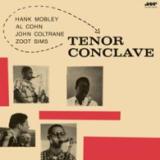
The year 1956 when Tenor Conclave was recorded represented a transitional period in the musical career of John Coltrane . He had first joined the Miles Davis Quintet in 1955 and would form his own celebrated quartet with McCoy Tyner, Jimmy Garrison and Elvin Jones in 1960. What we have here with Tenor Conclave is Coltrane in equal collaboration with four other giants of the tenor saxophone, Hank Mobly, Al Cohn, and Zoot Sims. Presenting the four players together under the group name of Tenor Conclave was an imaginative A&R idea by Prestige, but because of Coltrane's growing fame and the obvious marketing opportunities it presented, later pressing had Coltrane as the headline name on the cover, and Tenor Conclave as the album title. Includes the bonus track 'Polka Dots & Moonbeams'.
Die stärksten PERKELE-Songs auf einem Album gebündelt? Mit „Best from the past“ wird dieser Wunsch Wirklichkeit, das Album versammelt 20 PERKELE-Hymnen aus allen Phasen auf einem Tonträger (Vinyl kommt sogar als Doppel-Album). Von Sänger Ron höchstpersönlich zusammengestellt und im beiliegenden Booklet mit Liner-Notes versehen. Die Story hinter dem Text. Alle Klassiker sind an Bord: Von „Cowards“, „Hang’em high“, „Yellow & blue“, „Heartfull of pride“ bis „Göteborg“, „Längtan“, „Moments“, „A way out“ etc. Erscheint nun in 2026 erneut auf Vinyl. Und weil doppelt besser hält: Als Doppel-Vinyl.
Limitiert: 500er Auflage in transparent rotem Vinyl.
Jazzing The Morning is a compilation built around a simple idea: bringing together slow-tempo tracks that quietly lived beyond the spotlight, and giving them a space of their own.
Inspired by Dubbyman's Jazzing The Morning sessions, the compilation explores the deeper, slower side of electronic music through six carefully selected tracks by Hanna, Martian Tin Can, Paka Project, Detroit's Filthiest, Seafoam, and Inland Knights & To-Ka Project.
Rather than focusing on genre, Jazzing The Morning follows a shared pace — warm grooves, long blends and music made to be mixed, not rushed.
Pressed on vinyl only.
For those who still listen from start to finish.
out of Stock
Last delivered 11 days ago available to reorder, subject to availability
The long-awaited repress of "Baby EP" - Ricardo Villalobos's first solo single on raum...musik under the Villalobos moniker - is finally here. Featuring two tonally and energetically distinct cuts of dancefloor minimalism that are undoubtedly Ricardo. "Baby EP" sounds as cutting-edge as when it was initially released 12 years ago.
From the slightly euphoric and light-hearted atmosphere of 'hansup' (A) to the emotionally charged groove of 'Baby' (B), "Baby EP" travels through a world of intricately layered micro/macro percussions, eloquently programmed synths, and Ricardo's own vocals spread across the frequency spectrum - an added human touch to his usual machine funk. And while rhythm seems to be at centre stage here, in usual Villalobos fashion, both tracks resolve into pure jazzy melancholy. After dragging the listener into a world of (very) human feelings so uncommon in electronic dance music, "Baby EP" makes it very clear you are listening to Villalobos.
out of Stock
Last delivered 12 days ago available to reorder, subject to availability
Belgian artist Jennifur announces MAZDA, an album inspired by long car rides, emotional transitions, and the strange beauty of existing between places, people, and versions of yourself.
Musically, MAZDA moves fluidly between genres and emotional textures, blending electronic love songs, indie rock structures, UK bass influences, cinematic electronica, and flashes of classical composition.
The project began when Jennifur's brother sent him a playlist called MAZDA, filled with songs their father used to play in the car. What started as a nostalgia gesture quickly became the emotional blueprint for the album.
While writing MAZDA, Jennifur realized he was unknowingly creating the soundtrack to a fictional romcom film that existed only in his imagination. Rather than avoiding clichés like love, heartbreak, growing older, or transition, he chose to embrace them wholeheartedly.
"In a car, you exist in a kind of in-between space," Jennifur explains. "You've left something behind, but you haven't arrived yet. That feeling became the entire record."
The album opener, From A to B, sets the emotional framework for the entire project. Its extended introduction mirrors the exact moment you pull out of your street and realisethat something new has begun.
Highlights include "I Need You To Hold On", written for Jennifur's brother as a message of encouragement. The song "I Once Had a Dream Where I Could Fly" originated from a conversation with his father about recurring dreams of flying. Meanwhile, "From The Sideline" confronts a quieter existential fear, becoming a coming-of-age anthem for anyone who suddenly realizes they have become more of a spectator than an active participant in their own life.
Tracks like "In The Sun" bring a softer, almost cinematic intimacy to the album. Written around the image of spending one final Sunday at the seaside with someone who is seriously ill, the song captures the beauty and fragility of fleeting moments. The closing track "The Dialogue Before We Left" serves as the emotional final scene of the album.
"For me, it's the moment after a long drive when you turn off the engine but stay seated for a minute," Jennifur explains. "You realise something happened. You listened to my story, and we travelled from A to B together."
Die Synthesizer-Künstlerin und Komponistin Emily A. Sprague verbindet intuitive Klangstrukturen mit ausdrucksstarkem Songwriting und schafft so weitläufige Klangwelten, die unmittelbar und mitreißend sind. Nach ersten Experimenten mit Gitarre und Keyboard als Teenager gründete Sprague Anfang der 2010er Jahre die Indie-Band Florist und gewann damit ein treues Publikum. Nach einer Reihe gefeierter EPs nahmen Florist fünf Studioalben auf, die sich durch ihre intime Weltgestaltung und durch Spragues gefühlvollen Gesang auszeichnen. Den Soloalben "Hill, Flower, Fog" aus dem Jahr 2020 und "Cloud Time" aus dem Jahr 2025 - einem Album mit modularen Synthesizern, das live in Japan aufgenommen wurde - nachfolgend, ist "Cyano" ist ihr erstes Soloalbum, das Spragues intuitive Synthesizer-Musik mit dem Songwriting verbindet, für das sie mit ihrer Band Florist bekannt ist, und führt Gesang in ihr bisher rein instrumentales Schaffen ein. Absichtlich minimalistisch gehalten, ist Spragues Gesang wie eine rauschbehaftete Übertragung, die einen technischen und symbolischen Wendepunkt markiert - mit experimenteller, formloser Musik, die die eher konventionellen Songstile von Florist dekonstruiert. Emotional verankert und von Vergänglichkeit getrieben, spiegelt das Album sowohl Spragues inneren Raum als auch den konzeptionellen Planeten "Cyano" wider und setzt sich mit dem Selbst, dem Anderen, der Ökologie und dem Leben in einer fernen Welt auseinander. Spragues musikalischer Ansatz ist geprägt von einer zutiefst persönlichen Atmosphäre, die darin wurzelt, Geschichten über sich selbst und andere - Formen der innerpersönlichen und zwischenmenschlichen Verbindung - sowie die Unbeständigkeit dieser Versuche zu ergründen. Durch intime phänomenologische Erkundungen bietet "Cyano" subtile und eindrucksvolle Klangtexturen, die Verletzlichkeit einbeziehen. Emily A. Sprague erschafft eine komplexe Welt und erweitert dabei ein Klangspektrum, das zugleich vertraut und zutiefst neu ist - ein Spiegelbild ihres inneren Spektrums, das in andere Welten blickt.
Das wandlungsfähige Trio Vanishing Twin präsentiert sein neues Album ,Archives" - eine Collage aus postmoderner Songkunst, die im gemeinsamen Schaffensprozess Transzendenz findet. Der Albumtitel spielt auf den unverwechselbaren Ansatz von Vanishing Twin an, tägliche Aufnahmesessions anzuhören, zusammenzufügen und neu zu bearbeiten. Gründungsmitglied Cathy Lucas beschreibt den Prozess so: ,Material sammeln, damit herumspielen, es auf den Kopf stellen, versuchen, die Teile zusammenzufügen und daraus eine Geschichte zu erschaffen". Da Lucas mittlerweile ins ländliche Frankreich gezogen ist und Valentina Magaletti sowie Susumu Mukai in London leben, verbinden sich die drei, indem sie Songs und Instrumentalfragmente in einem virtuellen Studio austauschen. Die geografische Distanz wird durch ihre kollektive Kreativität überbrückt, wobei jedes Mitglied als Multi-Instrumentalist seinen Beitrag leistet. Jeder Musiker bringt umfangreiche Erfahrung in Zusammenarbeit und Improvisation mit, wobei das Anhören und Bearbeiten von Studio-Sessions ein wesentlicher Bestandteil des kreativen Prozesses ist. Konzepte von Urheberschaft und Eigentumsrechten lösen sich in der Musik von Vanishing Twin auf, während die Mitglieder Instrumente tauschen und sich ganz dem Moment der Zusammenarbeit hingeben. Die ,Archive", die dem Albumtitel seinen Namen geben, werden zu Dokumenten der kollektiven Intelligenz des Trios. Die chaotische Energie von ,Archives" treibt Vanishing Twin in ungewohnte Formen und Richtungen. Außerhalb ihrer Komfortzonen findet das Trio neue Momente der Erleuchtung und Freude. Tief im Mix hörst du vielleicht, wie Magaletti zum Bass greift, Mukai unerwartet am Schlagzeug einspringt oder Lucas chamäleonartig durch die Lücken gleitet. ,Archives" verfeinert Vanishing Twins Modell des kollektiven Musizierens, bei dem Egos in spielerischen Mix-and-Match-Spielen in den Hintergrund treten und die Kreativität zwischen den drei Multi-Instrumentalisten fließt. Sie bewegen sich zwischen und außerhalb konventioneller Genrekategorien und reihen sich neben Weggefährten wie dem Tara Clerkin Trio und Still House Plants ein, wodurch sie die Vorstellung vom zeitgenössischen Musikensemble erweitern. Nach einem Jahrzehnt ihres Bestehens sind Vanishing Twin wandelbarer denn je.
Takashi Mizuhashi’s first leader album, popular for its melancholy title track and the epic, over-15-minute version of "So What." This 1974 live recording also captures the vibrant performances of the young Yoshio Otomo and Fumio Karashima. Series supervised by Koki Hanawa.
The second debut release by Fumio Karashima, who emerged in the jazz scene with his first leader album "Piranha" on WHYNOT. This popular piano trio work is known for its sophisticated, lyrical touch and outstanding jacket design. Series supervised by Koki Hanawa.
Isao Suzuki's third release for TBM showcases his remarkable versatility, not only on his primary instrument, the bass, but also on electric piano, organ, cello, and even vocals. The album's expansive, spiritual, and blues-infused title track stands out as a particular highlight. Supervised by Koki Hanawa as part of the series.
Pianist Hideo Ichikawa, a musician equally renowned for his dazzling technical skill and his gift for composing innovative, lyrical works, left behind this outstanding piano trio album for the TBM label. Recorded during the height of his artistic maturity, the album stands as one of the finest achievements of his career. Series supervised by Koki Hanawa.
BIT30-2 THE CROWDPLEASERS "I Want You To Know 30th Anniversary E.P." The first B.I.T Productions 12" was released on single sided white label on 11th December 1995 and became a rather big track across the country with its big synths, catchy vocal hook and a massive break in the middle that lead to a dirty, well-known synth melody that created a huge hands in the air moment, as well as the "Make some f**king noise" vocal. Now 30 years later, we have the “I Want You To Know 30th Anniversary E.P.” that features new remixes by The Crowdpleasers and Pianohead, as well as including the Original 1995 Mix. Also included is the NEW TRACK “I Know” which features the Original Mix with uplifting Piano and catchy vocals and the Stu Chapman Remix with dirty synths, banging breakbeat and a top piano riff. To finish off this 6 Track E.P., the previously unreleased Original Mix from 2000 of “Celestial”, a pumping house track with atmospheric melody.
out of Stock
Last delivered 12 days ago available to reorder, subject to availability
Es handelt sich um einen Vermerk, den der Dark-Ambient-/Industrial-Titan Lustmord beinahe in die Liner Notes seiner neuen Zusammenarbeit mit der Schlagzeuglegende Dave Lombardo aufgenommen hätte. Bei ihrer ersten Zusammenarbeit loten sie die Tiefen des ursprünglichen Industrial und Dark Ambient aus und schaffen dabei etwas, das über die reine Musik hinausgeht. Dave Lombardo bedarf keiner Vorstellung. Sein Ruf als innovativer Schlagzeuger und musikalischer Vorreiter ist unübertroffen. Ob es nun seine jahrzehntelange Tätigkeit bei den Thrash-Metal-Giganten Slayer, seine vier Alben umfassende Zusammenarbeit mit den einflussreichen Experimentalisten Fantômas oder seine Arbeit mit dem renommierten Komponisten und Saxophonisten John Zorn war - Lombardos Leidenschaft für den Klang und seine spirituelle Verbindung dazu überschreiten alle Grenzen Lustmord ist der walisische Musiker, der weithin als Begründer der Dark-Ambient-Musik gilt. Er war zunächst in den frühen 80er Jahren als Mitglied von SPK mit der Industrial-Szene verbunden, bevor er seinen charakteristischen Sound mit Veröffentlichungen wie ,Paradise Disowned" aus dem Jahr 1986 etablierte. Über sein Solowerk hinaus hat Lustmord eine umfangreiche Karriere als Kooperationspartner und Film- sowie Spielekomponist aufgebaut, wobei er mit Bands wie den Melvins, Tool, Nurse With Wound und Wes Borland zusammengearbeitet hat; zudem hat er zu über vierzig Kinofilmen beigetragen, darunter ,First Reformed", ,The Crow" und ,Underworld".
Neuaufgelegt! Hebt das Glas mit mir und gemeinsam trinken wir "Auf die Liebe und auf die Sehnsucht"! Das sechste Studioalbum aus dem Jahr 2013 gilt zurecht schlichtweg als Klassiker und hatte erheblichen Anteil am heutigen - nennen wir es ruhig - "Phänomenen OXO86". Mit ihrem einzigartigen Stil aus Gute-Laune Ohrwürmern gepaart mit subtilem Wortwitz, Punkrock, Bläsern und Sänger Willi's knochentrocken-verschmitztem Gesang, haben die Bernauer seitdem ein Alleinstellungsmerkmal weit über die üblichen Szenegrenzen hinaus. Millionen Streams der Album-Songs mit Hits wie "Bier und Reggae", "Samba Skinheads", "Saus und Braus" bis hin zum Titelsong zeigen dies deutlich. Die Vinyl-Auflagen von "Auf die Liebe und auf die Sehnsucht" sind allesamt in kurzer Zeit vergriffen gewesen und derzeit fast nur zu horrenden Sammlerpreisen erhältlich. Doppel-Vinyl mit dem Original-Album sowie der Kinderlieder-Bonus EP "If the Kids Are United" auf Seite C und wunderschönem Etching des beliebten Anker-Logos auf Seite D! Selbstredend auf 180g Vinyl, in schwarz oder trans-yellow/gold splatter, limitiert auf insgesamt 500 Exemplare!
Neuaufgelegt! Hebt das Glas mit mir und gemeinsam trinken wir "Auf die Liebe und auf die Sehnsucht"! Das sechste Studioalbum aus dem Jahr 2013 gilt zurecht schlichtweg als Klassiker und hatte erheblichen Anteil am heutigen - nennen wir es ruhig - "Phänomenen OXO86". Mit ihrem einzigartigen Stil aus Gute-Laune Ohrwürmern gepaart mit subtilem Wortwitz, Punkrock, Bläsern und Sänger Willi's knochentrocken-verschmitztem Gesang, haben die Bernauer seitdem ein Alleinstellungsmerkmal weit über die üblichen Szenegrenzen hinaus. Millionen Streams der Album-Songs mit Hits wie "Bier und Reggae", "Samba Skinheads", "Saus und Braus" bis hin zum Titelsong zeigen dies deutlich. Die Vinyl-Auflagen von "Auf die Liebe und auf die Sehnsucht" sind allesamt in kurzer Zeit vergriffen gewesen und derzeit fast nur zu horrenden Sammlerpreisen erhältlich. Doppel-Vinyl mit dem Original-Album sowie der Kinderlieder-Bonus EP "If the Kids Are United" auf Seite C und wunderschönem Etching des beliebten Anker-Logos auf Seite D! Selbstredend auf 180g Vinyl, in schwarz oder trans-yellow/gold splatter, limitiert auf insgesamt 500 Exemplare!
XKatedral ist stolz darauf, ein neues Album in voller Länge von Label-Mitbegründerin Maria W. Horn zu präsentieren. ,Melting Pillars of Snow" ist eine Sammlung neuer Kompositionen der renommierten schwedischen Komponistin, geschrieben für Kontrabassblockflöte, Sho, Percussion, E-Gitarre, Gesang und Elektronik, gespielt von Horn zusammen mit einem Kammerensemble bestehend aus Anna Petrini, Mattias Hallsten, Magdalena Meitzner und Mats Erlandsson. Das Album enthält außerdem eine Erzählung von Horn sowie einen Gastauftritt von Michael Gira auf der ersten Single ,Scythe of Saturn". Für ,Melting Pillars of Snow" ließ sich Maria von W. G. Sebalds Roman ,Die Ringe des Saturn" inspirieren, einer poetischen Reflexion, die einem namenlosen Erzähler folgt, der an der Küste von Suffolk in England umherwandert. Während sich die Landschaft allmählich verändert, thematisiert der Text auf vielfältige Weise den Lauf der Zeit und die Distanz zwischen Vergangenheit, Gegenwart und Zukunft und spiegelt dabei sowohl weitreichende zeitliche Maßstäbe wie die Zyklen der Jahreszeiten und die tiefe historische Zeit als auch mikroskopisch kleine Momente und Fragmente wider. Mit den Kompositionen auf dieser Veröffentlichung beschwört Maria ein ähnliches Gefühl der Stille herauf - eine Umgebung, in der die Bewegung der Zeit selbst beleuchtet und beobachtet werden kann. Das Instrumentarium auf diesem Album ist Horns bislang ambitioniertestes: Sie ergänzt ihre gewohnte Palette aus maßgeschneiderter algorithmischer Synthese und elektronischer Bearbeitung um eine komplexe Auswahl an Perkussionsinstrumenten, Blasinstrumente, die an beiden Enden des musikalischen Spektrums spielen, sowie E-Gitarre, um so einen spiralförmigen, spektralen Klangteppich durch den gesamten Frequenzbereich zu weben. Die Perkussionistin Magdalena Meizner spielt spezielle Techniken auf dem Obertondreieck, dem Dubachi, den Pauken und dem Tam-Tam sowie auf gestimmten Weingläsern und gestrichenen Crotales. Die von Anna Petrini gespielte tieftönige Kontrabassblockflöte und das von Mattias Hallsten gespielte hochfrequente Sho fügen kontrastierende Akkordarrangements hinzu, die in strengen metrischen Strukturen eingebettet sind. Das Ensemble wird durch Mats Erlandsson vervollständigt, der auf E- und Akustikgitarren spielt und dabei von sanften Arpeggio-Figuren zu düsteren Drones und Feedback-Heulern wechselt.
Perhaps the most acclaimed pianist and composer from his generation in Norway, mostly known for his Lightning Trio and presence in a variety of bands - here with a new band playing in the crossroad between jazz, Norwegian traditional folk and improvisations from a very strong combination of musicians. Including Veslemøy Narvesen, Nicolas Leirtrø, Hans P. Kjorstad, Guro Kvåle and Brede Sørum.
Living Weapon returns with Death In The Family, a full-length that confronts mortality, meaninglessness, and the aftermath of existence. The release broken down over 23 minutes toward an unresolved end — life examined at its start and its finish, with the universe indifferent to either. Recorded, produced, and engineered by Jeremy Martin over fall 2025 into spring 2026 — the band's first time tracking a full album internally. Mixing handled by Taylor Young of The Pit Recording Studio and Mastering by Nick Townsend. The album is introduced with "The Leaving Process” laying out the album's core idea: life as connection, not permanence — matter created and destroyed, briefly aware of itself in between.
On The Allfather Awakens, Amon Amarth created a definitive 10-song masterwork that further cements the legacy of the lineup’s spectacularly memorable riffs and unflinching aural power. The opening track of The Allfather Awakens, the epic tale of “Gjallarhorn,” is followed by the heroic battlefield tale “Eight Legs of Thunder,” while “Upphaf,” a translated stanza from the prophetic poem Völuspá, marks the band’s first-ever acoustic offering. The iconic Swedish melodic death metallers took a new songwriting approach for The Allfather Awakens, the band’s 13th album since 1998’s Once Sent from the Golden Hall. The Allfather Awakens came to life across two recording sessions, months apart, at producer Jacob Hansen’s studio in Denmark. Amon Amarth began writing songs while touring, rather than waiting until they were off the road. The first session was Spring 2025; the final recording was completed in March 2026.
On The Allfather Awakens, Amon Amarth created a definitive 10-song masterwork that further cements the legacy of the lineup’s spectacularly memorable riffs and unflinching aural power. The opening track of The Allfather Awakens, the epic tale of “Gjallarhorn,” is followed by the heroic battlefield tale “Eight Legs of Thunder,” while “Upphaf,” a translated stanza from the prophetic poem Völuspá, marks the band’s first-ever acoustic offering. The iconic Swedish melodic death metallers took a new songwriting approach for The Allfather Awakens, the band’s 13th album since 1998’s Once Sent from the Golden Hall. The Allfather Awakens came to life across two recording sessions, months apart, at producer Jacob Hansen’s studio in Denmark. Amon Amarth began writing songs while touring, rather than waiting until they were off the road. The first session was Spring 2025; the final recording was completed in March 2026.
Meshell Ndegeocello war schon immer für Überraschungen gut – jetzt erfindet die Bassistin, Sängerin und
Produzentin, die im Soul, Jazz und Funk immer wieder Zeichen gesetzt hat, einige der größten Popklassiker
als Duette neu neu!
Diese Coverversionen sind für Meshell Ndegeocello weit mehr als bloße Hommagen. Sie nimmt bekannte
Songs auseinander, legt ihre emotionale Substanz frei und setzt sie mit ihrer unverwechselbaren Handschrift
neu zusammen. Songs wie “Knew You Were Waiting (For Me)”, “Guilty” oder “Islands In The Stream”
hat man selten so cool und emotional packend gehört wie hier.
Das Repertoire reicht von den 1960er- bis in die 1990er-Jahre und verbindet Soul, Pop, Rock, Country
und R&B. Jeder der fünfzehn Songs entstand als Duett. Dafür versammelte Ndegeocello eine beeindruckende Riege prominenter Gäste, darunter Cynthia Erivo, Chaka Khan, Cat Power, Madison Cunningham,
Emily King, Lizz Wright, Lianne La Havas, Moses Sumney, Brandi Carlile, WILLOW, ANOHNI und Robert
Glasper.
Anlässlich des 90. Geburtstags des Komponisten Steve Reich am 3. Oktober 2026 veröffentlicht die
DG eine luxuriöse, handnummerierte und limitierte „Original Source“-Ausgabe seiner bahnbrechenden Aufnahme von „Drumming“ aus dem Jahr 1974 sowie zwei weiterer früherer Werke. Das Set erscheint im
originalen LP-Format mit authentischer Verpackung und enthält Reichs ursprüngliche Liner Notes mit
zahlreichen Fotos aus den Aufnahmesessions sowie einen ausführlichen Artikel mit Reichs ursprünglichem
Briefwechsel mit seinem DG-Produzenten.
Um die bestmögliche Klangqualität zu gewährleisten, wurden die Aufnahmen erstmals von den originalen
4-Spur-Bändern neu gemastert und geschnitten.
Diese limitierte und nummerierte Veröffentlichung erscheint auf 180-g-Vinyl in einer luxuriösen 3-LPBox-Edition mit dem Original-Cover und enthält zusätzliche Fotos sowie Faksimiles der ursprünglichen
Aufnahmeprotokolle und Bandkartons.
Die Vinyl-Serie The Original Source präsentiert herausragende Aufnahmen der 1960er und 1970er Jahre in
ganz neuer Klangqualität. Dafür haben die renommierten Emil Berliner Studios die originalen Mehrspurbänder mit eigens für die Produktion der Serie entwickelten Technologien in 100% analoger Qualität (AAA)
neu gemastert und geschnitten. Die klanglichen Unterschiede zu den Originalveröffentlichungen sind beträchtlich: Größere Klarheit, mehr Feinheiten und Verbesserungen im Frequenzgang, zugleich weniger
Nebengeräusche, Verzerrungen und Komprimierungen ermöglichen ein audiophiles Hörerlebnis wie nie zuvor.
Three years following the critically acclaimed "A Journey told through Fire" (2023), the new album navigates a sprawling conceptual narrative, tracing the cyclical nature of the cosmos from its initial spark in the void to its inevitable dissolution. Lyrically, the album explores the terrifying scale of cosmic darkness and the fragility of existence within a primordial emptiness. Sworn investigates the philosophy of becoming and unmaking, where reality and time emerge from nothingness only to eventually collapse back into the same unfathomable origin. Musically, "Null Crowned the Infinite" pushes the boundaries of the band's established sound, balancing their signature melodic tension with newfound levels of aggression and atmospheric depth. The record features "The Starless Origin", a twelve-minute epic that stands as their longest composition to date, alongside " Fracture of Aeons ", which the band identifies as their most aggressive track ever recorded. Sworn collaborated with renowned producer Jens Bogren at Fascination Street Studios , who handled the mixing and mastering. Bogren's legendary portfolio, featuring giants such as Opeth, Arch Enemy and Behemoth, brings a polished yet devastating edge to the performances of Max Wilson, Christoffer Kjorsvik, Goran Hope and Tom Ian Klungland. The album artwork is equally striking, created by Par Olofsson, known for his iconic work with Aborted and Kreator.
Three years following the critically acclaimed "A Journey told through Fire" (2023), the new album navigates a sprawling conceptual narrative, tracing the cyclical nature of the cosmos from its initial spark in the void to its inevitable dissolution. Lyrically, the album explores the terrifying scale of cosmic darkness and the fragility of existence within a primordial emptiness. Sworn investigates the philosophy of becoming and unmaking, where reality and time emerge from nothingness only to eventually collapse back into the same unfathomable origin. Musically, "Null Crowned the Infinite" pushes the boundaries of the band's established sound, balancing their signature melodic tension with newfound levels of aggression and atmospheric depth. The record features "The Starless Origin", a twelve-minute epic that stands as their longest composition to date, alongside " Fracture of Aeons ", which the band identifies as their most aggressive track ever recorded. Sworn collaborated with renowned producer Jens Bogren at Fascination Street Studios , who handled the mixing and mastering. Bogren's legendary portfolio, featuring giants such as Opeth, Arch Enemy and Behemoth, brings a polished yet devastating edge to the performances of Max Wilson, Christoffer Kjorsvik, Goran Hope and Tom Ian Klungland. The album artwork is equally striking, created by Par Olofsson, known for his iconic work with Aborted and Kreator.
Eine Zündflamme ist eine kleine Flamme – eine Zündquelle für einen Gasbrenner, die traditionell ständig brennt. Für den Singer-Songwriter Liam Kazar dient sie als treffende Metapher für die Liebe, selbst wenn die Beziehung längst vorbei ist. Aus diesem Schimmer entsteht auch Liams lang erwartetes zweites Album, das nachdenkliche und elegant arrangierte „Pilot Light“. Produziert von Sam Evian. Mit Beiträgen von Sam Evian, Hannah Cohen, James Elkington, Spencer Tweedy und anderen.
The original intention of the Builders and the Butchers was to make funeral music, but on the way to the cemetery something changed. An album, like any piece of art, is an artifact of a time. In a world where the process of listening to and obtaining music has never been cheaper or easier, vinyl is a last hold out. You can tell when you\'re holding the weight of wax in your hand, that you\'re connected to what you are doing. The first Builders and Butchers record is also an artifact of a time. Recorded in the living room of a house on SE Division St. in Portland, Oregon in 2007. It was recorded with no expectation, just wanting to document the songs folks had been gathering to sing along to since our first shows in the fall of 2005. The songs having been played only on the street up to that time. At those shows anyone who showed up was handed an instrument and quickly made part of the band. During the recording we attempted to bring that organic singalong rowdiness of the live show into the recording. We brought in about 20 close friends for a Sunday morning booze soaked choir session. We made sure that every instrument of the recording was made of wood and powered by a musician, there are no electric instruments and hardly any effects on this record.
In August 2025, Lee Bains decamped to the Cherry Street Tavern in Chattanooga, Tennessee, a scene known for holding a light for collective good and personal freedom, in order to record a live album. Over that weekend, a group of anti-war activists, union workers, queer rights organizers, inclusive pastors, and people of goodwill—old-time folks—came from Tennessee, Alabama, and Georgia to gather at the Cherry Street Tavern. That weekend, that small group of people on Cherry Street, just like innumerable other groups that day and throughout history, demonstrated to each other and to the microphones, that, in 2025, the South was comprised of free people, no matter what. Free South 2025. Free South 2026. Free South forever. Lee Bains is a poet and songwriter from Birmingham, Alabama, who since 2012 has released four studio albums of what Rolling Stone calls “Southern gospel punk," and will publish his debut poetry collection Work Lunch with Hub City Press in 2026 after several of the poems were first published by the New Yorker in 2021. A cult songwriter forged in independent scenes, his work has carried him all over the U.S. and Europe, has received acclaim from the likes of Rolling Stone, The New York Times, NPR, The New Yorker, and The Guardian, and has led him to be a supporting musician for other artists like Lonnie Holley, Moor Mother, and Algiers. Lee has lent his work to support striking coal miners, immigrants’ rights groups, abortion funds, and anti-racism organizations. He has performed and read at Emory University, the University of Mississippi, Tulane University, Auburn University, and The Royal Institute of Technology (Stockholm, Sweden). He lives in Atlanta, Georgia, where he works between tours as a handyman.
A SOUNDSYSTEM COMBATING ICE PROCEEDS TO HELP FUND FRONTLINE ORGANIZATIONS THAT SUPPORT IMPACTED COMMUNITIES Contra-ICE Vol. 1: ICE OUT is a powerful new compilation album uniting legendary voices across music, spoken word, and comedy to amplify the fight for immigrant rights and stand against inhumane immigration enforcement. Featuring an all-star lineup of over 30 artists, including Ozomatli, Kathleen Hanna ft. Ad-Rock, Tom Morello, Fred Armisen, Fishbone, Money Mark, David J (Bauhaus, Love and Rockets), and Jello Biafra; this sonic journey, curated by DJ Dali, shines a crucial light on systemic injustices. Proceeds will raise vital funds for frontline Los Angeles organizations, the National Day Laborer Organizing Network (NDLON) and Unión del Barrio, to support their ongoing work defending human, civil, and labor rights for impacted communities.
Following one of 2025’s standout EPs, the CEO of the National Centre for Mark Fell Studies fires from the hip in brilliant, club-troubling motion. In step with 30 years of prism-pushing work — and particularly the »Nite Closures« EP, which signalled a concerted return to the dancefloor — Fell pulls aspects of hypermodern dance and electronic music from Chicago, Tanzania, and Japan into his own peculiar agenda.
The hugely distinctive results pull the body into thrillingly unusual, typically ascetic arrangements, activating every pointillist drum hit with attack and decay in a soberly ludic play of rhythmelodic tension and release, executed to delirious ends; 40 minutes of computer music.
As an artist who witnessed first-hand the explosion of electronic music in early ’80s Sheffield, and its interplay with house and rave as it refracted into wild new styles during the ’90s, Mark Fell is uniquely positioned to pursue his passion for the dynamics of electronic dance music to the nth degree. »Servitude In Context« continues to develop ideas around music for movement in the mid-2020s, placing decades of keen observation — from the macro and historical to the niche and hypermodern — at the service of flexing bodies in new directions.
Long-held notions of multistability manifest in what feels like two machines playing chess on the dancefloor, attempting to adapt to each other’s playing styles and patterns in real time, anticipating and zigzagging around the next move. The result is a plethora of options for limber dancers and those who only bust a move inside their heads.
The slow-fast play of accelerating and decelerating strikes, alongside monotonic chatter in »Actuations #1 (Extended)«, acclimatises the body to a uniquely sensual physics. This develops into the rudely screwed, asymmetric angularity of »Time-Slur« and the shatterproof elasticity of »Taut Manifold«, which feels like an LLM trained on Autechre.
»Low Energy Mantra« offers the EP’s closest resemblance to melodic structure, like gamelan and footwork refracted through lab-grown diamonds. Then »Anode« flashes its teeth with a rudeness recalling the latter stages of Fell’s Pat Thomas jams, before »3 Lost Contours (Pts 1–5)« tilts into 12 minutes of proper quicksilver madness, balancing the sexiness of his Sensate Focus work with an updated, clean-hoofed step and parry.
DAYBREAKERS Records proudly presents ROOT DOWN 30, a celebration of one of Europe's most influential club institutions. Curated by legendary DJ, producer and tastemaker Rainer Trüby, the compilation marks three decades of Root Down, the Freiburg party that has quietly shaped dancefloors, record collections and musical conversations since 1996.
Long before genre boundaries dissolved into today's eclectic club culture, Root Down championed a unique musical vision. Jazz, Brazilian grooves, soulful house, broken beat, Afro-Latin rhythms and future-facing electronic sounds were brought together under one roof, creating a community that became a vital meeting point for adventurous dancers and deep music lovers alike.
Across thirty years, Root Down has hosted an extraordinary roll call of artists and DJs including Jazzanova, Gilles Peterson, Theo Parrish, Kyoto Jazz Massive, Jimpster, Laurent Garnier, Dixon, Peter Kruder, Richard Dorfmeister and countless others, helping establish Freiburg as an unlikely but essential stop on the global underground music map.
ROOT DOWN 30 captures that spirit perfectly. Handpicked by Trüby, the collection brings together a selection of artists whose music embodies the warmth, sophistication and dancefloor energy that have defined the party since day one. Featuring music and remixes from Jimpster, Osunlade, Da Lata, Jazzanova, Crackazat and more, the compilation moves effortlessly between soulful house, jazz-inflected club music, Brazilian influences, broken beat rhythms and deep electronic grooves.
ROOT DOWN 30 is a snapshot of an enduring musical philosophy. Thirty years after the first Root Down dancefloor came to life in Freiburg, the spirit remains unchanged: open-minded, soulful and rooted in discovery.
ROOT DOWN 30 stands as both a celebration of that remarkable journey.
Introducing (Common) Side Effects, a new Brazilian reissue label dedicated to digging up lost and forgotten sonic treasures. For its debut release, the label unearths a holy grail from the 2000s brazilian electronic scene: DJ Eraldo Palmero’s 'Arujá' EP.
Originally released in 2002, the record is now an incredibly rare find; back in the day, the vast majority of the original pressing was destroyed, leaving only a handful of copies in existence.
This reissue brings back the three original tracks that first defined the release. To make this return even more essential, (Common) Side Effects has added 'Looking for Love', a standout track previously exclusive to the 2002 CD version, now making its first-ever appearance on vinyl.
out of Stock
Last delivered 11 days ago available to reorder, subject to availability
Kukangendai are the innovative three-piece Kyoto based experimental rock band formed in 2006 with Junya Noguchi on guitar and vocals, Keisuke Koyano on bass, and Hideaki Yamada on drums. Since 2016 the band have set up shop in their studio and venue space, Soto, which houses an incredibly well tuned and powerful sound system that has become a well known destination for touring musicians. In March of 2025, Marionette was celebrating a belated 10 years of activity with label showcases across Japan in collaboration with Dotei Records, and Soto was inevitably one of the stops as many label alumni have set foot in the venue over the years. This is where I got to experience Kukangendai perform for the very first time and knew right then we were destined to work together.
Kukangendai embody an undeniable sense of timing and precision through collage-like repetition of minimalist phrases that manifest as a single unified rhythm. Their latest offering for Marionette, titled Baquet Wheel, is a purely acoustic endeavor, remarkably recorded live using Taku Unami's special binaural microphone. The trio seamlessly twist polyrhythms and melodies rooted in jazz, krautrock, blues, and Tuareg producing a timeless sound that preserves the primitive and memory evoking narratives buried deep within the music. Over the course of five tracks, the visceral nature of Kukangendai’s dynamic evolves from playful riffs that are seemingly familiar yet strikingly original, making it impossible to discern exactly when this material was conceived.
Kukangendai have maintained a prolific yet relatively low profile for the last two decades, with a handful of self-released editions on their own labels (Soto and Leftbrain) as well as a collaborative album with pioneering electronic music composer Ryuichi Sakamoto in 2018, then venturing outside Japan in 2019 to release their first widely distributed album on Ideologic Organ, a label curated by Sunn O)))’s Stephen O'Malley. Other collaborative projects to date include an album produced with rap group Moe and ghosts, live performances with Keiji Haino and with poet Gozo Yoshimasu, productions with the Chiten theater company, and most recently a remix album of their works featuring Carl Stone and Madteo.
Fohn conjures a dreamlike landscape of introspective beauty, loneliness and transience from analogue tape and field recordings on new album, Porcelain.
A late summer evening in southern France. The dry mistral wind billows the washing that hangs outside the windows on narrow streets, bringing with it the first whispers of autumn. In the distance children are playing in the square, their shouts caught in the dust whipped up by their feet. A bell tolls, the light dies, and a rich, compelling solitude descends.
Violinist and multi-instrumentalist Fohn, aka Tom Connolly, describes the act of making music as “building fictional environments that become places of solace,” and a process of translation and projection that bridges his internal and external worlds.
While musicians like John Also Bennett, Oren Ambarchi and Connolly’s own group Quade drift behind his sound, Porcelain draws its temperamental inspiration from films like Call Me My Your Name and Andrei Tarkovsky’s The Mirror, as well as the sculptures of Anthony Gormley, whose solitary figures stand isolated in expanses of water along the UK coastline.
How does Connolly describe the atmosphere he wants the music to evoke? “It's the feeling of the inevitability of something having to pass,” he answers. “It's compelling because it's fundamentally unattainable. You're searching and grasping for something that you can never fully hold.”
A moving, intimate and deeply personal album, Porcelain shimmers in the illusive light of melancholy. For Connolly it provided the release of catharsis, but it’s a feeling that will mean something different to everyone who listens.
out of Stock
Last delivered 12 days ago available to reorder, subject to availability
The story of each re-release begins with the original. In the late 90s, Uwe Zahn (Arovane), along with Robert Henke (Monolake) and Stefan Betke (Pole), began releasing music on Torsten Pröfrock’s (Dynamo) newly launched DIN label. This was a very inconspicuous undertaking, but fans of the flourishing IDM, glitch, and constantly evolving abstract techno genres quickly picked up on the quality of sound coming out of Germany. After a few successful EPs, Zahn began working on his debut full-length, Atol Scrap. The release was a success, at least in the underground circles, where followers of the melodic harmonies, stuttering off-beat rhythms, and, most importantly, advanced sound design feverishly consumed the imprint’s output. There was only one thing missing – the album was never pressed on vinyl, and for decades remained in the digital domain. The fans, of course, inquired. There were multiple offers on the table, but Zahn retained control until he was assured that it was properly attained. “I thought of taking everything into my own hands and releasing the record myself,” says Zahn, “but at the end of last year, Matthias from Keplar asked me to re-release Atol Scrap on vinyl.” The label and its owner revolve in the Morr Music universe, and so it made sense for Zahn to trust the platform to treat the record right.
Listening to Atol Scrap over twenty years later it is inane not to admit how well it has held up. Where other genres clearly aged, becoming stale, bland, and dull, the music on eleven tasty tracks still keeps the neurons tickled with each note. More than an echo of the past, the bottled sound truly has matured. Many of the newly evolving techniques are recognizable on the album. “I created the digital artifacts with a digital multi-track recorder, the Fostex D80,” recalls Zahn. “The thing had a scrub wheel with which I could achieve wonderful glitch effects by winding through the audio data. I have sampled and further processed these artifacts.” And this approach is still embedded in Zahn’s sound design. “I still use my 24-track analog desk from Tascam to mix my audio. I love to use hardware synths and samplers. I’ve definitely built upon my studio experience in the 90s.” From this debut to the most recent output, Arovane’s sound has evolved to become more intricate, detailed, and pronounced. “My music has become much quieter and much slower. But that’s probably also due to the noise in the world.” And just as Atol Scrap reminds Zahn of the past, retaining charm preserved in a container traveling through time, it also jitters memories of long ago, when we were twenty years younger, less experienced, and bold. For me, among the many records of the time, this album held a special place in life, my heart, and many CD boxes moved across the world. And now I’m only happy to restock the vinyl space, where Atol Scrap belongs among the beloved records. Welcome home. - Mike Lazarev
Remastered and cut to vinyl by Kassian Troyer @ D&M. Cover art by Jim Kühnel based on a photograph by Uwe Zahn.
out of Stock
Last delivered 12 days ago available to reorder, subject to availability
‘Oud-player with The Handover, Eissa was mentored by two legendary figures in Egyptian music: composer and multi-instrumentalist Abdo Dagher, and oud master Hazem Shahin. The music here is heavily rooted in both Egyptian classical music and a number of different folk music traditions, but it goes its own way, through expansive and intricate original compositions.
‘The epic title track, with Eissa playing oud exclusively, takes up two thirds of the album. It seamlessly transitions into heart-stopping recitation of the thirteenth century poet Baha´ al-din Zuhayr… serious, loving, tender and insistent, all at once. Visionary and virtuosic, but at the same time warm and close.
‘A future classic.’
1982 4-Piece Demo' is the first official, fully-licensed and unreleased material to be released under the name Strawberry Switchblade in 30 years. Since disbanding amid major record label acrimony and personal differences in 1986, the already-cult band have since grown in stature and legend. Trailblazers in many ways, the band's mythology justifiably centers around the charismatic duo of Jill Bryson and Rose McDowall, but that isn't a complete picture. Bryson and McDowall's growing friendship, having met some years earlier on the punk scene, became a creative partnership: Bryson's art school background and McDowall's history in avant-punk group The Poets meant Strawberry Switchblade was a band pitted against many established norms. The band's very first incarnation, an all-female 4 piece, recorded one demo at Glasgow's Hellfire Club and played a handful of gigs. Friends Janice Goodlett and Carole McGowan completed the line up on bass and drums respectively. Strawberry Switchblade would eventually pair down to a duo and go on to chart success but it's in these raw, passionate recordings that the songwriting and vocal elements were being hammered out and explored in real time.
Spanish Song' is a previously unreleased song. With Rose McDowall's instantly recognizable lead vocal dovetailing with Bryson's harmonies and lead guitar, it's the first glimpse at an alternative history of Strawberry Switchblade. This incarnation could easily have been featured on a Nuggets compilation or a precursor to the indie-pop revolution that would take over British bedrooms a couple of years later. "Trees & Flowers" is instantly recognizable, a bona fide classic that would earn the band its first record deal. Here it's given a more forceful rhythm section: Goodlett and McGowan's playing is in fact accomplished and doesn't hint at the bands' youth. "Go Away" would also surface later on the band's debut LP but here it is a moody-garage stomper with a psychedelic, haunting refrain. These 3 songs point to a tantalizing future of the band that was never realized.
Remastered and restored by Sean Pennycook from the original cassette, with artwork based on a single photographic contact sheet (the only visual evidence of the band in this form) and with a booklet of photographs and new text. Pa
out of Stock
Last delivered 13 days ago available to reorder, subject to availability
Gilla Band are happy to announce their brand new album ‘Pugnello’ released on the 25th September 2026 on Rough Trade Records. The album was recorded from 2022 - 2026 across three studios, Hellfire, Yellow Door Music Studio, & Sonic Studios in Dublin, the album was produced by Gilla Band & it was recorded and mixed by Daniel Fox.
Gilla Band never know where they’re going next. For over ten years now, the Dublin quartet (vocalist Dara Kiely, guitarist Alan Duggan Borges, bassist Daniel Fox, and drummer Adam Faulkner) have been redefining what you could loosely call “rock music” in the 21st century, influencing a wide swath of similarly forward-thinking guitar acts along the way. Across 2015’s Holding Hands With Jamie, 2019’s The Talkies, and 2022’s Most Normal, the band perfected a vision that wasn’t quite post-punk, wasn’t quite noise-rock, wasn’t quite anything besides an idiosyncratic, ground-breaking hybrid that could only come from the four of them.
In the four years since Most Normal, each member embarked on other artistic endeavors. Kiely fostered a newfound love of painting, Faulkner played drums for Lankum on the road, Fox became an increasingly in-demand producer guiding ascendant acts like Sprints, Lambrini Girls, and Mandy, Indiana, while Duggan Borges launched his solo project the Null Club with collaborations featuring Mandy, Indiana’s Valentine Caulfield, the Horrors’ Faris Badwan, Miss Grit, and Brooklyn MC Elucid. All their extracurricular activity existed in parallel with the exploratory route towards Pugnello, but also informed the band as they reconvened to crystallize the album’s vision.
out of Stock
Last delivered 14 days ago available to reorder, subject to availability
"Ich möchte lieben und geliebt werden, aber ich will mich auch frei fühlen. Die Spannung zwischen diesen beiden Dingen ist die zentrale Frage meines Lebens", sagt Julia Jacklin - und genau diese Ambivalenz durchzieht ihr viertes Album The Gem. Nach ihrem Umzug nach Melbourne 2017 fand Jacklin in einer kleinen Bar namens The Gem einen Ort der Selbstfindung - ein Sinnbild, das dem neuen Album seinen Namen gibt. Acht Jahre später, nach den hochgelobten Erfolgen ihrer ersten drei Platten - Don"t Let the Kids Win (2016), Crushing (2019) und PRE PLEASURE (2022) - schlägt sie ein neues Kapitel auf: Erstmals veröffentlicht sie bei dem renommierten, stilprägenden Label 4AD, das seit Jahrzehnten für künstlerische Vision und ikonische Indie-Veröffentlichungen steht. Ohne äußeren Druck und frei von Erwartungen schuf Jacklin in Melbourne ihr bislang persönlichstes Werk. The Gem entstand im engen Kreis vertrauter Musiker:innen und entwickelte sich über Monate hinweg - ein intensiver Prozess, geprägt von Selbstreflexion, Zweifel und dem Mut, eigene Entscheidungen kompromisslos zu vertreten. Songs wie "Brand New" oder "Real Life" wurden dabei grundlegend neu gestaltet, bis sie sich ehrlich und richtig anfühlten. Der eröffnende Track "Brand New" setzt ein elektrisches Statement zwischen Aufbruch und Selbsttäuschung, während Stücke wie "God Sometimes" oder "The Hardest Thing" von Selbstbestimmung, Verlust und innerem Wachstum erzählen. Klanglich erweitert Jacklin ihre bisherigen Indie- und Folk-Ansätze um kraftvollere, teils nahezu hymnische Momente. Auch die besondere Aufnahmeumgebung - ein Studio über einer lebhaften Kneipe - prägt den Sound: roh, direkt und atmosphärisch dicht. Mit The Gem gelingt Julia Jacklin eine eindringliche Rückkehr zu sich selbst. Zugleich knüpft sie an die Stärke ihrer bisherigen Alben an und entwickelt ihren Sound konsequent weiter - ein weiterer Beweis dafür, warum sie zu den prägendsten Stimmen des modernen Indies zählt.
out of Stock
Last delivered 14 days ago available to reorder, subject to availability
opo’s 666ridims (2020 - 2026), compiled by J.TRIPP, brings together tracks from his 666ridims netlabel, reflecting on the singular sound worlds of some of his solo work. Like a discovery made by neutrino sensors, opo’s tracks research the transformation of rhythm, swing, and structure, aiming for a new grid. Sketchy and raw, processing emotions and experiences, regaling stories, and asking questions, opo relates in trance verse. All tracks here breathe his focus on improvisation, experimentation, and collaboration. Some of the beats featured on 666ridims (2020 - 2026) are outlines for freestyles and songwriting ideas, a practice formed during a long-distance music conversation with illustrator, printmaker, painter, designer, and maker Billy Bigwood. Other tracks are more club-oriented, like speculative genres programmed in odd meters. Japanese Barcelona-based DJ Hanakito contributes to one track, using samples and chops sourced from her vinyl imports.
Through Afroelectronic experimentation and diasporic narratives, opo encodes his soul's past and future through his music. Encoded, activated, returned. Initiate only when you receive permission from all your mental fragments. Keep transmissions in mind and dislodge and follow the command cluster's trail. Strongly influenced by sci-fi, ancestral afro musics, jazz, performance art, and food, as musical lines and shards of meaning cascade, 666ridims (2020 - 2026) is a minimalist dive into strange meters, polyrhythm, and the transcendence of ideas. Fast, slow. Exhilarating. We don’t discover physical laws; we just collaborate on them.
out of Stock
Last delivered 14 days ago available to reorder, subject to availability
The brilliant My Point of View was Herbie Hancock’s second album for Blue Note, a 1963 session featuring an all-star lineup: Donald Byrd, Hank Mobley, Grachan Moncur III, Grant Green, Chuck Israels, and a young Tony Williams. Each track radiates a deeply engaging musicality, showcasing Hancock’s masterful arranging skills. With standout compositions like King Cobra and A Tribute to Someone, this is a timeless classic—an essential reissue not to be missed.
25 years after this cult UK label first emerged, we're very happy to present some of their most sought after releases...
Primitive represented a stripped down and sonically heavyweight series of essential DJ tools, winning wide support from Techno an House DJ's alike & enduring - perhaps due to their raw, basic construction - way beyond their original inception.
This is the first compilation EP, featuring some favourites from the catalogue, remastered & repressed on limited, hand-stamped vinyl...
Despite serious demand, we will only be able to access limited quantities of these special 21st century repress editions, so buy or cry !
out of Stock
Last delivered 7 days ago available to reorder, subject to availability
Symmetry is proud to announce the arrival of Solid State Vol. 1 - a special vinyl release from Break. Due to popular demand, we’ve compiled four standout tracks, including some fan favourites that until now were only available digitally.
The EP brings together a serious collection: Release Me, which hit number 1 on Beatport; Overstayed, Symmetry’s highest selling tune on Bandcamp; alongside two more heavyweight cuts, All You Gotta Do and Zodiac.
Pressed and presented in physical form, Solid State Vol. 1 is both a collector’s piece and a must-have for DJs - and this time it’s something you can hold in your hands.
Gilla Band are happy to announce their brand new album ‘Pugnello’ released on the 25th September 2026 on Rough Trade Records. The album was recorded from 2022 - 2026 across three studios, Hellfire, Yellow Door Music Studio, & Sonic Studios in Dublin, the album was produced by Gilla Band & it was recorded and mixed by Daniel Fox.
Gilla Band never know where they’re going next. For over ten years now, the Dublin quartet (vocalist Dara Kiely, guitarist Alan Duggan Borges, bassist Daniel Fox, and drummer Adam Faulkner) have been redefining what you could loosely call “rock music” in the 21st century, influencing a wide swath of similarly forward-thinking guitar acts along the way. Across 2015’s Holding Hands With Jamie, 2019’s The Talkies, and 2022’s Most Normal, the band perfected a vision that wasn’t quite post-punk, wasn’t quite noise-rock, wasn’t quite anything besides an idiosyncratic, ground-breaking hybrid that could only come from the four of them.
In the four years since Most Normal, each member embarked on other artistic endeavors. Kiely fostered a newfound love of painting, Faulkner played drums for Lankum on the road, Fox became an increasingly in-demand producer guiding ascendant acts like Sprints, Lambrini Girls, and Mandy, Indiana, while Duggan Borges launched his solo project the Null Club with collaborations featuring Mandy, Indiana’s Valentine Caulfield, the Horrors’ Faris Badwan, Miss Grit, and Brooklyn MC Elucid. All their extracurricular activity existed in parallel with the exploratory route towards Pugnello, but also informed the band as they reconvened to crystallize the album’s vision.
Gilla Band are happy to announce their brand new album ‘Pugnello’ released on the 25th September 2026 on Rough Trade Records. The album was recorded from 2022 - 2026 across three studios, Hellfire, Yellow Door Music Studio, & Sonic Studios in Dublin, the album was produced by Gilla Band & it was recorded and mixed by Daniel Fox.
Gilla Band never know where they’re going next. For over ten years now, the Dublin quartet (vocalist Dara Kiely, guitarist Alan Duggan Borges, bassist Daniel Fox, and drummer Adam Faulkner) have been redefining what you could loosely call “rock music” in the 21st century, influencing a wide swath of similarly forward-thinking guitar acts along the way. Across 2015’s Holding Hands With Jamie, 2019’s The Talkies, and 2022’s Most Normal, the band perfected a vision that wasn’t quite post-punk, wasn’t quite noise-rock, wasn’t quite anything besides an idiosyncratic, ground-breaking hybrid that could only come from the four of them.
In the four years since Most Normal, each member embarked on other artistic endeavors. Kiely fostered a newfound love of painting, Faulkner played drums for Lankum on the road, Fox became an increasingly in-demand producer guiding ascendant acts like Sprints, Lambrini Girls, and Mandy, Indiana, while Duggan Borges launched his solo project the Null Club with collaborations featuring Mandy, Indiana’s Valentine Caulfield, the Horrors’ Faris Badwan, Miss Grit, and Brooklyn MC Elucid. All their extracurricular activity existed in parallel with the exploratory route towards Pugnello, but also informed the band as they reconvened to crystallize the album’s vision.
At the outset of the project, Jupp assembled a palette of instruments and sounds which evoke a moment in musical history when digital studio technology just started to take over from analogue. Eschewing Belbury Poly’s earlier mid 70s obsessions, to focus on that period around 1983, when artists who could afford it started to experiment with samplers. It was a musical moment dominated by the sounds of Prophet 5, DX7 & PPG synthesizers, Fairlight & Synclavier music computers, TR808 drum machine & Simmons Drums (those ubiquitous hexagonal drum pads) and of course the much-maligned fretless bass.
It’s also an era that’s now seen as something of a golden age for fantasy, sci-fi, comics, book, TV, movies and games (particularly in Britain where it was often fuelled by a post punk reaction to Thatcher’s regime). In Jupp’s memory these things go hand in hand; as a child his nerdy fandom was soundtracked not as it was for most by Heavy Metal, but by the electronic pop of Bill Nelson, Yellow Magic Orchestra, Japan, and Frank Chickens. Also, by otherworldly TV soundtracks & production music of the era: Elizabeth Parker and Paddy Kingsland at the BBC, The Parry Music Library, Rod Argent’s new age library albums and even Clannad’s Robin of Sherwood score.
Christophe Chassol's brilliantly-dazzling third album, crowns his trilogy of ultrascores (a method he elaborated for harmonizing, symphonizing real life, the 'here and now'), which started out in Creole-speaking New Orleans (Nola Che?rie, 2011) before pursuing its route through India (Indiamore, 2013).
In March 2014, Christophe Chassol took off for Martinique, his family's birthplace; these West Indies that epitomize everything he dreamt of expressing, from the purely personal to the perfectly panoptic. Hand-in-hand with the production sound mixer Marie-France Barrier and the sound engineer Johann Levasseur, the trio filmed and recorded a myriad of extraordinary encounters, scenes of everyday life, the carnival... a highly-evocative documentary that was to become the matrix of Big Sun.
Back in France, he composed, edited, rehearsed and created the 27 tracks of a 70- minute West Indian space odyssey. Big Sun is a weaveworld of birds' songs and Pipo Gertrude's whistling, Joby Bernabe?s poetry and a te?te-a?-te?te with a lady mountain-dweller, Sissido and Samak's rap, Mario Masse's flute, the Fort de France carnival, conch shell echoes, the ocean's music and the hullabaloo of a game of dominos. And sumptuous pieces of music like La Route de la Trace or Reich & Darwin, which suddenly spring up at a bend in the road and take our breath away.
"Ich möchte lieben und geliebt werden, aber ich will mich auch frei fühlen. Die Spannung zwischen diesen beiden Dingen ist die zentrale Frage meines Lebens", sagt Julia Jacklin - und genau diese Ambivalenz durchzieht ihr viertes Album The Gem. Nach ihrem Umzug nach Melbourne 2017 fand Jacklin in einer kleinen Bar namens The Gem einen Ort der Selbstfindung - ein Sinnbild, das dem neuen Album seinen Namen gibt. Acht Jahre später, nach den hochgelobten Erfolgen ihrer ersten drei Platten - Don"t Let the Kids Win (2016), Crushing (2019) und PRE PLEASURE (2022) - schlägt sie ein neues Kapitel auf: Erstmals veröffentlicht sie bei dem renommierten, stilprägenden Label 4AD, das seit Jahrzehnten für künstlerische Vision und ikonische Indie-Veröffentlichungen steht. Ohne äußeren Druck und frei von Erwartungen schuf Jacklin in Melbourne ihr bislang persönlichstes Werk. The Gem entstand im engen Kreis vertrauter Musiker:innen und entwickelte sich über Monate hinweg - ein intensiver Prozess, geprägt von Selbstreflexion, Zweifel und dem Mut, eigene Entscheidungen kompromisslos zu vertreten. Songs wie "Brand New" oder "Real Life" wurden dabei grundlegend neu gestaltet, bis sie sich ehrlich und richtig anfühlten. Der eröffnende Track "Brand New" setzt ein elektrisches Statement zwischen Aufbruch und Selbsttäuschung, während Stücke wie "God Sometimes" oder "The Hardest Thing" von Selbstbestimmung, Verlust und innerem Wachstum erzählen. Klanglich erweitert Jacklin ihre bisherigen Indie- und Folk-Ansätze um kraftvollere, teils nahezu hymnische Momente. Auch die besondere Aufnahmeumgebung - ein Studio über einer lebhaften Kneipe - prägt den Sound: roh, direkt und atmosphärisch dicht. Mit The Gem gelingt Julia Jacklin eine eindringliche Rückkehr zu sich selbst. Zugleich knüpft sie an die Stärke ihrer bisherigen Alben an und entwickelt ihren Sound konsequent weiter - ein weiterer Beweis dafür, warum sie zu den prägendsten Stimmen des modernen Indies zählt.
"Ich möchte lieben und geliebt werden, aber ich will mich auch frei fühlen. Die Spannung zwischen diesen beiden Dingen ist die zentrale Frage meines Lebens", sagt Julia Jacklin - und genau diese Ambivalenz durchzieht ihr viertes Album The Gem. Nach ihrem Umzug nach Melbourne 2017 fand Jacklin in einer kleinen Bar namens The Gem einen Ort der Selbstfindung - ein Sinnbild, das dem neuen Album seinen Namen gibt. Acht Jahre später, nach den hochgelobten Erfolgen ihrer ersten drei Platten - Don"t Let the Kids Win (2016), Crushing (2019) und PRE PLEASURE (2022) - schlägt sie ein neues Kapitel auf: Erstmals veröffentlicht sie bei dem renommierten, stilprägenden Label 4AD, das seit Jahrzehnten für künstlerische Vision und ikonische Indie-Veröffentlichungen steht. Ohne äußeren Druck und frei von Erwartungen schuf Jacklin in Melbourne ihr bislang persönlichstes Werk. The Gem entstand im engen Kreis vertrauter Musiker:innen und entwickelte sich über Monate hinweg - ein intensiver Prozess, geprägt von Selbstreflexion, Zweifel und dem Mut, eigene Entscheidungen kompromisslos zu vertreten. Songs wie "Brand New" oder "Real Life" wurden dabei grundlegend neu gestaltet, bis sie sich ehrlich und richtig anfühlten. Der eröffnende Track "Brand New" setzt ein elektrisches Statement zwischen Aufbruch und Selbsttäuschung, während Stücke wie "God Sometimes" oder "The Hardest Thing" von Selbstbestimmung, Verlust und innerem Wachstum erzählen. Klanglich erweitert Jacklin ihre bisherigen Indie- und Folk-Ansätze um kraftvollere, teils nahezu hymnische Momente. Auch die besondere Aufnahmeumgebung - ein Studio über einer lebhaften Kneipe - prägt den Sound: roh, direkt und atmosphärisch dicht. Mit The Gem gelingt Julia Jacklin eine eindringliche Rückkehr zu sich selbst. Zugleich knüpft sie an die Stärke ihrer bisherigen Alben an und entwickelt ihren Sound konsequent weiter - ein weiterer Beweis dafür, warum sie zu den prägendsten Stimmen des modernen Indies zählt.
"Solaris", das zwölfte Studioalbum von The Ocean, würdigt die bisherige Entwicklung der Band und verleiht ihr eine neue, intensive Note. Mit Mitgliedern aus sechs verschiedenen Ländern im Kern-Line-up kehrt The Ocean zu einer kollektiven Besetzung zurück und schöpft aus dem Erfahrungsschatz und Talent eines Pools außergewöhnlicher Musiker. Nachdem man mit dem Vorgängeralbum "Holocene" einen anderen Weg eingeschlagen hatte, zeichnet für den weitläufigen, organischen Klang von "Solaris" erneut der schwedische Produzent Jens Bogren verantwortlich, der bereits die beliebtesten Alben der Band - "Pelagial" sowie "Phanerozoic I" und "II" - abgemischt hat. Das neue Album stellt die Sänger*innen Lane Shi und Enrico Tiberi sowie die Gitarristen Emmanuel Jessua und Marco Gennaro vor; sie ergänzen den Gründungs-Gitarristen Robin Staps, den langjährigen Bassisten Mattias Hägerstrand und Schlagzeuger Jordi Farré. Jeder von ihnen bringt seine ganz eigene Note ein, um dieses fast 70-minütige Opus zum Leben zu erwecken - ein Werk, das für The Ocean hinsichtlich Ambition und erzählerischer Tiefe einen neuen Höhepunkt darstellt. Für die Aufnahmen wurde der Kreis der Mitwirkenden noch weiter gefasst: Thorsten Quaeschning (Tangerine Dream) steuerte modulare Synthesizer bei, der griechische Komponist Orestis Zafiriou (Playgrounded) lieferte ebenfalls Elektronik- und Synthie-Elemente, und Simen Eifring von der norwegischen Post-Rock-Band Spurv übernahm den Posaunenpart. Aufgenommen wurde das Album in den legendären Berliner Hansa Studios, wo bereits Klassiker wie David Bowies Low und Heroes, Iggy Pops Lust For Life und Depeche Modes Construction Time Again entstanden. Innerhalb dieser Studiowände entwickelte sich "Solaris" zu einem lebendigen Zeugnis für die Kraft von Entdeckergeist und Teamarbeit. Da der neue Sänger Tiberi zudem ein versierter Pianist und Multiinstrumentalist ist, wurden Klänge von Celesta, Flügel, Rhodes-Piano und Hammond-Orgel zu einem integralen und unverwechselbaren Bestandteil des Solaris-Sounds. Der für The Ocean typische, atmosphärische Post-Metal wird durch den experimentierfreudigen Geist der neuen Mitglieder sowie die Beiträge der exzellenten Gastmusiker bereichert. Die CD und 2LP Gatefold-Sleeves sind jeweils auf 360g Spezial-Karton gefertigt und auf Vorder- wie Rückseite mit roter Metallic-Heißfolien-Prägung veredelt. Die CD mit 6seitigem Fold-Out-Booklet, die 2LP in bedruckten Innenhüllen kommt zusätzlich mit A2-Poster.
The Yummy Fur’s first album of new material in over 25 years is seductive and ambiguous; a fast-paced flip through scenes from art, myth, life and fantasy; a witty whole made from glittering scraps. The band’s original incarnation – fronted by singer, songwriter and guitarist John McKeown from 1992 to 1999 – morphed from making quick-hit cartoon-art songs to Eno and Cale-influenced creepers, populated by characters from McKeown’s life in Glasgow and the films, books and poetry that he lived a parallel life through. Everybody Talks About The Weather delights in using every past iteration of the band as potent collage material: a melee of sounds and ideas existing at once, revealing themselves then dipping back into hiding.
Recorded by the original core trio of McKeown, Brian MacDougall (guitar) and Paul Thomson (drums), Everybody Talks About The Weather comes 17 years after the band reformed for sporadic live shows, and seven years after the release of their sorta-greatest hits compilation Piggy Wings (Rock Action). Ten tracks long with nothing to spare, it is as condensed and vital as their best songs, with a new clarity of sound that allows their ambiguities to come into the light.
The album begins with “Cogs”, a taunting inquisition from within. As McKeown stages a fight between his id and ego, the tension heats up between conversational guitar lines and minimalist repetition; threatening sing-song melody and real, palpable menace. The band members are forced in tandem only to break apart, sustaining a genuine sense of just-hidden danger throughout the whole record – except, arguably, “Headphones”, a looser moment which sees McKeown make an existential something out of nothing while waiting for someone in the car (“I should have brought a book.../My ears are bleeding from the compression on your album”)
The songs are riots of reference: “Unity Over Europe” is a slyly complex two act play about the Mitford sisters – Diana, Unity, and Nancy, in a wink to the YF canon – smashing tragic biographical detail together with allusions to Thomas Pynchon and Francis Bacon. Pynchon is also lifted to serve “Blue Sunshine”, a collision of school shooters, serial killers and fictional fuck-ups (“Fast forward to Compton/Fast forward to Pynchon/Fast forward to Columbine'”) whose buzzy guitar lines are taunting and confrontational like a smarmy teenager. The innocuous title of “My Lasagne” belies a song that exists in several time periods at once: a visit to see Guernica, 50 people with their backs to the portrait of Dora Maar; the time that Picasso painted from; the Reina Sofia and the dirty streets of the Malasaña; myth-making musicians and the myths they’re riffing off overlapping and leering at each other.
All this could be laboured in lesser hands, but cultural verbosity is second nature to The Yummy Fur, who transform all this source material into songs that are weird, sexy, funny and absurd. Meaning is not happily understood or flattened. Susan Sontag's essay Against Interpretation accompanied McKeown as he wrote this album, and she’s paraphrased in “Semolina Ballerina”, the album’s justification of artistic ambiguity. Thomson’s motorik beat leads a gathering of back-and-forth instrumental phrases – including a wiry contribution on saxophone – embodying the futility of trying to parse something definitive from repeated action. “Listen to the very first thing that’s in your head,” Sontag-via-McKeown commands directly, then slinks sideways: “Interpretation is a conversation in an unmade bed”
The album features two more focused portraits, or at least The Yummy Fur’s version of such a thing. “Wanda” merges the life of filmmaker Barbara Loden and the title character of her semi-autobiographical 1970 feature film, with Loden’s then-husband Elia Kazan joining the fray of no-good men in her film. It’s a mix of adaptation and avant-criticism, with McKeown’s wordplay and mannered pronunciation mirroring the way that non-fiction and fiction twist around each other in the song. The title track is a series of vignettes and impressions from the lives of the band’s ‘90s inner circle, positing painter Mac McNaughton as a kind of Falstaffian ringleader. As with Piggy Wings and the recent single “New T-Shirt”, McNaughton painted the cover of Everybody Talks About The Weather – like the album’s music, the image of a coy girl in a white dress is an uncanny amalgamation of styles, suggestions and references just out of reach, as though seen in an art museum in a dream.
The album ends with two reads of the same frustration. “King of Nothing” is the closest The Yummy Fur will ever get to sludge-rock: the band melts together into a dusty, dreary haze as McKeown drowns in a drudgery of personal struggle (“Two jumpers on in Babylon/And only cats to talk to”) and the rhythmic toppling of heroes (Rowlands, Duvall, Munro). The majority of visible dirt is cleaned off for “Say Hello”, an uncharacteristic depiction of throwing the windows open after a dark night of the soul. Here, the situation is still cold and hard (“When the sun burns gold, but the heat never reaches your fingertips”) but it feels surmountable. Everybody Talks About The Weather is an unpredictable album from an unpredictable group, but ending on a moment of almost uncomplicated light is maybe its biggest surprise. - Claire Biddles (2026)
The Yummy Fur’s first album of new material in over 25 years is seductive and ambiguous; a fast-paced flip through scenes from art, myth, life and fantasy; a witty whole made from glittering scraps. The band’s original incarnation – fronted by singer, songwriter and guitarist John McKeown from 1992 to 1999 – morphed from making quick-hit cartoon-art songs to Eno and Cale-influenced creepers, populated by characters from McKeown’s life in Glasgow and the films, books and poetry that he lived a parallel life through. Everybody Talks About The Weather delights in using every past iteration of the band as potent collage material: a melee of sounds and ideas existing at once, revealing themselves then dipping back into hiding.
Recorded by the original core trio of McKeown, Brian MacDougall (guitar) and Paul Thomson (drums), Everybody Talks About The Weather comes 17 years after the band reformed for sporadic live shows, and seven years after the release of their sorta-greatest hits compilation Piggy Wings (Rock Action). Ten tracks long with nothing to spare, it is as condensed and vital as their best songs, with a new clarity of sound that allows their ambiguities to come into the light.
The album begins with “Cogs”, a taunting inquisition from within. As McKeown stages a fight between his id and ego, the tension heats up between conversational guitar lines and minimalist repetition; threatening sing-song melody and real, palpable menace. The band members are forced in tandem only to break apart, sustaining a genuine sense of just-hidden danger throughout the whole record – except, arguably, “Headphones”, a looser moment which sees McKeown make an existential something out of nothing while waiting for someone in the car (“I should have brought a book.../My ears are bleeding from the compression on your album”)
The songs are riots of reference: “Unity Over Europe” is a slyly complex two act play about the Mitford sisters – Diana, Unity, and Nancy, in a wink to the YF canon – smashing tragic biographical detail together with allusions to Thomas Pynchon and Francis Bacon. Pynchon is also lifted to serve “Blue Sunshine”, a collision of school shooters, serial killers and fictional fuck-ups (“Fast forward to Compton/Fast forward to Pynchon/Fast forward to Columbine'”) whose buzzy guitar lines are taunting and confrontational like a smarmy teenager. The innocuous title of “My Lasagne” belies a song that exists in several time periods at once: a visit to see Guernica, 50 people with their backs to the portrait of Dora Maar; the time that Picasso painted from; the Reina Sofia and the dirty streets of the Malasaña; myth-making musicians and the myths they’re riffing off overlapping and leering at each other.
All this could be laboured in lesser hands, but cultural verbosity is second nature to The Yummy Fur, who transform all this source material into songs that are weird, sexy, funny and absurd. Meaning is not happily understood or flattened. Susan Sontag's essay Against Interpretation accompanied McKeown as he wrote this album, and she’s paraphrased in “Semolina Ballerina”, the album’s justification of artistic ambiguity. Thomson’s motorik beat leads a gathering of back-and-forth instrumental phrases – including a wiry contribution on saxophone – embodying the futility of trying to parse something definitive from repeated action. “Listen to the very first thing that’s in your head,” Sontag-via-McKeown commands directly, then slinks sideways: “Interpretation is a conversation in an unmade bed”
The album features two more focused portraits, or at least The Yummy Fur’s version of such a thing. “Wanda” merges the life of filmmaker Barbara Loden and the title character of her semi-autobiographical 1970 feature film, with Loden’s then-husband Elia Kazan joining the fray of no-good men in her film. It’s a mix of adaptation and avant-criticism, with McKeown’s wordplay and mannered pronunciation mirroring the way that non-fiction and fiction twist around each other in the song. The title track is a series of vignettes and impressions from the lives of the band’s ‘90s inner circle, positing painter Mac McNaughton as a kind of Falstaffian ringleader. As with Piggy Wings and the recent single “New T-Shirt”, McNaughton painted the cover of Everybody Talks About The Weather – like the album’s music, the image of a coy girl in a white dress is an uncanny amalgamation of styles, suggestions and references just out of reach, as though seen in an art museum in a dream.
The album ends with two reads of the same frustration. “King of Nothing” is the closest The Yummy Fur will ever get to sludge-rock: the band melts together into a dusty, dreary haze as McKeown drowns in a drudgery of personal struggle (“Two jumpers on in Babylon/And only cats to talk to”) and the rhythmic toppling of heroes (Rowlands, Duvall, Munro). The majority of visible dirt is cleaned off for “Say Hello”, an uncharacteristic depiction of throwing the windows open after a dark night of the soul. Here, the situation is still cold and hard (“When the sun burns gold, but the heat never reaches your fingertips”) but it feels surmountable. Everybody Talks About The Weather is an unpredictable album from an unpredictable group, but ending on a moment of almost uncomplicated light is maybe its biggest surprise. - Claire Biddles (2026)
This album is the soundtrack to Absolum, a fully hand-drawn universe with a unique story, created by the team behind Streets of Rage 4, TMNT: Shredder's Revenge, and more.
Known for Ori and the Blind Forest and Halo Infinite, lead composer Gareth Coker brings his signature emotional depth, blending dark fantasy orchestration with medieval-inspired themes and somber atmospheres.
From orchestral soundscapes to thrilling boss battle themes, this soundtrack features guest tracks from Mick Gordon (DOOM 2016, Wolfenstein: The New Order, Atomic Heart), Yuka Kitamura (Elden Ring, Dark Souls III, Dark Souls II), Motoi Sakuraba (the Dark Souls series, Mario Golf, Star Ocean), and Rachel Hardy (Stray Gods, Eternal Strands), setting the tone for the events unfolding in this cute yet twisted fantasy world.
Magic may be forbidden in these lands, but the music is no less enchanting!
Over the years, Faust has become many things, distinct as fingers, yet united as the hand that forms the fist. This series of new LPs on Bureau B sees each living member of the legendary 1971-1974 line up present their own interpretation of the Faustian myth, working alone or with collaborators to create new material that reflects their contemporary vision of what Faust can be.
Over the years, Faust has become many things, distinct as fingers, yet united as the hand that forms the fist. This series of new LPs on Bureau B sees each living member of the legendary 1971-1974 line up present their own interpretation of the Faustian myth, working alone or with collaborators to create new material that reflects their contemporary vision of what Faust can be.
Over the years, Faust has become many things, distinct as fingers, yet united as the hand that forms the fist. This series of new LPs on Bureau B sees each living member of the legendary 1971-1974 line up present their own interpretation of the Faustian myth, working alone or with collaborators to create new material that reflects their contemporary vision of what Faust can be.
Over the years, Faust has become many things, distinct as fingers, yet united as the hand that forms the fist. This series of new LPs on Bureau B sees each living member of the legendary 1971-1974 line up present their own interpretation of the Faustian myth, working alone or with collaborators to create new material that reflects their contemporary vision of what Faust can be.
Over the years, Faust has become many things, distinct as fingers, yet united as the hand that forms the fist. This series of new LPs on Bureau B sees each living member of the legendary 1971-1974 line up present their own interpretation of the Faustian myth, working alone or with collaborators to create new material that reflects their contemporary vision of what Faust can be.
Over the years, Faust has become many things, distinct as fingers, yet united as the hand that forms the fist. This series of new LPs on Bureau B sees each living member of the legendary 1971-1974 line up present their own interpretation of the Faustian myth, working alone or with collaborators to create new material that reflects their contemporary vision of what Faust can be.
Over the years, Faust has become many things, distinct as fingers, yet united as the hand that forms the fist. This series of new LPs on Bureau B sees each living member of the legendary 1971-1974 line up present their own interpretation of the Faustian myth, working alone or with collaborators to create new material that reflects their contemporary vision of what Faust can be.
Over the years, Faust has become many things, distinct as fingers, yet united as the hand that forms the fist. This series of new LPs on Bureau B sees each living member of the legendary 1971-1974 line up present their own interpretation of the Faustian myth, working alone or with collaborators to create new material that reflects their contemporary vision of what Faust can be.
“Man has such a predilection for systems and abstract deductions that he is ready to distort the truth intentionally, he is ready to deny the evidence of his senses only to justify his logic”
Fyodor Dostoevsky - Notes from Underground (1864)
The Intermittent Signal is the sound of resistance.
In the year since The Sick Man Of Europe’s debut album was released, the world has moved on. Steady hands have slipped from the levers of power, logic has shifted underground and the message grows more urgent with every passing day.
Repetition has been relearned and the machine rhythms repurposed, this time with increased intensity. Arrangements have moved beyond the bare bones economy of the first record and there’s a newfound melodicism in places. Clarity and conviction ring true through the static and noise, while utopian ideas to remodel a broken system gain traction. This is a rejection of the attention economy and a call to reconnect through community and organisation. Those simple acts that were once commonplace have become increasingly radical as new fractures emerge.
“Through repetition the message has gained weight and become something more urgent,” The Sick Man Of Europe explains. “The vehicle for this message needed to evolve, grow to gain the strength to carry it. We’ve landed on something more expansive, immediate and immersive. Less is more. Until it isn't.”
“Man has such a predilection for systems and abstract deductions that he is ready to distort the truth intentionally, he is ready to deny the evidence of his senses only to justify his logic”
Fyodor Dostoevsky - Notes from Underground (1864)
The Intermittent Signal is the sound of resistance.
In the year since The Sick Man Of Europe’s debut album was released, the world has moved on. Steady hands have slipped from the levers of power, logic has shifted underground and the message grows more urgent with every passing day.
Repetition has been relearned and the machine rhythms repurposed, this time with increased intensity. Arrangements have moved beyond the bare bones economy of the first record and there’s a newfound melodicism in places. Clarity and conviction ring true through the static and noise, while utopian ideas to remodel a broken system gain traction. This is a rejection of the attention economy and a call to reconnect through community and organisation. Those simple acts that were once commonplace have become increasingly radical as new fractures emerge.
“Through repetition the message has gained weight and become something more urgent,” The Sick Man Of Europe explains. “The vehicle for this message needed to evolve, grow to gain the strength to carry it. We’ve landed on something more expansive, immediate and immersive. Less is more. Until it isn't.”
Meg Lui is a Northern California-born singer-songwriter, based in the Hudson Valley since 2015. In her songs, vivid lyrics and poignant melodies intertwine with a voice that feels both intimate and lasting. Through reflections on love, resilience, and the human experience, she offers listeners a window into her world.
A Californian by birth, Boston-educated at Berklee College of Music, musically raised in Brooklyn, and now settled in the Catskills, Meg has released music under the names M. Lui, Grover, and as part of the trio Ember Isles.
Her influences-ranging from Freddie Mercury, The
Cranberries, No Doubt, Sheryl Crow, and Bonnie Raitt-reflect her love for artists whose fearless individuality continues to shape her dynamic songwriting and performance.
Over the past two years, Meg has lent her voice to records including Sufjan Stevens' Javelin (2023), Sam Evian's Plunge, Denison Witmer's Anything At All, John Legend's My Favorite Dream, Keenan O'Meara's forthcoming record Bathe In The Everlasting Light, and Liam Kazar's Pilot Light. She performs regularly with Keenan O'Meara and Hannah Cohen and occasionally when the stars align, with the Hudson Valley country band Critter Bonus.
2026. Die Welt fährt aus der Haut - und FLUTEN schreiben Songs zwischen dunkler Wucht, lyrischer Schärfe und verletzlicher Hoffnung. Seit 2007 entwickelt die Band aus Hamburg ihren eigenen Sound aus krachigen Gitarren, elektronischen Loops, Popfragmenten und melancholischer Poesie. Wo andere Eindeutigkeit suchen, finden FLUTEN ihre Spannung in den Zwischenräumen: zwischen Noise und Groove, Melodie und Lärm, Entfremdung und Sehnsucht. Im Herbst erscheint ihr neues Album "Kalter Stern". Es ist düsterer, dichter und dringlicher geworden als der Vorgänger "Splitter". Die Songs erzählen vom Leben in einer beschädigten Gegenwart und sind zugleich politisch und persönlich. Sie handeln von Sicherheiten, die zerfallen, und Gewissheiten, die nicht mehr tragen - und gleichzeitig von Momenten des Widerstands und Ausbrüchen ins Offene. Zwischen militanten Gedichten und Phantasieuniformen, zwischen offenem Meer und kalten Sternen, entsteht eine Sprache, die keine Parolen braucht, um Widerspruch zu üben. Keine Nostalgie, um zu berühren. FLUTEN klingen wie ein Film, der nicht linear erzählt ist. Wie ein Gefühl, das auf der Haut bleibt. Wie eine Stimme, die sagt: Es wird nicht einfach. Aber wir sind jetzt hier.
Auf ,Nearly" lässt sich Bullion von der Schönheit der Unvollkommenheit verzaubern. Nachdem er jahrelang als Kultproduzent den Sound des zeitgenössischen Avant-Pop mitgeprägt hat (Avalon Emerson, Carly Rae Jepsen, Westerman, Ben Howard und Oliver Sim von The XX), tritt Nathan Jenkins nun hinter dem Mischpult hervor, um sein bisher ausgefeiltestes Album zu präsentieren - eine Sammlung von verträumten, zeitlosen elektronischen Popsongs über Veränderung, Sehnsucht, Verantwortung und Kreativität als unwiderstehliche Kraft. Es ist eine Hommage an das Songwriting und das handwerkliche Können eines Künstlers, dessen unverwechselbare Vision von Pop schon immer Komplexität in der Zurückhaltung gefunden hat.
Zwischen jamaikanischem Ska, Reggae, Two Tone, kölschem Charme und politischer Kante. Mal swingend, mal bissig, mal melancholisch - aber immer Offbeat. Es scheppert, brazzt und twangt wieder: Kapelle #3 melden sich mit ihrem neuen Album ,Momentaufnahme" zurück. Die Kölner Offbeat-Veteranen servieren auf elf Songs eine Mischung aus jamaikanischem Ska, Reggae, Two Tone und charmant schrägem Großstadtblick. Zwischen tanzbarer Leichtigkeit und klarer Haltung entstehen Songs über Umwege, Alltagsfluchten, Köln, antifaschistische Erinnerungskultur - und über politische Figuren, die förmlich nach einem Ska-Song verlangen. ,Momentaufnahme" ist kein nostalgischer Rückblick, sondern ein lebendiges Stück Gegenwart: direkt, warm, bissig und voller Liebe zum Offbeat. Mit über zwanzig Jahren Bandgeschichte und unzähligen Konzerten bleibt die Kapelle #3 eine feste Größe der Kölner Subkultur - jetzt auf allen Streamingplattformen und endlich auch auf Vinyl! 11 Track LP, 300 Stück 180 gr. schwarzes Vinyl, handnummeriert, bedruckte Innenhülle.
Welcome to Somewhere Else Entirely – a cinematic road trip to the sea, picking up traces of Indie Folk, Dream Pop and Neo-Soul along the way.
Floatist's debut explores finding connection in uncertain times through playful yet driving grooves, cinematic strings and hazy analogue soundscapes - embracing the unknown with curiosity, courage and joy.
Somewhere Else Entirely brings together twelve tracks that drift between worlds. Gentle, intimate voices tell stories and merge into immersive choirs, floating on airy grooves. The music invites the listener to sink in, get comfortable, roll down the imaginary window and lean their head into the warm rush of air, while sun-drenched maritime landscapes pass by and the salty breeze announces the approaching sea.
For fans of: Helena Deland, Nick Hakim, Puma Blue, Feist, Konradsen, Clairo, Alice Phoebe Lou, Lianne La Havas, Lutalo, Klangstof, Sam Evian, Hannah Cohen, Rosie Lowe