Beatrice M. just dropped a standout album on Techntonic and now shows they are just as adept at the A&R game by signing up Tokyo-born, Bristol-based Manami to their Bait label. Across four cuts, the DJ, producer and pianist blends crackly lo-fi ambience with bright, broad synth smears on opener 'Unsaid'. 'Treading Dub' completely flips the script with a punishing and weighty low end that is fast and urgent beneath rattling dub techno chords. 'Moonlight' (feat Eklipse) is pure subterranean immersion with spoken word consciousness and crashing hits and closer 'Loosen' is a speedy techno rhythm with a sprinkling of percussion. Four atmospheric and experimental sounds from a unique mind.
out of Stock
Last delivered 9 days ago available to reorder, subject to availability
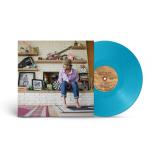
After a long-awaited break from the format, Smokin’ Sessions returns to vinyl with a very special limited-edition pressing of Rowl’s Signal EP.
Since launching in 2007, Smokin’ Sessions has built a reputation for deep, bass-driven music and a vinyl catalogue that has become an important part of the label’s history. After quite some time away from pressing records, SMOKE046 marks the label’s return to wax — presented on limited-edition transparent blue vinyl.
At the centre of the release is longtime Smokin’ Sessions and Deep Heads artist Rowl, returning with four cuts rooted in the deep 2-step, garage and bass sound that has defined both his own productions and the label over the years.
Opening the record is Versa & Rowl – “If You (Rowl’s Grey Skies Remix)”, a weighty reworking of an unreleased Versa & Rowl dub. Raw, swung drums, deep sub pressure and a distinctly old-school UK garage atmosphere run throughout — a sound described in early feedback as a “future retro garage classic” with that early deep dubstep / 2-step crossover feeling. The remix has also picked up support from Mat The Alien, BunZer0, Deep Tempo and Richard Dorfmeister, amongst others.
“Signal” follows — a heavy, stripped-back 2-step roller built around swinging drums, commanding low-end and Rowl’s unmistakably deep production style. The track represents the classic Smokin’ Sessions sound while pushing it forward with the precision Rowl has developed over more than a decade of production. The track has received strong DJ support, including J:Kenzo, who called it a “Great track”, Synkro, BunZer0, Mat The Alien and others.
On the B-side comes “Sierra” featuring Bristol lyricist and vocalist P.A.B MC. Written and recorded together in Bristol, Sierra takes things into warmer territory: chilled two-step garage rhythms, dubstep-weight low-end and an almost astral atmosphere underpin P.A.B MC’s melodic, conscious vocal delivery. It sits somewhere between soundsystem music and reflective storytelling — equally suited to a late-night system or headphones.
Early response to “Sierra” has already included Synkro, who described the track simply as “Killer”, alongside further underground DJ support.
Exclusive to the vinyl is the instrumental version of “Sierra”, giving the full production room to breathe and making this pressing an essential version of the EP for DJs, collectors and anyone wanting to hear the depth of Rowl’s production without the vocal.
Rowl first appeared on Smokin’ Sessions in 2011 and has remained closely connected to both Smokin’ Sessions and Deep Heads ever since. His catalogue includes collaborations with Versa such as Lunar, Jupiter and Solstice, alongside his 2013 Cosmic Visions EP. His music has previously received support from Don Letts on BBC Radio 6 Music, Tim Parker on NTS, Synkro and J:Kenzo.
For the physical release, no corners have been cut. The record has been vinyl cut and mastered by Beau Thomas at Ten Eight Seven (Ten Eight Seven Mastering) — one of the most respected engineers in UK bass music and someone whose experience with low frequencies and vinyl makes him the perfect choice for a Smokin’ Sessions pressing.
out of Stock
Last delivered 9 days ago available to reorder, subject to availability
Ajo Se Po is the third album by alto-saxophonist and percussionist Kevin Haynes, released with his band Grupo Elegua. The album integrates musical elements with references to his deepening spiritual understanding. Haynes has created a modal harmonic language incorporating Afro-Cuban melodies and classical kora playing - his alto-sax, infusing the album with a personal 'voice'.
Yoruba spirituality is at the heart of Haynes' musical thinking which also includes both Nigerian and Cuban dimensions. This is especially reflected by the use of recitation and Cuban bata drumming being employed on all tracks, with each piece growing out of a particular bata rhythm. Each such rhythm is dedicated to a particular Orisha, or divinity.
As well as influences from Afro-Cuban, Native Nigerian and folkloric Bata, Haynes' music is a fusion of contemporary jazz incorporating Mandinga folk and praise songs and hard bop.
Kevin Haynes and Grupo Elegua have performed at renowned jazz festivals including Havana Jazz Festival, Cuba and Salamanca Jazz Festival, Spain. Haynes has also featured on Moses Boyd's hit album Displaced Diaspora.
Previously available on digital only, Ajo Se Po is now released on vinyl.
out of Stock
Last delivered 15 days ago available to reorder, subject to availability
Black Truffle is thrilled to announce a second volume of unheard concert performances from legendary Pakistani kyhal singer Salamat Ali Khan, recorded at Berlin’s Neue Nationalgalerie as part of the MetaMusik festival in 1974. Like the first volume, the immaculate recording by Michael Hönig (of krautrock legends Agitation Free) captures Khan performing a single extended raag in the company of Shaukat Hussein Khan on tabla and Hussein Bux Khan on harmonium. In addition to his stunningly inventive and moving vocal performance, Khan is heard accompanying himself on a specially tuned alpine zither (in place of the traditional swarmandal, an Indian style of zither). The lack of an underlying tanpura drone gives the music its characteristic floating quality, with the three instruments and voice masterfully dancing around one another as they sketch the outlines of this grand, 40-minute Raag Chandrakauns.
If anything, this epic performance of the late-night Raag Chandrakauns is even more seductively spacious and psychedelic than the music heard on the first volume. Obeying the traditional shape of Hindustani classical vocal music performance, a gradual rise in both pitch and rhythmic activity, the music hovers for twenty minutes in a reflective calm, the pulse only gently stated by the tabla while harmonium ornamentation and zither strums float by. In this meditative space, Khan gradually orients us to the contours of the raag, beginning with long notes at the bottom of his register. His improvisation at once builds with a stunningly firm sense of internal logic and seems liberated to explore every melodic and ornamental byway that comes up along the way. By the time we turn to the record’s second side, the music has grown into something far more frenetic, with virtuoso tabla passages at times occupying centre stage between Khan’s increasingly rhythmic melodic variations. Concluding with a sequence of unison tabla and voice passages of breathtaking complexity, the performance is met with rapturous applause. Arriving in a blue-toned variant of the first volume’s sleeve, with acclaimed musicologist Peter Pannke’s liner notes in the original German, Metamusik Festival Berlin ’74 Volume II is not to be missed. Essential listening not just for Hidustanti classic aficionados, but for anyone who needs reminding of the magic of collective music making in the moment.
Much like a teacher, Meryl Streek imparts his knowledge and lived experiences to all who are willing to listen. His third album, ‘Stories They Don’t Teach You At School’, serves as an alternative form of education, delivered through a visceral blend of factual soundbites and raw emotion, loops and samples, guitars and bass. The lyrics resonate with core values of compassion, resilience, and community—themes rarely explored within a classroom setting or seen in today's fragmented society. By prioritising conviction over commercial success, the Dublin artist's outspokenness may invite controversy. Yet beneath the fervor lies a profound desire for positive social change at home in Ireland, and beyond.
Meryl Streek returned to Darkland Studios in Dublin to fine-tune the recordings previously made in a shed at the back of his ma's garden. Here he continued the genre-blurring nature of his earlier work, enticing listeners toward dissonant landscapes and hypnotic rhythms. Gentle piano tones collide with abrasive synths, creating a striking tension between beauty and noise. Streek tempers his rage when appropriate, integrating atmospheric textures and pop sensibilities into his ever-expanding sonic collage.
As is tradition with any Meryl Streek record, ‘Stories They Don’t Teach You At School’ unearths many uncomfortable truths. ‘Rotten Fruit’ examines media manipulation and the numbing proliferation of misinformation, all soundtracked by synth-punk. With gliding keys and a crunchy bassline, ‘Council Estates’ critiques systemic government failures affecting the working class. ‘Kelly’ is a slice of electronica that details an ongoing criminal investigation, currently classified as a “Contested Cause of Death”. The indie pop of 'The Chancer' brings much-needed attention to landlord politicians. As the album progresses, the mission remains absolute: to provide a voice for the voiceless.
To amplify these narratives, Meryl Streek handpicked a diverse group of collaborators for the project. ‘Rotten Fruit’ features Steve Ignorant of anarcho-punk collective CRASS. ‘Depression’ opens with a touching recording of the late Liam Norton, close friend and former touring companion, while Pete Holidai of The Radiators From Space contributes guitars on the song. Comedian Phill Jupitus provides the spoken outro for ‘The Chancer'. ‘Housing For All’ incorporates audio from Derelict Ireland campaigners Frank O’Connor and Jude Sherry. Venn Records owner and Gallows guitarist Laurent ‘Lags’ Barnard joins forces with Adebisi Shank bassist Vinny McCreith on the aggressive ‘Bullet,’ while Sophie Porter of Other Half provides bass guitar for ‘Life is Not a Rehearsal’. The album concludes with a three-minute spoken word piece by Frankie McNamara, the viral creator behind ‘Meditations for the Anxious Mind’.
In her 1990 protest anthem “Black Boys on Mopeds,” the late Sinead O’Connor warned, “To say what you feel is to dig your own grave”. With this release, Meryl Streek firmly holds the shovel.
South Asian super-producers Lapgan and Baalti – the former a Madlib-disciple spinning hip-hop grooves out of dusty desi samples, the latter duo purveyors of intricately tapestried dance music – holed up in the California desert in early 2024 for a songwriting session to blend their complimentary styles. They ended up with several albums worth of club material built upon decades of Indian music history – floor fillers that move like early Four Tet meets The Avalanches. They’ve been teasing this material around the world during live sets – from Paris Fashion Week to Glastonbury, London Clubs to BK Warehouse parties, sessions at Lot Radio and Karachi Community Radio, and anywhere else they find an aux. The result has been endless ID requests for unreleased gems like “Ipa Ma” and “Lime Tikka”, calls which should finally be answered with the release of Threads.
Lapgan Bio
Chicago-based archivist and producer Lapgan has become renowned for his signature style: unearthing rare and forgotten Indian & Pakistani sounds and recontextualizing them into hip-hop and dance beats that evoke J Dilla and Madlib. He has cultivated a reputation for quietly revolutionary sample-work across his beloved solo projects History and Duniya Kya Hai, as well as LAFANDAR, his critically acclaimed team up with Heems (of Das Racist / Swet Shop Boys). He has worked with a range of artists from both the West (Your Old Droog, Saul Williams, Cool Calm Pete, Kool Keith, Open Mike Eagle, Blue, Quelle Chris) and the East (EXCISE DEPT, Baalti, Sid Sriram, Sid Vashi, Dynoman), and has been featured in global media including Pitchfork, FADER, Stereogum, Passion of the Weiss, Mixmag, Homegrown, and Vinyl Me, Please. Over the past year he has headlined clubs and performed at festivals across the world from Chicago and New York to London and India, and was personally invited to soundtrack back to back Paris Fashion Week shows for the similarly norm-shifting designer Kartik Research. In 2026 he will soundtrack his third Kartik Research runway show, as well as reissue Duniya Kya Hai for its five-year anniversary alongside a companion EP featuring remixes from peers and supporters Arushi Jain, Loris, Mera Bhai, Malkfunktion, and Maral.
Baalti Bio
Baalti makes electronic music built around rhythm, pressure, and collective release – weaving through leftfield bass, dusty hip hop, tripped out dub and raw house all while maintaining a throughline rooted in South Asian culture seen through the lens of a sweaty dancefloor. In the last year they have experienced a whirlwind rise and growing global recognition: from their EP Mela vividly evoking West Bengal’s sound system culture to their Tamil-cinema-infused filter-house project with Anish Kumar Stunt Doubles, in addition to wide-ranging collabs and remixes alongside DJ ADHD, Naya Beat, and A.R. RahmanThey have also built a reputation for their frenetic live show, with appearances at international festivals like Glastonbury and MELT, headlining shows across Australia and Europe and supporting influences turned peers like Four Tet and Disclosure across North America. Their explosive, percussion-heavy sets have been platformed by Rinse FM, NTS, The Lot Radio, Beats In Space, and Refuge Worldwide, and their music has been renowned by publications including Pitchfork, Bandcamp Daily, RA, and MixMag. Their forward momentum continues into 2026 with slated headline tours in India, Australia, and Asia along with appearances at Coachella, Party in the Paddock, Fvded in the Park, and We Out Here festivals.
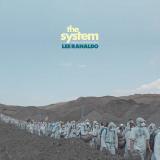
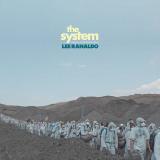
A quick scan of the world’s favourite crowdsourced discography reveals that Sonic Youth co-founder Lee Ranaldo was not a total stranger to crackling electric experimentation in the years following his songwriting turns of the 20-teens. Yet »The System«, ingeniously culled and sequenced from Ranaldo’s soundtrack work for Dutch filmmaker Joris Postema’s ›eco-doc‹ of the same name, nonetheless feels like a reawakening. Quietly released in a vastly different (and much more ›filmic‹) form by Doxy Music/Riva Media Records in 2025, this LP reimagines and reconfigures the initial release, including unreleased material written and recorded for the film, to lend it new stature as both a return to drone-improv form and a reunion with introspective Downtown angst.
Given the state of the world, it’s not surprising that the film Ranaldo scores – a documentary on three climate activists bruising their fists on the black iron prison of techno-fascist deathkultur – is a study in despair and futility. But rather than wallowing in navel-gazing doom and gloom, the film documents the unstoppable spirit that has animated human resistance since the time of the Pharaohs.
As it turns out, the gorgeous scope of Lee Ranaldo’s guitar palette is a perfect manifestation of the hope and despair that animates the film. But like other high-water marks in the guitar-centric soundtrack canon – the high plains raga of Bruce Langhorne’s »Hired Hand«, Neil Young’s sparse and ghostly solo transmissions on »Dead Man«, or the monolithic mantras of Popol Vuh’s »Nosferatu« – its devotion to spectral gestures and meditative song forms launches it firmly outside of the OST orbit into a universe fully its own.
It might seem like a long journey from the Lower Manhattan rhythmic grime of the album’s opener »Tajikistan (Nice to Meet You)« (reminiscent of guitar opuses like Robert Quine and Jody Harris’s »Escape«) to the ringing cowboy chords of the final track, but the narrative logic of the LP pulls the listener along as solidly as a pack horse. As the LP unwinds, and collaborators like Jim Jarmusch, cellist Leila Boudreil, Yeah Yeah Yeahs snare shaman Brian Chase, and guitarist Yonatan Gat take their places, new vistas unfurl: the ritualistic thrum of »Berlin Blockade«, the haunted overtone palaces of »Bergelmir«, and the cavernous acoustic strumming of »Instruments of Violence«. It all winds up with the high lonesome standard »Cool Water«, each unhurried note trailing off into long-tail reverb, layers of shifting vocal harmonies pulling everything skyward – a hopeful note in an album where existential dread never lurks too deeply below the surface.
In the end, »The System« functions both as a film score and a hallucinatory (mostly) instrumental guitar record, revealing a sensibility not too often spotted in the 21st century – a liminal space where the song, the jam, and the meditation merge into a blurred whole. »The System«’s expansive fabric, emerging from a collective sound circling around Ranaldo’s signature tones, envelops and ampl amplifies the contributions of its community of creators – the perfect antidote to narcissistic despair. Much like the subjects of the film light the way towards intra-generational resistance, the music of »The System« reveals a path through gathering darkness. The world could be yours if you follow.
The third chapter of The Third Room's curator-led series is shaped by Verraco, one of the key voices behind a new generation of artists reshaping contemporary club music. Through his productions, DJ sets and his work with TraTraTrax, he has helped define a sound where hybrid forms, rhythmic experimentation and cross-cultural influences are pushing the genre into new territory. Structured across two distinct sides, the release draws a clear connection between past and present. The A-side leans into a deeper, more classic space, while the B-side moves towards a more forward-facing, hybrid sound. It opens with Libration (Stone Version) by Substance & Vainqueur, a revisiting of their landmark 2007 release, a track that helped define the language of Dub Techno as it is understood today. Reduced, deep and spatially precise, it established a blueprint for how rhythm, delay and tone could function together. It's presence here acts less as a nod to the past and more as a reminder of a foundation that continues to shape the genre. Skee Mask's Clear Sky 909 continues this thread, softening the edges without losing depth. Warm, enveloping textures and fluid movement give the track a sense of openness, balancing clarity with emotional weight. The B-side shifts perspective. On Untitled (Teamgeist Mix), Verraco, joined by Tils, delivers the record's defining moment - a dense, intricately designed piece built on a driving low-end and evolving rhythmic patterns. Elements from Techno, Bass and Leftfield House converge into a detailed, forward-moving structure that actively bridges cultural contexts. It results in a form of dance music shaped by technical precision, but drive.n by a clear sense of intent, marking a distinct expression of Verraco's current sound. Untitled by 1morning introduces a rolling, tribal-infused groove with a strong sense of depth, while PatumPa by Regal86 closes the record with a bright, loop-driven energy that leans into pure motion. Across both sides, the release moves between reference and progression. Rather than separating old and new, Verraco connects them - tracing a line from foundational Dub Techno to a more fluid, contemporary club language. Copyright 2026 The Third Room A1 Written and Produced by Peter Kuschnereit & Rene Loewe | A2 Written and Produced by Bryan Mueller | B1 Written and Produced by JP Lopez & Jakob Ferdinand Tils and mixed by Lurka | B2 Written and Produced by 1morning | B3 Written and Produced by Regal86 Mastered by Andreas Kauffelt (Schnittstelle Berlin) Artwork by Charlotte Ernst Design by Daniel Bornmann (STUEDIO.XYZ) Distribution by Clone Pressing by Matter Of Fact
out of Stock
Last delivered 12 days ago available to reorder, subject to availability
he Congos possess what all bands look for, that unique distinctive sound that draws the listener in. Alongside the great songs, lead singer Cedric Myton's singing, phasing and falsetto voice makes that just the case.
The Congos were formed by Cedric Myton (b. 1947, St Catherine, Jamaica) around the mid-Seventies when the
Rasta message was central to the reggae sound coming out of Kingston, Jamaica. But he had started out in the
Rocksteady era, when he formed the vocal group 'Tartans', taking lead vocal duties alongside Devon Russell, Prince Lincoln Thompson and Lindbergh Lewis.They cut 'Dance All Night' (1967) and 'Coming On Strong' (1968). The line-Up became The Royal Rasses and from this Cedric moved on to form the Congos on meeting Roydel Johnson, who had previously sang with Ras Michael and the Sons of Negas. Cedric's Rasta roots were firmly in place when he went to work with producer Lee Perry to cut the seminal album 'Heart Of The Congos' at Perry's just built, Black Ark Studios in 1977. Cedric Myton has carried on the mantle, cutting a set of tunes with the help of his good friend Mr Brent Dowe, who had previously sang lead vocals with the Melodians.This is the Dub set to the vocal album released on the Kingston
Sounds label called 'The Congos Feast'(KS008).With such strong songs, rhythms and vocals it always had the chemistry for a great dub set. Hope you agree and enjoy the dub excursion...
Tramhaus aus Rotterdam wurden nach der Veröffentlichung ihres Debütalbums "The First Exit" (2024) und zahlreichen Shows in ganz Europa (und weit darüber hinaus!) bereits als "DIE holländische Post-Punk-Sensation" beschrieben und wahrgenommen. Im Oktober 2026 erscheint das neue Album "Blister" bei Siluh Records. Die Band bewegt sich seit ihrer Gründung 2020 zwischen treibendem Post-Hardcore und Indierock-/Shoegaze-Anleihen, garniert mit einem Schuss kalkulierter Dissonanz. Dabei verorten sich Tramhaus, über die musikalischen Einflüsse hinaus, explizit als Teil einer organisch gewachsenen, internationalen Szene, eines Netzwerks aus unabhängigen Agenturen, Labels und Veranstaltern mit deren Hilfe die Band nach der Veröffentlichung ihres Debütalbums innerhalb ein, zwei Jahren zum Szene-Tipp und must-see avancierte. Kraftvoll, laut und selbstbewusst gewinnt Blister bei wiederholtem Hören an Format. Das Album besticht durch eine neue Eleganz sowie spürbarem Raumgefühl und enormer Wucht. Dies rührt zum Teil aus einer gewachsenen, detailierteren Produktion her, die auch die vielen Zwischentöne einfängt. Die schwindelerregende Natur des fast zweijährigen, ununterbrochenen Reisens spiegelt sich im Titel des ungeduldigen Eröffnungsstücks "Plovdiv" wider (ein Ort, an dem sie übrigens tatsächlich gespielt haben): Ein Glam-artiger Stampf-Rhythmus und eine federnde Basslinie treiben eine Reihe bedrohlicher Gitarrenriffs voran - Elemente, die allesamt jenen Sound widerspiegeln, mit dem Tramhaus in letzter Zeit die Konzertbühnen in Schutt und Asche gelegt haben. Auch weitere Stücke wie "Rat Race" und "I Was Never Alone" klingen ganz ähnlich. Die langsameren Titel des Albums offenbaren bisweilen eine ,rockistische" Erhabenheit, die sie zuvor lediglich angedeutet hatten: vielleicht im Stil der Pixies oder der späten Nirvana (man höre und staune!) - oder, an anderer Stelle als leises Flüstern, das an Nick Cave and the Bad Seeds erinnert. "Overachiever, Big Believer" und "Sly (Like Ever)" zeichnen sich durch eine beißende, knurrende Grundstimmung sowie geduldig ausgearbeitete Melodielinien aus - Eigenschaften, die im Jahr 1991 zweifellos hervorragend ins musikalische Zeitbild gepasst hätten. An anderer Stelle besticht "Solace" mit seinem offenen Akkordanschlag durch eine lässige Attitüde, die direkt einem Stück der Saints oder der Bad Seeds entstammen könnte. Das Beste wird sich für den Schluss aufgehoben: Bei "Swarm" bricht nach einem monolithischen, an die frühen Pere Ubu erinnernden Bass-Grollen ein grandioses, Sabbath-artiges Riff über den Hörer herein. Es ist ein hymnisches, transzendentes Stück, das in früheren Zeiten ein garantierter Hit gewesen wäre - eine Single, die Teenager auf der ganzen Welt dazu animiert hätte, ihre Air-Guitar-Künste vor Mamas Schlafzimmerspiegel zu perfektionieren. Also, das zweite Album der genau richtig neben dem Mainstream verorteten Postpunk-Niederländer*innen nicht verpassen!
Tramhaus aus Rotterdam wurden nach der Veröffentlichung ihres Debütalbums "The First Exit" (2024) und zahlreichen Shows in ganz Europa (und weit darüber hinaus!) bereits als "DIE holländische Post-Punk-Sensation" beschrieben und wahrgenommen. Im Oktober 2026 erscheint das neue Album "Blister" bei Siluh Records. Die Band bewegt sich seit ihrer Gründung 2020 zwischen treibendem Post-Hardcore und Indierock-/Shoegaze-Anleihen, garniert mit einem Schuss kalkulierter Dissonanz. Dabei verorten sich Tramhaus, über die musikalischen Einflüsse hinaus, explizit als Teil einer organisch gewachsenen, internationalen Szene, eines Netzwerks aus unabhängigen Agenturen, Labels und Veranstaltern mit deren Hilfe die Band nach der Veröffentlichung ihres Debütalbums innerhalb ein, zwei Jahren zum Szene-Tipp und must-see avancierte. Kraftvoll, laut und selbstbewusst gewinnt Blister bei wiederholtem Hören an Format. Das Album besticht durch eine neue Eleganz sowie spürbarem Raumgefühl und enormer Wucht. Dies rührt zum Teil aus einer gewachsenen, detailierteren Produktion her, die auch die vielen Zwischentöne einfängt. Die schwindelerregende Natur des fast zweijährigen, ununterbrochenen Reisens spiegelt sich im Titel des ungeduldigen Eröffnungsstücks "Plovdiv" wider (ein Ort, an dem sie übrigens tatsächlich gespielt haben): Ein Glam-artiger Stampf-Rhythmus und eine federnde Basslinie treiben eine Reihe bedrohlicher Gitarrenriffs voran - Elemente, die allesamt jenen Sound widerspiegeln, mit dem Tramhaus in letzter Zeit die Konzertbühnen in Schutt und Asche gelegt haben. Auch weitere Stücke wie "Rat Race" und "I Was Never Alone" klingen ganz ähnlich. Die langsameren Titel des Albums offenbaren bisweilen eine ,rockistische" Erhabenheit, die sie zuvor lediglich angedeutet hatten: vielleicht im Stil der Pixies oder der späten Nirvana (man höre und staune!) - oder, an anderer Stelle als leises Flüstern, das an Nick Cave and the Bad Seeds erinnert. "Overachiever, Big Believer" und "Sly (Like Ever)" zeichnen sich durch eine beißende, knurrende Grundstimmung sowie geduldig ausgearbeitete Melodielinien aus - Eigenschaften, die im Jahr 1991 zweifellos hervorragend ins musikalische Zeitbild gepasst hätten. An anderer Stelle besticht "Solace" mit seinem offenen Akkordanschlag durch eine lässige Attitüde, die direkt einem Stück der Saints oder der Bad Seeds entstammen könnte. Das Beste wird sich für den Schluss aufgehoben: Bei "Swarm" bricht nach einem monolithischen, an die frühen Pere Ubu erinnernden Bass-Grollen ein grandioses, Sabbath-artiges Riff über den Hörer herein. Es ist ein hymnisches, transzendentes Stück, das in früheren Zeiten ein garantierter Hit gewesen wäre - eine Single, die Teenager auf der ganzen Welt dazu animiert hätte, ihre Air-Guitar-Künste vor Mamas Schlafzimmerspiegel zu perfektionieren. Also, das zweite Album der genau richtig neben dem Mainstream verorteten Postpunk-Niederländer*innen nicht verpassen! Dieses frisch grüne Vinyl ist limitiert (100 Stück weltweit)!
Tramhaus aus Rotterdam wurden nach der Veröffentlichung ihres Debütalbums "The First Exit" (2024) und zahlreichen Shows in ganz Europa (und weit darüber hinaus!) bereits als "DIE holländische Post-Punk-Sensation" beschrieben und wahrgenommen. Im Oktober 2026 erscheint das neue Album "Blister" bei Siluh Records. Die Band bewegt sich seit ihrer Gründung 2020 zwischen treibendem Post-Hardcore und Indierock-/Shoegaze-Anleihen, garniert mit einem Schuss kalkulierter Dissonanz. Dabei verorten sich Tramhaus, über die musikalischen Einflüsse hinaus, explizit als Teil einer organisch gewachsenen, internationalen Szene, eines Netzwerks aus unabhängigen Agenturen, Labels und Veranstaltern mit deren Hilfe die Band nach der Veröffentlichung ihres Debütalbums innerhalb ein, zwei Jahren zum Szene-Tipp und must-see avancierte. Kraftvoll, laut und selbstbewusst gewinnt Blister bei wiederholtem Hören an Format. Das Album besticht durch eine neue Eleganz sowie spürbarem Raumgefühl und enormer Wucht. Dies rührt zum Teil aus einer gewachsenen, detailierteren Produktion her, die auch die vielen Zwischentöne einfängt. Die schwindelerregende Natur des fast zweijährigen, ununterbrochenen Reisens spiegelt sich im Titel des ungeduldigen Eröffnungsstücks "Plovdiv" wider (ein Ort, an dem sie übrigens tatsächlich gespielt haben): Ein Glam-artiger Stampf-Rhythmus und eine federnde Basslinie treiben eine Reihe bedrohlicher Gitarrenriffs voran - Elemente, die allesamt jenen Sound widerspiegeln, mit dem Tramhaus in letzter Zeit die Konzertbühnen in Schutt und Asche gelegt haben. Auch weitere Stücke wie "Rat Race" und "I Was Never Alone" klingen ganz ähnlich. Die langsameren Titel des Albums offenbaren bisweilen eine ,rockistische" Erhabenheit, die sie zuvor lediglich angedeutet hatten: vielleicht im Stil der Pixies oder der späten Nirvana (man höre und staune!) - oder, an anderer Stelle als leises Flüstern, das an Nick Cave and the Bad Seeds erinnert. "Overachiever, Big Believer" und "Sly (Like Ever)" zeichnen sich durch eine beißende, knurrende Grundstimmung sowie geduldig ausgearbeitete Melodielinien aus - Eigenschaften, die im Jahr 1991 zweifellos hervorragend ins musikalische Zeitbild gepasst hätten. An anderer Stelle besticht "Solace" mit seinem offenen Akkordanschlag durch eine lässige Attitüde, die direkt einem Stück der Saints oder der Bad Seeds entstammen könnte. Das Beste wird sich für den Schluss aufgehoben: Bei "Swarm" bricht nach einem monolithischen, an die frühen Pere Ubu erinnernden Bass-Grollen ein grandioses, Sabbath-artiges Riff über den Hörer herein. Es ist ein hymnisches, transzendentes Stück, das in früheren Zeiten ein garantierter Hit gewesen wäre - eine Single, die Teenager auf der ganzen Welt dazu animiert hätte, ihre Air-Guitar-Künste vor Mamas Schlafzimmerspiegel zu perfektionieren. Also, das zweite Album der genau richtig neben dem Mainstream verorteten Postpunk-Niederländer*innen nicht verpassen! Dieses frisch grüne Vinyl ist limitiert (100 Stück weltweit)!
"Cinematic Visionaries Calibro 35 and Noir Master James Ellroy Pay Homage to L.A. with a Pure Crime-Funk Original Soundtrack. Out October 9" There are collaborations that feel inevitable like they were waiting to happen in some shadowed corner of culture. The union between Italian cinematic funk visionaries Calibro 35 and internationally acclaimed master of noir fiction and New York Times bestselling author James Ellroy is undoubtedly one of them. When Calibro 35 were invited to compose the original soundtrack for Francesco Zippel's documentary Ellroy vs L.A., they didn't simply write music for film. They stepped directly into Ellroy's universe the most dangerous corners of American crime fiction and discovered, to no one's surprise, that its darkness felt strangely familiar. The result is Ellroy vs L.A., the band's new album out October 9 on Record Kicks. Twelve brand new tracks of cinematic crime funk, psychedelia, and hypnotic groove that don't accompany Ellroy's world so much as inhabit it. The soundtrack's move through Ellroy's fictional and real-world mythologies with deliberate precision. Stylistically, the album finds Calibro 35 in their most natural yet most cinematic state: crime funk, psychedelia, and hypnotic groove pushed into darker, more narrative-driven territory by the weight of Ellroy's world. From the gloomy, suspense-laden groove of the opener Black Dahlia to the evocative closing piece Moonlight Sonative, the album unfolds as a complete cinematic arc, showcasing Calibro 35 at their very best. L.A. Confidential delivers a super-suspenseful, thrilling tension that feels like a chase through neon-lit streets, while Riots erupts into explosive cinematic funk, capturing chaos and urban unrest in full force. LSD on Sunset Boulevard drifts into a hazy, instrumental soul journey psychedelic, warm, and disorienting, like a late-night hallucination of the city itself. The Big Nowhere (Part I & II) expands the narrative into a slow-burning, atmospheric descent, unfolding like a two-act crime saga. Welcome to the Land of Vacation and Probation hits with kick-ass, uptempo crime-funk madness, urgent and relentless in its propulsion, while White Jazz is a mood of suspended, noir-infused jazz tension cool, shadowy, and unresolved. Together, the tracks map Los Angeles as a fractured yet hypnotic landscape suspended between glamour and violence, beauty and decay, myth and reality Born in Milan in 2007 with the mission of excavating the golden age of Italian film music Morricone, Piccioni, Trovajoli, Calibro 35 have spent nearly two decades transforming that initial obsession into a singular artistic language. Their work bridges vintage Italian soundtracks with contemporary jazz and cinematic funk, earning them a global following rare for an Italian instrumental act. Their music has been sampled by Dr. Dre (Compton, "One Shot One Kill" feat. Snoop Dogg), Jay-Z ("Picasso Baby"), and Damon Albarn's The Child of Lov. Rolling Stone described them as "the most fascinating, retro-maniac and genuine thing that has happened to Italy in the past few years," while Far Out Magazine called them "one of the most skilful and innovative instrumental outfits on the planet right now." The band (Enrico Gabrielli, Massimo Martellotta, Fabio Rondanini, and Tommaso Colliva) continue to evolve without losing their core identity. In 2025 they released the critically acclaimed Exploration, further expanding their sonic universe, and were invited to perform at the closing ceremony of the Winter Olympic Games at the Arena di Verona, confirming their growing international stature. With Ellroy vs L.A., Calibro 35 don't just compose a soundtrack they translate a mythology into rhythm, tension, and groove. Between fiction and reality, they find a city that never truly sleeps, only pulses in darkness. Press play, and Los Angeles begins to unfold in sound.
Celebrating 50 years since the release of the iconic Cathedrals album, U.S. disco legend D.C. LaRue returns with never-before-released remixes of all four original classics—pressed on strictly limited vinyl.
Top contemporary disco producers The Reflex, Dr. Packer, and Mannix breathe new life into LaRue’s 1976 masterpiece:
The Reflex (Stevie Wonder, Cerrone) delivers dancefloor-driven edits using digitized analog multitracks.
Dr. Packer (First Choice, Loleatta Holloway) reinvents one of LaRue’s biggest hits with fresh, soulful energy.
Mannix, head of Dafia Records, adds deep, dubby textures to complete this dynamic remix package.
Each track is respectfully reimagined—maintaining the emotional depth of the originals while enhancing clarity, rhythm, and relevance with modern production.
Bonus: Includes two standout remixes from LaRue’s second LP The Tea Dance—"Overture" (The Reflex) and "O Ba Ba" (Mannix).
These remixes aren’t just nostalgic—they’re timeless. Essential for collectors, DJs, and anyone who lives for disco.
Grab your copy before it’s gone.
out of Stock
Last delivered 12 months ago available to reorder, subject to availability
Moulded By Industry is William D Drake's six album, his first for ten years and a return to the richly layered sonic texture and epic production of his majestic Briny Hooves. He is joined by long time collaborators James Larcombe, Dean Gaisburgh-Watkyn and Steve Jackson, with the addition of a new crew member, singer Treana Morris. Moving on from his nine years of pianistic and compositional duties in Cardiacs, Drake's solo work has been known for its synthesis of Mellotron-driven grandeur with a surreal playfulness.
But the deep heart of Drake's work is in its powerful evocation of the landscape of the countryside and its connection with love, longing and loss. To this end, his own enigmatic lyrics have rubbed shoulders with poetry drawn from across the centuries. From obscure sources such as Samuel Spree to the poetry of Thomas Hardy and Rupert Brooke, his settings make old words shimmer with human emotion. The texture of his music also reflects an inspirational lack of concern for distances of time. The earthy breath of his harmonium is interwoven with tones teased from archaic instruments by James Larcombe – hurdy-gurdy, dulcitone and melodeon.
But Drake's sound-world is no museum. Here, ancient words and the timbres of ancient instruments become one with the rush of a moment's emotion. Moulded By Industry brings this approach a new sonic depth, intoxicatingly shaded by Treana's lush vocal harmonies and underpinned by Steve's rhythm. Dean's evocative guitar textures give an oceanic sense, tinged with Americana, recalling his work with Drake in their alt country band Nervous. These many layers of sound are drawn together into vivid soundscapes by the painterly mixing of producer Ott. Renowned for his work in electronica and dub, Ott's two decades of experience working with artists such as Sinéad O'Connor, the Orb and Brian Eno bring an organic touch here, more akin to the elemental forces of land and sky than grid electricity. More than any of Drake's previous albums, Moulded By Industry reignites the emotional urgency of old texts. The gorgeous single The Flickering Shade, haunted by glimmers of lost possibilities, is set from words by Thomas Ashe. Turtledove's heady evocation of the blissful madness of love sets the words of an anonymous 17th century ballad. above all, the album is a testament to Drake's love of John Clare, 'The Northamptonshire Peasant Poet'. Clare wrote as the centuries old process of enclosure, in which wild and common land was appropriated commercially, was accelerating.
His works, rather than representing simple sentimentality, are passionate love poems to the landscape and cries from a soul reeling from the creeping unfamiliarity devouring it. This sense of the tension between passion and ill-ease has its most potent expression in Green Shadows. The brooding, slow-tempo energy of Steve's drums drive a horizon-wide lament, alternately lulled by Treana's vocal textures and made restless by James' plaintive hurdy-gurdy and the emotive pull of Dean's slide guitar. The present moment is also a time of enclosure, both metaphorically, as our lives, memories and emotions are drawn into the commercial space of social media, and literally as land and water are swallowed by vast data centre developments. Moulded By Industry celebrates a regained sense of being in the moment in the landscape, in life and in love. The album closes with the utterly delightful single Love In The Universe. The kind of song that could make a cynic use the word 'joyous' without irony, this Harry Nilsson-esque romp reassures us, with a wink, that 'in an infinite universe everything has its place ... even the human race'.
The title of Ghost Bridge, the East-Coast-spanning chamber ensemble Hour's fifth record, is less metaphorical than one might expect. Bandleader Michael Cormier- O'Leary repurposed it from an unrealized movie concept about a bridge that inexplicably starts disappearing. On the nearly-ten-minute title track of this richly imaginative suite of songs_written for a 13-piece ensemble that includes woodwinds, strings, and vibraphone as well as a rock rhythm section_Hour conjures up this central image with spectral string harmonics and free-time percussion gestures. While writing the keyboard pieces that became the takeoff point for the album, Cormier-O'Leary also found himself reflecting on the loss of loved ones or even his own mortality. The six kaleidoscopic instrumental pieces on Ghost Bridge, though, feel more cosmically inquisitive than straightforwardly elegiac, sketching a progression from existential doubt toward understanding and acceptance. Ghost Bridge forms a contrast with Hour's art-rock-informed, more improvisatory early releases, representing a step further into intricate chamber orchestration. Known for his work with Friendship, Wendy Eisenberg, and 2nd Grade, Phillybased multi-instrumentalist and Dear Life Records founder Cormier-O'Leary has made Hour a home for increasingly cinematic instrumental compositions since the mid-2010s. With dazzling production by Lucas Knapp, Ghost Bridge delivers plenty of the live ensemble's trademarks, especially cyclically developing guitar and keyboard melodies. However, even more than on Hour's last studio album, unconventional harmonies and sophisticated counterpoint take center stage here. These emotionally multifaceted compositions feel as rooted in contemporary classical and film soundtrack music as in indie rock. One of the most striking elements of Ghost Bridge is the more significant developmental role the orchestral instruments assume in each piece. Instead of underscoring Cormier-O'Leary's central hooks, there is a new mesmerizing level of detail to the group's conversational interactions and kinetic energy. "Centralia" is a stately and idiosyncratic fugue built from repeated and overlapping phrases, while Ghost Bridge's compositions are full of unexpected pivots in harmony that allow recurring melodic motifs to sound continually reshaded. On "Pearls," the chords modulate drastically around Cormier-O'Leary's inviting central melody in a way that emulates cuts in a film telling several parallel stories. There is an unsettled quality to the chords on Ghost Bridge, with Cormier- O'Leary's progressions avoiding firm grounding in either clearly sunny or melancholy tonalities. This mood is made more concrete by the record's sole vocal track, the jazz-inflected "Sky is Blue," featuring an uncannily gorgeous performance by Heeyoon Won. The song seems to be a communication from a person who has departed, offering consolation or perspective to someone left behind. Though its sonic palette is often tranquil, Ghost Bridge explores heartbreak, grief, anger, and helplessness in a distinct and pretense-free way. The project represents a bold step forward for Cormier-O'Leary as a composer and arranger, and on Ghost Bridge Hour reaches its most fully realized form to date, connecting soaring themes with an inventiveness that perfectly suits the searching nature of the subject matter.
Edge Conditions is a fresh look at the beat-forward electronic music of Jeremiah Chiu. In Electric Time, his 2023 first-thought-best-thought album recorded at theVintage Synth Museum in LA, offered a glimpse a solo process and sound, fast becoming a fan favorite. In many ways this new work is a total reset. Following two ambient-leaning duo albums with Marta Sofia Honer and a pair of improvisatory trance-jazz LPs with LA quintet SML, Edge Conditions settles Chiu into a world of layered, alternately dance-able or chillout-able, rhythm excursions a la classic Four Tet or Aphex Twin.
Edge Conditions is a fresh look at the beat-forward electronic music of Jeremiah Chiu. In Electric Time, his 2023 first-thought-best-thought album recorded at theVintage Synth Museum in LA, offered a glimpse a solo process and sound, fast becoming a fan favorite. In many ways this new work is a total reset. Following two ambient-leaning duo albums with Marta Sofia Honer and a pair of improvisatory trance-jazz LPs with LA quintet SML, Edge Conditions settles Chiu into a world of layered, alternately dance-able or chillout-able, rhythm excursions a la classic Four Tet or Aphex Twin.
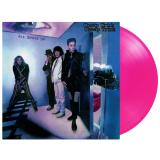
All Shook Up is the fifth studio album by the American rock band Cheap Trick, originally released in 1980 and produced by legendary producer George Martin, best known for his work with The Beatles.
The album followed the huge success of At Budokan and Dream Police and found the band working with a new producer for the first time in several years. George Martin gave the recordings his own touch, while Cheap Trick remained true to the sound and songwriting that had made them popular. The album features memorable tracks like "Stop This Game", "Just Got Back", "Baby Loves to Rock" and "World’s Greatest Lover". All Shook Up reached number 24 on the Billboard 200 and was certified Gold in the United States. It remains a strong album from an important period in Cheap Trick’s career and a great addition to their classic catalogue.
All Shook Up is available as a limited edition of 2000 individually numbered copies on magenta vinyl and includes an insert.
A space is often described by its dimensions. The height of the ceiling, the expanse between walls. Division into functional elements of varying density follows. We have ideas of how such dimensions should be balanced to work well for sound — the classical concert hall, a Northward mastering room.
It’s tempting to try and use this idea of space to understand Space the group (Lisa Ullén, Elsa Bergman, Anna Lund). To calculate their cartesian co-ordinates: dynamics that run from whisper soft to punishing, shaking force; Ullén’s piano running the full expanse of the frequency spectrum; the mix of sudden, surprising and suggested variations in density (the space) that generates their musical structures.
But (a) space is a social phenomenon where meaning is accumulated and possibilities created by and through a constantly shifting set of social relations and their histories and entanglement inside and beyond the physical structures of a room or building. Reduced to its raw dimensions, Cafe OTO shouldn’t sound good: the low ceiling, the hollow void underneath the stage-not-stage, the hard glass windows out onto the street. But OTO as a social space — for gathering close to listen; the serious pursuit of a convivial good time (its productive mythology that an OTO audience is both up for it but also expects more); and then the idea of all that has happened before and what will come; that this is also part of ‘the music’ and changes what sounds to the point that none of those cartesian co-ordinates matter.**
It’s less of shock that Space sound good. Lisa Ullén is easily the most singular pianist in Sweden right now and Elsa and Anna’s ability to reroute in realtime reaffirms just how well they function as a group. The trio might have got their shit together holding down the rhythm section for the first incarnation of Anna Högberg Attack — but much like Högberg’s ongoing pursuit of artistic renewal, the trio avoid being shackled to any ideas about what a piano trio should be and there is something that happens (happened) in that room, on that night, with those people that made for something beyond just good.
It’s a gift that the sound of every concert at OTO gets recorded. A choice handful of these transcend their decoupling from that social space and radiate the room’s attendant energies. This record is one of them.
** See Jack Halberstam in Fred Moten & Stefano Harney, The Undercommons (2013): “…we must refuse the idea that music happens only when the musician enters and picks up an instrument; music is also the anticipation of the performance and the noises of appreciation it generates and the speaking that happens through and around it, making it and loving it, being in it while listening."
Originally released in 2017, Zara McFarlane’s Arise represents a classic moment in Brownswood Recordings catalogue. Just before the global spotlight landed on London's new jazz generation, Zara McFarlane was already forging her own path - connecting jazz, soul, reggae and Afro-Caribbean traditions with a confidence and clarity that remains striking nearly a decade later. Arise captures an artist operating with singular vision, creating a body of work that sounds every bit as fresh and forward-thinking today as it did on release.
The album also stands as an early landmark in the career of Moses Boyd, who produced and co-composed the record while serving as Zara's longtime drummer and musical collaborator. Years before his Mercury Prize-nominated breakthrough, Boyd helped shape Arise into a deeply personal exploration of heritage. The credit list is remarkable: Moses Boyd, Binker Golding, Shabaka Hutchings, Nathaniel Cross, Peter Edwards and Shirley Tetteh all contribute to a record that now reads like a roll call of British jazz royalty. The iconic cover shot was taken by Adama Jalloh, around the corner from Brownswood’s North London HQ.
Upon release, Arise was met with widespread critical acclaim. The Guardian praised “A Class Act" and celebrated its exploration of African-Caribbean musical lineage, while Clash Magazine described it as “enchanting and intriguing”. All About Jazz called the album's fusion of jazz and Jamaican rhythms "spellbinding".
As Brownswood celebrates its 20th birthday, we're proud to return one of the label's defining releases to vinyl, with the original copies being highly sought after. Pressed on limited edition gold vinyl, this special anniversary reissue is both a celebration of Zara McFarlane's artistry and a reminder of a record that was both ahead of its time, and whose influence resonantes today.
Five years after establishing himself as one of the UK's most distinctive selectors, Bloom marks the beginning of a new chapter for Yung Singh. More than a debut EP, it introduces EKTA his own label and creative world, built around the Panjabi concept of unity and the belief that dance music can be a meeting point for cultures, histories and new ideas.
Rather than treating heritage as something to preserve behind glass, Bloom places it at the centre of contemporary club music. Drawing inspiration from Panjabi folk traditions, Indian classical rhythms and centuries-old musical practices, Singh reimagines these influences through a modern electronic framework without reducing them to nostalgia or tokenism. The visual identity mirrors this philosophy, taking cues from Phulkari embroidery "flower work" passed down through his own family and connecting those traditions with the idea of growth, renewal and the arrival of a new creative season.
Finalised while touring Panjab during Basant, the festival celebrating the arrival of spring, Bloom became both a personal and artistic statement: the first release on a label intended not to represent one culture alone, but to create space for many. As Singh explains:
"EKTA as a name really sums up what I love about music and arts in general: unity and oneness. I want the label to be a sonic universe where artists bring their specific heritage into a modern club framework. It's about merging diverse folk traditions to treat these sounds not as relics, but as the future of dance music."
Across three tracks, Bloom presents different perspectives of that vision. 'NUG46' transforms field recordings captured in New Zealand into a meditative piece built around hypnotic tabla and razor-sharp jungle rhythms. 'Situationz' pays tribute to legendary Panjabi artist Sukshinder Shinda through the driving "Shinda Break", recontextualising a rhythm instantly recognisable to generations of listeners into a high-energy club weapon. Closing the record, 'Tabla Trouble' leans fully into organic instrumentation, layering classical percussion, strings, flutes and vocals into a composition that defines the open-ended musical language of EKTA.
Bloom is not simply the first release on a new label. It is the foundation of a wider vision one that looks to the past not for comfort, but for inspiration, using tradition as a catalyst for imagining the future of dance music.
This album is a glimpse into the creative outpouring from Todd in September and October of 2025. He returned to the Purple Building in East Nashville to perfect what he called “the sound of country music 10 years from now”. This meant taking his favorite country music tropes, dismantling and reassembling them over stretched-out, swampy grooves with New Orleans-style horns. He was so sure of this sound, feel, and his studio band's pliability that he insisted on recording his vocal and guitar first, with no accompaniment or click track. Todd wanted the band to record after him, so they would HAVE to follow his lead wherever it went. In his mind, he was attempting to write and record a double album. His excitement over the recordings and the push to capture that much material meant that by mid-October, Todd had recorded his vocal, guitar and the band's rhythm section for at least an album’s worth of material, with plans to continue recording. Sadly, Todd passed away before the remaining overdubs and additional songs could be completed. Fortunately all the notes, directions and encouragement he left behind in the form of emails, voice memos and demos provided an extensive roadmap for his band. Following that roadmap as closely as possible, his band was able to complete Todd's last work, My Second Rodeo, Part 1.
De Kloe: their name is as hard to explain as the music they channel from a total oddball universe. Rumour has it a wormhole sits hidden between the beer crates and a broken dartboard in the basement of the DPG Media building in Antwerp. Leon Jespers, Elian Van den Eynde and Midas Heuvinck stepped through and came back with De Kloe’s first full-length album.
Needless to say, De Kloe operates in the cracks - splicing obscure samples, fractured lyrics, jagged basslines, and serrated guitar riffs into something volatile and alive. Club rhythms pulse underneath, but nothing stays in place for long. Tracks mutate, structures dissolve, and both live and on record the band leans into instinct over control.
After the singles ‘Our House’ & ‘The Fish’ the trio finally presents their debut album ‘Vanity Fair’: more extravaganza tunes you didn’t know you need it, but soon will be addicted to.
A place where pop music collides with dubbed out samplemania, short sharp no wave riffs, sun-gazing psychedelica, 90’s indie sleaze, post everything vibes and endless sonic fun & happiness.
Some people would say Vanity Fair is a musical exploration of glossy machinery, the dacay of celebrity and a secret wink to John Bunyan’s Pilgrim’s Progress where
everything is on display and nothing is quite what it seems.
Other will say ‘Vanity Fair’ is a splendid record with 12 marvelous songs you just have to listen to and buy it because your life will only gets better from then on.
We believe both of them.
Credits
All songs written and produced by De Kloe
Elian Van den Eynde: guitar
Leon Jespers: electronica & keyboard
Midas Heuvinck: bass
Guest musicians
Kiara Govaert & Nina Brügger: vocals
Kiara Govaert: ocarina
Co-production and mixing by Martijn De Bondt
Recording by Simon Beeckaert
Mastering by Gert Van Hoof
Graphic design and layout cover by Leon Jespers
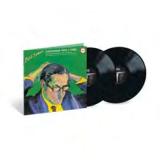
Sechs Jahre nach seinem legendären Live-Auftritt vom 25. Juni 1961, aus dem zwei der populärsten
und besten Alben von Bill Evans für das Label Riverside hervorgingen - ”Sunday At The Village Vanguard”
und ”Waltz for Debby” -, kehrte der einflussreiche Jazzpianist im August 1967 für zwei Abende in denselben
Jazzclub in Manhattan zurück. Diesmal trat er in der einmaligen Trio-Besetzung mit Eddie Gómez am
Bass und Philly Joe Jones am Schlagzeug auf. Die Aufnahmen erschienen 1982, zwei Jahre nach Evans’
Tod, auf dem Doppelalbum ”California Here I Come”, das seinen vielleicht etwas verwirrenden Titel dem
Opener des Albums verdankt. An beiden Abenden waren Evans und seine Spielpartner in Bestform und
zeigten bei Interpretationen von Standards wie ”‘Round Midnight”, ”In a Sentimental Mood” und ”Stella
by Starlight” sowie dem damals neuen Bacharach/David-Hit ”Alfie” ungezügelten Elan, rhythmisches Feuer
und ein energiegeladenes Zusammenspiel.
DPRTNDRP make a long-awaited return to Infernal Sounds with 'Byrnei', a release that's been quietly building anticipation across the 140 scene. Following their acclaimed 'What Ya Mean' EP in 2020, the duo are back with five heavyweight cuts that showcase exactly why they've remained one of dubstep's most respected production outfits for well over a decade.
Opening with the title track, 'Byrnei' wastes no time setting the tone. Rolling with DPRTNDRP's unmistakable swing, weight and groove, it's a certified soundsystem weapon - built to lock dancers into its hypnotic rhythm while delivering devastating low-end pressure.
Next up, 'Jiaozi' shifts into overdrive. A relentless barrage of razor-sharp percussion, cavernous basslines and seismic energy, it's an uncompromising slice of peak-time dubstep designed to hit with maximum impact from the first drop to the last.
'Fury' explores a deeper side of the duo's sound, drawing influence from their dub-focused alias, D-Operation Drop. Rich in space, texture and heavyweight sonics, it perfectly blurs the line between traditional dub and modern 140, combining meditative atmospherics with chest-rattling low-end.
Adding another dimension to the EP, Causa steps in to rework 'Fury', twisting the original into a hypnotic, distorted roller. Layered with his unmistakable wobble-heavy aesthetic, the remix pushes the track into darker territory, delivering an immersive journey of oppressive bass weight and razor-sharp sound design.
Bringing the release to a thunderous close, 'Backfire' is pure, uncompromising pressure. Stripped back, direct and devastatingly effective, it's arguably the heaviest moment on the EP; a no-nonsense soundsystem destroyer that leaves a lasting impression.
From start to finish, 'Byrnei' is a statement of intent. It's a masterclass in weight, groove and precision, reinforcing DPRTNDRP's status as true innovators within the 140 landscape. With five expertly crafted cuts destined for dancefloors and soundsystems worldwide, this is another landmark release from two producers operating firmly at the top of their game.
The pairing of two fiddles is a familiar sound in many folk traditions, but it has been heard less frequently in English traditional music. Morning of May, a new album from Sam Sweeney and Grace Smith, sets out to discover what happens when two fiddlers meet with this repertoire: taking turns carrying the melody, as the other takes a "seconding" role, weaving harmony and rhythm around the tune, elevating it and subtly reshaping the ground beneath it. Sweeney and Smith immersed themselves in a wide range of manuscripts and tune collections, delving into some of the more obscure sources. Within these archives, they found tunes that felt unexplored and rich with possibility. Some tunes arrived as complete hidden gems. Others required some restoration, their rough edges gently smoothed through the process of playing. Others were tiny fragments, inspiring almost total reimaginings. Alongside these old tunes sit a few original compositions by Sam Sweeney and Grace Smith, written in the same spirit of curiosity and continuity that informs their approach to archive material.
The pairing of two fiddles is a familiar sound in many folk traditions, but it has been heard less frequently in English traditional music. Morning of May, a new album from Sam Sweeney and Grace Smith, sets out to discover what happens when two fiddlers meet with this repertoire: taking turns carrying the melody, as the other takes a "seconding" role, weaving harmony and rhythm around the tune, elevating it and subtly reshaping the ground beneath it. Sweeney and Smith immersed themselves in a wide range of manuscripts and tune collections, delving into some of the more obscure sources. Within these archives, they found tunes that felt unexplored and rich with possibility. Some tunes arrived as complete hidden gems. Others required some restoration, their rough edges gently smoothed through the process of playing. Others were tiny fragments, inspiring almost total reimaginings. Alongside these old tunes sit a few original compositions by Sam Sweeney and Grace Smith, written in the same spirit of curiosity and continuity that informs their approach to archive material.
Following the beginning of its vinyl series, Rinascimento Elettronico returns with its second physical/digital release, a five-track journey shaped around hypnotic tension, bleep-driven patterns and deep, groove-oriented rhythms.
Manuel Di Martino delivers two dancefloor-focused compositions where driving percussion and intricate grooves meet the hypnotic and mental side of techno. Framing the release, an intro and outro create a continuous listening experience, setting the atmosphere and bringing the journey to its conclusion.
Completing the EP, Orbe reinterprets “Materia” through his distinctive hypnotic approach, pushing the sound deeper into a mental and immersive dimension.
out of Stock
Last delivered 12 days ago available to reorder, subject to availability
Mystica Tribe and Scopeotaku have formed an international dub alliance. Taking their sounds into melodic experimental electronic dub territory. Previously, both have fused their own cultures and personalities into numerous dub releases. Now they are expanding their parameters by collaborating on a project that encompasses both their love for psychedelic and electronic audio combined with heavyweight dub reggae rhythms.
Mystica Tribe is the musical alias of Tokyo, Japan based producer Taka Noda. Drawing on a wide range of influences from dub, soul, bass and rhythm & blues. Mystica Tribe has been developing a very distinctive sound that exists in a weird freaked out zone, between dub and techno. Noda is especially interested in deep psychedelic music and this is reflected in his productions. Which are equally suited for late night listening sessions or on bent broken dancefloors.
Scopeotaku is the alter ego of Scott Prentice, a Glasgow, Scotland based artist. Scopeotaku has experimented with audio since purchasing a sampler and a four track cassette deck many many moons ago. His love for left-field dub and eccentric sounds have led him to create a variety of output, from industrial ambient, illbent electronics to mutant dub.
Over the past months, Demuja’s sound has been moving into deeper, more dub-driven territory. With his new album, "Demuja Presents Dubmuja", he ushers in a new era: one shaped by grooves, hypnotic rhythms and a lot of reverbs and delays.
out of Stock
Last delivered 13 days ago available to reorder, subject to availability
Semiratruth ist ständig in Bewegung. Der in Brooklyn lebende, in Chicago geborene Elektronik-Künstler reist von Bühne zu Bühne und pendelt zwischen unterschiedlichen Underground-Musikszenen - von den USA über Guatemala bis in die Niederlande -, Synthesizer und Sampler im Gepäck, als wären sie ein Teleportationsgerät. Auf der Bühne lenkt er intuitiv die Energie im Raum und scheint den kollektiven Herzschlag des Publikums mit einem universellen Metronom zu synchronisieren. Mit einem Tisch voller Elektronik-Geräte klopft er ganz beiläufig klangliche Portale in eine andere Welt auf. Semiras sich ständig wandelndes Umfeld und ihr eigener gelebter Schwung sind auf ihrer neuen LP ,S!M" zu hören, die am 25. September über das vielseitige Chicagoer Label Sooper Records erscheint. ,S!M" schafft eine einzigartige Balance: Der kompositorische Minimalismus von Acid, Juke und Baile Funk schlängelt sich in industrielle Klanglandschaften, um dann durch experimentelle und melodische Improvisationen ins Licht gerückt zu werden, die an Cosmic Synth und Spiritual Jazz der 1970er Jahre erinnern. Das Selbstbewusstsein, mit dem Semiratruth diese klangliche Dualität nutzt, spiegelt sich in den Themen ihres schwindelerregenden instrumentalen Multiversums mit 20 Tracks wider. Disharmonische Stimmen von Gedanken und Gefühlen, Sehnsucht und Hingabe, Hinterfragen und Träumen - all das findet Harmonie in Semiras Welt, in der unterschiedliche Realitäten gleichzeitig existieren. Jeder Track ist ein Universum, das sich in einem Existentialismus ergeht, der zu gleichen Teilen aus Freude und Schmerz besteht - eine Aufforderung, den Kosmos mit Kopfhörern zu ergründen oder ihn auf der Tanzfläche auszuleben. Semiratruths bisheriges Werk und vergangene Live-Auftritte haben dem Künstler einen Ruf für seine lyrische Gewandtheit eingebracht, doch ihre Leidenschaft für instrumentale Arrangements ist in all ihren bisherigen selbstproduzierten Werken zu hören. Auf ,S!M" richtet Semira den Fokus ganz einfach auf die Sounddesign-Aspekte ihrer Kunst. Tracks wie ,Atitlán", benannt nach Guatemalas großem See, zeigen Semiratruths disziplinierte kompositorische Stärke. In seiner Mikrotonalität sehr intim, breitet sich ein sich langsam wandelndes Synth-Pad aus, während Spritzer maschineller Töne die Mehrdeutigkeiten des Lebens zwischen den Noten melodisch zum Leben erwecken. Diese Zurückhaltung steht in krassem Kontrast zu Tracks wie ,Blood Moon Eclipse" und ,we gotta GO!", in denen dröhnende Kick-Drums den Hörer in den Rhythmus des Stadtlebens katapultieren. In jedem Moment könnte Semiratruth überall sein. Wo auch immer Semira nicht ist, füllt ihr Geheimnis die Leere. Ihr Schatten-Ich stürzt sich in ein pulsierendes Publikum von NYC-Fans, während sie die Lautsprecher mit einem Fingertipp zum Beben bringen. Im selben Moment wird ihre Geschichte zum Mythos in den Chicagoer DIY-Szenen, aus denen sie hervorgegangen sind. Genau in derselben Sekunde schwärmen Farm-Core-Songwriter hinter der Bühne eines Folk-Festivals von ihrer neu entdeckten musikalischen Obsession und rufen aus: ,Semira ist die WAHRHEIT!" Wie Semira es ausdrückt: ,All diese S!Mulationen und Zeitachsen finden S!Multan statt. Je tiefer du eintauchst, desto seltsamer wird es."
out of Stock
Last delivered 14 days ago available to reorder, subject to availability
This release closes the current run of much‑needed raids on the Digi Dub archives. Label boss Berwick emerged from the DIY ferment of Camberwell's squat era , blending reggae and rave influences into a stream of boundary‑pushing music and events under a tangle of ever‑shifting aliases. Nodding to the Far East stylings of Augustus Pablo, South‑Eastern Style finds Berwick, working under his Mudskipper alias, refracting Pablo’s melodic meditations through a mutoid bass filter, delivering six cuts of idiosyncratic, genre- agnostic electronics.
Some of Berwick’s Mudskipper material was partially exhumed for digital release in 2021, but the alias was only one of several he deployed during Digi Dub’s most fertile years and during the 90s Mudskipper material was released sparingly. It feels fitting, then, that this project finally gets its due in the form of a full vinyl release.
Beware Dub is the only track here to have seen daylight before, with a version originally appearing on the 1996 four‑track EP 4 Golems. It makes a fine opener: an agile bassline rolling through tunnels of processed skank, rocking in a haze of centrifugal breakbeat. Ambrosial Dub mounts an imperious, guitar‑laced groove onto a solid steppers march, while Pillars Dub drives another vigorous, sub‑heavy bassline forward in the mix alongside a mechanised rhythm track, shards of noirish piano and bursts of twinkling synth.
The second side opens with the cosmic skank of Stand It Dub, followed by the mutated one‑drop drift of Where There’s Dub, suspended in a canopy of gentle keys. Wasted Dub closes the EP in fine style, Berwick applying widescreen dubwise pressure: a robust low end topped with the distinctive twin twangs of jaw harp and slide guitar, coming on like Jah Shaka meeting Ry Cooder.
out of Stock
Last delivered 15 days ago available to reorder, subject to availability
The Synewave label has legendary status amongst those who know and now boss man Damon Wild is back on it with a quartet of deep techno treasures. 'Avoidant' is a roaming, cavernous sound with gentle synth notes rising and falling over hefty kicks. 'Invincible' is more sci-fi in style with icy modulations and roaming pads over slinky, kinetic drum patterns and 'Organica' is a jumbled mix of feather hi-hats and more bleeping pulses with kicks pulled far apart. After the Detroit stylings of 'Coronas,' Sonic Mind records boss Donnel Knox aka D-Knox remixes it into something more direct and rhythmically rugged.
Trumpeter Don Cherry, an Ornette Coleman soulmate and a world musician decades ago, became one of jazz's many early losses 10 years back. But saxophonist Pharoah Sanders, who joins him on this fizzing 1966 set, has since ascended to cult status, and he is still around to admire . In the 1960s, he knew no melodic fear at all, in which respect he was aptly partnered with Cherry. This is a quartet set, strongly influenced by the melodic approach of Coleman, but with a fierce abstraction of tone quite different from Coleman's playful lyricism.
Moreover, the rhythm team of Ed Blackwell on drums and Henry Grimes on bass provides a scintillating underpinning for the music that is worth listening to all on its own. Sanders' mix of Coltrane's yearning long notes, Ayler's ghostly, fluttering wail, Coleman's fast, bumpy phrasing and his own manic bagpipe screams certainly separates the faint-hearted from the stayers on the opening Awake Nu. But the conversation between Sanders and Cherry is light, lyrical and engaging on The Thing, and the saxophonist even gets into a stubborn, Sonny Rollins-like repeating Latin vamp on There Is the Bomb. An unflinchingly quirky classic. (THE GUARDIAN)
YARN welcomes René Audiard for its tenth release with "Makes Me Feel", a four-track EP from one of underground electronic music’s most singular voices.
Across years of dub techno, minimal and leftfield electronic experimentation, René has developed an approach to stripped-down music that feels anything but limited. Where minimalism can often become an exercise in taking things away, his work finds possibility in what remains. "Makes Me Feel" is a particularly fitting example: immersive, at times strange, but always full of feeling.
‘Lovin’ opens the EP in familiar Audiard territory: murky low-end, locomotive groove, reduced rhythmic compositions and an understated framework swimming in a pool of detail. 'Possession' lets in more light. Vocal echoes, persistent rhythms and occasional string phrases give it a cinematic quality, while a groove that seems to circle endlessly takes on an almost shamanistic pull. The EP’s 11-minute behemoth, 'Flesh', fills most of the release’s B-side while making a convincing case for patience and sophistication. There are echoes of minimal’s golden age here, but Audiard never mistakes repetition for standing still. Tiny rhythmic fragments sit alongside expansive orchestral gestures, with samples working at every scale of the arrangement. Warmth and cinematic drama run through the track, but it's the playful programming underneath that keeps it moving. 'Night' closes the record on a different note, recalling Audiard’s work with Ali Çakır in Düve. Percussive samples, accordion and Middle Eastern guitar phrases bring a more acoustic character to his reduced 808-infused broken beats, making for a playful, occasionally melancholic ending with a distinctly microtonal feel.
What makes René Audiard’s music so rewarding is how readily you recognize his hand in it. There is a particular grain to the sounds, a way of placing details within a groove, and a willingness to follow an idea wherever it leads. Across “Makes Me Feel”, those instincts give four quite different tracks a shared identity. Even when working within familiar forms, Audiard makes them sound entirely his own. It’s the holy grail of music production: a personal sound signature. And a thoughtful addition to YARN’s growing repertoire of reduced, sophisticated dancefloor music.
out of Stock
Last delivered 12 days ago available to reorder, subject to availability
Carl Cox drags Renegade Soundwave’s “The Phantom” back onto the dancefloor with a fierce, high-pressure rewire built for peak-time systems. Running at 130BPM, the mix combines pounding techno kicks, snapping breakbeats and metallic percussion with dark, rolling bass and flashes of rave-era synth energy. Chopped vocal chants and distorted samples cut through the rhythm, steadily increasing the tension before the track erupts into a relentless, warehouse-sized groove. Raw, physical and deliberately uncompromising, it preserves the original’s rebellious industrial spirit while giving it the weight, momentum and modern production power of a full-blooded Carl Cox club weapon.
Mr C breaks into Renegade Soundwave’s “Probably a Robbery” and escapes with a hypnotic, acid-soaked rewire designed for the darker reaches of the dancefloor. Opening with clipped percussion and shadowy vocal fragments, the track gradually locks into a muscular groove as a snarling 303 line twists, bubbles and mutates across the mix. Layers of machine-funk rhythm, metallic drums and psychedelic electronics steadily intensify, creating a raw tension that rarely lets up. Spacious enough to draw DJs deep into the journey but relentlessly physical when it hits full force, this is classic British electronic mischief rebuilt as a tripped-out, late-night acid workout.
out of Stock
Last delivered 13 days ago available to reorder, subject to availability
Southern Italian producer Kikko Esse makes his debut on Four Framed Music with Wisdom of Many Minds. Rooted in funk and soul, his sound draws on the timeless spirit of Chicago, deep and Detroit house, while adding a warm musical touch of his own. The result is a collection of four deep house cuts built on groove, musicality and timeless appeal.
Opening track Solo Imperiale sets the tone with warm Rhodes chords, organic percussion and a rolling bassline. Its hypnotic groove strikes the perfect balance between musicality and timeless dancefloor appeal. Detroit legend Rick Wade puts his unmistakable stamp on the original with a signature Detroit deep house reinterpretation. Dusty chords, loose percussion and a deep rolling groove come together in a timeless remix that perfectly reflects his iconic sound.
On the flip, Echoes of The Tribe explores a more organic and spiritual direction, combining earthy rhythms, warm melodies and hypnotic grooves. Trinidadian Deep rounds off the release with a signature deep dub house remix, blending organic percussion, warm sub bass, lush pads and organ improvisations into a spacious, meditative groove.
With two original productions from Kikko Esse and remixes by Rick Wade and Trinidadian Deep, Wisdom of Many Minds brings together three distinctive artists, each with their own take on timeless deep house.
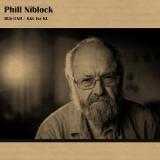
Phill Niblock completed BLK+LND in late November 2023. It is one of Phill Niblock's final compositions and was commissioned by bassist Robert Black (who passed away in the summer of 2023). The piece is based on recordings of acoustic bass and bass clarinet performed by Neil Leonard and Robert Black under Niblock's direction in 2021.
Phill Niblock (1933-2024) as an artist whose fifty-year career spanned minimalist and experimental music, film and photography. He has been a maverick presence on the fringes of the avant-garde. In the history books he is the forgotten Minimalist. Since 1985, he served as director of Experimental Intermedia, a foundation for avant-garde music based in New York with a branch in Ghent, and curator of the foundation's record label XI. Known for his thick, loud drones of music, his signature sound is filled with microtones of instrumental timbres that generate many other tones in the performance space. He said: 'What I am doing with my music is to produce something without rhythm or melody, by using many microtones that cause movements very, very slowly.' In 2013, his diverse artistic career was the subject of a retrospective realized in partnership between Circuit (Centre d'art contemporain Lausanne) and Musée de l'Elysée (Paris). The following year he was honored with the prestigious Foundation for Contemporary Arts John Cage Award. Since 1968 he also put on over 1000 concerts in his loft space in New York.
"On January 6, 2024, two days before his passing, Phill called me to discuss the premiere and tour of BLK+LND. To distract him from his rapid decline, I engaged in his touring plan, only for him to reveal that all the details were still in his head and none of the events had been confirmed. He was entrusting the project to me. Phill would have been thrilled and honored by this concert at the Donaueschinger Musiktage. The thought of one more performance with Robert Black, whom he greatly admired, presenting his new work for low-pitched instruments that he was particularly fond of, andreconnecting with old and new friends in Donaueschingen would have meant the world to him." - Neil Leonard, Berklee College of Music, Boston