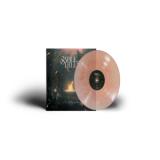
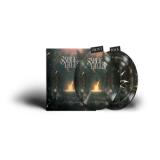
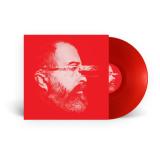
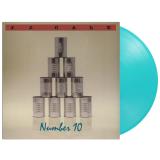
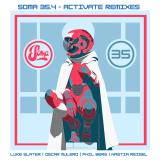
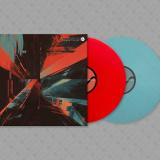
Celebrating ten years of independent music, Nerang Recordings returns with its sixteenth vinyl release, A Decade of Nerang Recordings - Mix Selections. Bringing together six artists from across the label’s history and extended community, the compilation showcases the diverse sounds that have shaped Nerang over the last decade. Featuring DJ Swagger, Nasty King Kurl, Subjoi, DOS, Low Tape and Moody McIvor, the release moves effortlessly between UK Garage, House, Tech House, Lo-Fi House, Electro and Synthwave while maintaining a clear identity throughout. Since its inception, Nerang Recordings has never been interested in following a single genre, scene or trend. Instead, the label has always focused on releasing music based on quality, individuality and atmosphere. Over the years that philosophy has resulted in a catalogue that crosses stylistic boundaries while remaining connected by a shared spirit. A Decade of Nerang Recordings - Mix Selections serves as both a celebration of the label’s first ten years and a statement of intent for the future. Each track represents a different corner of the Nerang universe, reflecting the sounds, influences and artists that have helped shape the label’s journey so far.
From rolling UK Garage rhythms and club-focused house cuts through to hazy lo-fi textures, cinematic synth work and darker electronic excursions, the compilation highlights the freedom that has always sat at the heart of the label. Rather than being confined by genre expectations, Nerang continues to embrace music on its own terms, allowing each release to find its own identity and audience. While thisrelease reflects on the past decade, it is equally focused on what comes next. The goal remains the same as it was on day one: support great artists, release music without limitations and continue exploring new territory wherever it may lead. Ten years in, Nerang Recordings remains committed to doing things its own way
With Picture About You, Recut opens a new chapter, blending the heritage of house music, acid textures and underground electronic culture into a contemporary vision for today’s dancefloors. Rooted in the essence of club culture, the EP explores hypnotic grooves, evolving patterns and the timeless dialogue between the DJ, the sound system and the crowd, where emotion, movement and energy become a universal language. The title track, “Picture About You”, reflects Recut’s artistic identity through the lens of his personal history and family roots. An important part of this story comes from his uncle, known as Mr. Steve, who in 1975 founded one of the pioneering independent radio stations in Southern Italy during the early years of independent broadcasting. His connection with radio, disco culture and the first generation of Italian clubs embodied a spirit of discovery, sharing and musical exploration that continues to shape Recut’s approach to music.
Musically, “Picture About You” unfolds through a hypnotic and emotional groove, blending old-school character with a contemporary perspective. A timeless club track where past and present come together in Recut’s own musical language. “Hey Jack” is a powerful dancefloor weapon driven by unstoppable grooves, hypnotic acid lines and captivating arpeggios. Built for peak-time moments, it pushes the energy forward with a relentless rhythm designed to ignite the crowd.
“Subwave” takes the journey into a deeper and more massive dimension. Driven by powerful low-end pressure, evolving dynamics and explosivetransitions, the track builds tension throughout its progression before releasing its full impact on the dancefloor. Closing the EP, “Neon Flux” delivers the final impact: fierce, electric and uncompromising, a track designed to push intensity beyond the limit and leave a lasting impression. Recut Music — Fun for DJing!
Tronic has a 20-30 year long history with releasing melodic house and techno. While we opted for the more raw sound in the past few years, Christian wanted to go back to his roots and produce more emotive, groovy, and melodic house and techno again. Lamour Toujours is a progressive groover that has a disco-influenced bassline and adds an emotive chord progression in the break. We asked Argentinean legend Hernan Cattaneo to make a remix. As a long time supporter of Tronic we felt that he would be a great candidate for this remix. Hernan Cattaneo and Kevin Di Serna teamed up and delivered a stunning remix focusing on the melodic chord progression of the original! Italian maestro Gai Barone mutates 'L'Amour Toujours' into a stunning, mind-bending interpretation that proves his insane ability to rewrite the rulebook. Meanwhile, Colombian powerhouse Kamilo Sanclemente stays closer to the original, injecting a massive, chord-driven progression built to elevate any room. Three classy, high-caliber remixes. We're absolutely buzzing with this drop.
Following hot on the heels of the Frequency Damage EP, DJ Quest returns to Cyberfunk with Squeaks / Snake Style— a two-track release that dives deep into the unmistakable sound that made Quest’s productions stand out during the early 2000s.
Rather than simply recreating the past, both tracks tap directly into the DNA of the original Cyberfunk sound: rolling breakbeats, huge basslines, twisted analogue synths and the kind of distinctive production that became synonymous with DJ Quest at the height of the Bassline Breaks era.
Built around original analogue synth work throughout, Squeaks / Snake Style is a deliberate throwback to the raw, futuristic sound of the early 2000s, produced with the weight and clarity needed for today’s sound systems.
It’s classic Quest, strange noises, big bass, rolling drums and plenty of attitude.
A. Squeaks
Everything DJ Quest became known for rolled into one track. Squeaks is an unapologetic throwback to the classic Quest sound of the early 2000s, driven by heavyweight breaks, deep bass and original analogue synth work throughout.
Twisted electronic squeaks and evolving analogue sounds weave their way around the drums, giving the track that instantly recognisable combination of funk, darkness and futuristic weirdness that characterised so many of Quest’s early productions.
Raw, energetic and built firmly for the dancefloor, Squeaks takes the spirit of the original Bassline Breaks era and brings it straight back onto a modern sound system.
AA. Snake Style
On the flip, Snake Style takes the same analogue-driven approach but moves into deeper rolling territory.
A more hypnotic, heads-down breaks roller, the track develops around a heavyweight bass groove, rolling drums and constantly shifting analogue synth lines. There’s less emphasis on the immediate impact of the A-side and more on building a groove that locks into a DJ set and keeps moving.
Still unmistakably Quest, Snake Style combines the rawness and character of early-2000s breakbeat with modern low-end weight and production, proper rolling Cyberfunk business.
Special Vinyl Edition
Making this release particularly special for collectors, the 12” vinyl comes with an exclusive book showcasing the artwork from some of DJ Quest’s biggest and most memorable releases.
The book looks back through Quest’s extensive catalogue and the visual identity that accompanied the records, bringing together a selection of classic release artwork from across his career plus photo collages of memories made across his journey.
It turns Squeaks / Snake Style into more than just a new DJ Quest 12”, it’s also a celebration of the music, artwork and history surrounding one of the original pioneers of the Bassline Breaks sound.
For long-time followers it offers a piece of Quest history alongside two brand-new productions, while newer listeners get an introduction to the catalogue and imagery behind the sound
The sun sat high above the desert outside Joshua Tree on October 17, 2024, baking the rocks and shrubbery outside the Farrington Observatory as a small group of invited guests ventured up a steep path towards the telescope. Kyle Simon, the artist and printmaker who founded the Observatory, was standing outside the print studio sat below the towering cylindrical building, greeting friends alongside his wife Sarah and lifelong friend Brian Weitz, the musician widely known as Geologist of Animal Collective. Simon and Weitz had spent the previous day testing and retesting a system that would transform the light of the oncoming full moon captured by the gigantic telescope into a signal that would modulate the control voltage of Weitz’s modular synthesizer. As the sun dipped below the horizon line, the audience gathered on a small wooden patio surrounded by speakers while Weitz readied himself behind the array of patches and knobs. Simon addressed the group, presenting the history of The Sirens, the sonic exploration of the night sky’s mystical and scientific significance about to unfold.
The music conjured under the Hunter’s Moon that night is now documented on this first official release of The Sirens, which was conceived by Simon and Weitz as a recurring performance piece and sound installation. Over a decade ago, Simon began immersing himself in literature on humanity’s sonic relationship to the celestial realm, including Homer’s Odyssey, Plato’s “Spindle of Necessity, ” Kepler’s Harmonices Mundi, and the field of astroseismology. He fitted homemade telescopes with photodiodes and optical sensors to make the images audible, finding latent patterns in the noisy sonic signals he began receiving from the stars. With Weitz, the process expanded as the signal was routed through an analog amplifier and set to modulate the pitch, filter, and other elements of his synthesizer. Together they developed a system of improvisation, with Simon adjusting the telescope to change the intensity of the light based on its relationship with the moon’s position (imagine a theremin player moving their hands in subtle, meaningful motion), and Weitz responding to that input in real time: bending it, amplifying it, or letting it stand on its own. The duo debuted the piece at the Integretron in Joshua Tree in 2018, providing a crucial proof of concept for the performance at Farrington featured here.
The first thing the listener hears on The Sirens is the opening of Farrington Observatory, the cranking of motor and metal. As the lens of the telescope is exposed to the evening air, a wavering drone emerges from the synthesizer, flickering at the margins, the tuning of the oscillators adjusting to the rapidly cooling desert air. The piece progresses and the drone becomes a luminous, spherical constant, bathing the listener in pure tone as Weitz draws out harmonically ambiguous melodies that spiral upwards. Electronics crackle and convulse, coalescing into dense dissonance before widening out into an open octave. Just as the moon orbits the Earth and the stars shift as the planet rotates, so each sonic element appears in flux, interrelationships slowly forming and falling away. Divided into two parts, The Sirens flows as a continuous conversation between the artists and the starlight completing its thousand-year journey across the galaxy.
The Sirens belongs primarily to a lineage beyond music: of sea captains navigating by looking skyward, of astrophysicists studying the formation of the Milky Way, of the modern myths of werewolves, of the stories embedded in constellations. As Simon writes in the album’s extensive liner notes, “These stories and explorations reveal a collective yearning to become conscious of our connection to the universe, our deep-seated desire to understand how we fit into it all.” This music underscores the history of the night sky as the place where poetry and science find common ground, where exploration hinges on the imagination. Driven by curiosity and ingenuity, Weitz and Simon look up and wonder.
Yesca is back on Shall Not Fade with ‘Paint on Walls’ 12” EP.
2024’s Yesca EP on SNF - “Mood Loops” - set a high bar, so when we say this record is something special you should take note. Of course if you already know Yesca’s music or have had the pleasure of a Yesca DJ set then you will have already this queued up.
Sweet Spot: Ben Sims, Deetron, Oliver Ho, Vince Watson, Grain (Artwork’s Techno alias). Planet-E, Primate Recordings, Paul Mac & Stimulus Recordings found the sweet spot.
According to the OED the first use of the phrase “Sweet Spot” was in 1976 in reference to tennis rackets and golf swings. It’s where everything hits just right. And that’s what this EP does, hits just right. What strikes me is how descriptive the phrase ‘Sweet Spot’ is. Given enough swings and some luck we all know what it feels like to hit the sweet spot in some regard. Finding the sweet spot regularly though takes time and skill. But being able to hit the sweet spot by design every time, well that’s something different. That’s what makes the greats great.
For us at SNF there’s a consensus that in the lineage of electronic music there have been many moments where artists & labels converged on a sweet spot. One such sweet spot for us is in Techno
around 2003 when at the tail end of Hardgroove tempos began to slow and a groovier more refined tech house infused goodness appeared in the racks from a group of killer techno labels & artists (some mentioned above) that moment before the fuller emergence of the 2nd wave of Tech House in the mid 00’s.
That sound, while often emulated, never quite hit the same for us at least – until Yesca came along. His music has everything that we love about that sweet spot. Raw driving groove, rolling basslines and hip shaking percussion. What’s different on ‘Paint on Walls’ is that Yesca stepped on - he had already found the sweet spot on 2024’s Mood Loop EP - now his sound (or swing) is natural. Repeatable, refined and seemingly effortless. To revisit the tennis and golf analogy, this is the start of a Grand Slam run from an artist ready to etch their name in dance music history. Tiger..... Serena......Yesca.
Run the Tracks:
‘How I Do It (They Wonder)’ - A masterclass in less is more, and a serious DJ tool. Full of groove - slow it down and it will light the touchpaper in a house set - speed it up and you’ve got techno weaponry. Forget gatekeeping, this will make you feel like you just found a 2004 techno white label from the likes of Grain or Ben Sims.
‘I Desire’ - House music that I reckon Deetron would be proud of... Blissed out machine funk, whispered vocals, slick jazzy chords and dubbed out techno stabs are all grounded by Yesca’s impeccable, loopy drum programming. The best tunes always end too soon.
‘Domination’ - The ever rising bass, err, dominates this track and this track will dominate on many a dancefloor, but Yesca's knack for dubbed out swinging synth lines has to get a shout out here too. He turns what would be melodic elements into what feels like part of the percussion. Double Threat. Hands Up and Heads Down business.
‘Paint on Walls’ - It would be a tough call to say Yesca’s saved the best til last with the EP’s eponymous track given what’s come before, but Paint On Walls works all the highlights from the rest of the EP into a latin techno/house infused anthem. Skittering percussion, a hint of Detroit goodness and a deep deep rolling bassline and THAT vocal. In every way hopeful yet resistant, and that is what techno is all about.
David Norland is an Emmy-nominated English composer, known for his scores for drama and documentary, alongside his experimental choral and electronic music. Bringing stories to life through sound, he received critical acclaim for his debut solo album ‘Glam Tear Stain’ (2019) and is set to release follow-up album ‘La Source’ in June 2026 via Denovali Records.
Relocated back to his London home after many years in Los Angeles, and free from years of drug and alcohol problems, recent commissions for two choral works allowed Norland to return to the innocent origin of his musical world, and his experience as a parent prompted a lot of outward reflection. What kind of world are we leaving to our children?
Inspired by his score to the forthcoming silent black and white film ‘Carousel’ (2026), Norland found other music emerging that refused to be ignored. The film’s director opened the door to an entirely free scoring process – no temp music, no expectation, no guidelines, just pure intuitive expression. ‘La Source’ draws on this experience, alongside his childhood as a touring chorister, the honkytonk upright piano in the north-east London bedroom of his early 20s, his early recording experiments with a TASCAM 4-track cassette recorder, and his intense preoccupation with bells, flutes, stone architecture, and mysticism.
From the haunting, choral beauty of ‘E-Car Soul’ to the breezy album title track, Norland blends minimalist classical structures with electronics. A unified tapestry of blended voices, harmonies and textures, ‘La Source’ is a deeply emotional and melancholic journey for Norland. “In the end, I’m looking to find meaning through the music, like when I was a kid singing in choirs. But I get the most sense of meaning through transcendent experiences, rather than anything intellectual or dogmatic. I have to feel it, not think it. I’m trying to make work that’s luminous, wondrous, shimmering and strange, so I can keep having those experiences,” says Norland.
On his inspiration for the album, Norland adds, “I love making patterns in things and finding patterns. That’s why minimalism was so enticing to me, the patterns are so explicit. I love word play and anagrams. The big sadness coming through as I was making the record is this clarity over the future of my kids. Everything else is a complete distraction. This incredible nurturing planet and its ecosystem are being rapidly destroyed, and the forces destroying it are relentless and punitive. And they seem to be fine with consigning our children to live in an ever-more-hostile wasteland. You can’t pretend that’s not coming, if you do I think you’re lying to yourself. And perhaps eventually it will be the fact that people love their kids that will stir wider fear and action. It’s hard to think of anything more connected to the idea of spirit.” The result is the reflective, ecstatic, mystical and sad world of ‘La Source.’
Norland’s screen work includes the award-winning documentary Anvil! The Story Of Anvil (2008), directed by Sacha Gervasi, and since 2010, he has composed much of the music for US broadcasting giant ABC’s primetime news documentaries. His work for ABC is broadcast in the US and around the world on a daily basis.
In 2012, he was the music supervisor for Hitchcock (2012) featuring Anthony Hopkins, Helen Mirren & Scarlett Johansson and in 2017, he teamed up once again with Gervasi for the score to November Criminals starring Chloe Moretz and Ansel Elgort. The following year, he composed the score for the Emmy-nominated HBO film My Dinner With Herve, starring Peter Dinklage and Jamie Dornan.
Norland will be performing the score of Carousel later this year, and the score itself will be a forthcoming release on Denovali. 2026 will also see the release of documentary All Permits Secured, a valentine to the history of EDM, featuring Norland’s score.
Originally released by Umor Rex on cassette in 2018, Rafael Anton Irisarri’s Sirimiri is now available on vinyl for the first time, newly remastered for this edition. This LP marks the fourth and final installment in a series of four reissues released throughout 2026 to celebrate the 20th anniversary of Umor Rex.
It is a fitting way to close such a special anniversary year. Rafael is not only an artist who has released three albums on Umor Rex, but someone who has been part of the label’s history for more than a decade. His sensibility and way of listening have complemented and nourished the label throughout the years, while his mastering work has helped shape the sound of many of our releases. A close friend, and an essential part of what Umor Rex is today.
Sirimiri roughly translates as “drizzle” in Basque, and we can’t think of a better word to describe its content. The album consists of four long-form pieces, each shaped through different processes and with its own distinct identity, in which Irisarri seeks to blend subjective time with the listening experience through loops, repetition, and subsequence-based sound. Following Eno, nothing happens in quite the same way twice: perception is constantly shifting, and nothing stays in one place for long. The desolation and despair—in a strangely positive way—that we heard in The Shameless Years (Umor Rex, 2017) and later in FAÇADISMS (Black Knoll, 2024) are present here, but the impression is more concrete, unfolding through rawer, less rhetorical landscapes. If The Shameless Years existed somewhere between beauty and active tragedy, this record travels through the beauty and melancholy of an observing eye—a quiet, rebellious insurrection.
Written, produced, mixed & mastered by Rafael Anton Irisarri at Black Knoll Studio, NY. Carl Hultgren: Guitars on “Sonder”, Taylor Jordan: Electric Piano on “Mountain Stream”. Design by Daniel Castrejón.
On Dummy’s new album, do you love the color of the sky?, the Los Angeles-based 5-piece deliver a breathtaking piece of work that introduces new textures and rhythms to their already varied and refined catalog. For the band’s third album, and first for new label home Polyvinyl, the group split time between self-recording at their home studio as well as Studio 22, linking up with frequent collaborator and engineer Joo-Joo Ashworth (Corridor, Automatic, Spiral XP). The band focused on intentionality and experimentation, exploring downtempo dance beats and electronic music while pushing the guitar as far as they could, using new self-sampling and processing techniques. Percussionist Alex Ewell’s overall sound design and production skills can be heard across the album, with layered drum sounds and rhythmic tremolo techniques shining throughout. Tracks like “Full Spectrum Dominance” and “Alluvial Fan” showcase the band’s tasteful pop sensibilities, while closing track “Heaven’s What You Make Of
It” features perhaps the strongest vocal delivery yet from vocalist/keyboardist
Emma Maatman. Additionally, the dynamic exchange between guitarists Joe Trainor and Nathan O’Dell is absolutely gorgeous, adding a new layer of immersion and directness that is unlike anything the band has done before. The result is Dummy’s most ethereal and sincere record to date, with more feminine and delicate undertones that sit beautifully alongside the gritty and noisy textures the band has become known for. Dummy has been praised in numerous outlets such as Paste, Stereogum, Aquarium Drunkard and Pitchfork, who described their second album, Free Energy, as “the
sound of a band turning all its potential energy into music that’s dazzlingly kinetic and powerful." The band has toured the US, UK, and EU extensively, with festival appearances at Austin Psych Fest, Treefort Music Festival, and others. In addition to larger outlets and festivals, the band’s strong ties to community and DIY ethos are ever-present, oftentimes preferring to play and connect with different local artists on tour, uplifting those around them while shining a light on the history of independent music.
On Dummy’s new album, do you love the color of the sky?, the Los Angeles-based 5-piece deliver a breathtaking piece of work that introduces new textures and rhythms to their already varied and refined catalog. For the band’s third album, and first for new label home Polyvinyl, the group split time between self-recording at their home studio as well as Studio 22, linking up with frequent collaborator and engineer Joo-Joo Ashworth (Corridor, Automatic, Spiral XP). The band focused on intentionality and experimentation, exploring downtempo dance beats and electronic music while pushing the guitar as far as they could, using new self-sampling and processing techniques. Percussionist Alex Ewell’s overall sound design and production skills can be heard across the album, with layered drum sounds and rhythmic tremolo techniques shining throughout. Tracks like “Full Spectrum Dominance” and “Alluvial Fan” showcase the band’s tasteful pop sensibilities, while closing track “Heaven’s What You Make Of
It” features perhaps the strongest vocal delivery yet from vocalist/keyboardist
Emma Maatman. Additionally, the dynamic exchange between guitarists Joe Trainor and Nathan O’Dell is absolutely gorgeous, adding a new layer of immersion and directness that is unlike anything the band has done before. The result is Dummy’s most ethereal and sincere record to date, with more feminine and delicate undertones that sit beautifully alongside the gritty and noisy textures the band has become known for. Dummy has been praised in numerous outlets such as Paste, Stereogum, Aquarium Drunkard and Pitchfork, who described their second album, Free Energy, as “the
sound of a band turning all its potential energy into music that’s dazzlingly kinetic and powerful." The band has toured the US, UK, and EU extensively, with festival appearances at Austin Psych Fest, Treefort Music Festival, and others. In addition to larger outlets and festivals, the band’s strong ties to community and DIY ethos are ever-present, oftentimes preferring to play and connect with different local artists on tour, uplifting those around them while shining a light on the history of independent music.
SECOND REISSUE ON THIS HEAT’s OWN NEW IMPRINT FOLLOWING ‘THIS HEAT’ (TH01LP) WHICH WAS UNCUT ‘REISSUE OF THE MONTH’ RECENTLY WITH 9/10 REVIEW + 4-PAGE FEATURE WITH Q+A.
*24 bit/96 kHz re-master from original analog tapes.
*Heavyweight 180gm vinyl and heavyweight sleeve with pantone printing to match original 1979 release.
Simon Reynolds on Health and Efficiency:
“For some fans, Health and Efficiency is This Heat’s peak achievement – their most concentrated blast of visceral intensity and wayward experimentalism….Lead track “Health & Efficiency” combines fierce angular rock that fully lives up to Cunningham’s belief that This Heat could become a postpunk King Crimson, with a multi-part babble of vocals, clattering percussive timbres, and found sounds.’’
Flipside “Graphic/Varispeed” is more subdued and hypnotic: a wavering tonescape whose duration depends on whether you play it at 45 rpm or 33 rpm. This reissue reproduces the original release’s striking cover image of a human figure painted in blue by Pete Cobb, along with the cryptic flipside of text in many different languages.
Although widely considered to be Post-Punk’s finest, This Heat actually began performing and recording their music in 1976, the early days of London’s punk era. Within their two albums and an EP they perfected a strange and volatile new strain of avant-garde rock that time has proved to be massively influential, a blueprint for much that would follow: post-rock, math rock, homemade musique concrète, experimental electronica. Numerous critics have recognised the band's influence on the music of Sonic Youth, Glenn Branca, Steven Wilson, Public Image Ltd., Radiohead, Swans, Shellac, Young Knives, Black Dice, Lightning Bolt and numerous other experimental and post-rock bands.
Disbanding in 1982 they have left an undeniable legacy that has only continued to grow in stature and relevance.Having recently passed the 50 year anniversary of their first gig, and the recording of material that appears on their debut album, the group’s surviving members Charles Bullen and Charles Hayward, true to their DIY roots, have set up an imprint to release their recordings for their growing fan base that is increasingly recognising their influential place in music history.
‘They went beyond punk before punk had properly started…the entire album is a controlled explosion of ideas. Nearly fifty years on, This Heat’s debut is something the world has still not completely caught up with.’ - Simon Reynolds
‘Over the years, there have been bands to play as aggressively, or even as strangely, but very few have been able to rise from their collective influences and histories to create music so singularly distinctive and inspiring.’ – Pitchfork 9/10
‘This Heat sounded like the future then ... and still do now.’ - Dan Snaith (Caribou)
‘This Heat had a certain kind of force the post-punk bands were unable to adequately control without falling foul of rawk excess, and which the punk bands—albeit blitzing and rowdy—were too basic in form to build.’ – John Calvert , The Quietus
“I marvel afresh at Béla’s extraordinary vision, his indefatigability as a creator, his galvanizing presence as a bandleader, and of course, his freaking banjo playing. Live Heart will reverberate through and energize the bluegrass community forever.” – Chris Thile Live Heart: My Bluegrass Heart at the Ryman is a 3LP set that captures one legendary night in bluegrass. On January 8, 2022, in the aftermath of a Nashville blizzard, Béla Fleck was joined by three generations of renowned players who together brought the fire: Sam Bush, Michael Cleveland, Jerry Douglas, Stuart Duncan, Sierra Hull, Edgar Meyer, Justin Moses, Mark Schatz, Billy Strings, Bryan Sutton, Tony Trischka, and Molly Tuttle. The celebrated banjo virtuoso and musical adventurer has both dug deep into his instrument's complex global history and unlocked the breadth of its possibilities. He has earned 19 Grammy awards, and his acclaimed studio album My Bluegrass Heart, was a homecoming in sound. The music Fleck composed for his GRAMMY-winning My Bluegrass Heart is the third chapter in a decades-spanning trilogy that began with 1888’s Drive and the Bluegrass Sessions in 1999. This live record encompasses bluegrass in its core – the intergenerational passing down of music – and is nothing short of a masterpiece in sound, artistry, and community.
(remastered classic incl DL card) Environ is proud to present the Metro Area 15th Anniversary Edition, Metro Area's eponymous debut album, meticulously remastered using the original source tapes and generously spread across three slabs of vinyl. The12-track triple LP and digital package combines all the songs from both the original US and licensed European releases, and features new commemorative artwork unique to this edition. In the late nineties, the budding producers Morgan Geist and Darshan Jesrani bonded over their shared love of slower tempos and '70s and '80s NYC club culture. Obsessed with record digging and the sounds they heard on late-night "club classics" radio shows—and turned off by current releases they saw as artlessly "updating" sublime disco by sampling, filtering and subjugating them with huge kick drums —the duo set out to discover how their favorite old 12" records were made. They naturally gravitated towards extended dubs of songs—full of strange mistakes and echoing backing tracks—instead of the better-known vocal versions. Lacking the big budgets and gear that made so many of their favorite classic records come together, they were forced to take a guerrilla approach. They reprogrammed their techno-oriented arsenal of secondhand synths and samplers, using novel digital recording technology to capture live instrumentation and prioritizing mood over hooks, and the resulting music was just wrong enough to sound unlike anything else being released at the time.After just four underground 12" releases, the duo—now well-known as Metro Area—released their first and only album, Metro Area, in the fall of 2002. Fifteen years later, it's time to celebrate the culmination of their shared history and inspiration once again. Environ is proud to present the Metro Area 15th Anniversary Edition, Metro Area's eponymous debut album, meticulously remastered using the original source tapes and generously spread across three slabs of vinyl. The 12-track triple LP and digital package combines all the songs from both the original US and licensed European releases, and features new commemorative artwork unique to this edition.
Originally released in 2003, Gravel Muncha became one of the biggest and most recognisable records of the Bassline Breaks era and remains one of DJ Quest’s defining productions.
More than two decades later, this breakbeat classic returns on Cyberfunk as CFUNK 040, pairing a brand-new remix from Datafunk with a fully remastered 2026 version of the original.
Built around everything that made the early Quest sound so distinctive - huge rolling basslines, tough breakbeats, twisted synth work and relentless dancefloor pressure - Gravel Muncha is a record that has never really disappeared. The original continued to surface in DJ sets, mixes and collections around the world, earning genuine classic status within the breakbeat scene.
For 2026, Datafunk takes the track into new territory while respecting the character and attitude of the original, giving one of breaks’ most enduring records a fresh weapon for modern dancefloors.
A piece of breakbeat history, rebuilt and reloaded for a new generation.
On his new album Chott, German-Tunisian producer and composer Taroug confronts his origins. Named after the Chott El Djerid, a vast salt lake in southern Tunisia, the ten-track album revolves around personal history and the search for identity. Chott is a conceptual work shaped by contrasting atmospheres, from minimalistic melancholy to raw, bass-heavy intensity. It blends traditional instruments with contemporary electronic text- ures, drawing lines between past and present.
Personal materials—such as vocal samples from family members—add layers of intimacy and cultural depth, most notably on the title track, featuring an original Arabic poem spoken by Taroug’s father, and on 1995,
a song reflecting on early childhood memories in Tunisia. Beyond these intimate dimensions, he works with sonic imagery that captures the sensory experience of heat and landscape in pieces like Saraab and Sirocco. In Nakhla, recordings of palm trees transformed into repetitive movements evoke scenes of southern Tunisia’s palm plantations, where organic and mechanical sounds converge.
For the artwork, Taroug once again collaborated with architect and designer Marie Brosius, assembling an experimental collage from old personal photographs of Tunisia that visually echoes the album’s themes of heritage and remembrance.
Anyone who has had the sheer pleasure of seeing and hearing Leroy Burgess perform in concert will know just how amazing the live renditions of his iconic compositions of Disco Boogie hits and classics sound with a full band and a fully fueled audience. Accompanied by the ten piece French band and long time Leroy Burgess collaborative outfit Saving Coco, BBE Music is releasing live versions of two of those classics Let’s Do It and Big Time. Recorded and released by Rick James in 1980 Big Time is an absolute killer of a track that sounds so fresh decades later in this crowd energising performance. Famously released by Convertion Let’s Do It was a huge club hit in the early 1980s and is the perfect track to accompany Big Time on this release. Leroy Burgess is a certifiably genuine legend of Black music; his compositions have moved dancefloors across the world since the early 1970s as a member of Black Ivory, then Convertion, Paradise Garage favourites LOGG, Kleer and electro outfit Aleem. His collaborations with Patrick Adams, Inner Life, Dazzle and solo artists such as Eddie Kendricks, Rick James and Fonda Rae have cemented Leroy Burgess’ place in the annals of Black Music History. As a founder-member of the Universal Robot Band he co-wrote the massive perennial favourite Barely Breaking Even. Leroy Burgess feat. Saving Coco-Big Time/Let’s Do It is released as a 12″ vinyl and digital download and definitely belongs in the ‘make sure you get this’ category. Mixed by Marc Mac and mastered at the Grammy-nominated Carvery Studio by Frank Merritt. Available as 12″ vinyl and digital download. Release date September 25th, 2026
Music On Vinyl celebrate their 100th 12" release by releasing a classic!
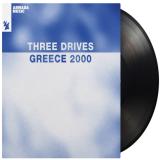
Greece 2000 is a classic international house tune by Dutch progressive trance duo Three Drives. It peaked at number 12 in the United Kingdom and number one on the UK Dance chart.
The original 1997 extended mix defined an era with its hypnotic melody, warm groove, and Balearic vibes.
Vintage Culture deliver a deep, melodic, and emotionally charged club weapon. The Max Styler rework elevates the original theme into a 2026 peak‑time banger. KREAM brings their signature big room future‑progressive sound. The Sebastian Davidson & Melosense remix is a warm, organic, and melodic downtempo mix.
This release celebrates nearly three decades of dance music history.
In Gianfranco Rosi’s portrait of Naples, Sotto le Nuvole, the ground shakes periodically. Between Mount Vesuvius and the Tyrrhenian Sea, the fumaroles of the Phlegraean Fields hiss volcanic gas and steam. Below the sleeping volcano, modern day Naples emerges in black and white and fills with voices, with lives. From the traces of history and the concerns of the present, Rosi documents a city immersed in its continuous past, with Daniel Blumberg’s minimal soundscape hovering in a sonic space between liquid and air.
Tasked with creating a soundscape that would suspend space within Rosi’s film, Blumberg called upon the extended technique of saxophonists Seymour Wright and John Butcher to create a gossamer fabric of traces and sounds abstracted from their instruments. Having transitioned from theoretical physics to the saxophone, John Butcher has always deeply considered space in the context of his playing. His concerns are with flow, density and how the saxophone is situated in the living world. Zeroing in on the core sonic properties of the mechanical and acoustic components of the saxophone, Seymour Wright has integrated its every breath, reed vibration, keypad clatter and hissed microtone of his alto into his own, unique improvisational language. In his work with these two seminal players, Blumberg makes his most concentrated soundtrack to date - reinforcing the film's sense of overlapping time and space, and pushing at the limits of experimentation.
Initially recorded in Daniel’s flat in London, Butcher and Wright centre themselves around long, consistent tones, so soft that it seems breath is being gently pulled from the saxophone's bell by an invisible hand. Blumberg himself adds haunting bass harmonica, and recordings of Wright’s launeddas - a traditional and ancient triple pipe polyphonic reed instrument from Sardinia, Italy. Blumberg then travelled to the volcanic region of Baia, next to Pompeii. Once a flourishing classical Roman city loved by Nero, Baia slowly sank under hydrothermal pressure, leaving the city in a kind of geological purgatory. Using specialised geophones and hydrophones, Blumberg took those initial recordings and amplified them underwater, sending them calling out across the ruins of Baia’s mosaics, Nymphaeum statues and villas.
“It was important to me that the music was whispered in the same landscape that Gianfranco has worked for the past three years, so that you can hear the volcanic air gulping, the lapping of the waves, the steam and bubbles popping against John and Seymour’s saxophone breaths – an echo from a suspended time.”
What emerges is deeply melancholic, tender, subtle and right at the edges of audio technology. Submerged in an aquarian mausoleum, the mysterious vibrations of the saxophone and its bell become an echo of an echo, wading from the future into the past. ‘Sotto le Nuvole’ is less a soundtrack than a process of aeration - a sonic puncture in the material of the film which allows its central message to breathe, and a remarkable experiment at the limits of the saxophone’s possibility.
Indie shops only. Limited red vinyl rerelease. 500 for the World (just 80 copies for the UK) After falling out with Sir Coxsone, the legendary head of the Kingston label Studio One, Lee Perry first founded his own band and then, in 1973, set up his own studio in his backyard. What was born out of necessity developed into a unique success story. With both the Upsetters and the Black Ark, Perry made music history - most notably with the 1976 release of the album Super Ape, on which he made the genre of dub bubble and boil from the mixing desk in previously unheard ways. For Perry, the studio is like a living organism. Whether he truly experiences it that way or simply lets too much ganja go up in smoke, for Perry the equipment is organic, empathetic, and intelligent. The catch is that the results sound exactly like that as well. Long before sampling was invented, he layered tracks of deep basslines, echoes, and reverb with various self-recorded sound sequences – often played in reverse - on top of, into, and beneath each other. In other words, Perry was the first producer who made the music instead of the band. Among other things, this earned him the title ‘Salvador Dali of Dub.’
Paraiso has been doing vital work in Portugal - documenting the underground dance scene's history and pioneers in various mediums while also showcasing equally brilliant artists from newer generations. And they've been doing it for a decade now: we all know that a label dedicated to its local scene through and through is something rare and should be celebrated. This compilation 'X - 10 Years of Underground House Music from a Paradise Called Portugal' is a manifestation of that cross-generational spirit, with ten never-before-heard pieces of music by initiators and legends like The Advent alongside more recent veterans like Roundhouse Kick and Vil or younger talent like Phoebe or Van Der. Things start off with Salbany's 'Trax 10', oozing a techno elegance and irrefutable groove that wonderfully portrays the spirit of the Lisbon sound: raw yet ethereal, disarming in its simplicity while containing rave, romance and rhythmic complexities. Label founders Maria Amor & Shcuro firmly carry on the torch with 'Intracellular', gelled by dubby washes, syncopated drums, infectious rhythmic sense and layered with a melodic vocal motif. Vil's 'Cave' brings in stone-cold tight percussion offset by rich, evocative pads and technoid know-how for days. The Advent steps in with an ode to acid-minimalism, raw and slow-burning, with curious and twisted moments peppered with the skill of an expert. Van Der storms in with a piece of hybrid qualities, impeccably blending a swing onto industrial territories for a hypnotic-yet-banging hands in the air dancefloor moment. Scam Dust (the duo of Tiago and Shcuro, from adjacent generations) picks up on the industrial flavours, adds furious jacking rhythmics and live sonic experimentation that takes us to peak-quality effect and noise manipulation. 'Subvert' follows and goes deeper, as if into the depths of the ocean, with aquatic arpeggios and sparse drums that morph into an 303-driven state of mysterious oceanfloor mania - Roundhouse Kick sending us messages from the South. Violet and her 'Dream Machine' emerge with its mutant noisy motif, delay-drenched percussion and steady beat interrupted by keys, drum variations - and a u-turn to its paranoid loopy beginnings. Phoebe enters the chat and brings sonic sun rays in 'Galaxia 2000', a wide-eyed moment lead by colourful, open synthesisers with gates and filters taking us on a beautiful ride on tense, swingy drum patterns. The tenth track comes from Lisbon's rkeat and is full of closing act ear-candy with its beautifully chiseled, groovy as hell percussion, organic sonics and metallic instruments that seem to announce that the next decade is about to be just as good, if not better than this lovely 2016-2026 stint of boundary and scene-pushing.
Since 1992, Robin Storey (founding member of the pioneering post-industrial band Zoviet*France) has been creating innovative and thought-provoking music under the Rapoon moniker. Drawing inspiration from his early days with Z*F, he continues to push the boundaries of ambient, industrial, and world music genres, earning him a dedicated following across the globe.
Originally available in 1994 as a limited-edition DAT tape through Staalplaat Records, Cidar was later included as a bonus CD in the reissue of another Rapoon classic, Fallen Gods. Now, after years of anticipation, fans can experience this mesmerizing work as a stand-alone release – remastered and expanded with three previously unreleased tracks from the original 1994 recording sessions.
Cidar showcases Robin’s signature sound – a seamless blend of Z*F-inspired drones and loops intertwined with vibrant African percussion and hauntingly beautiful Asian string instruments. This combination creates an immersive, trance-like atmosphere that transports listeners into a world of meditative sonic exploration.
With its enchanting rhythms and deeply textured layers, Cidar stands as a testament to Robin’s unparalleled ability to craft music that defies genre boundaries while remaining instantly recognizable. Fans of both Zoviet*France and Rapoon will find themselves drawn into the hypnotic sounds of this timeless masterpiece.
The standalone release of Cidar marks an important milestone in the history of experimental music, offering audiences worldwide the opportunity to rediscover or experience for the first time one of Robin Storey’s most influential works.
Richard Sen debuts on Phantasy with ‘Space 1999 / Bergen Light Rail’, the first transmission from the illustrious DJ and producer since his vinyl-only solo LP, 2024’s ‘India Man’.
Deeply invested in electronic music for over thirty years, first at the intersection of London’s acid house and graffiti art scenes, evolving in cult duos Padded Cell and Bronx Dogs, and now generously sharing his formidable knowledge of club culture on London’s Do!! You!!! Radio, Sen is known to take listeners anywhere. On this occasion, he locks into two distinct influences from his winding creative journey, with ecstatic results.
The title of ‘Space 1999’ mirrors Sen’s own hand-painted accompanying artwork, yet its sonic influence sits much closer to our own orbit; A tribute to a slice of London nightlife history, Space at Bar Rhumba was a midweek party led by residents Luke Solomon and Kenny Hawes, whose selections helped sculpt the deep house scene at the turn of the millennium. ‘Space 1999’ transports contemporary dancers back there in no less than ten minutes, led by a deep bassline and swinging drums, while an intergalactic melody slowly takes hold, resulting in pure satisfaction.
‘Bergen Light Rail’ embraces a different kind of kosmische, looking to the northern light of space disco and following the tram route of its namesake to the Norwegian city’s beloved Club Ostre, riding a rhythm of pogoing toms and crashing drums. Conjuring a dreamy tête-à-tête between ever-expanding, heavenly synths and tightly-wound arpeggiators, Sen’s transmission to the stars is a deeply human call to dance.
The vibraphone may have gone quiet, but the groove hasn't. Roy Ayers passed away on March 4, 2025, in New York City, at the age of 84, but the man they called the Godfather of Neo-Soul left behind a vault deep enough to keep dancefloors moving for generations. BBE Music now hands the keys to Berlin's own Delfonic, whose second volume of reworks digs even further into that treasure chest for six fresh, floor-ready reimaginings. The series began when Delfonic shared a spontaneous edit with BBE founder Pete Adarkwah, and listener demand for a vinyl pressing turned the idea into a full official release. Volume 1 sold out fast and moved through collector circles at speed; Volume 2 arrives with even higher expectations attached, and record heads who missed out the first time won't want to sleep twice. Everything here is pulled from deep, previously-vaulted Ayers sessions. The reworks draw from BBE's celebrated Virgin Ubiquity compilations, a trove of unreleased Roy Ayers recordings cut between 1976 and 1981. These are the rarer cuts serious collectors have been chasing for years, now given a second life courtesy of BBE Music Delfonic is the alias of Markus Lindner, a Berlin lifer. He's been DJing professionally since 2004, building his name across Berlin and wider Europe with a sound rooted in hip-hop but stretched across many genres. For anyone who needs the primer: Ayers pioneered jazz-funk through his group Roy Ayers Ubiquity and was widely regarded as the godfather of neo-soul. His breakthrough came young; he got his first vibraphone mallets at age five after watching Lionel Hampton's band, and by 1963 he had his own recording contract. His records have been sampled for decades by artists including Mary J. Blige, A Tribe Called Quest, Common, and Kanye West, cementing him as one of the most sampled figures in soul-jazz history; a status that only grows with every year that passes. About BBE Music: This is a label with real archival credibility on Ayers specifically. BBE has held the license to the Virgin Ubiquity sessions since 2004, and this rework series is a natural extension of that decades-long relationship. Buyers trust the BBE stamp on soul-jazz reissues and edits precisely because of that history and the care, thought and quality that goes into every physical release, as BBE celebrates 30 years of real music for real people.
For over 25 years, David Madson (aka Odd Nosdam) has been stationed away from the light of the mainstream, diligently working the nightshift. Every so often, we awake to find another of his bleary and beautiful missives slung into the waking world – albums whose assemblages of sampled grooves, atmospheres and voices are unified by a hallucinatory sense of melody, like disparate visions strung together through ribbons of sleep-talk. From his earliest days as a member of the seminal group cLOUDDEAD, through his remixes for artists such as Boards of Canada and Black Moth Super Rainbow, Nosdam has been reporting back from his rounds upon the perimeters of culture and consciousness, forging a musical language all of his own.
On Patrol is the second Odd Nosdam LP to be released on The Notwist’s imprint Alien Transistor – following on from the 2019 album Mirrors – and continues a collaborative history that begun with a 2008 remix of The Notwist song, “Sleep”. It’s a love letter to the vinyl format, produced with the aim of optimizing for a single LP. This objective permeated every aspect of the album’s production, from the duration of each side through to the vinyl mastering (Jessica Thompson) and lacquer-cutting (Dubplates & Mastering, Berlin). As we've come to expect, the album is built almost entirely from found sounds, many of which were taken from obscure and second-hand vinyl gathered during Nosdam’s ceaseless crate-digging escapades. Other sources include field recordings made in 2022 at the Catalonia summer home of artist Salvador Dalí, which are baked into the swirling sci-fi glide of “Here to Know (Adéu Mix)”, and a sumptuous clunking bass line courtesy of Organi’s Mike Walti, which runs like an infinite highway through the fuzzy, sunbaked sprawl of “Deepsimple”.
Odd Nosdam’s work has always swept the entire atmospheric spectrum, from rhythmic vigour to levitational beauty. On Patrol is perhaps his finest assimilation of these extremes. “Sgt. Pepsi” is the perfect case in point: a formidable slow groove capsizes into vinyl crackle after a mere minute, before the song resurrects itself through sweeping strings and vocal harmonies, sliding against each other like the overlain romantic denouements to a dozen Hollywood films from the 1940s. Elsewhere, “Get You In (Belong Mix)” drapes shoegaze guitar over a trundling funk backbeat, straddling the physical world and the outer realms, while hushed voices point toward the song's implied themes of cultural cliques, critical consensus and the plight of the eternal outsider: “Sure, I can get you in... these people are my friends, I’m one of them - I belong.”
This is music that both endures and disappears. Odd Nosdam has always wielded a strange relationship with time, scrambling association with any specific era, weaving together numerous tempos simultaneously. There is no master clock. Each track could happily hold up as an infinite loop, yet Nosdam clearly favours the potency of the gone-too-soon, applying the fadeout just as hypnosis starts to crest. Indeed, the songs are both the product of meticulous long-term construction and spontaneity. While the foundations of On Patrol have come together over several years, the recording process involved channeling vibes through a vintage Roland Space Echo and bouncing song fragments back and forth from hard disk to cassette 8-track, gifting a phased permanence to creative decisions made on the fly – a hat-tip to the production processes of Nosdam's longtime hero, Lee ‘Scratch’ Perry. Like a recurring dream, On Patrol appeals to both the plains of momentary ephemera and the long-established backchannels of the unconscious, equal parts revelation and deja vu.
Built with the immediacy that comes from limitation, iPhone Grime is almost exactly what it says on the tape case. Pulled directly from the portable communication device of Front Left Life's Louis Payne, iPhone Grime is the perfect distillation of raw ideas through a simple medium. When producers can drown in the infinite possibilities of the DAW vortex, a simple phone app can steer you swiftly to the sharpest results. Snippets of real world sound captured on the mic ground these quick-fire beats in a time and place, dynamic and street-level like grime and early dubstep was when it was being imagined on PlayStation games and filmed on ropey phone cameras.
Payne is undoubtedly bringing perspective to his sketches, having forged a connection with London's club scene through his part in the widely hailed Front Left Life parties in Catford, at Venue MOT and elsewhere. With a roll call of guests that cuts a sharp line through the best of bassweight club music right now, his taste and knowledge precedes his first steps into the production arena. Rather than puzzling out the path to a thousand likes for a hardware jam reel, he's opted for a direct line between his brain and the beat at the end of it.
You can hear the naivety behind vocal loops like the one nagging away on 'Follow That', calling to mind the first time you ever tried making a Fruity Loops beat. But these are no amateur throwaways — the technology has moved on and Payne's instincts guide him towards legit constructions that could easily do damage in the club. Sometimes they exist as no more than an eight bar loop, while others like 'Wind It Up (Dream Dealers Version)' or 'Extra Dimensional Being' stretch an idea out. Throughout it all, the looming throb of square wave bass glues the record together and anchors the grime dimension of Payne's job lot of phone jams.
Payne's work is all his own, and the snatches of real life around the beats anchor this music in his own London life. But, like previous shifts in technology and accessibility, iPhone Grime also raises an important prospect—that anyone with one of these apps, a Bluetooth speaker and an idea can bring music out of studios and into the world. History has already proven, when that happens the possibilities become thrillingly unpredictable.
Dusky return to Anjunadeep with their forthcoming studio album ‘Signals’. The London duo first debuted on Anjunadeep in 2011 with their critically acclaimed album Stick By This. Expanding the boundaries of deep house and UK club music, the record marked the beginning of Dusky’s rise as one of the scene’s most respected acts. Their breakout track ‘Careless’, released via Aus Music, further cemented their reputation, amassing more than 14 million streams and becoming one of the defining UK house records of its generation. In 2014, the pair launched their own imprint, 17 Steps, which has since hosted releases and remixes from artists including Nathan Micay, LTJ Bukem, Interplanetary Criminal, Denham Audio and Shed. Since then, Dusky have released two further studio albums, Joy and Pressure, alongside a string of acclaimed singles. Their music has earned support from Pete Tong, Danny Howard and Sarah Story on BBC Radio 1, as well as widespread backing from leading DJs including Jamie Jones, Peggy Gou, Gorgon City, TEED and TSHA. While 'Signals' represents a natural continuation of the Dusky story, it also ventures into more reflective territory than previous releases. The album's wider range of influences and more contemplative mood offer a fresh perspective on the duo's sound, while also paying subtle homage to their acclaimed debut album ‘Stick By This’. Featuring multiple collaborations with vocalist Rromarin, alongside a contribution from Nadeem and Pritt, 'Signals' reflects a creative process that unfolded over many years. Some tracks grew from ideas first sketched long ago, while others emerged more recently, giving the album a sense of both history and momentum. Across its 13 tracks, 'Signals' balances Dusky's club-rooted instincts with downtempo offerings. Tracks such as 'Next Life', 'Kadhalan' and 'Lab' showcase the duo's signature combination of bold basslines, driving rhythms and emotional resonance. Elsewhere, 'Elm' and 'Bindweed' slow the tempo and draw on the warmth of soul, the deeper edges of disco and richly textured live instrumentation.
If the name The Midnight Hour isn't immediately familiar, the music almost certainly is. Ali Shaheed Muhammad is a founding member of A Tribe Called Quest, one of the most beloved groups in hip hop history. Adrian Younge is the Los Angeles-based composer, multi-instrumentalist, and producer who has shaped the sound of some of the most critically admired records of the past two decades. Together, they have been architects of the sound that serious listeners point to when they try to describe what great music feels like.
The music they had been making together had a life of its own. By 2018, it had become The Midnight Hour: their self-titled debut album, recorded to tape with a live rhythm section and a full orchestra, and released to widespread acclaim. In 2020, the duo were deep into sessions for a second album. But then the world shut down, the recordings were shelved. The album never came and remained unfinished and unheard. But now, via their Jazz Is Dead label, The Lost Tapes have been unearthed
If the name The Midnight Hour isn't immediately familiar, the music almost certainly is. Ali Shaheed Muhammad is a founding member of A Tribe Called Quest, one of the most beloved groups in hip hop history. Adrian Younge is the Los Angeles-based composer, multi-instrumentalist, and producer who has shaped the sound of some of the most critically admired records of the past two decades. Together, they have been architects of the sound that serious listeners point to when they try to describe what great music feels like.
The music they had been making together had a life of its own. By 2018, it had become The Midnight Hour: their self-titled debut album, recorded to tape with a live rhythm section and a full orchestra, and released to widespread acclaim. In 2020, the duo were deep into sessions for a second album. But then the world shut down, the recordings were shelved. The album never came and remained unfinished and unheard. But now, via their Jazz Is Dead label, The Lost Tapes have been unearthed
Strut proudly presents the first release in almost a decade from the legendary Senegalese group Orchestra Baobab with Made In Senegal. Few groups embody the spirit of African music like Orchestra Baobab. Formed over 50 years ago as the resident band of the Baobab Club in Dakar, their timeless fusion of Afro-Cuban rhythms, Wolof griot traditions, mbalax, Congolese rumba and jazz continues to resonate across generations and continents. Now, the celebrated big band marks a new chapter in their illustrious history with Made in Senegal, their first new studio album since Tribute To Ndiouga Dieng in 2017 for World Circuit. Released on respected imprint Strut Records in conjunction with Madoky Music, the new album celebrates home, heritage, love and resilience and was recorded entirely in Dakar. On Made In Senegal new songs sit effortlessly beside re-imagined classics. Lead single "Togne Bakhoul", composed by late Baobab vocalist Rudy Gomis is a poignant ode to his wife and "Tioro Bye Samba" reprises a classic Thione Seck song while "Casamance" celebrates the culturally rich Southern Senegalese region, homeland of several Baobab members. "Baobab 50 Ans" marks the 50-year anniversary of this indomitable group. Made In Senegal is another modern Baobab classic combining a fresh approach with roots fixed firmly in Senegal"s rich traditions. It is the perfect time for a new generation to discover the elegant, hypnotic sound of one of Africa"s greatest ever big bands.
LUCIANO LAMANNA — A CARLO Blackwater Label — 2026 Distributed by Triple Vision More than ten years in the making, A CARLO is a single-sided EP by Luciano Lamanna for Blackwater Label, dedicated to Carlo Giuliani and to the memory of the events that unfolded during the G8 protests in Genoa in 2001. This record is the result of a long process, one that began more than a decade ago and has remained unfinished until now. Two tracks, both carrying the name and memory of Carlo, finally complete a circle that has been open for years. The first track, “Il Giorno del Sole”, was previously released on physical CD through Blackwater Label. The second, “Amore Infinito”, arrives more than ten years later, completing the dialogue between the two pieces and giving the project its long-awaited counterpart. Together, the tracks form a deeply emotional and personal statement: melancholic, haunting and at the same time driving and hopeful. Lamanna moves through the industrial language that has always characterised his work, while “Amore Infinito” explores a darker, more intimate territory, evoking the emotional intensity of Coil. A CARLO is not intended as a historical reconstruction or a conventional political statement. It is an act of memory.
Cultivated Electronics celebrates two decades at the forefront of electro with its landmark 50th release on the main label, returning to the very beginning with a new release from Signal Type - the collaborative project of label head Sync 24 and Matt Whitehead. The anniversary EP pays homage to the sound that launched Cultivated Electronics back on CE001 A1, with Signal Type delivering "Break Through", a snappy, driving and psychedelic electro workout built firmly for the dancefloor. Funky, spacey and packed with the restless energy that has defined the label since its inception, the track feels both like a nod to CE's roots and a statement of where the label stands today. The celebrations continue with three remixes from long-standing Cultivated Electronics collaborators and influential figures within the electro scene. Keith Tenniswood, aka Radioactive Man, brings an old-school, Mad Mike-esque Underground Resistance flavour to his rework, injecting the original with raw Detroit-inspired energy and machine-driven propulsion. Carl A. Finlow, operating under his Silicon Scally moniker, takes things deeper, delivering a heady after-hours interpretation built around immersive, late-night club sonics. Rounding out the EP, Finnish electro pioneers Morphology deliver a hypnotic, 90s-inspired roller, bringing their distinctive analogue sensibility and futuristic groove to the original. The vinyl edition arrives on blue marbled translucent coloured vinyl, housed in a full-sleeve package featuring artwork from Geometric Love. From its first release to its 50th, Cultivated Electronics has remained dedicated to forward-thinking electro, connecting classic machine funk with contemporary club sounds. CE050 marks both a celebration of the label's history and a salute to the artists and sounds that continue to shape its future. Here's to another 50 releases.
“Kjorstad is an intriguing musician. He’s fascinated by the world, its history and future, nature and sound.”
Songlines
“Routinely blurs lines between folk, jazz, free improvisation, experimental, and contemporary music. Impressive, elusive, superb. I’m never less than spellbound.”
the Quietus
“Just as likely to appeal to followers of classical, folk and improvised music as to the jazz fraternity…A deep listening experience. Enchanting.”
Jazz Journal
Norwegian multi-instrumentalist Hans P. Kjorstad debuts on Phantom Limb (following works with Sam Gendel and Ernst Reijseger) with new album Inn, a nuanced, lower case, orchestra-in-miniature full of curiosity, charm, and sensitive mastery of its form."
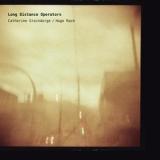
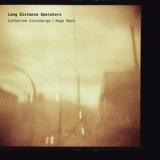
Long Distance Operators (LDO) is a collaboration between the Australian musician Hugo Race and the Belgian violinist Catherine Graindorge. Hugo Race, singer, songwriter, producer and author, has a long and wide-ranging history, from the trans-global Dirtmusic and his groups True Spirit and Fatalists to his origins in the 80's Melbourne post-punk scene with Nick Cave & the Bad Seeds and The Wreckery. Catherine Graindorge, violinist and composer, is known for her solo work and collaborations with International artists such as Iggy Pop, John Parish, Pascal Humbert (16 Horsepower), Simon Huw Jones (And Also The Trees). She also plays and composes for theater and cinema. The music of LDO is an intensely atmospheric dreamweave of violins, electronics and Hugo's darkly evocative voice. The duo explores metaphysical lyrics, experimental sounds and retro-baroque orchestrations in a romantic, song-based context.
Long Distance Operators (LDO) is a collaboration between the Australian musician Hugo Race and the Belgian violinist Catherine Graindorge. Hugo Race, singer, songwriter, producer and author, has a long and wide-ranging history, from the trans-global Dirtmusic and his groups True Spirit and Fatalists to his origins in the 80's Melbourne post-punk scene with Nick Cave & the Bad Seeds and The Wreckery. Catherine Graindorge, violinist and composer, is known for her solo work and collaborations with International artists such as Iggy Pop, John Parish, Pascal Humbert (16 Horsepower), Simon Huw Jones (And Also The Trees). She also plays and composes for theater and cinema. The music of LDO is an intensely atmospheric dreamweave of violins, electronics and Hugo's darkly evocative voice. The duo explores metaphysical lyrics, experimental sounds and retro-baroque orchestrations in a romantic, song-based context.
Pekka Airaksinen (1945-2019) was a pioneering figure in Finnish electronic and avantgarde music, known for his highly personal composition systems that merged experimental sound, spirituality, and conceptual thinking. Hevajra (1985), reissued by Other Power (the "sibling label" of the internationally lauded We Jazz Records), captures Airaksinen at his most playful and accessible, blending meditative electronics, cosmic atmospheres, and joyful improvisation into a visionary work that remains unique within the history of Finnish experimental music.
“Simply put, it’s unlikely we’ll encounter a mix that leaves a cultural footprint and defines the sound of a generation quite like Northern Exposure again. Both mixes are absolutely 100% astoundingly brilliant”
DJ Mag
“Their best-loved mix CD is a trippy traipse through the verdant world of progressive house, a genre with one foot in the rave and the other somewhere in the great beyond” Rolling Stone - The 30 Greatest EDM
Albums Of All Time
Originally released on 27th September 1996, ‘Northern Exposure’ is widely regarded as one of the greatest mix compilations ever made. Thirty years on, it sounds as vital as ever - a testament to the fearless vision that went into its creation.
At a time when DJ culture was still writing its own rules, Sasha and John Digweed pushed against the grain. Drawing on sounds discovered during early trips to America - from Rabbit in the Moon to Future Sound of London - they built something that prioritised atmosphere over dancefloor convention. DJ Mag panned it on release. History changed their tune.
Northern Exposure Redux marks the 30th anniversary with a definitive reissue of both original mixes. The CD version also includes a newly created ambient mix. Shaped by the spirit of Bill Laswell and Mad Professor, it explores the deeper, more hypnotic DNA that always ran beneath the surface. Northern Exposure Redux North includes classic tracks by Keiichi Suzuki, The Future Sound Of London, and Banco de Gaia. Northern Exposure Redux South includes classic tracks by Dope On Plastic, Pete Lazonby, and a newly recreated version of ‘Dark And Long (Dark Train)’ by none other than Darren Emerson himself. Both vinyl versions also include a download code for both the North And South mixes, as well as the individual tracks.
“Simply put, it’s unlikely we’ll encounter a mix that leaves a cultural footprint and defines the sound of a generation quite like Northern Exposure again. Both mixes are absolutely 100% astoundingly brilliant”
DJ Mag
“Their best-loved mix CD is a trippy traipse through the verdant world of progressive house, a genre with one foot in the rave and the other somewhere in the great beyond” Rolling Stone - The 30 Greatest EDM
Albums Of All Time
Originally released on 27th September 1996, ‘Northern Exposure’ is widely regarded as one of the greatest mix compilations ever made. Thirty years on, it sounds as vital as ever - a testament to the fearless vision that went into its creation.
At a time when DJ culture was still writing its own rules, Sasha and John Digweed pushed against the grain. Drawing on sounds discovered during early trips to America - from Rabbit in the Moon to Future Sound of London - they built something that prioritised atmosphere over dancefloor convention. DJ Mag panned it on release. History changed their tune.
Northern Exposure Redux marks the 30th anniversary with a definitive reissue of both original mixes. The CD version also includes a newly created ambient mix. Shaped by the spirit of Bill Laswell and Mad Professor, it explores the deeper, more hypnotic DNA that always ran beneath the surface. Northern Exposure Redux North includes classic tracks by Keiichi Suzuki, The Future Sound Of London, and Banco de Gaia. Northern Exposure Redux South includes classic tracks by Dope On Plastic, Pete Lazonby, and a newly recreated version of ‘Dark And Long (Dark Train)’ by none other than Darren Emerson himself. Both vinyl versions also include a download code for both the North And South mixes, as well as the individual tracks.
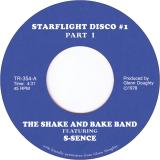
Tramp Records International proudly presents: The 1975 Baltimore Colts Glenn Doughty and his All-Pro Shake & Bake Band! In 1975 Glenn "Shake & Bake" Doughty Wide Receiver for the Baltimore Colts formed the Shake & Bake Band. Glenn Doughty and his Baltimore Colts Shake and Bake Band of the 70's is the first musical group consisting of former NFL All-Pro players that Tramp Records has partnered with in its history!
Doughty is a Detroit 'Motown' native and All-American from the University of Michigan, that was recently crowned national champion and the winningest college football program in NCAA History. Doughty and his four world-class athletic teammates formed the heart of the band. The Shake & Bake Band in the mid 70s played live at Baltimore's hottest Clubs with teammates in attendance on Monday nights after Shakin' & Bakin' their opponents on Sunday at Memorial Stadium. Doughty's sports hero was Muhammad Ali. He originated the popular Shake & Bake athletic movement scoring touchdowns. He recited Shake & Bake poetry like Ali to make predictions after games on local and national TV to celebrate Colts victories. His lyrics in his music were used to fire up thousands of his Colts fans and his teammates. Many fans felt the group sounded like WAR the popular funk group from California. Members of the Shake & Bake Band were: Glenn "Dr. Shake" Doughty #7, All-Time Colts leading Wide Receiver, producer, lead singer, congas and lyrics, Ray "RC Cola" Chester, All-Pro Tight End, Super Bowl Champion, Bass, Baltimore, Maryland, David "DT" White, Wide Receiver Lead Guitar, producer, sound technician. Buffalo N.Y., Lloyd "The Bullet" Mumford, Defensive Back Harmonica, Miami Florida, Freddie "Bones" Scott, All-Pro Wide Receiver on percussion, Grady Arkansas, and Bruce "Turn it Loose" Barnett, Drummer and shoe salesman. Randallstown, Maryland. This group of talented stars lead the Colts to its first ever three consecutive Eastern Division Championships.
Additionally to this 45 RPM single release, "Starflight Disco #1 Pt.1&2" has been featured on the "Can You Feel It Vol.5" compilation album.
MALEDICTUS is a Portuguese metal band formed in Lisbon. Bringing together experienced musicians with a shared vision, the band creates dark, powerful and atmospheric heavy music. With a foundation of aggressive riffs, haunting melodies and emotional vocals, the band blends modern heavy metal with darker, more melodic influences.
The group was formed by musicians seeking to explore a heavier and more expressive sound, combining technical musicianship with compelling songwriting and a cinematic atmosphere. Their music strikes a balance between intensity and melody, moving between crushing guitar passages, dynamic rhythms, and dramatic vocal performances. ""Our music reflects who we are and how we process life and our own emotions. Music is life manifested through an artist's soul. We all process life with a sense of dark melancholy”, comments guitarist Ben Stockwell. As history has taught us, Portuguese metal bands are known for their melancholic sound, which reflects their cultural identity.
Since their formation, MALEDICTUS has been focused on creating music that reflects the darker and more emotional aspects of the metal genre. Drawing inspiration from classic and contemporary metal acts, the band aims to create a sound that feels familiar yet distinct, appealing to fans of powerful, atmospheric metal.
Boasting a line-up of seasoned performers and a clear artistic vision, MALEDICTUS is developing new material and establishing its presence in the Portuguese metal scene and beyond. Their debut album, „Lazarvs“, is set to be released on Friday 13th of November. The album title draws heavily on the biblical story of Lazarus in the Gospel of John, in which Jesus performs the great miracle of raising his deceased friend Lazarus from the dead after he had been in the tomb for four days.
With Rez on vocals, the band has an exceptional singer with a distinctive, powerful voice. „He is undoubtedly one of the best out there having power, soul, range and timbre. Everything fits perfectly with our sound. We couldn't have asked for a better voice or frontman"", says the guitarist. Rez’s lyrics are another perfect addition to the band's dark, epic and partly progressive sound. The lyrical themes focus on life's darkest moments. „Death brings an opportunity for renewal, as do our most difficult struggles, which require part of us to die in order to be overcome.
New York-based Japanese jazz and electronic music polymath Takuya Nakamura presents his debut album Shape The Future - almost 35 years into his storied musical journey.
An expansive double album, the album’s first LP documents a spellbinding live performance by Nakamura recorded at fabric. A hybrid set combining DJing, live electronics, vocals, and trumpet, the set also features studio versions of special collaborations with Shigeto, Currency Audio and Tim Reaper. The second LP complements the first by assembling studio recordings of select album tracks. Altogether the two volumes make for a definitive display of Nakamura’s exceptional musicianship across jazz, DnB, jungle, broken beat, deep techno and more.
Across his career, Nakamura has played Brazilian music, merengue, salsa and straight-ahead jazz. He’s opened for Sun Ra Arkestra, performed with David Byrne, Laurie Anderson, Lee “Scratch” Perry, Wu-Tang Clan, and Arto Lindsay, appeared on sessions with Terry Riley, ASAP Rocky, Goldie, and TV On The Radio, and remixed the likes of Quincy Jones, Sun Ra, Billie Holiday, and The Streets. He’s also played under director and playwright Robert Wilson.
Although the musical past and present of the Tokyo-born, New York-based DJ and trumpet player is undoubtedly eclectic, Nakamura is abidingly steeped in the sounds of jazz and jungle. This’ll be obvious to casual observers who may have seen any viral videos of him. But there’s more to this. The depth of Nakamura’s engagement with these kinds of music, the way they’ve made him into the person he is, the decades-long path they’ve taken him on; to now arrive at the summit of a solo album is all truly remarkable. Shape The Future resonates with every chapter in this story.
In high school, Nakamura’s friends started listening to jazz and jazz fusion, which piqued his interest, especially when they started going to clubs to see it live, where they managed to see US legends like Sonny Rollins play. Eventually he began to play jazz every day and his musical skill emerged early. He soon became obsessed with getting closer to the source of this music, which led to his studies at the New England Conservatory of Music in Boston with George Russell, an influential figure who had taught Miles Davis and John Coltrane. Nakamura drank it in: not only the technical aspects but the sense of a direct connection to “a music culture where Russell and his friends changed harmony forever. I wanted to know how that was possible!”.
This was a radical experience in itself, but then another revolution happened for Nakamura. He was playing in a venue called The Western Front, near Boston and discovered that the elderly owner had his own soundsystem and was playing what was then - in 1992 - only just becoming known as jungle. This was as freeing a musical revelation as his proximity to the giants of jazz was, and in that instant the two things fused. He understood that using technology to fill a dancehall with sound and a jazz musician’s reflexes are all working to the same ends: “You’re always making decisions,” he says, “but it doesn’t have to be really difficult. It’s the truth of the frequencies, and how they’re affecting people’s minds.”
From that moment on, his life path was set. Moving to New York City, he sought out jungle and its offshoot sounds wherever he could find them, gigging and collaborating relentlessly, and gradually developing his own live and hybrid live/DJ shows. Through regular appearances at New York fixtures Zebulon and CBGBs, and continual shows elsewhere in the city, Nakamura developed his live performance and DJing and it was in these environments that he gradually weaved together his twin loves without compromising either, building an international reputation in the process.
It’s only fitting then that his first album, almost 35 years after he first found his musical direction, should be a live one: a window into this never-ending process. Even here, he had to be persuaded that he should make a record. A member of the fabric team got turned on to his music after their daughter saw him play. Of course, as a jungle lover, Nakamura knew fabric – which has a special place in the history of jungle and drum’n’bass – and “had wanted to play there since I was very young.” You can hear the club in the record: this isn’t just a live show, in keeping with his jungle roots, it’s Nakamura duetting with the soundsystem, and you can feel how the emotions in the room would have ebbed and flowed.
This dynamic translates to a transfixing record. Setting the tone with lushly textured ambient and reverberant jazz, Nakamura segues into cinematic breakbeat and stellar fusion, infusing it all with intoxicating low end and hypnotic rhythms. The LP’s midway point locks into mesmeric percussion heightened by resonant echoes of piano and trumpet. There’s an endless pull to this music. Nakamura adjusts the levels for maximum impact throughout, and the overall effect begins to evoke some harmonious hybrid between a jazz ensemble, a classic Metalheadz 12” and a Theo Parrish DJ set. His electric form continues through surreal jazz, intricate electronics and rolling sub-bass velocity, right up to the subtly devastating final cover of Peter Gabriel and Kate Bush’s ‘Don’t Give Up’, with Nakamura’s fragile vocal sitting in the heart of a huge sound.
From Tokyo jazz nights to formative studies and encounters in Boston to his artistic development in New York, Nakamura reaches another milestone with his monumental debut album. It’s a release that happened just the way a Takuya Nakamura record should. In the same way his instincts led him to musical revelations, taking his own sweet time has led him to make one of the most extraordinary debut albums imaginable, all executed in his own singular style. In Nakamura’s world, the universe finds a way.
It’s that time of year again! Are your copies of “Now! That’s What I Ca l Christmas” and “A Motown Christmas” finaly feeling worn out? Strut has the ideal antidote this year, as we dive into the world of festive records made by African artists spanning the late 1960s to the 1980s with our new Krismasi: Christmas Sounds From Africa compilation.
Taking in music from across the continent from Nigeria and Ghana to South Africa and Zimbabwe, Krismasi draws from a wide range of sounds from fun novelty records and spur-of-the-moment jams to spiritual and gospel favourites. Featured artists include Ghanian great Kwadwo Donkoh with a meditative highlife praise song from his much-loved Christmas Africana album. Elsewhere, pop star turned pastor, Jerry Boifraind, has some fun with a song celebrating seeing friends at Christmas and Nigerian pop favourite Martha Ulaeto features with the lilting lead track from her own Christmas Africana release. We pick out some choice Central and East African sounds with Kakai Kilonzo’s bri liant Kilimambogo Brothers Band and Congolese legend Baba Gaston’s Orchestra Baba National capturing the joy of the festive season. We stop off in Zim for a rare Dorothy Masuka acoustic piece and one of the country’s great musicians post-independence, Paul “Dr. Love” Matavire with ‘Christmas Yaswedera’ (‘Christmas Is Near’). Township jazz star Reggie Msomi appears with a joyous township instrumental and, fina ly, we couldn’t release a Christmas co lection without some carols. Here we include here a great version of ‘Mary’s Boy Child’ by UK-based Nigerian highlife musician Flash Dominci and a hi-octane funky medley of favourite festive hymns by Ghana’s Oscar Suley.
The compilation is the first in-depth co lection of rare African Christmas recordings, uncovering a rich and often overlooked chapter of the continent's musical history. Krismasi is available on Red & White Inkplosion Vinyl LP and CD. Vinyl restoration is by Colin Young at See Why Audio, mastering is by Frank Merritt at The Carvery, and the album features striking new artwork by Liam Large.
'Hive Mind are excited to have worked with Rio de Janeiro based label QTV, to bring you this retrospective from the cosmic joker of contemporary Brazilian music, Negro Leo.
'The music on this retrospective, which draws together songs from his 14 albums, EPs and singles released since 2012, ranges widely and wildly across genres and styles, from the urgent and angular no-wave inspired punk-funk of Niños Heroes or Ilhas de Calor, through the psychedelic hoedown of Noite Invertida or the beautiful and delicate Esferas and on to the maximalist hyperpop of more recent works like RELA or Desejo de Lacrar. Negro Leo consistently confounds, confuses, disturbs and provokes.
'His music is explicitly and fiercely Brazilian and draws on the history of black Brazilian music for inspiration - Gilberto Gil and Tropicalism, Itamar Assumpção and the Vanguard Paulista, Funk Carioca, the Boi's rhythm from the northern carnivals, the samba of the streets and the country - it's all thrown into the mix, along with free-jazz, noise and various chunks of non-Brazilian pop. Leo's music and songs serve as an essential documentation of the country's rapidly shifting social fabric in the digital age, a time in which the country and its people feel lost in a "jungle of pixels".
'Some of these surreal songs can feel overwhelming at times, like a wall of noise full of unfamiliar sounds and rhythms, but there's an unapologetic punk spirit behind it all, alongside a genius composer. It's worth pushing through the that sense of overwhelm to the place where the beauty and complexity of the composition and songwriting shines.'
Rewind to early 2000s London. A home studio, a collection of borrowed gear from car boot sales, and a mind full of futurism. That was the birth of these tracks.
Transparent Sound (Orson Bramley) is a true cult architect of the UK electro scene. Since 1992, he's been bridging the gap between Detroit techno, acid, and rave futurism. With a legacy spanning Tresor, Electrix, and Soma, he now lands on No Static Automatic for a very special release.
No Static Automatic presents The Lost Tapes — a new EP of lost recordings from the early 2000s London era. Dug out of DAT tapes and CDRs, recorded in Orson's home studio with borrowed and loaned gear and car boot sale finds. Raw, unpolished, and proper electro history. 3 tracks plus a remix of Ara-u.
The seminal psych-rock classic The Evil One by Roky Erickson And The Aliens is reissued by Fire Records in a deluxe 15-track edition, restoring the original front cover from San Francisco’s 415 Records release for the first time since 1981. Presented across two LPs cut at 45 rpm for maximum sonic depth and clarity, the release brings together the complete recordings from the legendary 1978 and 1979 sessions. The package includes a collector’s booklet with liner notes by acclaimed Austin music journalist Joe Nick Patoski, who attended a recording session for The Evil One in 1979. Alongside rare photographs and archival images from the collection of Roky’s then manager, Craig Luckin.
Following his release from Rusk State Hospital in 1974, Erickson formed The Aliens and channelled his experiences and fascination with horror and science fiction into a singular new sound. Moving beyond the psychedelic garage blues of the 13th Floor Elevators, the band created harder, more ferocious rock built around jagged guitars, strange melodies and a propulsive rhythm section.
Produced by Creedence Clearwater Revival bassist Stu Cook, The Evil One includes some of Erickson’s most celebrated recordings, including ‘Two Headed Dog’, ‘I Walked With A Zombie’ and ‘It’s A Cold Night For Alligators’. Erickson’s unmistakable voice and surreal lyrics, populated by zombies, demons, vampires and atomic monsters, gave the album a character unlike anything else in rock. Both the LP and CD editions feature rare photographs and images from the archive of Erickson’s then manager and the sessions’ executive producer, Craig Luckin.
The Evil One has since become a landmark of cult rock, with its songs covered by generations of artists and its influence extending across punk, alternative and psychedelic music. As Craig Luckin recalls, “Roky considers The Evil One to be his favourite album that he ever recorded. He really loves that album.”
Austin music journalist Joe Nick Patoski, who attended one of the album’s 1979 sessions, contributes a new essay to the LP and CD packaging, exploring Erickson’s extraordinary career, enduring influence and place in Texas rock history.
More than a standalone reissue, this deluxe edition of The Evil One opens an exciting new series honouring Roky Erickson’s extraordinary body of work, with Gremlins Have Pictures and Don’t Slander Me to follow in 2027.
The seminal psych-rock classic The Evil One by Roky Erickson And The Aliens is reissued by Fire Records in a deluxe 15-track edition, restoring the original front cover from San Francisco’s 415 Records release for the first time since 1981. Presented across two LPs cut at 45 rpm for maximum sonic depth and clarity, the release brings together the complete recordings from the legendary 1978 and 1979 sessions. The package includes a collector’s booklet with liner notes by acclaimed Austin music journalist Joe Nick Patoski, who attended a recording session for The Evil One in 1979. Alongside rare photographs and archival images from the collection of Roky’s then manager, Craig Luckin.
Following his release from Rusk State Hospital in 1974, Erickson formed The Aliens and channelled his experiences and fascination with horror and science fiction into a singular new sound. Moving beyond the psychedelic garage blues of the 13th Floor Elevators, the band created harder, more ferocious rock built around jagged guitars, strange melodies and a propulsive rhythm section.
Produced by Creedence Clearwater Revival bassist Stu Cook, The Evil One includes some of Erickson’s most celebrated recordings, including ‘Two Headed Dog’, ‘I Walked With A Zombie’ and ‘It’s A Cold Night For Alligators’. Erickson’s unmistakable voice and surreal lyrics, populated by zombies, demons, vampires and atomic monsters, gave the album a character unlike anything else in rock. Both the LP and CD editions feature rare photographs and images from the archive of Erickson’s then manager and the sessions’ executive producer, Craig Luckin.
The Evil One has since become a landmark of cult rock, with its songs covered by generations of artists and its influence extending across punk, alternative and psychedelic music. As Craig Luckin recalls, “Roky considers The Evil One to be his favourite album that he ever recorded. He really loves that album.”
Austin music journalist Joe Nick Patoski, who attended one of the album’s 1979 sessions, contributes a new essay to the LP and CD packaging, exploring Erickson’s extraordinary career, enduring influence and place in Texas rock history.
More than a standalone reissue, this deluxe edition of The Evil One opens an exciting new series honouring Roky Erickson’s extraordinary body of work, with Gremlins Have Pictures and Don’t Slander Me to follow in 2027.
History has shown that the greatest bands–bands with that certain, ever elusive quality called lasting power–neither conform to nor buck the trends of their time, but rather force the times to catch up to them. Sheer Mag has such lasting power in droves. After almost a decade spent carving out a career that has already become the stuff of modern underground legend, the band’s new stand-alone single, “All Lined Up,” comes alongside the announcement of their signing to Third Man Records–their first partnership with a larger independent label–who will also be physically and digitally re-releasing the entirety of Sheer Mag’s back-catalogue, including their cult-beloved early EPs I (2014), II (2015), and III (2016), as well as their first two breakthrough LPs, Need To Feel Your Love (2017) and A Distant Call (2019). Sheer Mag’s sensibility, as fervently beloved by baseball-tee clad garage rockers and tattoo-less indie kids as it is by leather-and-stud-loyal punks, finds its strength in an unconventional mixture of refined complexity and straight-forward pop prowess. Seamlessly trading between head-turning guitar heroics and a charmingly timeless blend of disco, hard rock, and garage inflected hooks, Sheer Mag’s oft-referenced, never-replicated sound has played an undeniably large role in stoking the current resurgence of interest power-pop forward rock music. While quickly adopted as a fan-favorite amongst the sweat-caked crowds of the early 2010’s underground, time has attested to Sheer Mag’s singular cultural mutability: though never straying too far from their home-town Philadelphian origins
Written during and after a year touring the world, Sweet American Boy
expands the raw honesty that built honestav's audience while pushing his
sound into bigger, rock-driven territory - heard on Can't Let Go, Storm In
This House, and Crash First.
Across 16 tracks he wrestles with family history, addiction, grief, love, and
the complicated reality of chasing - and catching - the dreams he once
chased. It’s honestav at his most vulnerable, self-aware, and ambitious: an
evolution of his signature storyteling that feels larger, louder, and more
unfiltered than ever before.
• MGK co-sign Multiple dates on MGK's Lost Americana Tour; Crash
First (with mgk) on the LP
• Deeply engaged fanbase: 1.8M TikTok • 1.2M Spotify monthly
listeners
• A bigger, bolder chapter: Rock-driven evolution of his sound, with a
headline tour on the way
There's a tendency in metal to mistake aggression for honesty, volume for depth. To confuse the performance of darkness with its actual weight. Hidden Fires Burn Hottest, the new album from San Francisco-based post-black metal band Bosse-de-Nage, sidesteps this entirely. It’s the group’s most fully realized work yet, precisely because it refuses to be pinned down.
Bosse-de-Nage have been working with The Flenser for over fifteen years. They were one of the first bands the label ever partnered with and have the longest active relationship in the label's history. But unlike most bands who build momentum through constant touring and visibility, Bosse-de-Nage has largely existed apart from the music world's usual machinery. They've evolved on their own terms, in relative isolation, allowing the work to develop without outside pressure or influence. What began rooted in black metal anonymity has mutated into something that actively defies categorization. The aggression is still there, but it's no longer the point. Hidden Fires Burn Hottest finds the band treating emotions like physical objects, feelings with spatial properties. “No Such Place"" describes a space that can't exist but does anyway, somewhere between thought and location. ""Immortality Project"" examines infinite possibility not as promise but as problem, endless options collapsing under their own weight. These songs don't use metaphor to describe emotion. They make emotion into something you could theoretically touch.
Tracked by Jack Shirley (Deafheaven, Oathbreaker) at Atomic Garden East and mixed and mastered by Richard Chowenhill of Agriculture, Hidden Fires Burn Hottest was years in development, with some tracks beginning in 2018.
The long writing process offered time that most records don't get. Time to live with ideas, revise endlessly, to let structures settle. For the first time, lyricist Bryan Manning wrote everything in advance, creating a surplus to pull from rather than working under deadline pressure. The difference shows.
Coming off Further Still, an album built on constraint and economy, Bosse-de-Nage sought the opposite: sprawl, strangeness, fewer rules. Space for ideas to develop without rushing them. Dynamics that move through quiet as much as noise. Presence earned through atmosphere instead of volume. The record even includes ""Mementos,"" which might be considered the first love song the band has ever written.
Nothing here coheres into a theme. These are pieces pulled from low moments and private feelings made public through sound. The band has never been interested in positivity, in music that resolves cleanly or offers comfort. But bleakness doesn't mean humorlessness. There's something darkly funny running through much of it, even when it shouldn't be.
Hidden Fires Burn Hottest doesn't explain itself. It just insists: what you feel is as real as what you can see."
For his debut on Hard Times Records, Manchester's FLETCH delivers 'Lift Me Up’ - a four-track EP rooted in rolling grooves, warm musicality and a refined dancefloor energy.
The release follows a busy run for FLETCH, with releases on Circoloco, Three Six Zero, MVSON and ANOTR's No Art, where his Play House EP reached the top of the download charts. His connection with Hard Times began behind the decks at the label's sold-out Miami Winter Music Conference showcase, where a shared appreciation for the music soon developed into plans for a release.
"After playing for the Hard Times crew in Miami, I told them how I'd been a fan of the label for years and that i’d love to release something with them one day," says FLETCH. "I sent over some tracks that I felt were a natural fit and the guys signed them on the spot. The rest, as they say, is history!"
The title track sets the tone for the EP with rolling drums, elastic basslines and understated vocal hooks, while 'Stand Up’ leans into swung percussion and classic chord stabs. On the B-side, 'Touch Me' shifts into deeper territory with stripped-back, late-night groove, before '1000 Years' closes the EP with dusty scratches, crisp hats and an understated sense of drive.
Since its digital release, lead track "Lift You Up" has received strong support on BBC R1, plus heavy DJ support from the likes of TSHA, Hilit Kolet, Laurent Garnier, Jamie Jones, Groove Armada, Riva Starr, and more.
FLETCH's sound continues to evolve while remaining firmly rooted in the traditions of house, making 'Lift Me Up' the perfect debut on Hard Times.
Yuki Kawamura - a multifaceted producer, songwriter, DJ, and the founder of Tokyo's iconic DJ warmup bar, Shibuya Oiran - presents a highly anticipated 12" vinyl release on her imprint OIRAN MUSIC.
As a globally active selector, her international footprint includes a monthly residency on Romania's Black Rhino Radio, alongside notable appearances on world-renowned platforms like NTS Radio and The Lot Radio.
Back in Tokyo, her venue Shibuya Oiran - featured in Time Out Tokyo's '50 Things to Do in Japan' as a premier spot to "pregame in stylish surroundings" - serves as a vital cultural hub where legendary international and local DJs gather. Its unique musical ecosystem is perfectly reflected in this release, which features a carefully curated selection of popular remixes from her debut album, Love Forever.
Side A delivers Balearic and dancefloor-ready grooves. It opens with 'Ra' a tribute to Sun Ra featuring musicians Watusi and George Kano, a track that has garnered massive support from top DJs including Red Axes...
The A-side also features brilliant Balearic-infused dance remixes by DJ SHIKISAI and XTAL (known for his work with Traks Boys and (((ssurround)))).
Side B shifts the focus to deep ambient and chillout soundscapes. It includes the previously unreleased full version of R.I.P Sunset',featuring an exquisite violin performance by Neko Saito.
The standout on this side is a stunning remix by renowned Japanese producer Calm. This specific remix holds a special history: Yuki debuted it as her opening track during her historic DJ set at the legendary Cafe Del Mar in Ibiza - making her the first Japanese Female DJ to perform there - where it received an incredible response on the floor.
The striking cover art is designed by HAMADARAKA, an acclaimed and rapidly rising female twin artist duo, produced by Nomadic Gallery in Tokyo.
Musique Pour La Danse presents a raw, euphoric, and totally essential document of British rave history. LIVE IN MANCHESTER captures like nothing else the pure energy and essence of an era.
Featuring the unstoppable duo Mark Franklin and Nigel Champion, and vocalist Saffron, this legendary 1992 live set delivers iconic tracks like "Anthem", "Adrenaline", and "Malfunction" in their most ecstatic form and many exclusive tracks.
Often copied and sampled, never surpassed, because it simply can't be. If you're only owning one rave record, this is the one.
Includes liner notes by Matt Anniss, re-designed in Büro Destruct with an historical collectible flyers poster 12"x36", with the help of Phatmedia.
Newly mastered and cut at Transition Studios for maximum impact. Simply the best thing for your warehouse soundsystem.
Das zweite Album von Sleepytime Gorilla Museum entstand zwischen 2002 und 2004 und spiegelt die politisch und gesellschaftlich aufgewühlte Zeit nach der Jahrtausendwende wider. Die Band verarbeitete diese Eindrücke in ihrem charakteristischen Mix aus Avant-Rock, experimenteller Komposition und theatralischer Intensität. Während der Entstehung stieß Schlagzeuger Matthias Bossi zur Band und prägte den Sound maßgeblich mit. Ein Höhepunkt des Albums ist der Song ,Phthisis", der in einem Studio in den Hollywood Hills aufgenommen wurde und zu den bekanntesten Stücken der Band zählt. Die nun erstmals in den USA auf Vinyl erhältliche Neuauflage wurde von Bassist und Produzent Dan Rathbun remastert und unterstreicht den Stellenwert des Albums als eines der zentralen Werke im Katalog von Sleepytime Gorilla Museum.
Finnish-American guitarist Raoul Björkenheim and Norwegian drummer Paal Nilssen-Love join forces on their new album PING, released by We Jazz Records on 30th October on LP, CD and digital formats. Recorded in Helsinki, the album finds the seasoned duo firing on all cylinders and delivering a remarkable set of contemporary free music.
PING brings together nine excursions beyond “guitar + drums” and way beyond “free jazz”. That being said, those are still good touching points for the music that is wild, imaginative, raw, yet also at times delicate and introspective. Friends and collaborators for decades in groups such as the lauded Scorch Trio, Raoul and Paal have the history and the trust to create memorable and original improvised music that stuns and moves the curious listener.
Raoul Björkenheim (b. 1956) is a Finnish-American guitarist and composer who has been creating original music for the past four decades living in New York City and Helsinki, where he is presently based. Describing his on-going work as investigative guitarism, he is best known for an expressionistic and lyrical guitar style. Björkenheim’s eclectic discography numbers 50+ albums, ranging from ambient soundscapes to visceral free jazz, from duo to big band. His large-scale works for symphony orchestra have yet to be recorded, and he has also composed scores for over ten films and dance productions. Björkenheim has collaborated musically with Bill Laswell, Toshinori Kondo, William Parker, Mats Gustafsson, Hamid Drake, Ingebrigt Håker Flaten, Gerald Cleaver, Henry Kaiser, Lukas Ligeti, Morgan Ågren, Paul Schütze, Edward Vesala and Juhani Aaltonen, for the labels ECM, Rune Grammofon, Cuneiform, Tum Records and Long Song records. Björkenheim has been awarded various prizes including the Emma prize for best jazz recording of the year, and been nominated three times for the Nordic Music Award.
Paal Nilssen-Love (b. 1974) is a Norwegian drummer, composer, bandleader, and producer known for his central role in Scandinavian free jazz and improvised music. Since the mid- 1990s, he has appeared on more than 280 albums, including 70 released through his label, PNL Records. He has performed with influential groups including Atomic, The Thing, Peter Brötzmann’s Chicago Tentet, Scorch Trio, and Frode Gjerstad Trio, and collaborates regularly with artists such as, Ken Vandermark, Akira Sakata, Otomo Yoshihide, David Murray, Arto Lindsay and more. Paal Nilssen-Love’s fascination with traditional and experimental music has taken him around the world. Since his first visit to Ethiopia in 2009, he has built strong connections with musicians and artists in Addis Ababa, leading to collaborations, performances, teaching, and artist exchanges with Norway. Since his first trip to Brazil in 2013, he has returned regularly, developing collaborations with artists and musicians across the country. His musical explorations have also brought him to Tsugaru and Aomori in northern Japan, where he has developed an interest in the region’s traditional music. Nilssen-Love is also an active organizer and educator. He started both Oslo’s all-Ears festival, the Blow Out festival and FRAM Kunstfest, and has led workshops internationally and in Norway.
After a three-year hiatus, Downbeat returns with its 15th release, marking the very first Various Artists compilation in the label's history.
The A-side features the masterminds behind Tetrode, Damon Lamar and Specter, who deliver two tracks showcasing their signature sound. Machine house at a lower BPM, packed with repetitive Akai percussions and synth lines—gentler and warmer on Damon's track, and darker, more unhinged on Specter's side."
The B-side kicks off with label co-founder Jose Rico, who delivers "The Invaders," a track that transports us straight to the roots of the genre. This is textbook Chicago deep house—straightforward and infectious from the very first beat. Closing out the EP, Leonid makes his label debut with an emotional, Detroit-infused deep electronic gem, beautifully crafted with soft percussions, silky synths, and a subtle touch of epic grandeur. Absolutely stunning.
In collaborating with iconic vocalists Matthew K. Heafy (Trivium), Josh Middleton (Sylosis) and Anthony Lucero (Cult Leader), Burner take a striking step forward to claim new territory while consolidating their extreme and unique sound into the heaviest and bleakest incarnation of their craft yet. Vocalist Harry Nott elaborates on the themes behind the new album: "If It All Returns To Nothing looked outwards to the world's chaos throughout history, No One Is Coming To Save Us instead looks inwards at its proposed cause; humanity's violent, animalistic nature, begging us for change. This is an album about human behaviour: that people create endless cycles of violence by repeating the mistakes of the past, forging a brutal history that we fail to learn from. But, at the same time, the album is about questioning whether we can ever get past those sins and repetitions. This is a record that is mournful as much as it is angry and engaged. It longs to bitterly recall the moments of greatness and sacrifice in our shared history that created the better world we currently destroy. It longs to look back at these moments for inspiration and optimism, at a time where it feels like hope is running thin. The album is also a struggle for hope, not just that humanity can overcome hatred and violence, but that we can look back on our greatest moments and take courage to build a better world. No One Is Coming To Save Us reflects this duality in its title: that no one will come to save us from the violence and tragedy we create as part of our humanity. But it also proposes that it's up to us to change - to overcome a violent human nature and usher in a better tomorrow."
After fifteen years of shaping dancefloors around the world, Mele is set to release his long-awaited debut album Alive On Arrival via Defected Records Far from an introduction, the album marks the arrival of an artist operating with complete creative clarity, bringing together the sounds, collaborators and influences that have defined his journey into one cohesive body of work.
"Alive On Arrival draws inspiration from what feels like my entire life as a producer, a DJ and a music fan, bringing together everything I love about house, hip- hop, UK music, soulful R&B and wider global sounds. The name comes from Wu-Tang Clan's C.R.E.A.M., which felt fitting to where I'm at in my musical journey. It's been 15 years as Mele, but I'm still alive and feel like I've got so much more to give. I've finally arrived at this point with my debut album. The album was made in, and heavily influenced by, London, Miami and Liverpool - three places that are close to my heart. Sonically, it's inspired by some of the best: Jungle, The Neptunes, Gorillaz and Masters At Work." - Mele aka Krissy Peers Set for release on 25 September, Alive On Arrival is Mele's most expansive project to date. Across fourteen tracks, he draws together house, hip-hop, soul and R&B into a record that reflects a lifetime spent moving between genres rather than being limited by them. Created between London, Miami and his hometown of Liverpool, the album captures the energy and musical history of three cities that have shaped both his sound and perspective. At the heart of Alive On Arrival is collaboration. Rather than simply assembling a list of featured artists, Mele has curated a cast of voices whose individual perspectives deepen the emotional and cultural narrative of the album. Long-time collaborators sit alongside new creative partnerships, each contributing to a record built on shared musical language and mutual respect.
Easily one of the strangest, most quietly influential archives to surface in years. Padesip is bedroom-built electronics that still sounds like the future we were promised but quietly cancelled, rewiring decades of DIY history and daring you to keep up.
Channeling his honed sample craft towards the ominous portent of modern times, Romare returns with his fifth album Oblivion, with the previous 3 out of 4 LP's appearing on Ninja Tune. Across a suite of downtempo, broken beat, bubbling grooves and brooding reveries Archie Fairhurst threads a narrative that wrestles with the big questions of the present moment — the tipping points of the planet and technology, the fight for social justice and the power structures that govern our existence. While his trademark source material continues to cast a long line back through recorded history, this is Romare at his most contextual.
Nothing is placed by accident. 'Machines' hums its throbbing 4/4 pulse along to a German language recital of Johann Wolfgang von Goethe's 'Blessed Longing' — an enduring reflection on the human condition that rings true from way back in the 19th Century when it was written. 'Computer Love' slinks into a sumptuous trip-hop lull laced with sci-fi flourishes sculpted from samples of old computer documentaries — a bittersweet romantic backdrop to our complicated situationship with the devices in our lives. 'Take Us' goes one step further on its hard-stepping boom-bap strut as a subtle tale of possession by screens unfolds around Romare's signature strain of technicolour mutant funk.
There is space for optimism in the message on Oblivion as well — the strength of the suffragettes as a benchmark for social justice and activism amidst the speakeasy slink of ‘Deeds, Not Words', and spring-loaded acid house joint 'Change' pointing to the need for positive action in the face of imminent calamity.
The artwork for the album follows Fairhurst's thought process, drawing on Edvard Munch's iconic 'The Scream' along with Philippe Halsman and Salvador Dali’s ‘Voluptuous Death’ to help render the ideas of the album visually.
The wild ride of Oblivion races towards a final beguiling opiate on 'The Last Lullaby' — the perfect sedative after the rush of information and emotion that comes with a full-length trip through Romare's vivid, uniquely creative world of sound.
Twenty-five years after its original release, Markus Guentner's debut album In Moll returns in a special anniversary reissue on Black Knoll Editions, reaffirming its place as one of the defining ambient recordings of the early 21st century.
Released in 2001 during the formative years of Kompakt's influential Pop Ambient series, In Moll emerged from a period of rapid transformation in electronic music. New technologies, expanding digital networks, and shifting creative possibilities allowed artists to imagine entirely new sonic worlds. Amid this fertile landscape, Guentner's music stood apart. Combining delicate melodic fragments, slow-moving harmonies, and a remarkable sense of spatial depth, In Moll introduced a distinct artistic voice whose impact can still be felt a quarter-century later.
The album arrived shortly after Guentner's contributions to the inaugural Pop Ambient compilation, including the now-beloved "Regensburg 1," named after his Bavarian hometown. Those early recordings immediately captured the attention of Kompakt founders Michael Mayer and Wolfgang Voigt. Recalling his first encounter with the music, Mayer describes listening to a demo CDR with Voigt while wandering through Cologne late into the night, replaying the tracks for hours. "We knew that we had found something outrageously beautiful and we wanted the whole world to listen."
Across its running time, In Moll unfolds like a series of dreamlike landscapes, inviting the listener into a world that feels both familiar and strangely other. Bells, hisses, distant textures, and slow-moving bass tones drift through vast expanses of atmosphere while luminous synthesizer washes seem to blur the horizon in a fine digital mist. The album's transportive qualities are matched by a remarkable sense of compositional discipline. Every gesture feels deliberate, every texture carefully placed. Balancing warmth and melancholy with restraint, Guentner created a body of work that rewards both close listening and complete surrender.
Reflecting on the album twenty-five years later, Wolfgang Voigt describes Guentner as "one of the first, but also one of the most important ambient artists" associated with Kompakt, calling his music "an integral, timeless part of the long history of pop ambient." Music critic and former Pitchfork Editor-in-Chief Mark Richardson, who reviewed In Moll upon its original release, similarly noted that the album "marked the arrival of an important new voice," and today regards it as "one of the finest ambient releases of the decade."
The album's influence continues to extend far beyond its original audience. For many listeners, In Moll served as an entry point into a new understanding of what ambient music could be. Black Knoll boss Rafael Anton Irisarri first encountered the album shortly after its release in 2001. "It immediately opened a door to a world of music I didn't know existed," he recalls. "At a time when I was still discovering my own creative voice, Markus showed me entirely new possibilities for what electronic music could communicate." Simply put, "The Sight Below would not have existed without In Moll paving the way."
Far from a historical curiosity, In Moll continues to feel strikingly contemporary. What once sounded futuristic now feels timeless, its patient pacing, attention to detail, and sense of wonder remaining entirely intact. The album's enduring power lies not only in its influence, but in the curiosity it continues to inspire, inviting listeners to step inside its world and lose themselves within it.
To mark its twenty-fifth anniversary, Black Knoll Editions presents the most complete edition of In Moll to date. Newly remastered in full analog by Rafael Anton Irisarri, this expanded release pairs the original album with a newly reworked interpretation by Markus Guentner himself, revisiting the material through the lens of twenty-five years of artistic development. The anniversary edition also features a new visual presentation designed by Guentner, offering a visual counterpart to the album's continued evolution. Together, these recordings and visuals celebrate both the enduring legacy of In Moll and its ability to reveal new dimensions twenty-five years later.
This 25th Anniversary Edition on Black Knoll Editions celebrates a recording whose quiet impact has only grown with time, preserving a work that remains as evocative, singular, and essential today as it was in 2001.
Twenty-five years after its original release, Markus Guentner's debut album In Moll returns in a special anniversary reissue on Black Knoll Editions, reaffirming its place as one of the defining ambient recordings of the early 21st century.
Released in 2001 during the formative years of Kompakt's influential Pop Ambient series, In Moll emerged from a period of rapid transformation in electronic music. New technologies, expanding digital networks, and shifting creative possibilities allowed artists to imagine entirely new sonic worlds. Amid this fertile landscape, Guentner's music stood apart. Combining delicate melodic fragments, slow-moving harmonies, and a remarkable sense of spatial depth, In Moll introduced a distinct artistic voice whose impact can still be felt a quarter-century later.
The album arrived shortly after Guentner's contributions to the inaugural Pop Ambient compilation, including the now-beloved "Regensburg 1," named after his Bavarian hometown. Those early recordings immediately captured the attention of Kompakt founders Michael Mayer and Wolfgang Voigt. Recalling his first encounter with the music, Mayer describes listening to a demo CDR with Voigt while wandering through Cologne late into the night, replaying the tracks for hours. "We knew that we had found something outrageously beautiful and we wanted the whole world to listen."
Across its running time, In Moll unfolds like a series of dreamlike landscapes, inviting the listener into a world that feels both familiar and strangely other. Bells, hisses, distant textures, and slow-moving bass tones drift through vast expanses of atmosphere while luminous synthesizer washes seem to blur the horizon in a fine digital mist. The album's transportive qualities are matched by a remarkable sense of compositional discipline. Every gesture feels deliberate, every texture carefully placed. Balancing warmth and melancholy with restraint, Guentner created a body of work that rewards both close listening and complete surrender.
Reflecting on the album twenty-five years later, Wolfgang Voigt describes Guentner as "one of the first, but also one of the most important ambient artists" associated with Kompakt, calling his music "an integral, timeless part of the long history of pop ambient." Music critic and former Pitchfork Editor-in-Chief Mark Richardson, who reviewed In Moll upon its original release, similarly noted that the album "marked the arrival of an important new voice," and today regards it as "one of the finest ambient releases of the decade."
The album's influence continues to extend far beyond its original audience. For many listeners, In Moll served as an entry point into a new understanding of what ambient music could be. Black Knoll boss Rafael Anton Irisarri first encountered the album shortly after its release in 2001. "It immediately opened a door to a world of music I didn't know existed," he recalls. "At a time when I was still discovering my own creative voice, Markus showed me entirely new possibilities for what electronic music could communicate." Simply put, "The Sight Below would not have existed without In Moll paving the way."
Far from a historical curiosity, In Moll continues to feel strikingly contemporary. What once sounded futuristic now feels timeless, its patient pacing, attention to detail, and sense of wonder remaining entirely intact. The album's enduring power lies not only in its influence, but in the curiosity it continues to inspire, inviting listeners to step inside its world and lose themselves within it.
To mark its twenty-fifth anniversary, Black Knoll Editions presents the most complete edition of In Moll to date. Newly remastered in full analog by Rafael Anton Irisarri, this expanded release pairs the original album with a newly reworked interpretation by Markus Guentner himself, revisiting the material through the lens of twenty-five years of artistic development. The anniversary edition also features a new visual presentation designed by Guentner, offering a visual counterpart to the album's continued evolution. Together, these recordings and visuals celebrate both the enduring legacy of In Moll and its ability to reveal new dimensions twenty-five years later.
This 25th Anniversary Edition on Black Knoll Editions celebrates a recording whose quiet impact has only grown with time, preserving a work that remains as evocative, singular, and essential today as it was in 2001.
Armada Music and PDD proudly continue the brand-new A State Of Trance Classic Series, celebrating some of the most legendary and influential records in trance history. Following the success of Volume 1, Volume 2 once again dives into the archives to bring three essential trance classics back to life on fresh vinyl.
Kicking things off on Volume 2 is “Chicane feat. Moya Brennan - Saltwater”, a true trance classic that showcases the sound and energy that helped define the genre during its golden era. Originally released in 1999 on Xtravaganza Recordings, the track quickly became a favourite among DJs and trance fans, and now returns to wax as part of this essential new series.
On the flip is “Veracocha - Carte Blanche (Extended Mix)”, another highly regarded classic from the A State Of Trance catalogue. Originally released in 1999, the track has stood the test of time and remains a firm favourite with trance DJs and collectors, making its return to vinyl a welcome addition to the series.
Last but not least is “Insigma - Open Our Eyes (Original Mix)”, completing another carefully selected trio of timeless trance records. Originally released in 2000 on A Trance Communication Release, this classic perfectly captures the euphoric, driving sound that made the era so influential and continues to resonate with trance fans today.
Volume 2 continues the series in style, bringing together three essential trance classics on one piece of wax and making this a must-have for both long-time A State Of Trance fans and a new generation discovering these timeless anthems.
Skepta returns with his highly-anticipated new album, The Fork and Knife. A record rooted in the sounds, energy and culture of contemporary Britain, while looking firmly beyond its borders. Shaped by decades spent immersed in sound systems, clubs and rave spaces, The Fork and Knife moves freely between grime, garage, house, jungle and electronic music. At its centre is Skepta as a rapper, writer and producer - reflecting his position at the centre of rap and his instinct to continually push the sound forward. Identity runs through the heart of the album. Skepta explores what it means to be British, the son of Nigerian immigrants, and to exist between cultures. Rather than viewing diaspora through a lens of struggle, The Fork and Knife embraces it as a source of strength, a superpower that has informed Skepta’s resilience, work ethic and creative instinct. The visual world of The Fork and Knife draws on 1980s Nigerian-British imagery, football culture and documentary realism, connecting the history of the Windrush generation with the energy and reality of modern London.
The modern day torch carriers of electric Brazilian jazz-funk. Fans of Azymuth, Marcos Resende, Antonio Adolfo and Cesar Mariano look no further !
Ultracooked infuses the Sao Paulo trio’s deep understanding of Brazilian music history with their consummate musicianship and infectious joy of playing. Their distinctly electric jazz-funk flavour rises to the top, as they pay homage to some of their musical heroes and teachers.
Where previous albums nodded to the lineage of Azymuth, Antonio Adolfo, Cesar Camargo Mariano and Marcos Resende, Ultracooked walks ! ! straight up to the greats and shakes their hands. Gilberto Gil and Caetano Veloso are here, with fresh versions of Espresso 2222 and Odara respectively. Garoto - the great choro guitarist and composer whose harmonic imagination quietly laid the ground for bossa nova - is here too, and honoured with a deconstructed reading of "Jorge do Fusa".
Recorded in the wake of the passing of both João Donato and Hermeto Pascoal, each has a song on the album named after them. Listen to Caixa Cubo and you can see why, their playfulness echoes Donato’s mischievous cheek, while their creative openness is clearly Hermeto inspired. But with both “Hermeto” and “Dontao” each featuring the sampled voice of the late masters themselves, the songs read more as conversations than eulogy. Caixa Cubo carry forward these legacies with care.
In good company, Zé Leônidas, who lit up 2023's Agora, returns to sing on "Expresso 2222", "Essa é Pra Tocar no Rádio" and "Cortejo", while guitarist Edson Woiski brings his sinewy sound to those Gil interpretations and to "Cabaré", before adding his voice to the closing chorus.
Ultracooked was produced by Caixa Cubo alongside Frederico Pacheco, who recorded and mixed the album at O&O Studios in São Paulo, with mastering by Casper Sutton at Gearbox Studios in London.
Alek Lee and vocalist Margeeah come together for a boutique 7″ pressing limited to 200 copies, featuring two tracks blending soul, reggae, disco and dub. Lee, whose catalogue includes releases on Antinote and Isle of Jura, brings his background in slower, dub oriented productions to a collaboration built around Margeeah’s vocals and live instrumentation. The sound sits somewhere between Massive Attack’s Blue Lines and Grace Jones.
Margeeah comes from the Israelite community, whose musical history includes The Soul Messengers. Her debut album, Looking for Love, was recorded in 1983 with Kingdom Sounds, originally issued as a private press LP and reissued by Frederiksberg Records in 2025. Its musicians included Abshalom Ben Shlomo, associated with Sun Ra. Her vocal style spans soul, jazz, funk and reggae, with reference points including Roberta Flack and Doug & Jean Carn.
For this release, Lee records his own live drums and percussion for the first time, alongside his signature smoky melodica lines. The production develops the reggae elements of Margeeah’s singing, combining bass driven arrangements with live rhythms, spacious guitar lines and dubby approach.
On the A side, “The Music Inside”, Margeeah effortlessly projects Lee’s lyrics about optimism and the desire for inner and outer freedom. Built around a recurring vocal refrain, the track places her voice over a rooted reggae arrangement.
The B side, “Can You Feel It?”, moves seductively towards a slower disc-dub sound. Bass and drums provide the foundation, with the percussion developing from a restrained groove into a fuller live kit arrangement. Melodica and guitar weave around Margeeah’s lead vocal and the hypnotizing title phrase.
In a cultural landscape trending toward mindless diversion, Your Old Droog has defied the odds, building a thriving career through musical depth and captivating songwriting. In pursuit of hip-hop immortality, the Brooklyn artist engages listeners with inventive metaphors, genuine reflections, and sophisticated rhyme architecture. Now, Your Old Droog is back with his tenth full length album, Bread & Butter. Recalling his humble immigrant family stretching caviar across slices of bread shortly after arriving from Ukraine, YOD has crafted a testament to making the best of any situation. This philosophy runs throughout Bread & Butter, as Droog chronicles the turbulence of rap success, ruminates on youthful memories, and dismisses unworthy challengers with clever precision. The project’s rich sonic texture is shaped by beats from Flying Lotus, Conductor Williams, Ohbliv, and more, while hip-hop luminaries Evidence, Oddisee, and Masta Ace make memorable appearances, along with South African star A-Reece and acclaimed singer Georgia Anne Muldrow. Grounded in resilience, perspective, and self-determination, Bread & Butter is an inspired statement from a truly distinct talent. Transforming personal history into universal truth, the album reaffirms Your Old Droog's place among the most thoughtful and compelling voices in modern hip hop.
Daybreakers reaches a milestone with DBR010, and it felt right to mark the occasion with something truly special.
Fred Everything is one of those producers whose influence runs deep. From his early releases on 20:20 Vision through to decades of essential records on Lazy Days and beyond, the Montreal based producer has quietly become one of the most respected names in deep house. A producer's producer, a DJ's DJ, and someone whose records seem to reveal a little more with every listen.
The story behind this release starts in Hackney. A few beers at the BBE Store, a conversation about old DAT tapes and eventually enough persuasion to get Fred digging through his archives. What came back was pure gold: three previously unheard tracks recorded between 1998 and 2004, sitting untouched for over twenty years.
There's something special about hearing these recordings now. Made during a period that saw Fred establish himself as one of deep house's leading voices, they capture that unmistakable blend of musicality, groove and craftsmanship that made his records stand out in the first place. This isn't nostalgia or a history lesson. These tracks still sound fresh, still sound relevant, and most importantly, still sound like they belong on a dancefloor.
Tectonic Recordings presents Tectonic Sound: Vol. 2, the second instalment of the various artists series curated by label founder Pinch. Following the first Tectonic Sound collection, released in 2025 to mark the twentieth anniversary of the label, the series continues Tectonic’s forward-facing approach; bringing together artists from their wider family and connecting dots across the underground.
Longstanding figures of the UK Bass scene such as J:Kenzo and Roska sit alongside a new gen of artists including Ehua, Manami, Cimm, Denham Audio, Henry Greenleaf and SHXCXCHCXSH. Beatrice M. also returns following the release of their acclaimed debut album Sinking earlier this year, while Jay Carder and Sir Hiss make their first outings as solo artists on the label, after both appearing as collaborators on Sinking.
Pinch says: ““As Tectonic enters its third decade, the spirit and passion behind the music hold true to its roots. I love every single track on this compilation and how it shows off the various corners of the label's sound. Each artist has delivered something truly special!”
Each artist arrives with a distinct sound and history of their own, but across these twelve original tracks there’s a shared understanding of what Tectonic represents. Different strains of the UK bass continuum come together, creating a space where sounds collide, and new forms take shape.
Pinch leads the charge with ‘Hold On!’, an upfront, high-definition 4x4 propulsion tool that pairs rolling momentum with seismic bass pulses. Manami enters with ‘Turning Point’, further solidifying her newer direction, leaning into deep, dubbed-out territory with a sound that feels both vast and exploratory, while remaining heads-down and locked in. Henry Greenleaf steps in with ‘Whist’, an ominous and otherworldly offering, reminiscent of early dubstep productions that fell somewhere between the lines of dark garage, 2-step and grime.
Elsewhere, SHXCXCHCXSH’s ‘NexxxD’ and Sir Hiss’s ‘2TUFF’ form a middle climatic point of pure chaos, with Sir Hiss serving up a raw slab of gnarled grime waveforms and cascading claps. Beatrice M. & Cimm bring things back down with ‘Pad City’, a cool, meandering cut of shuffling house, while Lorem closes the compilation with ‘Console Corners’, exploring the outer rims of sound manipulation and deconstruction before tying it all together.
Since its formation in 2005, Tectonic has been a trailblazing force in electronic music, helping to define and continually redraw the boundaries of dubstep and its surrounding sounds. The compilation arrives in the middle of a serious run for the label. Earlier this year, Tectonic released Beatrice M.’s debut album Sinking, a major moment for the label that was embraced across the electronic music community. Pinch has also continued his long-running creative relationship with legendary grime MC Trim this year, following their joint 2025 EP No Caller ID, with recent single Striker.
Across Tectonic Sound Vol. 2, those different strands of Tectonic’s history and present day meet head-on. The music moves between familiar forms and stranger territory, with rhythms and frequencies refracting across the collection. It’s a record that feels cohesive without being uniform, reflecting a label whose sound has always been defined by forward movement.
What does it mean to actually experience another City, one of such historical and cultural'd'asignificance as Detroit, A city that truly expands the capacity of Human love and resilience. Just to be there…?'d'aWhat sound do the birds make?…? What colour are the buses ? …?. What sounds do we hear in the streets'd'a?…? It's like one step beyond just experiencing a place but truly absorbing it as if it becomes a little piece of'd'aus. That's the only way you really get to understand the groove, the little everyday things that make the'd'apeople tick, their daily grievances and small moments of collective joy culminating over lifetimes. That is'd'awhere you get to the essence, the secret sauce and Lord knows this City is oozing with it.'d'aIn July 2025 Ziggy undertook a 6 week residency in the motor city with no concrete plan other than getting to'd'athe roots of a deeply layered and rich musical culture. One that has been a guiding light for many of us..'d'aWhether you are coming from the generation of Motown through the 1st generation of techno to hip hop'd'arevolutionaries, the city has left an undeniable mark on the history of American Music.'d'aAfter meeting at a weeknight vinyl session at a downtown bar, Ziggy and Malik realised they already knew'd'aeach other's work and immediately made plans to hook up in the studio. Malik being a Lifelong Detroiter with'd'aa background as a Gospel keyboardist and Singer turned House dancer, producer and DJ it was no wonder'd'ahe was a perfect addition to the Label Roster. To accommodate the sessions local turntablist and producer'd'aDJ Moppy kindly offered up his home studio and we shared many great records and vegan hot dogs in his'd'aleafy backyard.The music is primarily inspired by the enduring and charismatic folks we encountered in the city, their stories'd'aand personalities live on through the continued Musical Legacy of the city.'d'aSpecial thanks to Mike Banks, Cornelius, Crystal, John '?Jammin'? Collins (R.I.P) Rick Wilhite, Wajeed and all'd'aof the Underground Resistance family who hosted us. DJ Moppy, Meftah, Badriyyah, Raj Mahal all in the'd'abuilding!'d'aGospel and jazzy infused electro-funk and deep-house, a collaboration between one of Detroit'?s'd'aunderground dons Malik Alston and Ziggy Zeitgeist of EXREC. The result of a six week pilgrimage to Detroit'd'ain 2025, Zeitgeist set up shop in DJ Moppy'?s living room and the results are deep, dark and funky'd'a'd'a.
For over three decades, Berlin-based DJ, producer, and curator Marcel Dettmann has remained a central force in electronic music, continuously pushing the boundaries of the craft. Deeply rooted in early influences ranging from post-punk and industrial to synth-pop, his dynamic DJ sets and expansive discography, including seminal releases on Ostgut Ton and Dekmantel, effortlessly weave together raw techno, Chicago house, electro, and avant-garde soundscapes.
Far beyond club booths and releases on his own imprints, MDR and Bad Manners, Dettmann’s multidisciplinary ethos has led him into artistic territories spanning gallery soundscapes, ballet compositions, and cinematic film scores. This relentless creative curiosity defines a career built at the intersection of dancefloor functionality, collaborative experimentation, and perpetual sonic evolution.
Dettmann introduced My Own Shadow last year, a project where music, visual art, and photography converged in two EPs, Approaching (2025) and Faultline (2026) prior to the release of the full album this coming Autumn. More than just a name, this project lets sound, image, and vision blend organically, reflecting his intuitive process of deconstruction, resonance, and emotional discovery.
Speaking about the project Marcel says “My Own Shadow wasn’t born from a big concept. I simply liked the idea of working under another name and started following it. Different things I was doing - music, photography, visual work - slowly began to connect.
It happened quite naturally. My Own Shadow is me - just seen from another perspective.” Neither an alter ego nor a departure, My Own Shadow: Album is an intimate reflection of the artist; a transient, ever-shifting form that dances with the light and subtly reshapes its contours to reveal new depths.
My Own Shadow: Album is built with textural minimalism through rhythm, tension and release, embarking on a path through the recollections and experience of the dancefloor. This space remains the ultimate proving ground where history, instinct, and transcendence collide, guiding Dettmann through his musical interests.
My Own Shadow - Album is driven by rhythm, texture, space and tension. Across tracks such as ‘Gravitational Scar’ and ‘Resolution Vector’, these elements are constantly reshaped, connecting Dettmann’s past with a sound that remains firmly in motion.
Trentemøller's new untitled album explodes with the force of a supernova before dissolving into swooning vocals. Across 10 songs, maximalist guitar-noise blowouts collide with some of the most bruising shoegaze you'll hear this year. "The noisy got noisier, the dreamy got dreamier," says Trentemøller. "I was ruthless this time."
Opener "Swerve", recorded with Vienna-based singer Sakura, crashes into searing walls of sound - a stark contrast to 2024's haunting Dreamweaver. The album's radically intuitive energy persists on the anthemic "Visceral" and the industrial fuzz of "Your Love Walks Alone", featuring Sune Rose Wagner of the Raveonettes. "Coyote" deconstructs synths into feedback and brutal guitars, while "To Mist" and "Halved" (featuring Midwife) offer nocturnal respite - nugaze ambience reduced to fractals of fragile beauty. For the first time in Trentemøller's history, vocals appear on every track - contributors include Sakura, German-British singer Anika, Midwife, Tan Cologne, Sune Rose Wagner, Jonas Bjerre of Mew, and Danish singer-songwriter Emma Acs, among others. "I knew early on exactly who I wanted. We never met in the studio; everything was exchanged remotely. I'm pretty shy, and it gave the vocalists the privacy to really open up," he explains. Songwriter, multi-instrumentalist, producer, and mixer - Trentemøller did it all himself. "I don't follow trends or think in algorithms." The reward: playing the album live, start to finish, for the very first time on the upcoming live tour.
Trentemøller's new untitled album explodes with the force of a supernova before dissolving into swooning vocals. Across 10 songs, maximalist guitar-noise blowouts collide with some of the most bruising shoegaze you'll hear this year. "The noisy got noisier, the dreamy got dreamier," says Trentemøller. "I was ruthless this time."
Opener "Swerve", recorded with Vienna-based singer Sakura, crashes into searing walls of sound - a stark contrast to 2024's haunting Dreamweaver. The album's radically intuitive energy persists on the anthemic "Visceral" and the industrial fuzz of "Your Love Walks Alone", featuring Sune Rose Wagner of the Raveonettes. "Coyote" deconstructs synths into feedback and brutal guitars, while "To Mist" and "Halved" (featuring Midwife) offer nocturnal respite - nugaze ambience reduced to fractals of fragile beauty. For the first time in Trentemøller's history, vocals appear on every track - contributors include Sakura, German-British singer Anika, Midwife, Tan Cologne, Sune Rose Wagner, Jonas Bjerre of Mew, and Danish singer-songwriter Emma Acs, among others. "I knew early on exactly who I wanted. We never met in the studio; everything was exchanged remotely. I'm pretty shy, and it gave the vocalists the privacy to really open up," he explains. Songwriter, multi-instrumentalist, producer, and mixer - Trentemøller did it all himself. "I don't follow trends or think in algorithms." The reward: playing the album live, start to finish, for the very first time on the upcoming live tour.
Maryos Syawish (b. 1993, Iraq) is a Chaldean Iraqi artist and musician based in Naarm/Melbourne working fluidly across visual art, sound and curatorial practice. His creative work spans more than 15 years and is defined by a lawless, unorthodox approach that resists traditional genre boundaries.
His Research Records debut is an introspective and meandering exploration of place, legacy and personal history. It’s a marked change of pace for the Melbourne-based producer, who has carved his name into the Australian underground as one half of Sleep D and Butter Sessions Records, but his first full length under his own name feels like an extension rather than a departure from what those attuned to his productions will already know.
Qurmami – which translates to “my roots” – functions as an audio collage that bridges the artist’s dual experiences of growing up in Australia and his heritage as a Chaldean Assyrian. Developed over the course of eight years, the record is anchored by field recordings captured during a pivotal trip to Iraq which are sewn into lush ambient electronics over two sides.
Over 42 minutes the production swells and grows; a delicate and mind-transporting beginning gives way to a more rhythmic, body-moving tail end, drawing subtle influences from dub, ambient, and traditional music from the Northern Iraq region along the way. Syawish’s contemporary, friend and fellow Research artist Khaled Kurbeh features, as does Melbourne-based cellist Abby Sundborn, while Sarah Ujmaia – Maryos’ cousin – contributed the album art and a familial through line that rounds out a cohesive, evocative exploration of identity, memory and the spaces that shape who we are.
Nearly three decades after first forging one of underground hip-hop's most enduring creative partnerships, Aesop Rock and Blockhead reunite for Trouble Mountain, a new full-length meditation on escape, survival, and the strange terrain of everyday life. Inspired by the nostalgic promise of Poconos resort commercials that blanketed New York airwaves during their childhoods, the album imagines a fictional getaway where the search for reinvention proves just as disorienting as the reality left behind. Arriving as Aesop Rock's 13th studio album, Trouble Mountain finds his writing as inventive as ever—transforming family history, work, memory, and the absurd mechanics of modern life into vivid, deeply human reflections. Blockhead's production is equally vital, pairing the duo's unmistakable chemistry with lean, evolving soundscapes that feel both familiar and newly exploratory.
Together, they revisit the themes that have connected their work since Labor Days: labor, alienation, and the enduring hope that there's somewhere else we'd rather be. Rather than offering an escape, Trouble Mountain asks why we're always searching for one—delivering one of the duo's most imaginative and resonant collaborations to date.
Nearly three decades after first forging one of underground hip-hop's most enduring creative partnerships, Aesop Rock and Blockhead reunite for Trouble Mountain, a new full-length meditation on escape, survival, and the strange terrain of everyday life. Inspired by the nostalgic promise of Poconos resort commercials that blanketed New York airwaves during their childhoods, the album imagines a fictional getaway where the search for reinvention proves just as disorienting as the reality left behind. Arriving as Aesop Rock's 13th studio album, Trouble Mountain finds his writing as inventive as ever—transforming family history, work, memory, and the absurd mechanics of modern life into vivid, deeply human reflections. Blockhead's production is equally vital, pairing the duo's unmistakable chemistry with lean, evolving soundscapes that feel both familiar and newly exploratory.
Together, they revisit the themes that have connected their work since Labor Days: labor, alienation, and the enduring hope that there's somewhere else we'd rather be. Rather than offering an escape, Trouble Mountain asks why we're always searching for one—delivering one of the duo's most imaginative and resonant collaborations to date.
With “Homura”, Sable Hills take everything they have built over the years and push it into new territory.
Since winning the Metal Battle at Wacken Open Air in 2022 as the first Japanese band in the competition’s history to claim the grand prize, Sable Hills have continued to make their mark on the international metal scene. The victory led to a deal with Germany’s renowned label Arising Empire, followed by their global debut with their third album “Odyssey” in 2024. In 2025, their single “Namu”, incorporating traditional Buddhist chanting, became a global viral hit, surpassing 3 million streams on Spotify and 5.4 million views on YouTube, while live clips posted to Instagram and TikTok collectively exceeded 30 million views.
Rooted in the band’s signature blend of metalcore and melodic death metal, “Homura” expands that foundation with distinctly Japanese elements, from traditional instruments and melodies to the use of Japanese language and Buddhist chants. The result is an album that feels both unmistakably Sable Hills and unlike anything they have created before.
The title “Homura” comes from an old Japanese word meaning “flame.” It represents the intensity and aggression at the heart of metal, reimagined through a distinctly Japanese aesthetic. Throughout the album, heaviness and melody collide with the atmosphere and beauty of traditional Japan, creating a sound that is both fierce and deeply rooted in the band’s identity.
With its fusion of crushing riffs, melodic death metal intensity, traditional Japanese instrumentation, and powerful vocal performances, “Homura” marks a new chapter for Sable Hills, embracing their roots, building on their international rise, and setting the band on a path they have never taken before.
With “Homura”, Sable Hills take everything they have built over the years and push it into new territory.
Since winning the Metal Battle at Wacken Open Air in 2022 as the first Japanese band in the competition’s history to claim the grand prize, Sable Hills have continued to make their mark on the international metal scene. The victory led to a deal with Germany’s renowned label Arising Empire, followed by their global debut with their third album “Odyssey” in 2024. In 2025, their single “Namu”, incorporating traditional Buddhist chanting, became a global viral hit, surpassing 3 million streams on Spotify and 5.4 million views on YouTube, while live clips posted to Instagram and TikTok collectively exceeded 30 million views.
Rooted in the band’s signature blend of metalcore and melodic death metal, “Homura” expands that foundation with distinctly Japanese elements, from traditional instruments and melodies to the use of Japanese language and Buddhist chants. The result is an album that feels both unmistakably Sable Hills and unlike anything they have created before.
The title “Homura” comes from an old Japanese word meaning “flame.” It represents the intensity and aggression at the heart of metal, reimagined through a distinctly Japanese aesthetic. Throughout the album, heaviness and melody collide with the atmosphere and beauty of traditional Japan, creating a sound that is both fierce and deeply rooted in the band’s identity.
With its fusion of crushing riffs, melodic death metal intensity, traditional Japanese instrumentation, and powerful vocal performances, “Homura” marks a new chapter for Sable Hills, embracing their roots, building on their international rise, and setting the band on a path they have never taken before.
Few tracks carry the weight of techno history quite like Dave Clarke’s ‘Wisdom To The Wise’. Created in a damp basement flat in Brighton in the early ’90s, the track was produced on an Atari 1040 and micro-sampler, drenched in dubbed-out reverb and shaped by a young Clarke still honing the sound that would soon make his name.
‘Wisdom To The Wise’ became the centrepiece of Red 2, the second instalment of Clarke’s seminal three-release series. With Red 1 already making serious waves, it was Red 2 that sent interest in Clarke into overdrive. Within a year, the series had helped propel him from underground producer to global techno force, culminating in a major-label album deal and international recognition.
The track’s influence has endured ever since, earning celebrated reinterpretations from techno heavyweights including Robert Hood, Marcel Dettmann, Boys Noize and Steve Rachmad. Now, Spectrum adds another chapter to that lineage with a very special remix from label boss Joris Voorn.
Staying faithful to the spirit and unmistakable character of the original, Voorn brings his own weight to the classic, reinforcing its impact with a heavier kick and the subtle production touches that have become his signature. Originally created as a weapon for his own sets, the remix has been road-tested on dancefloors and is now ready to be unleashed beyond the booth.
Chicago’s finest, Chez Damier’s “Untitled E.P.” gets an essential reissue for the first time in over five years. Originally released in 1993, this timeless piece of dance music still stands the test of time, sounding as fresh today as it did over 30 years ago.
A key release in the legendary KMS catalogue and an essential piece of deep house history, this is one for fans of the genre, old and new. Not one to miss.
John Weldon "J.J." Cale was an American guitarist, singer, and songwriter. Though he avoided the limelight (being temperamentally averse to celebrity), his influence as a musical artist has been widely acknowledged by artists like Mark Knopfler, Neil Young, and Eric Clapton, who described him as one of the most important artists in the history of rock.
J.J. Cale is considered to be one of the originators of the Tulsa Sound, a loose genre drawing on blues, rockabilly, country, and jazz. Cale unfortunately passed away in 2013, but his legacy lives on. Number 10 is Cale’s 10th album and contains another wonderful and laid back/mellow collection of typical J.J. Cale tunes. "Traces", "Artificial Paradise", "Low Rides" and "Jailer" are considered part of his best 1990s songs.
Number 10 is available as a limited edition of 1000 numbered copies on turquoise vinyl, and includes an insert.
Half a century after its original release, legendary Lebanese musician and singer Marcel Khalife—renowned oud player and global icon of both music and activism—returns with a new recording. On this album, he reinterprets four of the five tracks from his debut, Promises of the Storm. A bold defiance of time and history.
Why revisit the same album, 50 years later? The reasons are many, but one stands above the rest: history itself seems to be repeating. The narrative unfolds once more in the same dire circumstances as half a century ago, as if time has folded in on itself, returning everything to its starting point. The urgency, the necessity—it all remains, pressing and inescapable. We must begin again.
In 1976, a young Marcel Khalife found himself exiled in Paris, fleeing the Lebanese Civil War and his family’s Christian village, where his progressive, left-wing ideas had placed him under a kind of house arrest. He was one of the few to openly and unwaveringly champion the Palestinian cause. The situation quickly became untenable, especially since, just a month before the war began in March 1975, Khalife—fresh out of the conservatory—had given his first public concert to great acclaim. Then, everything collapsed. What does one do when trapped at home? Read books, play the oud, and turn those readings into songs. In his family’s de facto prison, Khalife began setting the poetry of the great Palestinian poet Mahmoud Darwish to music. These songs, born of confinement, he carried with him into exile, driving to Paris where a producer offered him the chance to record an album. Naturally, the tracks were the ones he had been improvising at home from Darwish’s poems. The album’s title, Promises of the Storm, echoed the war that was just beginning. Khalife recalls that the album became a hit after a concert at the Fête de l’Huma, where 500 copies were sold in a single day. “Everything started there, and it never stopped,” he remembers. He would meet Mahmoud Darwish shortly after, at a dinner organized by mutual friends. From that moment, a deep friendship blossomed between the two men.
With Darwish’s words and Khalife’s music, the songs of Promises of the Storm are imbued with a powerful evocative force—melancholy, tenderness, and poetic resistance in the face of violence. The album catapulted Khalife to international stardom, leading to endless tours and recordings, yet he never abandoned his commitments.
Now, 50 years later, Promises of the Storm returns in a fresh recording, because history is repeating itself. After the Israeli bombings in Lebanon at the end of 2024, Khalife, who was on tour, found himself stranded in Paris. He remembered a recurring request from his son, musician Bachar Mar-Khalife, who had often urged him to re-record his now-classic debut album. One morning, oud in hand, Marcel knocked on his son’s door and said, “Shall we? I’m ready to record.”
These new versions are stripped down, raw, and intimate—just the solitary strings of the oud. Khalife sings as never before, his voice no longer marked by the fragility of youth but imbued with something deeper, freer, unshackled. It soars high yet resonates low, always clear, as if to escape sadness, to evoke love and violence, desire and exile. In just four songs, Khalife encapsulates a lifetime, and a philosophy of life. Rita tells of a love of Darwish’s, with the haunting line (translated from Arabic): “Between Rita’s eyes and mine, a rifle.” Oummi invokes the figure of the mother as a metaphor for the lost land. Promises of the Storm is a meditation on revolution, the hope for change, the melancholy of defeat, and the power of thought. Passport captures, through poetry, the feeling of being stateless—a citizen of everywhere and nowhere.
Time has only strengthened these texts and this music. History never repeats itself without a valid, indispensable reason for the present. That reason is fully contained in Marcel Khalife’s new interpretations, which have never sounded so clear, so right, so essential.
WOW! An early ’80s New Wave, Electro, Proto-Electronica, Industrial and Kraut-Pop album that has never been released before is now coming out on Elaste Records and it’s a perfect fit! History is being made.
In the early eighties, Michael Heinkel was one of those quiet electronic musicians hardly anyone knew — at least outside of Munich. While machine rhythms were being perfected in Düsseldorf, dilettantism was elevated into an art form in Hamburg and West Berlin was soundtracking its own feverish coldness, Munich seemed to be a place where, apparently, nothing was happening. Or almost nothing. Because beneath the radar, far removed from the grand narratives of those years, Michael Heinkel was already creating his own electronic cosmos — stripped-down, idiosyncratic and often ahead of its time. Electronic minimalist music, born somewhere between a home studio, nightlife and the longing for a future that could only just be imagined back then. But the recordings disappeared into drawers, onto cassettes and tape reels. For decades, they remained a secret shared only among friends, insiders and a handful of close companions. It was only 45 years later that Andreas Dorau and Ralf Hertwig (Palais Schaumburg) — two defining figures of that early avant-garde — insisted that the recordings finally be made accessible. Not as an exercise in nostalgia, but as the overdue release of a missing piece in the history of German electronic music. This music is not a nostalgic retrospective. It is a delayed signal from a future that had already begun back then. Format: Heavyweight black vinyl incl. printed inner sleeve + download card
Quotes: -"Michael Heinkel's long-lost LP is a treasure trove. I'm constantly amazed at the musical gems from the early '80s that are still waiting to be discovered." - Hans Nieswandt (Whirlpool Productions) - „Some München musical history that somehow got missed at the time finally gets released after 40 years. Great album.“ - Hell (Gigolo) - “Awesome album! Today, we can only imagine just how groundbreaking electronic music at this level was back then. When gems like these are heard for the first time in perfect sound quality, it’s like a trip back in time to the early days of electronic music. Back to the future!!!” - Patrick Pulsinger (Cheap / iO / Sluts’n‘ Strings & 909 / The Private Lightning Six) - “Terrific material!” - Roman Flügel (Acid Jesus / Alter Ego / Sensorama / Warp 69) - “ELASTE has unearthed an 80s electronic gem! A German minimal wave gem-freshly unearthed! Minimal, rare, brilliant - an 80s Krautpop highlight.” - Sankt Otten - „Pure and delicious 80s Electronics from Munich. We love it.“ - Gorilla Aktiv
One of the most influential dub albums ever made. The remixing techniques used – radically new for 1973 – helped transform the role of the producer and the engineer to that of creative artists in their own right.
First released in Jamaica in December 1972, Upsetters 14 Dub Black Board Jungle is widely regarded as one of the first full-length dub albums and a true landmark in reggae history. Produced by the visionary Jamaican innovator Lee “Scratch” Perry, it marks the decisive moment when dub evolved from incidental B-sides into a fully realized long-playing art form. At a time when Jamaican sound system culture was flourishing, producers were beginning to strip down popular reggae tracks into instrumental “versions,” emphasizing the bass and drums for sound system deejays to toast over while adding echo and reverb effects to make things more interesting and dynamic. While King Tubby, who was in charge of mixing the tracks, was pioneering the technical foundations of dub, Perry expanded the approach by adding the hypnotic and psychedelic sound effects that made this record so rich in ideas, rendering the album more conceptually bold.
The album reworked previously released rhythm tracks by the Upsetters, which were recorded between 1970 and 1972, shortly before Perry opened his own studio – the legendary Black Ark Studio in Kingston. Their tight, groove-driven playing provided a solid backbone for these radical studio manipulations. Using the mixing desk as an instrument, tracks were deconstructed in real time – dropping vocals in and out, isolating drumbeats, pushing bass lines to the front of the mix, and sending fragments of sound spiraling into space through the heavy use of a spring reverb and tape delay effect units. Silence became as important as sound, and the interplay of rhythm and echo created a hypnotic, immersive listening experience.
Upsetters 14 Dub Black Board Jungle established dub as a genre defined by creative studio intervention. It demonstrated that the remix itself could be the main attraction, influencing generations of reggae producers and resonating far beyond into the techniques and aesthetics of post-punk, electronic music, hip-hop, and ambient sound design. By transforming the studio into a creative laboratory and elevating the “version” to an art form, this foundational album reshaped not only Jamaican music, but the whole of modern music production culture.
Double LP, pressed on gold vinyl. As part of Lineage II's 22nd anniversary celebration, NC America and Black Screen Records are proud to announce the first-ever Lineage II collector's edition vinyl album, which elegantly combines a track selection reflecting the game's iconic history and memorable musical identity. This vinyl album is now available for pre-order and will hit the stores in November. Arranged by composers Bill Brown (Tom Clancy's Rainbow Six), Jamie Christopherson (Metal Gear Rising: Revengeance), Inon Zur (Fallout 4), and NCSOUND, the track list is a collection of 40 of the most recognized pieces from the original soundtrack, carefully selected to create a cohesive listening experience rather than a complete collection. Published by NC, the album flows between calm, reflective village themes, atmospheric exploration pieces, and more intense, dramatic compositions tied to combat, progression and large-scale conflict. The track list draws from the original soundtrack's most recognized pieces and centers on two major regions: Giran and Aden. Early on their journey, players venture into the world's southern territory of Giran. As they explore the region's villages, tracks such as "Crossroad at Dawn," "Shepard's Flute" and "Caravans Crossing" help create a calm, grounded atmosphere that reflects the peaceful nature of travel through the area. In contrast, the world's northern territory of Aden reflects the game's grander, more conflict driven spirit. As players continue their journey, the Elven Village track "Unicorn's Rest" marks a turning point, gradually giving way to darker settlements and imposing castles through standout tracks such as "Knighting Ceremony" from the iconic Aden Castle and "Expedition March" from the Town of Oren, where tension, warfare and large scale conflict take center stage. Across both regions, the tracks are more than background music; they shape how players experience each location, from villages and hunting zones to moments of intense combat. This collection brings together the sounds that have defined Lineage II for the past 22 years, offering a reflective musical journey for both longtime players and new listeners alike.
Soma's 35th anniversary remix series continues with SOMA35.4, turning its focus to one of the label's more recent defining tracks - Slam's 'Activate'.
Originally released as part of Slam's catalogue over the last decade, 'Activate' quickly established itself as one of the duo's most recognised and widely played tracks of the period. For SOMA35.4, the track is handed over to four artists who each bring a distinct perspective to its driving, functional foundations.
Luke Slater takes 'Activate' and applies his trademark precision and raw club-focused approach. Oscar Mulero delivers a tougher, more industrial interpretation, pushing the track deeper into his characteristic high-pressure sound. Phil Berg brings a hypnotic, groove-led edge to his version, while Nastia Reigel offers a more contemporary, atmospheric take that reshapes the track through a different sonic lens.
SOMA35.4 continues the ethos behind the 35-year project: bringing together established figures from Soma's history and artists operating within its wider sonic sphere.
Tracks 1, 3 & 4 Mastered By Conor Dalton @ Glowcast Mastering
Track 2 mastered by Carlos Koschitzky
This year marks the 40th anniversary of one of the true cult classics of the Italo Disco universe: Mike Mareen’s “Love Spy.” Released in 1986, the track sounded strikingly different from much of the dance music around it: futuristic, dramatic, playful and instantly recognisable. It quickly found its way into DJ cases across Europe and became one of the records that would define Mike Mareen’s electronic sound.
But the story actually began under a different name. An early incarnation of the song was called “Batman,” with lyrics inspired by the adventures of the famous comic-book hero and the villains surrounding him. A small number of promotional copies circulated before copyright concerns meant that the concept had to be abandoned. The title and lyrics were rewritten and “Love Spy” was born. The early “Batman” version has since become one of the most fascinating curiosities in Mike Mareen’s catalogue.
Four decades later, we felt an anniversary like this deserved something special.
LOVE SPY 40th Anniversary will therefore arrive in two parts, bringing together some of our favourite producers from today’s Italo, synth and electronic scene.
Part One features brand-new remixes by Luca Dell’Orso, Flemming Dalum, Also Playable Mono and Disco Computer. And enthusiasm was never going to be a problem here. “Love Spy” is not simply an ’80s classic, it remains a genuine DJ favourite, loved by old-school collectors and a new generation of Italo-wave selectors alike.
Alongside four killer new interpretations, we are bringing back the original Badman Mix, plus the highly sought-after “MAKE YOUR OWN MIX” material – rare set of individual elements created for DJs to deconstruct, combine and rebuild “Love Spy” themselves. These samples have become particularly desirable among collectors and make the perfect addition to the first chapter of our anniversary edition.
Four new remixes. Two pieces of history. Forty years of LOVE SPY.
And we are only halfway there.
LOVE SPY 40th Anniversary Part Two, featuring another line-up of major names from our scene arrives in November.
2026 Repress
Temudo - Meteora (FUSE06) by Noah Hocker
A leader of the Portuguese wave in techno co-founding Hayes Collective while boasting acclaimed releases on Klockworks, Blueprint, and Soma, Temudo grabs the reins to take club music back to its days of audacity and risk taking. A more than promising up-and-comer turned modern reference, Temudo defends his reputation with a release showcasing depth in his various sonic universes and a deep understanding of his music's history. For its seventh release, Temudo's 'Meteora' is a logical next step for the club's direction - a sweet spot between dancefloor efficiency and enduring aesthetic.
Combining the intrigue of mental soundscapes with the reliability of imposing rhythm, 'Meteora' finds itself collected, expressing effect through restraint. The title track, claiming the EP's A1, is just that - a force of interweaving sound design and powerful micro transitions. Some believe the best techno records are able to express emotion and attitude despite its dissonant and machinelike nature; if that's the case then Temudo has mastered the craft. 'When I Grow Up', however, puts the focus back on the body. What sounds like warbling tape modulation over a percussive lead makes this record an addictively delirious ride from start to finish, fitting in with the track before while shifting to different priorities. Proving his versatility, 'Vrthng' at first seems reminiscent of the minimal Berlin style with a higher pace, but quickly progresses into something intensely euphoric. With experience and measure, an out of the box approach can really pay off, and the added emotion in 'Vrthng' is certainly a turning point in the EP. This mindset is clearly carried over in the project's conclusion : 'It's Always Past'. A surprising use of harmony and storytelling, this final chapter ends with Temudo sealing his style with confidence. The track is mystified by its chords, ending 'Meteora' with a question mark that leaves us in anticipation for what Temudo dares to do next.
FatCat was recorded in a single session-live, with all four musicians together in the same place. What you hear on the record isn't a polished production, but a one-of-a-kind recording of four people playing at the same time in the same room.
This is not a nostalgic gesture. It's a stance. As music is increasingly understood as the output of a prompt, the question of what actually makes music becomes urgent again. Not flawless, efficient production, but the imperfect moment and its context. Not the result, but the process in which four people listen to each other, react to each other, misjudge, and find one another. This fallibility - the hesitation before an entrance, the slight pull in the timing, the glance between musicians that signals a turn - is not a weakness but the substance itself. It cannot be synthesized, because it isn't a data point but a lived relationship: between the instruments, between the people, between their shared history and what emerges new in this one take. The album is thus also a statement on the question of where, in the age of generative music, authorship and art can still be located: not in the result alone, but in the shared risk taken in creating it.
"The question was always: how do I bring my work as a producer and beatmaker onto the stage? How can something that usually happens alone behind closed studio doors become a live experience?" With the album FatCat, Sepalot pursues this question to its logical conclusion: what began as a live performance now becomes the recording itself - the studio becomes a stage for a day, and the stage becomes the definitive version of the album.
The love for electronic music remains, the raw pressure of hip hop is still palpable - and yet everything on FatCat sounds like a fresh start, captured in the very breath in which it was played.
On stage as in the studio, the four characters fit together like a puzzle. Sepalot's signature as producer and mastermind is unmistakable. On drums, Fabian Füss, longtime partner behind the kit and the voice that makes Sepalot's radio hit "Rainbows" so unforgettable. On bass, Robin Jermer. On trumpet, Matthias Lindermayr, multiple award-winning jazz virtuoso with his own albums on Enja Records. And then there's Sepalot himself, who turns it all into more than just the sum of its parts.
The eclectic beats, the pulsing bass, Sepalot's passion for atmospheric sound design - all of it remains, now joined by an element of jazz and captured in its most immediate, unpolished form. The album shows what four people in one room are capable of: a sound born of shared experience, and precisely for that reason, unique.
Elypsia Records presents A Future Tribe, the new album from Italian electronic music producers CEM3340 & 2030. Rooted in the formative language of electro and early techno, A Future Tribe channels the past through a lens very much focused on the future. Across the album, analogue warmth, machine-driven funk, synthetic textures and futuristic atmospheres come together in a sound that channels the pioneering spirit of early Detroit while remaining unmistakably connected to the present. For CEM3340 and 2030, machines are not simply tools, they are central to the creative process. Both producers have spent years immersed in the culture of electronic hardware. They've been carefully building and refining their own approach to production through an extensive collection of synthesisers, drum machines, sequencers and studio equipment. Based in Bari, southern Italy, their work reflects a deep fascination with the physicality of electronic music: oscillators, circuitry, voltage, rhythm and the unpredictable character of machines programmed and played with a human touch. That philosophy is deeply embedded in A Future Tribe. Rather than treating the early years of techno as a museum piece, CEM3340 & 2030 approach its foundational ideas as a living language - one that can be stripped back, re-translated and taken somewhere new. The influence of Detroit's first generation of electronic innovators is unmistakable. There are echoes of the futuristic electro and techno pioneered by artists including Juan Atkins and his contemporaries, where funk, science fiction, machines and the possibilities of tomorrow became part of a new musical vocabulary. It is an approach that has already earned the duo recognition within that lineage. Their previous Machines Awake EP, released through Atkins' Metroplex Records, was described as paying homage to the classic foundations of the genre while pushing them into new territory. Juan himself gave the release his sonic approval. But A Future Tribe is not an exercise in retro-futurism for its own sake. The album comes from two producers who understand the history, have the hardware to explore it and, crucially, are interested in what happens when those influences are given space to evolve. The result is electronic music that is full of funk, groove and a kind of nostalgia that is pure and intentional without being a pastiche. Together, they make music that is rooted in one simple truth: machines can't come to life without human creativity.
There are two version of the LP - limited to 100 numbered copies with transparent wax and classic black wax edition. Both 180g with special OBI strip.
Maciej Envee Goliński is an artist who probably needs no introduction. He has been working with U Know Me practically since the label's inception. His last album ("Time & Light") made a huge impact worldwide, but we had to wait eight years for the next vinyl release. In the meantime, Maciej has certainly been busy – he has released numerous club singles under several aliases, and has helped record and mix numerous albums from the world of jazz, soul, and electronica. "Wyszymory" is a carefully crafted concept album, inspired by our roots. "Wyszymory" is an album on which every open-minded listener will find something that has been playing in their soul for a long time...
"Of all things visible and invisible, my life is most filled with music and a fascination with sound. It matters not whether they are natural or artificial, isolated or resonating through space. Sounds that evoke
memories, as well as those entirely new. Some of them have resonated unchanged for thousands of years. Certain resonances and rhythms have remained unaltered for generations so distant that they have left no other trace in human civilization.
This bond with our ancestors truly fascinates me. Ever since I realized it, I have become more attuned to inspiration. Listening to traditional and classical music, I kept finding new anchor points. I was constantly surprised by new invitations to ponder what connects – or divides – the pulse of our region’s traditional music with the rhythms of Africa, the tribes of the vast East, or the frozen North. My great authority, Tomasz Stańko, in interviews conducted by Tomek Michałowski, used beautiful parables of love and creativity to bring me closer to the Cro-Magnon cave artists. The Icelandic literary magician Andri Snær Magnason, in his book On Time and Water, captivated me with the fascinating observation that through emotional contact, words, ideas, or memory, we reach back and forward two or even three generations – spanning a period of about 270 years. Then there is Sam Kowalski, who with his wonderful obereks played on the gitalele, took me on a hypnotic journey, from which one returns with a deep admiration for the art of musical storytelling, passed down from generation to generation. Finally, my own children surprise me with talents, behaviors, and increasingly distinct features of those generations that now dwell only in my hazy memory and on old photographs.
I wanted the protagonists of this album to be the very phenomena that modern humans share with their ancestors, regardless of the level of civilization. Most vital among them is the relationship between humans, nature, and their own emotions. Wyszymory has nothing to do with an academic study, though I did delve into Slavic mythology, archaeology, and history in search of inspiration. Nor is it an album of traditional music, even if such music is present thanks to wonderful instrumentalists. I managed to invite artists who cross boundaries daily, working not only with Polish music but also with Hindu and African traditions, and even jazz, with its long history of blending influences. Naturally, the album became a kind of sonic comic book, where individual scenes and stories – the sounds, pulsations, and ideas on how to use them – came to me over time, often under unique circumstances and in inspiring contexts."
Envee
"ASSEMBLE MUSIC 15 YEARS - Part II : Founded in Lisbon in 2011, Assemble Music celebrates its 15th anniversary with a three-part vinyl compilation, bringing together fifteen artists who, in different ways, reflect the label's past, present and future. Released simultaneously in November 2026 and distributed worldwide by Clone Distribution, the three records are less a retrospective than a continuation of what Assemble has been building since the beginning: music with character, made by artists with their own language, away from trends and easy categorisation. Across fifteen years, Assemble has moved freely between house, techno, electro, dub and more experimental forms of electronic music. The catalogue has never been defined by one particular sound, but rather by a certain approach, personal, uncompromising and built to last. Part II begins with Eduardo de la Calle, whose uncompromising approach to techno and electronic music has made him a natural part of Assemble's more recent history. His contribution continues a relationship that has developed through releases and appearances around the label showcases. Tom Dicicco & Roger 23 move into deeper ambient techno territory, bringing together two producers whose work has always pushed beyond the conventional boundaries of house and techno. Radboud Mens is a Dutch sound artist and composer whose work has long explored the space between experimental electronics, minimalism and techno. Active since the early 1990s, his approach is built around repetition, texture and the physical qualities of sound. His contribution to the compilation reflects this perfectly with a deeply minimalist piece, stripped back to its essential elements, where subtle shifts and details gradually shape the track. Chicago's Hakim Murphy represents another long-standing Assemble connection. His relationship with the label goes back years, and his raw, instinctive approach to house and techno embodies much of what Assemble has always looked for in an artist, individuality before formula. Closing the second record, Myles Serge delivers a pure definition of deep techno, hypnotic, atmospheric and deeply immersive, built on subtle movement and timeless Detroit-rooted sensibilities, establishing a new connection with the label."
GERDie Chopi Timbila zählt zu den großen Orchestertraditionen Afrikas und ist tief in der Kultur der Chopi im mosambikanischen Distrikt Zavala verwurzelt. Ihre charakteristischen Mwenje-Holzxylophone sind in sieben gleichmäßigen Tonabständen gestimmt und erzeugen eine mikrotonale Klangwelt, die sich deutlich von westlichen Tonsystemen unterscheidet. Die Ensembles vereinen Musiker verschiedener Generationen und Erfahrungsstufen, während jährlich neue Kompositionen entstehen, die Gemeinschaft, Geschichte und das Leben der Vatxopi widerspiegeln. 2008 wurde die Tradition von der UNESCO als Immaterielles Kulturerbe anerkannt und gilt bis heute als eine der komplexesten und schönsten musikalischen Ausdrucksformen Mosambiks. Mit Ecos Do Legado (Echoes Of The Legacy) ehren die Brüder von Timbila Ta Venancio, allesamt Söhne des legendären Timbila-Meisters Venancio Mbande, das Lebenswerk ihres Vaters und die kulturelle Bedeutung der Chopi-Musik. Die 2026 im Studio Bom Dia in der Provinz Inhambane entstandene Aufnahme interpretiert Mbandes Erbe neu und bewahrt zugleich dessen Geist und Tradition. Die zehn Stücke folgen der überlieferten Reihenfolge einer klassischen Timbila-Aufführung und entfalten eine zusammenhängende musikalische Erzählung. Ecos Do Legado ist damit zugleich Hommage, kulturelles Dokument und eindrucksvoller Beweis für die lebendige Zukunft dieser einzigartigen Tradition.[ENG]The Chopi Timbila is one of Africa's great orchestral traditions, deeply rooted in the culture of the Chopi people of Zavala, Mozambique. Its distinctive mwenje wood xylophones are tuned in seven equidistant pitches, creating a microtonal sound world markedly different from Western musical systems. Timbila ensembles bring together performers of different ages and skill levels, with new compositions created each year to reflect community life, history, and tradition. Recognized by UNESCO as Intangible Cultural Heritage in 2008, the tradition remains one of Mozambique's most celebrated and sophisticated musical forms. On Ecos Do Legado (Echoes Of The Legacy), Timbila Ta Venancio honors the legacy of revered timbila master Venancio Mbande through the work of his sons, who perform and reinterpret his enduring musical vision. Recorded in 2026 at Studio Bom Dia in Inhambane Province, the album serves as both a tribute to Mbande and a celebration of Chopi cultural heritage. The ten pieces follow the traditional sequence of a timbila performance, unfolding as an interconnected musical narrative. Ecos Do Legado stands as a powerful testament to a living tradition whose cultural significance continues to resonate across generations.
Die Chopi Timbila zählt zu den großen Orchestertraditionen Afrikas und ist tief in der Kultur der Chopi im mosambikanischen Distrikt Zavala verwurzelt. Ihre charakteristischen Mwenje-Holzxylophone sind in sieben gleichmäßigen Tonabständen gestimmt und erzeugen eine mikrotonale Klangwelt, die sich deutlich von westlichen Tonsystemen unterscheidet. Die Ensembles vereinen Musiker verschiedener Generationen und Erfahrungsstufen, während jährlich neue Kompositionen entstehen, die Gemeinschaft, Geschichte und das Leben der Vatxopi widerspiegeln. 2008 wurde die Tradition von der UNESCO als Immaterielles Kulturerbe anerkannt und gilt bis heute als eine der komplexesten und schönsten musikalischen Ausdrucksformen Mosambiks. Mit Ecos Do Legado (Echoes Of The Legacy) ehren die Brüder von Timbila Ta Venancio, allesamt Söhne des legendären Timbila-Meisters Venancio Mbande, das Lebenswerk ihres Vaters und die kulturelle Bedeutung der Chopi-Musik. Die 2026 im Studio Bom Dia in der Provinz Inhambane entstandene Aufnahme interpretiert Mbandes Erbe neu und bewahrt zugleich dessen Geist und Tradition. Die zehn Stücke folgen der überlieferten Reihenfolge einer klassischen Timbila-Aufführung und entfalten eine zusammenhängende musikalische Erzählung. Ecos Do Legado ist damit zugleich Hommage, kulturelles Dokument und eindrucksvoller Beweis für die lebendige Zukunft dieser einzigartigen Tradition. ENGThe Chopi Timbila is one of Africa's great orchestral traditions, deeply rooted in the culture of the Chopi people of Zavala, Mozambique. Its distinctive mwenje wood xylophones are tuned in seven equidistant pitches, creating a microtonal sound world markedly different from Western musical systems. Timbila ensembles bring together performers of different ages and skill levels, with new compositions created each year to reflect community life, history, and tradition. Recognized by UNESCO as Intangible Cultural Heritage in 2008, the tradition remains one of Mozambique's most celebrated and sophisticated musical forms. On Ecos Do Legado (Echoes Of The Legacy), Timbila Ta Venancio honors the legacy of revered timbila master Venancio Mbande through the work of his sons, who perform and reinterpret his enduring musical vision. Recorded in 2026 at Studio Bom Dia in Inhambane Province, the album serves as both a tribute to Mbande and a celebration of Chopi cultural heritage. The ten pieces follow the traditional sequence of a timbila performance, unfolding as an interconnected musical narrative. Ecos Do Legado stands as a powerful testament to a living tradition whose cultural significance continues to resonate across generations.
More than two decades after its original release, "Just the Way You Are" is experiencing a remarkable global resurgence. With over 13 million monthly Spotify listeners for the original recording alone, becoming a radio and stadium anthem in new heights! To celebrate its enduring popularity, the track is returning to vinyl with an exclusive limited-edition tricolour pressing, with the added bonus of 2026 remixes.
Originally released in August 2002. While the track did not chart in the band's native Italy, it became an international hit, reaching No. 8 on the UK Singles Chart and securing Top 30 positions in Ireland, the Netherlands, New Zealand, and Romania. In the United States, the song made history as the first official No. 1 on Billboard's Dance Radio Airplay chart, having already topped the chart during its unpublished testing phase.
The song's revival gained significant momentum in 2026 following a viral remix by Australian DJ Mall Grab, which introduced the track to a new generation of listeners and sparked widespread streaming growth and social media engagement. The renewed interest was further amplified by a series of high-profile remixes from Australian electronic duo Pnau, Austrian producer Ely Oaks, and French superstar DJ David Guetta. Together, these releases have cemented "Just the Way You Are" as a cross-generational dance anthem, reaffirming its lasting influence and global appeal more than 20 years after its debut.
UK tech house pioneer Dexter debuts on Endell Street with a release deeply rooted in London’s underground tech house history. For years, Tangent Boy has circulated as a mythical weapon, passed hand to hand through London’s underground and closely guarded by those in the know. This marks its first ever vinyl release. On the B-side, the sought after Funk Warped finally returns newly remastered, preserving its original grit while sharpening its analog edge.
Steeped in the dub-tech traditions of early London, this is a masterclass in restrained, functional sound design, capturing a defining moment in time from an artist who helped write the genre’s vocabulary.
Echoes from Mozambique 1993-2005 is the first time Ghorwane's most cherished recordings have been pressed on vinyl, drawing from three landmark albums spanning the arc of their career. The tracks chosen represent the band at their best: soaring with musicality, punching with feeling, and lifting the spirit.
Remastered by Frank Merritt at The Carvery in London and pressed as a premium double LP by Merchant Records, this is an essential document of one of Africa's great bands, finally given the format their music deserves. Following a celebrated UK and European tour in 2026, Ghorwane remain as vital and active as ever.
For the first time in their celebrated history, legendary Mozambican band Ghorwane are released on vinyl.
Founded in Maputo in 1983, Ghorwane’s unique sound blends traditional rhythms with Afropop, soulful horns and politically charged lyrics that made them simultaneously heroes of the people and a headache for those in positions of power.
As Mozambique’s longest-running band, they have survived the tragic murder of two of their most influential members and institutional censorship, going on to become one of Mozambique's most respected bands and inspiring a generation of artists.
“One foot out the door, another in the otherworld…”
So begins Hannah Lew’s debut, self-titled solo record, soaked in imperious, wide-eyed pop songwriting and a girl-group/post punk aesthetic that belies the artist’s history in the U.S. underground. A towering, hook-laden album, it’s infused with an optimism and surrealism that conversely deals with the times we find ourselves in.
Recorded at home in Richmond, CA and in The Best House studio with Maryam Qudus in Oakland CA, with the assistance of a crack team of West Coast musicians, this album sees Hannah Lew stepping out from behind the legacy of her two groups Grass Widow and Cold Beat. While musically bearing similarities with her previous work, “Hannah Lew” is a bold leap into direct pop territory, making ample use of a vocal style that teases out the inherent melancholy in her melodies. Mastered by Sarah Register, each song is a perfectly honed nugget that frequently pulls the heart in two directions at once.
Themes of change, breaking up, shattering old ways of being are shot through the record. For the front cover, a photograph of the artist’s face was printed, ripped up and re-assembled, resembling the creative process embarked upon by Lew for her first “solo” material. The album feels instinctual, almost dream-like in its assemblage of sweeping synths and pulsating, propulsive drum machine beat patterns with Lew’s vocal performances sensitive and caressing over the top. Increasingly relying on the subconscious and dreams to guide her creative process, Hannah Lew frequently abandons literal interpretations or linear narratives, the songs seeming to exist in a swooning, effortless flow-state while remaining emotionally hard hitting.
On an album where every song could be a single, there are kaleidoscopic shades and varying emotional tones in abundance. First single Another Twilight is carried along a pumping, Italo-disco-style 4/4 beat and mono-synth bass line, the low end pulling at the heart and body. Lew’s vocal melody teases the track before swan-diving into a gorgeous chorus as she sings “it’s all over baby and I don’t mind… in decline, I take my time…” The album is suffused with moments like this. On slow builder Damaged Melody, an arpeggiated synth elongates the verse before a cascading synth showers down melodic glitter. The stunning Replica uses dual swirling synth patterns before a driving, synthpop chorus for the ages carries Hannah Lew’s vocal into the stereo field, sailing in on a high register singed with the embers of a break up.
In a departure from previous groups, her solo songs are guided by dreams and free association inspired by Dada and the Surrealist movement and sculpted afterwards. As such, the songs reveal themselves on repeated listens, revealing traces of heartbreak inspired by both personal and global elements - Hannah Lew regards the album “a wartime album.” On Move In Silence, Lew intones “there’s a war outside, just out of view,” revealing the dichotomy at play throughout. With the songs evolving naturally and in a flow state, the pressures and sadnesses of the modern age bleed through, mixed in with Lew’s inherent love, sensitivity and fractured-but-intact optimism. On the swooning, sublime Sunday layers of Numanoid synths open up for the commanding vocal performance pontificating on grief, love, pain as she “feels the ache on Sunday…” As the chorus builds and Lew’s call-and-response vocal adds to the emotional tension, it almost feels like too much to take.
Elsewhere, there are echoes of Hannah Lew’s previous work. On Time Wasted a bass guitar comes in with a heavy, punk attack before the synths and vocal harmonies reminiscent of later Cold Beat elevate everything. The glassy, sweetly resigned closer The Clock sounds like so classic it could be cover, a sweetened Jesus & Mary Chain tune perhaps, before it erupts into volcanic chorus that could only come from Hannah Lew in 2026.
Nippon Psychedelic Soul 1970-1979 is Time Capsule’s continuation of the deep dive into Japan’s rich history of folk and psychedelic soul music.
Vinyl LP with 4 page insert, original artwork and photos
The kaleidoscopic psychedelia of 1970s Japan captured a fragile and fertile moment as the country sought its future in funk grooves, heavy reverb and lyrical hallucinations.
The follow-up compilation to Time Capsule’s Nippon Acid Folk, Nippon Psychedelic Soul takes myriad pathways into the tripped-out undergrowth of 1970s Japan. Finding their feet at home and looking for inspiration abroad, the musicians featured here were engaged in the communal soul-searching that followed the breakdown of the 1960s protest movements. Some made it big, others drifted into oblivion. The music they left behind shimmers with intensity.
At the core was Happy End, the first project of YMO’s Haroumi Hosono, whose distortion-heavy guitar and crisp back-beat laid the foundations for Japanese lyrics that flipped the paradigm of Japanese rock music on its head. With it came a new found sonic ambition, such as in the bold Philly-soul style arrangements of producer Yuji Ohno, whose work with occult wandered Yoshiko Sai shares some of the bittersweet grandeur of Rotary Connection or David Axelrod.
Then there was Jun Fukamachi, a pioneer of Japanese synthesis, whose debut album was a carnival of orchestral funk, euphoric horn lines and rich production, complete with soaring guitar solos, psychedelic organ and a truly cinematic finale. The first and only time Fukamachi would sing on record, ‘Omae’ rips like the ultimate end-of-nighter.
Influenced by giants of the US soul scene, maverick composer Hiroshi “Monsieur” Kamayatsu (otherwise known as ‘the Brian Wilson of Japan’) went one step further, enlisting Tower of Power to play on ‘Have You Smoked Gauloises?’ The B-side to Monsieur’s biggest-selling single, it coasts with sophisticated cool - a liquid bassline and suave keys comping under a roaring trademark ToP sax solo. No surprise it found favour once more on the Acid Jazz dance floors of ‘90s London.
Such was the spirit of experimentation that big studio productions and private press releases sat side-by-side, with the likes of Momotaro Pink and Kazushi Inamura, taking their hopes of success into their own hands with the resources available to them. More reflective but no less robust, theirs was a heavy, fat-backed drum sound, soaked in dramatic, soulful psychedelia.
If some were dreamers and others space cadets, none were further out than sci-fi writer, musician, activist and self-made scientist Tadashi Goino, who transformed his own fantasy novel Messenger from the Seventh Dimension into an operatic prog odyssey with few discernible musical reference points – a majestic and completely bonkers outlier even among company as strange and brilliant as that which is collected here.
Less a compilation of a scene, as a compilation of a sentiment, Nippon Psychedelic Soul is a wild ride from start to finish, shattering the narratives of the Japanese folk and rock tradition into a million tiny pieces.
The Mighty Diamonds are one of the most famous vocal groups to come out of the Jamaican Reggae scene.
Their perfect harmonies ride over the wholesome and Garveyite influenced lyrics to such great effect that they will always evoke memories of that time and place, but also like all great music never seems to date.
The Mighty Diamonds consist of Donald ‘Tappy’ Shaw (lead vocals) Fitzroy ‘Bunny’ Simpson and Lloyd ‘Judge’ Ferguson providing those fantastic harmonies.
They began their recording career working with producers Stranger Cole and Rupie Edwards but found their breakthrough success with producer Joseph ‘Joe Joe’ Hookim at the legendary Channel One Studios recording ‘Hey Girl’ and covering two foreign tunes namely ‘Country Living’ (The Stylistics) and ‘Stoned Out of Mind’ (The Chi-lites) which suited their vocal styles perfectly.
The vocal group also cut tracks with other famous producers of the time Joe Gibbs ,Gussie Clarke and Mr.Tappa Zukie of which we focus this release on.On listening, these tunes work perfectly with harmonies weaving together and lifting the songs to another level.
The group also leave some room for a history lesson in the shape of ‘Morgan the Pirate’ and the thought provoking ‘Do You Want to Spend Your Time Wasting Time’.
Well waste no more and enjoy this set by one of Jamaica’s finest vocal groups….
The latest game in the stylish Katamari Damacy series in which you roll your katamari and collect items to become large enough to form a star for the cosmos, Once Upon A KATAMARI, is getting its own vinyl record release called Katamari Once Again! A total of 23 wondrous songs have been personally selected by the game"s sound composer, Yuu Miyake. The album features BGM stage music in addition to songs performed by an all-star lineup of various artists such as Saya Asakura, Amane Uyama, KAF, Clémentine, Kocchi no Kento, Masashi Sada, San Francisco Boys Chorus, Katamari Damacy feat. suis from Yorushika, Daoko, chelmico, Kenji Niinuma, Saki Hanami, Shigeru Matsuzaki, and Yakushimaru Etsuko. Once Upon A KATAMARI immerses you in the colorful worlds and eras of time and history. Product shown is a luxurious gatefold sleeve housing two records inside. The cover was designed by Kazuki Takakura with supervision from Yuu Miyake, the game"s sound composer. When you think of Katamari Damacy, you think of the colorfully chaotic artwork that comes hand in hand alongside it, and this packaging offers a high-quality, must-have item for a fan"s collection.
‘An Undying Love For A Burning World follows Converge’s Love Is Not Enough this year as a pivotal metal album about acknowledging the darkness for what it is and trying to accept it.’ - the QUIETUS
‘Neurosis Know You’re Hurting. Their Stunning New Album Is a Life Preserver.
An Undying Love for a Burning World, the band’s first album with new member Aaron Turner, is a reminder of how even the darkest music can be a guiding light’ - 9/10 ROLLING STONE
Evolution can be ugly and beautiful, painful and euphoric. An Undying Love For A Burning World is the first new release from Neurosis in a decade, and a potent statement of intent and rebirth - one that marks the first new steps of resolve and resilience.
An Undying Love For A Burning World is an epic album of colossal hypnotism - beautiful, fearsome and utterly compelling in a way that only Neurosis can be. Aaron Turner (Sumac, Isis) joins the band on vocals and guitar, a name whose legacy is intertwined with the band’s own and a true kindred spirit.
“From the moment I first heard Neurosis over 30 years ago, I felt this was the music my heart and mind had been seeking but not yet heard. Now after many years travelling along various musical paths of my own, the singular sound and spirit embodied by Neurosis continues to speak to the depths of my being. It is an honor and a true pleasure to have been welcomed so warmly into a band that not only shaped my perspective on the limitless possibilities of music - but has lived and exemplified the necessity of upholding creative integrity and camaraderie above all else.” - AARON TURNER
Neurosis have never been afraid of change, and here they embrace endless regeneration, surrendering to the emotional exorcism through heaviness and distortion that their music incites. Just as the universe tends towards balance, Neurosis’cacophony of noise, rhythm and dissonance always resolves towards moments of beauty. The addition of Turner's powerful vocals and wildly creative and unhinged approach to guitar proves to be a vital force as Neurosis find themselves again at the mercy of evolution and expression.
On every song in the band’s history, Neurosis shifts restlessly between tension and relief, invoking a feeling both feral and transcendent in listeners. The band describe their songwriting process as an inescapable impulse to create with each other - a need rather than a choice. Indeed, the band insist that their return is “not a reunion - we never broke up.”
The album was recorded by Scott Evans (Kowloon Walled City, Sumac, and Great Falls) at Studio Litho in Seattle during three weekends this winter, and mixed in three days just six weeks before release at Evan's Antisleep Audio in Oakland.
Neurosis will play their first show in seven years on the traditional lands of the Blackfeet Nation in Montana as part of Fire in the Mountains festival by special invitation of Firekeeper Alliance, a non-profit dedicated to reducing youth suicide in Indian Country.
FITM, is a unique festival known for bringing epic music to epic landscapes with the intent of reconnecting and immersing oneself with the natural world, and strengthening our ancestral roots as human beings - an aim which aligns directly with Neurosis’ deep-rooted power.
Stay tuned for further news over the coming months.
PREVIOUS PRESS:
‘In less skilful hands, this relentless sonic oppression would be gruelling, but by expressing human frailty with such visceral abandon, Neurosis have once again turned darkness into euphoria.’ - 4/5 THE GUARDIAN
‘The Oakland band has evolved from gritty metallic punk to harrowing post-hardcore prog to the majestic doom of their current phase’ - 7.9 PITCHFORK
‘It’s not often an album of such stature exceeds one’s anticipations, but Honor is too astounding to not be revered.’ - The QUIETUS
“Fires Within Fires is the summation of thirty years of experimentation in tonality and texture. Yes, NEUROSIS are firmly positioned within the extreme metal underground yet their music, with its ability to generate images of beauty akin to those many of us have experienced in our own lives – not to mention the loss that accompanies them – challenges this categorization. ‘’ - WIRE MAGAZINE - FULL PAGE REVIEW.
"Their intensity remains undimmed on Fires Within Fires...The already converted will take heart from the evidence that age is unable to wither the fury of this heaviest of bands." - KERRANG! 4K REVIEW
"Every monstrous sludge riff gnashes menacingly for the right amount of time and every delicate moment of folk-inspired drift is emotionally exacting. Neurosis continue to create art without equal, and Fires Within Fires is another worthy addition to an awe-inspiring canon containing a number of truly pioneering and timeless albums." - METAL HAMMER - 8/10 LEAD REVIEW
In the rapidly shifting tectonic plates of the global Afrobeats scene, few arrivals have been as seismic as that of Ahmed Ololade—better known to the world as Asake. With his breakout project Mr. Money With The Vibe, the artist didn’t merely debut; he effectively recalibrated the tempo of the Nigerian pop soundscape. The EP functions as a masterclass in synthesis, pulling from the ornate, percussive history of Fuji music and grafting it onto the driving, bass-heavy architectures of contemporary Amapiano. It is a calculated, deeply rhythmic hybridization that manages to feel both nostalgic and jarringly modern.
From a critical vantage point, Mr. Money With The Vibe is defined by its brevity and density. Asake treats each track as a focused vignette, utilizing a vocal delivery that oscillates between a melodic, almost liturgical chant and the staccato urgency of a Lagos street orator. The production—characterized by sharp, frenetic percussion and deceptively simple melodic loops—creates a high-intensity atmosphere that mirrors the relentless pace of urban life. He avoids the pitfall of bloated experimentation; instead, he doubles down on a "street-pop" ethos, prioritizing accessibility without sacrificing the complex rhythmic interplay that gives the genre its distinctive texture.
Ultimately, Mr. Money With The Vibe stands as a pivotal document of the current era, capturing the transition of Afrobeats from a regional powerhouse to a dominant global force. By blending the aspirational "hustle culture" narrative with an increasingly sophisticated sonic palette, Asake established a blueprint that has since influenced a new wave of artists. The project is a testament to the idea that authenticity, when paired with relentless precision, remains the most effective currency in contemporary music.
"Some of my earliest musical memories were listening to my local pirate stations in the early 90's. The signal was quite weak in my area, and the sound was doused in FM static, creating this interesting amalgam of rhythm and noise. I found a strange sort of comfort in this, often falling asleep while listening to the radio, in bed, with my headphones on. The stations were run by young people, no older than kids really, relayed from non-descript flats, scattered around Bradford, Leeds, and the surrounding towns of West Yorkshire. The setups were primitive, and the production quality (and often the mixing) were dubious at best. But there was an endless supply of passion, and listeners tuned in because they were thirsty for something the legal stations could never supply. These voices on the other side of the transmission were, for many of us, a bridge into the future. One, which sadly, never really came to be. Hardcore, Static: Pirate Transmissions From The North of England 1990-1994 is a celebration of this unique period in UK history. The North of England feels overlooked during this time, with history's focus firmly gazed on London. But the signal was everywhere. These pirate stations were crucial for many young people, who were trying to find their place and identity in the UK. Many of these transmissions, even the ones which were recorded onto tape, have since become lost media, effectively erased from history. Radio, at least in the analogue domain, isn't something most young people have any experience with. Pirate radio was this unique flashpoint in time, and for me at least, it was important enough for me to want pay my respects to it" Dennis/36
Memento Records proudly presents a new single by MAP, a.k.a. Massimino Lippoli, Angelino Albanese and Peonia. We’re talking history of Italo House here: Lippoli and Albanese are part of the Sueño Latino collective that released the eponymous track in 1989 to worldwide acclaim. The track, which samples sounds from Manuel Göttsching’s E2-E4 record, went on to become one of Ibiza’s balearic anthems, thanks to the support of legendary DJ Alfredo Fiorito, and a classic staple on the House circuit in clubs all over the planet, with epic remixes by Derrick May, Carl Craig and Bushwacka cementing its legacy as one of the genre- defining pieces. 2026 sees the duo joined by Peonia do what they do best: melodic ambient House Music infused with catchy grooves and beautiful melodies. Opening with a sexy rhythm and dreamy pads, the crescendo leads the way to voluptuous vocals and a swinging arpeggio, making this a total dancefloor darling, perfect to be enjoyed at sunset, on the beach, at your favourite stylish disco, or at that private villa party where everyone is having their best time. B-side rounds off the EP with a stripped down Dub rendition that again is proof of the immense talent of these artists.
The latest edition of 'Downtownsounds Classics' arrives from Dublin disco messers Fatty Fatty, just in time for the summer sunshine !
Fully licensed and cut loud on 12 inch vinyl the way God (aka Walter Gibbons) intended, it sees in-house producers Pablo and Shoey take on two choice cuts from the legendary Salsoul label.
Salsoul was the very first label to release a commercially available 12 inch remix - the aforementioned Gibbons and his 9 minute extension of Double Exposure's '10 Per Cent'. They would go on to issue a raft of underground disco classics with mixes by the legendary likes of Larry Levan, Tom Moulton and Shep Pettibone. Having robbed the famous 'Baker-Harris-Young' rhythm section from Philadelphia Records, they defined the disco sound in the second half of the 1970's and kept roaring well into the next decade.
The new mixes pay explicit tribute to two hugely formative influences on the Fatty fellas - The A extends the mysterious and wondrously wonky Big Bear edit of Bunny Sigler's 'By The Way You Dance'. Back in the day, these cosmic under-the-counter 12s helped show the Fatties how to disco real right, and they've stood the test of time wonderfully. This one has been at the front of Pablo's bag for longer than he cares to remember, and now the rest of the world can enjoy it, with some extra Pablo and Shoey disco magic thrown in for good measure...
Speaking of cosmic, the flip sees the lads turn in a stripped-back, ever-building mix of First Choice 'Hold Your Horses'. Having first heard this played by the Cosmic King himself, Danielle Baldelli, they found themselves let down by the commercially available mix. Through the disco haze, and with some subtle stemming, several outer-space whooshes and a string/vocal climax to die for, they've tried to recreate the way they heard Baldelli play it...
With the classic Salsoul artwork also present and correct, this is a love letter to perhaps the most important label in dance music history, with music that still sounds amazing five decades on... Don't sleep!
The moment the instantly recognizable intertwined guitar passage on the title track to the Eagles' Hotel California begins, the record's genius becomes obvious all over again. Ranked the 118th Greatest Album of All Time by Rolling Stone, certified by RIAA as the third best-selling LP in history, and considered the foundation on which the Golden State's mid-‘70s music scene was built, the 1976 landmark is a music staple immune to shifts in trends, eras, and styles. Fearlessly addressing the chaos and consequences of American life, its songs remain strikingly prescient and gain creedence with each passing day.
Mastered from the original analogue master tapes, pressed on MoFi SuperVinyl, and limited to 17,500 numbered copies, Mobile Fidelity's UltraDisc One-Step 180g 45RPM 2LP vinyl box set ensures you will want to permanently check into and never leave this particular Hotel California. Up to the herculean task of standing head and shoulders above all prior reissues, this collectible edition plays with extreme clarity, organic richness, tube-like warmth, massive dynamics, and microscopic levels of detail. You'll be able to practically smell the colitas and feel the breeze in your hair. Songs come across with an epic sweep and feature immersive, front-to-back soundstages that allow the music unprecedented air, roominess, and separation. As for the noise floor? It's basically as invisible as the spirits that waft in the corridors of the unforgettable title song.
Aesthetically, the premium packaging and presentation of the UD1S Hotel California pressing befit its esteemed status. Housed in a deluxe box, it features gorgeous foil-stamped jackets and faithful-to-the-original graphics that illuminate the splendour of the recording. From every angle, this UD1S reissue exists as a curatorial artefact meant to be preserved, touched, and examined. It is made for discerning listeners that prize sound quality and production, and who desire to fully immerse themselves in the art – and everything involved with the album, from the renowned cover art to the meticulous finishes.
Indeed, the opportunity to zero in on all the particulars of the 26-million-selling Eagles record dubbed "a legitimate rock masterpiece" by vaunted Los Angeles Times scribe Robert Hilburn has never been better. A global phenomenon that marked the band debut of guitarist-singer Joe Walsh, Hotel California continues to resonate and connect with listeners of all generations taken by its narrative depth, stark directness, picturesque melodies, daring majesty, and ardent emotionalism. Adorned with a breathtaking exterior photograph of the Beverly Hills Hotel that serves as the simultaneously haunting and alluring cover art, and rounded out by a rear-cover shot of the Lido Hotel lobby that reinforces a notion that teeters between permanence and transience, Hotel California is brilliantly tied to a specific place that functions as a universally understood metaphor for the American Dream.
Confronting the darker undercurrents and oft-ignored constructs attached to that romantic notion, the record's songs revolve around a host of shared themes: excess, mobility, stability, illusion, fame, destruction, and idealism included. Notably, Hotel California appeared at a crucial junction in American history: During the country's bicentennial and amid escalating controversies related to the Vietnam War, energy crisis, and governmental corruption. That the Eagles manage to channel such cultural, social, and economical matters into a cohesive, stately, big-picture statement is alone a stupendous feat. That the album's reach, boldness, vitality, accessibility, and understated intensity have never waned make it a marvel.
Reflecting on Hotel California 40 years after its original release, and indirectly explaining its enduring appeal and increasing relevance, singer-songwriter Don Henley confirmed the record pertains to the "loss of innocence, the cost of naiveté...the difficulties of balancing loving relationships and work, trying to square the conflicting relationship between business and art; the corruption in politics, the fading away of the Sixties dream of ‘peace, love and understanding.'"
It can be argued that Henley and company squarely hit on and drove home those ideas in the surreal title track, chart-topping "Life in the Fast Lane," and grand "The Last Resort" alone. But that would miss the forest for the trees. Experienced as an unbroken whole, complete with the pristinely shot imagery and physical grooves, Hotel California unfolds like a geography-conscious saga by James Michener and plays like colour-saturated movie shot on 70mm film by Martin Scorsese. It's about our collective and individual decisions – and the shape of our past, present, and future. And, just like that conjured by our imaginations, Hotel California continues to take on a life of its own.
More About Mobile Fidelity UltraDisc One-Step and Why It Is Superior
Mobile Fidelity Sound Lab's UltraDisc One-Step (UD1S) technique bypasses generational losses inherent to the traditional three-step plating process by removing two steps: the production of father and mother plates, which are created to yield numerous stampers from each lacquer that is cut. For UD1S plating, stampers (also called "converts") are made directly from the lacquers. Since each lacquer yields only one stamper, multiple lacquers need to be cut. Mobile Fidelity's UD1S process produces a final LP with the lowest-possible noise floor. The removal of two steps of the plating process also reveals musical details and dynamics that would otherwise be lost due to the standard multi-step process. With UD1S, every aspect of vinyl production is optimized to produce the best-sounding vinyl album available today.
MoFi SuperVinyl
Developed by NEOTECH and RTI, MoFi SuperVinyl is the most exacting-to-specification vinyl compound ever devised. Analogue lovers have never seen (or heard) anything like it. Extraordinarily expensive and extremely painstaking to produce, the special proprietary compound addresses two specific areas of improvement: noise floor reduction and enhanced groove definition. The vinyl composition features a new carbonless dye (hold the disc up to the light and see) and produces the world's quietest surfaces. This high-definition formula also allows for the creation of cleaner grooves that are indistinguishable from the original lacquer. MoFi SuperVinyl provides the closest approximation of what the label's engineers hear in the mastering lab.
*A MODERN JAZZ REINTERPRETATION OF THE MUSIC FROM THE LEGEND OF ZELDA*
WRWTFWW Records is happy to announce the release of Casimir Liberski ReTRio's The Z Suites, a full-length jazz album reinterpreting the music from iconic Nintendo video game series The Legend of Zelda. The epic Z-Jazz journey is available in the following formats: limited edition 180g half speed mastered vinyl double LP housed in a heavyweight sleeve with obi, digipack CD with cavalier, and digital.
Casimir Liberski reimagines the golden era of video game soundtracks with jazz versions of Zelda favorites The Legend of Zelda (1986), A Link to the Past (1991), Link's Awakening (1993), and Oscarina of Time (1998) - plus a few Easter eggs! Dancing between nostalgia and avant-garde, the Brussels-born pianist and composer crafts a sonic world of pixelated folklore where melody and improvisation coexist in harmony.
Music critic Arthur Meurant perfectly explains:
For many video games are a journey of the mind. Since its inception - dating back to the early seventies - this avant-garde artistic medium has nourished the imaginations of a digital age. Casimir, like many others, has been fed a steady diet of pixels from an early age. From simple squares to cultural cornerstones they have become the trail on which playful travelers of the mind retrace the steppes of history. A shared universe, familiar yet endless, of pocket-sized mythology. Its name? Hyrule. Its goal? To amaze. In these few tracks - selected with care - the Casimir Liberski ReTRio invites you, finally, to visit a space which does not exist yet holds us all. A land where all feel welcome. Where all are happy. But also... to rediscover under another timbre the classical compositions of Master Composer K?ji Kond?. A man who, unbeknownst to him, composed our dreams as well as music. That single noble pursuit, where an artist gives soul without losing his own, is yet again a statement of humanity in its purest of forms: art as that which brings us together and makes us whole in a world eroded by modernity. Pick up your key. Gather your maps. Open the door. Adventure calls.
Techno pioneer Thomas Schumacher celebrates 25 years of his groundbreaking track "When I Rock” with a stunning remix by trailblazing DJ and producer talent. A.D.H.S.In 1997 Thomas Schumacher broke new ground with the release of "When I Rock," a track that defied genre boundaries and captivated listeners across the globe.
With its unprecedented blend of raw Hip Hop energy, infectious Rap vocals and relentlessly driving Techno rhythms, "When I Rock" marked a watershed moment in electronic music history. By infusing the track with his signature touch, A.D.H.S. maintains the essence of the original while seamlessly integrating contemporary sounds and production techniques. The result is a remix that captures the essence of the past while propelling it into the present.
To top it off Thomas’ adds a fresh remix of the Uber-Classic that is “House Of House” by Cherrymoon Trax. Essential.
With great joy, we are happy to present to you our next release, celebrating the milestone of reaching 40 vinyl releases.
"From Vision To Reality" will not be a simple release, but a collection of 13 tracks produced by 13 different artists, divided across 3 discs. The selection of tracks will be a mix of up-and-coming artists, established ones, and dear friends, many of whom are making their first appearance on the label.
Opening and closing the compilation are the first two hip-hop instrumental tracks ever released on the label, by Chester Watson and Dean Denali.
In between is a selection of different styles, ranging from melodic Broken Beat and Ambient to Electro, passing through Acid Techno and Goa Trance, featuring artists such as Josh Abrahams (from FSOM), Wedding Acid Group, Sohrab, ADSR, Enrica Falqui, and Parand, to name a few.
A special triple gatefold sleeve has been carefully designed, including printed pictures on the inside that show memories from our journey. Starting from the very early days in London in 2012, they bring back special moments shared with people and friends, or simply, for those who were not there, offer a chance to learn more about our history.
A 30 × 60 cm poster will be included, printed on both sides. The full artwork of the release will appear on one side, while the other will feature pictures of the 13 artists along with their biographies.
OLC003 brings another slice of late-90s South London tech house back into circulation, with a repress of Swag Records SWAG003 now brought home to the Online Collective catalogue.
“Takedown” from Dave Ivy opens with a distinctly 90s feel, built around analogue synths, punchy drums and processed movie vocals. Raw, driving and full of character, it’s a proper snapshot of the era.
“Diversion” sees Rob Pearson and Lee Humphreys developing their early collaborative sound, with lush Detroit-tinged chords, analogue drum rhythms and plenty of subtle detail. Even the slightly wonky vinyl noise was recorded by Rob and Lee themselves while miking up a wobbling record — a small touch that sums up the hands-on approach behind the track.
On “Checkout” Rob & Lee head into deeper and slightly cheekier territory, with a few familiar voices from a particularly strange night south of the border weaving through analogue hardware textures, resonant sounds and deep bass. A stripped-back late-night groove with plenty of attitude.
Three tracks from a very particular moment in UK tech house history now back with the original artists on Online Collective.
Molecular Recordings proudly announces the release of "Structure Series 1," a special vinyl collection marking the label's 30th anniversary.
This release features unreleased tracks from both veteran artists and emerging producers, highlighting the label's ongoing commitment to innovative and high-quality techno music.
For three decades, Molecular Recordings has been a leader in the techno scene, continually pushing the genre's boundaries and redefining its sound. "Structure Series 1" is a testament to this legacy, blending the work of established artists who have shaped the label’s history with fresh talent poised to influence its future.
"Structure Series 1" is more than a collection of tracks; it is a celebration of Molecular Recordings' journey and a glimpse into its future. This release commemorates 30 years of musical innovation and signals the beginning of a new chapter in techno.
When The Information Centre first dropped on the pirate radio airwaves in the ealry 90's, there was nothing like it. It was at the birth of Jungle, and the track was a slow but immense classic, spreading accross the UK from its London Roots to become one of the most influential tracks in jungle's long and storied history.
Here we have the original version of the track, masterfully remastered and sounding absolutely gorgeous, plus two brand new and heavy hitting remixes, both of which are being played by the likes of Ray Keith, Nookie, and many others...BIG new remixes for 2025....
A key yet elusive figure in UK acid and tech house history, Dexter has spent decades refining a sound driven by hardware, repetition and pure instinct. Built on dry sampled grooves, heady vocal fragments and hypnotic synth patterns, his music locks into
trippy, rolling rhythms with a distinctly futuristic edge.
For his debut LP, Dexter opens the vault. Presented as a triple 180g heavyweight vinyl release, the nine-track collection brings together unreleased archival material, rare alternative cuts and sought-after classics from the early noughties. Together, they trace a
vital body of work originating from the roots of the London underground.
This is far from a nostalgia trip. Unbound by trends, these tracks have lost none of their character or impact over the decades. They showcase a singular vision, uncompromising, open-minded and as inspiring today as when first conceived.
A key yet elusive figure in UK acid and tech house history, Dexter has spent decades refining a sound driven by hardware, repetition and pure instinct. Built on dry sampled grooves, heady vocal fragments and hypnotic synth patterns, his music locks into
trippy, rolling rhythms with a distinctly futuristic edge.
For his debut LP, Dexter opens the vault. Presented as a triple 180g heavyweight vinyl release, the nine-track collection brings together unreleased archival material, rare alternative cuts and sought-after classics from the early noughties. Together, they trace a
vital body of work originating from the roots of the London underground.
This is far from a nostalgia trip. Unbound by trends, these tracks have lost none of their character or impact over the decades. They showcase a singular vision, uncompromising, open-minded and as inspiring today as when first conceived.
A counterculture movement united by an expansive, experimental and deeply soulful sensibility, Japan’s rebel protest music challenged the status quo and changed the country’s music industry in the process.
The birth of Japan’s nascent acid folk scene was rooted in the messy and invigorating political climate of the late 1960s. It is a story of Dadaists, communists, pharmacists and cult leaders, led by a young generation of upstart students, artists and dreamers hellbent on turning their world upside down.
Born on the campuses of Tokyo, Kyoto and Osaka, and centred around newly formed independent label and left-wing stronghold URC, this uniquely Japanese form of folk expression provided an outlet for musicians who were tired of aping Western sounds and instead found ways to sing in Japanese and integrate traditional forms in new ways.
At the forefront of this movement was Yellow Magic Orchestra’s Haroumi Hosono, a polymath innovator whose band Happy End released the first Japanese language rock album, and whose influence would go on to be felt across Japanese music for decades. Alongside, and informed by the Kansai scene’s Takashi Nishioka and Happy End collaborator Ken Narita, they experimented with cadences and accents of the Japanese language to open the door for others to experiment with their own forms of psychedelic folk too.
Some, like Nishioka, were more inspired by Dadaism than drugs, while others, like Kazuhisa Okubo, would ultimately find work as a chemist, having founded two further folk groups that flirted with varying levels of success. Obstinately uncommercial, relentlessly creative, the music featured on Time Capsule’s Nippon Acid Folk represents a broad church of influences.
Perhaps the wildest addition to this congregation however was Hiroki Tamaki, a classically-trained violinist and committed iconoclast, whose synth-prog odysseys hinted at his obsession with the divine. Subsumed by the teachings of Bhagwan Shree Rajneesh, he penned an album in praise of the infamous religious leader of which two superbly mind-bending tracks are featured on this compilation.
Charting the decade from 1970 to 1980 as the dreams of political and spiritual liberation seeded in the ‘60s turned to dust, Nippon Acid Folk surveys a little explored corner of Japanese music history, but one which ultimately laid the foundations for an independent music industry, launching the careers of Hosono and others in the process.
Nippon Acid Folk 1970-1980 is pressed on 12” vinyl and represents the start of Time Capsule’s deep dive into Japan’s rich history of folk and psychedelic soul music.
The Rockers Sound (aka Steppas) came from the mid 70's and was created during sessions with The Revolutionaires band at Channel 1.
Drummer Sly Dunbar came up with a new 'Militant' style double drumming on the snare drum that seemed to add some credence to the political /Rasta based lyrics that were so prominent around this time.
So for this compilation we have pulled together some of the best cuts from this period when producer Bunny Lee was on the top of his game and the sound in town to get on board with was 'Rockers'...
So sit back and enjoy another period in Reggae's history that still sounds as good as when it was created way back when...
EVERYTHING ROCKERS....
At the age of 72, "Evil" Graham Lee, the legendary pedal steel pioneer and veteran of the iconic Australian band The Triffids, delivers his first ever album under his own name titled ‘I Think I’m Alone Now’. In addition to his work with The Triffids, Graham’s place in ambient history was cemented in 1990 when his evocative pedal steel became the soulful centerpiece of The KLF’s masterpiece, Chill Out (specifically on the highlight “Baltimore to Fair Play”).
I Think I’m Alone Now is a profound exploration of the instrument's emotional range, blending traditional country infused melodies with vast, reverb drenched ambient textures. The album spans six tracks, anchored by the Side B title track, a 15 minute textural piece that leans heavily into the ambient genre. From the delicate melancholy of "Seeking Beauty in Sadness" to the curious abstraction of "Nursery in the Beehive," Lee uses his pedal steel and an array of pedals to sculpt unique, haunting soundscapes that exist between tradition and the avant garde.
The connection is brought full circle with exclusive liner notes written by The KLF’s Bill Drummond. Reflecting on a forty year friendship that began when The Triffids served as the backing band for Drummond’s solo debut, The Man, Drummond provides a personal and poignant context for this long awaited solo bow.
A 180g pressing housed in a full sleeve designed by Bradley Pinkerton with metallic sticker and bespoke inner sleeve featuring liner notes signed by Bill Drummond.
The master of ambient soundscapes, intertwining authentic old school breakbeats with his inimitable style returns with a fresh album of choice cuts for the Spatial crew. A1 - Form of Defraction Opening the LP in his gloriously unique style, Aural Imbalance sets the tone with a powerfully ambient intro of padwork and delicately filtered breaks before dense, analogue old school breakbeats roar to life sending the track skyward. The sublime 808 bassline simmers beneath an ever-evolving soundscape of twinkling melodies and strings, the very essence of serenity captured in just under 7 minutes of audio bliss. A2 - Discreet Function Enveloping the listener with a warm blanket of silky ambience, Discreet Function soon jolts to life with a crunchy breakbeat that counteracts yet compliments the pads and myriad of delicious micro melodies so well, you wonder how it’s possible to take such extremes and mix them down so expertly that our ears accept it as one. After a relatively brief breakdown the track rolls out before the breaks are snatched away at the death - capping off a quite unique composition. B1 - Softlight Light cymbals and delicate textures introduce us to Softlight, a track which sees Aural Imbalance guiding the listener through the clouds to a haven of gentle serenity where your troubles simply fade away, punctuated by a stunningly programmed and memorable Hot Pants break pattern, timid classic basslines and an overall plethora of sun-baked energy - perfect for the headphones and the record box - as always. B2 - Airwave Immensely old school vibes are immediately present in Airwave, with analogue breaks and succinct female vocal samples that mingle with echoing melodies and synthwork to create a beautifully flowing and unique slice of atmospheric gold. Additional breaks are fused into the mix as the track progresses, elevating the piece to the heights we have come to expect from Aural Imbalance, yet never cease to amaze. C1 - Speed of Light Gentle cymbals and filtered breaks open Speed of Light, before a crisp barrage of amen goodness descends and dominates proceedings - just as a good amen should! Programmed to perfection with an immensely danceable rolling pattern, the amens lead us through a sea of washing synths and delicate melodies, intertwining and frolicking in the mix, completing a charming and memorable piece. C2 - Fading Star Playful strings and a luscious 808 bassline play with sumptuous padwork in the intro to Fading Star, a track which sees Aural Imbalance capture the essence of 90’s jungle and it’s symbiotic relationship with atmospheric drum & bass perfectly. Developing throughout with an array of unassuming effects and a quietly moving vibe, Fading Star is the perfect addition to sets spanning the entire history of this music. D1 - Drifting Under Bright Skies Aural Imbalance resurrects the excellent break last featured on Spatial in his sublime track Surface Area, this time chopped and sliced to a different vibe, with kickdrums at the forefront and that fantastically crunchy snare deployed more sparingly. Shimmering padwork and light melodies dance across the mix throughout to leave us with a refreshingly unique and memorable track you won’t be able to get enough of. D2 - Violet Completing this fine LP of old school ambient breakbeat mastery, Aural Imbalance deploys Violet to see us out - a climactic-feeling romp that opens with quiet intent before launching the listener through cheery melodic tones and bustling soundscapes, sprinkled liberally with airy pads and fluttering micro melodies that zip and whoosh around thick analogue breakbeats. A fitting end to a thoroughly enjoyable album. Words by Chris Hayes (Spatial / Red Mist) credits
X-Coast unveils 9-track 2xLP The Riviera Collection on his label Riviera Records.
Hot on the heels from remixing instant dance hits such as Shygirl's '4eva' and DJ Gigola's 'La Batteria' and spotted in the studio with adored vocalists Eartheater and Miss Bashful, Serbian-born, NYC-based DJ/producer X-Coast returns with a collection of signature tracks that feel like the lost treasure chest of his dance island.
X-Coast is your favorite DJ's favorite producer, whose tracks you’ve undoubtedly danced to, whether on a massive festival stage or at an intimate, underground rave. Over the past decade, he has quietly but consistently shaped the pulse of dancefloors worldwide, with a distinctive style that traverses genres like house, techno, electro, drum and bass, and trance. This rare versatility has led X-Coast to release on the likes of Mall Grab’s Steel City Dance Discs, Diplo’s Higher Ground, Anetha’s Mama Told Ya and DJ Haus’s Unknown To The Unknown, to name a few.
What sets X-Coast apart is not just his ability to move fluidly between styles but the unique character embedded in every track. His productions have an undeniable warmth and authenticity, often evoking the raw, euphoric spirit of the 90s and 00s rave era. This nostalgic yet forward-thinking approach makes his music feel timeless, effortlessly blending old-school rave energy with modern production techniques. It's a quality that has made him a go-to for DJs across the board, whether they’re playing peak-time techno sets or deep, groovy house sessions.
On The Riviera Collection, released on his own label, Riviera Records, X-Coast opens the vault to reveal a diverse range of tracks that showcase his deep connection to multiple eras of electronic music. This collection reflects the breadth of his eclectic DJ sets, where various sounds and styles converge into a cohesive journey. Each track feels like a contemporary reimagining of a classic moment in dance music history.
From the early 2000s tribal influences layered with X-Coast’s signature chord work on ‘Neapolis,’ to the soaring, synthetic trance energy of ‘Desert Storm,’ and the infectious, camp vibe of the diva house ‘Hold Me Baby,’ the collection takes us on a nostalgic trip back to the origins of rave culture. It echoes a time when DJs crafted a journey through genres, playing everything from house to trance to techno in one seamless night.
The collection’s first hidden gems and long-awaited singles are “Da Boing Boing Trak” and "Put Your Hands Together". Both staples in his sets at iconic venues and festivals like Pitch Music & Arts, fabric, Circoloco, AVA Festival, Melt!, and Intercell, this track has been in high demand among fans, finally seeing its release. With The Riviera Collection, X-Coast continues to cement his status as a versatile producer capable of bridging the gap between past and present, while delivering music that moves crowds everywhere.
More than sixty years after its original recording, a masterpiece that has captivated audiences around the world is reborn on an analog mono pressing with truly powerful sound.
Few drummers shine as brightly in the history of Japanese jazz as Hideo Shiraki, a musician renowned for his exceptional artistry and commanding presence. One of his defining achievements is In FIESTA, originally recorded in 1961. Leading the album is the extraordinary centerpiece "In FIESTA", a miraculous composition and performance that transforms traditional Japanese melodies into supremely cool modal jazz through distinctive arrangements featuring the koto. The excitement continues with the relentlessly thrilling "Just One Or Eight" and the breathtaking "Cherokee," highlighted by an explosive drum solo from Shiraki himself.
The album is further elevated by the outstanding performances of master musicians such as Hidehiko Matsumoto and Yuzuru Sera, whose inspired playing contributes greatly to its enduring appeal. More than six decades later, the music still sounds remarkably innovative, radiating the same sense of passion and excitement that made it so groundbreaking upon its release.
Now celebrated worldwide as a landmark recording, this timeless masterpiece returns on analog mono vinyl. Experience one of the true monuments of Japanese jazz history, presented with all the impact, depth, and immediacy of its powerful original sound.
At the cusp of a new millennium, British electronic music was rapidly changing. Jungle and garage had broken into the mainstream, but were running out of creative gas – what fresh movement would next captivate the underground? On the outer edges of London, a small group of bass lovers had the answer. Through a new strain of subloaded beats that stripped jungle, rave, techno and garage for parts, this scene returned to the dub roots, prizing the fundamentals of soundsystem culture: bass, space and togetherness. They called it dubstep.
In Aftershock: The Seismic Impact of Dubstep, seasoned music writer Lauren Martin charts the origins of one of the 21st century’s most innovative music genres in an oral history format. Through the testimonies of its architects and an immersive array of photography, flyers and unseen scene history, Aftershock chronicles the rise of artists like Skream, Mala, Coki, Loefah, Horsepower Productions and Rusko, as well as labels and parties such as Hyperdub, Tempa, DMZ, FWD>> and Skull Disco.
Together, this movement shook the British underground, exploded onto the internet and, within a decade, had rocked global music at unprecedented scale. Through first-hand storytelling, Aftershock is a testament to how the imagination and persistence of a few can transform culture.
Quotes
“Written via interviews with 28 leading scene figures from London and beyond, Lauren Martin’s oral history of dubstep is a landmark document of British club culture. This heavy, asymmetric music, informed by Jamaican soundsystem culture, garage, grime, breaks and more, could only have mutated in the UK, and Martin’s cast of characters take you back to the Croydon record shops, Shoreditch clubs and online forums where it came together. Amid funny tales of infighting and the inside stories of classic tracks, the artists’ pluck and passion are what shine through brightest, and make this such an inspirational read.” – Ben Beaumont-Thomas, Editor at Guardian Music