Repress!
On New Year's morning, Cousin took a weary-eyed walk... ‘HomeSoon’ he thought, whilst cutting to the path by the Angophora Forest. As he made it down to the overgrown sidewalk, he caught a sudden sense of warmth from the surrounding flora. On closer focus, it was as if the plants and flowers had come alive...pulsing forward down the path as they bounced, smiled, and sneered all around him. Against logic, he was struck by an almost Garsonian desire to communicate with them.
This feeling lingered, persisting through several studio sessions. The music written over this period makes up this EP. How directly this experience informed the music is hard to say. What effect it had on the surrounding plant life is even harder to tell… we do hope, however, through listening to it, you’re a little more tuned in to them.
Search:howe
»Mother Nature« is the debut solo album by Berend Intelmann, a key figure in the German indie music scene since the late 1980s. Having made his name as a member of groups such as Hallelujah Ding Dong Happy Happy, Guther, and Paula, Intelmann most recently focussed on his work as a producer for artists such as Jens Friebe, MissinCat, or Fotos. »Mother Nature« sees the multi-instrumentalist and singer navigate between pop sentiment and his penchant for classical music on these eight pieces, three of which feature additional contributions by Karaoke Kalk label mate Marla Hansen, synth pop iconoclast Der Assistent, and the versatile Mieke Miami, respectively. »Mother Nature« combines a sense of playfulness with cunning compositional rigour to stunning effect.
Intelmann took full creative licence and worked with the instruments that he feels most comfortable using: the drums, synthesizers, and his voice. While inspired by his life-long passion for pop music in all shades, he also took some cues from his more recent passion for classical music. »The synthesizer melodies are arranged like string quartets, while the songs are presented as musical themes strung together so that they form a coherent story,« he explains. The resulting sound isn’t quite as »krauty« as someone called it, instead the artist prefers to call it »slow-kraut—1980s synth sound with 1970s George Duke-style beats,« though of course he never attempted to fit in one specific genre or replicate a certain sound: This is simply the essence of Berend Intelmann as a composer and storyteller.
The lyrical matter of »Mother Nature« is inspired by life and death. This informs an album that masterfully creates contrasts and utilises the friction generated between them to tell its stories. The album opener and second single »All Gone« greets its audience with the couplet »In the long run / We’re all gone,« but sets this to soothing sounds that form a joyful counterpoint to the fatalism of the words. Also the slowly-unfolding first single »Life Of Another One« sets the stage for a reflection on memories that have become so distant that they feel like belonging to another person altogether with sombre, intertwined melodies. However, these darker tones slowly give way to laid-back grooves, Intelmann’s smooth vocalisations and whirling synthesizer sequences.
The collaborations—a vocal duet with Marla Hansen on »A Focused Mind,« Der Assistent’s subtle theremin contributions to »The Less We Cared« and Mieke Miami flute and saxophone playing on »Mother Nature«—further enrich this album that the artist claims has been »co-produced by friends and family.« Indeed, »Mother Nature« might be Intelmann’s solo debut proper, but he remains a teamplayer at heart.
- Apartment Life
- The Machinist
- The Men Are Fighting
- Lakeland
- Seven And Seven
- Over & Over, Pt. 1
- Bells And Bells
Fit for Consequences: Original Recordings, 1984–1987 is the first ever archival release from Repetition Repetition, the “two-man electric minimalist band” consisting of Ruben Garcia and Steve Caton hailing from Los Angeles in the mid 1980’s. Repetition Repetition’s unique blend of cosmic art-rock minimalism / maximalism was self-released across a series of cassettes produced in micro editions, and while garnering the attention and participation of luminaries such as Harold Budd, remained under the radar during the band’s existence. Fit for Consequences: Original Recordings, 1984–1987 collects select material from across the duo’s catalog.
It was over a plate of Mexican breakfast food when Ruben Garcia and Steve Caton first told Harold Budd of Repetition Repetition and the worlds they intended to explore by respective way of synthesizers and guitars --- a rendezvous instigated by the former’s fan mail to the legendary composer. If the upstarts entered this restaurant from a one-way street of admiration, they would leave with not only Budd’s interest but, sometime later, a blessing in the wake of many hours shared by the three in Garcia’s Los Angeles home recording studio: “This is going to be difficult, but God help them, I think they’re great,” noted Budd in a USC lecture in 1985. Now several degrees removed from prior rock music aspirations, the real game was afoot.
Between 1984 and 1988, Repetition Repetition operated within something akin to the underground of the experimental underground, although even that designation perhaps overstates the case. The duo’s sparse output consisted of three cassettes self-released on Garcia’s Third Stone Music label: Repetition Repetition (1985), Lakeland (1987), and The Machinist (1987). Their songs would also be included during this period on Trance Port Tapes’ vital scene-scanning compilations assembled by A Produce. Live performances occurred with similar infrequency, but Garcia and Caton counted converts in quality over quantity, numbering among them the aforementioned Budd, a Chambers Brother, and, judging by a memorably drop-jawed reaction following a rare Repetition Repetition gig, Jackson Browne.
Likewise, critical support materialized in the form of KCRW deejays Brent Wilcox and Dean Suzuki, whose steady airplay positioned Repetition Repetition’s music amidst fearless company like Jon Hassell, Hiroshi Yoshimura, and Richard Horowitz. Yet, to hear fellow Trance Port featured players like Tom Recchion and Bruce Licher of Savage Republic tell it, Garcia and Caton moved as ghosts --- a notion more vexingly endorsed by the silence of record companies that failed to come knocking --- and therein lies an overarching truth to the work itself.
Journey to the heart of Repetition Repetition and one discovers a collective ear impossibly attuned to the hypnotic possibilities of stylistic convergence, the resulting music possessed of seamless multimodalities which beckon to a glimmering plane of the disembodied. Where Caton sought his artistic fixes at an intersection of popular genres, Garcia zoned in on the sonically spare, drawing from the same wellspring as the Enos and Rileys of his personal avant-garde pantheon, and in their coming together the two tapped into a deeper cosmic source. Synthetic walls of keyboard sound in forever states of reprise met waves of shimmering --- and at times even punishing --- guitar in reply, their soundscapes hovering convincingly between, as suggested in fittingly dualistic fashion in a press kit assembled by Garcia, such disparate sensations as bird flight in one song and oil drilling in the next.
But don’t call it a push-pull dynamic, as this was a creative partnership founded upon fluidity and organicism by way of, naturally, repetition. In contrast to, say, the Bressonian ideal of repetitive motion as a great stripping away, the concept in the hands of Garcia and Caton equated to ascendancy via continuous unfolding, a maximal route to minimalism. To be sure, their recording philosophy morphed over the course of the act’s short history, and what started as a process defined by consistent in-person interplay developed into a more isolated method formulated by Garcia, who eventually took to his own one-man bedroom-studio sessions in order to fully chart any and all potential ostinato-loaded paths which he could travel down, the Tascam-captured resonances subsequently provided to Caton as blueprints from which to take flight himself, adding layer upon layer of steel to the proceedings.
If the practice and execution changed, however, the evidence certainly didn’t rest in the results: The seamlessness remained, and, despite the brevity of their time together, so has Repetition Repetition. With this finely calibrated collection of songs in Fit for Consequences: Original Recordings, 1984–1987, Freedom To Spend sees to it that the private worlds of Garcia and Caton can now be visited by all rather than just the count-‘em-on-both-hands lucky few whose musical endeavors or collector vocations carried them into this once-distant dimension.
Repetition Repetition’s Fit for Consequences: Original Recordings, 1984–1987 will be released on Freedom To Spend in vinyl and digital editions on May 30, 2025. The collection includes extensive liner notes from Bill Perrine, and wil be offered alongside Over & Over, a supplemental collection of music available exclusively as a mail order cassette from Freedom To Spend and RVNG Intl.
After 45 years, Trigger’s never-released second album, Second Round, invites listeners to rediscover the hard rock sound that made the band a standout act of the 1970s. In early 1979, Trigger walked out of Electric Ladyland Studios with a completed second album. Mere months had passed since their self-titled debut came out on Casablanca Records, home to KISS and Parliament. The band had toured with Cheap Trick and The Godz, met Bruce Springsteen and Joni Mitchell, and things were looking bright. But Casablanca unexpectedly went bankrupt, and the label’s artists went into freefall. Trigger unsuccessfully sought interested parties, shelved the recordings and disbanded; a disappointing end for a band who dominated the Jersey Shore club scene on their way up with fiery, kick ass live shows. RIP Trigger: 1973-1979. Jump to 2024. Guitarist Richie House is living in Northern New Jersey with his wife, enjoying a relaxing afternoon at the community pool with neighbors. One of them, Andrew Wexler is shocked to discover his friend had a band in the ’70s. He listens to their recordings, and as an avid record collector, assumes the mission of getting that unheard second album released. He writes to Ba Da Bing, a label with Jersey roots. Much excitement ensues. Second Round’s long-awaited release will now be available. All original members—Derek Remington (vocals/drums), Jimmy Duggan (guitar/vocals), Tom Nigra (bass guitar/backing vocals), and Richie House (lead guitar/vocals)—are present on the recordings. Sadly, Duggan and Nigra have passed away, but Remington and House have overseen this reissue, with songs sourced directly from the analog masters.. The Trigger of today maintains a high level of quality, albeit with a bit less flair, and even less hair. And there’s more going on here than at first listen. While the band carries the earmarks of their era—melodic hard-rock fashioned for Saturday night parties—they override the cliché with incredibly catchy songs. How would a ripping song like “Back Talk” have been received in 1979? It’s a question we’ll never be able to answer, but the raw energy of the track spans generations. “One In A Million,” however, with its full harmonies and forceful chorus, could have easily made the soundtrack for Fast Times. Celebrate the discovery of this lost gem by giving it a listen. You’ll be Trigger happy…
COMPUMA's new new album “horizons”now available on vinyl via his own label Something About!
The album “horizons” is a further development of COMPUMA's “horizons EP”, which was released in July 2023 as a digital-only EP on his Bandcamp. The songs are inspired by the scenery and environment of Lake Ezu, Kumamoto, where the artist's roots lie, and by his walks in various places around Japan.
Horizons 1”, in which the undulations of electronic sounds seem to represent a leisurely walk across a clear expanse of sky and lake scenery, and the vocoder voice somewhat reminds us of people's activities, and the piece changes to a more minimalistic play of rhythms and electronic sounds, as if focusing on introspection in the midst of walking. The album also includes “horizons 2,” which changes with exquisite salinity, “horizons 3,” which pays homage to early electronic music, and “horizons 4,” a more stoic minimal electro-dubwise piece that seems to be immersed in the act of walking, The last track on the album, “horizons 5,” is a non-beat ambient track with a hint of the waterfront, as if the artist is gazing at the vast sky, as if the steps of the first half of the album are expanding into a faint memory, and is accompanied by a field recording. The album includes “horizons 5”, a non-beating ambient taste that is covered by field recordings and depicts the atmosphere of a wandering waterfront, and five versions of “horizons” that remind us of the days of “walking”, sometimes immersed in the scenery and walking, sometimes lost in thought, with “horizons interlude” in between, which reminds us of the surface of a bobbing lake, and is a self-titled version of “View 2” from the previous album, “A View”. The album contains seven songs in total, including a self-remix of “View 2” and an electro version of “view 2 electro”, reminiscent of the shimmering surface of a lake.
Personally speaking, this work reminds me somewhat of Kraftwerk's “Autobahn,” which depicted the countryside of West Germany with minimal electronic sounds, and this work also seems to depict a scene of a “walk” with electronic sounds. However, what is different from “Autobahn” is that there is an element in the middle part of the album that seems to go into introspection in the midst of walking, and it is a work that shows various views (including feelings) throughout the album. From a macro perspective, this album is a new response to the recent environmental music revival and generalization of ambient music, which he has introduced as a DJ and record buyer for a long time.
The album was co-produced by hacchi, who also works with Deavid Soul, Urban Volcano Sound, and as a recording/mastering engineer, and mastered by Nakamura Soichiro of Peace Music, a studio that has produced many masterpieces, including Shintaro Sakamoto's solo work. The package artwork is by designer Seiichiro Suzuki. The package artwork is by designer Sei Suzuki. (The package artwork was designed by designer Sei Suzuki.)
******
Compuma is a Tokyo-based log-serving DJ whose extensive knowledge of obscure and left-field music across so many genres and different regions of the world established himself as one of the most respected record buyers in Japan,
a country well known as record collectors’ paradise. While he built his career in record business over decades, he has also been sharing his expertise in music as a DJ just as long. Not only the breath and the depth of where his selection derives are hard to compete, the way he blends them all together is also a state of art. Often intricately layered and collaged, Compuma is capable of sculpting something entirely new with bits and pieces of existing tracks in various forms such as ambient soundscapes to dubbed out club sets. In 2017, his unique ability caught the attention of Berlin Atonal directors and he was invited to play at the festival in Berlin.
He extends his skills into remixing which can be heard on the released from EM Records - “Compuma meets Haku” (2015) and “Bangkok Nights” (2017.) In June 2022, he released his first solo album, A View.
He is also an active member of a DJ trio called Akuma No Numa (which translates to “devil’s swamp”) in which he explores darker and more psychedelic periphery of dance music.
This one-off Belgian New Beat project from The Zodiacs at first glance seems like standard fare from this time and place in dance music history - even with call to action, commanding listeners to ‘Move & Dance To The New Beat!’ that could well have earned a place at one of the slogans of the entire movement in an alternative universe where this record was a hit. However, a hit it was not - what we have here is an obscure piece of music shrouded in mystery, previously released only on 7 inch, and its enigmatic nature only adds to eerie quality of the children’s voices throughout the record. This, alongside its higher tempo not usually associated with New Beat as a musical form, come together to bring forth a bizarre oddity of the genre that also has the potency of a modern, peak time weapon. Anatolian Weapons on remix duties takes the material and reduces the speed but increases the malevolence and is a testament to his skills as one of the great producers working today!
Vinyl[22,27 €]
In the vibrant streets of Tembisa, South Africa, amidst the sprawling urbanity connecting Johannesburg and Pretoria, the story of Moskito began. Formed in 2001 by Mahlubi "Shadow" Radebe and the late Zwelakhe "Malemon" Mtshali, the group first emerged as a powerhouse of pantsula dancers. However, their undeniable passion for music soon led them down a new path_ one that would cement their place in kwaito history. Spending countless hours on the street corners of their township, where they were born and raised, Shadow and Malemon danced and sang with an infectious energy that attracted crowds. It wasn't long before the duo decided to channel their talents into a kwaito group, and after adding friends Patrick Lwane and Menzi Dlodlo, Moskito was born. (Pantsula dancing emerged in the 1950s among Black South Africans in townships and continually evolved until it became intertwined with kwaito music culture. The stylized, rapid foot movements and characteristic low-dancing became associated with kwaito as it took over South African urban culture into the early 2000s.) With limited resources, the group displayed immense creativity, recording demos using two cassette decks and instrumental tracks from other artists. They would rap and sing over an instrumental playing on one deck while the second deck records their performance. Their determination paid off when they submitted their demo to Tammy Music Publishers, who were captivated by Moskito's style. "Kwaito was the thing `in' at the time. If you did music you did kwaito. We wanted to fit in and actually it was easy," says Radebe. "We didn't have engineers in the group, so the first time in a real studio was with Percy and Thami to record Idolar." That same year, the group released their debut album, Idolar, under Tammy Music. The album was an undeniable success reaching gold status selling over 25,000 units and earning them a devoted fan base across South Africa and neighboring countries like Botswana, Swaziland, Namibia and Zimbabwe. Moskito collaborated with industry legends such as Chilly Mthiya Tshabalala, who was known for his work with Thiza and Spoke "H." They drew inspiration from Thami Mdluli a.k.a Professor Rhythm, who had dominated the disco scene back in the 80s and 90s. Mdluli helped with musical arrangements and executive produced the album and signed on producer-engineer Percy Mudau, while Shadow and Malemon took pride in composing most of their songs. Like many of the rising kwaito artists of the time, they didn't have music production or engineering backgrounds so they required support from engineers together their ideas down on tape. They were inspired from South African kwaito icons like Trompies, Mdu, Mandoza, and Arthur Mafokate, alongside international heavyweights like Snoop Doggy Dogg, Dr. Dre, 2Pac, and R. Kelly, Moskito created a sound that was uniquely theirs_a perfect blend of local flavor and global influence.
- Proceed To Memory
- Glide
- Drawstring
- Sherman
- His Phase
- Diminished
- True North
- A Request
- Denslow, You Idiot!
- Sediment
Colored vinyl repress of last Pinback album, originally released in 2012. On one hand, their fifth album, Information Retrieved, is the logical and accessible realization of a sound Pinback have been developing and refining for over a decade. However, that consistency that we've taken for granted is what makes Information Retrieved such a euphoric surprise; their finest and most fully realized album, a dozen years deep into a career that includes bona fide modern classics like "Good To Sea" and Summer In Abaddon. Simply put, this is better than we ever could have expected. They could have coasted on automatic pilot to another lauded album that likely would have made it onto plenty of year-end lists, but instead they shot the moon, and the result is a major triumph. The touchstones are still there: Zach Smith's stunningly unique bass guitar acrobatics driving both rhythm and melody in lock-step unison; the incredible immediacy of Rob Crow's voice that could make a phone book sound compelling; and the musical and lyrical interplay between the two of them that made Pinback so special in the first place. The difference now is their exquisite control over dynamics and a greater emotional resonance throughout. It's the most complete and soulful Pinback album by a fair distance, the finest moment in the career of a band whose unfettered brilliance we've come to count on, but will never again take for granted. For Fan of The xx, Deerhunter, Built To Spill, Broken Social Scene
- Man Under Erasure
- Murmur Within The Skull Of God
- New Creatures Replace Our Names
- Decider
- Sunkindling
- Invocation
- Until It Goes Away
- Kindred Spirit
Man was meant to replace God as the universal measure. The events of the 20th and 21st centuries, however, have brutalized the creature once known as Man beyond recognition. There is no going back. We are left with an erased image, a misnomer-a sacred animal wasting away in a profane world. Man is both insufficient and irreplaceable. Man Under Erasure is a musical exploration of this new, uncertain universe, where the last remnants of humanist hopes and dreams have been reduced to embers-barely legible carvings etched into eroding earth. Our trust in ourselves has been misplaced. Everything we ever knew will be erased. Feversea is a post-metal band from Oslo, Norway drawing on influences from black metal, sludge metal and shoegaze. Their music lies in the intersection of fast black'n'roll ferocity, heavy and fierce metal riffage and ritualistic and ethereal soundscapes. Musically, their debut album Man Under Erasure draws from various forms of metal while incorporating influences from neofolk and post-punk. The album is melancholic, despairing, and cathartic. Haunting and melodic while maintaining a strong sense of structure with recognizable riffs-an element often lacking in atmosphere-driven music. Fluctuating between song and scream, the voice is both from beyond and from below. Lyrically, it is deeply personal but delivered through impersonal images, parables, and riddles-like a spiritualist or Orphic medium carrying messages from beyond. A muffled scream buried under several inches of ice. The album begins in sardonic despair and ends with uneasy, desperate acceptance.
- Muffin Man
- A Grand Day
- Take A Bow
- The Sun
- I Went To A Play In Govan
- The Beyond And The Better Way
- Bring Me The Belt
- Hands In The Air
- Shine On Old
- Boys
- What Lies Beneath, Aka Fratres
Inspired by Abba, early AC/DC, Beefheart and the dark heart of outsider pop, The Beyond and the Better Way is a record featuring warped orchestrations, extended autobiographical rants and sumptuous performances by a collection of Glasgow's (and Ireland's) finest musicians and singers The Gorgeous Pouting Mr AR is a pseudonym for Ronan Breslin - a recording studio owner, composer and academic who teaches sound and music at The Glasgow School of Art.
Ronan comes from an Irish family of musicians, with the most notable being his brother Niall Breslin, who helmed the iconic Irish band "The Blizzards" before becoming a highly regarded mental health podcaster and now presenter on BBC Radio 3. Niall's stellar guitar playing features on many of this record's tracks. The recording will be released on the 23rd May via Strength in Numbers Records on vinyl and digital platforms and will be accompanied by an online collection of song- related essays (aka rants). The album is distributed by Last Night From Glasgow. "The songs explore OCD, politics, anxiety, grief, regret, rage, lost love, but also reflect on joyous moments that define the transition from fearful child to fuck- you adolescence and finally reluctant adulthood. The album title song 'The Beyond and the Better Way' is morbidly confessional; however, it is also a statement of resilience, positivity and optimism for the human condition. There is always a better way." - Ronan Breslin
In the vibrant streets of Tembisa, South Africa, amidst the sprawling urbanity connecting Johannesburg and Pretoria, the story of Moskito began. Formed in 2001 by Mahlubi "Shadow" Radebe and the late Zwelakhe "Malemon" Mtshali, the group first emerged as a powerhouse of pantsula dancers. However, their undeniable passion for music soon led them down a new path_ one that would cement their place in kwaito history. Spending countless hours on the street corners of their township, where they were born and raised, Shadow and Malemon danced and sang with an infectious energy that attracted crowds. It wasn't long before the duo decided to channel their talents into a kwaito group, and after adding friends Patrick Lwane and Menzi Dlodlo, Moskito was born. (Pantsula dancing emerged in the 1950s among Black South Africans in townships and continually evolved until it became intertwined with kwaito music culture. The stylized, rapid foot movements and characteristic low-dancing became associated with kwaito as it took over South African urban culture into the early 2000s.) With limited resources, the group displayed immense creativity, recording demos using two cassette decks and instrumental tracks from other artists. They would rap and sing over an instrumental playing on one deck while the second deck records their performance. Their determination paid off when they submitted their demo to Tammy Music Publishers, who were captivated by Moskito's style. "Kwaito was the thing `in' at the time. If you did music you did kwaito. We wanted to fit in and actually it was easy," says Radebe. "We didn't have engineers in the group, so the first time in a real studio was with Percy and Thami to record Idolar." That same year, the group released their debut album, Idolar, under Tammy Music. The album was an undeniable success reaching gold status selling over 25,000 units and earning them a devoted fan base across South Africa and neighboring countries like Botswana, Swaziland, Namibia and Zimbabwe. Moskito collaborated with industry legends such as Chilly Mthiya Tshabalala, who was known for his work with Thiza and Spoke "H." They drew inspiration from Thami Mdluli a.k.a Professor Rhythm, who had dominated the disco scene back in the 80s and 90s. Mdluli helped with musical arrangements and executive produced the album and signed on producer-engineer Percy Mudau, while Shadow and Malemon took pride in composing most of their songs. Like many of the rising kwaito artists of the time, they didn't have music production or engineering backgrounds so they required support from engineers together their ideas down on tape. They were inspired from South African kwaito icons like Trompies, Mdu, Mandoza, and Arthur Mafokate, alongside international heavyweights like Snoop Doggy Dogg, Dr. Dre, 2Pac, and R. Kelly, Moskito created a sound that was uniquely theirs_a perfect blend of local flavor and global influence.
''Stop'' is the emblem of Italo-Disco par excellence even if in 1983 it was inserted by Carlo Favilli and Stefano Zito on the B-side of the 12''of the nascent label House of Music. However, the song, although recorded in a hurry and with evident sound defects, is the perfect example of the musical genre that was developing in Italy in those very early 80s. ''Stop 4 Remixes'' is long-awaited answer that followers have been waiting for over 4 decades and now it lives with its own light with 4 new versions that testify how the piece was a driving force for the entire Italo-Disco movement."Pushed Up'' is the remix by Woody Bianchi, who according to Claudio Casalini (who does not allow any discussion on this matter) is the best Italian disc-jockey for the technical quality of the mixes and the artistic choice of the pieces to play. It would take a book to retrace the stages of his prestigious career. So here just a bravo' to Gino (Woody Bianchi). Ditto with potatoes for Danilo Braca who works assiduously in the clubs of the Big Apple, spinning only tracks by Italian composers and arrangers. Once again this Italian DJ-producer (Danyb is his old nickname), author of two very pregnant extensive versions: ''The Remix'' and ''Re-Visited'', shows his ability as a 'remixer', known everywhere, but especially in Ibiza especially where the DJs ((DJ Harvey included) often use his ''edits' existing only on pen drive. Among those who have madly loved ''Stop'' near Florence there are certainly Luca Pardini (Dirtyelements), Guido Sonato and Edoardo Guccione (Drunkdrivers) who when they are together form the renowned they Tuscan trio of DJ-producers Dirtyelements & Drunkdrivers with very interesting and successful experiences on Pusic Records, Masterworks Music, Samosa Records and Lego Funk. The approach to sounds in their ''Acid Re-Solution Remix'' is absolutely decisive. Here too, skill and passion seasoned with a pinch of art and... why not?... madness !!!
- A1: Queen - "I Want It All
- A2: Simple Minds - "Belfast Child
- A3: Tears For Fears - "Sowing The Seeds Of Love" (7" Version)
- A4: Holly Johnson - "Love Train
- A5: Fine Young Cannibals - "She Drives Me Crazy
- A6: Lisa Stansfield - "All Around The World
- B1: Black Box - "Ride On Time
- B2: Kym Mazelle & Robert Howard - "Wait
- B3: Neneh Cherry - "Buffalo Stance" (7" Mix)
- B4: Soul Ii Soul & Caron Wheeler - "Back To Life (However Do You Want Me)
- B5: Paula Abdul - "Straight Up" (Single Version)
- B6: Donna Summer - "This Time I Know It's For Real
- B7: Sonia - "You;Ll Never Stop Me Loving You
- B8: Jason Donovan - "Too Many Broken Hearts
- C1: Tina Turner - "The Best" (Edit)
- C2: Cher - "If I Could Turn Back Time
- C3: Belinda Carlisle - "Leave A Light On
- C4: Martika - "Toy Soldiers" (Single Version)
- C5: Billy Joel - "We Didn't Start The Fire
- C6: Chris Rea - "The Road To Hell" (Part 2)
- C7: Gladys Knight - "Licence To Kill
- D1: The Cure - "Lullaby
- D2: Electronic - "Getting Away With It" (7" Edit)
- D3: Yello - "Of Course I'm Lying" (Single Version)
- D6: Shakespears Sister - "You're History
- D7: Edie Brickell & New Bohemians - "What I Am" (Album Version)
- E1: Mar Almond & Gene Pitney - "Something's Gotten Hold Of My Heart
- E2: Jimmy Somerville - "Comment Te Dire Adieu" (Feat June Miles Kingston)
- E3: London Boys - "Requiem
- E4: Liza Minnelli - "Losing My Mind
- E5: Kon Kan - "I Beg Your Pardon (I Never Promised You A Rose Garden)
- E6: New Order - "Round & Round" (7" Version)
- E7: Malcolm Mclaren & The Bootzilla Orchestra - "Waltz Darling
- F1: Kylie Minogue & Jason Donovan - "Especially For You
- F2: Pet Shop Boys - "It's Alright" (7" Version)
- F3: Duran Duran - "All She Wants Is" (Single Mix)
- F4: Deborah Harry - "I Want That Man
- F5: The Bangles - "Eternal Flame
- F6: Sam Brown - "Stop" (7" Edit)
- F7: Mile & The Mechanics - "The Living Years
- D4: Rem - "Orange Crush
- D5: The Stone Roses - "Fools Gold
NOW is proud to present the next instalment in our ongoing ‘Yearbook’ series, and the final one representing an individual year from the 1980s: NOW – Yearbook 1989. 78 tracks across 4CDs – celebrating a magnificent and eclectic year in pop! This release is available as a standard 4-CD set, and as a special edition 4-CD set in ‘hardback book’ packaging, which includes a 28-page booklet packed with notes about all of the 78 featured tracks. Also available as 42 tracks across 3LPs, pressed in stunning pink vinyl…celebrating a magnificent and eclectic year in pop!
- A1: Bruce Springsteen - "Hungry Heart" (3 13)
- A2: Billy Joel - "You May Be Right" (4 08)
- A3: Blondie - "The Hardest Part" (3 42)
- A4: Ramones - "Do You Remember Rock 'N' Roll Radio?" (3 52)
- A5: The Revillos - "Motorbike Beat" (2 30)
- A6: The B-52'S - "Give Me Back My Man" (3 59)
- A7: Echo & The Bunnymen - "Rescue" (4 21)
- A8: The Teardrop Explodes - "When I Dream" (3 19)
- B1: Donna Summer - "Sunset People" (3 58)
- B2: Shalamar - "Right In The Socket" (3 41)
- B3: The Manhattan Transfer - "Twilight Zone/Twilight Tone" (5 59)
- B4: Wilton Felder & Bobby Womack - "Inherit The Wind" (3 50)
- B5: Level 42 - "Love Meeting Love" (4 44)
- B6: Brenda Russell - "In The Thick Of It" (3 58)
- B7: Joan Armatrading - "Rosie" (3 12)
- C1: Sparks - "When I'm With You" (3 52)
- C2: Ultravox - "Passing Strangers" (3 45)
- C3: Orchestral Manoeuvres In The Dark - "Red Frame/White Light" (3 08)
- C4: John Foxx - "Burning Car" (3 14)
- C5: The Human League - "Only After Dark" (3 43)
- C6: The Buggles - "Clean, Clean" (3 50)
- C7: New Musik - "This World Of Water" (3 38)
- C8: The Tourists - "Don't Say I Told You So" (3 43)
- D1: Dexys Midnight Runners - "Dance Stance" (3 32)
- D6: The Bodysnatchers - "Let's Do Rocksteady" (2 56)
- D7: Kurtis Blow - "The Breaks" (4 09)
- E1: Elton John - "Sartorial Eloquence" (4 46)
- E2: Paul Simon - "Late In The Evening" (3 56)
- E3: Linda Ronstadt - "Hurt So Bad" (3 08)
- E4: Carly Simon - "Jesse" (4 14)
- E5: Robert Palmer - "Looking For Clues" (4 09)
- E6: Bill Nelson - "Do You Dream In Colour" (3 40)
- E7: The Cars - "Touch & Go" (4 57)
- F1: Pat Benatar - "We Live For Love" (3 52)
- F2: Journey - "Any Way You Want It" (3 17)
- F3: Saxon - "Wheels Of Steel" (4 29)
- F4: Girlschool - "Race With The Devil" (2 52)
- F5: Iron Maiden - "Running Free" (3 18)
- F6: Phil Lynott - "Dear Miss Lonely Hearts" (4 09)
- F7: Ufo - "Young Blood" (3 01)
- F8: Zz Top - "Cheap Sunglasses" (4 50)
- D2: Squeeze - "Pulling Mussels (From The Shell)" (3 59)
- D3: Xtc - "Generals & Majors" (3 33)
- D4: The Clash - "The Call Up" (5 02)
- D5: Junior Murvin - "Police & Thieves" (4 08)
"1980 was a huge year in pop music with every genre competing for hits. We have already included many tracks on the records of the 1980 Yearbook, the 80-84 Final Chapter, and their extras so far in our appreciation of the year…
Those tracks were generally the bigger hits of the year, with their chart achievement a factor in their inclusion – however – that’s not the whole singles story of the year, and our celebration of 1980 wouldn’t be complete without shining a light on some of the years’ singles that have been compiled much less frequently over the years.
Welcome to THE VAULT for 1980… Some of the tracks included were Top 40 hits, some missed the chart completely. Some were representative of massive selling albums, and some were big hits in the U.S. and not in the U.K… but all are part of the wonderful pop story of 1980. "
- A1: Die-Biden 02 02
- A2: Kodō 07 39
- A3: Teiko 04 21
- A4: Hasan (Ypy Remix) 04 16
- A5: Teiko (Lena Willikens Remix) 04 49
- A6: Ekusutashī (Efdemin Version) 06 18
- B1: Sakura 06 24
- B2: Kodō (Barnt & Jens-Uwe Beyer Remix) 09 04
- B3: Ekusutashī 05 57
- B4: Shojo No Yo Ni 03 52
- B5: Shojo No Yo Ni Flp (Hibotep Remix) 03 08
The project by Jens-Uwe Beyer and Thomas Venker boasts a remarkable origin story. In 2017, Venker, co-founder and co-editor-in-chief of Cologne’s Kaput magazine, hosted a gathering at Beyer's house, bringing together journalists, creatives, and musicians. To mark the occasion, the pair decided to join forces for an impromptu ambient-electronic performance, presenting themselves as a two-man band. That evening, donned in special costumes designed by artist Sarah Szczesny and fuelled by a generous amount of Japanese whisky, Hasan Poppu was born. Over the course of the pandemic, the duo thought about creating a record based on the live recording of their premiere show. However, the synergy of their collaborative creative energies led them in entirely novel directions. Their self-titled, double-sided album traverses a wild and raucous terrain, moving swiftly from hybrid noise-techno to giddy party ecstasy, to strange and shadowy atmospheres.
Including remixes by YPY, Hibotep, Lena Willikens, Efdemin and Barnt, the 11 tracks span a dizzying array of experimental dance-facing styles. 'Die-Biden' kicks off as a high-vibrational vocal experiment seemingly voiced by a sentient German vocoder. 'Kodō' follows, featuring Venker's playful mantra set against a stomping beat. Willikens' reimagining of 'Teiko' transports the track to obscure realms inhabited by strange creatures emitting ungodly sounds. Meanwhile, Efdemin's take on 'Ekusutashī' pulsates with a kinetic buzz. Flipping over to the B-side, 'Sakura' is a euphoric wall of drone punctuated by eerie whispers and mystical singing. Then, the second installment of 'Kodō' takes a fresh trajectory with a touch of Barnt’s electronic groove stylings. Finally, Hibotep's 'Shojo no yo ni flp' serves as the finsher – an unrepentant trance belter that disintegrates into sampled fragments. Loosely translating to "broken pop music," Hasan Poppu is informed by Beyer and Venker's shared love for Japan. The band takes their cues from the country’s rich sonic cultures while also drawing on Venker's wordsmith background and Beyer's flair for melding melodic tech-house with song-based synth-pop. Originally out on Beachcoma Recordings, Hasan Poppu’s debut album gets a new lease of life on Osàre! Editions with a digital and limited edition cassette tape release. Sarah Szczesny reprises her role in shaping the visual identity of Hasan Poppu by creating beautiful, painterly artwork for the record. words by Hannah Pezzack
A faithful police dog and his human police officer owner are injured together on the job, triggering a harebrained but life-saving surgery that fuses the two of them together,
and Dog Man is born. DreamWorks Animation’s adaptation of Dav Pilkey’s New York Times bestselling literary phenomenon is directed by Emmy winner Peter Hastings
(The Epic Tales of Captain Underpants, Kung Fu Panda: Legends of Awesomeness), and stars the voice talents of Pete Davidson, Lil Rel Howery, Isla Fisher, Poppy Liu,
Emmy nominee Stephen Root, Billy Boyd and Emmy and Golden Globe winner Ricky Gervais.
Dog Man composer Tom Howe has scored over 100 projects for film and television, including Ted Lasso, Shrinking, Daisy Jones and the Six, and The Great British Bake-Off.
“Because Dog Man doesn’t talk and I wanted to capture his high energy, I incorporated hand-clapping percussion, vocal layering of dog pants and mouth trumpets.
I recorded all of these mad mouth sounds myself in the studio. And as a contrast to Dog Man, the police chief and action cues are accompanied by wah-wah guitars, sax and afro flute.
It’s like Bullet meets Shaft, blending elements of Lalo Schifrin and Isaac Hayes. This thread of classic ̛60s and ̓70s crime thrillers is woven throughout the score.” Tom Howe
At long last, our unofficial companion piece to "Rocks & Mountains" sees the light of day. Another mystical dubplate tune by an unknown artist, "Warrior" developed a reputation among the most dedicated students of dubplates. The mysterious artist credit comes from a master tape box labeled with several Sly & Robbie dubplate tunes, in fact the very same tape which yielded our "Rocks & Mountains" master! However, part of the tape had been erased and re-used, so only a few seconds of the tune remained! It was heartbreaking, but enough to keep us hunting for the tune. It's now a few years after that near miss, and we finally secured a crisp master to bring this tune out. Hard, minimal, dubplate style roots from Sly & Robbie at Channel 1. Ciddy Bop, who are you?
- Egy Pillanatban A Végtelen
- Levegovétel
- Atfordul
- Földet Ér
- Otthon
GREY OTTHON VINYL[24,79 €]
TÖRZS, Hungary's premier instrumental post-rock band, return with the understated sonic beauty of `Menedèk', their first new music in six years. Loosely translating as `Refuge', `Menedèk' sees the freshly bolstered trio in their element; finding shelter, comfort and joy in the act of creative collaboration whilst the storm of day to day life weathers ever on. A steadfast and admirable mission statement centred on staying true to themselves in the moment, being open to growth and documenting this process as honestly as possible has led to TÖRZS building a reputation as one of Hungary's most exciting musical collectives. Three stunning albums of organic and perfectly composed contemplation, as well as the band's transcendental live shows alongside acts including contemporaries We Lost The Sea, Oh Hiroshima, Föllakzoid and more have placed TÖRZS at the forefront of a post-rock movement that prizes the shared experience of band and listener above all else. The band's previous full-length release, 2019's `Tükor', was recorded live at Aggteleki Cseppkobarlang, a UNESCO World Heritage protected cave system, 500 metres below the Aggteleki National Park. Embracing the cave's utterly unique natural reverb almost as a fourth member led to `Tükor' receiving critical acclaim, with TÖRZS were subsequently nominated for the HEMI Music Awards 2022 and invited to perform at the likes of Moscow Music Week (2020), The Budapest Showcase Hub (2021) and 2024's Changeover Festival in Belgrade, Serbia. Whilst the intervening years have seen unprecedented change on a global scale, TÖRZS too found themselves in a state of flux. The band returned to the more traditional studio setting in 2023, working alongside long-time producer György Ligeti, in order to faithfully capture the intimate energy of songs meticulously crafted together in their small rehearsal space, a far cry from 2019's subterranean setting. However, having spent countless hours writing, orchestrating and recording the pieces that have become `Menedèk', the band's founding drummer Zsombor Lehoczky stepped away from the band and music as a whole. Where this might have been catastrophic for any other band, remaining members Soma Balázs and Dániel Nyitray soon found a connection with Tamás Szijártó, who approached TÖRZS' music with the same openness to creativity in the moment; not `performing' as such, but simply working together to produce breathtaking, musical escapism away from the daily humdrum. The album's themes of shelter, refuge and support resound clearly on lead single `Otthon'. Meaning `At Home' in Hungarian, `Otthon' serves as a de facto introduction to the record. The song's lilting groove, soaring yet soft guitar palette and the band's signature delicate dynamism all combine to invite the listener to reflect; not steering one way or another yet inviting us to close our eyes and join the flow. Elsewhere, the pounding, chiming `Levegovétel' proves TÖRZS are still staying true to their mission statement of documenting the inevitable process of change. Here the band embrace elements of post-rock's harsher, heavier side with a cacophony of driving half-time drums and distorted, open-chord guitars yet still provide brief havens of space for themselves, the song and the listener alike to breathe before the euphoric swell rises anew. Whilst TÖRZS' previous full-length effort was a spectacular collision of the band's tight-knit existence and the (literal) echo chamber of the world outside, `Menedèk' is introspective, understated and refreshingly brave in its honesty. TÖRZS have opened the doors to their inner sanctum, their rehearsal space, their songwriting process, their friendship; inviting us to live in it with them, to revel in the moment together. FOR FANS OF Godspeed You! Black Emperor, Explosions In The Sky, This Will Destroy You, Caspian, MONO, Sigur Rós
Outtakes is a retrospective album featuring nine previously unreleased tracks
from Micke Bjorklof & Blue Strip - This unique collection contains songs,
recorded over the years but for various reasons, were left off past albums,
capture the band's evolving sound and dedication to blues-rock excellence
We usually had a few extra songs when we went into the studio to record the album in
case some of the songs didn't "take off" as expected. Sometimes the direction of
production can also change as the process progresses, which affects the album as a
whole. However, a lot of effort has been put into these songs and they have been
carefully prepared for the album and produced to completion. It is at least justified to
give them another chance to reach listeners, and we felt they deserved a platform of
their own. Although the songs are from different eras, I think they formed a very good
and balanced whole" says Micke Bjorklof.
Spanning from the early 2000s to the present, Outtakes showcases the shifting styles
and influences of one of Finland's most celebrated blues-rock bands. Outtakes is not
only a collection of rare tracks but also a kind of time travel through the arc of the
band's musical and sonic evolution from the early 2000s to the present day. Each
song reflects the shifting moods, styles, and influences the band has embraced over
the years, capturing the essence of one of Finland's most celebrated blues-rock bands
over 30-year journey in the blues-rock scene.
- The First Letter (2025 Re-Master)
- Sexy & Rich (Janet) (2025 Re-Master)
- So & Slow (2025 Re-Recording)
Following the departure of Wire's drummer Robert Grey in 1990 WIR had risen phoenix like from the ashes of the acclaimed UK post-punk band after and were created to fulfil the final phase of Wire's Mute Records contract. With a more sequence based sound, WIR saw the band breaking all their own rules by creating a new sparse electronic music with Graham Lewis singing most of the vocals and even cannibalising their own catalogue by sometimes sampling their own older material. WIR was, however, not a long-term project and besides completing their only album, The First Letter, their only other activities were a very small number of gigs and two multi-artist "conceptual happenings" under the name I Saw You. One of these was in Clapham in April 1992 on election night and the other in Vienna in Feb 1993. On that Vienna trip, in addition to playing the gig, the band recorded a radio session for the Austrian national broadcaster ORF which was organised by Peter Rehberg - later the person behind MEGO & sadly no longer with us. This was released in 1996 by Touch on CD and consisted of two long tracks with a running time of almost 25 minutes. Once the short run of CDs had sold out, the rights technically fell to the band, and pinkflag released it - digital only - in 2007 and now released on vinyl for the first time. The remastered 2025 vinyl / CD / digital edition adds a newly recorded, Taylor Swift style re-recording of what is undoubtedly WIR's most pop moment, the dark brooding shadows of So and Slow. The version released here is based on how the band played it live, so, inspite of being instantly recognisable, it does not follow the arrangement of any previously released version.
Julie in Memphis. Während Erics Trip auf Eis lag, flog die Herzogin des kanadischen Flanells im Dezember 1996 in den Süden, um ein Album mit Balladen über postpartale Depression aufzunehmen. Zusammen mit Howe Gelb von Giant Sand und David Shouse von The Grifters, fängt Loneliest In The Morning Julies blaue Phase mit zitternder Genauigkeit ein.
- A1: Obibini Takyi - Aburokyiri Abrabo
- A2: Lee Dodou - Mampong Dwa
- A3: King Solomon (Nii Mantse) - Dzen Ye Kokloo
- B1: Okyerema Asante - Ateaa
- B2: George Darko - Medo Menuanom (Lp Version)
- B3: Osei Banahene - Woanwaremea
- C1: Osei-Osarfo Kantaka - Mansa (Special)
- C2: King Solomon (Nii Mantse) - Dzoohee
- C3: Classique Vibes - Sankofa
- D1: Osei Banahene - Odo Nye Me Sa
- D2: Obibini Takyi - Ohia Sei Abrantie
- D3: Padmore Oware - Menkowu
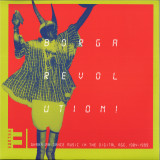
Kalita is excited to present the third volume in their groundbreaking ‘Borga Revolution!’ compilation series, exploring the revolutionary phenomenon of ‘Burger Highlife.’ This unique style fused West African melodies with synthesizers, disco, and boogie, a sound that took Ghanaian airwaves by storm in the 1980s and beyond. With previous volumes receiving strong support by tastemakers such as Gilles Peterson, Antal, Tom Ravenscroft, and Hunee, Volume 3 takes a deeper dive than ever before into the world of Ghanaian digital dance music. This volume features rare, sought-after tracks from artists including Obibini Takyi, Osei Banahene, and Okyerema Asante, as well as Burger Highlife trailblazers George Darko and Lee Dodou. Borga Revolution! Volume 3 offers a curated mix of standout anthems and rediscovered gems, many of which are otherwise nearly impossible to find, making this collection a must-have for fans and collectors alike.
The 1970s and 80s saw Ghanaian musicians begin to incorporate Western sounds like funk and disco into their music, reflecting the changing global musical landscape. However, the country's political instability and economic hardships, marked by military regimes and curfews, forced many artists to leave Ghana in search of better opportunities abroad. In Europe and the U.S., these musicians fused their traditional highlife roots with emerging digital sounds, using cutting-edge technology like the DX7 synthesizer and drum machines to create the genre now known as Burger Highlife. With ‘Borga Revolution!’ Kalita offers a vivid exposition of this musical transformation, using rare interviews, archival photos, and detailed liner notes to bring to life the pioneering spirit of both well-known icons and unsung innovators of Burger Highlife, one of West Africa’s most exciting musical movements.
To celebrate 20 years since the release of Kylie Minogue’s sensational album Fever, a special 20th anniversary edition of the album will be released on white vinyl including a print.
Following the immense success of Light Years, Kylie returned the following year with an album that would go on to be one of the most important and influential records of the 21st century. In collaboration with writers and producers such as Cathy Dennis, Richard Stannard, Julian Gallagher, Ash Howes, Rob Davis and many more, it led to colossal global chart success, winning Kylie both International Album and International Female Solo Artist at the 2002 Brit Awards.
Featuring Kylie’s iconic hit ‘Can’t Get You Out Of My Head’ which amassed a staggering 40 number ones across the globe, as well as ‘It’s In Your Eyes’ and ‘Love at First Sight.’
You’d be forgiven for assuming Main Phase hails from the UK with a style and sound so intertwined with the sound of the British isles. The Copenhagen-born DJ and producer Main Phase is no newcomer to the bass scene however. The last couple of years have seen him quickly rise to being one of the people at the very top of the new wave of UK leaning music.
His contribution to the scene throughout the years, both as a DJ, producer, and co-owner of the independent label, ATW Records, with Interplanetary Criminal, has seen him play and tour some of the greatest parties and venus in the world. From Fabric in London, Boiler Room in Berlin to Lost Sundays in Sydney, he’s been making waves with his unique blend of old and new, UK garage, speed garage, dubstep and jungle – always with a big chunk of unreleased material from himself.
Main Phase has released full EPs and remixes on Hardline Sounds, Instinct, Locked On, ec2a and more – and he’s producing forward-thinking speed garage with Interplanetary Criminal as ATW and futuristic jungle with Lille Høg as First Touch. His work has gained credit from the likes of Ben UFO, Emerald, Pangaea and many more.
About the track / On the EP, Main Phase has said:
“This EP really encapsulates the sound of euro house and UK fused in one. Four big tunes for every hour of the night, there’s bumpy, suave, there’s organ, there’s swing and there’s peak time rave reminiscence across the EP. For club use only!"
- A1: Submarinobambino
- A2: Frontera Extraterrestre
- A3: Elafuhr Oliasson (Defog Remix)
- A4: Vltimodespiroriuita
- A5: Vltimodespiroriuita (The Exaltics Digital Zen Remix)
- B1: Submarinobambino (The Exaltics Double Groove Treatment - Slow) 04 48
- B2: Submarinobambino (The Exaltics Double Groove Treatment - Fast) 04 21
Many of the greatest artists of all time found inspiration in their dreams... and pdqb is known to be an absolute pro when it comes to creatively exploiting the REM cycles.
Recently, for example, he dreamed of Gunnar, who had witnessed the rise and fall of electronic dance music, which had once held simple-minded creatures in its thrall. The beats had a peculiar effect on them, drawing them into euphoric trances. But Gunnar, allergic to its hypnotic frequencies, stood apart, unaffected. However, eventually, in a hidden enclave in the highlands of Reykjavík, he met Dr. Amara El-Amin, a neuroscientist fascinated by his unique immunity. Together, they discovered that Gunnar's resistance was a gift, offering insights into human consciousness and the power of music. With this knowledge, Gunnar inspired a global movement celebrating frequencies that resonate...differently. Though EDM had become a relic, Gunnar Oliasson remained a legend - a bad taste survivor who embraced a symphony of pure electrical potential, a language of circuits and oscillations beyond sound.
He woke with a jolt, the phantom music still echoing in his mind. He scribbled furiously, equations and diagrams mixing with strange, abstract notations. The dream, he knew, was a glimpse into a world where his inventions would dance, not just function.
For Synaptic Cliffs, it is an extraordinary honor to be able to offer you, dear listeners, the soundtrack of pdqb's world-changing dream: Four beautiful genre-defining Electrocognition tracks, embracing the depths of the human wetware. And three jaw-dropping sonic remodels from a human-like being called The Exaltics.
Like their previous output, the album features the duo’s unique mosaic of clicks n’ cuts style beat work, murky dubwise melodicism, and chilling otherworldly textures. However, there is a refinement on display on Battens.
Clay and Ian have accentuated their trademark elements to maximal effect. The beats seem to have a more brandish, near swagger that was only fleetingly referenced in some of their previous works. The melodies, which formerly have felt primarily of alien origin, almost feel a glint of humanity. Having such a unique ideology for nearly 25 years has allowed Loess to work at a pace and level of refinement evident on Battens.
Loess is a challenging project to describe, yet their ruminative style of experimental electronica sets them apart from their contemporaries and still sounds fresh today.
- Piranhas (Feat. J-Spliff &Amp; Estee Nack)
- Facelift (Feat. Estee Nack, Raz Fresco &Amp; Daniel Son)
- Overkill (Feat. Hus Kingpin)
- You&Apos;Re Dead (Feat. Al.divino &Amp; Crimeapple)
- &Apos;83 Canadian Hollow Tips (Feat. P-Dirt, Raz Fresco &Amp; Daniel Son)
- Head Hunters (Feat. Izrell)
- Welcome To Hell (Feat. P-Dirt, Dj Eclipse &Amp; Ill Bill)
- Maximum Overdrive (Feat. Raz Fresco, Goretex &Amp; J-Spliff)
- White Crown Pt. Ii (Feat. Casual, Dj Eclipse &Amp; Planet Asia)
- Call Me Snake (Feat. P-Dirt &Amp; J-Spliff)
- Wild Style Warz (Feat. Raz Fresco &Amp; Da Flyy Hooligan)
- Writing On The Wall (Feat. Izrell &Amp; J-Spliff)
When we last heard from Bay Area producer DEAD PERRY, he was riding high on the critical success of "The Art Of Re-Animation" album. That album was a re-imagining of legendary Hieroglyphics crew emcee Casual's work from his "Big Head Science" album.
However on the forthcoming "Acoustic Shadows" album, as the title implies things get a bit dark. As he relays "when I made (The Art Of Reanimation) with Cas, I wanted to cater to the specific sound that Hieroglyphics has, but put my spin on it without making it too dark (though there are a couple of dark gems sprinkled throughout). I knew that my next album was going to be a solo LP and I wanted it to be something special. Dark and grimy has always been my style of beat making so I wanted to showcase that with this record."
However, the title also has a double meaning to the producer. "The term Acoustic Shadows comes from a Civil War phenomenon that refers to a sonic blind spot. Due to geographical obstructions disrupting sound waves you could think you are a great distance from the battlefield while you could already be in it. It also refers to my style keeping to the shadows and out of the limelight, when I only appear in photos wearing a mask, it's not because I'm on that post MF Doom craze, it's because I came from graffiti and graffiti artists let their art be their only face to the public."
That style is showcased throughout the forthcoming album, including his choice of collaborators include Casual, Daniel Son, Estee Nack, Al Divino, Raz Fresco, Ill Bill, Goretex, Hus Kingpin, Crimeapple, Planet Asia, Da Flyy Hooligan, Izrell, P-Dirt, J-Spliff and cuts from DJ Eclipse. Concepts also lent itself to the grime including the John Carpenter-esque synth laden "Call Me Snake" track, which inadvertently inspired the emcees. As DEAD PERRY relates "I give the beats a place-holder title until the track is done so this one was 'Die Kurt Russ.' P-Dirt chose to create the concept off the beat title. Crafting that song was a fun experience." It also has a full circle moment as DEAD PERRY and Casual expand their "White Crown" single from their previous project on this release enlisting Planet Asia to drop an additional Afro-Centric verse.
- Piranhas (Feat. J-Spliff &Amp; Estee Nack)
- Facelift (Feat. Estee Nack, Raz Fresco &Amp; Daniel Son)
- Overkill (Feat. Hus Kingpin)
- You&Apos;Re Dead (Feat. Al.divino &Amp; Crimeapple)
- &Apos;83 Canadian Hollow Tips (Feat. P-Dirt, Raz Fresco &Amp; Daniel Son)
- Head Hunters (Feat. Izrell)
- Welcome To Hell (Feat. P-Dirt, Dj Eclipse &Amp; Ill Bill)
- Maximum Overdrive (Feat. Raz Fresco, Goretex &Amp; J-Spliff)
- White Crown Pt. Ii (Feat. Casual, Dj Eclipse &Amp; Planet Asia)
- Call Me Snake (Feat. P-Dirt &Amp; J-Spliff)
- Wild Style Warz (Feat. Raz Fresco &Amp; Da Flyy Hooligan)
- Writing On The Wall (Feat. Izrell &Amp; J-Spliff)
When we last heard from Bay Area producer DEAD PERRY, he was riding high on the critical success of "The Art Of Re-Animation" album. That album was a re-imagining of legendary Hieroglyphics crew emcee Casual's work from his "Big Head Science" album.
However on the forthcoming "Acoustic Shadows" album, as the title implies things get a bit dark. As he relays "when I made (The Art Of Reanimation) with Cas, I wanted to cater to the specific sound that Hieroglyphics has, but put my spin on it without making it too dark (though there are a couple of dark gems sprinkled throughout). I knew that my next album was going to be a solo LP and I wanted it to be something special. Dark and grimy has always been my style of beat making so I wanted to showcase that with this record."
However, the title also has a double meaning to the producer. "The term Acoustic Shadows comes from a Civil War phenomenon that refers to a sonic blind spot. Due to geographical obstructions disrupting sound waves you could think you are a great distance from the battlefield while you could already be in it. It also refers to my style keeping to the shadows and out of the limelight, when I only appear in photos wearing a mask, it's not because I'm on that post MF Doom craze, it's because I came from graffiti and graffiti artists let their art be their only face to the public."
That style is showcased throughout the forthcoming album, including his choice of collaborators include Casual, Daniel Son, Estee Nack, Al Divino, Raz Fresco, Ill Bill, Goretex, Hus Kingpin, Crimeapple, Planet Asia, Da Flyy Hooligan, Izrell, P-Dirt, J-Spliff and cuts from DJ Eclipse. Concepts also lent itself to the grime including the John Carpenter-esque synth laden "Call Me Snake" track, which inadvertently inspired the emcees. As DEAD PERRY relates "I give the beats a place-holder title until the track is done so this one was 'Die Kurt Russ.' P-Dirt chose to create the concept off the beat title. Crafting that song was a fun experience." It also has a full circle moment as DEAD PERRY and Casual expand their "White Crown" single from their previous project on this release enlisting Planet Asia to drop an additional Afro-Centric verse.
- Piranhas (Feat. J-Spliff &Amp; Estee Nack)
- Facelift (Feat. Estee Nack, Raz Fresco &Amp; Daniel Son)
- Overkill (Feat. Hus Kingpin)
- You&Apos;Re Dead (Feat. Al.divino &Amp; Crimeapple)
- &Apos;83 Canadian Hollow Tips (Feat. P-Dirt, Raz Fresco &Amp; Daniel Son)
- Head Hunters (Feat. Izrell)
- Welcome To Hell (Feat. P-Dirt, Dj Eclipse &Amp; Ill Bill)
- Maximum Overdrive (Feat. Raz Fresco, Goretex &Amp; J-Spliff)
- White Crown Pt. Ii (Feat. Casual, Dj Eclipse &Amp; Planet Asia)
- Call Me Snake (Feat. P-Dirt &Amp; J-Spliff)
- Wild Style Warz (Feat. Raz Fresco &Amp; Da Flyy Hooligan)
- Writing On The Wall (Feat. Izrell &Amp; J-Spliff)
When we last heard from Bay Area producer DEAD PERRY, he was riding high on the critical success of "The Art Of Re-Animation" album. That album was a re-imagining of legendary Hieroglyphics crew emcee Casual's work from his "Big Head Science" album.
However on the forthcoming "Acoustic Shadows" album, as the title implies things get a bit dark. As he relays "when I made (The Art Of Reanimation) with Cas, I wanted to cater to the specific sound that Hieroglyphics has, but put my spin on it without making it too dark (though there are a couple of dark gems sprinkled throughout). I knew that my next album was going to be a solo LP and I wanted it to be something special. Dark and grimy has always been my style of beat making so I wanted to showcase that with this record."
However, the title also has a double meaning to the producer. "The term Acoustic Shadows comes from a Civil War phenomenon that refers to a sonic blind spot. Due to geographical obstructions disrupting sound waves you could think you are a great distance from the battlefield while you could already be in it. It also refers to my style keeping to the shadows and out of the limelight, when I only appear in photos wearing a mask, it's not because I'm on that post MF Doom craze, it's because I came from graffiti and graffiti artists let their art be their only face to the public."
That style is showcased throughout the forthcoming album, including his choice of collaborators include Casual, Daniel Son, Estee Nack, Al Divino, Raz Fresco, Ill Bill, Goretex, Hus Kingpin, Crimeapple, Planet Asia, Da Flyy Hooligan, Izrell, P-Dirt, J-Spliff and cuts from DJ Eclipse. Concepts also lent itself to the grime including the John Carpenter-esque synth laden "Call Me Snake" track, which inadvertently inspired the emcees. As DEAD PERRY relates "I give the beats a place-holder title until the track is done so this one was 'Die Kurt Russ.' P-Dirt chose to create the concept off the beat title. Crafting that song was a fun experience." It also has a full circle moment as DEAD PERRY and Casual expand their "White Crown" single from their previous project on this release enlisting Planet Asia to drop an additional Afro-Centric verse.
Steve Bicknell returns to KR3, once again unleashing his mastery of power electronics!
Following his two reinterpretations of last year's "JK Flesh Remixes" and four years after his solo EP "A Day In The Life" in 2021, Bicknell takes us deep into the realms of his sonic mysticism, marking a significant milestone in the fifth anniversary of the label.
Several Streams of Thought LP - is an unrelenting and immersive odyssey, presented through nine tracks, seven of which will be available on a double 12-inch vinyl, with two exclusive cuts in a limited 7-inch format.
The album hits hard, straight to the brain, with no warning, across sides A, B, and C. Each side is a raw, untamed techno experience, with Bicknell's unmistakable signature dominating throughout, delivering unwavering intensity and relentless impact.
However, on side D, a transformation takes place: a 15-minute soundscape that turns the embedded waves into breath - a blinding light emerging from the darkness. It's a moment of tribalism and evocative magic, offering a refreshing pause, a return to balance after the intensity of the shadows.
The 7-inch, available in a limited edition under the title "the eye of the invisible world", contains two tracks - one on side E and the other on side F.
The mystical sounds complete this dual experience: one part filled with dark, untamed energy, while the other brings a sense of mental lightness, emphasizing breathwork and emotional self-
healing.
S | B is back, stronger than ever!
- Earthbeat (7" Version)
- Or What Is It?
- Face Place
- Walkabout
- Difficult Fun
- Animal Space / Spacier - Animal Space - Spacier
- Improperly Dressed
- Life On Earth
BLUE, BLACK & WHITE MARBLED Vinyl[31,51 €]
"Return of the Giant Slits" is the second studio album by the English punk band The Slits, released in October 1981 by CBS Records. This album marked a departure from their earlier punk sound, embracing a more experimental approach influenced by afro-pop, dub, and world music. The album was produced by Dennis Bovell, Dick O'Dell and The Slits. Upon its release, "Return of the Giant Slits" received mixed reviews, with some listeners finding its experimental nature challenging. However, over time, it has been re-evaluated and appreciated for its innovative fusion of genres. -Pitchfork described it as "a slippery, glorious mess that will infuriate anyone expecting the Slits to revisit their debut." this MOV release comes as a Limited edition of 750 copies on red & black marbled vinyl.
- Ecstasy
- Guilt
- See That Girl
- Die Die Die
Legendary shoegaze band Chapterhouse will share their first ever recordings on a new EP, White House Demos, released via Sonic Cathedral on May 9.The four tracks were laid down at The White House studio in Weston-super-Mare on January 15, 1989, when the band were only four gigs old. "They were the first songs we wrote as a band," says the band's singer and guitarist Stephen Patman. "At the time our live set consisted of Stooges and '60s garage-psych cover versions which we mixed with these original songs." The tracks weren't included on 2023's career-spanning Chronology boxset because they had been forgotten about - until the intervention of Slowdive guitarist Christian Savill. He and Patman worked together in an office in Reading as their respective bands were starting out and he says the demo remains "their best record"."When the boxset was released, Christian got in touch and reminded me of these demos and how much he loved them," says Stephen. "He was probably the first person I gave a cassette copy to. He still rehearses and records at The White House and was going in for a session the following week, so I asked if he could ask the owner/engineer Martin Nichols to check if he still had them in his archive. Thankfully he did." Of the four tracks that make up the EP, `Ecstasy' has appeared in various versions and permutations on Chapterhouse compilations over the years, but never in its full eight-minute glory; a much later version of `Guilt' was included on the band's 1991 debut album and shoegaze classic Whirlpool; a version of `Die Die Die' was also included with that album on a bonus 12", and remained part of the band's live set for a while. The stunning `See That Girl', however, has never been released before. With 36 years of distance, it sounds like something of a lost classic, and the White House Demos as a whole feel like a brief moment in time captured forever.
- A1: The Impossible Soul
- A2: This Much Remains
- A3: The Collusion Exclusion
- A4: Outside The Box
- A5: Masters Of The Race?
- A6: That Other Song
- A7: Echoes
- A8: Cut The Crap
- A9: Shut The Fuck Up
- B1: Rebellion's In Session (Again)
- B2: A Mother's Milk
- B3: When The Lights Go Out
- B4: Statement Of Intent
- B5: A Message To Them
- B6: Inferno
- B7: Concluded
Conflict formed in 1981 in Eltham, Southeast London, when frontman Colin Jerwood, inspired by early encounters with the Pistols 'Spunk' bootleg and following The Clash on tour, struck up a friendship with Crass and set about crafting a whole new kind of punk that totally upped the ante in terms anger and confrontation. Crass, the renowned anarchist punk collective, having got Conflict started by releasing their debut single 'The House That Man Bult' in 1982 on Crass Records, ended in 1984 as they had always intended. Now it was up to Conflict to pick up the baton and run with it. And they did, charging into the battle lines of authority.
The years that followed saw Conflict go from strength to strength, peaking on the 18th of April in 1987 at the London Brixton Academy for the 'Gathering of the 5,000' concert. A climax and explosion of rage and rebellion that inevitably ended up in a police provoked full-scale riot with police injuries, arrests, and with the band hopelessly in debt and banned from the majority of major London and UK venues.
Undeterred, Conflict continued into the 90s with their acclaimed 'Conclusion' album and remained a mainstay of the live punk circuit throughout. However, after more than two decades since the release of their (2003) 'There's No Power Without Control' album, the band are back with 'This Much Remains'. Featuring sixteen brand new Conflict creations, the album sees the band keeping one eye on their eventful past, and the other firmly on moving forward, both musically and politically. Animal Rights are still at the forefront of Conflict’s collective minds, giving a voice to the voiceless on songs such as 'A Mother's Milk' and 'Shut The Fuck Up', whilst their anger at world governments will never dissipate.
Also featuring an appearance by the late Benjamin Zephaniah on the track 'Cut The Crap', 'This Much Remains' is the sound of a band that continues to surprise and progress, decades after it first began. Conflict are Colin Jerwood - vocals; Fiona Friel - vocals; Gav King - guitars, melodica & Hammond; Fran Fearon - bass; Stoo Meadows - drums. With Benjamin Zephaniah - vocals on 'Cut The Crap'; Mitsuko Sonoda - voice on 'The Impossible Soul'.
- Rorbach
- Kircheim
- Handschusheim
- Neckargenm?Nd
- K?Ln Hfc
- E Lemon
- Mannheim Hbf
- Heidelberg Hbf
- Weisloch-Waldorf
- Aachen Hbf
- Parkplatz
"So the bad news is, in a fit of pique, I asked Chat GPT (nicely) to compose a one-sheet for the new Shit and Shine double album, Mannheim HBF. The even worse news (yes, even worse than resorting to such tactics) is that the resulting biography is halfway passable and on some levels, superior to the sort of thing being published by what’s left of our weekly coupon-shoppers. But for fuck’s sake my friends, Craig Clouse did not get to where he is today today by settling for halfway passable and neither should you. That Shit and Shine’s discography is vast and dizzying is already well established; what’s not nearly as established are these recordings being specifically dizzying. I don’t know if there’s anyone else in modern music as skilled in waltzing around the periphery of so many disparate idioms ('noise', being one of the least prominent this time around) and somehow, against all odds, tying ‘em together in the most intricate of knots. And who doesn’t love knots? We all have our favorite ways to experience music that’s all-engulfing, but whether your preferred method is thru a stadium sized sound system or ear buds affixed as you’ve leapt off the tallest building in Bastrop, TX (the Jerry Fay Wilhelm Center for the Performing Arts, since you asked), not for the first time, Shit and Shine is entirely appropriate in either instance, possibly every instance. There are moments where I think this is a club record. The Friars Club, however. Far be it from me to provide guidelines for how and when you take in Mannheim HBF. 'No interruptions', 'no distractions' are merely suggestions on the label’s part, though we cannot be held responsible for what happens if you ignore ‘em. Thank you."
After several solo-releases on the label, Dauw welcome back Taylor Deupree and The Humble Bee for their first collaborative album to date: »Re: Case Studies«.
While most collaborative albums are intentional from the start, this one almost never came to fruition and was born rather out of a fortunate coincidence. A few years ago, Taylor Deupree created a series of compositions entirely based on feedback loops, which nearly made their way out as solo work. However, while these abstract pieces felt complete, they also felt unfinished to the artist. After some discussions with the label, he decided to invite someone to bring them to life and finish what had been sitting in the drawer for a long time. Enter The Humble Bee. A few months later, Craig Tattersall sent his musical response. While the echoes of the original remain, »Re: Case Studies« stands entirely on its own and represents a full-fledged collaboration.
Listeners will drift through soundscapes with even greater expanses than before as Geir Sundstøl releases his new album, Sakte Film,. This marks Sundstøl’s sixth solo album on Hubro and his tenth anniversary as a solo artist. Geir Sundstøl has had a rich and varied career, to say the least. Within the HUBRO universe, his music has remained a pillar for years, and Sakte Film is no exception. However, this release embraces a broader scope, with multiple layers of strings that create even more room for resonance and exploration. Sundstøl explains: - What sets this album apart from my previous ones is, first and foremost, the string arrangements. Erik Sollid, Sunniva Shaw, Håkon Brunborg, and Mari Persen have contributed with violin, viola, and cello, adding a new dimension.
Geir Sundstøl(born in 1969) is a Norwegian musician who plays a wide range of string instruments, including the marxophone, acoustic guitar, electric guitar, mandolin, pedal steel, bouzouki, lap steel, banjo, and dobro, as well as harmonica and various keyboards. He is a highly sought-after and respected session musician and was awarded the Gammleng Prize in the studio category in 1994. In 2015, he released his first album under his own name, Furulund, which was nominated for the Spellemann Prize in the open category. He later won the Spellemann Prize in 2018 for his third album, Brødløs
Songs From The Harbour is the third studio album of original avant-rock and experimental ballads by the critically acclaimed World Sanguine Report (WSR) WSR’s new iteration, created collaboratively by celebrated musicians Andrew Plummer, Matthew Bourne, Ruth Goller, and Will Glaser, marks a significant milestone for WSR, and is due for release via revered label, God Unknown Records
There’s a quality about the album that echoes the likes of Tom Waits, Michael Gira, Nick Cave, and Captain Beefheart, hollerers and raspers, singing as if laid low by life, down and out. However, the sense of beat-up black and blues, of ramshackle rock, is deceptive. Songs From The Harbour was developed by vocalist/guitarist Andrew Plummer in close partnership with long-standing collaborators: versatile doyens of the jazz and Improv world, avant players par excellence, including Ruth Goller (bass, vocals), Matthew Bourne (harmonium), and Will Glaser (drums). On tracks like ‘She Is All', with it’s searing-hot guitars reminiscent of John Fahey’s Red Cross, they cut across each other, deceptively roughshod, but with subtle interplay, crashing,burning, bending and colliding with exquisite, geometrical correctness.
The Crippled Flower was a post-punk band from Düsseldorf - and they arrived late. However, unlike many young, unsuspecting, hairsprayed hopefuls from that time, in 1985 they could sense that the end of their era was approaching. They knew too much to want to take the world by storm. They were four individualists searching their own way. Each of the band members only found their calling after the time that they had spent together – but that's exactly what makes The Crippled Flower still seem really interesting today, this static energy that does not discharge, but is simply there.
Searching dreamers should sound like that and that's what they were. Singer Phil Elston, for example, had brought his love of Kraftwerk from England to Düsseldorf. Even his bandmates found this strange, but they were also entangled in their own longings. This is because the times were still so crazy and these searchers were "on fire". A fire that glows in the band's recordings.
Listening to the songs today, The Crippled Flower sound like they are hugely at the height of their game; think of Wire, Felt, Scritti Politti or Minimal Compact. The variety of musical themes, as well as different soundscapes, which the band created can only be listened to in amazement. Often, it is only Phil Elston's Sprechgesang that confirms that this is really the same band. However, it was back in 1985 when, importantly, the catalyst that brought the musicians together - the short lived eclectic record store "Heartbeat" in Düsseldorf Bilk - occured. It was there where post-industrial and pop, melodic minimal music and sound attacks awaited those who wanted to discover music by artists and bands they did not yet know.
Cassette releases. All recorded on 4-Track. The Crippled Flower succeeded in this medium. Firstly, with a cassette just entited The Crippled Flower, working from project-like studio recorded sketches. Four more tracks from the short-lived band appeared in 1986 on "A Heartbeat Rendezvous“. A demo tape submitted to Les Disques du Crépuscule, however, did not lead to a worldwide career and so, unfortunately, it was soon over.
Stefan Krausen moved on to the follow-up project Deux Baleines Blanches with Stefan Schneider, which, in 1994, gave rise to the band Kreidler. Krausen was already drumming with the I-Burnettes on AtaTak and much later he studied painting in Munich. Nina Ahlers moved from Düsseldorf to Paris to study art, because in the 80s it was still the case that Paris was the destination of choice for those really wanting to become an artist – and that's what she did. Her work is characterized by a non-academic minimalism focusing on everyday objects. Stefan Schneider remained connected to music. Only Phil Elston, who helped sabotage fox hunts in England and wrote these observant lyrics about environmental destruction and time travel, seems to have escaped the social-media world. Whether he found Kraftwerk-fulfilment in Düsseldorf or moved on disillusioned remains a mystery to us. And somehow this also fits in with that peculiar, special band. - Oliver Tepel, Köln 2025 (Translation by Philipp Elston)
We are proud to present the first official reworks of the disco/jazz-funk masterpiece Trip To Your Mind - now available for the first time with a picture cover featuring a classic shot of composer Reginald Hudson on the front.
For decades, Trip To Your Mind was celebrated as a Brit Funk classic, though its true origins remained a mystery. While recorded at London's Advision Studio, Hudson People were neither local nor British - a fact first uncovered with its official 2022 reissue on Backatcha Records. In interviews with label owner DJ Scientist, Reg Hudson revealed that the backing band behind his composition was Body Heat, a GI group based in Germany. The recording, believed to date back to around 1977, remained shelved for some time. By the time it was finally released in 1979, Body Heat was on the verge of disbanding, leading to the track being credited to Hudson People. Since then, Trip To Your Mind has been heavily bootlegged and compiled since the late '90s, cementing its status as an in-demand classic.
For our rework release, the A-side features a brilliant DJ-friendly edit by Delfonic, based on the original Hithouse mix. Unlike the later Ensign Records remix, this version starts with an 8 bar intro crescendo that was missing from subsequent reworks. When we approached Delfonic about reworking the track, he was immediately hooked - especially since he had already started an edit years ago but never completed it. His version builds tension through an extended intro before leading into the beloved vocal line: "Take a trip through your mind, surprises you will find." Delfonic's masterful editing ensures the track keeps listeners engaged until the very end.
The B-side features a rework by Italian DJ and producer Luca Trevisi, aka LTJ Xperience. His version is based on the Ensign remix of "Trip To Your Mind" by Chris Hill and Robbie Vincent. Some may recall a slightly different, clubbier version of this rework, which was released by a UK label in 2010. That version became a sought-after gem - however, Hudson never received any payment from the label. When we reached out to Trevisi about an official re-release, he generously revisited his edit, resulting in a more organic and dynamic mix. His version will appeal not only to disco and funk lovers but also to house and club DJs. The new mix was mastered by Frederic Stader on an EMI TG124 - an iconic mixing desk, famously used at Abbey Road Studios.
Both edits preserve the psychedelic essence of the original while making it more compatible with modern listening habits. Pressed on a high-quality, loud-cut 12", this release is a must-have for any DJ's collection. It follows our label's GI-related releases by Grand Slam and "Shake It - Make It Loose" by J.D. Puma Lewis - another project that composer and keyboardist Reginald Hudson was involved in.
- Orchid Mantis
- Breach
Orchid Mantis, by Michelle Helene Mackenzie and Stefan Maier, is a work that draws its inspiration from the history of the Sanzhi Pod City, in northern Taiwan. Sanzhi Pod City was built from 1978 onwards, made up of buildings constructed from assemblages of `pods' inspired by the futuro houses of Finnish architect Matti Suuronen. The project was abandoned in 1980, following a number of accidents during construction and persistent rumours that the site was haunted. However, this wasteland of a city has allowed insects to proliferate, in particular five species of orchid mantis. It is this strange environment, made up of utopian buildings, proliferating insects and vegetation reclaiming the site, that serves as the imaginary space for Michelle Helene Mackenzie and Stefan Maier's music, a music of carefully designed pace and progression, drawing, through resonance and stridulation, subtle sonic materials that guide and accompany us into multiple worlds with admirable ease and grace. Breach, by American composer Olivia Block, engages in a dialogue between field recordings and synthesised sounds, creating a vibrant plea for wild spaces that face an ever-growing threat to their survival from human activities. The work is based on recordings collected in the San Ignacio lagoon in the Mexican part of Southern California. This lagoon is known as a breeding ground for eastern Pacific grey whales. With the help of precise electronics, the music unfolds like a drift, depicting the subjective soundscape of whales caught up in the noise of the Anthropocene. The composer uses otoacoustic emissions in particular, representing the sound saturation caused by humans in the habitat of these large marine mammals. Going beyond a merely descriptive dimension, Olivia Block manages to transcend her subject to offer a fascinating musical form that engages the listener in a constantly renewed way.
DESCRIPTION
Looming above Hastings on the South Coast of the UK, carved into East Hill, three black shapes are visible from a distance. Mysterious and ominous, they assume the aspect of the entrance to a church or a portal to dimensions unknown. Closer inspection however reveals them to be no more than mere follies carved and painted into the rock, as hoaxster John Coussens sought to convince visitors that an elaborate subterranean kingdom lurked within. Centuries later, this coastal town remains a place that serves as a magnet to the wyrd and the mischievous. And it’s here that the meeting of minds took place that led to 'Folly' - the second release for Rocket’s Black Hole series - an imprint focused on the unorthodox, otherworldly and esoteric. The journey that led to ‘Folly’ began in the dingy cellar of a wine bar in the town. Black Arches formed around a regular local experimental night in such environs aptly named Weird Shit, initially as a freeform musical outlet for author and musician Gareth E. Rees’ later incorporating Matt Frost from his garage rock troupe The Dirty Contacts, and frequent collaborator James Weaver, to form a vehicle for wild experimentation and psychic abandon. Given he was also a regular attendee, it was no surprise when Sexton Ming, arch maverick outsider artist and uncompromising iconoclast of over four decades standing, entered the picture. Soon after a perplexing but serendipitous chain of events took place, with demons conjured up via improvised sessions, poetic licence taken, dystopias chronicled, audio files gone awry, vocals overdubbed and laptops lost, Somehow amidst the sturm-und-drang ‘Folly’ was summoned in all its murky glory. As we embark on the second quarter of an uncertain century, just maybe this psychic travelogue is a dark prism to make sense of the chaos we confront. Whichever, it remains a spectacle as compelling as that by which Black Arches were named
- So Fast
- Dance Me
- Sorry Part I
- Sorry Part Ii
- Tell You Again
- Explain
- Crying Baby
- Sweeter
- Tonight, We Sleep
- Mother
- Love To Annoy
- Creative Depression
- Condescending You
- Le Solei
- Dance Music (7" Version)
Julie in Memphis. Während Erics Trip auf Eis lag, flog die Herzogin des kanadischen Flanells im Dezember 1996 in den Süden, um ein Album mit Balladen über postpartale Depression aufzunehmen. Zusammen mit Howe Gelb von Giant Sand und David Shouse von The Grifters, fängt Loneliest In The Morning Julies blaue Phase mit zitternder Genauigkeit ein.
- Tranquilizer
- You Do Something To Me
- Pietons
- Streetwalker
- The Zebrah
Jan Akkerman (b. 1946) stands apart as a singular figure in the realm of rock and beyond. A Dutch guitarist of unparalleled versatility, he earned international acclaim in 1973 when he topped the prestigious Melody Maker readers’ poll, surpassing icons like Eric Clapton (2nd), Jimmy Page (5th), and Carlos Santana (10th). His fame, however, has never defined his artistry. For Akkerman, it’s always been about the music—any genre, as long as it resonates. He’s a lifelong improviser who approaches each performance as a new adventure. Akkerman first rose to prominence with Focus, a band that embodied the grandiose instrumental rock spirit of the 1970s. Long compositions, dazzling technique, and adventurous arrangements made them a cornerstone of progressive rock. Despite the accolades, Akkerman remained true to his calling. When asked about his success, he has always brushed it aside, preferring to let his guitar do the talking. Side 1 of this record captures Akkerman’s stunning performance on July 10, 2011, at the Nile Hall in Rotterdam. Here, he showcases his ability to take listeners on a sonic journey. The mellow “Tranquilizer” offers a relaxed groove, followed by the heartfelt ballad “You Do Something to Me,” unfolding emotion without words. In “Piétons”—a gospel-tinged blues—trumpeter Eric Vloeimans delivers a fiery solo before the leader propels the piece into uncharted territory. Side 2 brings us back to an earlier moment, recorded in July 2005 at the Paul Acket Paviljoen in The Hague. “Streetwalker” delivers a funk-driven explosion featuring alto saxophonist Benjamin Herman, while “The Zebrah” sends Vloeimans soaring into the musical stratosphere, only to have Akkerman reignite the piece with blistering guitar lines, his band driving forward like a well-tuned Mercedes on an open highway. Akkerman’s live performances are as unpredictable as they are electrifying. Whether sharing the stage with legends or newcomers, his spontaneous creativity makes every concert unique—a master class in musical freedom. Jan Akkerman remains a touchstone for guitarists and fans alike, an authentic improviser whose name still elicits one universal response from any seasoned Dutch rock enthusiast: “He’s the best guitarist in the world.” The North Sea Jazz Concert Series includes officially licensed releases that will be released as standard on 180-gram white vinyl in a sleeve of heavy paper and printed on reversed board. The records are captured in mainly black-and-white artwork by Hans Pol in his signature style of the festival with inspiration from the covers of classic older jazz releases from the Blue Note label, for example. The liner notes are written by journalist and jazz expert Jeroen de Valk. For all recordings it’s a first time ever release on vinyl!
The Ibex Band, with Giovanni Rico and Selam Woldemariam at the creative helm, provided the musical backbone for legends like Aster Aweke, Girma Beyene, Tilahun Gessesse, Mulatu Astatke, and Mahmoud Ahmed, including the iconic album Ere Mela Mela, shaping modern Ethiopian music as we know it today. This 1976 album (Ge’ez Year 1968) played a pivotal role in that legacy and has now resurfaced to set the record straight.
There’s a tendency to talk about the seventies as a golden age of Ethiopian music. There are good reasons for that, and just as good reasons against it. However, the notion of a golden past privileges the role of Western explorers and suggests that the pinnacle of Ethiopia’s musical culture is something only a foreigner can appreciate and unearth. It downplays the complexities of Ethiopia’s culture and history, creating an artificial divide between then and now. And it underestimates the constantly evolving sound that has followed.
The legendary musical outfit The Ibex Band, later metamorphosed into The Roha Band, has played a central role in defining the sound of many of the greatest stars on the music scene of Ethiopia from the mid-seventies onwards–but their golden output has never really waned. The story of the origins of the band that provided the musical backbone for greats such as Aster Aweke, Girma Beyene, Tilahun Gessesse, backing the solo career of group member Mahmoud Ahmed as well as backing Mulatu Astatke and many others has yet to be properly told.
Two misconceptions plague the image of Ethiopian music, one is that the music is pure because it is, by some notion, unexploited, the other is that it is all traditional. To begin with, a combination of political changes between the late sixties and the mid-nineties created an environment where only the most dedicated and skilled musicians struggled on and pursued a musical career against fierce odds. The whole Ibex Band, with Giovanni Rico and Selam “Selamino” Seyoum Woldermarian at the creative helm, are arguably the origo of the vibrant scene in the mid-seventies, and the said pair are foremost responsible for not only navigating the band through troubled times, but also modernizing the 6/8 chickchicka rhythm to a contemporary form. Giovanni laid the rhythmic foundation with heavy looped basslines that reinvented traditional melodies as dance music, and with Selamino’s innovative guitar work they influenced scores of musicians from Abegaz Kibrework Shiota to Henock Temesgen. Even Giovanni’s Fender bass and Selamino’s Gibson guitar inspired younger musicians in their choice of instruments. Not only in choice of instruments but also in sound–even as the digital revolution hit Ethiopian music, a lot of popular music still took its cue from the masters from Ibex and Roha.
Ibex emerged out of the ashes of the sixties group the Soul Echos band, adding Giovanni and Selamino to their ranks and taking their cues from a slew of influences, such as Motown and The Beatles, fused with traditional music. A tighter-knit unit than most bands at the time – Ibex has remained six to seven members throughout their whole career, compared to many bands that were as large as fifteen or sixteen men strong when Ibex set out. Their playing has been viciously focused, economical yet heavy. Just a year before the recording sessions of the album in your hands, Giovanni and Selamino made a contribution to the popular musical lexicon of Ethiopia that was simply defining the popular sound: their arrangement and recording of bandmate Mahmoud Ahmed’s solo effort and real commercial breakthrough tune and eponymous album, Ere Mela Mela, from 1975.
Selamino has never limited himself to being an adroit lead guitarist, but has always been a scholar of history, and as such he has probably contributed as much to modern Ethiopian music with his guitar playing and compositions as with a deepened understanding of modern or contemporary – Zemenawi – Ethiopian music. Selamino’s contributions serve as a metaphor for those of the whole band, at one and the same time creating and defining a new, danceable and updated sound anchored in Giovanni’s bass, whilst also elevating the broader scene through their support for others on the scene and on top of that, increasing the understanding of the music.
There is an understandable desire to romanticize the musical heyday Ibex and Roha were at the forefront of, because so much of the output is sorrowfully hard to come by. Ibex creativity was nothing short of ridiculously fierce compared to many of their Western contemporaries. Based on their sheer recorded output alone they could have usurped the title “hardest working in show business” from James Brown, recording more than 250 albums or 2500 songs in the seventies and eighties. Some only surface as cassettes today, others were never given full LP release, and some are simply impossible to find today. In the light of that, it’s nothing short of a miracle that the recording Stereo Instrumental Music from 1976 (Ge’ez Year 1968) has resurfaced. Unearthed in perfect condition on a chrome cassette, this is musical history comes alive–to set the future straight. Stereo Instrumental Music was recorded in collaboration with Karl-Gustav Lundgren, a Swedish national working for the Radio Voice of the Gospel. It took two sessions at the Ras Hotel ballroom in Addis Ababa. The Ibex Band was the first band in Ethiopia to employ a four-track recorder for their recording (the first available in the country, lent by Karl-Gustav). Later the same week, Giovanni and Selamino realized that, lengthwise, the recorded material fell short of what they wished for, so they recorded four more tracks in one more session on a single-track recorder. The Ras Hotel and Ghion Hotel, where the Ibex Band held musical residencies were to Ethiopia in general and Addis Ababa in particular what Motown was to the USA and Detroit a few years earlier – a hotbed of musical creativity and showmanship.
The most astonishing thing about Ethiopian music of the last half century is how tradition and modernity are intertwined. Because of this feature, it’s kind of hard to tell when there ever was or when we are in a “golden age”. So much of music from the past has been criminally neglected, but because of the hardships in the past, it would be an oversimplification to say that said past was a golden age. Probably, the golden age is what we are approaching, because for the first time both the past and future are accessible, and the monumental contributions from before can lay a firm foundation for a thriving music scene today. The Ibex Band stands firmly in the past, present and the future. That, if anything, is golden.
The detailed history of Stereo Instrumental Music is in many ways unique. To begin with, it couldn’t have been recorded earlier (there were no four-track recorders available) and it really couldn’t have been recorded afterwards either, at least not in the years directly following, because of the toll the musical scene took from the unfavorable political climate that followed when the nascent Derg regime and rival groups tried to assert themselves, the musical equipment lent from The Voice of Gospel Radio simply disappeared from Ethiopia when the radio station folded in 1977. Karl-Gustav Lundgren,
the Swedish foreign national who assisted during the recording, worked with the Ethiopian Evangelical Church Mekane Yesus at the time, recalls how they only had about fifteen minutes to get the microphones in place for the recording as to not alert neither the management at Ras Hotel nor the authorities and most importantly, to complete the recording before the curfew came into effect at midnight. In leaping to the opportunity to use previously unavailable equipment to push their sound forward and improvising to meet the logistical challenges, the Ibex Band displayed the very avant-gardism and adaptability that explains their longevity as a band through the years. The recording of Stereo Instrumental Music is from a given time in history, but it sounds as beyond time.
Much of the energy that burst out of the scene that Stereo Instrumental Music came out of dissipated or got sidetracked during the societal changes Ethiopia went through in the 1970s and 80s. Whilst leaders might have professed to be revolutionary, the work ethic of the Ibex Band can truly be described as that. They never called it quits, but adapted, toured extensively abroad in Africa, Europe, and the Middle East, and found ways to work even in the face of the curfew that curtailed a lot of musical life. They even played major arenas in the nineteen eighties, despite said curfew and restrictions. The whole extent of their legacy has never been told, but their music speaks louder than words, so therefore… tune in to the Ibex Band’s Stereo Instrumental Music.
For their second album 'The Foel Tower', Quade holed up in an old stone barn in the cradle of a Welsh mountain valley.
The valley was a stark and windswept backdrop with little daylight, as the band would huddle around crackling fires each evening. “There was very much a feeling of being on the complete fringes of society,” the band says. “The last vestiges of settlement before the unrelenting barren moors that loomed over us.”
It was an environment that would shape the band – a Bristol four piece made up of Barney Matthews, Leo Fini, Matt Griffiths and Tom Connolly – and the record they have made. It’s an album that is as dreamy as it is melancholic, and as quiet and tender as it is forceful and potent – gliding across genres like winds blowing over those wide-spanning Welsh hills – to arrive at something the band half-jokingly, yet somewhat accurately, describe as “doomer sad boy, ambient-dub, folk, experimental post-rock.”
Quade is a band but it’s also a very close-knit group that have been friends since childhood who use this musical vehicle for interpersonal explorations and connections. “We’ve individually experienced a lot of difficulty over the last several years and Quade has represented a space to shelter from these,” the band says. “This means we often communicate extensively with each other about the issues affecting us individually and collectively. These conversations and concerns are central to The Foel Tower.”
In many ways, the making of this record – or any Quade record – goes way deeper than the simple writing, construction and recording of music. It is a profoundly deep and meaningful experience. “A key theme of the album relates to why we connect with specific places in the way that we do,” the group says. “We often remove ourselves to isolated valleys, sheltered from some of the painful personal struggles that we have experienced as a band. These become spaces in which we collectively purge ourselves of some of these difficulties hoping to make Quade a physical and emotional place of solace. This album celebrates these places that we’ve been able to retreat to and recuperate.”
It is a deep, dense record that is stuffed with musical, cinematic and literary influences – from Ursula La Guin and Cormac MacCarthy through to RS Thomas and Yeats – but despite the heavy, introspective and anxious nature of some of the material, it is also a record that is remarkably deft, agile and considered.
Made with producer Jack Ogborne and mixer Larry ‘Bruce’ McCarthy, there is a pleasing duality to the final sound of the record. One that feels fragile and intimate but also powerful and forceful, as introspective as it is expansive, and a record that is as detailed and textured as it is wide open and spacious.
The album title also pays homage to the place that shaped it so greatly. Within this remote Welsh valley stands the Foel Tower, a stone structure filled with valves and cylinders that can raise and lower the level of the reservoir to draw off water. Which it can then send as far as 70 miles to Birmingham. However, in the late 1800s this land was occupied by local farmers and families in the hundreds until the British Government acquired the land, cleared the valleys, and promptly displaced them in order to begin serving the vastly expanding industrial English city. The band dug into the history and politics of this and wove it into the themes they were already thinking about, using what the Foel Tower stands for as something of a contemporary metaphor. “This tension was something that we wanted to explore without the haughty judgement of our more metropolitan lifestyles,” they say. “And to explore how this specifically relates to ourselves: how can we envisage a genuinely ecological future for ourselves – one that is accessible, affordable and in harmony with endangered rural practices.”
What makes The Foel Tower such an incredible record is that it feels born of a time, place and situation that only existed in that very moment. It’s a snapshot of those 10 days spent in rural Wales and all the feelings and anxieties the band were experiencing at that specific time, magically caught on tape. “The album very much feels tied to this valley for us and the conversations and experiences we shared there,” they say. “It brings up a great deal of poignancy for us, an emblem of some fleeting respite from the strains we all have to experience. But there’s also deep sadness knowing how transient these moments are – in fact, there’s just a great deal of sadness in this album. But it’s also a record that while personal, resigned, and emotionally burdened, is ultimately hopeful.”
"Overgrown Eden is the debut album from Essex rock band InMe. The album was released in the UK in 2003 and produced four singles: ""Underdose"", ""Firefly"", ""Crushed like Fruit"" and ""Neptune"". The highest UK Album Chart position was No. 15. However, it reached No. 1 in the Rock Album Chart. This version of Overgrown Eden is expanded with an additional bonus LP featuring 10 non-album tracks. Overgrown Eden (Expanded Edition) is available as a limited edition of 666 numbered copies on white coloured vinyl and includes an insert with lyrics."
- A1: Jefferson Park 4:14
- A2: Your Lover, Me, Your Friend 3:40
- A3: When He Breaks Your Heart 2:10
- A4: You're The One 2:32
- A5: Outside Love Affair 2:32
- B1: End Of The World 3:55
- B2: The Shape You're About To Leave Me In 2:27
- B3: Biggest Mistake In The World 4:00
- B4: Without The One You Love 2:55
- B5: Diddy Wah Diddy 4:53
Pressed on clear vinyl. Comes with a printed inner sleeve featuring an exclusive note on Coldwater Stone's legacy. The Holy Grail of Soul Music collecting. Restored to its former glory the album finally gets the respect and reverence it deserves.
One of the most revered and sought-after rare soul albums of the seventies... Freddy Briggs (aka Coldwater Stone) is perhaps best known as the former husband and business partner of the soul songstress Kim Tolliver. However, that is doing him a great injustice. As a writer he penned "Strung Out Over You" for the Dells and Mavis Staples' first solo Stax single "You're Driving Me Into The Arms Of A Stranger". But best of all were his collaborations with long-time friend Darryl Carter for the legendary Margie Joseph. Despite carving a career primarily as a songwriter/ producer, and part-time Cleveland cabbie, Briggs was also an accomplished singer as is exemplified here with his 1973 near-mythical solo LP Defrost Me. This cult classic disappeared into obscurity over 50 years ago, largely due to the financial problems of the record label GSF.
- A1: Basis Rahouma - بسيس رحومة,- Yana Alla Nafsa Masouda يانا اللي نفسي مسدوده (Blocked From What I Want)
- A2: Sheikh Amin Abde -L Qader الشيخ أمين عبد القادر, Mould Fi Madina Tanta مولد في مدينة طنطا (Born In The City Of Tanta)
- A3: Samah سماح, - Shawish Aldawriat شاويش الدورية, (Patrol Sargeant)
- A4: Mahmoud Al-Sandidi محمود الصنديدي, - Ana Mish Hafwatak (Part 2) انا مش حفوتك, (I Don’t Miss Your Love)
- B1: Abu Bakr Abdel Aziz (Aka Abu Abab) أبو بكر عبد العزيز,- Al Bint Al Libya أل بينت أل ليبيا (The Girl From Libya)
- B2: Sheikh Amin Abdel Qader الشيخ أمين عبد القادر, - Mawal Al Layl Kolo Makasib موال الليل كله مكاسب (Mawaal: The Spoils Of An All-Nighter)
- B3: Abu Saber أبو صابر, - Ya Allah Ank Zinat يا الله انك زينة (Oh, God, You Are Beautiful)
- B4: Reem Kamal ريم كمال, - Baed Al Yas Yjini بعد اليأس يجيني (After Hopelessness, He Comes To Me)
“Egypt’s “official” popular music throughout much of the 20th Century was a complex form of art song steeped in tradition, well-loved by the middle and upper classes, and even accommodating to certain non-Arabic influences. It was highly structured by professional musicians working an established industry centered in the capitol, Cairo. However, far from the bustling cosmopolitan center of Cairo, north and northwest, in towns like Tanta and Alexandria and extending across the Saharan Desert to the Libyan border, dozens of fully marginalized artists were developing a raw, hybrid shaabi/al-musiqa al-shabiya style of music, supported by smaller upstart, independent labels, including the short-lived but deeply resonant Bourini Records. Launched in the late 1960s in Benghazi, Libya, Astuanat al-Bourini اسطوانات البوريني (Bourini Records) published some 40 to 50 titles from 1968 to 1975. Bourini released 7-inch 45 RPM singles by 15 artists, all but one of them Egyptian, igniting brief careers for Alexandrian singer Sheikh Amin Abdel Qader and the blind Bedouin legend Abu Bakr Abdel Aziz (aka Abu Abab). The tracks compiled here comprise a full range of styles covered by the label, while highlighting some of its most gobsmacking moments, from Basis Rahouma’s beastly transformation into a growling and barking man-lion by the end of “Yana Alla Nafsa Masouda,” to Reem Kamal’s hopeful-if-bitter handclapping party pivot “Baed Al Yas Yjini,” which descends into an almost Velvet Underground outro-groove of nihilistic dissonance. All the tracks on this compilation were laid down in stark divergence from the mainstream Egyptian popular music topography of heightened emotions buoyed by lush arrangements. The contrast is most evident in Mahmoud al-Sandidi’s “Ana Mish Hafwatak,” wherein his voice weaves heavily but deftly through a constant accordion drone, and Abu Abab’s “Al Bint al Libya,” a sparse, slow-burning lament with minimal percussion, violin, and Abab’s nephew Hamed Abdel Muna'im Mursi on lyre. Whereas the Egyptian mainstream was aspirational, attempting to reflect Egyptian culture at its most refined, the performances captured by Bourini were manifestations of everyday life lived by the mostly otherwise ignored masses. More than half century old, this music has lost none of its urgency, presence, or relevance. We hear these artists as if they’d just joined us in our living room, and not on a stage decades ago surrounded by tens of thousands of long-forgotten acolytes.
First Terrace are thrilled to present the new album Lucid Dreams from the prolific Japanese artist Chihei Hatakeyama on January 23rd 2024.
Renowned ambient composer Chihei Hatakeyama is set to release his latest album, Lucid Dreams, an evocative sonic exploration that invites listeners to drift between the waking world and the dreamscape, to experience “dreams you are aware that you are dreaming”.
Known for his deep atmospheric textures and minimalist approach to sound, Hatakeyama’s new project expands on his signature style and with the help of collaborators Cucina Povera and LA based multi-instrumentalist Nailah Hunter charts new emotional territories.
Chihei expands on the concept of the album, sharing that “For the past two years or so, I have suffered from insomnia at times such as when the seasons change, and at those times all I can think about is wanting to sleep. However, when I'm in that state and I go through repeated light sleep, I can experience a state of "Lucid dreams" where I can't tell whether I'm dreaming or not, and am aware that I am dreaming. One aspect of this album is that it was inspired by that state of light sleep.”
“With that in mind, the theme of this album is the sense of time in a dream, situations that suddenly change unlike the flow of time in real life, surprises and nostalgia - I wanted to create an album that depicts those dream states.”
With a career spanning over two decades, Chihei Hatakeyama has gained an international following for his ability to consistently release music that enchants and rewards listeners. In Lucid Dreams, Hatakeyama continues to explore themes of nature, lucidity and calm, offering listeners an auditory escape from the hustle and noise of everyday life.
Tracks like “End of Summer” guide the listener blissfully through a five minute daydream, gently encouraged along by distant guitar strings on a bed of reverb whilst “Wind From The Mountains” (which features the beautiful work of Nailah Hunter) is the perfect example of what Chihei does so well with subtle movements that encourage your imagination & allow you to be lost in your own dream.
- Aboubakrin
- Awa
- Tassi
- Kante Manfila
- Chérie
- Soundiata
- Laban
- Tu Vas Me Manquer
- Proud
The idea of an acoustic album had long been dismissed by the artist himself. "I"m not a guitarist; I use the guitar to compose", he used to say, reluctant to expose this level of vulnerability. However, in 2023, during the Kyotophonie Festival in Japan, organized by photographer Lucille Reyboz and encouraged by producer Laurent Bizot (No Format!), something changed. Surrounded by the spirituality of a Zen temple and supported by his loyal musicians - Badié Tounkara on ngoni and Mamadou Koné on percussion - Salif agreed to bare himself like never before. The title So Kono, meaning "in the room" in Mandinka, reflects both the simplicity and depth of this album. Recorded in the intimacy of his hotel room, So Kono captures the very essence of Salif Keita: a powerful voice, shaped by trials and travels, elevated by minimalist arrangements. Blending reimagined classics and new compositions, this album resonates as a sincere and timeless work, reaffirming why Salif Keita is considered one of the greatest living singers, across all cultures and continents.
Cult musician Paddy Hanna announces his forthcoming album Oylegate with the release of his new song ‘Oylegate Station’, out Wednesday, 29th January via Strange Brew Records.
In celebration of Oylegate, which arrives on Friday, 11th April, Hanna plays Whelans on Thursday, 17th April. Tickets are €21.95 + fees and can be purchased here.
After his fourth album, Imagine I’m Hoping, arrived to critical acclaim but not the mainstream success needed for him to continue on as a musician, Hanna found himself at a personal and artistic low point. However, thanks to support from the Arts Council and the encouragement of his family, ‘Oylegate Station’ sees Hanna returning as the intrepid captain of his own ship; he may not know the destination, but he’ll see us along the journey with his graceful pop sensibilities.
Speaking about the new track, Hanna’s cryptic explanation could be confused for a missive from a lonely cosmonaut: “Low rent fuel, caffeine of all shapes, the midpoint of hope and despair, engine still running at Oylegate Station.”
Elation and exhaustion. Love and terror. The weight of responsibility and the strange, disorienting beauty of watching life unfold before your eyes. OLYEGATE, the latest album from Paddy Hanna, is a journey through the euphoric highs and crushing lows of parenthood, delivered with his signature blend of melancholic wit and lush, off-kilter charm.
Determined to sidestep the usual sentimental trappings of writing about having a child, Hanna found an unlikely creative companion in grim Soviet-era cinema. As he wrote, films like Solaris flickered in the background—bleak, meditative landscapes that mirrored the depths of sleep deprivation and the existential wonder of bringing a new life into the world. This contrast of warmth and detachment, of intimate revelation and surreal detour, courses through the album’s DNA.
Despite its moments of cold introspection, OLYEGATE is sonically rich and enveloping—an effect captured in a single request to producer Daniel Fox: "sweet, sweet caramel." Hanna wanted the music to feel like satin lining the listener’s ears, wrapping them in warmth even when the themes tilt towards darkness.
True to form, OLYEGATE marks yet another creative leap for an artist who refuses to be boxed in. "One advantage of being an ‘artist’s artist’ is that you never have to worry about being creatively different between albums. There's real freedom in doing whatever you want and not being judged for it. And even if you are judged, who gives a shit?"
That spirit of fearless exploration—of finding joy in the unknown, the absurd, and the deeply personal—defines OLYEGATE. An odyssey of tenderness and turbulence, it’s the sound of an artist embracing life’s messiest, most beautiful contradictions.
- This War Of Mine
- Some Place We Called Home
- When The Night Comes
- These Cold Days
- No Good Choice
- We Keep Going
- Things Right And Wrong
- Alone
- Still Alive Inside
- A Girl From Pogoren
- Never Forget
- Not A Game (Outro)
This record marks not only the first-ever release of the This War of Mine original game soundtrack but also a milestone 10th anniversary of the game. With its bestselling status, cult following among players, educational usefulness and recognition as a poignant symbol of war's threat to human lives-underscored by honours such as the recent Special Award from Amnesty International-it has been a decade of remarkable success. Yet, we cannot truly celebrate while wars continue to claim lives, stripping away humanity with relentless and senseless cruelty. To mourn in silence, however, would be equally futile. Instead, we're once again using This War of Mine as a platform for change through the Forget Celebrations charity DLC, now available for the PC (Steam) version of the game. Composer Piotr Musia? is looking back at the creation process for the music of This War of Mine and points out the significance the soundtrack still has for him: "This War of Mine was one of those projects, where picking up an electric guitar and playing on it felt like a good idea, although I'd never done it before. It gave the music this unpolished character - it's rough around the edges to match the grim atmosphere of the game. Just like its characters, I felt lost at first and it took me a while to figure it all out. For this and many reasons, it was an emotional ride and the music still feels special to me."
- All Creation Bows
- Time Is A Weapon Of Time
- Wailing Like Dragons
- Picture Music
- You Are The War
- Invert The State
- Way-Out Is The Way Out
- Sing
- Interdimensional Seams
- Sweet Nucleus
Blue Vinyl
Daniel Higgs vocals , Asa Osborne guitar, Sean Meadows bass, Mitchell Feldstein drums.
The Lungfish band from Baltimore, Maryland performed and released albums on the Dischord Records label for more than 20 years. The group's consciousness alternately/simultaneously coalesced and dispersed creating a continuous quasi-musical pulse, which reached climax at semi-monthly public performances.
Lungfish is now, as it often has been, quasi, if not entirely, defunct. However, after the release of Feral Hymns in 2005, singer Daniel Higgs (who is also an accomplished visual artist) embarked on a solo career, releasing albums on Northern Liberties, Thrill Jockey, and Holy Mountain and showing his artwork both in the States and the United Kingdom. Asa Osborne is currently recording and performing solo material under the name, The Zomes.
An exclusive 7" re-release of this psychedelic funk ballad from Tulsa's "Outback" Band. As featured on Now-Again's 'More Loving On The Flipside' compilation, "Strangers (In Our Homeland)" epitomises the expression of social & political change during an era of psychedlia infused music. In partnership with the two surviving members of Outback, both Symphonical & Now-Again are proud to showcase the voice of independent artists.
----------
The origin of "Outback" dates back to the late 50s, a five-piece blues outfit named "Little Lo and the Rest of Us" included music educator & bass guitarist Edward "Cha-Cha" Cherry, saxophonists Eugene "Buggy" Roach & James "Flab" Farley whom, alongside drummer Roscoe J. Dabney III "Roach", Ronnie Wilson on trumpet, guitarists Roy "Rochester" Walker & Michael Collins, would form The Magnificent Seven, the house band for Tulsa's 'Rose Room'.
Alumni of Booker T. Washington High School, The Magnificent Seven influenced & set the standard for the Tulsa sound, as demonstrated through their only single, recorded in 1966, the two part 'Pluck-A-Pluck'. 'The Sevenettes', the groups' female vocal trio, included the rotation of Lena Luckey Wilson, Gwendolyn French, Rose Brewer Lewis, Jeanetta Williams & Maxayn. The Magnificent Seven, led by "Cha-Cha", toured nationally throughout the 60s with their infectious, raw R&B sound, and were the platform for many of Tulsa's talent including Ronnie & Charlie Wilson who would later create the GAP Band.
Roscoe J. Dabney III, the first Black Panther to establish the Tulsa chapter in 1969 known as the NCCF (National Committee to Combat Fascism), proposed the name change to "Outback" in the early 70s. Their sound & formation was changing from R&B to Psychedelic, from the grit to the phase, epitomised by their unique line-up of having two bassists playing simultaneously, both Reggie Cherry & "Chilly" Willie Lewis, the musical foundation to their only recorded single, "Strangers (In Our Homeland)" & "Reggie's Thang".
Song writer & band affiliate, Maurice Pope, produced the lyrics to "Strangers (In Our Homeland)" and handed over the musical attributes to Willie Lewis & Outback to convey his message, as sung by Lena Luckey Wilson. Dabney recalls the song is based on religious scriptures, whilst highlighting the parallel of Black slavery in the U.S.
"Reggie's Thang", written by Dabney's cousin, bassist Reggie Cherry, provides a psychedelic instrumental, a sound which Lena recalls is what set apart Outback from other Tulsa groups. As well as playing clubs, the seated shows provided an environment for the group to showcase their musicianship to those who wanted to be immersed & listen.
Their single, released on Empathy, was recorded in 1972, and are the only known recordings by Outback. Recorded live onto 8-track at a studio located at on East Pine St in the heart of Tulsa's Black community, an independent & unknown studio located on a strip mall.
The Outback members who recorded are:
Lena Luckey Wilson - Vocals
Roscoe J. Dabney III "Roach" - Drums
"Chilly" Willie Lewis - Bass
Reggie Cherry - Bass
Edward "Cha-Cha" Cherry - Keys
Joyce Daws - Trumpet
Roy Walker "Rochester" - Guitar
Robert Luckey "Uncle Bobby"- Percussion
Fredy Berry "Freddy" - Tenor Sax
Band leader & group manager: Edward "Cha-Cha" Cherry
Booking Agent: Ernie Fields Sr.
In 1973 whilst performing in Ft. Worth, TX, Buck Ram approached Willie Lewis backstage and invited him to join The Platters, Lewis accepted. Supposedly, a recording deal was offered to Outback in exchange, which never happened.
The group continued in various formations after Lewis left, however as an integral member, the feeling never equalled their original form and soon after dissolved.
Leon Russell approached Lena Lucky Wilson in 1974 to go on tour with the GAP Band as their backing singer, upon returning Tulsa Lena moved to Los Angeles to pursue her musical career with Leon & Mary Russell amongst various others.
Dabney continued music and became a TV producer & director in 1976.
The only surviving members of Outback today are Lena Luckey Wilson & Roscoe J. Dabney III.
Repress!
Echospace Detroit is the label launched by Rod Modell (Deepchord) and Soultek's Steven Hitchell, two leading lights of the minimal dub techno scene. And as with anything Deepchord, the entire release has an air of mystery to it. Previously, as a near-mythical vinyl pressing with minimal packaging and restricted pressings, everything about Vantage Isle was geared toward the underground, or 'those who know.' However, there's nothing but love of craft driving these grooves, and now a lot more people will finally be able to hear this absolutely brilliant collection of spacial dub wonder on CD. Vantage Isle Sessions consists of a whopping 13 takes of the title track, reworked by Modell and Hitchell in various guises (cv313, Deepchord, Echospace, Spacecho), as well as a guest spot (and first ever remix) from Gerard Hanson (Convextion). Across their 13 versions, Modell and Hitchell manage to take the Deepchord template (analog synths, deep bass, gently throbbing beats, bursts of static and noise, and deep, deep chords) into a surprising variety of directions, akin to looking at the same giant glacier from a helicopter from every angle possible: some are beatless and undulating, some are pulsing and dynamic, some are looking up from under the ice and some are towering overhead. The aforementioned Convextion version is revelatory. It's built on cascading and echoing pieces of the original that are layered like shifting sands, for a distinctly dark and shimmering journey to the bottom of the frozen ocean and back. It's remarkable enough to get all these takes on one basic template to sound somewhat different, given that the source material is really just a skeletal array of sound sheets. Vantage Isle Sessions is for anyone looking for the logical successors to the Basic Channel throne, or just looking for something mellow for those steamy late summer nights. A stone-cold classic of the genre. Don't miss it." -Todd Hutlock, Stylus Magazine/Beatz by the Pound
"Steeped in mystery, Detroit musicians Rod Modell and Mike Schommer (aka Deepchord) are legendary for their hard to find twelve-inch dub techno releases. Their sound is heavily influenced by Berlin dub techno producers like Maurizio, Basic Channel, Chain Reaction, Rhythm & Sound, Blue Train and Pole. While the German sound often has a futuristic metallic edge, Deepchord are known more for the rust and grease, which is part and parcel of those metal parts. Static, analog sounds, deep bass thumps and, of course, deep chords blend in a timeless minimal manner. However, the real gems on this disc are the drifty ambient cuts devoid of beats. This is an excellent album that is on par with the classics from a decade ago!" -Exclaim
"In terms of ambient dub, if Basic Channel is the Father (the source, remote and inaccessible and very powerful) and Pole is the Son (dazzling but ultimately stranded halfway between man and the divine), than Rod Modell’s Deepchord and his Echospace label he run with Steve Hitchell is definitely the Holy Spirit." -Popmatters
"Deepchord’s dub-techno stealthily peels away melody, leaving a bare chassis of beats to ghost-ride down Woodward Avenue. Vantage Isle Sessions, which collects remixes of a 2002 Detroit Electronic Music Festival performance, finds the duo swerving through empty, neon-smeared streets, and recalls Berlin’s Chain Reaction label, minus the anemic minimalism." -XLR8R
"The album scales a magnificent peak in “Spacecho Dub II - Extended Mix” when smeary chords ricochet over a massively deep, bass-heavy pulse, and Hanson's light-speed missile of vaporous propulsion (“Convextion Remix”) is beautiful too.
Long may they run." -Textura
‘Vantage Isle’ is a tremendous achievement that will most likely be held up as a high water mark of the genre for years to come." -Resident Advisor
"My favorite mix is by Convextion (his first remix for another artist). Reedy, distant synth tones sound like a science fiction soundtrack overheard rooms away. An undercurrent of echoes, many difficult to describe, drift in a sonic syrup." -Gridface
"Modell’s music always seems to be in this suspended animation, adrift and afloat in a majestic emptiness." -Dusted Mag
CREDITS:
Written & Produced by Deepchord. Redesigned and Reshaped by Convextion (Gerard Hanson) cv313 (Stephen Hitchell) echospace / spacecho (Rod Modell + Stephen Hitchell)
Additional Mastering, Mixing and Engineering by Ron Murphy @ NSC Mastering, Detroit, USA. Side E/F Remastering and Lacquer cutting by Dietrich @ Complete, NYC, USA. (2018)
Pat Kelly out of all the Jamaican singers was influenced most by the voice of American soul singer Sam Cooke.As were indeed many of the singers from that time,few however could carry out this daunting task as well as Pat Kelly.
His delivery was perfect and so was his ability to carry any song that came his way.
Pat Kelly (born 1949,Kingston,Jamaica) began his singing career in 1967 when he replaced Slim Smith as lead singer of The Techniques,his voice working so well with the impeccable harmonies of Winston Riley and Bruce Ruffin.
Their first hit for the mighty Duke Reid stable was a version of Curtis Mayfield's tune 'You'll Want Me Back' retitled 'You Don't Care' which held the Number 1 slot in Jamaica for the six weeks.
For this release we have focused on material that Mr.Kelly had recorded with legendary Jamaican prodcer Bunny'Striker'Lee.
A match made in heaven and one that produced some of their finest work.
Tracks such as 'One In a Million','One Man Stand','Man Of My Word','I Started a Joke'.. .
So sit back and you better get ready for an albums worth of great songs sung and delivered as only the great Pat Kelly could...
Respect Jah Floyd........
If the jazz of François Tusques is “free”, his spirit is even more so: having recorded Free Jazz with other like-minded Frenchmen (Michel Portal, François Jeanneau, Bernard Vitet, Beb Guérin and Charles Saudrais), the pianist had covered a lot of ground, with Barney Wilen (Le Nouveau Jazz) or even solo (Piano Dazibao and Dazibao N°2), so as not to repeat himself…
In 1971 he founded the Inter Communal Free Dance Music Orchestra which, as the notes the this album stated, “is an interpretation of a music which synthesizes the different communities living and working in France.” In 1976, on the first album (L’Inter Communal) we can already hear Tusques playing without borders in the company of Carlos Andreu (vocals), Michel Marre (trumpet and saxophone), Jo Maka (saxophone) and Ramadolf (trombone). It is a meeting between jazz and music from Catalonia, Occitanie and Africa. So far so good, but what about Brittany, that, Tusques knows “by heart”? Having lived for a long time in Nantes, he would expand his ‘brittanitude’ on the canal linking the city to Brest by playing with, for example the Diaouled-Ar-Menez. With these “devils from the mountain” who, under the baton of Yann Goasdoué, worked throughout the 1970s on the renewal of music from Brittany, Tusques met, notably, Tanguy Ledoré and invited him one day, with trois bombards and some bagpipes (Jean-Louis Le Vallegant, Gaby Kerdoncuff and Philippe Lestrat), to join the ranks of the Intercommunal. And so they set of towards a new music from Brittany, as the title states; Vers une Musique bretonne nouvelle!
With percussion from Samuel Ateba and Kilikus, the association launches the ‘bombardier’: the repetitions and dissonance of the different members all serve a common cause however: the dance, which is always the reason for the party. This sets a whole universe spinning, which can bring to mind Chris McGregor’s Brotherhood of Breath (“La rencontre”) when not taking on board waltz, swing, blues and gavotta or even revealing mysteries like those of Gurdjieff (“Les racines de la montagne” or “Le cheval” sung by Andreu). Only one thing to say to this Brotherhood Of Breizh: Mersi!
j.o.y.s. is both the moniker of and the debut self-titled LP by the Los Angeles based artist Ramon Narvaez. j.o.y.s. is an acronym for “jump out of your skin”. While the phrase can conjure moments of shock and surprise, Narvaez, however uses the phrase as a foot lamp illuminating a path towards momentary transcendence through creating beautifully conjured ambient music that recalls work by Daniel Lanois, suss, Dean Hurley and Tim Hecker. While the pedal steel is prominent, j.o.y.s., as a project, is more in conversation with shoegaze and noise than what has recently been deemed ambient country. Heavy brutalist slabs of noise, swirling feedback create the sound bed of these songs. Collaborator Justin Gaynor’s pedal steel on this album operates as important connective tissue as both the road and the traveler between the light and shadow zones. Drones are wrapped in distortion, processed just below the threshold where we’d throw the word “harsh” around. Rather, there is a delicate dance between Gaynor’s top-rope pedal steel lines - always sweet and always just a bit mournful - with Narvaez’s ringing bass notes and noise chatter. j.o.y.s. revels in intransigence. Nothing can last. As Matt Colquhoun puts in the introduction to Mark Fisher’s heartbreaking Ghosts of My Life - our identity and relationship to the past are “portals in perpetual collapse”. Depression, friendship, longing are all briefly satiated while in the peak experience of creating something as a response to them. But even that is impermanent. These sounds - improvised, exploratory, ecstatic - are eventually edited, whittled down and pressed to wax - not tombs but portals to the past.
- Excerpt 1
- Excerpt 2
- Excerpt 3
- Excerpt 4
With Umwelt, room, An’archives releases the first vinyl LP by Japanese singer, songwriter and guitarist, Kotonashiso. An elegant collection of seven slow-moving, free-ranging song forms, Umwelt, room is reflective, pensive, and yet has a great, expansive sense of movement, each song’s parameters feeling almost infinitely flexible.
Born in Tokyo in 1984, Kotonashiso began playing music in 2000. After taking a long break from making music between the years 2005 to 2016, he returned with renewed focus, and over the past eight years, he’s toured Japan and Europe, performing in venues, street performances and open mic events. Currently, Kotonashiso plays either solo, on in three separate duos, with Sou Mori, 泥, and Hideya Kyooka, respectively. He’s not released much music, as yet – a single, “in the cavern”, with Sou Mori, in 2021, and a soundtrack to Hiroki Nakajima’s solo exhibition, Ray, the following year.
All of this gives Umwelt, Room the feeling of a major statement, a debut shot across the void. The seven songs collected here were recorded in 2024, with a guiding principle, for Kotonashiso, being his desire to “imagine the time when people started recording blues and folk songs on analog records,” creating a ghost-like presence in the listener’s room. When talking about the songs on Umwelt, Room, Kotonashiso focuses on a number of concepts, such as prayer, tragedy, ‘the cycle of life’, and the disappearance of the gulf between fantasy and reality.
They’re songs with deep, rich resonance, performed without guile. You might be able to hear, at times, the fragility of fellow Japanese singer-songwriter Hisato Higuchi, or the bluesy touch of Loren Connors in the guitar. However, Kotonashiso’s aesthetic remit is wide, identifying with artists like Bill Callahan, Scout Niblett, Inukaze, and Tomoko Shimazaki, and sharing sympathies with “the psychedelic rock, avant-garde and ambient communities.” Ultimately, though, the pellucid, dream-like songs of Kotonashiso, somewhere between folk, pop and blues, sit, disarmed and lovely, within their own universe.
»Even The Horizon Knows Its Bounds« explores sound’s relationship with architecture, inspired by the Naala Badu building at the Art Gallery of NSW. Created from sound prompts responded to by artists like Jim O’Rourke and claire rousay, the work reflects on space, collaboration, and the fluid nature of sonic environments.
I like to think that sound haunts architecture.
It’s one of the truly magical interactions afforded by sound’s immateriality. It’s also something that has captivated us from the earliest times. It’s not difficult to imagine the exhilaration of our early ancestors calling to one another in the dark cathedral like caves which held wonder, and security, for them.
Today the ways in which sound occupies space, the so-called liquid architecture, holds just as much wonder, albeit one that is often dominated by functionality and form. Beyond those constraints however, how sound operates in the material world is something that exists at the fundament of our understanding of music, and moreover within the broad church we know as the canon of sound arts.
Even The Horizon Knows Its Bounds is a record born out of these relations. In a direct sense, the record is the product of an invitation by curator Jonathan Wilson to create a sound environment, reflecting on the Naala Badu building at the Art Gallery Of NSW. The building’s name, which translates from the Gadigal language to ‘seeing water’, was opened in 2022 and this piece was offered as an atmospheric tint to visitors walking through the building throughout the year following its opening.
It’s also a record born out of a recognition for the porousness sound affords, especially as a device for collaborative endeavour. This composition is one born out of generosity and acoustic solidarity. Even The Horizon Knows Its Bounds is comprised not just of my sounds, but also that of an incredible array of artists who have also operated in the orbit of the Art Gallery Of NSW. The players include Amby Downs, Chris Abrahams, Chuck Johnson, Claire Rousay, Dean Hurley, Jim O’Rourke, JW Paton, Madeleine Cocolas, Norman Westberg, Stephen Vitiello and Vanessa Tomlinson.
The piece was constructed around two long form sound prompts that each musician responded and contributed to. These materials there when digested into the final piece you hear. The work could not exist without the substantial offerings these artists made, and I am immensely grateful to each of them.
I’ll finish with a little note that appears on the LP itself.
Place is an evolving, subjective experience of space. Spaces hold the opportunity for place, which we create moment to moment, shaped by our ways of sense-making.
Whilst the architectural and material features of space might remain somewhat constant, the people, objects, atmospheres, and encounters that fill them are forever collapsing into memory.
Lawrence English
Performed by Amby Downs, Chris Abrahams, Chuck Johnson, Claire Rousay, Dean Hurley, Jim O’Rourke, JW Paton, Madeleine Cocolas, Norman Westberg, Stephen Vitiello, Vanessa Tomlinson
The Vault: 1983[24,16 €]
"1984 was a truly incredible year in pop music, and we have included a fabulous selection of tracks on the 1984 Yearbook and the 80-84 Final Chapter as part of our appreciation of the year.
Those tracks were generally the bigger hits of the year, with their chart achievement a factor in their inclusion. However, that’s not the whole singles story of the year, and our celebration of 1984 wouldn’t be complete without shining a light on some of the years’ singles that have been compiled much less frequently over the past 40 years…Welcome to THE VAULT for 1984… Some of the tracks included were Top 40 hits, some missed the chart completely. Some were representative of massive selling albums, and some were big hits in the U.S. and not in the U.K…. but all are part of the wonderful pop story of 1984. Released on a LTD edition pressing of a stunning 3LP transparent blue vinyl with 45 tracks.
Patrick Conway crossed the threshold to find a new hope. This is his third offering for the ESP Institute. On side A, 'Loss' sets an overall melancholic tone for the record. A single repeating high note on the piano establishes a guiding element, which is eventually supported by a tear-jerking yet resolving chord progression, a trailing choir of angelic voices, and a filter-modulating synth that pads the widest zones of the mix with the occasional counter-melody. Robust in and of itself, Patrick’s melodic arrangement floats gracefully over an otherwise antagonistic rhythm section built from his signature corroded dancehall arsenal. This hornets nest of boxed live kick drums, piccolo snares, and high-pitched toms is held together by a dry veneer of saturation, sitting at safe distance from but in natural harmony with the bulbous low-frequency atmospherics. On the flip, 'Silencio' employs a similar statement at the top of each measure, this time an anthemic polyphonic synth stab as opposed to the singular piano note, however, unlike the layered melodies throughout 'Lost', here Patrick explores the narrative possibility of negative space—call and response, rhythmic dialogue, and the implied notes that leave the listener’s or dancer’s intuition to complete a phrase. In the game “musical chairs,” children run around manically until signaled to find a chair, at which point their diverse personalties must urgently synchronize, until set free to run again and repeat the process. Patrick's approach for 'Silencio' conjures said metaphor—his melody and rhythm are unleashed to meander and spasm within the confines of each respective bar, until that anticipated synth stab unifies everything “on the one”—controlling the chaos, calling on muscle memory and affirming logic. These two songs will be with you always as they always have been.
- A1: Montego Bay - Everything (Paradise Mix) 04 59
- A2: Atelier - Got To Live Together (Club Mix) 06 06
- A3: Golem - Music Sensations 04 56
- B1: The True Underground Sound Of Rome Feat. Stefano Di Carlo - Gladiators 05 26
- B2: Eagle Parade - I Believe 04 26
- C1: Dj Le Roi - Bocachica (Detroit Version) 05 28
- C2: Green Baize - Synthetic Rhythm 01 41
- C3: M.c.j. Feat. Sima - Sexitivity (Deep Mix) 05 30
- D1: Kwanzaa Posse Feat. Funk Master Sweat - Wicked Funk (Afro Ambient Mix) 06 31
- D2: Progetto Tribale - The Bird Of Paradise 06 29
- D3: Mbg - The Quite 06 59
Vol 1[28,99 €]
Googling “paradise house”, the first results to pop up are an endless list of European b&b’s with whitewashed lime façades, all of them promising “…an unmatched travel experience a few steps from the sea”. Next, a little further down, are the institutional websites of a few select semi-luxury retirement homes (no photos shown, but lots of stock images of smiling nurses with reassuring looks). To find the “paradise house” we’re after, we have to scroll even further down. Much further down.
It feels like yesterday, and at the same time it seems like a million years ago. The Eighties had just ended, and it was still unclear what to expect from the Nineties. Mobile phones that were not the size of a briefcase and did not cost as much as a car? A frightening economic crisis? The guitar-rock revival?! Certainly, the best place to observe that moment of transition was the dancefloor. Truly epochal transformations were happening there. From America, within a short distance one from the other, two revolutionary new musical styles had arrived: the first one sounded a bit like an “on a budget” version of the best Seventies disco-music – Philly sound made with a set of piano-bar keyboards! – the other was even more sparse, futuristic and extraterrestrial. It was a music with a quite distinct “physical” component, which at the same time, to be fully grasped, seemed to call for the knotty theories of certain French post-modern philosophers: Gilles Deleuze, Félix Guattari, Paul Virilio... Both those genres – we would learn shortly after – were born in the black communities of Chicago and Detroit, although listening to those vinyl 12” (often wrapped in generic white covers, and with little indication in the label) you could not easily guess whether behind them there was a black boy from somewhere in the Usa, or a girl from Berlin, or a pale kid from a Cornish coastal town.
Quickly, similar sounds began to show up from all corners of Europe. A thousand variations of the same intuition: leaner, less lean, happier, slightly less intoxicated, more broken, slower, faster, much faster... Boom! From the dancefloors – the London ones at least, whose chronicles we eagerly read every month in the pages of The Face and i-D – came tales of a new generation of clubbers who had completely stopped “dressing up” to go dancing; of hot tempered hooligans bursting into tears and hugging everyone under the strobe lights as the notes of Strings of Life rose up through the fumes of dry ice (certain “smiling” pills were also involved, sure). At this point, however, we must move on to Switzerland.
In Switzerland, in the quiet and diligent town of Lugano, between the 1980s and 1990s there was a club called “Morandi”. Its hot night was on Wednesdays, when the audience also came from Milan, Como, Varese and Zurich. Legend goes that, one night, none less than Prince and Sheila E were spotted hiding among the sofas, on a day-off of the Italian dates of the Nude Tour… The Wednesday resident and superstar was an Italian dj with an exotic name: Don Carlos. The soundtrack he devised was a mixture of Chicago, Detroit, the most progressive R&B and certain forgotten classics of old disco music: practically, what the Paradise Garage in New York might have sounded like had it not closed in 1987. In between, Don Carlos also managed to squeeze in some tracks he had worked on in his studio on Lago Maggiore. One in particular: a track that was rather slow compared to the BPM in fashion at the time, but which was a perfect bridge between house and R&B. The title was Alone: Don Carlos would explain years later that it had to be intended both in the English meaning of “by itself” and like the Italian word meaning “halo”. That wasn’t the only double entendre about the song, anyway. Its own very deep nature was, indeed, double. On the one hand, Alone was built around an angelic keyboard pattern and a romantic piano riff that took you straight to heaven; on the other, it showcased enough electronic squelches (plus a sax part that sounded like it had been dissolved by acid rain) to pigeonhole the tune into the “junk modernity” section, aka the hallmark of all the most innovative sounds of the time: music that sounded like it was hand-crafted from the scraps of glittering overground pop.
No one knows who was the first to call it “paradise house”, nor when it happened. Alternative definitions on the same topic one happened to hear included “ambient house”, “dream house”, “Mediterranean progressive”… but of course none were as good (and alluring) as “paradise house”. What is certain is that such inclination for sounds that were in equal measure angelic and neurotic, romantic and unaffective, quickly became the trademark of the second generation of Italian house. Music that seemed shyly equidistant from all the rhythmic and electronic revolutions that had happened up to that moment (“Music perfectly adept at going nowhere slowly” as noted by English journalist Craig McLean in a legendary field report for Blah Blah Blah magazine). Music that to a inattentive ear might have sounded as anonymous as a snapshot of a random group of passers-by at 10AM in the centre of any major city, but perfectly described the (slow) awakening in the real world after the universal love binge of the so-called Second Summer of Love.
For a brief but unforgettable season, in Italy “paradise house” was the official soundtrack of interminable weekends spent inside the car, darting from one club to another, cutting the peninsula from North to centre, from East to West coast in pursuit of the latest after-hours disco, trading kilometres per hour with beats per minute: practically, a new New Year’s Eve every Friday and Saturday night. This too was no small transformation, as well as a shock for an adult Italy that was encountering for the first time – thanks to its sons and daughters – the wild side of industrial modernity. The clubbers of the so-called “fuoriorario” scene were the balls gone mad in the pinball machine most feared by newspapers, magazines and TV pundits. What they did each and every weekend, apart from going crazy to the sound of the current white labels, was linking distant geographical points and non-places (thank you Marc Augé!) – old dance halls, farmhouses and business centres – transformed for one night into house music heaven. As Marco D’Eramo wrote in his 1995 essay on Chicago, Il maiale e il grattacielo: “Four-wheeled capitalism distorts our age-old image of the city, it allows the suburbs to be connected to each other, whereas before they were connected only by the centre (…) It makes possible a metropolitan area without a metropolis, without a city centre, without downtown. The periphery is no longer a periphery of any centre, but is self-centred”.
“Paradise house” perfectly understood all of this and turned it into a sort of cyber-blues that didn’t even need words, and unexpectedly brought back a drop of melancholic (post?)-humanity within a world that by then – as we would wholly realise in the decades to come – was fully inhuman and heartless. A world where we were all alone, and surrounded by a sinister yellowish halo, like a neon at the end of its life cycle. But, for one night at least, happy."
Summertime Whiteout is a debut Bleach Cult album - the quirky ambient pop record that
fantasizes about 1960s surf culture and romanticizes the neverending dilemmas of teen
life. It is all about raw imperfections and beautiful spontaneity, captured live on a
modular synthesizer, often relying on single takes and instinctive executions of tracks
that leave little to no room for extensive tweaking and post-processing. Recorded in the
living room at night it shies away from sophistication and complexity instead employing
rough, rock and roll inspired ideas. Raw drifting analog sequences, pulsating textures
and polychromatic vocals. No guitars or drum machines, however.
The Italian 80s avant garde / anarcho scene is explored in this limited 12” release presenting Nengue and their previously unreleased cover version of the new wave classic Los Ninos Del Parque and the electro pop wave African Beat.
The tumultuous political climate of the 1960s through 1980s inspired Italian artists to craft an introspective, psychological musical landscape. As civil unrest, violent demonstrations, and political murders became commonplace, Italy's centres of intellect vibrated with activist energy. This atmosphere gave birth to a unique, mechanized sound that blended electronic elements with a raw, discordant aesthetic, reflecting the chaotic spirit of the times.
Through vintage forms of social networking and music sharing, a community led process steered the scene, publishing zines and records that grasped alternative concepts of music and lifestyle.
Nengue, were similar to many of these lo-fi, retro-future electronic music pioneers. Based in Rome, their music / art backgrounds flowed with anti-art, extreme noise, futurism, industrial, experimental, martial, folk, free jazz and exotica.
With a couple of releases as a duo, as was often the case, they appeared in numerous other projects and the music was a mixture of their individual backgrounds.
Extraordinarily, only appearing on a couple of obscure cassette compilations, indicative of the time, the quality of Nengue’s productions stands testament. Originally approached to reissue their Cosmic meets Kraftwerk inspired African Beat, a wonderful yet simple electronic idiom, layers of electronica rising, each element an addition flow, vocals the release’s waves.
However, the discovery of their cover of Los Ninos Del Parque – describing it as ‘powerful anarchic nonsense’ – is rightfully now the primary focus.
Acting as some Brutalist interpretation, its sharp electronics and industrial vocals, propel you to a brick-strewn squat party and a place in anarcho folklore.
These are matched with a remix / remake by Berlin’s Bionda e Lupo. Presenting a ‘Neumisch’, Sneaker’s exacting studio mastery and Sano’s additional vocals are a blessing – a new duo version – dynamic and wonderfully special.
To complete, the powerful dub of African Beat closes. Stepping out of his time as one half of Romanian duo Khidja (DFA / Hivern Discs), Andrei Rusu builds on his recent solo releases / remixes for Malka Tuti with a fantastic, bottom heavy version, perfectly building with expertise, an EP for the basements of today that was made in the dark times of the past.
Apollo / R&S are delighted to welcome back The Primitive Painter, aka the duo of Roman Flügel and Jörn Elling Wuttke for a timely reissue of their 1994 lost classic self-titled album of sonorous IDM.
Growing up in Frankfurt, in the 80s and 90s the duo met at an indie rock club in their home town of Darmstadt, bonding over their shared obsession with the first wave of acid, Chicago house and early Detroit techno as well as their patronage of now iconic Frankfurt club nights like The Omen or Dorian Gray or the infamous Delirium Record shop run by scene stalwarts Ata (Robert Johnson) and Heiko MSO (Playhouse).
Taking inspiration from the likes of The Black Dog and Transmat as well as seminal compilations such as Planet E’s Intergalactic Beats and Warp’s Artificial intelligence compilation the duo honed their inventive take on the Detroit techno blueprint under the monicker Acid Jesus, debuting on their freshly minted Klang Elektronik label. The label was started in conjunction with Ata and Heiko after Fluegel & Wuttke (regular patrons of the Delirium store) pressed a demo on them, muttering the immortal line; “Please listen to the tape, we are big Mr. Fingers fans.”
Through the mid ’90s the project flourished giving rise to a classic album and a brace of singles that number amongst the best of the era’s techno, winning them a influential fans most notably Sven Väth, David Holmes and Andrew Weatherall who invited them to play live at one of the legendary Sabresonic parties in London.
Alongside the success of the Acid Jesus project, the duo found great inspiration in outside of the club, including an ambient happening when the KLF came to play Frankfurt; “There were live sheep eating grass on stage while they played at Mark Spoon’s club XS”, as well as cinematic influence from the likes of Jim Jarmush and Wim Wenders. It was however the euphonic IDM grandeur of Apollo Recordings self titled compilation of 1993 that really got their creative juices flowing: “It was a ten track compilation with artists like David Morley, Model 500, Aphex Twin which still sounds so good today,” Jörn enthuses. “ It was really the trigger to go away from the Detroit sound and more towards the big melodies of B12 etc.”
Deciding to make their tribute to this style of music the duo turned out 10 tracks of gauzy, melodious electronica in a white hot fever, one after another over the ensuing months. Settling on a name for the new project they picked ‘The Primitive Painters’ taking inspiration from the band Felt. “We are both children of the C86 movement,” explains Jörn. “this attitude of noisy art school influenced rock like Primal Scream, MBV, The Jesus & Mary Chain really inspired us to take a DIY approach to our music.”
They sent the resulting demo cassette to Renaat at R&S / Apollo. “We really had no expectations,” Jörn explains. “So we were shocked and delighted when we received a fax saying that he wanted to release it”.
The resulting release was bungled by an R&S mix up that attributed the album to the duo’s own Klang Elektronik label which confused both fans and distributors alike, denying the release the critical boost and attention that it so richly deserved. Accordingly the release slipped out without much fanfare, with a chastened Fluegel & Wuttke returning to their Acid Jesus activities which would eventually lead to their blockbusting success as Alter Ego.
Over the ensuing years the reputation of The Primitive Painter album has only grown, with second hand copies (only 500 vinyl were pressed) changing hands for exorbitant amounts on Discogs, leading us to this opportune moment of a richly deserved ‘first’ release on the label for which the project was started, Apollo / R&S.
“This really brings us full circle,” says Jörn. “Apollo / R&S meant and means so much to us as artists and so it was bittersweet to not have the official release - to put that right all these years later feels really good.”
This new vinyl release comes in re-created original gatefold artwork and includes all original 10 tracks (Stoned Soul Picnic was previously on the CD only).
2025 Repress
"Hydroplane reinstate their formidable 1997 debut of sublime guitar atmospherics, fragile lyricism and droning incidentals with an overdue vinyl and digital reissue.
An offshoot of the now-féted The Cat’s Miaow, the trio formed after drummer Cameron Smith decamped to London, charting new territory with tape loops, manipulated samples and a borrowed Jupiter 4 in the wake of Endtroducing. Adopting a handle that Dean Wareham once considered calling Luna, Hydroplane intended to only ever release Excerpts From Forthcoming LP, a single-sided 7” sonic collage, before imploding in mystery. Their label however insisted they deliver their taunted album. From the comfort of a Brunswick flat, they continued to record soaring melodies and restrained song structures to 4-track, sculpting dramatic Radiophonic Workshop cues weighted in reverb and near-perfect dream pop lead by Kerrie Bolton’s empyrean vocals.
Bored of industry expectation and largely ignored by local audiences, the reluctant performers followed the way of The Cannanes and formed meaningful overseas alliances by mail and phone, securing releases on Michigan outpost Drive-In and Broadcast launching pad Wurlitzer Jukebox. Championed by John Peel with twenty spins on his converted Radio One slot and even polling in Festive Fifty of 1997, the humble three-piece still walked to their neighbourhood shops undetected.
After establishing the Serebii project with several albums’ worth of trancing neo-soul, much of it done in collaboration with fellow New Zealander Arjuna Oakes, Callum Mower had no lack of confidence in his musical abilities. But much of Mower’s focus in the past was on instruments and production—swirling, cinematic instrumentals under his own name or funky art-pop jams with others on vocals. On Dime, however, Mower knew he wanted to push forward with his own singing placed center stage.
- Lament
- Meet At Midnight
- Excile
- The Order
- Militum Christ
- Mary
- Vive Dieu .. Saint Amour
- The Power And The Glory
- Chain Reaction
- Vox In Excelso
- Where Was Their God
- Priory Of Zion
Saracen's initial reign was in the late 70s and early 80s, which saw the release of their now legendary debut album “Heroes, Saints & Fools”. Some twenty years later, in 2003, they surprised & delighted fans with the release of Red Sky. Both albums, plus bonus tracks, featured in a special boxed set, with new artwork and mastering, released in January 2006 on the Escape Music label. The main focus of the signing, however, was Saracen's eagerly awaited release of their 2006 album – “Vox In Excelso”. “Vox In Excelso” is a concept album, based on the mysterious and controversial history of the Knights Templar – a medieval body of warrior monks, who grew to become one of the most powerful military & financial organizations in Europe. Their story goes far beyond battlefield exploits – the Knights Templar were guardians of Ancient Knowledge; secrets that had major implications for the nations and religions of the western world... secrets that are still cherished and protected even to this day. “Vox In Excelso” (pronounced Ex-chel-so) is laced with poignant narration, linking the tracks, and thereby helping the listener to navigate this turbulent yet touching epic story. The combination of original members, vocalist Steve Bettney and guitarist Rob Bendelow, new blood, former HELLOWEEN drummer Mark Cross amongst others, proved to be an exciting combination on this now classic album.
- 01: Black Fairy Meets Johnny (Live)
- 02: Please Give Me Some Magic (Live)
- 03: Black Fairy Meets Black Bird (Live)
- 04: Tell Them They Are Beautiful (Live)
- 05: Travel To Afrika-Instrumental (Live)
- 06: Black Fairy Meets Queen Mother (Live)
- 07: Afrika&Apos;S My Home (Live)
- 08: Black Land Of The Nile (Live)
- 09: Trip To America (Live)
- 10: Go Down Moses (Live)
- 11: Did You Feed My Cow (Live)
- 12: The Streets Of Harlem (Live)
- 13: Afrikan Children (Live)
- 14: Black Men Can Be Beautiful (Live)
- 15: Black Fairy (Live)
- 16: Eulogy For Black Fairy (Live)
- 17: Black Fairy Returns (Live)
- 18: Hey, Black Child (Live)
- 19: Johnny &Amp; Black Fairy (Live)
Black Fairy is a fairy tale, but not in the traditional sense. When writing this play, i did not want to re-create the types of fantasies which are so common in Childrens theater. There is no kind of magic that can relieve black children from the oppression that retards their development. However, i do feel giving them a better understanding of their heritage can help them achieve their true potential. And those of us who are concerned with their development should try to expose them to knowledge that gives them a positive sense of identity. Although i do feel a chldren's play should be entertaining, I also feel it should be educational. Also, because there are so few children's plays which reflect the black experience, I wanted to write a play that Black children could identify with.
"Black Fairy" is a musical drama about a black fairy who lacks pride in herself and feels she has to offer Black children. But when she meets Black Bird and Queen Mother (Who take her to ancient Egypt, East Afrika, a southern slave plantation and the streets of Harlem) she begins toget a better understanding of her heritage. Her journey through the past enables Black Fairy to meet Aesop, Brer Rabbit, Brer Fox, Uncle Remus, Stag-o-lee, Leadbelly and many other characters in Black folklore and Black history. At the end of her journey, Black fairy realizes that "Being Black is nothing to be ashamed of" and is then able to share her knowledge with other Black children. Even though Black Fairy doesn't completely resolve her dilemma, having a knowledge of her heritage does give her more confidence to cope with the future.
During ther summer of 1974 "Black Fairy" was performed for over four thousand children in Chicago. And, in April of 1975, it played to over two thousand children in Detroit at Mercy College.
"Black Fairy" is the only the first of many children's plays we hope to produce at the Better Boys Foundation. There is an Afrikan proverb which says: "Children are the reward of life". We at Better Boys Foundationm are dedicated to this belief, and feel that helping childrren to appreciate their heritage is one means of showing our concern for their development.
Originally released in 1971, produced by the legendary Sandy Roberton and featuring the likes of Richard & Danny Thompson, Keith Christmas and members of Mighty Baby & Fotheringay, the album has been talked about in glowing terms by an ever increasing fanbase over the years & is highly sought after. It’s a beautiful mixture of folk, psychedelic flourishes and adventurous production combining majestically with Shelagh’s exquisite songwriting and purity of voice. It will immediately appeal to fans of Pentangle, Incredible String Band and Joni Mitchell, as well as the solo records from members of some of the biggest U.S. bands of the 1970s; David Crosby’s ‘If Only I Could remember My Name’ and Gene Clark’s ‘No Other’, and is presented here for the first time ever on vinyl re-issue.
Born in Edinburgh in 1948 before moving to Glasgow and attending the Glasgow School of Art, Shelagh McDonald’s reputation grew rapidly on the London and Bristol folk circuit, gaining a cult following. In her early twenties she cut her first album titled simply ‘Shelagh McDonald’, the following year entering the studio with producer Sandy Roberton (Ian Matthews, John Martyn, Chocolate Watch Band, Steeleye Span) to cut ‘Stargazer’. Unfortunately for Shelagh, following a bad LSD experience, she withdrew from not only the music industry but public life shortly before commencing work on her third album.
However, it is ‘Stargazer’ that continues to grow its reputation, with original copies changing hands for hundreds of pounds.
Imbued with the finest instrumentation and vocal delicacy in late ‘60s folk, the record is heightened by a progressive production approach; the slow organ grooviness in the traditional ‘Dowie Dens of Yarrow’, uplifting gospel overtones of ‘Odyssey’ and the perfect match of melancholic piano and haunting strings by Robert Kirby on the title track. These sublime arrangements all serve Shelagh’s songwriting and soulful voice that invoke the finest folk traditions but at the same time look forward.
The album is the inaugural release on new label Different Strokes For Different Folks with more genre bending, rare and cult records scheduled for 2025.
It has been over a decade since Anthony Mills created Wildcookie, his most celebrated project. With tracks like Heroine and Serious Drug, the album Cookie Dough gained worldwide recognition, landing on numerous radio playlists, including Gilles Peterson’s show. Even after all these years, it remains a favorite on streaming platforms. Now, fourteen years later, Mills returns, teaming up with Marek “Latarnik” Pędziwiatr to create Crack Rock—a bold evolution of Wildcookie’s legacy.
While Wildcookie’s signature warm, jazzy Fender Rhodes sound defined its identity, Crack Rock shifts toward 1980s-inspired compositions crafted by Pędziwiatr, known for his work with EABS, Błoto, and Zima Stulecia. The duo explored yacht rock, drawing inspiration from Fleetwood Mac and Michael McDonald, maintaining the genre’s clean vocals and catchy melodies. However, their experimental spirit pushed the sound further, distorting the polished yacht rock aesthetic—leading to Crack Rock, a clever wordplay reflecting both the music and its themes.
Anthony Mills is known for layered wordplay, and the album’s name nods to deeper personal struggles. “I listened to the song Crack on repeat—it brought me to tears. Growing up in the crack era was painful. The PTSD I endured is now a powerful source of inspiration.” This raw emotional backdrop adds an edge to Crack Rock’s themes of love and human relationships—what Mills calls “cold love”: alluring, grand, yet ultimately destructive. Like an addiction, you keep coming back for more.
This idea of addiction shapes the duo’s sonic exploration—beneath the catchy melodies lie deeper, pain-laden themes wrapped in metaphor. “I see this album as therapy, a testament to the magic we create in the studio,” says Pędziwiatr. “Our process is a mix of musical mastery and deep conversations about life. For me, it feels like soul cleansing.
Bad news: Not much is known about pdqb, and what we do know is most likely either wrong or made up. The man who is credited for the productions is said to have gone insane due to being possessed by an alien parasite. His whereabouts remain unknown. Good news: Fortunately, Synaptic Cliffs owns about a dozen releases from whoever or whatever is behind the mysterious abbreviation and will publish every single one of them…because they are ultra awesome.
With the original tapes of this Mini-LP, pdqb left a fragmented note in the '90s stating that he decoded eight tracks originally produced with the NCO6.27 for test subjects who were all given some strange form of brain implants, and that a certain wetware could be unveiled in that manner, and that he conducted that research long before he developed a machine capable of hacking into the dreams of everyone who has ever lived.
However, the music could best be described as playful and dark, old-school Techno/Electro/Industrial blended with Chiptunes, IDM/Braindance, and Electronica. It is pressed on a beautiful green splatter vinyl.
The first 150 customers will be rewarded with a free leftover flexi disc from the '80s featuring two exclusive tracks composed by pdqb while he worked for Silvio Berlusconi's Mediaset TV production company. The flexi was originally included in the November 1985 issue of the Italian Playboy Magazine (cover girl: Grace Jones) and is extremely sought after.
It’s been 20 years since Hinder’s major label debut Extreme Behavior was released, and we’re still not sure the music industry has recovered. Seldom have commercial and critical success been poles apart to this degree; this record went TRIPLE platinum and scored, what, four major hit singles (more if you count the international charts)?! Yet, critical scorn was unrelenting, one reviewer commenting Hinder “appeal not to fans of music, but fans of high fives.” Which is pretty funny…but this Oklahoma City band laughed all the way to the bank, as songs like “Get Stoned,” “Lips of an Angel” (#3 on the Hot 100), “How Long,” and “Better Than Me” were worldwide hits.
Part of this was due to the undeniable charisma of lead vocalist Austin John Winkler; producer Brian Howes also deserves credit for co-writing the songs. But a big part of Hinder’s allure (aside from the fetching cover photo taken straight from the cover of the book How to Tell a Naked Man What to Do: Sex Advice from a Woman Who Knows) was the band’s devil-may-care attitude. Fans of Jackass found their party-hearty soundtrack right here; Extreme Behavior is good, unclean fun. Remastered for its firstever vinyl reissue on its 20th birthday by Mike Milchner from Sonic Vision, and pressed in blackberry vinyl!
- You've Got What I Need
- Don't Stop Now
- Higher
- Just Friends
- Bring It On
- Tonight
- Rainfall
- Midnight Man
- Stranger
- Last Chance
CLEAR VINYL[26,01 €]
Clear marble vinyl. Hailing from Kansas City, Missouri, Shooting Star made history as the first American band signed to Virgin Records. Their 1980 self-titled debut, produced by Gus Dudgeon (renowned for his work with Elton John), showcased a powerful blend of melodic rock, soaring harmonies, and violin-infused arrangements. Recorded in England in 1979, the album gained national attention with AOR radio staples like "You Got What I Need," "Bring It On," and "Tonight." However, it was "Last Chance" that truly stood out_later praised by AllMusic as "one of the finest songs ever." With a lineup featuring Van McLain, Gary West, Charles Waltz, Bill Guffey, Ron Verlin, and Steve Thomas, Shooting Star blended classic rock with orchestral textures, crafting a unique and memorable sound. Though they never reached mainstream superstardom, their debut album remains a hidden gem of heartland rock, capturing the energy and ambition of a band on the rise.
Clear Vinyl. Hailing from Kansas City, Missouri, Shooting Star made history as the first American band signed to Virgin Records. Their 1980 self-titled debut, produced by Gus Dudgeon (renowned for his work with Elton John), showcased a powerful blend of melodic rock, soaring harmonies, and violin-infused arrangements. Recorded in England in 1979, the album gained national attention with AOR radio staples like "You Got What I Need," "Bring It On," and "Tonight." However, it was "Last Chance" that truly stood out_later praised by AllMusic as "one of the finest songs ever." With a lineup featuring Van McLain, Gary West, Charles Waltz, Bill Guffey, Ron Verlin, and Steve Thomas, Shooting Star blended classic rock with orchestral textures, crafting a unique and memorable sound. Though they never reached mainstream superstardom, their debut album remains a hidden gem of heartland rock, capturing the energy and ambition of a band on the rise.
When it comes to musical discovery, sometimes the stars just align. DJ and record collector, Steve KIW, put Mr Bongo onto this amazing Chilean cover version of Jamie Principle & Frankie Knuckles' all-time classic 'Your Love'. Despite being originally released 13 years ago, it had recently started to prick the ears of house and Balearic connoisseurs in the UK, further cemented by inclusions in the Idjut Boys epic sets. Steve heard them play it, tipped us off and it soon became a favourite at Mr Bongo HQ.
By pure chance when the Mr Bongo DJs joined Luke Una to play at La Paloma ballroom in Barcelona a few weeks later, Luke dropped this incredible interpretation at the peak of his set. A good friend of his, Michelle from Huddersfield, had also put him onto the track and he instantly fell in love. A serendipitous coming together, 'Tu Amor' seemed like the perfect next instalment in the E Soul Cultura discography. The version in question was released in 2012 as part of a digital-only EP.
It came courtesy of the Chilean DJ, producer and singer Mamacita (Carolina Vallejos) and producer Sebastian Roman, aka Persona RS. Meeting Sebastian while out partying in Santiago during a boom time for electronic music in Chile, their shared passion for making house music in Spanish and their admiration for Frankie Knuckles led to the creation of this raw and unique cover version. Recorded on lo-fi equipment, including an old Windows laptop and a borrowed Neumann microphone, it nods to the DIY ethos of the early Chicago productions. The result is a stripped-back, quirky cosmic take on a stone-cold classic, full of squelching synthlines and Carolina's stunning Spanish vocals, that became a club hit on Chile's underground circuit. However, aside from some Latin American and US DJs picking it up, it never got the international recognition it deserved.
Fast forward to 2025, and E Soul Cultura is proud to present the glorious 'Tu Amor' on vinyl for the first time, backed with a new, extended, club re-edit by E Soul Cultura captain Luke Una and Luke Solomon (Classic Music). On first hearing 'Tu Amor' Luke Una recalls, There was a real charm to it, it was quite an unorthodox arrangement, a huge wonkiness and just sounded so DIY in a brilliant way. I was chatting to Luke (Solomon) about how much we loved it and we decided to re-edit it together. Accentuating the wonk of those crazy synths, we've extended it to make a fiercer underground club tool, without taking away that very charming cosmic feel.
- Soulville
- Late Date
- Time On My Hands
- Lover Come Back To Me
- Where Are You?
- Makin' Whoopee
- Ill Wind
The complete album - pressed on limited edition 180g vinyl
Tenor saxophonist Ben Webster (1909 - 1973) had already enjoyed a long and fruitful
career by the time this 1957 session was recorded. However, as Bob Blumenthal
explains in the original liner notes, he still wasn't known for the sensual ballad feeling
that became his trademark during the last two decades of his life. At that time, he was
still recognized for the hard blowing fast tenor sax style he played with both the Duke
Ellington Orchestra and his own multiple small groups.
Even though his repertoire was generally linked to that of Duke Ellington, this classic
Norman Granz produced session presents Webster playing four popular ballads and
two of his own bluesy compositions, Soulville and Late Date. On hand in support are
the incredible Oscar Peterson Trio (Herb Ellis, Ray Brown), and drummer Stan Levey.
"The by turns grizzled and vaporous-toned Webster really hit his stride on the Verve
label. This 1957 date with the Oscar Peterson Trio is one of the highlights of that
golden '50s run. After starting off with two bluesy originals, Webster gets to the heart
of things on five wistful ballads. Providing sympathetic counterpoint, Peterson
forgoes his usual pyrotechnics for some leisurely compact solos; his cohorts -
guitarist Herb Ellis, bassist Ray Brown, and drummer Stan Levey - are equally assured
and splendid. Newcomers shouldn't hesitate to start here." - ***** Stephen Cook,
AllMusic
Members went on to Sinkane, and Pompeii, This Morning. Originally recorded in the
summer of 2005 out west, while on tour, by Vince Tennant. The recording had been
shelved and unreleased. In 2023, Expert Work Records reached out to Sweetheart and
got the recording re-mastered. It will be released on limited vinyl and digital.
This is also a companion piece/ record with EW018 (Sweetheart- The Process of
Making Us Well). We highly suggest getting both records.
Sweetheart's "The Unbearable Tightness Of Being" is one of those records you should
put on your radar as soon as possible. A rediscovered artifact from 2005, the album is
a sonic panorama that intricately incorporates post- hardcore, noise rock, punk,
screamo, and indie elements into an innovative and complex sonic landscape. The
guitars, wielded with finesse, serve as the driving force behind Sweetheart's sonic
assault. From the opening chords to the closing refrains, they deliver a relentless
barrage of riffs that defy predictability. The interplay between the two guitarists
manifests as a dynamic dialogue - a musical conversation that seamlessly transitions
from chaotic dissonance to moments of clarity. Catchy, intricate, and hypnotic chord
progressions unfold, evoking the spirit of At The Drive-In and Fugazi while carving a
distinct sonic identity.
However, it's not merely about sonic assault; Sweetheart infuses the album with a
nuanced approach to melody. Amidst the aggressive riffage, this material treats
listeners with moments of harmonic beauty and unexpected melodic twists. Themes,
leads, melodies, and harmonies intermingle, creating a rich auditory experience that
transcends the boundaries of conventional post-hardcore.
The production quality of this long- lost gem further accentuates its brilliance.
Recorded in 2005 but kept in the shadows due to financial constraints and a desire for
perfection, the album has now found its moment in the sun. Expert Work's decision to
release the LP in 2024 has allowed audiences to appreciate the intelligent
craftsmanship that went into its creation.
"The Unbearable Tightness Of Being" is more than a musical journey; it's a sonic
exploration transcending all the possible sonic boundaries. Sweetheart's commitment
to experimentation and honesty, as emphasized by band members reflecting on their
creative process, is palpable. The act of listening, treated as a discipline, is evident in
the careful construction of each track - a result of repetitive practice, internalization,
and an unwavering dedication to their craft. In the grander narrative of the album's
release, the band's reflections on the passage of time and the meaning of their work
imbue the music with a poignant depth.
"The Unbearable Tightness Of Being" is a mandatory addition to any record collection.
It's not just a revival of the early 2000s scene; it's a sheer example of Sweetheart's
enduring brilliance and a celebration of a significant part of their musical legacy.
LBD Issues continue with their quest of reissuing music from Eastern European region previously unavailable on Western markets. The third release is a compilation that showcases the collaboration work of duo Eva Hurychová and Jan Neckář. The two met in 1982 and Eva started performing with Jan's band Bacily. Jan was already established and hugely successful musician and producer, mainly for his brother Václav, who was a real pop superstar in former Czechoslovakia and still remains very popular to this day. Eva was a composer and lyrics writer for other successful artists too. However, the duo soon started recording stuff on their own, experimenting with electronic productions and the sound not at all common for its day in Czechoslovakia. This compilation cherry-picks the tracks from various different singles released between 1984 and 1986.
The Tubs' second album, Cotton Crown, sees the Celtic Jangle boyband venture into darker, more personal territor y while continuing to hone their highly addictive brand of songcraft. It 's a true level up album which sees the band expand their sonic palette to take in a kaleidoscopic range of influences: everything from soulful pub rock (Chain Reaction) to Husker Du aggression (One More Day) to melancholy sophisto-pop (Narcissist) gets a look in. As Pitchfork noted, The Tubs see jangle as a `vast world of moods and muses' and Cotton Crown sees them continuing to explore this world and creating a distinctly Tub-ular sound in the process. This is in no small part down to Owen `O' Williams' vocal performance- often compared to a young Richard Thomson- and his frank, bleakly funny lyric writing. Cotton Crown sees him delve further into his favourite themes of love-psychosis, unsympathetic mentally ill behaviour, and the humiliations of being a musician in London. This time around, however, there's a palpable sense of risk in his self assessments/confessions. No more so in the track's closing track Strange- an accounting of the clumsy, intrusive, well-meaning social interactions that took place in the period following the suicide of his mother (the folk singer Charlotte Greig.) As Williams says: "I'd tried a few times to write a song about it. The result had always seemed either mawkish, simplifying or like I was hawking my trauma. But then this one came out, and it felt right because it looked at something smaller: the weird, unsatisfying, strangely funny ways everyone, including myself, acted after the dust settled." The album artwork features an image of Williams as an infant being breastfed by Greig in a graveyard- a promotional shot taken around the release of her debut album (the re-issue of which was featured in The Guardian in 2023.) The essential trick Cotton Crown plays is to offset Williams' lyrical bleakness with joyous, hook-laden blasts of pop perfection. This is largely down to the guitar work of George Nicholls, who, across the album, effortlessly slips between the virtuoso jangle of Marr, the driving folk-rock of Pentangle and the chorus-heavy hi-fi grooves of contemporary bands like Tops or The 1975. Add to that the breakneck rhythm section of Taylor Stewart (Drums) and Max Warren (Bass)- who attack each song with power-pop ferocity, recalling Guided by Voices at their drunken-yet-tight best- and you've got yourself a recipe for indie rock greatness. The band's debut `Dead Meat' was a word-of-mouth sensation that saw the band earn accolades from Pitchfork, The Guardian, MOJO, SPIN and more. They even gained some celeb fans: the inimitable Mark Proksch (The Office (US), Better Call Saul, What We Do in the Shadows) starred in the video for their "Round the Bend" single & punk legend Iggy Pop has praised them on his BBC 6Music radio program. Standing in opposition to the UK norm of post punk, and hookless high-minded indie prog, the album was described by Kitty Empire (Observer) as a "shot in the arm for indie rock". The band's hard touring and raucous, beer y live show have seen them stand out at festivals like Greenman, End of The Road, Melbourne Rising and Canela Party. The band (minus Stewart) were previously members of Joanna Gruesome- who won the Welsh Music Prize, toured the UK and US extensively, and were praised in Pitchfork, Rolling Stone, The NY Times, The Guardian and others. Lan Mcardle (Joanna Gruesome, Ex-Void) also provides backing vocals on several tracks. The Tubs are part of the Gob Nation collective- the London-based network of bands, writers and promoters who were recently profiled in The Guardian.
- A1: Corcovado (Quiet Nights Of Quiet Stars)
- A2: It Might As Well Be Spring
- A3: Eu E Voce
- A4: Summertime
- A5 6: Nix-Pix-Flix
- B1: Only Trust Your Heart
- B2: The Singing Song
- B3: The Telephone Song
- B4: One Note Samba
- B5: Here's That Rainy Day
Recorded in 1964 during two concerts in the venerable Greenwich Village venue, the Café Au Go Go, two months after Astrud Gilberto's "Girl From Ipanema" became a Top Five pop single. However, the focus of these sets moved away from the Brazilian flavoured fare, bringing Gilberto into the realm of a decidedly more North American style. The band features a young Gary Burton (vibraphone), Kenny Burrell (guitar), Gene Cherico (bass), and Joe Hunt (drums). There are a few personnel substitutions, with Helcio Milito (drums) and Chuck Israels (bass), respectively, filling in. Verve’s Acoustic Sounds Series features transfers from analog tapes and remastered 180-gram vinyl in deluxe gatefold packaging.
- A1: Live At The Fox Cabaret
- B1: Live At Café Oto With Steve Beresford & Chris Corsano
Actual Earth Music - Volume 1 & 2’ presents two caustic, yet alluringly unreal live sets from Canadian noise-rock entropy hunters Earth Ball. Following on from the group’s critically appraised ‘It’s Yours’ LP (released 2024 on Upset The Rhythm - UTR164) this release captures the band at the peak of their powers, playing live, composing spontaneously.
Side A features Earth Ball live at The Fox Cabaret in Vancouver, supporting Wolf Eyes on August 4, 2023. Jeremy Van Wyck from the band considers this “the gig that sent us into orbit, really. Causing Olson & Young to wax poetic about our interstellar jams to a fine bloke across the big sea. Upsetting our casual rhythm and forcing our hand. All that talk led to an LP, ‘It’s Yours’, and a full UK tour the following spring”.
Now, with the birth of this live series ‘Actual Earth Music’, it seems only fitting that Volume 1 should be this gig. It’s a doozy. Listening back is a pure revelation. Earth Ball whip up a vortex of thrashing wild energy, the ecstatic release is off the charts. “You don’t always catch every nuance of the jams as they come down. I mean, this one felt good, but upon listening back to the tapes, it sounded very good” confides Jeremy. “It reminded me of Von Trier’s Melancholia: the sound of a large sphere coming toward you to bring doom. However, this one reverses course, heading away to some other shore, bathing you in reflective bliss before saying goodbye—instead of ending humanity as we know it”.
Volume 2 occupies Side B of this LP, showcasing a collaborative summit from the second night of their recent Café OTO residency on May 21, 2024. This event featured Earth Ball laying down three separate sets—all collaborations. This second recording presents their opening performance and features pivotal UK improv luminary Steve Beresford on piano and free-jazz phenomenon Chris Corsano on drums.
Running Time: 42 mins
- A1: The Milkman (Blackburn)
- A2: Campus Blues (Lancaster)
- A3: Castle Bandstand (Clitheroe)
- B1: What Lurks Behind Those Illuminations? (Blackpool)
- B2: Pass The Sushi Pon The Lef? Hand Side (Burnley)
- B3: Caribbean Club (Preston)
Ajay Saggar is BHAJAN BHOY. "With BHAJAN BHOY, Saggar synthesizes all of the stylistic approaches he’s explored over the years, swirling them into an intoxicating musical blend, with an earthy spirituality. Even the project’s name reflects the dual aspects of Saggar’s upbringing coming together in harmony. In Hindi, a “bhajan” is a devotional song, sung in the mandir, or temple, while “bhoy” is a Scottish and Irish derivation for a young man. There’s a searching quality to Bhajan Bhoy, as if Saggar is still hunting for transcendence with each track, whether through an expansive drone, an orchestral facility on the piano, or an electronics-augmented raga that threatens to dip into noise” (Erick Bradshaw / writer and WFMU DJ). This album presents a rich and varied set of compositions that showcase Saggar’s skills as an incredibly talented and accomplished composer and musician. With each and every Bhajan Bhoy LP, you are are carried to a higher place. With ‘Bhoy On The Wire’, the 35 minutes laid out unfolds like a cosmic tapestry, an extraordinary exploration that shimmers and reverberates with newfound vibrancy. The songs were broadcast as part of a session on Steve Barker’s “On The Wire” radio show in April 2024. They were a gift to Steve and his team for 40 years of broadcasting. “On The Wire” is simply the greatest radio show in the world. As Ajay explains in his own words : “In September 1984, I started a degree course at the University of Lancaster. On a wet and soggy Sunday afternoon towards the end of September, I sat in my room staring out at the grey Lancashire landscape, and decided to alleviate the boredom by seeing if there was anything to listen to on the radio. Most of the stations I tuned into were as dull as the weather outside. However, as I neared the end of the FM dial (and was about to give up hope), I chanced upon a station where I was taken by the music being played. That show was “On The Wire”, introduced by Steve Barker. From there on in, every Sunday, between 2-5pm, I tuned into Radio Lancashire to listen. Steve’s shows had an incredible and wide reaching selection of music and genres, that thrilled your ears and left you wanting more. Tied to that, his deep knowledge of the material he played helped the listener dig into the sounds even more, and also left you in admiration of this trait. In 1985, I started putting on DIY shows in Lancaster (inviting the likes of Bog-Shed, bIG fLAME, The Membranes, The Wedding Present, etc etc) and Steve was kind enough to mention the shows on-air, which helped in getting people from different parts of the county to come to the shows. At the tail-end of 1985, he invited me to the studio to come and hang out. When in 1988, the group I was in, Dandelion Adventure, released our first (demo) cassette, it was Steve, who not only played tracks off it, but invited the group to the studio for an interview. Now if you’re a young band, that is a massive thrill! And in 1990, when Dandelion Adventure did a John Peel session, I actually used “On The Wire” jingles (that Steve had put on a cassette and given to me a few years before) on the track “All the World’s A Lounge”. Since then, the show has been a mainstay for me, and so many others around the world, to get turned onto incredible sounds from around the world. And over the course of 40 years, Steve has always supported my music. These six tracks are a 40th birthday gift to the “On The Wire” team (Steve, Michael “Fenny” Fenton (an absolutely critical part of the show), and Jim Ingham (engineer who keeps the technical side of things going)) for sharing so much amazing music, and making the world a better place. They were originally broadcast as an exclusive session in April 2024 on “On The Wire", and are here for your listening pleasure. Music like shower”. Artwork by Jake Blanchard
First LP in the ‘Signature Series’, a small new series in the Metaphon catalog, documenting previously unreleased archive works of less known composers. Metaphon presents their ‘signature’ in the most personal and elementary way.
Raoul De Smet (1936), mainly known for his numerous instrumental and chamber music works, started composing in the early 1960’s. Between 1974 and 1989 he also recorded several electro-acoustic compositions at the IPEM in Ghent, one of the more approachable crossroads for experimental music creation at the time. His work carries different moods and contrasts, a sort of expressive eclecticism where straight forward evolution often prevails over far-fetched intemperance. However, his work is far from obvious. The four distinctive tracks on this album portray a fresh and unpretentious enthusiasm of a composer discovering new electronic tools.
Lara Orfei was part of the Italia Orfei circus and entertainment family dynasty who often had forays into the realm of the record industry and Se Mi Rompi Non Ci Sto is one of the outcomes of that. However, these ventures weren’t always commercially successful as is the case with this record which of course has led to the an original copy becoming very difficult and expensive to acquire. However, it most certainly can be considered an artistic success - with Lara Orfei’s strange, otherworldly voice melted perfectly with the track’s cosmic electronics - which are also able to stand alone and shine through in the Instrumental version on the B-side. Having been released on seven inch, we are more than happy to bring this cult classic of Italo Disco onto 12 inch format for your enjoyment with the inclusion of extended edit by Castro to further facilitate dancefloor transcendence.
- A1: Frankenstein’s Wife
- A2: Left On Mars
- A3: Proud Whore
- A4: Two Soldiers
- B1: Dragon Must Die
- B2: The Devil You Know
- B3: Rebel Of The North
- C1: Impatient Zero
- C2: Tammikuu
- C3: Roses From The Deep
- D1: Impatient Zero (Edit)
- D2: Frankenstein’s Wife (Live At Utrecht 2024)
- D3: Left On Mars (Live At Utrecht 2024)
Oxblood Vinyl
If you’ve followed the global shenanigans of heavier music over the past decades, you know the name Marko Hietala.
And if you don’t, I strongly suggest you go back down the dark rabbit hole and do your homework again. There is no doubt about it: Marko Hietala has been synonymous with quality for more than four decades. Hietala has not only shaped, but also defined the sound of harder rock, as a founding member of the heavy metal band Tarot, as an essential member of the supergroup Sinergy (next to extreme talents such as Alexi Laiho) or as one of the key figures of world’s biggest symphonic metal band Nightwish. Needless to say, his thunderous bass lines and rich vocals have been echoed in the world’s most famous venues, such as Wembley Arena and legendary festivals like Rock in Rio.
However, despite all the achievements, new conquests are coming at a steady pace... Just recently, Marko Hietala has appeared in a starring role in the TV series Vain elämää, which has gathered millions of viewers in Finland.
When it comes to an endlessly talented artist with a strong musical flame in his heart, an eponymous album is always just a matter of time. In the case of Marko Hietala, it took a while, but better late than never: his long-awaited first solo debut, Mustan sydämen rovio, finally arrived to grace the spring of 2019 (later reissued in English as Pyre of the Black Heart) Guess what? Marko Hietala’s musical and lyrical tide has not dried up and the well-received debut is getting the company it deserves. To be released in February 2025, “Roses from the Deep” follows the adventurous path of its predecessor, but perhaps with even greater ambition.
“Sometime in 2017-18, Nightwish took a break – first for about 20 years – and I decided to spend my time working on my first solo album”, I’ve come up with all kinds of ideas over the years, and it was time to get them out of my system. When I set my sight on the album, I didn’t limit myself in any way. If the idea felt good, it was good...” Hietala recalls.
Meet Leng’s latest signings, Liminal – a Danish duo comprised of guitarist, multi-instrumentalist and producer David Rosenkilde, and DJ, producer and sound engineer Morten Troest.
The pair first met when Rosenkilde was booked to perform as a session musician at Troest studio. They clicked immediately so with Troest’s studio skills and inherent knowledge of what works on dancefloors paired with Rosenkilde’s abilities as a musician they decided to produce their own music together working to one simple rule: try out every idea, however outlandish!
Since then Rosenkilde and Troest have been recording their debut album that’s set for release on Leng later in 2025. First, though, we get a taste of their talents via ‘Keep Coming Back To Me’, an impressive debut single that blends electric and electronic instrumentation while keeping its focus fixed on the dancefloor.
Ushered in by shakers, rubbery bass and flanged guitar licks, ‘Keep Coming Back To Me’ giddily blurs the boundaries between colourful nu-disco, low-slung dub disco and the sun-splashed beauty of the more club-friendly end of the Balaeric spectrum. It boasts a hazy, multi-tracked and lightly glassy-eyed lead vocal, as well as a nagging TB-303 acid line that works its way to the fore as the track progresses, adding extra layers of excitement and energy as it unfolds.
Remixer Ray Mang (AKA long-time friend of the label Raj Gupta) takes the latter element as his inspiration on a stunning, nine-minute plus remix that brilliantly re-frames the track as a blend of tactile 21st century nu-disco colour, hypnotic proto-house and analogue-rich, acid-fired Chicago jack. Re-playing the bassline in an early Chicago house style and reaching for lo-fi and spacey synth sounds, the veteran British producer frequently strips the track back to the groove before re-introducing the vocal and the dreamiest of chords.
Liminal also display their sonic diversity on bonus cut ‘The Moon Is Changing’, a wonderfully atmospheric and star-lit affair in which spacey ambient chords, twinkling electric piano keys and intergalactic electronics slowly usher in a mid-tempo Norse nu-disco groove. The pair build slowly, adding vocals and layered guitar licks. The results are hard to pigeonhole but thoroughly impressive, offering a tantalising glimpse of what’s to come on their must-check debut album.
“Love Moon” is a laid-back, lofi love song about the quiet late night magic of simple moments with your person. Its message is simplicity — good food, good company, and love that feels easy. “Love Moon” captures those moments and keeps you in them forever.
The B-side, “Can’t Catch Me In Love,” juxtaposes with its fiery story of someone running from love. However, when paired together these tracks take you on a journey from resisting love to finding peace in its embrace—starting with “Can’t Catch Me In Love” and ending with the soothing vibes of “Love Moon.” However, the journey can always be made the other way…
There are records that come from the soul. No matter how primitive may be the recording techniques the musician has access to, the soul gets its way to the heart and mind of the listener. Samtvogel' is one of those records. Günter Schickert recorded that amazing piece of human greatness in 1974, using the media he had at the time, putting his brain at work to find the best way of taping everything he had to say. When I was recording Samtvogel' in 1974 I had only 2 Taperecorders. I played one track and while listening I added the second one. And so on. Four times. When I mixed all together I borrowed a 3rd taperecorder. And still added the last track to the master. I had a small mixer with 2 stereo and 1 mono but it was possible to pan tracks. No equalization. It all came out of my still living G2000 Dynacord guitar amplifier, of course valve, with no master, even the voice recorded through it. If I made a mistake in 1 track I had to repeat it from the beginning. And if while mixing I was not fast enough in changing the tape I had to start again. So it took me more than 3 months to get ready.'
Thanks to these three months of work, between June and September of 1974, 'Samtvogel' was privately issued that same year. It would later be issued on the Brain label, with a small change in the artwork -titles added to the front cover, which weren't on the original private pressing. Brain also reissued it on the label's Rock On Brain' LP series, this time with a completely different sleeve. The album contained two tracks on side one and just one on side two, and its sound has often been compared to the most explorative works of Syd Barret - however it must be pointed that Schickert did not need any mind spreading substances to allow his sounds float out of his mind & soul, they just came out in the most natural way. It will also appeal to fans of the echoed athmosferic guitar work of other kraut innovators such as Ash Ra Tempel, Manuel Götsching or A.R. & The Machines, and some may find on the vocal passages certain resemblances to Damo Suzuki on Can's 'Tago-Mago' era.
The Wah Wah reissue is housed in a quality sleeve that reproduces that of the original 1974 private pressing and features a 4 page insert with liners and photos - sound remastered at Eastside mastering Berlin. Get this bird now, before it flies away again!
There are records that come from the soul. No matter how primitive may be the recording techniques the musician has access to, the soul gets its way to the heart and mind of the listener. Samtvogel' is one of those records. Günter Schickert recorded that amazing piece of human greatness in 1974, using the media he had at the time, putting his brain at work to find the best way of taping everything he had to say. When I was recording Samtvogel' in 1974 I had only 2 Taperecorders. I played one track and while listening I added the second one. And so on. Four times. When I mixed all together I borrowed a 3rd taperecorder. And still added the last track to the master. I had a small mixer with 2 stereo and 1 mono but it was possible to pan tracks. No equalization. It all came out of my still living G2000 Dynacord guitar amplifier, of course valve, with no master, even the voice recorded through it. If I made a mistake in 1 track I had to repeat it from the beginning. And if while mixing I was not fast enough in changing the tape I had to start again. So it took me more than 3 months to get ready.'
Thanks to these three months of work, between June and September of 1974, 'Samtvogel' was privately issued that same year. It would later be issued on the Brain label, with a small change in the artwork -titles added to the front cover, which weren't on the original private pressing. Brain also reissued it on the label's Rock On Brain' LP series, this time with a completely different sleeve. The album contained two tracks on side one and just one on side two, and its sound has often been compared to the most explorative works of Syd Barret - however it must be pointed that Schickert did not need any mind spreading substances to allow his sounds float out of his mind & soul, they just came out in the most natural way. It will also appeal to fans of the echoed athmosferic guitar work of other kraut innovators such as Ash Ra Tempel, Manuel Götsching or A.R. & The Machines, and some may find on the vocal passages certain resemblances to Damo Suzuki on Can's 'Tago-Mago' era.
The Wah Wah reissue is housed in a quality sleeve that reproduces that of the original 1974 private pressing and features a 4 page insert with liners and photos - sound remastered at Eastside mastering Berlin. Get this bird now, before it flies away again!
There are records that come from the soul. No matter how primitive may be the recording techniques the musician has access to, the soul gets its way to the heart and mind of the listener. Samtvogel' is one of those records. Günter Schickert recorded that amazing piece of human greatness in 1974, using the media he had at the time, putting his brain at work to find the best way of taping everything he had to say. When I was recording Samtvogel' in 1974 I had only 2 Taperecorders. I played one track and while listening I added the second one. And so on. Four times. When I mixed all together I borrowed a 3rd taperecorder. And still added the last track to the master. I had a small mixer with 2 stereo and 1 mono but it was possible to pan tracks. No equalization. It all came out of my still living G2000 Dynacord guitar amplifier, of course valve, with no master, even the voice recorded through it. If I made a mistake in 1 track I had to repeat it from the beginning. And if while mixing I was not fast enough in changing the tape I had to start again. So it took me more than 3 months to get ready.'
Thanks to these three months of work, between June and September of 1974, 'Samtvogel' was privately issued that same year. It would later be issued on the Brain label, with a small change in the artwork -titles added to the front cover, which weren't on the original private pressing. Brain also reissued it on the label's Rock On Brain' LP series, this time with a completely different sleeve. The album contained two tracks on side one and just one on side two, and its sound has often been compared to the most explorative works of Syd Barret - however it must be pointed that Schickert did not need any mind spreading substances to allow his sounds float out of his mind & soul, they just came out in the most natural way. It will also appeal to fans of the echoed athmosferic guitar work of other kraut innovators such as Ash Ra Tempel, Manuel Götsching or A.R. & The Machines, and some may find on the vocal passages certain resemblances to Damo Suzuki on Can's 'Tago-Mago' era.
The Wah Wah reissue is housed in a quality sleeve that reproduces that of the original 1974 private pressing and features a 4 page insert with liners and photos - sound remastered at Eastside mastering Berlin. Get this bird now, before it flies away again!
- A1: (If You Think You're) Groovy
- A2: The First Cut Is The Deepest
- A3: Angel Of The Morning
- A4: To Love Somebody
- A5: A Likely Piece Of Work
- A6: Medicated Goo
- A7: Bury Me Down By The River
- B1: Will You Love Me Tomorrow - Andy Gibb With P.p. Arnold
- B2: Belle The Sleeping Car - Andrew Lloyd Webber, “Starlight Express” Original Cast, P.p. Arnold
- B3: A Little Pain
- B4: Supergrass
- B5: Electric Dreams
- B6: Burn It Up (7-Inch Edit) - The Beatmasters With P.p. Arnold
- C1: Perfect Sense Part 1 - Roger Waters Feat. P.p. Arnold
- C2: I Believe
- C3: Well Well Well - Steve Howe With P.p. Arnold
- C4: Salobreña - P.p. Arnold With Chaz Jankel
- C5: It's A Beautiful Thing (Radio Edit) - Ocean Colour Scene With P.p. Arnold
- C6: I'm Only Dreaming (Demo) - P.p Arnold With Steve Cradock
- D1: Satellite - Dr. Robert & P.p. Arnold
- D2: Like An Old Fashioned Waltz (Live, May 2012)
- D3: The Love Is Gone - The Mixture With P.p. Arnold
- D4: Different Drum
- D5: When I Was Part Of Your Picture
- D6: Soul Survivor
The very first (and long overdue) career-spanning retrospective from Soul music legend P.P. Arnold • A 57 song 3CD set, or 25 song 2LP set featuring singles, album tracks, demos, and previously unreleased songs • A stylishly packaged collection with new sleeve notes by author Jude Rogers • A companion piece to P.P. Arnold's critically acclaimed autobiography Soul Survivor The term "well-established" might be appropriate for some artists but it barely begins to cover the career of the phenomenal P.P. Arnold, whose records and performances are now in their seventh decade.
Her consistently excellent music covers multiple genres, her high-profile admirers and collaborators are plentiful, and yet 'Soul Survivor - A Life In Song' is the first collection dedicated to this extraordinary body of work. Compiled by the artist, 'Soul Survivor - A Life In Song' is being released on a 57 song 3CD set, and 25 song 2LP set, both formats housed in an eye-catching sleeve created by photographer (and close friend) Gered Mankowitz, with extensive new sleeve notes by author Jude Rogers.
Alongside key singles and album tracks it includes previously unreleased recordings, demo versions, live performances, and some rare mixes that are being reissued for the very first time. From her early days at Andrew Loog Oldham's Immediate label (where she "became one of us", according to Andrew) her allies, associates, and working partners have included the Small Faces, Cat Stevens, Mick Jagger, Barry Gibb, Eric Clapton, Andrew Lloyd Webber, The Blockheads' Chaz Jankel, Roger Waters, Ocean Colour Scene, The Blow Monkeys' Dr. Robert, and Paul Weller. In 2022 P.P. Arnold told her extraordinary life story in her critically acclaimed autobiography Soul Survivor (Mojo magazine called it "a jaw-dropping memoir"); now that book has the soundtrack that it deserves.
- One Way Train
- Bad Times
- Rise
- Ghosts
- Walking Contradiction
- Cry Baby
- No One Calls Me Baby
- Scornful Heart
- Gone Again
- Lay Your Body
- Debbie Downer
Sunny War, also known as Sydney Ward, found inspiration for her latest album Armageddon In A Summer Dress while living in her late father's 100-year-old house in Chattanooga, TN. She initially thought the house was haunted. Eerie sounds and visions led her to write the song "Ghosts." However, she later discovered that hallucinations were caused by gas leaks, shifting her understanding of those experiences but not her artistic focus. Armageddon In A Summer Dress explores themes of memory, loss, and the ghosts of past selves. After the success of her 2022 album, Anarchist Gospel, Sunny spent more time touring with artists like Bonnie Raitt and Mitski. To avoid falling back into past struggles with alcohol, she channeled her energy into music, crafting intricate demos and experimenting with sound. This process involved shifting from acoustic to electric guitar, aiming for a fuller band sound. Tracks like "One Way Train" and "No One Calls Me Baby" highlight her blend of punk and roots influences, emphasizing the rebellious spirit shared by both genres. A notable collaboration on the album is with Steve Ignorant from Crass, whose participation in "Walking Contradiction" reflects Sunny's admiration for the band and its critique of modern society. Armageddon in a Summer Dress serves as a reflection on identity and choices, balancing heavy themes with empowerment. Sunny War encourages listeners to live authentically and resist societal pressures. Committed to continual growth, she sees every performance and song as an opportunity for exploration. Through her music, Sunny War captures the complexities of life, loss, and the transformative power of creativity.
Hardly Cricket sees the band truly lean into their rock tendencies. Those who have enjoyed their past forays into 70s style dual guitar leads will find much to latch onto here. Explosive, high energy tunes like “New Music” and “Sacred Heart” are instantly infectious and truly set the tone with high flying guitar action from all the players. However, as always, Shirese keeps it varied. With songwriting duties being more evenly spread throughout the group this time around, listeners will find 60s garage, country, and even doo-wop inflected songs as well. Matt Paolilo’s ever present vocals and tongue-and-cheek lyrics keep listeners on their toes. While the occasional descent into tape spliced experimental madness still finds its place in the grooves. Shirese continues to evolve as their lineup continues to cement. Gone are the days of a revolving cast of characters, and in its place we find a group of friends who mesh tightly, pushing beyond their perceived limits to true rock’n’roll glory! A Grapefruit Records and C/Site Recordings co-release. Limited to 300 copies.
Amongst the hundreds of recordings issued by Sun Ra and his Arkestra, under their various guises, the majority were recorded in concert or in makeshift studios such as their early 1960s set-up at NYC's Choreographer's Workshop. Beyond those, roughly 22 albums were recorded at Variety Recording Studio in New York's Times Square. However, on August 25, 1986, Sun Ra and cohorts entered Mission Control, a state-of-the-art 24-track studio north of Boston, which was teeming with electronic keyboards and otherworldly sound generators. Nestled within that arsenal was a brand-new digital ultra keyboard — the Prophet VS ("Vector Synthesizer").
Of all the keyboards Ra played throughout his half-century career, the Prophet was one of the most sophisticated. There's no evidence that he had played either of the instrument's earlier incarnations, the Sequential Circuits Prophet-5 and Prophet-10. Created using microprocessors, a then-new technological advance, under the auspices of engineer Dave Smith in 1978, the Prophet-5 revolutionized electronic music as the first polyphonic and, most importantly, programmable synthesizer.
Ra was intrigued by the Prophet (surely by the instrument as well as by the name). Recorded during a single day, it's about time that these once lost performances have now been found.
It was a joy and a thrill to be sitting at the console hearing this music for the first time, especially with my fingers on the faders and knobs of the mixing desk. We watched the oxide fly off the 2" tapes during playback, making this our one chance to digitize before they metamorphosed into dust. Welcome to the new Sun Ra album....35+ years after it was recorded. The Omniverse has expanded once again.
- A1: Gallows
- A2: Our Brand Is Chaos
- A3: Dead But So Alive
- A4: Hail Destruction
- A5: Lost In Isolation
- B1: Last Breath
- B2: Path Of Our Disease
- B3: I Am Resistance
- B4: Emery
- B5: War Time
- B6: Unholy Armada
Red w. Black Smoke Vinyl
After 25 years, eight albums, and countless gigs, BLEEDING THROUGH persist as a tried-and-true outlier in heavy music and culture. The Southern California stalwarts wield an enigmatic and unmistakable signature sound born at the cross roads of no-holds-barred hardcore, cutthroat thrash, and cinematic black metal.
Mastering a drastic push-and-pull, they have always occupied their own elevated realm in the extreme space, exhibiting a rare ability to not only incite a moshpit, but also invite complete immersion. It’s why they’ve endured changing tides and trends and stood strong as a force of nature with consistent critical acclaim and packed shows. However, the six-piece - Brandan Schieppati vocals, Derek Youngsma [drums], John Arnold [guitar], Ryan Wombacher [bass], Marta Peterson [keys, vocals] and Brandon Richter [guitar] - assuredly perfect this vision in 2025 on their aptly titled ninth full-length offering, NINE.
Born in Zary and currently based in Poznan, Julia Rover is a singer, songwriter, and DJ. She has been active on the music scene for several years. She has recorded several tracks, performed numerous concerts, and collaborated on productions with other artists. All this inevitably led to what has just happened-her debut EP.
"Co z Toba" ("What's happening with you?" ) is the first entirely new and original (no samples!;) release in the label's catalog, simultaneously inaugurating the series The Very Polish Originals.
This record tells a story on multiple levels. The lyrics reflect tales of relationships. Of emotions. Of questions. Of dilemmas. Of disappointments. Of hopes. Of cold breakups and passionate reunions. The musical layer is also a kind of storytelling, only expressed through different means. Each track musically corresponds with the lyrics, the singing style, and the interpretation.The music complements the lyrics, embedding them in a mood-appropriate "setting."
The EP opener "Co z Tob??" moves within the climate of coldwave basslines. After that comes "Sen" (Dream), veering into territories closer to '80s synth-pop. As it fades, we catch our "Oddech" (Breath) at a slower tempo reminiscent of italo or rather neo-italo styles. We remain 3-4 decades behind. However, this journey does not feel regressive. Instead, it's reinterpretative. Constantly immersed in the DNA of the label, which has been bringing the best of musical history to light for years. The fourth and final track on the record slows down almost into a dark, psychedelic, leftfield ballad, slowly floating towards the '90s. It carries.
And that's almost everything. But it's worth getting here. Because at the end, as a sort of postscript, the title track "Co z Tob??" reappears in a danceable version. So, as it began, so it ends. Just more acid-like.
- A1: Sail Away
- A2: Lost In Space
- A3: Captain Kennedy
- A4: Goin’ Back
- A5: Human Highway
- B1: Field Of Opportunity
- B2: Dance Dance Dance
- B3: The Old Homestead
- B4: It Might Have Been
- B5: Pocahontas
Oceanside Countryside is the latest of Neil Young’s great “lost” albums to be released as part of his Analog Original Series (AOS). The album was recorded from May to December 1977, preceding the release of Comes A Time in 1978. The two albums share the same country/folk sound, and three songs (“Goin’ Back,” “Human Highway” and “Field of Opportunity”) appear on both albums.
The vinyl release of Oceanside Countryside includes some tracks that are on the CD of the same name in Neil Young’s Archives Vol. III. However, this track list is how Oceanside Countryside was originally planned to be released and finally will be made available on vinyl for the first time ever. Recorded on tape, these are the original mixes done at the time of recording.
As Young states, “This analog original album, recorded in 1977, was unreleased at the time. These songs are the original mixes done at the time of the recordings. I sang the vocals and played the instruments on Oceanside, in Florida at Triad studios and Malibu, at Indigo studio. I sang the vocals and recorded with my great band of friends at Crazy Mama’s in Nashville on Countryside. I hope you enjoy this treasure of an Analog Original recording as much as I do.”
- Tout Tremblant De Fièvre (1969, Single "Tout Tremblant De Fièvre")
- Fac,On De Parler (1971, Album "Acte Ii")
- Annie, Christine Ou Patricia (1972, Single "Il Faut Rêver")
- A Bas Tous Les Privilèges (1973, Compilation "La Révolution Française")
- Les Indiens Du Dernier Matin (1974, Album "Acte Iii")
- Mon Premier Hold-Up (1975,Album "N°1 Usa Hits Of The 60'S")
- Disco Circus (François K Edit) (1978, 12" Single)
- Bains Douches (1980, Album "De Sang Froid")
- J't'ai Vu Dans Le Canoe' (1983, Single "Solange")
- Pourquoi Tu M'la^ches Pas? (1985, Single "Trop Sentimental")
As soon as Martin Circus was born in 1969, the band laid foundations for the French "Pop Musique" genre, deliberately turning its back on both French yéyés and rock'n'roll to better embrace psychedelia and the French language. In 1971, they were a pioneering, innovative group moving as fast as a speeding train, building upon everything they found on the way. However, faced with band members changing often, management issues and music evolution, Martin Circus ended up trying to fit in every style: soul, R&B, glam rock, disco, new wave, 80s mainstream music. To follow their journey is to listen to the world shifting along music charts. Behind the scenes, since the very first days of the band, one man had been pulling all the strings. Manager and artistic director Gérard Hugé used to work for both the band and the label - this has never been good news. What he cared about the most was getting records out, no matter who played on them. In the mid-70s, he registered the Martin Circus name, granting himself full power over the band. Deciding that it no longer had either a lyricist or a composer, he made the remaining musicians embark on a series of American 60s hits adaptations. As a result, they made tons of money : "Marylène" was a huge hit and gave them a new impulse. The Martins adopted a new look by wearing shiny Courrèges-style suits and platform boots, and on stage they performed dance moves choreographed by the eccentric Amadeo. They completely fit into the disco craze which was about to take over. Still, their music blended doo-wop and rockabilly with glam rock and funk music. They eventually hit disco with a soundtrack in the mannerof French disco groups such as Space and Voyage. Effortlessly, they released the epic 14- minute "Disco Circus", a track which was to become a real underground gem. DJ and remixer François Kevorkian then released it on the American Prelude label in a self-edited version, shortened to 7 minutes while retaining all the dazzling passages of the original track. It came to be a hit in the clubs of New York and Chicago, making a lasting impression on everyone who heard it. It got sampled on at least 40 tracks over the following decades and featured in dozens of bootlegs and prestigious compilations - by Laurent Garnier, Carl Craig, Juan Atkins, Joey Negro, The Beatnuts, The Rapture, and by Danny Krivit in the DJ culture film Maestro. As the 80s arrived, Martin Circus once again changed the way they looked and their style. Inspired by Devo and their cold dance music, by Buggles' synthpop and Plastic Bertand's postpunk. Throughout their career full of ups and downs, Martin Circus nonetheless managed to keep up with one stable element: contrary to what they seemed, the musicians never took the easy way out. Their playing and arrangements were consistently flawless and polished, they relentlessly dedicated themselves to playing quality music and this can only compel admiration. As Coco Chanel once said, "Fashion goes out of fashion, style never does."
In Todmorden, the oddly-named market border town in West Yorkshire with a habit for embracing the weird and wonderful, a burst of sunshine is a precious thing. Through the thick of Winter, through every season in fact, the town’s folk are used to the wind and rain, fog and mist. As much a part of the town as the trademark deep valley it sits in, here the lay of the land invites the weather in, just as it does the many musicians, artists, and unique characters that have come to call the place home over the centuries.
Bridget Hayden is one such soul who found a home among these hills. The experimental musician, who invites the ghosts in for the classic folk songs that make up her stunning new album, knows only too well about such weather, how rare and treasured the breaks from it are. Her favourite thing to do in the valley, she says, is “to make the most of every tiny minute of sunshine.”
Such aspirations nearly derailed the recording of Cold Blows the Rain, her new eight-song collection released via the Todmorden- based label Basin Rock. Having hired the town’s Oddfellow’s Hall to record these new songs in the late summer of 2022, Hayden says the weather was so good she ended up basking in every second of it, only moving inside to begin recording when the sun was setting, working deep into the night to make up the time.
There’s a good chance, however, that it had to be this way. The songs that make up Cold Blows the Rain are not made for the sunlight. They come, instead, wrapped in mist and coated with drizzle, those elements shaping the album as much as the voice and the instruments held within, as real but ambiguous as the ghosts that linger in the shadows. The sound of the dark valley floor.
Mostly centred around meditative and experimental improvisation, Bridget’s work to-date has seen her spend more than two decades recording and performing on the underground music scene. She’s also toured internationally both as a solo artist and as part of bands such as Schisms and The Telescopes, while working on various side-projects with the likes of Folklore Tapes.
For all of this sonic exploration, so much of her work has been formed around elements of traditional folk aesthetics and, over time, she began to piece together a collection of reinterpreted traditional songs that she absorbed as a child from her mother: through The Dubliners and Muddy Waters, to Bessie Smith and The Leadbelly Songbook. Harvesting her love for Nina Simone, Karen Dalton, Margaret Barry, and more, Bridget takes these traditional songs and transforms them into something uniquely evocative
"It goes back to the womb,” Bridget says of that connection. “I would not call it a memory as it is so deep within my blood and bones. My mum was the source, she sang all the time, as part of life. So it was a very lulling and natural introduction. It seemed common to hear her singing – unbeknownst to her – in time with a raindrop dripping at the window,” Bridget continues. “I’ve always wanted to do a folk record as I love these songs so much. It comes much more naturally to me to sing other people’s words, especially when they’re as beautiful as these old verses.”
Underpinned by waves of analogue reverb, and led by Bridget’s stirring and weather-beaten voice, the songs on Cold Blows the Rain drift and crawl like low heavy clouds on flat-top hills, shaped by the land. The backdrop is equally as arresting, all subtle gloom cast in shadow, a gentle but pronounced swirling of textures, crafted from harmonium and violin courtesy of The Apparitions (Sam Mcloughlin and Dan Bridgewood-Hill).
“The weather speaks the most eloquently about human loss,” Bridget says, articulating such sentiments. “It’s good to feel enveloped by something so much vaster than ourselves. The rain and the tears all become one.”
- A1: S.i.v.a 01 31
- A2: Galassia M81 04 35
- A3: L'abeille Pourpre 04 31 Video
- A4: Miami 2064 06 09
- A5: L'uomo E La Natura (Part 1) Una Melodia, I Miei Ricordi 04 16
- B1: Dernier Stop Avant Neptune 06 55
- B2: Mer Méditerranée 03 51
- B3: The End Of Capitalism 03 49
- B4: La Terre C'est L'espace 04 29
- B5: L'uomo E La Natura (Part 2) Sogni E Realta 03 25
Emmanuel Mario returns to Karaoke Kalk with his third album under his Astrobal moniker for the Berlin-based imprint. »L’uomo e la natura« (»Man and Nature«) sees the prolific drummer and producer, who has worked with artists such as Laetitia Sadier and label mate Pink Shabab, take a different musical route than before. The French electronic music composer pays homage to the spirit of library music while also making concessions to different strains of pop and even classical music. With only two of the ten songs putting words to the music, »L’uomo e la natura« is a masterful exercise in the evocation of atmospheres: expressing much while saying very little outright—show, don’t tell.
The album was born out of a desire to push the envelope. »I wanted to make music that was both pop and ambitious in its chord progressions as well as surprising in its construction,« explains the Paris-based artist. Taking inspiration from library music artists such as Alessandro Alessandroni or Bruno Nicolai as well as the more cosmic strains of electronic instrumental music, he strove »to create a soundtrack that would immediately bring to mind outer space.« The first of the three singles released ahead of the full album, »L’abeille pourpre,« captures this spirit with funky rhythms and an overjoyed interplay of different melodies, all tied together by wordless yet terminally catchy vocals.
The second single, »Miami 2064,« traverses through many different moods in its six-minute run-time: Starting off as neo-noir synth-wave piece, it then proceeds to pay its dues to the masters of the cosmic music tradition such as Tangerine Dream or, of course, Jean-Michel Jarre before slowly descending back to Earth with guitars and dreamy synthetic vocals, playfully punctuated by a plethora of wistful melodies. It is the perfect encapsulation of the open-ended approach Mario follows throughout the entire album, taking full creative licence in regards to songwriting and arrangements. »I wanted to surprise myself,« he shrugs. He succeeded.
»L’uomo e la natura« rewards multiple listens not only emotionally, but also intellectually. »I also wanted to talk about politics and ecology, because it’s impossible not to,« Mario notes. Some of the track titles express this more openly than others and the two title tracks sung by Mario and Nina Savary use French and Italian lyrics, respectively. However, as a whole the album leaves things open to interpretation. Does »The End of Capitalism« sound elegiac or triumphant? And what do you actually make of this musical vision of the Floridian metropolis, whose mere existence is threatened by climate change already today, four decades from now? Mario doesn’t necessarily answer these questions—he doesn’t tell, he shows.
So 2020 was going to be the year of Van Weezer -- the big riffs rock album Weezer made as an homage to the metal bands they loved growing up -- until, thanks to the global pandemic, it suddenly wasn't. The entire time, however, Weezer frontman Rivers Cuomo was busy at the piano, writing a very different album that referenced another vital musical touchstone of his youth: The Beach Boys' Pet Sounds.
Throughout the summer of Covid-19, he and the band -- along with a 38 piece orchestra -- chipped away at masked recording sessions until the record was complete. The result is an album called OK Human -- a cheeky nod to Radiohead's technophobic future-trip OK Computer, but sounding nothing at all like that record. Taking the listener bit by bit through parts of Cuomo's every day, it's a Technicolor symphonic spree that meditates on how over-and-under-connected we all are, particularly in a year where we can see each other with greater ease, but actually can't physically be near each other at all.
OK Human is also packed to the brim with some of the best, most personal songs Cuomo has written in the last decade, all of which shine brighter and bolder with splashes of string and horn arrangements courtesy of album producer Jake Sinclair and arranger Rob Mathes. It's hard to imagine any other band who came up in the alt haze of the 90s creating a simply perfect orchestral pop album, but that is exactly what Weezer's done; OK Human is a testament to the excellent, enduring melodies Cuomo has written since Weezer's inception, and the ones he continues to write today.
- A1: Progetto Tribale - The Sweep
- A2: Onirico - Echo Giomini
- A3: Open Spaces - Artist In Wonderland
- B1: Alex Neri – The Wizard (Hot Funky Version)
- B2: M C.j. Feat. Sima - To Yourself Be Free - Instrumental Mix Energy Prod
- B3: Mato Grosso - Titanic Expande
- C1: Dreamatic - I Can Feel It (Part 1)
- C2: Carol Bailey - Understand Me Free Your Mind (Dream Piano Remix)
- C3: The True Underground Sound Of Rome - Secret Doctrine
- D1: Don Carlos - Boy
- D2: Lazy Bird – Jazzy Doll (Odyssey Dub)
Vol 2[28,99 €]
Volume 1 of this expertly curated project of 90s Italian House - put together by Don Carlos.
If Paradise was half as nice… by Fabio De Luca.
Googling “paradise house”, the first results to pop up are an endless list of European b&b’s with whitewashed lime façades, all of them promising “…an unmatched travel experience a few steps from the sea”. Next, a little further down, are the institutional websites of a few select semi-luxury retirement homes (no photos shown, but lots of stock images of smiling nurses with reassuring looks). To find the “paradise house” we’re after, we have to scroll even further down. Much further down.
It feels like yesterday, and at the same time it seems like a million years ago. The Eighties had just ended, and it was still unclear what to expect from the Nineties. Mobile phones that were not the size of a briefcase and did not cost as much as a car? A frightening economic crisis? The guitar-rock revival?! Certainly, the best place to observe that moment of transition was the dancefloor. Truly epochal transformations were happening there. From America, within a short distance one from the other, two revolutionary new musical styles had arrived: the first one sounded a bit like an “on a budget” version of the best Seventies disco-music – Philly sound made with a set of piano-bar keyboards! – the other was even more sparse, futuristic and extraterrestrial. It was a music with a quite distinct “physical” component, which at the same time, to be fully grasped, seemed to call for the knotty theories of certain French post-modern philosophers: Gilles Deleuze, Félix Guattari, Paul Virilio... Both those genres – we would learn shortly after – were born in the black communities of Chicago and Detroit, although listening to those vinyl 12” (often wrapped in generic white covers, and with little indication in the label) you could not easily guess whether behind them there was a black boy from somewhere in the Usa, or a girl from Berlin, or a pale kid from a Cornish coastal town.
Quickly, similar sounds began to show up from all corners of Europe. A thousand variations of the same intuition: leaner, less lean, happier, slightly less intoxicated, more broken, slower, faster, much faster... Boom! From the dancefloors – the London ones at least, whose chronicles we eagerly read every month in the pages of The Face and i-D – came tales of a new generation of clubbers who had completely stopped “dressing up” to go dancing; of hot tempered hooligans bursting into tears and hugging everyone under the strobe lights as the notes of Strings of Life rose up through the fumes of dry ice (certain “smiling” pills were also involved, sure). At this point, however, we must move on to Switzerland.
In Switzerland, in the quiet and diligent town of Lugano, between the 1980s and 1990s there was a club called “Morandi”. Its hot night was on Wednesdays, when the audience also came from Milan, Como, Varese and Zurich. Legend goes that, one night, none less than Prince and Sheila E were spotted hiding among the sofas, on a day-off of the Italian dates of the Nude Tour… The Wednesday resident and superstar was an Italian dj with an exotic name: Don Carlos. The soundtrack he devised was a mixture of Chicago, Detroit, the most progressive R&B and certain forgotten classics of old disco music: practically, what the Paradise Garage in New York might have sounded like had it not closed in 1987. In between, Don Carlos also managed to squeeze in some tracks he had worked on in his studio on Lago Maggiore. One in particular: a track that was rather slow compared to the BPM in fashion at the time, but which was a perfect bridge between house and R&B. The title was Alone: Don Carlos would explain years later that it had to be intended both in the English meaning of “by itself” and like the Italian word meaning “halo”. That wasn’t the only double entendre about the song, anyway. Its own very deep nature was, indeed, double. On the one hand, Alone was built around an angelic keyboard pattern and a romantic piano riff that took you straight to heaven; on the other, it showcased enough electronic squelches (plus a sax part that sounded like it had been dissolved by acid rain) to pigeonhole the tune into the “junk modernity” section, aka the hallmark of all the most innovative sounds of the time: music that sounded like it was hand-crafted from the scraps of glittering overground pop.
No one knows who was the first to call it “paradise house”, nor when it happened. Alternative definitions on the same topic one happened to hear included “ambient house”, “dream house”, “Mediterranean progressive”… but of course none were as good (and alluring) as “paradise house”. What is certain is that such inclination for sounds that were in equal measure angelic and neurotic, romantic and unaffective, quickly became the trademark of the second generation of Italian house. Music that seemed shyly equidistant from all the rhythmic and electronic revolutions that had happened up to that moment (“Music perfectly adept at going nowhere slowly” as noted by English journalist Craig McLean in a legendary field report for Blah Blah Blah magazine). Music that to a inattentive ear might have sounded as anonymous as a snapshot of a random group of passers-by at 10AM in the centre of any major city, but perfectly described the (slow) awakening in the real world after the universal love binge of the so-called Second Summer of Love.
For a brief but unforgettable season, in Italy “paradise house” was the official soundtrack of interminable weekends spent inside the car, darting from one club to another, cutting the peninsula from North to centre, from East to West coast in pursuit of the latest after-hours disco, trading kilometres per hour with beats per minute: practically, a new New Year’s Eve every Friday and Saturday night. This too was no small transformation, as well as a shock for an adult Italy that was encountering for the first time – thanks to its sons and daughters – the wild side of industrial modernity. The clubbers of the so-called “fuoriorario” scene were the balls gone mad in the pinball machine most feared by newspapers, magazines and TV pundits. What they did each and every weekend, apart from going crazy to the sound of the current white labels, was linking distant geographical points and non-places (thank you Marc Augé!) – old dance halls, farmhouses and business centres – transformed for one night into house music heaven. As Marco D’Eramo wrote in his 1995 essay on Chicago, Il maiale e il grattacielo: “Four-wheeled capitalism distorts our age-old image of the city, it allows the suburbs to be connected to each other, whereas before they were connected only by the centre (…) It makes possible a metropolitan area without a metropolis, without a city centre, without downtown. The periphery is no longer a periphery of any centre, but is self-centred”.
“Paradise house” perfectly understood all of this and turned it into a sort of cyber-blues that didn’t even need words, and unexpectedly brought back a drop of melancholic (post?)-humanity within a world that by then – as we would wholly realise in the decades to come – was fully inhuman and heartless. A world where we were all alone, and surrounded by a sinister yellowish halo, like a neon at the end of its life cycle. But, for one night at least, happy.
Metal Church’s 4th album is often cited as their best. Breaking through in the-mid eighties within a blossoming Thrash Metal scene, these guys from Seattle stuck to their guns while other bands were polishing their sound to meet popular demand. The Human Factor (1991) excels in chugging riffs, melodic breaks, pulsing beats and furious vocals - a true Thrash classic. The lyrics stand out in their substance: singer Mike Howe tackles political and social subjects on “Date with Poverty”, “Flee From Reality” and “The Final Word”.
The Human Factor is available as a limited edition of 1000 individually numbered copies on translucent red coloured vinyl.
Terra Utopia returns to Emotional Response with a second long-from EP / mini-LP, 10 more tracks that span the ethereal sounds of ambient, atmospheric beats and liquid drum and bass.
Originally intended as a one-off project from French producer Benoit B, Terra Utopia 1 was recorded in 2 weeks while sojourned in an Athens’ Spring. A personal dedication to a specific sound he loved.
Since the original release, a debut LP under his own name followed, before Benoit embarked on his new club orientated project Blu:sh, releasing a series of acclaimed EPs for the likes of esteemed Kalahari Oyster Club and Roza Terenzi’s Step Ball Chain label.
However, the incredibly positive feedback of the first Terra Utopia recordings led to reappraisal and return to the name and here again, a second set of 10 tracks (8 vinyl and 2 digital bonus).
Once more recorded as short pieces – cut loud for DJ play – they interconnect to feelings of intangible expanses, that embracing summer, the warmth, a latent stillness of the azure sea and sky. This invitation, a narrative forever calling, of long days, calm nights, the infinite astral plain in minds eye.
The ambience has progressed, beats crackle and snap, tracks visualise an individuality, names are anointed, with the collaboration with singer dvdv on Shadows Of Memories, a floating, mesmeric highpoint, a dreaming siren.
No fears, the children of the heat embark.
- Father Fiction
- Doctor Green
- Fear Is Here
- A Blackout
- Bloody Me
- Small Dark Voices
- Help!
- Bloody Me (Solo)
Louisville, Kentucky-based musician and artist Evan Patterson never planned for JAYE JAYLE to blossom from a stripped-down solo project into the otherworldly, full-band sonic experience that it is today. In the beginning, the songs were short and lighthearted, written on acoustic guitar with no intention of releasing them or even performing them publicly. Time, however, is a fickle thing. `After Alter' is an astounding collection of musical memories and emotional fragments, all drawn together from previous recording sessions and previous lives in order to chart a cathartic creative course into new, unknown territories. At once volatile, gut wrenching and serene; expect the unexpected. Raw remnants and lingering refrains from these pivotal moments are reframed to form a powerful reminder of what Jaye Jayle is and always has been: an unadulterated, unfiltered outlet for the sounds that pour out of Patterson's mind at any given time or place. `After Alter' is a document of the indecipherable, of feeting feelings dragged once again to the surface. Lead single and opening track `Father Fiction', for example, dives headlong into the fables and factious ideologies of organised religion with a hardened gaze and a wry smile as rolling drums and repetitive discordant guitar refrains spiral ever down into the labyrinth of meaning and misinterpretation. Elsewhere, `Fear Is Here' sees Jaye Jayle facing up to day-to-day examples of how terrifying everything around us can become within an instant as the song's truncated blues piano hook is pushed ever further, distorted over time into something strange and hideous whilst the crawling post-hardcore dirge of `A Blackout' serves as a searing critique of the American Dream; a nameless, homeless protagonist worships the alluring glow of billboard ads from their bed in the dirt on the side of the highway. Simultaneously both tracks five and eight though, the arresting `Bloody Me' is Jaye Jayle's dichotic, janiform identity made manifest. Written even before the band's debut album was released, track five's `Bloody Me' is a bolshy, bass-driven punk rock retaliation to dressing up for Halloween because Patterson is always dressed for Halloween. Track eight's `Bloody Me' however, is a tender solo acoustic recording cut straight to wax at Third Man Records in Nashville, mere hours before Patterson saw Bob Dylan perform for the first time. Two sides of the same coin; one ferocious and snarling, the other plaintive and bare but both unapologetically Jaye Jayle. By creatively exorcising these poignant moments, Jaye Jayle have opened themselves to even more inspiration. FOR FANS OF Leonard Cohen fronting Spiritualized, Spacemen 3, JJ Cale, Lungfish, Angels of Light, Young Widows The very limited Help Edition is single colour purple vinyl!
2025 Cream VINYL REPRESS.
When Alex Stephens (A.K.A. Strawberry Guy) self-released his debut single last year, he was merely doing it out of a love for songwriting. What he wasn't expecting was a million Youtube streams and an avid fanbase. Now, the South-Wales born, Liverpool-based songwriter is ready to release a full EP of his compelling, lushly produced dream-pop.
Born outside Cardiff, Strawberry Guy moved to Liverpool to study music and grow as a writer. 'I knew that it was a very artistic city with all it’s creative history, it seemed like the perfect place to move to.' he says. Whether it's playing keyboards in The Orielles or just being part of the city's growing musical scene, Alex plays music for the love of music, something that heavily translates into his adept songwriting.
The intense emotional feel of the tracks he writes is down to Alex's songwriting process, recording the entire EP in his bedroom & producing it himself. 'I feel that it’s important to me to only write/record when you’re channeling some kind of emotion, so I would only work on it when I was in the right mood to do so.' He answers when asked about the isolated environment into which he put himself for the recording process.
Much of the inspiration for Alex's work comes from experience rather than other artists. 'When something significant happens to me, all I want to do is make music.' In terms of musical touchstones however, there's the obvious dream-pop contemporaries such as Beach House and Weyes Blood, coupled with great songwriters of old like Nat King Cole or Harry Nillson. Sonically, a blend of orchestral & synthesized melodies layer together to act as a platform for his heartfelt lyrics.
Opener 'Without You' is a fine example of this, a break-up song of sorts, with an infectious keyboard melody and swirling synths over which Alex contemplates whether it's even possible to find lasting love. The lyrics 'Do you really have to talk about the things you do with him? Do you really have to talk about your love?' hit particularly heavily.
Contrast this with the final track, the titular 'Taking My Time To Be', a powerful song of self-discovery. Beginning with downtempo piano and drums, the song breaks out into a saxophone and synth solo that wouldn't go amiss on a Badalamenti soundtrack. 'The song is about me learning to be comfortable with myself, but then wondering if I'll be accepted for being myself' Alex imparts. It's a fitting closer to a EP driven by emotion and experience.
Ten years on, Joana Gama and Luís Fernandes show no signs of slowing down. Over the past decade, the duo has released five albums, composed soundtracks for film and television, and created pieces for performing arts. With “Strata”, they embark on a bold exploration of their musical identity, breaking new ground by seeking the primordial, the raw, and forging a deeper creative synergy. This evolution makes their music feel less like a conversation and more like a unified, introspective monologue.
Until now, their work has largely been defined by dialogue - a dynamic exchange of ideas evident in their earlier records. However, in their relentless drive to push boundaries, they now turn inward, embracing a monologue as a pathway for growth, innovation, and celebration of their journey so far. Two key elements shape this transition: Joana’s growing affinity for synthesizers over piano, a direction initiated in “There’s no knowing”, and her integration of field recordings gathered from diverse locations around the world. Rather than stepping into each other’s domain, the duo finds common ground, creating music that thrives on harmony and introspection.
“Strata” stands as Joana and Luís's quieter and most cohesive record to date. It reflects their desire to craft music that resonates with the natural world, unfolding as a seamless stream of sound that enhances their connection and invites the listener into their creative process. While their previous works were compelling, they often felt distant, as if the listener was observing from the sidelines. “Strata”, by contrast, draws the listener in, encouraging them to fill the spaces and find their own place within the duo’s monologue.
This process climaxes in the closing track, "Geode," where the subtle sounds of debris underscore the tightly woven structure of “Strata”. It’s a testament to the duo's commitment to evolution and their ability to surprise both themselves and their audience. A decade into their collaboration, “Strata” reaffirms Joana and Luís's creative vitality, offering a record that feels both fresh and deeply rooted in their artistic vision.
- A1: Dance On A Volcano
- A2: Entangled
- B1: Squonk
- B2: Mad Man Moon
- C1: Robbery, Assault & Battery
- C2: Ripples
- D1: A Trick Of The Tail
- D2: Los Endos
180-gram 45 RPM double LP. Pressed at Quality Record Pressings. Tip-on old style gatefold double pocket jacket with textured stock by Stoughton Printing
Genesis' seventh studio album was released in February 1976 on Charisma Records and was the first to feature drummer Phil Collins as lead vocalist after the departure of Peter Gabriel. The album was a critical and commercial success in the U.K. and U.S., reaching No. 3 and No. 31 respectively. A Trick Of The Tail was a landmark album for the band, and it still stands today as one of their best with classics such as "Dance On A Volcano" and "Squonk."
In the wake of Peter Gabriel's departure from the band, the remaining members of Genesis were determined to forge ahead, showcasing their songwriting prowess and recording prowess in the absence of their iconic frontman. This period marked the genesis of A Trick of the Tail. In mid-1975, the band embarked on an intensive creative journey, crafting new compositions and diligently rehearsing them. Their quest for a new lead vocalist led them to sift through a staggering 400 audition tapes.
As the autumn leaves began to fall, Genesis found themselves at Trident Studios in October, accompanied by producer David Hentschel. Surprisingly, the recording sessions began with an air of uncertainty regarding who would take on the role of lead vocalist. However, fate intervened when Phil Collins was persuaded to step up and deliver a powerful rendition of "Squonk." The strength of his performance not only won over the band but also paved the way for him to assume lead vocals for the entirety of the album.
Genesis has always been synonymous with grandeur and innovation, both in their electrifying live performances and their trailblazing studio albums. From timeless classics such as Nursery Cryme, Foxtrot, Selling England By The Pound, to the epic concept album The Lamb Lies Down On Broadway, the band has consistently pushed the boundaries of musical creativity.
Pressed on 180-gram vinyl at Quality Record Pressings, and housed in a tip-on old style gatefold double pocket jacket with textured stock by Stoughton Printing.
Over the span of four remarkable decades, Genesis has left an indelible mark on the music industry, having sold a staggering 150 million albums worldwide. Their influence extends far and wide, inspiring artists ranging from the indie rock stylings of Elbow to the experimental sounds of The Flaming Lips, and even the soulful resonance of Jeff Buckley. A Trick of the Tail stands as a testament to their enduring legacy and their ability to adapt and thrive in the face of change.
- A1: Welcome (Feat. Brittney Carte)
- A2: All Live (Feat. Abstract Orchestra)
- A3: All Live Pt. 2 (Feat. Sango, Phat Kat, & Daru Jones)
- A4: To The Disco (Feat. Abstract Orchestra)
- A5: Yeah Yeah (Feat. Karriem Riggins)
- A6: Just Like You (Feat. Larry June & The Dramatics)
- A7: F.u.n
- B1: Request (Feat. Abstract Orchestra & Earlly Mac)
- B2: So Superb (Feat. Cordae & Earlly Mac)
- B3: Keep Dreaming (Feat. Karriem Riggins & Fat Ray)
- B4: Factor (Feat. Elijah Fox & Eric Roberson)
- B5: Since 92 (Feat. Robert Glasper)
F.U.N. Is Now Available In A Limited Frosted Shadow Colored Vinyl Pressing!
The latest full length album from Detroit mainstays Slum Village, F.U.N., has now made its way to vinyl. The 12-track project is their first album in nearly ten years and includes fresh collaborations with Larry June, Cordae, Eric Roberson, Robert Glasper , Karriem Riggins, Abstract Orchestra, Sango, Phat Kat, Daru Jones, Earlly Mac, The Dramatics and more. 2015's critically acclaimed Yes! further cemented T3 and Young RJ's ability to effectively carry on the legacy of the seminal rap group, retaining its essence while evolving its sound with fresh new energy. However, with last year's sold out tour in Europe, and the release of the Larry June and The Dramatics-assisted "Just Like You", it was revealed that the duo was back in the lab together working on a new Slum Village album. F.U.N. finds Slum Village expanding on their signature certain sound, but still staying close to their hometown roots: Young RJ explains- “We wanted to just try something new, so we focused on making Disco-inspired music,” and T3 notes that the recording process all “began with collecting old Disco records.” For fans who wonder why the sonic shift, and why the long hiatus between proper albums, T3 says “Slum is still here. We’re still relevant and we’re still trying to push the envelope. Sometimes people put too many rules on music, and without sounding cliche, we wanted to just have fun with this album.” F.U.N., indeed.
Further Conversations with Myself, released on the Verve label in 1967, was Bill Evans' sequel to his 1963 Grammy Award LP Conversations with Myself. As on that initial album, here all the pieces are unaccompanied solos with piano overdubs. On Further, however, he plays just two pianos instead of the three he had previously employed. According to AllMusic reviewer Scott Yanow, "The program is brief, but Evans plays quite well throughout. In particular, his versions of Johnny Mandel's 'Emily' and 'Santa Claus Is Coming to Town' are most memorable. A thoughtful and (despite the overdubbing) spontaneous-sounding set of melodic music."
In 2016, the Norwegian pianist and composer Espen Berg was commissioned to write for the Trondheim Jazz Orchestra. With the opportunity to hand-pick a line-up consisting of 14 of Scandinavia’s most creative and prolific jazz artists, Espen grasped this opportunity with both hands and a mind bursting with ideas. MAETRIX premiered at Molde Int’l Jazz Festival in 2017 to a standing ovation, making the audience shake their head in awe. However, MAETRIX isn’t just an impressive feat, it’s also incredibly beautiful music.
With MAETRIX, Espen has solidified his call to explore a kind of music where complex rhythms are paired with strong, heartfelt melodies. The name itself combines the 1999 blockbuster movie title The Matrix, with metrics. Similar to the movie, the listener can choose which reality to listen to, either intellectually by diving into the mechanical and the conceptual, or emotionally by getting carried away by the melodies and the music as a whole.
The Trondheim Jazz Orchestra demonstrates yet again to inherit a flexibility and agility more commonly associated with smaller bands. Every musician add their personal rendition to the scores, transcending the music and make it come alive. MAETRIX has been performed at seven festivals and venues in Norway and Sweden, and it was recorded in Rainbow Studio, Oslo in May 2021 by Martin Abrahamsen. For Espen it has been a defining project, and many of the songs have lived on in his trio. It also laid the groundwork for Water Fabric, which was released in November 2023. As an «about time»-moment, MAETRIX will finally be available on Odin Records on Aug 30.
"577 Records’ The Sea, The Space, and Egypt, Vol. 1 is what happened when old friends and a new connection united in the name of music. A heartfelt tribute to the great Sun Ra, the otherworldly album debuts the collaborative gifts of Michael Sarian (on the trumpet), Matthew Putman (on the keys), Federico Ughi (on the drums), and up-and-coming Cuban bassist Ledian Mola.
Sure, most of these musicians have played together in the past. Sarian and Putman have made many albums together, while Putman and Ughi have conspired on melodies for fifteen years. However, we guarantee you have never heard them all in one spot like this.
Alabama’s Sun Ra rose to the top of the Chicago music scene in the 1940s with something unprecedented. A cosmic pioneer of Afrofuturism, he became known for his diverse and unique avant-garde experimentalism. Modern artists champion him as a true innovator.
The new band revives the late Sun Ra’s magic in this appropriately named new release. Matthew Putman even plays the same keyboard model as the experimental music icon (the Rocksichord). Even the cover art is a nod to Sun Ra's ancient Egyptian influences, featuring an upside-down pyramid over a galactic setting created by Robert Mirolo.
Meanwhile, Ledian Mola adds vocals inspired by Cuban folklore to these incredible improvisations. The album marks Mola’s first time recording with the other artists in the group (and 577 Records), but you would never know it. Their abstract rhythms sound like they’ve been playing together for a lifetime! He was hand-chosen for this project from 577 Records’ 2022 SOF music residency in Italy and has performed at several of the New York Forward Festival's live events."
Trumpet by Michael Sarian.
Keyboards by Matthew Putman.
Bass by Ledian Mola.
Drums by Federico Ughi.
Mr. K returns to the fertile ground of the Paradise Garage for his latest with two certified floor-fillers closely tied to the legendary club.
TW Funkmasters’ “Love Money” took an unusual path to its eventual elevated status as a dance classic. The brainchild of UK radio reggae jock Tony Williams (the “TW” in the group’s name), it was conceived in response to seminal rap release “Rapper’s Delight,” but with reggae superstar Dennis Brown’s 1978 hit single “Money In My Pocket” as the lyrical inspiration. Indeed, the vocal version of the Funkmasters’ song is considered the UK’s very first homegrown rap tune. But it was the flip side that garnered the most attention in New York however. “The original track was quirky and worked at the Garage,” Danny Krivit says, “but when the dub came out, it really blew up everywhere. After that very few people played the vocal.” Krivit’s edit here takes the influential, futuristic dub and tightens the arrangement up for the 7-inch format. “Love Money” went on to heavily influence the New York City dance underground, with homages coming in the form of subtle tributes (Mateo & Matos’ “Love Style”) to a virtual remake from Larry Levan himself (Man Friday’s “Love Honey, Love Heartache”) to the untold records that have sampled or been influenced by the spacey, heavy groove.
We’re back closer to home and a more traditional source for Garage classics with our flip side, Janice McClain’s “Smack Dab In The Middle.” The Philadelphia born and bred singer burst out of the gate with this very Philly sounding single in 1979. Written and produced by her uncle, the song was recorded when McClain was all of fifteen years old, a fact made more astonishing by a commanding vocal performance that resonated immediately with listeners. Recognizing a good thing when he saw it, disco maven Ray Caviano picked the song up for his newly minted RFC label and enlisted Larry Levan himself to mix it for 12-inch release. It is Levan’s version that provides the jumping off point for Krivit’s edit here — “the original 7-inch version the way it was never seemed worth playing,” Krivit says — and he makes the most of the jazzy Philly disco groove, injecting extra energy in the early minutes of the song with a tasty filtered break unique to this mix.
Pressed and mastered with DJs in mind, this loud and crystal clear single is the perfect combination of bonafide Garage classics and the talents of Mr. K, all on one compact piece of vinyl.
- A1: Polaris Hilda - 5:14
- A2: Ring Of The Nibelung - 5:17
- A3: Coming Of A New Battle - 3:12
- A4: Legendary God Warriors - 4:13
- A5: Brave Souls' Tears - 4:21
- B1: Go To Valhalla - 1:03
- B2: Cursed Goddess - 4:09
- B3: For Beloved Earth - 5:37
- B4: Knights Of The Zodiac Legend (Instrumental Music) - 3:29
- B5: Finding The Balmung Sword - 4:06
- B6: Dream Adventurer (Instrumental Music) - 3:43
The music of the Asgard season embodies an epic spirit reminiscent of Norse mythology, intertwining gods and legends.
Hyôga answers Saori's call, alarmed by an imminent danger. Before he can act, however, Saori is attacked by a divine warrior from Asgard, acting under the orders of Hilda of Polaris. Athena then travels to Asgard, setting the stage for a confrontation. To save humanity, she halts the melting of the ice, but only for half a day. During this brief window, Seiya and his companions face off against the seven divine warriors of Asgard to retrieve the Odin sapphires and free Hilda from the Nibelungen ring.
This vinyl adapts the second arc of the series, the Asgard arc, which is original to the anime and does not appear in the manga.
Melancholy, suspense, menace, sadness, hope, epicness—these are just some of the words that could describe the myriad sensations and emotions evoked by the great Seiji Yokoyama's music, enough to give chills to the most devoted fans of the series.
Theresa Stroetges returns to Karaoke Kalk with her second album for the Berlin-based label, her fifth solo full-length with her Golden Diskó Ship project in total. Having released records with the Indian-German band project Hotel Kali as well as Painting, a group dedicated to audio-visual concepts, »Oval Sun Patch« sees her embrace influences from club culture, advanced electronic music, and pop more firmly than ever before. Over the past 15 years, Golden Diskó Ship has served a vessel with which the Berlin-based multi-instrumentalist has traversed a variety of genres and circumnavigated all conventions in the process. With »Oval Sun Patch,« Stroetges again sets sail into unknown waters with what is perhaps her catchiest album so far—beat-driven, playful, atmospheric, and at times thoroughly anthemic. This is the sound of Golden Diskó Ship moving forward.
A life lived in transit, the vastness of bodies of water and the isolation of islands as well as more generally notions of processes and progress have been recurring motives throughout Stroetges’ previous records and also mark »Oval Sun Patch.« In fact, the foundation for the six pieces was laid when she was working abroad and at times close to the sea. The massive three-part album closer »Earth Before The Space Race« was conceived as a multi-channel audio-visual performance piece during a 2021 residency at Zaratan Arte Contemporânea in Lisbon. The others were written in the following year during two other residencies when Stroetges first spent time in Austria at the sound art festival Klangmanifeste in Lindabrunn and then visited Portugal once more for a stay at Goethe-Institut in Lisbon. With the help of Shelley Barradas, who lent her a guitar, and Julia Klein, who helped her setting up a temporary studio in the Goethe-Institut Portugal’s auditorium, she made the preliminary recordings of what would later become this album.
»Oval Sun Patch«, later refined in Berlin and mixed in close collaboration with London-based engineer Hannes Plattmeier, is a direct result of Stroetges having to work with what was available to her at the time of writing and recording. While her distinct guitar playing—evocative yet funky, complex but catchy—once more features heavily and she uses her voice in manifold ways to sometimes harmonise with herself or creating complex canons as counterpoints to her her own lead vocals, the electronic gear she worked with dominates the album both compositionally and sonically. Stroetges’ music has always displayed a passion for club culture and advanced electronic music, but on »Oval Sun Patch« she proves once and for all how well these influences can be integrated into her unconventional approach to songwriting.
However, the punchy beat and Moroder-like bassline that form the backbone of »Dolphins With Soft Helmets,« the throbbing house and techno grooves underneath »Ephemeral Carnivores« and »Well-Oiled Machine« as well as the jittery IDM rhythms of »Google Your New Name« and her nods to trip-hop with »Tiny Island« do not so much follow established formulas as they use them as a starting point for wild experimentation instead. Stroetges juxtaposes complex rhythms with interlocking melodies and rich harmonies in ways that continue to surprise throughout and still leave enough space for the occasional wistful guitar or vocal passage. Nowhere does this approach feel more epic than on the 12 ½ minutes long »Earth Before The Space Race,« which takes its time to unfold, changing its pace and mood throughout.
»Oval Sun Patch« is an album about change. The lyrics describe constant transformations of sceneries, relationships, physical and emotional states as well as the climate throughout its running time. Stroetges in the meanwhile leads the way as a singer, songwriter and producer who lets her music evolve constantly. This is sound, moving forward.
Definitive Edition[168,03 €]
The Perfect Kiss Single[13,66 €]
Sub-Culture Single[11,72 €]
Perfect Kiss Crystal Clear[18,07 €]
Peter Saville says of Sub-Culture "LABEL ONLY was specified in 1985 due to time pressure around the original release and as a consequence, a sleeve design for the re-release has no actual precedent. However, exploring the principle 'the solution is in the problem’ has led to the subliminal evocation of a sleeve that is still LABEL ONLY”.
For the hotly anticipated third release on her critically acclaimed new record label Uppers and Downers, Dr. Rubinstein has tapped one of her favorite producers--Yerevan's Dave N.A.--to take the helm and deliver a smart and stunning rave EP pitched at the intersection of acid and jungle. A prolific producer, adventurous DJ, and co-founder of the ABC Community, Yerevan's collective hub for amplifying breakbeat,jungle, and drum & bass sounds in the Armenian rave community, Dave N.A. is no stranger to Uppers and Downers, just having contributed a vivacious, jungle influenced reinterpretation of Rubi's track "Extacid" to the label's second release, Rubi's Acid Spa Remixes. For the past decade, Dave N.A.'s productions have reliably offered a fresh, frenetic yet finely tuned take on classic rave genres and their acid-drenched antics while exploring the cutting edge of international experimental bass and hard rave idioms. 'XLSoundwaves' proves to be no exception, taking listeners on a boisterous yet atmospheric, tight yet sprawling sonic journey that combines acid, jungle, hard trance, breakbeat, and IDM influences amid a striking wash of captivating, high-definition ambient studio sound design.
'XL Soundwaves' kicks off with "BFLY," an expansive track that features tunneling hard trance 303 lines deftly weaving through bouncy jungle breaks at a sprightly 165, all emerging from and ultimately fading back into an ethereal plenitude of ambient pads punctuated by a soulful, resonant vocal refrain. Next up, "Radiance" offers an infectiously groovy, sidewinding jaunt through cheeky acid breaks that evolves into a crescendo of lush, eyes-to-the-sky ecstasy. "XL," the EP's third offering, brings the heat with fat basslines, frequent turntablist rave licks, and a freaky sense of humor, almost cinematically projected onto a vast horizon of sumptuous strings. The EP comes to closewith "A.I.R.," a thoughtful banger with a mischievous IDM sensibility that sets acid jungle adrift on an ocean of shimmering orchestral sampladelia and ambient synth radiance.
To some, Dave N.A.'s acid jungle opus might seem like an unexpected plot twist in thecuratorial trajectory of Uppers and Downers. Much to the contrary however, the 'XL Soundwaves EP' is a perfect early release, helping to establish the mission of Uppersand Downers as continuing the search across diverse international rave genres, traditions, and communities for producers and productions that resonate with Dr.Rubinstein's lifelong pursuit of soundtracking her ideal rave: one that offers ravers access to an ecstatic, joyful, affirmative, and inclusive sense of home, of feeling at homewith both oneself and one another through the music.
War Head Constriction, a trio that defined an uncompromising afro psych-rock sound, began by playing shows that combined dark proto-metal influences from Black Sabbath and Deep Purple with afro-rhythmic elements. Their raw energy caught the attention of Afrodisia, a progressive record label, which signed them to release a single in 1973: "Graceful Bird" b/w "Shower of Stone." Unfortunately, the record was too experimental for mainstream audiences and quickly faded, leading to the band's breakup. Despite this, they played their biggest show opening for Fela & the Afrika 70 at the National Stadium in Lagos before disbanding. However, the members quickly moved on, continuing to form new groups.
Amenechi recalls jamming with Soga Benson, his cousin Skid, and Ben Bruce at St. Gregory’s, where they wrote and performed together. Benson, who had previously been in rival groups, became close with Amenechi once he joined Greg’s. Benson, a talented guitarist, joined Ofege for their second and third albums in 1975 and 1977. Despite this, his main group, Grotto, had yet to record. That changed when EMI Records, the leading afro-rock label, took interest in Grotto in 1977.
Odion Iruoje, A&R manager at EMI Nigeria, recalls his first encounter with Grotto, noting their cocky attitude and raw material. He sought to help them find an authentic sound, avoiding the typical influences of British rock or groups like Ofege. Iruoje was passionate about youth bands, seeing them as a fresh opportunity to experiment and create something unique. Despite skepticism from EMI Nigeria about the youth market, Iruoje felt confident that Grotto’s originality would shine through.
- A1: I’ll Be By Your Side 7’52
- A2: I Know 6’13
- B1: Find My Soul 4’54
- B2: Time To Let Go 5’21
- C1: Anorak Christmas 4’18
- C2: He Keeps Me Alive 4’20
- C3: Hold Me So Tight 6’01
- D1: Skating In The Moonshine 5’44
- D2: Jackie Jackie 3’53
- D3: Sleep In My Arms 5’40
Finally! The first Sally Shapiro album re-issued. Almost 20 years later sound as fresh as the first listening.
When Sally Shapiro’s iconic debut LP, Disco Romance, hit the European scene in late 2006 (and the following year in North America), it created a bit of an earthquake, the vibrations of which the duo of Sally Shapiro and Johan Agebjörn are still riding today. Pitchfork awarded it “best new music” and an 8.5 review. Nearly 2,000 music fans on the big RateYourMusic forum ranked it the top Italo Disco album of all time. It wasn’t that it was the only Italo Disco revival album. However, Disco Romance was notable for the particularly high quality of the songwriting and production, for Sally’s ethereal vocals, and for the depth and breadth of the album’s scope.
Hip-Hop lost one of its most talented wordsmiths when Fred The Godson passed away due to complications with Covid-19 last year. However, his family has continued his legacy by launching the nonprofit Fred The Godson Foundation, as well as releasing some of his most sought-after music on vinyl and CD. Ascension is the first posthumous release with all new material from the South Bronx emcee. The tracks were handpicked by Fred's brother Russ and they are a prime example of the creative high he was on just before his passing. The collection of songs includes production from The Heatmakerz and guest spots from G Mims, Guap Sinatra, M City, Reef Hustle, Bandz Dinero and more. This album is a celebration of Fred's life and so, fittingly, the LP dropped digitally on his birthday, February 22. On the same day, New York City officials unveiled a new street name in the South Bronx honoring the respected lyricist: Fredrick "Fred The Godson" Thomas Way. A lot of artists make street music, but only a handful have ever received a tribute with street signs.
The Acidboychair music project started in the early noughties as a commentary on what journalist Simon Reynolds would summarise a few years later as Retromania. Initially conceived by Thomas Baldischwyler and Andreas Diefenbach as a performative revival travesty with large-format drum computers and synthesizers reconstructed from cardboard, everything took a surprising turn when DJ Mooner (the man behind the now defunct Munich music label Erkrankung Durch Musique) took an interest in the adventurous audio material produced by Baldischwyler. In 2005, the LP 1987 (EDM1016), produced almost exclusively with long-forgotten software (SoundEdit 16, RB-338, etc.), was released on Mooner's label. As a result of the growing number of bookings, Baldischwyler had to think about improving the performability of his intentionally amateurish productions. Fortunately, the Ableton Live programme became a DAW with a MIDI sequencer and support for VST plug-ins as early as 2004 - and this made it easier for him to execute his intuitive, error-friendly version of acid house. This can be heard on the first two sample-heavy tracks on the A-side of Come Down Easy, which were recorded in 2005 and 2006 respectively at Acidboychair gigs at Hamburg's Golden Pudel Club and Munich's Registratur. The first two tracks on the B-side (produced sometime between 2006 and 2008) were actually supposed to be part of a solo release on the Acido label run by Dynamo Dreesen, but this never materialised. However, the final tracks and the 133.3 BPM lock grooves that follow are the title and central to this catalogue number TBG123: Through ethno-musicologist Arthur Boto Conley, who had already released a one-sided 12 on his label with material from one of Baldischwyler's audio installations, he met Florian Meyer (Don't DJ) and Marc Matter (Spoken Matter), who introduced him to their collaborative project Institut F?r Feinmotorik (IFFM). Baldischwyler's attempt to approach the sound aesthetics of IFFM led to the tape 60 Minutes Of Barely Modified Lock Grooves (TCCC06), recorded in Rome in 2018. A buyer of this tape introduced him to the Detroit collective Pure Rave, which he immediately contacted and introduced to the work of the IFFM. It was important for Baldischwyler to have an analogue update made and so both the Detroiters and IFFM, who now live in Berlin, were given 8 copies of EDM1016's backstock to remix the material in their own way. At their jam in Detroit, Pure Rave opted for the almost identical material that IFFM had also used for a live performance in the Hamburg project space Beek. The dominant jumps in both arrangements come from the track Eightyseven, produced in the early 2000s for the LP 1987, an awkward remix of the Spacemen 3 track Come Down Easy, which is also referred to in the liner notes on the inner sleeve of TBG123. The almost two-decade-old revival idea thus turns into false memory syndrome and runs into a - in keeping with our times - clean-cut (endless) groove. Kassem Mosse (The KM of MM/KM) on Come Down Easy after a first listening session: I think it all works very well as a mix, no matter where you start it carries you further forward back in the loop. if I understand the liner notes correctly, it's about the music's turn from tradition preservation (doing everything right) to ecstatic delusion (not doing everything right when intoxicated). Now that I'm reading again instead of listening, the titles give me a different understanding of the connections; how the skipping belongs together, which playtime is connected. Now I can name my favourites. Thank you for the journey!
- Chaleur Humaine
- Peace Of Mind #2
- Watching The Cars
- Alma
- She's An Easy Rider
- Réparations
- A Long Time
- Voir Le Jour
- A Tiger Has Escaped From The Zoo
- Le Léthé
- Vitalisme
- Au Revoir Ma Chérie
On October 18th, Nicolas Michaux will release his third album, titled Vitalisme. This album consists of twelve recordings made over the years on the Danish island of Samsø and at the Free House, the studio of Capitane Records in Brussels. Much like in his previous album Amour Colère, Michaux navigates between polarities in Vitalisme : dawn and dusk, birth and destruction, hope and cold lucidity, past and future. However, this time it is less about exploring the different poles of human experience and more about bringing them together at a precise point where life unfolds. Armed with impeccable writing in both French and English, Michaux traverses the familiar lands of inspired songwriters, addressing grand themes of timeless poetry as well as the empirical realities of the contemporary world: love, illness, war, wisdom, resurrection; but also climate change and class war
Repress!
Compilation of 80s Turkish-Swiss band Café Türk, featuring selected works from their discography as well as previously unreleased recordings!
Café Türk's unrestrained sonic palette explores new wave, psych, disco and reggae with influences from Anatolia and Azerbaijan.2xLP includes a 4-page booklet with extensive liner notes and photos.
Café Türk are an inimitable Turkish-Swiss band formed in the 1980s, whose genre-bending sonic palette draws from Anatolia, the Caucasus and Western Europe. The group’s frantic trajectory connects Switzerland and the Turkish city of Kars with a background story as rich and unexpected as their sound. After three decades since they disbanded, Zel Zele Records have collaborated with Turkish crate-digger Grup Ses to give the music of Café Türk a new lease of life. This eponym compilation features original album tracks, singles and previously unreleased takes that trace the outline of the group’s history. From the rolling disco of the group’s debut recording “Haydi Yallah”; to the previously unreleased kosmiche of “Yıldızlar”, “Ali Baba From Istanbul”s Azeri grooves and German language vocals, to the psyched-out interpretation of Causaccian folk tune “Şamil”, Café Türk showcases the endless stream of ideas the band had during their time together between 1983 and 1989. Tracks come with an unrestrained spirit, weaving in the crackling energy of new wave, rock, disco and reggae with influences from Turkey and Azerbaijan.
This fascination in pulling different worlds together goes right back to the formative days of Metin Demiral, founder of Café Türk. Metin grew up in Kars, a provincial town in the Northeastern part of Turkey. Kars was once known for its multicultural communities; where you could hear locals speaking a range of languages, from Turkish to Azeri, Russian and Kurdish. In 1983 Café Türk won a contest set for Turkish groups based in Europe, organised by the label Türküola, home to Turkish stars like Cem Karaca, Selda Bağcan and Barış Manço. The resultant recording sessions gave birth to his new band and debut LP, Pizza Funghi. But Metin turned down Türküola’s offer to put the record out and instead self-pressed 1000 copies on his own Sound Concept label - driving as far as Berlin to sell them face-to-face to record shops. The record was picked up by a member of the German city of Nuremburg’s Cultural Department and soon Café Türk were invited to play for the local workers’ unions, many of whom represented immigrants from Turkey. These events only grew in popularity, the group ultimately spending five years touring similar shows in Europe, alongside more conventional tours and festivals. Metin had hoped to bring his new record to audiences in Turkey again, however, he found it impossible to get any of his songs played on state-sponsored radio, something he attributed to the infamously strict supervisory board of TRT, Turkey’s state-funded broadcaster. TRT tended to not accept songs that blended both western and traditional Turkish music in order to avoid “degenerating” Turkish folk music. Cafe Türk tried to fight this conservative mindset, but progressively resigned themselves to the political restrictions of the time
- A1: Rhapsody In Blue
- A2: Parkers Mood
- A3: The Zero Point
- A4: Getting It Out Of My System
- B1: $$ Kash Register $$
- B2: When I Fall In Love
- B3: Do Your Thing
- B4: Angel
KSB stands for Kashmere Stage Band group that was initially founded by Conrad O. Johnson. He was at the heart of the group which is surely one of the most accomplished student outfits of all time. They hailed from the eponymous Kashmere High School in Houston, Texas, and were active in the 1960s on until the late 1970s. They related a number of albums which only get got pressed up a maximum of 1000 times so have become cult favs and hard to find treasures. P-VINE however changes all that with a series of limited reissues of their most renowned albums, including this one, Out Of Gas But Still Burning, as well as some others which have never actually been on wax before.
Music To Varnish Owls By. Does Geoff Bastow have a claim for the best album title of all time? It's certainly up there. It's also one of the hardest to find library funk records. But don't let the eye-catching name fool you into thinking this isn't serious business.
As a key member of Giorgio Moroder's team, the legendary Geoff Bastow shouldn't need any introduction. You'll be familiar with his singular brilliance as the brains behind the much-sampled boogie/disco classics "You Don't Like My Music (Hupendi Muziki Wangu?!)" and "Don't Stop", released by his group, K.I.D.
But 1975's Music To Varnish Owls By is where it all began for our hero.
It's packed with incredibly soulful, soothing music that - despite being utilised a few times by Knxwledge - remains still largely un-mined. So, beat-makers, get cracking. And instead of that hyper-rare original, spend that £300 on something else.
Born in 1949, Bastow was a Munich-based English songwriter and record producer. Originally working as a guitarist and pianist in dance bands around his home county of Yorkshire, he moved to London in the early 1970s and then Munich in around 1976. He was one of the main architects of the Munich disco sound of electronic innovator Giorgio Moroder and also released heaps of killer library records for legendary labels like Bruton (with brother Trevor), Impress, JW Music Library and the Munich-based Sonoton between the 1970s-2000s. Bastow died tragically young, in Berlin, Germany on 16 March 2007, at the age of just 57. But he left behind a truly incredible electronic music legacy. He deserves to be much better known and this reissue should bring him to a fair few more ears. Let's see why...
Light-hearted opener "The Rough With The Smooth" contains a killer open drum break and is basically guitar-drenched flute-laced piano-funk. However, the first genuine highlight, "Beautiful People", is just majestic. Reflective, pastoral and silky smooth - as the title suggests, it's just straight beautiful; a chiming, deeply soulful instrumental that has to be heard to be believed. Sampled by Knxwledge but nobody else of note, which is crazy. Slo-mo soul beat "Tumbleweed" is another stone cold track just desperate to be laced by a skilled MC. Laconic, lysergic funk with nostalgic overtones, the guitar is prominent but the flute and glock really elevate it to perfection.
"Bits And Bats" is clav-enhanced Blaxploitation-esque street-funk with tough bass and crunchy drums that, despite its hardness, manages to flirt with breeziness. All in all, sumptuous, pounding wah-wah brilliance. Another huge one, up next. The insistent piano-funk head-nodder "A Change Of Pace" is a total sleuth-funk jammer, with a wonderfully soft snare and more hypnotic, melancholic flute lines. Man, we'd love to hear Alchemist chop this up. It even sounds a bit like Bastow was keeping things thoro with this one. Closing out Side A, the bright and breezy Bossa of "Janelle" makes it a perfect run of six untouchable gems. As elegant as it is sleazy, it sounds like it could've been on the classic KPM greensleeve, Piano Viberations.
Side B opens with the Ramsey Lewis-inspired "Time And A Half", a deceptively simple bass, drums and piano workout, decorated with stylish percussion with some great chord changes and hints of drama via a great bass solo. The heavy "Supersplash" is a doped-out drama suite with fuzzy wah-wah guitars, electric piano and glock. "Fillet Of Soul" is a catchy wah-wah propelled shuffle with piano and vibes, super dynamic but also incredibly chill.
"Well Above Average" is exactly that, a funky instrumental that serves as a straight ahead guitar-soul workout. Oozing bass-driven class, it gets better with every listen. Some open drums for your delectation, too. The fuzzy clav-and-vibes funk of "The Clan" - also understandably sampled by Knxwledge - is a monster head-nod slow jam whilst, seeing us out, the uber-relaxed "Sing Song" rounds things off in bright fashion with its slow but insistent clav, electric piano and glock greatness. Swoon.
As ever, the audio for Music To Varnish Owls By has been carefully remastered by Be With regular Simon Francis, ensuring it sounds better than ever. Cicely Balston's expert skills have made sure nothing is lost in the cut whilst the records have been pressed to the highest possible standard at Record Industry in Holland. The original, iconic sleeve has been restored here at Be With HQ as the finishing touch to this long overdue re-issue.
- A1: Ouverture
- A2: Opéra Sirocco
- A3: Il Était Une Fois
- A4: L'envol
- A5: L'ascenseur
- A6: Un Petit Tour
- A7: Le Cadeau
- A8: L'ile Aux Mariés
- A9: Le Deltaplane
- A10: Orage
- B1: Berceuse Flashback
- B2: Terres Interdites
- B3: Duel
- B4: Le Souffle De Vie
- B5: La Marelle
- B6: Le Souffle Magique
- B7: Le Passage
- B8: Les Adieux
- B9: Le Royaume De Sirocco
« Most aresting, however, is the film's use of sound and music, which give each scene an atmospheric lilt. »
Maya Phillips
In order to celebrate the first anniversary of Sirocco and the Kingdom of Winds, the animated film by benoît Chieux, Stereo Rônin Records partners with Cristal Publishing, Sacrebleu Production, Take Five, and Ciel de Paris to offer a limited vinyl edition of the original soundtrack composed by Pablo Pico.
The soundtrack of Sirocco and the Kingdom of Air Currents, composed by Pablo Pico, stands out for its melodic richness and immersive atmosphere. It accompanies the journey of Juliette and Carmen through a fantastical world. The music blends traditional instruments with modern sounds, creating a nostalgic yet dynamic ambiance. The themes evoke adventure, discovery, and magic, enriching the film’s visual narrative. With his captivating compositions, Pablo Pico captures the essence of the story, providing an auditory experience that perfectly complements the film's universe.
Synopsis
Juliette and Carmen, two fearless sisters aged 4 and 8, discover a secret passage to the Kingdom of Air Currents, their favorite book. Transformed into cats and separated from each other, they must show courage and daring to reunite. With the help of the singer Selma, they will try to return to the real world by confronting Sirocco, the master of winds and storms... But is he as terrifying as they imagine?
“Being able to release this magnificent soundtrack composed by Pablo Pico is a great pride and a real pleasure. I want to open our catalog to unique works and universes. Being able to do this from our second published title, with a first foot in the world of animation, with Sirocco is an important shift for the label”
Frédéric Claquin – Stereo Ronin
“Sirocco’s music is like a deep breath. It was inspired by the fantastic universe of the film, the epic breath and the fantasy of the characters. I hope that with this vinyl edition, you will be able to relive the adventures of Juliette and Carmen and that the songs of Selma will take you far to the Kingdom of Air Currents”
Pablo Pico – Composer
“Cristal is a music publishing house, specializing in music for images, committed to working alongside composers for over 25 years. Our mission is to highlight the emotions sought in audiovisual productions, we choose our projects carefully, Sirocco was a real favorite, both on the subject and on its treatment, where music has its place, and becomes a real actress in the film. The talent of Pablo Pico brings this accuracy to the story”
Eric Debègue – Cristal Group.
Coloured[25,17 €]
Ben Lukas Boysen’s new album, Alta Ripa, signifies a seismic shift in his artistic journey. It revisits the foundational impulses of his youth, shaped amidst the serene beauty of rural Germany—a bucolic backdrop where his creative palette flourished. However, it was his move to Berlin in the early 2000s that electrified his sound, infusing it with the city’s pulsating energy and diverse cultural influences. Alta Ripa captures this transformative experience, blending the introspective melodies of his rural beginnings with the bold, experimental tones born from Berlin’s vibrant electronic music scene. This album is a testament to Boysen’s evolution, showcasing how geographical shifts can profoundly shape artistic expression.
Boysen’s fourth studio album under his own name, Alta Ripa is a nod to his beginnings as much as a hint to his future, and as a work, it’s almost contradictory in its boldness and humility. He invites the listener on a journey of self-discovery; both for himself and for them, describing the music as “something the 15-year-old in me would have liked to hear but only the grown-up version of myself can write.”
His last two albums involved working closely with other musicians, including cellist Anne Müller, flugelhorn player Steffen Zimmer, and drummer Achim Färber. However, inspired in part by a recent return to live performance, Alta Ripa sees Boysen circling back to his passion for pure computer music.
For Boysen, the return to his youthful musical language marks a major turning point in his career. It represents a departure from his roots in classical music – his mother was an opera singer and his father an actor with an appreciation for Wagner, Arvo Pärt, Keith Jarrett, and Stockhausen. Although these are still important influences, Alta Ripa encapsulates a new, exploratory interplay between Boysen’s careful craft and his ability to let go of some of the process.
The album’s title comes from the original Roman name of the town that Boysen grew up in, Altrip, where he lived until his early twenties. This formative period is central to the ideas behind this album, from Boysen’s parental ‘schooling’ in classical music through to his sonic journeys through drum and bass, Aphex Twin, and Autechre — all of which changed his idea of what music could be. The extreme energy of tracks like ‘Acperience 1’ by Hardfloor, ‘Tracks & Fragment’ by Cari Lekebusch, ‘Focus2 Implan’ by Jiri.Ceiver, and ‘Low On Ice’ by Alec Empire are also pivotal influences.
For Boysen, this time of his musical development also involved knocking down the pillars that he previously thought had carried his world. A key moment for Boysen was being given a precious (pre-internet) club cassette at school that featured artists like Source Direct, Photek and Goldie. Excited by this new discovery, he introduced his father to the song ‘Dred Bass’ by Dead Dred. After the song finished, Boysen Sr. turned off the tape and proclaimed it was “the end of all music”. This heated exchange sparked a new, and more mature dialogue between the two that involved them sharing and discussing music on a regular basis.
Boysen’s classical and jazz music upbringing might not be easily noticeable from the electronic palette that he uses. But it can be found in its bones; the structure of the tracks and their dynamic shifts. On Alta Ripa, he intentionally embraces a spirit of controlled chaos, churning out sonic ideas to see what sticks.
One of Brian Eno’s Oblique Strategy cards contains the phrase “gardening, not architecture”, and the trajectory of Boysen’s creative path reflects this metaphor. In much of his previous work he followed a sort of Brutalist architect’s approach; here, he was fully responsible for the tracks’ austere structures and planned them with deliberate care. But by sacrificing some of that control on Alta Ripa, he sets the right conditions for a dark and unpredictable, organic growth. It’s a push forward into a new world.
Mark Barrott’s 2024 album, 'Everything Changes, Nothing Ends', is a profound and deeply personal exploration of life, love, and loss. Released on Anjunadeep Reflections, this album is a follow-up to his critically acclaimed 2023 release, Jōhatsu (蒸発). Unlike his previous works, this album chronicles a more intimate and emotional journey, reflecting the life Mark had with his late wife, and the harrowing experience of her illness and eventual passing. It stands as both a tribute to her memory and a reflection on the profound impact she had on his life and music. Mark has been a constant innovator throughout his nearly four-decade-long career. He’s best known to some as Future Loop Foundation, the alias under which he created ambient drum and bass in the mid-90s. Others know him for his ‘Sketches From an Island’ series, released under his own name, which played a significant role in the revival of the Balearic music scene. He’s also the founder of International Feel, a label that was instrumental in the bespoke vinyl movement of the 2010s and played a role in bringing DJ Harvey back into the spotlight. Barrott’s work has always pushed the boundaries of genre, and 'Everything Changes, Nothing Ends' is no exception. However, this album is perhaps his most personal and emotionally charged work to date. The album’s creation was born out of tragedy. Barrott began writing music for the album during the eleven weeks of his wife’s illness, using it as a form of therapy to cope with the overwhelming grief and loneliness that followed her passing on January 25, 2023. “I actually started writing music most nights throughout this process—it was therapy to mitigate the loneliness of coming back to a cold, dark winter home after spending the day with her at the hospital,” Barrott explains. What began as a way to process his emotions evolved into a project that would ultimately become 'Everything Changes, Nothing Ends'. The album traverses genres, blending orchestral, ambient, and jazz elements to create a rich and varied soundscape. Each track on the album serves as an audio diary, capturing specific moments from the eleven weeks of his wife’s illness. The music oscillates between intense emotional peaks and more soothing, delicate moods, reflecting the rollercoaster of emotions that come with facing such a profound loss. Ultimately, this album is about acceptance and gratitude for what was, not grief for what could have been. It addresses the fundamental issue that confronts all human beings: life and death. ‘Everything Changes, Nothing Ends’ is out on 29th November on Reflections.
It’s abundantly clear from the first bars of their 5th studio album Through Other Reflection, that this is, and could only ever be, The Soundcarriers. From the enchanting vocal duets of folk-bidden Chanteuses Leonore Wheatley and Dorian Conway; to the precise bass lines of Paul Isherwood and the limber, jazz-cool, Hal Blaine-esque drums of his his co-songwriter Adam Cann; from the fairy-like flutes, 60s-garage guitars and organ sounds pilfered from the archives of exotica - listening to the Soundcarriers resembles a rediscovery of all the most prized, esoteric corners of the 1960s, all bundled up, warped and refracted through the quartet’s astutely modern cultural lens. Channelling Tropicalia, Middle Eastern psychedelic Jazz/Funk, The French Library sounds of Nino Nardini, and a whole host of lavish obscurites beside, Through Other Reflection delivers another sonic adventure from one of the most unique and distinctive voices of British Psychedelia. After an 8 year wait for their album 4 - 2022’s Wilds - it thankfully didn’t take so long for the follow-up this time round. In many ways, this feels like a companion to Wilds; recording again at their Nottingham warehouse studio, Through Other Reflection retains that same organic glow, all the passions and imperfections of a tightly clipped unit jamming out these living, breathing pop-art nuggets as if straight onto the acetate.”We wanted to keep an air of spontaneity with this album and not get too bogged with the recording process”, explains Cann, “It was more a case of getting the songs as tightly written and arranged as possible first so we could get them down quickly in the studio. It always takes longer than you think” Less packed with strident pop hooks as its predecessor however, the music of Through… has been given extra licence to breathe, stretch out, and wander more uncharted terrains. While gleaming psych-pop of tracks like ‘The City Was’, or ‘Already Over’ confidently carry on from where they left off, from the album’s 2nd track ‘Always’, the trip becomes a little less predictable. Starting out as a smoky Procol Harum-meets-French-Psych organ ballad, the music drifts, as if of its own accord into an eerie, garage trance that lingers, cycles, and hypnotises, growing ever stranger, reaching ever-further away from its point of conception. And almost every track on Through Other Reflections holds that outer-body moment, where the band fix themselves on a limber, lysergic groove, lose all grip on time and reality, and melt themselves away into a liquid state of blind euphoria. There are sequences on this record that feel more like rituals than songs, built upon a single hypnotic rhythm which, like the centre of a vortex, pulling everything under its beatific command. Take the finale to ‘What We Found’ for instance, sounding like a ghostly march across the psychedelic moors, or ‘Feel The Way’, where a single athletic drum-loop rises and rises, growing ever more urgent and suspenseful underneath its frantic harpsichords and rasping flutes. Full of such rich stylisms as these, The Soundcarriers showcase themselves as abstract storytellers par excellence by virtue of their textures and arrangements alone. Resembling Romantic composer Maurice Ravel, but if he had just a four-piece rock band at his disposal, Through Other Reflects is rich with detail; there’s shakers, rattles, clarinets, booming drums; there’s synthesiser swarms, chiming xylophones, vintage organs and experimental Cluster & Eno-esque ambiences. Within all this nuance the music flows like some undisclosed narrative swathed in a magnetic secrecy. “It almost comes across like a story in some ways”, says Cann of the album, “the music is quite sectional with elements of exotica and cinematic type layers, it's a good balance of grooves, tunes and weirdness”. No more is this “epic cinematic feel” heard more proudly than on short instrumental ‘Sonya’s Lament” - its innate, hauntological atmospheres befitting a Peter Strickland soundtrack, or the classics of Lex Baxter, the so-called ‘Founder of Exotica’ himself. On the other hand, providing a greasier undercurrent to all these bucolic sounds is a leaning towards a more “direct” lyricism referencing more “external concerns. Laying down the first tracks for the album in the wintry gloom of pre-lockdown 2020, and drawing inspiration from time spent in Berlin, Through Other Reflections returns to some of the post-apocalyptic futurism explored in 2014’s Entropicalia - a loose concept album inspired by J.G Ballard’s The Drowned World. “The songs explore a disillusionment with the way things are going particularly after 40 years of neoliberalism”, says Cann, “They follow that folk-song tradition of wanting to escape to an imagined time, but here it’s more urban than pastoral. The first couple of ideas I came up with when doing some music in Berlin and had some time to wander aimlessly. And think the atmosphere seeped in, particularly on The City Was and Already Over. He continues, “One aspect of the title, ‘Through Other Reflections’ is about synthesis and layers of influence. How things can be filtered through other things and change the perspective. This is something you get in cities as well.” Though, as with everything The Soundcarriers make, “It can mean anything. It also just sounds kind of cool.”
Following on quickly from Fear, and capitalising on that album's energy Slow Dazzle is another fiery release by Velvet Underground founder John Cale - This re-issue faithfully replicates the original 1975 Island Records UK release and is pressed onto high quality 180g vinyl. Released in March 1975, initially, the album offers a false sense of mellow security: "Mr Wilson", a tribute to Brian, the leader of Cale's beloved Beach Boys starts the on a much sweeter note than "Fear Is A Man's Best Friend", as does "Taking It All Away"; by "Dirty Ass Rock'n'Roll" Slow Dazzle is off to darker terrain, business as usual. Cale, however, cannot resist a pop song and a ballad "Ski Patrol" is a great two-minute vignette, and "I'm Not The Loving Kind" is soul-baring. The album's reputation, however, rests on two tracks "Guts", a bald telling of Cale's wife's infidelity and his pitch-black cover of Elvis Presley's "Heartbreak Hotel". 50 years later, these songs still pack a tremendous punch.
As Odysee celebrates its 30th anniversary, the label’s original founder Atila Kemal (T-Mirage) steps up to deliver this jaw-dropping E.P.
In 1994, Tilla was just 17 years old, and an integral part of the original St Albans collective that comprised Jim Baker & Phil Aslett (Source Direct) and Rupert Parkes (Photek), when he set up the Odysee imprint and released the first Source Direct record (Future London/Shimmer). With a follow-up release from Photek (Phaze 1/Try A Style) and a second from Source Direct, the profile of the label began to grow exponentially.
It was the 3 Mirage releases however that really put the label on the map. These tracks were engineered by Jim Baker but heavily co-produced by Tilla himself with a major focus on his keen ear for dark 70’s Noire samples and eerie abstract electronica pitted against soulful R&B vocals. In hindsight, the impact of this rather different soundscape on the Source Direct material that followed is unmistakable.
The A side track Dark Rhodes is a showcase of T-Mirage’s production skillsets. From the opening atmosphere of utter menace and spacious percussion, to the trademark call and response between the different breaks and speaker shaking subs; this track will take the listener straight back to that infamous dark 1995/6 sound that emerged from both the Odysee & Source Direct studios. What is particularly noticeable is the distinctive pairing of sets of samples to form unique sections within the piece, whilst maintaining the consistent rolling energy of the drums & bass. This was a clear stylistic trait the earlier tracks like Feel My Dreams, and is very much on display in Dark Rhodes; leaving us in no doubt that we are listening to the work of one of the OG St Albans Jungle masters!
One of the most important aspects of each Odysee release was to demonstrate versatility on the B side tunes. As a label that was an important part of the mid 90’s Atmospheric scene, it would be remiss not to revisit that style on this seminal E.P. The first of the two B-side tracks is the incredible Existence.
Everything about this piece is a pure distillation of Tilla’s musical style; from the intricacy of the break work and the depth of the subs, to the masterful dovetailing of the 70’s Noire and Jazz samples that build a cohesive arrangement drawing the listener deeper into the tune’s narrative- “A piece of music that’s just a pure expression.... A celebration of existence!” There is no need to re-invent the wheel, or to force groundbreaking new tricks when the strength of this classic sound is so overwhelmingly persuasive!
With the final track Flawless, Tilla delivers an absolute heart-breaker of a tune that rivals the very best of the original Odysee & SD B-sides. Misty-eyed pads and Jazzy rides launch the crisp rolling Think breaks. The deep melodic sub line and haunting guitar riffs draw the listener in, then hold the listener in suspense for a moment before dropping down in the body of the track. The gorgeous guitar motifs are paired with achingly gorgeous vocal ad-libs and avant-garde electronica, emerging orchestral flutters with that unmistakable 70’s Noire flavour. Once again it is
Tilla’s ear for those ‘special sounds’ that really sets this track apart, and as if that wasn’t enough, some 4 minutes down the track Flawless nonchalantly unveils another primary motif; well worthy in of itself of being the tracks centrepiece!
Absolutely stunning heritage-style Atmospheric Jungle at its finest!
Obscure & outstanding free jazz album reissued for the first time since it’s original release in 1969. Old-style gatefold sleeve LP, with liner notes by Ed Hazell.
In the late 1960s, young jazz musician Bobby Naughton, a keyboardist and vibraphonist, faced significant challenges as he sought to record his first album. With major record labels and jazz clubs catering only to big names, Naughton and other creative musicians of his generation found themselves sidelined by the mainstream music industry. They turned to self-reliance and self-production, becoming part of a movement of independent musicians. Naughton’s debut album, Nature’s Consort, was a DIY effort in every sense—recorded on home equipment and featuring a hand-printed woodblock cover. The album was distributed independently at concerts and by mail, receiving little attention initially, but over the years it gained a reputation as a rare, sought-after artifact of the period.
Though recorded during an outdoor concert in Connecticut, Nature's Consort reflected the "loft jazz" scene in New York City. This avant-garde jazz movement centered around musicians who lived and played in loft spaces in lower Manhattan. Naughton commuted from his home in Southbury, Connecticut, to play with his bandmates Mark Whitecage, Mario Pavone, and Laurence Cook in New York's lofts. These musicians regularly performed at venues like Studio We, a key gathering spot for free-form jazz, where musicians could experiment and develop their sound, often with no audience present.
Naughton’s journey into jazz was a winding one. Originally from Boston, he played rockabilly and blues-rock before transitioning into free jazz. Inspired by avant-garde artists like Carla Bley and Paul Bley, Naughton sought to explore new forms of music that went beyond traditional jazz structures. His bandmates, Mark Whitecage and Mario Pavone, were both deeply affected by the death of John Coltrane in 1967, which prompted them to quit their day jobs, attend Coltrane’s funeral, and move to New York to pursue jazz full-time.
Nature’s Consort was a collective project, with band members sharing equally in any profits. However, Naughton was the driving force behind the group’s creative direction. He composed much of the original material and selected pieces by Ornette Coleman and Carla Bley for the band’s repertoire. Jazz critic Nat Hentoff praised the album for its “high-risk improvisation” and the musicians' ability to anticipate each other’s moves. Though Nature’s Consort received little press at the time, it has since been recognized as a significant early document of the loft jazz era, representing Naughton’s disciplined, improvisational approach to music.
- 1: Peach Blossom Paradise
- 2: Demon Cicadas In The Night
- 3: The Cold Curve
- 4: Saying Yes To Everything
- 5: Lighthouse
- 6: Revisionist Mystery
- 7: The Meander
- 8: The Wheel Of Persuasion
- 9: Another Tomorrow
- 10: Common Exotic
Prairiewolf make easy listening music for an age of fracture. They almost do it in spite of themselves. No one can seriously question the head music bona fides of the members of this Colorado-based trio.
Guitarist Stefan Beck has already assembled a formidable discography of jewel-toned guitar zone-outs under his Golden Brown moniker. And keyboardist and guitarist Jeremy Erwin and bassist Tyler Wilcox have both made their reputations as chroniclers of the vast world of out-music. Erwin helms the indispensable Heat Warps blog, a performance-by-performance archive of Miles Davis’s labyrinthine electric period. And Wilcox has been covering the ragged edges of psychedelia and experimental rock at Aquarium Drunkard and other publications, not to mention his own virtual basement for heads, the great bootleg blog Doom and Gloom from the Tomb.
These guys come by it honestly. And yet, given their backgrounds, Prairiewolf’s self-titled debut last spring was remarkably free of face-melters, brown acid blowouts, and ascendant spiritual jazz odysseys. Instead, they dropped a record of beautiful, elegant, low-key cosmic groovers that sounded like the piped-in background music to a resort hotel on Jupiter. It was an unlikely psychedelia, brocaded with mid-twentieth century sonic threading from the hi-fi era: vintage synthesizers, smears of spaghetti western, luxe tropical details, the faint schmaltz of space age pop. Imagine something like a Harmonia residency in the airport lounge. And yet somehow it all worked brilliantly. Prairiewolf became last summer’s cool-down standard. After a year woodshedding around Colorado’s Front Range region, the Prairiewolf boys have fired up their trusty Korg SR-120 drum machine for another outstanding collection of suborbital exotica. The appropriately titled Deep Time operates in its own chronology, unspooling at its unhurried pace. All its incongruous period and stylistic references—the new age pulses, Hawaiian steel, shaggy hippie rambles, lysergic guitar spirals, and orchestral synthesizer flourishes—float atop the album’s own singular temporality. Deep Time makes its own time.
From the moment Beck folds his slide guitar, origami-like, into a sound resembling the call of gulls on the tranquil album opener, “Peach Blossom Paradise,” there is a sense of departure from everyday life. The shimmering “Lighthouse” has a similar sunbaked nonchalance, like an afternoon passed day-drinking in a seaside bar. That they named their lush, kaleidoscopic downtempo track “The Meander” pretty much says it all. The ranging, propulsive “Saying Yes to Everything” seems like a nod in the direction of Rose City Band’s brand of wookie krautrock. And the motorik noir of “Demon Cicadas in the Night” also goes hard. Beck and Erwin’s intertwined guitar jam on the eerie album standout “The Cold Curve” evolves into something that sounds like primitive computer music. A genteel bassline from Wilcox on another album highlight, “Revisionist Mystery,” sets the stage for a loopy space jazz turn from guest clarinettist Matt Loewen of Rayonism. The title of post-rock cowboy tune “Another Tomorrow” might refer to the alternative future that so many critics heard in the music of Prairiewolf’s first album. Or it might simply refer to the persistence of time, however deep. Either way,
I’m thankful for the way Prairiewolf make each of their tunes a little oasis or sanctuary, each subsisting according to its own crystalline little logic for a few minutes. It is no simple task to filter out the omnipresent anger and anxiety of everyday life these days. But Prairiewolf are out here making it seem easy.
Brent S. Sirota
Black[23,49 €]
Ben Lukas Boysen’s new album, Alta Ripa, signifies a seismic shift in his artistic journey. It revisits the foundational impulses of his youth, shaped amidst the serene beauty of rural Germany—a bucolic backdrop where his creative palette flourished. However, it was his move to Berlin in the early 2000s that electrified his sound, infusing it with the city’s pulsating energy and diverse cultural influences. Alta Ripa captures this transformative experience, blending the introspective melodies of his rural beginnings with the bold, experimental tones born from Berlin’s vibrant electronic music scene. This album is a testament to Boysen’s evolution, showcasing how geographical shifts can profoundly shape artistic expression.
Boysen’s fourth studio album under his own name, Alta Ripa is a nod to his beginnings as much as a hint to his future, and as a work, it’s almost contradictory in its boldness and humility. He invites the listener on a journey of self-discovery; both for himself and for them, describing the music as “something the 15-year-old in me would have liked to hear but only the grown-up version of myself can write.”
His last two albums involved working closely with other musicians, including cellist Anne Müller, flugelhorn player Steffen Zimmer, and drummer Achim Färber. However, inspired in part by a recent return to live performance, Alta Ripa sees Boysen circling back to his passion for pure computer music.
For Boysen, the return to his youthful musical language marks a major turning point in his career. It represents a departure from his roots in classical music – his mother was an opera singer and his father an actor with an appreciation for Wagner, Arvo Pärt, Keith Jarrett, and Stockhausen. Although these are still important influences, Alta Ripa encapsulates a new, exploratory interplay between Boysen’s careful craft and his ability to let go of some of the process.
The album’s title comes from the original Roman name of the town that Boysen grew up in, Altrip, where he lived until his early twenties. This formative period is central to the ideas behind this album, from Boysen’s parental ‘schooling’ in classical music through to his sonic journeys through drum and bass, Aphex Twin, and Autechre — all of which changed his idea of what music could be. The extreme energy of tracks like ‘Acperience 1’ by Hardfloor, ‘Tracks & Fragment’ by Cari Lekebusch, ‘Focus2 Implan’ by Jiri.Ceiver, and ‘Low On Ice’ by Alec Empire are also pivotal influences.
For Boysen, this time of his musical development also involved knocking down the pillars that he previously thought had carried his world. A key moment for Boysen was being given a precious (pre-internet) club cassette at school that featured artists like Source Direct, Photek and Goldie. Excited by this new discovery, he introduced his father to the song ‘Dred Bass’ by Dead Dred. After the song finished, Boysen Sr. turned off the tape and proclaimed it was “the end of all music”. This heated exchange sparked a new, and more mature dialogue between the two that involved them sharing and discussing music on a regular basis.
Boysen’s classical and jazz music upbringing might not be easily noticeable from the electronic palette that he uses. But it can be found in its bones; the structure of the tracks and their dynamic shifts. On Alta Ripa, he intentionally embraces a spirit of controlled chaos, churning out sonic ideas to see what sticks.
One of Brian Eno’s Oblique Strategy cards contains the phrase “gardening, not architecture”, and the trajectory of Boysen’s creative path reflects this metaphor. In much of his previous work he followed a sort of Brutalist architect’s approach; here, he was fully responsible for the tracks’ austere structures and planned them with deliberate care. But by sacrificing some of that control on Alta Ripa, he sets the right conditions for a dark and unpredictable, organic growth. It’s a push forward into a new world.
The last couple of years have seen a renaissance for West Coast singer-songwriters. LA-based youngsters such as Drugdealer and Sylvie have attracted considerable attention releasing warm and mellow records tonally reminiscent of the early 70s. Most fans of this new/old sound are unaware of Bart Davenport's early explorations in the same sonic territory. His now 20-year-old "Game Preserve"album should gain an appreciative new audience with its first ever vinyl release.
In the year 2000, Bay Area troubadour Bart Davenport and several other musicians were recruited by a major tech corporation in Seattle to work on an algorithm-based music matching/search engine. It was what looked like the beginning of a promising career. After a year, however, the project was shelved. Bart and his colleagues were laid off with a healthy severance package... on the 12th of September, 2001. Not only had the musician's life changed, so had the world. Rather than blow the money on a holiday or new car, Bart knew he had to make a record. A proper album that meant something.
Back in Oakland, he entered Wally Sound Studios with former Kinetics bandmate Jon Erickson at the controls, and a swathe of talented local musicians. "With Game Preserve," Bart explains, "Jon and I really wanted to knock it out of the park. I wanted to utilize people from my old bands like Loved Ones drummer John Kent. I also invited my newer indie-pop friends from Call & Response, and a young Nedelle Torrisi. Harmony singing by The Moore Brothers was an essential ingredient on Game Preserve as well."
Both Erickson and Davenport fondly recall growing up in households where the music of The Carpenters, Joni Mitchell and The Eagles soundtracked their young lives. By the early 00s they were ready to reconnect with what is often referred to as the "Laurel Canyon" sound. "I'd buy used tapes at garage sales and play them in the car. "Ladies Of The Canyon" by Joni and Jackson Browne's first album were both in heavy rotation. Jon Erickson was getting deeper into the Steely-Mac-Doobie yacht-rock sound in earnest. A certain amount of childhood nostalgia led a lot of us back to that part of the 70s. I'd flirted with classic soft-rock on my first album, but that record was pretty scattered esthetically. I wanted my next one to be more focused. Jon and I made some ground rules: no electric guitars (except on 'Bar-Code Trees'). No synths. Most importantly, all the songs have an air-tight, super dead, close mic'd drum sound. Putting these sorts of limitations on the sessions will give your record a specific quality. In the case of "Game Preserve"it's mostly about tight drums, acoustic instruments and analog production. We used a 24-track, two-inch tape machine for tracking, then ran the mixes through an analog board straight to a 1/4 inch master tape."
While the album's sonic palette may be firmly planted in 1970, Davenport's songwriting covers a sizable landscape of moods and reflections. From the quasi-flamenco intro of 'Sweetest Game' to the somber Wurlitzer of 'Nowhere Left To Go', to the 12-string shimmer of 'Intertwine', "Game Preserve" tells a story of young love, lost innocence and redemption, crossing borders and oceans along the way.
Released in 2003 on family-run Oakland label Antenna Farm, the ultra-analog sounding "Game Preserve" was only made available on digital formats, including CD. Copies were later pressed by labels in Germany and Spain; the latter being one country the album actually did well in, establishing Bart Davenport with a small but loyal fanbase he still enjoys today. Two European tours as support for Kings of Convenience also helped gain a foothold on the continent. Back in the US, however, Davenport and his sophomore album remained quite obscure.
Limited promotion meant it did little, but for the music lovers that heard it, the album undoubtedly remains a classic of the era, deserving far more. Twenty years on, it now finally receives its vinyl debut. "I personally think it holds up well," says Bart of the album two decades later. "The idea was to make something that could be an homage to late 60s/early 70s West Coast pop but hopefully timeless as well. Years on, I hear it as just that. It was a colorful and brief period of my life that felt at times like it could last forever. I discovered the joy of working in a proper studio with a perfect cast of characters. I'm still very close with all these people and still play music with many of them."
Naoki Zushi. Perhaps best known for his stellar guitar contributions to psych folk group, Nagisa Ni Te, Zushi has had a parallel career, for several decades, slowly releasing solo albums that spotlight his exultant guitar playing. Originally released to CD only by Shinji Shibayama of Nagisa Ni Te’s Org imprint in 2018, IV has Zushi playing and writing at a peak, its six songs slowly unfurling with a kind of paradoxical understated grandeur. This is psychedelic guitar music at its most paced and considered, yet given to flights of inspiration, and in this respect, Zushi sits within a lineage of guitarists who’ve used their instrument both as textural anchor and improvisatory tool – think of figures like Phil Manzanera and Robert Fripp, but also Roy Montgomery, Liz Harris of Grouper, even Tom Verlaine on his instrumental solo albums. Like those artists, Zushi locates moments of deep emotional resonance amidst luxuriant textural and melodic exploration. Zushi’s history stretches back to the mid 1970s. While for many, he first appeared on the scene as a founding member of noise legends Hijokaidan, alongside Jojo Hiroshige, his musical contributions predate that encounter. He started out playing progressive rock and improvised music, making home recordings of when he was in high school. He was a member of Rasenkaidan (Spiral Staircase) alongside Hiroshige and Idiot (Kenichi Takayama), the group that soon mutated into Hijokaidan (Emergency Staircase). Zushi and Takayama would soon form Idiot O’Clock, in 1982; Zushi also led his own Naoki Zushi Unit, starting in 1983. But for many, Zushi’s first significant appearance on record was as a member of Shinji Shibayama’s mid-eighties psych-pop group, Hallelujahs, whose sole album was recently reissued on vinyl. That group mutated into Nagisa Ni Te, and Zushi has played a significant role as their lead guitarist for several decades. His own solo music has appeared sporadically – Paradise (1987), Phenomenal Luciferin (1998), III (2005) and IV, with a few recent, meditative offerings, For My Friends’ Sleep (2021) and Nocturnes (2022). With IV, though, Zushi achieved something remarkable, a kind of extended exploration of the time-altering properties of echoplexed, hypnotically spiralling guitar interplay. The opening ‘Mirror’, “a song about the mirror inside me,” Zushi explains, starts out as a lush psych-folk song, slow and gentle, but soon takes to the skies with a cat’s cradle of Fripp-esque guitars, before thick, droning chords sweep the song to a drowsy coda. ‘Nocturne’ weaves silver skeins of guitar melody around a cyclical chord pattern; it gathers energy and quiet intensity through insistent repetition. The rest of the album explores the nuance Zushi can draw out of simple elements, building on what ‘Mirror’ and ‘Nocturne’ offer – the profundity of a chord change; the melancholy of a few quietly sighed words; the exhilaration of a guitar solo bursting out of the speakers; the subtle shifts in emotional register offered by tone and touch. Throughout, there’s something quiet, yet ineffable, shading the contours of the songs, such that it makes perfect sense when Zushi says, “What I want to express through music may be ‘sense of mystery’.” A few of the songs had their basic parts recorded at LM Studio and Studio Nemu with Shibayama and Masako Takeda joining on bass and drums, respectively; much of the album, however, was tracked at Zushi’s home studio. That seems appropriate for a collection of songs that are expansive in their intimacy. Asked what drove the sessions, Zushi answers, “I thought I’d make IV an album that particularly focuses on the guitar play.” And focus it does, as Zushi’s sky-scraping, soaring, elemental tone is front and centre throughout. But these are no guitar heroics; rather, Zushi uses the guitar as conduit and diviner, a tool for spirit location, and IV is his most eloquent expression yet of such singular magic.
Continuing our quest to get all of the classic early AMT albums released on vinyl, we turn to 2006’s ‘Starless And Bible Black Sabbath’, and with the help of Makoto Kawabata’s studio wizardry, we’ve made it possible.
This latest instalment in the ‘Acid Mothers Temple Vinyl Archives - First Time On Vinyl’ series (as with the three previous SOLD OUT releases in the series) have all been meticulously put together with the help of Makoto Kawabata with the original CD artwork recreated for these vinyl editions from archive photos stored in the vaults at the Acid Mothers Temple in Osaka, Japan and the original audio remastered by James Plotkin.
Here’s what "Brainwashed" had to say upon it’s original CD only release back in 2006 …
“The title track is the meat of the beast, beginning with a minute of booms and gongs reminiscent of a thunderstorm before launching into some slow, heavy Sabbath-esque riffs. Squealing guitar and synth effects accompany the vocals of bassist Tabata Mitsuru, whose voice captures some of the sound and feeling of Ozzy's more than it does the melody. The pace is slower than most AMT fare, but things speed up considerably around the eight and a half minute mark. The group convincingly imitates the Sabbath guitar sound here and the rhythm section is particularly tight, giving listeners something on which to hang their ears or even providing them with a chance to gasp for air during Makoto's guitar explorations. Around the sixteen minute mark, everything comes to a wailing halt before the band returns to the dirge-like tempo that started the song. This pattern continues for the duration of the piece, until a couple of minutes before the ending, when the group makes a smooth transition to acoustic guitar and processed vocals to cool down.
Clocking in at nearly thirty-five minutes, the length alone may tax some listeners. However, the second track, "Woman From A Hell, "provides relief, which with a running time of six minutes is uncommon in the Acid Mothers canon for its brevity. This one condenses many of the ideas of the title track, and accomplishes much of the same evocation of Sabbath, but with the vocals in a more prominent role. The disc comes full circle, ending with thunderstorm sounds much like theones which started the album. Though the title track could have been shortened and perhaps an additional track included, this album remain some of the group's more accessible releases in some time and should please fans old and new alike.
According to the group's website, Makoto is reviving the Melting Paraiso U.F.O. line-up after a year of recording and touring with the Cosmic Inferno. This is a shame of sorts, since the Cosmic Inferno infused a much-needed vitality to the group that it had lacked since the departure of vocalist Cotton Casino. Yet the reformed Melting Paraiso U.F.O. has the potential to be even better since, if anything, Makoto seems to be the Mother of Reinvention.”
Acid Mothers Temple & The Cosmic Inferno are: Tabata Mitsuru - Bass, Vocal, Maratab - Hiroshi Higashi - Synthesizer, Dancin' King - Shimura Koji - Drums, Latino Cool - Okano Futoshi - Drums, God Speed - Makoto Kawabata - Guitars, Speed Guru
Over the course of her trailblazing career, Charli XCX has earned critical acclaim for her forward-thinking musical output and refreshing entrepreneurial spirit that has seen her carve her own lane on the global pop circuit. A singer, songwriter, video director, documentary maker, radio host and record label boss, Charli’s story is one of an artist continuing to succeed without compromise.
Now in 2020, Charli is already breaking boundaries - this year has seen her first BRIT nomination for British Female Solo Artist, marking a huge moment of validation from a mainstream audience that Charli has built on her own terms. In reaction to the global COVID-19 pandemic of 2020, Charli has proven herself to be one of the most adaptable artists working today; initially providing programs of Instagram live sessions that invited various guests to spark conversation, share insight, or simply entertain fans across the world who are currently practicing social distancing. Charli’s vision then expanded further, leading her to announce ‘how i’m feeling now’ - a new album to be written, recorded and released in 39 days, completely in self-isolation. The creative process was also to push her collaborative stream in a unique way; opening up the recording, writing, artwork, music videos and more to fans for feedback and contribution - she also further inspired her fans’ creativity, allowing them access to song stems to create remixes and greenscreen footage to be edited using their own imagination.
‘how i’m feeling now’ has given further spotlight to Charli’s status as one of the most adaptable, exciting pop artists working today, and through it’s uniquely collaborative approach, provided a shared space for those who listen to feel safe enough to express themselves however they wish at a time when they need it most.
- Fugitive Song
- If This Is Love (I'd Rather Be Lonely)
- Chips Chicken Banana Split
- Grand Funk
- Together
- I Wish It Would Rain
- African Wake
- Love Is The Answer
- I Believe In Music
- Eternal Love
- Fire (She Need Water)
- Right On
- You're So Good To Me Baby
- Mr. Fortune
- Memories
- Here We Go Again
In den späten 1960er Jahren erlebte Kanadas größte Stadt einen musikalischen Aufschwung, als karibische Einwanderer Toronto zu ihrer neuen Heimat machten. Die besten Ska-, Rocksteady- und Reggae-Aufnahmekünstler jener Zeit - die Gründer von Studio One, Treasure Isle und Trojan Records - taten einfach das, was ihnen in den Sinn kam. Einer nach dem anderen gingen sie ins Studio und nahmen einige der härtesten Songs diesseits von Kingston auf. Gemeinsam überwanden sie die rassischen und kulturellen Barrieren und bildeten eine beispiellose und wenig bekannte kanadische Soul & Reggae-Community. "Jamaika to Toronto: Soul, Funk & Reggae 1967-1974" beschreibt diese entscheidende klangliche Migration im Detail. // Mit Jackie Mittoo, Johnnie Osbourne, Wayne McGhie, Lloyd Delpratt, The Mighty Pope, Jo-Jo Bennett, Eddie Spencer, Noel Ellis und mehr_ // 2024 erweiterte Ausgabe mit 20-seitigem Deluxe-Booklet mit Archivbildern, Künstlerbiografien und Essays // 2xLP-Set, läuft mit 45 rpm, in einem luxuriösen Klappcover // Zusammengestellt, und kommentiert von dem GRAMMY-nominierten Produzenten, DJ und Journalisten Kevin Howes (alias Sipreano, Voluntary In Nature) in Zusammenarbeit mit Light in the Attic // Yellow & Green ReVinyl, eine nachhaltige Alternative aus 100% recycelten Materialien //
Carrying on a string of stunning archival releases from major figures of Indian classical tradition (including releases from members of the Dagar family and Amelia Cuni), Black Truffle is pleased to announce an unheard recording from tabla master Kamalesh Maitra (1924-2005). For over fifty years, Maitra devoted himself to the rare tabla tarang, a set of between ten and sixteen hand drums tuned to the notes of the raga to be performed. While the tabla tarang has its origins in the late 19th century, Maitra was the first to recognise its potential as a solo concert instrument, using the set of tuned drums to perform full-length raags. Seated behind a semi-circular array of drums, Maitra produced stunning waves of melodic improvisation enlivened with the rhythmic invention of a master percussionist.
Across his career, Maitra performed in ensembles led by Ravi Shankar, collaborated with George Harrison, and led his own East-West fusion group, the Ragatala Ensemble. However, it is in the solo setting that his remarkable artistry and the otherworldly timbral qualities of the tabla tarang are most strikingly on display. Recorded during the same 1985 Berlin sessions that produced Maitra’s self-released solo LP Tabla Tarang: Ragas on Drums, on Raag Kirwani on Tabla Tarang we are treated to Maitra stretching out for over forty minutes on the late night Raag Kirwani, accompanied by Laura Patchen on tabla and Mila Morgenstern and Marina Kitsos on tanpura. The performance begins with the traditional free-floating exposition section, where Maitra’s spacious melodic improvisation at times almost resembles a plucked string instrument (like the sarod, which Maitra also played). For the listener unaccustomed to the tabla tarang, the sound of these microtonally inflected melodic patterns played on drums has a magic quality. As Maitra begins to imply the rhythmic cycles more strongly, Patchen joins on tabla, beginning half an hour of rhythmic-melodic exploration, where virtuosity sits side by side with delicacy and meditative attention. Accompanied by beautiful archival images and extensive liner notes from Laura Patchen, for many listeners Raag Kirwani on Tabla Tarang will be the perfect introduction to the magical world of Kamalesh Maitra, released to coincide with the hundredth anniversary of the master musician’s birth.
1lp[28,15 €]
Over three years in the making, Needle Mythology Records is delighted to announce a super deluxe, expanded remastered reissue of The Lilac Time’s 1991 masterpiece, Astronauts. Released as a triple vinyl, triple CD or single vinyl, only 1000 copies of each format will be produced, there will be no further pressings. Both the 3LP and 3CD editions will come with an extensive 11,000 word oral history of Astronauts and liner notes by Needle Mythology co-founder and longtime Stephen Duffy fan, Pete Paphides.
All three albums including a 2024 remaster, a collection of works in progress entitled‘Softened By Rain The Making Of Astronauts’ and a live compilation ‘Any Road Up The Lilac Time Live 1990/91’ have been mastered for vinyl by Miles Showell at Abbey Roadand will be housed in a triple gatefold sleeve with a colour inner sleeve and new artwork for each disc, which has been especially created by designer Mike Storey. The main sleeve for Astronauts itself will replicate the original artwork but with the four distinctive “blobs” rendered in a red “foil” texture. In addition to these three disc sets, 1000 single vinyl remastered copies of Astronauts will also be made available, in a cherry red vinyl edition to match the outer sleeve.
With the shoegaze and baggy movements at their zenith, The Lilac Time’s fourth album was released at a moment when the left-field music zeitgeist was shaped by the nascent shoegaze, baggy and grunge movements. Whilst Astronauts conformed to none of those trends, neither was it the record Stephen had in his head when he finally finished working on it. We’ll never know how that record would have sounded, but it’s hard to imagine a better version of the album he did end up making. The songwriter who brought ‘A Taste of Honey’ and ‘Hats Off, Here Comes The Girl’ into the world envisaged the sort of choruses that would jump from the single speaker of your favourite transistor and lodge themselves into the collective memory bank.
But while he really was writing some of his most beautiful melodies, Astronauts is a family of songs that demands to be kept together in the sundazed cloud of inspiration that created it. It constitutes a partial retreat from the outwardfacing utopianism of its predecessors, choosing instead to dwell on the journey taken to get to this point. That this is an audibly different band to the pastoral expeditionaries of the group’s previous releases is almost entirely down to the departure of Nick Duffy and the arrival of Sagat Guirey. Suddenly, accordions, banjos and mandolins are out; jazz guitar is in. Sagat’s filigree work on the outro of ‘A Taste for Honey’ acts as a sublime parting shot to a lyric which acts as a wiser, wistful companion piece to Stephen’s 1985 solo hit ‘Kiss Me’, something tantamount to the camera retreating to reveal the years elapsed between the time depicted and the present day. The distance between the carefree youth of pop stardom and the first intimations of mortality can be measured between the first and second verses of the quietly devastating ‘Madresfield’; from the depiction of the deserted cricket pavilion obscured by fresh snowfall to the sudden shift in perspective from subject to protagonist: ‘No one ever told me/That killing time is harmful/For time cannot recover/What soon the ground will offer.’ For all of that, however, the resulting album didn’t correspond to the vision its creator had for it. At a loss as to what to do with it, Stephen surrendered Astronauts to Creation with no plans to promote or draw attention to it. The consciousness shift of which Stephen had hoped The Lilac Time might be a precursor hadn’t happened. Or, rather, it had – but it had happened elsewhere, in the Haçienda and Shoom and in Ibiza. Not on the hills of Herefordshire. In a nod to that sea change, Stephen handed over one song, ‘Dreaming’ to Hypnotone, who
Anything goes, everything is OK,’ is New Cool Collective’s free and easy creed. These eight jazz players are continually reinventing themselves, finding new inspiration and inspiring others. Brilliant as ever under a new spotlight, New Cool Collective excels on their 25th album Everything is OK, released by Dox Records this autumn on 25 October 2024.
Earlier this year, the band celebrated its thirtieth anniversary with a pocket-sized ode to their prolific past: 30 Years Live. Having played and partied, the group turned their attention to the future: what next for an ensemble that thrives on musical experiment and collaboration? Where to now? Which way to go to rekindle that creative spark and foster that flame?
New Cool Collective has met the challenge head-on, determined to surprise their audience, and themselves too. They spent a little time reflecting, considering suggestions, weighing up options – eight creative artists exploring, coalescing. Soon their ideas gelled into something special. They laid down a series of tracks that both build on the band’s thirty-year history and feed on a newfound freedom to simply be New Cool Collective. Everything is OK embodies that sense of a group which knows how to surpass expectations, to make music from the heart, to go back to their roots, back to the essence of those early years.
Anything goes, everything is okay on a record that features extensive brass arrangements and orchestral elements. There’s something magnificent about those seductively intimate tracks, something way beyond the traditional orchestral big band sound. New Cool love to experiment with alternative production techniques, developing the final mix themselves to create a unique, unmistakably recognizable sound – however surprising or unusual the music, you know you’re listening to New Cool Collective – like you’re there and the band is playing just for you.
Everything is OK is brimming with ideas, surprise and humour. The music is contemplative, yet it also leads straight to the dance floor: it gets you moving – body and soul. This is music for the intellect, to take you out of your comfort zone and to show you subtly, ironically: is everything really ok?
- Too Much Sake
- Sayanora Blues
- The Tokyo Blues
- Cherry Blossom
- Ah! So
The Tokyo Blues is an album that reflects Horace Silver's deep musicality, cultural curiosity, and love for the blues
Its combination of relaxed grooves, melodic beauty, and hints of Eastern influence make it a unique and memorable work within Silver's extensive catalog. It's a perfect example of how jazz can both explore new territories and remain grounded in its own traditions, showcasing Silver's versatility as both a pianist and a composer. Released in 1962 it is considered a gem within Horace Silver's prolific career and offers an intriguing combination of Horace Silver's unique jazz language with the subtle influence of his experiences in Japan, producing a warm, thoughtful, and musically rich album. Horace Silver's The Tokyo Blues is the result of his quintet's tour of Japan in 1961, which left a strong impression on him. While on tour, Silver was struck by the culture, atmosphere, and aesthetics of Japan, which he sought to translate into the musical language he was deeply rooted in hard bop. The album, however, doesn't feature overt Japanese musical scales or instrumentation, but rather evokes a mood and a sense of place. Silver's approach was more about integrating his impressions of Japan, its serenity, beauty, and mood of reflection, into the compositions. He did this within the framework of the jazz tradition, creating music that remains unmistakably his own. His quintet was already known for its catchy themes, complex rhythms, and inventive solos, and The Tokyo Blues adds a layer of atmospheric and emotional depth to that established style. In the early 1960s, Horace Silver was at the height of his creative powers. His work was instrumental in shaping the hard bop movement, a style that emphasized blues, gospel, and soul influences over the more intricate, intellectual sounds of bebop. The Tokyo Blues stands as an example of Silver's ability to evolve his sound while staying true to the groove-based essence of hard bop.
Mustapha Skandrani, a luminary of Algerian music, possessed a unique musical sense, able to transcend the borders of musical cultures to create a distinctive fusion of Arabic-Andalusian and European styles.
"Istikhbars and Improvisations", recorded in 1965 in Paris, is a solo piano album presenting a trans-Mediterranean crossover based on traditional Algerian vocal pieces known as istikhbars. Playing these istikhbars (which have roots in the Islamic Arab-Andalusian culture which flourished in Spain) on the piano - that quintessentially European instrument - Skandrani was greeted with derision by some purists. His powerful musical vision, however, perceives the European element involved in Arabic-Andalusian musical culture, a world of exchange and co-existence.
Skandrani's modus operandi on this release is to present each istikhbar, modal in nature, then to play an improvisation based on it, and its attendant mode. This A/B alternation continues throughout. The pellucid clarity of Skandrani's playing on this album may remind the listener of a modal Goldberg Variations, Bach and Glenn Gould transplanted to Andalucia. Other ears will hear the Arabic/Maghreb elements more strongly. Skandrani's precise touch and clear, symmetrical rhythmic sense links both worlds, assuring us that the Mediterranean is not a barrier, but a unifier, and that the differences between the cultures are not so vast. This is an admirable achievement, resulting in beautiful music of a rare charm.
Mustapha Skandrani was born in Algiers in 1920, and died there in 2005. He mastered a number of instruments at an early age, and his musical prowess led him to work with the great singers and ensembles of his day, in live performances, recordings, and radio broadcasts. Later in his life, he devoted much energy to education.
Originally reissued by Em Records as a limited edition of 200 in 2012, now available once again, in offset printed sleeve, with insert of Japanese and English sleeve-notes and rare photosMustapha Skandrani, a luminary of Algerian music, possessed a unique musical sense, able to transcend the borders of musical cultures to create a distinctive fusion of Arabic-Andalusian and European styles.
"Istikhbars and Improvisations", recorded in 1965 in Paris, is a solo piano album presenting a trans-Mediterranean crossover based on traditional Algerian vocal pieces known as istikhbars. Playing these istikhbars (which have roots in the Islamic Arab-Andalusian culture which flourished in Spain) on the piano - that quintessentially European instrument - Skandrani was greeted with derision by some purists. His powerful musical vision, however, perceives the European element involved in Arabic-Andalusian musical culture, a world of exchange and co-existence.
Skandrani's modus operandi on this release is to present each istikhbar, modal in nature, then to play an improvisation based on it, and its attendant mode. This A/B alternation continues throughout. The pellucid clarity of Skandrani's playing on this album may remind the listener of a modal Goldberg Variations, Bach and Glenn Gould transplanted to Andalucia. Other ears will hear the Arabic/Maghreb elements more strongly. Skandrani's precise touch and clear, symmetrical rhythmic sense links both worlds, assuring us that the Mediterranean is not a barrier, but a unifier, and that the differences between the cultures are not so vast. This is an admirable achievement, resulting in beautiful music of a rare charm.
Mustapha Skandrani was born in Algiers in 1920, and died there in 2005. He mastered a number of instruments at an early age, and his musical prowess led him to work with the great singers and ensembles of his day, in live performances, recordings, and radio broadcasts. Later in his life, he devoted much energy to education.
Originally reissued by Em Records as a limited edition of 200 in 2012, now available once again, in offset printed sleeve, with insert of Japanese and English sleeve-notes and rare photos
Black vinyl 180g made only in 100 numbered copies.
This record is different. It is different from what might be expected of Jan Emil Mlynarski by those who know him, from sold-out shows and platinum albums of his bands – Jazz Band Młynarski – Masecki and Warsaw Dance Combo, as an old-timer, curator and reenactor of pre-World War II Warsaw's plush dancehalls and backyards folklore. Quite likely they may not recognize him until the last song, when he removes his shaman mask and bows down: Yeah, that's really me, folks, your good ol' Jan Emil, the entertainer. They might not have even known that he ever played drums because in his flagship bands, clad in a white tux in the former or in a Peaky Blinder hat in the latter, he sings and plays mandolin banjo. In fact, Młynarski has been a drummer for a lot longer than a singer. He stands clear of the jazz mainstream but is active on the progressive scene. A record he contributed to, trumpeter Tomasz Dąbrowski's 2022 release The Individual Beings, was recognized by Downbeat magazine as "excellent" and awarded the highest rating of five stars.
However, this is the first instrumental record to bear his name. As an album by a drummer, it stands out from other records, especially as it features drums as the principal content rather than the performance by a band with a drummer as the leader. It's all about drums, there is neither an articulate melody – because the melodies that are there are only micro-linesencased in ostinato modules – nor is harmony as an intentional chord progression – because whatever harmony-wise there is, is rather a product of the counterpoint of overlapping voices. All sounds other than the drums make only a riverbed through which runs a raging stream of rhythms. And indeed, this record took off just with this stream. At first all the drums were recorded live onto an analog tape, all at once, without overdubs or editing. After that, synthesizer riffs were added, and the record was ultimately assembled on tape without the use of computers or complex postproduction, which sets it apart from most releases today.
Młynarski the drummer acknowledges that he follows the trail beaten by Art Blakey, Max Roach, Roy Haynes, and Billy Higgins, but he walks it in his own strides. He treats the jazz drumming with specific reversed engineering by decompiling the jazz drum kit originally compiled by the pioneer jazz drummers from an array of instruments that had made their way from a jungle to New Orleans, first to Congo Square and then to street brass bands.
This takes him back to the jungle, his drums don't sound like jazz drums, the snare is rare, and the hi-hat and ride aren't there at all. Instead, there are drums and bells from Nigeria, Ghana, Burkina Faso, and Côte d'Ivoire. He doesn't sound like a jazz drummer either, but like a gang of drummers, each playing their own rhythm, and it's hard to believe that all this is the work of one man.
Not only his drumware comes from the jungle, but also the software – his approach to rhythm and time. Its essence is polyrhythm and ostinato. The polyrhythmic matters were unveiled to Młynarski and Piotr Zabrodzki, his creative partner in many projects and co-composer/producer of this album, by the legendary eccentric veteran-drummer Władysław Jagiełło, who introduced them, aged thirteen, to his concept and practice of "17 Latino rhythms at once". Ostinato, an obstinate repetition of a phrase or rhythm, "arrests" time, turning its linear course into cyclical in-place rotations. This is specific not only to African music but also to cultural music of other regions and differs from Western artistic music in that it does not "run" to fulfil an aesthetic intention but "stays" to provide the framework for recurrent routines of communal proceedings.
So, this record is different. And, if you are different too, this is the record for you.
Born in Recife, Brazil, and currently residing in Lisbon, Sam Nóbrega is a singer-songwriter, multi-instrumentalist, arranger, and producer.Influenced by the Brazilian melodies his parents sang and listened to at home and on the radio, and driven by his love for Brazilian folk songs, street culture, and genres and movements like samba funk, forró, Ijexá, Manguebeat, and Bossa Nova, Sam embarked on a journey of musical self-discovery. In 2017, he took the stage with his first shows presenting his original music, performing at the Misturada festival in Florianópolis, southern Brazil, and at renowned venues in his hometown. However, it was in 2019 that Sam Nóbrega unveiled his debut single, "A Vida Vai e Volta," showcasing his instrumental prowess in a live video on top of a building. Subsequent releases like "Ruas Desertas," an independent release during the pandemic, demonstrated Sam's versatility.
His debut album "Ponta de Dois Lados," produced by Sam and Pedro Diniz, is slated for release by the British label Freestyle Records late November 2024. It is a rich sonic tapestry of Brazilian culture, blending traditional and popular elements with an indie and contemporary touch, creating an intriguing fusion of old and new sounds. Influences from João Donato, Marcos Valle, Milton Nascimento, Jorge Ben, Gilberto Gil, Novos Baianos, to the Manguebeat, Tropicalismo, and Vanguarda Paulista movements.
- Still Better (Intro)
- 1: St Of April
- High Stakes
- Thruway Music 2
- Who Really The King
- Center Stage
- Brick Specials
- Jesus Arms (Feat. Busta Rhymes)
- Hometown Hero
- Bad Guy (Feat. Klass Murda)
- Money Counter
- Internal Affairs (Feat. Ot The Real)
- Intent To Sell
- Coke Runs (Feat. Ransom)
- Watchlist
- Power (Feat. Elcamino)
Red & Black Swirl Colored Vinyl[30,67 €]
PRESSED ON BLACK & WHITE SPLASH COLORED VINYL
Limited to 1000 copies
Benny The Butcher and 38 Spesh helped put Upstate New York rap on the map when they released Stabbed and Shot, their now classic collaborative album. Since then each rapper has reached new levels of commercial and critical success while cementing their legendary status in the rap game. However, throughout their rise, fans of Benny & Spesh have never stopped asking for the duo to reunite for a full-length album. More than six years after the initial release of Stabbed & Shot, the wait is finally over as Benny & Spesh are drop Stabbed & Shot 2, their long-awaited, full-length collaborative album, and follow up to Stabbed & Shot. The new 16-track project was worth every bit of the wait, as the duo trade bars with each other alongside featured guests Ransom, ElCamino, Klass Murda, OT The Real & Busta Rhymes over production by Daringer, Harry Fraud, V Don, StreetRunner & Chup the Producer and more
- Still Better (Intro)
- 1: St Of April
- High Stakes
- Thruway Music 2
- Who Really The King
- Center Stage
- Brick Specials
- Jesus Arms (Feat. Busta Rhymes)
- Hometown Hero
- Bad Guy (Feat. Klass Murda)
- Money Counter
- Internal Affairs (Feat. Ot The Real)
- Intent To Sell
- Coke Runs (Feat. Ransom)
- Watchlist
- Power (Feat. Elcamino)
Black & White Splash Colored Vinyl[30,67 €]
PRESSED ON CLEAR WITH RED & BLACK SWIRL COLORED VINYL
Limited to 1000 copies
Benny The Butcher and 38 Spesh helped put Upstate New York rap on the map when they released Stabbed and Shot, their now classic collaborative album. Since then each rapper has reached new levels of commercial and critical success while cementing their legendary status in the rap game. However, throughout their rise, fans of Benny & Spesh have never stopped asking for the duo to reunite for a full-length album. More than six years after the initial release of Stabbed & Shot, the wait is finally over as Benny & Spesh are drop Stabbed & Shot 2, their long-awaited, full-length collaborative album, and follow up to Stabbed & Shot. The new 16-track project was worth every bit of the wait, as the duo trade bars with each other alongside featured guests Ransom, ElCamino, Klass Murda, OT The Real & Busta Rhymes over production by Daringer, Harry Fraud, V Don, StreetRunner & Chup the Producer and more
The making of a maiden album can be a capricious process. One moment of outright musical flow paired with another period of sustained creative struggle are feats experienced by seasoned producers the world over. So when Miraclis was forced to hole away in his makeshift studio - in the midst of a global pandemic - the stage was set for something magical. Now it will see the light of day for the very first time.
Having released two singles on Secret Teachings to critical acclaim already this year, Chilean talent Miraclis will accomplish a milestone achievement in July with the release of his debut album: Origin Of Truth.
Difficult experiences were fundamental to the creation of such work, as were Miraclis’ inherent musical interests. He explains: “Origin Of Truth had its birth during the pandemic. I created it as a way of communicating to myself the sensations and feelings that were spinning around my head at the time. I've always been inspired by Bristol trip hop, as well as classical rock, and these genres definitely contributed to the making of these melancholic tracks. In a way I wanted to fuse all the musical influences that were part of my childhood, up until this point now, so this album really means a lot to me. It was my way of communicating, when there was a lack of social contact and communication itself was hard to come by.”
It's this meditative quality that initially drew Damian Lazarus to the project. “It’s a record that has its roots in electronic music, but it’s a very alternative, very deep, melancholic album. I find it both soothing and stirring at the same time, and that’s a quite interesting juxtaposition in that it feels edgy but delicious at the same time,” says Lazarus. “The fact that this was written in this place surrounded by the most incredible desert landscapes makes this a very important piece of work to me. It doesn’t sit in any particular genre, which is why it feels right for a Secret Teachings release. It hints at so many genres that I as a DJ am quite into, and it feels like a first as it’s unique and unclassifiable. That mystical, esoteric, edgy feel makes this a perfect release for the label.”
Sonnet opens proceedings, with ghostly vocals residing next to raw instrumental elements throughout. Miraclis’ signature guitar riffs soon converge on saddened keys, paving the way for Scienter. It takes the form of an instrument-based, electronic-inspired cut, building slowly before reaching a crescendo midway through via an enrapturing acoustic solo.
Floating Child comes next, brimming with a darker intensity courtesy of broody synth pulses and rhythmic hi-hats, as Shiver arrives next. There’s a rock-leaning sensibility to the piece that gives way to earnest lyrical offerings, opening swiftly into the breakbeat-esque world of Perceptions. Hard-hitting drums act as the focal point, with electric chords adding depth and intrigue, whilst Bright continues in a similarly heartfelt vein.
Introspective pads leave us feeling pensive, ahead of Interstellar taking us on a celestial journey through warped bass tones. Acting as the LP’s penultimate number, it’s a four-and-a-half minute showcase of guitar-based musical goodness and one that perfectly sets the stage for Trapped, a closing saga of suitably emotive proportions.
Miraclis earned his stripes as a DJ under the name Max Clementi in his native Chile, as well as Spain after a stint at the Barcelona SAE Institute. Playing and writing music since his parents gave him his first guitar at age twelve, he found himself inspired by synth wave, electronic pop, trip hop, and psychedelic rock of the ‘80s and ‘90s, drenching himself in music by the likes of Massive Attack, Tricky, Depeche Mode, and Nine Inch Nails. However, it wasn’t until he had to move back to Pucón to take care of his father during the pandemic that he began working on what would become Origin Of Truth.
Serendipity seems to play a large part in Crosstown Rebels’ new label Secret Teachings. Just look at the story of how Damian met Miraclis in the first place. It involved a chance midnight encounter in Pucón, Chile at a woodland campfire after the DJ was locked out of his hotel room. This meeting of minds was the start of a remarkable friendship, where Miraclis invited Lazarus to stay at his house and break bread with his family. The two kept in touch, exchanging music and ideas as a result.
Continuing our quest to get all of the classic early AMT albums released on vinyl, we turn to 2004’s 'Mantra Of Love’, and with the help of Makoto Kawabata’s studio wizardry, we’ve made it possible.
This latest instalment in the ‘Acid Mothers Temple Vinyl Archives - First Time On Vinyl’ series (as with the three previous SOLD OUT releases in the series) have all been meticulously put together with the help of Makoto Kawabata with the original CD artwork recreated for these vinyl editions from archive photos stored in the vaults at the Acid Mothers Temple in Osaka, Japan and the original audio remastered by James Plotkin.
Here’s what others had to say upon it’s original CD only release back in 2004 …
“Acid Mothers are strong folk. You'd think they'd tire quickly, all tucked away on their island, strewn about on tree roots while baking their lungs and throats to a knotty green tinge. But instead of waltzing through life like hippies, they manage to not only tour and put out records every year, but also to fill those albums with 30-minute jams and assorted freakouts. And while evil jam bands would fill that space with guitar work taken from the Classic Rock Manual of Clichés, Makoto Kawabata and company assault listeners with frighteningly dense walls of white noise, psychedelic swirl effects and, yes, even guitar solos-- albeit ones that are more Merzbow or Keiji Haino than Gary Rossington. Truly, AMT's endurance and threshold for cosmic lashings are both worthy of admiration.
But how much AMT can you take in one sitting? If there's anything this band has taught us-- via records such as 2002's Electric Heavyland and the ferocious Acid Mothers Temple & the Melting Paraiso U.F.O-- it's that they're not afraid to reach for the upper regions of consciousness. On Mantra of Love, they offer two titles over the course of one hour, never faltering along the way, and it's as if we listeners are just brief visitors passing through a never-ending, spontaneous group trip. For all I know, Kawabata has hundreds of hours of this stuff on his hard drive-- at any single moment, this record's sheer volume of sound is a clamor to behold. However, if you aren't dialed into that the particular space AMT inhabits (for me, it's the mystical fire-baptism standby), you might not hear their glorious noise for all the, well, glorious noise.
"La Le Lo" begins as a lengthy psychedelic ballad sung by Cotton Casino (who doubles on "beer & cigarettes"), who is accompanied by her own ghostly backing vocals. The band is playing a mantra as Casino waxes earth-mother stylings to the moon. The serenity is broken by a patented AMT rave led by Kawabata's electric sitar (!) solo. Ace rhythm section Tsuyama Atsushi ("monster bass") and Koizumi Hajime hold things together, as does the generally decent recording quality (not a given for these guys), but the real money is in effects-- lots and lots effects. Much like France's Richard Pinhas or AMT's countrymen in Les Rallizes Denudes and High Rise, the band understands the collaborative power of solo + overdriven Moog sirens and screams. And, also like those artists, Acid Mothers can go on all night if need be. About 25 minutes into this piece, any hell that hadn't already broken loose gets its due, and the band speeds to a fiery climax before winding down into glimmering astro-ambience.
The second track, "L'Ambition dans le Miroir", also begins as a minor ballad featuring Casino's haunting solo vocal. The Mothers set her up with a faux-blues drag and a thick buffer of synth-rays; when Casino actually enters, she fights for airtime with an array of falling stars and cosmic dust. However, this time there is no overwhelming solo to power the comedown. Casino intermittently coos in the background while droning horns keep the auxiliary pixie haze from evaporating. As they showed on In C and La Novia, AMT are more than adept at creating calmer storms-- listeners just have to catch them in the right light. Mantra of Love doesn't necessarily capture the most inspired moments in their canon but as usual with this band's records, it's rarely at a loss for moments of horror or grandeur.”
Acid Mothers Temple & The Melting Paraiso U.F.O. : Cotton Casino - Vocal, Beer & Cigarettes - Tsuyama Atsushi - Monster Bass, Vocal, Cosmic Joker - Higashi Hiroshi - Synthesizer, Dancin' King - Koizumi Hajime - Drums, Percussion, Sleeping Monk - Kawabata Makoto - Guitar, Bouzouki, Electric Sitar, Violin, Hammond Organ, Speed Guru
Finding herself in different emotional and physical spaces over the past years, The Hague-based Seina creates four ambiguous tracks for Juni, her debut EP out on Präsens Editionen. The material, which comfortably sits between ambient, glitch and noise, feels like a long-overdue update of Mille Plateaux and Raster-Noton's golden days. The result, however, is much richer in texture and much more sensual than these dinosaurs of electronic music.
On Juni, Seina, who has a background in electroacoustic music and live performance, layers a range of source material created with different means and techniques—from Supercollider-generated elements, to field recordings gathered in Finland, France and The Netherlands, to analog electronic instruments, digital feedback and manipulated human voices.
The EP, which is partly composed and partly improvised, does not point in one particular direction but in many at the same time, making it an immersive experience and, at the same, a bold debut.
* Edition of 100 copies
* Special artwork by Paris-based visual artist Caroline Ventura in custom snapbox
* Designed by Swiss graphic designers Denise Häberli & Alina Scharnhorst of INTR
Indignation Meeting are punky rail fans from Leeds. 15-year-old Peter is the driver - he's the drummer and lead singer, writes most of the songs, and also plays bass and trumpet on the album. The rest of the crew is his dad Michael on guitar, Hugo on bass, and with Keith, Heather and Sally often along for the ride when they play out. Here at DGHQ we loved listening to their self-released debut album Trouble In The Shed so much we eventually released it on vinyl for the first time. They now have a second album! Vocalist/drummer Peter very kindly talks us through the (train) tracks_ * "The Trainspotting Song" - Now, as a train geek, I go out filming trains an awful lot, and one thing you can't help noticing whilst out in the wilds of Staffordshire or the moors of Lancashire are a whole load of unnecessary 'Private Land' signs. This song is my response_ * "The Talyllyn Railway" - The history of the Talyllyn Railway is a fascinating one that I've long since wanted to explore, due to its unique nature as the first railway to ever be taken over by volunteers. This is the result! * "The Middleton Railway" - As a volunteer at the Middleton Railway, I had felt that a song needed to be written for quite a while. However, our guitarist Michael, ended up beating me to it! * "A Model World" - It was late one night, and I was lying on my sofa, trying my hardest to gain an ounce of enjoyment from 'Hornby; A Model World.' It was proving quite hard, due to the alarming lack of substance in the programme, so instead I decided that its name was rather good, and could be the basis of a song explaining my 'model world.' And, well, here it is! * "The Fifth Black Five" - This song is dedicated to the railway preservationists of old, who spent countless hours in cold, damp, dreary sidings, all to make sure us future generations would be able to enjoy the smell of a steam train. Thanks guys! * "Case Study" - This song is a commentary on the sensationalisation of disasters, when there's a massive tragedy and people at home just sit in their comfy sofas, watching the news and drinking tea. We know what's going on, but we can just choose to turn off the TV and forget it ever happened and continue with our lives. It also relates to the dehumanisation of those disasters you experience in school, where you have to write essays on someone who's just become homeless. It seems quite heartless sometimes_ * "Loco Motives" - This song is a fictional story of a man's personal struggle with a railway company, and the drastic measures he took to fix them_ * "That Would Never Suit His Grace" - With model railways, you always seem to get a few people who can never be satisfied with a layout or a model - no matter how hard someone's tried, there's always something to improve on, and they're never nice about it either. This song is a reality check for them_ * "Small Black Shunter" - This is our second homage to Zounds - Electrification would never be truly complete without its B-side. And this B-side is the story of a little loco who wanted to see the world. * "Rhydyronen" - Slowly but surely, we're going to pick off all of the stations on the Talyllyn Railway. Starting where Abergynolwyn left off, this is the story of our second favourite station on the TR. * "Typically English Day" - This is an homage to Mark Astronaut, a true punk genius who was gone before his time. Although there were many songs we could've picked to cover, it only seemed right to punk up one of his most popular tracks, and one of the main ones that got me into the Astronauts in the first place - Typically English Day, a heart-wrenching tale of an elderly couple trapped in the middle of a nuclear war, following their last moments before their inevitable demise. * "Just For The Record" - There is too much misinformation in the media these days, and one case I found particularly egregious was the gross misrepresentation of the strikers, who aren't so evil as the media want you to believe_