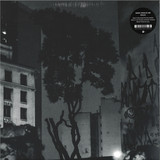
Much about 'Beat Bop' is shrouded in mystery. Who really produced it? Why was Jean-Michel Basquiat relegated from rapper on the track to drawing the cover and labels? What are they actually rapping about for most of the ten-minute length?
These questions, however, are all part of the enigma and rich legend surrounding a song that is an undisputed piece of true hip-hop genius. The combination of graffiti artist Rammellzee and rapper K-Rob is a potent one, with each MC adopting a persona - hustler and B-Boy respectively - that they maintain against an unusual swirling backdrop that must be one of the best instrumentals ever committed to wax.
The original Tartown Record 1983 pressing was limited to 500 copies, a mere test pressing in the eyes of the assembled artists, with scarcity further driven by Basquiat's rising rep in the art world. Those few hundred copies – and a subsequent re-release on Profile Records (the same label where K-Rob played out the rest of his brief career) punched well above their weight in terms of lasting influence.
Consider the early vocal tones of the Beastie Boys (who also sampled the track), or the huge part it played in the sound of Cypress Hill and B-Real. His voice is almost homage to Rammellzee's on 'Beat Bop', while they also lifted the chorus of 'Shoot 'Em Up' and even a
sample of 'Cypress Hill' from the track too. It's unsurprising – this is a multi-layered, complex song that reveals a little more of itself each time you play it but remains damn funky.
This reissue boasts the vocal and instrumental versions in full, as well as both the full cover and label artwork from the original Tartown Release.
Suche:i tones
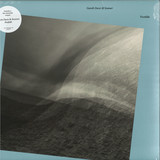
Pique-nique Recordings is proud to present 'Investigate and Enjoy', a deep musical conversation between two of New York City’s most prolific musicians, Dave Harrington and Kenny Wollesen. Harrington (Darkside) and Wollesen (Sex Mob) use a shared language of texture, groove, and space to craft intricate, free-formed, and inventive experimental music.
Wollesen’s forceful percussion opens up side A, which grooves heavily underneath Harrington’s skittering electronics. The flip side features sparse yet rich guitar tones on what Harrington and Wollesen refer to as an “improvised ballad.” Both pieces resonate with a powerful mood as hints of late-Talk Talk and Battles permeate these unique recordings.
This release is part of an ongoing series that aims to capture the New York City jazz scene in its current, always evolving form.
"Of all of the things we've done together over the years, playing as a duo has been one of the most special to me. We never rehearse, we never play any songs, but Kenny and I find ourselves writing music together in real-time. Kenny is the rare drummer who has the ability to not only supply a sort of canvas for another musician to work inside of and to paint harmonically on, but he can make the frame around it, and he can splatter paint himself in a meaningful way that has the power to change the whole shape of the shared dream of an improvisation.
We have recorded together a number of times over the last several years and this music came out of one such meeting. While it is no exaggeration when I say that having my name next to Kenny’s on a record sleeve is a dream come true, the real dream is getting to make music with a true master." - Dave Harrington
“Easy rider, come and take me higher”. When the world seemingly crumbles around, music can provide an escape few other mediums can. For their debut self-titled LP, Velour effortlessly levitate you above the madness below, each track taking a new turn, cruising over hazy flecked skylines, bustling walkways and bleary eyed bedlam. A trajectory that takes in all of jazz’s vibrancies, blending elements of neo soul, broken beat and hip hop coupled with a much-needed sense of hope across nine deep, soul-searching tracks released via WOLF Music Recordings.
A style and sound taking influence from genres and moods, environments and experiences, Essen-based Velour stretch their legs for this, their first full length album. From the off, they nestle you under their wing with the rustling sax washes of opener ‘CLP’ before diving into an epic slo-mo burner, swooping down into the chaos as singer, Eva Czaya, wistfully narrates the scenes beneath.
Unafraid to shift pace within songs, the likes of ‘Pose’, sauntering from soulful summer groove into woozy late night affair, and ‘Tom's Garage’, that progresses from roadside recounting to grungy basement blowout, finished with a sample of jazz-tinged dusty beats, show that accomplished and adept heads rest on the shoulders of these relative newcomers.
WOLF Music mainstay Mr Fries continues to head up production for Velour, his trademark touch capturing the intimacy of Velour’s sound presenting it in a way that’s considered yet raw - nothing feeling rushed, nor cluttered. A separation and space that gives each element the room it deserves to breathe, with short interludes and skits providing the perfect bridge between tracks, guiding you through smokey jazz bars and twilight whisperings.
Moving through the album, Czaya at points wanders in a serene spoken dialogue, at others letting her voice loose, but always with an ethereal demeanour that comes off with natural ease. One of many highlights, ‘Anthony Davis’ shows off this celestial prowess whilst perfectly embodying Velour’s dream-like escapism. A pent up release of creativity, as moody bass tones mix with deft keys, rolling snares sit behind swirling saxophones.
The journey ends with ‘Luminate’, a transcendent closer laced with space-echoed vocals that reverberate around over-driven Rhodes and feverish drums. Cymbals crash, as modulated synths rise, building and building before easing you off into the night and on your way to a parallel universe.
As a body of work, ‘Velour’ is a shining example of the freedom, energy and enthusiasm of the new school of jazz that’s been captivating minds the world over. An instant on repeat staple - let go, feel the flow, it’s what we need in a time like this.
- A1: Crystal Drift (03:56)
- A2: Rainbow Ripples (04:08)
- A3: And Breathe (02:10)
- A4: Lost Oceans (01:34)
- A5: New Infinity (05:03)
- A6: White Mirror (02:54)
- B1: Peace Bells (02:40)
- B2: Revolving Evolving (03:34)
- B3: Mountain Dreaming (02:03)
- B4: Forest Motion (03:16)
- B5: Sleep Golden (03:16)
- B6: The Long Path (03:29)
Ocean Moon is a solo project from Jon Tye of Seahawks. A long time explorer of the sounds of spaciousness, having released the ambient classic LP iO in 1994 as MLO, Crystal Harmonics is a document of Jon’s latest discoveries. An ambient/new age/modern classical library suite for KPM, this is inter-dimensional music for mind, body and spirit.
Island Visions, the recent collection of music from Seahawks for KPM, touched on the deeper, more spatial side of music and led to Jon exploring this territory in greater depth, again for KPM, under his Ocean Moon alter ego. This time he brought along some of today’s most visionary musicians: Jon Brooks (The Advisory Circle / Ghostbox) for his intuitive melodic mastery, Seaming To (Graham Massey’s Toolshed) for her extraordinary vocal talents, Steve Moore (Zombi) for his sophisticated and inventive rhythmic sensibility and Richard Norris (The Grid) for his sensitive and deeply resonant ambience. The initial recordings were made at The Centre Of Sound in Cornwall, with the collaborators various contributions coming from London, Derbyshire and the US.
The supremely serene electronic flute and bells of “Crystal Drift” ease us into our journey and we take our next steps with “Rainbow Ripples” as it gently folds space with arpeggiated synth swells and delicate machine beats. Light vocal tones, bells and breath FX on “And Breathe” keep us going, accompanied by synth drones and billows of electric piano.
We travel through the synth-space-surf haze of “Lost Oceans”, with soft bass and warm ambience, to reach the “New Infinity” of revolving melody, spacious pads and light electronic beats. The celestial tone floats of “White Mirror” close out the first side.
Temple bells ring out to running water flowing together with deep resonant vocal tones as the second side opens with “Peace Bells”. “Revolving and Evolving” follows, a tranquil electronic meadow of lush pastoral synth tones where we rest for a while for “Mountain Dreaming”, a light rhythmic dance of zither and birdsong.
The undulating “Forest Motion” ripples with synth arpeggios, dreamy Solina strings and percussive modular electronics before allowing the crackling ambience and Cantonese whispers of “Sleep Golden” to wash over us. Finally we find ourselves on “The Long Path”, its warm temple ambience of drones and chants guiding us home.
Crystal Harmonics is inspired by four particular albums from KPM’s catalogue. There’s The Electronic Light Orchestra by Adrian Wagner from 1975 and then Temple Of The Stars, Breath Of Life and finally Keith Mansfield’s Circles, these last three coming from KPM’s mid-1980s run of modern classical/New Age gems. For Jon, “making library music can be very liberating. I really enjoyed the additional focus it brought to the music working on different facets of composition with each collaborator”.
But Crystal Harmonics is no mere exercise in vulger pastiche. As the past, present and future sound of paradise, this fresh exploration of mid-90s ambient and original New Age sounds exists outside of our linear experience of time.
The cover started as a collage Jon made a couple of years ago, a different expression of the same impulses that guided the music. As a nod to the records that provided seeds of inspiration, the collage was framed by KPM’s house style of the 1980s for the finished sleeve by Richard Robinson.
Mastered for vinyl by Be With’s sonic shaman Simon Francis, cut by the legendary Pete Norman and pressed in the Netherlands by Record Industry, Ocean Moon’s Crystal Harmonics is the tranquil balm for these turbulent times.
- A1: The Artistic Sounds - Give It Up
- A2: The Holy Lights Of Baltimore, Md - I'll Be Satisfied
- A3: The Swan Silvertones - Trust In God
- A4: Gene Martin - A Little Bit Of Faith
- A5: Myrna Summers - Have A Talk With God
- B1: James Cleveland And The Southern California Community Choir - I Want To Thank You Master
- B2: Betty Hollins - What A Time (When All God's Children Get Together)
- B3: The Metro Tones - Get Together
- B4: The World Wonders - He Made A Way
- B5: The Brooklyn Skyways - Dark Clouds
- C1: Sister Ida Maxey - Do Lord
- C2: The Thornes Trio - You Don't Love God
- C3: Mildred Clark And The Melody-Aires - Hold On, I'm Coming
- C4: The Highway Q.c.s - If You Fail, Try Again
- C5: The Gospelaires Of Dayton, Ohio - What Will Tomorrow Bring
- D1: The Holy Lights Of Baltimore, Md - Keep On Singing
- D2: The Exciting Supreme Highlights - Drowning In The Sea Of Sin
- D3: James Moore - I Thank You Master
- D4: Prof. Charles Taylor And The Charles Taylor Singers - Been Good To Me
- D5: The Brockington Ensemble - God Is God (He Won't Change)
The second volume brings sublime crossings of gospel with the soul, funk and jazz of the Black Power era. Twenty rapturous cuts dot dazzlingly between Muscle Shoals soul, screwed breakbeat, Mizells-style fusion, disco and proto-house. Triumphant re-workings of Sly Stone, Donny Hathaway and Herbie Hancock’s Head Hunters will have listeners throwing their pew cushions into the air.
Full-size booklet; beautifully designed, with stunning, rare photographs and original Savoy artwork.
In the album's music we find vintage influences, recalling the faded charm of 70s erotica, warm tones also rooted in psychedelia, disco, yéyé, and French chanson. The Montreal trio Le Couleur, created by Laurence Giroux-Do (vocals), Patrick Gosselin (bass), and Steeven Chouinard (drums), delivers rich and irresistibly danceable performances. Le Couleur polished their sound until it shined as bright as the late Studio 54's spotlights with EPs Voyage Love (2013) and Dolce Désir (2015), and then P.O.P. (2016), their critically acclaimed debut album. Thanks to precious advice from Giorgio Moroder, with whom the band had the opportunity of sharing the stage, Le Couleur recorded their new album adopting a completely different approach. Concorde takes its name from the legendary Franco-British airplane from 1965, nicknamed the "beautiful white bird" for its sleek and modern design. This avant-garde project that ended in tragedy has always held a certain fascination for Laurence Giroux-Do ; a deadly "crash" that inspired in her a sense of macabre sensuality. In the album's music we find vintage influences, recalling the faded charm of 70s erotica, warm tones also rooted in psychedelia, disco, yéyé, and French chanson.
DOWNFALL is the first album under the name SAITO created by Lena Saito, aka Galcid, and produced by accomplished analog synthesizer guru, Hisashi Saito, aka Lena’s husband. Having descended from a long line of Japanese sword-smiths, the industrial sound of smashing steel is embedded in Lena’s DNA and reflected in her music, however there are also refined, hypnotic tones showing a side with more finesse. The music itself is not scored and is predominantly improvised. Words and vocals are ad libbed as well. Sometimes the machines respond as if through telekinesis, altogether emitting a sound which can be categorized somewhere in the range between modern experimental dance music and something possibly making more sense to enlightened minds a thousand years in the future.
There is a new addition to the forge of talents of Mille Plateaux, a Japanese musician by the name of Saito whose album has been released on the label under the title of Downfall. After a whole series of releases under the signature tag clicks & cuts, there comes out a work, much more suited for a dance hall, that is different in terms of the genre from everything that has been published so far.
Like a bucket of ice-cold water poured over the head, erratic agressive hardcore rhythms pour all over the audience in the first track, interrupted only by grinding noises and minimalistic technogenic clicks.
Downfall won't fail to infect even the most experienced music connaisseur with its out-of-control energy, while offering a wide range of techniques: at times, robotic voices, one second long fragments of looped melodies and many other audio gimmicks.
Lena Saito (that is the author's name) is not afraid of conducting experiments in her chemical laboratory, freely mixing sound reagents without taking any precautions. It feels like, this new chemical substance, that she has been working on so thoroughly, contains quite a long list of ingredients, although its main component is the various rhythm breaks.
The synthesizer part of Red Hammer sounds in the best traditions of the acid style, and the rhythm section is akin to African tribal dances of the future. Downfall is absolutely unrelenting in its concept.
The melody of the composition Nucleosome is a little bit like the melancholic IDM of the 00s, finding itself secondary to the dominating, yet again convoluted rhythmical web meticulously woven by Saito.
This album can be definitely named as a big contender aspiring to start a new golden era of Mille Plateaux, and Saito as the hidden treasure of the label that can challenge even the veterans for the right to be the headliner.
As so many great schemes do, it started with a conversation in a pub. After several sporadic releases on Diffrent Music, including his renowned 2013 debut "Tongues", label boss Dexta wanted more music from Fearful. One thing led to another, and suddenly an album was in the works.
The result is "Interference"; a body of work that is reflective not only of the personal idiosyncrasies and aspirations of its London-based producer, but of an artist who has truly been set free of expectations.
Harnessing his own inbuilt need to defy convention, and looking to influences such as classical game soundtracks, experimental mastermind Amon Tobin, and the brooding tones of Akkord and Lorn, Fearful has crafted an album that's unpredictable yet cohesive, and definitive of his aim as an artist.
From the menacing ambient opener "Rocinante", through the glitchy techno of "The Traveler", skewed drum & bass of "Pulse 0" and "Through The Mist", to the roaring drone and pounding metal-inspired drumwork of closer "Gold To Dust", it's an album that demands full attention and repeat listening.
Nowhere is this free-roaming but pull-no-punches attitude summed up better than the title track. Building through eerie, twisted atmospherics - samples of electromagnetic interference, which can be found throughout the album - it clatters into a domineering breakbeat, before collapsing into a guttural, tribalist techno roller.
Where much of dance music draws on repetition, the concept of "Interference" is simple: progression. Whether that be changing motifs within tracks, switching genres within the album, or developing upon Fearful's own artistic strengths, it's an idea never more at home than on Diffrent Music, and we are very proud to present it.
Black Truffle is proud to announce the first vinyl reissue of Rafael Toral’s Aeriola Frequency, originally released by Perdition Plastics in 1998. Toral made his name in the world of mid-90’s experimental electronics with two releases, Sound Mind Sound Body (1994) and Wave Field (1995), both now recognised as classics and reissued on vinyl by Drag City, which saw him exploring the potential of electric guitar and pedals to immerse the listener in seemingly endless waves of sustained tones. On Wave Field, inspired by the striking resonance effects he experienced during a Buzzcocks gig with bad acoustics, he achieved a synthesis—often imitated but never bettered—of rock guitar, Ambient, and the acoustic exploration of Alvin Lucier, a kind of "liquid, abstract flux of rock sound".
On Aeriola Frequency, Toral continued the explorations of Wave Field but dropped the guitar, creating a series of extended pieces using only a simple feedback loop designed to work with pure electronic resonance. The result is far more delicate than Wave Field, a steady but unstable flow of filtered tones that continually reorder themselves into new forms. On both the LP’s sides, the tones, like growing plants, imperceptibly shift from drifting freely in ambient space to weaving strangely natural melodic patterns, as the loops unfold and the resonance gently outlines recurring rhythmic shapes.
The overall effect is strikingly organic, as David Toop noted in the liner notes included in the original release (and reprinted in this reissue): “A crystal garden, the sound grows in reeds and streams, blown like spider web strands, glittering and invisible, pulsing with translucent colour, bubbling and imploding, fraying and powdering.”
A classic of the non-academic approach to electronics that flourished in the 1990s— and a big influence at the time on Black Truffle head honcho Oren Ambarchi—Aeriola Frequency ushers listeners into an endlessly fascinating world of gliding tones and shifting details that they might never want to leave.
- Recorded at Noise Precision, Portugal, December 1997 and April 1998. Remastered by Rafael Toral in 2020.
- Liner notes by David Toop and Rafael Toral.
It's been four years since Sweatbox Dynasty, the fourth solo LP from Pennsylvanian experimentalist TOBACCO. In that time, Tom Fec's project has toured with Nine Inch Nails, provided the theme song to HBO series Silicon Valley, and teamed with Aesop Rock for a collaborative album as Malibu Ken. He now returns to Ghostly International for Hot Wet & Sassy, a full-length album oozing with his most playful and approachable songs to date, which, conversely, express notions of antilove, self-hate, and disappointment in others. Pop impulses have always surged beneath the surface of his sound - blown-out bass, analog synths, drum machines, and Fec's unmistakable analog gurgle and hiss - here they've bubbled to the top. "I feel like it's the most I've been able to refine what I'm doing," says Fec. "For the past decade I've had this motherfxcker on my shoulder that makes me pick away at structure and melody. Purposely covering up moments because I can. That really came to a peak on Sweatbox. So I wanted the opposite this time. Write the songs without ripping them in half. I went from 'what would the Butthole Surfers do?' to 'what would Cyndi Lauper do?'" And what would Trent Reznor do? Fec found his answer straight from the source. Their collaborative track, "Babysitter," fuses their voices into one deranged presence: "I'm the new babysitter," they alert, before pivoting into a menacingly saccharine bridge. The track tumbles on a tom fill, then a punishing synth line rips into a cacophony of drums and feedback like a lawnmower gnawing through the living room carpet. "This was new for me, but I wanted to write a song that was everything I am and have been, and then like one notch further. Trent was the notch further," adds Fec. The collaboration is a work of alchemy seamlessly blending TOBACCO's trademarks with Reznor's industrial rust and sonic gore. Downcast, sincere, woozy, "Jinmenken" might be the closest Fec has come to a ballad. "Maybe you can find me down the line," his vocoded delivery bounces along the beat. "It's me trying to write a Jets song," says Fec. Album opener "Centaur Skin" presents the stylistic concoction that has been the TOBACCO MO from the beginning, crossing dreamy melodic shimmer with the sinister tones and slime. This has become easier to digest, but also far more potent. A motorik beat steadies the track's galloping arpeggio, acting as a springboard for Fec's dark ruminations as well as an uncharacteristically crystalline synth solo. "It's my feel good self hate anthem. Don't worry, I'm good. It was fun to write." TOBACCO hasn't been reinvented, but it has been refined and distilled. Brighter, sharper, and far more dangerous because of it. Hot Wet & Sassy is practically staring at the sun without shades and feeling those corneas roast. Everything looks good as your vision fades. The pop-forward structures exert their undeniable hooks with baneful precision, pulling listeners into their clutches; once there, sugary melody rewards submission.
You have reached the Infolines. Tonight, we send you on a journey packin’ east to play in the magnificent halls where thespians and rock & roll once played. ‘The Theatre’ features a compilation of cuts that inspire those who listen to sweat in the soon to be humid weather of Detroit.
Bendersnatch is back again, this time with their funky groove ‘Vice Versa’, tooled as a call to the dance floor with a kick that cuts, and bleeps reminiscent of the second wave of techno. Remote Viewing Party brings us a break beat rhythm joined by instrumentalists Ezuch & Bcota with ‘Outpost’. The duo brings shows us their depth creating an atmosphere that will bring you chills, and tears that you will probably think is sweat running down your face. Newcomer Dev-Lish is joined by Maxlow with their head banger ‘Faith In The Machine, in a collaboration inspired by the Detroit birthed genre ‘sludge’. Evil grinding tones with huge bass and dark vocals will make you want to breath. Last, but not certainly least is Francois Dillinger. This artist has been churning out his art and making waves in the electro and techno communities. He brings to the table ‘Lost Loops’ with nothing short of huge bass, large spatial tones designed to hit all frequency ranges leaving room for the crowd to breath while being taken on a journey.
As always, keep an eye on this space and be sure to call in for the waypoint to the party.
Following up on their debut LP Kick Drunk Love for Marcel Vogel’s Intimate Friends imprint a few years back, we are proud to present the next installment in the sporadic KAMM legacy: Cookie Policies.
Far more sonically rich and musically adventurous than its predecessor, Cookie Policies sees the band make bold strides into new territories where classically hardwired categories such as jazz, indie rock, and electronica melt into one another with immaculate, timeless ease.
The band members’ positions are more clear cut as well this round, with Marc David Barrite (aka Dave Aju, who also did one of his coveted mix engineering jobs on the LP) on prominent lead vocals in many of the pieces, Alland Byallo on trumpet, Kenneth Scott on synth bass, and Marc Smith adding guitar sections while the others shared the arranging and programming duties. This makes for a deeper continuation of the otherworldly combination of their known individual production styles, as well as a musical whole truly greater than the sum of its parts.
The set starts off with “Bird Call”, whose opening ode to Morricone ok corral-meets-samurai showdown riffs flow into a loose and drifting psychedelic boom bap blip, building until a glorious change-up of key and energy brings the track to its peak and deconstructed back down. “Rachel, the Largest Bullfrog” then takes things in a sweeter, slightly more traditionally-structured direction where dusty indie-folk ballad vibes intersect with an array of twisted cosmic tones, bits of computer keyboard percussion, and deep rolling sub bass. “Buckle Down” then moves things back away from acoustic restraints into a beautiful synth-laden musing on potential regret, with an ultra-potent horn section from Byallo vs a nasty stacked Roland SH-101 finish.
“CCBPGC” cools things off for a few minutes with an ambient field recording slice-and-dice motif, which slowly but surely evolves into a slinking jazz noir groove from another dimension. The more traditional song structures return on the lovely “La Luna”, where Barrite’s pen and soulful voice take to nautical longing themes over apropos waves of sonic textures. The ebb and flow of the verse/chorus sections eventually rise and give way to an absolutely gorgeous denouement. “Shleem” then takes us into pure unadulterated soaring sci-fi soundtrack ambient blast-off bliss, while the epic closing track “The Soft Glow of Electric Sex” gives a hearty nod to early masters of sprawling psychedelic jam sessions, from Pink Floyd and Can to In A Silent Way-era Miles and Liquid Liquid, while bringing it clearly into futurist millennia. The gradual evolution of the piece into its grand finale is the stuff we true music-lovers live and die for. We hope you enjoy the ride as much as we do.
Videosphere, the debut album by Kompakt’s latest signing, the London-based artist Lake Turner (aka Andrew Halford), swoons into focus with “The Sunbird”, a teasing drift of lilting, ambient tones, riding out a submerged piston-pulse rhythm. Across its brief 109 seconds, it manages to traverse evocative terrain – something mythopoetic, something both humble and grandiose, a glimpse of the other behind the sky’s curtain. “I wanted to conjure up something resembling an ancient ceremony or death procession,” Turner nods. “Like a hymn to the surroundings of a faraway hill.” It’s both sky-bound and earthen, a ritual incantation to call in the music of the spheres.
Turner was introduced to the Kompakt family by his sometime collaborator Yannis Philippakis of Foals. He’d previously made music in post-punk and indie groups Great Eskimo Hoax and Trophy Wife, but Videosphere is the first time he’s fully articulated his own vision of electronic music, aside from one limited lathe-cut 12”, 2018’s Prime Mover EP, on Algebra. The lush ambient-disco-techno dreams of Videosphere were constructed and completed in his London studio and at his parents’ arable and sheep farm in Worcestershire, which might help explain the hazy, unhurried pastoralism of the album.
“There was a slight bittersweetness in finishing the record (in Worcestershire) as my parents were in the middle of selling my childhood home,” he sighs, before quipping, “on the plus, I ended up shearing a lot of sheep over the summer.” A student of archaeology and ancient history, Turner is no doubt carefully attuned to the twisting cogs of history and memory, and it’s no surprise that Videosphere has a nostalgic, melancholic cast; much of its beauty rests in the way it tugs, gently, at the heart strings – see the tear-stained cheeks of the lush, dappled “Honeycomb”, or the sweetly sad electro-roundelay of “No Way Back Forever.”
It’s not all drift-dream hypnosis, though – Videosphere is very much grounded in the now. ““No Way Back Forever” is a nod to the linear nature of time,” Turner explains by way of example, “and the tipping point of the world climate crisis that scientists have now declared.” Jayne Powell’s vocals are sent spinning through the song, wound like candyfloss; she takes centre stage on the techno hymnal title track, too. Throughout, there’s a sense of forward movement, despite the life stasis we find ourselves collectively bound by in mid-2020; there’s also a yearning for the communal, for community, that’s captured in the album title, a nod to an object Turner encountered at London’s Geoffrey Museum, “a television set in the shape of a spaceman’s helmet from the 1970s.”
“The vision I loosely had was to make an electronic record that had a communal warmth and almost ceremonial or ritual feel. I wanted to examine the relationship of our archaic minds in the trappings of the modern world,” Turner concludes. “What the Videosphere also symbolizes for me is the oneness of humanity and community, prevailing.”
Eröffnet wird "Videosphere", das Debütalbum von Kompakts jüngstem Signing, dem in London ansässigen Künstler Lake Turner (alias Andrew Halford), mit "The Sunbird" - einem herausfordernden Strom aus Ambient Sounds, die zu schweben scheinen, um sich dann in einen subtilen, maschinellen Rhythmus zu verwandeln. In gerade mal 109 Sekunden gelingt es dem Stück, ein gewaltiges Terrain abzuschreiten - etwas Mythopoetisches, bescheiden und grandios zugleich, gibt uns eine Ahnung davon, was sich hinter dem Himmel verbirgt. "Ich wollte etwas heraufbeschwören, das einer alten Zeremonie oder Totenprozession ähnelt", sagt Turner, "wie eine Hymne an die Umgebung eines weit entfernten Hügels." Himmlisch und irdisch zugleich, eine rituelle Beschwörung von Sphärenmusik.
Der Kompakt Label-Familie wurde Turner von dessen zeitweiligen Mitarbeiter Yannis Philippakis (Foals) vorgestellt. Zuvor hatte er in den Post Punk- und Indie-Bands Great Eskimo Hoax und Trophy Wife gespielt. Bis auf eine limitierte lathe-cut 12", der "Prime Mover EP" auf Algebra von 2018, artikuliert Turner mit "Videosphere" zum ersten Mal seine eigene Vision von elektronischer Musik.
Die üppigen Ambient-Disco-Techno-Träume von "Videosphere" hat Turner in seinem Londoner Studio und auf der Schaffarm seiner Eltern in Worcestershire produziert, was den nebulösen, gemächlichen und beinahe pastoralen Charakter des Albums erklären könnte.
"Es gab einen bittersüßen Moment als ich mit der Platte (in Worcestershire) fertig geworden war, da meine Eltern gerade dabei waren, das Haus meiner Kindheit zu verkaufen", seufzt er, bevor er witzelt, "das Positive war, dass ich im Laufe des Sommers eine Menge Schafe geschoren habe". Als Student der Archäologie und der Geschichte des Altertums ist Turner zweifellos mit den sich unaufhörlich drehenden Rädern der Geschichte und der daran geknüpften Erinnerungen vertraut, und es ist keine Überraschung, dass "Videosphere" einen nostalgischen, melancholischen Einschlag hat; viel von seiner Schönheit liegt in der Art und Weise, wie es einem sanft ans Herz geht - die Tränen benetzten Wangen von "Honeycomb" oder der ambivalente Elektro-Reigen von "No Way Back Forever".
Trotz allem hypnotischen Driften und Träumen - Videosphere ist sehr stark im Jetzt verankert. "`No Way Back Forever`ist eine Anspielung auf die lineare Natur der Zeit", erklärt Turner beispielhaft, "und auf den Wendepunkt der globalen Klimakrise, den Wissenschaftler gerade ausgerufen haben". Jayne Powells Gesang wirbelt dabei wie Zuckerwatte durch den Song und steht auch im Mittelpunkt des technoid hymnischen Titelstücks. Überall ist ein Gefühl der Vorwärtsbewegung zu spüren, trotz der Stagnation, in der wir uns Mitte 2020 kollektiv befinden; trotzdem existiert eine Sehnsucht nach dem Gemeinsamen, nach Gemeinschaft, die im Albumtitel eingefangen ist - eine Referenz an ein Objekt, dem Turner im Londoner Geoffrey-Museum begegnete, "ein Fernsehgerät in Form eines Raumfahrerhelms aus den 1970er Jahren".
„Die lose Vision, die ich hatte, bestand darin, eine elektronische Platte zu machen, die eine soziale Wärme und eine fast zeremonielle oder rituelle Atmosphäre ausstrahlt. Ich wollte die Beziehung unseres archaischen Geistes in den Fallstricken der modernen Welt untersuchen", so Turner abschließend. "Was `Videosphere` für mich auch symbolisiert, ist die Einheit von Menschlichkeit und Gemeinschaft, die am Ende obsiegt".
Red Vinyl
Almost 10 years already….Just a short moment away from its tenth anniversary, the cutting-edge Label La Belle Records unveils the second part of its One Night Stands collection.
If the first part portrayed very warm, tropical tones, this second opus feels more like the end of a party or the morning after, with a selection of tracks at a crossroad between slo-mo, synth-pop, lo-fi, ethnic groove and nu-disco like few others have done before.
This is something you've never heard before! All thanks to the insatiable digging from the master curator and co-founder of the label, Antoine Harispuru aka Golden Bug.
From Rome to Bruxelles via Paris and Vilnius, this second edition hits hard with names like Get A Room!, Rodion, Ellis Island (a world collaboration between the Italians Bawrut and Hot Spell), Rodion, Front de Cadeaux, Claap! and some other electronic gems.
Ai Aso’s immaculately crafted form of minimalist pop music skirts the edges of tensity with the manner and with the skill of a tight rope walker, calmly balancing repeatedly at every step, with a combination of surety and the risk of a slip, a fall, and an unknown uncoiling of events. Aso's capacity to capture, or inspire, the tension and attention from within the listener and observer are quite pronounced. At Aso's concert the performance constantly teeters near the brink, a sharpened awareness in the hall emerges from all observing, with the will of that most delicate balance. On “The Faintest Hint” she brings a meta level to the proceedings, the dream of a singer in a bright sunlit room in the centre of the density of the society, simply and precisely searching for single ideas, single tones, a sense of sensuality and even a dream of a grandeur (rock dream) emerge. A stillness prevails, even a sharp set of instances of dreaming, melancholia, nostalgia… or even saudade. The album was recorded, mixed & mastered by Soichiro Nakamura at Peace Music between 2018-2020. Atsuo and I joined these sessions as producers, and moreso as catalysts, yet also became the skeleton of a band on the album (with the tender touch). The legendary Japanese rock band Boris accompany Aso on two pieces. A faintest hint of sharpness and la tendresse féroce quickly erodes into a fine brief cloud of the purest crystalline dust.
–Stephen O'Malley, Stockholm June 2020
- A1: Sigla R.p. (Gabriele Ducros)
- A2: Love For Sale (Mirot)
- A3: Dopping 2000 (Gabriele Ducros)
- A4: Feasing (S.chimenti - E.pieranunzi)
- A5: Reaction (Sandro Brugnolini)
- B1: Psyco (Gabriele Ducros)
- B2: Vortice (Sandro Brugnolini)
- B3: Privacy (Mirot)
- B4: Freedom Power (Gabriele Ducros)
- B5: Metropolis Notte (Gabriele Ducros)
- B6: Trip Free (Gabriele Ducros)
Outstanding and legendary Italian Library album out of the vaults of Cometa Edizioni Musicali featuring tones of mental Jazz-Funk and Psychedelic beats. The listener is constantly kept by the incredible music that swings between Psychedelic Funk, Esoteric Jazz and Cinematic/Love themes. Tracks like "Love For Sale", "Privacy", "Metropolis Notte" and "Dopping 2000" are simply timeless, with a stunning sound that perfectly plunges in the universe of great 1970s vibes and golden Italian library/film music of the time. Originally issued on Limited Edition serie for collectors, this gem has been repressed on 180gr. wax again with improved sound quality remastering from the original master tapes.
The global lockdown has seen a number of new hobbies and skills adopted. Yoga mats now decorate homes. Bread makers jockey for space in kitchens. Soiled paint brushes caked in acrylics lie abandoned. At Frigio Records HQ, confinement might have changed the rhythm but it hasn’t changed the aim; to find new and exciting music for 2020. The result? Frigio Allstars 3.
Daniel Holt returns for this new instalment in the Allstars series. Diving deep into the darkness, Holt resurfaces with the nine minute industrial throb of “Vaccuous Transient.” A stomping beat pierces sci-fi score synthlines in a track brimming with menace. Staying in the US, Grey people debuts on Frigio with the grime smeared jack of “Bruxism.” The flip is all first timers to the Madrid label with Scannoir offering “De Panaesher.” Sitting somewhere between synth lament and uplifting wave, this track is a true modern classic from a member of the GOTT camp. Madrid’s very own Negocius man follows with “101 Wars” a winding worming work of glazed electronics to kill any dance floor and the amazing finale, “The Smile Of The Body” coming care of Bari’s talent based in Berlin under the moniker of Sons Of Traders.
Frigio Allstars 3 comes from the murky underbelly of electronics, where the nights are long and the days are short. Ashen tones pricked with lighter shades, all smeared with attitude in this collection of underground tracks made for the underground.
Vanish is Julia Reidy’s yearning, fat debut for Editions Mego. Since 2019, Julia’s bubbling 12-string guitar work - sighing streams of crystal plucks drawn closer or echoing on - has moored a tactile, ever-lusher sound. On ‘Guitar’, the Australian, Berlin-based musician melts down sharp synths; electric fuzz and flex; uncanny found sounds; and autotuned voice and harmonica in a heady, overpowering potion.
Reidy’s music sweeps you up. It’s restless, always travelling on. Lonesome tones into machine chorales into hesitant hum. The LP’s side-long cuts sway between scenes but are always rooted: Julia’s guitar and vocal lines seem mapped to the natural ebb and flow of breath and thought, they lull you as they push through vast and secret spaces.
Vanish completes a trio of releases begun with last year’s ‘brace, brace’ (Slip) and ‘In Real Life’ (Black Truffle). The delicious unease, the anxious burning of the preceding volumes has settled, becoming more wide-eyed and resolute. For all its poise, the album’s sense of build - electric licks rasping into glistening synths, punctured by distant kicks - feels freshest. When 'Oh Boy'’s smudged whistle comes, it has fought its way out of the thickets, and hits like heartbreak.
Berlin techno luminary Jamaica Suk announces her most ambitious project yet: Uncertain Landscape.
This 17-track, 4x 12” vinyl release on her acclaimed Gradient label will be released in four installments from Autumn to Winter 2020 and brings together a host of diverse techno talent. She will release a DJ mix featuring all 17 tracks to complete the series accompanied by a film from Anthony Vouardoux. The project is made up of a wishlist of names whose music she has been heavily supporting in her sets over the last few years. “I wrote specific producers inquiring for tracks that would be fitting to the label and also fit the DJ mix that I’m recording from these tunes. I’m looking to promote music that shares the same vision as I do.”
It marks the first original releases on Gradient from producers other than herself, which is a change of tact from her original plan for her imprint. “Initially I wanted to only release my music on Gradient including remixes - but it doesn’t make sense as there’s so much inspiration out there. By expanding the label’s network we create our own tribe.”
Jittery rhythms with a touch of ‘Spastik’ about them propel BNJMN’s ‘Abyssal Surge’ into life, with a big riverbed sound abounding as the track builds through haunting sustained tones and glitching mechanics.
Arthur Kimskii thundering ‘Natasha’ pummels from the first moment, with shuddering sub bass carving its way through the sound field as hypnotic bleeps pulse in the distance. Rapid-fire. Filtering percussive waves accentuate the bassline’s incessant 16ths rhythms, all the while the resonant kicks hammering away beneath.
Wrong Assessment’s ‘The Eight’ is a dissonant avalanche of warped textures, where grunting synth thrusts rub up against industrious pulses and chattering hi-hat patterns weave in and out of the mix. Stuttering bass and cymbal rides complete the urgent feel.
Introspective respite comes from Electro Indigo’s ‘Volcanite’, a stirring piece of broken beat experimentation where graceful pads slide hauntingly over taut kick and bass patterns and beautiful ghostly analog synth notes.
Look out for parts 2-4 coming soon and special audio + visual showcases.
Prolific American artist Jon Hester returns to Rekids for the first instalment of his new album, ‘Converge’, this September.
Jon Hester grew up in the Midwest US, living in Chicago and Minneapolis while taking musical cues from Detroit. Initially he was a dancer, and later transitioned to the decks with a refined understanding of what it takes to move a club. He progressed to hosting his own events, holding residencies, and working at a record shop, and now brings his physical rhythms and adventurous drums to his productions, with output on respected labels such as Transmat, Deeply Rooted, Dystopian, Klockworks, and LET Recordings, not to mention multiple appearances on Rekids.
Continuing to show fine form on his debut album, Hester now serves up eight of his signature house and techno fusions with plenty of his trademark directness across four sides of vinyl. The superb 'Sending Signals' opens the album with scene-setting synth modulations full of sci-fi atmosphere. It's the calm before the storm as 'Metropolitan' then immediately sets off on a cantering groove that is eventually run through with busy, jazzy piano keys that bring the soul.
'Haze' has excellently taught kick drums with hypnotic synth tones adding colour, and features Hester on saxophone. When 'Rain' comes, things grow darker and more menacing, with shakers and urgent stabs keeping you moving at a slick pace.
The second half of this compelling record features the loopy punches and pulses of the super smooth 'Dreamstate', beautifully cosmic and widescreen techno of 'Free' and pensive but urgent deep electro of standout cut 'Flex.' Last of all, 'Equinox' is lit up with distant chords which bring a far-sighted gaze to the rolling, robust kicks.
On August 21st rising DJ/producer Haider presents the ‘Endless Clouds’ EP on his own label Breaker Breaker, where pristine future electro meets high tech funk and raw, jacking house. This new release follows praise from a wide selection of world-class DJs and media for his past 12”s, not to mention achievements as label owner, party promoter, canny early spotter of talent and general proactive instigator. Now based in Berlin but originally from Sheffield via a stint in London, there’s a commonality throughout all of Haider Masroor’s music that links both thematically and geographically. His
productions recall both Steel City bleep and its distant younger cousin bassline, using only sparse elements, with beats and bass at the fore, to deadly effect. London is audible too via
the spiky energy of grime and the swinging shuffle of UK funky, and so is Berlin, evident in the sleek sheen and efficient precision.
On ‘Maracuja’ lush pads, pitched-up vocal snippets, bleeps and proper electro beats ride atop a deep, purring bassline that unfurls like giant waves, with sub bass punctuation adding further hefty depth.
The bouncy, punchy beats and pristine gleam of ‘I Came To Destroy’ are somewhere between celestial Miami bass and the aquatic grooves of Drexciya, again propelled by gigantic slo-mo bass tones.
A modern take on the cut-up samples of 90s house, on ‘Grove Street’ Haider mixes elements of classic French touch, Chicago rawness and low fi outsider grit, to create something very enticing indeed.
Following a stellar run of recent releases including best-of-year EPs from the likes of DJ Plead and DJ JM, Nervous Horizon are back with their first record of 2020 — a unique new collaborative EP by object blue and label co-head, TSVI. Out on September 25th, ‘Hyperaesthesia’ details four sweltering new club tracks — described by the pair as “body music” — that mesh together object blue’s widescreen, experimental club tones and TSVI’s borderless percussive styles. “I was curious to see how TSVI and I could merge our sounds, whether we could supplement each other without eclipsing one another, and I'm so happy with the result”, explains object blue. “I never thought I could write with somebody else but this happened so easily. It's been a liberating process, just a pure pursuit of fun, yelling in our chairs when we dropped the beat.” Inspired by ‘ever-present conversations about machines and sentience’, the EP’s mechanical crux plays out in the narrative of the tracks too; from a sense of machines ‘waking up’ on near 8-minute opener ‘Thought Experiment’ to the frantic, processing energy of ‘Turing Machine’. The record also comes complete with a special remix by Loraine James and vinyl-only bonus track, ‘Syntax’. ‘Hyperaesthesia’ follows a fruitful 12 months for both object blue and TSVI: Following the release of her breakthrough debut EP, ‘Do You Plan To End A Siege?’, for Tobago Tracks back in 2018, object blue has since become one of dance music’s most crucial new artists. As well as releasing her third, critically acclaimed EP last summer (‘FIGURE BESIDE ME’), she’s turned in remixes for everyone from Murlo to Seb Wildblood, been invited to record a BBC R1 guest mix for Benji B and performed live at Paris Fashion Week, after composing the music for Andreas Kronthaler for Vivienne Westwood SS20. object blue was also announced a SHAPE artist for 2020 earlier this year, alongside artists like Afrodeutsche, Rian Treanor, Jay Glass Dubs, Oli XL and more. TSVI’s upward trajectory shows no sign of slowing down either. From the release of his enchanting debut album ‘Inner Worlds’ in 2018, he’s since gone on to put out a series of game-changing records under his Anunaku moniker for both Nic Tasker’s AD93 label and Martyn’s 3024 imprint, including July’s ‘032’ — a joint EP written with DJ Plead. Alongside fellow co-heads Wallwork and Federico Ciampolini, he’s also overseen the rise of Nervous Horizon since the label’s inception in 2015, moulding it into of the UK’s trailblazing new-school dance labels.
Caiphus Semenya, AKA Mr Letta Mbulu, is a South African legend, and Listen To The Wind, his iconic debut album, is simply a superb modern-soul/boogie album. It’s also incredibly rare, especially in good condition, so Be With is delighted to present this reissue.
Now a revered composer, musician, and arranger, Caiphus left apartheid South Africa in the 60s for self-imposed exile in Southern California together with his wife, Letta Mbulu. Settling in Los Angeles he started working with the likes of Hugh Masekela and Miriam Makeba and other exiled and semi-exiled South african artists, as well as, of course, his wife Letta.
Caiphus also found himself working with and composing for a broad range of jazz and pop artists, including Lou Rawls, Nina Simone and Cannonball Adderley. His facility with both jazz and African forms served him well. His LA stay was also the beginning of an ongoing collaboration with Quincy Jones, the fruits of which can be tasted in Caiphus’s African compositions for the scores to Roots and Spielberg’s adaptation of The Color Purple.
Given his decades of work behind the scenes, it’s no surprise that it took until 1982 for Caiphus to get around to putting out the first album of his own. But all that experience shows. Listen To The Wind is a deeply impressive synthesis of early 80s US production and instrumentation together with his traditional South African musical roots.
It’s stylistically diverse but the ingredients are never diluted. There are elements of boogie, soul, funk and jazz, all shot through with pan-African flavour, and moving effortlessly from uptempo floor fillers to more meditative, slower soulful tracks. Produced by Caiphus himself, he makes full use of a stellar line up of session musicians including Nathan East, Michael Stanton, Sonny Burke and Paulinho DaCosta. And of course, there are Letta’s show-stopping vocals. To our ears, Listen To The Wind is just one big party, and lord knows we need that more than ever right now.
Opener “Angelina” is one of Caiphus’s most beloved tracks at Be With HQ. It’s a breezy, feel-good SA boogie-funk classic. Harmonic and horn heavy, it sounds as fresh today as it would’ve done in the early 80s. If this one doesn’t make you move, you may need your pulse taking. The drum breakdown alone, a little over halfway through, is sensational.
It’s followed by the gentle reggae lilt of “Play With Fire”. A real melodic slo-mo delight, carried by the tropical vibes and, above all else, by the extraordinary performance of Caiphus himself and his backing singers.
Closing out side one, the spectacular “Umoya” is driven by triumphant horns and slick bass. With its proto-Graceland vibes, we reckon Paul Simon must’ve been listening. Hard. Caiphus trades verses with the unmistakable tones of Letta, and it sounds divine. Yes, it’s as good as anything on Letta’s canonical In The Music… The Village Never Ends. A wide-eyed wonder, made for unity and togetherness, it’s all infectious, smiling faces for nearly nine minutes. But never mind nine, we could party to this for ninety minutes and “Umoya” would leave us re-energised for ninety more.
Elegantly firing up side two is perhaps the album’s best known track. “Without You” is a heavenly slice of modern soul, an end-of-nighter to end them all. Smooth strutting, disco-fied funk with that unmistakably South African sound, it’s just sublime, with those lyrics that keep coming back to smiling faces and community, “without You the sun won’t shine”. Big with the likes of Rush Hour’s Antal, this is aural perfection.
“Ziph’inkomo” is a soul-soothing, swooning epic. Gently building throughout, its final few minutes are genuinely stirring as the backing vocals and instrumentation swell. Jaw-dropping. The irresistible groove of frantic, percussive workout “Gumba Boogie” closes out what must surely be one of the greatest artistic statements of the 1980s. If his friend Quincy wasn’t feverishly taking notes for Thriller, then you could’ve fooled us.
With Simon Francis handling the mastering of this Be With edition, you know it sounds as fantastic as ever. The cover art, as breezy as the music, has been faithfully restored. All that’s missing is you.
Villete aka Amsterdam based producer Anne Korteweg returns to Scissor and Thread with a brilliant new EP. Her debut 12″ ‘Girl Next Door’ was released on Scissor and Thread in the fall of 2016 and sold out quickly. Now here with the new EP Dawn is Mine, we are treated to seven tracks of understated, floating beauty. On her new release she explores the more abstract sides of electronic music. Using a variety of synthesizers, she creates rich and lush sounding structures that continuously bend and flow loosely. She finds inspiration from listening to Pauline Anna Strom, Takashi Kokubo and Actress. Opener Penrose Stairs sets the tone with gentle arpeggiated synths creating a warm, fuzzy atmosphere - a combination further explored in Midnight Arp later into the mini-album. The title track Dawn Is Mine uncovers a low bass throb mixed with dubbed out effects and textures, while Lilac emits an ethereal, woozy atmosphere, with lush pads, choral textures and blissful melodic motifs. Myst also luxuriates in hazy pads before a slo-mo groove emerges to carry the track towards the edge of the dancefloor. If Myst flirts with the idea of dancing, Show Me dives right in - an exquisite slice of deep, outsider house with a psychedelic twist. Winding the release down with Wild Things - a beat-less vignette of synths engaged in an melodic interplay of chimes and tones.
Faitiche presents a new album by Frank Bretschneider. abtasten_halten was made as part of the raster.labor installation first presented at CTM Festival in 2019. It is perhaps the most radical work in Bretschneider’s distinctive oeuvre: abtasten_halten is a self-generating composition for synthesizer modules whose sole sound source is the movement of two VU meter needles. The resulting percussive sounds coalesce into rhythmic combinations – all random, without repetition. The album resembles a meditation on infinite rhythmic variation. abtasten_halten is Frank Bretschneider’s first release on Faitiche.
One sound can give birth to thousands of tones through self-fertilization. Pierre Henry, 1982
Frank Bretschneider on abtasten_halten:
abtasten_halten (sample_hold) is a largely self-generating composition for a modular synthesizer system. Self-generating here means that as soon as a current flows, the various modules interact, but within limits set by the composer via the connections between the modules (patches): timing, tempo, timbres, dynamics. These conditions are kept variable to a certain extent or left to chance, so that the composition created is always similar but never the same. On the one hand, the use of random generators opens up possibilities that would not otherwise have been considered. On the other, it offers the fascination of the unfinished and the unique: totally unexpected musical events that you might hear only once.
abtasten_halten combines my preferences for percussive music in general and electronic music in particular. Largely avoiding repetitive structures, the piece is more like a free improvisation, quiet and diffuse, but also extremely dense, in ever-changing contrasts and transformations.
The tone generators are two modified VU meters whose needles, driven by trigger impulses, create a simple one-bar pattern by hitting against a metal spring that is connected to a piezo element (thanks to Gijs Gieskes / Gieskes.NL). The tempo is continuously varied over a period of about ten minutes by several mutually modulating LFOs, ranging from about 0.06 Hz up to the lower audio range of about 18Hz.
The percussive sounds thus obtained are then passed through low-pass filters with moderate resonance and random frequency modulation to additionally colour the sound. Further processing is then executed by an echo module whose tempo and repetitions are again determined by random parameters. Finally the audio signal is occasionally enriched with reverb to add more spaciousness to the sound.
The concept for the installation raster.labor was developed by Olaf Bender, Frank Bretschneider and David Letellier. Many thanks to raster - artistic platform.
On Frank Bretschneider:
Frank Bretschneider works as a musician, composer and video artist in Berlin, making mainly electronic work based on complex rhythmic structures and interlocking textures, whose many-layered sound is inspired by the experimental set-ups of modern physics, often supplemented by perfectly synchronized computer-generated visualizations. In 1986, he founded AG Geige, one of the most influential underground bands in East Germany. In 1996, he co-founded the label raster-noton and has since released many solo albums.
Having previously brought together world-renowned Theremin soloist Carolina Eyck and electronic producer Eversines for a specially commissioned collaborative mini album, yeyeh founder Pieter Jansen has now conjured up another unlikely but inspired joint album, this time featuring award-winning free-jazz vocalist Greetje Bijma and leftfield house, techno and ambient producer Oceanic.
The project has its roots in a chance meeting between Jansen and Bijma, a legendary figure on the Dutch jazz scene who in 1990 became the first woman to win the country’s top jazz accolade, the VPRO/Boy Edgar award. Apart from having previously worked with the likes of Anna Homler (aka Breadwoman), Jasper van ’t Hof, Han Bennink, Louis Andriessen and Willem Breuker and her own solo projects, she’s in a league of her own.
Jansen is a big fan of Bijma’s 1996 heavily electronic collaboration with Jasper van’t Hof and Pierre Favre, Freezing Screens, and was with the friend who first introduced him to it when he bumped into Bijma.
Excited to meet someone who had made one of his favourite records, Jansen took the opportunity to ask Bijma if she would be interested in working with young electronic music producers. To Jansen’s delight, Bijma quickly agreed.
Weeks later, Bijma stepped into the studio with Oceanic, a rising star of the Dutch electronic underground whose releases as Oceanic for Nous’klaer Audio and BAKK Plafond revolve around mechanical rhythms, opaque ambient textures, minimalist melodic movements and effervescent electronics. The pair quickly connected on an emotional and musical level, with Bijma taking her cues from Oceanic’s electronic sounds and rhythms, and Oceanic drawing inspiration from Bijma’s dexterous, mind- bending and otherworldly vocalizations.
After two hugely productive days, the cross-generational duo had completed a couple of mesmerizing songs – breathlessly haunting album opener “Swallow a Party” and chilly ambient closer “A Window Drifting” – and recorded several hours or improvisations that Oceanic later edited, layered-up and re-modelled.
The results are little less than spellbinding. The range and versatility of Bijma’s vocalizations is breathtaking, while Oceanic’s music – which cleverly incorporates the free-jazz singer’s vocal notes, tones and proclamations – swings between becalmed beauty and breathless intensity.
Some of the set’s most striking moments are those where Oceanic re-contextualizes Bijma’s varied vocal sounds with the dancefloor in mind. On the pulsating “Technicolour Memories”, up-tempo “Step Snakes” and hypnotic “Never Done”, Bijma’s scat outbursts not only ride Oceanic’s rhythms, but also form part of the densely layered percussion tracks beneath.
Like the release’s more downtempo and ethereal moments, these hybrid organic- synthetic compositions defy easy categorization, offering a unique brand of alien electronic/acoustic musical fusion that lingers long in the memory.
ALTER is proud to present ‘Tendrils’, the first LP release from London based artist & musician Malvern Brume. After gathering some hushed praise from the UK underground for a couple of excellent cassette releases and strong local live performances, ‘Tendrils’ is the first definitive document of the Malvern Brume sound world. His instrumentation and sound sources would be considered familiar staples in the world of “experimental” music, but Salter does an admirable job of making them his own. Comprised of 8 pieces, this is electronic music at its core but a kind that sounds as if it’s being played through fog. Like spores growing on a damp surface. Densely composed and thick with an almost asphyxiating atmosphere - even during the record’s more minimal moments - track titles like ‘Caught In The Exhaust Trails’ and ‘Sunk Into Plastics’ only heighten the tone further.
Salter was originally born in the countryside and since relocated to London, a place he finds “over stimulating in every sense”. Much of ‘Tendrils’ could be taken as a response to the city and a means of equating the two. Camberwell is listed as the location for composition, but field recordings are attributed to rural landmarks. The Rollright Stones on the Oxfordshire / Warwickshire border and Seven Sisters Cliffs by the English Channel are two in case, but despite their picturesque origins Salter renders them into abstract clatter. As if dubbed from the private tape archive of an old eccentric. In addition, synthesised electronic tones hum and buzz, occasionally giving away to strange, slurring sequences that sound like lost transmissions from the radiophonic workshop. Despite the nod to this electronic music institution, it’s lacking the sincere level of esteem that can turn one into a heritage act. There is a strangeness and distant other worldliness to the music that feels unselfconscious and keeps Malvern Brume from being easy to define by contemporary terms.
Salter says the album is defined by movement and the environments that have inspired him over the years. In his own words, “each of these tracks is inspired by a journey or moving through a space, not in a wishy-washy cosmic sense but more as a practical A to B.” With that in mind, ‘Tendrils’ is perfect music for solitary inner-city marshland walks and urban bike rides to forgotten local suburbs.
Chra is the artist moniker for Austrian Christina Nemec (Bray, Shampoo Boy). SEAMONS is the latest missive in her ongoing exploration of suffocating abstract audio. At once designed and falling apart SEAMONS is rough and crude, a stumbling and staggering electronic expedition where nothing presents itself explicit in intent. It’s a tense obscure record that teases you into it’s peculiar vortex from it’s suggestive nature of exploring the enigma beyond it’s haunted facade.
VICIOUS WATER REGIMES stutters along as an ‘ugly’ mass of grey electronica. CAST(O)RO shines from light from the depths with it’s occasional foray into glistening tones. COLONIA MARINA SERENELLA is a dank squelching backdrop for a dark age. CAST twists tension with flickering electronics chaotic in their perpetual design of order confronting inevitable collapse. LET SHARKS SLEEP is not only a great title but a mind tickling adventure of descending/rising digital dance that builds in intensity with it's relentless repetition. WIDOW WALKS gallops and creaks along a path veiled in whispers. ENGE lunges through time with an air of deep uncertainty. SEAMONS hovers on the outskirts, crawling out of the speakers with endless surprising turns, few of them comfortable.
SEAMONS is progressive ambient, not the kind that makes you escape, but rather one you can't escape from. SEAMONS crawls into the very guts of sound to uncover and unravel the uneasy and unsettling underbelly within.
- A1: Dim Arc - Breeze Shapes
- A2: Sunmoonstar - Sleepy Dragon
- A3: Emily A Sprague - Flew
- A4: Fools - I Can See Your Voice Thru The Trees
- B1: Cool Maritime & Kaitlyn Aurelia Smith - Daybreak
- B2: Constant Shapes - Wind Leaf Shimmer
- B3: Kathryn Shuman - Objects
- B4: Jeremiah Chiu - Poems One & Fourteen (Feat Stephen Honer)
- C1: Kacey Johansing - Whales Of Agate
- C2: Julianna Barwick - Newborn
- C3: Mary Lattimore - She Remebers Sitka
- C4: Geotic - Uncaught
- D1: Andy Strain - Patience
- D2: Bana Haffar - Circulations
- D3: Ulfur - Feathered (Feat Gyda Valtysdottir)
Compilation album curated by Kaitlyn Aurelia Smith
The directive for the composers featured on Breathing Instruments was, in effect, to accentuate the ways in which instruments sound like they are breathing. Some have recreated the literal experience of feeling or hearing the human breath. Others take a more abstract approach, where “breathing” is more motif than object of emulation.
From hushed pulsations and distant vocals in Kathryn Shuman’s ‘Objects creating a womb-like environment to Julianna Barwick’s blissful ‘Newborn’ the tracks give sonic form to the experience of emerging from the womb.
There is also a striking concurrence of woodland sounds throughout this collection from the ghostly tones of Emily A Srague’s ‘Flew’ to Cool Maritime and Kaitlyn Aurelia Smith’s dew dripped ‘Daybreak’.
Meanwhile the undulating seascape of Geotic’s ‘Uncaught’ conjures moments of Evening Star by Fripp/ Eno, but supplants that album’s crystalline production with the warm crackle of vinyl.
If we learn anything from Breathing Instruments it is that we are inextricable from the natural world.
Tomotsugu Nakamura is a musician and graphic designer residing in Tokyo, Japan. His primary artistic practice is to compose music with some fragments of minimal acoustic and electronic tones and some field recordings. In Concert, he has played with various genre of musician such as "Musica Frontera Argentina". With previous releases on Kaico and Audiobulb Records, "Literature" is his 5th complete album.
Re-release of the record originally released on 2016-02-05!
Remastered and cut by Rashad Becker at D&M Berlin and presented in an exact replica sleeve of the original 1966 release by Stephen O'Malley.
sales information: Black Truffle is honoured to present the first vinyl reissue of the classic debut album from AMM, AMMMusic. Coinciding with the 50th anniversary of its recording in 1966, this reissue makes one of the cornerstones of the experimental music tradition available again in its original form, replete with Keith Rowe's beautiful pop art cover and the terse aphorisms by the group that served as its original liner notes. A testament to the interaction between the experimental avant-garde and the countercultural underground, the album was originally released on Elektra, recorded by Jac Holzman (the label's founder, responsible for signing The Doors, Love, and The Stooges) and produced by DNA, a group that included Pink Floyd's first manager Peter Jenner. (Pink Floyd paid tribute to AMM's influence on their improvisational sensibility with the track 'Flaming' on their debut album, named after the piece that occupies AMMMusic's first side, 'Later During a Flaming Riviera Sunset').
Formed in 1965 by three players from the emerging British jazz avant-garde - Keith Rowe and Lou Gare had played with the great progressive big band leader Mike Westbrook and Eddie Prévost played in a post-bop group with Gare - AMM quickly evolved from a free jazz group into something decidedly more difficult to categorise. By the time these recordings were made, two more members had joined the group: another Westbrook associate, Lawrence Sheaf, and the radical composer Cornelius Cardew. Then at work on his masterpiece of graphic notation Treatise, Cardew brought with him extensive experience of the post-serialist and Cageian currents in contemporary composition. Using a combination of conventional instruments and unconventional methods of sound production (most famously Keith Rowe's prepared tabletop guitar, but also prepared piano and transistor radio), the group performed improvised pieces often running for over two hours and ranging from extended periods of silence to terrifying cacophonies.
Evan Parker famously described the improvisational logic of AMM's music as 'laminal', in contrast to the 'atomistic' approach more common among the generation of British improvisers (Bailey, Rutherford, Stevens and co.) to which he himself belonged. AMM improvised in layers: layers of sound subtly rising and falling or abruptly starting and stopping without being propelled by the implied pulse of free jazz improvisation. Rather than a pulse, AMM's music began with the sound of the room in which it was played, the Cageian anarchy of silence. By embracing the non-synchronous simultaneity of layered sound, AMM was able to create a musical container into which nearly anything could be incorporated at any moment: on AMMMusic, long tones sit next to abrasive thuds, the howl of uncontrolled feedback accompanies Cardew's purposeful piano chords, radios beam in snatches of orchestral music (and, on the LP's second side, an extended fragment of 'Mockingbird').
AMM's clearest break with jazz-based improvisation concerned the idea of individuality. Where improvised music has tended to foster the development of idiosyncratic stylists who move freely from one group to another, AMM, initially through an engagement with eastern philosophy and mysticism and later though a politicized communitarianism, sought to develop a collective sonic identity in which individual contributions could barely be discerned. In the performances captured on AMMMusic
the use of numerous auxiliary instruments and devices, including radios played by three members of the group, contribute to the sensation that the music is composed as a single monolithic object with multiple facets, rather than as an interaction between five distinct voices.
- Francis Plagne
- A1: Walkin' My Baby Back Home (Nat King Cole With Orchestra)
- A2: What Does It Take
- A3: Walkin
- A4: I'm Hurtin
- A5: Where Were You
- A6: Angel Eyes
- A7: Nature Boy
- B1: I'd Rather Have The Blues (Nat King Cole In The Charts)
- B2: Unforgettable
- B3: Autumn Leaves
- B4: Pretend
- B5: Mona Lisa
- B6: Too Young
- B7: Smile
- C1: Hit That Jive Jack (The Nat King Cole Trio)
- C2: (Get Your Kicks On) Route 66 (Get Your Kicks On)
- C3: Sweet Georgia Brown
- C4: Straighten Up & Fly Right
- C5: Laura
- C6: Embraceable You
- C7: Dream A Little Dream Of Me
- D1: Besame Mucho (Nat King Cole Goes Latin)
- D2: Rex Rhumba
- D3: Rhumba Azul
- D4: Calypso Blues
- D5: Boulevard Of Broken Dreams
- D6: Rhumba Blues
- D7: Papa Loves Mambo
With the sole exception of Louis Armstrong, Nat "King" Cole was one of therare black artists to enjoy such celebrity in the Forties and Fifties. He began his career as a pianist, forming a trio in 1937 with guitarist Oscar Moore and bassist Wesley Prince, but he was so successful as a singer that he went on to make many recordings as a vocalist.
Capitol, his record label, was quick to capitalize on Nat Cole's velvet tones. The hits came one after another: Straighten Up and Fly Right (1943) sold a million copies, and Nature Boy (1948) and Mona Lisa (1950) sold over three 3 million each. Some of his other (numerous) popular hits can be found on Side B.
Nat Cole's popular songs, however — some were so sentimental they were even slushy — should never conceal his talents as a pianist and musician, which he displayed with the best jazz orchestras around (Side A), his own trio (Side C) or in outings with Latin rhythms (Side D).
His fame earned him his own NBC television show in 1956, while Presidents Truman andKennedy would consult Nat on complex racial issues. He also appeared in some fifty films, and continued to record profusely (at least a hundred of his titles entered the sales charts). Nat "King" Cole deserved his title: not only did he sell over fifty million albums, but he also belongs to those artists who wrote jazz history.
Brigitte Barbu's Muzak pour ascenseurs en panne (Muzak for broken lifts) marked a bold new addition to the Circus Company repertoire. In a gilded haze of resonant tones conjured by traditional and non-traditional methods, Brigitte Barbu created an inviting sound world brimming with life and doffing its cap to 1970s signal processing. Out of such sonic research and development comes a wealth of material for other artists to sink their teeth into, and so we proudly present an accompanying remix EP that takes Brigitte Barbu's distinctive stamp into new territory.
Roman Flügel makes a first appearance Circus Company with two versions of "Dae-Boj DeMoya" that showcase this constantly versatile lynchpin of European techno. First up is his "kraut remix", which unsurprisingly channels the grainy beauty of Neu! and early Kraftwerk, before his "synth remix" dials back the drums and diverts our attention towards an expansive arrangement of melodious flourishes from classic synthesisers.
John Tejada and Reggie Watts reunite as Wajatta following their triumphant LP Don't Let Get You Down on Brainfeeder to deliver a particularly inventive, soul-stirring vocal techno version of "Couvre chef en peau de taupe". Watts soars over the signature warmth of Tejada's production, while Brigitte Barbu's mysterious tones linger in every fold of the mix.
Matthew Herbert offers up a "Butter Dub" version of the album interlude serie "Trou Vert" that pits his signature stark sampling methods against Brigitte Barbu's material and creates a fruitful dialogue of crooked 4/4 mechanics with all the playful curiosity of the original and a strong dose of Herbert's inimitable musical personality.
Five years ago, Cute Heels brought his unique blend to Schrödinger’s Box with Nepotism. The Colombian now returns to the Glasgow label, this time with a mini-LP packed to the rim with stone cold quality.
Steady kicks give way to juddering bass and epic strings in the dynamic changeling that is “Beyond The War.” Shadows are cast by the EBM stained “Er Ist Nitch Du” and the smoky “Present Images” under the alias of Syndikat Komando Klub 98. Yet, despite these darker shades, the 12” is filled with brighter tones also. As Victor M Lenis R, “Breath of Freedom” beams with synth-disco laden lines. “Strange Forces” takes a similar path, chords shimmering against aquatic pads that bask in warmth. An italo streak enters with the playful melody and sun- soaked keys of “The Awake (Mexico City Mix), radiant notes countered by strong pulsing percussion.
Beyond The War is a record as diverse as its creator. Traversing a spread of styles, Cute Heels has created a 12” that blurs perceived genres whilst maintaining the energy and zeal of the club.
AD and Worldline deliver Toy Opulent’s third release - and it’s first vinyl imprint.
Soft Serve Angel projects a clear and present sense of techno drive and a delightful symphony of melodic synths. The beginning is minimal and evolves into a full cacophony of beauty and craftsmanship, layered with the vocals of the mysterious Crisis Luxury. Here, meanderings of childhood tones echo from an East L.A. ice cream truck. From the hailed vehicle emerges the soft serve angel - with a vanilla cake cone prepared, just for you, on a sunny California day. This track is incredibly versatile.
A Soft Serve Angel remix is presented to us by a master of his art, Persuader. He shows us, once again, that minimal drive that we can all count on to provoke thought and movement with modern engineering skills and a familiar old school flair.
Bubble Gum Eyes is minimal perfectly pitched protocol of TR-909 love with a morphing bassline and epic-scale science-synth work. The track addresses both a question and an answer.
Rocket POP! I mean, who don’t love a good rocket pop? This dubby dub dub mix contains fragments of the entire release that sums it up, and finishes it off perfectly - the cherry on top of the soft-serve angel.
Originally recorded direct to disc and released by Incus in 1978, this new edition from Treader is pressed from the original stampers. Hand-finished sleeve.
‘Parker uses rapid tonguing techniques and circular breathing to create a sound all his own, marked by the simultaneous intonation of multiple notes. One hears a note as well as all the residual tones around it; each breath ends up sounding like a battle between the different registers of the horn. At various times, Parker’s saxophone sounds like dolphin speech, electronic tape squeals, or human murmurs; namely, anything but what it actually is. His language on the instrument is essential listening for anyone interested in acoustic experimental music’ (AllMusic).
‘Eight years after Topography Of The Lungs, and two years after his Saxophone Solos, Monoceros was the most muscular statement of Evan Parker’s solo saxophone muse. Superbly recorded, it seemed to place the listener within the chaotic air flows of the saxophone’s own tubing. Philip Clark said: ‘Parker’s dialogue with the saxophone throws up so much that is unexpected, and indeed unknowable, that the problem he faces is how to keep pace with his own invention’’ (The Wire, Best Albums Of The Year).
The globe-trotting Robert Millis returns to Helen Scarsdale for this beautifully fragile album of dissolved glass rendered as a collage of recontextualized minimalism. To astute listeners, Millis should be a household name due to his work in the unpredictably diverse Climax Golden Twins as well as his impeccable curations for Sublime Frequencies (collections include the Deben Bhattacharya: Men and Music on the Desert Road and Indian Talking Machine books). Hie previous solo work include Relief (released here on The Helen Scarsdale Agency in 2013) and The Lonesome High for the Sun City Girls’ Abduction Records in 2016. His scholarship into the hidden corners of music across the world has also earned him Guggenheim and Fulbright fellowships.
Related Ephemera is an album composed mostly from the hiss, the crackle, the surface noise of 78rpm shellacs and wax cylinders. “Horrifying,” Millis explains “is the concept to record collectors that vinyl degrades and can be easily damaged. however, initially records were considered ephemeral, especially 78rpm records. They were novelties. Fleeting. Entertainment.” Millis intends for the album to be a feedback loop whereby the patina of handling, playing, living with the record will circle back to the original source material. Furthering that metaphor, Millis amplifies and dilates feedback tones generated from his collection of vintage gramophones.
That said, Millis does cite the intrusion of exactly one field recording, a broken toy, and a few notes from a cello. But the construction of these rarified tones, crispy textures, ghostly rattles, and fluid resonance that ripples through all of Related Ephemera has its origins in the tactile nature of the vinyl medium. It’s hardly the stuff of sentimental nostalgia though. Related Ephemera is more an act of time travel, slipping backwards and forwards with the scratch of a needle (Watch out! What pre-recorded needle jump sound is not your turntable going haywire!). The emotional core to the album is that of a resigned melancholy, almost Bergman-esque in its starkness but not without a brief moment of dark humor.
Here is an album that aligns itself aesthetically with Nurse With Wound’s Soliloquy For Lilith, Philip Jeck’s more languid collages, and even some of Harry Bertoia’s sculptural atmospherics.
The vinyl was mastered and cut by Helmut Ehler at D&M Berlin, whose expertise was necessary given that part of the original compositions from Millis’ reworked surface noise were exceedingly problematic to cut. The D&M cut does temper the composition into a mysterious, diaphanous cloud; where the digital-only mastering provides a cascade of insects gnawing within your inner ear. Two facets. One piece of music.
Re-Release
Black Truffle is honoured to present the premier recordings of two recent works by legendary American experimental composer Alvin Lucier. A friend and contemporary of pioneers like Robert Ashley, David Behrman, Gordon Mumma, and Christian Wolff, Lucier has been crafting elegant explorations of the behavior of sound in physical space since the 1960s. Lucier is perhaps best known for I Am Sitting in a Room (1970), in which he repeatedly re-recorded his own speaking voice being played back into a room until the room's resonant frequencies entirely obscure the spoken text. Beginning in the early 1970s, he has written a remarkable catalogue of instrumental works that focus on phenomena produced by the interference between closely tuned pitches, such as audible beating, often using pure electronic tones produced by oscillators in combination with single instruments.
Demonstrating the restless creative drive of an artist now in his 80s, the two recent works presented here both feature the electric guitar, an instrument Lucier has just recently begun to explore. In Criss-Cross, Lucier's first composition for electric guitars, two guitarists using e-bows sweep slowly up and down a single semitone, beginning at opposite ends of the pitch range. The piece is a model of simplicity, exemplifying Lucier's desire not to 'compose' in the conventional sense, but rather to eliminate everything that 'distracts from the acoustical unfolding of the idea'. In this immaculately controlled performance of Criss-Cross by Oren Ambarchi and Stephen O'Malley, (for whom the piece was written in 2013), a seemingly simple idea creates a rich array of sonic effects - not simply beating patterns, which gradually slow down as the two tones reach unison and accelerate as they move further apart, but also the remarkable phenomenon of sound waves spinning in elliptical patterns through space between the two guitar amps.
In the comparatively lush Hanover, Lucier draws inspiration from the beautiful photograph that provides the LP with its cover, an image of the Dartmouth Jazz Band taken in 1918 featuring Lucier's father on violin. Using the instrumentation present in the photograph, Lucier creates an unearthly sound world of sliding tones from violin, alto and tenor saxophones, piano, vibraphone (bowed) and three electric guitars (which take the place of the banjos present in the photograph). Waves of slow glissandi create thick, complex beating patterns, gently punctuated by repeated single notes from the piano. The result is a piece that, like much of Lucier's instrumental music, is simultaneously both unperturbably calm and constantly in motion.
Stunning LP design by Stephen O'Malley including an inner sleeve with a portrait of Alvin Lucier by Kris Serafin.
Criss-Cross' recorded at Studios Ina GRM, Paris by Francois Bonnet and mixed by Alvin Lucier. Hanover' recorded in Zurich and mixed by Alvin Lucier.
Mastered and cut by Rashad Becker at D&M Belin.
Criss-Cross' recorded at Studios Ina GRM, Paris by Francois Bonnet and mixed by Alvin Lucier. Hanover' recorded in Zurich and mixed by Alvin Lucier.
Mastered and cut by Rashad Becker at D&M Berlin.
Our first vinyl will go with a big bang!
Early support from Mano Le Tough, Dave DK, Maceo Plex, John Digweed, Gardens of God, Ame, Silicone Soul, Hunter/Game, Kevin De Vries, Massimiliano Pagliara, Fideles, Paul Ritch, Shall Ocin, Raxon, Mind Against, Ae:ther, Ilija Djokovic, Jeremy Olander, Frank Maurel, Alexi Delano & more
Barcelona based producer Adwer returns to his Bolygo Records imprint in 2020 with five alluring cuts entitled "Our Genome" EP with remixes from Amandra and Marc Pinol. Adwer has left his mark on the overall electronic music scene in the last few years through his melodic leaning productions that've picked up support from the likes of Sasha, John Digweed, Joris Voorn and Laurent Garnier. Adwer aims to capture emotion within his music with his synth focused tracks and euphoric vibrations that continue to solidify his reputation of being a purveyor of innovative sound design and gentle sonics.
"Our Genome" EP sees him deliver the first release of the new decade on his Bolygo label where he invites remixes from the Ahrpe Records label boss and French producer Amandra and Spain's Marc Pinol who is renowned for releases on John Talabot's Hivern Discs imprint.
"Messing with the DNA" begins proceedings with thudding kicks, growling bass rolls and dreamy oscillations fluttering underneath before "Recombinant" deploys undulating euphoria through tranquil tones, deep vibrations and progressing synth notes that unravel escapist intentions.
Amandra's remix of "Recombinant" lays focus on raw, crunchy percussion, lo-fi experiments and murky pads that keep you locked throughout whereas Marc Pinol's remix of "Messing with the DNA" offers up electro-styled grooves, cosmic waves and acid-tinged oscillations that carry outer space feels.
"Our Genome" then rounds things off with meandering, 80s styled synths, ethereal, revolving modulations and rumbling bass frequencies to finish.
Black Truffle’s documentation of the prolific recent work of legendary American composer Alvin Lucier continues with Works for the Ever Present Orchestra. This is a very special release for the composer, as it presents pieces written for the thirteen-member Ever Present Orchestra, formed in 2016 exclusively to perform Lucier’s works. At the heart of the ensemble are four electric guitars, an instrument Lucier began composing for in 2013 with Criss-Cross (recorded by two core members of the Ever Present Orchestra, Oren Ambarchi and Stephen O’Malley, for whom it was composed, on Black Truffle 033). Through the use of e-bows, the guitars take on a role akin to the slow sweep pure wave oscillators heard in many of Lucier’s works since the early 1980s, but with added harmonic richness. Like much of Lucier’s instrumental music, the pieces recorded here focus on acoustic phenomena, especially beating patterns, produced by the interference between closely tuned pitches. The work presented here is some of the richest and most inviting that Lucier has composed. Though all of the pieces clearly belong to the same continuing exploration of the behaviour of sound in physical space and make use of related compositional devices, each takes on a strikingly different character. Titled Arc, for the full ensemble of four guitars, four saxophones, four violins, piano and bowed glockenspiel inhabits a world of sliding, uneasy tones, punctuated by a single piano note. Where Double Helix, for four guitars, rests on a pillow of warm, low hum, EPO-5, for two guitars, saxophone, violin, and glockenspiel possess a limpid, crystalline quality. Accompanying the four new compositions are two adaptations of existing pieces for radically different instrumentation, demonstrating Lucier’s excitement about the new possibilities suggested by this dedicated ensemble. Works for the Ever Present Orchestra is an essential document of the current state of Lucier’s continuing exploration, as well as offering a seductive entry-point for anyone who might yet be unacquainted with his singular body of work.
Presented in a deluxe gatefold sleeve with cover artwork and liner notes from Alvin Lucier. Includes a download code featuring hi-res vesions of the LP material. The download code also includes the bonus Adaptions for the Ever Present Orchestra featuring two pieces (“Two Circles” and “Braid”) that are not included on the LP version. Mastered by Rashad Becker. Design by Lasse Marhaug.
Emotional Rescue is proud to reissue a collection of global music band, International Noise Orchestra, presented across 4 special EPs.
Founded when Berlin based musician Ulrich Hornberg mixed a newly acquired Commodore 64 with visiting Algerian drummer Jol Allouche's tablas "old culture meets new technology" the fundamentals were laid. Simple, maybe naive, with a curiosity to combine and inspire. 'The means of production must belong to the workers', investing in a studio, label and publishing house allowed INO the adventure to record what they wanted, a project via 'gastes', taking their influences and culture, in a melting pot of eastern melodies, african percussion, jazz, soul, dub, and pop an orchestra not of size, but of different playing styles and idiosyncratic interpretations.
Old meets new starts with their cover of Gimme Your Lovin, taking Winwood's classic and molding a white funk, pop, rock, dance hybrid, with enigmatic actor / singer Richard Strange's distinctive poetic delivery. Following Dr. Sarmaz, released under INO's alias - Internationales Gerauschorchester - the global dance vibrations begin.
Feel It Flow is pure 80's dance pop, with Glynnis Thomas (Savage Progress) distinctive tones leading to the jazz fusion of Atai, before closing with the guitar / synth / tabla rhythms of Culture Rescue Service.
Smooth acid injected edgy house cuts on this new Klasse Wrecks! For the last 3 years SJ Tequilla (Naota Matsuda) and Aaty Matoba have been a regular but hidden fixture in Berlin's underground music scene. You may have caught them at their regular spot in a dark tunnel next to the sprawling Ostkreuz station in Kreuzberg, lucky to sneak a quick listen before the cops came in and shut things down yet again. Armed only with an electrical generator, a 606, 303 and various dub echo delay units the pair have slowly been refining their Teknobusker project into quite a special thing. Proving that creativity blooms best when using a limited set of tools, the SJ Teknobuskers music is gritty and dark but also retains an important sense of humour. WRECKS029 was recorded between the years 2018-2019 and does a deft job in capturing a flavour of the rhythms, tones and squelches that echoed down the tunnels during Berlin's endless summers.
The premise for Quindi Records is simple – to represent music with a universality at its core.
Without adhering to specific genre tropes, the releases are intended to have a meaning and purpose in all kinds of situations – a social soundtrack as much as a stimulating experience,
feeding emotions and the psyche with a sentimental palette of sounds. Lovers’ music, loners’ music, music for friends and family alike.
Woo makes for a perfect choice to meet this loose concept head-on – the music of Clive and Mark Ives straddles disparate worlds and finds its own peculiar balance. On one hand it’s delicate synthesizer music with a minimalist bent, while on the other their joyous, twinkling harmonies have an immediacy that speaks to the soul. You can detect privacy in their craft – the brothers originally recorded their music in relative isolation in London in the 70s, 80s and early 90s. It’s only in recent years their sublime work has enjoyed a wider audience through an extensive run of reissues.
Arcturian Corridor ? presents a rare, previously unreleased piece of music from Woo – the expansive suite of the title track that unfurls across five parts. It’s an enchanting listen that shows a new breadth and depth to the duo – detailed drum programming and a broader palette of synth tones cascading in elegant unison. The name refers to Arcturus, the fourth brighteststar in the night sky. As Woo themselves explain, “The Arcturian Corridor is said to be a channel of light that brings unconditional love and wisdom from Arcturus to Earth.”
In addition to the 20-minute A-side piece, Woo also presents a new version of “Love On Other Planets”, a standout piece from their 1990 album ?Into The Heart of Love? . The fragile subtlety of the original has been embellished here with rich new passages that turn it into a kind of electronica epic, although still marked out with the sensitivity one expects from a Woo record.
Two remixes complete the set, both furthering Quindi’s modus operandi as a genre-agnostic force for cosmically charged music. Dublin’s Wah Wah Wino collective present their Wino Wagon manifestation for a tastefully strange house version of the fifth part of “Arcturian Corridor” that channels the freakiness of Pepe Bradock, the robo-funk of Metro Area and a soupcon of pop nous. British duo Ultramarine maintain the stylistic ambiguity as they channel decades of expressive experimentation between live band dynamics and machine soul on their version of the title track’s second chapter.
‘Reality Tunnels’ is a concept that was originally introduced by Robert Anton Wilson in his 1983 book ‘Prometheus Rising’. In essence, the concept of a reality tunnel relates to an idea on how we create our own perspective – the subjective filter that we each apply to the world around us; the things we perceive and what our consciousness deems worthy of attention, IE what we see and hear is entirely relative to what we do not.
At points angular and uncompromising with levels in the red, frequencies pushed out and EQ curves stretched into strange new shapes, Pinch mixes both low and hi fi on this boldly distinct sonic statement. It sees him flexing years of production skills – but unconventionally so – knowing well that safe predictability and rounded polish don’t get the most interesting results.
Dark trip hop Bristolia segues into blistering jungle on album opener ‘Entangled Particles’, before planet-hopping onto the spiky insidious grimestep of ‘All Man Got’, featuring the rugged rasp of OG warhorse Trim.
Beginning a triptych of future techno, ‘Accelerated Culture’ offers the album’s most relatively straightforward moment, albeit one of scorching, anthemic dancefloor heat. Delving deeper into the vortex is the synapse sparking wobbler ‘Returnity’, before ‘Finding Space’ reaches to the cosmos’ far-flung, glowing outlands.
Back to an urban reality is ‘Party’, where a subtly menacing sense of dread is ignited by Killa P’s incremental flow, which ramps-up and pairs-back the intensity in unexpected ways. Still moving freely between different realities, ‘Back To Beyond’ is beautiful gloaming ambience, executed with equal fine-tuned grace as the genre’s masters.
Jamaican vocalist Inezi lends sweet tones to the slow burning, roots-meets-modern-bass spiritual ‘Change Is A Must’, and on ‘Non-Terrestrial Forms’ an atmospheric, misty steppers intro segues stealthily into fiercely dystopian, amen-fuelled jungle tekno; marking one of several surprise attacks on the album, where a subtle-slight-of hand shoots the intensity level dynamically up.Closing as it begins, the album is bookended by a piece that recalls the dark, intricate soundscapes of Massive Attack’s ‘Mezzanine’ and Tricky’s ‘Maxinquaye’ – found here in ‘The Last One’s scorched, smoky rocker.
Hit the vinyl double pack for an exclusive and quite unique sounding 120bpm glitchy techno roller featuring man like Trim once again and live cello recordings.
‘Reality Tunnels’ is a concept that was originally introduced by Robert Anton Wilson in his 1983 book ‘Prometheus Rising’. In essence, the concept of a reality tunnel relates to an idea on how we create our own perspective – the subjective filter that we each apply to the world around us; the things we perceive and what our consciousness deems worthy of attention, IE what we see and hear is entirely relative to what we do not.
At points angular and uncompromising with levels in the red, frequencies pushed out and EQ curves stretched into strange new shapes, Pinch mixes both low and hi fi on this boldly distinct sonic statement. It sees him flexing years of production skills – but unconventionally so – knowing well that safe predictability and rounded polish don’t get the most interesting results.
Dark trip hop Bristolia segues into blistering jungle on album opener ‘Entangled Particles’, before planet-hopping onto the spiky insidious grimestep of ‘All Man Got’, featuring the rugged rasp of OG warhorse Trim.
Beginning a triptych of future techno, ‘Accelerated Culture’ offers the album’s most relatively straightforward moment, albeit one of scorching, anthemic dancefloor heat. Delving deeper into the vortex is the synapse sparking wobbler ‘Returnity’, before ‘Finding Space’ reaches to the cosmos’ far-flung, glowing outlands.
Back to an urban reality is ‘Party’, where a subtly menacing sense of dread is ignited by Killa P’s incremental flow, which ramps-up and pairs-back the intensity in unexpected ways. Still moving freely between different realities, ‘Back To Beyond’ is beautiful gloaming ambience, executed with equal fine-tuned grace as the genre’s masters.
Jamaican vocalist Inezi lends sweet tones to the slow burning, roots-meets-modern-bass spiritual ‘Change Is A Must’, and on ‘Non-Terrestrial Forms’ an atmospheric, misty steppers intro segues stealthily into fiercely dystopian, amen-fuelled jungle tekno; marking one of several surprise attacks on the album, where a subtle-slight-of hand shoots the intensity level dynamically up.Closing as it begins, the album is bookended by a piece that recalls the dark, intricate soundscapes of Massive Attack’s ‘Mezzanine’ and Tricky’s ‘Maxinquaye’ – found here in ‘The Last One’s scorched, smoky rocker.
Hit the vinyl double pack for an exclusive and quite unique sounding 120bpm glitchy techno roller featuring man like Trim once again and live cello recordings.
Jazz funk and gritty rare grooves ensemble from down under - Kerbside Collection - return with their third record "Smoke Signals"! Continuing in a down home, instrumental approach, but this time crafting newer ideas and flavours into their spectrum of warm, analogue, dusty grooves from much more Fender Rhodes electric jazz elements, to New Orleans sprinklings alongside their 60's inspired West Coast style.
"Smoke Signals" continues the wilder tones, textures and 'library' sounds of extra instrumentation found on their last output "Trash or Treasure", whilst introducing hints of fusion and cinematic analogue electric colours into the mix bringing things into early 70s territory. Opening with the lush, analogue synth and keys palate of "Waiting Game", reminiscent of some classic Air "Moon Safari" grooves, before the album properly begins with a fresh rendition of the Rhodes heavy Cedar Walton 70's jazz funk classic "Jacob's Ladder".
Then straight into the street-styled jazz bongo breaks and funky flute of "Traffic", a skankin' New Orleans reggae homage to one of its finest Creole dishes, featuring funky Hammond organ courtesy of guest Jake Mason (Cookin' on 3 Burners) and tasty piano work from multi instrumentalist Andrew Fincher who handles both guitar and keys on the whole record.
The middle of the record comes with a steaming afro funk workout, and a low slung N'awlins styled blues 'n' soul groove, both featuring the fruity, low-end brass action of Papa Jo on the big baritone sax, before taking a gentle emotional breather with a delightful, soft, soulful, Rhodes ballad, and a 'waltz-jazz-wig-out' attributed to their label's A&R Mr Mellow (reminiscent of some humorous UK acid jazz à la Corduroy and James Taylor Quartet) featuring some beautiful jazzy Flugelhorn, and acoustic double bass.
The album wraps up with another cover - a grittier reinterpretation and arrangement of a Bob James 80s jazz funk classic "Westchester Lady" complete with funky flute and soaring guitar solo, before finishing with the explosive rock funk workout and title track "Smoke Signals", rounding out a record with a full spectrum of handmade jazz funk, reggae, soul, library and gritty rare grooves all recorded to tape machine.
Fantastic first album of Tunisian producer Azu Tiwaline, melting psychedelic dub, industrial and hypnotic techno deeply rooted in her berber culture, supported by Lena Willikens, Nicola Cruz, Toma Kami and Violet, to name a few!
Azu Tiwaline is a new name for a new spirit: one of a producer inspired by the need to explore her origins, rooted in the Tunisian Sahara. The Call to a different sound, organic and raw, vibrating in the great spaces of the African desert where trance music resonates... Ecstatic ritual.
Her first album, Draw Me A Silence, conceived as a diptych, reveals the multiple facets of her identity. Uniting the bonds that connect Berber music, dub culture and techno hypnosis, Azu Tiwaline invites us to refocus on our senses and our Nature. She knows how to use contrasts between light and the invisible, exploring the complexity of our emotions and the mystery that emanates from them, in a polyrhythmic chiaroscuro that runs through each one of her tracks, and of which we discover, as we go along, all the outlines.
Draw Me A Silence Part. I (to be released in February 2020), delivers the most hypnotic variant of her music, centered on dark percussive rhythms and a skillful use of repetition; each of the 5 tracks ineluctably carrying the listener into a trance. Two major tunes particularly illustrate the artist's imagination: "Itrik" and "Berbeka", perfectly synthesizing the heritage of Berber trance music and her techniques derived from minimalist and repetitive electronic music.
The continuation, Draw Me A Silence Part. II (to be released in April 2020), gives prominence to a deep heritage drawn from the dub culture and its numerous bass music filiations. This second part thus gives a new breath in the use of sound space, exploited in a much broader way, leaving all their space to complex syncopated percussive lines, supported by massive basslines dedicated to the best sound-systems. Omok, the first of the five tracks of this Part II is the perfect demonstration of this, playing here the essential role of a bridge to the darker waters of this album's end.
Each of these two parts exist as an Entity, and it is only when they are united that they will reveal their full meaning. Thus, in May, Draw Me A Silence will find its final form in a double-vinyl unifying them. Listening to this album in its entirety offers us a wide panorama of the sound landscapes visited by Azu Tiwaline, who seems to breathe primitive sounds of a faraway desert into a music with modern tones - and vice versa. A resolutely hybrid sound and a singular experience, playing with contrasts and nuances to catch the listener in vast and so far unexplored territories.
Uniting cosmic tones and lovely notes, unique sound collages and electronic noises, Muzak pour ascenseurs en panne ("Muzak for Broken Lifts"), Brigitte Barbu's first album, explores a dreamy universe, at the crossroads of electronica and the 70s’ post-tune-in/drop-out, echoing shadows of the peculiar doppelgänger; Pépé Bradock. Ça Plane pour Brigitte Barbu…
Resonant guitar notes, odd sounds, electronic hallucinations, and unexpected warm synth layers all gather together in Brigitte Barbu's first enigmatic album. Recorded and mixed during a reclusive one-week residency in a very special studio, under the benevolent cubic radiation of "Our Lady of the Ark of the Covenant,” using a computer, synthesizers, and various string instruments, giving birth to this resolutely unique album. The guitars were sharply disciplined, propelling strings into strange and hypnotic limbos, somewhere between a weightless journey through time and a fresh science lab experiment.
A perky cosmic album running away from rules and gravity.
"I wanted to compose an ethereal abstract Hip-Hop LP" says Brigitte, "with guitar as a brainwashed instrument, mirroring machines and computers, even if surely far from being unplugged". So much for that… With a real introspective dimension, the record stands out for its pure whimsical mood. The artist had strict rules for composing: “Each track is based on the association between a title chosen for its consonances, an open tuning, a random tempo and frequencies chosen for their supposed effects, real or imagined, on the mind, body & soul.” For example: Taro Patch -> Whale -> 93,75 BPM or Dobro -> Bear-> 118,125 BPM, Air Resistance -> Open Em -> Panther-> 480 BPM etc.
Brigitte surgically framed an electro-acoustic compendium, finding its atmospheric mothership… Brigitte Barbu, referring to a special interlude from a vintage release "Escalope de Dingue” (Fool’s Cutlet), explains that Muzak pour Ascenseurs en Panne is in fact a custom tribute to family, friends, triggered cosmonauts, René Clément and the card game where the winner is the bearded monarch nonchalantly stabbing himself in the head. It’s a lot!
Tyyni is the third album by Finnish-born sound artist and musician Cucina Povera aka Maria Rossi. The second album recorded using a more studio-based scenario – as opposed to last year’s Zoom, a collection of in-situ, spontaneous recordings – Tyyni feels like a slowly unfurling mediation on the clash between nature and mechanical living, a rumination on the complexities of modern life that begin to unveil more about the inner landscape of the artist as it progresses. A Finnish word referring to still, serene weather, the title belies a new note of turmoil in Cucina Povera’s soundworld. Tyyni represents a more detailed focus on the sculpting of sounds that curl around Rossi’s hymnal vocal performances. It’s a more adventurous work than Rossi’s previous output that goes further into noise elements and vocal abstraction while maintaining the balance and ecclesiastical ecstasy of her debut Hilja.
While tension at the core of Cucina Povera is always prevalent, previously it was organic sounds that were used to counterpoint Rossi’s singing but on Tyyni these are often replaced with aggressive synths and distortion, profane clashes with the seemingly sacred hymns. Whether close mic’d and intoning in a loop or in full flight, Maria Rossi’s voice remains in the foreground, set here against a more synthetic backdrop. This development builds new worlds for Cucina Povera, a digital environment which brings in a sense of the alien for Rossi’s vocal to duel. The effect is often dazzling. On Salvia Salvatrix, an ode to the medicinal plant used to ward off evil spirits, Rossi’s invocation is encircled by a distorted synth sound tearing at the fabric of the composition. It’s an inspired juxtaposition, leaving the listener to appreciate both sounds as separate and as a duet. Anarkian kuvajainen embraces a sense of chaos, an accidental transmitting mobile phone’s pulse is swept up gently with looped synth swells as Rossi’s prayer-like vocal rhythmically teases the composition into loops that embrace and then drift apart. Teerenpeli flirts with a minimal beat rendered by sampler and processed, layered field recordings of capercaillies, while Side A ends with one of Rossi’s most beautiful, simple tracks yet recorded. Varjokuvatanssi is an a cappela recording built on top of a wordless glossolalia, a shadowy interplay which foregrounds the solo vocal.
Pölytön nurkka is the most melodic song yet recorded by Cucina Povera. While it still maintains an off-the-cuff performance style, the synthesized chimes and 4/4 beat are smothered by a distorted synthesizer which almost replicates the bravado of an electric guitar feedbacking into the night. Rossi’s subject matter talks of trying to start anew, getting rid of extraneous material, perhaps still feeling powerless to affect positive change. On Haaksirikkoutunut, the protagonist vocal is lost, a vessel rudderless on the ocean, buffeted by waves metaphorical or real, digital, atonal chords gurgling and splashing against the bow, a storm forever brewing on the horizon. Saniaiset recalls Coil in its eldritch, nocturnal tone and digital-bell like synth, Rossi’s half-spoken/half-sung voice attaining a creepy tone before flipping into flight. Album closer Jolkottelureitti uses an escalating, sequenced synth that splinters into both abrasive tones and harmonising chords creating a kosmische effect, reminding the listener of Kluster or synth-era Popol Vuh, all the while elevated by Rossi’s searching vocalising.
For an artist with such a singularly unique musical language, Cucina Povera is continually teasing new strands and emotive tones from an evolving palette. Most importantly, Tyyni appears to be pulling back the veil to uncover an artist finding a synergy between her own emotional inner world and practice. As such, on her third album, Maria Rossi has found a third way between abstraction and extraneous emotion, personal experience turned inside out to reveal more about the listener.
After releasing their critically acclaimed debut LP “NOW” just last September, The people at Malka Tuti felt it was the time to continue pushing the name SHARI VARI to new realms & territories... A Remix Pack was born. For the remix pack, Malka Tuti chose a few close friends of the family to give new life and new interpre- tations to the now “instant classic” songs by the Hamburg duo.... The Ep begins with Fantastic Twins’s mid tempo, Coil inspired, break-beat groove, slowly building up in emotion with warm pads and 90’s vibe acid lines to- wards an epic catharsis. Benedikt Frey takes it from there, remixing a personal favourite - New York City, turning it into a dark trip- hop inspired journey, cleaning those distinct vocals, echoing Beth Gibbons’s smokey high tones.... On the B-side we find Black Merlin’s 11 minute trippy mid tempo dance floor banger. Cuts and slices from the original vocals of the song Dance Alone, laid carefully on top of a repetitive modular bass line, and sprinkled on top - those out-worldly sounds and FX that makes the track simply HUGE. Last but not least, Düsseldorf’s very own Lucas Croon’s Dub Version, released digitally last year, final- ly sees its day on wax. 90’s Break beat beats, gated vocals and everything else that takes to make a dance floor hit the roof.
Repress!
Cutting edge innovators Rashad Becker and Mark Fell re-work material from Sote’s extraordinary ‘Parallel Persia’ album alongside a killer non-album track by Ata Ebtekar aka Sote himself. Highly recommended if yr into the complex tunings and arrhythmic geometry of Dariush Dolat-Shahi, Autechre, Xenakis...
Last year’s ‘Paralell Persia’ album took the trajectory of his preceding ‘Hardcore Sounds From Tehran’ (2016) and ‘Sacred Horror In Design’ (2017) to thrilling new heights for Diagonal. Turning traditional instrumental music inside-out with computers and modular synths, he arrived at a thrilling mix of sound that stood out as one of the year’s most original and striking releases.
Wrapped around the incendiary core of ‘Artificial Neutrality’ which features Pouya Damadi’s Tar and Arash Bolouri’s Santour sculpted into fiery folk futurism by Sote, the remixes by celebrated mastering engineer and improvising composer Rashad Becker and minimalist rhythmatist Mark Fell exert incredible new spins on Sote’s originals that remain faithful to the material in their inimitable styles.
Rashad Becker’s Dramatic Reenactment of ‘Pseudo Scholastic’ combs and curdles the original into 7 segmented minutes of squirming tones and melted rhythms that, through twists and turns, come to recall Korean classical court music and Florian Hecker as much as they recall the original.
Mark Fell, meanwhile, impresses with his quadruply extended 20 minute Parallel Yorkshire mutation of ‘Modality Transporter’, where he unravels its syncopated flex in endless permutations of laser-guided pulse drops, puckered strings and choral stabs that come to sound like Autechre letting off fireworks at a Dariush Dolat-Shahi show.
a 1. Pseudo Scholastic Dramatic Reenactment - Rashad Becker (06:59)
Parallel Yorkshire - Mark Fell (19:50)
DJ Woody teams up with the incredible champion beatboxer Ball-Zee to drop one of the most original and useful new scratch records on the market! Box Cutter is made up of 100% original recordings with Woody utilising the phenomenal vocal dexterity of the UK’s Ball-Zee to create an arsenal of incredible new scratch sounds.
Side A (the ‘Scratch Side’) concentrates on vocal phrases, noises, sound effects and tones with 16 skip proof loops programmed at 133 bpm and 100 bpm and ends with a lock groove bass tone phrase. Side B (the ‘Drum Side’) contains a remarkable array of drum rhythms and sounds perfect for all manner of scratch drumming, beat juggling and production!
It features 11 skip-proof grooves and phrases at 66.66 bpm, 133.33 bpm, 100 bpm and 83.33 bpm as well as 3 ridiculous freestyle tracks for more intricate juggle routines. 2 copies are a must for all jugglers!
• 100% original sounds and phrases
• Perfect for scratch jams, drumming, beat juggling and production
• 27 skip-proof loops, 2 lock grooves and 3 freestyles
• Super loud and deep pressing on black vinyl
It’s a family affair on the second Growing Bin 7”, as Peter & Patrick Jahn enjoy some father and son boogie with a smooth split release. A sunblushed moocher served two ways, this disc is designed for horizontal dancing…
Rooting around the cupboards in his family home outside Nuremberg, Patrick Jahn unearthed a dusty box of cassettes, saved for posterity but eventually forgotten. Somewhere between ‘True Blue’ and ‘Brothers In Arms’ was a faded C60 full of unreleased demos by his father Peter, recorded in the mid to late 80s. Back then Jahn Sr owned a pub club called Schrank (Cupboard to the Anglophones), with an upstairs office he used as a music studio. In amongst naïve synthesiser experiments and carefree noodling was a Balearic boogie bomb, all strolling synth bass, clipped funk guitar and seaside melancholy – like Brenda Ray on a Wim Wenders soundtrack.
Too impressed to keep it a secret, Patrick played the cut to Carsten “Erobique” Meyer, when he was over there jamming, and Hamburg’s premier funk freak suggested this might be of interest to his likeminded hometown freak Basso. Instantly in love, the Growing Bin boss suggested Patrick provide his own version for the flipside, and so it was, reborn with percussive sway, moonlit keys and beefy bass tones for the next generation. Here’s to the Jahn family, father and son but brothers in calms…
Patrick Ryder
The Current Inside”, Marja Ahti's sophomore album for Hallow Ground, plays with the theme of currents - connecting and animating movements in the form of air, water and electricity. It approaches sound as a poetic medium, focusing both on the experience of sound as form and energy and on a loosely narrative arc, suggesting a riddle on the relations between the sounds. It implements alternative as well as intuitive tunings, analog and digital synthesis, recordings of sonorous spaces and vessels, electromagnetic fields transduced into audio, acoustic close-ups of elements in motion and other field recordings. Fluently connecting quite diverse sound sources, Ahti's music lingers in a zone between abstract sonorities and vaguely familiar acoustic environments.
The first half of the album consists of ”The Altitudes”, a piece commissioned by Ina GRM for Présences Électronique and Sonic Acts. It was inspired by descriptions of the layers of Earth's atmosphere. Imagining a movement through layers of air, the piece unfolds with a slow intensity, interweaving concrete sounds and closely tuned electronic sonorities. Traversing the altitudes, a landscape of entangled elements, masses and currents emerges. The air around us has weight and it presses against everything it touches. As gravity pulls it to Earth, it is sensed as pressure. The rotation of the planet, the angle of the sun at any new moment sets the elements in motion in a chain reaction.
The other side consists of four shorter pieces. ”The Currents” opens with a dance of trembling charged movements. ”Lost Lake” extracts resonant tones from a trail of close-up recordings of winter environments, while ”Fluctuating Streams” channels streaming air in different forms. The closing track, ”Sundial”, could be construed as the steady turning of the planetary angle towards the sun, unfolding through fragments of everyday activity against the backdrop of piercing, slowly twisting, suspended tone.
Marja Ahti (b. 1981) is a musician and composer based in Turku, Finland. Originally from Sweden, Ahti has been a part of the Finnish experimental music scene for more than ten years in different constellations. She is currently active in the duo Ahti & Ahti with her partner and as a member of the Himera artist/organizer collective. Her critically acclaimed 2019 solo debut, Vegetal Negatives, explored a new formal language and sonic palette inspired by a short text by René Daumal.
2x12"
Having made initial waves on Cold Recordings and Osiris, Eric Baldwin returns now to Tectonic to release his eponymous album ’Cocktail Party Effect’, bringing his South London roots to Berlin for an all-weekender, under strobe lights.
Drawn by his appetite for powerful rhythmical forms and inspired by the likes of Daphne Oram, The Residents and Captain Beefheart - Eric takes uses background in sound design, knowledge of hacking VST software and adapted spring reverbs and other hardware, to create a truly unique vision of contemporary electronic music. It sits somewhere between Jeff Mills, Aphex Twin & Squarepusher - held together by a connective UK Bass Music spinal chord. A weird but intriguing beast.
We open the track with Japanese cocktail recipes, before moving into the only vocal track of the album, ‘Talking To Bricks’ featuring Bristol vocalist Redders on fine form - charged with disjointed energy and run ragged across a technologically charged dancehall style beat. The LP progresses through the rolling breaks and bleeps of ‘For The Memory Exchange’, into an IDM side-step in the shape of ‘Brutalism’, moving into the gentle, beautiful flickering glitches of ‘PDA’, before we get to the hyperactive twitching alien charge of ‘War On Codex’.
Taking a leap in another direction, we reach ‘Cause For Bad Shelving’, which sounds a bit like Squarepusher when he was on late 90s, immaculate form - taking the tempo up a few notches, while building melancholy. ‘Lack Of Wrong Format’ then gives us a moment to breathe, before diving into ‘Deerhorn’ which brings us right back to the dancefloor. Things are then turned inside out with the jittery wonder of ‘I Get It (Lost Banknote)’, redirected via the industrial clangs of ‘Low_Rise’, before rounding off our sonic adventure with the ponderous tones of ‘Loner’ - which leave you glowing and drifting off into space.
A bold album that’s just brim with a strong sense of originality, direction and grand narrative. From international dancefloors to post-clubbing ear-worms, Cocktail Party Effect is just getting started and you’ll be hearing his name more and more now.
A1 - Bitch - Late Nite 'DUB' Addict (Original Mix)
Is a Deep / Jackin House track with driving drum parts, deep old skool organ stabs, with lots of MPC style swing. The track is an energetic groover that could well be another hit for the (Late Nite 'DUB' Addict) who owns / runs (Digital Label) (DEEP 'N' DOPE RECORDS (UK).
If you like artists / DJ's such as (DJ Sneak / Phil Weeks / Black Loops / Dub Striker / Dumuir / Demuja / Kerri Chandler /Todd Terry / Kenny 'Dope' Gonzalez / Justin Martin / Scott Diaz / Sebb Junior + Filta Freqz) This track might be for you.
A2 - Fight For Your Rights - Late Nite 'DUB' Addict (Original Mix)
Fight for you right is most definately got the potential to become a future house anthem.
The track has allready recieved support and airplay from (London's Own) FANTASY FM
+ Groove City Radio (Scotland / Glasgow). This can only be described as deep / classic (U.S) style Garage / House / Banger, This Deep Underground but classic house track carries an abundance of energy, the track contains spoken vocals from a influential but controversial leader which gives the track an edge which just help build atmosphere and builds tension in the track - But definately in a good way. This track is a stand out groover that screams Anthem.
If you like DJ's like (Kerri Chandler / Mr V, Karrizma / Phil Weeks / Black Loops, Art Of Tones / Sebb Junior / Louis Vega, Mood II Swing / Dub Striker / DJ Pierre / Andres /Dan Shake then this energetic / warm (90's) style classic house number will be right up your street
B1 - Confessions Of A 'DUB' Addict - Late Nite 'DUB' Addict (Original Mix)
This track is a minimal style (Deep House) track that has been influenced by the early (Rave) era and early (Chicago + Detroit) House + Techno scenes. The track has a slightly darker edge but still remains jumpy and is definately made for the danecfloor in the early hours of the morning, and has a certain wharehouse 'Feel' to it. The track contains bleeps, stabs, and 808 + 909 compressed drums. The track contains poly rythums and drums which evolve and give alot of movement within the track. This is another "Big Track" from the (Late Nite 'DUB' Addict) that has also recieved support from the (legendary) FANTASY FM.
B2 - Heroes In Our Own Home - Late Nite 'DUB' Addict (Original Mix)
The (Late Nite 'DUB' Addict) states it is no secret that his productions are heavily influenced by the (U.S) Garage / House scene of (New York) in the early (90's).
An era that he said was huge in the way the house scene defined the (Deep House + Classic House) scene that is still massively current today. The DJ / Artis's that has influenced him the most from this era is (Todd Terry / Kenny Dope / Dennis Ferrer /
DJ Sneak / Mood II Swing + MK + Kevin Saunderson. This Hip / House track is the
(Late Nite 'DUB' Addicts) take on the Garage House scene / Hip House scene of
this special era!!!
Andrés almost doesn’t need an introduction. But we’re gonna give him one anyway. Mentioned in the same reverential tones as such illustrious names as Hanna (aka Warren Harris), Marcellus Pittman, Rick Wilhite, Theo Parrish and, of course, Kenny Dixon Jr. (aka Moodymann), all collaborators, colleagues and compadres over many years, the long-serving Detroit producer has rocked up on the likes of Mahogani Music, Moods & Grooves, NDATL Muzik and his own imprint La Vida. Many more besides too when you take into account his hip-hop alter ego DJ Dez. Which is why we are super-stoked that he has joined the Hizou family with his house head on for the super-limited EP, All U Gotta Do Is Listen, a master class in downtempo, sun-kissed soulful beats, both the timeless eponymous title track and the funked-up flipside Night Time Is The Right Time.
die ANGEL, the duo project of ILPO VÄISÄNEN (ex-PAN SONIC) & DIRK DRESSELHAUS aka SCHNEIDER TM, starts its 3rd decade of sonic explorations with the release of album #10 which bears the programmatic title "Utopien I".180g LP and DL on KARL.
die ANGEL (or just ANGEL in the early days) was born in 1999during a joint European tour of PAN SONIC and SCHNEIDER TM with the aim to use electronics, string instruments and effect loops to develop a sonic world that goes beyond fixed structures and clearly defined genres. Coming from different musical backgrounds proved quite an advantage for the duo as it meant that ILPO VÄISÄNEN (ex-PAN SONIC) & DIRK DRESSELHAUS (SCHNEIDER TM) had to find their particular modus operandi: communication through noise and action, instant composition, spirit.
Over the course of over 2 decades now, die ANGEL crafted a catalogue of 9 albums released on labels like EDITIONS MEGO or EDITION TELEMARK that were recordings of either the core duo or featured like-minded artists like cellist HILDUR GUDNASDOTTIR, OREN AMBARCHI, LUCIO CAPECE or BJ NILSEN. die ANGELdelve deep into the microcosms of tones, shaping nuanced layers of abstract sound that integrate elements of Musique Concrète, Minimal Music, Industrial, Noise, Blues and Psychedelia, and yet bear the unmistakable die ANGEL signature.
"Utopien I" is not only the duo's latest effort (feat. OREN AMBARCHI) but also a clear political call: in a world of a general decline, we need new ideas and approaches to design the future.
All tracks performed & recorded December 2015 - January 2016
by Ilpo Väisänen & Dirk Dresselhaus at ZONE, Berlin
Overdubs on 'Cargo Cult'by Oren Ambarchi (Milano, Italy) April – May 2016
Edited & mixed by Dirk Dresselhaus May 2016 at ZONE, Berlin
Mastered by Helmut Erler at D&M, Berlin, December 2019
Ilpo Väisänen : electronics & effects
Dirk Dresselhaus : electric guitar & effects
Oren Ambarchi : electric guitar & effects
► One half of duo Lumisokea and persistent sonic explorer ANDREA TAEGGI (Opal Tapes, SM-LL, Type, Präsens Editionen) debuts on OOH-sounds with a new solo album under-the-influence of mushrooms.
► Recorded at Willem-Twee synthesis studios in Holland, Mycorrhiza is a lucid excursion into a new form of 'ritual-computer-music' — gamelan from the future.
►Master + Cut by Helmut Erler, D&M Berlin. Limited Edition of 200, 12" black vinyl housed in gold cardboard sleeve with 'ad-hoc' fluo sticker.
Of course this is not the first album born under-the-influence of mushrooms, but apparentlyTaeggi doesn't take them here as he rather observes the cognitive and intelligent behavior of mycorrhizal fungal roots—one of the great mysteries inhabiting the forest soil, and from which a network of beneficial underground relationships with plants sprouts. Known as Mycelium, this fascinating wood-wide-web very much resembles the intricacy of the human neural system—transporting carbon, water and nutrients from one tree to another. A mutualistic symbiosis that Taeggi similarly establishes with the rather rare arsenal of sound machineries he had access to at Willem-Twee synthesis studios in Holland—a center for experimentation inspired by Berio and Maderna's Studio di Fonologia RAI in 1950s Milan.
In the process of tweaking and feeding electric impulses and sound signals into instruments of the likes of the iconic ARP 2500/2600 and a number of testing/measuring units from the 50/60s—originallynot conceived as musical instruments—Taeggi engages into an exchange of nutrients and information, while abruptly sabotaging un-welcome elements, hence accelerating the sound superhighway towards spectral psychedelic tension—a process he seems to be extremely in control of. Taking a step aside from his usual minimal approach to address more complex structures and augmented mind-sets, Mycorrhiza sounds at times like gamelan from the future: a lucid excursion into a form of "ritual-computer-music" with a conspicuous penchant for detail,alluding to a continuitybetween pseudo-cerimonial and laboratory-like computer music, steering clear from any reference to a specific creed or religion—imagine Stockhausen drinking the Amazonian sacred brew Ayahuasca..
The swarming micro-movements of "Cuttleburrs" multiply in a series of crescendos marked by sudden falls, saturated drums incursions and tense sonic clusters, introducing the more explicit gamelan percussive tones and compositional forms of "Kodama" and "Icaro". Recorded on the ARP 2500, "Mycorrhiza" uses white noise generators, resonant bass and spring reverb to conjure up a magical fungal diorama, which expands into the spooky shadows of skeletons and demons of "Phantasmagoria" and the spectral mystics of "Oculus Cordis"—the Eye of the Spirit — in which Taeggi grapples with the same sine-wave generators that Stockhausen used in his seminal "Studie I" and "Studie II".
Islands, volcanoes and instrumental exile stories... From Overseas is the experimental ambient project by Kevin Sery.
Originally from the tiny French overseas department and region, Reunion Island, he routinely bounces between his home island, a small port town on the east coast of the US & Continental Europe picking up fresh ideas & inspiration along the way.
With a beautiful master by Stephan Mathieu (12k, Shelter Press, ... ) From Overseas Releases his first full length album "Home" on PITP. "Home" is a journey through beautiful soundscapes where dark and light intertwine, where ambient tones give way to post-rock guitar craft, then segway to melodic drone, noise and back again.
These soothingly powerful songs evoke emotions on a full spectrum, dreamy unplanned travels and inspire us to question the nature of the place that each of us calls home. The fourth track, Maloya Tales, is a personal tribute to Sery's homeland 'Reunion Island' and gives the listener a glimpse of the mystical rhythms of traditional Reunionese Maloya music.
The man behind The Girls of the Internet returns to his techno-leaning alias with five resounding cuts entitled ‘My Dreams Are Slowly Dying’.
Following Tableland’s debut release at the end of the decade that picked up support from the likes of DJ Bone, Laurent Garnier, Jon Hester and Nemone on BBC 6 Music, the Girls of the Internet producer re-joins his self-titled imprint in 2020. The Girls Of The Internet continue to feed their superb reputation of delivering funk-fuelled electronics that draws inspiration from a variety of electronic music styles from the last 40 years.
‘My Dreams Are Slowly Dying’ kicks things off with pulsating kicks, undulant euphoria in the form of dreamy leads and stabbing melodies that fluctuate throughout. ‘Pyramid Scheme’ surges into squeaky modulations, jazzy tones and funky atmospherics that rolls with vibrant energy while ‘Charlie + Suzie’ offers up shuffling rhythms, subdued yet emotive synths underneath clattering highs and snares that get introduced in the latter stages, before ‘Wormwood’ rounds off the enchanting EP with a calming house cut harmonising together exquisite keys, deep bass vibrations and uplifting oscillations which carry you away until the end.
DJ support from Laurent Garnier, DJ Bone, Namone (BBC 6 Music), rRoxymore, Shy One, Ooft, Young Male, Brendon Moeller, Severino (Horse Meat Disco), David Martin (Dimensions Soundsystem), Massimiliano Pagiara, Dan Curtain
Back with his third EP for Dave Harvey’s forward thinking Futureboogie label, Kiwi serves up three pulsating jams on ‘Charlie’s New Vision’, backed with a remix from Johnny Aux.
Drawing upon his many influences across the house/disco/funk spectrum, South London based Kiwi has been illuminating the more discerning dancefloors of late with a strong of releases for Cin Cin, Needwant and his own new label venture, Crossbreed.
A low-slung groove is explored on ‘Charlie’s New Vision’, incorporating tripped out film dialogue, bleeps and dubby tones, and a serpentine bass riff, all forging an off kilter yet infectious & hedonistic chugger. Johnny Aux follows up recent appearances on Man Power’s Me Me Me, Party Central, and Multi Culti with his own take on the lead track. Churning over a bleepy and epically transcendental remix of the highest order, this is the stuff of sunrises and enlightening moments!
The sprightly ‘Ghiaccio’ draws together a kaleidoscopic array of opulent synth melodies with an compelling rhythm, whilst ‘Italian Heat’ doffs its cap heartily to the Italo disco choons of yore that always strikes a potent chord to this day.
Criminally unavailable, home-recorded fully digital soul JAM from 1990.
Ed and Joe Wartts, the rowdy younger brothers of acclaimed gospel singer, Andrew Wartts, go hard here with a conscious approach to love and politics; a passionate plea for a more compassionate world. Agitated bass tones cascade only to vanish under a supernatural synth lead that floats somewhere between neo soul and phantom G-funk. Ed's idiosyncratic playing and Joe's raw, emotional vocals deliver an earnest commandment for any era. Electronic instrumentation and voice mingle in a noble and metallic way, giving the track a kind of tough, sophisticated, griminess. A spectral strangeness, rising up from somewhere …
We instantly fell in love with Razen the first time we saw them live in September 2018. It was during a unique Sunday morning mass at the Friedenskirche (which translates literally to mean ‘the church of peace’), as part of the Meakusma Festival. Slightly sleep deprived and still euphorically intoxicated from the night before, their performance in front of a full mass of devotees had a biblical aura to it from the first note they played. They delivered a stunning set which was somehow, paradoxically, both relaxing and formidably tense.
Two years later and the group are now bringing their talent for restraint and slow tension-building to the fore on “Robot Brujo”. Each of the six improvisations on this double LP is made up of the barest of materials, with the three musicians relying on a limited combination of tones. They lay their focus on small variations in timbre, timing, articulation and vibration, which creates a narrowing of consciousness, and feels something a bit like staring meditatively at the minute changes of leaves blowing in the wind.
Recorded over two sessions, in what Razen themselves refer to as their detached playing style, "Robot Brujo" stands as an auditory magnifying glass of concentration, in all its uncanny and minimal glory.
It is yet another new step up from the deep listening ensemble from Brussels, after 10 years exploring music together.
3 years after the release of his debut EP « Seize The Day », DJ, producer and founder of Roche Musique Cezaire is back with another evocatively named project : "Attraction".
Faithful to himself, he creates a sensual ambience made of warm and swaying tones, the sweet fruit of the melodic groove which always drives him. Once the eyes closed - the imagination becomes fertile and takes us back in a 90’s daydream accompanied by hypnotic synths. Regardless of the place, it’s all about lightness and smooth vibes.
Between G-Funk influences and francophone contemporary soul, the 5 titles EP unveils the producer’s taste for retro and voluptuous sounds, echoing to the universal theme of desire.
“This second EP is to me a logical follow-up which falls within my path. Of course, its central theme is attraction, but by that, I refer to one thing : making your dreams come true. ”
Setting the tone with the first release on Lossless in the new year 2020 is co-owner and omnitalented Mathias Schober.
Mathias is opening LL1222 with the title track „The Fall“ on which he invited Jas of the duo Atelier for a vocal appearance showing a new side of his unique voice.
The sparse instrumentation of the the track, built around handclap rhythms, creates the perfect fundament for the vocal highlights. Additional snare drum and synth hits will do the rest to make you move.
Second track of the EP, “Will Make A Difference” sure does make a difference. It’s a 4/4 not 4/4 kinda track with an ever growing huge synth sound that takes you all the way to the middle part where it bursts into emptiness leaving space for some fierce
bass tones. The track has a certain pop-appeal to it but doesn’t at the same time. This doesn’t make sense at all? Just give it a listen and you’ll know. The third and final track is an instrumental version of “The Fall”. A simple reduction.
The essence of beautifully crafted rhythms and synth atmospheres. It simply feels right.
Nantes-based Australian drummer and percussionist Will Guthrie returns to Black Truffle with Nist-Nah. Like his previous solo record on the label, the abrasive hip-hop concrète of People Pleaser 'BT027', Nist-Nah finds Guthrie branching out in a new direction, this time in a suite of six percussion pieces primarily using the metallaphones, hand drums and gongs of the Gamelan ensembles of Indonesia.
The music presented here is grounded in Guthrie’s travels in Indonesia and study of various forms of Gamelan music, from the stately suspended temporality of the courtly Javanese Gamelan Sekatan, to the delirious, thuggish repetition that accompanies the Javanese trance ritual Jathilan, to the shimmering acoustic glitch of contemporary Balinese composer Dewa Alit and his Gamelan Salukat.
However, far from an exercise in exoticism, Nist-Nah develops out of Guthrie’s extensive work with metal percussion in recent years (as heard, for example, on his 2015 LP for 'IDEAL', Sacrée Obsession), where gongs, singing bowls and cymbals are used to build up walls of hovering tones and sizzling details.
Though Guthrie is broadening his palette to explore Gamelan instrumentation and pay tribute to his love of this sophisticated yet elemental percussion music, the pieces presented here are equally informed by Guthrie’s interests in free jazz, electro-acoustic music and diverse experimental music practices, exploring long tones, extended techniques, and non-metered pulse.
'Nist-Nah' presents a variety of approaches across its six pieces, from the crisp, precise rhythmic complexity of the opening title track to the droning textures of ‘Catlike’ and ‘Elders’.
On the epic closing ‘Kebogiro Glendeng’, Guthrie offers an extended, layered rendition of a Javanese piece belonging to a repertoire primarily used for warmups, beginner’s groups and children first learning Gamelan, elegantly gesturing to his own amateur status while using the piece’s insistently repeated melody as an extended exploration of the hypnotic effects of repetition, falling in and out of time with himself to create woozy, narcotic effects until the piece eventually dissolves into a wavering fog.
Kicking off 2020 – Great Circles takes a step away from the dance floor with the release of the monolithic new work from Philadelphia-based artist Radere, ‘I Do Not Want What I Have.’ This long-in-gestation set of slow burning electronics and shadowy drones is part of the label’s growing selection of releases dedicated to deep listening, following on from the 2017 Prefix Moniker LP.
Radere is the ongoing project of Carl Ritger, who has worked under the nom de plume since 2009 and has deep ties to the Great Circles family. He played some of his earliest shows at Inciting HQ, the recently shuttered, label-affiliated venue, and invited Justin Gibbon AKA Westov Temple and Great Circles label founder to contribute to some of his earlier recordings. While he started out as a more straightforward ambient guitarist, Ritger’s work developed into more experimental textures as he explored modular synthesis and processed found sounds.
Ritger’s releases from his time spent living in Denver, CO c. 2011-2018 are marked by a particular strain of east coast nihilism and an angular aesthetic that keeps the listener off balance. Now back in his native Philadelphia, the two long-form pieces that comprise ‘I Do Not Want What I Have’ represent a perhaps more nuanced meditation on pain and loss. “Spitty Kisses,” the 15-minute album opener, takes aim at the listener with a brutal salvo. It is almost sadistic in its sonic intentions – acerbic modular sound and abrupt stuttering in the material leave a listener personally affected. “You’ve Been A Ghost Your Whole Life,” on the flip, delivers a salve for the A-side’s wounds and resolves its masochistic tones.
Written through a period of intense personal trauma as a means to seek comfort and solace through creative action, it’s clear that the puerile humor of nihilism is gone and grown out of in Ritger’s work.
FFO: taking long walks off of short piers, the legend of the monk Kelpius living among the trees of the Wissahickon, traditional creation and destruction stories in polytheistic faiths, and John Coltrane.
The record is accompanied by a digital-only series of remixes by friends of the artist and regular collaborators, including new works from Borne and Shivers, as well as Great Circles alums Westov Temple, Chaperone, and WOLF DEM.
- A1: Marc Melià – Permanent Waves (04 26)
- A2: Pletnev – Marc O’polo (06 31)
- A3: Douglas Greed – Vancouver (04 11)
- A4: Middle Sky Boom – Missing Drive (05 13)
- B1: Thomass Jackson – Mithra (07 07)
- B2: Goldmoon - Bells (04 08)
- B3: Krikor – Sally Hardesty (05 34)
- C1: Morgan Blanc – Werde Der Du Bist (04 52)
- C2: Cora Novoa – Virtual Aesthetics (04 35)
- C3: Nsdos – Al-G (05 43)
- C4: Rebeka Warrior – Ich Komme Zurück (04 49)
- D1: Theus Mago – Idealistic Stone (07 33)
- D2: The Populists – Prehistoric Lemurs (05 19)
- D3: Acid Love Triangle – Instant Track (06 42)
Back in 2018, Lumière Noire celebrated its first anniversary with a compilation featuring thirteen exclusive tracks by an eclectic group of electronic musicians – a family portrait of sorts. A few months later, a second volume of From Above, compiled by the label's artistic director (and DJ) Chloé, once more brings thirteen established acts together with promising upstarts. The first compilation was the embodiment of the label policy advocating for both artistic excellence and a widening of electronic aesthetics – bopping from deviant house music to adventurous IDM and to the rigor of dancefloor techno, among other electronic explorations. Some of the artists featured are now closely associated with Lumière Noire, while others were more established performers such as Benedikt Frey, Lauer, Jonathan Fitoussi, Il Est Vilaine, Dave e Brun (half of Swayzak) and Frank Agrario, as well as upcoming artists such as C O N T R A (a side project by none other than Iñigo Vontier), Sutja Gutierrez, Théo Muller, Markus Gibb, Bajram Bili, and a sprinkling of UFOs circling the genre (Suuns' Ben Shemie, Drvg Cvltvre, and electro-acoustic combo Lumi). This group photo laid down a number of paths for a label in perpetual evolution.
Since then, the Parisian entity has continued to grow within the international electronic scene, releasing Local Suicide's Leopard Gum EP, Iñigo Vontier's first LP, and planning another slew of releases for 2020. The lineup for this second volume of From Above is once again equally intriguing, offering a crescendo-like track listing over a double LP format, which is a feat of sorts for a "Various Artists" compilation.
Marc Mélias' fascinating, unsettling Permanent Waves gets the proceedings going with a contemplative track that provides a serene opening to the odyssey on which From Above will be taking the listener. Pletnev continues on with the playful, hooky Marco O’Polo, a fundamentally techno track built over a seductive 90s-inspired breakbeat. Douglas Greed (whom Chloé remixed on BPitch a few years back, and had himself remixed track from her album Endless Revisions featuring Ben Shemie’s vocals), supplies Vancouver, a slice of ambiance à la Boards of Canada, supported by a gripping breakbeat. The rhythmic arpeggio of Israeli producer's Middle Sky Bloom makes his contribution a hypnotic, disconcerting slice of dark disco. Thomass Jackson, a safe bet in the new wave of the Latin-American electronic music blowing its sometimes hot, sometimes cold wind, proposes Mithra, a dancefloor incantation to the Antiquity's bull god. With Bells, Goldmoon delivers a track that is both melodic and nostalgic, tinged with rhythmic samples, Moog basses and solar backgrounds. Longtime friend of Chloé, Krikor, who has released two albums on L.I.E.S. Records (Pacific Alley and Saudi), offers a moment of respite with Sally Hardesty (a nod to fans of horror movies), a heavenly and bewitching track that, paradoxically, hints at the highly energetic second half of the compilation. Discovered with Confidences EP released on Lumière Noire, the young French producer Morgan Blanc asserts himself here with Werde Der Du Bist ("Become who you are"), a song with luminous chords and midtempo rhythms to start the second half of the compilation by raising the tension. Galician producer, DJ and designer Cora Novoa continues the rollercoaster's ascent with her Virtual Aesthetics, which once again brings those acid tones – this time without the vertigo. Equally corrosive, but tenser and more percussive, the uncategorizable NSDOS' AL-G attempts to give order to a chaotic electronic world full of violence and danger. Rebeka Warrior (half of the duo Kompromat alongside compatriot Vitalic), takes on a more nostalgic vibe with Ich Komme Zurück, a French/German techno chant evoking a secret dream of a track from a bygone era. Three years after the release by Lumière Noire of Moderna and Theus Mago's stroboscopic Dog Is Calling You, Theus Mago makes a solo comeback with Idealistic Stone, a most acid of club tracks, rattled by the modulations of the inevitable TB 303. French electro-rock saltwarth Yan Wagner's dancefloor alter ego The Populists' Prehistoric Lemurs gives an almost Orientalizing twist to Kraftwerk's techno-pop. To close things off, the collection's last track, the appropriately-named Instant Track by impromptu encounter between Hervé Carvalho (Acid Arab), Jacques Bon (Smallville) and Demian (Kompakt) Acid Love Triangle, releases the pressure with a long, bittersweet reverie that leaves the listener, at the end of these thirteen musical adventures, to rest languorously on an artificial and welcoming shore.
buffering juju, the title of dumama + kechou's debut album, relates to the process of "excavating spiritually charged content from within". The duo's textural sound, driven by cyclical song structures and chant making, not only captures the angst of the modern world but mines this state of affairs for regenerative potential.
dumama (vocalist and uhadi player) + kechou (multiinstrumentalist with a focus on indigenous African instruments and handmade instruments) met in Cape Town in 2017. There was an instinctive pulse to the initial clutch of shows they played together, blowing open vast sonic and conceptual possibilities. "I guess we were in similar places with our music processes in trying to push healing music to the edges and be more experimental with it," says dumama. The narrative of the album unravels as a piece of magical realism informed by South African folklore and reality, detailing a woman's liberation story where the characters shift shape and traverse multiple realms, deploying various iterations of their power or lack thereof. "It has an organic, natural, cyber and modern kind of energy - all rooted in African aesthetics of sound and storytelling," says kechou. All of this sits on a bed of the duo's unique musical language, one that, although applied electronically in the form of looping and soundscaping, is founded on approaches to string, vocal and percussion tones that reflect a merger between Northern and Southern African heritage.
Recorded primarily in Cape Town and Johannesburg over the first quarter of 2019, buffering juju is a conduit to a past we were not necessarily present for, and a future where threatened indigenous technologies thrive in an increasingly digitised world.
The music of Clan Caima´n is primitive and hypnotic. It is located in the pre-rock era and from there, it proposes a different evolutionary path for music from the 1950' s to present day. Like a different musical development in a parallel timeline. Gamelan, Hawaiian music, surf, exotica, rainforest or aquatic; these elements make up the palette which constructs a mystic and profound music that seeks ancestral connection.
Formed in 2016 by Argentinian musician, composer and producer Emilio Haro, looking to create music generated by group dynamics, Clan Caima´n differs from his past two solo albums ( 'Panora´mico' in 2007 and 'Estrambo´tico' in 2012, both on Radiaciones Armo´nicas) in that these were studio works and not meant to be played live.
The quintet's enigmatic sound is built upon the kalimbafo´n, an instrument created by Haro using several kalimbas, Diego Voloschin's wild and hypnotic percussion (no cymbals, no snare), Gonzalo Cordoba's lap steel and baritone guitar, Facundo Gomez's psychedelic guitar tones and Claudio Iuliano's dry and percussive bass sound. This debut album contains eight anachronistic and oddly familiar compositions that range from introspection to trance, tracing their own sonic landscape.
Tripeo collaborates with fellow Dutch artist Cadans on his self-titled imprint with three original cuts entitled ‘Non Perfect Drone Replication’.
Over the years, Darko Esser aka Tripeo has become a truly respected figure within the techno world. Widely known for helming his acclaimed Wolfskuil Records, BALANS and self-titled label where he’s released an array of his own impressive productions, Darko continues to edge out a corner of the techno sphere through a regular gig and release schedule that’s been of consistent quality for over 20 years. ‘Non Perfect Drone Replication’ marks Tripeo’s first release of the new decade seeing him link up with Dutch producer Cadans who has releases on Clone, Neighbourhood and Hardgroove (when not producing drum and bass as Icicle).
‘Drone’ begins with tense atmospheres and haunting leads underneath the humming percussion and oscillating synths that surge as the track progresses before ‘Non PC’ employs energetic rhythms underneath wavering modulations and spectral tones that keeps this peak-time cut enticing through till the end. To finish, ‘Perfect Replication’ offers up an electro cut that’s peppered with a nostalgic yet modern feel through breaky grooves, alleviating pads and stabbing tones.
The 11-track album titled “Needledrop” provides a suite of both uplifting and easy-listening moments, refined and understated individually yet cohesively crafted with the honest musicianship and inarguable credentials that we know of production duo Session Victim.
The German pair of Hauke Freer and Matthias Reiling are no strangers to releasing quality long-format albums and while rising through a discerning community of DJ’s have previously released three consecutive albums on tastemaker label Delusions of Grandeur culminating in 2017’s “Listen To Your Heart”.
Their latest and fourth studio album via the label Night Time Stories (the London based sister label to the coveted LateNightTales) marks a notable move towards the home listening dynamics of their career counterparts such as Nightmares on Wax and Portishead that have played such a strong influence in Session Victims variety of output over the last decade.
As accomplished producers, Session Victim have been intent on delivering a characteristic body of work for uninterrupted easy listening and with Needledrop have landed with significant inspiration from the engaging jazz and soul compositions that found their way into early 2000’s trip hop.
Fusing downtempo beats, smooth tones and hedonistic grooves via their intuitive sampling sessions, Session Victim’s fourth album succeeds in actively engaging the listeners mood and intellect in equal measure.
The albums clear stand out is "Made Me Fly” which presents a soothing yet expressive live vocal performance by singer songwriter Beth Hirsch, best known for her collaboration with French duo Air on their 1998 album Moon Safari.
As self-confessed semi-reclusive studio geeks, Session Victim have turned their 2020 album focus towards a large arsenal of dusty influences which has inspired them to rediscover the intuitive and playful side of their production personalities while also demonstrating their cherished music knowledge.
Emerging this January with a duo of debut EPs, Black (Vegan Tinder Lord) and White (Hexxex) , Ϟᑢrəən ϟHAᗌ/W blends pummelling techno, industrial grit and experimental noise for a mood-spanning sound inspired by everything from Google Street View to visiting the dentist.
The Black EP gleans from the heavier end of the club music spectrum, plunging into a hardcore well of nosebleed kicks and synapse-frying synths that bang with raw dancefloor energy. The White EP pauses for reflection, transforming Screen Shadow's spiky reveries into tightly-woven technicolour dreamscapes.
Track highlights include the humour-spiced, pitch-shifted "Vegan Tinder Lord"—immortalised by its disembodied, Amnesia Scanner-esque voice—and the percussive, hardstyle-tinged assault course of "Scanna Hex".
On it's white counterpart ,"Hexxex" builds on a Drexciyan beat, while "Corridor" explores the sort of glitchy experimentalism that gets under your skin."Vaxuum" and "Time Orphans" mine deep ambient soundscapes, with the former constructed from a grainy loop and the latter built from rich orchestral tones.
Artwork and music go hand in hand, with logo designer Number III (Paul Nicholson, Aphex Twin logo designer ) cooking up the striking black and white imagery.
Salford's Cong Burn drop the latest in their ongoing 12" series feating entries from regulars Chekov, Perfume Advert & Lack, with newcomer Tonto making their debut. At A1 Lack provides a low key roller subtely flashing glimpses of their studio sleight of hand and their ability to craft rhythms with real momentum. Tonto's 'Rust' slows things down with a sub 110bpm DJ tool that pings splashy springs, bird calls and ascending sine tones - made for long blends and layering!
Leeds' own Chekov continues to intricately weave interlocking melodies in their most finely sculpted effort to date - with some
Idiots Are Winning indications which are more than welcome. Salford/Teeside's Perfume Advert wear their heart on their sleeve
for an emotional 130bpm+ closer.
Portuguese artist Armando Mendes makes a huge statement with his debut album 'Parallel Universe', which was written and recorded over two and half years between LA, London and Berlin with legends including Robert Owens,Ithaka from the N.W.A. crew and Defected's Jinadu.
Armando Mendes is one of Portugal's most assured artists. His rich and musical sound is informed by jazz and funk and he has played all over the world from Russia to Australia, all while picking up more than 80,000 monthly plays on Spotify for his music. His tremendous debut album ranges across the electronic music spectrum from downbeat and jazzy to deep house and electronica.
Ithaka is the guest on the album opener 'This Life's All We Got,' which is a lush downbeat song with pensive lyrics. Late night jazz house stylings define 'Things U Do 2 Me' while 'Acid Yardies' looks to the club with its serrated 303s and dub wise drums. Chicago vocal royalty Robert Owens lends his heartfelt and buttery tones to the perfectly deep 'No Regrets' and after an acid and piano ambient fusion on 'MS20 Interlude' there is more rich, spiritual and jazzy house ('Parallel Universe,' ' Khun Pui - Mae Nam' and 'The Melody Inside') as well as more synth laden and electronic grooves to get dance floors moving ('One Night in Bangkok').
The majestic, percussive and colourful 'Tropical Affair' is just that, then things get tender and introspective on the gorgeous 'Electric 88' before a radio edit of the classy pop house that is 'The Melody Inside' feat. Jinadu closes things out in emotional fashion. This is a widescreen musical journey that makes a lasting impact from an artist who is looking set for big things.
Etruria Beat boss Luca Agnelli returns to the label as he unveils four fresh originals in the form of ‘Dangerous’. A leading name within Italy’s techno landscape and beyond, DJ, producer and label owner Luca Agnelli’s musical journey continues to surge with releases and remixes via the likes of Drumcode, Soma and his own Etruria Beat imprint.
Having played a series of stand-out shows to close the year including Universe82 festival (Valencia), Duel (Naples), Die Rakete (Nuremberg) and Steam (Athens), not to mention a breathtaking performance from the top of Torre Del Cassero in his home region of Tuscany, early 2020 sees a welcome return to home turf as the Etruria Beat boss steps out to reveal his latest EP ‘Dangerous’, comprised of four commanding productions.
Title track ‘Dangerous’ unveils a high-octane ride through escalating synths, resounding kicks and menacing low- end tones, whilst ‘High Gravity’ utilises further infectious lead line work and slick, metallic drum licks. Next, ‘End Of Time’ sees the introduction of soaring melodies alongside off-kilter sonics and tripped-out vocal snippets, before closing proceedings with ‘Acidulous’, a driving acid-led effort that snakes through both tough and more melodic territories in impressive fashion.
Stellar full-length album selection of archival material from Tim Jackiw ranging from timeless late night techno and deep space soundtracks through to electronic jazz and ambient atmospheres. All music sequenced and recorded in Tim's Adelaide-based bedroom studio between 1995 to 1997 using an Amiga 500 interfaced to various analog synthesizers, drum machines and samplers. Limited colour vinyl double pack - big tip!
Ever since dropping her critically-acclaimed debut LP Online Dating through Central Processing Unit back in 2017, Tryphème (Tiphaine Belin) has marked herself out as one of the more unique voices in contemporary electronica. We mean that literally - Belin's productions are characterised by frequent use of vocals, either processed to provide atmosphere or deployed high in the mix as passages of singing/spoken word. When these are wedded to her typically deft electronic productions the results are lush, atmospheric and moving.
Two years on from Online Dating and Tryphème has returned to CPU with the six-track Aluminia EP. While Online Dating leaned into a range of rave styles, Aluminia is more painterly, with Belin putting greater emphasis on timbre and texture. 'Lava', 'Fey' and 'Cry Silent Cry' are some of the most innovative tracks Belin has produced to date.
While another producer would allow listeners to luxuriate in such warm synth tones, Belin doesn't let you get comfortable, constantly surprising you with innovative structural choices or unexpected sounds. The way in which 'Lava' is agitated by chattering voices and processed singing recalls both the uncanniness of Holly Herndon and the maximalism of A. G. Cook, while the synth line that snakes through 'Cry Silent Cry' nods to Lorenzo Senni's recent trance deconstructions. Beats and bass take precedence in Aluminia's midsection.
This is the portion of the record which most closely recalls Online Dating - 'Eedyu' and 'X-Ray Mantra' are more settled than the other cuts on Aluminia, and it's here that the 90s electronica influences that so often inform CPU's output are most keenly felt. Those who enjoyed Bochum Welt's recent Seafire full-length - itself another CPU drop - will be able to get behind these tunes.
The two sides of Aluminia are combined in penultimate number 'In A Cyber Spiral'. The track's eerie beginning, with its ghostly vocals and nagging drums, is reminiscent of Hype Williams. Soon things morph into a leftfield digi-dub replete with speaker-crushing sub. Halfway through Belin wrong-foots us again, cleverly flipping the drums from half-time to a kind of fluttering breakbeat. It's the most diverse and unique production in a record full of them, drawing on everything from IDM to Eskibeat, and a track which furthers Tryphème's status as an exciting new artist on the European electronics scene.
Black Truffle is pleased to present Realejo, the first vinyl release from Brazilian sound artist and composer Manuel Pessoa de Lima. Having composed works for diverse contexts including cinema, contemporary dance, theatre and television, Lima’s live appearances often take the form of self-reflexive lecture performances that combine electro-acoustic sound, red light, video and spoken text, moving unpredictably from the hilarious to the distressing.
Realejo consists of two side-long pieces of highly idiosyncratic electro-acoustic collage, beginning with recordings Lima made of himself playing the organ in the Schloss Solitude Chapel in Stuttgart. Exploring the peculiarities of the instrument’s mechanics, Lima made hours of recordings with the organ stops half-way open, moving from haunting gliding tones to oddly tuned fair-ground melodies reminiscent of the record’s namesake realejo, a hand-cranked organ traditionally found in Brazil as the musical accompaniment to the work of fortune-telling parrots.
To these organ sounds, Lima added recordings of a security guard made in São Paulo: ‘Just before coming to Stuttgart, I started making field recordings of a security guard in São Paulo. It's something pretty common in residential areas: they sit in a chair with a whistle, and use that to signal when people arrive, leave or pass by in the street. This particular security guard, Miguel Viana, works on the same street my parents live, and where I had my childhood, and he has worked there since I was a small child. He has watched the street at night, from 8PM to 6AM, every single day, except Sundays, for over 30 years’.
The poignant sounds of the security guard’s whistles punctuate Lima’s electro-acoustic environment, which also includes raw digital synthesis, recordings of his friends’ infant child, audio lifted from Youtube, and, on the LP’s second side, elements taken from an earlier work, ‘36 English to Portuguese Lessons’. Finely chiselled from dozens of hours of source material into a detail-rich, mercurial structure, Realejo is alternately jarring and seductive, introducing listeners to a young composer with a powerfully individual voice.
Cynosure returns with OHMS, a playfully uplifting collaboration from Mike Shannon and Ohm Hourani. The three-track EP features two originals laced with twisted drums and slippery synths, equally fitting for intergalactic exploration or a beachside sunrise. The original tracks’ intimately minimal production is complimented by a remix from Akufen of elegant deep house, making for a record that is both contemporary and classic. “Hightower PSA" slips out the gate with a carefree ambling baseline over a slow, swelling tide-like pad. Breezy, pulsing synth stabs pull the groove together while precise, quick hats and snares weave around buzzing tones like alien chatter. “Nova In The Sun” moves into steadier and darker territory: the bass hops between a stark kick-snare, with hats tastefully drizzled on top.
But when singer Ilhem’s sultry voice cues subtle hand drums and squiggly echoes, the track transforms from a slick minimal affair into a soulful throwback. “Nova In The Sun (Akufen’s Aldo Nova In The Sun mix)” takes the female voice of the original and jumps right in with an upbeat staccato piano and swirling violins. A full-blown house arrangement ushers in lush strings, electric piano chords, and loosely fitting open hats and snares, all conspiring to bring a splash of joy to any peak-time crowd. On the whole, OHMS deliver a versatile EP that swaggers with a smile.
The hyper talneted Stellar Om Source (NOT NOT FUN, RVNG, NO 'LABEL) blowing up new styles on this one!
"If there is one thing that leaps out from Stellar OM Source’s music, it is the sense of a highly active mind at work. There is an indivisible feeling that a real person is behind this dynamic flurry of tones, waves, vibrations and modulations. On I See Through You, the first full Stellar OM Source release in over four years, the spark that first LP piqued the interest of so many listeners is glowing stronger than ever.
In the 2010's, Christelle Gualdi carved a name as one of the most essential live electronic musicians around, dazzling dancers and home listeners in kind with her bombastic, acidic hardware jams. Circumstances outside her control forced a stop for the Stellar OM Source project. It was touring, including two shows in the summer of 2019 at Dekmantel Festival and Listen! that Gualdi credits as year highlights, which proved to be the integral jump-start to the engine.
Inspiration came rushing back thanks to the human connection of performing. Seeing a younger generation connect with her put fresh charge into the circuitry of her gear. All this accrued into new material on the road, and thus I See Through You was born.
The spirit of 2013’s cult favourite Joy One Mile is alive and well on I See Through You. There is once again immediacy, urgency and lust. But Stellar OM Source stepping into a comparatively more poppy and playful mode on these four tracks could also throw some. Fundamentally she says, it comes from a similar place, and ends with an enmeshed and positive outcome. Gualdi credits both “1995 rave” and “the clarity, bass and breath” of hi-def hip-hop productions as being twin northern stars for her to follow.
The artwork comes from friend and highly respected photographer & director Pierre Debusschere, whose work similarly flits between arresting close-ups and, well, the widescreen luxe of Beyoncé videos. “I’m definitely not a purist anymore,” Gualdi laughs – and with club-ready impact meeting human warmth, this shows in abundance.
“Night Alone” wastes no time in getting the listener up to speed. Is that an LFO sample running through “Night Alone”? Is this a lost Metro Area classic? Is that Stellar OM Source taking a diversion into searching Ibiza-rousing vocal for a moment, or did we imagine that in a heat haze? Where are the kicks? Oh there they are. How many elements are buried and revived within just over five minutes?
It’s hard to tell. Before we know it, “Lost Codes” is up and away, keeping pulses racing. A pitter-patter of baby kicks feel like a pre-tremor before a welting electro-Italo lead crashes into play. With fizzing energy, rasping synths and a frisson of danger, fans of Unit Moebius and The Hacker will be doing somersaults of joy.
“White Echoes” wastes kicks off the flip side with low gurgles descending briefly like a UFO reverse parking into the spot SOS had vacated. Soon, 303s are twisting like Chinese burns while warm chords offer a salve. The mood maintains on “Wild Palms”, the only song on this record not to feature additional mixing work from Peaking Lights’ dub-wise sensei Aaron Coyes.
True to form, the B2 is all Stellar: elements switching up and out, with all the fun and frenzy of capital-L Live action. Kick drums and bassline darting back and forth like a synchronised swimming routine, all elements in concert. The momentum of a runaway mine cart that you can’t help but strap yourself to. I See Through You is one for the dancers who have given Stellar OM Source the motive to move forward once again."
In the mid-80's, an original form of music was discovered on the midi-capable little planet of Austin, Texas. At the age of 32, Charles Ditto would release his first solo album applying cutting edge computers and synthesizers of the era (Roland DX7, Roland MKS-20, Roland MKS-80, Sequential Circuits Profit 2000 along with a Macintosh SE), creating a unique and detailed world that was inspired by Cluster, Eno & The Residents.
In Human Terms bridges the gab between contemporary classical and minimal pop. Rhythmic but melodically abstract. Microtonal and organic. Often described as experimental electronics, tone poems or Cyber-delic-psychotropic-avante-garde.
In Human Terms, remains very emotion, deep and different. Ditto's music imparts a new listening experience that is still somewhat indescribable today, but remains approachable and relatable.
'What makes Ditto's music so strikingly different is his overt use of emotion, very descriptive melodies and deep atmosphere' Audio Magazine - August 1988 // 'If Erik Satie had midi gear' Keyboard Magazine - April 1988 // 'Brian Eno meets Seastones, but with more melody' Relix Magazine - August, 1988 // 'Ditto's choice of Synthesizer tones are at once both organic and unique' Electronic Musician - June 1988.
“Beautiful, beautiful. Magnificent desolation.”
(Buzz Aldrin’s first words when he joined Armstrong on the surface of the moon) Now that the world has come to a standstill please let us guide your attention towards this special 12”. Round and ever-turning like the moon, it rests on the record player. Move the tonearm and the disc will ooze strangely comforting tones.
Exuberant, yet melancholic at the same time.
RSS Disco have created a psychedelic, blissful jam that moves currents & constantly changes shape. Meandering voices inhabit the sphere, a pumping bassline secures the foundation. The warp core is frail at this power level but seems to be holding up.
Frequencies unravel, the bridge heats up. This must be fairy dust made of moon rocks.
On the dark side of the moon, we find ?Aera (Permanent Vacation, Innervisions) ?with his signature arp-fest. Elevating the original track form the surface to the stars, we have left home and there is no intention of ever coming back.
London based producer Christian Piers has a decade of production experience and a discography that spans house, techno and drum and bass. He is a long-term friend of 17 Steps, and became the second artist to release on the label after label heads Dusky back in 2015. Acclaimed releases on Curle and with Leon Vynehall as Laszlo Dancehall have sustained Christians' reputation as a truly versatile producer.
With ‘Virus’, his debut LP under this alias, Christian puts himself forward an exceptional and compelling voice in UK techno, drawing on his experience in drum and bass and breaks, a sample heavy hip-hop inspired approach to production and a dubbed out, industrial techno aesthetic.
Opener ‘Extrinsic’ lays the foundations, combining cavernous drones and rattling breaks over submerged kicks, conjuring up images of chasmal warehouses, dusty basements and rattling window frames. Elsewhere delay soaked stabs bounce off combative breaks. A dialogue between Christians’ influences ensues that’s as captivating as it is individual.
Christian creates passages of intense energy without breaking a sweat. Cold atmospheres are navigated with an unhurried authority and confidence that prevents them from becoming desolate. Behind the gritty haze and forceful bassweight Christian hides the playful, agile rhythms that have become his signature – percussive sounds stumble and roll in the background, whip like snares slice through the fog.
‘Virus’ is an exhilarating ride; right up to the final bars of the teasing, anti-climactic dancefloor weapon ‘Resource Depletion’. The infinite rising tones of the closer are a bold and forward looking statement of intent from an artist whose evolution continues to unfold.
The On Board Music imprint returns with its third release this October, a five- track various artist package featuring material from Lanoche, Yugen, Serena Butler, Estrato Aurora and Vera Logdanidi.
Laura BCR’s On Board Music delivers its third release here, following two mini LP projects from Healing Force Project and Mesak. The ‘Point A’ project marks the beginning of a series of VA’s coming on the imprint focusing on both established and up and coming talents from different origins, stylistically ranging from ambient to techno and all meeting together on the dance floor. French painter Natacha Mankowski provided the artwork once again, and mastering was taken care of by Carsten Dämbkes.
Taking the lead is Lanoche’s ‘Love Fall’, an ethereal opener fuelled by hypnotic pads, wandering bass tones and heavily reverberated, shuffled percussion before Yugen’s ‘Phantom’ lays focus on pulsating arpeggios, choppy bass stabs and swirling atmospherics. Serena Butler’s ‘Fertile Fancy’ follows next, a cinematic four minute ambient cut employing subtly nuanced pads and bright voice like tones throughout.
Estrato Aurora’s ‘Icnita’ opens the flips side with murky, oscillating bass tones, gritty, off-kilter drums and an ever-present underlying tension before Vera Logdanini’s ‘VPlanet’ rounds out the package perfectly, delivering a reduced Techno cut fuelled by cavernous atmospherics, arpeggio bleeps and swirling low-end pulses.
Sound has the ability to heal. This is the primary tenet that has been driving Karma Moffett for over 35 years. Pure tones, resonant harmonics, the sounds of the earth. At the dawn of the 80’s, as the burgeoning movement of privately-issued New Age was taking hold, Karma Moffett was a pioneer. Eschewing the use of synthesizers and other increasingly-available electronic technology, Karma crafted his meditative, introspective music using ancient instruments. Primarily utilizing Tibetan Bells, and Singing Bowls, Karma Moffett crafted sounds that led the listener on an inward journey.
1982’s Sitting Still Within/Sitting Still Without s Karma Moffett’s earliest triumph. Combining the aforementioned Tibetan Bowls & Bells along with naturalistic field recordings, Karma’s first album is a testament to the power of minimalism and repetition. An ambient voyage that truly draws the listener inwardst, and outwards, Sitting Still Within/ Sitting Still Without is music for healing.
Through the combined brilliant minds of Fabrice Lig, Kiko Navarro, Karim Sahraoui and Jean Vanesse, the new musical force known as Quadra 163 has arrived. Working together in Jean Vanesse's Belgium studio, their debut EP, "Spin Coaster EP" was born.
Through intense live collaboration over 3 full days, the results are these incredible original tracks and a remix from the American house legend, Osunlade (Yoruba Records). Belgium's Elypsia Records have an absolutely essential release here for those looking for proper club weapons - each track dreamt up by a crew of producers with decades of critical acclaim and club credibility.
Osunlade kicks off the release on A1 with his rework of 'Spin Coaster.' The remix is a late night machine jam saturated with sharp synth textures and a shuffling rhythm which will lock the dancefloor tightly in place. A perfect blend between House and Techno, it's a shining example of Osunlade's keen ability to capture imagination with function, tension with release.
'Ghetto Beat' steps up as the A2, with a drum heavy cut full of off-kilter hits and tones which twist and turn in frequency and timbre. It's the type of track that will get the crowds cheering and jackin' and dancing without a break. A proper tool to slam into the set whenever energy levels need to lift higher and things need to get slightly twisted.
Title track 'Spin Coaster' sets up the B-side with a master session of prime time techno making magic. A playfully thick bassline resonates in and out of the analog rhythms while a synth tone builds tension over the track's entire duration. A few breaks for the clubbers to catch their breath are placed in the perfect spots - but only for a brief moment before things kick back in.
Rounding out the release is 'Ghetto Train,' an absolutely mental banger designed to melt the minds of those fortunate enough to be on the dancefloor when it's dropped. Relentless rhythms, huge hand claps and a sharp staccato shuffle drive the tune whilst synth stabs grow filthier with each passing phrase. Clearly the results of an insane studio session from the crew.
Vinyl only imprint DMK (sub-label of Dogmatik Records) returns this November with the ‘Future Funk’ EP from Alex Jann.
Alex Jann’s material has amassed a wide array of supporters over the years, from Solid Blake and Alienata to Dave Clarke, Afrodeutsche and Posthuman his strictly hardware and modular synth workouts perfectly weave emotional synthesis with raw, gritty aesthetics. He’s released several EP’s over the years on labels such as his own Censor imprint with remixes of his work by such artists as Marco Bernardi & Animistic Beliefs, multiple EP’s with Clive Henry and shared label space on Rhythm Cult alongside Deadbeat, Barem, & Aquarius Heaven.
Title-cut ‘Future Funk’ leads with crunchy 808 style bumpy drums, tension building strings and squelchy acid licks at its core, while ethereal pad swells and wandering sub bass tones wander within the groove. ‘Robotic Prayer’ follows next, with shuffled percussion, soft atmospherics and a choppy bass line smoothly carried across five and a half minutes all subtly nuanced throughout.
Opening the flip side is ‘The Return’ which employs robust drums and murky synth flutters alongside cinematic string melodies before ‘Liberation Of Mass’ rounds out the release, fusing a broken rhythm and intricately programmed oscillating synth effects to create a hypnotic end to the EP.
Dead Air is Marconi Union's tenth studio album of a career that began in 2002.
Starting with the following year's Under Wires And Searchlights, they've created an explorative body of instrumental work that's shifted between electronica, dub, minimalism, avant-jazz and ambient music. Along the way they've collaborated with the likes of Jah Wobble, remixed Max Richter and Vök and provided soundtracks for art installations and other visual media. They've also had their own music remixed by Biosphere and Japan's Steve Jansen, among others.
The new album offers ample evidence of a band in its prime. Marconi Union still sound vital and original, enthused by the possibilities that music has to offer. "We've never wanted to repeat ourselves," states Talbot. "We've made ten albums and have been going for 17 years, but it still feels fresh. That's been so important for us all the way through. We're looking to do new things all the time" co-founder Richard Talbot says.
Indeed, the exquisite Dead Air bears only a passing resemblance to its 2016 forerunner, Ghost Stations. The trio have dispensed with beats, brass and guest musicians this time around, opting instead for a more intimate and textural approach, a constantly evolving soundworld of tones and sensory impressions.
Dead Air also bears little resemblance to the trio's initial vision for it. "The album we set out to make had far more of a rhythmic element," explains Talbot, " but fairly late in the process, we decided to completely change direction." This is entirely in keeping with Marconi Union's guiding methodology. Ideas remain fluid throughout the writing process, until Talbot and bandmates Jamie Crossley and Duncan Meadows ultimately settle on what feels right to them.
As such, Dead Air is a sublime testament to their collective instinct.
The Outer Circle drops a debut release full of flavour and grooves reminiscent of the golden era of UK/US tech house from Glasgow's Craig Hamilton, alongside London's tech house veteran Silverlining on remix duties.
"Let You In" a deep rolling sub laden groove sets the mood of the EP. Tight percussive elements drive the track, incisive from the offset as spacious chord stabs dominate over arpeggiated tones laced with an appealing fragmented vocal throughout. "Monday Groovin" the deeper of the cuts follows on with slick rhythms and choppy female vocals scattered over smokey pads and mesmerizing overtones.
Before continuing on the flip with the Silverlining remix of "Let You In". The tech house originators interpretation is a far darker bass driven analog work out. Upfront beats and spaced out atmospheric layers meander among rolling snares and peppered chord stabs with satisfying vocal elements, leaning this towards the deeper end of the spectrum.
Two luscious soul/folk/psychedelic funk crossover jams from LA born Shuggie Otis on Epic, reissued and remastered 45 years after their first release.
Shuggie's trademark soul-laden tones marry with dusty organs and strutting funk guitars to give two blissful slices of '70s gold. A collectable 7 Inch, remastered, reissued and finally available at a respectful price.
Large / dinked centre hole.
Another exceptional talent has been brewing in the Idle Hands homestead of Bristol for some time now. Daisy Moon has forged strong ties within the creatively bustling city, from her current DJ spots at the ever popular Housework nights, alongside Shanti Celeste, Gramrcy and Golesworthy, her continued work with Bristol's Women In Music group via DJ workshops and industry advice sessions and her former residency alongside Idle Hands founder, Chris Farrell, and Danielle, at the much loved BRSTL nights.
In a sideways step away from the dancefloor, Daisy has prepped a diverse and absorbing EP for the label. Celestial tones and shimmering vocals form the building blocks of 'Geometry Of Curves' whilst 'Halycon' moves at a seductively smooth pace as it combines time stretched vox, sparse yet crunchy beats and plummeting soundscapes to great effect. Deft melodies and woody percussion signature the almost kitsch pop sounds of 'Anemone', whilst EP finale, 'Chambers', locks down ethereal sensations floating on a hefty rhythm, signing off a wonderfully impressive debut release from Daisy for Idle Hands.
- A1: Thore Pfeiffer - Urquell
- A2: Max Würden - Diminish
- A3: Yui Onodera - Cromo 4
- A4: Joachim Spieth - Meteor
- B1: T Raumschmiere - Notre-Dame
- B2: Klimek - All The Little Horses
- B3: Morgen Wurde Feat Maria Estrella - Lässt Los
- B4: Markus Guentner - Clade
- C1: Thomas Fehlmann - Liebesperlen
- C2: Gen Pop - Iron Woman
- C3: Klimek - Requiem For A Butterfly
- C4: Leandro Fresco - Brenda
- D1: Max Würden / Pepo Galan - Stay
- D2: Leandro Fresco / Thore Pfeiffer - Neo
- D3: Thore Pfeiffer - Alles Bleibt Anders
- D4: Andrew Thomas - Song 9
- D5: Andrew Thomas - Sleep Fall
20 years of Pop Ambient. Already? One didn’t notice. It’s an anniversary which comes quietly. An anniversary with quiet tones.
In the spirit of the special restraint of pop-elegance, it has no reason to drawn attention to itself with a big „Tam-Tam“. Or better: „Bum-Bum“. The bass drum stays outside. Nevertheless, in fast-paced, overstimulated times of moving forward, it’s a joyful occasion to look back.
What strikes most by putting or listening to 20 years of pop ambient in a row is the central theme that holds together the dense aesthetic concept like the pearls of a necklace.
Floral beauty for digital naturalists. Music like flowers, that don’t wilt. Timeless. Ageless. But with all of the conceptual unity and resolution, Pop Ambient would not be Kompakt without the break, the friction, the expansion of musical boundaries in between tradition and innovation, in between conspiracy and the openness of the discourse.
Aestheticism, escapism, acting in the spirit of „nevertheless“. Swans drifting by, clouds pass over, everything is floating and: „Boredom is a stylistic device“ (Andy Warhol).
Pop Ambient Music is medicine against illnesses, that you don’t even suffer from. It’s giving everything, demanding nothing.
Musical lotus leafs, off which the virtual wastewater of our time is rolling like the reality is dripping off the matrix.
In this sense, we’re happy about the pop-ambient anniversary greetings from new and old companions like Thore Pfeiffer, Max Würden, Yui Onodera, Jörg Burger, Thomas Fehlmann, Morgen Wurde, Leandro Fresco aswell as contributions from T.Raumschmiere, Andrew Thomas and, after a long break, from friends from early days like Joachim Spieth, Markus Guentner und Klimek.
Pop Ambient 2020 is released digital, as CD and of course as a chic double vinyl. Also included in the package: The whole distinctive cover-series as an art book of 44 pages. And for all of the old and young fans and collectors there is the Pop Ambient 2001 in a overhauled original version out on vinyl for the very first time.
Breath in. Breath out. Thank you.
Wolfgang Voigt, September 2019.
20 Jahre Pop Ambient. Schon? Hat man gar nicht gemerkt. Ein Jubiläum auf leisen Sohlen. Ein Jubiläum der leisen Töne. Und ganz im Sinne pop-eleganter Zurückhaltung, kein Grund, großes Tam-Tam zu machen. Oder besser gesagt: Bum-Bum. Denn die Bassdrum bleibt ja draußen. Dennoch freudiger Anlass genug, in reizüberfluteten, schnelllebigen Zeiten auf dem Weg nach vorne einen Blick zurück zu werfen. Wenn man 20 Jahre Pop Ambient Platten hintereinander legt / hört, sticht einem zunächst der sprichwörtliche rote Faden ins Auge und ins Ohr. Der Faden, der das dichte, ästhetische Konzept zusammenhält wie die Glieder einer Perlenkette. Florale Schönheit für digitale Naturalisten. Musik wie Blumen, die nicht welken. Zeitlos. Alterslos. Aber Pop Ambient wäre nicht Kompakt, wenn nicht bei aller konzeptionellen Ge- und Entschlossenheit, auch der Bruch, die Reibung, das Ausweiten musikalischer Genregrenzen zwischen Tradition und Innovation, zwischen Konspiration und Diskursoffenheit, inkludiert wäre. Ästhetizismus, Trotzdemismus, Eskapismus. Schwäne treiben, Wolken ziehen, alles fließt – und: »Langeweile ist ein Stilmittel« (Andy Warhol).
Pop Ambient Musik ist Medizin gegen Krankheiten, die man gar nicht hat. Gibt alles und verlangt nichts. Musikalische Lotusblätter, an denen das virtuelle Schmutzwasser der Zeit abperlt, wie die Realität an der Matrix.
In diesem Sinne freuen wir uns über pop-ambiente Jubiläumsgrüße von neuen und alten Weggefährten wie Thore Pfeiffer, Max Würden, Yui Onodera, Jörg Burger, Thomas Fehlmann, Morgen Wurde, Leandro Fresco sowie Beiträge von T.Raumschmiere, Andrew Thomas und nach langer Pause, von Freunden aus frühen Tagen wie Joachim Spieth, Markus Guentner und Klimek.
Pop Ambient 2020 erscheint Digital, als CD und natürlich als schickes Doppelvinyl. Mit im Paket: Die gesamte unverwechselbaren Cover-Serie als 20-seitiges Kunstbuch. Und für alle neuen und alten Fans und Sammler, erscheint zeitgleich Pop Ambient 2001 erstmalig auch auf Vinyl, in generalüberholter Originalversion. Das Ganze gibt es zudem im schicken Jubiläumsschuber in limitierter Auflage und farbigem Vinyl, exklusiv erhältlich nur auf kompakt.fm …
Einatmen. Ausatmen. Danke.
Wolfgang Voigt, September 2019
(180 Vinyl LP) With their authentic formula - jazz musicians in a Jamaican-wise context - Jamaican Jazz Orchestra come with a second album that feels like a fresh dive in the lake on a humid tropical day. High quality musicianship and clever compositions recorded analog on tape, guided by producer Tom Callens (Lady Linn, Lester's Blues, South of the Border, Tiny Legs Tim)...
The two collaborators, known separately for contemporary electronic music & free clarinet experimentations team up to create the delirious trip, Footfalls.
Two scenes are presented here, seemingly taken from different sides of the same desolated seaside setting, loosly inspired by poet and novalist T.S Elliot and Samuel Becket. In Towards the Door, Gareth Davis´ bass clarinet breathes slow, wave-like tones that merge with the oft-rythmic electronic textures from his counterpart. A third of the way in, Robin Rimbaud´s synth erupts into a Blade Runner-esque epic harmonic section that disappears as suddenly as it arrives - leaving ripples of oscillation in its wake, slowly unfolding into the sound of waves, as it arrives back where it begun : as a full circle, drawn in echo´s of sound.
Smokefall begins with the words „Invisible choirs“, subtly spoken by a woman’s voice among a blurred distant conversation, as textural sound effects creep forwards to the point where a slow progressing but steady LFO rhythm enters. Water, metal & smoke are absorbed into a creeping tribal passage, acompanied by long clarinet tones. The piece expands further and further into a state of ecstatic harmonic noise that fulfills all parts of your body – if played loud. Both artists from here on move into full on crushing electronics, all while Rimbaud´s Kilpatrick Phenol synth drives the background with its pulses and repetative bassline. The piece has an ellipse like rotation that makes one feel a sort of blissful vertigo that reverberates in your mind after the piece has ended.
Footfalls is an euphoric trip from two artists that – although prolific - manages to arrive at the perfect meeting point to deliver two hard to shake pieces of dizzying electro-acoustic perfection.
Funky soul-jazz organist Caesar Frazier crafted superior Hammond funk. 75, his second LP, is a rare gem. It’s comfortably his greatest artistic statement.
The follow-up to Hail Ceasar!, it’s a taut, grooving set that expands his sound and, put simply, it’s got better songs. The key elements of his debut album are all there – production from maestro Bob Porter, accompaniment from hip players (Bernard “Pretty” Purdie, Cornell Dupree, John Tropea) and arrangement from Horace Ott - but the overall sound is elevated. The tightly jamming, expressive jazz-funk makes for a richer, fuller, more satisfying experience.
75 is a mixture of hard-driving originals, deeply beautiful slower numbers to vary the tempo and a couple of classy covers. The crazy bombastic “Mighty Mouse” - a riot of horns, organ and in the pocket drums - became an acid jazz classic at Dingwalls and it’s easy to see (hear?) how. A blissed out, lushly instrumental take on Seals and Crofts’s “Summer Breeze” follows, perfect for those sunshine sets.
Side A closes with the heavenly “Sweet Children”. A loping, funky jazz masterpiece famously sampled by Kanye West for Common’s “Real People” from Be. It opens beautifully, with soaring sax and a funky horn section combining with weightless keyboard tones atop snapping drums. Unsurprisingly, the excellence endures right through to the end.
The B side opens with perhaps the album’s most famous track. "Funk It Down” contains the familiar “I can feel the funk” vocal refrain throughout. But it’s the gorgeous, insouciant bridge that you should all know and love, having been used as the hook for Gang Starr’s “Ex-Girl To Next Girl”. A great cover of Stevie Wonder's “Living for the City” comes next, with an unforgettable bass-line which anchors the entire heavy rhythm section workout. Dizzying organ, triumphant horns and sun-dappled guitar grooves combine to create “Walking On The Side”, rounding out a pretty smoking set.
This is one of those rare 70s funk-soul-jazz LPs on which a bad track cannot be found. It’s all essential. So of course finding original copies on vinyl at affordable prices has been tough for years.
Mastered brilliantly by Simon Francis, cut by Pete Norman and with painstakingly reproduced artwork by the Be With team, this fresh Be With reissue ensures this legendary LP now sounds, looks and feels as sensational as it should.
Neurot Recordings are proud to reissue the landmark collaboration Neurosis & Jarboe, which was originally released in 2003. This latest version is fully remastered and with entirely new artwork from Aaron Turner.
Very limited silver metallic and black swirl 2LP - Non-Returnable
Steve Von Till explains the idea behind the remastering; "Bob Weston (Chicago Mastering Service, and member of Shellac) worked closely with Noah on making these new versions sound as good as the possibly can. Noah has the most trained critical ear for fidelity out of all of us being an engineer himself. We recorded this ourselves with consumer level Pro Tools back then, in order to be able to experiment at home in getting different sounds and writing spontaneously. The technology has come a long way since then and we thought we could run it through better digital to analog conversion and trusted Bob Weston to be able to bring out the best in it....This new mastered version is a bit more open, with a better stereo image, and better final eq treatment."
He continues about the original artwork..."Aaron felt he could create something that would unify the energy of both Jarboe and Neurosis in an elegant manner. We let him do his thing and I think it definitely adds to mystery of the album and sets it apart from the rest of our catalog."
When two independent and distinct spheres overlap, the resulting ellipse tends to emphasise the most striking and powerful characteristics of each body. Such is the case with this particular collaboration between heavy music pioneers Neurosis and the multi-faceted performer Jarboe (who performed in Swans and who has collaborated with an array of people from Blixa Bargeld, J.G. Thirlwell, Attila Csihar, Bill Laswell, Merzbow, Justin K. Broadrick, Helen Money, Father Murphy, the list goes on...) The musicians pull from one another some of the most harrowing and unusual sounds ever heard from either artist at the time - a sentiment which also rings true to some 15 years later.
Neurosis & Jarboe opens with a high-pitched whirring sound winding up as Jason Roeder's ominous tom-drum beat and Noah Landis' slinking synth line writhe in unison until Jarboe drops in, drawling in her characteristic, corrupted Southern belle voice, "I tell ya, if God wants to take me, He will." From there on in, the album is a series of abrupt shifts and cleverly juxtaposed themes that flows in a rhythm of its own. The sinister and ethereal sounds, vocal coos and electro-pulses of "His Last Words" seem like the perfect soundtrack to a David Lynch film. On "Erase," song parts are dissected and grafted one atop the other, continually building tension as Jarboe wails and yelps with Banshee fervor.
The project began with the artists working in seclusion, recording the elements that would best highlight their own characteristic integrity and personality, rather than either attempting to mimic one another's familiar elements. As recorded ideas were passed back and forth, the collaboration proved to bring out the most unhinged and urgent talents of all those involved.
Throughout the album, that signature "Neurosis note" - the sound of something simultaneously recoiling and erupting, the apocalyptic tone announcing the birth of a new world - reaches its apex and becomes evermore icy and eviscerating. Guitarists Steve Von Till and Scott Kelly trim their tones for cleaner, chorus-drenched effects layered between the thunderous distortion blasts of bassist Dave Edwardson. Likewise, Jarboe's operatic wail and other vocal contortions sound perfectly suited to the eruptive emotional fray of the music.
The collaboration is a deeply textured mosaic that is a culmination of merged aesthetics from two major influences on free-thinking sounds. It unlocked the hidden potential of electronic music as a new force in heavy rock. At a time when groups like Oneida, Wolf Eyes and Black Dice were beginning to experiment with technology in making mind-numbing leaden electro-drone freed from any essence of "dance music," Neurosis & Jarboe redefined all notions of their past - and outlined the course of heavy music to come. It's interesting to look back through the lens of this release, and think about these ideas and concepts in the present.
Neurosis & Jarboe remains the meeting point of all art that takes us beyond ourselves.
Klein's offbeat singular vision continues to defy classification. Her acclaimed, self-released records – Lagata, Only and CC – along with Tommy for Hyperdub and her theatre musical Care, have allowed glimpses into Klein's uniquely spirally perspective on vocal abstraction, disarming experimentalism and pop culture wonderment. Yet these chapters have also served as masks to conceal the artist's own personal crises of self-belief, misrepresentation and belonging.
An 18-month writing process led to her new album Lifetime. It's an unexpectedly literal body of work which Klein compares to "giving someone your diary." Lifetime embraces the inevitable cycles of existence, phasing through moments of brutality, vulnerability, estrangement and unexpected fortitude. Lifetime embraces the inevitable cycles of existence, phasing through moments of brutality, vulnerability, estrangement and unexpected fortitude. Every sound in Lifetime is intentional, every influence—from 'King of Gospel Music' composer James Cleveland, to early 18th century tonalities in the b side, the work of 'race film' pioneer Spencer Williams, the residue of the religious experience is deeply personal. The 12 songs of the album are pieced together like a puzzle; seamless transitions connect each of its compositions in a reverse chronology, while every chord from every song is echoed someplace else.
What's been hinted at in Klein's live performances is now realised in full for Lifetime. Less vocal work allows her to be even more expressive, and in eschewing a tendency towards brief, truncated sketches, each song serves as its own long conversational piece, committed to realities of a lived experience. The artist who once grappled with self-doubt has set about breaking the cycle of insecurity for others like her, while mindfully chipping away at the conventions of classical music.
Like its artwork, Lifetime addresses intersecting life cycles: the inner and outer selves, hypermodernity versus history, living nightmares and dream states, while seeking the light and darkness in both. Part 1 opens with unmistakable Klein flourishes on the title track. Gusty pads, anxious, frayed-edge static arcs, and craters of deep negative space, all of which melt down to the clean slate of "Claim It," which is a tribute to embracing one's own blessings. "Listen And See As They Take" and "Silent" form their own microcosm, as the sound of crackling kindling burns backwards into imposing structures of distorted strings and disembodied marching drums, before returning to heat and ash again. "For What Worth", in collaboration with sound artist and saxophonist Matana Roberts, explores the kinship between two artists whose shared exploration of lineage leads them both toward uncharacteristically sweet clarity.
Part 2 is further steeped in black expressive styles of the past. "Enough is enough" links the Lifetime narrative to the broader diasporic black experience, inhabiting every chamber of a harmonica with ghostly notes of the present and past, as fragmented gospel chords reflect spiritual bonds between self and the divine. "We Are Almost There" begins the journey with nothing but the looped structures of multitude of voices. The drums and dischord of "Never Will I Disobey" wordlessly create the conditions for "Honour," a near 10-minute composition where crossed boundaries and crossed wires are exposed in real time, and sharp expressions of hurtfulness, accountability and corrupted expectations are rendered beautiful in representational form, via sustained synth tones which hum, jab and flit in natural disharmony. The interlude "Camelot Is Coming" draws on the choir tradition to prelude the spoken word recounts the cycles of trauma and death that form "99." Lifetime closes with the dystopian swirl of "Protect My Blood" a composition which details an excruciating rift, before blooming into serenity as it draws to a close.
Klein's Lifetime is laid bare, from the end to the beginning, and cycled over again. From her place within her family, to their place within her, to viewing the fragility of culture through the lens of memory. It's a lifetime, an embodiment of young livelihood, and an end as much it is a beginning.
Moon Diagrams is the solo recording project of Deerhunter co-founder and drummer Moses John Archuleta. Two years after his acclaimed debut album Lifetime Of Love, Archuleta returns with Trappy Bats, a mini-LP that interweaves three brilliant new Moon Diagrams tracks with radiant reworks from Shigeto, Angel Deradoorian and Jefre Cantu-Ledesma. Trappy Bats was largely recorded in a single night as a means to process the intense intersection of Archuleta’s social, political and personal hysteria. Having been arrested for an unremembered missed court date, Archuleta spent 24 hours in a holding cell, offering ample time to reflect on his life, the current state of the nation (the jail televisions were showing a constant feed of the then-active Unite the Right rally in Charlottesville) and the other inmates. Upon being released the next day, Archuleta found himself suffering from a bout of insomnia and feeling the need to process everything through music. Here, Archuleta is in his freest and most grateful state, channelling the turmoil and confusion he was experiencing into an unencumbered fit of creativity. It’s pure, unadulterated escapism with an even more callous palette of sounds than before, clearly split between two moods. On what you might call the ‘up’ side, the title track could be the sonic spawn of Not Waving and Terrence Dixon: a snarling mix of percussive clatter and washes of orchestral tones coalesce into a pulsating groove across its almost 12-minute runtime, the underlying ’80s aesthetic making it feel like a turbo-charged Shep Pettibone remix of New Order, looped to infinity. Detroit electronica don Shigeto goes even further and implodes the track into a kaleidoscope of bone-jarring, viscerally giddy dance music. Over on the ‘down’ side, ‘Wipeout’ is a slow-motion waltz of dusty piano and clattering percussion loops that coolly stumble along with the woozy, nocturnal flare of The Caretaker or Philip Jeck. The haunted reverie ventures even deeper with a beatifically electrified ambient re-imagination by Jefre Cantu-Ledesma. Daisychain’ goes almost completely off the grid, offering up a sweetly submerged slab of constantly evolving murkiness in the vein of Demdike Stare or a dosed Andy Stott. The sweet shuffle levitates even higher with a celestial re-interpretation by sonic visionary Angel Deradoorian, formerly of the Dirty Projectors. The end result is an extended traipse through Saturday evening fever-dream techno, Sunday morning cigarette jazz-pop and every blank thought in between.
Crosstown Rebels welcome Tochno Techno label owner Yulia Niko to release her first full EP, Paradise, a captivating three track EP featuring jazz bossanova vocalist Sil Romero and Italian talent Cioz on remix duty. Opening track Caminando encapsulates Yulia’s inspiration from walking on the White Isle of Ibiza where she spent the last year living. The hypnotising deep house melody of swirly synth pads and Sil Romero’s beautiful dreamy vocals wash over skipping percussion in an emotive composition. Cioz puts his own melodic stamp on the remix, creating a progressive club piece with bright keys over a reshaped bass line. Paradise continues the warm, ethereal atmosphere of the EP, bongos dance on hats as lush, relaxing tones fade in and out. Russian-born DJ, producer and label owner, Yulia Niko learned her trade in the clubs of her hometown before moving to the US to work as a resident DJ at Verboten, Brooklyn and Heart in Miami. Now touring the world, she is based in Berlin and runs a vinyl only label, Tochno Techno. She has also released on other esteemed labels such as Get Physical Music, Nervous, Heisenberg, Natura Viva and Dee-P-erfect.
Hotmood’s style reflect their productions, combining slo-mo boogie, groove laden disco, quality house, 70’s funk, n deep sounds. Always adept at reading the crowd thanks to combined decades plus experience behind the decks. playing around Singapore (Asia) Colombia (Cali) San Diego, Las Vegas, Houston, Los Angeles, Tijuana, Mazatlan, Playa Del Carmen, CDMX, Guadalajara, Mexicali, etc.
Support in the past from the likes of... Mark Farina, Session Victim, Sleazy beats, Art Of Tones, Moullinex, Kraak & Smaak, Dave Allison, Jacques Renault, 80s child, Disco Tech, Deadly Sins, Black Loops, 78 edits, Homero Espinoza, Martin Hayes, Dj Moar, Coeo, Osmose etc.
Kanot is Jesper Jarold and Anton Kolbe. With their wide open ears and sharp sense of adaptation they have been involved in some of the last year’s most interesting Swedish musical acts - Fontän, Tross, Uran Gbg, Ultra Satan among others. With the help of Lindha Kallerdahl’s expressive vocals, Jarold and Kolbe weave an eclectic yet durable sonic textile. Call it music for psychadelic hiking, primitive dance beats or speculative folk music - most of all, it is unrestrained music, for the smartest and the dumbest kid in the classroom. In the dense, and at the same time airy production, some drums anchor themselves steadily into the ground while others lash out like reverberating rhythmic gunshots. The tones from Jesper’s guitar and fretless bass float like leaves on the Drangme Chhu River, at times almost drowning in effects only to resurface in surprising and skillfully chiseled melodies that could play forever. This Höga Nord Rekords 7” is just a teaser of an exciting collaboration of which we have yet only seen the opening credits!
“Dive / 4AM” is the latest outing from San Francisco Bay Area-based six-piece, The Seshen. The 7” outlines thesteps the group has made since their critically acclaimed sophomore album in 2016, both as a band and as individuals. “Since ‘Flames & Figures', a lot has been taking place both internally and externally. We were on tour for the last album when Trump was elected. There was an intense heaviness, a familiar one, one that extends generations and it just sunk in even further”, singer/lyricist Lalin St. Juste explains.
Side A opens with distorted four-to-the-floor chomper, “Dive”. Aggressive yet danceable, gritty but somehow unstoppable, “Dive” is inspired the profound need for change, catalysed through the somnambulant Larry Heard-esque bassline meshed to the warped tones of Lalin’s vocals. “The path towards my power, my strength, being okay with being unapologetic is just starting. I’m reclaiming what I have lost, reclaiming what has been passed down to me. The song is about the ground beginning to shake”, Lalin preaches.
While in contrast on side B, “4AM” untethers the listener by exploring a sense of spaciousness, flourishing the sparseness, distracting with moving snippets of delicate production. Lyrically tackling the insomniacs waking nightmare, “4AM” is about the witching hour, battling against oneself. "I was experiencing anxiety at night...where I would review all my actions and all the things I said throughout the day in search of something that I did wrong. At times it would keep me up, and I felt that I was at war with my mind.”
Taking inspiration from a vast musical sphere, the Munich-Vienna pair Jorkes are widely recognised for their open-minded and passionate approach to electronic music which is translated through their Freeride Millenium imprint and own unique productions. ‘Cross The Line’ will be the duo’s first outing since 2016 seeing them join up with the Italian pair Hard Ton who are known for releases on Wonder Stories, Luv Shack Records, Toy Tonics and many more. Jorkes invite Live At Robert Johnson artist Massimiliano Pagliara and Philpot founder SoulPhiction aka Jackmate for remix duties which tops off this distinctive release highlighting the openness and sensibility of their musical philosophy.
‘Cross The Line’ begins the EP with alleviating pads balanced harmoniously with alluring, heart-warming vocals and gentle keys drifting throughout before Massimiliano Pagliara delivers an infectious remix focusing on hypnotic bass grooves, effervescent drums and undulating pads fluttering naturally with the stirring modulations.
‘Jackmate’s Dub Mix’ deploys low-riding resonations fused with muffled tones and thrilling, shuffling rhythms within whereas ‘Jackmate’s 90s Mix’ focuses heavily on organic percussion rolling throughout with robust musical elements and looping vocals. SoulPhiction’s ’Dub Mix’ completes the pack with a tranquil take on the original laying focus on funk-infused instrumentals and subdued jazz drums.
Time is Local is a project by Danish collective We like We and sound artist Jacob Kirkegaard built around a 12-hour live sound installation and performance at Thorvaldsen Museum in Copenhagen.
The piece was initiated and performed by the artists during the G((o))ng Tomorrow Festival in 2017. As they slowly wandered the halls and rooms of the museum for a whole day, they performed extended sound compositions for a visiting audience at each of the 12 chambers for a longer session - a haunting experience as the outside world disappeared and the focus was on quiet sonic moments unfolding in midst of the grand, reverberous space. For this album they have collected 12 fragments revolving around the chambers in the museum. Each chamber is being represented by its own handful of tones, instruments and voice. The statues within, depicted by neo-classicist sculptor Bertel Thorvaldsen get their own soundtrack of quiet emanating gusts. Barely heard frequencies reflect through the walls. The marble carved busts of Greek gods that line the museum hallways gaze eternally with a blank stare as decades pass and new audience arrives.
Although We like We should need no introduction to followers of the Sonic Pieces label, the Danish all female sound quartet consists of Katrine Grarup Elbo (violin), Josefine Opsahl (cello), Sara Nigard Rosendal (percussion) and Katinka Fogh Vindelev (voice). Together they have forged a dynamic and intuitional sound beyond genres through the last decade. Only two years ago they released the nordic neo-classical opus Next to the entire All. This time they emerge in collaboration with sound artist Jacob Kirkegaard. Jacob’s works are sonic reflections on complex aspects of the human civilisation, treating themes such as radioactivity, melting ice, border walls and tones emitted by the ears. Through the last decades he has released records and sound documents through labels such as Touch, Important Records and more. As a document of their 12h performance, Time is Local is a beautiful sonic evocation that shines as a bright line of sun through the cracks of a tomb.
lack Truffle present In Real Life, the latest in a flurry of releases from Berlin-based guitarist and composer Julia Reidy. Having drawn acclaim for solo performances on 12-string acoustic guitar that bridge microtonality, ‘American primitive’ stylings and classic minimalism, Reidy’s recent releases have utilised an increasingly broad sonic palette, fleshing out guitar-based composition with electronics, field recordings, and – most strikingly – heavily auto-tuned vocals. On In Real Life, Reidy pushes one step further, crafting an epic LP-length suite that moves from abstracted song to lush electronics and explorations in contemporary musique concrète. Beginning with a passage of eerie electronics and creaking percussive interjections, Reidy’s heavily auto-tuned voice quickly takes centre stage. Surrounded by explosions of electric guitar and synthesised arpeggios, the auto-tuned voice delivers a melancholic ode, bringing together poetic images to reflect on the instability of experience and mutability of identity in a contemporary world saturated by digital technology. This concern with the unsettled relationship between the physical and digital is reflected musically by the constantly shifts in emphasis between Reidy’s physically demanding guitar-picking and the various forms of synthesis deployed. Similarly, the dynamic imagery of cutting, shattering, and ‘racing streams’ present in Reidy’s lyrics also serves to characterise the structure of In Real Life, which ceaselessly shifts between distinct episodes. The song-based opening, long sequences of frenetic 12-string guitar shadowed and eventually overtaken by synth tones, passages of delicate chiming harmonics, electro-acoustic cut-ups – each flows seamlessly into the next, often recurring throughout the record’s duration, which lingers over interstitial moments between these episodes.
Mixed and mastered by Joe Talia at Good Mixture, Tokyo. Vinyl cut at 45rpm for maximum fidelity by Rashad Becker at D&M, Berlin. Artwork by Suze Whaites. LP desgn by Lasse Marhaug.
It seems KPM have long been fans of Smith and Mudd and, after being introduced to each other by mutual friend Andy Allday, the peerless Balearic maestros were invited to contribute to the library label’s digital-only “Album Shorts” project. The results are predictably wonderful.
With past projects under our belt working with everyone involved so far it made perfect sense for Be With to take on the vinyl release of this instant library classic. But why is it called “Tea With Holger”?
“Holger” is of course Holger Czukay and the whole LP is dedicated to Smith and Mudd’s time spent with him and Ursa Major at Can’s famous Inner Space Studio in Weilerswist, near Cologne.
When not recording it seems they spent a great deal of time sat around being entertained by Holger’s stories and drinking many cups of different sorts of tea from all over the world. These moments provide some their fondest memories of their visits:
“Looking back, it was pretty incredible that we spent part of our lives with Holger in one of the most magical places we’ve ever known, Inner Space Studio. We have our memories and, of course, the Bison album we made with him. But to honour the time we spent with him, we wanted to dedicate an album to him called ‘Tea With Holger’. The names of the tracks are about that time.”
The album was recorded over several years in London, Margate and Gorthleck, a small hamlet in the Scottish Highlands. Mike Piggott, who played with Bert Jansch, handled the strings and played violin whilst Sam Creer lent his virtuoso cello work to the proceedings. The sessions employed a key recording technique from their time with Holger: hit record and play. They wanted to capture magical improvisational moments live and not do the work later on in editing.
In their own words (and in classic library record sleeve style) these tracks are collectively described as “Balearic themes including breezy soul, sun-dappled melodies, warm pianos and sweeping strings”. You want to hear this, right?
The album is vintage Smith and Mudd. The gentle piano ushering in opening track “The Gardener” is soon joined by low, bubbling drums. When the time is just right, lush guitars glisten above a Welsh language vocal that floats like silk. Easy as a sea breeze. “Innerspace” is of course a nod to Can’s aforementioned studio. Dark, heavy piano meets rolling drums before warm chords and luscious strings take over, gliding over moody grooves to drive you home. Closing out side A, “Weilerswist” delivers more beautifully rolling piano and guitars over thumping cellos and building drums.
Side B opens with the full, string-enhanced version of “Away From Me”. This is Smith and Mudd’s prefered version and it’s only available here on this vinyl issue. For us it’s the standout on this all-highlight album. Tribal tones, piano and cello set a melodic staccato for violin to soar over while rolling piano lines and gospel organ chords descend into a drum drop that leads to a glorious vocal lead finale.
Distant synths introduce sun-drenched guitars and uplifting strings in “Kölner Street”, before a spacey Moog solo leads to a spellbinding, sci-fi drop. The sunshine returns before the track ends. The album closes with “Tea With Holger”. Airy vocal swells are punctuated by plucked cellos and picked guitars, all wonderfully warmed by a soulful piano.
Cut by Pete Norman and pressed in the Netherlands by Record Industry, “Tea With Holger” comes in a classic KPM green sleeve complete with track descriptions from Smith and Mudd themselves. The finishing visual touches come courtesy of Richard Robinson. We’ve given this record the same care and attention as we give to each our KPM re-issues, and it’s just as essential.
Future Times is very pleased to announce that our next release will be a 7" single from Oakland's Motoko & Myers! This duo is made up of Wonja & DJML, both of whom have blessed electronic music in numerous ways recently together and individually, via releases on Jacktone, DJing together for their Herzog Hideout radio transmissions, and their amazing album from 2018, Basis Key, released via Bass Clef's digital imprint Open Hand Real Flames.
M+M make music from a really special place, wild tones, drum-machine-breaths and weird, pitched synth space combine with a sense of rhythm that folds in on itself. B-Side "Whimbrel" represents this perhaps best of the two songs, with a loping, wandering-on-the-beach sense of synth space and not-quite-dancehall drums. "Plover", however, is a perfect set-starter for the techno freaks, with the lightest drums coming in halfway over a thick, shifting loop of perfect glass techno for the DJs. Tip!
After S3A's "Pages" double album earlier this year we asked some of our friends to re-interpret and re-construct their favorite original track off the album and deliver these fine remixes. We aimed to have a nice variety in styles on this record and hope you enjoy these tunes as much as we do!
Starting off with the live disco funk of "Lorenz Rhode" who sets the tone for a class dance floor EP and followed by the soulful deep house vibes of French master "Art Of Tones" aka "Llorca" who delivered 3 different mixes to this release. The main mix is on the vinyl and there are two bonus mixes added to the digital release, a "Beats" and a "Dub" version. Ending this brilliant first side is London's newcomer "Dampé" with that deep and jazzy electronica approach we got to love him for on his first debut Dirt Crew Recordings release.
On the flip we pick up the pace and present you the faster dancefloor tracks of Amsterdam's "Nachtbraker" with his freaky hallucinating sounds placed atop of one of these irresistible bass lines only he can come up with and leading towards an "end with a bang" in best Detroit ghetto house style by our own Icelandic fire "Felix Leifur".
Each artist perfectly transported his own unique styles into these tracks and we hope this release with its broad approach will serve any dance floor to its best!
When two dudes collide in a cosmic paradise, very special things happen. Black Spuma, otherwise known as regular transcendental misfits Phillip Lauer and Fabrizio Mammarella, come correct with a new EP of enchanted grooves for Futureboogie.
Breaking their run of EPs for the International Feel Recordings label, a trio of cuts are lined up on the ‘Crunch Level’ EP.
Title track, ‘Crunch Level’, is a throbbing, pulsating, bit-crunching beast of a track, a full mind and body workout that evokes the darker shades of early acid and new beat. ‘Agguato’ also packs a punch, with drums so big that Stock, Aitken & Waterman would most definitely approve, whilst a waves of hedonistic tones cut through feint melodicas and space invader tropes for a mind melting moment.
Never to end on a whimper, Adamantine goes out with a bang, with an ecstatically buoyant rhythm section and glacial melodies that’ll be transporting you back to the bright neon lights and dry ice of some long forgotten 80’s sweatbox.
- A1: I Like Your Embouchoure
- A2: “Bam-Bam” Is Taking A Beating
- A3: ب ن یعك نویز (Noise Bni‘ak)
- A5-: Unplugged Modular Synthesizer
- A5: Just Before The Flood
- B1: Insufficient Creative Input
- B2: Lass Uns Kämpfen
- B3: Please Choose Another Pedantic Title For This Track
- B4: Pour Michel (In Memory Of Michel Waisvisz
Comic book artist, graphic designer and free jazz improviser are only some of the many talents from Beirut born Mazen Kerbaj. After appearing as part of various ensembles on the label, Ariha Brass Quartet (CREP46) and Johnny Kafta Anti-Vegetarian Orchestra (CREP22), Kerbaj finally lands a solo outfit of his own onto the Discrepant dancefloor of misdemeanour.
14 years after his first (and only) solo album "Brt Vrt Zrt Krt" (Al Maslakh, 2005) Mazen returns with a series of loud oozes (entirely) of his own with not one but two(!) solo albums of prepared trumpet that further cement his international position as a serial trumpet botherer.
Showcasing his very own and singular arsenal of squawks, cackles, howls and squeals the notion of being transported to a luring mutant underwater alien community is only occasionally dispelled with the sporadic passages of fluctuating tones and pulsations, like a restful humpback whale puffing on a hookah pipe at the ocean’s deep end. Mazen pulls out all the proverbial stops here, displaying a unique mastering of the instrument and its improbable add-ons creating various vignette like episodes rich in texture and variations - unlike anything else out there – not that you’d knew anyway.
Where Vol. 2.1 shows an astounding use of the instrument without recurring to cuts, overdubs or electronics, Vol. 2.2 raises (or shatters) the bar with its intentional use of everything Vol. 2.1 was denied. And Mazen is right about advising us, the sounds emitted on each record are beyond the limits of believable. Either he is using tricks or just prepared techniques the results go far beyond the reach of a normal or casual listener. Listen to the albums back to back and you’ll know what we mean.
Words from the label:
Our imprint marks its five years anniversary this year and to celebrate it’s offering up five special various artist packages across 2019 limited to 250 copies each, featuring material from the likes of Vid, The Mole, Cinthie, Shinichiro Yokota, San Proper, Akiko Kiyama, Com Sin aka Cosmin TRG, Subb-an and more..
Kicking off the third instalment of the series is San Proper’s ‘Your Call’, a robust yet dream house workout fuelled by choppy bass hits, fluttering synth licks and a shuffled analogue drum groove. Barcelona based trio Triad follow with ‘Room N’, a hypnotic house cut fuelled by ethereal chord swells, modulating percussion and vacillating bass tones.
Tokyo’s Iori Wakasa then rounds out the release with ‘Rave In A Village’, as the name would suggest embracing a classic house feel via a winding piano chord, twinkling piano melodies, crunchy drums and mesmeric pads throughout.
This project also sees a new design concept for the imprint from London’s David Surman’s painting installation project ‘Paintings For The Cat Dimension’ which ‘’explores the motif of the cat as emblematic of internet aesthetics, a place where all painting styles and modes now exist non-hierarchically as pure information.’’
Deliquent Delivery’s third EP titled U comes from Dublin based label head Stephen Mahoney, who contributed two tracks to the label’s last split EP.
Mahoney’s vision for Delinquent Delivery is visible on this release, showcasing his talents which range beyond A&R and delving into production. U features five untitled tracks, contrasting thumping dancefloor driven techno with spacey atmospheric ambient tones. With over twenty years experience as a DJ, Mahoney’s ear for precise, engaging rhythms and melancholic tones can be heard throughout U.
A1 sets the tone of U. A thumping kick lays the foundation for the track, with gritty, cutting melodies juxtaposed with polished, pensive tones. Rhythmic structure is a large component of Mahoney’s signature sound, with cleverly placed hats and snares audible on A1. A strong link to the sounds of Detroit sounds of the ’90s is audible here, synonymous with Zenker Brothers et. all.
A2 continues down the path previously set out, with another dance floor directed track. More subtle than previously heard, Mahoney drives the track with a glossy lead, only to break the track up and juxtapose it with a gritty, murky underlying melody. A2 also focuses heavily on rhythmic structure, with well-placed spacing allowing energy to be retracted and reintegrated with more tenacity.
A3 takes U to a different space with an ambient excursion. Mahoney here showcases that he is capable of creating lush, captivating soundscapes which transport the listener to a place of tranquillity. Dark, harrowing undertones are balanced with ethereal swells, maintaining the aura of the record established.
B1 moves back to the dancefloor, with a thumping kick and jagged, piercing tones. Mahoney’s versatility as a producer is evident here, as B1 moves in the same vein as the A-side of U but is completely different in style. Prime-time dance-floor material, this track drives forward with ferocity and grace, cleverly being broken up with sparkling synth tones only to hit back harder than before.
B2 closes out U. A bouncy kick drum sets the tone, with atmospheric, dark swells creating an engaging sonic tapestry. Sparse, delicately placed lustrous tones take the lead, with airy swells contributing to form a wonderful balance of light and darkness. Mahoney’s focus on precision within rhythmic structure is again noticeable here, with rhythmic elements forming their own melodies throughout B2.
U is Stephen Mahoney’s first full release on Delinquent Delivery and captivates the essence of his vision as a producer entirely. Versatile, engaging and polished, U contains five tracks which all compliment one another wonderfully. U is a record which is as useful in a DJ’s record bag as it is for home listening.
The infamous Kiwi returns to Needwant with his second EP on the London label (home to the likes of The Revenge, Ejeca, Maxxi Soundsystem and many more) On this cut Kiwi does what he does best by incorporating emotion and grit into dance music. The EP features 3 mixes of ‘Kiya’ as well as a remix from underground hero Brian Ring.
The record opens with the original version of ‘Kiya' which features warm bass tones, spaced out synth lines, shuffling percussion and a tribal-esq vocal. The Rave mix gives ‘Kiya’ dance floor authority, introducing driving acid synth lines and a weightier low end. On the B side Kiwi delivers a deconstructed ‘Dreamscape’ mix stripping ‘Kiya' back to it’s beautiful bare bones.
‘Kiya’ will be another addition to Kiwi’s already impressive physical discography which includes releases on imprints such as Disco Halal, Future Boogie & 17 Steps. His unique approach to remixing and producing over the years has meant that he has seen a wealth of support from names such as Andrew Weatherall, DJ Harvey, Gerd Janson, Daniel Avery, Erol Alkan, Optimo, Annie Mac and Skream.
Rubisco returns this September with the ‘Timeframe’ EP coming courtesy of up and coming Dutch artist,
Sota.Amsterdam born now Berlin based DJ and producer Sota has been steadily gaining traction via releases on
Ornate Music and his own Talaman imprint. Here though we see him joining the roster of fellow Berlin based
artist, Nick Beringer’s Rubisco imprint, home to material from the likes of Diego Krause, Julian Alexander, Ed
Herbst, Maik Yells, the label head himself and more.‘Take Me To My Planet’ leads on the package, twisting and
turning via a snaking bass groove, heavily swung drums, metallic percussive chimes and modulating synth
pulses before title-cut ‘Timeframe’ focuses on murky pad textures choppy bass stabs, shuffled hats and glitched
out synth flutters. ‘Watkins’ then rounds out the release on a deeper tip, employing airy chords, rounded sub bass
tones and organic drums to all subtly bloom and unfold across six and a half minute
Ever since their debut 7” landed on our doorstep unannounced, we have been captivated by the powerfully understated movements of the duo known as Undefined. Sahara (keys/bass/programming) and Ohkuma (drums) have deep roots in the Japanese dub and reggae scenes (Heavymanners, Soul Dimension) and operate their own experimental dub label, Newdubhall. Recent collaborations with Kazufumi Kodama (of dub elders Mute Beat), dBridge, and Kabuki are nudging the group further into a spotlight that they richly deserve.
Named for the 3-feel of its colossal groove, “Three” is a locked groove of pure downtempo dubwise, techno in its repetition, hip hop in its tempo and swagger, motorik in its muscularity, meditative in its clarity. Featuring the unmistakable voice of ZamFam Rider Shafique, showcased in a moment of profound introspection and vulnerability, “Three" banishes all thoughts of flash-in-the-pan “big tunes” for an incredibly deep and immersive dive.
“Three Dub,” a version in the classic sense, strips out the vocal entirely to focus on the rockstone riddim, crafted of one of the most captivatingly beautiful bass tones we’ve ever heard, combined with wicked drum turnarounds, lightning hi-hat work, and extremely subtle & sophisticated dubbing technique. A masterclass in dubwise essentialism and profound attention to detail, stripped down to the foundation yet incredibly lush and alive.
Strictly limited to 600 copies for the world. No digital, no repress. Design & screen print by Polygon Press. Mastered by Sam Precise.
Dark may light through cold nights. Do you hear the sound
echoing from the distant tower? It leads you to the sound of
desire. The dazed mind dissolves into pulsating waves and
disturbing tones. Z.O.R.G. is calling and won't let you go. The
cover is limited to 200 editions with a handcrafted silkscreen
artwork - The vinyl package includes two bonus digital tracks
and the whole EP via Bandcamp download code.
Hamburg-based Mireia Records is ecstatic toannounce their thirteenth release: Julian Stetter’s “Sensual EP”.
You’ve probably crossed paths with Julian in thelast couple of years. Not only because he’s the tallest guy in Cologne, but the producer and DJ has been actively shaping modern dance music
with his flourishing, melancholic sound. He’s been releasing music with Permanent Vacation, Kompakt, Correspondent and hometown labels Ancient Future Now and PNN.
It’s also not his first time on Mireia Records. Remember the beautiful “Porto” on “We’ll Sea
Pt.1?” Here, Julian presents two original tracks which are reinterpreted by SONNS and Matt
Karmil.
The title track “ Sensual ” manages to erase the mundane, the world’s vanishing around you.
It’s pitched shaker and airy bells evoke introspective tones. The bassline on the other hand
keep you steady - the dancefloor is still visible through the clouds!
“ Rumors ” picks up the pace. Kick drum and syncopated hi-hats set the stage for a serious
bassline, interwoven with fleeting melodies.
Bright and euphoric brushstrokes from Julian’s synth elevate the pace and catapult the track
towards a crescendo. Booming snares signal the peak.
New Release Information
Strobe lights, sweat and ecstasy.
SONNS opens up the B side with the first remix by whispering “ Rumors ” in your ear. A
brooding bass line takes you on a trip to the dark corners of the city. Hypnotically chugging
toms highlight the sights. Let’s get lost tonight!
With his releases on Kompakt and strong DJ Sets SONNS’ been a long time favored entrant
into Mireia Record’s catalogue.
Matt Karmil’s version of 'Sensual', although on B2 of the vinyl, doesn’t hide its assets.
Kicking off with frantic high hats and a distorted glitch, he pushes the track forwards
intriguingly. Arpeggiated melodies layered supremely over the percussion drive the track
forwards, the simplicity of the track and sharp cuts and drops create an interesting dynamic
to the single creating a perfect juxtapose to the other tracks on the release.
Matt’s also been on Mireia’s radar for a long time. His atmospheric adventures for Studio
Barnhus, Smalltown Supersound or Beats in Space always convey a spirit of living, breathing
leeway.
The Summer sun is shining. New possibilities and a new signing for FireScope. Miles Atmospheric aka Miles Sagnia is a U.K. producer whose absorbing compositions have garnered him with releases on A.R.T., Finale Sessions and his own Atmospheric Existence Recordings.
Four works make up Sky Healer. As with all Miles Atmospheric’s productions, there is a liberated and untethered touch to the entire quartet. From a steady kick and rusted clank, “Exoplanetology” sets sail. The track soars on rising strings, muffled samples feeding back indecipherable messages to terra firma. Bright bars introduce “Our Future”, notes shimmering in their radiance as dew drop splashes of percussion form. Xylophonic keys, energetic drums and silken tones coalesce to create the aquatic journey that is the “Waters of Life” before “See The Light.” Snapping drums from the bedrock from which a plethora of tones and textures grow. Sweetened lines ascend to bring perfect balance to this superb finale.
With Sky Healer, Miles Atmospheric accomplishes a very difficult feat. Not only has the British musician produced a body of techno that is organic and unencumbered but also, he has sculpted soundscapes to escape to.
Canadian composer Scott Morgan’s 12th long-player as loscil takes its title from an influential series of early 20th century photographs by Alfred Stieglitz, abstracting clouds into miasmic, painterly canvases of smoke and shadowplay.
It’s a deeply fitting analog for Morgan’s own musical process across the past two decades, fraying forms and tones into widescreen mirages of opaque texture and negative space.
The name Equivalents referred to Stieglitz’s notion of the photographs as being equivalent to his “philosophical or emotional states of mind;” the same could be said of these eight weighty, shivering chiaroscuros of sound. Each piece unfolds and evolves enigmatically, adrift in low oxygen atmospheres, shifting dramatically from pockets of density to dissipated streaks of moonlit vapor.
The entirety of the record was created specifically for the album with the exception of “Equivalent 7,” which began as a dance score for frequent collaborator Vanessa Goodman.
The album version of this track was reworked with Vancouver musician Amir Abbey aka Secret Pyramid.Cloud photographs taken by Scott Morgan at various locations throughout Cascadia in 2018.
The first official reissue of ‘Good Lovin’’ – a modern soul dancer with a killer groove, heavy low-end, delectable string & horn trade-offs and the husky tones of the inimitable Al Mason, that blew up on the scene in 1980 and now commands eye watering prices between collectors. This dinked 7 inch comes backed with ‘We Still Could Be Together’ off the original promo 12 Inch, with both tracks fully remastered and officially licensed for the first time since its original release.
‘Good Lovin’’ stormed dancefloors back in the early ‘80s taking Al’s undeniable, raspy vocal prowess and stirring it up with an energetic combination of funk guitars, full frontal basslines, on-point harmonies and a perfectly arranged string and brass section. It’s been a rare treasure on the second-hand market with original copies trading hands for £400 so an official reissue will be music to many an ear.
The B side, ‘We Still Could Be Together’, is an emotive ballad filled to the brim with Mason’s tangible passion alongside smoky pianos, cinematic strings and velvety backing vocals. A slow stepper with a bittersweet message behind it.
Robin Ball's Memory Box builds on the success of early releases with a big new outing that features two of his own tracks and one from the legendary Luke Vibert. Memory Box is a party that has hosted Derrick Carer, Trevino and A Guy Called Gerald among others, and is a place to hear proper acid house. Ball himself is a master of the genre and most often released on his own Groovepressure label, having been making music since his teens. Now his latest labour of love is once again reaffirming his status as a vital voice in the UK scene. Luke Vibert has a rich history that makes him a key part of the UK's dance counterculture over the last 30 years. His always animated music is wild and inventive and comes on greats like Mo Wax, Warp and Planet Mu. Here he offers 'X to C', a wild melange of warped synth tones, grizzled basslines & acid flashes. It will twist and turn the dance floor inside out. Robin Ball's excellent 'Gripper' is a corrugated bit of electric house music that never sits still. Pensive pads in the background are offset by a busy lead synth line and old school stabs that make it a perfectly timeless, energetic fusion of moods and grooves. Lastly, Ball serves up 'The Edge,' a brilliantly brash cut with stepping acid sequences, raw drum work and warped bass that distills decades of UK music into one essential track. These are three devastating club cuts that expertly draw on the past, present and future of acid.
‘Autonomy’ is a fiercely independent album and serves as a testimony to the united couple’s instinctive DIY attitude; for 10 years now, everything The Golden Filter has done from, producing, mixing, releasing, to shooting videos and press shots is a sovereign endeavour. Here, the duo finds themselves at a point of fearless positivity and an unbreakable creative synchronicity. This is undoubtedly one of their most focused and ambitious releases so far.
Born out of their own self-contained studio in Peckham, free from external influence, Penelope and Stephen set about on a mission of self-searching and solipsism drawing influence from their love and unity that sternly defies the damage caused by the ever-growing daily trauma of capitalism and politics. Staunchly feminist and optimistically reflecting on the growing human disconnect from reality, ‘Autonomy’ pulls subtly from the gloomier sides of British life and culture, The Golden Filter’s home now for the last four years.
‘Autonomy’ mines dark and experimental electronic tones; simultaneously conjuring dystopian synthscapes, EBM, post-punk, motoric electro and minimal wave. ‘Coercion’ is a mournful new wave cut that places Penelope’s recent brand of “inky dream pop” underpinned by Stephen’s pulsating synths as the perfect soundtrack to the rapture.
Tracks like ‘Autonomy’ and ‘Infinity’ find The Golden Filter in more familiar territory, thrusting post-punk electronics that straddle the gap between Panorama Bar staples and wayward, thought provoking art-pop. ‘Electric Light’ is an updated homage to old-school sounds of Siouxsie and New Order that take on the duo’s message of finding light in the dark and remaining open minded to each other as humans. Album closer ‘All The Queens’ is the most front-facing example of the duo’s political inspirations; imagining a new world, reborn under the rule of divine femininity.
After making music individually for a couple of decades, Peraud and Ferguson decided to collaborate for the first time, joined together by an instinctive desire to blur the boundaries between improvisation and composition.
FZR Sethi is a visual artist, musician and composer who works in several mediums under the expression of draw/paint/volume/sound. His work, either canvas or sculpture, hinges on the fundamental principles of his art, as evidenced in his use of the geometric form.
Ferguson created his alias Rubbish T.C (Rubbish Techno Consortium) in 2015, producing slow and heavy techno made with martial patterns of movement. A producer for 15 years, Rubbish T.C. has been prominent in the free party scene for years.
Moving away from a dance-inflicted mode, Sâd Hu achieves more of a balance with skill and craft. A dense, textural approach hints at something more expansive and insidious. Diversity and richness unexpectedly coalesce into an eerie, percussive scapefest over sonorous layers of droning bass tones and raw power.
Mid-July signals the arrival of Rossko’s debut solo EP on his home imprint FUSE, delivering two tracks accompanied by a remix from Burnski in the form of his ‘Blossom’ EP.
An artist immersed within London’s rich electronic scene for the last 20 years, Rossko remains a central figure at the heart of the city’s ever-evolving sound. A DJ first and foremost, known for his slick and powerful sets and his ability to unearth forgotten gems from across the electronic sphere, his journey as one of FUSE’s core residents now stretches over 10 years, with the Berlin-based talent also featuring as a head resident DJ and A&R for the label’s sister imprint Infuse as well as heading up his own label ‘Late Night Skanking’ and ‘Arkityp’, the project with Archie Hamilton. Following on from his recent collaborative EP alongside Swedish talent Per Hammar on Infuse, here we him step out on home turf to offer up his debut solo EP and the most complete and matured example of his sound to date via the aptly titled ‘Blossom’, whilst Constant Sound boss Burnski also joins on remix duties.
A-side production ‘The Step Up’ opens the EP in slick fashion, as rolling organic percussion arrangements weave amongst slinking bass licks to reveal a stripped back yet dynamic lead cut. Next up, second original ‘Cerca Trova’ takes things a little deeper as off-kilter sonics and vocal murmurs work amongst skipping hats and rich low-end tones, before Burnski’s remix of ‘The Step Up’ sees the production paired back even further to reveal swinging drum grooves, floating, hazy melodies and playful synth flourishes throughout.
The palm trees whistle in the pink meteor shower. An entanglement of
nature’s mystical tones settle. Sonics trigger movement in the Oceans crust while giants filter the earth’s waters, thrusting the waters with their gnarly space knobs. The damsel in distress is a hadronic mechanical design like no other, moulded, tested and shaped by the entheogen melanges of the Omegian race. Many a cosmic knight whipped there sword out to retrieve , but in rightful and aware conquest the dilation and deja vu of multidimensional experiences returned the opal tone to the Omega Men. The Midi rain will dance , and the grooving aqua orbs of life will continue on.
Aggelos Baltas is a veteran of the global electronic music scene, responsible for a handful of celebrated EBM 12”s as Dream Weapons, and a particularly heady and open-ended brand of krautrock as Fantastikoi Hxoi. His newest project, Anatolian Weapons, was conceived as a way to bring together these two seemingly mismatched concepts, with the polyrhythmic percussion and wailing tones of Greek folk music serving as their unlikely bonding agent. His output garners praise particularly around the Golden Pudel scene, such as Vladimir Ivkovic, and Phuong Dan. Lena Willikens, from the same circle, included Baltas’ track “Disillusioned” on her Dekmantel Selectors compilation in 2018.
But where much of what Baltas has released as Anatolian Weapons is instantly recognizable as dance music, To The Mother Of Gods—Baltas’ debut album for Beats In Space—is something else entirely. Created in tandem with Greek folk musician Seirios Savvaidis, it is a work of simultaneous collaboration and subtraction whose meticulous construction becomes more apparent with every listen. An album-length exploration of what happens when the principles of dance music are applied to pre-digital musical modalities. It is a record of psychedelic folk music that has more in common with Kikagaku Moyo, Minami Deutsch, and the Habibi Funk label than it does with anything else Baltas has produced under any alias. It’s difficult to imagine this music in any kind of club setting.
And yet, it’s very much the work of a DJ. Baltas initially heard Savvaidis’ music through a friend, and was absolutely amazed. “It was his very esoteric, pagan [music and] beautiful lyrics that grabbed me,” he writes. Seirios is a composer and performer of traditional Greek folk music with a growing discography of regional psych-rock gems. Baltas reached out to collaborate and the seeds of To The Mother Of Gods were sown.
Savvidis contributed stems of ten songs, which Baltas deconstructs and rearranges with appreciation of the ancestry of their lineage and of the deceptively ancient eerie, droning qualities inherent in the style. Occasionally augmenting Savvaidis’ recordings with his own, Baltas treats these elements as if raw materials for an architectural process.
To The Mother Of Gods showcases Baltas’ arrangement skills. He treats Savvaidis’ songs as landscapes, filling them with slanted, droning light and setting the singer’s vocals in dead center. His years behind the decks have given him an intuitive understanding of dynamics—drums crest and recede like tides, snippets of bassline repeat and swirl. He knows how to entrance, and when to push the music from the head to the body. Opener “Taratchi Katarratchi” (“Stormy Cataract”) is sung as a spell to ward off the fear of death, but Baltas’ orchestration demonstrates that dancing is an equally effective way of dispelling the darkness. The beat he assembles from Savvaidis’ playing recalls the late-night ecstasies of Primal Scream circa Screamadelica.
To The Mother Of Gods is a reminder that folk music and dance music are both powered by their audience as much as the musicians themselves. Savvaidis’ lyrics echo pagan Greek themes, touching on what Baltas calls “the magic of nature.” At times, as on “Kalesma” (“Invitation”), this can feel incantatory. Savvaidis chisels his vocal melodies into hard, clipped syllables, their cadence recalling Gregorian chant, and yet Baltas cloaks these details in washes of distortion. “Ston Stavraito” (“In Stavraithos”) is delivered with a lamentive tenderness that Baltas swells into a prideful stomp, immersing Savvaidis in marching drums and distant vocals that form a resilient protest-song. To The Mother Of Gods is a testament to the ongoing and innate truth that music can take us beyond ourselves. That repetition and drone can shepherd us to a liminal space beyond thought and rationality, where the wall between perception and reality does not exist. Call it spirit, if you want, and watch as it courses its way through modern-day dance music, mid-century psych, and the ancient sounds of the anatol.
Anatolian Weapons’ To The Mother Of Gods will be available from Beats In Space on June 14, 2019 in limited vinyl and unlimited digital forms.
Artist Highlights
• Aggelos Baltas is an Athenian music producer creating and Djing under the monikers of Anatolian Weapons, Fantastikoi Hxoi, and Dream Weapons.
• The Anatolian Weapons moniker is an outlet for Baltas to explore global music—from African to Anatolian and Middle Eastern, while also incorporating sounds from his home country of Greece.
Low Distance is Deaf Center´s third full-length studio album and perhaps the most focused effort by the Norwegian duo to date. After their last record Owl Splinters (2011) was quite an eclectic endeavor, Erik K Skodvin & Otto A Totland draw their sound back into something more quiet and minimal.
The record starts with a piece of sweeping analougue electronics. It´s a spacious, yet dynamic opener that leads directly into the static tones and piano motivs of Entity Voice, which balances a new sense of abstractation with the classic Deaf Center sound. It´s warm and close while sounding like it´s set in the outer horizon. Overall Low Distance feels both alien and familiar with its atonal synths, close pianos and drowned out noises.
After meeting in studio for the first time since 2011, the recordings came out of a 3 day session in 2017. It was then mixed at both EMS Stockholm and at Erik´s home studio over a longer period to create a blend of deeply layered as well as stripped down pieces. Both Erik & Otto have been active individually since their last meeting as Deaf Center: Otto released 2 solo piano albums, while Erik has furthered his descent into musical abstractation both under his own name and as Svarte Greiner. It´s long overdue to hear them connect their personalities into something new. Low Distance is a welcome return replete with beauty, mystery and uncertainty.
For Against Fascism Trax 006, Auntie Flo takes us to Brazil, a country that is dealing with having a bona fide fascist president, with an EP recorded in Rio De Janeiro. I’m going to shut up and let Afonso Marcondes from Sao Paolo take it from here -
In a world in which culture policies (incl. music) win nationalist tones, Brazil has lessons to give with the catastrophic failed experience of the last government and the teletubbies talk on Culture from the current one.
As one sometimes feel as if one is on a time-warp from time to time, most often taken there by music, songs like March of The Berimbau here, could easy make for the perfect soundtrack for the political history of Brazil, country in which Auntie Flo got his inspiration and recorded this tracks.
From the military regime that gave Brazil bossa nova in the 60’s, the tropicália sounds of the 70’s to the pop rock era of the 80’s all the way from the rave scene of the 90’s to todays Bahia Bass, music in Brazil has always been instrumental in helping shape the political scene.
One thing about the Brazilian music ’scene’ is that rarely it lends itself to extreme political views, via lyrics or otherwise, after all, carnaval must be kept a happy time! The number of different cultures living in peace, side by side in Brazil has strenghten the country disapproval of hate talk in music since I can remember growing up in the interior of São Paulo state.
As per wiki: Fascism is a form of radical ultranationalism, characterized by dictatorial power, forcible suppression of opposition… Children bedtime reading if you follow the past 15 years in Brazilian politics and the rise and fall of Brazil’s Labour Party, together with its disastrous polices on culture and synergy with de definition above; including the views of a important cultural Party branch that continuously 'preached' that Authors should need no rights over their works. That couldn’t bit music in Brazil.
Fast forward to the first 5 months of government of an unfortunate retired army officer, whose every word sounds like Trump, and whose views on culture is to extinguish the Culture Ministry and cut low the state incentives to the sector, that, so far, is not bitting music in Brasil.
Hope that Auntie Flo’s music inspired everyone as the place where it was made and recorded inspired music in Brazil, as a beacon of light against any hate talk darkness.
Southern Lord have are releasing a deluxe reissue of the quartet’s 2013 album Forever Becoming, featuring vastly improved mix and mastering of the original songs replete with a revised version of the previously Japan-only bonus track “Bardo.”
Initially recorded by Chris Common under optimal conditions at Chicago’s Electrical Audio, Forever Becoming was mixed in less-than-ideal circumstances at a makeshift studio in Los Angeles, yielding mixes that varnished the incredible tones generated during tracking. When the subject of a vinyl repress came up, Common, now helming his own proper studio, asked for another crack at mixing the album. The result brings a new level of low end depth, atmospheric clarity, and tight, punchy heaviness to the album.
Across almost 20 years, five full lengths, seven EPs, and hundreds of live shows Pelican have cultivated a chemistry that borders on telepathy, catapulting the band from basement shows in their native Chicago to outlier appearances at international music festivals including Primavera, Roskilde, Pitchfork, Bonnaroo, Roadburn, and Maryland Death Fest, and headlining tours across four continents.
As a visual artist and ambient composer, Tor Lundvall's work often recontextualizes the familiarity of everyday life through abstraction and space. Starting with the snapshot of a moment, Lundvall extracts its underlying complexity of the seemingly mundane and gives sleeping suggestion a presence and purpose. Mainly working sans vocals, Lundvall returned to voice exploration for 2018's A Dark Place, a somber, dark synth album that merged his mastery of textural ambience with traditional pop structures.
Rescued from old DAT tapes A Strangeness In Motion: Early Pop Recordings 1989-1999 are some of Lundvall's earliest completed synth pop works which have remained unreleased until now.
Though Lundvall's work throughout the collection has the recognizable ambient bones and sensibilities he has refined throughout his career, many of the tracks call back to the synth-driven pop of Orchestral Manoeuvres In The Dark, The Human League and New Order, with the common thread being the sparse density and mood created by reservation and the lonely impulse to twist convention, not to rip it up and repurpose it. Rather than 10 disparate ideas, Lundvall's curation of A Strangeness In Motion: Early Pop Recordings 1989-1999 feels like excerpts from a broader work, allowing the listener to fill in the holes and ladder up to his larger themes and concepts, perhaps coloring his prior works in new hues and tones.
'For years I dismissed these songs as naive and youthful relics, but I've grown much fonder of them in recent years along with the memories they evoke,' he says of the decade spanning collection of tracks, many of which were sketched out in his duo with Drew Sullivan, After The Outing. 'Original One', 'Procession Day', 'The Clearing', and 'The Melting Hour' are present here as solo reworkings, originally culled from his sessions with Sullivan. The remaining songs were ideas originally considered for Passing Through Alone (1997) and its proposed follow up, provisionally and playfully titled Femalamania.
'The title was summing up my girl problems at the time and also a silly word spin on Robyn Hitchcock's Fegmania!' he says. 'Sadly, the project was abandoned—a rare decision for me and perhaps the only time I've scrapped an album entirely.'
Low Distance is Deaf Center´s third full-length studio album and perhaps the most focused effort by the Norwegian duo to date. After their last record Owl Splinters (2011) was quite an eclectic endeavor, Erik K Skodvin & Otto A Totland draw their sound back into something more quiet and minimal.
The record starts with a piece of sweeping analougue electronics. It´s a spacious, yet dynamic opener that leads directly into the static tones and piano motivs of Entity Voice, which balances a new sense of abstractation with the classic Deaf Center sound. It´s warm and close while sounding like it´s set in the outer horizon. Overall Low Distance feels both alien and familiar with its atonal synths, close pianos and drowned out noises.
After meeting in studio for the first time since 2011, the recordings came out of a 3 day session in 2017. It was then mixed at both EMS Stockholm and at Erik´s home studio over a longer period to create a blend of deeply layered as well as stripped down pieces. Both Erik & Otto have been active individually since their last meeting as Deaf Center: Otto released 2 solo piano albums, while Erik has furthered his descent into musical abstractation both under his own name and as Svarte Greiner. It´s long overdue to hear them connect their personalities into something new. Low Distance is a welcome return replete with beauty, mystery and uncertainty.
Black Truffle is honoured to announce the first ever vinyl reissue of David Rosenboom’s legendary Brainwave Music, originally released on A.R.C. Records in 1975 and here expanded to a double LP with the addition of over 40 minutes of contemporaneous material. Pioneer of live electronics, innovator in music education, collaborator with artists as diverse as Jon Hassell, Jacqueline Humbert, Terry Riley and Anthony Braxton, Rosenboom is renowned for his ground-breaking experiments with the use of brain biofeedback to control live electronic systems.
Each of the three pieces that make up the original Brainwave Music LP integrates biofeedback with musical technology in different ways. In the side-long opening piece “Portable Gold and Philosophers’ Stones”, four performers have electrodes and monitoring devices attached to their bodies to receive information about brainwaves, temperature, and galvanic skin response. This information is analysed and fed into a complex set of frequency dividers and filters, manned by Rosenboom, but essentially played by each of the performers through their psychophysiological responses to the situation. The result is a slowly unfolding web of filtered electronic tones over a tanpura-esque fundamental, possessing the unhurried, stately grandeur of an electronic raga. In “Chilean Drought”, three different variations of a text about a drought in Chile, each read by a different voice in a different style, are associated with the Beta, Alpha, and Theta brainwave bands. Alongside an insistent piano accompaniment, we hear a constantly shifting combination of the three vocal recordings controlled by the relative preponderance of each of the brainwave bands in the soloist whose brainwaves are being monitored. “Piano Etude I (Alpha)”, the earliest piece included here, is based on research into the link between Alpha brain wave production and the execution of repetitive motor tasks. As Rosenboom plays a very rapid, incessantly repeated pattern in both hands – deliberately designed to be difficult to execute without being in an alert, non-thinking state similar to that associated with strong Alpha brainwave production – two filters controlled by monitoring his brainwaves process the piano sound, moving gradually higher in frequency as the average Alpha amplitude increases, resulting in a hypnotic, constantly shifting blur of repeated notes reflected through the shimmering, watery lights of the filters. For this reissue, the original LP is supplemented with an additional LP containing an unreleased 1977 live recording of Rosenboom’s “On Being Invisible”, in which the composer himself performs on an array of electronics that are fed information from his brainwaves. Stretching out over 40 minutes, the piece begins in similar territory to “Portable Gold and Philosophers’ Stones” but eventually becomes far wilder, building up to pointillistic bleeps and dense layers of electronic fizz that unexpectedly cut to near-silence. As Rosenboom explains, the piece creates a situation in which the ‘performer’s active imaginative listening became one of the ways to play their instrument, as well as an active agent in how self-organizing musical forms might emerge.’ Enriched with archival images and new notes from the composer, this expanded reissue of Brainwave Music is essential listening for anyone interested in the history of live electronic music and alive to the possibilities it might still contain.
LA’s Cromie joins Detroit imprint Clave House to release four mesmerizing cuts entitled ‘Root Bulb’.
A familiar face in the Los Angeles house scene, Nikola Hlady aka Cromie has established himself through his talents and graft in the studio showcasing his distinctive deep house rhythms, clever chord progressions and focus on charismatic sound design. His previous releases on Material Image, Amadeus Records and These Things Take Time join hypnotically driven atmospheres with captivating rhythms creating forward- thinking yet classically-minded sonics. His ‘Root Bulb’ EP sees the LA producer join the Clave House family accompanying artists such as Ali Berger, Pascäal, 外神 deepspace, Appian, Gerald Norton, Segv and Berndt.
Cromie's ‘Root Bulb’ EP picks up where his 2018 releases left off, taking inspiration from the Southern California landscape that surrounds him, with its juxtaposition of endless expanses of concrete amidst its staggeringly diverse flora and famous sunshine.
‘Root Bulb’ kicks things off with absorbing pads layered over rough and raw percussion with angelic textures in the distance before ‘Lilac’ delivers breaks-tinged drums, a catchy, buried sample, infectious synth notes and warming melodies inviting the listener’s focus.
‘Aristocrat Motel’ maintains the enrapturing ambience by fusing pulsating bass shoots, alleviating tones and charming, earworm keys offering a club-focussed yet introspective track until ‘Root Bulb (Grove Mix)’ rounds off proceedings with downtempo broken-beat grooves, tantalising vibrations and undulating, cosmic elements.
Mainstay of the Manchester DJ scene, Yadava is perhaps best known as a founding member of now legendary club night, So Flute. With 2018's It Rains Here released on Church Records to critical acclaim, he makes a welcome return to Ad Hoc Records with his latest release, Velvet House On Sackville Street, continuing to win new fans through a mix of samba, house and jazz on this one-of-a-kind EP. Luxuriate in the effortless seduction of these choice cuts and transport yourself to a Latin paradise - it's time to groove. Tones of St Germain, Folamour and Gilles Peterson run through every sun-soaked beat of Yadava's music - watch this space and remember the name.
- A1: Sanarjiou
- A2: Ya Roubaou'a Biladi
- A3: Zahrat El Mada'en
- A4: El Kods Al Atika
- A5: Sayfonfal Youch'har
- B1: Ghaba Naharon
- B2: Yaffa
- B3: Bissan
- B4: Sanarjiou
- B5: Sayfonfal Youch'har
Superb, deep arabic orchestral tones and female vocals
Multi-instrumentalist/producer extraordinaire - Flevans has been on fire the last few months. With more plays across the BBC 6Music and Radio 2 than you can count on all your limbs combined, his recent singles have proved to be a huge success on the air-waves.
Following up this early enthusiasm with the stellar LP 'Part Time Millionaire' in March, the album was received very warmly by critics and fans alike.
With source material this good it was time to have some fun and at the end of March we released the undeniably brilliant Art of Tones Remix of Who's Got Me – featuring the brilliant Laura Vane on vocals. Deep delicious disco. That's how we'd describe it but don't take our word for it, listen to Todd Edwards, Bill Brewster, Kraak & Smaak, Hector Romero and Francois Kevorkian – all of whom are supporting it. Or listen to Diplo, Mistajam, Annie Nightingale, and Gilles Peterson who have all supported his past releases on the wireless..
Well good as that was, the fun doesn't stop there as the next instalment of remix magic has disco man of the moment Ray Mang giving the special treatment to It Just Goes (feat. Sarah Scott). He's always been a legend but his re-work of the phenomenal handclap band was THE remix of 2018 for the disco cognoscenti and he has turned in some of his very best work here.
Yes - we like to listen to music online and have the convenience of an endless collection always available but for the masochists who like to break their backs lugging heavy boxes of vinyl round to gigs – don't worry – we got your back (broke) by putting both of these killer remixes on one extremely desirable 12"
[a] A1. It Just Goes (Ray Mang Extended Remix) [feat. Sarah Scott]
[b] B1. Who's Got Me (Art Of Tones Extended Remix) [feat. Laura Vane]
[a] A1. It Just Goes (Ray Mang Extended Remix) [feat. Sarah Scott]
[b] B1. Who's Got Me (Art Of Tones Extended Remix) [feat. Laura Vane]
Tallinn's Rando Arand joins up with LIITHELI to release four deep cuts entitled 'Alles' EP.
Rando Arand is an electronic music producer from Tallinn, Estonia with a background in sound design and experimentation. Arand released his first record on Asphalt Soliloquies back in 2017 and has since gone on to perform live at clubs and festivals around the Baltics sharing stages with likes of Dorian Concept, Gerry Read and King Midas Sound.
His 'Alles' EP sees him join Ali Asker's LIITHELI imprint who focus on supporting local artists from Estonia's capital following the likes of Mava & Nebukat, 1212a and the label boss himself, in addition to remixers from across the globe like Vakula and SH2000.
'Maandub' gets things rolling with dubbed-out aesthetics fusing hypnotic low end, meditative chords and eccentric synth stabs before 'Moondub' delivers soulful keys, deep riding bass grooves and fluid percussion.
'Joondub' maintains the breezy atmospherics as it delicately layers alleviating pads, organic pulsations and floaty modulations before 'Avardub' finishes things off with emotive melodies, fast-pitched, natural drums and melancholy tones throughout. Rando Arand 'Alles' EP drops on LIITHELI on 1st May 2019.
- A1: The Flood Feat Silka
- A2: May I Assume Feat. Jimetta Rose & Fatima
- A3: My-Story Of Love / Starring You
- A4: Dmt (The Whill)
- B1: Between Us 2 Feat. Bilal
- B2: Mrs Crabtree Feat. Erykah Badu, N\\'Dambi & Aset Sosavvy
- B3: On Our Way Home Feat. Fatima & Jimetta Rose
- B4: Walking Round Town Feat. Silka
- C1: Cycles Feat. Hiatus Kaiyote
- C2: Message In A Bottle Feat. Coultrain
- C3: Its Better For You Feat. Anderson Paak
- C4: Show Me How You Feel Feat. Karen Be
- C5: Hours Away Feat Om\\'Mas Keith & Coultrain
- D1: Twelve Feat. The Dove Society
- D2: Picking Flowers Feat. El Sadiq
- D3: Optimystical Feat. Robert Glasper
- D4: New Worlds Over
'The Loop' is the new LP by Los Angeles based polymath Shafiq Husayn, an epic project which saw its inception in 2012 through a series of studio sessions at Shafiq's home, including collaborations with the likes of Thundercat, Erykah Badu, Flying Lotus, Bilal and Anderson Paak. Amongst a close knit circle of friends and family the golden tones of The Loop were created, deeply rooted in ideas of song, story, history, guidance and spirituality. The album bumps, jumps and jangles through progressions in jazz, hip hop, soul and funk, following on from his debut album 'Shafiq En' A-Free-Ka' and adding further to his rich history of timeless, unique music. On The Loop past, present and future are brought together through a psychedelic concoction of time traveling drum machines, celestial string sections and trails of synthesizer vapour. Inflections of Sly Stone, Pharaoh Sanders and Earth Wind And Fire traverse with Marley Marl and Dilla-esqe drums making for an organic yet LA-trifying experience.
Shafiq has brought together an impressive array of LA's musical royalty, enlisting the likes of Thundercat, Miguel Atwood-Ferguson, Kamasi Washington, Chris 'Daddy' Dave, Eric Rico, Coultrain, Computer Jay, Jimetta Rose, Om'Mas Keith, Kelsey Gonzalez, I-Ced and more to provide the backbone to his recording sessions. Drawing in features from an international cast of performers and artists like Erykah Badu, Robert Glasper, Hiatus Kaiyote, Fatima and Karen Be amongst others. Now complete and finally ready for release in 2019 The Loop is truly something to behold. The records is accompanied by a series of paintings by acclaimed Japanese visual artist Tokio Aoyama, who worked in tandem with Shafiq to create a painting for each song on the record.
Eagerly awaited debut album from oft-cited UK's most out-there band, features in the works with The Quietus and Wire already.
180GM PRESSING - 500 COPIES ONLY.
Difficult times required difficult music, my Yarns, that's why we had Guttersnipe; with its own sort of energy-kind there then.Reiner: A singular yield, a singular yield now.Barns: A whot
Reiner: A singular yield mate! Rich guitar strang, flow motive pounding underneath.Vox like Death come winding through the fields. Barns: Hell of a way to describe a vocal style.
Me: Nah but for real my Donny, Have you read a presser 1 sheet lately It's the most
They say the PR era, circa late 80's killed the golden age of music journalism:
They say Guttersnipe have continuously melted all the forms that they come up against. They are right. Because Guttersnipe is not part of a tradition we know well. You will identify the departure from it though, immediately, upon hearing My Mother The Vent. This LP, the promotional version of which, likely sits in your hands (disk, whatever). The innovation here is a FIRM commitment to the flowmotive polyrhythm underwriting the seared, nay fried, tonal rainbow and de-reasoned vox.
Not Nate Nelson, nor John the masseuse dude from Sightings but TIPULA CONFUSA. Don't want to put the captain obvious pants on so tight I can't jump around the yard because why waste a good yard hang. I'll put on my blighty nighty instead. UROCERAS GIGAS has bridged so many gaps, finally unlocked the AxeWeld CODE and is really playing the thing. Not to mention bringing forth a world-view so utterly unique. Good luck finding anything like it.
Finally some REAL disjunction in the music; clear and intended. In an age when most computer music composers use stochastic systems and still manage to drop some linear pathground shit, the brawler drums and slanky guitar constructions on My Mother The Vent are a genuine treat. I've spent too much of my adult life so far hearing too much of this shit to not recognize REAL GAME. And here it crawls out of the grey shadows of ol' BLIGHTY.
Our post-music age: after the fine human endeavour known as music, the result of letting the cybernetic run ITS horrible game on us. I'm not waxing confusingly in a rarefied tone here. Nor running the boring sci-fi script. I really think that is were we is. We left the human-music-on-a-human-scale behind and much to our detriment. Here we sit in our crumbling reality. But Guttersnipe come paleo, like the rhapsodes with long ass memories rattling off Homeric verse well into the age of manuscript culture, but here, with future tones. Luckily. Otherwise, me and the record label here wouldn't be wasting our time and yours with a 1 sheet for My Mother The Vent.
So a proper first time on wax for these amazing creatures is a welcome addition to the world of things. These drums and these guit-lines are so cranké, as they say here in my odd neighborhood. These voices are so utterly expressive without even the damn language at hand ; like the great horns. We'll rinse this record out, I'll put on my old blighty nighty and go dance in the street. Alex Moskos, Montreal, August 2018Guttersnipe is:UROCERAS GIGAS - Guitar, Analog Synth, VoxTIPULA CONFUSA - Drums, Drum Synth, Vox
Blue Veil, AKA Danny Clancy, serves up four mesmerising productions for his Dichotomy label's fifth release.
Having already showcased stunning releases from Mary Yalex and Ahu, Blue Veil continues to shape the sound and aesthetics of this burgeoning label with the 'Dreaming In Colour' EP.
Choral pads breeze over an uncluttered rhythm on the stunning 'I Can't Go On. I'll Go On', whilst 'Small Prophecies' drifts over forlorn piano chords and an almost tropical rhythm pattern.
A brooding and dusty breakbeat heralds 'Another Day', switching up the EPs tempo for a slower jam, but still bathed in blankets of soulful tones, whilst 'I Don't Want to Die in Dalston' is another emotive composition filled with deft musical refrains and big, panoramic melodies.
(Limited edition of 300 copies on clear & black marbled vinyl with full printed sleeve and textured coloured printed insert)
This is the 1st vinyl release on a quiet RIOT, an independent electronic music label based in Scotland.
Following his Interferenza cassette for Osiris Music, Berlin-based sound artist Adam Winchester returns with a new body of work that sees him embracing ever more forthright rhythms while adhering to his established lines of sonic enquiry.
With roots in the Bristol dubstep scene and a long-standing partnership with Christopher Jarman in Dot Product, Winchester has spent the past few years investigating alternative methods of sound generation that deal in hidden electromagnetic frequencies and spectral tones found lurking in circuitry. Bringing these extremities back to a more structured focus, Muutto is a highly personal work that captures the period of transition as he moved from Bristol to Berlin.
While the finely sculpted tonality and artful distortion of his recent work is plain to hear throughout, Muutto is also grounded in arrangement and melody, weaving a tangible narrative that pivots around steely rhythmic architecture, nodding to his roots in club music without expressing anything explicitly 'dancefloor.' Even at its most physical, as on the weighted march of 'Hold,' the emphasis is on atmosphere and mood, no matter how heavy the drums fall. In the distant murmurs of pads and poignant vocal threads, the bittersweet emotional backdrop to the record comes through in abundance.
There's space afforded for the more avant-garde tendencies in Winchester's music too. 'Metaphors' is caked in guttural feedback that comes on like a particularly noisy Albini studio session strapped to a chassis of the swampiest blues rock lurch you're likely to hear all year.
In its needlepoint detail, broad scope of sound palettes and potent expression, Muutto is an accomplished offering, but more significant is the way these facets are bound together by immediacy and form that transcend the freeform experimentation many of Winchester's traits are drawn from.
'a quiet RIOT' is an electronic music label based in Livingston, Scotland orchestrated by Nomad and is the sub-label of the highly renowned 'RIOT Radio Records.'
Since 20th February 2015, Nomad has run his own very successful fortnightly internet techno radio show called the "RIOT Radio Show.' Each show has a resident warm up set then a further hour with a wicked guest, the majority of whom are among the world's top electronic artists. The show gets thousands of listeners on each transmission with every set recorded exclusively for it. You will not hear them anywhere else.
A hoard of very well-known and simply stunning acts always feature on the show along with a whole host of very talented local music makers.
This was the build up to the record label being launched in April 2016 that will show-case major acts and amazing local talent.
For Haven's sixth release in their main series co-head Keepsakes returns to the label with his first EP of 2019 and a new, slower direction for his sound. Following on from a busy touring schedule in the previous year and well received EPs on Haven, "Modern Anxious Vernacular" takes a different approach to Keepsakes' crunchy and vigorous tones, opting to explore slower tempos while maintaining his signature character in an environment of ever increasing BPMs.
The A1 begins the EP with "Seep", throwing mind-shattering kicks, eerie vocal atmospheres and shuffling hi-hats at the listener before striking with a hectic staccato synth line at the halfway mark in a highly effective slow-mo banger. The BPMs decrease further still in the A2 on "State Of It", which utilises effective, stepping drum programming and left-field hypnotising synth work to create a more unusual and melodic ambiance. The B-side kicks off with "Hovel Of Scum", delivering a dynamic percussion loop and crushing kick drum before introducing creepy synth lines and sampling work to reintroduce a ghostly mood. Finally, the EP is closed with "Selfies Are For The Weak", a slowed-down rolling broken-beat workout based around an ear-worm vocal sample and delay-heavy percussion, ending this new sonic expedition in Keepsakes' musical world.
Echocord sub-label Echo Echo returns with its first release of 2019 this May, coming courtesy of son.sine with his ‘Variable States’ EP. Leyton Glen aka son.sine is a relatively new name to most having only released a handlful of EP’s to date, initially in 2000 he released ‘Upekah’ via the Nurture imprint before Delsin recognized its timeless quality and re-issued it in 2013, a testament to Glen’s sole work. Here though we see Echo Echo mark a return for son.sine with a new EP of original material, his first in four years. The thirteen minute ‘Uncertainty’ opens, driven by hazy atmospherics, pulsing acid bass tones and murky sub bass while glitched out percussion subtly carries the cinematic groove. ‘Evident Topology’ follows, taking a more robust approach with jittery low-end chops, expansive dub chords and an amalgamation of emotive strings and jazzy bass licks ebbing and flowing within. ‘Three Linear Decay’ then rounds out the package via skippy organic drums, ethereal pad swells and metallic bleeps.
For the label to finally reach its 20th catalogue number is a seminal moment. To reach it with the original logo designer for Encrypted Audio and all round top gent is an even greater honour.
Mesck has a slew of releases on friends and family labels such as Chestplate & Crucial Recordings but with this release we wanted to create the feeling that no side was an A. Knowing Zach's style he did not let us down.
As we are referring to this release The Double Header..... 'Locust March' testament to the commanding way Mesck uses percussion and synth tones in a controlled fashion to create anticipation in the way they are used. In a track dominated and driven by a raw sub and mid punch combination that Mesck knows all so well. Joined by the equally amazing 'Fugazi'... There is no other way to describe this piece of art than EPIC.
The Mandatory Eight first appeared on the compilation "Funk, Soul & Afro Rarities: An Intro To ATA Records" released in 2015 on Here & Now recordings with the song "Suckerpunch", which has since become the label's most requested song for re-release as a 45. ATA have dug deep in the archives to unearth two dance-tempo 45 killers to placate the calls until studio time is allotted to the band for a debut album.
The band's sound and ideology definitely lies in less refined eclectic soul. Feel over precision, passion over execution, soul-on-a-budget grooves.
From the opening drum pick up of "Soul Fanfare #3" it is clear that The Mandatory 8 are here to make you move. With proud horn lines reminiscent of something that you might find in the Stax vaults, Soul Fanfare definitely takes it's lead from backing bands such as the Barkays and the funkier side of Booker T and the MGs. One can imagine that this was definitely a set opener for the group, guaranteed to put foot to floor. Guitar and bass have a care free movement and feel, conjuring up tones of late 60's summer soul hits.
The B-side "Turn It Out" has a darker, moodier feel to the previous side. Still a dance floor filling groove, the band take a direction more similar to below the radar funk outfits such as Amnesty or LA carnival. Biting minor horn lines set the tone backed by a bubbling bed of congas, rhythm guitar, unruly bass and drums which don't dip below boiling for the duration. "Turn It Out" features a manzarek-esque farfisa organ solo which sets the sonic tone of a band without funds but with plenty of soul in the bank.
Both sides will reflect well for different moods on the same dance floor.
SLV's "Berlin. A Portrait In Music" album on Soma receives a string of remixes from Setaoc Mass, Stanislav Tolkachev, Conforce, as well as a VIP mix from SLV himself.
Hailing from Berlin, SLV is well respected for his melancholic sound design and crystalline soundscapes having released on labels like Ilario Alicante's Virgo and Slam's Soma. Following the release of SLV's ambient "Berlin. A Portrait In Music" album, Slam's iconic label has invited a powerful selection of techno producers to reimagine a handful of tracks; Figure, Clergy and Work Them Records producer Setaoc Mass; Ukraine's master of mind-bending techno, Stanislav Tolkachev; and also Delsin regular Conforce.
"Dust" by SK_Eleven founder Setaoc Mass brings melodic flare with enveloping synths above dark rumbling lows, before SLV's injects some energy into "Talking With The Shadows" with his own Rave Mix, incorporating moody tones and slow flowing arps with dark cavernous reverb. Krill and Mord artist Stanislav Tolkachev then offers a steady beat with euphoric chimes and vinyl hiss for his stripped back "First Day In The City", preceding Dutch artist Conforce's "Forest Voices" which balances unearthly sound design and a steppy drum pattern.
Emotional Rescue announces the second EP of music from one of the label's favourites as part of a non-defined series where two of their (un)classic songs are remastered, reappraised and reinterpreted with new versions by a contemporary artist for reinterpretation today.
Thomas Leer is a respected and revered musician in both experimental and electronic circles. Having moved from Scotland to London in the late 70s, he moved away from playing in punk based bands, to debut his self-financed 'Private Planes' 7" in 1978, before releasing the cult-album 'The Bridge', with Robert Rental, the following year.
Signing to Cherry Red, he released the heralded '4 Movements' in 1981 and followed with 'All About You' in 1982, and it is from these 2 EPs that this release is sourced. The release starts with Saving Grace from the latter, a long famous "Cosmic classic"; it's mid-tempo, spacey, lifting repetition is the perfect soundtrack for those Baldelli trips straight to the stars.
This is backed with Tight As A Drum, a quintessential Leer production, where Teutonic drums is overlaid with sequencers and synth tones to elevate the song to some kind of disorientating outer-dimensional dub, while his lucid, spoken word vocals instill degradation and reinvention.
Asking Bullion to offer his own take on these two songs was the perfect pairing. A revered artist in his own time, the warmth and depth of his versions takes the originals to his own inner world; sampling, rewiring, reprogramming, resigning and replaying. An EP for the floor, the head and the heart.
Honey...rich And Flavorful, Hitting The Deepest Sweet Spot.
Drivetrain (detroit, Usa) - Inside You
Label Founder, Derrick Thompson Sets It Off With A Primetime Floor Filler.
The Gravitational Pull Of The Bass Riff Encapsulates The Vocal Hook As The Keyboard Refrain Perfectly Aligns With An Aggressive Percussion Track.
Rennie Foster (vancouver, Canada) - Detroit City
Demonstrating A Much Deeper Persona, The Sultry Piano Sets A Moody Atmosphere. Luxuriant Strings And Expressive Bell Tones Conjugate As The Vocal Signature Pays Homage To The City Of Inspiration.
Melodymann (ghent, Belgium) - Nobody Else
Explicitly Designed For Maximum Body Movement, A Solid Percussion Theme Is Immediately Established. Soon An Animated Chord Progression Is Introduced,
Then Showered With Kinetic Vocal Samples For Amalgamated Electricity.
Mark Ryal (sitges, Spain) - Imperfect Perfection
This Elegantly Fluid Soiree Debut Parades A Sphere Of Warm Pads Throughout.
Articulated Harmonies, Elastically Weave A Blissful Sonic Terrain Atop An Unyielding Groove Framework.
Creating a composition means making decisions. During times in which you virtually have all sounds that have ever been recorded at your availability, composers must choose between infinite possibilities. The duo Ellicist does not perceive this contemporary ocean of possibilities as too much choice, they are swimming in it. Ellicist are weaving thick textures from the most diverse tones and rhythms. Their tracks are placing synthetic buzzing, the croaking of frogs, low frequency billowing and humming, flutes, the droning of flies, and the whole spectrum of the digital creation of sound next to one another. This intensity of sensations is not supposed to overstrain the listener, it invites them to follow a process. This music does not have a strict structure; instead, it is breathing openness at every moment. Ellicist are incessantly oscillating between abstraction and elements of pop music. Melodies are being hinted at, and sounds are being piled up, at times tirelessly. Fragments of etheric choirs or field recordings are unfolding their associative power. The melodious Ink is a track full of touching intimacy and is in constant motion until it eventually pauses to create a silent ocean of sound. Passage People is permeated by a groove of throbbing synths. The tapestries of sound of Ponds & Graves, on the other hand, are creating the foundation for expressive percussions. Ihnen Steg is almost a dub track. During the opener Hennepin and its follower Lilei sounds of palpable corporeity are being combined with ones that are hardly tangible. Point Defects has a incredible spatiality. At one point you might believe that you are able to precisely localize the sounds in an imaginary system of coordinates. And then the whole systemization crumbles. It is an astonishing production: you can almost taste the sounds. Biographical Notes: Ellicist are Thomas Chousos & Florian Zimmer. Chousos studied composition in Greece before moving to Berlin, where he is working as a producer and sound engineer under the moniker Tadklimp. Florian Zimmer has been playing with several groups. Besides Ellicist he is a member of Saroos and Driftmachine.
Emotional Rescue and Mountains In The Sea are thrilled to team up to revive a lost rarity of American ambient music: Chris Spheeris and Paul Voudouris' 1982 album 'Passage'.
Living and recording in Milwaukee, Wisconsin, Chris and Paul composed and released several albums of folk-rock and album-oriented synthpop before their attentions turned towards sound healing music in the early 1980s. The duo was approached by a company doing biofeedback therapy and asked to create an aural component for patients looking to regain control of nervous disorders. After extensive preparations and just one day of studio time, 'Passage' was the result, recorded live with no additional overdubs.
The LP consists of 3 long tracks which flow together as a single piece. Opener 'Prism' contains the album's most frenetic moments, glittering guitar and synth tones designed to draw the listener out of their distressed state. Next comes the soaring 'Mosaic', a renewing sunrise of warm chords that beckons slowly towards the album's summit, the over-20 minute title track which contains a sonic ecosystem of it's own. The album concludes in a state of pure serenity, in which the passage of time has seemed to slow to a halt, and the outside stresses of the world eradicated.
Over 3 decades since its initial conception, 'Passage' still retains all of its inestimable healing power, but remains incredibly difficult to find. It's an album that belongs in discussions of landmark early American ambient works, alongside names like Michael Stearns, Constance Demby, Kerry Leimer and Pauline Anna Strom. ER and MITS have worked with original cover artist Vinayak to render the album artwork as originally intended, in even greater detail than on its first release. We're overjoyed to be able to share this
Stefan Smith has channeled an elevated reverence for process, texture and synth-extrapolation with the forthcoming release of his self-titled LP on the Sapiens imprint. A relative new-comer to the land of rapid fire releases and dance floor formulae, Smith is deeply steeped in the art of music creation, performance and theory.
As a graduate of Mills College's revered music department, Smith's prosaic understanding of music partially explains his migration to Sapiens, a label headquartered in Paris, France, which, under the direction of techno luminary, Agoria, has been expanding the realm of possibility for what a techno label can become. Collaborating with musicians, visual artists, film directors, shamans and sound designers, the young Sapiens platform releases may include political speeches, radio hits, dance floor tunes, sensorial or cognitive music or a gentle computer
virus'. Smith's LP contribution will definitely fall on the more delicious end of this spectrum, having woven a synth-lovers dream tapestry.
The nine tracks composing the album, Stefan Smith', draw the listener in on a river of oscillators, which push just past the banks of perceptible sound with with flawless production and loving sound treatment. The idea behind the album is very raw and organic. Stefan Smith focuses on atmosphere, mood, tones, and frequencies, rather than melodies. His productions are a response to the subliminal, and about feeling.
This album came together from a natural flow of working with computers and synthesisers, and also from the musical connection fostered Sebastien Devaud (Agoria). His approach to the album's production was to edit as little as possible, keeping the original feeling of chance and temporality intact. We can sense here Smith's intuition as sound designer, a role which has enabled him to work with artist Nicolas Becker and through this association further contribute work to the Philippe Parreno 'Anywhen' exhibition in Tate Modern Turbine Hall. The feedback
generated by studio experimentation gives birth to new ideas for aural shapes and textures. If one were only to lie back and identify the various wave forms, like butterflies and birds flittering through dappled sunlight, in each track's canopy of bountiful synth elements the mind's eye would dance with the steady intervals of Smith's real-time probe of his machinery, however, deep tracts of emotion and effortless grooves won't allow for a purely sensory listen. In the spirit of exploration, enjoy the ride.
The Palm Trees Whistle In The Pink Meteor Shower. An Entanglement Of Nature's Mystical Tones Settle. Sonics Trigger Movement In The Oceans Crust While Giants
Filter The Earth's Waters, Thrusting The Waters With Their Gnarly Space Knobs. The Damsel In Distress Is A Hadronic Mechanical Design Like No Other, Moulded, Tested And Shaped By The Entheogen Melanges Of The Omegian Race. Many A
Cosmic Knight Whipped There Sword Out To Retrieve , But In Rightful And Aware Conquest The Dilation And Deja Vu Of Multidimensional Experiences Returned The Opal Tone To The Omega Men. The Midi Rain Will Dance , And The Grooving Aqua Orbs Of Life Will Continue On. - Eddie
Third LP of Cabaret Contemporain, French band (featuring Fabrizio Rat on keys) who use acoustic instruments (piano, guitar, bass, drums, contrabass) to produce a « hand-crafted » club music infused with techno. Inspired by Jeff Mills, Robert Hood or Drexciya, the five members already had a career on classical scene; their idea is not to replay classical techno tunes but to create a new path for the electronic music. 2 tracks featuring with the label boss, Arnaud Rebotini.
« Ballaro », which opens Cabaret Contemporain's third album, begins with light percussions, which seem to turn on themselves, while being conveyed by reverberations close to dub. After a few minutes of convolutions, the piece gets out of hand, transporting the listener into a rich form of pulsating trance, irrigated by a soaring melody and punctuated by persistent piano tones. « La selva »; more subdued, has the same energy, the track ending in an even more powerful way, a kind of paroxysm.
Finally, the strangest and most minimal « Cactus », features a singular groove, which evokes the most brutal house from Chicago, or the sometimes obsessive techno from Detroit. Just like other tracks such as « Transistor » or « TGV », fuelled by sweat and trance, Séquence Collective bears all the intensity of a techno cut for clubs' dancefloors. The only difference being that their music is not played with synths, drum machines or software, but with acoustic instruments. Dual curriculum The band is composed of five musicians and a sound engineer: Fabrizio Rat on piano, Giani Caserotto on guitar, Julien Loutelier on drums, Ronan Courty and Simon Drappier on double bass and of course Pierre Favrez on console. They are all in their thirties and met at the prestigious Paris Conservatoire in the late 2000s. However, all the musicians in the band have a double curriculum and navigate freely between the institutional realm and the underground or pop music scenes. Through classical or contemporary music, jazz and improvisation, rock and experimentation, they share a common passion for the original and futuristic techno of the 1990s, that of Jeff Mills, Robert Hood or Drexciya, which they have decided to reinvent and further in their own way. Not as a simple stylistic exercise practiced by virtuoso musicians, but rather as a new path for modern music, and for their generation. « The original idea » they say, « was to make club music by hand, like craftsmen. Like in the early days of jazz, our band managed to transform itself into a kind of dancing machine. Our music is therefore functional because it is danceable, but also mental and abstract, while offering several layers of listening. You can dance and play, have a purely physical and sensory connection to the music. But you can also immerse yourself in its listening, perceive refined harmonies or more complex rhythmic superpositions »
If the tones of Cabaret Contemporain are truly unique it is because each member of the band has developed a very personal approach through the use ''prepared'' instruments. The strings of their piano, guitar or double bass may recall strange machines with literally incredible sounds, obtained using objects such as chopsticks, clothes pegs, foil, hangers, a tiny pie mould or many other utensils from a DIY store. A collective energy
Cabaret Contemporain is first and foremost a live band that has been performing in venues and festivals since its inception in 2012 (Nuits Sonores, Siestes Electroniques, L'Aéronef, Le Trabendo, Philharmonie de Paris, Gaîté Lyrique, Rewire, Dancity, Barcelona Accio Musical...), both at traditional jazz and contemporary music venues, and more often at electro music hubs. When facing the audience, the band, which plays each of its sets in one go, without a break, shows an intense physical presence, which competes with the musical power of DJs who share the stage with them. Their performance, full of tension and repetition, which requires maximum concentration and a state close to trance from the musicians, is sometimes, according to them, « a mental journey and a mystic experience ». A dimension that brings to mind the historical techno culture and its dancers who, communicating on the dancefloor, were carried until the early hours of the morning by the power of the beat. An album inspired by the stage Since their beginnings, their compositions on record have drawn their energy directly from the practice of their concerts, whether referring to Terry Riley (2014) or Moondog (2015), an EP and an album dedicated to the repertoire of the two American artists, the original compositions of Cabaret Contemporain (2016) and Satellite EP (2017), as well as this new album. Séquence collective can be listened to as a condensed transcription of their inventions and their live experiments. The tracks, more than half of which were improvised during sessions held in the former Vogue studios near Paris, were recorded in live conditions, « like an old school rock band » they say. As usual, they invited a new musician to join them in the studio. After collaborating with Étienne Jaumet or Château-Flight, Arnaud Rebotini, César winner for best film music, added a welcome synth touch on two tracks (Pro- One, Prophet 600), which boosted the group's formidable collective energy. The album ends with « October Glide », again performed with Rebotini, a lyrical and lively track, built on a powerful and slow progression of timbres and percussions, which would ideally find its place at the core of a techno party « peak time »
- A1: I Made A Date (With An Open Vein)
- A2: I Can Tell You're Leaving
- A3: Ferrari In A Demolition Derby
- A4: Ain't Nothing Wrong With A Little Longing
- B1: Excursions Into Assonance
- B2: Everytime I Close My Eyes (We're Back There)
- B3: Love Is A Velvet Noose
- B4: My Husband's Got No Courage In Him
- B5: Riding
- B6: Lord Bless All
Alt. folker Will Oldham - better known as Bonnie 'Prince' Billy - is set to drop a joint record with gently psychedelic crew Trembling Bells
Just four years after their debut album Carbeth, Trembling Bells are amassing a formidable body of work at a startling velocity. Just twelve months after the release of their critically acclaimed third album The Constant Pageant, the Glasgow quartet return to share the billing with a similarly restless creative spirit. A few thousand miles separate Will Oldham and Trembling Bells' drummer and principal songwriter Alex Neilson, but their stories intersect as far back as 2005, when the young Leeds-raised Neilson found himself playing drums on Alasdair Roberts' No Earthly Man, with Oldham producing. In time, a friendship between mentor and student became one between two kindred musicians. Neilson augmented his work with free-psych-drone practitioners Directing Hand by playing with the Bonnie 'Prince' Billy band. The drummer's eagerness to experience new epiphanies yielded unforgettable memories. In Big Sur, he recalls, 'we took mushrooms at midnight, then visited a natural hot spring built into the dramatic cliffs overlooking the Pacific Ocean. The stars were as vivid as frozen fireworks.' All of which is worth dwelling on, because without that background of mutual openness and empathy, it's hard to imagine The Marble Downs existing.
Neilson recalls a conversation about a 'collaboration' in the summer of 2010, though stresses that it 'was nothing too formal at first'. By the end of that year, a limited-edition seven-inch New Year's Eve Is The Loneliest Night of the Year showed what an inspired match the vocals of Trembling Bells singer Lavinia Blackwall and Will Oldham made. The cut-glass precision of the classically-trained student of medieval music and the worldly, careworn tones of Oldham created an unlikely chemistry. It must have seemed that way to Neilson too. He set about assembling a cache of songs with the purpose of further harnessing that chemistry. The result is an album that has, once again, redrafted the boundaries of what Trembling Bells can achieve together. Indeed, genre-lines aren't terribly helpful this time around. Yes, Trembling Bells' love affair with traditional music remains a constant — most emphatically so on the unaccompanied Blackwall/Oldham two-hander, My Husband's Got No Courage In Him. Then there is Blackwall's musical setting of Dorothy Parker's poem Excursion Into Assonance — and the thorough-going new-found classicism of Neilson's increasingly assured songwriting. Albeit delivered with Trembling Bells' rain-lashed sense of abandon, Love Is A Velvet Noose sounds like a standard of sorts — a warped consequence of Neilson's increasing fascination with the songbooks of Cole Porter and Hoagy Carmichael. 'I'm not saying I stand any chance of emulating them,' he adds, 'but the appreciation is definitely there.'
The knowledge that Oldham and Blackwall would be sharing centre-stage on The Marble Downs gave Neilson extra impetus to flex his songwriting muscles. I Can Tell You're Leaving finds both vocalists on irresistible form, dissecting their dying relationship with no heed to the other's feelings. 'You treat me like a child,' sings Oldham. 'I need a man,' she responds, barely catching breath. 'Now like Merle Haggard, you'll see the fighting side of me,' he later promises. 'I guess that's one of the lighter moments on the album,' ponders Neilson, 'I was trying to get a Planet Waves-era Bob Dylan feel there, with the piano and walking bassline.'
Here and elsewhere, the band — Blackwall, Neilson, bassist Simon Shaw and guitarist Mike Hastings — has never sounded more psychically attuned to one-other. On the slow-reveal sonic establishing shot of I Made A Date (With An Open Vein), two minutes of manic modal chaos elapses before Oldham takes the narrative reins of a majestic call-and-response folk-rock epic. The electrifying free-folk portent of Riding — a revival of the Palace Brothers classic — is no less compelling, calling to mind the words of broadcaster Stuart Maconie when he praised Trembling Bells for their ability to invoke simultaneously 'the charm of folk music and the power of rock.' Ditto Ain't Nothing Wrong With A Little Longing, in which Neilson slams down a four-to-the-floor beat over a synergy of demonic krautrock keys and a dialogue between Oldham and Blackwall that scales Nancy & Lee levels of romantic intrigue.
With nine songs gone and one remaining, the album's sonic undulations find an arresting denouement in the form of an inspired cover. Adapted from Robin Gibb's 1970 solo masterpiece Robin's Reign, Lord Bless All sees Trembling Bells tease out the hymnal qualities of Gibb's original with a slow volcanic upswell which — on four minutes — explodes into heavy psychedelic technicolour. What pleases Alex Neilson when he listens back is 'a sense of a common vocabulary and identity being forged.' If, by that, he means that there isn't another band on the planet that quite sounds like Trembling Bells, it would be hard to disagree. The evidence is right here.
'I didn't know anything about Trembling Bells. I just heard them and was knocked out. I instantly became a fan.' Paul Weller
'Trembling Bells are my kind of band.' Joe Boyd
"Jesus fucking shit! These jamz claw so hard at the tatties below methinks the Lord misnamed them, having intended to say Trembling BALLS." Will Oldham
'A poetic incantation of British identity far brighter than Michael Gove's GCSE syllabus.' Stewart Lee
'This time, I'm attempting to reclaim the art of songwriting from the charity shop bargain bin.' Alex Neilson
Corey Fuller Is One Half Of The Duo Illuha On 12k And Break Is His Frst Solo Recording For 12k. A Crashing Wave, The Breaking Dawn, An Impact, The Crushing Of Emotional Spirit... The Breaking Of A Storm. These Are All Relevant Ideas Behind His Choice Of A Title For This Highly Emotional Abum. Fuller Has Addressed The Universality Of Human Struggle Without Going Into Specifcs Of His Own Personal Waves. The Ideas That We As Humans All Share Many Of The Same Diffculties Is Both A Launching Point And A Message He Wishes To Share With Break — The Catharsis.
While Illuha's Music Is Known For Its Attention To Small Sounds And Light Textures, Break, While Equally As Fragile, Sees Fuller Working With Much Heavier Elements. Still Highly Melodic, The Work Pulls And Churns Between Harmony And Tension, Weight And Air, The Crash Of A Wave, The Pull Of The Undertoe. The Album Is Focused Intensely On Melody And Harmony, Progressions More Carefully Composed Than The Serendipitous Found Sound Of His Work With Illuha.
The Piano Is Often At The Center Of These Songs, An Instrument (his Own) That Has Become Much An Extension Of His Own Body. His Own Voice Plays An Important Role As Well, Sometimes Lyrically Ethereal And Sometimes Just A Breath Signifying The Ever-fragile Thread Of Life. Beautifully Recorded
In His Tokyo Studio, The Sounds Are Captured With All Of Their Inherent Physical Faws. As Fuller Himself States About The Piano Being recorded In A Way That You Can Hear The Bones, Like An Open Ribcage, Moving Contorting...' Everything On Break Is There For A Reason, Not Just The Sound And Soul Of The Piano But The Electronic Elements As Well, Rattling Bass Tones And Dramatic, Emotional Waves Of Synthesizer Rising And Dissolving.
If A Single Word Can Be Used To Describe Break It Is Physical. From The Instruments And Techniques Used To Produce The Album To The Concepts Of Vulnerability Of The Human Body. Break Is An Emotional Riptide Where Violence And Rest Struggle To Be The Last Voice.
i) Adrift
ii) Asunder
iii) Aground
Three 1982 disco classics from boogie trio Plush formed under the guidance of Angela Winbush, René Moore and Bobby Watson get the official, remastered reissue treatment from the original tapes.
Opening up the EP, an Angela & Rene original 'Free & Easy' is taken on by the Plush troupe, with the legendary Tee Scott providing a trademark extended mix. It kicks off with cosmic synths that dissipate into heavy funk, electric bass riffs, whilst scorching top lines and choice guitar licks trade off over the top. Scott's magic is clear to see in the composition of this extended mix. A man who clearly knew how to work a dancefloor, his use of breakdowns especially, extending the anticipation and power the track commands on its dancers. From the bass breaks that weave in modulated synths, to those that utilise the glorious sustained piano chords, cutting to just vocals and percussion before everything is added back in for ultimate dancefloor elation.
First up on the B side, 'We Got The Love', a more soulful, slowed down tip where staccato guitar plucks and chunky slap bass marries with warm Rhodes chords, and lush vocal harmonies blend with the power of Siedah Garrett commanding the lead vocals. A passion ingrained in their voices that cannot be taught, hanging in the air, as they hang onto their phrases.
Lastly, 'Livin For Your Love' a boogie-based serenade written by Herman Chainey and Tony L. Phillips, intertwines Phillips' deep dulcet tones with Plush's backing. Add in a dose of pure '80s bass synth, twanging funk flashes and juicy bass guitar ripples and you've got a recipe sure to woo any wandering hearts out there.
Silk Road Assassins, a trio consisting of Tom E Vercetti, Chemist and Lovedr0id, return to Planet Mu with their debut full-length 'State Of Ruin' two years after their first EP 'Reflection Spaces'.
The trio recorded over two years, working together to start with, then across different studios and via the internet when their lives became more separated. They also finessed the album at Abbey Road studios, making use of some short time to add in extra layers.
The three producers day jobs are in production music, music designed and created specifically for film and games, and this album uses these skills to explore the musical forms that they love. The album explores how trap and grime's minimalist form can be built and curved into musical architecture: elegant, opaque and layered, turning the sound into lush, melodic world-building.
The work gone into the album is revealed on repeated listens, every sound on this record feels built to sit within it's delicate ecosystem. The fundamentals of the music are given their own sense of purpose: hand claps spray, bells tumble, guitars splinter and lush melodies waft over and fill the track's spaces like light, glinting across snapping, crisp rhythms and deep bass tones.
Enigmatic Berlin label MASK return in 2019 with a vinyl only release consisting of four eccentric cuts entitled 'Hunter'. The mysterious German label maintains its reputation of providing quality, esoteric music by anonymous artists with a focus on analogue sound design and modulated oddities. 'Hunter' is the result of the first take of a live recording coming from a duo who have been playing together for over a decade. The A1 kicks off with lo-fi drum programming, emphatic leads and stabbing bass shoots before the A2 throws down sharp 303 bleeps, angelic pads and resonating kicks creating a euphoric ambience throughout. On the flip uplifting synth work, shuffling percussion and crunchy oscillations take the focus until chugged out experimentation becomes ever present in the final track as it harmoniously balances sweeping elements, growling tones and sonic obscurities.