Search:illuminate

- A1: Willkommen
- A2: Empire Of Light
- A3: Illuminate (Schiller & Ro Nova X Tricia Mcteague)
- A4: Exotica
- B1: Stardust
- B2: El Color De La Luz (Schiller & Guenter Haas)
- B3: Paradigm Of Peace (Schiller & Tricia Mcteague)
- C1: Quiet Love (Schiller & Tricia Mcteague)
- C2: Endlos Iii
- C3: Der Himmel Über Der Wüste
- C4: Lykke (Schiller & Typewriter)
- D1: Midsommar (Schiller & Thorsten Quaeschning)
12
Seit 25 Jahren gilt SCHILLER als wegweisend und stilbildend in der elektronischen Musik. Was 1998 mit dem Clubhit "Das Glockenspiel" begann, hat sich über ein Vierteljahrhundert zu einem facettenreichen Klangkosmos entwickelt. Zehn Top-10-Alben, darunter acht Nummer-1-Platzierungen und zahllose Gold- und Platinauszeichnungen sowie weltweite Tourneen sind für Christopher von Deylen aka SCHILLER kein Grund, sich zurückzulehnen. Sein Blick ist stets auf Neues gerichtet.Mit ILLUMINATE erscheint im März nun das neue, hochkarätig besetzte Album des Soundvisionärs Christopher von Deylen. Es besticht durch seine reichhaltige Klangfülle und seine opulent ausgestatteten Editionen.Neben der limitierten PREMIUM DELUXE mit 3 CDs und 1 Blu-Ray erscheint das Album als limitierte SUPER DELUXE (2 CDs⁄1 Blu-Ray), als DELUXE (2CD), als Doppel-Longplay in blauem Vinyl und als Download mit über 160 Minuten neuer Musik von SCHILLER.Ähnlich gilt dies für das Marketing: Neben der bundesweiten Plakatkampagne in 13 Großstädten, gibt es eine TV-Kampagne, sowie ein außerordentlich große Online- & Social Media-Kampagne, viele TV-Auftritte des Künstlers sowie im Mai die bundesweite Tour durch Deutschlands größte Arenen!WILLKOMMEN in der neuen Welt von SCHILLER

4
Moonshine Recordings teamed up with the legendary Zion Train to deliver a brand new EP with four remixes of tracks from their recent album 'Illuminate'. On the remix duties you can find such talents as Baodub, Bukkha, DUBBING SUN SOUNDSYSTEM and last but not least the mighty Radikal Guru. Out November the 5th on limited edition 12" coloured / black vinyl and digital.

13
This release represents the first original Zion Train album in 5 years and features 9 vocalists alongside the extremely talented musicians. Vocalists include Cara, Michel Grena Prince Jamo and Rider Shafique whilst amongst the musicians are such luminaries as
Paolo Baldini, Don Fe and Gianni Denitto.
Zion Train are working alongside the Stop Ecocide and Extinction Rebellion campaigns with the release of this music to help attempts to build a brighter future for our planet - to this end they are reprinting the Leap Manifesto authored by Naomi Klein and friends with this release.

12
Mit Illuminate veröffentlichte Shawn Mendes sein mit Spannung erwartetes zweites Album, welches in Deutschland #2 der Albumcharts erreichte. Mit dabei ist die Hit-Single Treat You Better, mit der er es auf Platz #1 der deutschen Airplay Charts und in die Top 5 der deutschen Single Charts geschafft hat. Mendes ist nicht mehr zu stoppen; sein Konzert im New Yorker Madison Square Garden im September war in 48 Stunden ausverkauft! Das Konzert beim NDR2 Soundcheckfestival sogar in 45 Minuten.

- A1: Bomb Pops 'Girl Daredevil
- A2: The Claim 'Hercules'*
- A3: Love Parade 'Out To Sea'*
- A4: Hope 'Funny
- A5: Lorelei 'Burro
- A6: Boyracer 'No Fuel
- B1: My Favourite 'Modulate' (7' Version)
- B2: Vinegar Blossom 'Perfection Found In Good Health
- B3: Hulaboy 'Garden
- B4: Tea 'Two Weeks
- B5: Hope 'Whining And Whining'*
- B6: Decemberists Of Liverpool 'Simpler To Say'*
- B7: Hula Hoop 'French Kiss '66
- C1: The Claim 'Waiting For Jesus
- C2: Love Parade 'Lazy Days
- C3: Hope 'There's A Place
- C4: The Apple Moths 'Miserable Town
- C5: Feverfew 'Bed Of Roses
- C6: Boyracer 'My Town
- C7: Sugar Plant 'Orange Filter
- D1: Boyracer 'The Useless Romantic
- D2: The Gravy Train 'Make It Better
- D3: Feverfew 'Paint It Blue'*
- D4: Juniper 'You Don't Hide So Well
- D5: Tree Fort Angst 'You Should Have Seen The One That Got Away
- D6: Hellfire Sermons 'Door To My Backyard'*
- D7: Antiseptic Beauty 'Illuminate Me
- E1: The Apple Moths 'Fred Astaire
- E2: Eva Luna 'She Sines
- E3: Tea 'Breathing' (7' Mix)
- E4: Hellfire Sermons 'Bill And Sarah
- E5: Secret Shine 'Unbearable
- E6: Hula Hoop 'She's A Bad Motorcycle'*
- F1: Remember Fun 'Train Journeys'*
- F2: The Ropers 'These Days
- F3: The Dreamscape 'Blackflower
- F4: Boyracer With Even As We Speak 'Friend
- F5: The Claim 'Plastic Grip
- F6: The Rileys 'Time Will Pass
- F7: Love Parade 'Life
40
The return of A Turntable Friend Records starts with an opulent 40 track retrospective compilation of their heydays in the 1909s. Peers of Sarah Records and Slumberland Records but far from copying their style, ATF Records always had their own musical identity allowing for a roster as diverse as Boyracer (with Even As We Speak), Secret Shine, The Claim, The Ropers, the Hellfire Sermons + Lorelei.
This compilation is a feast of highlights from the long-deleted back catalogue plus 8 unreleased tracks from the period. Many of the original 7s & 12s are much sought after collector items and several tracks appear on cd for the first time.
Indie guitar popof the best variety delivered by bands from the UK< USA, Australia + Japan.
The release is luxuriously packaged in a tri-fold sleeve for the triple vinyl, strictly limited to 500 for the world. It includes a 12 x 12 full colour booklet and a download code.
The double cd comes with the same tracks also in a gatefold sleeve with full colour booklet.
This compilation is a fundraiser for the William Wates Memorial Trust in the UK with all profits being donated.


13
Welsh trio HMS Morris return with their second album, the futuristic, bilingual alt-pop psych odyssey that is Inspirational Talks.
Hailing from Cardiff HMS Morris make a colourful, eclectic and eccentric sound. They've previously cited the work of Syd Barrett as an influence but their penchant for creating sparkling avant-garde music as deliriously catchy as it is experimental also makes them comparable to Welsh contemporaries. There's elements of Gwenno's synth-laden pop, touches of Cat Le Bon's otherworldly psychedelic songcraft and lashes of the quirky multi-instrumental indie alt-pop of Gruff Rhys.

- A1: Abay
- A2: Tew Ante Sew
- B1: Mengedegna
- B2: Kahn
- C1: Sew Argen
- C2: Nafekeñ
- D1: Abet Wubet
- D2: Guramayle
- D3: Gud Fella
- D4: Guramayle (Slight Return)
9
180g Heavy double vinyl LP with liner notes by Tyran Grillo. Limited Japanese Obi for the first pressing. Original artwork by Russell Mills and photography by Jean-Baptiste Mondino.
The third Time Capsule is a body of dub reinterpretations by celebrated producer Bill Laswell of Ethiopian singer Gigi. Curated by Tokyo record collector, music researcher and seasoned reissue supervisor Ken Hidaka, it is the first time Illuminated Audio is pressed to vinyl after its CD release in 2003.
Ejigayehu Shibabaw was born in 1974 in Chagni, northwestern Ethiopia and by pursuing a career as a singer, went against her father’s strict, traditional gender roles. As Gigi, she embraced the same musical freedom she had strived for in her personal life, incorporating the Ethiopian church, funk, hip-hop, West and South African music into her work. She first settled in Nairobi, then Addis Ababa, where she quickly established herself as one of the city’s leading singers. A move to San Francisco in 1998 led to a long and fruitful creative partnership with bassist and producer Bill Laswell.
Around the same time, Chris Blackwell had stepped away from Island Records to start the art house film company and label Palm Pictures. He took an interest in Gigi and together with Laswell, pulled together an all-star cast of musicians for her self-titled US debut album, including Herbie Hancock, Pharoah Sanders and Wayne Shorter. It won international critical acclaim, not just for its musicianship but for making Gigi a “defining voice for the Ethiopian expatriate community”, as journalist Tyran Grillo praises in his Time Capsule liner notes. From the nation-defining 1896 victory over Italian invaders to the quiet revolutionaries who wear simple shemma garments, Grillo believes the themes in Gigi make it “a shower of sunlight on her homeland for those ignorant of its struggles.”
After its success, Blackwell encouraged them to go back into the studio to rethink the album and Illuminated Audio was born. “Anyone can make a voice sound worldly”, Grillo remarks, “but rare are those who can make one sound inner-worldly.” Gigi was clear with Laswell to give her vocals a minor role “because it’s already been done.” Instead her Amharic verse is fleeting, exhaling through the textures like ghostly fragments; soaring yet muted. Yet the album is still titled under her name, an assertion by Laswell of her central role in the album’s creation. Not only was it a fully endorsed project by Gigi, but she would be present throughout its development, giving feedback on half-finished ideas as Laswell played them back in the studio. “It works perfectly”, she reflected after the album’s release. “We wanted to capture the whole spirit of each track, and Bill’s remixes create a different music language that really puts you in a pleasant place”.
This new vocabulary takes its lead from a technical approach that Laswell had been perfecting during a furtive creative period at the turn of the millennium. Much like his ambient interpretations of Miles Davis (Panthalassa, 1998), Bob Marley (Dreams of Freedom, 1997), and Carlos Santana (Divine Light, 2001), Laswell approached Illuminated Audio by returning to the original multitrack masters. Gigi wasn’t just reworked, but recomposed into an expansive lattice of instruments, submerged in a watery ambience of dub and trance undercurrents.
Sonically, this new language that Gigi refers to, is manifested by the original album’s more understated parts being pushed to the fore. Explaining his contrasting methods, Laswell saw Gigi as being “put together in a way that fits”. Contrastingly, in Illuminated Audio, “a lot of things that I featured in the remix weren’t as audible in the original.” Instrumentation laying near-dormant, deep in the mix, are brought to the fore: the acid rock guitar and Wayne Shorter’s saxophone on ‘Tew Ante Sew’, Graham Haynes’ flugelhorn on ‘Nafekeñ’, Laswell’s bass on ‘Kahn’, the melodica in Mengedegna or the floating synths and talking drums in ‘Gud Fella’.
Brought to his attention by mentor DJ Nori, Hidaka describes Illuminated Audio as a “masterful sonic exploration into ethereal ambience and dub” and made sure this reissue also contained a full remaster to give its “deep musicality” much better dynamics and density in the overall sound. Hidaka admits that Laswell's music “is sometimes so out-there, it is often misunderstood” and, indeed, to dub album non-believers this might seem like a prolific producer imposing himself on another artist’s work; eternally developing rearrangements that never quite get to its destination. But that’s missing its true power and triumph. This is more than the reissue of a remix, but “a wholly unique musical entity”, as Hidaka describes. Illuminated Audio refers to the illuminated manuscripts that comprise the major part of Ethiopian art and its new compositions stand in proud solitude as a rare body of reworks that both informs and enhances their originals.
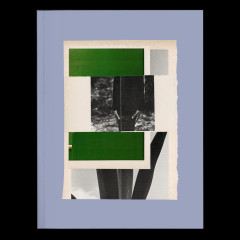
Efficient Space publication ENTHUSIASMS revives with Issue #03. 92 pages covering Aotea-roa DIY folk proliferator Maxine Funke, the vocal magick of Cucina Povera, Australian devo-tional jazz mystery Singing Dust, Osaka portal EM Records, unsung dub specialist Sheriff Lin-do and the living practice of e fishpool. View post-punk trailblazers through the lens of Rotter-dam polaroid photographer Peter Graute, while Swiss artist Elise Gagnebin-de Bons exhibits her series of collages purposed for Ghost Riders. The issue also boasts imaginary mixtapes from Gavsborg, Greg Davis and Jefre Cantu-Ledesma, Mikey Young, Sonic Boom and Troth. Perfect bound and illuminated by designer Steele Bonus.

- 1: Psycho Killer
- 2: Heaven
- 3: Sugar On My Tounge (Dub)
- 4: Born Under Punches (The Heat Goes On)
- 5: Once In A Lifetime
- 6: I Zimbra
- 7: The Book I Read
- 8: Girlfriend Is Better
- 9: Mind
- 10: Burning Down The House
- 1: Uh-Oh Love Comes To Town
- 2: Seen And Not Seen
- 3: Road To Nowhere
- 4: Born Under (More) Punches (The Heat Goes On)
- 5: Take Me To The River
- 6: And She Was
- 7: This Must Be The Place (Naive Melody)
- 8: Crosseyed And Painless
18
also available
Vinyl[32,35 €]
Naive Melodies is a bold and visionary tribute to the music of Talking Heads, reinterpreted through the lens of Black musical innovation. Curated by Drew McFadden — the creative mind behind BBE’s acclaimed Modern Love (David Bowie tribute album) — this new collection dives deep into the Afro-diasporic rhythms and experimental soul roots that helped shape Talking Heads’ unmistakable New Wave sound. Inspired by artists like Fela Kuti, Parliament, and Al Green — whose influences loomed large in the band’s rhythmic DNA — Naive Melodies shines a light on the Black music traditions that underpinned their artistry. Far from a conventional tribute, Naive Melodies reframes the band’s catalog through the voices and visions of a new generation of genre-defying artists. These interpretations illuminate the foundational grooves and sonic textures that fueled Talking Heads’ rhythm-forward aesthetic, bringing them full circle with authenticity. “With Naive Melodies, I wanted to spotlight the deep and often overlooked influence of Black music on the sound of Talking Heads, drawing from the rhythmic foundations of Afro-diasporic traditions, soul, gospel, Latin, and spiritual jazz. This project is a chance to reimagine Talking Heads’ legacy through the lens of the very innovations that helped shape it, bringing those influences to the forefront through the voices of today’s most forward-thinking artists.” — Drew McFadden The album features a globally minded lineup, including Liv.e, Bilal, Rogê, Miguel Atwood-Ferguson, Aja Monet, Georgia Anne Muldrow, Theo Croker, Kenny Dope, Rosie Lowe, Pachyman, W.I.T.C.H., and more — spanning Afrobeat, jazz, soul, funk, gospel, dub, electronica, orchestral, and Latin styles. It reflects not only the boundary-pushing ethos of Talking Heads, but also the influence of Black music as a cultural force that helped shape it. This is not just a tribute album — it’s a recontextualization. A cultural conversation. A rhythmic reawakening.

- A1: Core
- A2: Anticipate
- A3: War Game
- A4: Mantra
- A5: Unlearn
- A6: Disarm
- B1: Open
- B2: Safe
- B3: Heal
- B4: Dmz
Demilitarize follows Nazar’s remarkable 2020 debut Guerrilla, which reprocessed Angolan kuduro music with rough textures, field recordings and media clips, telling a personal story of the civil war that exiled his family to Europe, while his father, a rebel General, fought a losing battle in the jungle back home. After Guerrilla, and an extended period of serious illness, now Demilitarize is motivated by a reckoning with mortality and the flowering of new love, turning the ‘rough kuduro’ of Guerrilla inside out.This is a deep sound world, genuinely dreamy, the arc of the album describing shedding the armour of trauma and surrendering to this new situation. A constant and unexpected aspect of Demilitarize is Nazar's gentle, submerged vocal. Insistent and mantra-like, it’s like a cross between Elisabeth Frazer, Arthur Russell and Frank Ocean, and the music is fragile and opaque in response. The rhythms of kuduro are still here,but move around his voice like fish around a swimmer, while precise sound design illuminates from different angles. Chords spiral, ripple and shoot through the beats giving tracks the loosest of settings; songs disassemble; vocals float off-centre.

- Éire Go Deo
- Smugglers & Scholars
- Carnival
- Palestine (Feat. Fawzi)
- Liars Tale
- Fenian
- Big Bad Mo
- Headcase
- An Ra
- Éire Go Deo
- Smugglers & Scholars
- Carnival
- Palestine (Feat. Fawzi)
- Liars Tale
- Fenian
- Big Bad Mo
- Headcase
- An Ra
- Cold At The Top
- Occupied 6
- Gael Phonics
- Cocaine Hill (Feat. Radie Peat)
- Irish Goodbye (Feat. Kae Tempest)
14
also available
BLACK Vinyl[19,29 €]
KNEECAP return to bend genre, language, and rules. The most talked about artists in the world are turning the page. A new chapter, new sounds, new manifestos.
A blistering album that revels in darkness while bursting through the void with illuminated revery. This is FENIAN.
Produced by Dan Carey (Fontaines D.C., Kae Tempest, Wet Leg), FENIAN upends expectations with an expansive sonic palate, traversing acid house, trip-hop, dubstep, and more - Masters of rave and rap theatre, FENIAN represents Kneecap’s most sophisticated exploration of language and sounds.
More darkness. More confrontation. More craic. More energy. More solidarity. More absolute bangers. And more fuel for the unrelenting engine that powers this unstoppable force. For their remarkable second album, Kneecap have come out fighting.
Throughout, the sirens and alarms ring, and the chorus’s blast. Revolutionary and rebellious, confrontational and impossibly catchy, inescapably intelligent and brilliantly rendered, FENIAN doesn’t just represent the next phase in Kneecap’s trajectory but stands as a remarkable record that thrills as much as it surprises. The mayhem of their breakout year is a memory now. But Kneecap are neither dwelling on that nor merely persevering through it. In FENIAN they excel, reaching a new peak that is undeniable in its mastery.
Pressure makes diamonds, and FENIAN glistens with Kneecap’s uncut gems.

- Éire Go Deo
- Smugglers & Scholars
- Carnival
- Palestine (Feat. Fawzi)
- Liars Tale
- Fenian
- Big Bad Mo
- Headcase
- An Ra
- Éire Go Deo
- Smugglers & Scholars
- Carnival
- Palestine (Feat. Fawzi)
- Liars Tale
- Fenian
- Big Bad Mo
- Headcase
- An Ra
- Cold At The Top
- Occupied 6
- Gael Phonics
- Cocaine Hill (Feat. Radie Peat)
- Irish Goodbye (Feat. Kae Tempest)
also available
TRI COLOUR Vinyl (RED, RED, BLACK)[24,79 €]
KNEECAP return to bend genre, language, and rules. The most talked about artists in the world are turning the page. A new chapter, new sounds, new manifestos.
A blistering album that revels in darkness while bursting through the void with illuminated revery. This is FENIAN.
Produced by Dan Carey (Fontaines D.C., Kae Tempest, Wet Leg), FENIAN upends expectations with an expansive sonic palate, traversing acid house, trip-hop, dubstep, and more - Masters of rave and rap theatre, FENIAN represents Kneecap’s most sophisticated exploration of language and sounds.
More darkness. More confrontation. More craic. More energy. More solidarity. More absolute bangers. And more fuel for the unrelenting engine that powers this unstoppable force. For their remarkable second album, Kneecap have come out fighting.
Throughout, the sirens and alarms ring, and the chorus’s blast. Revolutionary and rebellious, confrontational and impossibly catchy, inescapably intelligent and brilliantly rendered, FENIAN doesn’t just represent the next phase in Kneecap’s trajectory but stands as a remarkable record that thrills as much as it surprises. The mayhem of their breakout year is a memory now. But Kneecap are neither dwelling on that nor merely persevering through it. In FENIAN they excel, reaching a new peak that is undeniable in its mastery.
Pressure makes diamonds, and FENIAN glistens with Kneecap’s uncut gems.

- A1: Outro
- A2: Les Monstres
- A3: La Fenêtre
- A4: Être Une Fille
- A5: Sidequest Feat. Asfar Shamsi
- B1: Avec Ça
- B2: Bonhomme De Neige
- B3: Vivant
- B4: Les Rois
- C1: Cowgirl Feat. Tuerie
- C2: Eh Le Reuf
- C3: Kodak Blue
- C4: Vol De Nuit Feat. Jazzy Bazz
- D1: L'école Primaire Feat. Chilly Gonzales
New album by french rapper Sheldon, including featurings with Chilly Gonzales, Jazzy Bazz, Tuerie, Asfar Shamsi...
Monsters are never where we expect them to be. They take shape in silences, in vague fears, in the baggage we carry without always understanding it. Sometimes, we also encounter them along the course of a life. On this new album, Sheldon chooses to dance with them, to tame them with wit, grace, and a sense of peace.
Following a powerful return with Grünt 75, an iconic format to which the 75e Session collective brought particularly ambitious visual staging, Sheldon unveils a fourth album that unfolds across fourteen tracks like a chiaroscuro landscape, revealing the full depth of his emotional and musical range. Through intimate narratives, the record explores identity (Être une fille), family and fatherhood (La Fenêtre and Les Monstres, the title track), as well as friendship (Eh le reuf). These are themes that run through all of us, approached here with writing that is vivid, demanding, and deeply sensitive.
Driven by a strong narrative arc, the album features songs like Être une fille, which challenges and questions us. On it, Sheldon reflects on his relationship to gender, his doubts and discomfort with the codes of masculinity, and the idea that he has sometimes imagined himself elsewhere. Tracks like La Fenêtre and Avec ça illuminate the album like moments of communion, sincere, warm, and unifying, carried by a childlike lightness that makes tomorrow disappear.
True to his open minded and ever curious artistic approach, Sheldon draws from a wide range of musical genres while keeping rap as the album’s guiding thread, giving each song its own singular identity and contributing to the balance of the whole. To shape the project, Sheldon surrounded himself with a new generation of musicians and beatmakers whose influences span rap, indie rock, pop, and experimental music. Among them are Johnny Ola, who has notably composed for Zamdane, Jazzy Bazz, and Edge, Rodolphe Babignan, Carbonne’s flamenco guitarist, and Jeune Oji, an artist signed to Friends of Friends Music. Together, they bring melodic and acoustic richness, as well as a collective generosity that deepens the album’s intimacy.
This new album also opens the door to new collaborations.
On L’école primaire, Chilly Gonzales joins Sheldon for an unconventional piano and vocals piece, driven by cinematic, deeply intimate storytelling. Using his primary school as a point of reference, Sheldon retraces his path from childhood to adulthood, somewhere between nostalgia and serenity.
On Cowgirl, Tuerie joins Sheldon for a soft, melodic ballad with an 80s tint, capturing the weightlessness of a sunlit summer.
On Sidequest, Sheldon reunites with Asfar Shamsi, who had already appeared on his Grünt. Over a delicate cloud trap production, the two artists open up about everyday pain, finding in introspection a way to put things into perspective.
Finally, Vol de nuit brings Jazzy Bazz and Sheldon together for an intimate exchange over an ethereal, mysterious production, as both artists look back on their journeys with calm and clarity.
Conceived alongside Sheldon’s closest circle, the project celebrates family, friendship, and love as its founding pillars. Sheldon chooses to step away from the images, allowing his story to be embodied instead through the faces and gestures of those around him. This approach runs through all of the project’s visuals. Rejecting the excess of spectacular image making, he chose instead to hand a camera to his loved ones so they could offer their own vision of a song from the album. By opening a small window onto his intimacy, and that of the people closest to him, Sheldon finds a way to say a great deal with very little, turning deeply personal trajectories into something universal.
Like the music videos, the album cover is rooted in a deliberately simple approach, where the fantasy of childhood disrupts reality. Designed by Tenzin, the graphic designer behind Sheldon’s recent projects, Ptite Sœur, and also work for Jul, it is based on an archival photograph taken during a traditional carnival in Tenzin’s native village. With no staging involved, the image captures children in costume mid parade, caught in a spontaneous burst of movement, embodying the free innocence of childhood.
Les Monstres marks a new chapter in Sheldon’s journey. Like a rainbow after the storm, this fourth album reveals new colours in the artist’s discography, as he delivers a record that is both demanding and accessible, intimate and open, one in which music becomes a love letter to friendship and to love itself. Set for release on April 24, 2026, the album will be followed by a tour culminating at La Cigale in Paris on December 3, 2026.

- A1: Old Becoming New
- A2: Vessel Diaspora
- A3: Floor Phlegm Hue
- A4: Soft Tissue
- A5: Arriving Through The Front Door
- B1: Moth Ball
- B2: Spin
- B3: Terraforming
- B4: Lilac Sea
- B5: Oumuamua
London experimental spoken word and electronics duo BAG land on Phantom Limb with mesmerising new album This House is a Body, marrying visceral poetry with exploratory production to achieve beguiling, occasionally screwy and occasionally dreamy sonics.
“This album functions as a floor plan, a house in itself, collecting and containing the ecosystems of multiple rooms,” write BAG - Canadian artist and poet Jody DeSchutter and London producer Daniel Allison. “The roles we play can be defined by the room we are in; and it can be near impossible to tell what room we are in without looking from outside. This album maps out a number of rooms which hold such relations, memories, or experiences and builds them all into a single house, a single body.” Formed from Allison’s headspinning, depth-mining production for synthesis, field recording, and acoustic instrumentation, and DeSchutter’s lysergic and prophetic spoken word, the palette of This House is a Body can turn on a dime from claustrophobia and dread to hyperreal dream sequence, illuminated in sunstreamed glory in places and dripping with basement effluvia in others. Throughout, words, meaning, and imagery all dissolve into an architecture of alternately familiar and unknowable sound.

6
** Highly limited edition CLEAR VINYL VERSION**
Pt.1 of 2
Gigi Masin's sparkling sonic magic leads us to the light in “Implodendo in una accecante oscurità” (Imploding in a blinding darkness). The mirror reflects nothing but a faint, unfamiliar, mysteriously hostile face, but a glimmer survives, evoked by a painfully solemn romanticism that is salvific, glimmers of light bounce off broad synthetic volutes, a bewitching ambient, airy quiet, they spread, a few veins of darkness shine through, aesthetic beauty equates to clear spirituality, sax and female voices, the elegy that intertwines piano and vocal loops, that omnipresent melancholy, nostalgia, reassuring, which is openness to tomorrow. It is the moment of light, the powerful feeling that nothing is lost, that what awaits to be grasped is more than a remnant, perhaps an overcoming, light that “is not what it shows but what it reveals”, that light that becomes memory that does not need to illuminate to be perceived where it most needs to spread, where darkness has resided for too long

5
Pt.2 of 2
Gigi Masin's sparkling sonic magic leads us to the light in “Implodendo in una accecante oscurità” (Imploding in a blinding darkness). The mirror reflects nothing but a faint, unfamiliar, mysteriously hostile face, but a glimmer survives, evoked by a painfully solemn romanticism that is salvific, glimmers of light bounce off broad synthetic volutes, a bewitching ambient, airy quiet, they spread, a few veins of darkness shine through, aesthetic beauty equates to clear spirituality, sax and female voices, the elegy that intertwines piano and vocal loops, that omnipresent melancholy, nostalgia, reassuring, which is openness to tomorrow. It is the moment of light, the powerful feeling that nothing is lost, that what awaits to be grasped is more than a remnant, perhaps an overcoming, light that “is not what it shows but what it reveals”, that light that becomes memory that does not need to illuminate to be perceived where it most needs to spread, where darkness has resided for too long

Ancient passages
for golden talismans,
iron converts on illuminated slabs, vapors to the sky and tribal songs
among towers never touched by an eye.
Earthly history wanders
still
on unwritten runes.

4
For heads who like it dark, detailed, and dialed-in. Stephan Hinz steps up on Odd Even with a deep and driving techno cut that hits straight where it counts. Four tracks soaked in tension, groove, and atmosphere — no filler, just pure dancefloor intent.
Andre Kronert brings the heat on the remix, turning Everything Is Illuminated into a stripped-down, rolling beast.

6
Pt.1 of 2
Gigi Masin's sparkling sonic magic leads us to the light in “Implodendo in una accecante oscurità” (Imploding in a blinding darkness). The mirror reflects nothing but a faint, unfamiliar, mysteriously hostile face, but a glimmer survives, evoked by a painfully solemn romanticism that is salvific, glimmers of light bounce off broad synthetic volutes, a bewitching ambient, airy quiet, they spread, a few veins of darkness shine through, aesthetic beauty equates to clear spirituality, sax and female voices, the elegy that intertwines piano and vocal loops, that omnipresent melancholy, nostalgia, reassuring, which is openness to tomorrow. It is the moment of light, the powerful feeling that nothing is lost, that what awaits to be grasped is more than a remnant, perhaps an overcoming, light that “is not what it shows but what it reveals”, that light that becomes memory that does not need to illuminate to be perceived where it most needs to spread, where darkness has resided for too long

5
Pt.2 of 2
Gigi Masin's sparkling sonic magic leads us to the light in “Implodendo in una accecante oscurità” (Imploding in a blinding darkness). The mirror reflects nothing but a faint, unfamiliar, mysteriously hostile face, but a glimmer survives, evoked by a painfully solemn romanticism that is salvific, glimmers of light bounce off broad synthetic volutes, a bewitching ambient, airy quiet, they spread, a few veins of darkness shine through, aesthetic beauty equates to clear spirituality, sax and female voices, the elegy that intertwines piano and vocal loops, that omnipresent melancholy, nostalgia, reassuring, which is openness to tomorrow. It is the moment of light, the powerful feeling that nothing is lost, that what awaits to be grasped is more than a remnant, perhaps an overcoming, light that “is not what it shows but what it reveals”, that light that becomes memory that does not need to illuminate to be perceived where it most needs to spread, where darkness has resided for too long

- A1: Born In The Usa (Lp1 Nebraska Outtakes Demo Version 1982)
- A2: Losin' Kind
- A3: Downbound Train
- A4: Child Bride
- B1: Pink Cadillac
- B2: The Big Payback (Single B-Side 1982)
- B3: Working On The Highway
- B4: On The Prowl
- B5: Gun In Every Home
- C1: Nebraska (Lp2 Electric Nebraska)
- C2: Atlantic City
- C3: Mansion On The Hill
- C4: Johnny 99
- D1: Downbound Train
- D2: Open All Night
- D3: Born In The Usa
- D4: Reason To Believe
- E1: Nebraska (Lp3 Nebraska)
- E2: Atlantic City
- E3: Mansion On The Hill
- E4: Johnny 99
- E5: Highway Patrolman
- F1: State Trooper
- F2: Used Cars
- F3: Open All Night
- F4: My Fathers House
- F5: Reason To Believe
- G1: Nebraska (Lp4 2025 Remaster)
- G2: Atlantic City
- G3: Mansion On The Hill
- G4: Johnny 99
- G5: Highway Patrolman
- H1: State Trooper
- H2: Used Cars
- H3: Open All Night
- H4: My Father's House
- H5: Reason To Believe
37
Bruce Springsteen's statewide ode Nebraska '82 is given ample extra space with a new expanded edition, as his 1982 acoustic masterwork is cast in renewed light by its use the forthcoming biopic Deliver Me From Nowhere, which documents the conception of the original album. Now with an extra 17 solo outtakes, including demos of 'Born In the USA' , 'Pink Cadillac', and 'Downbound Train', as well as the fabled Electric Nebraska sessions with the E Street Band, the new dubs illuminate the breadth of Springsteen's vision for a reconciled America, where Springsteen found much inspiration in the folk, literature and short stories of the heartland, particularly in those of Flannery O'Connor, childhood and young-adult memories. Notably, it was deemed by PopMatters to beo one of the first every DIY records made by a major artist, and soon sparked a DIY revolution by folk musicians the globe over.

- A4: Daniele Baldelli, Francesca Amati - Inner Light
- A5: Ruins - Sexual Desire
- B1: Midnight Magic - Beam Me Up (Eli's Mix)
- B2: Musclecars - Running Out Of Time
- B3: Working Men's Club - Ploys (System Olympia Edit)
- B4: Royalty - Heart Strings
- C1: Dirty Art Club - Daysleeper
- C2: Admiral - Soho Girl
- C3: Tom Sharkett & Raf Rundell - Where's It All Go?
- C4: Gina Calabrese - Nobody Lives Forever
- D1: Romolo Grano, Gianni Oddi & Edda Dell'orso - Kilimangiaro
- D2: Lndfk - Hana-Bi
- D3: Fitness Forever - Vederti Distante
- A1: System Olympia - The Heat Of The Night (Feat. Reinen)
- A2: Flavia Fortunato - Se Tu Vuoi
- A3: See Thru Hands - Hot City
- D4: Piero Umiliani - Chaser
- D5: Stefano Torossi - Feeling Tense
also available
White Vinyl[32,35 €]
System Olympia presents a bold, cinematic compilation that redefines the sound of sensuality. Love Language is an
18-track double-vinyl release pressed on deluxe heavyweight black vinyl.
It’s accompanied by a provocative, limited-edition 24-page fanzine, exclusive to 18+ audiences.
This is not just a compilation, Love Language is a manifesto. A carefully curated sonic journey through eroticism, artistic rebellion,
and liberation, it spans nearly five decades of music and features exclusive edits and rare gems that illuminate System Olympia’s
radical aesthetic vision.
****
Since her emergence on the electronic underground, System Olympia has carved out a distinct, sensual sonic universe, equal parts
vulnerable and defiant. With Love Language, she presents her most audacious project to date: a compilation rooted in what she
calls The Aesthetics of Sexual Desire in Sound.
It’s a daring declaration that desire is more than a feeling - it’s a language. Across 20 tracks, including her own sultry opener “The
Heat Of The Night (feat. REINEN)” and a rare System Olympia edit of Working Men’s Club’s “Ploys”, this compilation speaks in
rhythms and textures that evoke longing, intimacy, and ecstatic release.
This is not a traditional compilation. System Olympia’s sequencing is cinematic and deliberate. Every track a scene in a film that exists
only in the listener’s imagination. From the retro-futurist seduction of Flavia Fortunato’s Italo gem “Se Tu Vuoi” to the deep, extended
tension of Musclecars’ “Running Out of Time,” each piece plays its part in an arc of anticipation, climax, and reflection.Uniting artists as diverse as Daniele Baldelli, Piero Umiliani, and DJ Rocca, Love Language refuses boundaries of genre, era, or
expectation. It dances between vintage Italo-disco, dreamy electronica, sweaty club tracks, and avant-garde jazz, forming a rich
tapestry of sound and sensation.
System Olympia explains, “This is music for lovers, outsiders, and dreamers. It's a rebellion made of velvet and
basslines.
The accompanying 24-page fanzine insert, restricted to adults, further deepens the narrative, with erotic visual fragments and
poetic texts that amplify the compilation’s raw, sensual energy. A tangible extension of the music’s spirit, the zine invites listeners to
step into Olympia’s world and engage their senses fully.
As much a provocation as it is a celebration, Love Language is a deeply personal curation and a radical act of creative freedom. It
champions eroticism as art, desire as dialogue, and music as a liberatory force.
a A1. System Olympia - The Heat Of The Night (feat. REINEN) 3:44
b A2. Flavia Fortunato - Se Tu Vuoi 3:38
c A3. See Thru Hands - Hot City 3:57
[d] A4. Daniele Baldelli, Francesca Amati - Inner Light [4:43]
[e] A5. Ruins - Sexual Desire [3:14]
[f] B1. Midnight Magic - Beam Me Up (Eli's Mix) [5:13]
[g] B2. musclecars - Running Out Of Time [5:10]
[h] B3. Working Men's Club - Ploys (System Olympia Edit) [4:56]
[i] B4. Royalty - Heart Strings [5:05]
[j] C1. Dirty Art Club - Daysleeper [3:45]
[k] C2. Admiral - Soho Girl [4:14]
[l] C3. Tom Sharkett & Raf Rundell - Where's It All Go? [3:41]
[m] C4. Gina Calabrese - Nobody Lives Forever [4:40]
[n] D1. Romolo Grano, Gianni Oddi & Edda Dell'Orso - Kilimangiaro [3:55]
[o] D2. LNDFK - Hana-bi [1:55]
[p] D3. Fitness Forever - Vederti Distante [2:47]
[a] A1. System Olympia - The Heat Of The Night (feat. REINEN) [3:44]
[b] A2. Flavia Fortunato - Se Tu Vuoi [3:38]
[c] A3. See Thru Hands - Hot City [3:57]
[d] A4. Daniele Baldelli, Francesca Amati - Inner Light [4:43]
[e] A5. Ruins - Sexual Desire [3:14]
[f] B1. Midnight Magic - Beam Me Up (Eli's Mix) [5:13]
[g] B2. musclecars - Running Out Of Time [5:10]
[h] B3. Working Men's Club - Ploys (System Olympia Edit) [4:56]
[i] B4. Royalty - Heart Strings [5:05]
[j] C1. Dirty Art Club - Daysleeper [3:45]
[k] C2. Admiral - Soho Girl [4:14]
[l] C3. Tom Sharkett & Raf Rundell - Where's It All Go? [3:41]
[m] C4. Gina Calabrese - Nobody Lives Forever [4:40]
[n] D1. Romolo Grano, Gianni Oddi & Edda Dell'Orso - Kilimangiaro [3:55]
[o] D2. LNDFK - Hana-bi [1:55]
[p] D3. Fitness Forever - Vederti Distante [2:47]
[a] A1. System Olympia - The Heat Of The Night (feat. REINEN) [3:44]
[b] A2. Flavia Fortunato - Se Tu Vuoi [3:38]
[c] A3. See Thru Hands - Hot City [3:57]
[d] A4. Daniele Baldelli, Francesca Amati - Inner Light [4:43]
[e] A5. Ruins - Sexual Desire [3:14]
[f] B1. Midnight Magic - Beam Me Up (Eli's Mix) [5:13]
[g] B2. musclecars - Running Out Of Time [5:10]
[h] B3. Working Men's Club - Ploys (System Olympia Edit) [4:56]
[i] B4. Royalty - Heart Strings [5:05]
[j] C1. Dirty Art Club - Daysleeper [3:45]
[k] C2. Admiral - Soho Girl [4:14]
[l] C3. Tom Sharkett & Raf Rundell - Where's It All Go? [3:41]
[m] C4. Gina Calabrese - Nobody Lives Forever [4:40]
[n] D1. Romolo Grano, Gianni Oddi & Edda Dell'Orso - Kilimangiaro [3:55]
[o] D2. LNDFK - Hana-bi [1:55]
[p] D3. Fitness Forever - Vederti Distante [2:47]
[a] A1. System Olympia - The Heat Of The Night (feat. REINEN) [3:44]
[b] A2. Flavia Fortunato - Se Tu Vuoi [3:38]
[c] A3. See Thru Hands - Hot City [3:57]
[d] A4. Daniele Baldelli, Francesca Amati - Inner Light [4:43]
[e] A5. Ruins - Sexual Desire [3:14]
[f] B1. Midnight Magic - Beam Me Up (Eli's Mix) [5:13]
[g] B2. musclecars - Running Out Of Time [5:10]
[h] B3. Working Men's Club - Ploys (System Olympia Edit) [4:56]
[i] B4. Royalty - Heart Strings [5:05]
[j] C1. Dirty Art Club - Daysleeper [3:45]
[k] C2. Admiral - Soho Girl [4:14]
[l] C3. Tom Sharkett & Raf Rundell - Where's It All Go? [3:41]
[m] C4. Gina Calabrese - Nobody Lives Forever [4:40]
[n] D1. Romolo Grano, Gianni Oddi & Edda Dell'Orso - Kilimangiaro [3:55]
[o] D2. LNDFK - Hana-bi [1:55]
[p] D3. Fitness Forever - Vederti Distante [2:47]

- A3: See Thru Hands - Hot City
- A4: Daniele Baldelli, Francesca Amati - Inner Light
- A5: Ruins - Sexual Desire
- B1: Midnight Magic - Beam Me Up (Eli's Mix)
- B2: Musclecars - Running Out Of Time
- B3: Working Men's Club - Ploys (System Olympia Edit)
- B4: Royalty - Heart Strings
- C1: Dirty Art Club - Daysleeper
- C2: Admiral - Soho Girl
- C3: Tom Sharkett & Raf Rundell - Where's It All Go?
- C4: Gina Calabrese - Nobody Lives Forever
- D1: Romolo Grano, Gianni Oddi & Edda Dell'orso - Kilimangiaro
- D2: Lndfk - Hana-Bi
- A1: System Olympia - The Heat Of The Night (Feat. Reinen)
- A2: Flavia Fortunato - Se Tu Vuoi
- D3: Fitness Forever - Vederti Distante
- D4: Piero Umiliani - Chaser
- D5: Stefano Torossi - Feeling Tense
16
also available
Black Vinyl[29,83 €]
System Olympia presents a bold, cinematic compilation that redefines the sound of sensuality. Love Language is an
18-track double-vinyl release pressed on deluxe heavyweight black vinyl.
It’s accompanied by a provocative, limited-edition 24-page fanzine, exclusive to 18+ audiences.
This is not just a compilation, Love Language is a manifesto. A carefully curated sonic journey through eroticism, artistic rebellion,
and liberation, it spans nearly five decades of music and features exclusive edits and rare gems that illuminate System Olympia’s
radical aesthetic vision.
****
Since her emergence on the electronic underground, System Olympia has carved out a distinct, sensual sonic universe, equal parts
vulnerable and defiant. With Love Language, she presents her most audacious project to date: a compilation rooted in what she
calls The Aesthetics of Sexual Desire in Sound.
It’s a daring declaration that desire is more than a feeling - it’s a language. Across 20 tracks, including her own sultry opener “The
Heat Of The Night (feat. REINEN)” and a rare System Olympia edit of Working Men’s Club’s “Ploys”, this compilation speaks in
rhythms and textures that evoke longing, intimacy, and ecstatic release.
This is not a traditional compilation. System Olympia’s sequencing is cinematic and deliberate. Every track a scene in a film that exists
only in the listener’s imagination. From the retro-futurist seduction of Flavia Fortunato’s Italo gem “Se Tu Vuoi” to the deep, extended
tension of Musclecars’ “Running Out of Time,” each piece plays its part in an arc of anticipation, climax, and reflection.Uniting artists as diverse as Daniele Baldelli, Piero Umiliani, and DJ Rocca, Love Language refuses boundaries of genre, era, or
expectation. It dances between vintage Italo-disco, dreamy electronica, sweaty club tracks, and avant-garde jazz, forming a rich
tapestry of sound and sensation.
System Olympia explains, “This is music for lovers, outsiders, and dreamers. It's a rebellion made of velvet and
basslines.
The accompanying 24-page fanzine insert, restricted to adults, further deepens the narrative, with erotic visual fragments and
poetic texts that amplify the compilation’s raw, sensual energy. A tangible extension of the music’s spirit, the zine invites listeners to
step into Olympia’s world and engage their senses fully.
As much a provocation as it is a celebration, Love Language is a deeply personal curation and a radical act of creative freedom. It
champions eroticism as art, desire as dialogue, and music as a liberatory force.
a A1. System Olympia - The Heat Of The Night (feat. REINEN) 3:44
b A2. Flavia Fortunato - Se Tu Vuoi 3:38
[c] A3. See Thru Hands - Hot City [3:57]
[d] A4. Daniele Baldelli, Francesca Amati - Inner Light [4:43]
[e] A5. Ruins - Sexual Desire [3:14]
[f] B1. Midnight Magic - Beam Me Up (Eli's Mix) [5:13]
[g] B2. musclecars - Running Out Of Time [5:10]
[h] B3. Working Men's Club - Ploys (System Olympia Edit) [4:56]
[i] B4. Royalty - Heart Strings [5:05]
[j] C1. Dirty Art Club - Daysleeper [3:45]
[k] C2. Admiral - Soho Girl [4:14]
[l] C3. Tom Sharkett & Raf Rundell - Where's It All Go? [3:41]
[m] C4. Gina Calabrese - Nobody Lives Forever [4:40]
[n] D1. Romolo Grano, Gianni Oddi & Edda Dell'Orso - Kilimangiaro [3:55]
[o] D2. LNDFK - Hana-bi [1:55]
[2:47]
[a] A1. System Olympia - The Heat Of The Night (feat. REINEN) [3:44]
[b] A2. Flavia Fortunato - Se Tu Vuoi [3:38]
[c] A3. See Thru Hands - Hot City [3:57]
[d] A4. Daniele Baldelli, Francesca Amati - Inner Light [4:43]
[e] A5. Ruins - Sexual Desire [3:14]
[f] B1. Midnight Magic - Beam Me Up (Eli's Mix) [5:13]
[g] B2. musclecars - Running Out Of Time [5:10]
[h] B3. Working Men's Club - Ploys (System Olympia Edit) [4:56]
[i] B4. Royalty - Heart Strings [5:05]
[j] C1. Dirty Art Club - Daysleeper [3:45]
[k] C2. Admiral - Soho Girl [4:14]
[l] C3. Tom Sharkett & Raf Rundell - Where's It All Go? [3:41]
[m] C4. Gina Calabrese - Nobody Lives Forever [4:40]
[n] D1. Romolo Grano, Gianni Oddi & Edda Dell'Orso - Kilimangiaro [3:55]
[o] D2. LNDFK - Hana-bi [1:55]
[2:47]

10
With their musical roots deeply immersed in the fertile soil of Afro-American music, the Buttshakers have found a new direction for their nostalgia-heavy soul music. With Lessons In Love, their third album on Underdog Records, their early heartaches and furies have faded in favor of a more composed harmony – a sound enveloped in love and soaked in the blues. Guided by their singer Ciara Thompson, the Buttshakers have taken a more intimate path, whose compass, in the chaos of emotions and the modern world, points only in one direction: the light.
Seen from the sky, the view appears limitless. Accentuated by the sun, the ochre and sandy hues of the open road only reinforce this feeling of immensity. The sky stretches and the green stands out in striking contrast. In lighter tones, a road is drawn -- without bends or contours. This is the worn and weary road of soul music, which The Buttshakers explore on each album in new and unique ways. Soul music – a rare place to find a French band.
Vast, the musical direction could have taken them to lighter pastures. Yet the Buttshakers chose to evolve in a different way; to take a heavier load. Two paths – one sparked by social unrest, the other purely sentimental, Lessons In Love explores the deep roots of soul music, in the steps of Curtis Mayfield or Al Green. It is here that the heart and mind cross paths, merge, and become one. A weary road -- that brings together the agitation of a world where good intentions never rise above the level of digital outrage, and a faith in love which, however it manifests and expresses itself, remains the only truth that never loses its power.
Less rage and more compassion, it is through the haunting words and now tempered inflection of Ciara Thompson's voice, which opens to distinct emotions and perspectives, that the listener is guided. With its gaze fixed on the horizon, the acoustic guitar of Gotta Believe invites us on an intimate stroll through the open plains, while Dream On carries us away with a clavinet riff and a possessed saxophone; reconnecting the electric heat and neurosis of a city full of dreams. The senses are moved by the conjuring potion of the guitar which distills throughout Troubled Waters; the body is brought back into a visceral dance by the keys and brass section that are put to the test by Sure As Sin and its irrepressible rhythm. Passing through clouds of dust and sand has left a bluesy imprint on their groove: the miles travelled became hundreds, then thousands.
All of this leaves the listener bewitched by the halo of resilience that now surrounds Ciara's performance, as the ten tracks let the light fade. But certainly not hope in a better day. Like the sunflower that always lifts its head towards the sun’s rays, the Buttshakers continue to resource their sounds in the deep roots of soul music. Into the rich layers of African-American music of the 60s and 70s, The Buttshakers capture the spirit as much as the musical aesthetics of the epoch. A sound that reaches into the meanderings of the soul, bringing light to dark places and hope for all. A sound for the most parched of hearts, living in a damaged world, Lessons In Love confirms that even the tiniest beam of light can illuminate one’s path.

The Belfast duo make ready this exceptional 6-Track Sampler from their forthcoming debut LP...
After showcasing their broad and boisterous tastes on a series of super limited Edits 12's, plus original releases on labels like Touch Sensitive, Hoga Nord, Duca Bianco and Optimo Music, we finally have a fully formed suite of original cuts which take us on a journey through their varied and vivid vibrations...
A general tip of the hat to the dark, post industrial basements illuminated by Weatherall's 9 O'Clock Drop comp.
From haunted dancehall, via beautifully throbbing ethno-chug and mesmerising clank-fests, to gloriously scuffed and foreboding Crammed Disc and Wax Trax! reminiscent offerings to the strobe gods.
One very limited press wrapped in screen-printed sleeves - one for the ages !

For the first time on vinyl a collection of tracks by Cortex, Alain Neffe (Bene Gesserit,Insane Music) experimental spoken-word project originally released on tape in 1984.
Cortex was never intended to be a conventional musical project.
From the very beginning it was centered around free live performances. These encounters were stripped down and highly visual: Alain Neffe constructed a trapezoidal fluorescent white screen lit by black light.
The narrator—la récitante—was only illuminated in the face, while the rest of the stage remained in complete darkness.
This created a ghostly effect where the audience could see only her glowing face and dark silhouette. She was a beautiful young woman, with a striking presence, and beside her, Alain Neffe played synthesizer and created sonic effects.
The aim of Cortex was to deliver a minimalist and emotional experience, one centered on text and the voice of the narrator.
Most of the tracks that exist today were recorded informally during rehearsals, using two microphones placed in front of Marshall amps, captured directly to cassette.
La récitante could choose a text from a collection of hundreds. Then, the music was improvised in real time around her voice. That process, simple, direct, and instinctive produced a body of work that’s rough around the edges, but full of presence. It’s not polished, but that’s the point.
Cortex was focused entirely on the connection between voice and sound.
Limited to 300 copies

- Hotel California
- New Kid In Town
- Life In The Fast Lane
- Wasted Time
- Wasted Time (Reprise)
- Victim Of Love
- Pretty Maids All In A Row
- Try And Love Again
- The Last Resort
The moment the instantly recognizable intertwined guitar passage on the title track to the Eagles' Hotel California begins, the record's genius becomes obvious all over again. Ranked the 118th Greatest Album of All Time by Rolling Stone, certified by RIAA as the third best-selling LP in history, and considered the foundation on which the Golden State's mid-‘70s music scene was built, the 1976 landmark is a music staple immune to shifts in trends, eras, and styles. Fearlessly addressing the chaos and consequences of American life, its songs remain strikingly prescient and gain creedence with each passing day.
Mastered from the original analogue master tapes, pressed on MoFi SuperVinyl, and limited to 17,500 numbered copies, Mobile Fidelity's UltraDisc One-Step 180g 45RPM 2LP vinyl box set ensures you will want to permanently check into and never leave this particular Hotel California. Up to the herculean task of standing head and shoulders above all prior reissues, this collectible edition plays with extreme clarity, organic richness, tube-like warmth, massive dynamics, and microscopic levels of detail. You'll be able to practically smell the colitas and feel the breeze in your hair. Songs come across with an epic sweep and feature immersive, front-to-back soundstages that allow the music unprecedented air, roominess, and separation. As for the noise floor? It's basically as invisible as the spirits that waft in the corridors of the unforgettable title song.
Aesthetically, the premium packaging and presentation of the UD1S Hotel California pressing befit its esteemed status. Housed in a deluxe box, it features gorgeous foil-stamped jackets and faithful-to-the-original graphics that illuminate the splendour of the recording. From every angle, this UD1S reissue exists as a curatorial artefact meant to be preserved, touched, and examined. It is made for discerning listeners that prize sound quality and production, and who desire to fully immerse themselves in the art – and everything involved with the album, from the renowned cover art to the meticulous finishes.
Indeed, the opportunity to zero in on all the particulars of the 26-million-selling Eagles record dubbed "a legitimate rock masterpiece" by vaunted Los Angeles Times scribe Robert Hilburn has never been better. A global phenomenon that marked the band debut of guitarist-singer Joe Walsh, Hotel California continues to resonate and connect with listeners of all generations taken by its narrative depth, stark directness, picturesque melodies, daring majesty, and ardent emotionalism. Adorned with a breathtaking exterior photograph of the Beverly Hills Hotel that serves as the simultaneously haunting and alluring cover art, and rounded out by a rear-cover shot of the Lido Hotel lobby that reinforces a notion that teeters between permanence and transience, Hotel California is brilliantly tied to a specific place that functions as a universally understood metaphor for the American Dream.
Confronting the darker undercurrents and oft-ignored constructs attached to that romantic notion, the record's songs revolve around a host of shared themes: excess, mobility, stability, illusion, fame, destruction, and idealism included. Notably, Hotel California appeared at a crucial junction in American history: During the country's bicentennial and amid escalating controversies related to the Vietnam War, energy crisis, and governmental corruption. That the Eagles manage to channel such cultural, social, and economical matters into a cohesive, stately, big-picture statement is alone a stupendous feat. That the album's reach, boldness, vitality, accessibility, and understated intensity have never waned make it a marvel.
Reflecting on Hotel California 40 years after its original release, and indirectly explaining its enduring appeal and increasing relevance, singer-songwriter Don Henley confirmed the record pertains to the "loss of innocence, the cost of naiveté...the difficulties of balancing loving relationships and work, trying to square the conflicting relationship between business and art; the corruption in politics, the fading away of the Sixties dream of ‘peace, love and understanding.'"
It can be argued that Henley and company squarely hit on and drove home those ideas in the surreal title track, chart-topping "Life in the Fast Lane," and grand "The Last Resort" alone. But that would miss the forest for the trees. Experienced as an unbroken whole, complete with the pristinely shot imagery and physical grooves, Hotel California unfolds like a geography-conscious saga by James Michener and plays like colour-saturated movie shot on 70mm film by Martin Scorsese. It's about our collective and individual decisions – and the shape of our past, present, and future. And, just like that conjured by our imaginations, Hotel California continues to take on a life of its own.
More About Mobile Fidelity UltraDisc One-Step and Why It Is Superior
Mobile Fidelity Sound Lab's UltraDisc One-Step (UD1S) technique bypasses generational losses inherent to the traditional three-step plating process by removing two steps: the production of father and mother plates, which are created to yield numerous stampers from each lacquer that is cut. For UD1S plating, stampers (also called "converts") are made directly from the lacquers. Since each lacquer yields only one stamper, multiple lacquers need to be cut. Mobile Fidelity's UD1S process produces a final LP with the lowest-possible noise floor. The removal of two steps of the plating process also reveals musical details and dynamics that would otherwise be lost due to the standard multi-step process. With UD1S, every aspect of vinyl production is optimized to produce the best-sounding vinyl album available today.
MoFi SuperVinyl
Developed by NEOTECH and RTI, MoFi SuperVinyl is the most exacting-to-specification vinyl compound ever devised. Analogue lovers have never seen (or heard) anything like it. Extraordinarily expensive and extremely painstaking to produce, the special proprietary compound addresses two specific areas of improvement: noise floor reduction and enhanced groove definition. The vinyl composition features a new carbonless dye (hold the disc up to the light and see) and produces the world's quietest surfaces. This high-definition formula also allows for the creation of cleaner grooves that are indistinguishable from the original lacquer. MoFi SuperVinyl provides the closest approximation of what the label's engineers hear in the mastering lab.

8
“After a stay in Detroit in 2022 (where I met some of the artists whose music I admire the most), I returned to Montreuil, illuminated and brimming with energy. I had my MPC2000XL repaired, found a second-hand Yamaha Motif ES6 at Zikplace in Croix de Chavaux, and a Korg Triton on Le Bon Coin. The three instruments connected together rekindled my practice of electronic music in my home studio. Passionate about the new setup, I tried to record a little each day.
After two years of work, I felt the desire to bring together the eight tracks that brought me the most joy during their recording. A certain nostalgia and/or melancholy can arise from the sounds of the instruments used, each dating from the late 1990s. They plunged me back into the house and R&B clips that played on MTV when I was a pre-teen, which I adored.
The recording is raw and conveys a message of peace, humility, and unity. It pays homage to the early hours of house music.
The title of the project, “please don’t wait,” is simple and refers to the passage of time, urgency, and the present moment. It’s a message that invites movement and action.”
-Mad Rey”
11
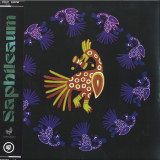
Saphileaum (the pseudonym of Georgian multi-media artist Andro Gogibedashvili) is inspired by Georgian myths and legends, esotericism, earth, unity, truth and the secrets of the universe.
Over the past few years, Saphileaum has released a diverse array of albums and EPs on labels such as Good Morning Tapes, Oslated, Silent Season, Mule Musiq and Slow Life, each one reflecting his unique blend of cosmic expansiveness, tribalism and meditative storytelling.
On his first collaboration with P&F Recordings, he draws inspiration from mysticism, self study, ancient civilizations and their various cultures and mysteries.
These musings unite to create an immersive sonic experience that traverses cosmic and tribal landscapes, bringing us 'TAMALUNGMA'.
Here, the listener enters a mystical realm-space, where nature's precious spirits guide you through a journey of transition. As you walk this path, their wisdom and presence illuminate the way, helping you move closer to your true purpose.
17
This 15th Anniversary celebration marks the first time this album has ever been available on vinyl , Bonus Tracks

- A1: Invaders - Story Of Love
- A2: Invaders - Holy Mountain
- A3: Invaders - A Way Home (I Got To Go Back Home)
- A4: Motherless Child (Aim In View)
- A5: Splenders - African Safari
- A6: Invaders - Conquering Lion
- B1: Invaders - Heaven & Earth
- B2: Invaders - Heaven & Earth Version
- B3: Paddy And Peps - Give Jah The Glory
- B4: Stepping Stones - Paddy's Version
- B5: Bongo Pat - Young Generation
- B6: Bongo Pat - You Got To Have Love
- B7: Bongo Pat - Live Good
13
We are overjoyed to present this album, another one from our bucket list and another one to set the record straight and illuminate the history of another much loved, but until now mysterious group. The Invaders made some of our all time favorite records - back in 2013 we issued five 45’s of their brilliant, sometimes plaintive, sometimes hopeful and sweet early roots music. Their sound touches folk and gospel in lovely subtle ways that elevate them above the many harmony groups of the early roots reggae era. Since the start of DKR we were striving to learn more about the group - and despite being able to license a portion of their output for reissue, and get anecdotes about them here and there, we were never able to connect with the group themselves. But we never gave up asking about them, and finally in 2024 we were able to link with Delroy “Bongo Pat” Forde, the surviving member of the group. Unfortunately other Invader, Lloyd “Paddy” Campbell passed on several years back. To hear and learn their full story, you need to check out this album and read the liner notes. This 13 song LP corrals much of their output - some of the tracks we previously issued but have been long out of press, some more never before reissued, and some great related solo works by the duo. And to cap it all off we’ve added two new voicings on a couple of our favorite vintage rhythms, by Invader Bongo Pat himself, live in 2024, singing two Invaders songs written way back in the early 1970s but never recorded back then. All together this is a long overdue document of one of the 1970’s finest groups and one dear to our heart.
5
Since its founding back in 2014, Blume has carved a unique place in cultural landscape, issuing free-standing works, spanning the historical and contemporary, that represent singular gestures of creativity within the field of experimental sound. Joining their broad efforts in building networks of context and understanding that already includes the works by Werner Durand, Sarah Hennies, Bruce Nauman, John Butcher, Jocy de Oliveira, Mary Jane Leach, Valentina Magaletti, Alvin Curran, Julius Eastman, Alvin Lucier, and others, Blume return with the first ever vinyl release to attend to James Tenney’s legendary “Postal Pieces”, Marking the first ever appearance of five of the suite’s works - “Maximusic, for Max Neuhaus” (1965), “Having Never Written a Note for Percussion, for John Bergamo” (1971), “FFor Percussion Perhaps, or... Night, for Harold Budd” (1971), “Cellogram, for Joel Krosnick” (1971), and “Beast, for Buell Neidlinger” (1971) - on vinyl, drawing upon recordings made in 2003, by the Amsterdam based ensemble, The Barton Workshop, under the direction of James Fulkerson. Among the most important and highly regarded efforts in Tenney’s canon of compositions, as well as within the history of 20th Century music, these five pieces represent a crucial bridge between Fluxus-oriented conceptualism, minimalism, and the microtonal complexities that would emerge in their wakes. Issued in a highly limited vinyl edition of 300 copies, it includes exact replicas of the original postcard graphic scores, and features newly commissioned liner notes by Bradford Bailey, Blume’s brand new edition takes great steps to centring Tenney at the eye the storm during some of experimental music’s most important years.
A student of composition under Carl Ruggles, John Cage, Harry Partch, and Edgard Varèse - remaining close to all of them, and later performing in both Cage and Partch’s ensembles - as well as acoustics, information theory, and tape music composition under Lejaren Hiller, James Tenney carved a wide path within the contexts of experimental and avant-garde music during the second half of the 20th Century. Not only was he a tangible bridge between the generations of composer’s who laid much of the groundwork and the later movements of Fluxus, Minimalism, and the broader practices of experimental music, but Tenney is credited as having contributed one of the earliest applications of gestalt theory and cognitive science to music in 1961, before helping to pioneer the field of computer music at Bell Labs, during the following years.
Over the course of his career, Tenney produced music of such complexity and sophistication - paying little mind to the seductions of taste or dominant tropes of its own moment - that his work and legacy have largely remained under-recognised by the broader publics that have attended to most of his peers. Perhaps more pertinently, the body of work he produced can be perceived as too varied and complex to fit neatly within standard creative histories or critical frameworks, comprising harmonically complex works for acoustic instrumentation, musique concrète, the groundbreaking 1961 “plunderphonic” composition, “Collage No.1 (Blue Suede) (for tape)” - sampling and manipulating a recording of Elvis Presley - as well as algorithmic and computer synthesized music. Even here, within this single decade, a clear image of Tenney’s endeavours remains elusive. In addition to penning important theoretical texts, he collaborated and / or played with Max Neuhaus, La Monte Young, Steve Reich, Philip Glass, Michael Snow, Terry Riley, and numerous others; was an active member of Fluxus; starred in and composed music for Stan Brackage’s films; regularly worked with the Judson Dance Theater; co-founded and played in the ensemble, Tone Roads, with Malcolm Goldstein and Philip Corner; was a vocal advocate of the works of Conlon Nancarrow and Charles Ives, playing a significant part in the revival of both of their legacies; and regularly collaborated as a composer, musician, and actor with his then-partner, the artist Carolee Schneemann, notably co-starring in her film, “Fuses” (1965) and her legendary 1964 performance, “Meat Joy”, as well as creating sound collages for her films “Viet Flakes” (1965) and “Snows” (1970). Curiously, for a relatively absent figure in the historical and critical narratives, Tenney seems to have been the thread that bound multiple generations and disciplines of avant-garde practice in New York during this period.
Tenney was deeply invested in the quality and perception of sound. By 1970, this led him back to composing exclusively for acoustic instrumentation (though sometimes processed with tape delay) - in most cases utilising non-well tempered tuning systems to explore harmonic perception - a practice that he would remain steadfast to for the remainder of his life. This development roughly corresponded with his relocation to California, at the outset of the 1970s, following an invitation to teach at the newly founded music department at California Institute of the Arts (CalArts) in Valencia. Finding himself in regular contact with the harpist Susan Allen and the artist Allison Knowles, as well as at a great distance from many of his friends, in 1971 he completed (with the assistance of Knowles and Marie McRoy) “The Postal Pieces”, a project he had begun in 1965.
A suite of eleven compositions, “The Postal Pieces”, stands among Tenney’s well known and celebrated compositions, and illuminates the dualities embraced by the composer, notably his use of sound to develop consciousness in and of others, and his willingness to draw on elements and observations of everyday life; citing his strong dislike of writing letters as being the primary inspiration for their inception. In lieu, he conceived to send his friends - John Bergamo, Allison Knowles, Pauline Oliveros, La Monte Young, Harold Budd, Philip Corner, Joel Krosnick, Buell Neidlinger, Susan Allen, Max Neuhaus, and Malcolm Goldstein - short scores on the back of postcards. The suite is composed around three themes: Tenney’s concept of swell form (utilizing repetition and progressing through a structurally symmetrical arch), intonation, and the desire to produce “meditative perceptual states”.
A hugely important addition to Blume’s ever expanding efforts in context building and networks of creative practice, James Tenney’s “Post Pieces” is issued in a highly limited vinyl edition of 300 copies, which includes a exact replicas of the original postcard graphic scores, and features newly commissioned liner notes by Bradford Bailey.


shipping to EU only !
The industry standard Xone:92 is a versatile six channel analogue mixer, renowned for its expansive, involving sound.
With its solid construction and easy to use interface, the 92 is on the riders of most of the world’s top DJs and is a permanent fixture in the booth at many of the biggest superclubs.
The Xone:92 was one of the first professional DJ mixers to incorporate MIDI for control of DJ software or external devices, and the first to include the innovative dual VCF filters.
With its two stereo FX sends, twin Mic/returns, and one of the best EQ sections around, this mixer is a DJ’s dream tool.
Features:
• 6 dual stereo channels – 4 phono/line, 2 mono/mic or stereo return
• 2 independent stereo mix outputs
• 2 aux sends for output to external FX units
• VCF system – 2 independent stereo filters with frequency and resonance controls
• 2 independent LFO’s for filter manipulation
• 4-band EQ – total kill on HF and LF, wide Q for cut, narrow Q for boost
• Booth output – dedicated output on TRS jack
• MIDI values can be output from 6 controls (e.g. crossfader, LFO)
• P&G easy change professional VCA crossfader
• Illuminated lightpipes showing status of performance controls
• Intelligent cue for pre or post EQ monitoring
• Monitor section includes post EQ switch, split cue and mix to cue balance
• 2 headphone outputs (1/4” and 3.5mm)
• Ducking control on mono/mic channel

Making a remarkable step onto the CEP booth, Blame The Mono introduces their debut with a magnetic collection of two game changing original tracks. This release not only displays the duo's creative capabilities but also features melting remixes from Hermeth and the label head riko.
The release kicks off with the 'Kneebreaker Mix', showcasing a top-tier interplay of reese bass. The pushing bassline and dynamic vocals provide the track with its living strength. In addition to the effects, the midsection break-beat mirrors the timeless sound of Blame The Mono, showering the listener with unmistakable recognition value. Coming up next is likely the standout piece from the release. The 'Industrial Mix' manifests as a 117 BPM break, highlighting an remarkable synergy of hitting kicks, spicy drums, and leading vocals. This track radiates a rock and metal-inspired vibe, making it truly one-of-a-kind. Opening the B-Side is riko’s trance-infused remix, featuring consistent vocal shots from the original and a galloping bassline. In addition to the dub chords, the monotonous melody assumes control during the significant break in the middle, contributing a hypnotic quality to the track. Wrapping up the release, Hermeth introduces a techno-infused remix, characterized by powerful classic chords and a driving bass that sets the tone on the dancefloor. The original vocal and lead elements illuminate the track, firing it up with a distinctive flavor.
'London Accent' by Blame The Mono drops via CEP Records on 15th January 2024.

7
Salem Rashid Skourlis, a human artist and composer, defies limits to manifest his solo project "fatalism." Drawing inspiration from personal experiences with paganism, pacifism, and immigration, fatalism intertwines otherworldly sounds and post-industrial landscapes. His work, relentless and self-sufficient, illuminates a foreboding future. Founder of @bedouinrecords, he has captivated audiences worldwide in prestigious venues like Berghain, Berlin and KGR(n), Tokyo. fatalism's forthcoming debut album, "fatalism:Gh0st," explores human escapism and the power of music to transcend societal confines. Currently based in Bangkok, Salem continues to forge sonic journeys, prepare film soundtracks, and embark on a solo tour for the release of his new album.

7
Your Old Droog is back with another exhilarating hip-hop opus. Fresh off a series of outstanding projects, the prolific rhyme author is now debuting the new album Yod Stewart. Featuring captivating beats by Tha God Fahim, Nicholas Craven, Conductor Williams, Lee Scott, and more, the collection illuminates YOD's world-class songwriting and highly relatable storytelling prowess. Yod Stewart is a conceptual endeavor set within an intriguing narrative context: a recording artist comes across a Rod Stewart wig, takes it home, falls asleep, and becomes the pop star of his dreams. Follow the superstar on his turbulent but ultimately rewarding journey filled with musical meditations on lucid dreaming, keys to success, lost friendships, toxic relationships, teenage heartbreaks, and more. Your Old Droog does it all, again.

12

Estupendo is an alternative electronic band from Buenos Aires, Argentina, formed in 1993. San Antón presents newly remastered versions and bonus tracks from the pioneering album Bistró Málaga-originally released only on CD in 1994.
“San Antón” is a two-disc mind-bending collection of dystopian sci-fi electronica from the spaciest Buenos Aires-based legends Estupendo, reawakened and curated for the first time on vinyl by “The Pressure Company“. The record features a surreal tapestry of illuminated synthesizer layers, processed guitars, ample use of echo, blended watery pianos, and hypnotic soundscapes.
A perfect storm of catchy melodies along with a whole cosmos of ideas and dance-culture references packaged in a bundle of underground hits.

Estupendo is an alternative electronic band from Buenos Aires, Argentina, formed in 1993. San Antón presents newly remastered versions and bonus tracks from the pioneering album Bistró Málaga-originally released only on CD in 1994.
“San Antón” is a two-disc mind-bending collection of dystopian sci-fi electronica from the spaciest Buenos Aires-based legends Estupendo, reawakened and curated for the first time on vinyl by “The Pressure Company“. The record features a surreal tapestry of illuminated synthesizer layers, processed guitars, ample use of echo, blended watery pianos, and hypnotic soundscapes.
A perfect storm of catchy melodies along with a whole cosmos of ideas and dance-culture references packaged in a bundle of underground hits.

4
The Gooiland Elektro compilation 'Unruhe' is a showcase of contemporary acid techno... spacey and trippy in the hands of Zarkoff and distorted and freaked out by Roberto Auser... but also rather industrial when done by FOQL or pushed to the extreme by The Untitled... this is acid as it should sound... edgy and daring tracks for illuminated heads instead of easy and boring sounds suitable for the masses... and as with all Gooiland Elektro releases this one is equally intense on the dance floor as with headphone playback...
Selected press quotes:
Guessing you all fancy a spot of electronic disturbia, in truth sounds like something the late Mr Peel would play before going off on a stroll around Maida Vale only to return to find his audience had gone somewhat hypnotically gaga, no surprise given you can feel your mind evaporating beneath its hypno grooving pulsars, a bit like putting your head in psych techno tumble drier and then switching the settings to bleach. This is heading down the release track via Enfant Terrible, from the Untitled this is the aptly titled 'sleep paralysis' the b-side in fact of a mini-set called 'unruhe' - a humungous mushrooming cosmic mind melter which we suspect many listeners may not necessarily emerge out of the other side with all their faculties in place. We suggest you hike up the volume for maximum damage and guaranteed oblivion. (The Sunday Experience)

- A1: These Rays Of Sun
- A2: Which Illuminated
- A3: The Darkness
- A4: Of My Body
- A5: And My Mind
- A6: Left Room
- A7: For Subjective
- A8: Interpretations
- A9: On The Exile
- A10: That Is Life
5
After months of careful excavation and meticulous restoration, dj echotree finds his way to ZitStill with a singular artefact. Delving into lost remnants of the spirit world, a gapless collage of found footage, spoken word and otherworldly jazz slowly emerged. A mute yet eloquent testimony, held together by instinct and the steady pulse of the MPC.
Much remains to be uncovered about this entity and its teachings, rooted in beliefs that left no written trace. What is known is its devotion to the human touch, unafraid of imperfection. A form of worship rich in texture, best experienced on hazy afternoons and mist-laden mornings.
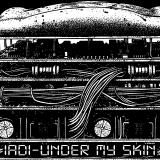
Between flesh and silicon. “Under My Skin” (2026) is the first album by IADI, released by Neo Life. A record like few
others, highly conceptual, cover art included. Its essence lies in the folds of the increasingly ambiguous relationship
between man and machine, where the former designs the latter and, perhaps without fully realizing it, is gradually
destined to adapt and be reprogrammed by it. Each track of “Under My Skin” is, in fact, a sort of interface, connector, or
any other imaginative point of contact between two creative phases, amid emotional impulses and binary calculations.
The sonic architecture oscillates between analog warmth and algorithmic coldness, constructing landscapes in which
pulsating synthesizers and mechanical rhythms seem to question each other. There's no linear narrative, but rather a
progressive immersion in a zone of near-friction, where the comfort of technology coexists with more than a faint
musical uneasiness, like a background noise that never ceases to remind you who's truly in charge. In “Under My Skin”,
the machine is neither an enemy nor a simple instrument: it's a real presence, intimate, even tactile, amplifying desires,
fears, and dreams of dawns beyond the digital realm. Intelligent dance music. Less noise, more sensations. Electronic,
but profoundly human.
The final result, then, is a music project that speaks to the present, yet sounds like an X-ray of the future, capturing that
fragile moment when humanity and technology stop observing each other from afar and begin to merge, track after
track. It's no coincidence that IADI's album opens with “Impulse”, an immediate expression of an electrical impulse, for
both humans and machines, which is also the language of the nervous system, as fast as it is vital—pure energy and
rhythm, a track as intense as it is irregular. And after this introduction, it's the turn of the equally erratic “Axon”, whose
title describes the neuron that transmits the signal over distance, telling the listener to sit back and relax for a new
journey through the notes toward the more melodic “Cortex”. The cerebral cortex, the ultimate seat of thought and
memory, becomes the source from which the musical flow of the first part of the work is drawn.
Then, suddenly, an automatic, or instinctive, response to the constant succession of impulses: “Reflex”, or zerotemperature techno, with a fragmented pace, featuring vocal samples, breaks, and restarts. In the producer's
imagination, the subsequent, and conversely placid, “Neuron” represents the emotional core of the second part of the
work, providing a kind of respite from the seething vibrations. While the neuron is the basic unit of the nervous system,
the synapse is the functional connection point between one neuron and another effector cell, essential for the
transmission of nerve impulses and communication in the nervous system, enabling functions such as learning and
movement. Likewise, a track like “Synapse” once again illuminates the path traced by IADI. The more experimental and
streamlined “Static” instead suggests true ordered chaos. “Dreamstate” is the conclusion suspended in the void, relating
to that dreamlike state between waking and sleeping, where consciousness fades toward infinity and visions begin. Pure
fading into the subconscious. Eternal return to where it all began. Dancing is a form of consciousness. Every beat is a
question. IADI, however, holds all the answers you need.

- A1: Rust Compassionate
- A2: Ceremonial Coffee
- A3: Neon Percolators
- B1: Demon Traces / Armchair Revolution / Angel Trail (Slight Return)
Recorded during lockdown and previously only available as a CDr self-released in an edition of 99 in 2022, 'The Sympathy Portal' collects four tracks (one of which is divided into three parts) that make full use of Edward Ka-Spel’s command of melodies, cosmic churn, subtle field recordings, percolated vocals, hypno-rhythms, tempered noise, broken clocks, atmospheric keyboards, uncoiling springs and carefully hewn dynamics. Coupled to often despairing or melancholic lyrics, the album ultimately forms a fantastic addition to a body of work from this hardworking artist usually found at home fronting The Legendary Pink Dots and apparently barely able to rest when not engaged in commitments to them. Here is what he says himself about 'The Sympathy Portal': “'The Sympathy Portal' was created as 2020 drifted into 2021 with the world in the grip of a pandemic. He studied charts on TV, horrified by statistics, temporarily free from a lockdown but well aware that we'd be back in our cubicles soon enough. It was hard to be positive in such an environment and this album reflects much of the fear and tension of the time. But the last song, 'Angel Trail ( Slight Return)', was intended to offer some genuine hope, having been revived for the release after first appearing in a different form on The Legendary Pink Dots' '9 Lives to Wonder' back in 1994.” The album pays testament to a troubled and troubling time that now, a mere few years on, strangely appears like the grand entrance to a series of heavily dark periods we are still desperate to crawl from. It could be argued that the angel trail Edward so eloquently refers to is something that needs to be found more than ever and that, thankfully, his music helps to illuminate this despites its mostly distressed overtones.
Away from the confines of a now hard-to-find and long sold out CDr, Lumberton Trading Company brings this album back as a vinyl release that’s limited to 300 and is scheduled to appear in February 2026.

- A1: Take The Leap (Asot Year Mix 2025 Intro)
- A2: Let It Be For Love
- A3: Love
- A4: Illuminate
- A5: Love Me Endless
- A6: Start A Fire
- A7: Deep Shadow
- A8: Everything I Wanted
- A9: Turning
- A10: I'm A Freak
- A11: Dust
- A12: Find You
- A13: What's The Matter?
- A14: Heavy
- A15: Missing Part Of Me
- A16: Sound Of You
- A17: Follow The Light
- A18: Let You Down
- A19: Take Off
- A20: Keep The Faith
- A21: I'm On Fire
- A22: Shattered
- A23: We Are Free
- A24: Taking Back Control
- A27: Desolate Lands
- A28: End Of Time
- A29: Angels (Vip Mix)
- A30: Utopia (Korolova Remix)
- A31: Dream A Little Dream (Vip Club Mix)
- A32: Left Of Us
- A33: Kidz (Camelphat Remix)
- A34: The Lines
- A35: Ta Que Na
- A36: Ignite
- A37: My Life
- A38: Elysian
- A39: Deepest Blue
- A40: Super Powers (Giuseppe Ottaviani Remix)
- A41: Mix The Master
- A42: The Light On The Other Side (Asot Year Mix 2025 Outro)
- A25: Let Your Mind Be Free
- A26: All Night
We stumble, we doubt, we fall - but within those moments lies the spark of transformation. It isn't just change. It's courage. It's fire. And that same bravery is at the core of the twenty- second instalment of Armin van Buuren's annual year mix series. Opening with a powerful narration that sets the stage for transformation, this 113- track journey takes you through the sounds that breathe courage, reinvention, and unshakable energy. From uplifting anthems and emotive vocal tracks to driving, boundary-pushing tech-trance, the mix features productions from Armin van Buuren, Adam Beyer, KI/ KI, Ferry Corsten, Joris Voorn, Hardwell, Svenson & Gielen, Hannah Laing, Factor B, Mauro Picotto, and others. Collaborations with artists such as Bon Jovi, Martin Garrix, Sam Gray, and Malou highlight the spirit of connection and reinvention, while tracks such as "Set Me Free (Rising Star Remix)", "Put Your Bassline", "Holding The Light", "Marama (Moon & Stars)", and "Missing Part Of Me" demonstrate the power to transform moments into memories. Whether through soaring melodies or relentless grooves, this mix invites you to take the leap, embrace the unknown, and let the music guide your own transformation. All together, in A State of Trance.

4
A chance meeting in Mexico City set Points of Inaccessibility into motion. When Ibero-American composer Rafael Anton Irisarri crossed paths with Dutch media artist Jaco Schilp at MUTEK in 2024, a conversation about how technology shapes perception revealed an unexpected common ground. Schilp invited Irisarri to a spring 2025 residency at Uncloud, the Utrecht-based collective he co-founded, where Irisarri's sound began to take form amid an environment shaped by Schilp’s visual research.
The Uncloud studio was located inside the former Pieter Baan Centre, a forensic psychiatric prison where suspects of violent crimes were once confined. Its long history of silence and containment shaped the atmosphere in which the project developed. Within this setting, Irisarri coaxed long bowed-guitar tones through a network of pedals and looping systems. The raw gestures thickened into a vaporous and architectural field of sound. Schilp processed the material through a custom point-cloud software patch that produced images in continuous flux. The visuals flickered, dissolved and reformed like memories that resist coherence, functioning as a digital Rorschach that reflected the observer’s own perception.
Amid these spectral echoes, the project evolved into an examination of how the past persists within present signals. Memory endures as residue and interference, continually shaping perception even when its source has faded.
Schilp’s visual process required a continuous stream of sound in real time. Irisarri improvised throughout the residency, generating material that allowed the visuals to develop in parallel. Once back in his New York studio, he began shaping the recordings by carving pathways through the improvisations and mapping selected passages into MIDI. This process allowed him to build outward from the bowed-guitar material with minimal overdubs, adding Prophet 5 textures, Moog bass and strings that expanded the harmonic field while keeping the original performances at the center. To refine the structure, Abul Mogard provided editorial input, working with Irisarri’s stems to guide transitions and strengthen the overall pacing. The material, originally created under conditions of immediacy and constraint, evolved into a fully realized work through careful revision, patience and sustained reworking.
The title engages the geographic concept of the Poles of Inaccessibility, locations defined solely by their distance from all surrounding points. Irisarri adapts this idea to the conditions of digital life, where new forms of inaccessibility arise through the informational enclosures that structure perception. What appears to be a fully connected network often produces a deeper kind of separation, one shaped by the filtering logic of the systems that mediate experience. In this sense, the digital sphere mirrors its geographic counterpart. We inhabit spaces saturated with signals, yet the possibility of genuine contact becomes increasingly remote.
At its core, Points of Inaccessibility considers what can be understood as the new rituals of capitalist realism. Irisarri uses the term digital shamanism to describe the forms of simulated connection that organize contemporary life. These systems promise comfort through algorithms, influencers and AI interlocutors, yet they often reproduce the same conditions that generate loneliness in the first place. What appears as connection becomes the echo of connection, a sequence of gestures that imitate solidarity while withholding it. Like the geographic poles, these rituals are defined by distance. They pull us into environments where everything is illuminated, yet meaningful proximity becomes increasingly rare. In this sense, the work approaches a hauntology of the present, a reflection on futures that have stalled and intimacies that have been thinned by the algorithmic infrastructures that surround us.
This thematic tension unfolds across the album’s four movements. Faded Ghosts of Clouds introduces the work with textures that rise and dissipate in slow cycles, creating an atmosphere that resists clear definition. Breaking the Unison occupies a pivotal position in the sequence and focuses on the moment when the individual and the system fall out of alignment. Its shifting patterns trace the scattering of signals that once suggested connection, revealing the instability at the heart of contemporary perception. Signals from a Distant Afterglow forms the center of the album and features vocals by Karen Vogt, whose presence enters the sound field like a fragile transmission shaped by distance and delay. The closing piece, Memory Strands, follows motifs that appear, recede and briefly intersect before returning to quiet. Across these movements, the album outlines a landscape in which emergence and disappearance continually inform one another.
Listening to Points of Inaccessibility is an encounter with a sound field that is constantly in flux. Elements surface briefly, shift position and recede, creating a sense of motion that resists stable interpretation. The music moves between closeness and vastness, carrying traces of memory while withholding a clear point of resolution.
The album’s visual identity completes the project’s conceptual arc. In Mexico City, where Irisarri and Schilp first met, Daniel Castrejón transformed stills from Schilp’s point-cloud visuals into the cover image. The final artwork captures a single suspended frame of the digital material, a moment extracted from a field that is normally in constant motion. Its surface recalls the texture and abstraction found in the work of Catalan artist Antoni Tàpies, where material presence and erasure coexist within the same plane.
What emerges is a work that examines the tension between technological systems and human presence. Points of Inaccessibility asks whether connection is still possible within environments shaped by mediation and delay, or whether we have become isolated points within the very networks that promise proximity. What possibilities for relation persist within environments organized by algorithms and interruption? And how are we meant to understand presence when so much of it is constructed at a distance?
Points of Inaccessibility will be released on BioVinyl on February 6, 2026, with audiovisual performances planned throughout 2026.
Mastered by Stephan Mathieu
Artwork by Jaco Schilp
Design and layout by Daniel Castrejón
Artist photo by Iulia Alexandra Magheru.

- A1: There's A New Place On The Market
- B1: Every Time You Put Me Up, I Get Down Some New Way
Having taken their name from a line in Hooray For Hollywood – inspired by the song’s jarring use in Robert Altman’s Philip Marlowe detective movie The Long Goodbye – there is an aptly cinematic quality to Any Young Mechanic’s music.
With intricate scenes, enthralling narratives and unique characters cropping up across the lyrics, and a kaleidoscopic yet coherently interwoven spectrum of moods and emotions stretching through the music, the Adelaide five-piece bring a fresh language to folk music’s natural propensity to spin a good yarn.
So rather than offering borrowed references illuminated by the cosy flickers of campfire flames, on their debut album The Modern Shoe Is Ruining The Foot, the Australian band’s urgent songs conjure up vivid, widescreen vistas that blend the genre’s enduring charms with a musical dexterity and sharp vision reaching beyond folk’s usual corners.
“We are trying to make folk music for now,” suggests frontman Sam Wilson. “Turning it on its head in a new, sometimes uncanny way, because we don't want to just do the old thing again. I don't think it’s interesting to make things again, so we’re searching for a contemporary edge.”
The roots of this original yet inclusive approach, in part, go back to the Adelaide music scene that helped to forge Any Young Mechanic.
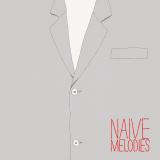
- 1: Psycho Killer
- 2: Heaven
- 3: Sugar On My Tounge (Dub)
- 4: Born Under Punches (The Heat Goes On)
- 5: Once In A Lifetime
- 6: I Zimbra
- 7: The Book I Read
- 8: Girlfriend Is Better
- 9: Mind
- 10: Burning Down The House
- 1: Uh-Oh Love Comes To Town
- 2: Seen And Not Seen
- 3: Road To Nowhere
- 4: Born Under (More) Punches (The Heat Goes On)
- 5: Take Me To The River
- 6: And She Was
- 7: This Must Be The Place (Naive Melody)
- 8: Crosseyed And Painless
also available
Tape[25,17 €]
Naive Melodies is a bold and visionary tribute to the music of Talking Heads, reinterpreted through the lens of Black musical innovation. Curated by Drew McFadden — the creative mind behind BBE’s acclaimed Modern Love (David Bowie tribute album) — this new collection dives deep into the Afro-diasporic rhythms and experimental soul roots that helped shape Talking Heads’ unmistakable New Wave sound. Inspired by artists like Fela Kuti, Parliament, and Al Green — whose influences loomed large in the band’s rhythmic DNA — Naive Melodies shines a light on the Black music traditions that underpinned their artistry. Far from a conventional tribute, Naive Melodies reframes the band’s catalog through the voices and visions of a new generation of genre-defying artists. These interpretations illuminate the foundational grooves and sonic textures that fueled Talking Heads’ rhythm-forward aesthetic, bringing them full circle with authenticity. “With Naive Melodies, I wanted to spotlight the deep and often overlooked influence of Black music on the sound of Talking Heads, drawing from the rhythmic foundations of Afro-diasporic traditions, soul, gospel, Latin, and spiritual jazz. This project is a chance to reimagine Talking Heads’ legacy through the lens of the very innovations that helped shape it, bringing those influences to the forefront through the voices of today’s most forward-thinking artists.” — Drew McFadden The album features a globally minded lineup, including Liv.e, Bilal, Rogê, Miguel Atwood-Ferguson, Aja Monet, Georgia Anne Muldrow, Theo Croker, Kenny Dope, Rosie Lowe, Pachyman, W.I.T.C.H., and more — spanning Afrobeat, jazz, soul, funk, gospel, dub, electronica, orchestral, and Latin styles. It reflects not only the boundary-pushing ethos of Talking Heads, but also the influence of Black music as a cultural force that helped shape it. This is not just a tribute album — it’s a recontextualization. A cultural conversation. A rhythmic reawakening.

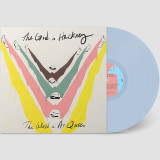
11
'The World in Air Quotes' is a genre-shifting style-melting kaleidoscope of art-rock, jazz, techno, folk & industrial. The God In Hackney sound like very little else from the early 2020's and whilst 'The World In Air Quotes' innovative progenitors are manifold - Eno, Coil, The Durutti Column, 1980s ECM jazz to name a few - it sounds beholden to none of them.
The God In Hackney's first album 'Cave Moderne' was Andrew Weatherall's album of the year for NTS Radio.
The God In Hackney's second LP, 'Small Country Eclipse', was album of 2020 for critic Sukhdev Sandhu of The Colloquium for Unpopular Culture: "Mordant music: stuttering, dread, black humour. A record that felt truly independent, beholden to no genre, out of step with all centres and signposted nodes."
'The World In Air Quotes' is The God In Hackney's 3rd album and their most musically emotive and lyrically inventive to date. It's an album that resonates with feelings about climate change, isolation, extinction, the social impact of technology, the flattening of history—and illuminates the darkness with imaginative rhythm, melody, noise & poetry. Songs range from widescreen, anthemic rock, to strange intricately arranged jazz-influenced songs, to abstract, textural electronic pieces. There's a strain of dark and surreal comedy too that runs through the lyrics and some of the choices the band makes in their sounds and arrangements.
The core God in Hackney quartet of Andy Cooke, Dan Fox, Ashley Marlowe and Nathaniel Mellors has expanded to include American multi-instrumentalists and composers Eve Essex (Eve Essex & The Fabulous Truth, Das Audit, Peter Gordon & Love of Life Orchestra, Peter Zummo, Liturgy) and Kelly Pratt (Father John Misty, David Byrne/St Vincent, Beirut, and Lonnie Holley among many others), signalling a new and ambitious direction for the band.
The album cover features original artwork by Iranian-American artist Tala Madani, recently the subject of a career survey exhibition at the Museum of Contemporary Art, Los Angeles.
Advertising:
The Wire, Maggot Brain
Reviews & features:
Maggot Brain - forthcoming feature
Hi-Fi+ Magazine - album review in April 2023 issue
Dereck Higgins (You Tube review)
Sonosphere - interview / feature
Weirdo Shrine - interview
It's Psychedelic Baby - interview
Spettacolo (Italy) - feature.
Ghettoblaster Magtazine (USA) - feature
Airplay:
Gilles Peterson - BBC Radio 6 Music
Steve Lamacq - BBC Radio 6 Music
Dublab - playlisted & featured in Dublab Recommends (Los Angeles)
Cian Ó Cíobháin - RTE Raidió na Gaeltachta (Ireland)
WFMU - playlisted
Resonance FM - The Wire presents Adventures In Sound & Music
Human Pleasure Radio (New Zealand)
Pete Wiggs & James Papademetie - The Seance (Repeater Radio, Sine FM & others)
Peter Hollo's Utility Fog - FBI Radio (Australia)
Jonathan Lethem & Sam Sousa on Radio Free Aftermath (KSP Claremont 88.7)
Life Elsewhere
WRPB Princeton
In Memory of John Peel
Mike Watt's Watt from Pedro Show
- 1: Any God Of Yours (Instrumental)
- 2: Swell (Instrumental)
- 3: Arise Dear Brother (Instrumental)
- 4: Ammi Ammi (Instrumental)
- 5: Buffed Sky (Instrumental)
- 6: Sex With Nobody (Instrumental)
- 7: Eye’s Drift (Instrumental)
- 8: The Sea Liner Mk 1 (Instrumental)
- 9: Empty Vessels (Instrumental)
- 10: New Builds (Instrumental)
- 11: Dull Boys (Instrumental)
- 12: Thames Water (Instrumental)
XL Recordings is proud to mark the 10th anniversary of Archy Marshall’s (aka King Krule) A New Place 2 Drown with the release of a newly remastered instrumental edition.
Originally released on 10 December 2015, A New Place 2 Drown remains a singular entry in the Archy Marshall catalogue. Known to many for his work as King Krule, Marshall released A New Place 2 Drown under his own name, highlighting a different facet of his creative identity. An atmospheric blend of submerged beats, woozy textures, and diaristic storytelling, the project earned widespread acclaim upon release, including Pitchfork’s Best New Music.
Developed in parallel with a visual world shaped with his brother and longtime collaborator Jack Marshall, the quietly influential project stands as a multidisciplinary love letter to their home of South London, originally released alongside a Will Robson-Scott–directed short film and a book of artworks, photography, and poetry by the Marshall brothers.
The 2025 instrumental edition offers a newly illuminated perspective on the record’s sonic core, drawing fresh attention to the production craft that underpins the project. By stripping the songs back to their foundations, the release highlights the intricate textures, rhythmic detail, and atmospheric depth that have helped A New Place 2 Drown grow into a cult favourite over the past decade.
“A New Place 2 Drown evokes a septic world filled with flickering halogen bulbs, sticky synth keys, and corroded outputs. Marshall has made tremendous strides as a producer, gorgeously reproducing the gloom and loneliness of early '90s hip-hop and finding a way to integrate it into his own style.” - PITCHFORK
Queer communities have long transformed parties into something powerful: spaces where care flourishes, injustice gets challenged, and new worlds are danced into being. But today, DJs command huge fees while behind-the-scenes workers earn below minimum wage. Corporations profit from our culture while communities that created these spaces are displaced. As venues shut and workers burn out, it’s clear that something has gone deeply wrong.
Club Commons: Moving Bodies to Grow Movements in Queer Nightlife & Beyond by Anjali Prashar-Savoie takes you inside hidden stories of resistance and reinvention. We meet the people reshaping nightlife from below: abolitionist security teams creating safety without police, sober raves doubling as mental health support, radical childcare at parties, venues becoming worker cooperatives, and free party crews reclaiming public space. Through their work, we see how party-throwing skills build movements, how refusing to play changes everything, and why protecting queer nightlife means transforming who owns it.
Quotes
“When Anjali shines her perceptive light on dancefloor culture, everything is better illuminated. I can’t wait to read this book. It’s one we need.” Emma Warren (author of Dance Your Way Home/Up the Youth Club)
“Anjali’s one of the most exciting and insightful voices writing about dance music today, bringing fresh perspectives, intellectual rigour and emotive power to a conversation that’s too often homogenous, superficial or cynically commercial. Club Commons promises to be an essential and overdue book: a chance to reexamine the queer history of club culture, celebrate and critique its present, and map out radical possibilities for its future.” Ed Gillett (author of Party Lines)
“Beautifully written and unique, Anjali Prashar-Savoie’s behind-the-scenes journey through queer nightlife is as thorough as it is fascinating. Documenting a world that commercial interests are rapidly destroying, Club Commons is proof that queer culture holds the key to a better future for the dancefloor and beyond.” Professor Sam Parsley (author of Minor Keys, coach, DJ and founder of In the Key, a directory and platform championing the careers of women, trans and non-binary electronic music producers)
“Club Commons: Moving Bodies to Grow Movements in Queer Nightlife & Beyond is a vital reminder of how important the dance floor is to connect, unfurl and envision new futures. The text highlights the historic and existing care work entangled with the club space, particularly in providing temporary sites of refuge and embodied joy for Black and LGBTQIA+ communities. This is juxtaposed with research on the corporate and carceral commodification of nightlife in recent years, which exposes the false premise that club spaces are always radical. This book affirms my belief that the non-commercial nightlife ecosystem is an essential part of our social change infrastructure, rather than a luxury. Club Commons is a call to action to reclaim this space on our own terms and revive the underground.” Camille Sapara Barton, (author of Tending Grief: An Embodied Guide to Being with Grief Individually and in Community)
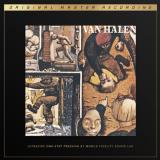
- Mean Street
- Dirty Movies
- Sinners Swing!
- Hear About It Later
- Unchained
- Push Comes To Shove
- So This Is Love?
- Sunday Afternoon In The Park
- One Foot Out The Door
The song titles on Van Halen's aptly titled Fair Warning don't lie. The likes of "Unchained," "Mean Street," "Push Comes to Shove," "One Foot Out the Door," and more indicate the mood the band channels on its double-platinum 1981 record — the nastiest, darkest, and fiercest album of the group's storied career. For the fourth time in four years, Van Halen throws down the gauntlet to all challengers and emerges victorious.
Sourced from the original analog tapes, pressed on MoFi SuperVinyl at Fidelity Record Pressing, and strictly limited to 5,000 numbered copies, Mobile Fidelity's UltraDisc One-Step 180g 45RPM 2LP set plays with unfettered clarity, dynamics, and immediacy. Benefitting from superb groove definition, an ultra-low noise floor, and dead-quiet surfaces, this vinyl edition captures what went down in the studio with tremendous realism and involving presence.
Taking a more controlled approach in the studio and still completing everything in less than two weeks, Van Halen and producer Ted Templeman relied on studio amplifiers to direct the sound. Further diverging from the live-on-the-floor approach of its earlier albums, the ensemble also employed overdubs to great effect. The result: Dense, stacked architecture that underlines the hard-hitting tenor of the songs — and which comes alive like never before on this reference edition that looks as good as it sounds.
The premium packaging and gorgeous presentation befit the reissue's select status. Housed in a deluxe slipcase, it features special foil-stamped jackets and faithful-to-the-original graphics that illuminate the splendor of the recording. Aurally and visually, it is made for listeners who want to immerse themselves in everything involved with the album, including the iconic cover art adopted from William Kurelek's haunting painting, "The Maze."
Isolated frames from Kurelek's childhood-inspired work — including a man bashing his head into a brick wall, a guy pinning down an adversary as he delivers bare-fist blows to his face and others watch with apparent glee, a boy tied down on a conveyer belt and being sent through the equivalent of a meat saw — adorn the front and back covers. The sunnier visual disposition of Van Halen's prior efforts gives way to something sinister and tortured, traits reflective of the music within. The band members, too, are visually depicted not in glamorous shots but in a serious black-and-white portrait in which the quartet is clad in black leather jackets.
Tough, aggressive, stark: Fair Warning comes on like a series of bare-knuckled punches to the solar plexus and boasts lyrical narratives to match. Though not a concept record, the concise album revolves around themes of roughing it on the streets and struggling to survive amid dim prospects. Singer David Lee Roth reportedly penned many of the initial lyrics after traveling to Haiti and observing extreme poverty. The characters and situations populating Fair Warning reflect hardscrabble existence, last-chance desperation, and underlying danger.
Witness the crazies, poor folks, and hunters of “Mean Street”; the former prom queen turned pornographic actress on “Dirty Movies”; the menace and vice of “Sinners Swing!”; the streetwise hustle of “Unchained”; the isolation and alienation of “Push Comes to Shove”; the desire for escape on “One Foot Out the Door”: A carefree California beach party Fair Warning is not.
Having said he felt angry and frustrated during the sessions, guitarist Eddie Van Halen uses the forceful arrangements as a playground for his seemingly unlimited arsenal. Supported by a crack rhythm section and a hyped-up Roth, he performs with an almost impossible combination of punk-like intensity, technical finesse, lyrical fluidity, and unbridled emotion. The virtuoso was increasingly butting heads with Templeton and seeking a freedom in the studio he believed denied him.
No wonder he plays like a bat out of hell. Listen to the rapid-fire manner in which he slaps the high and low E strings on the 12th fret of his instrument on “Mean Street,” instilling the tune with funk flair and metal-spiked sharpness. For the pouty strut of “Dirty Movies,” Eddie Van Halen contributes slide guitar magic made possible after he sawed off the lower portion of a Gibson SG so he could reach further down the fretboard.
Related intensity, urgency, and daredevil momentum punctuate the surging “Sinner’s Swing!” A heavily flanged, delicately melodic introduction frames the attitudinal “Hear About It Later,” among the most creative arrangements of Van Halen’s career. And do riffs come any bigger or magnetic than those on the high-wire kick of “Unchained”? As for the out-of-left-field “Sunday in the Park,” an instrumental composed on an Electro-Harmonix micro-synthesizer: Who but Eddie Van Halen to supply creep factor in such an ingenious way?
Despite selling fewer quantities than Van Halen’s prior efforts, Fair Warning remains for many diehards the record that epitomizes all of the band’s immense strengths —Roth’s manic energy and tongue-wagging humor, Alex Van Halen’s rhythmic heartbeat-in-your-chest bombast, and Michael Anthony’s lucid bass lines included. Arriving when the New Wave of British Heavy Metal and new-wave movements were taking flight, it signaled a shot across the bow from a band determined to stay a step ahead and provide proof nobody could touch what it delivered.
More than four decades later, Fair Warning still sounds that alarm.
- 1: The Weed (.5)
- 2: Carnaval De Barranquilla (7.0)
- 3: Archie Et John Feat Archie Shepp (4.26)
- 4: The Movie Critic (3.2)
- 5: La Naissance De La Comédie (2.4)
- 6: Wonderful World Leaders (.03)
- 7: Pacifiques Biches (5.25)
- 8: Only Fan Feat Iggy Pop ( 2.10)
- 9: Où C’est ? Qui Sait ?Feat Djeuhdjoah ( 5.55)
Wild by nature, the Does of the Florian Pellissier Quintet could never be contained in a creative pen that would have forced them never to cross potential geographical limits. Travelers, spending their energy without restraint to let the hard bop of their jazz wander and export itself wherever the groove guided them, they went as far as Africa or South America, from the Cape of Good Hope to Rio. Rio, precisely where, for their last appearance, exposure to a brief electric current had carried them into outer space. A revelation.
Furious strides, exhausting gambols, the Does had done so much that they could not escape the obvious call of calm and serenity. Freed from distances, and after a stop in Colombia to mingle with the crowd at the Barranquilla carnival, it was California and its Pacific coast they reached, to rest before the peaceful immensity of the ocean.
One hundred sixty-five million square kilometers, an infinite expanse to contemplate in order to fling wide open the gates to an even vaster space. A spiritual domain conducive to the search for new sounds. That of the open sea, where measuring miles is neither relevant nor meaningful, and where the only compass becomes the musical tracks the Does follow.
Beneath their coppery hooves, to the crystalline sound of the Fender Rhodes and the sweep of electric layers, the path to take revealed itself in this meditative and abstract realm they had never before explored. Invited to join the purely organic textures, the synthetic notes distilled a few aromas of sweetness into an album of ten tracks, where the FPQ abandoned written scores on some pieces in order to be guided only by the inspiration born of a newfound freedom.
Blue when they began their journey five albums ago, their coat has now taken on the colors that illuminate the Pacific coast. That moment when, as you gaze at the horizon swallowing the sun, only glowing shades filter through—reddish, orange, violet.
Departing without haste or frenzy from one of the shores bordering the ocean, the voices of Archie Shepp, Iggy Pop, and DjeuhDjoah still resonating in their antlers, the Does may now be on the opposite shore. Carried all the way to the Japanese coast by Hokusai’s wave…

9
Wild by nature, the Does of the Florian Pellissier Quintet could never be contained in a creative pen that would have forced them never to cross potential geographical limits. Travelers, spending their energy without restraint to let the hard bop of their jazz wander and export itself wherever the groove guided them, they went as far as Africa or South America, from the Cape of Good Hope to Rio. Rio, precisely where, for their last appearance, exposure to a brief electric current had carried them into outer space. A revelation.
Furious strides, exhausting gambols, the Does had done so much that they could not escape the obvious call of calm and serenity. Freed from distances, and after a stop in Colombia to mingle with the crowd at the Barranquilla carnival, it was California and its Pacific coast they reached, to rest before the peaceful immensity of the ocean.
One hundred sixty-five million square kilometers, an infinite expanse to contemplate in order to fling wide open the gates to an even vaster space. A spiritual domain conducive to the search for new sounds. That of the open sea, where measuring miles is neither relevant nor meaningful, and where the only compass becomes the musical tracks the Does follow.
Beneath their coppery hooves, to the crystalline sound of the Fender Rhodes and the sweep of electric layers, the path to take revealed itself in this meditative and abstract realm they had never before explored. Invited to join the purely organic textures, the synthetic notes distilled a few aromas of sweetness into an album of ten tracks, where the FPQ abandoned written scores on some pieces in order to be guided only by the inspiration born of a newfound freedom.
Blue when they began their journey five albums ago, their coat has now taken on the colors that illuminate the Pacific coast. That moment when, as you gaze at the horizon swallowing the sun, only glowing shades filter through—reddish, orange, violet.
Departing without haste or frenzy from one of the shores bordering the ocean, the voices of Archie Shepp, Iggy Pop, and DjeuhDjoah still resonating in their antlers, the Does may now be on the opposite shore. Carried all the way to the Japanese coast by Hokusai’s wave…
- A1: Fantasmi
- A2: Irreversible
- A3: Three Steps (Feat. Anti Lilly)
- A4: Eclissi (Feat. Phlocalyst)
- A5: She's Lonely
- A6: Mind States (Feat. Physical Graffiti)
- A7: Shangri-La (Feat. Lorenzo Morresi)
- B1: Piramide
- B2: Moonlit
- B3: Until We Lift It (Feat. Tiff The Gift)
- B4: Nuwa (Feat. Saib)
- B5: Lift
- B6: Everything Is Floating
Italian jazz beat maestros Koralle & Yawuh team up for their first collab album, 'Primo Quarto'.
'Primo Quarto' is a record full of late-night tales about beats and jazz (you guessed it) and a musical friendship that manifested itself in an apartment building in Bologna after dark. Thirteen tracks were produced and mixed on the first floor (where Yawuh lives) and on the fourth floor (where Koralle’s studio is located). With the help of an A-list of local musicians (Matteo Magnaterra, Piergiorgio Perrella, Giovanni Tamburini, Gianluca Arcesilai), three MCs from the US (Anti Lilly, Tiff The Gift, Physical Graffiti), and producer friends Saib (Berlin), Phlocalyst (Luz), and Lorenzo Morresi (Milan).
“'Primo Quarto' is an Italian expression that refers to the first quarter of the moon,” Koralle and Yawuh explain. “The lunar phase when the moon is half illuminated and half in shadow. For us, this moment captures the emotional core of the album: a balance between light and dark, the seen and the hidden, clarity and mystery.”
Artwork by Japanese illustrator Tomo Oriyama.

11
Le Corbeau, the brainchild of Oystein Sandsdalen (Serena Maneesh), has become a formidable collective. here with a trilogy of albums spanning eight years. Why such a productive group choses to release twenty-seven songs simultaneously may be a greater reflection on the myopic nature of record labels -The mystic deities of noir have returned. "The band"s sound bows to the vestiges of V.U., Sonic Youth, and Lynchian glamour- but each of the three albums show ambition to go beyond, by player freedom and improv, exploring textural layers, and nuancing each groove. Many songs remind us what we loved in 2009`s Evening Chill / Montreal of the Mind - surrealistic, seductive, draped in velvet. Some circle to the familiar with punk fuzz and playful themes, like "1000 eyed behemoth": about leaving Oslo"s night life behind. Other times, they are creators of their own classics. Opening track to VI: Sun Creeps Up the Wall, "Blossom with an Evil Light" recorded between 2017-2018, illuminates a a new path of change. The long anticipation is over- come enter the murky and magical waters of Le Corbeau." -Ann Sung-an Lee

8
Le Corbeau, the brainchild of Oystein Sandsdalen (Serena Maneesh), has become a formidable collective. here with a trilogy of albums spanning eight years. Why such a productive group choses to release twenty-seven songs simultaneously may be a greater reflection on the myopic nature of record labels -The mystic deities of noir have returned. "The band"s sound bows to the vestiges of V.U., Sonic Youth, and Lynchian glamour- but each of the three albums show ambition to go beyond, by player freedom and improv, exploring textural layers, and nuancing each groove. Many songs remind us what we loved in 2009`s Evening Chill / Montreal of the Mind - surrealistic, seductive, draped in velvet. Some circle to the familiar with punk fuzz and playful themes, like "1000 eyed behemoth": about leaving Oslo"s night life behind. Other times, they are creators of their own classics. Opening track to VI: Sun Creeps Up the Wall, "Blossom with an Evil Light" recorded between 2017-2018, illuminates a a new path of change. The long anticipation is over- come enter the murky and magical waters of Le Corbeau." -Ann Sung-an Lee

8
Le Corbeau, the brainchild of Oystein Sandsdalen (Serena Maneesh), has become a formidable collective. here with a trilogy of albums spanning eight years. Why such a productive group choses to release twenty-seven songs simultaneously may be a greater reflection on the myopic nature of record labels -The mystic deities of noir have returned. "The band"s sound bows to the vestiges of V.U., Sonic Youth, and Lynchian glamour- but each of the three albums show ambition to go beyond, by player freedom and improv, exploring textural layers, and nuancing each groove. Many songs remind us what we loved in 2009`s Evening Chill / Montreal of the Mind - surrealistic, seductive, draped in velvet. Some circle to the familiar with punk fuzz and playful themes, like "1000 eyed behemoth": about leaving Oslo"s night life behind. Other times, they are creators of their own classics. Opening track to VI: Sun Creeps Up the Wall, "Blossom with an Evil Light" recorded between 2017-2018, illuminates a a new path of change. The long anticipation is over- come enter the murky and magical waters of Le Corbeau." -Ann Sung-an Lee

- A1: The Bug – Hooked (Hyams Gym, Leytonstone)
- A2: Ghost Dubs – In The Zone
- A3: The Bug – Believers (Imperial Gardens, Camberwell)
- B1: Ghost Dubs – Hope
- B2: The Bug – Burial Skank (Arches, Vauxhall)
- B3: Ghost Dubs – Dub Remote
- C1: The Bug – Alien Virus (West Indian Centre, Leeds)
- C2: Ghost Dubs – Down
- C3: The Bug – Militants (The Rocket, Holloway)
- D1: Ghost Dubs – Into The Mystic
- D2: The Bug – Dread (Mass Brixton)
- D3: Ghost Dubs – Midnight
12
When Chuck D proclaimed "Bass, how low can you go?" on Public Enemy's anthemic 'Bring the Noise,' maybe he was pre-empting or inciting the 10,000 fathoms-deep, spine-bending basslines and sub-quake tremors of 'Implosion.'
Implosion is a crushing split album, appropriately released on The Bug's own PRESSURE label. Mapping out a new form of spectral dub, the sound is deliberately immersive, introverted, and yes, definitely implosive. In pursuit of heavy lids, blurred vision, and merciless bass bin punishment, it’s one part meditation, two parts low-end theory, and essentially a confession of devoted sound system addiction.
As expected from a tag team featuring British soundlab explorer and 'London Zoo' composer Kevin Martin, aka The Bug, and Michael Fiedler, aka Jah Schulz—a long-time graduate of Germany's new school of sound system reggae culture—the duo approaches their target differently yet share the goal of keeping their sound "raw" (Fiedler) and "brutally minimal" (Martin). This proves that opposites can attract, even if their tools are different and their methods sometimes diverge.
From such a disparate combo, hailing from different geographical and aesthetic backgrounds, contrasts are certainly on display, even within each artist's own contributions. From the melancholia and transcendence of 'Alien Virus (West Indian Centre, Leeds),' to the duality of ascension and descension on 'Hope,' or the Sunn 0))) in dub, visceral drone of 'Dread (The End, London),' to the tripped-out repetitions of 'Midnight,' which reinvents Chain Reaction for post-millennials, the result is both sacred and narcotic. Each track illuminates the emotional impact and atmospheric pressure being explored across this deceptively sparse album—a mastery of tone and texture.
This collection might be as reduced, minimal, and deep as The Bug has ever gone, perhaps echoing the solemnity of his recent Kevin Richard Martin Black release and invoking the futurist steppas self-pioneered on his previous Pressure album. Alternatively, Fiedler‘s Ghost Dubs project ventures into his most heavyweight direction yet, which is no mean feat considering his previous, the critically acclaimed album Damaged, was a monstrously massive triumph of analogue weight and enviable sound design.
Implosion is ice-cool, a stark contrast to the warmth and sociability of traditional Jamaican roots and the current trends in digi-dub. Instead, the mood is soaked in tension and intense dread, finding an unexpected melting point where classic dub's stark rhythm attack, isolationist ambience's eerie drift, dub techno's floatation strategies, and even the relentless riffs of doom metal collide. As the bass-obsessed pair drop what is arguably the heaviest ambient dub album to emerge from any electronic sector—a moody counterpoint to The Orb's fluffy clouds, etc, Martin has cited The Roots Radics, Black Jade, and On U Sound's Pounding System as heavily influencing his approach to the album, while Fiedler has expressed his admiration for Adrian Sherwood's productions and Rhythm & Sound's enchanting soundscape. Yet, the super heavyweight pulsations, emotive resonances, and bone-rattling vibrations detonated here effortlessly go far beyond these influences.
Shadowy and elusive, there’s a mysteriousness at this record's core. A haunting moodiness oscillating between nostalgia and future shock. Despite the deadly fixation with SLOW and HEAVY, the album maintains a totally hypnotic swing throughout. Implosion and its lead single 'Imploded Versions' are testaments to being enveloped in bass, seduced by bass, submerged in bass, and utterly crushed by bass, as The Bug and Ghost Dubs seek to craft a new form of dub for zonal headz and Babylon seekers.
Mastered by Stefan Betke (a.k.a. POLE) at Scape Mastering studio, this record is heavy as f-ck without resorting to continuous distortion. It’s low-end worship taken to an absolute extreme, yet remains highly listenable and definitely danceable, albeit at the slowest of paces. Sacred and narcotic, this is low-end worship amplified to the max. Dive in if you dare.
- A1: Truth - The Illuminated
- A2: Wraz & Khiva - Exclusive Style
- A3: Ternion Sound - Partytool_001
- B1: Mythm - Goodfella
- B2: Klinical - Dry Spirit
- B3: Breathworkz - Hydra
- C1: Boylan, Youngsta & Brassic - Don't Steal My Pint
- C2: Mesck - Deadmind
- C3: Enigma Dubz - Liquid Artefacts
- D1: Kowta & Substance - Wasteland
- D2: Combine & Wavhart - Relocation
- D3: The Widdler - Gom Jabbar
12

14
Recital releases The Holy Restaurant, the new full-length album by Derek Baron, and their first solo LP since Curtain (Recital, 2020).
The album is built from years of miniature transcriptions of improvisations, functioning in many ways as a sister to Curtain. Half-thoughts and mistakes are revisited, gilded, and illuminated. The floorboards of the album are laid with piano, organ, string pads, while serrated accruements (distortions, flourishes, and recording interferences) step and drop overhead. The resulting conflux, as Baron notes in the accompanying booklet “becomes the point and the problem to explore.”
The second track “Oven Girls” opens with us galloping on a horse in some video-game meadow on a bed of MIDI strings. Abruptly, a helicopter soars over us and we transition to a latticed guitar and woodwind exploration. The album rolls on in this fashion, juxtaposing musical half-sentences within a museum of sounds rag-picked from history and daily life. Emotional interviews with Midwestern friars who build and sell caskets are set against gothic piano and guitar duets. On “Music in the Casket,” A disorienting and hilariously epic guitar solo erupts. The penultimate titular piece, “The Holy Restaurant,” sets a text written by Baron’s grandfather. A small chorus voices his words, echoing the humanistic storytelling of “Blue” Gene Tyranny’s A Letter From Home. Under sunlit piano progressions, a fleet of smokey trumpets emerges.
Running throughout the album is a series of “traces”: short melodic phrases painted over again and again with different real and MIDI instrumentation. The “luxurious asceticism of doubling” as Baron puts it. They explain, “Part of the allure for me is that the ‘original’ material is itself kind of thin, sketchy, meaningless, maybe calling attention to itself only by way of a felicitous mistake. Hearing, transcribing, and learning what was basically only ever played first on accident becomes the guiding concern.”
The album’s shifting, variegated forms and voices pass quickly; the record feels both comforting and elusive, suitable for any hour of the day.
The Holy Restaurant features guest players Ed Atkins, Lucy Liyou, Quentin Moore, Emily Martin, Dominic Frigo, Jacob Wick, and several of Baron’s family members. It is released in a limited edition vinyl pressing of 200 copies, accompanied by a booklet of effusive program notes by the composer, alongside an assemblage of photographs, scores, and artwork.
6
Furthering the passionate exploration of cinema that has guided her two previous LPs - 2017’s ‘Fassbinder Wunderkammer’ and 2020’s ‘I Should Have Been a Gardener’ - the Milanese guitarist/composer, Alessandra Novaga, returns to Die Schachtel with ‘The Artistic Image Is Always a Miracle’, two sides off shimmering, tense compositions – culminating as one of her most creatively ambitious and conceptually rich outings to date – freely inspired by the life and work of the Russian director Andrej Tarkovsky and the music of Johann Sebastian Bach.
Classically trained at the Musik Akademie in Basel, Switzerland, over the last decade Alessandra Novaga has emerged as one of the leading figures within northern Italy’s thriving new, experimental, and improvised music scene, rendering striking solo efforts, in addition to collaborations with Loren Connors, Stefano Pilia, Elliott Sharp, Nicola Ratti, Paula Matthusen, Sandro Mussida, Kid Millions, Travis Just, Francesco Gagliardi, and others. Remarkably ambitious and forward thinking, her approach to the guitar embarks upon a relentless deconstruction and rethinking of her instrument’s unique properties through distinct applications of structure, resonance, space, and tone, creating in a deeply personal and emotive music, seeking narrative and meaning within the abstractions of sound.
In 2017, with the LP, ‘Fassbinder Wunderkammer’, issued by Setola Di Maiale, Novaga embarked upon the exploration of her love of film. Having begun with Rainer Werner Fassbinder, this was followed in 2020 by Die Schachtel’s release of ‘I Should Have Been a Gardener’, a deeply intimate mediation on the life and work of Derek Jarman. Rather than focusing on a fixed point of inspiration or a single film to work from, these pieces achieve a form of abstract portraiture, distilling elements drawn from these filmmaker’s life and work into ambient networks of texture and tonality. ‘The Artistic Image Is Always a Miracle”’ freely inspired by the Russian director Andrej Tarkovsky and the music of Johann Sebastian Bach, finds Novaga radically expanding her sonic palette within this approach.
The seeds of ‘The Artistic Image Is Always a Miracle’ can be traced to a conversation that Novaga had with Alan Licht (contained in the highly regarded Common Tones: Selected interviews with artists and musicians 1995–2020, Blank Forms, 2021), relating to the connections between music and cinema, which led her to consider Andrej Tarkovsky’s use of Bach's music within a symbiotic framework: how the music illuminates the imagism of the films, and the film illuminates new dimensions of the music. Slowly developing over the subsequent years, the resulting album comprises six individual works, some of which draw directly upon pieces of Bach’s music that Tarkovsky used in his films – specifically 'Erbarme dich, Mein Gott', 'Das alte Jahr vergangen ist', and 'Ich ruf zu dir, Herr Jesu Christ' - while others draw upon the sensibilities and moods evoked in the imagination by the director’s films.
As a point of departure and illumination into the process and spirit that underscored the creation of the album, Novaga points toward a passage in Tarkovsky’s "Sculpting in Time”:
“Art is born and takes hold wherever there is a timeless and insatiable longing for the spiritual, for the ideal: that longing which draws people to art. Modern art has taken a wrong turn in abandoning the search for the meaning of existence in order to affirm the value of the individual for its own sake. What purports to be art begins to look like an eccentric occupation for suspect characters who maintain that any personalized action is of intrinsic value simply as a display of self-will. But in artistic creation the personality does not assert itself, it serves another, higher and communal idea.”
‘The Artistic Image Is Always a Miracle’ can be understood as a realisation of the collectivism of which Tarkovsky speaks, in the service of something far beyond the expression of self. Encountering Novaga moving into fairly uncharted waters, three of the album’s pieces incorporate the human voice we encounter the voices of others: that of the poet Arsenij Tarkovsky, the director’s father; a singer from Bach’s ‘Erbarme dich, Mein Gott’, capturing a broadcast in an underground parking lot, and Novaga’s own, rendering the melody from Bach’s “Ich ruf zu dir, Herr Jesu Christ”. Roughly alternating between solo excursions on guitar and bristling electroacoustic pieces, over the course of the album’s two sides Novaga weaves one of her most abstract and ambitious bodies of recordings to date, shifting between the complex tonal mediations generated by the six strings of her instrument, and phycological densities activated by the expanded pallet of sonority made possible by the tactics and approaches of musique concrète.
An immersive, deeply engaging meeting of beauty and melancholy within a labyrinth of voices and ideas, ‘The Artistic Image Is Always a Miracle’ transfigures the life and work of Andrej Tarkovski – one of the greatest auteurs in the history of cinema – into a singular, experimental statement of collective truth. Belonging to recent, ambitious stream of contemporary new music releases on Die Schachtel that’s already included Novaga’s ‘I Should Have Been a Gardener’, Stefano Pilia’s ‘Spiralis Aurea’, Jim O'Rourke & Giovanni Di Domenico’ ‘Immanent In Nervous Activity’, Claudio Rocchetti’s ‘Labirinto Verticale’, and Damāvand’s ‘As Long As You Come To My Garden’, among others, ‘The Artistic Image Is Always a Miracle’ is available on as a limited edition of 300 dark turquoise vinyl LPs released on June 21, 2024. The LP, designed by Bruno Stucchi / dinamomilano, comes with an 8-pages insert illuminated by Alessandra’s text as well as the lovely and intense photographs of Matilde Piazzi.

Pandemic, war, inflation, apocalyptic scenarios about climate change and artificial intelligence, all connected with widespread bonkers conspiracy narratives and growing fascist sentiments – in this crisis environment we re-emerge with a new issue.
What may appear like a ‘normal’ datacide issue – which it is indeed – is however also a part of a broader strategy. We’ve been busy expanding activities into the field of videos, documentaries and interviews. The very first signs of this are visible on our Noise & Politics YouTube channel.
There will be much more.
Datacide nineteen is now at the printers and will be available for the first time at the Hekate event at Forte Prenestino in Rome on October 6/7.
Subscribers, depending where they are based, will receive their copies soon after.
General distribution will commence later in October, our aim is to have the issue available in all the most important radical bookstores around Europe by early November. If you are interested to resell datacide in your area, please get in touch!
We will also have a table at the Radical Bookfair in London on November 4th, presenting the new magazine along with older issues.
With this issue we pick up the story where we left it with the last one. We’re unfolding a countercultural panorama, this time beginning in the mid-20th century with Howard Slater exploring the beginnings of the Electronic Disturbance Zone, multiple reflections of 1948 via the 1990s, sonic adumbrations of new social relations.
Christoph Fringeli then introduces us to a document from 1967 where situationist ideas popped up in the Extra-Parliamentary Opposition in West Berlin, in a text called Vietnam, the Third World and the Self-Deception of the Left, which contains a détournement of the Address to Revolutionaries of Algeria and of all Countries published by the Situationist International the previous year.
From 1967 we move on to 1978 with Ian Trowell, in an excerpt from his forthcoming book ‘Throbbing Gristle – An Endless Discontent’, tracking the movements of Throbbing Gristle as they play their first gig up north at the aptly named Wakefield Industrial Training College. Uncanny overlaps of the timelines of TG’s operation and The Yorkshire Ripper’s killing spree reveal themselves.
The time window from the 90s to the present day is illuminated by Nihil Fist, as we’re printing the interview previously published in video form on our YouTube channel.
This issue then moves into ficticious territory with stories and poetry by Joke Lanz, Dan Hekate, Howard Slater and Riccardo Balli. Book and record reviews follow, as do the charts and a short report of our wider activities since the last issue.
Please pre-order your copy now (6 euro incl. Shipping in Europe, 8 euro elsewhere) or, even better, take out a subscription (standard subscription for only 23 euros for 4 issues (Europe) or 3 issues (rest of the world) – or our super-subscription which includes also records, t-shirts, books and digital items.
Or just make a donation if you can’t be bothered with print, but want to support our work.

- The Vice Yard
- Junk Man Feat. Cyril Neville
- Love Will See Us Through Feat. Pimps Of Joytime
- The Truth Feat. Kelly Finnigan
- This One Time Feat. Jesse Wagner
- Delightful Feat. Masauko Chipembre
- Jawbone
- Party People Feat. Pimps Of Joytime
- This Space Feat. Black Shakespeare
- The Way
Connection is the new ten song LP from Los Angeles powerhouse Orgone featuring collaborations with Cyril Neville, Kelly Finnigan, Pimps of Joytime, and more. The album is the inaugural release on 3 Palm Records, distributed by Colemine Records and Secretly Distribution. A spiritual follow up to fan favorite Bacano, Connection is gritty, lean, and tight soul and funk at its best. It explores the invisible threads that bind us all, spiritually, emotionally, and artistically. Much like the collage that adorns the cover, this hard hitting collection of songs illuminates the essence of Orgone: a musical pastiche of different vocalists, heavy riffs, vintage production, and a core rhythm section that never disappoints. The synergy created in these songs demonstrates that the whole is truly greater than the sum of all the individual parts and players.

- A1: Concierto De Aranjuez
- A2: Will O’ The Wisp
- B1: The Pan Piper
- B2: Saeta
- B3: Solea
Miles Davis' Final Collaboration with Arranger Gil Evans Yields Watershed Innovations: Flamenco-Themed Sketches of Spain Spins Graceful Webs of Sound and Emotion Mobile Fidelity's UltraDisc One-Step 180g 33RPM LP Set Brings Out the Record's Full Spectrum of Color: 65th Anniversary Edition Pressed at Fidelity Record Pressing and Strictly Limited to 5,000 Numbered Copies 1/4" / 15 IPS analogue master to DSD 64 to analogue console to lathe Miles Davis and Gil Evans bridged styles and collaborated on high-concept projects three different times during their celebrated careers. For their final act, they created Sketches of Spain, a peak moment in each luminary's legacy.
The transformative album weds Spanish themes, lush orchestrations, romantic timbres, and Davis' lyrical methods in a tender ceremony that resonates more than six decades after its original release. Part of Mobile Fidelity's Miles Davis restoration series, this 1960 landmark has been afforded the ultimate white-gloves treatment for its 65th anniversary. Sourced from the original master tapes, strictly limited to 5,000 numbered copies, and pressed at Fidelity Record Pressing, this UltraDisc One-Step 33RPM 180g LP set dramatically expands the soundstages and eradicates a dryness that many critics found inhibitive to the record's enjoyment. You can now hear the full-range responsiveness of the woodwinds, strings, and percussion, all of which come alive with superior definition and detail.
The beautiful presentation of this UD1S set befits the record's historical importance. Housed in a deluxe slipcase, it features a special foil-stamped jacket and faithful-to-the-original graphics that illuminate the splendor of the 1960 LP. This reissue is made for discerning listeners who desire to fully immerse themselves with the album. And who wouldn't want to go deep with Sketches of Spain? Whether it is the somber mood piece "Concierto de Aranjuez," renowned for Davis' flugelhorn performance, or the folktale-based "Solea," Sketches of Spain transfixes with playing, ideas, and innovations exclusive to this incomparable effort. It's one reason why Mobile Fidelity's engineers took all available measures to insert listeners into the space originally occupied by Davis, bassist Paul Chambers, drummer Jimmy Cobb, percussionist Elvin Jones, and an 18-piece orchestra. The results are as breathtaking as the music.
Multi-note motifs, brief improvisational solos, fanfare sweeps, and contrapuntal exchanges inform flamenco-spiced pieces. Davis' famous Harmon-muted trumpet is complemented by an assortment of bassoons and French horns. Heard together, they create pleasing contrasts and sounds (pp, mf, ppp) that get to what resides at the heart of Sketches of Spain: color. Seldom, if ever, did Davis ever so expressively and liberally paint with color. And in Evans, he has a likewise-minded partner to help draw out tones, shades, layers, and textures. What they achieved continues to draw praise from the global music community in the 21st century. Ranked #358 on Rolling Stone's 500 Greatest Albums of All Time, deemed "a work of unparalleled grace and lyricism" by noted scribe J.D. Considine, bestowed a five-star review from DownBeat, and noted by Q to have taken "jazz in a new direction," the Grammy Award-winning effort has never been better.Miles Davis' Final Collaboration with Arranger Gil Evans Yields Watershed Innovations: Flamenco-Themed Sketches of Spain Spins Graceful Webs of Sound and Emotion Mobile Fidelity's UltraDisc One-Step 180g 33RPM LP Set Brings Out the Record's Full Spectrum of Color: 65th Anniversary Edition Pressed at Fidelity Record Pressing and Strictly Limited to 5,000 Numbered Copies 1/4" / 15 IPS analogue master to DSD 64 to analogue console to lathe Miles Davis and Gil Evans bridged styles and collaborated on high-concept projects three different times during their celebrated careers.
For their final act, they created Sketches of Spain, a peak moment in each luminary's legacy. The transformative album weds Spanish themes, lush orchestrations, romantic timbres, and Davis' lyrical methods in a tender ceremony that resonates more than six decades after its original release. Part of Mobile Fidelity's Miles Davis restoration series, this 1960 landmark has been afforded the ultimate white-gloves treatment for its 65th anniversary. Sourced from the original master tapes, strictly limited to 5,000 numbered copies, and pressed at Fidelity Record Pressing, this UltraDisc One-Step 33RPM 180g LP set dramatically expands the soundstages and eradicates a dryness that many critics found inhibitive to the record's enjoyment. You can now hear the full-range responsiveness of the woodwinds, strings, and percussion, all of which come alive with superior definition and detail. The beautiful presentation of this UD1S set befits the record's historical importance. Housed in a deluxe slipcase, it features a special foil-stamped jacket and faithful-to-the-original graphics that illuminate the splendor of the 1960 LP.
This reissue is made for discerning listeners who desire to fully immerse themselves with the album. And who wouldn't want to go deep with Sketches of Spain? Whether it is the somber mood piece "Concierto de Aranjuez," renowned for Davis' flugelhorn performance, or the folktale-based "Solea," Sketches of Spain transfixes with playing, ideas, and innovations exclusive to this incomparable effort. It's one reason why Mobile Fidelity's engineers took all available measures to insert listeners into the space originally occupied by Davis, bassist Paul Chambers, drummer Jimmy Cobb, percussionist Elvin Jones, and an 18-piece orchestra. The results are as breathtaking as the music. Multi-note motifs, brief improvisational solos, fanfare sweeps, and contrapuntal exchanges inform flamenco-spiced pieces. Davis' famous Harmon-muted trumpet is complemented by an assortment of bassoons and French horns. Heard together, they create pleasing contrasts and sounds (pp, mf, ppp) that get to what resides at the heart of Sketches of Spain: color. Seldom, if ever, did Davis ever so expressively and liberally paint with color. And in Evans, he has a likewise-minded partner to help draw out tones, shades, layers, and textures. What they achieved continues to draw praise from the global music community in the 21st century. Ranked #358 on Rolling Stone's 500 Greatest Albums of All Time, deemed "a work of unparalleled grace and lyricism" by noted scribe J.D. Considine, bestowed a five-star review from DownBeat, and noted by Q to have taken "jazz in a new direction," the Grammy Award-winning effort has never been better.
5
also available
Black Vinyl[27,31 €]
Iridescent Metallic Gold Vinyl. Just before recording their epic disasterpiece, You Are There in late 2005, MONO began collaborating with fellow Tokyo native and modern electronic composer, world's end girlfriend. The result was a five-part suite of neoclassical grace and luminescence that defies easy categorization. As dark as the bottom of the ocean, and nearly as otherworldly, Palmless Prayer / Mass Murder Refrain finds MONO inhabiting an illuminated world previously only hinted at in their most orchestral compositions. Recorded in multiple studios in Japan last year, Palmless Prayer highlighted MONO's increasing obsession with classical music with world's end girlfriend's mastery of subtle dynamic shifts. Forgoing their tendency to erupt into hellish bursts of speaker-destroying noise, MONO instead exhibited remarkable restraint, stretching song lengths up to and beyond the 15-minute mark and turning barely-there crescendoes into earth-shaking events. Less an epiphany and more a reminder of the beauty that already exists all around us, Palmless Prayer was a miniature panoramic view of the sea on an eerily still day, the current swaying at an impossibly laconic pace and the sound of a thousand tiny waves crashing in the distance all at once.
The discovery of Doris Dennison's score represents a genuine musicological breakthrough—what once would have been "a tree falling in the woods" thirty years ago now holds the potential to render "a thunderous clap in our minds." While researching Anna Halprin's lesser-known collaborators, scholar Tom Welsh uncovered the archives of AA Leath, one of Halprin's principal dancers. Buried within these materials was Dennison's handwritten score for Earth Interval, dated May 1956. Born in Saskatchewan, Canada, in 1908, and raised near Seattle, Dennison (1908-2009) encountered John Cage while teaching Dalcroze eurythmics at the Cornish College of the Arts. She joined Cage's earliest percussion quartet—alongside Margaret Jansen, the composer and his wife Xenia—in the group widely regarded as having performed the first complete concert of percussion music in the United States. This historic December 1938 concert was followed by tours and the landmark May 1941 performance at the California Club, comprising Cage and Lou Harrison's Double Music, the premiere of Cage's Third Construction, and Harrison's 13th Simfony.
As Bradford Bailey observes in his extensive liner notes, Earth Interval demonstrates "an extraordinary balance of elements that imbues the piece with a sense of clarity, directness, and constraint that is both distinct and ahead of its time." The work's most remarkable innovation lies in its approach to extended techniques, particularly Dennison's notation for the central movement: "In 2nd movement, 1st player lowers + raises a gong into a tub of water while beating." This technique, absorbed from Cage's experimental vocabulary, generates what Bailey describes as "fields of acoustic abstraction that bend and warp time through sustained resonances, beat, and space." The temporal sophistication of these manipulations anticipated Karlheinz Stockhausen's Mikrophonie I (1964) and Annea Lockwood's water-based sound investigations by over a decade. After joining Mills College as dance accompanist, Dennison maintained crucial connections to the Bay Area's experimental scene, collaborating with figures like Merce Cunningham and programming Cage's music throughout the 1950s.
Comprising three movements—Land Form, Air Tide, and Earth Play—Earth Interval is scored for recorder, drums, gongs, maracas, muted gongs, and bowl gongs. In total, the piece is just under eight minutes: "a fleeting glimmer of moment in time, a life spent at the cutting edge, and a singular creative vision that packs a powerful punch." When viewed in historical context, placed in contrast to roughly contemporaneous avant-garde percussion works by Cage, Harrison, Louis Thomas Hardin (Moondog), and Harry Partch, or important precursors like Edgard Varèse's Ionisation (1931) and Henry Cowell's Ostinato Pianissimo (1934), it's clear that Dennison was following her own path. Earth Interval is not derivative. It is a precursor to what was yet to come, alluding to developments of avant-garde and experimental music that wouldn't begin to appear on the cultural landscape until the 1970s and '80s, with the emergence of Post-Minimalism and more idiosyncratic artists and ensembles like Midori Takada, Ros Bandt, Peter Giger, Frank Perry, Christopher Tree, Michael Ranta, Gamelan Son of Lion, and Niagara.
This recording by Chicago's Third Coast Percussion, captured in March 2022, represents the first complete documentation of this pioneering work. The ensemble's interpretation reveals the piece's remarkable contemporaneity while maintaining its historical specificity. Where Cage, Harrison, and Partch employed "self-consciously off-kilter polyrhythms," Dennison's rhythmic sensibility anticipates minimalist developments by nearly a decade, yet integrates "forceful rests, as well as sharp shifts in sonic character, tempo, and meter, that break the momentum and breathe a sense of life into the piece's structure." This positions her work closer to Post-Minimalism decades before its emergence. The architectural approach demonstrates Dennison's understanding that "the composer almost entirely disappears" in favor of phenomenological listening experience, creating what might be called an egoless music that places its realities and meaning entirely in the ear of the beholder. The present recording, realized by Chicago's distinguished Third Coast Percussion ensemble, represents a significant achievement in experimental music scholarship and performance practice. As specialists in the Cage tradition and contemporary percussion repertoire, Third Coast Percussion approached Earth Interval with the historical sensitivity and technical precision required to illuminate Dennison's subtle compositional innovations. The March 2022 recording sessions, engineered by Colin Campbell, capture both the work's intimate chamber music qualities and its bold exploration of extended techniques. The ensemble's interpretation reveals the piece's remarkable contemporaneity—its ability to speak directly to current musical concerns while maintaining its historical specificity.
This recording serves multiple scholarly functions: it provides the first complete documentation of Dennison's compositional voice, offers insight into the broader network of experimental music practitioners surrounding Cage and Harrison, and demonstrates the sophisticated level of compositional thinking that was occurring within the Bay Area's dance-music collaborations of the 1950s. The work's emphasis on phenomenological listening—what might be called an "egoless" approach to musical experience—places it within a lineage of American experimental music that prioritizes perceptual process over compositional personality. The work's original obscurity—limited to AA Leath's performances at venues like the 1957 Pacific Coast Arts Festival at Reed College—paradoxically allowed it to remain "entirely on its own terms," free from the constraints of historical categorization. Drawing on Jacques Derrida's Archive Fever, the argument emerges that "the archive can acknowledge, celebrate, and resurrect" overlooked voices, transforming our understanding of experimental music history. The present Blume edition, featuring Third Coast Percussion's authoritative interpretation, includes a lavishly illustrated 16-page booklet designed by Bruno Stucchi / dinamomilano, containing complete scholarly apparatus, historical photographs, and detailed production notes. This recording enables "cross-temporal intersectionality," allowing Dennison to "belong to a newly formed and more dynamic understanding of the present and past," demonstrating how forgotten voices can reshape entire historical narratives when given proper scholarly attention and performance advocacy.
6
Since its founding back in 2014, Blume has carved a unique place in cultural landscape, issuing free-standing works, spanning the historical and contemporary, that represent singular gestures of creativity within the field of experimental sound. Joining their broad efforts in building networks of context and understanding that already includes the works by Werner Durand, Sarah Hennies, Bruce Nauman, John Butcher, Jocy de Oliveira, Mary Jane Leach, Valentina Magaletti, Alvin Curran, Julius Eastman, Alvin Lucier, and following the first ever vinyl release to attend to James Tenney's legendary Postal Pieces, the label now presents the first LP published by the visionary Swiss composer Jürg Frey. Drawing from the transformative power of breath and resonance, this release represents one of the most profound explorations of musical metamorphosis to emerge from the contemporary experimental landscape.
The completed work represents a "conjunction of these two artists" that has "activated a transformative form of experimentalism." These renderings "dance with an airy lightness, humour, and play, imbuing them with a beauty and emotiveness that can be rare within experimental music." They exist as "breaths, carrying the curiosities of life, belonging to no time and all time, to no one and everyone: a human music to be inhaled and pondered, for which the outcome remains unknown." In this liminal space between composition and interpretation, between breath and resonance, Zurria and Frey have created something that transcends the boundaries of experimental music itself, offering what might be called a metaphysical cartography of sound in its most essential form. As Bradford Bailey observes in his penetrating liner notes, "music is rarely a fixed entity," existing instead in a state of perpetual flux, "taking on the influences of its interpreters and performers." This fundamental truth finds its most eloquent expression in the transformative collaboration between Italian flutist Manuel Zurria and Frey, longtime member of the Wandelweiser Group. Where conventional recordings might preserve a definitive version, this release activates what Bailey calls "states of unknowing and continued experimentation," allowing Frey's compositions to evolve into entirely new dimensional territories. The original string quartet and piano works dissolve into breath-carried architectures of sound, where "the original remains in a constant dialogue with its transformation." This is not mere arrangement but ontological metamorphosis - an alchemical process through which crystalline harmonies are reborn as atmospheric phenomena.
The metaphysical dimensions of this transformation become clear through detailed analysis of the musical result. Where Frey's original compositions operate through what he calls "basic confidence in the clear and restricted material," Zurria's interpretation activates entirely new perceptual territories. Space holds almost atomic sense of weight against the airy punctuations of timbres, textures, and tones, creating "suspensions of time within which questions and identities posed by instrumentation fade." The Extended Circular Music pieces - each comprising "a small number of bars to be repeated an undetermined number of times" - become organizations of sound that defy being definitive or fixed. Originally scored for different combinations of violin, viola, cello, and piano, these works now exist as pure phenomena of breath and resonance, where "hanging, breath-length utterances dance and intertwine amongst complex harmonic clusters and conjunctions."
The philosophical implications of this transformation illuminate a lineage of composers who have moved "away from abstraction and responding to the need to create" something beyond mere technique. Drawing parallels to Morton Feldman's understanding of non-functional harmony, Zurria's approach represents "a transformative form of experimentalism" that activates what Frey calls the "thaumaturgic power" of music - its capacity to heal and transform consciousness itself. The result is "a radical reimagining of ambience: sprawling sonorities and resonances adrift in space, carrying the liberated traces of the work's former incarnations and their truths." In Zurria's interpretation, Frey's String Quartet n.3 becomes something approaching "an organ played in slow motion, its seals leaking," while the Extended Circular Music pieces transform into "glacial chords from a diverse palette of voicings, harmonies, timbres, and tones."
Performed by Manuel Zurria. Recorded and mixed by Zurria at BigCardo, Catania between 2022-2024, with mastering by Bruno Germano at Vacuumstudio, Bologna, this Blume release represents a profound exploration of musical transformation.

The Drexciyan Compendium: Book One
Forged in darkness. Pressurized by myth. Illuminated by resistance.
A visionary fusion of Afrofuturism, aquatic mythology, and techno mysticism, The Drexciyan Compendium is the definitive chronicle of an underwater empire born from the fall of Atlantis and shaped by Black imagination. Within these pages lies the epic foundation of Drexciya — a sovereign oceanic civilization forged by sorceresses, warriors, scientists, and rebels who carry the memory of displacement and the fire of resurgence.
Told through sacred scrolls, vivid illustrations, and mythic storytelling, Book One dives deep into the origins of Drexaha the Eternal Tidebearer, Doctor Blowfin and his science revolution, the ancient Mothers of the Abyss, and the first great clans of Drexciya. It is a narrative of memory and survival, of resistance and innovation, echoing both the horrors of history and the brilliance of a liberated future.
Whether you're a lifelong fan of Drexciyan lore or just beginning your descent into these sonic and spiritual depths, this is the starting point for a saga that spans oceans, centuries, and stars.
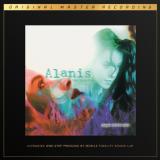
- All I Really Want
- You Oughta Know
- Perfect
- Hand In My Pocket
- Right Through You
- Forgiven
- You Learn
- Head Over Feet
- Mary Jane
- Ironic
- Not The Doctor
- Wake Up
When Alanis Morissette took direct aim at an ex who wronged her on the eviscerating “You Oughta Know” in 1995, everything about the Top 10 song communicated it wasn’t the usual narrative about love gone south. Or the typical wounded singer wallowing in self pity. Morissette, and both the lead single from and her entire American major-label debut — the profoundly personal Jagged Little Pill — represented a sea change. They kickstarted a movement, one whose impact continues to echo throughout the mainstream nearly three decades later.
Ranked the 69th Greatest Album of All Time by Rolling Stone, included on the Rock and Roll Hall of Fame’s list of 200 Definitive Albums, and featured in several books about essential albums, Jagged Little Pill remains more than a blockbuster that has sold more than 17 million copies in the U.S. and 33 million units worldwide. It’s a statement, an attitude, a soundtrack for anyone seeking inspiration, an outlet, or permission to be themselves.
Sourced from the original master tapes, pressed at Fidelity Record Pressing on MoFi SuperVinyl, and strictly limited to 4,000 numbered copies, Mobile Fidelity’s UltraDisc One-Step 180g 45RPM 2LP box set of Jagged Little Pill presents the landmark effort in audiophile-grade sound for the first time. A key part of the record’s appeal and accessibility — Glen Ballard’s smooth production, touches that help Morissette’s exposed-nerve fare seem more accessible and melodic — comes through on this special 30th anniversary edition with an openness, presence, and dynamic explosiveness that make the vocalist’s songs that much more real and visceral.
The singer’s distinctive mezzo-soprano deliveries — the octave-rippling highs, dark-hued lows, dramatic crescendos, belted choruses, wispy reflections, occasional yodels — resonate with full-range ardor and depth. As crucial as anything on the record, Morissette’s confessional words take center stage like never before. Ditto the instrumentation and atmospherics that form the magnetic backgrounds of the songs. Key in on the contributions from Red Hot Chili Peppers Dave Navarro and Flea on “You Oughta Know” to Tom Petty & the Heartbreakers' co-founder Benmont Tench’s organ playing on six tracks.
The deluxe packaging of Mobile Fidelity’s Jagged Little Pill UD1S set underscores the work’s distinguished status. Housed in a slipcase, the LPs come in special foil-stamped jackets with faithful-to-the-original graphics that illuminate the splendor of the recording. Benefitting from an ultra-low noise floor, superior groove definition, and dead-quiet surfaces, this UD1S reissue is for listeners who prize sound quality and desire to engage themselves in everything involved with the album, including the now-iconic cover art that juxtaposes two portraits of the then-21-year-old singer-songwriter and features typewriter font.
That script — which suggests a raw, blood-on-the-floor document created without modern aids like spell check or language correction — hints at the heightened level of unvarnished intimacy, honesty, and catharsis Morissette offers throughout Jagged Little Pill. Named after a phrase uttered on the astute “You Learn,” the album explores the frank emotions, inherent contradictions, and wishful desires people feel everyday but are often too afraid to express. Morissette displays no such fear or shyness.
Akin to a woman reading from a diary, Morissette leaves nothing to the imagination as she skewers hypocrisy during the poignant “Forgiven,” seeks recompense on the vengeful “You Oughta Know,” and spills her guts on the soul-purging “All I Really Want.” For all the anger and bile ascribed to the singer and record, Jagged Little Pill is incredibly healthy and upbeat. Morissette uses the catchy pop-rock frameworks and moody ambience to suss out situations, to learn, to give hope. There’s the clever yearning of “Hand in My Pocket”; wry contrarianism of “Ironic”; kind-heartedness of “Hand over Feet”; the live-and-let-live spirit of “You Learn” – all positive and amiable.
Throughout Jagged Little Pill, the ever-approachable Morissette connects with listeners who recognize themselves in her — and has an intelligent conversation with anyone who wants to participate. It seemed almost everyone did. In addition to the mammoth sales that make the effort the 17th-best-selling album in American history, Jagged Little Pill collected four Grammy Awards, two American Music Awards, three Billboard Music Awards, and eight Juno Awards. In 2018, the record became the basis for a musical that netted 15 Tony nominations on Broadway.
Ironic? Anything but. Jagged Little Pill transcends generations, gender, and trends. As Morissette sings on the opening “All I Really Want,”, the album represents “deliverance” — “a place to find common ground.”

10
Divine Dances. In plural form.
The fourth album from DjeuhDjoah & Lieutenant Nicholson couldn't have a more explicit title.
Masters of emotions and feelings, the duo has always known how to express melancholy and nostalgia with precision. Yet this time, all their efforts have concentrated on a single goal: taking listeners by the hand—no, by the ear, obviously!—to bring everyone back to the dance floor and explore a variety of atmospheres together.
And naturally, a variety of styles. Funk, ndombolo, electro, hip hop or zouk, each new vibration discovered carries away the previous one to form a dancefloor where all eventually come together.
Divinely light.
The body, surrendered to this call to dance in all its forms, has been so caught up in the whirlwind of groove that the mind has fallen in behind it to continue as one. Words explode into syllables that metamorphose into notes, then perfectly align with those from the score.
One second. A bit of attention. Caught by an irrepressible groove, then comes the moment to slalom through melodies to discover, at the turn of a rhyme, a new meaning. Approached head-on, certain overly serious themes would empty the room and bring the atmosphere down to lead levels. The diagonal approach, humor, and apparent nonchalance of the two men are the best weapons at their disposal. Their Trojan horse to put substance into their form(s). To evoke transidentity, consent, economic malaise as well as the spiritual, or to tell little stories of frustrated loves, seemingly insoluble but which will end well.
Anthony Hilaire for Creole words, Sarah Solo for hip-swiveling soukous, Patrick Bebey for pygmy flute notes, and Grégoire Mahé to bring electricity to DjeuhDjoah & Lieutenant Nicholson's songs; styles blend in a musicality worked into its smallest interstices.
Gathered on this dance floor illuminated with 80s disco brilliance, you observe brassy notes slithering under the electronic veneer, synthesizer keys splashed by furious hip movements. To raise your eyes to connect with the spiritual is to watch the sky become constellated with crystalline Fender Rhodes notes, destined to fall like rain on the heavy bass of afrobeat groove.
Smiles attached to faces, no one should think they can get through the ten tracks of Divine Dances while remaining seated : he's doomed to fail.
OUT MAY 2025 DELUXE WHITE VINYL 180 G /CD / DIGITAL

- Pharaoh's Dance
- Bitches Brew
- Spanish Key
- John Mclaughlin
- Miles Runs The Voodoo Down
- Sanctuary
Listen to This.” As the original working title for Bitches Brew, the instruction and invitation remains to this day as the best way to approach a record that shattered conventions, altered music history, and, 55 years later, still sounds far ahead of its time. The template for jazz fusion, Bitches Brew is rightly ranked by virtually every significant outlet among the 100 greatest albums ever made. Sewn together with vibrant colors, voodoo textures, and ethereal moods, the 1970 landmark emerges with supreme detail and nonpareil feeling on Mobile Fidelity’s UltraDisc One-Step 180g 33RPM 2LP vinyl set.
Sourced from the original master tapes, strictly limited to 5,000 numbered copies, and pressed at Fidelity Record Pressing in California, this definitive-sounding 55th anniversary reissue enhances every element of a double album that established new possibilities for studio recording techniques. You’ll hear wide and deep soundstages, separation between instruments, and an extremely broad dynamic range. If ever a jazz album can be said to have gone to outer space and back, this is it.
Sourced from the original master tapes, strictly limited to 5,000 numbered copies, and pressed at Fidelity Record Pressing in California, this definitive-sounding 55th anniversary reissue enhances every element of a double album that established new possibilities for studio recording techniques. You’ll hear wide and deep soundstages, separation between instruments, and an extremely broad dynamic range. If ever a jazz album can be said to have gone to outer space and back, this is it.
Davis conceived Bitches Brew by having the musicians stand in a semi-circle. There, he pointed at them with vague directions for tempo, solos, and cues. The collective improvisation and interplay spawned a galaxy of melodies and grooves that were later spliced together by producer Ted Macero. Benefitting from the ultra-low noise floor and superb groove definition of this pressing, these distinct creations take shape with utmost realism. Compositions stretch across jet-black backgrounds and paint canvases laden with millions of colors and shades. Juxtaposed percussion, loose jams, and melodic segues explode with impressionistic verve.
Bitches Brew also boasts visionary artwork. By design, the lavish packaging and gorgeous presentation of the UD1S Bitches Brew set call attention to such matters. Housed in a deluxe slipcase, it features special foil-stamped jackets and faithful-to-the-original graphics that illuminate the splendor of the recording. It is made for discerning listeners who desire to fully immerse themselves in everything surrounding the album, from the images to the tones. And this is one effort where every last detail matters.
Gathering a Hall of Fame-worthy lineup of musicians and tweaking it according to his desires, Davis follows through on his idea to “put together the greatest rock and roll band you ever heard.” Central to his proposition is the presence of two (and sometimes three) drummers and two bassists, a tactical move that makes rhythms a central focus. Akin to the futuristic album cover art, the drum-driven suites head toward distant universes and uncharted territories. At once hypnotizing and grooving, they chart maverick adventures via quixotic rock, funk, and R&B elements.
A without-a-net experiment involving interchangeable double-quintet lineups, Bitches Brew explores the previously unimaginable with electrified instruments — Fender Rhodes piano, processed trumpet, dissonant guitars, and bass among them — and an emphasis on feeling over composition. Mesmerizing and soothing, jarring and smooth, overt and subtle: The music seemingly covers an entire map of emotions and sensations, and like no record before, ties together the groundbreaking creativity of the multiple disciplines that were changing popular culture at the end of the 1960s and dawn of a new decade.
Conceptually, Davis described Bitches Brew as “a novel without words” and “an incredible journey of pain, joy, sorrow, hate, passion, and love.” The vast psychedelic expanses of warped echoes, liquid reverb, and tape loops confirm such ambitious contrasts of light and dark, fear and hope. Yet the most absolute characteristic of the watershed effort lies in how it resists definitive interpretation and encourages free thought — the very principles Davis used to conceive Bitches Brew.
More About Mobile Fidelity UltraDisc One-Step and Why It Is Superior
Mobile Fidelity Sound Lab’s UltraDisc One-Step (UD1S) technique bypasses generational losses inherent to the traditional three-step plating process by removing two steps: the production of father and mother plates, which are created to yield numerous stampers from each lacquer that is cut. For UD1S plating, stampers (also called “converts”) are made directly from the lacquers. Since each lacquer yields only one stamper, multiple lacquers need to be cut. Mobile Fidelity's UD1S process produces a final LP with the lowest-possible noise floor. The removal of two steps of the plating process also reveals musical details and dynamics that would otherwise be lost due to the standard multi-step process. With UD1S, every aspect of vinyl production is optimized to produce the best-sounding vinyl album available today.
10
T?t 41 is the latest record by modular synthesist and Berghain resident JakoJako (Sibel Koçer), marking her album debut for Mute.
Recorded during a trip to Vietnam and bookended by field recordings from T?t Lunar New Year celebrations, the album is illuminated by references to Koçer's heritage. The melodic palette breaks away from traditional Western scales, drawing instead from the tonal intricacies of the Vietnamese language, inspired by overheard conversations. The album and track titles further honour the vibrant T?t festivities, shrines, and landmarks she encountered during her travels.
This album is, in many ways, a distillation of ideas she has been exploring for years. Tapping into a deep understanding of machine-based music, crafted with a minimalist setup consisting of a Eurorack and Waldorf Iridium Core, T?t 41 reflects on notions of rebirth, and the pursuit of a sonic core. From this simplicity emerge some of her most expansive, unworldly compositions to date.
T?t 41 is available on vinyl in a limited run of just 500 copies worldwide.
2
Sound artist and designer Mattia Onori’s debut album “Tra Vento e Oscurità” (“Between Wind and Darkness”) on Naarm’s Southern Lights illuminated the expanse through the interplay of sound and silence; a harmonious balance between experimentation and sonic art, deeply rooted in an expansive understanding of sound engineering. It is only appropriate then, that the remix compositions for Tra Vento e Oscurità are entrusted to fellow artists who provide the same sense of sonic experimentation and sound art as Onori. Up steps Katatonic Silentio and Planatia. Katatonic Silentio’s absorbing and elegant live set in support of Onori’s album release party at Berlin’s Arkaoda in 2024 was a highlight; here she extends the energy of that evening by delivering a delicate and auditory rework of Tra Vento e Oscurità. Planatia’s remix is a twelve and half minute odyssey into the expanses of Tra Vento e Oscurità, traversing its way between sound and silence, underlying vibration and atmosphere, where getting lost in the journey is the ultimate outcome.

Danish drummer Daniel Sommer completes his internationally acclaimed Nordic Trilogy (featured in Stereogum, Downbeat Magazine, Bandcamp"s Best of Jazz and more...) with the release of Lost Threads on March 21st, 2025, via April Records. Following As Time Passes and Sounds & Sequences, the highly anticipated third chapter features Finnish pianist Artturi Rönkä and Swedish bassist Thommy Andersson. Together, the trio embarks on a deeply introspective exploration of time, space, and their shared Nordic spirit of improvisation. Described by Sommer as "a process-oriented project prioritizing musical risk and flow," the Nordic Trilogy has sought to illuminate Nordic approaches to composition and improvisation across generational and stylistic divides. With Lost Threads, this vision culminates in a collection of music that embraces vulnerability, spontaneity, and togetherness. "Most of the music emerged as Daniel and I improvised in my living room in Helsinki," Rönkä recalls. "Later, when Thommy joined us for a couple of concerts and recording sessions... his highly personal way of playing the bass inspired Daniel and me to try to develop the music in further, unexpected directions." The result is a dynamic and emotionally resonant album, recorded live in a Helsinki studio with all three musicians in the same room, without headphones or edits whatsoever. The title track and Den ensommes dans pulse with energetic groove and rhythm, while pieces like Meditation, Silent Steps, and Forgotten Song float with a haunting, rubato lyricism. With influences ranging from Nordic folk, Western Classical music and the jazz tradition, Lost Threads continues the trilogy"s history of blurring the boundaries between composition and improvisation. The trio"s collective sound-anchored by Rönkä"s nuanced piano, Andersson"s deeply personal bass tones, and Sommer"s textural drumming-creates a sonic landscape both timeless and contemporary. As the trilogy closes, Lost Threads invites listeners into a contemplative space where silence and sound intertwine, offering a balm for the modern world"s relentless pace. True to the spirit of the Nordic Trilogy, it stands as both a conclusion and a testament to the boundless possibilities of collective improvisation.
10
Bugge Wesseltoft has long been a shaper of his own jazz idioms, through his diverse solo albums, his group projects such as New Conception of Jazz, OKWorld! and RYMDEN, and collaborations with artists such as Sidsel Endresen, Henning Kraggerud or Henrik Schwarz.
"Am Are" features special constellations of superb musicians that spans both generations and styles, and is an exploration of sonic textures, dynamic contrasts of mood and style, and ranges from sparse arrangements through to complex layers of dubs and loops and improvisational interplay.
The album begins with Bugge alone on "How?" with layers of undulating atmospheric synth, brought into focus by Bugge's piano at the forefront, creating a minimalist miniature that is both emotive and serene. For "Villrein" Bugge is joined by Elias Tafjord on drums, beginning with a santur-like synth figure, floating over ominous formant sci-fi bass synths bubbling and pulsing, and overlaid by phrenetic piano that only stops to lock into the santur figure before relaunching on its own journeys, all underpinned by Elias Tafjord's expressive drumming. "Is Anyone Listening?" demonstrate's Bugge's songcraft, layering muted percussive piano behind Rohey's distinctive and beautiful vocals punctuated by Martin Myhre Olsen's tenor saxophone, creating a soulful mood tinged with desperation.
"BAG" presents the first classic piano trio of the album - Bugge on piano and synths, Arild Andersen on bass, and Gard Nilssen on drums - announcing itself with an insistent riff, chattering drums, breaking into a progressive rock-style passage of bass and piano in unison. "Reel", the second track from this trio, is a mellow soundscape that evolves to become hazy urban downbeat jazz.
The second piano trio of Bugge (Rhodes and Korg MS20 synth), Sveinung Hovensjø (Electric Bass), and Jon Christensen (Drums and Bells) offers a completely different perspective. The first track "Render" features Bugge's Zawinul-esque Rhodes and monosynth leads, Sveinung's fuzz bass in something of a leading role, all carried with chattering gusto by Jon Christensen's dynamic drumming that brings texture and space as well as rhythm to the piece. "Vender" begins as an atmospheric piece, with reed organ-like synth washes, and octave-processed bass with a somewhat sitar-like tone, meandering until the track breaks down into drums and bass weaving around an insistent drum machine loop, dripping with synth pads and monosynth lead.
"JazzBasill" introduces the third piano trio - featuring Bugge (Piano), Jens Mikkel Madsen (Acoustic Bass) and Øyunn (Drums) - and offers a classic piano trio style with urban sophistication, that is lyrical, and interspersed with staccato cadences, giving a feeling of broken swing, slightly staggered yet driving forwards. The title track "AM ARE" is late night jazz, with baroque whispers, and distinctly melodic.
The final track, "Think Ahead" features the non-standard trio of Bugge (Piano/Organ), Oddrun Lilja (Guitar) and Sanskriti Shrestha (Tablas/Harp). Beginning with a minimalist piano figure, table, and sustained guitar, the track breaks down to a noise surge and ambient windscape, with guitar birds and abstract grinding, before returning to minimalist melodicism.
The shifting personnel across the album, as well as the three different studios in which it was recorded - Village Recording in Copenhagen, Rainbow Studios in Oslo, and his own Buggesroom Studio - creates a feeling of dynamic change and musical variety that is unified by Bugge's piano and keyboards. His playing moves between foreground, where he allows the music to elevate him, and background, where he move gently like a beneficent presence, tending to the demands of the spirit of the musical moments he has captured. It is an album powered by restless exploration and shaped by distinctive musical personalities; it is a journey through different moods, illuminated and brought into focus by Bugge's measured approach and guiding hand.

also available
Black Vinyl LP[21,81 €]
Das zwölfte Studioalbum von Arch Enemy, "Blood Dynasty", ist ein wütendes und unerbittliches Meisterwerk, das einige der härtesten und dynamischsten Arbeiten der Band bis dato bietet. Beginnend mit dem bösartigen Titeltrack ist das Album ein energiegeladener Angriff, der die Band auf dem Höhepunkt ihrer Macht zeigt. Zu den herausragenden Tracks gehören das rasante "Dream Stealer", das mit epischer Größe aufwartet, und "Illuminate The Path", eine hymnische Kraft mit einer intensiven, neuen Dynamik. Das knarzende, mittelschnelle "Don't Look Down" treibt den melodischen Death Metal zu schwindelerregenden Höhen, während "The Pendulum" mit einer Intensität aufwartet, die einem den Schädel zerbersten lässt.Das von Jens Bogren produzierte "Blood Dynasty" besticht durch kolossale Soundlandschaften, die eine detailverliebte Produktion mit rauem Metal verbinden und es zu einem der stärksten Alben von Arch Enemy machen. Egal, ob man ein eingefleischter Fan ist oder ihren Sound zum ersten Mal entdeckt, dieses Album bietet die unerbittliche Energie, Präzision und Brutalität, die Arch Enemy zu einer Legende gemacht haben.

also available
LP + 12" + CD[75,21 €]
Das zwölfte Studioalbum von Arch Enemy, "Blood Dynasty", ist ein wütendes und unerbittliches Meisterwerk, das einige der härtesten und dynamischsten Arbeiten der Band bis dato bietet. Beginnend mit dem bösartigen Titeltrack ist das Album ein energiegeladener Angriff, der die Band auf dem Höhepunkt ihrer Macht zeigt. Zu den herausragenden Tracks gehören das rasante "Dream Stealer", das mit epischer Größe aufwartet, und "Illuminate The Path", eine hymnische Kraft mit einer intensiven, neuen Dynamik. Das knarzende, mittelschnelle "Don't Look Down" treibt den melodischen Death Metal zu schwindelerregenden Höhen, während "The Pendulum" mit einer Intensität aufwartet, die einem den Schädel zerbersten lässt.Das von Jens Bogren produzierte "Blood Dynasty" besticht durch kolossale Soundlandschaften, die eine detailverliebte Produktion mit rauem Metal verbinden und es zu einem der stärksten Alben von Arch Enemy machen. Egal, ob man ein eingefleischter Fan ist oder ihren Sound zum ersten Mal entdeckt, dieses Album bietet die unerbittliche Energie, Präzision und Brutalität, die Arch Enemy zu einer Legende gemacht haben.

- 65: 66
- 48: 50
- 73: 74
- 54: 56
The debut album from Whitney Johnson & Lia Kohl has evolved over several years from their initial practice of free improvisation on viola and cello into (for the moment), this: a neophonic orchestral expression. At once stimulating and soothing, For Translucence is a living, breathing meditation in which layers of acoustic strings, synthesizers, field recordings, radio and sine waves illuminate each other as they twine and grow.

Sagacious reggae lyricist Vaughn Benjamin’s words are particularly cutting during Sow And The Reap, the final recording of Vaughns immense catalog of works with I Grade Records. Produced by Zion I Kings, and taken from 2021’s album Polarities, Sow And The Reap folds topics of political dominance, mass migration, and injustice into a thought provokingly coherent whole. The song brims with Vaughn’s characteristic dual-meaning word-play, using evocative metaphors of nature and agriculture to illuminate global policy. Sow And The Reap’s timeless lyrical principles are matched by its inexorable reggae rhythm, featuring hefty programmed drums by Romain “Teflon Zincfence” Arnett, and sombre trombone and space age synth, both supplied by much missed multi-instrumentalist Drew Keys. Backed by its correspondingly haunting dub.
This series honours both the vocal and version culture of the reggae sound system and the profound lyricism of Vaughn Benjamin. We have consistently received two requests in relation to releasing the LPs: "Can we have dub versions?" and "Where can we read the lyrics?" Our response is the 'Akae Beka - vocal, version and word-sound collection.' Before Zero Records worked with Tippy I Grade to mix a series of dub mixes from a carefully curated selection of his extensive works with Vaughn Benjamin. The vocal and corresponding dub mixes were then cut to wax by Lewis Hopkin of Star Delta and wrapped in a collage made of Ras Marcus's artworks, which he crafted for various LP covers of Vaughn's works throughout the years with the lyrics transcribed and printed on the rear of each sleeve.

11
Joni Void, the artistic persona of Montréal-based French-British producer Jean Néant (he/them) returns to songcraft on their warmest and most welcoming record yet, where the acclaimed sampledelic sound collagist chills out with an emotionally resonant song cycle tinged by downtempo, lo-fi, avant-pop, and trip-hop. Guests include Haco, Ytamo, Sook-Yin Lee, Pink Navel and N NAO. Every Life Is A Light expands on Void's recent stylistic turn towards more languorous and mellow lo-fi production, foreshadowed by the drifting looseness and ambient bricolage of their preceding experimental sound-art record. This transitional sensibility now shapes more defined song structures and styles, with loops are given time and space to unspool, and rhythms shot through the softer-focus lens of trip-hop and dub. Every Life Is A Light swaps the twitchy insistence of Void's acclaimed early albums for a newfound lightness and suppleness, still imbued with all the restlessness, sonic detailing, and emotional resonance that made their name. The neurotic brokenmachine kinetics of earlier Void, summarized by Sasha Geffen as "drawing despair and wonder from within the vast unfeeling of digital communication" in an 8.0 Pitchfork review, may be chilling out, but Void is becoming an ever better conjurer of hauntological feeling. Every Life Is A Light summons this in a comparatively buoyant, benevolent, head-nodding journey more open to tenderness and modest joys. Perhaps it's the sound of Void at greater peace with themselves and the world, despite the bittersweet cost: even as it channels grief, memorializing comrades and companions recently deceased, this album wants light. Void's raw materials continue to draw heavily from samples (their own Walkman cassette fieldrecordings and songs by others) and from a wide community of musical guests. Vocalists Haco on "Time Zone" and Ytamo on "Cloud Level" help levitate what could be lost tracks from a mid-90s Too Pure Records compilation of skewed-lounge electronica. Canadian musician Sook-Yin Lee sings on lead single "Vertigo," a sinewy 80bpm tape-loop and bassline groove propelled by psychedelically-layered lyrics that eventually turn the song in on itself entirely, like Grace Jones' "Nightclubbing" covered by Animal Collective. One of Void's greatest hip-hop loves is the Ruby Yacht collective; charter member Pink Navel drops some brilliant verses on "Story Board." The album's two minimal tracks, an extended piano loop set to a slow beat and shimmering electronics on "Muffin-A Song For My Cat" and the languid sampled bass riff and breakbeat of "Event Flow," are perhaps most overtly `lofi chill.' Indeed the whole album could be said to sit adjacent to those viral (if not already AI-generated) genre trends, which maybe begs the question on a lot of our minds: can specificity and authenticity of musical materials still be heard, still meaningfully signify substance and difference, still matter? Perhaps a question that fades in comparison to the career break Void could catch by landing on generic streaming playlists. More likely, these tracks remain too off-kilter, too genuinely lo-fi and ineffable, and too disqualified by the status of its peasant rights-holders, to catch the algos. Context remains the poor cousin of content. Meanwhile Void marches on, as a tireless organizer of local music events, bouncing around and often living in DIY venue, depending on the latest apartment eviction. With an ubiquitous polaroid camera in tow, they also document each communal happening with a single shot (and often a blinding flash bulb): a memory and metaphor for lives illuminated preciously, singularly, `imperfectly' in the moment. Dozens of these polaroids adorn the album's back cover and inner sleeve art in grid-like montages, as a fitting analog for the careful construction, grainy intimate materiality, and ephemeral feeling of these songs. Every Life Is A Light is Joni Void's most coherent and congenial record while relinquishing none of their experimentalist acumen as a producer or emotional attunement as a composer. Instead these qualities flourish, on an album that lights a humble flame for the fragile promise of homespun creative collaboration as unalienated labour and therapeutic communion, making an enchantingly idiosyncratic contribution to downtempo sample music along the way. Thanks for listening.
7
Enxin/Onyx, the duo of Nicky Mao/Hiro Kone and Tot Onyx (formerly group A), joins Other People with their debut album "In Rupture," capturing the same mesmerizing energy for which their live sets have become known.
“In Rupture” is not painless but in rupture lies possibility. The elasticity of this time pitching us across unknown terrain, revealing new potentialities, eclipsing static being. Whether in breach, collision,shimmer or severance, Enxin/Onyx explores these as occasions for transformation. Peeling back the layers through discord and harmony, exciting the inversion of expectation, towing the listener to depths and back up again to illuminate the senses. At times metallic and feral, at others murky and sharp, each song serves as an offering for all that is in rupture; body, spirit, land, ecosystem.
The opening track “A Void” calls to mind some mutation in its mechanical ecstasy, but for what purpose remains unknown. Even in the near moments of stillness, “Needle Pierces the Threshold” breathes a forceful disquietude. Tommi’s vocals pulling the listener down into some subterranean
madness, to unravel upwards from all sides, flooding the once parched landscape. In “Embers Kissthe Eye”, all of time emerges in one moment, compelling the subject’s gaze towards a new horizon.
The album follows its subjects through exile, exhumation and discovery. Through this process plates shift, fissures are revealed and what once appeared to be indomitable absolutes crack, pointing towards their inevitable collapse. To be in rupture is regeneration, to be in rupture is to return.

9
Whereas Lewis used his transformative talents to newly illuminate renaissance man George Washington Carver onJesup Wagon, the saxophonist does the same here for gospel- music force of nature Mahalia Jackson. And this time it's personal, because Lewis lived her music growing up, nurtured by a grandmother who had received Mahalia's singing like a bolt from above. Much more than a tribute, this work is"really a three- way conversation between Mahalia, my grandmother and me."
The challenge was to turn these songs into jazz, the 21st century variety. What James and the band (William Parker- bass, Chad Taylor- drums, Kirk Knuffkecornet, Chris Hoffman-cello) conjure with this music is miraculous.
The CD & LP editions also exclusively include the contemporaneous suite, "These Are Soulful Days", JBL's first composition for strings; performed with the Lutoslawski Quartet. It is included as a 2nd disc on CD version & via an exclusive download card with the LP

Moody cacophonies, sonic dispatches from Japan, crystalline breakbeats that are more environment than rhythm: Jake Muir’s enmixed, described by Muir as a “(re)mixtape,” is a mind-bending deep dive into the enmossed archive. Besides reflecting the history of the label, Muir’s mix is a production in its own right. A Los Angeles native based in Berlin, Muir is a DJ and field recordist who “sees mixes as a vehicle to explore narratives outside of the album format.”
In Bathhouse Blues (2023), where Muir sampled various sources to explore gay cruising culture and sensuality, his more expansive, conceptual approach to the form is illuminated. Mixes are not just a linear succession of tracks with transitions—they’re excavations that also result in the creation of new audio artifacts. Inspired by the psychedelic impulses of illbient, Muir uses DJ and sound engineering techniques to melt down genre distinctions and create alien atmospheres.
From the enmossed community, Muir pulls from artists like bad lsd trips, Angelo Harmsworth, Nick Klein, Tetsuya Nakayama, and Patrick Gallagher to coalesce a super-compendium of the global sonic underground, all viewed through his own unique lens. Muir takes major liberties with processing and effects automation to carve new worlds from the soil of these preexisting works. Some of the tracks and material on enmixed are heavily edited, emphasizing specific harmonics or bass frequencies, and some portions contain three or four layers, putting artists in direct conversation with each other.
This heady approach—using the tools of both mixtape and remix—results in a super textual and dense palimpsest of the enmossed catalog. “Because mixes are more open- source,” Muir says, “it’s easier to express some ideas since there is more material to pull from.”
- Rob Goyanes
Silver foil printed j-cards on heavyweight iridescent ('Lapis Lazuli') recycled paper Duplicated at a carbon-neutral facility

- A1: Poppy Jean Crawford - Glamorous (Compiled By Angel Olsen)
- A2: Coffin Prick - Blood
- A3: Sarah Grace White - Ride
- A4: Maxim Ludwig - Make Believe You Love Me
- A5: Camp Saint Helene - Wonder Now
- B1: The Takeover (Poppy Jean Crawford Cover - Performed By Angel Olsen)
- B2: Swimming (Coffin Prick Cover)
- B3: Sinkhole (Sarah Grace White Cover)
- B4: Born Too Blue (Maxim Ludwig Cover)
- B5: Farfisa Song (Camp Saint Helene Cover)
10
A few years ago, Angel Olsen quietly formed somethingscosmic, a new imprint and a home for Olsen to have “the flexibility to release when and how I want to with the help from my longtime partners at Jagjaguwar.” Somethingscosmic’s second release, ‘Cosmic Waves Volume 1’ is a compilation reimagined as a dialogue; side A features artists chosen by Olsen, with each artist choosing their own song for the collection. Side B is a collection of songs from the same artists, but chosen by Olsen and recorded by her. Each song, unsurprisingly, illuminates a new artist Olsen finds spectacular. Hearing Olsen refract the artists’ songs back to them reveals the depth of Olsen’s imagination, while spotlighting multiple exciting artists at work.
“As someone that emerged into the music scene through a small tape label,” says Olsen, “I’ve wanted to continue the spirit of discovery and of my debut release, ‘Strange Cacti’, while supporting and collaborating with artists and friends whose music I have been moved by. I feel there is something unique and special about covering another artist's song,” she continues. “We all make it our own, or we try to, but I personally always learn something new about the process when I’m engaging someone else’s words and melodies in such a close way. Time and again I find that putting myself into various different styles of songs can lead to new ways of thinking and creating.”
The artists on “Cosmic Waves Volume 1” draw from a sprawling, myriad sounds, eras and inspirations. Poppy Jean Crawford’s magnetic growl and guitar-god heaviness; Coffin Prick’s reckless, psychedelic fuzz; Sarah Grace White’s hypnotic voice and melody; Maxim Ludwig’s expert minimalism; and Camp Saint Helene’s beautiful, big sky folk. “Thank you for listening and supporting this experiment,” Olsen says. “If you like what you hear, please support these artists by buying some of their music, merch, a ticket to their show, or telling your friends about them. It goes a long way. Love, Angel”

- A1: Munich (Feat Alice Silvestrini)
- A2: Polaroid De Une Promenade (Feat Fabrizio Massara)
- A3: Darling (Feat Anita Dada & Fabrizio Massara)
- A4: The Right Words (Feat Fred Ventura)
- A5: Crystal (Feat Alice Silvestrini & Andy)
- A6: You Are So Beautiful (Feat Killme Alice & La Tosa)
- B1: Summer On A Solitary Beach (Feat Johnson Righeira)
- B2: Italopop (Feat Anna Soares & Eugene)
- B3: My Love In Tokyo (Feat Terrienne - French Version)
- B4: Betty Blue (Feat Alice Silvestrini & Margo)
- B5: Everybody Say Oh Oh (Feat Chiara Camillieri)
11
After the surprising debut with ‘Monochromatic’, Milano 84 - the musical project of Fabio Di Ranno and Fabio Fraschini - returns with a new album that brings the formula into even sharper focus. Synth pop, new wave, Italo disco acquire a contemporary dimension and an international flavour.
‘Ultradisco’ brings together eleven tracks, some in English, others in Italian. They are velvet dancefloor songs, emotional and romantic, elegantly distant from the obvious. Milan 84's fellow travellers include, among others: Johnson Righeira, here in the futurist reinterpretation of a Franco Battiato classic (Summer on a solitary beach); Anita Dadà – a well-known avant-garde artist - is with Fabrizio Massara (Baustelle) in the languid and intense ‘Darling’; Andy (Bluvertigo) and Alice Silvestrini (Laison) illuminate the prismatic ‘Crystal’; Anna Soares - a revolutionary performer - and Eugene - electro songwriter - colour ‘Italopop’, a manifesto made up of décollage quotations; Fred Ventura ignites the engines of the new wave to come with ‘The right words’. And he is also artistic supervisor of this unmissable album for all lovers of the 80s, the decade that never ended.

- Court And Spark
- Help Me
- Free Man In Paris
- People's Parties
- Same Situation
- Car On A Hill
- Down To You
- Just Like This Train
- Raised On Robbery
- Trouble Child
- Twisted
Joni Mitchell Gets Jazzy, Counterbalances Love and Trust with Freedom and Confusion on Court and Spark
Mobile Fidelity's UltraDisc One-Step 180g 45RPM 2LP
Plays with Definitive Detail and Clarity: Pressed on MoFi SuperVinyl Strictly Limited to 5,000 Numbered Copies
Box Set Features New Liner Notes
1/4" / 15 IPS / Dolby A analogue master to DSD 256 to analogue console to lathe
Court and Spark, the most commercially successful album of Joni Mitchell's trailblazing career, arrived after a year in which she took some time to breathe and kept a low profile. The pause led to more breakthroughs for the singer-songwriter. Marking Mitchell's increasing drift toward jazz (and affinity for Miles Davis and John Coltrane), Court and Spark garnered four Grammy nominations, earned the Best Album of the Year vote in the prestigious Pazz & Jop poll, and ranks #110 on Rolling Stone’s list of the 500 Greatest Albums of All Time.
Sourced from the original analog master tapes, pressed at Fidelity Record Pressing on MoFi SuperVinyl, strictly limited to 5,000 numbered copies, and featuring new liner notes, Mobile Fidelity's UltraDisc One-Step 180g 45RPM 2LP box set presents the 1974 classic with definitive detail, tonality, and directness. Marking the first time the revered LP has received audiophile-quality treatment, it's one of six iconic 1970s Mitchell records Mobile Fidelity is reissuing on vinyl and SACD sets.
Benefitting from a virtually nonexistent noise floor, dead-quiet surfaces, and superior groove definition, this collectible edition reproduces without compromise the textures, details, and breathtaking craftsmanship that help make Court and Spark into what many fans believe is the Canadian native’s finest hour. Notes bloom and decay as they do amid an acoustic live environment. Soundstages extend far and deep, with black backgrounds and balanced tones adding to the uncanny realism.
The reference-grade presence and openness put in transparent view Mitchell’s incisive words and unique phrasing, as well as the contributions of her prized support musicians — including Tom Scott and the L.A. Express as well as guest turns by the likes of David Crosby, Graham Nash, Jose Feliciano, and Robbie Robertson. Mitchell, experimenting with the melodic parameters of guitar and piano, is rightly found at the center of it all. The jazz-rock rhythms of drummer John Guerin, slippery guitar lines of Larry Carlton, vibrant horns and reeds laid down by Scott — crucial to the songs’ shape-shifting arrangements — can now also be heard with fresh ears.
Visually and physically, the packaging of the Court and Spark UD1S set complements its distinguished status. Housed in a deluxe slipcase, both LPs come in foil-stamped jackets with faithful graphics that illuminate the splendor of the recording. This reissue is for listeners who desire to engage themselves in everything involved with the album, including Mitchell’s “The Mountain Loves the Sea” painting — a picture of waves embracing and receding away from a mountain, a metaphor for the record’s lyrical themes — on the cover art.
Pitching deceptively light compositions against underlying tensions, Court and Spark witnesses the singer-songwriter finding her footing with a group of top-shelf musicians who seemingly understand her visions as well as expanding her lyrical palette and venturing further into territory no artist had dared explore. Mitchell’s accessibly complex structures, beat-propelled rhythms, and spirited interplay with Scott & Co. both give the music a different identity than her prior efforts and point in the directions she soon headed.
Lyrically, Court and Spark matches the wit, integrity, originality, and intellect of anything in Mitchell’s oeuvre — no small feat. Offsetting positives with negatives, and considering circumstances from multiple angles, Mitchell explores issues connected to love and freedom, certainty and confusion, and trust and fear with unfettered boldness and introspective empathy. She teeters between surrender and retreat, and spends a majority of the record sussing out the complications and sacrifices involved with such actions.
Mitchell addresses the transactional nature of desire (the intimate title track, the upbeat “Raised on Robbery,” complete with rock ‘n’ roll pep from Robertson and zesty sax from Scott); anticipation and disappointment of romance (“Car on a Hill,” “”Down to You); fame and celebrity (“A Free Man in Paris,” “People’s Parties”); and sanity (the dark and stormy “Trouble Child,” a satirical cover of Annie Ross’ “Twisted”). Throughout, she sings with an emotionally penetrating beauty and devastating honesty that teaches about ourselves.
Or, as Mitchell relays on “People’s Parties”: “Laughing and crying/You know it’s the same release.”

13
Mysterious, multifaceted collective i Häxa have unveiled their epic self-titled, full length debut; a ground-breaking conceptual double album shaped by a collision of ancient gods and bleeding-edge technology_ Released as four distinct Parts over the course of the year, `i Häxa' now comes together as a singular vision that weaves together genre-defiant soundscapes, abstract cinema and ancient meteorological mythologies from singer-songwriter and visual artist Rebecca Need-Menear (also of electronic alt-rock duo Anavae) and forward-thinking producer Peter Miles (Architects, Dodie, Fizz). i Häxa is a ritualistic dissection of the world as we know it, a forceful separation of the monotony of modernity from the rites and rituals that for centuries formed the foundations for who we are, how we came to be and where we claim to belong. Disjointed fragments of time collide. Two sides, one of logic and one of chaos, seeking unity and balance through an expression of freedom. This is i Häxa. Whilst the album is composed of four distinct movements, each consisting of four distinct tracks themselves; pulling them apart into easily digestible, standalone singles isn't an easy feat and, as is now clear from the project's sprawling cyclic nature, was never the intention. In an age of fast fun and instant gratification, the ties that bind these works together are intended to transcend tracklisting. With aural, visual and lyrical themes freely intertwining, i Häxa is something to be consumed whole; just as it will, in time, consume you. Charting an existential journey to the very depths of what makes us who we are, with every dark corner illuminated in glitched out, discordant glory; i Häxa is a project years in the making that draws simultaneously from rituals for old gods and the modern day deification of data. i Häxa is both heartwarming and horrifying; i Häxa is ancient history and hyper-real; i Häxa is everybody and no one at all. Check out if you like Radiohead, Julie Christmas, Agnes Obel, Bjork, Fever Ray, Massive Attack, Dead Can Dance, Emma Ruth Rundle, Jenny Hval, Cult of Luna, Eivor, Zola Jesus, Marissa Nadler, Soft Moon

12
Moon White Vinyl. All her life, Emma Hardyman has wrestled with contradictions. After all, she was practically rendered a living, breathing contradiction the moment she was born into her half-Peruvian, half-white working-class Mormon family. In young adulthood, Hardyman became increasingly disillusioned with Mormonism's righteous black-and-white thinking, as well as its exclusionary elitism, and decided to leave the church. But she also acknowledged that the institution's all-or-nothing philosophy had become a part of her, resulting in a considerable test of grace and unlearning. As the singer-songwriter behind Little Moon, the Tiny Desk Contest-winning, Utah-based avant-folk project, Hardyman uses music as an outlet to illuminate contradictions of all kinds. Following the release of her 2020 debut LP Unphased, Hardyman set out to write a romantic album about her newlywed husband Nathan (who also sings and plays guitar in Little Moon), but the universe had other plans. After Nathan's mother tragically passed away, Hardyman recalibrated her vision and started work on a love-as-grief, grief-as-love album titled Dear Divine. The record serves as a mirror for the darkest parts of ourselves, allowing us to examine our ego_not to dismantle it, but to better understand how we love, process adversity and move through the world. Centering the classical music, folk, video game soundtracks and Tabernacle Choir hymns she grew up with, as well as ephemeral snapshots of personal significance, Dear Divine is an abundant tapestry of Hardyman's life. As enlivening melodies radiate from a string trio, you can envision the classical music that thrums from her parents' radio 24/7, as Hardyman sings in an otherworldly coo, you can imagine her younger self swooning over the tranquil records of Vashti Bunyan and Joan Baez, and as arpeggiated synths twinkle, you can visualize the enchanting kingdom of Hyrule from The Legend of Zelda: Ocarina of Time that she still adores. Songs like "now" and "messy love" embrace the gloriously jumbled stew of life, with the former chronicling Hardyman's arduous quest for love and trust and the latter patiently navigating the ways romantic partners can mirror each other's shortcomings. As Dear Divine attests, Emma Hardyman may not have it all figured out, but that's kind of the point. Through grief, faith crises and all-encompassing love, she's found the most wisdom in life's maddeningly consistent inconsistencies, as well as the subtle ways one can cultivate a feeling of home. Dear Divine doesn't take a red pen to life, it brings an open heart, an open mind and achingly beautiful, opulently weird folk songs.

Finnish electro duo Morphology, comprised of Matti Turunen and Michael Diekmann, is set to release ‘Made Up Reality’ on Deeptrax Records, the label with a mission to deliver high-quality, groundbreaking electronic music focusing on the deeper side of electronica and eclectic leftfield dance jams, exploring those spaces between deeper house and techno, with hints from the past and a strong vision of the future.
Continuing Morphology's tradition of dark, melodic, and skilfully produced electro funk that has captivated international audiences, they’ve have been holding down the retro-activism of Detroit and its call for an illuminated future of programmable, motorized, electro-fantasies for over 15 years. With releases on Semantica, Solar One Music and a slew of albums for Germany’s Zyntax Motorcity, it’s been Cultivated Electronics and Central Processing Unit that have given new rise to the music of Morphology. Their Traveller LP released through FireScope, helmed by the UK’s B12 in 2018, the floodlights remain unshakably fixed on the Finnish pair’s brilliance, appearing on landmark compilations like CPU’s 50th release jubilee to DJ Stingray’s Kern mix for Tresor, or holding it down in the underground at Scand nights in London, to bookings at Concrete Paris and Closer in the Ukraine, to Berlin’s unmissable Berghain. With a forever exploratory live set, Morphology’s place as a mainstay of futurist electro is rock solid and burning bright.
Renowned for their soul charged, emotion rich melodies and signature blend of techno and traditional electro, Morphology's new EP takes listeners on an unforgettable auditory journey. ‘Made Up Reality’ showcases the duo's ability to integrate acid lines and vibrant drum patterns creating a sonic landscape that is both innovative and deeply resonant. ‘Seven Fingers’ is a deep dive into the darker side of electro, with haunting melodies and pulsating rhythms. ‘Particle Swarm’ is an acid-infused cut that melds techno elements with classic electro beats. ‘Gradient Descent’ is a more electrifying electro acid heater, blending head nodding bassline with sharp acid riffs and pulsating rhythms that will ignite the floor. ‘Active Inclusion’ is a vibrant, drum-heavy composition that brings the EP to a powerful close.

Inside Automatic Popular Music there are two people sitting in a room, their backs to each other. One plays a piano with no particular attention to detail and tuning of the instrument, and another, sitting behind him, claps his hands on his own legs. They do not see each other, they never look at each other, they can only listen to each other, look around. The room is large enough, it is daytime, there are four windows through which enough light enters to illuminate the objects and furniture with objects on them. October, the temperature is great and outside the window there are many people and all these people are dancing to the music of another record.
Automatic Popular Music was recorded and mixed by Nicola Ratti between July and December 2023. The tracks consist almost entirely of sounds generated by automatisms programmed on modular synthesisers. These are combined with tape loops on which fragments of both acoustic and digital pianos are engraved, generating tracks that are structured on repetitiveness in both their rhythmic and harmonic components. The adjective 'popular' is in this case the result of the other adjective 'automatic' since the machine has been entrusted with the task of generating the melodic patterns and harmonic structures of the tracks on the disc.
Automatic Popular Music is the first release by LL, a curatorial and editorial platform based in Milano and formed by artists and curators.
Composed, recorded and mixed by Nicola Ratti between July and December 2023. Mastered by Giuseppe Ielasi. Cover photo by Cédrick Eymenier.

In the night, the cadenced orientation of the strobe lights sketches geometric trajectories in the dark room. The icy condensation from the cocktail glass drips onto her fingers, caresses her nail polish, grazes the side slit of her evening dress, and evaporates before it touches the floor, the dance floor.
Her body, that of a femme fatale, stands between the clenched bodies of the dance floor. A beam of light pierces the darkness. It illuminates a Mediterranean chest – stronger than the bridle imposed by the buttons of his shirt – adorned with golden necklaces: symbols of faith turned into instruments of seduction. Sin is the antechamber to holiness.
She turns around, that’s him: Marcelo. She had long heard about him. Their gazes, perfect diagonals, get locked in the crowd. A cheeky smile reveals a golden tooth, the lights a shrouded sex bursting forth. His wink is a magnet. Often, words are a mere formality. Let’s make out.
Que rico.
Que lindo.
Te quiero.

I was sent an unfinished version of Dose Your Dreams so that I might contribute string parts. I couldn’t stop listening to the rough mixes I received. A friend asked me how the record was. I replied, “My God, Fucked Up have made their Screamadelica.” And psych-rock-groove it is. The drums mixed wide, propensity for drones, for delay pedal, for repetition, groove. The politics and aesthetics of hardcore married to an “open format” approach to genre. Elements of doo-wop, krautrock, groove, digital hardcore. “None of Your Business Man” opens the album in familiar enough territory, a sax assisted exit from an office space. But things get psychedelic very quickly. By the time the title track arrives, Mike Haliechuk is whispering, wah pedals are in full effect, and we’re wearing oversized t-shirts and pinwheeling. “Accelerate,” the lyrical centrepiece of the album, storms in like Boredoms on a bullet train and dissolves into a digital nightmare. The album closer, “Joy Stops Time,” finds Fucked Up at their most Düsseldorfian, nearly eight minutes of blissful motorik. At the center of it all is Damian Abraham’s scream a man chained, a man tortured, a true protagonist. The effect is one of an epic, every chapter attempting its own narrative devices, its own genre hybridization and it works, it works so insanely well. The drama unfolds like a miniature world of many parts being explored, a map being illuminated, location by location. As with David Comes to Life, there is a story here. David who once came to life is now indentured to a desk job. David meets the elderly Joyce who closes his eyes, opens his mind, and sends him on a spiritual journey. David embarks on his own metaphysical odyssey. He sees a stage adaptation of his own life. He speaks to an angel in a lightbulb. He sees an infinite series of universes as simulations within simulations. Meanwhile, Lloyd Joyce’s lover was sent, decades ago, by Joyce on the same odyssey, but was lost in the void. Lloyd seeks to be found and reunited with his lover. Where will David end up? Will Joyce and Lloyd be reunited? Dose Your Dreams meaning: treat your dreams as you would a dream, allow yourself to be lost within them, allow them to open your heart and your mind, enjoy them as you would a drug. Reach out for my hand and pull me close. Owen Pallett.

14
GB's debut album, Gusse Music, emerges as a collaged symphony of experimental music with a pop sensibility. Its makeshift compositions, stretched out to linger in memory, offers a 33-minute textural plunge into the melancholy of the infinite – shadowed by loneliness yet illuminated by glimpses of light, a longing for the memories ahead. Tracks bleed into each other, like videos in a feed, momentarily grabbing the listener's attention only to be forgotten again shortly after. However, in the constant stream of impressions, GB patiently strives to inspire new thoughts and conjure an image, quaint and affectionate. From the sludged electric guitars and hypnotic baritone vocals of the opening track "FACETIME," to a solemn, almost Wicker Man-esque, acoustic instrumentation on "CONCRETE CITY," to stoned-out beats and rolling bass on "NEW PLANES”. Gusse Music evokes a world of music that is both welcoming and fun, hauntingly desolate, dark, and gritty. “the world in us, and all the spectacle, so much it hurt, wouldn’t trade anything”

- Azoka Eguna (Feat. Toots)
- Euskal Herria Jamaika Clash (Feat. U-Roy)
- Baxua Eta Lurra (Feat. I-Threes)
- Plastic Turkey
- Askatasun Parabolikoa (Feat. Luciano)
- Mongolian Barbacue
- La Fille Du Quartier Populaire (Feat. Lisa Dainjah)
- Yalah, Yalah, Ramallah! (Feat. Yacine Belahcene)
- La Línea Del Frente (Feat. Masta Blasta)
- Basque Xamuraia (Feat. I-Threes)
- Beamon Jauzia (Feat. Sorkun+Masta Blasta)
- Le Mouv'dub
- Azoka Eguna - Remixed By Xabi Pery
- Baxua Eta Lurra - Remixed By Rob Smith
- Plastic Turkey - Remixed By Neil Perch (Zion Train)
- Mongolian Barbacue - Remixed By Peter Rose
- Yalah, Yalah, Ramallah - Remixed By Dmd (Nebukhednezzar & Daniel Díaz)
17
Remastered edition on 180 grams double vinyl of 'Euskal Herria Jamaika Clash', released by Talka Records & Films in 2006. To the 12 tracks that appeared in the original CD edition we have added 5 remixes made by producers as renowned as Xabi Pery, Rob Smith, Neil Perch, Peter Rose or Nebukhednezzar and Daniel Díaz. DESCRIPTION "On the wall of the toilet a freshly made graffiti, "Get out of the ghetto, organize the hate", reminded me of the rage we owe to this society. However, I was also at ease, savoring our Original Soundtrack: "ROOTS, ROCK, RAP, REGGAE". This phrase belongs to the song "B.S.O." from the album "Gure Jarrera" by Negu Gorriak. For music fans, the real ones, the ones who spend their fingers searching for rare vinyls in second-hand shops, there are records that have a special meaning. That record has special meaning for me for several reasons, but one of them is singular: it has helped me to discover a multitude of music. It turns out that the credits of that album were full of fundamental names in rock, hardcore, funk, Hip Hop, soul, ska, Latin music... a good guide for the young man of musical discoveries that I was fifteen years ago. But there was also that song, "B.S.O.", with the word "REGGAE" at the end of the chorus. A genre that I had never paid much attention to and that since then, slowly, I have been tasting... from classic figures to new trends, from Jamaican reference records to admirable peninsular formations (Basque Dub Foundation, Lone Ark or The Starlites). A few years ago I had the opportunity to interview Fermín Muguruza and in one of his answers he said: "It's clear that the basis of reggae is going to remain firm, because it's been a constant since Kortatu's first album. Reggae will be there in any of its expressions or derivations, of which there are already many". And it's true. Going through Fermín Muguruza's discography, and his groups, forwards or backwards, we come across reggae in different doses, proportions and orientations, but it has been present in all his albums. And in his "solo" stage, in a more prominent way. Now he releases "Euskal Herria Jamaica Clash", a coherent link in his chain of albums, where he accentuates that proportion of reggae, looking more than ever at the classic conception of the genre, but with some mestizo nuances present (rock strength, some Hip Hop drums or the sound of the trikitixa). The album has been recorded in Jamaica and has featured some renowned figures from those lands: U-Roy, Luciano, Lisa Dainjah, Masta Blasta, Yacine, Toots and the I-Threes (the usual female vocal trio in Bob Marley's albums, to which Rita Marley belongs). The new album offers twelve tracks, where, apart from reggae, one can also feel the optimism of the new lights that illuminate the future of the Basque Country ("Euskal Herria Jamaika Clash")... an optimism that is intertwined with descriptions of local customs ("Azoka Eguna"), rebellious spirit ("Mongolian Barbecue", "Basque Xamuraia", "La Fille Du Quartier Populaire"), songs of hope ("Yalah Yalah Ramallah"), a snapshot of a symbolic triumph ("Beamon Jauzia"), criticisms of alienation ("Askatasun Parabolika"), to the dictatorship of the empire ("Plastic Turkey"), a poetic air of rest on music and feelings ("Baxua eta Lurra"), a final instrumental ("Le Mouv Dub") and a luminous and hopeful revision in reggae key of an old song by Kortatu ("La línea del frente"). "Euskal Herria Jamaika Clash. The soundtrack of the present: DREAMS, HOPE, ROOTS, REGGAE." FM-Hop (2006)

15
Prince will forever be remembered as a commanding live performer, chart-topping recording artist, and music business revolutionary. Yet for all the time he spent in the spotlight over his four-decade-long career, Prince also worked tirelessly behind the scenes to nurture talent and pen songs for the rising artists he respected.
Sourced directly from Prince’s vast archive of Vault recordings, ORIGINALS is a brand new 15-track album featuring 14 previously unreleased recordings that illuminates the vital, behind-the-scenes role Prince played in other artists’ careers. These are more than just demos, the production quality has been kept high and the recordings resemble a pristine quality similar to that of Nothing Compares 2 U released last year.
By the mid-1980s, Prince was dominating the charts even as a writer/producer with songs he’d composed and recorded for others. In addition to releasing nine of his most commercially successful full-length albums, he also wrote and recorded endless reels of material for proteges The Time, Vanity 6, Sheila E., Apollonia 6, Jill Jones, the Family, and Mazarati. Several of the iconic songs found on ORIGINALS were considerable hits for the artists who recorded them.

DJ Support: Don Letts (6 Music), Piet Blank Blank & Jones / Dj Ease Nightmares On Wax / Macca Nts Radio / Coyote / Mike Salta Music For Dreams / Pete Gooding / Layne Fox 40 Thieves / Chris Coco / Richard Dorfmeister Kruder & Dorfmeister / Bill Brewster / Simon Mills [Bent. Plus Loads More.
DJ Feedback:
Lovely laid-back vibes. Excellent! - Francois K [NYC, USA]
Ay what a beauty! Takes you away from the madness for a moment. - Macca (NTS)
Following on from Los Rayos Del Sol (2021) & the follow up Los Rayos In Dub (2022) NuNorthern Soul presents ‘Moonbeams’ by Ibiza based producer, per-cussionist and sunset selector, George Solar.
Inspired by nocturnal moods and illuminated by the moon in all its phases, this collection follows the vibrations of 'Los Rayos Del Sol.' It's a journey into night-time peace and harmony, embracing the moonlit atmosphere.
MEDIA LUNA (feat. Ken Fan)
Opening with angelic dubby downtempo, this track translated is 'Half Moon,' sets the tone for the night.
MOONBEAMS (feat. Ken Fan)
Featuring love poet JEN, 'Moonbeams' captures the rise of the moon and the message of love.
COUNTERMOON (feat. Ken Fan)
Originally a slower cumbia demo, this track evolved into a retro dance piece with a minimalistic touch. Reflecting the off-center vibe of lunar forces.
LUNATICOTINA (feat. Ken Fan)
A tribute to the global beats scene, this ritual tune incorporates grooves from all continents, dedicated to Ibiza's 'global beats' oasis LAYLAH venue.
O LUAR
Influenced by Samba vibes and the Brazilian approach to moonlight, this track combines Solar dub and cosmic stardust.
MOONBEAMS reprise (for KS)
A tribute to Klaus Schulze, a secret Solar Moon band member, this reprise is a spontaneous improvisation recorded in memory of the spiritual godfather.

Introducing Jahnah Camille (pronounced Hannah), a young artist emerging from the DIY scene of Birmingham, Alabama. Camille's songs capture the rollercoaster of teenage angst, heartbreak and introspection over a well-made bed of driving guitars and catchy, compact melodies. A five-track EP infused with anxiety and grit, i tried to freeze light, but only remember a girl, is a shining introductory project smoothed over by Camille's sugar-sweet voice and cutting lyricism. Much of the EP's songs were written and recorded while Camille was still in high school, taking trips back and forth from Atlanta to record. In the time following, Camille dug into the local DIY scene, steadily gaining an impressive resume of opening slots as she cut her teeth supporting acts like Clairo, Soccer Mommy, Cryogeyser and Wednesday as they came through town. Now 19 years old, Camille delivers an excellent snapshot of those uncertain and wildly hopeful late teen years. i tried to freeze light captures Camille approaching heartbreak and self-perception from a variety of angles-each track playing slightly with genre and cadence and infused with influence from her musical heroes, like Liz Phair and Fiona Apple. The EP pulls at a range of alternative rock and pop threads, there's the 90s alternative rock opener "flesh" and the country-gaze-tinged "roadkill." Camille then softens on the swooning synth-layered ode to love lost, "elliot," before relaxing into a folksy, acoustic "paper doll."I wanna talk and not spill out carnival sounds" Camille confides on closer "carnival sounds"--a track that illuminates the singer's art-pop influences and knack for revealing tender and at times searing admissions through her lyricism. While misunderstandings color the emotional sentiment of the EP, Camille's artistry and expression come through clear as day on i tried to freeze light, presenting her as a promising young voice with real talent and a hunger for musical experimentation.
Jacken Elswyth is a London-based folk musician, banjo player, and instrument builder. At Fargrounds is her third solo album, her first for the Wrong Speed label and the latest in a rich catalogue that repositions the spectral, vulnerable sound of the banjo away from its familiar role as signifier of the past and onto lands brave, new and unexplored. “The living wood is imbued with qualities that require engagement and understanding. Working with cherry, oak or walnut involves naming it an equal partner. The parallel, synchronous transformations of wood into instrument, of growing tree into resonating sound, musical tradition into musical flourishing, lie at the heart of Jacken Elswyth’s practices both as an instrument builder and as a creative musician. One might consider her primarily as a worker in wood, but whose craft and fields of expression are absorbed by those transitional and interim processes that manifest change. The traditional tunes included here have been cultivated and maintained by generations of players and collectors, pruned, grafted, and shaped over time. However, in this setting, their long-established forms seem to morph and shift. They audibly accrue unique qualities, blossoming and swelling into new modes of being, bright-stepping arrangements unfolding with a liveliness hinting at practices of ritual and community. Meanwhile, other pieces, creative cornerstones of this collection, appear fluid, partially formed. They suggest not the cultivation of new growth from established stock, but instead the actions of something on the verge of taking form. Working with raw elements of melodic and tonal abstraction, they illuminate the process of emergence and evolution. In this context, the title At Fargrounds is telling. It suggests a point set at some distance from any centre of human concerns, a liminal space in which the cultivated world encounters the world of other living things in their living state. Here, the innate strangeness of the maintained environment–vast lawns, sculpted hedges, vacant playing fields–encounters sprawling vistas of driftwood, dense thickets of brambles, stony hillsides. Across a full century-and-a-quarter, long-standing rural and pastoral musical traditions, at some distance from their origins, have been preserved, nurtured and re-shaped under the folk revival. Placed here, these artefacts now sit in alignment with unvarnished documents featuring the raw elements of sound-making. Their working-together is achieved through a universally-applied interest in musical growth and development. The juxtaposition and combination of these elements gives evidence of new, emerging approaches to community and social music: familiar, known, yet charged with an alien vitality”–CWK Joynes. “...she knows how to knit atmospheres, and does so to especially powerful effect during Scene 4b’s three minutes of stunning bowed banjo, yearning with longing and dread, while showing off her talent, curiosity and range”–Jude Rogers review of Six Static Scenes (Guardian Folk Album Of The Month July 2022) "Jacken is an emotive player with high technical ability. Further, she builds banjos and other instruments, and that intimate knowledge of the bones and fibres holding everything together means that her playing has very few cracks" - Foxy Digitalis

11
The fourth album by Love Battery, 'Straight Freak Ticket' (1994), now out for the first time on vinyl! Remastered by Jack Endino (Nirvana, Soundgarden, etc.) 'Straight Freak Ticket' is the 4th album by Seattle alternative rock band Love Battery. It was originally recorded in 1994 and released only in USA and on CD format - now it is being released on vinyl for the first time. The Seattle Post-Intelligencer called the album "a solid, well-produced album of guitar-based rock with catchy hooks and a strong dose of psychedelia." USA Today labeled the album "a psychedelic tour de force and dramatic leap forward," writing that "the antigrunge guitar riff-o-rama of Ron Nine and Kevin Whitworth propels the Seattle quartet's most adventurous and listenable tunes to date." The band, featuring members of Mother Love Bone, Green River, Skin Yard, The Presidents of the USA, is: Ron Nine - Vocals, Guitar Kevin Whitworth - Guitar Jason Finn - Drums Bruce Fairweather - Bass
7
Released only eight months after his exhilarating debut, Bruce Springsteen's The Wild, the Innocent & the E Street Shuffle contains rousing dispatches from the boardwalk, the street, the beach, and the bedroom. It explodes with energy, dares to dream, teases with humour, crackles with tragedy, clings to hope, and overflows with discovery, youthfulness, and personality. It features an unforgettable cast of characters — corner boys, teenage hustlers, doomed lovers, jazz men, junk men, factory girls, fortune tellers, alley cats, pimps, escorts, and more — illuminated by vivid colour, breathtaking detail, and poetic action.
Musically, the heartfelt 1973 record is inhabited by sympathetic vignettes and cinematic arrangements steeped in rock 'n' roll, soul, jazz, and R&B. It finds the New Jersey native looking beyond the parameters of his preceding record and seeking to move on from environments he knows well (and chronicles here) by rushing headlong toward unknown territories, adventures, and people. Underpinned by the singer-guitarist's ambitious poetic enterprise and will to succeed, The Wild, the Innocent & the E Street Shuffle is the album on which Springsteen becomes the Boss.
Mastered on Mobile Fidelity's renowned mastering system, pressed at RTI on MoFi SuperVinyl, and strictly limited to 7,500 numbered copies, Mobile Fidelity's UltraDisc One-Step 180g 33RPM LP set is the definitive-sounding version of Springsteen's sophomore record. Benefitting from SuperVinyl’s nearly non-existent noise floor, superb groove definition, and dead-quiet surfaces, The Wild, the Innocent & the E Street Shuffle plays with a clarity, energy, presence, and openness that complement the expressiveness, dynamics, and scope of the seven restless songs that comprise a work Rolling Stone ranked the 345th Greatest Album of All Time.
Beyond the audiophile sonics that practically place you behind the console at 914 Sound Studios — listen to the separation between the instruments, natural decay of the notes, interplay within the widescreen soundstaging, and nothing-to-lose youthfulness of Springsteen’s voice — this reissue takes seriously this record’s influential merit by presenting it in packaging that underlines its status. Tucked in a beautiful slipcase, the LP is housed in a special foil-stamped jacket with faithful-to-the-original graphics. This reissue is made for listeners who prize sound quality and who want to engage themselves in everything involved with the invigorating set that busted Springsteen loose from the club circuit and landed him on the radio
Determined to liberate anyone within earshot and unafraid to come on strong, The Wild, the Innocent & the E Street Shuffle serves as the debut of the E Street Band — not only heard but seen for the first time by most of the public courtesy of the back-cover photograph. This is where saxophonist Clarence Clemons, organist-accordionist Danny Federici, and pianist David Sancious step out of the shadows — and drummer Vini Lopez and bassist Garry Tallent again stoke a fiery rhythmic engine that helps drive the untamed, reimagined big-band swing of “Kitty’s Back,” breathless R&B thrust of “Rosalita (Come Out Tonight),” and carefree dance steps of the funky “The E Street Shuffle.”
Of course, the main attraction remains a then-24-year-old visionary on the precipice of becoming a sensation and turning a then-bloated rock scene on its head. Recorded over three months while Springsteen and company were busy touring his debut LP, The Wild, the Innocent & the E Street Shuffle reflects the high-octane approach the vocalist embraced onstage and drifts away from the label-dictated acoustic-based frameworks of his debut. The set also witnesses Springsteen deepening his observational skills, with narratives such as the romantically tinged “4th of July, Asbury Park (Sandy)” and redemptive epic “Incident on 57th Street” mirroring changes taking place in the singer’s own life, small towns, and America at large.
A thrilling collision of memories, reflections, and composites — Sandy, Rosalita, and the latter’s parents are all based on actual people Springsteen knew, as is the community depicted in the opening track — the aptly titled The Wild, the Innocent & the E Street Shuffle resonates decades on due to its truths, authenticity, and spirit. Those characteristics — as well as the fact that many of its lengthy songs come on as the equivalent of sweaty, feverish soul revue that won’t stop until you’ve been exhausted — also explain how this now-iconic album triumphed over the reservations of industry “experts” that both demanded Springsteen re-record it and instructed deejays not to play it.
Yet there’d be no stopping a record that saw the past, present, and future, a band whose will would not be denied, and a phenomenon who was born to run. A never-ending invitation to act real cool and stay up all night, The Wild, the Innocent & the E Street Shuffle always feels alright.
For fans of Lettuce, The Motet, and Tauk! A power funk septet, Waiting on Mongo is an immersive experience that can only be described as a soulful journey that pushes the limits in the 4th dimension of psychedelic grooves. With strutting guitar riffs, transcendent horns, and heady organ depth, the live performances take you on a cathartic journey where you shed the weight of the world with everyone in attendance. Traversing the inner workings of the human soul, everything seems to be in its right place when the Mongo party hits full throttle. Waiting on Mongo has relentlessly displayed a level of musicianship that continues to impress both music critics and fans alike, winning awards in their hometown of Asbury Park for consecutive years. With a permeating aura of soulful energy, that illuminates every venue, the band is on a collision course for new locations to spread the love that is their music. Now they are set to release their brand-new album From The Top featuring the first single “Take Our Time” and other stand out tracks like “Do What you Want” and “Sick of the Woods”.

10
Nestled beside the sea and a cluster of palm trees, La Malvarrosa, the neighborhood in Valencia where Cooper resides, derives its name from a fusion of "Malva," meaning mauve, and "Rosa," meaning pink. Here, La Malvarrosa serves as the primary backdrop for the recordings, symbolizing two distinct colors and artistic approaches.
These hues become the emblematic colors of a fictitious flag from an imagined island located on a forgotten expanse of ocean. From this ethereal site, melodies emerge, seeking to unravel the essence of certain insular music while intertwining with Cooper's post-everything sensibilities and Kòlar's minimalist electronics. "Mauve/Pink" navigates the delicate balance between playfulness, intricacy, and simplicity, blurring boundaries between tradition and innovation, reality and imagination, change and repetition.
The album serves as a showcase for contrasting methodologies and viewpoints, acting as a sonic document of an ongoing conversation between generations, where Cooper and Kòlar's efforts illuminate a boundless creative process and timeless aesthetics.

12
Introducing “Psyche Gems”, the Jakarta Records debut LP from LA based Rapper JUICEBOX & Norwegian producer duo Myeye. Debut LP “Psyche Gems,” a collaborative musical venture sparked by an impromptu Instagram jam session in 2021, is poised to mesmerize audiences. The brainchild of JUICEBOX, a versatile artist known for his roles as a singer, songwriter, rapper, and one half of the acclaimed group Figmore (with 10.4 Rog), “Psyche Gems” emerged from JUICEBOX's admiration for Simen Hallset's psych-pop band Gold Celeste (over 20 million Streams on Spotify). After reaching out to Simen, they swiftly connected with Henrik Norbakk, the other half of Myeye, igniting the genesis of the collaborative project. An Instagram jam session in 2021 gave sonic birth to LP “Psyche Gems”. Buttery vocals meet funky, soul-driven beats, meticulously recorded live, then chopped and repurposed to create an experience that transcends sonic definition. From vibrant head-nodding energy to lush beats seamlessly melded with an inimitable vocal delivery, “Psyche Gems” captures the essence of past and present, offering a kaleidoscope snapshot of life reflected through timeless grooves. The album's distinctive sound is characterized by meticulous layering, where each element is meticulously played, chopped, looped, and jammed over until achieving sonic perfection. United by their shared passion for old soul and jazz records, ‘90’s + ‘00’s hip hop, lo-fi indie, and psychedelic music, JUICEBOX and Myeye seamlessly fuse their diverse influences to craft a musical experience that resonates with listeners on a profound level. "We wanted to create something that inspires, provokes, and sheds light on the truths we all carry inside us," explains JUICEBOX. "Psyche Gems is more than just an album; it's an infinite journal entry of reflection, a testament to the power of music to illuminate the human experience."

- A1: 53°31’41 2”N 9°58’25.7”E
- A2: 28°05’53 3”N 37°49’34.2”W
- A3: 31°46’29 9”N 32°31’22.1”W
- A4: 35°04’50 5”N 34°13’24.0”W
- A5: Wildness Of Waves I
- A6: 38°24’10 8”N 28°27’19.4”W
- A7: 38°36’07 4”N 28°49’43.5”
- B1: 34°55’35 4”N 36°16’14.3”W
- B2: 17°01’15 0”N 61°45’41.2”W
- B3: 30°53’47 0”N 46°52’31.8”W
- B4: 25°22’17 8”N 54°09’20.2”W
- B5: Wildness Of Waves Ii
- B6: 32°24’23 2”N 41°13’35.9”W
- B7: 54°53’17 8”N 8°18’06.4”E
- B8: 17°01’11 5”N 61°45’35.3”W
15
Drawing from her compositions for Helena Wittmann's film DRIFT (2017), Nika Son creates a sonic journey across the Atlantic Ocean. Following a weekend at the North Sea, one of Wittmann's two protagonists embarks on a journey across the Atlantic to the Caribbean, during which unpredictable waves and deep sleep foster a transformative experience. Capturing the essence of this cinematic encounter through sound, Nika Son's compositions allow the water itself to become a storyteller, immersing listeners in the resonating body of the boat and plunging them into the profound depth of the ever-shifting ocean. Whether illuminated by daylight or veiled by night, the nature of this material world emerges through an exploration of the ocean as a distinct and tangible space, inviting contemplation of its transformative power. The line between reality and imagination blurs, and the waves echo the emotions of the voyage.

- A1: Pikiran Dan Kepentingan (Thoughts And Concerns)
- A2: Fenomena Demi Fenomena (From Phenomena To Phe-Nomena)
- A3: Lubuk Yang Terdalam (The Depths Of The Depths)
- A4: Manusia Oh Manusia (Human, Oh Human)
- B1: Selalu Ada Jalan Keluar (There Is Always A Way Out)
- B2: Meyakini Sebuah Jawaban (Believe In An Answer)
- B3: Kepada Cahaya Yang Menerangi Jiwa (To The Light Which Illuminates The Soul)
7
Born in 1977, in Malang, East Java, Wukir Suryadi began playing music for theatre at the age of 12 with the Idiot The-ater Studio, and later with the Rendra Theater Workshop. In his solo work, and as a member of Senyawa, Error Scream, Bendera Hitam Setengah, Potro Joyo and other groups, Wukir breaks the boundaries of traditional music, death metal and avant-garde performance. On this new release, “Cycle and Prayer,” recorded in 2023, he expands the edges of his unique artistic world further, by digging in to meditative improvisation, art, and community building in his home workshop in the mountains of central Java. These recordings vibrate inwards, toward the microcosmic ecologies of forests and rivers; they distort outwards, resonating with global waves of apocalyptic change that are forcing all living beings to the edges of existence on earth. The result is a meditative poem that moves, as its titles an-nounce, from phenomena to phenomena, praying that humans find a way out from the depths of the depths to the light that illuminates the soul.
An essential mode of creative work for Wukir is the creation of unique instruments, using these sound sources as “bullets of expression.” In addition to the spear-like tube zither Bambu Wukir, he has created the Solet, Enthong, Garu, Luku, Arrows, and Industrial Mutant instruments, which in addition to being used in live performance, have been exhibited in the Instrument Builders Project and the 2017 Jakarta Biennale. In the past few years, Wukir has begun to collaborate with local guitar makers, carpenters, and suppliers of native endemic wood in the mountain region of Salatiga. Using earthen bricks along with local woods (suren, coconut, mindi, and waru lengis) as building materials, he constructed a new studio and workshop space in Tingkir, where this album was made. The trees, water and air of the local environment have exerted a powerful influence in Wukir’s documentations of instrumental sound. On this recording, he uses the simple Cetta guitar, an instrument designed in Bali and made for Indonesian children and local communities of folk and popular musicians, in order to explore the different sonic characteristics of a more “normal” instrument built from local wood.
The themes of the album -- cycle and prayer -- arise from a foreboding series of meta-events that shook Indonesia and the world over the past years, following one after the other: the COVID-19 pandemic, the Ukrainian-Russian war, the Kanjuruhan Stadium tragedy in which football supporters were gassed and killed by police, revelations of govern-ment failures and corruption, the rise of personal vehicles, the increasing disturbance of natural patterns of the rainy season and other ecological cycles. “In these waves of technology and narratives of truth made for certain interests, playing a sound at a certain frequency and repeating can try to bring images and feelings to a certain point of con-sciousness,” Wukir told me. “Sound is a prayer that creates a change, whether gradual or rapid, in the behaviour of living things, to face the demands of the time, as humans struggle to live according to what they believe.” The draw-ings and sketches used for the cover spontaneously emerged alongside the recordings, as an instinctive depiction of “time and sound, nature that is outside of oneself, and nature that is within.”

The ashtrays in the music cellar are getting cold. Nobody coughs, that Beer tastes stale, and the disco ball spins in slow motion the sequins are missing. Only a small illuminated sign shines on the counter. Tonight: LO FAT ORCHESTRA – New Wave HIT-MACHINE from Schaffhausen, Switzerland. The band – three men with a sense of well-being Melodies – sets off on a ghost ride. “I’m not your dancer,” sings Chrisi Schmid, the singer behind it powerful synthesizer that writes the lyrics without them to write down. "I'm not your fucker." I'm not your puppet, you clown. This is the essence of the new Lo-Fat album “LFO_09”, which contains eight songs. That the name of the album just as well could come from a UFO is consistent. You don't have to Wanting to fit in or be cool for the sake of being cool. If in doubt, for the doubt. “I was afraid to talk to you,” sings Chrisi in the song “Sound,” and his Synth hops a wild dance. “I was afraid I wouldn’t like you. And I didn’t want to be like you.” The band still doesn't need a guitar. The bass works for two (the new bassist is Dominic Rubli). Drummer Daniel Zimmermann switches seemingly effortlessly between high-speed, Ballade scene and assembly line. “Love is for free,” sings Chrisi in the wonderful ballad “Good Times”. “This place is killing me.”

6
With his debut EP Mo Wrights delivers a jazz-focused and narrative-driven record navigating the inner dialogue of a creative struggle of inferiority, abstraction and commitment. The story finds him enlisting some friends along the way to advance from one act to the other.
With the title track - ‘things2proof’ - Mo tries to combine his myriad of influences in a 6-minute record that weaves together elements of jazz, broken beat, acid jazz, fusion, hip-hop and hints of rock. The coherence comes from his poignant narrative, which resembles a four-act structure, telling the story of alienation and his internal experience of inferiority, creative frustration, and his eventual recognition of a solution, concluding by finally permitting himself to simply ‘be’. And for that we thank him!
The b-side ‘proof of concept’ follows the title track, Mo embraces a more laid-back approach, sitting sonically closer to his beloved broken beat sound. Amsterdam-based pianist Misto Kay delivers a long soul-felt piano solo that carries the track into untold dimensions of groove. With this offering the soul feels both heard and yearned for. It’s as if desire and satisfaction are in conversation with one another. You can’t help but be gripped, pay attention, and listen.
As a co-founder of the Amsterdam-based music platform Steppin’ Into Tomorrow, whose ethos is anchored in the principle of collaboration and unification of the Dutch scene is a deeply felt sentiment throughout Mo’s EP. He enlists a slew of emergent local legends, such as QUANZA, drummer Jamie Peet, flutist Han Litz, bass player kotokid and pianist Misto Kay to embellish and remix his creation. The remixes also illuminate other bright creatives the local scene has to offer, with remixes by the likes of - Kofi the Unknown, LYMA, Misto Kay and Jazz n Dance.

10
Of the countless accolades and analyses that surround Blue, no point is more significant than the fact that the 1971 Joni Mitchell album continues to become more popular, revered, referenced, and relevant with each passing day. Such vitality is not only extremely singular; it is the ultimate measure of great art and, in the context of Blue, indisputable proof of the record's accessibility, integrity, and timelessness. If the most brilliant and everlasting music seeks to find truths shared by all of humanity, Blue can be said to be universal doctrine.
Sourced from the original analogue master tapes, pressed on MoFi SuperVinyl, and strictly limited to 12,000 numbered copies, Mobile Fidelity's UltraDisc One-Step 180g 45RPM 2LP box set presents the landmark album with reference-grade detail, tonality, and directness. Marking the first time the beloved LP has received audiophile-quality treatment, it's one of six iconic 1970s Mitchell records Mobile Fidelity is reissuing on definitive-sounding vinyl and SACD sets.
Everything about Blue sounds more intimate, involving, and inescapable on this transparent pressing, which benefits from a virtually non-existent noise floor and superior groove definition. Mitchell's voice, positioned front and center, and primarily accompanied by minimalist acoustic guitar, piano, and dulcimer playing, comes across clearly and prominently. Suspended notes and radiant chords double as question marks, commas, and phrases. The in-the-room presence and spatial dimensionality make absolute the full-range spectrum of introspective emotions — hurt and distress, self-awareness and joy, difficulty and uncertainty, warmth and desire — Mitchell navigates, queries, and contemplates throughout the record. The defencelessness the singer once spoke about is laid bare here like never before.
The packaging of the Blue UD1S set complements its distinguished status. Housed in a deluxe box, both LPs come in special foil-stamped jackets with faithful-to-the-original graphics that illuminate the splendor of the recording. This UD1S reissue exists as a curatorial artifact for listeners who prize sound quality and production, and who desire to engage themselves in everything involved with the album, including the unforgettable cover photograph of a ruminative Mitchell shot by Tim Considine.
Deemed the third Greatest Album of All Time by Rolling Stone; universally celebrated by critics, fans, artists, and educators; and defined by a spell of disarmingly vulnerable songs that are at once confessional, intense, spare, honest, painful, hopeful, and exquisite, Blue charts love, spiritualism, independence, and loss like no record before or since. Widely considered the album that established the singer-songwriter template, the largely autobiographical LP changed everything shortly after its original release in June 1971. Amazingly, it continues to do so more than five decades later.
An incalculable influence on generations of artists, it stands as the through-line from Carole King, Elton John, James Taylor, Joan Armatrading, and Leonard Cohen to Patti Smith, Carly Simon, Emmylou Harris, and Rosanne Cash to 21st century contemporaries like Brandi Carlile, Taylor Swift, Sharon Van Etten, and Courtney Barnett. Teetering between agony and optimism, it is — to borrow a phrase from Mitchell's eternal "A Case of You" — a bottomless "box of paints."
The beauty of the stripped-down arrangements, intoxicating melodies, and Mitchell's wisdom on Blue didn't go unnoticed. Critical acclaim, coupled with the depth of the material and Mitchell's reputation, propelled the album into the Top 20 in the U.S. and Top 10 in the U.K. Yet while so much pop music diminishes with age, Blue has defied norms and headed in the opposite direction. Its 50th anniversary year witnessed an outpouring of tributes, reflections, and testimonials that helped frame the record's escalating importance and symbolism — apt in an age in which women have become the prominent trailblazers in rock, R&B, and hip-hop.
Perhaps most succinctly, in a 2021 article celebrating the LP, the Los Angeles Times declared: "In 1971, nothing sounded like Joni Mitchell's Blue. 50 years later, it's still a miracle." Nothing, indeed. Yet "miracle" suggests Blue partially owes to a divine agent or inexplicable circumstance. And though Mitchell's bracing conviction and forthright sincerity can appear otherworldly, her musical approach and lyrical storytelling is nothing if not personal and human. What we hear is pure truth — no matter how aching, complicated, or stark.
Much has been written about the circumstances that inspired the songs on Blue: Mitchell's romances; her time overseas; her disdain for celebrity; her lingering sense of loss at having given up her daughter for adoption; her treatment by the very same industry that her music made uncomfortable; her prolonged search for resolution. These situations and experiences pushed Mitchell to question everything — especially big-picture concepts that have always obsessed mankind: fulfilment, autonomy, love, honesty, being.
"I wanna make you feel free," Mitchell sings on the record-opening "All I Want." Mission accomplished. Blue is liberation — and the start of a freedom that continues to impact music, culture, and identity today.
More About Mobile Fidelity UltraDisc One-Step and Why It Is Superior
Mobile Fidelity Sound Lab's UltraDisc One-Step (UD1S) technique bypasses generational losses inherent to the traditional three-step plating process by removing two steps: the production of father and mother plates, which are created to yield numerous stampers from each lacquer that is cut. For UD1S plating, stampers (also called "converts") are made directly from the lacquers. Since each lacquer yields only one stamper, multiple lacquers need to be cut. Mobile Fidelity's UD1S process produces a final LP with the lowest-possible noise floor. The removal of two steps of the plating process also reveals musical details and dynamics that would otherwise be lost due to the standard multi-step process. With UD1S, every aspect of vinyl production is optimized to produce the best-sounding vinyl album available today.

Montenegrin born in Istanbul, precocious pianist growing up in an embassy, brilliant musician. Prolific composer speaking eight languages, he arranged music for jazz, pop music, adopting multiple identities.
For one label, he is Andy Loore; for another, Emiliano Orti. For others, he is called Alan Blackwell or Johnny Montevideo, but behind all these aliases, there is only one man: Janko Nilovic.
Exploring the shelves of musical production, venturing into the less-illuminated corners of library music, Janko Nilovic's name lights up dozens of shelves on which his soundtracks, his records for Editions Neuilly or Sforzando, but above all his twenty albums for Editions Montparnasse, are stored. A considerable and imposing work, rich in orchestrations of keyboards, strings and brass instruments, themes, atmospheres and melodies. A repertoire in which the cinema, television and advertising have come to find their delight ...
Subjected to the sharp blades of samplers, reduced to a few effective seconds, joined with rhythmic beats, some of his tracks have infiltrated hip hop for a long time , leading the most curious to go back to the source to get the complete albums from which the precious loops had been taken.
Almost unknown to the general public, Janko Nilovic is a master for the initiated, whether they are at his side in the studio or comfortably seated in their armchair savouring the final result on their turntable. His discretion combined with his long years of silence on the record could lead one to believe that he had cleverly arranged his disappearance from the radar to make Janko Nilovic a mystery that has never been completely solved.
Until this message from The Soul Surfers.
A few miles away, in their studio fired up by analog funk, the Muscovites had been put back on the Nilovic track by multi-instrumentalist Shawn Lee. A few passionate discussions later, and the desire for a joint album was already lighting up the amps, making the bass strings shiver and the drum skins tighten.
Initiated by the coming and going of scores, the collaboration finally continued in studio for a real exchange, instantly bouncing off proposals, developing ideas in a live group dynamic that distance would have made impossible.
To feel the vibrations accumulated for decades at the CBE studio (like Chatelain Bisson Estardy), a mythical place founded in 1966, in which many albums, especially library, were immortalized. A place where consoles, equipment and instruments were kept as they were, accumulating in their wiring, meters and speakers, endless hours of experimentation and recording.
A place that Janko knew well and where an old acquaintance was waiting for him. A Hammond organ with a Leslie booth whose keys he had already flattered in the past and behind which an improvisation and a single take were enough to complete the eponymous title.
Together, Janko Nilovic and The Soul Surfers have built Maze Of Sounds, a musical labyrinth paved by the master's keyboards where the soul-funk groove of the fiery Russians is the listener's thread, his point of reference in this maze of atmospheres and emotions, at once cinematic, nostalgic, dancing, dreamlike and contemplative.
An album where, however, nothing is compartmentalized. Where, blown by the whirlwind strung by a violin quintet, the barriers move preparing the entrance of a Slavic choir, letting a screaming guitar come and go alongside the crystalline liveliness of the Fender Rhodes, organize some rhythmic aerations at the disposal of the samplers.
A fusion between the cleverly blackened scores, between the science of precisely written arrangements and the soul-funk feel of The Soul Surfers. An album such as Janko Nilovic has been dreaming of making for years.

12
A pioneer of the home recording movement, Linda Smith released several collections of delicate, bewitching solo music on cassette in the 1980s and 90s. The 2021 release of Till Another Time: 1988-1996, Captured Tracks' compilation of Smith's work, has helped bestow rightful critical acclaim to the ahead-of-her-time artist. Now, Captured Tracks dives deeper into Smith's catalog with the release of two full-length companion albums, Nothing Else Matters and I So Liked Spring, available for the first time on vinyl & streaming formats. Recorded at Smith's home in Baltimore in 1995, Nothing Else Matters chronicles the tension between the mundanity of daily life and the creative impulse: Traffic noises on the charmingly boisterous "Little To Be Won" showcase this levity, as does the addition of playful hand claps and a laugh track to her striking cover of Young Marble Giants' "Salad Days." I So Liked Spring, recorded the following year, saw Smith experimenting with the unique challenge of putting another artist's words to music. She'd come across a biography of the English poet Charlotte Mew and found her wistful poetry rife for musical interpretation. The songs on I So Liked Spring are delightfully unpredictable, full of upbeat melodies and spellbinding vocal harmonies. This is perhaps best showcased on the title track, one of Smith's most popular songs to date, a lovelorn anthem that recalls the airy melodies of early dream pop. Both of these albums showcase the mesmerizing charm of Smith's songwriting, often compared to the likes of the Velvet Underground and Laurie Anderson. Home recording technology has come a long way since Smith first began recording demos on her tape machine, but her influence reverberates through the work of today's bedroom artists. The release of these two essential albums seeks to further illuminate this connection, welcoming a new generation of listeners to the work of this trailblazing artist.

12
A pioneer of the home recording movement, Linda Smith released several collections of delicate, bewitching solo music on cassette in the 1980s and 90s. The 2021 release of Till Another Time: 1988-1996, Captured Tracks' compilation of Smith's work, has helped bestow rightful critical acclaim to the ahead-of-her-time artist. Now, Captured Tracks dives deeper into Smith's catalog with the release of two full-length companion albums, Nothing Else Matters and I So Liked Spring, available for the first time on vinyl & streaming formats. Recorded at Smith's home in Baltimore in 1995, Nothing Else Matters chronicles the tension between the mundanity of daily life and the creative impulse: Traffic noises on the charmingly boisterous "Little To Be Won" showcase this levity, as does the addition of playful hand claps and a laugh track to her striking cover of Young Marble Giants' "Salad Days." I So Liked Spring, recorded the following year, saw Smith experimenting with the unique challenge of putting another artist's words to music. She'd come across a biography of the English poet Charlotte Mew and found her wistful poetry rife for musical interpretation. The songs on I So Liked Spring are delightfully unpredictable, full of upbeat melodies and spellbinding vocal harmonies. This is perhaps best showcased on the title track, one of Smith's most popular songs to date, a lovelorn anthem that recalls the airy melodies of early dream pop. Both of these albums showcase the mesmerizing charm of Smith's songwriting, often compared to the likes of the Velvet Underground and Laurie Anderson. Home recording technology has come a long way since Smith first began recording demos on her tape machine, but her influence reverberates through the work of today's bedroom artists. The release of these two essential albums seeks to further illuminate this connection, welcoming a new generation of listeners to the work of this trailblazing artist.

The voice, the sunny melodies and the repertoire peppered with great hits have illuminated French song for decades. This year, Enrico Macias celebrates more than 60 years of a career that is still on the move with a new series of thematic vinyl Illustrated by Joann Sfar in four wonderful LPs. The unique career of the singer, songwriter, performer and guitarist. Heartbreak from uprooting to the strong ties uniting France and the Mediterranean, each of them addresses the themes of Enrico Macias' songs by sending a message of peace and universal love.Reviews in London Macadam, R2, Ads - R2 and London Macadam
'The voice, the sunny melodies and the repertoire peppered with great hits have illuminated French song for decades. This year, Enrico Macias celebrates more than 60 years of a career that is still on the move with a new series of thematic vinyl Illustrated by Joann Sfar in four wonderful LPs. The unique career of the singer, songwriter, performer and guitarist. Heartbreak from uprooting to the strong ties uniting France and the Mediterranean, each of them addresses the themes of Enrico Macias' songs by sending a message of peace and universal love.Reviews in London Macadam, R2, Ads - R2 and London Macadam
'The voice, the sunny melodies and the repertoire peppered with great hits have illuminated French song for decades. This year, Enrico Macias celebrates more than 60 years of a career that is still on the move with a new series of thematic vinyl Illustrated by Joann Sfar in four wonderful LPs. The unique career of the singer, songwriter, performer and guitarist. Heartbreak from uprooting to the strong ties uniting France and the Mediterranean, each of them addresses the themes of Enrico Macias' songs by sending a message of peace and universal love.Reviews in London Macadam, R2, Ads - R2 and London Macadam
'The voice, the sunny melodies and the repertoire peppered with great hits have illuminated French song for decades. This year, Enrico Macias celebrates more than 60 years of a career that is still on the move with a new series of thematic vinyl Illustrated by Joann Sfar in four wonderful LPs. The unique career of the singer, songwriter, performer and guitarist. Heartbreak from uprooting to the strong ties uniting France and the Mediterranean, each of them addresses the themes of Enrico Macias' songs by sending a message of peace and universal love.Reviews in London Macadam, R2, Ads - R2 and London Macadam

3
also available
Standard EP[18,45 €]
Warehouse find!
Three major players from the now multi-generational broken beat scene: Henry Wu, Dego (2000black) and IG Culture have assembled for an irresistible late summer bruk-samba trip.Brazilian rhythms have always been foundational influences on the broken-beat and future jazz movements, and this EP continues to explore these connections, a running theme throughout Far Out's 23 year history with Seiji, Mark Pritchard, Afronaught, Domu, Da Lata and Jazzanova being just a few of the names to have contributed to this particular avenue of the label's pantheon of dance music.The joyful samba-soul in the title track of Sabrina Malheiros' latest album features the bass and keys of Brazilian Jazz-funk legends Azymuth, and is inspired by the quest for clarity in the face of difficult times, Clareia in Sabrina's own words means to clear, light, brighten or illuminate'. But this remix EP beautifully ruptures the 'clarity' in style, each crafting the breezy Brazilian beats into their own distinct brand of future-thinking club-funk... these beats were made to be broken!

9
Remastered and first worldwide release (previously only limited availability in Iceland) Since first bursting onto the global punk scene in 2018, Icelandic trio GRÓA have thrilled audiences across the world by fully embracing an unruly freedom. Made up of sisters Hrafnhildur Einars Maríudóttir (aka Hrabba, age 22) and Karólína Einars Maríudóttir (aka Karó, age 20) and their childhood friend Fríða Björg Pétursdóttir (also 22), the Reykjavík-bred band merge elements of post-punk and noise-rock and art-pop with absolute abandon, arriving at an explosive yet magnificently arranged sound unlike any other. A local favorite, the Icelandic government has recently been sponsoring worldwide travel to share GRÓA with the rest of the world and in 2023 they have played shows around the world including in UK, Western and Eastern Europe as well as USA dates including Washington DC, Seattle, Chicago and New York City. They have recently recorded an in studio performance at KEXP which will be broadcast worldwide in January 2024 and more worldwide touring is planned for early 2024 to support the vinyl and CD releases. Listing iconoclasts like Sonic Youth, PJ Harvey, and Bikini Kill among their longtime inspirations, the Icelandic punk band GRÓA pursued their experimental impulses with more intensity and confidence on Í Glimmerheimi, matching the album’s shapeshifting sound with a surrealist but emotionally potent form of lyrical storytelling. “It’s about a girl who’s trying to escape the world she’s stuck in—this glitter world that looks so good on the surface, but it’s not where she’s meant to be,” says Karó in discussing the album’s concept. “There’s a song called ‘Jetpackstelpan,’ or ‘Jetpack Girl,’ where she leaves the world on a jetpack and flies away to the moon, and she’s never coming back again.” Opening on the kaleidoscopic rhythms and rowdy call-and-response vocals of “Fullkomið” (“Perfect”), Í Glimmerheimi brings that narrative to frenetic and dazzling life, ultimately closing out on “Skrímslið er að ná þér” (“The monster is getting you”): a serpentine and strangely mesmerizing epic whose swirling textures, otherworldly vocals, and sparse yet complex guitar tones illuminate the immense scope and depth of GRÓA’s artistry.

Theme Ltd. is back with its fourth wave of exclusive releases, this time on one-sided 7” vinyl. Allow these tracks to guide you through their diverse production as they blend genres and tone to provide insight into their fresh production technique.
‘Everywhere’ positions the listener in a gentle mood for love. Snares snap and mix with a slightly discordant, far piano as lyrics and chords bounce off each other at a steady tempo. We are apprehended by the doleful vocals that invite us to gaze with an ‘illuminated stare’, and as we diffuse into the end of the song, a cool-aired beat breakdown leaves us in media res. A sprawl of love left everywhere. Great !

Julian Cannonball Adderley's only Blue Note album, Somethin' Else, would likely forever be famous in music lore if just for the presence of Miles Davis. The iconic composer/trumpeter steps into the role of sideman on the 1958 set, one of just a handful of times he'd make such a move after the calendar passed the mid-1950s. Yet evaluating Somethin' Else strictly on Davis' involvement misses the big picture. Plain and simple, Adderley's jubilant work remains a jazz landmark due to the chemistry of its Hall of Fame personnel, enthusiasm of its participants, and sophistication of its arrangements – not to mention the reference-grade production and inclusion of the definitive renditions of two all-time jazz standards.
Limited to 6,000 numbered copies, pressed on dead-quiet MoFi SuperVinyl at RTI, and mastered from the original master tapes, Mobile Fidelity's ultra-hi-fi UltraDisc One-Step 180g 45RPM 2LP collector's edition pays tribute to the record's merit and includes the bonus track "Allison's Uncle." Offering reference-calibre sonics, this spectacular collector's version provides a clear, transparent, ultra-dynamic, and up-close view of a cornerstone effort that witnesses Adderley and Davis sharing horn duty alone for the only time in their fabled careers – an arrangement that occurred as a result of Adderley having joined Davis' majestic sextet a year prior. The premium packaging and beautiful presentation of the UD1S Somethin' Else pressing befit its extremely select status. Housed in a deluxe slipcase, it features special foil-stamped jackets and faithful-to-the-original graphics that illuminate the splendour of the recording. No expense has been spared. Aurally and visually, this UD1S reissue exists as a curatorial artefact meant to be preserved, touched, and examined. It is made for discerning listeners that prize sound quality and production, and who desire to fully immerse themselves in the art – and everything involved with the album, from the iconic photos to the gorgeous finishes.

10
Contradictory accounts of Miles Davis’ creation of the soundtrack to Louis Malle’s film noir Ascenseur pour l'Échafaud have all become part of its legend. Rarely has a soundtrack been so decisive. Nearly seventy years on, beyond the myth, this taut, feverish recording, imbued with extreme dramatic tension, remains one of the Miles’ finest records. The basic outline remains: Jean-Paul Rappeneau suggested to Malle asking Miles Davis to create the film's soundtrack who agreed to record the music after attending a private screening. Davis was performing at the Club Saint-Germain in Paris in November 1957 and on December 4, he brought his four sidemen to the recording studio without having had them prepare anything. Davis only gave the musicians a few rudimentary harmonic sequences he had assembled in his hotel room, and, once the plot was explained, the band improvised without any precomposed theme, while edited loops of the musically relevant film sequences were projected in the background. Bassist Pierre Michelot recalled in 1988 that “Miles just asked us to play two chords, D minor and C7, 4 bars of each, ad lib.” Typically, Miles planned very little but know exactly what he wanted. François Leterrier, the film’s Second Assistant Director picks up the story: “The session started at around ten o’clock and went on until dawn. The screen in the auditorium was showing the scenes for which Miles had devised some harmonies, and they were edited into a loop. And that’s what makes this music unique: it was entirely improvised in conditions that went back to the days of silent films, while watching frames shot in black and white by cinematographer Henri Decaë: tracking shots of Jeanne Moreau wandering down the Champs-Elysées at night, passing in front of lit window displays or going into bars, while looking for her lover/murderer alias Maurice Ronet … All of us there in the dark auditorium were aware that something extraordinary was taking place, something that had definitely never happened before. … In the small hours we all met up again at the Pied de Cochon in Les Halles, and Louis was looking at Miles with the disbelieving eyes of a child … as if he couldn’t believe the gift he’d just received. Even in his wildest dreams he had probably never imagined what his film would be like once it had been as if illuminated by the trumpet of Miles, incisive or wrapped softly in cotton.” The music was released on 10” by Fontana and received the Grand Prix from France’s Académie Charles Cros. It was released in the USA on Columbia as the A-side of the 12” LP Jazz Track, which received a 1960 Grammy nomination for Best Jazz Performance, Solo or Small Group. This beautiful re-issue of the original recording is pressed on 180g vinyl at GZ, and packaged in a deluxe gatefold tip-on jacket with Boris Vian’s original liner notes and Jean-Pierre Leloir’s iconic studio photo of Miles and Jeanne Moreau, and an essay on the circumstances that led to this out-of-the ordinary music by Franck Bergerot.

6
Some Female:Pressure right here with the latest NVST release; Silence Itself Is Noise! This is her debut for SSPB delivering a 6 track ep which are a reflection of her adventurous club sets, a well-balanced mix of powerful beats and expansive atmospheres haunted by skittering echoes of the dancefloor. Each track feels like fleeting memories of the club filtered through the human experience - flickering moments illuminated by strobes and shrouded in smoke, laced with the tang of sweat and psychedelics. Opener "Tiny Mistakes Feeling HOT (Hellisnotamyth version)" coalesces from curling vapors into infernal acid lines and rhythmic fragments that evaporate almost as soon as they appear. "The Devil Loves The Detail (Lucifer's Fire Version)" builds into an inescapable pulse amidst frayed synthesizers, pressure building to fever pitch before "The Danger Zone Of GFY (Freedom Version)" opens out into icy, astral synths. "Monster of Business (Style Edition)" shifts closer to the dancefloor with a slinking, syncopated groove, conversations from the smoking area or studio creeping in at the edges, before erupting into the frazzled bounce of "The Goat and the Night." "The Silence Itself is Noise (Nonstop Bass Version)" loops back once again to more cavernous atmospheres, warped bells and strafing melodic flourishes ringing out amidst fizzing distortion and skeletal percussion. Silence Itself is Noise doesn't clamour for attention, it necessitates it. Once again, NVST proves herself unafraid to challenge club orthodoxy, and unwilling to patronize listeners, instead making deft use of tension and release to create genuine moments of surprise and transcendence.

Van Halen did more than announce to the world the earthshaking arrival of a revolutionary guitarist. Performed by an enterprising California quartet that took its name from two of its principal members, the 1978 debut ripped headlines away from punk, injected fresh energy into a then-moribund rock 'n' roll scene, reimagined how heavy music and throwback pop could coexist, and invited everyone to experience the top-down pleasures of a beach-front Saturday night every day of the week no matter where they lived. Painstakingly restored by Mobile Fidelity Sound Lab, and the first of a multi-album series in an exciting partnership between the famous reissue label and Van Halen, Van Halen delivers feel-good thrills and hormonally charged desires like never before.
Limited to 12,000 numbered copies, pressed on dead-quiet MoFi SuperVinyl at RTI, and mastered from the original analogue master tapes, Mobile Fidelity's ultra-hi-fi UltraDisc One-Step 180g 45RPM 2LP collector's edition pays tribute to the record's merit and allows fans to experience Van Halen's original blend of raw power, Hollywood flair, and vaudeville fun for generations to come. Playing with reference-setting sonics that elevate a 10-times-platinum landmark whose importance cannot be quantitatively measured, this definitive version provides a clear, clean, transparent, balanced, and turn-the-volume-up-to-11 view of an album that birthed entirely new styles. Since MoFi's unique SuperVinyl compound allows you to crank the decibels to your wildest desires without risking noise-floor interference, prepare to not only hear but feel Van Halen in your chest, no fifth-row concert seat necessary.
The premium packaging and gorgeous presentation of the UD1S Van Halen pressing befit its extremely select status. Housed in a deluxe box, it features special foil-stamped jackets and faithful-to-the-original graphics that illuminate the splendor of the recording. No expense has been spared. Aurally and visually, this UD1S reissue exists as a curatorial artefact meant to be preserved, touched, and examined. It is made for discerning listeners that prize sound quality and production, and who desire to fully immerse themselves in the art – and everything involved with the album, from the iconic cover art to the meticulous finishes and, yes, of course, Eddie Van Halen's pioneering fretwork and his brother Alex's double-bass percussion.
Indeed, could a piece of music that transformed how countless guitarists approached their instrument be more fittingly named than "Eruption"? Likely not, and in just 102 seconds, Eddie Van Halen rewrote, reimagined, and reconfigured a vocabulary last significantly updated a decade earlier by fellow six-string wizard Jimi Hendrix. Akin to the Washington State legend, Eddie Van Halen developed his own techniques and tones all the while making his seismic accomplishments seem effortless. Devoid of the pretence, ego, and showiness that infected many of his imitators, the Dutch native sticks to a straightforward approach that underlines the authority, prowess, and visionary scope of his playing and then-unheard-of finger-tapping skills. Throughout Van Halen, he establishes himself as an instant idol – a savant whose otherworldly combination of breadth, poise, feel, speed, force, and melody seems beamed in from another galaxy.
As does nearly every song on the record, whose cohesiveness and dynamic put into perspective the advanced chemistry and one-for-all spirit the youthful band had out of the gates. Having paid its dues for years in bars and clubs – going as far as recording a 24-track demo for Kiss bassist Gene Simmons at Village Recorders only to be spurned by management companies that felt its music wouldn't go anywhere – Van Halen finally got a deserved break when Warner Bros. executives signed the group in 1977. The subsequent recording sessions further testify on behalf of the band's synergy and alignment. Completed in just a few weeks with producer Ted Templeman, Van Halen was primarily cut live in the studio with minimal overdubs and edits. The explosiveness, energy, and electricity remain definitive, and as heard on this UD1S set, put the group on a private stage – humming amplifiers, Frankenstrat guitar, bright spotlights, sweaty headbands, and then some.
Van Halen yielded just one hit in the form of a Top 40 single (a breathless cover of the Kinks' "You Really Got Me") but practically every song on the revered LP has become a staple. Named the 202nd Greatest Album of All Time by Rolling Stone and considered by countless experts as one of the best debuts in history, the record displays what can happen with four distinct talents gel and strive for the same purposes. In Van Halen's case, the latter almost always involved partying, freedom, sex, and, in the immortal words of singer David Lee Roth, living "life like there's no tomorrow." The celebration manifests from the opening notes of the strutting "Runnin' with the Devil" – announced with the blare of droning car horns, Michael Anthony's robust bass line, and Alex Van Halen's thumping drumming – and continues through the conclusion of the white-hot "On Fire," goosed by Eddie Van Halen's race-track-ready lines, Roth's flamboyant deliveries, and the rhythm section's cat-like pounce.
Picking out individual highlights on Van Halen is akin to trying to count all the stars in a clear nighttime desert sky: There are far too many to identify, once you see one you notice another dozen you didn't spot before, and the cluster is best enjoyed as a whole. What's evident over repeat listens is the sheer diversity, a fact that's often overlooked: The high harmonies and background funk of "Jamie's Cryin'"; the insistent cane-and-a-tophat shuffle and doo-wop shoo-bop vocal break on "I'm the One"; the throwback acoustic blues that spreads into fast-paced, single-entendre wildfire on the Roth-led standout interpretation of John Brim's "Ice Cream Man." Like the man says, on Van Halen, all the flavours are guaranteed to satisfy.
More About Mobile Fidelity UltraDisc One-Step and Why It Is Superior
Instead of utilizing the industry-standard three-step lacquer process, Mobile Fidelity Sound Lab's new UltraDisc One-Step (UD1S) uses only one step, bypassing two processes of generational loss. While three-step processing is designed for optimum yield and efficiency, UD1S is created for the ultimate in sound quality. Just as Mobile Fidelity pioneered the UHQR (Ultra High-Quality Record) with JVC in the 1980s, UD1S again represents another state-of-the-art advance in the record-manufacturing process. MFSL engineers begin with the original master recordings, painstakingly transfer them to DSD 256, and meticulously cut a set of lacquers. These lacquers are used to create a very fragile, pristine UD1S stamper called a "convert." Delicate "converts" are then formed into the actual record stampers, producing a final product that literally and figuratively brings you closer to the music. By skipping the additional steps of pulling another positive and an additional negative, as done in the three-step process used in standard pressings, UD1S produces a final LP with the lowest noise floor possible today. The removal of the additional two steps of generational loss in the plating process reveals tremendous amounts of extra musical detail and dynamics, which are otherwise lost due to the standard copying process. Every conceivable aspect of vinyl production is optimized to produce the most perfect record album available today.
MoFi SuperVinyl
Developed by NEOTECH and RTI, MoFi SuperVinyl is the most exacting-to-specification vinyl compound ever devised. Analogue lovers have never seen (or heard) anything like it. Extraordinarily expensive and extremely painstaking to produce, the special proprietary compound addresses two specific areas of improvement: noise floor reduction and enhanced groove definition. The vinyl composition features a new carbonless dye (hold the disc up to the light and see) and produces the world's quietest surfaces. This high-definition formula also allows for the creation of cleaner grooves that are indistinguishable from the original lacquer. MoFi SuperVinyl provides the closest approximation of what the label's engineers hear in the mastering lab.

13
With Scream If You Don’t Exist, Richie Culver metamorphoses from outsider musician to underground fixture, feeling his way from the fringes towards a growing community of musicians that have gravitated towards his singular sound world. Building upon the stark catharsis of his previous dispatches, on his sophomore album the artist draws from grimdark drone, industrial noise, experimental hip-hop and UK rave to map out a space for himself, caught between genre and discipline. While on his debut, I Was Born By The Sea, Culver took a last glimpse back at his grey, salt-flecked past while struggling towards somewhere brighter, here, he documents the process of finding fresh waters, parsing through the complexity of inhabiting a more open and optimistic place while contending with the weight of his resolve, staring hard won self-acceptance in the face. The album’s title speaks to this creative and emotional work, serving both as the foundational paradox from which the artist’s new discordant sound emerges and as a call to action, a defiant cry in the face of existential angst.
Part of this process involves visiting familiar territory with renewed focus. Macabre opener ‘Hottest Day Of The Year’ signals an unpleasant memory with crow caw, queasy, gas leak ambience and dental drill whir as Culver recalls a life lived in nihilism: “Everything is just something that happened / Reductionism, muscles spasms, a mother’s first contraction.” Yet, on Scream If You Don’t Exist, Culver’s irresistible formula for ragged machine poetry is shot through with palpable urgency. No longer listless and despairing, he finds new intricacies for these compositions, tracing a stark interplay between crushing bass excavations and penetrating vocal clarity, a contrast picked out in the delicate threads of rhythmic pulse suggesting themselves in the blunt pressure and skittering creep of ‘Weakness’, on which Culver offers up vulnerability as a tentative solution to self-described emotional constipation: “Please do / Do take my kindness for weakness / For I am weak / And that is ok.” The amniotic soundscape of ‘YOLO (then u die)’ gives way to depth charge drone and unnerving machinic improvisations, like a noise show heard from deep in the Mariana trench, while on ‘Underground Flower’ the low-end fog lifts to reveal a brighter, colder scene. “Love me for who I could be / Not who I am,” he pleads, tending gently to his own tenacious bud.
Scream If You Don’t Exist gives us a glimpse of this flower in bloom. On the album’s cursed self-help tape title track stuttering loops of off-kilter keys and childlike repetition make light of the very real risk of disappearing all-together, a nervous breakdown rendered as a malfunctioning nursery rhyme. Paranoiac anthem ‘Say 4 Sure’ introduces bit-crushed boom-bap stomp, as though hammered out on a water-logged Game Boy, swarms of loose-wire noise sparking up against guttural grunts and ragged exhalations, while ‘On The Top’ enacts a seance for the hardcore spirit, with loops of rave piano and hiccuping vocal chops pirouetting through knackered samples, air raid sirens and the ghostly crash of breakbeat cymbals. As though in response to the solitary nature of much of his musical exploration, this time, the artist invites other voices into the world of Scream If You Don’t Exist. On ‘Swollen’, the unflinching, brimstone prophecy of Billy Woods sounds clear through an expanse of spirallic bass, preaching the same frayed gospel as Culver when he issues the quietly devastating contemporary diagnosis: “Computer broke but it still works for now / That’s the best you can say for most of us anyhow,” while another fearless correspondent from the fringes, Moor Mother, brings earthbound heft to the ambient drift and obliterating barrage of ‘Restaurants,’ teasing out meaning with elongated intonation and pitch-shifted intensity.
It’s during the album’s most meditative moments that we might recognise this space Culver has found for himself for what it really is. ‘OMG They’re Gone’ follows a chopped and slowed monologue from Culver’s wife, who works as a death doula, reflecting on her own experiences with grief and the reality of living within a culture both terrified and ignorant of the process. Floating over glistening ebb, etherised croons and luminous chimes, her words stand as a prescient reminder of the power of ephemerality. Just as Culver flourishes in imperfection, here we can find enormous strength in transcience. But it’s with ‘Just Jump In,’ which unfurls like a buoyant counterpart to the sparkling oil rigs of ‘I was born by the sea’, that Culver illuminates the hopeful waters we realise we’ve been making our steady way towards. “I know now / That you loved me,” he admits, a revelation a lifetime in the making. Through the rawest reflection Culver has found a way forward, driven by an optimism drawn from a resolve to be better, to love and be loved, an admission to weakness and the discovery of a new kind of strength. “Don’t test the water,” he reassures us and himself, “just jump in.”
Scream If You Don’t Exist will be released in November 2023 by Participant, on limited edition vinyl, and digital download . The release will be accompanied by a series of films directed by Mau Morgo, Josiane M.H Pozi, William Markarian-Martin, Simon Bus, and Bruxism.
Gudu Records is proud to present remixes of Special Request and Novelist’s grime-meets-techno Summer anthem ‘Sliver’ - by two of club music’s modern-day heavyweights in KETTAMA and Tim Reaper.
In Special Request’s words: “I chose Tim Reaper and KETTAMA because they are both 100% top-table practitioners of machine funk. They both delivered the goods in completely different ways and illuminate new paths with this song. Both mixes have been causing havoc in our sets and I can’t wait for people to hear them.”
Both remixes are out now on all platforms, with a limited 12” release available to pre-order now. It continues a stand-out 2023 for Peggy Gou’s record label, which has already seen releases from Special Request & Novelist, Mogwaa, Matisa, Hiver, Matrefakt and DMX Krew, as well as the inaugural entry in Gudu & Friends - a new annual compilation series which introduced Salamanda, Closet Yi, Lady Blacktronika and more to the roster.

This publication combines an artfully designed book (design: Martin Stiehl) and a USB-Stick with high-quality audiovisual recordings of the three parts of the project. The book offers an introduction to the project as a whole but also expands it with articles from the past and the future (co written by Marko Ciciliani and Nicolas Trépanier), as well as a link to online content. Published by MILLE PLATEAUX (MP70) and Galerie der Abseitigen Künste, 2023
"In 1833, Sieglinde Stern, a professional weaver and amateur engineer, invented the first
electromagnetic pickup and thus the first electrically amplified stringed instrument. One hundred years later, in 1933, her invention enabled the production of the first electric guitar, which became one of the most popular and widely played instruments in the history of Western music. Yet today, another 150 years later, no one plays this instrument anymore! What led to the rise and fall of the electric guitar? What is it about this instrument that had its suppressed origins in the craft of weaving and that in its final evolution mutated back into a loom? And who was its inventor Sieglinde Stern, erased from history and only resurrected as David Bowie's Ziggy Stardust?" Why Frets? consists of three works - an audiovisual performance, a mixed-media installation and a performance-lecture - that illuminate different aspects of this fictional history of the electric guitar from various angles. The story is based on speculative fabulation - a deliberate reinvention of the past. Rather than pursuing the idea of creating novelties as an envisaging of the future, speculative fabulation and the rewriting of history proceed from an examination of the conditions under which society and culture arrived at their present state. In this way, the three individual works Why Frets? - Downtown 1983, Why Frets? - Tombstone and Why Frets? - Requiem for the Electric Guitar complement each other in the sense of transmedia storytelling: Each is a self-contained entity, but taken as a whole, the three works shed different lights on the electric guitar, focusing on aspects such as technocultural developments, inscriptions of gender, and social values

The earth rotates, seasons change_there is but one long day_ Time is a beguiling, indistinct entity_sometimes standing still, sometimes bending back upon itself with premonitions or memories of the future. Growing out of a pen pal style correspondence that took place over the course of a year, separated by the Atlantic Ocean, Gloria de Oliveira and Dean Hurley passed thoughts and music back and forth that would eventually form their collaborative album, Oceans of Time. The result is an aural tapestry of that exchange: woven from conceptual threads of the celestial within, mortality and the realm beyond stars. The duo's partnership is an effortless merge, yet it's the steady presence of de Oliveira's vocals that endows the record with its sense of potency. Throughout the album, there is an innate understanding of how a lyric across a chordal color can sharpen an emotional truth. Much like a sunbeam that pierces a spiderweb to reveal its intricacy, her lyric and melody are purposely aimed in order to illuminate the truths deep within oneself_a process that ties us all to the universal. The Danish philosopher Soren Kierkegaard, a professed influence, wrote about the truth as something that was inherently subjective, less about the concrete reality of what is believed and more about how it is experienced by the believer. Frequent David Lynch collaborator Dean Hurley sets the tonal and sonic landscape of each track on the album, lending a layered ether that envelops, frames and holds de Oliveira's vocals. With its impressionistic synths, shimmering guitars, and ethereal sonics, Oceans of Time at moments recalls the foundational dreampop of 4AD acts like Cocteau Twins and Lush. The album feels especially attuned to the connections between the physical and transcendental realms, and the best dreampop has a way of making the veil between two worlds feel just a little bit thinner. Oceans of Time is a key that has the power to release its listener from the handcuffs of reality, however briefly_

The earth rotates, seasons change_there is but one long day_ Time is a beguiling, indistinct entity_sometimes standing still, sometimes bending back upon itself with premonitions or memories of the future. Growing out of a pen pal style correspondence that took place over the course of a year, separated by the Atlantic Ocean, Gloria de Oliveira and Dean Hurley passed thoughts and music back and forth that would eventually form their collaborative album, Oceans of Time. The result is an aural tapestry of that exchange: woven from conceptual threads of the celestial within, mortality and the realm beyond stars. The duo's partnership is an effortless merge, yet it's the steady presence of de Oliveira's vocals that endows the record with its sense of potency. Throughout the album, there is an innate understanding of how a lyric across a chordal color can sharpen an emotional truth. Much like a sunbeam that pierces a spiderweb to reveal its intricacy, her lyric and melody are purposely aimed in order to illuminate the truths deep within oneself_a process that ties us all to the universal. The Danish philosopher Soren Kierkegaard, a professed influence, wrote about the truth as something that was inherently subjective, less about the concrete reality of what is believed and more about how it is experienced by the believer. Frequent David Lynch collaborator Dean Hurley sets the tonal and sonic landscape of each track on the album, lending a layered ether that envelops, frames and holds de Oliveira's vocals. With its impressionistic synths, shimmering guitars, and ethereal sonics, Oceans of Time at moments recalls the foundational dreampop of 4AD acts like Cocteau Twins and Lush. The album feels especially attuned to the connections between the physical and transcendental realms, and the best dreampop has a way of making the veil between two worlds feel just a little bit thinner. Oceans of Time is a key that has the power to release its listener from the handcuffs of reality, however briefly_

Naarm/Melbourne-based soul artist and proud Noongar woman Bumpy presents her new single, ‘Return Home’, it illuminates the transportive nature of BUMPY, guiding the listener through a world in which vulnerability is strength and power is quiet but self-assured.
Described by Bumpy as an ode to home and “the people, places and connections that make us feel grounded and at ease”, ‘Return Home’ is propelled by stirring strings arranged by Aaron Wyatt, who recently marked history as the first Indigenous conductor of an Australian state orchestra.

- A1: Turn Ix 03:47
- A2: Super Freeloader 03:41
- A3: Turn X 07:57
- A4: Turn Xi 03:10 Site
- B1: Turn Xii 03:25
- B2: Zeit Ohne Harmonie Iii 05:45
- B3: Turn Xiii 01:57
- B4: Turn Xiv 02:12
- B5: Festival Mood Iii 00:56
- C1: Turn Xv 02:14
- C2: Turn Xvi 06:00
- C3: Turn Xvii 02:34
- C4: Turn Xviii 04:32
- D1: Turn Xix 04:41
- D2: Turn Xx 06:08
- D3: Turn Xxi 01:38
- D4: Festival Mood Iv 01:47
17
With the label MPS, post-war musical history was written in Germany: noble music productions with many international greats come from the Black Forest and are timelessly legendary. In this tradition, HGBSBlue releases selected projects on high-quality vinyl.
The DLW trio has been working together for twelve years now and is now setting the tone in the modern European music scene, as the trio has long since left the boundaries of jazz behind. DLW, that is the sound-painting vibraphonist Christopher Dell, the virtuoso Danish bassist Jonas Westergaard and the German star drummer Christian Lillinger.
Time and again, the three jazz musicians from Berlin play together with artists from classical or avant-garde music. "Supermodern"
is the project that brings the three DLW musicians together with US pianist Bob Degen. This music is also unikal. It is a reverence
to the legendary Modern Jazz Quartet (MJQ), which in the 1950s was the link between chamber jazz and European classical music.
With "Supermodern," this reference to the MJQ is illuminated from the perspective of European avant-garde music, rather than
its African-American roots, which nevertheless resonate respectfully throughout.
DLW has "developed a concept based on repetition and difference. The starting point for a piece is always a single bar, which is
rhythmically interlaced and repeated trance-like until the smallest irregularities occur, which are written down and creatively
processed further. From this "superimposed combinatorics" (Christopher Dell) a perpetuum-mobile-like sound movement
develops, which is further radicalized on record by sound alienations and cut-up techniques." Thus respectfully wrote the Neue
Züricher Zeitung in August 2023.
Word has long since spread outside the German jazz scene that the DLW projects are always musically new. This is also the case
with the double LP "Supermodern 2", with recordings made in 2021 in analog at the MPS studio in the Black Forest. Together
with US pianist Bob Degen, who has been one of the creative voices of the German jazz scene for about 50 years, they play highenergy music, with sparkling virtuosity and close communication. A musical treat, further enriched by the immensely present
analog sound of this recording.

The album represents an opportunity for the globetrotting family trio to explore their origins. TENGGER means ultimate expanded sky in Mongolian. The album finds TENGGER accepting the mood of the world, using the motion of wind and waves as sonic inspiration. TENGGER's interest in cosmology reflects in their outlook and lyrical approach.
In their words "the sound starts from the breaking dawn and circulates around until the night sky and the milky way."
Opening single "PANAPTU" offers a reverent respect to "the earth and the sky", the band write. "The sun, the rain, and the things that grow on the ground make up our bodies and soul. Both can be compared to a mirror. Humanity (on the earth) looks up at the sky; the sky looks at us Illuminate each other and influence each other. Change is happening every moment."

- A1: Dual To The Death (Outro)
- A2: Tinkerhatfield
- A3: Me Love Me A Lot
- B1: Tanoy
- B2: Slowchain
- C1: Hense The Name
- C2: Remains
- D1: Tubular Heaven
- D2: Acidjamprophet12
- E1: Made Up Reality
- E2: Drag A Friend
- E3: Ibogastomp145
- F1: Life Is A Glitch And Than You Die
- F2: Kaal Ii9
- F3: Gums
- G1: Intentionally Beat
- G2: Daydreamdenhaag (070)
- H1: Bubbles (Korrel - P155)
- H2: Dlpfc
- I1: The Memory Palace
- I2: Sensed
- J1: Onehundredand64 (Ft Spekki Webu)
22
In a realm where the threads of fate intertwined with the tapestry of existence, there existed a timeless construct we call “MENG”. This transcendental domain pushed a sanctuary where an unholy wisdom was safeguarded. Within its twenty-two walls, the experiences of countless sages and seekers resided, forming a reservoir of enlightenment, of vision and of identity.
Among the enigmatic texts that adorned the shelves of The Memory Palace, one stood out—the "Tubular Heaven," a chapter that held the essence of the universe's patterns and transformations. The book we speak of is the Book of Change - I Ching. Legend has it that the Memory Palace embodied the vibrations of those who sought its wisdom, guiding them to the Slow-Chain’s pages where hexagrams unveiled the secrets of existence.
Amidst this cosmic dance of knowledge, there lived a young wanderer whose name we do not say out loud. Driven by a deep yearning for understanding, this Warrior ventured into the city of Tanoy. With every step, he felt the resonance of centuries long gone, as if the walls whispered to him the essence of reality itself - “you may fall as long as you stand up again. Repeat this 1000 times and you will understand me. Only then can we control the sound.” As he reached for the illuminated Book of Change, a light was cast onto a newly fabricated realm of questions.
One hexagram, in particular, was essential. The cryptic symbolism was perplexing. Upon meditation, we slowly begin to realize that life is indeed a tapestry of imperfections, yet from these glitches we arise with profound growth and transformation.
As our curiosity spikes, we delve into the pages that follow, discovering an unexpected connection between I Ching and the world of Jeans, no denim. In ancient times, the craft of weaving denim mirrored the wisdom of these hexagrams. Just as threads interwove to create a durable fabric, I Ching reveals how life's experiences intertwine to form a meaningful existence. Denim, like life, is sturdy yet adaptable - a true testament to the harmonious balance between falling and standing.
As this journey comes to a gentle end, we must stress that hexagrams prove that other divination systems exist. It has become clear that the patterns hitherto observed are not confined to one culture, tradition, mind or body. Instead, they echo throughout history, manifesting in various divination systems across our globe. Hexagrams are a universal language, transcending boundaries and demonstrating the interconnectedness of humanity's pursuit of higher understanding.
We can now truly emerge from the Memory Palace, carrying the wisdom of everything above us. It’s time to Drag A Friend into this Made Up Reality. Or is it? We now understand that life's glitches are the catalysts for growth and that just as threads wove together to create denim, experiences wove together to create a meaningful existence.
As we walk beneath the open sky, we whisper into the wind, "Hexagrams are the echoes of universal truths, proving that the search for wisdom knows no bounds."
The chimes tingle in the deep subset of your imagination. As the pages of the Book of Change unfurl one last time, the shimmering tapestry of our shallow minds unravels.
We have revealed the kaleidoscopic corridors where perceptions dance in hallucinogenic symphony to the hymns of our rich minds.

14
The American rock/metal band Alter Bridge released their third album AB III in 2009. It was a new venture in which they combined progressive metal and hard rock. The album received acclaim from many music critics. Rob Laing from MusicRadar called it “one of the guitar albums of the year” and Rick Florino from Artistdirect gave the record a perfect 5 out of 5 score and said “it’s a sprawling masterpiece that illuminates just how brilliant this band truly is". "Isolation", the band’s most successful single to date, is one of the many highlights the band recorded for this album. It doesn’t matter if you like to call it a metal or a hard rock album, because it’s the music that speaks for itself.
Alter Bridge was formed by Creed bandmembers Mark Tremonti, Scott Phillips and Brian Marshall. They recruited vocalist Myles Kennedy, and have since released five albums, all of which charted in both the UK as well as the US charts.

14
Balmat is a new label with a cloudy outline.
Jointly shepherded by Philip Sherburne and Albert Salinas, two friends living in Cardedeu, Catalonia, and on the Balearic island of Menorca, Balmat grew out of Lapsus Radio, a weekly show on Spain’s Radio 3. Balmat’s mission is simple: to foster new ideas, expand upon personal obsessions, and put enveloping sounds out into the world.
“Balmat” means “empty” or “void” in Catalan. But quite apart from any negative connotations, we prefer to think of it in terms of possibility: a space waiting to be filled.
Balmat’s first release comes from Luke Sanger, a Norwich, UK-based artist whose two decades of electronic music making have encompassed a range of tools and techniques, from MaxMSP to modular synthesis. Along the way he has built an extensive catalog encompassing ambient atmospheres, abstract soundscaping, and more. With Languid Gongue, he puts multiple approaches into play. Experiments in microtonal composition balance out pieces in standard tunings, while esoteric electronic machines merge with familiar acoustic treatments and microphone techniques.
The result is a constellation of his signature sounds: freeform new-age fantasia; spring-loaded toytronic arpeggios; quartz-driven braindance clockworks. Drifting between consonant, almost lyrical compositions and shape-shifting textural sketches, the album drifts with the nonchalance of a sky-high cirrus cloud, and it glows as if illuminated from within. When we heard the material, we knew that it was the perfect choice to launch the label. To us, it sounds like a roadmap for points unknown.


9
Repress!
(Deluxe edition with printed inner sleeves + insert) Repress of this 2002 electro classic! Arpanet aka Dopplereffekt with nine classic tracks, a co-release in conjunction with Paris based Record Makers label,devoted to the revolutionary technologies of Japan's leading telecommunication company NTT DoCoMo.

For their fourth album, »Bear In Town«, indie avant-pop supergroup Spirit Fest made a virtue of distance, with group members split across Europe, and recording sessions taking place after a brief 2021 tour of Europe. It’s an object lesson in perseverance and commitment, as the music here is some of Spirit Fest’s most moving yet. The six songs on this album illuminate different aspects of the transnational quintet’s character – lovely, heart-rending pop songs; melancholy chants; the joys of simple repetition – with the group’s guitar pop tended by gentle flourishes of piano and electronics.
Some of those flourishes were spirited onto »Bear In Town« across the waves, with Mat Fowler (Bons, Jam Money) contributing from Britain, while the body of the music was recorded in a small apartment studio in Munich by the other members of Spirit Fest: Saya and Ueno (Tenniscoats), Markus Acher (The Notwist) and Cico Beck (Joasinho, Aloa Input). »Bear In Town« is concise and powerful, the infectious joy of the spirit communicated, beautifully, by melodies that balance the heartfelt with the melancholy. Reflecting on those sessions, Acher says, »I think the album captures how well we played together at that time.« It’s all the more impressive given this material was put down live in the studio, with a few vocal overdubs. The depth of feeling at the core of Spirit Fest’s music is evident from the opening notes of »Bear In Town«.
»Kou-Kou Land«, the first song on the album, recalls several earlier Tenniscoats songs, like »Baibaba Bimba«, in the way the musicians weave gentle complexity around a simple, repeated chant; the stop-start structure of »Kou-Kou Land« builds anticipation, while Saya’s simple melody is lovely, delivered in an absent-minded hum that’s deeply affecting. »Lost & Found« revolves around a delightful descending chord change that breaks up the swaying, folksy verses, gorgeous electronic whirrs and purring winds floating through the song. The following »In Our House« possesses such sweet sadness, it’s one of Spirit Fest’s most moving songs yet.
»Like A Plane« repurposes a song that Markus Acher originally wrote and recorded for his solo EP of the same title, released on a 2022 10-inch single on Morr Music. The original was a gentle, introverted lament, but the version on »Bear In Town« has a widescreen tenderness, its melancholy framed by raindrop piano. The album concludes with two moments of playful splendour, the bossa-inflected »Hill Blo«, and the driving title track, both led by Saya, who is in stunning voice on this album; on »Bear In Town«, her awestruck wonder perfectly captures the sense of possibility in the song’s capacious chords. Like the rest of the album, it’s full of kindness, rich with psych-pop splendour… a balm for troubled times.

8
Eight years after its original release in 2015, and sold out upon release, Umor Rex finally presents a vinyl repress of Sirens, by Kara-Lis Coverdale and LXV. This new edition is limited to 500 copies and comes with revised artwork.
Inspired by the link between seduction and violence, Sirens comprises a series of timbrally vast anamorphic pieces that poise the voice as a newly imagined tool of multiplicity. Processes of sample manipulation, signal processing, routing, and source design inform instrumental writing and performance in feedback until intertwined, flickering between states of conflict and consonance. Apparitions of the schizophrenic voice are at one moment fractured and cold and at the next full of warmth and vivaciousness, embodying velvet rituals of romanticism in the digital age.
Ultimately, Sirens is music for ambitious dreamers: surreal sound portraits sound like the warmth of the world laid over an ice cold virtual altar. LXV’s vocal truncations and fleshy sound palettes depict the archivation of the breath and aural fantasies of the flesh which Coverdale sets amongst a vast and unconfined landscape of deeper and unknown force. Harmonically active and dynamic orchestrations underpin post-sacred tonalities while brooding pipe organs, sphinx flutes, and hailstorms of metallic percussion characterize uniquely disjointed discussions between disparate compositional ontologies. At times violent and at others serenely peaceful and seductive, these pieces, at their most powerful moments illuminate a felt space between cybernetic energy and the body.
Composed and recorded by Kara-Lis Coverdale and David Sutton. Mastered by John Tejada. Cover photograph by Cody Cobb. Layout by Daniel Castrejón.

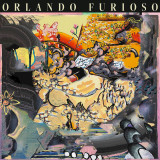
10
“Orlando Furioso is a haunting, one-of-a-kind statement, from an important new voice in improvised music.” - Steve Lehman
“…imagining instruments that haven’t been invented yet: space harps, cosmic gamelan, Venusian banjo. It’s the purest distillation of Atria’s musical language, simultaneously grounded and unearthly.” - Stewart Smith for The Wire (November 2022)
“Making liberal use of microtonal harmony and hypnotic, ostinato rhythms – as well as the occasional stylistic smash-cut, reminiscent of John Zorn – Orlando Furioso announced itself on Wednesday as a punchy, creative force on the New York scene. (…) Atria’s rhythms had a welcoming, social propulsion, and the microtonality of his writing for keyboard proposed an individual – even insular – language.” - Seth Colter Walls for The New York Times.
Early European composers felt that their work reflected in its structure the divine nature of the material world. Via tuning, form, and contrapuntal alchemy, these musicians sought to illuminate and edify the complex and perfect order of existence. The music recorded here also reflects the contours of an ordered world, but it is no place any of us has ever visited. By assembling far-flung building blocks from the detritus of a 21st-century musical vocabulary, Orlando Furioso brings the listener into a bizarre new cosmos. The result is deeply expressive music that speaks not with the voice of a narrator or memoirist, but with that of a cartographer.
Like a science-fiction Dante, the listener is taken on a tour of many diverse and colorful provinces of an alien world. Though each composition references its own set of real-world musical locales (from the Andes to Indonesia to Italy to New Orleans), they are bound by stylistic consistency into a coherent, continuous geography. Permeating this world is an uncompromising commitment to microtonal harmony, rhythmic intensity, and an ability to deploy the esoteric (Nicola Vicentino's notorious 31-tone temperament) and the head-smackingly obvious (a surprise djent breakdown) with equal conviction. Though Vicente's compositions are steering the ship, serious recognition is due to all the players on the record for their ability to meet these demands.
Our omnivorous musical diets offer real abundance. They enrich our craft by providing access to limitless approaches from which to choose - more masters to study, traditions to absorb, and techniques to hone than is possible in multiple lifetimes. They can also inflict heavy and often contradictory burdens of influence. When every corner of the map has been charted, it becomes difficult to find a new direction in which to travel. One solution I hope to see more often is the one pursued on this record: breaking down distinct musical worlds into component parts and reassembling them into a language. When completed with precision and with no stone left unturned, the seams between the pieces vanish and the listener is deposited somewhere beautiful and strange, left to assign their sensations meanings of their own. - Mat Muntz
Orlando Furioso is led by Vicente and features David Acevedo, David Leon, Andrew Boudreau, Alec Goldfarb, Daniel Hass, Simón Willson, and Niña Tormenta. Orlando Furioso celebrated its release at Roulette Intermedium in Brooklyn, NY, as a part of Wet Ink Ensemble's 24th Season opening concert, a performance which The New York Times heralded as "virtuosic", "punchy, creative" and "even revelatory."
Winner of the Deutscher Jazz Preis: Best International Debut Album 2023

10
Bob Dylan was at several crossroads in the mid-1970s. Artistically, he was largely written off as being past his prime. Emotionally, he was suffering through a painful divorce from his then-wife Sara Lowndes. Creatively, he appeared at a stalemate, his previous decade's unprecedented run of transformational brilliance finished. Then came Blood on the Tracks.
A start-to-finish cycle that documents a lover's pursuit of, entanglement with, and loss of a woman, the bracingly intimate 1975 effort remains one of the most encompassing break-up albums ever made and ranks as the most personal statement of the Bard's career. To hear it is to experience the agony, frustration, trauma, highs, lows, confusion, sadness, and, ultimately, requisite redemption associated with intimate relationships gone astray. Dylan maintains it's a work of fiction, but it's evident close-vested autobiographical premise is what helps make it universal: It's the icon singing through tears, going out of his mind, battling hallowing emptiness, firing shots across the bow, and accepting culpability. It is, in short, a consummate expression of love's darker sides and the consequences of what happens when dreams unravel.
As part of its Bob Dylan catalogue restoration series, Mobile Fidelity is thoroughly humbled to have the privilege of mastering the iconic LP from the original master tapes and pressing it on dead-quiet LP at RTI. The end result is the very finest, most transparent analogue edition of Blood on the Tracks ever produced – and the first-ever proper analog reissue. Fantastically presenting both the solo acoustic and band-supported songs with the utmost clarity, dynamics, presence, immediacy, spaciousness, imaging, and balance, this version shines a high-powered light on the fluid vocal phrasing, timbral shifts, functional rhythms, and inward-looking strumming that contribute to every song here serving as a wound-exposing confessional.
For all the melancholic pain, unresolved questions, shattered memories, wasted times, unrequited dialogues, and weary regret within, Blood on the Tracks remains as daring as it is reflective. Rather than follow for a monotone caustic vibe, Dylan's songs burrow into the subconscious for the manners in which they are even-keeled, mellow, and occasionally, even peaceful. Dignity, honour, poignancy, and fairness – all traits uncommon in any situation in which partners dissolve histories, change hearts, and attribute blame – instil the record with equilibrium on par with the consistency of the flowing melodies.
Throughout, tunes come on and proceed as if they could continue forever, Dylan spinning poetic verses and conversations amidst finely tied knots of acoustic notes, chords, and fills, the deceivingly simple architecture conjuring the intertwined refractions of a bezeled jewel, various angles, colours, and textures conjoining into a gorgeously inseparable whole. Backed by Tony Brown's flexible albeit subtle bass, Buddy Cage's country-streaked pedal-steel guitar, and Paul Griffin's soul-baring organ – an instrument used to shadow, tuck-point, and illuminate here as effectively as any time in rock history – Dylan pours soulful emotion, open his veins, and bleeds.
Ranked 16 on Rolling Stone's list of the 500 Greatest Albums of All Time, and replete with existential thought, piercing directness, raw singing, and majestic arrangements,
Given the sonic and artistic merit of this album, we anticipate huge demand.

Julian Cannonball Adderley's only Blue Note album, Somethin' Else, would likely forever be famous in music lore if just for the presence of Miles Davis. The iconic composer/trumpeter steps into the role of sideman on the 1958 set, one of just a handful of times he'd make such a move after the calendar passed the mid-1950s. Yet evaluating Somethin' Else strictly on Davis' involvement misses the big picture. Plain and simple, Adderley's jubilant work remains a jazz landmark due to the chemistry of its Hall of Fame personnel, enthusiasm of its participants, and sophistication of its arrangements – not to mention the reference-grade production and inclusion of the definitive renditions of two all-time jazz standards.
Limited to 6,000 numbered copies, pressed on dead-quiet MoFi SuperVinyl at RTI, and mastered from the original master tapes, Mobile Fidelity's ultra-hi-fi UltraDisc One-Step 180g 45RPM 2LP collector's edition pays tribute to the record's merit and includes the bonus track "Allison's Uncle." Offering reference-calibre sonics, this spectacular collector's version provides a clear, transparent, ultra-dynamic, and up-close view of a cornerstone effort that witnesses Adderley and Davis sharing horn duty alone for the only time in their fabled careers – an arrangement that occurred as a result of Adderley having joined Davis' majestic sextet a year prior.
The premium packaging and beautiful presentation of the UD1S Somethin' Else pressing befit its extremely select status. Housed in a deluxe slipcase, it features special foil-stamped jackets and faithful-to-the-original graphics that illuminate the splendour of the recording. No expense has been spared. Aurally and visually, this UD1S reissue exists as a curatorial artefact meant to be preserved, touched, and examined. It is made for discerning listeners that prize sound quality and production, and who desire to fully immerse themselves in the art – and everything involved with the album, from the iconic photos to the gorgeous finishes.
The vibrant potency reveals itself openly on an analogue set that provides full-range reproduction of an ensemble that also includes pianist Hank Jones, bassist Sam Jones, and drummer Art Blakey. Each and every snare hit, downbeat, and cymbal splash registered by the latter take on realistic proportions, blooming and decaying as they would right in front of you on a stage. Jones' foundational bass lines register with uncommon depth and palpability, the litheness of the strings and fullness of the instrument epitomizing the definition of rhythm. Stellar, too, are the surefooted 88s. Sublime in scale, tonality, and attack, with the delineation such you can practically separate the white and black keys in your mind. As for that liquid interplay between Adderley and Davis? Breathtakingly lifelike in timbre, naturalism, purity, and presence. This collector's version takes you there – there being Rudy Van Gelder's legendary New Jersey studio in March 1958 to witness it all unfold, again and again.
For reasons that extend far beyond the outstanding playing and flawless repertoire, Somethin' Else is without question a record you'll always want to watch and hear come together. As veteran critic Bob Blumenthal observed writing about the album four decades after its release, "The instant rapport achieved by the quintet is thus the product of much shared and common history, though the tensile strength that they create throughout created a totally unique feeling that can be attributed to the sensitive musicianship of all concerned, including the supposedly hard bopping leader and drummer." Such inimitable feeling, or emotion, courses throughout every passage, and no where more obviously than on "Autumn Leaves" and "Love for Sale."
Without question, the discreet interpretations of the Johnny Mercer and Cole Porter songs, respectively, found on Somethin' Else have long been considered part of jazz's alluring mystique. Adderley and Davis bring contrasting approaches to the table yet sound of a singular mind on "Autumn Leaves," with the latter's muted trumpet and the headliner's lush alto saxophone dovetailing into a performance that endures as a blueprint for expression, counterpoint, sophistication, fluidity, and linearity. Blues, melody, and romance pour from their horns. Their bandmates, picking up on the intimate vibe and calm mood here – as well as on the spry, head-over-heels spirit of "Love for Sale" – join in on the conversation with sharp economy and float-on-air roundedness.
Not to undersell the other three numbers, all deserving five-star status. Twelve measures in length, the title track offers a slow burn in swing. Written by Adderley's brother, Nat, the 12-bar "One for Daddy-O" transmits funk flavors. The closing "Dancing in the Dark" pops with lushness and temptation, its stream of bold colours and understated textures calling for a moonlight twirl, or at least fantasies suggestive of a memorable night. Somethin' else, indeed.

6
Dark Entries has a surprise delivery! Malebox brings us six previously unreleased funk-fueled jams from the archives of the cybernetic disco titan himself, Patrick Cowley. Best known for his chart-topping disco anthems, Cowley left us with an incredible body of work before his tragic death in 1982 due to AIDS-related illness. Since 2009, Dark Entries has been working with Cowley’s friends and family to uncover the singular artist’s lesser-known sides, including his soundtracks for gay pornographic films on compilation albums School Daze, Muscle Up, and Afternooners.
But Malebox gives us more of the Cowley we know and love: churning disco-funk and hi-NRG tracks that are spacey and sleazy, gritty and sublime. Recorded from 1979-1981, these six tracks illuminate what was one of Patrick’s most creatively exciting periods. “If You Feel It” and “Love Me Hot” were both early Paul Parker demos; the former is a peak hour hi-NRG bomb, while the latter dips into Cowley’s zoned-out space disco sound. Jeanie Tracy’s soulful vocals feature on the demo version of “Low Down Dirty Rhythm”, which was later re-recorded by Sarah Dash. The slower, less-varnished rendition here hits with a wild psychedelic edge. Meanwhile, Patrick’s gifts for careful orchestration and infectious melodies shine on “Floating” and “Love and Passion”, which were likely demo tracks for Loverde. The songs on Malebox display the vitality and inventiveness of a brilliant composer taken from us too soon.
Malebox sleeve design was by Gwenaël Rattke, and features a hyper-color retro collage. Also included is an air mail envelope containing a letter from Patrick Cowley to French disco producer Pierre Jaubert as well as liner notes and hand-written lyrics. Malebox will be released on November 12th , which is the 40th anniversary of Patrick’s passing.

9
Today, powerhouse mande jazz ensemble Balimaya Project announce
their second album When The Dust Settles to be released by New Soil in partnership with Jazz re:freshed on July 21, 2023
A dynamic maturation of the group's thrilling big band sound, When The Dust Settles is a personal and cathartic expression of grief, rage, love and joy.
Fusing West African rhythmic tradition with the energy of London's jazz continuum, the album celebrates the restorative power of Black male brotherhood among diaspora communities in London.
Led by composer/arranger and UK-based Djembe player Yahael Camara Onono, Balimaya Project have established themselves as one of the most exciting and forward-thinking ensembles in Britain.
Enlisting guest vocalists Afronaut Zu, Obongjayar and Fassara Sacko across ten groove- laden and punchily percussive tracks, each song on When The Dust Settles engages intentionally with the significance of folkloric rhythms to illuminate themes that include the death of Camara Onono's older brother, losing a child, becoming a father, migration, survival and a search for truth.
As Camara
Onono describes: "One thing that's really linking us is that concept of family and the bonds are getting stronger every time ... It was important to me to go deeper and address not just tradition and culture, but also address emotion."

From Elvis in Memphis retains the distinction of being the most cohesive, passionate, mature, and emotionally invested record Elvis Presley ever made. Named one of the 500 Greatest Albums of All Time by Rolling Stone, the white-soul landmark features backing by "The "Memphis Boys" and teems with rhythm-heavy country, gospel, R&B, and blues. Lauded for its natural, open sonics, the 1969 set now comes across with remarkable clarity, presence, and warmth courtesy of a premium restoration befitting a king.
Mastered from the original master tapes, pressed on MoFi SuperVinyl at RTI, and strictly limited to 10,000 numbered copies, Mobile Fidelity's UltraDisc One-Step 180g 45RPM 2LP box set of From Elvis in Memphis unearths the ravishing inner detail, sticky rhythms, and brilliant arrangements of Chips Moman's inspired production. In short, this unparalleled reissue unlocks the spirit and gestalt of the recording and takes you inside American Sound Studio. It also brings you up close and personal with Presley's singing – widely considered by many to represent the finest of his career – located dead-centre amidst the instrumental hurricane. Equally impressive are the contributions of the aforementioned Boys, and how their Southern-brewed playing – a balance of leisure with swiftness, grandiosity with concision, freedom with control – dovetails with Presley's vernacular.
The lavish packaging and gorgeous presentation of the UD1S From Elvis in Memphis pressing befit its extremely select status. Housed in a deluxe box, it features special foil-stamped jackets and faithful-to-the-original graphics that illuminate the splendor of the recording. No expense has been spared. Aurally and visually, this UD1S reissue exists as a curatorial artifact meant to be preserved, pored over, touched, and examined. It is made for discerning listeners that prize sound quality and production, and who desire to fully immerse themselves in the art – and everything involved with the album, from the images to the finishes.
Sharing much in common with the full, rich, orchestrated Stax Records sound, From Elvis in Memphis oozes with choice nuances and distinctive flourishes that on this ultra-hi-fi edition not only arise with previously unheard transparency and sharpness, but complement and serve the whole. Take the specific tonalities and blending of violas, cellos, and horns that communicate mood and serve as counterpoints. Or lively performances of the backing quintet, and how the piano and Hammond organ trace the lines of the melodies and Presley's lead. Listen to the uplifting support provided by the cadre of backing vocalists (more than a dozen credited), unrivalled in Presley's canon and a precursor to the approach he'd soon adopt in Las Vegas.
Of course, From Elvis in Memphis precedes the icon's transition into his glitzy jumpsuit phase – and follows his merciful move away from the hoary soundtrack work that consumed nearly a decade of his creative life and prompted a rebirth that began in 1968. As the bridge between eras, the record seizes on Presley's rejuvenated attitude and commitment to quality, facets that drip from the fervency with which he delivers every word. For the same reasons, and for the fact it traces back to Presley's original roots and hip-shaking guise, the album further remains a cornerstone of American music history.
Writing about the work's 40th anniversary for Rolling Stone, James Hunter correctly observed: "From Elvis in Memphis represented the full-on immersion in the Memphis idea of Elvis Presley, the American singer second only to Frank Sinatra for the ability to conjure a particular sonic universe with his merest vocal utterance. And from the album's first song, in which a bluesy Elvis espies a woman 'Wearin' That Loved On Look,' to its last, in which a more straight-up-pop Elvis regrets the injustices of life 'In the Ghetto,' his fully engaged, newly energized voice finds its most logical album setting in years."
Incredibly, Presley and company completed more than two dozen cuts for From Elvis in Memphis. One, "Suspicious Minds," turned into the vocalist's final chart-topping single and lingers as one of his most beloved rock n' roll numbers. Even though it never formally appeared on the record, the non-album song is included here as a bonus track and attains newfound depth, energy, and swagger. Coupled with the other dozen tracks – including the sultry "Power of My Love," balladic take of Dallas Frazier's "True Love Travels on a Gravel Road," and driving cover of Hank Snow's I'm Moving On" – it makes for the finest Elvis listening experience available.

- A1: Daytime Tv (Rainy Miller Remix)
- A2: It’s Hard To Get To Know You (Space Afrika Ambiv)
- B1: Pigeon Flesh (Mobbs' Butcher Mix)
- B2: Love Like An Abscess (Aho Ssan Remix)
- C1: Nervous Energy (Teresa Winter Remix)
- C2: I Was Born By The Sea (Morgane Polanski Remix)
- D1: I Was Born By The Sea (Fila Brazillia Remix)
- D2: Dream About Yourself (Bonus)
8
Richie Culver had been waiting his whole life to record I was born by the sea. His debut album immediately and messily inscribed the artist into the canon of outsider music and experimental electronics, serving both as an arresting statement of intent and a painful reckoning with the difficult path that lead up to it, stealing one last glance back at a place he always knew he had to escape. Between grim lamentations, faded memories and anxiety attacks, all told with searing honesty and disarming openness, I was born by the sea excavates a space for hope, finding Culver digging through Humberside silt to find a world weary optimism, the raw material from which his visual and sound art is shaped. For this collection of expansions and inversions, Culver invites a collection of kindred spirits, contemporary inspirations and old heroes to wade into the salt water of his formative years spent living for impromptu raves and afterparties, connecting vivid memories of his birth place of Withernsea to artists hailing from as nearby as Preston and Bridlington, further afield, from Manchester and London, Berlin and Paris, before returning back to Hull, to where it all began.
For some, responding to I was born by the sea means diving even deeper into the record’s furthest reaches. Space Afrika clear away the pummelling loops of noise from ‘It’s hard to get to know you,’ revealing a cool and cavernous expanse in its wake. Distant chatter, previously heard as though through thin, plasterboard walls, now echoes from outside the maddening claustrophobia of the original’s Sisyphean sonics, illuminated as a dense storm cloud suspended amidst a more open scene, washed clean by a lighter rain, allowing the tender heart of the track to beat clear. London producer MOBBS stretches out ‘Pigeon Flesh’ into an epic, 10-minute, cold-sweat spiral, strung-out tension wrung from disconnected phone tones twisted in unexpected directions, snatches of Culver’s voice turned inside-out and deep fried bass threatening to tip the track over into oblivion, the build-and-release of a nervous breakdown experienced in real time. In an act of subversive self-reflection, Morgane Polanski switches one kind of ennui for another in her adaption of ‘I was born by the sea,’ swapping the sea for the city, English seaside towns in January for summer evenings in Paris and flashing lighthouses and sparkling oil rigs for the Eiffel Tower and the traffic around L’Arc de Triomphe. Even Culver finds time to revisit ‘Dream About Yourself,’ a track taken from his EP Post Traumatic Fantasy, breathing new words into its glacial drift, the half-remembered testimony of a shut-in: Woke up in the evening / Pray for me / Don’t trust anyone / Pray for algorithm. Reframed in a more melancholy light, the track’s reverberant keys even more clearly evoke a mournful nostalgia, fresh pain felt in old wounds.
Others find a parallel universe in Culver’s visceral world building. Rainy Miller flips the script with a scorched, avant-drill rework of ‘Daytime TV’, threading puncturing hi-hats and queasy low-end surge through the track’s steady ambient cascade, invoking the irresistible Preston beat magic of Miller’s own essential debut album, Desquamation. Aho Ssan melts away the crystalline textures of ‘Love Like an Abscess’ with the ominous crackle of a nascent fire, building through swathes of organic Max/MSP squelch and brittle, nails-down-chalkboard scrape, swelling and metastasising the original to spill over Culver’s desperate hymn to corporeal desire, at once flesh and not. Teresa Winter transports us an hour up the coast from Withernsea to her native Bridlington, replacing the sea wall of synthesis on ‘Nervous Energy’ with muffled ASMR murk and fever dream whispers, transforming Culver’s unflinching observations into a haunting call-and-response, filling in the blanks with her own eerie utterances, a fleeting conversation with a ghost. In a touching victory lap, Fila Brazillia, eccentric stalwarts of beloved ‘90s trip hop imprint Pork Recordings, whose performances at Hull institution The Lamp convinced a young Culver of the necessity to make his mark on club culture, resurface for their first remix in 20 years. Steve Cobby and David McSherry lead a low-slung, heartfelt stroll back through a suite of tracks from I was born by the sea, tracing a full circle saunter from Culver’s origins to his current musical practice, the sounds of his present repurposed by the sound of his youth. In a gesture that reflects the emotional complexity of the project, Fila Brazillia find joy at the end of Culver’s troubled reflection, picking out an undeniable groove in the stasis of feeling trapped in your hometown. Underlining Hull’s vital musical legacy, from Baby Mammoth to Throbbing Gristle, Cobby and McSherry demonstrate that, though there are certainly storms, by the sea there is also sun and through the fog, if you listen, you can hear a singular sound, a sound now carried by Richie Culver.
Participant is a record label and creative studio run by William Markarian-Martin and Richie Culver

12
Finally back on vinyl, this time a limited pressing of 500 copies on 180g white vinyl, 'More Wealth Than Money' by Normil Hawaiians quickly sold-out upon its initial release in 2017.
'More Wealth Than Money' proved a vastly ambitious debut album, sprawling across four sides of vinyl in a way that still feels truly expansive, brave, cinematic even. From the plaintive pastoralism of 'British Warm' to the transcendental vistas of 'Other Ways Of Knowing', the album constantly surprises with its ringing trails of guitar, motorik pulse and synth rambles. From the striving incursion of 'Sally IV' to the softly spoken disbelief of 'Yellow Rain' the album is nothing short of a waking dream. Guy Smith's vocal floats through the album in a haunting manner, at times heartfelt at others overcome. He's on a quest to his own celestial city and we can stay for the whole journey if we only listen.
Described by the press upon its release in 1982 as an "absolutely mesmerising double album travelling through progressive rock, via industrial folk to freaky art-punk whilst sounding delightfully coherent" and "a huge slab of mindblowing dark psychedelia" the album was critically acknowledged for its peculiarly British kosmische. However, for an album so indebted to the fertile soil from which it sprang, it's curious that 'More Wealth Than Money' never came out officially in the UK. The band's label Illuminated were temporarily blacklisted by their distributor because of unpaid debts and so the album was only available from the band at concerts within the UK. The bulk of the record's sales went to mainland Europe on export.
Upset The Rhythm are now very proud to finally give 'More Wealth Than Money' the release it's always deserved. On December 1st, 35 years since the album first appeared, Upset The Rhythm will be reissuing the newly re-mastered 'More Wealth Than Money' album, alongside a further full-length collection of demos and unreleased tracks from the album's overlooked corners. Both the 2xCD and DLP versions also come with a booklet contextualizing the release, full of anecdotes and photos from all band members.
Track listing:

8
End of Everything is the intrepid seventh album from Mega Bog, a nightmarish experimental pop ensemble led by Erin Elizabeth Birgy. In 2020, Birgy was surrounded by seemingly endless turmoil: mass death, a burning planet, and a personal reckoning when past traumas met fresh ones. Living in Los Angeles, against the backdrop of brilliantly horrifying forest fires, she questioned what perspective to use moving forward in such dumbfounded awe. Deciding to seize something tangible, she produced a record that spoke of surrender, of mourning, and support in the face of tumultuous self-reflection. Writing on piano and synthesizer, instead of the familiar guitar, Birgy explored a spectrum of new sounds to illuminate a state of volatility and flux that was both universal and personal. Speaking of this transition, she describes the need “to feel… instantly. I didn’t want to dig into secret codes. I no longer wanted to hide behind difficult music. I was curious to give others the same with the music I create; to make music someone could use to explore drama, playfulness, and dancing, to shake the trauma loose.” Heavy grooves, metal guitar squeals, Italo disco bass lines, rhapsodic synth layers, and huge choruses stomp around the delightfully sanguine pop drama. Where previous records stretched out into the abstract and ethereal, End of Everything delivers a hit straight to collective awareness and healing. A seemingly disparate jukebox of sounds – ranging from Thin Lizzy, Bronski Beat, Franco Battiato and Ozzy Osbourne to 90’s house classics like Haddaway’s ‘What is Love’ and Corona's ‘Rhythm of the Night’ - foregrounded a new punchy theatricality in Birgy’s music. The songs she was creating at home followed suit with bolder hooks and more dancefloor energy than she’d ever dared before.

10
Nehmt euch vor der Bestie, die beißt, in Acht - GODSNAKE melden sich lautstark mit ihrem neuen Album "Eye For An Eye" zurück, das vor Metal - der direkt, heftig, riff-orientiert, aber auch eingängig ist und epische Hooklines parat hält - nur so strotzt!
Das Reptil treibt seit 2015 sein Unwesen und hat sich erfolgreich im metallischen Dschungel etabliert. Torger (Gesang), Stevo (Gitarre), The Walt (Bass) und Sidney (Schlagzeug), die bereits am Album "Poison Thorn" beteiligt waren, wurden 2022 durch Gitarrenzauberer Pepe (Ancient Curse, Sons Of Seasons) verstärkt und somit erneut komplettiert. Der vielseitig erfahrene "Newcomer" hat sowohl live als auch bei den Aufnahmen bereits einige Duftmarken setzen können.
Mit dem zweiten Album wollen die 5 Musiker die sehr positive Resonanz auf das Debüt erneut unter Beweis stellen und damit ihren Platz im Ranking behaupten.
Wie schon "Poison Thorn" wurde auch dieser mächtige Brocken Musik in den Lübecker LSD-Studios von Mastermind Lasse Lammert (u.a. Alestorm, Gloryhammer, Wind Rose etc.) aufgenommen und produziert.
Beim Song "Story Of A Ghost" ist Wayne Dorman (Onslaught) mit einem Gitarrensolo zu hören.

8
Essential UK experimental composer Richard Skelton returns to Phantom Limb for new album selenodesy, interweaving his newfound love of electronics and synthesis with mastery of gritty organic texture.
Skelton’s music has always been rooted in landscape, in the loam and grit of the earth: from his 2009 Pennine Moors-inspired modern classic Landings to his more recent Moraine Sequence of geological excavations, his work has been bound inexorably with the stark and untended wilderness of northern landscapes. With this new album, however, Skelton shifts his gaze skyward — in part the result of a move in 2017 to the countryside near the Kielder Observatory, and to a so-called ‘dark sky’ region of the UK. In this remote landscape, light pollution is minimal, allowing the austere majesty of the night sky to be seen with greater clarity.
The resulting album, selenodesy, reveals a new, reverberant spaciousness to Skelton’s use of electronics. It marries the twin worlds of his previous Phantom Limb release - 2020’s These Charms May Be Sung Over A Wound, and its abandoned-factory threnody - with the landscape-revering arcana of his earlier work, which saw him bury instruments in the soil to return months later to recover and record with them, newly imbued with the land they occupied. selenodesy was prefigured by a period of insomnia and the relief found
in stargazing, during which Skelton tried to transcribe his hypnagogic visions: “much of this music came to me in the early hours, in that nowhere state between dreaming and waking. I’d look out the window and the night sky would be swirling with stars. Mars or Venus would be hovering in the corner of the room. I’d lie there and watch the Aurora Borealis dance across the ceiling.”
In selenodesy, we find the lingering, distorted sine waves of album opener “Albedo” that thrum and fizz with an icy, foreboding moonlight, rays of subtle movement that illuminate and darken alternately. Next follows lead single “The Plot of Lunar Phases”, whose passive shrieks echo about a cold, yawning space, reaching an ecstatic crescendo of hissing sonics and swirling celestial drone. Its dynamic range acts like the light of a lunar passage, from utmost darkness to radiant luminosity. Elsewhere, the pulsing, precessional bass of “Faint Ray Systems” gradually opens to reveal mournful, elegiac synthesis that reaches high into the night sky with an unearthly beauty. It is as if, during those long months of lockdown in the Scottish countryside, Skelton tapped into a series of sidereal electromagnetic transmissions, and transposed them into musical form.

5
Remix EP 1 (incl. Remixes by Acid Pauli, Coldcut, DMX Krew, Shahrokh Dini, Frivolous)
After the release of Felix Laband’s highly acclaimed 5th album “The Soft White Hand” in November 2022, it’s about time to give it some extra class remix treatment. So here comes a massive package with remixes by living legends Coldcut, Acid Pauli, DMX Krew, Frivolous and Shahrokh Dini.
Felix Laband’s The Soft White Hand is the masterwork of an artist who expresses himself through musical and artistic collage acting together to reinterpret his sources and to express significant elements of his own personal story.
Released by Munich-based Compost Records, the 14-track album is Laband’s first full-length offering since the critically acclaimed Deaf Safari in 2015. It is heralded by the single “Derek and Me”, and is being pressed on vinyl for distribution globally.
In The Soft White Hand Laband works with source materials that will be familiar to those who know his previous four records – Thin Shoes in June (2001), 4/4 Down the Stairs (2002), Dark Days Exit (2005) and especially Deaf Safari which reached deep into the South Africa scene and its political culture to inspire its vocal and music sampling. However, the disengagement he felt from his homeland during his latest album’s creation – an abiding sense of untethered-ness to place and space, exquisitely rendered in tracks like “Death of a Migrant” – is perceptible in Laband’s desire to illuminate instead aspects of his own life.

10
Liberation is the latest evolution by David West, a dedicated underground dweller and traveler with his groups Rat Columns and Rank/Xerox and previously spotted in Lace Curtain and Total Control. Many familiar elements of West's songwriting creep out from the speakers this time around, albeit in a sonically more adventurous and personal manner. Swathed in analogue and FM synths, pinned down by near-funk drum machines, and with a vision expanded into the past and future. While in previous incarnations, West's alienated and fragile vocal has battled with jangling guitars and distortion, Liberation sets free his woes and ruminations into space. Taking inspiration from the heyday of Mute Records, the beginnings of electronic dance music's rudimentary sampling, broken and sound art, Liberation's debut LP is 10 songs of the road, about the nameless ghosts on the highway, accidental lovers, the alienation of the stranger in a strange land, the unbearable weight of freedom.
Beginning with a curveball, Liberation's first vocal sets out the position of the forever-cuckold, the sad lover hanging on: Looking For A Lover combines a Roland 707's loping mid-tempo with creeped-out synth lines as West intones his intentions close to the ear. Continuing in a more baroque manner, Move Me makes astounding use of string samples and space, with esteemed engineer Mikey Young's (Total Control / Eddy Current Suppression Ring) production prowess making for a distilled yet inviting loneliness. Forget is the night-drive centerpiece of the album, a 7 minute that erupts into a nihilistic sub-disco darkness. A constant theme of Liberation is the friction between West's characters: a frustrated love in victim-status paired with a menacing intent. The adorable, fragile stalker in the moonlight, illuminated by Whatever You Want, a
subjugated protagonist offering they have while the city burns. The brightest pop moment of the album has this in abundance: Cold And Blue, a classic synth pop jam to be played on repeat til the end of time, like New Order played by one man in his bedroom, with no drugs for a cushion, coming down the stairs, she looks like a perfect fear and Im a monument to your existence. But West has moments of touching sincerity that speak direct to the listener, as in album highlight Leaves Falling; a sparse string arrangement frames his vocal, "why do I keep falling for you I must just really like to be alone." Liberation is the freedom from attachments, about how sometimes they're what you want most.

- A1: Undenying
- A2: Phasor Md
- A3: Galleon In The Clouds
- A4: Green Mirror
- A5: Technautic
- B1: Winding Up
- B2: Ripe Ready
- B3: Illuminated Knights
- B4: Tunnel Vision
- C1: Holding Pattern
- C2: Polygono
- C3: Every Day There's Something New To Say
- C4: Westward Glint
- C5: Play Music Now
- C6: Stillitude
- D1: Piece
- D2: Light On The Sand
- D3: Golden Fluoride
- D4: Thawing Stage
- D5: The Land Of Modor
- D6: The Song Of The Sea
21
It seems like a long time since we last heard anything from the talented Secret Circuit aka Eddie Ruscha!
Truth is he's been more prolific than ever...just not with his Secret Circuit alias.
For those of you unfamiliar with his work Secret Circuit is audiovisual artist and L.A. native Edward Ruscha V (yes indeed, son of THEE Ed Ruscha, legendary pop artist) who’s been on the music scene since time immemorial. He has been a member of innumerable bands and projects over the years including Medicine, Maids Of Gravity, Radar Bros and punk-dub outfit Future Pigeon to name a few as well as managing to squeeze in time for his equally multifarious and highly productive solo ventures. In just the last few years he's released a string of records under his own E Ruscha V moniker for labels such as Beats In Space, Good Morning Tapes and Fourth Sounds as well as finding time for several collaborations including Doctor Fluorescent (Crammed Discs), The Parels (Lal Lal Lal) and XLNT (DFA). You could say he's prolific!
So it's definitely a long overdue and most welcome return for Secret Circuit. The "Green Mirror" album is a double LP comprised of 21 new pieces (80+ minutes of music) recorded between 2020 and 2022. It captures that spacey otherworldly quality Secret Circuit is known for, but the music also veers towards the warmer, ambient textural territories that his recent E Ruscha V and Only Thingz projects explored...an altogether softer sensibility.
Yet nevertheless this album is very much "Secret Circuit". Invisible Inc wanted to explore a side of Ruscha's that hadn't been captured so clearly before, focussing on his more emotive yet at the same time experimental side (is that a paradox?). Very rarely do we hear musicians using modular synths to create something so human sounding, and when juxtaposed alongside slide guitars, live bass and vocodered vocals, we have something very special indeed.
Then there's the artwork...all lovingly drawn by the bubbling mind and deft fingers of Eddie himself. The package is made complete with a double-sided colour insert with liner notes (which happen to be written in reverse, naturally, so you'll need a mirror to read them) and another of Eddie's mind-warping doodles.
This is not like anything else you will hear...it's true art and you'll definitely need a very open mind to reap the rewards of this beautiful piece of work. A future weirdo classic in the making

5
Nach der Veröffentlichung des Longplayers "Let The Night Love You" im Juni 2022 sind INVSN nun mit einer 5-Track-EP und vier neuen Songs zurück.

10
Introducing a brand new artist on Skep Wax Records, MARLODY releases debut album I’m Not Sure At All. Limited edition white vinyl LP plus digital DL and signed postcard. Marlody’s first album I’m Not Sure At All takes anxiety, weakness, fear - and turns them into strength: powerful melodies, the sweetest harmonies you ever heard, and lyrics that insist on the possibility of hope, without losing sight of the possibility of despair.
Dominated by her extraordinary keyboard playing, Marlody’s songs are illuminated - and sometimes made sinister by occasional bursts of programmed percussion, submarine bass and distant, chiming digital bells. These are deep, darkly beautiful pop songs. When she was a girl, Marlody was one of the higher-achieving classical pianists of her generation, winning competitions and destined for greatness.
She hated it, and threw it all away. In the intervening years, putting more and more distance between herself and her classical origins, she listened to Yo La Tengo and Shellac and a hundred other things that took music to new, untutored extremes. I’m Not Sure At All is the outcome. Marlody’s painful personal journey is not glossed over in the lyrics: Words is about the debilitating effect of psychiatric medication; Malevolence is about the horrible urge to commit inexcusable violence;
Friends in Low Places is a remarkable hymn of solidarity with all those people who’ve contemplated taking their own lives. But the songs are strangely uplifting: they offer up their truths so calmly and are so generously wrapped in harmonies that they feel like gifts. There are great stories here too: Summer takes a child’s point of view, describing the beginnings of new life after the loss of a parent.
Wrong relates the history of an adulterous affair, with a piercing sympathy for the emotional state of the adulterer. There are musical echoes: the infectiousness and daring of some of the vocal melodies might remind you of Kate Bush, the intimacy might remind you of Cate Le Bon, the stabs of anger and pain might remind you of Liz Phair. The keyboard is sometimes as smooth as Fleetwood Mac; other times it’s as raucous and distorted as Quasi. The harmonies are from another place again – you could imagine hearing them in an Unthanks recording. I’m Not Sure At All will be released by Skep Wax on limited edition white vinyl and all digital services.

Sometimes, a change of view can transform a person’s world. On ‘Don’t Come Down’, the artist formerly known as Matt Pond PA can be found with his “shoulder on the concrete” of a pavement, scoping out the world anew. This granular realignment of perspective serves as an open door to the debut album from The Natural Lines. At once clearly Pond’s work yet a huge leap forward in its measured songcraft, melodic immediacy, collaborative detail and wryly questioning lyrics, the result is a gorgeous album of intimate reflections from a relocated, renamed, revivified talent.
Recorded with close collaborators and friends over a period that saw Pond make vital adjustments to his life, its stealth emergence reflects his desire to set a fresh pace for himself and come from somewhere new, somewhere more open.
Now based in Kingston, New York, with his partner and wild dog Willa, Matt explains the album’s gestation thus. “It was something different from the start. I wanted to write as purely as I could. Instead of getting stuck in the ‘tour, write an album, release an album, tour’ cycle, which is not a natural way of writing or living, I wanted to write an album and when it was done I wanted to make sure it was done. I didn’t want this feeling of, ‘Oh, we didn’t have time’, or, ‘I don’t know whether I believe in the songs but it’s coming out anyway.’ I used to be always racing to the finish line, but I’m not anymore.”
For Matt, the call to ring the changes came with the recognition of “a certain nihilism or narcissism” involved in making music. “In some ways, you have to get in your own head and I think I went too far with that, with drinking and shutting people out. In something that I believe is collaborative, it’s not helpful.”
“I quit lying,” he adds. “I checked my harsher tones. I cut my drinking down. I went to therapy and figured out how to stop shouting at cars.”
Car troubles inspire ‘No More Tragedies’, the album’s standout second track, where he wryly details his desire to dampen his twinned impulses to take pictures of license plates blocking his parking space or take bricks to said car windshields. Warming melodies and harmonies soothe his rage, a balance maintained elsewhere on the album.
A need for connection underpins the lilting ‘Alex Bell’, where Matt’s lyrics playfully reference the inventor of the telephone over a plaintive cello and bubbling keyboards – evidence of the album’s carefully nurtured arrangements. With nimble sequencing, ‘My Answer’ follows with a question: do artists really need to get messed-up to create? Matt may not have the answer, he admits, but he articulates the question beautifully, channelling the influence of Blue Öyster Cult’s ‘Don’t Fear The Reaper’ into a song of fleet, melodic electric-folk drive.
Featuring 17-year-old MJ Murphy on misty backing vocals, the softly insistent ‘Don’t Come Down’ is an album centrepiece, detailing a need to see things anew. Like The Flaming Lips writing a classicist piano ballad, the twinkling ‘Artificial Moonlight’ finds Matt writing late at night, illuminated by the lights from streetlamps. Finally, ‘Mahwah’ closes the album on a note of arrival. While Matt Pond PA’s albums emerged from the disconnection of touring and living in vans, Pond is now happily – cruel winters aside – ensconced in Kingston. “I have found a place I love. Mercury Rev lives near here. It is a cool place to be, an artistic, mountainous, wild place to live. So – maybe this is it.”
In the case of The Natural Lines, a sense of arrival suggests itself. For Matt, the album follows two decades’ worth of Matt Pond PA records and soundtrack works. In a career he once described as “a series of benign mistakes,” Matt travelled far, moving from his band’s starting point in Philadelphia to Florida, Oakland and beyond while releasing 14 well-received albums. In 2017, he declared his intent to retire the Matt Pond PA name, though it lived on briefly in the reissue of The State Of Gold and EPs such as Free Fall, a tribute to Philadelphia.
Now, the name change honours his collaborators. Among a revolving cast, one constant presence in his work has been Chris Hansen, who plays guitar, bass, keys, saxophone and vocals on The Natural Lines’ debut. Matt’s partner, Anya Marina, contributes vocals. Other band members number Hilary James (cello/vocals), Kyle Kelly-Yahner (drums), Louie Lino (keys), Sarah Hansen (horns), Sean Hansen (drums/bass), Kat Murphy (vocals) and, also on vocals, MJ Murphy, for whom Matt brims with praise: “She can do anything she wants to musically.”
A heartening rebirth for Pond and his friends, the result also pays warming, witty, reflective and infectious testimony to the value of reconfiguring one’s outlook. “Once I took control of my mind, I could see what I wanted to say more clearly,” says Matt. “Instead of random floods of mania and panic, I felt like I was composed and composing. It has become as simple as reading the words of a sentence in the right order. As small as the pause before I hit ‘send’.” A development, you might say, conducted along the most natural of lines.

- A1: Kimina - Aliamka
- A2: Kmru - I Had The Impression
- A3: Barno - Calm, Chaos
- B1: Manch!Ld - Escape From Nyawawa
- B2: Budalagi - Mura
- B3: Ngat Maler - Nam Lolwe
- B4: Nyokabi Kariuki - Anjiru
- C1: Nabalayo - Mtwapa Siren
- C2: Avom - Waza
- C3: M3 - I Choose Violence
- C4: Munyasya - Borrowed Cadences
- D1: Snse - Ng'eetich
- D2: Mr Lu - Kaa Tukachome
- D3: Rushab Nandha - Sunset Over Vienna
14
In Kenyan cultural communities’ musical performance has always been linked with a long chain of related events and ideas. Music was often used to illuminate a specific topic and its implications to society. Through this method of explanation, musicians were able to reveal several underlying social concepts that determined people’s behaviour towards each other and the community.
This common recurring theme was seen mostly in ceremonies. African musical productions are abstract configurations that demonstrate a common fundamental creative principle of mediating the physical and metaphysical worlds. INSHA is centered on time and the evolution/relationship of these cultural-creative influences. The compilation inquires aspects of traditional cultures, physical or metaphysical from communities in Kenya, and act as inspirations and sonic paraphernalia. INSHA serves as a bridge between the past and future music creators on a more fundamental level than usual record keeping.
