So Fades the Light is an eerie horror thriller that makes for unsettling watching. That is no small part thanks to the equally haunting score from composers Blair French (an ambient and Balearic producer from the Detroit area) and Dave Graw (a fellow Motor City musician and visual artist), who forgo melody in place of atmosphere. It means their soundtrack is a living, breathing presence that's less about music a more of a sort of ghost that refuses to leave. Graw and French sculpt a world of distortion, static and whispered tones that feel dug out of crumbling ruins. It’s bleak, patient and unrelenting, always pulling you deeper into the lead character Sun’s fractured memories and the menace of her past. As a standalone release, it’s equally gripping: a record that blurs ambient, horror and noise into one oppressive atmosphere.
So Fades the Light is an eerie horror thriller that makes for unsettling watching. That is no small part thanks to the equally haunting score from composers Blair French (an ambient and Balearic producer from the Detroit area) and Dave Graw (a fellow Motor City musician and visual artist), who forgo melody in place of atmosphere. It means their soundtrack is a living, breathing presence that's less about music a more of a sort of ghost that refuses to leave. Graw and French sculpt a world of distortion, static and whispered tones that feel dug out of crumbling ruins. It’s bleak, patient and unrelenting, always pulling you deeper into the lead character Sun’s fractured memories and the menace of her past. As a standalone release, it’s equally gripping: a record that blurs ambient, horror and noise into one oppressive atmosphere.
Mutant and Paramount Pictures are proud to present the premiere physical media release of Max Aruj and Alfie Godfrey's score to Mission: Impossible - The Final Reckoning. The highly anticipated Mission: Impossible – The Final Reckoning brings on series newcomers Aruj and Godfrey to bring to life the stakes and weight of the biggest and most epic chapter of the series to date.
Recorded at the same time as I and Then C93 were channelling Swastikas For Noddy, Imperium was the BackSide GrimStory to the Bright ’n’ Breezy (Locust) SummerTime Whistles of Swastikas For Noddy. I was very ill whilst making both records, and my main memories (along with Speed And Vodka, ThankYou, ThankYou) were lying sick on a grimy couch at the long-gone IPS Studios in Shepherd’s Bush. There was a heavy leak in the kitchen and the water was running over the studio floor and up my distressed, distressing leather jeans (with button-fly) and Into My Very Soul. Remastered from the original tapes by The Bricoleur at Bladud Flies!, and with the original artwork refreshed and reborn by Rob Hopeye, this 12” vinyl picture-disc comes in a full-colour die-cut sleeve, which is printed on both the outside and inside. This is one of the second group of 4 reissues of the entire back catalogue of C93 on picture-disc and standard vinyl, in the lead-up to the publication of my autobiography at the end of 2026, whilst I also work on many other recording, publishing, and painting projects, and Watch And Pray! Each release in the picture-disc vinyl reissues series is limited to 1,000 copies, and the titles will not be repressed as picture-discs once they have sold out.
“Tubby did three original dub albums, ‘Dub From The Roots’. ‘The Roots of Dub’ and the third is ‘Brass Rockers’ with Tommy McCook ‘pon the flying cymbals. Where he mixed it with the horn going in and out in a dub way and one named ‘Shalom Dub’ you can call Tubby’s too because he mixed the versions as they were off forty fives’’
Bunny ‘Striker‘ Lee
King Tubby and Producer Bunny ‘Striker’ Lee are intertwined in the birth of Dub Music. After discovering a mistake that made a ‘serious joke’ ( more of which later...) they went on to release the first pressings of this new musical genre namely ‘Dub Music’. Tubby’s vast knowledge of electronics and Bunny’s vast catalogue of rhythms would lay the foundations of what today is taken as a standard... the Remix / Version cuts to an existing vocal tune.
Osbourne ‘King Tubby’ Ruddock was born in Kingston, Jamaica on 28th January 1941 and grew up in the High Holborn Street area of downtown Kingston. He studied electronics at Kingston’s National Technical College and also on two correspondence courses from the U.S.A... When he had qualified Tubby began repairing radios and other electrical appliances in a shack in the back yard of his mother’s home. His work in the early days included winding transformers and building amplifiers for Kingston’s Sound Systems. Tubby built his first Sound System in 1957 playing jazz and Rhythm & Blues at local weddings and birthday parties. His reputation as a man who knew and understood both electronics and music grew steadily and as the sixties drew to a close. Tubby purchased his own basic two track equipment. He installed this alongside his dub cutting machine, a home made mixing console and his impressive collection of Jazz albums in the back bedroom of his home at 18 Dromilly Avenue which he christened his music room.
Tubby and Striker were at Treasure Isle Studio’s one day while Ruddy from Spanish Town was working with the engineer Byron Smith....
“Tubby and myself was talking when Ruddy was cutting some dub but Smithy (engineer) made a mistake through we were talking and forgot to put in the voice. It was two track recording in those days. Ruddy said ‘No Man! Make it stay! and so they cut the rhythm. When I went over to Ruddy’s that Saturday night a dance was in progress and when they played the vocal to the tune... then he said we’re going to play ‘Part Two’. They never called it ‘Version’..and then he played the rhythm track. The song was a catchy song and everybody started to sing along and the deejay started to toast so everything went down well. On Monday morning I went up and I said ‘Tubbs the mistake we made was a serious joke.It mash up Spanish Town! The people went wild. So you have to start to do that now ‘cause when the man put on the ‘Part Two’ everyone start singing this song. It played about twenty times. I said you try Tubbs!’...Well the next Saturday night now when Tubby strung up down the farm U Roy said he’s going to play ‘Part Two’ but Tubby did it different now. He started with the voice then dropped it out and let the rhythm run and then he brought in the voice in the middle and from there Tubby started to get really popular.’’
Bunny ‘Striker’ Lee
Dynamic Sounds upgraded to sixteen track recording in 1972 and Tubby purchased, again with the help of a deal brokered by Bunny Lee. The old four track equipment and the MCI console from their Studio B. The four tracks now gave him far wider scope to work with and he began to create a new musical form where the bass and drum parts were brought up while the faders allowed Tubby to ease the vocal and rhythm in and out of the mix. It was only a matter of time before Tubby’s dub plate experiments began to make it on to vinyl and the first ever long playing King Tubby releases would feature a collection of his mixes to a selection of Strikers rhythms. So please sit back and enjoy this historic set of sounds. Lovingly restored and with a few extra gems added to the CD Editions. These releases were the first to carry the name of King Tubby and the first to credit the great musicians that contributed so much to the rhythms that made these albums possible.
out of Stock
Last delivered 11 months ago available to reorder, subject to availability
2019 wurde ihr Sound von der Indie-Rock-Legende Doug Martsch von Built to Spill entdeckt, woraufhin er Lê und Joao von Orua einlud, vorübergehend Mitglieder seiner Indie-Rock-Band aus den 90er Jahren zu werden. Später nahmen sie das letzte Album von Built to Spill, "When the Wind Forgets Your Name" auf, das 2022 bei Sub Pop Records erschien. Sie produzierten es gemeinsam und mischten es ab. Nach ausgiebigen Tourneen mit Built to Spill und ihren energiegeladenen Shows in den USA und Europa kehrten Orua nach Seattle zurück und nahmen ihr neues Album "Slacker" KLP307 mit Jim Roth auf, der auf den Aufnahmen auch Gitarre, Synthesizer und Percussion spielt. Ihr Sound mischt weiterhin die elektrischen Impulse dekonstruierter Gitarren mit einem hypnotisierenden Groove, der sowohl das Publikum als auch die Band in eine kollektive Trance versetzt.
The Lemonheads tease new material with this super limited 12" single. Rekindling the near-perfect pop for which they're famed, the single focuses on the light and dark balance of their impending new album Love Chant that will be released on Fire Records this Fall. Beautifully ill-balanced, `Deep End' and `Sad Cinderella' traverse the highs and lows of life, perfectly illustrating Evan Dando's esoteric musical taste. `Deep End' is a churning riff monster with light-the-blue-touch-paper guitar breaks by J Mascis of Dinosaur Jr, a compulsive fist-in-the-air piece of timeless punk pop, the perfect soundtrack for bumming a cigarette. Co-written with Australian sparring partner Tom Morgan of Smudge, featuring J. Mascis and Juliana Hatfield! Meanwhile, the exclusive flipside is straight out of the Gram Parsons and Emmylou Harris songbook; a cover of the late, great Townes Van Zandt's `Sad Cinderella', it's a song for the romantics, a tearjerker that could have made its way onto Neil Young's `Harvest', or any aching George Jones opus; filled with regret and remorse, it's a beautifully brittle duet between Evan and Erin Rae. So, two slices of the born-again Lemonheads - a mature phoenix rising from the ashes of this legendary band who've been away way too long.
EN/JP liner notes by Doran and a hyper-realistic cover by Japanese visual artist/graphic designer Kai Yoshizawa using 3DCG software.
"8 Automated Works", the first full release by Componium Ensemble, an "indeterminate chamber music" ensemble helmed by Spencer Doran of Visible Cloaks. The project is inspired by the long history of automated musical instruments, beginning with the ancient Greek Archimedes and further developed by the Banū Mūsā brothers in 9th century Baghdad, who "first perfected the concept of a programmable, automated musician: a mechanically controlled flute which used hydraulic water pressure and a system of arrangeable punchcards using a visionary proto-MIDI structure", as Doran explains in the liner notes. This mechanical music-making was extended a millennium later with the use of aleatoric principles by the European Dietrich Nikolaus Winkel, inventor of the self-composing Componium mechanical music system. Doran continues this lineage further, using the possibilities of digital technology and its ability to automate a huge range of virtual instruments and introduce aleatoric elements, moving beyond human impulses and limitations, allowing "new shapes to emerge". Dedicated also to Noah Creshevsky, pioneer of what can be considered cyber-human music, Componium Ensemble features a wide and intriguing range of instruments including prepared piano, bowed harpsichord, celesta, bass clarinet, flute, cello, Balinese tingklik, and more, often in multiple groupings. Despite this variety of instrumentation and the seemingly formidable theoretical underpinnings, the music is very accessible and attractive, spacious and fresh, with a light touch and a sophisticated melodic sense which will appeal to pop fans as well as classical/contemporary music listeners. The album is mixed by longtime collaborator Joe Williams (Motion Graphics, Lifted) and available in 10-inch vinyl, ,
OOOOH! by Alex Bad Baby Lukashevsky with Cocoa Corner (2025)
Celebrated veteran of Toronto’s music scene, known for his boundary-pushing approach to folk and avant-garde music, twists rock music into strange and brilliant new shapes with the help of young jazz players, U.S. Girls, and his own immensely talented son.
OOOOH! is hard on the outside and soft on the inside. Made in the spirit of unity,
humanity, and poetry — disobediently renouncing the glory of personal triumph for the
generosity of an honest experiment. On the last track of the album you’ll hear “Or do you only ever never want to make a single enemy? / That’s not freedom or humility / It’s nothing, honestly.” Oooh, that's a bad baby!
A celebrated Toronto songwriter and performer, Alex Lukashevsky has always been disobedient. Which simply means, nothing is off the table when he’s looking for his
poetic voice; when trying to find the realest I of the teller. As he sings on the lead track “that musician that’s dead” The musician is radical/ it’s the world that’s demented/ listening with their eyes, the music looks dented/ they’re over-represented.
OOOOH! was recorded in January 2024 at Sound Department in Toronto, engineered by Patrick Lefler (ROY), mixed by Grammy-nominated producer Matt Smith. All the songs were tracked live off the floor in two days, with one extra day for recording vocals, to keep the recording fully alive and breathing. As leader of Deep Dark United, as a solo performer, and a sideman in Brodie Wests’ Eucalyptus and Luka Kuplowsky’s Ryokan Band, Alex has been an outsized influence on the Toronto music scene that spawned acts like Broken Social Scene and Owen Pallett. (Pallett, who has toured with Lukashevsky, went so far as to record an entire album’s worth of Alex’s songs, backed
by a full orchestra.)
Lukashevsky has approached each of his albums and projects as something completely new, using only the musical boundaries he creates with each song. Even when he
has recorded songs with nothing but his voice and his own acoustic guitar accompaniment, the results are never “stripped down” or “back to basics,”
Gong! How do you get to heaven / have fun! have fun!
It’s cool to approach music as a game of “spot the influence”; Burt Bacharach-meets-Black Flag; Lana Del Rey-meets-LCD Soundsystem etc. Glorified mash-ups are promising because of their conversational nature. But they can turn us into hyperboreans; blowing cold air beyond ourselves while doing what we can to remain warm. To devise a game or a narrative is to have a winner and a loser, but we all know that just as you win/ so you lose. And does anything really change? Alex Lukashevsky and Cocoa Corner are more at ease drawing blind contours or playing an old game like consequences. They let things add up without knowing particularly how. Cognition is recognition.
Lukashevsky, in addition to writing all the songs, plays guitar and sings on OOOOH!, doing both in ways that are soulful and spikey at the same time. Joining him on guitar and vocals is his oldest child, Charlie Lukashevsky, who, at 23, is already a talented performer and songwriter in his own right. Cocoa Corner also includes Aidan McConnell, an in-demand drummer and composer, Jack Johnston, a jazz bassist and Barry Harris acolyte, and percussionist Evan Cartwright (The Weather Station, U.S. Girls, Cola, Tasseomancy), who plays steel pan and marching drum.
Working with his son and with other younger musicians is central to the album’s
unpredictable aesthetic. It reinvigorated the sound in unexpected ways. Lukashevsky says, “I had to reconsider my own instincts. I had to deal with being 99 years old.”
In addition to these performers, the album includes a tasty contribution from Meg
Remy, the visionary musician and producer who is the leader of the critically acclaimed
project U.S. Girls. Remy duets with Lukashevsky on the imagistic and sprawling album
closer “things keep happening.”
About that album title: OOOOH! is taken straight from “that musician that’s dead” an
arch and unhinged comment on the exertion required to navigate a lifetime of music making.
Lukashevsky’s delivery of that one emotive word is a kind of cultural posture, but also a
hundred percent primitive expression. The impact is never less than visceral. His vocal
delivery ranges through rich baritone blues to keening falsettos to a kind of sprechstimme that periodically steps out from the music to grab the listener’s shirt. He
doesn’t sound too nice, but he is sincere. When life gives you lemons lament.
For OOOOH! his first official full-length album since 2012’s Too Late Blues, (a collection of knotty-yet-effervescent tunes built upon the enchantingly serpentine harmonies of Lukashevsky and his vocal collaborators, Felicity Williams (Bahamas, Bernice) and Daniela Gesundheit (Snowblink, HYDRA)), Alex has once again broken apart and rebuilt his own approach to music. Or rather (because that sounds too over-determined), he
has allowed his music to build itself into strange new shapes that only fleetingly and
coincidentally, but happily, resemble anything that might be called rock and roll. There is some editorializing within the song’s lyrics— Lukashevsky even cheekily contributes to the “spot the influence” game with the line “Muddy Waters, Rite of Spring!” a funny preemptive strike against anyone already reaching for some variation of avant-blues to describe what the song is up to here. In fact there are many names checked on this record (literally and in spirit); they are the lily pads that trace the path of this expression! Palestrina, Peter Pears and Benjamin Brittain, Andrés Segovia, Stravinsky, Lotte Lenya, Alice Coltrane, Skip James, Chuck Berry, D’Gary, Betty Carter, Mukhtiyar Ali, Chuck D, Yoko Ono, Hailu Mergia, David Bowie, Jane Siberry. rhythm is a skeleton mansion / haunted by melody / feckless prodigy / the world is under a spell / cast by some demon angel / Practice day and night / Try as hard as hell / no one can sing that well Musicians are often worried by the way in which they are prepared to fail rather
than how they would like to succeed; it’s such a deep concern that it tempers their creativity and shackles their process. Current cultural proclivities, tend to comfort a certain kind of artistic failure and abnegate another kind. How many testimonials, full of heartfelt care and investment, have you heard for Taylor Swift, and yet a craftsman like Chris Weisman is often dismissed easily as though he’s doing something anti-social. what’s throwing itself in my ears and my eyes / arrogant devil ad hominem christ.
The music you will hear on this recording veers off in multiple directions at once,
and features a rock and roll spirit with a divergent heart. This is no sclerotic clomp of the Average Rock Song, but in fact a flood of humanity in all its darkness and moodiness and unpredictability. If most performers make songs that are like sports cars or pickup trucks to drive around, Lukashevsky has built something more akin to a rowboat in a tree: it’s weird and beautiful.
Limited edition GREEN SWIRL vinyl, 1000 copies worldwide. Remastered by Bob Weston at Chicago Mastering Service. Originally released in 1985 vinyl reissue includes bonus track. "This band consistently defies categories. More than hardcore. More than rock. More than experimental. And this LP blazes out with a fury that's sharp, clean, and loud as fuck. The sound on this release is more concise and focused than earlier stuff but doesn't sacrifice any of their drive. Possibly one of America's most important bands." - MaximumRockNRoll, March 1985 - // Naked Raygun were an extraordinary staple in the Chicago music scene - beginning in the early 80's and continuing until their quiet demise in the early 90's. Their music showed the world that punk rockers could play and be really good at it. Founded in Chicago in 1980, by Marco Pezzati, Jeff Pezzati and Santiago Durango, Naked Raygun released six albums during their eleven year career that would change the sound of punk rock indefinitely. The band is widely recognized as being one of the most influential punk bands of the 80's. Their anthemic style incorporated politics in a uniquely accessible way, melding pop and hardcore into one cohesive sound, that would later be dubbed, "The Chicago Sound". Shortly after their first release, Basement Screams, Durango left to join Big Black permanently, and was replaced by John Haggerty, whose unique style of buzzsaw guitar would define Raygun's sound for their next four albums. Additionally, Pierre Kezdy replaced Camilo Gonzalez and Eric Spicer took over drums for Jim Colao. In 1990, Haggerty left the band to start Pegboy. Bill Stephens joined the band for their final studio release entitled, Raygun...Naked Raygun.
Burned At Both Ends B.A.B.E returns with Habgud's first full EP on the label since 2021. 'Distill' presents 5 new cuts, including tracks built from his new live set, marking the start of a new hand stamped series on the label.
out of Stock
Last delivered 4 months ago available to reorder, subject to availability
For Martin Gretschmann, the ever-evolving Berlin artist known as both Acid Pauli and Console, music has always been a deeply personal journey.
His new imprint, All Is Acid, is the destination, a creative home for his uncompromising and experimental sound. Breaking from the cycle of trends, the label is a return to the essential, offering just a few curated releases a year. Each is intended as a timeless artifact for deep listening, primarily showcasing Acid Pauli's own intricate and intimate productions.
The label debuts with a newly remastered version of his classic 2010 EP "Den Mahlstrom rauf." But the release is given a powerful new dimension by a standout remix from Italian artist Adiel. Their collaboration was sparked by pure serendipity: a fan video of Acid Pauli playing her music in Milan reached Adiel, who responded with a short film for Vogue. In it, she revealed that "Den Mahlstrom rauf" was a formative influence and one of the very first records she ever bought.
Inviting her to remix the track that helped shape her sound was a full-circle moment, artistically and emotionally. Her bold, reverent reinterpretation honors the original's spirit while imprinting it with her own unique signature. With this release, All Is Acid launches not just with music, but with a story of connection, community and a shared artistic lineage
out of Stock
Last delivered 5 months ago available to reorder, subject to availability
Phylipe Nunes Araújo's songs are as rich and varied as the diverse landscapes they were written in. The hills of Pernambuco, the lagoons of Alagoas, and the beaches of Bahia are all woven into his stripped-back, folk-inspired Brazilian songwriting. As part of a wider movement of musicians originating from Brazil's Northeast, Phylipe sees the process of music-making as the search for beauty itself.
Collaborating with fellow Northeastern artists Bruno Berle, Batata Boy and Nyron Higor among others, Phylipe's debut album represents the latest flowering of this exceptionally talented community's creative search.
The Northeast holds an almost sacred importance in Brazil's collective cultural imagination. The region bore witness to the brutal histories of Portuguese colonization and the African slave trade, while simultaneously amalgamating the diverse cultures, religions and traditions of those who have called it home. Countless Brazilian music greats - Gilberto Gil, Caetano Veloso, Hermeto Pascoal, Djavan and Luiz Gonzaga - have emerged from this vast cultural melting pot.
Born in Caruaru, Pernambuco state, and raised in the city of Santa Cruz do Capibaribe (famed for its textiles industry), Phylipe describes his music simply as "Brazilian music from the Agreste of Pernambuco". His masterful compositions thread together regional rhythm, folk poetry and sophisticated harmony.
Phylipe's musical foundations were laid in youth, listening to the local elders rehearsing their forrós, attending São João street parties in front of his house and watching the Junina Quadrilhas dance through his neighborhood. At street fairs he would read the Literatura de Cordel (handcrafted pamphlets of Brazilian folk literature), and watch the rhyme battles between cantadores, violeiros, and repentistas, who improvise verses on daily life, social commentary and philosophy. This tradition of Northeastern folk poetry proved particularly formative for Phylipe as a lyricist. "I always try to write things as simply as possible. I believe that beauty must be easily understood. If I can facilitate the path to the message, there's no reason not to. It's something I learned from the traditional poetry here: it's more beautiful if everyone understands."
At the age of 11, Phylipe first got access to the internet. As he explains: "Still in adolescence I was also able to discover things like The Beatles and Nick Drake - I started to get to know music from the rest of the world and later to correlate that with my local musical experiences." Rich with extended chords and artful dissonances, it's clear from his compositions that jazz and bossa nova also took hold, but he's quick to eschew stereotypes. "Inevitably, people associate a Brazilian musician playing a nylon-string guitar with bossa nova..." "But the foundation is another story," he asserts, "It's the Northeast."
On the guitar Phylipe experiments with the binary rhythms inherent in traditional Northeastern music. Coco, frevo, maracatu and baião are recontextualised, placed alongside Brazilian popular music (MPB), gentle lullabies and stunning ballads. "In these 10 songs, I am experimenting with making pop music on a nylon-string guitar with my foundation in the Northeastern songbook."
The contemporary musical community which Phylipe belongs to developed initially in Pernambuco's neighbouring state Alagoas. Phylipe lived in its capital Maceió for three years, where he built friendships and musical bonds with Bruno Berle and Batata Boy who together produced his album. Bruno also sings in unison with Phylipe on the duet "Valise", a song Phylipe wrote aged just 15.
In recent years, Phylipe, Bruno and Batata have migrated south to São Paulo, where the majority of the album was recorded. Other collaborators on the album include Alici, who provides vocals for the ebb and flow of "Temperim", Nyron Higor who plays drums on lead single "Asa" and the sweet indie moment "Ziz"", bassist Meno Del Picchia who plays on the mystical baião "Bixin" and the propulsive "Subindo a Ladeira", and Raphael Coelho who joins Bruno and Batata on percussion for "Santa Cruz", Phylipe's hypnotically powerful portrait of his hometown.
out of Stock
Last delivered 11 months ago available to reorder, subject to availability
The anticipation is there in Elizabeth Stokes’ solo guitar riff under the opening lines of “I’m Not Getting Excited”: a frenetic, driving force daring a packed Auckland Town Hall to do exactly the opposite of what the track title suggests.
As the opener of The Beths’ Auckland, New Zealand, 2020 expands to include the full band, the crowd screeches and bellows. It’s a collective exhalation, in one of the few countries where live music is still possible.
The album title, and film of the same name, deliberately include the date and location, lead guitarist Jonathan Pearce says. “That’s the sensational part of what we actually did.” In a mid-pandemic world, playing to a heaving, enraptured home crowd feels miraculous.
In March 2020, everything seemed on track for another huge year for The Beths. Home after an 18-month northern hemisphere tour, they had just finished recording sophomore album Jump Rope Gazers and were primed for more extensive touring. But within days, New Zealand’s lockdown split the band between three separate houses. All touring was cancelled.
“It was existentially bad,” Stokes says. As well as worrying about economic survival, they lost something crucial to the band’s identity: live performance. “It's a huge part of how we see ourselves... What does it mean, if we can't play live?”
The band found an outlet through live-streaming, returning to the do-it-yourself mentality of their early days to connect with a global audience. The album and film have their genesis in that urge to share the now-rare experience of a live show, as widely as possible.
The fuzzy-round-the-edges live-streams pointed the way aesthetically. Native birds, wonkily crafted by the band from tissue paper and wire, festoon the venue’s cavernous ceiling while house plants soften and disguise the imposing pipes of an organ. The presence of the film crew isn’t disguised: much of the camerawork is handheld; full of fast zooms and pans.
With much of the material still fresh, the band was less focused on re-invention than playing “a good, fast rock show”, Pearce says. The tempo is up on crowd favourites “Whatever” and “Future Me Hates Me” (released as a live single on its third anniversary) as both band and audience feed off the mutual energy in the room.
Certain songs have taken on special resonance post-Covid. Pearce has found “Out Of Sight”, a tender rumination on long-distance relationships, hits particularly hard with live audiences.
Album closer “River Run” visibly brings Stokes to tears as a mix of achievement and relief kicks in. “You can finally relax at that point … You play the last note, breathe out a sigh and look up - and you’re in a giant room full of people happy and smiling.”
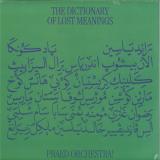
PRAED return to Discrepant, after their 2017’s entry Fabrication of Silver Dreams (CREP44)
Known for their signature blend of Egyptian Shaabi, free jazz and improvisation, the Lebanese duo behind PRAED - Raed Yassin and Paed Conca - now assemble a full orchestra for the second time taking the music to a deeper, rooted level.
Following their 2020 release Live in Sharjah, also under the PRAED Orchestra! moniker, the duo now revisit their unique blend of Arabic heritage and free jazz sensibilities with an album that keeps pushing further into strange and unexpected directions.
The Dictionary of Lost Meanings is just that, seven fully composed pieces and large-scale improvisations, performed by an expanded ensemble of musicians from across the globe. The result is dense and playful, unpredictable but familiar, a record where Arabic rhythms and microtonal melodies collide playfully against electronics, warped vocals and orchestral textures.
It’s less about genre than about memory — like tuning into a radio station broadcasting from somewhere between the past and the future.
PRAED continue to blur the line between popular culture and experimental music in ways that feel both grounded and completely their own.
PRAED ORCHESTRA! are
Raed Yassin: Synthesisers, Vocals, Beats
Paed Conca: Clarinet, Electric bass
Alan Bishop: Alto saxophone, Electric bass, Vocals
Andreas Bral: Harmonium, Electronics
Elisabeth Klinck: Violin
Christian Kobi: Soprano and Tenor Saxophones
Hans Koch: Bass Clarinet
Martin Küchen: Alto and Sopranino Saxophones
Maurice Louca: Synthesizer, electronics
Stan Maris: Accordion
Radwan Ghazi Moumneh: Buzuk, Vocals, Modular Synth
Youmna Saba: Electric Oud, Vocals
Sam Shalabi: Oud, Electric Guitar
Els Vandeweyer: Vibraphone
Khaled Yassine: Drums, Percussion
Michael Zerang: Drums, Percussion
Recorded by Jasper Jan Peeters at the Summer Bummer Festival, DE Studio,
Antwerp August 26, 2022
Mixed by Adham Zidan
Mastered by Mark Gergis
Produced by PRAED
Photos by Geert Vandepoele
out of Stock
Last delivered 4 months ago available to reorder, subject to availability
Los Angeles-based duo LUCKYANDLOVE are back with their third album, evoking a new sense of art school originality, following their critically acclaimed “Transitions” album. The duo defines 'Humaura' as the atmosphere that emanates from the feelings of the human spirit void of technological control.
Blending raw analog synth sounds with driving punctuated percussion and punchy analogue bass, LUCKYANDLOVE’s music is shaped by the embers of Siouxsie and The Banshees and Bauhaus, resonant spectres carry over from synth-laden galaxies, where the needle hits the vinyl groove and Doc Martens marched to basement dance floors.
LUCKYANDLOVE is the raw sonic experiment of Loren Luck and April Love, whose music transcends genres. Their live analogue synth beats, Moog instrumentation and beautiful, harmonic vocals trigger an immediate download of fuzzy sunset synthgaze, blue-black neon darkwave, and tigerprint electro punk.
“‘Humaura’ is an action-packed, cinematic, entertaining and soulful electro-dance record full of fresh air and wide-open roads where there is more freedom to party, to be in nature, and to be our wild selves,” says April Love.
Fusing together pulsating molten kicks, abrasive fuzz-laden analog synths and sensual vocals, the anti-tech angst anthem ‘I Am Human’ is a call to take back our lives, underlining the need to reconnect with being Human before it’s too late. ‘Lonely at Night’ is a "last call" bar track about the desperate, frantic desire for human connection, building from a haunting sense of isolation to a fast-paced, climactic reunion with a crush. Elsewhere, this album features enchanting lyrics rooted in emotions from melancholy and sorrowful glom to a state of blissful trance.
This album was recorded, mixed and mastered for digital release by Grammy award-winning engineer Be Hussey (Modern English, Twin Tribes, Boy Harsher) at Balboa Studio and Catwater for the digital music, and mastered for vinyl and lathe-cut by Grammy-nominated engineer Nicholas Townsend (Weezer, Grimes) at Townsend Mastering.
Their 'Lucky + Love' and 'Transitions' albums having earning them a global fan following, US and UK tours, multiple tracks featured in the indie hit film 'Tiger Within' (Ed Asner's final performance), and wide acclaim, noting their “soulful, synthesized sound" (LA Weekly), “spectral synths and dazed-dreamy feeling” (Big Takeover Magazine), not to mention their "uncompromising and inventive sonic experiment” (The Spill Magazine) and sound that “oscillates between the asphalt synth streets & interstellar outer realms” (Impose Magazine).
LUCKYANDLOVE’s visceral, dark electro-pop appeal continues to stretch through time and space. Praise for the album’s lead track ‘I am Human’ have poured in from over a dozen countries. ‘Humaura’ promises to cement the duo’s reputation as one of America’s most vivacious electronic / synthwave acts, positioning them firmly within the lineage of artists like Phantogram, Ladytron, The Soft Moon, Twin Tribes and ACTORS.
‘Humaura’ Press:
“...In contrast to its synth-laden darkwave and electropunk sound, the song presents lyrical themes of championing the human spirit and emotions over the technological void" ~ Regen Magazine
“Moog textures and distorted synth tones weaving together like electric currents. An industrial edge that carries a dreamy undercurrent, nodding to darkwave, punk rock and post-punk influences without sounding dated" ~ Myth of Rock
"Every second and note is a meld of lava-esque incitement and beguiling melodic fixation and a breath to unpredictability and stirring fuzz hued uniqueness… a thrilling encounter" ~ The Ringmaster Review
"Layers fall into place and give rise to soaring vocals. The beautiful timbre of her voice sits over the landscapes of sound and reveal poignant lines that hit home." ~ Sound Read Six
Found Keys is the debut album by American artist Ruth Maine. Although Ruth has been playing and composing music for over two decades, this is the first time she decided to record some of her varied compositions and share them with the public. But in times when it is the norm to clamour for attention, she prefers to go the opposite way. Ruth likes to let her music speak for itself and stay in the shadows.
The 16 short piano pieces heard on this album, each about two to three minutes long, were recorded remotely and purely surrounded by nature. Once a composition was found and Ruth considered it mature, she only recorded it once, embracing the beauty of doing something for the first time with all its little imperfections. Found Keys sounds anything but imperfect though. These compositions feel timeless, intimate and comforting, as if they have been around for a long time, like an old friend. Gently played keys slowly evolve into minimal pieces through repetitive melodies. There’s stillness as much as there’s brightness, sadness as much as joy; welcome to a beautiful journey through Ruth’s world of wonder.
In many ways, Found Keys is a deeply personal record that takes Sonic Pieces back to its roots. And it leaves a feeling of nostalgia while reviving memories of the past.
Found Keys is the debut album by American artist Ruth Maine. Although Ruth has been playing and composing music for over two decades, this is the first time she decided to record some of her varied compositions and share them with the public. But in times when it is the norm to clamour for attention, she prefers to go the opposite way. Ruth likes to let her music speak for itself and stay in the shadows.
The 16 short piano pieces heard on this album, each about two to three minutes long, were recorded remotely and purely surrounded by nature. Once a composition was found and Ruth considered it mature, she only recorded it once, embracing the beauty of doing something for the first time with all its little imperfections. Found Keys sounds anything but imperfect though. These compositions feel timeless, intimate and comforting, as if they have been around for a long time, like an old friend. Gently played keys slowly evolve into minimal pieces through repetitive melodies. There’s stillness as much as there’s brightness, sadness as much as joy; welcome to a beautiful journey through Ruth’s world of wonder.
In many ways, Found Keys is a deeply personal record that takes Sonic Pieces back to its roots. And it leaves a feeling of nostalgia while reviving memories of the past.
Clocks and Barometers is a collaborative project between veteran Limbo artists Seán Lee (Dive Reflex Service) and Alex Lupo (Lupo). All the source material for this album was recorded in one morning at Lupo's studio in the summer of 2023. They chose twelve one-minute acoustic improvisations and processed them that afternoon through granular eurorack units.
The results were bought to Bristol where DRS and Lupo shaped the album over the next year in several recording and mixing sessions at DRS’s home studio.
The name Clocks and Barometers is taken from a mysterious shop of the same name on the east Bristol/South Gloucestershire border which appears to never be
open. The title “Learning Through Investigation” as well as some of the track names refer to both artists’ experience as music educators.
out of Stock
Last delivered 11 months ago available to reorder, subject to availability
Recorded in Switzerland and mastered in Madrid, on Deságua Mello blends classical harp training with experimental techniques, creating a rich sonic journey that pushes the boundaries of the instrument. Brazilian harpist and composer Marina Mello presents Deságua, her solo debut released by the Peruvian label Buh Records. Based in Zurich, Mello has developed a unique and expressive approach to the harp, combining her classical training with a deep exploration of the instrument's sonic possibilities. Deságua is the result of this process: an intimate and expansive work that traverses sonic landscapes rich in contrast and texture. In the artist's own words, this album is a synthesis of material developed through her musical practice. The title refers to the Portuguese word that describes the moment a river flows into the sea. This concept guides the album's sonic narrative, in which each piece functions as a tributary flowing into an immersive and unexpected listening experience. From bittersweet whale-like sounds to destructive, unsettling, and shattering noise provocations, she explores, senses, and transcends the musical boundaries of her instrument. The album presents a wide range of sounds and styles, yet maintains a strong internal coherence through its technical and conceptual exploration of the harp. Mello performs on both lever and pedal harps, employing a range of non-traditional techniques: preparing the instrument with objects, using guitar effects pedals, detuning the strings, and using close mic recording to capture the subtlest sounds and the shifts that lie between them. The result is a collection of pieces that move between the melodic and the dissonant. Deságua does not shy away from repetition, noise, or raw textures. Instead, it embraces them fully, situating the album at the crossroads of contemporary music, improvisation, and electronic experimentation.
REPRESS. Greenferno is the second studio album by the Polish stoner doom band Belzebong. Recorded in early 2015 and the first release to feature second drummer Hexy Dude. Belzebong are a stoner metal band from Kielce, Poland. Since the band's formation in 2008 they currently have three albums under their belt and have toured Europe on multiple occasions. Along with their weed-themed instrumental doom the band is best known for their "Dude" pseudonyms, keeping their faces obscured whether by hair or fog and tongue-in-cheek nature to their music as implicated in many interviews. All of their music to date, barring samples, is instrumental.
Neon green vinyl, limited to 300 copies. REPRESS. Greenferno is the second studio album by the Polish stoner doom band Belzebong. Recorded in early 2015 and the first release to feature second drummer Hexy Dude. Belzebong are a stoner metal band from Kielce, Poland. Since the band's formation in 2008 they currently have three albums under their belt and have toured Europe on multiple occasions. Along with their weed-themed instrumental doom the band is best known for their "Dude" pseudonyms, keeping their faces obscured whether by hair or fog and tongue-in-cheek nature to their music as implicated in many interviews. All of their music to date, barring samples, is instrumental.
Island5 is Islandman’s most focused and detailed exploration of Anatolian psychedelia to date. They re-imagine the deep-rooted sounds of Anatolia through a modern lens. To them, this music isn’t frozen in time — it’s alive, shifting, and always becoming. Tradition, in their hands, isn’t something to preserve in glass, but something to carry, stretch, and let grow.
Each track offers a different angle into this reimagined sound. Analog synths mimic reed instruments, fuzzed guitars evoke forgotten tales, and percussion carries both the pulse of the city and the stillness of rural ground. There are meditative passages that invite silence (Slwly), and sunlit grooves that move the body before the mind (Adada, Rüzgar). Everything flows as if improvised—but nothing feels accidental.
out of Stock
Last delivered 4 months ago available to reorder, subject to availability
Born in the sewers of Montreal in 2018, it all started with a simple goal : blending old fashioned death metal and modern hardcore together in a city where technical death metal reigns supreme. It didn't take long for the band to make a name in the underground tho. Fast, old school riffs, pummeling mosh parts mixed with energetic stage presence quickly earned ST attraction, especially in the hardcore scene. Initially formed by tattoo artist Vincent PL on vocals and axeman Philippe Leblanc, ST has now its hardest lineup to date by adding Miguel Lepage (ex- Blind Witness, ex- Obey the Brave) on bass and Émile Savard (Profane Order, ex- Malebranche) on drums, turning the band from another local act into an absolute fucking weapon. The time has come to follow the path of Cryptopsy, Quo Vadis and Despised Icon and show the world that Montreal is still to this day a reckless, unrelenting force of death metal.
A record born of insurmountable joy and simultaneous profound loss; World Maker marks a time of great change for Psychonaut, both personally and musically, as the band burn away the philosophical narrative complexities of previous offerings with a searing, panoramic clarity that implores us to savour the beauty of the now as a means of leaving a legacy for the future. The traditional, three-piece line up of Belgian, psychedelic post-metal collective Psychonaut has long belied the compositional prowess, captivating narrative depth and crushing live presence of a band now operating at the forefront of forward-thinking, contemporary heavy music. Having sent a shockwave through the post-metal and prog scenes with their three times repressed Pelagic Records debut Unfold The God Man in 2020 before following it up with the transformative metaphysical complexities of 2022's Violate Consensus Reality, Psychonaut have played prestigious Belgian open-air festivals like Alcatraz, Rock Herk and Boomtown Festival as well as boutique events such as Soulcrusher, Roadburn Redux and A Colossal Weekend whilst sharing stages across Europe with the likes of Amenra, Brutus and Pelagic labelmates The Ocean and PG.Lost. The seed of World Maker took shape just as the campaign for Violate Consensus Reality came to a close, with the news that guitarist/vocalist Stefan De Graef was to become a father. This tilting of life's axis led De Graef, like most fathers-to-be, to re-assess what was really important. As such, the music he was inspired to write felt free of the band's previous philosophical and spiritual foundations and instead took the form of life lessons for his unborn son, a legacy of love in case something were ever to happen. This hopeful euphoria shines keenly throughout World Maker as an uncharacteristically optimistic warmth; from the reverberating Rhodes organ on the titular opening track and the meandering, free-jazz inspired guitar solo that introduces `Everything Else is Just The Weather' to elements of world music, electronica and the otherworldly voice of Dutch multi-instrumentalist and old friend Anthe Huybrechts (Anthe/Helion Creek) most notably on tracks like `Origins' which also features tabla, a pair of indian hand drums, as its propulsive heartbeat. Whilst Psychonaut's giant riffs, punishing polyrhythms and guttural vocal rage are more resplendent than ever, there is a wider dynamic spectrum to World Maker that sees the band proudly exploring their more delicate, intimate extremes as well as their most aggressive and abrasive. Not long after the birth of De Graef's son came the devastating news that both his own father and Psychonaut bassist/vocalist Thomas Michiels' father had been diagnosed with advanced cancers. Living day-to-day and torn between joy and grief, the band found themselves shedding the grand scope and world-shattering agenda of Violate Consensus Reality to focus on the here and now. Lead single `Endless Currents', the first full track on the album, explodes in a barrage of staccato guitar tapping but mellows to let the powerful, newly pared back lyrics ring out as a call to embrace the flow and follow joy. The song's final few words `Lead the way. / Soar. / Everlong.' double as both a greeting and a goodbye as the trio build their formidable post-metal might to a thunderous breaking point. Similarly, the pulsing, propellant `Stargazer', named so for De Graef's son being born in stargazer position, pairs delicate guitar motifs and folk-inflected optimism with huge and sprawling breakdowns as some of the band's most genre-pushing work to date; asking difficult but important questions of what happens next. It is `And You Came With Searing Light' though that most immediately exemplifies Psychonaut's redirected ambition on World Maker, as euphoria collides with blinding fury. The first track written for the album, `_Searing Light' is easily the most complex and initially wouldn't sound out of place on Violate Consensus Reality. Originally meant to be the new album's opening track; the decision to defer its impact, not to mention its compositional and dynamic gravity, speaks of a fundamental change to the band's very core. The words "Discover the world with wide eyes" recurring throughout speak as much to those having lost a part of their world as they do to those seeing it for the first time. Amidst such turbulent times, the band found strength and support within their Post-Metal community. The album was recorded and produced by the band alongside their longtime collaborator and close friend Chiaran Verheyden (Hippotraktor) with help and advice from Psychonaut's live engineer Victor, who will no doubt make this album sound just as awesome on stage. Even the artwork for World Maker was a family affair, being designed by close friend Sam Coussens of Belgian cosmic sludge metallers Pothamus. In the face of life's soaring highs and desolate lows, World Maker is direct and brave without sacrificing any of Psychonaut's raw power, creative innovation or inimitable musical depth. Where their previous full-length offerings have charted grand introspective courses through time and space, World Maker is breathtaking in its uncompromising clarity: a father singing to his newborn son as a son bids his own father farewell. FOR FANS OF Mastodon, Russian Circles, Tool, Gojira, The Ocean, Pelican, Hypno5e, Cult Of Luna, Amenra
A duo concert featuring universal artist and activist Moor Mother and Archie Shepp was planned for October 19, 2023, at the Enjoy Jazz Festival. However, a spinal disc operation on the then 86-year-old saxophone legend led to the cancellation of this eagerly awaited world premiere – and to a spontaneous demonstration of respect.
To honor the great Archie Shepp, one of the most influential intellectuals in jazz, an Enjoy Jazz all-star cast spontaneously recorded a tribute song during the festival – organized by festival director Rainer Kern. The line-up consisted of Nicole Mitchell, the most important flutist in the history of jazz, as well as the Enjoy Jazz “Artists in Residence” for 2023 and 2024, Moor Mother (spoken word) and Nduduzo Makhathini (piano).
In her lyrics, the poetess creates a powerful linguistic monument to Archie Shepp, whom she greatly admires, by playing with the titles of the saxophonist's legendary recordings (instead of with him himself). The title “One For Archie” is an allusion to Shepp's 1964 Impulse debut, “Four For Trane,” which, according to “Jazzwise”, is one of the “100 Jazz Albums That Shook The World.” In her moving text, Moor Mother also celebrates Shepp's political and social commitment.
The way Moor Mother rhythmically and aesthetically picks up on Shepp's unique playing style, which oscillates between rugged clarity and deep humanity, begins to improvise on it, and thereby creates new connections, is impressive proof of her masterful artistry. Her recitation is peppered with haunting dramatic climaxes that give listeners goosebumps due to their authenticity.
The B-side features “They've Got A Plan,” a song that is like a beacon. An intense and powerful invocation of “Agenda 2063,” a master plan of the African Union to transform the continent socially, economically, and politically.
Both tracks are available on vinyl for the first time.
out of Stock
Last delivered 11 months ago available to reorder, subject to availability
With Michaela Melián's LP "music for a while", a-Musik is releasing the first album by the visual artist, co-founder of F.S.K., and solo musician since "Monaco", which appeared on Monika Enterprise in 2013. While her last releases, Electric Ladyland (2016), Music from a Frontier Town (2018), and Tania (2022) were created as part of exhibitions and sound installations, "music for a while" is Melián's fourth autonomous LP, characterized on the one hand by her unmistakable dreamlike sound along the interfaces between dark chamber music, solemn ambient techno, and cinematic sound art.
As with her previous albums, there is also a wonderful avant-pop cover version—this time of the track “My Other Voice” (1979) by the Sparks. On the other hand, music for while, whose cover is adorned with Melián's photographs of the clouds above her new home of Marseille, spreads a comparatively ominous mood – one that is nevertheless appropriate given the circumstances in 2025 – thanks in part to the sedate, almost ticking drum sounds of co-producer Felix Raethel. Once again, the multi-instrumentalist, supported by Ruth May on violin and Elen Harutyunyan on viola, weaves her recordings of various string instruments — cello, guitar, bass, and zither — into fascinating, lurching, looping, and almost hypnotic soundscapes, but atonal synthesizer sounds in tracks such as “traverse benjamin” and “märchenwald” open up the music to electroacoustic and experimental music. The concluding cover version of Irving Berlin's “they say it's wonderful” (1946) rounds off one of this year's most impressive releases in an incomparably groovy and melancholic way.
Clarence Carter, blind from birth, was a blues singer with lascivious wit, a talented guitarist, a songwriter with a twinkle in his eye, and a champion of down-to-earth soul grooves who taught himself to play the guitar.
He sang in a gospel choir, completed a degree in music, and grounded the duo Clarence & Calvin but was not however very successful.
After a car crash involving Calvin Scott, Carter started on a solo career and signed a contract with Rick Hall and the Fame label as a soloist.
Among the earliest singles recorded at the Muscle Shoals studio were a few hits. After leaving Fame for Atlantic, he managed to enter the Top 20 of the R & B charts with "Looking For A Fox". His breakthrough came with "Slip Away", which sold a million copies and was awarded a Gold Record.
The legendary Fame Studios in Muscle Shoals remained the home basis, as it were, for Carter during his career with Atlantic. "This Is…" begins with a contemplative, soft sound. "Do What You Gotta Do", written by Jim Webb, is a lovely, melancholic mid-tempo ballad, saturated with Barry Beckett’s keyboard and smothered by lush, plaintive winds.
But the man is primarily funky here … as three danceable, finger-snapping tracks prove; "Wind It Up", with further witty improvisations and a fervid organ solo, the highly syncopated, playful "Thread The Needle", and the smoky, irresistible "Funky Fever" – all written by Carter himself.
Dan Penn’s and Spooner Oldham’s "Slippin’ Around" has an unorthodox bossa nova-like beat that is reminiscent of Ray Charles’s "What’d I Say", while Carter’s unmistakable chuckle is to be heard for the first time on the riotous funk-rock number "I’m Qualified", which has the very same unique, infectious groove as was to be heard on Wilson Pickett’s "In The Midnight Hour". "She Ain’t Gonna Do Right", composed by the same man, brings more Alabama Country to the mix, whereby Beckett contributes a catchy, persistent organ riff in the refrain.
Hekura are a Barcelona-based duo that create expansive soundscapes anchored in ritual minimalism. With influences ranging from the ethereal mysticism of Alice Coltrane to the hypnotic pulse of Steve Reich, their music explores the boundary between introspection and bold sonic exploration. Inspired by ethnographic traditions and the raw energy of Julius Eastman, their compositions fuse scattered percussion, shimmering textures, and hypnotic saxophone rhythms for moments of solitude and profound reflection. Hekura's work invites listeners to immerse themselves into a spectral world where tradition meets the avant-garde, offering a unique and evocative listening experience. Ernest and Edu met during their jazz studies at Taller de Musics in Barcelona. Their first conversation was about Charlie Haden Liberation Orchestra's "free jazz" version of the South African anthem, Nkosi Sikelele. That bond quickly translated into a shared world of listening, respect, experimentation, and sound that crystallized in Hekura. Edu Pons is a saxophonist and a music teacher at Taller de Mùsics in Barcelona. His music ranges from jazz to folk or from classical to free improvisation yet with his own distinctive voice. Ernest Pipó is a guitarist and composer from a small town in La Garrotxa. Currently based in Barcelona, he primarily focuses on music production and soundtrack composition. His influences range from jazz, electronica, noise, pop, and, although he dares to admit it, also ambient. For fans of: John Tchicai (with strings), Steve Reich, Arv & Miljö (Discreet Music, 2024)
PinkPantheress’ debut mixtape to hell with it marked the anti-popstars seismic arrival.
Released in 2021, the project fused bedroom pop, jungle, drum & bass and UKG, introducing these sounds to a new generation through her saccharine vocals and diaristic lyrics about obsession, hopelessness, friendship, and loneliness.
The debut mixtape has received 2.5 billion streams to date with all five singles; Just for me (No. 27), Pain(No. 35), Passion (No. 73), Break it off (No. 74), and I must apologise (No. 85) charting in the UK Top 100.
The following year saw the rising star win BBC Music’s Sound of 2022, grace the cover of The Face whilst catching the attention of British Vogue where she was the only musician featured on the prestigious Vogue 25 list. to hell with it has since received Gold certification and cemented PinkPantheress as one of the most important new voices in British music.
First time release on vinyl of the breathtaking songs Patty Waters recorded with engineer Steve Atkins in 1970 at the Coast Recordings studio, together with the unreleased single 'My One And Only Love' and a recorded live session at Lone Mountain College in 1974.
The album 'You Loved Me' is the missing link between her two groundbreaking pioneering and highly acclaimed ESP-Disk records from the end of the 60's and her post 90's releases. The missing link between the radical ingenue of the 1960s and her late 90's songs wherein she expressed the resolution of all of her life's moments through mature readings of traditional songs and jazz standards. This collection aims to provide that missing link and to finally complete the picture of her storied recording career.
In what would have been her third LP, the 'You Loved Me' album serves as the inverse of Patty's debut. While her debut "Sings" concerned itself with themes of heartbreak, loneliness and yearning, there's an abundance of love, joy and togetherness on "You Loved Me".
Or in Patty's own words:
"I was a young girl alone at age 19, I was longing for love and dreaming of how wonderful love could be"
On 'You Loved Me' Patty Waters velvet voice captures this longing for love, straight from her soul to your heart. Crossing the border of the avant garde jazz entering a strange zone, somewhere between spiritual jazz, early folk vibes on the songs on the A-sides while the 14 minute composition 'Touched By Rodin In A Paris Museum' on the B-side is (dixit David Stubbs for Uncut in 2004) a brilliant extended showcase for the uneasy Cageian minimalism of her piano playing.
'You Loved Me' proves also again why Albert Ayler introduced her to ESP-Disk president Bernard Stollman, impressed Miles Davis, Pharoah Sanders and Henry Grimes with her concerts and can count Patti Smith and Yoko Ono (to name a few) amongst her fans.
out of Stock
Last delivered 11 months ago available to reorder, subject to availability
You hear a pulsating rhythm. What does it mean when the intensity rises? Is it the blood rushing from the sound of the drum that brings meaning or is it the anticipation of what's next? Kasra V's returns to his budding V-sion imprint with its third installation. This latest offering brings us to the totality of physicality, where grooves and melodies do not require a resolution. The tracks bring to mind the unbridled maverick spirit of early Techno and Tribal House where the rulebook was tossed into flames and only the unfettered psyche remained. Keeping the spirit of experimentation alive, Kasra's affinity for manipulating samples and sounds in obscure ways shines through with playful nods to both industrial and early Midwest dance music alike. Unchaining the shackles of where dance music has gone wrong, Kasra is trying to maintain the connection to a time when bodies moved to the beat religiously and held reverence only for the speaker stack. Drum hypnosis is beginning now. Please enter the room and have a seat.
out of Stock
Last delivered 9 months ago available to reorder, subject to availability
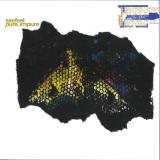
Seefeel - eine der visionärsten und experimentierfreudigsten Elektronik-Bands der frühen 1990er - formte in London einen Klang, der Brücken schlug zwischen Shoegaze und elektronischer Musik. Mit ihren schimmernden Soundlandschaften, hypnotischen Minimal-Rhythmen und einer einzigartigen Ambient-Sensibilität schufen sie einen völlig neuen Kosmos. Die neu erweiterte Ausgabe von Pure, Impure vereint drei ikonische EPs der Band zu einem faszinierenden Gesamtwerk. In den legendären Abbey Road Studios von Geoff Pesche neu gemastert, umfasst die 11 Tracks starke Sammlung zudem ein frisch interpretiertes Artwork. Erhältlich als Doppel-LP oder CD, erscheint diese Edition als wahres Sammlerstück. Die enthaltenen EPs - More Like Space, Plainsong und Time to Find Me - präsentieren nicht nur Mixe von Aphex Twin, sondern auch ein bislang unveröffentlichtes Demo des Stücks "Moodswing". Bereits 1993 markierte Pure, Impure, erschienen auf Too Pure, einen Wendepunkt in der Entwicklung von Seefeel: reduzierter, intensiver, hypnotischer als das Debüt Quique. Die Tracks entfalten sich in endlos kreisenden Loops, sanften melodischen Verschiebungen und einem atemberaubenden Zusammenspiel von organischen Gitarrentexturen und maschineller Präzision. Sie spiegeln die wachsende Faszination der Band für Dub, Ambient Techno und Post-Rock wider. Mit Pure, Impure legten Seefeel den Grundstein für ihre weitere Reise - ein Werk von zeitloser Schönheit, das sich jeder Genregrenze entzieht und bis heute als Schlüsselstück ihres Ouvres erstrahlt.
out of Stock
Last delivered 4 months ago available to reorder, subject to availability
The Sator Arepo, or Sator Square, is an ancient word puzzle comprising five palindromes that's etched on various historical sites throughout the Western world. Its origins are unknown, but the square has long been thought to hold magical properties, used as a charm against illness and evil, to cure insanity or to determine whether someone was guilty of witchcraft. Self-styled "punk ethnomusicologist", acoustician and musician Julien Hairon uses this mystical symbol as the starting point for his debut Judgitzu album in an attempt to reconnect with his Celtic heritage, exploring how its hallowed messages might harmonize with contemporary Tanzanian dance music.Hairon has been traveling across the world for over a decade, collecting field recordings from countries such as Indonesia, Australia, Cambodia, China and Bangladesh, and presenting them on his Les Cartes Postales Sonores label, re-issuing any curious cassettes and CDs he came across on the PetPets' TAPES imprint. It was during this time that he became fascinated by rituals that involved spirits, prompting him to examine his own ancestry when he returned to Brittany. "Many artifacts in the landscape remain," Hairon explains, "and the power of spirits is still palpable." He represents this Celtic mysticism on 'Sator Arepo' with murky drones and magickal synth tones, using xenharmonic scales (tuning outside of standard 12-tone equal temperament) that reach back to the ancient world. These sounds are augmented with fast-paced, sci-fi rhythms informed by his time in Tanzania; "Singeli has contaminated me," admits the producer.The most astonishing example of this is 'Miracle', a thrusting soundsystem experiment that layers serpentine, bagpipe-esque electronic wails over extravagant clusters of blocky percussion. Driven by the frenetic 175BPM pulse that echoes through the streets of Dar Es Salaam - popularized globally by forward-thinking producers like Sisso, Duke and Jay Mitta - Hairon opens up a rare conversation, seeking to draw parallels between today's most urgent dance forms and the archaic rituals of antiquity. On 'Vitalimetre', Hairon drives his sonic palette into the red, harmonizing with Dutch hardstyle and gabber, and splaying distorted drones over maddeningly blown-out kicks and ratcheting percussion. 'L'or Des Fous' takes a more meditative route, prioritizing Hairon's eccentric tonality with expressive sheets of pitch-warped sound that ghost walk across energized, rattling beats.If you heard Hairon's last Judgitzu release 'Umeme / Kelele', described by Boomkat as "one of 2019's deadliest dancefloor sessions," then you'll know how mindboggling this material can be. And with 'Sator Arepo', the French producer deepens his reach, grasping a world that we've almost forgotten and juxtaposing it with a landscape most of us barely comprehend.
out of Stock
Last delivered 10 months ago available to reorder, subject to availability
Nachdem sie auf ihrem gefeierten Debütalbum ein multidimensionales Klanguniversum definiert hatten, verlassen der Komponist und Filmemacher Chris Hunt und James ,Munky" Shaffer von Korn auf EXINFINITE das Vertraute und driften in ein Reich der Rekursion, wo sie auf ein Gewirr aus gespiegelten Wurmlöchern blicken, die mit unheimlicher Mehrdeutigkeit summen. Das zweite Album von VENERA ist düsterer, heavier und perkussiver als sein Vorgänger, aber es gibt etwas Intimeres in seinen Schaltkreisen, das schwer zu definieren ist - etwas Mystisches, Geheimnisvolles und Melancholisches. Songs materialisieren sich aus dem Nichts, nur um von sauren Synthesizern aufgelöst oder von Hunts geschärften Beats durchbohrt zu werden, während Shaffers dichte, gequälte Riffs durch euphorische, zeitverzerrte Vocals von FKA twigs, Dis Fig und Chelsea Wolfe ausgeglichen werden. Nach ihrer Begegnung mit der Unendlichkeit haben VENERA nach innen geschaut, über die Grenzen der Existenz nachgedacht und ihre tiefsten Emotionen ausgegraben. VENERA entstand 2022, als Hunt und Shaffer nach Aufnahmen mit der albanischen Künstlerin Xhoana X. ihr eigenes musikalisches Terrain betraten. Das Duo improvisierte gemeinsam und experimentierte mit cineastischem, von Science-Fiction inspiriertem Sounddesign und erkannte, dass die Zusammenarbeit Potenzial hatte. So begannen sie, ihren Sound weiterzuentwickeln und zu verfeinern, wobei sie Unterstützung von Deantoni Parks, dem ehemaligen Schlagzeuger von Mars Volta, Alain Johannes von Queens of the Stone Age, dem Post-Punk-Duo VOWWS und den LA-Noise-Rock-Legenden HEALTH erhielten. Nachdem ihr Debütalbum 2023 auf Mike Pattons Label Ipecac erschienen war, setzten VENERA die Dekonstruktion und Neugestaltung ihres Songwritings fort, tauschten Eno-artige Ambient-Atmosphären gegen explosive Beats und dichte Texturen aus und fanden heraus, wie sie die von ihnen eröffnete Erzählung erweitern konnten, ohne alte Pfade zu beschreiten. Auf ,Tear" ist die neue Richtung des Duos deutlich zu hören, wenn Shaffers ursprüngliche Gitarrenklänge zu unheimlichen Widescreen-Expositionen umgestaltet werden, die Hunt mit pneumatischen Kick- und Snare-Zyklen untermalt. Unterbrochen von Luftschleusen-Zischen und leuchtenden Synthesizern, bietet der Track eine Kulisse, die VENERA kontinuierlich verwandelt und das Konzept im Laufe des Albums neu formt. Die Kult-Singer-Songwriterin Chelsea Wolfe gibt dem düsteren ,All Midnights" einen gotischen amerikanischen Touch, indem sie kraftvoll über VENERAs vakuumverpackte Rhythmen und gasförmige Synthesizer singt, und der in Berlin lebende Noisemaker Dis Fig, der bereits mit The Body und The Bug zusammengearbeitet hat, verleiht Shaffer und Hunts tape-verzerrten Industrial-Pops und -Whirrs in ,End Uncovered" hauchige, emotional vielschichtige Töne. Sie lassen squelchigen, verlangsamten Techno in okkulte Noise-Reflexionspools auf dem schlängelnden ,Asteroxylon" einfließen, und Hunt antwortet auf Shaffers hallende Zupftöne mit Nebelhorn-Stöhnen auf dem unheilvollen, nachdenklichen ,uuu773". ,EXINFINITE" baut sich kontinuierlich auf, bis es ,Caroline" erreicht, eine intensive Zusammenarbeit mit FKA Twigs, die ihre unheimlichsten Töne isoliert. Zunächst umspielt sie ihre Worte mit bedrohlichen elektrischen Verzerrungen und verstümmelten, geisterhaften Stimmen, bevor sie in einen aufgeladenen opernhaften Schrei ausbricht, dem Shaffer und Hunt mit flirrenden kybernetischen Beats und dichten Wänden aus Gitarrenlärm begegnen. Dieser Track bricht das Konzept von VENERA vollständig auf, verschmilzt das Synthetische mit dem Natürlichen und löst Dysphorie, Selbstverlust und unendliche Regression aus. So wirken der blutrünstige Lärm und die finstere Atmosphäre von ,Decreation" wie eine dissoziierte Coda. In ,EXINFINITE" werden Zerstörung und Tod nicht überwunden, sondern so lange intensiviert, bis sie sich vollständig verwandeln.
out of Stock
Last delivered 11 months ago available to reorder, subject to availability
Der international gefeierte Schlagzeuger und Produzent Makaya McCraven meldet sich mit einem besonderen Projekt zurück: Vier neue EPs - Techno Logic, The People"s Mixtape, Hidden Out! und PopUp Shop, die gebündelt als Doppel-LP und Doppel-CD unter dem Titel Off the Record (via XL Recordings) veröffentlicht wird. Es sind McCravens erste Studioarbeiten seit In These Times (2022), mit denen er zu seiner charakteristischen Mischung aus Live-Improvisation und Studio-Nachbearbeitung zurückkehrt. Schon jetzt geben die Singles "Imafan", "Away", "Technology" und "Choo Choo" einen Vorgeschmack auf das Projekt. Die vier EPs greifen auf verschiedene Live-Momente der letzten zehn Jahre zurück: Aufnahmen aus London, Berlin und New York (Techno Logic), ein Jubiläumskonzert in Brooklyn (The People"s Mixtape), eine Residenz im Chicagoer Hideout (Hidden Out!) sowie McCravens Los-Angeles-Debüt 2015 (PopUp Shop). "In einer Zeit, in der vieles virtuell und ungreifbar ist, bleibt es etwas Besonderes, wenn Menschen in einem Raum zusammenkommen und Musik teilen", sagt McCraven. "Diese Energie möchte ich festhalten - roh, menschlich, spontan." Mit Off the Record beweist der als "kultureller Synthesizer" und "Beat Scientist" bezeichnete Musiker erneut, warum er zu den prägenden Stimmen einer neuen Generation zählt, die den Jazz ins 21. Jahrhundert führt.
out of Stock
Last delivered 10 months ago available to reorder, subject to availability
A record born of insurmountable joy and simultaneous profound loss; World Maker marks a time of great change for Psychonaut, both personally and musically, as the band burn away the philosophical narrative complexities of previous offerings with a searing, panoramic clarity that implores us to savour the beauty of the now as a means of leaving a legacy for the future. The traditional, three-piece line up of Belgian, psychedelic post-metal collective Psychonaut has long belied the compositional prowess, captivating narrative depth and crushing live presence of a band now operating at the forefront of forward-thinking, contemporary heavy music. Having sent a shockwave through the post-metal and prog scenes with their three times repressed Pelagic Records debut Unfold The God Man in 2020 before following it up with the transformative metaphysical complexities of 2022's Violate Consensus Reality, Psychonaut have played prestigious Belgian open-air festivals like Alcatraz, Rock Herk and Boomtown Festival as well as boutique events such as Soulcrusher, Roadburn Redux and A Colossal Weekend whilst sharing stages across Europe with the likes of Amenra, Brutus and Pelagic labelmates The Ocean and PG.Lost. The seed of World Maker took shape just as the campaign for Violate Consensus Reality came to a close, with the news that guitarist/vocalist Stefan De Graef was to become a father. This tilting of life's axis led De Graef, like most fathers-to-be, to re-assess what was really important. As such, the music he was inspired to write felt free of the band's previous philosophical and spiritual foundations and instead took the form of life lessons for his unborn son, a legacy of love in case something were ever to happen. This hopeful euphoria shines keenly throughout World Maker as an uncharacteristically optimistic warmth; from the reverberating Rhodes organ on the titular opening track and the meandering, free-jazz inspired guitar solo that introduces `Everything Else is Just The Weather' to elements of world music, electronica and the otherworldly voice of Dutch multi-instrumentalist and old friend Anthe Huybrechts (Anthe/Helion Creek) most notably on tracks like `Origins' which also features tabla, a pair of indian hand drums, as its propulsive heartbeat. Whilst Psychonaut's giant riffs, punishing polyrhythms and guttural vocal rage are more resplendent than ever, there is a wider dynamic spectrum to World Maker that sees the band proudly exploring their more delicate, intimate extremes as well as their most aggressive and abrasive. Not long after the birth of De Graef's son came the devastating news that both his own father and Psychonaut bassist/vocalist Thomas Michiels' father had been diagnosed with advanced cancers. Living day-to-day and torn between joy and grief, the band found themselves shedding the grand scope and world-shattering agenda of Violate Consensus Reality to focus on the here and now. Lead single `Endless Currents', the first full track on the album, explodes in a barrage of staccato guitar tapping but mellows to let the powerful, newly pared back lyrics ring out as a call to embrace the flow and follow joy. The song's final few words `Lead the way. / Soar. / Everlong.' double as both a greeting and a goodbye as the trio build their formidable post-metal might to a thunderous breaking point. Similarly, the pulsing, propellant `Stargazer', named so for De Graef's son being born in stargazer position, pairs delicate guitar motifs and folk-inflected optimism with huge and sprawling breakdowns as some of the band's most genre-pushing work to date; asking difficult but important questions of what happens next. It is `And You Came With Searing Light' though that most immediately exemplifies Psychonaut's redirected ambition on World Maker, as euphoria collides with blinding fury. The first track written for the album, `_Searing Light' is easily the most complex and initially wouldn't sound out of place on Violate Consensus Reality. Originally meant to be the new album's opening track; the decision to defer its impact, not to mention its compositional and dynamic gravity, speaks of a fundamental change to the band's very core. The words "Discover the world with wide eyes" recurring throughout speak as much to those having lost a part of their world as they do to those seeing it for the first time. Amidst such turbulent times, the band found strength and support within their Post-Metal community. The album was recorded and produced by the band alongside their longtime collaborator and close friend Chiaran Verheyden (Hippotraktor) with help and advice from Psychonaut's live engineer Victor, who will no doubt make this album sound just as awesome on stage. Even the artwork for World Maker was a family affair, being designed by close friend Sam Coussens of Belgian cosmic sludge metallers Pothamus. In the face of life's soaring highs and desolate lows, World Maker is direct and brave without sacrificing any of Psychonaut's raw power, creative innovation or inimitable musical depth. Where their previous full-length offerings have charted grand introspective courses through time and space, World Maker is breathtaking in its uncompromising clarity: a father singing to his newborn son as a son bids his own father farewell. FOR FANS OF Mastodon, Russian Circles, Tool, Gojira, The Ocean, Pelican, Hypno5e, Cult Of Luna, Amenra
out of Stock
Last delivered 11 months ago available to reorder, subject to availability
A reissue of a cassette that was originally released on Uramado in 2020, this is the first time this live session appears on vinyl. The performance, featuring Kudo on piano and 3C123 on clarinet, was recorded on October 18, 2009, at the Uramado venue in Shinjuku. A beautiful and quixotic forty-minute set, that reconnects both Kudo and 3C123 with various musical histories, including those of classical composition and free improvisation.
The performance documented on Tori Kudo & 3C123 is a curious one. While they both appear to slip into improvised ruminations at times, for the most part, Kudo performs pieces by Erik Satie on the piano, over which 3C123 teases an excoriating stream of improvisation from the clarinet. His playing here is wild in its poetry: sometimes lushly nestly alongside Satie’s melodies, elsewhere loosing Ayler-esque squalls from the instrument, it’s a bravura performance that is matched, in an indirect manner, by the poise and pacing of Kudo’s generous, fluent recital.
When asked about the thinking behind the performance documented here, Kudo explains by describing the historical juxtaposition of Satie with Takehisa Kosugi’s improvised violin as “an essence of the Japanese art of collective improvisation.” The playing here, as within Japanese collective improvisation, is about sitting ‘alongside’ each other, not necessarily in direct (or even indirect) reference, but rather sharing the space; “just being there together,” Kudo says, and letting go of the need for performers to engage in interplay.
Tori Kudo & 3C123 is certainly part of that tradition, and this is where its curious poetry resides; in that ‘third space’ that sits in between, but not directly connecting, the two performers. Kudo makes an analogy with Fluxus, which is appropriate. But you can also hear their shared history here, somehow, as Kudo and 3C123 have known each other since the eighties, when they shared a house in Kunitachi City, Tokyo. Their musical paths have been multiple – Kudo, of course, best known perhaps for his Maher Shalal Hash Baz ensemble; 3C123 as a member of Vedda Music Workshop, and with other Japanese musicians like Koichiro Watanabe.
out of Stock
Last delivered 11 months ago available to reorder, subject to availability