Beyond Structures by Giomini is an exploration of form and perception within deep house. Across four tracks, he distills the genre to its essential elements: rhythm, texture, and atmosphere. The result is a set of pieces that move between motion and stillness; grooves that evolve organically, and silence that holds meaning. Every tone is deliberate, every pause intentional.
This is music not made for distraction but for immersion; a deep listening experience that invites reflection through movement. Beyond Structures seeks the point where architecture dissolves into feeling, and the dancefloor becomes a meditative space.
Tresydos welcomes Italian magician Nativo for the label's 15th release, who pulls 4 tricks out of his hat. For this instalment Nativo maintains funky stability throughout the EP to keep you engaged on the stage, closing curtains with Midolio to end on a melancholic note.
Unitology is here fresh off the stove. The story has been told by Bogota based artist Felipe Buraye who has been releasing steadily on the best international labels for you to check out, while also co-curating his own label called “From the Void Above”. Releasing under Buraye as well as his alter egos “The Voltaic Continuum” and “Dream Architect” allows you to see that there has been an immersive amount of work put in from this artist, therefore there is tons of music available whenever it’s on digital or vinyl format. It can safely be said that Buraye has got your audio needs covered. From A1-B2 the essence of the artist can be felt within his personal style that brings the Unitology to life. The artist has been a close friend of the label for a while so it is an utmost honour to finally have him on board with his signature flavour of music flawlessly executed.
Skyline Systems emerges from Australia with Escape Vector — four deeply elegant cuts rooted in the classic deep Detroit influenced sound. Stripped-back and refined, the producer crafts machine-driven landscapes where analog synths and drum machines intertwine with a hypnotic, subtly futuristic groove.
Warm, fluid basslines, shimmering metallic chords and a steady pulse invite both introspection and late-night dancefloor drift. Minimal yet immersive, Escape Vector distills the essence of Detroit’s deep house and electro heritage while adding a contemporary sense of space and precision.
Four tracks built for careful listening — and for getting lost under low lights.
Limited vinyl pressing coming soon via Baldo's Physical Education.
Somehow it feels fitting that 1+1 equals not only 11, but also the two slabs of vinyl carrying Henry Hodson’s music here. A small inside joke, perhaps, but also a sign of how naturally this record came together: instinctive and shaped with intention. Hodson — who first appeared on Limousine Dream and later with a subtle and beautifully controlled EP via Silky Beats — continues his trajectory between deep house warmth and minimal clarity. These six tracks are drawn with the sort of fine-grained rhythmic detail that rewards attention without ever demanding it. Light-footed percussion, elegant restraint, grooves that breathe. The double 12’’ format isn’t a gimmick; it’s a commitment. Each track gets the physical space and sonic depth it needs.
Originally released in 1991 as the debut record on Ron Allen and Hayden Andre’s cult label Strobe Records, Metamorphasis contains six tracks ranging from deep, pad-soaked house to tougher, bleep-tinged warehouse grooves. Powered by warm sub-bass, dreamy atmospheres and razor-sharp drum programming, this reissue brings back a timeless statement from two Canadian pioneers.
Next up on Bruno Schmidt’s Assemblies Of God; The eagerly anticipated follow up to one of the most impactful leftfield records of 2023, Bauzer Vep’s The Gurner. Alexander Folonari brings us Gut Und Günstig under his brand new Sabber Mund Alias. Previously appearing under Shampoo Douglas and La Decima Vittima on Quest’s La Nota Del Diablo imprint, Sabber Mund takes a very different form. This music could be described as “Post-everything”, combining elements of dance music, with a punk-meets-folklore education.. Everything from straight Bach-informed dancefloor killers, to medieval lullabies. Across the board, custom no-wave themes from the get go. Hot tip!
Rising multi-media artist Shaboozey intends to build his own world.
Determined to carve his own lane in the Alt-Country / Hip-Hop space; he crafts a sound that pays homage to a cast of traditional Western influences, such as Bob Dylan, Lead Belly, Johnny Cash, and Leonard Cohen, while looking into the future of what the two genres have yet to introduce.
Remaining true to his Virginia roots, Shaboozey hopes to continue the region’s long-standing tradition of producing some of the most prolific creatives of the new millennium. This time through elevating the scope of contemporary hip-hop and introducing a modern Americana culture to a global audience.
Fresh off of his inclusion in the groundbreaking Beyonce album, Cowboy Carter, of which he was the only featured artist to appear twice, Shaboozey is set to release his own album, Where I've Been, isn't Where I'm Going. An album that has been years in the making, it includes standout singles “Let It Burn,” “Vegas,” “Anabelle,” & the infectiously fun singalong anthem “A Bar Song (Tipsy).” Millions of streams later, and appearances on esteemed programs such as COLORS and The Late Show with Stephen Colbert, Shaboozey is set to become the new face of modern American country music.
Fantastisches Album mit 12 Liedern der Begena-Musiker Tafese Tesfaye, Admassu Fikre, Seyoum Mengistu und Alemu Aga. ""Die Begena ist eines jener seltenen Musikinstrumente, das seit über 5800 Jahren existiert. Faszinierend an ihr ist nicht nur ihr Alter, sondern auch die Tatsache, dass sich ihre Herstellung und ihr Verwendungszweck über all die Jahre hinweg nicht verändert haben. ... Während des Derg-Regimes, nach dem Sturz von Kaiser Haile Selassie, wurde sie nicht mehr als wichtig erachtet. ... Aber besonders in den letzten 15-16 Jahren hat es eine Renaissance erlebt. Es gibt viele, meist junge Begena-Spieler, von denen ich über 500 Schüler unterrichtet habe. Es gibt auch Begena-Bauer, die das Instrument für neue Schüler bauen. Das Interessante an diesem Instrument ist, dass die Musik, der Klang, der aus diesem Instrument kommt, die besondere Kraft hat, Menschen zur Konzentration, zur Ruhe und zum Nachdenken zu bewegen. Das ist eine besondere Qualität. Man muss kein Äthiopier sein, jeder kann es hören, es wird ihn automatisch zur Ruhe und Konzentration anregen."" – Alemu Aga (aus einem Interview mit Pit Budde für den WDR, Köln, 2008)
The definition of the word 'fado' is technically 'fate', though the Portuguese meaning bound up with this term is more complex. The music itself can be fairly closely compared with that of Greek rebetika - also the American blues or the original working-class tango music of Argentina and Uruguay - and similarly takes it's common subject matter from the various cruel realities of the world. Though perhaps what distinguishes fado in character is it's often poised acceptance of the pains of life rather than protestation or resistance - as writer Paul Vernon says "It speaks with a quiet dignity born of the realisation that any mortal desire or plan is at risk of destruction by powers beyond individual control"
Death Is Not The End compile here a spine-tingling collection of fado recordings, taken from records issued in the mid 1910s through to the 1930s. The fado's Lisbon and Coimbra variants are presented here by some of the music's earliest recorded stars - spanning a time period leading up to the emergence of the fado's all-conquering star, Amália Rodrigues.
(Limited Edition 12" Silver Vinyl, 500 Individually Numbered Copies Worldwide) To mark an exceptional milestone, the legendary DJ and producer Phi Phi celebrates 40 years behind the decks with the launch of his brand-new label Mouvement Perpétuel and its inaugural release, the Forty EP, available in both vinyl and digital formats.
Early support from Forty Cats (Balance), Graziano Raffa (Sudbeat), Acid Pauli, and many more.
A true pioneer and iconic figure of the electronic music scene, Phi Phi has shaped generations of clubbers through his legendary residencies at At The Villa, Boccaccio Life, and Extreme, to name just a few. Throughout his career, he has deeply influenced the evolution of trance and progressive culture in Belgium, crafting a distinctive sound and spirit that continue to inspire today’s artists.
The Forty EP captures the very essence of this musical journey: three original tracks blending progressive house and melodic techno, where captivating harmonies and hypnotic rhythms intertwine to deliver a sound that is both timeless, powerful, and refined.
Pressed on a silver vinyl limited to 500 individually numbered copies, the record was unveiled during a special event celebrating Phi Phi’s 40-year career — making each copy not only a true collector’s item, but also a symbolic piece of his enduring musical legacy.
From the depths of the Mexican electronic music scene emerges a new chapter with its first vinyl release. PHONOGENE RECORDS officially opens its own chapter on the international underground map. PHONOGENE EP
The new chapter of PHONOGENE RECORDS comes courtesy of the Italian duo NU SOUL CITY, who deliver an EP that encapsulates the essence of the label: depth, precision, and a groove as subtle as it is powerful. With a sonic language that navigates between minimal, microhouse, and an innate European sensibility, the duo delivers an elegant, functional, and characterful work.
This release is further elevated by two exceptional remixes from Christopher Ledger, one of the most respected producers in the contemporary scene. Ledger brings his unmistakable touch: surgical rhythms, detailed sound design and a progressive construction that turns each reinterpretation into a masterpiece. It is a declaration of principles: a precise, refined and deeply dancefloor-oriented sound, where every element serves a purpose and every texture propels forward with textures of Dub House, Minimal House and Breakbeat.
After a hiatus of over 2 years Originals are back with a banger! Classic hip hop on side A Organized Konfusion's "Open Your Eyes" from their 1991 debut self titled LP never before on 45 flipped with Herbie Hancock's sample "Chameleon" edited down here from the original 15 minute+ LP version by DJ Matman into a DJ friendly 45 edit - over 215k views on DJ Koco' Instragram!
Carolina funk obscurity alert! "Migraine" by North Carolinian musician Dennis Garner, together with Dennis O., is a deep, rare slice of local funk magic. This 45 has always been a bit of a frustration—the cutting engineer accidentally left the lathe test tone running for a few seconds.mid-track, which made it tough to play out. We've finally fixed that issue, and now this killer cut is ready for some proper funtime.
A collaboration between THE FUNKIN' MACHINE and Chicago's STARCREATURE RECORDS. This 6 track LP features full color art and cuts from cosmic disco to mediterranean boogie. THE FUNKIN' MACHINE specializes in sparkling and groovy funky sounds from the slopes of Vesuvius.
The Brazilian prodigy puts a contemporary spin on smooth 90s deep house vibes on this 4 track 12". JIMPSTER showcases his considerable remix skills on an immersive mix of the title track that subtly build energy into a top notch crescendo.
Another DINTE tape curated by cult WFMU show and blogger Bodega Pop; Gary Sullivan's long-running project rooted in a passion for digging for music in bodegas and cell-phone stores across NYC's boroughs. This edition focuses in on late 1990s and early 00s hip-hop & rnb from across Southeastern Asia.
"While on a work trip to Chicago in the mid-2000s, I was craving a bowl of pho. A bit of sleuthing led me to hop on the red line "L" up to Argyle Street, ground zero of Chicago's Little Saigon. In the 1960s, Chicago restaurateur Jimmy Wong invested in property on Argyle Street with a vision to build the city's new Chinatown, a kind of mall with pagodas, trees, and reflecting pools. In 1971, the Hip Sing Association, a labor/criminal organization, established itself in the area, and along with Wong, they bought up 80% of the buildings on a three-block stretch of the street. Wong reportedly broke both hips in an accident, leaving his dream to wither; in 1979, Charlie Soo of the Asian American Small Business Association brought it back to life.
Soo expanded the area into a vibrant mix of Chinese, Vietnamese, and other Southeast Asian businesses, pushing for renovations, including an Argyle station facelift and the Taste of Argyle festival. At the time I exited the station and crossed the street to get a better look at a shop with a poster for A Vertical Ray of the Sun in the window, the area was home to some 37,000 Vietnamese residents.
Opening the door, I was gobsmacked by a cavernous Southeast Asian media store, bigger than any I'd been to in Dallas, Montreal, New York, or Seattle. I spent some time at the bins, pulling out collections by some of my then-favorite singers — Giao Linh, Khánh Ly, Phương Dung — before approaching the register to ask the young woman behind the counter if the they carried any Vietnamese rap. It was a longshot, I knew, but if such a thing existed on physical media and anyone carried it, it would be this place.
'Have you heard Vietnamese rap?' she replied, her tone of voice and facial expression betraying a comically exaggerated level of distaste. I admitted my ignorance but assured her that I had long cultivated a high threshold for cheesy pop music of all kinds and genuinely tended to like hip hop from around the world.
She rolled her eyes and pointed to an area I had missed. I walked toward a far corner of the store and knelt over a small box on the floor sparsely populated with CDs, VCDs, and cassettes. I pulled out half a dozen Vietnamese hip hop compilations and a strange-looking CD with a cavalcade of odd typefaces in a queasy multitude of colors: THAILAND RAP HIT, it boasted, with 泰國 "燒香" 勁歌金曲 below it. The information on the back provided an address in Kuala Lumpur and the titles in Thai and English translation. The first track included three simplified Chinese characters after the English-language version of the title, "The Chinese Association": 自己人.
WTF was going on here? Walking back to the register, I waved the CD, asking "What's up with this one?" She gave me a look. I placed it on the counter so she could bask in the cover's full glory. She shrugged. "I'm guessing it's Thai rap?" She looked disappointed in me when I said I'd take it.
It turned out to be a Malaysian pressing of half-Chinese Thai hip hop artist Joey Boy's third album, Fun Fun Fun from 1996, and it completely changed my sense what the genre could sound like. The rapper's self-assured, effortless, silly-but-cool rapid-fire delivery weaved in and out of the most bizarre, antic beats I'd ever heard. The six Vietnamese hip hop CDs were a mixed bag, mostly "serious" sounding mimicry of US rapping over predictable production, but the highs were very high. When I got home and listened to it all, I made a point to find as much hip hop from this part of the world as I could.
The tracks collected here provide a limited but potent reflection of the two-decade ascendency
and ultimate world-takeover of hip hop, as it displaced rock and its endless variants for millions of listeners. This not a fair and balanced overview of regional production: I've only included tracks from Cambodia, Indonesia, Myanmar, Philippines, Thailand, and Vietnam. Nor is this a biggest or most important artists collection; instead, I've tried to recapture the pure visceral thrill of that first time I heard Joey Boy, choosing bangers that sound like nothing else, from nowhere else."
»Es ist wie die Essenz von SLEEP.« So beschreibt Max Richter Sleep Circle, die neue Veröffentlichung zum
zehnten Jubiläum seines bahnbrechenden Projekts SLEEP. Sleep Circle lädt ein zu einer 90-minütigen Reise
in eine andere Wirklichkeit – in jenes geheimnisvolle Zwischenreich zwischen Wachen und Schlafen, in dem
sich Träume formen.
Die 24 Tracks sind inspiriert von den Eindrücken und Einsichten, die Max Richter bei seinen Konzerten
einer gekürzten Version seines Opus Magnum gesammelt hat. Mit dieser intimeren und konzentrierteren
Gestaltung von SLEEP rückt das neue Album Stücke wie »Dream 11 / Moth-Like Stars« und »Non-Eternal«
in den Mittelpunkt und spannt einen musikalischen Bogen, in dem sich der natürliche 90-minütige REMZyklus spiegelt.
Aufgenommen im Studio Richter Mahr in Oxfordshire, zeigt Sleep Circle Max Richters einzigartige Fähigkeit,
tiefgreifende menschliche Erfahrungen in Musik zu übersetzen. Ein Raum öffnet sich, in dem das Innere
nachklingen darf.
Real Lies’ new album ‘WE WILL ANNIHILATE OUR ENEMIES’ will arrive on April 16th 2025 via Tonal. The album is about taking the hand of someone you love intensely and running headlong into the chaos and noise and grinding forces that dominate modern life. It follows gilded 2024 collaborations with Mall Grab, Kettama and Drain Gang’s YEAR0001 label. Lyricist Kevin Lee Kharas and producer Patrick King created the record in their studio, hidden away under a railway bridge somewhere in London’s Zone 3. Three pictures stared down at them from the walls throughout, including an image of a young Sasha Shulgin in the relief print style of Che Guevara t-shirts sold at Camden Market, and a photo of an orbiter fairground ride in flight, taken sometime in the early 2000s. Kharas’ lyrical inspiration comes when he steps away from the tsunami of data flooding his consciousness and paces London’s rain-soaked streets late at night. “I wanted the songs on WWAOE to confront modern reality head-on, unflinching,” he explains. “I didn’t want to whine about a lost past. I didn’t want nostalgia. I wanted to learn to love the modern world, with all its horrors and futility.” After a teenhood spent playing in hardcore bands, the duo found ecstasy at a squat party for the first time, and moved to London. Since then, they’ve made music about finding romance and fun when the moon is up, becoming a cult act in the process.
Fast-rising Dutch DJ/producer BELLA becomes the first new artist signing to Sally C’s Big Saldo’s Chunkers imprint, with the inspiring ‘Note to Self’ EP – her debut production.
Relationships are key for Sally C. Since the inception of Big Saldo’s Chunkers in 2020, she’s released three carefully chosen EPs, all from her own studio. When she met BELLA while playing a festival in Amsterdam during summer 2022, the click was instantaneous, with the pair going on to play an impromptu b2b that day. Vibing both musically and energetically, they kept in touch, with BELLA sending Sally her maiden productions ‘Note To Self’ and ‘Orchestra Spring’. Sally connected so deeply with the tracks that they’d form the backbone of her debut artist EP on Big Saldo’s Chunkers.
One listen to the final EP and it’s not hard to see why Sally wanted to emboss them as Chunkers. Three fresh originals taking in influence from ‘90s house, acid, electro and prog, all with a unique hard-to-pin-down energy that makes them hit with a special swing.
The title track – also the first production made for the EP - sees BELLA lay down a sonic blueprint – both for her own sound and the full body of work. “This set the vibe and guided me through the creative process. I was really trying to make something that felt my own, that was also unique and not something I’ve heard before,” she shares. ‘Note to Self’ is heavy on attitude and bounce, driven by banging old skool drums, a rapid-fire grime-style vocal and a duo of synth lines – one uplifting, the other mining a slick ‘80s sheen, and the results are memorable. An absolute tune that Sally’s delighted to add to the Chunker catalogue.
‘Orchestra Spring’ is the perky sequel, a wicked one-two punch of kaleidoscopic groovy house with lashings of attitude that loves to scribble outside the lines with lots of retro samples and trippy energy. ‘Odd Symphony’ completes the trio, a blazing late-night cut driven by a gurgling acid underbelly, gritty drums and warm chords, giving the EP a brilliant afterglow.
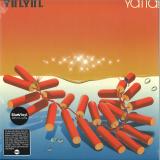
Mit ihrem vierten Album Yatta! zünden YIN YIN ein kaleidoskopisches Feuerwerk aus Disco, Funk, Surf, Psychedelia und südostasiatischen Klangmotiven. Die gefeierte Band aus Maastricht bleibt ihrem Prinzip treu: globale Sounds treffen auf tanzbare Grooves - diesmal noch intensiver und organischer. Aufgenommen wurde live auf Band, was dem Album eine warme, natürliche Tiefe verleiht. Tracks wie "In Search of Yang" oder "Kasumi"s Quest" entführen in imaginäre Welten zwischen Retro-Futurismus und fernöstlicher Mystik. Die Band beschreibt Yatta! als ihren bisher vollständigsten musikalischen Ausdruck - ein Album, das nicht nur bewegt, sondern auch träumen lässt. Der Titel "Yatta!" (japanisch für "Wir haben es geschafft!") steht für das Gefühl, als Band angekommen zu sein - und für ein Album, das genau dieses Gefühl hörbar macht.
I first found out about Dope On Plastic from a remix they had done of a track by Ontology (who has released previously on this label) & then later found out more about them when they had been sending tunes to Pete Dev/Null, which I would hear him playing on our radio show on Jungletrain.
Soon after that, whilst touring North America, I'd meet Dope On Plastic in person whilst I was in New York, get to hang out with them and visit their home studio. They showed me a tune at the time they were working on (which ended up being Odyssey) and it sounded sick, like something that I would definitely release on Future Retro London.
When they finished it and sent it over to me, along with some other music they had made around that time, there was more than enough to work with for a full EP & Life Energy is a collection of my favourite tracks of theirs of what they had sent me. Big up to Luca (Dope On Plastic) for their work on this EP, keep an eye out for more music from them in the future!
For years & years & years, I have been trying to get some solo music from Champa B on Future Retro London! This release has gone through so many different forms & iterations to try and accommodate getting him onto a release in some form & it's now finally here as a collaborative release with me.
I'm a huge huge fan of Champa B's tunes, especially his 93 darkside hardcore style that he previously done on releases for Modified Magic, Parallax Recordings & Green Bay Wax. I wanted so desperately to have him do some more music in that vein, but he was busy making other styles of music under his Grief alias as well as being busy with his day job to not really have the time for it.
But eventually, he was able to make some time for getting back into this style & we were able to do 2 collaborations and a solo tune each to get this done. Big thanks to him for his involvement in this release, hopefully not the last you'll see of his darker side!
Megadeth have announced their final, self titled album, for release in 2026, via Dave Mustaine’s Tradecraft imprint in partnership with Frontiers Label Group’s new BLKIIBLK label. The campaign is anchored by the first single “Tipping Point”, multiple variants and exclusives and and a farewell tour has been hinted for 2026 “There's so many musicians that have come to the end of their career, whether accidental or intentional,” DAVE MUSTAINE says. “Most of them don't get to go out on their own terms on top, and that's where I'm at in my life right now. I have traveled the world and have made millions upon millions of fans and the hardest part of all of this is saying goodbye to them. We can't wait for you to hear this album and see us on tour. If there was ever a perfect time for us to put out a new album, it's now."
Over the past decade, East London artist Kojey Radical has cemented himself as one of the most creative and unique voices in British music. His debut album Reason to Smile (2022) was released to critical acclaim, and saw him emerge as one of the defining voices in UK culture. Now, the 32-year-old readies to release his second album Don’t Look Down.
“I wanted to make this album more personal and more honest,” he says, “we have to be able to accept that the messenger has flaws and all.
16-tracks long, Don’t Look Down, set for release on 19th September 2025, is a musically rich and deeply introspective reflection on the shifting tides, lows and joys that have passed through his life since his emergence into the public eye.
Sonically, the album provides the most experimental and eclectic music of his career, with influences ranging from golden age Hip Hop to disco, grime to Indie, Jazz to Ska. Together, these strings combine to give a pertinent insight into Kojey’s inner world, and a timestamp documenting the feelings, emotions and experiences that arise when many reach the milestone of their 30s.
“When you’re younger, certain ages seem so grown,” he says, “you feel like you’re supposed to have your life together and all figured out by 30. Then especially when you're in the spotlight you feel extra pressure to have it figured out because so many people are looking towards you.”
Don’t Look Down follows debut album Reason to Smile (2022). A critical success, it landed at No.11 on the UK Album Charts and was nominated for the Mercury Prize as well as two MOBO Awards. In the following year came a nomination for Best New Artist at 2023 BRIT Awards and Best Contemporary Song at the Ivor Novello Awards. He toured across the UK, as well as hitting the festival circuit.
This sense of growth was not limited to music. Kojey was tapped by the British Fashion Council to host the 2023 and 2024 editions of The Fashion Awards as his stock in music and wider culture continued to rise.
The album he says, is a reflection of “the experiences I’ve had over the past few years. That shaped the direction I took going forward. It’s given me the opportunity to tell new stories from newer perspectives. It was liberating, and it was very necessary to keep me in love with the process and to keep making music.”
The result is his most innovative album yet, a project where a sense of profound personal interrogation and introspection dance in union with the rich musical tapestry. Don’t Look Down is a story of purpose lost and then found, of what happens in the aftermath of achieving your childhood dreams, and the ranging flux of emotions that rise to the surface once the music stop
Don Cherry, armed with a voracious musical appetite and boundless imagination, first made a name for himself - though not always fully understood - alongside Ornette Coleman, playing trumpet or cornet. In Los Angeles and then New York, he stood at the heart of a revolutionary approach to improvisation based on melody rather than harmony, later baptized "Free Jazz," the final structural development of American jazz. Over time, he became a champion of improbable fusions - gradually integrating into his style a whole array of "exotic" instruments, and more importantly, the cultures from which they originated. Among them: India, Brazil, Africa, Indonesia, and even China. The time had come for the emergence of "world music": in hindsight, a patchwork rich in imagination and seduction, but once the novelty wore off, often lacking in substance.
In Don Cherry's case, however, the commitment ran deep - tied to his personal engagement with a global vision of art and the human condition. Ustad Ahmed Latif Khan, from the Delhi gharana (a musical lineage), was part of a new generation of accompanists - percussionists, sarangi players, flutists, etc. - who had extended both the technical and conceptual possibilities of their predecessors to gain recognition as soloists and soon to venture onto the international scene. Among them, Latif stood out for his taste for irregular, highly syncopated rhythmic patterns - rich in variety and originality. Don and Latif had never met before the recording session, but the two quickly recognised one another as kindred spirits - calm, focused... and full of laughter. Don clearly knew what he wanted to create, and nothing seemed to pose a challenge for Latif, who grasped the American's intentions immediately, warmed up his fingers at astonishing speed, and with his perfect pitch, naturally took on the role of tuning Don's diverse instrument collection to match whatever was found in the studio - from concert piano and Hammond B3 organ to chromatic orchestral timpani.
ULURU is a large sandstone rock formation in Australia. It's sacred to the Anangu, the local Indigenous of the area. For many years it had been deprived of its spiritual significance, due to mass tourism, capitalism, as well as greedy and selfishness of people who just want to make money out of it. However, as a result of the Anangu’s resilience, care and staunchness, huge changes took place in the national park around Uluru as well as in the broader public's consciousness, giving again to the Uluru the sacred identity that had been lost.
You might be reading and thinking now: so what's the point? Actually, there's no real point. I would rather say, there’s hope. The hope of seeing humans all around the world following the example of the Anangu. The hope of seeing humans finally stopping to treat the earth and all what’s part of it, what’s on and what’s in it, as a slave without soul. The hope of changing today, and if not today at latest by tomorrow. This system is failing. It's no longer sustainable, and there's no much time left.
"Next up in Mr Bongo's Groove Merchant Records reissue series, we present the only solo album saxophonist Ramon Morris recorded as a bandleader. Having cut his teeth playing with the iconic band Art Blakey & The Jazz Messengers and working with other jazz greats, including Reuben Wilson, Shirley Scott, Rashied Ali Quintet, and Woody Shaw, 1973 saw Ramon take the step into solo territory. The resulting album Sweet Sister Funk became a certified classic and a landmark showcase of the cherished ‘70s jazz-funk sound, later sampled by the likes of DJ Premier, The Alchemist and DJ Shadow.
Originally released on Sonny Lester's iconic Groove Merchant record label and produced by Lester himself, Sweet Sister Funk is a jazz-funk masterclass. It features a slick line-up including Cecil Bridgewater on trumpet, Mickey Roker on drums, and Albert Dailey on electric piano. Rich and beautiful, the seven songs ebb and flow in energy, fusing jazz funk and soul jazz with style and swagger. There are bags of groove with Ramon and Cecil trading off on sax and trumpet in an effortless conversation throughout the LP, supplemented by brilliant solos from the rest of the players.
A gold mine of sampling material, the album includes a sublime cover version of The Stylistics' much-loved 'People Make The World Go Round', which was sampled by DJ Shadow on Blackalicious's 'Swan Lake' in 1994. Elsewhere, the percussion and bass intro of the opening track 'First Come, First Serve' is a sampler's delight - a deep, heavy groove with a fine saxophone workout by Ramon. Head to 'Don't Ask Me' and you’ll find the swinging horn intro that formed the basis of 'You Came Up' by Big Pun featuring Noreaga from 1998, whilst 'Wijinia' has echoes of ‘70s indie jazz by labels such as Strata East & Black Jazz.
Here at Mr Bongo, we are proud to be delving into the vaults of Groove Merchant Records once again, reissuing this iconic LP from Ramon Morris."
Originally released in 1986, Life Is Hard Then You Die was the debut
album from Liverpudlian indie-pop band It's Immaterial - Now reissued
and repackaged by Last Night From Glasgow, available October 2023
Simon Braithwaite of Smash Hits wrote that Life's Hard and Then You Die shows
that It's Immaterial "write jolly good pop songs - In fact everything else here is just
as inspired and original as their recent hit."
In a retrospective review, Michael Sutton of All Music wrote, "Musically, the LP is
all over the place - new wave country, blues, folk, and synth pop - Somehow the
smorgasbord of styles works, because the band members aren't being eclectic
just for the sake of it; they simply have a wide canvas, keeping the album fresh
from beginning to end."
Emerging during the early stages of the recording industry in Japan, the ryūkōka style adopted western classical, blues & jazz elements into traditional and classical Japanese music.
This collection of 1920s & 30s ryūkōka recordings follows on from the Kouta Katsutaro tape we put out a couple of years back, and further captures the hauntingly unique sound of a cultural merging that was starting to reflect itself via popular song, ahead of the widespread influence of western pop music during post-war US occupation.
"Death Is Not The End are on a mission to expand the musical archive, with compilations of everything from Jamaican doo wop to pirate radio idents and adverts weaving new threads into the history of music. Longing For The Shadow: Ryūkōka Recordings, 1921-1939 goes back to the beginnings of the recording industry in Japan, and a style merging traditional Japanese forms with western pop and classical. Swooning orchestrations and prominent vocals capture some of the melodrama and bombast found in US and European music of the time, but beds of plucked and strummed instruments give an ordered elegance, tying it firmly to Hogaku tradition. Not much has been written about Ryūkōka, and a 2017 book by Hiromu Nagahara gives some clue as to why, arguing that although popular with the public, it was dismissed by critics both for its adoption of western sounds and its dwelling on Japanese traditional styles. Close to a century later, those are some of the qualities that make this compilation so fascinating." - The Quietus