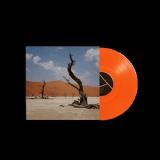
Concrete Noir is the latest project from multimedia artist and sound designer Piero Fragola, known for genre-defying ventures like We Love (BPitch Control) and ANGLE (Tiptop Audio Records). With this project, he explores a hybrid space where electronics, voice and image merge into an introspective and shadowy form. The debut album, Romance Ruins, is the first release on the newly founded Frequens Records.
Composed entirely using Tiptop Audio’s ART modular system, it unfolds as a series of layered, emotionally charged compositions. These are structured songs with a physical low-end impact.
Musically, Romance Ruins moves beyond genre boundaries to inhabit a space shaped by contrast and collision. The result is a form of modern hybridization—melancholic yet forceful, intimate yet expansive. The sonic identity is carefully constructed but deliberately raw, emphasizing emotion over precision.
The title itself captures the core of this paradox. Romanticism, in its intensity, may ultimately destroy. And yet, from that destruction, something vital emerges. The album embraces the figure of a decadent hero—a child of broken ideals who reclaims beauty from collapse. It’s a romantic vindication of decadence, a belief that clarity can rise from ruin, and meaning from fragmentation.
Moving through a broad range of tempos, the tracks explore murky, melancholic, tactile and cinematic moods. Synths intertwine with guitars (Fender and Gretsch Dobro). All vocals are performed by Piero Fragola, except on Faraway Places, where his voice is joined by that of Viktoria Lishkee—the album’s only guest appearance.Nearly every track is paired with a video, expanding the work’s audiovisual dimension. As a designer for Tiptop Audio and instructor at IED and LABA in Florence, Fragola brings a multi-sensory vision to Concrete Noir—one where medium and message, form and feeling, are inseparable. With Romance Ruins, he delivers an artistic statement. A body of work that resists categorization and embraces the beauty of decay.
Romance Ruins marks the beginning of Frequens Records. Available in a 180-gram vinyl edition.
Search:in da place
Funnuvojere’s curator and founder, Massimiliano Pagliara, reunites with longtime collaborator Gian to present a new chapter in their shared musical exploration: a full-length album under the moniker Hidden Frequencies. The pair’s creative dialogue began with a 2017 release on LACKREC — itself a tribute to Detroit electro — and this LP continues that sonic discourse, refining and expanding their vision. Hidden Frequencies pays homage to the emotive minimalism of acts like The Other People Place, channeling the melancholic elegance and machine soul of Detroit’s second wave.
It’s a record built on analog textures, brooding basslines, and crisp drum programming — both a reverent nod and a forward-looking reinterpretation. Tracks like “Oscillations Of Us” and “Dreaming In Electric Blue” inject peak-time energy into the atmospheric and almost restrained narrative, with a techno drive built for the dancefloor. “Obsidian Reflections” walks the line — structured around classic electroarchitecture but charged with intense propulsion. Pieces like “Dancing On Data Streams” — the contemplative title track — and “EncodedWhispers” offer more introspective soundscapes, inviting deep listening and emotional immersion.
Together, these tracks form a nuanced body of work that shifts seamlessly between reflective and kinetic, minimal and expansive. Familiar yet exploratory, Hidden Frequencies is the sound of two artists in conversation —not just with each other, but with a musical legacy they continue to honor and reshape. This is a modern electro séance that blends introspection with intention, nostalgia with forward motion.
One of London’s underground dance music hero’s, founder of The Utopia Project and Love Fever Discotheque, Alex Bradley presents a fresh moniker, Dreamphaze, for People & Place’s 004. The ‘Glow EP’ is a four-track dive into the London-based artist’s psychedelic take on blissful house & techno, moving between trance-tinged dreamscapes and playful grooves to soundtrack the halcyon days of a summer gone by.
Smith & Liddle are two young artists from the North of the United Kingdom who have never been to the desert and whose mere existence was a long way off the horizon in the 1970s, yet their music wouldn't be out of place on the FM waves in a Cadillac driving through the California desert at that time.
"Songs For The Desert" is Smith & Liddle's debut album, a collection of great songwriting, beautiful harmonies and wonderful musicianship that also offers an unashamedly a large dose of nostalgia harking back to some of the best eras there ever was.
These songs were created during one of their hometowns rainiest year, offering the duo an escape via their creations, dreaming of being transported to California at a time when the music scene there drifted from legendary stars of Laurel Canyon to the soft rock icons of Fleetwood Mac and The Doobie Brothers.
Elizabeth Liddle & Billy Smith grew up 25 miles away from each other in small towns but only met when Billy was on the lookout for a vocalist years later. The chemistry between the pair was instant, and over time their intertwined musical sensibilities evolved into something unique.
Following years of swapping records and building a transcendent musical connection, Smith & Liddle worked alongside producer Josh Ingledew to record 9 songs that blend Soft Rock, West Coast soul & 60s beats to produce their debut album "Songs For The Desert".
- Introduction (Song For Geoff)
- Leave It At Why
- Allowed To Be
- Everything Is Personal
- Harrimanintroduction (Song For Geoff)
- In Place Of Time
- When You're Gone
- Run Out On Life
- I Know Your Name
- Time Measured In Moonflowers
Ähnlich wie die nachtblühende Flora, nach der das Album benannt ist, ist Constant Smiles' Felte-Debüt ,Moonflowers" das Ergebnis langsamer, weitgehend unsichtbarer Wachstumsmuster. Die in New York ansässige Band hat sich ihren eigenen Weg hierher gebahnt und sich nach und nach von einer amorphen Sammlung hochkonzeptioneller Ideen zu etwas Greifbarerem entwickelt, wobei jeder Schritt ihres ungewöhnlichen Weges zu ,Moonflowers" führte, einem subtilen Meisterwerk des intern entstandenen Ambient-Pop. Constant Smiles wurde 2009 von Ben Jones gegründet. Er wurde von verschiedenen Mitwirkenden in verschiedenen Versionen der Band unterstützt, die sich in Form von lauten Soundscapes, szenischem Chamber Pop oder eisigem Coldwave-ähnlichem Synth-Pop manifestierten und oft auf undurchsichtig gestalteten, ultra-limitierten Alben veröffentlicht wurden, die nach Lieblingsfilmregisseuren benannt waren. Durch den Umzug nach New York und einige Platten bei Sacred Bones wurde die Band einem größeren Publikum bekannt, aber Jones und seine Freunde blieben in ständigem Wandel. Die große Entschlüsselung des Constant Smiles-Rätsels erfolgte, als sich die Band zu einer festen Kernbesetzung formierte, als Schlagzeugerin/Sängerin Nora Knight Ende 2022 zu Jones und dem langjährigen Bassist Spike Currier stieß. Nach Jahren, die von tiefgreifenden Veränderungen und Unbeständigkeit geprägt waren, veränderte diese stabilisierte Besetzung den Sound, die emotionale Färbung und die Wirkung der Band. Mit Knight und Currier, die einen Kontrapunkt und Struktur zu Jones' stets sprudelnder Kreativität bildeten, wurden die Songs stromlinienförmiger und direkter. Nach wie vor luftig und traumhaft, hat die Trio-Version von Constant Smiles, die Moonflowers produzierte, die Wolken der Unbestimmtheit und Unsicherheit beseitigt, die es schwieriger machten, sich mit früheren Versionen der Band zu identifizieren. Wie die besten Momente der grundlegenden Alben von Talk Talk oder Nick Drake, die gelebte Erhabenheit von Adrianne Lenkers Songs/Instrumentals oder Jim O'Rourkes Ausflüge in den Kammerpop erreicht Moonflowers seine dynamischen Schwünge auf natürliche, fast unterschwellige Weise. Es ist ein Sound, den frühere Veröffentlichungen von Constant Smiles andeuteten, aber nie ganz erreichten. Moonflowers ist die klarste Sicht auf etwas, dessen Entstehung Jahre gedauert hat, das sich aber dennoch ganz natürlich wie eine Einführung anfühlt. Die Musik ist sorgfältig, aber nicht überladen, und das passt perfekt zu Songs über Gefühle, die entstehen, bevor man Zeit hat, nachzudenken. In dieser vollendeten Form erschließt Constant Smiles etwas Instinktives, eine Atmosphäre der Stille mit mikroskopisch kleinen Teilen, die nie aufhören, sich zu bewegen, und Songs, die fast transparent sind, aber dennoch irgendwie schwerer als ein Berg.
On November 7, 2025, the Belgian label Sdban Records will release a reissue of the mythical Open Sky Unit (1974) by the eponymous jazz fusion group featuring Micheline and Jacques Pelzer, Steve Houben, Ron Wilson, Janot Buchem and Michel Graillier. The album returns on vinyl, highlighting a pivotal moment in Belgian jazz history, where soul, funk, and free improvisation came together in a vibrant and family-driven project.
Formed in the early 1970s as a homage to Dave Liebman's group Open Sky, Open Sky Unit grew out of informal jam sessions in Liège, Belgium, into a unique collective. One of the central figures was Jacques Pelzer, father of drummer and vocalist Micheline Pelzer, alongside his second cousin, saxophonist/flutist Steve Houben, bass player Janot Buchem, percussionist Michel Graillier and American pianist/composer Ron Wilson.
Their 1974 debut album was released on the Duchesne classical music label, run by Pelzer's brother-in-law. The group's sound carefully balanced jazz and soul and was largely directed by Wilson, a Californian pianist and singer who settled in Liège and nearby Maastricht after his army service. Wilson composed the entire repertoire. Open Sky Unit was recorded live at Jazzland club in Liège, and the band made several short tours in Belgium and abroad (including Tunisia) until around 1975-1976, when Houben left for Boston to study at the Berklee College of Music.
Although the original live recording from 1974 was not technically perfect, the group succeeded in capturing their heartfelt live energy. Tracks such as Open Sky, Sunshine Star, and Passion and Compassion are striking examples of this. Years later, the album version of Sunshine Star found its way onto Funky Chicken (2014), the compilation that not only brought the track back into the spotlight but also marked the beginning of Sdban Records.
In addition to the standard reissue, a limited edition of 200 copies will be released for collectors, featuring a 7" single of Ron Wilson's Sunshine Star as a special bonus. This single was originally released in 1973 with the acoustic version of Sunshine Star (piano and vocals) on the B-side, recorded a few months before the longer jazz-funk version later featured on the LP Open Sky Unit. The A-side, Peace Is The Answer, was only released on that single at the time and is now being reissued for the very first time. The 7" is thus a faithful and long-awaited reissue of a rare piece of Belgian jazz history, it's intimate, soulful, and an ideal complement to theexisting and well-known LP.
Although the band never achieved a major international breakthrough, they were highly valued in progressive European jazz circles and later secured a place in anthologies such as Utopic Cities: Progressive Jazz in Belgium 1968-1979. The reissue of Open Sky Unit brings their music back into the spotlight and reaffirms their role as key figures in the Belgian jazz scene of the seventies.
The perfect accompaniment to that deep fall feeling, Frank Maston's beloved 2025 single finally gets its long overdue vinyl release! As our friends New Commute articulated beautifully, "Foreign Affairs" drifts through London fog and Paris shimmer, its avant-lounge glow wrapping each melody in a wistful ache. On B-side "Liaison," ghostly strings and a solitary piano paint a deserted twilight shoreline, Pacôme Henry's distinct 16mm cinematography hovering nearby." We've pressed just 500 of these gorgeous records so, be quick, Maston always flies.
Originally written for a film Maston was scoring in 2024, he decided to keep it aside for himself. And, well, us all. The song has a vibe Maston has previously flirted with; he wanted to dive in...all the way: "The arrangement is huge, definitely the biggest I've written, and it merited live musicians playing together. Also another experiment, to do it with all live musicians playing my arrangements. I wanted to make something that you'd want to put on when you bring a date back to your place. It's on the edge of sappy but that's sort of the point. I decided to give myself an unlimited budget - just spend whatever was necessary to get the right musicians and record it the best way possible."
It's this dedication to sonic perfection which Maston is rightly lauded for. We couldn't not put this on a cute wee 7" when we heard it.
The A side, "Foreign Affairs", is a brilliant, Bacharach-esque romp with a bit of that unapologetically romantic Morricone angle. Says Frank: "I was trying to synthesize that sort of jazzy/sexy/classy/romantic mature sound, where the edginess is in these surprising chord changes and subtle arrangement cues."
A wonderful complement, the flipside "Liaison", evokes Martin Denny, but Eden's Island was in Frank's head, too. He wanted to take a deep dive into that exotica sound - a genre he'd referenced a bit but never fully committed to - so the piece is lavished with those big sighing strings and a pretty lush arrangement. Happily, it all sounds super rich. Also, "Umiliani is always a reference for this sort of thing (Il Corpo etc.), That almost mechanical arrangement of things moving together and a simple melody over it (something I nicked from Ennio)".
The two songs were recorded in Paris and London in the summer of 2024. Aside from the rhythm section and piano, there's vibraphone, a full string section, trombones and alto and concert flutes. "Liaison" boasts strings, vibraphone, a female choir and tenor sax. Maston played piano and acoustic guitar but that's it (as opposed to playing basically everything on Tulips). His friend Oscar Sholto Robertson played drums and percussion whilst Maston mainstay Elie Ghersinu (formerly of L'Eclair) played bass.
The theme for a lot of Maston's titles is that they have two meanings. So "Foreign Affairs" is both a reference to him living abroad and the idea of constant cultural diplomacy and then there's this sexy/cheeky interpretation of foreign affairs in a literal way - "an affair abroad, ooh la la!". The artwork for this 7" single has Roman campaign flags, referencing the foreign affairs in sort of a sassy way. There's a violence implied. But then if you look from a bit of a distance it looks like a bouquet of flowers. So Frank thought it went with the spirit of the title. Also, he's used a lot of roman motifs now so he kept that theme going, even with the terracotta cover.
This is a vitally important project for our Frank. He explains why, here: "For whatever reason, these songs really resonated with me. I feel like they are either the end of a stylistic era for me or the beginning of a new one. They're sonically the culmination of what I'd been working towards and trying to get better at since I started. If I heard this when I was making Tulips I would have said "YES! *This* is what I want to be doing!". So that's the essence of it. It's a statement and the intended reaction is "This is really good, but why now?". Like the edge to it is the context of someone making this sort of thing in 2025, which I think is a huge strength. The real heads will get it. My music always has like a 2-3 year latency until people really catch onto it, and these ones will have a nice payoff I think."
We couldn't put it better ourselves. So we haven't.
Hikmah is an astonishing solo piano work from virtuosic and far-ranging
sound scientist; deep and compassionate thinker and musical treasure: Pat
Thomas
Pat Thomas was Born in Oxford, UK to Antiguan parents on July 27, 1960.
Interestingly, just over 4 months separate his birth to that of fellow modern piano
master Matthew Shipp (Dec 7, 1960) - whose The Piano Equation was TAO Forms
inaugural release. Thomas is most certainly among the Black Mystery School Pianists
of which Shipp elucidates in the title essay of his recently published first book.
Eight thoroughly focused improvised and otherwise compositions recorded at Fish
Factory studio in London. The album's title, Hikmah, means "wisdom" in Arabic. The
title is also presented in two different forms of Arabic calligraphic script on the cover
artwork. This album brings the information. The vibrantly living jazz tradition and new
modes of expression in abundance are brought forth from a lifetime of work and a
decades long devotion to Sufism, understanding that the practice and performance of
this music is an elemental form of spiritual practice. As William Parker writes in the
liner notes, "the music becomes the prophet and the prayer all in one gesture." And,
"If you haven't yet heard the music of Pat Thomas, get hip to it quickly."
Attuned American audiences are most likely to have become familiar with Pat
Thomas through his work with the quartet [Ahmed] , whom over recent years have
amazed with their mesmeric, long-form explorations on the compositions of Ahmed
Abdul-Malik, and more recently, Thelonious Monk. Their debut US performance took
place in March 2025, and TAO Forms were lucky members of the rapt audience at
Roulette in Brooklyn that night; the group flew to Knoxville the next day to perform to
an equally rapt audience at Big Ears.
Available on 6- panel digipak CD printed on heavyweight board, with liner notes by
William Parker and LP with insert featuring liner notes by William Parker & Pat
Thomas Discography + download card. Ltd edition of 500.
First Word Records are proud to present the sophomore solo EP from Victoria Port.
'Barefoot In The Garden' is a 5-track selection merging classic soul with contemporary sounds.
Put together from sessions recorded at the world famous Abbey Road Studios in London, and Victoria's home studio Candle Shop, this project exemplifies her talents as a singer-songwriter, developing upon the building blocks of her debut EP 'Did it Again' and Victoria's work as one half of electronic-soul duo, Anushka (BBE / Tru Thoughts / Brownswood).
On this EP, Victoria is accompanied by a wealth of talented artists in their own right, including frequent collaborators Hemai and JNR Williams, the highly-acclaimed drummer Moses Boyd, and vocalists such as Lea Lea, to name just a few.
The sonic tapestry stitched together on this EP epitomises the quality of British soul music of modern times; a vintage symphonic feel approach with modern-day production techniques, encompassing the Ronson-era of the late great Amy Winehouse, to the pack leaders of nowadays such as SAULT and Jungle. It's a logical progression considering Victoria's lifelong influences of US luminaries like Minnie Riperton, Gladys Knight, Nina Simone and Dionne Warwick.
Her fanbase includes Gilles Peterson (BBC 6 Music / Worldwide FM) who has tipped her as "an exciting emerging new artist whose sound fits alongside current successful acts like Cleo Sol, Lynda Dawn and Yazmin Lacey."
Victoria's previous EP had support from a wide range of tastemakers, including Cerys Matthews, Huey Morgan, Somewhere Soul, Mo Ayoub (Selector Radio), Ronnie Herel (Mi-Soul Radio's "One to Watch"), Tony Minvielle (Jazz FM) and across platforms like Rinse FM, NTS, Soho Radio and Global Soul, whilst her work with Anushka also received airplay from Annie Mac, Jamz Supernova, Huw Stephens and BBC Radio 1.
Victoria says "this EP comes from a place of nostalgia. It's kind of reflective of parts of life up to this moment, culminating in 'Barefoot in the Garden'. I guess it's me starting to understand the things that are truly important to me. How I want to love and be loved, the way I want to spend my time, and just me starting to filter out a lot of the noise. Sonically it's been such a dream to explore elements of old soul and jazz with so many incredible musicians, and to put our own unique spin on the genre."
Already a seasoned live perfomer, additionally to various live appearances solo past & forthcoming including We Out Here, Jazz Cafe, Koko and the London Jazz Festival, Victoria Port is set to be one of the leading lights in the world of British soul music. This EP provides some solid examples as to why.
'Barefoot In The Garden' is due to be released on vinyl and digital, November 7th 2025.
- 1: Angelito
- 2: On Green Dolphin Street
- 3: Corcovado
- 4: Without You (Tres Palabras)
- 5: Ho-Ba-La-La
- 6: Something Latin
- 7: Manha De Carnaval
- 8: Latin Village
- 9: The Girl From Ipanema
- 10: Malaguena
- 11: Sugar Cane
- 12: Flying Down To Rio
In 1964, Martin Denny looked beyond the Hawaiian and Asian influences of his previous records to find another place to plant his umbrella in the sand, as well as in your drink: the sounds of Latin America. With this new sound to hang his exciting arrangements on, Latin Village has long been considered one of Denny's high-water marks, and Jackpot is thrilled to have this long-cherished LP back in print. This is an album that rips through what was considered "The Now Sound From Overseas," a sophisticated mash-up of sambas, bossa novas, and Latin jazz. From the first track, "Angelito" (the hit song written by Réne y Réne, later to also be covered by Trini Lopez & Herb Albert), all the way through to its closer, "Flying Down To Rio" (a song which Roxy Music later referenced in their 1972 song "Virginia Plain”), the album is a hypnotic listen. Latin Village also drops in some serious jazz numbers, with respected compositions such as "On Green Dolphin Street" by Kaper & Washington (which has been covered by Miles Davis, Bill Evans & Sarah Vaughn), "Malagueña" the sixth movement in Ernesto Lecona's Suite Andalucía & "Corcovado" by Antônio Carlos Jobim (who merged samba with jazz to create bossa nova). Latin Village is comforting in its familiarity within Denny's sonic world, but steps refreshingly out of the smoke-filled Tiki bars of his previous records and straight into the sunlight where this music still strolls around in a listener's heart, soul, and mind. “Latin Village is a triumph of Martin Denny’s search for a new style, post-exotica.” – ALLMUSIC, 4 stars.
Sanguis is the alias of Berlin-based producer Ludwig Wandinger, a fixture in the city's experimental scene.
On his debut album Wounding dark ambient textures and solo piano improvisations let the listener's attention slip in and out of focus creating a liminal state of dreaming, feeling and drifting through inner worlds and thoughts.
Wandinger tries to capture fleeting moments - all tracks are unedited first takes, some recorded only with his phone in various places, from a friend's flat in Neukölln to his family home in rural Bavaria. Background noises become a part of the music and create a tangible sense of place, urging the listener to keep an ear out for one's own surroundings.
Though firmly rooted in the ambient genre, the album is not just about finding comfort. It's an acknowledgement of the ambiguity of our world where menace and beauty coexist, a dichotomy most apparent in nature itself - a constant source of inspiration for Wandinger.
Wounding is about walking alone on damp foliage at night and being handed a blanket by a loved one at the earliest daylight.
- A1: Ball Of Soft
- A2: Runnin It Up
- A3: Why Is Water Wet
- A4: Ya Understand
- A5: 92 Mike
- A6: Saliva
Rome Streetz drops "Buck 50", his first offering for 2024, a 6 tracks EP entirely produced by mastermind Wavy Da Ghawd, unleash the raw essence of his lyricism. Carving once again its place in the game just like a buck 50, Rome Streetz delivers his gut-punch of gritty underworld narratives. Pressed on a single sided 12" pressed on 180g vinyl, w/ screen-printed art on the B-side, courtesy of Ral Duke.
- Sacred Heart
- A Hundred And Sixteen
- Anywhere But Here
- Sleep The Day Away
- Abandoned Lands
- Cremation Sunlight
Aqua Blue vinyl[24,58 €]
SoftSun was formed in 2023 by guitarist Gary Arce (Yawning Man) and bassist/vocalist Pia Isaksen (PIA ISA). On their second album they are joined by Robert Garson on drums. The band is experimenting with sounds and are difficult to place in a specific genre. They have a style of their own with contrasts of softness and distortion, beauty and noise and emotional peaks and valleys. The music is patient, heavy and dreamy, with haunting vocals and beautiful guitars drenched in distortion and reverb over patient and thought out drums. The songs are flowing slowly and take inspiration from both the Californian desert landscapes to the Norwegian oceans where the two founding members come from. On this second record SoftSun has developed their sound further and sound both moody, experimental, beautiful, and raw.
Aqua Blue vinyl, limited to 350 copies. SoftSun was formed in 2023 by guitarist Gary Arce (Yawning Man) and bassist/vocalist Pia Isaksen (PIA ISA). On their second album they are joined by Robert Garson on drums. The band is experimenting with sounds and are difficult to place in a specific genre. They have a style of their own with contrasts of softness and distortion, beauty and noise and emotional peaks and valleys. The music is patient, heavy and dreamy, with haunting vocals and beautiful guitars drenched in distortion and reverb over patient and thought out drums. The songs are flowing slowly and take inspiration from both the Californian desert landscapes to the Norwegian oceans where the two founding members come from. On this second record SoftSun has developed their sound further and sound both moody, experimental, beautiful, and raw.
Beloved for their cinematic songwriting and atmospheric blend of folk, rock, and psychedelia, MIDLAKE returns with their sixth studio album, A Bridge To Far—a sweeping, soul-stirring meditation on resilience and hope. Lead singer Eric Pulido describes the record as a reminder that, regardless of circumstance, there is a place—“not made of stone”—where one can find solace and strength. It’s a call to persevere, to “go bravely arm in arm and climb upon,” inviting listeners to transcend the darkness through connection and belief. This is MIDLAKE at their most inspired and intentional, weaving together mythic storytelling and emotional clarity with the signature textures that have made them a touchstone in modern independent music. Recorded in the band’s hometown of Denton, TX at The Echo Lab with acclaimed producer and mixer Sam Evian, A Bridge To Far captures the warmth and wildness of the band's earliest recordings while pushing into luminous new territory. The first single, “The Ghouls,” arrives as a haunting and propulsive introduction to the record’s themes—equal parts spectral and cathartic.
Volpe is the finely tuned trio led by Ghent-based pianist Heleen Andriessen. Drummer Stijn Demuynck and bassist Kobe Boon support Andriessen's lyrical melodies with an infectious groove. The carefully crafted compositions alternate between energetic and melancholic, allowing the listener to feel immersed in a warm bath while transporting them to an uncanny world.
'elders' (Dutch for "elsewhere"), doesn't refer to a physical place but to a refuge in Heleen's mind-a sanctuary where she searches for beauty on gray, rainy November days. A simple detail taken from everyday life can serve as a gateway to this hopeful, imaginative world. Musically, this translates to repetitive patterns that gradually evolve or suddenly burst open. Subtle dissonance is welcome here, with the band lovingly embracing the slight disruption it offers. Heleen's playful runs and Stijn Demuynck's grooves balance the melancholic undertones. Seemingly simple melodies tell stories and offer familiarity to listening ears.
keywords: piano trio, contemporary jazz, keith jarrett, modal jazz, minimalist
CELEBRATING THE 60TH ANNIVERSARY OF IMMEDIATE RECORDS TWICE AS MUCH were a UK vocal duo – Dave Skinner and Andrew Rose – oft compared to their more successful US counterparts Simon & Garfunkel. Their signature lush harmonies and accomplished songwriting skills attracted the attention of maverick indie record executive Andrew Loog Oldham who signed them to his fledgling Immediate Records. Their debut single in May 1966 was a cover of the Rolling Stones’ “Sitting On A Fence” which features here as the opening track to ‘That’s All. The album stands apart from it’s contemporaries at Immediate due, in no small part, to its heavily orchestrated “wall-of-sound” production and the dazzling harmonies. It’s a fine example of baroque inspired sunshine pop from the feel-good summer of ’66 when Great Britain captured the imagination of the world. A polished and significant album earning its place as an official Immediate 60th Anniversary reissue.
In between the folds of ceremony and commonality lies a perennial spring of musical expression.
A statement along the time continuum, or a testament to the resilient resourcefulness embedded in that truth, forms the philosophical approach of this album – the first outing of Dídac.
Studying an extensive archive of instruments, artifacts, and field recordings at the Musée d’ethnographie de Genève—a space steeped in folkloric gesture – Dídac encountered a cosmos of liturgical music and folk song. Anchored in reverance for tradition and transformation alike, this album navigates the old-world Mediterranean lore through a post-modern ambient lens, threading drone, gentle rhythm, electroacoustic textures and the crude tactility of archival material into one woven tapestry.
Under the guidance of Dr. Madeleine Leclair, Dídac was invited to work within one of the world’s most extensive ethno- musicological archives—L’AIMP. In the saturated basements and tape-lined backrooms of the museum, he submerged himself in the sounds of ritual and rural life: wax cylinders from the Eastern Mediterranean, tapes of liturgical hymn, the worn edges of communal song.
In a makeshift studio on the fourth floor of the museum, he sifted through the hours of material he collected, gradually discovering that the archive was no static source – It did not dictate; rather, it served as a companion—offering not answers, but questions. Not a beaten track, but a cluster of sonic clues and riddles. Samples do appear occasionally, tenderly interwoven into the dialogue of the songs. In Dídac’s self-titled debut, the past is not worn as ornament or kitsch; it is listened to and responded to. The museum, its archives, and the visit to Geneva became a foundational culisse of sorts, igniting a myriad of rough cuts and improvisational outtakes.
Dídac, or Diego Ocejo Muñoz, was born in Madrid in 1994 to a family of both Catalan and Castilian origin.
Brought up in a religious household, the influence of the Catholic Church innately shaped the social fabric, schooling and daily life. This lingering dominance led the adolescent Diego into a path of rejection of everything sacramental, promptly resorting to subversion in the shape of grafitti, skateboarding and underground music. Only later in life, after a rigorous venture as an acid and electro producer, the Church re-emerged before him in new light, invoking a deep fascination for its mysticism, iconography and choral tradition.
Spain in general and Catalonia in particular, has long served as a crossroads of the eastern–western Mediterranean continuum, with many of its cultures sharing aspects of way of life and ceremony. At the MEG, Diego found himself puzzled with this realization, resulting in a sonic amalgamation that reaches farther away from the rugged mountains of Catalonia than you might perceive at first encounter.
The deeply embedded memory of rite and public ceremony, religious hymn and landscape—sieved through the undercurrent of personal re-emergence, forms the emotional topography of this album. The record does not trace this landscape; it inhabits it. Its repetitive mysticism and ambient, wide-eyed gaze could possibly evoke (perhaps redundant) comparisons to artists such as Dimitris Petsetakis, or Popol Vuh’s late 70’s cinema scores.
The delicate lines between the sacred and the secular – between memory and re-invention – serve as a cipher to understanding this album in its entirety. Titles like Malpàs Mines or Pantocrator’s Portal Outro nudge toward a folkloric and devotional bedrock—places where labor and spirituality coexist, where names preserve both dust and veneration.
Nevertheless, this is far from mere nostalgia. It is a reclamation — singing alongside the spirits of the past, nurturing what still hums beneath the soil. It is an intimate reflection on tradition, rebellion, adolescence, ceremony and fantasy – a pastoral contemplation on what once was and what is to be.
Knucks’ upcoming album 'A Fine African Man' marks his first full-length project since the breakthrough 'Alpha Place', which soared to #3 on the OCC charts. Across 13 tracks, 'A Fine African Man' delves into themes of duality, reflecting his experience as a British‑Nigerian navigating both cultures and identities. The album’s title underscores that bicultural journey. Expect a compelling evolution from the sound that defined 'Alpha Place. Knucks’ acclaimed album Alpha Place marked a major milestone in UK rap, debuting at No. 3 on the Official UK Albums Chart and topping both the UK Hip-Hop & R&B and Independent Albums Charts. The album was certified Silver by the BPI and has amassed over 480 million streams to date, with the deluxe version adding another 490 million. Praised for its sharp lyricism and rich production, Alpha Place received strong editorial backing from outlets like Complex UK and GRM Daily, while fan response on platforms like Reddit cemented its status as one of the year’s standout releases. Tracks like “Three Musketeers” and “Alpha House” became immediate fan favourites. Knucks’ MOBO win for Best Grime Act in 2022 further reflected his cultural impact, and his live shows—bolstered by previous EP runs—have built him a reputation as one of the most compelling voices in the UK scene.
- Ulrika Spacek - 'Interesting Corners
- Empty Country - 'D3Sp4Ir
- The Reds, Pinks & Purples - 'New Market Space (Down The Stairs Ver.)
- Cindy - 'The Thousand First
- April Magazine - 'U Bop
- Index For Working Musik - 'Going To Heaven On The End Of A String
- Midding - 'Do As You Would
- Luft - 'My Third Eye
- Hospital - '25 Jade Place
- William Doyle - 'The Sun Ain't Doing It For Me Lately
- Daily Toll - 'Begin Again
BLACK VINYL[26,01 €]
After so long it becomes harder to say new things about older things you now just do. Some things you've become. Some things you simply (never simply) are. The thing becomes a slippery notion. The self slides along with it. After this long, the story is whatever are the songs. A Self-portrait at two decades. Here are 11 new ones, from the current constellation, and a future still to come. The cement is still wet on that one. From the forest near where I now live you can hear a chorus of different birds in voice at once, competing but each defined, in defence of a territory or to attract a mate. There's an app that tells you so. I wonder, too, what that app doesn't reveal, if their nature need not share those same purposes. This is simply (never simply) how it exists. If we can't speak to the mysteries of these strategies, they at least persist, regardless of who picks up the frequency. Singing to itself, and there will always be these kinds of songs. Indies only Blue Vinyl! 1.Ulrika Spacek - 'Interesting Corners' 2. Empty Country - 'D3SP4IR' 3. The Reds, Pinks & Purples - 'New Market Space (Down the Stairs Ver.) 4. Cindy - 'The Thousand First' 5. April Magazine - 'U Bop' 6. Index For Working Musik - 'Going to Heaven On the End of A String' 7. Midding - 'Do As You Would' 8. Luft - 'My Third Eye' 9. Hospital - '25 Jade Place' 10. William Doyle - 'The Sun Ain't Doing It For Me Lately' 11. Daily Toll - 'Begin Again'
Repress 2025
The King of K-Pop Returns!
To those unfamiliar, G-Dragon is regarded by many as the Godfather of K-Pop. Rising to fame in the mid-00’s with his group, Big Bang, that later went on to become one of the world’s biggest selling boy groups. He quickly stood out with his unique and intricate songwriting as the leader of the group. A talented songwriter and trendsetter within the youth culture and fashion space, G-Dragon has received a bevy of awards, nominations for his music and fashion sense from the World Music Awards, to Hypebeast’s 100 list, to Forbes’ 30 Under 30 list, it’s apparent that G-Dragon has cemented his place in cultural relevance.
After serving his mandatory South Korean military service and a brief hiatus from music, the global superstar, G-Dragon has returned! He announced that he signed with indie-powerhouse, EMPIRE, and released his first comeback single on October 31, 2024 with POWER to immediate global fanfare and buzz, with the music video garnering over 44 MILLION views in a month and over 115 MILLION global streams. He soon followed that up with an electrifying performance at the 2024 MAMA Awards show in Osaka coupled with the release of his new single, Home Sweet Home which has garnered 100 MILLION global streams since release.
2025 will see the release of his first full length album since 2017 entitled Übermensch along with global tour dates. The album is expected to make a huge impact globally and further cement his place in music history!
- Meu Pais
- Xamgo De In
- O Criolauta
- O Sorriso De Narinha
- Esperança
- Maria Domingas
- Nag
- S Quero
- O Canto Da Ema
- Aleluia, Aleluia (E Ainda Tem Mais)
- Coqueiro Verde
A samba funk essential. This debut album from Jorge Ben's iconic backing band blends Brazilian rhythms, soulful vocals, and American funk energy into one unforgettable groove. Includes the hit single 'Coqueiro Verde' along with standout tracks like 'Meu País,' 'Aleluia, Aleluia,' and 'O Canto da Ema.' A timeless gem for fans of Brazilian soul, vintage funk, or global grooves. Trio Mocotó is best known for being the powerhouse backing band behind Brazilian legend Jorge Ben during the height of his creative explosion in the early 1970s. But their contribution to music goes far beyond the supporting role-they were instrumental in shaping what would become known as samba funk, a vibrant fusion of traditional Brazilian rhythms with the groove and energy of American soul and funk music. Formed in Sao Paulo's iconic Jogral nightclub, Trio Mocotó-featuring Fritz Escovao, Joaozinho Parahyba, and Nereu Gargalo-began their musical journey as resident musicians, providing live accompaniment for a rotating cast of performers. It was here that Jorge Ben first encountered their raw talent and unmistakable chemistry, ultimately inviting them to join his band. The collaboration would go on to define an era. In 1971, Trio Mocotó stepped into the spotlight with their debut solo album, "Muita Zorra! (...Sao Coisas Que Glorificam a Sensibilidade Atual)." The record made an immediate impact, climbing the charts with the infectious single 'Coqueiro Verde' and marking the start of a prolific period in the group's career. "Muita Zorra!" is a dazzling blend of styles-mixing the baroque funk and melodic sophistication of artists like Marcos Valle with the soulful spirit of Jorge Ben. Layered with elements of American funk, the album delivers a dynamic, rhythm-driven sound that still feels fresh today. The trio's vocal harmonies are front and center, weaving through each track with warmth and richness, creating a captivating sonic tapestry that energizes every beat. This album isn't just a snapshot of a musical moment-it's a cornerstone of Brazilian soul. A must-listen for fans of global grooves, vintage funk, and timeless Brazilian music, "Muita Zorra!" is once again available and ready to take its well-deserved place in your collection. First time official reissue.
"The Bad Seeds and Zakary Thaks were mid ‘60s Texas garage rock bands formed in the wake of the British Invasion, influenced by The Rolling Stones, Kinks, Yardbirds and others, becoming top local live attractions at a time when the 13th Floor Elevators and Moving Sidewalks were leading the way into psychedelia. In late 1966 Rod Prince on guitar and Roy Cox on bass from Bad Seeds joined up with David Fore from Zakary Thaks on drums to create a new band out of San Antonio featuring two lead guitarists. Todd Potter filled out the quartet on second guitar and they chose the name Bubble Puppy, taken from Aldous Huxley’s 1932 dystopian novel Brave New World. Huxley was an early advocate of LSD, appropriately. In 1969 Bubble Puppy scored a top 20 hit single with “Hot Smoke & Sasafrass” which led to their LP “A Gathering Of Promises”. International Artists, the legendary Texas label that previously had unleashed mind expanding classics by the Elevators, Red Crayola, Golden Dawn and others was a perfect fit. After the LP and additional 45s didn’t repeat the success of “Hot Smoke & Sasafrass” the band hooked up with Nick St. Nicholas of Steppenwolf as their new manager and moved to Los Angeles. A new band name was in order, Nick St. Nicholas chose Demian, title of the 1919 novel by Herman Hesse. His books were popular with the counterculture at the time and had provided Steppenwolf with their new name after they changed it from the Sparrow and hit it big. Demian recorded the LP live in the studio at the Record Plant in one midnight to six session. They had their arrangements fully realized, allowing them to combine live show energy and economy with to-the-point delivery suitable for repeated listening. No doubt they were aiming for pop hit success, using proto hard rock skills in a radio friendly way without compromising the heavy guitar moves. The vocals have echoes of the earlier Bubble Puppy style in spots but are more melodic with vibrant harmonies reminiscent of Moby Grape, Buffalo Springfield, James Gang… at times flashing on Steve Stills/Richie Furay westcoast without being too sweet about it. It works terrifically when the radio friendly voices top off killer hard guitar ensemble action. Early hard rock that is too bluesy flashy can get tiresome with repeat listening, especially if overdosing on guitar solos with the band relegated to the background… Demian keep it interesting with inventive song structures allowing all four players to integrate constantly into an ever changing but focused whole. This LP is a grower, despite the basic two guitars, bass and drums lineup and no frills production you reach a lot of different places during the ride. Demian is deadly hard rock, a perfectly organized vibe straddling live energy and crafted itinerary, amongst the first obscure major label killers that commanded premium $$ with collectors even way back in the late ‘70s. It gets you there every time, even half a century later!"
- Paris 1942
- Hex
- Headhunter
- Radar
- Damon
- Ancient Time Foretold
- Animale
- Move Out Of Wichita
- Catherine
- Life Is A Killer
- Conversation With My Girlfriend
- Voodoo Blues
- Pontius Pilate
- Lions Paw
- Boy From The North Country
- Fossil In My Pants
- What I Think I Mean
- Lisa's Whip
- Southwind
Difficult as it may be to imagine, there was a time when Sun City Girls did not exist. Prior to the Bishop brothers teaming up with drummer/shaman Charlie Gocher to form SCG's classic trio lineup, there were various ad-hoc assemblages of local Phoenix-area freaks and weirdos – groups which existed only long enough to play a single gig, open mic or house party before disbanding without a trace. Hatched from this milieu was Paris 1942, a short-lived band formed by guitarist Jesse Srogoncik that included Alan Bishop, Richard Bishop and former Velvet Underground drummer Maureen Tucker.
Paris 1942 would play only four shows in as many months, but between April and August of 1982, the band would gather several times a week in Tucker's living room, where the group feverishly wrote and rehearsed with a kind of quotidian discipline. While P42 didn't release anything during their brief tenure, a 7" EP and LP (both self-titled) surreptitiously surfaced on the Majora label in the mid to late '90s. Until now, those two titles – as well as an appearance on Placebo's Amuck comp in late '82 – would be the only documented evidence that this improbable, serendipitous and magnificent band ever existed.
While those expecting P42's music to sound like a tantalizing combination of Sun City Girls' iconoclastic hoodoo havoc and the Velvets' primal drug-chug certainly won't be disappointed, Paris 1942 more often than not transcends even these nearly impossible expectations. Srogoncik's songs, in particular, are a revelation, displaying as much in common with the exuberant raunch of The Gun Club and the chapbook punk of Peter Laughner as they do any of the more obvious touchstones.
The group's foresight to document and capture this meeting of musical minds – a meeting as unlikely as it was short-lived – provides a missing link between the Velvets and the Voidoids, between the Dead Boys and the Dead C, between ESP-Disk' and DNA. Far more than a historical curiosity, Paris 1942 provides a fresh perspective on an embryonic and sadly vanishing US underground. It is music that blinks at the past and anticipates a thousand possible futures.
– James Toth (excerpt from the liner notes)
Lénok’s 'Langue of Tongue' is a descent. An unhinged pinballing down a realm of incomprehension and lunacy, a darkly psychedelic ego-death-spiral into a world of pure, deranged disquiet. It is, and this cannot be emphasised enough, a truly fucked up place. It comes complete with clearly marked borders delineated by its opening and closing tracks '(Entrance' and 'Exit)’. The message is clear: this is less album than zone.
There's no comfort to be found here. It’s like the inner monologue of some insectile, cyborgian abomination, something unfeeling and hostile, something that could only thrive in a mirror world that perverts light and sullies warmth. It's a netherworld: tracks jut out and stab like cold, craggy wastelandscapes, tangled meshworks of alienic transmissions bleed out into deformed knots of gurgling white noise, lacerations of sound roil and heave and claw as if imprisoned within oppressive waveforms.
‘Tongue’ is marked by a kind of wackiness, a demented slapstick that renders its darkness all the more sinister. Voices wail and taunt like schizophrenic spirits trapped between torment and cackling ecstasy. Tracks giggle and skitter as if populated by grinning, snaggletoothed shadows.
‘Langue of Tongue’ is recommended for the curious and advanced listener. This is music for whatever the opposite of escapism is — it’s REAL twisted. But sometimes morbid fascination takes hold. Sometimes you lift the rock, because you can’t help it, and you observe the squirming mess of life it plays host to. What you experience may not be pleasant, but you might just struggle to tear yourself away.
Kyoko Koizumi, aka Kyon Kyon or Kyon², was one of the most popular and best selling pop idols through the 80s & 90s and on this album, thanks to the vision of Haruo Chikada as a producer, an unlikely combination of her vocals with the burgeoning sonics of house music takes place to great effect. What must have seemed like a cultural anomaly to contemporary audiences, particularly so early into the canon of house music (this record saw the light of day in 1989), we can now retrospectively recognise that not only does this album succeed as a snapshot of the musical zeitgeist of the time - it also predicted the unification of house & dance music with commercial pop sensibilities that has remained in the culture in the decades since. However, what is happening sonically on this record goes beyond anything disposable or vapid that might come to mind when one thinks of Pop forays into house music - we are served up menacing acid lines, hip-house rhythms and even some digi-dub excursions
Something most fitting in places like main floor Sunday night at Cocktail D’Amore. Well produced big room sound for DJ use, by DJ turned studio magician Jonathan Kussuma, who’s efforts need little convincing of how effective they might be on a dance floor. 4 masterful exercises in heavy percussive action interlaced with deep industrial sounds and hypontizing synth use, portraying a highly unique aesthetic from the well versed Indonesian producer/DJ.
- A1: Home & Garden Ft. Collette - Sexuality...he's 2 Young (Jt's Porno Beat Down Remix)
- A2: Brett Johnson - Jiffy Pop
- B1: Tiefschwarz - Acid Soul
- B2: Roy Davis Jr. - About Love (Solid Groove Remix)
- C1: Jt Donaldson Ft. Liv.e - Stay Inside
- C2: Dam Swindle - Hey Mister
- D1: Luke Solomon & Amp Fiddler - Come On Over
- D2: Honey Dijon Ft. Dave Giles Ii, Cor.ece & Mike Dunn - Work
The third and final volume of Classic’s 30th Anniversary vinyl series brings the party full circle - blending deep catalogue cuts, future-forward house, and tracks from the label’s tight-knit family of collaborators.
Like the volumes before it, this 2x12” release arrives in a raw reverse board outer sleeve, a nod to the aesthetic of Classic’s earliest releases. Inside, bold yellow and red GMUND card stock inner sleeves with embossed detailing reflect the label’s long-standing commitment to design, artistry, and collectability.
Record One kicks off with a certified Classic family affair. Home & Garden’s ‘Sexuality...He's 2 Young’ features the unmistakable voice of DJ Colette, a staple of Classic’s early era. Included here is JT Donaldson’s Porno Beat Down Remix—a stripped, low-slung rework with an irresistibly funky bass line and pure dance floor chemistry.
Brett Johnson’s ‘Jiffy Pop’, from his legendary Bounce! EP, follows up with a jittery, swaggering groove that epitomises Brett’s playful, funk-laced production style. Infectious, weird, and entirely unforgettable.
On the flip, Tiefschwarz’s ‘Acid Soul’ delivers a moody, muscular roller. Originally released during their prolific run on Classic in the early 2000s, it fuses baritone sax stabs, a Berlin-borne bass line, and a sultry vocal into a deeply spiritual house cut.
Roy Davis Jr. closes Side B with the propulsive ‘About Love’ (Solid Groove Remix)—a tough and driving interpretation by Dave Taylor that’s long been a DJ favourite in the Classic vaults.
Record Two showcases Classic’s more recent sonic evolutions. JT Donaldson’s return to the label in 2019 came with ‘Stay Inside’, a rich and breezy groove featuring the soulful voice of Liv.e. It’s an elegant and understated slice of modern house with timeless appeal.
Then comes Dam Swindle’s funk-charged ‘Hey Mister’. A punchy, bass-driven jam built around a 70s reggae-disco vocal sample. Raw and infectious, it’s been lighting up dance floors worldwide since its release.
Luke Solomon’s catalogue on Classic is vast, but ‘Come on Over’, his collaboration with Amp Fiddler, earns its place here. Seeing vinyl release for the first time, this cut overflows with musicality. Amp’s passionate vocal, free-time breakdowns, and deep funk grooves deliver pure emotional punch.
And to close, a modern masterpiece: Honey Dijon’s ‘Work’ (Extended Mix), taken from her ‘Black Girl Magic’ LP. Featuring Dave Giles II, Cor.Ece, and Mike Dunn, this powerhouse track brings together fierce vocal performances, live instrumentation, and top-tier production. It embodies everything Classic stands for: collaboration and innovation on the dance floor.
Having lifted dancefloors all summer long, Cali Lanauze and Aquarius Heaven’s tripping club collaboration ‘Just Like Magic’ sails to fresh, otherworldly waters, courtesy of remixes from two of dance music’s best-loved and most creative producers, Luciano and Roman Flügel.
Luciano’s remix captures the prolific Swiss-Chilean DJ and producer at his minimalistic finest. Spinning out a simple percussive loop, Luciano takes Slacker85’s crew on a winding journey that places the dancehall-indebted vocals of Aquarius Heaven front and centre, blending his story with almighty swells of bass and an addictively ethereal atmosphere.
Presenting a more full-bodied take, Roman Flügel’s peerless genre-blending finds a sweet spot between the tropical hustle of the original, flirting cheekily with the rubbery bassweight of his own studio. Impactful enough for the biggest of rooms, yet as detailed and precise as Flügel’s finest work, the Frankfurt maestro performs his own sorcery within the Puerto Rico producer’s authentic incantations.
Dutch old school power house Markie with some 6-am-type-of-shit light sabre wielding energizer, stomping ahead while trying to fend of a giggling swarm of robotic mosquitos. 150 beasts.
Pneumatix & Mental Reaper with some deep flowing reflection of the walls caging our existdance. Superbly crafted food for mind and feet best enjoyed in the middle of the forest with no walls.
160 beasts.
As’teka Nahuatl & La Tartine pump up the jam in da south style. Summoning Quetzalcōātl the spirally voluted one in it’s cyber incarnation to the modern dance, bringing with it a horde of spider monkeys that go ape all over the place. Can you scratch the itch?
165 beasts.
Original full sleeve artwork by Darkam. Design and Layout by TDSiNGZ. Mastered by Stefan ZMK.
Each 12“ EP comes with a 2 sided poster, a digital download code, and 2 artwork stickers.
- A1: The Sermon
- A2: You Are Blessed
- A3: The Van
- A4: The Whisper
- A5: Areverend At The Bus Stop
- A6: Friends (Alternative)
- A7: Michigan Basement
- A8: The Nightmare (Extended)
- A9: Goodbye Autumn (Extended)
- A10: The Photo (Alternate)
- A11: The Beggar
- B1: Blackmail
- B2: And So Fades The Light
- B3: Reverends Theme (Extended)
- B4: Regression (Extended)
- B5: A Collected History
- B6: Reverend Walk With Me
- B7: The Cuckhold (Alternate)
- B8: The Fan
- B9: Imposter Syndrome
- B10: Gift Of God Child
Gold Vinyl[28,36 €]
So Fades the Light is an eerie horror thriller that makes for unsettling watching. That is no small part thanks to the equally haunting score from composers Blair French (an ambient and Balearic producer from the Detroit area) and Dave Graw (a fellow Motor City musician and visual artist), who forgo melody in place of atmosphere. It means their soundtrack is a living, breathing presence that's less about music a more of a sort of ghost that refuses to leave. Graw and French sculpt a world of distortion, static and whispered tones that feel dug out of crumbling ruins. It’s bleak, patient and unrelenting, always pulling you deeper into the lead character Sun’s fractured memories and the menace of her past. As a standalone release, it’s equally gripping: a record that blurs ambient, horror and noise into one oppressive atmosphere.
- A1: The Sermon
- A2: You Are Blessed
- A3: The Van
- A4: The Whisper
- A5: Areverend At The Bus Stop
- A6: Friends (Alternative)
- A7: Michigan Basement
- A8: The Nightmare (Extended)
- A9: Goodbye Autumn (Extended)
- A10: The Photo (Alternate)
- A11: The Beggar
- B1: Blackmail
- B2: And So Fades The Light
- B3: Reverends Theme (Extended)
- B4: Regression (Extended)
- B5: A Collected History
- B6: Reverend Walk With Me
- B7: The Cuckhold (Alternate)
- B8: The Fan
- B9: Imposter Syndrome
- B10: Gift Of God Child
Black Vinyl[26,85 €]
So Fades the Light is an eerie horror thriller that makes for unsettling watching. That is no small part thanks to the equally haunting score from composers Blair French (an ambient and Balearic producer from the Detroit area) and Dave Graw (a fellow Motor City musician and visual artist), who forgo melody in place of atmosphere. It means their soundtrack is a living, breathing presence that's less about music a more of a sort of ghost that refuses to leave. Graw and French sculpt a world of distortion, static and whispered tones that feel dug out of crumbling ruins. It’s bleak, patient and unrelenting, always pulling you deeper into the lead character Sun’s fractured memories and the menace of her past. As a standalone release, it’s equally gripping: a record that blurs ambient, horror and noise into one oppressive atmosphere.
- A1: Anuradha Paudwal – Gayatari Mantra
- A2: Baba Zula – Arsiz Saksagan (Cheeky Magpie)
- A3: Orchestra Tout Puissant Marcel Duchamp – So Many Things (To Feel Guilty About)
- A4: Christopher Martin – Playing Games With My Heart
- B1: Geir Sundstøl – C’est Vide En Ville
- B2: Brother Ah – Transcendental March (Creation Song)
- B3: Les Abranis – Therrza Rathwenza
- B4: Sparkels – That Boy Of Mine
- C1: Maximum Joy – Stretch (7” Mix)
- C2: Chillera – Schax
- C3: Elijah Minnelli – I Hope The Goats Come Back (Ze-Hood De-Sham Lichdal)
- C4: Siti Muharam – Pakistan
- D1: Muriel Grossmann – Traneing In
- D2: Catford Gyrations – Land Of 1000 Presets **
- D3: Living Daylights – Let’s Live For Today
- D4: Natalie Bergman – Shine Your Light On Me
Orange Vinyl[41,98 €]
Crate digger and music enthusiast James Endeacott compiles ‘Unlock Your Mind With Morning Glory’ for Two-Piers Records – A glorious heady mix of the weird and wonderful eclectic music from his radio show ‘Morning Glory’
“One weekday afternoon towards the end of 2017 I sat in The Lyric pub on Great Windmill Street, Soho with my dear friend Raf. I’d just finished another of my weekly Soho Radio shows and was starting to think about the next one. Raf had been on as a guest playing some of his favourite tunes of the day. We had a few drinks, told a few stories and started to plot and scheme. It was always a dream of mine to have a daily radio show. Radio had always informed and excited me from my early teens listening to John Peel under the blanket when I should’ve been either sleeping or revising right up to the present-day musical excursions of NTS, WFMU and numerous internet based stations.
We decided to speak to Adrian and Dan who ran Soho Radio to see if they’d be up for us doing a daily morning show. To our surprise they were into the idea and within 5 minutes Adrain came up with the name Morning Glory. We all liked it. We were all excited. It was all systems go. In December 2017 Raf and myself started a daily 2 hour show. We did the show together, got guests in and the musical policy was whatever we felt like that day. After several months Raf found the mornings too much. Off he went into the distance occasionally coming back with a smile, and a bag of new music. I carried on alone and then suddenly in March 2020 the world stopped, and we went into lockdown.
We set up in my house in Catford, Southeast London and carried on. The show became 3 hours a day and I started to invite friends, record labels, record shops, bands etc.. to supply me with hour long mixes that I played every day. The show took off during this time. My musical tastes expanded as I spent all day long searching for new sounds from around the globe. People started to send me more and more music. I became obsessed with the show. The audience started to take to social media and ask for certain tracks or artists to be played. I got listeners to make me mixes to play on the show and I did several phone interviews with musicians while playing some of their favourite tunes.
I was grateful that Soho Radio left me to my own devices. They never told me what to do or what to play – they trusted ma and I trusted my instincts.
The music on this compilation is not a ‘best of’ it’s just how I felt when I compiled it at the start of 2025. Apart from a couple of tracks they are all things I’ve come across since the show started in December 2017. If I did a list of tracks now I’m sure it would be completely different. Surely that’s the point. We never stick in one place. We are always moving and searching. Always trying to unlock our minds. Put it on. Take your time and let it take you somewhere” James Endeacott 2025
Phylipe Nunes Araújo's songs are as rich and varied as the diverse landscapes they were written in. The hills of Pernambuco, the lagoons of Alagoas, and the beaches of Bahia are all woven into his stripped-back, folk-inspired Brazilian songwriting. As part of a wider movement of musicians originating from Brazil's Northeast, Phylipe sees the process of music-making as the search for beauty itself.
Collaborating with fellow Northeastern artists Bruno Berle, Batata Boy and Nyron Higor among others, Phylipe's debut album represents the latest flowering of this exceptionally talented community's creative search.
The Northeast holds an almost sacred importance in Brazil's collective cultural imagination. The region bore witness to the brutal histories of Portuguese colonization and the African slave trade, while simultaneously amalgamating the diverse cultures, religions and traditions of those who have called it home. Countless Brazilian music greats - Gilberto Gil, Caetano Veloso, Hermeto Pascoal, Djavan and Luiz Gonzaga - have emerged from this vast cultural melting pot.
Born in Caruaru, Pernambuco state, and raised in the city of Santa Cruz do Capibaribe (famed for its textiles industry), Phylipe describes his music simply as "Brazilian music from the Agreste of Pernambuco". His masterful compositions thread together regional rhythm, folk poetry and sophisticated harmony.
Phylipe's musical foundations were laid in youth, listening to the local elders rehearsing their forrós, attending São João street parties in front of his house and watching the Junina Quadrilhas dance through his neighborhood. At street fairs he would read the Literatura de Cordel (handcrafted pamphlets of Brazilian folk literature), and watch the rhyme battles between cantadores, violeiros, and repentistas, who improvise verses on daily life, social commentary and philosophy. This tradition of Northeastern folk poetry proved particularly formative for Phylipe as a lyricist. "I always try to write things as simply as possible. I believe that beauty must be easily understood. If I can facilitate the path to the message, there's no reason not to. It's something I learned from the traditional poetry here: it's more beautiful if everyone understands."
At the age of 11, Phylipe first got access to the internet. As he explains: "Still in adolescence I was also able to discover things like The Beatles and Nick Drake - I started to get to know music from the rest of the world and later to correlate that with my local musical experiences." Rich with extended chords and artful dissonances, it's clear from his compositions that jazz and bossa nova also took hold, but he's quick to eschew stereotypes. "Inevitably, people associate a Brazilian musician playing a nylon-string guitar with bossa nova..." "But the foundation is another story," he asserts, "It's the Northeast."
On the guitar Phylipe experiments with the binary rhythms inherent in traditional Northeastern music. Coco, frevo, maracatu and baião are recontextualised, placed alongside Brazilian popular music (MPB), gentle lullabies and stunning ballads. "In these 10 songs, I am experimenting with making pop music on a nylon-string guitar with my foundation in the Northeastern songbook."
The contemporary musical community which Phylipe belongs to developed initially in Pernambuco's neighbouring state Alagoas. Phylipe lived in its capital Maceió for three years, where he built friendships and musical bonds with Bruno Berle and Batata Boy who together produced his album. Bruno also sings in unison with Phylipe on the duet "Valise", a song Phylipe wrote aged just 15.
In recent years, Phylipe, Bruno and Batata have migrated south to São Paulo, where the majority of the album was recorded. Other collaborators on the album include Alici, who provides vocals for the ebb and flow of "Temperim", Nyron Higor who plays drums on lead single "Asa" and the sweet indie moment "Ziz"", bassist Meno Del Picchia who plays on the mystical baião "Bixin" and the propulsive "Subindo a Ladeira", and Raphael Coelho who joins Bruno and Batata on percussion for "Santa Cruz", Phylipe's hypnotically powerful portrait of his hometown.
Los Angeles-based duo LUCKYANDLOVE are back with their third album, evoking a new sense of art school originality, following their critically acclaimed “Transitions” album. The duo defines 'Humaura' as the atmosphere that emanates from the feelings of the human spirit void of technological control.
Blending raw analog synth sounds with driving punctuated percussion and punchy analogue bass, LUCKYANDLOVE’s music is shaped by the embers of Siouxsie and The Banshees and Bauhaus, resonant spectres carry over from synth-laden galaxies, where the needle hits the vinyl groove and Doc Martens marched to basement dance floors.
LUCKYANDLOVE is the raw sonic experiment of Loren Luck and April Love, whose music transcends genres. Their live analogue synth beats, Moog instrumentation and beautiful, harmonic vocals trigger an immediate download of fuzzy sunset synthgaze, blue-black neon darkwave, and tigerprint electro punk.
“‘Humaura’ is an action-packed, cinematic, entertaining and soulful electro-dance record full of fresh air and wide-open roads where there is more freedom to party, to be in nature, and to be our wild selves,” says April Love.
Fusing together pulsating molten kicks, abrasive fuzz-laden analog synths and sensual vocals, the anti-tech angst anthem ‘I Am Human’ is a call to take back our lives, underlining the need to reconnect with being Human before it’s too late. ‘Lonely at Night’ is a "last call" bar track about the desperate, frantic desire for human connection, building from a haunting sense of isolation to a fast-paced, climactic reunion with a crush. Elsewhere, this album features enchanting lyrics rooted in emotions from melancholy and sorrowful glom to a state of blissful trance.
This album was recorded, mixed and mastered for digital release by Grammy award-winning engineer Be Hussey (Modern English, Twin Tribes, Boy Harsher) at Balboa Studio and Catwater for the digital music, and mastered for vinyl and lathe-cut by Grammy-nominated engineer Nicholas Townsend (Weezer, Grimes) at Townsend Mastering.
Their 'Lucky + Love' and 'Transitions' albums having earning them a global fan following, US and UK tours, multiple tracks featured in the indie hit film 'Tiger Within' (Ed Asner's final performance), and wide acclaim, noting their “soulful, synthesized sound" (LA Weekly), “spectral synths and dazed-dreamy feeling” (Big Takeover Magazine), not to mention their "uncompromising and inventive sonic experiment” (The Spill Magazine) and sound that “oscillates between the asphalt synth streets & interstellar outer realms” (Impose Magazine).
LUCKYANDLOVE’s visceral, dark electro-pop appeal continues to stretch through time and space. Praise for the album’s lead track ‘I am Human’ have poured in from over a dozen countries. ‘Humaura’ promises to cement the duo’s reputation as one of America’s most vivacious electronic / synthwave acts, positioning them firmly within the lineage of artists like Phantogram, Ladytron, The Soft Moon, Twin Tribes and ACTORS.
‘Humaura’ Press:
“...In contrast to its synth-laden darkwave and electropunk sound, the song presents lyrical themes of championing the human spirit and emotions over the technological void" ~ Regen Magazine
“Moog textures and distorted synth tones weaving together like electric currents. An industrial edge that carries a dreamy undercurrent, nodding to darkwave, punk rock and post-punk influences without sounding dated" ~ Myth of Rock
"Every second and note is a meld of lava-esque incitement and beguiling melodic fixation and a breath to unpredictability and stirring fuzz hued uniqueness… a thrilling encounter" ~ The Ringmaster Review
"Layers fall into place and give rise to soaring vocals. The beautiful timbre of her voice sits over the landscapes of sound and reveal poignant lines that hit home." ~ Sound Read Six
- A1: Whodat's Confidence Mix
- A2: Rely On The Key Of A Flat
- A3: Kassem Mosse's Snooze Mix
- B1: Snooze Seashore Korg X5D Mix
- B2: Snooze Oiseaux De La Nuit Mix
- B3: Nidia's Love In Life Mix
- B4: Sabar Ensemble Diop & 808 - We Another Part Mix 1
- B5: Picci Bis Bi Ci Dakar
- B6: Sabar Ensemble Diop & 808 - We Another Part Mix 2
On the record New Chapter, sound from all directions of the sky is transformed as it flows through the bodies of the musicians. The source material is Viola Klein’s solo record Confidant and the collaboration with the Sabar Ensemble Diop from Saint Louis, titled We. Whodat in Detroit, Kassem Mosse in Leipzig, Nídia in Lisbon, and Viola Klein in Cologne and Dakar reshape the places where Deep House, Leftfield, Kuduro, and Mbalax originated and/or continue to thrive: the USA, Germany, Portugal, and Senegal.
A record born of insurmountable joy and simultaneous profound loss; World Maker marks a time of great change for Psychonaut, both personally and musically, as the band burn away the philosophical narrative complexities of previous offerings with a searing, panoramic clarity that implores us to savour the beauty of the now as a means of leaving a legacy for the future. The traditional, three-piece line up of Belgian, psychedelic post-metal collective Psychonaut has long belied the compositional prowess, captivating narrative depth and crushing live presence of a band now operating at the forefront of forward-thinking, contemporary heavy music. Having sent a shockwave through the post-metal and prog scenes with their three times repressed Pelagic Records debut Unfold The God Man in 2020 before following it up with the transformative metaphysical complexities of 2022's Violate Consensus Reality, Psychonaut have played prestigious Belgian open-air festivals like Alcatraz, Rock Herk and Boomtown Festival as well as boutique events such as Soulcrusher, Roadburn Redux and A Colossal Weekend whilst sharing stages across Europe with the likes of Amenra, Brutus and Pelagic labelmates The Ocean and PG.Lost. The seed of World Maker took shape just as the campaign for Violate Consensus Reality came to a close, with the news that guitarist/vocalist Stefan De Graef was to become a father. This tilting of life's axis led De Graef, like most fathers-to-be, to re-assess what was really important. As such, the music he was inspired to write felt free of the band's previous philosophical and spiritual foundations and instead took the form of life lessons for his unborn son, a legacy of love in case something were ever to happen. This hopeful euphoria shines keenly throughout World Maker as an uncharacteristically optimistic warmth; from the reverberating Rhodes organ on the titular opening track and the meandering, free-jazz inspired guitar solo that introduces `Everything Else is Just The Weather' to elements of world music, electronica and the otherworldly voice of Dutch multi-instrumentalist and old friend Anthe Huybrechts (Anthe/Helion Creek) most notably on tracks like `Origins' which also features tabla, a pair of indian hand drums, as its propulsive heartbeat. Whilst Psychonaut's giant riffs, punishing polyrhythms and guttural vocal rage are more resplendent than ever, there is a wider dynamic spectrum to World Maker that sees the band proudly exploring their more delicate, intimate extremes as well as their most aggressive and abrasive. Not long after the birth of De Graef's son came the devastating news that both his own father and Psychonaut bassist/vocalist Thomas Michiels' father had been diagnosed with advanced cancers. Living day-to-day and torn between joy and grief, the band found themselves shedding the grand scope and world-shattering agenda of Violate Consensus Reality to focus on the here and now. Lead single `Endless Currents', the first full track on the album, explodes in a barrage of staccato guitar tapping but mellows to let the powerful, newly pared back lyrics ring out as a call to embrace the flow and follow joy. The song's final few words `Lead the way. / Soar. / Everlong.' double as both a greeting and a goodbye as the trio build their formidable post-metal might to a thunderous breaking point. Similarly, the pulsing, propellant `Stargazer', named so for De Graef's son being born in stargazer position, pairs delicate guitar motifs and folk-inflected optimism with huge and sprawling breakdowns as some of the band's most genre-pushing work to date; asking difficult but important questions of what happens next. It is `And You Came With Searing Light' though that most immediately exemplifies Psychonaut's redirected ambition on World Maker, as euphoria collides with blinding fury. The first track written for the album, `_Searing Light' is easily the most complex and initially wouldn't sound out of place on Violate Consensus Reality. Originally meant to be the new album's opening track; the decision to defer its impact, not to mention its compositional and dynamic gravity, speaks of a fundamental change to the band's very core. The words "Discover the world with wide eyes" recurring throughout speak as much to those having lost a part of their world as they do to those seeing it for the first time. Amidst such turbulent times, the band found strength and support within their Post-Metal community. The album was recorded and produced by the band alongside their longtime collaborator and close friend Chiaran Verheyden (Hippotraktor) with help and advice from Psychonaut's live engineer Victor, who will no doubt make this album sound just as awesome on stage. Even the artwork for World Maker was a family affair, being designed by close friend Sam Coussens of Belgian cosmic sludge metallers Pothamus. In the face of life's soaring highs and desolate lows, World Maker is direct and brave without sacrificing any of Psychonaut's raw power, creative innovation or inimitable musical depth. Where their previous full-length offerings have charted grand introspective courses through time and space, World Maker is breathtaking in its uncompromising clarity: a father singing to his newborn son as a son bids his own father farewell. FOR FANS OF Mastodon, Russian Circles, Tool, Gojira, The Ocean, Pelican, Hypno5e, Cult Of Luna, Amenra
- A 1: It’s My Thing (Pt 1)
- A 2: It’s My Thing (Pt 2)
- A3: Things Got To Get Better (Get Together)
- A 4: What Kind Of Man
- A5: If You Love Me
- A6: In The Middle
- B 1: Unwind Yourself
- B2: You Got To Have A Job
- B 3: I’ll Work It Out
- B4: Get Out Of My Life
- B 5: I’m Tired, I’m Tired, I’m Tired
- B6: Shades Of Brown
Among the most revered voices in funk, Marva Whitney holds a special place thanks to her fierce energy and unmistakable style on tracks like the classic 'Unwind Yourself,' a long-time favorite for DJs and dance floors alike. Emerging from the dynamic world of the James Brown Revue in the late 1960s--alongside iconic names like Lyn Collins and Vicki Anderson--Marva quickly carved out a name for herself. In 1969, she began recording as a solo artist under James Brown's King label, scoring a Top 20 R&B hit with 'It's My Thing.' While mainstream hits were few, her music resonated deeply with funk lovers and crate diggers around the world. Songs like 'You Got to Have a Job' and the endlessly sampled 'Unwind Yourself' have only grown in stature over the decades. Her album, "It's My Thing", dropped that same year and has since become a touchstone of the genre. Backed by the legendary JB's and produced by James Brown himself--who also contributed to most of the songwriting--the album captures a raw, unapologetic funk sound with a distinctly female voice at the forefront. From the explosive opening of 'It's My Thing'--a bold response to the Isley Brothers' 'It's Your Thing'--Marva channels sheer intensity, backed by a band that doesn't let up. The pace briefly softens with 'If You Love Me,' a soul soaked ballad in the spirit of Otis Redding, before diving back into the rhythmic grit of tracks like 'Unwind Yourself.' Decades later, "It's My Thing" continues to inspire, sampled by producers and treasured by collectors--a powerful snapshot of funk at its most uncompromising. Reissue on 180g vinyl.
- A1: Dave Barker - Do Your Thing
- A2: The Upsetters - Dream Land
- A3: The Upsetters - Long Sentence
- A4: The Upsetters - Not Guilty
- A5: The Upsetters - Cool And Easy
- A6: Addis Ababa Children - Well Dread Version 3
- A7: The Upsetters - My Girl
- B1: The Upsetters - Saw Dust
- B2: Winston Prince - Place Called Africa Version 3
- B3: The Hurricanes - Isn’t It Wrong
- B4: The Upsetters - Go Slow
- B5: The Upsetters - Bad Luck
- B6: The Upsetters - Move Me
- B7: The Upsetters - Surplus
Upon release in 1971, Africa’s Blood was the first record Lee “Scratch” Perry released under his own name, although his band
The Upsetters do appear on most of the tracks. If any album serves as a good peak into what was happening in Jamaican music
in the early 70s, Africa’s Blood is the way to go.
A limited edition of 1000 individually numbered copies of this reissue will be pressed on purple coloured vinyl,
which makes the record look as vibrant as it sounds.
" Goldie presents Rufige Kru "Alpha Omega" album.
" Rufige Kru was Goldie's collective with around him no fix members and including various drum & bass producers.
" This is the comeback & first new album of Goldie's iconic alias Rufige Kru since 2009's "Memoirs of an afterlife".
" This new album 'Alpha Omega' produced with James Davidson (Subjective)
" Rufige Kru now also features longtime collaborator Submotive alongside Goldie.
" First track collaboration with Casisdead (Best UK Hip Hope artist at Brit Awards 2024) announced & released February 26. Video for track featuring both artists.
" Goldie touring Europe & US to support album as DJ and with live band : US DJ tour in May , teaser (before the album release) dates in the UK & US + summer festivals in Europe
" 2025 will also mark 30 years of the album "Timeless" .
- A1: The Velvet Note Lounge (Skit)
- A2: Hollow Tips
- A3: Cut Throat Game
- A4: Playas Need Love (Feat. Rocci)
- A5: True Playas
- A6: I'm Not Yo Daddy
- A7: Boulevard Nights (Feat. Jason Joshua & Rocci)
- A8: Playing The Fool (Skit)
- A9: Money Don't Stop For You (Feat. Rocci)
- B1: Shake Junt Hoes
- B2: Pushin On Some Paper
- B3: Chain Swangin (Feat. Mikey The Magician)
- B4: Scrapin Tha Corner
- B5: Never Listen
- B6: Don't Lose Hope
- B7: Cadillac Burnin (Feat. Rocci)
- B8: Goodbye & Goodnight (Skit)
Tape[15,50 €]
Ramirez returns with THA PLAYA$ MANUAL II, the long-awaited sequel to his cult classic that helped solidify his place as one of underground rap’s most distinctive voices. Steeped in Southern-fried funk, Bay Area swagger, and Memphis-style menace, this new chapter finds Ramirez sharper, smoother, and more seasoned—delivering game like a streetwise sage with a gold grill grin.
Where the original Playa$ Manual was gritty and raw, THA PLAYA$ MANUAL II sounds like a player who's leveled up. The beats knock harder, the flows glide slicker, and the game is deeper. Ramirez weaves tales of betrayal, come-ups, late-night drives, and cold-hearted reality with the same charismatic cool that made him a standout in the $uicideboy$-adjacent G59 movement—but this time with a more refined, cinematic approach.
From trunk-rattling bangers to syrupy smooth cuts that soundtrack late-night escapades, THA PLAYA$ MANUAL II feels like a ride through Ramirez’s world with tinted windows up and the bass on max. It’s a record for the hustlers, the heartbreakers, the loners, and the legends in the making.
This is more than a sequel—it’s a statement: the playa’s still active, and the manual’s been updated.
DJ Support: Luke Una, Justin Robertson, Trevor Fung, Leo Elstob, Bill Brewster , Sean Johnston, Duncan Gray, Nathan Gregory Wilkins and DJ mag Balearic album of the month.
Limited edition double vinyl release of Jezebell’s debut new-Balearic epic, which stylishly weaves the history of eclectic club bombs through 16 tracks of downtempo, electro dub, and acid chug.
After the huge, and now sold out, never to be repressed debut album release, Jezebell come again with their second instalment, delivering their trademark Balearic and chuggy, electro-tinged dancefloor bizness in the form of Jezebellearic Beats Volume 2. You get the vibe of the artwork, the Jez crew have the class. These won’t be around for long. One press only. Buy or Cry.
An’archives presents Kagome Kagome, the first collaboration between France’s Delphine Dora and Japan’s Ayami Suzuki. Curious listeners might know Dora from the string of lovely, idiosyncratic albums she’s released over the past two decades, most recently for labels like Modern Love, Morc and Recital; she’s also worked with the likes of Michel Henritzi and Sophie Cooper. Suzuki’s performances, predominantly for voice, place her within a tradition of Japanese improvised music – see the music she’s made with artists such as Takashi Masubuchi, TOMO and Leo Okagawa – but her approach also takes in folk song, ambience and claustrophobic drone.
On Kagome Kagome, Dora and Suzuki play to their many strengths: a gentle, free-willed folksiness; long, aerated drone constructs; ghostly, time-warping explorations for voice. They met on Dora’s May 2024 tour of Japan, though they’d been in touch beforehand, with Dora proposing the collaboration to Suzuki, developed around “concepts of ‘otherworldliness’ and ‘impermanence’,” the latter says, “and explored the relationship between ‘the invisible’ and sound in Japanese culture – a common interest we share.”
They recorded across several days that month, with the sessions for Kagome Kagome taking place in Kanumi, in Tochigi prefecture, at a space named Center. “I was particularly looking forward to seeing Delphine encounter the vintage 104-year-old harmonium from Nippon Gakki Seizo Co. that had just been repaired at Center,” Suzuki recalls. “It was as if the harmonium had been waiting for Delphine to draw sound from it. I felt it was a beautiful relationship where they could guide each other.”
Indeed, there’s something channelled about the music that Dora and Suzuki made together in the session that constitutes Kagome Kagome. Dora’s harmonium might be the spine of the album, but Suzuki’s free- floating voice, and gaseous, muddied banks of electronics, wrap around the wheezing, ancient tonality of the harmonium beautifully – they, too, sound as though they were just waiting to be willed out of the daytime air. Their voices nestle together beautifully – “when we sang together in a tunnel,” Suzuki says, “there were times when we sang the exact same melody without planning. It happened so naturally that the boundaries between us became blurred.”
And that title? It’s drawn from a Japanese children’s song, and the song titles themselves constitute the song’s lyrics, in alternating Japanese (Romanized) and French language. Urban legend connects the song “Kagome Kagome” to the Nikko Toshogu Shrine, nearby Center, that Suzuki and Dora visited while they were in Kanumi. “The mysterious lyrics of ‘Kagome Kagome’ and its puzzle-like connection to Nikko Toshogu were a perfect fit for this mysterious album,” Suzuki reflects, “which I think has its own kind of puzzle-like elements.”
A deep album of prayer and magic, of divination and ritual, Kagome Kagome’s sense of serious play, its rich beauty, feels somehow dislocated from our time. If you’ve ever enjoyed the music of Nico, Kendra Smith, Charalambides, or other channelers of ghostly mystery, its eerie otherness will, somehow, feel oddly familiar.
- A1: Goin` To San Diego (Feat Bob Dylan, David Amram, Perry Robinson, Happy Traum, Jon Sholle, Surya, Moruga, Peter Orlovsky & Anne Waldman)
- A2: Vomit Express (Feat Bob Dylan, David Amram, Perry Robinson, Happy Traum, Jon Sholle, Surya, Moruga, Peter Orlovsky & Anne Waldman)
- A3: Jimmy Berman (Gay Lib Rag)
- A4: Ny Youth Call Annunciation (Feat Arthur Russell, Jon Sholle, David Mansfield & Steven Taylor)
- A5: Cia Dope Calypso (Feat Arthur Russell, Jon Sholle, David Mansfield & Steven Taylor)
- B1: Put Down Yr Cigarette Rag (Feat Arthur Russell, Jon Sholle, David Mansfield&Steven Taylor)
- B2: Sickness Blues (Feat Arthur Russell, Jon Sholle, David Mansfield& Steven Taylor)
- B3: Broken Bone Blues (Feat Arthur Russell, Jon Sholle, David Mansfield&Steven Taylor)
- B4: Stay Away From The White House (Feat Arthur Russell, Jon Sholle, David Mansfield & Steven Taylor)
- B5: Hard On Blues (Feat Arthur Russell, Jon Sholle, David Mansfield & Steven Taylor)
- B6: Guru Blues (Feat Arthur Russell, Jon Sholle, David Mansfield&Steven Taylor)
- C1: Everybody Sing (Feat Arthur Russell, Jon Sholle, David Mansfield & Steven Taylor)
- C2: Gospel Noble Truths (Feat Arthur Russell, Jon Sholle, David Mansfield & Steven Taylor)
- C3: Bus Ride Ballad To Suva (Feat Arthur Russell, Jon Sholle, Steven Taylor & David Amram)
- C4: Prayer Blues - 1972 (Feat Arthur Russell, Jon Sholle, Steven Taylor & David Amram)
- C5: Love Forgiven (Feat Arthur Russell, Jon Sholle, Steven Taylor & David Amram)
- C6: Father Death Blues (Feat Arthur Russell, Jon Sholle, Steven Taylor & David Amram)
- D1: Dope Fiend Blues (Feat Arthur Russell, Jon Sholle, Steven Taylor & Avid Amram)
- D2: Tyger (Feat Arthur Russell, Jon Sholle, Steven Taylor & David Amram)
- D3: You Are My Dildo (Peter Orlovsky)
- D4: Old Pond (Arthur Russell, Jon Sholle, Steven Taylor, David Amram)
- D5: No Reason (Feat Arthur Russell, Jon Sholle, Steven Taylor & David Amram)
- D6: My Pretty Rose Tree (Feat Arthur Russell, Jon Sholle, Steven Taylor & David Amram)
- D7: Capitol Air (Feat Arthur Russell, Jon Sholle, Steven Taylor & David Amram)
"Rags, Ballads & Harmonium Songs. Chanteys, Come-All-Ye's, Aborigine Song Sticks. Gospel, Improvisations, Renaissance Lyrics, Blake Hymns, Bluegrass, Hillbilly Riffs, Country & Western, 50's R&B, Dirty Dozens & New Wave"
Allen Ginsberg's recorded opus gets its first ever full vinyl reissue on a gatefold double vinyl LP replete with photography by Robert Frank. Containing studio-recorded performances that he wrote, performed and taped in sessions taking place between 1971 and 1981 - featuring Bob Dylan, Arthur Russell, Anne Waldman, David Mansfield, Perry Robinson, David Amram and many other friends and contemporaries.
A selection of what were arguably "demos" for this record were originally recorded by the legendary Harry Smith at his apartment in the Chelsea Hotel in the early 70s, and this would later appear on Folkways as First Blues: Rags, Ballads & Harmonium Songs.
Sit, you sit down
Breathe when you breathe
Lie down, you lie down
Walk where you walk
Talk when you talk
Cry when you cry
Lie down, you lie down
Die when you die credits
Issued under license from the Allen Ginsberg estate. With thanks for Peter Hale, Peter Wright & John Allen.
c 03: Jimmy Berman (Gay Lib Rag) feat. Bob Dylan, David Amram, Perry Robinson, Happy Traum, Jon Sholle, Surya, Moruga, Peter Orlovsky & Anne Waldman
- A1: Displacement (Kmru Rework) Feat Kmru
- A2: Reprisal (Penelope Trappes Rework) Feat Penelope Trappes
- A3: Empire Systems (Kevin Richard Martin Rework - Iced Mix) Feat Kevin Richard Martin
- B1: Ausencia (Mabe Fratti Hiatus Rework) Mabe Fratti
- B2: Persistence (Abul Mogard Rework)Feat Abul Mogard
- B3: Secretly Wishing For Rain (William Basinski & Gary Thomas Wright Rework)
A decade after its release, A Fragile Geography returns transformed. This limited edition cassette accompanies the AFG10 anniversary reissue, offering an inspired re-envisioning of Rafael Anton Irisarri’s landmark compositions. Reworks presents distinctive readings of these pieces, with each artist leaving their personal mark on the material. The titles remain unchanged, with the sole exception of “Hiatus,” reborn here as “Ausencia.” Together, these reimaginings extend the emotional cartography of the album into new terrains.
KMRU reframes “Displacement” with expansive, glimmering layers that open into meditative ambient landscapes. Nairobi born and Berlin based, he is known for morphing field recordings into vivid aural experiences, often capturing the texture of footsteps, foliage, and distant city life and weaving them into contemplative soundscapes. In this version he introduces subtle new sounds, including stringlike synths that trace and heighten the piece’s emotional arc. The result invites close listening, offering enveloping tones where the organic and the synthetic gently collide and flow.
Penelope Trappes renders “Reprisal” as a voice-led invocation of the delicate and the intimate. Her wistful vocals bloom with fragile sorrow, rising over shimmering strands of strings to create a sound world at once sacred and shadowed. She is adept at channeling inherited grief into music that is transcendent and otherworldly. The interplay of her voice, the strings, and her use of space and depth draws those qualities into Irisarri’s orbit, imbuing “Reprisal” with the same spiritual weight and clarity that define her most powerful work.
Kevin Richard Martin (a.k.a. The Bug) transforms “Empire Systems” into a cavernous “Iced Mix,” driven by polyrhythmic double bass motifs and sculpted from subterranean pressure and negative space. Known for pushing sound to its physical limits, Martin brings the stark intensity of his dub and noise infused practice into Irisarri’s architecture. The track seethes with harmonic distortion and erupts in white noise rhythms, its brooding low end depth and icy reverberant textures amplifying the tension. Vulnerability and force are set in stark relief, as silences feel as heavy as the bursts of sound themselves. The result is a stark study in atmosphere, restraint and impact, reframed through Martin’s singular lens of sonic mass and low end intensity.
On Side B, Mabe Fratti opens with a cinematic, dreamlike, Lynchian reimagining of “Hiatus” in her native Spanish (“Ausencia”). She threads cello and voice so wondrously that her rendering feels at once hauntingly beautiful and disquieting. Emotionally charged melodies shift in unexpected directions, while her soft, intimate vocals hover above Irisarri’s brooding synth textures. Fratti’s gift for blending experimental and avant pop sensibilities with visceral, emotionally powerful expression shines resplendently here. She gives voice to Irisarri’s reflections on the passage of time and his growing desire to reconnect with his familial roots.
Abul Mogard stretches “Persistence” into a vast drone elegy. A master of patient sound sculpting, Mogard layers evolving waves of analog synths into a dense shroud that radiates its own internal light. Gradual surges of tone and subtle harmonic shifts emphasize the piece’s endurance and inevitability. Irisarri’s original composition, in Mogard's hands, becomes a rumination on time’s unrelenting flow. Melancholy and transcendence coexist in equal measure in this engulfing, cathartic rework.
William Basinski and Gary Thomas Wright close the cycle with a spectral version of “Secretly Wishing for Rain.” Basinski’s field recordings of Reseda rainfall and birdsong, which open and close the rework, add a personal touch and evoke the imagined sound of a grainy film reel flickering to life. The piece suspends Irisarri’s yearning for the Pacific Northwest, lodging it hazily between memory, place and an unreachable dream. It feels like a fading recollection, half forgotten and half felt. A final gesture that dissolves the album into vapor, leaving the listener adrift in its lingering afterglow.
Mastered with great care by Stephan Mathieu and featuring a remixed version of the original artwork by Daniel Castrejón, this edition refracts the language of the original through new prisms. Less a return than a passage, across time, across interpretation, into uncharted emotional realms.
Shadows fold into colour. Memory dissolves into noise. You brush up against the walls of the mind. Touch is soft as breath. On ‘B side’, Areliz Ramos follows her work’s current into its more “fantastic and elusive… and even romantic” side; a place where fantasy loosens the bolts of reality and memory, and emotion is alluringly refracted into musical collages and loose-strung compositions. Across the album, voices drift in and out of an intimate space, while pensive guitar lines stumble and bloom like scribbled unresolved notes in a diary. Beneath its icy, often chaotic surface, ‘B side’ radiates a deep sense of joy and fragility. Ramos sketches out an entire world by free association, collaging notions and echoing quiet thoughts into deeply honest snapshots of daydreams.
Areliz Ramos is a Peruvian producer living in London, recognized for an evocative palette weaving lo-fi and downtempo threads into dreamlike, abstract emo narratives. While her debut ‘Frío’ (Where to Now?), orbited around homesickness and estrangement, ‘B side’ embraces imperfection, incorporating her guitar (named "Frank"), pedals, synthesizers, and her own vocal textures for the first time, privileging emotional immediacy over technical precision. The creative process behind this album reflects a conscious decision to let go, loosen control, let intuition lead, and engage her own ‘B’ side.
Rather than constructing a safe haven from hardship, Ramos offers a cracked mirror, staring right at it, embracing that vulnerability. The gentle and beautiful ‘B side’ explores fleeting satisfaction, or the elusive comfort sitting just out of sight.
ULURU is a large sandstone rock formation in Australia. It's sacred to the Anangu, the local Indigenous of the area. For many years it had been deprived of its spiritual significance, due to mass tourism, capitalism, as well as greedy and selfishness of people who just want to make money out of it. However, as a result of the Anangu’s resilience, care and staunchness, huge changes took place in the national park around Uluru as well as in the broader public's consciousness, giving again to the Uluru the sacred identity that had been lost.
You might be reading and thinking now: so what's the point? Actually, there's no real point. I would rather say, there’s hope. The hope of seeing humans all around the world following the example of the Anangu. The hope of seeing humans finally stopping to treat the earth and all what’s part of it, what’s on and what’s in it, as a slave without soul. The hope of changing today, and if not today at latest by tomorrow. This system is failing. It's no longer sustainable, and there's no much time left. So everybody, don't sleep, be critical.
ULURU is a large sandstone rock formation in Australia. It's sacred to the Anangu, the local Indigenous of the area. For many years it had been deprived of its spiritual significance, due to mass tourism, capitalism, as well as greedy and selfishness of people who just want to make money out of it. However, as a result of the Anangu’s resilience, care and staunchness, huge changes took place in the national park around Uluru as well as in the broader public's consciousness, giving again to the Uluru the sacred identity that had been lost.
You might be reading and thinking now: so what's the point? Actually, there's no real point. I would rather say, there’s hope. The hope of seeing humans all around the world following the example of the Anangu. The hope of seeing humans finally stopping to treat the earth and all what’s part of it, what’s on and what’s in it, as a slave without soul. The hope of changing today, and if not today at latest by tomorrow. This system is failing. It's no longer sustainable, and there's no much time left. So everybody, don't sleep, be critical.
- Dimmed Sun
- Se Sufre Pero Se Goza
- No Pilgrim
- Beware The Centrist
- Oubliette
- Captagon
- Dissolving
- Reject All And Submit
- Th
- Auguries Of Guilt
- For Those Who Will Outlive Us
The World Is a Beautiful Place & I Am No Longer Afraid to Die return October 17 with Dreams of Being Dust, an album that finds the Connecticut-formed collective plumbing the depths of emotional ruin and emerging with their most scorched, unrelenting work yet. Co-produced by guitarist Chris Teti (Fiddlehead, Anxious) and Greg Thomas (END, Misery Signals), the album exchanges the band"s usual sprawl for something more serrated-folding djent-like heft and post-hardcore volatility into their post-everything DNA. Dreams of Being Dust is the band"s fifth studio album, and follows up their well- received 2021 album, Illusory Walls, which arrived as their "heaviest, proggiest, most audacious release to date" according to Stereogum. Tackling complex social and political themes like religion and capitalism, Pitchfork praised its scathing indictments as "fuming with resentment for the ruthless greed and self-interest fueling societal collapse. If Illusory Walls was their grand reckoning, Dreams Of Being Dust is the aftermath: raw, furious, alive. But even amid the chaos, the band"s core remains intact-a belief in community, resistance, and making sense of the world through sheer volume and vulnerability. TWIABP have always blurred the lines between hope and despair, and here, that duality feels sharper than ever. Now a decade in, the band- David F. Bello (vocals), Chris Teti (guitar/ vocals), Joshua Cyr (bass), Katie Dvorak (synth/vocals), Steven K. Buttery (drums), and Anthony Gesa (guitar/ vocals)-deliver a message that sounds less like a eulogy and more like a rallying cry.
- A1: Intro 0:06
- A2: Walk On Clouds 2:52
- A3: Business Hours 2:58
- A4: Locally Grown 2:27
- A5: Daylight 2:45
- A6: Allure 2:45
- A7: Crayola 2:38
- B1: Tropical Fruit 2:46
- B2: Enter The Cosmos 3:09
- B3: Off The Backboard 2:45
- B4: Paloma 1:59
- B5: Ice 2:59
- B6: Downstream 2:19
- B7: Bodega 2:52
Cassette[15,08 €]
"Nu Vintage returns with his highly anticipated new album, The Beat Bodega, a follow-up to his acclaimed 2023 release Vibrations In Color.
Like a crate-digger’s dream corner shop, The Beat Bodega offers a vibrant assortment of beats and textures, stacked high with dusty samples, laid-back rhythms, and head-nodding vibes. Adding to the flavor are collaborations with fellow beat luminaries Pat Van Dyke, Emapea, and MichRyc, each bringing their own distinct flair to Nu Vintage’s finely tuned production.
True to Cold Busted’s dedication to high-quality physical editions, The Beat Bodega will be available in carefully crafted formats: a limited run of 500 copies on 180-gram white vinyl and 100 copies on baby blue cassette tape, alongside its digital release.
With The Beat Bodega, Nu Vintage reaffirms his place in the modern instrumental hip hop movement while pushing his artistry forward, offering listeners a richly detailed soundtrack that feels both rooted and refreshingly new."
"Nu Vintage returns with his highly anticipated new album, The Beat Bodega, a follow-up to his acclaimed 2023 release Vibrations In Color.
Like a crate-digger’s dream corner shop, The Beat Bodega offers a vibrant assortment of beats and textures, stacked high with dusty samples, laid-back rhythms, and head-nodding vibes. Adding to the flavor are collaborations with fellow beat luminaries Pat Van Dyke, Emapea, and MichRyc, each bringing their own distinct flair to Nu Vintage’s finely tuned production.
True to Cold Busted’s dedication to high-quality physical editions, The Beat Bodega will be available in carefully crafted formats: a limited run of 500 copies on 180-gram white vinyl and 100 copies on baby blue cassette tape, alongside its digital release.
With The Beat Bodega, Nu Vintage reaffirms his place in the modern instrumental hip hop movement while pushing his artistry forward, offering listeners a richly detailed soundtrack that feels both rooted and refreshingly new."
Shoal makes his debut on space•lab with the Ular EP, a four-track expedition that deepens his fluid, percussive and richly textured signature sound.
Blending intricate rhythms with deep organic pulses, each track moves with a focused energy, driven by detailed and layered sound design, offering moments of intensity and spaciousness in equal measure.
From the stomping opener, Ular, to the ethereal roller, Ankasa, the EP is primed for the dancefloor and is a powerful addition to Shoal’s growing body of work – further solidifying his place as one of the most standout producers in contemporary techno.
- A1: Zendegi
- A2: Void
- A3: Swamp
- A4: Cendres Volantes
- B1: Hidden Current
- B2: Particle
- B3: Kimiya
- B4: Silent Return
- B5: Dornâ
Latency presents Nexus, the new solo album by virtuoso Iranian percussionist Mohammad Reza Mortazavi, out October 4 on vinyl and digital. Covert art by Jordan Belson.
Mohammad Reza Mortazavi (b. 1979, Iran) is known for his groundbreaking work with the tombak and daf, traditional Persian drums that he has radically redefined through new playing techniques and extended vocabulary. Mortazavi began playing the tombak at the age of six. By nine, he had already outpaced his teacher and won Iran’s national tombak competition - a distinction he would earn six more times. By his early twenties, he was widely regarded as one of the foremost players of the instrument. Since then, his music has continued to evolve, embracing new forms and vocabularies beyond tradition.
Following his acclaimed 2019 release Ritme Jaavdanegi, Nexus marks Mortazavi’s return to Latency with a full-length album recorded entirely in Berlin. The record introduces new elements into his sound: voice, effects, and treatments never before used in his discography. These experiments serve not as departures but as further extensions of his ongoing exploration of rhythm, resonance, and transformation. The album opens with Zendegi (“Life”), a piece inspired by the chant “Woman, Life, Freedom.” Mortazavi broke down its underlying rhythm and used it to build a new compositional structure, offered as a gesture to his homeland and beyond. Nexus refers to a point of connection or intersection, a meeting place where different energies, times, and spaces converge and transform.
DC Salas is a Belgian DJ and producer from Brussels with Peruvian roots, celebrated for blending house, acid, techno, goa, and early ’90s progressive influences into a distinctive and timeless sound. His music bridges hypnotic grooves with emotional intensity, always crafted with the dancefloor in mind.
Already a part of the Time Passages family through the V.A. compilation Time Passages 24, where he contributed with the track “Perception Of Truth”, DC Salas now makes his full return to the label.
His new four-track EP, “Trapped Inside Your Mind”, expands on his trademark style with depth and precision. Shifting between raw analog energy and atmospheric layers, the record captures both the grit of underground club culture and a sense of introspective exploration—cementing his place as one of Belgium’s most versatile and forward-thinking electronic artists.
"The twentieth Altered Circuits entry comes courtesy of Attack & Disperse, the moniker Cooper runs in parallel with his Reflex Blue project. It focuses on darker, deeper moods, with a hardware-based, imperfection-embracing approach--and sits on the axis of electro, Detroit techno, and progressive. DiscoNnect revolves around a murky, slightly unstable bass with strong sub presence and a thickly accented vocal sample. Distorted synth brass interludes enable the bare-bones sections to punch as hard as they do. Higher Places works with the same energy, but channels it in a bolder way thanks to its snappy palette. The tune is indebted to the after hours, yet carries enough crossover appeal to set off any club setting. On Power Of Overthink the current shifts somewhat toward the effervescent. Its flanged square lead is surrounded by fidgetty arps and acid squelches, and feels sturdy enough to carry a dozen tracks' weight. Closer Beat from E is a composition of IDM-inspired drum patterns laced with a brash mixture of samples - pitched-down vocals, vocoders, and scratch salvos all make their way in - and propelled by a fat MS20-type bass. Cooper has been on a steady tear with his sleekly balanced, club-oriented releases, and we are delighted he's now joined our catalog with The Second Contact EP."
Young Gun Silver Fox are the captains of AM Waves, setting sail towards an isle where melodies soak the shoreline and grooves sway like palm trees. Their route traces a natural progression fromWest End Coast, an album that cast Andy Platts (Young Gun) and Shawn Lee (Silver Fox) as musical virtuosos of SoCal-infused pop. AM Waves does more than duplicate the perfection of West End Coast. It improves it.
Recorded at The Shop in London and Roffey Hall in the English countryside, AM Waves burnishes the blend between the duo's modern aesthetic and their sumptuously crafted homage to '70s-styled pop, rock, and soul. "This music hits a certain spot for me personally that nothing else quite does," says Shawn, who produced the album amidst his projects for Saint Etienne, Shawn Lee's Ping Pong Orchestra, and several other acts. "It's real high-caliber music. It's easy and breezy to listen to but it's really hard to make. Every aspect is A game."
The A game behind AM Waves fuels 43 minutes of Young Gun Silver Fox in peak form. "AM Waves is much more instinctive," says Andy, whose penchant for writing irresistible hooks and melodies also shapes his role as lead singer and lyricist/composer for the band Mamas Gun. "It's more vivid. You can see the clarity to the colors of AM Waves whereas West End Coast is slightly more impressionist, as it were."
Originally issued as a single in September 2017, "Midnight in Richmond" is the anchor of AM Waves. "I hit one chord, which I'd never played before, and the song sort of wrote itself," notes Shawn. "It was intuitive. In many ways, the primary function of what I'm doing is trying to find that chord that opens a door and takes you someplace else. Those chords have magic." Andy embellishes the song's appeal by nimbly juxtaposing wistful emotions with a sun-kissed melody, his voice evoking richly drawn memories. The qualities that make "Midnight in Richmond" an instant classic abound throughout the album.
"Lenny" and "Take It or Leave It" spotlight Andy's versatility as a songwriter. The former was inspired by a dream he had where Lenny Kravitz owned a bar. "It was surreal," he says. "He was polishing the glasses and just serving me hit after hit." Like swimming through moonshine, Andy languorously savors every syllable in the song. "Take It or Leave It" is pure pop bliss. "That was one of those songs that fell out in half an hour," he says. "I had everything and it was done." Shawn adds, "It's such a perfect song in itself. When I listen to it, it's like you've created a record that already existed."
Young Gun Silver Fox introduce a five-piece horn section on "Underdog" that literally trumpets the song's protagonist. Shawn affectionately dubbed them the "Seaweed Horns" in honor of the Seawind Horns, an LA-based unit that recorded with powerhouses like Michael Jackson,Rufus & Chaka Khan,and Earth, Wind & Fire during the late-'70s. Andy explains, "The horns grab another hue of the west coast sound, which is the starting point, but it's also maybe the point where we're injecting a little bit more of ourselves and some outside colors into the familiar west coast palette."
A bounty of treasures course through AM Waves' ebb and flow. "Mojo Rising," which the duo penned with Rob Johnson, is a veritable retreat to paradise. "Sky-bound, heaven sent / Way above the clouds watching shootingstars descend," Andy sings, mirroring the music's celestial undertones. Sensuality contours the notes on "Just a Man," a song that basks in the allure of a woman who leaves "footprints on the water" while "Love Guarantee" is festooned with the Seaweed Horns. "I wanted to bring more of that R&B slickness into the mix," Shawn notes about the latter track. "We hadn't done a tune with that sort of groove." Similar to his work on "Underdog," Nichol Thomson's intricate horn arrangement on "LoveGuarantee"exemplifies another distinction between AM Waves and its predecessor.
"Caroline" occupies a special place on AM Waves, beyond spawning the album title. It tells the story of Radio Caroline, a pirate radio station that broadcast from an offshore vessel during the '60s and '70s. "They played the music that kids wanted to hear, whether it was the old stuff or cutting edge stuff," says Andy. "'Caroline' is about Radio Caroline's eventual capture." Complementing Andy Platts' deft wordplay, which draws parallels between radio airwaves and the station's literal home on the ocean, Shawn Lee layers nearly a dozen different parts on "Caroline," showcasing the vastness of his musicality. "I loved that track as soon as I heard it," Andy continues. "It's a beautiful fusion of me and Shawn."
The Seaweed Horns joinYoung Gun Silver Foxas they detour to the dance floor on "Kingston Boogie." Shawn explains the track's genesis, "I was thinking, what have we not done yet We definitely should get an AOR disco thing happening. I quite like disco. The beat is so metronomic that it allows you to be really sophisticated on top. 'Kingston Boogie' just laid itself out. I call it 'midnight disco.'" With a nod to "Lenny," Andy Platts sets "Kingston Boogie" back at Lenny's Bar, this time revealing a detail or two about its mysterious proprietor as he pours sweet wine and moonshine.
In a sense, AM Waves ends with the beginning. Even before there was Young Gun Silver Fox, there was "Lolita," the first song Andy Platts and Shawn Lee wrote together and a crowd-pleasing staple of the duo's live sets. The tale of a femme fatale who harbors a secret was recorded for West End Coast but instead furnished the B-side to "Long Way Back" as well as a bonus track on the North American edition of the album. Despite the song's checkered trajectory, its infectious chorus sparked the brighter, more buoyant orientation of AM Waves.
Like the moon pulling the tide, Young Gun Silver Fox are a magnet for good songs. "We're both so obsessed and constantly interested in music-making," says Andy. "We're both thinking about it all the time. When you know you have an accomplice with you that's the same as you, it's very liberating. Suddenly, worlds of color start to appear." Indeed, AM Waves is elemental in its power to induce pleasure. Dive right in.
Christian John Wikane
(New York City / February 2018)
- A1: This Is A Never Ending Story (You Just Need To Close It)
- A2: Hidden Road (For Yoo Jae-Ha)
- A3: It Must've Been The Sunset (That Altered My Memory From That Day)
- A4: Good Morning, Harrison, It's Time To Go
- A5: Let's Walk Down To The Swamp Together
- B1: Rainy Night Ride With Roy
- B2: Crows Over My Shoulder (Take Me)
- B3: Spiral Dance (Up Or Down, I'm Not Too Sure)
- B4: Dear Oddie, Today Rainbows Are Falling From The Sky
- B5: Lying Here Half Awake, I Hear Kids Outside Laughing With Their Hearts
Unlike anything we have heard from her before, Okkyung Lee returns to Shelter Press with "Just Like Any Other Day: Background Music For Your Mundane Activities", a deeply intimate body of recordings at the juncture of ambient music, minimalism, and the baroque, that stands as radical intervention with what experimental music can be, and the place that organisations of sound occupy in our lives. For more than two decades, Okkyung Lee has stood at the forefront of the most radical trajectories of experimental music: a virtuosic cellist and improviser, renowned for her creative rigour and emotive depth. Particularly noteworthy for her range, dexterity, and adaptability, over the last five years Lee's output has revealed unexpected shifts and developments that move far afield from the realms of free improvisation for which she is most well known. 2020's "Yeo - Neun", a heart-wrenching, ambient chamber work - drawing inspiration from the Korean popular music of her youth - was issued by Shelter Press to great critical response, followed closely by "Teum (The Silvery Slit)" - one of a series engrossing electroacoustic works created at Groupe de Recherches Musicales in Paris - on Portraits GRM, and then "Na-Reul" in 2021, regarded by Lee as a closing statement of more than two decades living in New York, which set the precedent of her allowing her emotions to fully occupy the forefront of the music for the first time. Marking her return to Shelter press, "Just Like Any Other Day": Background Music For Your Mundane Activities", encounters Lee upturning the apple cart once again, weaving a profoundly intimate artistic statement on completely unexpected terms. Like its three aforementioned predecessors, "Just Like Any Other Day" belongs to broadening shift in Lee's approach to composing that roughly aligns with her return to her native South Korea, having lived in the United States since her late teens. Infused with a deep reengagement with her own culture and relationship to memory, it is equally a response to those critical challenges and questions provoked by significant life change. Worked on in isolation, and continuously returned to, over the course of four years, the album's nine pieces began with a simple recognition that experimental music is not always what we imagine it to be. It is a practice and a pursuit - a music for which, at its inception, the outcome is unknown - rather than an idiom defined by certain syntaxes, approaches, and qualities of structure and sound. From this departure point, Lee began to inquire after the utility of music itself: what is it for, what does it do, and what place does it (or can it) occupy in our lives? This solitary and durational journey, each composition gradually moving through different phases and evolutions over years, led Lee toward uncharted ground: a music that is not only playful, introspective, and seductive, but also intended to provoke a relationship to experimental music beyond its normative expectations. Rather active or deep listening, it pursues passive listening. Rather than a grand statement, it is discreet. Rather than virtuosity, it embraces the elegant and direct. Even more strikingly, for the first time, the music of "Just Like Any Other Day" encounters Lee leaving the cello entirely behind. Created at home on keyboard, computer, and an inexpensive cassette recorder, "Just Like Any Other Day" presents a remarkable form of ambient music - organisations of sound that become their own environment, to be occupied - intended, as the album's subheading infers, as Background Music For Your Mundane Activities. An expansion of the creative pathways opened by the Korean pop imbued compositions of Yeo - Neun, aspects of electronic process explored by "Teum (The Silvery Slit)", and the emotive foregrounding of "Na-Reul", each of the pieces presented across the two sides of "Just Like Any Other Day" implies something far greater than the limits of its own temporarily: a mood, provocations of memory and place, mirrors for the solitude within which it was made, and palpable emotion lingering just out of grasp. For Lee, each of the album's compositions could be continued or looped for an indeterminate duration: straddling a ground between the minimal and the baroque, enveloping the listener in endless cycles of appreciating, repetitive and rhythmical notes, flirting with the melodic and implying a disembodied imagism that borders on the profound. Remarkably beautiful and direct, Okkyung Lee's "Just Like Any Other Day: Background Music For Your Mundane Activities" - issued by Shelter Press on vinyl - represents a radical reconfiguration of experiential music, stripped to its bare essence in defiance of the widely presumed aesthetic signifiers. Unlike anything we've heard from her before, this immersive body of intimate recordings not only reveals new dimensions of Lee's striking range as an artist, but also of how we might regard and occupy music itself: an ambience to lived and felt like a second skin.
STANDFIRST Titanic, the project spearheaded by Mabe Fratti and Hector Tosta (aka I. la Católica), return with a sumptuous and life-affirming new album.
In her sensational 1929 biography Tiger Woman, dancer and socialite Betty May claimed her ‘coster’s eye’ meant she liked to wear as many colours as possible. “Colours to me are like children to a loving mother. Each is my favourite, yet I can never bring myself to deny the others by preferring one.” May’s bold and inclusive strategy is one that manages to transfer itself, almost a century later, to Hagen, the new record by Titanic.
Many will know Titanic as the Mexico City-based brainchild of cellist and singer Mabe Fratti and multiinstrumentalist Hector Tosta who is now operating under the pseudonym, I. la Católica, (taken, rather unusually, from the name of the street the pair live on). With Hagen, and their previous release, Vidrio, (2023), the pair are creating a distinctive signature sound in modern alternative pop music. Nobody else sounds quite like them. Both records have an open hearted nature and simple, winning melodies that play off against a taste for drama, spectacular orchestration and a feeling of otherworldly mystery. Hagen is the more ambitious, sometimes more mystical effort. From the opening handclaps of ‘Lágrima del Sol’, (a wonderfully uptempo playground chant translating as a tear from the sun but, surely, not referencing the brand of pineapple wine?), the record dances its way through various mid-to-late-eighties inspirations, lush and widescreen passages of melancholy and vertiginous contrasts.
Mystery is often found in the simple but slightly odd song titles. English translations of various track titles give, ‘you swallowed the gum’, ‘leak’, ‘a tear from the sun’, ‘raising the trophy’ ‘digging dimensions’, ‘the owner’, ‘the decapitated hen’ and ‘the trap is exposed’. All denote striking images, metaphysical hints and emotional cues or simple, even childlike actions. Though Fratti and Tosta don’t reveal its provenance, the album’s title could even be a crafty play on words: the listener would be forgiven in thinking the moments of brash contrast and eyebrow raising theatricalism in the music constitute a musical nod to German punk chanteuse, Nina Hagen.
On Hagen, singer and cellist Mabe Fratti once again displays her brilliant knack of speaking to us directly. There is never the suspicion of her playing to the gallery, and the directness of many of the lyrics don’t allow it. Parallel to this, Fratti has an almost magical ability to give Hector Tosta’s melodies, and her and Tosta’s lyrics ones imbued with an insight and meaning that feels otherworldly. Tosta admitted it was “pretty wild to hear Mabe take the interpretations to a different place” and the listener can pick up on the delight Fratti takes in (literally) adding a voice to the many narratives.
Two examples can be shown here: ‘Gotera’ (Leak) uses harsh slashes of cello and tough, gunfire-like guitars and drums and multiple vocal lines that could be acting as a Greek chorus. They play off brilliantly against Fratti’s soft, slightly baleful vocal take that delivers lyrics such as: ‘nobody knows where the leak is / but I know where it is / they fight in front of the door and / nobody can go in’. With ‘La Gallina Degollada’ the somewhat blithe melody melody line, sung with what could be sarcastic brio by Fratti, plays against an itchting rhythm and rasping guitar part. The punch comes when you see that the song is about a chicken that has been decapitated and read lyrics such as: ‘I already saw it, it moved, the decapitated chicken’ / ‘could it be that I'm broken’ and ‘Two people hurt each other by thinking that they no longer agree’/ ‘Hours pass and the chicken represents what scares me’.
There may be death and fights to deal with, but there is also a quality of chirpy self-reliance about Hagen that is a key part of its nature. Like Betty May and her colourful outfits, Hagen’s sound often revels in its own sense of richness. Throughout, the record delivers vaulting string sections or glutinous guitar squeals that could, like the powerful, driving ‘Escarbo Dimensiones’ (Digging Dimensions) have come directly from a glossy 1980s TV series. Fratti sees this “glam sound” developed by Tosta on the aforementioned track and ‘Te Tragaste el Chicle’ (You Swallowed The Gum), as moments that were truly “revealing” for the album as a whole during its making.
What else? The thud and thump of ‘La Trampa Sale’ (The Trap is Exposed), and its sudden change of tempo and mood betrays a monstrously ambitious piece of music, the players almost greedily creating the sounds. Other moments are heart wrenching: ‘Libra’ ends on a poppy chord switch that cleverly ramps up the emotion inherent in the music’s notation. You could almost imagine a teenager in a bedroom forty years ago, rewinding the track over and over on a small, cheap cassette player, unable to get enough of that sugarsweet switch. Elsewhere, Oneohtrix Point Never adds stardust and an unearthly sense of space on the changeable, slightly moody meditation, ‘Pájaro de Fuego’ (Firebird). The record ends with ‘Alzando el Trofeo’ (Lifting the Trophy), a track that could soundtrack a state wedding, what with its beautiful cascading piano parts, a sugary vocal and short triumphal guitar riffs that add a rich patina to the overall sound. Fratti: “When I doubled those vocals on ‘Alzando el Trofeo’ I felt there was an epiphany happening, right at that moment.”
Making a good record is a team game. Tosta and Fratti recall seeing Randall from Circular Ruin Studios in NYC “tweak the drums in ‘Libra’ to make that amazing effect of the gated reverb”, or the shaping of ‘Gotera’, “when (recording engineer) Nate Salon added some synths to the track.” Drummer Eli Keszler, “an amazing and versatile player” had the songs down pat in a couple of days” and, according to Tosta, Oneohtrix Point Never “just came to one of the sessions and we hung out, and after all the recordings he and Nate were together in some studio and out of nowhere they sent us some beautiful tracks for ‘Pájaro de Fuego’! Fratti concurs. “He decided that he wanted to record because he was listening to the record (Nate works closely with him) and he really liked it! It was a total honour, indeed!”
Bedazzled by the playing, the skyscraping ambition in the arrangements and the giddy moments of contrast thrown up by Hagen, we could allow ourselves a brief moment of flippancy and state that Titanic’s new record is Yacht Rock meets Aeschylus, full-on. It’s also worth speculating that, in this hyper-sensitive, intemperate age, Titanic’s music has the power, however fleetingly, to heal hurts. Hagen is a brilliant showcase for a fresh and enriching form of pop music: displaying a magpie eye for what glints and plundering what has gone before.
Like Vidrio, Hagen was partially and additionally recorded at Fratti and Tosta’s house, aka Tinho Studios in Mexico City, as well as Golden Girl Studios & Circular Ruin Studios in New York City. Mixing was done by Santiago Parra in Pedro y el Lobo Studios, Mexico City and mastered by Rafael Anton Irisarri at Black Knoll Studios, New York City. The recording engineer was Nate Salon.
Hagen featured Mabe Fratti on cello, vocals & backing vocals, I. la Católica on guitar, keyboards, prepared piano, bass & backing vocals, drums by Eli Keszler and synths in ‘Pájaro de Fuego’ from Daniel Lopatin and Nate Salon.
All compositions on Hagen are written by I. la Católica, except ‘Escarbo Dimensiones’ & ‘Pájaro de Fuego’, which were composed by I. la Católica and Mabe Fratti. The record was produced by I. la Católica and co-produced by Nate Salon & Mabe Fratti. And all lyrics are by I. la Católica except ‘Escarbo Dimensiones’, ‘Gotera’, ‘Gallina degollada’ & ‘Pájaro de Fuego’, which were written by I. la Católica & Mabe Fratti.
STANDFIRST Titanic, the project spearheaded by Mabe Fratti and Hector Tosta (aka I. la Católica), return with a sumptuous and life-affirming new album.
In her sensational 1929 biography Tiger Woman, dancer and socialite Betty May claimed her ‘coster’s eye’ meant she liked to wear as many colours as possible. “Colours to me are like children to a loving mother. Each is my favourite, yet I can never bring myself to deny the others by preferring one.” May’s bold and inclusive strategy is one that manages to transfer itself, almost a century later, to Hagen, the new record by Titanic.
Many will know Titanic as the Mexico City-based brainchild of cellist and singer Mabe Fratti and multiinstrumentalist Hector Tosta who is now operating under the pseudonym, I. la Católica, (taken, rather unusually, from the name of the street the pair live on). With Hagen, and their previous release, Vidrio, (2023), the pair are creating a distinctive signature sound in modern alternative pop music. Nobody else sounds quite like them. Both records have an open hearted nature and simple, winning melodies that play off against a taste for drama, spectacular orchestration and a feeling of otherworldly mystery. Hagen is the more ambitious, sometimes more mystical effort. From the opening handclaps of ‘Lágrima del Sol’, (a wonderfully uptempo playground chant translating as a tear from the sun but, surely, not referencing the brand of pineapple wine?), the record dances its way through various mid-to-late-eighties inspirations, lush and widescreen passages of melancholy and vertiginous contrasts.
Mystery is often found in the simple but slightly odd song titles. English translations of various track titles give, ‘you swallowed the gum’, ‘leak’, ‘a tear from the sun’, ‘raising the trophy’ ‘digging dimensions’, ‘the owner’, ‘the decapitated hen’ and ‘the trap is exposed’. All denote striking images, metaphysical hints and emotional cues or simple, even childlike actions. Though Fratti and Tosta don’t reveal its provenance, the album’s title could even be a crafty play on words: the listener would be forgiven in thinking the moments of brash contrast and eyebrow raising theatricalism in the music constitute a musical nod to German punk chanteuse, Nina Hagen.
On Hagen, singer and cellist Mabe Fratti once again displays her brilliant knack of speaking to us directly. There is never the suspicion of her playing to the gallery, and the directness of many of the lyrics don’t allow it. Parallel to this, Fratti has an almost magical ability to give Hector Tosta’s melodies, and her and Tosta’s lyrics ones imbued with an insight and meaning that feels otherworldly. Tosta admitted it was “pretty wild to hear Mabe take the interpretations to a different place” and the listener can pick up on the delight Fratti takes in (literally) adding a voice to the many narratives.
Two examples can be shown here: ‘Gotera’ (Leak) uses harsh slashes of cello and tough, gunfire-like guitars and drums and multiple vocal lines that could be acting as a Greek chorus. They play off brilliantly against Fratti’s soft, slightly baleful vocal take that delivers lyrics such as: ‘nobody knows where the leak is / but I know where it is / they fight in front of the door and / nobody can go in’. With ‘La Gallina Degollada’ the somewhat blithe melody melody line, sung with what could be sarcastic brio by Fratti, plays against an itchting rhythm and rasping guitar part. The punch comes when you see that the song is about a chicken that has been decapitated and read lyrics such as: ‘I already saw it, it moved, the decapitated chicken’ / ‘could it be that I'm broken’ and ‘Two people hurt each other by thinking that they no longer agree’/ ‘Hours pass and the chicken represents what scares me’.
There may be death and fights to deal with, but there is also a quality of chirpy self-reliance about Hagen that is a key part of its nature. Like Betty May and her colourful outfits, Hagen’s sound often revels in its own sense of richness. Throughout, the record delivers vaulting string sections or glutinous guitar squeals that could, like the powerful, driving ‘Escarbo Dimensiones’ (Digging Dimensions) have come directly from a glossy 1980s TV series. Fratti sees this “glam sound” developed by Tosta on the aforementioned track and ‘Te Tragaste el Chicle’ (You Swallowed The Gum), as moments that were truly “revealing” for the album as a whole during its making.
What else? The thud and thump of ‘La Trampa Sale’ (The Trap is Exposed), and its sudden change of tempo and mood betrays a monstrously ambitious piece of music, the players almost greedily creating the sounds. Other moments are heart wrenching: ‘Libra’ ends on a poppy chord switch that cleverly ramps up the emotion inherent in the music’s notation. You could almost imagine a teenager in a bedroom forty years ago, rewinding the track over and over on a small, cheap cassette player, unable to get enough of that sugarsweet switch. Elsewhere, Oneohtrix Point Never adds stardust and an unearthly sense of space on the changeable, slightly moody meditation, ‘Pájaro de Fuego’ (Firebird). The record ends with ‘Alzando el Trofeo’ (Lifting the Trophy), a track that could soundtrack a state wedding, what with its beautiful cascading piano parts, a sugary vocal and short triumphal guitar riffs that add a rich patina to the overall sound. Fratti: “When I doubled those vocals on ‘Alzando el Trofeo’ I felt there was an epiphany happening, right at that moment.”
Making a good record is a team game. Tosta and Fratti recall seeing Randall from Circular Ruin Studios in NYC “tweak the drums in ‘Libra’ to make that amazing effect of the gated reverb”, or the shaping of ‘Gotera’, “when (recording engineer) Nate Salon added some synths to the track.” Drummer Eli Keszler, “an amazing and versatile player” had the songs down pat in a couple of days” and, according to Tosta, Oneohtrix Point Never “just came to one of the sessions and we hung out, and after all the recordings he and Nate were together in some studio and out of nowhere they sent us some beautiful tracks for ‘Pájaro de Fuego’! Fratti concurs. “He decided that he wanted to record because he was listening to the record (Nate works closely with him) and he really liked it! It was a total honour, indeed!”
Bedazzled by the playing, the skyscraping ambition in the arrangements and the giddy moments of contrast thrown up by Hagen, we could allow ourselves a brief moment of flippancy and state that Titanic’s new record is Yacht Rock meets Aeschylus, full-on. It’s also worth speculating that, in this hyper-sensitive, intemperate age, Titanic’s music has the power, however fleetingly, to heal hurts. Hagen is a brilliant showcase for a fresh and enriching form of pop music: displaying a magpie eye for what glints and plundering what has gone before.
Like Vidrio, Hagen was partially and additionally recorded at Fratti and Tosta’s house, aka Tinho Studios in Mexico City, as well as Golden Girl Studios & Circular Ruin Studios in New York City. Mixing was done by Santiago Parra in Pedro y el Lobo Studios, Mexico City and mastered by Rafael Anton Irisarri at Black Knoll Studios, New York City. The recording engineer was Nate Salon.
Hagen featured Mabe Fratti on cello, vocals & backing vocals, I. la Católica on guitar, keyboards, prepared piano, bass & backing vocals, drums by Eli Keszler and synths in ‘Pájaro de Fuego’ from Daniel Lopatin and Nate Salon.
All compositions on Hagen are written by I. la Católica, except ‘Escarbo Dimensiones’ & ‘Pájaro de Fuego’, which were composed by I. la Católica and Mabe Fratti. The record was produced by I. la Católica and co-produced by Nate Salon & Mabe Fratti. And all lyrics are by I. la Católica except ‘Escarbo Dimensiones’, ‘Gotera’, ‘Gallina degollada’ & ‘Pájaro de Fuego’, which were written by I. la Católica & Mabe Fratti.
Recognized worldwide for his delicate musical selection in dance floors from
around the world, Manuel Sahagun’s productions found a place in the bags of the
best recognized djs in the house music scene.
For the follow up of his critical acclaimed A Daily Noise EP on Fortunea Records, he
comes back on the Austrian imprint with the 5-tracker ‚Mermelada‘. Each side of the
record features different sides of the electronic music hemisphere. A fusion of both
modern and classic influences with cutting-edge contemporary sounds that has
elements from broken beat, warm and intimate ambient excursions and floorfriendly pumping house in it.
A perfect package that is coming to your record store, download store and
streaming service this october.
_________________
The vinyl is limited to 200 copies. There will be no repress!
At daybreak, as sunlight travels through the atmosphere and begins to reach Earth’s surface, daylight gradually emerges. This marks the transition from night to the beginning of a brand-new day. As the temperature rises—especially after clear, calm nights—relative humidity decreases, and mist, formed of tiny suspended droplets, begins to evaporate. Warm air rises and cool air sinks, creating an interplay of temperature, humidity and sunlight that gives way to a soft, diffuse glow. The sea breeze slowly clears the morning mist, setting life in motion once again as the world wakes up.
‘Daybreak’ is Sven Wunder’s fifth full-length album, seamlessly continuing the progression of his musical oeuvre. It takes the listener on a vivid maritime expedition, beginning the moment the first rays of light break the darkness of the night and embarking on a lush journey through the early hours of the day and far beyond, until the light slowly fades and night falls once again. True to Wunder’s now-distinctive artistry, ‘Daybreak’ is marked by elaborately crafted compositions and elegant pop-jazz arrangements for flute, percussion, brass and strings—supported by a decisive rhythm section, all of which add depth and build on his body of work, continuing to unfold his creative path.
- A1: Taking The Veil
- A2: Laughter And Forgetting
- A3: Before The Bullfight
- A4: Gone To Earth
- B1: Wave
- B2: River Man
- B3: Silver Moon
- C1: The Healing Place
- C2: Answered Prayers
- C3: Where The Railroad Meets The Sea
- C4: The Wooden Cross
- C5: Silver Moon Over Sleeping Steeples
- D1: Camp Fire Coyote Country
- D2: A Bird Of Prey Vanishes Into A Bright Blue Cloudless Sky
- D3: Home
- D4: Sunlight Seen Through Towering Trees
- D5: Upon This Earth
Gone to Earth ist das dritte Soloalbum von David Sylvian, ursprünglich erschienen am 1. September 1986. Das Doppelalbum folgte auf Brilliant Trees und erreichte Platz 24 der UK Album Charts.
Die zwei LPs bieten einen besonderen Kontrast: Eine Seite mit experimentellen Rock-Songs und Gesang, die andere rein instrumental und ambient. Gastmusiker sind u. a. Robert Fripp (Co-Autor von drei Songs) und Bill Nelson (Co-Autor von einem Song).
Diese Neuauflage erscheint als Corona White, Brown Opaque Black Vinyl und basiert auf dem neuesten Remaster.
“Is all that we see or seem but a dream within a dream?” This quote from a poem by Edgar Allan Poe sums up the lamenting, primal work that is "All That We See or Seem"; a project conceived between Finland, England and Brazil. The self-titled album consists of two long-form pieces of droning mysticism hailing from the trio of Gruth (concept, production, electronics), Ellen Southern (vocals, field recordings, percussion) and Johanna Puuperä (violin, modular synthesizer, additional vocals).
The album opens straight into a thousand yard stare with “Myrskymielellä", adapted from a 1891 poem by the Finnish national poet, Eino Leino, who wrote it at the tender age of 13. Here a blank distant droning of synths and the sounds of flowing water hover underneath like a dark river observed from the air. This is a sound and feeling that will stay constant for the entirety of the piece´s thirty minute duration. It is a trance-inducing composition that slowly unfolds elements of pagan ancestry into its own life. At first, faint female vocals are introduced as distant spatial elements, which gradually advance into waves of cries and anguish as the piece progresses and moves further into the storm. The tranquility of the first half is slowly morphed into a full blown ceremony as driving ritualistic percussion and a foreboding witch-like presence shifts the piece into a Dead Can Dance-like territory. Here a constant enveloping mixture of violins, modular synths, field recordings and vocal screams creates the feeling of a grande finale. It is an astounding piece of music that develops like a drone symphony for the beginning of time.
With the second piece, “A Dream Within A Dream”, from Edgar Allan Poe´s 1849 poem, you are transported to the shores of an undisclosed island; a place where it´s only you, your thoughts and the endless emptiness. The continual sound of waves is soon brought together with a cloud of synths and mourning violins that will keep a steady dreamlike state during most of the piece´s duration. This time the wordless vocals feel almost angelic in their pageantry. The composition flows like a slow caress of the soul and feels like the spirit twin of Gavin Bryars' “The Sinking of the Titanic” with its lamenting slow movements towards the unknown.
Truly a ghost of a record, “All That We See or Seem” is an experience hard to shake and feels like entering sacred ground. We are in a place surrounded by earth, both ancient and present. "Let loose, Vanha, the rage of an earthly storm! Detach the elements, completely open the sky! In the Earth, let an incessant storm prevail, so that in my chest I would not feel the miserable pain” - Eino Leino
Bereits im Jahr des Erscheinens schrieb Richard Lehnert im Stereophile, dass Tord Gustavsen „mit seinem
ersten Album als Bandleader ein Instant-Klassiker gelungen“ sei. Lehnert bezeichnete Gustavsen zudem als
„Meister pianistischer Kontrolle und Zurückhaltung“ – Eigenschaften, die der norwegische Pianist schon
damals in höchster Vollendung beherrschte und seither in wechselnden ECM-Kontexten konsequent weiterentwickelt hat. Alle Qualitäten, die Gustavsen eine so unverwechselbare – und rückblickend auch prägende
– kompositorische Stimme verleihen, waren bei der Erstveröffentlichung von Changing Places im Jahr 2003
bereits vollständig präsent: Musik, die singt, zugleich zart und kraftvoll. Gustavsen schreibt Klänge, die
wie künftige Standards wirken: lyrische, unmittelbar einprägsame Stücke, von anziehender Frische, zugleich
von raffnierter Beschäftigung mit der melodischen Linie geprägt. Von Beginn an ließ sich Gustavsen von
Gospel und Chorälen inspirieren und verband diese Traditionen organisch, während das Trio innerhalb der
Strukturen frei improvisierte. Nun erscheint das Album erstmals als Teil der Luminessence-Serie auf Vinyl
– auf zwei LPs im Tip-On-Gatefold-Cover.
- A1: Cadux Plectere I
- A2: Lacinia Off Axis
- A3: Maris Stella Plectere Ii
- A4: Ere
- B1: Arborea Plectere Iii
- B2: Eve
- B3: Sidereus Plectere Iv
- B4: Lacinia In Axis
- C1: Veris Plectere V
- C2: Nova Pt I
- C3: Eve For String Orchestra
- C4: Nova Pt Ii
- D1: Matrix Plectere Vi
- D2: Maris Stella Plectere Vii
- D3: Lacinia Off Axis
- D4: Cycle Plectere Viii
Returning to Die Schachtel with his fourth full-length with the label, the Genoa born, Bologna based, guitarist and electroacoustic composer, Stefano Pilia, delivers “Lacinia”, a new, immersive cycle of compositions, delving deeper into the realm of metaphysical, spiritual, and divine meaning, weaving astounding arrangements of sonority from a palette of synths, strings, brass, organ, various electroacoustic instruments, and percussion. Resting at a refined intersection of the acoustic and electroacoustic, drone, and chamber music - overwhelmingly beautiful, delicate, and bold, - “Lacinia” stands as a high-water mark in Pilia’s already remarkable and forward-looking career.
Since its founding in Milan during the early years of the new millennium, Die Schachtel has occupied a singular place in the landscape of experimental music, issuing a carefully curated body of reissues and archival releases by historically significant figures and projects like Christina Kubisch, Luciano Cilio, Marino Zuccheri, Prima Materia, Claudio Rocchi, Lino Capra Vaccina, Gruppo di Improvvisazione Nuova Consonanza, Roland Kayn, and numerous others, balanced against bristling contemporary counterparts by the likes of Jim O'Rourke, Giovanni Di Domenico, Nicola Ratti, Luigi ArchettI, Valerio Tricoli, etc. Running like a spine through the label’s output is a deep dedication to the work of the Italian guitarist and electroacoustic composer Stefano Pilia. Now Die Schachtel returns with “Lacinia”, Pilia’s forth full-length with the label and their first release of 2024. Building on the ground of deeply personal engagement with metaphysical, spiritual, and divine meaning, explored within his previous LP with Die Schachtel, 2022’s “Spiralis Aurea”, “Lacinia” encounters the composer working in close calibration with various ensembles, including the Bologna based Ensemble Concordanze and Comunale di Bologna String Orchestra, weaving synths, strings, brass, organ, various electroacoustic instruments, and percussion into an astounding reconfiguration of immersive, contemporary minimalism that stands among Pilia’s most noteworthy releases to date. Issued by Die Schachtel in two special double vinyl editions and a CD edition, “Lacinia” features artwork by Bruno Stucchi/Dinamomilano, and is an absolute marvel that draws you in and doesn’t let go.
First emerging during the early 2000s, over the past two decades – via solo releases and numerous collations with artists like Oren Ambarchi, Valerio Tricoli, Alessandra Novaga, Z'EV, Andrea Belfi, David Grubbs, and numerous others - the Genoa born, Bologna based, guitarist and electroacoustic composer, Stefano Pilia has presented a singular voice within Italian experimental music, harnessing visceral energy and hands-on immediacy within delicately woven tapestries of sonority, each investigating the sculptural properties of sound and illuminating its relationship to space, memory, and the suspension of time. “Lacinia”, Pilia’s forth solo venture with Die Schachtel, encounters the composer reentering his longstanding practice of collaboration with various ensemble forms, including the Bologna based Ensemble Concordanze, for the albums central piece, “Lacinia Off Axis”, spinning stunning string confirmations by Pietro David Carami and Elena Maury on violin, Alessandro Savio on viola, and Mattia Cipolli on cello.
A new, important cycle of compositions by Pilia, “Lacinia” (meaning "lace" in Latin) builds upon the exploration of the metaphysical, spiritual, and divine dimensions through numbers, geometry, and the creation of tonal forms explored by 2022’s “Spiralis Aurea”, mirroring archetypal, immutable forms at the juncture of the abstract realm of mathematics and architectural structures in the physical world, expands the poetics and compositional ideas featured in its predecessor. Regraded by Pilia as both a series of individual compositions and a single work, “Lacinia” was conceived to “define a circular path (a sort of "rhizomatic lace") where the beginning and end touch, suggesting the concept of time not only as linear but also cyclical and ritualistic—an eternal return, a process of transformation where matter changes, its state changes, but without altering the invisible internal principle of mutation”, embarking upon a a series of “steps, degrees, and energetic quanta in a progression of archetypal whole numbers and transcendent creation.”
The resulting 16 tracks unfold as a series of complex sonic meditations. While deeply resonant with the minimalism of composers like Arvo Pärt, LaMonte Young, Pauline Oliveros, and Eliane Radigue, Pilia digs deep and moves far beyond the predictable tonal relationships and structures of that idiom, echoing the ancient liturgical and devotional music of composers like Gesualdo da Venosa, Monteverdi, and John Dowland, at a refined intersection of the acoustic and electroacoustic, drone, and chamber music.
Fascinatingly structured as a whole to include a number of motif returns, across which we encounter works like “Lacinia Off Axis” appearing in slightly different rendering, states, or evolutions three times, and compositions like “Eve” appearing twice in subtly different forms and arrangements - first for four oscillators, guitar and voice and then for string orchestra - as well “Maris Stella”, which similarly makes two appearances, first for horn trio, organ and percussion, and then for string orchestra, with “Lacinia” Pilia delves further into the world of chamber music than ever before, creating a deeply inward, mediative body of work the totality of which, guided by its rich string arrangements of arching, sorrowful tone, feels almost like a mass for some unproclaimed loss; simultaneously locked in the nuances of a moment, while managing to suspend time.
Perhaps most remarkable is Pilia's ability to create a remarkable sense of sonic cohesion while using such a varied number of ensembles and instrumentation. From the sprawling string arrangements delivered by Comunale di Bologna String Orchestra, under the direction of Paolo Mancini, and Ensemble Concordanze, and a flute trio (Cadux / Plectere) brilliantly played by Manuel Zurria, to pieces for sax, organ and percussion, violin duo and percussion, organ and percussion, Pilia manages to create a sense of singular, encompassing world that flows forward like a shifting stream.
Overwhelmingly beautiful, delicate, and bold, “Lacinia” is unquestionably a high-water mark in Stefano Pilia’s already remarkable, forward-looking career. Nothing short of a marvel of contemporary Minimalism that, through its shifting arrangements of harmonics, tonality, and texture draws flickering images of ancient forms of music into the present day, “Lacinia” is Issued by Die Schachtel in two special editions on double vinyl and a CD edition, featuring artwork by Bruno Stucchi/Dinamomilano. This is an immersive all-consuming listen that can’t be missed.
- A1: Etude No. 1
- A2: Etude No. 2
- A3: Etude No. 3
- B1: Etude No. 4
- B2: Etude No. 5
- B3: Etude No. 6
- C1: Etude No. 7
- C2: Etude No. 8
- D1: Etude No. 9
- D2: Etude No. 10
- D3: Etude No. 11
- E1: Etude No. 12
- E2: Etude No. 13
- E3: Etude No. 14
- F1: Etude No. 15
- F2: Etude No. 16
- G1: Etude No. 17
- G2: Etude No. 18
- H1: Etude No. 19
- H2: Etude No. 20
The Complete Piano Etudes of Philip Glass available for the first time on vinyl, housed in a 4LP Box set (also available as a 2CD format).
After more than thirty years of working with and performing the great repertoire, the music of Philip Glass has, in a way, almost revolutionized my life as a musician,” confides Vanessa Wagner.
An emblematic artist on the French music scene, winner of a Victoire de la musique award and director of the Chambord and Giverny festivals, Vanessa Wagner is as inspired in her interpretation of Mozart, Debussy, Tchaikovsky and Dusapin as she is alongside Murcof and Rone.
With her innovative and daring approach, she has established herself as a major influence on the classical music landscape, crossing boundaries and blazing inspiring trails.
A tireless pioneer of new repertoires, she has been exploring the repertoire of minimalist composers for several years. For InFiné, she has dedicated 4 albums to the major figures of this movement, John Adams, Meredith Monk, Brian Eno, Ryūichi Sakamoto, as well as to the new generation Caroline Shaw, Bryce Dessner and Nico Muhly.
After giving numerous concerts based on these works, she felt the need to record in their entirety this essential monument in the history of music, which bridges the gap between the 20th and 21st centuries: Philip Glass's 20 Etudes for piano
by Philip Glass.
His approach helps to place these two books in the great repertoire, alongside the great cycles of studies by Ligeti, Debussy, Dusapin, and before them, Chopin and Liszt.
Philip Glass was born in 1937 and grew up in Baltimore. He studied at the University of Chicago, the Juilliard School and in Aspen with Darius Milhaud. Dissatisfied with much of what was then considered modern music, he moved to Europe, where he studied with the legendary pedagogue Nadia Boulanger (who also taught Aaron Copland, Virgil Thomson and Quincy Jones) and worked closely with sitar virtuoso and composer Ravi Shankar.
The thread linking Philip Glass to Vanessa Wagner may be as simple as a detail: a moment, a pedagogy, a way of looking at the piano. In Words Without Music, Glass recalls his apprenticeship with Nadia Boulanger in Paris - a lesson in rigorous received just as the Nouvelle Vague was about to shatter the conventions of cinema the conventions of cinema, just as the composers of the minimalist movement had done with with the language of music. Nurtured by Ravel and Debussy, the great French pedagogue disciplined yet inquisitive minds, capable of embracing modernity without denying modernity without denying their heritage.
- A1: From Darkness 01 18
- A2: Disappearance 04 34
- A3: Past Into Presence 02 32
- A4: Search Party 02 58
- A5: Forest Manipulations 03 22
- A6: Miscarriage 01 17
- A7: Who’s There? 00 59
- A8: The Pond 02 02
- A9: Mindfuck 01 20
- A10: I'll Take Noah 00 55
- A11: Wall Paintings 02 45
- B1: Death And Confusion 04 23
- B2: Visions 01 20
- B3: The House 03 55
- B4: What Have You Become? 01 41
- B5: Alone In The Dark 01 50
- B6: Ritual 02 07
- B7: Theo 02 29
- B8: Reunification 03 58
- B9: Open Eyes 02 25
- B10: Past Darkness 04 11
Erik K Skodvin summons his alter ego Svarte Greiner for a dive into the dark, wintery Swedish forest with the score to the psychological thriller/horror film “From Darkness” (orig: Ur Mörkret).
The film is director Philip W. Da Silva's debut and is set largely at night, deep in a Swedish nature reserve where mining used to take place. Loss, mental health and Nordic mythology come together in a story that revolves around the search for a missing woman. The score follows an eclectic and atmospherical path throughout the narrative with an uneasy underlaying vibe; although one with occasional points of refuge in the otherwise vast darkness. There is a gloomy, barely tangible sound of Nordic folk tradition buried in the music, even if it comes across in a different, more abstract way, where the various instruments are often used more as sound sources that are improvised (and abused) into becoming their own element. Skodvin performed and recorded the majority himself. In addition, he commissioned free improviser Axel Dörner to participate with his unique, custom-built electro-acoustic interface, which, along with Claudio Puntin's processed reeds and additional electronics, has been built into the elaborate backdrops to create an entire world that balances on the border between the approachable and the elusive - not unlike the journey of the protagonists. Skodvin's partner in Deaf Center, Otto A Totland, appears on piano in the stand out piece “What have you become?”.
The result is a harrowing yet deeply melancholic journey through the human psyche. One that echoes through the dark forests, cabins and lost mines of the desolate Swedish woodlands.
“It is presumed that as humans mined ore in the 1800s, they had many mishaps and dug too deep, leading them to assume they had unleashed some evil spirit that was guarding the ore. She was referred to as "Cave Wraith". It was said that she employed darkness to lure miners to their deaths. They prohibited villagers from visiting during the darkest months of the year. Some used sacrifices to subdue the evil entity.”
The vinyl is released in an edition of 150 numbered copies, with screenprinted artwork on black cardboard inside a screenprinted PVC sleeve, incl. Riso-printed insert with liner notes by Mike Lazarev, 180g vinyl.
A hill repeating its own name.
Ben Beinn — mountain mountain — an imagined summit, recursive and unstable.
Poole’s new album Ben Beinn follows 2024’s In a River Shadow, and deepens his exploration of environment, voice, and abstraction. If the previous record moved with flowing water and submerged hymns, Ben Beinn climbs into elemental instability: passing storms, coded skies, and sodden ground.
Across ten tracks, Poole entangles the Celtic New Age sound world — traditional instrumentation (flute, low whistle, bagpipe, piano, strings) — with synthesis, environmental recordings, and abstracted voice. The sound palette is tactile — marked by microtonal harmony, swelling dissonance, and a breathy naïvety. Voices in Gaelic, Norwegian, and English surface and dissolve, stretched beyond recognition — more weather than word.
The album’s title refers to a tautological hill — Ben Beinn, or “mountain mountain” — a recursive site where motifs surface, fracture, and re-emerge. On 365 Days of Rain, rainfall data becomes a rhythmic lattice that slips from metrical order. 1000 opens the record in cinematic emergence: mountain icicles and frozen streams swell into strings and breathy melodic weight. Pulling from the connective folktales of hill and mountain trolls — “Dance for a thousand years,” Poole writes, “for jeg har sovet tidlig så lenge.”
Recorded in Scotland between 2024–2025, Ben Beinn draws from environmental recordings of frozen hill passes, storm drains, and peat bogs using contact mics and hydrophones. Rather than simply reflecting place, these recordings press against it — layering the sonic materiality of landscape with synthesis and song. An inflection point between fabrication — folk music as performed identity, a carrier of story — and its obfuscation through digital networks, where tradition is refracted into plural forms.
Musical reference points include the emotionally saturated textures of Inoyama Land, the folk-electronic hybrids of Eli Storbekken, the hyperrealist collage practices of Noah Creshevsky, and the disquieting sonic simulations of James Ferraro. While Ferraro captures the uncanny surfaces of networked life, Ben Beinn turns inward — toward a located listening, shaped by weather, memory, and terrain.
The second in a triptych that began with In a River Shadow, Ben Beinn continues Poole’s excavation of environmental and folk material through contemporary methods. If the first record submerged itself in flowing water and submerged hymns, this one is shaped by the slow pressures of land and sky — a music of erosion, recurrence, and elemental presence.
- Get Ready
- Superstar
- Lézard Rouge
- Harder Than Rain
- Pepe-Pepe
- LO4:
- Walking In Moonlight
- Be Free
- Alright, Goodnight
LTD SINGLE COLOUR ED[24,79 €]
NYOS are a Finland-based instrumental band comprised of guitarist Tom Brooke and drummer Tuomas Kainulainen. Known for their immersive and often physically demanding live shows, NYOS create massive sonic worlds using Brooke's labyrinthine loops and atmospheric layering alongside Kainulainen's kinetic drumming, in music that is rhythmic, raw, and eclectic. Since their formation in 2014, NYOS have carved out a distinctive place within Europe's experimental and post-rock scenes, characterized by their relentless energy, polyrhythmic complexity, and hypnotic layering. While still rooted in their signature loop-based approach, new album `Growl' is "more ambitious with song soundscapes and compositions", says guitarist Tom Brooke, naturally embracing a denser, more textured sound with greater attention to atmosphere and tension. "`Growl' feels like the best we've managed to harness the dynamics, and maybe the one thing we did focus a bit on is finding new ways to create those dynamics and making sure they aren't too predictable - it's our longest record to date, and when producing it, we were very conscious to make sure it is an album that holds the listener" (Brooke) As eclectic and exciting as ever, NYOS are a band in continuous motion, unafraid to challenge themselves and their listeners with ever-expanding sonic vocabularies. `Growl' is an album that is both coherent and seamless in its movement, walking a tightrope between meticulous structure and explosive energy. FOR FANS OF Battles, And So I Watch You From Afar, Don Caballero, The Mars Volta, Lightning Bolt, Tortoise, Hella, Tiny Fingers, Death Grips, Zach Hill, Russian Circles, Explosions in the Sky, Tera Melos
Fetter’s Body of Noise erupts at the threshold between ravey hypnosis and avant-pop experiment, slithering through the hinterlands of unconscious desire. Nine shape-shifting tracks conjure haunted landscapes where beauty refuses clarity and dancefloor logic warps underfoot. Vocals swoon, drift, and demand—stacking into fragments that multiply and weave through saturated pulses and shimmering, snarling synths.
Opening track "Like a Rose" traces a dreamer’s transition into the unstable physics of a perplexing but familiar dream world, where they gradually become lucid. “Beast” follows up humming with shadowed urgency, threading a path through self-sabotage and metamorphosis. “Spathiphyllums” drifts a while in a lush lostness, aching for something new before fracturing into wild, cathartic collapse. Side B’s “Do I Exist? (D.I.E)” and “The Longing” spiral into existential wonder, searching for a human origin story—both personal and collective—against a backdrop of uncertainty, while “Headache” thrusts forward as an absurd and insistent manifesto to stay the course and harness one’s own power within the madness.
Body of Noise is crafted not only for sweating bodies in motion, but for distorting time and opening psychic portals, where surrender becomes strategy and uncertainty transforms into ecstatic navigation. Rooted in all-hardware improvised production and shaped by Fetter’s years of boundary-blurring visual and performance art, their debut LP feels alive and in flux. Reminiscent of a spectral pop chorus trapped in a loop of broken machinery, or a lost broadcast from a dancefloor in a parallel realm, Body of Noise is a journey into chaos, transformation, and a bold refusal to be contained.
About Fetter:
Fetter makes clubby self-destructing noise pop to dance and weep to. Oscillating between ethereal and pounding, their all-hardware, largely improvised live sets take listeners through a foggy wilderness of saturated rhythms and menacing synth lines, a golden voice guiding the way through. Fetter is the stage moniker of multimedia artist Jess Tucker. Their performances take place in clubs as well as galleries, often incorporating video, installation, and interactive performance art elements to create other-worldly surrounds of mesmerizingly unhinged bodies and faces.
- 1: Chinatown-The Skatalites
- 2: The Reburial-The Skatalites
- 3: South China Sea-Johnny Moore
- 4: Determination-Roland Alphonso
- 5: Love In The Afternoon-Don Drummond
- 6: Confucius-The Skatalites
- 7: Live Wire-The Skatalites
- 8: Ska-Boo-Da-Ba-The Skatalites
- 9: A Shot In The Dark-The Skatalites
- 10: El Pussycat-The Skatalites
- 11: Ska-Ra-Van-The Skatalites
- 12: Smiling-The Skatalites
- 13: Ringo Rides-The Skatalites
- 14: Vc 10-Roland Alphonso
Ska was the name given to the music that came out of Jamaica between 1961/66.Based on the American R&B and Doo Wop records that the Sound Systems in Kingston Town used to play.But the American records style started to mellow out while the Jamaicans preferred a more upbeat sound.So the Sound System boss's became record producers to cater for this demand.Sir 'Coxonne'Dodd and Duke Reid led the way putting the top musicians on the island in the studio to make music,its subtle twist that had an emphasis placed on the offbeat made the music unmistakably Jamaican.
W.I.R.L Records(West India Records Limited) was set up by the Jamaican politician Edward Seaga in the late 1950's.He had supervised the recording of an album of Ethnic Jamaican music and needed an outlet for its eventual release.In 1962 the year of Jamaican Independence ,Seaga became a member of Parliament, representing the Jamaican Labour Party and then decided to sell the label to Bryon Lee,the sale led to a name change from W.I.R.L to Dynamic Sounds.
We have compiled some of the best SCORCHING SKA SOUNDS that came out of W.I.R.L vaults...and it still sounds as fresh today as the day it was recorded...hope you enjoy the set
Returning with its final instalments, Die Schachtel's Decay Music series extends its explorations of inspired contemporary experimental efforts of the ambient, ethereal, and emotively abstract with Luigi Turra and Elio Martusciello’s “Liminale” and Sergio Armaroli and David Toop’s “And I Entered Into Sleep”, two astounding electroacoustic gestures of blurred space and time, plumbing complexity of meaning bound to sonority. Creatively groundbreaking and inspired, radically rethinking the terms of what ambient music can be perceived to be, they stand among the most striking efforts to appear within the series to date.
An aural bridge between two distinct generations of Italian experimental musicians, “Liminale” is the debut collaborative outing from the creative partnership of Luigi Turra and Elio Martusciello. Active within the context for roughly two decades, Turra (b. 1975) is a reductionist/electroacoustic composer, noted from his tense deployment of concrete and acoustic sources — particularly small sounds and noises — whose work threads the balance between silence, tactile auditory perception, and aleatoric music. Martusciello (b. 1959), on the other hand, is a musician and composer working across the fields of acousmatic and electroacoustic composition, sound installation, multi-media and audiovisual art, and computer music improvisation, who is widely celebrated for both his solo efforts and his collaborations with Eugene Chadbourne, Mike Cooper, Alvin Curran, Chris Cutler, Rhodri Davies, Iancu Dumitrescu, Michel Godard, Tim Hodgkinson, Lawrence D. "Butch" Morris, Jérôme Noetinger, Tony Oxley, Evan Parker, Z'EV, and others.
A single, nearly 40 minute work, extending across the two sides of the LP, “Liminale” — as its title eludes — is an exploration of the liminal through sonic means: “places that exist on the threshold, transitional spaces suspended between a before and an after, between the real and the evanescent” conceiving the soundscape as “a liminal place, a space to be inhabited without the certainty of where it leads.” Unfurling like a labyrinth navigated in darkness, the piece’s first half is marked by sparseness and restraint, as slow-paced guitar tones and harmonics thread silences and resonant ambience within a sprawling sense of space, delicately populated by tiny sounds, fleeting punctuations drawn from undeterminable sources, vocal utterances, and the unexpected appearance of intoxicating piano tones.
As “Liminale” progresses into its second half, Turra and Martusciello enter a more densely populated notion of the in between. No less defined by the presence of space and mystery, discreet textures rustle and writhe within passages of pure concrete abstraction and a fragmented, stretched sense of musicality: long-tones, metallic pulses, minimal vibrations, processed vocalizations, guitar harmonics, and deconstructed piano melodies, buried in spectral, gauzy hazes drifting from beyond arm’s reach within an imagistic and immersive landscape of profoundly meditative scope, where each sonic element flirts the line between emergence and disappearance.
Intimate, fragile, and achingly beautiful, “Liminale”, Luigi Turra and Elio Martusciello’s debut collaboration, is a masterstroke in sound-craft and composition, revealing the potency of meaning locked within transitional spaces and the undefined, and imbuing silence with monumental gravity and weight. Mastered for vinyl by Giuseppe Ielasi, and taking electroacoustic minimalism to an etherial extreme, “Liminale” is issued as the ninth entry in Die Schachtel’s Decay Music series, highlighting inspired contemporary experimental efforts of the ambient, ethereal, and emotively abstract.
Adhémar’s first solo release on Oslated drives us into the geological matter of the mountains. Composed of an ecosystem of the artist’s own sounds, which unfold organically, “Mountain View” reveals the life of these alpine spaces. Between panoramic views, melting snow, birds chattering the pine trees and the rolling of stones, each detail places us in a different point of view.
On paths, valleys and ridges, a trail through the sounds and memories of the mountains.
12″, 140g, Black Vinyl Limited Edition 200 copies Full Color Printed Sleeve
Produced by Clément Davout aka Adhémar Additional Production by Night Sea Mastered by Mattias Fridell, Sweden Artwork by Clément Davout
Curated by Jongmin Lee
Released by Oslated from Jeju Island, South Korea Distributed by Ready Made, Berlin, Germany Release
- A1: Always Lost
- A2: We Will
- A3: Insular
- B1: Aretha
- B2: Woollen Women
- B3: Breaking
Belgian singer-songwriter Emma Hessels releases her debut EP 'Constant Distance' on October 24 via Unday Records. With a voice that lingers long after the song has ended and lyrics that feel like pages torn from a diary, Hessels has quickly carved out her place in the Belgian scene. She was named laureate of Sound Track in 2023, went on to play intimate yet arresting sets at Ancienne Belgique, Botanique, and the prestigious Cirque Royal, and appeared at Best Kept Secret this summer.
Milestones that signaled the arrival of a singular new voice in folk and soul.
'Constant Distance' gathers six songs bound by a recurring undercurrent: the presence of distance in its many forms - absence, longing, loneliness, the fear of loss, but also the desire for belonging. The songs weren't conceived around a single theme, but when brought together, a pattern revealed itself. Loss implies distance, longing implies distance, even love can. Yet the EP closes on 'Breaking', a gospel-tinged anthem of connection and alignment, written during a women's writer's retreat where community and music became inseparable.
Musically, 'Constant Distance' moves between folk and soul, carrying the feel of modern blues and occasionally leaning into gospel's call-and-response. The atmosphere is warm and nostalgic, drawing inspiration from Laura Marling, Damien Rice and Big Thief as much as from Aretha Franklin, Nina Simone and Richie Havens. Emma's voice remains the constant thread: soulful, unforced, quietly commanding. "I hope my songs can be like a warm blanket, something that keeps you company, that makes you feel a little less alone."
Though written solo on guitar, often during long train rides, the songs expanded into layered productions through collaboration with Aram Santy, Nard Houdmeyers and Fender Mackenson Rooms, with additional contributions such as Marthe van Droogenbroeck's evocative trumpet. Recorded over two intense days at Studio Beertje, the EP captures both intimacy and expansiveness. The result is music that carries the weight of Emma's fears and questions, but also the joy of collective creation.
With 'Constant Distance', Emma Hessels doesn't just deliver a debut - she opens a world where fragility and strength coexist, and where music becomes a way of closing the gap between people.
- 1: A Believable Boy
- 2: Sugar
- 3: You're No Man
- 4: Don't Hurt Me, I'm Trying
- 5: Dad Made Toast!
- 6: My Fault My Fault
- 7: Who Made You This Sweet?
- 8: But You Want Him
- 9: Nara
- 10: Let It Die
When Are You Leaving? is the second full-length album from LA-based Korean-American artist NoSo (Baek Hwong), and it marks a bold evolution in both sound and storytelling. Where their 2022 debut Stay Proud of Me introduced a deeply earnest voice navigating identity and belonging - earning praise from NPR's All Songs Considered, Paste, The Guardian, and a stunning performance at Tiny Desk - this follow-up turns the lens inward with even greater clarity and confidence.
Across a vibrant palette of disco grooves, jagged guitars, and atmospheric ballads, NoSo captures the quiet power of letting go - of fractured relationships, old narratives, and the need to be understood by others. The album is rich with emotional contrast: thorny truths wrapped in dreamy production, vulnerability delivered with the assuredness of an artist coming fully into their own.
Self-produced and sonically fearless, When Are You Leaving? is a coming-of-age record for anyone still in the process of becoming, and a testament to NoSo's place among the most compelling songwriters of their generation.
LIMITED ITALIAN IMPORT. 500 ONLY.
Introducing "BLACK WAVES", a cinematic soul journey rooted in social justice, love, and introspection.
From the vibrant streets of Rome, Luca Sapio crafts an evocative musical landscape that echoes the soulful activism of Marvin Gaye’s "What’s Going On", Curtis Mayfield’s "There’s No Place Like America Today", and Eugene Mac Daniels’ "Headless Heroes of the Apocalypse".
Infused with the timeless sounds of Italian vintage soundtracks—Piero Piccioni, Ennio Morricone, and their cinematic grandeur—this album is a powerful blend of social awareness and heartfelt emotion.
Among the guests legitimising the sound of the album are the legendary Dennis Coffey (Original Motown Funk Brother) Rob Harris (Jamiroquai) and the veteran Boston rapper Ed O.G. along with the same strings used by Ennio Morricone.
Record mastered by grammy winner Mike Bozzi
Hailing from Roma, Italy, Luca Sapio is a celebrated singer-songwriter and record producer, known for his soulful contributions to the music industry.
With a career spanning over a decade, in 2012, Luca released his debut solo album, "Who Knows", which achieved notable success on the German and French charts and was recognized as the best independent record by SIAE, Italy's copyright collecting agency.
In 2014, he solidified his partnership with producer Thomas Brenneck and released his sophomore album, "Everyday Is Gonna Be The Day” once more backed with members of the Dap-Kings and the Budos Band.
“Hosono-esque vocals, dub beats and reggae vibes infused into ethereal dreamy mellow rock.”
The album just sucks you out of the current place and state you are in. And drops you 40 minutes later back. Whenever you put it on turntable, it opens a 5th dimension for you. Which is unfortunately limited with only a 40 minute stay.
Originally released in 100 copies by a mysterious Japanese underground band in 1985. Sold at their local festival on Mount Kyogamaru. No one ever heard about them ever since.
Explosive madness from one of the UK underground rave music scenes unsung heroes, Warlock - under his Hooverian Blur moniker, debuting on the label with a heavyweight set of bangers!
He’s the type of guy who rocks up to the shop with two bags of tunes and gets stuck right in - never takes long to get the system pumping & people moving! We were very excited when he dropped a folder of demos over last year, and had to bite his arm off so we could get them out there as soon as possible!
Huge love to all support for the shop, label, and the recent move & opening of our late night bar in New Cross - it’s turning out to be a really special place, and perfect new HQ for us and our community.
Large ups Benton, Dawl, Dwarde, Emerald, Nia Archives, Pete Canon, Sully on the early support of this one. Not forgetting Antek, Borai, Drumskull, LMajor, Mani Festo, Uncle G, WNCL & all that like it breakbeat heavy!”
Planet Wax Team
(Dexta, Lewis, D-Lo, Lis, Jenn, Roman, Errol, Castro, Lauren, Josh, Max & Chano)
Spots auf die Berliner íClubgeschichte. Neuausgabe als Klappenbroschur. Clubs und subkulturelle Freiräume prägen Berlin seit Jahrzehnten und machen die Stadt zu einem Sehnsuchtsort für Menschen aus aller Welt. Legendär sind zum Beispiel die Treffpunkte des Punk- und New-Wave-Untergrunds der 1980er Jahre oder die Technoclubs aus den 1990ern. Die Party- und Konzertlocations sind dabei oftmals auch Zeugen der bewegten Geschichte der Stadt, erzählen vom Kalten Krieg oder dem Fall der Berliner Mauer. Dieses Buch ist ihnen gewidmet, darunter berühmte Diskotheken, geheime Treffpunkte der DDR-Opposition und subkulturelle Abenteuerspielplätze verschiedenster Couleur. Viele dieser Orte existieren heute nicht mehr oder haben eine ungewisse Zukunft. Sie berichten von einem Berlin, das es nicht mehr gibt, und davon, wie stark die Club- und Subkultur von Verdrängung betroffen ist.
- A1: Lotus - Within Or Without You (Mr Sam's Travel To New York Remix)
- A2: Madrid Inc - My Sunday's Love
- B1: Delerium Feat. Leigh Nash - Innocente (Mr Sam's The Space Between Us Remix)
- B2: Mr Sam Vs Human Resource - Dominator
- A1: D*Note - Shed My Skin (Mr Sam's One Night In San Francisco Remix)
- A2: Mojado Feat. Mr Sam - Naranja (Dimitri Andreas Vision)
- B1: Y-Traxx - Mystery Land (Fred Baker Vs Mr Sam's Magical Mystery Vocal Mix)
- B2: Mr Sam - Lyteo (Rank 1 Remix)
- A1: Jam & Spoon - Odyssey To Anyoona (Mr Sam Return Of The Phoenix Club Remix)
- A2: Red Screen - Friday Sickness
- B1: Catapila - Void (I Need You) (Mr Sam's The Heart Of Trance Remix)
- B2: Deadmau5 - Clockwork (Mr Sam Remix)
- A1: Timo Maas Presents Mad Dogs - Better Make Room (Mr Sam's Berlin Cookies Remix)
- A2: Mr Sam Feat. Crash Course In Science - Flying Around (Michael Forzza Remix)
- B1: Yellow Screen - Out Of Time
- B2: Mr Sam Vs T99 - Anasthasia
- A1: Urban Electro Squad - Ex Girlfriends (Mr Sam Sunset Remix)
- A2: Mojado - Kaktus
- B1: Mr Sam Vs Fred Baker Present As One - Forever Waiting
- B2: Mr Sam Feat. Kirsty Hawkshaw - One Day
- A1: Miro - Spaceman (Mr Sam & Marko's 'Definition Of Weird Minds' Remix)
- A2: Mr Sam Feat. T4L - Rydem Koba
- B1: Dillinger & Capone - Trysting Fields (Mr Sam & Mikka Maffia Remix)
- B2: Mr Sam - Tantra
- A1: Mr Sam Feat. Claud9 - Cygnes
- A2: Bt - Suddenly (Mr Sam Pop Model Remix)
- B1: Mr Sam - This Is Cocaine Speaking
- B2: Mojado - El Toro
- B3: Mr Sam - Alegrya
- A1: Mr Sam With Bt - Thegreat Opus
- A2: Mr Sam - Radar
- B1: Mr Sam Feat. Kirsty Hawkshaw - Split (Jonas Steur Remix)
- B2: Mr Sam Feat. Kirsty Hawkshaw - Insight (Acoustic For Sam)
- A1: Blue Screen - You & Me
- B1: A Split Second - Flesh (Mr Sam Vs Fred Baker's Back To The Neo Punk Attitude Remix)
- B2: Corvin Dalek - Pounds & Penz (Mr Sam's Wet&Hard Remix)
- A1: Laysia - With Or Without You (Mr Sam Vs Fred Baker Always By Your Side Mix)
- A2: Mr Sam - Seven 7 Seven
- B1: 2 Flying Stones - Maybe Tomorrow (Mr Sam's French Sinatra Remix)
- B2: Blank & Jones Feat. Claudia Brücken - Unknown Treasure (Mr Sam Beyond The Grace Of God Remix)
Mr Sam - HERITAGE (1995-2025)
HERITAGE celebrates 30 years of Mr Sam's career in a world-first collector's edition: a monumental best-of gathering 40 tracks across 10 vinyls. Never before has an electronic DJ and producer released such a project - an unprecedented box set that stands as a unique, sincere and intimate journey, blending emotion, innovation and musical memory.
Each track has been carefully selected, remastered, and placed as part of a personal narrative. More than just a compilation, HERITAGE is a musical journey - the story of an artist who has shaped the trance and progressive scene worldwide since 1995, and who continues to write history, with this release sealing his legacy forever.
The album features his most iconic productions (Lotus, the Screen series, Forever Waiting, Lyteo...) alongside timeless contributions from artists who influenced a generation, including D*Note, Timo Maas, Jam & Spoon...
This is more than a retrospective - with HERITAGE, Mr Sam permanently engraves his legacy in the history of electronic music.
The Keith Tippett Group's Dedicated to You, But You Weren't Listening is a landmark in cutting edge fusion/avant-jazz. A vital and profoundly adventurous Jazz-Rock record that still swings very hard, it was first released on Vertigo in 1971.
Original copies are now very tricky to score and, as most of you really should know, it’s aged ridiculously well.
A legendary work, this Be With re-issue has been newly remastered from the original Vertigo master tapes, demonstrating just why this deserves to be back in press. The stunning gatefold jacket fully restores Roger and Martyn Dean's original, arresting album artwork to complete this must-have reissue.
Alive and bursting with a joyful energy that has to be heard to be believed, Dedicated to You, But You Weren't Listening flirts with perfection. It's truly magical and forever essential.
A brilliant jazz pianist, composer, arranger and bandleader "who could make the outlands of modern music feel like the most hospitable of places" (The Guardian), Keith Tippett's second album is oft-regarded as his Canterbury album.
Indeed, not only does he draw heavily on Soft Machine members past, present and future but the album title itself archly references a Soft Machine composition. Ray Babbington handles bass alongside Neville Whitehead and the drums are shared between Brian Spring (Nucleus), Robert Wyatt(!) and Phil Howard (who would go on to replace Wyatt in Soft Machine). Gary Boyle (Isotope) is on guitar whilst the great percussionist Tony Uter is enlisted for his conga and cow bell expertise. Elton Dean on Alto Saxello, cornetist Marc Charig and Nick Evans on trombone round out this quite stunning ensemble.
Dedicated to You, But You Weren't Listening presents a collective of superhuman musicians really, *really* enjoying themselves in the studio. The sheer exuberance of the performance is totally infectious. It's wild, energetic, atmospheric and, bluntly, bordering on chaotic at points. In a word, it's beautiful.
Robert Wyatt's drumming opens the record with a bang on the majestic Be With favourite "This Is What Happens". Some have described his work here as "easily the most inspired of his career on record." It's an ultra-funky conga-driven groove that truly sparks via the duelling interplay between the three horn players. In the background, Keith's insistent piano, in conversation with those unignorable drums, is the anchor that keeps this piece rollicking away. Breathtaking.
The epic, energetic "Thoughts to Geoff" is a 10-minute jammer that tends towards the dissonant and improvisational but becomes more fluid, laconic and melodic as it unravels. The interplay between soloists and ensembles is particularly dazzling here - blazing solos by Evans, Charig and Tippett himself in a flourish of angular arpeggios interspersed with chordal elocution. Phew.
Up next, the no less-urgent Mingus-referencing "Green and Orange Night Park" is a soaring example of ambitious jazz mixed with rock aggression, with Dean strutting his stuff by launching into a scorching solo. An absolutely jaw-dropping piece. Arguably the highlight of this album of huge highlights!
Though much of the album tends to fall on the raucous side ("Gridal Suite" approaches free-jazz at its most chaotic and, dare we say it, "difficult"), there are a few more sedate, at times spacey numbers, such as the deeply impressionistic "Five After Dawn". The rhythmically complex "Black Horse" is the most accessible track here, a sort of swinging Big Band number with tight grooves, soaring horn & reed melodies, a sizzling Boyle guitar solo and tasty electric piano riffs from Tippett. An hypnotic climax to a staggering record.
This Be With edition of Dedicated to You, But You Weren't Listening has been re-mastered from the original Vertigo master tapes, Simon Francis’ mastering working together with Cicely Balston's cut at Abbey Road Studios to weave their usual magic with these wonderful recordings. The stunning gatefold sleeve has been restored in all its brainchild glory so you know you're dealing with the definitive reissue, here. Now, are you listening?
Emerging from the house scene of the 2000s with his label Place Blanche, Greg Kozo has been a bartender in naughty bars, music director at Galeries Lafayette, bassist in funk bands, and legendary producer and DJ with his former band Make The Girl Dance. Far from settling down, he returns to the arena with a sharp sound. Several catchy tracks such as "Reviens" and "After" are sultry and subversive electro-pop songs, reminiscent of the sensuality of French Touch House or 80s Synth Pop. These tracks are performed by La Montespan, a mysterious creature and poetess of carnal desires, who gives them a gently erotic tone. In the dead of night, "Flamingos," "The Room," "Who Take Me Higher," and "Club Melancholia" take us to the depths of Paris' hottest clubs, where the beats pound like bodies on fire. "Magnolia" feat. Coeur (from the punk-rock band Schlasss) is a return to raw electro-rock, like a total experience of letting go. Finally, to climb the stairs out of the club, "Amour Fou" and "Turbulences" are hymns celebrating pure love in a couple who have weathered all the dangers of the nighttogether.
- A1: The Velvet Note Lounge (Skit)
- A2: Hollow Tips
- A3: Cut Throat Game
- A4: Playas Need Love (Feat. Rocci)
- A5: True Playas
- A6: I'm Not Yo Daddy
- A7: Boulevard Nights (Feat. Jason Joshua & Rocci)
- A8: Playing The Fool (Skit)
- A9: Money Don't Stop For You (Feat. Rocci)
- B1: Shake Junt Hoes
- B2: Pushin On Some Paper
- B3: Chain Swangin (Feat. Mikey The Magician)
- B4: Scrapin Tha Corner
- B5: Never Listen
- B6: Don't Lose Hope
- B7: Cadillac Burnin (Feat. Rocci)
- B8: Goodbye & Goodnight (Skit)
Vinyl[24,33 €]
Ramirez returns with THA PLAYA$ MANUAL II, the long-awaited sequel to his cult classic that helped solidify his place as one of underground rap’s most distinctive voices. Steeped in Southern-fried funk, Bay Area swagger, and Memphis-style menace, this new chapter finds Ramirez sharper, smoother, and more seasoned—delivering game like a streetwise sage with a gold grill grin.
Where the original Playa$ Manual was gritty and raw, THA PLAYA$ MANUAL II sounds like a player who's leveled up. The beats knock harder, the flows glide slicker, and the game is deeper. Ramirez weaves tales of betrayal, come-ups, late-night drives, and cold-hearted reality with the same charismatic cool that made him a standout in the $uicideboy$-adjacent G59 movement—but this time with a more refined, cinematic approach.
From trunk-rattling bangers to syrupy smooth cuts that soundtrack late-night escapades, THA PLAYA$ MANUAL II feels like a ride through Ramirez’s world with tinted windows up and the bass on max. It’s a record for the hustlers, the heartbreakers, the loners, and the legends in the making.
This is more than a sequel—it’s a statement: the playa’s still active, and the manual’s been updated.
- Fight Another Day
- Save A Place For Me
- The Man Who Can't Be Loved
- Cry Your Tears On Me
- Little Wings
- Ten Thousand Men
- Closest Thing To Love
- Something That I Can't Forget
- Slow Heart Attack
- Silver Lining
- Made Of Man
- New Day
- Fill My Glass
GREEN COLORED Vinyl[23,49 €]
James Morrison"s new album Fight Another Day is born of difficult times and heavy emotions but one that, ultimately, leans into the light and joy and hope. Written after a period of reflection and therapy, the songs deal with his own struggles, childhood, and personal battles, with Morrison saying, "Every day being a bit of a battle. Trying to eke the light out after what felt like darkness for ages." From the defiant title track to the soul-baring Something I Can"t Forget and the feelgood New Day, the album captures a wide emotional spectrum. "I"m really proud of the album in terms of the creative, sonic elements and how I dealt with truthful stuff," he says, "but also... it"s an album of songs that hopefully make you feel better and make you nod your head and stamp your feet and singalong."
Ostinato as resistance: Rafael Anton Irisarri’s landmark work reimagined. Marking the tenth anniversary of the American composer’s critically acclaimed album 'A Fragile Geography', this new edition arrives renewed, both sonically and visually.
First released in 2015 (Room40) during a period of personal upheaval and creative reinvention, it endures as a testament to resilience, transformation, and the connection we hold with the places that shape us.
Written in the aftermath of a devastating theft, A Fragile Geography was born out of loss. Just days before a cross-country move to New York, Irisarri’s entire Seattle-based studio was wiped out. Instruments. Recordings. Archives. Gone without a trace. He arrived on the East Coast to an empty room and the daunting task of starting over.
“This album wasn’t just a record; it was a lifeline,” Irisarri reflects. “It became a way to process the emotional chaos that followed: uprooting, instability, and ultimately, the slow, intuitive rebuilding of a life.”
Composed and recorded in the rural woods of the Hudson Valley, the album took shape in seclusion, surrounded by nature, and through a process guided by improvisation. Embracing limitations, Irisarri wove textural layers of field recordings with half-remembered melodies from his Seattle years, piecing them together like fragments of memory. Tracks like “Displacement,” “Hiatus,” and “Persistence” juxtaposed haunting stillness with restless momentum, mapping an inner terrain of grief, catharsis, and rebirth.
Among its defining sounds is “Empire Systems,” a monumental centerpiece built around a simple four-chord progression, organ textures, and guitar drones. Gradually, the track expands into layers of immersive loops and thick, enveloping distortion that wash over the listener like a rolling wave. Often cited as the album’s most majestic passage, it captures Irisarri at his most sonically ambitious. With a harmonically saturated structure crafted from restraint and repetition, it remains one of his most recognizable compositions: an exercise in the art of maximal minimalism.
From the outset, “Reprisal” received praise from BBC’s Mary Anne Hobbs, who championed the track on her radio show. Her support played a key role in introducing Irisarri’s work to wider audiences and solidifying his place within the lineage of electronic, drone, and experimental sound artists. A slow-burning elegy, the piece emerges from a haze of distortion and sub-bass, with dense, unrelenting drones carrying a sense of mounting tension. Just as it seems to collapse under its own weight, flickers of guitar emerge like distant light through fog. It’s a meditation on dissonance, resolve, and the elusive possibility of release.
The closing track, “Secretly Wishing for Rain,” is steeped in saudade: a longing for Seattle’s dour grey skies, lush green landscapes, and desaturated sunsets. Through it, Irisarri mourns a vanished chapter of life bound to the city, a time documented in scattered mementos and cherished collections, now permanently gone. A reflection on what could never be recovered: an era lost to time. Julia Kent’s looped cello motifs added a melancholic warmth to the track, marking the first collaboration between the two artists and sparking a musical dialogue that would keep growing in the years that followed.
More than a career highlight, A Fragile Geography has laid the foundation for Black Knoll studio, which Irisarri rebuilt from the ground up. The studio has since grown into a creative hub for countless projects, with Irisarri engineering records for iconic music figures like Terry Riley, Ryuichi Sakamoto, William Basinski, MONO, Devendra Banhart, Grouper, Emeralds, Steve Hauschildt, Julianna Barwick, and many others. Carried by its lasting influence, the album has quietly captured the ear of a younger generation, its sound and emotional arc finding new listeners in unexpected corners.
The album’s new visual language was reimagined in collaboration with Mexico City–based designer Daniel Castrejón. Irisarri captured ghostly images at Gaztelugatxeko Doniene, a historic coastal site in Bermeo, Euskal Herria. Castrejón then treated the photographs with distressed textures and spectral overlays. The final artwork channels the rugged, elemental forces that shaped both the music and Irisarri’s aesthetic, renewing his ties to ancestral ground inspired by the Basque homeland of his bloodline.
Mastered by Stephan Mathieu with exceptional attention to detail, this anniversary edition uncovers every nuance in the sound design, enhancing clarity and presence. With each listen, new elements emerge, inviting discovery and reconnection.
“I don’t experience this album as a document of grief anymore,” says Irisarri. “I hear adaptation and I'm reminded that when everything falls apart, something meaningful, maybe even beautiful, can emerge.”
Ostinato as resistance: Rafael Anton Irisarri’s landmark work reimagined. Marking the tenth anniversary of the American composer’s critically acclaimed album 'A Fragile Geography', this new edition arrives renewed, both sonically and visually.
First released in 2015 (Room40) during a period of personal upheaval and creative reinvention, it endures as a testament to resilience, transformation, and the connection we hold with the places that shape us.
Written in the aftermath of a devastating theft, A Fragile Geography was born out of loss. Just days before a cross-country move to New York, Irisarri’s entire Seattle-based studio was wiped out. Instruments. Recordings. Archives. Gone without a trace. He arrived on the East Coast to an empty room and the daunting task of starting over.
“This album wasn’t just a record; it was a lifeline,” Irisarri reflects. “It became a way to process the emotional chaos that followed: uprooting, instability, and ultimately, the slow, intuitive rebuilding of a life.”
Composed and recorded in the rural woods of the Hudson Valley, the album took shape in seclusion, surrounded by nature, and through a process guided by improvisation. Embracing limitations, Irisarri wove textural layers of field recordings with half-remembered melodies from his Seattle years, piecing them together like fragments of memory. Tracks like “Displacement,” “Hiatus,” and “Persistence” juxtaposed haunting stillness with restless momentum, mapping an inner terrain of grief, catharsis, and rebirth.
Among its defining sounds is “Empire Systems,” a monumental centerpiece built around a simple four-chord progression, organ textures, and guitar drones. Gradually, the track expands into layers of immersive loops and thick, enveloping distortion that wash over the listener like a rolling wave. Often cited as the album’s most majestic passage, it captures Irisarri at his most sonically ambitious. With a harmonically saturated structure crafted from restraint and repetition, it remains one of his most recognizable compositions: an exercise in the art of maximal minimalism.
From the outset, “Reprisal” received praise from BBC’s Mary Anne Hobbs, who championed the track on her radio show. Her support played a key role in introducing Irisarri’s work to wider audiences and solidifying his place within the lineage of electronic, drone, and experimental sound artists. A slow-burning elegy, the piece emerges from a haze of distortion and sub-bass, with dense, unrelenting drones carrying a sense of mounting tension. Just as it seems to collapse under its own weight, flickers of guitar emerge like distant light through fog. It’s a meditation on dissonance, resolve, and the elusive possibility of release.
The closing track, “Secretly Wishing for Rain,” is steeped in saudade: a longing for Seattle’s dour grey skies, lush green landscapes, and desaturated sunsets. Through it, Irisarri mourns a vanished chapter of life bound to the city, a time documented in scattered mementos and cherished collections, now permanently gone. A reflection on what could never be recovered: an era lost to time. Julia Kent’s looped cello motifs added a melancholic warmth to the track, marking the first collaboration between the two artists and sparking a musical dialogue that would keep growing in the years that followed.
More than a career highlight, A Fragile Geography has laid the foundation for Black Knoll studio, which Irisarri rebuilt from the ground up. The studio has since grown into a creative hub for countless projects, with Irisarri engineering records for iconic music figures like Terry Riley, Ryuichi Sakamoto, William Basinski, MONO, Devendra Banhart, Grouper, Emeralds, Steve Hauschildt, Julianna Barwick, and many others. Carried by its lasting influence, the album has quietly captured the ear of a younger generation, its sound and emotional arc finding new listeners in unexpected corners.
The album’s new visual language was reimagined in collaboration with Mexico City–based designer Daniel Castrejón. Irisarri captured ghostly images at Gaztelugatxeko Doniene, a historic coastal site in Bermeo, Euskal Herria. Castrejón then treated the photographs with distressed textures and spectral overlays. The final artwork channels the rugged, elemental forces that shaped both the music and Irisarri’s aesthetic, renewing his ties to ancestral ground inspired by the Basque homeland of his bloodline.
Mastered by Stephan Mathieu with exceptional attention to detail, this anniversary edition uncovers every nuance in the sound design, enhancing clarity and presence. With each listen, new elements emerge, inviting discovery and reconnection.
“I don’t experience this album as a document of grief anymore,” says Irisarri. “I hear adaptation and I'm reminded that when everything falls apart, something meaningful, maybe even beautiful, can emerge.”
Francois Kevorkian (Wave) : Lovely EP, atmospheric vibes.
Chris Udoh (Various) : Lovely !!!
Lea Lisa (Phonica Records / Folklor Club) : Fred P is a master of deep house. Live Long Love & When in Miami for me.
Will Hofbauer (Third Place, Wisdom Teeth, Rinse) : nice n deep ty!
Radio Slave (Rekids) : The King is back and what an EP ! Full support.
Jon Hester (Rekids, EDEC, Les Enfants Terribles, L.A.G.) : Lovely vibes on When In Miami and Live Long Love!
Jacques Renault : Nice EP, into When In Miami and The Heights in particular
Danny Howells (Dig Deeper) : Love Fred so much, always the highest quality music with soul. All four are stunners.
Dan Beaumont (Chapter 10 / NTS) : Always brilliant.. deeep! When in Miami for me
DJ Sprinkles (Comatonse) : thank you
Kai Alce (Real Soon) : Live Long Fred P!
Tomoki Tamura (Holic Trax) : pure class, deep house
Raresh (ar:pi:ar) : super! thanks
Laurent Garnier : FRED P alwayssssssssssssssss
Marcel Dettmann : thx
Archie Hamilton (Microhertz / FUSE) : Nice thanks
DVS1 : thanks
Alinka (Twirl, Classic, Crosstown Rebels, Batty Bass) : Beautiful tracks
Pat Hyland (Northside Loft Society) : Fred P is a master of deep. AWEsome EP!
Thor (Thor-Thule Records) : Another great release by the master of Deep House. Full support
Colin Dale : One of my fave producers from way back! Excellent 4 tracker with all the cuts 'hittin' the mark'. Will rotate & support.
Geir Aspenes (G-Ha (Sunkissed)) : Thank u
Jaye Ward (Dalston Super Store / Netil Radio) : Syncrophone just continues to churn out the goodness.. love Fred P too. so deep and full of the good soul ace! thx
Ame (Innervisions) : thanks
Domenic Cappello (Subclub) : love this
Greg Gow (Restructured / Transmat / KMS) : cool vibes full support
Jerome Sydenham (Ibadan) : When Miami is the business! Overall nice E.P!
Bill Brewster (NTS) : FRED P RETURNS!
Bailey Ibbs (Metafloor Records / Habits / Dansu Discs) : Live Long Love <3
2025 Repress
Portland was produced by our mate Dave Clark aka Sparky and was the first record we released in 2002, about a year before the first ever Numbers party took place.
Originally recorded live to tape using an MMT8, a Microwave II, and an ESi32 in the summer of 1998, it was released on an old label of ours named Stuffrecords and formed part of a somewhat rambling compilation called STUFF001. We hastily stuck this record out without any proper distribution, because at the time we didn't know any better. Despite this the record did pretty well, selling 500 copies to a few select stores who had faith in what we were doing.
Fast forward a year or so to when Numbers kicked off and the track became one of the first bonafide anthems in the club. It was our tune and it would tear the roof off at any of our parties.
A couple of years later, we booked DJ Pete, aka Substance, to play. We're talking about the record in the pub when he suddenly informs us that Ricardo Villalobos is crazy about it and even charted it. This was a deep, almost Drexciyan electro track and here was the king of crazy experimental minimal house music caning it in his DJ sets.
Not long after that night, the Numbers label was up and running and the idea to re-release Portland with a remix from Mr Villalobos was brought up almost as a kind of pipe-dream. Now in 2013, with a little help from Gerd Janson, it has finally happened. Recorded live in one take and clocking in at over 30 minutes long, it's cited as an "experiment" by Ricardo. Designed to play at two speeds, at 33rpm its almost like an early 90s Black Dog track stretched out to infinity, whilst at 45rpm, it's a club-ready groover with an almost Dopplereffekt rhythm to it - the sort you could imagine sneaking into a DJ Assault or Godfather Ghettotech mix. Somehow, it also manages to be classic Villalobos.
To finish off the record Dave gave us a two unheard tracks from those original Portland sessions in 1998. The malevolent electro of 'Jigsaw' would instantly have become another Numbers anthem if only Dave had let us hear it ten years ago, and closer track 'Wilson St' heads down an ambient route.
Das selbstbetitelte vierte Album von Purity Ring markiert den Beginn eines mutigen neuen Kapitels als das bisher eindringlichste Werk der Band. Lange bekannt für ihre Verschmelzung von Body-Horror-Bildern und ätherischer Elektronik, verlagert das Duo nun seinen Fokus vom Physischen zum Fantastischen und kreiert ein Konzeptalbum, das als Soundtrack zu einem imaginären RPG dient. Inspiriert von Spielen wie Nier Automata und Final Fantasy X, erzählt das Album die Geschichte zweier unglücklicher Charaktere - Verkörperungen von mj und Corin - auf einer Reise, um inmitten der Ruinen einer zerbrochenen Welt eine freundlichere Welt aufzubauen. Aber dies ist keine eskapistische Fantasie: Es ist der erste Schritt zu verbotenen Träumen, zur Vorstellung eines Ortes, an dem die Schwachen beachtet werden, an dem Trauer laut ausgesprochen und gemeinsam getragen wird, an dem Familie eher ein Verb als ein Substantiv ist, an dem Hoffnung und Heimat gemeinsam aufblühen können.
Collecting Orders For 2025 Repress
Nick Curly celebrates the 50th release on his imprint with label partner Marc Scholl. Together, they present Nick Curly’s Altrip EP, featuring a guest remix by Manda Moor.
The EP commences with the title track 'Altrip,' where robust sub-bass melds seamlessly with vigorous drum programming. Following suit, 'It's You And Me' maintains the same potent energy, featuring cascading note arpeggios and intricate percussive elements that traverse the mix. Manda Moor's 'Burning Remix' of 'Altrip' injects her high-octane sonic signature into the original, employing rave-inspired stabs, panning drums, and sliced vocal samples.
As the year '23 enters its final quarter, Cécille Records is set to reinvigorate its event series in collaboration with Peoples Agency. Two official dates stand as markers of this revival. Alongside Nick Curly, an array of artists including Sidney Charles, Manda Moor, Fabe, Leon, De La Swing, Dennis Quin, Timmy P, Reboot and more are poised to join the festivities. The launch will take place under Cécille tent owned by Groove Fest London, while another event is scheduled at ADE in partnership with promoter Hush, hosted at Amsterdam's Melkweg Club.
- A1: Sheila Chandra – The Awakening
- A2: Babla & His Orchestra – Sabko Maloom Hain Main Sharabi Nahin
- A3: Nazia Hassan And Zobeb Hassan - Dosti
- A4: Pinky Ann Rihal – The Indian Dance
- B1: Arundhati Bhaumik – Kaga Bole Mera (Turbito & Ragz Rework)
- B2: Musarrat – Hosh Nahin Hai Ji Mujhe
- B3: Remo – Jungle Days
- C1: Asha Puthli – Chipko Chipko
- C2: Manjeet Kondal – Ishkaan De Mamle
- C3: Shakti – Pi Pi (Turbotito & Ragz Rework)
- D1: East-West – Can't Face The Night (Club Mix)
- D2: Bappi Lahiri & Suresh – Thottu Thottu Aadavaa (Turbotito & Ragz Rework)
- D3: Mangal – Masti Bhara Sama Hai (Turbotito & Ragz Rework)
Naya Beat Records is proud to present its release Naya Beat Volume 1: South Asian Dance and Electronic Music 1983-1992. This is the first in a series of compilations and full-length album reissues dedicated to uncovering hidden electronic and dance music gems from the overlooked ‘80s and ‘90s South Asian music scene.
The compilation features future classics from India, Pakistan, the U.K., Canada, Guyana and Suriname released between 1983 and 1992. From East-West’s dancefloor filler "Can't Face The Night (Club Mix)" to Remo’s balearic masterpiece "Jungle Days" (off his seminal album Bombay City!) to other disco, synth-pop, and balearic dancefloor bangers from artists like Babla & His Orchestra, Sheila Chandra, Bappi Lahiri and Asha Puthli to name a few, this double album includes highly sought after, previously never reissued and otherwise impossible to find grails.
The double album has been mastered by multi Grammy-nominated Frank Merritt at his mastering studio The Carvery and includes some killer remixes and edits by Naya Beat co-founders Turbotito and Ragz.
Turbotito and Ragz have this to say about the release: “We’ve spent the last year meticulously remastering some of the coolest finds from our collection and have had the honor of working in close partnership with many of the original artists. We are beyond excited to bring this music out to a new generation of dance and electronic music lovers.”
Founded by former Poolside member Filip Nikolic (Turbotito) and DJ and record collector Raghav Mani (Ragz) Naya Beat (loosely translated from Hindi as “New Beat”) is building on the success of seminal South Asian dance and electronic reissues like Rupa Disco Jazz and Charanjit Singh’s iconic Ten Ragas To A Disco Beat. Turbotito and Ragz have spent years digging for records in the most unusual places, from the crowded and dusty markets of New Delhi, Mumbai and Chennai to the Guyanese corner shops in Jamaica, Queens, to the Surinamese record stores in Amsterdam and the South Asian communities of London and Birmingham. They have amassed an exceptionally deep treasure trove of dance and groove-based music that has never been reissued
- A1: Get It On
- B1: Hipness
First released back in 2004 on the iconic Freestyle Records, "Get It On" is a bonafide cut & paste classic, looping up some well-loved old school samples into a new school dance floor bomb - drop this anywhere and watch the place erupt. Guaranteed party vibes as always from Muscle Cuts! Over on the flip, "Hipness" dates back even further - all the way back to 1992 when DJs such as Gilles Peterson, Norman Jay, Coldcut and many more rinsed it on a mysterious white label. Still sounding fresh 32 years later it’s the perfect example of Sleeve's deft skill of weaving well loved samples to create something completely new.
- A1: Fragments (Extraits)
- A2: Park Güell
- A3: Disque Raye?
- A4: Valse De L'aiguille Creuse
- A5 4: Rroses Pour Marie
- A6: La Catedral D'escuradents
- A7: Your Labios As Tulips
- A8: Souvenirs De Vernet Les Bains
- B1: Arthur Cravan Was A Flor Fina
- B2: The Skatalan Logicofobism
- B3: Sardana Dels Desemparats
- B4: A Glass Of Gaz
- B5: Les Places De Gra?Cia (1)
- B6: Les Places De Gra?Cia (2)
- B7: Patafisiskal Polska
- C1: I Put A Barbara Steele On You
- C2: Chanson De Charme Pour Faux-Nez
- C3: The Lollobrigidada Fox-Trot
- C4: Third Eye Of A Cubist Guitar
- C5: Le Fakir De La Chapelle
- C6: On Se L'hegel En Enfer
- C7: Un Train Direct Pour Charenton
- C8: Love Too Soon
- D1: L'argot Du Bruit
- D4: Back To Schizo
- E1: To Be Dammit Ornette To Be
- E2: The Blank Invasion Of Schizofonics Bikinis
- E3: Sardana Dels Desemparats
- E4: Sense El Resso? Del Dring
- E5: Contre Le Style
- E6: A Figueres
- F1: The Hallucinogenic Espontex Sinfonia
- F2: La Societat Del Piano-Obstacle
- F3: Ge?Ge?Ne
- F4: Petite Escena Nocturna
- F5: A Farrutx
- F6: Le Soir Du Grand Soir
- F7: Souviens-Toi De Ces Douces Soire?Es
- G1: Stranger In Paradigm
- G2: La Vedette Del Molino
- G3: Jopo De Pojo Not Dead
- G4: The Indian Of The Group
- G5: Il Luna-Park Galactico
- G6: Don't Touch My Blue Oyster Shoes
- G7: Sans Les Mains ! (Zappambarretina)
- H1: El Misteri Del Triangle Del Vermut
- H2: Two Maniaco-Depressive Beatnicks Squabbling Over A Jane Russell Mozzarela's Bikini
- H3: Vals Burlesco
- H4: Flan Sin Nata Inzenight
- H5: Despintura (A) Fo?Nica
- D2: To The Last Of Imaginary Solutions
- H6: Europe Change Bad
- I1: El Bolero Del Raval
- I2: O Dancing Del Gran Fumisme
- I3: Hydropathes Marchant Sur Les Os
- I4: Spinoza Was A Soul Garagist
- I5: El Pianista Del Antifaz (Born In Candolle)
- I6: Portrait De L'artiste Avec Des Lunettes Pour Voir Les Femmes À Poil
- I7: La Bella Dorita
- J1: Deviationist Muzak
- J2: Dancing Le Mômo
- J3: Roll Over Fuzmanchu
- J4: Stigmates De La Ligne Crade
- J5: Evaporisme Sonor
- J6: L'horizon Perdu Du Cornet À Gidouille
- J7: La Filosofia Del Plat Combinat
- K1: Coucher De Soleil Sur L'adriatique
- K2: Unicazzz
- K3: Des Rails En Mou De Veau
- K4: E?Le?Vation De Marie-Madeleine
- K5: No Sympathy For Symphony
- K6: Sardana Meca?Nica
- K7: Ha Passat Un Angel
- L1: Skin Saxo Derivato
- L2: Apparition Du Visage De Bela Lugosi Sur Une Tranche De Salami
- L3: Musique Hypertrophique Des Remontoirs
- L4: Cimetie?Re De La Photographie
- D3: Toti Al Soler
- L5: Alzina Muntanera
his ultimate 6LP Boxset presents the works of Pascal Comelade from 1984 to 2024 and his 40 years producing instrumental music. Each vinyl has been thought as an album in itself , with its own identity, that could be listened as it is. According to the artist, "Improperies- compositions et enregistrements magnétiques (1984-2024)" is a music puzzle which doesn't obey to any rule with the exception of Pascal Comelade's creation and art thoughts that kept moving over the years.
Limited numbered to 500 copies - 6 x Black Vinyl in spineless sleeve, heawyweight cardboard slipcase/custod numbered at the back, includes an insert-photo signed by the artist. The boxset artwork is an original creation by Miquel Barceló.
Essential Liverpool psychedelic folk collective mapping their territory with a record rooted in place and memory.
For fans of: CSNY, Tim Buckley, Talk Talk, The Byrds, Sufjan Stevens and Love.
Like Tame Impala doing Nick Drake covers.
Professor Yaffle have created their most focused and expansive work yet. Following acclaimed previous releases, ‘Everyone Wants to Dream’ finds the band at their creative peak.
The album turns on Everton Brow - an unremarkable Liverpool hill offering the city's finest view. Rogers returns to this vantage point throughout eight tracks, using it as both setting and metaphor for looking back on life without nostalgia. From here, you can see the Mersey stretch toward Snowdonia, the city spread below like a living map.
'Lost in a Dream (On Everton Brow)' weaves Lee Roger’s lyrics as an eighteen-year-old lyrics with newly composed music. 'Everyone Wants to Dream' confronts the disorientation when your children grow and your role shifts. 'On Top of the World' becomes what Rogers calls 'a stoned love letter to Liverpool'.
This is Professor Yaffle's first release with Violette Records, marking the beginning of a partnership between two Liverpool entities who've circled each other for years before finding their moment.
Featuring a 1979 Karl Hughes photograph of a policeman surveying Liverpool from Everton Brow, capturing something essential about the record: that those who maintain order might dream the biggest dreams of all.
"Songs that speak clearly about things that are difficult to articulate - the changing nature of purpose, the ways we dream our fears away, the view from unremarkable hills."
Because sometimes you need to be above it all to see what's been right in front of you.
The creative visionary behind a remarkable catalogue of widely celebrated releases and two critically acclaimed albums, Monolink returns this fall with his most thought-provoking and introspective project to date. Titled The Beauty Of It All, the multi-faceted German artist's third studio album is slated for worldwide release on September 26, 2025.
Marking a bold new chapter in Monolink's artistic evolution, The Beauty Of It All will dive deep into themes of beauty, impermanence and human connection, blending his signature fusion of live instrumentation, soulful song-writing and electronic innovation. The announcement arrives on the heels of two standout singles already this year - "Mesmerized" (January) and "Powerful Play" (March) - both of which will feature on the new album. With The Beauty Of It All, he builds on the foundations laid by his first two long players, pushing his sound into new, uncharted territory while staying rooted in the organic, humanistic qualities that have defined his career. The album is poised to be his most revealing and boundary-defying release yet; a sonic statement from an artist who continues to redefine what it means to be a modern musician.
The creative visionary behind a remarkable catalogue of widely celebrated releases and two critically acclaimed albums, Monolink returns this fall with his most thought-provoking and introspective project to date. Titled The Beauty Of It All, the multi-faceted German artist's third studio album is slated for worldwide release on September 26, 2025.
Marking a bold new chapter in Monolink's artistic evolution, The Beauty Of It All will dive deep into themes of beauty, impermanence and human connection, blending his signature fusion of live instrumentation, soulful song-writing and electronic innovation. The announcement arrives on the heels of two standout singles already this year - "Mesmerized" (January) and "Powerful Play" (March) - both of which will feature on the new album. With The Beauty Of It All, he builds on the foundations laid by his first two long players, pushing his sound into new, uncharted territory while staying rooted in the organic, humanistic qualities that have defined his career. The album is poised to be his most revealing and boundary-defying release yet; a sonic statement from an artist who continues to redefine what it means to be a modern musician.
- Easier Said Than Done
- Tinted Windows
- Bad Bruise
- Leona Street
- Last Word
- Sorry Not Sorry
- Not Too Late
- Which Is Worse
- Dani
- Perfect View
- Exit Plan
GREEN COLOURED Vinyl[23,49 €]
Tallahassee"s Pool Kids are turning up the heat with Easier Said Than Done, their electrifying new album dropping September 26 via Epitaph Records. Kicking things off with the punchy, addictive lead single of the same name, the band showcases a sharpened edge to their signature blend of math rock intricacy and indie-pop charm. Following the critical success of their 2022 self-titled album-hailed by Paste, Stereogum, and Consequence-Pool Kids have been making waves on the road with the likes of Soccer Mommy, PUP, Joyce Manor, and most recently, Beach Bunny. Easier Said Than Done finds the band leveling up in every way, delivering explosive energy, emotional depth, and undeniable hooks that cement their place as one of the most exciting acts in indie rock today.
'Oh Snap' features twelve very personal songs by Salvant (plus a cover of a verse from the Commodores’ 1977 hit “Brick House), mostly recorded outside of a traditional studio environment, and which showcase her genre-spanning tastes and influences. The MacArthur Fellow and three-time Grammy-winning singer and composer wrote these short, intimate songs as part of a creative quest: to place spontaneity and joy at the centre of her writing process, and originally recorded them alone, at home, never intending for them to be released, using digital tools and effects that she had never played with before, like GarageBand, Logic, AutoTune, Midi plugins, drum loops, vocal effects, reverb, and filters. The songs reflect Salvant’s wide-ranging musical influences from her 1990s childhood in Miami—from boy bands to grunge to classical to folk—and include party tracks with beats, samba grooves, and quiet folk songs. The album features longtime collaborators Sullivan Fortner, Yasushi Nakamura, and Kyle Poole, as well as cameos from singers June McDoom and Kate Davis.
Pratts & Payne, the South London pub that sits around the corner from the famed home studio of producer Dan Carey, has an important place in the history of Royel Otis. When making their debut album with Carey in early 2023, the Australian duo - childhood friends Otis Pavlovic and Royel Maddell - would decamp to the pub to finish lyrics and make decisions on the direction of their first LP. "Dan would ask us to record vocals," Royel remembers, "and we'd say, 'Just give us half an hour, we're popping to Pratts & Payne', and we'd have a pint, a few shots, and get some lyrics down." Eventually, it made such a mark that they named the record PRATTS & PAIN. Across the debut album, Royel Otis swing between melodic, pop- inspired indie and woozy psych, but it never feels tied to one lane. As soon as one style or mood has outstayed its welcome, they handbrake turn into psychedelic weirdness or dissonant noise, keeping everybody on their toes. After the table was laid on the two EPs, PRATTS & PAIN brings everything from the band's history together on a record that's reverent towards their beginnings but unafraid to push forwards into new sounds. This loose, open formula for what makes a Royel Otis song is written all over PRATTS & PAIN, an album defined by its sense of fun and adventure. On the tracks 'Velvet' and 'Big Ciggie', Carey's 11-year-old nephew Archie appears on drums, and a spontaneous energy ran through the sessions, one which can be heard across the album. On first single 'Adored', they master the perfect indie-pop hit, while 'Sonic Blue' keeps this underlying energy but sets screeching guitars over the top. 'Velvet', meanwhile, has the stomping energy of Talking Heads, while 'Molly' is an unsettling and deeply atmospheric slow jam. Whatever sonic template the music might be based on though, the crux of Royel Otis comes back to a foundational DNA of mutual trust. Royel says: "We have fun together, and it's not difficult. I trust what Otis thinks and what he does, and I back it. If you back each other, something good comes from it."
The Mighty Diamonds are one of the most famous vocal groups to come out of the Jamaican Reggae scene.
Their perfect harmonies ride over the wholesome and Garveyite influenced lyrics to such great effect that they will always evoke memories of that time and place, but also like all great music never seems to date.
The Mighty Diamonds consist of Donald ‘Tappy’ Shaw (lead vocals) Fitzroy ‘Bunny’ Simpson and Lloyd ‘Judge’ Ferguson providing those fantastic harmonies.
They began their recording career working with producers Stranger Cole and Rupie Edwards but found their breakthrough success with producer Joseph ‘Joe Joe’ Hookim at the legendary Channel One Studios recording ‘Hey Girl’ and covering two foreign tunes namely ‘Country Living’ (The Stylistics) and ‘Stoned Out of Mind’ (The Chi-lites) which suited their vocal styles perfectly.
The vocal group also cut tracks with other famous producers of the time Joe Gibbs ,Gussie Clarke and Mr.Tappa Zukie of which we focus this release on.On listening, these tunes work perfectly with harmonies weaving together and lifting the songs to another level.
The group also leave some room for a history lesson in the shape of ‘Morgan the Pirate’ and the thought provoking ‘Do You Want to Spend Your Time Wasting Time’.
Well waste no more and enjoy this set by one of Jamaica’s finest vocal groups….
François and Sylvain Rabbath have turned six years of touring into a joint album that patiently and intensely distills a variety of musical flavors gathered from around the world.
Since the early 1960s, François Rabbath's double bass has resonated through enough landmark recordings to fill several shelves in a record collection. As an arranger, composer, and musician, his imprint on music goes far beyond his collaborations with Barbara, Paco Ibáñez, Charles Aznavour, or Édith Piaf. Aspiring double bassists owe him a groundbreaking method for learning the instrument. Born into a lush musical universe that quickly became his own, his son Sylvain first accompanied him on his travels before settling at the piano and sharing stages around the world at his side.
Those years of accumulating visas in their passports were put to good use by father and son. The continents, countries, and cities they passed through became a rich source of inspiration for composing Amall, the album by the Rabbath Electric Orchestra.
Long hours spent in the air or on the road, watching passing landscapes that never stayed the same, were transformed into compositions imbued with the atmospheres of the places they crossed or visited. Inspiration sometimes struck with force, like a green oasis appearing in a desert of stone—unexpectedly, as glowing red rocks suddenly dominated an otherwise open landscape with an endless horizon, while the mind wandered into a state between meditation and introspection.
Born from these travels, the pieces took on their final colors once brought into the studio, refined, and finally arranged to welcome the guitars of Keziah Jones and Matthieu Chedid, the piano of Laurent de Wilde, the bass of Victor Wooten, the saxophone of Raphaël Imbert, and the percussion of Minino Garay. Enhanced by the scale of the jazz-soul orchestrations, by the richness of arrangements bursting from strings, brass, rhythms, or keyboards, the epic breath of vast plains became ingrained. The urban tension of funk, echoing their movements, found its place—alongside more electric expressions or the ambience of a darkened room.
Melancholic and melodious, expressive and edgy, the bowed double bass—played in the high register where few dare to go—emerged as the musical guide. One that draws a path between Seville and Minneapolis, connects François Rabbath's native Syria to France, and bridges South America to Europe. It sets the tone to follow—the emotion that will carry the piece, and if not filled with light, will carry it there nonetheless.
Musical visions packed in luggage, transported in cargo holds, or imprinted in their minds just long enough to cover the distances to the next stop—father and son deepened their bond, beyond family and art. And their hands have never held each other more tightly.
François et Sylvain Rabbath ont fait fructifier six ans de tournées pour un album commun distillant patiemment et intensément la variété de parfums musicaux récoltés autour du monde.
Depuis le début des 60’s, la contrebasse de François Rabbath résonne dans assez de références pour combler plusieurs étagères d’une collection de disques. Arrangeur, compositeur, musicien, l'empreinte laissée dans la musique va bien au-delà de ses collaborations avec Barbara, Paco Ibanez, Charles Aznavour, ou Edith Piaf. C’est à lui que les
apprentis contrebassistes doivent une méthode novatrice pour apprendre l’instrument.
Né dans un univers musical luxuriant qui est vite devenu aussi le sien, c’est d’abord dans ses voyages que son fils Sylvain l’a accompagné, avant de s’installer au piano, et parcourir les scènes du monde à ses côtés. Ces années où les visas se sont entassés sur leurs passeports, père et fils les ont mises à profit. Continents, pays, et villes qui se sont succédés sont devenues un gisement pour composer Amall, l’album du Rabbath Electric Orchestra.
Les longs moments passés dans les airs ou sur la route à contempler un paysage qui défile sans pour autant rester le même, se sont convertis en compositions habitées par les ambiances de ces endroits traversés ou visités. Là où l’inspiration s’est imposée parfois brutalement, sous
la forme d’un oasis de verdure surgissant au milieu d’un désert de pierres. Au hasard d’imposantes roches rougeoyantes s’invitant dans un paysage jusqu’alors dégagé sur un horizon sans fin, quand l’esprit se laisse aller à un mélange de méditation et d'introspection.
Nés de ces pérégrinations, les titres ont pris leurs couleurs définitives une fois ramenés en studio, peaufinés puis, enfin, pensés pour y inviter les guitares de Keziah Jones et de Matthieu Chedid, le piano de Laurent de Wilde, la basse de Victor Wooten, le saxophone de Raphaël Imbert, les percussions de Minino Garay. Sublimé par la dimension des orchestrations jazz-soul, par la richesse des arrangements jaillissant des cordes, des cuivres, des rythmiques ou des claviers, le souffle épique des plaines immenses s’est imprimé.
La nervosité citadine du funk rythmant les déplacements a trouvé sa place, non loin d’une expression plus électrique ou d’une atmosphère de salle obscure.
Mélancolique et mélodieuse, expressive et nerveuse, la contrebasse jouée à l’archet, dans les notes hautes du manche où peu s’aventurent, s’est érigée en guide musical. Celui qui trace le chemin entre Séville et Minneapolis, relie la Syrie natale de François Rabbath à la France,
réduit la distance entre l’Amérique du Sud et l’Europe. Donne la note à suivre, l’émotion qui traversera le morceau qui, s’il n’est pas habité par la lumière, le portera néanmoins jusque là.
Visions musicales mises dans le coffre, transportées en soute ou imprimées dans l’esprit le temps de couvrir les distances qui les mèneront aux prochaines, c’est côte à côte que père et fils ont prolongé leur lien par delà des seules limites familiales et artistiques. Et leurs mains ne se sont jamais serrées aussi fort.
credits
- Last Chance
- Wait For Us To Be Home
- Prayers And Pollen
- Transparent Towns
- Who You Thought I Was
- Jump The Gun
- Regret Without Reason
- Door Of No Return
- Sierra Dawn
- Cardinal Direction
John Calvin Abney rises again from the Oklahoman prairies with his latest album Transparent Towns. The ten songs focus on how we remember, and ultimately accept, though he is not always certain the memories we carry adequately mark the moments that make us. "This record is wrapped around the passage of time, whether or not we can trust the memories that we swear on, how we forgive ourselves and others as seasons turn, and how we define what is important as we roll the boulder back up the hill," Abney says of Transparent Towns. "We build these routines and live our stories, we rely on our histories and our memories - spoken and recorded. Now, we're relying on copies of copies, memories of memories, all packed like sardines into our phones, and we're losing the ability to tell our own stories. I have to constantly remind myself, as well as redefine what matters at the end of a day." Transparent Towns is the seventh studio album for Abney, and his first since 2022's Tourist, which he crafted after spending the pandemic as an itinerant writer. In contrast Abney penned most of the album's 10 tracks during a period of introspection and convalescence while recovering from vocal cord surgery in 2023. The time to himself - "I didn't sing for nearly a year, and after surgery, I couldn't talk for a month, and couldn't sing for over three months," he says, left him contemplating how to trace his experiences in the silence. The album's title track is Abney's take on the inaccessible past, witnessing loss and grief through the years, damning the "days we let go left unsaid", and accepting the uncontrollable circumstances we are sometimes placed in. "The troubles and the joys exist vibrantly in your memory, but you're wondering if you remember correctly," Abney remarks. "I've sometimes had this sort of confusion between memory and dreams - you crafted this ideal in your head of how things were or might be, in order to soften the blow of a harsher reality." The places we inhabit dictate how our memories form, and for Abney, there is one place to which he is constantly drawn: Oklahoma. Although he was born in the biggest little city in America, Reno, Nevada, he grew up learning guitar and piano in Tulsa, playing bars and DIY spaces from Norman to Stillwater. His affinity for the land that raised him is evident in the production of Transparent Towns. Abney self-produced the record, tracking most of it at Cardinal Song outside of Oklahoma City, with Michael Trepagnier handling mixing and engineering. The band was comprised mostly of Sooner State musicians too, along with Lydia Loveless and John Moreland contributing harmony vocals. His signature vulnerable voice and lyrical handiwork comes through in each of the songs, along with his penchant for alternative pop melodies set against colorful chords and subtle soundscapes. Having toured for years backing up artists like Moreland, Wild Child, Ben Kweller, and S.G. Goodman, Abney embraces a lead role again, as he presses forward with the loving lament and defiant joy throughout Transparent Towns, calling us to leave behind the pressures we place on our ourselves and recognize that just because there is an ending, it doesn't mean it's the end.
múm are returning with a new album on Morr Music. »History of Silence« is the first full body of work by the Icelandic collective since 2013's »Smilewound« and their seventh studio album to date—recorded, deconstructed, put back together again, refined and finished over the course of two years. Vibrantly oscillating around a carefully curated palette of electronic and analogue sounds, the eight new tracks reflect the group's continuous strive to explore sonic spaces through subtle yet gripping songwriting.
For a long time now, múm have been exploring the idea of distance in their music. In the beginning, this was born purely out of necessity. Founded in Iceland in the late 1990s, the members soon began embarking on journeys across the world—collectively while touring, but also individually, exploring new places to live and create. Settling in, moving on, catching up: The concept of distance soon became an integral part of the collective's process. »History of Silence« leans into this idea, with space and time becoming indispensable pillars of the arrangements. While being coherent and structured, they echo their origins from different seasons, cities, and spaces—neatly stitched together with unparalleled craftsmanship. They breathe an overall airy and intimate atmosphere, yet resonate with the structural heft of time.
On »History of Silence« time manifests in unexpected, liberating, and mesmerizing ways. It does not move reliably forward; it drifts, takes twists and turns, even disappears completely. Electronic textures blur into acoustic sounds, voices flicker and dissolve, melodies stumble and repeat. The arrangements often feel like they’re wandering, gently resisting direction. »Our Love is Distorting,« for instance, begins with a subtle piano motif, playing hide and seek with feedback noises, digital artefacts, and lush—yet very quiet—string arrangements, before gradually forming into a distinctive song. It's a perfect illustration of múm's general approach on this album. »Mild at Heart« turns this idea upside-down, flowing freely from start to finish with moments of silence sprinkled in—serving to emphasize the musical elements. The music on »History of Silence« moves like weather: unexpected, intimate, quietly detailed. Contrasted with vivid phrases, rhythmic shifts, and small hooks, the album offers a new angle of compositional clarity and vision.
Work on »History of Silence« began at Sudestudio in southern Italy. Additional recordings were made in Reykjavík, Berlin, Athens, Helsinki, New York, and Prague. The strings were recorded by Sinfonia Nord at the Hof concert hall, Akureyri, arranged and conducted by Ingi Garðar Erlendsson, who has worked with the band for many years. The orchestral elements don’t dominate the record—instead, they surface gently, adding depth and resonance to the songs without disturbing the songs' fragility.
Contrary to what the album title suggests, »History of Silence« is a collection of bold and colorful songs, no matter how muted they might sound at times. They tickle like a feather drifting through the wind, ending up in unexpected places, stimulating long-forgotten thoughts and feelings, intimate moments of introspection. The songs move through the echoes those moments leave behind: the emotional traces of things unsaid, the weight of stillness. Offering closeness by means of distance and much-needed support.
múm are returning with a new album on Morr Music. »History of Silence« is the first full body of work by the Icelandic collective since 2013's »Smilewound« and their seventh studio album to date—recorded, deconstructed, put back together again, refined and finished over the course of two years. Vibrantly oscillating around a carefully curated palette of electronic and analogue sounds, the eight new tracks reflect the group's continuous strive to explore sonic spaces through subtle yet gripping songwriting.
For a long time now, múm have been exploring the idea of distance in their music. In the beginning, this was born purely out of necessity. Founded in Iceland in the late 1990s, the members soon began embarking on journeys across the world—collectively while touring, but also individually, exploring new places to live and create. Settling in, moving on, catching up: The concept of distance soon became an integral part of the collective's process. »History of Silence« leans into this idea, with space and time becoming indispensable pillars of the arrangements. While being coherent and structured, they echo their origins from different seasons, cities, and spaces—neatly stitched together with unparalleled craftsmanship. They breathe an overall airy and intimate atmosphere, yet resonate with the structural heft of time.
On »History of Silence« time manifests in unexpected, liberating, and mesmerizing ways. It does not move reliably forward; it drifts, takes twists and turns, even disappears completely. Electronic textures blur into acoustic sounds, voices flicker and dissolve, melodies stumble and repeat. The arrangements often feel like they’re wandering, gently resisting direction. »Our Love is Distorting,« for instance, begins with a subtle piano motif, playing hide and seek with feedback noises, digital artefacts, and lush—yet very quiet—string arrangements, before gradually forming into a distinctive song. It's a perfect illustration of múm's general approach on this album. »Mild at Heart« turns this idea upside-down, flowing freely from start to finish with moments of silence sprinkled in—serving to emphasize the musical elements. The music on »History of Silence« moves like weather: unexpected, intimate, quietly detailed. Contrasted with vivid phrases, rhythmic shifts, and small hooks, the album offers a new angle of compositional clarity and vision.
Work on »History of Silence« began at Sudestudio in southern Italy. Additional recordings were made in Reykjavík, Berlin, Athens, Helsinki, New York, and Prague. The strings were recorded by Sinfonia Nord at the Hof concert hall, Akureyri, arranged and conducted by Ingi Garðar Erlendsson, who has worked with the band for many years. The orchestral elements don’t dominate the record—instead, they surface gently, adding depth and resonance to the songs without disturbing the songs' fragility.
Contrary to what the album title suggests, »History of Silence« is a collection of bold and colorful songs, no matter how muted they might sound at times. They tickle like a feather drifting through the wind, ending up in unexpected places, stimulating long-forgotten thoughts and feelings, intimate moments of introspection. The songs move through the echoes those moments leave behind: the emotional traces of things unsaid, the weight of stillness. Offering closeness by means of distance and much-needed support.
múm are returning with a new album on Morr Music. »History of Silence« is the first full body of work by the Icelandic collective since 2013's »Smilewound« and their seventh studio album to date—recorded, deconstructed, put back together again, refined and finished over the course of two years. Vibrantly oscillating around a carefully curated palette of electronic and analogue sounds, the eight new tracks reflect the group's continuous strive to explore sonic spaces through subtle yet gripping songwriting.
For a long time now, múm have been exploring the idea of distance in their music. In the beginning, this was born purely out of necessity. Founded in Iceland in the late 1990s, the members soon began embarking on journeys across the world—collectively while touring, but also individually, exploring new places to live and create. Settling in, moving on, catching up: The concept of distance soon became an integral part of the collective's process. »History of Silence« leans into this idea, with space and time becoming indispensable pillars of the arrangements. While being coherent and structured, they echo their origins from different seasons, cities, and spaces—neatly stitched together with unparalleled craftsmanship. They breathe an overall airy and intimate atmosphere, yet resonate with the structural heft of time.
On »History of Silence« time manifests in unexpected, liberating, and mesmerizing ways. It does not move reliably forward; it drifts, takes twists and turns, even disappears completely. Electronic textures blur into acoustic sounds, voices flicker and dissolve, melodies stumble and repeat. The arrangements often feel like they’re wandering, gently resisting direction. »Our Love is Distorting,« for instance, begins with a subtle piano motif, playing hide and seek with feedback noises, digital artefacts, and lush—yet very quiet—string arrangements, before gradually forming into a distinctive song. It's a perfect illustration of múm's general approach on this album. »Mild at Heart« turns this idea upside-down, flowing freely from start to finish with moments of silence sprinkled in—serving to emphasize the musical elements. The music on »History of Silence« moves like weather: unexpected, intimate, quietly detailed. Contrasted with vivid phrases, rhythmic shifts, and small hooks, the album offers a new angle of compositional clarity and vision.
Work on »History of Silence« began at Sudestudio in southern Italy. Additional recordings were made in Reykjavík, Berlin, Athens, Helsinki, New York, and Prague. The strings were recorded by Sinfonia Nord at the Hof concert hall, Akureyri, arranged and conducted by Ingi Garðar Erlendsson, who has worked with the band for many years. The orchestral elements don’t dominate the record—instead, they surface gently, adding depth and resonance to the songs without disturbing the songs' fragility.
Contrary to what the album title suggests, »History of Silence« is a collection of bold and colorful songs, no matter how muted they might sound at times. They tickle like a feather drifting through the wind, ending up in unexpected places, stimulating long-forgotten thoughts and feelings, intimate moments of introspection. The songs move through the echoes those moments leave behind: the emotional traces of things unsaid, the weight of stillness. Offering closeness by means of distance and much-needed support.
D Stone debuts on Heist Recordings with a record that shows us why he's one of the hottest talents in house music right now
Chloe Caillet is in on it. Cinthie is in on it. SG lewis and Demi Riquísimo are in on it too. So are Folamour, Barry Can't Swim and, of course, Dam Swindle. In on what exactly?
In on the fact that D Stone might be the most exciting young producer and DJ you will find in the house scene right now. Oh, and he's also a great guy who says Heist was his dream label to release on. When we found out we were fans of on each other, it was only logical that we signed his 'Time Selection' EP; A 5-track record that shows us how cool and catchy underground house music can be if it's done well.
D Stone, born Daan Steenhuizen has had a meteoric rise in the scene in the past years and has only just finished his study at the Conservatory, where Lars was one of his mentors. His vinyl debut was on Cecille in 2023 with that absolute anthem 'Total unison'. He then released on Cinthie's 803 Crystal Grooves in 2024 and has a busy 2025 with releases on Chloe Caillet's label Smiile, Semi Delicious, a release planned for Barry Can't Swim's fresh label 'Earth's only paradise' and now, Heist. He's been touring relentlessly in between, already playing legendary places like Ibiza's Pikes, Amsterdam's Shelter and with big shows planned at Warehouse project and in Australia, you can just feel all the right things happening for him.
The 'Time Selection' EP kicks off with 'Yes I Am', an upbeat house track with plenty of hints of the old school, playful vocal chops and above all, some lovely piano work. It's stripped back, but full of energy, with driving 909 percussion, retro flutes and a rolling bass line. It's as much a pallet cleanser in a set as it is a teasing mid-set highlight.
'Move Over' features the vocals of ELY and sees D Stone dive deeper into vintage house territory, with a classic bassline and percussion that stays true to the core of the classic drum machines, hinting as much towards the electro-pop sound of New Order and the futurism of early Mr. Fingers releases. The vocal is daring and cute at the same time, and does a great job tapping into the nostalgia of the pop-house cross-over songs of the early 90s.
'Time Selection' is arguably the heaviest cut of the record, much in style of his breakthrough track 'Total Unison'. This track is built around a strong piano theme, supported by driving 909 drums, strings and cleverly placed disco bleeps to keep the track accessible and uplifting. Add to that a big breakdown, and you'll understand why we've been reaching for this track peak set for the past months.
On the flip, we've got 'One Thing', a subtle and introverted track built around a bumpy disco bassline with a hook that's silly on first listen but will end up being the one thing you'll keep humming for the rest of the day. In short, it's a banger in disguise.
The last track of the EP is 'Everything from the Organ', a track where D Stone is not afraid to show his love for throwback ravey elements. There's organ licks, horns and chopped vocals that propel you straight to the front-left of whichever dancefloor D Stone is reigning at that moment.
Don't sleep on the Heist debut of one of Amsterdam's biggest talents, cause this one will go like hot cakes! As always, enjoy the music and play it loud!
Yours, Maarten & Lars
- 1: Blackmail David Ruffin
- 2: Crime In The Street David Ruffin
- 3: Look Out Your Window Frank Wilson
- 4: Just To Keep You Satisfied The Originals
- 5: I Pray You Still Love Me Jimmy Ruffin
- 6: I Hate Myself For Loving You The
- 7: If I Can´t Love You Then I Can´t Love Me Eddie
- 8: When The Lights Come Down On Love Dennis
- 9: You Are The Way You Are Leon Ware
- 10: Don´t You Wanna Come Leon Ware
Satisfaction comes in many forms. When the magical word Motown is uttered, most people are hard-wired to The Four Tops, the Temptations and The Supremes. But to reduce Motown to the effervescent sixties is only part of the label’s remarkable legacy.
By the 1970s, a different sound was gathering. America was on the verge of a nervous breakdown. The Vietnam War had been a disaster, urban street crime was epidemic and the nation’s college campuses were alive with political resistance. The joyful hope that had inspired “Baby Love” now felt anachronistic and out of time.
The music industry was changing too. The vinyl pop single on 45rpm which had been the staple of Motown’s success was being challenged by concept albums. This was the era of Edwin Starr’s anti-war album War and Peace (1970), The Temptations mind-bending Psychedelic Shack (1970) and Marvin Gaye’s state-of-the-nation classic What’s Going On (1971).
By the early 1970s Motown had a stable of male vocalists that was arguably the best in the world, among them former lead singers from The Temptations - David Ruffin, Dennis Edwards and Eddie Kendricks. Alongside them singer-producers like Leon Ware and Frank Wilson were asserting their presence.
David Ruffin’s “Crime in the Street” captured the epidemic of violence in Detroit allowing his exquisite voice to quietly rage against gun crime. Recorded a few years before his underground classic “Rode by the Place”, both sound more modern today than when they were recorded.
If there is a common thread here, it’s the mid-tempo shifting soul soon to be christened as “quiet storm” including groups on the margins of Motown such as The Originals and The Fantastic Four led by the impassioned “Sweet” James Epps.
Just to keep you satisfied, immerse yourself in the overlooked creativity of Detroit’s male voices in the early 1970s.
Ostinato as resistance: Rafael Anton Irisarri’s landmark work reimagined. Marking the tenth anniversary of the American composer’s critically acclaimed album 'A Fragile Geography', this new edition arrives renewed, both sonically and visually.
First released in 2015 (Room40) during a period of personal upheaval and creative reinvention, it endures as a testament to resilience, transformation, and the connection we hold with the places that shape us.
Written in the aftermath of a devastating theft, A Fragile Geography was born out of loss. Just days before a cross-country move to New York, Irisarri’s entire Seattle-based studio was wiped out. Instruments. Recordings. Archives. Gone without a trace. He arrived on the East Coast to an empty room and the daunting task of starting over.
“This album wasn’t just a record; it was a lifeline,” Irisarri reflects. “It became a way to process the emotional chaos that followed: uprooting, instability, and ultimately, the slow, intuitive rebuilding of a life.”
Composed and recorded in the rural woods of the Hudson Valley, the album took shape in seclusion, surrounded by nature, and through a process guided by improvisation. Embracing limitations, Irisarri wove textural layers of field recordings with half-remembered melodies from his Seattle years, piecing them together like fragments of memory. Tracks like “Displacement,” “Hiatus,” and “Persistence” juxtaposed haunting stillness with restless momentum, mapping an inner terrain of grief, catharsis, and rebirth.
Among its defining sounds is “Empire Systems,” a monumental centerpiece built around a simple four-chord progression, organ textures, and guitar drones. Gradually, the track expands into layers of immersive loops and thick, enveloping distortion that wash over the listener like a rolling wave. Often cited as the album’s most majestic passage, it captures Irisarri at his most sonically ambitious. With a harmonically saturated structure crafted from restraint and repetition, it remains one of his most recognizable compositions: an exercise in the art of maximal minimalism.
From the outset, “Reprisal” received praise from BBC’s Mary Anne Hobbs, who championed the track on her radio show. Her support played a key role in introducing Irisarri’s work to wider audiences and solidifying his place within the lineage of electronic, drone, and experimental sound artists. A slow-burning elegy, the piece emerges from a haze of distortion and sub-bass, with dense, unrelenting drones carrying a sense of mounting tension. Just as it seems to collapse under its own weight, flickers of guitar emerge like distant light through fog. It’s a meditation on dissonance, resolve, and the elusive possibility of release.
The closing track, “Secretly Wishing for Rain,” is steeped in saudade: a longing for Seattle’s dour grey skies, lush green landscapes, and desaturated sunsets. Through it, Irisarri mourns a vanished chapter of life bound to the city, a time documented in scattered mementos and cherished collections, now permanently gone. A reflection on what could never be recovered: an era lost to time. Julia Kent’s looped cello motifs added a melancholic warmth to the track, marking the first collaboration between the two artists and sparking a musical dialogue that would keep growing in the years that followed.
More than a career highlight, A Fragile Geography has laid the foundation for Black Knoll studio, which Irisarri rebuilt from the ground up. The studio has since grown into a creative hub for countless projects, with Irisarri engineering records for iconic music figures like Terry Riley, Ryuichi Sakamoto, William Basinski, MONO, Devendra Banhart, Grouper, Emeralds, Steve Hauschildt, Julianna Barwick, and many others. Carried by its lasting influence, the album has quietly captured the ear of a younger generation, its sound and emotional arc finding new listeners in unexpected corners.
The album’s new visual language was reimagined in collaboration with Mexico City–based designer Daniel Castrejón. Irisarri captured ghostly images at Gaztelugatxeko Doniene, a historic coastal site in Bermeo, Euskal Herria. Castrejón then treated the photographs with distressed textures and spectral overlays. The final artwork channels the rugged, elemental forces that shaped both the music and Irisarri’s aesthetic, renewing his ties to ancestral ground inspired by the Basque homeland of his bloodline.
Mastered by Stephan Mathieu with exceptional attention to detail, this anniversary edition uncovers every nuance in the sound design, enhancing clarity and presence. With each listen, new elements emerge, inviting discovery and reconnection.
“I don’t experience this album as a document of grief anymore,” says Irisarri. “I hear adaptation and I'm reminded that when everything falls apart, something meaningful, maybe even beautiful, can emerge.”
- Another Grand Offering For The Swine
- Noonday Demon
- Mind
- Ditto
- Freeeee
- Divine Blight
- Happy
- Feliz
- Breeze
- Fantasia
- Songs For The Record Exchange
- How Long Must I Stay In This Place?
Following the "rich jangle and big, well-developed songs" (Bandcamp) of 2023's Bananasugarfire, Edling sought to deconstruct his creative process by centering collaboration instead of a more solitary pursuit in songwriting, even as personal matters made isolation a more natural instinct. He describes taking time to make notes of the ways, timing and forms in which songs came to him in the process of demoing the record, and regularly questioning if his approach was like that of "watching a pot of water boil" or waiting for a bolt of light to appear in the sky. In many ways, Shooting Star is an appeal to the muse, a record of "songs about writing songs" born from Edling's desire to trust his instincts despite the posturings of inner demons and creative roadblocks, and to celebrate the little wins along the way. The result is a sprawling new work packed to the brim with playful eccentricities and dynamism, one that owes as much of its inspiration to mid-century folkies like Michael Hurley and Karen Dalton as it does to alt rock of the nineties like Yo La Tengo and Stereolab. Shooting Star is a constellation of influences, experiences, reckonings-with the state of the world, with others, with creativity, with oneself-with no two songs created in the same way. Instead of holing up in a recording studio, the creation of the record was formed by a patchwork of collaborations in a variety of recording locales, all which were later alchemized by mix engineer Matthew Schimelfenig. - RIYL Sparklehorse, John Cale, Yo La Tengo, Superviolet, Spirit of the Beehive, Horse Jumper of Love, Of Montreal
A new Toy Tonics artist! Brazilian DJ, vinyl collector, party promoter, and style aficionado Martha Pinel has joined the Toy Tonics family.
Originally from Rio de Janeiro, where she is a well-established DJ and a prominent figure in the lifestyle scene, Martha also resides in Berlin, where she became friends with the Toy Tonics crew.
She is the creator of Assembleia, a celebrated party in Rio de Janeiro known for its laid-back and unpretentious atmosphere. Assembleia has also become a Carnival sensation, hosting unforgettable annual editions that are now a highlight of the season. In Brazil, she is also known as the co-founder of the Croma project, where fashion and music merged to revolutionize Rio de Janeiro's alternative scene. She has been featured on the cover of GQ Brazil, which named her one of the "13 artists giving voice to the generation that is changing the world."
Martha has been DJing worldwide at festivals such as KALA Festival, Paris Fashion Week, DGTL, and Boiler Room. She has made a name for herself in the diggers scene, sharing the stage with DJs such as Hunee, Antal, Yusu, Sam Ruffillo, Prins Thomas, and many others.
Martha is passionate about discovering music daily and crafts dynamic, non-linear sets that play with the audience's emotions. Known for her bold approach, her sets are always powerful and brimming with personality. They seamlessly blend ethnic musical influences with cutting-edge productions from Brazil and beyond, incorporating African and Middle Eastern sounds, space disco, Italo disco, Balearic beats, house, and its subgenres.
Martha Pinel's debut EP, Real Rio, was born during a moment of rediscovery in her hometown, Rio de Janeiro, after spending a long time abroad. This project is a celebration of that reconnection, capturing the city's most authentic and visceral aspects-a place where beauty and chaos coexist, with dramatic highs and lows.
In the track "Uber Moto," Martha reflects on the urban phenomenon of app-based motorcycles, which have become a symbol of the city.
"Espírito de Estado," on the other hand, is a track that embodies the spirit of the Carioca Carnival, the greatest party in the world.
Finally, "Assim" offers a personal reinterpretation of Marcos Valle's classic Estrelar. In this track, Martha and Gabto leave their mark on this Brazilian music icon, reflecting on the concept of Body Culture-it's often said that it's impossible to walk along Ipanema Beach without noticing the Carioca cult of the body.
- 1: Suburban Bedroom (A Pretty Young Girl Swallows A Bottle Of Pills For Reasons That Would Have Seemed Stupid In Retrospect, Had She Lived.)
- 2: Downtown High-Rise Loft (A Drunken Executive Staggers Around His Apartment All Evening, Until - In An Uncharacteristic Moment Of Impulsive Melodra...)
- 3: High School Library, Gymnasium And Cafeteria (A Fat Nerd Finally Brings His Guns To School.)
- 4: Studio Apartment Bathroom (A Lonely Old Widow Slits Her Wrists In The Bathtub.)
- 1: 20 Season
- 2: Otherworld
- 3: See Me Old
- 4: Beautiful & Treacherous
- 5: Reincarnated
- 6: Abigail
- 7: Couch Interlude
- 8: Oh No!
- 9: New Bliss
- 10: Miss Universe
- 11: Feel Through
- 12: Aurora
- 13: Running With Scissors
Running with Scissors is a cathartic heart ache and, ultimately, a therapeutic exploration of what it means to be alive—to love, to grieve, to regret, and to grow. It pulses with rawness and authenticity, sincerity and honesty, offering both solace and strength to anyone navigating their own emotional journey.
Running with Scissors is the third full-length album from Canadian trio Afternoon Bike Ride. Residing in Montreal, the group is made up of Lia (vocals, guitar, programming), David (vocals, guitar, drums, programming), and Éloi (vocals, keys, drums, programming). Since their formation in 2019, the band has released numerous projects where indie rock blends with acoustic pop, ambient field recordings, and lofi folk.
With each track on the new album, the three artists explore the rollercoaster ride of life’s most profound lessons—falling in and out of love, embracing grief, and navigating the complex spectrum of human emotion. The album feels like a series of journal entries, capturing moments of vulnerability, self-discovery, and personal growth. A lot has changed since their formation in 2019 but their hearts are still in the right place. Lead singer and songwriter Lia reflects on the bittersweet realization that life is an ongoing journey and we’ll never have all the answers, but we can still find meaning through love, meaningful connection, and the lessons that shape us. If life is one big lesson, then according to Lia, "I guess these songs are some classes I've taken."
The twelve song soundscape blends raw, emotional acoustic elements with subtle electronic layers and indie rock grunge, creating a textured blend that feels as vast and intimate as the album’s themes. It’s an immersive record that shifts perspectives, from the micro to the macro, zooming out to explore the universe and zooming in on the personal experiences that define our lives. Throughout the album, ABR explores the beauty of feeling deeply while embracing both the intensity of emotion and the struggles of finding purpose. "I'm finding my way through this world now," says Lia, "with the comfort of knowing I'll never know it all.”
- Another Fugue
- Out In The Hinterlands
- A Field Day For Psychogeographers
- Orbiting London Overground
- Unrevealed Igneous Strata
- Let The Head Of Swedenborg Rest
- Downriver (After Iain Sinclair)
»Downriver« unfolds like a dérive through obscured geographies, echoing the psychogeographic journeys of Iain Sinclair. Just as Sinclair’s writing blurs the tangible and the imagined, Sequences, the project of Antwerp-based artist Niels Geybels, drifts into spaces where memory and environment overlap. Single-take recordings stretch into slowly mutating drones, fractured textures, and ghostlike voices that seem to seep in from unseen thresholds. The atmosphere is one of decayed grandeur, evoking disused monuments, neglected warehouses, and corners of the landscape where centuries of history accumulate beneath the surface.
This is music shaped by wandering without a map: a patchwork of distortion, hidden detail, and abrupt rupture. The sense of time loosens, the everyday unravels, and new contours emerge out of drift and delay. Downriver situates itself between sound art and environmental music, drawing listeners into liminal zones where place becomes porous, haunted by what has been and what might yet be.
Written and recorded by Niels Geybels Mastered by Jacob Calland
- Some Wear A Dark Heart
- She Is Afraid
- Particle Physics (Feat. Patrick Stump)
- You Know Who The Fuck We Are
- Melancholia
- Your Days Are Numbered (Feat. Mat Kerekes)
- Downer
- Mi Corazon
- Bloodline
- Things Like This (Feat. Sincere Engineer)
- The Same Old Wasted Wonderful World
BLUE MARBLE Vinyl[23,49 €]
After a ten-year absence that left a palpable void in the hearts of millennial emo kids, MOTION CITY SOUNDTRACK are finally back-and yes, it"s everything we hoped for. The Same Old Wasted Wonderful World feels like coming home: a dizzying, emotionally articulate blast of guitar-laced pop-punk that reminds us why this band meant so much in the first place. It"s a sonic time machine, sure, but it never gets stuck in the past. Instead, it builds on it-older, a little bruised, but somehow more alive. Justin Pierre"s voice still wobbles gloriously between a scream and a sigh, only now it carries the weight of experience, not just anxiety. Rather than reinventing themselves, MOTION CITY SOUNDTRACK double down on what they"ve always done best: big hooks, bigger feelings, and that perfect tightrope walk between chaos and control. Tracks like "Particle Physics" (with Patrick Stump of Fallout Boy) and "Your Days Are Numbered" (featuring Mat Kerekes of Citizen) channel the kind of clarity that only comes after surviving your own worst years. In a world drowning in lazy nostalgia, The Same Old Wasted Wonderful World is a rare and welcome return that feels less like a reunion and more like a long-overdue continuation.
- 1: Theme Of Violet Evergarden
- 2: A Doll's Beginning
- 3: One Last Message
- 4: Unspoken Words
- 5: A Simple Mission
- 6: Another Sunny Day
- 7: The Voice In My Heart
- 8: Rust
- 9: In Remembrance
- 10: Ink To Paper
- 11: The Birth Of A Legend
- 12: To The Ends Of Our World
- 13: Back In Business
- 14: A Place To Call Home
- 15: An Admirable Doll
- 1: Those Words You Spoke To Me
- 2: Strangeling
- 3: A Bit Of Sass
- 4: Each Memory A Message
- 5: The Long Night
- 6: Violet Snow For Orchestra
- 7: Across The Violet Sky
- 8: Wherever You Are Wherever You May Be
- 9: Never Coming Back
- 10: Adamantine Dreams
- 11: The Ultimate Price
- 12: Inconsolable
- 13: The Love That Binds Us
- 14: Devoid Of Hope
- 1: Torment
- 2: Fractured Heart
- 3: Innocence
- 4: Always Watching Over You
- 5: Torn Apart At The Seams
- 6: Intertwined Fates
- 7: The Stench Of Fear And Hatred
- 8: The Songstress Aria (Instrumental)
- 9: The Storm
- 10: Letters From Heaven
- 11: What It Means To Love
- 12: Violet's Letter
- 13: Sincerely (Short Size)
- 14: Michishirube (Short Size)
- 15: Believe In... (Short Size)
- 16: Violet Snow (Short Size)
- 17: The Songstress Aria
- 18: Letter (Short Size)
- 1: Theme Of Violet Evergarden
- 2: A Doll's Beginning
- 3: One Last Message
- 4: Unspoken Words
- 5: A Simple Mission
- 6: Another Sunny Day
- 7: The Voice In My Heart
- 8: Rust
- 9: In Remembrance
- 10: Ink To Paper
- 11: The Birth Of A Legend
- 12: To The Ends Of Our World
- 13: Back In Business
- 14: A Place To Call Home
- 15: An Admirable Doll
- 1: Those Words You Spoke To Me
- 2: Strangeling
- 3: A Bit Of Sass
- 4: Each Memory A Message
- 5: The Long Night
- 6: Violet Snow For Orchestra
- 7: Across The Violet Sky
- 8: Wherever You Are Wherever You May Be
- 9: Never Coming Back
- 10: Adamantine Dreams
- 11: The Ultimate Price
- 12: Inconsolable
- 13: The Love That Binds Us
- 14: Devoid Of Hope
- 1: Torment
- 2: Fractured Heart
- 3: Innocence
- 4: Always Watching Over You
- 5: Torn Apart At The Seams
- 6: Intertwined Fates
- 7: The Stench Of Fear And Hatred
- 8: The Songstress Aria (Instrumental)
- 9: The Storm
- 10: Letters From Heaven
- 11: What It Means To Love
- 12: Violet's Letter
- 13: Sincerely (Short Size)
- 14: Michishirube (Short Size)
- 15: Believe In... (Short Size)
- 16: Violet Snow (Short Size)
- 17: The Songstress Aria
- 18: Letter (Short Size)
"Oh Snap features twelve very personal songs by Cécile McLorin Salvant - plus a cover of a verse from the Commodores’ 1977 hit “Brick House” - mostly recorded outside of a traditional studio environment and showcasing her genre-spanning tastes and influences. The album features longtime collaborators Sullivan Fortner, Yasushi Nakamura, and Kyle Poole, as well as cameos from singers June McDoom and Kate Davis. Salvant has US and international tour dates throughout the summer and autumn; find more details at nonesuch
The MacArthur Fellow and three-time Grammy-winning singer and composer wrote these short, intimate songs as part of a creative quest: to place spontaneity and joy at the center of her writing process. She originally recorded them alone, at home, never intending for them to be released, using digital tools and effects that she had never played with before, like GarageBand, Logic, AutoTune, Midi plugins, drum loops, vocal effects, reverb, and filters. The songs reflect Salvant’s wide-ranging musical influences from her 1990s childhood in Miami - from boy bands to grunge to classical to folk - and include party tracks with beats, samba grooves, and quiet folk songs.
"
Leila Gamal’s ‘Abaleeh Abalingi’
At the height of Pan-Arabism, when the United Arab Republic fused Egypt and Syria in a fleeting but bold experiment, a new wave of popular music was emerging—vibrant, infectious, and universally danceable. Among its lesser-known stars was actress Leila Gamal, whose voice—delicate yet rich with longing—embodied the golden era of Egyptian cinema. Born in Alexandria to Syrian roots, Gamal’s vocals were a magnetic blend of sweetness and passion, with a timeless allure that echoed the silver-screen sweethearts of her time.
Abaleeh Abalingi pulses with the hypnotic drive of funky organ riffs, reminiscent of the blind visionary Ammar El Sheriyi, creating a sound both cinematic and undeniably catchy. The delicate lyrics by Khairi Fouad place the track firmly in the lineage of the Middle East’s most iconic pop divas, from Angham to Nawal El-Zoughbi who he subsequently wrote for. This reissue, lovingly remastered, brings this long-lost gem back to life, where it belongs—spinning on turntables, teasing dance floors, and transporting listeners to Egypt in the late sixties.
Adel Osman’s “Oriental Eyes”
Oriental Eyes captures the essence of the 60s Egyptian Franco-Arab movement, blending Western (often jazz) influences with Arabic melodies to mesh mystique with sensuality. Osman’s commanding yet delicate vocals deliver the bilingual lyrics with captivating sincerity, his voice effortlessly gliding over the swells of the arrangement. The trumpet, possibly connecting him to Zaki Osman of Salah Ragab’s legendary Cairo Jazz Band, adds a layer of flair, enriching the track’s Tarantino-esque eclecticism. Now remastered, ‘Oriental Eyes’ is not only a nostalgic gem but a timeless reminder of the boundary-defying spirit that defined the 1960s musical landscape.
Given the ongoing war efforts against Israel, this record wasn’t pressed by Sono Cairo till much later in 1975 once Egypt had recaptured the Sinai and restored national pride. Sono Cairo (Sawt el-Qahira) was the first Arab-owned and by far the largest record label in the Middle East, amassing an unmatched catalogue of music. With exclusive rights over much of Umm Kulthum’s works, Sono Cairo played a crucial role in disseminating the sounds of Arab Nationalism and projecting Egypt’s soft power across the region.
Muhammad Al-Najjar
London, April 2025
credits
Audio restoration and vinyl mastering: Colin Young
Lacquer cut: Timmion cutting lab
Sleeve and label artwork: Grotezk Studio
Under License of Sono Cairo
Embark on a nostalgic journey through the pulsating beats of the 90s with the iconic anthem "The First Rebirth" by the visionary duo Franky Jones and Axel Stephenson. Since its inception in 1993, this timeless classic has etched its place in dance music history, and now it returns in a dazzling new avatar. The much-celebrated track has been meticulously repackaged in a sleek, cool sleeve, accompanied by an electrifying array of both recent and classic mixes. Some of these renditions, previously confined to digital realms, make their long-awaited debut on vinyl, adding an extra layer of allure to this collector's dream.
- 1: Vinca Rosea
- 2: Burdock Root
- 3: Vervain
- 4: Bergamot
- 5: Podina
- 6: Untitled (Meditation)
- 7: Coltsfoot Leaf
- Volume 0
- 8: Orris Root Powder
- 9: Passion Flower
- 10: Yellow Dock
- 11: Datura Stramonium
- 12: Coca Leaf
- 13: Peach Leaf
One of the most expansive instrumental Hip Hop series to date, MF DOOM’s lauded Special Herbs collection assembles a mountainous collection of his beats, ranging from series exclusives to slightly reworked favorites he produced for himself and others. Released under the alias Metal Fingers, Special Herbs succeeds at capturing DOOM’s highly influential sound which continually breaks and reinterprets the rules of the game in favor of The Super-Villain. The world is a treasure trove of sounds, and the Metal-Fingered DOOM accepts no limits; ’70s Soul/Funk classic, ’80s R&B hits, rap nostalgia, and even soundbites from children’s records & TV all find their place in the ingredients needed to perfect his recipes.
BARRO #12 – Nebula Circuit (with remixes by Orlok 101 & Abraxas)
Limited to 200 units. Exclusive distribution: Melting Pot Records
The label BARRO returns with its twelfth release, reaffirming its commitment to vinyl culture and uncompromising club music.
This time, the spotlight is on Nebula Circuit, delivering a series of tracks that navigate between EBM, techno, and electroclash, all sharply designed for the dancefloor.
BARRO #12 vinyl release features four tracks:
• Three original productions by Nebula Circuit, where electronic darkness merges with tense rhythms and incisive basslines.
• A remix by Orlok 101, pushing the material into an even more abrasive, machine-driven territory that strengthens the label’s underground identity.
A Statement of Intent:
With this release, BARRO consolidates its place within the darker, more combative spectrum of electronic music. BARRO #12 is crafted for DJs, collectors, and all underground devotees — a punk-spirited record with a clear mission: the dancefloor.
BARRO #12 – available soon on vinyl and digital.
The above references have already been supported by artists such as Dave Clarke, Phase Fatale, The Hacker, Lokier, NX1, Unhuman, Alienata, Reka, and many more.
- A1: Victoria
- A2: Much A Do About Nothing
- A3: Stand Up And Fight
- A4: Out Of The Blue
- A5: No Place To Go
- B1: Give Me A Gun
- B2: Slow Motion
- B3: Desire
- B4: Home Is Where The Heart Is
- B5: Le Cafard
- B6: U And Me
- C1: Victoria (2014 Buscemi Remix)
- C2: Telepatia (12” Version)
- C3: No Place To Go (Live At The Werf)
- C4: Give Me A Gun (Live At The Werf)
- D1: Full Moon
- D2: Social Life
- D3: On The Telephone
- D4: The Sound Of Her Voice
- D5: Suffering
Lavvi Ebbel was without a doubt one of the most talked-about bands of the Belgian new wave scene. In the early eighties, the band achieved considerable success with singles such as “Give Me a Gun” and “Victoria.” This ten-piece band had a solid live reputation thanks to the original sound of the two guitarists (Marc de Wit and Chris Van Ransbeeck), pianist (Bea Van Ransbeeck), and the steady Eric de Wit on drums. Singer Luckas Vander Taelen and backing vocalist Kristien D’Haeger provided a strong stage presence, supported by the swinging horn section with Jan Weuts and Eric Sleichim, who was the driving force behind Maximalist and Bl!ndman some time later.
Lavvi Ebbel played about 200 times in Belgium and the Netherlands, both in small clubs and at prestigious festivals such as Seaside. On the compilation LP “Get Sprouts,” which is a true sample chart of the music of this period, we find Lavvi Ebbel's “No Place To Go,” a high point in their versatile collaboration with producer Jean-Marie Aerts. “Albü Meth” is arguably the best-known mini-LP, featuring the cult song “Le Cafard.” After the release of the album “Kiss Me Kate,” produced by the American producer David Avidor, the band called it a day in 1983. Following a couple of very successful performances in 2013, Lavvi Ebbel, 12 years later, is making a comeback with the original band members.
- 1: Mom'lo Siwaju
- 2: The World Is A Village
- 3: L'enfant C'est Notre Dieu
- 4: Bowo Fun Obir
- 5: Women Rights
- 6: Jusqu'au Bout Du Monde
- 7: Unis Pour Toujours
- 8: Azo We Yin Gbeto
- 9: Tonkuro, Yonnu
- 10: Yonin Isa Pom'bi
- 11: Nin Yani
- 12: Pee
Star Feminine Band, hardest working women in Beninese show business, are releasing their third album on Born Bad, who went all out for their first. Some get malaria at the sight of that sticky world label : rest assured, the world is all they deserve after nine years of hard work. These eight young women, from a village that even Beninese can't quite place, started out in hard mode.
They had to convince themselves that it was worth a shot, but also their family, their village and an entire continent.
André Balaguemon, composer, manager and lyricist, does a lot, while remaining in the background. He put the group together, included his three daughters, houses everyone with his wife Edwige who also manages dances and costumes. He gave them a musical training, and created the framework for them to continue school while rehearsing hard. From local heroes to UNICEF ambassadors, the group has made it. The very existence of this new album is a testament to the perseverance of Grâce, Anne, Urrice, Bénie, Angélique, Sandrine, Julienne and Ashley. The personnel of this family affair has changed a bit : two new women have joined the group, which conquered bigger stages (Glastonbury in the summer, the X-mas BBC special).
This new album brings simple joys : watching them grow from Benin's first girl band to a band in its own right. And never forgetting why they took to the stage in the first place. Star Feminine Band makes straightforward music, taking no detours to express what's missing in the country. When Grâce advocates for kids getting a chance to get to school it's because there's nothing else more important to say that day. Teachers, don’t leave the kids alone, after all.
As they said on their first album, « music is our job », let them be that : musicians having a lot of fun on this album. It wanders through the vast territory of the countless West African styles. They even make a quick foray into reggae to talk about marriage (with a little rap thrown in), and interweave their voices in multiple languages (Waama, Ditamari, Bariba, Fon, Yoruba). And boy do they have hits. To each is own, but “L'enfant c'est un don de Dieu » (Child is god’s gift) is a mighty steamroller, methodically smoothing out the ground for dancing together to its final chorus, singing « debout-les-en-fants / get up, kids ! » along.
Smoother than the first two albums, supported by fine arrangements, ambitious keyboard parts and more complex vocal harmonies without losing any of their spontaneity, this third opus quietly adds to Benin's musical heritage. As they make clear in « Jusqu'au bout du monde », clever little number that we can already hear swelling up on stage: « oui, c’est Star Feminine Band qui a gagné - o / Star Feminine Band won».
Die Black Lips sind mit einer 40-minütigen Rock'n'Roll-Odyssee quer durch die Genres zurück, bei der Garagenrock auf New-Wave-Pop trifft und verärgerter Country sich die Hand mit epischen Western-Soundtracks gibt. Das 14-Track-Album fängt die Energie und den Geist der frühen Black Lips ein und geht gleichzeitig neue Wege beim Songwriting. Das Album ist ein musikalisches Karussell, eine Trip mit straßengeschundenen Geschichten aus der Schattenseite eines lichtlosen Amerikas. Die Rahmung bildet "The Illusion", pt.I und II: eine Suche nach Hoffnung, Angst und Hass in einer Bar, die immer wieder von einem Gefühl der Resignation durchkreuzt wird: ,you reach for the sky / but it's an illusion". An anderer Stelle spielt sich "Wild One" wie ein Morricone-Taumel durch einen weiteren Tag in der Hölle ab. Ein Mantra für verkatertes, himmelschreiendes Klagelied zum Lob des Wilden im Herzen. "Tippy Tongue" zeigt, wie Black Lips den Soul der 60er-Jahre-Girlgroups aufgreifen, wie Shangri-Las oder Ronettes, die von Jayne/Wayne County infiltriert wurden, und ist eine Hommage an Buddha Records. "Kassandra" hat einen sonntäglichen Gitarrensound, der sich wie The Chocolate Watchband mit Zappa am Gesang durch immer wiederkehrende Salven schlängelt. "Zulu Saints" ist ein beschwingter Country-Hupf, ein Gute-Laune-Stück mit Bravour, gespickt mit Cole in einer ungläubigen Radio-Telefon-Show, der nach schwarzäugigen Erbsen sucht und an den Spielautomaten groß gewinnt. Für die Aufnahmen verschanzten sie sich in der idyllischen Umgebung von Schlagzeuger Oakleys neuem Sound At Manor Studio in den Catskills (das erste Album, das dort aufgenommen wurde, seit Oakley das Studio 2020 baute). In dieser idyllischen Umgebung entzog sich die Band dem Stadtleben und nahm ihre Musik analog auf Band auf - Teil ihres Bestrebens, Spontaneität zu leben und die Energie eines Live-Konzerts der Black Lips auf Platte einzufangen. Gelungen! "Simply masters in their field" NME" - Limitiertes, cremefarbenes Vinyl mit DLC sowie CD im Digisleeve
- A1: Floodbound
- A2: Cure Your Ills
- A3: ? | I'm No Good Without You
- A4: For A While
- A5: Golden Vanity
- A6: Rainmaker, Sunseeker
- B1: The House On The Hill
- B2: Ruby Red
- B3: She Never Sleeps
- B4: The Hanging Stars
- B5: Hang Me High
- B6: Crippled Shining Blues
- B7: Running Waters Wide
*Long overdue reissue of the first album by The Hanging Stars to coincide with their tour support slot with Edwyn Collins – initial 300 copies come with 12 x 12 print*
“In late-Sixties California, the Byrds and Flying Burrito Brothers combined traditional country music with hippy rock to great success. The influence lingered and whatever cultural relevance it has this is a delightful, transporting listen” – The Times 4/5
London-based psych-folk outfit The Hanging Stars re-release their much-loved debut album Over the Silvery Lake on Crimson Crow. Blending folk pastoralism with swampy 60s Americana, they sound like the missing link between the California desert sun and the grey skies of London Town. The album was recorded between LA, Nashville and Walthamstow, with each of these vastly different places leaving an indelible mark on the songs.
Now signed to the Loose Records label and fronted by London-based songwriter, singer and guitarist Richard Olson (The See See, Eighteenth Day of May), The Hanging Stars are essentially a loose collective of people who weave together a blissed-out psychedelic tapestry. The rest of the core band is made up of Sam Ferman on bass and Paulie Cobra on drums, Horse on pedal steel and Patrick Ralla on banjo, guitar. They jam rather than write and hang out rather than rehearse, harnessing a kind of tipsy euphoria resplendent with luscious arrangements and glorious vocal harmonies.
During 2015, prior to this album’s original release the band released two critically acclaimed singles via The Great Pop Supplement (both of which also appear on the album). “Golden Vanity” was premiered by The Line of Best Fit who said; “you'd be forgiven for thinking you'd just unearthed a rare deep cut from the late 60s/early 70s boom of psychedelia infused Americana” and “The House on The Hill” was described by The Guardian as; "a hazy, desert-dream of a song, nicely sharpened with steely-eyed guitars, Mersey-laced harmonies and just a whiff of the Gun Club”.
There are a number of allusions to nature and the weather on the album, borne in part out of the contrasting surroundings in which it was produced. The band’s fascination with Americana led them to record some of the material Stateside, laying down some of the parts at Battle Tapes Studios in Nashville (Lambchop, Paperhead), as well as at Vision Quest Studios in Los Angeles with Rob Campanella. His work with The Quarter After, The Brian Jonestown Massacre, Beachwood Sparks The Tyde, and GospelbeacH was a perfect match to capture their sound and they even had San Franciscan legend Chrystof Certik step in on lead guitar for a couple of tracks.
Following the LA recordings, a trip to the Californian desert provided the core notion of what they wanted to produce - a shard of light that they clung on to whilst recording the rest of the album in the significantly more rain-soaked atmosphere of Walthamstow, London, under the watchful eye of Brian O'Shaughnessy at Bark Studios (The Clientele, Comet Gain). As the band explained at the time: “Ultimately we hope you can hear both the sand and the rain in this record.”
The Hanging Stars place themselves firmly as part of a long folk tradition encompassing European and North American influences – as a continuation rather than a pastiche of these styles. This is the sound of a band really coming in to their own, fully formed and in no doubt of their vision. With Over the Silvery Lake they succeeded in producing a record, which has the country, blues and folk traditions at its heart.
Wah Wah 45s present two very special cover versions from our beloved Afro-electronic duo, Raz & Afla, available on 12" vinyl for the very first time! Having recently released their sophomore LP, Echoes Of Resistance, to great acclaim and support ranging from Nick Grimshaw on BBC 6 Music to Tash LC on BBC Radio 1, and the follow up remix project Remixes Of Resistance, the pair offer up their unique takes on two very different slices of club culture on twelve inches of wax.
First up, the pair tackle Aphex Twin's sleazy and sinister turn-of-the-century dance floor bomb Windowlicker and take it somewhere completely unexpected, as Raz explains:
"We wanted to go to a different place from our influences for this one. When we told people we will cover this tune everyone said 'but how?!' In Raz & Afla style. We had an idea of what elements to recreate from the original and how we can reference it within our spectrum of sounds. It was so much fun to do and really kicks off at our live shows."
It's a heavily percussive reinterpretation, replete with spooky wordless vocals, funky guitars and spine tingling synths that builds into something of a future Afro-house anthem, whilst respecting the genius of the original recording.
On the flip, Going Back To My Roots has become a mainstay in Raz & Afla's live sets, and means a lot to them personally, as Raz once again explains:
"We love this song. The lyrics resonate with us, talking about the meaning of connection to a land and its people. The history of this song is also fascinating, from Hugh Masekela and Orlando Julius through Odyssey and Richie Havens. We wanted to give it our own flavour. You can't choose your heritage and where you are born. It is always a part of you and we like to celebrate that."
Written and first recorded by Lamont Dozier in 1977, Going Back To My Roots was famously covered by Richie Havens in 1980 before becoming a huge crossover hit when interpreted by disco outfit Odyssey in 1981. Raz & Afla very much give their version their own unique dance floor feeling. It's one which has received much support on BBC 6 Music.
- A1: It’s Immaterial – Driving Away From Home
- A2: The Woodentops – Why Why Why (Leo Mas & Fabrice Balearic Militant Dub Edit)
- A3: Nitzer Ebb – Join In The Chant (Lies! Instrumental)
- A4: Georgie Red – Help The Man (Help Yourself Alternative Mix)
- B1: Elkin & Nelson – Jibaro (Enrolle)
- B2: Willie Colon - Set Fire To Me (Inferno Dub Edit)
- B3: Funkapolitan – As The Time Goes By
- B4: Dj Alfredo, Cathy Battistessa & Arian 911 – Moral Of The Story (Unreleased)
- C1: Mandy Smith – I Just Can't Wait 'The Cool & Breezy Jazz Version
- C2: Mr Fingers – Mystery Of Love
- C3: Jose Padilla – Still Waters (A Man Called Adam Mix)
- C4: Alfredo – Inspiration
- D1: Atlas – Compassion
- D2: 808 State - Pacific State
- D3: 51 Days - Paper Moon (Edit)
- D4: The Sabres Of Paradise – Smokebelch Ii (Beatless Mix)
2025 Repress
In 2022, Daniele “Shield” Contrini of Rebirth Records proposed Paraíso to the great man himself, a compilation honouring Alfredo’s legacy. After Alfredo’s passing in December 2024, the project was final; with artists rallying to honour his vision and memory.
Before becoming a global clubbing hotspot, Ibiza embodied freedom—a place where sunrises blurred into sunsets and music became a way of life. In the 1950s and '60s, the island drew artists, hippies, and outsiders seeking escape and creative liberty.
In 1976, Alfredo Fiorito, fleeing political repression in Argentina, arrived in Ibiza and stayed. A former music journalist, he soon began DJing at Amnesia, a farmhouse-turned-club where time bent and boundaries dissolved. With eclectic, genre-defying sets, Alfredo blended reggae, flamenco, soul, rock, and early house, crafting a hypnotic energy that captivated a generation.
British DJs like Trevor Fung, Paul Oakenfold and Danny Rampling brought this “Balearic Beat” back home. But Balearic wasn’t a style it was a mindset. As DJ Leo Mas said, it was “a state of mind,” where rhythm, spirit, and psychedelia merged.
Other clubs like KU, Es Paradis, Pacha, and Lola’s amplified the movement. Visual artists such as Yves Uro gave it a striking identity, and DJs like César de Melero, DJ Pippi, and Jon Sa Trinxa carried the sound into a new era. José Padilla’s sunset sessions at Café del Mar birthed chill-out music as breath, not just beat.
But the 1990s brought change. Laws requiring roofs on clubs altered the open-air magic. Commercialisation followed; freedom became luxury, and many pioneers left.
Still, the Balearic spirit lives—raw and untamed. It pulses in hidden parties, intimate venues like Pikes and Hostal La Torre, and sacred places like Benirrás and Las Dalias.
Featuring 16 tracks of classic and true Balearic sound; alongside House & proto-House tracks that Mr Fiorito spun, the album also includes an unreleased Alfredo track and stands as a tribute to the man, the music, and the enduring spirit of true Ibiza.
- Memory Eraser
- The Derelict
- Sorrowed
- Periastron
- Apastron
- No Light
- Collapsar
- Remnants
- A Nothing Expands
LTD PERIASTRON ED[24,79 €]
Gothenburg/Malmö-based post rock power trio Barrens return with Corpse Lights, the band's second full-length release following their critically-acclaimed 2020 debut Penumbra. Five years in the making, Corpse Lights sees Barrens strike a breathtaking balance between light and dark, beauty and brutality. Corpse Lights, Barrens' sophomore album, is somehow deeper, richer and headier; imbued with an alluring compositional patience that serves as unspoken testament to the combined creativity of the trio in their element, as something so much greater than the sum of its parts. Recorded and produced by Kristofer Jönson, who also helmed Penumbra, and mixed and mastered once again by Cult of Luna's Magnus Lindberg, shimmering synthesizers and sprawling guitars lead the charge propelled by exhilarating drums and percussion but Corpse Lights also finds Barrens using space, silence and atmosphere as another instrument if not as another band member entirely. `Corpse Lights' is the name given to the folk belief that small coloured lights often appear near the home of someone about to die, leading them along the path to their eventual resting place. Often considered to be evidence of the soul leaving the body, the concept of corpse lights embodies Barrens' approach to creating music as a cathartic release; not just writing music because they want to but because they have to. Their writing process is one of joy, light and release as much as it is dark, heavy and tense. The result is Corpse Lights, a collection of nine pieces that guide us through five tumultuous years of highs and lows, of loves and losses and victories and defeats without ever needing to say a word. FOR FANS OF Mono, PG.LOST, Caspian, Mogwai, This Will Destroy You, Russian Circles, Pelican, Scraps Of Tape, God Is An Astronaut. Vinyl is a gatefold, the sleeve comes with metalic ink
BLACK VINYL[21,81 €]
Gothenburg/Malmö-based post rock power trio Barrens return with Corpse Lights, the band's second full-length release following their critically-acclaimed 2020 debut Penumbra. Five years in the making, Corpse Lights sees Barrens strike a breathtaking balance between light and dark, beauty and brutality. Corpse Lights, Barrens' sophomore album, is somehow deeper, richer and headier; imbued with an alluring compositional patience that serves as unspoken testament to the combined creativity of the trio in their element, as something so much greater than the sum of its parts. Recorded and produced by Kristofer Jönson, who also helmed Penumbra, and mixed and mastered once again by Cult of Luna's Magnus Lindberg, shimmering synthesizers and sprawling guitars lead the charge propelled by exhilarating drums and percussion but Corpse Lights also finds Barrens using space, silence and atmosphere as another instrument if not as another band member entirely. `Corpse Lights' is the name given to the folk belief that small coloured lights often appear near the home of someone about to die, leading them along the path to their eventual resting place. Often considered to be evidence of the soul leaving the body, the concept of corpse lights embodies Barrens' approach to creating music as a cathartic release; not just writing music because they want to but because they have to. Their writing process is one of joy, light and release as much as it is dark, heavy and tense. The result is Corpse Lights, a collection of nine pieces that guide us through five tumultuous years of highs and lows, of loves and losses and victories and defeats without ever needing to say a word. FOR FANS OF Mono, PG.LOST, Caspian, Mogwai, This Will Destroy You, Russian Circles, Pelican, Scraps Of Tape, God Is An Astronaut. Vinyl is a gatefold, the sleeve comes with metalic ink, the Periastron edition is transparent "white" Vinyl
Author: Mal-One & The Glam Collective
Title: ROXY MUSIC – Then Out Of The Blue – 1971-1976 A CHRONOLOGY
Format: A5 - 232 Page Hardback Book
Who? What? Why? Where? When?
Roxy Music - Then Out Of the Blue… tells the story of the bands career, giving dates and a timeline to their events. The birth of Roxy Music just before 1971 upto 1976 including Bryan Ferry's early solo career.
A Who? What? Why? Where? When? Chronology of all their dates, places and times.
“I’ve got a favourite songwriter and band in England called Roxy Music with a character called Bryan Ferry who I think is probably spearheading some of the best music that has come out of England in years.” David Bowie.
“That was a band that broke so many barriers. They were poncy, pontificating, absurd, over melodramatic and absolutely adorably excellent.” John Lydon - Sex Pistols / Public Image Limited.
- Ready To Roll
- She's The Shit
- Taquero
- Post Mortem Depression
- I Want To Die On My Birthday
- True To You
- High-Speed Yoga
- All About It
- I Figured Out That I'm Stupid
- Giant Bug From Planet Q13
- What To Be For Halloween
- Home To You
- Friend Named Fly
- Afraid Of The Dark
Cassette[15,92 €]
Pop-punk veterans Teenage Bottlerocket are primed to release their new LP Ready to Roll, the band's first full length for Pirates Press Records. "This time around, there was no big concept, no pressure. We just wrote songs that felt good to play," explains bassist Miguel Chen. "That freedom brought something fresh. It reminded us why we started doing this in the first place. The vibe is all about reconnecting with the joy of making music together. "The band returned to The Blasting Room in Fort Collins, CO, with Andrew Berlin behind the board & Jason Livermore overseeing the final master. "The Blasting Room is like home for us," says Miguel. "Working with Andrew and Jason is always a smooth ride-they know how to pull the best out of us." Fans got their first taste of what's to come via the lead single "She's the Shit." Ray Carlisle wrote the song for his wife Rachel, who he says "loves to give me a hard time-she rolls her eyes when I rock out in front of the mirror, makes fun of the music I love, and calls me an old man when I bring up movies she's never seen. And I totally love her for it." As for the song, Ray says, "It kicks the door open. It sets the tone for the whole record-fast, catchy, and not taking itself too seriously. Just the way we like it." This back to basics approach carries through the album, making it equally satisfying for longtime fans & newcomers alike. "Whether it's your first TBR album or your tenth," says Miguel. "There's something here for you." It's packed with everything you'd expect from TBR with a few surprises the band think you'll love - including a couple of songs where Miguel steps up to the mic for his first-ever lead vocals! "We're lucky to still be here, making music with our best friends, and connecting with people who get it," sums up Miguel. "Ready to Roll is exactly what it sounds like-we're stoked, and, in a way, we're just getting started."
- Gasoline
- If You Can Hold Your Breath
- Trophy
- What Is Sleep?
- Bad Tattoo
- Every Sister
- Bodies
- Caffffeine Or Me?
- This, Plus Slow Song
- New Martini
- Wake Up, Decide
- It's 98 Stop
- New New
- The New Hangout Condition
- On Cutting
- Die Die
- Today Or Tomorrow
- There Are Ghosts
- The Same Stars
- Diazapam
- The Last Wars
- Bass Sounds
- Up Nights
- Fatal Strategies
- Outside Is The Drama
- Not To Call The Police
- Cherry Coke
- Remembering To Forget
- Hard Song
- First Time
- Dating Is Stupid
- Starfifish
- Schwinn
- Remembering Reprise
- Death Kit
- Nerve
- Cherry Coke (7" Version)
- The Schwinn (7" Version)
- Operation: Sand
- Empty There
Die ersten fünf Jahre von Karate, verpackt im klassischen Numero-Stil und kommentiert von Frontmann Geoff Farina. Diese Collage aus DC-Posthardcore, De Stijl und Django Reinhardt umfasst auf fünf LPs ihr selbstbetiteltes Debütalbum, In Place of Real Insight", The Bed Is In The Ocean", 7"-Singles aus dieser Zeit und eine bisher unveröffentlichte Demoaufnahme aus dem Jahr 1993. Insgesamt 41 Geschichten aus dem späten Millennium über nächtliche Radtouren um 2 Uhr morgens, Punk-Hauspartys, Nacktbaden, unglückliche Tattoos und Pendeln auf der Interstate 95, allesamt remastered von den Originalbändern und verpackt in robusten Tip-On-Hüllen für den anspruchsvollen Karate-Fan.
- Chariot Year
- To Belong
- Solid Ground
- Stay Long Enough
- The Natural Way
- Between Worlds
- Baby Boy
- Apple
- Chubby's Song
- Where Are We Going
Brooklyn-based artists Leslie Graves and Toby Goodshank have joined creative forces on their album Between Worlds (BB*ISLAND), Toby Goodshank (The Moldy Peaches, The Pizza Underground) of the OG New York Antifolk scene, is known for his precise and acrobatic vocals over nuanced acoustic guitar in songs that have been described as "a zesty thumb of the nose at domesticated bullshit." (Myles Manley) Leslie Graves (GOLD, Endless Arrows) is a performing songwriter and recording artist who takes folk subgenres into evocative and intriguing directions, including "sounding like something you could hear Donna Hayward dancing to at the Bang Bang Bar." (Ronan Conroy, "Hidden In the Days" album review) Her voice has been described as "darkwave-meets-folk" with comparisons to Lana Del Rey, Cat Powers, Mazzy Star and Julee Cruise. Acoustic guitar and vocal harmonies make up the core of their music. a slightly psychedelic, at times dream pop-like folkrock. It just draws from a variety of folk and rock. You might hear hints of Sybil Baer, Judee Sill, REM, Linda Perhacs, and Jessica Pratt, but the intersection of Toby and Leslie is truly a place of its own, warm and enchanting, or perhaps a glimmer from the spaces in between worlds. Many instrumental threads are interwoven throughout with the invaluable skills of Jake Nicoll (The Burning Hell) who lovingly engineered and embellished the recordings. Ariel Sharrat of The Burning Hell assisted him and is also featured on saxophone or bass or on some songs here. Speaking to their process, Leslie writes, "Toby is great at composing song structures quickly. It was fun to feel into the emotion of the chords and write from there. The process was like chiseling away at a stone to reveal the sculpture underneath. I like when songs come like that - when it feels that they are teaching us as they are revealed."
- A1: The Snapshots – Hip Hip Hurray
- A2: Ricky – I’m Burned
- A3: 5 From Dave – Little Child
- A4: The Rainbows – Show Me What You Want
- A5: The Mods – I’m Losing You (Live At Jazz Bilzen)
- A6: Early Christian - Fire
- A7: Jess & James - Julie’s Doll
- A8: Fabien Collin – Satan In Eigen Persoon
- B1: Cash ? Cash! Soundtrack – Cash-Cash
- B2: Ariane – Tu Voudrais Que J’oublie
- B3: The Klan – Melody Maker
- B4: The Ropes – Is It True ?
- B5: The Swinging Jaguars – Do The Monkey
- B6: The Layabouts– It’s All Along Of Me
- B7: The Four Rockets – The Place Where She Lives
- B8: Ballad And Beat – Pose Like A Picture
Starman Records, the Belgian label also specialized in re-releases of Belgian rock from the 60s, 70s, and 80s, has so far released five volumes in the highly anticipated and widely acclaimed Belgian Vaults Series by the press and fans.
These unique albums focus entirely on the sixties and early seventies, compiling many very hard-to-find tracks, mainly originally released as singles on small, long-forgotten labels. Pop, beat, rock ’n’ roll, psych... gems worth rediscovering. The Belgian Vaults are not just collector’s material; the albums offer restored and remastered sound quality and are specifically curated to appeal to all sixties rock fans.
FJAAK return with a powerful remix package, delivering fresh takes on a selection of tracks from their unforgettable 2024 album 'FJAAK THE SYSTEM'. Welcoming three standout remixes from some of techno's most respected names, 'REMIX02' sees offerings from Robert Hood, Shed and West Code, as well as some surprise Bandcamp digital only remixes selected from the participants of FJAAK's latest remix competition. Kicking off the main remix package release, Detroit legend Robert Hood brings his unmistakable raw, relentless and pioneering sound to the table as he reimagines FJAAK's 'Breathe Underwater'. The genre-defining godfather serves up an undeniably signature cut flooded with euphoric energy, thumping grooves, rippling musicality and spaced-out vocal injections, carving out an authentic Floorplan-esque peak-time jam. Berlin-based artist Shed (one of the many monikers of established electronic stalwart Ren? Pawlowitz) is next to feature, delivering another impressive spin on FJAAK's work, this time exploring his vision on 'Micro Expressions'. An impressive blend of hypnotism and electricity, this bold remix echoes FJAAK's preference for cultivating huge dancefloor heaters that thrive on live instrumentalism and limitless energy. It's racy, groovy and raw, building around rolling rhythms, warping layers of analogue sound and intricate breaks throughout. Argentinian talent West Code was the winner of the 'Redemption' remix competition and rounds off the main package with a huge interpretation of FJAAK's original mix. Almost bordering into tribal techno in places, its emphasis on groove and subtle South American influences create a unique remix, overflowing with boomy low-end drive, piercing percussive drive and mind-bending melodics - a real gem for the height of the party and irresistibly sinister from start to finish. The remix competition of 'Redemption' drew an overwhelming response from producers worldwide, which made it very difficult to choose a winner. Even though West Code's interpretation was the chosen remix, four other interpretations were so good that FJAAK decided to showcase the talent of Helsmoortel, Genex, Ay Din and Your friend daao by including their reworks on an exclusive Bandcamp-only EP, highlighting the duo's ongoing commitment to to the underground.
Le Le - the electronic cult trio of Piet Parra, Rimer London, and Pepijn Lanen (Faberyayo) - brings together their finest work on a double LP for the very first time. Great Stuff is a carefully curated selection of their most beloved tracks, newly remastered for this release. From dance floor classics like Breakfast to eccentric pop gems like Skinny Jeans, Great Stuff showcases why Le Le has held a unique place in the Dutch music and art scene since their debut. Now available for the first time on double LP - a must-have for fans and collectors alike.
London-based producer Tar Blanche, also known as a member of the dreampop band Yumi Zouma, unveils How to Dance Freely Without Social Anxiety, a 7-track journey through jazz-house, deep house, and chill-out lounge.
With a sound that resonates alongside artists like dublon, Table, and Berlioz, the English producer blends ambient textures, refined guitar riffs, and emotive productions, crafting an intimate yet hypnotic atmosphere. Signed to Délicieuse Records, Tar Blanche continues to push boundaries, cementing his place as one of the most exciting producers in modern electronic music.
- A1: Malavoi - Te Traigo Guajira
- A2: Los Caraibes - Donde
- A3: Tropicana - Amor En Chachacha
- A4: Ryco Jazz - Wachi Wara
- A5: Eugene Balthazar - Dap Pignan
- A6: Roger Jaffort - Oye Mi Consejo
- A7: Les Kings - Oriza
- B1: Les Supers Jaguars - Tatalibaba
- B2: Super Combo De Pointe A Pitre - Serrana
- B3: L'ensemble Abricot - Se Quedo Boogaloo
- B4: Henri Guedon - Bilonga
- B5: Les Aiglons - Pensando En Ti
- B6: Los Martiniquenos - Caterate
In Guadeloupe, many people think that jazz and ka music are like a ring and a finger. To some extent, the same could be said about so called Latin music and the music played in the French West Indies.
Both aesthetics were born in the Caribbean and bear so many connections that they can easily be considered cousins. In constant dialogue, there are lots of examples of their fruitful alliance and have been for a while. The English country dance that used to be practiced in European lounges came to be called kadrille in Martinique and contradanza in Cuba. They both featured additional percussion instruments inherited from the transatlantic deportation. Drawing from shared feelings about the same traumatized identity – later to be creolized – it would be hard not to assume that they were meant to inspire each other. The golden age of the orchestras that graced the Pigalle nights during the interwar period further proves the point. As soon as the 1930s, Havana-born Don Barreto naturally mixed danzón and biguine music in a combo based at Melody's Bar. In the following decade, Félix Valvert, a conductor who was born and raised in Basse-Terre in Guadelupe, also worked wonders in Montparnasse with La Coupole, which was an orchestra made up of eclectic musicians. Afro- Caribbean performers of various origins were often hired on rhythm and brass sections in jazz bands, which used to enliven the typical French balls of the capital. In the 1930s and onwards, Rico’s Creole Band was one of them.
Martinican violinist-clarinettist Ernest Léardée, who would become the king of biguine music as well as the main figure of French Uncle Ben's TV commercials (a dark stigma of post-colonial stereotypes), had musicians from the whole Caribbean sphere play at his Bal Blomet – and they all enchanted "ces Zazous-là" (according the words of Léardée's biguine-calypso piece). In les Antilles (French for French West Indies), music history started to speed up in the 1950s, when trade expanded and radio stations grew bigger. The Guadelupean and Martiniquais youth tuned in their old galena radio sets to South American and Caribbean music. As for the women traders, les pacotilleuses, they bought and sold goods across different islands (the "passing of items through various hands" was thought to be most pleasurable) and brought back countless sounds in their luggage. Such was the case of Madame Balthazar, who once returned from Puerto Rico with the first 45rpm and 33rpm to ever enter Martinique.
Out of this adventure was created the famous Martinican label La Maison des Merengues, a music business she opened and undertook with her husband and which proved to be a major landmark. At the end of the 1950s, in Puerto Rico, Marius Cultier competed in the Piano International Contest playing a version of Monk's Round 'Midnight. He won the first prize and this distinction foreshadowed everything that was to come. Cultier, the heretic Monk of jazz, was quickly praised for writing superb melodies, always tinged with a twist that conferred a unique sound to his music. It didn't take long for the gifted self-taught musician to get to play with Los Cubanos, making a name for himself thanks to his impressive maestria on merengues.
The rest is history. Besides, in the late 1950s, Frantz Charles-Denis, born into the upper middle class in Saint-Pierre and better known by his first name Francisco, went back home after working at La Cabane Cubaine – a club located rue Fontaine where he had caught the Latin fever. Francisco's music was therefore heavily marked by his Cuban cousins' influence, which gave the combos he led a specific style and also led to renewal. Things were swinging hard in La Savane, located in the main square in Fort-de-France. He set up the Shango club close by and tested out the biguine lélé there, a new music formula spiced up with Latin rhythms. Soon afterwards, fate had him fly to Puerto Rico and Venezuela.
As for percussionist Henri Guédon (percussions were only a part of his many talents), he was born in Fort-de-France in May 22nd 1944, the day marking the celebration of the abolition of slavery. As an old man, he could remember that in " his father's Teppaz, a lot of hectic 6/8 music was constantly playing...". In the opening lines of his Lettre à Dizzy, a small illustrated collection of writings published by Del Arco, he highlighted the huge impact that cubop had on him as a teenage boy, around 1960. He eventually turned out to be the lider maximo in La Contesta, a big band steeped in Latin jazz. He was also the one who originated the word zouk to describe music which brought the sound of the New York barrio to Paris. It was the culmination of a journey that started in Sainte-Marie: "a mythical place for bélé, the equivalent of Cuban guaguancó". In the early 1960s, the tertiary economy developed to the detriment of agriculture. Yet rural life was where roots music emerged in Martinique and in Guadeloupe.
Record companies played a major part in the process of Latin versions sweeping across the islands – before reaching everywhere else. Producer Célini, boss of the great Aux Ondes label, and Marcel Mavounzy, both the head of Émeraude records - a firm which was founded in 1953 - as well as the brother of famous saxophonist Robert Mavounzy, were big names to bear in mind. Although there were many of them - all of whom are featured on this record - Henri Debs was definitely the major figure in the recording adventure. He proved to be so influential that he even got compared to Berry Gordy. In the mid 1950s, when he acquired his first Teppaz, he worked on his first compositions: a bolero and a chachacha. Then, he became the one man who made people discover Caribbean music, from calypso to merengue. He was among the first ones to rush out to San Juan, Puerto Rico, to buy records and distribute them through a store run by one of his brothers in Fort-de-France. He had members of the Fania All Star come and perform there, which he was madly proud about. He was also the first one to pay attention to Haitian music, such as compas direct and various other rhythms which would soon flood the market. As a result, many of the combos hitting his legendary studio would end up boosted by widespread "Afro-Latin" rhythms. However, he never denied his identity: gwo ka drums were given a major role, although they were instruments which had long been banned from the "official" music spheres. The present selection bears witness to such a creative swarming. Here are fourteen tracks of untimely yet unprecedented cross-fertilization: all types of music rooted in the Creole archipelago have found their way, whatsoever, to the tracklisting. Whether originating from the city or being more rural, they all go back to what Edouard Glissant, in an interview about the place of West Indian music in the Afro-American scope, called "the trace of singing, the one which got erased by slavery." "It is so in jazz, but also in reggae, calypso, biguine, salsa... This trace also manifests through the drums, whether Guadelupean, Dominican, Jamaican or Cuban... None of them being quite the same. They all point to the idea of a trace, seeking it out and connecting to each other through it. This is the hallmark of the African diaspora: its ability to create something new, in relation to itself, out of a trace. It may be the memory of a rhythm, the crafting of a drum, a means of expression which doesn't resort to an old language but to the modalities of it." The opening track features one of the emblematic orchestras of this aesthetic identity, criscrossing many music types from the archipelago. The 1974 Ray Barretto guajira – Ray Barretto was a major New York drummer influenced by Charlie Parker and Chano Pozzo – is magnificently performed by Malavoi, a legendary Fayolais group (i.e from Fort-de-France). Additionally, the compilation ends on a piece by Los Martiniqueños de Francisco. It symbolically closes the circle as it is a genuine potomitan of Martinique culture which also functions as a tireless campaigner for Afro-Caribbean music. Practicing the danmyé rounds (a kind of capoeiria) to the rhythm of the bèlè drum, it delivers a terrific Caterete, a kind of champeta of Afro- Colombian obedience which was originally composed by Colombian Fabián Ramón Veloz Fernández for the group Wgenda Kenya. The icing on the cake is Brazilian Marku Ribas, who found refuge in Martinique in the early 1970s, bringing his singing to the last trance-inducing track. These two "versions" convey the whole tone of a selection composed of rarities and classics of the tropicalized genre, swarming with tonic accents and convoluted rhythms. It is the sort of cocktail that the West Indians never failed to spice up with their own ingredients. For instance, the Los Caraïbes cover of Dónde, a famous Cuban theme composed by producer Ernesto Duarte Brito, has a typical violin and features renowned Martinique singer Joby Valente and his piquant voice.
The track used to be – or so we think – their only existing 45rpm. The meaningful Amor en chachachá by L'Ensemble Tropicana, a band which included Haitian musicians among whom was composer and leader Michel Desgrotte, also recalls how Latin music was pervasive in the tropics in the mid-1960s. They were the ones keeping people dancing at Le Cocoteraie in Guadelupe and La Bananeraie in Martinique. Around the same time, another "foreign" band, Congolese Freddy Mars N'Kounkou's Ryco Jazz, achieved some success on both islands by covering Latin jazz classics – such as their adaptation of Wachi Wara, a "soul sauce" by Dizzy Gillespie and Chano Pozo whose interweaving of strings and percussions can have anyone hit the dancefloor. How can you resist Dap Pinian indeed, a powerful guaguancó by Eugene Balthazar, performed by the Tropicana Orchestra and published by the Martinique-founded La Maison des Merengues? It also acts as a symbol of the maelstrom at work. Going by the name Paco et L'orchestre Cachunga, Roger Jaffory used to play guaguancó too: his Fania-inspired Oye mi consejo is one example of his style. Baila!!!!! Dancing was also one of the Kings' focus points. Oriza is a Puerto Rican bomba and a "classic" originally composed by Nuevayorquino trumpeter Ernie Agosto, which reserves major space for brasses, giving it a special sheen.
Emerging from the New York barrios crucible was also La Perfecta, a Martinique group originating from Trinidad, whose name directly references the totemic Eddie Palmieri figure as well as his own band, also called La Perfecta. Here they borrow Toumbadora from Colombian producer and composer Efraín Lancheros and interpret it by emphasizing percussions, which set fire to the track even more than the wind instruments. The same goes for Martinique's Super Jaguars, who use Tatalibaba – a composition by Cuban guitarist Florencio "Picolo" Santana which was made famous by Celia Cruz & La Sonora Matencera – as a pretext for sending their cadences into a frenzy. In a more typically salsa vein, the Super Combo, a famous Guadelupean orchestra from Pointe-Noire that was formed around the Desplan family and had Roger Plonquitte and Elie Bianay on board, adapt Serana, a theme by Roberto Angleró Pepín, a Puerto Rican composer, singer and musician also known for his song Soy Boricua. Here again, their vision comes close to surpassing the original. In the 1970s, L'Ensemble Abricot provided a handful of tracks of different syles, hence reaching the pinnacle of the art of achieving variety and giving pleasure. They played boleros, biguines, compas direct, guaguancó and even a good old boogaloo - the type they wanted to keep close to their hearts for ever, "pour toujours", as they sang along together in one of their songs. Léon Bertide's Martinican ensemble excelled at the boogaloo which had been composed by Puerto Rican saxophonist Hector Santos for the legendary El Gran Combo.
Three years later, in 1972, Henri Guédon, with the help of Paul Rosine on the vibraphone, tackled the Bilongo made famous by Eddie Palmieri. Such a classic!!!!! And so were the Aiglons, the band from Guadelupe: choosing to execute Pensando en tí, a composition by Dominican Aniceto Batista, on a cooler tempo than the original, they noticeably used a wonderfully (un)tuned keyboard in place of the accordion. On the high-value collectible single – the first one released by Les Aiglons under the Duli Disc label – there is a sticker classifying the track under the generic name "Afro". Now that is what we call a symbol. Jacques Denis
Tasmin - Tezeta
The debut album is a journey through layers of influences connected by the band members bringing the sound of Ethio-Jazz, Afrobeat, Percussion, Dub and Tribal Music with an electronica sauce are interwoven, all mixed together in a delicate balance that creates a cinematic soulful and one-of a kind aesthetic blend from the connection of several worlds
The name "Tezeta" is taken from the well-known Ethiopian musical scale, which served as a major inspiration for the writing. This scale symbolizes nostalgia, longing & love songs and serves as a starting point that resonates a quiet pain and longing for a far away place, but still feels like home. In the case of Hadar and Tushiner, this is a tangible longing and the African sounds are woven into them like a second language
The approach to the production of the album reflects loyalty to the tradition of classic studio recordings that include tape reels, field recordings, African percussion, flutes, saxophone and old synthesizers combined with guitars and drums. Every recorded sound went through a filter of precision, listening, and searching for depth that is both technical and emotional
Their music always takes place in the present, it is a living, open moment, connected at the same time to what is heard in the distance from the winds of the Gulf of the African continent and through the streets of Tel Aviv, inviting listeners into a space where emotion and rhythm move together as one
Eran Hadar guitars, synths, percussion, sound
Eylon Tushiner saxophone, flute, keys
Dror Tshuva bass guitar
Omri Gondor drums
fabric, the iconic hub of electronic music culture, proudly announces its latest addition to the fabric mix series: "FABRICLIVE. presents Pola & Bryson". This mix will be a dynamic exploration of contemporary drum & bass, fluid in genre, rich in emotion, and sharp in sound design. It navigates the space between soulful reflection and controlled chaos, painting a vivid picture of contrast and transformation.
Showcasing a unique blend of melancholy, emotion, and euphoria that elegantly yet purposefully harnesses the immense power of electronic music, UK-based duo Pola & Bryson have solidified themselves as one of the most talented production duos flying the flag for the genre today.
Throughout the mix, you’ll hear liquid textures layered with depth and warmth, tracks that breathe with shimmering pads, smooth rolling drums and emotionally resonant melodies. These moments evoke late night introspection and spacious clarity, tapping into the more human, melodic side of drum & bass.
But the mix doesn’t stay in one mood for long. It periodically plunges into darker, more technical territory, where the basslines twist, the rhythms fracture and tighten and the atmosphere becomes tense and futuristic. Here, the emotional gives way to the mechanical, driving energy through razor-sharp precision and relentless force.
Experimental soundscapes weave throughout, blurring genre lines and adding moments of unpredictability. At times ambient and abstract, other times intensely rhythmic, the mix balances structure with freedom, always pushing forward without losing emotional weight.
For 25 years, fabric has stood as a cornerstone of the UK’s drum and bass movement, a place where the genre has not only thrived but evolved. More than just a club, fabric has been a vital incubator for underground sounds, consistently championing drum and bass alongside a wide spectrum of electronic music. From early pioneers to cutting-edge innovators, its legendary room two has become hallowed ground for DJs and ravers alike. As a bastion of innovation and inclusion, fabric has shaped the soundscape of UK nightlife, influencing global trends while staying fiercely true to its roots.
In addition to the mix album, fabric and Pola & Bryson unveil the brand new original single "Worlds Apart" an emotional vocal lead anthem featuring the incredible vocals of Emily Makis. The track balances Emily’s heartfelt lyricism with Pola & Bryson’s signature crisp liquid drums and deep and intoxicating basslines. The 2 acts first combined on the track "Complete" alongside Monrroe and followed it up with the certified hit, "Phoneline", dubbed by Radio 1 as the D&B Anthem of 2023. With a history of making pure magic happen when they join together in the studio, "Worlds Apart" certainly delivers on those high expectations.
- A1: Believe (Feat Anda)
- A2: Five Days (Feat Dj Epik)
- A3: Lost & Found (Feat Sally Green)
- A4: Evergreen (Feat Tony Ozier)
- A5: Take A Ride (Feat Jp Patterson)
- B1: Eight Nine (Feat Sally Green)
- B2: Sure Shot (Feat Dj Epik)
- B3: How Ya Gonna Do It (Feat Kate Moe Dee)
- B4: Cruise Control (Feat Nice Rec)
- B5: Turn It Out (Feat Brothermartino)
Neo funk rising star Buscrates aims high with Blasting Off, his first full-length album. The Pittsburgh-based keyboard cosmonaut has been grabbing ears since his days hooking up beats with the hip hop crew East Liberty Quarters, but after slinging spicy one-offs to a slew of hot labels like Omega Supreme, Voyage Funktastique and Razor N Tape (as well as contributing production to Wiz Khalifa and Curren$y's 2009 project), the time has come for a full-length featuring his growing modern funk repertoire.
"I'm a '90s hip hop dude, but I grew up on that '80s funk stuff," Buscrates acknowledges. DJ gigs provided a working knowledge of the jams that moved a contemporary crowd, and as his collection of keyboards and drum machines grew he began blending the best of both decades with his personal futuristic edge. "I was nice on the MPC but I wanted to have a little more dynamic range with what I was doing," he notes. The self-described "certified synth geek" was soon branching into sounds that recalled '80s legend Kashif crossed with the hip hop bounce of DJ Spinna, and the modern funk community took notice.
For his first full-length, Buscrates has crewed up with an ace team of collaborators, featuring vocalist Sally Green on the bouncy lead single "Lost And Found" and "Eight Nine." Kate Moe Dee takes over mic duties for the second single, "How Ya Gonna Do It," a slinky groove that slides in place alongside groups like the Sunburst Band and Rene & Angela as an exemplar of sophisticated R&B. Adding to those credentials are the sultry vocals of Anda on "Believe," but of course, it wouldn't be a Buscrates set without some stank, neck-snapping instrumentals. "Five Days" and "Sure Shot," both collabos with the drum technician DJ Epik, will rattle speakers and have already been lighting up message boards on recent Buscrates DJ sets. Round things out with some easy gliding, jazzy funk ("Turn It Out" with Brothermartino on flute and "Evergreen" featuring Tony Ozier) and you've got all the ingredients for a high-flying cosmic ride with Buscrates at the controls.
- 1: Diamonds Cutting Diamonds
- 2: Tell Me I Exist
- 3: Can You Find Her Place
- 4: Edge Of The Throne
- 5: Kiss The Future
- 6: The Time
- 7: Give It Back To You
- 8: Floating Dream
- 9: Green Is The Colour
The album introduced a lush, complex dream world that the singer, composer, and producer created and inhabited largely on her own. She produced all the songs, and wrote and performed everything on the self-released collection outside of a re-imagined cover of Pink Floyd’s “Green is the Colour” and 2 other tracks (“The Time,” “Give It Back To You”), which started as instrumentals written by Survive’s Kyle Dixon (who composed the Stranger Things soundtrack with his bandmate Michael Stein), to which Ainsworth wrote melodies and added lyrics. Ainsworth, who’s relocated to Los Angeles from Toronto since 2017’s Darling of the Afterglow, explains that the collection revealed itself to her “as a play taking place in Mother Nature’s vanishing home,” aka Phantom Forest, and that she’s singing from 3 perspectives: herself, Mother Nature, and Greek Chorus. For instance, of the album’s opener, “Diamonds Cutting Diamonds,” she explains: “The Greek Chorus sets the scene, narrating and offering direction on how to enter Phantom Forest. It’s my hope that the listener will imagine the narration to be directed to them as well, as they begin the journey of the album.” You’ll get a sense of this from the collection’s edenic cover art and the playful, pastoral video for the album’s first single, “Can You Find Her Place.” Its inspiration came from Ainsworth’s love for Italian Renaissance painter Botticelli’s 15-century masterpiece “Primavera,” an allegorical representation of the burgeoning fertility of the earth in spring. She notes: “The video features the Greek gods of the painting in a choreographed Baroque style dance.” Keeping with the personal feel of the collection, her sister Abby Ainsworth directed the clip. In line with the classical and historical depths of Phantom Forest, Ainsworth, who holds a Masters Degree in film scoring composition from NYU and studied composition as an undergrad at McGill, notes that although the album might be considered pop, she approached it as an orchestrator. “Even if I’m dealing purely with synths,” she says, “The songs are like a score, each one an evolving journey. I love to use strings so I’ve included my string arrangements on ‘Tell Me I Exist’ and ‘Can You Find Her Place.’ I recorded live musicians on drums, bass, and guitar on ‘Edge of the Throne,’ ‘The Time,’ and ‘Floating Dream,’ and wove those live elements into my programmed elements.” Phantom Forest is a beautiful, vast collection that mixes the historical and the hands on, with hooks about the apocalypse and people obsessively using face-recognition software to see what paintings their face match with, in search of some kind of connection. It’s a journey that holds up to close listening (and lyric reading) and to dance floors, but that can also exist on a purely emotional plane. In all cases, it asks that you listen, and take some kind of action.
- No Sabes Que Me Siento Bien
- Mujer
- Dama
- Son Las 5
- En El Campo
- Everybody Is Free Bonus Track
- Ensueño
- El Tren Del Señor Taylor
- Atardecer De Un Verano
- Buscando Un Hogar
- Psiquiatra
- Dirty Girl Bonus Track
"Paloma mensajera" (featuring members of New Juggler Sound / Laghonia) shows the shift that was taking place within Peruvian rock away from psych and hard rock which had predominated during the early 70s. The style adopted by Grupo Amigos (and other bands and artists during this period) highlights the influence of soft rock, UK, US and Latin American folk rock and, above all, the desire to keep the melodic greatness of The Beatles alive. This reissue includes bonus tracks and extensive liner notes. DESCRIPTION "Paloma mensajera" (featuring members of New Juggler Sound / Laghonia) shows the shift that was taking place within Peruvian rock away from psych and hard rock which had predominated during the early 70s. The style adopted by Grupo Amigos (and other bands and artists during this period) highlights the influence of soft rock, UK, US and Latin American folk rock and, above all, the desire to keep the melodic greatness of The Beatles alive. The positive reception albums by artists such as We All Together, Telegraph Avenue and Zulu garnered between 1972 and 1975, marked a change of paradigm and in preferences within the Peruvian rock scene. Eclecticism gained new ground, to the detriment of the sectarian and orthodox, while melody grew more present and visible, moving away from the progressive experimentation that typified underground Peruvian rock up to the beginning of the 70s. For their first single on MAG, included on this reissue, the band adopted a formula in which Beatles harmonies converged symmetrically with folk motifs. 'Dirty Girl' was a hit on the radio. A full album followed but only a fairly small number of copies of the album were pressed, which seems to have been the main reason for omitting it from the historical accounts of Peruvian rock music from the late 90s onwards. In "Paloma mensajera" all compositions were penned by the group, after several years during which cover versions were a staple. Some of the musical resources that the band had at their disposal in terms of composition and arrangements are striking and even surprising, considering that they were a debut band, whose members were under the age of 20. The arrangements included the clever use of a Moog synthesizer which had just arrived at the MAG studio. The success achieved by the Beatles tribute performances played by the members of Grupo Amigos for decades have eclipsed the songs that Edmundo, Andrés Da Ros and Simón Ames composed with youthful enthusiasm and energy between 1972 and 1973 to the point where they have almost been forgotten. This re-release of "Paloma mensajera" should help rectify this major injustice. It includes bonus tracks and extensive liner notes.
- Right People, Wrong Place
- Nuts
- Out Of Love
- Domodachi | (Feat Little Simz)
- ?(Interlude)
- Groin
- Heaven
- Lost!
- Around The World In A Day (Feat Moses Sumney)
- ㅠㅠ (Credit Roll)
- Come Back To Me
RM, der als Leader der größten K-Pop-Gruppe BTS bekannt ist, veröffentlicht nun nach seinem Debütalbum
“Indigo“ sein zweites Soloalbum mit dem Titel ”Right Place, Wrong Person”.
Das Album ist zum ersten Mal auch als Vinyl erhältlich und beinhaltet: Schwarze 12” Vinyl, Outer-Sleeve,
Inner-Sleeve, Fotobuch (32 Seiten), Fotokarte (2 Stück) und Lyric-Poster.
Maße: 316 x 316 x 5 mm
- Couldn't Leave U If I Tried
- It's Only Dancin
- Lo Lo Lonely
- Only Wanna See U Tonight
- Good Time
- Take Up All My Time
- But I Ain't Got U
- Same Old Fool
- She Don't Cry For Anyone
- Scam Likely
- April Of My Life
- Too Far Gone
- Change Your Mind
- Sign From God
- Overcome
- Love Me Don't Leave Me
- Cry 2 Sleep
- Cold In The Summer
- Maybe I Should Luv Somebody Else
- Helium
- Nervous Around U
- Nowhere At All
- Wind In My Blood
In the spring of 2020, Ben Cook _ a.k.a. Young Governor, Young Guv, or just Guv _ was holed up in the New Mexico high desert, his U.S. tour having been abruptly covid-cancelled during a southwest swing. He and his bandmates were living moment to moment in something called an Earthship, a solar-rigged adobe structure sustainably constructed with, among other things, recycled bottles and tires. And out there in the serene vastness, as a short ride-it-out stint turned into a nine-month sojourn, Ben was writing music, slowly, little by little, mostly at night while the others slept. By the New Year, almost in spite of himself, he had created a new album, two new albums actually, and through the ordeal he was forever changed. In a place he never expected to be, under circumstances no one could have predicted, and in the face of physical isolation, emotional desolation, and existential dread, Ben created GUV III & IV, a collection of songs dedicated and testifying to the eternal healing power of love _ how to find it in the world, in others, and most importantly, in himself.
- Obsolete
- Violence Voyager
- Earthshaped
- Congratulations Champion
- Human Bean Instruction Manual
- Steps
- Massive Everything
- Infinite Trolley
Pickle Darling has always existed just outside of the periphery. In a heightened time of fast music, algorithmic consumption and rapid virality, Lukas Mayo (they/them) has remained focused on the album. Their discography is a reflection of their creative evolution, and they deliberately look for ways to push sonic boundaries from release to release. Since debuting with Bigness in 2019 followed by Cosmonaut in 2021, Mayo has curated a catalog that is deeply personal and strangely tactile, where tiny, unexpected details_an off-kilter loop, a whispered aside, the warmth of an old Casio_become as crucial as melody itself. Their 2023 LP Laundromat was a precise and polished expansion of that world, a record that felt like it had been carefully placed behind glass. Their forthcoming fourth album, Battlebots, by contrast, is unruly and full of static: a collection of songs that feel like they could only ever exist on scratched CD-Rs passed between friends. Self-recorded in their home studio in Christchurch, New Zealand, it finds Mayo taking a scalpel to their own songwriting. Songs were stretched, chopped, reversed. Some ideas started as "unlistenable garbage" before morphing into something unexpectedly beautiful. If a song felt too straightforward, Mayo had to mess it up. That friction of old and new, organic and digital, melody and noise is what drives Battlebots. Drawing inspiration from a strange, scattered lineage: Four Tet's Rounds, The Books, Neneh Cherry's Broken Politics, The Wrens' Three types of reading ambiguity, but also the emotional directness of 2000s pop like Madonna's Ray of Light and Robyn's Body Talk, the result is an album that feels like a glitch in the system, pushing against past constraints while embracing the weird, beautiful mess of making something new.
- 1: Iron Gate
- 2: Death Of Day
- 3: It Washes Over
- 4: Hole
- 5: White Noise
- 6: Eviscerate
- 7: October
- 8: Mater Dolorosa
- 9: The Well
- 10: Meet Your Maker
Los Angeles trio Faetooth sophomore album Labyrinthine is a deeply felt exploration of emotional weight: grief, memory, uncertainty, and the quiet work of growing around your own wounds. Following the band's 2022 debut Remnants of the Vessel, which introduced the band’s signature blend of heaviness and mysticism, Labyrinthine pushes further inward. True to its name, the album winds through a maze of feeling and form, where meaning is never handed over easily. It’s rooted in self-discovery through disorientation, the idea that understanding comes not from escape, but from getting lost. Ari May (guitars and vocals), Jenna Garcia (bass and vocals), and Rah Kanan (drums) manage to stay grounded in the immediate in parallel with fantasy themes of the band's namesake. Labyrinthine holds space for this contradiction; tenderness and intensity, restraint and release. The band's self-branded “fairy doom” sound fits between shoegaze, doom, and grunge. It isn’t just texture; it’s a framework for navigating the unsaid. Like the myth that inspired its title, Labyrinthine doesn’t end in victory, but in confrontation—not with escape, but with the Minotaur. Only here, the Minotaur isn’t a monster. It’s something quiet and more familiar: unresolved feelings, old memories, and sadness that refuse to stay buried. The album winds like a maze, sometimes heavy, sometimes hushed, always intentional. Faetooth isn’t chasing catharsis. They’re creating space to reflect, to feel, and maybe to get a little lost along the way.
Artist quote: "White Noise" emerged from a diary entry, and is a relentless and intense reflection on inner turmoil. We’re often drawn to the familiar, even when we don’t realize we’re reaching out for it. It is an emotional upheaval, carrying harsh truths that weigh heavily on the heart. Guitarist, Ari May mentions, “Performing the song always takes me back to a specific place, even if just for a moment.”
“Riffs and melodies brimming with loneliness and longing… this band’s incantations affect my mood the whole day after listening.” — The Sleeping Shaman
“Bringing otherworldly hazy doom goodness… dreamy clean vocals, echoing harsh vocals, entrancing riffs, meditative shoegaze melodies.” — Nine Circles
“Slow, lumbering behemoths of great weight… couched in a melancholy atmosphere and explosions of crushing heaviness.” - Where Strides The Behemoth
Los Angeles trio Faetooth sophomore album Labyrinthine is a deeply felt exploration of emotional weight: grief, memory, uncertainty, and the quiet work of growing around your own wounds. Following the band's 2022 debut Remnants of the Vessel, which introduced the band’s signature blend of heaviness and mysticism, Labyrinthine pushes further inward. True to its name, the album winds through a maze of feeling and form, where meaning is never handed over easily. It’s rooted in self-discovery through disorientation, the idea that understanding comes not from escape, but from getting lost. Ari May (guitars and vocals), Jenna Garcia (bass and vocals), and Rah Kanan (drums) manage to stay grounded in the immediate in parallel with fantasy themes of the band's namesake. Labyrinthine holds space for this contradiction; tenderness and intensity, restraint and release. The band's self-branded “fairy doom” sound fits between shoegaze, doom, and grunge. It isn’t just texture; it’s a framework for navigating the unsaid. Like the myth that inspired its title, Labyrinthine doesn’t end in victory, but in confrontation—not with escape, but with the Minotaur. Only here, the Minotaur isn’t a monster. It’s something quiet and more familiar: unresolved feelings, old memories, and sadness that refuse to stay buried. The album winds like a maze, sometimes heavy, sometimes hushed, always intentional. Faetooth isn’t chasing catharsis. They’re creating space to reflect, to feel, and maybe to get a little lost along the way.
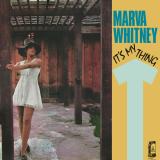
Artist quote: "White Noise" emerged from a diary entry, and is a relentless and intense reflection on inner turmoil. We’re often drawn to the familiar, even when we don’t realize we’re reaching out for it. It is an emotional upheaval, carrying harsh truths that weigh heavily on the heart. Guitarist, Ari May mentions, “Performing the song always takes me back to a specific place, even if just for a moment.”
“Riffs and melodies brimming with loneliness and longing… this band’s incantations affect my mood the whole day after listening.” — The Sleeping Shaman
“Bringing otherworldly hazy doom goodness… dreamy clean vocals, echoing harsh vocals, entrancing riffs, meditative shoegaze melodies.” — Nine Circles
“Slow, lumbering behemoths of great weight… couched in a melancholy atmosphere and explosions of crushing heaviness.” - Where Strides The Behemoth
Los Angeles trio Faetooth sophomore album Labyrinthine is a deeply felt exploration of emotional weight: grief, memory, uncertainty, and the quiet work of growing around your own wounds. Following the band's 2022 debut Remnants of the Vessel, which introduced the band’s signature blend of heaviness and mysticism, Labyrinthine pushes further inward. True to its name, the album winds through a maze of feeling and form, where meaning is never handed over easily. It’s rooted in self-discovery through disorientation, the idea that understanding comes not from escape, but from getting lost. Ari May (guitars and vocals), Jenna Garcia (bass and vocals), and Rah Kanan (drums) manage to stay grounded in the immediate in parallel with fantasy themes of the band's namesake. Labyrinthine holds space for this contradiction; tenderness and intensity, restraint and release. The band's self-branded “fairy doom” sound fits between shoegaze, doom, and grunge. It isn’t just texture; it’s a framework for navigating the unsaid. Like the myth that inspired its title, Labyrinthine doesn’t end in victory, but in confrontation—not with escape, but with the Minotaur. Only here, the Minotaur isn’t a monster. It’s something quiet and more familiar: unresolved feelings, old memories, and sadness that refuse to stay buried. The album winds like a maze, sometimes heavy, sometimes hushed, always intentional. Faetooth isn’t chasing catharsis. They’re creating space to reflect, to feel, and maybe to get a little lost along the way.
Artist quote: "White Noise" emerged from a diary entry, and is a relentless and intense reflection on inner turmoil. We’re often drawn to the familiar, even when we don’t realize we’re reaching out for it. It is an emotional upheaval, carrying harsh truths that weigh heavily on the heart. Guitarist, Ari May mentions, “Performing the song always takes me back to a specific place, even if just for a moment.”
“Riffs and melodies brimming with loneliness and longing… this band’s incantations affect my mood the whole day after listening.” — The Sleeping Shaman
“Bringing otherworldly hazy doom goodness… dreamy clean vocals, echoing harsh vocals, entrancing riffs, meditative shoegaze melodies.” — Nine Circles
“Slow, lumbering behemoths of great weight… couched in a melancholy atmosphere and explosions of crushing heaviness.” - Where Strides The Behemoth
Posters announce a daily action: A professional marksman shoots daily at 12 o’clock from a distance of approximately 15 meters at a paper flower. The number of shots is limited to a maximum of three per day. Upon a hit, the flower is replaced by a new one, the action ends and is continued the next day with a new flower. The bullet holes in the wall are not removed. The flowers remain lying on the floor until the end of the exhibition or event and are then given away.
Posters are produced in color variants (yellow, orange, red, violet, light blue, green) to advertise the action:
Every day at noon a professional marksman will shot at a paper flower (place of action to be filled in).
This performance was first presented at The Fruitmarket Gallery, Edinburgh in November and December 1999 and subsequently repeated (Aberystwyth, London, Nottingham, 2000 – 2002 and Langenhagen, 2007).
The action will be re-staged as part of the Klang Moor Schopfe Festival in Gais, September 4 –14, 2025.
- 7: Grandmother
- 1: Incomprehensible
- 2: Words
- 3: Los Angeles
- 4: All Night All Day
- 5: Double Infinity
- 6: No Fear
- 8: Happy With You
- 9: How Could I Have Known
Big Thief will release their sixth studio album, Double Infinity, on 5 September 2025.
Double Infinity is the follow-up to 2022’s Grammy-nominated album, Dragon New Warm Mountain I Believe In You, recorded last winter at the Power Station, New York City. For three solid weeks, the trio would ride bicycles on frozen streets between Brooklyn and Manhattan, meeting in Power’s Station’s warm wood-panelled room. Together with a community of musicians (Alena Spanger, Caleb Michel, Hannah Cohen, Jon Nellen, Joshua Crumbly, June McDoom, Laraaji, Mikel Patrick Avery, Mikey Buishas) they would play for nine hours a day, tracking together – simultaneously – improvising arrangements and making collective discoveries. Double Infinity was produced, engineered and mixed by longtime Big Thief collaborator Dom Monks.
“How can beauty that is living be anything but true?” Adrianne asks as she drives nose against the future with childhood mementos on ‘Incomprehensible’. She understands, “everything I see from now on will be something new.” The silver hairs on her shoulders are new as well. Yet fear of aging is cracked by proof. If a life is shaped by living, “Let gravity be my sculptor, let the wind do my hair.” Being born, then staying a while, remains the greatest mystery. Adrianne claims her place and time. “Incomprehensible, let me be.”
g 7. Grandmother ft. Laraaji
[g] 7. Grandmother [ft. Laraaji]
[g] 7. Grandmother [ft. Laraaji]
Big Thief will release their sixth studio album, Double Infinity, on 5 September 2025.
Double Infinity is the follow-up to 2022’s Grammy-nominated album, Dragon New Warm Mountain I Believe In You, recorded last winter at the Power Station, New York City. For three solid weeks, the trio would ride bicycles on frozen streets between Brooklyn and Manhattan, meeting in Power’s Station’s warm wood-panelled room. Together with a community of musicians (Alena Spanger, Caleb Michel, Hannah Cohen, Jon Nellen, Joshua Crumbly, June McDoom, Laraaji, Mikel Patrick Avery, Mikey Buishas) they would play for nine hours a day, tracking together – simultaneously – improvising arrangements and making collective discoveries. Double Infinity was produced, engineered and mixed by longtime Big Thief collaborator Dom Monks.
“How can beauty that is living be anything but true?” Adrianne asks as she drives nose against the future with childhood mementos on ‘Incomprehensible’. She understands, “everything I see from now on will be something new.” The silver hairs on her shoulders are new as well. Yet fear of aging is cracked by proof. If a life is shaped by living, “Let gravity be my sculptor, let the wind do my hair.” Being born, then staying a while, remains the greatest mystery. Adrianne claims her place and time. “Incomprehensible, let me be.”
g 7. Grandmother ft. Laraaji
[g] 7. Grandmother [ft. Laraaji]
[g] 7. Grandmother [ft. Laraaji]
[g] 7. Grandmother [ft. Laraaji]