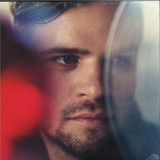
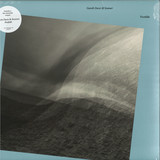
Dalmata Daniel presents the new album by Dutch West Coast mid-veteran Roberto Auser as an opening act in the label's LP series that comes with colored sleeve and limited to 200 copies. Also includes a hand-numbered riso-print as insert.
Auser (born Derk Reneman) has been into cinematic (or b-videomatic) electro for more than a decade now, with releases on Viewlexx, Pinkman, Gooiland Electro/Enfant Terrible and more, ranging from atmospheric and hypnotic to tight and grim, but always loaded with a vision of a storyteller. In a Dutch way, for sure. Though Second Sun is, again, an audiovisual trip, that's not the primary concept here - it's probably the purest album-like experience of Robert Auser so far, presenting most of his characteristics and sounds, and also new elements, still, all are coherent and organic parts of Reneman's projective language of electronics.
Buscar:it electronics
Limited first pressing on yellow vinyl. 'Lichen' is a selection of rarities from Dijf Sanders' hard drive. Dijf reworked and compiled six songs that didn't make it to the previous albums, but now form a new collection in their own right.Lichen mostly comprises reworked creations he did for dance and performance, nostalgic compositions that fuse organic electronics with classical music.
Tape
After tapes on Steep Gloss and Cruel Nature, we are happy that Stuttgart-based collective Zebularin join the OM family with their new release “Hermetic Topography“.
The album, a product of weekly recording sessions between March and July 2020, just when the pandemic slowed a bit down, might be the closest approach to what communal experiences sounded throughout 2020. It‘s a bold design of how collective improvisation can work in the post-covid era.
The first minute of „Budenzauber“ sets the tone for the whole record. Synth waveforms get joined by a drumset, both settling into a vivid conversation between digital noise and analog free jazz, finding a shared rhythm for this journey.
Daniel Vujanic, known to some from his recordings with Höhlenmusk Ensemble, Ixtar or E Jugend and the driving force behind Zebularin, had this urge to layer electro-acoustic solo material, synths, prerecorded audio meditations, without bending the sounds into detailed harmonic structures, but to build up dense, morphing atmospheres. In came Daniel Kartmann, a combatant in many of Vujanic‘s musical endeavours, his percussions, wind instruments and some deep musical talk - from obscure black metal to brazilian psychedelica, from Scott Walker to Gustav Mahler. The duo laid down basic tracks, kept arrangements vague, creating a perfect environment for a range of other players and instruments to walk in: piano, woodwinds, electronics, ebowed guitars and a vibraphone. The resulting record is a tender, affectionate take on jazz and electroacoustic composition. One can hear the routine of the involved cast as well as the fun, deep listening and correspondence that took place; even though this album was not recorded live in big-band-style, musical ideas interlock on an intuitive level and complement each other.
Take „Peljuga“ as a perfect example, a loosened jazz improv reminding of The Notwist‘s more psychic enhanced moments, which blends into a conversation between a contact mic and heavily manipulated synths and turns into a minimalist piano composition, which melds into a climactic peak and is interrupted only to rise again. And as complex as this description sounds, as uplifting is the actual song. Or the album‘s last track, „Holmen“, which starts out as an underwater ambient piece and evolves pretty organically into cosmic power electronics.
Despite its name and the Heideggerian flair of some song titles, „Hermetic Topography“ is all but hermetic. It‘s rich in musical colours without melting into a quagmire of maximalist noise. It‘s sophisticated but never top-heavy. It might be one of your favourite tapes of 2021.
It’s nearly a decade since William Doyle handed a CD-R demo to the Quietus co-founder John Doran at a gig, who loved it so much he set up a label to release Doyle’s debut EP (as East India Youth). Doyle’s debut album, Total Strife Forever, followed in 2014, as did a nomination for the Mercury Music Prize. A year later, he was signed to XL, touring the world and about to release his second album – all by the age of 25.
After self-releasing four ambient and instrumental albums, Doyle’s third full-length record – and the first under his own name – Your Wilderness Revisited arrived to ecstatic reviews in 2019: Line of Best Fit described it as “a dazzlingly beautiful triumph of intention” and Metro declared it an album not only of the year, but “of the century”. Just over a year later, as he turns 30, Doyle is back with Great Spans of Muddy Time.
Born from accident but driven forward by instinct, Great Spans was built from the remnants of a catastrophic hard-drive failure. With his work saved only to cassette tape, Doyle was forced to accept the recordings as they were – a sharp departure from his process on Your Wilderness Revisited, which took four long years to craft toward perfection. “Instead of feeling a loss that I could no longer craft these pieces into flawless ‘Works of Art’, I felt intensely liberated that they had been set free from my ceaseless tinkering,” Doyle says.
“The album this turned out to be – and that I’ve wanted to make for ages – is a kind of Englishman-gone-mad, scrambling around the verdancy of the country’s pastures looking for some sense,” says Doyle. “It has its seeds in Robert Wyatt, early Eno, Robyn Hitchcock, and Syd Barrett.” Doyle credits Bowie’s ever-influential Berlin trilogy, but also highlights a much less expected muse: Monty Don, presenter of the BBC programme Gardener’s World, Doyle’s lockdown addiction.
“I became obsessed with Monty Don. I like his manner and there's something about him I relate to. He once described periods of depression in his life as consisting of ‘nothing but great spans of muddy time’. When I read that quote I knew it would be the title of this record,” Doyle says. “Something about the sludgy mulch of the album’s darker moments, and its feel of perpetual autumnal evening, seemed to fit so well with those words. I would also be lying if I said it didn’t chime with my mental health experiences as well.”
Lead single “And Everything Changed (But I Feel Alright)” is representative of the album as a whole: eclectic and unpredictable, but also playful and properly danceable. On top of the gently pulsing electronics, soothing harmonies and glowing melodies, there’s a ripping guitar solo that ricochets around the song like a pinball. “I wanted to get back into the craft of writing individual songs rather than being concerned with overarching concepts,” Doyle says. Elsewhere there’s the synth pop strut of “Nothing At All”, pulsating static on “Semi-Bionic”, incandescent synths and enveloping soundscapes in “Who Cares”, and the ambient glitch groove of “New Uncertainties”.
Great Spans of Muddy Time is a beautiful ode to the power of accident, instinct and intuition. The result, however, is far from an anomaly: this celebration of the imperfect album is one that required years of honed craft and dedicated focus to achieve, “For the first time in my career, the distance between what I hear and what the listener hears is paper-thin,” Doyle says. “Perhaps therein reveals a deeper truth that the perfectionist brain can often dissolve.”
m 13. [a sea of thoughts behind it]
"Modern Uganda" is a unique project-it's the exquisite debut album of a band, which no longer exists!
delay_okwas a band from Gdańsk, Poland, which was formed in 2017 and played together till 2020 in the belief that making music must be fun. It was a trio consisting ofPiotr Chęcki(tenor and baritone saxophone, flute, casio),Szymon Burnos(synthesizers, moog, guitar, vocals)andJacek Prościński(drums, spdsx, percussion). On this, their debut album you can also hear the peculiar sounds of the Sopot's MDK Orchestra, the guitar ofMichałZ ienkowskiand a Tanzanian rap byAlex(Alex Mussa), met in Zanzibar.
"W e create impulsively, not ignoring our first - sometimes trivial - ideas,because it is in them that we find the joy that accompanied us at the very beginning of our musical paths. W e do it so that we can sit together in front of the speakers and have fun listening to our own songs again. "Modern Uganda" is a small collection of our interests, so we kind of do it out of the selfish need of doing something for
ourselves"
The band oscillates around the sound of IDM, lo-fi, and other sub-genres of modern electronics, with an element of jazz improvisation. The album was DIY recorded and is a tribute to the most famous African ski jumper from Uganda-Dunstan Odeke.
"Modern Uganda" vinyl record comes in two colors(flamingo pink and classic black). Mix and mastering were done byMaciej Milewski, the cover photo with shoebill was taken bynao-cha, a Japanese artist from Tokyo.
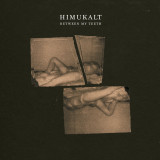
Dark, psychosexual electronics lurk between the teeth of Ester Kärkkäinen, the Las Vegas based artist also known as Himukalt. For the past six years, she has tirelessly pursued an avenue of bleak industrial productions that parallel the extremist works of Genocide Organ and Atrax Morgue. She has built a considerable reputation for uncompromising, full-frontal noise, releasing albums on Total Black, Malignant Records, Found Remains, and Foul Prey, amongst others. Between My Teeth was originally a cassette which came out in 2018 as a tiny edition on the Greek imprint Several Minor Promises and sold out immediately upon release. Himukalt returns to The Helen Scarsdale Agency with the necessary reissue of Between My Teeth as a vinyl edition with expanded artwork.
The album is a maelstrom of ill-tempered noise and blackened frequencies, sutured to a foundation of primitive, raw rhythms. Kärkkäinen cuts up her own voice with the digital equivalent of a rusted razor blade through her proclamations of misery, rage, and desire. The albums' opening track "Cataclysm" a turgid industrial production with Kärkkäinen adopting two distinct voices that, while they remain mostly indecipherable in content, the context presumes an inevitable, catastrophic and emotionally violent collapse in the relationship between two people. A tense rhythm clicks below the full spectrum bursts of harsh noise on "She Went Mad" followed by the smoldering power electronic moves of "I No Longer Belong" and "Not Proper." And the death disco groove of "Mine" is far more hellish than danceable through its scalded distortion and Kärkkäinen's vocal mantras about bodily self-loathing.
Another bold, declarative album in the ever impressive Himukalt discography. Remastered by James Plotkin and features a 12 page booklet of Kärkkäinen's signature collaged xerography.
- 1: Capitalism A..f
- 2: The Flood
- 3: Two Minutes To Midnight
- 4: Riffin On Jimi
- 5: De-Escalate And Dialogue Now
- 6: Music Is The Sound Of Life
- 7: I Nt Ernationalism
- 8: Mutual Aid
- 9: Weed
- 10: Lamenting Autotuned Life
- 11: Musica Sin Fronteras
- 12: Noise Dancer
- 13: Who Controls The Past
- 14: The Ol' Mass Extinction Blues
- 15: Robot Flamenco Shit
- 16: The Chickens Are Coming Home
- 17: The Machine
- 18: From Civilization To Barbarism
Consolidated, the political dance/industrial music band from the early 90ties joined again for a studio session in San Francisco last summer, resulting in a new album. 'We're Already There'. The first release on Consolidated's own label 'The End Of Records'. What else to expect, the new recordings are an innovating mix of industrial, to hip-hop, to rock and funk with mixtures of live instruments and electronics. Topped with left political activism and politically radical lyrics address issues such as America, Covid and ecocide with song The Flood, demand *'Free Music, Stop America'* with Musica Sin Frontieras & welcome guest vocalist GRETA THUNBERG on the track The 'ol Mass Extinction Blues. The album starts in 'traditional Consolidatedgroove' with the song 'Capitalism A.F.', a mix of beats, industrial sounds and hiphop. Followed by funkypop songs, danceable industrial jams, techno beats, reggae and blues influences plus a remarkable noise track. Main musicians are Adam Sherburne (guitar/vocals) and Mark Pistel (synths/beats) backed by Lynn Farmer (Meat Beat Manifesto) on drums, who replaces the original drummer Phil Steir. The complete album is recorded, mixed and mastered by Mark Pistel at 'Room 5' in San Francisco. The cover shows art paintings from Ayelet Hay (front) and William Kendall (back). On 'We're Already There' Consolidated plays more music than ever. "I have zero interest in being in a band, especially my own_" "I had to develop a different way to be involved with music for aesthetic and mental health reasons_" "FREE MUSIC! is not to the detriment of artists, it's literally the end of artists-as anyone perceives them in the last 500 years" -Adam Sherburne - Consolidated are known for their live performances, in which a microphone is passed among audience members to discuss, rebut, argue or elaborate on song topics. Consolidated: Adam Sherburne & Mark Pistel.
- A1: Engineering Systems
- A2: The Latent Space
- A3: Speech & Ambulation
- B1: Thousand To One
- B2: Walking & Talking
- B3: Youmachine
- C1: Doublekeyrock
- C2: Machine Rights
- C3: Go Tick
- C4: The Fear Of Machines
- C5: Artificial Authentic
- C6: Machine Perspective
- C7: Cut That Fishernet
- D1: Tools Use Tools
- D2: Loose Tools
- D3: Seven Months
- D4: Paymig
- D5: Borrow Signs
- D6: New Definitions
- D7: New Life Always Announces Itself Through Sound
Mouse on Mars, the Berlin-based duo of Jan St. Werner and Andi Toma, approach electronic music with an inexhaustible curiosity and unparalleled ingenuity. ‘AAI’ (Anarchic Artificial Intelligence) takes their fascination with technology and undogmatic exploration a quantum leap further.
Emerging from a primordial ooze of rolling bass and skittering electronics, hypnotic polyrhythms and pulsing synthesizers propel the listener across the
record’s expanse. Hidden in the duo’s hyper-detailed productions is a kind of meta-narrative.
Working with AI tech collective Birds on Mars and former Soundcloud
programmers Ranny Keddo and Derrek Kindle, the duo collaborated on the creation of bespoke software capable of modelling speech; text and voice from writer and scholar of African Studies Louis Chude-Sokei and DJ/producer Yağmur Uçkunkaya were fed into the software as a model, allowing Toma and Werner to control parameters like speed or mood, thereby creating a kind of speech
instrument they could control and play as they would a synthesizer.
The album’s narrative is quite literally mirrored in the music - the sound of an artificial intelligence growing, learning and speaking. This exploration of artificial intelligence as both a narrative framework and compositional tool, allowing the duo to summon their most explicitly science-fiction work to date. Original artwork by Casey Reas, inventor of the computer graphics language Processing.
Recently, Mouse on Mars received the 2020 Holger Czukay Prize for Pop Music.
Mouse on Mars have been regularly streaming performances throughout 2020, partnering with organizations like Goethe-Institut, Haus der Kulturen der Welt, Conditions of a Necessity and others and will continue these in 2021.
‘AAI’ is available on grey or black double LP packaged in a single sleeve with full colour insert / lyrics. CD comes with 8-panel poster booklet.
“Andi Toma and Jan St. Werner continue to create soundscapes that blur the line between programming and live musicianship, and sometimes between Earth and outer space.” - AV Club
“Enthralling and impossible to categorize.” - Pitchfork
“Sustained and ephemeral electronic sounds conjure unearthly open spaces… It’s not a song; it’s sound as a temporal phenomenon, a few minutes of sculpted attention.” - The New York Times
CLEAR VINYL
DAS LEGENDÄRE MINI-ORCHESTER AUS MONTREAL MELDET SICH NACH ÜBER 10 JAHREN MIT NEUER MUSIK ZURÜCK. House Music unfolds as one long piece, a recorded-then-sculpted improvisation that vastly expands their work, coalescing classical and electronic instrumentation in the creation of genre-defying musical worlds. With help from engineer Hans Bernhard, the band wired every corner of Sarah Neufeld's (Violin, vocals) multi-story rural Vermont house. She and the mini orchestra's other five members - Pietro Amato: French horn, keyboards, electronics; Michael Feuerstack: Pedal steel guitar, keyboards, vocals; Kaveh Nabatian: Trumpet, gongoma, keyboards, vocals; Richard Reed Parry: Bass, vocals; and Stefan Schneider: Drums - assigned themselves to different rooms. They spent two weeks together in camaraderie, creation, and focused isolation to record their improvised sessions every day, but ultimately structured a 45-minute album out of a one hour-and-a-half long improvisation.
Since 2010, Adam Keith's solo project Cube has been supplying a steady run of records and cassettes that capture songwriterly fixations and frustrations in a dextrous style of wounded electronics. Though Cube has been the centrepiece of his activity for some years, he's all the while remained active in collaborations, playing in bands such as SPF and Mansion to name just a few. Rounding off a decade of dialogues and agitations, Alter now presents Keith's third LP under the moniker of Cube, 'Drug of Choice' Based in New York, though managing a functional transience that takes in California too, Keith's latest iteration as Cube launches a panoramic set of sonic touchstones into a gristly and hypnotic orbit. Seismic drum machine parts partition an album that layers industrial-tipped takes on digi-dub with roaming guitar lines, piano vignettes, and breakbeat theatrics. For all the abrasiveness and rhythmic allusions that Keith employs, his use of voices alongside lush manipulations of errant samples and atmospheres tempers the commotion, delivering something that feels as much focused on artful constructions of private experiences as it does the cathartic qualities of noise.
Argentinian producer Thissperso has been living in Barcelona for a good season while producing music that reflects what he experiences in his day to day life. His productions are harsh and violent, but they have a quality and energy that makes them contagious and addictive. This work, edited by NNY Records, compiles some old songs that have been revisited and remastered, which coexist with new compositions that continue to explore the most visceral and dark side of electronics. This is the work of a producer who is not tied to any style and who enjoys setting the dancefloor on fire when one of his songs is played. Producers like Parris Smith have already been able to verify it in the first person with a couple of songs from this new EP in which we find Electro mixed with Industrial, EBM, Acid and a punk and nonconformist attitude.
Clarinetist, composer, singer & spiritual jazz soothsayer Angel Bat Dawid presents this powerful live document alongside her band, Tha Brothahood. LIVE was mostly recorded on November 1st, 2019, at Haus der Berliner Festspiele in Berlin, Germany, during the 2019 edition of JazzFest Berlin. For Angel and Tha Brothahood - which includes Deacon Otis Cooke (vocals, synth), Viktor Le Givens (vocals, auxiliary instruments), Xristian Espinoza (tenor sax, percussion), Norman W. Long (electronics, synths), Dr. Adam Zanolini (double bass, bass guitar, soprano sax, flute, percussion), Isaiah Collier (drums), and Asher Gamedze (drums) - it was the first stop of their first European tour. Angel and her band experienced a number of difficult, racially charged interactions during their two days in Berlin. But despite, or perhaps in light of the difficulties they faced, they performed a set at Berliner Festspiele that Angel considers to be one of their best ever. "The show was very deep, and really helped me to process all the rage, and uncomfortable things I was feeling... It made me think of all the artists of the past who endured way more than I ever will with this music industry. It was a very freeing and beautiful show... we played our ass off!!"
Kuldaboli returns to bbbbbb records, this time with a 6-track EP on which his idiosyncratic sound of icy, cryptic electro fully emerges. BBB015 being the second release of Kuldaboli on bbbbbb records is destined to be a historical release for the Icelandic dance music scene and a very important one for Kuldaboli’s legacy. The EP title ‘Ekkert nema ískaldur veruleikinn’ roughly translates to “nothing but the ice cold reality” and that is exactly what is delivered across the six tracks laden with poetic lyrics and spoken word.
In the opening track ‘Ég er bara ég’ Kuldaboli’s signature sound of uncompromising electro is overlaid with haunting vocals recited in Icelandic saying “I am only me and you are only you, people exchange words measuring each other out, trying their best at discerning life’s riddles’’. It is easy to say that Kuldaboli knows how to capture the listeners with deep reflections on subjects that most people are aware of but hardly ever speak of.
A2 ‘Ískaldur veruleikinn’ or ‘the ice cold reality’ is the most bouncy dancefloor track of the EP with the openings lyrics saying ‘’Are you telling me the truth? If I were to guess you are lying cold to my face’. The power of word play in this release is by far the most interesting poetic turn for Kuldaboli to date, where he shows great insight to the subconscious and human behaviour.
The smooth sounds of possessed Italo disco on A3 ‘Finn innri frið’, along with the funky bassline and trance like synths has perhaps the most positive vibe to it if you are not familiar to Kuldaboli, along with the playful opener of B-side ‘Afi kenndi mér íslensku’.
Following B2 no-bullshit-electro-track ‘Kuklari’, the final track B3 ‘Fönix úr ösku’ shows the haunting dark depth of depressurisation that vocal and electronics can create, where melancholic lyrics convey images of lost dreams of former lives.
The term 'tourbillon' has two meanings - it is the French word for "whirlwind" and also a device used in watchmaking to improve the accuracy of a timepiece. Both definitions feel apt when listening to Tourbillon, the latest release on Central Processing Unit from Australian producer Tim Koch. Following on from Koch's CPU debut Spinifex back in 2018 - an album that initially emerged via minidisc - Tourbillon is a four-track EP which dazzles with its perpetual-motion post-IDM productions.
These tracks draw you into their webs by forming dense interlocking sonic patterns over the course of several minutes. While the rhythmic programming and lattice of alien percussion tones can appear discombobulating at first, Koch also bewitches the listener with the slyly melodic synth work that he laces throughout Tourbillon.
Opening track 'Estranger' is a fine example of this combination. The first section here is a blend of blown-out drum sounds which comes off like an industrial electro tune run through a meat grinder. However, the track soon blossoms with the introduction of some amazingly atmospheric synth pads, and the two contrasting elements come together for a strange and rather beautiful whole.
'Estranger' finds a mirror-image in Tourbillon's final cut 'Hankert', a track in which more of those gurgling percussive tones play off the rich chord progressions that chirrup away in the background. Between 'Estranger' and 'Hankert' we get two propulsive grooves in the form of 'Disfugue' and 'Dreitark'.
How, then, to contextualize such unique material? Calum Gunn's recent outing for CPU is a good point of comparison, and the electronics here bang and whirr in a manner which nods to the post-IDM innovations of artists like μ-Ziq. One can also see Tourbillon as descended from acts like Cabaret Voltaire, the industrial electronics innovators from CPU's home city of Sheffield. However, Tourbillon is ultimately an EP which exists in its own lane, an open-minded and open-hearted set which runs with the futurist spirit of CPU and Koch's previous home of Merck Records.
Australian producer Tim Koch returns to Sheffield's Central Processing Unit with Tourbillon, an EP of otherworldly post-IDM productions.
RIYL: μ-Ziq, Calum Gunn, Proswell, Modeselektor
LIMITED TRANSPARENT RED WITH BLACK SWIRLS DOUBLE VINYL
Nine years after it’s initial release, 'The Ripper At The Heaven's Gates Of Dark' is back. The original black vinyl and CD editions sold out pretty quick, and have been a constant source of repress requests ever since. So, at Makoto’s personal request here it is. And I agree with him that it’s definitely the best AMT studio album from that short lived four piece line up.
With the exception of the album's opener 'Chinese Flying Saucer' and it's unashamedly obvious musical references to Led Zeppelin II (hello 1969!) the rest of the album locks into a much more laid-back groove than on recent AMT releases. This dynamic shift is best displayed on the 22 minute jam, 'Shine On You Crazy Dynamite' and also the album's closer 'Electric Death Mantra'. The band opt for less frantic explosions of electric guitar overload and fuzz, replacing those elements with a more epic, blissed-out and at times brooding Japanese psychedelia, with more emphasis on acoustic guitars, sitar, organ, synthesiser and at times, really trippy vocals (most prevalent on 'Back Door Man Of Ghost Rails Inn'), recalling the twisted psychedelics of early Pink Floyd. Yet still, their sound remains so expansive that it is easy to become totally immersed in this album.
Epic in proportions, cloaked in a cosmic haze and shimmering in a synth utopia. 'The Ripper At Heaven's Gates Of Dark' maintains AMT's status as masters of out-of-this-world music and reveals their darker side of the moon.
Acid Mothers Temple & The Melting Paraiso U.F.O. at the time of this recording were :Tsuyama Atsushi : monster bass, voice, soprano sax, cimpo flute, soprano recorder, acoustic guitar, cosmic joker Higashi Hiroshi : synthesizer, dancin'king Shimura Koji : drums, latino cool Kawabata Makoto : electric guitar, electric bouzouki, sitar, organ, percussion, electronics, speed guru
Recorded at Acid Mothers Temple, Japan Produced & engineered by Kawabata Makoto
Digital mastered by Yoshida Tatsuya.
LIMITED TRANSPARENT BLUE WITH BLACK SWIRLS DOUBLE VINYL HOUSED IN A NEWLY REDESIGNED FULL COLOUR GATEFOLD SLEEVE/JACKET.
Nine years after it’s initial release, 'The Ripper At The Heaven's Gates Of Dark' is back. The original black vinyl and CD editions sold out pretty quick, and have been a constant source of repress requests ever since. So, at Makoto’s personal request here it is. And I agree with him that it’s definitely the best AMT studio album from that short lived four piece line up.
With the exception of the album's opener 'Chinese Flying Saucer' and it's unashamedly obvious musical references to Led Zeppelin II (hello 1969!) the rest of the album locks into a much more laid-back groove than on recent AMT releases. This dynamic shift is best displayed on the 22 minute jam, 'Shine On You Crazy Dynamite' and also the album's closer 'Electric Death Mantra'. The band opt for less frantic explosions of electric guitar overload and fuzz, replacing those elements with a more epic, blissed-out and at times brooding Japanese psychedelia, with more emphasis on acoustic guitars, sitar, organ, synthesiser and at times, really trippy vocals (most prevalent on 'Back Door Man Of Ghost Rails Inn'), recalling the twisted psychedelics of early Pink Floyd. Yet still, their sound remains so expansive that it is easy to become totally immersed in this album.
Epic in proportions, cloaked in a cosmic haze and shimmering in a synth utopia. 'The Ripper At Heaven's Gates Of Dark' maintains AMT's status as masters of out-of-this-world music and reveals their darker side of the moon.
Acid Mothers Temple & The Melting Paraiso U.F.O. at the time of this recording were :Tsuyama Atsushi : monster bass, voice, soprano sax, cimpo flute, soprano recorder, acoustic guitar, cosmic joker Higashi Hiroshi : synthesizer, dancin'king Shimura Koji : drums, latino cool Kawabata Makoto : electric guitar, electric bouzouki, sitar, organ, percussion, electronics, speed guru
Recorded at Acid Mothers Temple, Japan Produced & engineered by Kawabata Makoto
Digital mastered by Yoshida Tatsuya.
- 01: Stained Glass Body (2020 Remaster)
- 02: Star Garden (20 Remaster)
- 03: Loving Love (2020 Remaster)
- 04: Where I End _ You Begin (2020 Remaster)
- 05: Body Within Body (2020 Remaster)
- 06: Where You End _ I Begin (2020 Remaster)
- 07: Orbiting Love _ White Dwarf Butterfly (2020 Remaster)
- 08: Womb Night (2020 Remaster)
- 09: River Like Spine (2020 Remaster)
- 10: Wild Moon And Sea (2020 Remaster)
- 11: Mirrors Death (2020 Remaster)
Limited
LOVE IS A STREAM :: 10 year anniversary edition. Remastered by Stephan Mathieu. Design by Farbod Kokabi.
Jefre Cantu on Guitar & Electronics. With Lisa McGee, John Twells, and Maxwell August Croy on vocals. Orginally released October, 2010 on TYPE records, UK.
From the original press release: As a member of San Francisco legends Tarentel and Type’s premier astral travellers The Alps, Jefre Cantu-Ledesma is hardly a new addition to the label, so it’s hard to believe that ‘Love Is A Stream’ is his first Type solo album. Previously releasing on Arbor, Spekk and his own Root Strata imprint, this latest album marks his journey into the beautifully cacophonous world of dream pop. Shoegaze music has been much maligned in recent years, probably due to its rebirth and subsequent explosion of popularity (which gave rise to hundreds of young bands aping the over twenty-year-old sound). However it was only a fragment of the genre that these bands attempted to re-create, and on ‘Love Is A Stream’ Cantu, instead of focusing on tired weeping melancholy ballads, focuses solely on expansive, almost noise-ridden hopefulness. This is the kind of noise we fell in love with when My Bloody Valentine blew our ear drums performing ‘Loveless’, or the kind of harmonic excess we heard on hundredth listen to Catherine Wheel’s ‘Ferment’, but taken into deeper, more abstract realms. ‘Love Is A Stream’ is dedicated to love itself, and the dreamy, shimmering blown-out textures might at first sound like white noise before they ultimately give way to blissful harmony and hidden melody. Underneath the grit and growl are hidden guitar parts, synthesizer drones and even vocals (provided by Lisa McGee, John Twells and Maxwell August Croy) that succeed in swelling the dense, tape-saturated songs to heady new heights and belie any influences they might have. On each listen the mind strips away another layer of dust and bones to reveal haunting and deeply moving beauty. The world might be spiralling into despair, but Jefre Cantu-Ledesma has brought us a record that isn’t afraid to share the love. All that’s left to do is drown in it.
- Engineering Systems
- The Latent Space
- Speech And Ambulation
- Thousand To One
- Walking And Talking
- Youmachine
- Doublekeyrock
- Machine Rights
- Go Tick
- The Fear Of Machines
- Artificial Authentic
- Machine Perspective
- Cut That Fishernet
- Tools Use Tools
- Loose Tools
- Seven Months
- Paymig
- Borrow Signs
- New Definitions
- New Life Always
- Announces Itself
- Through Sound
Mouse on Mars, the Berlin-based duo of Jan St. Werner and Andi Toma, approach electronic music with an inexhaustible curiosity and unparalleled ingenuity. ‘AAI’ (Anarchic Artificial Intelligence) takes their fascination with technology and undogmatic exploration a quantum leap further.
Emerging from a primordial ooze of rolling bass and skittering electronics, hypnotic polyrhythms and pulsing synthesizers propel the listener across the
record’s expanse. Hidden in the duo’s hyper-detailed productions is a kind of meta-narrative.
Working with AI tech collective Birds on Mars and former Soundcloud
programmers Ranny Keddo and Derrek Kindle, the duo collaborated on the creation of bespoke software capable of modelling speech; text and voice from writer and scholar of African Studies Louis Chude-Sokei and DJ/producer Yağmur Uçkunkaya were fed into the software as a model, allowing Toma and Werner to control parameters like speed or mood, thereby creating a kind of speech
instrument they could control and play as they would a synthesizer.
The album’s narrative is quite literally mirrored in the music - the sound of an artificial intelligence growing, learning and speaking. This exploration of artificial intelligence as both a narrative framework and compositional tool, allowing the duo to summon their most explicitly science-fiction work to date. Original artwork by Casey Reas, inventor of the computer graphics language Processing.
Recently, Mouse on Mars received the 2020 Holger Czukay Prize for Pop Music.
Mouse on Mars have been regularly streaming performances throughout 2020, partnering with organizations like Goethe-Institut, Haus der Kulturen der Welt, Conditions of a Necessity and others and will continue these in 2021.
‘AAI’ is available on grey or black double LP packaged in a single sleeve with full colour insert / lyrics. CD comes with 8-panel poster booklet.
“Andi Toma and Jan St. Werner continue to create soundscapes that blur the line between programming and live musicianship, and sometimes between Earth and outer space.” - AV Club
“Enthralling and impossible to categorize.” - Pitchfork
“Sustained and ephemeral electronic sounds conjure unearthly open spaces… It’s not a song; it’s sound as a temporal phenomenon, a few minutes of sculpted attention.” - The New York Times
Mats Gustafsson - Flute, baritone sax, live electronics, Johan Berthling - Electric bass, Andreas Werliin - Drums with Goran Kajfes - Quartertone trumpet, Mats Aleklint - Trombone, sousaphone, horn arrangements. Fire! tracking new paths and reaching new levels of excellence, still honoring their 12 year old vow of presenting a fresh approach to improvised music. Their debut album, You Liked Me Five Minutes Ago, was released in 2009 to wide international acclaim. "The basic strategy of pairing the expressive energy of free jazz with a sturdy sense of groove has yielded something potent and self-contained" (New York Times). Between this and Defeat there's been five albums, including collaborations with Jim O'Rourke (Unreleased?, 2011) and Oren Ambarchi (In The Mouth A Hand, 2012). No two Fire! records sound the same, but with Defeat they have taken their biggest leap so far, with Gustafsson giving the flute a prominent place in the sound image, a surprising and most successful move, his both expressive and ornamental approach given ample room to breathe, especially on the two long tracks bookending the album. In places more subdued than on previous efforts, but with the distinctive bass figures and hypnotic mood fully intact. There are some lively stretches with guests Goran Kajfes and Mats Aleklint, bringing to mind their big band offshoot Fire! Orchestra, albeit on a smaller scale. For over 20 years we have made a habit of releasing music that is beyond easy classification, in later years typified by Hedvig Mollestad, Elephant9 and Krokofant, but cemented by Fire! and their exploratory curiosity and deep love of music in general. We, and many others, have tried to compare the trio to other groups, but listening to Defeat we realize how futile this is. Given the above there's no doubt there are many influences at play, but the resulting brew is in a class by itself.
Machine is the second studio album by the American industrial metal band Static-X, released in 2001. The album can be considered post-modern metal, as it features electronics and industrial effects, and not just a pinch of electronic gadgetry. Critics and fans responded positively to this album, which peaked at #11 on the Billboard 200 charts. The song “Black and White” provided the album’s first single and music video, followed by “This Is Not”. The third single “Cold” is used on the soundtrack of the film Queen of the Damned. Machine is available as a a limited edition of 1000 numbered copies on transparent red vinyl.
When a synth master like Steve Moore joins forces with the legendary KPM, magic must materialise. And so it does with Analog Sensitivity: cinematic, enigmatic synthscapes to both haunt and heal.
New York-based multi-instrumentalist/producer/film composer Steve Moore is probably best known for his synthesizer and bass guitar work as Zombi, together with Anthony Paterra. But he is also part of Miracle and Titan as well as being a prolific solo artist releasing music as Gianni Rossi, Lovelock and under his own name. Steve’s music has found a home across labels like Future Times, Mexican Summer, LIES, Static Caravan, Relapse, Kompakt, Spectrum Spools, Death Waltz and Ghost Box, and much of his recent work has been scoring films like The Guest and Cub. Prolific indeed.
The story of Analog Sensitivity starts with those soundtracks, or more specifically the time in between them. Rather than being commissioned by KPM, this LP comes from music Steve was recording sporadically and tinkering with for over three years during the downtime between his film projects. There were no ideas about what it was nor a plan for how it would be released, or even if it was going to be released at all.
However, after Jon Tye invited him to play on the Ocean Moon project for KPM Steve realised that the hallowed library label might be the perfect home for what he had been working on. The people at KPM agreed. Finishing production in late 2019 in Albany, NY, he came up with the track sequencing and suddenly, he had an album: Analog Sensitivity.
The LP opens with the dystopian electronic minimalism of “Eldborg”, its dark synth bass unfolding to ominous synth pads, shadowy sustains and glistening arpeggios. “At The Edge Of Perception” brings an unsettling retro-future of edgy analogue leads and desolate FX. The sound of a robotic core tears through the sparse textures of the enigmatic “Rose Of Charon”. A chilling breeze blows through a persistent, hypnotic synth sequence on “Time Freeze”. Title track “Analog Sensitivity” is a sparkling transcendental synthscape of melody, drones and celestial synth. The brooding “Behind The Waterfall” winds down the first side, building subtle strings and a desolate sound beneath its haunting organ.
“Mirror Mountain” ushers in side two, its woozy bass and arpeggio unfolding to envelop the muffled, muted echos of its organic leads. "Syzygy" emerges you in bubbling sequences, airiness and ambient electric guitar tones. It’s followed by the cinematic minimalism of “Pentagram Of Venus” and its trickling FX. The wind swirls through the otherworldly “Of Dust Thou Art” kicking up clouds of unsettling, plodding synth sequences leading to the uneasy atmosphere of “Message From The Beast” which builds to the echo of the last refrain of some choral incantation. Closing track “Urge Surfing” is as cool a climax as you’d hope from something so brilliantly titled, riding along hushed waves of brooding electronics.
With the clue right there in the title, Analog Sensitivity is built up from the quieter aspects of the sound Steve has been exploring and evolving for over 20 years. It’s a layering of ambivalently dense and airy, muffled and echoing sounds from his collection of synthesizers and other electronic music hardware. And whilst some of Steve’s other work uses this vintage equipment to conjure the past, that wasn’t his intention here. Steve explains “I wanted Analog Sensitivity to feel atemporal, as though it could have been released any time over the past 30 or 40 years. While not specifically in the spirit of any particular album, I’m really into old KPM artists like Alan Hawkshaw and Brian Bennett”.
Digging deep through old and new, Basso captures arcane woodland fusion, serene electronic suites and wide eyed Balearic bliss on this first Growing Bin compilation.
This collection celebrates those precious records which land in your life on their own terms. Even the most advanced digger will admit that chance is the secret ingredient in any successful haul. Sure, it helps if you know where to look, but if you arrive a day early at that secluded second hand shop, or an hour late at the convention, you might miss out on a rare sight of sound. But there are still ways to skew the odds in your favour. Even in the most crowded urban environment, a solitary tree soon becomes a nest, and Basso's fostered an abundant garden in his Hamburg hometown. A decade on and the Growing Bin is a safe haven for those exquisite sounds crowded out of the mainstream, the rare birds with the most striking song.
'Coffee' comes right after cocoa in the bin's headquarter, though start your morning with One Tongue and be prepared for a different kind of day. A witch's brew spiced with a hint of Durian and the early bird, this 1990 composition could be the blueprint for the Teutonic trance dancers beloved by the Salon set. A more meditative magic flows through the A2, a smooth blend of fusion guitar, softly syncopated drums and counterpoint keys from one time art-rockers Inandout. This Growing Bin favourite from their '93-95' LP sounds right at home beside the majestic melodies and spheric bass of Matthias Raue's 'Brücke am schwarzen Fluss 2'. Taken from the soundtrack to a TV drama filmed in Mali, this digital homage to African rhythm shimmies in step with New Age dancers from Mkwaju Ensemble and Louis Crelier. The A-side ends with the unbridled optimism of Kosmische maverick Hardy Kukuk. The synthesist hit the studio with friends Karsten Raecke and Andreas Schneider in 86, coalescing crystalline electronics and gentle guitar into tender chord progressions suited for sun bathing beside the Sea of Tranquility.
The second side slinks into motion with the deep beauty and sincere spoken word of Frank Suchland's 'Schnee', a subtle body in a cocoon of reverb which takes Sade's 'I Never Thought I'd See The Day' to another level of placidness. Melancholic Germans Die Fische met in Cairo for the first time, and 'Conversation Of Everyday Lovers' could be the theme for that great city. Underpinned by primal percussion and a restrained groove, the track twists and turns between a trio of ineffable motifs, eternal combinations to the catacombs of Abusir. From there we go sublime, soaring skywards with a ten minute triumph from Hugh Mane. Balancing concentric sequences and space age synth riffs atop an irresistible breakbeat and bubbling bassline, the British producer finds a sensuous sweet-spot between fellow Growing Bin affiliates Krakatau and Singu.
Lucky are we who hear the Bin's sounds.
Patrick Ryder
- A1: Arrival
- A2: Gone For A Wander
- A3: Sunshine In 1929
- A4: Water Theme (Le Chateau De Corail) (Le Chateau De Corail)
- A5: We Almost Got Lost
- A6: Falling Asleep Under Pine Trees
- B1: People On Sunday
- B2: Merry-Go-Round
- B3: Running Down The Hill
- B4: Rituals
- B5: Watching Boats Pass By
- B6: Back To Everyday Life
- B7: Everyday Life
People On Sunday is an original soundtrack to the 1930 silent film variously known as Menschen am Sonntag, Les Hommes le Dimanche and People On Sunday. The film is a key work of interwar German cinema, based on a screenplay by Billy Wilder.
Like Domenique Dumont’s earlier albums, Comme Ça and Miniatures De Auto Rhythm, People On Sunday evokes a more innocent, carefree time conjured by wistful electronics full of warmth and melody. Touching on the hazy exotica that made those two records so alluring, here Dumont draws on his love of classical music, library music and early electronic experimentation to create a timeless, optimistic sound. If his past productions possessed a certain Mediterranean quality, across these 13 new pieces Dumont’s shimmering synth-pop has an enchanting simplicity.
Part documentary, part fiction, the film People On Sunday follows a group of characters going about their business in Weimar-era Berlin over one weekend and shows normal life in Germany before dictatorship.
“The film shows people and their surroundings shortly before all of it was destroyed,” says Dumont. “Ironically, watching this movie with the eyes of today, it looks more surreal than documentary. And I can’t help but think and reflect about the times we are living in now. We might have similar desires people had a hundred years ago, but we now have a completely different approach to life.”
*People On Sunday is the third album by Domenique Dumont.
*Freshly signed to The Leaf Label, having previously released two albums on Parisian electronic/dance label Antinote.
*It follows on from the cult success of synth-pop exotica albums Comme Ça (2015) and Miniatures de Auto Rhythm (2018)The album was originally conceived as a soundtrack to the classic 1930 German silent film known variously as Menschen am Sonntag, Les Hommes le Dimanche and People on Sunday.
*It was originally performed at Les Arcs Film Festival, with plans for further film festival concerts when regulations allow.
*Watch the video for first single ‘People On Sunday’ featuring excerpts from the film.
*Artwork and design by artist Edward Carvalho-Monaghan.
*Support from Pitchfork, Resident Advisor, FACT Magazine, Gorilla vs Bear, KEXP, BBC 6 Music’s Tom Ravenscroft, Mary Anne Hobbs and NTS Radio’s Charlie Bones, among others.
*Dumont recently remixed Domino’s Jaakko Eino Kalevi, and has also reworked tracks by Cola Boyy and Mark Barrott.
*Festival appearances include Mutek Montreal, Dekmantel, Nuits Sonores, Milhões de Festa and the Venice Biennale.
Jupiter, the gas giant in our Solar System, with thunderstorms a thousand times more powerful than on Earth, rainfalls of diamonds in the atmosphere, temperatures below -100°C, plenty of hydrogen, 79 moons and a South pole that looks like an abstract painting, has just the kind of environment this music seems to emanate from.
Jupiter and Beyond, the second collaborative effort of composer/performer Rafael Toral and percussionist João Pais Filipe as a duo (after Saturn in 2016), is definitely not quite a record of Earth music. On the contrary, Jupiter and Beyond, is indeed gas music, unfolding over two long movements without solid body or any tangible outline, between ambient and noise. A music of sheer volume and beauty, icy, massive, in which the elements of Toral's signature, in particular his use of jazz-inspired electronics and feedback, dissolve to become a labile, nebulous, expansive material, occasionally struck by abyssal depressions and masterful densities, magnified by the return, after 17 years of silence, of the electric guitar in Rafael Toral's instrumentarium.
Towards the end of Beyond, the second piece on the record, lurking behind the volutes of feedback, a bell and a bass drum, one can detect from the distance... a barking dog, as a surreptitious and prosaic reminder of where we are here and now, a calling back to Earth. Between sadness and joy, anger and peace, movement and stillness, Jupiter and Beyond is indeed a mirror held out to us, music reflecting our times and that emotionally speaks first of all about us.
"While João Pais Filipe was drummer in the Space Quartet, we played a live duo set. During soundcheck we were jamming for a while on bowed gongs and feedback and lost track of time, it just flowed so well. I joked "we could make a whole record with this!". But later we took the idea seriously and set to record an improvised session at his cymbalsmith workshop (he made the gong on the cover and it was used in the recording). When we listened to the first take the mass of sound was amazing. At some point it reminded me of the complex clusters of sound in Ligeti's music as it appears on Kubrick's 2001 scene "Jupiter and Beyond the Infinite". In the end the title felt like an apt choice for Saturn's successor. Back at my studio I felt the need for some more layers of density in some sections. I thought of using trombones, but ended up picking up the electric guitar, which I hadn't used since 2003.” Rafael Toral
Nick Beringer debuts on INFUSE to open the label’s 2021 schedule, offering up his stellar ‘Blue Blood’ EP.
A rising DJ and producer at the heart of Berlin’s minimal house scene, Rubisco boss Nick Beringer has formed a growing reputation as a ‘go-to’ artist for quality productions across the genre in recent years, with his diverse
discography welcoming material via the likes of Raum…Musik, Taverna Tracks, Mulen Records and Berg Audio to name just a few. With a sound fusing classic Detroit house and techno with more modern shades, ranging from electro-tinged elements through to more dubby textures, the German talent kickstarts 2021 with an impressive debut outing on FUSE sister imprint INFUSE as he delivers his four-track ‘Blue Blood’ EP.
Lead cut ‘Concave’ is a perfect example of Beringer’s ability to fuse genres and nuances with ease and fluidity as skipping percussion licks guide skittering sci-fi electronics and sweeping atmospherics throughout an up-front EP opener, whilst vinyl only cut ‘Aint Got Nobody’ delves into deeper realms as squelching basslines merge with icy hats and infectious vocal iterations. The lively title cut ‘Blue Blood’ opens the B-Side in style as warping synths weave amongst aquatic melodies and deep sub-bass, before closing out proceedings via the dynamic, off-kilter tones of final production ‘Second Hand Emotion’.
- A1: In Your Rosary 1
- A2: In Your Rosary 2
- B1: You Cannot See Me From Where I Look At Myself 1
- B2: You Cannot See Me From Where I Look At Myself 2
- B3: You Cannot See Me From Where I Look At Myself 3
- B4: You Cannot See Me From Where I Look At Myself 4
- C1: Horses The Color Of Rust 1
- C2: Horses The Color Of Rust 2
- C3: Horses The Color Of Rust 3
- D1: Horses The Color Of Rust 4
- D2: Kept In The Night By The Light Of The Moon
NOTON signs Italian-born, Bern-based sound-artist and producer Saele Valese.
In ‘IVIC’, his debut LP, Saele Valese, distills hauntological noise, droning tonal experiments and minimalist rhythms into a series of electro-acoustic-wave ventures written over five years in Berlin, Saas-Fee and Thun.
Drawing influences from the psychoacoustic properties of the live album format, IVIC’s 11 tracks were mixed and recorded live on DAT cassettes and through DAW experimentation, without the possibility to revise the final recordings. Valese adopted this approach to conceptually propose reconciliations between the irreversibility of the
past, and acceptance of its residuals in the present. The track titles themselves follow this pathos, citing the works of the American photographer Francesca Woodman and the poet Sylvia Plath. The inclusion of passages incorporating live sonics and throes of industrialismnso,ton.info contributes to the images of gravity, intimacy and spatiality that the music presented here invokes.
In keeping with this imagery, the music possesses a dilated, shuffling rhythmic base, much like the firm traversal of a tanker against a storm of jangling components, and still moments of gloomy sonics
alternating with more ravenous upheavals of power electronics.
If the track divisions do not pass by unheeded, they are consistently assembled to sonically accompaign the emotional charges and momentum of an imaginary cinematic experience; the beats caves in
for instants of relief, only to recoil in a cognated tempo but rearranged structurally. In another gesture of cogitated stride, the portentous waves of the record progressively rage into a turmoil in its third quarter during 'Horse The Color Of Rust'. The album reaches its closure fluctuating through microtonal oscillations to slowly eclipse into silence.
´In Your Rosary ì and Yì ou Cannot See Me From Where I Look At Myself ì were previously released on vinyl via Saele Valese’s own imprint, JSMË.
The track ‘You Cannot See Me From Where I Look At Myself’ 4 - is dedicated to the memory of Marco Bacher.
Artwork designed by Carsten Nicolai. Mastering by Matt Colton (Metropolis Studios, London).
You could think of the collection of tracks here as a library record of sorts, and each track inhabits its own universe. Tropical fits various moods and situations, and it could soundtrack any number of activities at home or on a dancefloor - whether real, imaginary, or hallucinated. Strangely enough, it sounds like it could have been constructed from obscure Italian library breaks, when instead every instrument has been played and panned, several times over, across magnetic tape.
The genesis of many of these tracks began when CV Vision moved to Berlin in 2014. His flat had a small chamber where he could fit a drum set, so he treated the walls with foam, and in true DIY style, dived headfirst into recording these tracks. It was the natural next step on an audio adventure that first began when CV Vision picked up the guitar in his teens, and a couple years later started recording with friends in his home town of Bayreuth. Fast forward ten years and here is his debut - a culmination of practising chops and learning instruments, mastering recording techniques and fine-tuning the CV Vision sound.
It’s a sound that condenses elements of acid rock, psych soul, library funk and new wave oddities into a movie soundtrack for your mind. It’s a journey from ‘60s west coast LSD-drenched excursions to ‘80s synth and post-punk mutations. Tropical is a plunge into another time, another music you can simply swim around in and explore.
Side A opens up with Tropical Tune In, which rides in on a clave and a warm wind, blowing a distinctly herbal aroma and recalling exotica dons like Les Baxter and Martin Denny. Following on with the aural equivalent of a sea breeze through your mind, Spaziergang am Meer blows away the cobwebs and conjures some nice library moments like Stringtronics or F eelings . Next, Ba_c_k(Lava) bounces out of a cold wave post-punk melting pot and crashes through the speakers like a blazed Zebedee, with some sweet eastern synths for added flavour, before the rolling bass licks of Der Böse Schamane take us into another dimension, landing somewhere between a psych rock freak out and a Black Ark dub session. Mr Maze channels the arpeggiators of synth outsiders like Mort Garson and Bruce Haack, creating a glorious interlock of robotic electronics and freakbeat vocals. The side comes to a close with the guitars of Der Strand (außer Rand und Band) letting loose like syrupy springs, and setting a languid mood like the bedroom scene in Bedazzled (1967 version). Side B kicks off with Parallel Universum, which comes through like a woozy krautrock workout, all ducking synths with big chord shifts to create an epic deranged beehive of a soundtrack. Im Land der Ameisen evokes the spirit if not the sound of White Rabbit, when logic and proportion have fallen sloppy dead, before waking up and wandering through the side alleys of Marrakech with the West Coast Pop Art Ensemble and the Electric Prunes, as Ritual (No. 4) blares out the speakers of passing tuk tuks. Ein Wasserfall plumbs the deep synth depths, like Raymond Scott in scuba gear, modular rack strapped to his back delivering oxygen as he swims between connector cables and seaweed forests through a watery underworld. Banana King sounds like a lost soundtrack to Donkey Kong or Mario Cart, if the cart radio was tuned into a synth
documentary hosted by James Pants, while Das Kloster am Berg takes the baton from Brenda Ray and her Naffi cohorts, all dubbed-out niceness and post punk swagger. The LP closes out with Tropical Drop Out, a dreamscape rather than a wake up call, coaxing you deeper into the trek across the desert of your mind.
And that’s Tropical in its essence: capsules from another time, snapshots of another sound, messages from another mind - all in the service of inducing the visions in your head.
written by Max Cole
- A1: Noriko Miyamoto - Arrows & Eyes
- A2: Mishio Ogawa - Hikari No Ito Kin No Ito
- A3: Yoshio Ojima - Days Man
- B1: Mkwaju Ensemble - Tira-Rin
- B2: Rna-Organism - Weimar 22
- B3: Naoki Asai - Yakan Hikou
- B4: Takami Hasegawa - Koneko To Watashi
- C1: Mammy - Mizu No Naka No Himitsu
- C2: Dip In The Pool - Hasu No Enishi
- C3: Wha Ha Ha - Akatere
- D1: D-Day - Sweet Sultan
- D2: Perfect Mother - Dark Disco-Da Da Da Da Run
- D3: Neo Museum - Area
- D4: Sonoko - Wedding With God (A Nijinski) (A Nijinski)
Somewhere Between: Mutant Pop, Electronic Minimalism & Shadow Sounds of Japan 1980–1988 hovers vibe–wise between two distinct poles within Light In The Attic’s acclaimed Japan Archival Series—Kankyō Ongaku: Japanese Ambient, Environmental & New Age Music 1980–1990 and Pacific Breeze: Japanese City Pop, AOR & Boogie 1976–1986. All three albums showcase recordings produced during Japan’s soaring bubble economy of the 1980s, an era in which aesthetic visions and consumerism merged. Music echoed the nation’s prosperity and with financial abundance came the luxury to dream.
Sonically, Somewhere Between mines the midpoint between Kankyō Ongaku’s sparkling atmospherics and Pacific Breeze’s metropolitan boogie. The compilation encompasses ambient pop, underground electronics, liminal minimalism and shadow sounds—all descriptors emphasizing the hazy nature of the nebula. Out–of–focus rhythms wear ethereal accoutrements, ballads are shrouded in static, and angular drums snake skyward on transcendent tones. From the Avant–minimalism of Mkwaju Ensemble and Yoshio Ojima, to the leftfield techno-pop of Mishio Ogawa and Noriko Miyamoto (featuring members of YMO), and highlights from the groundbreaking Osaka underground label Vanity Records, these are blurry constellations defying collective categorization.
These tracks also exist in a space of transition when the major label grip on the Japanese recording market began to give way to the escalation of independents. Thanks to the idyllic economic climate and innovations in domestically–manufactured music gear, creators on the edges were empowered to focus on satisfying their artistic visions in the open headspace of home studios. While labels like Warner Music and Nippon Columbia explored new sounds through traditional channels, it was possible for Vanity, Balcony and other indie labels, not to mention self–released artists like Ojima and Naoki Asai, to publish their work via affordable media such as cassettes, 7" vinyl, and flexi–discs.
Expertly curated by Yosuke Kitazawa and Mark “Frosty” McNeill (dublab), Somewhere Between is a collection of music, much of it released for the first time outside Japan, that is bound more by energetic vibration than shared history, genre or scene. They are the sounds of transition and searching—a celebration of the freedom found in floating.
Note: The track “Days Man” by Yoshio Ojima is only available on the LP and Cassette versions.
- A1: Transhuman
- A2: Hamburg - Dusseldorf
- A3: Zukunftmusik (Radiophonique) (Radiophonique)
- A4: Specimen
- B1: Clone
- B2: To The Limit
- B3: Zufallswelt
- B4: Plant In Fever
- C1: Shifted Reality
- C2: Kreiselkompass
- C3: Data Landscape
- C4: Transhumanist
- D1: Sexersizer
- D2: Maschinenraum
- D3: Let Yourself Go
- D4: Let Yourself Go (Beatsole Remix)
There are few genres in which German artists play such a central pioneering role as they do in electronic music, be it techno, electropop, trance or rave. At the frontline for many years were Kraftwerk and U96, two absolute trailblazers of this musical direction. While Kraftwerk wrote international music history mainly in the 1970s with cult albums such as Autobahn (1974), Radio-Aktivität (1975), Trans Europa Express (1977) and Die Mensch-Maschine (1978), U96 had a profound influence on the global pop music, rave and techno scene of the 1990s with hits such as ‘Das Boot’, ‘Love Sees No Colour’, ‘Night In Motion’ and ‘Heaven’. Transhuman, scheduled for release on UNLTD Recordings on 30th October 2020, will feature a spectacular collaboration between U96 (Ingo Hauss
& Hayo Lewerentz) and Wolfgang Flür, Kraftwerk’s drummer in the years between 1972 and 1987 and therefore involved in the most seminal albums by the group from Düsseldorf.
This remarkable cooperation was first announced and implemented by two joint numbers on U96’s 2018 offering Reboot. Transhuman sees U96 and Wolfgang Flür develop their creative exchange across a full album, creating fascinating sonic worlds. The title song ‘Transhuman’ and an updated version of ‘Zukunftsmusik (Radiophonique)’ will be released as lead singles, including, as we’ve come to expect from U96, experimental video clips. That New York record label Radikal Records immediately secured the rights to the album for the US and Canada points to major interest in this project, not only on these shores but also across the Atlantic.
“Transhuman is a stylistic mélange of our different histories,” describe Wolfgang Flür and U96 masterminds Hauss and Lewerentz an offering that is spectacular in many respects, featuring, along with typical U96 tracks such as ‘Clone’ and ‘Specimen’, numbers such as ‘Transhuman’, ‘Planet In Fever’ and ‘Sexersizer’ that are inspired by Flür’s past. Notably, the content has been reduced to the sheer basics, in other words: sparingly used associative statements with deep, but at times also playful and mysterious messages that the listener feels rather than consciously registers. The lyrics are about the transformation of people through technology and our massive interference in life on our planet. Hauss: “Pieces like ‘Zukunftsmusik’ and ‘Transhuman’ don’t tell a story in the classic sense, they articulate emotions and associations in very few words, bringing to mind recordings such as Radio-Aktivität, Autobahn and Die Mensch-Maschine. In addition Transhuman, features a number of melodies created on the basis of computer algorithms, in other words fractal music which takes us even further back in history, to Klaus Schulze, Stockhausen, the electronics laboratories of the fifties and sixties and the musique concrete compositional technique.”
‘Instant Opaque Evening’ is an epic offering from The Underflow, the new trio of Mats Gustafsson, David Grubbs and Rob Mazurek. It makes vast strides on the heels of their self-titled 2019 debut (Corbett vs. Dempsey/Underflow Records) with nearly 90 minutes of intensely focused live performances from January 2020 shows in France, Belgium, Italy and Poland. That tour was a revelation for all three members, experienced as they are, with this still-new group’s freedom to walk onstage each night determined to surprise one another, moving from long instrumental improvisations into and out of songs and covering a terrific amount of ground at each of these concerts.
‘Instant Opaque Evening’ conveys this broad sweep, from the full-tilt electronics of ‘Self-Portrait As Interference Pattern’ and the climax of the seventeen-minute ‘Instant Opaque Evening’ to the inspired, alternate universe chamber music of ‘Planks’ and ‘A Thin Eternity’ and the group’s spontaneous arrangements of three previously recorded songs by Grubbs, ‘Gethsemani Night’, ‘An Optimist Declines’ and ‘Cooler Side Of The Pillow’.
The short version of the long tale of intersecting paths bringing together these three musicians begins in Chicago in the 1990s, with all three active participants in numerous convergences among jazz, free improvisation, experimental rock and more. Both Gustafsson and Mazurek appear as guests on Gastr del Sol albums (‘Upgrade & Afterlife’ and ‘Camoufleur’ respectively; that’s Rob’s cornet taking ‘The Seasons Reverse’ to new heights) and shortly thereafter Grubbs and Gustafsson recorded two duo albums, including the deep minimalism of ‘Apertura’, a talismanic favourite of both musicians.
David Grubbs has played in Gastr del Sol, the Red Krayola and Squirrel Bait and performed with Tony Conrad, Susan Howe, Pauline Oliveros, Will Oldham and many others. He’s the author of the books The Voice in the Headphones, Now that the audience is assembled and Records Ruin the Landscape.
Saxophone player, improviser and composer Mats Gustafsson is known as a solo artist and for international tours and projects with, among many others, Sonic Youth, Merzbow, Jim O’Rourke, Barry Guy, Otomo Yoshihide, Yoshimi, Peter Brötzmann, Neneh Cherry, Christian Marclay, Albert Oehlen, Ken Vandermark and the working groups FIRE!, THE END, LUFT, ANGUISH and Gush, as well as collaborations with contemporary dance, theatre, art, poetry and projects with noise.
Rob Mazurek is a multidisciplinary artist with a focus on electro-acoustic composition, improvisation, performance, painting, sculpture, video, film and installation, who spent much of his creative life in Chicago and then Brazil. He currently lives and works in Marfa, Texas. He leads/co-leads many ensembles of various sizes and shapes including his flagship large ensemble Exploding Star Orchestra, Chicago Underground and São Paulo Underground. He has
collaborated with Bill Dixon, Pharoah Sanders, Roscoe Mitchell, Jeff Parker, Nicole Mitchell, Chad Taylor, Jim O’Rourke, Naná Vasconcelos and many others.
"Odeyalo" is a Russian word that means "blanket". This blanket is made from many rags. It's hard to tell where one ends and the other begins, but the main thing is that you can cover yourself with this blanket.
Foresteppe is the musical project by Egor Klochikhin, artist and history teacher from Russia. Foresteppe's music is a constant experiment with the sounds of tape cassettes, acoustic instruments, field recordings and electronics. Detailed sound collages by foresteppe explore the space of history and memory, as well as the themes of nostalgia and trauma.
"Odeyalo" has been played live with ten cassette tape players and several dozens of cassette tape loops in June – September, 2019 in Vyksa, St.Petersburg, Moscow, Brussels, Tomsk oblast, Novosibirsk and Berdsk.
Nuno Canavarro's Plux Quba hails from three decades in the past, yet the simple profi le of it's abstract/ambient/cutup collage makes it a record that sits quite comfortably in our IDM-informed future. In 1988, Plux Quba was a primal dark horse in the world of pants-forward electronic music - an obscurity issued with little explanation from the laid-back west coast of Europe: Portugal, of all places! - though the casual listener could hardly know that from an examination of the LP jacket. The vanguard of electronics in late-80s Europe was being pushed by organizations like Nurse With Wound, The Hafler Trio, HNAS - and yet, when Christoph Heemann came across this recording, it struck his ears and the ears of fellow listeners like nothing before. Plux Quba was handed around between the principles of the early 90s A-Musik scene: Jan St. Werner, C-Schulz, Frank Dommert, Georg Odijk, plus interested fellow travelers like Jim O'Rourke, to the intense curiosity of all. To ears that were already saturated with all things kraut, the dark corners of prog and the frontline of experimental and improvised music, it proved elusive. Not simply in how it sounded and how that sound was achieved, but in where it was coming from - like later Robert Ashley at times; certain stretches of melody recalled some of Eno's ambient pieces - but mostly, it was a completely alien soundscape!
Following 2019’s ‘INSHROUDSS EP’, ‘RESURRECTEDINBLACK’ marks the first Bestial Mouths LP crafted fully under frontwoman Lynette Cerezo’s guiding mind.
Emerging from the shrouds of trauma explored on her debut release as the singular force behind Bestial Mouths, RESURRECTEDINBLACK weaves a world riddled by grief and loss—a world of broken systems, of toxic lands once sacred, of lost saviors and inner voids that may be tented with strong flesh, but remain as raw as the meat surrounding them.
While branching deeper into the searing industrialized electronics and imminently danceable darkwave of the previous EP, RESURRECTEDINBLACK also continues to channel new and experimental paths through the project’s original gothic post-punk roots. Led by Cerezo’s visceral, emotional voice and lyrics, and featuring beautifully brutal production from Brant Showers (AAIMON/SØLVE), Alex DeGroot (Zola Jesus) and Balázs Képli (nullius in verba), it is the journey of a soul shattered—then stapled back together by female rage and self-determination.
- A1: Mega Corp - Jon Sewi
- A2: Gladdics - Black Soyls
- A3: It's Tea Time - Renegades Of Jazz
- A4: Jagged - Serafin Plum
- A5: Opera - The Maenads
- A6: Sheikah - Double Screen
- A7: Put It On Ice - Stubby Dials
- B1: The Cards - Lucinate
- B2: Waving At A Melting Square Tooth Of A Specific Rabbit (Short Version) - Woodpecking Mantis
- B3: Lucempight - Wrenasmir
- B4: Poets And Rockets - Jay Solomon
- B5: Midnight Sun - The Motion Orchestra
- B6: What - Teis Ortved
- B7: The Last Recording From Earth - Funki Porcini
This compilation sees the coming together of independent music makers from across the globe to meet in one place and gather as a single entity. That simmering hub of warmth and affection is known as Motor Jazz - a place for artists to congregate and share their devotion for songs that are infused with rhythms created by anodic wires, buttons and other digital paraphernalia. That's electronic music to you and me, and in this case electronic music with swing, a sense of freedom and improvisation that some might call 'Jazz'.
The album opens with the ominous drone of the Mega Corp., sounding like one of the parties responsible for 2020's almost post-apocalyptic feel. It's perhaps an unlikely opener for a what's a positive and optimistic collection courtesy of young musicians from across the globe, but we all need to be reminded of who's in charge sometimes, and Dutch producer Jon Sewi does just that!
The mood soon lightens though, with the soulful strings and enticing keys of Gladdics by the mysterious Black Soyls, before well established German musical artisan Renegades of Jazz brings the family in for It's Tea Time with ticking clocks, warm tea pots and slices of cake, whilst being serenaded by a very vintage sounding horn section.
Serafin Plum almost steer us into drum & bass territory with their off-the-wall percussive nugget Jagged, whilst keeping a calming hand on the shoulder (as all good parents should) with soothing keys, before it's playtime once again.
There's nothing conventional about the Motor Jazz family though, and after tea time and play time, it's time to rave! In Greek mythology, The Maenads were female followers of Dionysus; their name literally translating as "the raving ones". Often they were portrayed as being inspired by the god into a state of ecstasy through a combination of dancing and intoxication, during which time they would dress in fawn skins and carry a thyrsus - a long stick wrapped in ivy or vine leaves and tipped with a pine cone. With a sound ranging between Jazz, Techno, Rave and Breaks their track, Opera, delivers a psyche and Jazz influenced piece with colliding styles, busy drums and rich melodies.
Heading over to Dublin, Ireland, and multi-talented producer, musician and DJ, Donal Sharpson (aka Double Screen) makes his presence known with grandiose brass preempting a four-to-the-floor wood block frenzy in the shape of Sheikah, complete with enthusiastic whoops and a persuasive bassline. Meanwhile, somewhere below the Irish Sea, aquatic artiste Stubby Dials delivers the bass worrying Put It On Ice the only way he knows how - living in a submarine, he emerges from time to time to leave his master tapes on the beach with a note saying "Release this!" before submerging, never been seen again.
Back in the Netherlands, Bram van der Hoeven, otherwise known as Lucinate, is an electronic Jazz producer par excellence. His effortless balance of organic musical roots like Fusion, Bossa Nova and Soul, into the world of modern beat orientated sounds is something to behold, and with The Cards he offsets life-affirming keys with rolling drums reminiscent of some of the seminal liquid Drum & Bass he grew up with.
As the global Motor Jazz family expands, we head to Canada, where the wonderfully monikered Woodpecking Mantis brings a little acid to the party with his squelchy, stuttering and brilliantly entitled Waving At A Melting Square Tooth Of A Specific Rabbit……. We're guessing they like acid a lot in Canada.
We're going down under to Newcastle, Australia next, where things take a more serene turn. Wrenasmir, known to his parents as Craig Smith, used to be a baroque pipe organist before he discovered samplers and synthesizers. Now he makes imaginary soundtracks at his studio for the twilight beachside city that lives in his head - full of vinyl and pixels and bittersweet memories. The gorgeous Lucempight is exactly that.
Keeping things low key and tranquil, Poets And Rockets, the latest offering from Jay Solomon is a horn driven slice of futuristic dub that makes way for The Motion Orchestra's majestic Midnight Sun, complete with Alexander Bednasch on double-bass, Mark Matthes on violins, Andy Sells on drums and David Hanke on electronics and production. Though influenced heavily by neo-classical and jazz sensibilities they occupy a musical space that sits in neither sphere, with a compositional style that deftly fuses the orchestral and electronic worlds. The full Motion Orchestra album, All One, will be released later this year on Bathurst.
Sixteen year old, self taught producer and multi-instrumentalist Teis Ortved is something of a prodigy. The Copenhagen based wunderkind has so far self-released two EPs, and if What, his offering here, is anything to go by, he's going to be making big waves across the eclectic music spectrum for years to come.
If Teis is the new kid on the block then what better way to round off this compilation that with its patriarchal figure. Funki Porcini has over a quarter of a century of recordings in his back catalogue, and has spent fifteen of those years dedicated to the independent UK behemoth that is Ninja Tune records. The Last Recording From Earth is exclusive to this album and is in many ways the perfect closing song. Perhaps more concept art than traditional piece of music, the idea behind it is that an alien archeologist has found this recording tens of thousands of years after humans have disappeared into the sand…. You never know, it might just happen, and hopefully Them To Us will take on a whole new meaning.
A lucid dream meeting of synth waves, aquatic jazz spirits and drum-triggered electronics.'Linha D'Água'translates as 'water lines', fitting for an album that traces boundaries between water and air through an echo chamber of dizzying oceanic layers and free flowing ideas.
This is not a record based on genres. It's an album that navigates through atmospheres, through explorations and discoveries, through curiosity and dialogue. The eight tracks were recorded in a single day in the studio, but it is the result of more than two years of collaborations.
Mauricio Takara and Carla Boregas are two towering figures of the Brazilian underground/experimental scene, where they provide the rhythm section for demented genre-bending trio Rakta. While that band is all ritual percussion and red-blooded passion, as a duo they're a blue-water flowing counterpoint. From the drums, Takara fires melodies and, with the synthesizer, Carla sculpts the sound. The result iscaught somewhere between abstract improvisation and propulsive rhythm. Each song's an organic layering of manipulated synthesizers and acoustic sounds; teasing new rhythms from the drum kit via MIDI (and a near-telekinetic bond between Carla and Mauricio).
Sometimes'Linha D'Água'driftsclosest to ambient music, as in the title track, in 'Mãe D'Ouro' and 'Bocca Chiusa'; sometimes it runs into free jazz, as in 'Traçado Entre Duas Linhas'. There are moments when Carla and Mauricio explore a universe of tension that comes closest to the cosmic music of 70s Germany, as in 'Rosa de Areia' and 'Constante de Distância'; in others they evoke the metallic sounds of Indonesian gamelan (on 'Execution').
Carla Boregas is a founding member of the band Rakta, which started in 2011. She co-founded Auta, a DIY space dedicated to adventurous music in São Paulo hosting artists like Feminine Hi-Fi and Deafkids. She is also part of the transdisciplinary duo Fronte Violeta.
Mauricio Takara also plays drums/percussion with the bands Hurtmold and São Paulo Underground (with trumpeter Rob Mazurek from Chicago). Takara has played with a dizzying array of improv / experimental / jazz figures such as Pharoah Sanders, Damo Suzuki, Yusef Lateef, Joe Lally (Fugazi), Naná Vasconcelos, Prefuse 73, Makoto Kawabata and more.
Despite current circumstances, Speedy have had a busy year. The London-based label run by producer Dan Carey alongside Alexis Smith and Pierre Hall were recently coveted with the Best Small Label Award by AIM after being nominated for the second year in a row. Carey also picked up UK Producer Of The Year earlier in the year at the prestigious Music Producer Guild Awards. He also produced the critically acclaimed sophomore album ‘A Hero’s Death’ by Fontaines D.C. which landed a welldocumented No. 2 position in the official album charts.
Speedy Wunderground released their fastest ever selling 7” - The Lounge Society’s timely tour de force ‘Generation Game’, the second band to be signed to the label for a forthcoming EP release following Squid’s ‘Town Centre’ EP in 2019. They also announced the label’s first ever full album release - Tiña’s ‘Positive Mental Health Music’, with recent single ‘Golden Rope’ having just come off the A-list at 6 Music.
Bringing bands into the studio wasn’t an option so the label started an ongoing project called ‘The Quarantine Series’ in which Carey under his Savage Gary techno/electronic alter ego collaborated with artists and friends, old and new over the internet and then uploaded them to the label’s Soundcloud/socials with little or no fanfare - no PR-ing or radio pluggers, just let the bands do their own thing, organically.
The common thread throughout all is Carey, whether it be in his regular name or his Savage Gary guise. However, collaborators in the series so far have included a wide range of people: Kae Tempest, PVA, Willy Mason, Heartworms, Warmduscher, Charlotte Spiral, Boxed In, Stephen Fretwell, Goat Girl and more.
“We chose two tracks/artists that I think we really wanted to shed some more light on” says label co-runner Pierre Hall. “Two that we really didn’t want to go under the radar - and in our opinion reflect this parallel strand of the label that’s forming - with new artists we’re really excited about - and that will hopefully draw people in to explore the series as a whole.”
First on the release is ‘Wait & See’ from rising Bajan artist RoRo. A hypnotic masterful flow which meanders seamlessly around Carey’s pulsating electronics. It’s bursting with attitude and originality. “I saw Dan Carey play with Kate Tempest on one of my first few times ever being out in London” she says, “it was such an amazing show. I was extremely excited to then get the chance to work with him. I’d been trying to do so while in London, but it didn't quite work out that way. We did manage to make it happen remotely whilst I was back in Barbados though, and we knocked it out!”
Second is ‘Cigarettes Pt. 2’ from the enigmatic Londoner youngblackmale AKA Rutare Savage: “It’s a poem, transformed into a song by the ever amazing Dan Carey. It touches (lightly) upon the topics of fear of the police, drug and alcohol abuse, family, and pulling oneself out of a nihilistic worldview driven by a newfound lust for life. This is me trying to reason with the void.”
A contemporary dance score for award winning British choreographer Wayne McGregor inspired by Sergei Pavlovich Diaghilev (1872-1929). 'My composer for Dyad, Icelandic musician ?lafur Arnalds, is coming in next week to finish work on the score. It's an amazing piece of music ? it's melancholic and spatial then cuts to extreme rhythmic violence - it's hauntingly inspiring' ? Wayne McGregor (Random Dance) 2009 has already proved quite a year for Iceland's neo-classical export ?lafur Arnalds. Still high on the success of his 7-song series 'Found Songs' ? recording a song a day for 7 days and instantly making each track available via Twitter; ?lafur was approached by the world renowned and critically acclaimed choreographer Wayne McGregor to create a 30-minute score for his ambitious new work 'Dyad 1909'. The dance piece, inspired and created 'In The Spirit of Diaghilev' premiered at the Sadler's Wells theatre this October and became an unpredictable and much talked about 5-nights of live music, dance and visuals. This 'fascinating collaboration' (Guardian) will go on a EU-wide tour this autumn with Arnalds included in an impressive creative line-up alongside visual artists and filmmakers Jane and Louise Wilson. In December ?lafur's 'evocative and lyrical score' (The Times) will see a 10" vinyl, CD and digital release via Erased Tapes ? the label behind his previous releases as well as Peter Broderick's recent and much noted dance score release 'Music For Falling From Trees'. Born in 1987, ?lafur hails from the suburban Icelandic town, Mosfellsb?r, just a few kilometres outside of Reykjav?k. He has immersed himself completely in a world of delicate symphonic compositions generating near weightless orchestral pieces. Arnalds explores the crossover from classical to pop by mixing chamber strings and piano with discreet electronics which makes him a perfect fit for cinematic pop label Erased Tapes. His motivations are clear: "The classical scene is kind of closed to people who haven't been studying music all their lives. I would like to bring my classical influence to the people who don't usually listen to this kind of music?open people's minds." This young artist is steadily gaining recognition worldwide since his 2007 debut 'Eulogy for Evolution' and the 2008 follow-up EP 'Variations of Static'. In April 2009 online experiment 'Found Songs' received more than 200,000 downloads via foundsongs.erasedtapes and the physical edition released this August has instantly become a best seller, demonstrating that music in its physical format still attains a particular charm. ?lafur conceived 'Found Songs' as a way to collate several lost and found musical sketches and ideas in a 'very challenging, but fun' series. The experiment offers its listeners an intimate insight into ?lafur Arnalds' creative world with artwork contributions from fans via Flickr. With the next full-length release due in 2010, 'Found Songs' hasn't just inspired 2-D work. Esteban Di?cono ? a young motion graphic artist from Buenos Aires, Argentina ? created an astonishing animation video for 'Lj?si?', which found its way into the heart of UK illusionist Darren Brown among over 400,000 others within 4 weeks via Vimeo and YouTube. The music video is now available for download via iTunes. ?lafur is currently in the studio with Bardi Johannsson (Bang Gang) who will be co-producing his upcoming and highly anticipated second full-length album.
Fabrizio Maurizi makes his debut on Infuse this October as he delivers his latest EP ‘Jumping’, backed by a remix from Pierre Codarin.
A staple within the Italian house and techno scene for over a decade, Bologna’s Fabrizio Maurizi is a producer and DJ now known across the globe for his seamless blend of the two styles across his productions and DJ sets. One half of the duo Bassa Clan, with material via their self-titled imprint, and a member of the Bolo Represent collective, Maurizi’s recent releases include EPs via labels such Bodyparts, Memoria, Want?, Re.face, whilst playing sets worldwide for renowned institutions such as fabric, Robert Johnson, Womb and Cocoricò. Next up, October signals the arrival of a new name to his catalogue as he heads to FUSE sister imprint Infuse to deliver three fresh productions in the form of his ‘Jumping’ EP – accompanied by bubbling UK talent Pierre Codarin on remix duties.
The slick and paired back title track ‘Jumping’ opens proceedings as Maurizi fuses minimal soundscapes with more jazz-influenced notes and tones, whilst Pierre Codarin’s remix ups the energy levels as he introduces metallic drum licks, spiralling electronics and a snaking bassline to the mix. On the flip, ‘Night and Day’ harnesses a classy blend of dubby chords, slinking hats and echoed vocals, before closing the package via the off-kilter rhythms and loose, glitch-driven drums of hypnotic after-hours cut ‘Caravel’.
WRWTFWW Records is profoundly enchanted to announce the full official reissue of Somei Satoh’s magnificent Avatamsaka Sutra inspired Mandala Trilogy with one additional never-released piece, sourced from original masters and available on double vinyl in heavy 350gsm sleeve with liner notes by passionate Japanese music connoisseur/collector/critic/dj Masaaki Hara.
Deep deep deep into the abyss…
The Mandala Trilogy blends Somei Satoh’s own slowed down Buddhist chant vocalization and early electronics to create a radiant and meditative atmosphere conveying serenity and timelessness. It includes three pieces recorded separately. "Mandala" was recorded at the NHK Studio of Electronic Music in 1982 and was included on the album Mandala/ Sumeru, released on Kojima Recordings’ ALM. "Mantra" was a NHK commissioned work, recorded at the same studio in 1986. "Tantra" was recorded at Victoria University of Wellington’s Lilburn Studios for electronic music and recording in 1990.
Included as a bonus is the 20-minute "Mai", a composition commissioned by harpist Ayako Shinoza-ki and recorded at the Kioi Hall in Tokyo on November 11th 2004. The piece was conducted by Tetsuji Honna and performed by the Kioi Sinfonietta Tokyo. Satoh says: "The harp is one of my favorite instruments. Also, by combining my affectionate percussion instrument, the chromatic gong and steel drum, with the harp’s most beautiful tone, I attempted to bring out a mystical sound." Alt-hough it is not an electronic music piece, the stunning composition elegantly complements the deep mystical world that Satoh expresses in his Mandala Trilogy.
Mandala Trilogy + 1 is reissued in conjunction with Somei Satoh’s Emerald Tablet / Echoes LP, also available on WRWTFWW Records.
Only 21 years of age when this was recorded, Olafur hails from the suburban Icelandic town, Mosfellsb?r, just a few kilometres outside Reykjav?k. He as immersed himself completely in the world of delicate symphonic compositions in a near weightless orchestral undertaking. Mixing strings and piano with loops, ambiance, electronics and beats, his music fits into the Erased Tapes catalogue like a piece of a jigsaw puzzle. Debut album 'Eulogy for Evolution' took the listener on a journey, representing different periods in life, from birth to death. The first pressing of the follow-up EP 'Variations of Static' sold out on his winter tour already and will now be available in stores. While keeping the classical foundations of his debut album, here Arnalds incorporates crackling electronics and the dead voice of a machine; like vague memories of tradition lost within the digital age we all live in. It comes with a voucher for a free digital copy of the 'Erased Tapes Collection I' compilation to celebrate the label's 1st anniversary. The 10" is a super limited clear vinyl issue, we are getting 100 copies only.
A Colourful Storm presents a piece of the contemporary Australian underground. Suburban Cracked Collective is the project of Shaun Leacy, a figure with ties to Hour House, Castings and Altered States Tapes but otherwise shrouded in mystery. His private-pressed album, Private Failings was a cult hit of 2019, nabbing the attention of The Trilogy Tapes, Free Form Freakout and the WFMU freaks. Swimming Amongst The Dregs is the follow up and is an unbelievable mesh of concrète, electronics and un-pop overtones. Future classic for those into Dean Blunt, Kallista Kult and the subdued projects of James Ferraro. Edition of 250 with full-colour artwork.
Unbegrenzt is the third in an ongoing series of archival records of the unheard music of Swedish composer Catherine Christer Hennix, co-released by Blank Forms Editions and Empty Editions. It follows Selected Early Keyboard Works and Selections from 100 Models of Hegikan Roku (named the #1 archival release of 2019 by The Wire), in addition to a two-volume collection of Hennix’s writing titled Poësy Matters and Other Matters.
Recorded in February of 1974 and featuring Catherine Christer Hennix (recitation, percussion, and electronics) and Hans Isgren (bowed gong), Hennix’s realization of Karlheinz Stockhausen’s “Unbegrenzt” (German for “unlimited”) from Aus den Sieben Tagen is an elaboration both rigorous and radically different from the canonical 1969 recording issued by Shandar. The collection of 15 text pieces written in Paris during May of 1968, Aus den Sieben Tagen, denies its performers notated direction and instead provides poetic cues that hinge upon Stockhausen’s conception of “intuitive music,” a Eurocentric perspective on improvisation antithetical to the vernacular forms Hennix had engaged with as a young drummer performing in Stockholm jazz clubs with musicians like Bill Barron, Cam Brown, Hans Isgren, Lalle Svenson, Allan Vajda, Bo Wärmell, and many others. While both Hennix and Isgren saw the formal prospect of Aus den Sieben Tagen as a productive development of and beyond La Monte Young’s event scores, she here steadfastly counters his rationalization of intuition with the Principle of Sufficient Reason. (Cf. Brouwer’s Lattice.) Eschewing the busy, conservatory-addled lapses into idiomatic citation of Stockhausen’s 1969 recording, Hennix’s alternative realization of the “Unbegrenzt” score’s instructions to “play a sound with the certainty that you have an infinite amount of time and space” is based on her concept of Infinitary Compositions, the trademark of her ensemble The Deontic Miracle which, at one time, considered adding Stockhausen, La Monte Young and Terry Jennings scores to its repertoire. Taking a mature, minimal iteration of Stockhausen’s compositional method of “moment-forming” to heart, her version’s dark, controlled feedback and amplified bowed gong subtly shift through an immanent sequence of formative moments, step by step. Its bubbling computer noise, percussion, and repeated ominous transient sounds of temple blocks over the bowed gong terminate with the integrated recitation of exotic text fragments from Hevajra Tantra which faithfully take Stockhausen’s score into deeper vistas of the unconscious and a more devastating opening to the unlimited time and space of a dreaming mind.
Audio restoration and mastering by Stephan Mathieu, with an essay by Bill Dietz.
Catherine Christer Hennix (b. 1948) started her creative life playing drums with her older brother Peter, growing up in Sweden where she heard jazz luminaries, such as John Coltrane, Eric Dolphy, Dexter Gordon, Archie Shepp, and Cecil Taylor perform from 1960 to 1967. Directly after high school, Hennix went to work at Stockholm’s pioneering Elektronmusikstudion (EMS), where she developed early tape music, incorporating computer generated speech done at the Royal Technological University (KTH), where she was an undergraduate student. After traveling to New York In 1968, she met artists Dick Higgins and Alison Knowles who invited her to stay at the Something Else Press Town House where she had the opportunity to meet, among others, composers John Cage, James Tenney, and Phil Corner. During the following years she developed fruitful collaborative relationships with many composers in the burgeoning American avant-garde, including, most significantly, Henry Flynt and La Monte Young. Young introduced Hennix to Hindustani raga master Pandit Pran Nath and she would later study intensively under him as his first European disciple. While Hennix continued to make music performing alongside Arthur Russell, Marc Johnson, Henry Flynt, and Arthur Rhames, she also served as a professor of Mathematics and Computer Science at SUNY New Paltz and as a visiting Professor of Logic (at Marvin Minsky’s invitation) at MIT’s Artificial Intelligence Laboratory. In recent years Hennix has led the just-intonation ensemble the Chora(s)san Time-Court Mirage, which has featured musicians Amelia Cuni, Amirtha Kidambi, Chiyoku Szlavnics, Hilary Jeffrey, Amir El-Saffar, Benjamin Duboc and Rozemarie Heggen. She currently resides in Istanbul, Turkey pursuing studies in classical Arabic and Turkish makam.
The album 'Balance' by Frank Bretschneider & Taylor Deupree was originally released in 2002 by Mille Plateaux on CD only. The 9 tracks on 'Balance' are a perfect example for the aesthetics to arise within the Click & Cuts scene and (ambient-)glitch music movement of the late 90s and early 2000s.
The two masters of microscopic sounds and sine wave/white noise-based music constructed these seamlessly mixed pieces around rhythms and melodies, which grants the album plenty of dynamics. The wide variety of carefully chosen ambient sounds throughout the whole work endows 'Balance' warmth and intimacy.
The recordings are now available for the first time on vinyl within the KeplarRev series, presented in a new updated artwork based on the original layout with photographs by Taylor Deupree.
From the original press release in 2002:
"Balance is the first and so far only collaborative release from Frank Bretschneider (Berlin) and Taylor Deupree (Brooklyn). Both of these artists are no strangers to the ears of many; Taylor Deupree is one of New York's most vibrant electronic producers. From his early techno days as a member of Prototype 909 to his current status as one of N. America's key "microscopic" electronic composers and to add runs the prestigious 12K and LINE labels. Frank Bretschneider is a key member and founder of the prestigious Raster Music label, he has critically acclaimed releases under the names Komet and Produkt. It's easy to say that Frank Bretschneider has created some of the most influential spatial electronics of the late 90's.
Utilizing both artists keen ears for carefully crafted sounds, Balance blends the clean sine wave / white noise of Bretschneider with the defined grit of Deupree's granular synthesis. Realized entirely on Nord Modular synthesizers, Bretschneider and Deupree exchanged patch files through email and began constructing foundation loops. Bretschneider then created initial mixes of 9 songs and then sent them to Deupree who remixed and re-processed them. This digital exchange allowed for them to work using their own methods and aesthetic while combining the similarities of each others interests. The result is a looping and churning rhythmic work that is both synthetic, warm, dubby and tonally challenging. Thus Balance creates an engaging balance between the 2 artists aesthetics."
3 x LP - Live in Sharjah Box Set + Booklet. designed by Lorenzo Mason Studio.
If you’ve ever travelled to Egypt and wandered through its crowded streets, you probably ended up buying a cassette or a CDR of popular synth based music heard in most cabs, cabarets, or alleys around town: the almighty Shaabi.Raed Yassin and Paed Conca based their project PRAED on research between Shaabi and Mouled (traditional trance music from Egypt) and the hypnotic structures of both these genres. Repetitive beats, loud Mizmar and loads of energy, with a strong influence from psychedelic rock, free jazz and electronica.
During the years in which the duo produced 4 albums and performed on an endless number of stages around the globe, PRAED started working on anambitious expansive project: an orchestra that could transpose this study of rural and popular culture into an immense, iconic work. In autumn 2018, supported by the Sharjah Art Foundation, PRAED Orchestra! premiered “Live in Sharjah”, interpreting new material merged with some of the band’s iconic pieces. The composition process started with the choice of musicians: the line-up consisted of some of the most innovative artists coming from a wide spectrum of musical practices. Each musician was chosen for a defined role, and the common denominator was their capacity to interpret written material, and their ability to improvise effortlessly. Each role was clearly set to work in unison with the rest of the group, while simultaneously sustaining a centrality in the choir. Solo parts masterfully drawn over the structure as a fil rouge connecting every piece of the entire concert; massive and powerful orchestral sections leading to a breathtaking trance-like state of mind; all of this material ultimately coalescing into an Egyptian Operette that narrates the sorrow, love, and deeply rooted culture of this urban music called Shaabi.
Paed Conca: Clarinet, Electric Bass, Electronics
Raed Yassin: Synthesizers, Vocals, Electronics
Alan Bishop: Alto Saxophone, Vocals
Nadah El Shazly: Vocals, keyboard, Electronics
Christine Kazarian: Electric Harp
Hans Koch: Bass Clarinet, Soprano Sax
Martin Kuchen: Tenor Saxophone, Baritone Sax
Maurice Louca: Keyboard, Organ
Radwan Ghazi Moumneh: Buzuk, Vocals, Modular Synthesizer
Sam Shalabi: Electric Guitar, Oud
Ute Wassermann: Vocals, Mouth Harp, Whistles
Khaled Yassine: Drums, Percussion, Darbuka
Michael Zerang: Drums, Percussion
Recorded live at Calligraphy Square on November 3rd, 2018 in Sharjah, UAE by: Sudish Suman & Shuaib Ahmad Poonthala
Edited by: Rabih Beaini at Morphine Studio, Berlin, Germany
Mixed by: Radwan Ghazi Moumneh at Hotel2Tango Studio, Montreal, Canada. Mastered by: Harris Newman at Grey Market Studio, Montreal, Canada.
Artwork by Lorenzo Mason Studio.
Project manager : Simsara Music
The fifth record on New York Trax IMPORTS was produced by Le Talium who is a legend to any connoisseur of the obscure fringes of hard French electronics. “Inalterable” EP, as profound as it is abrasive, is a journey from otherworldly glitchy soundscapes all the way to a relentless hardcore maelstrom.
Pique-nique Recordings is proud to present 'Investigate and Enjoy', a deep musical conversation between two of New York City’s most prolific musicians, Dave Harrington and Kenny Wollesen. Harrington (Darkside) and Wollesen (Sex Mob) use a shared language of texture, groove, and space to craft intricate, free-formed, and inventive experimental music.
Wollesen’s forceful percussion opens up side A, which grooves heavily underneath Harrington’s skittering electronics. The flip side features sparse yet rich guitar tones on what Harrington and Wollesen refer to as an “improvised ballad.” Both pieces resonate with a powerful mood as hints of late-Talk Talk and Battles permeate these unique recordings.
This release is part of an ongoing series that aims to capture the New York City jazz scene in its current, always evolving form.
"Of all of the things we've done together over the years, playing as a duo has been one of the most special to me. We never rehearse, we never play any songs, but Kenny and I find ourselves writing music together in real-time. Kenny is the rare drummer who has the ability to not only supply a sort of canvas for another musician to work inside of and to paint harmonically on, but he can make the frame around it, and he can splatter paint himself in a meaningful way that has the power to change the whole shape of the shared dream of an improvisation.
We have recorded together a number of times over the last several years and this music came out of one such meeting. While it is no exaggeration when I say that having my name next to Kenny’s on a record sleeve is a dream come true, the real dream is getting to make music with a true master." - Dave Harrington
The Diabolical Liberties release their debut album "High Protection & The Sportswear Mystics" via the boundary breaking On The Corner Records label - a bastion of oddball jazz and electronics from the worldwide underground. Comprising Rob Gallagher (vocals, guitar, bass) and Alex Patchwork (head of squarepushing), the duo's debut longplayer is a rough, unpolished gem of a record that falls clumsily in the gaps between post-punk, electronica and jazz. Lead single 'Sliders' embodies this identity crisis, simultaneously honouring and deriding the ubiquity of said footwear over resonant breakbeats, plonking cowbell and the screeching horn of Ignacio Salvadores (King Krule / Gal Go). Elsewhere, the brilliant Emma Jean Thackray sprinkles 'High Protection' with cosmic dust, 'Bigger Than You' is a ramshackle (but no less respectful) homage to the 70s Ghanaian disco/fusion purveyed by legends like Ebo Taylor and Pat Thomas. All produced and recorded in a shed, on train platforms, trains, tubes and occasionally Caffè Nero in Cheam when it was quieter than home.
- A1: Crystal Drift (03:56)
- A2: Rainbow Ripples (04:08)
- A3: And Breathe (02:10)
- A4: Lost Oceans (01:34)
- A5: New Infinity (05:03)
- A6: White Mirror (02:54)
- B1: Peace Bells (02:40)
- B2: Revolving Evolving (03:34)
- B3: Mountain Dreaming (02:03)
- B4: Forest Motion (03:16)
- B5: Sleep Golden (03:16)
- B6: The Long Path (03:29)
Ocean Moon is a solo project from Jon Tye of Seahawks. A long time explorer of the sounds of spaciousness, having released the ambient classic LP iO in 1994 as MLO, Crystal Harmonics is a document of Jon’s latest discoveries. An ambient/new age/modern classical library suite for KPM, this is inter-dimensional music for mind, body and spirit.
Island Visions, the recent collection of music from Seahawks for KPM, touched on the deeper, more spatial side of music and led to Jon exploring this territory in greater depth, again for KPM, under his Ocean Moon alter ego. This time he brought along some of today’s most visionary musicians: Jon Brooks (The Advisory Circle / Ghostbox) for his intuitive melodic mastery, Seaming To (Graham Massey’s Toolshed) for her extraordinary vocal talents, Steve Moore (Zombi) for his sophisticated and inventive rhythmic sensibility and Richard Norris (The Grid) for his sensitive and deeply resonant ambience. The initial recordings were made at The Centre Of Sound in Cornwall, with the collaborators various contributions coming from London, Derbyshire and the US.
The supremely serene electronic flute and bells of “Crystal Drift” ease us into our journey and we take our next steps with “Rainbow Ripples” as it gently folds space with arpeggiated synth swells and delicate machine beats. Light vocal tones, bells and breath FX on “And Breathe” keep us going, accompanied by synth drones and billows of electric piano.
We travel through the synth-space-surf haze of “Lost Oceans”, with soft bass and warm ambience, to reach the “New Infinity” of revolving melody, spacious pads and light electronic beats. The celestial tone floats of “White Mirror” close out the first side.
Temple bells ring out to running water flowing together with deep resonant vocal tones as the second side opens with “Peace Bells”. “Revolving and Evolving” follows, a tranquil electronic meadow of lush pastoral synth tones where we rest for a while for “Mountain Dreaming”, a light rhythmic dance of zither and birdsong.
The undulating “Forest Motion” ripples with synth arpeggios, dreamy Solina strings and percussive modular electronics before allowing the crackling ambience and Cantonese whispers of “Sleep Golden” to wash over us. Finally we find ourselves on “The Long Path”, its warm temple ambience of drones and chants guiding us home.
Crystal Harmonics is inspired by four particular albums from KPM’s catalogue. There’s The Electronic Light Orchestra by Adrian Wagner from 1975 and then Temple Of The Stars, Breath Of Life and finally Keith Mansfield’s Circles, these last three coming from KPM’s mid-1980s run of modern classical/New Age gems. For Jon, “making library music can be very liberating. I really enjoyed the additional focus it brought to the music working on different facets of composition with each collaborator”.
But Crystal Harmonics is no mere exercise in vulger pastiche. As the past, present and future sound of paradise, this fresh exploration of mid-90s ambient and original New Age sounds exists outside of our linear experience of time.
The cover started as a collage Jon made a couple of years ago, a different expression of the same impulses that guided the music. As a nod to the records that provided seeds of inspiration, the collage was framed by KPM’s house style of the 1980s for the finished sleeve by Richard Robinson.
Mastered for vinyl by Be With’s sonic shaman Simon Francis, cut by the legendary Pete Norman and pressed in the Netherlands by Record Industry, Ocean Moon’s Crystal Harmonics is the tranquil balm for these turbulent times.
180g clear marbled vinyl + stamped sleeve + inside out printed cover
Mood of departure presents the 50th release of ORNAMENTS. "Roadmap" LP is crossing borders,
forests, mountains and deep atmospheres on a trip of finest electronics from the past and today
combined with recordings of destructions.
Some Previous here
Resident Advisor
German label Ornaments Music is putting out its 50th release, Mood Of Departure's Roadmap.
The album comprises twelve tracks of melodic ambient and trip-hop, and is due out next month. The LP will be pressed up on marbled vinyl on November 6th, while the digital album is slated for November 23rd release.
This summer, Ornaments Music put out Assemblage, a dub techno collaborative project from Paul St. Hilaire and Rhauder.
Groove MAG
„Man soll die Feste feiern wie sie fallen.” Hachja – 2020 ist wirklich vieles anders. Sogar manche Lebensweisheiten treffen in diesem Jahr nicht mehr zu, wie sie das noch letztes taten. Zum Glück dürfen wir uns aber über eines umso mehr freuen, über tonnenweise neue Musik. So feiert unter anderem Ornaments Music Release-Jubiläum. Das Berliner Label bereichert seit 2008 mit Künstlern wie Marko Fürstenberg, The Analog Roland Orchestra und Rhauder die Dubtechno-Sparte mit maßgeblichen musikalischen Beiträgen. Mit dem 50. Release Roadmap beschreitet Ornaments nun neue Wege und veröffentlicht ein emotionales Album, dass sich irgendwo zwischen Ambient und Electronica wiederfindet.
Mood Of Departure heißt die Person, die dieses Werk vollbracht hat. Wer dahinter steckt bleibt vorerst geheim. Nur soviel sei gesagt. Es ist nicht ihr erstes. Oder seines? Weil es nur spärliche Informationen über den/die Künstler*in gibt, stehen die einzelnen Stücke ohne Personenkult oder seitenlange Lobeshymnen an erster Stelle. Und wenn man mal ehrlich ist, gibt es schon genug Ablenkung in der heutigen Zeit. Durch das Intro des Albums, durch „Scan”, wird sofort deutlich, dass es sich hier nicht wie gewohnt um ein klassisches Dancefloor-Album handelt. Die Stimme der Sängerin, die auch in einigen weiteren der insgesamt zwölf Stücke vorkommt, verleiht dem Track eher Band- statt Producer-Charakter. Ein sanfter Ambient-Teppich aus luftigen Flächen und wiederhalendem Gesang wird durch simple aber präzise Hip Hop-Beats fortgetragen, und man ist nach dieser Einführung gespannt, was noch folgt.
Faze MAG
Mit dem Debütalbum „Roadmap“ von Mood Of Departure veröffentlicht das Label Ornaments sein 50. Release!
2008 startete das Label, das bekannt ist für sein marmoriertes Vinyl, mit einer EP von Marko Fürstenberg, Acts wie youANDme, Sascha Dive, The Analog Roland Orchestra, Steve Bug oder zuletzt Rhauder & Paul St. Hilaire haben hier auch ihre Spuren hinterlassen.
Geistform, also known as Raffael Espinosa, is the producer behind Pi Electronics record number 10.
After almost three decades of music making, he delivers a 5 track-EP fusing influences from techno, electro and '90s IDM. Four of the tracks can be found in the vinyl edition, while the 5th is a Bandcamp digital exclusive. Listen now to Geistform's multifaceted characteristic production style: from breakbeat informed dark percussion and his unique 'radioactive' riffs, to his very own Detroit techno drive, dressed in rhythmic noise aesthetics. PI10.5 is a slower burner with emphasis in the chaos brought by its distorted baseline themes - to be found only on the Pi Electronics Bandcamp page.
Five years after his critically acclaimed debut album Throwback, Glenn Astro returns with his deeply personal album Homespun.
Marking a change in course from his first release on Tartelet Records, Glenn Astro is set to showcase his sophomore album Homespun, a testament to a visionary artist who has come into his own. Made up of ten tracks spanning 45 minutes, the record twists and turns between electronic meditations, soulful vocals by Ajnascnet, and futuristic electro, carving out a world of spacey eclecticism that is as nostalgic as it is experimental.
“This album is in all facets different from the first one, which was a deliberate decision. No vintage sounds and references, no sampling, combined with futuristic sound design and song structures.I tried to keep it as current and intuitive as possible,” he says.
Known for his chunky beats and fuzzy textures, Glenn Astro has released on labels such as Ninja Tune and Apollo, leaving a distinctive signature on everything he touches.
But Glenn Astro has quietly been crafting a new sound for himself. Sometimes taking detours – morphing into his dark alter ego and experimenting with artist collaborations.
The sound of Homespun is a culmination of several years of reflection and artistic development – however, the album itself was produced in less than three months. “I set myself an ultimatum to finish the album within three months. If I didn’t make it, I’d
have to rethink my career path and keep music as a hobby, he says.
On the introspective first single and album title track “Homespun,” Ajnascent’s vocals lend a sincerity to the melancholic production. “It’s about the regret of not taking chances and giving in too much, but also about taking responsibility and being honest with yourself. Homespun is a nod to nostalgia and a desire for simplicity and prudence, being equally the culprit and the cure,” elaborates Ajnascent.
On “The Yancey,” an homage to J Dilla, Glenn Astro paints his vision of contemporary dance music with shimmering melodies, deep ambient soundscapes, and advanced drum programming. “Moreira” and “Look at You” feel like spaced-out electronic funk hybrids, while “Taking Care of Business” goes back to the future with Glenn Astro’s take on jungle. Other tracks such as “Mezzanine,” “Slow Poke Flange,” and “Viktor’s Meditation” provide the finest dubby electronics.
At the heart of Christian Stadsgaard's solo project Vanity Productions is a voracious emotive charge that's forever tempered by an austere and self-disciplined approach to composition. His new album for Posh Isolation, the label and project that he authors with Loke Rahbek, is the most thoroughgoing realisation of the tendencies and processes captured in the guise of Vanity Productions to date. Entitled 'But All Spiked,' the album presents a suite of five pieces that veer surely yet subtly through a complimentary range of acousmatic environments. Of his recent works its perhaps 'Only The Stars Come Out At Night' that most resembles a preliminary route in to the arena of his new album. Sometimes overtly, though often with a cryptic veneer, he modulates a central refrain across each piece that comes to engulf the stereo field with different intentions. Citing the influence of American minimalist composers, Stadsgaard has refigured some of the compositional practices towards his particular context and oeuvre. A medley of strings and electronics waver in and out of place on the opening piece, 'White Ribbons On The Ceiling,' introducing the careful preparation and treatment of sound as a means of articulating a profound though compassionate melancholy. The album is drenched in sorrow and seeks its expression with great economy. And it's around this detail that there's perhaps some slight indication of the album's turbulent personal context and the major life changes that underpin it. Stadsgaard's restraint proposes a wealth of wistful invocations. This control, once combined with the subdued presence of his penchant for glaring noise, is what organises 'But All Spiked' into the meditative and dynamic work that it is.
Geins't Naït returns to Offen, this time he enlists Scanner (living experimental electronics legend , Robin Rimbaud) to join him in his land of loop. These two veterans have clocked up many combined decades of experimentation between them, and this their first jointly composed material, has the feel of wisdom at work. It's a huge pleasure for Offen Music to release this special record.
The global lockdown has seen a number of new hobbies and skills adopted. Yoga mats now decorate homes. Bread makers jockey for space in kitchens. Soiled paint brushes caked in acrylics lie abandoned. At Frigio Records HQ, confinement might have changed the rhythm but it hasn’t changed the aim; to find new and exciting music for 2020. The result? Frigio Allstars 3.
Daniel Holt returns for this new instalment in the Allstars series. Diving deep into the darkness, Holt resurfaces with the nine minute industrial throb of “Vaccuous Transient.” A stomping beat pierces sci-fi score synthlines in a track brimming with menace. Staying in the US, Grey people debuts on Frigio with the grime smeared jack of “Bruxism.” The flip is all first timers to the Madrid label with Scannoir offering “De Panaesher.” Sitting somewhere between synth lament and uplifting wave, this track is a true modern classic from a member of the GOTT camp. Madrid’s very own Negocius man follows with “101 Wars” a winding worming work of glazed electronics to kill any dance floor and the amazing finale, “The Smile Of The Body” coming care of Bari’s talent based in Berlin under the moniker of Sons Of Traders.
Frigio Allstars 3 comes from the murky underbelly of electronics, where the nights are long and the days are short. Ashen tones pricked with lighter shades, all smeared with attitude in this collection of underground tracks made for the underground.
”Marking the fifth communication from his self-titled label, Evigt Mörker’s latest EP offers deft instruction in the tranquilising tension between infinities and physicalities.
Arriving as the follow-up to his stunning debut album for Northern Electronics, the EP makes further illustrations toward the total spectral intensity of Evigt Mörker’s world. Across three tracks we trawl through three effervescent enclaves that each wind a different route to heady clubbed-out ravines. A shuffling impermanence remains at the core of the work, keeping us in a persistent transit between movement and reflection. Cycling a wealth of sonic detail over the listener, Evigt Mörker’s command is as effortless as it is chilling.”
She Lost Kontrol is thrilled to announce the debut full length album by the collaboration between the Berlin based producer Unhuman and the performer – activist Petra Flurr .
The two artists return to the label after their single releases in the two volumes of Surviving in Europe and for Unhuman, after his mighty Aktion Mutante ep in collaboration with Violet Poison back in 2018.
Marking our 14th instalment on the label, ‘’Cause Of Chaos ‘’ comprises eight tracks filled of energy and steeped in to gothic nostalgia and electronic body music. The well-known artists create a mix of post-punk and synthesizer electronics shaped by their uncompromised textures, that glides through genres with ease and combines modern style with retro goodness. An abstract style of contamination seldom seen within the modern music spectrum.
The Deutsch Italo- Griechisch duo offers us an immersive, futuristic and solid sound, inspired by the music which the two artists grew up with, following a natural evolution to their roots in post-punk, electronic and guitar music. Absolutely an album that will find its space on the shelves of passionate collectors of DAF, Liaisons Dangereuses, Virgin Prunes and beyond.
Edition of 350 copies
Over the years, the sonic world of Heist has grown into a place where energetic house, live instruments and worldly electronics move together in the most natural way. We're very proud of the fact that we can showcase artists that cross boundaries or simply create their own universe, while keeping a strong connection with the identity of the label.
Our next release, the 'Exposures EP' by Teleseen, fits perfectly into this aesthetic. Teleseen is the main project of nomadic DJ, producer and multi-instrumentalist Gabriel Cyr and draws influence from deep house, afro house, samba, batucada as well as the experimentalism and sound system cultures of his home town NYC. His sound leans heavily on polyrhythmic programming and he's nothing short of a synth wizard. His 'Exposures EP' features 3 originals, and a remix by Berlin based Italian house guru Black Loops.
The record features a number of collaborators and recordings of various instruments, ranging from percussive sections to synths and guitar. This live approach to electronic music is one that is deeply rooted into Gabriel's work. His upcoming release on Soundway as 'Thaba' is another good example of this approach and also shows how diverse his sounds really is.
The title track is a thrilling synth affair with tribal-like chants running through a vocoder. The combination of handclaps, crunchy synths and steady drums make for a thrilling afro house track that hints towards early motor city electronics.
Black Loops is known for his deep grooves and built his fame with his releases on Freerange, Pets and Shall not Fade. His take on 'Exposures' sees him upping the tempo to a pacey 130 bpm, where an introvert vibe of reverbed hits and bleeps take you into full dream mode. He expertly chops up the original into a contemporary track that fits somewhere between high tempo tech-house and minimalistic deephouse.
On the flip we get to hear more of the sonic world Teleseen has to offer. 'Dekalb' is a track that seems impossible to box into a genre. Its mood is set by a lovely section of free-flowing Rhodes chords and the chopped vocals and open synth- bass give the track a whole new feel. It is that ballsy electronic edge combined with dreamy textures and live rhythms that give 'Dekalb' its unique vibe.
The final track of the EP -'Transfer'- takes us down to a mid-tempo percussive workout with a balearic twist. The steady electronic groove and the free flowing guitar take you to yet another corner of Teleseen's beautifully crafted universe.
Enjoy the music and play it loud!
Yours Sincerely,
Lars & Maarten
“Joe McPhee is a legend of modern music, which from the release of the classic "Nation Time" album almost 50 years ago has had an incredibly diverse career that's spanned a wide range of expressions, from jazz and improvised music to experimental and electronic free music. McPhee's life in music could basically be read as a map of leftfield music of our time, but after all these years he refuses to stand still or lock back with any sense of nostalgia.
After 30 years of making electronic music Lasse Marhaug is now synonymous with Norwegian noise music, with hundreds of releases and countless collaborations and projects to his name, including music for film, theatre and dance. In the last ten years he has also made a name as a producer for other artists, including Jenny Hval and Okkyung Lee.
McPhee and Marhaug has known each other since the early 2000s, but only in 2015 did they find time to record together as a duo. The result is "Harmonia Macrocosmica", an album that the two considers a science fiction inspired work. For McPhee it can be read in the linage of his 70s work with John Snyder, as well as collaborations with Pauline Oliveros and the Nihilist Spams Band. Marhaug of course is well versed in this field, but McPhee's sax and voice puts his electronics in a whole new perspective. The pair also found inspiration in early electronic music and vintage science fiction films, with McPhee describing going to the cinema in the 50s as a kid to see "Forbidden Planet" and being blown away by its electronic score as the start of a lifelong love of cosmic music.”
Alexis Cabrera debuts on FUSE sister imprint Infuse as he releases his four-track ‘Acidity’ EP.
Argentinian born, Berlin-based producer and live act Alexis Cabrera has emerged as one of South America’s finest electronic music exports with a string of stand-out releases via the likes of Raum…Musik, Moscow, Yaji and Salty Nuts over the past few years alone. A co-founder of Fun Records alongside fellow Argentian Barem, Cabrera’s sophisticated, groove-heavy sound combined with his impressive live performances have seen him take to world renowned venues such as Watergate, Tresor and Hoppetosse in his adopted hometown, and September now welcomes another ‘feather in his cap’ as he makes his debut on FUSE sister imprint Infuse to deliver his four-track ‘Acidity’ EP.
Taking cues from its title, lead cut ‘Acidity’ unveils a bubbling acid-driven production guided by sweeping synths and slick drum licks, whilst ‘Bulevardò’ journeys through warping electronics, shuffling percussion and off-kilter vocal murmurs to offer up a twisting, hypnotic ride. Next up, ‘Tocado’ introduces an infectious medley of organic drums, resonant bass melodies and icy hats, before closing proceedings via the jazzy chords and funk-heavy bass licks of the infectious ‘Esa Vaina’.
2024 Repress
KMRU is the moniker of Joseph Kamaru, a sound artist, and producer based in Nairobi. One of the leading exponents of the burgeoning experimental music scene in Nairobi and beyond he was listed by Resident Advisor as one of '15 East African Artists You Need To Hear' in 2018 and is a regular performer at the fabled Nyegenyege Festival having also presented live performances at CTM festival and Gamma Festival. Peel is KMRU's first release for Editions Mego. exquisite mix of field recordings and electronics unravelling at a repetitive and leisurely pace to expose a rich tapestry of sound that has been revered for it's ability to cross bordear with the sheer undertow of emotional content. The subtle calming atmosphere within Peel belies the compositional prowess as layers of delicate sounds wrap around each other creating a hybrid new form ambient musics both captivating through it's textural depth and kaleidoscopic patterns. The track titles lend themselves to the themes and mood set within: Why are you here, Well, Solace, Klang, Insubstantial and the title track. This is a deep heartfelt journey with a new strong voice being expressed through the means of organically presented electronic ambient sounds, one which reveals further layers on repeat listens.
Black Truffle is pleased to announce Ashioto, the first international solo release from Japanese drummer-percussionist-composer Tatsuhisa Yamamoto. Active for over a decade, Yamamoto has performed and recorded extensively with artists such as Jim O’Rourke, Eiko Ishibashi and Akira Sakata, as well as participating in innumerable improvised and ad hoc groups.
Ashioto presents two wide-ranging pieces that combine Yamamoto’s percussion work with piano, field recordings, electronics, and contributions from guest musicians Daisuke Fujiwara and Eiko Ishibashi.
Beginning with a passage of chiming metal percussion, the first side slowly builds into a rolling, open groove reminiscent of Yamamoto’s work on Eiko Ishibashi’s acclaimed Drag City LP The Dreams My Bones Dream. Spacious piano and synth notes, along with Ishibashi’s spare melodic figures on processed flute, hover above this propulsive rhythmic foundation, the whole effect adding up to a more abstract take on the area explored on Rainer Brüninghaus’s ECM classic Freigeweht. The LP’s second side opens up a cavernous space filled with ominous electronics and shimmering metallic percussion, which organically transitions into a passage of rumbling piano chords and mysterious concrète sound. Later in the piece, Daisuke Fujiawara’s saxophone enters, playing melancholic melodic fragments that are looped and layered, creating a seasick swaying effect familiar to listeners of James Tenney’s works with tape delay systems. Beginning as delicate bass drum pulses, Yamamoto’s accompanying percussion eventually builds the piece into a raging torrent of free-improv splatter, processed sax and fizzing electronics.
Though grounded in instrumental performance, Ashioto is very much a studio construction, making inventive use of electro-acoustic principles in its editing and mixing. Together with its sister Ashiato – a different take on the same ‘script’ released simultaneously on Japanese label Newhere – Ashioto demonstrates to an international audience for the first time the true breadth and ambition of Yamamoto’s work.
Mastered by Jim O’Rourke. Cover photos by Kuniyoshi Taikou. Design by Lasse Marhaug.
Washington collective, The 3 Pieces, privately-pressed Iwishcan William on their own DL Records in 1982. The 12 has Discogs, for one, confused. Is it soul, rap, jazz, go-go, funk, electro, or educational? By nature of its birthplace and date of birth, it`s all of those.
Synths shimmer in harp-like glissando. The bass grumbles, rumbles, machine-made. The beat pops and locks. The whole thing grooving and exuding positivity. One part the cosmic funk of say Cloud One`s Patty Duke. Another, the balearic chug of Will Powers` Adventures In Success. Like Brother D it looks to “agitate, educate, and organize”, and stirs in the sentiments of Razzy`s I Hate Hate. Imagine if the Last Poets jammed with sister Sarah Webster Fabio. Keys parp like car horns, a real trumpet blows a Don Cherry solo, but the track really revolves around its sweet Sesame Street call-and-response chorus:
“I wish love. I can love. I will love. I am love.”
Swiss gentleman DJ and Phantom Island resident, Lexx, produces a killer remix - smoothing out the OG`s jerky edges, upping its sophistication. Making clear the contributions of Lexx` new bubbling electronics. rescuing a clipped guitar, previously lost deep in the mix, and moving the children’s voices to the fore. Ensuring you’ll remember that
““I am” is the glory of a wish come true.”
Idjut Boy Dan Tyler then ties up the package, well he actually kinda sends it out into space - expanding everything in echo. NYC Peech Boys-esque delay. The result is a mind-blowing, psychedelic, almost ambient, Larry Levan-like, Paradise Garage dub. Where fragments of song fly at you from four corners. Trippily pan from left to right. The horn blasts now paying tribute to King Tubby`s Hi-Fi. François Kevorkian going bang!
All carefully mastered with love from the original master tapes by Sam Berdah at The Wall studios.
“Don´t go out there, you might get shot” was the warning from Donna Maya relatives when she visited Detroit two years ago. That makes her even more curious to explore the city. Disturbed by, as well as fascinated from the dystopian state of Detroit she recorded many places that made (industrial) history, including the Ford factory, the world’s tallest, now abandoned central station and the once magnificent Michigan Theater, that was brutally converted into a parking garage. Donna Maya transformed the sound recordings into artificial sound sculptures combined with electronic beats. Every track is dedicated to one of those places and makes it musically alive. With her theremin Donna Maya guides the listener deeply inside. The result of Donna Mayas 6 weeksstay in Detroit is her album “Lost Spaces -> Detroit". “Lost Spaces ? Detroit” is about how to handle crises, how individuals get along with it and the relationship of society to its culture. Donna Maya understands Detroit as a perfect example for what capitalism does when people give up cultural values. With “Lost Spaces ? Detroit” Donna Maya draws a musical picture of how she experienced Detroit that shows that not only a city got lost, but a living space for everyone: Pure urban experimental electronics with theremin.
Having previously brought together world-renowned Theremin soloist Carolina Eyck and electronic producer Eversines for a specially commissioned collaborative mini album, yeyeh founder Pieter Jansen has now conjured up another unlikely but inspired joint album, this time featuring award-winning free-jazz vocalist Greetje Bijma and leftfield house, techno and ambient producer Oceanic.
The project has its roots in a chance meeting between Jansen and Bijma, a legendary figure on the Dutch jazz scene who in 1990 became the first woman to win the country’s top jazz accolade, the VPRO/Boy Edgar award. Apart from having previously worked with the likes of Anna Homler (aka Breadwoman), Jasper van ’t Hof, Han Bennink, Louis Andriessen and Willem Breuker and her own solo projects, she’s in a league of her own.
Jansen is a big fan of Bijma’s 1996 heavily electronic collaboration with Jasper van’t Hof and Pierre Favre, Freezing Screens, and was with the friend who first introduced him to it when he bumped into Bijma.
Excited to meet someone who had made one of his favourite records, Jansen took the opportunity to ask Bijma if she would be interested in working with young electronic music producers. To Jansen’s delight, Bijma quickly agreed.
Weeks later, Bijma stepped into the studio with Oceanic, a rising star of the Dutch electronic underground whose releases as Oceanic for Nous’klaer Audio and BAKK Plafond revolve around mechanical rhythms, opaque ambient textures, minimalist melodic movements and effervescent electronics. The pair quickly connected on an emotional and musical level, with Bijma taking her cues from Oceanic’s electronic sounds and rhythms, and Oceanic drawing inspiration from Bijma’s dexterous, mind- bending and otherworldly vocalizations.
After two hugely productive days, the cross-generational duo had completed a couple of mesmerizing songs – breathlessly haunting album opener “Swallow a Party” and chilly ambient closer “A Window Drifting” – and recorded several hours or improvisations that Oceanic later edited, layered-up and re-modelled.
The results are little less than spellbinding. The range and versatility of Bijma’s vocalizations is breathtaking, while Oceanic’s music – which cleverly incorporates the free-jazz singer’s vocal notes, tones and proclamations – swings between becalmed beauty and breathless intensity.
Some of the set’s most striking moments are those where Oceanic re-contextualizes Bijma’s varied vocal sounds with the dancefloor in mind. On the pulsating “Technicolour Memories”, up-tempo “Step Snakes” and hypnotic “Never Done”, Bijma’s scat outbursts not only ride Oceanic’s rhythms, but also form part of the densely layered percussion tracks beneath.
Like the release’s more downtempo and ethereal moments, these hybrid organic- synthetic compositions defy easy categorization, offering a unique brand of alien electronic/acoustic musical fusion that lingers long in the memory.
- 1: Distorting Time
- 2: Hidden Intentions
- 3: The You Of Now
- 4: Hybrid Feat. Vocal (Tbc)
- 5: Seat 47
- 6: Highline Feat. Theo Croker
- 7: The Frame
- 8: Blow Up
- 9: Perlage
- 10: Faced With A Choice, Do Both
One of the most successful German jazz musicians, Nils Wülker has won multiple awards, and collaborated with the likes of Jill Scott, Craig Armstrong, OmaraPortuondo (Buena Vista Social Club), and Peter Vettese.
“Go” is Nils’ excursion into the world of electronics. The recording is "maximally not live" with analog synthesizers, the arpeggiator, the organic loops and beats.
In contrast it presents some of his most beautiful compositions so far - and his most dynamic trumpet playing beyond his live albums and concerts.
Recorded with members of his live band, as well as American trumpeter Theo Croker on "Highline", their remote duet.
- A1: Brian Bennett - The Swan 1
- A2: Francis Monkman - Stargazing
- A3: Steve Gray - Billowing Sails
- A4: Frank Ricotti - Vibes
- A5: Frank Reidy & Eric Allen - Reflections
- A6: John Cameron - Tropic 2
- B1: Orlando Kimber & John Keliehor - One Language
- B2: Johnny Scott - Utopia Revisited
- B3: Les Hurdle & Frank Ricotti - Dissolves
- B4: John Cameron - Floatation
- B5: John Cameron - Drifting
- B6: John Cameron - Trek
- B7: Alan Hawkshaw - Saturn Rings
Rare musical magic from the Bruton library catalogue – ambient, spacey, pastoral and electronic. Music by John Cameron, Alan Hawkshaw, Fran-cis Monkman, Brian Bennett and more – all total masters of the scene. All very cool. All very now. All will sell very fast.
Over the last three decades Jonny Trunk has collected and written about library music. But he’s never had a great deal of luck with the Bruton catalogue. By this he means that he’s never stumbled across a massive stash, or lucked-out buying a huge run for practically nothing –that’s the kind of thing that used to happen in the 1990s and the early noughties if you were out there looking hard for library music. But he did manage to get about 25 in one hit about 20 years ago when the BBC shut down their “TV Training Department” near Lime Grove and also when a box of Brutons ended up being dumped at a hospital radio, and they didn’t want the records, so Jonny got a call.
There are lots of Bruton albums in existence – over 330 LPs in the vinyl catalogue, issued between 1978 and 1985. That’s a lot of music to wade through if you are looking for sublime modern day sounds. For many years now the “trophies” from the Bruton catalogue have been the beat or action driven LPs – the two Drama Montage albums (BRJ2 and BRJ8) have always been the big hitters, and others such as High Adventure (BRK2) too.
But Jonny has always found himself drawn to the lime green LPs, the pastoral, peaceful albums (The BRDs), which were full of the kind of gentle, lovely music that would turn up in Take Hart as Tony was paint-ing a woodpecker or a badger or an Autumn tree. The other Brutons he likes are the orange ones (The BRIs) simply because they are full of ex-perimental futuristic electronics and would remind him of 1980s ITV backgrounds. This LP series includes Brian Bennett’s cosmic classic Fantasia (BRI 10). Jonny has been knows to refer to this style of library music as “Krypton Factor library”, because it’s exactly what that strange but successful 1980s TV quiz show sounded like.
In recent years as interest in library music has expanded, we’ve watched
the price of a handful of Brutons really going through the roof - not the just the action and drama ones, but the more esoteric and experimental LPs too – like the BRDs and the BRIs. Jonny gets the vibe that people fi-nally want to hear this other more interesting and experimental side of the Bruton catalogue. So what better time than now to put together a compilation of such sublime period sounds.
Not only does this album bring together a set of fabulous cues that would cost the average man in the street a month’s wages (if the origi-nals were all wanted and if you could even track them all down), but it also chops out the need to listen to other tracks on library albums that are nowhere near as good.
The cues here all date from between 1978 and 1984. They come from the BRD, BRI, BRH, BRJ, BRM, BRR and BRs catalogues.
The composers are all legends within the genre, and here, were doing what great library composers do best – fulfilling a brief and utilising modern studio equipment to both commercial and beguiling effect.
The different seeds that have been planted throughout the life of Croatian Amor come to bloom on 'All In The Same Breath,' affirming an equilibrium that's all its own. Spiralling through the half-light electronics are gentle bumps and breaks that are layered into moments of elevation. A coarse edge remains just an arm's length away, but there is an unmistakable element of celebration throughout the album's 10 tracks. As the syncopated terrains ring out, their perpetual rhythmic motions call a medley of human voices that speak in security. They sing to everyone just as they sing to themselves. In the years since the seminal Croatian Amor album 'Love Means Taking Action' Loke Rahbek has strode a twofold path. There are the delicate, meditative compositions that he has made with Frederik Valentin; setting acoustic instrumentation against affecting digital treatments, each of their collaborative albums are an exercise in the magnificence of subtle restraint. And with the sharpest of turns you'll find Rahbek's parallel universe of rave-shocked rhythms and kinetic helixes that eddy through genre and tempo with few constraints. Collaborations with Varg²™ have yielded the wildest of this, and remain ongoing, yet the traces were already apparent across much of the previous Croatian Amor album 'Isa' with its treated vocalizations and cascading rhythmic mechanics. 'All In The Same Breath,' arrives as a steady handed synthesis of these divergent instincts. Elaborating the distinct techniques and themes that form the wistful essence of the project, the album's quiet composure is a sign that these familiarities have been set adrift to settle into their own private ecosystem.Small vessels travel in a perfect array. Light following shadows, following light. Every movement a signal, every second is camouflage. 'All In The Same Breath' is perhaps more than anything an invitation to be open to wonder.
Despite experiencing moments of some uncertainty across the planet, the Gladio Operations label nevertheless takes a gamble and launches its third EP titled “The Dark Phase Experience”, once again opting for an EP by several renowned artists.
Latvian artist Dmitry Distant opens the EP with “Latvian Electronics” an excellent and intriguing cut of dark atmospheres, based on a very well moulded line of acid.
The renowned French producer Fleck E.S.C who has releases on labels such as Central Processing Unity or Electrix Records among others, gifts us “Mocboss”, an extremely enigmatic track with powerful bass, which clearly breaks away from the traditional electro sound.
The British electro producer Scape One returns to Gladio with “Click Click Drone” a fantastic track where the sequences especially stand out, and which inevitably resonates with the mythical German group Kraftwerk.
The talented duo from Madrid Telephasycs!, and label owners of Rator Mute, close the EP with “Head Rush” a powerful and dark dance floor-oriented cut, beautifully infused with mysterious and captivating harmonies.
Along with its sister imprint Fluid Electronics - dedicated to all things more muscularly 4x4 oriented, from house to techno via ambient, Fluid Funk will offer a platform of choice for creators and lovers of soulful house, hip-hop, jazz, funk, disco et al. The goal of the label is to bring a community of like-minded people together, cleared from the complexities that sometimes hamper the good course of the label-artist relationship.
First to grace Fluid Funk's dance floor-ready grooves is Rotterdam-based emerging talent Beau Zwart. Fresh off a choice inaugural sortie on INI Movements that hit the streets a few weeks ago, Beau steps in with his debut 12", "Beyond Two Souls" - an infectiously smooth and solarpowered six-track platter featuring Dutch duo Fouk on remix duty.
Expect lavishly orchestrated cascades of ankle-twisting breaks, prismatic synthwork and summer-flavoured melodies to wrap your ears around as your feet and body give in to the power of that funky bass. Brewing elements of fuzzy pop, pixelated soul and tropicalised rhythms, Beau Zwarts sound takes us on a wildly enjoyable ride across luxuriantly flowered scapes and fluttering cosmic house horizons. Interlaced with sugary Rhodes stabs and 8-bit harmonics a la "Floating Points", Sykes' warm vox intonations shows us the way into a pulsating heart of wonky, bop-infused boogie.
Expanding to further out-there, club-optimised bravura, Fouk's take on the title-track is the kind of track that'll make an impact in the sweatbox as well as in a more cabaret-like setting. Pulling out the weirdo harmonics and left-of-centre jazz aerobatics, "Ixodus" lets its free spirited sense of playfulness take over completely. Flip sides and here's "Marble Book" unbolts the spacious pads and whirling alien riffs as a sturdy sub-bass and gut-churning kicks beat time onto further estranged
dimensions.
A slightly more muscular but thoroughly sensuous workout, "Bustin Out" fuses classical two-step-indebted breaks with lascivious "P-Funk" tropes into one compelling club heater, before the EP's sluggish closer "Illustrate My Way" sends us into orbit for good with its slowed down romanticism and otherworldly piano fantasy.
When your roots have a broad geographical diversity, it’s very likely this will resonate in the music you make. This is certainly the case with Alma Negra and their new release on Heist. It seems they have embraced all their cultural influences more than ever in their new ‘Dakar Disco EP’. The whole record oozes class and musicality and feels like a carefree collage of the rich musical lives they live. The three originals on this EP vary in tempo and energy, giving you something for each moment of the day or night. They are accompanied by a remix from none other than the Japanese master of cosmic funk: Kuniyuki.
The EP kicks off with the title track ‘Dakar Disco’; an island style mid-tempo burner, rich with filtered guitars, bells and bleeps. Soothing chords and synth melodies are introduced for a lovely build up, but it’s the live horn section that takes centre stage. Here, the track really comes to full fruition, with a squeaky lead accompanying the horns for an electronic twist to what is above all a lovely summer jam.
‘Contra’ ups the pace and moves more into dance floor territory with loose claps, spacey pads and faraway chants. This track really gets to you with the live percussion and extremely catchy lead running throughout the track. This is afro house just the way we like it.
We’re very proud to have Kuniyuki remixing ‘Dakar disco’. This master of his craft has done an outstanding job with his cosmic take on ‘Dakar disco’. He lays down a great riff on bass guitar, while playing around with all the live elements and adds a serious bit of reverb for a stunning effect. This track is a perfect example of Kuniyuki’s musical skills and we can almost see him jamming this out, eyes closed and directed towards a distant point in space only he can see.
The EP’s closing track ‘Back in town’, is perhaps the clubbiest track of the set. A friendly acid line squeaks over tribal drums & chants and you immediately get pulled in by a great balafon hook. You can really hear how the guys feel at ease combining these worldly elements with modern electronics and ‘Back in town’ is a great example on how to blend these sonic worlds.
So there we are. A taste of the Alma Negra summer with a healthy dose of Japanese funk. Enjoy!
Yours sincerely,
Maarten & Lars
Chra is the artist moniker for Austrian Christina Nemec (Bray, Shampoo Boy). SEAMONS is the latest missive in her ongoing exploration of suffocating abstract audio. At once designed and falling apart SEAMONS is rough and crude, a stumbling and staggering electronic expedition where nothing presents itself explicit in intent. It’s a tense obscure record that teases you into it’s peculiar vortex from it’s suggestive nature of exploring the enigma beyond it’s haunted facade.
VICIOUS WATER REGIMES stutters along as an ‘ugly’ mass of grey electronica. CAST(O)RO shines from light from the depths with it’s occasional foray into glistening tones. COLONIA MARINA SERENELLA is a dank squelching backdrop for a dark age. CAST twists tension with flickering electronics chaotic in their perpetual design of order confronting inevitable collapse. LET SHARKS SLEEP is not only a great title but a mind tickling adventure of descending/rising digital dance that builds in intensity with it's relentless repetition. WIDOW WALKS gallops and creaks along a path veiled in whispers. ENGE lunges through time with an air of deep uncertainty. SEAMONS hovers on the outskirts, crawling out of the speakers with endless surprising turns, few of them comfortable.
SEAMONS is progressive ambient, not the kind that makes you escape, but rather one you can't escape from. SEAMONS crawls into the very guts of sound to uncover and unravel the uneasy and unsettling underbelly within.
After a first untitled EP came out earlier this year on the occasion of Record Store Day, saxophonist Mattias De Craene (Nordmann) and his drummers Simon Segers (De Beren Gieren/Absynthe Minded) and Lennert Jacobs (The Germans/Hong Kong Dong) also known as MDCIII will launch their blazing debut album Dreamhatcher on 28 September 28th.
Mattias Decraenes sensationally strident sax parts elevate the hypnotising grooves of rhythmic duo aSimon Segers and Lennart Jacobs to an ecstatic level. The almost alarming sound that stems from this combination leaves every listener in the kind of cinematic daze that would enthuse even directors like David Lynch and Quentin Tarantino.
But is it jazz Who cares! As prodigies of the new wave of Belgian jazz, Mattias and his two soulmates effortlessly marry the virtuosity and free spirit of jazz to influences from the other end of the musical spectrum: from tribal rhythms and roots to far out electronics. It makes it hard to categorise their music unless the category extraordinary counts of course!
The man in the crowd is a wonderer with relaxed habits. In him the course of things and movement of the city is reproduced. The Düsseldorfer Detlef Weinrich is such a man in the crows. Some one who is constantly listening to future winds through rushes of the past. He loves the night for its free will. And his music tells stories about it. You might know him as a member of the band Kreidler. As a solo artist he goes under the name Tolouse Low Trax. And he's already got three Eps and two albums under his belt. His first solo album „Mask Talk“ thrives on a feathery beat frequency and cool new-wave-strength. His recently released piece „Corridor Plateau“, which appeared as a limited edition to accompany the exhibition „Corridor Plateau“ contains percussive electronics and Industrial sounding like its from the second industrial revolution. His third album „Jeidem Fall“, is also not from here. It sounds like music brought down to earth from the heavens. But its a dark cosmos in which there are only fleeting glimpses of light. All eight tracks were composed in a short space of time over the period of just a few months and fit together perfectly atmospherically. With a musical expressiveness that undoubtedly twists your emotions, „Jeidem Fall“ attacks the subconscious and clouds the mind. The drums have more movement that on „Mask Talk“. Along with the constant tapping of drumsticks goes melodical arpeggios dancing dark and dirty. At times longing vocals drift abstractly through the room, as on „Sa Seline“ or „Geo Scan“, without telling any obvious story.
To sound like stylistic cross references from the present and past is all just speculation for nothing on „Jeidem Fall“ really sounds like anything that has gone before. You could compare the dark minimal timbre of the drum computer aesthetic with Craig Leon's first reductive album „Nommos“. There is also a hint of the minimallist industrial of the Spanish band Esplendor Geometrico in the bubbly textures. But Tolouse Low Trax is still looking from the present into the future and filter and filters all his personal preferences through his MPC and his small synth setup to make them come alive here and now in a new way. Again Tolouse Low Trax has created a truly mysteriously vibrating drum computer music which offers hypnotic magic for the shadowy dance floor. Only a little light should illuminate the whole thing and the bodies that move above them should have no fear from threatening percussion which are displaced into a misty trance. A dark swaying shadowy mass, ideal for a journey at the end of the night and all those non-places where longing sleeps and the last romantics dance while getting drunk.
Conrad Van Orton and Jheal sign the third release for Eyes Have It, 30D sub-label that, as usual, explores the darkest, coldest and even suffocating side of the techno spectrum.
As it happened in the second release (‘Sei Tracce In Nero EP’ by Reeko & Group), the high contrast between both sides gives sense to the album, giving it a strange but perfect balance, this time quite more oriented to the dance floor. It’s for sure that some people will think that CVO and Jheal might use elements that at first sight might be familiar but, let’s be honest, both have the ability to make everything sound very original.
On the A side Conrad Van Orton, an Italian producer with a lot of experience in techno and the most experimental electronics, elevates the listening to a sonic musical experience, literally. The three tracks, although ‘Dysfunctional Organic Device’ is probably the best example, are pure techno brutality, as highly raw, energetic and obsessive as they are obviously functional. Three true ‘monsters’.
On the B side Jheal, a face already known to the label thanks to his brilliant participation in ‘Close Encounters 002’, brings melancholy (‘150 Wreaths’) and tons of introspection (‘Our Fathers’) to the record. It is not easy for industrial techno to sound as emotional as when Alejandro manipulates it, something especially remarkable for such a young producer. Congratulations.
- A1: Berserk In A Hayfield - After Dusk
- A2: The Lord - Controversial
- A3: Silicon Valley - Electro Switch
- A4: Neutron Scientists - Cabaret Futurama
- A5: Lives Of Angels - Artificial Ignorance
- B1: Modern Art - Golden Corridor
- B2: The Lord - Gonna Dream My Life Away
- B3: Echophase - Controlled Experiment
- B4: Disintegrators - Radioactive
- B5: Mystery Plane - Burning Desire
- B6: Modern Art - Dimension 2
Here is the highly anticipated sixth volume of the well received electronic compilation series from the relaunched 1980's color tapes label. As with the other volumes you can find great examples of cold wave, minimal wave and synth electronics and pro to EDM made by obscure British bands in the 1980's such as: Berserk In A Hayfield, Lives of Angels, Silicon Valley, Modern Art, Disintegrators, Echophase, The Lord and Mystery Plane
"Up there with V-O-D selections, the Color Tapes series so far has provided invaluable insight to hidden or much lesser-known currents of the ‘80s cassette subculture which gave birth to myriad artists, styles and industry conventions whose influence can still be felt over 30 years later. " - Boomkat
“Electronic work that’s way different from mainstream pop of the period - often forgedout of the same instrumentation as the hits - but in a stripped down way - with lots of dark and moody corners!” Dusty Groove
“Evil Synths and evil beats” - Norman Records
“Gary Ramon’s re-born Color Tapes imprint is every bit as essential as it’s Minimal Wave and electro-focused predecessors” - Juno
Limited edition of 500 copies comes with poster insert
Black Truffle is pleased to announce a new solo album by Eiko Ishibashi, her first for the label, following on from the duo recording Ichida alongside bassist Darin Gray. Hyakki Yagyō (Night Parade of One Hundred Demons) was produced for the ‘Japan Supernatural’ exhibition at The Art Gallery of New South Wales, Sydney focusing on ghost stories and folklore from the Edo period onwards. As with The Dream My Bones Dream (Drag City, 2018), the album is a response to troubling questions about Japanese history, and the influence of the past upon the present, but finds Ishibashi shifting further away from her earlier piano-led songwriting and showing a deepening interest in electronics and audio collaging.
The two sidelong parts of Hyakki Yagyō feature layered synthesisers, acoustic instrumentation, recited verse and field recordings, at times densely mixed but always with a subtle interplay of changing elements. The influence of European and American forerunners as diverse as Alvin Curran, David Behrman and Strafe Für Rebellion can be traced, yet at the same time Ishibashi evokes the flute and string sounds associated with Japanese storytelling, and draws directly on the subversive literary tradition of Kyoka (‘mad poetry’) with a verse by the 15th-century poet Ikkyū Sōjun repeated throughout the album. Revisiting what has gone before, re-thinking what is possible musically, as a way of articulating what else might be possible in the future.
As Ishibashi’s liner notes make clear, the album reflects an attention to persistent dangers, myths and evasions in Japanese culture – as well as the lurking uncertainties that might threaten positive change. This would seem to be manifested in the emerging melodies soon met by dissonance, erratic collisions and near silence, as well as the eerie manipulation of the double-tracked vocals. Ishibashi’s underlying concerns ring true more widely of course. Hyakki Yagyō is a work of multiplicities, and mystery, a landscape where nothing is as it seems at first, and everything is vulnerable to sudden violent interruptions.
The album was produced with regular collaborators Jim O’Rourke (double bass) and Joe Talia (percussion), and features dancer and choreographer Ryuichi Fujimura performing Ikkyū’s satirical tanka. O’Rourke’s immersive mix creates a three-dimensional effect, with Ishibashi’s various sound sources enmeshing and interacting in captivating ways.
Pressed on coloured vinyl and presented in a deluxe package with an inner sleeve featuring and artist portrait and liner notes from Eiko Ishibashi. Cover and label design by Shuhei Abe.
Back cover design by Lasse Marhaug. Mixed and mastered by Jim O’Rourke.
key selling points:
- Black Truffle is pleased to announce a new solo album by Eiko Ishibashi, her first since her acclaimed 2018 Drag City release The Dream My Bones Dream.
- This album finds Ishibashi shifting further away from her earlier piano-led songwriting and showing a deepening interest in electronics and audio collaging.
- Hyakki Yagyō (Night Parade of One Hundred Demons) was produced for the ‘Japan Supernatural’ exhibition at The Art Gallery of New South Wales, Sydney focusing on ghost stories and folklore from the Edo period onwards and is a response to troubling questions about Japanese history, and the influence of the past upon the present.
- Produced with regular collaborators Jim O’Rourke (double bass) and Joe Talia (percussion), O’Rourke’s immersive mix creates a three-dimensional effect, with Ishibashi’s various sound sources enmeshing and interacting in captivating ways.
- The two sidelong parts of Hyakki Yagyō feature layered synthesisers, acoustic instrumentation, recited verse and field recordings, at times densely mixed but always with a subtle interplay of changing elements, hinting at an influence of European and American forerunners as diverse as Alvin Curran, David Behrman and Strafe Für Rebellion.
- Pressed on coloured vinyl and presented in a deluxe package with an inner sleeve featuring an artist portrait and liner notes from Eiko Ishibashi. Mixed and mastered by Jim O’Rourke.
DRUMIRA features four heavyweight tracks by Stefan Schneider, ghanaian drummer Nicholas Addo Nettey and percussionist Sven Kacirek (Hamburg).
Nicholas Addo-Nettey was a former percussionist with Fela Kuti and his famous Africa 70 band during the most legendary years of his career. He has left band in 1979 in Berlin where he has been living ever since. His early solo album PAX NICHOLAS from 1971 has gained fame through a reissue in 2009.
It is interesting to note that DRUMIRA was first released anonymously in 2011 in a minuscule private pressing edition which only had a Spiegelmotiv hand stamp on the sleeve. Due to legal issues in 2009 with some of the mapstation releases, Stefan Schneider decided to put his project on hold until things got cleared. After nine years the record finally finds a place in the mapstation catalogue and gives full credit to all musicians involved. The EP comes with a luxurious hand assembled sleeve in a small edition.
Music-wise this EP is most distinguished by the combination of slow paced dark electronics and inimitable percussion patterns by Nicholas Addo-Nettey.
Nicholas Addo-Nettey: Percussion
Stefan Schneider: Electronics
Sven Kacirek: additional percussion
While the ongoing global pandemic means our chances to gather and dance beneath deep blue skies are likely to be limited, there’s never been a greater need for warm, positive and life-affirming music. NuNorthern Soul has decided to do its bit by offering up a brand new 'Summer Selections' sampler that’s packed to the rafters with magical musical treats lifted from some of the label’s most potent forthcoming releases.
The EP begins with something rather special from Canadian producer Igor B: a gentle, sunrise-ready soundscape rich in languid hand percussion, bubbly synthesizer lines and glistening guitars. Entitled 'Deep Breath', the track is just one of the many highlights you’ll find on his forthcoming debut album, “Stranded Seaside”.
There’s a similarly tactile and immersive feel to 'Early Morning Ferry' by George Koutalieris, a Greek producer whose debut album 'Stop, Look, Listen' will be released by NuNorthern Soul later in the year. On his contribution to 'Summer Selections Two', Koutalieris wraps lilting, sun-soaked guitar solos and soft-touch electronics around a chunky groove that doffs a cap to the more laidback end of the 1970s West Coast rock spectrum.
Next up, long-time friend of the family Chris Coco delivers a stunning interpretation of 'Dinum', an overlooked neo-classical/ambient fusion track by Faroe Islands-based producer Kristian Blak’s Yggdrasil project. Coco’s simmering, string-drenched re-imagining is featured here as a teaser of NuNorthern Soul’s reissue of the 2014 track in the autumn, which will also feature a mind-blowing 10-minute rework by Mike Salta – an artist who is also featured on 'Summer Selections Two'.
This time round you’ll find Salta collaborating with Mortale on the starry, EP-ending ambient bliss of 'Bells of Burgibba', a deliciously drowsy mixture of twinkling electric piano motifs, chiming lead lines and woozy pads taken from the forthcoming “Celestial Hike EP”. It paddles in similar sonic waters to label boss Phil Cooper’s stretched-out, slo-mo Balearic dub of new signing Faint Waves’ 'Aphrodesia', a teaser of the artist’s “Islands In Time EP” which can be found elsewhere on 'Summer Selections Two'.
No NuNorthern Soul label sampler would be complete without a contribution from BJ Smith, an artist who has been with the imprint from its earliest days. Smith returns to the imprint with another reminder of his uncanny ability to deliver ear-catching cover versions that re-cast classic cuts as loved-up rays of Balearic sunshine. This time round Smith takes us on a huggable shuffle through Prefab Sprout’s 'All the World Loves Lovers', re-imagining it as a future Balearic anthem and a summer 2020 sing-along. It’s not only a sneak peak of what we can expect from 'Dedication to the Greats Volume 3', his first covers collection for nigh on six years, but also a life-affirming highlight of an EP that oozes musical positivity from start to finish.
The latest project by belgo-moroccan producer Reda Senhaji, alias Cheb Runner, focuses on breeding a new style of music between electronics and Gnawa. Taking inspiration from New Beat to Techno, Acid House and Gabber, the grooves are relentless, stiff and club oriented, relying heavily on analog synths and drum-machines. The sound is darker, more experimental and mature than his previous Gan Gah project.
Cheb Runner digs into the acoustic sounds of his youth, for an organic feeling of warmth and celebration. The syncopation of the classic Gnawa percussions, the “Tagnawit”, its groove is undeniable. Featuring two traditional Gnawa singers based in Brussels, Mâalem Driss and Mâalem Hicham, the EP is a reunion for the belgian Gnawa scene, keeping the vibe alive.
In a world of dematerialized culture, we tend to forget where we come from : by putting Gnawa music at the center of his production, Cheb Runner creates a bridge with the past. The young producer is a son of Gnawa himself, this is the music he grew up with and played as a kid.
Now he brings it to the club scene; Cheb Runner’s first EP is experimental, brutal, innovative. Getting past definitions and genres, it opens new horizons for North-African producers, showing them how to use their roots to make new beats. It encourages both tradition and modernity in Music. In 2019, Gnawa music, dance and culture was added to the UNESCO Intangible Cultural
Heritage list, demonstrating both the relevance of the genre and the necessity to preserve it.
of the genre and the necessity to preserve it.
Cheb, the Arabic word for “young boy”, is traditionally used to describe the young generation of Raï singers – like Cheb Hasni, Cheb Mami or Cheb Khaled. It means the new generation is here, to create something new with something old. The reference to the Ridley Scott movie Blade Runner is just that: while the Cheb comes from the bled, a moroccan village in the Agadir region, the beats come from the club scene of an industrial city, like Berlin, Detroit or Molenbeek/Brussels.
Cheb Runner takes you on a trip through space and time, as well as to pass on ancient rhythms to inspire the next generations.
Circoloco resident Luca Cazal teams up with Italian talent Andrea Fiorito as the pair deliver their ‘What Is Music’ EP on Infuse this June, backed by a remix from Mariano Mateljan.
An Ibiza mainstay, with regular appearances at DC-10 for Paradise and his long-standing global Circoloco residency, See Double boss Luca Cazal has established himself as a quality and consistent force within the minimal house scene and beyond. An avid digger with an innate ability within the studio, Cazal’s career has also welcomed sets at internationally renowned institutions including fabric and Club der Vissionare, with late June now welcoming a debut appearance on Infuse alongside fellow Italian Andrea Fiorito. An artist driven by idealism, with a sound palette that takes in influences and productions from experimental techno through to lighter more delicate and orchestral sonics, Bari-based Fiorito has himself served up material via the likes of Housewax, Broquade, Get Physical and Cynosure to date, and here we see the two talents combine for the very first time to offer up ‘What Is Music’, accompanied by Infuse talent Mariano Mateljan on remix duties.
A-side opener ‘Tornado Girl’ is a groove-fulled rolling production armed with slinking hats, evolving basslines and warping lead synths, whilst on the flip, title cut ‘What Is Music’ delves deeper into darker, more paired back afterhours aesthetics with slinking organic percussion and sci-fi electronics throughout. To close, Croatian favourite Mateljan’s lively interpretation welcomes sharp kicks, distorted vocal hooks and haunting melodies, punctuating the package in impressive fashion.
Introducing new sounds into the continuing MANHIGH project with Azteka Tekno, emerging Moscow producer Ober Dada finds rare power with his refined combinations of EBM and techno. Fusing concepts from Dadaist, Futurist, and Suprematist art with vocal guests from the Krasnodar Opera on ‘Tomorrow No’ and ‘Erdefalt’, the sophistication of his vision is immediately apparent in the arrangements and structures. With lyrics sourced from World War I-era apocalyptic poetry and a forthcoming opera from the artist, these two efforts show uncommon complexity in their running times, with layers of vocals and melodies trading off in sections with punishing rhythms that move between lashing breakbeats and straighter 4/4 sections. The comparably straightforward title track prominently features the producer’s own snarling vocal refrain, repeated through heavy distortion over pounding kicks and wayward electronics, while a contrasting melodic sequence enters from the breakdown for needed relief. Again featuring Ober Dada’s voice, ‘Hey’ foregrounds its wandering keyboard line for a comparatively restrained but still intense study on the styles found across the record.
Lascelle 'Lascelles' Gordon - the driving force behind Vibration Black Finger – astonishes us yet again with a magnificent second album. Once more his inspiration is drawn from the obscure spiritual jazz collectives of the 1970s where he employs a vast array of like-minded collaborators to create a listening experience infused with an ever-present undercurrent of personal expression and cultural empowerment that's as enriched with ideas as it is progressive in its form.
Having earned his chops as founding member of the Brand New Heavies, Campag Velocet and Heliocentric World, Lascelle's latest album Can You See What I'm Trying to Say bursts with energy and vivid contrasts, flowing effortlessly between beat-laden grooves, oscillating improvisations, soulful recitations, audio verité and moody atmospherics. The album drops like a post-hip-hop reimagining of foundational genres, with a prayer to the future.
''Can You See What I'm Trying to Say' is a quote from Marion Brown, the great alto saxophonist' explains Gordon. 'The album was put together over the last three years, not in the conventional way of going into the recording studio with musicians, but starting from ideas I had on various formats (cassettes, mini disc, DATs & reel to reel). I also used field recordings. I did a lot of home recording with long time musical friends Ben Cowen & Diana Gutkind, some of them going back 20 years. The voices of my nieces (heard on Law of the Universe) were recorded 25 years ago. 'Only in a Dream' and 'Empty Streets' are the only songs that were recorded live in the studio.'
'I was blown away by the New Life Trio 'Empty Streets' (from 1978) and was fascinated by the vocals' continues Lascelles. 'I always thought it would be great to cover this tune'. Such is the power of this song, it's used to open the album, with vocalist Ebony Rose turning in a thoroughly haunting vocal performance. While not a concept album as such, Lascelles has nonetheless conceived and presented Can You See What I'm Trying to Say to be heard as a complete listening experience, with each track blending into the next, resulting in a seamless expression of music.
Following 'Empty Streets', some instrumental interludes segue into a dimensional drift of beats, space synths, horns and electronics; there's a vocal reprise of 'Acting For Liberation', sung with gusto by Maggie Nichols, and then there's the album's momentous finale, 'Only In A Dream', which takes off as an ominous drone before a delicious bassline from the late Ken Kambayashi transforms it into an intense, soaring epic which finally descends onto another world.
In a career spanning several decades, Lascelle Gordon remains an omnivorous musical force, whether as DJ, collaborator or radio broadcaster. As amply demonstrated on Can You See What I'm Trying to Say, he refuses to rest on his laurels and continues to impress with music that is as rich, vital and contemporary as anything he's done before, covering an incredible amount of musical ground in the process.
Mooring the 'Train Of Thought' at Hamburger Hafen, Latvia's R_R_ delivers aquatic ambience, buoyant electronics and tidal rhythms on the Growing Bin. Hold this shell(ac) to your ears and you’ll hear the sea…
As we hasten towards the inevitable Waterworld of the next century, Latvian composer, sound artist and lecturer Reinis Semēvics charts our safe passage to dry land with his debut album 'Train Of Thought'. Inspired by the rhythmic movement of water and how its rippled reflections bend our perception, Reinis sculpts an immersive sound collage - a precise mixture of field recordings and self-made sounds which swell and swirl as we bathe in their beauty.
Bookended by the Baltic's roar at the Bay of Rīga, 'Train Of Thought' drifts from the harbour to the open sea, conveying the restful calm and frenetic power of a body of water throughout. Misty pads and delicate piano conjure lapping waves and blue skies, bubbling sequences ripple up from the deep and cascading melodies fall around hypnotic rhythms, each distinct droplet offering a different feeling and mood. One moment flows into the next, nine rivers pouring into a single ocean of sonic bliss.
The alias R_R_ is a tribute to his grandfather, the composer Ģederts Ramans, whose influence helped set Reinis' sonic journey in motion. We're very happy he's decided to stop off in the Growing Bin, and we're sure you will be too.
Patrick Ryder
After years of searching for the elusive sensation of heart-rending beauty, Avondlicht releases his debut album on 3 April, 2020 on all digital platforms. The LP will be out on 8/4.
Hyperromance is the culmination of an emotional and geographical journey, as Belgian producer Matthias Dziwak sought to find and examine idealised moments of true romance within the less-than-romantic reality of existence.
Having already achieved a great deal with his initial run of EPs for labels like PIAS, Fog Mountain and Unit Delta Plus, Antwerp-based Dziwak became obsessed with the concept of Hyperromance – “a moment or idea so heavily romanticised that it seems impossible to be really experienced.” The melancholic feeling it sparked in his heart set him off on a journey through Argentina, Chile and Uruguay, via a month-long stay in Amsterdam and finally to settling for six months in Portugal. Throughout this time he made field recordings and began writing pieces that would feed into the finished album. Along the way he found a full spectrum of moments that allowed him to view the world in a truly romantic way, from the majesty of the Andean mountains and the snow falling on the Amsterdamse Grachten to encountering love in Lisbon. At other times he found himself lost, adrift and heartbroken, pulled back to Earth, as is the cyclical nature of the human experience.
Musically, Hyperromance’s grapple with day-to-day reality and rose-tinted fantasy is embodied through the contrast between organic instrumentation and high-definition electronics. Dziwak began writing his songs as simple piano pieces, which then transferred to a staple of synths and sound processing as they became more wholly defined. Sonically, the sound sweeps from modern classical and bombastic electronica to evocative ambient, even touching on jungle and techno along the way. Rather than being defined by genre associations though, Hyperromance is shaped by the swooning beauty of its composition, as the music pulls you in and out of richly rendered moments of joy and pain following Dziwak on his personal journey of truth and beauty. With visceral life experiences woven into the fabric of the record, Hyperromance is expressive on the most intimate level. It’s a record that dazzles with searing bright wonderment and casts creeping shadows as the time passes – a journey as nuanced as life itself, elevated by romance and grounded by reality, beautifully told by Avondlicht.
2LÄRM UND STAHL 2" is a new worldwide radiography of the actual “hidden” scene in dark electronics offering sharp- and crude minimal industrial beats as it's best; the featured bands are 89’s† from Mexico, S.A.D from UK, PALMARIELLO from Argentina & CHRIS SHAPE from Italy. All tracks have been specially remastered for LONG CUT Vinyl by Daniel Hallhuber at Young & Cold Studios!
When people talk about Italian dance music, they tend to focus on Rome and Napoli rather than Bologna. Yet the city in Northern Italy not only played a key role in the development of “Italo-house” in the late 1980s and early ‘90s, but also boasts a vibrant contemporary scene. To prove the point, Boogie Café has put together “Bologna On The Move”, a four-track selection of sizzling hot cuts from some of the city’s latest wave of deep and soulful dance music talents.
Leading the charge is Sam Ruffillo, a producer who first appeared on Boogie Café last year following an impressive 2018 debut on Irma Dance floor. He kicks off proceedings with the infectious “U Make Me Sing”, a heavyweight slab of rolling breakbeat goodness rich in tight vocal samples, jazzy guitar licks and wonderfully warm and weighty bass.
Later in the EP Ruffilo returns to action alongside Brine, another rising star with links to legendary Italian label Irma. “Request Line” is a fine slab of chunky, U.S garage-influenced deep house that sees the duo pepper swinging drums and toasty bass with heady organ stabs, cut-up vocal samples and trippy electronics.
Fittingly, Brine gets a chance to showcase his skills as a solo producer via “Star Chaser”, a looser and jazzier house excursion that doffs a cap to the glory years of jazz-funk whilst championing rich deep house synth riffs, jaunty bass and more spaced-out vocal snippets.
You’ll hear a similar jazz-funk influence at the heart of the EP’s only contribution from Red Rooster founder and former House of Disco artist D’Arabia. The most experienced of the three artists on show, he offers up “Straight Outta Fire”, a bouncy, deep and percussive affair that wraps drowsy male vocals, sustained chords and harmonica samples around disco-influenced house beats and what may well be the squelchiest bassline ever to emerge from Bologna.
DJ Support:
Bedmo Disco, Lord leopard, Melon Bomb, Dave Harvey, Haze City, Aroop Roy, Lay Far , Danvers, Kassian, Dave Jarvis,
Jimmy The Twin & Cengiz.
Los Angeles based artist Evan Caminiti returns with the follow up to 2017’s Toxic City Music.
Living in the wrong timeline, dreaming of possible utopias; Varispeed Hydra beams in like a collection of broken transmissions, terrestrial sounds melting into the abstract and rising again as vaporous specters. Three years in the making, Hydra was recorded utilizing a variety of electroacoustic processes and honed in live performances ranging from the sound art setting of NYC’s Issue Project Room to the future-club environment of DOMMUNE in Tokyo. While thematically following Toxic City Music, it moves past that album’s emphasis on superfund sites and the proverbial rat race to turn an ear towards more rural environs.
With a focus on some of the sounds we stand to lose if we continue on our current trajectory of ecological destruction, birds, insects, and water are most often found among the glowing synthesizers and warped electric guitar that comprise the album’s melodic and rhythmic core. Connecting a thread between musique concrete and dub, these sounds are atomized and diffused before being woven together with a sense of urgency, a colorful and restless haze. Phasing percussion and blurred melodies are wrapped in a fog as they tumble and glitch, occupying a space where ominous rumblings and bucolic bliss blur together. An offering of cautious optimism in the age of anxiety.
Written and produced by Evan Caminiti, featuring electronics by Lisa McGee.
Mastered by Rafael Anton Irisarri at Black Knoll Studios.
Artwork by Michael Vallera and Zane Morris.
Vinyl cut at Dubplates and Mastering Berlin.
Time Lapse is out May 8th on 180 gram transparent forest green vinyl and compact disc.
A must for fans of artists such as GAS, Explosions in the Sky, or Bioshpere's earlier deep works.
Time Lapse is the 7th proper album from Bradford UK based worriedaboutsatan and third since the project has returned into a solo effort by Gavin Miller. Time Lapse is also the project's first album for North American emotional electronics stable n5MD.
For well over a decade, worriedaboutsatan has effortlessly nurtured a muzzled amalgamation of ambient, techno, and post-rock. The project is a go-to for its adaptation of dark, slow-churning, humanistic techno. Labyrinthine guitars, swelling 303s, and deep pulsing 808s all are utilized in the satan arsenal to realize some of the murkiest forward-moving soundscapes of the last decade. Time Lapse is quintessential worriedaboutsatan, filled with sprawling slow-burn arrangements bathed in velvety reverb tails.
If you’ve visited Ibiza in the last few years, there’s a fair chance you’ll have encountered DJ Pippi and Willie Graff. The experienced duo has been DJing together on the White Isle for years, finding time between sundown sets to make music together in Italian veteran Pippi’s home studio. The pair’s first collaborative EP dropped on Drumpoet Community way back in 2007, with the belated follow-up appearing a decade later on Compost Disco. Here they make their bow on Leng with the “Lunares EP”, a typically warm and woozy collection of cuts named after the Spanish word for “polka dots” (a fashionable item in Spain and the Balearic islands throughout the 1980s).
They begin with the slow-burn sunrise bliss of “Lunares”, a shuffling and glassy-eyed affair in which evocative, emotion-rich strings, heady vocal samples, echoing sitars and lilting guitars slowly rise above a thickset backing track rich in dubby bass, swelling pads, starry electronics and snappy drums. Capable of tugging at the heartstrings, it’s a sublime slab of mood-enhancing bliss perfect for both weary dancing and sofa-bound relaxation. “Saxolicious” lives up to the premise of the title, with Pippi and Willie wrapping snaking, effects-laden saxophone solos around a languid, slow motion groove bristling with hazy intent. Expect chiming electric piano chords, dreamy pads, rolling grooves and another fine bassline that will worm its way into your subconscious, spark up a spliff and stay there for days.
The EP’s final musical moment is, if anything, even more spaced-out and intoxicating. Employing extra-slow beats and a prominent jazzy bass guitar part, the pair invites us to get locked in to a chuggy rhythm. Throw in druggy synth lines, tactile electric piano stabs and some suitably cosmic effects and you have a hallucinatory treat that would no doubt have gained the approval of the late, great Andrew Weatherall.
Les Cooles De Ville is an Amsterdam based alternative Hip-Hop group creating soulful music using elements of Jazz, Bossa Nova and Pop. Recording and performing with live instrumentation and a mixture of samples and electronics they bring a unique, international vibe to the musical landscape quirky colourful, laidback and romantic they deliver a sound reminiscent of contemporaries like The Internet and Tom Misch.
Sometimes referred to as the Dutch equivalent of the Native Tongues the group's sound is inspired by acts like Digable Planets, De La Soul, A Tribe Called Quest, Lucy Pearl and Slum Village.
L.C.V.D.'s new self-titled album is available via digital platforms and vinyl via Season Five Records / Below System Records. The album includes guest appearances by Benny Sings, Roos Jonker, Randell Heye, Delaney Nelom, Benjamin Herman and MARNIX.
The Advent (Cisco Ferreira) delivers his first full-length Electro album in 17 years. Released this May on Sync 24's burgeoning Cultivated Electronics label, 'Life Cycles' finds the past meeting the future. Because, to get a truer feel for this new long-player, we should head back even further to a 1995 classic - The Advent's debut album, 'Elements Of Life'. In fact, fans will recognise a nod to the original artwork of that seminal release, as 'Life Cycles' takes us full circle, containing unreleased Electro gems from the '90s, available for the first time.
"I have been making electro music for nearly 3 decades now and excited to see that it is in demand with this new wave of talented producers out there. 'Life Cycles' is an album where I explore my older past and connect with the future, 2020 and this new electro generation," says Cisco. Ever since Cisco Ferreira discovered Acid House in the London clubs he frequented, his journey has been about making his mark on the electronic music scene.
Fresh from college he landed a job as assistant sound-engineer in several recording studios where he learned the art of translating feelings to frequencies, recording high profile artists from the world of Rock, Pop, Dance and Reggae. When acid label, Jack Trax moved in next-door, Cisco started recording for the likes of Adonis, Fingers Inc, Marshall Jefferson and Derrick May.
These rendezvous sparked the inspiration for his first EPs on R&S and Fragile. By 1994 Ferreira had signed a record deal for 12 EPs and 3 albums together with Colin McBean. This was the beginning of an era during which the duo set a worldwide standard for high quality underground Electro and Techno.
They hit the world with a refreshing sound, both as The Advent, and G Flame (Cisco) and Mr G (the alias Colin still uses today). Nowadays The Advent is a solo project for Cisco as he bombards crowds around the world with his trademark raw, energetic sound.
As much as The Advent is known for uncompromising Techno, so his Electro has been a huge influence for a lot of young Electro artists today (including his own son and sometime Electro collaborator, Zein) and when you listen to 'Life Cycles' you'll understand why. From the moment the beats kick in on track 1, 'Music Is Life' we're met with full on Advent power. The album explores classic old-school Electro vibes from the tough machine funk of tracks like 'This Is Not' and 'Vast' to the acid excursions on 'Panda', via some the ghetto boogie of 'L.U.' or 'Stasis V2'. And lest we forget what an amazing live performer The Advent is, there's even the deeply hypnotic 'Live@Motor 1998'.
**LP FORMAT IS VERY LIMITED - PLEASE BE AWARE THAT UNFORTUNATELY THERE MAY BE CUTS TO ORDERS**
For Los Angeles' The Black Queen, the depths of isolation and loss have always functioned as a gateway to being born anew. Much has transpired since the band released their cold, cutting debut album Fever Daydream (a record that Revolver described as 'a haunting exploration of the darker side of pop music'). But throughout it all, the trio of Greg Puciato (former frontman of the now-defunct The Dillinger Escape Plan), Joshua Eustis (of Telefon Tel Aviv, Puscifer, and Nine Inch Nails), and Steven Alexander (a tech member for Nine Inch Nails, Ke$ha, and A Perfect Circle) have emerged as triumphant and intense as ever, documenting their journey via the synth-streaked industrial anthems of their sophomore release, Infinite Games.Formed in 2011 after a chance meeting between Puciato and Eustis backstage at a Dillinger show in which they both realized they were huge fansof each other's work, The Black Queen became a labor of love for its members to explore sounds and emotions that they couldn't quite fit into their full-time projects. Injecting a pained, twilit edge into slick new-wave tracks as fit for the dance floor as they are for some imagined dystopian skyline, the trio have managed to channel their scattered, eclectic influences into a surprisingly cohesive vision. 'We've got a pretty weird cross section,' Puciato says of the band's musical chemistry. 'We can go out for food and listen to Power Trip on the way there, then Baltimore club music on the way back, and then talk about how killer Maxwell's Embrya album was, and then get sidetracked and talk about the Celeste video game soundtrack, then all have to be quiet so that we can grab a voice recording of some weird sounding radio interference. It's all over the place and unusually far reaching,and there's a lot of passion for discovery.'After releasing their 2016 debut album Fever Daydream to critical acclaim however, the trio underwent several major upheavals that cast the project in a completely new light. Puciato's main project The Dillinger Escape Plan disbanded. Chris Cornell of Soundgarden killed himself while Puciato was on tour with him. Eustis put out music under his beloved Telefon Tel Aviv monikerfor the first time since his former bandmate Charles Cooper died in 2009. Thetrio's storage space was robbed. Puciato suffered a relapse into crippling anxiety and paranoia. Once again, in the face of tragedy, The Black Queen had to rebuild everything from the ground up.The first step was acquiring a new studio space, which immensely helped the band get back into the rhythm of freely collaborating with one another, and experimenting with sounds for as long (and as loud) as they wanted. The resulting album, Infinite Games, marks a massive leap forward for The Black Queen. Not only are the band's icy R&B instincts more sharply pronounced; they've also rendered their morbid electronics in more lush detail than ever before, filling out the corners of their songs with chilling ambient passages
that create a wide-screen backdrop for Puciato's eerie, tortured vocals. 'I think this album is actually hookier, but more insidious in that it reveals itself over time,' Puciato says about Infinite Games. His choice of words says something about the album's creeping, pitch-black approach to pop music.With this release, the group have also announced a new undertaking in the form of their new label, Federal Prisoner. Resisting the more marketing-centricapproach that feels standard at this point for the record label game, the goal of Federal Prisoner is to provide an outlet for projects that emerge naturally from The Black Queen's own creative endeavors and collaborations with otherartists. In a way, Federal Prisoner solidifies TBQ's commitment to creating music on their own terms, following the same organic sense of inspiration that led them to forming in the first place. As Puciato puts it, 'It's just an expression of passion and individualism in a way that opens more doors for us to create and to own what we create with minimal compromise. It's as much an act of refusal as it is a statement of intent.'Infinite Games, the second album from experimental Los Angeles synth-pop trio The Black Queen, comes out on September 28th
Repress
Pi Electronics reaches its fourth release with PI04 and welcomes on board the legendary figure of Justin K. Broadrick, also known as JK Flesh. Broadrick, whose name relates to the Birmingham industrial Metal band Godflesh, as well as Napalm Death, Jesu and more, delivers an EP of 3 original tracks under his electronic music moniker of JK Flesh. Informed by industrial, dub, power electronics and the extreme excesses of electronic music driven by beats and bass, JK Flesh presents different sides of his repertoire. California based Juan Mendez aka Silent Servant, co-founder of the ground-breaking Jealous God and Sandwell District imprints and known for his minimal wave-indebted techno sound, offers an atmospheric electro remix of Broadrick's PI04.2.
Kicking off the new decade, Control Freak co-founder Customer Service makes his production debut with five tracks of adventurous outsider electronics.
On the A-side, ‘Dance First, Think Later’ is a bass-heavy dancefloor destroyer guaranteed to send the club west. It's followed with the ethereal sound design and off-kilter rhythms of ‘Recalcitrance’.
On the flip, ‘Betty’s Audition’ takes the pace down a notch with rolling, hypnotic drum programming and plenty of low end punch, whilst ‘B1SM’ deploys a skeletal breakbeat - one for the early hours. Rounding things off, ‘Exquisite Corpse’ locks into a rigid 4/4 groove combining acid with delicate, textured pads.
Control Freak Recordings is the sister label of London-based party Cabin Fever. They are next at The Cause on 20th March with Inga Mauer and Dark Entries. In April they head to Corsica Studios with Anthony Linell and Barker.
die ANGEL, the duo project of ILPO VÄISÄNEN (ex-PAN SONIC) & DIRK DRESSELHAUS aka SCHNEIDER TM, starts its 3rd decade of sonic explorations with the release of album #10 which bears the programmatic title "Utopien I".180g LP and DL on KARL.
die ANGEL (or just ANGEL in the early days) was born in 1999during a joint European tour of PAN SONIC and SCHNEIDER TM with the aim to use electronics, string instruments and effect loops to develop a sonic world that goes beyond fixed structures and clearly defined genres. Coming from different musical backgrounds proved quite an advantage for the duo as it meant that ILPO VÄISÄNEN (ex-PAN SONIC) & DIRK DRESSELHAUS (SCHNEIDER TM) had to find their particular modus operandi: communication through noise and action, instant composition, spirit.
Over the course of over 2 decades now, die ANGEL crafted a catalogue of 9 albums released on labels like EDITIONS MEGO or EDITION TELEMARK that were recordings of either the core duo or featured like-minded artists like cellist HILDUR GUDNASDOTTIR, OREN AMBARCHI, LUCIO CAPECE or BJ NILSEN. die ANGELdelve deep into the microcosms of tones, shaping nuanced layers of abstract sound that integrate elements of Musique Concrète, Minimal Music, Industrial, Noise, Blues and Psychedelia, and yet bear the unmistakable die ANGEL signature.
"Utopien I" is not only the duo's latest effort (feat. OREN AMBARCHI) but also a clear political call: in a world of a general decline, we need new ideas and approaches to design the future.
All tracks performed & recorded December 2015 - January 2016
by Ilpo Väisänen & Dirk Dresselhaus at ZONE, Berlin
Overdubs on 'Cargo Cult'by Oren Ambarchi (Milano, Italy) April – May 2016
Edited & mixed by Dirk Dresselhaus May 2016 at ZONE, Berlin
Mastered by Helmut Erler at D&M, Berlin, December 2019
Ilpo Väisänen : electronics & effects
Dirk Dresselhaus : electric guitar & effects
Oren Ambarchi : electric guitar & effects
Pitto is not one to flood the scene with new music considering he’s only released two ep’s in the last three years. He takes the time to let ideas evolve and it’s clearly noticeable on last year’s EP on ‘Something Happening Somewhere’ sublabel ‘Ooshaa’, where his feel for an almost poppy hook is perfectly combined with his love for darker electronics. On the ‘Baila baila EP’ –his return to Heist after his last ep in 2018- he explores this path further. The EP is filled with live percussion, a dark and rolling acid line, chopped beats and catchy piano riffs. The three originals are accompanied by a remix courtesy of Pete Herbert that has ‘summer’ written all over it.
Opening track ‘Sammie’ has a beautiful sense of melancholy to it, where an emotional piano riff is combined with some 80’s tinged vocals and loads of live percussive elements for a smile inducing experience.
‘Discko’ takes a darker approach with a deep and ‘dubby’ low end and a guitar riff that wouldn’t be out of place on a Caribou track. The horn section and synth lead give it a real crossover appeal and it’s the kind of track you imagine working just as well on a summer festival as in a dark basement.
On the flip, there’s the title track ‘Baila’, a proto inspired acid stomper with a nice wink to early 90’s dance music vocals. An acid line gives the track its backbone, but it’s the combination of Pitto’s chords and instrumentation that give this track it’s unique edge.
The EP finishes off with Pete Herbert’s remix of ‘Sammie’. Pete’s version has that full-on summer appeal with his recognizable style of modern day island disco. He adds a bit of drama to the track with some big breakdowns, changeovers in the piano riff and turns the Balearic vibe up a notch with an added dreamy solo.
We’re happy to have Pitto back on Heist and this unique and diverse EP is one we hope will create a lot of smiles on the dance floor in the coming months.
Yours Sincerely,
Lars & Maarten
- A1: Hot Sand Shuffle (3:50)
- A2: Sky Blue Sky (2:52)
- A3: Mystic Beach (2:44)
- A4: Crystal Forest (3:18)
- A5: Distant Shore (4:38)
- A6: River Run (2:24)
- B1: Catch A Wave (2:12)
- B2: Paradise Bird Bath (2:40)
- B3: Smooth Runnings (3:31)
- B4: Spirits Have Flown (3:21)
- B5: Rolling Deep (2:26)
- B6: Island Blues (3:29)
- B7: Sun Salute (3:14)
Jon Tye and Pete Fowler have been making music as Seahawks for a decade now. Given the sounds they’ve been exploring over those ten years it was a cosmic inevitability that they would be asked to contribute to the catalogue of the legendary library label KPM.
They replied with Island Visions, an exploration of sound for vision where they construct “audio micro-worlds to explore and inhabit”. A way to transport the listener away from the everyday without the bother of getting on an aeroplane. Mind travel is space travel after all, and much better for the environment.
Mostly recorded at The Centre Of Sound in Cornwall, with additional recording at Studio 34 in London, Jon and Pete’s travelling companions on this particular trip were boogie wunderkind Sven Atterton on fretless bass and keys, Nick Mackrory on percussion and the Seahawks live team of Dan Hillman and Alik Peters-Deacon.
From the grooves of Brian Bennett to the moog vibrations of Mike Vickers, the lush textures of Les Baxter to the experimental sounds of Delia Deryshire and David Vorhaus, this new music channels sounds and moods from across the KPM universe.
The spacious “Hot Sand Shuffle” opens the record with some of Seahawks’ familiar “deck-shoegaze”. The slinky digi-dub of “Sky Blue Sky” follows, gently encouraging us to lay back and relax. “Mystic Beach” is a refreshing ocean spray of a synthetic groove that clears the head, priming a pathway to receive “Crystal Forest”, a new age house groove of birds and flutes.
Dense, deep and dreamlike, “Distant Shore” is ambient rainforest house with a 90s vibe, its dense foliage clearing to let us bask in the shimmer and shine of “River Run”. Hang drum, electric gamelan, flute and loon close side A.
Side B bounces into being with “Catch A Wave”, an upbeat beach groover of synthetic guitar, effervescent synth and snappy drums. Equatorial bubbler “Paradise Bird Bath” soon glides in with marimba, crisp beats and fat synth bass. Fender rhodes, space echo and fretless bass make “Smooth Runnings” a laid-back poolside groove.
“Spirits Have Flown” conjures a hazy vibe with marimba, sax, synth funk bass and chilled beats before “Rolling Deep” serves up a light cocktail of sultry rhythms, refreshing textures, cooling sax and fretless bass. Almost-title track “Island Blues” brings the horizontal poolside feels with melodic chimes, oboe and more fretless bass for maximum vibrations. The marina drone of modular electronics, celestial trumpet and jungle ambience pay the album’s final respects to the cosmos on “Sun Salute”.
Like many KPM suites, this is a record of two distinct sides. The sunrise of side A brings a deep meditation, a journey within to renew the jaded self. Side B refreshes with cocktails by the pool and a chance to groove away the evening at some sunset beach party before dancing under the stars in the house of dreams.
Pete’s front cover for the LP is part map, part postcard: “the record has five different sections and I wanted to reference those in the worlds they created, musically and physically. From beach campfire, to poolside hanging and nighttime dancing. A kind of portal to those places and the pictures they inspired in my mind. All places we’d like to be in this turbulent year”. The track descriptions on the back help guide the way.
2020 marks 10 years since Ocean Trippin’, the first Seahawks release, and Island Visions is the perfect distillation of the sounds, sights, textures and moods that Jon and Pete have been exploring over the last decade. Sunrise to sunset condensed to two sides of an LP. The normal rules of space and time don’t apply here.
This is the first time Be With has worked with Seahawks, but individually Jon and Pete have been members of the extended Be With family since forever (Pete did those posters for our Ned Doheny tour and we worked with Jon on the vinyl version of Hatchback’s Colors Of The Sun). Of course we were going to put this out on vinyl.
Mastered by balearic engineer of choice (and Be With’s regular audio co-pilot) Simon Francis, cut by the legendary Pete Norman and pressed in the Netherlands by Record Industry, the sonic frequencies of these Island Visions have been precision tuned and encoded for optimum travelling conditions. Take the trip.
Seb Wildblood readies his first new release of 2020, the ‘Hazy House’ EP. After a year that saw Wildblood releasing his landmark LP, ‘sketches of transition' – which received a glowing 8/10 review in DJ Mag and made it into Mixmag’s of Albums of 2019 round-up – his new two-tracker is set for release via his London / Los Angeles based label, all my thoughts, on April 17th. Along with his recently released edit of Rosalia’s ‘A Palé’ for charity, the EP marks the DJ/producer’s return to a more dancefloor-focused sound, having ventured further into the worlds of downtempo electronics, R&B and Balearic-imbued house on his introspective and accomplished debut album.
‘Hazy House’ is an encapsulation of what a Seb Wildblood DJ set sounds like in 2020, fusing tough house rhythms with electro’s futuristic atmosphere and an ear for emotive melodic hooks. With dreamy flourishes and subtle complexities, the EP retains much of the depth that ‘sketches’ emphasized, despite being his most club-ready work since 2018’s ‘Grab The Wheel’ EP. The resulting release is one that showcases Wildblood’s considered, painterly technique, and his capacity to create thoughtful soundscapes even when focused on mobility and energy.
‘Hazy House Vol. 1’ on the A-side is buoyant and lush, with a warm synth bed hovering on top of its bouncy beat before a soft, chiming arpeggio motif floats into the mix, tying everything together in a silky deep house bow.
‘Vol. 2’ is similarly inviting, if a little more robust. With a sharp beat, angelic choral synths, and a subtle vocoder, the track is one for the depth of the night, when the last push of energy carries you through, right into the warmth of the afterglow.
Inspired by moments experienced throughout his second world tour in 2019, which saw him playing DJ sets everywhere from Australia and Japan to the UK and across North America, the title ‘Hazy House’ is a tongue-in-cheek nod to the assumptions some may have about Wildblood’s sound. But as the EP highlights, there’s a subtle intricacy at play in the producer’s work that further establishes him as a distinct voice for both club-driven sounds, and for those more suited to headphones.
- A1: We No Be Machine
- A2: Mr Ali
- A3: Yenimno
- A4: Material Microdots
- A5: Hey No I Say
- B1: Digital Timeline
- B2: Fire
- B3: Makoma (Feat Wiyaala)
- B4: Smoke Screen
- B5: Nipa Bi
- C1: Free Up (Feat Morena Leraba, Spoek Mathambo & Syntax)
- C2: Safari Ya Muziki (Feat Pendo & Leah Zawose)
- C3: Gamashie Choice (Feat Afla Sackey)
- C4: Sohaa Gb3K3
- C5: Waters Of Congo
- D1: Onipa (Feat Wiyaala)
- D2: Kukuru
- D3: Kon Kon Sa (Feat Wiyaala)
- D4: Promised Land (Feat Jally Kebba Suso)
Afro futurist sensations Onipa unleash their debut album, combining Afro grooves, electronics and fierce energy for an effervescent celebration of cultural and musical encounters.ONIPA means ‘human’ in Akan, the ancient language of the Ashanti people of Ghana. It’s a message of connection through collaboration: from Ghana to London, our ancestors to our children, Onipa brings energy, groove, electronics, Afro-futurism, dance and fire! Born out of deep collaboration between long-time friends K.O.G (Kweku of Ghana of KOG and the Zongo Brigade) and Tom Excell (MD, guitarist and writer of acclaimed jazz/ soul afrobeat pioneers Nubiyan Twist), the group features KOG on vocals, balafon and percussion, Tom Excell on guitar, percussion and electronics, Dwayne Kilvington (Wonky Logic) on synths and MPC and Finn Booth (Nubiyan Twist) on drums.
The group have worked closely with Ghanaian star Wiyaala who features on three tracks, singing in the Sisaala language from the North of Ghana. The album also features collaborations with South African rapper Spoek Mathambo, Lesotho star Morena Leraba, Ghanaian percussion master Afla Sackey and Tanzanian sisters Pendo & Leah Zawose, each adding their own flavour to the project. “Through the musical prisms of London and Ghana our influences join together to create, a fundamental thread of traditional African rhythms, instrumentation and storytelling, interwoven with electronics, urban soundscapes and synth bass. We use technology, but it should never use us, our music is live and about deep human connection.” (Onipa)
- A1: Donde Esta The Donner Party?
- A2: How Many Contracts Do I Have, Linda?
- A3: Cannibal Cowgirl
- A4: How Many Fur Coats Do I Have, Edith?
- A5: Archetypal Unitized Seminar
- A6: How Many Head 'O Cattle Do I Have, Sally?
- A7: Gold Gush Epilogue
- B1: You Pay Rent On Your Brain
- B2: I Feel Like A Martian
- B3: Japanese Disease
- B4: I'm Hungry
Unreleased album from 1981, a collaborative project by David Behrman, Paul DeMarinis, Fern Friedman, Terri Hanlon and Anne Klingensmith recorded at Mills College in 1981.
Previously known only to cognoscenti through an obscure self-released three-track 7”, this is the first publication of the complete album, an outrageous confection that mixes art-song and theatrical monologue with live electronics. Starting life as a performance art piece described by the artists as ‘Western Performance Noir’, the record centres on a series of texts written by Friedman and Hanlon in which female narrators comically embody a series of iconic roles (The Recording Artist, The Former Movie Star, and The Rancher). Other lyrical themes include recurring references to the notorious cannibal pioneers, the Donner Party, an ironic take on Japanophilia, and the luscious “Archetypal Unitized Seminar,” a satirical poke at self-help culture, whose lyrics are rendered in Indian raga style to the accompaniment of electronic glissandi and toy noisemakers. Delivered by Friedman, Hanlon, Klingensmith and special guest Maggi Payne in forms ranging from spoken monologue to Country & Western waltz, the texts are accompanied by instrumental and electronic contributions by Behrman and DeMarinis. Musically, She’s More Wild is truly unique, demonstrating these two pioneers of live-electronic performance adapting their signature processes to something approaching a ‘pop’ format: we hear the gliding, frequency-sensitive electronics familiar from Behrman’s classic On the Other Ocean and the mutant hacked Speak n’ Spell heard on DeMarinis’ Songs Without Throats propelled by drum machines and twisted into song forms. Perhaps comparable only to the David Rosenboom and Jacqueline Humbert’s contemporaneous Daytime Viewing in its interweaving of performance art tactics, high-tech electronics and pop sensibilities, She’s More Wild is an essential document, both immediately gratifying and ultimately thought provoking.
Two years after the drop of his latest solo effort, 'Strangers', Budapest cross-dimensional vibes trader Imre Kiss clocks in on Dalmata Daniel with the eagerly awaited followup to his widescreen, sci-fi ready sonic adventures. Here again, the Hungarian producer - who's made a name for himself through discerning blends of kosmische-infused nostalgia and uplifting emotional apexes, takes us off to a world of sense-awakening wonders and hidden alien treasures, well supported in his quest by Den Haag's legend Intergalactic Gary, up on the flip with a heat-seeking belter of a remix.
Written during a tour across Japan, the title-track 'Oimachi' breaks things in on a punchy yet immersively emotional note, flexing out the blunt Casio arpeggios and muscular bass leads for what results in a soul-whelming, wildly enjoyable trip away from the gridlocked 4/4 paradigm. The further jagged and wonky 'Whipromance' extrudes a weirdo-friendly piece of stretchin' electronics from its squelchy gangue of acid subs and straightforward drumwork, all set against a refreshingly contemplative dawn of pastel-brushed pads and ample beat-free sequences that shall leave weary dancers in a daze.
Flip sides and here comes 'Soft Obsession' - a fine-tuned assembly of organic envelopes, plurally sourced sample library and that idiosyncratic sense of otherworldliness the name of Imre Kiss has become synonymous with. Opening the sunroof onto a luxuriantly arranged and incredibly deep forest of rhythmic folds and textures, this is the very kind of track to send you off to the zone on a one-way trip. Rounding off the journey in true Moebius-esque fashion, Intergalactic Gary lets his unmatched jockey know-how do the talk through a mind-expanding finisher that'll be sure to please both the lovers of stadium-sized epics and all-night-long chock-a-block sweatbox action.
/Baptiste Girou/
Kicking off 2020 – Great Circles takes a step away from the dance floor with the release of the monolithic new work from Philadelphia-based artist Radere, ‘I Do Not Want What I Have.’ This long-in-gestation set of slow burning electronics and shadowy drones is part of the label’s growing selection of releases dedicated to deep listening, following on from the 2017 Prefix Moniker LP.
Radere is the ongoing project of Carl Ritger, who has worked under the nom de plume since 2009 and has deep ties to the Great Circles family. He played some of his earliest shows at Inciting HQ, the recently shuttered, label-affiliated venue, and invited Justin Gibbon AKA Westov Temple and Great Circles label founder to contribute to some of his earlier recordings. While he started out as a more straightforward ambient guitarist, Ritger’s work developed into more experimental textures as he explored modular synthesis and processed found sounds.
Ritger’s releases from his time spent living in Denver, CO c. 2011-2018 are marked by a particular strain of east coast nihilism and an angular aesthetic that keeps the listener off balance. Now back in his native Philadelphia, the two long-form pieces that comprise ‘I Do Not Want What I Have’ represent a perhaps more nuanced meditation on pain and loss. “Spitty Kisses,” the 15-minute album opener, takes aim at the listener with a brutal salvo. It is almost sadistic in its sonic intentions – acerbic modular sound and abrupt stuttering in the material leave a listener personally affected. “You’ve Been A Ghost Your Whole Life,” on the flip, delivers a salve for the A-side’s wounds and resolves its masochistic tones.
Written through a period of intense personal trauma as a means to seek comfort and solace through creative action, it’s clear that the puerile humor of nihilism is gone and grown out of in Ritger’s work.
FFO: taking long walks off of short piers, the legend of the monk Kelpius living among the trees of the Wissahickon, traditional creation and destruction stories in polytheistic faiths, and John Coltrane.
The record is accompanied by a digital-only series of remixes by friends of the artist and regular collaborators, including new works from Borne and Shivers, as well as Great Circles alums Westov Temple, Chaperone, and WOLF DEM.
Clear Vinyl
Detroit Underground label head Kero returns to his sonic roots with the first of the Detroit Map Series originally featured on the limited DUTT-181 Series functional record player designed by Neubau Berlin. As a kick-start, Kero reveals Highways—a 5-track extended player of (abstract) electronics that is cleverly pulled together with a downbeat flow and tracks aptly sub-titled as major freeway arteries of the Motor City.
"Davison" commutes through glitch bits, bobbles, and broken beats flickering back and forth as it eventually opens midway through the traffic jam and hopscotched potholes with a synthesized melodic stream. Fisher displays its minimized techno flurry and rumbling low-end growl tempered by subtle blips'n bleeps and clinical precision. Southfield busts apart with modular maneuvering and heavy percussion showcasing an opportunity for Kero to cruise in the passing lane as the piece gradually mutates into a crunchy experimental electro epic. Lodge ebbs and flows with The Detroit Escalator Company-styled minimalism felt many miles away from its source. Chrysler expands and contracts with its 7-minute acid-electronic sprawl—here we see Kero carefully downshift to allow an ambient undercurrent to traverse a moonlit sky in the late night hours creating perhaps the finest soundtrack to (minimal) Detroit-inspired techno of yesteryear with a thumping heartbeat. ~PDS
Luz Azul is a group started by LA-based vocal and performance artist Anna Homler (aka Breadwoman) together with musicians Marcos Fernandes and Robert Montoya in 2007. On this record they compose their own mesmerising cosmic universe where the hypnotic speaking in tongue voice of Anna Homler blends mesmerising together with the sound of her found toys intensified by the shamanistic percussion of Marcos and the pulsating electronics of Montoya.
As fellow percussionists and sound artists, Marcos Fernandes and Robert Montoya's collaborations began in 1983 and ran the gamut from ambient to noise, rock to electronica to improvisation. Both were founding members of Trummerflora, a collective of creative musicians based in San Diego from 1999 to 2009.
All three artists were active in the improvised music scene in Southern California and met at Spring Reverb 2006, an annual festival of experimental music curated by the Trummerflra Collective. At the time, Fernandes was experimenting with processed percussion as well as phonography and samples while Montoyawas exploring improvisational possibilities on the computer.
Fernandes and Homler expressed their mutual interest in collaborating but it was not until the fall of 2007 that they performed a series of concerts together. Pleased with the results, they performed together again in the spring of 2008 with the addition of Montoya. There was chemistry and the trio promptly decided to enter the studio to capture their collective magic. The session yielded the music found on Luz Azul.
Anna Homler - voice, pocket theremin, sample sticks, whistles, assorted dry and squeaky objects, greeting cards, wood devil, tiny metals and motors and potato slicer
Marcos Fernandes - percussion & electronics
Robert Montoya - electronics
“…In The City Of Lights Where Nothing Is Grey…" In the City Of Angels by way of Prague, Pink Gloves channels classic Italo Disco on their Italians Do It Better debut. Petr Pliska weaves a tale of introspection on the neon soaked streets of Los Angeles.
Act 1 – Downtown. The title track is a hypnotic journey to the city center over a symphony of synthesis. He laments that he “Never Wanted To Come… Never Wanted To Stay… In The City Of Lights Where Nothing Is Grey”. It’s a place where nothing ever changes
& fantasy greets us in every direction. Beneath the sedated vocals, the synthesizers strike deep & dissolve quickly into a haze blanketing the strut of the heavy backbeat. The stage is set.
Act 2 – The Dancefloor. “Dancing on My Own” infuses Robyn’s four on the floor classic with it’s own cocktail of ethereal melodies & a rhythm section ala Ultravox. In the face of the Narrator’s lament, a mirror ball shimmers reflections of resilience.
Act 3 – The Highway. The downtempo “Wilderness” haunts us, bursting with silken synthesizers & spectral electronics reverberating like the ghosts of last night’s party. The tempered cinematic landscape blends with a mesmerizing sorcery as we drive into the unknown.
Act 4 – End Credits. Suddenly, the film is over. We hear the sunrise straight out of an ‘80s John Hughes film & the beautiful grit of Power, Corruption & Lies.
Produced By Johnny Jewel. Mixed By Lukáš Turza & Johnny Jewel. Mastered By Mike Bozzi At Bernie Grundman Mastering. Vinyl Cut By Bernie Grundman, Hollywood.
It would be fair to say that Leng co-founder Paul “Mudd” Murphy is a born collaborator. Since first donning the Mudd alias at the dawn of the century, Murphy has released numerous collaborative albums and singles with regular collaborators Ben Smith (as Smith & Mudd) and Kevin Pollard (Mudd & Pollard), as well as playing a key role in “super-groups” Paqua and Bison. “Susta”, which marks his first single on Leng since 2009, sees Murphy add some new names to his growing list of collaborators. It was made in cahoots with singer/songwriter David Harks, a regular Satin Jackets collaborator who also appeared on Jack Cutter’s superb “Serpent Strut” cut on Murphy’s Claremont 56 label.
“Susta” is a bubbly, evocative and ear-pleasing chunk of mid-tempo nu-disco pop featuring lead vocals from Jaanika Leino AKA JaneLy – a former X-Factor Finland contestant whose sultry and evocative voice simply soars above Murphy and Harks’ sparkling, life-affirming instrumentation. Rich in twinkling synth solos, rich Clavinet lines, chugging arpeggio lines and eyes-closed piano, “Susta” is a strong song that will squat inside your head and stay there for days.
Our advice is to welcome it in – it’s as joyous and life-affirming a track as Leng has ever released. It’s accompanied by a predictably strong remix by British electronic music veteran Andrew Meecham (Bizarre Inc, Chicken Lips etc.), who dons the now familiar Emperor Machine alias to deliver a dub for the ages. Combining his own analogue and modular electronics with snippets of Leino’s vocal and some of the warmest instrumentation from Murphy and Harks’ original mix (think Clavinet and Rhodes for starters), Meecham offers up an epic slice of electronic dub disco that bubbles away for ten mesmerizing minutes. It’s a superb interpretation of a high quality cut.
Third time is a charm they say. But if the first 2 times were already so memorable, what more can you ask for?
Nebraska comes in with a bang for his third release on Heist after ‘Soften the Wireless’ EP in 2016 and ‘Metaphor to the floor’ in 2017. It’s hard to believe it has been 3 years since his last appearance on Heist, but with ‘Y’miss me baby?’, Nebraska takes back center stage with another releasefull of disco flavored electronics. Italian disco man-of-the-moment Giovanni Damico comes along for the ride and delivers a stunning 80’s flavoredremix.
It’s not to say that Nebraska (Alistair Gibbs) has been sitting still since 2017. He’s launched his own label ‘Friends & Relations’ where he explores his cut-and-paste style even more with some seriously cool disco dubs and other sonic adventures. Furthermore, he made a guest appearance on Aaron Dae and JKriv’s Razor ‘n tape Reserve. Apart from his regular musical explorations, he has also published a book (Surprise party every week) where we get a glimpse of how Gibbs sees the world.
His view is one of humor and positivity and one of creating new meaning through rearranging context. This is certainly true for his music and this new EP on Heist. The title track ‘Y’miss me baby?’ oozes funk with a clever combination of samples from different contexts put together to create something altogether new, yet familiar. The track has a real 80’s disco vibe to it and the vocoder adds even more to the ‘Zapp & Roger’ flavor of things. It’s a laidback track that feels like it was recorded on a gloomy Sunday evening with no pressure on anything and just room for fun.
The vibe takes a complete left-hand turn with ‘Dip and Flip’, a high energy house track that rattles, loops and bleeps into a full-on disco frenzy.
The b-side kicks off with Italian disco wizard Giovanni Damico remixing the title track. He’s had a great run recently with releases on Lumberjacks in Hell and more recently on Star Creature, where he’s found a home to explore his own view on modern day boogie. His ‘jam’ remix flips the track into a freeform arrangement where guitars, disco claps, delays and retro synth licks all work together for a great taste of Italian boogie.
The EP finishes off in true Nebraska style, with yet another curveball. ‘Xia long bao’ sounds like a lost Nick Holder track from the 90’s with its loopy island style Rhodes and lazy chanting. The choice of samples along with the catchy groove makes this a signature Nebraska track and a quality closer for this single.
We are super happy to have Nebraska back on Heist and with this amazing EP, you are certainly going to create smiles on your dancefloor of choice.
Yours Sincerely,
Lars & Maarten
First Ep for the italian artist Co-Pilot! Electronics, Retrowave, breakbeat&Deephouse played with a sublime drumbeats : (the) future sound of Italy' Includes a fantastic RMX from the legendary DJ Solomon (cunz dimension Rec)
The compilation "Celestial Birds" reveals and focuses on the widely unkown electronic compositions of the AACM founder and jazz pianist MUHAL RICHARD ABRAMS. #5 in the Perihel Series, curated by zeitkratzer director REINHOLD FRIEDL.
Anybody interested in jazz knows that Chicago has always been an impressive hot spot for new talents – and still is. One essential landmark in the history and development of jazz was the founding of the AACM (Association for the Advancement of Creative Musicians) in May 1965. This non-profit organization was a melting pot (and starting point) for artists like ANTHONY BRAXTON, ROSCOE MITCHELL, GEORGE LEWIS or LESTER BOWIE and his ART ENSEMBLE OF CHICAGO but one of its actual founding members is known only to the deep connaisseurs: MUHAL RICHARD ABRAMS (1930 – 2017).
The autodidact pianist and composer left music school and university, deciding to learn music by himself.
From 1961 on, the EXPERIMENTAL BAND was his first ensemble, but it soon turned out that ABRAMS' interests went beyond jazz and that he was open to the avant-garde and new music and most of all: electronic music. Which led to a double problem: On the one hand, black musicians had almost no access to the rare electronic music studios located in and funded by universities or broadcasting corporations. On the other hand, there were strong reservations regarding electronic music in the black music community.
In his important book "A Power Stranger Than Itself – The AACM and American Experimental Music" GEORGE LEWIS writes that "the use of electronics … proved controversial and widely misunderstood in a world of jazz in which acoustic instruments became conflated with musical, and eventually, cultural and even racial authenticity." ABRAMS' response was to actually "hide" his electronic pieces on the B-sides of his albums, and this compilation focuses on some of his best electronic experiments: the 22-minute long epic "The Bird Song" from 1968 in its original version incl. the reverb that was removed on the later CD reissue on DELMARK, the synthesizer compositions "Conversations With The Three Of Me" (1989) and "Think All, Focus One"1995) plus " Spihumonesty" (1980) with a 2nd synthesizer played by GEORGE LEWIS and YOUSEF YANCEY on theremin.
"Celestial Birds" casts a new light on the underrated experimenter MUHAL RICHARD ABRAMS, his innovative approach to composition and pieces that lay dormant for way too long!
UNCAGE label is back with a bang thanks to a various artists release featuring Stojche, Luca La Rocca, Eric Axelsson, Vincenzo Maurice and Module One.
Macedonian rebel Stojche is first up with his pummelling drum programming and sleek synths peeling off a high tempo groove.
It is dubbed out and propulsive techno of the highest order.
Luca La Rocca - Focus is darker and more stripped back, an eerie final cut that packs a real punch, then Eric Axelsson offers a deep atmosphere with icy electronics dancing above rooted kicks that get you in a trance.
After a twitchy acid banger from Vincenzo Maurice is a digital only cut from Module One that is cavernous, mysterious and hypnotic. This is another high impact techno Ep from the ever reliable 'UNCAGE'.
All producers on this timeless EP known for their contribution to NuDisco/Deep House Music. 1 Life records has enlisted the services of top talents. Deep house veterans Mateo & Matos wrap drifting deep spheres, lilting electronics & warm synth rhodes chords around a chunky groove on his fine beat interpretation for a brighter & breezier deep house vibe on a remix that benefits greatly from a squeezable synth bassline & some undulating TB-303 style acid motifs, while Rune Lindbaek deliver with Frisvold a driving chunk of dub-disco/deep house fusion rich in sparkling synthesizer lines, sun-kissed chords & his own rubbery post-punk bass. Studio don Vincent Inc bring unforgettable impressions & inspiration for mind, body & soul together with his remix. 4 tracks came together to tell music stories about hypnotic deepest stuff, depression, happiness, loneliness, love, miracles & magical experiences
Exhilarating, previously unreleased recordings by Derek Bailey and his guests at Company Week in 1983: Jamie Muir, Evan Parker, Hugh Davies, Joëlle Léandre, John Corbett, Peter Brötzmann, Vinko Globokar, Ernst Reijseger and J.D. Parran.
What’s remarkable throughout this album is the respect and affection the musicians show for each other, exemplifying the dictionary definition of ‘company’ as ‘the fact or condition of being with another or others, especially in a way that provides friendship and enjoyment.’
It starts with Landslide, a brilliant, spiky, spluttering, twanging reunion of Music Improvisation Company members Evan Parker (tenor sax), Hugh Davies (electronics) and Jamie Muir (percussion). Next up, Seconde Choix, with Joëlle Léandre’s close-miked prepared bass and Bailey’s acoustic guitar seemingly heading in different directions before coming together miraculously in just four minutes.
The opening of First Choice, a duet between Bailey and Muir, is a revelation for those who moan that the guitarist plays too many notes. His patient and truly exquisite exploration of harmonics is beautifully counterpointed by Muir’s metallic percussion.
On Pile Ou Face (Heads Or Tails) Davies concentrates on his high register oscillators, carefully shadowed by Parker’s soprano until Léandre’s deft, springy pizzicato lures them into the playground. JD In Paradise is a surprisingly delicate wind quartet, with John Corbett’s trumpet, fragile and Don Cherry-like, punctuating the sinuous interplay between Peter Brötzmann and J.D. Parran (on sopranos, flutes and clarinet), while trombonist Vinko Globokar growls approvingly in the background.
Igor Stravinsky’s definition of music as the ‘jeu de notes’ comes to mind listening to Bailey’s duet with cellist Ernst Reijseger (executing fiendish double-stopped harmonics with staggering ease). Technical virtuosity has never sounded so effortless – it is, as its title Een Plezierig Stukje simply states, a fun piece.
On the closing La Horda, Bailey and Reijseger team up with the horns for what on paper looks like it could be rough and rowdy sextet but which turns out once more to be a thoughtful, spacious exchange of ideas, shapes and colours.
ISAN’s Robin Saville reveals an ambient album, which merges the Electronica aesthetics of his main project with field recordings, drones and acoustic instrumentation.
A lot of things have been written about what happens to the mind when the body starts moving. Instead of reciting poems of the inevitable self-help books, let’s get straight to the point: For many, taking walks on a regular basis is both liberating and empowering. It is not necessarily so much about the exercise, but rather finding one’s own rhythm in life. Robin Saville – of ISAN fame – is such an ambler His walks inspired him to base his third solo album – his first one for Morr Music – on the out of the way places he came to see and experience while being out and about.
Clocking in at just under 40 minutes in total, "Build A Diorama" is both a subtle culmination and a poignant antipode to what Saville has achieved together with Antony Ryan as ISAN. While the aesthetics might seem similar in places, Saville opts for a decisively different pace when it comes to writing and producing. Progress is steady, and change, however, is slow – like looking at a diorama for a long period of time in the ever so slightly changing light or as a flaneur focussing on one particular spot, a found object so-to-speak, waiting for the mind to orchestrate it appropriately, giving it sense and meaning.
Built around quiet field recordings, Saville’s six compositions transform this highly personal and, therefore, difficult-to-convey experience into a comprehensible exploration of beauty. Where ISAN almost exclusively uses electronics, Saville deliberately expands this well-established palette with acoustic instruments like bass guitar, chimes and glockenspiel, aiming for an even more suitable musical manifestation of what the walker sees and feels once he fully engages in his passion. Ranging from blissfully pulsing pads allowing for complete associative freedom ("The Deepdale Halophyte Economy") to the playful minimalism of an orchestra dominated by busy bells ("Bosky"), Saville’s "Build A Diorama" is not just a valuable addition to his musical output, but an essential audio guide for those striving to explore, learn and understand.
Bram De Looze is a Belgian pianist and composer whose distinct musical vision has found its way through both solo projects and collaborations. His unique technical skill and musical maturity have earned him considerable critical acclaim back home as his work spotlights his far-ranging interests - from traditional classical piano music, to solo improvisations that have often been compared to Keith Jarrett and Jason Moran. On the 21st February 2020, Sdban Ultra will release his highly anticipated new solo album, 'Colour Talk'.
De Looze made his entrance onto the national jazz scene with LABtrio, formed in 2007 with Anneleen Boehme and Lander Gyselinck, and he immediately impressed, flirting with urban jazz, electronics and hip hop.
After a period of studying abroad at the New School for Jazz and Contemporary Music in New York, where he studied with Uri Caine and Marc Copland, in 2014, De Looze launched the international septet, Septych, that once again stressed his affinity for jazz, classical music and improvisation. With diverse and astounding improvisors like Daniel Levin, Lester St-Louis, Robin Verheyen, Gebhard Ullman, Bo Van Der Werf and Flin Van Hemmen, it was the start of an explorative musical journey.
Over the past few years, De Looze could frequently be heard with kindred spirits like Stephane Galland, Dre Hocevar and Antoine Pierre but it was a visit to the historical collection of pianofortes of Chris Maene that inspired De Looze to release his first solo album 'Piano e Forte' (2017), and it received critical acclaim for its creativity, spontaneity and passion. He would later garner further acclaim working alongside fellow Belgian Robin Verheyen and American rhythm painter Joey Baron with whom he recorded 'MixMonk' (2019), a tribute to the legendary jazz pianist Thelonius Monk.
Bram De Looze's solo career took off in an unexpected way with 'Piano e Forte', a project for which he approached historical instruments from a contemporary perspective. The switch to the Chris Maene Straight Strung Grand Piano for 'Switch The Stream' (2018) indicated a renewed search for movement, evolution and introspection. His latest solo project 'Colour Talk', continues this trajectory with another revolutionary piano model, designed by lauded architect Rafael Vinoly, and a continued attempt to renew from within.
On 'Colour Talk', what you hear is a musician who has freed himself from stylistic constraints and limitations. While still rooted in jazz, classical music and free improvisation have found a new balance, a coexistence that enables the pianist to express himself with a new vigour. Switching between shorter pieces that feel like curious, unresolved puzzles and more extended explorations, 'Colour Talk' is once again an ode to (re)invention in the grey zone were the classical idiom and improvisatory urges meet, with the 13-minute tour-de-force of 'Hypnosis' as one of several undisputed highlights.
If you asked De Looze about his current position as an artist, he would probably tell you that it's all about forward movement and the need to keep evolving, about a trajectory as work-in-progress. However, if you consider 'Colour Talk' as a freeze frame of where De Looze is at, it is hard not to consider it a highlight in a career that should have some more surprises in store.
As the world turns the page towards yet another decade the Two Swedes from SpaceTM in MLU embraces new beginnings and paves the way for their very first, and very own musical outlet. MLU Private Press is their new label-not-label and the result of years of joint music making. “We looked ourselves in the mirror and all we saw was us” - it’s a vanity label in the truest sense. An audial outlet candidly and simply releasing streams of future and past sounds flowing through a crack from their Stockholmian mountain and out into the world.
The first release features three tracks of MLU-matic electronics, spanning in making over the last decade. From the energetic rave-sentimentality of “Blue...” eloquently dreaming of approaching future skylines to the sound of breakbeats, to the nostalgic arpeggios of “Astro Travelling Pt. 2”. A track which got lost but recently resurfaced in the MLU lost-and-found bin, recorded almost 10 years ago and sound-wise very reminiscent of their earliest work. The aptly named “Madame of the Magic Mushroom” with it’s mix of acoustic drums and shroomy synthesis ends the 12” in weightless psychedelia recollecting memoria of ecstatic driven 70’s loft-rock.
A member of popular techno trio Agents of Time, Italian artist Fedele goes solo AF on his Turbo debut, No Mercy for Beginners. Against the backdrop of a nightmare international tour experience, Fedele channeled his negative feelings away from people and into creating darkly euromotional dancefloor catharsis. Try it sometime.
Sharp-eared lovers of listening may notice that lead track “Riot Revolte” purloins the loin jewels (the street-tough vocals) from Tiga’s 2004 classic, “Pleasure from the Bass.” DJ Hell noticed the shit out of this, introducing a mutant variation on the PFTB baseline into his lurid after-hours remix. Moreover, the entire EP recalls the legendary run of killer electro records that kicked off what many, many people refer to as Turbo’s Silver Age in the early-mid 2000s. This may be utterly meaningless, or it may herald the coming era of compressed cyclical time that will dictate dance music taste in the 2020s with the sort of mathematical precision rarely found outside pie chart software. Either way, you heard it here first.
Wewantsounds is delighted to continue its Akiko Yano reissue program with the reissue of her superb double album recorded with YMO at a time when she was part of the group’s touring line up between 1979 and 1980. The album is pure Akiko Yano featuring her superb singing and piano playing, enhanced by touches of YMO’s synth-pop sound (check her cult version of YMO’s classic, “Tong-Poo”). It is the first time the album is released outside of Japan and the deluxe 2-LP set features the original artwork with gatefold sleeve and 4-page insert.
When "Gohan Ga Dekitayo" came out in 1980, Akiko Yano had been touring with Yellow Magic Orchestra for more than a year. She'd play keyboards alongside the three founding members, Haruomi Hosono, Ryuichi Sakamoto and Yukihiro Takahashi, plus guitarist Kenji Omura and Synth wizard programmer Hideki Matsutake (as part of the 1980 North American tour, she'd also feature in the group's cult TV appearance on Soul Train for a memorable rendition of "Tighten Up") and they are all present on "Gohan Ga Dekitayo."
The double LP, whose title could be translated by "Dinner is ready," was co-produced with Ryuichi Sakamoto and recorded at two legendary studios: Tokyo's Alfa Studio "A" and Los Angeles' Sound City. It was Akiko's first shift towards a fuller synth sound following four studio albums mixing Pop and Jazz Funk, including her landmark debut from 1976, "Japanese Girl". A shift that would continue with the release of "Tadaima" in 1981, also featuring the YMO musicians.
?The fourteen tracks featured on "Gohan Ga Dekitayo" find Akiko in top form mixing her singer-songwriter's sensitivity with the electro-pop sound of YMO. It's interesting to note though that it is very much an Akiko Yano album even if the group is present on the album (interestingly they do also play analog instruments on the album). Akiko is clearly the one in charge with a string of beautiful compositions and the rendition of one of the group's classics, "Tong Poo" which she reinvents as a slower, less metronomic-paced song adding her own lyrics.
?Other highlights on the album include "Dogs Awaiting..." an hypnotic composition featuring fascinating electro arrangements or "Coloured Water" sung in English by Akiko accompanying herself on Fender Rhodes with subtle percussion by Tatsuo Hayashi and electronics by Ryuichi Sakamoto.
There are many more great moments on this superb album which announces the further experiments of "Tadaima". "Gohan Ga Dekitayo" is an album that urgently needs to be (re)discovered by her growing international fanbase and Wewantsounds is happy to reissue it worldwide for its 40th anniversary.
When Elena Colombi launched the Osàre! Editions label in the autumn of 2019, she explained that the label would become home to bold, daring, future-facing music rooted in experimentation and free-spirited musical abandon. These are all descriptions that could apply to the label’s latest release, a retrospective album of little-known works by Greek musician and producer Thanasis Zlatanos.
Many will not have heard of Zlatanos, or Nekropolis, the band he fronted alongside dear friend and regular collaborator Trygve Mathiesen, yet the music he made during the 1980s was otherworldly, intergalactic and undoubtedly alluring. These songs and instrumentals made extensive use of analogue synthesizers and lo-fi drum machines, as well as Zlatanos’s trusted Gibson Les Paul guitar and his own distinctive voice.
Stylistically, the musician and producer refused to settle on a specific sound, preferring instead to create inspired, often mind-altering pieces that join the dots between wave music, skewed leftfield pop, ambient, prototype electronic and Madedonian folk music. Operating for much of the period from a crumbling house earmarked for demolition, Zlatanos kept up a daily music-making vigil that resulted in a vast vault of music, most of which has remained unissued since the 1980s.
The breadth of and width of Zlatanos’s distinctive approach is laid bare on Retrospective, a compilation album prepared by Colombi and the artist himself that draws on tracks from his numerous albums, those by Nekropolis – whose sophomore set “The New Europeans” was banned in Norway – and his epic archive of previously unheard material.
The artist’s singular but wide-ranging musical vision is free for all to see across the 13 tracks stretched across the vinyl version of the album (digital buyers also get a further four superb cuts). It veers attractively from the ghostly, traditional-meets-futuristic new age electronica of “The Crystal Sight (Excerpt)” and the doom-laden coldwave throb of “Master Chameleon”, to the undulating, soft-touch creepiness of “Surreal Moment”, the Vocoder-laden operatic poignancy of “The New Barbarians” and the squally guitar solos and effects-laden electronics of “The Light”.
Words from the artist___:
"I live in the Internet. Visits from outer space make me compose. I breathe here. I am the master chameleon, the psychedelic clown. I am not here anymore, neither in the picture, nor the reflection. Our bed is a boat that takes us tomorrow without us.
Here is an album of dreams and digital emotions. Analogue recordings made with a Prophet, a Moog Rogue, a tape recorder and a Gibson Les Paul guitar.
As far as I can remember I have always been in a recording studio. I listen to, understand and live my life through songs and music. I have worked alone and with friends such as Trygve Mathiesen. Although I am a guitarist, I continue to work with synthesizers on music that blends elements of Macedonian folk music, recordings from the streets and embryonic electronic sounds.
Some of my albums have been critically acclaimed, others banned by radio stations. For years I worked on endless recording sessions in a crumbling house that should have been torn down. The music on this retrospective compilation was recorded at various points between 1982 and the present day. Some of the compositions first appeared on previous albums, while others have never been released before. They were sat on tapes waiting for a saviour. Now that saviour has arrived and they can be free.
For further proof of Zlatanos’s unique sonic approach, check the startling contrast between the bass-laden slacker pop headiness of “No Expectations” and the spacey ambience of “The Dead Don’t Remember”. Considered together, the selected pieces and those elsewhere on Retrospective forms a snapshot of a genuinely unique and visionary musician, composer and producer. It’s a celebration of someone whose work has previously been overlooked."
Sei tracce in nero’ is the perfect title to describe the second release of 30D Record’s sub-label Eyes Have It. Produced by Reeko and Group, two renowned artists, with a long trajectory and larger discography, this 6-track EP it’s a record both dark, intriguing, and equally captivating.
The EP is divided into 2 parts, clearly defined but with a common denominator: both Reeko and Group are the perfect example of artists who, even not considered to belong to the dark industrial scene, posses an entrancing ability to craft tracks which sound way more unsettling and contemporary than most of the artists in that scene, not and easy achievement!
On Side A, Reeko brings three cuts based in clanging, minimal and repetitive beats, asphyxiating atmospheres and heavy on distortion. Can’t be beat! Group, on side B, follows his characteristic and recognizable sound, a mix of primal and exotic electronics, mantras and a clear lo-fi discourse. Unique!
‘Reeko & Group – Sei tracce in nero EP’, is without any doubt, an exceptional new release for Eyes Have It!
Following his debut LP in June 2017, Trenton Chase returns with “Planar Array”, a 7 track LP on Artificial Dance. As half of Manie Sans Délire and the co-owner of June records, he’s known for his uncompromising sound that touches a wide range of genres. The release is heavy-hitting with distorted vocals, industrial textures and dagger-like synths, a satisfying array of wave, EBM and experimental music. From Transit Decay with the clunky bassline and depth at its core to the aggressive electronics in Narked. From the title track, Planar Array’s melodic high synths to the dreamy contracting offbeat of Doppler Shift. Trenton Chase brings the smoke out of the machine, progressively getting harder, faster and more destructive.
Uniformity of Nature, the second release on Prague based Detach Recordings, marks an exciting collaboration between Romanian producer DYL (re:st, Alpha Cutauri, Skutta) and Germany's Senking (Raster Noton, Karaoke Kalk).
DYL pushes the bounderies of his sound beyond his 170 roots, with the powerful electronics of 'Phrases' and the electrifying team-up with Senking on 'Destroyed City Lights'. Two tracks see DYL in the more familiar peripheries of D&B. The percussive 'Words', with its curious background atmospherics, and the driving, hypnotic collaboration with DB1 on the title track 'Uniformity of Nature'. 'Launch' sees Senking slow the tempo down and delve into a more murky space, yet still highly-charged with razor-sharp sound design.
DYL closes the EP with the abstract 'Semantics', a further excursion into experimental electronics. The record comes housed in a screen-printed transparent sleeve, with a limited edition insert by Romanian artist Teodora Gavrila.
Twelve years have passed since eedl released their masterpiece “Everse” spa.RK, 2007 and in that time the duo -formed by Miguel Ángel Martínez and Joan Duat- have shied away from the spotlight and stage. Despite this apparent lethargy, their previous two works - "Parallemped EP" spa.RK, 2003 and the aforementioned "Everse"- provided them with cult national scene status, while raising more than a few eyebrows among European “headz”. Both works continue to sound overwhelmingly modern and
undated, an obvious signal that eedl is a special breed of cutting edge electronic music.
Although creatively silent for a number of years they have remained musically active. As well as his career as a product designer, Miguel Ángel has applied his musical experience to the technology sector, and since 2016 has fully immersed himself in “modular”–Winter Modular, Plankton Electronics and Patching Panda–; Meanwhile, Joan, office programmer and classically trained pianist, has found his equilibrium with work and building a family life.
"Unstored" is their long awaited return to the fray and their second studio album. It is comprised of eight songs, some of which have been have been slow cooked since 2002, with others gestating more recently. Maybe such a long hiatus seems excessive, but the meticulousness nature and obsessive love for detail found in "Unstored" more than justifies the wait, which at times felt like a long goodbye.
This collection of songs navigates between perfectionist electronica, new generation electro, noisy harmonies, glitch and deconstructed rhythms; a sonic memoire with strong roots in British experimental electronic music -reminiscent of Autechre or Plaid-, another reason in understanding the longing produced by their extended absence.
It is therefore with great honour that in early January 2020, Lapsus will release the new album from the elusive eedl project in a luxury edition format.
Ever since dropping her critically-acclaimed debut LP Online Dating through Central Processing Unit back in 2017, Tryphème (Tiphaine Belin) has marked herself out as one of the more unique voices in contemporary electronica. We mean that literally - Belin's productions are characterised by frequent use of vocals, either processed to provide atmosphere or deployed high in the mix as passages of singing/spoken word. When these are wedded to her typically deft electronic productions the results are lush, atmospheric and moving.
Two years on from Online Dating and Tryphème has returned to CPU with the six-track Aluminia EP. While Online Dating leaned into a range of rave styles, Aluminia is more painterly, with Belin putting greater emphasis on timbre and texture. 'Lava', 'Fey' and 'Cry Silent Cry' are some of the most innovative tracks Belin has produced to date.
While another producer would allow listeners to luxuriate in such warm synth tones, Belin doesn't let you get comfortable, constantly surprising you with innovative structural choices or unexpected sounds. The way in which 'Lava' is agitated by chattering voices and processed singing recalls both the uncanniness of Holly Herndon and the maximalism of A. G. Cook, while the synth line that snakes through 'Cry Silent Cry' nods to Lorenzo Senni's recent trance deconstructions. Beats and bass take precedence in Aluminia's midsection.
This is the portion of the record which most closely recalls Online Dating - 'Eedyu' and 'X-Ray Mantra' are more settled than the other cuts on Aluminia, and it's here that the 90s electronica influences that so often inform CPU's output are most keenly felt. Those who enjoyed Bochum Welt's recent Seafire full-length - itself another CPU drop - will be able to get behind these tunes.
The two sides of Aluminia are combined in penultimate number 'In A Cyber Spiral'. The track's eerie beginning, with its ghostly vocals and nagging drums, is reminiscent of Hype Williams. Soon things morph into a leftfield digi-dub replete with speaker-crushing sub. Halfway through Belin wrong-foots us again, cleverly flipping the drums from half-time to a kind of fluttering breakbeat. It's the most diverse and unique production in a record full of them, drawing on everything from IDM to Eskibeat, and a track which furthers Tryphème's status as an exciting new artist on the European electronics scene.
The new album by Robert Piotrowicz does not fit any category. What this multicoloured electronic instrumentation aims to channel is the acoustic experience and energy of the performing musician. As a result of a wide range of creative means used, the narrative language of the compositions bursts withtension and mystery.
The album includes slow hypnotic passages of stone electronics (“To Fleh”), vigorous tempos and circular repetitions (“Euzo Found Gitar”), sprawling artificial soundscapes, back-to-origins ethnicity (ethnical subsoil and elements) liberated from any geographical identity (“Ocarina Wars”), as well as dreamlike minimalism with unpretentious cinematographic traits (“Flares Et Wasser Hole”). Some of these unusual melodic patterns may resemble the corporality of the animal throat rather than any human-created instrument (“Electros Spong”).
Although Euzebio was recorded with synths, the final shape of individual tracks and the album’s overall acoustic image go far beyond any electronic genre. The instruments have not become a goal in itself. They were merely a building block, a tool that helped achieve the album’s extended structure - a diverse whole with rich spatial features.
All sounds performed and recorded by Robert Piotrowicz on Buchla and Serge synthesizers at EMS Elektronmusikstudion in
Stockholm 2013/2014. composed, mixed and premastered by Robert Piotrowicz artwork and photos: Robert Piotrowicz design
and layout: Lasse Marhaug special thanks: Ocarina Jones and Tomasz Gil mastered and cut by Rashad Becker at D&M Berlin
Produced by Musica Genera
Alex Bradley's new reissue division at Utopia Records recovers the early works of Gianni Gebbia, a saxophonist and composer from Palermo, Sicily whose highly sought-after debut LP from 1987 is remastered with added unreleased material and updated art work by Gebbia himself.
A minimal and contemporary jazz album of the highest order, its beautiful sound, sentimental electronics and use of synthesisers - that were a precursor to the house and dance music scene of the early 90's - has made the album endure the years that have passed.
It will be sure to be a valuable addition to your home listening collection with stand out tracks like Cud evoking visions of a Sicilian beach stroll and the intense and brooding 'Vedersi Passare le Cose Attorno' with its Juno chords transports you to a Detroit night club in 1992 counterbalanced by Gebbia's soft saxophonic embrace...
The self taught Gebbia's works touches on the avant-garde whilst maintaining a musicality and fluidity with his technique of circular breathing adding an extra element to his playing, the ability to create Reichian like minimalism with a single breath whilst maintaining melodic structure.
The multi solo album artist is noted recently for working on the music score of Heiner Goebbels' music performance piece 'Everything that happened and would happen' at the Manchester international festival and for his curating of the "Anassimandro Festival of Music and Philosophy" in his home city of Palermo of which Bradley hosted last years after party.
Since relocating from Amsterdam to Bergen on the Netherlands’ north west coast, Tom Trago has gone back to basics. Every day he jams out tracks in his home studio using a small selection of electronic instruments, drum computers and effects units, a process that allows him to quickly capture ideas, emotions and the intense moments he experiences while making music.
It’s these diverse and sometimes surprising musical moments that will be showcased on Trago’s new DIY record label, Jong Nederland. The imprint is named after the building where he now lives and works, an historic and storied place that has been home to artists of all descriptions since the 1960s. Each vinyl release will feature tracks made by Trago using his improvised, straight-to-tape technique, packaged in handcrafted sleeves illustrated by internationally renowned Dutch artist – and fellow Bergen resident – Pieter Bijwaard.
The Jong Nederland story begins with two tracks of undulating, slowly shifting dancefloor voodoo rich in crunchy drum machine hits, lilting electronic melodies and instinctive dancefloor warmth. On the A-side you’ll find “Whisper”, a hypnotic but fluid affair where hushed melodies tumble down over off-kilter polyrhythmic machine drums, spaced out effects and bubbly, ever-changing analogue electronics.
B-side “Belltower” sees Trago up the tempo a little and bounce us towards the farthest reaches of the galaxy. Utilizing a rubbery rhythm track full of sturdy but supple kick-drums and hissing cymbals, Trago layers up fizzing synthesizer lines, poignant minor key chords, wiggling acid-style motifs and starburst electronics to fire the synapses and stir the senses. Like its’ A-side companion, “Belltower” gently twists and turns throughout, reflecting the real time, hands-on changes made by its creator during the spontaneous sessions that led to its creation.
Legacy Chicago craftsman Mark Nelson’s latest offering as Pan. American is less a distillation or divergence than it is a return to his musical and spiritual beginnings. Spare, subdued, and largely acoustic, A Son unfurls like late summer dusk on the edge of town, expansive but intimate.
Motivated by notions of “moving backward” and tracing roots – as well as a couple years of hammered dulcimer lessons – the album’s nine songs were written and recorded in his home in Evanston, Illinois, and honed during a recent solo tour in Europe. The emphasis on uncluttered arrangements and the centrality of the guitar and vocals reveal these songs as the most direct and emotional statement of his career.
Nelson cites everything from June Tabor, The Carter Family, Suicide and Jimmy Reed as oblique inspirations, though his truest muse was creative self-inquiry: “What does music do, Where does music start? How simple can it be? How honest can it be?”
After decades of mining post-rock pathways and latticework electronics in Labradford and early Pan. American, A Son strips away ornament and distraction in favor of a direct gaze into the heart of what is.
The mostly anonymous producer FSS joins Veyl with ‘MMXX_FFS’, a collection of nine raw, mangled numbers that manage to make lo-fi sound hi-fi. Built in moments stolen from working with DIY punk bands and artists producing for Warp, UNO, True Panther, Lucky Me and Tri Angle.... Originally from New Mexico, now living in London, with NYC on the horizon, FSS is no newcomer, and this isn’t your usual debut.
Inspired by a need to release the rage and disillusionment brought on by the extreme shit show the world has become, the writing of ‘MMXX_FSS’ — “it’s nearly 2020, for fuck’s sake” — doubled as a cathartic process for the artist, providing much-needed relief from the constant struggle of living on this planet.
Urged to push into the wild and off the beaten path, the record’s sound is iltered through an ongoing battle with tinnitus, a heavy fascination with distortion, and a treasure of inspired electronics. Memories of clear, bright landscapes play like loops, bombarded with the shock and suffering of urban action. Based on the constantly vacillating reality between moments of familial bliss to existential terror in white hot flashes, ‘MMXX_FFS’ is a snapshot of this process. Generating more.
FSS’ debut is out this December on cassette and digital, as always featuring artwork by Tomaso Lisca.
“Lugar Alto presents their very first release: the incredibly rare and absolutely stunning “Homenagem”, by Leonardo V. Boccia. This is a forgotten gem from the eighties that examines traditional Brazilian themes such as choro, northeastern folk, and capoeira with touches of eighties electronics and new age.
Leonardo Boccia is a musician, multi-instrumentalist, composer, researcher and university professor of Culture and Society at the Federal University of Bahia, whose interests include sound studies, manipulation of sound media, audiosphere and aesthetics, musical theatre, audio culture and neuromusic.
Born in Italy, this respected academic studied music in Berlin, moved to Rio de Janeiro and established himself in Salvador where he was invited to research the northeastern music of Bahia. There he created the experimental group Macchina Naturale, an eclectic combo that performed regularly during his stay. In November 1980, Boccia participated in the first Instrumental Music Festival of Bahia as a soloist where he performed works of his own.
But it was in 1983 that Professor Boccia composed, directed and produced the LP Homenagem. With photos by renowned photographer and artist Mario Cravo Neto for the front and back cover of the booklet, the album presents new and original compositions for instrumental ensembles, such as: Choro Fantasia – for guitar and berimbau -, Canção para Iracema, Homenagem and Lenda do Sertão. The LP was originally released on January 3rd, 1984, with a live performance in the main hall of the Castro Alves Theatre under the title Tribute to Brazilian Music, with the participation of vocalist Sueli Sodré, who contributes to the album, instrumentalists Zeno Millet and Onias Camardelli, accompanied by choreography and visuals.
Much of Homenagem examines the genre of Brazilian music known as Choro, or Chorinho, a genre which appeared in Rio de Janeiro in the 19th century. Choro is regarded as the first typically Brazilian urban music and, over the years, it has come to be considered one of the most prestigious genres of national popular music. Stylistically, it originates from Lundu, a percussion-based rhythm of African inspiration but also influenced by European genres. The instrumental composition of choro was based on the trinca flute, guitar and cavaquinho. Over time, other wind and string instruments were incorporated.
Here, in Homenagem, Professor Boccia deliberately mixes the old and the new, the traditional and the innovative; the album is the environment of Chorinho reconsidered and recontextualized, and its melodies and harmonies still capable of surprises. Just listen to “Terra e Povo” – it has an almost proto-acid-house quality to it, while the synth washes on “Mãe Natureza” with the ethereal vocal stylings of Sueli Sodré ushering in the progressive quality of the album.
Too long out of print, new label Lugar Alto now offers you the chance to reappraise this fascinating reissue of yet another forgotten chapter in Brazilian music.”
Bathurst is pleased to announce the return of The Motion Orchestra with their new single Sonorous taken from their forthcoming album All One set for release in 2020.
Formed in 2017, this studio project consists of Alexander Bednasch on Double-Bass, Mark Matthes on Violins, Andy Sells on Drums and David Hanke on electronics and production. Though influenced heavily by Neo-Classical and Jazz sensibilities they occupy a musical space that sits in neither sphere, with a compositional style that deftly fuses the orchestral and electronic worlds.
Their debut single – All One was a gorgeous piece inspired by the notion that everything comes from the same source, the same starting point. And it was well received, garnering support from BBC 6Music and Bandcamp Weekly.
Second single Sonorous is just as elegant as their first offering and looks set to continue the upward trajectory the band are currently on. Starting witha repeated electronic motif, it incorporates piano chord harmonics, tasteful bass notes, and swirling jazz drum patterns that interplay wonderfully with beautiful string arrangements, altogether creating a truly captivating character.
The release is comprised of both the original version as well as a the arrangement without the drums. The Motion Orchestra is currently in the process of producing their live show for performances of the debut album.
The vitality you hear on Antique Blacks is a testament to the unique energy of the community around The Foxhole Cafe in Philadelphia, as Ra honed his unique brand of Afro-Futurism through the late 60';s and 70's. Cosmic theatre, spiritual chants, and experimental electronics make this record an essential document that was ahead of its time. Ancient to future! BIG TIP !
The 1970s saw change in Sun Ra's recorded output, and as far as we can tell, the content of his live performances. By the middle of the decade, Sun Ra's music no longer seemed comprehensible as part of the jazz New Thing – quirkier, more idiosyncratic elements were more to the fore.
At this time, 1974, every Sun Ra record still surprised, and seemed radically different from everything else he had released up to then. The musical universe proposed by free jazz had never circumscribed Sun Ra. He had been part of the movement, but was able to use the possibilities it suggested without being limited by its conventions.
The Antique Blacks illustrates this well. Recorded as a radio broadcast in Philadelphia, according to Dale Williams, it has a well defined but oddball structure. Sun Ra was a master architect, very concerned to use the unfolding of an album, a broadcast or a live performance to create a satisfying structure.
Song No 1 starts on an upbeat note, it's a lively, tonal introduction, featuring John Gilmre on tenor saxophone, Sun Ra on roksichord, Dale Williams, then aged 15, on guitar, and Akh Tal Ebah on trumpet.
Sun Ra's poetry is featured on There Is Change In The Air, a track which has on occasion been used for the album title: in its original incarnation as a Saturn LP, there was no dedicated sleeve artwork, and this record appeared under many names. Ra's poetry is allusive, elusive and paradoxical, and this was its first major appearance on a record. During instrumental passages, Dale Williams' guitar is heard, along with the saxophones of Marshall Allen and Danny Davis.
The Antique Blacks is a similar setting for a Sun Ra poem, which encompasses "spiritual men", and Lucifer as a dark angel. The Arkestra is heard in conducted improvisational ensembles, in between the sections of the poem.
This Song Is Dedicated To Nature's God has Arkestral vocals, with John Gilmore's voice in th foreground. Williams' guitar is once again prominent in the instrumental passages.
Sun Ra's poetic declamations provide the structire for The Ridiculous I and The Cosmos Me, which also has a fine unaccompanied tenor solo by John Gilmore, keyboard improvisations by Sun Ra, and closes with bass clarient from Eloe Omoe.
Sun Ra's keyboards are heard with minimal Arkestra support on Would I For All That Were – a fine synthesiser improvisation, with electric piano left hand accompaniment.
Tension is resolved by Space Is The Place, which rounds the album out in an upbeat mood, with Akh Tal Ebah, James Jacson and Sun Ra prominent among the vocalists. The closing section includes the chant Sun Ra And His Band From Outer Space, often used at the close of live performances. This isn't strictly live, though: in one line the vocal is played backwards on tape!
A key player in the New York scene and boss of her own Dusk & Haze label, it was Francis Harris' Kingdoms that initially released Sophie Saze's standout two-part album, and that is where this forward looking package of highly original remixes lands. First up is German artist Roman Flügel, who’s responsible for a myriad of musical aliases and just as many different sounds. Here he is in experimental electronic mode and reworks 'Cure' into an elongated groove with twisted synth lines layering up over the shimmer, shadowy beats. It's a ghoulish track with a creepy atmosphere.
Swede Anthony Linell makes tripped out, heady techno on Northern Electronics, always with a stylish aesthetic. That continues here as he reimagines 'Aliens' as an absorbing cosmic soundtrack. Supple, rubbery drums bubble down low while broad pads and astral motifs colour the airways above and sink you into a state of trance. New York beat maker and Blueberry Records boss FaltyDL then steps up with a remix of 'Self'. It is a typically off-kilter groove that seems to float on post-jungle drums while distant synth details make for a dreamy atmosphere. Closing out this killer package is Saze's original track 'Dreams', an intense techno cut where coarse textures peel off the industrial clatter of the drums.
Since debuting on the label in May 2017, East London duo Earthboogie has been part of the extended Leng family. In rhat time, Izak Gray and Nicola Robinson have delivered a swathe of superb singles and a fine debut album, 2018’s critically acclaimed Human Call. Here they present their sole single of 2019, a two-track fusion of intergalactic, terrestrial and tribal elements reflective of their by-now trademark style. Fittingly, lead cut “Creepy Steve” – a previously unheard workout recorded during the sessions for Human Call – contains many of the musical ingredients that made Earthboogie such an enticing proposition. It boasts a raw, fuzzy and driving analogue bassline, densely layered tribal percussion, dub disco-influenced guitars, woozy electronics and sporadic blasts of African style chanting. As if that wasn’t enough to get the blood pumping, Gray and Robinson have also thrown in some extended, rock style guitar solos and more cowbells, bongos and timbales than you can shake a stick at
It comes accompanied by a previously unheard remix of “Human Call”, the title track from their superb debut album, by friend and fellow musical fusionist Joel Harrison. His version is warm, woozy, driving and percussive, brilliantly re-imagining Earthboogie’s original version as a supersonic slab of peak-time ready deep house. The band’s original chanted vocals, guitars and melodies slowly rise above bustling, all-action drums, weighty bass, alien-sounding electronic flourishes, poignant trumpet parts and seriously dreamy sustained chords.
Shasta Cults is the musical project of Canadian electronics technician Richard Smith. For almost two decades, Smith was the official Buchla & Associates go-to repair person for studios, collectors, and musicians around the world, having worked with artists like Aphex Twin, Suzanne Ciani, Mort Subotnick and institutions like NYU, The Library of Congress and Mills College in Oakland, Ca.
Recording demonstrations of the rare equipment that found its way on to his workbench is how Smith describes the origins of Shasta Cults. Although sounds have been trickling out for decades via Soundcloud and other outlets, it wasn’t until 2017 that Smith recorded his first album using one of these rare instruments – the Buchla 700. Configurations, released this past September by Important Records, features eight tracks of heavily-modulated, wave-shaped explorations drenched in effects, and was the catalyst for his latest releases.
Recorded over the span of 3 months in the fall of 2018, this album was programmed solely on the only fully-functional Buchla Touché. Developed in the early 1980s with hardware by Don Buchla and software programmed by musician David Rosenboom, the Touché features waveforms generated internally by twenty-four digital oscillators using frequency modulation and sophisticated digital and analog signal processing for timbre and output assignment, all of this controlled via a six-octave black and white keyboard, unusual for a Buchla instrument.
This LP is a continuation on themes first heard on Configurations, with more consideration given to the generation and capturing of the pieces. This album is less dark than previous releases, showcasing the incredible fidelity of the hardware used and Smiths evolution as an audio engineer. Put on some headphones, find a comfortable chair, and let this LP transport you to the mystifying southern cascades of Siskiyou County.
Shina Williams ‘Agboju Logun’ was a ground-breaking fusion of afrobeat, electronics, boogie and disco. First released on Phonodisk in 1979 as part of the ‘African Dances’ album, then in 1984 as an alternative version on Rough Trade’s Earthwork off-shoot, it has gone on to attain cult-like status.
So it remains a bit of a mystery how so little has been documented about the follow-up. Shina’s self-titled album was originally released on Help Records in 1980. It differs from the upfront afro-disco-funk of ‘African Dances’ as it diverts into deeper, hypnotic, afro-beat territory. Though listed as a six-track album, each side (composing of 3 tracks) is built-upon one continuous groove with call and response female & male vocals and instrumental solos coming and going as each side progresses. The results are raw, hypnotic, locked-in grooves, which sit perfectly on forward-thinking contemporary dancefloors.
Official Mr Bongo reissue. Replica original artwork. LP only. Licensed from the family of Shina Wiliams.
- A1: Chicks That Are Into Beefheart (& Jandek) (& Jandek)
- A2: Florida Bat Salad
- A3: Nightmare On Drucker Street
- A4: I Took Too Much Acid In 7Th Grade
- A5: Island Of Tragedy
- A6: Follow Me Down On Instagram
- A7: Seafood Special
- B1: My Mom Was A Hebrew School Teacher
- B2: Massachusetts Is A Magical Place
- B3: The Ridgewood Ripper
- B4: I Don't Want To Listen To Your Tape (Cellar Dweller) (Cellar Dweller)
All Music Written & Recorded by David Drucker at The Skinny Apartment in Ridgewood, Queens, 2017
Featuring Mike Green (Mezzanine Swimmers) on guitars on "I Took Too Much Acid in 7th Grade," Cop Funeral on
electronics on "Seafood Special," Chris “Mr Transylvania” Shields on background vocals on "Massachusetts Is a Magical
Place," Eva “Nighttime” Goodman on violin & backing vocals on "The Ridgewood Ripper"
Painted Faces is the long (strange/trip) running voyage of weirdo David Drucker, began in Florida in 2009 and decamped
to NYC in 2011. It has sometimes been a loose band in the past with a revolving lineup of outsiders and interlopers
(known as The Freak Band), but is usually a solo endeavor, and the bulk of the recordings have been done as such. PF
has always been a home recording solo project, one-man-band style heavy on psychOdelic/outsider
folk/noise/experimental vibes. He started self releasing CD-Rs in the early days and quickly jumped to tapes on a variety
of labels including Already Dead, Lava Church, J&C, Null Zone, Tall Tapes. A "legendary" CD compilation on Gulcher
Records and an LP from Already Dead and Almost Halloween Time in Italy brings us to the here and now. Tales from the
Skinny Apartment is somewhere around the 20th or so Painted Faces release...he has long lost count.
Drucker runs/curates gigs (and records at) the Skinny Apartment, his dwelling place in Ridgewood Queens,
which some folks have called the "realest DIY zone in NYC." He also rips in Dead River Company, Big Hiatus, Shecky,
Canyon River Blues and countless other unknown subterranean improv zoner outfits. "Ripping" involves keeping it
freaky and weird and ripping sets wherever/whenever, i.e. always being down to perform whether in a kitchen or a
packed ballroom....no diva bullshit, just plugging in (or going sans electricity) and playing...always giving it your
all...Ridgewood Rippers are the crew of artists that populate Ridgewood and the loose "scene" around the Skinny
Apartment...much of it is in jest, a self-inflated mythology of nonsense which is pervasive in all rock and roll "scene"
histories. As a student of rock/pop history, Drucker is fascinated by the loose associations that connect folks from
various zones together...i.e. Miles Davis and The Grateful Dead...it's all the same though, the labels and genre
distinctions are completely arbitrary. We're all in this together, now more than ever...to be a "ripper" is simply to
"rip"...no nonsense!
Painted Faces has toured all over the USA and Canada numerous times, spreading the ripper gospels, and is
gearing up for their second European tour. He is known for falling apart on "stage," with performances heavy on humor,
horror, stoned digressions, and cathartic bouts of therapy, part performance art/part standup comedy, eradicating the
lines between performer, performance, and audience one show at a time
The two collaborators, known separately for contemporary electronic music & free clarinet experimentations team up to create the delirious trip, Footfalls.
Two scenes are presented here, seemingly taken from different sides of the same desolated seaside setting, loosly inspired by poet and novalist T.S Elliot and Samuel Becket. In Towards the Door, Gareth Davis´ bass clarinet breathes slow, wave-like tones that merge with the oft-rythmic electronic textures from his counterpart. A third of the way in, Robin Rimbaud´s synth erupts into a Blade Runner-esque epic harmonic section that disappears as suddenly as it arrives - leaving ripples of oscillation in its wake, slowly unfolding into the sound of waves, as it arrives back where it begun : as a full circle, drawn in echo´s of sound.
Smokefall begins with the words „Invisible choirs“, subtly spoken by a woman’s voice among a blurred distant conversation, as textural sound effects creep forwards to the point where a slow progressing but steady LFO rhythm enters. Water, metal & smoke are absorbed into a creeping tribal passage, acompanied by long clarinet tones. The piece expands further and further into a state of ecstatic harmonic noise that fulfills all parts of your body – if played loud. Both artists from here on move into full on crushing electronics, all while Rimbaud´s Kilpatrick Phenol synth drives the background with its pulses and repetative bassline. The piece has an ellipse like rotation that makes one feel a sort of blissful vertigo that reverberates in your mind after the piece has ended.
Footfalls is an euphoric trip from two artists that – although prolific - manages to arrive at the perfect meeting point to deliver two hard to shake pieces of dizzying electro-acoustic perfection.
Planning the imminent arrival of the 50th release on Touchin’ Bass, label boss Andrea Parker was digging through the warehouse during a stock take and it became apparent that there was something missing. There was a gap in the catalogue numbers. Where was TB036? Searching the archives it transpired that, for one reason or another (not least Parker’s inability to count), there actually wasn’t one.
So what better way to backfill this now documented gap than to welcome the multitalented guitarist and drummer, mathematician and multidisciplinary improviser Maria Gamboa Perez into the Touchin’ Bass fold with an updated focus for 2019.
Perez combines elements of rage, chaos, tension and anguish to form a visceral style. Her musical terrain and talent is shaped by dissonance and NO art. Under the moniker NonZero!, Perez brings Matrix Equation to the fore; a heavy 8 track EP with electro aesthetics from none other than Carl Finlow Scarletron/Silicon Scally/Voice Stealer.
Beginning her artistic career as a teenager playing as a bassist and guitarist in groups with influences from Noise, Avant Garde and the No-Wave, Perez was introduced into several areas of electronic music during the club culture years in Madrid and opted for styles such as Electro or Industrial, at which point she began to be interested in the introduction of rhythm boxes together with traditional drums.
Her passion for sound synthesis and musical exploration led Perez to introduce electronics into a solo project under the pseudonym NonZero!. Under this name she aims to make electronic music her field of sound research and for years has been continuously searching for existing relationships between sound and mathematics, focusing on the perceptual limit between music and noise.
Matrix Equation indulges in an evidential brooding angst, shifting between abstraction and the kind of elevated introspection carefully harvested over the years. With dramatic frontage in parts, blasts of boisterous energy and machine mayhem, its deployment of surprise, shifting focus and spontaneity operate in an assured statement.
Splintered beats and a foreboding sense of tension give way to a more DJ friendly logic of instinctive introductions and codas of gradual builds and breakdowns as Finlow further reworks the results to great effect.
Schmer Records is proud to announce the upcoming EP from Liquid Asset. It is an entire rave on a 12 inch disk and has something for every stage. From the acid in your face of Wambulance to the bliss of Moon Beams ON Your Face. When not In Laboratory cooking up amazing tracks Liquid Asset is bringing them directly to your party. This EP also has the amazing Isabella providing an entire rave in a single remix. We're sure you'll enjoy playing it as much as we do releasing it.
Liquid Asset is the hardware techno project of Alene Marie, a Philadelphia-born,North Carolina-based producer with releases on New York Trax, Summer Isle, Primitive Languages, Jacktone, Acid Etch and now Schmer. A self-described nerd who started building electronics in 2010, she brings a scrappy, DIY sensibility honed in the noise / hardcore scene and hacker-spaces of Philly. Her punchy, loop-based and heavily rave-oriented mutations of classic dance cannon sounds, beamed out of a self-built rig of modified 303s, 909s, and 808s, have earned enthusiastic support from North American dance music underground institutions including Bossa Nova Civic Club, Hot Mass, and Sustain-Release.
Italian producer and Fine Human Records label head Dino Lenny lands on Crosstown Rebels for the first time this November, bringing his distinct and personal style to the label on the absorbing Doctor, also featuring a remix from Nuiton. The haunting, emotive vocals of Dino impress throughout on Doctor, chugging groove moves alongside waves of dark electronics and panic-struck, devilish synth. A track crafted to capture the inner workings of Lenny’s mind, transforming them into a hypnotic piece. Nuiton remixes Doctor on the reverse, adding energy to the original with skipping hats and quirky arrangements, building tension that reaches an intense jazzy crescendo of percussion and brass to leave you in a headspin. On the digital release a dub version loses the voice but retains the mysticism. With almost 30 years of releasing records under his belt, Dino Lenny has naturally built an incredible back catalogue of remixes and collaborations. He’s worked with some of the biggest names in the business, yet his productions retain a unique style that is all his own. A true lover of the 80s, when he needs that extra touch he will add his vocals to the music, always trying to deliver something original that will stand the test of time, often opting for imperfect unique experience over precise emotionless never-ending loops. Alongside this, he has remixed huge names like Missy Elliott and Timbaland and has collaborated with legends including Madonna, Wu-Tang Clan, Seth Troxler and Dixon. Lenny has been named as “a wizard of electronic music” by the Chemical Brothers, played live with Underworld, released music on the likes of Crosstown Rebels sister label Rebellion, Innervisions, Diynamic, Cocoon & Correspondant, and is currently signed to Ellum. Constantly evolving his sound, Dino is unpredictable & eclectic.
Maybe it’s too much to ask for a moment of your attention. As we grow older and keep
diving into this era of information, disinformation, fake news and all that, we also tend to
take a step back and listen to the intents of those social media adverts that tell us to slow
down, breathe in, breathe out, enjoy everything around you a little bit. So, if it’s not too
much to ask, you can press play and start enjoying “D-A-D”. If you’re doing that, you can
even stop reading this, because you don’t need further instructions.
It’s the second time in less than two years that we release music from London based
Greek musician Tasos Stamou (Athens, 1978). The wordplay of “Musique Con Crète”
(CREP54, 2018) was a backdoor to an adventurous and ‘concrete’ experience with
sound. “D-A-D” follows up on that. Recorded between 2015-2018 as an homage to both
his Dad and the more commonly used tuning on the Greek Bouzouki, D-A-D, Stamou
delivers 40 minutes of music that explores ancient and modern languages, while crossing
his unique instrumentation with celebrations of new/old folk, field recordings and
electronics. In his music, there’s a constant flow of ideas that defy standard tonalities and
the conception of “traditional”.
Improvisation was the starting point for the creation of some of the nine pieces Tasos
Stamou wrote for “D-A-D”. The electronics often serve to interact with field recordings that
are wisely manipulated, while acoustic instruments, like a Bouzouki, build up the
connection with the tradition and the necessity to slow down.
With his unique atmospheres, Tasos is whispering some life hacks to build a better life.
Nowadays, it’s quite rare for a record to organize the way the listener wants to listen to
music, to sounds. “D-A-D” creates a beautiful systematization between old and new,
folk/traditional music and the technology in sound. There’s – still - some boldness in that.
All songs by Tasos Stamou
Mastered and Cut by Rashad Becker
In late 1997, unsigned Melbourne producer Castel won a competition at a local club. The prize was certainly sought-after: a CD single release on leading local label DanceNet. That EP, “Estrel”, subsequently appeared in stores in 1998, but within two years Castel had packed away his Atari-ST, sold off his hardware and quit music for good.
Thanks to Echovolt Records, Castel’s story now has a happier ending. 22 years after it was recorded, the unfeasibly gorgeous “Estrel” is finally appearing on vinyl alongside original bonus cut “Me & You” and a trio of similarly impressive unreleased productions from the period.
“Estrel” is positivity personified – a melodious, morning-fresh blast of deep electro bliss rich in bustling drums, tuneful IDM style lead lines and darting, psychedelic electronics. It’s joined on side A by “Me & You”, a pitched-down chunk of hazy ‘90s electronica that wouldn’t have sounded out of place on one of Warp Records’ legendary Artificial Intelligence compilations.
On side B, Castel opens up his archive of unreleased recordings for the very first time. The rush-inducing, bass-heavy swirl of “Safer Somewhere” – one of the last tracks he ever recorded and reminiscent of some B12 recordings from the period – is followed by the intergalactic ambient brilliance of “Latch” and the lilting, sun-bright bliss of breakbeat-driven shuffler “16/11/1998”, whose combination of weighty bottom-end and layered electronics neatly sums up the unheralded qualities of Castel’s previously forgotten work.
French wielder of exotic machine music Epsilove debuts a full EP of sensuous, melodic electro on Dekmantel. Formerly one-half of Syracuse, Isabelle Maitre depicts a vision of daring, yet euphoric vocal-led, dreamy electro that oscillates with sturdier, warehouse sounds full of heaving 808s, and experimental qualities.
‘Time is the longest distance’ preaches the qualities that brought Antinote’s Epsilove to the distinguished status she has today. It is the sound of chic dancers, shuffling-together leisurely under neon lights, pressing against each other along to nostalgic acid basslines, interstellar synths, and dreamy, cinematic vocals. Rich with harmony, emotion, and cold-wave sensuality. ’Sea Snakes’ pulses faster under a Drexciyan dream-state, painting kaleidoscopic motifs, as the 808 rattles out multi-paced tempos, driving levels of uncompromising Detroit velocities, through to Lynchian-mirror-world listlessness. It’s an acid-acid test of colourful, pulsing electro.
On the remixes are fellow Parisian’s Ali Bobo (Bruits De La Passion) and Shelter (Bigwax Records), who rework ‘Time is the longest distance’ into something more sinister, reflecting the dystopic IDM aesthetics of early Rephlex Records with playful, darkened electronics. The more elusive pairing of French producer HAJJ (Dawn Records) and Lastrack (BFDM) meanwhile, team up to turn ‘Sea Snakes’ into something that harkens towards the world of Warp-like experimental and progressive contemporary post-trap, and breakbeats.
"À dix mètres sous moi, l'eau invisible. Entre l'eau et la brume, pas de frontière, la brume aussi lourde que l'eau, l'eau aussi irréelle que la brume. Passage dans un autre monde, transition par une osmose où toute forme ancienne est désagrégée et dissoute.” Raymond Abellio, Heureux les Pacifiques (1946)
And we used to be such a nice record label .... BKV 026 swells up from the Bristol swamp in the forms of post-human industrial duo Bad Tracking. Here they have assembled variously, one spacious black metal intro (with original screams), an industrial-pop earworm not unlike Depeche Mode imploding in a feedback tunnel, two itch-tek dancefloor riddims namecheking local venue bans and I just don't know what to call 'Wellspring' really, the end of days? Well you had it coming anyway…..
Known in town for upsetting local MPs and lisencees with their live performances as 'naked technology sex slaves' think cassette-induced self harm, total nudity, blood from ears, Bad Tracking are the most visceral thing we've seen in this new wave of Avon experimental - a breath of life into the longstanding tradition of industrial performance art (and an antidote to idle BR club culture). Lyrically touching on censorship and tech // sonically they use feedback as a punishing instrument of anguish and expression.Widower EPis truly chewed nail sonics, more human than all your noise records, genuinely more scary than your edgelord power electronics nonsense, more forward than all yer government funded experimental think-records.
You may remember Bad Tracking from their remix of 90s soundsystem legends Bush Chemists on Bokeh last year. It sounded like they played the original through 1,000 knackered tape decks and added one kick drum. It was total sacrilege and we loved it. Bad Tracking is Gordon Apps aka reputed jungle/drumfunk producer Relapse (who also moonlights as Avon Terror Corp's Olivia Mutant John, buy his shit) and poet / VHS video artist Max Kelan (who has lent his visuals to MVs from Hodge, The Pop Group, OM Unit, Young Echo to name only 4). They've released on tRewdindForward family labels like Mechanical Reproductions and champions of bad taste and good music - Fuckpunk.
Director Amanda Kramer’s prompts for composer Ben Babbitt’s soundtrack to her enigmatic film Paris Window read like magnetic fridge poetry – “warped ambient bumper muzak tension” – but the results skew closer to some hypnagogic contemporary noir: lulling, low-lit, and laced with lingering dread. Electronics, strings, and percussion swoon and seethe in heady mirages of dreams and delirium, romance and menace. The narrative it accompanies is equally opaque and out of time: two eccentric siblings psychologically unravel through divergent fixations, one obsessed with the hypnotic infomercials of a mysterious self-help institute while the other falls in love with an ambiguous doppelganger.
Babbitt’s background scoring experiential video games (Kentucky Route Zero) and collaborating with exploratory songwriters (Angel Olsen, Weyes Blood, Eartheater) is evident in his versatility and finesse, flowing fluidly between minimal and maximal modes. Like all dynamic film music, the pieces weave a story of their own. Serene synthetic swells decay into murmuring television static and eerie vocal fragments; close-mic’d drones turn acidic then claustrophobic, mirroring sleep paralysis transformed into panic. Babbitt builds a window into a surreal world, seen through shadows and smeared, street-lit glass.
Delsin founder Marsel Van Der Wielen revives his Peel Seamus alias for a debut album proper. The leading Dutch techno label began in 1996 with a cassette-only Peel Seamus release, Publik Draft, which Van Der Wielen primarily distributed through early online channels of communication. There was a small flurry of 12" releases from the project around the turn of the century, but for a long time Peel Seamus has been quiet. Now Van Der Wielen has gathered together tracks from his archives, mostly written and recorded circa 2000, to present the Peel Seamus debut album proper, Susurro. Rooted in the classic Detroit and European techno that Delsin's identity is forged on, it's a deep, rich listen laden with heart and soul to match the mechanics of Van Der Wielen's chosen tools - a masterclass in expressive electronics and a fascinating insight into the musical DNA behind one of the world's finest techno labels.
Jatinder Singh Durhailay and David Edren released Tea Notes as a cassette back in April of 2018. London-based Jatinder Singh Durhailay is a painter and student of Indian Classical music. He has trained in both the sitar and the Hindi singing technique, Dhrupad. He also plays two traditional Sikh instruments; the bowed, stringed Dilruba and Taus. Poetic Pastel Press issued his solo debut, The Last Ballad Of Mardana, in 2017. David Edren`s expertise lies with machines and modular synthesis. His Kosmische and New Age-Inspired electronics have featured on numerous cassettes, and compilations, produced for imprints from the current Belgian underground, such as Jj Funhouse, Social Harmony, and Ultra Eczema. These recordings appearing, since the turn of the millennium, either under his own name, or the moniker DSR Lines. Jatinder and David’s collaboration, Tea Notes, is a celebration, a meditation, on both the beverage, and the communal time shared imbibing. The coming together to partake in its ritual. Each of the six tracks represents a different infusion. The opening piece is a tribute to semi-oxidised Oolong, from China`s Wuyi Mountains, with hammered dulcimer-like glissando. Gongs shimmering, gently crashing, as if signaling a change in the weather. A calm of thin, stretched synths and Ai angels introduces Tulsi from India. The Holy Basil of Hinduism, used in the worship of Vishnu, Krishna, and Rama. A traditional herb of Ayurveda and Siddha medicine. Automated arpeggiated sequences raising a vibrating wall of hallucinatory sound. Pairing swooning strings with a racing robot heart. Ceylon is a modern twist on the classical raga. Serving to tell the story of a tea smuggled into Sri Lanka in the 19th century. Plants stolen from South West China, where the brew had been enjoyed since the days of the Shang Dynasty (1766 to 1122 BC). The contraband founding fresh industry in its new home when the indigenous coffee crops failed. Muted organ and sleepy, treated sine wave microtones describe Kava, the Polynesian fireweed root, whose extract serves as both sedative and euphoriant.Shincha are the first young leaves of the season. Picked in Southern Japan and steamed to prevent oxidization, retain their flavour and green / gold colour. Their musical counterpart finds Edren establishing an ecclesiastical drone, while Durhailay`s strings chart an ancient romantic ache. Sonic stars shine. Singing out to the infinite, the universe, before dissolving into knots of Radiophonic Workshop noise.Melodies treated with subtle sustain and delay denote Pu-Ehr, from the Yunnan province. The only truly fermented black tea - made distinctive by the action of bacteria, moulds, and yeasts. Its musical themes hovering in the vapour trails, the atmospheres, they themselves create. Spiraling, soaring, reaching for the heavens, while pretty music box glitches - tiny chimes turned in on themselves. Catching, reflecting, like light at play on fresh running water. (words: Robert Harris)
"Celebrity clouds" is compiled of four songs, which have been produced and recorded in 2018. It's an online collaboration of Alexandre Kordzaia (kordz) and Natalie Beridze. These two came up with the concept of the record uneventfully, after recording their first track "Celebrity clouds". Beridze's lyrics came out completely irrelevant to Kordz's music, that adopted a flair of humor and sarcasm to it. After that, they decided to stick the line of weird lyrics on top of synth, piano and ambiance recordings, played live by kordz. Musical ideas belong to kordz. Beridze would complete the tracks, adding few instruments (or none, in some cases), wrote lyrics and recorded vocals.
The artwork of the vinyl, made by Georgian artist Thea Djordjadze, resembles the concept of the music nonetheless. As though having nothing to do with neither celebrities, nor their clouds, it shows the sadness and the beauty of half-molten candle.
Alexandre Kordzaia aka kordz is a Georgian composer. After moving to Switzerland at a young age, he professionally studied piano and drums, audio design and recording acoustic music. shortly after he started producing electronic music.
Kordzaia is currently studying in Hague, Netherlands, where he is accomplishing his master's degree in composition. He releases on labels such as: Prrrrrrrr Records, Medschool Records, Hospital Records, Majestic Casual Records. Kordzaia also writes for acoustic instruments and orchestras with live electronics: for the Junge Norddeutsche Philharmonie, the Georgian Philharmonic Orchestra, the Residentie Orchestra (The Hague), the Dortmunder Philarmoniker, the Zagareli String Orchestra, the Nieuw Ensemble (Amsterdam) and Kluster5 (The Hague). To pack his music into popular categories is not easy: "His music is a mesh of carefully balanced oppositions: deliciously snappy transients punctuate shimmering soundscapes, gently morphing into funk; a melancholic post-soviet feel pays sentimental homage to a private vision of the 80s. Acoustic instruments sit side by side with analogue synthesizers and drum machines; field and foley recordings blend the recognizable into the fuzzy and surreal.
Natalie Beridze (tba) is a Georgian music composer and songwriter, considered a pioneer of Georgian electronic music. She has released over 10 records on labels such as Cologne based Max.E, Berlin based Laboratory instinct, CMYK, Chainmusic, CES Records and Berlin's Monika Enterprise, which has become her main label. Beridze's collaborations include: Thomas Brinkmann, AGF (Antye Greie), Gudrun Gut, Joerg Follert, Marcus Schmickler, Nika Machaidze aka Nikakoi, Sonae, Ryuichi Sakamoto, Gacha Bakradze, Alex Kordzaia.
Beridze works on music for acoustic instruments, orchestra and choir.
Her recent work - "Mapping Debris" was written for Swiss "Mondrian Ensemble" piano and string trio and electronics, performed in Zurich, in 2019.
Beridze collaborates with a Georgian string ensemble "Zagareli and strings", composing pieces for electronics, strings and viola.
Keiji Haino,Jim O'rourke,Oren Ambarchi
In the past only geniuses were capable of staging the perfect...
- A1: In The Past Only Geniuses Were Capable Of Staging The Perfect Crime (Also Known As A Revolution) Today Anybody Can Accomplish Their Aims With The Push Of The Button Part 1
- B1: Decorously Decorously Decorously Decorously Decorously Decorously Decorously Decorously Decorously Decorously To Make Something Beautiful And Then To Smash It Decorously
- C1: Head-On Collision If It Still Has Bones It Shall Move Forward (Which Is Different To Progress)
- D1: In The Past Only Geniuses Were Capable Of Staging The Perfect Crime (Also Known As A Revolution) Today Anybody Can Accomplish Their Aims With The Push Of The Button Part 2
For its 50th release, Black Truffle presents the 9th album from one of the label’s core ensembles, the power trio of Keiji Haino, Jim O’Rourke and Oren Ambarchi. Drawn from a November 2015 performance at Tokyo’s now-defunct SuperDeluxe, the record’s opening piece drops us immediately into the maelstrom, abruptly cutting into an extended episode of Ambarchi’s pummelling drums, O’Rourke’s fuzzed-out 6 string bass and Haino’s roaring guitar and electronics. Eventually settling into a hypnotic bass and drum groove over which Haino unleashes some almost Ray Russell-eque skittering atonal screech, these opening 13 minutes act as a potent reminder of the trio’s power. Alongside showcasing the steady development of a unique language for the guitar-bass-drums power trio, the group’s succession of releases over the last decade has demonstrated a constant experimentation with new instruments, which continues here with O’Rourke use of Hammond organ (played at the same time as his roaming, sometimes knotty basslines). On the album’s second piece, the organ plays a key role, furnishing a harmonically rich shimmer over O’Rourke’s angular 6 string bass chords, Haino’s distant, chirping electronics and Ambarchi’s crisp cymbal work; arriving somewhere halfway between Albert Marcoeur and Terje Rypdal, this piece is undoubtedly a highlight in the trio’s catalogue so far. Sides two and three are given over to slow-burning, multi-part epics that range from spacious reflection to furious tumult. Where the trio’s previous 2LP set (This Dazzling, Genuine “Difference” Now Where Shall It Go?, 2017) was primarily instrumental in focus, here we find Haino’s voice taking the spotlight on the expansive third side, intoning, wailing and exhorting in Japanese and English over a backdrop that moves from hushed bass and organ atmospherics to rolling toms and cymbal crashes before arriving at an ecstatic finale of searing guitar, tumbling drums and reverb-saturated bass. The fourth side returns to the hypnotic grooves of the opening piece, fixing on an relentless riff and riding it into oblivion under Haino’s roaming psychedelic soloing and jagged chordal slashes.
- A1: I Like Your Embouchoure
- A2: “Bam-Bam” Is Taking A Beating
- A3: ب ن یعك نویز (Noise Bni‘ak)
- A5-: Unplugged Modular Synthesizer
- A5: Just Before The Flood
- B1: Insufficient Creative Input
- B2: Lass Uns Kämpfen
- B3: Please Choose Another Pedantic Title For This Track
- B4: Pour Michel (In Memory Of Michel Waisvisz
Comic book artist, graphic designer and free jazz improviser are only some of the many talents from Beirut born Mazen Kerbaj. After appearing as part of various ensembles on the label, Ariha Brass Quartet (CREP46) and Johnny Kafta Anti-Vegetarian Orchestra (CREP22), Kerbaj finally lands a solo outfit of his own onto the Discrepant dancefloor of misdemeanour.
14 years after his first (and only) solo album "Brt Vrt Zrt Krt" (Al Maslakh, 2005) Mazen returns with a series of loud oozes (entirely) of his own with not one but two(!) solo albums of prepared trumpet that further cement his international position as a serial trumpet botherer.
Showcasing his very own and singular arsenal of squawks, cackles, howls and squeals the notion of being transported to a luring mutant underwater alien community is only occasionally dispelled with the sporadic passages of fluctuating tones and pulsations, like a restful humpback whale puffing on a hookah pipe at the ocean’s deep end. Mazen pulls out all the proverbial stops here, displaying a unique mastering of the instrument and its improbable add-ons creating various vignette like episodes rich in texture and variations - unlike anything else out there – not that you’d knew anyway.
Where Vol. 2.1 shows an astounding use of the instrument without recurring to cuts, overdubs or electronics, Vol. 2.2 raises (or shatters) the bar with its intentional use of everything Vol. 2.1 was denied. And Mazen is right about advising us, the sounds emitted on each record are beyond the limits of believable. Either he is using tricks or just prepared techniques the results go far beyond the reach of a normal or casual listener. Listen to the albums back to back and you’ll know what we mean.
Hailing from Chicago, Beau Wanzer has carved out a singular voice in electronic music since debuting on the L.I.E.S. label in 2013. Wanzer’s music is not industrial, wave, electro, or techno - it’s a unique and twisted amalgamation of all that, and more. Crazy as it sounds, we at Suction Records have been sitting on this Beau Wanzer material since 2003. Back then Beau was working at Weekend Records And Soap — a Chicago hub for the city’s exploding electro scene — when Solvent and Lowfish rolled into town to perform at an Ersatz Audio label showcase. We met Beau at the shop and he gave us a 21-track CDR. We were instant fans, fast friends, and went on to the share the stage with him several times, well before he released his first records. That CDR contains these 6 tracks now released on 10”-vinyl as the “Do The Spider Shimmy” EP. This is suction049.
Had that CDR not been held onto, and recently-unearthed by Solvent, this music would have disappeared into digital oblivion; Beau had long forgotten them and didn’t even have a copy of these CDR tracks. Beau Wanzer’s trademark sound — raw, minimal electronics and effected-beyond-recognition vocals — were already in full-effect circa 2003, but what makes this material different from his contemporary output is the dry, drumbox-funk influence of Detroit’s Ersatz Audio label (Le Car, ADULT.), which is also heard loud and clear across the EP.
Porridge Bullet reveals it’s third “Bullets” compilation with five dancefloor lifters.
AIWA is on warm up duties stomping away with bubbly saturated electronics. He hails from Budapest by the way. On to Madis Puuraid aka Profile and “Teramachi's” shimmering ambience lead by a funky drummer. Let this one roll a while before you show off your mixing skills. Estonia’s ug-scene oldtimer Neuronphase makes his second appearance on the label with nods to breakbeat. “I Have None” will make them come closer. Fact. There’s a second track by him on here too… Ruutu Poiss stretches his wires between Amsterdam & Tallinn with ease –– “Mjau” purrs in his unique broken-not-broken style.
Hey kids –– no digi!
After 10 years of vinyl pressings on Lapsus Records it's now time for our first ever "vocal" release!
Many of our Lapsus Radio (Radio 3) followers may already be aware of our fondness for synth-pop, however as a label we have never dabbled with this often unfairly maligned genre, until now...
From the moment we first heard the material from British artist Circa 2000 something magical transpired. William Wiffen's production blueprint signals a new twist in this forty-year old genre. ‘Thoughts In Vias’ –the album released in 2017 on Computer Club, the sub-label of influential Sheffield label Central Processing Unit– offered the first opportunity for us to witness the work of Circa 2000, the UK producer and composer residing in the costal city of Brighton. After his debut, in 2018 William released the ‘The Sun To The Waxing Moon’ EP on the multifaceted Chilean platform Infinito Audio, in which he delved into his more experimental production side.
Circa 2000 now joins Lapsus Records to present ‘Faith Healer’, his most personal work to date and a palpable tribute to the work of Scottish composer Alex Harvey, during his time leading The Sensational Alex Harvey Band. ‘Faith Healer’ is a seven-track album that revisits the nascent days of new wave and synth. It is an exercise in raw and analogue electronics that transports us back to the golden era of synthetic electronica, in which bands like Deux, Victrola and Monoton redefined minimalism and underground pop.
‘Faith Healer’ will be released in July and available on limited edition vinyl and all digital formats. As always, the Basora studio has once again provided us with stunning artwork for this release.
All producers on this timeless EP known for their contribution to NuDisco/Deep House Music. 1 Life records has enlisted the services of top talents. U.S deep house veteran Vincent Floyd wrap drifting deep spheres, lilting electronics & warm synth rhodes chords around a chunky groove on his fine beat interpretation for a brighter & breezier deep house vibe on a remix that benefits greatly from a squeezable synth bassline & some undulating TB-303 style acid motifs, while Rico De Almenda deliver a driving chunk of dub-disco/deep house fusion rich in sparkling synthesizer lines, sun-kissed chords & his own rubbery post-punk bass. Studio don Vincent Inc always bring unforgettable impressions & inspiration for mind, body & soul. 4 tracks came together to tell music stories about hypnotic deepest stuff, depression, happiness, loneliness, love, miracles & magical experiences. And now we're asking other's to join the sound conversation
Light of the Fearless, Hybrid's fifth artist album, brings together UK-based, Mike and Charlotte's passion for combining emotionally powered cinematic pieces with astute, intricate and intelligent electronic production. This long-awaited work is firmly based on the foundation of the principles and standards set by previous albums but here there's a clear development and evolution. Never wanting to write the same album twice, Mike and Charlotte have taken another step forward and have created a cinematic, electronic album with songs that stylistically borrow from their childhood soundtracks of soul, funk & hip-hop.
With songs have been inspired by not only events in their own lives but also by movements such as the Heads Together campaign, March for Our Lives 2018 and the Women's March of 2017. The album provides a positive and confident stance on moving forward through adversity and regaining empowerment. This is "The Light Of The Fearless". This inspiration certainly hasn't led to an album encumbered by political statements, but instead gives all the summery buoyancy you'd want to hear at your next festival.
Since their last album in 2010 the band have not only expanded their ever growing body of film score work (Fast and Furious 8, Interlude In Prague, Hercules, Dead in Tombstone, Take Down, Luther, X-men, Deja Vu ) but also saw the departure of band member, Chris Healings in 2015. The cinematic ethos is deep throughout the album with The City of Prague Philharmonic Orchestra performing on eight tracks. Unsurprisingly, the album as a whole works almost as a kind of score, and it's intriguing to be guided through the plot from the outset in the album's first track "We Are Fearless" through to the final track on the album. The expansive and unique cover of Tom Petty's "I Won't Back Down". Hybrid certainly haven't lost their flair for combining cinematic soundscapes, electronics and breakbeats.
“Following on from Homenagem, Lugar Alto’s first critically acclaimed project, the São Paulo label's new endeavour is the reissue of another neglected masterpiece. This time, it’s “Poema da Gota Serena” turn by Zé Eduardo Nazário from 1982. This unique work gathers elements of free jazz, Brazilian Northeastern rhythms, Asian percussive instruments and electronics.
Zé Eduardo is a virtuoso drummer and percussionist with a prolific career as a musician and teacher. He was introduced to music in his youth and started playing professionally at the age of thirteen. In the late 60’s he was a regular at the famous Totem night club in São Paulo, where he performed alongside the pianist Tenório Jr. and other exceptional instrumentalists. It was there that he met Guilherme Franco, and together they formed the Grupo Experimental de Percussão. This period defined Nazário’s interest in different sonorities involving percussion, and he broke away from the more traditional genres, such as bossa nova and jazz. Over time, this distinctiveness in sound and playing allowed him to create his own path which culminated in an extensive number of remarkable works, including the colorful and psychedelic “M andala”, which examines Indian and hippie themes. He also played with Hermeto Pascoal’s group and joined him and Jaques Morelenbaum for the recording of the cult classic “Imyra, Tayra, Ypy” by Taiguara. For Egberto Gismonti’s “Nó Caipira”, Nazário performed with the khene, a mouth organ from Laos, a present from Gismonti himself.
But it is Nazário’s work with the 1976 collective Grupo Um which is his most well-known, who, during their 6-year legacy recorded, amongst movie and ballet soundtracks, 3 albums: “Marcha Sobre a Cidade”, “Reflexões Sobre a Crise do Desejo” and “Flor de Plástico Incinerada”. The combo is considered one of the most innovative formations of its time, unusually combining electro-acoustic elements, jazz and Brazilian traditional music.
Poema da Gota Serena was Zé Eduardo's first solo project and it was financed by the legendary Lira Instrumental, a collaboration between the ground-breaking venue, label and publisher for the São Paulo avant-garde, Lira Paulistana, along with the always interesting Continental Records, home to such luminaries as Tom Zé. The album was offered as a package deal simultaneously with the production of “Flor de Plástico Incinerada”, ensuring 2 studio sessions at JV studios in October 1982.
Each side of the album explores different duets which, with its suite formated tracks, give the album the feel of a cohesive whole. The first half of the A side, “Energia dos Três Mundos”, is shared with the improvised saxophone of Cacau. Nazário delves into free jazz rhythms and plays his drums with a rolling and tumbling swing, using the kit in full, demonstrating the power of Brazilian jazz fusion. The second half of the suite takes us into a more tranquil mode. “Só Prá Ouvir”, demonstrates Zé’s mastery on the glockenspiel, and Indian percussion instruments, such as the tabla and mridangam. Cacau, on his side, switches his saxophone for more delicate dancing flute driven passages, equal parts northeastern rhythms and deep Amazonian indigenous influences. The B side, with “Prá Pensar / Prá Sentir e Prá Contar”, contrasts heavily with the A side’s more organic and natural feel. In Prá Pensar Lelo Nazários’s synth clusters and electronic blasts strangely interact with the exploring, wandering percussion. This track leads into the sublime “Prá Sentir e Prá Contar” where South Indian inspired vocals, performed by Zé Eduardo, accompany the graceful synth chords and fluttering percussion. The result is a hypnotic, otherworldly feel to the music that is infectious and takes the listener on an extraordinary journey.
With Poema da Gota Serena, it is possible to hear music that extrapolates the lines of the avant-garde and popular music. It is an album the demonstrates that Brazilian jazz fusion can be both spiritual and challenging at the same time.
All the tracks were expertly remastered by Lelo Nazário, directly from the original tapes, maintaining the high quality of production that Lugar Alto are becoming renowned for. All the artwork was reinterpreted by the São Paulo design studio Sometimes Always, including an exclusive insert and unpublished images.
It seems that Lugar Alto have managed to excavate yet another gem from the seemingly bottomless Brazilian mines. Long may they continue to do what they do so well.”
‘One of our favourites’ iD Magazine
‘Mesmerizing’ The Guardian
‘Keep an eye on this guy!’ - Gilles Peterson
Catching Flies’ music draws from a wide-ranging palette of influences including jazz, soul, hip-hop, house and electronica and has previously seen him handpicked by Bonobo to provide support on his World Tour. Over the past few years, his music has gathered the support of Gilles Peterson, Annie Mac, Lauren Laverne, Julie Adenuga & Huw Stephens, critical acclaim from the likes of iD Magazine, The Guardian, Dazed & Confused, and Nowness, and a growing fanbase which has seen him perform both Live and DJ sets across the UK, Europe, the USA and Asia. This has culminated in over 60,000,000 streams to date.
Catching Flies is set to release debut album ‘Silver Linings’ on 5th July 2019. Containing shades of house and jazz, to hip-hop and electronica, ‘Silver Linings’ is a melodic mesh of bright electronics and intricate rhythms. It’s a beautiful, moving record, with sounds that unmistakably come straight from the heart.
Producer, multi-instrumentalist and DJ George King began Catching Flies in late 2012, when he recorded and self released his first two EPs. With huge radio and press support around the world - including multiple #1’s on Hype Machine, BBC Radio support from Gilles Peterson, Mary Anne Hobbs, Lauren Laverne, Tom Ravenscroft, Nemone, Annie Mac, Huw Stephens; praise from i-D, Dazed, The Guardian, Complex, Notion, The Line Of Best Fit, Clash, Dummy and more - he’s since attracted millions of listeners.
Against his instincts he signed with a big management agency and got talking to a label: it almost derailed his career. He explains “What I'd found so inspiring originally was the total freedom to make a tune on my own terms and just decide to put it out the next week. There was a hunger that came with that, and a sense of achievement from being the driving force, but as soon as I tampered with that ecosystem, it wasn't as exciting anymore”.
Touring with electronic music giant Bonobo - who also included him on his BBC Radio 1 Essential Mix - allowed him to watch up close someone who had taken a slow and steady path from tiny clubs in Brighton to arenas worldwide, and see it was possible to do without any compromise. After being teased through a succession of warmly received singles this past year, and seven years on from that first EP recorded and released from his bedroom, his debut album ‘Silver Linings’ is now ready to be revealed.
“It's taken me a while because I didn't want to speak until I had something to say. I wanted to make something positive, hopeful and colourful...The world isn't in the best place at the moment, and the last thing it needs is another dark and moody electronic record. I wanted ‘Silver Linings’ to be a scrapbook of the last three years. It’s definitely eclectic, and it’s supposed to be. Over three years a lot changes, your perspectives change, your tastes change; and I wanted to celebrate that by picking tracks that meant the most to me. One of my favourite things about making music is that it takes me right back to where I made it - the keyboard I used, the chair I was sitting on, the room I was in. It kind of teleports you back to a certain point in your life. A bit like a diary entry.”
Recalling those moments brings back a range of memories: ‘Satisfied’ began by being tapped out on a £15 keyboard bought from Kentish Town Cash Converters, ‘Yǔ’ was made in the mountains of China during a few days off from touring, while an evening on Hampstead Heath inspired ‘Kite Hill Theme’. Also featuring on the album is ‘New Gods,’ a collaboration with London’s bright stars Jay Prince and Oscar Jerome and the beautiful and meditative ‘Opals,’ inspired by the likes of Ryuichi Sakamoto and Alva Noto.
Catching Flies is already looking to the future, closing the first chapter in an exciting and inspiring story, ‘Silver Linings’ is only the beginning.
“A few weeks after I finished the album, I moved out of my house I made all the music in, so it feels like the closing of one chapter and the beginning of another. I can’t wait to make the next one now.”
On July 26th the top-ranking leftfield star Clark will release ‘Kiri Variations’, via his own label Throttle Records – and as always, he has musically metamorphosized into something fresh and new.
This album of plaintive beauty, eerie wyrd arcadian horror and childlike outsider music epitomises his constant ability to flip-the-script and coherently organise an abundance of new ideas.
Mysterious and morbidly beautiful pieces driven by piano, harpsichord, clarinet, strings, electronics and voice are interspersed with fabulously unusual and highly original curveballs:
Odd-in-a-brilliant-way, the faux naïve ‘Kiri’s Glee’, evokes traveling minstrels of yore accidentally eating the wrong ‘shrooms, and ‘Coffin Knocker’ has diffracted psych feel, like David Axelrod’s work with the Electric Prunes, but chopped, screwed and scorched.
‘Forebode Knocker’ is darkly funky, like the kind of lost diggers’ nugget unearthed and sampled by RZA, whilst the sonically-perfect ‘Primary Pluck’ unfurls exquisitely, swaying slowly ever forward like a funeral march.
‘Cannibal Homecoming’ is nothing short of Clark’s most song-based composition ever, featuring augmented human voice as evident elsewhere and also a fully-fledged vocal sung by him.
‘Kiri Variations’ started life as the score to the BAFTA-nominated TV program ‘Kiri’, but only a small (and highly effective) portion of the music recorded was used – intentionally sparingly – by director Euros Lyn. That first incarnation has since grown and morphed intosomething entirely of its own being; a proper artist album.
“In addition to my usual methods of controlled randomness and tangential ideas, the TV commission was a prominent spark for new approaches. It’s a great balancing contrast with the solipsistic studio album”, Clark explains.
The record allows simplicity and playfulness to shine through: “It’s a skeleton of an album, reduced to bare essentials, although it started out rather dense - the thing that takes time is making it succinct."explains Clark. “Certain parts are also what you could call anti muso – for example the recorder on ‘Kiri’s Glee’ is totally out of tune – but it sounds so colourful. I can’t resist the primary paint of acoustic instruments; it’s an antidote to frictionless digital music.
Suitman Jungle is a creation of percussionist Marc Pell. The idea behind it is a man in a suit playing jungle music. He uses his voice, plays a standing drum kit and utilises live electronics such as an SPD-SX, a clunky office keyboard and guitar pedals.
Suitman Jungle is the Director of RBS (Regional Bassline Services), a company that provides a wide variety of sub & mid-range bassline services internationally.
'Liquid Lunch' is an album influenced by the sounds of London and daily routines. It was produced in OpenOffice spreadsheet processor and mastered in a cracked version of Microsoft's Powerpoint. Track four, 'Nil Cash Option', is a recording of two gig-goers who gatecrashed Brighton's Great Escape Festival by pretending to be accountants. Track six, 'Lift Going Up', is about how some days one's mood can be better or worse than on other days.