Following up his magical singles Rupees, Las-Vegas by way of Chicago underdog DJ LUCKY brings us his debut album Triple 7. Featuring fellow colleagues such as DJ Manny, Taso, and Weezy, this LP compiles work from a rather undocumented member of the Teklife family. These 10 tracks are pure modern footwork tailor-made for the dancers, but with tons of rave-friendly sonics in-between.
Opening things up with the ethereal DJ Manny collaboration War, Lucky sets the tone for the rest of the album with its thick, moody atmosphere. At times the vibe here is soulful, other times it’s eerie, often it’s all of the above. There’s rolling jungle breaks with a hip-hop lean on tracks like G.B.G.W., and there’s lots of sinister battle dramatics like those on Hit Da Flo. The synth work is masterfully crafted throughout the album, with lots of trance-inducing arpeggios like those on GAWD, and of course the drums are relentless, with huge swooshing snares bombarding your ears on Lost Without U. It’s a perfect soup pot of the emotions that make footwork great: dark and intimidating, yet full of passion. Triple 7 is a great introduction to a member of the footwork community that some fans might have slept on. Lucky grew up in the culture both making music and dancing, and this album proves how crucial his sound is to the art form. It’s uncut floor burning music sure enough to cause lots of trouble in the circle and beyond.
out of Stock
Last delivered 4 months ago available to reorder, subject to availability
'More than a year after the release of the original track 'Fly Away' on my album 'Cherry', Sam / Deetron got in touch and sent me this remix that he'd made uncommissioned to play in his sets. I've been a fan of Sam's for years and I couldn't believe my ears. It is an absolute weapon and beautiful thing and I've been playing it in my sets every chance I get since. People always ask me about it so here it finally is alongside the beatless and rhythm parts constituent mixes which are also incredibly fun to play out.
out of Stock
Last delivered 13 months ago available to reorder, subject to availability
Humphrey Aniakor started Duomo Sounds after a trip to Milan. The idea was to produce a new sound for the emerging generation. A sleek funky but refined, Nigerian disco sound. This compilation captures all of that intention with a broad array of artistes. The music is sometimes sung in local Nigerian languages and sometimes in English but always with an African Accent. Modern grooves for an African market.
After several months spent hanging out at studios in Los Angeles and New York, observing the musicians, producers and engineers at work. He went to nightclubs to study what kind of sonic textures made the crowd move. And when he felt he had gotten the hang of it, he returned to Nigeria to set up his record label. A label that would showcase the au courant, cosmopolitan face of the Nigeria’s emerging young generation. That would encompass the boundlessness of imagination, focus, persistence and craftsmanship. That would deliver music that touched the soul.
There was hardly a shortage of available musical talent by 1980, as Duomo was preparing to launch. The seventies had seen a massive flowering of bands offering a wide array of sounds and styles. But 1980 proved to be the year that would change the topography of the music landscape and its approach to packaging talent. Artistes like Mike Umoh (erstewhile drummer with Bongos Ikwue and the Groovies), Bindiga (Ghanian afrofunk musicians), Christy Ogbah (who worked as a policewoman) bring their personal artistry to create the new sound.
And he would call it—what else?—Duomo. Duomo Sounds Limited.
This combination created high-quality Nigerian music but it also marked the end of bands as the focal point for the popular music marketing. After Okotie’s breakthrough, it became clear that the eighties would be the era of the solo artist. And this would lead to the fracture of established bands as members opted to roll the dice on solo careers.
Producer, songwriter and director Sevdaliza releases her highly anticipated sophomore album Shabrang in roaring 2020. Produced entirely by herself together with long-time collaborator Mucky, the 14- track album is the long awaited follow-up to the 2017 debut album ISON.
In just a few years time Sevdaliza established herself as an iconic, highly creative, versatile and independent artist who has landed on many celebrity moodboards. Her stunning visual for HUMAN of her debut album ISON has collected over 25 million YouTube views to date and masterpiece Shahmaran about mental slavery, won 2 UK Music Video Awards. Sevdaliza toured 35 countries in the last 2 years and amassed thousands of fans globally (Spotify 200.000, Youtube, 300.000, IG 230.000). In 2020 Sevdaliza will return with her follow up album Shabrang.
“Shabrang” is mentioned In Persian mythology, although there is no direct translation to capture it’s essence, the Farsi phrase Shabrang literally translates to color-palette of the night. This “palette” is visualized in the tones in Sevdaliza’s black eye on the album cover. The black eye represents the years of physical and emotional turbulence. In Sevdaliza’s words “This album represents to me that the essence of it all to me is love. It is a deep letter to myself, my own bible I have to write in order to trust and believe in life. Trust in myself and my character as a human being.”
Born in Iran and residing in the Netherlands, Sevdaliza has been a strong independent force in the creation of her art. She is a producer and engineer, an independent art director with critical eye for detail and storytelling and an unique songwriter. Her music has been described as “genre- bending”, drawing on various genres including alternative electronic, indie, triphop, alternative R&B and the avant-garde.
Shabrang is available on grey vinyl and the package contains a large poster and photograph ID-sheet.
out of Stock
Last delivered 19 months ago available to reorder, subject to availability
Meet Leng’s latest signings, Liminal – a Danish duo comprised of guitarist, multi-instrumentalist and producer David Rosenkilde, and DJ, producer and sound engineer Morten Troest.
The pair first met when Rosenkilde was booked to perform as a session musician at Troest studio. They clicked immediately so with Troest’s studio skills and inherent knowledge of what works on dancefloors paired with Rosenkilde’s abilities as a musician they decided to produce their own music together working to one simple rule: try out every idea, however outlandish!
Since then Rosenkilde and Troest have been recording their debut album that’s set for release on Leng later in 2025. First, though, we get a taste of their talents via ‘Keep Coming Back To Me’, an impressive debut single that blends electric and electronic instrumentation while keeping its focus fixed on the dancefloor.
Ushered in by shakers, rubbery bass and flanged guitar licks, ‘Keep Coming Back To Me’ giddily blurs the boundaries between colourful nu-disco, low-slung dub disco and the sun-splashed beauty of the more club-friendly end of the Balaeric spectrum. It boasts a hazy, multi-tracked and lightly glassy-eyed lead vocal, as well as a nagging TB-303 acid line that works its way to the fore as the track progresses, adding extra layers of excitement and energy as it unfolds.
Remixer Ray Mang (AKA long-time friend of the label Raj Gupta) takes the latter element as his inspiration on a stunning, nine-minute plus remix that brilliantly re-frames the track as a blend of tactile 21st century nu-disco colour, hypnotic proto-house and analogue-rich, acid-fired Chicago jack. Re-playing the bassline in an early Chicago house style and reaching for lo-fi and spacey synth sounds, the veteran British producer frequently strips the track back to the groove before re-introducing the vocal and the dreamiest of chords.
Liminal also display their sonic diversity on bonus cut ‘The Moon Is Changing’, a wonderfully atmospheric and star-lit affair in which spacey ambient chords, twinkling electric piano keys and intergalactic electronics slowly usher in a mid-tempo Norse nu-disco groove. The pair build slowly, adding vocals and layered guitar licks. The results are hard to pigeonhole but thoroughly impressive, offering a tantalising glimpse of what’s to come on their must-check debut album.
out of Stock
Last delivered 14 months ago available to reorder, subject to availability
Over the last few years, New York based producer umru has applied his vivid sonics to an expansive pool of sounds through his own work, or with those operating on the cusp of the underground and mainstream space such as Charli XCX, 100 gecs and ericdoa. After opening a new era late last year with the carnal rap chaos of ‘check1’ ft. Tommy Cash and 645AR before following it out with the hyperactive love story of ‘heart2’ with Rebecca Black and Petal Supply, umru today announces his second official EP on the PC Music label; comfort noise. Alongside the announcement, he’s sharing another taste from the project - a collaboration with Fraxiom titled ‘all i need’, also featuring Hannah Diamond and Tony Velour. Opening more gently than his most recent previous efforts, ‘all i need’ is centered around a pervading tenderness that glitters even through the song’s more hectic moments. Fraxiom’s vocal glides in a breathless fashion as if they’re expressing their crush in as descriptive fashion as possible, becoming the main melodic centrepiece as the track transforms into a relentlessly percussive workout. Tony Velour’s verse brings a more laid back rhythmic approach to the track before Hannah Diamond lays down a twinkling contribution to the track’s closing moments, making ‘all i need’ one of the most sonically diverse electronic pop tracks of recent times. With comfort noise, umru has compounded his reputation as one of this generation’s most inventive crossover producers. Taking his truly versatile sonic palette and applying it to classic pop songwriting, umru is pushing the boundaries of what is possible within his scene, and as unpredictable as his sound is, you can be sure it’ll be one hell of a ride. North American tour with Hyd through November 2022 followed by Boiler Room stage (OOM ROOM) curated by umru featuring ericdoa, Petal Supply, William Crooks.
out of Stock
Last delivered 19 months ago available to reorder, subject to availability
Shards is a collection of pieces originally written for various film and TV soundtracks
Tim Hecker has scored over the last half decade.
These compositions were originally written for scoring projects including Infinity Pool, The North Water, Luzifer, and La Tour.
Press quotes for No Highs (2023):
"Tim Hecker has become one of the most pre-eminent and nuanced electronic producers of his
generation." New York Times
"Hecker pairs expansive and bright songs with more repetitive compositions, capturing the beauty in uneasiness and vice versa…” Resident Advisor
“It's somewhere between a replenishing bath and an out-of-body experience.” All Music
"The shapes it makes in the air are often wounding, but also graceful. And like all of his work, it is
devastating in the best way possible.” The Quietus
"The love of creation seems to be what drives him and that’s a special thing to be cherished.” New Noise Magazine
“To his credit, Hecker isn't just good at this stuff - he helped write the playbook.” Boomkat
out of Stock
Last delivered 8 months ago available to reorder, subject to availability
As the new year kicks off its time to return to the party bangers and who better to invite for than the awesome Crash Party. After releasing his debut album Everything Happens for a reason on his own Big Beat Sunday label – we were able to convince the busy producer to return for a 2-track party drop for our infamous Toxic-Funk series.
Kicking off things with instant intoxicating classic break with some timeless "wonder"-ful groove with an equally legendary rap-flows. Now what does that mean? Instant party classic A-side named Tribe Called Wonder!
On the flip-side Crash Party slows down the beats a bit but leaves it equally toxic with some big grooves on the Break On jam. Like the A-Side this jam features some legendary rap hooks which goes smoothly with the oldskool vibes.
Breakbeat Paradise Recording delivers yet another belter for the crate for the funky DJs keeping it real and keeping it vinyl!
out of Stock
Last delivered 19 months ago available to reorder, subject to availability
Mannequin Records is thrilled to announce the upcoming release of Chromium Industries, a double LP (MNQ 162) capturing the innovative spirit of two pioneers of electronic music: Andrew Lagowski and Paul (Howie D) Howard. This long-anticipated album marks a return to the seminal sounds of the Chromium Industries label, which emerged as a crucial platform for boundary-pushing techno and electronic music in the early 1990s.
Andrew Lagowski, a name synonymous with exploration in electronic music, has been at the forefront of sound innovation since the early 1980s. Known for his work under various aliases, including Lagowski, Legion, and S.E.T.I., his early output in experimental and industrial sounds paved the way for his later techno-focused ventures. Albums like Knowledge (S.E.T.I.) and Nadir (Lagowski) highlighted his pioneering approach to unconventional sound sources and production techniques. In the 1990s, his work with Chromium Industries brought him into the techno spotlight, with a series of influential 12” singles that helped shape the electronic music landscape. With over 60 albums and 10+ singles to his name, Lagowski’s versatility and dedication have garnered him a loyal following and lasting influence across genres.
Paul Howard, aka Howie D, brought his DIY ethos from the punk scene of the 1970s into electronic music. As a founding member of The Frames and co-founder of the Brain Boosters and Spacematic labels, Howard has consistently pushed boundaries. His early forays into hip-hop saw him release the genre-pioneering jazz-rap track Miller Light as Fission. The transition from punk and hip-hop to electronic music was a natural one, culminating in his creation of Chromium Industries after a fateful night hearing Lagowski’s Vermilion at a London party. The label brought some of the most unique techno releases to the scene, with tracks like Blue Anomaly causing near-riots on the dancefloor. Since then, Howard’s work has evolved to include multiple aliases, including The Legend That Is, Phase Collective, and Skulpture.
Chromium Industries 2xLP will be available for purchase from January 2025 through Mannequin Records and select distributors.
This is an essential release for collectors, DJs, and anyone who reveres the legacy of 1990s techno and early rave.
out of Stock
Last delivered 17 months ago available to reorder, subject to availability
First released over 30 years ago, this EP, as with Volumes 1,2 & 3, is where The Future Sound Of London started in 1991, these tracks under their pseudonyms. All four tracks were instrumental in establishing a new genre of electronica within dance music. They were ahead of their time and extremely progressive, and here three decades later they are making an impression. All four tracks are iconic, and big influences to the hardcore scene that followed. This edition of The Pulse EP is the first reissue in this original vinyl form since 1992, those initial pressings now expensive on Discogs. Genuine underground hardcore/rave history on vinyl to obtain one more time, all sounding as fresh today as it did back in the early 90s.
out of Stock
Last delivered 3 months ago available to reorder, subject to availability
Marking the twentieth/twenty-first anniversaries of ‘Amnesiac’ and ‘Kid A’ respectively, Radiohead announce a deluxe triple-album of both records plus a brand new bonus disc titled ‘Kid Amnesiae’. It features two previously unreleased tracks - ‘If You Say The Word’ and ‘Follow Me Around’ - plus alternate versions of album tracks and B-sides from the era. An absolute essential for Radiohead fans!
out of Stock
Last delivered 8 months ago available to reorder, subject to availability
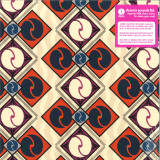
The third release from the renowned W3IRD.LTD label continues its exploration of deep house, minimal, and groove-focused sounds in the exclusive ‘only vinyl’ format. Major Tom EP, created by ØNE+1 (Rubén Solar & Alexander) and Chelu García, delivers a perfect blend of elegance and dancefloor energy.
Side A features “La 2 (Steve O’Sullivan Remix),” a deep, raw old-school masterpiece with hypnotic percussion and a minimal aesthetic, followed by “La 1 (Maher Daniel Remix),” an exquisite reinterpretation with added groove and elegant minimal-house elements.
Side B begins with “La 1 (Original Mix),” a dreamy deep house track enriched by Chelu’s signature keyboard melodies, and closes with “La 2 (Original Mix),” a dynamic fusion of powerful percussion and evocative melodies.
Produced in collaboration with Dancing Vinyl Distribution, this exclusive vinyl is available for both retail and wholesale purchase. Don’t miss this high-quality release, perfect for selectors and collectors alike!
out of Stock
Last delivered 8 months ago available to reorder, subject to availability
South African Modern Soul/Jazz-Funk - Originally released in 1979, Cape Town – Re-mastered by Simbad
First time re-issued on vinyl, “Expressions” is the 3rd album from one of the greatest South African bands ever, I named Pacific Express. Now think Stevie Wonder and Weather Report, then take a serious established local band, and you have here a “Cape Town version” with their own talents. Between Modern soul and Jazz-Funk, no doubts, this record is a gem!!! Fred Spider*
“This name evokes awe and admiration in equal measure among musicians across the country. They became a crucible where budding local musicians built their reputations before going on to become recording artists, band leaders, and musical legends (like Jonathan Butler did on Expressions*).
The greatest Pacific Express legacy, apart from the memorable music they made and recorded, was their role in helping establish the distinctive sounds of South African music generally and Cape Town jazz in particular. When Producer Tully McCully wanted straight, solid drumming for the Expressions album, Momple delivered the groove, swing, and drive for a funky album.” Michael Britton
Artwork by Fred Spider – Graphist designer by Graeme Arendse
Vocals, Guitar: Jonathan Butler, Bass: Paul Abrahams
Drums, Percussion: Jack Momple, Vocals, Percussion: Zayn Adams, Keyboards, Trumpet, Arranged By String: Tony Cedras, Guest, Saxophone: Barney Rachabaney, Guest, Trumpet: Stompie Manana,
Executive-Producer: Paddy Lee Thorp, Producer: Tully McCully
out of Stock
Last delivered 19 months ago available to reorder, subject to availability
Few sounds transcend time and space quite like the driving pulse of Afrobeat, and few artists, for that matter, have defined their own domains quite as profoundly as Tony Allen—the very beat of Afrobeat itself. In 2011, Allen recorded one of his inimitable rhythmic dialogues as part of the Afrobeat Makers Series for the Parisian imprint Comet Records. Charged with the same fervour for uninhibited expression that defined his trailblazing career, Tony Allen’s drumming, free from convention and charting its own course, emanates a cadenced stream of consciousness that speaks its own truth.
If Allen’s language was his beat, then on this record, La BOA—La Bogotá Orquesta Afrobeat—becomes his latest and most fitting interlocutor. What began as a tribute—a song named after Allen—now feels like the prelude to a deeper dialogue in a meeting that seems more like fate than mere happenstance.
Led by producer Daniel Michel, the ever-evolving band has spent over ten years embodying the fluid, transformative spirit of Afrobeat, imprinting it with their distinctly Colombian sensibilities. From Casa Mambo in Bogotá, Michel’s Mambo Negro Records has become a cornerstone of Colombia’s underground scene championing Afro-Colombian and independent music throughout that time.
Across this LP, Allen’s recordings lay down the canvas upon which La BOA paints its own vision of Afrobeat—raw and expansive, locking step with his drum tracks while building around the unmistakable blueprint of their Colombian rhythms: exuding Caribbean beat, rolling with Pacific groove, and, above all, shaped by the rarefied air of the Andean melting pot that is Bogotá. What ensues is an enduring conversation that crosses eras, borders, even life and death—a celebration of the passing of the baton and the boundless nature of Afrobeat as a genre that refuses to settle. Where the beat of Lagos meets the brass of Bogotá, so too La BOA meets Tony Allen.
out of Stock
Last delivered 18 months ago available to reorder, subject to availability
Soul Station is a masterpiece of melodic improvisation, rhythmic interplay, and emotional depth and showcases Hank Mobley's ability to create music that swings hard but remains accessible and lyrical
The album remains a classic in the jazz canon, essential not only for understanding Mobley's contribution to jazz but also for appreciating the broader hard bop movement of the late 1950s and early 1960s. Released in 1960 it is widely regarded as one of his finest works and a classic in the hard bop genre: Hank Mobley was part of the first wave of musicians who helped shape the hard bop sound, a style that blends bebop with blues, gospel, and R&B influences. Mobley was known for his smooth, melodic playing, and while he didn't receive the same level of fame as contemporaries like John Coltrane or Sonny Rollins, he was respected for his consistency and lyrical improvisation. The album features an exceptional quartet of jazz legends: Hank Mobley, Art Blakey, Wynton Kelly and Paul Chambers: this quartet is especially notable because Mobley recorded with Art Blakey's Jazz Messengers and the rhythm section (Kelly and Chambers) was a part of the classic Miles Davis quintet at the time. Their tight interplay and experience shine throughout the record. "Soul Station" stands out because it encapsulates Mobley's mature, melodic sound and his ability to craft memorable, emotionally resonant music without relying on flash or pyrotechnics. It's a must- listen for any jazz enthusiast, and it's often recommended as a starting point for those exploring Mobley's extensive discography.
out of Stock
Last delivered 19 months ago available to reorder, subject to availability
It took a village to create Le Motel’s Odd Numbers / Số Lẻ. Beneath its pulsing, shimmering tones, the record is alive with the sounds of everyday life—purring mopeds, idle whistling, the din of kitchens and whisper of rain, voices joyful and contemplative, scenes of bustling cities and domestic intimacy.
Le Motel—who runs the Brussels-based record label Maloca—gathered sounds, photographs, and videos while traveling in Vietnam in 2023. From Hanoi he ventured to Hmong communities in the mountains near the border with China, building out a network of contacts gathered from friends and friends of friends. But Odd Numbers / Số
Lẻ—which takes its title from traditional Vietnamese numerological beliefs and customs—is wholly unlike the extractive product typical of exploitative modes of Western tourism; the album’s final shape was deeply dependent upon the participation of the people the artist met in Vietnam.
Back in Brussels after his travels, as Le Motel began working with his materials, he sent early drafts to his contacts, inviting their input. This back-and-forth eventually yielded a dynamic collective effort in which nine of the album’s 15 tracks feature multiple composer credits. Among the album’s diverse collaborators are Yvonne Quỳnh-Lan Dươn, an educator and ethnomusicologist; Chi Chi, the daughter of a Hmong shaman; and Phapxa Chan, who contributes three poems inspired by landscape and Le Motel’s own music (and, in one case, psychedelics).
The result is an album that is not about making sound, broadcasting it as a one-way communication, but instead about the empathic practice of listening—about listening as an integral and even ethical part of musical creation, even (especially!) when that music is created on a computer, rather than conjured by a group of players sharing space in real time. It’s an album that adopts many of the traditional trappings of ambient music while reminding us of the importance of intentional modes of creation. Brian Eno famously said that ambient music must be as ignorable as it is interesting, but Le Motel’s Odd Numbers / Số Lẻ suggests, to the contrary, the richness of experience available to us should we make the effort to open our ears.
Complementing the album, Le Motel’s Odd Numbers / Số Lẻ also takes the form of a multimedia exhibition including photographs, video, and text-based works created in collaboration with Belgian designer and programmer Antoine Jaunard and Vietnamese poet Phapxa Chan. The exhibition is on view from January 23 until March 2, at Brussels’ 254Forest gallery, as part of Photo Brussels Festival 2025.
out of Stock
Last delivered 13 months ago available to reorder, subject to availability
With an intrigue for a particular niche of old UK hardcore which takes cues from Sheffield bleep ambience, heady rave futurism and soft, almost new age synth pads, Blank Mind presents ‘Lost Paradise: Blissed Out Hardcore 91-94’. Though the records gathered for the compilation span a short three-year period and bridge the gap between scenes, the collection manages to find a sweet spot where the influence of Warp’s Artificial Intelligence, back room chill out sonics and the nascent jungle boom meet with elements of Italian piano house and slower breakbeat cuts.
Opting to focus on atmosphere to highlight shared connections; in this case the duality of often serene and calming soundscapes with frenzied breaks and bass (see Hedgehog Affair’s ‘Parameters’ and Luxury’s ‘Twirl’ respectively); Lost Paradise is a formidable collection of tracks plucked from a thriving time for British dance music experimentation. The general themes of ascension and escapism channelled through digital samplers are also inescapably linked to a turbulent time in politics, beginning in the post-Thatcher years and culminating in the year the harshest anti-rave Criminal Justice Act came into force.
Initially building the compilation around DJ Mayhem’s track ‘Inesse’, Blank Mind label founder Sam Purcell and Amsterdam based producer Tammo Hesselink began a process of swapping favourites and deep cuts to spread across this 2x12” doublepack. The compilation avoids any obvious centrepieces through masterful sequencing, allowing for moments of refrain and tempo changes in a way that helps add to their overall vision of what this music is and can be; “We wanted to frame hardcore in a different light, looking at this idea of ecstasy through the traditional meaning of the word and exploring that symbolism”. By drawing from what some might consider the softer edges of the movement, the pair offer a look into the relevance of these tracks in the contemporary era, where the past years have seen both an explosion in popularity of old ambient/new-age music and a certified jungle revival.
out of Stock
Last delivered 12 months ago available to reorder, subject to availability
Dennis Brown was a Jamaican reggae singer and one of the most popular artists in the history of Jamaican recorded music.
Bob Marley cited Brown as his favourite singer, dubbing him “The Crown Prince of Reggae”, and Brown would prove influential on future generations of reggae
singers. In 2023, Rolling Stone ranked Brown at number 67 on its list of the 200 Greatest Singers of All Time.
This album includes the classic tracks “Silhouettes “, “Lips of Wine”, “Changing Times” and “I Didn’t Know”.
Super Reggae & Soul Hits is available as a numbered limited edition of 500 copies on orange coloured vinyl
out of Stock
Last delivered 19 months ago available to reorder, subject to availability
There are records that come from the soul. No matter how primitive may be the recording techniques the musician has access to, the soul gets its way to the heart and mind of the listener. Samtvogel' is one of those records. Günter Schickert recorded that amazing piece of human greatness in 1974, using the media he had at the time, putting his brain at work to find the best way of taping everything he had to say. When I was recording Samtvogel' in 1974 I had only 2 Taperecorders. I played one track and while listening I added the second one. And so on. Four times. When I mixed all together I borrowed a 3rd taperecorder. And still added the last track to the master. I had a small mixer with 2 stereo and 1 mono but it was possible to pan tracks. No equalization. It all came out of my still living G2000 Dynacord guitar amplifier, of course valve, with no master, even the voice recorded through it. If I made a mistake in 1 track I had to repeat it from the beginning. And if while mixing I was not fast enough in changing the tape I had to start again. So it took me more than 3 months to get ready.'
Thanks to these three months of work, between June and September of 1974, 'Samtvogel' was privately issued that same year. It would later be issued on the Brain label, with a small change in the artwork -titles added to the front cover, which weren't on the original private pressing. Brain also reissued it on the label's Rock On Brain' LP series, this time with a completely different sleeve. The album contained two tracks on side one and just one on side two, and its sound has often been compared to the most explorative works of Syd Barret - however it must be pointed that Schickert did not need any mind spreading substances to allow his sounds float out of his mind & soul, they just came out in the most natural way. It will also appeal to fans of the echoed athmosferic guitar work of other kraut innovators such as Ash Ra Tempel, Manuel Götsching or A.R. & The Machines, and some may find on the vocal passages certain resemblances to Damo Suzuki on Can's 'Tago-Mago' era.
The Wah Wah reissue is housed in a quality sleeve that reproduces that of the original 1974 private pressing and features a 4 page insert with liners and photos - sound remastered at Eastside mastering Berlin. Get this bird now, before it flies away again!
There are records that come from the soul. No matter how primitive may be the recording techniques the musician has access to, the soul gets its way to the heart and mind of the listener. Samtvogel' is one of those records. Günter Schickert recorded that amazing piece of human greatness in 1974, using the media he had at the time, putting his brain at work to find the best way of taping everything he had to say. When I was recording Samtvogel' in 1974 I had only 2 Taperecorders. I played one track and while listening I added the second one. And so on. Four times. When I mixed all together I borrowed a 3rd taperecorder. And still added the last track to the master. I had a small mixer with 2 stereo and 1 mono but it was possible to pan tracks. No equalization. It all came out of my still living G2000 Dynacord guitar amplifier, of course valve, with no master, even the voice recorded through it. If I made a mistake in 1 track I had to repeat it from the beginning. And if while mixing I was not fast enough in changing the tape I had to start again. So it took me more than 3 months to get ready.'
Thanks to these three months of work, between June and September of 1974, 'Samtvogel' was privately issued that same year. It would later be issued on the Brain label, with a small change in the artwork -titles added to the front cover, which weren't on the original private pressing. Brain also reissued it on the label's Rock On Brain' LP series, this time with a completely different sleeve. The album contained two tracks on side one and just one on side two, and its sound has often been compared to the most explorative works of Syd Barret - however it must be pointed that Schickert did not need any mind spreading substances to allow his sounds float out of his mind & soul, they just came out in the most natural way. It will also appeal to fans of the echoed athmosferic guitar work of other kraut innovators such as Ash Ra Tempel, Manuel Götsching or A.R. & The Machines, and some may find on the vocal passages certain resemblances to Damo Suzuki on Can's 'Tago-Mago' era.
The Wah Wah reissue is housed in a quality sleeve that reproduces that of the original 1974 private pressing and features a 4 page insert with liners and photos - sound remastered at Eastside mastering Berlin. Get this bird now, before it flies away again!
There are records that come from the soul. No matter how primitive may be the recording techniques the musician has access to, the soul gets its way to the heart and mind of the listener. Samtvogel' is one of those records. Günter Schickert recorded that amazing piece of human greatness in 1974, using the media he had at the time, putting his brain at work to find the best way of taping everything he had to say. When I was recording Samtvogel' in 1974 I had only 2 Taperecorders. I played one track and while listening I added the second one. And so on. Four times. When I mixed all together I borrowed a 3rd taperecorder. And still added the last track to the master. I had a small mixer with 2 stereo and 1 mono but it was possible to pan tracks. No equalization. It all came out of my still living G2000 Dynacord guitar amplifier, of course valve, with no master, even the voice recorded through it. If I made a mistake in 1 track I had to repeat it from the beginning. And if while mixing I was not fast enough in changing the tape I had to start again. So it took me more than 3 months to get ready.'
Thanks to these three months of work, between June and September of 1974, 'Samtvogel' was privately issued that same year. It would later be issued on the Brain label, with a small change in the artwork -titles added to the front cover, which weren't on the original private pressing. Brain also reissued it on the label's Rock On Brain' LP series, this time with a completely different sleeve. The album contained two tracks on side one and just one on side two, and its sound has often been compared to the most explorative works of Syd Barret - however it must be pointed that Schickert did not need any mind spreading substances to allow his sounds float out of his mind & soul, they just came out in the most natural way. It will also appeal to fans of the echoed athmosferic guitar work of other kraut innovators such as Ash Ra Tempel, Manuel Götsching or A.R. & The Machines, and some may find on the vocal passages certain resemblances to Damo Suzuki on Can's 'Tago-Mago' era.
The Wah Wah reissue is housed in a quality sleeve that reproduces that of the original 1974 private pressing and features a 4 page insert with liners and photos - sound remastered at Eastside mastering Berlin. Get this bird now, before it flies away again!
The very first (and long overdue) career-spanning retrospective from Soul music legend P.P. Arnold • A 57 song 3CD set, or 25 song 2LP set featuring singles, album tracks, demos, and previously unreleased songs • A stylishly packaged collection with new sleeve notes by author Jude Rogers • A companion piece to P.P. Arnold's critically acclaimed autobiography Soul Survivor The term "well-established" might be appropriate for some artists but it barely begins to cover the career of the phenomenal P.P. Arnold, whose records and performances are now in their seventh decade.
Her consistently excellent music covers multiple genres, her high-profile admirers and collaborators are plentiful, and yet 'Soul Survivor - A Life In Song' is the first collection dedicated to this extraordinary body of work. Compiled by the artist, 'Soul Survivor - A Life In Song' is being released on a 57 song 3CD set, and 25 song 2LP set, both formats housed in an eye-catching sleeve created by photographer (and close friend) Gered Mankowitz, with extensive new sleeve notes by author Jude Rogers.
Alongside key singles and album tracks it includes previously unreleased recordings, demo versions, live performances, and some rare mixes that are being reissued for the very first time. From her early days at Andrew Loog Oldham's Immediate label (where she "became one of us", according to Andrew) her allies, associates, and working partners have included the Small Faces, Cat Stevens, Mick Jagger, Barry Gibb, Eric Clapton, Andrew Lloyd Webber, The Blockheads' Chaz Jankel, Roger Waters, Ocean Colour Scene, The Blow Monkeys' Dr. Robert, and Paul Weller. In 2022 P.P. Arnold told her extraordinary life story in her critically acclaimed autobiography Soul Survivor (Mojo magazine called it "a jaw-dropping memoir"); now that book has the soundtrack that it deserves.
Two records came out in 1988 that forever changed the perception of "experimental" or "serious" music produced in Portugal. These were "Plux Quba" by Nuno Canavarro and "Música de Baixa Fidelidade" by Tózé (António) Ferreira. Both were released by the same label - Ama Romanta -, an influential independent imprint closely linked to avantgarde pop band Pop Dell'Arte. Because those records appeared in what could be perceived as an "alternative pop" framework, they rescued this difficult music from Academia. It helps that Canavarro played in a successful new wave pop band (Street Kids) during the period 1980-83. By association, being a friend since 1976, António was in close contact with many of the musicians and bands that were part of the equally celebrated and detested Portuguese Rock Boom (roughly 79-82).
He was not a musician then but through his friendship with Canavarro, who had the means to acquire electronic equipment, António became involved with that equipment and shared Canavarro's passion for experimentation and curiosity for knowledge. They tried to get hold of as many technical magazines as possible and learn while testing ideas. In 1983, Street Kids were about to break up, young lives drafted into the Army and maybe, in Canavarro's case, a whole new passion for challenging music similar to his bandmate Nuno Rebelo, by then in the process of discovering a wide range of "other" music mainly through Jorge Lima Barreto. Barreto, who had started Telectu with Vítor Rua, possessed a huge book and record collection and, like Rua before them, Canavarro, Rebelo and Ferreira became fascinated by the pool of knowledge they now had access to by frequenting Barreto's house in Lisbon. He was roughly a decade older, had published several books and other writings throughout the 1970s, cultivated an anarchic stance and a penchant for cultural indoctrination. Rebelo was the first to be introduced via his contact with Rua (who had invited him to play in his other band GNR).
Overwhelmed, he felt the need to share his enthusiasm with friends and eventually took a few to the house in true pilgrimage fashion. To see the Light. Among the few he led there was even João Peste, founder of Ama Romanta. Canavarro and Ferreira preceded him.
Ferreira recalls an exciting learning process added to his experiments with Canavarro's array of synths such as the Korg Ms 20, Korg polysix, ARP Axxe, Roland SH-01, the Ensoniq Mirage sampler... He read in a magazine article about someone who had studied at the Institute of Sonology (then in Utrecht, Netherlands) and went there during a vacation trip in the Summer of 1983. He became excited by the prospect of studying at the Institute but money was a problem. Canavarro, on the other hand, was admitted there in the following year. Back in Portugal, Ferreira eventually abandoned his Chemical Engineering studies in Lisbon's Technical Institute in favour of a more focused music practice. He collaborated with Telectu during 1984 and 85 as a sort of technical engineer, implementing some recording solutions and background tapes and went to work at a thermoelectric power plant in Sines, hoping to make enough money to fund his musical studies. He did and proceeded with the paperwork for admission at the Institute of Sonology, now based in The Hague. António studied there in 1986-87 and the present album includes two compositions developed at the Institute: "More Adult Music" and "This Is Music, As It Was Expected", both featuring the voice of Rodney Waschka II. Among other activities and talents, Rodney is an expert in computer music and to António his voice sounded similar to Robert Ashley's, whose work he admired.
What happened at the Institute was a systematization of António's self-taught practice. Computer software, Musique Concrète, noise and silence, organisation of abstract ideas and sounds. The original notes on the back sleeve of the LP give some indication of process and thinking, but a more detailed account was given by António in the liner notes of the CD reissue in 2002, which are also included in this 2025 LP reissue.
The music sounds deep and detailed, despite the fact of António calling it low-fi ("Baixa Fidelidade"). It flows like an improvised performance where several musicians might be responding to each other, respectful of their mutual space. Drama occurs, as a natural emotional connection is sought by the listener. Piano, bells, drone, processed voices, even the clear narrative of Rodney Waschka II, contribute to create a sort of alternative perceptual reality. The sounds are almost tangible, more a part of the physical world than ethereal manifestations and thus it would not be correct to invoke "ambient music" as a selling point. But although "physical" and distinct, this music is still alien, more so in Portugal's 1988 environment. In March, helped by Canavarro, António set up a home studio and there he recorded the remaining material for this album: "Algumas Pessoas Olharam O Sul E Viram Deserto", "Um Som, Seguido De Uma Cena Negra E Malva" and "O Verão Nasceu Da Paixão De 1921".
"Música de Baixa Fidelidade" stands not only as a proof of great resilience but as one of those magnificent works of art coming from someone who balanced technical inclination and emotional sensibility. Because of that, Tózé Ferreira is able to decode the phantom world of sound for anyone who cares to experience the sensation of inhabiting a version of the Future. First ever vinyl reissue, reproduction of the original artwork with an additional insert. Made in collaboration with the artist and the support of Paulo Menezes (Plancton Music), who provided valuable assistance. Remastered by Taylor Deupree.
Anxious’ second album Bambi arrives this winter on Run For Cover Records. It’s been a whirlwind few years for the Fairfield, Connecticut five-piece – since the release of their debut album Little Green House, there’s been little time for anything other than consistent touring with bands like Hot Mulligan, One Step Closer and The Wonder Years. Somewhere during that endless grind, vocalist Grady Allen was sitting in a hotel room and stumbled upon a name typed into a long-forgotten memo on his phone: Bambi. “We should have named the band Bambi,” he recalls admitting to his bandmates. Bambi stuck with the band after that night and eventually it evolved from a “what-if” into the name of Anxious’ second full-length album.
Bambi is a record of remarkable growth, depth, ambition, and energy. It takes all the unsolvable and unavoidable problems of exiting adolescence and makes them resonate in urgent and authentic new ways. The album has deep roots in the storied lineage of Northeast tri-state hardcore and emo, but it also fully embraces the widescreen alternative rock songwriting at which Anxious have previously only hinted. It’s a statement of purpose, the kind of album that comes from a band reconciling where they’ve been with where they want to go. Bambi is the sound of Anxious putting everything on the line–and coming out on the other side better than ever.
Inspired by “big swing” records like Blink-182’s self-titled or Jimmy Eat World’s Clarity, Anxious set out to redefine the band without losing sight of what made them work in the first place. Tracks like “Head & Spine,” “Sunder,” and “Tell Me Why” showcase the scope of Anxious’ evolution, tapping crunchy ‘90s rock guitarwork, layered ‘60s-esque harmonies, and crisp, modern production that captures the unrivaled energy of seeing the band play live.
Red Marbled Vinyl. Play Dirty is the fourth studio album by British heavy metal band Girlschool released in 1983 and produced by Noddy Holder and Jim Lea from the hard rock band Slade. It has very polished sound, filled with keyboards, choruses andmelodies, containing covers of the Slade songs ,High & Dry" and ,Burning in the Heat" and of T.Rex's ,20th Century Boy". Drummer Denise Dufort rated the album as her favourite of all the band`s career saying it had a more mature sound to it and comparing it to Def Leppard. Girlschool are thelongest-running all-female rock band, still active after more than 40 years. During their career they travelled the world, playing in many rock and metal festivals and co-headlining or supporting important heavy metal bands. They maintain a worldwide cult following, and are an inspiration for many female rock musicians.
Red Vinyl. Play Dirty is the fourth studio album by British heavy metal band Girlschool released in 1983 and produced by Noddy Holder and Jim Lea from the hard rock band Slade. It has very polished sound, filled with keyboards, choruses andmelodies, containing covers of the Slade songs ,High & Dry" and ,Burning in the Heat" and of T.Rex's ,20th Century Boy". Drummer Denise Dufort rated the album as her favourite of all the band`s career saying it had a more mature sound to it and comparing it to Def Leppard. Girlschool are thelongest-running all-female rock band, still active after more than 40 years. During their career they travelled the world, playing in many rock and metal festivals and co-headlining or supporting important heavy metal bands. They maintain a worldwide cult following, and are an inspiration for many female rock musicians.
Maud the moth, the solo project of Spanish-born and Scotland-based pianist, singer and songwriter Amaya Lopez-Carromero announces her new album, The Distaff, to be released via The Larvarium (digital +CD) and La Rubia Producciones (vinyl) Amaya has long used the mantle of Maud the moth as an alter-ego, a séance-like conduit to explore themes of rootlessness, identity and trauma. The Distaff in particular refers to the stick or spindle onto which wool or flax is wound for spinning, and an object which has historically been used across multiple cultures as a symbol wielded by the “virtuous woman”, an authoritarian ideal around which much of the trauma surrounding the feminine coalesces. The album takes the form of a sort of self reflective and surreal autobiography. It was in part inspired by the poem of the same name written by the Greek poet Erinna, as she mourns her friend's loss of individuality and agency in exchange for marriage - and therefore safety and acceptance in the eyes of society. The album exists in an ethereal but violent world of aesthetic overlaps where time stands still and fictional and reimagined folk sits at the table with Maud the moth’s usual sonic menagerie. It is the result of a lifetime of obsession with sound and music, where glimpses of musical genre offer insight into Amaya’s artistic interests and her participation in the underground European scene for many years, in bands such as healthyliving. Heavier, darker, and more exposed than any of her previous works it features some highly accomplished artists, such as Seb Rochford (Patti Smith, Polar Bear, Sons of Kemet, Pulled by magnets, etc.) on drums, Alison Chesley (Helen Money) on cello, Fay Guiffo on violin and Scott McLean (Ashenspire, healthyliving, Falloch) on guitar, saxophone and synthesiser. Maud the moth shares the video for "Siphonophores". About the track, Maud the moth says; I wrote "Siphonophores" on guitar, during the first lockdown, a period where I was kind of trapped between an almost empty flat in Edinburgh and Dresden. It was an incredibly harrowing time, but also one of hope and where important new things were being birthed. I felt incredibly sensitive to everything, almost like life was happening in slow motion. I´m not a confident guitarist since I am completely self-taught, but, probably because of this, I feel that this instrument allows me to focus on aspects of the songwriting that I normally overlook when writing on piano, and I think it was a necessary step for this song to exist. Something else which I've been really exploiting lately and features strongly in the album is the percussive capabilities of the piano, and in particular, of the sustain pedal when mic'd up. This can be heard very clearly at the beginning of "Siphonophores". Written and arranged by Amaya, with some contributions in the later role from the aforementioned collaborators, the album presents nine tracks originally written entirely on acoustic piano as accompanied voice pieces, in pure singer-songwriter fashion. The album was co-produced and recorded by Scott and Amaya in different studios across the UK between January and July of 2024, in a process that started shortly after the 2020 pandemic and finished alongside the album recordings in a detailed, organic and at times obsessive process aimed primarily at capturing the natural dynamics and expression of free performance. The Distaff was mixed in its entirety by Scott and mastered at Abbey Road by Alex Wharton (Radiohead, My Bloody Valentine, Aurora, Kathryn Joseph etc.) Despite being born of a very personal point of view, the album lacks a specific narrator and was conceived almost as a sonic trousseau, where the needle point, silks and other family heirlooms have been swapped for out-of-the-corner-of-the-eye memories of rural Spain by the vineyards, family disputes, old tales of wartime pains, generational breaches and finally the conflict of migration and estrangement. The songs paint dystopian pastoral scenes which evolve throughout the span of one fictional day outside of time and coherent locations and where imagination (often the only account surviving from traumatic events and gaslighting) has become indistinguishable from fact. The Distaff attempts to acknowledge past trauma, comprehend and process some of the more difficult aspects which have contributed to our darker self and offer closure and solace through creative catharsis.
Maud the moth, the solo project of Spanish-born and Scotland-based pianist, singer and songwriter Amaya Lopez-Carromero announces her new album, The Distaff, to be released via The Larvarium (digital +CD) and La Rubia Producciones (vinyl) Amaya has long used the mantle of Maud the moth as an alter-ego, a séance-like conduit to explore themes of rootlessness, identity and trauma. The Distaff in particular refers to the stick or spindle onto which wool or flax is wound for spinning, and an object which has historically been used across multiple cultures as a symbol wielded by the “virtuous woman”, an authoritarian ideal around which much of the trauma surrounding the feminine coalesces. The album takes the form of a sort of self reflective and surreal autobiography. It was in part inspired by the poem of the same name written by the Greek poet Erinna, as she mourns her friend's loss of individuality and agency in exchange for marriage - and therefore safety and acceptance in the eyes of society. The album exists in an ethereal but violent world of aesthetic overlaps where time stands still and fictional and reimagined folk sits at the table with Maud the moth’s usual sonic menagerie. It is the result of a lifetime of obsession with sound and music, where glimpses of musical genre offer insight into Amaya’s artistic interests and her participation in the underground European scene for many years, in bands such as healthyliving. Heavier, darker, and more exposed than any of her previous works it features some highly accomplished artists, such as Seb Rochford (Patti Smith, Polar Bear, Sons of Kemet, Pulled by magnets, etc.) on drums, Alison Chesley (Helen Money) on cello, Fay Guiffo on violin and Scott McLean (Ashenspire, healthyliving, Falloch) on guitar, saxophone and synthesiser. Maud the moth shares the video for "Siphonophores". About the track, Maud the moth says; I wrote "Siphonophores" on guitar, during the first lockdown, a period where I was kind of trapped between an almost empty flat in Edinburgh and Dresden. It was an incredibly harrowing time, but also one of hope and where important new things were being birthed. I felt incredibly sensitive to everything, almost like life was happening in slow motion. I´m not a confident guitarist since I am completely self-taught, but, probably because of this, I feel that this instrument allows me to focus on aspects of the songwriting that I normally overlook when writing on piano, and I think it was a necessary step for this song to exist. Something else which I've been really exploiting lately and features strongly in the album is the percussive capabilities of the piano, and in particular, of the sustain pedal when mic'd up. This can be heard very clearly at the beginning of "Siphonophores". Written and arranged by Amaya, with some contributions in the later role from the aforementioned collaborators, the album presents nine tracks originally written entirely on acoustic piano as accompanied voice pieces, in pure singer-songwriter fashion. The album was co-produced and recorded by Scott and Amaya in different studios across the UK between January and July of 2024, in a process that started shortly after the 2020 pandemic and finished alongside the album recordings in a detailed, organic and at times obsessive process aimed primarily at capturing the natural dynamics and expression of free performance. The Distaff was mixed in its entirety by Scott and mastered at Abbey Road by Alex Wharton (Radiohead, My Bloody Valentine, Aurora, Kathryn Joseph etc.) Despite being born of a very personal point of view, the album lacks a specific narrator and was conceived almost as a sonic trousseau, where the needle point, silks and other family heirlooms have been swapped for out-of-the-corner-of-the-eye memories of rural Spain by the vineyards, family disputes, old tales of wartime pains, generational breaches and finally the conflict of migration and estrangement. The songs paint dystopian pastoral scenes which evolve throughout the span of one fictional day outside of time and coherent locations and where imagination (often the only account surviving from traumatic events and gaslighting) has become indistinguishable from fact. The Distaff attempts to acknowledge past trauma, comprehend and process some of the more difficult aspects which have contributed to our darker self and offer closure and solace through creative catharsis.
When Apollo Brown and Crimeapple connect, it’s like old film grain under a projector— gritty, timeless. This album isn’t just boom-bap nostalgia; it’s a rebirth of smoke-stained bars, where Crimeapple plays both poet and philosopher, flipping bilingual manteca rhymes with a chef’s precision, stirring up the street grime and serving it with a side of sharp wit. Apollo Brown, as always, builds his beats like ancient architecture—dusty, soulful, and heavy with forgotten stories. These tracks sound like the cracks in the sidewalk talking back, the perfect companion for long nights and even longer thoughts. It’s a sonic novel, a street sermon, and Crimeapple’s wordplay dances through it like grease sizzling in a pan, a reminder that even in decay, there’s beauty. This, Is Not That.
The new recording of The Book of Sounds is an intimate exploration of the piano by pianist Carlos Cipa - a way of looking into the sound, of listening into the moment when Cipa's fingers press down on the piano keys. The Book of Sounds, composed between 1979 and 1982 by composer and pianist Hans Otte, is a musical pendulum movement of one hour in twelve 'pieces', as the composer himself describes them. Chords and melodies repeat themselves, sometimes quickly, sometimes slowly; they follow each other in harmonic cadences and yet never dissolve - a timeless back and forth.
The Book of Sounds is the European-German answer to the concert music of American minimalism. But it is also the essence of many questions about society and the human condition at that time. Inspired by Zen Buddhism, Otte was convinced that a return to simplicity, to the unagitated - a piano, harmonic cadences, a middle register - frees the listener to focus on what is really important in art: the human being. Introspection begins with listening. Seldom have simple chords and melodies been so selectively staged. It is a process of endless reduction - no wild sound dramaturgies, no climaxes, hardly any beginning or end. The interpreting pianist simply prepares a tableaux of perception for the listener. Cipa naturally sets accents; he recorded the 12 pieces on three different pianos - a Steinway grand piano, a Yamaha piano, and a Yamaha CP-70, an early electric piano - to help shape the tonal characteristics.
Carlos Cipa hits the nerve of the times with this new recording. What music can be as art is still up for debate today. The Book of Sounds is not 'art-proof' and in this it is still a provocation today; absolutely unspectacular and practising relaxation. It is a wonderful invitation to feel, experience, and perhaps even find oneself in the confrontation with the work - and for a moment not to fuel the discourse. Cipa, who otherwise appears as a composer himself, here carries out Otte's intended gesture of withdrawal in a double sense and steps into the background as creator but also interpreter, in order to bequeath The Book of Sounds to the loudspeakers and headphones at home in one step forward.
Rising indie soul artist Sevens announces the release of his highly anticipated debut album, Sincerely, Sevens, on February 21, 2025. At just 24 years old, Sevens emerges as a compelling voice in the contemporary soul scene, blending indie soul, neo-soul, and jazz into a collection of sincere, heartfelt songs.
With a distinct baritone voice and a gift for storytelling, Sevens explores themes of love, growth, and introspection throughout the 9-track record. His philosophy is simple: less is more. Crafted over a span of three years, much of the album was created in Sevens' bedroom, showcasing his skills not only as a songwriter and vocalist but also as a multi-instrumentalist and producer.
Sincerely, Sevens captures the artist in his purest form—a deeply personal work that touches the soul. From sparse, intimate arrangements to warm, groove-infused instrumentation, the record embraces vulnerability while exuding timeless charm.
The album features contributions from trusted collaborators: Boris Van Overschee (co-producer / Delv!s, Portland) Willem Ardui (additional production / Blackwave.) and David Poltrock (additional keys)
Tobie Speleman expertly handled the final mix, ensuring every note resonated with clarity and purpose.
Reflecting on the album, Sevens shares: “I wanted to feel more with less. I wanted to evoke, I wanted to touch. Parts of me I’ve never gone. It is honest, it is true. It is me.”
With Sincerely, Sevens, the young artist solidifies his position as one to watch—an emerging voice with both depth and authenticity.
Music is storytelling, and some of the best stories have been told through centuries-old traditional folk songs. On their new album ‘Northern Sky’, The Wellermen have given this rich traditional musical history a new sound, hoping to continue to captivate millions of fans around the world. It helps that The Wellermen’s four members all bring their respective experience and perspectives to the table. The fact that they’re from different corners of the world really adds something to the music - there’s something romantic about the way the members have to go on a voyage to see each other.
The Wellermen’s history is well-known: having been the originators of the sea shanty trend on Tiktok, they’ve since gone from strength to strength, gaining a huge following across social media with new trends linked to their music. Their versions of ‘Misty Mountains’ and Ed Sheeran’s ‘Nancy Mulligan’, along with their spine-tingling rendition of ‘Hoist The Colours’ have racked up billions of views across Tiktok and youtube and over 110m streams of their debut album, and led them to appearances on shows like Ant and Dec, LAst Week Tonight with Jon Oliver, The Colbert Show and more.
The group have now returned with their new album ‘Northern Sky’, where they have gone above and beyond to show they are indeed masters of their craft. Recorded in a cottage in the picturesque hills of Surrey, they poured their considerable knowledge and prowess into the album’s 12 tracks, all of which fit their love of storytelling. On the Scottish folk song ‘Wild Mountain Thyme’, for example, the group’s harmonies and rich vocals capture the nostalgic, wistful nature of the song, which speaks of love and nature’s beauty. The group’s tribute to Johnny Cash on the song ‘Hurt’ is set to be a fan favourite - melding the raw and uninhibited torment of the original with the dignified but heart-rending grief of Cash’s version.
Elsewhere on the record the original song and title track ‘Northern Sky’ is a perfect demonstration of the Wellermen’s gift for creating a real dynamic, steering it gently from the darker, more ominous numbers into something truly uplifting. ‘Tall Tales’, another original, is a wonderful portrayal of humorous one-upmanship - a call-and-response that is likely to get crowds’ feet stomping and hands clapping. Say the Wellermen: “It’s all about connection and storytelling, and we hope the listeners are able to find something meaningful.” One thing is absolutely certain: these talented young men are in it for the long haul.
"For in My Way It Lies" ist nach geraumer Wartezeit endlich re-releaset. Das Debut-Album von Jesper Munk kommt punktgenau zur Yesterdaze-Tour die - der Titel verrät ist - die Versöhnung mit der eigenen Geschichte und Jugend feiert. "For In My Way it Lies" brachte in seinem Erscheinungsjahr 2013 den damals 21jährigen Musiker von ganz unten über Nacht nach ganz oben - Für Jesper Munk ist es das Album an dem er für immer gemessen wird; dem man alles verdankt und an dem man sich dann doch abarbeiten musste... Er nannte es einmal "im Auf und Ab des Lebens, das eine Dinge, dass ihn immer begleitetet hat und immer auf seiner Seite war"... Dieses unbedarfte Blues Album, das so jung wirkt, in manchem, und so alt in anderem, war der letzte Release des Künstlers auf einem Indie-Label, bevor Jesper Munk 2025 bei der Major Industrie signte. Seit 2024 ist Jesper Munk auf Glitterhouse Records - wir sind privilegiert, diesen wichtigen Re-Release von "For In My Way It Lies" machen zu dürfen!"
Amsterdam-based keyboardist, producer, arranger and DJ Soul Supreme reached out to NYC drummer Jay Mumford in 2021 to lay the down groove on his re-imagining of Q-Tip and J-Dilla's "Let's Ride". That paved the way for future collaborations: a cover of A Tribe Called Quest's "Award Tour (We Gettin' Down)" and two tunes on Soul Supreme's Poetic Justice LP. But when the pair began doing brief covers of their favorite funk, jazz and hip-hop tunes on Instagram just for fun, followers of both musicians - and often, the covered artists themselves - began to take note. Two of those 20+ covers were particularly well-received, and the duo decided to answer the peoples' call for a 7" release with the songs pushed to their full potential. Similar to "Award Tour" and "Let's Ride", a hip-hop classic and a fan favorite are pushed to their full potential here. This installment goes coast to coast and explores Digable Planets' "9th Wonder" (the "East" side) and People Under the Stairs' (PUTS) "Crown Ones" (the "West" side).
The iconic synth intro of "9th Wonder" makes way for Jay's thunderous ode to a slowed down Clyde Stubblefield groove. Sure to be a favorite with DJs, Jay eventually detours into a syncopated New Orleans funk break, before getting back to the groove for Soul Supreme's funky wah wah clavinet work. Throughout, the arrangement expands beyond both that of the original and all of its DNA. The addition of cascading horns (featuring a trumpet solo by Lourens van der Zwaag) and a second, more aggressive break from Jay bring it back full circle, completing a modern update of a classic that manages to pay homage to '70s jazz-funk, breakbeats and '90s hip-hop - all while staying both modern and raw.
Diehard PUTS fans will recognize Soul Supreme's catchy Rhodes line as soon as the needle drops, but Jay's heavy funk groove quickly separates it from the original and takes it from hip-hop cover to heavy funk tune. Soul Supreme's Rhodes solo pushes it far beyond the confines of instrumental funk as the groove intensifies, while his chops as an arranger are on full display: his horn parts - featuring van der Zwaag, trombonist Olav Schloorlemmer and Job Chajes' Contra-Alto Clarinet that channels The Headhunters - counter his synth melodies in a discussion that completes the record as a heavy slice of uncut jazz-funk.
A special ‘Submerge” 12” EP featuring a bunch of reworks of this pivotal track from Apta's forthcoming ‘The Pool’ album on Castles in Space.
Kicking things off, Apta's own rework of the original sees the shadowy textures and droning wall-of-sound backdrop turned into a static-strewn dreamland of a piece, underpinned by a flickering guitar riff, cracked snare drums and fuzzed-out Odyssey strokes before launching into the euphoric half-time vocal refrain.
The follow-up sees Clay Pipe boss, illustrator and musician step into her Hardy Tree guise for a beautifully hypnotic waft of wistful folk-tinged electronics and shimmering ambient textures. It's warmly nostalgic, and packed full of all the feel of a lovely Clay Pipe release.
Following on from that, modular wizard Polypores takes pieces of the original and stretches them into an organic swell of texture and movement, warping the low basses and flickering modular plinks (and / or plonks) into a beautiful, undulating wall.
Flip over and It's none other than the brilliant Pye Corner Audio, providing an organically blooming suite of saturated percussion and woozy drifting oscillators, in peak PCA fashion. There are few artists that can do as much as with little as Martin Jenkins can, and hearing his audio sunshine underpinning the vocal line is breathtaking.
It's good to get the ears nice and soothed too before the aural assault and hypnotic spirit-cleansing heft of the legendary Gnod. Dubby throbbing bass and cavernous reverb tear the original into shards and piece it together as a churning, industrial powerhouse before shooting the rest into the endless reaches of space.
Closing things out on a space theme is the ideal way to do things too, with Field Lines Cartographer's remix taking things waaay into the outer reaches. Grounding bass churns and stellar synth sweeps float below the modulated vocal line, resulting in a perfectly crafted drone, rich in melody but untethered to the earth.
Music is storytelling, and some of the best stories have been told through centuries-old traditional folk songs. On their new album ‘Northern Sky’, The Wellermen have given this rich traditional musical history a new sound, hoping to continue to captivate millions of fans around the world. It helps that The Wellermen’s four members all bring their respective experience and perspectives to the table. The fact that they’re from different corners of the world really adds something to the music - there’s something romantic about the way the members have to go on a voyage to see each other.
The Wellermen’s history is well-known: having been the originators of the sea shanty trend on Tiktok, they’ve since gone from strength to strength, gaining a huge following across social media with new trends linked to their music. Their versions of ‘Misty Mountains’ and Ed Sheeran’s ‘Nancy Mulligan’, along with their spine-tingling rendition of ‘Hoist The Colours’ have racked up billions of views across Tiktok and youtube and over 110m streams of their debut album, and led them to appearances on shows like Ant and Dec, LAst Week Tonight with Jon Oliver, The Colbert Show and more.
The group have now returned with their new album ‘Northern Sky’, where they have gone above and beyond to show they are indeed masters of their craft. Recorded in a cottage in the picturesque hills of Surrey, they poured their considerable knowledge and prowess into the album’s 12 tracks, all of which fit their love of storytelling. On the Scottish folk song ‘Wild Mountain Thyme’, for example, the group’s harmonies and rich vocals capture the nostalgic, wistful nature of the song, which speaks of love and nature’s beauty. The group’s tribute to Johnny Cash on the song ‘Hurt’ is set to be a fan favourite - melding the raw and uninhibited torment of the original with the dignified but heart-rending grief of Cash’s version.
Elsewhere on the record the original song and title track ‘Northern Sky’ is a perfect demonstration of the Wellermen’s gift for creating a real dynamic, steering it gently from the darker, more ominous numbers into something truly uplifting. ‘Tall Tales’, another original, is a wonderful portrayal of humorous one-upmanship - a call-and-response that is likely to get crowds’ feet stomping and hands clapping. Say the Wellermen: “It’s all about connection and storytelling, and we hope the listeners are able to find something meaningful.” One thing is absolutely certain: these talented young men are in it for the long haul.
“Love Moon” is a laid-back, lofi love song about the quiet late night magic of simple moments with your person. Its message is simplicity — good food, good company, and love that feels easy. “Love Moon” captures those moments and keeps you in them forever.
The B-side, “Can’t Catch Me In Love,” juxtaposes with its fiery story of someone running from love. However, when paired together these tracks take you on a journey from resisting love to finding peace in its embrace—starting with “Can’t Catch Me In Love” and ending with the soothing vibes of “Love Moon.” However, the journey can always be made the other way…
Prolific Norwegian trumpeter and ECM veteran Arve Henriksen returns with Estonian guitarist/composer Robert Jürjendal in tow, matching his idiosyncratic shakuhachi-style melodic condensations with Jürjendal's glassy electro-acoustic soundscapes and sonorous percussion.
Henriksen releases a lot but is remarkably reliable; his playing is so versatile that hearing it dematerialise into different ensembles and individual methodologies is always a treat. Jürjendal is a veteran guitarist, but doesn't approach his instrument from a purely classical standpoint, taking a Fripp-inspired path towards texture, processing and looping his sounds until they're barely recognisable. The duo share a similar love for Hassell's Fourth World ambience, and here inject new life into that mood.
Jürjendal's percussion is impressive: he offsets cascades of oddly-tuned electronics on 'Tuonela' with booming, ritualistic tom hits that punctuate Henriksen's melancholy phrases; and on the brilliant 'Ancient Bells', plays a set of gongs and gamelan-style instruments, creating swirling hammered tonal clusters that quiver beneath Henriksen's echoed-out, spirited improvisations. It's not always that corporeal, either; on 'A Remarkable Flow', he loops guitar phrases, creating gentle vibrations that rumble in the background while he mirrors Henriksen's pitchy zig-zags with high-pitched oscillator vamps.
Even on the peaceable 'Miraculous Lake', discreet kalimba loops set a celestial tempo that anchors the duo's gaseous soundscapes. And although they veer towards end-credits loveliness on the Göttsching-influenced 'Reunion Hymn', it’s balanced by the album's darker passages, like 'Rebirth' and 'Another Me'. On the latter, Henriksen's trumpet is transformed into a voice-like warble, while Jürjendal replies with glacial E-bowed drones that resonate creepily alongside his lysergic FM pads.
Bandler Ching makes a bold return from within the vibrant, Brussels music scene with their sophomore album, Mercurial. In this latest offering, the band edges even closer to the ever-evolving world of electronics and dance music while retaining the improvisational spirit that has always defined their sound at its core.
On Mercurial, the band navigates the fringes of industrial trap, while expertly bending and pushing the possibilities of their instruments. Ambroos De Schepper's saxophone transcends its traditional role even more, becoming a dynamic, shapeshifting entity capable of evoking haunting melodies one moment and otherworldly harmonies the next. Federico Pecoraro's bass transforms into ethereal ambient pads that drift through the mix like vapor, adding depth. Meanwhile, Olivier Penu's drums form the rhythmic backbone, laying down eclectic grooves that defy the constraints of any single genre, merging seamlessly from trap to electronica, hip-hop, and beyond.
Known for their ability to blend disparate genres and experiment with textures, Bandler Ching forges a new instrumental language, one that feels untethered to convention and free from classification. It's not a genre-crossing experiment-but a daring move towards a new instrumental genre in the digital age.
Fans of experimental electronic icons like Aphex Twin, Squarepusher, and Ceephax Acid Crew will find much to admire in the upcoming Mercurial album- it's a next step in pushing to a new musical territory and boldly casting off the jazz genre in the process.
It's been two years since Bandler Ching first released their debut album Coaxial on Sdban Ultra. Kicking off the album campaign with an album release show in Volta, the Brussels hotbed for a new generation of Belgian artists. What followed was a series of concerts in key venues and festivals across Belgium and the Netherlands to honorable reviews in national and specialized press.
out of Stock
Last delivered 19 months ago available to reorder, subject to availability
The Young Mothers return with their third album, Better If You Let It, blending a genre-defying mix of jazz, hip-hop, punk, experimental rock, and electronic music. Formed by Norwegian bassist Ingebrigt Håker Flaten in Austin, Texas, the band’s sound is shaped by the diverse musical backgrounds of its members, hailing from both the U.S. and Norway. With influences spanning from Texas’ vibrant hip-hop and punk scenes to Norway’s experimental jazz traditions, the band creates a powerful fusion that feels cinematic and unpredictable.
The lineup includes Jawwaad Taylor (trumpet, rhymes, electronics) and Jason Jackson (tenor and baritone sax) from Houston, Stefan Gonzalez (vibraphone, drums, percussion, voice) from Dallas, Frank Rosaly (drums, electronics) from Chicago and Amsterdam, and Håker Flaten (bass) from Norway.
This global roster brings together a dynamic, cross-cultural sound, with Better If You Let It showcasing their most cohesive and wide-ranging material yet. Recorded in Oslo and set for release on Sonic Transmission Records, the album is a bold statement, proving The Young Mothers’ ability to push musical boundaries across genres and geographies.




![[ONE+1], Chelu García, Maher Daniel, Steve O'Sullivan - Major Top EP](https://www.deejay.de/images/l/5/1/1125051.jpg)