We all know anything released on Mystic Quantum is worth buying for the cover art alone, and this mightily impressive return of Legowelt is certainly no different. Beautiful on the inside and out, it's packed with the kind of delicately detailed soundscapes we've come to expect from the revered producer, who proves every bit of the musicality we associate him with across seven very good tracks.
'Squirrel' is perhaps the exception to the rule, its frustrated and distorted rumbling breakbeat and chain-gang high-hats cry out for some monster or other to be fed through the arrangement. On the whole, though, this is far from club stuff, opening on the lush bleeped harmonies of 'Once At The In & Out Burger Academy', closing out on 'Vesper Sprites'' mysterious, breathy refrains and metallic percussive accents, by way of the cinema-worthy piano piece, 'Meekian Lovedance'. Enough to keep you going until next month's album.
out of Stock
Last delivered 6 years ago available to reorder, subject to availability
After six years, The Notwist return with three new tracks on Morr Music. It’s both an exposition of the the band’s musical variety and a prospect on a forthcoming album.
Six years have passed since The Notwist released their last regular studio album, but that doesn’t mean that the members of this outstanding band have been idle in the meantime. There have been side projects, movie scoring, and other activities, like programming four editions of „Alien Disko“, a festival taking place in Munich, Germany. One of that event’s regular guests was the Japanese duo Tenniscoats – and a lovely side effect from that was an evolving friendship between the two bands. It lead to various collaborations: most recently in a new album by international band „Spirit Fest“ (featuring Tenniscoats singer Saya & The Notwist’s Markus & Cico) & a deep digging compilation of Japanese indie music called „Minna Miteru“.
The title track of this new EP is another step in this collaboration – and a first step to an upcoming album by The Notwist – as it features Saya, who lends her voice to the percussive song. It is build around a slightly detuned synthline, which is contrasted by more pragmatic guitar work. „It neither sounds like The Notwist, Tenniscoats, nor Spirit Fest“, tells Markus Acher. „Just like Saya is saying in the lyrics: ‘I want to go outside, I want to meet people’, „Ship“ is another chapter in what The Notwist always tries to do: redefining itself, exploring something new, integrating different styles of music and collaborating with musicians they admire.“
The second song „Loose Ends“ is, in contrast, more classic Notwist material. A gently expanding ballad, this time featuring the distinctive voice of Markus Acher. The song came out of recording sessions for the soundtrack for „One Of These Days“, a movie by Bastian Günther. The EP then closes with „Avalanche“ a carefully optimistic instrumental.
With its variety of styles, „Ship“ also serves as an outlook on an upcoming album, which will be influenced by the band’s experiences from their detailed work of creating sounds and moods for film soundtracks, and it will include more collaborations with international guest musicians.
out of Stock
Last delivered 6 years ago available to reorder, subject to availability
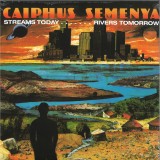
Caiphus Semenya, AKA Mr Letta Mbulu, is a South African legend and Streams Today… Rivers Tomorrow, his second solo LP, is perfect. A ten out-of ten album if ever we heard one. It’s also incredibly rare, especially in good condition, so Be With is delighted to present this reissue.
Now a revered composer, musician, and arranger, Caiphus left apartheid South Africa in the 60s for self-imposed exile in Southern California together with his wife, Letta Mbulu. Settling in Los Angeles he started working with the likes of Hugh Masekela and Miriam Makeba and other exiled and semi-exiled South african artists, as well as, of course, his wife Letta.
Caiphus also found himself working with and composing for a broad range of jazz and pop artists, including Lou Rawls, Nina Simone and Cannonball Adderley. His facility with both jazz and African forms served him well. His LA stay also the beginning of an ongoing collaboration with Quincy Jones, the fruits of which can be tasted in Caiphus’s African compositions for the scores to Roots and Spielberg’s adaptation of The Color Purple.
Originally released in 1984, Streams Today… Rivers Tomorrow is not just a musical masterpiece, it is also the soundtrack to the life of many South Africans - both then and now. Fusing the US-heavy sounds of boogie, disco and funk with Afrobeat and traditional African elements, it’s truly a spectacular listen. Jabu Nkosi handles keyboards on the album, with synths by Caiphus and Craig Harris. Sipho Gumede is on bass and Condry Ziqubu is on guitars.
The Afro-Cuban grooves of “Mamase” open the record. Continuing where Listen To The Wind left off, this is another horn-heavy call-and-response ode to a positive life. Life as an invitation to party, to take part, to “get involved”. But only if you’re willing to let in the transcendent power of music. “There’s gonna be a Mardi Gras, there’s gonna be a carnival; there’s gonna be a jamboree, there’s gonna be a bacchanal”. Who can resist that? Vibrations everywhere.
It’s followed by the joy of “Aida”. Gleeful, dayglow keys and synths *just* on the right side of mid-80s sleaze are accompanied by a killer bassline, slick, skipping drums and proud horns. Infectious funk.
The tempo is taken down a few notches for the powerful “Nomalanga” and the lamentations of a heartbroken man who must leave his wife Nomalanga and their children to join the fight against apartheid. It’s an emotional song, no question, but it doesn’t bring you down. The uplifting music and optimistic vocal delivery from Caiphus and his backing singers in the second half offer hope.
Breezy drums and contemplative keys act as a backdrop for the stunning backing vocal harmonies in the intro of “Moshanyana”. This gives way to stuttering beats, a bassline to die for and Caiphus giving it his all, over guitars, marimba and synth strings. Another slo-mo winner.
Side two opens with “Dial Your Number”, an uptempo English-language boogie-funk workout, complete with mid-song cutaway to a random telephone call. Whether or not this propels the song into “key track” status, we’ll let you decide.
What’s not up for debate is the brilliance of “Matswale”. This was a hit in South Africa in the mid-80s and you can still hear why. It might just be our favourite Caiphus hit. Wow. This is some damn fine breezy, beautiful, emotional pop. The restrained playing, the guitar licks and the gentle keys are out of this world. The beats? Thundering, direct and slick. The singing? It’ll give you goosebumps. As for the sentiment? This is Caiphus singing to his in-laws about their daughter’s adultery, begging them to intervene and help him save his marriage. Not your typical pop single story-telling!
The ferocious “Ndi-Kulindile” closes the set with a nod to the coming sound of the States. The hard-edged, electro-influenced drum patterns and bouncing, elastic bassline are something of a departure from the album’s predominant sound, yet one wonderful constant, Caiphus’s exceptional delivery and his sparring with his backing vocalists, is satisfyingly present and warmly deployed.
With Simon Francis handling the mastering of this Be With edition, you know it sounds as fantastic as ever. The stunning sleeve has been restored, with its painting of a dream-like cosmic vista, as a lone figure takes in a scene that’s part distant planet, part urban sprawl. One listen and you’ll be transported.
Caiphus Semenya, AKA Mr Letta Mbulu, is a South African legend and Streams Today… Rivers Tomorrow, his second solo LP, is perfect. A ten out-of ten album if ever we heard one. It’s also incredibly rare, especially in good condition, so Be With is delighted to present this reissue.
Originally released in 1984, Streams Today… Rivers Tomorrow is not just a musical masterpiece, it is also the soundtrack to the life of many South Africans - both then and now. Fusing the US-heavy sounds of boogie, disco and funk with Afrobeat and traditional African elements, it’s truly a spectacular listen. Jabu Nkosi handles keyboards on the album, with synths by Caiphus and Craig Harris. Sipho Gumede is on bass and Condry Ziqubu is on guitars.
One listen and you’ll be transported.
out of Stock
Last delivered 49 days ago available to reorder, subject to availability
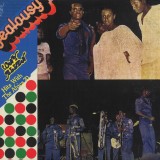
Comet Records presents the Tony Allen & Africa 70 reissue series with the classic late seventies first four solo albums of Tony Allen remastered and restored: Jealousy, Progress, No Accomodation for Lagos & No Discrimination, all coming in an heavy Deluxe Tip-On Jacket.
Recorded with Afrika 70 at the height of their power as Fela Kuti’s band, these are seminal recordings in the pantheon of Afrobeat history. Once again, Comet Records has the opportunity to shine a light on the sheer musicality and originality of the humble drumming giant. Tony Allen’s passing in April 2020 sent a shockwave across the world, as fans and collaborators from Lagos to Brooklyn and everywhere in between mourned the loss of a generous and powerful being, the kind of being we thought would live forever. Thankfully, we have the gift of Tony’s timeless music, starting with these four special solo albums, through which his musical voice guides our dancing feet and full hearts forever.
Produced by Fela Kuti in 1975, Tony Allen’s first solo album with Afrika 70, Jealousy, is like the man himself: light on its feet yet deeply settled, spacious yet bursting with magical talent. On the title track “Jealousy,” Tony is joyously in his element, conducting one of the mightiest bands in the world - he is the head chef, and the band is cooking. The second track, “Hustler,” features one of the most iconic solos in drumming history, a rare glimpse into Tony’s gift of musical phrasing - it is possibly the best example of Tony’s ability to literally
speak through his beloved drumset.
Tony Allen possessed magic within him, which he spent his entire life sharing with us through his drumming hands, tapping feet and generous heart. That magic is ever-present and strong on these formative solo albums - they are must-haves for Afrobeat fans across the globe.
out of Stock
Last delivered 5 years ago available to reorder, subject to availability
Caiphus Semenya, AKA Mr Letta Mbulu, is a South African legend, and Listen To The Wind, his iconic debut album, is simply a superb modern-soul/boogie album. It’s also incredibly rare, especially in good condition, so Be With is delighted to present this reissue.
Now a revered composer, musician, and arranger, Caiphus left apartheid South Africa in the 60s for self-imposed exile in Southern California together with his wife, Letta Mbulu. Settling in Los Angeles he started working with the likes of Hugh Masekela and Miriam Makeba and other exiled and semi-exiled South african artists, as well as, of course, his wife Letta.
Caiphus also found himself working with and composing for a broad range of jazz and pop artists, including Lou Rawls, Nina Simone and Cannonball Adderley. His facility with both jazz and African forms served him well. His LA stay was also the beginning of an ongoing collaboration with Quincy Jones, the fruits of which can be tasted in Caiphus’s African compositions for the scores to Roots and Spielberg’s adaptation of The Color Purple.
Given his decades of work behind the scenes, it’s no surprise that it took until 1982 for Caiphus to get around to putting out the first album of his own. But all that experience shows. Listen To The Wind is a deeply impressive synthesis of early 80s US production and instrumentation together with his traditional South African musical roots.
It’s stylistically diverse but the ingredients are never diluted. There are elements of boogie, soul, funk and jazz, all shot through with pan-African flavour, and moving effortlessly from uptempo floor fillers to more meditative, slower soulful tracks. Produced by Caiphus himself, he makes full use of a stellar line up of session musicians including Nathan East, Michael Stanton, Sonny Burke and Paulinho DaCosta. And of course, there are Letta’s show-stopping vocals. To our ears, Listen To The Wind is just one big party, and lord knows we need that more than ever right now.
Opener “Angelina” is one of Caiphus’s most beloved tracks at Be With HQ. It’s a breezy, feel-good SA boogie-funk classic. Harmonic and horn heavy, it sounds as fresh today as it would’ve done in the early 80s. If this one doesn’t make you move, you may need your pulse taking. The drum breakdown alone, a little over halfway through, is sensational.
It’s followed by the gentle reggae lilt of “Play With Fire”. A real melodic slo-mo delight, carried by the tropical vibes and, above all else, by the extraordinary performance of Caiphus himself and his backing singers.
Closing out side one, the spectacular “Umoya” is driven by triumphant horns and slick bass. With its proto-Graceland vibes, we reckon Paul Simon must’ve been listening. Hard. Caiphus trades verses with the unmistakable tones of Letta, and it sounds divine. Yes, it’s as good as anything on Letta’s canonical In The Music… The Village Never Ends. A wide-eyed wonder, made for unity and togetherness, it’s all infectious, smiling faces for nearly nine minutes. But never mind nine, we could party to this for ninety minutes and “Umoya” would leave us re-energised for ninety more.
Elegantly firing up side two is perhaps the album’s best known track. “Without You” is a heavenly slice of modern soul, an end-of-nighter to end them all. Smooth strutting, disco-fied funk with that unmistakably South African sound, it’s just sublime, with those lyrics that keep coming back to smiling faces and community, “without You the sun won’t shine”. Big with the likes of Rush Hour’s Antal, this is aural perfection.
“Ziph’inkomo” is a soul-soothing, swooning epic. Gently building throughout, its final few minutes are genuinely stirring as the backing vocals and instrumentation swell. Jaw-dropping. The irresistible groove of frantic, percussive workout “Gumba Boogie” closes out what must surely be one of the greatest artistic statements of the 1980s. If his friend Quincy wasn’t feverishly taking notes for Thriller, then you could’ve fooled us.
With Simon Francis handling the mastering of this Be With edition, you know it sounds as fantastic as ever. The cover art, as breezy as the music, has been faithfully restored. All that’s missing is you.
out of Stock
Last delivered 5 years ago available to reorder, subject to availability
Three’s a charm, as they say. After „Waste The Time“ and „Socialo Blanco“ „Money“ completes Daniel Meuzard’s Feater triptych. Again joined by the likes of Eric Owusu and Sam Irl and their musical as well as technical skills, as well as by the lovely voice of Vilja Larjosto, the ageless beauty and intellectual brilliance of „Money“ is impossible to resist. It could have been imagined, written and recorded almost anytime in the last 50 years. Inspired or - better put - troubled by the rise and transformation of capitalist systems, fatalism, extravism, climate change and - surprise - the power, corruption and lies revolving around money, its topic is anything, but bubblegum. The music though, is ranging from powerful songs to clever synth experiments. Incredibly executed with a perfectly wonderful result. And even if Daniel writes that there is „no need to worry, I want you to panic“, we want you to listen to this album, while you do so! Hats off to Feater. „
out of Stock
Last delivered 6 years ago available to reorder, subject to availability
Steve Von Till has charted an extraordinary musical path over the last several decades, from his main duties as singer and guitarist of the boundary-breaking Neurosis to the psychedelic music of his Harvestman project and the gothic Americana he's released under his own name. But No Wilderness Deep Enough is truly like nothing you've ever heard from him before—an album that's devastatingly beautiful and overwhelming in its scope, reminiscent of the tragic ecstasy of Nick Cave and the Bad Seeds' recent work as well as the borderless ambient music pioneered by Brian Eno, late composer Jóhann Jóhannsson's glacial compositions, and the electronic mutations of Coil.
FOR FANS OF : MARK LANEGAN/MICHAEL GIRA/NICK CAVE.
Over the course of recent time, an aching, growing void has developed where our normal way of life has resided. Uncertainty abounds, and Steve Von Till's No Wilderness Deep Enough provides a voice of existential wisdom and experience to offer comfort and perspective in an era of uncharted territory. These six pieces of music shape a hallucinatory landscape of sound that plumbs the depths of the natural world's mysteries and uncertainties—questions that have vexed humanity since the dawn of time asked anew amidst a backdrop that's as haunting as it is holistic.
Von Till’s fifth solo album is a swirling and iridescent blend of ambient, neo-classical, and gothic Americana that swan-dives into the darkness of modern life, with the resulting emergence a sonic document of rural psychedelia that transcends the physical world—towards a greater spiritual acceptance that connects naturalism, spiritualism, and the corporeal form.
With a foundation of simple melancholy piano chord progressions embellished with mellotron, cello, french horn and electronic treatments Von Till's scorched ache spreads across the terrain of No Wilderness Deep Enough like a brushfire, adding a tactile level to his sonic creation as well as an inviting level of friction to the burning beauty painted across the album's framework.
With a foundation of simple melancholy piano chord progressions that came to fruition during jetlagged nights in his wife’s childhood home in Germany, No Wilderness Deep Enough was further embellished with mellotron and electronic treatments in Von Till’s home studio in North Idaho. Viewing the emerging result as an ambient instrumental album, he consulted friend and engineer Randall Dunn (Marissa Nadler, Earth) about adding live cello and french horn and piano in a proper studio. After enlisting Brent Arnold on cello and Aaron Korn on french horn, he challenged Von Till to sing over the music and make it his next solo album—which is exactly what happened, with final work being completed at Tucker Martine’s (the Decemberists, Neko Case) Flora Recording and Playback in Portland.
out of Stock
Last delivered 6 years ago available to reorder, subject to availability
When Upset The Rhythm released Normil Hawaiians’ lost album ‘Return Of The Ranters’ back in 2015, the band members got back in touch with each other after a 30 year break and starting playing music together again. Out of this the group played a launch show for the album and followed that up with more concerts, including an appearance at Supernormal, a residency at the Edinburgh Festival, gigs at Cafe OTO and supporting Richard Dawson in London too. They even recently toured Greece in support of having all three of their renowned exploratory post-punk albums finally back in print.
Throughout this time, Normil Hawaiians revisited their original songs for these live performances. However for a group always so interested in evolving their sound and seeking nuance, it comes as no surprise that they shirked the idea of a faithful retread of old material in favour of reimagining their songs. The group experimented by pushing their songs into new inventive dimensions, still progressive at heart, but now imbued with a cosmic uncanny. A cinematic, even pastoral approach that was always quietly present has come to the fore. The quaint weirdness of folk song, the humanity of communal practice and the group’s ecological mindedness have all found a place in Normil Hawaiians’ current sound world. With this conducive atmosphere brewing, the band’s first new songs in decades started to emerge.
Being far-flung across the UK, the Family Hawaii encamped to Tayinloan, a small village on the west coast of the Kintyre peninsula in Scotland with the intention of recording new music. They set up their own studio in an isolated, windswept house overlooking the sea and started the tape rolling. Noel Blanden from the band explains how the spirit of the location was such an inspiration to the group during this initial recording session: “Our time immersed in the place and the unique energy it generated in us allowed us to write ‘In The Stone’. It goes right back to our first album, this need to document experience before it passes over and eludes us. We were grabbing at the musical ether and letting it shape itself through the band.” From loose, improvised sessions and reflective periods of listening in Tayinloan, Normil Hawaiians captured the moment. ‘In The Stone’ is a motorik thrill of distorted guitars, locked rhythms and morphic resonance. Guy Smith is joined by Zinta Egle on vocals, skilfully sharing lyrics informed by Alan Garner and Nigel Kneale’s ideas around recurring events being linked to place and historical artefact; a kind of residual haunting known as ‘Stone Tape’ theory. In keeping with the context of the song, sounds from several previous live recordings of the track were woven into its present being. Flipside ‘Where is Living?’ is a decidedly more delicate affair of questioning lyrics and eerie traces, droning strings and impressions smudged. This resultant 7” is a tantalising glimpse of Normil Hawaiians now, an echo from the past, an echo from the future.
out of Stock
Last delivered 6 years ago available to reorder, subject to availability
The Sweethearts is a project by Tyler Thacker together with Sam Mehran (ex Test Icicles).
Songs were written on a tiny casio between Sam and Zak Mering. Tyler pretty much played all the instruments.
As Tyler explains:
This album was recorded a decade ago underneath a bunkbed in a crowded apartment we shared in Brooklyn. At the time, ‘The Sweethearts’ was just another anonymous moniker among many, intended as a pop-minded musical outlet between primary contributors myself, Zak Mering and Sam Mehran, featuring whatever friends happened to be passing though that day including but not limited to Morgan Whirledge, James Ferraro, Zak Davis, Aaron Frankle, Ian Drennan, Ariel Pink, Ryan Howe.
Like so many of the collaborations from those years, these songs and many more floated to the wayside as we each barreled through various other configurative projects, eventually retired to failing hard drives. But the specter of this specific catalogue always haunted me despite shifting primary focus to painting shortly thereafter. Two years ago in July, the world lost one of its most fearless creators, Sam Mehran , and I lost one of my best friends who oozed melody as effortless as breath.
These songs are letter bombs to adolescence in the information age: reterritorializing the tropes of heteronormative psycho-sexuality proliferated throughout western pop music on top of self-deprecation, heartbreak, disappointment, indulgence, and loss of innocence.
At one point, I caught myself singing harmony to Zak and Sam on a song called ‘Tonight’s the Night’ and it was in that meeting place between the metaphysical and the spirit world, that I finally got to say goodbye to Sam.
out of Stock
Last delivered 6 years ago available to reorder, subject to availability
In our latest chapter of Spiritual Jazz, we return to the source – the Impulse! label, and the monumental influence of its most prominent artist, John Coltrane.
Since the first release in the series back in 2008, we have mapped out the growth of the spiritual sound in jazz. Spiritually energised and politically conscious, the spiritual sound in jazz music is one of the most important currents in the music. Our series has charted the growth of the style from early experiments at Blue Note and Prestige to European excursions, exiled experimentalists, and sounds from across the globe. But whenever you think of spiritual jazz, it's a fair bet that the double exclamation mark and orange and black spine of Impulse quickly comes to mind. Home to John and Alice Coltrane, Pharaoh Sanders, Yusef Lateef, McCoy Tyner and countless other musical pioneers, Impulse! was the most important and forward-thinking jazz label of the 1960s. With the music-first attitude of an independent but the clout of a major, producers Creed Taylor and Bob Thiele made Impulse the defining imprint of a crucial decade. They hand picked the top players of the moment and gave them freedom to record the music they wanted, setting out their stall with a bold slogan – 'The New Wave Of Jazz Is On Impulse!'
Here we dive deep into the Impulse! catalogue, bringing celebrated masterpieces from Alice Coltrane and Pharaoh Sanders into the arena, together with lesser known cuts from Phil Woods and John Klemmer as well as straight-up classics such from Yusef Lateef and Elvin Jones. Fifty years on and the new wave of jazz still sounds fresh, vibrant and as relevant as ever.
out of Stock
Last delivered 5 years ago available to reorder, subject to availability
“Don´t go out there, you might get shot” was the warning from Donna Maya relatives when she visited Detroit two years ago. That makes her even more curious to explore the city. Disturbed by, as well as fascinated from the dystopian state of Detroit she recorded many places that made (industrial) history, including the Ford factory, the world’s tallest, now abandoned central station and the once magnificent Michigan Theater, that was brutally converted into a parking garage. Donna Maya transformed the sound recordings into artificial sound sculptures combined with electronic beats. Every track is dedicated to one of those places and makes it musically alive. With her theremin Donna Maya guides the listener deeply inside. The result of Donna Mayas 6 weeksstay in Detroit is her album “Lost Spaces -> Detroit". “Lost Spaces ? Detroit” is about how to handle crises, how individuals get along with it and the relationship of society to its culture. Donna Maya understands Detroit as a perfect example for what capitalism does when people give up cultural values. With “Lost Spaces ? Detroit” Donna Maya draws a musical picture of how she experienced Detroit that shows that not only a city got lost, but a living space for everyone: Pure urban experimental electronics with theremin.
out of Stock
Last delivered 6 years ago available to reorder, subject to availability
Hypnoskull is part of the global anti-music conspiracy networkTM (since 1992). Hypnoskull was created in 1992 as a solo project in order to experiment in the area of electronic noise combined with rhythmical structures. In the first years of its existence, Hypnoskull was releasing cassettes and tracks on international labels in the so-called cassette network, a widely spread network of independent and experimental musicians and artists who expressed themselves throughout limited tape releases often including artworks, ideas, texts. In 1998, hypnoskull signed to the German label ant-zen and up to today he is still releasing his albums on this highly influential record label. That is not a coincidence: ant-zen stands for ‘anti-zensur’ (anti-censorship), one of the main starting points of the provocative hypnoskull project. Patrick Stevens does not limit himself to just producing music as such, albums always include a severe message, a thought-provoking underlying concept text, questions. The main philosophy: ‘the dance floors, the clubs, the festivals,… are staged warzones with a different set of rules – a therapeutic zone where hidden anger and even aggression of both the artists as well as the spectators can be released in a proper, human way. Music as a means to open up the deepest anger inside human beings, letting it out in a way which is not harmful to others. A strange symbiosis between the two worlds Patrick Stevens is a part of: the techno and the industrial scene. Techno being a genre promoting a peaceful yet hedonistic way of life, industrial on the other hand being a highly nihilistic, philosophic but pitch black reflection on society. The mix of both musical as well as content wise elements of these genres result in what hypnoskull is all about. Added to this an explosive mixture of post-war and contemporary western subversive philosophy – in a rather impulsive manner – makes the project what it is today, after 30 years of existence.
out of Stock
Last delivered 4 years ago available to reorder, subject to availability
Having previously brought together world-renowned Theremin soloist Carolina Eyck and electronic producer Eversines for a specially commissioned collaborative mini album, yeyeh founder Pieter Jansen has now conjured up another unlikely but inspired joint album, this time featuring award-winning free-jazz vocalist Greetje Bijma and leftfield house, techno and ambient producer Oceanic.
The project has its roots in a chance meeting between Jansen and Bijma, a legendary figure on the Dutch jazz scene who in 1990 became the first woman to win the country’s top jazz accolade, the VPRO/Boy Edgar award. Apart from having previously worked with the likes of Anna Homler (aka Breadwoman), Jasper van ’t Hof, Han Bennink, Louis Andriessen and Willem Breuker and her own solo projects, she’s in a league of her own.
Jansen is a big fan of Bijma’s 1996 heavily electronic collaboration with Jasper van’t Hof and Pierre Favre, Freezing Screens, and was with the friend who first introduced him to it when he bumped into Bijma.
Excited to meet someone who had made one of his favourite records, Jansen took the opportunity to ask Bijma if she would be interested in working with young electronic music producers. To Jansen’s delight, Bijma quickly agreed.
Weeks later, Bijma stepped into the studio with Oceanic, a rising star of the Dutch electronic underground whose releases as Oceanic for Nous’klaer Audio and BAKK Plafond revolve around mechanical rhythms, opaque ambient textures, minimalist melodic movements and effervescent electronics. The pair quickly connected on an emotional and musical level, with Bijma taking her cues from Oceanic’s electronic sounds and rhythms, and Oceanic drawing inspiration from Bijma’s dexterous, mind- bending and otherworldly vocalizations.
After two hugely productive days, the cross-generational duo had completed a couple of mesmerizing songs – breathlessly haunting album opener “Swallow a Party” and chilly ambient closer “A Window Drifting” – and recorded several hours or improvisations that Oceanic later edited, layered-up and re-modelled.
The results are little less than spellbinding. The range and versatility of Bijma’s vocalizations is breathtaking, while Oceanic’s music – which cleverly incorporates the free-jazz singer’s vocal notes, tones and proclamations – swings between becalmed beauty and breathless intensity.
Some of the set’s most striking moments are those where Oceanic re-contextualizes Bijma’s varied vocal sounds with the dancefloor in mind. On the pulsating “Technicolour Memories”, up-tempo “Step Snakes” and hypnotic “Never Done”, Bijma’s scat outbursts not only ride Oceanic’s rhythms, but also form part of the densely layered percussion tracks beneath.
Like the release’s more downtempo and ethereal moments, these hybrid organic- synthetic compositions defy easy categorization, offering a unique brand of alien electronic/acoustic musical fusion that lingers long in the memory.
out of Stock
Last delivered 6 years ago available to reorder, subject to availability
The MINDFULNESS HIPERNORMALISATION album itself marks a new turn in Eduardo's work, breaking away from any musical style or stereotype and always trying to seeking freedom of expression,marked also by a strong connotation of voluntary ostracism.A new stage in which Eduardo uses this double vinyl like a tool to mark a distance with the current international scene and also support the Adam Curtis theories shown on his acclamed documentary "The HiperNormalisation" 2016 . The album show influences that goes from romantic ambient melodies to the most complex and experimental electronica,also including easy listening techno where it is difficult to differentiate the line between techno and ambient.
Francois Kervorkian,DJ and official engineer of albums belonging to Depeche Mode or Kraftwerk, gives support to this great work of Eduardo which will remain in the near future and without any doubt as a cult album.
out of Stock
Last delivered 5 years ago available to reorder, subject to availability
Parisian label Chuwanaga curated by Clémentine & Saint-James is back in the production game with fresh music from Ishkero, maybe the hottest Jazz-Fusion band of the capital city. Going from Jazz-Funk to Afrobeat through Prog and Psychedelic influences, Brume infuses together killer grooves, irresistible melodies and excellent musicianship. The 12inch, coming with its beautiful illustration, reveals a uniformly good yet diverse musical journey. Behind Ishkero, you’ll find five young and gifted musicians with strong jazz knowledge: Tao Ehrlich (drums), Adrien « Dridri » Duterte (flute & percussion), Antoine Vidal (bass), Victor Gasq (guitar) and Arnaud Forestier (keys). With its strong evocation power fuelled by their youthful energy and creativity, Ishkero’s music is a one-of-a-kind variation on the Jazz genre. Fusion at its best potential! Expect intense rhythmic sections, virtuoso solos, lush FX sections and robust arrangements. Used to play a lot live, the musicians developed a vigorous connection that really shines on stage and during studio sessions. Collectively with Saint-James as their co-producer, they recorded Brume in summer 2019 at Studio Delta (Paris) with sound engineer David Cukier aka Greita (Disques Flegon). The first track, "Triple B", is an ode to 70’s jazz-funk carried by Jeff Mercadié’s Sax performance. "Tonik Gin"’s mighty jazz-rock groove which comes afterwards brings the genre to its emotional climax. B side starts with the main track "Brume", bringing together long-tailed reverberated guitars and Mizell-like piano chords for a very warm and hazy effect. As the last track, "Gare De l’Ouest" is a nice jazz variation on the Afrobeat genre, again with Jeff Mercadié on Saxophone.
out of Stock
Last delivered 5 years ago available to reorder, subject to availability
Taken from their acclaimed self-titled debut album, ‘One Hand Tommy’ is its latest single and proves no matter how strange our world seems right now, it could always be stranger…
In a blitz session of blood curdling vocals, disarticulated fretwork and wickelly deranged lyricism, ‘One Hand Tommy’ sees The Imbeciles tell us the tale of: Tommy; a child trapped in a dystopian landscape of nuclear annihilation with only a giant killer snake for company.
‘One Hand Tommy’ is the latest exhilarating track to be released from The Imbeciles self-titled debut album - out now. Comprising 13 imploded songs which rarely last more than two minutes, the album was recorded on tape in eight deranged days on the Texan-Mexican border. Packed with stripped-down musical information and resonant with atmosphere, the album was hailed by CLASSIC ROCK as “Some kind of Apocalypse Now” (✭✭✭✭). The band also gained masses of support at radio from BBC 6 Music, Radio X, BBC Radio 1, amongst others. The delirious fun of ‘One Hand Tommy’ is just another reason to believe the hype...
And now it’s been remixed by DJ Tennis & Danny Daze, Mark Broom, Suzanne Kraft and Duncan Forbes.
The remixes have picked up a fantastic amount of support from a long list of names, including this lot – Radio 1’s Pete Tong, Red Axes, Jackie House, Len Faki, Gerd Janson, Laurent Garnier, Ben Sims and more!
out of Stock
Last delivered 6 years ago available to reorder, subject to availability
This new compilation, a statement of intercultural music production, features collaborations of Slikback (PAN), KMRU, Tite (Fragile), Jinku, Pier Alfeo (Backwards) ... recorded during a residency in Elefant Studio, Nairobi.
The compilation will follow a 45mn documentary dedicated to the Kenyan Scene.
After two vinyl releases highlighting two musical currents rooted in an era and a territory - Benga in Kenya and Tarantismo in Italy; Flee Project unveils its sub-label, Extra Muros, linked to an itinerant creative residency program that aims to bring together innovative and creative artists from all around the globe for a two-week long production and writing camp. Open to all, it promotes underground sounds and artists in search of sonic experiments and discoveries. Is held every year in changing locations and countries.
Extra Muros - Kenya, is the result of the creative residency program organized by FLEE in September 2019 in Nairobi at the Elefant Studio. For three weeks, seven musicians: Slikback (KE), Karun (KE), Jinku (KE), KMRU (KE), Flexfab (CH), Pier Alfeo (IT) and Tite (FR), and producers from all over the world and from Kenya came together to produce and to create this unique sound that emerged from a large variety of artistic environments and soundscapes. This compilation is a statement of intercultural music production in the digital age.
out of Stock
Last delivered 6 years ago available to reorder, subject to availability
in a trio of records by Andrew Wasylyk which unearth and reshape the landscape of Eastern Scotland as shimmering and inventive instrumental music.
Where Themes for Buildings and Spaces (2017) toured the architecture and industry of Dundee, evoking a place caught between decay and regrowth, the Scottish Album of the Year Award shortlisted The Paralian (2019) explored the littoral exchanges between sea and shore on the North Sea coastline.! !
Fugitive Light And Themes Of Consolation carries a trace of this arc on a return upriver, drifting back inland along the River Tay's inner estuary: a record of the low light on winter fields, empty suburban streets at dawn, the deep clear waters of the quarry excavated to build the city.
Ten songs circling landscapes for meaning, channelling half-heard melodies and misremembered memories; caught somewhere between settling down and setting out towards the shining levels of the estuary and beyond.! ! The record is threaded with the influences of people, place and musical lineages – David Axelrod, John Barry, Virginia Astley, Mark Hollis, Alice Coltrane – yet as with all of Andrew's solo work it has a deft, clear voice all of its own. Recorded between Summer 2019 and January 2020, Fugitive Light…
displays his talent as a multi-instrumentalist and composer: all hushed drum grooves, rolling waves of plucked acoustic guitar, cascading upright piano, Bob James-inspired Fender Rhodes, rippling clàrsach harp, and ECM-worthy electric guitar motifs. As on The Paralian, string arrangements are by fellow Tayside musician Pete Harvey, known for his work with King Creosote, Modern Studies and The National Theatre of Scotland.! !
out of Stock
Last delivered 5 years ago available to reorder, subject to availability
Black Truffle is very proud to present Peaks by Australian cellist Judith Hamann, her debut release of electro-acoustic music. Known mostly for her live performance work with composers including Sarah Hennies, Yvette Janine Jackson, Alvin Lucier, Tashi Wada, and La Monte Young, here she steps away from the cello, moving into an intimate dreamscape woven from recordings gathered over years of itinerant touring.
Peaks is a work in two distinct parts, crossfading between different landscapes and apertures; from rooftop to church, from stasis to flares of momentary romanticism. Peaks considers summits as being both above and below, reframing the idea of apex from a more intimate perspective. Hamann considers how our domestic and personal geographies might form their own apogees, meridians, or nadirs.
Assembled in 2019 while an artist in residence in Krems, Austria, Peaks begins with Hamann’s more familiar cello but soon unravels into resonant electronic interiors; Southern California nightscapes heard through windows, San Francisco bathroom fans, snatches of recordings of friends, hand organs, and engines. signal/centinela draws primarily on recordings from Hamann’s time living in San Diego, and carries with it a certain sense of nostalgia in the sense of homesickness, longing, and displacement of distance and time. Side B is composed from recordings gathered on a different continent, Europe, weaving piano with recordings of sleep, breath, church organ, and the act of climbing. under/over emerges as it recedes, overlapping moments of arrival to create another kind of ‘spire’ in the sense of spir (breath). Peaks, with its omission of any recordings from Hamann’s home of Australia, hints at how the very construction of home itself, might be restless, untethered, changeable, and malleable.
On Peaks, Hamann interrogates tropes of ambient concrète musics, intentionally pivoting formally around material which teeters on the edge of cliche. This exploration asks whether familiar frames of harmony, field recordings and narrative trajectories can excavate new territories, or be ruptured. Peaks untangles a very personal sense of tension between beauty and shame in experimental music: treating lushness and harmony as possessing potentially muscular musical properties that might wrestle with or construct senses of belonging and home.
out of Stock
Last delivered 6 years ago available to reorder, subject to availability
On the 12th of April 1961, Yuri Gagarin was launched into orbit for the first and - so they tell us - the last time. Upon returning to Earth, Yuri became a global hero, travelling the world to tell of his adventure.
Secretly, he was plagued by strange hallucinations and a persistent glow around his vision; a cornucopia of colour in a constant corona. In 1964 - following a silent coup by Leonid Brezhnev - Yuri was banned from embarking on further manned missions into space. At first fearing madness, the cosmonaut came to see these apparitions as a signal, an invitation, a welcoming beacon from a distant lighthouse blinking across the cosmic void.
On the 27th of March 1968, aided by trusted friends within the space program, Yuri Gagarin swapped places with another cosmonaut on a secret test flight and was once more blasted into outer space. Knocked unconscious by the extreme velocity of his experimental craft, Yuri awoke a mere 15 minutes later in view not of the rapidly shrinking Earth, but an entirely alien vista; he was elsewhere...
About Tony Neptune
Tony Neptune is a multi-media persona created by the Leeds-based artist and producer Sam Jefferies who, inspired by the narrative and musical legacies of early Detroit techno culture, aims to tell a complete story for the senses through a combination of image, sound and text. Asa member of the DimensionsDJ Directory three years running, some know Jefferies for his notorious DJ sets—whether he’s playing new wave or booty bass; as Tony Neptune or Yuri; solo or alongside Mark ‘Turbo’ Turner in another peak time marathon b2b, it doesn’t take long for crowds to catch on to his deep knowledge of all things riddled with Hi-Tech Funk and Soul. But this isn’t the only storm he’s cooking up: in his visual work, Jefferies uses oil paint to unveil the surreal and celestial adventures of the original cosmonaut and space pioneer, Yuri Gagarin, capturing every aspect of their dream-like surroundings with an eye devoted to detail and depth. This painting lies at the heart of his debut EP, Reflections on a Daring
out of Stock
Last delivered 5 years ago available to reorder, subject to availability
A memorable name with an outstanding cover, Fuzzy Duck is a classic slice of underground London art rock and melodic psychedelia. Originally released on MAM in 1971, it’s truly a musical force of infectious riffs and fiery solos, sharp tempo changes, a tight rhythm section and heavy, Hammond-drenched grooves. With echoes of Spencer Davis Group, early Grand Funk and Vanilla Fudge, it comes on like a heavier Soft Machine or Caravan. No wonder Fuzzy Duck’s cult appeal has endured.
The album features Mick Hawksworth (Five Day Week Straw People, Andromeda) on bass, acoustic 12-string, electric cello and some of the vocal duties, and also Roy “Daze” Sharland (Crazy World of Arthur Brown, Spice) on organ and electric piano. Accompanying those two were Paul Francis on drums and percussion, and Grahame White on guitars and the rest of the vocals.
Originally released in an edition of 500, Fuzzy Duck became legendary all over the world through a holy trinity of scarcity, personnel and its sheer brilliance.
The album kicks off with a heavy, bass-fuelled, Hammond rocker titled “Time Will Be Your Doctor”. This is pure hard-edged blues rock, brilliantly played. Its drum break intro was sampled by DJ Premier for Gang Starr’s “Mostly Tha Voice” on 1994’s legendary Hard To Earn. And we can hear its personality all over Harvey and Thomas Bullock’s Map Of Africa.
Rollicking highlight “Mrs. Prout” follows. At nearly 7 minutes long, it incorporates more psych-leaning guitar and drawn-out keyboards à la Ray Manzarek with the band effortlessly switching from jazzy rhythm section to a progressive one. That magnificent instrumental jam that starts half-way and continues through to the end is a true wonder.
“Just Look Around You” is propulsive folk-rock with a soaring, proto power-pop chorus, backed by frenetic organ and heavy bass high in the rich, intoxicating mix. Back comes the heavy, strung-out psych to both close out side one with “Afternoon Out” and kick off side two with “More Than I Am”. Both tracks are improvisational winners that stylistically nod to the late sixties and “More Than I Am”’s guitar hook, catchy organ and memorable chorus would’ve surely made it a great single.
“Country Boy” quenches the thirst for rhythm and melody, only the lyrics and vibe are wonderfully creepy. The sudden cut of the groove and the drop into a more sinister tempo will make you stumble, before the band pick up speed and toss you back again into the opening jam, this time with a badass organ to ride you home. The final, fully fleshed out track is the majestic “In Our Time”, which oscillates between endless organ-driven boogie and heavenly, genuinely moving vocals. Just stunning.
Infamous instrumental cut “A Word from Big D” rounds out the album. Yes, that’s the band jamming with duck quack sound effects accompanying the music. “Ducking vocals” as the sleeve says. You know, just in case the whole “duck” theme had passed you by. It’s an appropriate closer for what sounds like an album that must have been *a lot* of fun to record. It’s definitely fun to listen to.
Mastered by Be With’s chief sound duck Simon Francis and cut with glee by the veteran Pete Norman, this reissue of Fuzzy Duck’s one-and-only LP sounds as mighty as it should. That unforgettable sleeve artwork has been carefully restored and the records pressed by the wonderful Record Industry in the Netherlands. Essential.
out of Stock
Last delivered 3 years ago available to reorder, subject to availability
Berlin-based, Dutch-born Steffi possesses near-boundless prowess. As a DJ, she’s proved her effortless mastery of disco, house, electro, and techno; as helm of labels Klakson and Dolly, she’s long maintained her status as tastemaker; as a producer, she has graced us with three solo LPs and numerous 12”s. Dark Entries is now honored to unveil the debut of her project Crushed Soul, a moniker she had used only once in 2013 for an Ostgut Ton compilation track. The mutual esteem of Steffi and DE has been previously fruitful, with Steffi providing a remix for Cute Heels’ 2016 EP on DE, but this is their first full-length collaboration.
The Family of Waves EP represents both familiar and novel pastures for Steffi. While her love of electro and classic Detroit techno have been oft-evident, here we witness the darker shades of new wave and industrial creep to the forefront. This turn for the twisted feels not just natural, but predestined, an inevitable succumbing to morbid forces. But Steffi also views Family as “a playful association...a mix of my past and new modern waves". There is a kernel of whimsy, even joy, lurking within the record’s temporal jumblings. The A-side opens with “Gravitational Field”, which juxtaposes its gnarled bassline with unearthly percussives and a recurrent resonant gong. The wild sonic palette speaks Steffi’s singular voice. “Scalar Property” continues the paranoid propulsion with an unhealthy dose of what can only be described as Metroid-funk, its staccato bass jabs interlaced with ghastly vocal pads. The B-side contains a diptych of slower tracks that juggle reference points both retro and futurist. In “Family of Waves”, a churning EBM-esque bassline battles acerbic yelps. On this track, the collision of past and present is most pronounced, as if A Split Second were covering Mike Parker. “Diffusion of Heat” closes the EP with what feels like a perfect synthesis of Steffi’s musical passions: funky, warbling chord stabs; intricate rhythmic diversions; the ecstasy of repetition. Here, disco, new wave, and techno marry harmoniously, if only to inform us of the disharmony of our present.
All songs have been mastered for vinyl by George Horn at Fantasy Studios. The sleeve and accompanying postcard were designed by Eloise Leigh using video art stills by Goldenliustra.
out of Stock
Last delivered 11 months ago available to reorder, subject to availability
HIGHLIGHTS First ever reissue of "Kabwlú", a very hard-to-find album released by Discos Fuentes in 1965. The mysterious Los Picapiedra (which translates as The Flintstones, inspired by the 1960s American cartoon show), was a short-lived studio group with one albumto their name, "Kabwlú", mixing 'folkloric' and 'modern' elements with calculated 'caveman' humor. It is very musically diverse; not only are there the requisite genres that could be found on similar Colombian teenage-oriented groups' records of the time, such as cumbia, gaita, rock, twist and pachanga, but there is also a smattering of surf, doo-wop, Latin jazz, guajira, ska, and calypso. But what makes the whole thing so special is the odd, off-kilter arrangements, spooky tunings, rudimentary clanging percussion, invented 'cave' language, prominent twanging electric guitar and many zany sound effects. Several of Los Picapiedra's songs became very popular in Colombia as well as Venezuela and especially in the 'rebajada' (slowed down) version as played by the 'sonidero' sound system DJs in Mexico, such as "La Hossa". Presented in its original artwork and pressed on 180g vinyl. Part of Vampisoul's reissue series of classic Fuentes LPs. DESCRIPTION While Discos Fuentes was known for recording all sorts of interesting sounds from traditional folkloric Colombian music to the latest popular international styles, every once and a while they would put out a "novelty" record, perhaps to exploit a passing fad, and at times the label would green-light something strange or even outlandish. Many of those left-field releases have their merits and have subsequently become collectors' items over the years. One such case is the mysterious Los Picapiedra (which translates as The Flintstones, no doubt inspired by the 1960s American sitcom cartoon show), a short-lived studio group with one album to their name, "Kabwlú" (an unpronounceable, invented "caveman" term that is also untranslatable, but seems to have been the 'traditional rhythm' of Los Picapiedra's 'homeland'). What is interesting about the record is that it is very musically diverse; not only are there the requisite genres that could be found on similar Colombian teenage-oriented groups' records of the time, such as cumbia, gaita, rock, twist and pachanga, but there is also a smattering of surf, doo-wop, Latin jazz, guajira, ska, and calypso. But what makes the whole thing so special is the odd, off-kilter arrangements, spooky tunings, rudimentary clanging percussion, invented 'cave' language, prominent twanging electric guitar and many zany sound effects. Much like its namesake American cartoon The Flintstones, "Kabwlú" trades in creative anachronism, mixing 'folkloric' and 'modern' elements with calculated 'caveman' humor that works on many different levels. For instance the title tune seems to have been inspired by the pachanga craze and recalls the vibe of Ray Barretto's massive 1962 hit, 'El Watusi', but it has a certain joyful simplicity and rock-solid underpinning that elevates it beyond mere novelty or exploitation - and argues for its timely reissue for today's audience. The band was a studio invention that had no major significance in Medellin's live music activity. However, several of Los Picapiedra's songs were very popular in Colombia as well as Venezuela and especially in the 'rebajada' (slowed down) version as played by the 'sonidero' sound system DJs in Mexico, such as "La Hossa". Pablo E Yglesias (aka DJ Bongohead, Peace & Rhythm) Additional research by Luis Daniel Vega
out of Stock
Last delivered 6 years ago available to reorder, subject to availability
For Farsight, California’s bucolic San Geronimo Valley was the space that allowed for the creation of this handpicked selection of artistic output. Following a period of deep interest in abstract painting and its relationship to music, the artist found this lush and sparsely populated region to be an ideal location for contemplation and composition.
Although the majority of the work was executed in the first two months of 2020 in this forested setting, some of the pieces were based upon drafts created as early as Summer 2017. United in their eclecticism, the six cuts that comprise “Not Here, But Somewhere'' reveal a broad spectrum of musical influences. They are statements in an age in which influence is omni-directional, and in which the pace of artistic invention outstrips the ability of observers to identify and reify sub-genres. Although each track presents a unique approach, “Cadena,” “Sans Titre,” and “Door to the River'' reflect the continuing global suffusion of Latin American and Carribean styles such as reggaeton and dancehall. Simultaneously, the duo of “While” and “Hot Half” suggest the ongoing dialogue of techno, electro, and industrial music and the interstices between them. “Mid-Winter Burning Sun”
invokes the intensity of American trap music with its booming bass while touching equally upon the feel of early dubstep.
Ultimately, the idea that there is a “space for each artist” can be taken both in a literal sense— One’s physical environment— And also in the figurative sense that there is room enough for the ideas of all artists, who are kindred spirits in the endeavor of radical self-expression. In this way, “Not Here, But Somewhere” exists as an acknowledgement and gesture of goodwill towards every artist daring enough to explore the unknown.
out of Stock
Last delivered 3 years ago available to reorder, subject to availability
New album of one of the biggest Reggae/Dub french soundsystem starring MacGyver, Rooty Step & Pupajim (who worked with Alpha Steppa, Biga Ranx, High Tone, Mungo's Hi-Fi ...).
Available as super limited edition including 60x60cm Poster !
Since their inception at start of the 2000s, Stand High Patrol have rocked sound systems to their own riddim, assimilating and re-purposing the codes of the genre in their own unique style. From tiny bars in Brittany to huge festival stages, on independent radio or across national airwaves, the crew have quietly trod their own path, never compromising their core value of independence. Connoisseurs have long recognised Stand High’s credentials both as a dub group and a leading sound system, but they stand out from the crowd because of their ability to deliver the unexpected, whether live or on record. Their ability to draw such a diverse audience is testament to this atypical approach to making music.
In 2020, almost 20 years since their humble beginnings, the collective presents their fifth album, “Our Own Way”. As with their first two albums “Midnight Walkers” and “Matter Of Scale”, now considered as classics in their genre, this new opus asserts itself as the latest representation of the crew’s versatile approach to crafting sound. Their music, a blend of its own known as “Dubadub”, has always borrowed influences from multiple sources, and over the course of their career their roots in dub and reggae have intertwined with hip-hop, jazz, new wave, trip-hop and numerous other genres. The ‘Dubadub Musketeers’ have never ceased experimenting, forever seeking to increase the sonic territory they cover, day after day. Both live and recorded, they’ve made it a point of honour to never offer up the same thing twice. Any resemblance that “Our Own Way” might bear to those first two albums is a consequence of this obvious creative continuity, rather than of going “back to basics”.
In contrast to the last two Stand High Patrol records, the hip-hop inspired “The Shift”, or the Bristol indebted “Summer On Mars”, “Our Own Way” doesn’t have a unifying concept or theme. Rather than being limited to a single aesthetic, the LP pays respect to the entire canon of Jamaican music, all unified under Stand High’s inimitable production values. With the wealth of experience gained during the recording of their last two records, the collective decided to aim for a freer project, letting themselves be guided by their own music and their own instincts. The end result is a musical portrait of what Stand High Patrol is in the present moment.
The tracks that make up the new LP burst out of the studio, each born out of unbridled, impulsive creativity. Previously unheard compositions and specially re-tooled dub plates have been assembled into a tracklist that shifts and moves like a classic Dubadub Musketeer live set. Each step of the process has been refined by years of practice : composition, effects, and the final mix. Throughout “On Our Way”, the brutal dub stepper, though still a favourite for sound system sessions, is noticeable by its absence. Instead, it’s the full weight of the crew’s reggae heritage that’s expressed in the mix. It's not just the depth and weight of each tune that strikes the listener, but also the spaces heard between the notes that grab and hold their attention.. The sense of a trip, whether musical, internal or geographic, is omnipresent throughout the LP, linking each track to those before and after. “Our Own Way” finds Stand High Patrol exploring as usual, yet also narrating their journey as they’ve rarely done before
out of Stock
Last delivered 5 years ago available to reorder, subject to availability
The founder of Modern Obscure Music (MOM) presents this release which culminates a creative process that has led him to work during years with labels as respect- ed as Hivern Discs of John Talabot to Mathematics Recordings of Hieroglyphic Being.
Pedro Vian surprises us with a an album that is impossible to categorize into a single musical style. This LP guides its audience through musical scenes typically attributed to the artist, with atmopheric tracks like Pandora or Paradiso (available on the digital version). But it also travels through abstract, sonic labyrinths in songs like Maia or Nine is Nine, accentuates the rhythm with techno tracks such as Le Fou, Invisible Objects or Indian Strings, and even submerges us into the depths of pop with 801 Nite, where Pedro Vian collaborates with the young and talented singer of Mourn (Captured Tracks/USA) Carla Pe´rez Vas. Another cut that resonates is the influence of the Cocteau Twins.
Beautiful Things You Left Us For Memories is the most mature work signed by Pedro Vian, where he clearly manifests all of his influences and distances himself from the introspection prominent in his last EP’s, where he collaborated with artists like Inga Copeland from the Hype Williams Duet, or Pye Corner Audio. This is a bold move forward on an international trajectory that has received robust recognition from specialized, international critics.The new project will be published through a digital version with twelve originals; and through a reduced vinyl version where photographers Adria Can~ameras, artist Irene Royo and graphic designer Marc Monguilod have collaborated, and audio engineer Josh Bonati has mastered the sound. This is a kaleido- scopic work, adamantly supported by artists like Gold Panda, Laurel Halo, Barnt, bRUNA, and the north-american producer Chris Taylor (Grizzly Bear) among others
out of Stock
Last delivered 6 years ago available to reorder, subject to availability
2020 Re-issue of Keith Kenniff's debut under his Goldmund moniker. Originally only released on CD in 2005 via John Twells' Type Recordings, this album of rare and unusual minimalist beauty is now presented as a vinyl edition for the first time.
Multi-instrumentalist Keith Kenniff is a busy man. He has appeared as Helios on a number of acclaimed releases, including Deaf Center’s ‘Neon City EP’, and released a debut album ‘Unomia’ on Merck records which has appeared on many best of 2004 lists. All this while studying at the prestigious Berklee College of Music, and playing drums, guitar or contributing production to a host of amazing musicians. Kenniff lives and breathes music, something that is very obvious when hearing tracks under any of his pseudonyms.
As Goldmund, Kenniff has disregarded the electronic elements of his music almost entirely in favour of just a piano, a microphone and occasionally a guitar. ‘Corduroy Road’ is thirteen tracks of pure recording, the sound of the piano being opened and the feet on the pedals, the sound of fingers pressing lovingly onto the keys. This is a record of rare and unusual beauty, so shocking and yet unpretentious in its simplicity. When the guitar does emerge from beside the delicately touched piano, it serves as a balancing point for the record. Weaving in and out of the melodies, it adds another layer to what is already incredibly moving music.
‘Corduroy Road’ is rooted in Kenniff’s love of folk music from the American Civil War. We can hear this directly from his rendition of Civil War era classic ‘Marching Through Georgia’, but the influence carries throughout the record. There is an unheard voice which propels each track through history, maybe the ghosts of dying soldiers whispering in a long forgotten bar. Every haunting note drifts deep into the psyche and is lost in the ether of nostalgia. In this way it is a concept recording of sorts, it certainly has a narrative and has to be listened to in sequence. The story has clear themes; loss, history, friendship, camaraderie, forgiveness and hope, all clearly marked out by musical segments. It is no surprise that Kenniff’s passion for cinema shines through so strongly.
It would be hard to draw comparisons to music so rooted in folk traditions, but the music evokes traces of Ryuichi Sakamoto, Mark Hollis, Keith Jarret or even Eno’s more piano based compositions. Yet influence seems unimportant when listening to this deeply personal work. Just let it sink in and drift into the psyche.
out of Stock
Last delivered 6 years ago available to reorder, subject to availability
Sublime, unique, sexy and peculiar unreleased scores by electronic and jazz pioneer Ron Geesin, made for the sublime, unique, sexy and peculiar films by maverick director Stephen Dwoskin. There. we’ve said it. And if you have not heard of one or either of these two dudes it doesn’t really matter. Geesin made great music and worked with Pink Floyd. Dwoskin made odd films, most of them are in the BFI permanent collection. They are great and a bit strange.
These superb unreleased soundtracks come from a fascinating, progressive and important period in British film history. They represent an intriguing collaboration between the lively Ron Geesin from Scotland and the American Stephen Dwoskin, who both met in London.
Musically they are minimal, charismatic and quite groundbreaking. Here is the story…
HISTORY:
Steve Dwoskin arrived in London in 1964, aged 25, with several 16mm films in his trunk, shot in the cold-water flats of Greenwich Village. He had been on the fringe of the Factory scene, and some of his films starred Beverly Grant, ‘the queen of the underground’. But they had scarcely been seen, and they didn’t have soundtracks. For almost a year they stayed in the trunk, and stayed silent. Then he met Ron Geesin, somewhere around Portobello Road.
‘Slept last night, completely dressed after working over 12 hours on sound tracks at Ron’s,’ wrote Dwoskin in his diary for 29 July 1965. ‘My films are not anywhere near being anything. I need more energy, more concise and positive ideas and less inhibition. And of course space, money and people.’ Dwoskin, who taught and practised graphic design by day, had recently decided to stay in London beyond the term of the Fulbright scholarship that had brought him there.
Ron, living with Frankie in a basement flat in Elgin Crescent – they would marry the next year, with Dwoskin as best man – was about to leave the Original Downtown Syncopators, the trad jazz band he had joined aged seventeen-and-a-half, and was trying to go solo. On stage he would make vigorous use of piano and banjo; at home Frankie had bought him a new kind of instrument – a tape recorder. ‘Soon I had one tape recorder, two tape recorders, three tape recorders.’
Ron, wrote Dwoskin in his unpublished autobiography, ‘loved to record, and to cut and splice the quarter-inch recording tape to make new sounds. This triggered in me the idea of getting back to my films and finishing them’. Soon he was living in a dank basement in Denbigh Road, a few minutes’ walk from Elgin Crescent. Ron’s soundtracks for Dwoskin’ films, recorded in the Geesins’ flat, encompassed Ron’s very eclectic range of styles – madcap piano and fretted banjo as well as tape manipulation.
Aside from Ron’s soundtracks, some of which belong to films that no longer exist (including Pot Boiler), Frankie would act in one of the films that Dwoskin either lost or never finished during these years. He was disabled, having contracted polio as a child, and Ron and Frankie were both carers and collaborators; Ron had met him when he was struggling into his car.
There was no London equivalent to the underground film scene that Dwoskin had known in New York, and his films remained unseen until such a scene began to come into being, in the autumn of 1966. Some of them made their debut at the Mercury Theatre, near Notting Hill Gate, that September. Dwoskin wrote that Alone, starring Zelda Nelson (from Ron Rice’s Chumlum), and Chinese Checkers, with Beverly Grant and Dwoskin’s friend Joan Adler, went over best.
Soon both Dwoskin and Geesin became involved in the nascent London Film-Makers’ Co-op, which put on screenings in Better Books on Charing Cross Road – ‘if you can call them screenings,’ Ron recalls; ‘I’d call it fifteen blokes in various stages of disarray, peering through the smoke’. One or more of the films had been ‘striped’ with magnetic audiotape; with others ‘we had no means of direct syncing to the picture, so he started the film and I started the tape recorder’.
In the same autumn, Dwoskin moved into a flat almost opposite the Geesins on Elgin Crescent. More collaborations followed, including Naissant, on which Gavin Bryars, whom Geesin had met during a stint on the northern club circuit with novelty act Dr Crock and His Crackpots, played double bass.
Around the end of 1967 Geesin released his first solo LP, A Raise of Eyebrows, and Dwoskin won recognition the Fourth Experimental Film Competition, aka EXPRMNTL 4, an occasional film festival staged at Knokke-le-Zoute in Belgium. By now the films had optical soundtracks.
It was only after this that Dwoskin completed his first ‘British’ films, including Me Myself and I, with Barbara Gladstone, an American dancer who had appeared in Barbara Rubin’s Christmas on Earth, and with whom Dwoskin and Geesin had at one point devised a stage show, never produced. For Moment, a single-shot film, Geesin provided his most experimental score yet. At the time of its debut in 1970, Dwoskin and the Geesins were sharing a house in Ladbroke Grove.
By then, Ron was working with Pink Floyd, and soon afterwards he and Frankie moved out to the country, to be replaced by Bryars both in the house and as Dwoskin’s principal collaborator.
Until now these scores have remained part of the Geesin Archive and have never been issued.
out of Stock
Last delivered 6 years ago available to reorder, subject to availability
South London’s Lianne La Havas re-entered our musical consciousness at the end of February with her emotionally stirring soul-gem ‘Bittersweet’. This came in conjunction with an Annie Mac Hottest Record, a mind-blowing live show at the Barbican with the BBC Symphony Orchestra & Jules Buckley and an incredible Colors session – all of which helped put Lianne firmly back on the cultural map for 2020.
‘Lianne La Havas’, Lianne’s third album and her first in five years and is an album of startling beauty and insight—made entirely on her own terms which has been quite a journey. In one sense, geographically: La Havas spent a lot of time moving back and forth between the UK and the States working on writing and exploring her own identity. As a result, ‘Lianne La Havas’ feels spacious and luminous. Its sunbaked sounds recall, in places, the Brazilian singer, songwriter, and guitarist Milton Nascimento (on “Seven Times”). You might also hear the curveball chords of Joni Mitchell and Jaco Pastorious’s jazz explorations (“Green Papaya”), or the puttering drums and inviting warmth of golden-era Al Green (“Read My Mind”). And throughout the record, there’s a sense of empowerment that has its roots in the crisp ‘90s R&B of Destiny’s Child.
out of Stock
Last delivered 6 years ago available to reorder, subject to availability
Label say:
Because, at La Creme Garcia Club, a private circle of discerning smokers in Barcelona, Blundetto was in heavy rotation in the playlists. So heavy that these people of good taste for legal activity on this side of the Pyrenees yet prohibited from profits, had the idea of becoming the privileged partners of a new album. Without scrutiny, without intervention in the artistic, but with a single watchword: let Blundetto return to his first love of world sound.
The result is a stereo trip illustrated by Mossy Giant's artwork. A trip around the world without leaving your couch.
An offer that cannot be refused.
Ten years had passed since Bad Bad Things; it was the occasion to celebrate this decade by reviving its state of mind. The one who mixes collaborations, atmospheres, and styles. Exiled to the green, in musical autarky from several albums, Blundetto has therefore returned to the rhythm of city life and studios. He has changed his way of operating, opened his repertoire, and invited friends to new titles that he had written for them.
The circle of intimates already present on Bad Bad Things (Hindi Zahra, General Electric, Chico Mann) has widened to include regular accomplices (Biga Ranx) and to extend to artists with whom Blundetto felt an obvious connection (Crime Apple, Leonardo Marques). Guided by this roadmap written by Blundetto, all succeeded in painting with their colors and spreading their musical soul in the project, either taking the rhythmic direction of Brazil, Africa, or Latin America, getting dizzy in Jamaican fumes or chopping at the salient angles of hip hop.
Dive into the new openings of Clément Petit’s arrangements, now more sophisticated than those on which Blundetto evolved, and now capable of bringing an orchestral dimension made of strings and brass, creating a direct opening on the emotions, an automatic generator of images to accompany the soundtrack by the producer Blackjoy.
Whatever the orientation, each guest becomes a unique and essential part while Blundetto remains the common thread, the cement and the final varnish of a musical mosaic called Good Good Things.
out of Stock
Last delivered 5 years ago available to reorder, subject to availability
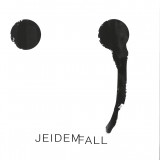
The man in the crowd is a wonderer with relaxed habits. In him the course of things and movement of the city is reproduced. The Düsseldorfer Detlef Weinrich is such a man in the crows. Some one who is constantly listening to future winds through rushes of the past. He loves the night for its free will. And his music tells stories about it. You might know him as a member of the band Kreidler. As a solo artist he goes under the name Tolouse Low Trax. And he's already got three Eps and two albums under his belt. His first solo album „Mask Talk“ thrives on a feathery beat frequency and cool new-wave-strength. His recently released piece „Corridor Plateau“, which appeared as a limited edition to accompany the exhibition „Corridor Plateau“ contains percussive electronics and Industrial sounding like its from the second industrial revolution. His third album „Jeidem Fall“, is also not from here. It sounds like music brought down to earth from the heavens. But its a dark cosmos in which there are only fleeting glimpses of light. All eight tracks were composed in a short space of time over the period of just a few months and fit together perfectly atmospherically. With a musical expressiveness that undoubtedly twists your emotions, „Jeidem Fall“ attacks the subconscious and clouds the mind. The drums have more movement that on „Mask Talk“. Along with the constant tapping of drumsticks goes melodical arpeggios dancing dark and dirty. At times longing vocals drift abstractly through the room, as on „Sa Seline“ or „Geo Scan“, without telling any obvious story.
To sound like stylistic cross references from the present and past is all just speculation for nothing on „Jeidem Fall“ really sounds like anything that has gone before. You could compare the dark minimal timbre of the drum computer aesthetic with Craig Leon's first reductive album „Nommos“. There is also a hint of the minimallist industrial of the Spanish band Esplendor Geometrico in the bubbly textures. But Tolouse Low Trax is still looking from the present into the future and filter and filters all his personal preferences through his MPC and his small synth setup to make them come alive here and now in a new way. Again Tolouse Low Trax has created a truly mysteriously vibrating drum computer music which offers hypnotic magic for the shadowy dance floor. Only a little light should illuminate the whole thing and the bodies that move above them should have no fear from threatening percussion which are displaced into a misty trance. A dark swaying shadowy mass, ideal for a journey at the end of the night and all those non-places where longing sleeps and the last romantics dance while getting drunk.
out of Stock
Last delivered 6 years ago available to reorder, subject to availability
Over a decade after its inception, ground-breaking composer Max Richter announces the release of VOICES – a major new recording project inspired by the Universal Declaration of Human Rights. In a time of dramatic global change, VOICES offers a musical message of hope. Max Richter invited people around the world to be part of the piece, crowd-sourcing readings of the Universal Declaration of Human Rights to be interwoven into the work, which features an ‘upside-down’ orchestra. He received hundreds of submissions in over 70 languages. These readings form the aural landscape that the music flows through: they are the VOICES of the title.Max Richter explains, “I like the idea of a piece of music as a place to think, and it is clear we all have some thinking to do at the moment. We live in a hugely challenging time and, looking around at the world we have made, it’s easy to feel hopeless or angry. But, just as the problems we face are of our own making, so their solutions are within our reach, and the Universal Declaration of Human Rights is something that offers us a way forward. Although it isn’t a perfect document, the declaration does represent an inspiring vision for the possibility of better and kinder world.”
out of Stock
Last delivered 12 months ago available to reorder, subject to availability
Big Crown Records is proud to present Adult Themes, the latest full length offering from El Michels Affair. This album takes the band's "Cinematic Soul" aesthetic literally and sends the listener on a journey through a whirlwind of moods and energies. With their 2005 debut album Sounding Out The City, EMA spearheaded an instrumental funk / soul movement that inspired a slew of bands and even lead to the creation of a few independent record labels. El Michels has since lent his signature sound to artists from Adele to Dr John, Lana Del Rey to Aloe Blacc, and a who's who list of others. In 2016 he co-founded Big Crown Records and has since produced the lion's share of its output. A short stint as the touring band for Wu Tang Clan in 2007 led to the cult classics Enter The 37th Chamber (2009) and Return To The 37th Chamber (2017). Adult Themes marks the long awaited, highly anticipated return to an album of original compositions from El Michels Affair. In 2017 in between producing, playing, and recording on other artists' records Leon Michels began creating compilations of short interludes intended to be sampled by hip hop producers. Some of these wound up becoming songs by Jay Z & Beyonce, Travis Scott, and Don Toliver. These minute-long snippets were inspired by the dense moody work of `60s composers like David Axelrod, and Francois de Roubaix, as well as Moondog's brand of classical jazz. Michels was having so much fun creating these instrumental / orchestral nuggets that he decided to expand on some of the ideas and create what would become the soundtrack for a movie that has yet to be made, an imaginary film entitled "Adult Themes." The album plays like the colors on an artists pallet. Songs like "Rubix" and "Villa" are densely orchestrated with the hard-hitting drums that El Michels Affair is known for. On "Life of Pablo", Leon's son makes his first appearance on record and intros a song with an epic arrangement and a moving mood. "Hipps" is a drum heavy ballad that could've easily fit on EMA's debut record, Sounding Out the City. Other compositions like "The Difference" and "Kill The Lights" are bare, melodic mood pieces with sparse drums and sophisticated chord movement. All of these tunes come together to make perfect backgrounds for dialogue and action. One of the beautiful things about instrumental music is that the listener can decide what the narrative is. With Adult Themes El Michels Affair has created a "choose your own adventure" in musical form.
out of Stock
Last delivered 4 years ago available to reorder, subject to availability
30D Records sublabel ‘Close Encounters’ publishes its third release ‘Third Contact’ EP on April 24th 2020, (initially on digital release) bringing together a range of artists to express their musical vision as a virtual union, somewhat reflective of the globes current confinement. ‘Third Contact EP’ delivers four tracks from an alliance of artists who are at a peak in their careers; Denise Rabe clearly defines her dark, hypnotic trade-mark aesthetic in ‘We’ll Meet In Shanghai’, a timeless track even before its release. Geistform combines industrial-electro with a raw techno drive, continuously channelling his masterful energy in ‘3C 273’. A more dancefloor-oriented B side features ‘Stolen’ from Temudo, delivering rolling groove and distorted bass-lines, Adriana Lopez closing the EP with her high energy, spellbinding ‘SMV’, both B-side tracks perfectly geared toward a wide variety of DJ sets. 30D Records are thrilled to debut all four artists on this special release and all the artists are equally happy to be able to share their creativity and vision through music with you at these strange times.
out of Stock
Last delivered 3 years ago available to reorder, subject to availability
Something a little different from Athens of the North, Crisrail (Chris Rael) is an almost-LP of mad out there funky post punk from Silver Spring, Maryland, USA. Rated and played this out for some time but it has remained mostly under the radar due to scarcity. I could compare it to The Cure but it's so much more. 500 ONLY
"Playing instruments didn't come naturally to me, but I loved it so much I kept doing it and got better. When I started composing seriously in my early twenties, I didn't have much confidence in my voice or instrumental abilities, but my imagination was on fire and I was determined to create music that sounded like nothing else. I would find my place in the constellation of sound by carving a niche that was so unique, musical virtuosity wouldn't be a factor. I was inspired by Tom Scott of the Muffins, Maryland's legendary progressive jazz quartet, and owner of Black Pond Studios in Rockville, where Game of Music was recorded. It was my first solo release; I played everything except Tom's horn and flute parts. Lacking confidence to perform, I was very much a studio rat and became facile at overdubbing solo tracks. New music reviewers praised it at the time, but its distribution was limited and it's been out of print for decades. Listening now, it's more musically muscular than it felt to me at the time. It's incredibly gratifying that more people can hear it again, thanks to Athens of the North." - Chris Rael
out of Stock
Last delivered 6 years ago available to reorder, subject to availability
Two leaders from very different musical worlds, the innovative pianist Bruce Brubaker and scientist-now-electronic-artist Max Cooper collaborate to create this latest expression of music by Philip Glass and tell a story of diversity and vulnerability.
Commissioned by and introduced at the Paris Philharmonie in 2019, Glassforms melds the acoustic concert grand piano with synths and cutting-edge electronic production techniques to create a compelling album and a dynamic live experience.
Rather than just reworking or augmenting via traditional means, Max Cooper and Bruce Brubaker fundamentally rewire Glass’ forms in a manner that’s not possible with human composition tools. Max built a new system for musical expression through coding with software developer Alexander Randon, creating a tool for taking live data from the piano and transforming it into new but intimately related forms which drive his synths on stage.
The result is that each of the pieces by Glass becomes its own electronic “instrument,” an instrument Bruce plays in addition to, and simultaneously with the original piece. As Bruce plays the piano and controls synths with his playing, Max modulates and augments, sometimes adding his own melodies to form hybrid variants.
out of Stock
Last delivered 6 years ago available to reorder, subject to availability
Re-release of the record originally released on 2016-02-05!
Remastered and cut by Rashad Becker at D&M Berlin and presented in an exact replica sleeve of the original 1966 release by Stephen O'Malley.
sales information: Black Truffle is honoured to present the first vinyl reissue of the classic debut album from AMM, AMMMusic. Coinciding with the 50th anniversary of its recording in 1966, this reissue makes one of the cornerstones of the experimental music tradition available again in its original form, replete with Keith Rowe's beautiful pop art cover and the terse aphorisms by the group that served as its original liner notes. A testament to the interaction between the experimental avant-garde and the countercultural underground, the album was originally released on Elektra, recorded by Jac Holzman (the label's founder, responsible for signing The Doors, Love, and The Stooges) and produced by DNA, a group that included Pink Floyd's first manager Peter Jenner. (Pink Floyd paid tribute to AMM's influence on their improvisational sensibility with the track 'Flaming' on their debut album, named after the piece that occupies AMMMusic's first side, 'Later During a Flaming Riviera Sunset').
Formed in 1965 by three players from the emerging British jazz avant-garde - Keith Rowe and Lou Gare had played with the great progressive big band leader Mike Westbrook and Eddie Prévost played in a post-bop group with Gare - AMM quickly evolved from a free jazz group into something decidedly more difficult to categorise. By the time these recordings were made, two more members had joined the group: another Westbrook associate, Lawrence Sheaf, and the radical composer Cornelius Cardew. Then at work on his masterpiece of graphic notation Treatise, Cardew brought with him extensive experience of the post-serialist and Cageian currents in contemporary composition. Using a combination of conventional instruments and unconventional methods of sound production (most famously Keith Rowe's prepared tabletop guitar, but also prepared piano and transistor radio), the group performed improvised pieces often running for over two hours and ranging from extended periods of silence to terrifying cacophonies.
Evan Parker famously described the improvisational logic of AMM's music as 'laminal', in contrast to the 'atomistic' approach more common among the generation of British improvisers (Bailey, Rutherford, Stevens and co.) to which he himself belonged. AMM improvised in layers: layers of sound subtly rising and falling or abruptly starting and stopping without being propelled by the implied pulse of free jazz improvisation. Rather than a pulse, AMM's music began with the sound of the room in which it was played, the Cageian anarchy of silence. By embracing the non-synchronous simultaneity of layered sound, AMM was able to create a musical container into which nearly anything could be incorporated at any moment: on AMMMusic, long tones sit next to abrasive thuds, the howl of uncontrolled feedback accompanies Cardew's purposeful piano chords, radios beam in snatches of orchestral music (and, on the LP's second side, an extended fragment of 'Mockingbird').
AMM's clearest break with jazz-based improvisation concerned the idea of individuality. Where improvised music has tended to foster the development of idiosyncratic stylists who move freely from one group to another, AMM, initially through an engagement with eastern philosophy and mysticism and later though a politicized communitarianism, sought to develop a collective sonic identity in which individual contributions could barely be discerned. In the performances captured on AMMMusic
the use of numerous auxiliary instruments and devices, including radios played by three members of the group, contribute to the sensation that the music is composed as a single monolithic object with multiple facets, rather than as an interaction between five distinct voices.
Jori Hulkkonen was born and raised in a small town named Kemi with a population of 20,000, in the north of Finland. Since the early 80s, his musical influences have been on the side of electronic music, quite eclectic style for a 10-year-old boy who grew up in this period still marked by the seal of the Cold War. At the end of the 1980s, Jori's passion for electronic music was reinforced when he discovered its most abstract and minimal part: techno from Detroit and House Music from Chicago. Excellent DJ, he played in the best clubs and festivals in Europe. Jori Hulkkonen is an artist well known and extremely respected in the Nordic countries for his pioneering status, with his love of music and his involvement in making it known.
out of Stock
Last delivered 4 years ago available to reorder, subject to availability
The second release from Wax Ninja, a Moscow-based record-shop-turned-record-label, is the longed-for gem cut by Artem Xio, the humble leading light of the local underground scene. Can't Stop Now EP is a universal musical weapon, perfect for a DJ bag in which a variety of genres - from hip-hop and jungle to garage house and techno - coexist peacefully. Each side reflects Xio's stages of formation: not only as a collector, DJ and artist, but primarily as a an educated listener with a sensitive ear. The title track Can't Stop Now was written in 2010 to be rethought 10 years after and become a house banger powered by emotionally charged vocals. The dramatic opus that is Crucial Moment pleases with its Detroit-style anguish, while the U Took My Love, an ode to electric organ, gives out some proper Jersey house vibe. Raw and heavy, True School was born out of an unreleased remix for the local rap group, and finally Now U Know takes you back to the beginning of 00s thanks to Cream Soda d'n'b rework. In other words, this "unstoppable" EP is a true delight both for nostalgic old school heads and for those who expect some quality time on the dancefloor.
DJ Feedbacks: (please find all feedbacks in the pdf sheet)
Laurent Garnier: “GREAT EP -- Love the whole thing”
Tensnake: “can't stop now is big thanks”
Robert Owens: ''cool tracks!"
Ka§par: "“For me the house tracks are fun and all, but it's the
Cream Soda jungle mix that's got me into this release,
thanks!”
Anja Schneider: “Great thx .”
Portable: “Wonderful summer vibes post lockdown!”
Black Madonna: “Nice!”
Moodsetter: “Damn Yeaaah !!!
This is classic New York underground sound...
what a vibe !!!
I just L. O. V. E. I. T !!!
out of Stock
Last delivered 10 months ago available to reorder, subject to availability
Brigitte Barbu's Muzak pour ascenseurs en panne (Muzak for broken lifts) marked a bold new addition to the Circus Company repertoire. In a gilded haze of resonant tones conjured by traditional and non-traditional methods, Brigitte Barbu created an inviting sound world brimming with life and doffing its cap to 1970s signal processing. Out of such sonic research and development comes a wealth of material for other artists to sink their teeth into, and so we proudly present an accompanying remix EP that takes Brigitte Barbu's distinctive stamp into new territory.
Roman Flügel makes a first appearance Circus Company with two versions of "Dae-Boj DeMoya" that showcase this constantly versatile lynchpin of European techno. First up is his "kraut remix", which unsurprisingly channels the grainy beauty of Neu! and early Kraftwerk, before his "synth remix" dials back the drums and diverts our attention towards an expansive arrangement of melodious flourishes from classic synthesisers.
John Tejada and Reggie Watts reunite as Wajatta following their triumphant LP Don't Let Get You Down on Brainfeeder to deliver a particularly inventive, soul-stirring vocal techno version of "Couvre chef en peau de taupe". Watts soars over the signature warmth of Tejada's production, while Brigitte Barbu's mysterious tones linger in every fold of the mix.
Matthew Herbert offers up a "Butter Dub" version of the album interlude serie "Trou Vert" that pits his signature stark sampling methods against Brigitte Barbu's material and creates a fruitful dialogue of crooked 4/4 mechanics with all the playful curiosity of the original and a strong dose of Herbert's inimitable musical personality.
out of Stock
Last delivered 6 years ago available to reorder, subject to availability