Director David Lynch once said "I long for a kind of quiet where I can just drift and dream. I always say getting inspiration is like fishing. If you're quiet and sitting there and you have the right bait, you're going to catch a fish eventually. Ideas are sort of like that. You never know when they're going to hit you." Inspired by this quote in both name and spirit, Hollie Kenniff's The Quiet Drift is an ambient gallery of cloudlike synths, seraphic strings, echoing guitars, and other celestial textures guided to cohesion by Hollie's own wordless singing. Though the album certainly creates (and originates from) the kind of space where Lynch's proverbial "fish" can be caught, The Quiet Drift is a fitting title for Hollie's own history, both recent and distant. During the course of the album's creation, Hollie and her family moved cross-country from an island in Washington state, to an island in Maine before ultimately relocating to Canada. "As a child I visited Ontario year-round," she explains in her own words. She continues "More than any other landscape, I think the lake, rivers, and woods there left the most enduring impression on me. The landscape and pace of life of these places will always stay with me." But the reverberant spaces Hollie crafts need no physical headquarters. Instead of conjuring views of nature at the ground level, her sound more readily evokes a top-down perspective, with the distinct features of the land shrinking underfoot as the listener becomes untethered from geography altogether. The Quiet Drift belongs more to the liminal spaces between life and afterlife, memory and fantasy, landscape and dreamscape, than any mappable locale. Describing her formative years, Hollie says "As a dual US/Canadian citizen who spent my childhood in a rural town-- one that I haven't returned to in many years - I have a sense of not entirely belonging anywhere. When I was a teenager my close friends were male musicians, so I was also an outsider to the degree that they were wild and anarchic in a way that I wasn't. I was a quiet book reader and avid music listener who enjoyed being around a creative group. I was also a radio DJ for alternative and punk music throughout high school." In this light, The Quiet Drift attests that creativity is placeless, and calls into question the stereotype of artists as scene-centric city dwellers. Having come of age in the absence of metropolitan sensory overload, Hollie learned to spot the muse in nature, and within herself, instead of the echo chamber of a frenzied peer group. On The Quiet Drift Hollie Kenniff wholly escapes from such pop-culture feedback loops into transcendent, shimmering realms, and she brings the listener along with her. In this age in which we have all been called to reevaluate our relationship to indoor spaces, and seek refuge in the great outdoors, The Quiet Drift provides an apt soundtrack for such rebalancing.
out of Stock
Last delivered 4 years ago available to reorder, subject to availability
Etruria Beat founder Luca Agnelli unveils his long-awaited debut album, ‘Source Drops’ – presenting a ten-track journey through techno and beyond.
A name at the centre of Italy’s rich house and techno scene for over a decade, Etruria Beat head-honcho Luca Agnelli continues to showcase his talent as a leading DJ, producer and label boss on the international stage. With releases via a host of globally renowned labels, plus standout remixes including Moby’s iconic ‘Porcelain’, the Tuscany native’s reputation has seen him become of the genre’s leading artists when combining energetic, entrancing productions throughout his powerful DJ sets. Yet, the core of his work has always found a perfect home on his own Etruria Beat imprint, with July now welcoming the arrival of his highly-anticipated debut album ‘Source Drops’ – an in-depth musical story presenting growth, development, self-reflection and raw emotions via a collection of ten tracks ranging from powerful peak-time anthems through to EBM influenced cuts and slower, hypnotic productions.
“This is the journey that traces my musical evolution of the last 20 years, discovering more conceptual, deeper musical territories; taking inspiration from what influenced me in my career as a DJ and from my continuous research without musical barriers. A journey always in equilibrium, at times dark and sharp, solar and fluid, that develops a different creative vision in each track trying to convey my most intimate and strongest emotions". – Luca Agnelli
Opening via the slow-blooming builds and atmospheric and waves of ‘Black Mirror’, before diving into the heady and menacing tones of ‘Mutant Circle’, the ten-track project quickly showcases a wide-reaching range of influences and nuances central to Agnelli’s development as an artist over his career. Productions such as ‘Balance’ and ‘Oxigen’ contrast with one another whilst bringing space to proceedings, guided by breaks-influenced percussion, minimal arrangements and warping leads, whilst the driving ‘Resistance’ harnesses classic techno tendencies to provide an energetic and lively, snaking journey through rich soundscapes.
Title cut ‘Source Drops’ brings that trademark Luca Agnelli energy to the heart of the project, merging scintillating melodies, acid-tinged stabs and icy hats to unveil a high-octane ride into the peak-time, whilst ‘Raw Surface’ keeps the tempo high with sweeping leads, oscillating basslines and resonant lasers. Next, ‘Omega’ spirals into an off- kilter ride through glitchy echoed vocals, crunchy percussion and rumbling low-ends, with the epic ‘Losing Control’ welcoming an infectious lead melody at its core guided by punchy kicks and slick drum licks. To close, the package veers to an eerie yet ethereal close as hazy, celestial vocal chants meet panning sirens and swooping electronics – punctuating an expansive and diverse offering from the Italian favourite and shaping up an impressive debut LP in the process.
out of Stock
Last delivered 3 years ago available to reorder, subject to availability
Riding the razor’s edge between rigorous experimentation, innovation, and tradition, London based, Italian composer, cellist, and electronic performer, Sandro Mussida, joins the Die Schachtel family with Rueben, his 3rd solo LP.
Active since the early 2000s, Sandro Mussida worked extensively with Mark Fell, Curl Collective, Lorenzo Senni, Oren Ambarchi, and Alessandra Novaga, among others, as well as a founding member of the interdisciplinary artists' group TQS Collective, before releasing his solo debut, Ventuno Costellazioni Invisibili, on Metrica in 2017, followed by Eeeooosss, released by Soave in 2019. Rueben, like its predecessor, deploys a microtonal vocabulary within a three-instrument sound palette and builds upon Mussida’s long-standing investigations of active listening, augmented by a developing practice that challenges aural perceptions of historical, non-equal-tempered tuning systems.
The 3rd instalment of Die Schachtel’s Decay Music series - launched to highlight inspired contemporary experimental efforts in the ambient, ethereal, and emotively abstract music - Rueben was recorded during 2018 in the church of St.Giusto in Volterra, Italy. Deeply inspired by Italian Renaissance paintings encountered by Mussida during the work’s composition, and conceived at the intersection of acoustic and electronic aural fields, in careful response to the space itself, the sounds of electric guitar, bass clarinet and cello - treated as minuscule sound atoms, rapidly projected to form structures of evolving densities - harmoniously enter into dialogue, forming a multi-layered, contemplative sonic landscape, within the interwoven complexity of their own reflections.
Central to Mussida’s work is the role of the performer, the experience of sound in a given space, and the relation of those sounds to memory and observation. Across the length of Rueben, bound to the work’s inspiration in the visual realm, the interplay between the senses blurs, presenting the act of listening as a mirror for the experience and legacies of seeing. In Mussida’s hands, sound emerges as a trace or memory suspended in a non-linear conception of time, where imprint, movement, and event, as they relate to place and happening, are perceived by the ear, recalling the Russian theologian Pavel Florenskij’s idea of ‘reverse time’, that likens temporal condition activated by experiences with art as similar to that of dreams.
Vast in scope and intricate detail, the 9 discrete compositions that form Rueben unfold in a series of interconnected, shimmering landscapes of tone and texture, each, through the interplay of their elements, configuring a radically dense rendering of minimalist, ambient music that challenge the perceived boundaries of those historical definitions. The identity of individual sound sources fades against their collective whole, sculpting an inward-looking aural image of the church of St.Giusto, that echoes the radiance of the paintings that lay at the heart of the album’s inspiration.
An inspired and radically forward-thinking realization of electro-acoustic music, Mussida pushes toward innumerable possible futures of experimental practice, imbued with ghosts and histories of the past. Rueben is issued Die Schachtel on vinyl in a one-time edition of 250 copies, pressed to 180g marble vinyl and housed in a pro-printed inner sleeve and jacket, featuring an original Sumi-e painting by Japanese artist and avant rock drummer Akihide Monna (Bo Ningen), contained in a silk-screen PVC sleeve.
Klasse Indie-Rock von Downunder. Riley Jones, Louis Forster und James Harrison sind seit Ewigkeiten beste Freunde deren gemeinsame Leidenschaft die Musik ist. Folgerichtig manifestierte man den Bund der Freundschaft in einer gemeinsamen Band schon zu High School Zeiten - The Goon Sax waren geboren. "Mirror II" ist bereits das dritte Album der australischen Indieband, gleichzeitig ihr Debüt auf ihrem neuen Label Matador Records und zudem ein Aufbruch in neue Soundwelten. Das 2016 erschienene Debütalbum "Up to Anything" war eine Mischung aus Selbstfindung und musikalischen Feldversuchen zum Nachfolger "We're Not Talking" (2018) hatten man seinen ganz eigenen Sound gefunden hatte. Für "Mirror II" ließen sich die drei Australier drei Jahre Zeit. Louis zog zwischenzeitlich nach Berlin, wo er in einem Kino arbeitete, während Riley und James eine Post-Punk-Band mit dem Namen Soot gründeten. Alle drei experimentierten in dieser Zeit mit teils abstrakter Musik und atonalen Sounds, nun folgt die Rückbesinnung zum Pop. Jedes Bandmitglied bringt dabei seine ganz eigene Art des Songwriting ein. Rileys musikalische Vorbilder wie Les Rallizes Dénudés, Keijo Haino aber auch Kylie Minogue hört man auf "Desire" und "Tag". Louis ist wiederum beeinflusst von avantgardistischem Pop. Er liebt Bands wie HTRK, Young Marble Giants und Stereolab, aber auch Hits von poppigeren Künstlern wie The 1975 oder Justin Bieber. Aus diesen Einflüssen entstanden Songs wie "Psychic" oder "In the Stone". Seine Art Songs zu schreiben brachte ihm immer wieder Vergleiche mit der großen australischen Band The Go-Betweens ein - kein Wunder, schließlich ist Robert Forster sein Vater. Da fällt der Sound nicht so weit vom Stamm. James Harrison ist wiederum ein großer Bewunderer von Syd Barrett, den Walker Brothers, Felt und Jandek, was man den psychedelisch geprägten Tracks "Carpetry" und "Caterpillars" auch anhört.
Klasse Indie-Rock von Downunder. Riley Jones, Louis Forster und James Harrison sind seit Ewigkeiten beste Freunde deren gemeinsame Leidenschaft die Musik ist. Folgerichtig manifestierte man den Bund der Freundschaft in einer gemeinsamen Band schon zu High School Zeiten - The Goon Sax waren geboren. "Mirror II" ist bereits das dritte Album der australischen Indieband, gleichzeitig ihr Debüt auf ihrem neuen Label Matador Records und zudem ein Aufbruch in neue Soundwelten. Das 2016 erschienene Debütalbum "Up to Anything" war eine Mischung aus Selbstfindung und musikalischen Feldversuchen zum Nachfolger "We're Not Talking" (2018) hatten man seinen ganz eigenen Sound gefunden hatte. Für "Mirror II" ließen sich die drei Australier drei Jahre Zeit. Louis zog zwischenzeitlich nach Berlin, wo er in einem Kino arbeitete, während Riley und James eine Post-Punk-Band mit dem Namen Soot gründeten. Alle drei experimentierten in dieser Zeit mit teils abstrakter Musik und atonalen Sounds, nun folgt die Rückbesinnung zum Pop. Jedes Bandmitglied bringt dabei seine ganz eigene Art des Songwriting ein. Rileys musikalische Vorbilder wie Les Rallizes Dénudés, Keijo Haino aber auch Kylie Minogue hört man auf "Desire" und "Tag". Louis ist wiederum beeinflusst von avantgardistischem Pop. Er liebt Bands wie HTRK, Young Marble Giants und Stereolab, aber auch Hits von poppigeren Künstlern wie The 1975 oder Justin Bieber. Aus diesen Einflüssen entstanden Songs wie "Psychic" oder "In the Stone". Seine Art Songs zu schreiben brachte ihm immer wieder Vergleiche mit der großen australischen Band The Go-Betweens ein - kein Wunder, schließlich ist Robert Forster sein Vater. Da fällt der Sound nicht so weit vom Stamm. James Harrison ist wiederum ein großer Bewunderer von Syd Barrett, den Walker Brothers, Felt und Jandek, was man den psychedelisch geprägten Tracks "Carpetry" und "Caterpillars" auch anhört.
In 2015 we stumbled across an EP by a low-profile Romanian producer, which retrospectively was a pivotal event for the development of the label. This record was Serb's 'Transient Recs 1', released via Listen2me from Bucharest. We were deeply touched by the harsh and progressive sound of the tunes, which at the same time were so musical.
After a remix for Fehlzuendung and his LP 'A12 Proceedings' in 2018, things are coming full circle in 2021 as Șerb returns to NDR with 'Transient Recs 2', a collection of tracks produced between 2015 and 2018.
out of Stock
Last delivered 41 days ago available to reorder, subject to availability
The infamous MAYHEM return this year with an EP called “Atavistic Black Disorder / Kommando” that presents the band in a way that has never been heared before! The lords of darkness have dug deep and reflected their influences to create a musical odyssey that shows them multifaceted in several ways. For this goal, cover versions of bands like Discharge, Dead Kennedys, Rudimentary Peni and Ramones were chosen, which in typical MAYHEM manner impressively fit into their bursting and darkenened sound. Nevertheless, MAYHEM would not be MAYHEM, if this musical creation would do without own composed songs. In addition to named cover versions, a brand new track called “Voces Ab Alta” was recorded to continue the musical journey alongside previously released tracks “Black Glass Communion” and “Everlasting Dying Flame”, which were used as bonus tracks for the 2019 album “Daemon”. The EP comes as a 180g LP format which features a two-sided cover artwork and two-page insert, as well as a Ltd. CD Digipak with sleeve and 12-page booklet.
In the Italian panorama of the '70s, Chrisma (Christina Moser and Maurizio Arcieri) skirted the common rules of Italian pop (the aura of progressive rock or the first wave of prolific folk singers); in fact, they created Italian new wave from scratch. After the release of their 1977 debut album Chinese Restaurant (SPITTLE 051LP) -- so far from the punk revolution and so deep into the algid dynamics of the Mittel-European sound -- came Hibernation, their creative peak on which they embrace the revelation of the man-machine and venture into the realms of incomparable robots Kraftwerk. Again the album was produced by Niko Papathanassiou (brother of the Greek legend Vangelis), and it features very sophisticated cover artwork created by famous photographer Mario Convertino. Chrisma, so far ahead of their time, crafted an opus that should be considered at the same emotional level as the most famous synth-pop bands from the UK and Germany. Highlights include "Vetra Platz," a long digital ride worthy of the most famous Kraftwerk singles; "Calling" and "Gott Gott Electron," a primeval couplet of furious post-punk numbers; and the lush "Lover," with Miss Moser still in top form. This reissue includes the original artwork with a silver background. RIYL: T. Rex, Nico, Kraftwerk.
This LP finally brings a Clipping fan-favorite, 2016's Wriggle, onto vinyl in an improved, expanded version that features new art, previously unreleased remixes, and a track that's exclusive to the vinyl format. The original, digital-only Wriggle EP was six tracks that weren't finished in time to make it onto the group's 2014 Sub Pop debut, CLPPNG. For "Shooter," Clipping recorded themselves firing fifteen different guns, the sounds of which exclusively constituted the beat's drums, augmented only by a synthesized tone-row. The verses referenced the well-worn technique of "hashtag rap," but instead of using it to boast about the rapper's personal wealth and masculine prowess, Clipping put forth imagistic narratives of three violent encounters. True to much of the group's music, "Shooter" was an attempt to reframe a familiar style and test the limits of its formal capabilities. "Hot Fuck No Love" contains what might be the most explicit verse to date from Clipping's favorite New Jersey rapper Cakes Da Killa. The EP's title track, "Wriggle," was built around a sample of the influential power-electronics song "Wriggle Like a Fucking Eel" by Whitehouse, transforming William Bennett's torturous imperative into a instructional dance-floor banger. "Wriggle" and "Shooter" have become classic Clipping tracks and staples of their live show. With this vinyl edition, Clipping fans old and new - and there are many new fans thanks to their breakout 2020 album, Visions of Bodies Being Burned, and Daveed Diggs' thriving acting career - get the vinyl version of Wriggle they've been clamouring for.
out of Stock
Last delivered 4 years ago available to reorder, subject to availability
Divide returns on Evod with 3 powerful tracks. All tracks contains ‘corroded’ bass sequences, rugged drum patterns and spaced out pad raids. So many layers of sounds were masterfully combined in order to satisfy the most discerning dancefloors.
out of Stock
Last delivered 13 months ago available to reorder, subject to availability
The first release from Toronto’s newest and most exciting Record Label, EastSide Edits! Limited run pressing of hand-stamped white labels, exclusive to release 001. Blessed by some of the top DJ’s in the world, this is sure to sell out fast! Donuts for the 45 slingers, and donuts for the House DJ’s, EastSide Edits brings a unique twist to the 45’s world by catering to both markets on each release. Carefully selected familiar Edits that work well in both environments is the name of their game! This first release has gained a lot of attention, with the test pressings being championed by some of the top turntable legends in the game. DJ Koco’s recent doubles routine and feature play of the B-side to this record has his massive following asking where to find it.
Side A is brought to you by the young wonder from New York, Pinto NYC. Pinto has been making quite the name for himself, signing music to some stellar House labels across the world, including the legendary Nervous Records, Glasgow Underground, and Simma Black. His upbeat and funky edit of “Rock with you” brings familiarity and energy sure to light the dance floor on fire! Creative sampling and pumping drums are his signature sound. This one hooks the listener early and smashes it home!
Side B is brought to you by the incredibly talented Toronto Disco duo, LeBaron James. LeBaron James are at the top of their game, pumping out high quality Disco Edits to a whole host of successful labels. Home base for them has been the incredibly successful Spacedisco label, run by Juno award winning Toronto artist, Hatiras. Their super catchy Disco edit of “Never gonna give my love again” will have you singing at the top of your lungs, feeling like you’re front and center at Studio 54! The vibe gets pushed even further into overdrive with the onset of a smooth and sexy sax solo that carries through the tail end of the record. This one has already proven to catch the ears of some major players across the globe! Don’t sleep on this white label. House DJ’s have responded overwhelmingly, and after watching DJ Koco’s Instagram routine we are confident that every 45 slinger in the UK will be digging for doubles on this one!
out of Stock
Last delivered 20 months ago available to reorder, subject to availability
Tape Crackers: An Oral History Of Jungle Pirate Radio. Rollo Jackson is a London-based filmmaker who grew up immersed in the city's dance music culture of the mid-90's. His films, whether for the likes of Hot Chip, Man Like Me, or Warp Records bare the traits of someone whose formative years were spent clad in the brash hues of a Versace print shirt and the bright white of a fresh pair of Reeboks. Whatever his subject, the spirit of too many late nights spent doing homework to the crackling sounds of pirate radio, or of weekends spent in booming, sweaty warehouses on the outskirts of London is always threaded throughout. Rollo presents a documentary DVD entitled Tape Crackers, an oral history of Jungle music and an affectionate, touching, and, at times, incredibly funny, tale of bedroom obsessiveness. Told through Michael Finch's tape collection which he recorded while growing up in Islington, North London, it's also an untold (or more accurately unheard) history of UK underground music of the last 10 years - Jungle, Garage and Grime are all knitted into the story through the MCs and DJs who manned the decks and mics. Movers of the underground today such as Riko Dan and B Live are on some of the tapes played in the film. The D90s might be dusty but this music still sounds ultra-crisp. Warning, may contain: late days of Dream FM, middle days of Kool FM/MC Ruff and DJ Uproar on Dream FM/MC Fize and DJ Swiftly/Riko Dan on Pressure FM/Evil B on Rude FM/DJ Target and Maxwell D on Rinse FM/DJ Brockie, MC Five-O and MC Moose on Kool FM in 1993/DJ SL with Strings, Koji and Flinty Badman (Ragga Twins) + Demon Rockers.
Lee Foss and Franky Wah join forces in the ‘Name of Love’ for this hypnotic house track on Club Sweat complete with a bumping Torren Foot Remix. Lee and Franky escape their own sonic boundaries to conjure up a pertinent soundtrack for everyone feeling the need to escape their physical confines after this past year and reconnect with loved ones. Filled with a lush piano melody, crisp drums and blissful vocals of SPNCR the track slowly brings in lush deep-tech undertones to create a euphoric soundscape.
On teaming up with Lee Foss, Franky Wah said, "I’m buzzing about this record because if it wasn’t for Danny Howard and Radio 1 this collaboration would never have even happened. I’d say Lee and I are in different lanes sonically but this track is a perfect example as to why artists should experiment and forget about the boundaries and rules that they set themselves. It’s a record that everyone needs to hear given the year we’ve all had and another one that I hope will resonate with all of us."
out of Stock
Last delivered 8 months ago available to reorder, subject to availability
The second release on Pleasant Life comes from Bristol-based producer Remotif. “The Sound of Hope Played Backwards” is an EP comprising four tracks built up of ambient textures, ethereal soundscapes and broken percussion. Music composed as much for dreaming as it is dancing. Pleasant Life is a record label run by Ally Tropical.
out of Stock
Last delivered 4 years ago available to reorder, subject to availability
DJ Sotofett and LNS have teamed up with Tresor Records for Sputters. The double-vinyl album with 15 cuts spans a hybrid of warped electro and psychedelic hypnosis, all the while remaining fixed in an unmistakable dance release. Recorded between 2017 – 2020, and bookmarked throughout by intros and interludes dug out from archival material, it's a deconstructed yet classic compound of techno-sonics.
LNS from Calgary, Canada, is rooted in braindance, electro and acid. Releasing 12inches on both her self-titled imprint LNS and Sotofett’s Wania - LNS, whilst in the studio, has often pointed out “the lacking blend of dub and electro in dance music”.
DJ Sotofett, hailing from Moss, Norway, is among a myriad of things commonly known for the extended work of his Sex Tags Mania and Wania labels, without forgetting his afro, dub and jazz releases on Honest Jon's London.
Together both artists give space to a guest appearance by E-GZR, a fellow Wania artist, to open the Sputters journey. The sinus bending drum stutter of K.O. by E-GZR collisions flanging basses and chronic-inducing synth pads to blueprint the technoid atmosphere to come. LNS & DJ Sotofett take control with El Dubbing, evoking an effect-heavy demeanour, typical of the Sex Tags Mania soundworld that DJ Sotofett is responsible for, this time rubbing up against solid electrified rhythms. The hypnotic moods carry over to Dúnn Dubbing's deep delays, freely running over a surprisingly minimal skeleton retaining a solid direction. Crafting a warmly emotive end of Side-A with sparse rhythms to perfection.
A meaner turn introduces Side-B. Hints of electro are scattered everywhere, fat basslines, ricocheting drums and synths that mourn and drift in and out of harmony. Vitri-Oil exposes a tumbling sound design, fog-lit chords of material fragility and nosedives - with an alive mix that wallows and grows in equal measures. The side closes with Shim, a classic drift between house and techno releasing sensual euphoria with the albums first big surprise – grand strings.
“LNS wanted to sell her TR-606, while my reply was for us to make a track with the 606 sounding so fresh that she'd never even think about selling it again” Sotofett states. Side-C proves the artists to be some of the most singular producers around with album centrepiece The 606. Clocking in over 10 minutes, it kicks off as a driving techno banger, chugging bass and big chords. Midway through everything falls away, and out of the void enter scattered drums and improv piano lines emerge, while twisted dubs lead us back in an enduringly warm groove.
Side-D sets the clock back to the original electroid foundation of the album, casting fires with alien vibrations. Synchronic Bass Blort is a hard-hitting electro track, steaming sonics and thrills, its melodic hook diving in subterranean motions. On Sputtering the duo raspily beams into outer space, with fizzy motives that disfigure and dazzle while the harmonies of the closing track is for yourself to experience.
DJ Sotofett and LNS deliver an album inhabiting a world full of sci-fi sonics and fierce groove. Their sound is free and live, simultaneously wondrous and sharp.
out of Stock
Last delivered 3 years ago available to reorder, subject to availability
As the premier release on new Jungle & Breakbeat label Bukva Sound we find the amazing Response & Buda, northerners that gather to give us a four track EP with ravey, deep & subliminal vibes.
The title track, Illusions a 160 4x4 bomb that feature the tremendous voice of Lara Lee. Known from Response & Pliskins "Stolen Keys" release on legendary label Rupture London.
out of Stock
Last delivered 4 years ago available to reorder, subject to availability
fter a hiatus of over eight years Fuzzy Lights are making a welcome return. Burials is the follow-up to the critically acclaimed album Rule of Twelfths, and the fourth album from the Cambridge-based post-folk collective.
Their sound has been stripped back to its component parts, deconstructed and rebuilt under less obvious influences. There’s a bedrock of folk-rock - predecessors like Trees and Fairport Convention - but this is then built upon through multiple layers, from the stillness of Talk Talk to the orchestral chaos of Godspeed You! Black Emperor. With Burials Fuzzy Lights have cultivated these sounds and influences into something new and fresh that distances the album from the rest of the folk-rock crowd.
The most striking element of these songs is how intimate they are. Lyricist Rachel Watkins has revealed a lot about herself in these seven songs, which have been written from a very personal perspective. Raw experiences have been distilled into each piece, her translucent vocals often betraying the content of the songs themselves. The album is bookended with the most personal of these. Opener ‘The Maidens Call’ reveals her loss from suffering a miscarriage, whilst album closer, ‘The Gathering Storm’ frames the rallying cry of women’s rights around how individuals must work together now, and in future generations, to destroy prejudice. There is also engagement with humanity’s immediate surroundings and the environment. ‘Under The Waves’ deals with devastation of coral reefs, ocean resources and our natural world, and ‘The Graveyard Song’ imagines the perception of time from the juxtaposed views of a yew tree and a young woman.
As scenarios, paths, and outcomes shift around us, Burials’ amalgam of glowering, intense instrumentation, timeless, weightless melody, and exactingly revealing lyricism carves a very particular path through the world. This is music that tears us away from the everyday not just as a form of escapism, but as a means of self-reflection on hardship and the strategies we develop to overcome it. It is the band’s rawest yet most accomplished statement to date.
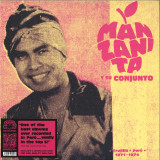
Following the 70s Peruvian cumbia compilation by Ranil last year, Analog Africa returns to Latin America to highlight the work of one of Perú’s undisputed masters of the electric guitar: Manzanita. This 13th release in the Limited Dance Edition Series includes 14 mostly instrumental compositions of electrifying Peruvian cumbia and guaracha. Manzanita's unique guitar lines rest on confident foundations that shifts gears effortlessly. Limited Edition LP in Gatefold Cover pressed on 180g high quality virgin vinyl
"I was in Lima, hanging out with collector-extraordinaire Victor Zela, who had spent the previous few years pouring his passion for Peruvian Cumbia into the blog „la cumbia de mis viejos“, a trove of incredible music. But after the birth of his first child, his priorities shifted and he decided to part with some of his rarest LPs. I was one of the lucky few given an early chance to examine his treasures, and when I picked up the album Manzaneando com Manzanita, Victor said: “Take it! its one of the best LPs ever recorded in Perú … easily in the top five”. That was all the encouragement I needed … two years later many of the songs from that masterpiece have made it onto Manzanita y su Conjunto, a compilation of electrifying Cumbia sides from Manzanita’s golden era.
Berardo Hernández – better known as Manzanita – first surfaced during the psychedelic Cumbia craze. At the head of the scene were the magnificent Los Destellos, whose leader, Enrique Delgado, was such a six-string wizard that other guitarists found it impossible to escape his shadow. But when Manzanita arrived, his electric criollo style sent shockwaves through Lima’s music scene and posed a serious threat to Delgado’s dominance as king of the Peruvian guitar.
Manzanita had come to Lima from the coastal city of Trujillo, five hundred miles up the coast – a place where Spanish, African and indigenous populations had been living and making music together for centuries – and came of age at a time when the first wave of psychedelic rock from the US and UK was starting to sweep the airwaves. But the sounds of Cream and Hendrix disappeared from the radio just as quickly in 1968 when Juan Velasco seized control of the country in a military coup. The new regime, which favoured local traditions over cultural ‘imports’ from the north, was a blessing in disguise for the Peruvian music scene.
Record labels flourished as new bands, raised on a hybrid diet of electric guitars and Cuban rhythms, rushed in to fill the vacuum created by the lack of imported rock. A new genre, known as Peruvian cumbia, was born and Manzanita quickly became one of its most original voices.
Starting in 1969, Manzanita y su Conjunto released a steady stream of singles that used Cuban guaracha rhythms as the foundation for dazzling electric guitar lines. After countless 45s and several years on the touring circuit, the band signed to Virrey, an important Peruvian label, and recorded two LPs acknowledged as masterpieces among aficionados of tropical music. Most of the songs on Analog Africa’s new compilation Manzanita y su Conjunto are drawn from those legendary sessions of 1973 and 74.
Although he scored a few more hits in the later 70s, his dissatisfaction with the music industry caused him to withdraw from the scene for several years; and when he finally retired for good, the golden age of Peruvian cumbia was a distant memory. But when Manzanita was at the top of his game he had few equals. Victor Zela was right: this is some of the best music ever recorded in Perú."
out of Stock
Last delivered 5 years ago available to reorder, subject to availability
DDS catch enduringly absorbing sonic alchemist Jim O’Rourke at his knottiest and most ingenious in a wormholing suite of amorphous rhythm and psychedelic electronics - a massive RIYL Autechre, Roland Kayn, Bernard Parmegiani, NYZ, Keith Fullerton Whitman.
Playing up to and into DDS’ freeform aesthetics, O’Rourke renders 40 minutes shearing hyaline synth tones and ruptured rhythm generated at his Steamroom facilities in Tokyo, a modular outzone trawling that harks back to his iconic Mego releases and some of the more recent Steamroom experiments. It’s an ideal addition to the ever expanding DDS cosmos, following Demdike’s recent ‘Drum Machine’ expo with a slice of purist and screwed modular magick that transcends early
electronics and modern styles in pursuit of musical sensations that defy stylistic brackets.
‘Too Compliment’ was assembled using a bespoke Hordijk modular system, a rare West Coast-style setup hand made by Dutch engineer Rob Hordijk. O’Rourke focuses on the frequency shifter here, using it to coax out fluxing tone thickets, haphazard frequencies and elongated drone corridors.
It’s transportive stuff, harking back to the early days of private press academic synth music but also sitting on edge alongside Autechre’s recent long-form work, as well as O’Rourke’s classic “I’m Happy, And I’m Singing, And A 1, 2, 3, 4” In O’Rourke’s hands, the mass of electronics takes on throbbing, organic dimensions, congealing
grey matter and purplish veins of fluid in viscous transitions that glisten and spark with invention as they form new tissue. What comes out is as unearthly as the earliest electronic music, but also
blessed with a psychedelc spirit in a way that’s long kept O’Rourke right out on his own, teetering between paradigms yet never settling into any single style. If you’ve always been keen on finding a way into that sprawling soundworld, ‘Too Compliment’ is a perfect entry point into a highly rewarding creative macrocosm.
I first discovered khroniky – Ukranian folk songs – in the Highlands of Scotland. I was watching a screening of Bajka, a mesmerising documentary made by the filmmaker Lucia Nimcová and sound artist Sholto Dobie. I knew nothing about these ballads beforehand, but I was fascinated by these odd, beautiful songs, especially the easy way in which they mixed misery and levity, where gentle melodies blend with tales of dark violence. The folk songs describe hardship, murder, torture, death in gulags, heavy drinking, outsmarting men, love affairs. But they’re often very funny too – many of the songs make fun of marriage, and there’s an amazing subcategory of khroniky songs called potka (vagina) songs.
The khroniky have never been properly documented because they were considered too crude, or contained lyrics that were problematic, politically. When Ukrainian folk songs have been archived in the past, it’s normally a sanitised, more polite version of the ones that Lucia remembers from her childhood. Lucia grew up on the other side of the Ukrainian border in Slovakia. She is part of the Rusyn (Ruthenian) minority ethnic group found in the borderlands of Slovakia, Hungary, Romania, Ukraine and Poland. Rusyn is a centuries-old Slavic language, looked down upon as a poor, uneducated dialect by the neighbouring Ukraine and Slovakia. It was forbidden to talk about Rusyn culture at Nimcova’s primary school, but the khroniky stayed in her memories.
“I remember weddings when I was young,” says Lucia, who now lives in Addis Abeba, Ethiopia. “At the end of the night, when everyone was drunk and the young couple would go around their guests, people would sing in Rusyn. There was singing and dancing, and songs about being in prison or falling in love. I picked up the lyrics and sometimes my mum would make my sister and I sing them for people we met on the train. I was about five or six but the lyrics still come back when I sing to my kids.”
Determined that these rich, nuanced, unique songs shouldn’t be forgotten, she decided to record them. Over two years, Lucia, joined by experimental musician Sholto Dobie, visited Rusyn villages high in the Carpathian mountains to rediscover the songs and make the documentary. It was at the beginning of war breaking out in Ukraine in 2014.
“The Rusyn community is a very closed one,” explains Lucia. “Sometimes we’d have to wait several days to hear someone sing; we had to earn their trust before they shared something very personal to them. We’d stay up ‘til 5am at a wedding, then go straight to a morning baptism, or collect haystacks with the villagers, hoping they’d sing while they were working.”
DILO is named after an important independent Ukrainian daily newspaper that was shut down when the Red Army entered Lviv in 1939. The four long tracks on DILO blur field recordings with song; an unpolished, privileged glimpse into a private world. We hear dogs barking and insects buzzing in the summer heat, then a blast of hurdy gurdy or violin will drift in, or a plaintive song soars softly over the rural background noise, with casually harrowing lyrics about a cuckoo, “lifeless in a world of misery”, as translated in the album’s booklet.
For both Lucia and Sholto, it was important not to tamper too much with what they heard. “When you think about ethnography,” Lucia explains, “you have to have a lot of time, love and respect to document it with sensitivity.”
“The songs all have their own atmosphere and intimacy from the spaces they were recorded in and it was important to maintain these particularities and move with them,” adds Sholto, who now lives in Vilnius, Lithuania. “They guide and sometimes interrupt a journey between interiors – domestic spaces; in kitchens, by the fire – and exteriors; marketplaces, cow sheds. We used contact microphones to record metal bridges and fences, and we spent one afternoon recording a wool processing machine, the details of the rattling and tuning wheels are the ground layer for the third track.”
Lucia took rough notes and diary entries during the recording process, which are now shared in the booklet alongside a selection of lyrics, loosely translated, but revealing the depth and astonishing beauty that sometimes lies in the language of these folk songs.
The feel of the album is intimate, flipping between laughter, where a woman sings about selling her pussy to buy a cow in one track, then shifts to a raw, painful truth; an adult son asks his mother why his dad won’t be back for dinner, as he’s gone to war.
Since Lucia and Sholto began working together in 2014, they have shared the audio recordings on radio and film and shown photos in gallery spaces, making sure these special, smutty, poignant songs don’t get lost. This new record and booklet joins that same continuum, another glorious fruit from the same rare tree.
Re-mastering by: Ray Staff at Air Mastering, Lyndhurst Hall, London
Morgan was one of the most active artists in the Los Angeles underground jazz scene, and a member of the late great Horace Tapscott‘s artist collective Union of God’s Musicians and Artists Ascension (UGMAA). He performed alongside Tapscott, and other Nimbus recording artists like Jesse Sharps, who he introduced to Tapscott. He also performed with Arthur Blythe, Gary Bartz, Azar Lawrence, as well as soul icons Willie Hutch (notably on the Foxy Brown soundtrack) and Rufus & Chaka Khan. Most recently he contributed to Carlos Niño’s 2016 album Flutes, Echoes, It’s All Happening!, and was a part of Niño and vocalist Dwight Trible’s soul-jazz group Build An Ark (which also featured Tribe’s Phil Ranelin).
Journey Into Nigritia was Morgan’s debut as a leader, and the first of three recordings he released for Nimbus West. The album has a strong post-Coltrane spiritual feel, with some modal-based melodies, and some fiery solos from saxophonist Dadisi Komolafe. The record also features a solid rhythm section featuring bassist Jeff Littleton and drummer Fritz Wise.
Review by T J Gorton
At the dawn of the Reagan years, LA jazz pianist Nate Morgan recorded his first album for Nimbus West. Journey Into Nigritia portrays an artist marked by the icons of his day, and striving for reinvention. Although he came from a solid jazz background, coming up through the Pan Afrikan People's Arkestra, Morgan found more exciting work with pop bands in the seventies, including glory years with Rufus w/Chaka Khan. On Journey into Nigritia, Morgan re-embraces jazz. Included in the band are Jeff Littleton on bass, Fritz Wise on drums, and Dadisi Komolafe on alto sax.
The collection opens with the Trane-ish Mrafu. Komolafe blasts off in short order, and while the modal chording recalls Tyner, Morgan shows flashes of the nimble loquacious gift that define him. While Alice Coltrane incense perfumes "Morning Prayer, Morgan's devotional sincerity and personnel expression triumph.
Suitably complex with yearning minors, Mother features the trio performing a memorable composition. Littleton's deep-note sustain contrasts Wise's shimmering cymbals, while Morgan tells heart-wrenching truth. With a somewhat solemn theme, He Left Us a Song regularly bursts through into straight-ahead fast break sprints up and down the court. The unexpected "Study in C.T. offers an homage to Cecil Taylor and Morgan's musical roots with free improvisations on a dense and spiky theme. The exhilarating result has Morgan exploring his own way, with a winking slinging of jagged bass chords halfway through.
While a quarter century's experience has nurtured Morgan's prodigious gifts beyond this ambitious debut, Journey Into Nigritia offers enjoyable insights into his artistic evolution, while adding another precious title to the discography of one of the most woefully under-recorded greats of our time.
The legendary soundman and record producer, Lloyd Coxsone, began his career in the 1960’s soon after arriving from Jamaica. He was one of the first soundmen to play at West End clubs where a generation of British pop stars like the Beatles and the Rolling Stones first heard music from Jamaica. Sir Coxsone sound then dominated the seventies, when Bob Marley & Dennis Brown were among his greatest allies, as heard on unforgettable dub-plates from that era.
He formed the Tribesman Label and issued King of the Dub Rock before recording the likes of Fredlocks, Willy Stepper & Jimmy Lindsay. King of the Dub Rock 1 & 2 are recognized as reggae classics. They not only feature Lloydie’s own productions but also riddims by Jamaican producer Gussie Clarke and heavyweight dubs by mix master Scientist. On King of the Dub Rock 3, Lloydie teams up with Jahsolid Rock Music, who’s albums with Brinsley Forde, Apple Gabriel and Earl 16 were regularly heard on Sir Coxsone playlists. This album features exclusive dub mixes and vocal tracks from these artists plus brand new tunes by Mutabaruka, Chezidek, Micah Shemaiah, Var & Ras Teo.
King of the Dub Rock 3 is an essential companion for all Coxsone fans wanting to complete the trilogy. It delivers such a high standard of musical quality that it promises to be a modern day classic!
Milanese imprint Ansia returns with a new V/A of warped, unconventional techno. Following his critically acclaimed debut LP 'Perdu', label-head Piezo continues to carve out his club-ready and explorative sonic niche, this time calling on a team of kindred left-field sound manipulators to get the job done. Manchester's BFFT (Whities, Gobstopper, Cong Burn) leads the charge with a dexterous cut that marries mind-bending sound design with club-ready functionality. Next up is Timedance-affiliate Metrist, who is as playful as ever on 'LB Steaua': a deceptively simple 4/4 beat peppered with distorted glitches and psychedelic details reminiscent of Perlon's more left field releases. Moving to the B-side, Piezo delivers his trademark brand of ruffneck techno - buzzing with off-grid tribal drums, cartoon synths and nonsense vocal samples. To close, Mexican leading-light Siete Catorce ratchets up the tempo for a singular track in a world entirely of its own: rude, fast, no-frills, sitting somewhere between digital cumbia and hardcore tekno. Unsurprisingly this one ended up in Batu's relentlessly forward thinking BBC Essential Mix.
out of Stock
Last delivered 2 years ago available to reorder, subject to availability
Re-mastering by: Cicely Baston at Alchemy/Air Mastering, London
Electric blues guitarist Melvin Taylor had been sporadically recording solo albums for 20 years when Dirty Pool arrived — and was somehow just beginning to find fame. Already a hit in Europe, it had taken a steady run of performing in Chicago’s famed blues clubs to slowly earn Taylor a well-deserved reputation as an equal talent among the giants before him, such as Otis Rush, Albert King and Stevie Ray Vaughan.
While early records like Melvin Taylor Plays the Blues For You show off an equally amazing jazz side, Taylor traded away his Wes Montgomery-inspired runs for more Luther Allison/Jimi Hendrix attacks with the formation of the trio Melvin Taylor and the Slack Band in the mid ’90’s.
The title song of the second album by that outfit, “Dirty Pool,” is actually more the balls-to-the-wall, no-compromise, hard-rockin’ electric Texas blues of Vaughan and Johnny Winter than the sweet Chicago soul of Buddy Guy.
Indeed, three tracks on this 1997 release, including “Dirty Pool,” were SRV tunes. Other standards, like “Kansas City” and “Floodin’ in California” also have more of a Lone Star State approach to them. But the Jackson, Miss.-born Taylor’s guitar is cleaner than his forebears and technically, he even surpasses them, yet the anger and sorrow of the blues is readily evident in his playing.
This rare combination of qualities really comes out in a slow blues tune like his solo in “Dirty Pool,” which after repeated listens, still makes me head shake in disbelief when I hear it.
“Too Sorry” is a good example of how well Taylor fares when he treads in Jimi Hendrix territory, whereas his rhythm work is the best I’ve heard from a lead guitarist since Vaughan; listen to “I Ain’t Superstitious,” “Born Under A Bad Sign” and the funky “Telephone Song” for your proof.
It also helps that Taylor’s drummer James Knowles is well in synch with him, while Ethan Farmer completely owns the low end of the sound. Farmer’s peppering bass lines in and “Floodin’ in California” is the textbook way electric blues bass should be. Overall, a tight little band.
Taylor’s vocals certainly won’t draw any comparisons to the Wide-Brimmed–Hatted One but he holds his own just fine until it’s cuttin’ time. This is right at the top of my list of best blues guitar playing on record over the last couple of decades. If you decide to give this one a listen, prepare to be blown away.
Mr Williamz is an original soundsystem toaster in the Reggae Dancehall style, and this is one of his live anthems sung on the fattest Heavenless rhythm track produced by UK bassline rub a dub masters Chief Rockas. Clean riddim on the B-side. Limited press.
I attended a trade fair in Rio de Janeiro, Brazil. In this show, we met producers, label and festival managers. It is a privileged moment when it is possible to learn about new trends, new musical forms, emerging groups. The timing of the meal is undoubtedly the most important. We take the time to introduce ourselves and discover each other. When my turn arrived, I took out my little map to locate the town of Sète on the map of France. There, an American promoter exclaimed "Yeah! You live in this beautiful city. Where there is this incredible music. ” I admit that at the time I didn’t quite understand what he meant but flattered by his remark I told him yes. Later, I realized that he was talking about gypsy music that made the whole world dream.
When my friend shared this anecdote to me, it resonated deeply with me. Indeed, for us, people of the south of France, this was nothing exceptional. Indeed, every day you could meet in the street a gypsy musician performing a rumba, another declaiming a fandango or another who liked to paraphrase the maestro Django. It is part of our daily environment, but it is indeed a peculiarity of this region. The territory of the Mediterranean arc, from Arles to Perpignan, is indeed the cradle of gypsy music in France. In addition, we must underline the major influence of the Gypsy artists of Catalonia in the development of these different artistic forms. Through weddings and family reunions, the repertoires have shifted to be reinterpreted according to the identities specific to each and the territories of residence.
With this new collection, we wanted to show, to hear all the musical richness of Gypsy and Manouche artists populating the territory. From appropriation to recreation, they never stop bringing this music to life, re-enchanting it and offering it a resolutely modern reading, open to the world. In this first opus, devoted to the guitar, we will take the routes of latin music, flamenco or jazz alongside renowned artists and young talents. With "The sound of guitars", it is a first door open to the gypsy music of the Mediterranean Arc, that we will discover gradually through the "Mediteranean Gypsies roads" collection.
Hong Kong based hypno-tropicalia duo Blood Wine or Honey are set to release their second album 'DTx2' on 30th June 2021. Made up of seasoned multi-instrumentalists James Banbury (synths, bass, percussion, cello) and Joseph von Hess (vocals, clarinet, sax, percussion), they create a heaving, heady brew of brazen sax themes, lo-fi/hi-tech electronics, densely layered cello inflections and motorik drums.
These explorations start with the dance-floor then go above and beyond, taking notes from post-punk and tropical polyrhythms, always anchored by the bass weight of the sound system. Their distinctive sound is created in the industrial warehouses and hidden rural settlements of Hong Kong, surrounded by the low-end throb of heavy machinery, the lingering scent of hand sanitiser and the humidity of the South China Sea.
Written and recorded during 2020-21, new album 'DTx2' looks ahead to an uncertain future, drawing deep on their experiences and influences and welcoming a host of co-conspirators.
Jean Daval, aka Preservation (credits include Yasiin Bey fka Mos Def, MF Doom, RZA, GZA, Raekwon, KRS-One, Aesop Rock), provided truffle-hunted beats, synths and basses, which, when put through the BWoH mangle, emerged as 'Messenger'.
Superstar and old friend of the band KT Tunstall came to work with BWoH after they contributed a DJ mix for her lockdown 'KTRave' on Instagram. 'Attraction' was the result. Wonky bass, found-bounce beats and Buddy Rich drums smashed out by Tim Weller (Marc Almond, Future Sound of London, Goldfrapp, The Chemical Brothers, David Axelrod) resulted in a bonkers production with passionate vocals and layers of harmony.
'I Shall Rush Out As I Am' is a collaboration with legendary pop provocateur Paul Morley and Janice Lau of Hong Kong band David Boring. The track is based on the words and the spirit of sci-fi writer, satirist, literary critic and radical feminist Joanna Russ and took shape quickly, with tinges of A Certain Ratio and memories of Suicide, provoking Janice to an authentic scream-of-consciousness delivery.
Multi-talented London singer, musician and composer Kamal (Neighbourhood Recordings) took time away from being the Next Big Thing to transform 'Testing Time' with funk-edged keys. A key figure in the extraordinary '90s Hong Kong music scene, Zoë Brewster contributed vocals.
Roughly divided, the album's first set of songs make relatively short statements, punchily self-contained with common threads. The final four tracks, Testing Time, Embers, Embrasure
and Echt Embrace disperse into flights of mantric fantasy, with quicksand time-signature shifts and key-changes emerging into a more introspective zone with a fervent pulse, a shift in energy: stamina over speed.
A sonic clash of Tropical, On-U and Eastern proportions, t-woc drops 6 tracks of dope sound system bashment for Strangelove. Informed by Mick's musical wanderlust and prolific digging, Pentangle deftly blends a mélange of influences where Caribbean steel drum, Anatolian melodies and the sounds of the Maghreb all float through the mix.
Like his work for Macadam Mambo/ Emotional Response- its a sound hard to pin down and all woven into a heady brew percolating somewhere in the dance-floor twilight zone. With early works created pre-lockdown at an artist residency in The Dock in County Leitrim, the heads down groove of 'Crazy Bronco' & 'Goddy' don't sound out of place with an early 90's Uk bass culture. Elsewhere the deeper cuts rub against a little sunshine as the late night swing of Midnight Magic riffs off Junior Delgado's roots classic.
With killer artwork c/o Marius Houschyar Strangelove is super stoked to release this collection of outernational rhythms from the Irish vinyl wallah, mix engineer and producer
Vital Sales Points:
Follow up to the labels previous exotic waves of Scribble & Sjunne Ferger,
out of Stock
Last delivered 5 years ago available to reorder, subject to availability
New Zealand collective Flamingo Pier's debut album - serving up euphoric disco hooks, classic house choruses and forays into Latin funk, balearic and psychedelia
Auckland. Musicians from the tightly knit local scene swung through to contribute to the recording, including fellow Soundway act Julien Dyne on drums, as well as saxophonist Nathan Haines.
The self-titled album draws from the band’s wide-ranging taste, as well as what they’ve been playing in order to keep spirits up. Channelling classic emotive house, to disco, Afro and jazz funk on their debut album, Flamingo Pier cite a wide range of musical influences such as Khruangbin, Roisin Murphy, Peven Everett, house legends Masters at Work and Brazilian artist Tim Maia. This translates into an uplifting but nostalgic current running throughout the album - reflecting on last chances, soul-searching and longing for the carefree days of the dance floor.
out of Stock
Last delivered 4 years ago available to reorder, subject to availability
With his ongoing commitment to like-minded archivist label Finders Keepers Records, industrial music pioneer Steven Stapleton further entrusts us to lift the veil and expose “the right tracks” from his uber-legendary and oft misinterpreted psych/prog/punk peculiarity shopping list known as The Nurse With Wound List.
Following the critically lauded first instalment and it’s exclusively French tracklisting both parties now combine their vinyl-vulturous penchants to bring you the next ‘Strain Crack & Break’ edition which consists of twelve lesser-known German records that played a hugely important part in the initial foundations of the list which began to unfold when Stapleton was just thirteen years old.
From the perspective of a schoolboy Amon Düül (ONE) victim, at the start of a journey that commenced before phrases like kosmische and the xeno-ignant Krautrock tag had become mag hack currency, this compendium is devoid of the tropes that united what many would accurately argue to be the greatest progressive pop bands in Europe
(namely CAN, Neu! and Kraftwerk) and rather shatters the ingredients across a ground zero landscape for both inquisitive fans and socially rehabbing musos to begin to assemble a unique self-styled identity. If Krautrock was the music that journalist told us lurked behind schlager (German pop) in the 1970s, then this record includes the music that skulked behind Krautrock and perhaps refused to polish its backhanded name belt.
Including lesser-known artists like the late Wolfgang Dauner, whose career proceeded and outlived the kosmische movement while consistently informing and outsmarting them whenever they got stuck in their metronomic ruts, or how about Fritz Müller, the man who
was to Kraftwerk what Stuart Sutcliffe was to The Beatles but had more in common with Yoko and quite rightly couldn’t give a stuff about the Fab Four’s Hamburg roots.
Elsewhere we have a plethora of German bands made for German audiences as they try and shed secondhand flower power Americanisms and feel the benefits of much harder drugs and the realisations of difficult second album budgets while Kommune 1
newsflashes wipe smiles from everybody’s faces and replace them with opioid chic or acid-sarcastic grins. Bonzo Cockettes show us their Big Muffs and drummers ask for extra mics while Conny Plank goes for parliamentary office and gives babies good firm handshakes for the camera.
‘Strain Crack & Break: Volume Two’ is the sound of Steve Stapleton’s sponge-like mind and the dividends of anyone who was brave enough to even peek inside those brick-thick gatefold covers never mind drop the needle.
Over forty years since Nurse With Wound’s first album was released, Finders Keepers Records and Steve Stapleton take connoisseurs of our kind of music back to the disused elevator shaft towards ground zero. Arriving at the same checkout from different departments, Finders Keepers and Nurse With Wound continue to sing from the same hymnal with this ongoing collaborative attempt to officially, authentically and legally compile the best tracks from Steve’s list, where many overzealous erds have faltered (or simply, got the wrong end of the stick).
After ‘Strain Crack & Break: Volume One’ merely scratched the surface of this DIY dossier of elongated punk-prog peculiarities, this second lavish metallic gatefold double vinyl compendium drives a much deeper groove which, in accordance with Steve’s wishes, focusses exclusively on individual tracks of German origin - the country whose music forged the prototype of the NWW inventory in the form of his secondary school vinyl wantlist in the early 1970s, comprised of disassembled free jazz, unshowered stoner psych, hypnotic prog, deranged monk funk and fuzzed out Deutschmark bin bonzo beats.
out of Stock
Last delivered 2 years ago available to reorder, subject to availability
Limited edition gold vinyl edition.
Hamburg's funk adventurers at the top of their game with special guests Ice-T, Charlie Funk, Peter Thomas, Gizelle Smith, Lee Fields, JSwiss & the Mocambo Kidz.
Original press release note (2019):
Carrying blistering funk lines in their fingers and worldly influences in their hearts, the unique and distinctive Mocambo sound is not one to be confused with retro bands trying to recapture an era. Eschewing traditional recording methods, this DIY crew are committed to driving forwards, and 2066 sees them at the height of their powers, broadcasting a call for unity.
After reaching new audiences worldwide and earning critical praise for their two long players on Brooklyn's Big Crown Records in their tropical guise as Bacao Rhythm & Steel Band, the band have reassembled and refocused in their original form, the workhorses behind dozens of 45s on the Mocambo label and beyond. Crossing generations, this album introduces some of the world's youngest funk talent to step up and rub shoulders with soul and rap legends, soul sisters, an elder statesman composer/arranger and a brand new emerging artist out of New York.
As with all Mocambo releases, the two sides of the record have been meticulously sequenced by the
band. Side A welcomes us aboard with joyous instrumental stomper Preaching To The Choir, and a call to build bridges from Mocambo chanteuse and percussionist Nichola Richards, duetting with emerging rap talent, New York MC JSwiss. B-girls and b-boys are called to the dancefloor as Superstrada and Concrete Stardust commence, all buzzing synth lines and relentless drums. New Jersey legend and Big Crown associate Mr Lee Fields is guest of honour for Where Do We Go From Here before a horn workout brings us to a close with Macumba. It's time for a breather.
The B side kicks off with the grand return of the Golden Girl of Funk, Gizelle Smith, a sister who's been busy taking on the world. Composer and presenter Peter Thomas narrates a Return To Space to mark the centenary of the debut of his score to sci-fi show Space Patrol, which first broadcast in 1966. We're back down to Earth and the mean streets for the furious drums and car chase workout of Golden Shadow. Today slows down the pace for a reflective ballad with Nichola front and centre - and here's the next generation: the Mocambo Kidz sing along to their parents' instrumentation for Here We Go, a new kids' block party anthem... with no sleep 'til bedtime. The album closer makes it clear that the Mocambos are nowhere near powering down as Ice T and Charlie F unk bring their A-game for an old school attack which, since you're up bouncing anyway, gives you no excuse not to flip the LP and drop the needle right back on to Side A. Onwards!
A summation of their journey so far and a celebration in anticipation of what's to come, the album is set
to take its place in a legacy of open minded, organically recorded music, showering listeners with the crew's maze of tantalising sounds pulled from funk, afro, hip hop with cinematic composition and storytelling.
out of Stock
Last delivered 4 years ago available to reorder, subject to availability
High Quality Pressung,180g 2xLP, Gatefold, Black oder Transparent Red (exklusiv nur in Deutschland), Deluxe Digipak, glass-mastered CD. 2021: Perturbator is back. Smash Cyberpunk Hit Perturbator wurde als Gesicht des Dark Synthwave bekannt. Erinnerungen an John Carpenters "Die Klapperschlange", " Blade Runner", "Akira" oder "Ghost in the Shell", Einflüsse von Dark Wave, Dark Techno, EBM oder Nine Inch Nails. Fünf Jahre nach seinem letzten Album ist "Lustful Sacraments" sein dunkelstes Meisterwerk. Dunkelster Nihilismus, Science Fiction Welten, Soundtrack zum Untergang der Menschheit, eine dystopische Odyssee durch Acid Post-Punk und Goth-Clubs, ein Rausch von Hedonismus, Sucht und Wahnsinn. "Lustful sacraments" wird die letzte Veröffentlichung von James Kent auf Blood Music sein, das perfekte Schlussstatement einer legendären, langjährigen Zusammenarbeit. Zum neuen Album wird der komplette Backkatalog wieder verfügbar gemacht.
High Quality Pressung,180g 2xLP, Gatefold, Black oder Transparent Red (exklusiv nur in Deutschland), Deluxe Digipak, glass-mastered CD. 2021: Perturbator is back. Smash Cyberpunk Hit Perturbator wurde als Gesicht des Dark Synthwave bekannt. Erinnerungen an John Carpenters "Die Klapperschlange", " Blade Runner", "Akira" oder "Ghost in the Shell", Einflüsse von Dark Wave, Dark Techno, EBM oder Nine Inch Nails. Fünf Jahre nach seinem letzten Album ist "Lustful Sacraments" sein dunkelstes Meisterwerk. Dunkelster Nihilismus, Science Fiction Welten, Soundtrack zum Untergang der Menschheit, eine dystopische Odyssee durch Acid Post-Punk und Goth-Clubs, ein Rausch von Hedonismus, Sucht und Wahnsinn. "Lustful sacraments" wird die letzte Veröffentlichung von James Kent auf Blood Music sein, das perfekte Schlussstatement einer legendären, langjährigen Zusammenarbeit. Zum neuen Album wird der komplette Backkatalog wieder verfügbar gemacht.
Over the past decade, Egyptian-born, Barcelona-based DJ and techno producer Raxon, known to friends and family as Ahmed Raxon, has popped out a steady stream of twelve-inch singles, precision-tooled, for labels like Cocoon, Drumcode, Diynamic, Truesoul, and Ellum Audio. An alumni of Kompakt’s Speicher series – check the insistent, vibrating pulses of “The Ancient” and “Dark Light” on 2019’s Speicher 107 – with Sound Of Mind, Raxon has produced a long-awaited debut album that’s ready and aching both for the dancefloor and the boudoir, traversing the heat of the club and the warmth of the home.
“The idea of an album has always floated around in my head for the past few years,” Raxon confirms, “but it was never the right moment in my mind.” Instead, he’s been insistently pursuing his vision of deep, elegant techno, taking him from early DJ gigs in Dubai, including the legendary audio tonic night, then relocating to Europe on the recommendation of Herman Cattaneo, all the while allowing his experiences to inform and transmute his producer’s thumbprint. He’s an architect by training (though he gave architecture up for electronic music), which might explain why Raxon productions are so sturdy and well-designed; but remember also that architecture is a field filled with brave experimentation, something Raxon definitely draws on throughout Sound Of Mind.
Like many albums from the past twelve months, Raxon’s debut developed partly thanks to the unique social situation the planet has found itself caught within. “In the beginning of 2020 I started working on a few tracks with the album in mind,” he recalls, “with no idea of what’s to come in the next few months. As catastrophic as the situation was/is, I found myself in the studio; in a way the lockdown gave me that creative freedom in the studio, to try to tell my story through sound.” And indeed, there is something in the way of ‘life writing’ about Sound Of Mind, particularly in the way Raxon’s productions pay subtle homage, perhaps, to his formative listening experiences in the late nineties.
It’s no retro trip, but there’s plenty of variety here, and a few moments that’ll tickle the collective memory – see the prowling pulsations of the opening “Majestic”, the alien breakbeat action of “Vice” and “Journey Mode”, where the interstellar tones feel like Foul Play or Steve Gurley, the leaking gas and woozy keys that make “Droid Solo” so subtly destabilising, or the strobelight drones that sputter and flare throughout “El Multiverse”, where dappled organ tones fight it out with interdimensional transmissions, all sucked into the vortex of a late-night techno mantra. Beautifully sculpted, Sound Of Mind feels consummate, an elegant set that pulls Raxon’s vision into its sharpest focus. Alive with possibilities, it’s a fever dream of creativity.
In den letzten zehn Jahren hat der in Ägypten geborene und in Barcelona lebende DJ und Techno-Produzent Raxon, der Freunden und Familie auch als Ahmed Raxon bekannt ist, eine ganze Reihe von 12inch-Singles auf Labels wie Cocoon, Drumcode, Diynamic, Truesoul und Ellum Audio veröffentlicht. Wir kennen Raxon außerdem durch seinen Beitrag zur Kompakt Extra/Speicher-Reihe – man höre sich nur mal "The Ancient" und "Dark Light" auf dem 2019 erschienenen Speicher 107 an. Nun hat Raxon mit “Sound Of Mind“ sein lang erwartetes Debütalbum produziert, das sowohl für den Dancefloor als auch für die eigenen vier Wände geeignet ist und dabei sowohl die Hitze des Clubs als auch die Wärme des eigenen Zuhauses durchmisst.
"Die Idee eines Albums schwebte in den letzten Jahren immer in meinem Kopf herum", bestätigt Raxon, "aber es gab nie den richtige Moment." Stattdessen verfolgte er leidenschaftlich seine Vision von tiefem, elegantem Techno, die ihn von frühen DJ-Gigs in Dubai, einschließlich der legendären Audio-Tonic-Nacht, dann auf Empfehlung von Hernan Cattaneo nach Europa führte. Im Laufe dieser Zeit sammelte er unzählige Erfahrungen, die es ihm erlaubten, seinen Stil als Produzent mehr und mehr zu transformieren. Raxon ist gelernter Architekt (obwohl er die Architektur für die elektronische Musik aufgegeben hat), was vielleicht erklärt, warum seine Produktionen so robust und gut durchdacht sind; aber man sollte auch nicht vergessen, dass Architektur bestenfalls immer ein Feld mutiger Experimente ist, etwas, worauf Raxon in “Sound Of Mind“ definitiv zurückgreift.
Wie viele andere Alben der letzten zwölf Monate auch wurde Raxon’s Debüt von der einzigartigen gesellschaftlichen Situation, in der sich der Planet momentan befindet, beeinflusst. "Anfang 2020 habe ich angefangen, an ein paar Tracks für das Album zu arbeiten", erinnert er sich, "ohne zu wissen, was in den nächsten Monaten auf uns zukommen würde. So katastrophal die Situation auch war/ist, ich fand mich im Studio wieder; in gewisser Weise gab mir der Lockdown auch eine kreative Freiheit im Studio, um zu versuchen, eine Geschichte durch meinen Sound zu erzählen." Und in der Tat gibt es auf “Sound Of Mind“ so etwas wie eine "Lebensgeschichte", besonders in der Art und Weise, wie Raxon’s Produktionen eine subtile Hommage an seine prägenden musikalischen Erfahrungen in den späten Neunzigern darstellen.
Es ist fürwahr kein Retro-Trip, aber es gibt hier viel Abwechslung und ein paar Momente, die das kollektive Gedächtnis kitzeln werden - zum Beispiel der sich langsam heran pirschende Pulsschlag im Eröffnungstrack "Majestic", oder die außerirdischen Breakbeats von "Vice" und "Journey Mode", in denen sich die interstellaren Sounds ein wenig wie Foul Play oder Steve Gurley anfühlen. Dann das ausströmende Gas und die wummernden Tasten, die "Droid Solo" subtil destabilisieren, oder die Strobo-Drones, die in "El Multiverse" herum sprudeln und flackern, wo einzelne Töne einer Orgel mit interdimensionalen Transmittern um die Wette strahlen und schließlich in den Strudel eines nächtlichen Techno-Mantras gesogen werden. “Sound Of Mind“ fühlt sich formvollendet an, wie ein elegantes Set, das Raxon’s Vision verstärkt in den Fokus rückt. Ein Fiebertraum voller Kreativität und Möglichkeiten.
out of Stock
Last delivered 3 months ago available to reorder, subject to availability
Beautiful orange & yellow sunburst vinyl - Solstice '21 sees twelve bright lights of independent electronic music mark the coming Summer Solstice. In such dark days, the age-old practice of celebrating the move from shadow to light, feels steeped in a renewed symbolic power. Solstice '21 marks this significant moment with a rich array of musical offerings. Reflective, lively, and always powerful, this collection is spun with modern twists of an ancient thread. Rotator - This is the first outing under this moniker from Justin Owen, also known under the alias Licit, as well as being a protagonist in the world of modular synthesis as the man behind the Abstract Data modules; Letters from Mouse - "Bubbling analogue synthesis from Scotland." This analogue synth maestro and inimitable broadcaster (aka The Magic Window), boasts a string of quality releases, including the recent highly acclaimed album An gàrradh, also on Subexotic; Cub/cub - "Cub/cub explores the world in-between nostalgia and nihilism, analogue and digital, real and false; creating evocative and mournful musical collages." First discovered on Boards of Canada forum Twoism, Cub/cub's two debut releases with Subexotic demonstrated his considerable talent to mix fascinating texture with beguiling melody. With an astonishing follow-up album coming soon, his rising star feels unstoppable; Orbury Common - "aural ephemera from the home of the orbs." This mysterious duo from the West of England are blessed with delightful musical cunning; their brilliant debut on Subexotic lifted the lid, and this offering reaffirms exciting times lie ahead; Onepointwo - "Minimal electronics, abstract radio signals and dystopian soundscapes are proceeded from both digital and analogue sources." A creator of intricate yet powerful collage, with finely wrought motifs that repeat and build to create a shimmering psychedelic impact. This is Onepointwo's glorious trademark. Spell-binding releases already exist on Woodford Halse, Poeta Negra, Lotus, as well as an imminent powerhouse album forthcoming on Subexotic; Giants of Discovery - "Experimental electronica with the occasional noisy guitar thrown in." Giants of Discovery's ability to get to grips with the musicality of his subject, has lead to previous exquisite sojourns into realms such as Victorian cosmic horror and Greek mythology, as well as an equally fantastical, towering follow up album on Woodford Halse; Wonderful Beasts - "A Wonderful collaboration between boycalledcrow and Xqui." Their playful interaction finds ways of crafting acoustic fragments into unexpected kaleidoscopes of sound. With beguiling debuts on cult label Wormhole World (soon to be followed up by an extraordinary new album on Subexotic), there is a kind of breathless magic about everything they do; Dogs versus Shadows - Electronic Sound Magazine says "A rare example of gamekeeper turned poacher...a welter of impressive electronica." Lee Pylon's ability to straddle a wealth of uncompromisingly inventive creations, and his broadcasting prowess as the much loved Kites & Pylons, is already the stuff of legend. A multitude of releases across many labels including Subexotic, Woodford Halse, Miracle Pond, Third Kind, Submarine Broadcasting, Sensory Leakage, provide a glittering treasure trove of work; Counter Silence - A stalwart of Subexotic, Counter Silence's sparkling and wistful musical work very much stands alone in temperament and style. 2020's Pathways EP on Subexotic remains a precious oasis, imbued with a haunting solitude that lives on in the memory; Transient Visitor - "All music unlocked by Alex Cargill (C.O.I. Central Office of Information) and Martin Jensen (The Home Current)." These two intercontinental maestros (well Sidcup & Luxembourg) boast impressive solo back catalogues across many labels (including Castles in Space, Polytechnic Youth, Woodford Halse). Their newly conceived collaborative Transient Visitor project, brought about the superb TV1 album in 2020 - we can see the sparks fly again in this welcome 2021 return; Simon Klee - "Natural, Electric, Organic Psychedelic - Sounds, noise and psychedelic beats." Klee's playful alchemy engages the mind and spirit, as witnessed in a flurry of top quality releases in recent times (e.g. Subexotic, ANR, Woodford Halse), and there is a visceral joy in his work that is perfectly placed for a midsummer celebration. Klee also produces a truly excellent mixcast and increasingly essential tape label, both under the guise of Anticipating Nowhere; Rupert Lally - "Hailing originally from England but now based in Switzerland, Guitarist, Percussionist and Electronic Musician Rupert Lally began his career as a Sound Designer and Composer for Theatre and TV, before launching his solo career in 2005. Since then his releases have blurred the boundaries between electronic and acoustic music." Lally's consistently brilliant work is always a highlight of the electronic music calendar, including recent stellar works across many labels such as Spun Out Of Control, Third Kind, Woodford Halse, and Modern Aviation.
Saint Petersburg-based Kuzma Palkin returns to GOST Zvuk with a new series, Memont. GOST has been expanding its presence for several years through sublabels Instrument and Archive, as well as releases from GOST family members on their own labels. Flaty's experiments can be found on the ANWO label, while OL has issued a number of releases through Asyncro. For Palkin, Memont represents a return to his roots. The artwork for the first release, stadion sever, features the original packaging of Moment universal superglue, something that will be familiar to every Russian who lived through the 1990s. The album is named after the eponymous stadium in Palkin's hometown of Severodvinsk, which is displayed on the back cover. Sever represented a kind of playing field in childhood, but has now come to stand in as a metaphor for daily life. The visual landscape of modern Russian life points back to Sever.
Musically, stadion sever is also a return to Palkin's roots. The echoes of early IDM that kickstarted his career in the beginning of the 2000s are on display here. While the music is thoughtful and attentive to detail, traces of irony can be identified among the seriousness, not least in the title of the series and the track synth1 power user. The same ironic touch makes its mark on the album's sound. Palkin borrows the recognizable textures of club music, but drastically modifies their context and transforms them into something altogether more thought-provoking and inscrutable. Palkin's unique sound and the beauty of his music can be found in the balance between retrospection and looking ahead, where austerity meets humour.
out of Stock
Last delivered 4 years ago available to reorder, subject to availability
• The tracks from the group’s two 1984 EPs together on a swanky 10-inch vinyl LP. Inner bag features liner notes by Kris Needs incorporating new interviews with all three Delmonas and a series of great photos by Eugene Doyen.
• Sarah Crouch, Hilary Wilkins and Louise Baker started singing together as a unique spark of spontaneous magic inextricably linked to their boyfriends in the Milkshakes, then rocking a garage-punk antidote to shiny synth-pop and brash chart stars with a direct lifeline back to rock’n’roll’s original simplicity and wildness. After Billy Childish and Bruce Brand formed the Pop Rivets in 1978, the guys hooked up with Micky Hampshire and Russell Wilkins to found the Milkshakes. Sarah shared a student house with boyfriend Micky plus Billy. After she and Hilary, then dating Russell, sang backing vocals on the Milkshakes’ rollicking Beatles-translated take on the Shirelles’ ‘Boys’, Louise’s arrival turned them into a girl group pretty much by accident.
• “I loved the music the Milkshakes were playing,” Louise recalls. “Loved the small, intimate venues and most of the bands that played with them, especially the Prisoners. I’d gone with the Milkshakes to Belgium and was somehow persuaded to get up on stage and sing something. Next thing I knew, there was some kind of plan to get the three of us in the studio.” At first the three girls were called the Milk-boilers, renaming themselves the Delmonas by the time Ace Records’ Roger Armstrong and Ted Carroll suggested recording the EPs that furnish this collection. “I think we were asked to each think of three songs and turn up,” says Louise. “I mostly listened to music from the 60s: lots of girl groups, Irma Thomas, Dusty Springfield, Bo Diddley, Velvet Underground, Kinks. Bruce had the best record collection; Mel Tormé was in there somewhere and one of my faves. Sarah came up with doing the Doors cover.”
• ‘Comin’ Home Baby’ was written as an instrumental before Bob Dorough added lyrics and Mel Tormé recorded it in 1962. The Delmonas’ finger-clicking, noir-dynamic version kicked off their first EP with authentic-sounding 60s production resonance, iced with mysterioso organ. The Cookies scored a hit with Goffin & King’s ‘Chains’ in 1962, the Beatles’ version providing the Hamburg Star-Club template for the Delmonas’ energised rendition. The first EP, “The Delmonas Volume 1”, rounded off with two songs from the Childish-Hampshire songwriting partnership: ‘Woa’ Now’ and ‘He Tells Me He Loves Me’, the latter recalling the New York Dolls covering the Shangri-Las’ ‘Give Him A Great Big Kiss’, mainly because it has similar chords.
• “The Delmonas Volume 2” opened with Sarah’s idea of covering the Doors’ hit. “We thought, ‘How would the Kinks have played it?’” she affirms. ‘Hello, I Love You’ had got the Doors into hot water with the Kinks’ publishers for its resemblance to ‘All Day And All Of The Night’. The Delmonas home in and highlight that similarity, adding bonkers psychedelic drop and evocative new coda. Their surf-tinged version of the Milkshakes’ ‘I’m The One For You’ is followed by the swampy screaming of ‘Peter Gunn Locomotion’, a cover of a 1963 single by Freddie Starr in his pre-stand-up comedian days as singer with the Midnighters. The set closed with the sultry organ-led vamp of the Milkshakes’ ‘I Want You’, the nearest the Delmonas get to the slowies Sarah helpfully points out they referred to as “shag songs”.
• All these tracks would re-appear on their “Dangerous Charms” album, along with out-takes and recordings from a BBC session, before the original trio splintered, leaving Sarah and Hilary to return for further adventures as Ludella Black and Ida Red. The eight tracks here capture a moment when three fun-loving friends got to live out some musical fantasies and had a blast doing it. 37 years later, it sounds just as contagious.
On their new studio album, The Murlocs share a
collection of songs reflecting on the people who
leave a profound imprint on our lives, the saviours
and hellraisers and assorted other mystifying
characters.
The Murlocs (whose line-up includes two members
of King Gizzard & The Lizard Wizard) recorded at
Button Pushers Studio in Melbourne, Australia,
dreaming up a prismatic sound that pinballs from
sunshine-pop to blues-punk to wide-eyed
psychedelia.
What emerges from these 11 infectious tracks is
their most personal and boldly confident work yet.
LP pressed on ‘Blue Eyed Runner’ Edition white
with baby blue splatter vinyl.
Heavy music’s evolution has always been a murky swamp of sub-genres. So, combining Thin Lizzy’s glistening twin guitar harmonies with Melvins- grade sludge and a hearty dose of proto-metal psych probably shouldn’t sound so revolutionary as it does in the hands of L.A. quartet Deathchant. But theirs is a special, transcendent sound.
Waste, the band’s sophomore album and first for RidingEasy Records, is anything but. The 33-minute, 7-song blast flows seamlessly from song to song, aided by droning segues, while simultaneously slithering between genres and moods. Rumbling noise, chiming guitar melodies, bluesy boogie, NWOBHM thrash, COC grunge and punk fury all rear their head at times, sometimes all at once.
Though you wouldn’t be able to tell by the concise structures and well- crafted songs, a lot of Deathchant’s music is improvised, both in the studio and live. That’s not to suggest their songs are jammy — they’re very tightly organized compositions. But the four musicians have that special musical telepathy that allows them to keep the song structures open-ended.
“Improv is a huge things for us and always has been,” singer/guitarist T.J. Lemieux says. “The musical freedom to look at the other dudes in the band and be able to take things wherever we want to go is magical. I like the feel of flying off the hinges.”
Likewise, the band itself is similarly amorphous in its membership. “We run the band with an open door. No lineup is definitive,” Lemieux explains. On Waste, the lineup is: Lemieux, George Camacho on bass, Colin Fahrner on drums, and John Belino on second guitar.
Waste was recorded live in a rented cabin in the mountains of Big Bear, CA. “We packed a big-ass van and set up in the living room and kitchen,” Lemieux says. “Tracked it live, with overdubs after.” The whole album was recorded over two separate weekends, engineered by Steve Schroeder, who also recorded the band’s 2019 self-titled debut album.
“I’d say it has sort of a DIY LA punk aesthetic,” he adds. “Very ironically going hand in hand with a classic metal vibe: Thin Lizzy, Judas Priest, classic Deep Purple, Uriah Heep and other melodic heavy rock bands.”
Heavy music’s evolution has always been a murky swamp of sub-genres. So, combining Thin Lizzy’s glistening twin guitar harmonies with Melvins- grade sludge and a hearty dose of proto-metal psych probably shouldn’t sound so revolutionary as it does in the hands of L.A. quartet Deathchant. But theirs is a special, transcendent sound.
Waste, the band’s sophomore album and first for RidingEasy Records, is anything but. The 33-minute, 7-song blast flows seamlessly from song to song, aided by droning segues, while simultaneously slithering between genres and moods. Rumbling noise, chiming guitar melodies, bluesy boogie, NWOBHM thrash, COC grunge and punk fury all rear their head at times, sometimes all at once.
Though you wouldn’t be able to tell by the concise structures and well- crafted songs, a lot of Deathchant’s music is improvised, both in the studio and live. That’s not to suggest their songs are jammy — they’re very tightly organized compositions. But the four musicians have that special musical telepathy that allows them to keep the song structures open-ended.
“Improv is a huge things for us and always has been,” singer/guitarist T.J. Lemieux says. “The musical freedom to look at the other dudes in the band and be able to take things wherever we want to go is magical. I like the feel of flying off the hinges.”
Likewise, the band itself is similarly amorphous in its membership. “We run the band with an open door. No lineup is definitive,” Lemieux explains. On Waste, the lineup is: Lemieux, George Camacho on bass, Colin Fahrner on drums, and John Belino on second guitar.
Waste was recorded live in a rented cabin in the mountains of Big Bear, CA. “We packed a big-ass van and set up in the living room and kitchen,” Lemieux says. “Tracked it live, with overdubs after.” The whole album was recorded over two separate weekends, engineered by Steve Schroeder, who also recorded the band’s 2019 self-titled debut album.
“I’d say it has sort of a DIY LA punk aesthetic,” he adds. “Very ironically going hand in hand with a classic metal vibe: Thin Lizzy, Judas Priest, classic Deep Purple, Uriah Heep and other melodic heavy rock bands.”