What is an edit? A correction, a confession, a DJ tool, a mild act of vandalism—or simply the result of listening to somebody else’s record and thinking: very good, but what if this bit went on a little longer?
For his contribution to the Running Back Mastermix series, Gilles Aiken aka Edward opens a folder that has apparently been filling up for quite some time.
The Giegling resident’s thirteen edits reach back through years of DJing, collecting and producing. Made for sets rather than release schedules, they form something like a musical autobiography told through other people’s records: Carl Craig, Roman Flügel, Motohiko Hamase, Kirk Degiorgio, Aubrey, Sven Väth, Michael Rother and more.
From Japanese ambient jazz and Detroit techno to dub techno, house, trance and kosmische music, these are not attempts to improve records that didn’t need improving. They are the small interventions that happen after living with music for a long time: a rhythm exposed, an entrance moved, a passage extended, the unnecessary made necessary.
“These records mean a lot to me,” says Edward. “They consist of edits I’ve gathered over the years, some of them going way back. In a way, they reflect my musical journey. All of these artists have been a huge influence on me as a producer and DJ.”
Usually, such edits remain on hard drives, USB sticks and in vaguely labelled folders. This time permissions were requested, publishers located and, somewhere, presumably, a spreadsheet became very important.
Miraculously, everybody said yes.
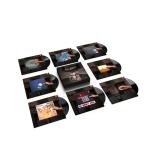
Thirteen thank-you notes to the music that helped make Edward Edward. Naturally, they require three records.
Mastermixed accordingly.
Also available on cassette,
What is an edit? A correction, a confession, a DJ tool, a mild act of vandalism—or simply the result of listening to somebody else’s record and thinking: very good, but what if this bit went on a little longer?
For his contribution to the Running Back Mastermix series, Gilles Aiken aka Edward opens a folder that has apparently been filling up for quite some time.
The Giegling resident’s thirteen edits reach back through years of DJing, collecting and producing. Made for sets rather than release schedules, they form something like a musical autobiography told through other people’s records: Carl Craig, Roman Flügel, Motohiko Hamase, Kirk Degiorgio, Aubrey, Sven Väth, Michael Rother and more.
From Japanese ambient jazz and Detroit techno to dub techno, house, trance and kosmische music, these are not attempts to improve records that didn’t need improving. They are the small interventions that happen after living with music for a long time: a rhythm exposed, an entrance moved, a passage extended, the unnecessary made necessary.
“These records mean a lot to me,” says Edward. “They consist of edits I’ve gathered over the years, some of them going way back. In a way, they reflect my musical journey. All of these artists have been a huge influence on me as a producer and DJ.”
Usually, such edits remain on hard drives, USB sticks and in vaguely labelled folders. This time permissions were requested, publishers located and, somewhere, presumably, a spreadsheet became very important.
Miraculously, everybody said yes.
Thirteen thank-you notes to the music that helped make Edward Edward. Naturally, they require three records.
Mastermixed accordingly.
Also available on cassette,
DJ Koze's 2013 album opus Amygdala has continued to bewitch all who encounter it since its release. Tipped as his own personal Sgt. Pepper, the sublime long-player revealed a fully-realised and personal body of work, complete with a classic songwriting at its core, House in its heart, and veins coursing with psychedelic color. La Duquesa' was the album's dreamy single standout, a journey into deep, tropical ecstasy. XTC' begins in the same spirit, and captures the all the blissful allusions of its name, but its initial gentility belies the deep intensity to come. Floating pads glow with celestial ambience as a kick drum is gradually coaxed into solid form, and the introduction of spoken text begins the second act. Many people are experimenting with the drug Ecstasy,' it says, ...is the drug like the lie and meditation the truth Or am I missing something that could really help me". XTC' then transforms: sweetly imploring tones become demanding, gentle gradients between chords turn hard-edged, and sharp hi-hats cut through the haze. Complete with Koze's signature percussive quirks, it drives towards the track's final pay off: an undeniable, all-consuming, irresistible high. Knee On Belly' recalls Koze at his most tongue-in-cheek and overt, it is bright, bold and literally brassy, using cut-up horns of all shapes and sizes to patchwork together his own unique arrangement. With the highs and mid ranges accounted for, Koze adds in a swollen, thrumming bass line to mix to bring this floor-filler to life. Knee on Belly' recalls a raw, filtered and funky approach to groove, with a nod to disco house and the art of artful sampling, as it orbits between its own neon highs and simmering lows.
Spanning Portland, Bristol, London and beyond, Cold Light has evolved from a friends-and-family label into something stranger but more cohesive. It's a collective spanning Best Available Technology, Birthmark, Withdrawn, the wind between, CSNL and Rael, plus a wider orbit including Elaine Malone and Tony Onuchukwu. What began as a 2019 tour experiment and crystallised during lockdown into the Live at the Laundromat sessions has now fully matured into a singular sound rather than a patchwork of ideas. Dub sits at the centre, most clearly on the sprawling 'Fields in B', but the group folds in haunted boom-bap, gritty noise-rock and ghostly trip-hop with equal confidence. 'Riot' and 'I've Known Fires' both hover in that murky, half-familiar space the collective has made its own.
This year marks the 40th anniversary of one of the true cult classics of the Italo Disco universe: Mike Mareen’s “Love Spy.” Released in 1986, the track sounded strikingly different from much of the dance music around it: futuristic, dramatic, playful and instantly recognisable. It quickly found its way into DJ cases across Europe and became one of the records that would define Mike Mareen’s electronic sound.
But the story actually began under a different name. An early incarnation of the song was called “Batman,” with lyrics inspired by the adventures of the famous comic-book hero and the villains surrounding him. A small number of promotional copies circulated before copyright concerns meant that the concept had to be abandoned. The title and lyrics were rewritten and “Love Spy” was born. The early “Batman” version has since become one of the most fascinating curiosities in Mike Mareen’s catalogue.
Four decades later, we felt an anniversary like this deserved something special.
LOVE SPY 40th Anniversary will therefore arrive in two parts, bringing together some of our favourite producers from today’s Italo, synth and electronic scene.
Part One features brand-new remixes by Luca Dell’Orso, Flemming Dalum, Also Playable Mono and Disco Computer. And enthusiasm was never going to be a problem here. “Love Spy” is not simply an ’80s classic, it remains a genuine DJ favourite, loved by old-school collectors and a new generation of Italo-wave selectors alike.
Alongside four killer new interpretations, we are bringing back the original Badman Mix, plus the highly sought-after “MAKE YOUR OWN MIX” material – rare set of individual elements created for DJs to deconstruct, combine and rebuild “Love Spy” themselves. These samples have become particularly desirable among collectors and make the perfect addition to the first chapter of our anniversary edition.
Four new remixes. Two pieces of history. Forty years of LOVE SPY.
And we are only halfway there.
LOVE SPY 40th Anniversary Part Two, featuring another line-up of major names from our scene arrives in November.
When Khalab and Baba Sissoko first recorded together in 2015, they produced something definitive: a record where electronics and griot tradition achieved genuine synthesis rather than polite cohabitation.
Not layered genres maintaining separate identities, but two forms evolving into something singular. "Tata" took Track of the Year at the 2016 Gilles Peterson Worldwide Awards, found champions in Laurent Garnier, Ben UFO, Matthew Dear, Bonobo, and many others — but more significantly, it established a working method built to last.
Eleven years on, they return with Foli Bah on Hyperjazz Records. Theirs is a relationship built on trust. Khalab constructs structures that don't develop linearly but spiral inward — loops that reveal something new with each rotation, tightening until the listener stops resisting and surrenders. Sonic architectures that don't expand outward but deepen over time, layering toward saturation. Baba Sissoko inhabits these structures with instruments from Malian tradition, not as ornamentation but as load-bearing elements: the tradition becomes structure, not decoration. Electronics and griot practice stop negotiating terms and start speaking the same language.
2026 Repress
Temudo - Meteora (FUSE06) by Noah Hocker
A leader of the Portuguese wave in techno co-founding Hayes Collective while boasting acclaimed releases on Klockworks, Blueprint, and Soma, Temudo grabs the reins to take club music back to its days of audacity and risk taking. A more than promising up-and-comer turned modern reference, Temudo defends his reputation with a release showcasing depth in his various sonic universes and a deep understanding of his music's history. For its seventh release, Temudo's 'Meteora' is a logical next step for the club's direction - a sweet spot between dancefloor efficiency and enduring aesthetic.
Combining the intrigue of mental soundscapes with the reliability of imposing rhythm, 'Meteora' finds itself collected, expressing effect through restraint. The title track, claiming the EP's A1, is just that - a force of interweaving sound design and powerful micro transitions. Some believe the best techno records are able to express emotion and attitude despite its dissonant and machinelike nature; if that's the case then Temudo has mastered the craft. 'When I Grow Up', however, puts the focus back on the body. What sounds like warbling tape modulation over a percussive lead makes this record an addictively delirious ride from start to finish, fitting in with the track before while shifting to different priorities. Proving his versatility, 'Vrthng' at first seems reminiscent of the minimal Berlin style with a higher pace, but quickly progresses into something intensely euphoric. With experience and measure, an out of the box approach can really pay off, and the added emotion in 'Vrthng' is certainly a turning point in the EP. This mindset is clearly carried over in the project's conclusion : 'It's Always Past'. A surprising use of harmony and storytelling, this final chapter ends with Temudo sealing his style with confidence. The track is mystified by its chords, ending 'Meteora' with a question mark that leaves us in anticipation for what Temudo dares to do next.
Flowgeist emerges from a shared inquiry into sound and aesthetics. Genre remains peripheral; meaning stays tethered to sensation. The self-titled debut, released on Evighet Records (EVIGHET007), follows that logic across a full record, moving from matter to memory and giving passing states somewhere to stay. Trip Hop, Drum and Bass, post-punk, breakbeat, EBM, Techno and modular electronics all surface within it, summoned only where a feeling demands them, with acoustic instruments retaining their grain inside the electronic frame. The A side keeps its instruments close and its focus intimate, opening on "Molecules," where Zainab J Lascandri's voice and Arthur Boudet's guitar set the album's tone before it moves through cycles that won't break: a life stuck in place, a trust already gone bu14t still being tended, an attraction whose charm thins out under repetition. That inward attention eventually turns outward, closing the side on a colder note about how influence gets performed and mistaken for substance. The B side works through broken rhythm and cinematic scale. It examines political language for the seams in its polish, follows a relationship reduced to proximity without real contact, and rises to the record's most forceful club passage before settling into "Crystal Muse," where Massimo Capobianco's guitar moves alongside an extended modular passage, luminous and unhurried. The album closes by turning its attention to composition itself, treating the act of writing music as a way of holding onto experience before it disappears. Across both sides, the record travels from immediate, bodily feeling toward something more contemplative, carrying the same emotional attention from private entanglement into wider systems and finally into the quiet work of making the record itself.
Autumn of 2022 marked 20 years since the initial release of Metro Area's first and only album, Metro Area. Environ had already remastered and re-released this essential LP for its 15th anniversary. So this time around, we're doing something a bit different.
To celebrate two decades of Metro Area, Environ has partnered with renowned mastering engineer Matt Colton (Metropolis Studios) to remaster and recut the first four Metro Area 12"s: Metro Area, Metro Area 2, Metro Area 3 and Metro Area 4. Unlike the album reissue, these records include the original, extended 12" versions of all songs, including some which have never been re-released.
Metro Area is the duo's first 12" EP, originally released in 1999.
Another release on 25Hours is out. Label’s boss Giacomo Silvestri returns with two killer tunes, this time in collaboration with his close friend, and talented producers, Andrea Giuliani. They deliver something solid and catchy, perfect for the dancefloor.
You can also find two massive remixes by other two artists well known in the music industry: Manuel De Lorenzi, with his unique touch rolling and underground, and Jamahr who made something more electro with his solid signature.
This release will make you dance from start till the last second, don’t miss it.
Please can someone please give me a better word for Sexy? Because the thesaurus is giving me ick...Send help because this is a SEXY record – and (football analogy incoming) – a sexy summer signing....
Yes, that’s right ODF’s summer transfer to the Shall Not Fade main label is complete. ‘The Rhythm Grooves’ makes a hat trick of 12”s for us after the UK OTW producer’s double sell out EPs ‘Deep Step’& ‘Rock With Me’ on our Time is Now imprint. The UKG and grooving breaks specialist has been developing his game and steps into House territory for something of a statement EP and we’re (hot and) here for it. Since launching his own On Da Floor label last year ODF has been on a tear and this record perfectly encapsulates why. Four double threat tracks that can be weaponised both as main stage WMDs or as deadly 3am tickets to another place....
This invisible dichotomy is most clearly on show in title track & A side opener ‘The Rhythm Grooves’ is equal parts hot under the collar and hands in the air. Deep and sexy house but with a stepping baseline and a big vocal. ‘Free Your Soul’ stays deep, a swung jacking house cut with big M1 stabs and piano riffs and cheeky breakbeat breakdowns. That palette is timeless and there’s every reason this track will be too.
The B-side leans more into sweaty room & heads down territory but just like before there’s that double threat and we’ve seen both these tracks go off in big rooms at peak time. ‘Back to Mine’ calls back to that sweet spot in the early 2000s with French Touch inspired tech house was dominating Ibiza...Sleazy and sunbaked? Check. But what we didn't realise was missing w as some Accieeeed. Big shout from ODF there.. ‘Do You Feel Me?’ closes out in celebratory style. A proper tech house tool complete
with chugging bassline and more sexy breathy vocals. It’s the after hours roller.
A serious note to close, because I don’t want the playfulness of this press release to make you overlook this (sexy) EP as it’s appeal is more than skin deep. Having sat with – and lusted over –these tracks for a while I can tell you that they just get better (and hotter) with every outing. The Rhythm Grooves is out 28th August 2026 on Shall Not Fade.
FatCat was recorded in a single session-live, with all four musicians together in the same place. What you hear on the record isn't a polished production, but a one-of-a-kind recording of four people playing at the same time in the same room.
This is not a nostalgic gesture. It's a stance. As music is increasingly understood as the output of a prompt, the question of what actually makes music becomes urgent again. Not flawless, efficient production, but the imperfect moment and its context. Not the result, but the process in which four people listen to each other, react to each other, misjudge, and find one another. This fallibility - the hesitation before an entrance, the slight pull in the timing, the glance between musicians that signals a turn - is not a weakness but the substance itself. It cannot be synthesized, because it isn't a data point but a lived relationship: between the instruments, between the people, between their shared history and what emerges new in this one take. The album is thus also a statement on the question of where, in the age of generative music, authorship and art can still be located: not in the result alone, but in the shared risk taken in creating it.
"The question was always: how do I bring my work as a producer and beatmaker onto the stage? How can something that usually happens alone behind closed studio doors become a live experience?" With the album FatCat, Sepalot pursues this question to its logical conclusion: what began as a live performance now becomes the recording itself - the studio becomes a stage for a day, and the stage becomes the definitive version of the album.
The love for electronic music remains, the raw pressure of hip hop is still palpable - and yet everything on FatCat sounds like a fresh start, captured in the very breath in which it was played.
On stage as in the studio, the four characters fit together like a puzzle. Sepalot's signature as producer and mastermind is unmistakable. On drums, Fabian Füss, longtime partner behind the kit and the voice that makes Sepalot's radio hit "Rainbows" so unforgettable. On bass, Robin Jermer. On trumpet, Matthias Lindermayr, multiple award-winning jazz virtuoso with his own albums on Enja Records. And then there's Sepalot himself, who turns it all into more than just the sum of its parts.
The eclectic beats, the pulsing bass, Sepalot's passion for atmospheric sound design - all of it remains, now joined by an element of jazz and captured in its most immediate, unpolished form. The album shows what four people in one room are capable of: a sound born of shared experience, and precisely for that reason, unique.
Truths and secrets often reveal themselves at night, under the freedom of shadowy darkness, away from prying eyes. In creating Given to the Night, sisters Valentine and Clementine Nixon have crafted a world that drifts through the in-between: between dream and reality, between day and night and the undefined, and ultimately a world that embraces the discomfort of being untethered. A process that follows simplicity and intuition rather than pre-determined narratives. “We recorded songs as they appeared, which sometimes felt like catching light. Before we realised it we had a record”, the duo explain.
While making the record Valentine and Clementine gently pushed away from the world- deleted social media, retreated into the trees of their native New Zealand - and only invited a couple of people in during the recording process. From that space, the album came together in an eerily easeful way.
There is a dream-like drift and sonic timelessness to the the record, as reflected in its nocturnal title, which can be read in two ways:
“Being taken by, or being inclined towards nighttime, preferring its blurry cloak of shadows to the harsh light of day; or giving oneself up to night, in sacrifice, letting go of fear and melting into the darkness.”
Written during a time of personal transition there was “a sense of finding the light in the shadow” they add. Guitar lines float, synth lines entwine, tapes hiss and vocals stream creating a kaleidoscopic montage of transient memories and emotions. A spectrum of feelings arise - isolation and joy, insomnia and manic highs, confusion and fleeting clarity, grief and healings. In the record, these feelings all merge and fade into one another in a nonlinear manner, as life tends to do; creating something deeply human that simultaneously gestures towards the transcendental.
Consummate selector DJ Sundae returns to Efficient Space with Nothing Ever Was, an immaculate compendium of phantom independent melancholia spanning '60s/'70s village green folk, outsider shoegaze and new millennium domestic pop. Each recording an emotional exorcism, Sundae breathes oxygen into music that was barely there in its own time, made in quiet places and crawl spaces, shared only with a precious few via private presses, hobby labels and now-decaying CD-Rs.
Free of any prescribed epoch, continent, scene or rarity, Noughties homemade indie pop opens both sides with the 4-track wonders of The Motifs and Betelmire, unlinked contemporaries finding their place alongside Andrew Jay's Crazy Horse rust, the regional-garage adolescence of Pauline Scribner and the anaesthetised Mancunian guitar-poetry of the late Quigley.
The remaining coordinates zigzag between the UK and US. Folk wayfarers John Strang & Valentine Lewis Lloyd, Virgin Insanity, Kusudo & Worth and Penny Wager's spartan Garden of Eden acoustica find their mirror in Empress and Slumber's close-quarters indie pangs. Chicago power pop fixture Phil Angotti is caught at his most tender, while Teri Rini takes the final bow with her universe-stopping hotel lounge torch song.
A deeper, more personal exploration of Sky Girl's sentimental songwriting, Sundae found himself amassing a cache of tracks too undeniable to remain confined to his anonymous mixtapes for TTT, P.A.M. and Good Morning Tapes, or bi-monthly hour on NTS Radio. Again his emotional sorcery draws together an unlikely cast, their unwritten narrative assembled from fragmented memories of past lives left behind by future horse trainers, ketamine therapists and Fab Four cover band careerists.
With not a second squandered across 1LP, it took a village to bring this new companion into being, with David Bergot's forensic audio restoration, dreamlike imagery from Matthieu Crozier, Ivan Liechti's elegant design and a perceptive foreword by kindred spirit Jessica Pratt.
Infusing his cinematic, psychedelic musical vision into cutting-edge, bass-heavy electronics, Kutiman presents a euphoric club journey through UK garage, D&B, post-dubstep, and futuristic dance music.
With syncopated drums, deep basslines, and R&B-soaked vocals from standout artists like Jenny Penkin, Misha Sutherland and Odelya Illouz, the project bridges the gap between the indie electronica of Four Tet, Caribou, and Jamie xx and classic alternative club sounds.
Club music is emotional at its heart, and this release captures its essence perfectly; the peak-time euphoria, the moments of introspection & the times spent lost in the music.
There are two version of the LP - limited to 100 numbered copies with transparent wax and classic black wax edition. Both 180g with special OBI strip.
Maciej Envee Goliński is an artist who probably needs no introduction. He has been working with U Know Me practically since the label's inception. His last album ("Time & Light") made a huge impact worldwide, but we had to wait eight years for the next vinyl release. In the meantime, Maciej has certainly been busy – he has released numerous club singles under several aliases, and has helped record and mix numerous albums from the world of jazz, soul, and electronica. "Wyszymory" is a carefully crafted concept album, inspired by our roots. "Wyszymory" is an album on which every open-minded listener will find something that has been playing in their soul for a long time...
"Of all things visible and invisible, my life is most filled with music and a fascination with sound. It matters not whether they are natural or artificial, isolated or resonating through space. Sounds that evoke
memories, as well as those entirely new. Some of them have resonated unchanged for thousands of years. Certain resonances and rhythms have remained unaltered for generations so distant that they have left no other trace in human civilization.
This bond with our ancestors truly fascinates me. Ever since I realized it, I have become more attuned to inspiration. Listening to traditional and classical music, I kept finding new anchor points. I was constantly surprised by new invitations to ponder what connects – or divides – the pulse of our region’s traditional music with the rhythms of Africa, the tribes of the vast East, or the frozen North. My great authority, Tomasz Stańko, in interviews conducted by Tomek Michałowski, used beautiful parables of love and creativity to bring me closer to the Cro-Magnon cave artists. The Icelandic literary magician Andri Snær Magnason, in his book On Time and Water, captivated me with the fascinating observation that through emotional contact, words, ideas, or memory, we reach back and forward two or even three generations – spanning a period of about 270 years. Then there is Sam Kowalski, who with his wonderful obereks played on the gitalele, took me on a hypnotic journey, from which one returns with a deep admiration for the art of musical storytelling, passed down from generation to generation. Finally, my own children surprise me with talents, behaviors, and increasingly distinct features of those generations that now dwell only in my hazy memory and on old photographs.
I wanted the protagonists of this album to be the very phenomena that modern humans share with their ancestors, regardless of the level of civilization. Most vital among them is the relationship between humans, nature, and their own emotions. Wyszymory has nothing to do with an academic study, though I did delve into Slavic mythology, archaeology, and history in search of inspiration. Nor is it an album of traditional music, even if such music is present thanks to wonderful instrumentalists. I managed to invite artists who cross boundaries daily, working not only with Polish music but also with Hindu and African traditions, and even jazz, with its long history of blending influences. Naturally, the album became a kind of sonic comic book, where individual scenes and stories – the sounds, pulsations, and ideas on how to use them – came to me over time, often under unique circumstances and in inspiring contexts."
Envee
*TIP* Previously released on Low Company in 2023, now back... a weirdo lo fi gem
Naturestrip, Naarm, Australia write:
"purely physical teeny tapes perform an invaluable public service in exhuming static cleaner lost reward’s ‘breathing under honey from the heady year o’ 2023’, a slack-jawed riddle within the all-consuming enigma that is thee world of tarquin manek™.
few records command a reissue so soon after their release, the soil heaped atop the (sainted) low company corpse still remaining more than a little damp, but this one’s discreet-to-the-point-of-fury initial release justifies the flogging of the proverbial carked horse, boiled back down into glue for a fresh round of rollicking mucky. arriving as the last release on that fine imprint, ‘breathing under honey’ represents (obliquely, natch) something of a convenient summary of that aforementioned elegantly sloshed world™, condensing as it does the artist’s proclivities exercised among the sweetest of contemporary depth-dwellers, articulated alongside/within y.l. hooi, bum creek, carla dal forno, f ingers, kallista kult, under endless solo monikers…the fun never ends.
let loose here in a suitably gonzo/spellunked mood, the second full-length under the static cleaner moniker (see debut $mile$ from 2013 thru altered states) is compiled of delirious half-thoughts & riddimic gestures accumulated between 2013 & 2020, everything wet & awash with a fine sprouting of lysergic mush between its digits. the implication thereof might suggest something schlonky or amateurish, but fear not, prospective listener, for your ears are in the sticky hands of one of the finest shit-savant prodigies these times have known, crud-caked technoid shapes & blissed pop-glob nous submerged in sublime dubbed-out grog, the resulting sonar-pong shards positively chemical in their ability to simultaneously slant + seduce.
think: martin denny face-deep in a paper bag at the black ark, graciously fucked tropicalia, liquid dub techno housed in vat of spiked quaff, the skaters infiltrating urban tribe, lopsided + caked to the nines in glitter for the gutter.
utterly tranced, sumptuous/sweet & patently ill. a classique of this modern horror epoch if there ever was one."
The debut release by Confusion on Incompetence Records documents an exercise in disciplined spontaneity, a jam session where organic interaction is rigorously shaped into form. Recorded live in Belgrade by Dmitrii Steinberg, Aleksei Siubaev, Viktor Volkovich, Evgenii Piankov, and Leonid Lipelis, the material was subsequently dissected and reassembled with a scalpel like precision reminiscent of Teo Macero’s landmark edits for Miles Davis. What emerges is not a loose improvisational document but a suite of cohesive constructed pieces: weightless structures suspended over a hypnotic pulse, steeped in cosmic vibes and soft psychedelia. There is a slo mo insistence to the grooves, a kosmiche drift that folds jazz funk rituals into something both intimate and expansive. For musicians previously orbiting rare groove, house, indie rock, and modern composition, Confusion expands their explorations into a terrain where genre dissolves into texture and intention. The record’s mesmerizing beauty lies in its restraint, motifs surface, dissolve, and return as if refracted through magnetic tape memory, each fragment locked into place yet breathing with human elasticity. Rather than presenting virtuosity, the quintet channels it into atmosphere, into a patient, glowing continuum that feels less like a jam and more like a carefully mapped inner cosmos, calibrated for deep listening and slow revelation.
DJ Support: Sam Don, Severino Panzetta (Horse Meat Disco), Chris Howler, Sean Johnston, Bill Brewster, For Mankind, Craig Thompson, Andy Taylor, Massimiliano Pagliara, Dean Dixon, Nathan Detroit and many more
Underground Institution Stompa Phunk Re-Launches Vinyl Label with Raw, Chi-House-Inspired Energy. After three decades of defining the UK’s underground club landscape, legendary Brighton party collective Stompa Phunk is officially moving from the dancefloor to the wax with the relaunch of Stompa Phunk Records Inc.
The Heritage: From The Warehouse: The releases will directly honour the roots of house music, a genre born in 1977 at Chicago’s legendary nightclub, The Warehouse. As that scene matured, a grittier, faster, and more experimental counterpart emerged. Defined by an uninhibited, bass-heavy style, it was a movement driven by local innovators who pushed drum machines and synthesisers to their breaking point... It wasn't just a genre; it was a collision between pure imagination and raw machines. A true "sound klash" transformed the local underground subculture into something global...
Release 1: You Had It (Edit) / Music Got (Dub): Capturing the exact spirit of rough, tape-spliced dubbed cuts. The 12-inch from SP resident Sound Klash pairs a vintage production ethos with old hardware pushed to its limits...
The Philosophy: This EP perfectly mirrors the exact philosophy that has fueled Stompa Phunk’s dancefloors since 1996: uncompromising electronic music rooted in heavy sample-delia, jackin' bodies, Acid energy, disco-dub mentality and second-hand technology. Jackinacidiscotech!
Toka Project was a collective from Nottingham's fertile 90s party scene, including members Andrew Macari, Andy Riley and Steve Walker amongst others, and they dropped their 'One Day' EP in 1999 on Filter Flow, which now revisits the title cut with a new set of remixes. The original is a deep house sound with a rough metallic edge and humid pads infused with whispered vocals. Di Saronno remixes it into something more light and airy, with a subtle skip in the drums that recalls the best of Melchior LTD. Andrew Macari's version has a little cheeky wiggle and sunny synth work, then Latenight Society remixes it into a slower sound with a swirling backdrop of pastoral melodic colours. A dreamy close to a fine set of new versions.
"ASSEMBLE MUSIC 15 YEARS - Part III : Founded in Lisbon in 2011, Assemble Music celebrates its 15th anniversary with a three-part vinyl compilation, bringing together fifteen artists who, in different ways, reflect the label's past, present and future. Released simultaneously in November 2026 and distributed worldwide by Clone Distribution, the three records are less a retrospective than a continuation of what Assemble has been building since the beginning: music with character, made by artists with their own language, away from trends and easy categorisation. Across fifteen years, Assemble has moved freely between house, techno, electro, dub and more experimental forms of electronic music. The catalogue has never been defined by one particular sound, but rather by a certain approach, personal, uncompromising and built to last. Part III brings together another five artists particularly close to Assemble's musical universe. Lowtec has spent decades developing one of the most distinctive languages in European house and techno, both through his own productions and his own label Workshop. His music shares something fundamental with Assemble, restraint, depth and an unwillingness to follow obvious paths and thats exactly what he delivers with "Dutch Angle" exploring the more ambient and abstract side of house. Welsh modular artist Steevio, co-founder of Freerotation, approaches electronic music through improvisation and live interaction with machines. His contribution to the compilation reflects the human, unpredictable side of electronic music that has always fascinated the label. Reedale Rise returns after becoming an important part of Assemble's recent chapter. Moving naturally between electro, techno and house, his music combines precision with an unmistakable melodic and emotional quality. With his track he explores a slightly darker path here, with deeper, more shadowy melodies revealing a different side of his distinctive sound. Lerosa's "Love Money" and Vera's "Take Me" are two very special tracks in our back catalogue, and we felt it was time to bring them back to life for our 15th anniversary. Vera was one of the first artists to collaborate with Assemble, with Lerosa joining not long after. Over the years, both have become an important part of the label's story, through releases, many shared showcases, and above all, a great friendship that has grown along the way."
Soak’s fourth album, decembers, was born in literal silence. Contending with an autoimmune disease that prevented them from singing, it was the absence of sound that birthed the Derry artist’s most sonically and lyrically remarkable album to date.
The space that expanded from that enforced quiet, and the life lived within it - transitionary, liminal, escaping in search of connection - cracked something open. What floods in, is an album of stunning tenderness, honesty, and astonishing storytelling from an artist discovering the revelations at the end of the line.
In decembers, we travel on the road through America, walk the frost-glistened paths of Dublin at night, search for a meteor in Portugal, and return home to Derry. Everywhere, here is an artist evolving, exploring, releasing themselves, coming undone, and eventually, becoming.
At the core of the album is this lyrical statement: “Getting lost is getting free.” How brave it is to face the unknown. Because when you really go there, that’s where discovery lies. That discovery in decembers is a creative one, but it’s also about connection to people and place, to forgiveness, and ultimately to prioritising honesty. “A consistent theme is struggling for direction, battling the urge to run,” Soak says, “and instead, planting my feet.”
Soak’s fourth album, decembers, was born in literal silence. Contending with an autoimmune disease that prevented them from singing, it was the absence of sound that birthed the Derry artist’s most sonically and lyrically remarkable album to date.
The space that expanded from that enforced quiet, and the life lived within it - transitionary, liminal, escaping in search of connection - cracked something open. What floods in, is an album of stunning tenderness, honesty, and astonishing storytelling from an artist discovering the revelations at the end of the line.
In decembers, we travel on the road through America, walk the frost-glistened paths of Dublin at night, search for a meteor in Portugal, and return home to Derry. Everywhere, here is an artist evolving, exploring, releasing themselves, coming undone, and eventually, becoming.
At the core of the album is this lyrical statement: “Getting lost is getting free.” How brave it is to face the unknown. Because when you really go there, that’s where discovery lies. That discovery in decembers is a creative one, but it’s also about connection to people and place, to forgiveness, and ultimately to prioritising honesty. “A consistent theme is struggling for direction, battling the urge to run,” Soak says, “and instead, planting my feet.”
Mario Batkovic’s music occupies a singular space between composition, performance and sonic experimentation.
Based in Bern, Switzerland, the composer, accordionist and multi-instrumentalist has developed an intensely personal musical language rooted in a radical interrogation of the accordion — its timbre, mechanics, physicality and rhythmic potential. In Batkovic’s hands, the instrument becomes something far beyond its conventional role: a source of intricate, evolving sound in which performer and machine appear to become one.
Batkovic received International critical acclaim when his eponymous debut album was released on Invada Records in 2017, with Rolling Stone listing it in the top 10 avant-garde albums of the year. ‘INTROSPECTIO’ followed, a self-questioning, self-examination of society which featured collaborations with Colin Stetson, James Holden and Clive Deamer (Radiohead / Portishead).
II sees Batkovic venture further into radical, uncompromising and experimental territory, both in the reduction and the expansion of sound. Voices overlap, rhythmic structures develop an almost mechanical force, and layers of sound evoke analogue synthesizers. Then everything falls away: near-total silence, the breath of the bellows, a single frequency. Sounds emerge that can barely be traced back to any particular instrument.
The album is built entirely around the physical relationship between one musician and one instrument. No loops, no electronic layers. Everything you hear comes from an uncompromising exploration of the instrument itself. A primal force of creation and destruction.
With credits that include music for the global hit game 'Red Dead Redemption II’, commissions for AMI Paris, Cartier Fondation, Hugo Boss, Chanel and film scores ‘Mad Heidi’ and ’Shame and Money’ his compositional work has extended into some of the most distinctive fields of contemporary culture.
Existing between Moscow and Milan, Interchain is a group that has been a cornerstone in the Moscow scene through the years, appearing and disappearing as they see fit.
The duo now debuts on L.I.E.S. with their "In My Apartment" lp. This records steps into a world of total disjointed angular electronic no-wave madness, somewhere between Devo and Liasions Dangerous...sharp sequences, thumping dx basslines, freaked out, on the verge of snapping vocals and bugged out textures. This music pushes and pulls the listener around until something just goes off inside of you. These nine tracks are on the boiling point, absolute frantic no-wave energy that will rock the floor.
On June 9, 2025, Rolling Stone Magazine - Australia captured the significance of PARKWAY DRIVE's landmark performance at the Sydney Opera House with the headline: "The AC/DC of Their Generation': Parkway Drive deliver career-defining performance at Sydney Opera House." The one-night-only event brought the Byron Bay metalcore legends into the Concert Hall for an unprecedented black-tie affair, pairing their explosive live show with the grandeur of a full symphonic orchestra. Bringing PARKWAY DRIVE's music to one of the world's most recognizable venues was an ambitious move for a band already celebrated for pushing the boundaries of live performance. Yet seeing the group's signature intensity framed by a symphony orchestra revealed a new emotional dimension to songs built for arenas and festivals. The result was both intimate and monumental-a rare collision of metal, orchestration, and occasion that transformed the Concert Hall into something entirely its own. The context of the performance only heightened its impact. Marketed as a historic black-tie celebration that would never be repeated, the event became one of the most coveted PARKWAY DRIVE shows in the band's history, selling out instantly and leaving countless fans outside the room. For those unable to witness it in person, Home - Live at the Sydney Opera House finally brings this extraordinary night to a wider audience, alongside a feature film and live album documenting this career-spanning performance. At its heart, Home is also a reflection on what "home" has meant to PARKWAY DRIVE over two decades. As their reach has expanded from Byron Bay to stages around the world, their connection to the landscapes, people, and community that shaped them has remained central. Now, that journey comes full circle at one of Australia's most iconic landmarks.
On June 9, 2025, Rolling Stone Magazine - Australia captured the significance of PARKWAY DRIVE's landmark performance at the Sydney Opera House with the headline: "The AC/DC of Their Generation': Parkway Drive deliver career-defining performance at Sydney Opera House." The one-night-only event brought the Byron Bay metalcore legends into the Concert Hall for an unprecedented black-tie affair, pairing their explosive live show with the grandeur of a full symphonic orchestra. Bringing PARKWAY DRIVE's music to one of the world's most recognizable venues was an ambitious move for a band already celebrated for pushing the boundaries of live performance. Yet seeing the group's signature intensity framed by a symphony orchestra revealed a new emotional dimension to songs built for arenas and festivals. The result was both intimate and monumental-a rare collision of metal, orchestration, and occasion that transformed the Concert Hall into something entirely its own. The context of the performance only heightened its impact. Marketed as a historic black-tie celebration that would never be repeated, the event became one of the most coveted PARKWAY DRIVE shows in the band's history, selling out instantly and leaving countless fans outside the room. For those unable to witness it in person, Home - Live at the Sydney Opera House finally brings this extraordinary night to a wider audience, alongside a feature film and live album documenting this career-spanning performance. At its heart, Home is also a reflection on what "home" has meant to PARKWAY DRIVE over two decades. As their reach has expanded from Byron Bay to stages around the world, their connection to the landscapes, people, and community that shaped them has remained central. Now, that journey comes full circle at one of Australia's most iconic landmarks.
SHORT INFOS
Because Music celebrates the 50th Anniversary of Cerrone's debut album "Love In C Minor (Cerrone I)" .
A record which is one of the mots important of its time. It brought French Disco to the World and established Cerrone as the French King of Disco.
- Pressed in exclusive 2026 Apple Green Crystal Clear vinyl
- Original 1976 artwork - Digitally remastered from original tapes.
BIOG
Cerrone I
Love in C Minor (1976)
The story behind Cerrone's first album could be summarised in the libertarian atmosphere and the creative energy of the 70s, inherited from the 60s revolutions, spiritual, aesthetic or sexual. Looking back now, this record is one of the most important of its time. It helped creating the sound of an era and brought French disco to the world. It is also, and this is fundamental to understand its success, the result of a man's vision: Marc Cerrone, a free spirit inhabited by music, who ended up with a major work of art. With this album, Cerrone accumulated the main elements that make a record timeless, even bigger than its creator: the pure originality, the madness of a vision without compromise, a sense of the market and a great dose of luck too. To some extent, this is the perfect record to start a career, even though Cerrone's one already existed in an implicit way. He actually began in a rather popular band, Kongas, signed by Barclay. Between 1972 and 1974, the band was famous and made it abroad, particularly in Japan, where people loved its sound. Despite this success, probably fed up with the music and not ready to follow the orders of a label that wanted the band to sound more pop, Cerrone disbanded Kongas. He had the sound of his instrument in mind and mostly its central element: the bass drum. The idea of this first solo album came to him after a detour via selling records. Wishing to forget about the studios, he took the head of a small chain of stores, selling records imported from the States. That's when he discovered a daring new sound coming from New York: disco music. This energy inspired him to record again. He then remembered the crazy reaction of the audience when, during the Kongas' concerts, he used to hit his bass drum hard. Cerrone felt like going back into the studio but to make something different. He decided to record a sixteen minutes long track, driven by its beat, that would fit on its own on one side of a LP (during these vinyl days, musicians used to think in terms of sides…), with girls' voices simulating sex. This concept of musical and physical orgasm was recorded at Trident Studios in London (where pop stars used to record at the time… ) with Don Ray, of Kongas, man in the shadows and brilliant arranger who'd follow Cerrone during his whole career. Obviously, like always in pop music (it happened to the Beatles), record companies started by turning this weird track down, convinced that radios would never play sixteen minutes of beats and moaning. Cerrone, a born fighter, decided to trust his instinct (a mix of ego and business sense) and chose to believe that if the radios wouldn't play the track, people would dance to it in the clubs. He released the record himself, with a sexy cover a bit provocative where he wore a black bathrobe, a young short-haired girl leaning on him. Being played here and there, thanks to Cerrone's own network, the record started to work a bit in France. But luckily, things really happened in the States. Due to a mistake, a box of "Love In C Minor" albums were sent to the States via Cerrone's record shop instead of some unsold American LPs. Once in New York, the box was opened and the record with its intriguing cover was instantly loved and passed through the hands of radio and club DJs. All of a sudden, and unknown to its creator, the track that was turned down by every French label, became a hit on the New York disco scene. Casablanca, the US disco label, released a cover recorded by an ad hoc band because nobody knew Cerrone of how to find him. Once he discovered what was happening in the States, Cerrone flew to New York. He realised he had a hit, one of the biggest then, that opened the doors to every record company and especially Atlantic. He was welcome by Ahmet Ertegun, one of the main visionaries of the American music who, among other artists, signed Aretha Franklin and John Coltrane. It's believed that Ertegun understood that the French young musician, like some Atlantic artists, was about to define the sound of his time and that his work would live long after its birth date. "Love In C Minor" was the first step, adamant and successful.
Ruf Kutz reaches release twenty-two with something close to heart...
Mike Kee is a face from the early days - red-lit rooms of the Bodega mushroom squat parties in Sydney. This is a second release for Mike Kee on Ruf Kutz since 'Seeing Crystals' on RK2 in 2010.
Recorded in the rainforests of Bundjalung Country (northern NSW, Australia). Making good use of a Fender Rhodes and a JX-8P synthesiser.
WHITE CLOUD PLACE is a destination that doesn't exist. Glimpsed once on a street sign, filed away in the imagination and allowed to bloom into an imagined geography of warmth and weightlessness.
The music is lush dream house that elicits euphoria out of the speakers and into the body. Mike Kee has been chasing this feeling across his music and here it lands cleanly.
Flip the record and the temperature ratchets up. BANANA MOON is one for the dancers - shuffling congas push the pace while Rhodes chords and those big analog synth strings hold the whole thing aloft.
Where the A-side invites you to float, Banana Moon keeps it pitched up and jazzy.
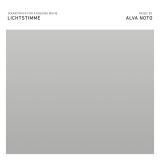
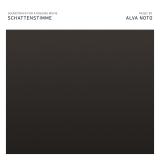
NOTON is pleased to announce the release of LICHTSTIMME and SCHATTENSTIMME by Alva Noto: two soundtracks for a film that never existed.
The starting point is E. T. A. Hoffmann's The Sandman: a world where perception and reality drift apart, and the question of identity remains unresolved. Recognition, in Hoffmann, is never quite secure. The doppelgänger is less a figure than a condition, the point at which the self can no longer vouch for itself.
The first record, LICHTSTIMME begins in an open, almost weightless sonic world. Something still appears untouched. The music carries a sense of proximity, clarity and trust. But this sense of certainty does not remain. Gradually, the proportions begin to shift. Sounds lose their definitiveness; familiar structures become strange. The music begins to question its own surface. What initially appears as light already contains the possibility of its shadow.
With the second record, SCHATTENSTIMME, the instrument enters the sonic space. The pieces were recorded together with percussionist Rainer Römer and the Ensemble Modern. A central role is given to the Sixxen, the extraordinary metallic percussion instrument originally developed by Iannis Xenakis together with Les Percussions de Strasbourg and instrument maker Robert Hébrard for Pléiades. Its resonances, unusual microtonal structure and distinctive timbre make it an instrument that resists being placed within a familiar musical context. Complete Sixxen sets are extremely rare and require highly specialised construction.
The instrument appears only on the second record. Its absence from LICHTSTIMME and its arrival on SCHATTENSTIMME are structural. It behaves like a shadow: present only when something else has already changed. With its appearance, it is not only the sound that changes. The entire musical space seems to shift its character. The Sixxen's metallic sound becomes the unfamiliar. The unfamiliar becomes a counterpart.
The two records follow an inner movement: from light to shadow, from trust to doubt, from identity to doppelgänger, and back to a harmony that is no longer quite the same. What emerges as an independent, personal sonic language has been transformed by the journey. The unfamiliar has not disappeared. It has become part of the self.
LICHTSTIMME and SCHATTENSTIMME are records about the instability of the familiar. Something is always almost recognisable and never quite confirmed, in the story, and in the sound.
Album art designed by Carsten Nicolai & Nibo.
NOTON is pleased to announce the release of LICHTSTIMME and SCHATTENSTIMME by Alva Noto: two soundtracks for a film that never existed.
The starting point is E. T. A. Hoffmann's The Sandman: a world where perception and reality drift apart, and the question of identity remains unresolved. Recognition, in Hoffmann, is never quite secure. The doppelgänger is less a figure than a condition, the point at which the self can no longer vouch for itself.
The first record, LICHTSTIMME begins in an open, almost weightless sonic world. Something still appears untouched. The music carries a sense of proximity, clarity and trust. But this sense of certainty does not remain. Gradually, the proportions begin to shift. Sounds lose their definitiveness; familiar structures become strange. The music begins to question its own surface. What initially appears as light already contains the possibility of its shadow.
With the second record, SCHATTENSTIMME, the instrument enters the sonic space. The pieces were recorded together with percussionist Rainer Römer and the Ensemble Modern. A central role is given to the Sixxen, the extraordinary metallic percussion instrument originally developed by Iannis Xenakis together with Les Percussions de Strasbourg and instrument maker Robert Hébrard for Pléiades. Its resonances, unusual microtonal structure and distinctive timbre make it an instrument that resists being placed within a familiar musical context. Complete Sixxen sets are extremely rare and require highly specialised construction.
The instrument appears only on the second record. Its absence from LICHTSTIMME and its arrival on SCHATTENSTIMME are structural. It behaves like a shadow: present only when something else has already changed. With its appearance, it is not only the sound that changes. The entire musical space seems to shift its character. The Sixxen's metallic sound becomes the unfamiliar. The unfamiliar becomes a counterpart.
The two records follow an inner movement: from light to shadow, from trust to doubt, from identity to doppelgänger, and back to a harmony that is no longer quite the same. What emerges as an independent, personal sonic language has been transformed by the journey. The unfamiliar has not disappeared. It has become part of the self.
LICHTSTIMME and SCHATTENSTIMME are records about the instability of the familiar. Something is always almost recognisable and never quite confirmed, in the story, and in the sound.
Album art designed by Carsten Nicolai & Nibo.
Volume Six in the ongoing saga of the Jahtarian Dub mothership, full of 8-bit explosives, cosmic curveballs and sound system heavy hitters.
Roger Robinson teams up with West Coast beat maestro Mophono (watch out for the limited 7” instrumental “Budokan Dub”!), Maffi and Tapes return with mutated killer riddims, Casio shaman Green Jesus is transmitting from the Polish woods, while The Other Others beam in alongside Daniel Monaco, followed by a special Dub cut from Elijah Minelli x Kiki Hitomi.
On the flip Bo Marley are back with a track previously only released on tape, S.NOVA spreads her haunting vocals over an Alien Trackers depth charge and Slim Levy dubs the Beatles into outer space.
There is more Dub love coming from the newly born Snorks outfit, disrupt appears with a beautiful spaced out hiphop track and Barcelona Dub heroes STA finish the journey with a super hypnotizing brain melter that will see an extended 12” version soon.
Subtle Beginnings is the second of the ReKab albums originally released on Móatún 7 to be reissued on vinyl for the first time by System One. Analogue Isolation came in May & sold out everywhere almost immediately
Label head D. Howard first came across ReKab while deep diving through Bandcamp, and like many lovers of deep, late night, soulful electronic music immediately fell for the emotional pads, pristine melodies & immaculate productions, simultaneously summoning up the essence of early 90s electronic while sounding thoroughly contemporary.
They connected and a plan hatched to make the Móatún 7 albums available on vinyl for the first time, something that avid record collector James was delighted about. Unfortunately James sadly passed away late August last year, but following conversation with the family & friends of James, it was decided to honour his wishes & make the albums available on vinyl & across all digital services once again. Proceeds after costs will be paid through to the trust fund set up to support James’ surviving son.
System One is a new label dedicated to soulful electronic music, late night grooves & intergalactic beats, drawing its inspiration from the early 90s techno & ambient sounds of Uk, Frankfurt, Detroit & beyond
The undisputed Godfather of Boogie, Leroy Burgess’s Logg project is his grand masterpiece.
The self-titled LP, originally released on Salsoul in August 1981, is one of the greatest albums of the post-disco era. It’s one of Be With’s favourite ever LPs and so it’s a complete honour to be giving it our reissue treatment. With all the touchstones of Burgess’s finest work - breezy grooves, undulating synths, funk-drenched bass and life-affirming lyrics - delivered with gospel-derived vocals and harmonies - it’s a record to uplift both body and spirit.
Already a cult soul figure as lead singer of seminal vocal group Black Ivory, Leroy Burgess cut his teeth as arranger, vocalist and songwriter with legendary producer Patrick Adams on essential late-70s projects like Phreek and Dazzle. He went on to define the essence of “boogie”: the vibrant underground dance sound that stood in contrast to commercial disco. With its reduced speed - mid-90 to under 110 BPM - the cool boogie of Burgess has the disco bounce, just more laidback.
All six tracks here could have been stand alone 12" hits. Indeed, some of them were. But together they are also an incredibly cohesive album, where all the compositions are deeply relevant to each other. In short, it’s essential; a thrilling showcase for Burgess’s finest arranging and production work - with his vocals at their euphoric peak alongside the inventive rhythm section of Aaron (Sonny) T. Davenport on drums and James Calloway on bass.
Opener “(You’ve Got) That Something” is a balmy sunshine groover with an insistent chorus whilst the timeless vocal of “Dancing Into The Stars” - married to percolating synth and airtight drums - showcases the chemistry between Burgess and the rhythm section.
The fusion of funk and gospel-influenced harmonies which propels “Something Else” is remarkable - deep, joyous and bouncy. Infamously mixed by Larry Levan, “I Know You Will” is an easy glide, all rollicking electric piano underpinned by a precise and relentlessly upbeat groove. “Lay It On The Line” radiates smooth, understated brilliance, elevated by interstellar keys and finally album-closer “Sweet To Me” is a chilled-out gem of profound soulful elegance.
Logg has long been a hit with the likes of Kenny Dope and Dam-Funk whilst, in the last decade, MCDE and Harvey Sutherland have routinely cited it as a huge influence. Accordingly, finding original copies on vinyl at affordable prices has been a thankless task. This fresh Be With reissue ensures this legendary record now sounds, looks and feels as sensational as it deserves to.
Mastered brilliantly by Simon Francis, cut by Pete Norman and with lovingly reproduced artwork, we think this is a reissue that does justice to this classic LP.
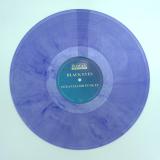
RAWAX MOTOR CITY EDITION presents Black Eyes - Ocean FLoor Funk EP
We are very happy to spread the news about this outstanding deep monster record!
Three original tracks by high rising Black Eyes plus a timeless warm and filigree remix by Abacus.
2026 Repress
***
nothing changed
it was locked in place.
something flashed, something broke,
something remained.
I walked down the stairway
and into it.
***
Lewis Taylor is a rising 20-something house head from Newcastle who shows off his chops on this new one from Ebullience. Ebullience is a good way of describing his take on tech and minimal, too. There is plenty of cheer in the lively synth work of opener 'Do You Wanna Come Party', to which the answer is yes, please, very much so. 'Satisfaction' has its head up in the clouds with more wispy cosmic synth motifs, zippy grooves and silky pads that are luminous and pure. 'Optimism' strikes that same balance between low-end oomph and celestial melodic charm - a fresh, future blend that is perfect for summer. 'Still Dreaming' closes with more mature melodies and accomplished arrangements that quietly buzz.
There is a strong sense of place running through 'North West Tonight', as God Colony aka Crack Copies label heads and Liverpool-raised duo James Rand and Thomas Gorton sketch out a hazy, after-hours portrait of their hometown. Drawing on 80s new wave melodies and rough-edged club rhythms, the EP balances sounds of yore with present-day energy. There is crunchy, disrupted bass on 'The Column', backlit broken beat on 'Middle Eye' and more sun-kissed depths on 'Rhyll Sun Centre'. 'The Paradox' stands out as a darker, more edgy and club-ready sound while the rework by Sasha stretches the track into something built for wide-eyed dancefloors.
“Wavebreaker” is a magnificent post-punk and minimal wave album originally self-released in 2024 by Orus Boris — a brilliant work that unquestionably deserved a proper vinyl edition for both its musical depth and outstanding technical quality. Built around a truly exceptional production, “Wavebreaker” moves in line with the finest contemporary wave sounds while constantly expanding its own universe. The album never feels nostalgic or predictable. Instead, it reshapes its influences into something fluid, sharp, and deeply personal, refusing to remain confined to a single language. Alongside its minimal wave foundations, the record introduces subtle incursions into darker electronic territories such as dark electro aesthetics, making each track feel unexpected and constantly evolving. Melancholy collides with tension, elegance with aggression, precision with emotional weight. The result is an immersive and surprising listening experience from beginning to end—a remarkable work that confirms Orus Boris as one of the most exciting and essential voices to follow within the new wave underground. Presented in ONE-OFF truly limited edition of 300 copies lacquered pressed on 180 gr. high quality solid BLACK vinyl. All tracks have been specially remastered and mastered for vinyl by Daniel Hallhuber at Young and Cold Studios (Germany).
South African composer and producer Jason van Wyk is continuously honing his craft, with each consecutive release feeling like a clear evolution of its predecessor. Through his albums and soundtrack commissions, van Wyk’s technique at perfectly balancing melody and atmosphere is now more apparent than ever.
Inherent, his sixth aptly named album, finds van Wyk distilling his sound to where each note seems to have implicit cinematic intent, revealing intricate new details with every listen. Inherent features large swaths of warm, wispy ambient, ghostly piano and widescreen drone. Yet, at the very moment when all seems to apex, van Wyk presses on by mining his past endeavors in club music, neo-classical and scoring work to create something else entirely.
Distorted guitars, percolating synth arpeggios and poignant beat design propel the contemplative ambient sections into the light, bringing van Wyk’s sound into previously unexplored territory.
P: Limited Edition 3D Lenticular Gatefold sleeve, 2 x 180g heavy weight vinyl
After four years of touring, Shpongle return with a new album, though much has changed. Music production isn't something for just enthusiasts anymore, and the tools needed to make an entire album in your bedroom are becoming increasingly available and affordable... yet this just makes Shpongle's return all the more welcome. In a time where more and more focus is put on commercialization and churning out quick hits Simon and Raja's latest work is a welcome breathe of fresh air wedded to nostalgia, and proves that the group isn't ready to become stagnant anytime soon.
Curió Curió came to flight by chance. Two artists, Rio-born, Austria-based singer and actress Luiza Monteiro and German producer Dustin Braun, had separately reached a fork in their journeys. An opportune encounter soon blossomed into an uplifting, heartfelt Brazilian MPB-groove project shaped by psychedelic disco and studio experimentation. In their own words Curió Curió’s sonic vision “is not straight disco, not straight samba, not strictly old-school but inspired by all of them, creating something contemporary but still nostalgic”.
A modern fusion influenced as much by Gal Costa and Jorge Ben Jor as Say She She and Bala Desejo, their sound deftly plots a course all of its own. A celebration of freedom, movement, love and life, intertwined with introspective moments of reflection. Treating tradition as something alive, migratory and unresolved, the album is not simply bound by a shared love of Brazilian music, but by a deeper question that runs through every track; where does one belong when home becomes plural? As a Brazilian living in Europe, Luiza's lyrics explore themes of identity, culture, and existence. The tracks move between cities and emotional registers without settling, tracing a sense of identity that shifts rather than resolves. Songs like ‘Amor Doente’ and ‘Mar sem Dar Pé’ circle around relationships that resist clarity, while ‘Menina Passarinho’ captures the fear and necessity of committing to music as a path. For Luiza, deepening her commitment to music alongside years in theatre was both inevitable and difficult. Braun’s production follows a similar logic. Initial ideas were often built without obvious reference points, only later incorporating rhythmic and vocal elements that hint at Brazil without reproducing it. Analogue techniques, tape, ribbon microphones and live ensemble recording bring a tactile quality that reflects the duo’s interest in process as much as outcome. Highlights include ‘Bem Querer’, built on an authentic samba street vibe with a super-catchy sing-along chorus, and ‘Vem pra Casa’ with its cosmic-tinged Brazilian boogie flavour. The album closes with ‘A Cor do Meu Sonho’, a quiet act of insistence. A refusal to shrink in unfamiliar environments, and a belief in the strength of difference. It is less a conclusion than a continuation, leaving the central question open. “I started to understand that I can belong to many places at once”, Luiza reflects. “And that can be something to embrace”. Lyrics from the song ‘Raiz’ translate in English to “I value a burning sun and the cold in the air. Constant change is my companion”. With Curió Curió, that idea is lived through sound, story and collaboration. A debut that feels both searching and assured, grounded in heritage yet shaped by distance.
Discosabotage Records is an evolution of the collective founded by Luval in Amsterdam in April 2024. Having recently relocated, he felt the need to create something that truly reflected his own vision and the music he loves. What started with selecting records gradually evolved into selecting demos, driven by an increasing desire to shape a distinctive identity and sound.
DSB001 is the label’s first various artists release, featuring Luval, Massi, Two Opposites, and Paradise City Breakers. Each artist brings a unique perspective while remaining connected to the vision behind Discosabotage. The release moves through different shades of electronic music, from deep and hypnotic grooves to darker, more introspective territories, always maintaining a strong sense of definition and purpose. While each track speaks its own language, together they form a cohesive journey rooted in underground electronic culture.
This first VA marks the beginning of a label that is still taking shape, defining its path through dark atmospheres, refined rhythms, and carefully crafted electronic textures. A first statement from Discosabotage, and the starting point of what is yet to come.
After a year in the making, Laolu completes his Mascara EP with the release of its final single, ‘Mental'. A beautifully instinctive collaboration with Benni Ola that captures the magic of spontaneity and creative connection.
The foundations of the track were first laid in Bali, where Laolu began experimenting with a guitar recording from another project. Drawn to Benni Ola’s unmistakable vocal energy after repeatedly playing his music, the producer immediately felt a connection between the unfinished instrumental and Benni’s voice. Months later, the pair met during a writing camp in Portugal, instantly establishing a creative chemistry that would eventually lead them to Los Angeles, where Mental was recorded in a single, fluid session.
Built around intuition and emotion rather than overthinking, the collaboration unfolded almost effortlessly. What began as a loose idea quickly transformed into a record overflowing with memorable hooks, as both artists leaned fully into the moment and trusted the energy in the room. Benni Ola described the experience as feeling “electrified” from the instant the track played, recalling the session as something almost channelled rather than consciously written. One of those rare creative moments where everything simply falls into place.
That sense of immediacy and freedom runs throughout Mental. Warm, soulful, and emotionally charged, the track balances hypnotic grooves with expressive vocal delivery, creating a record that feels both intimate and euphoric.
Together with previous singles Mascara and Velvet Blooms featuring Paul Brenning, Mental completes the ‘Mascara' EP. A rich and deeply expressive body of work that highlights Laolu’s ability to fuse emotion, groove, and collaboration into something truly timeless.
As with all releases on Siembra, the single is tied to artwork inspired by Magic Carpet - a painting by Laolu’s late father, created in Nigeria in the early 1980s. It’s a personal and cultural thread running through each release, defining the visual identity of Siembra as the label evolves.
Jason Singer spent years building Michigander from a DIY solo project in Kalamazoo into a national indie-rock staple through little more than a guitar and a refusal to quit. On his second album, Over Before You Know It, Singer isn’t retreating from the world, but learning how to move through it. The record finds power in the tension of living with both the good and the bad, refusing to let outside noise or internal doubt act as a roadblock. “We spend so much of our lives trying to build something that we never have the time to enjoy. That’s the lesson I’ve learned over the past year,” says Singer. “Tell people you love them. Take care of yourself. Fight for the good. That's what this album stands for.”
*** The nights you fight best are when all the weapons are pointed at you, when all the voices hurl their insults while the dream is being strangled ***
"Some of my earliest musical memories were listening to my local pirate stations in the early 90's. The signal was quite weak in my area, and the sound was doused in FM static, creating this interesting amalgam of rhythm and noise. I found a strange sort of comfort in this, often falling asleep while listening to the radio, in bed, with my headphones on. The stations were run by young people, no older than kids really, relayed from non-descript flats, scattered around Bradford, Leeds, and the surrounding towns of West Yorkshire. The setups were primitive, and the production quality (and often the mixing) were dubious at best. But there was an endless supply of passion, and listeners tuned in because they were thirsty for something the legal stations could never supply. These voices on the other side of the transmission were, for many of us, a bridge into the future. One, which sadly, never really came to be. Hardcore, Static: Pirate Transmissions From The North of England 1990-1994 is a celebration of this unique period in UK history. The North of England feels overlooked during this time, with history's focus firmly gazed on London. But the signal was everywhere. These pirate stations were crucial for many young people, who were trying to find their place and identity in the UK. Many of these transmissions, even the ones which were recorded onto tape, have since become lost media, effectively erased from history. Radio, at least in the analogue domain, isn't something most young people have any experience with. Pirate radio was this unique flashpoint in time, and for me at least, it was important enough for me to want pay my respects to it" Dennis/36
Music From Memory presents 'Mood Programs – Extended Play', a two-track release by LA MARR, a new project conceived by Ron Trent. Representing the first in an ongoing series of releases on Music From Memory, ‘Mood Programs - Extended Play’ opens a new chapter within Trent’s deep and continually evolving body of work, rooted in mood-driven composition, spatial depth and the emotional resonance of sound within physical space.
Influenced by ambient and environmental music, New Age, dub traditions, New Wave, Krautrock and HiFi sound system culture, LA MARR reflects many of the formative ideas that informed Trent’s evolving approach to sound and sonic architecture from the early 1980s onward. Rather than revisiting these influences nostalgically, the project recontextualises them through a contemporary production language, balancing analog warmth with precision and spatial depth.
Developed through years of sonic experimentation and research into the physical and psychological qualities of sound, LA MARR extends Ron Trent’s long-standing interest in the relationship between rhythm, acoustics and human connection. Built through a combination of analog processes and contemporary computer-assisted production, the project explores warmth, resonance, depth and sonic clarity through carefully sculpted environments of tone and texture.
Gently unfolding within a spacious, ambient-leaning framework, 'Mood Programs – Extended Play' moves beyond passive background listening toward something more intentional and immersive. Across both tracks, ‘Good Magic’ and ‘Clear’, layers of hypnotic synthesizer arpeggios and gently floating pads gradually unfold alongside organic percussion and subtle low-end movement, creating compositions that feel simultaneously meditative, physical and emotionally responsive. Sound is treated not simply as musical information, but as an environmental force capable of shaping perception, mood and awareness within a room.
'Mood Programs – Extended Play' will be released digitally and on vinyl through Music From Memory on July 15th. Sleeve art and design by Michael Willis.
Key To World Peace is the third release by Prophetic Justice Ministry - aka Australian musician Sam Perry. An atmospheric, cinematic album that belies a striking pop songwriting nous at its core, its conductor Prophetic Justice Ministry is at the centre of a new wave of creative, rule-bending Melbourne artists. Romantic, smudged and hazy, Perry emerges from behind a wall of
half-light with a clutch of earworms and affecting emotions.
Recorded in home studios in Belgrade (Serbia), Christchurch (New Zealand) and Melbourne (Australia) over the course of three years, Key To World Peace offers a dichotomy in approach. Shifting on a dime between ambient, filmic washes of sound and more traditional song structures, the approach feels natural, casually acid-tipped and emotionally revealing. While Perry’s
distinctive keys and production melding with melody is evidenced in Melbourne group Who Cares?, as Prophetic Justice Ministry there’s a heightened sense of mystery and space being used.
Swirling in a psychedelic fog with dry iced chords falling down like melting stars, the album pulses with an ominous, distorted intro that sculpts air into blocks of sound before Psyop offers a glimpse through the gloom at the artist navigating through crushed, shoe-gazing chords, singing a consolation into an abandoned building. Side A’s more abstract tone veers from industrial tracks (T-A) to pastoral, impressionistic pieces (Trance) before album highlight Life’s A Party showcases the effortless, classic songwriting lurking in Prophetic Justice Ministry. Built on the tension between the upbeat lyrics and suppressed, rich delivery, the song lopes on an alluring loop with acoustic guitars and Perry’s voice walking a tightrope between irony and sincerity. The song blooms into a bright burst of light, almost inducing synesthesia in the listener and reminding a little of The Beta Band’s most outre and catchy moments.
Opening Side B, Naked Shine’s scintillating guitar is punctuated by a sub bass swell that offsets the yearning vocal performance. With palpable sensitivity the song is shepherded into short, atmospheric passages before Love Drum’s direct delivery: Perry’s vocal and guitar, dancing over a hint of distortion feels like Syd Barrett at his most casually brilliant. Carrying on the tradition of a single cover on every Prophetic Justice Ministry release, here Lana Del Rey’s Mariner’s Apartment Complex is given a stripped back but faithful treatment. With a sound that feels like a hushed, Chris Isaak classic it’s testament to Perry’s own compositions that the cover doesn’t outshine the rest of the album. Album closer and single Spirit House Party combines a classic chord progression with Perry’s double-tracked vocal into a murky but brilliantly catchy chorus. While nowhere near as lush in its production, there’s something in the atmosphere of Prophetic Justice Ministry’s vocal sitting in the mix just so that reminds us of The Electric Prunes’ Holy Are You-era work with David Axelrod.
Key To World Peace flits between displaying a spectrum of blurred emotional resonance in its instrumental passages and vulnerability in the shape of raw, melodic songwriting. With his first release outside of Australia and vinyl debut, Sam Perry’s Prophetic Justice Ministry is a beguiling dance in and out shadows.
If you could ever stop thinking about... you know... for just a moment, you might hear something else...
Foehn & Jerome return to Perfumed Freedom for the label's first release of 2026. Three refined minimal house tracks, balancing groove, restraint and dancefloor energy. Understated, hypnotic and exactly where the duo's sound feels most at home.
There’s no direct English translation for the word “hiraeth”. In the Welsh language, it describes a form of longing for an intangible something, somewhere or someone that no longer exists. Sofie Birch and Antonina Nowacka draw on the concept to guide their second collaborative album, a suite of vulnerable, open-hearted improvisations and reflections that attempt to grasp an image of the past that’s chimeric, dissolving almost as soon as it materializes. The duo’s process follows the same distant beacon; unlike Languoria, their critically acclaimed debut, Hiraeth is, at heart, an acoustic record, informed by in-person improvisations with voices and string instruments that gesture to an era before computers, AI and DAWs. It’s just as lush, but Hiraeth is warmer and more muted than its predecessor.
Nowacka and Birch conceived the album in the wake of a slew of collaborative live concerts, spurred on by serendipitous improvisations and an interest in paring down their setup. Unsound arranged a retreat in Sokołowsko, an idyllic village nestled in the verdant hills of Southern Poland, close to the Czech border. Sokołowsko surrounds a large ruined sanatorium that’s rumored to have inspired Thomas Mann’s 1924 novel The Magic Mountain, and has long been a magnet for artists. The two took the opportunity to rethink their approach completely, arriving with just a guitar, a zither and a portable Nagra reel-to-reel machine. Recording directly to tape, they sketched out ideas with just their voices and instruments, reflecting their surroundings without being distracted or mediated by modern technology.
“We wanted to get away from screens as much as possible,” says Birch, “to bring to the world something vulnerable and honest. Without advance preparation, every day we went out into the open air, finding places to sit, during sunset or the midday sun. We discovered new tunings on our instruments, picked up a melody, and started the machine, playing over
and over till we got a take.” In the autumn, they met again in a Copenhagen studio, sparingly and carefully layering old synths and organs to add more depth without muddying the mix.
Both Nowacka and Birch sing throughout, their voices threading the acoustic instruments and tangling with each other, almost becoming one. But it’s the environment of Sokołowsko, “the birds and the light, even the wind playing against the harps,” that’s woven into the music’s lining. Affected by time spent meditating and in nature, as well as the fact that Birch was pregnant whilst recording, the album feels alive and remarkably present. Even the sound quality of the tape machine gives Hiraeth a tactile, organic quality, as Nowacka puts it, “like being in a warm bath.”
They still have the raw recordings from Sokołowsko on old reels, physical souvenirs of their time spent making music in a “habitat for intuitive songs, a little ecosystem, alive and spirited.” The outmoded gear and remote setting helped the duo disengage from the modern world for a few moments and imagine an existence that’s been lost to time and nominal progress. With digital technology receding into the background, Nowacka and Birch had space to make “intuitive connections with frequencies and people,” as Birch explains. Hiraeth is a testament not to nostalgia, but to the power of kinship.
As Selofan's fifth studio album, Vitrioli, from 2018, is a testament to the tragedy of life. The Greek duo, Joanna Pavlidou and Dimitris Pavlidis, who recorded the album in the Fabrika Records home studio, continue on in their poetic, but heartbreaking, music set to a dance beat. Between languages (Greek, English, German, and Spanish), Selofan feels on the brink of mania with Vitroli. However, the madness is controlled, the songs are restrained hysterics that culminate into the alchemic perfection of the band's specific moody sound.
From synthpop to synthpunk elements, the twelve-track LP leads listeners through dark corridors and into haunted, empty beds. There is a resignation to a doomed destiny with Vitroli—a trait that connects all Selofan releases—as a bitter pain and loneliness that cannot, or will not, subside.
The album begins with "Give Me a Reason" whose lyrics feel universal in this day and age: Give me a reason, to get out of bed / I could just watch the ceiling instead. Its heartbreak is profound as bells and voice pads echo under Joanna's voice. The adjacent music video for the song was directed by Dimitris Chaz Lee, and the band describes the video as "depicting the fragile nature, conflicts, emotional demands, and vulnerability of each person in a relationship."
"Billie Was a Vampire" is a story about an undead creature who works at a nightclub followed by the urgency of "Black Box." Brass sounds moan against the fast beat and suggest a frenzied need to escape.
"I'm Addicted" became the second single for the LP. I am addicted, you are mine, Joanna demands of the lover. The music video, also directed by Dimitris Chaz Lee, depicts a clean, white photoshoot primed for the most beautiful creatures of the Athenian wave scene. Alex Macharias, from the legendary Greek band In Trance 95, acts as the photographer for the session, as the models pose and flail under the bright bulbs. The director states: "Addiction is a mental state, something inside all of us. It altered our perception and created a parallel world of avant-garde beings and flashy lights making us part of this everlasting bond."
"There are records that move between genres and records that dissolve them into something with no clean name. Tomb is the second kind. Eight tracks from Maltese producer OS 1R 1S, where Detroit electro, dub and braindance are pulled through a sonic elixir, so specific, that the genre tags become a formality. As Digital Empathy's third outing, Tomb, cements the label's 'sinister futurism' ethos in its sharpest form yet. The lore is its own document: a Dantesque collapse, a young Malassian psyche fractured by events on Terra, a landscape where all water has been replaced by coke. An angelic Unipolan risks immortality to pass one message through - 'all axioms are false in this system'. 'RIP' opens with illbient dread of early Actress, 'St. Peter' pulls a Drexciyan chassis under metres of dub, 'False Axioms' time-shifts in a thematic unresolved structure, and 'Misplaced Prayer', a floor-track with enough mid-range distortion that can hallucinate spiral engravings. That OS 1R 1S originates from Malta, home to the oldest standing stone structures on earth, sits exactly right in the record's ritualistic undertones. For heads of the negative space of Stingray, the unnerving melodies of Terrence Dixon, but none of the comfort of knowing exactly where you are."
Repress of the 13th chapter of this highly acclaimed compilation series, originally released in 2017.
As usual FSOJ is compiled by Compost head honcho Michael Reinboth with a solid sense of leftfield tracks, punchy floorfillers, ghostly, cinematic, balearic, frazzled, bitter-sweet or mind-shaking hybrid tunes.
Several magazines voted FSOJ as the one of the best compilation series of all time. With this series starting 1995 the term Future Jazz became a genre landmark.
FSOJ 13 including some exclusives, sought-after tracks and previously unreleased tracks. Some highlights are: First of all the Van Hai track in a Ripperton remix is a perfect opener into a tranquil music venture. A sheer bliss tune. Montezumas Rache „Wu Du Wu“, which was only released on vinyl before - still difficult to find the original 12“ - is a freaky outstanding funk hybrid. Karim Sahraoui – with a punchy Detroit-ish track, picked up from Derrick May’s Transmat label - is currently in the works with a follow up 12“ later in 2017 on Compost. Acid Pauli delivers a brand new dubby balearic remix, which he recently did for Matanza, a live band from Chile. Peter Kruder came up with something special exclusive, a warm breath in the open air tune, which drives listeners into a chilled wormhole. Beside new names, bigger names like Axel Boman, Tony Allen with a Ricardo Villalobos & Max Loderbauer remix, you’ll find more lefties tracks from respected labels like Studio Barnhus, Innervisions, Lovemonk, Transmat, Mule, Tru Thoughts, Rebirth, Ninja Tune and m.o. next to other exclusive deliveries by Manuel Tur, Marsmobil, coupled up with semi exclusives: the first time on vinyl or digital.
On SMM0000105, Soreab locks into glitchy, percussive dub framework with Ilbiryani, combining tension with intricate rhythmic detail. The original thrives on steady, intentional dub experiments, balancing density and clarity with precision. In contrast, Banishsh completely deconstructs the track into polyrhythmic abstraction. The low end deepens into an almost DnB-weight sub, and the rhythm unravels into something unstable yet narcotic. Where Soreab’s mix defines control, Banishsh finds beauty in disarray. Together, they engage a dialogue between cohesion and entropy — two sides of the same sonic idea, equally substantial in their own language.
Mit "Tourist History" veröffentlicht die britisch-irische Indieband Two Door Cinema Club eines der einflussreichsten Debütalben der 2010er Jahre in einer besonderen 15th Anniversary Edition. Das Album, das 2010 erschien, gewann den Choice Music Prize als Irish Album of the Year und markierte den Start einer Weltkarriere, die von Festival-Headliner-Shows bis zu über 1 Milliarde Streams von "What You Know" führte.
Zur Feier des Jubiläums erscheint Tourist History in drei liebevoll gestalteten Formaten - inklusive bisher unveröffentlichter Remixe und Raritäten.
Seit dem Garageprojekt in Bangor haben Alex Trimble, Sam Halliday und Kevin Baird eine beeindruckende Karriere hingelegt - mit Top-10-Alben wie Beacon, Gameshow, False Alarm und Keep On Smiling und ausverkauften Touren weltweit. Diese Jubiläumsausgabe ist ein Muss für Indie-Fans und Sammler - ein Meilenstein moderner Gitarrenmusik.
Originally released in 1968, James Taylor is the debut studio album by American singer-songwriter James Taylor. This UK edition reissue by Endless Happiness brings back the album's rich blend of folk and rock influences, showcasing Taylor's introspective songwriting and soothing vocals. The album includes notable tracks such as "Carolina in My Mind" and "Something in the Way She Moves," which have become staples in Taylor's repertoire.
Curió Curió came to flight by chance. Two artists, Rio-born, Austria-based singer and actress Luiza Monteiro and German producer Dustin Braun, had separately reached a fork in their journeys. An opportune encounter soon blossomed into an uplifting, heartfelt Brazilian MPB-groove project shaped by psychedelic disco and studio experimentation. In their own words Curió Curió’s sonic vision “is not straight disco, not straight samba, not strictly old-school but inspired by all of them, creating something contemporary but still nostalgic”.
A modern fusion influenced as much by Gal Costa and Jorge Ben Jor as Say She She and Bala Desejo, their sound deftly plots a course all of its own. A celebration of freedom, movement, love and life, intertwined with introspective moments of reflection. Treating tradition as something alive, migratory and unresolved, the album is not simply bound by a shared love of Brazilian music, but by a deeper question that runs through every track; where does one belong when home becomes plural? As a Brazilian living in Europe, Luiza's lyrics explore themes of identity, culture, and existence. The tracks move between cities and emotional registers without settling, tracing a sense of identity that shifts rather than resolves. Songs like ‘Amor Doente’ and ‘Mar sem Dar Pé’ circle around relationships that resist clarity, while ‘Menina Passarinho’ captures the fear and necessity of committing to music as a path. For Luiza, deepening her commitment to music alongside years in theatre was both inevitable and difficult. Braun’s production follows a similar logic. Initial ideas were often built without obvious reference points, only later incorporating rhythmic and vocal elements that hint at Brazil without reproducing it. Analogue techniques, tape, ribbon microphones and live ensemble recording bring a tactile quality that reflects the duo’s interest in process as much as outcome. Highlights include ‘Bem Querer’, built on an authentic samba street vibe with a super-catchy sing-along chorus, and ‘Vem pra Casa’ with its cosmic-tinged Brazilian boogie flavour. The album closes with ‘A Cor do Meu Sonho’, a quiet act of insistence. A refusal to shrink in unfamiliar environments, and a belief in the strength of difference. It is less a conclusion than a continuation, leaving the central question open. “I started to understand that I can belong to many places at once”, Luiza reflects. “And that can be something to embrace”. Lyrics from the song ‘Raiz’ translate in English to “I value a burning sun and the cold in the air. Constant change is my companion”. With Curió Curió, that idea is lived through sound, story and collaboration. A debut that feels both searching and assured, grounded in heritage yet shaped by distance.
The Jack Ruby releases have been some of the most sought after dnb/jungle tracks on Discogs, mastered from the original DAT by Beau and pressed on 180g vinyl, sounding incredible!
made at the Green Room in 1994
BTW - in the rush to get these made in time for The Run Out i messed up the label - I write these out by hand (using an Ipad so its cheating really) and i put the cat number as KR007 and KR008, overlaid a layer or something like that. anyway - my mistake, hold my hands up...
But rest assured - it's still the same excellent band from Ruda ?l?ska, only this time instead of a forest full of ghosts or a land of fairy tale creatures like a Fruwajacy Przestepca the duo of producers takes us on an interstellar journey!
The artists' third album, just titled KOSMOBOTANIKA, is an over forty-minute work skillfully composed from a multitude of various samples, and genre-wise presenting the sounds of deep house, trip-hop, breakbeat, ambient and even jazz. This is electronic music with a very cinematic, visual and imaginative character, something at which ETNOBOTANIKA has undoubtedly achieved mastery confirmed by their first two very well-received albums. This cinematic style (electronic concept album?) is reminiscent of the classic albums of the genre's progenitors from the UK like The Orb (first releases) or The KLF (the iconic "Chillout" album), but also the French Motorbass.
The Silesian duo does it their own way, of course, with a local twist. Thus, in the cosmic journey our guides will be in-sampled familiar voices from Polish television, cinema, radio and dusty vinyls (yes - samples from Mr. Kleks in Space had to be on the album, of course :) ).
There is no shortage of atmosphere-building instrumental fragments here, but also quite song-like tracks with catchy melodies and vocals. Fans of the band will certainly be satisfied.
What is there to say - ETNOBOTANIKA has created another classic, which simply must be on the shelf :) Trust them and let yourself be taken on a cosmic journey - satisfaction guaranteed!
This is the gloriously remastered version of one of the first Kniteforce EPs! This EP is proper old skool, made when Cru-l-t was just learning how to produce, so it is rough around the edges. Even so, it has a unique charm and Kniteforce has been asked to repress it on multiple occasions.
The Armenian electronic underground has been quietly brewing something visceral. After years navigating the labyrinth of electronic production from his Yerevan studio, Dave N.A. strips away the excess to reveal six raw, uncompromising cuts that pulse with quiet intensity. Not the manufactured urgency of algorithmic dance floors, but the honest tension of someone who’s spent years refining his craft while the scene evolved around him.
Following his debut ‘Altura EP’ on no•id, where collaborations with freq444 showcased his ability to merge Armenia’s electronic scene with Brussels’ underground pulse, Dave N.A. returns with ‘Echoes EP’ after the label’s necessary creative hibernation. This isn’t about comebacks or grand statements. It’s about persistence. About the kind of restless creativity that emerges when you’ve been grinding in relative obscurity, releasing on labels like Uppers and Downers, Typeless, and Elicit Records, slowly building a sound that refuses easy categorization.
The EP opens hard and unexpectedly with “BLINK,” delivering a throat-cutting and all-consuming bassline. “ECHOES” builds around atmospheric sounds and percussive elements, driven by a straightforward yet effective drum sequence. “SHADO” ventures into darker and faster territory with sparse drum programming and heavy sub-bass emphasis. Both “RUSH” and “ORB” unleash torrents of unrelenting breaks, each percussive hit landing with surgical precision as sub-bass currents pull everything forward into hypnotic repetition. “HUNTER” closes the journey, stalking into frame with predatory low-end and razor-sharp hi-hats slicing through dense atmospheric fog.
The no•id ship continues to chart its course through Brussels’ underground, prioritizing artists who value craft over hype. With Dave N.A.’s return, the label reinforces its commitment to electronic music that functions on multiple levels: cerebral yet visceral, local yet universal.
Over twelve tracks selected from BBC radio and European TV broadcasts, this LP charts the development of Blossom Toes from 1967 psyche to something darker and more powerful. This mix of idiosyncratic originals and re-interpreted cover versions includes songs not included on either of their studio albums. Sound quality is Excellent except*. Comes with extensive sleevenotes that include full recording details.
(Side A, Track 1) DJ Shadow - In/Flux - (Side B, Track 1) DJ Shadow - Hindsight
#2 - Lost And Found (S.F.L.)
(Side A, Track 1) DJ Shadow - Lost And Found (S.F.L.) - (Side B, Track 1) DJ Shadow - Hardcore (Instrumental) Hip-Hop - (Side B, Track 2) DJ Shadow - Last Stop
#3 - What Does Your Soul Look Like
(Side A, Track 1) DJ Shadow - What Does Your Soul Look Like - (Part 2 - Original Standalone Version) - (Side A, Track 2) DJ Shadow - What Does Your Soul Look Like - (Part 3 - Original Standalone Version) - (Side B, Track 1) DJ Shadow - What Does Your Soul Look Like (Part 4 - Original Standalone Version) - (Side B, Track 2) DJ Shadow - What Does Your Soul Look Like - (Part 1 - Original Standalone Version)
#4 - Midnight In A Perfect World (U.K. Version)
(Side A, Track 1) DJ Shadow - Midnight In A Perfect World (Radio Vision) - (Side A, Track 2) DJ Shadow - Midnight In A Perfect World (Gab Mix) - (Side B, Track 1) DJ Shadow - Midnight In A Perfect World (Extended Vision) - (Side B, Track 2) DJ Shadow - Mutual Slump (Album Version)
#5 - Stem
(Side A, Track 1) DJ Shadow - Stem (Cops 'N' Robbers) - (Side A, Track 2) DJ Shadow - Red Bus Needs To Leave! - (Side B, Track 1) DJ Shadow - Stem/Long Stem (Earlier Version) - (Side B, Track 2) DJ Shadow - Soup
#6 - High Noon
(Side A, Track 1) DJ Shadow - Hypnotist Intro - (Side A, Track 2) DJ Shadow - High Noon (Alternative Mix) - (Side B, Track 1) DJ Shadow - Devil's Advocate (Alternative Version) - (Side B, Track 2) DJ Shadow - Organ Donor
(Extended Overhaul - Original Version)
#7 - Camel Bobsled Race
(Side A) DJ Shadow - Camel Bobsled Race (Original Unedited Version) (Part 1) - (Side B) DJ Shadow - Camel Bobsled Race (Original Unedited Version) (Part 2)
#8 - Bonus Disc for this Box Set
(Side A, Track 1) DJ Shadow - In/Flux (First Ever MPC Version) - (Side A, Track 2) DJ Shadow - Lost And Found (S.F.L.) (First Ever MPC Version) - (Side B, Track 1) DJ Shadow - What Does Your Soul Look Like (Part 2 - First Ever MPC Version) - (Side B, Track 2) DJ Shadow - What Does Your Soul Look Like (Part 4 - First Ever MPC Version)
Zum ersten Mal seit Jahrzehnten erscheinen DJ Shadows legendäre Mo’Wax-Singles wieder offiziell – in einem umfassenden 8-teiligen Vinyl-Set, das mehrere Stunden bahnbrechender Musik enthält.
Die Aufnahmen wurden in den Abbey Road Studios von Miles Showell halbspeed-remastered und klingen so klar und kraftvoll wie nie zuvor. Die Box enthält zahlreiche bisher unveröffentlichte Mixe und Edits sowie eine exklusive Bonus-LP mit den ursprünglichen Demos von vier Tracks – ein einzigartiger Einblick in die Entstehungsgeschichte des Shadow-Sounds.
Abgerundet wird das Set durch neue Fotografien von Brian Cross (B+), DJ Shadows langjährigem visuellen Wegbegleiter.
Ein essenzielles Sammlerstück für Fans, Vinyl-Liebhaber und alle, die die Wurzeln moderner Beat-Kultur feiern wollen.
"This box wasn’t made for the casual listener,it was made with the hardcore fan in mind. I’ve always felt, if something is worth doing, it’s worth doing right, and every step of the process was
made with this philosophy firmly in mind. I had fun locating and resurrecting these songs, some of which still feel close to my consciousness as though they were made yesterday.”
-DJ Shadow
Looking back on her career in the early 90s, Stevie Nicks described the first track of Rock a Little as “the most exciting song that I had ever heard.” This coming from a superstar who was already closely affiliated with several bajillion-selling Fleetwood Mac albums — to say nothing of her own benchmark solo debut. Her remarks attest to the enthusiasm and effort she invested in her third record, a 1985 work that quickly furthered Nicks’ profile and cemented itself as a piece of 80s pop lore.
Mastered at MoFi’s California studio, pressed at Fidelity Record Pressing in California, strictly limited to 4,000 numbered copies, and housed in a Stoughton gatefold jacket, Mobile Fidelity’s 180g 45RPM 2LP set presents Rock a Little in audiophile sound for its 40th anniversary. Helmed by a cadre of producers and engineers, and recorded for a reported one million dollars, the platinum-certified album teems with a head-spinning array of colors, tones, dreamscapes, and accents. This reference-grade reissue marks the first time they are all brought to light and conveyed with proper balance, dimensionality, and positioning.
Though Rock a Little doubtlessly has period characteristics of a mid-80s LP, Nicks and company spare no expense when it comes to distinguishing the music with expansive sonics distinguished with lush melodies, high-tech percussion, echoing vocals, sampled keyboards, and layers of sophisticated accents. The degrees of spaciousness, headroom, and dynamics are nothing less than inspiring, while the newly enhanced detail, texture, and clarity make the songs sing like never before. As for Nicks’ voice? Wait ’til you experience the transparency and depth.
Those advantages extend, of course, to the aforementioned “I Can’t Wait,” a statement-making opener shot through with modulating synthesizers, splashy drums, metallic guitars, and serious drama. Holed up in a massive studio, Nicks required just one take to nail her part, which she called “magic and simply not able to beat.” The singer-songwriter also distilled the reverberating emotional essence of the Top 20 tune, stating “when I hear it on the radio, this incredible feeling comes over me, like something really incredible is about to happen.”
The same can be said for nearly all of Rock a Little. Crafted by the likes of Songwriters Hall of Fame multi-instrumentalist/producer Rick Nowels, Heartbreakers organist Benmont Tench, bassist Bob Glaub, jack-of-all-trades Greg Phillinganes, and session-pro guitarists Waddy Watchel, Les Dudek, and Danny Kortchmar — along with another two dozen or so participants — the record spills with diverse ideas, shapes, and moods. Everything is in the right place, as evidenced by the swirling glide and sensual undertow of the slightly funky title track to the snapping rhythmic pace and big hooks of “Imperial Hotel,” one of Nicks’ standout moments.
“What was it she wanted?” Nicks queries on “No Spoken Word,” continuing a theme of contemplation that runs through the narratives. Nicks never lands on a definite answer, but hearing her explore loneliness, love, and the secrets we keep to ourselves proves continuously rewarding. Take her passionate performance on a cover of Chas Sanford’s “Talk to Me,” a Top 5 smash furthered by tasteful saxophone lines and understated folk elements. Immersive yourself in the grand sonic corridors of “If I Were You,” laden with Nicks’ signature mysticism.
Moreover, surrender to the gravitas of the closing “Has Anyone Ever Written Anything for You,” a piano ballad composed about the death of Joe Walsh’s three-year-old daughter. As Nicks asserts earlier on the album, she sings for things money can’t buy.
So, rock a little, yes, but dare to feel even more.
We are taught to hold a shape. To repeat, to conform, to control. Over time the repetition becomes us - rigid, fearful, grasping for power, emptied of feeling. We live without living. The mechanical overtakes the organic. We lose ourselves, and in losing ourselves we lose our connection to everything.
This is the psychosis we call normal.
Yet something remains underneath. A flicker. A recognition. The long effort of reopening begins with glimpsing what we have become.
Fantastic Planet marks its 10th release with Singularity, a solo transmission from Bassiani resident Newa. Built on firm, rolling techno frameworks, the record layers restrained vocal fragments that gesture toward broader philosophical themes. Rather than chasing immediacy, Singularity unfolds patiently, shifting perception from the present tense toward something more suspended and timeless.
LIMITED 300 ONLY CRYSTAL CLEAR VINYL WITH PURPLE BLOB AND BLACK SPLATTER. HOUSED IN FULL COLOUR MATT SLEEVE WITH POLYLINED INNER BAG AND DOWNLOAD CODE. NON-RETURNABLE.
Following his two sold out releases ‘Vertigo’ & ‘Water Music’ on Riot Season last year, the ever prolific Ivan The Tolerable returns with ‘An Orphan Form’
A beautifully strange and immersive suite that feels both otherworldly and rooted in something organic. Drawing on kosmische drift, loose-limbed jazz, and warped psychedelic textures, the record moves like a half-remembered dream.
Field recordings and nature sounds weave in and out, grounding the swirling synths and off-kilter rhythms in real earth and air. It's a record that doesn’t follow a straight line, but instead wanders, curious, alive, and quietly spellbinding.
Recorded in winter 2024 in Middlesbrough, UK and Utrecht, Netherlands
Oli Heffernan: bass/guitars/synths/drones/field recordings/electric piano
Mees Siderius: drums/percussion/vibraphone
Elsa Van Der Linden: saxophones/flutes
"This album is created over the past years with my brother Alfred. This period has been spiritually transformative for me. it reflects the playfulness and authenticity that comes out of releasing deep traumas and healing wounds. this music comes from a deep place of joy and connection with my brother and with the essense of being a child. being filter free and in contact with the most uncomplicated and loving parts of ourselves, still emphasizing magic and mystery, like childhood does without asking for permission or confirmation.
It took me a while to actually see the music as an interconnected piece. i have been taking in and out material, re mixing, removing, rearranging, re producing and regretting all along the way. but suddenly when we mastered this selection on a cassette tape recorder, the meaning started to reveal itself and drawing threads back in time.
Bivabippalukka is playfulness, intuition, transition and myths. the page of cups. the ideas rising, the energy flowing, flowers, stars and jumping creatures on the verge of dimensions. fortune telling, magic cards, secret caves and things that disappear right in front of you.
many talented guests playing with me and my visions on the album.
Bossa nova is the most comforting genre for me. and we need comfort in these times. we need comfort to heal and feel joy to be able to keep dreaming and manifesting - and transmuting the world.
I am not gonna play this music live in the form it appears. i will still continue playing spiritual ambient music. this work is something else. it is pocket of joy, a cup with a fish. it is a step on the journey, like everything else. "
For WOLFEP088, we’re welcoming an Italian stallion to the WOLF stable. DJ Soch is a renowned DJ, producer, and label owner whose roots in house music run deep. Beginning his journey behind the decks in the mid-1980s, he has spent more than four decades honing a sound shaped by house, techno, disco, funk, hip-hop, and the timeless influence of Detroit and Chicago. As the founder of Black Angus Records and a resident DJ at the renowned Italian club Serendipity, he has shared lineups with some of the best to ever do it, helping to shape Italy’s underground electronic music scene.
When his tracks hit the WOLF inbox, we knew we were onto something special. The first one we heard, ‘Let Me Tell You’, was an instant yes, must sign moment. There’s skippy drums, warm keys, church organ, a heavy bassline and a pleading, soulful male vocal. One of those tracks that should come with a neck-brace. Soulful, but powerful. There’s also a ‘Power Mix’ version that keeps all the elements we loved, but strips back the vocal and ramps up the church organ. Absolute Holy Ghoster! This is the type of track that would have torn up the dance floor at the Shelter, a real Timmy Regisford tops-off jam.
On the flip, there’s a hypnotic deep house groove entitled, ‘Chewing Gum’. This is proper stuff, heads-down, deep house for the dance floor. We’ve paired it with a remix from Prince Palmer, one of the standout remixers of recent years, and a great group of guys. The Prince has delivered a reinterpretation that gives a nod to 90s US Garage, complete with all the trademark production chops you would expect from a regular on the stellar Bobby Donny label. It’s a track that wouldn’t sound out of place on a peak-period Strictly Rhythm 12”, so that’s all you need to know.
Four belters, all on one record, designed for maximum listening pleasure.
Four cuts destined to take you on an Adventure In Paradise. No additives, just raw records spliced, diced, and processed through the blender to better feed the dancefloor and DJs alike.
A1 - If you’re asking yourself if something can be chuggy at 128 bpm then you’re in the right place. Disco-stomping belter ploughing its way down the M20 searching for the port, then the south of France and finally Freddie’s bedroom. Don’t forget the stops for a breather.
A2 - Four films?? That’s about as insane as this edit; a swaggering, mop-topped and dubbed-out groover boasting a ph-fat flamenco freakout at its klymaxxx. Would Harvey play it? Dunno, but the bootleg variety definitely already does.
B1 - Shades of Rimini as the pianos set over another rubbery bassline and the Adriatic Sea arpeggiates its ocean spray all over the gaffe. If this ain’t heaven, we’re not sure what is.
B2 - Nothing like a lashing of nutritious Italo-dance slop to carb-o-load the dancefloor at its peak. Just watch as the crowd devours this Ragú of musical flavours, with elements of Disco, New Wave, Acid House and Jazz all thrown in the pot.
Some records point at the dancefloor; this one points at the sky. Decryption Of Reality is dubtommy's first solo record for NOREPRESS – the sublabel where he first surfaced on 2022's Pasanauri Way — and it lands as dub tech house wired to the stars: deep, driving, and lit from somewhere far off.
Across four tracks, wide synths stretch over a steady, danceable pulse and drag the groove off-world – less a night in a club than a signal caught from deep space. Three cuts keep the floor moving, bright and propulsive; the closer, "CDEFGAB" – named for the bare notes of the scale – sets down softly into something quieter and near-weightless, back to first principles.
A record for the deep end of the floor and the long drift home.
Back after its first release, Life Enigma returns for a second chapter: a dark and warped dispatch from the void.
This time, the London-based artist of many aliases Zuul takes the reins, exploring moodier territory at the low end of the frequency. The result is three slow-burning, horror-flecked cuts that sit somewhere between electro and new wave, each driven by a sinister vocal. The release is rounded off by a more dancefloor-oriented remix from C.ru.z on the B2.
On the A-side, My Mind Is Mean is a driving, sub-heavy opener with menacing synths that do the title justice. It's Hell In There, It's Horror shifts into something more melodic and upbeat, with eerie textures and an ominous undercurrent.
And when we thought things couldn’t get any meaner, Ask Me sinks into haunted, mid-tempo bass hypnosis on the flipside, while C.ru.z’s remix leans further into its darker side with an even nastier groove.
In 2023, Kraków-based composer Martyna Basta and Los Angeles-based sound artist claire rousay were invited to Poland by Unsound for a short residency, where they spent a few days trading ideas and concepts, and brainstorming their first collaboration. Initially motivated to create lengthy, expansive pieces together, they also ended up experimenting with shorter vignettes, and ‘hotel room’ expresses these two extremes, featuring three long-form tracks and three brief, euphoric songs. “It wasn’t something we specifically planned,” explains Basta. “It just unfolded that way.” The most important stage of the process, however, was the period that followed the residency, when rousay and Basta began working on their sketches in isolation, trading drafts and sculpting the sounds independently before rousay handled the final mixdown. In the comfort of their own bedrooms, they were better able to reflect their individual creative routines, organically reaching a junction where their music felt truly unified. Even while they were in Poland, the duo joked that it might have been easier if they’d been holed up in separate rooms emailing each other.
Both artists have had an energetic few years: after steadily building a reputation for her diaristic and candid concrète experiments, rousay signed to Thrill Jockey in 2023, releasing the acclaimed ‘sentiment’, ‘a little death’ and the more eaze collaboration ‘no floor’; Basta, meanwhile, followed up 2023’s hallucinatory ‘Slowly Forgetting, Barely Remembering’ and her debut for Belgium’s Stroom imprint, ‘Diaries Beneath Fragile Glass’ with a studio album on !K7’s 7K sublabel: ‘Winged in Collapse’. The title of their collaboration reflects rousay and Basta’s hectic touring schedules in the wake of these releases, the constant feeling of displacement and the emotions that emerge when the environment is in flux. “I know we aren’t the only musicians traveling and creating work at the same time,” says rousay, “but being able to speak about that experience and all the things that come with it was comforting.” And the music itself, assembled from hypnagogic field recordings, spectral voices, electronics and filtered instrumental improvisations, sounds bewitchingly unmoored, not tied to a specific location but hovering around the uncanny space in-between.
Scratchy ASMR sounds introduce us to the opening track ‘zoom’, initially obscuring the duo’s elegiac harmonies. They are careful to let the various elements evolve at their own pace, with the fictile guitar drones melting into the foreground while Basta’s dissociated whispers and rousay’s illusory synths pick out the subtlest subliminal shades. It all builds to the piece’s dramatic third act, when layered chords ring out like organ blasts, enveloping the negative space. The shorter, more anxiety-provoking ‘denim’ is remarkably divergent, a dismantled folk memory pieced together from skeletal piano notes, vaporous choral echoes, haunting string plucks and pulsating feedback. Where the music aligns is in the mood itself, capturing a feeling that’s neither completely abstract nor fully referential. Not ambient exactly, ‘hotel room’ is a suite of soundscapes that gesture towards structure while repeatedly folding in on themselves.
On ‘Lost and Found’, wordless Autotuned ad-libs spiral around delicate guitar plucks and washing waves, coalescing into a faded Polaroid of opiated Americana, and on ‘Where Are You Now’, operatic squeals and corroded orchestral scrapes are juxtaposed with nauseous low-end tones. Evaporating until only industrial whirrs and music box chimes remain, the latter encapsulates the entire album’s chilling liminality, smudging saturated voices with casual electro-acoustic interjections before it erupts abruptly, transforming into a dense, pitch-skewed hymn. ‘hotel room’ plays like a surreal travelogue, teasing listeners with airy familiarities as it humidifies dry, awkward spaces. More a labyrinth of catacombs than a single, fixed chamber, it’s Escher-like – cryptic and seductive – and decked out with personal asides and intimate details that reward the most patient, curious listeners.
Formed in 1969, Soul Media set out with a clear mission to fuse jazz and rock. That approach took a decisive next step with In The Groove, recorded in 1973. Here, the sharpness of jazz is brought to the forefront, rock elements are dissolved and refined to give a cutting edge, and funk is injected to add drive, elasticity, and physical force. The result is a body of music that transcends existing genre labels—jazz-rock, jazz-funk, or fusion—and stands instead as something simply, undeniably cool: strong yet sophisticated.
This album is often described as Soul Media’s response to The Crusaders, a band that saxophonist Jiro Inagaki was paying close attention to at the time. The aim hit its mark. With In The Groove, Soul Media acquired a “refined black feeling”, setting them firmly on the path toward their ultimate destination: Funky Stuff.
The “Late Loop” LP by Andy Stott is released on Modern Love and marks the producer’s return after a five-year break from the studio. The album brings Alison Skidmore, Stott’s long-time vocal partner, and for the first time Elaine Howley to the forefront; their voices are used partly as full vocal performances and partly as fragmented, pitch-shifted loops, forming the emotional center of the record. Stott largely avoided established production tricks: no basslines, no reverb, just a delay as the sole effect, giving the arrangements an unusual clarity and fragility.
“Late Loop” sits somewhere between downbeat, electronica, and leftfield, and emerged from an experimental process that ranged from drone passages and brass-like concrète moments to song-oriented structures. Rhythm often emerges indirectly here: a drum machine was played back into the room, re-recorded, and pitched down; a pump organ was recorded with a microphone placed on the floor; valves and an aging mixing console audibly contribute to the atmosphere. Lyrically, themes of separation predominate; the voices were layered multiple times, then pared back until only the essentials remained. Mastering was handled by Rashad Becker, and the cover photo is by Myriam Boulos. With “Late Loop,” Modern Love presents an austere, meticulously crafted album whose details gradually reveal themselves with repeated listening.
The Body Works begins from a simple idea: sound does not end at the speaker, and music is something that is not only heard, but held, felt, and carried. By translating sound into physical form, the project creates an encounter that exists between listening and touch.
Rhythm is anticipated by muscle, voices affect breathing, and repetition changes our sense of time. Listening is already a physical act. Rather than treating the body as a subject represented by the music, The Body Works treats it as the place where the music happens; the physical and perceptual space through which sound is experienced.
Primarily consisting of left-leaning club music, the LP moves between trap-tinged tech funk, sweaty nocturnal throb, bottom heavy breaks, seedy cowbell acid, pumping techno workouts, doting hi NRG, cosmic homoerotica, and electronic disco. Interspersed and laced atop are more exploratory approaches to sound. Synthesis, field recordings, voices, electroacoustic and musique concrete techniques, plus a dose of offbeat humour are all treated equally as compositional material.
The record travels through ordinary human actions and situations - partying, sleeping, travelling, cooking, flirting, drinking, dancing and listening. These are not presented simply as themes; they become compositional material through which sound, attention, movement and the body interact. "A lot of the record is just weird normal things happening around me. Sleeping, travelling, flirting, drinking water, trying to kill a fly. The more attention you give these things, the stranger they become", comments Bjarki.
Sounds of Sirius Music presents SOSNZ014 Balouk – Binary Whispers EP
A distant signal moving through the universe. Fragments of consciousness appearing between silence and noise. A transmission crossing the space between stars.
Somewhere between zero and one, something speaks.
Rooted in classical music, Balouk explores the unknown through modular synthesis and intuition. His sound drifts between structure and chaos, where machines breathe, patterns shift, and every transmission takes a different form.
Balouk opens the transmission with the original cut, followed by a deeper interpretation from r.hitect.
On the B-side, Herman Saiz and Daniel Meister reshape the signal, each revealing a different frequency of the same unknown message.
Curió Curió came to flight by chance. Two artists, Rio-born, Austria-based singer and actress Luiza Monteiro and German producer Dustin Braun, had separately reached a fork in their journeys. An opportune encounter soon blossomed into an uplifting, heartfelt Brazilian MPB-groove project shaped by psychedelic disco and studio experimentation. In their own words Curió Curió’s sonic vision “is not straight disco, not straight samba, not strictly old-school but inspired by all of them, creating something contemporary but still nostalgic”.
A modern fusion influenced as much by Gal Costa and Jorge Ben Jor as Say She She and Bala Desejo, their sound deftly plots a course all of its own. A celebration of freedom, movement, love and life, intertwined with introspective moments of reflection. Treating tradition as something alive, migratory and unresolved, the album is not simply bound by a shared love of Brazilian music, but by a deeper question that runs through every track; where does one belong when home becomes plural? As a Brazilian living in Europe, Luiza's lyrics explore themes of identity, culture, and existence. The tracks move between cities and emotional registers without settling, tracing a sense of identity that shifts rather than resolves. Songs like ‘Amor Doente’ and ‘Mar sem Dar Pé’ circle around relationships that resist clarity, while ‘Menina Passarinho’ captures the fear and necessity of committing to music as a path. For Luiza, deepening her commitment to music alongside years in theatre was both inevitable and difficult. Braun’s production follows a similar logic. Initial ideas were often built without obvious reference points, only later incorporating rhythmic and vocal elements that hint at Brazil without reproducing it. Analogue techniques, tape, ribbon microphones and live ensemble recording bring a tactile quality that reflects the duo’s interest in process as much as outcome. Highlights include ‘Bem Querer’, built on an authentic samba street vibe with a super-catchy sing-along chorus, and ‘Vem pra Casa’ with its cosmic-tinged Brazilian boogie flavour. The album closes with ‘A Cor do Meu Sonho’, a quiet act of insistence. A refusal to shrink in unfamiliar environments, and a belief in the strength of difference. It is less a conclusion than a continuation, leaving the central question open. “I started to understand that I can belong to many places at once”, Luiza reflects. “And that can be something to embrace”. Lyrics from the song ‘Raiz’ translate in English to “I value a burning sun and the cold in the air. Constant change is my companion”. With Curió Curió, that idea is lived through sound, story and collaboration. A debut that feels both searching and assured, grounded in heritage yet shaped by distance.
Emotional Response presents Volume 2 of the LNS-ID series. Atmospheric, infectious, at times nostalgic, warm yet ghosty, the tension of Laura Sparrow’s music is her exploration in electronic music.
An introduction to DJing and music production has been a natural progression, applying skills in new and fresh formats. Built on the heritage of Chicago and Detroit house, alongside old IDM and electro, her first productions might have been raw, but the creativity was lit.
While her recent productions have explored club orientated, loud cut records, in collaborations with DJ Sotofett, that represent the sound found in her residency on the Globus floor at the Tresor club, LNS’s interest in the solo productions of the LNS-ID recordings and more organic-style explored in the recent Misiats EP burns bright.
LNS-ID 1 and LNS ID 2 are her latest offering. Two sets of four tracks based on the acid tradition in the more restless corners of 90s and early 00s Braindance. Acid lines drive the melodies, while drums move between sliced break fragments and the familiar sounds of the Roland TR-606 and TR-808.
Pads drift in with a warm glow or at times, quiet ghostly tension. The results are music that leans towards atmosphere and memory, something almost nostalgic that was built for those of us who still chase the more expressive edges of acid.
Easygoing Acid Express, Alive Acid, Blue Acid and Gentle Acid. Get the message. We call it Acid.
Emotional Response presents the first of 2 EPs by Laura Sparrow aka LNS, the Calgary raised, Berlin based producer and DJ with 8 acid-tinged cuts that are equally expansive and inspiring, personal and inventive.
After her debut Malinge Range (cassette) on fellow native Canadian 1080p label in 2016, LNS moved to Berlin and has released a steady stream of 12”s, exploring ambient, dub, electro and techno. Initially appearing on Vancouver émigré’s Jayda G’s (alongside Fett Burger) Freakout Cult label before settling at DJ Sotofett’s cult WANIA label and more recently on the legendary and ‘original’ German techno label, Tresor.
A love of the Roland TR-303, alongside deep diving into breakbeat creation, manipulation, mutation and production, plus some intrepid mixing and post-production assistance, development and support with DJ Sofofett, have led to a collection of some of her favourite music to date.
LNS-ID 1 and LNS ID 2 are the result. Recorded during a burst of creativity through dedication, new studio equipment and learning techniques, as well the necessity of artistic expression in the moment.
Two sets of four tracks based on the acid tradition in the more restless corners of 90s and early 00s Braindance. Acid lines drive the melodies, while drums move between sliced break fragments and the familiar sounds of the Rolant TR-606 and TR-808.
Pads drift in with a warm glow or at times, quiet ghostly tension. The results are music that leans towards atmosphere and memory, something almost nostalgic that was built for those of us who still chase the more expressive edges of acid.
Phantom EP is Mihai Pol's second release on Griffith. The title track is one of his most anticipated in years, something he sat on for a long time and finally decided to put out, already a regular in his sets and at Sunwaves. We Almost is our favourite of the four. Stepback and Solo Locales round out the EP, all of them tested on festival floors well before they reached vinyl.
A sprawling, meditative journey into inner and outer space, the new double album from Ivan The Tolerable sees Oli Heffernan retreat fully into the solo realm - crafting an expansive sonic world that feels both intimate and cosmic in scope. Recorded entirely alone and released via Riot Season, this latest work drifts away from structured forms and toward something more fluid, exploratory, and transcendent.
Drawing on the devotional atmospheres of early ambient pioneers and the hypnotic pulse of kosmische music, the album unfolds as a series of slowly shifting soundscapes—analog synths breathing in long, patient waves, tape loops dissolving into shimmering drones, and melodies that seem to emerge from nowhere before gently receding again. There are echoes of ritual, of vast landscapes, of time stretching and folding in on itself.
Across its two discs, Heffernan embraces a deeply immersive approach—less concerned with destination than with the act of drifting itself. It’s music that invites stillness and surrender, equally suited to deep listening or quiet disconnection from the noise of the everyday.
Unbound by genre yet rooted in a rich lineage of experimental sound, this is Ivan The Tolerable at his most introspective and transportive - a double album that doesn’t just ask for your attention, but your presence.
The free folk/jazz sound of modern Los Angeles. Featuring a heavy bunch of musicians and vocalists including Moor Mother.
"Fearlessly Accessing the Divine Spirit From Here on Out" is the vinyl debut from pianist, composer, and producer Diego Gaeta. He has previously released projects as Club Diego and with the trio Human Error Club (whose members Mekala Session and Jesse Justice helped produce this record). He has quickly become a fixture in a number of Los Angeles musical environments, working with Lionmilk, The Pan Afrikan Peoples Arkestra, Carlos Niño, Black Nile among others. This album is a synthesis of these many LA environments, and carries chamber, jazz, ambient, and folk influences, ultimately giving it an uncategorizable feel similar to works by Arthur Verocai or David Axelrod.
Gaeta recorded the initial ideas for the album by himself after experiencing a burst of creativity during the lockdown of 2020, in the aftermath of a season of protests in Los Angeles, on a piano at his home in El Sereno. "I was constantly not in tune with myself, always awaiting outrage and tragedy in a very unstable world. However, hitting the streets in support of various ongoing pandemic community actions felt necessary and it marked a point in time that ushered in large societal changes. The weight of that era made me feel allergic to making art at the time. All of these ideas came after that period, expressing my reflections subconsciously. I remember that the ideas came in a short amount of time, and then they developed."
Once he had created the tracks as Ableton sessions, he realized the gravity and context of how he was processing his ideas so he, as he puts it, "felt like taking them outside the hands of midi and into the hands of friends." Gaeta was able to assemble his dream band, which ended up being a 9-piece ensemble, or a nonet. "I felt that at some point I was channeling the geometrical balance of that nonet...it's almost as if I had a sextet and then the three of the sextet that's not the rhythm section were doubled. It's a really dense sextet, that's how I see it."
The recording process began the following summer in June 2021 as the musicians were all adjusting to the newfound dynamic of getting tested for COVID, waiting a few days, and then meeting up to record. "We were eating Indian food, some of us were smoking, it was a nice memory, but I felt a little stressed, because I was the bandleader, and I felt the emotional weight of my music."
The title track and single, featuring vocals by Jimetta Rose, begins with a speech by Gaeta delivered when playing with Black Nile in 2019 at the Levitt Amphitheatre in MacArthur park. Gaeta provides the following account: "Even though it was in 2019, socio-political tensions and issues were at the forefront for me at that time. I wrote a speech that was intended to be critical of the US but it ended up becoming a collage inspired by different women that had messages of freedom that spoke to me the most. I quoted Nina Simone and Georgia Anne Muldrow, it wasn't something that I read but something that she said "kicking it with consciousness and style" that phrase stuck with me, so I used it in that speech. Although critical, the speech had a positive feeling to it, and it was hopeful. I gave that speech while fireworks were going off."
Moor Mother & Zeroh are found on their respective tracks, Memory Screen & Eccolo - both delivering a distinct, commanding vocal performance. Low Leaf colors the track Soft Spot with harp, a beautiful ballad nestled in the center of the album. Other players include Gregory Uhlmann on guitar, Jon Kaye on violin, Devin Daniels on alto saxophone, Caleb Buchanan on bass, Dante Luna on vibraphone, Patrick Behnke on viola, Bryan Baker on tenor saxophone/flute, and Mekala Session on drums.
"I’d like for us tonight to embody a freedom oriented life. Freedom isn’t just a dream, it’s a place we must all arrive at together, as one by one the people of the Earth help each other to be Free of power, hate, and insecurities. Let’s kick it with consciousness and style. Can y’all dig that? YEAH. I can too. So now we’d like to present to you a spiritual transmission I like to call: 'Fearlessly Accessing the Divine Spirit of Freedom From Here On Out.' YEAH" - Diego Gaeta
Die Musik von Panda Bear und Sonic Boom war schon immer ein Spielplatz: ein Ort, an dem Klangexperimente, Loops und unerwartete Ideen aufeinandertreffen. Während Sonic Boom einst mit Spacemen 3 die Balance zwischen Drone und Pop neu dachte und später mit modularen Synths experimentierte, erschafft Panda Bear, solo oder mit Animal Collective, schillernde Klangwelten zwischen Noise, Folk und Elektronik. Ihr gemeinsames Debüt Reset (2022) wirkte wie ein kreativer Befreiungsschlag im Pandemie-Nebel.
Mit A ? of WHEN setzen sie diese Spielfreude fort, gehen aber noch weiter. Harfen-Loops, Steel Drums, Pedal Steel, sogar Jodeln: Das Duo greift bewusst auf vermeintlich „uncooles“ Material zurück und macht daraus etwas Eigenes. Songs wie „Something Like Dreaming“ oder „Like a Moth to a Flame“ verbinden verspielte Psychedelik mit eingängigen Melodien, als würde man von Station zu Station durch einen musikalischen Abenteuerspielplatz springen.
Gleichzeitig wird der Ton ernster. Die zehn Stücke verhandeln digitale Erschöpfung, politische Verwerfungen und ökologische Fragen, ohne dabei die Leichtigkeit zu verlieren. Inspiriert von einer Welt aus „AI slop“, algorithmischem Dauerrauschen und permanenter Vernetzung, suchen Panda Bear und Sonic Boom bewusst nach anderen Formen der Verbindung: weniger Scrollen, mehr echtes Erleben, mehr Radio, Live-Shows, Listening-Partys und reale Begegnungen. Statt Zynismus setzen sie auf Empathie, Glück und gegenseitige Unterstützung.
Im Kern bleibt das Album jedoch ein Akt der Aneignung: Klänge aus unterschiedlichen Kontexten werden neu zusammengesetzt, getragen von ungewöhnlicher Percussion wie Harfe und Steel Drums. So entsteht Musik, die zugleich verspielt und reflektiert ist. A ? of WHEN blickt auf eine widersprüchliche Welt und verwandelt sie in etwas Verbindendes. Kein großes Heilsversprechen, sondern die Einladung, gemeinsam offline darin aufzugehen.
Konsequenterweise wird das Album nicht auf Streaming-Plattformen verfügbar sein: Panda Bear und Sonic Boom setzen stattdessen auf reale Begegnungen, Listening Sessions und direkten Austausch jenseits algorithmischer Dauerbeschallung.
Following the release of SUN, Crackazat’s stellar fourth album, we’re proud to present a limited repress of Evergreen — his debut album on Freerange Records, originally released in 2021. Long sought after by collectors and currently fetching up to £250 on Discogs, the LP is finally available once again — and at a far more reasonable price.
Peach Discs celebrates peak western-hemisphere summer with the perfectly-timed-and-titled "Soft Serve Summer" EP from I. JORDAN. We were delighted when they sent us these tunes, which represent a brighter, housier and more personal side to their sound than many have seen before. Inspired by their recent tour of Australia, the EP (named after the title track that got the ball rolling on the other side of the planet) bottles a loose, sun-kissed feeling across all five tracks that's keen to be unleashed at festivals, beaches and dancefloors worldwide.
Opener "Your Love" boots things off in style, sitting somewhere between Power House and French Touch as layers of oscillating synths, percolating drums and vocal chops take turns in the spotlight – but when all's said and done it's the bassline that gets the flowers, duh.
Things turn a little more introspective on "Little Tinker", as the titular bells sprinkled throughout summon up something…else? Whatever you think that is, the muscular bassline once again keeps us grounded, as washes of dreamy synths lap at the shore and everything is in its right place, before the urgent organ stabs and diva moans of "Soft Serve Summer" pull us straight back to the middle of the floor.
Skinned' ( released digitally in 2020) - the debut album from Danish composer, producer and singer ML Buch.
Comes with lyrics printed the inner sleeve.
After releasing her debut EP Fleshy in 2017 - Skinned that takes her expansive guitar work and catchy melodies to another territory.
With her unique experimental pop and vocals that seem to slide into your ears as fluorescent liquid, ML Buch portrays the reality of intimacy in a digital era. Working primarily with synthetic midi sounds, the general love of songwriting and guitar music is ever present.
As if in search for something real, ML Buch takes the listener on the other side of the skin. Led by tender love songs like I’m A Girl You Can Hold IRL and Can’t Get Over You With You we journey through her throat and into her intestines, discovering a fascinating realm of shiny mucus and bile in flesh and yellowish colors. Panoramic images were captured by a small pill camera travelling through the body of ML Buch and act as extensions of the architecture of the music. This literal way of internalizing modern technology is symbolic of Skinned where eclectic instrumental compositions share the space with strong hooks and ML Buch’s spherical voice.
credits
All songs composed, arranged and produced by ML Buch
All lyrics by ML Buch
‘Touching Screens’, ‘O’ and ‘I Feel Like Giving You Things’ co-written by Oliver Nehammer
Bass on Can You Hear My Heart Leave, Touching Screens and Mw by Johan Polder
Drums on Touching Screens and Mw by Kristof Gasior
Viola on Stone Bridge by Astrid Sonne
Midi drums and keys on Touching Screens by Oliver Nehammer
Mix by ML Buch, Oliver Nehammer & Jacob Brøndlund
Mastered by ET Mastering
Cover photo by David Stjernholm
Artwork by Aske Zidore and ML Buch
The 40th Anniversary edition celebrating the launch of the legendary Max Mix series wouldn’t be complete without the reissue of the original megamixes created by Mike Platinas and Javier Ussía in 1985. Many of you have asked for this, and it was something we simply couldn’t overlook.
We are therefore proud to present the DELUXE editions of Max Mix and Max Mix 2 (40th Anniversary). Each release comes as a double LP: the first vinyl features the original megamixes, while the second includes the exclusive 40th Anniversary versions. Every edition is pressed on beautifully combined multi-color vinyl. In addition, each release includes a previously unreleased mix of the 40th Anniversary version, available exclusively on these new Deluxe editions
RAW SOUL returns with its twelfth release, welcoming Hamburg-based producer, multi-instrumentalist, and creative force FRAG MADDIN - also known as BERUS and FMN - to the catalogue.
Across four tracks, Maddin channels the energy of live improvisation straight into hardware, capturing each take in the moment before refining the best parts himself and passing them on to mastering engineer Matthias Heinstein for the final polish. The result is a tightly focused, floor-ready record: deep, cavernous basslines, raw drum programming, and a sound firmly rooted in the spirit of original Chicago house while remaining fully present in today's underground.
Since 2012, FRAG MADDIN has been active internationally, releasing on respected labels such as Kerri Chandler's Madhouse Records, DVS1's Mistress Recordings, Glasgow Underground, and Snatch! Records. As an artist, he moves fluidly between groove, experimentation, and cross-genre expression - something that also shines through in his projects BERUS and FMN.
A standout moment on the EP is "Excuse Me," on which Maddin provides his own vocals - unfiltered, direct, and perfectly placed in the mix.
Mihai Popoviciu, one of the most esteemed names in the deep house and minimal scene, is set to unveil his anticipated new album, ‘Puzzle Box’, on Bondage Music. As one of the label’s core artists, Popoviciu returns for his second full-length album release on the imprint following his successful 2016 album, ‘Home’ - available on vinyl from 15th November 2024.
With a career spanning over a decade and with releases on numerous influential labels such as 8Bit to Berg Audio, Popoviciu has firmly established himself as a go-to within the minimal-leaning realms of house music. Known for intricate soundscapes and deep, hypnotic grooves, his work continues to captivate audiences globally. On ‘Puzzle Box’, he delves deeper into his signature stripped-back yet soulful aesthetic, offering a diverse collection of tracks that traverse through various sonic textures.
“With Puzzle Box, each track unlocks something deeper with every listen” - Mihai Popoviciu.
Consisting of thirteen tracks in total, ‘Puzzle Box’ showcases the Romanian’s sound to its fullest. On the vinyl edition, fans are treated to standout tracks like ‘Batiscaf’, ‘Storm Rider’, and ‘Far Gone’ — vinyl-only gems that capture Popoviciu’s talent for layering subtle, dubby tones with groovy rhythms. The opening track, ‘They All Say’, sets the mood with smooth, atmospheric beats with a skippy groove, followed by the dynamic “Video” and the driving, pulsating energy of “Frankfurt.”
Popoviciu’s skill in crafting versatile productions is showcased throughout the album, with each track offering something unique.
From the sleek, melodic strains of ‘Puzzle Box’ to the hypnotic, rolling basslines of ‘Kinetic’, this LP is a journey into his meticulously constructed sound. The digital version also features the bonus track ‘Body Count 2’, offering a final, rhythmic flourish to round off the release.
‘Puzzle Box’ further cements Mihai Popoviciu’s role as a mainstay on Bondage Music, a label which continues to champion forward-thinking, minimal-leaning house music. With this latest LP, Popoviciu once again proves why he remains a favourite, building on his storied career with another masterclass in refined, deep electronic music.
Where LWP001 moved inward, LWP002 moves forward - five artists converging around a shared pull toward the dance floor, each arriving from a different angle. Peryl opens with the precision and restraint his sound is built on, texture held under careful tension. Aöcram follows with something hypnotic and dense, pressure that doesn't let up. APRS and Lask, collaborating for the first time, match that intensity with something lighter in its construction - drive without weight, air without losing grip. nil closes the record in a different register altogether, slower and more introspective.
Brutkho strikes back on Goldmin Music with his very first vinyl release. A first physical release is always something special and exciting, So of course, it had to be a very personal and deeply touching package of music. Horvath Tamas alias Brutkho is actually one of the artists we feel since the first listen of his music. This hungarian producer has the power to play with the unexpected, to build captivating structures without losing sight of the essential simplicity this music needs."Now & then", his first ep on Goldmin Music and "Magic 32" on the compilation were already authentic demonstrations of this guy's assertive personality and aspirations but he definitely pushed the process further on this record.
Gabriella and Coleman are two massive deep-techno stompers focused on the atmosphere, the texture, the immersion which will play with your senses from the beginning to the end and fool your previous certainties without any doubt.Tel-Aviv based producers Deep'a & Biri who recently joined Derrick May's Transmat agency and who deliver some of the finest dub techno cuts of today catched the original track delicious pianos and dropped them into their sumptuous cinetic industrial groove.French producer Jan Hendez drives it into a pure rhythmic and organic piece of music unbound by usual genre limits. Menacing, very cold yet still deep and sexy remix that reminds both his first releases and his newer strictly atmospheric and mental approach.That's exactly the point with this record. It's a meeting of spontaneous artists who never stop their musical research, who don't mind about fleeting trends and who push boundaries further on every single track they do.
After years of being lost at sea, the ancient scrolls containing the long sought after fragments of X-Coast were discovered. It was decided that the transcripts be pressed onto plates and scattered throughout the realms, so that the age-old knowledge may never be forgotten.
On the front side of the disc, we deciphered two XTC transmissions. The first, "XTC I" dates from the original session. The second is the final attempt known to us, "XTC V".
The reverse side unfolds with an interpretation of "XTC V" by the prophet known as Foamek, who brings it to new, uncharted reaches of euphoria. The next scroll, titled "Horns" is a real collector's gem, played just once before during the inaugural X-Coast Boiler Room - transmission Belgrade.
The plate ends with what we believe is the first X-Coast session ever recorded. Simply called "Horizon”, it was evident that the inhabitants of the island stumbled upon something legendary.
This is a one-time opportunity to obtain the scrolls. Do not let them fall into the wrong hands!
EVPHORIA is not just a record. It’s a trigger.
140 BPM of tension, ascent and release — engineered to push the dancefloor into collective hypnosis.
Balancing power house propulsion, techno pulse and large-scale emotional lift, the track transforms a strangely familiar sensation into something raw, direct and uncompromising. No nostalgia — only forward motion. A rise that refuses to come down.
The original version unfolds as a sustained euphoric surge: driving percussion, insistent hooks and controlled repetition built for peak-time unity.
The edit version distills that energy into a tighter DJ weapon — immediate, sharp, floor-focused.
On the B-side, Inflammable Noise appears in its instrumental form — pure club mechanics, no vocals, no distraction. A stripped version that amplifies tension and turns the track into a true dancefloor weapon. Already tested in demanding environments, it notably detonated a peak-time moment when Chloé Caillet played it at Berghain — a point where the room tipped over.
EVPHORIA moves freely across scenes — from house floors pushing tempo to techno basements and high-intensity dance spaces — built for DJs chasing the rupture point.
Pressed in a strict limited edition.
Vinyl only — no digital release.
Created under the EVPHORIA imprint by Hardrock Striker — dancefloor architect and driving force behind the Skylax universe — this release stands as a physical, autonomous club statement.
Sleeve artwork by H5 (Daft Punk, Air, Étienne de Crécy, Logorama, Kanye West / Adidas), reinforcing EVPHORIA as both a sonic and visual manifesto.
EVPHORIA doesn’t ask permission.
EVPHORIA triggers.
A record for the moment the room tips over.
Strong international support from Richie Hawtin, Arnaud Rebotini (Black Strobe), Kristian Beyer (Âme / Innervisions), Dax J, Ilario Alicante, Chris Fortier, Michel Gaubert, DJ Mag, KEXP Seattle, Byte FM, Tsugi, Waveform Transmitter and many more.
Outstanding reactions included: "This is just perfect... one of the best things I've heard in recent weeks. Supported!" (Club Furies), "Great release! Adding to Waveform Recommended." (Ste Knight), "Excellent work here! Will play on my show." (Fly Radio 104 FM), "Great – will play." (Radio Reverb), "Energetic and ethereal club energy." (CJSW Canada)
How much weight does it take before something finally shifts? Character Builder EP is Voorman's introduction to Stelus, four functional studies arranged as a single passage. The A-side carries weight: 'Dense' opens with compressed momentum, focused and unrelenting; 'Pressure' follows with restrained propulsion, austerity with distance held deliberately between the music and any release. The B-side turns inward. 'Angst' sits inside psychological friction without resolving it, letting the feeling stand on its own terms. 'Relief' closes the EP with a gradual lift, not resolution exactly, but the slow return of space. Personal development is built under load.
After shaping a strong identity through our first three releases, this new record marks a tighter and more assertive expression of our influences through new sonic explorations.
This EP reflects the journey Triple Phase has taken so far. Inspired by one another, our music has grown denser and now moves toward something more physical, rawer, and more club-oriented.
More frontal and rooted in the dancefloor, these new tracks explore a palette where techno, breakbeat, and tech house intersect. Spirits captures the spirit of three passionate producers: each track retains its own strong character, while the connection happens through the energy that runs across the record as a whole.
Triple Phase is finding itself and falling into alignment. A new statement, still driven by the same desire: to create music that feels free, inhabited, and deeply alive.
Pressed in a limited edition, TPH03 is made to be played, passed on, and kept in circulation.
Moving Pressure 03 lands as Rene Wise's third release on his imprint. With a refined approach to rhythm and restraint, the artist once again distills techno to its purest form: hypnotic, percussive, and propulsive. Across four tracks and in line with the label's essence, MP03 thrives on movement-low-end mastery meets tightly coiled grooves, while textural elements shift and evolve with subtle precision.
A1 'Relax' sets the foundation with a mighty sub-base, rolling forward with effortless force. Chopped-up claps ricochet through the mix, while a funky, disembodied vocal repeats a single command: "relax". Then comes 'Chomp Chomp', a denser offering in Wise's sensorial arsenal. Layered with gritty textures, his signature percussion builds a soundscape that is both tactile and weightless, evoking a kinetic dream state where groove and space are in constant conversation. On the flip, 'Cave' plunges into murkier terrain. Swathed in fog and sinister atmospherics, it unfolds through an eerie blend of sci-fi surrealism and grounded physicality. Bleeps hover like distant signals, their sharpness softened by a cavernous, smothering embrace. It's a study in tension-hypnotic and unsettling in equal measure. Closing the release is 'Deep Under', a track that embodies its name with subterranean mystique. The soundscape is rich with detail, an ecosystem of sonic fragments shifting beneath the surface. It's immersive yet elusive, like catching glimpses of something just out of reach-a mirage that flickers between the tangible and the ethereal.
This is minimalism with intent, built for deep immersion. Less, here, is infinitely more.
Adeen Records is next to give weight to the rising profile of Paolo Aniello aka New Digital Fidelity, an accomplished house producer who heads up his own Scopic label which this release is in collaboration with. Raised in Bari and now based in London, Aniello shows this love of Midwestern classics with a release that is slow burning and soulful rather than extroverted in its grooves. The A-side cruiser '4 Hours Away From Southside' sets a smooth tone with gentle chords awakening your soul then '9 Hours Landing' has a jumbled percussive element and heavy, almost beatdown kicks. 'Lake Shore Drive' glides into candlelit late-night territory with dusty drums and frayed analogue edges that get reworked by Ge-Ology into something more busy and futuristic.
East London's Jeigo works alongside North London perfume house Nosu on this quietly inventive release from Fleurella Records that extends beyond the usual club framework and intertwines scent and sound. Opener 'Placid Shimmers' drifts between organic house, lo-fi ambient and introspective worlds with swung rhythms and soft focus synths, while 'SPF 50' leans into melancholic breaks and 90s IDM echoes. It feels delicate but still moves you and is where texture and mood carry the groove into something subtly uplifting and tactile. A beatless version of the opener is included for pure dreamy escape.
KinAhau returns to Crosstown Rebels with his introspective three-tracker, ‘Cicek’ EP.
Out on 3rd July 2026, the young producer delivers a deeply personal excursion, featuring Mahmut Orhan, exploring themes of identity, independence, and creative freedom.
Few artists have arrived on the electronic scene quite like KinAhau. First entering the spotlight through a chance encounter that led to his breakout collaboration with Solid Grooves founder Michael Bibi, the exciting DJ/producer quickly found himself moving through some of the world's most respected clubs and festivals. Yet while early attention centred on an unlikely origin story, the years since have revealed a more nuanced artistic voice, one increasingly focused on reflection rather than reaction, and expression rather than expectation. That perspective sits at the heart of his return to Damian Lazarus’ Crosstown Rebels imprint as he lands on the label with his latest EP, ‘Cicek’.
Opening title track ‘Cicek’, created alongside Mahmut Orhan, unfolds through emotive melodies, organic textures, and a sense of quiet tension that feels deliberately removed from conventional club formulas. It's a record that prioritises atmosphere and feeling over immediacy, setting the tone for the wider release.
Across the EP, that idea takes different forms, shapes and directions. ‘Plane Jane leans’ is a stripped-back, hazy journey through vibrant keys and woozy textures, while ‘Danza De La Pau’ flips the script and tunnels into trippy, ping-pong synths, cascading tones and off -kilter pockets of sound. Together, the three tracks feel less like individual records and more like snapshots from a broader creative conversation, one shaped by a growing distance from formula and a desire to explore something more personal and unique.
A special one-sided 12” promotional pressing from Love Universal Music.
Built on hypnotic rhythm, deep groove pressure, and widescreen atmosphere, Yankari have quietly been carving out a sound that feels both timeless and impossible to pin down — blending afrobeat pulse, psychedelic textures, and ritual energy into something raw, transportive, and deeply physical.
For this exclusive remix, Frawl strips and dubs the original into deeper territory — extending key passages and reshaping sections for dancers, selectors, and late-night floors. A spacious, hypnotic rework built to stretch out and lock in.
Pressed in an ultra-limited run of 100 copies, this release acts as an early transmission from the wider world of the forthcoming Yankari LP — a record already generating serious attention behind the scenes.
There are records that do not so much belong to an era as they pass through it, leaving traces rather than statements, circulating in the margins where function outweighs discourse. World Cup, written at the end of the 1990s by Kiko, emerged in precisely that way — as a techno track whose presence was felt less through promotion than through repetition, carried from booth to booth, absorbed into the working vocabulary of DJs who recognized in it something immediate and self-evident. Its architecture is minimal yet insistent, driven by tension and release, a form of clarity that resists ornament and instead privileges duration, pressure, and movement.
When it resurfaced in 2006, it did not return as a revision but as a continuation, reaffirming its role within the ecology of the dancefloor. The same internal logic remained intact, allowing it to re-enter circulation without friction, as though it had simply been waiting to be picked up again. In both instances, the track operates less as a fixed object than as a tool — something to be used, extended, and recontextualized in real time.
Bringing together these two versions alongside Tainted Life, the release traces a subtle but telling trajectory. If World Cupdefines a certain techno functionalism, Tainted Life reveals another dimension: a proto-Italo sensibility that gestures toward what would later coalesce as electroclash, not through stylistic declaration but through texture, tone, and attitude. Long absent from digital circulation and largely confined to obscurity, it appears here not as a rediscovery, but as a piece whose relevance has simply remained latent.
Nothing has been added, nothing has been altered beyond what was necessary to restore presence. The recordings are allowed to exist in their own continuity, detached from the temporal markers that might otherwise confine them.
The artwork, conceived by H5, extends this approach into the visual field. Its restraint is not aesthetic minimalism for its own sake, but a form of structural clarity, where composition and absence articulate a space in which the record can be encountered without interference, as if resurfacing from a parallel timeline that never fully closed.
A Chicago soul legend meets the West Coast's most reliable modern funk architects on this red-hot 7". Doug Shorts' story stretches back to 1971 and his band Master Plan Inc., and his career has earned him releases on Daptone, Cherries and Jazzman as well as a reputation for songwriting and vocals that go straight to the heart. Here he joins Cosmic Slide for something that bridges generations like a boss. Both cuts are modern funk grooves laid down with craft, rooted in soul but with a new school swag. Shorts' deep, restrained voice remains as expressive and lived-in as ever over the duo's tight, ass-wiggling production. Pure vibes.
“Dancing is immediate. It happens in infinitely small blips of the present, strung together one into the next, direct and spontaneous. And as each moment fades out of the present and into the past, these blips coalesce and ferment and refract into memory.
Play is the first album from Sam Hall’s new project, Spinbeat. Sam has previously released glitch-inflected bedroom pop under the name Ghost Orchard, putting out albums on Orchid Tapes and Winspear. Spinbeat comes with a turn towards rawer sounds and something like the dancefloor.
The tracks on Play linger in the space between music for dancing and music for listening. They are the memory of a dancefloor- sounds, feelings, moments of darkness and color. In contrast with other recent music to come out of the dubby post-club zone, Play is marked by its lightness and warmth. Fragile, intimate moments come bubbling up from underneath the surface, glimmering in plain view for a moment before sinking back into the fog. These pockets of earnestness lend depth and substance to the mystique of the murkier stretches.
Dance music for post-rave romance, for August haze, for the frogs in the pond out behind the warehouse party.
Undo & Casiowaves join forces to bend minds on their new EP “Chemical Eyes”. The Catalonian pairing, collaborators for the past five years, have built a body of work that’s conceptually rich and sonically sophisticated. The “Chemical Eyes” EP is a love letter to analog synths, taking us on a psychedelic trip through past and present, nostalgic but never mimetic.
Reality begins to warp the moment “Chemical Eyes” kicks in. The title track opens in post-punk territory, leaning into nostalgia both lyrically and sonically and with synth outro that lingers like a memory.
Parisian producer Chloé’s remix takes us firmly into the 21st century, chopping up the title track until it mutates into something more minimal and syncopated. This electronic take still retains the track’s post-punk mood, with contemplative loops and reverb-drenched guitar as we begin to move from the concert venue into the club.
B side “Trumpsky Beats” picks up the pace with neon-soaked synthwave that references the 80s synthpop icons in more than just name. Crisp, shimmering synths dance through warped bass lines and new wave drum patterns, creating a lush contrapuntal soundscape that thrives as much on nostalgic memory as it does on contemporary creativity.
Italo Brutalo’s remix amps up the intensity further with infectious snares and acid twangs. The German producer and synth enthusiast adds a tasteful complexity that pulls the EP fully onto the dancefloor.
Back on Celestial Echo Records with a true modern soul classic — Jan Jones “Independent Woman”, finally given the treatment it deserves.
A record that’s been circulating in DJ sets and collector circles for years, often via bootlegged pressings as the originals are incredibly rare, this is the first fully licensed reissue, presented properly and with both sides intact - something the bootleggers didn’t do.
A-side Part 1 delivers the track in its purest form — tight, uplifting, and driven by that unmistakable modern soul groove. On the flip, Part 2 stretches things out into a longer, more open version, letting the arrangement breathe and giving the dancefloor the 6 minutes it deserves.
Musically, it sits right in that sweet spot for us — rich vocals, warm keys, and a rhythm section that just grooves. It’s one of the ultimate modern soul tracks.
Licensed officially, as always. Celestial Echo is here to put proper soul records back into circulation — respectfully cut, properly pressed, and ready to play.
Finland-based producer Slowct is a new name, but his Panelia EP — the second 12″ to come from the rising DISCO.VERY imprint — lands with a quiet confidence and a rich, sunlit warmth. Pressed in an edition of just 300 copies, vinyl only, this is music that nods to the 90s without ever sounding trapped there: the chord language, the swing, the palette all carry echoes of that golden era, yet the production breathes with a fresh, contemporary clarity.
Across four tracks, Slowct blends house music with hip-hop shuffle, street-soul texture, and Balearic drift. There’s an unhurried, melodic quality here — drums with weight, chords that float rather than pound, melodies that feel both familiar and pleasantly unexpected. Made for summer parties, late drives, and those hazy moments when the sun sits low and the speakers are just loud enough.
On the remix front, GFH (Grooves From Heaven) steps in on “Panavia” and delivers something genuinely singular. Lush and humid, yet unmistakably futuristic. It’s a remix that twists the original into new and wonderful shapes.
Return to Sky is the follow-up to the band's classic Euporie Tide, which consolidated the band as a crucial underground force in the European psych scene and spread their unique brand of warm-toned stoner rock to a wider audience. The album is a condensed piece of acutely experimental, yet immensely engaging, instrumental rock. Each of the album’s five epics unfolds as a microcosm of the band’s genre-transcending psychedelia at large, yet adds something different to the whole.
The tracks on Return To Sky travel far and wide: heavy, detuned riffs are transformed into wide, pastoral soundscapes, and fluid minimalism warped into swirling crescendos and back again. Occasionally the band even manages to sound turbulent, fuzzed-out yet strangely peaceful at the very same time. Whereas so much of today’s psychedelic scene comes off as merely a tribute to a certain period of the past, Causa Sui has always been on a different mission. More than any other record in their catalog Return To Sky declares their roots in the avant rock of the late 1990s - where different eras and genres merged into something that resonated as much with the present as it celebrated the past. It also reveals the fact that members of the band has had their hands in many different projects since the band’s debut album in 2005: solo excursions into synthesizer music, collaborations with members of Sunburned Hand Of The Man and Tortoise as well as film soundtracks and improv sessions with krautrock legends Faust and Damo Suzuki. It has all worked a subtle influence on the kind of band they have become. On Return To Sky their sound is more earthy and heavy than other Causa Sui record, but it’s also a record that has absorbed everything from shoegaze and vintage Italian film music to spiritual jazz and afrobeat into its fabric. Causa Sui has never sounded deeper or more mesmerizing than on this set.
New 4-track Ep From Austin, Texas Analogue Hardware Enthusiast Bill Converse. Immersed In The Early Days Of The 90s Midwest Rave Scene, Bill Began Djing At A Young Age In Lansing, Michigan. Luminaries Such As Claude Young, Traxx, And Derrick May Were Key Early Influences. Techno, Noise, Ambient And Tape Processing Are All Part Of His Uncanny Sound Palette. His Debut Album 'meditations/industry' Was Released On Cassette In 2013 And Edited For A Vinyl Release On Dark Entries In 2016 Followed By Two 12' Singles 'warehouse Invocation' And '7 Of 9' The Same Year. In 2017 Converse Released His Second Album 'the Shape Of Things To Come' Followed By The Double Ep 'salt Of Mars'.
'hulled' Is A 25 Minute Journey Spread Across 4 Tracks Of Glacial Abandon. All Tracks Were Recorded Directly To Tape With No Overdubs, Made At Converse's Home Studio. Bill Says These Tracks Represent 'ocean Waves In Stormy Conditions, Dark Grey Blue Water, Or More Generally Speaking Something Ominous And Beautiful.' The Songs On This Album Reveal A Sublime Influence From Detroit Techno, Idm, And Acid. Built Around Vintage Synthesizer Lines And Gritty Drum Machine Percussion, The Tracks Ebb And Flow Like The Effect Of Sun Shimmering On Water, Woozy, Gauzy And Ephemeral. All Songs Were Mastered For Vinyl By George Horn At Fantasy Studios In Berkeley.
Each Ep Is Housed In A Die-cute Jacket Designed By Eloise Leigh With Peachy Pink Patterns Landing On An Alien Water Planet And Seeing Mysterious Playing Forms Under The Turquoise Water. Each Copy Includes A Postcard Featuring Photo Of Bill With Notes.
Winter Collection arrives a little late, but it arrives right. Four tracks across two sides, drawing from Chicago, Detroit, Oakland, and Portland, mastered for DMM cut by Lawrie Dunster of Curve Pusher. The vinyl sounds like it means business.
The A-side opens with the Bryan Zentz Remix of Basic Analogue, originally written and produced by Mazi and Joshua Collins. Dunster’s remaster serves the synth work well, keeping the melodic lines clear and the low end present without overcrowding the mix. Zentz built something durable here, and the vinyl pressing confirms it.
Sound Whore by DJ Mes follows, and Mes doesn’t waste any time. The wah-wah guitar arrives early, the trumpet not far behind, and then the Latin percussion and vocal samples start stacking up. It’s a lot, but Mes holds it together with a groove that keeps pulling everything back toward center. You don’t resist it. You just follow.
The B-side belongs to the most requested track in the label’s catalog, and it’s easy to understand why. Mike Huckaby’s remix of Cesar Ramirez’s Congo Fury anchors itself to a conga line and then opens outward, synth lines drifting across the rhythm like smoke. Huckaby had a particular gift for this, the ability to make a moment feel like it could last forever without ever losing tension. Ramirez’s own keyboard solo survives toward the end, a subtle crescendo that feels earned. Dunster captures the whole thing with care.
It’s Time to Jack by Da Outlawz closes the record. 909 drums, cracking snares, chopped vocal fragments. Barebones Chicago house, designed for a sound system that can take the weight. Nothing complicated about it, and that’s the point.
Play it loud.
Track A1 written and produced by Maziar Namvar and Joshua Collins. Remixed by Bryan Zentz.
Track A2 written and produced by Jason Sutton.
Track B1 written and produced by Cesar Ramirez. Remixed by Mike Huckaby.
Track B2 written and produced by Gabriel Palomo & Geto Mark.
Mastered by Lawrie Dunster at Curve Pusher, UK.
Copyright Control
2026 Fresh Meat Records
Shorter Version
Winter Collection arrives a little late, but it arrives right. Four tracks across two sides, drawing from Chicago, Detroit, Oakland, and Portland, mastered for DMM cut by Lawrie Dunster of Curve Pusher. The A-side opens with the Bryan Zentz Remix of Basic Analogue, originally written and produced by Mazi and Joshua Collins. Dunster’s remaster keeps the melodic lines clear and the low end present. Zentz built something durable here, and the vinyl confirms it. Sound Whore by DJ Mes follows. The wah-wah guitar arrives early, the trumpet not far behind, then Latin percussion and vocal samples start stacking up. Mes holds it together with a groove that keeps pulling everything back toward center. You just follow. Mike Huckaby’s remix of Cesar Ramirez’s Congo Fury anchors itself to a conga line and opens outward, synth lines drifting across the rhythm like smoke. Huckaby had a gift for making a moment feel like it could last forever without losing tension. Ramirez’s keyboard solo survives toward the end, a subtle crescendo that feels earned. It’s Time to Jack by Da Outlawz closes the record. 909 drums, cracking snares, chopped vocal fragments. Barebones Chicago house, designed for a sound system that can take the weight. Play it loud.
Written in the wake of a relocation year that quietly rewired the Australian-Macedonian DJ/Producer’s instincts, the latest record on Aldonna’s own Re-leaf Imprint trades the melodic density of earlier work for something more intimate, immediate, and bodily. ‘Infatuate’ closes the gap between what she is making and what Aldonna is reaching for in her record bag. That shift manifests in a tighter focus on groove. Gritty, swung drum samples lifted and reshaped from vinyl, FX drenched stabs flickering through delays, and basslines that feel less composed than inhabited.
The A-side rides a continuous low-end groove. The environments that shaped these tracks are still embedded in them: the sunburnt euphoria of a Brussels day party bleeds into “Squeaky,” while “Keep Up” captures the nervous, sleepless churn of a Berlin weekend on the edge of breakthrough.
The B-side’s “My Dear” softens into something more viscous and intimate, its warmth underscored by Aldonna’s own spoken word vocal in the Macedonian language, an understated but pointed nod toward underrepresented Balkan textures in club music. The EP rounds off with a functional remix from Berlin’s ‘Revivis’, applying his signature rolling sound to ‘My Dear’.
As a whole, the record feels deliberately situational, equally at home under low red lights in a sweat-slicked club or stretched across a festival system in broad daylight, but always orbiting that same core impulse: to pull bodies closer, lock them into the groove, and let everything else dissolve.
Joss Moog returns to Robsoul Recordings with something special - 'Prodige', a collaborative release that captures the spark between seasoned mastery and rising talent.
Our third EP lands on Rupture. Four tracks, four sessions - a case of following the feelings and catching the vibes as quickly as possible!
The EP opens with Late Night Runner. Atmospheric but with a tuff amen, it’s named after Ed, who’s notoriously on time, who was late to the session ;) Open Water was the most recent track we made. We wanted something a little deeper, a long intro, spaced out kind of vibe. The title track Force 32 is a direct nod to Phantom Force, gully horseman energy throughout! Closing things out is One Shot, which has been on dub for over a year - a rowdy jungle rinse out.
First Word Records proudly present ‘One 4 Detroit’; the third single from Above The Clouds (aka kidkanevil & Magic Manfred), complete with a remix by 14KT.
This 7" vinyl release follows on from last Summer's MF DOOM cover 'Arrow Root', which received strong support from the likes of Japan's DJ Koco and Philadelphia's DJ Jazzy Jeff, and their recent cover of ‘Change’ which was originally by Shadez of Brooklyn, most notably appearing on DJ Premier's 1997 mix album 'New York Reality Check 101.
One of the original First Word roster, UK Producer/DJ and all-round laptop music geek kidkanevil has developed a distinctive and progressive sound over the years, gleefully exploring the beats and bleeps of the electronic music universe to international recognition. Leeds born, sound system bred and raised on a (un)healthy diet of video games and anime, his solo work inhabits the curious space between bass frequencies and otaku culture. But as a devoted teenage backpack rap nerd, somewhere in the back of kid's mind was a lingering desire to reconnect with his first love, hip hop.
Not long after moving to Berlin he joined a studio space in graffiti plastered Kreuzberg, where he met multi instrumentalist wizard Magic Manfred; a disciple of all things boogie, disco, funk and soul. Born and raised in Berlin, and currently a touring musician for many an act, Manfred's musical map joins the dots from piano lessons at four, to starting a band with his teenage friends, leading him to his true calling - the bass - via the club vibrations of his hometown, which introduced him to the world of DJing and production, and a stint studying in the explosive London jazz scene to finalise his Jedi training.
Bonding over their mutual love of '90s hip hop, a friendship and musical kinship developed, coupled with a desire to honour past eras but push things forward, Above The Clouds was born; named after their joint favourite Primo beat, with a touch of irony regarding their basement based studio of a windowless variety.
kidkanevil explains that “after we made a bunch of piano joints it felt like time for a switch up, I had these raw drums looped and Manfred started playing this simple synth line on the Prophet - it kind of happened in an instant. This one was really a case of capture a moment and let it be. It had this cold, industrial bounce to it that really felt ‘Detroit’ somehow, so it became something of a tribute to that sound. Obviously there’s a rich musical history there that’s beyond anything we could encapsulate, but I hope the respect comes across. From Berlin to the D with love!
We felt pretty strongly that if we’re gonna nod to Detroit, we needed a remix from someone who reps there directly. I’ve been a fan of 14KT since the early 2000s beat scene, and as he’d previously released music on First Word, it made perfect sense to approach him. We asked and did he oblige!! I’m very comfortable saying we got schooled! He really blessed us with an amazing remix that brought a life and soul to what was originally a pretty stark beat, we’re super honoured to have this as our first ever remix.
‘U3P1’ (named after a synth preset so we didn’t forget!) is on the flip - this also came about pretty fast. I was thinking Ummah-era Tribe with the drums, and Manfred once again put down this super nice riff and it grew from there. It kinda felt like it needed some trumpet and it's always nice to highlight some of the amazing musicianship lurking beyond the club systems here in Berlin, so we called up Berlin based trumpeter and composer Paolo de Jesus, who blessed us with a beautiful performance and arrangement. And that was that; we hope you enjoy!”
‘One 4 Detroit / U3P1’ is released on limited 7" vinyl & digital platforms, June 12th 2026.
With Panorama, Frank Maston pays homage to the classic era of library records and Italian soundtracks of the 70s. A blissed-out, grooving collection of filmic cues, it continues the unique brilliance of Tulips and Darkland. Elegant and easy, subtle and stylish, breezy and beautiful; this is his Maston-piece. Commissioned by legendary label KPM, Panorama cements Maston as a master of modern classics and the most mesmeric of contemporary composers.
In early 2020, Be With suggested to Frank that he should make a KPM record. He wasn't aware that they were still putting out new library records - but he was super keen: "It was completely surreal and it still hasn't fully sank in that I have a record in that catalog, sitting alongside those incredible albums that were so influential to me."
Frank was visiting family in his hometown of LA in March 2020 when the world ground to a halt so the KPM project arrived at a fortuitous moment. Having fantasised about committing to a record with no distractions, with a proper budget, access to his gear and space to work in - to really dig in and try to write and arrange the best work he could possibly make - it was a real "be careful what you wish for" moment. But, as Frank explained, "it completely saved my year and sanity to have something to focus on and get excited about. It was my lifeline." He spent seven months on it, working almost every day.
Maston had already been making library-influenced music so when KPM outlined the criteria for the tracks it was exactly what he had been doing all along. He thought the best approach would be to make a follow-up to Tulips that had a parallel life as a KPM record. Enjoying complete creative freedom, “gave me the drive to power through and dig in deep. I'm not sure if I could have kept myself on such a rigorous recording schedule under my own steam, and I think the momentum I had writing and recording it is part of the strength of this record."
Maston’s sleek retro-groove instrumentals emulate the classic KPM “Greensleeve” reel-to-reel recordings that provided mood-setting music for mid-century cinema, television, and radio programs. Apparently in close conversation with the John Cameron-Keith Mansfield KPM pastoral masterclass Voices In Harmony, Maston's Panorama could be heard as that record's funky follow-up. Yes, it's *that good*. Another reference point from the hallowed library would be Francis Coppieter's wonderful Piano Viberations.
Opener "First Class" is a blissed-out groove, featuring the soothing vocals of Molly Lewis and a glistening harp over drums, a two-note bass motif (from Eli Ghersinu of L'Eclair) and an assemblage of guitars, synths, French horn and glowing vibraphone. Acid Lounge, anyone? The irresistibly funky "Easy Money" is a gorgeous cut led by more of Molly's vocals, pastoral flute and Rhodes, underpinned by drums and percussion, grooving bass, chilled guitars and synth strings. Kicking the tempo up, the percussive "Storm" is a vibin' filmic-fusion jam where psychedelic guitars (courtesy of Pedrum of Allah Las/Paint) organ, jazzy flute, Rhodes and vibes all compete for a place in the sun, over drums and walking bassline.
The heavenly "You Shouldn't Have" is a delicate, melancholic wonder; a dreamy instrumental where the melody is shared by a whistle, harpsichord and celeste, over a cyclical piano chord sequence and bass, synths, guitars, organ and distant French horn. The tempo rises again with the passionate, sticky "Fling", a summery, nostalgic groove with skipping drums and percussion, warm bass and electric guitar, yearning flute and synth strings. The brilliantly titled "Fool Moon" has that Voices In Harmony sound down pat. A romantic slow-mo dreamscape of Rhodes and harpsichord, piano, light drums and softly strummed acoustic guitar.
Side B opens with "Medusa", a hopeful, mellowed-out track with shuffling drums, feel-good flute, muted horns, glowing Rhodes and synth strings. The soft and gentle "Morning Paper" is an elegant way to start the day; a beatless blend of flute, guitar, percussion, ambient synths and vibes. The upbeat head-nod jam "Scenic" has that widescreen car-chase feel, uptempo drums and percussion, grooving bass, piano, synths and ambient electric guitar. "Adieu" is a smooth summer vibe, relaxing with brushed drums, Rhodes, flutes and horns. Molly Lewis's gorgeous vocals steal the show, alongside vibes, jamming organ and synth strings.
"Hydra" is another laid-back 70s-sounding retro cinema cue with light drums and percussion, walking bass, spacey synths, clavinet, glowing vibraphone, vintage organ and electric guitar. Closer "Jet Lag" is a laconic bow out; bass-driven drum machine soul, featuring hand percussion, Rhodes, vibes, synths and organ.
Multi-instrumentalist Frank played a bit of everything across Panorama. Yet, humble as ever, he believes the time, energy, and enthusiasm of all of the musicians invited to the sessions helped him realise his vision: "There were two Italian flautists who really understood what I was going for. Two french horn players, cor anglais, a vibraphonist and a flügel horn player. I've never involved this many people in my projects before, and yet the result is the most "me" record I've ever made."
Musically, a strong Italian theme runs through the record. Frank is fascinated by ancient Rome and both his parents are Italian (Maston was originally Mastrantonio before anglicisation). So, it felt natural to fully embrace these strands and tie everything together with the striking artwork. The Romans were influenced by Greek culture, emulating their art and architecture, which, in turn, influenced Renaissance era artists. Frank acknowledged this tradition when reflecting on his place in the lineage of library and soundtrack composers. He then asked his friend Mattea Perrotta, a painter and sculptor, for some sketches. What he received was exactly what he had in mind: "Especially the theater mask, which really captures the range of moods on the album". Frank arranged them as per the cover and it soon felt right: "I wanted to make a cover that was reminiscent of the classic KPM albums without making it too pastiche - so it has its own identity and looks at home alongside other library records, while still fitting in nicely in the KPM catalogue." The last step was for us to introduce Frank to Be With-KPM’s Rich Robinson, who helped put together the back and centre labels and align it all within the KPM standard.
Panorama is a perfect title for the album. With no opportunity to travel for tours or recording projects, Frank arranged postcards from his collection on his desk with beautiful views of the mediterranean coast, the Roman Colosseum and Cinque Terre. These also served as visual prompts: "That was part of the sonic concept - imagining myself driving down the mediterranean coast with this music on, with the top down." Additionally, the range of moods and vibes - "I tried to make each song very different from the previous one in terms of tempo and arrangement and feeling" - speaks to the idea of a Panorama of music and sounds and emotions. The last track was originally called Panorama, but KPM already had that title in their catalogue so it was changed to "Jet Lag", which, as Frank notes, "is perhaps even more fitting, since the trip is over".




















![PARKWAY DRIVE - HOME [LIVE AT THE SYDNEY OPERA HOUSE] LP 3x12"](https://www.deejay.de/images/l/4/8/1270248.jpg)
![PARKWAY DRIVE - HOME [LIVE AT THE SYDNEY OPERA HOUSE] LP 3x12"](https://www.deejay.de/images/l/4/9/1270249.jpg)