Cerca:jean pierre

Generi
Tutto
  • 1
Various - Midnight Massiera: The B-Music Of Jean Pierre-Massiera

Eighteen sacred psychedelic suppositories from the laboratory of mad scientist and scalpel-happy pop mutilator Jean-Pierre Massiera. Includes
the rarest and most sought after fuzz funk, spooked surf and
interplanetary prog from ‘The French Joe Meek’ and all his schizoid splitpersonalities and freakish friends - The Maledictus Sound, Chico
Magnetic Band, Visitors, Human Egg, The Pirhana Sound and Jesus
himself.

 Let Finders Keepers introduce you to some old friends of theirs - Charlie Mike Sierra, Jean-Pierre Areisam, JPM and Co. Erik, The Horrific Child, Jesus, Les Maledictus Sound, Human Egg... This might sound like they’re flicking through the imaginary LP racks in the record shop from ‘A Clockwork Orange’ or perhaps congratulating the runners up in a
Halloween fancy dress competition but for the previously uninitiated you
have just been ordained into the congregation of the many split
personalities of one Mr. Jean-Pierre Bernard Massiera. Bow down to the
nine-headed monster as he mutates and shape-shifts back through time
to his humble beginnings in a Buenos Aires province ravaging and
pillaging the music of the European people for his own twisted
benediction along the way.

 This might, as intended, sound a little bit dramatic but if there is one
single ingredient that gives the eccentric Jean-Pierre Massiera his
distinct flavour it’s a large dollop of drama. Add sprinklings of
schizophrenia, shock, myth and macabre and you are on the way to a Bmovie broth with an acquired taste that has, like all the best cheese,
taken over thirty years to mature to perfection. Like all the best monsters,
his split personality is the key to his infamy and the secret of his blood
sucking success.

 This is why Jean-Pierre Massiera is (un)commonly known for two key
periods in his career which, like a worm, can be split down the middle to
thrive and flourish independently. To cut a long story short, Massiera is,
above all, a lover and purveyor of musique fantastique, and is willing and
able to hijack whichever stylistic vehicle that passes him buy in order to
do feed his lust. In the earlier part of his career he honed his sordid craft
amongst psychedelic circles in Nice and Quebec. From late 1972
onwards he moved to Antibes and started a disco revolution and
became an in demand cosmic record producer. For years, prog rock
obsessives and disco aficionados have wondered if there was two
unrelated freak merchants called Jean-Pierre Massiera but, in this rare
instance, exploito-maniacs from both sides of the cosmic coin are united
by the work of this singular, single-handed monstrous music
manufactory.

 Remastered and available once again on deluxe black vinyl since the
initial Finders Keepers limited edition 2009 pressing

pre-ordina ora08.07.2022

dovrebbe essere pubblicato su 08.07.2022

14,58
Jean-Pierre Boistel / Tony Kennybrew - Percussions pour la danse

Deep late 80's percussion LP created to accompany contemporary jazz-dance classes. African instrumentation meets Western Jazz arrangements and computer technology. TIP!
.
Percussions Pour La Danse was a collaboration between North American born jazz & contemporary-dance instructor Tony Kennybrew and French musician Jean-Pierre Boistel. Tony, a Washington native who had studied, taught and danced professionally since the age of 12, found himself in France in the late 80's. It's here that he linked up with like-minded musician Jean-Pierre; who had recently returned from a 6-month trip to West Africa. A trip that helped refine his craft that begun in the early 70's.

The music was created for Tony to use when teaching contemporary jazz-dance classes and to accompany live performance, allowing students to 'dance slowly, rapidly and change speeds without changing the tempo!'. This work of rhythmic research was based on the 'Balance of The Walk'; in 4 times, in 6 times, in 7 times & in 3 times. In order to reach the spatial possibilities he was striving for, Jean-Pierre would also use computer assisted programming to sample and re-play his own instrumentation. This allowed him to lay down the tempo of the track and then play live over the top, which in turn gave him the freedom to add the desired instruments and effects to each song.

Jean-Pierre's use of instruments such as the Kalimba, Talking Drum & Sanza gives the album a distinctly African feel, while contemporary Jazz-dance time signatures adds a unique perspective to these traditional instrumentations creating an ethereal balance between the old and new.

non in magazzino

Ordina ora e ordineremo l'articolo per te presso il nostro fornitore.

21,81

Last In: 7 years ago
Jean-Michel Jarre - Oxymore - Homage to Pierre Henry 2x12"

2 x black LP, im new Trifold-Cover + 32page Booklet;

OXYMORE' ist das 22. Studioalbum von Jean-Michel Jarre und eines seiner bislang ehrgeizigsten Projekte. Pierre Henry, ein Pionier der konkreten und elektronischen Musik, hatte Jean-Michel Jarre zu seinen Lebzeiten eine Reihe von Klängen vermacht, mit dem gegenseitigen Wunsch, eines Tages ein neues Werk zu schaffen. Oxymore, das einige dieser Klänge beinhaltet, ist in erster Linie eine Hommage an die Denkschule der französischen Musique concrète, ohne die die heutige weltweite elektronische Musik nicht so existieren würde, wie wir sie kennen. Das Album wurde in Mehrkanal und 3D-Raumklang konzipiert und bietet darüber hinaus eine Stereoversion sowie eine binaurale Version, die mit Standardkopfhörern zugänglich ist. Es ist das erste Projekt dieser Größenordnung, das so weit in der Audioinnovation geht. Im Rahmen dieser immersiven Kreation wird Jean-Michel Jarre auch 'OXYVILLE' auf den Markt bringen, eine Welt der virtuellen Realität, die die Veröffentlichung des Albums begleiten wird.'OXYMORE' est le 22ème album studio de Jean-Michel Jarre, l'un de ses projets les plus ambitieux à ce jour. Pionnier de la musique concrète et électronique, Pierre Henry avait légué de son vivant une série de sons à Jean-Michel Jarre, avec le souhait réciproque de créer un jour une oeuvre nouvelle. Oxymore, en intégrant certains de ces sons, est avant tout un hommage à l'école de pensée de la musique concrète française sans laquelle la musique électronique mondiale d'aujourd'hui n'existerait pas telle qu'on la connaît. Conçu en multicanal et son spatialisé 3D, l'album offre par ailleurs une version stéréo, ainsi qu'une version binaurale accessible avec des casques audio standards. Il s'agit du premier projet de cette ampleur à aller aussi loin dans l'innovation audio. Dans le cadre de cette création immersive, Jean-Michel Jarre lancera également 'OXYVILLE', un monde en réalité virtuelle qui accompagnera la sortie de l'album.

non in magazzino

Ordina ora e ordineremo l'articolo per te presso il nostro fornitore.

28,99

Last In: 3 years ago
William E Jones’s - THE FALL OF COMMUNISM AS SEEN IN GAY PORNOGRAPHY

The Fall of Communism as Seen in Gay Pornography is the original soundtrack to the film of the same name by WILLIAM E. JONES. Our first release in the seven-inch format, the record comes with original texts by WILLIAM E. JONES and JARETT KOBEK. 100 copies, numbered.

MUSIC by Jean-Pierre Bedoyan

In Stock

Disponibile in Stock e pronto per la spedizione

19,75
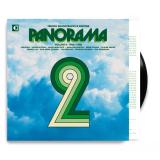
Various - PANORAMA Vol.2 (LP)

Transversales Disques proudly presents PANORAMA Vol. 2, another deep dive into rare French soundtracks, Library music, and instrumental oddities that have largely remained untouched by reissues or compilations.

This curated selection features 11 forgotten gems recorded between 1968 and 1980. It showcases the brilliance of celebrated maestros like Francis Lai, Karl-Heinz Schäfer, Eric Demarsan and Jean-Claude Petit, standing shoulder-to-shoulder with unsung composers such as Oswald d'Andréa, and Jean-Louis Bucchi.

Embark on a cinematic journey brimming with moody string arrangements, funky flanged drums, signature French basslines, and deeply dramatic atmospheres.

Deluxe Tip-On jacket LP with printed innersleeves
Including exclusive and extensive liner notes.
Vinyl Only / No Digital

pre-ordina ora22.05.2026

dovrebbe essere pubblicato su 22.05.2026

22,48
Various - The True Spirit of Ibiza - Bonus Sampler 2

2026 Repress

Following on from the super-fast stock sell-outs of the 2LP of joyous Alfredo selections, Rebirth follow up with the second of the sample EPs of rare, cherished and formerly unreleased gems.

Kicking off with Dubtribe (Sound System) - Sunshine’s Theme which goes for big money on discogs if you can find a copy, next up Max Berlin – Elle Et Moi Really simple, minimal disco à la Giorgio Moroder or Cerrone, actually Max Berlin (Jean-Pierre Cerrone) IS Cerrone’s brother!

On the Flip we have The Woodleigh Research Facility – Borderland (Andrew Weatherall Mix) Borderland is a beautiful collaboration between Woodleigh Research Facility’s Nina Walsh and viola virtuoso, Sarah Sarhandi. Andrew Weatherall set Sarah’s strings to an energetic electro glam stomp. A cracking kosmische, motorik “Pomp & Circumstance” march, with something of the Depeche Modes / New Orders about it. Finishing off the EP with some 90s UK deep house bliss from Acupressure – We Are the Future (Instrumental Mix) again this goes for big money on the Cogs.

Rebirth deliver another fantastic selection.
Limited Press, act fast.

In Stock

Disponibile in Stock e pronto per la spedizione

13,66
JACK AREL - KALEIDOSCOPE LP

Farfalla Records presents “Kaleidoscope”, its new compilation dedicated to the composer Jack Arel. His name belongs to a constellation of composers whose writing has hot stamped sixties and seventies pop music. Variety, television, cinema, ballet and theatre have all been touched by Jack Arel’s signature.

Take a trip through a psychedelic pop musical journey featuring 12 tracks recorded during his long and productive collaboration with the Chappell label and with his friends Pierre Dutour and Jean-Claude Petit by his side throughout.

This compilation features tracks such as ‘Psychedelic Portrait’, famously used as a music cue in the avant-garde cult British TV series The Prisoner.
The track ‘Strange Galaxy’ was utilised as the opening and closing theme for the Australian science fiction TV series Phoenix Five.
‘Purpose’, ‘May Be’ and ‘Something Happen’ are taken from the ultra-rare French soundtrack of the musical Je fus cet enfant là.
While the more adventurous may recognise the tracks ‘Picture of Spring’ and ‘Picture of Summer’ from the Danish underground horror film The Sinful Dwarf.

In Stock

Disponibile in Stock e pronto per la spedizione

23,49
Tumblack - Tumblack LP

Tumblack

Tumblack LP

12inchBEWITH167LP
Be With Records
21.03.2025

There's iconic. Then there's *iconic*.

A MASSIVE speaker-smashing release, decades overdue. It's been bootlegged - shamefully so, many times over the years - but finally we present the first ever officially licensed reissue of this truly special Afro-disco-not-disco LP from 1979. A favourite of Harvey, Antal, Young Marco and, er, every great DJ to ever play deep records ever, basically. It's not hard to see - or, indeed, *feel* why.

Gem after gem of relentless, irresistibly funky gold, it's an incredibly revelatory album with endlessly complex drum patterns and basslines to dive into, throughout. Truly, this is uniquely FIRE music, unlike anything else you've ever heard, based on Gwo ka music from the gorgeous islands of Guadeloupe and Martinique. A thrilling synthesis of primal, hypnotic drums - the most tribal of percussive elements high in the mix throughout - with the loping synth pyrotechnics of, amongst a whole host of other greats, Wally Badarou and bass power of disco funk don Sauveur Mallia (Arpadys, Spatial & Co.)

Originally released on the seminal French label Barclay, you'd be hard pressed to even find an original copy in nice condition anywhere, let alone for a reasonable price, so it's high time an officially licensed, remastered reissue came around. It's just the latest in a long line of Be With reissues where the music sounds like the - drop-dead dazzling - cover. This here is a true drum attack. BUY ON SIGHT!

Tumblack was a short-lived project, produced and arranged by electronic wizard Yves Hayat and it can certainly be regarded as one of the first examples of Zouk, mixing powerful disco-funk arrangements with Gwo ka, traditional music from Guadeloupe. Gwo ka is an Antillean Creole term for "big drum". You can say that again! It refers to both a family of hand drums and the music played with them, which is a major part of Guadeloupean folk music.Whilst the first side is credited to the exceptional Tumblack band, the flip is given over to "Tumblack & Friends". These weren't just any old friends. Oh no, they were the absolute cream of the French scene (think Arpadys, Voyage, Le Club, Giant, CCPP, Synthesis, Swing Family) such as Sauveur Mallia, Wally Badarou, Marc Chantereau on percussion, Slim Pezin on guitar and Jean-Paul Batailley and Pierre Alain-Dahan handling drum duties.

The urgent, frantic "Fracas" gets things moving straight away with a cavalcade of drums and percussive funk before giving way to the stratospheric "Invocation", one of the album's many, many highlights. It's effectively one long heavenly drum break, a really hard, raw, tribal drum workout without a whole lot else going on - and all the better for it! One to make you sweat, no question. Up next, "Jubilé" is announced with a bellowing accapella voice, chanting the titular name before the heaviest of kicks smashes out your system and lulls you into an absolute state of bliss for nearly 6 minutes. Whoooooosh! Rounding out the sensational A-Side, "Vaudou" is a scratchy, funky patterned drum workout which - yep, yet again - absolutely slays your neck muscles, making them snap and contract in extraordinary fashion. TURN IT UP!

Ushering in the B-Side, the brief, fidgety, African chant-funk of "Parlement" segues seamlessly, beautifully into "Waka", an overwhelmingly rich gem of percussive funk. You do not want this to end, once it hits its stride. For maximum heavenly drum pleasure, you'd need to go a long way than the moment "Waka" feels like it's fading out before it kick-drum-blend into the mighty "Caraïba (Intro)". It's just staggeringly good. It's a minute-long layered drum prelude to the gigantic track which follows. Indeed, "Caraïba" is arguably the best loved and most well-known cut off the LP. And with good reason...featuring that Mallia bass, warm Rhodes and clavs, synth magic, memorably alto sax lines and, of course, tribal chanting.

Another mighty super-ahead-of-its-time classic, the bouncing bass heavy synth funk of "Chunga Funk" deploys Mallia and Wally Badarou (on Mini Moog) exceptionally well. I mean, come on, that bassline is just ridiculous. Try not to move to this one. This extraordinary record closes out with the more traditional Gwo ka sounds of "Bateau La Passé", the tribal chorus making the hairs on the back of your neck stand up.

Tumblack really is a gorgeous late-70s disco-not-disco essential. It's an absolute MONSTER that will completely blow you away; and, yes, it's as compelling and trance-inducing as the cover. The audio for Tumblack has been carefully remastered by Be With regular Simon Francis, ensuring it sounds better than ever. Cicely Balston's expert skills have made sure nothing is lost in the cut whilst the records have been pressed to the highest possible standard at Record Industry in Holland. The cover of Tumblack is so iconic and we sought special permission from original artist Hélène Majera to recreate this at Be With HQ. It absolutely zings off the print and serves as the perfect finishing touch to this long overdue re-issue.

In Stock

Disponibile in Stock e pronto per la spedizione

26,85
Parade Ground - The Hidden Side

Parade Ground march back to Dark Entries with The Hidden Side, a compilation of B-sides and unreleased material. Brothers Jean-Marc and Pierre Pauly started Parade Ground in Brussels in 1981. Their Dada-laced brand of post-punk fuses propulsive drum machines and icy synths with skeletal guitar riffs and Jean-Marc’s distinct and powerful voice, pioneering the subgenre of emotional body music. The brothers met Daniel B. and Patrick Codenys of Front 242 in 1982, marking the beginning of an enduring collaborative partnership. In 2011, Dark Entries released The Golden Years, a compilation chronicling the band’s A-sides and exposing them to a new generation of EBM enthusiasts. The Hidden Side continues this mission, illuminating lesser-known facets of the band’s oeuvre. The tracks here were written between 1982 and 1989, and showcase Parade Ground’s range of styles - all cold, dark, and brooding. Tracks like “Riddle in the Stain Glass Window” and the previously unreleased “Looking Through Keyholes” see the band in menacing coldwave mode, rocking chorus-drenched bass guitar and blasts of analog synth. The band’s dancier proclivities shine elsewhere, like on “Off-Balance” or the supremely funky “Hollywood (The Sexiest Fish),” a floor-filler driven by bass guitar and thumping digital drum machine beats. Also included is “Marble Mind,” a previously unreleased latter-period track from the band recorded by Patrick Codenys at 242 Studio. The Hidden Side includes liner notes featuring lyrics and a photo of Jean-Marc and Pierre Pauly. Additionally, a newly remastered edition of The Golden Years will be released along with The Hidden Side.

In Stock

Disponibile in Stock e pronto per la spedizione

20,59
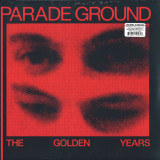
Parade Ground - The Golden Years (2025 Remaster)

Parade Ground has always been the duo of brothers Jean-Marc and Pierre Pauly from Brussels, Belgium formed in 1981. Taking cues from Post-Punk, Coldwave, Dada and Surrealism, Parade Ground channeled suffering, tension and rage through pulsing synthesizers, skeletal guitar, severe bass and Jean-Marc’s expressive vocals as the most melodic and emotional instrument. The Golden Years is an 11-song, career-spanning collection of Parade Ground’s long out-of-print 7” and 12” singles as well as rare compilation tracks from the pioneers of electronic body music created during 1982-1988.

Parade Ground first appeared on the Nationale Rockmeeting LP in 1982, striking straight to the heart with the passionate plea “I Shut My Eyes.” Later that year the brothers met Daniel B. and Patrick Codenys of Front 242 beginning a collaborative partnership that continues to present day. In 1983 they released their debut 3-song 7” EP Moan On The Sly on the New Dance label, musically a hybrid of Joy Division and Fad Gadget. 1984 brought further explorations into the world of electronic body music with the 3-song Man In A Trance EP and 2 tracks on the live concert compilation Mask Promotion both records released on Front 242's Mask Music label. The following year the single Took Advantage/Moral Support 12” was released incorporating then, state-of-the-art modular synthesizers programmed by Daniel B. and back-up vocals from Flo Sullivan (A Formal Sigh, Shiny Two Shiny). Then in 1987 the brothers collaborated with Colin Newman of British post-punk band Wire, who produced and lent his vocals, guitars and keyboards to two songs ("Moans"/"Action Replay") while Daniel B. produced flipside "Gold Rush" on the Dual Perspective EP that stands alongside 80s anthems from Tears for Fears, Modern English, Echo & The Bunnymen. Finally in 1988 their debut album Cut Up was released on Play It Again Sam Records and featured the singles Strange World and Hollywood. In 1993 the brothers wrote and composed the vocals on two Front 242 albums Up Evil and Off. After 15 years of silence the boys released their second album Rosary in 2007 and continue to write new material and tour with their extensive catalog of dark dance classics. Each LP includes a 6-page press kit with lyrics, discography, photos and liner notes by Daniel B. of Front 242. The history of Belgian electronic music would not be complete without a trip through “The Golden Years” of Parade Ground.

In Stock

Disponibile in Stock e pronto per la spedizione

20,59
PulciPerla - Tatekieto

Pulciperla

Tatekieto

12inchPR009
Prado Records
03.02.2025

PulciPerla will unveil “Tatekieto”, their new album, on its release, January 04, 2025, on Prado Records / Cie Pulcinella / The Pusher. This opus will be presented on Wednesday, February 05, 2025, on the stage of FGO - Barbara, Paris (France) during an exceptional launch concert. The eponymous single “Tatequieto” was released on all platforms on November 22, 2024.

Take an iconoclastic and energetic quartet from Toulouse, combine it with a female power trio from Bogotá, shake it up, and you will get Pulciperla!
After an explosive encounter in Colombia in 2019, the fiery trio La Perla and the unclassifiable Pulcinella decided to create an original repertoire: a hybrid, swaying, and sensual music where vocals, saxophone, keyboards, double bass, and percussion blend generously, driving a powerful trance-like pulse. A quirky and striking repertoire infused with bullerengue, reggaeton, funk, and champeta influences, which stirs the fire and gets you moving. The tribal music of La Perla’s percussionist singers merges with Pulcinella’s explosive groove to electrify the audience and awaken their primal instincts!

PulciPerla is composed of :
La Perla: Diana Sanmiguel: vocals, maracas, guacharaca;
Giovanna Mogollón ‘’Roberta Leono’’: vocals, tambor alegre;
Karen Forero:vocals, gaïta, tambora
Pulcinella: Ferdinand Doumerc : saxophones, flutes, keyboards;
Jean-Marc Serpin: double bass;
Bastien Andrieu: keyboards ;
Pierre Pollet: drums

In Stock

Disponibile in Stock e pronto per la spedizione

19,75
Byard Lancaster - The Complete Palm Recordings 1973-1974 (5x12") (BOXSET)

Souffle Continu records presents Byard Lancaster – The Complete Palm Recordings 1973-1974, the definitive package of Philadelphia-born jazz wizard Byard Lancaster including his 4 legendary albums released on Jef Gilson’s Palm Records in the 1970s, Us, Mother Africa, Exactement and Funny Funky Rib Crib, along with the first ever standalone edition of Love Always, a fifteen minute modal jazz beauty plus a 20 page booklet with rare photos and in-depth article about Byard Lancaster’s Parisian years by Pierre Crépon.

At the beginning of the 1960s, at the Berklee College of Music, Byard Lancaster met some feisty friends: Sonny Sharrock, Dave Burrell and Ted Daniel. It is easy to see why he rapidly became involved in free jazz. Once he was settled in New York, he appeared on Sunny Murray Quintet, recorded under the leadership of the drum crazy colleague of Albert Ayler.

In 1968, the saxophonist and flutist recorded his first album under his own name: It’s Not Up To Us. The following year he came to Paris in the wake of... Sunny Murray. He would come back to France in 1971 (again with Murray) and in 1973 (without Murray for a change). This is when he met Jef Gilson, the pianist and producer who encouraged him to record under his own name again. On Palm Records (Gilson’s label), he would release four albums: Us, Mother Africa, Exactement and Funny Funky Rib Crib.

“Us”, the first of the four records was recorded on November 24th, 1973 with Sylvin Marc on electric bass (a Fender... Lancaster?) and the evergreen Steve McCall on drums.

On the album, the trio works from the John Coltrane model; free jazz shook up by the timely contributions of the bassist, followed by a mesmerizing atmospheric music. Then, Lancaster delivers a sinuous solo path, which is a reminder of his unique tone. On the album’s companion single, the trio launches into great black music of a different genre which would lead the clairvoyant François Tusques to claim that Byard Lancaster is an “authentic representative of soul/free jazz”, to sum up this is Great Black Music! A few months after recording “Us”, Lancaster recorded “Mother Africa” along with Clint Jackson III, a trumpeter, partner of Khan Jamal or Noah Howard on other recordings.

On march 8th, 1974, Lancaster and Jackson headed up a group composed of Jean-François Catoire (electric and double bass), Keno Speller (percussion) and Jonathan Dickinson (drums). Together, they create an immediate impression. From the first seconds of “We The Blessed”, they develop a free jazz which rapidly abandons any virulence under the effect of blues and soul based interventions. When Gilson’s composition “Mother Africa” begins, listeners are transported into the studio, listening to the musicians setting up: chatting and joking... Then comes the melody: a dozen or so notes of a repeated theme which is accelerated and deformed according to their whims... The jazz played by the association Byard Lancaster / Clint Jackson III is rare: creative AND recreational. “We the blessed”, is apt listening to this again today!

The recording of “Exactement” required two sessions in the studio: February 1st and May 18th 1974 – in between the two dates, Lancaster recorded, alongside Clint Jackson, the excellent Mother Africa.

Two names appear on the cover of “Exactement”: Lancaster (Byard) and Speller (Keno). Byard Lancaster wanted to be precise, moving regularly from one instrument to another: first on piano, which was the first instrument he learned. On “Sweet Evil Miss Kisianga”, his inspiration is first and foremost Coltrane (even if leaning more towards Alice than John), this announces the storm to follow.

It is Lancaster’s horn-playing which really stands out: on alto (the sound of which is transformed by an octavoice on one track, "Dr. Oliver W. Lancaster") or soprano saxophones, as well as on flute or bass clarinet, the musician walks a tightrope making the most of all the risks he takes. Using the full register of his instruments, he has fun with the possibilities.

Then, Lancaster invokes or evokes Ornette Coleman, Eric Dolphy and even Prokofiev, before going into a danse alongside Keno Speller on percussion. Above all, he has a unique sound. Byard Lancaster, on whatever instrument he plays and by continually seeking, always ends up hitting the right note... ends up by playing exactement the note he had to play.

“Funny Funky Rib Crib” is an unforgettable recording (made up of several sessions dating from the middle of 1974) of creative jazz overwhelmed by funk and soul. If Lancaster had already made successful albums in the same genre – notably New Horizons, under the name Sounds Of Liberation which he co-led with Khan Jamal –, this one is an homage to James Brown and Sammy Davis enjoying the company of a host of guests including François Tusques (electric piano), Clint Jackson III (trumpet), François Nyombo (guitar), Joseph Traindl (trombone)...

Funny Funky Rib Crib’s cover is a three-quarter profile portrait of the saxophonist (who can also be heard on flute, piano and even vocals), however, on the record, it is the whole group, inspired and frenetic, that tests the melodies of “Just Test”, “Dogtown” or “Rib Crib” – the two versions of which display leader Lancaster’s art of nuance. On both sides of the album, the group also moves into a calmer groove, infused by blues and soul, “Work And Pray” and “Loving Kindness” are meditative tracks where listeners can lay back and relax before asking for more: Funny Funky Rib Crib!

The magnificent “Love Always” was originally released on the fourth (and last) volume of the Jef Gilson Anthology series released in 1975.
Recorded on 8th March 1974, it is a beautiful 15-minute-long modal jazz piece. Four notes from the bass (the relentless Jean-François Catoire, who makes up the rhythm section alongside drummer Jonathan Dickinson and percussionist Keno Speller), and the group is up and running!
On piano, Gilson shows the subtle tact of a sideman, leaving the lions’ share of the place to the horns. This allows us to hear the trumpet of Clint Jackson III and the alto (which sometimes sounds almost flute-like) of Byard Lancaster each staking their claim in a long hallucinatory march which moves from moments of direct exaltation to profoundly sensitive collective playing. And if further proof was required of the confidence that Byard Lancaster and Jef Gilson inspire, “Love Always” provides it on this one sided release exclusive to the box set.

In Stock

Disponibile in Stock e pronto per la spedizione

110,04
Kirik & Imbue - On Distance EP

Memory Remains boss Kirik joins forces with Miami’s Imbue for their collaborative ‘On Distance’ EP.

This time Kirik pairs up with the Miami-based trio Imbue who add their dynamic instrumentation to the project through guitars, piano, and synthesizer improvisation.

Opening the release is the jazzy funk-infused ‘On Distance’, laid out across seven minutes with an amalgamation of guitar licks and looped hooks alongside plucked bass tones, strings and organic rhythms combined to create a psychedelia-tinged twist on House. ‘All Right’ follows next and shifts gear into a more classic house feel, employing Latin percussion and wandering keys alongside guitar melodies and soulful vocal chants.

Opening the flip-side is ‘Lovers’ with its acid bass groove, intricately intertwined synth stab sequences and crisp drums all underpinned by Imbue’s hypnotic musicality. ‘Son Us On’ then rounds out the release, diving deeper into the House courtesy of bumpy low-slung drums, airy synth chimes and plucked guitars merged with an underlying dubbed-out and subtly unfurling feel.


early support by Massimiliano Pagliara, Archie Hamilton, youANDme, DJ Heather, Moskalus, Jean Pierre, Red Pig Flower, Red Rack'Em, Just Her, Michel De Hey and many more...

collecting

Order now. Collecting orders for repress.

11,72

Last In: 9 months ago
Philippe Maté & Jef Gilson - Workshop

In October 1974, the first number of “L'Indépendant du Jazz”, a small self-produced magazine DIY -before punk supposedly invented the concept- was launched by Jef Gilson, Gérard Terronès, Jean-Jacques Pussiau and a few other specialists of a different kind of jazz in France, it looked at the already long career of Jef Gilson and in detail at the album with saxophonist Philippe Maté:
“The ‘Workshop’ is, with Philippe Maté (alto-sax), an undeniable success. Maté is genuinely ‘the’ most inventive French saxophonist since Michel Portal burst onto the jazz scene (who has also worked with Jef Gilson on both “Enfin” and “Gaveau”).”

Even though the author of the article is a mysterious I.H. Dubiniou, and it is difficult to know if it is a real person or a pseudonym used by one of the merry bunch, it is also tempting to hear it as what Jef Gilson really thought about his new discovery. Even more so as the two men would work together over a long period, as Maté became one of the key figures of Gilson’s Europamerica orchestra up until the 1980s.

Philippe Maté had started to make a name for himself with the Acting Trio when they released an album on the BYG label in 1969, and he was also one of the regular sidemen for the Saravah studios (he can notably be heard on albums by Higelin, Fontaine or his cult duo album with Daniel Vallancien).

The album was recorded on 4 February 1972, at the Foyer de Montorgueuil, where Gilson had set up his studio, with more or less the same team found on “La Marche Dans Le Désert” by Sahib Shihab + Gilson Unit (recorded ten days later). This was drummer Jean-Claude Pourtier and pianist Pierre Moret (regular Gilson accomplices since “Le Massacre Du Printemps”), alongside Maurice Bouhana and Bruno Di Gioa on various percussions and/or wind instruments. On bass is Didier Levallet, of the now mythical Perception, (Jean-François Catoire would replace him with Shihab) and Philippe Maté who took top billing, rather than the American saxophonist afterwards. The two albums are however quite different. This “Workshop” is more abrasive, more free. Made up of two long improvisations each of over 22mn, “L'Œil” on side A and “Vision” on side B (Gilson specialists would recognise the nod to one of his albums from the 60s), the album plunges you into the depths, attempting to drown you in electronic waves, dragging you back to the surface by the collar, giving you a good shakedown, before showing you the light, leaving you breathless on the shore after 46mn of the most intense music French has to offer. “An undeniable success”, they said. (by Jérôme "Kalcha" Simonneau)

In Stock

Disponibile in Stock e pronto per la spedizione

17,02
Universal Energy - Self Titled

Universal Energy

Self Titled

12inchNRG1977
12.11.2021

A rare sought-after LP of French proto-disco from BERNARD ESTARDY (AKA ESTRAK LANCIOS) alongside JEAN-PIERRE BOURTAYRE. Composed during 1977, the time when space was the place and cosmic DJ DANIELE BALDELLI was rocking the world at Italian discotheques. Mystery colored vinyl! Pic sleeve.

In Stock

Disponibile in Stock e pronto per la spedizione

22,65
Various - Tens Across the Board

Celebrating a Decade of Dark Entries with a compilation titled ‘Tens Across The Board’. We revisit our roster and chose 10 songs from 10 bands from 10 different countries spanning the years 1981-1993. The songs flow in chronological order and have never appeared on vinyl, with 7 of the songs previously unreleased.

The compilation begins in 1981 with Parade Ground from Belgium, the duo of brothers Pierre and Jean-Marc Pauly with help from Patrick Codenys and Jean-Luc of Front 242. “The Light’s Gone” was one of their earliest experiments and employs a stark minimalism with modular synthesizers, guitar reverb and tape delay. Next we venture to Granada, Spain in 1982 to meet the trio of Diseño Corbusier. Influenced by Cabaret Voltaire and Dadaism, “La Esperanza está en Antenas” was the band’s take on melancholic pop fueled by a robotic DR-55 bass-line. Sailing the Mediterranean Sea to Athens to meet Greek electronic goddess Lena Platonos who shares a demo from 1983. “Μια Γάτα Σασ Περιμένει Στη Γωνία” translates to “A Cat Is Waiting On The Corner” and is possibly the witchiest sounds we’ve shared yet, ending with a blood curdling scream. Frozen in 1983 we cross Ionian Sea to Messina, Italy and visit Victrola, the duo of Antonino “Eze” Cuscinà and Carlo Smeriglio. They’ve unearthed a melodic instrumental version of “Luca” fueled by a Korg Polysix and TB-303. Traveling across the Adriatic to Slovenia circa 1984, where Borghesia are working on their album ‘Ljubav Je Hladnija Od Smrti’. “Magla” translates to “Fog” fitting for the thick, somber electronics of Aldo Ivancic providing a dense atmosphere for the baritone vocals of Dario Seraval.

On Side B we go down under to Sydney and excavate a hidden Tom Ellard song recorded in 1984 under the alias Lord Metal, an anagram of his name for copyright reasons. “Ga Duum Blitzfonika” is a slow-motion, unadulterated dance groove originally released on the cassette compilation "Independent World”. Skipping ahead to 1986 in Tours, France we salute X-Ray Pop the minimum new wave duo of Didier "Doc" Pilot and Zouka Dzaza. They contribute the hypnotically fragile “Corto Maltese” that originally appeared on the cassette compilation ‘Plop’. Crossing the German boarder we arrive in Dortmund at the apartment of Andreas Sippel of Second Decay who recorded the instrumental demo “Lübeckerstrasse” in 1988 with partner Christian Purwien. Utilizing an TR-808, SH-101 and Arp Odyssey this cold slice of futurism was named after the street Andreas lived on. Traveling westward to England, specifically Basildon, Essex to the teenage bedroom of From Nursery To Misery, the trio of identical twin sister vocalists Gina and Tina Fear and keyboard player Lee Stevens. “Contentment” is an introspective, ethereal pop song with child-like vocals that originally appeared on the Belgian tape compilation ‘Heartbeat Vol.4’ in 1989. Finally, we return home to San Francisco and close out the compilation with Cyrnai the moniker of multi-instrumentalist Carolyn Fok. “Digital Grit Box (Demo)” was an outtake from the ‘Transfiguration’ album sessions recorded in 1993, utilizing dark dance drum beats made with MIDI sequencer programs Studio Vision and Sample Cell.

All songs have been remastered by George Horn at Fantasy Studios. The vinyl is housed in a custom designed jacket by Eloise Leigh featuring our label’s colors black-white-red with connect-the-dots pattern linking the 10 songs via maps/timeline/location, all relating to the reissue process, plus source images from San Francisco, our hometown. For this landmark release we've also printed a 2-sided fold-out wall poster that includes every artist we've released in our first 10 years 2009-2019 in black, red and silver metallic ink, plus an 8x11 insert with lyrics, notes and photos.

In Stock

Disponibile in Stock e pronto per la spedizione

17,86
Various - Tchic Tchic: French Bossa Nova 1963-1974  Colored Edition LP 2x12"
  • A1: Les Masques - Il Faut Tenir (1969)
  • A2: Isabelle Aubret - Casa Forte (1971)
  • A3: Christianne Legrand - Hlm Et Ciné Roman (1972)
  • A4: Jean Constantin - Pas Tant D'chichi Ponpon (1972)
  • A5: Billy Nencioli & Baden Powell - Si Rien Ne Va (1969)
  • B1-: Marpessa Dawn - Le Petit Cuica (1963)
  • B2: Jean-Pierre Sabar - Vai Vai (1974)
  • B3: Sophia Loren - De Jour En Jour (1963)
  • B4: Isabelle - Jusqu’à La Tombée Du Jour (1969)
  • B5: Sylvia Fels - Corto Maltesse (1974)
  • C1: Frank Gérard - Comme Une Samba (1972)
  • C2: Ann Sorel - La Poupée Des Favellas (1971)
  • C3: Charles Level - Un Enfant Café Au Lait (1971)
  • C4: Andrea Parisy - Les Mains Qui Font Du Bien (1970)
  • C5: Audrey Arno - Quand Jean-Paul Rentrera (1969)
  • C6: Aldo Frank - T’as Vu Ce Printemps (1970)
  • D1: Christianne Legrand - Cent Mille Poissons Dans Ton Filet (1972)
  • D2: Clarinha - Lemenja (1970)
  • D3: Hit Parade Des Enfants - Aquarela (1976)
  • D4: Jean-Pierre Lang - Tendresse (1965)
  • D5: Magalie Noël - Une Énorme Samba (1970)
  • D6: Françoise Legrand - La Lune

Ever since the late 1950s bossa-nova revolution, Brazil’s influence on French music has been undeniable. Pierre Barouh, Georges Moustaki and a vast array of lesser known artists, all made the Musica Popular Brasileira (MPB) an axis of promotion at the service of a cool and metaphysical, modern and mixed Brazilian lifestyle. Some were seduced by the poetic languors of the bossa, some were looking for fun, and others just loved the American hybridization of jazz-bossa, jazz-samba.


What is bossa nova? One of its creators, Joao Gilberto said: "Its style, cadence, everything is samba. At the very start, we didn't call it bossa nova, we sang a little samba made up of a single note - Samba de uma nota so .... The discussion around the origins of bossa nova is therefore useless”. It is nevertheless useful to remember that these magnificent Brazilian songs, which the guitarist describes as samba, were shifted and balanced around improbable chords. "I like things that lean, the in-betweens that limp with grace," said Pierre Barrouh, quoting Jean Cocteau.


With emotion, arrangements for violin and supple guitar licks, bossa nova rapidly changed. A transformation that can be heard in the Tchic, tchic, French Bossa Nova 1963-1974 compilation, the result of a cultural reappropriation, which traveled through the United States and supplemented itself in France.

A musical revolution that has remained significant, bossa nova was born in Rio. From 1956 to 1961, Brazil lived through its golden years. In five years, the country had invented its modernist style. Elected president in 1956, Juscelino Kubitschek de Oliveira, an elegant man with a broad forehead, brandished a promising slogan: "Fifty years of progress in five years". He quickly got to work. Not worried about increasing debt, he launched the project for a new federal capital, Brasilia, designed by the communist architect Oscar Niemeyer. Volkswagen opened state-of-the-art factories and created the “fusquinha”, the Beetle. In Rio, the Vespa made its first appearance. The Arpoador Surf Club crew run into the “girl” from Ipanema, Helô Pinheiro - the tanned garota ("chick"), between a flower and mermaid, who at 17 walked by the Veloso bar, where the fiery author and composer, Tom Jobim and Vinicius de Moraes, were getting drunk on whiskey. From then on, bossa symbolized cool.

In 1958, Joao Gilberto recorded Chega de Saudade, which the directors of Philips denied, calling it "music for fagots". The marketing director, who believed in it, secretly pressed 3000 78-inch vinyls and distributed them at schools around Rio, creating a tidal wave.

American jazzmen then took over. In particular, trumpeter Dizzy Gillespie and guitarist Charlie Byrd. In November 1962, the Brazilian Ministry of Foreign Affairs funded a "Bossa-Nova" concert at Carnegie Hall in New York, inviting the genre’s pioneers. Unprepared, the show soon turned to disaster. But the troupe was invited to the White House by Jackie Kennedy. The first lady loved "the new beat" and in particular Maria Ninguem, a song by Carlos Lyra, later covered by Brigitte Bardot.

In Brazil, the 1964 military coup quickly ended this euphoria. The destructive atmosphere that ensued pushed many Brazilian musicians to leave, if not to exile. Thus, Tom Jobim, Sergio Mendes and Joao Gilberto arrived to the United States. In New York, Joao Gilberto met saxophonist Stan Getz. At the time, he was married to the Bahianese Astrud Weinert Gilberto, who had a German father. She had never sung before, but she knew how to speak English. Getz therefore asked her to replace her husband on The Girl From Ipanema. The Getz/Gilberto record with Tom Jobim on piano, was released in March 1964. Phil Ramone, the "pope of pop" was in charge of sound.

Bossa nova arrived in Paris through the classic “guitar-voice” channel (Pierre Barouh, Baden Powell, Moustaki…) But France loved jazz and Paris had already welcomed its American contributors. All these good people were to pass through Saint-Germain-des-Prés. The cabaret l'Escale became the Mecca of Latin American sound where one could find Pierre Barrouh and his friends, such as the Camara Trio, samba-jazz aces, whose only record was published by the Saravah label. With a band strangely called Les Masques (a band that included Nicole Croisille and Pierre Vassiliu, among others), the Camara Trio recorded an interesting Brazilian Sound, including the track Il faut tenir which is present on this tasty compilation of rarities.

Other enlightened musicians can also be found on the compilation, such as Jean-Pierre Sabar (songwriter for Hardy, Auffray, Leforestier ...) and the French pop rock organist Balthazar. In 1975, Sabar recorded Aurinkoinen Musiikkimatka on a Finnish label, which featured the crazy Vai, Vai, included on this record. We are now following the footsteps of Brazilian electronic musicians such as Sergio Mendes, Eumir Deodato or Marcos Valle who created funk and disco sounds on their keyboards and synthesizers. A style that influenced Véronique Sanson when she wrote Jusqu’à la Tombée de la nuit in 1969 for Isabelle de Funès, the niece of Louis and a great friend of Michel Berger - Sanson did end up singing this track on her 1992 Sans Regret record.


The pinnacle of exoticism and travel, Sylvia Fels’ Corto Maltese includes bongos, sea mist and ocean sounds. The title was taken from Jacky Chalard’s concept album written in 1974, Je suis vivant, mais j’ai peur (I am alive, but I am scared), based on Gilbert Deflez’s science fiction novel.


However, bossa nova extended the scope of popularity. "In the 1970s, I was a fan of Sergio Mendes, Getz / Gilberto. I fell in love with this music that I knew because I had been an orchestral singer, " explained Isabelle Aubret, who in 1971 delivered a composite record of covers by the very funky Jorge Ben, Orfeu Negro, Tom Jobim, Vinicius de Morais and Jean Ferrat. "I recorded this album for Meys Records in Paris, far from Brazil, with wonderful musicians, François Raubert, Roland Vincent, Alain Goraguer...". The latter wrote the arrangements for Casa Forte, a very percussive title borrowed from Edu Lobo, one of the initiators of the bossa who spent time in California. "Jazz and bossa came together and produced very rhythmic music. I love singing, it allows me to dream, to have fun, to feel a high on stage, and these songs brought me joy, made me swing, my singing felt like a dance.”


The world tours of French singers and their desire for the tropics, often brought them to Rio with its hills, forests, caipirinhas and tanned bodies. There are surprises though, like this Iemenja (Iemenja is the goddess of the sea in the Afro-Brazilian candomblé religion). Not unlike the composer and musician Jean-Pierre Lang, based in Sao Paulo, Claire Chevalier taught Brazil to Brazil. In 1970, the singer and painter published a 45-inch vinyl, Mon mari et mes amants (My husband and my lovers), under the improbable pseudonym of Clarinha (little Claire). She was then living in Rio, with her husband, Joël Leibovitz, who founded a band called Azimuth, and who owned a record label specialized in "sambas enredos" songs for samba school parades.


For its B side, she asked Pierre Perret to come up with lyrics for a song composed by Carlos Imperial: "Oh goddess of the sea, o goddess Iemenja, I bring a white rose to adorn your long hair ..." . "Perret came to see us, and we had fun, remembers Joël Leibovitz. We wrote Lemenja for fun, we recorded it at the Havaí studio, behind the Central do Brasil the central station. Erlon Chaves, the arranger who worked with Elis Regina, joined us" adding his share of Afro-Brazilian percussions and funky brass to the mix.

There is a common misunderstanding in Franco-Brazilian history: that bossa, admittedly hedonistic, is perceived as funny, even though the poets who wrote the texts are often philosophizing on the human condition. Its French interpreters pull it towards a carnival inspired universe, far removed from its fundamental essence. Thus, Jean Constantin covered the famous Samba da minha terra, an ode to the art of samba written by the classic Bahian composer Dorival Caymmi, renaming it with the enticing title of Pas tant de tchi tchi pompon: "On your pier there is no tchi tchi / when you arch your back, you know everything is alright ”(lyrics by Gérard Calvi). This expedited bossa aims for the absurd, but retains a certain elegance.

Indeed, Jean Constantin was not an idiot, the rather large man had a huge mustache and liked fantasy, (Les pantoufles à papa, Le pacha, inspired by cha-cha-cha-cha, salsa and jazz) but he was also the lyricist of Mon manège à moi interpreted by Edith Piaf, the composer of Mon Truc en plume by Zizi Jeanmaire and the soundtrack of François Truffaut’s 400 Blows. Le Poulpe, published in 1970, from which this bossa is extract, was arranged by Jean-Claude Vannier, an accomplice of Serge Gainsbourg’s Melody Nelson. In short: "There is enough of samba / By looking at the parasol / Because my poor cabeza / Is going to die in the sun".

Even the American actress Marpessa Down, who was at the heart of the bossa nova revolution with her role as Euridyce in Marcel Camus’ film Orfeu Negro, winner of the 1959 Cannes Palme d'or, fed the clichée with Je voudrais parler au petit cuica - "Tell me how you manage to always make people want to dance / It's true, I must admit that I cannot resist your magic" - in consequence, once can hear the cuica, a little drum inherited from the Bantu.


But bossa nova had many angles. Societal, of course, pushing actresses who were symbols of women's liberation like Brigitte Bardot, Jeanne Moreau, or Sophia Loren to engage in the exercise of accelerated bossa. In February of 1963, Sophia Loren made a record in French in Rome, Je ne t'aime plus, featuring the song De jour en jour, a bossa written by two Italians, Armando Trovajoli and Tino Fornai, which was released a little later by Barclay. Bossa accompanied the 1960s, a decade of moral liberation. Ann Sorel, who interpreted La Poupée des favellas, caused a sensation with L’amour à plusieurs, a provocative song written by Frédéric Bottom and Jean-Claude Vannier. As for the actress Andrea Parisy, she displayed her bourgeois cheekiness in Marcel Carné's Les Tricheurs before interpreting Les mains qui font du bien. And Magalie Noël, the friend of Boris Vian, who sung Johnny fais-moi mal, was hired to sing Une énorme Samba, composed by Alain Goraguer (arranger to Gainsbourg, Bobby Lapointe and Jean Ferrat) with lyrics by Frédéric Botton.

But in the end, of what wood is bossa nova made of? The answer is given by Christianne Legrand, daughter of Raymond the conductor, and sister to Michel the composer: "With me, with jà" - jà means "immediately" in Portuguese. In 1972, the singer, an expert in vocal jazz and a member of the Double Six, published Le Brésil de Christianne Legrand. Two songs included on the Tchic Tchic compilation that demonstrate how bossa, jazz, funk, rock, etc. work like a swiss army knife: the music is used to denounce broken systems, or miracles, HLM et ciné roman, Cent mille poissons dans ton filet, two songs from the O Cafona soundtrack, a successful telenovela broadcast, at the time in black and white, on TV Globo. The first was adapted in French by the fighter and friend of the Legrand tribe, Agnès Varda. The second is content with a play on words, jostling them into a summer fun.


Véronique Mortaigne

pre-ordina ora17.04.2026

dovrebbe essere pubblicato su 17.04.2026

27,31
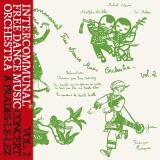
Intercommunal Free Dance Music Orchestra - Vol. 2 Concert A Prades Le Lez

Concert at Prades-le-Lez marks the origins of the Intercommunal Free Dance Music Orchestra. In 1974, François Tusques and his companions (Michel Marre, Jo Maka, Adolf Winkler and Guem), in the spirit of Don Cherry or Chris McGregor, playfully dismantle all borders and all styles of creative music.

On this second volume, the Intercommunal builds unprecedented soundscapes around a song of revolt, a dance tune, or a burst of dissonance. The journey is unforgettable, no question about it. On repeat listening, it even becomes… lunar!

“The music that we make is primarily meant to be listened to live,” warned a leaflet from the Intercommunal Free Dance Music Orchestra. This is precisely why the (restored!) reissue of the two volumes of Concert at Prades-le-Lez, recorded on January 25 and 26, 1974 by François Tusques and his comrades, is such an important event.

In 1971, after recording a series of albums that would leave a lasting mark on French jazz (Free Jazz, of course, with Michel Portal, François Jeanneau, Bernard Vitet, Beb Guérin and Charles Saudrais, but also Le Nouveau Jazz with Barney Wilen, or the solo Piano Dazibao), François Tusques founded the Intercommunal—a grouping whose very name called for the fraternization of the various communities making up the country: Our music will help, we hope, to resolve the contradictions that exist between workers be longing to different communities, by breaking down various forms of national chauvinism, and more particularly the chauvinism of certain French people toward the cultures of Third World countries… Long live the friendship between the peoples of the whole world!

Among the great records made by the Intercommunal Free Dance Music Orchestra, the two volumes of Concert at Prades-le-Lez come first, before L’Inter Communal, Vol. 4, Le Musichien, and Après la marée noire (four titles already reissued by Souffle Continu). François Tusques and his companions (Michel Marre and Jo Maka on saxophones, Adolf Winkler on trombone, and Guem on percussion) performed on January 25 and 26, 1974 at the Moulin de Prades-le-Lez, a few kilometers from Montpellier. It was thus in the southern region of Occitanie that the first echoes of this musical vision of a borderless brotherhood were recorded.

“We’re not among the Colonels,” the Intercommunal reassures us right away, performing a stride piano tune carried by African winds that the audience cannot resist for long. The energy is already striking and it never lets up throughout these two recordings, from start to finish: jazz, blues, traditional music, minimalism, even funk… The musicians of the Intercommunal have heard a lot of great music and now delight in reinventing it by mixing it all together.

“We want the song form to take its place as a weapon in the struggle against capitalist exploitation and all those who oppress us morally and materially,” declared an Intercommunal leaflet, quoting Jean-Baptiste Clément, author of the lyrics to “Le Temps des cerises.” The struggle was therefore serious—but it did not prevent François Tusques and his group from waging it in a festive spirit: each piece on Concert at Prades-le- Lez sends out a call for love and fraternity. Fifty years later, the message remains as relevant as ever—and once again, it is François Tusques who makes it heard.

pre-ordina ora17.04.2026

dovrebbe essere pubblicato su 17.04.2026

23,95
Bill Evans - Portrait In Jazz LP
  • Come Rain Or Come Shine
  • Autumn Leaves
  • Witchcraft
  • When I Fall In Love
  • Peri's Scope
  • What Is This Thing Called Love?
  • Spring Is Here
  • Someday My Prince Will Come
  • Blue In Green
  • Autumn Leaves

Portrait in Jazz was Bill Evans' third album as a leader and his first LP with the talented bassist Scott LaFaro. The Evans-LaFaro collaboration would reach a climax with their June 1961 club recordings at the Village Vanguard in New York. Portrait in Jazz is made up of eight popular standards plus a couple of original compositions; Evan's 'Peri's Scope', and 'Blue in Green, co- composed by Evans and Miles Davis and first taped in March of 1959 by the two musicians in Miles' sextet that produced the perennial classic, Kind of Blue. This special edition features exclusive photographs by famous French jazz photographer Jean-Pierre Leloir. Includes the bonus track 'Autumn Leaves' (Mono take) from the same session but not on the original LP.


[j] Autumn Leaves [mono Take]

pre-ordina ora10.04.2026

dovrebbe essere pubblicato su 10.04.2026

7,07
Makèz - Arriving Home Elsewhere LP 2x12"

DJ Support: Laurent Garnier, Dennis Cruz, Girls Of The Internet, Horse Meat Disco, Stacey Pullen, Elliot Schooling, Solomun,Marco Carola, Joseph Capriati, The Martinez Brothers, Dam Swindle, Soul Clap, Luke Solomon, Riva Starr, Franky Rizardo, Archie Hamilton, Silvie Loto, Fouk, Austin Ato, Salomé Le Chat, Blackchild, Jean Pierre, Black Loops, Kassian, Seamus Haji, Melvo Baptiste, Rimarkable, Sophie Lloyd

In-demand Amsterdam-based duo Makèz step into new ground with the release of their album ‘Arriving Home Elsewhere’, via ANOTR’s No Art label. A kaleidoscopic project that moves between deep house, cosmic jazz, R&B, broken beat, and club-ready energy, the record is both a declaration of identity and a dissolution of boundaries - proof of the duo’s rare ability to merge worlds without diluting or compromising their true essence.

Where most albums that span electronic realms lean on functionality, ‘Arriving Home Elsewhere’ reaches for something much more expansive. The project is a true hybrid: half shaped for the intimacy of a headphone listen, half designed for the electricity of the dancefloor. together forming a seamless continuum between reflection and release. Tracks like ‘REARRANGE YOURSELF’, ‘BE REAL’, and ‘LOOKS LIKE IT (SPACE TALK)’ are stripped to the core of house music’s driving pulse, made for bigger systems and peak-time release. In contrast, ‘Dreams’, ‘Fruits of the Universe’ (with douniah), and ‘Without The Sun’ (with Oliver Night) explore lush, textured arrangements where live instrumentation and improvisation carry equal weight to rhythm and groove.

Collaboration is at the heart of the LP, with Makèz inviting a constellation of voices who each expand the project’s palette. Ben Westbeech, Liv East, and SANITY bring soulful intensity; 30/70 and dreamcastmoe connect Amsterdam to Melbourne and DC; Cor.Ece and Oliver Night weave delicate threads of emotion; Goya Gumbani and Javonntte guide the production with their vibey, groove-led performances; while Life on Planets reprises his role as a core creative partner, appearing across the album on tracks including the standout ‘BE REAL’ and the previously released ‘ILLUSIONS’ alongside rising Amsterdam talent AVA LAVÁ. Together, these contributions shape an album that feels less like a singular statement and more like a living, breathing ecosystem.

For Makèz, ‘Arriving Home Elsewhere’ is as much about philosophy as it is about music. The title encapsulates a tension central to their art: the feeling of belonging to multiple worlds without ever being confined to one. Jazz, house, soul, and experimental club sounds are not separate influences but parallel languages, and in merging them, the duo has created a record that mirrors the fluidity of contemporary identity and expression. And while it may speak in many voices, the LP tells one clear story - that of Makèz, arriving, again and again, home elsewhere.

In stock dal07.05.2026

31,89

Last In: 36 days ago
Various - Wizzz! French Psychorama Volume 5 (67-75)

The journey through French-speaking pop archives continues with this fifth volume, packed with fuzz, gimmicks, and dissent. Far from the charts, the selected tracks display a great creative freedom, often backed by corrosive humor. Welcome to the surprising, kaleidoscopic, and colorful world of the late sixties and early seventies, Wizzz!
Born in Montauban, Robert Pico stumbled into music by chance when he met René Vaneste, then artistic director at Pathé-Marconi. René brought him to Paris to record his first 45 RPM EP in 1964. A year later, Pierre Perret introduced him to Vogue, where he recorded his second album with Claude Nougaro’s orchestra. Sylvie Vartan then introduced him to RCA, where he recorded four singles, including the astonishing "Chien Fidèle," a track backed by a hair-rising fuzz guitar. Alongside his solo career, he also composed for other artists like Alain Delon (the song was recorded but remains unreleased), Magali Noël, Bourvil, and Georges Guétary. In the Paris of the sixties, he mingled with Mireille Darc, Elsa Martinelli, Marie Laforêt, France Gall, Françoise Hardy, Petula Clark, Régine, Dani, Serge Gainsbourg, Joe Dassin, Franck Fernandel, Charles Level, and Roland Vincent. Despite his efforts and winning a Grand Prix Sacem for his final record, Robert Pico didn’t achieve the expected success in show business and decided to leave Paris and return to the Southwest, where he devoted himself to writing. He is the author of 23 books (including Delon et Compagnie, Jean-Marc Savary Editions 2025, a memoir about his youth and his many encounters). Today, he is relieved to never have become a celebrity and devotes himself to his work with passion.
In 1969, the Franco-Italian movie Erotissimo was released, directed by Gérard Pirès (who later directed Taxi in 1998, written and produced by Luc Besson). This pop comedy features Annie Girardot, Jean Yanne, Francis Blanche, Serge Gainsbourg, Nicole Croisille, Jacques Martin, and Patrick Topaloff. The soundtrack was written by Michel Polnareff and William Sheller, with lyrics by Jean-Lou Dabadie. "La Femme Faux-cils," performed by Annie Girardot. It recounts the feelings of a rich CEO's wife who seeks to develop her sex appeal under the influence of advertisement and magazines. Groovy, sparkling and light, this track, with ITS lush arrangements humorously critiques consumer society and feminine beauty standards.
“Je suis l’Etat” (1967) is the flagship track of the first EP by singer-songwriter Spauv Georges, aka Georges Larriaga, better known as Jim Larriaga (1941-2022). Born into a family of bakers, the young man was initially planning to become a hairdresser when he discovered English-speaking music through Elvis Presley and the Beatles. After this revelation, he decided he would become a songwriter and gave himself five years to succeed. He recorded his first two EP’s independently for RCA under the pseudonym Spauv Georges; meaning “that poor George”, a nickname given to him by the mother of her friend Jean-Pierre Prévotat (future drummer of the Players, Triangle, or Johnny Hallyday). Portraying a depressed and eccentric young man, Spauv Georges created corrosive and amusing songs that didn’t reach a wide audience, despite a TV appearance with Jean-Christophe Averty.
Supported by his loyal friend and fellow songwriter Jean-Max Rivière, Georges Larriaga met the future singer Carlos in the early '70s, then Sylvie Vartan’s assistant. He wrote songs for Carlos, including the popular "La vie est belle," "Y’a des indiens partout," and "La cantine", which went onto become a huge hit in 1972. He also composed for Claude François (“Anne-Marie”, 1971), Charlotte Julian (“Fleur de province”, 1972), helped launch child singer Roméo (who sold 4 million records), and later wrote the hit "Pas besoin d’éducation sexuelle" (1975) for the young Julie Bataille. In 1971, Jim recorded an album for Disc'Az: “L’univers étrange et fou de Jim Larriaga”, which featured pop gems like “La maison de mon père”.
The story of the song "Zoé" began when Pierre Dorsay, artistic director at Vogue Records, asked Swiss singer and musician Pierre Alain to write a song for a new female singer. The inspiration came when he realized that Zoé (the artist's name) was also the name of France's first atomic battery, created in 1948, which consisted of uranium oxide immersed in heavy water! The lyrics reflect a bubbling energy that must be handled with caution, while the instrumentation echoes this atomic theme, notably with the use of a theremin.
Zoé’s career lasted only as long as a single 45 RPM, but it seems Christine Fontane was the vocalist behind this pseudonym, who is known for several EPs, a good "popcorn" album in 1964, and a handful of children’s singles in the '70s. Regardless, the photograph on the cover is of a different girl entirely.
Later, Pierre Alain continued his career, writing songs for himself, Marie Laforêt, Danièle Licari, Alice Dona, Arlette Zola (3rd place in Eurovision 1982), and achieving multiple gold and platinum records in Canada. Also an inventor with several patents, president of the Romande Academy, and head of the French Alliance in Geneva, he now composes atonal music, books, and poetry. Moreover, he is also the host of "Les Mardis de Pierre Alain" at "Le P'tit Music'Hohl" in Geneva.
Filled with oriental choruses and fuzz guitar, "Fou" is from Jacques Da Sylva's only EP released by Vogue in 1967. Despite the quality of this recording, all traces of this singer disappear after this first effort.
Valentin is a baroque pop singer born in Belgium. He is the songwriter and composer of most of the tracks on his three singles released in the late 60s in Canada. A legend says that he reincarnated himself as Jacky Valentin during the 1970s for a rock'n'roll revival career in Belgium, but his older brother sadly debunked this story. Valentin's first two singles were arranged by Claude Rogen, a Parisian session pianist who had come to Canada to promote the song “Mister A Gogo”, a cover of David Bowie’s “Laughing Gnome”, adapted by singer Delphine, his wife at the time. Far from his usual network, Claude Rogen arranged music for Polydor, including the arrangements for “Je suis un vagabond” in 1969, a jerk tune with string arrangements and a furious optimism.
Jacques Malia wrote, composed, and recorded his only 45 EP for Festival in 1966. “Histoire de gitan” is an incredible beat track with bohemian scat that tells the story of a gypsy musician who came to Paris to make it in the Music-Hall, to no avail. The hero of the song and its author probably shared a similar fate, as Jacques Malia faded into anonymity after this remarkable attempt.
Bernard Jamet recorded two EPs for Barclay in the late sixties and co-wrote several songs with Christine Pilzer, Pascal Danel, and prolific songwriters Michel Delancray and Mya Simile. The track “Raison Légale” (1968), his masterpiece, immerses the listener in a courtroom right when a murderer is being judged, with jerk rhythm and free arrangements. A unique, paranoid, judicial, and psychedelic oddity.
Jean-Pierre Lebrot-Millers started his career in show business in 1967 as a singer and songwriter for the Philips label. After three singles, he wrote several songs of a new kind with his friend Pierre Halioche, in the midst of the sexual liberation movement and the democratization of drugs. With provocative lyrics, “Les filles du hasard” and “Barbara au Chapeau Rose” were released on a Philips singles in 1968. The character of Barbara was inspired by a queen of Parisian nightlife during the psychedelic years: model Charlotte Martin, who dated Eric Clapton from 1965 to 1968, then Jimmy Page from 1970 to 1983. Jean-Claude Petit’s arrangements, with a table-filled intro, soul brass, and Hendrixian guitar, emphasize the flamboyance of a hedonistic and sexy character, whose dog is named Junkie because “Junkie est un nom exquis”! The track was recorded live in three takes with a full orchestra.
Upon its release, the record was censored by Europe 1 and RTL due to its references to drug use. Jean-Pierre Lebrot was then banned from the airwaves and later dismissed by his record label. He changed his artist name to Jean-Pierre Millers, while his companion Pierre Halioche became D. Dolby for a new dreamy composition, “Chilla”, which Jean-Pierre produced himself with arrangements by Jean Musy. Once again, the song was immediately censored everywhere. After this setback, he decided to stop singing and started taking on odd jobs to support his Swedish wife and their son until the day he met Jean-Pierre Martin, then production manager at Decca, who had worked with Manu Dibango. Martin offered Jean-Pierre Lebrot-Millers, then employed at Rank Xerox, the position of artistic director at Decca. He accepted and became, a year later, promotion director (radio, press, TV). He worked on Julio Iglesias’s first album for Decca, which became a massive hit and allowed him to meet Claude Carrère. The latter asked him to write new songs and find their performers, much like a “talent scout.” It’s through him that Jean-Pierre discovered Julie Pietri and Corinne Hermès. He composed “Ma Pompadour” for Ringo, Sheila’s husband, and took the microphone again for the syncope hit “Rendez-Vous” in 1982.
That same year, Jean-Pierre Lebrot-Millers tried to release a track for which he had heavily gone into debt: “Si la vie est un cadeau”. Having recorded it in London, he presented it to numerous professionals, all of whom refused to get involved. The same thing happened with Antenne 2 and the Sacem when he proposed the song as France’s entry for Eurovision. He then met Haïm Saban, who was producing cartoon soundtracks and had just launched the Goldorak theme song. Saban, having listened to the song, declared it had the potential to become a hit. He sent Jean-Pierre and Corinne Hermès to meet the CEO of the Luxembourg radio and television network. The latter received them, asked to hear a verse and chorus a cappella in his office, and immediately hired them to represent Luxembourg at Eurovision 1983. They reworked the arrangements and recorded a new version with Haïm Saban as co-producer. The song ended up winning Eurovision 1983, a great comeback for our hero. He continued producing and hung out with the band Nacash in Belgium when a couple came to introduce their daughter for an impromptu audition in a hotel room. The girl sang “Les démons de minuit” while dancing to a radio cassette. Impressed, he had her take singing lessons for a year and composed a song for her (for which he had the melody and title, but no lyrics). This required him to go on the hunt for a lyricist, who ended up being Guy Carlier. They recorded the song, which was initially a ballad, at Bernard Estardy’s CBE studio, and gave the singer a new name: Melody. They showed the song around their industry network without success. Later, Estardy called Jean-Pierre to suggest changing the rhythm and making it pop-rock. Orlando, Dalida’s brother, liked the result and decided to co-produce the track. “Y’a pas que les grands qui rêvent » became a classic hit. The song has since been covered by Juliette Armanet (as a ballad, like the original) and Valentina.

Born into an aristocratic Breton family, Hervé Mettais-Cartier worked as a DJ at Queen Kiss, a nightclub in Poitiers, where he formed the band Les Concentrés with Michel (an actor) and Christian (a radio technician). Together, they created a repertoire of whimsical songs (“Ma bique est morte”, “J’suis un salaud”, “Fils de dégénéré”...) that they performed on stage dressed in white (in homage to “concentrated milk”). They performed at Bliboquet and Olympia in 1968 for the 10th edition of the “Relais de la chanson Française” organized by L’Humanité-Dimanche and Nous les Garçons et les Filles, sponsored by Pepsi Cola. Winners in the author-composer category, alongside Danish singer Dorte, their visibility allowed them to record a 45, and appear on television in Jean-Christophe Averty’s show. The A-side of the disc features Bruno le ravageur, a casatchok dedicated to Bruno Caquatrix, the director of Olympia, nicknamed in the song “Coq Atroce” or “croque-actrices”. The B-side is dedicated to “Fils de dégénéré”, a quirky tribute to Hervé's aristocratic roots, mixing absurdity with sophisticated vocal harmonies.
After Les Concentrés, Hervé Mettais-Cartier formed the duo La Paire et sa Bêtise with his friend Olivier Robert. They performed in Parisian cabarets and toured with Pierre Vassiliu. In the late 1970s, Hervé began a solo career. He recorded two albums for the Motors label in 1978 and 1979, which did not achieve their anticipated success due to lack of promotion. In 1980, he met Bernadette, with whom he started a family and created a “Chansons à voir” (songs to see) show that he performed until his death at the end of 2024.

Publicité comes from the final EP by the Missiles (Ducretet Thomson, 1966), a disc that also includes “La (nouvelle) guerre de cent ans”, featured on Volume 4 of our Wizzz! series. Please refer to the booklet for the story of the band.

“He’s 1.82 meters tall, 28 years old, weighs 135 kg, is black and Belgian”: this is the description of singer Hegesippe on the back of his sole single (Decca, 1967). He appears on the album cover wearing a Greek toga, like a hippie gag – we are at the end of the year 1967. In “Le crédo d’Hegesippe”, this former bodyguard of Antoine and the Charlots plays the delightful card of the thick brute converted to Flower-Power and non-violence, with arrangements by Jean-Daniel Mercier, aka Paul Mille.
“Ethéro-disco” was released on a promotional record for clients of the Maréchal company (Liège, Belgium) for the New Year 1979. Over a funky rhythm, celebrity impersonations (Brigitte Bardot, Jacques Dutronc, Fernandel…) deliver an enigmatic text about pharmaceutical products like ether, bismuth, and aspartate. The track was composed by Dan Sarravah (responsible for Joanna's “Hold-up inusité” featured on Wizzz! Volume 3) and Tony Talado, who was also a singer (one 45 in 1967), songwriter (with over a dozen credits between 1964 and 1985 in various styles from surf music to disco), author (Devenez Végétarien, Dricot Editions, 1985), ad designer, and psychologist.

Décollez-les is on the A-side of Mamlouk's only single, a pseudonym for Marsel Hurten, who is known for his work on several EPs in the late sixties, as well as composing music for Hervé Vilard’s “Capri, c’est fini”, Claude Channes' “La Haine”, Annie Philippe’s “On m’a toujours dit”, and Nancy Holloway’s “Panne de Cœur”.
This strange song, with Afrobeat horns and absurd dialogues between a chef and his kitchen staff, is the result of a collaboration between Marsel Hurten and one of his neighbors, a photographer from Pavillon-sous-Bois (93), where the musician settled after returning from the Algerian War. A music video was shot to promote the record.
Marsel Hurten was born in Tourcoing (59) into a musical family. At a young age, he joined the brass band founded by his grandfather, playing the piston before studying trumpet at the conservatory, as well as teaching himself how to play the guitar. As an orchestra musician, he toured in France, Belgium, Germany, and England. He released a series of solo 45’s between 1965 and 1968 for the DMF and Az labels before stopping recording to focus on working for other artists (Gilles Olivier, Noëlle Cordier…).
“L’amour nu” (Vogue, 1971) is the work of the short-lived Belgian band Mozaïque. The track, written by singer Jacques Albin, closely resembles another of his compositions, “Carré Blanc”, which he recorded in 1969 for Disc’AZ.
Represented by the Lumi Son micro-label based in Marignane (Côte d'Azur), Jean-Marc Garrigues released two 45 RPMs in the late sixties, defending the French jerk sound. The song “Je dis Non” is a short, joyful ode to youth, pop music, and rebellion.
Songwriter and performer Jacques Penuel released three singles. The first one, “Astronef 328” (Fontana, 1969), features a dizzying series of chords punctuated by sound effects, a sci-fi story, and arrangements by Jean-Claude Vannier.

We would like to sincerely thank Pierre Alain, Moon Blaha, Marsel Hurten, Bastien Larriaga, Jean-Pierre Lebrot-Millers, Bernadette Mettais-Cartier, Robert Pico, Olivier Robert, Claude Rogen, Micky Segura.

non in magazzino

Ordina ora e ordineremo l'articolo per te presso il nostro fornitore.

23,11

Last In: 3 months ago
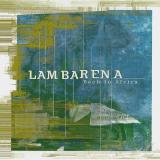
Hughes De Courson - Lambarena Bach To Africa
 
14

Combining Bach with traditional Gabonese music, Lambarena pays tribute to Albert Schweitzer, a doctor and musician who settled in Lambaréné in 1913. Conceived by Hughes de Courson and Pierre Akendengué, this extraordinary project brings together more than 250 artists and blends organ, baroque choirs, and African percussion in a musical celebration of rare intensity. A true timeless classic, it is now available for the first time on double vinyl, accompanied by a 4-page bilingual booklet (English/French) recounting the history of this unique album.


b 02: Sankanda (traditionnel) + Lasset uns den nicht zerteilen [Passion selon St. Jean]


[e] 05: Mabo Maboe (traditionnel) + Gigue de la quatrième suite en mi bémol majeur pour violoncelle [extrait]
[f] 06: Bombé (extrait) + Ruht wohl, ihr heiligen Gebeine [Passion selon St. Jean, mouv. 62]

[h] 08: Mamoudo Na Sakka Baya Boudouma Ncombi (traditionnel) + Prélude n°14 BWV 883 [extrait]


[l] 12: Okoukoué (traditionnel) + Cantate 147 [extraits]

pre-ordina ora05.12.2025

dovrebbe essere pubblicato su 05.12.2025

43,66
Forever Pavot - Melchior Volume.1
  • A1: Waiting For The Sign (Feat Lispector)
  • A2: Patch 1985
  • A3: Count To 10 (Feat Domotic)
  • A4: Godbot
  • A5: Skyway
  • A6: Le Robot Gentilhomme
  • B1: Ufo (Feat Lispector)
  • B2: Cosmic Battle
  • B3: Olympus
  • B4: Shoppers On The Run
  • B5: Postcard (Feat Kumisolo)
  • B6: Melchiator

Emile Sornin has a robot in his life. It's not love, but it's not friendship either, and Forever Pavot is releasing an album documenting the affair on Born Bad. After a bunch of bold pop studio albums and a small stack of soundtracks, Emile needed a break. To put an end to it, he embarked with handyman extraordinaire Jonas Euvremer on the manufacture of an automaton destined to make his musician’s life easier. Melchior, who gave his name to the record, has the face of a ventriloquist's dummy, two plastic left hands, preppy clothes and a primitive logic circuit. This goodie two-shoes cousin of Bender’s is supposed to be doing the interviews and deal with socials for Emile. The plan worked admirably : Melchior is a perfect cover-boy, and his very existence has put our man back to work.


They set a path for phat electronic ventures (and by the way, mostly english-speaking). Sub- continental bass & massive drums, heavy-footed and unabashed : as much appreciated as unexpected. The half-android shares songwriting credits and vocal parts vocoded to perfection. Not a jealous lad, Melchior makes way for a guest of choice on “UFO” and “Waiting for the sign” : Lispector. Julie Margat sings and collaborated on the lyrics for these two bangers that provide a lot of context (robot angst is real). Kumisolo, our favorite Japanese « it » girl in Paris, also sent her “Postcard”, more vapour than song, unreal musical cotton candy of arrangements.


Domotic, who mixes and co-produces, gives a nice spin to “Count to 10”, a hip-hop/kraut crossover with a BEAK> flavour. The Forever Pavot, once a big-band, will be touring as a bass/ drums/keys & vocals trio, with Melchior as guest.


Record after record, Emile Sornin has become an increasingly literate musical illiterate. When needed, his music can still become a thicket of ancient and modern finds. « Le robot gentilhomme », a skillful pastiche of baroque composer Jean-Baptiste Lully, would stand a few rounds against Wendy Carlos. His love for oldies also shines through “Skyway”, a nod to the late Pierre Arvay, France’s Colonel Sanders of library music nuggets.


Forever Pavot may have gone wild, but remains indebted vis-à-vis the golden age of film music. Forebears deluxe Ennio Morricone & François de Roubaix make Hitchcock-style cameos: discreet appearances that you’ll watch out for (those syncopated cascades of syllables at the end of « UFO », and I guess we can indulge with some clavichord/ondioline Victoria sponge). His new flirt is all but a toxic relationship. « Melchior, Vol. 1 »: the robo-bromance is not over yet.

pre-ordina ora07.11.2025

dovrebbe essere pubblicato su 07.11.2025

21,43
Horace Silver - Silver In Seattle: Live at the Penthouse

Seine Musik war immer spontan, mitreißend und voller Energie, trotzdem hat Blue-Note-Legende Horace
Silver zu Lebzeiten nur ein einziges Livealbum veröffentlicht. Das ändert sich jetzt dank eines bislang
unveröffentlichten Konzertmitschnittes!
Im August 1965 glänzte der Pianist mit einer innovativen Besetzung im Penthouse-Jazzclub in Seattle,
mit Woody Shaw an der Trompete, Joe Henderson am Tenorsaxofon, Teddy Smith am Bass und Roger
Humphries am Schlagzeug. Der erst jetzt entdeckte Mitschnitt erlebt seine Weltpremiere unter dem Titel
”Silver In Seattle: Live At The Penthouse”. Darauf feuert die Band unter anderem kochende Interpretationen von Silver-Klassikern wie ”Song For My Father”, ”Cape Verdean Blues” und ”The Kicker” ab.
Die 180g-LP im Gatefold-Sleeve und die CD im Digipak enthalten beide ein ausführliches Booklet mit
seltenen Fotos von Francis Wolff, Burt Goldblatt, Jean-Pierre Leloir und anderen plus Linernotes des
renommierten Jazz-Experten Bob Blumenthal sowie Interviews mit und Statements von Schlagzeuger Roger
Humphries, den Silver-Band-Alumni Randy Brecker und Alvin Queen, dem aufstrebenden Pianisten Sullivan
Fortner und weiteren.

pre-ordina ora24.10.2025

dovrebbe essere pubblicato su 24.10.2025

25,63
The Dave Brubeck Quartet - Time Out LP
  • A1: Blue Rondo A La Turk
  • A2: Strange Meadow Lark
  • A3: Take Five
  • B1: Three To Get Ready
  • B2: Kathy's Waltz
  • B3: Everybody's Jumpin
  • B4: Pick Up Sticks
  • B5: Audrey

Part of the Jean-Pierre Leloir 180 gram vinyl Collection, Time Out, released in 1959, was an unusual album from the start. While most tunes in occidental popular music are in 4/4, alternating with the 3/4 waltz form here and there, Time Out was devoted to rhythms that had never been previously heard in jazz.
Most of the songs were composed by Brubeck himself. However, one of the most catchy melodies, “Take Five”, was a Paul Desmond composition, and it would become the quartet’s most celebrated tune. “Dave Brubeck’s defining masterpiece,Time Out is one of the most rhythmically innovative albums in jazz history”, wrote Steve Huey in All Music Guide, giving the album five stars.

pre-ordina ora10.07.2025

dovrebbe essere pubblicato su 10.07.2025

20,13
Roaring Mosquitoes - You Aren't With Me / Ah Ah Ah Ah

Reissue of in-demand Italo title, with accompanying edits by Hysteric. "For the much-requested 12'' reissue of Roaring Mosquitoes, Best Record followed the hint by a die-hard German researcher and esteemed DJ of 'hidden musical treasures' Frinda Di Lanco. Further enriching this reissue - masterfully remastered by Dom Scuteri - with two of his splendid edits is the Australian DJ-producer George Hysteric, one of the world's leading authorities and a leading figure in Italo Disco. The juxtaposition of the two songs performed with grit and physicality by Agostina Casalino and her cousin Antonietta Casalino (aka Roaring Mosquitoes) highlights two aesthetically and rhythmically similar approaches, albeit with different roots and inspirations. "You Aren't With Me" has the merit of not wanting to reinvent the genre, but exploits the familiarity of pop-dance forms, obtaining an immediate catchiness. The piece stands out for its linearity while reworking melodic mechanisms typical of the 80s new wave: short instrumental intro, well-defined verse-chorus, obsessive repetition of melodic hooks that make it an immediate and "dragging" song on the dance floor. The arrangement focuses on a solid electronic drum groove, sinuous basslines, clean guitar riffs, "cutting" keyboards and the use of the chorus typical of the Italo Disco of those years. Some passages recall the melodic line and rhythmic progression of "Tonight... Crazy Night", an intriguing song that the Canadian artist Dorine Hollier created in 1984 at the Titania Studios in Rome with Pierluigi Giombini. Even with "Ah Ah Ah Ah" which features a vibrant and cheerful sound there's a playful use of citation for some idea that Diego Pepe took from a Micky & Joyce track. It evokes the "space disco" spirit of Jean-Pierre Massiera and the influence of the French scene of 1979: polyphonic synthetic strings, echo effects on electronic hi-hats and a vaguely futuristic atmosphere, but with an even more captivating sound revitalized with more scratchy modern touches and compressed basslines. A mix of vintage and contemporary that enhance its charm."

non in magazzino

Ordina ora e ordineremo l'articolo per te presso il nostro fornitore.

17,02

Last In: 9 months ago
Fernand Vandenbogaerde - Les Années 1967-1984 LP 4x12"

Metaphon is thrilled to present this collection of 14 phenomenal electronic and electro-acoustic works by French composer Fernand Vandenbogaerde, realized between 1967 and 1984.

After his science studies Fernand Vandenbogaerde (1946) studied at the Conservatoire de Roubaix and did various classes and courses with a.o. Jean-Etienne Marie, Olivier Messiaen, Pierre Schaeffer, György Ligeti, Karlheinz Stockhausen and Bruno Maderna. He wrote analytical essays on mathematic music, in particular the work of Iannis Xenakis. Vandenbogaerde taught electro-acoustic music at various institutions and was director at the National School of Music and Dance in Blanc-Mesnil, near Paris. As a composer he wrote works for orchestra, instrumental and chamber ensembles, sometimes in hybrid form including tape and electro-acoustic configurations. He also recorded numerous tape compositions in Bourges, Paris, Ghent and at his home studio. His works have been presented worldwide on various leading festivals and events.

The compositions included in this edition are primarily tape works, meticulously recorded and produced, radical and most of all timbre oriented which makes his compositions focus mainly on sound while other parameters hardly change. In Vandenbogaerde’s own words: “What determines my pieces, at least all the ones in this collection, is that it’s the material that dictates me, that will predetermine the form”. This particular approach distinguishes him quite a bit from many of his contemporaries within the field of electro-acoustic music.

Another interesting aspect in Vandenbogaerde’s work is the integration of micro tonal scales (conceived by Mexican composer Julian Carrillo), on the compositions 'Modifications III' and the intriguing trilogy 'Drei Nachdenken über Hymnen an die Nacht'. All tracks are previously unreleased except the proto power electronics piece 'Anschlag' which was self-released in 1971 on his own Point Radiant label, as a compilation LP which also included a track by Tristan Murail.

pre-ordina ora07.03.2025

dovrebbe essere pubblicato su 07.03.2025

60,92
VLADIMIR COSMA - SES PLUS BELLES CHANSONS (BEST OF) LP 2x12"
 
24

Zum ersten Mal alle großartigen Songs von Vladimir Cosma auf einer Doppel-Vinyl.

Darunter die berühmten 80er Jahre Titel "Dreams" und "Your Eyes". Vladimir Cosma (* 13. April 1940 in Bukarest) ist ein rumänisch-französischer Filmkomponist, Violinist und Dirigent. Vladimir Cosma wurde in eine Musikerfamilie geboren, sein Vater ist der Dirigent Teodor Cosma. Nachdem Vladimir Cosma am Bukarester Conservatorium den ersten Preis in den Fächern Violine und Komposition gewonnen hatte, setzte er sein Studium ab 1963 am Conservatoire national supérieur de musique in Paris fort, wo er mit Nadia Boulanger zusammenarbeitete. 1966 lernte er den Filmkomponisten Michel Legrand kennen, der sein Interesse für die Filmmusik weckte und für den er zunächst als Arrangeur arbeitete. 1967 begann seine langjährige Zusammenarbeit mit dem Regisseur Yves Robert, die bis zu dessen Tod im Jahr 2002 andauerte. Im Laufe seiner Karriere hat er eine Reihe von Regisseuren mehrmals die Filmmusik geschrieben, für Yves Robert (13 Filme), Pierre Richard (fünf Filme), Pascal Thomas (elf Filme), Claude Zidi (zehn Filme), Gérard Oury (fünf Filme), Édouard Molinaro (sechs Filme), Claude Pinoteau (sieben Filme) oder Francis Veber (sieben Filme). Er vertonte außerdem drei Filme von Louis de Funès und zwei von Jean-Paul Belmondo.

non in magazzino

Ordina ora e ordineremo l'articolo per te presso il nostro fornitore.

26,26

Last In: 13 months ago
Bobby Jaspar - Modern Jazz au Club Saint-Germain

Re-mastered from original mono master tapes.

Limited edition 1000 copies.

180 gr vinyl pressed by Pallas in Germany.

Deluxe high-gloss flipback album jacket.

Facsimile reissue using the original cover art.

Double insert using an original photo by JP Leloir from 1955.

Each record has been visually checked to prevent defects.

Recorded December 27 and 29, 1955 at the Pathé Magellan studio, Paris.

Original LP issue: Barclay 84.023.

After hitting Paris in 1950, saxophonist Bobby Jaspar enthralled jazz fans and jazzmen alike with his smooth, elegant playing, with the lyricism of his tranquil phrases heavily influenced by Stan Getz in particular. So when Jaspar began regularly performing with a small ensemble at the Club St-Germain five years later, he adopted the same instrumentation as that of his idol’s illustrious quintet, with Sacha Distel on guitar and René Urtreger on piano in the roles of Jimmy Raney and Al Haig, respectively.

Contrary to what its title might suggest, ‘Modern Jazz au Club St-Germain’ was actually recorded in the studio. It features compositions by Milt Jackson, Dizzy Gillespie and Miles Davis along with a handful of standards, in which the angular aridity of bebop gives way to the generous and yet sensitive idiom of cool jazz.

Jaspar’s premature death in 1963 robbed the jazz world of a promising talent; this record is among his best efforts as a leader. Bobby Jaspar is in top form here !!!

Text – Pierre de Chocqueuse

Bobby Jaspar (Tenor Saxophone & Flute)
Sacha Distel (Guitar)
René Urtreger (Piano)
Benoit Quersin (Bass)
Jean-Louis Viale (Drums)

pre-ordina ora11.11.2024

dovrebbe essere pubblicato su 11.11.2024

29,83
Miles Davis - You're Under Arrest

"You're Under Arrest is a 1985 album recorded by Miles Davis, presenting a mixture of pop covers (including Cyndi Lauper's ""Time After Time"" and Michael Jackson's ""Human Nature""), and original material dealing with politics, racism, pollution and war. It is the first Davis album since On the Corner in 1972 to include electric guitarist John McLaughlin. This version comes as a limited edition of 1500 individually numbered copies on red & clear marbled vinyl."

pre-ordina ora01.11.2024

dovrebbe essere pubblicato su 01.11.2024

31,89
Jacob Desvarieux & Georges Decimus (Kassav') - Yelele

S
Brand new vinyl reissue to celebrate the 40th anniversary of seminal
album Yelele by Georges Decimus and Jacob Desvarieux, from zouk
pioneers Kassav', includes the massive worldwide crossover hit "Zouk-la
se sel medikaman nou ni"
Whether in concert, or on the radio or TV, the image of Kassav' remains vivid in
the minds of listeners and spectators. The group, founded in 1979 by Jacob
Desvarieux, Georges and Pierre-Edouard Decimus, has become legendary, putting
Guadeloupe and Martinique on the musical map of the world. Touring the world
with zouk, a musical movement introduced and popularized by Kassav', their
albums have repeatedly been rewarded with both gold and platinum discs.
A victim of Covid in 2021, the loss of Jacob Desvarieux leaves a huge void.
The mix of Jacob Desvarieux and George Decimus with Jocelyne Beroard, JeanPhilippe Marthely, Patrick Saint-Eloi and Jean-Claude Naimro has played sold out
concerts in 82 countries. With texts recounting real life in the Caribbean world
their lively music draws on the rhythms of Guadeloupe's gwo-ka and Martinique's
ti-bwa. Transcending the well-defined codes of Caribbean music, they have turned
the 1980s and all the succeeding decades into a fabulous ballroom.
They have been welcomed in Japan and the USSR, where they became the first
group of black musicians to tour. Forty years after the group's creation, their
timeless hits continue to resonate

pre-ordina ora09.08.2024

dovrebbe essere pubblicato su 09.08.2024

23,74
Various - Pop Psychedelique (The Best of French Psychedelic Pop 1964-2019) (2x12")

Repress!

Pop Psychedelique vereint frühe Superstars des französischen Pop (Serge Gainsbourg, Brigitte Bardot) mit 60er Lieblingen (Frances Gall, Gillian Hills, Jacqueline Taieb), neuen Psych-Sounds (L'Epee, The Liminanas), 60er Pariser Coolness (Anna Karina), Freak-Beat-Psych-Rock (Les 5 Gentlemen), Dancefloor-Freuden (Charlotte Leslie), Exzentrik (Nino Ferrer) und schierer Moog-Pop-Brillanz (Jean Jacques-Perrey). Den Abschluss bilden Stereolabs French Pop, die einflussreichen Air mit Synthie-Psych-Pop und Pierre Henrys epischer Big Beat im Fatboy Slim Mix. Pop Psychedelique bedeutet pure Freude!

non in magazzino

Ordina ora e ordineremo l'articolo per te presso il nostro fornitore.

37,77

Last In: 4 years ago
WE JAZZ MAGAZINE -

The eleventh issue of We Jazz Magazine, "Oni Puladi" for Carla Bley.

All articles presented IN ENGLISH. Carla Bley by Stewart Smith, Gondwana Records by Debra Richards, Ahmed by Seymour Wright, Amirtha Kidambi by Ayana Contreras, Ruth Goller by Daryl Worthington, Abdul Wadud by Pierre Crépon / David Neil Lee, François Jeanneau by Bret Sjerven, Mette Henriette by Debra Richards, Nduduzo Makhathini by Rob Garratt, Discaholic column by Mats Gustafsson, We Jazz Festival 2023 photo essay by Julius Töyrylä, album & live reviews, plus more.

128 pages, 170 x 240 mm in size and printed on 140g Edixion paper with laminated 300g Invercote covers.

pre-ordina ora01.06.2024

dovrebbe essere pubblicato su 01.06.2024

16,39
Sonny Rollins - Freedom Weaver: The 1959 European Tour Recording (4x12")

Freedom Weaver: The 1959 European Tour Recordings is the first official release of the 'Saxophone Colossus' Sonny Rollins’ European tour in 1959 with bassist Henry Grimes, and drummers Pete La Roca, Kenny Clarke and Joe Harris. Available previously only as a bootleg release, this is the first official release in cooperation with Sonny Rollins and released as a 3-CD set. Freedom Weaver includes an elaborate booklet with rare photos by Ed van der Elsken, Jean-Pierre Leloir, Bob Parent and many others; lead liners by jazz scholar Bob Blumenthal, and new interviews with Rollins himself, Branford Marsalis, James Carter, Joe Lovano, James Brandon Lewis and Peter Brötzmann. Mastered by the legendary mastering engineer Bernie Grundman.

non in magazzino

Ordina ora e ordineremo l'articolo per te presso il nostro fornitore.

87,35

Last In: 23 months ago
Soyuz - II LP

Soyuz

II LP

12inchMRBLP300
Mr Bongo
22.03.2024

SOYUZ (СОЮЗ) stole our hearts back in 2022 when we released their album Force Of The Wind to critical acclaim. Here we proudly present the predecessor to that LP, the band’s sophomore long player from 2019 that was previously only available digitally. It captures a pivotal evolving period in the band's career, the recordings giving a snapshot of what would become their sound on Force Of The Wind, yet with echoes of avant-psychedelic-pop footprints from yester years.

Produced at a time when band leader Alex Chumak had moved from Minsk to Kyiv, torn between the need to try something new and the homesickness it brought about. Travelling back to Minsk almost weekly, Alex joined fellow band members Mikita Arlou and Stanislav Murashko to lay down II at Studio 42. The album captures these transient feelings, contextualised through the broad scope of influences the band were nourished by. From MPB to Ethio-Jazz and the Italian library soundtracks of Piero Piccioni and Piero Umiliani, the album shines with touches of joy from across the globe.

The opening track 'Verocai' is a tribute to the Brazilian maestro and 'Mirouze', whilst being named after a French favourite of the band, Jean-Pierre Mirouze, pays clear homage to Milton Nascimento and Lô Borges. A ghostly sample and invisible connection to music made miles away in a different era that has influenced and become part of the band’s lives. This is further reinforced in the album's enchanting closer, the aptly titled 'Nascimento', another nod to the great Brazilian musician and singer.

The beginnings of the cinematic, soul-laden jazz SOYUZ are now known for, are on display across the likes of ‘Lyric’ and 'Motive I'. The latter an orchestrated jazz instrumental with sensuous string sections, all of which were recorded on the warmth of a Studer reel-to-reel and waltzing Rhodes keys.

SOYUZ’s wide-ranging palate is further demonstrated in tracks like ‘Business Partners’ with its Krauty, kosmische, new wave production featuring Inturist, and the oh-too-short Anatolian-influenced interlude 'Corrida'. Elsewhere, 'Tezeta' and ‘ES-2 Jazz’ hint at the psychedelic haze of soul-funk, with the former featuring verses from Serbian rapper Petar Martic.

For this new physical and digital release, the whole album was mixed from scratch by Ryan Power before Joker worked his magic on the remaster. More excellence is to come from SOYUZ, but in the meantime, we are thrilled to present this essential recording from the band’s foundational years, mixed to a level that does it the justice it deserves.

non in magazzino

Ordina ora e ordineremo l'articolo per te presso il nostro fornitore.

25,17

Last In: 17 months ago
Various - On a Faim ! Anarchy & Musik LP 2x12"
 
20

On a faim!" was originally an anarchist music fanzine created in 1984.
An entire network, with no geographical ties, grew up around the fanzine, helping to write articles and distribute them (often by hand). The fanzine's name even began to appear in connection with the organisation of concerts (Ludwig Von 88, Raymonde et les Blancs Becs, les Thugs, Les Ejectés, Kortatu, Yo Pizza Jump, etc.) and the creation of radio programmes.
The On A Faim ! label came into being at the end of the 80s, following the release of a host of live tapes and themed compilations: "A Bas Toutes Les Armées", "Cette Machine Sert A Tuer Tous Les Fascistes", "Ni Jah Ni Maitre", "Pogo Avec Les Loups". Then came the first artistic albums with Désert Culturel, Un Dolor, Have Nots, Kargols, Pleum, Mister Moonlight, Rude Boy System... Here again, the artistic choices were made primarily on the basis of human encounters, the attention paid to the bands' approach and discourse, and their attitude to the public... even before listening to the slightest demo!

Archives de la Zone Mondiale wanted to pay tribute to this inspiring label, which marked the history of independent and committed music for nearly 15 years. With one of its founders, Jean Pierre Levaray, we have cleverly concocted a sort of musical anthology retracing the essential bands that have marked the history of the label and the fanzine.

On A Faim ! - Anarchy & Musik is a double 20-track vinyl compilation in a highly graphic gatefold sleeve, retracing the label's extraordinary trajectory regardless of musical style: punk, of course, but also ska, hardcore and popular chanson...

Last but not least, all the royalties from this double vinyl compilation are donated to the Uzine (Le Havre) and Fanzinarium (Paris) fanzine libraries.

pre-ordina ora15.03.2024

dovrebbe essere pubblicato su 15.03.2024

30,04
MILES DAVIS - ASCENSEUR POUR L’ÉCHAFAUD LP

Contradictory accounts of Miles Davis’ creation of the soundtrack to Louis Malle’s film noir Ascenseur pour l'Échafaud have all become part of its legend. Rarely has a soundtrack been so decisive. Nearly seventy years on, beyond the myth, this taut, feverish recording, imbued with extreme dramatic tension, remains one of the Miles’ finest records. The basic outline remains: Jean-Paul Rappeneau suggested to Malle asking Miles Davis to create the film's soundtrack who agreed to record the music after attending a private screening. Davis was performing at the Club Saint-Germain in Paris in November 1957 and on December 4, he brought his four sidemen to the recording studio without having had them prepare anything. Davis only gave the musicians a few rudimentary harmonic sequences he had assembled in his hotel room, and, once the plot was explained, the band improvised without any precomposed theme, while edited loops of the musically relevant film sequences were projected in the background. Bassist Pierre Michelot recalled in 1988 that “Miles just asked us to play two chords, D minor and C7, 4 bars of each, ad lib.” Typically, Miles planned very little but know exactly what he wanted. François Leterrier, the film’s Second Assistant Director picks up the story: “The session started at around ten o’clock and went on until dawn. The screen in the auditorium was showing the scenes for which Miles had devised some harmonies, and they were edited into a loop. And that’s what makes this music unique: it was entirely improvised in conditions that went back to the days of silent films, while watching frames shot in black and white by cinematographer Henri Decaë: tracking shots of Jeanne Moreau wandering down the Champs-Elysées at night, passing in front of lit window displays or going into bars, while looking for her lover/murderer alias Maurice Ronet … All of us there in the dark auditorium were aware that something extraordinary was taking place, something that had definitely never happened before. … In the small hours we all met up again at the Pied de Cochon in Les Halles, and Louis was looking at Miles with the disbelieving eyes of a child … as if he couldn’t believe the gift he’d just received. Even in his wildest dreams he had probably never imagined what his film would be like once it had been as if illuminated by the trumpet of Miles, incisive or wrapped softly in cotton.” The music was released on 10” by Fontana and received the Grand Prix from France’s Académie Charles Cros. It was released in the USA on Columbia as the A-side of the 12” LP Jazz Track, which received a 1960 Grammy nomination for Best Jazz Performance, Solo or Small Group. This beautiful re-issue of the original recording is pressed on 180g vinyl at GZ, and packaged in a deluxe gatefold tip-on jacket with Boris Vian’s original liner notes and Jean-Pierre Leloir’s iconic studio photo of Miles and Jeanne Moreau, and an essay on the circumstances that led to this out-of-the ordinary music by Franck Bergerot.

pre-ordina ora26.01.2024

dovrebbe essere pubblicato su 26.01.2024

28,15
VARIOUS - THE BELGIAN SOUNDTRACK : A MUSICAL CONNECTION OF BELGIUM WITH CINEMA (1961 – 1976) LP

Sdban Records, the renowned independent groove & jazz label behind Funky Chicken, Hip Holland Hip, and Discophilia Belgica, is thrilled to announce the upcoming release of its latest compilation album, "The Belgian Soundtrack: A Musical Connection of Belgium with Cinema." Packed with the finest soundtracks boasting an unmistakable Belgian connection, this compilation takes listeners on a captivating journey through a collection of cinematic hidden gems from the early sixties to the late seventies.

Curated by the passionate duo Robin Broos and Tom 'Pélé' Peeters, known for their profound appreciation of obscure soundtracks, "The Belgian Soundtrack" showcases the exceptional talents of both local and internationally acclaimed composers and musicians. From obscure finds composed by lesser-known artists to Hollywood scores performed by world-renowned musicians, this compilation offers a vibrant blend of tracks, including the occasional contribution from renowned international artists who have lent their musical prowess to Belgian films.

"The Belgian Soundtrack" came into being as a serendipitous adventure. Former film journalist Jan Temmerman reached out to us one day, offering a treasure trove of vintage soundtrack albums discovered in his attic," recounts Robin Broos. "With 650 long players, mostly unheard of titles, we embarked on an extraordinary quest-to listen to every single one of them, totaling a staggering 29,250 minutes. It was like watching the original Star Wars trilogy 78 times!"

What started as a quest soon evolved into an intriguing investigation fueled by curiosity. Along the way, Broos and Peeters unearthed dozens of treasures, delved into the backgrounds of obscure composers and musicians, and witnessed an array of enigmatic films. "We encountered an abundance of (un)necessary nudity that we never could have imagined existed," Tom Peeters laughs. The outcome of their explorations is "The Belgian Soundtrack," a meticulously curated collection of funky, melodic, and uplifting tracks, each crafted exclusively for the silver screen and boasting an unexpected Belgian connection.

non in magazzino

Ordina ora e ordineremo l'articolo per te presso il nostro fornitore.

22,90

Last In: 2 years ago
FRANCIS CABREL - UN MORCEAU DE SICRE
 
1
disponibile anche

TRANSPARENT VINYL[15,92 €]


Claude Sicre ist einer der Pioniere der Verteidigung und Anerkennung der okzitanischen Kultur, französicher Chansonier, auch bekannt als Mitglied der Fabulous Trobadors, und positiver Mensch. Es ist ein Projekt, das Francis Cabrel sehr am Herzen lag. Er wollte ein Lied als Hymne an seine Stadt, seine Region komponieren. Neben dem musikalischen Aspekt hat Francis auch das Cover gemalt, das Video gezeichnet und produziert. Mit der gleichen Logik wird dieses Sammlerstück natürlich auch in einer unabhängigen Struktur (u.a. Label/Vertriebe) veröffentlicht. Hier ein paar Worte von Francis Cabrel: "Das Wortspiel ist so klein, wie die Figur groß ist. Ein Stück von Sicre (Claude), oder "sucre" (Zucker), also Positivität, Wohlwollen, Humor, Gelehrsamkeit all das in deinem schwarzen Kaffee.....ein Tag in Toulouse beginnt." Es ist eine Hommage an diese Stadt, die mir sehr am Herzen liegt. Zwischen der Rue Caraman und der Rue Matabiau habe ich dort meine ersten Lieder gesungen und aufgenommen. Da der Platz nicht ausreicht, möchte ich ihnen hier danken, insbesondere Richard und Daniel Seff, Jean-Pierre Mader, Michel Art Mengo, Émile, Images und Gold, all denen, die das Chanson aus der Region Toulouse so groß gemacht haben, nach dem großen Claude, dem alle folgen. Einseitig bespielte 7'-Vinyl-Single mit dem Titel Une Morceau De Sicre, die Farbe der Platte hier ist Ozean-Blau.

pre-ordina ora22.12.2023

dovrebbe essere pubblicato su 22.12.2023

16,60
FRANCIS CABREL - UN MORCEAU DE SICRE
 
1
disponibile anche

BLUE OCEAN VINYL[16,60 €]


Claude Sicre ist einer der Pioniere der Verteidigung und Anerkennung der okzitanischen Kultur, französicher Chansonier, auch bekannt als Mitglied der Fabulous Trobadors, und positiver Mensch. Es ist ein Projekt, das Francis Cabrel sehr am Herzen lag. Er wollte ein Lied als Hymne an seine Stadt, seine Region komponieren. Neben dem musikalischen Aspekt hat Francis auch das Cover gemalt, das Video gezeichnet und produziert. Mit der gleichen Logik wird dieses Sammlerstück natürlich auch in einer unabhängigen Struktur (u.a. Label/Vertriebe) veröffentlicht. Hier ein paar Worte von Francis Cabrel: "Das Wortspiel ist so klein, wie die Figur groß ist. Ein Stück von Sicre (Claude), oder "sucre" (Zucker), also Positivität, Wohlwollen, Humor, Gelehrsamkeit all das in deinem schwarzen Kaffee.....ein Tag in Toulouse beginnt." Es ist eine Hommage an diese Stadt, die mir sehr am Herzen liegt. Zwischen der Rue Caraman und der Rue Matabiau habe ich dort meine ersten Lieder gesungen und aufgenommen. Da der Platz nicht ausreicht, möchte ich ihnen hier danken, insbesondere Richard und Daniel Seff, Jean-Pierre Mader, Michel Art Mengo, Émile, Images und Gold, all denen, die das Chanson aus der Region Toulouse so groß gemacht haben, nach dem großen Claude, dem alle folgen. Einseitig bespielte 7'-Vinyl-Single mit dem Titel Une Morceau De Sicre, die Farbe der Platte hier ist Ozean-Blau.

pre-ordina ora22.12.2023

dovrebbe essere pubblicato su 22.12.2023

15,92
Various - 7X7

Various

7X7

2x12inchTRILPFR077
Tricatel
15.12.2023

Tricatel is proud to present, in a limited edition of 777 hand-numbered copies, the superb double vinyl/book dedicated to 7×7, inspired by Bertrand Burgalat.

Seven notes in the scale, seven days in the week, seven colors in the rainbow, seven wonders of the world, seven virtues and seven sins, seven ages of life, seven samurai, seven dwarfs for Snow White… Under the sign of 7, Belgian artist Jean Pierre Müller, in close collaboration with seven music legends (Robert Wyatt, Archie Shepp, Sean O’Hagan, Mulatu Astatke, Kassin, Nile Rodgers, Terry Riley), has conceived a magical project combining visual and sound compositions, in all senses and meanings.

In the summer of 2012, 7×7 was first presented to the public in its entirety at Edinburgh’s Summerhall, the start of a series of high-profile exhibitions and shows that have taken 7×7 from New York to Cannes. Ten years later, Jean Pierre and Tricatel would like to dream again with you, this time of a physical object celebrating 7×7 and offering the general public the opportunity to own a piece of the 7 colors dream.

This art and music object is a Gatefold double-vinyl, comprising two white vinyl records in printed inner sleeves and a 64-page booklet in the center, like a book.

pre-ordina ora15.12.2023

dovrebbe essere pubblicato su 15.12.2023

62,98
Various - Par les damné.e.s de la terre (Des voix de luttes 1969-1988)
 
24
pre-ordina ora20.10.2023

dovrebbe essere pubblicato su 20.10.2023

26,47
JEAN CLAUDRIC - JEU DE DAMES (OST)

French Psych-JAZZ-Soul-FUNK original soundtrack for initial soft erotic drama from 1973, later re-edited into "Sex Revolution" hardcore! "Jeu de Dames, la libération des femmes" (1973), a film by director Christian Lara, is a vaguely subversive charm flick that won't be remembered for a long time. An amusing detail, however, is that Georges de Caunes, father of Antoine de Caunes, the famous French TV personality, plays the lead role alongside Danielle Palmero. It's just one of a number of naïve films that, without being erotic, is sufficiently olé-olé that it failed to find a place in theaters on the traditional circuit. Faced with this commercial failure, the unscrupulous producer at the time, anxious to save his investments, decided to re-edit the film so that it could be screened in the X-rated circuit. He rechristened the film "Sex Revolution" in a more racy style, inserting more hardcore scenes to appeal to fans of the genre. Although Georges de Caunes is no longer credited on the poster or in the credits of "Sex Revolution", he finds himself, in spite of himself, promoted to lead actor in a porn movie, much to the delight of his son Antoine de Caunes, who is still dreaming 50 years later of finally being able to watch this forgotten masterpiece of the 7th art. The film seems to be a dud (pn: the author haven't seen it), but as for the music, Jean Claudric is particularly inspired and offers us one of the best French jazz funk soundtracks, which would not blush at the comparison with the best of the genre, such as Michel Legrand's "Un homme est mort", or Jean-Pierre Mirouze's "Le mariage collectif", previously released by Born Bad. Four short tracks, one with pyschedelic touches, the secomd more funky, the third a bit soul-jazzy, the fourth a French typical melancholic-melodic one makes a hot 7"-EP.

pre-ordina ora13.10.2023

dovrebbe essere pubblicato su 13.10.2023

11,72
Yocto - Zepta Supernova LP

Already bandmates within IDALG, Jean-Michel Coutu and Yuki Berthiaume-Tremblay have been working on new material for some time, from which a distinct identity emerges: the echoes of exotic post-punk, the polychrome and nervous plot of an art rock space opera. YOCTO, in addition to the name given to this new project, is a micro unit of measurement that reflects well this mini-cyclic and fractional music, drawing its DNA from mid-70s underground rock (Television / Talking Heads / Devo) and sci-fi series opening credits. As a leader of this band, Yuki Berthiaume-Tremblay (Jesuslesfilles, IDALG) sings rebellion anthems alongside Jean-Michel Coutu (IDALG) on guitar, Emmanuel Éthier (Chocolat) on bass, Félix-Antoine Coutu on drums, and Carl Matthieu Neher on v-organ. The first album, Zepta Supernova, co-produced by Emmanuel Éthier (Corridor, Pierre Lapointe, P'tit Belliveau) and Jean- Michel Coutu (Jesuslesfilles, CRABE, PYPY), is released on Canadian label Duprince and French label Requiem pour un Twister. An incisive odyssey where fatal obsession, pernicious pride, chained star, and judgment day are at issue. In this series of science-fiction fables, Yocto speaks to a completely megalomaniacal antagonist. The latter has a predisposition to indulge in his own vices - which Yocto has understood well and will makegood use of: through her cunning and pure ingenuity, she will undermineherrival untilhis lucky starbecomes asupernova

pre-ordina ora29.09.2023

dovrebbe essere pubblicato su 29.09.2023

28,36
Ennio Morricone - Sans Mobile Apparent LP

Wewantsounds is delighted to present one of Ennio Morricone's best and least known soundtracks for the 1971 cult French crime film 'Sans Mobile Apparent' directed by Philippe Labro. This superb soundtrack featuring Morricone's classic sound has never been widely available on vinyl save for a small limited edition released under the film's italian title. The set has been remastered from the original tapes with lacquer cut by Frederic Alstadt (Mont Analogue) and gatefold sleeve designed by Eric Adrian Lee. Last but not least Philippe Labro himself has shared his experience in an exclusive interview with Jeremy Allen, discussing the making of the film, working with the Maestro (at only 34 years old) and his amazing career crossing path with Jean Luc Godard, Serge Gainsbourg and Jean-Pierre Melville.

non in magazzino

Ordina ora e ordineremo l'articolo per te presso il nostro fornitore.

31,89

Last In: 2 years ago
Patrick Cowley - Malebox LP

Dark Entries has a surprise delivery! Malebox brings us six previously unreleased funk-fueled jams from the archives of the cybernetic disco titan himself, Patrick Cowley. Best known for his chart-topping disco anthems, Cowley left us with an incredible body of work before his tragic death in 1982 due to AIDS-related illness. Since 2009, Dark Entries has been working with Cowley’s friends and family to uncover the singular artist’s lesser-known sides, including his soundtracks for gay pornographic films on compilation albums School Daze, Muscle Up, and Afternooners.

But Malebox gives us more of the Cowley we know and love: churning disco-funk and hi-NRG tracks that are spacey and sleazy, gritty and sublime. Recorded from 1979-1981, these six tracks illuminate what was one of Patrick’s most creatively exciting periods. “If You Feel It” and “Love Me Hot” were both early Paul Parker demos; the former is a peak hour hi-NRG bomb, while the latter dips into Cowley’s zoned-out space disco sound. Jeanie Tracy’s soulful vocals feature on the demo version of “Low Down Dirty Rhythm”, which was later re-recorded by Sarah Dash. The slower, less-varnished rendition here hits with a wild psychedelic edge. Meanwhile, Patrick’s gifts for careful orchestration and infectious melodies shine on “Floating” and “Love and Passion”, which were likely demo tracks for Loverde. The songs on Malebox display the vitality and inventiveness of a brilliant composer taken from us too soon.

Malebox sleeve design was by Gwenaël Rattke, and features a hyper-color retro collage. Also included is an air mail envelope containing a letter from Patrick Cowley to French disco producer Pierre Jaubert as well as liner notes and hand-written lyrics. Malebox will be released on November 12th , which is the 40th anniversary of Patrick’s passing.

non in magazzino

Ordina ora e ordineremo l'articolo per te presso il nostro fornitore.

20,38

Last In: 6 months ago
Voivod - The Outer Limits LP

'The Outer Limits' is the seventh studio album released by Canadian heavy metal legends Voivod. It was issued via Mechanic/MCA Records in 1993. The album features a cover of "The Nile Song", originally by the British progressive rock band Pink Floyd, and Voivod's longest song "Jack Luminous", tracking in at 17 minutes and 26 seconds. When originally issued, the CD came with a miniature pair of 3D glasses in order to view the booklet art. The text in the upper right corner of the album cover reads "Number 8" to represent that it is actually the band's eighth album release overall following the compilation The Best of Voivod. 'The Outer Limits' was the final album to feature vocalist Denis Bélanger until his 2002 return. It was also Voivod's first album without original bassist Blacky, who had left the band before the release of the critically acclaimed but commercially unsuccessful 1991 album Angel Rat. Uncomfortable with the idea of bringing in an immediate replacement for Blacky, Voivod opted to have session musician Pierre St-Jean play bass guitar for the recording of the album. (Text by Wikipedia) The album has become one of the band’s ultimate classic albums and is still very much considered today as one of their very best albums by the fans. VOIVOD : ’The Outer Limits’ is now available in vinyl format with 3D graphic design and including 3D glasses for the very first time. First pressing is in white vinyl, Grab it now while you can !.

pre-ordina ora04.08.2023

dovrebbe essere pubblicato su 04.08.2023

35,25
Daniel Schell & Dick Annegarn - Egmont & The ff Boom
  • La Ballade Du Zwin
  • Ein Kleiner Mann
  • Ud
  • Piume Al Vento
  • Nelle
  • Granvelle
  • Sabina And First Variation
  • Un Instant Sous La Hache
  • Geuzenlied
  • Sabina And Second
  • Variation
  • The Ff Boom

Part fantastical historic sonic biopic, part anthropologic
journey into the deep roots of Belgium’s monstrous
cosmic rock sound, this wholly individualistic concept
album combines the lead members of the mighty COS
(Daniel Schell and Pascale Son) with studio genius
Alain Pierre (Ô Sidarta / Des morts) and celebrated
Dutch progressive rock singer Dick Annegarn, for what
many consider to be both the overlooked hiding place
of Belgium’s deepest psychedelic moment and
European prog’s lost map to the ‘Franco-Flemish
Boom’.
 Emerging from the wider musical family that counted
Marc Moulin, Placebo and Marc Hollander amongst its
creative kin, Daniel Schell’s most profound conceptual
project ambitiously combines the tale of the heroic
historical figure of Count Egmont (1522–1568), while
simultaneously tracing the evolution of the ud, or oud,
(‘the grandfather of the guitar’) in this multifarious
hallucinogenic epic.
 Featuring key members of other collectable groups
such as drummer Felix Simtaine from Solis Lacus and
bass player Jean-Louis Baudoin from the mythical
Classroom (COS predecessor), this best-kept secret
vinyl release also harbours the voices of Dirk Bogaert
(of Belgian hard rockers Waterloo), as well as Catalan
singer Ilona Chale (Marc Hollander / Aksak Maboul)
before her later tenure as the COS front woman.
 Initially released in 1978 via Zeuhl school distributors
Free Bird alongside French pressings of Don Cherry,
Jacques Thollot and CAN, it is plain to understand the
niche nature of this maligned ‘lost COS’ LP as it finally
blooms from between the cracked branches of
European jazz-rock-synth-psych-prog-pop history…
and beyond

pre-ordina ora07.07.2023

dovrebbe essere pubblicato su 07.07.2023

13,07
Naná Vasconcelos, Nelson Angelo & Novelli Altercat - Nana, Nelson Angelo, Novelli LP

Cult album of Brazilian music finally reissued || Official reissue of this real tour de force of Brazilian creativity, where the mighty Naná Vasconcelos is joined by his friends Nelson Angelo and Novelli (both members of the legendary Clube da Esquina) to create one of the greatest Brazilian albums ever recorded outside of Brazil.

The three musicians grasp here for the kind of musical freedom that could then only be achieved outside of their country. A boundary-pushing experimentation that makes your soul flow and is to be enjoyed at large.

Recorded in 1975 and released in Pierre Barouh's label Saravah. Artwork by the great Belgian artist Jean-Michel Folon.

pre-ordina ora05.05.2023

dovrebbe essere pubblicato su 05.05.2023

25,67
Naná Vasconcelos, Nelson Angelo & Novelli Altercat - Nana, Nelson Angelo, Novelli LP

Cult album of Brazilian music finally reissued || Official reissue of this real tour de force of Brazilian creativity, where the mighty Naná Vasconcelos is joined by his friends Nelson Angelo and Novelli (both members of the legendary Clube da Esquina) to create one of the greatest Brazilian albums ever recorded outside of Brazil.

The three musicians grasp here for the kind of musical freedom that could then only be achieved outside of their country. A boundary-pushing experimentation that makes your soul flow and is to be enjoyed at large.

Recorded in 1975 and released in Pierre Barouh's label Saravah. Artwork by the great Belgian artist Jean-Michel Folon.

pre-ordina ora05.05.2023

dovrebbe essere pubblicato su 05.05.2023

29,37
Ray Mono - As The World Turns

Ray Mono

As The World Turns

12inchTRMNL004
TRMNL
25.04.2023

Ray Mono steps up for the fourth release on Birmingham-based imprint TRMNL, with Meander boss DeWalta accompanying on remix duties.

With an increasing number of global shows across Europe, Australia, and North and South America, UK-based DJ/producer Ray Mono is crafting his warm and rich sound in one that is steadily becoming his own. Fresh from music on MOXY MUZIK, Politics Of Dancing, LOCUS, and hedZup Records, he makes his first appearance on TRMNL Records with a trio of slick groove-led cuts spanning minimal and house spheres, backed by a hazy and warping late-hours roller provided by DeWalta to close the show.

DJ Support:

Jamie Jones
Archie Hamilton
Raresh
Joseph Capriati
Franky Rizardo
IULY.B
Jean Pierre
Sakro
Ben Jones

non in magazzino

Ordina ora e ordineremo l'articolo per te presso il nostro fornitore.

16,18

Last In: 5 months ago
Chet Baker - Blue Room: The 1979 VARA Studio Sessions in Holland 2x12"

Blue Room: The 1979 VARA Studio Sessions in Holland features two recordings of trumpet/vocal icon Chet Baker captured in glorious stereo at the legendary VARA studio 2 in Hilversum, the Netherlands for the KRO radio program Nine O’Clock Jazz. The April 10, 1979 session features pianist Phil Markowitz, bassist Jean-Louis Rassinfosse, and drummer Charles Rice; and the November 9th session features pianist Frans Elsen, bassist Victor Kaihatu, and drummer Eric Ineke. Both sessions were originally produced by Edwin Rutten, and are produced for release officially for the first time by “jazz detective” Zev Feldman and Frank Jochemsen. The limited-edition 2-LP set (and deluxe 2-CD edition) includes an elaborate booklet with photos by Veryl Oakland, Jean-Pierre Leloir, Christian Rose and others; liner notes by Dutch journalist Jeroen de Valk, plus essays by Feldman, Jochemsen, and Rutten; and interviews with Baker bandmates Phil Markowtiz, Jean-Louis Rassinfosse and Eric Ineke, as well as trumpeters Randy Brecker and Enrico Rava, and pianist Enrico Pieranunzi. Transferred from the original KRO radio tape reels and mastered for vinyl by legendary mastering engineer Bernie Grundman

pre-ordina ora22.04.2023

dovrebbe essere pubblicato su 22.04.2023

50,80
Eric Dolphy - Musical Prophet: The Expanded 1963 New York Studio Sessions

First ofcial release of previously-unissued Eric Dolphy studio recordings
in over 30 years, including 85-minutes never before released. The
goundbreaking alto saxophonist, bass clarinetst and autst brought us
iconic LPs such as 'Out to Lunch!' and 'Outward Bound'.
The LP package is beautfully designed and includes an exhaustve 96-page
booklet replete with rare and never-before-published photos by Chuck
Stewart, Jean-Pierre Leloir, Val Wilmer, Hans Harzheim, Lennart Steen, Roger
Marshutz and many others, plus reproductons of the original album covers for
Conversatons and Iron Man.
Includes fve essays that cover dierent aspects of Eric Dolphy and this music
by jazz author/scholar Robin D.G. Kelley, Douglas label manager Michael
Lemesre, Japanese Dolphy scholar Masakazu Sato, and co-producers Zev
Feldman and James Newton, plus words by John Coltrane, McCoy Tyner,
Ornete Coleman and Charles Mingus.
Captured afer leaving Prestge/New Jazz Records, and just before recording
the tmeless classic 'Out to Lunch!' album, 'Musical Prophet' is a 3LP set that
contains the under-appreciated masterpieces 'Conversatons' and 'Iron Man'
recorded in New York City on July 1 and 3, 1963. Originally produced by Alan
Douglas- most well-known for his associaton with Jimi Hendrix, but who also
produced classic jazz albums such as 'Money Jungle' with Duke Ellington,
Charles Mingus and Max Roach- the tapes had been stored in a suitcase with
Dolphy's personal belongings and given to Dolphy's close friends Hale and
Juanita Smith just before he embarked on his fateful European trip in 1964.
Deluxe Limited-Editon, 180-gram 3LP gatefold set released exclusively for
Record Store Day's Black Friday Event on November 23, 2018

pre-ordina ora21.04.2023

dovrebbe essere pubblicato su 21.04.2023

68,70
Vidéo-Aventures - Musiques Pour Garçons Et Filles + Inédits 2x12"

After the experience of Camizole, Dominique Grimaud began a new (and different) adventure in 1979 with Monique Alba. Alongside Gilbert Artman (Urban Sax), Guigou Chenevier (Etron Fou Leloublan), Jean-Pierre Grasset (Verto) and Cyril Lefebvre (Maajun), Vidéo-Aventures is composed of instrumentals capable of reconciliating Captain Beefheart, Henry Cow, Suicide and... John Barry. All with the backing of Rock In Opposition, which enabled this Musiques pour garçons et filles to become known worldwide.

“Let us enter your hearts”: is the request made by Vidéo-Aventures, and how can we refuse? Especially as Musiques pour garçons et filles, recorded by Dominique Grimaud and Monique Alba fifty years ago along with handpicked colleagues, is as fresh as ever.

1979: having improvised a huge amount (and how!) with Camizole, Grimaud tried his hand at composition and studio recording with Alba. Their first instrument was the AKS synthetiser, with which the duo recorded the instrumental tracks that were then offered to their comrades Guigou Chenevier (Etron Fou Leloublan), Gilbert Artman (Lard Free, Urban Sax), Jean-Pierre Grasset (Verto) and Cyril Lefebvre (Maajun).

At the end of the year, they all came into the studio for a week to record the eight tracks of this mini- album that Chris Cutler would issue a few months later on his label, Recommended. In France it was the beginning of the agitation around Rock In Opposition, to such a point that Musiques pour Garçons et Filles would rise to second place in the NME independent Charts. And this is hardly surprising...

For these instrumental miniatures (here with the bonus of rare archives, some of which are previously unpublished) are uncontrollable: electronics augmented by lap-steel guitar (“Tina”), cunning pop (“Zazou sur la piste”), mechanic sound (“Une vie modern”), street piano (« French Kiss »), disturbing atmospheres (“La ballade des cardiaques”) or something like a TV theme tune capable of adjusting all the colours (“Telstar”)... With such promising ingredients, why stop Vidéo-Aventures from entering?

pre-ordina ora31.03.2023

dovrebbe essere pubblicato su 31.03.2023

30,88
Miles Davis - We Want Miles LP 2x12"

Now available at a new lower price. Pressed On Opaque Yellow Vinyl With Japanese Stylized Insert And Deluxe Obi Strip. Remastered From The Original Analog Tapes. The first live Miles Davis electric band release since 1977’s very dark and heavy Dark Magus. The album features live performances from shows at Boston’s Kix Club. The double vinyl release contains reimagined versions of songs from The Man With the Horn (1981), tunes from the pre-electric Gil Evans collaboration Porgy and Bess (1959), and a dedication to the Boston venue called Kix. While this was one of the first live Miles Davis performances in over half a decade it certainly did not show!!! This album features R&B legend Marcus Miller on bass, Mike Stern on guitar, Bill Evans on saxophone, Mino Cinelu on percussion, and electric band alumni Al Foster on drums. Produced and edited by long time Miles collaborator Teo Macero

pre-ordina ora31.03.2023

dovrebbe essere pubblicato su 31.03.2023

26,01
The Blaze - Jungle LP

The Blaze

Jungle LP

12inchBLV7993LP
Believe Digital GMBH
16.03.2023

Nach der Veröffentlichung ihres ersten Albums 2018 ging das französische Duo auf Welttournee zu Festivals und ausverkauften Hallen. In ihrer Musik mixen The Blaze Einflüsse aus Dub, House und Popmusik. Sowohl Guillaume als auch Jonathan Alric singen auf einigen der Tracks. Als Einflüsse für ihre anspruchsvollen Musikvideos nennen sie die Regisseure Ken Loach, Jean-Pierre und Luc Dardenne sowie den Fotografen Sebastião Salgado. Bereits von ihrer Debüt-EP 'Territory' konnte das damals noch unbekannte Duo aus dem Stand einige Hundert Einheiten auf Vinyl verkaufen!
Guillaume und Jonathan Alric haben ihr neues Album 'Jungle' mit dieser Live-Perspektive komponiert und aufgenommen: introspektive, elektronische Musik, getragen von Bildern und Melodien, die immer voller Emotionen sind. Im Rahmen einer Tour gastieren sie u.a. in der renommierten O2 Academy Brixton als auch im Berliner Velodrom, das bereits jetzt ausverkauft ist. Die beiden bereits vorab veröffentlichten und visuell perfekt umgesetzten Singles 'Eyes' und 'Dreamer' sind Vorboten eines von vielen Fans anspruchsvoller elektronischer Musik erwarteten Albums.

Beide Versionen, LP als auch CD erscheinen mit einem bedruckten Slipcase (CD) bzw. bedrucktem PVC-Outer Sleeve (LP).

non in magazzino

Ordina ora e ordineremo l'articolo per te presso il nostro fornitore.

25,17

Last In: 2 years ago
VARIOUS - FRENCH RARE GROOVE 2x12"

Various

FRENCH RARE GROOVE 2x12"

2x12inch3431176
Wagram
03.03.2023
pre-ordina ora03.03.2023

dovrebbe essere pubblicato su 03.03.2023

26,26
Various - Tele Music, 26 Classics French Music Library, Vol. 3
 
26

Welcome to the third part of the TELE MUSIC saga, the label founded by Roger Tokarz. He deeply marked the era with his audacity and his vision of music on film. This irresistible new selection tells the story from 1968 to 1985 of a prolific label that sometimes produced ten albums a year, and which delighted many French and foreign film directors who, to 'flavour' their films, drew on this sumptuous catalogue.
In this volume 3 TELE MUSIC, we have highlighted legendary artists who have left an indelible mark on the history of the music bookshop and on the history of music in general:

• Janko Nilovic (also known as Yanko Nilovic, Anady Loore, E. Orti or Alan Blackwell),
• Jean-Jacques Debout with his irresistible “Mitsuko” released in 1967 and re-released in 1969 on “Music Bazaar”, • Bernard Lubat, the impressive percussionist, vibraphonist, multi-instrumentalist and very good “scator” (Bernard played in the Doubles Six with Quincy Jones and Eddy Louiss),
• Gabriel Yared, the man with a hundred film scores. Arranger and composer for Johnny Hallyday and Charles Aznavour, among others!
• Hervé Roy conductor and writer for Nancy Holloway,
• George Chatelain, pianist, guitarist, clarinettist, founder of the famous studio “CBE” created in 1966 with his sister Janine Bisson and his high school friend Bernard Estardy.

All these composers were renowned for their acute sense of composition, arrangement, conducting and inter- pretation, and in their own way left their mark on many sound recordings of musical illustration "made in France!
CBE, the Chatelain, Bisson and Estardy studio is located in the 18th arrondissement of Paris. Still in operation and run by Julie Estardy, it has been receiving major artists for over half a century. It is a place of reference. At the time: Johnny Hallyday, Claude François, Sheila, Carlos, Françoise Hardy, Nino Ferrer recorded their hits there.
Now it's the turn of Sebastien Tellier, Bertrand Burgalat, Keziah Jones, Tony Allen, Jeff Miles to name but a few. CBE and its giant Bernard Estardy put TELE MUSIC in the best conditions to produce an atypical and powerful sound.
Bernard Estardy had a custom- built mixing console built by his German friend Gunther Loof, offering the perfect tool for recording 4 and then 32-track Arp 2000, Moog, Korg, Prophet synthesizers and all acoustic instruments. The field of experi- mentation was limitless.
Until now, the titles of this collection were only available in vinyl format, via rare and expensive prints that collectors sell for a high price on dedicated websites. This volume 3 gives you access to the "crème de la crème" of the legendary repertoire made in France!

non in magazzino

Ordina ora e ordineremo l'articolo per te presso il nostro fornitore.

29,87

Last In: 3 years ago
Miles Davis - You're Under Arrest LP

PRESSED ON CRYSTAL CLEAR VINYL HOUSED IN A GATEFOLD JACKET WITH JAPANESE STYLIZED INSERT AND DELUXE OBI STRIP

Remastered From The Original Analog Tapes

A partner album to the previous Miles release Decoy this album is also produced by Miles and loaded with the synths of Robert Irving. You’re Under Arrest has some surprising new looks at pop tunes by Micheal Jackson and Cyndi Lauper and also features the return of John McLaughlin on guitar, and a guest performance from Sting. This is the nal installment of the prolic and brilliant collaboration between Miles and Columbia Records. Also featured on this album are Al Foster, Kenny Garret, and Daryl Jones.

pre-ordina ora10.02.2023

dovrebbe essere pubblicato su 10.02.2023

21,89
Maajun - Vivre la Mort du Vieux Monde

Before Mahjun (of which Souffle Continu reissued, in 2016, the two albums released on Saravah), there was... Maajun. Five musicians (Jean-Pierre Arnoux, Cyril and Jean-Louis Lefebvre, Alain Roux and Roger Scaglia) and three times as many instruments at the service of an electric-poetic guerrilla group moulded from folk and blues. The group’s unique album, “Vivre la Mort du Vieux Monde” evokes an (imaginary) association of Frank Zappa and Jacques Higelin, of Sonny Sharrock and the Art Ensemble Of Chicago. Under these conditions, Long Live Death!

“The most French of all the French groups, determined to take Maurice Chevalier’s place in American hearts.” This was how Rock&Folk presented Mahjun in 1977. So be it. But when “Vivre la Mort du Vieux Monde”, was issued, it was 1971, and the name, though the same group, was still spelled Maajun. So, let’s look back at the story.

At the end of the sixties, five blues fans decided to form a French group ready to break down the barriers: Jean-Pierre Arnoux (drums, vibraphone, saxophone), Cyril Lefebvre (guitar, organ), Jean-Louis Lefebvre (bass, violin, guitar, vocals), Alain Roux (saxophone, flute, harmonica, vocals) and Roger Scaglia (guitar, vocals). This was Maajun, and Vivre la mort du vieux monde would be their only album, but which would (nevertheless) be followed by those of Mahjun created later by Lefebvre (Jean-Louis) and Arnoux.

Recorded for the Vogue label, “Vivre la Mort du Vieux Monde” would disturb a number of people. This is mostly due to the lyrics, many of which were written by Gérald Escot-Bocanegra, who, while summoning the spirit of Lautréamont and Rimbaud, turned the Maajun musicians on to rock and free jazz. Add a bit of politics into the mix, and the release of the album was delayed for several months. But then, wasn’t it worth waiting for?

Because “Vivre la Mort du Vieux Monde”, a real concept-album, is an important and iconoclastic statement made directly in the face of (francophone) dreamers of all countries. Over heavy guitar riffs, psychedelic interludes or fantasy-fuelled digressions, Maajun built mazes on the advice of alchemists known only to themselves before heading off on a long march on the “cracking walls”. It was an ambitious project, but Maajun could handle it, going so far as to proclaim: “Tomorrow will be a huge party!” But as we can see “tomorrow”, is now!

pre-ordina ora13.01.2023

dovrebbe essere pubblicato su 13.01.2023

23,49
Miles Davis - Ascenseur pour L'Echafaud

Personnel: "Ascenseur pour l'échafaud" - Miles Davis (tp); Barney Wilen (ts); René Urtreger (p); Pierre Michelot (b); Kenny Clarke (dr


In 1957, Miles Davis is in Paris for an engagement at the Club Saint-Germain and a wonderful concert at the Olympia Theatre. Once in Paris, Miles came into contact with many members of the modern existentialist cultural environment in the neighborhood of Saint-Germain-des-Près. These include the director Louis Malle who had just finished his first movie : "Ascenseur Pour L'échafaud".

Jean-Paul Rappeneau, a Jazz fan and Louis Malle's assistant at the time, suggested asking Miles Davis to create the film's soundtrack. A private sceening has been organized.

On December 4 1957, Miles Davis brought three French Jazzmen - Barney Wilen on tenor saxophone, René Urtreger on piano, Pierre Michelot on bass and his american compatriot Kenny Clarke on drums - to the recording studio Le Poste Parisien without having them prepare anything. Miles Davis only gave the musicians a few rudimentary harmonic sequences he had assembled in his hotel room.
This recording was made at night in a most informal atmosphere.

The soundtrack was not released on it's own in the USA but ten songs from this soundtrack were released as one side of the album "Jazz Track" which received a 1960 Grammy nomination for Best Jazz Performance, Solo or Small Group.
"Ascenseur Pour L'échafaud" has become a great achievement of artistic excellence.

pre-ordina ora30.12.2022

dovrebbe essere pubblicato su 30.12.2022

44,12
MANONGO MUJICA - DEL CUARTO ROJO HOMENAJE DE RAFAEL HASTINGS

The story of Del cuarto rojo (From The Red Room) began in March 2020, when the Peruvian composer and percussionist Manongo Mujica received a call notifying him that the visual artist Rafael Hastings, his friend of almost half a century, had passed away. Since then, and in the midst of the pandemic, Manongo Mujica began a personal journey searching for sounds, which has resulted in a new set of pieces that evoke the memory of a friendship. Del cuarto rojo (From The Red Room), subtitled Homenaje sonoro escuchando la pintura de Rafael Hastings (Sound Tribute Listening To Rafael Hastings' Paintings), is Manongo Mujica's new album, and it has also motivated the preparation of a new show by the dancer and choreographer Yvonne von Mollendorff, wife of Hastings. The history of this friendship dates back to 1974, when a young Manongo returned to Lima, after ten years living in London, while young Rafael Hastings and Yvonne von Mollendorff settled in Peru after a long period in Europe. Since then, the collaborations between these artists have been continuous, always marked by an experimental impetus. The attitude of listening to images and painting sounds was more than a metaphor and became a code that identified them and a way of working, where the crossing of disciplines set the tone, both in video works and in unusual visual / conceptual scores, works of dance and experimental music, in the context of a creative effervescence that renewed the arts and music in Lima in the 70s. Del cuarto rojo is an album that integrates many of the musical resources developed by Mujica. It is an amalgam that well sums up his own language: from the creation of environments with extended techniques and objects, to experiments in jazz fusion; from the use of field recordings and sound montages to compositions with string arrangements: everything around the hypnotic pulse of percussion and drums, which oscillate between moments of subtlety and explosive improvisation. The album features the participation of outstanding musicians such as Pauchi Sasaki (violin), José Quezada (cello), Terje Evensen (electronic effects), Jean Pierre Magnet (Saxophone), Cristobal, Daniel and Gabriel Mujica (sons of Manongo Mujica, on percussion, string and wind arrangements). It is published in vinyl LP and includes a full color 12-page booklet with a sample of Rafael Hastings' visual art, which also illustrates the album cover.

pre-ordina ora30.12.2022

dovrebbe essere pubblicato su 30.12.2022

34,50
Various - TELE MUSIC, 23 CLASSICS FRENCH MUSIC LIBRARY, VOL. 2 2x12"
 
22

TELE MUSIC is a label of Éditions Musicales Sforzando now owned by BMG Production Music. It is entirely devoted to the music library, that is to say, music for sound illustration used in audiovisual productions. Created in 1966 by Roger Tokarz,
just before advertising was allowed on French television, Editions Sforzando specialized from the outset in sound illustration for radio and television.
This collection, soberly entitled “Volume 2”, is the sequel to “Volume 1”, produced with equal care, passion and fervour by Lord Funk & DJ L.C. In the mid-90s, Tele Music vinyl was sold at ridiculously low prices. Often disparaged by collectors and record shops, considered by some as lift music or vulgarly called “music by the meter”, the music store was only of interest to fans of instrumental music! But in the 2000's, it had a second life and saw its prices soar on Discogs, thanks to sampling and digging in Hip-Hop mainly. This advent of the library is an era that Lord Funk, curator of this compilation, experienced when he brought several music library collections to New York City (NYC) to his A1 Records stronghold in 1997.
In this 2nd volume, Lord Funk & DJ L.C. have chosen a range of music from 1969 to 1983, from psychedelic jazz to electro funk via rnb, soul and jazz-funk. Most of the titles in this collection were recorded in the magic place that was the famous CBE recording studio set up by Georges Chatelain, Janine Bisson and Bernard Estardy. Bernard, nicknamed the giant, was a sound genius and a mixing perfectionist. Georges Chatelain was an electronic engineer. Together, they brought a sound,
a colour, a trademark. Bernard Estardy was also considered as one of the greatest French sound engineers and an energetic organist for Nino Ferrer or Nancy Holloway. We warmly thank Julie Estardy for her total and unreserved involvement in these reissue and compilation projects.
The combination of all these prodigies has given TELE MUSIC a phenomenal and unique sound colour in the service of a sound repertoire that is now part of the French heritage.

pre-ordina ora18.11.2022

dovrebbe essere pubblicato su 18.11.2022

34,24
Donald Byrd - Live in Pairs - Brunswick - 1958

Re-mastered from the original master tapes.
180 gr vinyl pressed by Optimal in Germany using the Metal Mothers from Pallas.

Facsimile reissue using the original photo by Jean-Pierre Leloir.
Double insert using an original color photo by JP Leloir.
Each record has been visually checked to prevent defects.

Recorded October 22, 1958, Olympia hall, Paris.
Original LP issue: Brunswick 87 903.

“They’d been living in Europe for months. They’d appeared in Cannes and at Knokke (…) yet the only thing missing was the consecration that a great concert in Paris would bring. They won that last battle with astounding brio, in front of an audience of connoisseurs. There were many there who thought modern jazz had never been so well- served in Paris.” (Jazz Magazine). Hard bop had arrived! Hallelujah! On its first French appearance, in July ‘58 at the Cannes Festival – the first and only Cannes jazz festival – the Donald Byrd Quintet had brought the house down. Yet four of its five members were relatively unknown in France… The French knew that the leader had replaced Kenny Dorham in the Jazz Messengers, that Doug Watkins was the Messengers’ bassist, and that pianist Walter Davis Jr. was still only 18 when he’d played with Charlie Parker. As for Art Taylor, even if his name meant something to fans, it was still difficult for people to have a more precise idea of his musical qualities. Only Bobby Jaspar was well-known to Paris audiences, and the tour marked the return of the prodigal son, the musician who’d decided, after setting the Club St. Germain on fire, to try his luck in the States early in 1956 – J.J. Johnson had hired him, and then Miles Davis (for a short spell) before Donald Byrd brought him into the group he was taking to Europe. This new tour would climax at the Olympia theatre during one of the “Jazz Wednesdays” that were organised there, ever since the Jazz At Carnegie Hall” tour – Zoot Sims, JJ. Johnson, Lee Konitz, Phineas Newborn – had inaugurated the series a little earlier. Byrd and his band took pains not to disappoint a Paris audience they knew to be particularly fickle, and they astutely varied the public’s pleasures throughout the evening. The complicity that united the rhythm section – Walter Davis Jr., Doug Watkins and Art Taylor – was much in evidence on Ray’s Idea; mistrusting the traps of the spectacular at all costs, Donald Byrd, producing brilliant inventions on the trumpet, took the lion’s share of the honours on a theme that was then much in fashion, Dear Old Stockholm, adapted from a Swedish traditional song; on Flute Blues, Bobby Jaspar proved he was still a specialist on that instrument, and Paul’s Pal showed that, on tenor, the playing of Sonny Rollins hadn’t gone unnoticed. It must be said that it didn’t have much effect on the discreet lyricism underlying the choruses he played during his “St. Germain” period. The Olympia spectators weren’t sparing in their applause for the five musicians. How else could they have reacted, faced with the fire the band showed during a tune like The Blues Walk? It wouldn’t take much for us to applaud, too, even if it is fifty-five years later…
Text – Alain Tercinet

pre-ordina ora18.11.2022

dovrebbe essere pubblicato su 18.11.2022

27,31
Donald Byrd - Parisian Thoroughfare

Re-mastered from the original master tapes.
180 gr vinyl pressed by Optimal in Germany using the Metal Mothers from Pallas.

Facsimile reissue using the original photo by Jean-Pierre Leloir.
Double insert using an original color photo by JP Leloir.
Each record has been visually checked to prevent defects.

In its October ‘58 issue, the title carried by Jazz Hot magazine was: »Revelation at the Chat Qui Pêche. The spirit of jazz (which some thought was dying) is sparkling with life in the Donald Byrd Quintet.« And indeed, on its first appearance at the Cannes Festival in July (the Jazz Festival, not the other one), the Donald Byrd Quintet brought the house down. Its members were hardly the Who’s Who of jazz, however. People vaguely knew that the leader had replaced Kenny Dorham in the Jazz Messengers, that Doug Watkins had played bass with them, and that pianist Walter Davis Jr. had been with Charlie Parker before he was 19. As for Art Taylor, if he’d already enjoyed a career longer than that of his colleagues, it hadn’t yet brought him recognition beyond a small circle of cognoscenti. Only Bobby Jaspar – who’d shone at the Club St. Germain – was famous with the Parisian audience. At the beginning of 1956, he’d decided to try his luck in the United States; J.J. Johnson had hired him, and then Miles Davis (for a brief spell) before Donald Byrd brought him into his own group. After appearing in Cannes (in the sun) and Knokke-le-Zoute (a much smaller audience) for almost three months, the Donald Byrd Quintet settled down for the autumn in one of the capital’s top jazz spots, the Chat Qui Pêche on the Rue de la Huchette. »In that tiny room,« wrote Frank Ténot, »where the owner used to bump into the soloists by accident when she was serving her customers, the music they played was hot, and always surprising.« To crown a tour that had been extremely satisfying for everyone, a concert at the Olympia theatre was organised (there were gigs there called “Jazz Wednesdays”). Byrd and Co. took things very seriously, even though they preserved the relaxed approach that their (relatively) long association now permitted: "La Marseillaise", and "And The Angels Sing" are both present in the introduction to Parisian Thoroughfare played by the two horns. The latter then went on to imitate other horns, those of the cars on 52nd Street ... However, when it came to "Stardust", it was with all the seriousness in the world, almost in meditation in fact, that Donald Byrd improvised over the backing provided by just Walter Davis Jr. and Doug Watkins. Bobby Jaspar, of course, was marvellous. If he showed a marked obedience to Sonny Rollins, he still preserved, intact, the virtues of sobriety that prevented him falling into the trap of serving up torrents of notes in pieces taken at a rapid tempo ("At This Time", for example). During the exchanges on "Formidable", you’d be forgiven for saying that he gets the better of Donald Byrd. As for the complicity that reigned between the members of the rhythm section, it gave the formation a homogenous character that was very rare in a quintet. One can’t thank François Postif enough for taking the risk to release this concert at the time. Now, almost half a century later, one

pre-ordina ora18.11.2022

dovrebbe essere pubblicato su 18.11.2022

26,85
Jean-Claude Vannie - La bête noire / Paris n’existe pas
 
27

With a discography held in such high esteem amongst fans of conceptual French pop and soundtrack composition, the likelihood of finding an unturned stone amongst maestro Jean-Claude Vannier’s fertile psychedelic rockery falls somewhere between slim and skeletal. Even the most intrepid explorers of the most fearless and fastidious nature should naturally expect to encounter one or two shadowy characters when braving the oblique corners of the Vannier vault, but few lost souls cast a darker silhouette than the cinematic obscurity known only as La Bête Noire (The Black Beast).

Lost and presumed missing for decades the soundtrack tapes to this lesser-known 1983 French thriller (featuring a cast culled from films such as Alphaville, The Modern Couple and Sweet Movie) captures the revered composer and arranger of Serge Gainsbourg’s Histoire De Melody Nelson embarking on a darker exploration of free jazz, frenzied batucadas and cyclic carousel psychedelia. Counting key players of the French jazz scene within its ranks, The Insolitudes group comprises a crack team of Palm/Futura/Actuel/Saravah regulars such as saxophonist Philippe Mate´ (Acting Trio/Mate´-Vallancien/Tacet) alongside drummer Bernard Labat (Mad Ducks) and legendary Arpadys/Voyage rhythm masters Marc Chantereau and Pierre-Alain Dahan (Brutus Drums) all of whom alongside Michel Zanlonghi (Ensemble De Percussion De Paris) make up this thunderous, tumultuous, four-headed rhythm machine bridging an authentic gap between The Jef Gilson Groups and France’s signature “cosmic” revolution. Naturally these previously unheard compositions are spearheaded by lead pianist and composer Vannier and for devotee’s of his 1972 concept album L’Enfant Assassin Des Mouche there is much to admire and cross-reference herein.

Having been the most loyal and long-running guardians of Jean-Claude’s monster archive over the past two decades Finders Keepers Records are proud to present this first catch of newfound vintage Vannier discoveries on this limited and unlikely free jazz 45 single (which should find a perfect home between coveted Euro jazz 7”s by Krzysztof Komeda, Franc¸ois Tusques and Brussels Art Quintet). Almost 15 years since Finders Keepers once liberated the

pre-ordina ora16.09.2022

dovrebbe essere pubblicato su 16.09.2022

12,73
Miles Davis - Jazz You're Under Arrest

A partner album to the previous Miles release "Decoy," this album released in 1985 is also produced by Miles and loaded with the synths of Robert Irving. This LP has some surprising new looks at pop tunes by Micheal Jackson and Cyndi Lauper and also features the return of John McLaughlin on guitar, and a guest performance from Sting. This is the final installment of the prolific and brilliant collaboration between Miles and Columbia Records. Also featured on this album are Al Foster, Kenny Garret, and Daryl Jones.

pre-ordina ora30.08.2022

dovrebbe essere pubblicato su 30.08.2022

50,38
Miles Davis - We Want Miles LP

Miles Davis

We Want Miles LP

12inchGET51470LP
GET ON DOWN
19.08.2022

PRESSED ON OPAQUE YELLOW VINYL WITH JAPANESE STYLIZED INSERT AND DELUXE OBI STRIP

Remastered From The Original Analog Tapes

The first live Miles Davis electric band release since 1977’s very dark and heavy Dark Magus. The album features live performances from shows at Boston’s Kix Club. The double vinyl release contains reimagined versions of songs from The Man With the Horn (1981), tunes from the pre-electric Gil Evans collaboration Porgy and Bess (1959), and a dedication to the Boston venue called Kix. While this was one of the first live Miles Davis performances in over half a decade it certainly did not show!!! This album features R&B legend Marcus Miller on bass, Mike Stern on guitar, Bill Evans on saxophone, Mino Cinelu on percussion, and electric band alumni Al Foster on drums. Produced and edited by long time Miles collaborator Teo Macero.

pre-ordina ora19.08.2022

dovrebbe essere pubblicato su 19.08.2022

38,61
SLIFT - SPACE IS THE KEY + LA PLANETE INEXPLOREE LP 2x12"

Double gatefold album including Slift’s first 2 albums on Black vinyl!

Space Is The Key:

Recorded and mixed by Lo Spider at Swampland, Toulouse.
Art by Pierre Ferrero.

Jean F./ guitar, vox
Rémi F./ bassVI, vox
Canek F./ drum

Originally out on Howlin Banana Records and Exag Records / June 2017.

La Planete Inexploree:

Originally out September 2018 via Howlin Banana Rds / Stolen Body Rds / Exag' Rds/ Six Tonnes de Chairs Rds and Rockerill Rds.
Tape edition on Ya Ya Yeah.

SLIFT //
Jean Fossat - Guitar, Synth, Vox
Rémi Fossat - Bass, Vox
Canek Flores - Drums, Percussions and Farfisa

Additionnal musicians //
Ornella Mesple Somps - Vox
Lucie Lelaurain - Flûte
Yann Favier - Congas and Percussions
Lo Spider - RE 201 and Percussions

Recorded and mixed by Lo Spider at Swampland, Toulouse.
Mastered by Jim Diamond

pre-ordina ora08.07.2022

dovrebbe essere pubblicato su 08.07.2022

45,59
Terry Edwards And The Scapegoats - My Wife Doesn’t Understand Me

First time on vinyl for this album. Proto Jazz-Punk multi-genre splatter album, released on CD in 1993, My Wife Doesn’t Understand Me is available on vinyl for the first time as a double LP, playing at 45rpm for superior sound quality. The accompanying download includes radio edits of live favourite 6-8-1 (The Burn-Up) and Blue Funk, plus Ructions (60s Stereo Mix) and Qualm-Free Zone. A statement of intent from the off, this is an album first and foremost. No singles, a piece of work to be listened to as a whole - from short shards of humorous observation (Cover Versions), politics (Margaret Thatcher We Still Hate You), straight-as-a-die covers (A Taste Of Honey and Jean-Pierre) to the closing Musique Concrete of the title track, prisoners were never taken. Terry Edwards and The Scapegoats look forward to the vinyl edition of My Wife Doesn’t Understand Me to bemuse, baffle and delight once again as it did on it’s release when Acid House was on it’s way out and Britpop was on it’s way in.

pre-ordina ora30.05.2022

dovrebbe essere pubblicato su 30.05.2022

32,73
Handful Of Snowdrops - 1984 - The Complete Four-Track Recordings

Cream White Vinyl


It finally took five years and two lineup changes for Handful of Snowdrops to release their debut album, the iconic Land of the Damned. While too many of the songs written during that period never made it to tape, some fortunately did.

This is what we believed is first home recording from the second generation of the band with Jean-Pierre as the lead singer. All tracks were recorded in a single day in a dark and humid basement using a beaten-up TEAC 4-track tape cassette recorder borrowed from a friend. Since the original mix downs are long gone, we had to salvage the music from two old worn out cassette copies.

It would be fair to say that the recordings are very representative of the overwhelming naivety of the early compositions. It’s a unique chance to have another look inside an old photo album you thought you had lost forever.

pre-ordina ora13.05.2022

dovrebbe essere pubblicato su 13.05.2022

30,88
Papé Nziengui et son Groupe - Kadi Yombo LP 2x12"

Kadi Yombo, published in 1989, is the most successful album in the quest for a fusion between tradition and modernity in Bwiti harp music of the Tsogho people of Gabon. Combining beating rattles with a layer of synthesizers, Papé Nziengui blends in a contrapuntal dialogue characteristic of harp playing: male song in appeal and female choir in response, male voice of the musical arc and rhythms of female worship. But above all it’s Tsogho ritual music and modern studio orchestration. The result is an initiatory itinerary of 10 musical pieces which are all milestones likely to be simultaneously listened to, danced, meditated on, and soon acclaimed. In the years since, Nziengui has traveled he world from Lagos to Paris, from Tokyo to Cordoba, from Brussels to Mexico City to become a true icon, the emblem of Gabonese music.

Like Bob Dylan, "electrifying" folk and Bob Marley mixing rock with reggae, some purists have criticized Nziengui for having distorted the music of harp by imposing a cross with modern instruments. They even went so far as to claim that Nziengui was just an average harpist covering his shortcomings with stunts that were only good for impressing neophytes; like playing a harp placed upside down behind his back or playing two or three harps simultaneously. Sincere convictions or venomous defamations, in any case, Nziengui never gave in to such attacks, imposing himself on the contrary to pay homage to the elders (Yves Mouenga, Jean Honoré Miabé, Vickoss Ekondo) while instructing the maximum of young people. He is thus the promoter of many young talents, the most prominent of which is certainly his nephew Jean Pierre Mingongué. In a conservative society where the sacred is confused with secrecy, exposing the mysteries of Bwiti in broad daylight can be punished by exclusion or even execution.

Papé Nziengui has always claimed that he faces such risks because he never felt enslaved to a community that governs his life, that regulates his conduct, that has a right of censorship over his activities. Like Ravi Shankar, the famous sitarist, Papé Nziengui is a man of rupture but also of openness, a transmitter of culture. As proof, he has established himself in Libreville, Gabo’s capital, as the main harpist for sessions and concerts, accompanying the greatest national artists (Akendengué, Rompavè, Annie-Flore Batchiellilys, Les Champs sur la Lowé, etc.) as well as foreign artists (Papa Wemba, Manu Dibango, Kassav', Toups Bebey, etc.). In 1988, he was the first harpist to release an album in the form of a cassette produced by the French Cultural Center (Papé Nziengui, Chants et Musiques Tsogho). At the same time, he created his own group (Bovenga), combining traditional music instruments (musical bow, drums, various percussion instruments, etc.) in the framework of a true national orchestra, which gave the first concert and the first tours of a traditional music that was both modern and dynamic, thus "democratizing" the harp, to the dismay of certain purists.

On the other hand, in modern music, dominated by the logic of profit or even commercialism, artistic creation must often be adjusted for a specific audience based on reason rather than heart. But instead of allowing himself to be distorted, Papé Nziengui has always tried to produce music that is not a caricature, worthy in its expression as in its content, of the sacredness and transcendence of the music of the Origins. This is what makes Nziengui not only the musician, but the man someone whose age hasn’t altered any of his freshness or authenticity

pre-ordina ora08.04.2022

dovrebbe essere pubblicato su 08.04.2022

32,73
Papé Nziengui et son Groupe - Kadi Yombo LP

Kadi Yombo, published in 1989, is the most successful album in the quest for a fusion between tradition and modernity in Bwiti harp music of the Tsogho people of Gabon. Combining beating rattles with a layer of synthesizers, Papé Nziengui blends in a contrapuntal dialogue characteristic of harp playing: male song in appeal and female choir in response, male voice of the musical arc and rhythms of female worship. But above all it’s Tsogho ritual music and modern studio orchestration. The result is an initiatory itinerary of 10 musical pieces which are all milestones likely to be simultaneously listened to, danced, meditated on, and soon acclaimed. In the years since, Nziengui has traveled he world from Lagos to Paris, from Tokyo to Cordoba, from Brussels to Mexico City to become a true icon, the emblem of Gabonese music.

Like Bob Dylan, "electrifying" folk and Bob Marley mixing rock with reggae, some purists have criticized Nziengui for having distorted the music of harp by imposing a cross with modern instruments. They even went so far as to claim that Nziengui was just an average harpist covering his shortcomings with stunts that were only good for impressing neophytes; like playing a harp placed upside down behind his back or playing two or three harps simultaneously. Sincere convictions or venomous defamations, in any case, Nziengui never gave in to such attacks, imposing himself on the contrary to pay homage to the elders (Yves Mouenga, Jean Honoré Miabé, Vickoss Ekondo) while instructing the maximum of young people. He is thus the promoter of many young talents, the most prominent of which is certainly his nephew Jean Pierre Mingongué. In a conservative society where the sacred is confused with secrecy, exposing the mysteries of Bwiti in broad daylight can be punished by exclusion or even execution.

Papé Nziengui has always claimed that he faces such risks because he never felt enslaved to a community that governs his life, that regulates his conduct, that has a right of censorship over his activities. Like Ravi Shankar, the famous sitarist, Papé Nziengui is a man of rupture but also of openness, a transmitter of culture. As proof, he has established himself in Libreville, Gabo’s capital, as the main harpist for sessions and concerts, accompanying the greatest national artists (Akendengué, Rompavè, Annie-Flore Batchiellilys, Les Champs sur la Lowé, etc.) as well as foreign artists (Papa Wemba, Manu Dibango, Kassav', Toups Bebey, etc.). In 1988, he was the first harpist to release an album in the form of a cassette produced by the French Cultural Center (Papé Nziengui, Chants et Musiques Tsogho). At the same time, he created his own group (Bovenga), combining traditional music instruments (musical bow, drums, various percussion instruments, etc.) in the framework of a true national orchestra, which gave the first concert and the first tours of a traditional music that was both modern and dynamic, thus "democratizing" the harp, to the dismay of certain purists.

On the other hand, in modern music, dominated by the logic of profit or even commercialism, artistic creation must often be adjusted for a specific audience based on reason rather than heart. But instead of allowing himself to be distorted, Papé Nziengui has always tried to produce music that is not a caricature, worthy in its expression as in its content, of the sacredness and transcendence of the music of the Origins. This is what makes Nziengui not only the musician, but the man someone whose age hasn’t altered any of his freshness or authenticity

pre-ordina ora08.04.2022

dovrebbe essere pubblicato su 08.04.2022

10,29
Papé Nziengui et son Groupe - Kadi Yombo LP

Kadi Yombo, published in 1989, is the most successful album in the quest for a fusion between tradition and modernity in Bwiti harp music of the Tsogho people of Gabon. Combining beating rattles with a layer of synthesizers, Papé Nziengui blends in a contrapuntal dialogue characteristic of harp playing: male song in appeal and female choir in response, male voice of the musical arc and rhythms of female worship. But above all it’s Tsogho ritual music and modern studio orchestration. The result is an initiatory itinerary of 10 musical pieces which are all milestones likely to be simultaneously listened to, danced, meditated on, and soon acclaimed. In the years since, Nziengui has traveled he world from Lagos to Paris, from Tokyo to Cordoba, from Brussels to Mexico City to become a true icon, the emblem of Gabonese music.

Like Bob Dylan, "electrifying" folk and Bob Marley mixing rock with reggae, some purists have criticized Nziengui for having distorted the music of harp by imposing a cross with modern instruments. They even went so far as to claim that Nziengui was just an average harpist covering his shortcomings with stunts that were only good for impressing neophytes; like playing a harp placed upside down behind his back or playing two or three harps simultaneously. Sincere convictions or venomous defamations, in any case, Nziengui never gave in to such attacks, imposing himself on the contrary to pay homage to the elders (Yves Mouenga, Jean Honoré Miabé, Vickoss Ekondo) while instructing the maximum of young people. He is thus the promoter of many young talents, the most prominent of which is certainly his nephew Jean Pierre Mingongué. In a conservative society where the sacred is confused with secrecy, exposing the mysteries of Bwiti in broad daylight can be punished by exclusion or even execution.

Papé Nziengui has always claimed that he faces such risks because he never felt enslaved to a community that governs his life, that regulates his conduct, that has a right of censorship over his activities. Like Ravi Shankar, the famous sitarist, Papé Nziengui is a man of rupture but also of openness, a transmitter of culture. As proof, he has established himself in Libreville, Gabo’s capital, as the main harpist for sessions and concerts, accompanying the greatest national artists (Akendengué, Rompavè, Annie-Flore Batchiellilys, Les Champs sur la Lowé, etc.) as well as foreign artists (Papa Wemba, Manu Dibango, Kassav', Toups Bebey, etc.). In 1988, he was the first harpist to release an album in the form of a cassette produced by the French Cultural Center (Papé Nziengui, Chants et Musiques Tsogho). At the same time, he created his own group (Bovenga), combining traditional music instruments (musical bow, drums, various percussion instruments, etc.) in the framework of a true national orchestra, which gave the first concert and the first tours of a traditional music that was both modern and dynamic, thus "democratizing" the harp, to the dismay of certain purists.

On the other hand, in modern music, dominated by the logic of profit or even commercialism, artistic creation must often be adjusted for a specific audience based on reason rather than heart. But instead of allowing himself to be distorted, Papé Nziengui has always tried to produce music that is not a caricature, worthy in its expression as in its content, of the sacredness and transcendence of the music of the Origins. This is what makes Nziengui not only the musician, but the man someone whose age hasn’t altered any of his freshness or authenticity

pre-ordina ora08.04.2022

dovrebbe essere pubblicato su 08.04.2022

32,73
Gwendoline - Après C'est Gobelet! LP

Gwendoline, is a duo-antihero of the Rennes indie scene. Sensitive loosers and jaded start-up nation greats, Micka and Pierre shape their own style, a dark shlag wave in a percussive and poetic spoken-word style, with counter discussions as their primary source of inspiration, looking at those around them. Between fatalistic lyrics, self-deprecation, sarcasm and bitterness of the world's mediocrity, their sincere cold-wave is the symbol of a disenchanted youth and the perfect soundtrack to protest.

In 2017, they recorded their first album by locking themselves up for a fortnight to compose everything in one go, feeding off their daily environment in Rennes, numerous evenings spent at the bar and the anxieties of our time. At first self-produced on Bandcamp, this album "Après c'est Gobelet!" is pressed in confidence on vinyl in June 2020 on the Spanish indie label Dead Wax Records, whose stocks run out before the end of the year and which is now unavailable in France.

At the end of 2020, Gwendoline has also seen the doors of the Trans Musicales open to her, a favourite of Jean-Louis Brossard, for a live show at the Ubu, captured by FIP & Culturebox and accompanied by Maëlan and Romain, their stage accomplices.

Written without pretension and ambition, the duo is surprised by the interest shown in the project, between their programming at the Transmusicales, and the feedback from the press including major international media (KEXP, France TV, Les Inrocks, Post Punk Magazine...).

A video clip was released in April 2021 to illustrate one of their flagship tracks, the heady and heady "Chevalier Ricard", which was also a favourite of Franck Vergeade, music editor of Les Inrockuptibles (January 2021).

Gwendoline is the project from Micka (a.k.a. Mikoune) and Pierre (a.k.a. Daniel).

Based in Rennes, musically influenced by the classic cold wave which originated in their country, precarious and aimless, they shape Gwendoline to their own image.

Pure DIY ethics, quick recordings at their home studio.

Dark lyrics, self-mockery, criticism, sarcasm derived from the world’s mediocrity.

non in magazzino

Ordina ora e ordineremo l'articolo per te presso il nostro fornitore.

18,87

Last In: 4 years ago
LEONIE PERNET - Le Cirque de Consolation

Léonie Pernet's second album Le Cirque de Consolation, to be released November 19th on InFiné & CryBaby, inhabits a world where borders dissolve and everyone makes their own unique and singular utopia. Hereby, the record questions the links between pop music, African cultures and electronic music, neo-classical music or the role of voice, whether human or synthetic. Sophomore albums can be a painful process for an artist - how refreshing it is to hear one so decidedly optimistic.

Textextext - (add your write up)

The sought after whirlwind of French Pop that exploded onto the scene with her debut "Crave", Leonie Pernet, returns with her second album, "Le Circque de Consolation", a sort of double negative of her first. While the yearning that sat at the center of "Crave"might not have been resolved, the young multi-instrumentalist and singer has found a new perspective - a more open and positive outlook on her own life and work. Perhaps telling, then, that the title was the first element of the album to exist: as it is and has always been a journey of personal (and collective) consolation first, a musical confrontation with the self.

"This record parallels my life's journey," confirms Léonie, "it reflects what has happened in my life since 'Crave' came out and how I feel today. There's still a lot of melancholy, but a lot more sunshine and light. In four years, I've become sober, which has saved me; I've worked a lot on my voice, which is a part of a desire to speak, to address my audience more directly, and also a more pronounced pop desire." In line with her new-found "openness", Leonie invites another musician into her creative process for the first time on "Le Cirque de Consolation": Jean Sylvain le Gouic, who lended his coproduction and perspective to her, while Leonie still plays almost all instruments herself with an astounding prowess.

Leonie's voice oozes with a new-found self-confidence and takes center stage amidst eclectic, distinctively fun and open-minded production. Sometimes she sings in English, mostly in French: "I worked a lot on my voice," confirms Léonie, "I didn't dare to sing before, neither live, nor on record, nor in the studio." Surrounding her astounding, intoxicating voice are forays into any direction imaginable: from harsh, experimental electronics to the more sombre, organic and quiet moments - and everywhere, there is the vision of Africa, (also Middle East) it's many sonic gifts and cultures.

Leonie has found a universal utopia that she craves for - a musical, cultural amalgamation that is decidedly non-western, political and poetic, rooted in self-discovery and the connection with other humans: African and oriental percussion, synthesizers, drum-machines; Léonie mixes genres and instruments with ease and precision. The French novelist and philosopher Édouard Glissant - whose work and writing had a big influence on Pernet - coined the term "Creolization ", the "bringing together of several cultures or at least several elements of distinct cultures, in one part of the world, resulting in new data, totally unpredictable in relation to the sum or the simple synthesis of these elements."

From "Hard Billy ", a techno-influenced rebellious anthem, to "Les Chants de Maldoror," a club and dance song propelled forward by feverish derboukas, to the deeply moving "A rebours" and its Afro-electronic rock. Léonie Pernet inhabits a world where borders dissolve and everyone makes their own unique and singular utopia. Hereby, the record questions the links between pop music, African cultures and electronic music (Intérieur Négro), neo-classical music (Le Cirque de consolation, Dandelion), or the place of the voice, whether human or synthetic as in the atmospheric "Vowel". Sophomore albums can be a painful process for an artist - how refreshing it is to hear one so decidedly optimistic.

non in magazzino

Ordina ora e ordineremo l'articolo per te presso il nostro fornitore.

18,45

Last In: 4 years ago
Various - Pop Psychedelique 2x12"

Pop Psychedelique vereint frühe Superstars des französischen Pop (Serge Gainsbourg, Brigitte Bardot) mit 60er Lieblingen (Frances Gall, Gillian Hills, Jacqueline Taieb), neuen Psych-Sounds (L'Epee, The Liminanas), 60er Pariser Coolness (Anna Karina), Freak-Beat-Psych-Rock (Les 5 Gentlemen), Dancefloor-Freuden (Charlotte Leslie), Exzentrik (Nino Ferrer) und schierer Moog-Pop-Brillanz (Jean Jacques-Perrey). Den Abschluss bilden Stereolabs French Pop, die einflussreichen Air mit Synthie-Psych-Pop und Pierre Henrys epischer Big Beat im Fatboy Slim Mix. Pop Psychedelique bedeutet pure Freude!

non in magazzino

Ordina ora e ordineremo l'articolo per te presso il nostro fornitore.

27,94

Last In: 4 years ago
Digital Caresse - Demain

It was the mid 80s. A musical revolution was already steamrolling throughout the French West Indies when the band Kassav' produced what was to become the sound of the decade. With a now wider use of synthetic and digital tones, the "zouk" wave literally swept away to sea the biguine and cadence from the West Indian musical landscape. While this took place, some musicians chose to make an alternative use of the new techniques brought on by the advent of synthesizers. Musicians like Serge Fabriano.

It was back in 1980 that Serge, a talented young musician from Guadeloupe, while studying for a degree in 'Arts & Informatique' (Computers & Arts Cycle) at the Université De Vincennes near Paris, discovered early computer-generated digital music (MAO in French) thanks to his roommates, who both taught computer-generated graphic arts. In 1982 Fabriano and his Fabriano Unité Zion project recorded, with the help of Alain-Jean Marie, Mario Canonge and Pierre Labor, Cosmik Syndika*, which to this day remains a masterpiece of made-in-Guadeloupe Caribbean jazz.

The following years saw him tour the US and Canada as well as several other countries. By 1986 he was back in Guadeloupe, teaching music in the secondary schools of Point-à -Pître and Sainte-Rose. While doing this, his ongoing passion for the budding MAO led him to kit himself out: the Yamaha CX5M (MSX Music Computer), the Macintosh Plus, the legendary synthesizers DX7 and DX11 and several other early rhythm machines became his new toys.

Him and his partner at the time, Marie-Reine Lamoureux, who was also both a teacher and a musician, as well as a member of the Fabriano Fuzion project, decided to involve their pupils in his electronic musical experimentations. They recorded an album, composed of five tracks deliberately titled Demain, under the name 'Digital Caresse' (the idea behind this was that instead of hitting the percussions to make music, one stroked the computer keyboard to coax a sound). The combination of the children's choir, enchanting wonky flutes, saturated electronic beat and cosmic atmosphere perfectly outline the purity of this rough diamond.

non in magazzino

Ordina ora e ordineremo l'articolo per te presso il nostro fornitore.

19,87

Last In: 4 years ago
Various - Cameroon Garage Funk

We are extremely proud to announce our 32nd compilation from the Analog Africa regular serie, "Cameroon Garage Funk", highlighting Yaounde's 1970's underground music scene. The quest to assemble the puzzle-pieces of what seemed to be a long lost underground scene took us to Camroon, Benin and further on to Togo and it was in the cities of Cotonou, Lome? and Sotouboua that we managed to lay our hands on most of the songs presented in this compilation. Since there were no local labels, no producers, and almost nothing in way of infrastructure in Cameroon at that time, the artists had to be everything: musician, producer, executive producer, arranger, financier, promoter and sometimes even distributor. The sixteen tracks on Cameroon Garage Funk pulse with raw inspiration and sweat DYI mood uniting the featured diverse musicians around their willingness to do everything themselves in order to take a chance in the music scene.

non in magazzino

Ordina ora e ordineremo l'articolo per te presso il nostro fornitore.

35,25

Last In: 4 years ago
Michel Portal - Alors !!!

Michel Portal

Alors !!!

12inchFFL069LP
Souffle Continu
10.09.2021

Could the missing link between Eric Dolphy and Albert Ayler be the Michel Portal of 1970? After having worked alongside François Tusques defending a free jazz “made in France”, we find him here, heading up an international quintet of which each member is on fire: John Surman, Barre Phillips, Stu Martin and Jean-Pierre Drouet. The quintet had full leeway to break out the free-form in long ambient tracks to compose this Alors!!! which leaves listeners with just one word to say: More!

Do we still need to present Michel Portal?... Clarinetist destined for the classical and contemporary world after his passage in the Paris Conservatory, he decided to try his hand at jazz, with an incendiary flamboyance! After his first experience with André Hodeir and Pierre Michelot, he would break all the codes with François Tusques (Free Jazz, in 1965) before starting the emblematic Michel Portal Unit. It is the Portal of those years that Alors!!! offers us the chance to listen to again.

“There are periods of insolence”, the musician declared and the year 1970 was one all on its own. Heading up an impetuous international troupe, a quintet consisting of John Surman (saxophones, bass clarinet), Barre Phillips (double-bass), Stu Martin (drums) and Jean-Pierre Drouet (percussion), Portal moves from alto sax to clarinet in the compositions shared with his partners.

From the off, the group sparks an explosion with the sound of “OO Bam Ba Deep” battered by the horns and percussion. Next up is the fabulous free jazz of “Yes, Oh Yes, You Wonderous Sun Kissed Maiden!” and the fantastic disjointed march of “Ça Boom?” which shakes up the musicians every which way. The quintet imagined that listeners would need to catch their breath, and thoughtfully added: “Billie the Kid” and “Undercurrent”, marvelous moments of ambient mystery.

Audacious from beginning to end, including the sleeve – the bird-man and his quintet brain designed by Avoine, –, the album is a fabulous object, to which the label Futura gave wings at the time. And as it is being reissued today there is just one word to use: the French translation of the title, So!!!

pre-ordina ora10.09.2021

dovrebbe essere pubblicato su 10.09.2021

23,40
SUBVERSION - Subversion

Subversion

Subversion

12inchRPC045
REPLICA
20.08.2021

With Pierre-Jean Guidon (Moravagine, Chute Libre) as their saxophone player, Subversion (from France) played lowkey jam-orientated Progressive Rock with prominent folk and jazz flavors. However, despite the brainy exterior, their soft music had more in common with the naivety of the 60’s Yé-yé movement and lounge-pop in general. Thus they seemed to belong to a bygone era, one far removed from the upcoming punk-rock and new-wave one.

pre-ordina ora20.08.2021

dovrebbe essere pubblicato su 20.08.2021

22,14
LITALP1811 - 147085

Litalp1811

147085

2x12inchLITALP1811
Light In The Attic
30.07.2021

"The definition of a hidden gem" - John Peel / "The world seems finally to be catching up to Leslie Winer, whose startling intelligence and singular vision shine through her copious recording life." - Max Richter / "She might just be the coolest woman on the planet!" - Boy George "When I Hit You - You'll Feel It" is a 16-track anthology that celebrates the extraordinary work of musician, poet, and author, Leslie Winer. The collection spans Winer's three-decade-long musical career: from her groundbreaking solo work in the early '90s to her latest inspired projects. Featuring musical contributions from Jon Hassell, Helen Terry, Jah Wobble, Renegade Soundwave's Karl Bonnie, and others, the collection also spotlights Winer's diverse collaborations, unearths previously-unreleased recordings and was newly remastered by the GRAMMYr-nominated engineer John Baldwin. The album includes a new interview with Winer, captured by the compilation's co-producer, acclaimed author and critic Wyndham Wallace. Rounding out the package is an insightful essay by the award-winning writer and scholar Louis Chude-Sokei and an original cover collage by the renowned British photographer and artist, Linder, featuring photography by Mondino, and design by designer Christopher Shannon. Musician, poet, iconoclast, model, artist, enigma. Leslie Winer is many things. She grew up in Boston with a voracious appetite for music and the written word and embraced the city's lively jazz and folk scene in the '70s. Moving to New York for art school, she formed an unlikely friendship with writer and artist William S. Burroughs and lived on-and-off with Jean-Michel Basquiat. In London, where Winer began her musical ventures in earnest, she was a regular at Leigh Bowery's underground club Taboo, where she met many of her collaborators, including filmmaker John Maybury, Kevin Mooney (of Adam and the Ants), and Boy George. Winer's striking looks also attracted fashion designers and photographers. Throughout the early '80s, she was an in-demand model-appearing in campaigns for Valentino, Christian Dior, and Yohji Yamamoto, and serving as a muse for a young Jean-Paul Gaultier, who later dubbed Winer "the first androgynous model." She posed for Helmut Newton, Irving Penn, and Pierre et Gilles, and graced the covers of The Face, French and Italian editions of Vogue, and Mademoiselle. But music was Winer's true passion and, at the turn of the '90s, she would unknowingly help invent the massively popular genre known today as trip-hop. On her debut, Witch, Winer masterfully blended the uninhibited sampling of early hip-hop with dancehall basslines and programmed beats, while weaving mesmerizing - and coolly-detached - spoken-word vocals into her ambient tracks. It was unorthodox in the most delicious ways. While Witch was finished in 1990, it wouldn't be released for three years, due to the whims of Winer's label. By the time the album saw the light of day (released under the pseudonym "c"), trip-hop was gaining mainstream traction via acts like Portishead, Massive Attack, and Madonna. Although Winer eventually gained wider acknowledgment (prompting the NME to give her the dubious distinction of "The Grandmother of Trip-Hop"), Witch initially went sorely unnoticed. Winer continued to record, undeterred by the elusive nature of mainstream success in the modern music business. Her network of inspired collaborators continued to grow and expand, yet her influence remained largely a secret except to those in the know, such as Grace Jones and Sinead O'Connor, who would cover her songs. In the modern era, one is hard-pressed to find an artist who continues to push the creative envelope as much as Winer does. And yet, three decades after her revolutionary debut, her work remains just as startling and fresh.

pre-ordina ora30.07.2021

dovrebbe essere pubblicato su 30.07.2021

36,09
Fletch - Actin' Up

Fletch

Actin' Up

12inchPAKATE001
Pakate Records
28.06.2021

Born and bred New Yorker Jean Pierre is stepping out with his own brand new label, Pakate. The vinyl-only outlet kicks off with a fantastic first EP from FLETCH featuring remixes from Pierre himself and Franco Cinelli.

This exciting new label will be an outlet for Jean and other friends to serve up mature and minimal sounds focused around unique designs and powerful grooves. Dealing in heady underground sounds that also work on larger dance floors, the label comes after Pierre has spent 15 years entrenched in the electronic scene. This is his way to carefully curate his own music exactly how he wants to, with three releases already lined up for 2021.

The first one is from FLETCH, a red hot UK talent who has released on the likes of Kaluki and Whippin’ Records. His opening tune 'Actin Up' is a slick and slippery minimal groove with real depth and freaky sound designs that make it pop. 'Want Me' then hits harder, with loopy house drums and squelchy synths all bubbling away beneath soulful female vocal sounds and cosmic synths.

The first fine remix is from France Cinelli who takes 'Actin Up' super deep, with punching kicks and rolling bass that gets you in a state of hypnosis., Closing out the package is a Jean Pierre remix of 'Want Me' that shows off his ability to lay down stripped back but compelling house grooves with deft sound design and a freaky atmosphere.

This is a standout first EP that perfectly sets the scene for what is sure to become a vital new label from this American mainstay.

non in magazzino

Ordina ora e ordineremo l'articolo per te presso il nostro fornitore.

10,29

Last In: 3 years ago
BERTRAND BURGALAT - RÊVE CAPITAL 2x12"

Bertrand Burgalat's new album, RÊVE CAPITAL, will be released on Friday June 11, 2021 by Tricatel.

How many of Burgalat's songs have accompanied difficult afternoons, happy evenings and lonely mornings? The list is long. And it gets longer with this album, each track of which widens the rift between the plates of space and time.
Jean-Pierre Montal

Burgalat makes crackle what we like most in his universe: the reality of things and their discrepancy, the intimate and the universal.
Stéphane Lerouge

non in magazzino

Ordina ora e ordineremo l'articolo per te presso il nostro fornitore.

28,53

Last In: 4 years ago
Serge Gainsbourg - OST Madame Claude

Directed by Just Jaeckin, the creator of Emmanuelle, starring Françoise Fabian, Madame Claude is inspired by the fictionalized memories of Fernande Grudet, the sulphurous instigator of the most famous luxury prostitution network in Pompidolian France. The totally disco-funk Original soundtrack of this film released on screens in 1977 from Serge Gainsbourg is sublimated by the immense arranger- Jean-Pierre Sabar". Without forgetting the generic song of Madame Claude “Yesterday, Yes a Day” interpreted by Jane Birkin. Reviews in London Macadam, and L’Echo Ads London Macadam and L’Echo

pre-ordina ora26.02.2021

dovrebbe essere pubblicato su 26.02.2021

22,65
CHICO MAGNETIC BAND - CHICO MAGNETIC BAND LP

Lyon-based freakers Chico Magnetic Band began as Chico & the Slow Death, its front man a
wild Tunisian-born singer otherwise known as Mahmoud Ayari, with drummer Patrick Garel,
bassist Alain Mazet and guitarist Bernard Lloret, later replaced by Bernard Monneri.
Conjuring a dark, excessive sound with unfettered guitar, pummelling drum rolls and Ayari
growling and grumbling over the top, this sole LP is culled from different permutating
sessions, with plenty of audio freakery and extreme effects from Jean-Pierre Massiera;
Hendrix cover “Cross Town Traffic” is rendered with love, despite Ayari’s hefty accent.

pre-ordina ora25.01.2021

dovrebbe essere pubblicato su 25.01.2021

18,45
Various - David Bowie in Jazz
non in magazzino

Ordina ora e ordineremo l'articolo per te presso il nostro fornitore.

17,19

Last In: 13 months ago
Alain Pierre - Ô Sidarta

2023 Restock

Within the elusive confines of this film awaits an unreleased album that defies categorisation by a musician who in a different time and space would be revered amongst some of the most important exponents of progressive rock, dark ambient, Krautrock and pioneering synthesiser composition - not to mention sound design and art-house film scores. As a protégé of François Bayle and Luc Ferrari who had studied classical music before immersing himself in found-sound manipulation and oscillators, Alain Pierre quickly became an enthusiastic go-to man for sound sculpture and technical studio proficiency in Belgium’s small film industry.

To the many generations of dedicated fans of the visual work of Philippe Druillet it might seem virtually impossible to adequately “score” the alien, futurist landscapes of the man who many called the “space architect” (on account of his space age reductions of Gothic cathedrals, Art Nouveau, and Indian temples), but once you have heard the sonic reactions of Alain Pierre on this the first-ever dedicated Druillet documentary, Ô Sidarta, complete with his own equivalent sound palette, it will be difficult to “hear” Druillet’s world via any other composer. Despite Druillet’s truly incredible record sleeve designs for projects like cosmic disco ensemble Black Sun, concept albums such as Attention by Jean-Pierre Mirouze (composer of Le Mariage Collectif), Parisian metal bands like Sortilège, gatefold portraits of Jimi Hendrix, later period albums by William Sheller and most relevantly on albums by Igor Wakhévitch (Docteur Faust, 1971) as well as separate releases by both Richard Pinhas and Georges Grünblatt (both from the cosmic prog outfit Heldon), it is fair to say that this criminally unreleased album by Alain Pierre would conjure up the closest synergy between sound and vision that either artist would come close to.

The almost twelve of continuous music that Alain Pierre supplied for Ô Sidarta in 1974 fortunately appears in its entirety, unedited, as it does here for the first time ever away from its original broadcasts. Broadcast on Belgian and French TV that autumn, the film received a warm reception from Druillet fans, prospective film producers and space rock fans lucky enough to catch the short feature.

Throughout his career Alain’s commitment to conceptual music excelled within both cinematic realms as well as with the live arena. Never shying away from the constraints of transporting heavy synthesiser technolog and unpredictable analogue equipment to public spaces, Alain took his self-initiated “live” work very seriously. It was within his lesser-documented performances that you would find the closest sound to the music on Ô Sidarta, proving that the Druillet collaboration was naturalistic and conceptually close to Alain’s personal stylistic agenda. A rare recording of a one-off concert at the Université libre de Bruxelles in October 1976 reveals a very similar set of movements and soundscapes found on Ô Sidarta. This rare artefact has been included on the second side of this record under its original title Notions de physique intérieure (Notions Of Interior Physics) and stands as a perfect companion piece to Ô Sidarta - complete with a very similar “kit list” including the welcome addition of an Arp Sequencer, a Korg Vocoder and a Theremin (a back line whose total would far surpass any stationary studio of the era never mind a live show!).

By looking back at his original composition for one of his very first solo soundtrack commissions, Ô Sidarta, you can hear that back in 1974 Alain had already successfully managed to combine more unlikely musical influences, experimental techniques, and previously unheard soundscapes and studio tricks in to one twelve-minute score than most musicians fail to cram in to a whole discography. But still there is so much music yet to be discovered and Ô Sidarta is just the tip of the iceberg in the middle of a cosmic sea. Much like a character from one of Philippe Druillet’s books, Alain Pierre is a rogue pilot, steering his own ship in to the unknown, uncharted, unnoticed and quite unbelievable.

pre-ordina ora11.12.2020

dovrebbe essere pubblicato su 11.12.2020

14,58
Cap'Tain Créole - Ni Bel Jounin

Cap'tain Créole - formerly known as Trenchtown Meditation - was a band formed in 1984 by Clément, José, Jean-Pierre and Serge.Cap'tain Créole was a pioneering creole-speaking French reggae band with the aim of exploring new musical horizons. With the help of 3 new members - among them a sax player and a trumpet player, both coming from the jazz scene, Cap'tain Créole recorded their unique outing, Ni Bel Jounin.
A single composed of 2 titles Fré Moin / Ni Bel Jounin, both sung in creole, using with great impact some subtle electronic elements.Both tracks are at the crossroads of many universes: Afro, Rock, Funk, Reggae. The result is quite unique and foremost, the spiritual vibe that oozes from the record is an obvious marker of their reggae roots.Privately pressed and self-distributed in small quantities at the time, BeauMonde is proud to make the one and only record of Cap'tain Créole available again

non in magazzino

Ordina ora e ordineremo l'articolo per te presso il nostro fornitore.

14,41

Last In: 5 years ago
Pierre Raph - Jeunes Filles Impudiques

Five track EP of previously unreleased drum heavy Gallic hard-bop and risqué acidic folk.

The long-lost Parisian skin flick ‘Jeunes Filles Impudiques’ (AKA ‘Schoolgirl Hitchhikers’) marks a particularly vulnerable period in the career of one of the most underrated and misunderstood directors to emerge from the rising smoke of the 1968 Parisian social explosion.

From a director with early links with the Paris underground, the letterists, the surrealists, improv theatre and the free-press comes the reclaimed audio tracks from one of his rarest celluloid moments - but let’s not confuse this for high-art. Finders Keepers make no bones, this is Jean Rollin’s maiden voyage into adult entertainment, directed under the pseudonym of Miche Gentil with a flimsy plot, questionable acting skills and an awesome little schizophrenic soundtrack.

This long-lost movie has been buried for some 40 odd years, with a musical score bursting to jump out of the can and down your tone arm, now made possible by a recently renovated negative print and new source material. These original Pierre Raph (of ‘Requiem For A Vampire’ infamy) compositions from the publishing Library Of Paris’ Musicale Editions Dellamarre (of Acanthus / Unity fame) come straight from Rollin himself as an introduction to Finders Keepers’ new Rollinade series documenting some of the finest musical moments of the director’s career as an avant-gardener, counter-culture vulture and Gallic vamptramp, all housed in their original hand-painted promotional artwork.

non in magazzino

Ordina ora e ordineremo l'articolo per te presso il nostro fornitore.

9,20

Last In: 6 years ago
Various - MUSAX BACKGROUND MUSIC LIBRARY VOL.1

For this first volume of Musax Background Music Library, Farfalla Records continues exploring the maze of the french library music through one of its most discreet and prolific representatives: Jacky Giordano and one of his many projects, the Musax label. Farfalla Records carefully selected this tracklisting among LPs recorded between 1978 and 1979 of which the originals became particularly sought after by the collectors. Jacky Giordano who appears under his aliases Joachim Sherylee and José Pharos, is surrounded by qualified and renowned musicians such as Jean-Pierre Decerf, Jean-Claude
Pierric, Serge Planchon, Patrick Petitbon, Gérard Gesina, Jean-Charles Capon, Daniel Humair and also a band composed of members from the legendary Crazy Horse cabaret, namely Pedro Perea, Claude Brisset, Bruno Bompard, Jean-Claude Guselli, Claude Thirifays, Vincent Momplet and Joseph Gatineau. This selection mixing explosive jazz-funk, lascivious jazz and electronic music more spacey
or experimental, which could also be the soundtrack for a TV show, a porn movie or a car chase between cops and gangsters in the bad neighbourhoods of Paris. A fascinating slice of the French music scene of the late 70 is brought to life before our very eyes. (Erwann
Pacaud)

non in magazzino

Ordina ora e ordineremo l'articolo per te presso il nostro fornitore.

21,39

Last In: 6 years ago
Cap'Tain Créole - Ni Bel Jounin

Cap'tain Créole - formerly known as Trenchtown Meditation - was a band formed in 1984 by Clément, José, Jean-Pierre and Serge.Cap'tain Créole was a pioneering creole-speaking French reggae band with the aim of exploring new musical horizons. With the help of 3 new members - among them a sax player and a trumpet player, both coming from the jazz scene, Cap'tain Créole recorded their unique outing, Ni Bel Jounin.
A single composed of 2 titles Fré Moin / Ni Bel Jounin, both sung in creole, using with great impact some subtle electronic elements.Both tracks are at the crossroads of many universes: Afro, Rock, Funk, Reggae. The result is quite unique and foremost, the spiritual vibe that oozes from the record is an obvious marker of their reggae roots.Privately pressed and self-distributed in small quantities at the time, BeauMonde is proud to make the one and only record of Cap'tain Créole available again

non in magazzino

Ordina ora e ordineremo l'articolo per te presso il nostro fornitore.

17,61

Last In: 6 years ago
Gestu de Dakar - Diabar

Gestu De Dakar

Diabar

12inchSYLLREC0119
Syllart
11.12.2019

Official first reissue of this Senegalese gem recorded in 1981 and produced by Ibrahima Sylla.

Remastered, available on a limited LP with 4 pages booklet.

At the dawn of the 1980s, Senegal was immersed in the "beautiful era" of Cuban influences, African-American soul and funk.
A group of passionate musician friends want to shine in this construction of a revolution in Senegalese music. Their credo will be to claim a spiritual search, that is the meaning of the word Gestü in Wolof. The group of friends gathers around the young guitarist leader As El Haji Malick Diouf who is joined on vocals by Tidiane Bathily, reinforced by Couri Ndiaye and Abdou Bâ, on drums Abdou Kane, on bass guitar Jean-Pierre Gomes, Madiama Diop (saxophone, clarinet) and finally on tumbas Djiby Ndiaye.
They released their first album Diabar in 1981, recorded at Golden Baobab studio under the direction of Senegalese producer Ibrahima Sylla. This unique record of the group will leave the youthful and dynamic imprint of a Senegalese musical revolution like the Orchestra Baobab or the Etoile de Dakar.

non in magazzino

Ordina ora e ordineremo l'articolo per te presso il nostro fornitore.

21,81

Last In: 6 years ago
LUCIANO BERIO / PIERRE BOULEZ  / OLIVIER MESSIAEN / KARLHEINZ STOCKHAUSEN - Serenata I / Sonatine / Cantéyodjayâ / Zeitmasze

The avant-garde composer and conductor Pierre Boulez was a titan of post-War experimental classical music. Born in the small cheesemaking town of Montrbrison in central France in 1925, Boulez studied at the Paris Conservatoire with the composer and organist Charles Messiaen and received private tuition from pianist Andrée Vaurabourg; after moving to the Marais district in 1945, he briefly studied with Schoenberg disciple, René Leibowitz, and further influence came from immersion in Balinese gamelan, Japanese classical music and African drumming, among other sources. Earning money by playing an early electronic keyboard called the ondes Martenot on theatre productions, Boulez soon became music director of the Renaud-Barrault theatre company (led by actor/direction Jean-Louis Barrault and his actor wife, Madeleine Renaud), leading to tours of Belgium, Switzerland, Britain and both North and South America. American composer John Cage became an ally, though they subsequently clashed over Cage’s commitment to the role of chance in his compositions, paving the way for an intense and lasting friendship with the German composer, Karlheinz Stockhausen, who arrived in Paris in 1952 to study with Messiaen. In July of that year, the pair attended the International Summer Course for New Music in Darmstadt, leading to contact with Italian composer Luciano Berio and other noteworthy figures. Then, in 1954, with backing from Barrault and Renaud, Boulez began staging a series of concerts of experimental music at the Petit Marigny theatre, titled Le Domaine musical. The pieces collected on this album are all taken from performances staged for the 1957 Domaine musical season, beginning with Berio’s “Serenata I,” conducted by Boulez, which debuted in Paris in March of that year; arranged for flute and fourteen instruments, Berio said that the idea behind the piece was for the solo flute to be confronted by continuously interchanging elements, rather than mere accompaniments or oppositions. Boulez’s own “Sonatine,” composed in 1946 for flute and piano, is a 12-tone piece that evidences Messiaen’s influence, with shades of Asian classical music in places; then, Stockhausen’s monumental “Zeitmasze” or “Time Measures,” a serial composition for five woodwinds, played in different combinations of tempos and speed, was partly inspired by Webern’s principles of homogenous and harmonic textures. Finally, Messiaen’s 1949 work “Cantéyodjayâ,” delivered by pianist Yvonne Loriod, takes it shape from the classical Hindu rhythms of ancient India, as with much of the composer’s oeuvre.

non in magazzino

Ordina ora e ordineremo l'articolo per te presso il nostro fornitore.

23,07

Last In: 6 years ago
Vaious Artists - Musique Ambiante Française Vol. 2

While the first volume of Tigersushi's new compilation series showcased a rather cosmic and synth heavy side of all things ambient, this volume 2 goes in many new directions, with more experiments towards electro = acoustics and musique concrete, another side of ambient that has a long French lineage - the term Musique Concrete, a type of "acousmatic" music was invented by pioneer Pierre Schaeffer in 1948 who influenced numerous other French composers such as Pierre Henry, Laurent Bayle etc.

non in magazzino

Ordina ora e ordineremo l'articolo per te presso il nostro fornitore.

23,99

Last In: 6 years ago
Various - STRAIN CRACK & BREAK: MUSIC FROM THE NURSE WITH WOUND LIST VOLUME 1

After years of mythology, misinterpretation and procrastination Nurse With Wound’s Steven Stapleton finally chooses Finders Keepers Records as the ideal collaborators to release “the right tracks” from his uber-legendary psych/prog/punk peculiarity shopping list known as The Nurse With Wound List, commencing with a French specific Volume One of this authentically titled Strain Crack Break series. Featuring some Finders Keepers’ regulars amongst galactic Gallic rarities (previously presumed to be imaginary red herrings) this deluxe double vinyl dossier demystifies some of the essential French feee jazz and Parisian prog inclusions from the alphabetical “dedication” inventory as printed the anti-bands 1979 industrial milestone debut.

When Steven Stapleton, Heman Pathak and John Fothergill’s anti-band Nurse With Wound decided to include an alphabetical dedication to all their favourite bands on the back of their inaugural LP the notion of creating a future record dealers’ trophy list couldn’t have been further from their minds. By adding a list of untravelled European mythical musicians and noise makers to their own debut release of unchartered industrial art rock they were merely providing a suggestive support system of existing potential likeminded bands, establishing safety in numbers should anyone require sonic subtitles for Nurse With Wound’s own mutant musical language. Luckily for them, the record landed in record shops in the midst of 1979’s memorable summer of abject apathy and its sound became a hit amongst disillusioned agit-pop pickers and artsy post-punks, thus playing a key role in the bourgeoning “Industrial” genre that ensued. On the most part, however, the list , like most instruction manuals, remained unreadable, syntactic and suspiciously sarcastic... As potential “real musicians” Nurse WIth Wound became an Industrial music fan’s household name, but in contrast many of the names on The Nurse With Wound List were considered to be imaginary musicians, made-up bands or booby traps for hacks and smart-arses. It took a while for the rest of the record collecting community to catch on or finally catch u

Since then, many of the rare, obscure and unpronounceable genre-free records on The Nurse With Wound List have slowly found their own feet and stumbled in to the homes of open-minded outernational vinyl junkies, D’s and sample hungry producers, self-propelled and judged on their own merit, mostly without consultation of the enigmatic NWW map. But, to the inspective competitive collector’s chagrin, one resounding fact recurs, NWW got there first! Via vinyl vacations, on cheap flights and Interrail tickets, buying bargain bin LPs on a shoestring while oblivious to the pending pension worthy price tags after their 40 year vintage, Stapleton and Fothergill, even if you’ve never heard of them, were at the bottom of the pit before “digging” became paydirt. And NOW at huge international record fairs that occur in massive exhibition halls (or within the confines of your one-touch palm pilot) amongst jive talk acronyms such as SS, PP, BIN, DNAP and BCWHES the coded letters NWW have begun to appear on stickers in the corner of original copies of the same premium progressive records accompanied by a customary 50% price hike to titillate/coerce the initiated as dealers extort the taught. Like “psych” “PINA” or “Krautrock” did before, “NWW” has become a buzzword and in the passed decades since its first publication The List has been mythologised, misunderstood and misconstrued. It’s also been overlooked, overestimated and under-appreciated in equal measures, but with a growing interest it has also come to represent a maligned genre in itself, something that all members of the original line-up would have deemed sacrilegious. Bolstered by the subtitle “Categories strain, crack and sometimes break, under their burden,” all bands on the inventory (many chosen on the strength of just one track alone) were chosen for their genre-defying qualities... A check-list for the unchart

Forty years after Nurse With Wound’s first record, Finders Keepers Records, in close collaboration with Steve Stapleton remind fans of THIS kind of “lost” music, that there once existed a feint path which was worn away decades before major label pop property developers built over this psychedelic underground. As long-running fans and liberators of some of the same records, arriving at the same axis from different-but-the-same planets, Finders Keepers and Nurse WIth Wound finally sing from the same hymn sheet resulting in a collaborative attempt to officially, authentically and legally compile the best tracks from the list, succeeding where many overzealous nerds have deferred (or simply, got the wrong end of the stick). Naturally our lavish metallic gatefold double vinyl compendium would only scratch the surface of this DIY dossier of elongated punk-prog peculiarities hence out decision to release volume one in a series which, in accordance with Steve’s wishes, focusses exclusively on individual tracks of French origin, the country that unsurprisingly hosted the highest content of bands on the list. Comprising of musique concrète, free jazz, Rock In Opposition, Zeuhl School space rock, macabre ballet music, lo-fi sci-fi, and classic horror literature inspired prog, this first volume of the series entitled Strain Crack And Break throws us in at the deep end, where the Seine meets the in-sane, introducing the space cadets that found Mars in Marseilles.

Like the Swedish flat-pack record shelves that attempt to house the vast amounts of vintage vinyl that goes into a multi-volume compilation like this, its time to prepare your own musical penchants and preconceived ideas about DIY music and hear them slowly strain, crack and b

non in magazzino

Ordina ora e ordineremo l'articolo per te presso il nostro fornitore.

24,16

Last In: 2 years ago
CHAGRIN D'AMOUR - Chagrin d'Amour

2019 vinyl edition with printed inner-sleeve (with the lyrics). Includes a bonus 7" of original track 'Chacun fait (C' qui lui plaît).

Spring 1982: Grégory Ken and Valli aka Chagrin d'Amour bursts into the scene with 'Chacun fait (C'qui lui plaît)'. The track gets 9 airplays a day on the newly created NRJ radio and 35 000 copies of the 7" are sold every day !
In the blink of an eye, a team of experienced musicians is gathered around prominent sound engineer Dominique Blanc-Francard: Slim Pezin (guitars), Bernard Paganotti (bass), Philippe Drai (drums) and Jean-Pierre Sabar (keyboards). After a few days in New-York with Richard Avedon who shot the cover pictures the album is ready and set to become a cult release over more than three decades.

non in magazzino

Ordina ora e ordineremo l'articolo per te presso il nostro fornitore.

25,17

Last In: 6 years ago
Jean-Claude Vannier - La Bête Noire

With a discography held in such high esteem amongst fans of conceptual French pop and soundtrack composition, the likelihood of finding an unturned stone amongst maestro Jean-Claude Vannier’s fertile psychedelic rockery falls somewhere between slim and skeletal. Even the most intrepid explorers of the most fearless and fastidious nature should naturally expect to encounter one or two shadowy characters when braving the oblique corners of the Vannier vault, but few lost souls cast a darker silhouette than the cinematic obscurity known only as La Bête Noire (The Black Beast).

Lost and presumed missing for decades the soundtrack tapes to this lesser-known 1983 French thriller (featuring a cast culled from films such as Alphaville, The Modern Couple and Sweet Movie) captures the revered composer and arranger of Serge Gainsbourg’s Histoire De Melody Nelson embarking on a darker exploration of free jazz, frenzied batucadas and cyclic carousel psychedelia. Counting key players of the French jazz scene within its ranks, The Insolitudes group comprises a crack team of Palm/Futura/Actuel/Saravah regulars such as saxophonist Philippe Mate´ (Acting Trio/Mate´-Vallancien/Tacet) alongside drummer Bernard Labat (Mad Ducks) and legendary Arpadys/Voyage rhythm masters Marc Chantereau and Pierre-Alain Dahan (Brutus Drums) all of whom alongside Michel Zanlonghi (Ensemble De Percussion De Paris) make up this thunderous, tumultuous, four-headed rhythm machine bridging an authentic gap between The Jef Gilson Groups and France’s signature “cosmic” revolution. Naturally these previously unheard compositions are spearheaded by lead pianist and composer Vannier and for devotee’s of his 1972 concept album L’Enfant Assassin Des Mouche there is much to admire and cross-reference herein.

Having been the most loyal and long-running guardians of Jean-Claude’s monster archive over the past two decades Finders Keepers Records are proud to present this first catch of newfound vintage Vannier discoveries on this limited and unlikely free jazz 45 single (which should find a perfect home between coveted Euro jazz 7”s by Krzysztof Komeda, Franc¸ois Tusques and Brussels Art Quintet). Almost 15 years since Finders Keepers once liberated the Mouches it is now time to set free another Black Beast amongst discerning listeners.

non in magazzino

Ordina ora e ordineremo l'articolo per te presso il nostro fornitore.

11,30

Last In: 7 years ago
Fabriano Fuzion - Cosmik Sindinka

" I used to live in rue de Clignancourt, and remember as a kid going to the 14th of July West Indian ball organized by my father rue André Del Sartre in Montmartre every year. There I would meet, among others, saxophonist Robert Mavounzy. Sticking to the area, my older brother had a band and often played at the famous venue La Cigale, where even Henri Salvador joined him for a jam from time to time."Since childhood Serge Fabriano bathed in music, to-ing and fro-ing between his native Guadeloupe and Paris where he grew up. He attended the music conservatory, learnt how to play bass, met and played with many musicians and was ultimately angling for a career as a music teacher. But Serge had wanderlust; he lived to meet new people and was passionate about travel.Thus, it was in a squat located rue de Flandres in the 19th district of Paris that Serge Fabriano met by chance zarb player Djamchid Chemirami, one of Iran's greatest percussionists, who invited him to the Arts Festival of Shiraz-Persepolis. After a month-long motorcycle journey, he and his guitar teacher, Roger Bénichou, arrived in Tehran. Sadly their guitars didn't survive the journey. It was there that he met, among others, Woody Shaw, Max Roach and his wife Abbey Lincoln. Serge also formed a friendship with saxophonist Gary Bartz and stayed on a month playing with the cream of the musicians who'd attended to the Festival.During the mid-70's, he alternated between teaching classes and live gigs, and performed in Germany with a funk band comprised of ex-GIs from the US Army. He also met the members of Chick Corea's group, Return to Forever, and especially Stanley Clarke who became a great source of inspiration to him.From 1978 onwards, Serge Fabriano put aside teaching and devoted more time to music. He became a musician's musician, doing studio recordings with rock bands. He also played with members of the Caribbean diaspora, which included the great drummer Marcel Lollia (known as Velo), Patrick Jean-Marie, Guy Conquette, Winston Berkley, Mino CineluDuring the "Ayatollah Comédie" musical comedy tour organized by the Journal Liberation, Serge met actor Pierre Clémenti (Il Gattopardo, Belle De Jour, The Conformist). This was a game-changer : "I was trying to record my first record. Clémenti suggested the Studio Beaubourg in Paris. "The group Fabriano Fuzion - Fabriano Unit Zion - was born.The band brought together some of the Caribbean's most inspired musicians: Martinican-born Mario Canonge on the piano (his first appearance on an album), Alain-Jean Marie on the synthesizer, Edouard and Pierre Labor on saxophones, Claude Vamur (Kassav ') on the drums, singer/percussionists Marie-Reine Lamoureux and Marie-Céline Lafontaine, percussionists Roger Raspail, Sully Cally and Hector Ficadière (Tumblack, Vent Levé) on Ka percussions.It is precisely the Gwo Ka - this ancestral 'root' music deeply embedded in the heart of the Guadeloupe musician - which constitutes the rhythmic backbone of this first opus. The Gwo Ka, the jazz, the poetry and the spiritual vibe are gathered here to form a splendid album; one of the true masterpieces to emerge from the French West Indies.Rarely will a band have borne its name so well than Fabriano Fuzion - its music is a multiple and collective work in which each element brings its identity and its richness, conferring to this major work a truly fusional dimension.

non in magazzino

Ordina ora e ordineremo l'articolo per te presso il nostro fornitore.

32,73

Last In: 6 years ago
Brigitte Fontaine & Areski Belkacem - Vous et Nous

Art is a matter of different phases and influence. The artists' core reaches out like heat waves. And very rarely do these artists' core merge like Brigitte Fontaine and Arseki Belkacem have. Their Saravah Era lasted ten years (1969 to 1979), ten years of "folle sagesse" (crazy wisdom), above all genres and song limitation.

"Le plaisir secret que donne une chanson, dessin à la craie sur le mur de tes sons" (the personal delight within song, a chalk drawing on your wall of sounds) whispers Areski, right after Brigitte's voice on the penultimate song of the double album "Vous et nous". Released in 1977, this free flowing record contains 33 songs, it's their 6th album after "Comme à la radio", "Brigitte 4", "Je ne connais pas cet homme", "L'incendie" and "Le bonheur", and it continues to spread the wide and generous spectrum of the couple fully blossoming talent. Electronic experiments, North African trance, refined acoustics and medieval drones gracefully blend with the acid and candid tongues of the singers, surprising us each step along the way. The making of this record was also full of twists and turns. It started out as a solo effort by Areski at Jean-Pierre Chambard's studio. Little by little, as Areski was filling tapes with poems and improvised skits, Brigitte would sneak into the studio at nightfall, adding her voice here and there, her whispers then became screams, giving fuel to the fire in a total blaze, a surreal blaze. The solitary work ("je") thrived to become us ("nous") and you ("vous") ...

Benjamin Barouh, June 2018

non in magazzino

Ordina ora e ordineremo l'articolo per te presso il nostro fornitore.

26,43

Last In: 7 years ago
Eric Demarsan - Le Cercle Rouge

Original Soundtrack - Super Deluxe Version, (including 4 tracks never released on vinyl before, this feature is exclusive to this edition, see the tracklisting), 180g vinyl, mastered at half speed, heavy cardboard old Stoughton tip-on sleeve, obi, gold sticker Info We Release Jazz is delighted to present the official reissue of the original soundtrack of Jean-Pierre Melville's 1970 film noir classic Le Cercle Rouge (starring Alain Delon, Bourvil, Gian Maria Volontè, and Yves Montand) composed by French soundtrack master Eric Demarsan, available on limited edition 180g vinyl LP mastered at half speed and including 4 bonus tracks not available on previous pressings of the album. Eric Demarsan's compositions for Le Cercle Rouge draw from the orchestral spirit of the Modern Jazz Quartet (as requested by Melville who loved John Lewis' work), abstraction and minimalism to create a suspenseful and hypnotizing audio landscape which elegantly underlines the tense atmosphere of unavoidable fate that shrouds the movie and the doleful beauty of its characters. Simply put, it's the finest combination of underworld existentialism, coldblooded chic, and crime jazz! Le Cercle Rouge boasts the participation of celebrated jazz players Guy Pedersen (bass), Daniel Humair (drums), Georges Arvanitas (piano), and Bernard Lubat (vibraphone). Starting as a collaborator of François de Roubaix and Michel Magne in the 60s, Eric Demarsan went on to become a mainstay of French cinema soundtracks, composing for directors such as Jean-Pierre Mocky, Costa-Gavras, and Patrice Leconte among others. He also recorded the cult album Pop Symphony (for Pierre Cardin in 1970) under the Jason Havelock pseudonym.

non in magazzino

Ordina ora e ordineremo l'articolo per te presso il nostro fornitore.

21,39

Last In: 6 years ago
Areski - Un Beau Matin

Areski

Un Beau Matin

12inchFFL043
Souffle Continu
08.06.2018

Only those who read all the credits on record liner notes will know the full details: Areski is of course Brigitte Fontaine's partner in life, but also her creative alter ego, and the composer of the music of most of her songs. Even though it was his wife Brigitte and not him who wrote the lyrics, Areski is a poet in his own right. Furthermore, he is polyvalent: composing, arranging, singing, improvising, playing every possible instrument and even acting! Areski, to sum up, is the perfect mix of the tradition of Munir Bashir with the European sophistication' of someone like Jean-Claude Vannier, one foot permanently in Versailles (where he was born) and the maghreb. Areski, is left bank French songs without the stylistic effects, revised and updated through contact with arab-andalusian music. He is a Living Theatre style happening with a dose of cosmic free jazz, surrealist poetry viewed through the prism of Kabyle culture... All that and a lot more!

Areski honed his talent observing the stars of traditional chaâbi, testing it out in bars and dives before meeting, during military service, the singer Jacques Higelin with whom he would record his first cult album, and who would present him to his wife-to-be, Brigitte Fontaine. Between 1969 and 1980, with her, Areski would contribute an essential chapter to French underground music including classics such as Comme à la radio (with the Art Ensemble of Chicago), Je ne connais pas cet homme, L'Incendie, Le Bonheur and Vous et nous. For all that, Areski has never really tried to have a career under his own name, in spite of the wonderful Un Beau matin first published in 1970, and which it is high time to de (re)discover (better late than never). Those already in the know will not be surprised to see, especially, Jean-Charles Capon, author of the inspired L'Univers-solitude, Brigitte Fontaine of course, or Daniel Vallancien, author of a no-less inspired duo with saxophonist Philippe Maté. All contributing to an acerbic poetic universe, concerned but never militant, and open to worldwide influences long before they became a fashion.

Inspired, poetic, in a word essential: Un Beau Matin is one of the best albums of the French underground produced by Pierre Barouh on his label Saravah, alongside those by Maurice Lemaître, Catharsis, Claude Yvans, Mahjun, Barney Wilen, Cohelmec Ensemble et Michel Roques.

non in magazzino

Ordina ora e ordineremo l'articolo per te presso il nostro fornitore.

20,97

Last In: 7 years ago
Zanov - Green Ray

Zanov

Green Ray

12inchLPS206
WAH WAH RECORDS
31.01.2018

Under the alias of Zanov we find the works of French electronic pioneer Pierre Salkazanov, who had started playing guitar in the 1960s in a Shadows styled band, Les Ambassadors. Instrumental rock was not enough for Salkazanov, he was always looking for evolution, so when a meeting with French synth player Serge Ramses (of "Secret" fame) got him into the world of synthesizers he just dived deep into the bourgeoning world of electronic music. He got himself his first syths and started producing works into a 4-track Teac tape machine. French music was at its best, it was the time of Jean Michel Jarre, Didier Bocquet, Richard Pinhas and Heldon, Alain Meunier... Even Gong's Tim Blake was living in France at that time. And so Zanov soon caught the attention of Polydor, who released Green Ray in 1976. It is a work made with minimal equipment if compared to other French sythetists, not to mention their German peers, he worked on the EMS VCS3 synth and used a 4-track Teac and a Revox A77 Mk IV reel to reel tape recorders obtaining huge sound results. You can appreciate an influence from the Berlin school, Green Ray walks the same path of what artists like Tangerine Dream and the likes were producing at the time, Zanov had felt under the spell of Ricochet, but his head was boiling with ideas which gave the recordings a very personal, unique touch.

Zanov's three albums met with unanimous critical acclaim for the sound quality as well as for the originality of this very personal universe.

pre-ordina ora31.01.2018

dovrebbe essere pubblicato su 31.01.2018

24,41
Zanov - Moebius 256 301

Under the alias of Zanov we find the works of French electronic pioneer Pierre Salkazanov, who had started playing guitar in the 1960s in a Shadows styled band, Les Ambassadors. Instrumental rock was not enough for Salkazanov, he was always looking for evolution, so when a meeting with French synth player Serge Ramses (of "Secret" fame) got him into the world of synthesizers he just dived deep into the bourgeoning world of electronic music. He got himself an EMS VCS3 and started producing works into a 4-track Teac tape machine. French music was at its best, it was the time of Jean Michel Jarre, Didier Bocquet, Richard Pinhas and Heldon, Alain Meunier... Even Gong's Tim Blake was living in France at that time. By the time of his second LP, Moebius 256 301, issued also on Polydor in 1977, Zanov had already gathered a small collection of gear, including an ARP 2600 and an ARP sequencer, his old VCS3, an RMI Harmonic and a PS 3300. Again under the influence of both first and second generation of Berlin school musicians the LP will appeal to fans of Klaus Schulze or Tangerine Dream, but they will also find a big deal of Zanov's own personal sound on it, since as the musician himself reckons he had little contact with other peers of his generation, so besides a general love for the electronic gear used and the sounds you could make out of them the creative ideas behind his works were all his own. On his second album a richer sound is found, not only due to the use of the new gear, since some of its tracks where recorded using only his old EMS, but also due to his won experience after having taken his works to the life stages in the Golf Drouot boite, the Lase Olympia venue (on the basement of the famous Olympia), the Paris Planetarium or those for planned one month tour (of which in the end only four dates were accomplished).

Zanov's three albums met with unanimous critical acclaim for the sound quality as well as for the originality of this very personal universe.

pre-ordina ora31.01.2018

dovrebbe essere pubblicato su 31.01.2018

24,16
Robert Cohen-solal - Les Shadoks

Robert Cohen-Solal

Les Shadoks

12inchWRWTFWW023LTD
WRWTFWW Records
29.01.2018
 
25

Les Shadoks (50th Anniversary Edition) - Collector's VINYL Edition (LP + 7"): High glossy gatefold sleeve, French + English liner notes / poster inlay with Shadok drawing by Robert Cohen-Solal, hype sticker

- Les Shadoks soundtrack by Robert Cohen-Solal available for the first time ever in its entirety, cut and mastered from the original reels, made in cooperation with the artist.
- For fans of musique concrète, electro-acoustic, psychedelic, early electronics, experimental, soundtrack, library, oddities, cartoons, 60s and 70s music, Prospective 21ème Siècle series, Bernard Parmegiani, Jean-Jacques Perrey, Luc Ferrari, Pierre Schaeffer, Pierre Henry, Bruno Spoerri, Groupe de recherches musicales (GRM).

WRWTFWW Records is delighted to announce the release of the complete soundtrack of cult French animated TV series Les Shadoks (1968-1974) by Robert Cohen-Solal, available for the first time ever in its entirety. Right in time to celebrate the 50th anniversary of Jacques Rouxel and René Borg's legendary television cartoon, this collector's item comes in two versions: a limited edition 12" + 7" vinyl album housed in a high glossy gatefold and with an exclusive Shadok drawing by Robert Cohen-Solal, and a digipack CD. Both versions are cut and mastered from the original reels under the supervision of the artist, and contain liner notes in French and English.

Electro-acoustic pioneer and eminent member of the illustrious GRM (Groupe de recherches musicales, the French equivalent of the BBC Radiophonic Workshop), Robert Cohen-Solal has explored music and sound alongside luminaries such as Bernard Parmegiani, Pierre Henry, Luc Ferrari, and Iannis Xenakis, and is responsible for numerous projects in the field of applied music, soundtracks (documentaries, shorts etc.), and experimental recordings. His work on Les Shadoks is simply extraordinary - a fascinating and bizarre collage of wacky electro pop (à la Jean-Jacques Perrey), drones, musique concrète, classical, and dadaist sound experiments seamlessly mixing into a cohesive and cinematic listening experience. The ideal soundtrack for what will remain one of the weirdest animated TV series ever created!

A true literary, cultural and philosophical phenomenon in France, Les Shadoks caused a sensation while airing between 1968 and 1974. Its unique combination of Alfred Jarry-style surrealism, off-centered British humor, and US comic strip inspiration, all brought to life by illustrated bird-like creatures (reminiscent of Paul Klee's La machine à gazouiller), left a lasting mark, making the term Shadok an often-used satirical expression to describe policies and attitudes considered to be absurd.

non in magazzino

Ordina ora e ordineremo l'articolo per te presso il nostro fornitore.

28,19

Last In: 8 years ago
Various - The B-music Of Jean Rollin 1968-1973

Celebrating the immortal legacy of the late director Finders Keepers Records compile a detailed and comprehensive music cabinet of some of the finest musical moments from his initial directorial decade between 1968-1979, which provided a m much needed platform for the freak rock and free jazz that mirrored the distorted erotic visions in his own mind's eye. Imagine Gong-gone-wrong meeting the Art Ensembles Of Châteauroux...
.Rising out of the smokey Parisian Mai 68 shrapnel and claiming his stake as the first French vampire movie director, the inimitable father of European Horrortica, Jean Rollin (1938-2010) has smudged the painted face of surrealist cinema for over five decades. Dragging his roots from beneath the Letterist/Situationist movements, avant-garde theatre and Belgian fine art groups and entwining them around the minds of sexual revolutionaries, the European comic book cognoscenti and the Parisian free jazz and rock scenes, Rollin stopped at nothing to bring his macabre phantasies of zygotic vampyrism and backwoods blood cults to Gallic cinematheques and beyond.

[A] A1 | Blind Songbird - Sung by Nicole Romain (Viol Du Vampire)

non in magazzino

Ordina ora e ordineremo l'articolo per te presso il nostro fornitore.

19,12

Last In: 8 years ago
Chebran - French Boogie 1981-1985
 
6

This is France in the Mitterrand years: fashions fleet as fast as governments. In the early eighties, the happy-go-lucky gather the nectar of each and every new release.
Believing in a bright future for videotex, and loosened up by the sexy talks broadcasted on the budding pirate radios, the new generation dreams of dance floors and holiday clubs. French Boogie, which preserves the spirit of these years of boodle and bunkum, is the ideal soundtrack to their dreams.

What the web now refers to as French Boogie is some synthetic funk reflecting the spirit of those days when nothing was impossible, or so it seemed. Its syncopated flow heralded the dawning of French rap. Often considered as some kind of post-disco, inspired as much by black music as by new wave, this carefree pop music with bawdy lyrics indulged in simple pleasures: holidays, swank and sun were recurrent themes. Totally in tune with its time, it incidentally glorified luxury, success, and a certain consumerism embodied, for instance, in Bernard Tapie.

In popular clubs such as La Main Bleue in Montreuil, or L'Echappatoire in Clichy-sous-Bois - where Micky Milan could be seen behind the decks - an enthusiastic audience discovered this new sonic wave, influenced as much by French pop as by Sugar Hill Gang or Kurtis Blow. The artists who first launched the movement engaged in it wholeheartedly, but as often the case with new music trends in France, humour and casualness quickly became a decoy to impose a new style. This explosive mixture, in which startling and typically Frenchy French lyrics go along New-York-style tunes, is sometimes reminiscent of the kinky comedies directed by Max Pécas or Claude Zidi. On this prolific scene, partly originating from the Jewish community, everybody was looking for success, trying to hit the jackpot with what was to hand. Famous media personalities, one-hit wonders or John Does in quest of fame, all had a go at French Boogie - more or less successfully. Apart from « Vacances j'oublie tout » by Elégance, « Un fait divers et rien de plus » by Le Club, or « Chacun fait ce qui lui plaît » by Chagrin d'amour (produced by Patrick Bruel), very few songs became hits: the story of funk in France is that of a half-baked robbery.

In this myriad of new musicians, the very young François Feldman and Phil Barney pioneered a fresh and hybrid style. Other well-known artists like Gérard Blanc from Martin Circus (Attaché Case), Richard de Bordeaux (Ich), or Jean-Pierre Massiera (Anisette, Pirate Scratch Band, Mandrake, Scratch Man...) added an eccentric touch to this sound-wave, making it often entertaining, and sometimes showy.

Capture d'écran 2015-10-26 à 12.55.43Singers like Agathe (the author of 'La Fourmi' and of the hit song 'Je ne veux pas rentrer chez moi seule') were far more than just window dressing. They even tried to give an ironic and subversive twist to this rather harmless genre. The very vindictive rebel Gérard Vincent shared in this spirit, but as a whole, French Boogie became associated with nonchalance and sauciness. Thus, Stéphane Collaro, Gérard Jugnot, Alain Gillot Pétré and other TV clowns would clumsily contribute to this French variation on funky sounds. In a few but intense years, French Boogie gave all the tips to party with style.

If some hits made it possible for the happy few to get a real house under truly exotic palm trees, the wave actually ebbed away very quickly, leaving quite a few musicians stranded on the shore. Whether they were sincerely motivated, or simply opportunistic, they had failed. In 1984, French Boogie was already breathless, and got merged with other genres: on the one hand, rap and breakdance adapted its flow to a more urban world, especially with Sydney's show, H.I.P.H.O.P, and Dee Nasty's broadcasts on Radio Nova; on the other, italo, new beat and house began to rule over dance floors, even more strongly asserting the will to develop music for clubs.

Squeezed in between the age of disco and that of modern electronic music, French Boogie was a transitional phase, but it remains an amazingly refreshing testimony to the intermingling of pop and underground cultures. The genre was hastily categorized as anecdotal in spite of its pioneering synthetic groove and matchless bass lines. An attentive ear will discover the poetry of the ephemeral beyond the eccentricities of the genre, as well as a certain unexpected avant-gardism. At the origin of major music trends, always cheerful and catchy, French Boogie is what you need to party.

non in magazzino

Ordina ora e ordineremo l'articolo per te presso il nostro fornitore.

23,11

Last In: 10 years ago
  • 1
Articoli per pagina:
N/ABPM
Vinyl