Following the release of Love Is Not Enough, Hum of Hurt delivers a raw, emotionally exposed exploration of the human condition, born from sessions that ultimately yielded two distinct records. This new ten-song album stands as a powerful statement piece that confronts the cost of a life devoted to creation, while enduring the weight of inner conflict and external turmoil.
and the second chapter in an ongoing improvisational document recorded inside one of Santa Cruz de Tenerife’s abandoned oil tanks.
Gaf & The Love Supreme Arkestra work outside conventional studio frameworks. Their music emerges from extended improvisation sessions that unfold sporadically, sometimes over several days. Built around drums, guitar, bass, modular synthesis and samplers, and expanded with vibraphone and winds (flutes, saxophone, Herreño whistle), the group continues to move between jazz, psychedelic rock and free-form experimental composition.
While Ganzfeld drew from the misty northern coast of Isla Baja, Retiro Espiritual turns toward Taganana, one of Tenerife’s most remote regions. Its isolation, Atlantic exposure and volcanic terrain inform the record’s pace and focus. The title reflects this shift: a space for retreat, collective creation and suspended time.
Sonically, Retiro Espiritual leans warmer and more reflective. Flutes drift over slow grooves, extended jams unfold patiently, and traces of 70s spiritual jazz surface throughout. The experimental core remains, now shaped by repetition, space and a calmer, sunlit atmosphere.
Another autonomous transmission from a band committed to ritual, territory and long-form collective improvisation at the edge of the Atlantic.
—
Recorded live in 2020 in Tenerife Canary Islands
Produced by Mladen Kurajica
Mixed by Jorge Lozano
Master by Daniel García
Artwork Felipe González Cabezas
Almost 400 multi-track tape reels, totalling 150 hours of music, were recorded during the Waterboys' famous Fisherman's Blues sessions of 1986-88. Among these were 80 tapes with no song titles, just rough notes like "jam" or "unknown." In 2024 band leader Mike Scott went through most of these, listening to them for the first time since they were recorded, and discovering in the process dozens of tracks the band had forgotten about; lost recordings, some improvised on the spot, others painstakingly worked on, that in many cases equal the quality of those on the original classic 1988 album.
Scott has compiled these into a triple CD and vinyl collection titled THE LOST FISHERMAN'S BLUES RECORDINGS. This fascinating release will gain much attention and will come with a book containing 15,000 words of Scott's own sleeve notes plus lyrics and unseen photos.
Produced through live jam sessions with machines and gear, Omar Akhrif’s music embraces the small imperfections that naturally emerge during the creative process. Tiny timing shifts, unstable textures and unexpected movements — what could be perceived as an error becomes the soul of the track, the human value inside the machine.
out of Stock
Last delivered 24 days ago available to reorder, subject to availability
THE MESSAGE EP is born out of a need for raw authenticity. I wanted to capture something real, drawing directly from the found sounds and sonic textures that make up my day-to-day life.
The backbone of the record was tracked in Bologna, but the missing piece of the puzzle fell into place in Bari. That’s where my vision collided with my father’s piano playing. He brought that organic, human soul to the project—the exact essence I was chasing.
Conceptually, everything revolves around love. I was heavily channeling Pharoah Sanders’ masterpiece “Love Is Everywhere” during these sessions, and its core message—love as the ultimate frequency and key to existence—really anchored me. Because of that, opening the EP with "LUV" felt like the only right choice; it’s the purest distillation of that energy.
out of Stock
Last delivered 27 days ago available to reorder, subject to availability
In spring 2025, Abul Mogard and Rafael Anton Irisarri created the source material for their second album, Where Light Pauses in the Silence of the Sun, during a three-day residency at Morphine Raum in Berlin. Functioning as both recording studio and performance venue, the space has no stage, with the audience gathered around the performers. Working within an open framework, the duo reshaped the music each evening while recording the performances live to multitrack. Rotary speakers, modular synthesizers and bowed guitar formed the core of their sonic language, captured through a 1970s mixing console and microphones placed around the room.
Back in Mogard’s studio in Rome, the material was further crafted as motifs were stretched, fragments isolated, and tempos dissolved. Irisarri recorded additional guitar textures and treatments in New York, while passages recorded by Martina Bertoni and Andrea Burelli in Berlin reinforced the harmonic centres and brought breath, refinement and a new sensibility to their compositions. The process continued as Mogard’s layering and subtraction reassembled everyone’s parts into the final arrangement.
The album opens with “In the Eastern Wild,” building from a sparse outline into a monumental formation of low-frequency weight, its internal motion shaped by the rotating Leslie speaker. “Over the Domes” widens into a broader acoustic field, where sustained modular tones meet waves of softly plucked guitar. The music then turns inward with “A Blue Descent,” centred on Bertoni’s cello, whose growling timbre introduces a melancholic depth.
At the album’s centre, “In a Quiet Radiance” unfolds around a slow guitar ostinato, its luminous stillness opening into a more expansive and reflective state. Across its ten-minute span, Burelli’s violin lines and Bertoni’s lower cello phrases gradually surface, weaving through the harmonic field. Mogard brings Burelli’s processed voice to the fore, its emotive, operatic presence becoming one of the record’s pivotal moments. “Of Blessed Ages” suspends the sonic flow, shifting between parallel major and minor chords as lingering, slowly decaying melodies shape the music’s internal drift. The closing “Among Shadows” settles into a darker resonance as layered textures recede.
Mogard and Irisarri’s shared language balances restraint and maximalism. UK magazine Crack describes the music as “a tidal wave held in suspension,” while Dutch newspaper de Volkskrant writes, “What a colossal sound, and how this music strikes at the emotions.” Reflecting on the residency sessions, Irisarri recalls: “At moments I genuinely couldn’t tell if a sound was coming from me or from Abul. It stopped feeling like two people making decisions and began to feel like we were inside a system moving on its own."
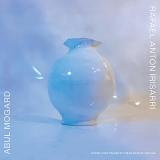
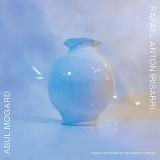
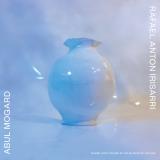
Marja de Sanctis’ cover artwork revisits the vessel sculpture from the duo’s first album, Impossibly Distant, Impossibly Close. There it appeared as raw, unfired clay. Here it has been fired in the kiln and finished with a glaze. Light gathers on its polished surface and spills into the surrounding space. As she explains, “I wanted to convey the idea of continuity within the duo, and the vessel became a kind of container for that idea. However, their music felt different this time, and with the collaboration of Martina and Andrea, I felt it should have a sleeker, softer, more glamorous look, very distant from the first raw appearance.” The transformation of the vessel from raw clay to fired form suggests a passage from immediacy toward permanence, mirroring the music’s gradual expansion.
out of Stock
Last delivered 3 months ago available to reorder, subject to availability
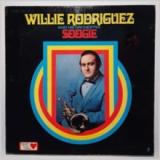
1969 salsa gem originally released on Mary Lou Records, one of the labels in the right place at the right time, just before Fania smashed almost all the competition. The album is mostly comprised of guaguancós, boleros, and improvised-space-filling descargas (jam sessions). We are now happy to reissue this rare and in-demand album after decades unavailable! It includes an insert with liner notes. "Soogie" (1969) was Willie Rodríguez's first album for Mary Lou Records. Mary Lou Records, at that time, was also one of the labels in the right place at the right time, just before Fania smashed almost all the competition. The album is mostly comprised of guaguancós, boleros, and improvised-space-filling descargas (jam sessions). This is remarkable, as it hardly includes boogaloo, which was still prevalent during those years, yet already on the way out. According to Bobby Marín, its musical director "we didn't call it salsa at the time; it had no name. It was mambo or música movida, they used to call it on the radio." The first tune, 'My Dog Soogie,' which provides the title for the recording, is a playful guaracha about a dog The following track is the wildly popular 'La Puerta del Dolor.' 'El Chivo' (the goat) is a spicy guaracha, which changes into a son montuno-guajira. 'Grande' is a guaguancó, followed by 'Los Callos de Dolores,' also a delightful guaguancó. Then comes the ballad 'Porque yo te Amo,' a monster hit of the sixties by popular Argentine singer Sandro. Next we have 'Al Compás del Güiro,' a guaguancó, with the delicious chorus that goes "cómo va, cómo va, cómo va, mi güiro cómo va." 'Paul's Thing' is an instrumental guaguancó, with engrossing sax solos. Finally, we have the smashing, extended descarga 'Salsa con Willie Rodríguez.' We are now happy to reissue this rare and in-demand 1969 salsa gem after decades unavailable!
Foreign Tongues, the new album from The Rolling Stones, is an incredibly vibrant 14-track collection arriving less than three years after the band’s universally acclaimed, GRAMMY-winning album Hackney Diamonds, which topped charts worldwide and achieved multi-platinum status. The new album is introduced by the upbeat and infectious lead single In The Stars.
Leading up to the announcement, the band subtly built anticipation around the project, including the limited white label release of the track Rough and Twisted, issued exclusively on vinyl under the name The Cockroaches. Circulating among fans and collectors, the release has already sparked excitement and speculation about the sound and direction of Foreign Tongues, offering an early glimpse into the album’s raw and experimental energy. Recorded during an exceptionally creative period, Foreign Tongues was brought to life in under a month at Metropolis Studios in West London, with Mick Jagger, Keith Richards and Ronnie Wood reuniting with GRAMMY-winning producer Andrew Watt, who also helmed Hackney Diamonds. The result is a dynamic and forward-looking record that captures the band’s unmistakable sound while venturing into new sonic and lyrical territory—further cementing their unmatched legacy.
The album showcases standout performances from Jagger, Richards and Wood, alongside their long-time collaborators, including Darryl Jones, Matt Clifford and Steve Jordan. It also features a special guest appearance from Charlie Watts, recorded during one of his final studio sessions before his passing in 2021. Additional contributions come from an impressive lineup of guest artists, including Steve Winwood, Paul McCartney, Robert Smith of The Cure, and Chad Smith from Red Hot Chili Peppers.
Speaking about the recording process, Mick Jagger said: “I love doing these recording sessions in London at Metropolis. It was a very intense few weeks recording Foreign Tongues. We had 14 great tracks, and we worked as quickly as we could. I like the room there because it’s not too big, so you can really feel the passion in the room from everyone.”
Keith Richards added: “The album Foreign Tongues has a connection to Hackney Diamonds, and it was great to be working in London again and to have that London vibe around us. It was a month of concentrated punch. For me, it’s all about the joy of it. I’m blessed to be able to do this—may it continue for a long time.”
Ronnie Wood commented: “The atmosphere in the room was so creative, and the whole band was in top form throughout the process. Very often, we nailed it on the first take. I hope everyone will love it.”
The album’s striking cover artwork is a painting created by the acclaimed American artist Nathaniel Mary Quinn
As Is. Nimm es oder lass es. Girl Trouble sind seit ihrer Gründung im Jahr 1984 in ihrer Heimatstadt Tacoma, Washington, ihrem ganz eigenen Stil des Northwest-Garage-Rock treu geblieben. In diesen 42 Jahren, in denen sie dem Ruhm aus dem Weg gegangen sind, hat Girl Trouble in vielen erstklassigen Studios und für viele verschiedene Labels aufgenommen. In den letzten 15 Jahren hat die Band Dutzende neuer Tracks aufgenommen und dabei den Sound gefunden, den sie suchten: etwas Roheres und Echtes. Etwas Neues. Während sie das Experiment fortsetzten, beschloss die Band, alle ihre jüngsten Aufnahmen zu einem ,Rock-Tapestry" zusammenzufassen. Diese Sessions repräsentieren sowohl das ausgefeilte, überlagerte Girl Trouble im Studio als auch das spontane, schnörkellose Girl Trouble live im Raum - genau das, was sie schon immer auf einer Aufnahme festhalten wollten. Das Ergebnis ist das Beste aus diesen beiden GT-Stilen und allem, was dazwischen liegt. Aufgenommen in verschiedenen Klangumgebungen, wobei nur das Songwriting und die Darbietungen von Track zu Track gleich geblieben sind, ist Girl Trouble stolz darauf, endlich diese neue Sammlung von Rock-'n'-Roll-Songs ,As-Is" präsentieren zu können.
Die Musik von Panda Bear und Sonic Boom war schon immer ein Spielplatz: ein Ort, an dem Klangexperimente, Loops und unerwartete Ideen aufeinandertreffen. Während Sonic Boom einst mit Spacemen 3 die Balance zwischen Drone und Pop neu dachte und später mit modularen Synths experimentierte, erschafft Panda Bear, solo oder mit Animal Collective, schillernde Klangwelten zwischen Noise, Folk und Elektronik. Ihr gemeinsames Debüt Reset (2022) wirkte wie ein kreativer Befreiungsschlag im Pandemie-Nebel.
Mit A ? of WHEN setzen sie diese Spielfreude fort, gehen aber noch weiter. Harfen-Loops, Steel Drums, Pedal Steel, sogar Jodeln: Das Duo greift bewusst auf vermeintlich „uncooles“ Material zurück und macht daraus etwas Eigenes. Songs wie „Something Like Dreaming“ oder „Like a Moth to a Flame“ verbinden verspielte Psychedelik mit eingängigen Melodien, als würde man von Station zu Station durch einen musikalischen Abenteuerspielplatz springen.
Gleichzeitig wird der Ton ernster. Die zehn Stücke verhandeln digitale Erschöpfung, politische Verwerfungen und ökologische Fragen, ohne dabei die Leichtigkeit zu verlieren. Inspiriert von einer Welt aus „AI slop“, algorithmischem Dauerrauschen und permanenter Vernetzung, suchen Panda Bear und Sonic Boom bewusst nach anderen Formen der Verbindung: weniger Scrollen, mehr echtes Erleben, mehr Radio, Live-Shows, Listening-Partys und reale Begegnungen. Statt Zynismus setzen sie auf Empathie, Glück und gegenseitige Unterstützung.
Im Kern bleibt das Album jedoch ein Akt der Aneignung: Klänge aus unterschiedlichen Kontexten werden neu zusammengesetzt, getragen von ungewöhnlicher Percussion wie Harfe und Steel Drums. So entsteht Musik, die zugleich verspielt und reflektiert ist. A ? of WHEN blickt auf eine widersprüchliche Welt und verwandelt sie in etwas Verbindendes. Kein großes Heilsversprechen, sondern die Einladung, gemeinsam offline darin aufzugehen.
Konsequenterweise wird das Album nicht auf Streaming-Plattformen verfügbar sein: Panda Bear und Sonic Boom setzen stattdessen auf reale Begegnungen, Listening Sessions und direkten Austausch jenseits algorithmischer Dauerbeschallung.
Dark Wings marks a shift toward a looser, more collaborative sound for Mason Jennings, recorded in an unconventional studio space built inside a design workshop with drummer Scott McPherson and engineer Aaron Featherstone. What began as a single track evolved into an 11-song collection shaped by ongoing sessions, spontaneous collaborations, and a rotating cast of musicians. The result is a warm, full-band record that leans into texture, instinct, and the energy of capturing music in the moment—an inspired departure from Jennings’ more solitary recent work. Vinyl pressing limited to 500.
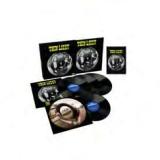
Das Debütalbum „Thin Lizzy“ der irischen Rockband Thin Lizzy erschien am 30. April 1971. Im August
desselben Jahres folgte die EP „New Day“, produziert und aufgenommen von Nick Tauber in den Decca
Studios.
Diese Deluxe-CD- und LP-Veröffentlichungen zum 55. Jubiläum von Thin Lizzys Debütalbum enthalten
Raritäten, BBC-Sessions und bisher unveröffentlichte Musik Richard Whittaker hat einen neuen Stereo-Mix
des Albums erstellt, der auf der CD sowie in den 2-LP-Versionen enthalten ist.
Die 4-LP-Version enthält das Album sowie drei CDs mit seltenem Material, von dem einiges zum ersten Mal auf Vinyl erscheint.
Auf dieser LP haben Thin Lizzy alles in ihre Musik gesteckt und sind dabei Risiken eingegangen. Die
LP ist leidenschaftlich, energiegeladen und unverwechselbar. Die 3-CD-Version enthält ein Blu-ray-Boxset
sowie ein Hardcover-Buch mit ausführlichen Liner Notes von Mark Blake von Mojo und Erinnerungsstücke.
Archival release from Lagoss, the collaborative project between Discrepant founder Gonçalo F. Cardoso (Gonzo, Visions Congo, Papillon, Prophetas) and Tenerife-based electronic producers Tupperwear (Mladen Kurajica and Dani Tupper).
Tenerife Ghost Healing Mix ’78 draws on material originally recorded in 2020, these recordings capture an early phase of Lagoss’ sound: a humid, proto-cyber tropical zone where synthetic textures, degraded rhythms and softened melodic fragments drift into each other. Rather than foregrounding narrative or structure, the material leans into ambient saturation — layers accumulating slowly, colours bleeding, signals slightly overdriven and left unresolved.
Sonically, the mix occupies a proto-cyber tropical zone—humid, blurred, and gently unstable. Layers of noise, softened rhythms, and synthetic textures accumulate into a form of ambient saturation, where density replaces direction and repetition becomes restorative rather than functional. The approach remains rough, unhinged and no-frills: raw signal paths, little correction, and a willingness to let things run slightly out of control.
Assembled from outtakes, alternate versions and early sketches, the tape favours atmosphere over structure, presenting the material in a slower, more inward-facing state than earlier Lagoss releases. It functions less as a remix than as a refracted memory of the original sessions, viewed through time, heat, signal decay—and left deliberately unfinished.
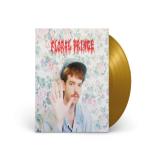
For some time now, followers of Field Medic have been piecing together clues about Floral Prince. The name has been mentioned in late night Twitter hints, secret YouTube leaks, teaser riddles, Instagram live sets, and standalone single drops. This unconventional approach paints a bigger picture for the 11-track project as a whole, set for release October 2nd from Run For Cover Records. Part mixtape, part album, part collection, part musical patchwork quilt, Floral Prince is the latest offering from Field Medic, aka the preeminent Bay Area freak folk artist Kevin Patrick Sullivan. It’s a reflection of his unique approach to songwriting and a creative drive that can’t be contained to the traditional album format. Field Medic’s songwriting rarely slows down; even after the release of his 2019 full-length fade into the dawn and the busy touring schedule that followed, Sullivan still found himself flush with new songs and ideas. As he attempted to earmark certain songs for his next release Sullivan began to chafe at the pressures of a follow-up album. Longing for the spontaneity of Field Medic’s earlier work, Sullivan found inspiration in what he calls the “full-time freestyle” mindset where he writes and records songs on the fly with a four-track, usually with a self-imposed limit of three takes. “This style lends itself to more off-the-cuff lyrics and recordings that communicate their point much clearer to my ears,” he explains. “It’s also fun.”
The process proved surprisingly satisfying, often capturing the diary-like nature of Sullivan’s songwriting more accurately than some of the music he’d been poring over. “The songs born from this method aren’t always ‘hits,’ he says. “But they feel much more important to me…closer to how I really feel.” Some of these charming homespun missives made their way onto the internet, spurring fans to follow the breadcrumbs towards these first glimpses into Floral Prince and the ever-expanding Field Medic mythology. “I realized the songs I was saving for another album were much less focused and effective than some of the freestyles I had been creating and subsequently leaking,” Sullivan says. “I think that’s because I really enjoyed the process of writing and recording the freestyles, whereas the ‘hits’ I was attempting to make were being approached as more of a chore.” Floral Prince officially began to see the light of day through a series of stand-alone singles released throughout early 2020 in tandem with episodes of Sullivan’s homemade webseries, the field medic show. To invite fans further into Field Medic’s unique world of achingly beautiful melodies and conversational lyricism, songs like the atmospheric ballad “better way” and the Alex Menne (pickleboy/Great Grandpa) collaboration “talkin johnny & june (your arms around me)” were shared alongside the YouTube show’s accompanying live versions. Other tracks—like rousing opener “-h-o-u-s-e-k-e-y-z-” and the longing “i want you so bad it hurts”—were repurposed from the fade into the dawn sessions to finally find a home on Floral Prince. Elsewhere “it’s so lonely being sober” exemplifies the unvarnished appeal of the full-time freestyle attitude. The song’s direct lyrics and single-take phone recording preserve the deeply personal storytelling, relatable details, and palpable emotions that make Field Medic’s work so intimate and enthralling.
Although Floral Prince is culled from several years of Field Medic songs, its 11 tracks have a sense of cohesion that can be attributed to Sullivan’s singular vision and willingness to allow the listener into his life. “These songs were written through different seasons of my life but they all share a common theme of quiet, nagging, yet somehow defiant insecurity,” he explains. “To hear them all grouped together reminds me that I’ve always felt more or less the same way, and have had the same obsessive tendencies my whole life that have often led to self-destructive behavior. Maybe this is catharsis.” In the end Floral Prince is actually many things at once: a snapshot of an artist shaking off the perceived boundaries of his medium; a document of years of Sullivan’s life preserved in musical form; the closing of one songwriting chapter and the start of another. Or perhaps as Sullivan puts it, “All songs have their day…”
This is not a Ben Vida, Booker Stardrum, and Will Epstein record; it’s a Play Time record. That’s a subtle but important distinction, for a couple reasons. One, the sound of Magic Object—a polymetric blend of improv and pulse minimalism for saxophone, drums, and Moog—doesn’t really sound anything like any of their many other ensembles or respective solo projects. And two, it was only while making Magic Object, their debut album, that Play Time realized they were a band at all.
Let’s back up. The roots of the trio date to 2020-21, when Will and then Booker moved to the Hudson Valley, where Ben was already living. The three got into the habit of playing together at Ben’s house, and they soon realized that their hang sessions felt fundamentally different from making music in some falling-down studio in Bushwick. Where those experiences were rushed and cramped, a new sense of time and space now suggested itself. Where once they rat-raced the music, now they relaxed into it.
Early gigs yielded similar revelations. A booking at Tubby’s, the beloved Kingston venue, evolved into a kind of residency. Tubby’s is a small space, fitting around 100 people, with a bar in the front room and a stage in the back. Play Time decided that they didn’t want to play on the stage; they wanted to play in front, among the people in the bar. Rather than hogging the spotlight and overpowering the other voices in the room, they blended with the energy of their surroundings and emerged as a sort of minimalist-jazz-krautrock bar band.
Gradually, they discovered a newfound “elasticity”—Ben’s word—that reshaped the music from inside. “It’s this communal thing,” he says. “It’s vibes. And it’s embedded in the community up here, which feels really vital and nourishing.” They were jamming, but it wasn’t just a free-for-all; they found themselves listening to each other in new ways. “Ben and Booker joke that they’re always playing in different time signatures,” Will says. “We’re all going forward with our own ideas, but we’re open to each others’ as well, and they’re all sort of dancing together.”
“We all have our painterly solo projects,” Will says—where, Booker adds, “we do a lot of studio arranging and thinking and composition that takes shape over a period of time.” Play Time, on the other hand, is all about being in the moment. That spontaneity was key to the process of recording the album. They booked two days in their friend Joey’s studio, a converted wooden barn. “It’s just a live room,” Booker says. “There’s no separation or anything. So we’re all in the space together and it’s got this beautiful, woody sound, and that’s very much the sound of the record.” For two days, they just jammed, for seven or eight hours each day. When it was over, they went through, edited down the portions they liked, and added very judicious overdubs designed to enhance the original recordings without fundamentally altering them, staying true to the spirit of the sessions.
The result is something like a snapshot and a mission statement all rolled into one. “You’re hearing us discover the voice of the band in real time,” Ben says. “We finished those sessions and we were like, ‘Oh, that’s what our band sounds like now.’”
Now, with Magic Object, the rest of us get to find out too.
—
Balmat is a label with a cloudy outline. Jointly shepherded by Albert Salinas and Philip Sherburne, two friends living in Cardedeu, Catalonia, and on the Balearic island of Menorca, Balmat grew out of Lapsus Radio, a weekly show born almost ten years ago. Balmat’s mission is simple: to foster new ideas, expand upon personal obsessions, and put enveloping sounds out into the world.
“Balmat” means “empty” or “void” in Catalan. But quite apart from any negative connotations, we prefer to think of it in terms of possibility: a space waiting to be filled.
out of Stock
Last delivered 3 months ago available to reorder, subject to availability
Jimpster delivered some great releases in 2023, most notably his Natural Child collab EP with Crackazat as well as his Tribute EP featuring South African vocalist Mavhungu and including heavy Osunlade remixes. He also produced some of his best remixes to date including Thakzin’s Don’t Let Me See, Blaze’s Wonderland and Detroit Rising’s Rocket Love.
It’s always a good day to announce a new Jimpster EP on Freerange and with two captivating originals plus a stunning Atjazz remix you’re in for a treat! You’re My Ecstasy sets the tone with Jimpster’s trademark deep Rhodes pads, punchy bassline and shuffling classic house drum groove. He once again manages to strike a great balance between soulful, musical, warm and just a touch moody.
Next up we have The Passion which builds a deep and jazzy mood around a 4 bar piano progression whilst the sampled interviewee gives his insight into how he maintains his passion for music. London based trumpet player KingCrowney adds some lovely horn parts, emphasising the jazz feel to compliment the spoken word.
Atjazz gets well and truly stuck in on his remix of The Passion. Reportedly completed in just two studio sessions the hardest working man in deep house (as Jimpster calls him) brings his well-loved deft touch introducing an beautifully syncopated bassline and classic Atjazz drums making for a clubby interpretation for the deep, discerning dance floors.
out of Stock
Last delivered 3 months ago available to reorder, subject to availability
Somewhere between the after-hours haze and the first flicker of sunrise, Nebraska re-emerges - this time with a twist in the signal. Long respected for his deep-cut sensibilities and dancefloor intuition, Ali Gibbs returns to Delusions Of Grandeur not just as Nebraska, but with a handover to his new alias: Dubl Drat. The Alter Alter Ego EP plays like a transmission from both sides of his creative psyche - one rooted in warm, groove-led house and disco mutations, the other drifting deeper into dubbed-out, heady abstraction.
The A-side opens with Alter Alter Ego in its Nebraska OG Mix form - a crunchy, funked-up mid-tempo burner. Chopped Rhodes solos flicker in and out of the mix while a rolling bassline locks into a low-slung groove - equal parts party-starter and late-night dancefloor hypnosis. Next, The Teckel Track slides the tempo down into a proper slo-mo four-on-the-floor bumpy groove. Fat stabs punch through layers of glitchy FX while a melodic bassline snakes underneath, forming a hazy, infectious earworm tailor-made for those early-night mood-setting sessions. Closing the A-side, Olive (Dubl Drat Dub) signals a shift. Here, Gibbs leans fully into his Dubl Drat persona, dissolving structure into a blissed-out dub excursion.
Chopped breaks scatter across the stereo field, chiming melodies echo into the distance, and granulated percussion parts build a dense, immersive landscape - one to get lost in rather than dance through. Flipping over we have Alter Alter Ego (Dubl Drat Remix) which reconfigures the title track into a stripped-back boogie workout. The groove is leaner but no less potent, driven by a killer bassline and punctuated with signature Rhodes licks - pure, understated club pressure. Finally, Olive (Nebraska Version) offers a gentle comedown. This alternate take softens the edges, introducing additional guitar textures that drift into Balearic territory. It’s nostalgic, introspective, and quietly expansive - a closing chapter that lingers long after the last note fades. The Alter Alter Ego EP isn’t just a new release - it’s a dual-state exploration, a conversation between rhythm and space, between Nebraska and Dubl Drat, and marks the last ever Nebraska release as Ali closes the chapter and the alias for the final time.
out of Stock
Last delivered 70 days ago available to reorder, subject to availability
Dream Dancing are back with the second release in their series of rediscovering the underground gem, Blueless.
Here with the 'Tar Liom' EP, once again showcasing her timeless and true deep house sound.
'Maybe Nothing' & Are You Pleased?' came out on her own Capture Records back in 2005. Both with a fresh remaster ready for those late night or early morning sessions.
On A2 you will find 'Weep 'n Crash', which was written in around 2008 but never saw the light of day until now, clearly inspired by the emotive depths of Larry Heard.
A melting pot of danceable melancholy, uplifting and hypnotic rhythms !
out of Stock
Last delivered 59 days ago available to reorder, subject to availability
We can't resist the carefully fused and treated sounds of The Reflex who shows his class again here with more multitrack remixes that bring vintage grooves bang up top dates without stripping them of their seasoned charms. 'Cherry Dub' is packed with big riffs and well known vocal-hooks but is dubbed out top perfection with screeching guitar solos destined to send dancers wild. The flip side is a more warm and breezy roller for sunny days and cocktail sessions, again with an iconic vocal and top line adding that familiarity that always unites dancers.
out of Stock
Last delivered 7 days ago available to reorder, subject to availability
Im Februar 2026 erscheint zum zwanzigjährigen Jubiläum Hard to Love a Man" von Magnolia Electric Co. als erweiterte Edition und zum ersten Mal auf Vinyl. Diese Jubiläumsausgabe der ersten EP der Band enthält drei zusätzliche Tracks: remasterte Demos von 31 Seasons in the Minor Leagues" (zuvor unter dem Titel Tonight I'm So Down" bekannt) und Lonesome Valley", aufgenommen in den Echo Park Studios in Indiana während der Hard to Love a Man"-Sessions, sowie One Thin Dime", aufgenommen während der Black Ram"-Sessions in den Sound of Music Recording Studios in Richmond, Virginia. Working-Class-Rock" ist ein Begriff, der häufig zur Beschreibung von The Magnolia Electric Co. verwendet wurde. Kategorisch hatte sich die Band ihren Platz unter gleichgesinnten Ikonen wie Bob Seger, CCR, Tom Petty und Bruce Springsteen gesichert, doch es handelte sich nicht nur um eine ästhetische Beschreibung, sie untermauerten dies mit ihrer Arbeitsmoral. Im Jahr 2005 waren The Magnolia Electric Co. erstaunlicherweise acht Monate unterwegs. Diese Tatsache wurde den Bandmitgliedern selbst am deutlichsten bewusst, da sie so lange von ihrem Zuhause und ihren Liebsten getrennt waren. Daher die Bedeutung des Titeltracks. Wenn Jason Molina die Perspektive der Person einnimmt, die er zurückgelassen hat, und in Hard To Love A Man" singt: "It was hard to love a man like you / Goodbye was half the words you knew / While you were waiting for me not to call / I sent my love", dann wird die Einsamkeit und Schuld der Trennung schmerzlich deutlich. Jennie Benfords verletzliche Stimme, gepaart mit Jason Groths fließender Gitarre und Mike Kapinus' klagender Orgel, unterstreicht dieses Gefühl eindrucksvoll, unterlegt vom charakteristischen, präzisen und geschmackvollen Rhythmusfundament von Mark Rice und Pete Schreiner, während Nicole Evans eine neue, dynamische Stimme hinzufügt. Hard To Love A Man" und der Live-Favorit Werewolves Of London" wurden mit Steve Albini in seinen Electrical Audio Studios aufgenommen, die übrigen Tracks entstanden während eines kurzen fünftägigen Heimaufenthalts in Indiana bei Echo Park Studios mit Paul Mahern, dessen Engineering-Resume schon damals Projekte wie The Blake Babies, Lisa Germano und John Mellencamp umfasst. Während die Magnolien weiter wuchsen und erblühten, ließ Jason Molina die Insassen das Irrenhaus regieren.
Acid Jazz presents the second volume of their Jazz Sessions series with the first album from the Matt Berry Trio, with Matt Berry joined by band members Phill Scragg and Graham Mann on ‘Everything’s Peachy’.
When not creating numerous indelible characters on the screen, Matt Berry has forged a remarkable, diverse and acclaimed career as a recording artist. Following the widely lauded ‘Heard Noises’ (2025) and a collaboration album with KPM ‘Simplicity’ (2023), he returns in yet another musical guise as leader of a studio-based mid-century jazz adjacent trio.
‘Everything Peachy’ is a 12-part instrumental suite, inspired by ‘the Sky King’ (American folk hero Richard “Beebo” Russell), who stole a large aircraft with no flight training, performing stunts and manoeuvres, before crashing to his own demise, and takes its name from his response to air traffic control.
Conveying variously the chaos, nostalgia, regret and acceptance of Russell’s maiden flight, it is an open, freeform and flowing composition, drawing influence from the electronic experiments of Miles Davis and the melancholy of Satie, to create another moment of musical beauty from Matt’s curious and ever-moving musical mind.
The Jazz Sessions series was conceived by Acid Jazz founder Ed Piller as a return to the jazz roots of the label. The first release came from former Style Council drummer Steve White, with his first album as leader ’Soul Drums’, further releases will follow over the next year.
THE NEW RELEASE FROM LUNATIC SOUL - THE ACCLAIMED SOLO PROJECT OF VISIONARY COMPOSER MARIUSZ DUDA - INCLUDES THE BELOVED EPIC 'TRANSITION II' + A BRAND NEW PREVIOUSLY UNRELEASED TRACK - PRESENTED ON JEWEL CASE CD WITH 12-PAGE PRINTED BOOKLET / LP This edition of "Transition II", features newly remixed & remastered bonus compositions from the seventh Lunatic Soul album, "Through Shaded Woods". The release includes such tracks as "Transition II," "Vyraj," "Hylophobia," as well as the previously unreleased recording "Realm of The Weeping Willows," whose first sketch was created during the 2020 recording sessions. "Transition II" turned out to be one of Lunatic Soul's favourite instrumental compositions. Lunatic Soul's founder & leader Mariusz Duda wouldn't be himself if he didn't add something previously unheard, so the release also includes a new piece, "Realm of The Weeping Willows," which began taking shape during the "Through Shaded Woods" sessions but was completed at the beginning of 2026.
THE NEW RELEASE FROM LUNATIC SOUL - THE ACCLAIMED SOLO PROJECT OF VISIONARY COMPOSER MARIUSZ DUDA - INCLUDES THE BELOVED EPIC 'TRANSITION II' + A BRAND NEW PREVIOUSLY UNRELEASED TRACK - PRESENTED ON JEWEL CASE CD WITH 12-PAGE PRINTED BOOKLET / LP This edition of "Transition II", features newly remixed & remastered bonus compositions from the seventh Lunatic Soul album, "Through Shaded Woods". The release includes such tracks as "Transition II," "Vyraj," "Hylophobia," as well as the previously unreleased recording "Realm of The Weeping Willows," whose first sketch was created during the 2020 recording sessions. "Transition II" turned out to be one of Lunatic Soul's favourite instrumental compositions. Lunatic Soul's founder & leader Mariusz Duda wouldn't be himself if he didn't add something previously unheard, so the release also includes a new piece, "Realm of The Weeping Willows," which began taking shape during the "Through Shaded Woods" sessions but was completed at the beginning of 2026.
Ryo Fukui, the renowned pianist from Hokkaido who sadly passed away in 2016, has earned global recognition among jazz listeners through his highly praised early works Scenery and Mellow Dream. A Letter From Slowboat, recorded in 2015, marked his first leader album in sixteen years. The sessions took place at Slowboat his musical home together with two young musicians whose talent Fukui himself deeply trusted. The lyricism that seeps through “Sonora”, the poetic warmth enveloping “Stella By Starlight,” the vibrant energy coursing through “Speak Low” each performance is filled with life. His touch grew more forceful, his emotions more profound, his musical fragrance even more luxuriant.
Femo der ersten Stunde für den Tanzboden - ohne Kompromisse. Kaum ein Jahr lang aktiv und nie über das Delaware Valley hinausgekommen, brachten Eldritch Anisette eine 7"-Single heraus und spielten zwei Dutzend Konzerte, bevor sie aus dem Bandalter herauswuchsen und sechs Momente herzlicher Jugendlichkeit hinterließen, die die Welt neu entdecken kann. 30 Jahre nach ihrem seelenvollen Album ,Complete Fairytales" versammelt die Band ihre fast vergessenen Nick Rotundo Sessions auf einer einzigen LP mit beiliegendem Textblatt, damit man mit den Kids entspannt mitschreien kann.
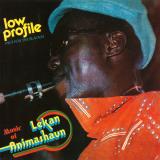
Strut Records proudly presents a new reissue of the original Afrobeat classic Low Profile (Not For The Blacks), recorded and composed by Afrika 70 saxophonist and bandleader Lekan Animashaun and produced by Fela Kuti. After years touring the world as Fela’s baritone saxophonist, Animashaun stepped forward to lead the legendary Egypt 80 band following Tony Allen’s departure, remaining the group’s musical director until Fela’s death in 1997. He continued on subsequent tours with Seun Kuti until 2016. Lekan began recording his only solo project, Low Profile, in 1977. The album was composed and recorded across sessions at home in Nigeria and on tour with Fela, who both produced the recordings and added keyboards to the album’s title track. ‘Low Profile (Not For The Blacks)’ referenced a government campaign during the country’s 1970s oil boom: “It was inspired by a speech by Olusegun Obasanjo, Nigeria’s military Head of State, when he urged black people to keep a low profile about their wealth and not to behave in a vulgar, arrogant way,” explains Lekan. “I argued that low profile is not just for the blacks, as everyone is human, regardless of race.” On the flip side, the simmering Afrobeat anthem ‘Se Rere’ (which translates as ‘Do Right’) delivers Animashaun’s message of living with integrity: do right, and you will reap what you sow.
The song later became the band’s opening number during Fela’s live performances both in Nigeria and internationally throughout the 1980s and ’90s. Despite recording beginning almost two decades earlier, Low Profile did not receive an official release until 1995, when it finally surfaced on Fela’s Kalakuta label. One of only a handful of albums led by core members of Kuti’s band, Low Profile captures a pivotal moment in Afrobeat history. Over time, the original has become a rare and highly sought-after record, and this new reissue places the spotlight back on a modest but influential Nigerian legend. Strut’s reissue features the complete original artwork, is fully remastered by The Carvery, and includes brand new liner notes by Lekan Animashaun himself.
180gm marble vinyl.
Baratro was born when Fede (Council of Rats) and Dave (Unsane) met at a show in legendary Milan squat Cox18 and started to trade riffs and song ideas. After a while they decided to shape these experiments into a proper band and got Luca (Marnero) behind the drumkit to complete the line up.
After a few months of practice and a couple of shows in Italy, the band recorded their very first six songs in the empty concert hall of Cox18, which were later released as the “Terms and conditions” EP via Sangue Dischi records (July 2021).
Given the worldwide shutdown of live performances through 2020/2021 the band focused on writing new music, and in August 2021 they started tracking down their first full length effort, “The Sweet Smell of Unrest”, which was released February 2024 via Improved Sequence.
In 2024 Baratro joined forces with cellist Matteo Bennici to experiment as a quartet, both for composition and live. With this new formation and new found chemistry, the band simply let the dynamics and trust in each other shape the outcome of the music.This new creative process led, about a year later, to the recording sessions of their second full-length “No comply”, to be released by Supernatural Cat.
‘Songs in A Minor (25th Anniversary Edition)’ features the classic, 5 time Grammy winning debut album augmented with two bonus tracks from the original album recording sessions: “Foolish Heart” and “Crazy (Mi Corazon),”. This limited quantity 2LP set spreads the 18 total tracks across four sides, all pressed on orange marbled vinyl housed in a luxe gatefold package.
Die Aufnahmen für das 1963 bei Impulse! Records erschienene Album “Impressions” entstanden im
Zeitraum zwischen 1961 und 1963 bei einem Auftritt im Village Vanguard sowie bei zwei unterschiedlichen
Sessions im Studio von Rudy Van Gelder. Sie zeigen das klassische John Coltrane Quartet, teils verstärkt
durch Gäste, auf dem Höhepunkt seiner Schaffenskraft und dokumentieren die sich rasch entwickelnde
modale Sprache des Ensembles. Obwohl sich das Jazzmagazin DownBeat Coltranes Experimenten damals
nicht immer aufgeschlossen zeigte, erhielt das Album 1963 die Höchstwertung von fünf Sternen. In seiner
Rezension schrieb der Kritiker Harvey Pekar: “Nicht alle Stücke auf diesem Album sind hervorragend (was
eine Fünf-Sterne-Bewertung ja eigentlich bedeutet), aber einige sind mehr als hervorragend.”
Die siebte Veröffentlichung in der Metallica-Reihe mit Neuauflagen in verschiedenen Formaten ist ihr Studioalbum ReLoad aus dem Jahr 1997. ReLoad wurde größtenteils während derselben Sessions wie Load
aufgenommen, stieg auf Platz eins der Billboard 200 ein, blieb 75 Wochen lang in den Charts und wurde
mit 4-fach Platin ausgezeichnet.
Es enthält die Singles „Fuel“, „The Memory Remains“, „The Unforgiven II“ und „Better Than You“, die
1999 den Grammy für die beste Metal-Darbietung gewannen.
Neues, viertes, Solo-Album vom dänischen Psych-Rock-Zauberer Uffe Lorenzen aka Lorenzo Woodrose aka... Seit zehn Jahren interpretiert Uffe Lorenzen (bekannt von u.a Baby Woodrose und Spids Nogenhat) auf allen seinen Alben ein altes dänisches Lied. Das gilt für seine drei Soloalben und die beiden Alben seiner aktuellen Rockband Lydsyn. Auf seinem neuen Soloalbum Glemte Spor ("Vergessene Spuren") hat er ein komplettes Album mit 10 Interpretationen von Liedern aus den Jahren 1967 bis 1999 aufgenommen. Einige davon sind dänische Klassiker, andere sind eher unbekannte Lieder, die er sich zu eigen gemacht hat. Viele davon können als Protestsongs betrachtet werden oder haben einen anti-war Charakter. ,Ich habe festgestellt, dass ich die Herausforderung, Songs anderer Leute zu interpretieren und sie zu meinen eigenen zu machen, wirklich mag. Sie zu verändern, zu interpretieren und vielleicht sogar zu verbessern. Viele der Songs werden den meisten Menschen unbekannt sein, während andere dänische Klassiker sind. Was sie gemeinsam haben, ist, dass sie mich irgendwie zu dem gemacht haben, der ich bin", sagt Uffe Lorenzen. Das Album wurde zusammen mit Morten Hart Grabowski in einem kleinen Studio in Kopenhagen aufgenommen. In mehr als 20 Sessions haben sie zusammen eine Liste von 50 Songs auf die zehn reduziert, die schließlich auf dem Album gelandet sind. Laut Lorenzen fanden die Aufnahmen in einer sehr entspannten Atmosphäre statt: ,Wir haben etwas Gras geraucht und Rotwein getrunken, was den Prozess sehr entspannt gemacht hat, und ich glaube, das hört man dem Endergebnis auch an." Später übernahm Flemming Rasmussen den Mix und das Mastering in seinem berühmten Sweet Silence Studio. Glemte Spor erscheint am 24. April bei Bad Afro Records und die erste Auflage ist auf 1000 Exemplare auf schwarzem Vinyl limitiert.
Bun B and Statik Selektah are back with TrillStatik 5, the latest chapter in their annual live-recorded series. This time they’re setting up shop in Miami, building the album from the ground up right on the live stream, just like they do every year.
The formula stays true: Bun B’s classic Southern delivery over Statik’s signature boom-bap production, creating that easy, natural chemistry fans expect. As always, a lineup of guests will drop in throughout the session — no advance announcements, everyone gets revealed as they walk into the studio.
Simple, raw, and made in real time. TrillStatik 5 continues the tradition with a new city, new vibes, and the same spirit that makes these sessions special.
Bitter Honey is the new album by Eric Silverman. Produced in collaboration with Damien Lewis, the album finds Silverman leaving behind the acid-fried desert rock of 2023’s Stay In It for something far more lush and expansive—a collection of ten psychedelic rock, pop, and folk tracks inspired by Peter Gabriel, John Cale, and Jeff Tweedy. Fittingly, the album is named after the “mad honey” of the rhododendron flower, a rare and potent hallucinogenic found high in the Himalayas.
The process of writing and recording the album started in early 2023, when Silverman and longtime collaborator Lewis retreated to a cabin near Nevada City, CA. Over the course of a week they sketched out the bones of nearly half the album, with Silverman recording the guitar solo for album opener “Anthropocene” live in one take during a particularly inspired moment. Meanwhile, “Get In Where You Fit In”, inspired by a bumper sticker Silverman saw heading up the mountain, was recorded on Jerry Garcia’s old 8-track tape machine and features pedal steel by Jake (Freeman) DeJongh. While at the cabin they also captured the field recordings that bookend the album, starting with the intro of “Anthropocene” and ending with the outro of “Bitter Honey” - an infinite loop.
Later on they decamped to Palomino Sound in LA for a round of sessions – tracking “Light Me Up” and “Trapped In Reverse” while making use of the prodigious assortment of vintage instruments at their disposal, including a 65’ Wurlitzer electric piano that became the centerpiece of a number of tracks. Eventually the pair ended up at 2200 Studios (formerly The Record Plant) in Sausalito, CA—a legendary studio where Prince, The Grateful Dead, and Fleetwood Mac made classic records. It was there that they tracked “New Light”, featuring strings by brothers Graham and Lewis Patzner; recorded all of Adam MacDougall’s (The Black Crowes, Circles Around the Sun) overdubs, including his synth leads on “Living the Dream”; and mixed the album in Studio A.
In a lot of ways Bitter Honey is Silverman’s first proper studio album. It’s also the first time Silverman has sat in the producer’s chair, this time around sharing the credit with Lewis. While his debut album was a product of its environment, all first takes and raw energy, Bitter Honey is thoughtful and focused, the best work Silverman has done and the culmination of his decade plus creative partnership with Lewis.
Highly anticipated sophomore album from Eric Silverman. Press coverage includes reviews and features in Raven Sings the Blues, and more.
“...threading the quicksilver needle of psych, AOR, and ‘70s Cocaine Cowboy territory.” - Raven Sings the Blues.
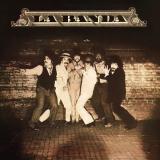
Soul, jazz-rock, candombe and funk blend in the cocktail of La Banda's first and sole album. Often regarded as Argentina's first supergroup, the ensemble built a reputation on their explosive live performances during a time of political repression. Short-lived but unforgettable, the six-piece brought together top-tier jazz musicians—five Argentinians alongside Uruguayan icon Rubén Rada—to deliver a deep, hard-hitting sound that resonates far beyond its era.
Rada arrived in Buenos Aires bruised — a romantic disaster and a string of empty concert halls back in Montevideo had pushed him to start over at 35. Behind him lay a remarkable journey: from inventing candombe beat with El Kinto, to leading the Latin rock powerhouse Tótem, to recording cosmic jazz with Opa alongside the Fattoruso brothers. Trumpeter Benny Izaguirre, the band's architect, gathered around him a cast of heavyweights: pianist Jorge Navarro, an essential figure in the Buenos Aires jazz scene since the 1950s; saxophonist Bernardo Baraj, forged in Alma y Vida, Argentina's jazz-rock champions; and the irresistible rhythm section of bassist Ricardo Sanz and drummer Luis Ceravolo, both veterans of Astor Piazzolla's quintet. All three — Baraj, Sanz and Ceravolo — were simultaneously part of Banda Spinetta, the jazz-oriented project of Argentine legend Luis Alberto Spinetta.
The sessions also drew in two guests who needed no introduction: guitarist David Lebón — veteran of Pappo's Blues, Pescado Rabioso, Color Humano and Serú Girán, one of Argentine rock's true giants — and guitarist and producer Daniel Homer, a quietly indispensable figure across Buenos Aires' jazz and rock scenes.
Recorded in 1979 and gone almost as soon as it arrived — La Banda's brief existence and this sole album are what Buenos Aires sounded like when it was allowed to breathe. Between raids, between disappearances, in the stolen hours when music was louder than fear.
Life and Death launches Peak Time Archives, a new vinyl and digital various artists series shining a light on rising producers and the next wave of label-affiliated talent.
This first edition moves across the full spectrum of the dancefloor. Jennifer Loveless — Guardian 'Artist To Watch', Mixmag Track of the Year recipient, and alumni of !K7, Future Classic and Butter Sessions — opens with "Satisfaction", a warm, body-moving indie dance reinterpretation that feels at home as much at Ibiza sunset as it does on a festival main stage.
UK mystery producer ROKAR follows with "Bedroom Headliner", a garage-rooted house cut that blurs the line between intimate and euphoric, already earning BBC Radio 1 plays and support from Marco Carola, Skream and Chloé Caillet.
Rudy With A Hoodie & J-Land deliver "The Rhythm", a driving, hypnotic peak-time weapon built for main stages, drawing on the analog warmth of Red Axes and DJ Tennis.
Mexico City's PAURRO closes the record with "Chik Fresa" — playful, punchy indie dance with personality to spare, from an artist who has performed at Tresor and Boiler Room and released on Cómeme and Nervous.
Four tracks. Four distinct voices. One dancefloor.---
out of Stock
Last delivered 17 days ago available to reorder, subject to availability
The mighty Channel One Studios,Kingston, Jamaica, has its place set in Reggae's Musical History.Its distinctive sound the studio created on opening its doors in 1972 to its closure in the early 1980's made it the Producers, Singers and Musicians studio of choice during this furtive period. Achieving that vibe and clarity, separated it from the other Kingston establishments.
Run by the Hookim Family's four sons, Jo Jo the eldest followed by Paulie, Ernest and Kenneth. Their father originally came from China and married a Chinese Jamaican lady and settled in the St Andrews district before moving to Kingston Town itself. The family business was built on jukeboxes and one armed bandit machines in and around Kingston. A lucrative venture until the gaming laws changed in 1970, outlawing the gaming machines. So the music side of the business would have to be expanded. So it was decided to open a studio to make the music to supply their already established Jukebox enterprise. The four brothers opened Channel One Recording Studios in 1972 at 29 Maxfield Avenue, Kingston 13. Initially as we stated the purpose of the studio was for the brothers use only, but this would soon change when the various Producers all looking for that Channel One sound came asking for studio time.
The brothers had used the services of Bill Garnet a renowned and well respected technical engineer on setting up the studio. They spent a lot of time laying out the space to get the right acoustics and picking the right quipment. They went with a four track API desk and the best quality microphones such as Neuman, Sony and AKG, vital in obtaining the quality sound and track separation that would prove so worthwhile after the music was recorded to give the best flexibility on the final mix downs. Jo Jo would take over the production duties after the initial hiring of Syd Bucknor a producer who had worked closely with Coxonne Dodds Studio 1 stable. The first release on the Channel One label would be 'Don't Give Up The Fight' by Stranger Cole and Gladstone 'Gladdy' Anderson.The initial two thousand run being swallowed up by their Jukebox interests and so the steady flow of hits would run up to the brake through hit of 1975 'Right Time' by the Mighty Diamonds.
1977 saw Jo Jo extending his stays in New York to a semipermanent status, returning mainly to oversee recording sessions and then taking the results back to America for worldwide distribution. His brother Paulies senseless killing in that year also added to Jo Jo's decision to spend more time with his Hit Bound Manufacturing set up in New York. The Channel One studio would be upgraded in 1979 to sixteen tracks and although Jo Jo and Ernest still covered the mixing and engineering duties Kenneth would now supervise sessions. An often untold part of Channel Ones history is the involvement of Producer Niney The Observer. The mid to late 1970's were heavy times both musically and politically and Maxfield Avenue was in the heart of this crossfire. Some artists and musicians were weary of using the establishment especially when sessions ended late at night and exiting the studio at these times could be somewhat dangerous. But Niney’s fearlessness seen him over running and in many cases running the all night sessions with his trusted set of musicians loosely called The Soul Syndicate. Having the run of the mighty Channel One studio's allowed Niney to build up and work on a stockpile of rhythms that he still has yet to unleash on the world. We have been lucky to select a bunch of material from Niney's vaults for this release. Some great unreleased rhythms and some different cuts to some tracks you might already know. Niney's work with Dennis Brown and his own distinctive heavy roots style productions have been documented and indeed his work on Channel Ones Yellowman releases stand tall also. We hope this fine set of Niney Productions set inside the hollowed walls of Channel One will sit beside them as they so richly deserve.
out of Stock
Last delivered 5 years ago available to reorder, subject to availability