The Ibex Band, with Giovanni Rico and Selam Woldemariam at the creative helm, provided the musical backbone for legends like Aster Aweke, Girma Beyene, Tilahun Gessesse, Mulatu Astatke, and Mahmoud Ahmed, including the iconic album Ere Mela Mela, shaping modern Ethiopian music as we know it today. This 1976 album (Ge’ez Year 1968) played a pivotal role in that legacy and has now resurfaced to set the record straight.
There’s a tendency to talk about the seventies as a golden age of Ethiopian music. There are good reasons for that, and just as good reasons against it. However, the notion of a golden past privileges the role of Western explorers and suggests that the pinnacle of Ethiopia’s musical culture is something only a foreigner can appreciate and unearth. It downplays the complexities of Ethiopia’s culture and history, creating an artificial divide between then and now. And it underestimates the constantly evolving sound that has followed.
The legendary musical outfit The Ibex Band, later metamorphosed into The Roha Band, has played a central role in defining the sound of many of the greatest stars on the music scene of Ethiopia from the mid-seventies onwards–but their golden output has never really waned. The story of the origins of the band that provided the musical backbone for greats such as Aster Aweke, Girma Beyene, Tilahun Gessesse, backing the solo career of group member Mahmoud Ahmed as well as backing Mulatu Astatke and many others has yet to be properly told.
Two misconceptions plague the image of Ethiopian music, one is that the music is pure because it is, by some notion, unexploited, the other is that it is all traditional. To begin with, a combination of political changes between the late sixties and the mid-nineties created an environment where only the most dedicated and skilled musicians struggled on and pursued a musical career against fierce odds. The whole Ibex Band, with Giovanni Rico and Selam “Selamino” Seyoum Woldermarian at the creative helm, are arguably the origo of the vibrant scene in the mid-seventies, and the said pair are foremost responsible for not only navigating the band through troubled times, but also modernizing the 6/8 chickchicka rhythm to a contemporary form. Giovanni laid the rhythmic foundation with heavy looped basslines that reinvented traditional melodies as dance music, and with Selamino’s innovative guitar work they influenced scores of musicians from Abegaz Kibrework Shiota to Henock Temesgen. Even Giovanni’s Fender bass and Selamino’s Gibson guitar inspired younger musicians in their choice of instruments. Not only in choice of instruments but also in sound–even as the digital revolution hit Ethiopian music, a lot of popular music still took its cue from the masters from Ibex and Roha.
Ibex emerged out of the ashes of the sixties group the Soul Echos band, adding Giovanni and Selamino to their ranks and taking their cues from a slew of influences, such as Motown and The Beatles, fused with traditional music. A tighter-knit unit than most bands at the time – Ibex has remained six to seven members throughout their whole career, compared to many bands that were as large as fifteen or sixteen men strong when Ibex set out. Their playing has been viciously focused, economical yet heavy. Just a year before the recording sessions of the album in your hands, Giovanni and Selamino made a contribution to the popular musical lexicon of Ethiopia that was simply defining the popular sound: their arrangement and recording of bandmate Mahmoud Ahmed’s solo effort and real commercial breakthrough tune and eponymous album, Ere Mela Mela, from 1975.
Selamino has never limited himself to being an adroit lead guitarist, but has always been a scholar of history, and as such he has probably contributed as much to modern Ethiopian music with his guitar playing and compositions as with a deepened understanding of modern or contemporary – Zemenawi – Ethiopian music. Selamino’s contributions serve as a metaphor for those of the whole band, at one and the same time creating and defining a new, danceable and updated sound anchored in Giovanni’s bass, whilst also elevating the broader scene through their support for others on the scene and on top of that, increasing the understanding of the music.
There is an understandable desire to romanticize the musical heyday Ibex and Roha were at the forefront of, because so much of the output is sorrowfully hard to come by. Ibex creativity was nothing short of ridiculously fierce compared to many of their Western contemporaries. Based on their sheer recorded output alone they could have usurped the title “hardest working in show business” from James Brown, recording more than 250 albums or 2500 songs in the seventies and eighties. Some only surface as cassettes today, others were never given full LP release, and some are simply impossible to find today. In the light of that, it’s nothing short of a miracle that the recording Stereo Instrumental Music from 1976 (Ge’ez Year 1968) has resurfaced. Unearthed in perfect condition on a chrome cassette, this is musical history comes alive–to set the future straight. Stereo Instrumental Music was recorded in collaboration with Karl-Gustav Lundgren, a Swedish national working for the Radio Voice of the Gospel. It took two sessions at the Ras Hotel ballroom in Addis Ababa. The Ibex Band was the first band in Ethiopia to employ a four-track recorder for their recording (the first available in the country, lent by Karl-Gustav). Later the same week, Giovanni and Selamino realized that, lengthwise, the recorded material fell short of what they wished for, so they recorded four more tracks in one more session on a single-track recorder. The Ras Hotel and Ghion Hotel, where the Ibex Band held musical residencies were to Ethiopia in general and Addis Ababa in particular what Motown was to the USA and Detroit a few years earlier – a hotbed of musical creativity and showmanship.
The most astonishing thing about Ethiopian music of the last half century is how tradition and modernity are intertwined. Because of this feature, it’s kind of hard to tell when there ever was or when we are in a “golden age”. So much of music from the past has been criminally neglected, but because of the hardships in the past, it would be an oversimplification to say that said past was a golden age. Probably, the golden age is what we are approaching, because for the first time both the past and future are accessible, and the monumental contributions from before can lay a firm foundation for a thriving music scene today. The Ibex Band stands firmly in the past, present and the future. That, if anything, is golden.
The detailed history of Stereo Instrumental Music is in many ways unique. To begin with, it couldn’t have been recorded earlier (there were no four-track recorders available) and it really couldn’t have been recorded afterwards either, at least not in the years directly following, because of the toll the musical scene took from the unfavorable political climate that followed when the nascent Derg regime and rival groups tried to assert themselves, the musical equipment lent from The Voice of Gospel Radio simply disappeared from Ethiopia when the radio station folded in 1977. Karl-Gustav Lundgren,
the Swedish foreign national who assisted during the recording, worked with the Ethiopian Evangelical Church Mekane Yesus at the time, recalls how they only had about fifteen minutes to get the microphones in place for the recording as to not alert neither the management at Ras Hotel nor the authorities and most importantly, to complete the recording before the curfew came into effect at midnight. In leaping to the opportunity to use previously unavailable equipment to push their sound forward and improvising to meet the logistical challenges, the Ibex Band displayed the very avant-gardism and adaptability that explains their longevity as a band through the years. The recording of Stereo Instrumental Music is from a given time in history, but it sounds as beyond time.
Much of the energy that burst out of the scene that Stereo Instrumental Music came out of dissipated or got sidetracked during the societal changes Ethiopia went through in the 1970s and 80s. Whilst leaders might have professed to be revolutionary, the work ethic of the Ibex Band can truly be described as that. They never called it quits, but adapted, toured extensively abroad in Africa, Europe, and the Middle East, and found ways to work even in the face of the curfew that curtailed a lot of musical life. They even played major arenas in the nineteen eighties, despite said curfew and restrictions. The whole extent of their legacy has never been told, but their music speaks louder than words, so therefore… tune in to the Ibex Band’s Stereo Instrumental Music.
Suche:kem
The Delights formerly unissued recording “Listen To Me Girl” first made it’s vinyl debut during 2017 when released back to back with Tearra’s modern soul anthem “Just Loving You” (SJ1008). Having sold out very quickly this release now commands a price of £60.00 a copy. So, with demand still high we have decided to release “Listen To Me Girl” for a second time with the addition of two recently found unissued master tape tracks, which make their vinyl debut as part of this 3 track EP.
The Delights story began in the early 1960’s while as a children’s group from Chester PA. known as ‘The Twilights’ they began entering local talent shows which culminated in a performance at Philadelphia’s prestigious ‘Uptown Theatre’ during 1963. ‘The Twilights’ made their professional recording debut in 1964 for Weldon McDougal III, Johnny Stiles and Luther Randolph’s Harthon Production’s label with “It’s Been So Long/She Put Me Down” (TW-34). A second Twilights 45 came in 1967 “Shipwreck/For The First Time” (TW-35) which sold sufficiently well to be picked up for national distribution by Cameo Parkway. The group consisted of four male vocalists, brothers Kemp “Toppy” Hill, Ellis “Butch” Hill (the eldest) and Jaime “Peanut” Hill and their friend Raymond, plus lead singer and only female member Brandi ‘Peaches’ Wells (born Marquerite J. Pinder) who was only 9 years old when she sang on the group’s first Harthon 45, (Jaime Hill reputedly never featured on either of the two Harthon 45 recordings).
The Hill Brothers were cousins of Manny Campbell and it’s through this family connection that the group came to Emandolynn Productions initially as backing singers before being persuaded by Manny to drop their former performing name of ‘The Twilights’, to become ‘The Delights’. Under Manny and fellow Philadelphian Charles J. Bowen’s tutelage they recorded the delightful crossover dance track “Listen To Me Girl” during the months of July and August of 1968. Recent unearthed master tape finds from these early sessions have since yielded the featured “Come And Rejoice” an energetic subtle gospel influenced dance track which Manny wrote and produced on them in the hope of giving them a wider body of work and appeal as he shopped their demos around local record companies. The original backing track to “Listen To Me” is also featured on this release.
During the mid-1970’s ‘The Delights’ under the tutelage of respected Philly producer, arranger and songwriter Morris Bailey Jr recorded two 45 releases for the Jamie/Guyden distributed Phil-L.A Of Soul label “It’s As Simple As That/I’ve Got Enough Sense” (PH-374) and “Face The Music/Things Ain’t What They Used To Be” (PH-379). Brandi Wells had left the group prior to the Phil-L.A Of Soul releases to firstly join Major Harris’s backing singers ‘Brown Sugar’ before forming the group ‘Breeze’ who backed fellow WMOT label stable mates Billy Paul, Fat Larry & Philly Cream (a.k.a Ingram). Breeze later evolved into the group Slick who recorded the self-named album which produced the chart hits “Space Bass” and “Sexy Cream”. In 1981 Brandi recorded her first solo debut album ‘Watch Out’ which reached #37 on the Billboard R&B Chart, her second solo album entitled “20TH Century Fox” followed in 1985 for the Omni label. She recorded the Butch Ingram penned “I Love You” 12” single for Butch’s Society Hill records in 1992. Sadly, Brandi Wells passed away in 2003 at the age of 47.
Neutral is the no wave / anti-rock duo of Dan Johansson (Sewer Election, Ättestupa, Amateur Hour, etc.) and Sofie Herner (Leda, Enhet För Fri Musik), both with deep connections to the Swedish noise scene. As Neutral, the two smear voice, guitar, organ, and smoldering noise into narcoleptic songs that rewire the strategies of Dome by way of Gate and Mars. Lågliv translates to ‘lowlife,’ an apt metaphor for neutral’s subterranean murk and shambolic discontent that they languidly manifest as a punk dourness emptied of all rock ’n’ roll theatrics. Desperate, demolished, and dejected.
Lågliv was originally published as part of the instantly out of print boxset, On Corrosion - a 10 cassette anthology from 2019 that was housed in a handcrafted wooden box and featuring full albums from Kleistwahr, Neutral, Pinkcourtesyphone, Alice Kemp, She Spread Sorrow, G*Park, Relay For Death, Francisco Meirino, Fossil Aerosol Mining Project, and Himukalt. The collection also stood as the 50th release for The Helen Scarsdale Agency.
- A1: The Almighty
- A2: Holy G
- A3: The Almighty
- A4: Ruff Church Break
- A5: Smell The Blunts
- A6: Kemetic Alchemy
- A7: Rise Travel On
- A8: Blukka
- A9: Ragtag Beat
- A10: Its A Sin To Go Away
- A11: If They Push
- A12: East Los Interlude
- B1: Be Free
- B2: Khali
- B3: Out Of The Frame
- B4: Staring At Gs Mural
- B5: Spaced Out G
- B6: Carry You Away
- B7: Raw Data
- B8: Poobah Crate Talk
- B9: Late Night Drive
- B10: Aida
- B11: Sacred Teachings
- B12: To The Sun
- B13: Amen Ra (Feat Low Leaf)
Cassette[14,71 €]
Second volume of tributes from Kutmah.
A beat tape for the brotha from anotha planet, the most high Ras G & the Afrikan Space Program
All beats by Kutmah / Cover Photos By Kevin Ramos
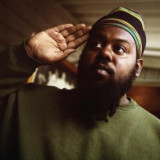
Second volume of tributes from Kutmah.
A beat tape for the brotha from anotha planet, the most high Ras G & the Afrikan Space Program
All beats by Kutmah / Cover Photos By Kevin Ramos
Julia Hülsmann erweitert ihr Quartett mit einer frischen norwegischen Stimme am Horn und präsentiert
ein Programm gruppeneigener Stücke, die im Quartett- und Quintettgefüge nachdenklich und kreativ ausgelotet werden. Wie auf den vorherigen Alben steuert jedes Quartettmitglied Musik zur Session bei, wobei
die Bandleaderin selbst für die Hälfte des Programms verantwortlich ist. Saxophonist Uli Kempendorffs
Einführung in Julias Trio auf Not Far From Here (2019) brachte bereits eine neue Dimension in das
Zusammenspiel der Gruppe – dieses Gefühl wird durch die Ergänzung um die norwegische Trompeterin
Hildegunn Øiseth, die sich der Band auf der Trompete und dem Ziegenhorn für fünf Stücke anschließt, um
ein Mehrfaches verstärkt und ausgebaut. Fesselnder Lyrismus und spielerische rhythmische und melodische
Kniffe durchdringen Under The Surface – ein weiteres Juwel in Julia Hülsmanns zunehmend beeindruckendem ECM-Werk.
Sharpening his modernist, hybridised club sound with the restless energy he’s made his name on, Breaka returns with Aeoui. Nodding to the vowel-only vocal samples he scatters throughout his tracks, this much-anticipated second album reaffirms Charlie Baker’s reputation as a many-sided bass music innovator.
Since 2019, Breaka has been primarily shaping his own destiny by self-releasing most of his music, and it’s afforded him the space to evolve his sound on his own terms. In the wake of his 2022 debut LP We Move, the consistently prolific producer had been looking for a fitting window to channel his work into a second full-length. The opportunity arose when he struck on a fit of jet-lagged inspiration in late 2023 and laid down two of the new album’s key tunes, ‘squashy track’ and ‘yolo bass rewind’. Jutting out at a distinct angle from his other work, Breaka knew he’d found the anchor point around which to build out the next phase of his sonic evolution.
This productive period also aligned with a new studio space to work in, leading to the album’s striking double-dose opening of ‘Aeoui’ and ‘Are We There’. With the flavour of his new album established, Breaka was able to comb back through his reams of existing ideas and find the remaining pieces that fit the emerging puzzle. There are enduring influences which bind together the Breaka sound — footwork, techno and dancehall continue to guide the infectious floor-ready pressure of the record, but he worked free of stylistic concerns to find a vibe that remained true to his independent spirit.
It’s clear the Breaka DNA reaches beyond purist club music — his roots as a jazz drummer from an early age guide the expressive flair in his beat programming, while he took a more direct influence from a mind-blowing Sons Of Kemet gig in 2022 to make psychedelic centre-piece ‘Roundhouse’. Elsewhere ‘Cascara’ pays tribute to the Afro-Cuban rhythm of the same name, which he fused with amapiano’s lithe log drums and shakers, Brazilian percussion and edgy sound design to create a maverick soundsystem wrecker.
The collision of organic and synthetic, crisp forms and chaotic energy are captured perfectly in the cover artwork created with Jordan Core. It’s a savvy sum-up of where Breaka is at right now, continually building out with clear intentions while embracing the unpredictable energy of lived experiences and the ideas that get sparked along the way. That’s why Aeoui sounds like no one else out there but Breaka.
- A1: Leave No Stone Unturned
- A2: Reflections Of Lessons Left
- A3: Stellar Cast
- A4: Heartbreaker
- A5: Dynamite
- A6: Unrequited Love
- B1: No Direction
- B2: Bitter End
- B3: Knocking At Your Door
- B4: The Jester
- B5: Surrounded By Your Beauty
- B6: Long Shadows
Red Vinyl[24,33 €]
Die britische Indie-Pop Band The Lathums kündigt ihr neues drittes Studioalbum 'Matters Does Not Define' für den 7. März 2025 an. Die Band hat bereits zwei aufeinanderfolgende Alben auf Platz 1 der offiziellen britischen Albumcharts vorzuweisen und ein weiteres Jahr mit riesigen Open-Air-Shows hinter sich. 'Matter Does Not Define' wurde von der Band, bestehend aus Sänger Alex Moore, Scott Concepcion (Gitarre, Piano und Gesang), Ryan Durrans (Schlagzeug) und Matty Murphy (Bass und Gesang), in ihrer Heimatstadt Wigan geschrieben, bevor es in den Kempston Street Studios in Liverpool in Begleitung des langjährigen kreativen Mentors John Kettle und des Produzenten Chris Taylor aufgenommen wurde. 'Matters Does Not Define' folgt auf ihr bisher erfolgreiches zweites Album 'From Nothing To A Little Bit More' und ihr Debüt 'How Beautiful Life Can Be' von 2021.
Limited Red Vinyl
- 1: Canto De Enramada
- 2: A Temple By The River
- 3: Exuviae
- 4: Burial Of The Patriarchs
- 5: Siphonophores
- 6: Despe?Aperros
- 7: O Rubor
- 8: Fiat Lux
- 9: Kwisatz Haderach
Coloured Vinyl[29,20 €]
Maud the moth, the solo project of Spanish-born and Scotland-based pianist, singer and songwriter Amaya Lopez-Carromero announces her new album, The Distaff, to be released via The Larvarium (digital +CD) and La Rubia Producciones (vinyl) Amaya has long used the mantle of Maud the moth as an alter-ego, a séance-like conduit to explore themes of rootlessness, identity and trauma. The Distaff in particular refers to the stick or spindle onto which wool or flax is wound for spinning, and an object which has historically been used across multiple cultures as a symbol wielded by the “virtuous woman”, an authoritarian ideal around which much of the trauma surrounding the feminine coalesces. The album takes the form of a sort of self reflective and surreal autobiography. It was in part inspired by the poem of the same name written by the Greek poet Erinna, as she mourns her friend's loss of individuality and agency in exchange for marriage - and therefore safety and acceptance in the eyes of society. The album exists in an ethereal but violent world of aesthetic overlaps where time stands still and fictional and reimagined folk sits at the table with Maud the moth’s usual sonic menagerie. It is the result of a lifetime of obsession with sound and music, where glimpses of musical genre offer insight into Amaya’s artistic interests and her participation in the underground European scene for many years, in bands such as healthyliving. Heavier, darker, and more exposed than any of her previous works it features some highly accomplished artists, such as Seb Rochford (Patti Smith, Polar Bear, Sons of Kemet, Pulled by magnets, etc.) on drums, Alison Chesley (Helen Money) on cello, Fay Guiffo on violin and Scott McLean (Ashenspire, healthyliving, Falloch) on guitar, saxophone and synthesiser. Maud the moth shares the video for "Siphonophores". About the track, Maud the moth says; I wrote "Siphonophores" on guitar, during the first lockdown, a period where I was kind of trapped between an almost empty flat in Edinburgh and Dresden. It was an incredibly harrowing time, but also one of hope and where important new things were being birthed. I felt incredibly sensitive to everything, almost like life was happening in slow motion. I´m not a confident guitarist since I am completely self-taught, but, probably because of this, I feel that this instrument allows me to focus on aspects of the songwriting that I normally overlook when writing on piano, and I think it was a necessary step for this song to exist. Something else which I've been really exploiting lately and features strongly in the album is the percussive capabilities of the piano, and in particular, of the sustain pedal when mic'd up. This can be heard very clearly at the beginning of "Siphonophores". Written and arranged by Amaya, with some contributions in the later role from the aforementioned collaborators, the album presents nine tracks originally written entirely on acoustic piano as accompanied voice pieces, in pure singer-songwriter fashion. The album was co-produced and recorded by Scott and Amaya in different studios across the UK between January and July of 2024, in a process that started shortly after the 2020 pandemic and finished alongside the album recordings in a detailed, organic and at times obsessive process aimed primarily at capturing the natural dynamics and expression of free performance. The Distaff was mixed in its entirety by Scott and mastered at Abbey Road by Alex Wharton (Radiohead, My Bloody Valentine, Aurora, Kathryn Joseph etc.) Despite being born of a very personal point of view, the album lacks a specific narrator and was conceived almost as a sonic trousseau, where the needle point, silks and other family heirlooms have been swapped for out-of-the-corner-of-the-eye memories of rural Spain by the vineyards, family disputes, old tales of wartime pains, generational breaches and finally the conflict of migration and estrangement. The songs paint dystopian pastoral scenes which evolve throughout the span of one fictional day outside of time and coherent locations and where imagination (often the only account surviving from traumatic events and gaslighting) has become indistinguishable from fact. The Distaff attempts to acknowledge past trauma, comprehend and process some of the more difficult aspects which have contributed to our darker self and offer closure and solace through creative catharsis.
Tradition shapes your work. For saxophonist and bandleader Shabaka Hutchings, that's something he's long understood. After years spent in the orbit of London's jazz circuit, he examines and reimagines his influences with a dexterity that's unique. Drawing out the vision underlying his new album, he says, I see energy as being a form of wisdom to be passed down through the ages.'
Unpicking the album's title, he continues, "When we study the music, the lives, the words of our master musicians we obtain a glimpse of that artist's essential energy source. This is the core vitality of the individual which leads them to utilise the musical specifics of their chosen genre in a way that mirrors their inner source of power. This is an intuited wisdom that's handed to us from the legacies of our elders.
The album is a document of sessions combining Hutchings with a group of South African jazz musicians he's long admired. His connection to the group was Mandla Mlangeni (bandleader of the Amandla Freedom Ensemble), whom he'd flown there to play with over the past few years. Recorded across just one day, the group drew on their South African lineage - heroes like Zim Ngquwana and Bheki Mseleku - to bring their own slant to the American jazz lineage which is reconfigured in Hutchings' compositions themselves.
Going beyond the jazz greats Hutchings cites, influences are drawn from plenty of other sources: Caribbean calypso, central African song structures and Southern African Nguni music all play a part. Bringing together those ideas with the contributions of his bandmates is, he explains, crucial to what he sees in the role of an album artist. Even though I wrote all the music, for me, the leader of the project isn't the person who writes all the music but the one who has a vision for how certain musical elements will be combined."
A regular sight on stages around London and beyond, playing - and often leading - groups like The Comet Is Coming, Sons of Kemet and Melt Yourself Down, he's part of a generation whose idea of jazz is pointedly unrefined. That's to say, Wisdom of the Elders comes from an artist interested in the indefinable gaps more than fitting into boxes.
- 45: Lux
- 431: 42
- Vienna Sur Mer
- Runde Um Runde
- Ich Kann Nicht Schlafen
- Alles Ist Gleich
- Tourist
- Verbautes Haus
- Hinter Jalousien
- Der Regen In Wien
- Mädchen Mit Herz
- Lass Uns Spazieren
- Wolfgang Von Kempelens Sprechmaschine
LIMITED 2 LP[30,04 €]
"Wien - die Stadt mit dem wahrscheinlich schönsten Namen. Allein der Klang ist schon Musik." (Andreas Dorau) Grund genug, der österreichischen Hauptstadt ein ganzes Album zu widmen. Die Idee dafür entstand, als Dorau gemeinsam mit zwei Freunden an einem Stadtplan Lübecks arbeitete und dessen brachliegende Geschichten abseits der üblichen Attraktionen erforschte. In Dorau entflammte die Faszination für das Porträtieren einer Stadt aus der Sicht des unvoreingenommenen Touristen, des Besuchers und Außenstehenden. Musikalisch spannt das Album einen weiten Bogen und bietet sowohl wunderschöne Pop-Momente ("Der Regen in Wien"), knarzigen Kawaii-Minimalismus zusammen mit der Kölnerin Stefanie Schrank ("Lass uns spazieren gehen") aber auch Stücke, die sich in ihrem Charakter jeder Einordnung entziehen ("Alles ist gleich"). "Wien" ist somit nicht das erwartbare Album, das der Titel zunächst vermuten lässt. Vielmehr bietet die Platte Einblicke in Andreas Doraus" persönlichen Zugang zur Stadt, die zuweilen auch ein schwierig-schmieriges Verhältnis offenbaren. Und während Popmusik aus und über Österreich im Grunde schon bei Mozart und Schönberg begann, ist Pop aus Deutschland über Österreich vermutlich eher eine Neuerung. Wenn es dann auch noch ein norddeutscher Musiker ist, der ein monothematisches Album über die österreichische Hauptstadt macht, drängt sich fast zwangsläufig die Frage auf: Ist das schon Austro-Pop?
- 45: Lux
- 431: 42
- Vienna Sur Mer
- Runde Um Runde
- Ich Kann Nicht Schlafen
- Alles Ist Gleich
- Tourist
- Verbautes Haus
- Hinter Jalousien
- Der Regen In Wien
- Mädchen Mit Herz
- Lass Uns Spazieren
- Wolfgang Von Kempelens Sprechmaschine
- Platz Auf Erden
- Ottakringer Lightboy
- Rauchen In Wien
- Ich Schwöre
- Tiere Im Prater
- Teddy
- Ein Augenblick Mit Unterschrift
- Schlangen In Der Stadt
- Austropop
- Der Spleen
- Nichts Ist So Wie Es Einmal Schien
Black Vinyl[23,49 €]
"Wien - die Stadt mit dem wahrscheinlich schönsten Namen. Allein der Klang ist schon Musik." (Andreas Dorau) Grund genug, der österreichischen Hauptstadt ein ganzes Album zu widmen. Die Idee dafür entstand, als Dorau gemeinsam mit zwei Freunden an einem Stadtplan Lübecks arbeitete und dessen brachliegende Geschichten abseits der üblichen Attraktionen erforschte. In Dorau entflammte die Faszination für das Porträtieren einer Stadt aus der Sicht des unvoreingenommenen Touristen, des Besuchers und Außenstehenden. Musikalisch spannt das Album einen weiten Bogen und bietet sowohl wunderschöne Pop-Momente ("Der Regen in Wien"), knarzigen Kawaii-Minimalismus zusammen mit der Kölnerin Stefanie Schrank ("Lass uns spazieren gehen") aber auch Stücke, die sich in ihrem Charakter jeder Einordnung entziehen ("Alles ist gleich"). "Wien" ist somit nicht das erwartbare Album, das der Titel zunächst vermuten lässt. Vielmehr bietet die Platte Einblicke in Andreas Doraus" persönlichen Zugang zur Stadt, die zuweilen auch ein schwierig-schmieriges Verhältnis offenbaren. Und während Popmusik aus und über Österreich im Grunde schon bei Mozart und Schönberg begann, ist Pop aus Deutschland über Österreich vermutlich eher eine Neuerung. Wenn es dann auch noch ein norddeutscher Musiker ist, der ein monothematisches Album über die österreichische Hauptstadt macht, drängt sich fast zwangsläufig die Frage auf: Ist das schon Austro-Pop?
A groundbreaking collaboration between British experimental artist Pete Kember aka Sonic Boom (Spacemen 3) and Swiss electronic duo SINNER DC, MAPS blends music, visuals, and interactive gaming (Mac/PC) into a multidimensional experience.
Originally conceived for a one off live performances in 2013 in Geneva, MAPS draws inspiration from Borges' meditations on the limits of representation, crafting a surreal auditory and visual journey
- A1: Eyes On Mine
- A2: Last April
- A3: Lime Tree House
- B1: Mother's Son
- B2: My Greatest Friend
- B3: August Blue
Limited edition classic black vinyl mini-album of cathartic slowcore by The Declining Winter, the new vehicle of Richard Adams, formerly of Domino Records post-rockers, Hood. The next release on the acclaimed boutique English independent label, Second Language Music, will be ‘Last April,’ the new mini-album by The Declining Winter, a raw, deeply emotional monument of loss, grief and heartbreak that treads in the footsteps of Red House Painters’ ‘Down Colorful Hill,’ Low’s ‘I Could Live In Hope’ and Songs: Ohia’s ‘Didn’t It Rain.’ This is not a heart-on-your-sleeve record. It does away with the sleeve and goes straight for carving a heart on the arm. Recordings which emerged out of a period of shock, grief and trauma, these six songs were all written on the same night and form a stately tribute to a loved one lost. The Declining Winter strip things back to just Richard Adams’ plaintive voice and acoustic guitar, alongside the beautiful, irrefutably melancholy string arrangements/playing of Sarah Kemp (Brave Timbers). There’s been no attempt to plane off any rough edges – here and there, the creak of a chair, a guitar note missed, a voice almost cracking with emotion – these recordings are like cathartic scrawls in a diary. Only this one has been left out for anyone to read. As with his previous band, Hood, Adams has a way of evoking a particularly pastoral, English melancholy, of lonely morning hikes in inclement weathers, of rain on slate in the West Yorkshire streets where he was raised and still lives.
"Gary Kemp will be releasing his brand new album This Destination through East West records on the 31st January 2025. This Destination is a collection of all new songs all written and co-produced by Gary.
Lyrically, the album marks a journey in discovery for Kemp and is his most personal body of work to date.
- A1: Oaagaada - Moon Water
- A2: Kemppainen, Tammi, Tolvi - Free-Zing
- A3: Tauna Niingungo, Tatasomba - Koshi Gambo
- A4: Mush Tone Ensemble - Ain't No Answer
- A5: Sarkkola & Tammi - Wavesphere I
- B1: Fågelbörs - Nette Or Nette
- B2: Joronen & Sarkkola - Live From The Joint
- B3: Sarkkola & Tammi - Wavesphere Ii
- B4: Jooklo Sextet - One More Freaky Tune
- B5: Pascal & Baya Race - Doll No Sleep
- A1: Megan Leber - Tides
- A2: Mattheis - Swell (Pye Corner Audio Remix)
- A3: Marie K - Silver Lining
- B1: Mattias El Mansouri - Transcendence
- B2: Cooper Saver - Cloudburst
- C1: Kems Kriol - Blimund
- C2: Martinou - Glider
- D1: Human Space Machine - Second
- D2: Koraal - This One
- E1: Eversines - Rhapsodia
- E2: Erik Luebs - Toward Entropy
- F1: Mathilde Nobel - May + Be (Oceanic Remix)
- F2: Mary Lake - Evergloom
- F3: Gotu Jim - De Last
Standard Edition[28,36 €]
***Limited edition with clear vinyl, white inners, printed centre labels and holographic sticker on B-, D- and F-side*** Nous'klaer Audio proudly presents Paerels III (aka Pearls 3), the third and final edition of its beloved 3x12'' compilation series. This release brings together a refreshing splash of sounds, unbound by genre, blending deep-listening pieces with driving techno, rave-tinged house, and a few playful surprises. Contributions come from both familiar faces and new voices on the label, with some tracks pulled from the archives and others fresh out of the studio - curated by label-head Oberman. Featuring artists like Megan Leber, Mattheis with a remix from Pye Corner Audio, Marie K, Mattias El Mansouri, Cooper Saver, Kems Kriol, Martinou, Human Space Machine, Koraal, Eversines, Erik Luebs, Mathilde Nobel with an Oceanic remix, Mary Lake, and lastly Gotu Jim. A1. Megan Leber - Tides A2. Mattheis - Swell (Pye Corner Audio Remix) A3. Marie K - Silver Lining B1. Mattias El Mansouri - Transcendence B2. Cooper Saver - Cloudburst C1. Kems Kriol - Blimund C2. Martinou - Glider D1. Human Space Machine - Second D2. Koraal - This One E1. Eversines - Rhapsodia E2. Erik Luebs - Toward Entropy F1. Mathilde Nobel - May + Be (Oceanic Remix) F2. Mary Lake - Evergloom F3. Gotu Jim - De Last
As Odysee celebrates its 30th anniversary, the label’s original founder Atila Kemal (T-Mirage) steps up to deliver this jaw-dropping E.P.
In 1994, Tilla was just 17 years old, and an integral part of the original St Albans collective that comprised Jim Baker & Phil Aslett (Source Direct) and Rupert Parkes (Photek), when he set up the Odysee imprint and released the first Source Direct record (Future London/Shimmer). With a follow-up release from Photek (Phaze 1/Try A Style) and a second from Source Direct, the profile of the label began to grow exponentially.
It was the 3 Mirage releases however that really put the label on the map. These tracks were engineered by Jim Baker but heavily co-produced by Tilla himself with a major focus on his keen ear for dark 70’s Noire samples and eerie abstract electronica pitted against soulful R&B vocals. In hindsight, the impact of this rather different soundscape on the Source Direct material that followed is unmistakable.
The A side track Dark Rhodes is a showcase of T-Mirage’s production skillsets. From the opening atmosphere of utter menace and spacious percussion, to the trademark call and response between the different breaks and speaker shaking subs; this track will take the listener straight back to that infamous dark 1995/6 sound that emerged from both the Odysee & Source Direct studios. What is particularly noticeable is the distinctive pairing of sets of samples to form unique sections within the piece, whilst maintaining the consistent rolling energy of the drums & bass. This was a clear stylistic trait the earlier tracks like Feel My Dreams, and is very much on display in Dark Rhodes; leaving us in no doubt that we are listening to the work of one of the OG St Albans Jungle masters!
One of the most important aspects of each Odysee release was to demonstrate versatility on the B side tunes. As a label that was an important part of the mid 90’s Atmospheric scene, it would be remiss not to revisit that style on this seminal E.P. The first of the two B-side tracks is the incredible Existence.
Everything about this piece is a pure distillation of Tilla’s musical style; from the intricacy of the break work and the depth of the subs, to the masterful dovetailing of the 70’s Noire and Jazz samples that build a cohesive arrangement drawing the listener deeper into the tune’s narrative- “A piece of music that’s just a pure expression.... A celebration of existence!” There is no need to re-invent the wheel, or to force groundbreaking new tricks when the strength of this classic sound is so overwhelmingly persuasive!
With the final track Flawless, Tilla delivers an absolute heart-breaker of a tune that rivals the very best of the original Odysee & SD B-sides. Misty-eyed pads and Jazzy rides launch the crisp rolling Think breaks. The deep melodic sub line and haunting guitar riffs draw the listener in, then hold the listener in suspense for a moment before dropping down in the body of the track. The gorgeous guitar motifs are paired with achingly gorgeous vocal ad-libs and avant-garde electronica, emerging orchestral flutters with that unmistakable 70’s Noire flavour. Once again it is
Tilla’s ear for those ‘special sounds’ that really sets this track apart, and as if that wasn’t enough, some 4 minutes down the track Flawless nonchalantly unveils another primary motif; well worthy in of itself of being the tracks centrepiece!
Absolutely stunning heritage-style Atmospheric Jungle at its finest!
Oaagaada hail from the town of Hämeenlinna in Finland. The quartet includes Tuure Tammi (trumpet), Sami Pekkola (sax), Tero Kemppainen (bass) and Simo Laihonen (drums). Laihonen has recently appeared on We Jazz Records with Stanley J. Zappa and previously with Black Motor, and more Oaagaada can be heard on the recent "We Jazz Live Plates" album "Lonna 2019" and on the 2020 7" single release "Oag-Ada".
Jan Anderzén - living in Tampere, Finland - is a collage artist making music, quilts, drawings, mosaics, videos and other things. From him, among a few others, sprang the The River of Finland. A stream that shook the European underground for infinity, back from the years 2005 and up. Jan is/was involved in acts like Kemialliset Ystävät, Avarus, Tomutonttu and The Anaksimandros. When in the past some of that River of Finland tasted like a fermented ocean of mycelia - today it tastes different, like sparkling water.
Halki pilvien - transl. Trough the clouds - brings exactly what one expects from the clouds. It is a collection of soft and gentle movements, as playful as a ‘Jan Anderzén type of music’ is always. A collection of patterns that solidify for just a brief moment in time, before sublimating in the back of the mind. This album is in constant motion.
Push play. A warped piano and cartoonish SFX’s might foretell a hyperreal approach to music. Yet while the champion of hyperrealism, Noah Creshevsky, describes his music as being written in a language we already understand (realism) yet in an exaggerated manner (hyper) - I have to add that things on this album do not sound exaggerated at all. Moreover, i have the feeling that somehow on this work, Jan is trying to underwhelm us. In the best possible way. Because clouds float trough and dissolve. Thus instead of hyperrealism, is Jan maybe speaking to us in a certain Serenerealism? Or Mildrealism?
What Jan’s music does have in common with Creshevsky’s is the no rush part. Listening to Halki pilvien makes time non-directional. The music seems to be designed to be played over and over again. This music has no direct impact like one can experience at a punk show, or at a classical music concert. This music is not that one gigantic raincloud covering the world dark. Quite the opposite, it is a pattern of clouds and clearings, floating over the lands. Trough this music a shadow play appears. This music is durable.
And it is when the sounds are at its faintest, that Jan touches the core: in the smallest detail, we find the fullest musical information.
People Of Earth hits release number 20 with Part 2 of The Elements series again offering some super deep sounds from Patrice Scott, Allstar MotoMusic aka Dan Piu, Alton Miller & KemeticJust, which is a cut first released on the old SOCO Audio label. Scott's 'Cycles' kicks off with super deep kicks and heady pads swirling up top, 'Not My Home' (feat Roger Versey) then brings some majestic jazz keys and spiritual vocals and Miller's 'Italio Love' is a strident cut with leggy kicks and celestial pads. KemeticJust's 'Taking Flight' shuts down with more heavy beats but still romantic moods.
I want nothing more than to be a loner,” Emily Kempf sings early on Flower of Devotion, the new album by Chicago trio Dehd. It’s a startling admission coming from a songwriter who, just a year ago on Dehd’s critically acclaimed Water, wrote eloquently about the joys and pains — more than anything, the necessity — of love, compassion, and companionship. But then, “admission” isn’t really the right word here, given the stridency of Kempf’s tone. “Loner” is a declaration.
The record ups the ante on Dehd’s sound & filters in just enough polish to bring out the shining and melancholy undertones in Jason Balla and Emily Kempf’s songwriting, even as it captures them at their most strident. Balla’s guitar lines at times flirt with ticklish cosmic country, while at others they reflect the dark marble sounds of Broadcast. Kempf, meanwhile, establishes herself as a singer of incredible expressive range, pinching into a high lonesome wail, letting loose a chirping “ooh!,” pushing her voice below its breaking point and letting it swing down there. When she and Balla bounce descending counter-melodies off one another over McGrady’s one-two thumps, or skitter off over a programmed drum pad, they sound like The B-52s shaking off heartache.
KahruMusiqa ist eine musikalische Retrospektive der tunesischen Sängerin und Komponistin Badiâa Bouhrizi alias Neysatu. Sie ist als Autorin der Protestsongs bekannt, die zu den Hymnen der tunesischen Revolution wurden. KahruMusiqa bedeutet elektronische Musik, wird aber im Arabischen nie als solche verwendet, um das Genre zu bezeichnen. Das Album ist eine Sammlung von Klangexperimenten, die entstanden, als sie in den 2000er Jahren erstmals Musikproduktionssoftware in die Hände bekam. Die Stücke basieren auf Gedichten in klassischem Arabisch oder tunesischem Dialekt, die Badiâa selbst oder von ihr bewunderte Dichterinnen wie die palästinensischen Autorinnen Fadwa Tuqan oder Salma Al Jayusi oder den tunesischen Dichter Noureddine Werghi verfasst hat. Die meisten der Gesangsstücke sind Improvisationen, die mit einem Computermikrofon aufgenommen wurden. Eine Bearbeitung des klassischen türkischen Volkslieds Muhabbat ist fast eine moderne harmonische Neufassung, bei der nur klassische Gitarre, Gesang und Delays verwendet werden. Die Themen von KahruMusiqa entsprechen dem ideologischen Weg von Badiâa Bouhrizi. In dem Lied Transrimel ist sie eine queere Frau im sich bewegenden Sand von Tunesien. Sie hinterfragt auch den politischen Vertrag, der 1948 zu Balfour und der Vertreibung von Millionen von Palästinensern führte, und beschreibt in Fil Madinatil harima ("In The Old City") eine Reise zwischen London und Nablus. Dieses elektronische Schlafzimmer-Album im Lo-Fi-Stil enthält auch mehrere Songs, die wie Ila Selma zu Klassikern des arabischen Underground-Milieus geworden sind, und ist die erste Platte, die Badiâa Bouhrizi überhaupt zu veröffentlichen bereit war.
- A1: I'm So Into You (Radio Remix With Rap) - Swv
- A2: The Way You Love Me - Karyn White
- A3: What I Will Do To You - Ex-Girlfriend
- A4: Giving You The Benefit (7" Version) - Pebbles
- B1: Don't Walk Away (Pop Walk) - Jade
- B2: Try Me (Special Slammin' Remix Edit) - Jasmine Guy
- B3: Your Sweetness (Album Version) - Good Girls
- B4: Piece Of My Heart - Tara Kemp
- B5: She's Not My Lover - Joyce Irby
- C1: Lies (New Jack Remix) - En Vogue
- C2: Ain't Nuthin' In The World (Single Edit) - Miki Howard
- C3: In My Nature - Nuttin' Nyce
- C4: You Make The Difference - Tracie Spencer
- D1: Love On My Mind - Xscape
- D2: I Wanna Give It To You - Shanice
- D3: Full Term Love - Monie Love
- D4: Betcha'll Never Find (Radio Version) - Chantay Savage
- D5: My Happiness - Keisha Jackson
- A1: Tijs Vanneste - Zonde
- A2: Tijs Vanneste - Talent
- A3: Tijs Vanneste Feat. Stefan Dixon - We Kunnen Nog Mee
- A4: Tijs Vanneste Feat. Metejoor - De Kempen
- A5: Tijs Vanneste - Da Was Den Tijd
- A6: Tijs Vanneste Feat. Dirk De Wachter - Praatjes
- B1: Tijs Vanneste - Best Fijn
- B2: Tijs Vanneste - Radio Desschel
- B3: Tijs Vanneste - Ongeluk
- B4: Tijs Vanneste - Muug
- B5: Tijs Vanneste Feat. Helena Mayorga Paredes - De Verrijzenis
Tijs Vanneste, succesvol muzikant én tv-maker, komt met zijn eerste eigen plaat 'Over De Helft'.
Als deel van het iconische duo 'Van Echelpoel' werd het hoog tijd voor Vanneste om zijn eigen muzikale pad te bewandelen.
Tijs scoorde al eerder met albums in functie van zijn televisiewerk: 'Hier Is Het Goed' en 'Wildgroei' maakten deel uit van zijn gelauwerde televisieprogramma 'De Kempen' op VRT1. Dit nieuwe project wordt gedreven door zijn persoonlijke passie en mag gelabeld worden zoals iedereen in deze woelige tijden dat zelf wilt: een daad van egoïsme, nakend narcisme of gewoon een uiterst hoge nood aan een eigen creatieve uitlaatklep.
'Over De Helft' is geen toevallige schepping, integendeel, het is een belichaming van elementen die voor Tijs van onschatbare waarde zijn: humor, diepgang en plezier doordrenkt met wereldwijde muzikale invloeden zoals Reggae, Dub en Slavische klanken.
Zoals we van Vanneste gewoon zijn wordt dit alles op zijn eigen hardnekkige en eigenwijze manier van uitdrukken gepresenteerd: het authentieke en ondertussen tot wereldtaal verheven Kempense dialect.
De titel van dit zelfverklaard meesterwerk is treffend: 'Over De Helft'. Want laat dat nu de plek zijn waar Tijs zich bevindt: bijna 45 jaar oud en vooral erg blij met waar hij nu voor en in het leven staat: eerlijk en rechtdoorzee. Nummers als 'Talent' en 'De Kempen' vertellen over vroeger, nu en... later.
In het allerbeste geval is 'Over De Helft' een stimulans voor zowel lichaam als geest of op zijn minst een plaat die je doet dansen, lachen en verlangen naar een eeuwigdurende zomer.
Between December 2022 and January 2024, the collective De Niemanders (producer Rick Wiegerinck joined the team) visited asylum seekers' centers in the Netherlands with a mobile studio, searching for singers, musicians, and their music and stories. The music sessions were mostly filled with pure joy, while the conversations were heavy, hopeless, hopeful, cheerful, and everything in between. The collective connected with creative individuals from all over the world, who in turn introduced them to even more artists, writers, and storytellers. Rocco, Wout, and Rick quickly realized that they needed to offer more than ‘just’ the music album as a platform, so a completely unique Niemanders newspaper was born, and journalist Christianne Alvarado joined for a six-part podcast series.
Following their instincts, they created a new Niemanders album that became a genuine collaboration between the people they met and themselves. A significant difference from the prisons was that this time, the singers and musicians could be recorded in a mobile studio. As a result, the album is a mix of many singers and languages, telling the stories of their journeys, dreams, families, past lives ‘back home,’ and their current situation as refugees. There are songs inspired by the stories that residents of asylum seekers' centers told or wrote down, sung by Rocco, while other tracks emerged from writing sessions with singers Isma IP, Guy-El Mabiala, Q-Mars, and Hamid Reza Behzadian, and are also sung by them. The song material is a creative melting pot of colorful music that ranges from swinging afrobeat, highlife, desert rock, and rootsy psychedelia, but the alternative rock for which Ostermann and Kemkens are known also seeps through. You could say that, with few exceptions, each song is a film soundtrack for the text.
Unfortunately, the harsh reality of asylum procedures also intruded into some of the blossoming musical friendships. Due to a negative decision by the Immigration and Naturalization Service (IND), one of the great singers was forced to leave the Netherlands. This is just one example of the lack of control over—and the nerve-wracking wait for—an IND decision, which unfortunately seems to be something every person in an asylum procedure must endure. The asylum process can bring years and years of uncertainty and waiting, or sudden deportation.
As one of the most enigmatic figures of the 1970's Italian soundtrack and library music network Emma De Angelis and her short recording career provides thirsty fans of speedball psychedelic rock and drum heavy instrumental funk with a tight discography rivalling many of the long-standing bastions of the otherwise male-orientated business. * Strictly limited to 1000 copies.*
.
Born in Rocca di Papa, near Rome, into a flourishing musical environment Emma was the younger sister of future award-winning composers Guido And Maurizio De Angelis, a duo, who under names like Oliver Onions and Dream Bags, would write chart-topping lyrical theme tunes for a wide range of Italian crime, Giallo and Spaghetti Western films featured alongside full scores by Ennio Morricone and the Magnetic System composers (Bixio Frizzi Tempera).
With encouragement from her brothers, Emma, who would also write music under the pseudonym of Juniper, would record a tight clutch of solo-penned material and seldom credited studio contributions to Guido And Maurizio's film commissions, such as the score for Giuliano Carnimeo's Simone e Matteo: Un gioco da ragazzi (aka Convoy Buddies). While simultaneously pursuing a career as an illustrator and set designer the De Angelis family contacts would lead Emma to the offices of Romano Di Bari, whose up-and-coming Flirt label was finding success providing custom built mood music for use in TV and film. Alongside important composers like Alessandro Alessandroni, Gerardo Iacoucci and A. R. Luciani, the young Emma Di Angelis would record a small number of tracks for a compilation called Underground Mood (credited in the small print to E De Angelis - not to be confused with Italian singer Edoardo De Angelis). It is from this rare LP that the record you are now holding is compiled. Within the Flirt family of labels Emma De Angelis would also share schedules with other important female composers such as Daniela Casa and Giulia Kema' De Mutiis - both of whom have appeared on dedicated Finders Keepers releases.
The tracks on this record provide us with a rare glimpse into Emma De Angelis' short musical career before she became a full-time visual artist. With an unknown personnel or studio date it is easy to speculate a potential family jam in Piero Umiliani's Sound Workshop studio in 1972. One only has to take a listen to Guido And Maurizio's instrumental theme Gangster Story from Enzo G. Castellari's 1973 thriller High Crime (which later appeared on Tarantino's Death Proof soundtrack) or the trippy title theme to Paolo Poeti's kinky 1976 drama Inhibition to spot the family resemblance
Repress.
British-Trinidadian poet/musician/author Anthony Joseph’s latest album was inspired by and echoes the fertile London scene. Anthony has surrounded himself with some of the best musicians on the local scene, including Jason Yarde, Shabaka Hutchings (Sons Of Kemet, The Comet Is Coming), Crispin Robinson (founder of the iconic acid jazz band Galliano,) and Rod Youngs (Gil Scott Heron’s drummer). Operating as a dedication to poetic ancestors and a coming together of musical generations, ‘The Rich are Only Defeated When Running for their Lives’ is also an almighty jam. Recorded live in August 2020, it shows off the prowess of a team of master musicians from Paris and London. Jason Yarde, who also produced Joseph’s 2018 album ‘People of the Sun’ is credited as producer/ composer/arranger - to startling, albeit intimate, effect. Running throughout the release are inter-connected themes: memory, place, belonging and acts of homage. Anthony Joseph has released seven previous albums - six on Heavenly Sweetness - and collaborated with Archie Shepp, Keziah Jones and Meshell Ndgeocello who produced his album, ‘Time’ in 2014. He is the author of four poetry collections and three novels. His 2018 novel Kitch: A Fictional Biography of a Calypso Icon was shortlisted for the Republic of Consciousness Prize, the Royal Society of Literature’s Encore Award, and long listed for the OCM Bocas Prize for Caribbean Literature.
Now We Are Six is the sixth studio album from seminal British folk band Steeleye Span. Following on from a run of albums which solidified them as the premier UK folk outfit, Six bolstered the band's increasing rock sound further. Nigel Pegrum was added as full-time drummer, and Jethro Tull's Ian Anderson brought in to assist with production, on a record which also features a guest spot from one David Bowie, playing saxophone on the last number. To celebrate the 50th anniversary of Now We Are Six, the album has been newly remastered from the original tape transfers and includes rare BBC sessions from the band's performances on Sounds Of The Seventies and Radio One in 1974 - not heard since original airing. The package also features new words from Maddy Prior, Peter Knight, Rick Kemp, Nigel Pegrum and Jethro Tull's Ian Anderson. Remastered from the original master tape transfers by Phil Kinrade at AIR Mastering. 1CD in Digi-sleeve with four rare BBC Radio Session tracks. Booklet with new words from Maddy Prior, Peter Knight, Rick Kemp, Nigel Pegrum and Ian Anderson.
Wah Wah 45s präsentiert die Debüt-LP des ghanaischen Sängers und Djembe-Trommlers Afla Sackey. Mit seiner Band Afrik Bawantu hat er sich den Traum erfüllt, traditionelle ghanaische Musik mit knisternden Afrobeat-Grooves zu verbinden und das Ganze mit einem unwiderstehlich funky Twist abzurunden. Die einzigartige Mischung aus vitalen, afrikanischen Rhythmen mit flotten, lebhaften Bläsersektionen und heavy Basslinien bringt eine frische Perspektive in das Afrobeat-Genre.
Afrik Bawantu veröffentlichten 2013 ihre vielgelobte Debüt-EP "Noko Hewon" und 2014 die Debüt-LP "Life On The Street". Afla selbst arbeitete mit legendären Künstlern wie Sun Ra Arkestra, Ginger Baker und Tony Allen zusammen und ist bei zahlreichen zeitgenössischen Projekten mit Ibibio Sound Machine, Sons Of Kemet, Dele Sosimi, The Estuary 21, Eparapo sowie seiner jüngsten afroelektronischen Kollabo mit Produzent Raz Olsher, Raz & Afla, dabei.
- "Vibrant, uplifting Afrobeat and highlife from the master of percussion!" - Cerys Matthews, BBC 6 Music
- "Excellent track. Will playlist on PBB Radio." - Laurent Garnier, PBB France
- "If you need a weekend livener then look no further than this Ghana vs Nigeria soundclash from Afla Sakey & his fellow funkateers, it’s a proper trip down Afro funk memory lane. The vibes are unrepentantly throwback, but when the 70s were this good & their essence captured so well I’m all in." - The Slow Music Movement
Finland has long had a uniquely progressive underground, with thriving punk, avant, jazz, and rock scenes with oversized output and impact. Jussi Lehtisalo’s (Circle, Pharaoh Overlord, Mahti, etc) label Ektro has been at the center of this activity for the last three decades, with a stream of excellent and conceptually bonkers releases covering music of all types. Here Lehtisalo joins up with Jan Anderzén (of Kemialliset Ystävät among others) for an album of absolutely fun and unusual miniature duets that sound like alien Library music beamed in from the outerlands. Tracks like “Luukku Yksi” and “Puistossa” use a charmingly retro synth-y sound palate and Cluster-like melodic sensibility to make accessible some deceptively “out” music. Some cuts (like “Kylpy”) have a vague hint of early ’80s post-punk / new wave vibes, bouncing along in a friendly way with odd interjections of sample debris and electronics jumping out of the mix to keep it weird. The surging “Hymy yössä” could be music for the credits of the world’s hippest newscast. Beautiful jacket by renown Helsinki-based artist Dylan Ray Arnold, bringing the die-cut techniques of their gallery pieces like “Growth of the Night Plants” to LP form.
Common Labour finally returns to the record press with their milestone tenth 12″! The four-tracker by pothOles perfectly balances crisp percussions and bassy grooves with evocative sprinkles of synthetic harmony.
His buddy Yaniel joins the party, collaborating on two tracks. The guys go way back to 2003 with their boy band days as the A.M. Specialists trio (comprising Samuli Kemppi, Yaniel, & pothOles). Most renowned for “Polar Zoo”, Danny Tenaglia’s power play at the Vinyl Club back in the day.
As you hear, their musical alchemy hasn’t dwindled one bit though. Much like the fading autumn light of a forest lake, this is tasteful deep-house at its most nostalgic and seductive. Big thanks to Fabio Monesi, Iron Curtis, Katerina, Roberto Rodriguez, Session Victim, and everyone else showing the love! Don’t miss out on the limited edition of 200 copies worldwide for the “It’s Been a While” EP.