Rising star Amy Dabbs delivers us another huge house EP, dropping as the debut release on her brand new label Dabbs Traxx. The modern take on classic house that she's become renowned for in her recent
highly acclaimed releases permeates every track on Four Track Mind EP, serving up Amy's trademark pacey rhythmic percussion, emotive melodies, and fat subby basslines.
Ghosts kicks things off with ticking clocks and haunting melodies woven throughout, creating a deeply atmospheric track. It surrounds you with thick layers of pads and strings, underpinned with tear-jerking chords and vocals, sprinkled with touches of Amy’s beloved Juno 106. This track relays a moving tale of facing the ghosts of your past which, alongside Ghosts’ powerful percussive drops, is guaranteed to give the dancefloor goosebumps in more ways than one.
Til You See takes us in an uplifting direction, with a powerful bassline blazing against a backdrop of soaring pads and delicately placed arpeggiators, leading towards a spine-tingling yet subtle vocal as the track reaches its peak. Bringing Amy's desire to create music that moves you to life, this stunning track is brimming with jubilance and optimism from beginning to end.
Last but by no means least comes the EP's title track, Four Track Mind, its nostalgic organ sounds, bouncy percussive chops and big basslines ensuring it will be a huge dancefloor moment when played out. This energetic track takes you into the heavens with its relentlessly uplifting transitions throughout, Amy's intention clearly to place you firmly in the centre of the dancefloor with a massive smile on your face.
Having recently been named as one of BBC Radio 1's Future Stars 2022, and with a string of solo EPs coming out over the next 6 months, it's quickly becoming clear that Amy Dabbs is going to be a name we'll be hearing a lot more of this year
out of Stock
Last delivered 3 years ago available to reorder, subject to availability
Swedish duo Thunder Tillman come together again in healing harmony to produce a much needed LP for troubled times. Thunder and his life coach Pony bring their spirits in sync for 40 minutes of improvised soundtracks for mental and physical wellbeing.
Recorded on Stockholm’s Wind Island, the pair have carefully selected specimens from their collection of vintage musical paraphernalia to channel these specific vibrations for maximum healing power.
Side one is a gentle wake up call for the soul, with pipes and chimes that gently give way to mind-expanding synths and feedback echoes that sound like sun glistening off a mountain river. Those sounds lead into an electric piano and life affirming synth figure, before disintegrating into santoor strings and chants with a slight Indian flavor. It’s a cosmic combination that invites relaxation and meditation, and the kind of deep breathing exercises that could turn back the clock on a host of bodily ailments. An electric piano comes back to the foreground with a bass and synth combination that drives forward with healing hands, before parting the frequencies for ear-tickling pads and voices. Rounding out the side is a chiming synth and santoor figure that brings the wandering spirit home and to rest.
Side two starts up with Cosmic Osmosis - a motorik drum machine beat and bass line that briefly brings to mind some of their more krautrock inspired modes across their three previous Eps, but soon collapses back into visceral synth twinkles and relaxing washes of analogue tones. It’s a dynamic that drives the whole record, sounds that excite the soul perhaps even the body on an atomic level, before bringing that energy down to a calming, relaxing home. There’s a craftsmanship to their synthesized tones that goes beyond mere artistry, and the interplay between sounds and frequencies is especially inspired, to the point where the music practically sparkles out of the speakers. Side two closes out with harmonic chimes that could put you on a Himalayan mountain side, and succeeds in raising the spirit, mind and body to higher plains of cosmic consciousness.
The Aural Healing Program is accompanied by a 40 minutes Visual Healing Program that will be unveiled in conjunction with the vinyl release. The first visual healing session featuring side B opener Cosmic Osmosis, is already available for all to partake. So just relax, let go and let the frequencies guide you.
out of Stock
Last delivered 3 years ago available to reorder, subject to availability
A spellbinding tribute from one multi-faceted artist to another. New York-based artist Aki Onda (b. 1967) conjured a transduction to the Korean multi-media pioneer Nam June Paik (1932-2006). Aki himself describes the project:
“Nam June’s Spirit Was Speaking to Me occurred purely by chance. In 2010, I was spending four days at Nam June Paik Art Center in South Korea for a series of performances and had plenty of free time to wander. The building was packed with Paik’s artwork and related material. I have always felt a close kinship with him as an artist, and so it was a great opportunity to immerse myself in his works and ephemera.
It was that night I made the first contact, via a hand-held radio in a hotel room in Seoul. It was literally out of the blue. Scanning through the stations, I stumbled upon what sounded like a submerged voice and I began to record it in fascination. I concluded this was Paik’s spirit reaching out to me.
The project continued to grow organically as I kept channeling Paik’s spirit over long distance and receiving cryptic broadcasts/messages. The series of séances, conducted in different cities across the globe, began in Seoul in 2010, and continued in Köln, Germany in 2012, Wrocław, Poland in 2013, and Lewisburg, USA in 2014. The original recordings were captured by the same radio which has a tape recorder, with almost no editing, save for some minimal slicing and mastering.
Paik is known for his association with shamanism, a practice that constantly surfaces in his works all through his career. In an interview, he stated “In Korea, diverse forms of shamanism are strongly remained. Even though I have created my work unconsciously, the most inspiring thing in my work came from Korean female shaman Mudang.” Paik himself was a master shaman and vividly used shaman rituals and symbols for staging his performances and installations.
These recordings also became a way for me to explore the mythic form of radio—a medium which is full of mysteries. The transmissions captured may be “secret broadcasts” on anonymous radio stations. There are in fact hundreds of those stations around the world, although the numbers dwindle as clandestine messages can now be sent via encrypted digital channels. Some of these stations were likely for military use or espionage or relics of the Cold War. But many others continue without apparent explanation. These are just some of the questions that remain unanswered.”
Commissioned in 2017 by documenta 14's radio program “Every Time A Ear di Soun,” these recordings were continually broadcast on eight radios stations around the world that year. Nam June’s Spirit is a beautifully formed homage, I cannot think of any other like it. An intimate, flickering language discovered through the air. The LP comes replete with a booklet of photographs of Paik on the set of Michael Snow’s unreleased film Rameau’s Nephew (1974).
Sean McCann, 2020
Aki Onda, 2017
20-page art booklet including rare photographs of Nam June Paik from the set of Michael Snow’s film Rameau’s Nephew (1974), two essays on radio-wave phenomenon (by Onda and Marcus Gammel), and a remembrance of Paik by Yuji Agematsu
O’o share many of the musical characteristics of their ornithological namesake. The Kaua’i O’O produced the most exquisite birdsong before its extinction in Hawaii in the late 1980s. The beauty and character of its voice was delicate and mysterious, tuneful and surprising. You can experience it with just a cursory websearch, a haunting cri de coeur from the last century. If the poor O’O is consigned to history, then life is just beginning for this French duo, based in Spain, who’ve won plaudits and awards already in their short musical lifespan.
O’o are about to release their sublime debut album Touche. This is not an endling, it’s just the beginning: “I found the name on a website of weird English language words, and I loved the way the letters were arranged like a pair of glasses,” says O’o singer Victoria Suter. “Afterwards, I went onto YouTube and started listening to the last bird of its species, calling for a mate that would never come. I thought: ‘Oh my God, that’s so sad’. Then we talked about the name and we thought it could be a nice thing to honour it and keep it alive in some way.”
Suter met her musical partner Mathieu Daubigné at college in Agen, South West France, when the pair were studying music theory in their teens. Victoria moved to Barcelona in 2010; Mathieu followed six years later. Their debut EP, Spells, appeared in 2018 a beautifully crafted patchwork of vocals and samples that is redolent of the uncanny vocalese of Laurie Anderson. The bird makes an appearance at the beginning of the EP: “Sweet tooth beak. Soft melody peak / Oh O’o, go round and round in circles / Looking for a honeydrop, til you vanish, til you drop”.
That sense of profound longing for something lost is carried over to Touche, as well as the same heightened sensory awareness of the world around them. What has developed in spades is the creative process. O’o have blossomed organically, augmenting their pop sensibilities. Avant-garde techniques have been brought to heel as the pair create off-kilter pop music that warms the heart and nourishes the brain. The catalyst that enabled this bold pop transformation came with the song ‘Touche’ itself, a saucy chanson at the heart of the album. Suter’s wry narrative about a botanical femme fatale is inserted into a lithe and skittish song with reggaeton beats and an inviting, balmy atmosphere.
“The song is about a flower which attracts male insects, producing the very same smell as the female of the species,” explains Victoria. “The poor male is fooled by the sex-appeal of this botanical trap, and gets so excited that he exhausts himself and wastes all his other chances of ulterior mating and having any offspring. The flower entices the insect in in mermaid-like fashion, to come nearer and touch her. It’s the hot track!”
‘Touche’ reaches into hitherto unexplored areas of pop, while the rest of the album is accessible in the way that James Blake, Radiohead or Kate Bush are accessible, and it always challenges, in a way that pop isn’t supposed to. Suter writes playful, poignant, observational songs that tell stories as well as tell us something about ourselves. Songs like ‘Dorica Castra’ are built upon the voice as an instrument, centrifugal and layered from its core.
Complimentary to this method is Daubigné, who brings startling innovation with found sounds, samples and clever vocal manipulations—creating unique, otherworldly sonic flourishes. A guitar whirs like a musical spinning top on ‘Spin’, created in Ableton; an Ondes Martenot appears to make a guest appearance on the title track, though it’s the ingenuity of the Prophet 8 synthesiser. “I’ll often say to Mathieu, ‘what’s that?’” says Suter, He’ll reply, ‘that’s your voice’.”
O’o found their own voice when they won a competition held by the legendary festival organisers Primavera Sound. Victoria entered the band into a competition she saw on Instagram, sending off rough demos on the final day of entry, thinking little more about it other than the fact Mathieu might be annoyed. Soon they would have to build a live set from scratch and figure out how to present their music for the first time. At stake was seventy hours of recording time at Aclam studios, used by Rosalía and Kendrick Lamar, and for the winner a coveted spot at the festival. A pool of 350 acts were whittled down, and then O’o triumphed at a Battle of the Band style face off.
The O’O might be extinct, but O’o the band have learned how to fly. Just watch them go.
out of Stock
Last delivered 4 years ago available to reorder, subject to availability
HAVEN return with another killer EP from Berlin duo New Frames - Mathis Mootz (aka The Panacea) and David Frisch. There's no messing around in their second release on the imprint, with the A1 track 'Clownhouse Reality' designed pummelling bodies with it's driving 4-4 rhythms, spiky synths and perfect techno sound design. The A2 continues this formula with 'Variation Is A Feature Not A Flaw' - where the huge pounding drums and rolling break samples interplay with wailing sound effects and a lively side-chained mid-range synth in another dance-floor burner.
The tempos increase on the flip with the B1 track, 'Proton Isospace', leading the charge with its sinister melodic stabs, rolling drum patterns, and creeping washes of mid-bass guaranteed to get feet moving. The B2 ends the record with a massive Manni Dee remix of New Frames modern classic 'Scatter' released on the first Sardonic Tonality compilation back in 2019. The UK producer proves his mettle in this re-imagining with colossal drum work, a monster rap line, and a cheeky half-time build up to close out another hefty offering from the HAVEN camp.
out of Stock
Last delivered 3 years ago available to reorder, subject to availability
· First ever reissue of this mega rare sought after French acid psych secret!
· Featuring an insert with liner notes and interviews by Quentin Orléan, plus photos!
· Limited edition of 500 copies only!
Ultra rare, sought after French acid folk psychedelic masterpiece, Long Orme is the work of singer-guitarist-songwriter Yves Fajnberg, his girlfriend singer Anne Marie Butel plus a full cohort of musician friends. The LP was laid down to a 2 track Revox Reel To Reel recorder between late 1974 and early 1975 and originally released in 1975 by Sonart Disques to such a limited run that an original copy sells nowadays for no less than 400 euros.
Together with Yves Chauvet, Fajnberg had worked on Dominique Droin's Wave On LP issued by Le Kiosque d'Orphée, all done on a small home studio set by Chauvet. They used the same facilities, mainly two 2-track Revox reel-to-reel magnetophones and an 8-track mixer, to produce a delightful peace of poetry and acoustic guitar acid folk sounds which will appeal to fans of artists such as Season, Jeff, Beautiful Losers, Yves, Serge & Victor, Manu Lannhuel, Denis, Jean Yves Tourbin, a.o.
Never reissued before, the Wah Wah edition features original sleeve artwork plus an insert with liner notes & interviews by Quentin Orléan. Limited edition, 500 copies only.
If you check the credits of The Rolling Stones' Goats Head Soup LP from 1973 you'll find a certain "Pascal" listed on the percussion section. That is none other than Los Angeles based artist Nicolas Pascal Raicevik (1933-1994), aka 107-34-8933, aka Head, aka Nik Pascal, aka Nik Raicevic. Besides his hitting the bongoes on the Stones album, Nik was a great artist on his own, both as a painter and as a musician. As a musician, he was a pioneer in the use of synthesizers, preceeding the Berlin school by some years when his Head LP was released on on Buddah in 1970. Buddah probably saw in Head the opportunity to cash in some money from the remains of the psychedelic scene - the three tracks on the LP are named after drugs used in the late sixties. The sounds, however, are accomplished works that show Raicevic as one of the most interesting pioneers in the use of synths. The album probably didn't do too well, since Buddah didn't renew the contract with Raicevic, who instead took his own way releasing his works on his very own Narco Records and Tapes label. Between 1968 and 1975 Narco would issue 4 LPs credited either to Nik Raicevic (Beyond The End... Eternity) or Nik Pascal (The Sixth Ear, Magnetic Web and Zero Gravity) plus one credited to 107-34-8933 (Numbers, which is in fact the same LP as Buddah's Head, albeit with different cover art). Copies of these LPs came with an ironic sticker over the shrinkwrap that read "Do not listen to this LP if you are stoned".
Numbers was the first reference in the Narco catalogue (NR101), each of the three tracks it contains is named after a drug: Cannabis Sativa, Methedrine and Lysergic Acid Diethylamide. The album was credited to 107-34-8933, there is no date of release on the disc, some sources take it as back as 1968 - in any case, this is the same record that was issued on Buddah in 1970 credited to Head and eponymously-titled. The Wah Wah reissue features the original cover artwork from the Narco edition.
Besides his musical explorations, Nik was also an interesting painter. His paintings are auctioned from time to time, and are consciousness expanding works influenced by abstract cubism and surrealism, some kind of Salvador Dalí on drugs exploring the outter and inner space. All the artwork on the sleeves of his LPs is done by himself. Spacey landscapes and psychedelic colours that fit perfectly to the music they contain.
"Nik Raicevic's music is at the intersection of radical psycho-electronic weirdness and kraut kosmische music (in particular the scifi-hypno-minimal modules of Conrad Schnitzler in Grun, Rot and Blau). It presents mega epic & tripped out electronic improvisations.
"This is an absolute must for collectors and fans of visceral, neurotic soundscapes."
"As far as late-60s / early-70s American Bedroom' Electronic Music goes, these LPS have to be among the first transmissions from this sector, made all the more attractive when coupled with Raicevic's alien topographIes - the covers are high-color portrayals of Venusian lanes, knotted growths, & future-past architecture in a style you might equate with Vintage' sci-fi pulp-novel covers - & copious Downer' sentiment. This music is imbued with a sort of lonely, anti-social sensibility that's about as far as you can get from the Academic' Early Electronic vector. I will say that if the Steve Birchall, Cellutron & the Invisible, and/or Pythagoron™ seed your garden, this will likely do the same."
Never reissued before on vinyl format, the Wah Wah reissue features original sleeve artwork made of paintings and drawings by Nik himself and reproduction of the famous ironic "Do not listen if you are stoned".
Limited edition, 500 copies only.
If you check the credits of The Rolling Stones' Goats Head Soup LP from 1973 you'll find a certain "Pascal" listed on the percussion section. That is none other than Los Angeles based artist Nicolas Pascal Raicevik (1933-1994), aka 107-34-8933, aka Head, aka Nik Pascal, aka Nik Raicevic. Besides his hitting the bongoes on the Stones album, Nik was a great artist on his own, both as a painter and as a musician. As a musician, he was a pioneer in the use of synthesizers, preceeding the Berlin school by some years when his Head LP was released on on Buddah in 1970. Buddah probably saw in Head the opportunity to cash in some money from the remains of the psychedelic scene - the three tracks on the LP are named after drugs used in the late sixties. The sounds, however, are accomplished works that show Raicevic as one of the most interesting pioneers in the use of synths. The album probably didn't do too well, since Buddah didn't renew the contract with Raicevic, who instead took his own way releasing his works on his very own Narco Records and Tapes label. Between 1968 and 1975 Narco would issue 4 LPs credited either to Nik Raicevic (Beyond The End... Eternity) or Nik Pascal (The Sixth Ear, Magnetic Web and Zero Gravity) plus one credited to 107-34-8933 (Numbers, which is in fact the same LP as Buddah's Head, albeit with different cover art). Copies of these LPs came with an ironic sticker over the shrinkwrap that read "Do not listen to this LP if you are stoned".
"Raicevic is clearly still in the early learning-curve stages," which it a key LP to understand Nik's evolution and setting the path for more evolved works to follow.
Besides his musical explorations, Nik was also an interesting painter. His paintings are auctioned from time to time, and are consciousness expanding works influenced by abstract cubism and surrealism, some kind of Salvador Dalí on drugs exploring the outter and inner space. All the artwork on the sleeves of his LPs is done by himself. Spacey landscapes and psychedelic colours that fit perfectly to the music they contain.
"Nik Raicevic's music is at the intersection of radical psycho-electronic weirdness and kraut kosmische music (in particular the scifi-hypno-minimal modules of Conrad Schnitzler in Grun, Rot and Blau). It presents mega epic & tripped out electronic improvisations.
"This is an absolute must for collectors and fans of visceral, neurotic soundscapes."
"As far as late-60s / early-70s American Bedroom' Electronic Music goes, these LPS have to be among the first transmissions from this sector, made all the more attractive when coupled with Raicevic's alien topographIes - the covers are high-color portrayals of Venusian lanes, knotted growths, & future-past architecture in a style you might equate with Vintage' sci-fi pulp-novel covers - & copious Downer' sentiment. This music is imbued with a sort of lonely, anti-social sensibility that's about as far as you can get from the Academic' Early Electronic vector. I will say that if the Steve Birchall, Cellutron & the Invisible, and/or Pythagoron™ seed your garden, this will likely do the same."
Never reissued before on vinyl format, the Wah Wah reissue features original sleeve artwork made of paintings and drawings by Nik himself and reproduction of the famous ironic "Do not listen if you are stoned" sticker. Limited edition, 500 copies only.
Johannes Kolter is Kolter, an artist formerly known as DJOKO, and now a hotly tipped breaks and garage head who has already got plenty of attention. Here though he makes a grand and widescreen statement with the first release on the all-new Pilot label. It is a stylish and adventurous record with plenty of killer cuts from the downbeat hip hop opener to the deep house delights of 'Journey' via the elastic and energetic future house kicks of 'Roboflow.' Showcasing both a knack for well craft synths and expert drum programming precisions, this record plays out like a mini DJ set with all the twists and turns you need to keep you on your toes and fully engaged.
out of Stock
Last delivered 2 years ago available to reorder, subject to availability
Windwaker examine the aftershocks of love and the changes made in its wake over a soundtrack tilt-a-whirling from moments of insane heaviness to heavenly release. Bubbling up out of Wagga Wagga, New South Wales, the Australian quartet—Will King vocals, Jesse Crofts guitar, Indey Salvestro [bass], and Chris Lalic [drums, programming]—first landed in 2017. They built a growing fan base with independent EPs such as Fade [2017] and Empire[2019]. The latter boasted “Colourless” and “My Empire,” which each cracked 850K Spotify streams. In between selling out headline tours, they joined Beartooth on the road, while I Prevail tapped them for an upcoming 2022 run across Australia with Motionless In White. Along the way, they inked a deal with Fearless Records and wrote, produced, and engineered their full-length debut Love Language by themselves over the course of 2021. After amassing millions of streams independently and building buzz around the world, the band deliver an unpredictable and undeniable exploration of love across twelve tracks. Campaign highlights include support from Upset, DSCVRD, Rock Sound, Kerrang! and more.
B-Side is one of the cornerstones of the german Instrumental-beats scene and has been here for a minute. His unique approach for cutting and programming drums made him well known and gave his music a very distinct touch. His last LP came out three years ago and since then he released a number of collaborations with other international producers, rappers and singers. But now it’s time to show the world his interpretation of modern Instrumental-beats. Of course is he a man of the classic retro jazzsound but his record „Inner Life“ is pushing boundaries to the next level. Rhythmical Trap patterns clash with head nodding Boom-Bap vibes. B-Side really took his time. Three years of constant work on the right sound for this album did certainly pay off. This Record takes you on a journey that is not your average sleepy sound. It is hypnotizing and straight up futuristic, both sonically- and productionwise. It just sounds grown up, but in a good way.
He gathered a bunch of his friends for some partial collaborations. Devaloop, TESK, OG Nuage, ØDYSSEE and Flitz&Suppe are really contributing to the whole picture of „Inner Life“.
While the world is busy chasing the right sound for playlists, B-Side made an album that will stand the test of time. Purely good music by an artist that is passionate about his art. He mixed and mastered every single track and also took care of the complete artwork himself with photos shot by Flitz&Suppe. INNER LIFE is released on The Breed's WE RUN THIS Records.
Helsinki quartet OK:KO releases their third album "Liesu" with We Jazz Records on 15 April. The band, led by drummer/composer Okko Saastamoinen and including saxophonist Jarno Tikka, pianist Toomas Keski-Säntti and bassist Mikael Saastamoinen (of Superpostion & Linda Fredriksson "Juniper") is a scene favourite in Finland and has recently garnered some international attention with their melodic, dynamic and original approach. The OK:KO sound is adventurous yet accessible, and contemporary yet rooted in the lineage of acoustic small group jazz.
When listening to OK:KO, you can feel that their influences also come from out of the musical realm. After all, isn't this just how it should be? Making music from your own life. Here, you can tell that the landscape of rural Finland, its poetic, at times even melancholy beauty, is ever present. It's folk song country. But don't be fooled, these guys form a real flesh and blood jazz band. That means that the music just starts when the first note hits, and onwards from there, we're in for a wild ride.
Whether punchy like on "Anima", solemn like on "Arvo", or just trekking out there a skiing lane of their own like on "Vanhatie", what you'll get is pure OK:KO. Melodic, interactive, honest and forward-reaching contemporary jazz music. That is something we appreciate – a lot!
Vinyl editions available on opaque white / black vinyl, with inside-out 3mm spine sleeve and a polylined black inner sleeve.
out of Stock
Last delivered 4 years ago available to reorder, subject to availability
In a two-decade career, Raymond Byron Magic Raposa has recorded six albums as Castanets, another as Raymond Byron and the White Freighter, and has worked with musicians ranging from Annie Clark (St. Vincent), Matthew Houck (Phosphorescent), and Sufjan Stevens to Liz Janes, Jana Hunter, Nathan Hubbard (Trummerflora, Cosmologic), and John McCauley (Deer Tick). Over the course of that time, his music has been called part of the New Weird America movement, freak-folk, psychedelic folk, and indie folk. Bond Wire Cur is as surreal and desolate and haunting as anything he's done. Collaborators on the album are many (Cory Gray, Erik Clampitt, Pony Domer, Jason Stinson, Lauren K. Newman, Kimba Kuzas, Ron Burns, Paula Barry, Coty Dolores Miranda, Josh Cole), yet the sound of the record is stripped-down and stark. It is a crucial chapter in his career and in ESP-Disk's Drive to Revive Weird Rock.
From deep in the heart of Moomin Valley, frozen in time for many
midwinters passed, comes a genuine treasure chest of never
heard Moomin melodies and instrumental comet songs composed
for the continued animated adventures of our Fuzzy-Felt freak folk
friends who disappeared from UK TV pastures in the mid-1980s.
From the top of the Hobgoblin’s Hat and the bottom of Snufkin’s
satchel, original Moomins composer Graeme Miller (‘The Carrier
Frequency’) kindly shares this patchwork selection of spellbinding
sound poems and percussive peons made using the very same
selection of ocarinas, kalimbas, miniature squeak boxes, Waspy
synths, cornflake box shakers and a seemingly endless array of
talent and lo-fi home studio trickery.
Regarded as one of the most enigmatic, beguiling and haunting
imported children’s programmes to ever grace UK TV screens,
‘The Moomins’ was one of the first-ever commissions by Anne
Wood (‘The Teletubbies’) who ingeniously replaced the original
Polish/Austrian/Finnish soundtrack with homemade music
experiments by unknown post-punk theatre students Graeme
Miller and Steve Shill (aka The Commies From Mars) who, after
the screening of two unforgettable series in 1983 and 1985, were
left in eager anticipation of rescoring further Moomin adventures
with new melodies, arrangements and sound designs, which then
lingered in the ether waiting until the Groke awoke and
Snorkmaiden sang once more.
With future felt adventures screened exclusively in Poland and
Germany for many years (often as feature films) these unheard
recordings are the only genuine musical sequel to the bizarre UK
version of ‘The Moomins’ and stand as important inclusions in
Graeme Miller’s own portfolio of theatrical theme music and sound
installations as part of The Impact Theatre Cooperative, including
collaborations with artists and writers such as Russell Hoban.
Witnessed in fragmented form during a short run of incredible rare
live screenings at The Barbican Theatre and various film festivals,
this record marks the first time this music has been heard in its
original full-length form, free from sound effects, dialogue and
whimpers of euphoric joy and nostalgia from those who have
continued to crave the company of our Moomintrolls and their
mysterious music over the last five decades.
Without a brutal evaluation of their own becoming, TV Priest might have never made their second album. Heralded as the next big thing in post-punk, they were established as a bolshy, sharp-witted outfit, the kind that starts movements with their political ire. There was of course truth in that, but it was a suit that quickly felt heavy on its wearer's shoulders, leaving little room for true vulnerability. "A lot of it did feel like I was being really careful and a bit at arm's length," says vocalist Charlie Drinkwater. "I think maybe I was not fully aware of the role I was taking. I had to take a step back and realize that what we were presenting was quite far away from the opinion of myself that I had. Now, I just want to be honest." Having made music together since their teenage years, the London four-piece piqued press attention in late 2019 with their first gig as a newly solidified group, a raucous outing in the warehouse district of Hackney Wick. Debut single "House of York" followed with a blistering critique of monarchist patriotism, and they were signed to Sub Pop for their debut album. When Uppers arrived in the height of a global pandemic, it reaped praise from critics and fans alike for its "dystopian doublespeak," but the band - Drinkwater, guitarist Alex Sprogis, producer, bass and keys player Nic Bueth and drummer Ed Kelland - were at home like the rest of us, drinking cups of tea and marking time via government-sanctioned daily exercise. As such, the personal and professional landmark of its release felt "both colossal and minuscule" dampened by the inability to share it live. "It was a real gratification and really cathartic, but on the other hand, it was really strange, and not great for my mental health" admits Drinkwater. "I wasn't prepared, and I hadn't necessarily expected it to reach as many people as it did." As such, My Other People maintains a strong sense of earth-rooted emotion, taking advantage of the opportunity to physically connect. Using "Saintless" (the closing song from Uppers) as something of a starting point, Drinkwater set about crafting lyrics that allowed him to articulate a deeper sense of personal truth, using music as a vessel to communicate with his bandmates about his depleting mental health. "Speaking very candidly, it was written at a time and a place where I was not, I would say, particularly well," he says. "There was a lot of things that had happened to myself and my family that were quite troubling moments.Despite that I do think the record has our most hopeful moments too; a lot of me trying to set myself reminders for living, just everyday sentiments to try and get myself out of the space I was in." "It was a bit of a moment for all of us where we realised that we can make something that, to us at least, feels truly beautiful," agrees Bueth. "Brutality and frustration are only a part of that puzzle, and despite a lot of us feeling quite disconnected at the time, overwhelmingly beautiful things were also still happening." This tension between existential fear born from the constant uncertainties of life, and an affirmative, cathartic urge to seize the moment, is central to My Other People, a record that heals by providing space for recognition, a ground zero in which you're welcome to stay awhile but which ultimately only leads up and out. For TV Priest, it is a follow-up that feels truly, properly them; free of bravado, unnecessary bluster or any audience pressure to commit solely to their original sound.
Without a brutal evaluation of their own becoming, TV Priest might have never made their second album. Heralded as the next big thing in post-punk, they were established as a bolshy, sharp-witted outfit, the kind that starts movements with their political ire. There was of course truth in that, but it was a suit that quickly felt heavy on its wearer's shoulders, leaving little room for true vulnerability. "A lot of it did feel like I was being really careful and a bit at arm's length," says vocalist Charlie Drinkwater. "I think maybe I was not fully aware of the role I was taking. I had to take a step back and realize that what we were presenting was quite far away from the opinion of myself that I had. Now, I just want to be honest." Having made music together since their teenage years, the London four-piece piqued press attention in late 2019 with their first gig as a newly solidified group, a raucous outing in the warehouse district of Hackney Wick. Debut single "House of York" followed with a blistering critique of monarchist patriotism, and they were signed to Sub Pop for their debut album. When Uppers arrived in the height of a global pandemic, it reaped praise from critics and fans alike for its "dystopian doublespeak," but the band - Drinkwater, guitarist Alex Sprogis, producer, bass and keys player Nic Bueth and drummer Ed Kelland - were at home like the rest of us, drinking cups of tea and marking time via government-sanctioned daily exercise. As such, the personal and professional landmark of its release felt "both colossal and minuscule" dampened by the inability to share it live. "It was a real gratification and really cathartic, but on the other hand, it was really strange, and not great for my mental health" admits Drinkwater. "I wasn't prepared, and I hadn't necessarily expected it to reach as many people as it did." As such, My Other People maintains a strong sense of earth-rooted emotion, taking advantage of the opportunity to physically connect. Using "Saintless" (the closing song from Uppers) as something of a starting point, Drinkwater set about crafting lyrics that allowed him to articulate a deeper sense of personal truth, using music as a vessel to communicate with his bandmates about his depleting mental health. "Speaking very candidly, it was written at a time and a place where I was not, I would say, particularly well," he says. "There was a lot of things that had happened to myself and my family that were quite troubling moments.Despite that I do think the record has our most hopeful moments too; a lot of me trying to set myself reminders for living, just everyday sentiments to try and get myself out of the space I was in." "It was a bit of a moment for all of us where we realised that we can make something that, to us at least, feels truly beautiful," agrees Bueth. "Brutality and frustration are only a part of that puzzle, and despite a lot of us feeling quite disconnected at the time, overwhelmingly beautiful things were also still happening." This tension between existential fear born from the constant uncertainties of life, and an affirmative, cathartic urge to seize the moment, is central to My Other People, a record that heals by providing space for recognition, a ground zero in which you're welcome to stay awhile but which ultimately only leads up and out. For TV Priest, it is a follow-up that feels truly, properly them; free of bravado, unnecessary bluster or any audience pressure to commit solely to their original sound.
The highly sought after “I’ll Make It Up” was previously released as B side to One Dollar Of Music, an instrumental also by Carl Dawkins on Duke DU-3 in 1968.
This heavy weight early Reggay beauty is a very special tune with its high pitch vocals, crashing drums, shuffling organ and syncopated rhythm,
all this with subtle psychedelic undertones, Jamaican way of course. This is a truly outstanding track, expensive and nearly impossible to find.
A release on 7inch vinyl was indeed much needed - a must!
On the B side, the brilliant “Hot And Sticky” was previously released on Rio R138 in 1967 as B side to The Rulers “Be Mine”
and was also produced by the Jamaican reggae producer, J.J. Johnson.
The aptly named “Hot And Sticky” is a heavy, raw, relentless Rocksteady track.
It is Rocksteady at its best and very representative of Carl’s production at that time. Great rack.
This rare track has never been repressed on 7” vinyl and is a perfect B side for this killer double sider.
"To kick off the yearlong celebration and provide the perfect summer soundtrack, Capitol Records and UMe will release a newly remastered and expanded edition of The Beach Boys career-spanning greatest hits collection, Sounds Of Summer: The Very Best Of The Beach Boys, on June 17. Originally released in 2003, the album soared to no. 16 in the US and stayed on the chart for 104 weeks. Now certified 4x platinum for sales of nearly four and a half million albums, the collection has been updated in both number of songs and audio quality, expanding the original 30-track best of with 50 more of the band’s most beloved songs for a total of 80 tracks that span their earliest hits to deeper fan-favorite cuts and from their 1962 debut album, Surfin’ Safari through to 1989’s Still Cruisin’.
Assembled by Mark Linett and Alan Boyd, the team behind 2013's GRAMMY® Award-winning SMiLE Sessions and last year’s acclaimed boxed set, Feel Flows – The Sunflower and Surf's Up Sessions 1969-1971, Sounds Of Summer features nearly every US Top 40 hit of The Beach Boys’ incredible career, including “California Girls,” “I Get Around,” “Surfer Girl,” “Surfin’ U.S.A.,” “Fun, Fun, Fun,” “God Only Knows,” “Good Vibrations,” “Be True To Your School,” “Wouldn’t It Be Nice,” “Kokomo,” “Barbara Ann,” “Help Me, Rhonda,” “In My Room,” and many others. Fifty additional tracks showcase a broad mix of songs from across their wide-ranging catalog with some of the many highlights including “All Summer Long,” “Disney Girls,” “Forever,” “Feel Flows,” “Friends,” “Roll Plymouth Rock,” “Sail on Sailor,” “Surf’s Up,” and “Wind Chimes.”
The collection boasts 24 new mixes including two first-time stereo mixes, plus 22 new-and-improved stereo mixes, which in some cases feature the latest in digital stereo extraction technology, allowing for the team to separate the original mono backing tracks for the first time.
The expanded edition of Sounds Of Summer will be available in a variety of formats, including a 3CD softpack, and as a Super Deluxe Edition 6LP vinyl boxed set on 180-gram black vinyl in two options – a standard set or a numbered, limited edition version featuring a rainbow foil slipcase and four collectible lithographs. Both versions will feature color printed sleeves that replicate the original “Capitol Catalog” sleeves that highlight the entire Beach Boys discography, and all formats will include a booklet with new liner notes and updated photos. The original 30-track version will also be available in its newly remastered and upgraded form on single CD or double gatefold LP on standard weight vinyl or as a higher-end limited edition numbered version pressed on 180-gram vinyl with a tip-on jacket and a lithograph. "
Released for the first time on vinyl, Queen’s compilation ‘The Platinum Collection’, featuring all three of their Greatest Hits albums, shows their unrivalled track record of chart-topping, award-winning, record-breaking rock and pop classics. June 17th will see the limited edition 6LP colour vinyl set released in a slipcase with brand new artwork. Each piece of vinyl will be a different colour and come in its own individually designed sleeve. The set also comes with an exclusive 24-page 12″ photo booklet. LIMITED EDITION
out of Stock
Last delivered 4 years ago available to reorder, subject to availability
"There's scarcely a more towering figure in modern jazz — save Miles and Coltrane — than Bill Evans. His relaxed and emotional style at the piano would prove influential to not only his peers but to generations of pianists who would follow him. It also doesn't hurt that he appeared on (and had great influence over the direction of) Kind Of Blue and that two of his trio’s LPs from the Village Vanguard in 1961 are both stone-cold classics.
Evans is joined here by bassist Chuck Israels and drummer Larry Bunker for this 1965 recording. The album includes the heart-wrenching ""Who Can I Turn To?"" alongside ""If You Could See Me Now"" and Johnny Carisi's ""Israel.""
Verve’s Acoustic Sounds Series features transfers from analog tapes and remastered 180-gram vinyl in deluxe gatefold packaging."
Indie-pop singer-songwriter, composer and producer Australia’s Ben Lee releases his 14th solo studio album “I’m Fun!”. The new album features guests Zooey Deschanel, Christian Lee Hutson, Money Mark, Megan Washington, Georgia Maq, Eric D Johnson.
On the album, Ben Lee says “This album, this moment in my career, is all about balancing some hard-earned wisdom from a 30-year long career with the vigor and energy of youth. That’s why it was as important to me to collab with artists like Jon Brion and Money Mark who I’ve both known for over 2 decades, as much as people like Shamir and Georgia Maq who are young and lit up with creative adrenaline. I like being a generational bridge between freaky artists. They are my tribe!”
Even before the launch of his solo career, Ben attracted attention in his teens as a member of the Sydney band Noise Addict. Following the band’s demise in the mid-90s, he began issuing a string of acclaimed solo albums while taking part in several side projects, including The Bens (Ben Folds, Ben Kweller, Ben Lee).
In his 30-year music career, Ben Lee has been gloriously prolific and unpredictable. The 4x ARIA award winning artist boasts an enviable catalogue including ‘Grandpa Would’ 1995, ‘Something To Remember Me By’ [1997], ‘Breathing Tornados’[1998], 2x ARIA Platinum album ‘Awake In New Sleep’[2005], ‘Ripe’ [2007], ‘The Rebirth of Venus’[2009], ‘Deeper Into Dream’ [2011] which have collectively spawned a multitude of chart hits, including “Cigarettes Will Kill You”, “Gamble Everything For Love”, “We're All in This Together” and “Catch My Disease”
Second Sub Pop album by acclaimed UK act TV Priest finds them building on the
post-punk of their early material and maturing into a powerhouse of tense, politically
caustic, and thoughtful rock music.
Without a brutal evaluation of their own becoming, TV Priest might have never made
their second album. Heralded as the next big thing in post-punk, they were
established as a bolshy, sharp-witted outfit, the kind that starts movements with their
political ire. There was of course truth in that, but it was a suit that quickly felt heavy
on its wearer’s shoulders, leaving little room for true vulnerability. “A lot of it did feel
like I was being really careful and a bit at arm's length,” says vocalist Charlie
Drinkwater. “I think maybe I was not fully aware of the role I was taking. I had to take
a step back and realize that what we were presenting was quite far away from the
opinion of myself that I had. Now, I just want to be honest.”
Having made music together since their teenage years, the London four-piece piqued
press attention in late 2019 with their first gig as a newly solidified group, a raucous
outing in the warehouse district of Hackney Wick. Debut single ‘House of York’
followed with a blistering critique of monarchist patriotism, and they were signed to
Sub Pop for their debut album. When ‘Uppers’ arrived in the height of a global
pandemic, it reaped praise from critics and fans alike for its “dystopian doublespeak,”
but the band - Drinkwater, guitarist Alex Sprogis, producer, bass and keys player Nic
Bueth and drummer Ed Kelland - were at home like the rest of us, drinking cups of
tea and marking time via government-sanctioned daily exercise. As such, the
personal and professional landmark of its release felt “both colossal and minuscule”
dampened by the inability to share it live. “It was a real gratification and really
cathartic, but on the other hand, it was really strange, and not great for my mental
health,” admits Drinkwater. “I wasn’t prepared, and I hadn’t necessarily expected it to
reach as many people as it did.”
As such, ‘My Other People’ maintains a strong sense of earth-rooted emotion, taking
advantage of the opportunity to physically connect. Using ‘Saintless’ (the closing
song from ‘Uppers’) as something of a starting point, Drinkwater set about crafting
lyrics that allowed him to articulate a deeper sense of personal truth, using music as
a vessel to communicate with his bandmates about his depleting mental health.
“Speaking very candidly, it was written at a time and a place where I was not, I would
say, particularly well,” he says. “There was a lot of things that had happened to
myself and my family that were quite troubling moments. Despite that I do think the
record has our most hopeful moments too; a lot of me trying to set myself reminders
for living, just everyday sentiments to try and get myself out of the space I was in.”
“It was a bit of a moment for all of us where we realised that we can make something
that, to us at least, feels truly beautiful,” agrees Bueth. “Brutality and frustration are
only a part of that puzzle, and despite a lot of us feeling quite disconnected at the
time, overwhelmingly beautiful things were also still happening.”
This tension between existential fear born from the constant uncertainties of life, and
an affirmative, cathartic urge to seize the moment, is central to ‘My Other People’, a
record that heals by providing space for recognition, a ground zero in which you’re
welcome to stay awhile but which ultimately only leads up and out. For TV Priest, it is
a follow-up that feels truly, properly them; free of bravado, unnecessary bluster or
any audience pressure to commit solely to their original sound.
Soul Jazz Records follows up one its most popular Studio One releases with a brand new selection of rare and classic releases by women in reggae. Featuring legendary artists such as Marcia Griffiths, Rita Marley and Hortense Ellis (with a guest appearance by her brother Alton), alongside a host of rarities from lesser known names such as Nina Soul, Nana Mclean, Denise Darlington, Myrna Hague and also Doreen Schaeffer, a vocalist who was a founding member of The Skatalites.
There are notable covers (from Tyrone Davis’ soul classic Can I Change My Mind to the Band’s 60s psychedelic classic Turn Turn Turn in a rub-a-dub style!). Doreen Schaeffer reversions Alton Ellis’s seminal I’m Still in Love with You, Nina Soul reversions the slack rocksteady anthem Barb Wire. A number of these tracks are almost impossible to find and many have never been issued ever since their initial release.
The music on the album is of course 100% killer and features backing from all of the seminal groups at 13 Brentford Road including The Skatalites, Sound Dimension, Soul Brothers and the Brentford All Stars, and ranges from ska, rocksteady, roots, lovers and more from the 60s, 70s and 80s. All produced by Clement ‘Sir Coxsone’ Dodd at Studio One Records, the number one sound in reggae music.
The album is released on Soul Jazz Records as a double-vinyl with gatefold sleeve, download code, the CD comes in slipcase and both come with extensive sleevenotes.
out of Stock
Last delivered 4 years ago available to reorder, subject to availability
On his latest album, 'The Sun is Shining Down', Blues legend John Mayall
teams up with a stellar cast to deliver a funky soulful affair punctuated by
brass, violins, harmonica and electric ukulele
Special guests include, The Heartbreakers' Mike Campbell, fast rising roots rocker
Marcus King, Americana icon Buddy Miller, Scarlet Rivera of Bob Dylan's Rolling
Thunder Review, Chicago blues guitar mainstay Melvin Taylor and Hawaiian
ukulele star Jake Shimabukuro. Also on hand are Mayall's longtime dynamic
Chicago rhythm section of Greg Rzab on bass guitar and Jay Davenport on drums
with Austin's multi-talented and charismatic Carolyn Wonderland on guitar.
Recorded at Robby Krieger's (The Doors) Horse Latitudes studio with Grammy
nominated Producer Eric Corne, 'The Sun is Shining Down' is Mayall's 5th studio
album for Forty Below Records, a fruitful partnership that began with 2014's A
Special Life.
"I couldn't be happier with the new record," exclaims Mayall. "I can't wait to share
it with my fans. Each one of these special guests brings something unique to the
album and our team works so well together. I think you can hear that chemistry in
the music," raves Mayall.
The album explores a range of styles and eclectic instruments with guests
Scarlet Rivera's violin, Jake Shimabukaro's electric ukulele and Mike Campbell,
Marcus King, Buddy Miller and Melvin Taylor on guitars. As significant as each of
these guest turns is, however, they can't overshadow Mayall's own spirited vocals,
iconic harmonica and lyrical keyboard work.
For the second output of e s p e r p e n t o, Francesco Baudazzi evokes his enigmatic and esoteric side project Violet Poison after being part of the first Various Artists release as Red Lodge. ESPER002. includes 5 original tracks plus a stomper Remix by the Liber Null founder Unhuman.
Each track recalls the pleasure and disorientation resulted in perceiving the ruthlessness of the sea and its stillness right after. Retro-futuristic and cinematic elements, wistful melodies and mutant beats emerge from the marine environment tied to Violet Poison homeland. It is not without reason that the Ep title is inspired by “The Rime of the Ancient Mariner” by Samuel Taylor Coleridge (1798), a tale about a sea voyage with no return because of the uncontrollable power of nature and the misfortunes caused by the killing of an Albatros. The poem’s atmosphere too is connected with the eerie depictions and the deforming imagery of e s p e r p e n t o.
out of Stock
Last delivered 4 years ago available to reorder, subject to availability
Jan Delay hat im letzten Sommer zusammen mit der Disko No. 1 “Earth, Wind & Feiern” - die Platte für den Club in unserem Herzen - auf die Bühnen dieses Landes gebracht und die Show in Hamburg gleich mitaufgezeichnet. Daraus sind 18 dynamische Live-Tracks voller Bass und Bumms entstanden, die zusammen mit den zwei neuen Studio-Songs „Der Bass & die Gang“ und „Alles gut“ die positiven Vibes zurück in unsere Herzen tragen.
Wie immer bei Jan Delay schöpft “Earth, Wind & Feiern” aus fünf Jahrzehnten Popgeschichte. Vor allem aber spielt die Platte im Hier und Jetzt. In ihr stecken Burna Boy und Stefflon Don, Daft Punk und
Drake, Sly & Robbie und Meek Mill. Es gibt Afrobeats, Disco, Trap und Ska, sogar Stadiontechno und LatinX-Riddims.
“Earth, Wind & Feiern – Live aus dem Hamburger Hafen” ist voll Seele und Bounce und positiver Energie. Denn so bedrückend und komplex die Welt manchmal auch scheinen mag: Ein paar simple Wahrheiten werden nie von ihrer Gültigkeit verlieren. Wenn Hass herrscht, hilft Liebe ganz bestimmt. Und das Wichtigste ist, dass das Feuer nicht aufhört zu brennen. Jan Delay ist wieder zurück, um es am Lodern zu halten.
Das Album erscheint als 2CD im Digipack (Studioalbum inkl. 2 neuer Songs, Live-Album) sowie als schwarze 2LP inkl. magenta 7inch (Live-Album, 2 neue Stuidotracks auf 7inch).
Alex the Fairy is an artist based in Berlin producing music with an emphasis on electronic and concrete methods. Alex the Fairy is also part of the 3Ddancer trio, a live act focusing on improvisation and expression using electronics.
Alex The Fairy writes: "I had sent The Tapeworm tracks before, but I was being difficult so was asked to send a new bunch, with a deadline. I sent the new bunch, a fairly odd collection expecting perhaps some of them to be combined with the older stuff but not seeing any coherence in them. I figured The Tapeworm would find at least something. To my surprise the suggestion that came back was exclusively the tracks I had sent the second time, and, re-listening through the tracks in this new order after returning from a Christmas dinner lying on the floor of my nephews bedroom gave them a completely new context. Despite them being quite varied in terms of age (one had been flung together a few days earlier on the train while another was approaching Schulreife) they seemed to meld together in such a way that I hardly recognised them…
Last year my grandmother died. My last grandparent. I had put off seeing her during corona, as I thought it best not to put her at risk and had almost left to visit her days before her death but had delayed my departure because of a medical appointment. My failure to her weighs heavy on my mind - fates grimacing grin: too little, too late. The approaching march of death, one generation closer was a confrontation I wasn't prepared for.
While clearing out her flat in the following weeks I had kept some of my grandfathers cassettes, live recordings of jazz greats, Pink Floyd, Sade and some classical among them, none originals, several presumably from the radio e.g. a church organ rendition of Bach. At the time I wasn't sure why I was hanging on to them, other than the urge to hoard, and that it felt wrong not at least to keep some. Half a year later, half way through mixing this cassette, suffering from my first bout of COVID, I had the insatiable urge to hook up the cassette player I had received from my grandfather after his death around nineteen years earlier and had been dragging along with me since. I stuck a cassette in only to immediately return to the safety of my covers. I began to work my way into what I had saved, hearing the fruits of my grandfathers labour decades before. It felt like quite an intimate interaction with someone I had long lost contact to/was long gone. Quite a wonderful thing, these time traveling cassettes.
I returned to the tracks to mix them shortly before my corona/cassette experience, with a new mixing console at hand. I had been looking for one for several years, but nothing had ever clicked, until I found this old broadcast desk 30 minutes from my place (it also coincided with a payment from a job the sum of which matched the price identically… fates return). Installing became a massive hassle and I doubted my decision continuously, but the further it was implemented the more it made sense. The first track I recorded with the mixer is on this cassette. Shortly before the mixing I was introduced to an Effektgerät by a friend, Rapha. Another good friend Art lent me their one, and I ended up using copious amounts of it throughout mixing, alongside my usual space creators. All the tracks on this release were mixed again on this mixer and are in a sense all a bit of a dub of the originals. I wouldn't have worked this way without the mixer, and the effect gave me a dimension I hadn't had before, so, from a technical perspective, the mixer and this effect define this release, giving it a coherence, at least for me. Emotionally of course the chaos and turbulence of the preceding year and my newfound appreciation for the medium give it a meaning I will struggle to formulate." – Alex The Fairy, Berlin, 9 May 2022
out of Stock
Last delivered 4 years ago available to reorder, subject to availability
To celebrate the 25th Anniversary on 25th March 2022, the diamond-certified GRAMMY®-nominated double-disc opus will be released as a 25th Anniversary Super Deluxe Box Set on June 10, 2022. The Life After Death 25th Anniversary Super Deluxe Boxed Set consists of 8-LPs and a commemorative booklet featuring rare photos from the album cover shoot, liner notes by Sheldon Pearce, and exclusive reflections from members of the team who worked on the original album release. In addition to the original album, it includes the Hypnotize 12”, Mo Money Mo Problems 12”, Sky’s The Limit 12”, and Nasty Boy 12”.
Life After Death features 112, Jay-Z, Lil’ Kim, Ma$e, Bone Thugs-n-Harmony and Too $hort, along with tracks like “Kick In The Door,” “What’s Beef,” “Notorious Thugs,” “Ten Crack Commandments” and “Sky’s The Limit,”. The album hit #1 on the Billboard 200 chart and the US Top R&B/Hip Hop chart. It went diamond in the U.S. alone, double platinum in Canada, and platinum in the UK. The album received a GRAMMY® nomination in the category of “Best Rap Album.” “Hypnotize” earned a GRAMMY® nomination for “Best Rap Solo Performance,” and “Mo Money Mo Problems” was nominated for “Best Rap Performance by a Duo or Group.” Among dozens of lists and retrospectives, Rolling Stone touted Life After Death among its coveted “The 500 Greatest Albums of All Time.” The RIAA has awarded the album a Diamond Certification for more than 5 million copies sold of the double-LP.
BRIT Award-winning, multi-platinum selling musician George Ezra today announces his hugely anticipated new album Gold Rush Kid, due for release on 10th June via Columbia Records.
“The Gold Rush Kid? That’s me,” says George, reflecting on the title of his third record – a 12-strong suite of marvellous, transporting, elevational songs, that more than anything “sound like me. That’s what ties them together.”
After two blockbuster albums – Wanted On Voyage (2014) and Staying At Tamara’s (2018), both of which reached number 1 in the UK and sold millions around the world, and the latter of which earned him his first number 1 single in ‘Shotgun’ and won him the 2019 Brit Award for British Male Solo Artist – it was time to return to heart and hearth, with an album written and produced entirely in London with longstanding collaborator Joel Pott.
This compilation is a euphoric mix of Korean electro-pop beats, with a side of dizzy Seoul vibes. It consists of music by 9 Korean independent music artists. These artists are mostly well-known within Korea, but some of them are globally renowned. A number of artists in this record were awarded or nominated the Korean Music Awards (KMA), while some of them have worked collaboratively with the movie industry and the fashion industry. IDIOTAPE has become a globally renowned electronic band in the last decade. Starting from their early global exposure at 2014 SXSW, USA, IDIOTAPE has actively performed every year on big stages worldwide and has collaborated with various brands such as Adidas Originals, Fred Perry, and EA Sports. KIRARA is known for her music being “strong and pretty” since her debut in 2014. She has been actively producing music and performing on stage. She was invited to a number of international music festivals including 2017 Trans Musicales, France and 2019 SXSW, USA. Featuring the amazing artwork by Coen Pohl
Grönland Records announce a revised, remastered reissue of “Sleepwalkers” by DAVID SYLVIAN. Available as a gatefold 2LP with exclusive art print and as a gatefold digipack CD, this new edition also features the previously unreleased track “Modern Interiors”.
in the 00s, DAVID SYLVIAN produced two of his strongest and most solitary statements, BLEMISH and MANAFON. but those records don’t tell the whole story. during that the same period, SYLVIAN created an alternate body of work: a series of collaborations and side projects with leading talents of pop and improv, electronic and contemporary classical music. the best of these recordings are gathered here on SLEEPWALKERS, meticulously sequenced and remixed: the fruits of one-off meetings and lifelong partnerships, they jump from bliss to intrigue, romance to sensuality, as arch experiments lead into the lushest pop.
the single ‘world citizen – i won’t be disappointed,’ written with RYUICHI SAKAMOTO, is a sublime example, with an impeccable melody and lyric warmed by SYLVIAN’S gorgeous tenor. SYLVIAN has worked with SAKAMOTO for close to three decades. by contrast, on ‘pure genius,’ a collaboration with CHRIS VRENNA aka tweaker, he sounds like he’s walked into a heist flick, singing the part of a delusional, dangerous bedroom genius. as sylvian explains, tracks like this ‘give me a chance to write in a way that’s completely non-personal, playful. it’s an exercise of some kind, working within the parameters of a given assignment.’
intrigue of a different kind drives ‘sugarfuel,’ with music by JEAN-PHILIPPE VERDIN, aka READYMADE FC. the lyrics offered ‘an opportunity to grapple with a more overt sexual theme than anything i’d previously attempted, as suggested by a vocal sample in the original track provided, a threateningly insistent ‘i’m on your side.’ so i took that as my point of entry and ran with it. i would love to write more on this subject should i find the right context. you’re always aware of walking a thin line exploring sexuality with language alone. the failings of the great and the good are strewn all around.’
NINE HORSES’ ‘wonderful world’ strolls in on a black tie bassline and the echoing coos of swedish chanteuse STINA NORDENSTAM, whose high chirps brush hands with SYLVIAN’S lead; there’s the blistering ‘money for all’ by FRIEDMAN and SYLVIAN, an oblique response to the fallout of 9/11 and the war on iraq. this is followed by the last known recording of SYLVIAN’S singing voice in over a decade, ‘do you know me now?’, a live studio recording later augmented by JAN BANG, EIVIND AARSET and ERIK HONORÉ. it’s certainly a title that’s become more relevant over time as SYLVIAN, in the latter stages of his career, repeatedly comes face to face with a new generation of admirers fixated on the life and times of the band formed by his younger self. SYLVIAN is one of only a handful of musicians to have successfully moved on from overt pop beginnings into a domain all his own but is consistently plagued by the misguided desires or expectations of some unfamiliar with his evolution to do a u-turn, pick up where he left off in the late 90s. although this compilation, as well as his writing for NINE HORSES, adequately shows SYLVIAN’S traditional love of melody is
intact, that it’s consistently remained part of his output, there’s no denying his focus has shifted, evolved.
the refusal to embrace complacency, the need to cover new ground ‘as older generations of popular musicians have a moral duty to explore despite, or because of, the greater possibility of failure’ will, i believe, lead to a reassessment of his later work that embraces a sightly more complex relationship with what we’re referring to as ‘melodic’, accompanied by an exploration of improvisation without dogma or beholden to any ‘givens’ for which he’s not infrequently been castigated. for SYLVIAN, there are no such boundaries. it’s obvious that different facets of his work co-exist without conflict but not necessarily for the majority of his audience. again, this places SYLVIAN in the odd, rare, unenviable(?) position of moving forwards leaving many in his devoted audience behind as, should he decide to return to music, it’s unlikely he’ll be aiming to placate an audience in love with work that preceded the 00s. in fact we’ve no idea where new work, should it surface, may lead.
SLEEPWALKERS also spotlights the innovators who contributed to MANAFON and BLEMISH. CHRISTIAN FENNESZ hangs a crackling, shimmering curtain behind the vocal on ‘transit,’ matching his signature mass of sui generis sounds to sylvian’s stately performance. and the title track began with an instrumental handed to SYLVIAN by MARTIN BRANDLMAYR of POLWECHSEL, soon after the first recording session for MANAFON. spite crackles in the gaps between the percussion, and onkyo artists TOSHIMARU NAKAMURA and SACHIKO M set the stage for the scathing lyrics in the chorus.
it cuts close to the bone and so do the two spoken word cuts, ‘angel’ and ‘thermal,’ produced by SAMADHISOUND recording artists JAN BANG and ERIK HONORÉ (and featuring ARVE HENRIKSEN on trumpet). SYLVIAN describes the latter work as a ‘love poem’ to his daughter. ‘‘thermal’ reflects on a period when our time in sonoma, ca was coming to an end. we’d stayed in temporary accommodation which had lulled us into a false sense of security. we had pear, apple, lemon, and figs trees growing in the yard. a small but exotic paradise. a cocoon. but the cracks were beginning to show in the relationship between ex-wife INGRID CHAVEZ and i which is where i think this underlying sense of anxiety, which runs throughout the poem, is derived from, coupled with the need to provide physical and spiritual stability to the children, the youngest of whom was just under two at the time. the poem is addressed to her. our world was dissipating, coming apart at the seams, but we were an island unto ourselves.’
‘five lines’ marked the start of a new partnership with acclaimed young composer DAI FUJIKURA, who at the time of recording was also working on remixes of MANAFON for what became DIED IN THE WOOL. the string quartet was performed by the celebrated ICE ENSEMBLE and written for SYLVIAN, who FUJIKURA cites as an early influence. says SYLVIAN, ‘the composition moves through numerous changes in time signature but as i had no knowledge of what these were i just relied on my gut instinct, and responded, as i always do, with what felt right to me, composing an entirely new melody in the process. some months later i was working in a studio in london and dai dropped by. i rather tentatively asked if he’d like to hear a rough mix of the song as it stood, painfully aware that my contribution might make no sense to him at all but, to my relief he loved the result.’
there’s one further new addition to this collection, the first official release of a track composed in response to the tsunami in fukushma, ‘modern interiors’, featuring SYLVIAN once again in collaboration with BANG and AARSET.
like 2000s EVERYTHING AND NOTHING, SLEEPWALKERS is a retrospective of a particular decade when SYLVIAN was free of major label interference and could follow his own instincts without having to explaining himself – but it’s also an eye-opening complement to his solo releases. as SYLVIAN explains, ‘some collaborations seem to be a one-off exchange but you can never be too certain of that fact. others have been long term. in this respect, RYUICHI comes to mind. there’s others with whom you hope to continue working as you feel you’ve barely scratched the surface. other times offers come out of the blue, welcome, inspired. regardless, it’s wonderfully explorative to have so many possibilities to juggle with. each collaboration seems timely. it’s as if there’s a rightness to the exchange at a given moment in time.’
in the meantime, we hope you enjoy the work presented here, personally selected, remixed and sequenced and entirely remastered. these are the orphans, abused, estranged, exotic, migrating from diverse corners of the globe, brought together under one roof which they're learning to share despite their differences.
‘as many of you will already be aware, despite relatively continuous work on solo albums, i’ve maintained strong ties with a number of musicians throughout my life in one context or another. on this new collection, let’s call it SLEEPWALKERS 2.0, a selection of collaborative work produced over the period encompassing blemish through to manafon, i’ve included compositions by nine horses as well as more fleeting flirtations and one-offs. neglected offspring. represented also is long term friend and writing partner, RYUICHI SAKAMOTO, as well as more recent but potentially equally productive partnerships such as CHRISTIAN FENNESZ, ARVE HENRIKSEN and contemporary classical composer DAI FUJIKURA.
i hope you enjoy the work presented here, personally selected, remixed and sequenced and entirely remastered. these are the orphans, abused, estranged, exotic, migrating from diverse corners of the globe, brought together under one roof which they're learning to share despite their differences.
we contain multitudes. we’re nothing if not contradictory.’
DAVID SYLVIAN, 2010
(consistency is contrary to nature, contrary to life: aldous huxley)
out of Stock
Last delivered 4 years ago available to reorder, subject to availability
"Released in May 1986 on SST Records and Blast First! in the UK, EVOL was the third studio album by Sonic Youth and showed the first signs of the band transforming their No Wave past into a greater alt-rock sensibility. “EVOL … marks the true departure point of Sonic Youth’s musical evolution,” noted Pitchfork, “In measured increments, Thurston Moore and Lee Ranaldo … bring form to the formless, tune to the tuneless, and with the help of Steve Shelley’s drums…, impose melody and composition on their trademark dissonance.” ""If Daydream Nation is Sonic Youth’s opus, EVOL was crucial research. There’s a directness that makes everything feel close. It is pure tension with little release. The entire record is a shadow." Stereogum likewise praised the album as one, “full of suspense…, the cornerstone [Nico-evoking] monotone [by Kim Gordon]. ‘In The Kingdom #19,’ featuring Mike Watt on bass and … vocals [by Ranaldo]…, is a harrowing story of a highway wreck over a suitably edgy instrumental backing punctuated by … live firecrackers in the vocal booth.” For Popstache, “EVOL slithers into the unconscious. Once the....detuned melodies and haunting riffs and final whispers of feedback depart from the speakers… the music [leaves] a faded footprint, forever reeling the listener back for another strange trip.” // “The seeds of greatness…” Pitchfork (who placed the album #31 of the Top 100 Albums of The 1980s) // “A near-masterpiece.” Trouser Press // “A stunningly fluent mixture of avant-garde instrumentation and subversions of rock’n’roll.” All Music Guide"
Having initially met more than a decade ago at a local community radio station, sometimes doing guest slots on each other’s live, improvised noise shows, Cormac Culkeen and Dave Grenon knew they had a mutual interest in working with sonic textures. They listened to each other’s bands for a handful of years, and in 2017, “made good on a threat” that they’d been making for quite a long time: to start a band. At Cormac’s gentle but clear urging—declaring that they’d gone ahead and booked a space in which to record a video—the two wrote their first song, “Sebaldus,” an ambitious 12-minute trip, which also serves as the fireworks finale to their self-titled debut album. With surges of pathos that smooth out into something more soothing in turn, Cormac goes: “The hunter, you’ve seen him / The archer, his arrows are strong / And hunger, you’ve known her / I know the winter is long.” The track is as much about enduring a Canadian winter as it is about the eponymous 8th century hermit, shot through with sublimated desire. As Cormac put it, Joyful Joyful’s songs are “a little bit outside of time.” But while the lyrics beg close, oblique reading unto themselves, there’s also a distinct sense that they’re only one of many more ways that the duo shapes sound. Cormac, whose voice is like a sea with irregular tides, lights up about an idea in traditional sean-nós Irish music that songs already exist and are out there; it’s up to the singer to become the conduit. This belief in music as something to be channelled, and something more than sound, resonates with the singer’s fundamentalist religious past. To paraphrase: lots of group singing, harmonies, no instrumentation, totally unmediated, no priest, congregational—not choral, not a performance, not about talent, the spirit moves through people. “Of course that informs how I think about singing,” Cormac says. So, when they were exiled from the church because of their queerness, they took the music with them, dislocating it from its dogmatic bounds but not from its transcendent potential. This record might be thought of, then, as a kind of queering of sacred, devotional traditions—or at the very least, a space where all of these things can be held at once. Perhaps perceivable by some as contradictions, these intersecting influences create the conditions for an incredibly singular sound. Dave is steady and exploratory in his handling of this multiplicity, arranging sounds as they’re revealed, corralling them, coaxing them into form. “Because Dave is there,” Cormac says, “I get to sing three times higher, and three times lower, and faster, and backwards, and all of these sounds! That are there. They’re all there.” When asked about early musical memories, Cormac recalled an immediate fascination with harmony: from demanding that the first person they ever heard singing it explain what they were doing, to always (still, to this day) singing in harmony with their twin sister around the house, to being part of a children’s choir that sang soprano in Handel’s Messiah—not realizing until they entered the room with all the other ranges that their learned melody was but one part of the whole. Just as tellingly, Dave reflects on his early attraction to “abstraction and becoming abstract,” describing childhood afternoons messing with microphone and speaker feedback loops, producing long, enduring sounds with almost undetectable variations. In a way unique to the coalescing of these two listeners, notions of harmony are central to their output. Dave samples field recordings, old keyboards and synths, and vocal drones, running the live singing through four or five parallel effects chains, sampling and treating everything again in the moment. “Another way to put it is that Cormac’s voice comes into the board and then comes back out shifted, delayed, and shattered; Cormac and I hear it, live with it, and respond,” Dave says. This work is contingent not only on a deep intuition (neither of them read sheet music) of polyphony and due proportion (something St Thomas Aquinas famously listed as an attribute of beauty) but also on their connection to each other and ability to read subtle cues. Dave says they’d hold each other’s hands while performing if it was more convenient to do so, riffing on something else Cormac mentioned about traditional Irish singing: that someone would always hold the singer’s hand, for fear that without a tether to the ground they might find themselves utterly lost, unsure how to return. Joyful Joyful doesn’t shy away from offering such experiences of departure; they’re willing to unsettle their audiences because they themselves are unsettled. Their shared penchant for spooky, heavy music, and self-described “omnivorous” listening practices equip them with an array of sonic concepts that support this effort; Diamanda Galás, The Rankin Family, Pan Sonic, Pauline Oliveros, Keith Fullerton Whitman, Yma Sumac, and Catholic hymnody were just a few that came up. Observing their audience gives them insight about the effect of each song—something they considered while arranging the album. Its arc is marked by soft, sometimes sudden oscillations between cacophony and euphony, day and night (listen for insects), and from sexual, visceral entanglements to more ephemeral, celestial ones. Front to back, it arouses expansion, unraveling. Of lightning, Vicki Kirby writes: “quite curious initiation rites precede these electrical encounters. An intriguing communication, a sort of stuttering chatter between the ground and the sky, appears to anticipate the actual stroke.” By all accounts, something similar seems to happen at Joyful Joyful shows, between those on the stage and those off it, between what’s earthly and what’s beyond. “A lightning bolt is not a straightforward resolution of the buildup of a charge difference between the earth and a cloud … there is, as it were, some kind of nonlocal communication effected between the two,” writes Karen Barad, extrapolating on Kirby’s thought. Cormac acknowledges that while they and Dave play a role in this mysterious charge that comes about, they’re not solely responsible. However ineffable it may be, it’s undoubtedly a form of communion—and a sensuously shocking one at that
Dawn of Demise entstand, als die Mitglieder Bjørn Jensen und Martin Sørensen beschlossen, dass sie einfachen und schweren Death Metal
spielen wollten. "Lasst uns etwas spielen, was wir auch wirklich können, etwas wie die schweren, groovigen Parts von Bands wie Suffocation, Pyrexia, Internal Bleeding, Dying Fetus, früheren Cannibal Corpse und so weiter". "Hate Takes Its Form" ist das Ergebnis dieser ersten Gedanken und Ideen. Die Band hat jahrelang hart an dem gearbeitet, was später ihr Debütalbum werden sollte.
Das Line-Up, das für das Album verantwortlich war, bestand neben Bjørn und Martin, die immer noch in der Band sind, aus Jakob Nyholm (der später bei Koldborn und Hatesphere einstieg), Kim Jensen (spielte auch bei Koldborn und Illdisposed) und nicht zuletzt Scott Jensen. Scott, der früher in der Death Metal-Band Infernal Torment aus Silkeborg spielte, hat sich aus dem Death Metal-Ruhestand zurückgezogen, um der Band beizutreten. Zuvor hatte er erklärt, dass er mit dem Spielen in Bands fertig sei und keine Lust mehr habe. Vielleicht konnte ihn sein jüngerer Bruder Bjørn überzeugen.
Das Album hat sich im Laufe der Jahre den Titel eines modernen dänischen Death-Metal- Klassikers verdient. Die Band ist immer noch stark, aber viele Fans schwören immer noch auf das Debüt und bezeichnen es als die beste Leistung der Band. Auf die Frage nach dem Erfolg des Albums sagte die Band: ... "Wir waren eine sehr neue Band, verwirrt und wussten nicht genau, wie wir klingen wollten. Vielleicht war diese "Verwirrung" und das "Experimentieren" eine gute Sache".
"Hate Takes Its Form" wurde von Marco Angioni in den Angioni Studios neu gemastert.
Vanuit het niets, ontsproten uit hetzelfde ecosysteem dat ons eerder al zegende met namen als NTREK en Brihang, was daar plots olsan. olsan - geen hoofdletter vereist - is het geesteskind van rapper D. Meeuws en producer DJ SNS, twee artiesten die de kilometers op hun teller allang niet meer hoeven te tellen. Om het hoofd te bieden aan de chaotische tijd waarin we leven, werkten zij in de afgelopen jaren elke maandag aan nieuw materiaal. Zonder vastomlijnd doel op voorhand, tot de urgentie het overnam. Het losse project dat ze hadden aangevat, bleek voor beide mannen al snel cruciaal om grip te blijven behouden op alles wat ze om zich heen zagen gebeuren. De vraag was niet langer of dit tot een plaat zou leiden, de vraag werd hoe snel dit zou gaan gebeuren.
Nog geen jaar later is daar dan dat debuutalbum 'millimeter', wederom zonder hoofdletter, en het is een bijzonder solide plaat geworden. De heerlijk tijdloze producties van DJ SNS vormen het ideale achtergronddecor voor D. Meeuws om de balans op te maken van z'n ervaringen in zijn eerste dertig levensjaren. De pieken, de dalen en zowat alles daar tussenin, ongefilterd. Singles 'millimeter' en 'asjeblief' (ft. Brihang) lichtten al een tipje op van de sluier, maar de andere nummers van deze plaat doen daar allesbehalve voor onder. De plaat werd gemixt door Tobie Speleman en gemasterd door Jeffrey De Gans.
De vinyl, ontworpen door Fabrice Parent, is een erg mooie uitgave op 300 exemplaren, die zich qua afwerking onderscheidt door het reliëf en de papieren feel van de outer sleeve, maar ook door het strategisch verstopte gedicht aan de binnenkant. De fysieke release staat gepland op vrijdag 10 juni. 'millimeter' is uitgegeven door Fake Records en geproduceerd en gedistribueerd door News Distribution Benelux.
Fuchs is a band that never was. It vanished as quickly as it appeared in the picture, much like the animal that can be seen on this album and after whom it was named. In 2005, Kante singer and guitarist Peter Thiessen travelled to Weilheim to visit Markus and Micha Acher in their studio, where they were joined, among others, by Notwist-affiliated musicians like Cico Beck, Robert Klinger, Carl Oesterhelt and Stefan Schreiber. Spirits were high, but schedules were full: after a week of improvised sessions, everyone went their own way. The recordings gathered dust until Markus Acher found them again in 2021 while cleaning out his studio. After carefully re-evaluating the rough mixes, the musicians decided to finally release them. The resulting album comprises six tracks that musically draw on jazz, aesthetically lean on dub techniques and ideologically pick up on krautrock: there’s no solos to be heard on this record, just a few equally skilled and open-minded musicians listening to each other carefully, providing each other with space in which to unfold. »Fuchs« is a document of egos dissolving in a collective spirit.
Thiessen and the Acher brothers met in the 1990s and bonded not only over their shared background in hardcore music and the DIY ethos in which it was rooted, but also over their love for jazz. »If you look at those two things combined, you will eventually become convinced that you don’t have to be formally trained to make music that at least resembles jazz«, says Thiessen today. He invited Micha Acher to join his band Kante on flügelhorn in 2004 for a tour that saw the expanded group play unusual encores after the official concert was over. »Micha had taught us some dixie pieces, so night after night we would play a freestyle dixieland ska set in front of the remaining audience!« Naturally, the Acher brothers didn’t have to ask twice when they invited him for a visit in Weilheim to further explore their mutual interests in a studio setting. »I got on my way immediately and took two or three loose ideas, a tape echo and a guitar on whose headplate you could create fantastic sounds with me«, says Thiessen.
Between immersing themselves in books by the photographer Leonore Mau, cooking together and drinking the occasional fruit schnapps, the trio went into the studio. Says Thiessen, »Micha brought his flügelhorn and some wonderful ideas with him, Markus an Indian harmonium and a plan, Carl Oesterhelt came with a glockenspiel and a Chinese zither and a bunch of amazing jazz musicians joined in, too.« He considers the resulting recording sessions to be a kind of attempt at musically translating their conversations during those days. They discussed different approaches to jazz, whether sampling and musical miscitations can unlock ecstatic potentials and the possible parallels between syncretistic religions and pop music. »There’s traces of glossolalia, it's like a blurry séance«, adds Thiessen in regard to the sessions.
It is especially this spirit that managed to live on even though the recordings themselves were abandoned. »What we all liked most when listening back to the recordings is probably their marginal and fragmentary character, the empty spaces—the moments in which the virtuoso solo never comes, in which the centre remains empty.« The six pieces on »Fuchs« are chock-full of exactly these moments. When at one instant, the players seem to disperse and improvise freely, they always meet again on common ground a short time later, continuing on their way together. There are no conventions or even previous agreements that guide them, just a shared will to explore a vast range of curious sounds and unusual rhythms together as a truly unified constellation of very different musicians. Fuchs is a band that never was. Its ideas still reverberate vividly even 17 years later.
Rarely do two types of music meet on a level where they threaten to cancel each other out - let alone create something even more meaningful in their mutual vanishing. But the music created within the seminal Murder Ballads (Drift) by Martyn Bates (Eyeless in Gaza, & parallel solo career) and Mick Harris (Napalm Death, Lull, Painkiller, Scorn) creates just such a world. Murder Ballads (Drift) evolves Martyn Bates vocalisations / storytelling song-voices, by turns expressed as labyrinthine layers, calls and responses, muted and distant echoes, sung whispers and counter-melodies, ultimately resulting in a mesmeric conversation of musical inferences and correspondences. Murder Ballads (Drift) created the post-isolationist frame of reference, innovating and extemporising into a truly original dazzlingly unique form.
Mick Harris traffics in the isolationist ambience of Lull, while Martyn Bates is the emotive voice of literate cult-pop duo Eyeless in Gaza. The unlikely pair - one given to terminally frigid drone, the other to impassioned, bittersweet voicings - finds common ground in folk music's most macabre tradition, the murder ballad. These ghoulish parables are awash in blood and tears, the strands of love, hate, birth, death, sin, and salvation entwined within like the roots of an ancient tree. Mothers callously kill their children; suitors slay their maidens without remorse; and fate exacts its cruel price from all.
The archaic murder ballads that leak from Bates' vocal cords are intensely sad and carnal. They tend to leap off cliffs of hollow effects or drone darkly, offering neither a robust delivery nor an element of irony to take the edge off. The archetypal characters that live and die in them give life's full tragedy back to Harris' electronically numbed "post-isolationist" dreaming.
Drift (originally released in 1994) plays out an unbreakable and timeless cycle of bloody folklore (people) and hypnotic soundscapes (the god who watches). The effect is chilling yet engrossing. Where most ambient music has barely enough courage to ring the doorbell and run, Murder Ballads slips through the cracks of the unconscious and does its work with remarkable ease.
All the more reason to listen thoughtfully.
In 2021 - re-emerging nearly twenty years after its initial inception, and first time on vinyl - somewhat surprisingly, Murder Ballads (Drift) still remains/exists in an area overlooked by other artists, an area that truly still remains the sole province of M.J. Harris / Martyn Bates.




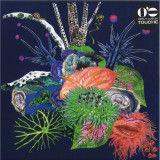


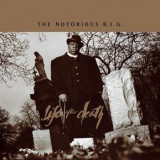



![Mick Harris / Martyn Bates - Murder Ballads [Drift] 2x12"](https://www.deejay.de/images/l/3/1/978331.jpg)
