With his honeyed falsetto, Horace Andy has long been considered one of roots reggae's most inimitable voices. His signature tune, "Skylarking," is one of a handful of songs that can be instantly recognized by even the most casual of reggae fans. Making his debut with producer and mentor Phil Pratt at the age of sixteen, Andy's expressive vocal style is immediately distinctive, bearing the soulful influence of American artists Otis Redding and Smokey Robinson as well as fellow countryman Alton Ellis.
1975's Get Wise collects a series of singles produced by Pratt including versions of hits "Money, Money" ("Root Of All Evil") and "Zion Gate" ("I Don't Want To Be Outside"). Recorded between 1972 and 1974, these sides were captured at legendary studios Channel One, Black Ark, Dynamic Sound and Randy's Studio 17 with house engineers Ernest Hoo Kim, Lee Perry, Carlton Lee and Errol Thompson at the helm.
Originally released on Pratt's Sunshot label, the album doubles as a showcase for The Soul Syndicate Band, a typically ad-hoc session group which featured Sly & Robbie, Aston "Family Man" Barrett and Earl "Chinna" Smith, among others.
Get Wise delivers ten tracks of Andy's finest material and should be in the collection of any aficionado of the classic '70s Kingston sound. Liner notes by JR Gonne.
Recorded and mixed at Duke Reid's storied Treasure Isle studio by Duke's nephew, young engineer Errol Brown, Dub Expression collects dubbed up treatments of seminal rockers rhythms crafted for Marcia Griffiths, John Holt, Dennis Brown and more.
Propelled by the drums of Lowell "Sly" Dunbar, the appropriately named Revolutionaries (with their tough and radical sound) were the ideal group to reflect a turbulent period in Jamaican politics. While the band's personnel remained fluid – depending on which players were available and frequently overlapping with other seminal sessions bands such as Joe Gibbs' The Professionals and Bunny "Striker" Lee's The Aggrovators – The Revolutionaries were most known as Channel One's house band in the mid to late '70s.
The decision to top-bill The Revolutionaries, rather than feature an individual artist as was customary at the time, was made by Kingston's most celebrated female producer, Sonia Pottinger who shrewdly determined that The Revolutionaries' name alone would be a can't miss selling point. One only needs to spend a minute with Dub Expression to hear why.
Originally released in 1978 on Pottinger's High Note label, Dub Expression represents the essence of dub in its purest form. An absolute classic. Liner notes by JR Gonne.
Mutant is thrilled to partner with our friends at Neon and Filmtrax to release Edo Van Breemen’s score to Osgood Perkin’s latest horror hit The Monkey.
Based on the Stephen King short story produced by James Wan (The Conjuring, Saw), The Monkey is a new trip by Longlegs writer/director Osgood Perkins. When twin brothers find a mysterious wind-up monkey, a series of outrageous deaths tear their family apart. Twenty-five years later, the monkey begins a new killing spree, forcing the estranged brothers to confront the cursed toy.
The score is as playful as the movie itself, whimsical when it needs to be, but also managing to be terrifying and tense. We have pressed two versions of the score, one is a limited edition Lenticular edition strictly limited to 1000 copies pressed on multicolour Monkey splatter vinyl, and the other is an eco vinyl edition featuring a static sleeve. Both versions are housed in a printed outer O-Card. Composer Edo Van Breemen told us that when they were recording the score, "Mr. King’s Monkey haunted our process for the entire duration of post-production on this film while Mr. Perkins possessed us to mutilate sounds and arrangements in a manner beyond our control. We hope you enjoy this record, and if not... shit, man, that sucks.”
Ahead of a full-length album coming on Glitterbox Recordings, the king of disco re-edits Dr Packer presents the second instalment of this 12' series. 'Different Strokes Part 2' features four Dr Packer versions of soulful house favourites, giving a flavour of what's to come from the LP. Kicking off with a bonafide classic, Dr Packer's take on Soulsearcher's 'Can't Get Enough!' maintains all its most iconic elements, the euphoric vocals and timeless groove given a fresh-sounding elasticity. Next up is Dr Packer's remix of The Shapeshifter's evergreen 'Lola's Theme Recut' appearing for the first time on vinyl. An exclusive to this vinyl release, a remix of Johnny Corporate's 'Sunday Shoutin'' picks up the pace with a funking bassline to suit any dynamic disco set. Rounding off this foursome of impeccable remixes is Cleptomaniacs featuring Bryan Chambers 'All I Do', a vocal house classic from the early noughties, reinterpreted masterfully for today's Glitterbox dancefloor,r which was originally featured on the label's A Disco Hï compilation. Dr Packer has done it again, breathing new life into your most beloved dance records so you can fall in love with them all over again.
Sydney artist Natalie Slade's debut album Control, co-written with Hiatus Kaiyote's Simon Mavin, is now followed-up with a second instalment of Australian future soul in Molasses, an album featuring a range of UK and Antipodean artists. Joined by The Dieyoungs on keys and Laneous on guitar, Natalie's songwriting and vocals are brought to the fore with excellent production by key Melbourne scene driver, Brisbane's Sampology and additional production from guest Dan Kye. Staying true to the debut album's style of Australian future soul Molasses has an emphasis on poetic storytelling, Natalie's lyrics and melodies that are heard against a lush bed of string arrangements and the influence of Sampology’s soulful but gritty sensibility. As well as her amazing eponymous releases Natalie has also featured on tracks from artists as important and diverse as Posy, Plutonic Lab, Parker and Rhodes and Dojo Cuts among others. Sampology is an innovative producer who, for the past 15 years or so, has been a driving force behind Australia's Hip-Hop, Neo-Soul and Broken Beat/Jazz explosion and has worked with the likes of Ron Trent, Tiana Khasi and Charlie Hill as well as releasing his own tracks. This collaboration between Natalie and Sampology on Molasses is a real high-water mark of music, song-writing and production. Releasing on digital and double vinyl LP, Molasses further chronicles the rising stars of Australia's burgeoning and increasingly important neo-soul and future soul scenes.
Initially serving as the house band for Stax Records, organist Booker T. Jones, guitarist Steve Cropper, bassist Lewie Steinberg (later replaced by bass monster Donald ‘Duck’ Dunn), and drummer Al Jackson Jr. were instrumental in creating the “Memphis Sound.’ They recorded the basic tracks for well over a hundred records, including backing some of the greatest artists of all time: Otis Redding, Sam & Dave, Rufus Thomas, and Albert King, all the while breaking barriers as one of the South’s first integrated acts. 1966’s And Now!’ is the first to feature long-term bassist Duck Dunn, who helps create a nightclub feel that alternates between some of their most aggressive recordings and most sultry. No stranger to being in the U.S. and U.K. music charts (in both the Hot 100 & R&B categories), the jazzy first single off the record, “My Sweet Potato,” landed them yet another top 40 placement.
BAMBOSSA label boss and SUBLIMINAL stalwart HARRY "CHOO CHOO" ROMERO delivers 4 of his favorite edits ranging from new-wave-meets-italo on "BEHIND THE WHEEL" to afro house percussion workouts on "KORO KORO, and a filter swept epic string DJ tool on "BURNT TOOL."
out of Stock
Last delivered 36 days ago available to reorder, subject to availability
Compiled by Philip King
“And then came the rise of synth pop : blokes with dodgy haircuts hunched over keyboard-operated
machines stuffed with wires and do-it-yourself tone oscillators making sounds like a brood of geese
passing gas in a wind tunnel. Whoopee! This is the way the ‘70s ended : not with a blood-curdling bang
bang but with a cheap, synthesized, emasculating whimper.”
NICK KENT, NME.
All The Young Droids: Junkshop Synth Pop 1978-1985 is a new compilation that charts the
underbelly of the epoch-defining sound of the synthesiser in 80s popular music. Compiled by Philip
King (previously seen compiling All The Young Droogs, Glitterbest and Boobs - The Junkshop
Glam Discotheque), the music here connects the dots between DIY synth enthusiasts grappling with
new, cheap synthesisers at the tail-end of punk and wannabe, jobbing songwriters enthral to the new
music pioneered by Gary Numan, Depeche Mode and Daniel Miller’s Mute Records. Featuring rare
tracks of auto-didactic progressive pop music, proto-techno punk, shoot-for-the-stars-land-in-the-gutter
chart flops and heralded, underground synth classics, School Daze paints a picture of beautiful failure.
Complete with extensive sleeve notes written by King and never before seen imagery, all 24 tracks
were remastered by RPM in-house engineer Simon Murphy, many from vinyl copies due to lost master
tapes. The story told on All The Young Droids is one of the dawning opportunity presented by both the
emergence to the market of cheaper analog synthesisers and the distribution networks plus indie labels
that exploded with the advent of punk music in 1976. While the music that sprouted out all over the
globe in the wake of these factors was decried as fake, plastic, a refutation of punk’s guitar-led
revolution, it’s telling that much of the music on All The Young Droids.. was created in bedrooms,
ramshackle studios and home-made set ups with often borrowed equipment. In the era of record labels
jumping to capitalise on the success of The Sex Pistols, The Clash (both on major labels, of course)
these artists struggled to stand out from a new gold-rush with next to no budget or PR team. With radio
and labels desperate for the new Yazoo, what resulted was a testament to necessity being the mother
of invention.
At the time, the synthesiser was the music of the future, a shiny new machine that could paint like an
orchestra with a single finger and a 4-track. In the hands of Manchester avant-pranksters Gerry & The
Holograms it’s a pulsing, sardonic weapon.. the only instrument on the Messthetics classic lampooning
of New Wave fashion. In Hamburg, a 16 year old Andreas Dorau used it to write and record (with his
female classmates on vocals) a global smash in Fred Vom Jupiter (later licensed to Mute Records).
The hard-to-find English version (Fred From Jupiter, natch) is included here. Many artists with alreadystoried careers caught the bug and recorded synthesiser-fuelled peons to space, computers, the future
and, of course, love-interests. Harry Kakoulli, late of Squeeze, recorded a solo album in 1979 that
included the incredible power-synth-pop smash-that-never-smashed I’m On A Rocket. Similarly, Ian
North of Neo and American Power Pop stalwarts Milk ’n’ Cookies bought a Korg MS20 and used a
tape machine to record We’re Not Lonely, an absolute lost-classic of minimal synth pop. We’re Not
Lonely also features on the Junkshop Synth Pop sampler 7” twinned with John Howard unreleased
track You Will See, released April 12th 2025.
There are plenty of compilation debuts in evidence. Sole Sister were a mysterious trio who were
featured on the Scaling Triangles compilation of female-fronted, queer-adjacent post-punk /
underground music that also featured The Petticoats. Selwin Image were from San Francisco and
featured members of the recently defunct power pop/punk group The Pushups. Their stupidly catchy
The Unknown fizzes with New Wave energy - think XTC to Sparks but remains unreleased until now.
Dream Unit’s A Drop In The Ocean is an early synth wave cut, positively teaming with Joy Division
instrumentation, previously only released on a long-forgotten and super rare, self-released EP.
Incandescent Luminaire’s Famous Names belies an archetypal struggle of a small-town trying to
make it in a cruel industry but is a thrilling New Romantic-Synth Wave cross over with a OMD
gloominess that’s a joy to hear. Feminist Minimal Wave track I Am A Time Bomb by performance artist
Peta Lilly and Michael Chance is a revelation destined for new found cult status. It was released on 7”
and lost until now.
The flipside to the subterranean, never-made-it synth pop mentioned above are the ambitious, even
fruity attempts at success that have a perennial elegance to their confidence. New Jersey-ite Billy
London (real name Ed Barth) tried to cash in on the synth boom with Woman, released by a major
label, a lurching new wave track built on the Louie Louie rhythm and a wonderfully camp Lou Reedstyle sleazy vocal before exploding in the synthesised chorus. The song bombed but with a chorus like
this, you have to wonder why? Ex-Glitter Band member John Springate’s My Life is truly epic, with
doomed chord progressions and massive sounding drums turning into at least 3 different songs in the
course of the track. Before you wonder what’s going on the song resolves with a glorious return to the
main refrain.
The dry-ice-dressed dance floor is well catered for too. Design’s Premonition and Vision’s Lucifer’s
Friend are stone-cold minimal synth bangers, well loved but given a new lease of life here. The
Warlord’s The Ultimate Warlord was released in 1978, a homespun proto Hi NRG banger that was
later re-recorded by The Immortals in Canada who had a club hit with it. One-man- band Disco
Volante’s No Motion was re-issued by Synth wave label Medical in 2012 but makes its first vinyl
compilation appearance here. Close your eyes and you can imagine what Lawrence of Felt would have
sounded like with some cheap Korgs a little earlier in his career. Gibraltar-based trio The Microbes
imagined a computer programming people to dance - how prescient - and ended up with a propulsive,
robo-funk track with splendid rubbery bass playing over a tectonic drum machine. Previously picked up
by Belgian label Stroom TV, Dee Jay Bert & Eagle’s heavily Euro-accented I Am Your Master
demands the listener to “come to paradise!” In a frankly terrifying manner.
All The Young Droids is the first compilation to peel away from the narrative that dour, Minimal Synth
and Cold Wave were the only musical children of the first rush of synth pop. Philip King and School
Daze Records describe a much more complicated world: along with the austere, Brutalist children of
Daniel Miller (who produced Alan Burnham’s Bowie-Low-influenced Science Fiction here) was a
plethora of desperate cash-ins, accidental mainstream hits, ambitious pop dramas and major label
punts that went nowhere. Crucially, the compilation blurs the line between junk and treasure. What if the
two things are interchangeable. What if it’s all science fiction?
out of Stock
Last delivered 14 months ago available to reorder, subject to availability
The undisputed king of Disco House Purple Disco Machine returns to his club roots with retro-inspired release ‘Ghost Town’ ft. Rertosonix. Fresh off reworking the Hurts classic ‘Wonderful Life’ and delivering a huge remix for ‘Born Again’ (Lisa ft. Doja Cat & RAYE), the Dresden-born producer is once again ready to conquer the dancefloor with his signature sound. Tailor-made for that insatiable desire to dance, it’s a release engineered for movement, locking straight into the pulse of late-night energy and crowd euphoria. As such, the track is unsurprisingly becoming a favourite in Purple Disco Machine’s sets already, where dates in Mexico, the USA, and Spain have left the dancefloors anything but a ‘Ghost Town’. Armed with a dancefloor weapon, Purple Disco Machine drops the release early for DJs on Beatport.
A master of channelling the nostalgia of dance music’s beginnings and blending it with a modern-day flair, Purple Disco Machine has expertly crafted a record reminiscent of throwback disco cuts. The soulful vocals come courtesy of Retrosonix, successful songwriters who have come together to specialise in retro disco vocals that ingeniously feel straight from the archives. You’ll be sonically transported back to a time when disco was heard on every corner. Tactfully letting the powerful hooks and provocative lyricism lead the rhythm for the tune, Purple Disco Machine’s iconic groove-driven beats and mesmerising synths lay the foundation for a dancefloor classic. Crafting breakdowns dripping with funk, the disco maestro builds to a crescendo that will undoubtedly be a crowd pleaser for his many shows in 2025.
On the release, Purple Disco Machine said: “While a number of my recent records have referenced the more electronic 80s disco sound, I never lost the love for the classic funky disco of the 70s - which in many ways was the original blueprint - and so it has been equally inspiring and enjoyable to work with this palette again. I'm hoping that the listeners are as haunted (in a good way…) by Ghost Town as I am !”
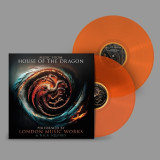
Silva Screen Records is proud to announce the release of Music from House of the Dragon, a new album featuring the epic score from HBO's hit series House of the Dragon reimagined by London Music Works and renowned cellist Nick Squires. This collection of music from the show's first two seasons - originally composed by Emmy Award-winner Ramin Djawadi - offers fans a fresh way to experience the grandeur and drama of Westeros through powerful new performances. From the thundering battle themes to the haunting melodies of the Targaryen saga, the album brings to life the sounds that have become an integral part of the House of the Dragon experience. Double LP on Orange Edge Glow Vinyl
out of Stock
Last delivered 8 months ago available to reorder, subject to availability
CHARLY RECORDS present the first ever reissue of the sought-after Gospel treasure Crying In The Street by Robert Sims and his Seven Brothers.
Originally released circa 1969 by Lelan Rogers on his Nashville based House Of The Fox imprint. The title track ‘Crying In The Streets’ is a Gospel anthem penned by Sam Matter, Kerry Porter and Ted Harris as a response to the assassination of Martin Luther King. It was recorded contemporaneously by Baton Rouge deep soul vocalist George Perkins who scored a regional hit when it was picked up by Lelan Rogers for his Silver Fox subsidiary. The song was covered to great effect by Buckwheat Zydeco, featuring Ry Cooder, and appears on the 2005 benefit album for Hurricane Katrina.
This is a forgotten gem, atmospheric and beautifully produced. It is a passionate, life-affirming record that resonates today just as much as it did over 50 years ago.
A Gospel Experience.
Support from: Dino Lenny, Sabo, 1979, Alex Neri, Cioz, Just Her, Lonya, Hyenah, Nhar, Don Diablo, Luke Garcia, Underspreche, Francesco Chiocci, Adriatique
Undiscovered Recordings is a London- and Naples-based independent record label founded in 1994. Showcasing new and exciting production talent, Undiscovered was founded by a crack team of music industry experts, the two Angelos, Doug and Mario, in the midst of the dance music movement of the 1990s.
The Angelos met while working at UMM and Flying Records. Founding Undiscovered allowed them to move
away from the traditional dance music of the time and to highlight lesser-known artists and styles. Angelo
Tardio, in-house A&R, capitalised on his trail-blazing career as a DJ, as the founder of iconic label U.M.M., and his production career as Kwanzaa Posse, where he collaborated with huge talents such as Mano Negra, Manu Chao, King Chango, MC Solaar and Les Negresses Vertes, to name just a few. Doug Osborne, British DJ & Producer and co-founder. Angelo Bernardo brought his years of experience in the music industry to take over the business side of the company, and Mario Nicoletti came on board as a true living musical encyclopaedia and expert. Alberto Faggiana joined in 1998 to contribute his industry know-how to curate the legal and administrative aspects. And so the Undiscovered team was complete.
Undiscovered has since moved with the times, from classic dance genres into Balearic chill-out, all the while
maintaining its goals to showcase emerging producers and artists. After a long hiatus, and following a number of forced changes in the company, Undiscovered are back in full force. Kwanzaa Posse achieved success back in the 90's with such hits as "Wicked Funk", "African Vibrations" and "Musika!", all of which attracted collaborations with remixes by Massive Attack, Jam & Spoon, and Ralph Falcon & Oscar Gaetan - aka Murk Boys. Now the production unit responsible for such seminal tracks is back with a magical new track called 'Mali Chant'.
out of Stock
Last delivered 78 days ago available to reorder, subject to availability
In the mid-1970s, a force of nature swept across the continental United States, cutting across all strata of race and class, rooting in our minds, our homes, our culture. It wasn’t The Exorcist, Goodbye Yellow Brick Road, or even bell-bottoms, but instead a book called The Secret Life of Plants. The work of occultist/former OSS agent Peter Tompkins and former CIA agent/dowsing enthusiast Christopher Bird, the books shot up the bestseller charts and spread like kudzu across the landscape, becoming a phenomenon. Seemingly overnight, the indoor plant business was in full bloom and photosynthetic eukaryotes of every genus were hanging off walls, lording over bookshelves, and basking on sunny window ledges. The science behind Secret Life was specious: plants can hear our prayers, they’re lie detectors, they’re telepathic, able to predict natural disasters and receive signals from distant galaxies. But that didn’t stop millions from buying and nurturing their new plants.
Perhaps the craziest claim of the book was that plants also dug music. And whether you purchased a snake plant, asparagus fern, peace lily, or what have you from Mother Earth on Melrose Avenue in Los Angeles (or bought a Simmons mattress from Sears), you also took home Plantasia, an album recorded especially for them. Subtitled “warm earth music for plants…and the people that love them,” it was full of bucolic, charming, stoner-friendly, decidedly unscientific tunes enacted on the new-fangled device called the Moog. Plants date back from the dawn of time, but apparently they loved the Moog, never mind that the synthesizer had been on the market for just a few years. Most of all, the plants loved the ditties made by composer Mort Garson.
Few characters in early electronic music can be both fearless pioneers and cheesy trend-chasers, but Garson embraced both extremes, and has been unheralded as a result. When one writer rhetorically asked: “How was Garson’s music so ubiquitous while the man remained so under the radar?” the answer was simple. Well before Brian Eno did it, Garson was making discreet music, both the man and his music as inconspicuous as a Chlorophytumcomosum. Julliard-educated and active as a session player in the post-war era, Garson wrote lounge hits, scored plush arrangements for Doris Day, and garlanded weeping countrypolitan strings around Glen Campbell’s “By the Time I Get to Phoenix.” He could render the Beatles and Simon & Garfunkel alike into easy listening and also dreamed up his own ditties. “An idear” as Garson himself would drawl it out. “I live with it, I walk it, I sing it.”
But as his daughter Day Darmet recalls: “When my dad found the synthesizer, he realized he didn’t want to do pop music anymore.” Garson encountered Robert Moog and his new device at the Audio Engineering Society’s West Coast convention in 1967 and immediately began tinkering with the device. With the Moog, those idears could be transformed. “He constantly had a song he was humming,” Darmet says. “At the table he was constantly tapping.” Which is to say that Mort pulled his melodies out of thin air, just like any household plant would.
The Plantae kingdom grew to its height by 1976, from DC Comics’ mossy superhero Swamp Thing to Stevie Wonder’s own herbal meditation, Journey Through the Secret Life of Plants. Nefarious manifestations of human-plant interaction also abounded, be it the grotesque pods in Invasion of the Body Snatchers or the pothead paranoia of the US Government spraying Mexican marijuana fields with the herbicide paraquat (which led to the rise in homegrown pot by the 1980s). And then there’s the warm, leafy embrace of Plantasia itself.
“My mom had a lot of plants,” Darmet says. “She didn’t believe in organized religion, she believed the earth was the best thing in the whole world. Whatever created us was incredible.” And she also knew when her husband had a good song, shouting from another room when she heard him humming a good idear. Novel as it might seem, Plantasia is simply full of good tunes.
Garson may have given the album away to new plant and bed owners, but a decade later a new generation could hear his music in another surreptitious way. Millions of kids bought The Legend of Zelda for their Nintendo Entertainment System back in 1986 and one distinct 8-bit tune bears more than a passing resemblance to album highlight “Concerto for Philodendron and Pothos.” Garson was never properly credited for it, but he nevertheless subliminally slipped into a new generations’ head, helping kids and plants alike grow.
Hearing Plantasia in the 21st century, it seems less an ode to our photosynthesizing friends by Garson and more an homage to his wife, the one with the green thumb that made everything flower around him. “My dad would be totally pleased to know that people are really interested in this music that had no popularity at the time,” Darmet says of Plantasia’snew renaissance. “He would be fascinated by the fact that people are finally understanding and appreciating this part of his musical career that he got no admiration for back then.” Garson seems to be everywhere again, even if he’s not really noticed, just like a houseplant.
out of Stock
Last delivered 10 months ago available to reorder, subject to availability
Discover the Sound of IBIZA with our new vinyl collection ! One double vinyl focussing on Techno with gems from Laurent Garnier, Stve Bug, Chrstopher Just... One double vinyl dedicated to House Music with perls from Ultra Naté, Kings of Tomorrow, Bob Sinclar...
out of Stock
Last delivered 8 months ago available to reorder, subject to availability
Compiled by Philip King
“And then came the rise of synth pop : blokes with dodgy haircuts hunched over keyboard-operated
machines stuffed with wires and do-it-yourself tone oscillators making sounds like a brood of geese
passing gas in a wind tunnel. Whoopee! This is the way the ‘70s ended : not with a blood-curdling bang
bang but with a cheap, synthesized, emasculating whimper.”
NICK KENT, NME.
All The Young Droids: Junkshop Synth Pop 1978-1985 is a new compilation that charts the
underbelly of the epoch-defining sound of the synthesiser in 80s popular music. Compiled by Philip
King (previously seen compiling All The Young Droogs, Glitterbest and Boobs - The Junkshop
Glam Discotheque), the music here connects the dots between DIY synth enthusiasts grappling with
new, cheap synthesisers at the tail-end of punk and wannabe, jobbing songwriters enthral to the new
music pioneered by Gary Numan, Depeche Mode and Daniel Miller’s Mute Records. Featuring rare
tracks of auto-didactic progressive pop music, proto-techno punk, shoot-for-the-stars-land-in-the-gutter
chart flops and heralded, underground synth classics, School Daze paints a picture of beautiful failure.
Complete with extensive sleeve notes written by King and never before seen imagery, all 24 tracks
were remastered by RPM in-house engineer Simon Murphy, many from vinyl copies due to lost master
tapes. The story told on All The Young Droids is one of the dawning opportunity presented by both the
emergence to the market of cheaper analog synthesisers and the distribution networks plus indie labels
that exploded with the advent of punk music in 1976. While the music that sprouted out all over the
globe in the wake of these factors was decried as fake, plastic, a refutation of punk’s guitar-led
revolution, it’s telling that much of the music on All The Young Droids.. was created in bedrooms,
ramshackle studios and home-made set ups with often borrowed equipment. In the era of record labels
jumping to capitalise on the success of The Sex Pistols, The Clash (both on major labels, of course)
these artists struggled to stand out from a new gold-rush with next to no budget or PR team. With radio
and labels desperate for the new Yazoo, what resulted was a testament to necessity being the mother
of invention.
At the time, the synthesiser was the music of the future, a shiny new machine that could paint like an
orchestra with a single finger and a 4-track. In the hands of Manchester avant-pranksters Gerry & The
Holograms it’s a pulsing, sardonic weapon.. the only instrument on the Messthetics classic lampooning
of New Wave fashion. In Hamburg, a 16 year old Andreas Dorau used it to write and record (with his
female classmates on vocals) a global smash in Fred Vom Jupiter (later licensed to Mute Records).
The hard-to-find English version (Fred From Jupiter, natch) is included here. Many artists with alreadystoried careers caught the bug and recorded synthesiser-fuelled peons to space, computers, the future
and, of course, love-interests. Harry Kakoulli, late of Squeeze, recorded a solo album in 1979 that
included the incredible power-synth-pop smash-that-never-smashed I’m On A Rocket. Similarly, Ian
North of Neo and American Power Pop stalwarts Milk ’n’ Cookies bought a Korg MS20 and used a
tape machine to record We’re Not Lonely, an absolute lost-classic of minimal synth pop. We’re Not
Lonely also features on the Junkshop Synth Pop sampler 7” twinned with John Howard unreleased
track You Will See, released April 12th 2025.
There are plenty of compilation debuts in evidence. Sole Sister were a mysterious trio who were
featured on the Scaling Triangles compilation of female-fronted, queer-adjacent post-punk /
underground music that also featured The Petticoats. Selwin Image were from San Francisco and
featured members of the recently defunct power pop/punk group The Pushups. Their stupidly catchy
The Unknown fizzes with New Wave energy - think XTC to Sparks but remains unreleased until now.
Dream Unit’s A Drop In The Ocean is an early synth wave cut, positively teaming with Joy Division
instrumentation, previously only released on a long-forgotten and super rare, self-released EP.
Incandescent Luminaire’s Famous Names belies an archetypal struggle of a small-town trying to
make it in a cruel industry but is a thrilling New Romantic-Synth Wave cross over with a OMD
gloominess that’s a joy to hear. Feminist Minimal Wave track I Am A Time Bomb by performance artist
Peta Lilly and Michael Chance is a revelation destined for new found cult status. It was released on 7”
and lost until now.
The flipside to the subterranean, never-made-it synth pop mentioned above are the ambitious, even
fruity attempts at success that have a perennial elegance to their confidence. New Jersey-ite Billy
London (real name Ed Barth) tried to cash in on the synth boom with Woman, released by a major
label, a lurching new wave track built on the Louie Louie rhythm and a wonderfully camp Lou Reedstyle sleazy vocal before exploding in the synthesised chorus. The song bombed but with a chorus like
this, you have to wonder why? Ex-Glitter Band member John Springate’s My Life is truly epic, with
doomed chord progressions and massive sounding drums turning into at least 3 different songs in the
course of the track. Before you wonder what’s going on the song resolves with a glorious return to the
main refrain.
The dry-ice-dressed dance floor is well catered for too. Design’s Premonition and Vision’s Lucifer’s
Friend are stone-cold minimal synth bangers, well loved but given a new lease of life here. The
Warlord’s The Ultimate Warlord was released in 1978, a homespun proto Hi NRG banger that was
later re-recorded by The Immortals in Canada who had a club hit with it. One-man- band Disco
Volante’s No Motion was re-issued by Synth wave label Medical in 2012 but makes its first vinyl
compilation appearance here. Close your eyes and you can imagine what Lawrence of Felt would have
sounded like with some cheap Korgs a little earlier in his career. Gibraltar-based trio The Microbes
imagined a computer programming people to dance - how prescient - and ended up with a propulsive,
robo-funk track with splendid rubbery bass playing over a tectonic drum machine. Previously picked up
by Belgian label Stroom TV, Dee Jay Bert & Eagle’s heavily Euro-accented I Am Your Master
demands the listener to “come to paradise!” In a frankly terrifying manner.
All The Young Droids is the first compilation to peel away from the narrative that dour, Minimal Synth
and Cold Wave were the only musical children of the first rush of synth pop. Philip King and School
Daze Records describe a much more complicated world: along with the austere, Brutalist children of
Daniel Miller (who produced Alan Burnham’s Bowie-Low-influenced Science Fiction here) was a
plethora of desperate cash-ins, accidental mainstream hits, ambitious pop dramas and major label
punts that went nowhere. Crucially, the compilation blurs the line between junk and treasure. What if the
two things are interchangeable. What if it’s all science fiction?
out of Stock
Last delivered 10 months ago available to reorder, subject to availability
It takes grindin' to be a king and Houston's Mike Jones' work ethic of "You Don't Work, You Don't Eat, You Don't Grind, You Don't Shine" had his phone blowing up in 2005 with the release of his major label debut Who is Mike Jones? on Asylum/Swisha House/Warner Records. Mike Jones started rapping in the early 2000s and he released a couple of independent albums on his own label Ice Age Entertainment before linking up with Michael "5000" Watts of Swisha House. He recorded the underground single "Still Tippin" with Texas contemporaries Paul Wall and Slim Thug, which appeared on the Swisha House compilation The Day Hell Broke Loose 2. The song, full of southern hip-hop slang and braggadocio, was an ode to the classic car culture in Houston, Texas, and could be heard bumpin' out the trunks of cars nationwide with its heavy bass and classical string loops. Before the release of Who Is Mike Jones? girls would ignore him, but after the release of "Still Tippin" they were all up on him, which led to the release of the single "Back Then" where he shouted out his real cell phone number that played a major part in the marketing and promotion of the album.You could call 281-330-8004 and get his voicemail and leave a message, but sometimes he would answer, which led to spreading the word of Mike Jones' debut album. "Back Then" was also a top-selling ringtone because (back then) you had to buy and download ringtones, unlike today. Mike truly went viral before going viral was even a thing. After dropping the two hit singles, Who Is Mike Jones? was released on April 19th, 2005, and would sell over a million copies that year, leading to certified platinum status. Twenty years later, this Texas Rap classic still holds up with features from other H-Town legends including S.U.C.'s Big Moe (RIP),Bun B, Paul Wall and Lil Keke. Juicy J & DJ Paul of Three 6 Mafia added their Memphis touch to the "Got It Sewed Up Remix" and the album ends with a heartfelt dedication to Mike Jones' late Grandmother on "Grandma". Get On Down is proud to present the first vinyl reissue of Who Is Mike Jones? in a limited edition silver and red color-in-color pressing packaged with a full color printed insert tocommemorate the 20th anniversary of this H-Town classic
Load ist das sechste Studioalbum von Metallica, das ursprünglich im Juni 1996 veröffentlicht wurde und mit einer Laufzeit von 79 Minuten das längste Studioalbum der Band ist. Als Nachfolger des „Black Album“ erreichte es in vielen Ländern der Welt Platz 1 der Albumcharts, darunter Großbritannien, Deutschland, Frankreich, Dänemark, Schweden, Norwegen, Finnland, Österreich, die Schweiz, Portugal, Australien und Neuseeland - und enthält die Singles „Until It Sleeps“, „Hero of the Day“, „Mama Said“ und „King Nothing“.
Rando Arand is an Estonian electronic music producer from Tallinn. With a strong foundation in sound design, Arand released his debut record on Asphalt Soliloquies in 2017 and has since captivated audiences at clubs and festivals across the Baltics with his unpredictable and unique live sets. Drawing inspiration from a range of genres such as broken jazz, dubtechno, breakbeat and jungle, Arand incorporates modular synth patches into his performances. He has shared the stage with artists like Dorian Concept, Gerry Read and King Midas Sound. In 2019, Arand released the "Alles" EP on Ali Asker's LIITHELI imprint, which focuses on promoting local talent from Estonia's capital. Arand's latest EP, "Aru" (2022), showcases his exploration of a new "Linki" format. In addition to his musical pursuits, Arand was also a host at the underground venue Ulme in Tallinn.
About the album „Child of the Internet”
The new album by experimental sound designer and electronic music producer Rando Arand takes the artist on a completely different path compared to the previously known dance music influenced deep and contemplative instrumental tracks. Featuring several notable guest artists, the album is a sizzling hot record that makes feet tapping and bodies grooving. On the artist’s most listener-friendly work to date, an impressive lineup of Estonian vocalists makes an appearance: Hyrr IV, the lead singer of the indie band Ouu; Jon Mikiver from Elephants from Neptune; actress Mirtel Pohla; alternative pop artist Kitty Florentine; queer artist Helgi Saldo; comedian Maiduk; and hobby musicians Maihe and David.
The conceptual album "Child of the Internet" is dedicated to young kids for whom the internet has been a defining part of growing up. Genre-wise, the album is very flexible, weaving through various musical chapters and styles with the help of numerous musical sketches, touching on both the comedic and the darker oddities that circulate online.
The album features scorchingly hot, electrified synth-funk jams with a nostalgic touch reminiscent of Prince ("Slidin in Yo DM’s", "Refresh"). Kitty Florentine delivers a sensual neo-soul ballad ("Just Scrolling"), filled with soft tones, soulful warmth, and a smooth groove. For more demanding listeners, the record also explores elements of chillwave, glitch, lo-fi hip-hop, techno, house, and breakbeat. Longer tracks and shorter interludes come together like a bouquet of favorite memes or a collection of countless open web browser tabs that we all keep running. At the same time, the album hints at the immense impact the internet has on our everyday lives.
Rando Arand’s latest studio album is an intriguing listen — perfect for enjoying alone with good headphones or as an ideal background soundtrack for a larger gathering with friends.
Load ist das sechste Studioalbum von Metallica, das ursprünglich im Juni 1996 veröffentlicht wurde und mit einer Laufzeit von 79 Minuten das längste Studioalbum der Band ist. Als Nachfolger des „Black Album“ erreichte es in vielen Ländern der Welt Platz 1 der Albumcharts, darunter Großbritannien, Deutschland, Frankreich, Dänemark, Schweden, Norwegen, Finnland, Österreich, die Schweiz, Portugal, Australien und Neuseeland - und enthält die Singles „Until It Sleeps“, „Hero of the Day“, „Mama Said“ und „King Nothing“.
out of Stock
Last delivered 15 months ago available to reorder, subject to availability
DJ Sodeyama returns to Sound Of Vast under his The People In Fog guise this June with the nine track 'Too Much Knobs And Cables' LP.
Over the past three decades DJ Sodeyama has been a staple in Japan's underground and beyond across the globe as a DJ and releasing material under his own name via the likes of Radio Slaves' Rekids, Dynamic Reflection, Nina Kraviz' трип and more. Here though, he makes a welcome return under his The People In Fog alias to Tokyo's Sound Of Vast, the platform that's played host to all of his material under this alias as well as others like The Mole, Shinichiro Yokota, San Proper and more.
Across the nine-track 'Too Much Knobs And Cables' LP, The People In Fog once again radiantly showcases his depth and understanding of true underground sounds. From the classic Deep House aesthetic of opener 'Red Morning', 'CC Love' and 'New Life' to more classic Chicago House inspired cuts like 'Animal Kingdom', 'Jack Out' and filtered Disco house jams like 'Dance To The Air', 'New Life' and 'Miraval'.
Sodeyama also dives deeper beyond House once again in true long player fashion to deliver the unique 80's tinged, funk-infused and vintage synth/drum machine laced 'Night Driver' and the cinematic closing piece 'Sun Moon Lake', which leans into a Balearic leaning sonic world via drifting guitar melodies, arpeggios, acid licks and a crunchy rhythm section.
out of Stock
Last delivered 13 months ago available to reorder, subject to availability
The Understated Debut That Launched a Peerless Career: Bob Dylan Is the Clearest Connection to the Singer-Songwriter's Folk Roots
Pressed on MoFi SuperVinyl for Reference Playback: Mobile Fidelity 33RPM SuperVinyl Mono LP Features the Direct Sound Dylan Intended
1/4" / 15 IPS analogue mono master to DSD 256 to analogue console to lathe
Bob Dylan's self-titled 1962 debut is as understated of an entrance as any significant musician as ever made. Well-versed in American roots music, Dylan simultaneously pays homage to tradition and extends it by putting his own stamp on classic material that metaphorically functions as the soil of contemporary songs and styles. Free of ego, and performed with masterful conviction, Bob Dylan ranks with the initial efforts of giants like Elvis Presley and the Rolling Stones.
Nodding to Woody Guthrie and re-imagining Blind Lemon Jefferson's "See That My Grave Is Kept Clean," Dylan straddles the past and future. He authoritatively displays the ability to handle weighty topics such as death, sorrow, and lamentation with the vaudeville flair, bluesy mannerisms, and poignant command of an artist three times his then-20-year-old age.
Sourced from the original master tapes, housed in a Stoughton jacket, and pressed on MoFi SuperVinyl at Fidelity Record Pressing, Mobile Fidelity's numbered-edition 180g 33RPM mono SuperVinyl LP brings the contents of this seminal release as close as they've ever come to live-in-the-studio quality. Transparent to the source, Dylan's voice, acoustic guitar, and harmonica come across with exceptional realism — the "husk and bark" to which Robert Shelton referred in his legendary New York Times review of a Dylan appearance at Gerde's Folk City — courtesy of the format’s nearly non-existent noise floor, groove definition, and quiet surfaces.
Heard in the original mono configuration, Dylan’s vocals are in the heart of the musical action and as one with the accompaniment. This reissue paints an incredibly accurate portrait of the concrete mass of sound that features no artificial panning and offers a straight-ahead immersion into the music producer John Hammond recorded in just two days in November 1961.
Though much has been made of the commercial indifference that greeted the album upon its low-key release, focusing on sales figures and the reaction of a public not yet hip to Dylan's name miss the forest for the trees. Distinguished from the era's other folk efforts by way of the singer-songwriter’s determination, brazenness, and lived-through-this worldliness, Bob Dylan lays the groundwork for the path he'd soon trailblaze and everyone else would follow.
As Dylan scholar and pop-culture critic Greil Marcus observed in 2010: "Everybody knew Joan Baez and the Kingston Trio; if you knew Bob Dylan, you knew something other people didn't, something that soon enough everybody had to know. Within a year, an album could put an adjective in front of the singer's name as if it were already common coin."
Mono is how almost everyone first heard Dylan’s opening salvo. A career like none other starts here.
MoFi SuperVinyl:
Developed by NEOTECH and RTI, MoFi SuperVinyl is the most exacting-to-specification vinyl compound ever devised. Analog lovers have never seen (or heard) anything like it. Extraordinarily expensive and extremely painstaking to produce, the special proprietary compound addresses two specific areas of improvement: noise floor reduction and enhanced groove definition. The vinyl composition features a new carbonless dye (hold the disc up to the light and see) and produces the world's quietest surfaces. This high-definition formula also allows for the creation of cleaner grooves that are virtually indistinguishable from the original lacquer. MoFi SuperVinyl provides the closest approximation of what the label's engineers hear in the mastering lab.
Moom Sound are delighted to present a 3 track EP of timeless Chicago house tinged tracks from the maestro Stefan Braatz; ‘Timeless Altitudes’.
Omnipresent on the Berlin scene, Stefan began DJing and producing in the 90’s, and is passionate about working in the analogue space with physical instruments – drum machines and synths – rather than computers.
Alongside friends, he organised underground parties on old demolition sites, as well as playing at legendary Berlin events like Tresor, Globus and Stellwerk.
With breakout releases on Nu Groove, King Street and Poker Flat, there are very few discerning parties that haven’t danced to Stefans beat.
“Timeless Altitudes” drops v soon on Moom Sound and it’s definitely one for the house heads.
out of Stock
Last delivered 5 months ago available to reorder, subject to availability
Mia Zapata was the greatest rock singer of her time. She may have likely been the greatest blues singer in punk rock history, the woman who married the 78 and the '78. Tragedy did not make this true. Mia Zapata made this true, and the ferocious, spring-loaded shrapnel frame that was built around her by Andy Kessler (guitar: metronomic and furious), Matt Dresdner (bass: fluid, punching, beat-addicted and melodic), and Steve Moriarty (drums: martial and explosive) - who, with Mia, combined to form The Gits - made it true. The Gits were formed at Antioch College in Yellow Springs, Ohio in mid-1986, grabbing and swapping pieces of art, thrash, noise, punk rock, classic rock, and all the sorts of magical silly and bookish jingle bells that an old-school liberal arts education handed you; for the next few years they worked on turning it all into something tough, sensitive, both brutal and kind. Andy, Matt, Mia, and Steve moved to Seattle in middish 1989, landing in a house on Capitol Hill where they (and fellow travelers) wood-shedded and rehearsed for the next few years. The Gits put out three EPs in 1990 and '91 before signing with C/Z Records and releasing their first full-length album, Frenching the Bully. Seattle quickly claimed the quartet as their own and embraced the Gits blend of ferocious fangs and soft heart, the slug/slap of the guitars, and the gorgeous, soft underbelly of the poetic emotions. These qualities not only fit in with the doe-eyed/sharp-clawed grunge ethos but earned the Gits the respect of their peers, including Nirvana, who tapped them to open a major local show in 1990. Then other stuff happened, and their frantic, confessional barbed-heart snowball began rolling up hill very, very fast; the Gits "quickly" (hah! After half a decade learning to implode and explode hearts and stomping their boots on manifold beer-softened, Marlboro-weeded wood stages!) inspired rapture, awe, and the levitation that happened when peak emotion meets peak grindage in front of amps spitting out something that sounded like the mad marriage of Bolan swagger and Dischord tension_ all fronted by a genuinely incomparable woman who held her heart in her mouth and shared it, in all its celebration and fear, without hesitation. The Gits were an angry, inflamed slinky fully in tune with and tuned by the Bessie Patti Smith of her time, truly the only singer who could summon Joplin, Poly Styrene, Sam Cooke, Iggy Pop and Ian MacKaye all in the same goddamn song. In 1993, less than four weeks after accepting an offer from Atlantic Records, Mia died. I leave it at that, because this is not about death; it's about an extraordinary life. I do not say, "You should have been there," I say, "We are lucky so many of us were, and I am so glad we have this extraordinary evidence of the power and gifts of Mia and the Gits that you now can hold in your hands." And I note that Frenching the Bully, this extraordinary testament to the soul, shock, fury and feeling of the Gits, has been long out of print on vinyl and CD, and this new edition - remastered by legendary Seattle engineer Jack Endino - joyfully rectifies that. -Tim Sommer
Deerhoof haben sich schon vor langer Zeit als eine der großartigsten Rockgruppen des Planeten etabliert - wer das für übertrieben hält, hat noch nicht genug Zeit damit verbracht, Deerhoof zu hören - das wahnsinnig erfinderische Quartett behandelt jedes seiner neuen Alben als eine Gelegenheit zur kreativen Wiedergeburt. Und doch sind sie irgendwie auch zutiefst zuverlässig, eine seltsame, aber wahre Beschreibung für eine Band, die so kreativ rastlos ist. Man weiß nie, wie ein neues Deerhoof-Album klingen wird, außer dass es immer nach Deerhoof klingen wird. Die Band wird durch solche Paradoxien definiert, wie "Noble and Godlike in Ruin" erneut bestätigt. Ihr neuestes Album ist entweder ein Porträt einer Welt, die in monströsen Hass, Entmenschlichung und Dollarzeichen abgleitet, oder ein eindringliches Selbstporträt der Band als Monster: ein intelligentes, sensibles, hybrides Wesen, das unermüdlich von Liebe singt, sich aber zunehmend von dieser Welt entfremdet. Die Musik ist fröhlich und ahnungsvoll, kybernetisch und zutiefst menschlich, alles zugleich. Streicher, die an avantgardistische Kammermusik und klassische Horrorfilm-Soundtracks erinnern, prallen auf Gitarren- und Basslinien. Das Schlagzeug ist manchmal gefiltert und klingt fast elektronisch, aber kein Computer könnte einen so funkigen und dynamischen Rhythmus erzeugen, bei dem jede winzige Variation von einem Snare-Schlag zum nächsten Welten der Möglichkeiten vermittelt. An der Spitze steht die unnachahmliche Altstimme von Satomi Matsuzaki. Eine Stimme der Einsamkeit, deren schlichte Ruhe seltsam außerhalb des Mahlstroms der Band zu stehen scheint, zu dem sie mit ihren zackig-präzisen Bassläufen selbst beiträgt. Als Einwanderin der ersten Generation in den USA hat sie nie versucht, ihren japanischen Akzent oder ihre Karaoke-esken Vortrag zu verbergen. Auf "Noble und Godlike in Ruin" wirkt dies abwechselnd als Ausdruck von Einsamkeit und als kühle Provokation gegenüber Systemen der Unterdrückung und Kontrolle. ,Kindness is all I needed from you", singt sie auf dem epischen Albumabschluss ,Immigrant Songs`. ,But you think we're in your house." Nicht lange danach explodiert der Song, sein eng gewickelter Art-Pop macht Platz für mehrere Minuten heulenden Lärm. Auch wenn das Thema düster sein mag - wie könnte es anders sein - tragen die Songs trotzigen Optimismus in ihrer Weigerung, sich den Konventionen oder überlieferten Weisheiten zu beugen. Da ist diese berühmte Zeile von Dylan Thomas über das Wüten gegen das Sterben des Lichts: "Noble and Godlike in Ruin" fühlt sich ein wenig so an. Die Welt mag untergehen, aber Deerhoof gehen schwungvoll unter.
out of Stock
Last delivered 16 months ago available to reorder, subject to availability
2005's Naturally was a pivotal moment in the history of soul music. It was the first Daptone album tracked at the renowned "House of Soul", a recording studio handbuilt by Sharon and the rest of the Daptone family in a two story rental in Bushwick, Brooklyn. The album has gone on to sell over 200,000 records, with hit singles "How Long Do I Have To Wait?" and "This Land is Your Land" streaming in the hundreds of millions- staggering figures for a wholly independent release.
Up to this point Sharon Jones & the Dap-Kings had yet to reach an audience outside of dingy, hole-in-the-wall clubs, dive bars, and underground DJ parties, attended by only the most in-the-know. This was the scene where the band began to flourish, developing the sound that would forever alter the musical landscape and set a lofty new bar for what could be considered real-deal soul music. It made Daptone a household name and opened doors for countless musicians and record labels to come. Naturally sparked a renaissance that is still vibrating today- a testament to Sharon Jones' legacy as the undisputed, reigning Queen of Heavyweight Soul.
The long-rumored, sweat-soaked live album from the night Bill Davis (Dash Rip Rock) and Fred Le Blanc (Cowboy Mouth) dared Jello Biafra to join them during Jazzfest and sing all classic New Orleans soul, rhythm and blues, and (at Jello's request) garage songs! Joining in were piano Wildman Pete Wet Dawg' Gordon (Mojo Nixon), Pepper Keenan (Down, Corrosion of Conformity) and a wacky horn section from Egg Yolk Jubilee and Morning 40 Federation that even includes a sousaphone! You want loose We got loose! You want crazy That's here, too. Walk on Jindal's Splinters is one of the all-time great you are there' high-energy live albums—audience participation galore, plenty of trademark Jello banter, and full-on soul / trash / frat / garage gumbo from eleven of New Orleans' finest, just playing their asses off and having a good time doing it. The album also showcases a whole 'nother side of Jello Biafra: his deep, pre-punk roots known only to a handful of vinyl junkies and anyone lucky enough to catch his DJ gigs. For all those whose interest in Jello goes beyond the punk persona to Jello Biafra, the singer, this is for you. Maximum trash appeal! Southern roadhouse debauchery at its finest! Calls to mind those sing-along, clap-along frat-rock platters from The Premiers to The Kingsman to Geno Washington's Hipsters, Flipsters... series, Swingin' Medallions, or even Slade Alive! You can almost feel the grease and voodoo dripping from the walls!" Showcases a rarely seen side of Jello—his pre-punk roots. Personnel includes members of Dash Rip Rock, Cowboy Mouth, Mojo Nixon, Corrosion of Conformity, etc. Vinyl includes digital download card
The long-rumored, sweat-soaked live album from the night Bill Davis (Dash Rip Rock) and Fred Le Blanc (Cowboy Mouth) dared Jello Biafra to join them during Jazzfest and sing all classic New Orleans soul, rhythm and blues, and (at Jello's request) garage songs! Joining in were piano Wildman Pete Wet Dawg' Gordon (Mojo Nixon), Pepper Keenan (Down, Corrosion of Conformity) and a wacky horn section from Egg Yolk Jubilee and Morning 40 Federation that even includes a sousaphone! You want loose We got loose! You want crazy That's here, too. Walk on Jindal's Splinters is one of the all-time great you are there' high-energy live albums—audience participation galore, plenty of trademark Jello banter, and full-on soul / trash / frat / garage gumbo from eleven of New Orleans' finest, just playing their asses off and having a good time doing it. The album also showcases a whole 'nother side of Jello Biafra: his deep, pre-punk roots known only to a handful of vinyl junkies and anyone lucky enough to catch his DJ gigs. For all those whose interest in Jello goes beyond the punk persona to Jello Biafra, the singer, this is for you. Maximum trash appeal! Southern roadhouse debauchery at its finest! Calls to mind those sing-along, clap-along frat-rock platters from The Premiers to The Kingsman to Geno Washington's Hipsters, Flipsters... series, Swingin' Medallions, or even Slade Alive! You can almost feel the grease and voodoo dripping from the walls!" Showcases a rarely seen side of Jello—his pre-punk roots. Personnel includes members of Dash Rip Rock, Cowboy Mouth, Mojo Nixon, Corrosion of Conformity, etc. Vinyl includes digital download card
Originally released in 1969, the concept for Dusty In Memphis was to take England's reigning female soul queen to the home of the music which had inspired her. Produced by Atlantic's Jerry Wexler and Arif Mardin and engineered by Tom Dowd, the record's highlights include "Son Of A Preacher Man," "So Much Love," "Breakfast In Bed," "Just One Smile," "I Don't Want To Hear It Anymore" and "Just A Little Lovin'".
Springfield is backed by a crack band that had previously worked with Aretha Franklin, Wilson Pickett, King Curtis and Elvis Presley among others. The musicians — collectively known as the Memphis Cats — include guitarist Reggie Young, bassist Tommy Cogbill, drummer Gene Chrismann, pianist Bobby Wood and Bobby Emmons on organ and electric piano. Songwriting contributions came from, among others, Randy Newman, Carole King, Gerry Goffin, Barry Mann and Cynthia Weil. Dusty Springfield is one of the finest white soul singers of her era, and this is the undisputed proof.
Analogue Production's reissue here is perfection. Mastered by Kevin Gray from the original analog master tape. Double LP cut at 45 RPM, pressed on 180-gram vinyl at Quality Record Pressings, and housed in a Stoughton Printing tip-on old style gatefold jacket.
Conflict formed in 1981 in Eltham, Southeast London, when frontman Colin Jerwood, inspired by early encounters with the Pistols 'Spunk' bootleg and following The Clash on tour, struck up a friendship with Crass and set about crafting a whole new kind of punk that totally upped the ante in terms anger and confrontation. Crass, the renowned anarchist punk collective, having got Conflict started by releasing their debut single 'The House That Man Bult' in 1982 on Crass Records, ended in 1984 as they had always intended. Now it was up to Conflict to pick up the baton and run with it. And they did, charging into the battle lines of authority.
The years that followed saw Conflict go from strength to strength, peaking on the 18th of April in 1987 at the London Brixton Academy for the 'Gathering of the 5,000' concert. A climax and explosion of rage and rebellion that inevitably ended up in a police provoked full-scale riot with police injuries, arrests, and with the band hopelessly in debt and banned from the majority of major London and UK venues.
Undeterred, Conflict continued into the 90s with their acclaimed 'Conclusion' album and remained a mainstay of the live punk circuit throughout. However, after more than two decades since the release of their (2003) 'There's No Power Without Control' album, the band are back with 'This Much Remains'. Featuring sixteen brand new Conflict creations, the album sees the band keeping one eye on their eventful past, and the other firmly on moving forward, both musically and politically. Animal Rights are still at the forefront of Conflict’s collective minds, giving a voice to the voiceless on songs such as 'A Mother's Milk' and 'Shut The Fuck Up', whilst their anger at world governments will never dissipate.
Also featuring an appearance by the late Benjamin Zephaniah on the track 'Cut The Crap', 'This Much Remains' is the sound of a band that continues to surprise and progress, decades after it first began. Conflict are Colin Jerwood - vocals; Fiona Friel - vocals; Gav King - guitars, melodica & Hammond; Fran Fearon - bass; Stoo Meadows - drums. With Benjamin Zephaniah - vocals on 'Cut The Crap'; Mitsuko Sonoda - voice on 'The Impossible Soul'.
2005's Naturally was a pivotal moment in the history of soul music. It was the first Daptone album tracked at the renowned "House of Soul", a recording studio handbuilt by Sharon and the rest of the Daptone family in a two story rental in Bushwick, Brooklyn. The album has gone on to sell over 200,000 records, with hit singles "How Long Do I Have To Wait?" and "This Land is Your Land" streaming in the hundreds of millions- staggering figures for a wholly independent release.
Up to this point Sharon Jones & the Dap-Kings had yet to reach an audience outside of dingy, hole-in-the-wall clubs, dive bars, and underground DJ parties, attended by only the most in-the-know. This was the scene where the band began to flourish, developing the sound that would forever alter the musical landscape and set a lofty new bar for what could be considered real-deal soul music. It made Daptone a household name and opened doors for countless musicians and record labels to come. Naturally sparked a renaissance that is still vibrating today- a testament to Sharon Jones' legacy as the undisputed, reigning Queen of Heavyweight Soul.
As bassist for dance-punk outfit The Rapture, Mattie Safer cut his teeth in the music scene alongside a wave of now-legendary early 2000s NYC acts like the Yeah Yeah Yeahs, LCD Soundsystem and more (a time period recently immortalized in the documentary film ‘Meet Me In The Bathroom.’) Fast-forward nearly 2 decades and Mattie has found the sweeter side of dance music as the current lead vocalist for slo-mo kings Poolside, and now he presents his 2nd solo lovetempo project on Razor-N-Tape.
Championed heavily by Gilles Peterson, lovetempo’s modern soul classic 'But I Do' gets a vinyl release with a trio of remixes. Crackazat delivers in his signature style, weav-ing the organic elements and earworm vocals of the original into a deep and jazzy mix. Lon-doner Daisybelle bumps the BPMs up a few notches and adds pulsing synths to her take, and Brazilian duo From House To Disco turn in a dubby club remix to round out the record.
Deerhoof haben sich schon vor langer Zeit als eine der großartigsten Rockgruppen des Planeten etabliert - wer das für übertrieben hält, hat noch nicht genug Zeit damit verbracht, Deerhoof zu hören - das wahnsinnig erfinderische Quartett behandelt jedes seiner neuen Alben als eine Gelegenheit zur kreativen Wiedergeburt. Und doch sind sie irgendwie auch zutiefst zuverlässig, eine seltsame, aber wahre Beschreibung für eine Band, die so kreativ rastlos ist. Man weiß nie, wie ein neues Deerhoof-Album klingen wird, außer dass es immer nach Deerhoof klingen wird. Die Band wird durch solche Paradoxien definiert, wie "Noble and Godlike in Ruin" erneut bestätigt. Ihr neuestes Album ist entweder ein Porträt einer Welt, die in monströsen Hass, Entmenschlichung und Dollarzeichen abgleitet, oder ein eindringliches Selbstporträt der Band als Monster: ein intelligentes, sensibles, hybrides Wesen, das unermüdlich von Liebe singt, sich aber zunehmend von dieser Welt entfremdet. Die Musik ist fröhlich und ahnungsvoll, kybernetisch und zutiefst menschlich, alles zugleich. Streicher, die an avantgardistische Kammermusik und klassische Horrorfilm-Soundtracks erinnern, prallen auf Gitarren- und Basslinien. Das Schlagzeug ist manchmal gefiltert und klingt fast elektronisch, aber kein Computer könnte einen so funkigen und dynamischen Rhythmus erzeugen, bei dem jede winzige Variation von einem Snare-Schlag zum nächsten Welten der Möglichkeiten vermittelt. An der Spitze steht die unnachahmliche Altstimme von Satomi Matsuzaki. Eine Stimme der Einsamkeit, deren schlichte Ruhe seltsam außerhalb des Mahlstroms der Band zu stehen scheint, zu dem sie mit ihren zackig-präzisen Bassläufen selbst beiträgt. Als Einwanderin der ersten Generation in den USA hat sie nie versucht, ihren japanischen Akzent oder ihre Karaoke-esken Vortrag zu verbergen. Auf "Noble und Godlike in Ruin" wirkt dies abwechselnd als Ausdruck von Einsamkeit und als kühle Provokation gegenüber Systemen der Unterdrückung und Kontrolle. ,Kindness is all I needed from you", singt sie auf dem epischen Albumabschluss ,Immigrant Songs`. ,But you think we're in your house." Nicht lange danach explodiert der Song, sein eng gewickelter Art-Pop macht Platz für mehrere Minuten heulenden Lärm. Auch wenn das Thema düster sein mag - wie könnte es anders sein - tragen die Songs trotzigen Optimismus in ihrer Weigerung, sich den Konventionen oder überlieferten Weisheiten zu beugen. Da ist diese berühmte Zeile von Dylan Thomas über das Wüten gegen das Sterben des Lichts: "Noble and Godlike in Ruin" fühlt sich ein wenig so an. Die Welt mag untergehen, aber Deerhoof gehen schwungvoll unter.
Chitown's DJ SLUGO, self proclaimed "king of ghetto house" drops this 7 track album of "some of the best ghetto house music coming out of Chicago!" If hip house and Miami bass had a bastard lovechild it might sound just like this. Released in time for Record Store Day 2025
During their short but prolific career, A2L released two albums & numerous EPs on labels such as 1st Bass / Big One and Force Inc between 1988 and 1990. This is a collection of early and rare underground British psychedelic house gems from 1989, blending the trippy, mind-expanding sounds of machine funk, new beat, industrial/ebm, samplers and turntables techniques, with the birth of acid house wonderlandand and captures the raw energy of the UK rave scene.
During their short but prolific career, A2L released two albums, one of which strangely landed on a South African label. They also dropped numerous EPs on labels such as 1st Bass / Big One (home to acts like Deskee, Longsy D, and King Bee) and the German label Force Inc (which hosted artists like Alec Empire, Porter Ricks, and Mike Ink), between 1988 and 1990.
While Acid House is synonymous with the Roland 303, A2L is unlikely an acid house act. Instead, they stand as one of the finest examples of British psychedelic house music from the late 80s, falling between the likesof S-Express, Funtopia, Eon, and Acid Angels. With standout tracks like "Even Though It's Make Believe" and "Come On," A2L delivers infectious grooves over strobelight sample jams.
This here is a collection of early and rare underground British psychedelic house gems from 1989, blending the trippy, mind-expanding sounds of machine funk, new beat, industrial/ebm, samplers and turntables techniques, with the birth of acid house wonderlandand and captures the raw energy of the UK rave scene.
This is one testament to the creative freedom and experimental nature of that era.
For fans of the burgeoning British psychedelic and acid house scene.
out of Stock
Last delivered 10 months ago available to reorder, subject to availability
‘The Return of Pachyman’ is a supernatural force
from a brave new world that’s a little bit San Juan,
a little LA, and a whole lot of Channel One in
Kingston, Jamaica. Designed to be a resurrection
of sound systems from the past through which we
can celebrate a post-Trump future, the record
shows that blasting off into reggae’s deep space
has never gone out of style.
Pachy García (aka Pachyman) is perhaps best
known as the drummer / vocalist for the LA-based
band Prettiest Eyes, a unique pop-noise project
that reflects his other formative interest, synth
punk. He thinks of ‘The Return of Pachyman’ the
same way King Tubby might - an ‘X-ray’ of reggae
music, breaking it down to its bare bones.
Originally a guitarist, he moved to Los Angeles in
the early 2010s and developed his passion for
dub. From there, he started recording bass, drums
and piano and collecting recording equipment in
his basement studio, which he calls 333 House.
With ‘The Return of Pachyman’, García wants to
show how the Caribbean flow is transnational, a
vibe that resounds from Jamaica to San Juan to
Southern California. “With this project, I was
looking to make positive music and radiate good
energy; something to kinda disconnect from the
negative things that were happening at the
moment,” Garcia explains. “I am trying to make this
project a service for humanity in the sense that I
just wanted to shine a positive light.”
out of Stock
Last delivered 18 months ago available to reorder, subject to availability
compiled by tsunaki kadowaki
artwork by yoshirotten
mastering by kuniyuki takahashi
Tsunaki Kadowaki, a staff member at Kyoto’s record store Meditations, the supervisor of "New Age Music Disc Guide", and the founder of Sad Disco, curates the fourth installment of "Midnight in Tokyo" themed around Ambient Kayō.
The Midnight in Tokyo series by Studio Mule focuses on Japanese music, serving as a soundtrack for Tokyo nights—whether for home listening, club play, or as a driving BGM, transcending location and space. After a six-year hiatus, the fourth volume takes "Ambient Kayō" as its new perspective, compiling genre-defying tracks released between 1977 and 1999 to explore the intersection of Japanese ambient and pop music.
For this long-awaited fourth installment, selections were made regardless of record label status (major or independent), era, format (vinyl or CD), original release price, or prior reissues. Instead, the focus was on music that deeply moves the listener, is open-minded and evocative, brims with inspiration and spiritual insight, and embodies the "utagokoro" (singing heart) of Japanese artists.
Opening the compilation is "Umi e Kinasai" by Yōsui Inoue, a legendary Japanese singer-songwriter whose works have recently gained renewed interest as hidden gems of Walearic and ambient pop
Composed and arranged by Katsu Hoshi—who is also known for his arrangements on Inoue’s masterpiece Ice World—the track features renowned players such as Masayoshi Takanaka, Hiroki Inui, and Shigeru Inoue. The song embodies a yearning for Balearic horizons, tinged with youthful vibrancy and sentimentality.
Next, "Oritatamu Umi", compiled from Keiko Nosaka, a 20-string koto player, and George Murasaki, a pioneer of Okinawan rock, is an instrumental track from their album "Niraikanai Requiem 1945". As the title suggests, it carries themes of requiem and remembrance, conveying poetic lyricism even without words. Blending Ryukyuan/Okinawan harmonies and indigenous elements, it unfolds as an intimate and nostalgic piece of progressive rock.
Also featured is "Natsu no Kowareru Koro" by Higurashi, a folk-rock band led by Seiichi Takeda, formerly a guitarist of The Remainders of The Clover, the predecessor of RC Succession. Like the opening track "Umi e Kinasai", this song was also produced by Katsu Hoshi. It stands as a folk/new music piece that takes a step into an "otherworldly" realm, recommended for fans of Twin Cosmos and Masumi Hara.
From the enigmatic Blue, the only work left by the mysterious composer S.R. Kinoshita, comes "Mangrove", a hidden treasure of Japan's ambient/new age scene from the CD era. With an oriental and enigmatic atmosphere, the track evokes a mystical world of deep, uncharted jungles, unfolding as an otherworldly New Age Kayō.
"Yaponesia Sakura", selected from Rehabilual’s sole album New Child, is a masterpiece of Japanese new age music. Produced by Swami Dhyan Akamo, a disciple of Indian meditation teacher Osho and a renowned balafon player, the track features Michio Ogawa (Chakra) and Atsuo Fujimoto (Colored Music). Their collective artistry creates an exquisite spiritual ambient pop sound.
"Asa no Hitoshizuku", the opening folk song from Sachiko Kanenobu’s album Sachiko, is also included. Known for her legendary folk album Misora, produced by Haruomi Hosono, Kanenobu’s fourth album after resuming her career was inspired by her experiences living in San Francisco and revolves around the theme of "love." This track carries the same intimate poetic world as Misora, imbued with a pure, crystalline innocence.
From the synth-pop band E.S. Island, known for the Haruomi Hosono-produced *Teku Teku Mami", comes "Yume Fūrin ", selected from their long-lost new age classic Nanpū from Hachijo. Created while the band’s core duo was living in Hachijō Island, the album aimed to sonically capture "the high and happy vibrations of everyday island life." This track offers a dynamic, tribal-infused New Age Kayō experience.
Dubbed "the world's first Min’yō House Mix" "Esashi Oiwake (Maeuta) " comes from Kanazawa Akiko HOUSE MIX Ⅰ, a collaboration between Japanese house music pioneer Soichi Terada and Akiko Kanazawa, a renowned min’yō singer. Through the prism of club music, Hokkaido's Esashi Oiwake, one of Japan’s most iconic folk songs, is transformed into a futuristic ambient pop piece with intricate sound design.
The compilation also includes "Sweet Ong Choh", a track from Voice From Asia, a group active between 1989 and 1992 featuring vocal artist Shizuru Ohtaka. Taken from their imaginative minimal work Voice From Asia, released under Aoyama Spiral’s music label Newsic, the song presents a tranquil, tribal-minimal soundscape enriched by ethnic instruments.
Hailed by Haruomi Hosono as having “a shaman residing in her voice,” singer-songwriter Nami Hōdatsu also appears in the selection. Known for her collaborations with Henry Kawahara, her debut album featured "Asa-Hikari-Ame-Yume", a track that now stands as a precursor to modern vocaloid/synthesized vocal music—a hidden gem of post-choir aesthetics that deserves rediscovery.
Likewise, "Tennessee Waltz", from Naomi Akimoto’s album One Night Stand, supported by members of Mariah, serves as another early prototype of vocaloid/synthesized vocal music. The track weaves fragmented vocal samples, pastoral yet sweetly minimal synth sounds, and mechanical beats into a strikingly unconventional piece in the history of Japanese music.
Closing the compilation is "Heaven Electric", a track from Nav Katze’s album Gentle & Elegance, which featured remixes by Autechre, Seefeel, and Sun Electric. Merging elements of IDM, ambient techno, and chillout, the song embodies an optimism reminiscent of space music while seamlessly blending a mystical Japanese aesthetic—an ambient pop masterpiece.
---
The album presents 12 exquisite pop tracks infused with an ambient feeling, resonating deeply with the evolving landscape of the mid-2020s—a time of post-hyperpop and Y2K revival.
Tsunaki Kadowaki (Compiler)
Born in 1993 in Yonago, Tottori, Tsunaki Kadowaki is a staff member and buyer at Kyoto’s Meditations record store. He is the editor of New Age Music Disc Guide (DU BOOKS) and a contributor to Music Magazine, Record Collectors' Magazine, ele-king, and more. Kadowaki has written liner notes for multiple Japanese releases (Brian Eno, Masahiro Sugaya etc.) and runs the Sad Disco music label under Disk Union. He also curates Spotify’s official New Age Music playlist and performed as a DJ at YCAM’s Audio Base Camp #3 in 2024.
out of Stock
Last delivered 14 months ago available to reorder, subject to availability