We are very happy to welcome Richard Brook to our roster. This UK-based veteran, better known for the releases on Warp Records as part of the Wildplanet™️ duo in the 90s, opens the EP with “Caldera V” an emotional breaky workout with an acidic switch halfway through. The unpredictable rhythms and contrasting melodic elements are reminiscent of the golden Sheffield days. On the flip-side “Skaros” is a straight acidic workout with sinister overtones and a steady groove that will keep the dancer glued to the floor at all times of the night.
out of Stock
Last delivered 18 months ago available to reorder, subject to availability
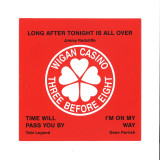
As WIGAN CASINO celebrates its 50th Anniversary you may be forgiven for thinking that those hallowed All-Nighters are but a fading memory from a time passed by. That couldn’t be further from the truth! The impact that it had on the thousands that attended the regular Saturday night gatherings was profound. The spirit of the Casino lives on in the hearts and souls of the faithful and is honoured by the multitude of Soul Nights, All-Nighters, All-Dayers and Weekenders up and down the country throughout the years. Gone, but not forgotten!
The term “Northern Soul” was coined a few years before the inaugural All-Nighter at Wigan Casino – 23rd September, 1973 – but it certainly came of age during its unprecedented eight year reign. It is also encapsulated in the three songs featured here that, collectively, became known as the “Three Before Eight”. The last three records played every Sunday morning, signalling the end of the all-night session.
This special edition anniversary release features all three legendary tracks, and for the first time, sequenced in the same running order as they were played.
out of Stock
Last delivered 3 years ago available to reorder, subject to availability
Platform 23 again explores to the dense voids, this time with a touch of the funk, with a reissue of Dutch experimentalists De Fabriek and two tracks from their "Music For" cassette series, this time calling all Hippies.
Featuring both original and reinterpretations from modern-day heads, Dunkeltier and Khidja, this double-pack is something of an oddity, showcasing the bands' expansive range, moving away from the noise, drone and industrial soundscape releases they had become known for and crafting here, free flowing, groovy longform jams.
Active since the late 70s to today, De Fabriek (The Factory) have never considered themselves a real band - being also a label too - with an evolving and irregular line up centred around Richard van Dellen, they present their music and output as a kind of work-union.
With literally four decades and dozens of releases across all formats, 1988's cassette release, 'Music For Hippies', has become something of a cult curio, with the long improvisational tracks, Lullabye and Coming Down eschewing the rougher, industrial experience for something completely different.
In opener Lullabye, we go full leftfield P-Funk meets Motorik undertones. An incessant beat is laid from the start and doesn't cease for over 10 minutes, while spoken vocals call closer to the Krautrock realms of Can and hark to Liebezeit's stylised grooving best.
Analog, echo washed, with touches of glam and wrapped in simple effects pedal work, the secrets are passed to Dresden / Berlin inhabitant Dunkeltier aka Sneaker DJ aka Thomas Smorek. His darker moniker, appearing on obscure edits for Macadam Mambo and the much-missed Bahnsteig 23, his 'Hey Robot' mix adds bass, percussion, strings and synth to remold Lullabye into a late night, red light, basement denzien. This is followed by an additional, bonus reimagining, creating an all-new time piece, an ear worm of the best kind with Tik Tok Goes The Clock.
The second slab presents in Come Down, a more resembling De Fabriek werk. Edited to fit, the darkness is entered as snapshot vocal quips, oscillations and synthesised mutations are laid over a lazy, relentless ostinato rhythm where cymbals crash on the bar. Inviting, calling, De Fabriek's aptly titled downer is in fact, a joyous journey.
To complete, label affiliates, Khidja take a break from finalising their debut album to unfold their 'Psychebabble Mix', a dozen plus minutes of warped, twisted, cassette machinations that suck the listener further along the trip. Added bass propels their edit suddenly to a new direction, a hook for mind and for the open willed, the body. De Fabriek's "coming down lullabye" arriving on vinyl for the first time, with a twist and shake, calling deeper to acceptance.
out of Stock
Last delivered 3 years ago available to reorder, subject to availability
Emotional Rescue is delighted to debut a first. Rather than a straight reissue of an (obscure) classic or a collection of music by an artist or label, here presented is a compilation of various artists centered around a sound and movement reggae-tinged music and how it influenced and spread from the Caribbean and diaspora.
Drawn from the off kilter digging of archivist, DJ and collector Bruno (perfectliv.es), Nowhere Like Here is not a follow up, but a sideways accompaniment, to his recent and already cult like 'Perfect Motion' collection of left field pop and new wave, recently self-released with Flo Dill (NTS).
This is a special release to celebrate the label's 10th year and beyond, offering a treasure trove of lo-fi and often pop inspired reggae cuts, mixing heartfelt Lovers Rocks style paeans and quirky private press oddities, all guaranteed to 'make-a-move and tap', these are, in the main ridiculously rare or impossible to find alternative bombs, that are just as sound system rocking and massive bass line quaking showcases of the enduring legacy of this Jamaican music phenomenon.
As with much of the early 80s period, the music community was in the throes of a Do-It-Yourself cultural renaissance as small labels, where crazy limited, one off White Labels Onlys came and went. Songs like Avalanche 's 'Your Love is Such a Good Thing 'or Warp Speed's 'Take It To The Night' were part of the claiming the means of production in to their own hands, pressing up the records and self-distributing. This raw, naive exuberance can be heard in the songs themselves. This is not reggae or Lovers as known, but something more expressive. Musical, simply produced, but with intelligible and uplifting optimism that is just superlatively catchy.
While Paul Thompson's 'Can I Take You Home' and Ras Ibuna's 'Black Beauty' are more straight-ahead Lover's style cuts, there is the parallel dance pop private pressing vibrations of the two Keith Robinson songs and Majority's 'Caroline' included all part of a thread; a joining the dots that Nowhere Like Here is at its most basic, a warmth the whole album exudes.
This is not a Lovers Rock Hits of some, but a left-of-center versioning, spread across Double Pack and cut loud for DJ play, fitting the ethos of Emotional Rescue by presenting something most will not have heard before and all the better for it.
out of Stock
Last delivered 7 months ago available to reorder, subject to availability
“Wild Boy …” is a reissue of the well-known 2016 release curated by Brian Chidester, renowned researcher and biographer of Eden Ahbez. Especially for this album, Brian wrote an interesting text about Abi’s life, which definitely became the decoration of the release.
With the new 2020 re-release, we went a little further and kept what is commonly referred to as studio cuts. It’s a few more minutes in the studio with ahbez himself, full of emotion and life. In addition, to the delight of fans, the edition includes an additional composition Nature Boy (Mantovani Orchestra).
Especially, it is worth noting the outstanding mastering prepared from practically decomposed tapes by the Grammy-nominated Jessica Thompson, which guarantees the deepest and warmth possible sound. Jessica a huge ahbez fan and we’re highly appreciated for what she has done to save his music for the future.
Eden Ahbez is definitely at the origin of psychedelic music and this release can be taken as further proof. Over the past twenty years, the iconic figure of the world’s first hippie Eden ahbez has become famous primarily for his 1948 song “Nature Boy”, praising universal love, and his amazingly solo album from the 1960s called “Eden’s Island” – one from the first concept albums in the history of music and probably the first psychedelic music album. “Wild Boy: The Lost Songs Of Eden Ahbez” deepens understanding of the origins of the psychedelic movement in the 1950s.
The disc contains a musical selection of works by Eden ahbez himself, written by him in the period after Nature Boy. The inclusion of songs such as “Palm Springs” – Ray Anthony Orchestra and “Hey Jacques” by Erta Kitt gives the listener the chance to discover for the first time the little-known recordings of world-famous artists composed by Eden ahbez. Through “Wild Boy” and “Surfer John” you can hear the author’s handling of absurd rock and exotic experimentation, as well as sweet psychedelic pop like Monterey (with Paul Horn on flute). Overall, Wild Boy: The Lost Songs Of Eden Ahbez offers an overview of the lost works of 1949-1971 with seven unpublished recordings and eight rare singles.
If in 2020 you are missing the hallucinogenic content in Eden Ahbez, it amazingly makes up for that deficiency with simple chords, expansive arrangements, and lyrics about travel, relaxation, free love, and spirituality. Thus creating the standard of psychedelic music. Eden Ahbez’s songs weren’t only fantasy and his personal philosophy was the real thing that he lived.
reviews:
“This carefully and extensively researched compilation culls covers by top notch mainstream artists juxtaposed with unreleased Eden recordings. What might sound like a mixed bag is actually more like a chronological, musical non-fiction novel about Eden Ahbez. While Eden was writing hundreds of songs and performing live and making recordings in various styles, his songs were also being picked up by popular artists like Nat King Cole and Eartha Kitt who recorded with a more polished mainstream style. There are also some early rock n roll style recordings here. Eden’s professionally recordings often end up as Novelty Pop records such as “Child of Nature” and “The Clam Man” but if you read between the lines and listen to the lyrics it is pretty eye-opening that he is singing about Eastern-religion-style and pre-hippie philosophies about being at one with the planet Earth.
All of this is explained in the lengthy liner notes inside the lp along with a few choice photos that establish Eden as a founding father of Southern California mystic/psychedelic music.” – Tiki_News
“Eden Ahbez’s life philosophy was summed up in the lyrics of his most famous song, “Nature Boy,” a 1948 hit for Nat King Cole: the song describes a “strange enchanted boy” who wanders the world in search of truth. “The greatest thing you’ll ever learn,” he concludes, “is to love and be loved in return.” Ahbez was a pre-cursor of California’s beatniks and hippies, and an exalted icon of ex-otica via his rare 1960 album Eden’s Island. Beyond “Nature Boy” and Eden’s Island, though, there were nu-merous lesser-known Ahbez record-ings. Ahbez biographer Brian Chidester has been doing an exemplary job of archiving and documenting that catalog of work. The Exotic World of Eden Ahbez (reviewed in UT#38) appeared a few years ago, gathering together 14 Ahbez-related rarities” – Ugly Things
Als "Mr. Isaacs" 1977 erstmals als LP-Vinyl erschien, war der Grundstein für die internationale Karriere zum Superstar des Reggae gelegt. Unter der Federführung von Produzent Ossie Hibbert und seinen Musikerkollegen von den Revolutionaries wurde der Interpret Gregory Isaacs zum Markenzeichen im Albumformat! - Mit einigen seiner größten Songs wie "Set The Captives Free", "Slave Master" (im Kultfilm "Rockers" prominent vertreten), "Storm" (der Riddim kommt in über 75 Versionen zum Einsatz), "Smile", "Get Ready" (Reggae-Cover des Rare Earth Hits), kommt der Longplayer dieser Tage als Kevin Metcalfe Remaster als 9-Track Originalalbum in einer Fan-Edition mit Sleeve Notes und bedruckter Innenhülle inklusive großformatiger Fotos.
Among the most important full-length album works from one of reggae’s greatest singers, "Mr. Isaacs" shows the great Gregory Isaacs in the prime of his career in 1976/1977. Better known for his love songs, Isaacs was equally adept at cultural themes. The tracks "Set The Captives Free" and "Slave Master" are among the most popular in his catalogue, the latter immortalized on film in the movie 'Rockers'. The track "Storm" became an early favourite in the dancehall, its rhythm track (aka the Storm riddim) is re-imagined no fewer than 75 times over the last 40 years. Gregory Isaacs love of Rocksteady shines in his cover of the Silvertones’ "Smile", and his soulful side comes through on a cover of The Temptations’ "Get Ready". The breadth of material on "Mr. Isaacs" is the hallmark of a reggae classic!
Further facts and collector's info:
- The album was one of the first titles ever distributed by VP Records, "Mr. Isaacs" reissue coincides with the label’s 40th anniversary celebrations.
- This pressing features the earliest known cover art and producer Ossie Hibbert’s original Earthquake labels, as found on the pre-release edition.
- "Mr. Isaacs (Remastered)" comes with a printed inner sleeve featuring extended liner notes by Harry Hawke plus a great artist photo on the other side
Critically-acclaimed, criminally-overachieving Glasgow-based singer and guitarist Alasdair Roberts is known as a superlative original songwriter as well as an interpreter of traditional songs from Scotland and beyond. For the past twenty years, his recordings have alternated between these two complimentary poles, with "pop" records such as The Amber Gatherers and A Wonder Working Stone nestling in his expansive back catalogue alongside "folk" albums such as No Earthly Man and What News (with Amble Skuse and David McGuinness). Additionally, all of these records possess a further dimension, derived from their collation of songs together into one album-length statement. This is part of Alasdair"s great achievement in his career - for him, this thing of music and song hasn"t come the eons it"s travelled to simply entertain. These impulses fully present and well honed, Alasdair returns to his roots with Grief in the Kitchen and Mirth in the Hall, his fifth full-length collection of traditional song. Recorded live in the studio, it is an entirely solo collection of twelve traditional ballads and songs sparsely arranged for acoustic guitar, piano and voice. The majority of the songs originate in Alasdair"s homeland of Scotland, with a couple from Ireland and one from Prince Edward Island on Canada"s eastern seaboard too. The record takes its title from a line in the final verse of one of its songs, "The Baron o" Brackley" - a ballad of feuding clans and matrimonial betrayal from the north-east of Scotland. Grief in the Kitchen and Mirth in the Hall: it"s a title which goes some way towards encapsulating many of the record"s themes. Collectively the songs treat of various conflicts and tensions - those of gender; of class, status and position; and of geography and tribal belonging - and the roles and responsibilities expected at the various intersections of these constructs. That we should never forget! As with many of Alasdair"s recordings, Grief in the Kitchen and Mirth in the Hall contains ballads aplenty: tragic ("Bob Norris"), supernatural ("The Holland Handkerchief") and dramatic ("Eppie Morrie"). There are love songs ("The Lichtbob"s Lassie") and anti-love songs ("Kilbogie"). There are rare, seldom-heard pieces ("Young Airly") and much more well-known ones ("Mary Mild," a version of "The Queen"s Four Maries"). Woven through all of this - a thread of levity, perhaps - is a triptych of zoological allegories - a panegyric to a mystical steed ("The Wonderful Grey Horse"), a lament for a lost cow ("Drimindown") and a paean to a regal waterbird ("The Bonny Moorhen"), which serves to highlight the intersection of the mythic, the eternal and the mundane at which we all find ourselves in every day of our life on Earth. Grief In the Kitchen and Mirth in the Hall was masterfully recorded by Sam Smith at Green Door Studios, Glasgow over an economical two days, and mixed in one day. Its brevity on all levels is an aspect of its expression. Alasdair"s renowned acoustic fingerstyle guitar is understated yet questing, ever in service to the needs of the song, underpinning his soulful tenor voice. Three songs eschew his habitual acoustic guitar in favour of simple piano arrangements. The spare setting and Alasdair"s deeply committed performance gently reminds of the meanings and melodies of these old songs, chosen instinctively and with care, for all to hear and sing in 2023, and the world beyond that is ever coming.
Requiem for Jazz is a 12-movement suite composed and arranged by Angel Bat Dawid, inspired in part by dialogue from Edward O. Bland’s 1959 film “The Cry of Jazz.”
The original form of the music was premiered at the 2019 edition of the Hyde Park Jazz Festival in Chicago, where Angel conducted a multigenerational fifteen-piece instrumental ensemble (all Black musicians from Chicago’s creative music community) alongside a four- person choir (featuring singers from Black Monument Ensemble), dancers, and visual artists in performance.
Angel mixed and post-produced recordings from the performance – adding interludes, vocals and additional sounds, as well as transcribing a piece from “The Cry of Jazz” film. The final movement of Requiem for Jazz features Marshall Allen and Knoel Scott of the Sun Ra Arkestra. Their contributions were recorded remotely at the historic Arkestral Institute of Sun Ra in Philadelphia in late 2020.
The final Requiem for Jazz work in album form is an immersive 24-track, double LP experience. The physical package is a deluxe, heavyweight gatefold jacket with liner notes by South African writer Nombuso Mathibela, artwork by Damon Locks, and a large fold out poster designed by Jeremiah Chiu, featuring poetry written by Angel Bat Dawid in dedication to all of her collaborators on the project. Additionally, there is a limited Thy Kingdom Come purple color vinyl edition of Requiem for Jazz available for the first pressing only.
If you were smart enough to get your grubby paws on the first Scrap Metal compilation, you probably have a pretty good idea of what you’re in for with our second installment. Featuring long-lost gems from ultra-rare 45s and private press singles—plus one previously unreleased banger—Scrap Metal 2 maintains a steady NWOBHM course. Packed with infectious outliers and supremely talented one-and-done metal warriors from the crucial British movement of the late ’70s and early ’80s (and some killer American obscurities inspired by them), this collection delivers all the fist-pumping, riff-mongering and flashy solos of heavy metal’s golden age. As always, every track has been officially licensed and every artist gets paid. As a late entry into the NWOBHM sweepstakes, JJ’s Powerhouse was formed in Merseyside, England, by guitarist Jon “J.J.” Cox with members of his previous band, Quad. Much like the opener to the original Scrap Metal comp, you can hear early Metallica coursing through this legendary ripper. Coincidentally, this ultra-rare 45 was released in ’83, the same year as Kill ’Em All. Taking their name from a 1978 sci-fi novel by Marion Zimmer Bradley, Welsh super troopers Storm Queen reveled in animal-print clothing and flying Vs. The Motörhead-meets-Priest anthem “Raising the Roof” is the flipside to their only single, which the band self-released in 1982. Led by guitarist Dave Morse, Storm Queen’s earliest lineup included bassist Bryn Merrick (RIP), who would go on to join The Damned. Roaring out of Birmingham, England, in 1975, Jameson Raid palled around with fellow Brummies Black Sabbath and named themselves after a failed 19th century attack that helped kick off South Africa’s Second Boer War. Their three-song 1979 debut featured the infectious “It’s a Crime,” which comes across like a deadly hard-glam version of Budgie. Still fronted by vocalist Terry Dark, they’re going strong as of 2022. A.R.C., a punky proto-metal group from the UK, released the boozy single “Home Made Wine” b/w “The Chase” in 1979 and—as far as we know—were never heard from again. They’re not to be confused with a gang of Tolkien enthusiasts also called A.R.C., who released two NWOBHM singles in the early ’80s and actually were heard from again. Nonetheless, the A.R.C. we have here was led by a thirsty lad named Klaus Brunnenkant, who liked to rock n’ roll all night and party every day. Both sides of Metropolis’ sole single bear the legend, “Unauthorized duplication shall result in getting your ass beat.” This San Jose metal squad released their only single in 1986 and dedicated it to Metallica bassist Cliff Burton, who had recently been killed in a bus accident. “The Raven” is the serpentine NWOBHM- and Edgar Allan Poe-influenced flipside to “Time Heals Everything,” and yeah, you can hear the guitars going out of tune on the solo, but that’s part of the charm. Of the two dozen or so metal bands that have called themselves Prowler over the years, we’re pretty sure this particular Prowler is the only one from San Diego. These dudes take a thrashier approach than most of the bands here on Scrap Metal 2: “Temporary Insanity” strikes a deft balance between early Anthrax and early Testament, with just enough hard rock swing to keep it from getting overly staccato. Self-released in ’86 as the band’s only single, the song is the flip to “I Love It.” Not much is known about Christian Steel beyond this: They put out their only single in 1983, which boasted “Need Your Love” as the flip to “I Don’t Want To.” The former, included here, sounds kinda like a dizzy, more metallic version of ’70s Jersey rockers Starz, who famously influenced the likes of Mötley Crüe, Poison and Twisted Sister. Ohio guitarist/vocalist Marty Soski’s career dates back to at least 1969 with the Inside Experience track “Be On My Way,” which we unearthed for our own Brown Acid: The Third Trip. This time, we’ve got a monster Soski cut that he recorded under the name Black Rose. Released in 1982, the absolutely smokin’ “Sidewinder” was the A-side on the band’s sole single. The main riff isn’t far off from Y&T’s major-label banger “Mean Streak,” which was released the following year. When Dark Age titled their 1987 album The Youngest Metal Band in the World, they weren’t even sort of kidding. Legend has it that “Star Trippin’,” which was released as a single a year earlier, was written by guitarist CJ Rininger when he was just 12 years old. His brother Dave, the vocalist, was two years younger. Old photos of the band—complete with pineapple haircuts—seem to bear this story out. Either way, the song is pure flash metal, conjuring Sunset Strip sleaze all the way from Ohio. By now, all you heads know Los Angeles magic men Sorcery from their storied appearance in—and soundtrack for—the death-defying Ozploitation flick Stunt Rock. What we have here in “Whales” is a previously unreleased track from the same 1978 recording sessions. It’s a little bit Zeppelin, a little bit prog, and a whole lotta thundering riffage. Why this languished in the vaults for so long is anyone’s guess. Better late than never!
If you were smart enough to get your grubby paws on the first Scrap Metal compilation, you probably have a pretty good idea of what you’re in for with our second installment. Featuring long-lost gems from ultra-rare 45s and private press singles—plus one previously unreleased banger—Scrap Metal 2 maintains a steady NWOBHM course. Packed with infectious outliers and supremely talented one-and-done metal warriors from the crucial British movement of the late ’70s and early ’80s (and some killer American obscurities inspired by them), this collection delivers all the fist-pumping, riff-mongering and flashy solos of heavy metal’s golden age. As always, every track has been officially licensed and every artist gets paid. As a late entry into the NWOBHM sweepstakes, JJ’s Powerhouse was formed in Merseyside, England, by guitarist Jon “J.J.” Cox with members of his previous band, Quad. Much like the opener to the original Scrap Metal comp, you can hear early Metallica coursing through this legendary ripper. Coincidentally, this ultra-rare 45 was released in ’83, the same year as Kill ’Em All. Taking their name from a 1978 sci-fi novel by Marion Zimmer Bradley, Welsh super troopers Storm Queen reveled in animal-print clothing and flying Vs. The Motörhead-meets-Priest anthem “Raising the Roof” is the flipside to their only single, which the band self-released in 1982. Led by guitarist Dave Morse, Storm Queen’s earliest lineup included bassist Bryn Merrick (RIP), who would go on to join The Damned. Roaring out of Birmingham, England, in 1975, Jameson Raid palled around with fellow Brummies Black Sabbath and named themselves after a failed 19th century attack that helped kick off South Africa’s Second Boer War. Their three-song 1979 debut featured the infectious “It’s a Crime,” which comes across like a deadly hard-glam version of Budgie. Still fronted by vocalist Terry Dark, they’re going strong as of 2022. A.R.C., a punky proto-metal group from the UK, released the boozy single “Home Made Wine” b/w “The Chase” in 1979 and—as far as we know—were never heard from again. They’re not to be confused with a gang of Tolkien enthusiasts also called A.R.C., who released two NWOBHM singles in the early ’80s and actually were heard from again. Nonetheless, the A.R.C. we have here was led by a thirsty lad named Klaus Brunnenkant, who liked to rock n’ roll all night and party every day. Both sides of Metropolis’ sole single bear the legend, “Unauthorized duplication shall result in getting your ass beat.” This San Jose metal squad released their only single in 1986 and dedicated it to Metallica bassist Cliff Burton, who had recently been killed in a bus accident. “The Raven” is the serpentine NWOBHM- and Edgar Allan Poe-influenced flipside to “Time Heals Everything,” and yeah, you can hear the guitars going out of tune on the solo, but that’s part of the charm. Of the two dozen or so metal bands that have called themselves Prowler over the years, we’re pretty sure this particular Prowler is the only one from San Diego. These dudes take a thrashier approach than most of the bands here on Scrap Metal 2: “Temporary Insanity” strikes a deft balance between early Anthrax and early Testament, with just enough hard rock swing to keep it from getting overly staccato. Self-released in ’86 as the band’s only single, the song is the flip to “I Love It.” Not much is known about Christian Steel beyond this: They put out their only single in 1983, which boasted “Need Your Love” as the flip to “I Don’t Want To.” The former, included here, sounds kinda like a dizzy, more metallic version of ’70s Jersey rockers Starz, who famously influenced the likes of Mötley Crüe, Poison and Twisted Sister. Ohio guitarist/vocalist Marty Soski’s career dates back to at least 1969 with the Inside Experience track “Be On My Way,” which we unearthed for our own Brown Acid: The Third Trip. This time, we’ve got a monster Soski cut that he recorded under the name Black Rose. Released in 1982, the absolutely smokin’ “Sidewinder” was the A-side on the band’s sole single. The main riff isn’t far off from Y&T’s major-label banger “Mean Streak,” which was released the following year. When Dark Age titled their 1987 album The Youngest Metal Band in the World, they weren’t even sort of kidding. Legend has it that “Star Trippin’,” which was released as a single a year earlier, was written by guitarist CJ Rininger when he was just 12 years old. His brother Dave, the vocalist, was two years younger. Old photos of the band—complete with pineapple haircuts—seem to bear this story out. Either way, the song is pure flash metal, conjuring Sunset Strip sleaze all the way from Ohio. By now, all you heads know Los Angeles magic men Sorcery from their storied appearance in—and soundtrack for—the death-defying Ozploitation flick Stunt Rock. What we have here in “Whales” is a previously unreleased track from the same 1978 recording sessions. It’s a little bit Zeppelin, a little bit prog, and a whole lotta thundering riffage. Why this languished in the vaults for so long is anyone’s guess. Better late than never!
Steve Gunn and David Moore's Let the Moon be a Planet is a volume of improvisatory exchanges between classical guitar and piano, and a meeting place where two artists become acquainted through instrumental dialogue without a single expectation distracting them from the joy and open field possibility of collaboration. A project enveloped by an aura of reciprocity, Let the Moon Be a Planet unfolded from an invitation to connect between two New York-based musicians who admired each other's work but had never intersected: guitarist and songwriter Steve Gunn, whose solo, duo, and ensemble recordings represent milestones of contemporary guitar-guided material, and pianist and composer David Moore, acclaimed for his minimalist ensemble music as the leader of Bing & Ruth. The exchange began remotely as Gunn and Moore responded to one another's solo improvisations, embarking on a synergistic progression of deep listening and connection through musical conversation. "We were both fans of each other's music and this was a chance to try a different process which was much more open," says Moore. "It felt like something I needed personally as an artist, to not be so controlling over the final output, and to truly collaborate with somebody else." Similarly for Gunn, who was exploring new pastures and passages in classical guitar when the dialogue began, the project was an invitation for pure conversation and exchange, creating space for him to revisit foundational forms with his playing: "I was trying to break out of what I was doing, to have something that just pulled away all the elements of usual structured things." Let the Moon Be a Planet intertwines the trajectories of two musicians acclaimed for pushing the boundaries of their instruments, unified by a shift away from what they recall as more "detail-oriented" approaches to composition. Fueled by the magnetism of their call and response exercise, Gunn and Moore set out on a nomadic songwriting venture without an intended destination. "We didn't know it was going to be an album," Gunn explains. "There was never pressure on us to complete or make something. It was interesting to start realizing that this could be an album and to take a step back_ to arrive at a project after the fact." Calibrating their focus to connect with a spectrum of inner and external emotional realities, the duo found their way into a world where the most subtle of gestures can eternally flow. Let the Moon be a Planet is an ode to experimentation over outcome; it holds a candle light to the corners of introspection and captures the patterns that flicker within. Cast across the compositions of the album is a gritty, filmic grain _ a quality that emerged partially from recording "without the greatest microphones" or their usual studio environments. For both artists, this lo-fi sensitivity felt integral to the record and its production, and they worked closely with engineer Nick Principe to preserve its otherworldly haze in the final mixes. Across the record's eight compositions, the rippling impulses of Gunn and Moore's inner worlds converge in the spirit of two strangers wandering the same path, engaged in a daydream state of natural back and forth. Melodic tableaux arise, drift and disperse across serene open spaces, painted in earthy hues of nylon string and balmy, undulating keys _ side by side, the duo converse in tessellating motifs and gestures of lucid introspection, cultivated by a shared desire for intuitive play. "This project was such a simple idea," says Gunn. "It got down to the very core of where I am or where I was, and where I'm trying to be as a musician. Making this record became a very beneficial ritual for me, almost a meditative process." As Moore recalls, "Our only motivation for making these tracks was that it felt good to make them and there was nothing else behind it_ I don't know that I've ever made a record that came about so naturally." While Let the Moon Be a Planet was envisioned through a deeply collaborative process, it uncovered a path for Gunn and Moore to respectively return home as musicians. Imbued with the forces of interconnection and balance, the record is an exploration of creative synergy while following the currents of inner experience _ of looking outwards to arrive at one's natural self. Steve Gunn and David Moore's Let the Moon Be a Planet will be released March 31, 2023 in LP, CD, and digital editions. The album represents the first volume of Reflections, a new series of contemporary collaborations orchestrated by RVNG Intl. A portion of the proceeds from this release will benefit St. John's Bread and Life, whose mission is to respect the dignity and rights of all persons by ensuring access to healthy, nutritious food and comprehensive human services resulting in self-sufficiency and stability.
This special edition 2LP package comes housed in an a silver jacket featuring DOOM’s infamous metal mask icon embossed on it.
Each record is pressed on black vinyl. An absolute must have for the DOOM completist. The long awaited reissue of DOOM's first solo gem, Operation: Doomsday. Remastered from the original Fondle 'Em 1999 issue. Side A is listed as "Side Zero". Side B is "Side One". And so forth. Underneath his mysterious metal mask, MF DOOM hides the cachet underground legends are made of. After KMD (his first group)’s 1994 sophomore album Bl_ck B_st_rds was shelved by Elektra in 1994 and his blood brother Subroc (one half of the sibling rap duo) passed away, surviving frontman Zev Love X mutated into the MC Avenger known as MF DOOM and the Rap world is better for it. This 19-cut deep album is ridiculously dope, in a bizarro Ol’ Dirty Bastard kind of way. Doom sounds either high or drunk on most of the tracks, his self-produced beats are gritty, and his rhyme styles are almost indecipherable. On arguably the best track, “Rhymes Like Dimes,” Doom weaves some pointed lyrics through his abstract wordplay, spitting ‘only in America could you find a way to earn a healthy buck / And still keep your attitude on self-destruct.’ Who You Think I Am? features DOOM‘s crew M.onster I.sland C.zars, while on “?” he trades hot verses with former Columbia artist Kurious Jorge. Doom’s avant-garde ghetto-rhyme philosophies take even more intentionally weird twists on “Tick, Tick...” where he and guest MC MF Grimm’s flows warble over a rhythm track whose tempo speeds up and slows down continually. The comic-book themed skits, will help take you deep into the mind of an MC who is as otherworldly as they come. And in today’s bland commercial Rap universe, Operation Doomsday’s left-of-center beats and rhymes are the perfect remedy.
out of Stock
Last delivered 4 years ago available to reorder, subject to availability
Lyburnum Wits End Liberation Fly was the one and only full-length album by experimental post-punk innovators, Moss Icon . Recorded in 1988, Lyburnum would not be released until 1993 - several years after Moss Icon 's demise. Originally released on Vermiforn - the esoteric noise label founded by Sam McPheeters of Born Against - the vision that Moss Icon 's Tonie Joy had for Lyburnum failed to manifest in its finished product. Of the process of preparing Lyburnum for its eventual release, Joy recalls, "My creative mind was well into its next chapter, onto an apocalyptic order referring to Joy's post- Moss Icon band, Universal Order of Armageddon . Getting Lyburnum to look like what I envisioned in my mind became an uphill battle that involved misplaced photos, misunderstood instructions by the printer, increasing apathy, and lack of advanced printing knowledge (on my part), amongst many other technical and creative issues. With a deadline near it ended up being an it-is-what-it-is situation. Some corrections were attempted for the second pressing the following year, but a further lack of coordination between various parties saw it losing even more of the original vision." Despite these challenges and shortcomings, Lyburnum Wits End Liberation was instantly cherished as a feral masterpiece - a singular entity that would become a defining influence on post-hardcore and emo in the 1990s and beyond. Nothing before sounded like this, and nothing since has quite captured the same mysterious fury. Now, finally, Moss Icon 's seminal Lyburnum Wits End Liberation Fly LP will be released exactly as it was always intended to look, sound, and feel. The artwork has been fully restored, and includes previously unpublished photos that were inadvertently missing from the original release. Brilliantly remastered by Alan Douches at West West Side Music, the vinyl has been newly cut by Bob Weston at Chicago Mastering Service, and pressed onto audiophile-grade vinyl at Record Technology Inc.
CRYSTAL CLEAR VINYL
Lyburnum Wits End Liberation Fly was the one and only full-length album by experimental post-punk innovators, Moss Icon . Recorded in 1988, Lyburnum would not be released until 1993 - several years after Moss Icon 's demise. Originally released on Vermiforn - the esoteric noise label founded by Sam McPheeters of Born Against - the vision that Moss Icon 's Tonie Joy had for Lyburnum failed to manifest in its finished product. Of the process of preparing Lyburnum for its eventual release, Joy recalls, "My creative mind was well into its next chapter, onto an apocalyptic order referring to Joy's post- Moss Icon band, Universal Order of Armageddon . Getting Lyburnum to look like what I envisioned in my mind became an uphill battle that involved misplaced photos, misunderstood instructions by the printer, increasing apathy, and lack of advanced printing knowledge (on my part), amongst many other technical and creative issues. With a deadline near it ended up being an it-is-what-it-is situation. Some corrections were attempted for the second pressing the following year, but a further lack of coordination between various parties saw it losing even more of the original vision." Despite these challenges and shortcomings, Lyburnum Wits End Liberation was instantly cherished as a feral masterpiece - a singular entity that would become a defining influence on post-hardcore and emo in the 1990s and beyond. Nothing before sounded like this, and nothing since has quite captured the same mysterious fury. Now, finally, Moss Icon 's seminal Lyburnum Wits End Liberation Fly LP will be released exactly as it was always intended to look, sound, and feel. The artwork has been fully restored, and includes previously unpublished photos that were inadvertently missing from the original release. Brilliantly remastered by Alan Douches at West West Side Music, the vinyl has been newly cut by Bob Weston at Chicago Mastering Service, and pressed onto audiophile-grade vinyl at Record Technology Inc.
After two decades of releasing music on 12" vinyl under multiple pseudonyms the duo from Even Drones have completed their first LP.
The 20 track double vinyl carries the classic "album era" approach of the 60s and 70s into a modern contemporary work.
Each of the 4 sides of "Ethics" feels like the chapter of a story balanced into a synthesis of counterpoints from piece to piece. Twisted arrangements are stringed together with dance-able tracks and are woven into finespun transmutations of sounds. Sometimes peaceful and regulated, sometimes abstract and complemented with tamed feedback, noises, crackling and delightful patterns.
Like a continuous thread through all titles of the album, the multi instrumentalists somehow managed to harmonize a twisted array of methods and structures into a coherent listening experience.
This full feature-length metamorphosis with no boundaries of styles or genres is released just in time for the 10th anniversary of the band on Freund der Familie.
out of Stock
Last delivered 8 months ago available to reorder, subject to availability
Originally conceived as a standard EP, the remixes of The Human & Assets' original composition Jugem Jugem have proven to be an eclectic array of high-quality tracks, ranging from warm and rounded minimal sounds to rumbling low-end rigidness - and a few classic techno bombs to round things off.
The project turned into a two-disc collection of remixes, each giving the listener a specific and original flavour of electronica. Remix duties were masterfully executed by Japan's own Ko-ta, known by his sly releases on DJ Nobu's Bitta label; rising underground marvel and Edit Select Record's household name Linear System, with his hypnotic syncopations - and to finish the release off in massive style, French heavyweight Moteka (Skryptom) brings his colossal version of the original.
out of Stock
Last delivered 3 years ago available to reorder, subject to availability
Did you know that miracles happen every day? We don't always see it that way We look at the state of the world and think, "It'll be a miracle if we make it out alive." But miracles are what humans do. We're Earth's most inventive and unpredictable species, when we're allowed to be. Also the most destructive. Miracle-Level is Deerhoof's mystical manifesto on creativity and trust. It celebrates the infinite small wonders of existence that spontaneously present themselves, when not obstructed by our death-driven masters. Musically, Miracle-Level is vulnerable, brave, and brimming with spicy surprises. Deerhoof's 19th album is also their their first to be recorded and mixed in a recording studio. Production was entrusted to Mike Bridavsky, at No Fun Club in Winnipeg, Manitoba. This is also their first album written entirely in Satomi's native language. Deerhoof once again speak in a secret code that only their fans understand, in which hooks abound, and genre is nonexistent.
Das neue Album des elektronischen Erkundschafters James Holden, 'Imagine This Is A High Dimensional Space Of All Possibilities', ist Rave-Musik für ein Paralleluniversum, getragen von der Hoffnung, Freiheit und Möglichkeiten der frühesten Tage der Dance Music. Im Gegensatz zum jazzigen Liveband-Vorgänger 'The Animal Spirits' (2017) ist Holdens viertes Soloalbum ein kontinuierlicher Soundcollagentrip, der kunstvoll Audiowelten und Field Recordings mit dem anything-goes-Ansatz pastoraler Früh-90er Klassiker (The KLF 'Chill Out') und ausufernder Radiolandschaften (Future Sound Of London) kombiniert. Mit 12-seit. 4-Farb-Booklet mit Illustrationen von Jorge Velez (Professor Genius).
out of Stock
Last delivered 5 days ago available to reorder, subject to availability
Extra Muros is an annual itinerant artistic residency initiated in 2017. The third edition was co-organised during the winter 2021-2022 by the FLEE art collective in collaboration with the Music Department of the Museum of Ethnography, Geneva (MEG). Five artists participated in this residency including: Prins Emanuel, Nabihah Iqbal, Jaakko Eino Kalevi, Cosmic Neman, and Maria Spivak.The residency was held at the MEG in two phases. The first part of the residency and encounter represented an opportunity for the artists to explore the museum’s archives, collections, and exhibition spaces. The second phase was dedicated to the composition and production of original musical content in an ephemeral studio set up in the auditorium of the Genevan institution.
In this context, the pieces presented in this album were all conceived during this residency. Having never worked together, the five artists and musicians, each with their own distinct musical path, discovered a variety of sound resources at the Museum. These included eleven traditional instruments from the African continent, Asia and Oceania from the MEG collections, as well as synthetisers, audio effects units, amplifiers and several other vintage emblematic analog electronic devices from the collection of the Swiss Museum and Center for Electronic Music Instruments (SMEM) in Fribourg. In addition, recordings of traditional music from the five continents belonging to the museum’s International Archive of Folk Music (IAFM) were also made available to the artists.
In pairs, the residency’s participants were able to combine their respective creative worlds with the museum’s historical instruments as well as sound archives. This compilation is the result of this rich dialogue.
out of Stock
Last delivered 3 years ago available to reorder, subject to availability
Die Fans von Britney Spears dürfen sich freuen: Zum 20-jährigen Jubiläum ihres unvergesslichen zweiten Album "Oops ! I did it again" erscheint der Longplayer in einer limitierten Picture-Disc-Vinyl Version.
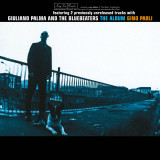
The Bluebeaters landmark debut album from 1999 receives a first-ever vinyl release. Featuring band's hits like Cher's "Believe" or Black's "Wonderful Life" all cooked in a strictly mid 60s Jamaican Blue Beat & Rock Steady style. Gatefold 2LP clear vinyl with printed inserts, limited to 500 copies, instant collector's item.
Record Kicks in collaboration with Universal Music Italy presents the release of The Bluebeaters seminal debut LP "The Album" for the first time ever on wax on a limited edition clear vinyl double LP on March 31. Way before the vinyl comeback of the 2010s, "The Album" was released in 1999 on CD and on two limited edition promo 12"s that are now very in-demand in the scene on V2 Records. "The Album" marked a generation of Soul, Rock Steady and Reggae fans in Italy selling over 40.000 physical copies and now 24 years after its original release, it gets published on full vinyl.
Fronted by "The King" Giuliano Palma on vocals backed with members of cult Italian bands of the 90s such as "Casino Royale", "Africa Unite" and "Fratelli di Soledad", The Bluebeaters' analog recordings finally find the vinyl format they deserve. On the album's track list you can find Jamaican music classics such as "World's Fair" from the Skatalites, Joe Higgs' "There's a Reward" or Bob Marley's "Coming In From The Cold" mixed with hits such as Cher's "Believe", Black's "Wonderful Life" or even 1978 "See You Tonite" by Gene Simmons from The Kiss that perfectly sound as if they were recorded by Clement "Coxsone" Dodd at Studio1 in Kingston in 1966.
The Bluebeaters are not newcomers on Record Kicks, the Milan label released their "Everybody Knows" album in 2015. Top Italian musicians in love with vintage Jamaican ska and reggae and blessed by Ken Booth, during the last 25 years of their career they headlined festivals like Rototom Sunsplash and International Ska Fest in London. Among their fans, they count the likes of Gaz Mayall, David Rodigan and the legendary late lamented Lloyd Knibb (The Skatalites).
The reissue of The BB's "The Album" is part of Record Kicks' 2023 initiatives to celebrate its 20th anniversary. Side by side with similar imprints like Daptone, Big Crown, Colemine or Timmion Records, under its motto "The explosive sound from Today's scene", Milan-based record label and music publishing Record Kicks, has been pitching the contemporary funk & soul scene since 2003. With over 250 physical releases under the belt, the label has released bands from all over the globe and earned support of VIP fans such as rap superstars Jay-Z, Tyler The Creator and Dr. Dre, who sampled the label's catalogue.
"Goldfish" Indie Store Exclusive Color Vinyl Brooklyn-based musician and producer Barrie Lindsay, known simply as Barrie, has a passion for creating left-of-center pop music. She spends her days writing songs and tinkering in Logic, stockpiling her creations in a vast archive of folders and hard drives. When it came time to select the songs for her sophomore LP, `Barbara,' she narrowed it down to sixteen tracks. As the record came together, it became clear that there would be two separate projects - the first being `Barbara,' an emotionally charged collection of songs dealing with the loss of a parent, the love of a new partner, and finding one's own identity. The remaining five tracks, which were more light-hearted and o the cu, were compiled into a new project titled `5K.' As an avid runner, Barrie named the EP after the common foot race. The aptly titled lead single, "Races," is a delightful synth-pop track in a unique 12/8 time, built around a bombastic drum kit and giddy key ris. "Nocturne Interlude" acts as a segue between `Barbara' and `5K,' showcasing a haunting melody amidst dark brass-like synths. Second half highlight "Ghost World" has a distorted guitar ri and classic drum pattern that evokes a forgotten 90's radio b-side. The song was recorded entirely by Barrie herself, serving as her own band on guitar, bass, keys, and drum kit. Even though most people would finish listening to the project front to back before finishing a 5k run, the short, sweet, and melodically rich EP begs to be replayed over and over. With `5K,' Barrie showcases her versatility as an artist, closing the loop between the sounds found on her debut LP `Happy To Be Here' and her follow-up `Barbara'.
Standard Black Vinyl LP w/ Foil stamped jacket, printed inner sleeves + DL card. Legendary Tacoma, Washington mathcore/hardcore/metal band Botch's debut full-length American Nervoso was originally recorded in 1998, eventually becoming one of the most ground-breaking records during a pivotal shift in heavy music. Now, the band's debut album is set to be re-issued on Sargent House 25 years after its original release. The album features white-hot guitar action, scathing vocals, sweet bass moves, and torrential drums, smashing existing precepts of hardcore and redefining both the word and the music for a generation of kids and grizzled vets alike. Bassist Brian Cook, guitarist David Knudson, drummer Tim Latona, and vocalist Dave Verellen formed Botch in 1993, eventually becoming one of the most significant bands of their time. Their final show was June 15, 2002, the same day as the release of their final EP, An Anthology of Dead Ends. The members would go on to play in These Arms Are Snakes, Minus the Bear, and Russian Circles, among others, with acclaim for the band coming mostly post-breakup. Over 20 years since they played their final show, Botch are reuniting for select dates in the Pacific Northwest in February 2023. 25th anniversary re-issue of Botch's critically lauded debut album. Botch have their first live performances in over 20 years for early 2023. Botch have been included on "Most Influential lists" by outlets like Decibel, Rock Sound, Alternative Press, A.V. club + more
Nach der Veröffentlichung der 2CD-Version des Albums Moonage Daydream im letzten Jahr, wird der Soundtrack nun am 31. März als 3LP Vinyl veröffentlicht.
"Moonage Daydream" beleuchtet das Leben und Genie von David Bowie, einem der produktivsten und einflussreichsten Künstler der jüngeren Musikgeschichte.
Auf Spielfilmlänge nimmt uns Brett Morgen mit in die Welt Bowies, erforscht anhand von großartigem, vielfältigem und nie zuvor gesehenem Filmmaterial, Live-Auftritten und Musik (Morgen sichtete vier Jahre die Archive des David Bowie Estates) seine kreative, musikalische und spirituelle Reise.
Durch den Film führt uns dabei die Erzählerstimme von David Bowie selbst.
Das Begleitalbum zu "Moonage Dream" enthält Songs aus Bowies gesamter Karriere, darunter bisher ungehörtes Material, speziell für den Film und dieses Album angefertigte Mixe und Gesprächspassagen Bowies.
Zu den Highlights des Tracklistings zählen ein bisher unveröffentlichtes Live-Medley von "The Jean Genie / Love Me Do / The Jean Genie", aufgenommen beim berühmt-berüchtigten letzten Ziggy-Stardust-Konzert im Londoner Hammersmith Odeon 1973 und mit Jeff Beck an der Gitarre. Weitere Raritäten sind eine frühe Version
des Hunky-Dory-Favoriten "Quicksand" und eine bisher unveröffentlichte Live-Version von "Rock 'n' Roll With Me", mitgeschnitten bei der legendären "Soul Tour" 1974.
On the heels of his already critically acclaimed (yes, already!) retrospective, World Spirituality Classics 3: The Muslim Highlife of Alhaji Waziri Oshomah, Alhaji Waziri Oshomah — the Oyoyo King, the Godfather of Afemai Music, the Etsako Super Star, Mr. Please Please Please, Mr. Dynamite — returns with Vol. 2.
Along with the other four volumes of the series, Vol. 2 is now available—for the very first time!—as part of a complete set (in a box): Vol 1 - 5 (1978 - 1985) (November 4, 2022).
Waziri hails from a small part of Edo State in southern Nigeria called Afemailand, known for being a harmonious region where Muslims and Christians live—and dance—together. And there, as a devout Muslim and an exemplar of religious piety in his community, Waziri’s music fuses Etsako/Afemai folk styles with pan-Nigerian highlife and pop to create a sublime vehicle for his Islamic philosophy that gets everyone—Muslims, Christians, whoever—on the dancefloor.
Vol. 2 focuses on Waziri’s illustrious mid-career output—the music he created during the years leading up to and after he performed his first hajj. Every song here (one of which you might recognize from The Muslim Highlife) strikes his signature balance of traditional music, highlife, and funk, as he entreats you to stay on the straight and narrow, though there’s nothing straight about his beat.
On and off the record…
This is the second of the five-part Volume Series, which was recently compiled for the first time in the limited-edition box set, Vol. 1 - 5 (1978 - 1984) (November 4, 2022).
This release follows World Spirituality Classics 3: The Muslim Highlife of Alhaji Waziri Oshomah (September 23, 2022).
The Muslim Highlife of Alhaji Waziri Oshomah, received an 8/10 from Uncut, ★★★★ from MOJO, and has been called “therapy, worship, ecstasy” by Pitchfork (7.2).
Release supported by archival and new video content.
Alhaji Waziri Oshomah will play select shows—along with his wife and musical collaborator Madam Hassanah Waziri—in the U.S. and Europe throughout 2023. l He can perform sets as long as 3-4 hours! (Depending on the financial strength of the village).
Sings in English and local languages and is regarded as #1 Singer in all of Edo State.
DIE MITGLIEDER VON CRAZY HORSE KÜNDIGEN "ALL ROADS LEAD HOME" AN, EINE MUSIKALISCHE REISE FÜR DIE HEUTIGE ZEIT
Mitwirkende: Ralph Molina, Billy Talbot, Nils Lofgren
& Neil Young
ALL ROADS LEAD HOME ist ein Album, das gleichermaßen aus purer Inspiration und der veränderten gesellschaftlichen Situation heraus
entstanden ist: Während der Pandemie nahmen Molina, Talbot und Lofgren in regelmäßigen Abständen neue Songs auf, jeweils mit anderen Musikern und an wechselnden Orten - so, wie es die
pandemischen Bedingungen zuließen. Anders als sonst, konnten sie nicht im Trio mit Neil Young arbeiten, was Herausforderung und Chance zugleich war, denn so mussten die Musiker zwangsläufig
schauen, wohin die neuen individuellen Konfigurationen führen würden. Sie führten, wie so vieles in der Zeit, zunächst einmal: nach Hause.
Dort, wo sich für uns alle das soziale Leben der Zeit abspielte. Die drei Crazy-Horse-Mitglieder nahmen jeweils drei Songs getrennt voneinander und mit unterschiedlichen Musikern auf. Und schauten dann, wie sie all das zu einem wundersamen Konsens unvergesslicher Musik zusammenfügen konnten. Das Kunststück gelang. Ein Album wie dieses hat man von der Band noch nie gehört.
Steve Gunn and David Moore’s Let the Moon be a Planet is a volume of improvisatory exchanges between classical guitar and piano, and a meeting place where two artists become acquainted through instrumental dialogue without a single expectation distracting them from the joy and open field possibility of collaboration.
A project enveloped by an aura of reciprocity, Let the Moon Be a Planet unfolded from an invitation to connect between two New York-based musicians who admired each other’s work but had never intersected: guitarist and songwriter Steve Gunn, whose solo, duo, and ensemble recordings represent milestones of contemporary guitar- guided material, and pianist and composer David Moore, acclaimed for his minimalist ensemble music as the leader of Bing & Ruth.
The exchange began remotely as Gunn and Moore responded to one another’s solo improvisations, embarking on a synergistic progression of deep listening and connection through musical conversation. “We were both fans of each other’s music and this was a chance to try a different process which was much more open,” says Moore. “It felt like something I needed personally as an artist, to not be so controlling over the final output, and to truly collaborate with somebody else.”
Similarly for Gunn, who was exploring new pastures and passages in classical guitar when the dialogue began, the project was an invitation for pure conversation and exchange, creating space for him to revisit foundational forms with his playing: “I was trying to break out of what I was doing, to have something that just pulled away all the elements of usual structured things.”
Let the Moon Be a Planet intertwines the trajectories of two musicians acclaimed for pushing the boundaries of their instruments, unified by a shift away from what they recall as more “detail- oriented” approaches to composition. Fueled by the magnetism of their call and response exercise, Gunn and Moore set out on a nomadic songwriting venture without an intended destination.
“We didn’t know it was going to be an album,” Gunn explains. “There was never pressure on us to complete or make something. It was interesting to start realizing that this could be an album and to take a step back... to arrive at a project after the fact.”
Nearly five years on from their acclaimed debut, Bennett Wilson Poole reveal the follow up. It's been a long time coming, but...
That eponymous first album was only ever intended as a one-off collaborative project — a serendipitous series of events which began with a late evening session where the trio wrote ‘Hate Won't Win’. A response to the murder of MP Jo Cox, it was something of a fresh take on Crosby Stills Nash and Young’s classic protest song ‘Ohio’. The release saw Bennett Wilson Poole embraced by the Americana community, playing live on the Andrew Marr show and crowned as ‘UK Artist of the Year’ at the 2019 UK Americana Awards, in front of a watching crowd including Graham Nash himself.
The new album came together in similar fashion; Robin (Bennett) and Danny (Wilson) started writing new songs late into the night whilst on tour to promote the first record — a tour which unfolded from a three-night residency in a London pub into a year-long odyssey culminating in a headline show in Hall One at King’s Place — and before they knew it, there were enough songs to begin recording an unplanned second album.
Where the first record drank deep from 70s US west coast folk-rock, the second has been heavily spiked with 1960s British psychedelia, even featuring a cover by legendary counterculture artist John Hurford (whose credits include 60s artwork for Oz Magazine and International Times).*
Tony Poole’s meticulous and inspired production has spun Robin and Danny’s fresh batch of songs into a delicate web of musical delight. Fans of the ‘spot the reference’ game Tony started on the first record won’t be disappointed this time either, as there are plenty more to be found here.
As with the first album, the lyrics don’t shy away from current affairs – by the end of that year of touring, the band were already playing “I Wanna Love You (But I Can’t Right Now)”, reflecting on the state of US politics, yet optimistic that the problems are only temporary.
Many of the tracks on the new album feature live rhythm section Fin Kenny (drums) and Joe Bennett (bass) for the first time on a BWP record.
The title of the album comes from the lyrics of ‘Help Me See My Way’, the first single, a prayer for strength in difficult times, the trippy animated video for which was originally issued during lockdown. The dreamy positivity of the line "I saw a star behind your eyes" is tempered with the plea "don't let it die away", a message which feels as important as ever two years on.
All three collaborators have had critical acclaim in their own right. Danny Wilson’s credentials go back to his days in Grand Drive with brother Julian, and his consistent high calibre output with his Champions of the World led them to sweeping the board at the first UK Americana Awards with Album, Artist and Song of the year awards richly deserved; Tony Poole’s Starry Eyed and Laughing were hailed as “the English Byrds” on the back of their two CBS-released albums in the mid-seventies and he has since built an enviable reputation as producer and engineer; Robin Bennett has been relentlessly turning out timeless songs from his Oxfordshire base in bands from Goldrush to The Dreaming Spires
After the experience of Camizole, Dominique Grimaud began a new (and different) adventure in 1979 with Monique Alba. Alongside Gilbert Artman (Urban Sax), Guigou Chenevier (Etron Fou Leloublan), Jean-Pierre Grasset (Verto) and Cyril Lefebvre (Maajun), Vidéo-Aventures is composed of instrumentals capable of reconciliating Captain Beefheart, Henry Cow, Suicide and... John Barry. All with the backing of Rock In Opposition, which enabled this Musiques pour garçons et filles to become known worldwide.
“Let us enter your hearts”: is the request made by Vidéo-Aventures, and how can we refuse? Especially as Musiques pour garçons et filles, recorded by Dominique Grimaud and Monique Alba fifty years ago along with handpicked colleagues, is as fresh as ever.
1979: having improvised a huge amount (and how!) with Camizole, Grimaud tried his hand at composition and studio recording with Alba. Their first instrument was the AKS synthetiser, with which the duo recorded the instrumental tracks that were then offered to their comrades Guigou Chenevier (Etron Fou Leloublan), Gilbert Artman (Lard Free, Urban Sax), Jean-Pierre Grasset (Verto) and Cyril Lefebvre (Maajun).
At the end of the year, they all came into the studio for a week to record the eight tracks of this mini- album that Chris Cutler would issue a few months later on his label, Recommended. In France it was the beginning of the agitation around Rock In Opposition, to such a point that Musiques pour Garçons et Filles would rise to second place in the NME independent Charts. And this is hardly surprising...
For these instrumental miniatures (here with the bonus of rare archives, some of which are previously unpublished) are uncontrollable: electronics augmented by lap-steel guitar (“Tina”), cunning pop (“Zazou sur la piste”), mechanic sound (“Une vie modern”), street piano (« French Kiss »), disturbing atmospheres (“La ballade des cardiaques”) or something like a TV theme tune capable of adjusting all the colours (“Telstar”)... With such promising ingredients, why stop Vidéo-Aventures from entering?
Auf dem neuen Longplayer Crime Scene lenkt die bayuwarische Artrock-Institution ihre Aufmerksamkeit auf das Morbide, das Perverse, das Böse im Guten, die Abgründe des menschlichen Verhaltensspektrums in all seiner unvorhersehbaren Vielfalt, die dann manchmal auch so bizarr verstörend schlüssig daher kommt, wenn man denn ansetzt sie ergründen zu wollen.
In sechs dicht-atmosphärischen Tracks haben sich RPWL wieder einmal auf intensive Reisen durch die eigene Bandvita, als auch die jeweils eigenen Plattensammlungen begeben. Das Bemühen von Vergleichen ist immer so eine Sache, denn immerhin ist dies die 19te Veröffentlichung dieser international erfolgreichen Band. Die teils morbid-düsteren Themen werden mit old-school Fuzz konterkariert, das knapp 13-minütige "King of the World" mit seinem knurrenden Big Muff und seinen flächigen Vibes, oder "Life beyond Control", das mit seinem Offbeat-Einsatz sicher zu den härtesten Stücken in der RPWL Diskographie gehören dürfte, legen ihr Geständnis auf der Crime Scene ab. "Live in a Cage" bringt das das Kalkül des wie immer akribischen Sounddesigns dieses neuen RPWL-Albums auf den Punkt, nahtlos schließt sich "Red Rose" daran an. Pflaster auf Schusswunde als Prinzip. Aber der Wahn der normalisierten Gewalt wabert in so vielen Haushalten unter der vermeintlichen Harmonie, die die vier Musiker hier den Hörer glauben lassen. Wie fühlt es sich an, überhaupt kein Konzept von Freiheit zu haben, die Angst die bürgerliche Sicherheit zu verlassen aber größer ist? Allein im Lockdown-Jahr Jahr 2020 erfasste die Polizei über 119.000 Fälle von partnerschaftlicher Gewalt, 139 davon mit tödlichem Ausgang, die sich in über 80% der Fälle gegen den weiblichen Part in der Beziehung richteten.
Yogi Lang kommentiert aus künstlerischer Perspektive er sei schon immer von gesellschaftlichen und persönlichen Schattenseiten fasziniert gewesen. Kalle Wallner stellt die Gretchenfrage, wie man es denn mit dem Bösen an sich halte: "Wer macht uns zu dem wer wir sind? Ist es eine Frage der Genetik oder sind es doch die sozialen Umstände, unsere Kindheit, Schicksalsschläge, Druck oder Kränkungen?"
Das ‚Böse' bildet eines der Kernthemen auf Crime Scene, welches über das Band-eigene Label Gentle Art of Music erscheint. Als wertig aufgemachtes Digipak, drei unterschiedlichen Vinyl-Versionen (180Gr. Schwarz, 180Gr. Lim. Rot, 180Gr. Lim. Blau) und natürlich Digital.
eclipsed - Album des Monats:
"RPWL ist damit ein geradezu kriminell spannendes Werk gelungen. ....Auf "Crime Scene" spielen RPWL alle ihre Stärken aus. Tatorte gesichert. Fälle geklärt. Mission erfüllt. ... Wuchtige, cineastisch anmutende Arrangements, wunderschöne Melodiebögen, bewegende, leise, behutsame Momente und ein ausgesprochen spannendes Konzept hinterlassen einen starken Eindruck..."
SLAM (Highlight März/April)
Wieder einmal haben die bayrischen Artrocker RPWL ein Konzeptalbum am Start und wieder einmal kommt nach dem ersten Durchlauf der übliche Gedanke: Das ist absolut großartig, aber man hat keine Ahnung warum genau. Was haben die in Freising in ihrem Wasser, das ihnen erlaubt zu scheinbar egal welchem Thema eine Klangwelt zu bauen, die es so kein zweites Mal gibt? (...) Man kann gar nicht hoch genug einschätzen, wie wertvoll die Existenz so einer Band ist, es bleibt am Ende ein einfaches "Danke".
Mit einer Mischung aus zeitgenössischem AOR, melodischem Rock und Djent präsentieren BLACK ORCHID EMPIRE einen progressiven Sound, der ebenso ausgefeilt wie technisch, ebenso frisch wie vertraut und ebenso melodisch wie knallhart ist. Seit ihrem Debüt im Jahr 2016 ist das Londoner Trio auf dem aufsteigenden Ast, da sie den aktiven Rockmarkt in Großbritannien aufmischen. Mit "Tempus Veritas" ist die Band nun bereit, die nächste Stufe zu erreichen. Vom Konzept her ist das Album eine Sammlung von Geschichten, die nach fesselnden imaginären Erzählungen suchen, die in der Geschichte, wie wir sie kennen, versteckt sind. Wenn der Vorgänger "Semaphore" ein Sci-Fi-Album war, ist dies ein Hi-Fi-Album.
Mit einer Mischung aus zeitgenössischem AOR, melodischem Rock und Djent präsentieren BLACK ORCHID EMPIRE einen progressiven Sound, der ebenso ausgefeilt wie technisch, ebenso frisch wie vertraut und ebenso melodisch wie knallhart ist. Seit ihrem Debüt im Jahr 2016 ist das Londoner Trio auf dem aufsteigenden Ast, da sie den aktiven Rockmarkt in Großbritannien aufmischen. Mit "Tempus Veritas" ist die Band nun bereit, die nächste Stufe zu erreichen. Vom Konzept her ist das Album eine Sammlung von Geschichten, die nach fesselnden imaginären Erzählungen suchen, die in der Geschichte, wie wir sie kennen, versteckt sind. Wenn der Vorgänger "Semaphore" ein Sci-Fi-Album war, ist dies ein Hi-Fi-Album.
Am 31.03.2023 veröffentlicht Brainfeeder ein Reissue des lange ausverkauften Debütalbums ’Needle Paw’ von Hiatus Kaiyote Sängerin Nai Palm auf Doppelvinyl.
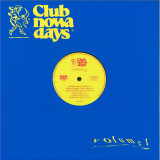
Nowadays Records has never lost its taste for compilations. And after having released dozens of them to date, the label is planning to release new ones for the occasion, directly from the Club Nowadays' aerial nights, where artists from different scenes, lesser-known heads and label figures are mixed together, always with this key word: openness.
More than just a name for a party or a compilation, Club Nowadays is also becoming a real artists' collective.
On the 1st compilation "Club Nowadays, Vol. 1" released in June 2022, we found house and techno sounds in the Nowadays style by the artists Chien Méchant, Grand Soleil, La Fine Equipe, Fulgeance, Trifouille1er, Ténéré and Vect (who also signed the whole visual DA of the project).
Nowadays is back with "Club Nowadays, Vol. 2", with other artists such as Phantom Traffic, Le Bag, Jeff The Fool,... In a word, Nowadays gives us its definition of club music. It may not be universal, but it is unique and inseparable from the label's image.
out of Stock
Last delivered 3 years ago available to reorder, subject to availability
ASSASSINS did what many bands do: they grabbed a moment out of the air and slammed it onto tape machines and hard drives with relentlessness, cunning, and an attitude.
It was in Chicago, mid 2000’s, and though there was energy in the music scene, it wasn’t coalescing into anything you could use as a heading in the musical encyclopedia. Drag City, Thrill Jockey, Bloodshot, Tortoise, Andrew Bird, 90 Day Men – amazing labels and bands, but discrete and siloed and separated by boundaries that weren’t very real.
In the midst of that complicated morass, ASSASSINS generated a collection of songs that became the album YOU WILL CHANGED US. And it did.
There was confidence built into the fabric of the project: 5 members, 2 singers, massive synced video walls and samples streaming from laptops swirling in three dimensions around the stage. They could go from subtle atmospheric moments to a gargantuan wall of sound instantly. It was hard to do- months in cold practice rooms troubleshooting sections of songs or reworking synthesizer patches put the band through a self-imposed boot camp. And it brought them together as a sort of hive-mind focused on one thing: that these songs could connect. They could cut through the noise and share a state of mind with other human beings.
And it worked. Those early shows were mind bending. It was fun, loud, drunken, and rewarding- that time together, before the record deal, before the tragic let down of being traded and gobbled up by the major label system. The years after that got more difficult, more complicated, more human.
Leading us here: the musical journey of the Assassins has ended. With the up-coming release of their second and final album THE YEAR THAT NEVER CAME, we finally get to hear, and feel, the final statements of their inspiring chemistry.
In July of 2021, founding member, songwriter and singer Joe Cassidy unexpectedly passed away. THE YEAR THAT NEVER CAME is the culmination and end point of a collaboration that started in the early 2000’s with a chance meeting and excited conversation with Aaron Miller at a gig in Chicago. Quickly joined by David Golitko on keyboards, Merritt Lear on vocals and guitar, and Alex Kemp on bass.
It was Miller who saw Joe Cassidy’s song writing in a new context. Cassidy had been known for his beautiful, post- pop inflected BUTTERFLY CHILD, a thoughtful, regal project where Joe’s emotions could soar. Miller saw a different context for that voice- not dreamy, but immediate, not just hopeful, but demanding. He took Joe’s open hand and suggested that it could be a fist, raised in the air, with a crowd of other people doing the same.
At the time of his death legendary composer and songwriter Jimmy Webb (who wrote such hits as ‘Wichita Lineman and MacArthur Park) said Joe ‘was a creative and generous producer but, more importantly, he was a creative and generous friend.’
With the release of THE YEAR THAT NEVER CAME, this band, this relentless creative force, has to finally relent. No one in the band could see a future ASSASSINS that doesn’t include Cassidy. So in one last act of will, for the love of their friend, they did the rigorous work of finishing the songs that they had started together for the second album.
Assassin’s obsession with the notion of time, from YOU WILL CHANGED US to THE YEAR THAT NEVER CAME, flows from the most natural question we all have to ask ourselves: what do I do now? Because: how we react today to life’s unpredictability - that is the tomorrow we build for ourselves.
"Hungarian guitarist Gabor Szabo (1936-82) issued only three live recordings during his lifetime. Significantly, the first of these, The Sorcerer (1967), remains the most popular album in the guitarist’s all-too abbreviated discography. But there were also More Sorcery (1968) and Gabor Szabo Live with Charles Lloyd (1974), offering Szabo totally in his element and at his bewitching best.
Several more of Szabo’s concert recordings have surfaced in the intervening years, including this one, superbly captured for radio broadcast live in 1976 at the 600-seat Agora Ballroom in Cleveland, Ohio. It is a revelation. There is a sense here that concert patrons may have been hearing an altogether different Gabor Szabo than record buyers.
For one thing, Szabo is heard fronting what is likely his own group, rather than an army of studio musicians. In 1976, Szabo was leading a tremendous quartet with George Cables (or Joanne Grauer) on piano, Tony Dumas on bass and Sherman Ferguson on drums. Szabo had not had a band with this much jazz clout since his famed quartet with Jimmy Stewart in 1967-68 – and it is a union worth savoring: Szabo’s records during this period were light, at best, on jazz.
It’s unclear if any of these musicians are on the Agora date, but as Dumas’s “It Happens” opens the program, it’s a good bet, at least, that the bassist is on board here. But as Szabo’s ’76 quartet is not known to have recorded a studio record, Live in Cleveland is the closest thing to what a mid-seventies Szabo jazz album would sound like.
Gone, are the strings, vocals and concessions to commercial consideration so prevalent on so many of Szabo’s studio records at the time. What is present, though, is fine craftsmanship, tremendous interplay, and the exciting improvisation that good jazz always yields.
This particular concert was part of Sansui’s “New World of Jazz,” a series of 13 hour-long jazz concerts recorded at Cleveland’s iconic Agora Ballroom and broadcast over 40 FM radio stations. The series was sponsored by Sansui Electronics, a Japanese manufacturer of audio and video equipment, which previously sponsored a similar series of rock concerts recorded at the Agora as well.
Sansui was promoting its matrix QS 4-channel sound system – offering, what was considered at the time, superior diagonal separation and stereo compatibility. The firm, partnering with Agora Ballroom and Agency Recording Studio owner Hank LoConti (1929-2014), was looking to take advantage of what they rightly felt was the then-current jazz renaissance.
Each show’s 16-track master tape was mixed through the Sansui QS 4-channel encoder,” according to an August 1976 Billboard article detailing the arrangement, “for distribution to the 40 FM stations throughout the United States that bought the series” – allowing for three commercial spots for local dealers to advertise."
The recording is available for the first time on CD and VINYL. Mastering by grammy-nominated Jessica Thompson.
After almost two years of work, we're glad to invite you to a new journey through the fog of time and enjoy the upcoming reissue of the great Ambient/Folk record from 1984. A well-known to collectors but extremely rare record by Jon Iverson a multi-instrumentalist from Palo Alto and his college friend, mandolinist Tom Walters. They shared a love for singer/songwriter fare and gigged around campus playing covers of Neil Young, CSN, and Loggins/Messina in the late '70s.
"First Collection" was recorded during the Spring of 1984 in a small garage that had been converted to a one-room apartment in the seaside community of Los Osos, California.
With an instrumentation of 12-string guitar, piano, mandolin, analog synthesizers, and sampler, the duo has recorded nine bright, weightless, and diverse compositions where electronic experiments mix with ethnic rhythms, sweeping through inspired folk reminiscent of the work of William Ackerman, John Fahey, Master Wilburn Burchette, and Robbie Basho, to homemade pastoral space folk exuding sophisticated, pale, lunar sonic moods that somehow might remind of the work of Roedelius from the early 80s.
Equipment used for tracking included a rented 1/2" 8-track Otari MX5050 analog tape machine and assorted mics. With only a few thousand albums pressed, First Collection has become a collectable in some circles.
Now, almost forty years later, First Collection has been remixed and remastered from the original 1/2" tapes for this release.
The “Heaven” EP features producer-extraordinaire Leonard Charles at the helm, collaborating with prodigious artists from New Zealand (his home country) and the USA, to create an wildly eclectic E.P. project with the common underlying thread of basement funk knitting it together. This presentation of funk is truly a legitimate foundation for the heads that need it: built upon solid soul/jazz chord progressions and played on original musical equipment/gear from the 80’s and 90’s. The record features an exclusive remix of the song “Nine Lives” that he co-wrote with boogie/funk legend Leroy Burgess, and additionally features stellar collaborations with Guilty Simpson, Zyah Belle, Reality Jonez and A.C. Freezy. Jeremy ‘Leonard Charles’ Toy is a producer / artist / musician from Auckland New Zealand who has played on records for Mark De Clive Lowe, Recloose, Julien Dyne and Ladyhawke. He has performed music with Randy Crawford, Hugh Masakela, Kimbra, Maynard Ferguson, Ronald LaPread (the Commodores) and has collaborated with Grandmaster Caz, Guilty Simpson (The Leonard Simpson Duo), Georgia-Anne Muldrow, Dudley Perkins and Wildchild. He has released music on his own imprint, From The Crate Records and Jakarta Records, Hit + Run, Wonderful Noise, Hobo Camp and now CQQL Records.
The next album release on Goldie's fast-rising, boutique label Fallen Tree 1Hundred, The Day Out of Time by The Degrees is the Acid Jazz/Soul and Trip Hop long-player from drum and bass man of the moment Break, alsongside singer songwriter isha Campbell, heavily inspired by their home town of Bristol.
The album follows a year of lead-in singles nicely supported by Mary Anne Hobbs, Huey Morgan on BBC Radio 6Music, Mi-Soul, Solar and playlisted on the legendary Jazz FM.
Apparel Music Review:
Perhaps it's nostalgia for that wonderful time when making music was more challenging, at times laborious, and the more tiring was the process that led to the creation the more the final product acquired value, but this album brings you back to those times, without sounding outdated.
We know how much work goes into a record of this kind and, even if today's music world runs fast, presenting hundreds of thousands of releases a day, it is important to remember that records can still be timeless. Well, this is the first thing I thought while listening to this LP for the first time: it is timeless. It sounding ageless is perhaps ascribable to the fact that it recalls that famous sound coming from South-West England in the late 90s/early 00 but, having that musical wave had such an impact and therefore created a sonic standard, it can easily be revived and revisited in a current key without sounding obsolete. In addition, this album is full of different influences coming from R&B, Soul, Hip-Hop which, over the years, have grown and developed to become the daily bread of many listeners who have refined their taste with time, and can now perfectly incorporate the multiple sound stimuli coming from it, as 'The Day Out Of Time' satisfies every type of taste