"Psicofásicos" by The Silver Pumpkins is a unique document: an EP that is virtually impossible to find in its original edition, offering an essential glimpse into Bolivia's thrilling 1960s rock scene-raw, wild, and unlike almost anything else. Beyond the ubiquitous covers of Cream and Jimi Hendrix recorded by countless South American bands, this EP features the far less common 'Pushing Too Hard' by The Seeds and, most notably, the dark, powerful 'You're Gonna Miss Me' by the 13th Floor Elevators. Bolivia boasts an extraordinary musical legacy of raw, garage-driven '60s sounds. Alongside Peru, it was one of the South American countries where the greatest number of recordings in this style were released-captured with limited resources but overflowing with spontaneity, energy, and attitude. The difficulty of obtaining the records that were shaping the latest Anglo-American rock trends of the 1960s in many Spanish-speaking Latin American countries led to a proliferation of local bands covering their musical heroes. Well-known artists such as Cream, Jimi Hendrix, and Iron Butterfly were reinterpreted by countless groups, making these songs available to local audiences without having to rely on imported records reaching their countries. By doing so, these bands helped spread the cutting-edge rock music already making waves elsewhere in the world. What makes this release particularly unusual is that the band chose to cover second-tier cult acts rather than the obvious classics-groups that only briefly cracked the U.S. Top 50 in the late '60s, such as The Seeds and 13th Floor Elevators. Originally released on the Bolivian Psicofásico label, this exceptionally rare EP pairs The Seeds' garage anthem 'Pushing Too Hard' with the ferocious, immortal 'You're Gonna Miss Me' by Roky Erickson and the 13th Floor Elevators. The raw power of the original songs is pushed even further here by the rudimentary recording techniques and the limited instrumental skills of the very young members of The Silver Pumpkins. The result is a one-of-a-kind document-virtually impossible to find in its original pressing-that helps complete the picture of Bolivia's fascinating '60s rock scene. First-ever reissue.
out of Stock
Last delivered 29 days ago available to reorder, subject to availability
With “La Fiesta Seria y Nuevas Formas de Tecnaco”, the fourth chapter in the ESTADO DE BIENESTAR series, the project continues to delve deeper into a singular sonic territory, situated at the fringes of experimental electronics and free from any aesthetic constraints, moving unapologetically between tribal dub, primitive electro, hypnotic ambient and even classical piano structures, articulating a musical discourse that is as disconcerting as it is coherent.
Most of this work emerges from the use of CV sequences which, with their distinctive human groove, trigger iconic synthesizers from different generations, giving rise to a new radical exploration of proto-electronics as an open and constantly evolving language.
Recorded almost entirely in analog, the album preserves a lo-fi aesthetic that has become one of the project’s defining characteristics.
Previously described by various international specialist media outlets as “a new genre because of its unclassifiable nature”, ESTADO DE BIENESTAR continues to develop a language of its own: one that follows no one and, in its own way, follows everyone. A sonic territory that, at Oráculo, we have chosen to call Transelectronica.
Features Rasco, L da Headtoucha, Edo. G, Esoteric, Pace Won, Young Zee, Danja Mowf, Lonnie B, J-Live, Shabaam Sahdeeq, Lucky Dice, Ripshop and more, plus the first production from Statik Selektah and beats by Soul Searchers, Eddie Bones of Skitzofreniks, Ray Fernandes & Fakts-1.
Along Came the Chosen dropped in 2001 and was the first solo album from Reks, and the first album by a solo artist released on Boston-based Brick Records, which celebrates its 30th anniversary in 2026 too. Its release was a defining building block in the long and storied history of Boston independent hip-hop, and this album set the bar for what was expected from MCs and Beatmakers on the Beatown rap scene and beyond.
Brick Records and Reks are proud to celebrate its 25th anniversary with this deluxe double-vinyl pressing. "Along Came the Chosen reaching its 25 year anniversary, being the piece of art that established my hip hop career, is something monumental to celebrate. The fact that individuals still reach out to me to express how they grew with this album means so much to me. There were so many voices in my ear telling me that being a successful artist in this game required bending to popular trends and styles. This album allowed me to establish my own voice and identity, and I am thankful for Soul Searchers (Magoo and Rockwell) for being the foundational sound bed, Shay Boogs for being my first manager, and Brick Records for being the label that believed in me. I am happy to say we have put out some incredible art together. This album boasts the first-ever Statik Selektah beat placement too! We have come a long way. Here’s to 25 more!" REKS.
It's now 20 years since four teenagers from Melbourne assembled under the name Harlott – chosen largely because it would look good on a black t-shirt. After a scorching debut with Origin in 2013, the band carved their path through Proliferation, Extinction and Detritus Of The Final Age, sharpening their brand of breakneck, high-tension thrash with every release. Now, after a six-year gap, Exsequiis marks the boldest leap forward in their career. Denser, harsher and more confident than ever – a razor-sharp sound picture built on world-class guitar work, relentless momentum and lyrics that cast a jaundiced eye over our bitterly divided world. The death of the gods, delivered by thrash metal artisans in the prime of their lives.
2026 Repress
12" - Fully Authorised Reissue on Original Release Label!
Canadian deep house don Nick Holder's Fruit Loops EP is next to get the remaster and reissue treatment from Definitive Recordings. This label, now overseen by Get Physical Music, first released the EP back in 1995 when Toronto-based Holder had already become one of house music's most tasteful operators. He went on to release over 125 EPs and singles under countless aliases, in various groups, and on his labels DNH Records and Treehouse Records, as well as !K7 Records and NRK. His style spans house, disco loops and minimal Chicago grooves and is always high on immersive atmosphere. Opener 'Dance Dance Dance' brings together all those aspects of the Holder sound with its funky guitar riffs looping beneath raw drums and disco basslines. Classic Chic samples burst out of the mix to bring an air of celebration and party, and it makes for an irresistibly feel-good sound. 'Keep on Running' is a steamy and sweaty house jam with loopy drums and bass and more smartly chosen samples, this time from Roy Ayers, that bring the funk and never let up. It has long been a go-to anthem for house DJs, and the realness and rawness of the emotions in Holder's work also shine through with the filtered synths and jazzy keys of 'The Message of Love', which is complete with bumpy and irresistible drums. Last of all is the unfettered party spirit and diva vocals of the brilliantly lo-fi funk-house pumper that is 'Clap Ya Hands'. This EP hasn't aged one bit and remains a definitive piece of early Deep House history.
out of Stock
Last delivered 36 days ago available to reorder, subject to availability
“The first three are innocent in a way, because we didn’t have an audience when we were making them,” Oberst says. “But from Lifted on, I was definitely aware of an audience. Lifted was well-received right away, and then everything happened with Wide Awake and Digital Ash.” Those two albums came out simultaneously. And their lead singles – “Take It Easy (Love Nothing),” from the austere, remote Digital Ash, and “Lua,” from the warm, folky Wide Awake – debuted in the top two slots on the Billboard Hot 100. “First Day of My Life,” also from Wide Awake, would later be voted the Number One love song of all time by NPR Music’s reader’s poll. Bright Eyes had officially broken through. It was a heady, exciting time, but also fraught and tense, both because of the band’s careening new fame, and because of the state of the world. When Bright Eyes made their Tonight Show debut in 2006, they chose to perform none of their shiny new hits, instead delivering a searing, harrowing rendition of their caustic anti-Bush anthem, “When The President Talks To God.” These days, Oberst is still amusing himself by messing with the extremes Bright Eyes baked into this era’s releases, extremes that reflected the polar, with-us-or-against-us, fractious feel of the times. The reworked Digital Ash tracks, originally so clean and elegant, are, on the companion EP, full of “harmonica and mandolins – folky vibes,” Oberst says. While the analogue sweetness of the Wide Awake songs have been put through a detached nihilism filter.
John Tchicai (1936 – 2012) was one of the most important free improvising saxophonists of the 20th Century: an artist of rare vision and aptitude whose lines soared and stood out even in the most hallowed company, and whose body of work as a leader / composer is among the most singular and distinct within the entire canon of that music. But Tchicai’s importance doesn’t end there. Born in Copenhagen, Denmark, to a Danish mother and a Congolese father, his life and career represent a crucial bridge between the European and American traditions of free jazz. Initially trained on violin as a child, Tchicai shifted his focus to the clarinet and alto saxophone during his mid-teens, and began touring Europe as a professional musician by his early 20s, which landed him at a socialist youth festival in Helsinki, Finland, where he met the trumpeter Bill Dixon and saxophonist Archie Shepp. Impressed by what they heard, Dixon and Shepp encouraged the young saxophonist to move to New York, and in so doing changed the history of jazz forever.
Tchicai’s arrival in New York marks the rare occurrence of a European player joining the intimate circle that was first wave of American free jazz. Following his landing in the city in November of 1962, in addition to regularly sitting in with Don Cherry’s group, Tchicai began playing with Bill Dixon's band alongside Archie Shepp and Roswell Rudd, forming the nucleus of the foundation of the New York Contemporary Five - one of the most important groups of the era - which counted Tchicai, Shepp, Cherry, Don Moore, and J. C. Moses as its members. From the ashes of this group, Tchicai would go on to found the legendary ensemble, New York Art Quartet, with Roswell Rudd, Milford Graves, and Lewis Worrell, as well as working within Albert Ayler's band, recording “New York Eye and Ear Control”, Shepp’s band, recording “Four for Trane”, the ensemble that recorded John Coltrane's “Ascension”, and the Jazz Composer's “Orchestra”.
By the time he decided to return to Denmark in 1966, had Tchicai chosen to record little else, his legacy within the history of music would have been ensured. Incredibly ambitious, his arrival home marked the beginning of an incredible period of activity which saw him radically expanding his creative explorations, which by the end of the decade would include becoming a founding member of Amsterdam's Instant Composers Pool and helping to record John Lennon and Yoko Ono's “Unfinished Music No.2: Life with the Lions”. This, however, was proceeded the formation of a new orchestra, Cadentia Nova Danica, led by Tchicai, dedicated to radical cross-disciplinary exploration. Remaining together between 1966 and 1971, the group and its shifting membership regularly fell into collaboration with artists and composers, notably Musica Elettronica Viva, who existed beyond the realms of jazz, as well as participating within multi-media events that incorporated the visual realms.
Cadentia Nova Danica’s only two LPs - “Cadentia Nova Danica” (Polydor, 1968), and “Afrodisiaca” (MPS, 1969) - are effectively Tchicai recorded efforts as a leader, and are legendary. There’s little mystery, once heard, why the later landed on Thurston Moore’s iconic “Top Ten from the Free Jazz Underground”, published by Grand Royal in 1996. Sadly, despite playing extensively during their five year run, with exception of a CD documenting a performance at Jazzhus Montmartre, in 1966, until now there has been no other publicly available recordings that allow us to capture a glimpse of this astounding band at work. Alga Marghen / Formalibera’s vinyl pressing of a never before released body of recordings, made in Copenhagen between 1969 and 1970, changes that in the most exciting of ways.
Comprising three pieces - “Mc Gub Gub, (I–VIII)”; “Ode to Skt. John”; and “Pladepip” - the material on this stunning LP comes from two specific events. The first, which encompasses the first side, “Mc Gub Gub, (I–VIII)” was recorded by Cadentia Nova Danica - in this instance, Tchicai, Sune Weimar, Theo Rahbek, Christian Kyhl, Niels Holt, Jørgen Thorup, Michael Schou, Morgens Bollerup, Allan Gregersen, Ole Matthiessen, Pierre Dørge, Willy Jaegert, Anthony Barnett, and Jon Finsen - on May 29th, 1969, at the ABC-Theatre in Copenhagen. Penned by Tchicai, the piece is a sprawling, evolutionary composition at the outer reaches of free jazz, rooted in large blocks of colliding tonality and rhythm - a sound only accessible to larger ensembles - that push territories explored by Charles Mingus to previously unimagined heights, threaded by moments of hard blown fire. Writhing like a stormy sea - skronking and devilish - “Mc Gub Gub, (I–VIII)” is a work of profound complexity that singlehandedly illuminates not only Tchicai’s singular vision as a composer, but also the power and uniqueness of Cadentia Nova Danica during the band’s most vital period.
The two pieces - “Ode to Skt. John” and “Pladepip” - taking up the flip side, were recorded on February 21st, 1970, at the Danish Broadcasting Corporation’s Radio House, and are the outcome of Cadentia Nova Danica’s extended residency there between 1969 and 1970. In many ways, these two recordings offer some of the best insights into the broad collaborative approaches that defined the band, in this case encountering them working with Danish experimental composer, Svend Erik Werner, who was among the earliest in his country to embrace stylistic pluralism and the use historical forms within a modern context. “Ode to Skt. John” - based on aspects of Gregorian music - was penned by Werner, incorporating heady improvisation by the members of Cadentia Nova Danica, this time made up by Tchicai, Sune Weimar, Hugh Steinmetz, Theo Rahbek, Christian Kyhl, Michael Schou, Morgens Bollerup, Ole Kühl, Torben Enghoff, Mauritz Tchikai, Kjeld Ipsen, Willy Jaegert, Ole Matthiessen, Ole Thilo, Pierre Dørge, Steffen Andersen, Jon Finse, and Clause Bøje. The piece is a fascinating binary of the composed and improvised, utilising the band’s large scale to introduce a remarkable sound within its slow progressions and furious, driving free moments, in this incredible meeting of worlds.
The album’s final piece, “Pladepip”, is arguably its most historically significant: an entirely singular piece, unlike anything in Tchicai’s recorded canon as his foray into musique concréte. Drawing upon two recordings of full-band improvisations by Cadentia Nova Danica, for its creation Tchicai also gouged the surfaces of 78rpm records in his collection to skip and create repeated phrases and patterns, creating a stunning sound collage of hard angles and abrupt phrase, that creates a striking counterpoint to the band’s flowing improvisations that bookend those passages. The result is an engrossing listen and easily one of the most unique and culturally important gestures in the entire history of musique concréte.
Truly incredible, Alga Marghen / Formalibera’s vinyl pressing of this never before released body of recordings, made by John Tchicai’s Cadentia Nova Danica, in Copenhagen between 1969 and 1970, offers an unprecedented window into one of the most important groups working in Europe during that period, significantly expanding their rare and slim discography to date. Accompanied by extensive exploratory liner notes by veteran jazz writer, Ed Hazell, this is easily one of the most historically important archival releases of the year and is impossible to recommend enough. Absolutely essential on every count.
MOTORSLICE is the original soundtrack to the viral hit indie video game of the same name, composed and produced by Pizza Hotline. Built around high-speed movement, razor-sharp parkour, and a blue haired girl slicing machines in half with a bad ass chain saw, the album pushes Pizza Hotline’s video game-inspired sound into a harder, faster, and more cinematic space.
Blending jungle, drum and bass, sci-fi ambient pads, and Y2K game soundtrack nostalgia, MOTORSLICE captures the feeling of launching yourself across gaps, slicing through enemies, and chasing perfect momentum over huge post apocalyptic vistas. The soundtrack draws inspiration from games like Mirror’s Edge, Prince of Persia, and Shadow of the Colossus while maintaining a glossy electronic character that defined that era.
To celebrate the release, MOTORSLICE is being pressed as a full length vinyl LP featuring the complete soundtrack on striking orange vinyl, chosen to match the main character’s iconic outfit. It turns the soundtrack into a proper physical artefact from the game's palpable world, tying the music directly to the visual identity of the game.
Where albums like Level Select and Dream Select explored imaginary game worlds, MOTORSLICE is the sound of a real one: a breakout indie game that has already made a huge impact online through viral gameplay clips and a growing community of players. The result is a soundtrack that feels both nostalgic and immediate, built for speed, precision, and impact while still carrying the melodic, emotional, and playful qualities that define Pizza Hotline’s music.
Friday My Lady steht für energiegeladenen Rock'n'Roll im coolen Garage-Punk-Stil, den das Youngster Quartett aus der Vendée souverän rüberbringt. Im Laufe des Jahres 2022 beschlossen Mathis (Gesang/Gitarre), Vérone (Leadgitarre), Balthazar (Bass) und Lény (Schlagzeug), sich auf das Abenteuer Friday My Lady einzulassen. Kurz gesagt: Sie haben noch jede Menge Tolles für uns auf Lager, und das ist erst der Anfang... FRN Friday My Lady c'est du high energy rock'n'roll sauce garage punk bien cool que le quatuor vendéen de 20 ans sait porter sur ses épaules. Courant 2022, Mathis (chant/guitare), Vérone (guitare lead), Balthazar (basse) et Lény (batterie) ont décidé de se lancer dans l'aventure Friday My Lady. En bref, ils ont encore pleins de belles choses à nous réserver et ce n'est que le début ..
BBE Music’s celebrated J Jazz compilation series reaches its fifth and final volume in early 2026, culminating in a track list that maintains the exceptionally high standard first set with volume one back in 2018. This final volume features a selection of tracks that is as diverse as it is deep, reflecting the rich and varied Japanese jazz scene that spanned from the late 1960s to the late 1980s, a golden era of innovation and creativity. J Jazz volume 5 sees compilers Tony Higgins and Mike Peden dig ever deeper into their respective record collections to reveal tracks that encompass myriad styles including white hot jazz funk fusion from Toshiyuki Honda (Eastern Legacy) and Mikio Masuda (Sonic Barrier), super rare ethnic jazz crossover by Christal Zone - their one-off 45 promo release from 1971, Rai Rai, a deconstructed and abstract jazz classic by Yasuhiro Kohno with his solo piano rendition of My Favourite Things, and Mile and Half’s skin-tearing, shredding freak-out from their mega rare private press album.
A track that is so relentless, it leaves the listener in need of oxygen and a Valium. These hand-picked selections sit alongside other specially chosen numbers that embrace hard-driving samba (Seiichi Nakumura’s Judy’s Samba), epic head-nodding soul jazz (Masaru Imada’s World Line), psychedelic private press fusion (Aoyama Gakuin 101’s Fervor), angular post-bop tear-ups (Akira Miyazawa’s Nijimasu), intense and insistent fusion (Motohiko Hino’s Olive Step), serene cinematic pianism (Hideo Ichikawa’s On the Trade Wind) and tripped-out hallucinogenic tribal funky jazz (Masahiko Sato’s Garandoh’s Africa to Africa). Most of the tracks on this collection are being reissued for the first time, many of them only available previously on extremely limited and mega-rare private press or independent releases. J Jazz volume 5 is a fitting end to a compilation series that helped create a new audience and appreciation of Japanese jazz Some of the albums the tracks are drawn from are featured in the large format book J Jazz: Modern and Free Jazz from Japan 1954-1988, by Tony Higgins and Mike Peden, published by BBE Music in 2024. With almost 7000 words of extensive sleeve notes, J Jazz volume 5 comes in a triple 180g vinyl set inside a deluxe gatefold sleeve with obi strip, and comes with a 4-page insert, with photographs from the renowned Tokyo Jazz Joints project. It is also available as a double CD and digital download. Mastered at the Grammy-nominated Carvery Studio by Frank Merritt, this latest collection is a worthy successor to the preceding four volumes that set the bar so high. The J Jazz series is curated for BBE Music by Tony Higgins and Mike Peden.
out of Stock
Last delivered 67 days ago available to reorder, subject to availability
Soul Music legend Candi Staton returns to her down-home Alabama roots on her 32nd album, Back to My Roots. The twelve-track Americana set features an array of Staton-penned originals and some well-chosen covers.
"These songs represent my roots," Staton adds as she reflects on her many trials and triumphs. "Even the new songs on some level represent something I've experienced and that's what real soul music is about." Back to My Roots was produced by Staton with her second eldest son, Marcus Williams, a professional drummer who has toured with the likes of Peabo Bryson, Isaac Hayes, and Tyler Perry. They brought in Mark Nevers of Lambchop fame, who produced three of Staton’s prior Americana albums for Honest Jon’s and Thirty Tigers, to sweeten certain tracks. “Some of the first songs I ever heard were songs like `Peace in the Valley’ and `It’s Gonna Rain,’” says Staton. “The new songs or cover songs are tracks that remind me of that era when I was growing up as a child and evolving as a young woman. That’s why I named the album Back to My Roots because I’m going back to the roots that made me who I am.”
Staton received the Americana Music Association UK’s highest honour, the International Lifetime Achievement Award, at the UK Americana Music Awards ceremony at Hackney Church in London last year for her southern soul work that stretches from her 1969 Muscle Shoals hits to her more recent collaborations with the likes of Americana kings Jason Isbell and John Paul White.
The album opens with a mid-tempo Bonnie Raitt-styled contemporary blues “I Missed the Target Again” that finds Harry Connick Jr.’s longtime guitarist Jonathan DuBose Jr. (aka the Prophesying Guitarist) showing off his skills that set the tone for the song and the album.
Staton’s older sister, Maggie Staton Peebles (who alongside Staton was a member of the Jewel Gospel Trio in the 1950s), joins her for two duets. The first, “It’s Gonna Rain,” features just a drum, steel guitar and vocals. “My mother used to sing that song to us all the time when I was a child,” Staton recalls. “It’s a really soulful kind of song I wanted to revisit.” They then take turns leading Thomas Dorsey 1939 gem “There Will Be Peace in the Valley” that Elvis Presley popularized in the 1950s.
“Hang on in There” is a new, mid-tempo song that has an old school gospel flavour and features vocals from veteran bluesman, Larry McCray.
While in Europe in 2023 for her farewell concert tour that took her to the Glastonbury Festival and Love Supreme, Staton and her British band, PUSH, went into a London studio to record a new version of The Rolling Stones’ 1972 gem, “Shine A Light.” “I love the way that came out,” Staton says. “We put a big choir on it and put our own twist on it.”
From there, Staton revives another Thomas Dorsey classic, “The Lord Will Make a Way Somehow,” with a bluesy vibe. When Al Green started recording gospel in the early 1980s, he re-introduced this song into the culture.
“God’s Gonna Use Me Anyway” is a new mid-tempo blues with subtle Caribbean influences.
The mood takes a turn on “1963.” It’s a poignant, spoken-word reflection on September 15, 1963, when four black girls were killed in the Birmingham Church bombing. “I was in the city that day and I remember the chaos and horror after the bombing,” Staton recalls. “Just thinking of how racism and hatred caused those men to kill those girls was so emotional for me that I could only do it in one take.”
It's a perfect segue into "Reach Down and Touch Heaven," a haunting, plea for divine intervention into the affairs of mankind. "That's straight Baptist," she says. "I used to be a church pianist back in the 1960s. I've never played piano on one of my records before so that's a unique song for me because I’m finally playing on one of my records. The message of that song is about the homeless. It came to me when a homeless person on the street asked me for $5. When God touches your heart to help somebody else that’s heaven to God’s hears. So, when we reach into our purse or wallet to help someone, we’re touching heaven."
Staton offers love as an antidote to hate on the bouncy, Motown-styled, “Love Breakthrough.”
Her publicist brought Aaron Frazer & the Flying Stars of Brooklyn NY’s 2017 cut “My God Has a Telephone” to Staton’s attention. She shifts the track from a retro 1960s groove to more of a 1980s Malaco Records arrangement, a subtle but distinct variation. Staton brought in her longtime friend and STAX Records legend, William Bell (“I Forgot to Be Your Lover” and “Trying to Love Two”), to add raspy seasoning to the track.
The album closes with the wistful, “In God’s Hands We Rest Untroubled,” that was originally written and recorded by the late country star, Lari White, who died in 2017 at the age of 52. “Lari sent me that song to consider at least ten years ago and I always loved it,” Staton says. “The record label didn’t want it on the album or something, so I just held it.”
Staton says, “I grew up hearing a lot of these old songs when they were new songs. I toured with the Jewel Gospel Trio in the 1950s and we got to know people like Mahalia Jackson, Sam Cooke and others who sang these types of songs. So, I’m sort of paying tribute to them and the influence they had on me by refreshing these songs and making new songs in the old style.”’
Sir Richard Bishop returns for a new sponítaneous six-string meshing of people"s music, recollections and psychic intentions. Are y"all ready for some Hillbilly Erotica? Migration from last album"s Ragas to this new Erotica is another chapter in Bishop"s progress, drifting via songs into the further frontiers of his pappy"s hometown sounds, trancing over and out in their hand-me-down clothes. As with the ragas, the "rotica"s hung round the neck of John Fahey"s infamous dubbing of certain tradiítional American folk sounds as "American Primitive." A perfectly good thought, but Sir Richard picks his own axe and chose a separate path. Rushing through gutters & picking pickled brains in the saucy head waters of the down-low & literal American primitive, his hillbilly music is a mash of brined cultural inheritance, mini-ragas and moonshine-drunk savagery breaking out on the frets. As a conception for Sir Rick"s acoustic guitar music, it"s a dynamite means and frame, centering his improvisations in a place overflown with pagan desire and unbound in deliverance. Here he flies up and down the neck, his manner less pristine, yet more exquisite, a flailing, flowing-on-the-river medley through stubborn whitewater turbulence, post-grass and folk"s classical gas. Anybody who takes a snort of this here Hillbilly Erotica will find a frankly spellbinding richness of intent and execution in their ear-mouths. And may thereafter find brain and blightness. It"s fine!
Sir Richard Bishop returns for a new sponítaneous six-string meshing of people"s music, recollections and psychic intentions. Are y"all ready for some Hillbilly Erotica? Migration from last album"s Ragas to this new Erotica is another chapter in Bishop"s progress, drifting via songs into the further frontiers of his pappy"s hometown sounds, trancing over and out in their hand-me-down clothes. As with the ragas, the "rotica"s hung round the neck of John Fahey"s infamous dubbing of certain tradiítional American folk sounds as "American Primitive." A perfectly good thought, but Sir Richard picks his own axe and chose a separate path. Rushing through gutters & picking pickled brains in the saucy head waters of the down-low & literal American primitive, his hillbilly music is a mash of brined cultural inheritance, mini-ragas and moonshine-drunk savagery breaking out on the frets. As a conception for Sir Rick"s acoustic guitar music, it"s a dynamite means and frame, centering his improvisations in a place overflown with pagan desire and unbound in deliverance. Here he flies up and down the neck, his manner less pristine, yet more exquisite, a flailing, flowing-on-the-river medley through stubborn whitewater turbulence, post-grass and folk"s classical gas. Anybody who takes a snort of this here Hillbilly Erotica will find a frankly spellbinding richness of intent and execution in their ear-mouths. And may thereafter find brain and blightness. It"s fine!
"Time's Up"! Die australischen Streetpunker von "The Clinch" kommen endlich über den großen Teich mit ihrem brandneuem, dritten Album und ihrer ersten Europa-Tournee! 2018 erschien ihr Debut "Our Path is gone" und die 5 köpfige Band aus Melbourne avancierte schnell zum Geheimtipp: Schnörkelloser rough'n'tough Aussie-Streetpunk mit dirty RnR-Kante a la Rose Tattoo und einer Prise Brickwall-American Oi! Dazu Texte fernab der üblichen ausgetretenen Pfade und dezent eingesetzte aber stets mitreißende Gang-Vocals. Schnell machten Vergleiche mit Bonecrusher oder Bishops Green die Runde. Mit dem 2 Jahre später erschienenen Nachfolger "Basecamp" zementierte The Clinch ihren Ruf und die weltweiten Kritiken von Maximum RocknRoll bis Ox-Fanzine waren sich einig: Diese Band hat das gewisse Etwas und startet durch! Die erste Tour in Europa wurde geplant um aus dem Schatten des Outbacks heraus zu treten_dann kam die Pandemie und eine Krise folgte der Nächsten_aber aufgeschoben ist nicht aufgehoben: Im Fühjahr 2026 veröffentlichen "The Clinch" mit "Melbourne" und "Journeyman" digital die ersten Single-Auskoppelungen und kündigen mit "Time's up" ihr neues Album auf Sunny Bastards an! Musikstil und Sound als bewährtes Rezept sind gleich geblieben auch wenn The Clinch thematisch noch persönlicher den Finger in die Wunde der Gesellschaft legen_ Streetpunk, authentisch, ergreifend, ehrlich und ungeschönt ohne Pathos: 10 harte Volltreffer, die Spuren hinterlassen! "Man's not fed on good intention. No Safe Spaces left to mention" Songs wie "Stray Dogs" oder "FED" sind unter die Haut gehende Underdog-Anthems über Kampf, Verzweiflung, Zuversicht und sich nicht unterkriegen zu lassen. "Another day, another try"! Das Leben ist halt eine Reise und endet für Alle gleich! Mit Deinen Freunden im Rücken, einem Kämpferherz und "Seelenfutter" wie diese Platte ist es jeden verdammten Tag ertragbar. Also genieß es bevor "Time's Up!"! Oder um es mit "The Clinch zu sagen" It's my chosen way of life"!
"Time's Up"! Die australischen Streetpunker von "The Clinch" kommen endlich über den großen Teich mit ihrem brandneuem, dritten Album und ihrer ersten Europa-Tournee! 2018 erschien ihr Debut "Our Path is gone" und die 5 köpfige Band aus Melbourne avancierte schnell zum Geheimtipp: Schnörkelloser rough'n'tough Aussie-Streetpunk mit dirty RnR-Kante a la Rose Tattoo und einer Prise Brickwall-American Oi! Dazu Texte fernab der üblichen ausgetretenen Pfade und dezent eingesetzte aber stets mitreißende Gang-Vocals. Schnell machten Vergleiche mit Bonecrusher oder Bishops Green die Runde. Mit dem 2 Jahre später erschienenen Nachfolger "Basecamp" zementierte The Clinch ihren Ruf und die weltweiten Kritiken von Maximum RocknRoll bis Ox-Fanzine waren sich einig: Diese Band hat das gewisse Etwas und startet durch! Die erste Tour in Europa wurde geplant um aus dem Schatten des Outbacks heraus zu treten_dann kam die Pandemie und eine Krise folgte der Nächsten_aber aufgeschoben ist nicht aufgehoben: Im Fühjahr 2026 veröffentlichen "The Clinch" mit "Melbourne" und "Journeyman" digital die ersten Single-Auskoppelungen und kündigen mit "Time's up" ihr neues Album auf Sunny Bastards an! Musikstil und Sound als bewährtes Rezept sind gleich geblieben auch wenn The Clinch thematisch noch persönlicher den Finger in die Wunde der Gesellschaft legen_ Streetpunk, authentisch, ergreifend, ehrlich und ungeschönt ohne Pathos: 10 harte Volltreffer, die Spuren hinterlassen! "Man's not fed on good intention. No Safe Spaces left to mention" Songs wie "Stray Dogs" oder "FED" sind unter die Haut gehende Underdog-Anthems über Kampf, Verzweiflung, Zuversicht und sich nicht unterkriegen zu lassen. "Another day, another try"! Das Leben ist halt eine Reise und endet für Alle gleich! Mit Deinen Freunden im Rücken, einem Kämpferherz und "Seelenfutter" wie diese Platte ist es jeden verdammten Tag ertragbar. Also genieß es bevor "Time's Up!"! Oder um es mit "The Clinch zu sagen" It's my chosen way of life"!
The recordings on Volume II were captured in Copenhagen, Denmark on January 18, 2020. Guided as much by human instinct as by musical intention, the ensemble moved through the evening with a shared sensitivity…listening, responding, and trusting the moment as it unfolded. Though Morten McCoy admits to having felt quite ill that evening, nothing in the music suggests restraint. Instead, what remains is a vivid, playful exchange, where McCoy and Johannes Wamberg carry both Part I and Part II as a flowing conversation, speaking through sound rather than words.
Part I begins abruptly, almost throwing the listener back in time to the exact moment the improvisation was born. Jonathan Bremer steps to the forefront, providing a solid, melodic bassline as Kristoffer and Eliel, perfectly in sync, lay down a steady foundation for whichever voice chooses to rise above the rhythm.
This is also one of the few I Am An Instrument recordings to feature two guitarists. Johannes Wamberg leads the way, shaping the harmonic direction, while Steven Jess Borth II adds subtle rhythmic textures through muted palm work, deepening the groove without ever stepping into the foreground.
Part II unfolds with Morten McCoy on his Moog One, delivering a beautiful, expansive solo. Using a carefully chosen patch, the sound pulses through the rhythm, moving with the groove rather than above it, riding the beat like a wave through the ocean.
Shaped by trust, presence, and collective improvisation, Volume II captures a group deeply attuned to one another, allowing intuition and momentum to guide the unfolding form.
——
Volume III was recorded in Copenhagen on March 5, 2020. Little did anyone know that only days later, the world would be placed on pause for years. Captured just before that moment of global stillness, this session carries a heightened sense of presence, a final gathering before silence reshaped everything. Recorded in a space more commonly associated with a club atmosphere, the music draws on a different kind of energy and immediacy. With Eliel Lazo unable to attend, the group invited Victor Dybbroe of Girls In Airports to join on percussion, subtly reshaping the ensemble while preserving its core spirit. Part I opens with Steven Jess Borth II calling out on tenor saxophone, answered by Morten McCoy on Wurlitzer electric piano. The piece gradually unfolds into a meditative groove, patient and expansive, carrying the listener through an eight-minute journey of layered rhythm and restraint.
Part II begins with Jonathan Bremer on stand up bass, slowly joined by the rest of the ensemble as each voice enters with intention. Midway through, an unexpected vocal melody from Borth emerges, drenched in reverb and delay, later reappearing as a melodic line on the tenor saxophone.
Part III is led by Morten McCoy on Wurlitzer electric piano. His signature melodic language sets the direction, guiding the ensemble while leaving ample space for the music to breathe and evolve through collective improvisation. Reprise returns to the closing moments of Part II, its title reflecting its origin. The familiar groove reappears, transformed into a distinctly Jamaican-influenced rhythm, over which Borth delivers a final tenor saxophone solo, bringing the conversation to rest.
Any questions about any of these products feel free to get in touch and we'll help you out!
a a1. Part I [Vol.2]
[b] a2. Part II [Vol.2]
[c] a3. Part I [Vol.3]
[d] b1. Part II [Vol.3]
[e] b2. Part III [Vol.3]
[f] b3. Reprise [Vol.3]
out of Stock
Last delivered 77 days ago available to reorder, subject to availability
Bidule 2.0 is an unique reinterpretation of Pierre Henry’s little-known sound heritage combined with ErikM’s original composition. The album explores previously unused raw materials, transformed through ErikM’s highly digital approach, balancing fixed composition and unexpected sonic events, a singular sonic experience where where historical archives and contemporary creation converge.
"Bidule 2.0 is a composition by ErikM that revisits a selection of the unused sonic heritage of composer Pierre Henry, covering the period from 1950 to 1974, sourced from the Son/Ré studio and digitized by the BnF (Bibliothèque nationale de France). Over the decades, Pierre Henry and his team accumulated a vast collection of sonic materials from their studio research.This sound library, recorded on analog tape, is a testimony to the recording techniques of that era — including the quality of microphones and recording media, as well as the acoustics of the recording spaces — all of which define the sound of a time. Not wanting to create a remix from the composer’s iconic sounds, I chose instead to work with selections of raw material from unused recording sessions, 168 sequences ranging from one to twenty-two minutes each. Isabelle Warnier and Bernadette Mangin provided me with sessions of prepared piano, series of electronic sounds, feedbacks, and voice recordings. Pierre Henry’s analog sounds were, for the most part, processed through successive stages (up to five generations of transformation), using a custom electronic device: Idiosyncrasie 9.3, built on Max/MSP and Lemur." - ErikM
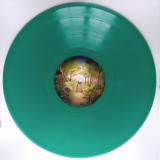
The album comes at a time when connection is needed more than ever. A generative connector and community leader Allison Russell, alongside production team Dim Star, cast a creative circle of collaborators to bring the songs to life, emerging from honest, raw dialogues between friends, lovers, chosen family, humans. The new record features Norah Jones, Joy Oladokun, Kara Jackson, Denitia, Ruby Amanfu, Devon Gilfillian, Kashus Culpepper, Brittney Spencer, Sara Watkins, Kyshona, Julie Williams, Chibueze Ihuoma and Ahya Simone. Available on "sea foam" coloured vinyl and digipak CD editions
Crave Tapes is thrilled to announce the first vinyl release on the label which will be the second album from Frankfurt's underground post-punk/dark wave band Babes of Enola Grey, Krieg und Wohlstand.
Krieg und Wohlstand sees Babes of Enola Grey follow the path of their 2021 debut, Anfang vom Ende, and take a step further into the realm of melancholic and disillusioned soundscapes. While keeping a certain retro character to the songs, Deborah Vision, Salvador Islero and Fabian van Castorp focus on quite contemporary themes, which some might call the most German obsessions:
War and prosperity.
But this is not the only reference to the band's heritage. Sometimes more, sometimes less, there are musical allusions to various German influences and contributions to (modern) music and music history. While Doppelt Frei is a nod to EBM and bands like DAF or the early Die Krupps and Wie auf Schienen as well as Die Heuschrecken pay homage to German düster punk bands like Fliehende Stürme or EA80, Panik and the title track Krieg und Wohlstand refer to the romantic German art song tradition of the 19th century (not to mention the obvious hint at a certain successful German Schlager in Die Kugeln und das Herz).
This makes Krieg und Wohlstand not only a worthy epigone of the band's debut, but also takes the album and the artistic approach to another level.
Commenting on the chosen format (12" vinyl), the band members said: "It was clear to us that we wanted to release this album on vinyl. When you look atGerman history, war and prosperity have to be seen as two sides of the same medal, or in this case of a record".
Crave Tapes is thrilled to announce the first vinyl release on the label which will be the second album from Frankfurt's underground post-punk/dark wave band Babes of Enola Grey, Krieg und Wohlstand.
Krieg und Wohlstand sees Babes of Enola Grey follow the path of their 2021 debut, Anfang vom Ende, and take a step further into the realm of melancholic and disillusioned soundscapes. While keeping a certain retro character to the songs, Deborah Vision, Salvador Islero and Fabian van Castorp focus on quite contemporary themes, which some might call the most German obsessions:
War and prosperity.
But this is not the only reference to the band's heritage. Sometimes more, sometimes less, there are musical allusions to various German influences and contributions to (modern) music and music history. While Doppelt Frei is a nod to EBM and bands like DAF or the early Die Krupps and Wie auf Schienen as well as Die Heuschrecken pay homage to German düster punk bands like Fliehende Stürme or EA80, Panik and the title track Krieg und Wohlstand refer to the romantic German art song tradition of the 19th century (not to mention the obvious hint at a certain successful German Schlager in Die Kugeln und das Herz).
This makes Krieg und Wohlstand not only a worthy epigone of the band's debut, but also takes the album and the artistic approach to another level.
Commenting on the chosen format (12" vinyl), the band members said: "It was clear to us that we wanted to release this album on vinyl. When you look atGerman history, war and prosperity have to be seen as two sides of the same medal, or in this case of a record".
Nobody knew. Not the crowd packed into Circolo Kessel that Sunday evening, not even the six musicians on stage. When Giardini di Mirò played on March 19, 2023, it was supposed to be just another homecoming show in Cavriago, the kind of night where you play for the people who’ve known you longest. Some were missing from the audience, though: “Our closest friends stayed home to watch the football match tonight,” Jukka quipped from the stage. “But that’s fine, we’ll deal with them tomorrow.” In hindsight, even Juventus fans who celebrated their 1–0 victory over Inter made the wrong choice.
Seventy minutes in, all the instruments converged into a one-chord riff, driven by the drums and punctuated by screaming guitars. A repetitive rhythm that paired brutal volume with hypnotic precision. Even those at the back of the room felt it: that trance-like state where sound becomes physical. Then the wall of sound collapsed. Guitar feedback lingered in the air for a few seconds before fading into nothing.
This was the last sound Giardini di Mirò made. They haven’t played since, and there are no plans to do so again. But in that moment, nobody knew.
The closing song that night was also the opener of their debut full-length, recorded more than two decades earlier. Its title, A New Start, carries an unintended irony the band would likely appreciate. It is also oddly fitting that their final show took place in the same building where they began. Circolo Kessel, previously known as Calamita, served as the band’s rehearsal space for many years. Yet since their rise to becoming one of Europe’s defining post-rock acts, they had never performed a concert there.
In a fortunate coincidence, Markus Mathis – a longtime fan who had recorded several of their shows before – also captured this final concert using two room microphones and a feed from the mixing desk.
Quasi Casa is the complete, unfiltered document of that night: an “official bootleg” spanning over 70 minutes of purely instrumental music, drawing on material from across their entire career, from the earliest releases to Del Tutto Illusorio. It captures, with striking clarity, the intensity that defined the band’s live performances.
Rather than simply uploading the recording and calling it a day, the band chose to assemble a physical release as a parting gift to their fans. The double LP includes a 16-page booklet with extensive liner notes and visual material.
Belgian violinist and composer Elisabeth Klinck announces the debut album of her ensemble, Klinck Trio, on VIERNULVIER Records. My Hair is Everywhere will be released on November 7, 2025 on vinyl LP and through all digital platforms.
Rooted in improvisation and guided by openness, the Klinck Trio — Adia Vanheerentals (saxophone, voice), Maya Dhondt (piano, voice), and Elisabeth Klinck (violin, voice) —crafts music where sound and silence are equally vital.
Their debut album is an exploration of fragility, unfolding like a delicate conversation in which each note is chosen with intention and every pause carries presence.
Recorded in the summer of 2024 at Studio Ledeberg, My Hair Is Everywhere captures a moment in time: three musicians meeting in sound, each bringing their own timbre, language and natural state of being into dialogue. Klinck offers seeds of material —metaphors, sketches, sonic ideas — that the ensemble shapes into fully formed pieces. The result is an album that stands complete, yet carries within it the openness to unfold further in live performance, where new layers and resonances can emerge.
In the spirit of American composer and pianist Meredith Monk, the trio embraces lightness andvulnerability, crafting soundscapes that feel both childlike in their intimacy and expansive in their emotional reach. My Hair is Everywhere balances melancholy, tenderness, and harmonic interplay with silence, breath, and resonance—the subtle negative space where music continues beyond the notes themselves. By recording in close proximity, every detail emerges: the strike of piano pedals, the clicking of saxophone keys, the intake of breath, and the faint displacement of air. Textures of dragging violin, whispered fragments, and soft humming become almost tangible, drawing the listener fully into this intimate, enveloping present
moment.
Above all, this compelling debut is an invitation to listen differently: to enter a transformative space where three distinct musical voices find each other in fragility.
The artwork, created by French artist Annabelle Guetatra, reflects the album’s sense of lightness through color and playful collage work.
out of Stock
Last delivered 4 months ago available to reorder, subject to availability
Fela Kuti in Dub is a showcase album containing four essential songs by Fela Kuti in the style of a Jamaican Discomix, evolving from an instrumental cover version to a dub version, celebrating the musical heritage of Nigeria and Jamaica likewise.
Please understand this work as a hommage to both musical cultures.
The four tracks were chosen because they are a timeless witness to the political potential of music, that being proofed by their actuality. The songs feature essential dub effects like echoes, reverb and filtering but also feature analogue sound effects underlining and sonically illustrating the missing lyrical content. These vary from thundery spring reverbs and percussion instruments imitating the pouring rain on „Water No Get Enemy“ to marching soldiers and shot gun like reverbs on „Zombie“. From a cash register on „Expensive Shit“ to the dub sirens created live on a Korg MS10 on „Everything Scatter“.
Only analogue instruments, sounds and dub effects were used on this recording. Mixing, dubs and arrangements were done live in consecutive sessions. The premaster was done by Sodi Marciszewer at Zarma Studios (Fela Kuti, Femi Kuti, Seun Kuti, Damian Marley) on the original Decca desk used by Fela Kuti in Lagos. Fela Kuti In Dub was conceived and produced by Cpt. Yossarian alias Manuel da Coll musician, producer and soundman from Munich/Germany. His last work „Bob Marley In Dub“ (2021, Echobeach) attained a lot of critical acclaim and was featured by Don Letts on BBC6, the Riddim Magazine and Helmut Phillips book „DUB - The Sound Of Surprise“ amongst others.
out of Stock
Last delivered 60 days ago available to reorder, subject to availability
On her second album, Sawt El Doumouh (The Sound of Tears), Beirut-based Sandy Chamoun summons flickers of light from sadness. Influences from the Arabic tradition of Tarab – one of the first styles Chamoun learnt to sing – and polyphonic Cantu are reinterpreted and reimagined through her voice and electronics, synths from her SANAM and Ghadr bandmate Anthony Sayhoun, and live percussion from Ali Hout.
Marked by its times, the record isn’t what Chamoun had planned. “I wrote the lyrics between October 2023 and September 2025,” she explains. “The plan was to write about nature, since the album’s concept was inspired by Cantu, a tenor Sardinian ritual that celebrates humanity’s victory over nature. I intended to visit several places and regions in Lebanon and write a track for each, but after the genocide and the war in Lebanon, everything changed.”
“I chose the title because many mornings during this period I woke up crying silently. I remember a dark story from school: a teacher yelled at a small boy while he was crying and told him to cry without making any sound. I feel we are still living in that condition in the region — forced to die or suffer without making any noise.”
Sawt El Doumouh is a gorgeous refusal to be silent. It opens with a booming drum. Over keening autotune Chamoun’s pure voice cuts through, burying the despair to illuminate rays of hope. On “Ward W Shok” a shuffling swing gives way to a righteous organ interlude. The title track sees a choir of Chamoun’s vocals lull and lap. Drums arrive and indignation stirs, what’s mournful begins to stride.
Chamoun’s tracks are as beautiful as they are defiant. Why write songs in the face of horror? Perhaps because music can hold onto something better. By turning to song, Chamoun catches the hopeful glints and sparks that persist and strive outside the terror. In SANAM and Ghadr she often borrows lyrics from Arabic writers through the centuries, listening to what their words say in the present while reminding us the world can and has been different to how it is now. Solo she writes her own words, and the way her songs alternately soar and sigh evokes hopeful pluralities and suggestions of other, kinder realities. Even hearing someone cry is a connection to humanity.
It’s a possibility conveyed in the album’s most jubilant moments. “Shahed” is an incandescent dance of percussion and levitating synths. “I wrote it after I saw a photo of a small boy on a horse on the beach in Gaza,” Chamoun recalls. “I imagined a fantasy where the boy lives in the water and watches the terrifying reality on the shore, trying to bring water to put out the fire. Shahed is the witness who lives far from the shore, enjoying the water and trying to help. You can hear this duality: the percussion is desert-like, while the vocals and synths evoke the feeling of water.”
Although it comes from darkness, in Chamoun’s music we can hear faith in something beyond it.
Pianist and bandleader Linus Rebmann, together with Gabriel Widmaier on double bass and Johnny Walker on drums, shapes a transparent and powerful sound characterized by great joy in playing and a palpable sense of familiarity. The album's ten original compositions tell of observations, inner movements, and moments whose depth is better expressed through music than words. The three young musicians met in the Baden- Wurttemberg Landesjugendjazzorchester, and after winning the "Jugend jazzt south- west" competition in 2024, the trio was awarded the prestigious Deutschlandfunk Studiopreis at the national meeting. This made it possible to produce the album in the legendary Kammermusiksaal of Deutschlandfunk in Cologne - a space that has been among the country's finest recording venues for decades. The band members deliberately chose an intimate setting for the recordings. Everything was played through a single main microphone, without subsequent corrections to individual instruments. A working method that demands absolute presence and mutual trust. It is precisely this immediacy that shapes the sound of "Listen To The River": the album is transparent, organic, flowing, almost breathing.
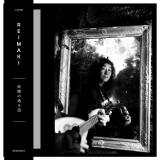
妖精の通る道 (The Path Where Fairies Pass) is the debut vinyl release by Reimaki, the duo of Rei Yokoyama (Triggers Flowers, Stakaidan, Lapiz Trio, 新井薬師自警団, and Fujio, Chiko Hige and Rei), and Maki Miura (Tsubamegami, Les Rallizes Dénudés, Shizuka, Fushitsusha, Ohkami No Jikan and Katsurei). The duo has been an understated presence in Tokyo, playing occasional under-the-radar shows and self- releasing a few CD-Rs, but they’ve recently started to break cover, with a recent cassette on UFO Creations, released in support of a late 2024 tour of China. It’s also a welcome reappearance on the scene for both musicians; Miura’s musical history, in particular, is being reevaluated thanks to a recent string of welcome Shizuka reissues.
But the music Reimaki make together is a different thing entirely, much as it shares some psychological and aesthetic interests with both Miura’s and Nokoyama’s other projects. Their sound is split between two main interests – an extension of glacial, deoxygenating psychedelic improvisations, and a deep interest in medieval European music. They’ve also been known to cover compositions by English prog/improv musician Fred Frith. These various elements of the Reimaki aesthetic are all present through 妖精の通る道, from the fragility of the opening “Novel Amor” through to the smeared, hazy textures of the three extended pieces that comprise the album’s flipside.
There’s a beautiful sympathy in these performances, and a generous simplicity, too; you can sense that this music is informed by decades of finding just the right way to say the right thing in the clearest manner possible. Yokoyama and Miura never overstate things; make the statement, play the song, let it hang in the air for a while, and then move on to the next essential expression. The music is unburdened by self- consciousness. Their take on medieval music cuts to the core of melody and melancholy; their psych- improv side is blurred and drifting without ever lapsing into rote generic gestures.
There’s some shared space with other artists who suspend the timeless within the kaleidoscopic possibilities of the psychedelic – Kendra Smith & The Guild of Temporal Adventurers; Emmanuelle Parrenin; Rosina de Peira – and a tangled folksiness that might put listeners in mind of Jan Dukes De Grey, Comus, Current 93, and Tower Recordings. Accompanied by beautiful photography from street photographer Takehiko Nakafuji, who was also personally chosen by Mizutani to document Les Rallizes Dénudés, 妖精の通る道 is a most unique and necessary trip.
out of Stock
Last delivered 4 months ago available to reorder, subject to availability
Obsidian rock is igneous, frequently dark, yet opaque. Hard edged and brittle, it’s often been used both for weaponry and alchemical pursuits. Therefore when Lorena Quintanilla – the Mexican-based artist from the group ‘Lorelle Meets The Obsolete’ and also known as J. Zunz – was searching for psychic inspiration for her next musical venture, she need have looked no further. “Once I chose the title, everything I read, saw, listened to, and thought about began to interconnect” she relates. “Obsidian became like a magnetic field.”
“In Mesoamerican cultures, it was used in many different ways – obsidian mirrors, for example, were tools for divination and spiritual vision". Thereafter, Lorena set about creating an album entirely on her own terms. Driven by both the ghost and the heart of the machine, ‘Obsidiana’ open up a portal whereby forbidding drone, ethereal ambience and insistent repetition intertwine elegantly to form a seamless whole.
A study in balance, its emotional charge remains strong and intact whether on the eerie, almost Radiophonic ambience of ‘Imago’ or the dancefloor-adjacent, Chris & Cosey-esque ‘Osiris’. Lyrically meanwhile, ‘Obsidiana’ intersects deep personal explorations with the conflicts and contradictions of life in the unforgiving realm of 2026 – as Lorena says; “he process behind ‘Obsidiana’ was very abstract, yet I wanted the lyrics to stay grounded in the present and in reality".
Ultimately however, ‘Obsidiana’, in all its sharp yet amorphous glory, is catharsis manifest. “Each song carries a clear and deliberate intention” Lorena emphasises. “To conjure, to exorcise, to strip away fear, to rediscover myself, to heal inherited sadness, and to reclaim the night that was taken from us.”
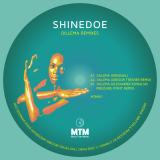
The title Dillema refers to a state of tension, choice, and duality mirroring the track’s layered structure and driving push-and-pull energy. Shinedoe intentionally chose the alternative spelling “Dillema” simply because she liked how it looked better visually. The unconventional spelling became part of the track’s identity and attitude, reinforcing its independent and uncompromising character.
Dillema (Original – 2004)
Timeless Detroit-inspired techno, built on tension, groove, and raw momentum.
Dillema (Gregor Tresher Remix)
A driving techhouse interpretation, blending hypnotic rhythms with a sleek, modern edge.
Dillema (Alexander Kowalski – Pressure Point Remix)
A powerful, high impact techno version built for peak-time intensity.
With these new versions, Dillema once again proves its timeless relevance, reintroduced for a new generation while remaining deeply rooted in its original spirit.
Shinedoe is a driving force in the global techno scene for nearly three decades, known for her hypnotic grooves and uncompromising vision. Through MTM, she continues to push the boundaries of electronic music, releasing tracks that ignite dancefloors and evolve the genre.
out of Stock
Last delivered 9 days ago available to reorder, subject to availability
Phonica welcomes Mattias El Mansouri, a Swedish-born DJ and producer of Moroccan/Chilean descent who has been behind some of our favourite releases over the past few years on labels such as Aniara and Nous'klaer.
On the 'Sense Data' 12", El Mansouri expands on his atmospheric House and Techno explorations with three deep yet dancefloor primed pieces that hold personal resonance for him.
El Mansouri, who holds a degree in Theoretical Philosophy, explains:
"'Sense Data' are the immediate elements of perception; what is directly given to the senses before any judgment or interpretation. In vision, these appear as colored, shaped patches; in other senses, as sounds, tastes, smells, or tactile qualities. For example, seeing a brown table with a white coaster involves sense data of a brown patch and a white roundish patch, from which one infers the presence of a table and coaster."
On the record's flip, we have the beautiful "Cielo Vacío' and 'Ouzo Hallon' dub version of 'Sense Data'. El Mansouri continues:
"Cielo Vacío translates to “empty sky” in Spanish. The track serves as a eulogy for my brother, who passed away in December 2023. I chose this title because it resonates with the sonic and emotional atmosphere of the piece. Its ambiguity is intentional, carrying both the weight of grief that lingers after losing someone you love, and a strange, fragile peace you extend toward the departed. It reflects the hope that, wherever they are, whether or not one believes in an afterlife, they have found rest.
Ouzo Hallon translates to Ouzo (the Greek liquor)+Hallon (Raspberry). It’s a long drink that my (Greek) ex came up with last summer, mixing ouzo, raspberry syrup/raspberry juice and ice. It became a thing in our little friend group, consisting of mostly Greeks, and every time we all hang out we would all just drink ouzo hallon until we couldn’t stand straight. I always wanted to name a track Ouzo Hallon, just for the fun of it, and what better way to get the chance than now!"
out of Stock
Last delivered 84 days ago available to reorder, subject to availability
Sixteen killer 70s reggae funk and soul cuts from the likes of John Holt, Lee Perry, Cornel Campbell, The Cimarons, The Chosen Few and more featuring superb reggae takes on songs by artists including The Jackson 5, William DeVaughn, Diana Ross and The Supremes, War, The Temptations, Roberta Flack, The Stylistics and others!
Well-documented is the influence of American black music on Jamaican styles of the 1960s – from the birth of ska music, when The Skatalites ska-ified the jump-up southern USA rhythm and blues music of Rosco Gordon, Louis Jordan and Fats Domino, through to the creation of rocksteady when Jamaican artists like The Techniques, The Paragons, Alton Ellis and The Melodians turned to the slower rhythms and soulful harmonies of groups such as The Impressions and The Drifters for inspiration.
Less-well established is that in the 1970s Jamaicans didn’t (shock!) stop listening to American black music styles, with many 70s reggae artists as invested in soul, funk and the proto-disco sounds of Philadelphia, as was the case with rhythm and blues in the previous decade. In the 1970s, while Jamaica promoted its own roots reggae styles around the world, powerhouse USA soul labels such as Motown, Philadelphia International and Stax Records were at the same time all popular on the island.
This interaction between American and Jamaican music was not limited to Jamaica. In Britain, first-generation Caribbean-émigré children in the 1960s and early 70s grew up with an equal love of both soul and reggae, which manifested itself in the home-grown arrival of lovers rock in the mid-1970s.
Soul Jazz Records’ new ‘Reggae Island Soul’ tells this story of how soul and funk-infused reggae in the 1970s united the sounds of Jamaica, USA and the UK into a highly addictive cultural hybrid of styles.
New album by french rapper Sheldon, including featurings with Chilly Gonzales, Jazzy Bazz, Tuerie, Asfar Shamsi...
Monsters are never where we expect them to be. They take shape in silences, in vague fears, in the baggage we carry without always understanding it. Sometimes, we also encounter them along the course of a life. On this new album, Sheldon chooses to dance with them, to tame them with wit, grace, and a sense of peace.
Following a powerful return with Grünt 75, an iconic format to which the 75e Session collective brought particularly ambitious visual staging, Sheldon unveils a fourth album that unfolds across fourteen tracks like a chiaroscuro landscape, revealing the full depth of his emotional and musical range. Through intimate narratives, the record explores identity (Être une fille), family and fatherhood (La Fenêtre and Les Monstres, the title track), as well as friendship (Eh le reuf). These are themes that run through all of us, approached here with writing that is vivid, demanding, and deeply sensitive.
Driven by a strong narrative arc, the album features songs like Être une fille, which challenges and questions us. On it, Sheldon reflects on his relationship to gender, his doubts and discomfort with the codes of masculinity, and the idea that he has sometimes imagined himself elsewhere. Tracks like La Fenêtre and Avec ça illuminate the album like moments of communion, sincere, warm, and unifying, carried by a childlike lightness that makes tomorrow disappear.
True to his open minded and ever curious artistic approach, Sheldon draws from a wide range of musical genres while keeping rap as the album’s guiding thread, giving each song its own singular identity and contributing to the balance of the whole. To shape the project, Sheldon surrounded himself with a new generation of musicians and beatmakers whose influences span rap, indie rock, pop, and experimental music. Among them are Johnny Ola, who has notably composed for Zamdane, Jazzy Bazz, and Edge, Rodolphe Babignan, Carbonne’s flamenco guitarist, and Jeune Oji, an artist signed to Friends of Friends Music. Together, they bring melodic and acoustic richness, as well as a collective generosity that deepens the album’s intimacy.
This new album also opens the door to new collaborations.
On L’école primaire, Chilly Gonzales joins Sheldon for an unconventional piano and vocals piece, driven by cinematic, deeply intimate storytelling. Using his primary school as a point of reference, Sheldon retraces his path from childhood to adulthood, somewhere between nostalgia and serenity.
On Cowgirl, Tuerie joins Sheldon for a soft, melodic ballad with an 80s tint, capturing the weightlessness of a sunlit summer.
On Sidequest, Sheldon reunites with Asfar Shamsi, who had already appeared on his Grünt. Over a delicate cloud trap production, the two artists open up about everyday pain, finding in introspection a way to put things into perspective.
Finally, Vol de nuit brings Jazzy Bazz and Sheldon together for an intimate exchange over an ethereal, mysterious production, as both artists look back on their journeys with calm and clarity.
Conceived alongside Sheldon’s closest circle, the project celebrates family, friendship, and love as its founding pillars. Sheldon chooses to step away from the images, allowing his story to be embodied instead through the faces and gestures of those around him. This approach runs through all of the project’s visuals. Rejecting the excess of spectacular image making, he chose instead to hand a camera to his loved ones so they could offer their own vision of a song from the album. By opening a small window onto his intimacy, and that of the people closest to him, Sheldon finds a way to say a great deal with very little, turning deeply personal trajectories into something universal.
Like the music videos, the album cover is rooted in a deliberately simple approach, where the fantasy of childhood disrupts reality. Designed by Tenzin, the graphic designer behind Sheldon’s recent projects, Ptite Sœur, and also work for Jul, it is based on an archival photograph taken during a traditional carnival in Tenzin’s native village. With no staging involved, the image captures children in costume mid parade, caught in a spontaneous burst of movement, embodying the free innocence of childhood.
Les Monstres marks a new chapter in Sheldon’s journey. Like a rainbow after the storm, this fourth album reveals new colours in the artist’s discography, as he delivers a record that is both demanding and accessible, intimate and open, one in which music becomes a love letter to friendship and to love itself. Set for release on April 24, 2026, the album will be followed by a tour culminating at La Cigale in Paris on December 3, 2026.
Sultans Ghost Ship LP was originally released on Sympathy For The Record Industry in 2000. While RFTC looked for a new drummer, Speedo (armed with an 8 track tape machine and 3 microphones) devised yet another alias as “Slasher” and concocted this primordial ooze of moped scuzz, punk rock and roll. Ghost Ship was met with enthusiasm by those seeking blistering relief from the weak, whiny, wretched and wimpy wannabes du jour.
The sound is full on, straight ahead with only starting gates and finish lines between songs. The band played some shows around California and would slightly evolve on their second LP Shipwrecked. Ghost Ship is Sultans at their most thuggish and hairiest. Taking inspiration from Australia’s Chosen Few, Ramones bootlegs, Misfits bootlegs and then challenging themselves to be as thrifty and impatient as possible, the songs are intentionally brief, similar and burly. After this was recorded these tapes lay dormant in a shed for over 20 years. When the tapes were recently unearthed it revealed unreleased songs recorded after Ghost Ship yet before the band’s follow up LP Shipwrecked. Some of these songs would later be absorbed by RFTC and re-recorded. These songs are included here as bonus tracks and offer no relief to the record’s unrelenting pace.
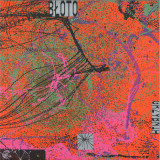
Błoto’s bold 2020 debut brought forth three albums in just twelve months. This prolific creative burst, followed by an ongoing tour and involvement in other projects, meant that fans had to wait over three years for the next release. During this time, new ideas took shape, and the vision for their fourth LP crystallized. The wait for Błoto's new album is nearly over. As always, autumn signals the arrival of Grzybnia (Mycelium).
The idea for the album had been simmering within the band since the release of Kwasy i zasady and finally took shape in late January 2023 at Warsaw's Studio Pasterka, under the careful guidance of Piotr Zabrodzki. It was by far the most fruitful session in the group's history, with ideas flowing in abundance. The chosen tracks not only resulted in two well-received singles, Szlam / Ścieki and Bakteria, but also provided enough material for an EP set to drop next year.
The seemingly chemical title of the album Kwasy i zasady (Acids and Bases) ultimately referred to interpersonal relationships, describing traits that prevent harmony. The album embodied the polarization of societies in the 21st century. The metaphor of Grzybnia (Mycelium) goes a step further. It emphasizes the importance of cooperation as a fundamental skill that can yield various results (fruits, fungi)—both good and bad. Above all, it underscores the power of collective action beyond divisions.
In a complex, unstable modern world that is breaking apart into pieces, the concept of mycelium offers a powerful model. Mycelium thrives in degraded, seemingly lifeless environments created by humans. A key aspect of the broader significance of mycelium is that cooperation benefits all involved parties, where each contributes something and receives something in return. Mycelium is a symbiont, meaning it forms a symbiotic relationship with certain tree species through mycorrhiza, where the roots of the trees and the mycelium exchange essential life-sustaining substances. This results in mutual benefits. The world of mycelium exemplifies cooperation.
A single mushroom, like a person, dies, but mycelium endures, much like humanity itself. Thus, similar to culture, it is immortal. Błoto operates in a manner akin to mycelium. It undoubtedly belongs to the underground realm, embodying the essence of the underground. It is also a destructor of music. In what sense? The Polish Nobel laureate Olga Tokarczuk noted in her book Primeval and Other Times that “... Mycelium thrives by drawing the last remnants of life from what dies, decomposes, and seeps into the earth. Mycelium is the life of death, the life of decay, the life of what has died.” In the same way, Latarnik, Cancer G, Wuja HZG, and OlafSaxx, through their collaboration, process cultural products to create entirely new and surprising combinations. The result of this work is both edible and poisonous mushrooms, manifested in the form of fat beats, house, spiritual jazz, improvised music, illbient, organic techno, and genre-defying electronics.
The peak mushroom season in Poland occurs in autumn, which is why Grzybnia will be released on October 11, 2024, via Astigmatic Records.
out of Stock
Last delivered 23 months ago available to reorder, subject to availability
Fika Recordings are pleased to present Bring On The Apathy, the third solo record from Scottish songwriter Adam Ross. Adam Ross is an indie-folk songwriter based in north-east Scotland. He is a solo artist and has also led the cult indie band Randolph's Leap for over a decade, releasing music with legendary Fence Records and Lost Map as well as Olive Grove Records and Fika Recordings. He is known for his unique brand of articulate lyricism which blends humour, poignancy, wordplay and offbeat stories.. “Bring On The Apathy” was recorded onto tape, using traditional analogue techniques at Glasgow’s Green Door Studio with Samuel J. Smith. It showcases some of the most emotionally open, lyrically deft and characterful songwriting so far from one of Scotland’s most accomplished writers. The vintage recording approach brings a warmth and intimacy to a record which is in equal parts raw and organic while also beautifully arranged and performed as Adam is joined by a raft of excellent collaborators. The album itself is a reaction. Whether it be in the title, the lyrical content or the method in which the sounds were captured. “I was feeling fairly down and uninspired about the musical landscape” Adam explains. “The risk with digital recording where every instrument is overdubbed separately is that it can end up sounding metronomic, sterile and lacking personality.
I also started to get a bit freaked out by the topic of AI-generated music and the insidious, creeping impact it’s already having. I therefore decided that, as a bit of a protest, I wanted to make something that sounded extra-specially human and hand-crafted, where you could hopefully hear the interplay between musicians.” For this reason, Adam decided to record the majority of the album live, as a band, playing together in the same room without a click track. “I’d put a band together to tour my last album, Littoral Zone, and I really enjoyed the way we all worked together. Green Door Studio was chosen as the destination as it specialises in analogue sound production but it had an extra significance for Adam. “Green Door was the first studio I ever recorded in, back in 2009. This time around, the “unforgiving” nature of tape recording became an inspiration. “The musicians on the record are such great players that they rarely make mistakes, so there was a confidence there that we wouldn’t need to rely on copious amounts of editing or post-production, which isn’t always possible with tape anyway. The core band consisted of Owen Curtis-Williams on drums, Cameron Maxwell on bass, Pedro Cameron on violin, Gillian Fleetwood on harp and (long-time collaborator with Randolph’s Leap) Pete MacDonald on piano. Mercury Prize-nominated artist C Duncan was drafted in to write and perform backing vocal arrangements along with Amanda Nizich and Gillian Fleetwood. Adam says “I’d been listening to a lot of Bob Dylan, Karen Dalton and Bill Callahan records and I thought it might be interesting to apply those sorts of influences to my brand of Scottish quirk-pop”.
Despite its tragic breakup, Yugoslavia as a political, social and cultural phenomenon still inspires generations, especially those who were born or lived at the time of this utopian land of South Slavs. Those who didn’t enjoy the privilege are still amazed by its 1970s and ’80s music scene and the number of very modern, high quality acts that were so often ahead of their time. Two such acts were Data and The Master Scratch Band, both founded by Zoran Jevtic and Zoran Vracevic, who introduced synth-pop, breakbeat, and hip-hop music in Yugoslavia in 1984 with their releases: SP Neka Ti Se Dese Prave Stvari/Ne Zovi To Ljubavlju and miniLP Deogut (Jugoton). Our latest release, “It Was Ridiculous, It Was Amazing!” gathers their earliest unreleased material from 1981-1983, showcasing a broader range of genres – alongside synth-pop and breakbeat/hip-hop, they also experimented with industrial, EBM, minimal synth, and electro-funk!
The whole record is divided into two parts: on A side there are 7 previously unpublished songs by group DATA, and on B side there are 4 previously unreleased recordings by The Master Scratch Band.
The Data side opens with two unexpected “shocker” tracks: Ja Nisam Kao Ti” (eng. I am Not Like You) and “Izumi” (eng. “Inventions”) from 1981, where they sound like early Deutsch-Amerikanische Freundschaft with unusual vocal pan sound effects on Serbian lyrics and uncompromising synth-based sound. Equally unpredictable are the next two songs: atmospheric “España” and dusty “Damage In My Head,” where Zoran Jevtić boldly steps into the lead vocal role. But the surprises don’t end there. The next two songs, France and Strahovi (eng. “Fears”), bring a mysterious and nostalgic atmosphere, elevated by the irreplaceable sound of the modular Roland System-100M. At the end comes the greatest surprise of all: Data covers YMO-Ballet in a song called Ne Zelim Da Tako Zive (eng, I Don’t Want Them Living Like That) and puts some extra energy in rhythm without losing the original song’s sensibility. Like in the original, the lyrics are tender and yet mysterious and provocative.
The Master Scratch Band side contains the very first versions of the songs Break War, Jailbreak, and Computer Break, originally recorded in studio Druga Maca in Belgrade in 1983. These versions were not released on their mini-LP album Dégout (Jugoton, 1984), and they are actually the first ever hip-hop/Breakbeat recordings in Yugoslavia. With great enthusiasm, every sound was uniquely crafted from scratch using the finest analog gear available in the early ’80s. The two young artists, aiming for international success, chose to write their lyrics in English. The album’s final track, “Mad Scratch,” showcases their talent for creating impressive sound effects, which would be a delight for contemporary DJs and producers who specialize in sampling and scratching old-school hip-hop.
This release is truly a “100% digger’s gem” – 11 previously unreleased tracks from legendary pioneers of electronic, hip-hop, and breakbeat. A collection to discover, enjoy, play, and treasure forever!
out of Stock
Last delivered 5 months ago available to reorder, subject to availability
The Collaboration - Having toured together over the years, Lattimore and Barwick now join forces to co-write and record this full-length album. Their creative synergy brings together harp, voice, and analog synths in a deeply emotional, immersive sound journey. The album was recorded at the Philharmonie de Paris with co-producer Trevor Spencer (Fleet Foxes, Beach House). This album continues a unique series of collaborations between the label and the Musée de la Musique, featuring historical instruments in contemporary composition. Since 2017, InFiné and the Philharmonie de Paris have co-developed a series of albums designed to highlight the extraordinary instrument collection of the Musée de la Musique. Following the albums InBach by Arandel (2020) and Saturn 63 by Seb Martel (2022), this third release is a meeting of two iconic contemporary ambient voices: Mary Lattimore and Julianna Barwick. The project offers the artists full access to the museum’s playable instruments for recording, sound conservation, and creative reinterpretation.
--
Tragic Magic brings together Julianna Barwick and Mary Lattimore, two of contemporary ambient, experimental and electronic music’s most celebrated composers, for a unique collaboration at the Philharmonie de Paris, with extraordinary access to the Musée de la Musique’s instrument collection, in partnership with the French label InFiné. The album features seven immersive, evocative compositions guided by the human spirit – intimate, grounded in friendship, both earthly and cosmic – and part of a greater continuum, reflecting the solace and transformative power of artistry across generations.
Co-produced by Trevor Spencer (Fleet Foxes, Beach House), Tragic Magic was created in just nine days, a testament to the “musical telepathy” that has developed between Barwick and Lattimore over years of touring and friendship. Arriving in Paris from Los Angeles shortly after the 2025 wildfires, their sessions combined improvisation with the emotions and experiences they carried, in a setting both inspiring and deeply supportive. Lattimore selected harps tracing the instrument’s evolution from 1728 to 1873, while Barwick chose several iconic analog synthesizers, including the Roland JUPITER and Sequential Circuits PROPHET-5. In freeform dialogue between voice and instrument, they create a meditation on tragedy, wonder, and the restorative power of shared experience.
The duo, often joined by Spencer, also explored the city, sharing meals and visiting museums and landmarks, each encounter leaving an impression on their next session. The experience allowed them to work intimately with rare instruments, blending their personal sensibilities with centuries of history, resulting in music that honors the past while remaining a deeply authentic expression of the present.
Throughout Tragic Magic, Barwick and Lattimore find something beyond themselves: a sense that while everything may not be okay, beauty persists. Their approach – transforming life into music, observing, feeling, and creating – continues a lineage of creative expression and visionary invention, embodied in the very instruments they employed for this project.
out of Stock
Last delivered 7 months ago available to reorder, subject to availability
Eight men pick up shiny brass instruments, lock into an unspoken groove and rotate genres like your favorite playlist shifting from jazz and R&B to hip-hop, pop and beyond with fire, focus and fluidity. New Orleans-bred staple The Soul Rebels expand musical boundaries with an unwavering commitment to originality. Far more than augmentation and accompaniment, the octet—Julian Gosin trumpet, MC, Marcus Hubbard [trumpet], Lumar LeBlanc III [snare drum], Derrick Moss [bass drum], Corey Peyton [trombone, MC], Erion Williams [saxophone], Paul Robertson [trombone] and Manuel Perkins Jr. [sousaphone]—pioneer the integration of their chosen instrumentation.
Featuring Special Guests: Sean Carey, Dee-1, Alfred Banks, Emeril Lagasse, Trombone Shorty, Kermit Ruffins, Mia X, DJ Jubilee, Cheeky Blakk, Tonya Boyd-Cannon, New Orleans Citywide Youth Choir, Jaelyn Langston, Wild Wayne, Kango Slim, PJ Morton, Big Freedia, Denisia, Branford Marsalis, Brandee Younger, KES, Kayla Jasmine, Matisyahu, Robert Glasper, Fabriq, Tarriona "Tank" Ball
This talented vocal group was formed in 1966 by Alain Féral, a singer-songwriter and guitarist who wrote almost all of their repertoire, consisting of folk-rock songs rich in poetry and harmony.
The group’s name was chosen as a tribute to Jean Cocteau and his novel "Les Enfants Terribles".
Manilla Road's »The Courts Of Chaos« album was originally released in 1990. It was the band's last release for Black Dragon and also the last release before the band temporarily split up (if we do not take 1992's »Circus Maximus« into account, which was actually supposed to be a solo album). All in all it was a very tough time for Manilla Road. When he was still alive, Mark Shelton commented in an exclusive interview: "Yes, you are correct with all of that. Our releases were not selling as well as they had years before and it seemed like metal in general was having a hard time surviving the times that followed the conversion to CD technology. Right after Manilla Road broke up, I started putting together a solo project that accidentally turned into a band. So we named it Circus Maximus and signed a deal with Black Dragon but they decided to release it as a Manilla Road album because they thought it would sell better. »The Courts Of Chaos« was the last album that was a real Manilla Road project on Black Dragon." “»The Courts Of Chaos« was a tough album to get done because the atmosphere within the band was tense, to say the least”, continued The Shark. ”We all knew it was going to be the end of an era and that this line-up would most likely never do another album.” Although »The Courts Of Chaos« might not be the strongest Manilla Road effort, Mark did not consider it a “throwaway album” whatsoever: “It does not seem to get mentioned as much as many other albums of The Road. But when it does come up, it seems like that person is really sold on the project being one of our better ones. It does, in my opinion, have some really killer songs on it. 'Dig Me No Grave' is still in our show. It's always a challenge to play but I love doing that one live and it still seems to appeal to our audience. “ Another highlight on »The Courts Of Chaos« is "DOA", a cover of a Bloodrock number. Manilla Road were not known for playing too many covers. Mark Shelton explained: "I grew up in that era and yes, I love that old stuff and could be called a collector of sorts, I guess. This was the only cover song that Manilla Road has ever put on an album. We chose this song because it was the only one that all three of us could agree upon. I wanted to do some obscure hit from the old days and turn it into a Manilla Road style song. I'm still fairly fond of the version and still like to listen to it every once in a while."
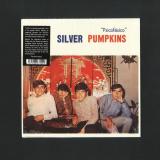

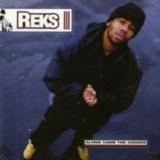
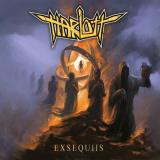

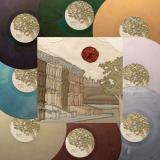


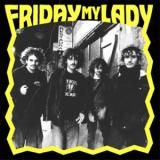


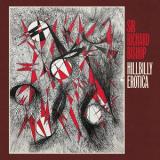
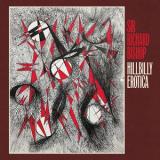



![Babes Of Enola Grey/artist] - Krieg und Wohlstand](https://www.deejay.de/images/l/4/3/1227043.jpg)
![Babes Of Enola Grey/artist] - Krieg und Wohlstand](https://www.deejay.de/images/l/1/7/1226617.jpg)