Musica Per Immagini is about to go beyond vinyl reissues of soundtracks and music libraries, with a brand new series of products.
From 2024 onwards, it will release a series of albums of contemporary and electronic music often "inspired by" different sources, both sonic, if not literary and cinematographic. A way to embrace the future without forgetting the past.
Heinrich Dressel's “Polarlys” is the first album of unreleased tracks published by Musica Per Immagini, or a soundtrack for a imaginary noir film set in the icy waters of northern Europe, inspired by the book “The Mystery of the Polarlys” by Georges Simenon. Drones and ethereal atmospheres are paired with a cinematic background in order to describe the frost of the northern seas and the restlessness of the journey: beyond the classic analog sounds, a specific use of additive and vector synthesis particularly in vogue during the Nineties and typical of vintage synthesizers.
Buscar:libra
Now in its tenth year, Frankfurt-based record label Die Orakel has earned itself a strong catalogue of classy releases in a distinct sonic and visual attitude, its latest being a compilation called Braindance.
A fair assumption about Braindance as a genre could be, that it's rather in the zone of kaleidoscopic and whimsical quirktronica, less about IDM's futurist tropes. From Die Orakel's point of view, its very own Braindance compilation marks the label's tenth anniversary by releasing an intense listener's atlas, to its own and their creative collaborators' musical slant of mind.
While much could be said about spectral traces of a leftfield past, nostalgia isn't heard anywhere. The more you listen to this selection, the deeper the tracks plug into your brain—stretching from ethereal harmonic licks rippling with fragile glitches, bleepy to bass-heavy electroid steppers of any BPM range, to abstract-scientific neo-modular artistry.
Die Orakel's Braindance transmission can be had as a 15-track digi-release, as well as a 4-track vinyl EP. Pick either for your library of the future. The Braindance compilation will be released on 16 February 2024.
Pelvis Wrestley's sophomore LP, ANDY, or: the Four Horsegirls of the Apocalypse, is a fantastical meditation on impermanence through the lens of missing persons, and people we miss. Written in the back-and-forth days of unclear pandemic guidelines, the songs are informed by the diasporas of 2020, where so many people relocated without even the suggestion of a goodbye party. The record is named for a previous Benjamin Violet project, ANDY, which saw its members relocate during lockdown. As Pelvis Wrestley, Violet repurposes the mythology of the titular demigod for a new era. Following the release of their debut record, "Vortexas Forever", the Austin-based group gained notoriety for their unique blend of Americana, baroque pop and 70s glam, reminiscent of Of Montreal, Sparklehorse and Arcade Fire. They garnered support from Kishi Bashi, The Austin Chronicle, Under The Radar, and was named NPR affiliate KUTX's artist of the month in June 2023.
- A1: Aquarius Rising
- A2: Inner Search
- A3: When It’s Real
- A4: Psych Impression
- A5: Peace Of Time
- A6: Blue Miles
- A7: Lauren’s Astral Vision
- A8: Expressions From "The Ear
- B1: The Yellow Field
- B2: Donte’s French Excursion
- B3: Solar Journey
- B4: Transitions
- B5: Shades Of Mauve
- B6: Cosmic Portals
- B7: A Piece For Reflection
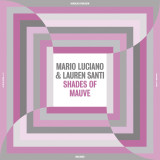
The Madlib Invazion Music Library Series Entry #7: Composer, producer & arranger Mario Luciano and vocalist Lauren Santi of Polyphonic Music Library deliver a collection of recordings that delve into Psychedelic Jazz, Experimental Soul & Cosmic Fusion. This is the next up in a series of music library releases, with future volumes produced by DJ Muggs, Karriem Riggins and more. The Madlib Invazion Music Library Series was created by Madlib and Egon to give their creative friends a chance to stretch out and indulge in whatever type of music they wanted. This music was created for easy, one-stop clearance in film and television synchronization usage and for sampling. You can also enjoy these albums in the way that many do with the best of the best vintage library catalogs – listen, ponder, repeat.
Life is what happens between curtain rise and curtain fall. And when you’re in the middle of your performance, it can be tough to un-blur, categorize, and interpret the details buried within the perpetual collapsing rubble of past, present, and future. On January 26th, Chayse Porter will release his third studio album, Endless / Boundless via Earth Libraries, nine new musical excavations and epiphanies the Birmingham-based songwriter dug up from life’s bedrock and polished to a shine in his basement lair. How to describe Porter’s solo work...mischievous pop? Cotton candy spun with barbed wire? Beatle-esque, Burt Bacarach-inspired soft rock left to freeze in the warped confines of a funhouse mirror? Whatever your preferred descriptor, Endless / Boundless is a fresher, more direct record than the high-concept psyche excavations of Chay’s Palace, his 2022 sophomore album. Lyrically, Endless ruminates on unrequited love, toxic American exceptionalism, and, in one of the record’s lighter moments, unexpected kindness from strangers. There’s jubilant dream pop (opening stunner “Bleeding Hearts”), shoegaze with threats of violence (“Lead Pipe Cinch”), and a cinematic instrumental centerpiece best enjoyed with eyes closed (“Copter”). With the record on the way and a live band assembled and ready to go, Porter has left listeners a trail of breadcrumbs in anticipation.
ITALIAN LIBRARY GEM RE-IMAGINED BY BEATMAKER KORALLE AND RAPPER ILLA J
Four Flies is proud to present a new installment in the RELOVED series, 'New Levels / Chartreuse', with an original track from late-70s Italian ensemble Modern Sound Quartet and a rework from producer and beatmaker Koralle featuring iconic rapper Illa J.
In keeping with the aim of the series, which is to put a modern and urban spin on tunes from Italian golden age soundtracks and library music, Koralle has used the unique jazz-funk sound of the original sample to create a smooth and stylish hip-hop beat to which Illa J adds irresistible swag and coolness. More than a remix, 'New Levels' is a new composition that takes 'Chartreuse' into the world of contemporary hip-hop and rap.
Lorenzo Nada, aka Koralle, is a musician, beatmaker and producer from Bologna, Italy. Nada is best known for his project Godblesscomputers, which kicked off a couple of years ago while he was living in Berlin. After releasing four albums/EPs and touring Europe with a four-piece band, Nada is heading into a new direction as Koralle. Firmly rooted in hip-hop, Koralle is taking his jazz crates and field recordings to the studio. Equipped with an array of synths, Rhodes and bass, he creates deeply textured tracks that touch mind, body and soul. "Each beat is like an object found at the bottom of the sea," says Koralle to describe his music. And adds: "The samples emerge from the depths of my record collection and find a new meaning, transformed, like corals from the bottom of the ocean."
Rapping on Koralle's beat is Detroit artist Illa J. Raised in a musical family (his father played piano, his mother sang, and his older brother is the late hip-hop producer J Dilla), he grew up surrounded by jazz, gospel and soul, before building a name for himself as a rapper with a distinctive flow and timbre, but also as a singer and songwriter. Illa J has said of his approach to lyric writing that "the melody comes first, then I bring the words in, even when I'm rapping, you know rhythmically. I'm a singer, so melody comes first, but in terms of the subject matter, the music tells you."
The Modern Sound Quartet was an ensemble led by Milanese pianist and composer Oscar Rocchi. It included Rocchi on keys, Andrea Surdi on drums, Ernesto Verardi on guitars, and Luigi Cappellotto on bass. 'Chartreuse' (written by Cappellotto) comes from their 1976 library LP Cocktail Bar – a collection of jazz-funk/jazz-rock/fusion tunes, each named after a famous spirit. While little known to the general public, Cocktail Bar is highly sought after by diggers, DJs and beatmakers.
'New Levels / Chartreuse' is the fifth release in the RELOVED series, following Jolly Mare's retouch of Piero Umiliani's 'Discomania' (12"), Free The Robots' rework Gianni Safred's 'Autumn 2001' (7"), Dengue Dengue Dengue's remix of Giuliano Sorgini's 'Oasi Nella Giungla' (7"), and Fratelli Malibu's reversioning of Alessandro Alessandroni's 'Tema di Susie' (12"). The 7" releases are co-curated by fellow independent label Little Beat More.
Die New Visionaries sind der in Großbritannien lebende australische Künstler Joel Sarakula und der niederländische Musiker Phil Martin. Ihr fesselndes Neo-Soul-Debüt 'Roadmaps' lässt den Hörer in eine Klangexpedition eintauchen, bei der Grenzen verwischen und sich zeitgenössische Elemente mit Anspielungen auf musikalische Pioniere zu einem charakteristischen Sound für Soul-Enthusiasten, Filmgrooves-Liebhaber und Musikentdecker verbinden. Trotz Phils Engagement in der europäischen Soul/Funk-Szene und Joels Neigung zum Soul-Pop ist ihre gemeinsame Affinität zu modernen Instrumentalbands (Khruangbin, Calibro 35, Air El Michels Affair) und klassischen Einflüssen (David Axelrod, KPM Library Series) massgebend.
- 1: O Astronauta (Baden Powell / Vinicius De Moraes)
- 2: Tristeza De Nos Doi (Bebeto, Durval Ferreira, Mauricio Einhorn)
- 3: Chuva (Durval Ferreira, Pedro Camargo)
- 4: Tema Para Martin (J. Demonte)
- 5: Consolação (Baden Powell, Vinicius De Moraes)
- 6: Canto De Ossanha (Baden Powell, Vinicius De Moraes)
- 7: Pro Forma (Arnaldo Costa, Mauricio Einhorn)
- 8: Samba Do Avião (A. Carlos Jobim)
- 9: Niña No Divagues (Agustin Pereyra Lucena)
- 10: Berimbau (Baden Powell, Vinicius De Moraes)
Following Far Out’s reissue of Agustin Pereyra Lucena Quartet’s La Rana, the label continues its memorialisation of the late, great Argentinian guitarist’s music, with the first ever direct from tape, audiophile reissue of Pereyra Lucena’s self-titled debut album from 1970.
One of the outstanding South American guitarists, Agustin Pereyra Lucena commanded a unique position in Latin music history. He hailed from Buenos Aires, but was obsessed with the music of Brazil. A disciple of Antônio Carlos Jobim, Baden Powell and Vinicius De Moraes, the nature of Agustin’s Argentinian roots combined with the nurture of Brazil and its music to give Agustin a sound entirely his own.
After being scouted in a nightclub, by musician and guitar craftsman Jorge Demonte, Agustin was invited for an audition at Argenitinian label Tonodisc. Before he knew it, aged 22, he was in the studio recording his first album.
Agustin enlisted fellow Argentinian Brazilophiles Mario "Mojarra" Fernandez who played bass and drummer Enrique "Zurdo" Roizner. He had first heard the duo backing Vinicius de Moraes, Toquinho and Maria Creuza on their legendary La Fusa live album, also recorded in Buenos Aires. For vocals, Agustin brought in his old friend, a French teacher called Helena Uriburu, who at the time had (unbelievably) never sung in a studio before.
The atypical bossas and spiritual swinging sambas, composed by many of Agustin’s aforementioned heroes, were elevated to new heights by Agustin’s dazzling arrangements and phenomenal guitar playing. The almost cosmic reaches Agustin achieved with his sound are balanced against the stylish sophistication and breezy nature of the music.
Moments of calm serenity include Agustin’s own composition “Nina No Divagues”, Durval Ferreira and Pedro Camargo’s “Chuva” and the Brazilian bossa classic “Tristeza Nos Dois”, which feels like it draws equally upon exotica and early library records. Accompanied by Roizner’s shuffling samba jazz drums, opener “O Astronauta” is Agustin’s cover of the Brazilian guitar standard composed by Baden Powell. Another Baden Powell classic, “Consolacao” is an extended full-band set, which features Agustin’s crisp guitar dancing around a hypnotic rhythm section. Upright bass is swapped out for a big, round-sounding electric one, which sits loud in the mix for almost seven minutes of deep, groovy, distinctively early-seventies magic.
Agustin passed away in 2019, and it is only in recent years that he is starting to gain his plaudits as one of South America’s greats. On the liner notes of the album Vinicius De Moraes writes: “I think I never saw, with the exception of Baden Powell and Toquinho, anyone more linked to his instrument than Agustín Pereyra Lucena. It would give the impression that if the guitar were taken away from him, he would fade into music as one dies from the amputation of an arm.”
Agustin Pereyra Lucena will be released on audiophile vinyl LP, CD and digitally on the 26th January 2024 via Far Out Recordings.
Sonor Music Editions proudly presents "A TEMPO DI JAZZ" by Maestro Piero Umiliani. This lost gem captures the formative years of Modern Jazz in late 1950s Italy - alongside the legendary Basso-Valdambrini recordings in the early 1960s, as well as the early years of Piero Umiliani's long and prolific career as a composer with over 190 soundtracks, 40 library albums, and 35 TV title themes recorded.
A TEMPO DI JAZZ includes seven original compositions by Piero Umiliani recorded in 1959. Here, at the age of 33, he lays a perfect ground with himself as a pianist, accompanied by some of the best Italian soloists at the time: Marcello Boschi on alto saxophone and flute, Ivan Vandor on tenor saxophone, Peppe Carta on bass, and the American trombonist Bill Gilmore. With plenty of room for improvisation, the sextet fuses Big Band moods with West Coast experimentation of Latin American rhythms and Modern Jazz ballads that sit perfectly between his soundtracks for the films "I Soliti Ignoti" (Big Deal on Madonna Street) from the same year that attained him international recognition, and his masterpiece "Smog" (featuring Chet Baker and Helen Merrill) from 1962.
Five compositions are outtakes from Piero Umiliani's mega-rarity "Tempo Jazz", released on RCA Custom in 1960, while 'Tema In Blues' has been published on the two - impossible to obtain - 45 releases "Moderato Swing" (RCA Camden 45CP 112) and "Tema In Blues" (RCA Custom 45 R3) from 1960 as well as the previously unreleased track 'Mezza Cottura.'
The music has been transferred and remastered from the original master tapes and lacquer cut in MONO, preserving the original sound of the recordings.
"Javelin" verbindet musikalischen Schwung mit emotionaler Weite. Manchmal hat man das Gefühl, dass das Album von einem großen Team produziert wurde - aber das ist es ganz und gar nicht: Fast jeder Sound hier ist das Ergebnis von Stevens zu Hause, der selbst etwas geschaffen hat, das sich manchmal wie ein Zeugnis der Studio-Opulenz der 70er Jahre in Los Angeles anfühlt. Die Beiträge stammen von einem engen Freundeskreis - Adrienne Maree Brown, Hannah Cohen, Pauline Delassus, Megan Lui und Nedelle Torrisi -, die bei vielen Songs Harmonien beisteuern, sowie von Bryce Dessner, der bei "Shit Talk" akustische und elektrische Gitarre spielt. Der zärtliche und mystische Abschluss des Albums, "There's A World", wurde von Neil Young geschrieben. Während "The Ascension", das von der New York Times als "ein Schrei der Verzweiflung und ein Gebet um Erlösung" gelobt wurde, eine kunstvolle, aber dringliche Elektronik verwendet, um sich dem Moment zu nähern, beginnt "Javelin" wie ein Selbstporträt, detailliert und doch schlicht. Dies ist Stevens' intimstes Werk, das an "Seven Swans" oder "Carrie & Lowell" erinnert und den Hörer in die Nähe seiner inneren Abrechnung ruft. "Javelin" wird von einem 48-seitigen Booklet mit Kunst und Essays begleitet, die alle von Stevens geschaffen wurden, darunter eine Reihe von akribischen Collagen, zerschnittenen Katalogfantasien, Puff-Paint-Wortwolken und sich wiederholenden Farbfeldern. Die 10 kurzen Essays - abwechselnd lustig, tragisch, ergreifend, stumpfsinnig und spezifisch - bieten kleine Einblicke in Lieben und Verluste, die ihn und diese Lieder geprägt haben.
The Madlib Invazion Music Library Series Entry #7: Producer/multi-instrumentalist Joe Harrison (El Michels Affair/Gunna) fuses modern production with vintage instruments, drawing a line between J Dilla and David Axelrod. This is the next up in a series of music library releases, with future volumes produced by DJ Muggs, Karriem Riggins and more. The Madlib Invazion Music Library Series was created by Madlib and Egon to give their creative friends a chance to stretch out and indulge in whatever type of music they wanted. This music was created for easy, one-stop clearance in film and television synchronization usage and for sampling. You can also enjoy these albums in the way that many do with the best of the best vintage library catalogs – listen, ponder, repeat
- Interruption Introduction
- Passé Composé
- Les Orpailleurs
- Vitesse & Précipitation
- Octopolis
- La Ligne Claire
- The Coordinates Of A Soul
- Sens Dessus Dessous
- Catamaran Cameraman
- Une Minuscule Effervescence
- Le Devoir De Vacances
- Stereogrammes
- The Patterns Of A Hand
- Ainsi Souffle Le Vent
- Schmall Talk
- Maritime Jazz
- The Laws Of Subtraction
- Le Dictionnaire Des Sentiments
- Passé Decomposé (Bonus)
- Les Murènes (Bonus)
- The Contrast Of Characters (Bonus)
Jakarta Records is proud to present “Les Grandes Vacances” courtesy of Beirut’s Cosmic Analog Ensemble, aka multi-instrumental phenom Charif Megarbane. The LP is an expansive musical odyssey, one that paints a melodic tapestry woven from an eclectic panorama of sonic tools. Funky beats, dreamy melodies + cinematic flair combine to create an experience that transcends time. From vibrant funky energy to introspective moods and library-inspired tunes, “Les Grandes Vacances” captures the essence of past and present, inviting you to indulge in the perfect balance of “groove-stalgia.” Out January 19, 2024.
Cosmic Analog Ensemble (1.6k Spotify Monthly Listeners – SML), the prolific one-man band helmed by Charif Megarbane (61.5k SML), the staggeringly prolific producer, instrumentalist, and all-around musical mastermind, returns to his “Ensemble” with LP “Les Grandes Vacances.” Megarbane's artistry has garnered widespread recognition, with notable placements in Spotify Editorial Playlists like "Global Groove" (679k) and "Folk Fabrique" (162k), along with coverage from esteemed platforms / publications such as BBC Radio, Bandcamp, The Vinyl Factory, Time Magazine, and Esquire, among others. Building on the success of his debut solo release “Marzipan” in 2023 via Habibi Funk, “Les Grandes Vacances” is a sonic journey that captures the full scope of Megarbane’s sonic habitus. As a composer and producer, Megarbane touts hugely versatile, sometimes volatile musicianship — his 100+ catalogue of projects (including legendary groups like the Cosmic Analog Ensemble, Free Association Syndicate, Monumental Detail, etc.) features a huge domain of sonic direction. Now, Jakarta Records presents a new expansion in the Megarbane sonic universe.
In the enchanting sonic world of “Les Grandes Vacances,” Cosmic Analog Ensemble expertly combines diverse musical elements to craft an immersive experience. From vibrant funky energy to introspective moments and library-inspired compositions, the album's sonic palette is rich and varied. The meticulously designed artwork by Simone Cihlar (known for collabs with Anderson Paak., Tom Misch, Ivan Ave, Tapioca and others) complements the album's thematic depth, enhancing the visual and auditory journey for listeners.
First single is the thrilling sonic escapade, “La Ligne Claire,” set to release on November 10th in conjunction with LP pre-order. The track immerses listeners in vintage spy movie ambiance, featuring groovy drums, warm keys, thematic guitars, and strings that create an unforgettable car chase scene. As part of the rollout schedule, this single offers a glimpse into the album's captivating fusion of nostalgia and innovation, promising a musical adventure that lingers and resonates in your ears. Second single, the lush and groovy “Le Dictionnaire des Sentiments,” follows in the sonic footsteps of Serge Gainsbourg (complete with beautifully poignant French lyricism), out December 8th to round out the year. The track jerks the listener towards a more meditative state and expanding, cinematic sound.
Kicking of 2024 will be the absolute funkified single 3 “Maritime Jazz,” out January 5th. The track transports you to a groovy marina where the movement of the sea and boats sways you along a Madlib / Yesterdays New Quintet-esque groove.
Reflecting on his creative process, Megarbane cites a stream of consciousness approach to the Cosmic Analog Ensemble: “It’s a very spontaneous, playful, and diary-like approach and workflow…I trust my instinct because instinct is based on experience.”
- A1: The Detectives (Long Version) 2 26
- A2: The Detectives (Short Version) 1 31
- A3: The Detectives (Link 1) 0 08
- A4: The Detectives (Link 2A) 0 06
- A5: The Detectives (Link 2B) 0 16
- A6: The Detectives (Link 2C) 0 16
- A7: The Detectives (Link 3) 0 10
- A8: The Detectives (Link 4A) 0 06
- A9: The Detectives (Link 4B) 0 15
- A10: The Detectives (Link 4C) 0 15
- A11: Helicop 2 54
- A12: The Big One (Prelude) 1 26
- A13: The Big One 4 05
- A14: Headlights 1 09
- A15: The Burn 1 05
- A16: Bust Up (A) 0 14
- A17: Bust Up (B) 0 13
- B1: The Detectives (Slow Version) 2 07
- B2: The Detectives (Interlude) 1 47
- B3: The Detectives (Link 5A) 0 12
- B4: The Detectives (Link 5B) 0 29
- B5: The Detectives (Link 6A) 0 11
- B6: The Detectives (Link 6B) 0 32
- B7: The Detectives (Link 7A) 0 19
- B10: Snout 1 04
- B11: The Prowler 2 02
- B8: The Detectives (Link 7B) 0 13
- B9: The Build Up 5 57
Part II[24,79 €]
It's the pair you've all been waiting for! FINALLY!
Alan Tew's driving jazz-rock, sleuth-funk masterpiece, Drama Suite Part I is finally reissued to sate your appetites for arguably the very best library two-parter in existence. If you don’t know, get to know. Originally released in 1976 but wonderfully timeless, Drama Suite Part I is at the top of every library funk collectors' list. It's easy to see why...
Racing out the gate, the gritty crime funk of "The Detectives" makes for a thrilling, wild ride. A dramatic action theme, it's packed with strident playing and bags of attitude. There follows 10 (ten!) drama-tinged, horn-heavy, wah-wah-laced, conga-enhanced, synth-riddled links for neat segues and maximum funk fever. "Helicop" is another fast paced and energetic dramatic action background with great breaks and horns. "The Big One (Prelude)" has an ace bassline and creeps along superbly to create expectation and contains an amazing rolling piano loop that just stops you dead in your tracks. It's all building to "The Big One", a driving, dramatic, full-band action with fantastic funk breaks, heavy horns and *that* piano refrain. It was sampled by Jay-Z, and you can't really blame him, can you? The brief, tense "Headlights" and (even briefer) burner "The Burn" add some - you guessed it - deep drama over insistent rhythms to close out Side A.
Flip over for "The Detectives (Slow Version)", a relaxed, thoughtful version featuring synths. You might recognise it as being sampled by Domo Genesis and Evidence for "Tallulah" from their brilliant collaboration a few years ago. "The Detectives (Interlude)" is another slow, pensive version featuring electric piano and a trombone solo in the centre section. There follows 6 further links, Detectives versions essentially, with guitars, electric pianos, flugelhorns - all very cool and relaxed rhythms. The strutting majesty of big-time highlight "The Build Up" is next. It's a medium-slow drama background with occasional light statements of The Detectives theme peppered throughout. Nice. The fantastically-titled "Snout" is a slow, tense background theme which features a repetitive guitar figure with alto flutes over the top. The tense, stabby funk of "The Prowler" rounds out proceedings, with nervous figures over a slow, insistent cymbal beat.
As with all of our KPM re-issues, the audio for Drama Suite Part I comes from the original analogue tapes and has been remastered for vinyl by Be With regular Simon Francis. And as usual, the sleeve reproduction duties were handed over to Richard Robinson, the current custodian of KPM’s brand identity. We're not quite sure what else to say about this landmark record, other than, GET IT!
- A1: The Rub 2 27
- A2: Money Runner 2 15
- A3: White Elephant Walk 1 24
- A4: White Elephant Walk (Link) 0 07
- A5: Walking Link 0 18
- A6: Master Plan 3 26
- A7: Night Watch 2 12
- A8: The Fence (Version A) 1 49
- A9: The Fence (Version B) 2 11
- A10: Surveillance 1 33
- B1: Total Silence 1 26
- B2: Eyes 0 47
- B3: Drama Backcloth (1A) 1 38
- B4: Drama Backcloth (1B) 0 17
- B5: Drama Backcloth (2) 0 59
- B6: Drama Backcloth (3) 0 17
- B7: Drama Backcloth (4) 0 24
- B8: Scenechange (1) 0 17
- B9: Scenechange (2A) 0 10
- B10: Scenechange (2B) 0 24
- B11: Scenechange (2C) 0 25
- B12: Scenechange (3A) 0 17
- B13: Scenechange (3B) 0 17
- B14: Scenechange (4) 0 15
- B17: Scenechange (6B) 0 21
- B18: Scenechange (7) 0 10
- B19: Scenechange (8A) 0 12
- B20: Scenechange (8B) 0 30
- B21: Scenechange (9) 0 51
- B22: Brass Statement 0 05
- B23: Final Statement 0 47
- B15: Scenechange (5) 0 21
- B16: Scenechange (6A) 0 25
Part I[24,79 €]
It's the pair you've all been waiting for! FINALLY!
Alan Tew's Drama Suite Part II. What can we really say? Honestly? We guess the first thing that strikes you is how clean the drums are. Almost impossibly slick but dripping so, so heavy with the neck-snapping funk you'd expect from perhaps the most sought-after library funk set of them all! The cheapest on Discogs is, currently, £1300+. Now's your chance to remedy that. If you know, you know. And we think you know...
"The Rub" is a cool, low-slung heavy-funk roller with relaxed brass and alto flute phrases. Up next, "Money Runner" is another edgy funk glider, its easy-tempo moving in harmony with slinky rhythmic riffs and featuring a seemingly ad-libbed electric piano solo. Strutting along after, "White Elephant Walk" is another laconic, deeply stoned walking theme with electric piano and alto flutes. There follows a couple of brief "walking" links before the brilliantly tense "Master Plan" slowly builds. Expectancy grows to the main theme around a minute in and then a melodic theme builds slightly to the 3 minute mark before floating down gradually and elegantly to its climax. It's utterly fantastic. The smoky, after-hours "Night Watch" is a slow, cool gem featuring alto flutes and synths.
Now we're talking, "The Fence (a)" is just sensational and worth buying this album all on its own. It's likely the reason you're here, anyway. Another impossibly funky, slow and easy tempo with a bass riff to die for, dramatic guitar with gorgeous electric piano and alto flute phrases. It was sampled for "Action Satisfaction" by J5, way way back. "The Fence (b)" is a slower, more deliberate version of the previous heater, but it's no less essential. Indeed, it's absolutely jaw-drooping. Closing out this remarkable side, "Surveillance" is another horizontal masterpiece of relaxed yet dramatic jazz-funk. Vibes ad-lib in centre section and give you an idea of how Roy Ayers making library funk in the mid-late 70s might've sounded. Sensational.
Flip over for "Total Silence", a near-beatless and understated scene-setter featuring neat interplay of guitar and synthesizer themes over bass and hi-hats. The slow "Eyes" follows, a brief gem with subdued electric piano solo and a light climax. The fantastic "Drama Backcloth (1a)" is up next, a repetitive piano and bass refrain with guitar figures over the top. Its creeping crime-funk vibe was pilfered for "Outta Town Shit" by Ghostface Killah in 2006. "Drama Backcloth (1b)" is a short, subdued version without the guitar figure. "Drama Backcloth (2)" features an expectant, background marimba figure over light rhythm whilst the cool "Drama Backcloth (3)" centres around a relaxed riff and the angular "Drama Backcloth (4)" presents eerie progressions with piano interjections. It's decidedly non-rhythmic!
We're then onto 14 (!) different half-minute "Scenechanges", all jazzy and funky, some cool and dramatic, some slow and rhythmic. All ace and groove-fuelled. The aptly-titled "Final Statement" closes proceedings, a slow, pensive theme on guitar joined by cool brass and a solo trumpet to its climax.
As with all of our KPM re-issues, the audio for Drama Suite Part II comes from the original analogue tapes and has been remastered for vinyl by Be With regular Simon Francis. And as usual, the sleeve reproduction duties were handed over to Richard Robinson, the current custodian of KPM’s brand identity. We're not quite sure what else to say about this landmark record, other than, GET IT!
LA-based composer/arranger E. Lundquist (aka Eric Borders) returns with ‘Art Between Minds’. Having cut his teeth in the LA hip-hop and beats scene and explored realms of cosmic-funk under previous monikers, E. Lundquist’s music displays a rich tapestry of influences including the cinematic & experimental jazz-infused library music that influenced his previous LP ‘Multiple Images’. Now he is back with another ample helping of his hallucinogenic sonics, utilizing a bevy of vintage gear to replicate that warm glow of ’70s jazz-funk. From the Fender Rhodes MKI to the ARP Odyssey, to the Mellotron, the keys and synths he employs on these tracks display a genuine appreciation for the groove-driven music of The ‘Me” Decade.
The album plays like the score to a cult classic B-movie. The sun-drenched haze of “Soliloquy” could easily be what you hear during the calm before the storm in a Blaxploitation flick and the laidback crawl of “Euphoria” seems ripped right out of a fuzzy ‘70s blue movie. But there is a certain sophistication here, like the way the horn section, slinky guitar, and trippy synths combine on “Escape” to sound like liquid one moment and like a summer breeze the next.
While E. Lundquist’s artistry will eventually take him to new plateaus of sound, where he is right now is undoubtedly a high watermark in his career. He has become a torchbearer for jazz-funk in a new jazz revolution, updating the sub-genre with his delicate balance of digital and analog elements that will easily appeal to fans of Kamaal Williams, Surprise Chef, BADBADNOTGOOD, Khurangbin, Robohands and similar.
- A1: Brian Bennett – Image 4 29
- A2: Neil Richardson – The Little Orphan 2 27
- A3: David Gold / Gordon Rees – Paradise Island 2 19
- A4: David Gold / Gordon Rees – Forbidden Fruit 2 19
- A5: David Gold / Gordon Rees – The Enchantress 2 56
- A6: David Gold – Phenomena 2 41
- B1: John Scott – Infinite Expanse 1 46
- B2: John Scott – Static Objects 2 31
- B3: John Fiddy – Metamorphosis 2 37
- B4: Neil Richardson – Cubist Pictures 2 12
- B5: Neil Richardson – Analysis 2 04
- B6: Neil Richardson – Crystal Ball 2 38
- B7: Steve Gray – Gliding Through Clouds 2 55
Impossible to find in the wild, KPM's Image is exactly that; this record paints extraordinary, hyper-vivid scenes with music, in the way only the library greats can. Originally released in 1974, Image is an absolutely stunning listen from start to finish, and arguably the most wanted KPM grail that's still not been reissued - until now! Just too good…
Worth the price of admission alone, and likely the reason you're all already drooling about this release, the mellow, dramatic beat of "Image", Brian Bennett's opener and title track, is a Jaylib-sampled firecracker. A reflective, scenic underscore which grows to full orchestra and ends as it begins - it's just beautiful. Next up, swoon to "The Little Orphan" by Neil Richardson featuring strings and harp. It's a deeply emotive, sweeping orchestral piece. Just straight gorgeous. It's followed by "Paradise Island", a lush, horizontal Balearic gem courtesy of Gordon Rees and David Gold; it'll send you into a blissful reverie with its elegant strings and gentle drums. From the same pair, "Forbidden Fruit" is, again, string-drenched but the strings are more insistent, stabbing even, and, with drums and Blaxploitation guitars high up in the mix, it's definitely a funkier proposition. "The Enchantress", again a Rees-Gold special, is a slower, groovy, synthy wonder. Closing out the A-Side, "Phenomena" is a mysterious gem, a Gold solo effort set at a breezier tempo with propulsive percussion and head nod, fast-paced breaks with ace keys.
Flip over for "Infinite Expanse", John Scott's dramatic panorama adorned with proud, triumphant horns. Scott's "Static Objects" paints patient, pastoral scenes; there's a serenity and stillness to the proceedings. Next up, Be With favourite John Fiddy delivers shifting shapes and patterns with his wonderful "Metamorphosis", all wah wah, harps, dramatic percussion and strings. It's by turns billowy and blasting. "Cubist Pictures" follows, Neil Richardson's brilliant nebulous, fragmentary piece. Better yet, Richardson's gorgeous, beatless "Analysis" follows, and it's an orchestral beauty featuring cello, harps and woodwind. It's no exaggeration to describe this as transcendental. His "Crystal Ball" presents more static scenes with cello, twinkling percussion and strings, before Steve Gray's fantastically-titled softly-ace "Gliding Through Clouds" closes out this remarkable set.
As with all of our KPM re-issues, the audio for Image comes from the original analogue tapes and has been remastered for vinyl by Be With regular Simon Francis. And as usual, the sleeve reproduction duties were handed over to Richard Robinson, the current custodian of KPM’s brand identity.
- A1: Please Come Out
- A2: Wicked
- B1: Working With
- IB2: N My Head
- C1: Got Your Money
- C2: Didn't You Know
- D1: Two-Door
- E1: Memory Lane
- E2: Good Girls And Boys
- F1: All I Want From You
- F2: Don't Sell Rock
- G1: What Yours
- G2: Tweets
- H1: You Check
- H2: Hero Forever
- I1: Don't Pick Up
- I2: You Don't Know Me Anymore
- J1: Tenderly With You
- J2: Now Let's Wait
Sasu Ripatti's complete "Dancefloor Classics" series. Music for imaginary dancefloors, released on Ripatti's own label Rajaton.
”Look up, into the light” she said, while the camera shutter clicked. ”Like this? Does it look holy?” His neck felt stiff. Her reply: ”Yes, just like that. What do you mean holy? Like religious? ”No, more like trying to look very far, somewhere beyond what we can see.” ”Okay, stand still, I’m going to come close to you now. The light hits your face great.” click, click, click.
He noticed her fingernails. They were not polished. Natural. Even somewhat rugged, as if something wore out the fingers slightly. What had these hands held besides the camera? What made the edges of her fingernails drift off?
He thought it’s weird to look straight into the camera. The photographer had closed her left eye, the one not looking into the lens. Then it opened, she looked up, perusing the surroundings, then she closed her eye again, then looked up, closed, looking up, very quickly. It all seemed very professional. Maybe she calculated the light, making sure it’s close to perfect. ”What will these photos look like?” – the thought popped into his head briefly. It was liberating to think it wouldn’t matter.
”What’s that song playing?” he asked. ”Wait a sec, Ol’ Dirty Bastard?” she replied. ”Oh yeah, right. But the sample?” ”Hey, could you look up again, like that. No, lower.”
New directions: ”Look out from the window, turn left.” ”My left or yours?” ”Yours, I always try to think from the direction of my model.” How professional! This is a good shoot, so natural. Should I worry about how the photos look like? No, I don’t want to. His thoughts bounced around. What would the story be like? It’s a big newspaper, everyone will read it. Maybe someone drinks coffee and eats a stroopwafel while they do it. Will they place the waffle on top of the mug for a brief while, so that it gets hot and the syrup melts a little? Then it feels wet, and you can bend the cookie.
She broke his train of thought off midway through: ”Now turn right, but look left, and slightly up, but don’t turn your face right.” ”Umm, like this? Sounds like a set of pilates instructions.” she laughed ”You do pilates?” ”Yeah, it’s hard sometimes. Have you tried?” ”No”, she said. ”I’m not good for sports that are done in groups.” ”Yeah, but in pilates you can just be inside your mind, drowning in your private thoughts.”
”What are you thinking in pilates?” she asked, taking more photos. ”Well, mostly just which way is right. And which left.” click, click.
Q&A with Sasu Ripatti:
1) Tell us something about the EP series ”Dancefloor Classics”, what’s the idea and what can we expect?
I’ve been slowly writing these sort of dance music pieces and finally curated them together for a conceptual release. I like to create music for a dancefloor that exists only in my imagination and doesn’t try to suck up to the standardized reality.
2) Your vinyl format is 10” which is quite special (as opposed to LP / 12”). Why did you choose it?
It’s my favourite format, absolutely. The size is perfect, and you can make it sound really good @ 45 rpm. And you still can make great artwork.
3) You seem interested in sampling/repurposing, what does it mean to you as an artist to approach something already existing from a new angle? How does the source material inform you about the approach to take?
I guess i could flip it around and just say I’ve outgrown synths or electronic sounds to a great extend, and having gotten rid off all my synths already good while ago I’ve used samples as my main source material a lot. It’s obvious on this series that i’ve sampled existing music, but I also sample instruments and things in the studio and resample my own library that I have built over the years, it’s quite large. To me the end result matters, not so much how I get there. Once I have something on my keyboard and play around, it’s all an instrument, though with sampling other music it becomes a really interesting and complex one as you’re possibly playing rhythm, but also harmonic content and maybe hooks or whatever, all at once.
I never sample premeditadedly, like listening to records and looking for that mindblowing 3 sec part. I just throw the cards in the air and see what lands where, just full intuition and hopefully zero mind involved, playing tons of stuff, trying things, just recording hours of stuff. Then comes the interesting part to listen to hours of mostly crazy stuff and finding that mindblowing 3 sec part.
4) What is your relationship with the dancefloor (conceptually and/or in experiences / as a performer)?
Very complicated. I have never really felt comfortable on a dancefloor but have always wanted to. There’s something in club music, in theory, that really speaks to me. It has never really materialized for me – speaking mainly from a performer’s point of view who goes to check on a dancefloor for a moment after a concert. I never have DJ’d or felt much interest towards it. But again, I love the idea and concept of DJing. As well as producing music for imaginary DJs. Lately, as in the past 10+ years, I haven’t even performed in any sort of club spaces. So my relationship to the dancefloor is quite removed and reduced, but there’s quite a bit of passion and interest left.
All tracks composed and produced by Sasu Ripatti.
Artwork & photography by Marc Hohmann.
Mastering by Stephan Mathieu for Schwebung Mastering.
Vinyl cut by SST Brueggemann.
Publishing by WARP Music Ltd.
'The Space Lady's Greatest Hits' features the best of these recordings - mostly covers of 60s pop and psych alongside interstellar originals and features archival photographs and liner notes from The Space Lady herself. "Greatest Hits" contains The Space Lady's personal favourites; her haunting take on The Electric Prunes' "I Had Too Much To Dream (Last Night)," a frantic "Ballroom Blitz", and an unbelievably perfect version of "Major Tom" - amidst other reconstructed pop music.
Repress! Soul, funk and rock recorded by US Army Servicemen during the height of the Vietnam War and released as a recruitment tool by the US Army as a recruitment tool. United States Army soldiers made the music contained on this album during the politically turbulent early 70s, towards the end of the Vietnam War. East of Underground was comprised of soldiers stationed in bases across Western Germany. While little is known about the band, the players, and the milieu they came from - other than what can be pieced together from a handful of photos and documents found in a box in the New York Public Library, and the vague recollections of some of those involved – we at Now-Again Records have worked diligently with the United States Army and researchers the country over to present this important document – and some damn good soul and funk music.
The first in a four-volume retrospective of Kuduro and tarraxinha pioneer DJ ZNOBIA. Incoming unto the world for a very long time from the musseke of Rangel, home of Casa da Mé&e Ju, in the Angolan capital o Ldanda, one if not the pivotal visionary of his country’s music electronic and digital modernism DJ Znobia, o/fum/an inventor. Usually considered the first purveyor of the fluency regarding tarraxinha (drinking in its foundational slow shuffle from the city of Benguela), as well as a main player in free thinking, spontaneous, funny, depressive, silly, melancholic, hilarious all encompassing beats within kuduro, batida, techno and beyond, his influence as a producer, DJ, MC and public fiuce has had a great imprint in Angolan culture for the better part of the last three ecades. This venture went through over 700 tracks of his archive (more than double are lost in the meantime between his and the NNT library) in order to collaboratively select a fiercely representative albeit balanced affair from his production, between instrumentals for sung kuduro, instrumental kuduro/batida, sung and instrumental tarraxinha, and other creative styling from the late 90’s to the mid 2000’s. Forms now heard around the world which started here, with Znobia a decisively influential contributor, along with several of his peers and collaborators, which will be also in evidence in this four volume retrospective. His story is way too far flung for this endeavor to try and make a simple narrative out of it. You have to be him, you have to be within this territory, and we ask of the people who will approach to ask him what has happened with the history of this music and what is the current reality at ground zero Luanda, as he is a mirror and visionary of its streets, in a country with such complicated dynamics and brutal treatment of its citizens. To try to put in a clean slate for this conversation, let’s talk to a genius of street music. Your question. First, here's the opening collection of what we have to share with you.
Repress!
10 years since the consumerist musings of Tesco, Matthew Herbert reanimates his Wishmountain project and heads deep underground to find the source material for Stonework: 1000 metres down.
Like many of Herbert’s projects, Wishmountain releases revolve around specific, material sound palettes, and for this latest album he’s drawn from a sample library created as a commission for the Stone Techno festival, which took place at the UNESCO World Heritage Zollverein mine in Essen, Germany. Working with sound recordist Lorenzo Dal Ri, Herbert and Dan Pollard captured a varied and wide variety of hits, tones, textures and one-shots from the frozen-in-time remnants of the Ruhr region’s coal-mining industry and from specific materials in the nearby Ruhr Museum and Mineralien-Museum. A sample library created by Matthew and Dan of the recordings was also used for the Stone Techno series, from which tracks have been commissioned by the likes of Luke Slater, Megan Leber, Ben Sims and KiNK drawing from the same sounds heard on this album.
These stone-cast sounds lend themselves to the Wishmountain framework – skeletal, quasi-industrial techno with an angular impulse and a subtle swing. Much like the breakthrough hit, 1996’s ‘Radio’ (made using samples of a broken radio), the limitations on the source material sharpen the focus of the music. What started out as a practical hardware restriction in the early 90s became a purposeful way of working for Herbert – one which carried through the 1999 album Wishmountainisdead to 2012’s Tesco with its sampling of the British supermarket chain’s 10 most popular products.
Musically, Stonework is consistent terrain for Wishmountain – austere and forbidding in one sense, playful and irreverent in another. But from a club music perspective, which Wishmountain absolutely is, it offers DJs a variety of rhythmic formations within the tool-like minimalism of the arrangements, opening up intriguing possibilities for mixing into, out of, or somewhere in between. For every 4/4 thrust and jerk there is a fractured, snaking meditation pivoting around other time signatures.
Crystal clear in its creative intention and simultaneously successful as surface-level club music, Stonework: 1000 Metres Down is a natural continuation for one of Herbert’s most celebrated, albeit intermittent, aliases.
“I wrote these six new pieces with simple French words that a student learning French can understand. It is always intended for fanciful dances and musical fantasies” - Bernard Fevre
Legendary Parisian disco pioneer and producer, Black Devil Disco Club is back and has announced the release of a new album via UK independent imprint Lo Recordings on the 1st December.
‘Etincelles’, which translates as ‘sparks’ in English, is the follow up to 2020’s ‘Lucifer Is A Flower’ and will be digitally available and released on limited edition coloured vinyl wrapped in screen printed sleeves with lazer cut triangles designed by the award winning Non Format team. A truly future perfect and infectious collection of electronic sounds and beats, the new album features six brand new tracks including the lead single ‘L Mer Sur L’enfer’ which was inspired by Salvador Dali and will be available from the 3rd of November.
With a story as deep and strange as the music itself, Black Devil is the alter ego of Bernard Fevre, a French composer of electronic library music with a highly sought after back catalogue that includes the magnificent ‘Strange World Of Bernard Fevre’.
Having grown up and worked in Paris, it was the African clubs and rhythms in the city that inspired him to make his celebrated debut album ‘Black Devil Disco Club’ with only a small arsenal of electronic keyboards, a vocoder and looped conga drums. One of the most enigmatic electronic masterpieces ever made, the record was so ahead of it’s time that no one could believe it was made in 1977 on it’s release in ‘78. When it was re- issued in 2004 on the Rephlex label many thought it was a hoax and that the music was made by Aphex Twin or Luke Vibert but when Lo Recordings put out the ‘28 After’ album in 2006, the truth was finally revealed.
Sixteen track double LP collecting the North London drone pop band's 7" singles, one-offs and compilation tracks spanning the first 14 years of the group's existence. It includes synth pop, indie fuzz and moody motorik workouts, alongside pastoral folk sketches, dubby electronics and the occasional drone experiment. More immediate than their stretched out and slow-burning recent album tracks, the music here is taken from limited vinyl releases, album bonus tracks and music for compilations on labels as diverse as Bezirk Tapes, Second Language, Modern Aviation, and Concrete Tapes as well as the band's current home, Where It's At Is Where You Are.
- One Small Fact
- The Journey To Himmel Street
- New Parents And A New Home
- Ilsa's Library
- The Snow Fight
- Learning To Read
- Book Burning
- I Hate Hitler!
- Max And Liesel
- The Train Station
- Revealing The Secret
- Foot Race
- The Visitor At Himmel Street
- Learning To Write
- The Departure Of Max
- Jellyfish
- Rescuing The Book
- Writing To Mama
- Max Lives
- Rudy Is Taken
- Finale
- The Book Thief
repressed !
Brothers Hom Yu and Jiun Chi returned to Taipei in 2017 after finishing their studies. Since then they began to explore their mutual obsession for Taiwanese occult-inspired art and vintage superstitious imagery, channelling it through music. Mong Tong means many things in Chinese, but the translation they choose to fit their music is “the east-side of dreams”.
Growing up in Taiwan in the 90’s, the brothers listen to 電子琴音樂 which they describe as “relaxing Chinese synth pop” along with video game soundtracks, psychedelic music, doom metal and sound collage/library music. On “Mystery秘神” these inspirations combine with the dark humour of Taiwanese folklore and a love of conspiracy theories to form what they describe as “a psychedelic journey to the east.”
Album Description
Recorded in their home studio in Taipei, “Mystery 秘神” is a psychedelic journey into Taiwanese folklore combined with the 80’s media obsession with the supernatural. It’s a record that manages to combine nostalgia and tradition with humour and an underlying intrinsic earthiness to create something unlike anything else out there.
The Madlib Invazion Music Library Series Entry #6: Gabriel Rowland (Los Yesterdays) brings out Eastside LA’s Chicano Soul and Funk Grooves. Orale, vato! This is the next up in a series of music library releases, with future volumes produced by DJ Muggs, Karriem Riggins and more. The Madlib Invazion Music Library Series was created by Madlib and Egon to give their creative friends a chance to stretch out and indulge in whatever type of music they wanted. This music was created for easy, one-stop clearance in film and television synchronization usage and for sampling. You can also enjoy these albums in the way that many do with the best of the best vintage library catalogs – listen, ponder, repeat.
- No-Shows
- Burial At See
- A Message For The Janesville King
- A Round, A Bout
- Look Spectral!
- The 100-Faced Magma
- A Breathable Liquid
- The Permeable Realm
- Section 2
- Double Orchid
- Part The Thin Painter From His Work
- Every Second Morning
- Section 3
- Me Neithe Contact Twig Entanglement
- New Red Masterpiece
- Cup Cape
- The Bird Renamed
- Psycasts In Love
- Where For Do I Run
- The Home Counties
- Today's Dictation
- Untidled
- Sleep Baguettes Sleep
- Infintu B
- Tree Breather
- The Incredible Waist Of Time
- Nor Yet Door But The One
- The Winner Takes It All
Me Neither is a 29 track double album of instrumental guitar music. While juggling a number of other projects James Elkington began writing "music for which there was no purpose." It became a new way of working for him - waking up each morning and improvising and recording the first thing that came into his head. "The only rules I gave myself were that I should make most of the sounds with a guitar, changing the speed or processing the recordings afterwards to get the effect I was looking for." Before long he had an albums worth of material. About mid-way through the second album Elkington had a liberating thought: he was making his own version of library music "if you're writing library music, you don't have to know what it's for - that can be someone else's job."
Norwegian act Ulver rose to prominence from a blacker metal-rooted background in their early years, to becoming widely known for high- calibre soundscapes & exquisite experimental & electronic art as part of their continual & ever- shifting evolution.
With a penchant for folklore- laced black metal in their formative years & with what could be considered even then to be eclectic & unconventional compositions compared to the more raw & primitive offerings from other arising acts in the scene at the time, Ulver made a big mark on the genre since their formation in the early 90's, spawning a unique & celebrated trilogy of early works which arrived in quick succession, starting with their monumental 1995 debut, 'Bergtatt', before the more serene acoustic- driven experience of 'Kveldssanger'
the following year & completed by the more feral & ferocious
utpouring of #Nattens Madrigal' in 1997.
Before this much revered trilogy, though, came 1993's 'Vargnatt'. This was Ulver's
first foray into the wilds & an exceptional debut demo, utilising what was to
become a staple acoustic guitar implementation amid melodic & often complex &
obtuse arrangements, conjured & delivered with an already advanced degree of
musicianship, with vocals appearing courtesy of longstanding frontman Kristoffer
"Garm" Rygg. This early incarnation of Ulver also notably featured Carl- Michael
Eide of Aura Noir/Ved Buens Ende fame on drums, plus this recording featured
Robin "Mean" Malmberg on bass guitar, from fellow Norwegian pioneers
Mysticum.
This edition of 'Vargnatt' marks 30 years since its original release. The audio itself
is sourced from the original DAT, plus this release contains the bonus track
'Vargnatt', captured live at Bootleg TV in Oslo, 1993 & sourced from the original UMatic, courtesy of the National Library of Norway.
Auf ihrem umfangreichen neuen Album "Water Made Us" stellt die Chicagoer Musikerin und Dichterin Jamila Woods die Frage, was es bedeutet, sich der Liebe voll und ganz hinzugeben. Auf "Water Made Us" umarmt Jamila neue Genres, verspielte Melodien und hypnotisierende Wortspiele, während sie durch die berauschenden Turbulenzen von Liebeswracks und Zuflucht watet. Während Jamila auf "HEAVN" (2017) ihre Community innerhalb der schwarzen feministischen Bewegung feierte und auf "Legacy! Legacy!" (2019) ihre Lebenserfahrungen durch die Geschichten schwarzer und brauner Künstlerinnen und Künstler verarbeitete, ist "Water Made Us" eine völlig neue Art der Selbstoffenbarung und damit ihr bisher persönlichstes Album. "Water Made Us", das sie zusammen mit dem in LA ansässigen Produzenten McClenney aufgenommen hat und auf dem langjährige Freunde aus Chicago wie Saba und Peter CottonTale zu hören sind, ist ein weitläufiges und intimes Porträt der Selbstreflexion, das geschickt die verschiedenen Phasen einer Beziehung widerspiegelt: Die Anfänge, in denen man leicht Kompromisse eingeht, kokettiert und Spaß hat; das vorsichtige Aushandeln von Momenten des Konflikts oder der Verletzung; die Trauer über etwas Verlorenes; und die zärtliche Erkenntnis am Ende von allem, dass die Person, die gegangen ist, einen nie wirklich verlässt, sondern bei einem bleibt, während man bereit ist, es noch einmal zu versuchen, erfrischt und beruhigt. Der Titel des Albums - eine Zeile aus dem Highlight des Albums "Good News" - ist eine subtile Anspielung auf das berühmte Toni-Morrison-Zitat "All water has a perfect memory and is forever trying to get back to where it was". Es ist dieses Gefühl - der Erinnerung, des Ortes und der Rückkehr - das als Pfeiler für den Bogen des Albums dient. "Water Made Us" erinnert uns daran, dass die Liebe im besten Fall ein warmer, stiller Ozean ist. Tief, schimmernd und endlos in seinem Wunder. Und im schlimmsten Fall kann die Liebe ein reißender Strom sein, der uns so weit von uns selbst entfernt, dass wir kaum den Weg zurückfinden, ja nicht einmal mehr wissen, wie wir schwimmen sollen. Und doch ergibt sich Jamila dieser Brandung - jeder Welle und jedem Sog - weil vielleicht sogar die schmerzhaftesten Enden eine Einladung sein können, die sie zurück nach Hause ruft, zurück ans Ufer, zurück zu sich selbst.
Color Vinyl[20,97 €]
The Kotiomkin band was born from a great passion for 60s-70s-80s Italian genre cinema, a series of movies characterized by aesthetically innovative approach, in complete opposition to the mainstream and to more or less politicized intellectual cinema of the time The duo are devoted to the creation of instrumental soundtracks for non-existent movies, with invented plots featured in the liner notes, having as a reference the classic soundtracks of the time but revisiting them with the violence of the most modern stoner, pushing the boundaries of doom. It is the rediscovery of a never really finished cinematic world that is also celebrated in terms of its extraordinary soundtracks by musicians such as the masters Ennio Morricone, Nico Fidenco, Fabio Frizzi, Franco Micalizzi, Berto Pisano, Lallo Gori, up to bands such as Goblin, Osanna, Libra, Marc 4 and many others. Kotiomkin not only look at horror movies but also at those more niche genres, ranging from erotic, to "giallo", to "poliziottesco" and more extreme subgenres such as cannibal movies, "mondo" movies or sexploitation, all with a violence of sounds unknown to Italian B-movies.
Black Vinyl[19,29 €]
The Kotiomkin band was born from a great passion for 60s-70s-80s Italian genre cinema, a series of movies characterized by aesthetically innovative approach, in complete opposition to the mainstream and to more or less politicized intellectual cinema of the time The duo are devoted to the creation of instrumental soundtracks for non-existent movies, with invented plots featured in the liner notes, having as a reference the classic soundtracks of the time but revisiting them with the violence of the most modern stoner, pushing the boundaries of doom. It is the rediscovery of a never really finished cinematic world that is also celebrated in terms of its extraordinary soundtracks by musicians such as the masters Ennio Morricone, Nico Fidenco, Fabio Frizzi, Franco Micalizzi, Berto Pisano, Lallo Gori, up to bands such as Goblin, Osanna, Libra, Marc 4 and many others. Kotiomkin not only look at horror movies but also at those more niche genres, ranging from erotic, to "giallo", to "poliziottesco" and more extreme subgenres such as cannibal movies, "mondo" movies or sexploitation, all with a violence of sounds unknown to Italian B-movies.
Vecchio's Afro-Rock is one big horn-heavy, bass-blasting, Latin groove funk-rock party. Only now, you're all invited because this, ladies and gentleman, is officially...a grail no more. With copies currently starting at 400 Euros for an original, this beautifully presented reissue, part of Be With's fresh campaign with Music De Wolfe, is well overdue. A magnificent and somewhat obscure library set that's just a total, cohesive joy from start to finish, this here is the soundtrack to all your smokin' summer BBQs and communal cookouts.
Afro-Rock is the debut album by Argentine keyboardist Luis Vecchio. Recorded for the sound library label De Wolfe, the album is frequently mentioned in hushed reverence among the beat digger DJ collecting crowd. It features fiery brass charts, funky bass lines, fluttering flute, choppy organ and additional hand tribal percussion. The band let loose too and jam hard; yet there's a certain thread of solidity that runs throughout, the tracks just belong together, not disparate sound and rhythm experiments like some library records; this is just straight up, no messin', consistent funk-rock FIRE! Hips will sway, heads will nod to the steady vibes. It's insanely good.
The humid, building funk of the appropriately titled "Megaton" is a dramatic explosion of swirling, dazzling organ lines, ferocious beats and heavy horns throughout. It just don't stop. The tempo slows slightly for the deep and deeply addictive "Renegade". It's all heavy jazz horn refrains, always triumphant, coupled with devastating percussive breakdowns and killer guitar riffing. It's an insistent organ-led juggernaut. The frenetic "Facade", up next, is no less driving, horns high up in the mix over rattling percussion and brilliant organs lines. Just sensational. The bright "Chabati" is another glorious extension of the optimistic Vecchio sound, the organs wilder than ever before. The moody "Green Hell" is a real highlight and closes out the A-Side with some outrageously funky refrains - be it horns, organ or guitars - and is complimented by gorgeous flute work that galvanises the piece, elevating it to downright heavenly status.
Knowing full well that he's on to a surefire thing, Vecchio opens the flipside in much the same vein. Indeed, "Boss" is yet another uptempo highlight, a sensual orgy of proud horns, hand percussion and melodic flute playing over driving organ and guitars. It's followed by "Nsambei", which is rightly adored for its briefly open drum break, fantastically propulsive percussion breakdowns throughout and the jazzy, loose organ and guitar shreds. The bright "Waboco" ups the tempo and the pressure, hanging on one hell of a guitar hook and infectious horn refrain. Perhaps foreseeing how this album would come to be viewed, the aptly-titled "Cult" is possibly the finest song on the record. Which is saying something, because this record is insanely good. Riding a steady, confident organ groove straight out the gate, the kinda melancholic flute line over the top serves as a beautiful counterpoint which the horns often come in and imitate/riff off. Goddamn this is so so good, it needs to be played everywhere. The overwhelmingly mighty 7-minute jam "Ngoma-ku" rounds out this quite staggering record brilliantly in its heavy, mid-tempo blues with countless extended solos.
The audio for Afro Rock has been meticulously remastered by Be With regular Simon Francis, ensuring this release sounds better than ever. Cicely Balston's expert skills have made sure nothing is lost in the cut whilst the records have been pressed to the highest possible standard at Record Industry in Holland. The original, iconic sleeve has been restored here at Be With HQ as the finishing touch to this long overdue re-issue.
The Roger Webb Sound's Moonshade is one of the coolest records ever. Originally appearing via the legendary De Wolfe library in 1971, it's a sumptuous jazz-soul-funk instrumental set. Full of melodic, melancholic yet sun-drenched songs, rich with colour and contrast, it was composed by self-taught jazz pianist Roger Webb and features vocal performances by Barbara Moore. That's right; *the* powerhouse library music duo! It makes Moonshade the perfect precursor and accompaniment to Barbara Moore's eternal classic Vocal Shades And Tones. It will come as no surprise that original copies, if you can ever find them, will set you back north of 200 notes.
Moonshade is a phenomenal showcase of Brit maestro Webb's own roots in jazz. Those roots are served up here with a plethora of fast-stepping rhythms that truly give flight to the vocals of Barbara Moore, as they soar in wonderful ways. Moore sings wordlessly throughout, allowing her voice to act like another instrument in concert with the horns and keyboards elevating the fine arrangements. This is a deeply beautiful record.
The album opens with the ornate Baroque pop splendour of the sun-dappled melancholia of "Sunshine". Strings, piano and wordless female vocals combine to create this brief beauty of unimaginable grace. The cool "Gentle Eyes" features haunting and beautiful vocals, smooth jazz piano and horns and a general easy vibe without being easy listening, if you know what we mean. You do. Just listen. The pounding "Heavy Lace" is one for the beat-heads, funky open drums (!) with muted organ, bassy piano chords and ace horns. Sampled by Quakers for their great debut album on Stones Throw. The nostalgic "Yesterday" is wistful and beautifully melodic instrumental soul music with gorgeous acoustic guitar and flutes. It's followed by the light, lilting "Petal Soft" which features more Baroque styles, overflowing with flutes and harps. The bright, bouncing "Coaster" is an easy-going piano-led, guitar-driven swinger whilst "Grey Sigh" is another classic. A real highlight, with more fantastic propulsive drums and percussion and plaintive wordless vocals courtesy of Barbara. Speaking of which, the soft, sweet Rhodes jazz of the lilting "Sweet Thing" is another staggering showcase of the brilliance of Barbara. Just astounding.
Head straight past the honky-tonk-by-numbers piano jaunt "Cough Drop" and luxuriate in the soft, delicate beauty of the album's melodic, cyclical title track, "Moon Shade". Fragile flutes and acoustic guitar float across judicious bass notes before giving way to slightly ominous piano and, again, those beguiling wordless vocals. And then round again to the flute refrain of the intro. This time with the vocals to see us out. Majestic drama jazz at its finest. The cello-and-flute adorned "Sapphire" is a fluid orchestral beauty whilst "Interweave" rides with more urgency in its string and bass stabs. When the warm keys enter, it's a bonafide mellifluous wonder. The softer "Musette" begins in beautifully gentle fashion before pivoting for a driving yet elegant piano middle section. It reverts back to the mellow intro, for its outro. Understood? The melodic organ and prominent rhythm section running through "Reminiscence" makes for a delightfully understated folk-funk instrumental whilst the cool, rolling piano feels of "7.30 For 8.00" seem to perfectly suit the phrase "dinner jazz". It's no bad thing, c'mon. This classy, memorable set is rounded out by the half-minute mince of the Barbara-blessed "Sparky". It's just over too soon!
The audio for Moonshade has been brilliantly remastered by Be With regular Simon Francis, ensuring this release sounds better than ever. Cicely Balston's expert skills have made sure nothing is lost in the cut whilst the records have been pressed to the highest possible standard at Record Industry in Holland. The original, iconic sleeve has been restored here at Be With HQ as the finishing touch to this long overdue re-issue.
Vocal Shades And Tones is a miraculous leftfield library classic from the genius mind of celebrated UK composer/singer/vocal arranger Barbara Moore. It's a heavenly groove-based blend of jazz, Latin, soft-psych, folk-funk and gospel soul. Recorded for the legendary Music De Wolfe in 1972, it's an audacious start-to-finish listen, as dizzying as it is dazzling. It's a perfect snapshot of a musical era, supported by Moore's glorious vocal arrangements. Widely regarded among collectors, DJs, and lounge/easy-listening acolytes as an absolute essential it is viewed as the holy grail by many production music heads, rarely appearing for sale and disappearing in a flash when it does. Indeed, originals now go for over £300 and it's easy to see why. Just one of the reasons why this fresh Be With reissue, part of a wider De Wolfe reissue campaign, is so utterly crucial.
Racing out the gate, the driving "Hot Heels" is a bright, sophisticated scat groove which sounds Brazilian, richly produced as if coming by the hand of Arthur Verocai. Yes, *that* good. It's followed by "It's Gospel" which is, er, a wonderfully slow and deeply soulful gospel treasure. The appropriately monikered "Steam Heat" is a darker, breathy gem, one for salacious crates and one of the record's most infamous tracks. "Fly Away" is pastoral West Coast soft rock, very much in conversation with John Cameron and Keith Mansfield's epochal KPM recording, Voices In Harmony. "His Name Was" is a stop-you-dead-in-your-tracks Beach Boys accapella church-organ stunner, whilst "Swing Over" is another carefree, richly produced sun-dappled smasher. The gentle Bossa and sunshine soul of the aptly-titled "Touch Of Warmth" closes out a virtually perfect A-Side.
The B-Side opens with the easy grace and dramatic build of "Voice Force Nine". The jaunty "Very Fine Fellow" may be the only track to slightly grate so we advise heading to the slower, moody "Shades-Tones", eminently more compelling with sparkling, hypnotic piano throughout, underpinning the gorgeous wordless vocals. Just beautiful. It was sampled by Redman for his Method Man-featuring "Do What Ya Feel" on the great Muddy Waters. We're back in Brazilian territory with the cool, uptempo "I'm Feather" before swooning to the warm, relaxed "Drifting", another total highlight which was famously sampled by Koushik on his legendary remix of Madvillain's "America's Most Blunted (Doom's Verse)". The penultimate track, "Take Off" is a bright, organ lounge groove before this remarkable set is rounded out by the beaty "Fly Paradise". It's so so good, it sounds like Rotary Connection fronted by The Mamas & the Papas. As noted in a recent Guardian article on Moore's life, "there is a plushness and electricity in the tight vocal harmonies that spring out, sung with the precision of cathedral choristers decades before Auto-Tune." Amen.
In the 1960s, Barbara Moore was a member of Top of the Pops’ resident vocal-harmony group, The Ladybirds and sang backing vocals for Dusty Springfield’s TV show. Her own outfit, the Barbara Moore Singers, were regulars on TOTP, singing with Jimi Hendrix when he performed "Hey Joe" live in Lime Grove Studios. An important detail for Moore was the shepherd’s pie she bought Hendrix when she found him alone, looking emaciated, near the BBC canteen. By 1970, she was working as a session singer for De Wolfe and, by 1972, was composing her own tracks for De Wolfe and working within their tight creative strictures. Each short track had to evoke an obvious mood and theme, with no significant key or tempo changes. Her response, this very album, managed to stay between the lines while cohering as an overarching artistic masterpiece.
The audio for Vocal Shades And Tones has been carefully remastered by Be With regular Simon Francis, ensuring this release sounds better than ever. Cicely Balston's expert skills have made sure nothing is lost in the cut whilst the records have been pressed to the highest possible standard at Record Industry in Holland. The original, iconic sleeve has been restored here at Be With HQ as the finishing touch to this long overdue re-issue.
- A1: Sciame (Adams Alpha Marimba)
- A2: Enigma (Adams Alpha Marimba)
- A3: Bosco (Adams Alpha Marimba)
- A4: Viaggio (Adams Alpha Marimba)
- A5: Corale (Adams Alpha Marimba)
- A6: Treno (Adams Alpha Marimba)
- A7: Sguardi (Adams Alpha Marimba)
- B1: Appuntamento (Adams Alpha Marimba)
- B2: Racconto (Adams Alpha Marimba)
- B3: Respiri (Vienna Symphonic Library Trumpet)
- B4: Ribattuti (Vienna Symphonic Library Trumpet)
- B5: Imperfezione (Vienna Symphonic Library Trumpet)
- B6: Atollo (Petrof Grand Piano)
Tape
Atollo« is the debut solo album of the Italian percussionist and composer Daniele Di Gregorio, a virtuoso of the marimba and the vibraphone who has worked with a large number of artists, including Donato Dozzy, Giorgio Gaslini, Tony Scott, Randy Becker, Luis Agudo, as well as Mina, Andrea Bocelli, Fabio Concato, Malika Ayane, and many others. He also has a long-standing collaboration with poet and composer Paolo Conte.
His latest work »Atollo« is divided into three very different sound paths. The first and most extended section is entirely played with the marimba, an instrument that is still fairly new and in full evolution. Some pieces have been performed using special gloves and see the over-layering of two marimbas, in order to build polyrhythmic designs and hypnotic sequences. Other marimba pieces have been performed in “solo” versions using soft, medium and hard mallets.
Secondly we encounter the trumpets of the Vienna Symphonic Library, which pieces after dissecting sound by sound build up the compositions with overlapping rhythmic and melodic loops. »Atollo« the piece that gives the title to this album is the closing track and is created with the Petrof Grand Piano, an evocative and hypnotic piece intended to describe the sound of the sea and the movement of its waves.
All the compositions are deliberately descriptive of the title they take, and are a sonic journey into the composer's past and present.
Composed and performed by Daniele Di Gregorio
Produced and mixed by Niccolò Di Gregorio
Mastered by Luca Sammartin
Original artwork and layout by Marco Ciceri
-Domino is a spooky, bittersweet collection of cinematic soul cuts influenced by 1970’s ‘Giallo’ film scores layered with luminous vocals.
-Ella Thompson's first solo LP release since Janus (2015).
-Ella is the vocalist from the electro duo GL and formerly frontwoman of The Bamboos.
-Music by Karate Boogaloo aka The Frollen Music Library.
-She will be opening for Lee Fields on his Australian dates in December.
-For fans of Kadhja Bonet, Cleo Sol, Nancy Sinatra, Lady Wray.
Ella Thompson’s Domino is a spooky, bittersweet collection of cinematic soul cuts influenced by 1970s Italian 'Giallo' film scores, with luminous vocals that draw a line between 60s icons like Nancy Sinatra and contemporary soul artists like Kadhja Bonet. Ella’s effortless singing and haunting lyrics paint angular pictures in the moody darkness.
The sparse production is intentionally cinematic, deeply influenced by the music of Italian ‘Giallo’ film scores of the 1970s, particularly by composers like Piero Piccioni but comparable to current artists like Adrian Younge or Bad Bad Not Good in a meditative mood. Minimal but propulsive bass and drums know when to hang back, as they do in the title track and when to step forward as they do in the chugging, deep and funky rhythm section work on the single Never Fight The Way You Feel.
All the instrumentation used in Domino was created by Frollen Music Library, a library music project by the musicians behind Karate Boogaloo, Henry Jenkins, Hudson Whitlock and Darvid Thor, all long-term collaborators and friends of Ella’s.
Ella returned to making music under her own name in 2023 after years of releasing music with her electro-pop duo GL and cult indie band Dorsal Fins. One of Australia’s truly accomplished singers, Ella’s range ranges from art music to cinematic soul, jazz, and pop. In addition to her solo project and bands, she has been a featured artist for numerous acts, most notably deep funk pioneers The Bamboos and Mark Ronson.
Matt Berry releases a unique collaboration with esteemed Library Music label KPM. KPM is renowned for providing the musical bedrock for so many classics of British TV and international cinema, using the best British composers such as Keith Mansfield, Alan Hawkshaw, John Cameron and Alan Moorhouse to do so. ‘Simplicity’ follows in the footsteps of these giants and is a worthy successor to them. Alongside his formidable acting career, Matt Berry has released a series of acclaimed albums on the Acid Jazz label. Ranging from the folk stylings of ‘Kill The Wolf’, the ambient electronica of ‘Music For Insomniacs’, to the psych rock of ‘Blue Elephant’, these have marked Berry out as an impressive musician and recording artist in his own right. Embodying the form of KPM’s original LPs geared towards film and television pitching, the album consists of 11 sharp and vibrant instrumentals, which will no doubt be heard in productions for many years to come. Released in special collaboration with Acid Jazz, the album is presented in a beautiful graphic sleeve, with notes that allude to the original KPM releases, for something that is instantly hip and familiar, yet unmistakably new.
The funky, atmospheric, evocative and sometimes downright weird output of companies such as DeWolfe, Cavendish, Burton and the ubiquitous KPM have always been a guiding inspiration for ATA Records, as evidenced in the spooky soundtrack vision of The Sorcerers, the big band brass of The Yorkshire Film & Television Orchestra and even in the soul-jazz of The Lewis Express & Outer Worlds Jazz Ensemble. It only seemed natural for the team at ATA Records to scratch their own Library itch and so "The Library Archive Vol. 1" was born in 2019. Recorded over a series of sessions in the Aladdin's Cave of vintage recording equipment that is ATA studios, it featured many of the ATA stable of performers. Released in 2021, "The Library Archive Vol. 2" still had the golden age of European Library music squarely in it's sights, but this time the focus was drawn more to the off-kilter soul organ sound of Italian quartet I Marc 4. These two volumes garnered praise from Library aficionado Shawn Lee ("Holy...
The Madlib Invazion Music Library Series . Entry #5: Dan Hastie and Terin Ector (Orgone) pick up where Piero Umiliani left off with Exotic Grooves and Lush Funk. This is the next up in a series of music library releases, with future volumes produced by DJ Muggs, Karriem Riggins and more. The Madlib Invazion Music Library Series was created by Madlib and Egon to give their creative friends a chance to stretch out and indulge in whatever type of music they wanted. This music was created for easy, one-stop clearance in film and television synchronization usage and for sampling. You can also enjoy these albums in the way that many do with the best of the best vintage library catalogs – listen, ponder, repeat.
- A1: String Quartet No. 5 I
- A2: String Quartet No. 5 Ii
- A3: String Quartet No. 5 Iii
- A4: String Quartet No. 5 Iv
- A5: String Quartet No. 5 V
- B1: String Quartet No. 4 (Buczak) I
- B2: String Quartet No. 4 (Buczak) Ii
- B3: String Quartet No. 4 (Buczak) Iii
- C1: String Quartet No. 2 (Company) I
- C2: String Quartet No. 2 (Company) Ii
- C3: String Quartet No. 2 (Company) Iii
- C4: String Quartet No. 2 (Company) Iv
- D1: String Quartet No. 3 (Mishima) 1957 – Award Montage
- D2: String Quartet No. 3 (Mishima) November 25 – Ichigaya
- D3: String Quartet No. 3 (Mishima) 1934 – Grandmother And Kimitake
- D4: String Quartet No. 3 (Mishima) 1962 – Body Building
- D5: String Quartet No. 3 (Mishima) Blood Oath
- D6: String Quartet No. 3 (Mishima) Mishima/Closing
When Kronos plays a piece, they become fellow composers, true collaborators. Without them, we wouldn’t have the kind of string quartet playing that we find around us today. There are two kinds of string quartet playing: the ‘Before Kronos’ and the ‘After Kronos’.” – Philip Glass
‘Kronos Quartet has broken the boundaries of what string quartets can do.’ – New York Times
Nonesuch releases Kronos Quartet’s acclaimed album Kronos Quartet Performs Philip Glass on vinyl for the first time to coincide with Kronos Quartet: Five Decades, a year-long celebration marking the quartet’s 50th anniversary. Originally released in 1995, the album features David Harrington (violin), John Sherba, (violin), Hank Dutt (viola) and Joan Jeanrenaud (cello) performing Quartet No. 2 (Company) (1983), No. 3 (Mishima) (1985), No. 4 (Buczak) (1990), and No. 5 (1991), the first piece Glass wrote especially for Kronos. Recorded at Skywalker Sound in California, the album was produced by Judith Sherman, Kurt Munkacsi and Philip Glass. The cover art features Francesco Clemente’s painting The Four Corners (1985). At the time of the album’s release, the New York Times said, ‘It contains some of Glass's best music since Koyaanisqatsi. His ear for sumptuous string sonorities is undeniable,’ while the Washington Post called it ‘An ideal combination of composer and performers.’ It was a top 10 hit on Billboard’s Top Classical Albums, and spent 12 weeks on Billboard’s Classical chart.
In his original liner note, critic Mark Swed wrote, ‘Glass’ string quartets may contain his most intimate music. They are works through which a very public composer, perhaps the most important opera reformer of our age and a longstanding collaborator in large-scale music theater, holds up a mirror to himself and his way of composing. “In an odd way,” Glass explains, “string quartets have always functioned like that for composers. I don’t really know why, but it’s almost impossible to get away from it. It’s the way composers of the past have thought and that’s no less true for me. It’s almost as if we say we’re going to write a string quartet, we take a deep breath, and we wade in to try to write the most serious, significant piece that we can.” Glass says that as he sat down to write String Quartet No. 5, he had discovered that perhaps not taking a serious tone might be the most serious way to deal with it. “I was thinking that I had really gone beyond the need to write a serious string quartet and that I could write a quartet that is about musicality, which in a certain way is the most serious subject.”’
Glass’ first numbered quartet was written in 1966; however, he did not return to the string quartet medium until 1983, when he provided incidental music for a dramatization of Samuel Beckett’s prose poem, Company. During those 17 years, Glass had formed an ensemble and developed his style in a series of increasingly elaborate pieces for it. String Quartet No. 3 is also adapted to dramatic music, this time from his score to the 1985 Paul Schrader film, Mishima. It was with the music of Mishima that Kronos became associated with Glass, recording the string quartet sections of the soundtrack and subsequently working extensively with the composer on all five of his numbered quartets. Kronos also gave the first concert performances of Company and Mishima. String Quartet No. 4 was composed in remembrance of the artist Brian Buczak, who died of AIDS in 1988.
As Kronos’ anniversary season continues with further concerts around the world, Nonesuch will reissue Black Angels on vinyl on February 16. First released in 1990, the award-winning album includes George Crumb’s title piece, which inspired David Harrington to found the quartet. Called ‘an unusually elevated and searing Vietnam War protest’ by the New York Times, it sets a dark, powerful tone for this collection, which addresses the political/physical/spiritual consequences of war. Also featured are works by Charles Ives, István Márta, Thomas Tallis, and Dmitri Shostakovich. ‘Stylishly packaged, intelligently programmed, superbly recorded and brilliantly performed,’ proclaimed Gramophone. ‘In short, very much the sort of disc we’ve come to expect from the talented and imaginative Kronos Quartet.’ The Evening Standard included it among its ‘100 Definitive Classical Albums of the 20th Century’.
Born in Baltimore, Maryland, in 1937, Philip Glass is a graduate of the University of Chicago and the Juilliard School. By 1974, he had created a large collection of music for The Philip Glass Ensemble. The period culminated in the landmark opera, Einstein on the Beach. Since Einstein, Glass’s repertoire has grown to include music for opera, dance, theatre, orchestra, and film. His scores have received Academy Award nominations (including Kundun and The Hours, as well as Notes on a Scandal) and a Golden Globe (The Truman Show). Recent works include his memoir, Words Without Music, his first Piano Sonata, opera Circus Days and Nights, and Symphony No. 14. Glass received the Praemium Imperiale in 2012, the US National Medal of the Arts from President Barack Obama in 2016, and 41st Kennedy Center Honors in 2018.
Nonesuch’s relationship with Glass began in 1985, with the release of the score for Paul Schrader’s Mishima featuring Kronos Quartet. Over the years other Glass works on Nonesuch have included Einstein on the Beach (1993), Kronos Quartet Performs Philip Glass (1995), Music in Twelve Parts (1996), Glass Box (2008), as well as the soundtracks for Powaqqatsi (1988), Kundun (1997), Koyaanisqatsi (1998), and The Hours (2002), amongst others.
For 50 years, San Francisco’s Kronos Quartet – David Harrington (violin), John Sherba (violin), Hank Dutt (viola), and Paul Wiancko (cello) – has challenged and reimagined what a string quartet can be. Founded at a time when the form was largely centred on long-established, Western European traditions, Kronos has been at the forefront of revolutionizing the string quartet into a living art form that responds to the people and issues of our time. In the process, Kronos has become one of the most celebrated and influential groups of our era, performing thousands of concerts worldwide, releasing more than 70 recordings of extraordinary breadth and creativity, and collaborating with many of the world’s most accomplished composers and performers. Through its nonprofit organization, Kronos Performing Arts Association, Kronos has commissioned more than 1,000 works and arrangements for string quartet – including the Kronos Fifty for the Future library of free, educational repertoire. Kronos has received more than 40 awards, including three Grammy Awards and the Polar Music, Avery Fisher, and Edison Klassiek Oeuvre Prizes.
Kronos is prolific and wide-ranging on recordings. The ensemble’s expansive discography on Nonesuch includes three Grammy-winning albums: Terry Riley’s Sun Rings (2019), Landfall with Laurie Anderson (2018), and Alban Berg’s Lyric Suite featuring soprano Dawn Upshaw (2003); the 40th-anniversary boxed set Kronos Explorer Series; Nuevo (2002), a Grammy- and Latin Grammy–nominated celebration of Mexican culture; Pieces of Africa (1992), a showcase of African-born composers that simultaneously topped Billboard’s Classical and World Music charts; and Folk Songs (2017), Nonesuch’s 50th album with Kronos, which featured Sam Amidon, Olivia Chaney, Rhiannon Giddens, and Natalie Merchant singing traditional folk songs.
What are the differences and similarities between human and artificial sound, between oscillations generated by vocal cords and synthesizer voices, voltage amplified by speakers? On Silencio, his latest album for Tresor Records, Moritz von Oswald works with a 16-voice choir to explore this concept.
Drawing from the ensemble works of long-standing inspirations Edgard Varèse, György Ligeti and Iannis Xenakis, von Oswald and Vocalconsort Berlin delve into the space between sounds, creating a deeply textured collection that shifts between light & ethereal and
dark & dissonant.
As masterfully demonstrated in the early work of von Oswald and Mark Ernestus’ influential Basic Channel project, repetition and reduction are key elements here, much in the tradition of techno and minimalism. The vast dynamism of the human voice adds to the
profound weight of electronics while offering up a rhythmic source and sonic noise palette unexplored in von Oswald’s repertoire. In Silencio, von Oswald dredges a dank murk, pulling clouds over a distant pulse. It hangs, ready to take on new forms.
The compositions were written in von Oswald’s Berlin studio on classic synthesizers, such as the EMS VCS3 & AKS, Prophet V, Oberheim 4-Voice and the Moog Model 15. These abstract recordings were transcribed to sheet music for choir by Berlin-based Finnish composer and pianist, Jarkko Riihimäki and performed by Vocalconsort Berlin in Ölberg church in the city’s Kreuzberg district, only few metres down the road from where Dubplates & Mastering and Hard Wax opened their doors for music enthusiasts for many years so long. The recordings of the choral versions were then incorporated into the synthesized parts of the album and brought into anew electronic context; in Silencio, the focus is not on using one means to imitate the other, but to sonically discuss the tensions and harmonies between the two worlds and create a dialogue between them.
The relationship between von Oswald and Tresor Records goes back thirty years, all the way to Blake Baxter’s Dream Sequence in 1991 - which von Oswald engineered alongside Thomas Fehlmann. The collaboration with Fehlmann lived on, seeing the duo team up as 3MB with Eddie Fowlkes or Juan Atkins. More recently, the Detroit-Berlin connection continued as Juan Atkins & Moritz von Oswald present Borderland.
For von Oswald, Tresor Records and also the participating guest musicians of the choir, this release brings together audiences from other musical areas, cross-pollinating; Silencio is an album that stands for itself beyond the musical genre boundaries.
Recital presents the first full-length vinyl LP by sound artist Asha Sheshadri. Whiplash combines elements of sound poetry, diary-like narrations, and delicate incidental music. Sheshadri has crafted a unique and marvelous album.
Asha Sheshadri is a visual artist and musician, who “meditates on meaning, context, and impermanence” (Joshua Kim). Moves freely between video, writing, sound, and photography. Her forms flow together to create unpredictable observations of the overlooked, while documenting personal and political networks within our collective, imperfect memory.
“This record is an alternate approach to the autobiographical ‘confessional’ – I wanted to stitch together some pivotal sketches in self-understanding and forgiveness. While their designs may seem affectively disparate, they are in fact quite interrelated. My intention (as with past recordings) is to task the listener with tracing the contours of the narrative (or lack thereof). Each track contains sound from video work, excerpts from writers I admire, ethnographic methods, recovered and recycled voice/text memos, photographs from personal and public archives, and research-driven fictions. These sources expand and collapse into each other, only to reveal the eponymous "whiplash". To me, the feeling of "whiplash" is the collision of: a refracted ambivalence towards what was once real, the endless cycle of reckoning with wherever "home" has taken place, the fraught process of anchoring one’s self in the wake of slow-release trauma, and how (if even possible) to translate all of this into artwork.” –Asha Sheshadri, 2023
“Place is security, space is freedom: we are attached to the one and long for the other. There is no place like home.” –Yi Fu Tuan, Space and Place: The Perspective of Experience.
All tracks arranged & recorded by Asha Sheshadri; in bedrooms, living rooms, libraries, bars, airplanes, backyards and parks across North America.
Mastered by Sean McCann.
- A1: Euphoria 1 49
- A2: Soft Hallucinations 2 00
- A3: Sky Move 2 40
- A4: Destroyed Dreams 2 06
- A5: Horror Trip 1 39
- A6: Floating Illusions 2 23
- A7: Lost Chance 1 46
- A8: The Morning After 3 15
- A9: Random Thoughts 1 12
- B1: Heroin 2 44
- B2: Night Trip 2 54
- B3: Day Trip 1 21
- B4: Dealer's Corner 3 23
- B5: Sad And Hopeless 1 53
- B6: Riding Pegasus 3 32
- B7: Hopeless Chaos 2 15
- B8: Goin' Mad 2 06
Sven Torstenson's notorious Drugs is a loopdigga's fever dream, bursting with breaks for days and featuring possibly the most iconic cover of all library music's cult classics. First released in 1980, it's now a hyper-rare and seriously sought-after electronic album full of experimental soundscapes and samples just waiting to be flipped. It's both terrifying and terrifyingly good. So much so, it's been brilliantly sampled by Kendrick Lamar and Chance The Rapper.
The sleeve describes Drugs as containing "the newest dimensions of electronic sounds. Dramatic underscores for all problems of today's life and society, at the border between reality and delusion." That's pretty spot-on. The fast moving "Euphoria" is an incredible, unignorable opener. It's loaded with disorientating effects and really needs to be heard to be believed. It's followed by the gorgeous "Soft Hallucinations", containing quiet, meditative and beautiful sounds - as the title suggests. One listen and you'll want to live in the warm embrace of this beatless, harmonic gem. Sinister squelchy synth stabs don't distract from the sheer beauty of the track's main (gentle) thrust. They only serve to elevate its trippy magic.
Next up, "Sky Move"'s agitated and repetitive rhythm makes it an intense listen but with a broad melody that will appeal to many. "Destroyed Dreams" utilises a muffled church organ and it sounds heavenly to begin with but it gradually invites increasingly distorted elements. Yes, you've had trips like this, we're pretty certain. Mental! Talking of bad trips, never have they sounded so good as "Horror Trip"; this fractured drama-synth just needs some some dusty beats to hold it up - get involved.
"Floating Illusions" almost sounds like a beatless Spiritualized bomb from the early-mid 90s; melodic, synthy, church organ-drenched. The mournful, dramatic "Lost Chance" pulses along on a bed of acidy synths whilst "The Morning After" is the sonic equivalent of the extreme fear and doom experienced in the aftermath of the previous night's carnage. Whilst somewhat uncomfortable listening, again, it's pretty compelling thanks to the myriad effects being expertly utilised. Fascinating. The sprawling, fragmented "Random Thoughts" is described as containing "confused melody phrases" - yeah, pretty much sums this one up.
The B-Side is ushered in by "Heroin" and it's as sketchy as you might think, all mysterious minor chords with a dominating - but not overbearing - bass refrain. Next up, the dream-like synthy fanfare of "Night Trip" climaxes after a few minutes of dramatic, ecclesiastical sounds whilst "Day Trip" layers its melody over a repetitive rhythmic base.
Next up, one of the *REAL* highlights makes itself known. Absolutely not to be missed, "Dealer's Corner" is all shifting tenors from quiet to hectic and back around again. The hectic parts are like a totally synthed-out-the-eyeballs jazz-funk collective wigging out with the latest electronic toys from 1980. This one totally SMOKES.
The dramatic "Sad And Hopeless" is appositely replete with dissonant, minor church-organ chords whilst "Riding Pegasus" uses a creepy ostinato bass melody to create irrational bleepy menace that's ripe for sampling. The penultimate track, "Hopeless Chaos" is another disorientating trip, a bleepy confection of sounds and phrases whilst closer "Goin' Mad" is all electronic percussion with an unpleasant rhthymic feel and irritating melody. Music to annoy your partner with!
Established in Munich in 1965 by Gerard and Rotheide Narholz, Sonoton introduced library music to Germany. Initially intended to cater to the country's new TV market, the library also provided an avenue for Gerhard Narholz's astonishing musical prolificacy, and soon became a haven for a wide range of European composers and musicians. In 1969, Sonoton struck a deal with the British label Berry Music for international publishing rights, exposing its catalog to a worldwide audience; when Berry was bought out by EMI in 1973, Sonoton transitioned into a full-fledged international label, with successes in the library and commercial fields and many innovations to its credit. Now a worldwide operation with hundreds of producers and composers under its employ, Sonoton nonetheless remains an independently run business still helmed by its founders - a remarkable achievement in an era when nearly every other major library has been absorbed by a multinational conglomerate.
The audio for Drugs has been remastered by Be With regular Simon Francis, ensuring this release sounds better than ever. Cicely Balston's expert skills have made sure nothing is lost in the cut whilst the original, iconic sleeve has been restored here at Be With HQ as the finishing touch to this long overdue re-issue.
The Madlib Invazion Music Library Series . Entry #5: Dan Hastie and Terin Ector (Orgone) pick up where Piero Umiliani left off with Exotic Grooves and Lush Funk. This is the next up in a series of music library releases, with future volumes produced by DJ Muggs, Karriem Riggins and more. The Madlib Invazion Music Library Series was created by Madlib and Egon to give their creative friends a chance to stretch out and indulge in whatever type of music they wanted. This music was created for easy, one-stop clearance in film and television synchronization usage and for sampling. You can also enjoy these albums in the way that many do with the best of the best vintage library catalogs – listen, ponder, repeat.
Wake Dream is proud to present Cumbayá a new EP by French musicians Gilbert Cohen (of Versatile Records fame) and Cosmic Neman, drummer of Zombie Zombie. One summer not too long ago the two decided to gather in the mysterious “Marienia Pension”, an artist’ residency in a historic surfer spot. Over the course of 1 week they set up studio in the library of the house, surrounded by a collection af antique science and biology books, and channeled sandy percussion and analog Atlantic tubular waves of their synths into these four pieces. Mixed by the one and only ICube.
Going, Going, Going, Gone: The Rare Recordings of
Connie Cunningham and the Creeps Vol. 1
When Nick Kinsey moved into his farmhouse in New York's Hudson
Valley, he dreamed that he would stumble upon a trove of unreleased
music from some eccentric artist who'd previously lived there - If anyone
would be inclined to expect that kind of treasure, it would be the prolific
Kinsey, who in addition to his own music has produced and played on
Waxhatchee's St Cloud, toured with Kevin Morby, and drummed for AC
Newman, Hand Habits, and Cold War Kids, among many others
And with all those various styles and ideas swirling around his head, that
imaginary stash of songs appealed more and more. "I needed to create a fictional
character to get into the headspace necessary to finish this group of songs,"
Kinsey says. "I was able to escape my usual writing blocks and get away from any
need to sound 'cool' by pretending I was this fictional weirdo and failed session
musician." And after rounding out his compositions with some key collaborators,
the first volume of Connie Cunningham and the Creeps fulfilled Kinsey's dream in
the form of six brilliant, retro oddball pop planets circling one oddball songwriting
star.
Auf ihrem umfangreichen neuen Album "Water Made Us" stellt die Chicagoer Musikerin und Dichterin Jamila Woods die Frage, was es bedeutet, sich der Liebe voll und ganz hinzugeben. Auf "Water Made Us" umarmt Jamila neue Genres, verspielte Melodien und hypnotisierende Wortspiele, während sie durch die berauschenden Turbulenzen von Liebeswracks und Zuflucht watet. Während Jamila auf "HEAVN" (2017) ihre Community innerhalb der schwarzen feministischen Bewegung feierte und auf "Legacy! Legacy!" (2019) ihre Lebenserfahrungen durch die Geschichten schwarzer und brauner Künstlerinnen und Künstler verarbeitete, ist "Water Made Us" eine völlig neue Art der Selbstoffenbarung und damit ihr bisher persönlichstes Album. "Water Made Us", das sie zusammen mit dem in LA ansässigen Produzenten McClenney aufgenommen hat und auf dem langjährige Freunde aus Chicago wie Saba und Peter CottonTale zu hören sind, ist ein weitläufiges und intimes Porträt der Selbstreflexion, das geschickt die verschiedenen Phasen einer Beziehung widerspiegelt: Die Anfänge, in denen man leicht Kompromisse eingeht, kokettiert und Spaß hat; das vorsichtige Aushandeln von Momenten des Konflikts oder der Verletzung; die Trauer über etwas Verlorenes; und die zärtliche Erkenntnis am Ende von allem, dass die Person, die gegangen ist, einen nie wirklich verlässt, sondern bei einem bleibt, während man bereit ist, es noch einmal zu versuchen, erfrischt und beruhigt. Der Titel des Albums - eine Zeile aus dem Highlight des Albums "Good News" - ist eine subtile Anspielung auf das berühmte Toni-Morrison-Zitat "All water has a perfect memory and is forever trying to get back to where it was". Es ist dieses Gefühl - der Erinnerung, des Ortes und der Rückkehr - das als Pfeiler für den Bogen des Albums dient. "Water Made Us" erinnert uns daran, dass die Liebe im besten Fall ein warmer, stiller Ozean ist. Tief, schimmernd und endlos in seinem Wunder. Und im schlimmsten Fall kann die Liebe ein reißender Strom sein, der uns so weit von uns selbst entfernt, dass wir kaum den Weg zurückfinden, ja nicht einmal mehr wissen, wie wir schwimmen sollen. Und doch ergibt sich Jamila dieser Brandung - jeder Welle und jedem Sog - weil vielleicht sogar die schmerzhaftesten Enden eine Einladung sein können, die sie zurück nach Hause ruft, zurück ans Ufer, zurück zu sich selbst.
First 7'' release from Dressel Amorosi, the duo of Federico Amorosi (bass) and Valerio Lombardozzi (keys, synth & programming). Halfway between cosmic-funk and Italo-disco, the two tracks on this release are infused with the fusion- and electronic-oriented spirit of late '70s and early '80s Italian soundtracks and library music.
"Synthporn", on side A, is a midtempo instrumental with a voluptuous electronic feel, a mixture of glamour and retrofuturism driven by Amorosi's pulsating bass and Lombardozzi's elegant oscillators.
"Cargo", on the flip side, brings infectious '80s dance vibes to the table with a warm slice of synth-pop that can fit any scenario and filmic mood, from action to comedy.
- A1: Second Language - Disco Inferno
- A2: Naturally Occurring Anchors – Spoonfed Hybrid
- A3: City Poison - Moonshake
- A4: Every Day Shines (D Mix) - Earwig
- B1: In The Light Of Time - Flying Saucer Attack
- B2: Starry Night - Laika
- B3: Spectra Decay - Main
- B4: In The Sky - Empress
- B5: Darling Effect - Insides
- C1: Loose Threads - Pram
- C2: A Cheery Wave From Stranded Youngsters - Mogwai
- C3: In The Event Of Just Looking - Appliance
- C4: (The) Weight - Hood
- C5: A Street Scene - Bark Psychosis
- D1: I Am The Sub-Librarian - Piano Magic
- D2: Play Away - Electric Sound Of Joy
- D3: Sun Drawing - Movietone
- D4: Through You - Seefeel
Als sich The Damned 1989 erstmalig trennten, gründete Leadsänger David Vanian die Phantom Chords. Ihre erste Single, ein Cover der John Leyton-Nummer 'Johnny Remember Me' erschien 1990 und ihre Version von 'Town Without Pity' folgte 1992. Erst 1995 wurde schließlich von Big Beat ein Phantom Chords-Album veröffentlicht, das gekonnt die Genres Rockabilly und Gothic Rock miteinander verschmolz. Zu den Tracks gehörten u.a. mit 'Voodoo Doll', 'Big Town', 'Fever In My Blood', 'Jezebel', 'Chase The Wild Wind' und 'Swamp Thing' eine Mischung aus Covern und Originalmaterial, die aufgrund zu geringer Verkaufserwartung der LP eine reine CD-Veröffentlichung war. Jetzt, fast drei Jahrzehnte später, wird dieser Fehler korrigiert und 'David Vanian And The Phantom Chords' endlich auf Vinyl als 2LP-Set (Black Vinyl) veröffentlicht - natürlich auf Ace Records!
Kraut synth funk explosion from the sci-fi, library & soundtrack specialists.
DIY funksters break into museum, steal modular moog and record proto-electro-punk with dusty live drums, wild percussion and out-of-control analog synth sequencing onto Tascam 8-track tape.
Following their debut 'Space Voyage' for Warner Chappell's music library and the outernational soundtrack LP 'Occhio Occhio', the U.K. based trio return with a darker, heavier edge on their new full-length 'Synchronization'.
The soundtrack to a strange and mysterious dystopian future Immersed in the sounds of arpeggiated vintage synths, full fat drum breaks and fuzz guitars. At times the album is reminiscent of post punk with hints of boom bap hip hop and as the album progresses the listener is transported to the dance floors of Berlin's underground raves. In an age that sees AI increasingly omnipresent, Eleven76 take control of the technology, creating a hybrid, genre spanning, production style that could only come from their hive mind.
The trio surrounded themselves with an enviable array of vintage synths and modern classic studio toys, with Paul Elliott and Anthony Donje at the helm of patching, connecting and bringing these analog beasts to life, while Timmy Rickard continued to lay down the grooves as the heart of the rhythm section. The result is SYNCHRONIZATION, of synth and drums, pictures and sounds, man and machine – and of your heart and brain if you're ready to get synchronized.
Another dream coming true! One of Giuliano Sorgini's finest and most sought-after titles is finally available as an official LP reissue – the first ever – remastered from the original tapes.
Originally released in 1971on the small library music imprint FAMA, which operated as a sub-label of RCA Italy, the record contains the original music written for Scappo per cantare, a small, pseudo-psychedelic 'musicarello' (musical comedy film) broadcast on RAI television and starring, among others, Italian singers Gianni Morandi and Mauro Lusini.
The only credited album artist is Sorgini, but it's impossible not to perceive, in this record, the hand of his close friend and colleague Alessandro Alessandroni.
This should not come as a surprise. In the early 70s, the two composers and multi-instrumentalists had a fruitful collaboration that saw them, under the monikers Braen (Alessandroni) and Raskovich (Sorgini), produce an abundance of works together, most of which have now gained the recognition they deserve. These include, among others, two 7" singles from their band The Pawnshop, three records in the series Alle sorgenti delle civiltà (Folkmusic), the crime/noir library albums Quarta pagina (Usignolo) and Inchiesta giudiziaria (Octopus Records), as well as the LP Tempo Libero (Panda Records), which was released shortly after the record presented here and in some ways drew rhythmic inspiration from it.
While their collaboration remained unacknowledged on the original release of Scappo per cantare (this was not uncommon at the time, especially in the field of library music), the record sounds perfectly in line with other works composed by Alessandroni in the early 70s, such as Complesso Gisteri's Mostra Collettiva (co-written with Oronzo De Filippi), or even a landmark album like Spontaneous, where Sorgini contributed to a handful of tracks.
So, yes, the sheer beauty of Scappo per cantare is the result of an incredible synergy between two heavyweights of Italian library music! Airy and sweeping melodies à la Zoo Folle, psychedelia à la Under Pompelmo, and various percussion instruments played by Sorgini seamlessly blend and fuse with elements and touches provided by Alessandroni.
More specifically, we find Alessandroni's signature, melancholy whistle in "Desolazione"; the peaceful and dreamy sound of his 12-string guitar in "Scogliere" and "Con Amore"; the trademark harmonies of his vocal ensemble Cantori Moderni in the last two tracks mentioned and in "Per cantare"; and his ingenious use of distortion on his Fender Stratocaster in the suspenseful transitions "Concentrazione" and "Fantocci", as well as in the frantic/hypnotic hippie numbers "Mordente" and "Fendente" (as a side note, it is worth remembering that Alessandroni experimented extensively with distortion in the rock-infused album Underground, co-written with De Filippi and released in 1971 under the moniker Braen's Machine, probably a reference to British psychedelic band Soft Machine).
The creative relationship between Sorgini and Alessandroni was so symbiotic that it would be useless to try to identify in more detail their respective contributions to the sound of Scappo per cantare. The alchemy between these two musical geniuses is the key to the album's exquisitely Italian mixture of cheerful lounge, sweet psychedelia and smooth easy listening.
To do justice to the quality of the music, this remastered reissue is enriched by a new artwork by Eric Adrian Lee, who drew inspiration from the psychedelic visual culture of the period in which the album was written and recorded.
- A1: The Leaves Are Turning
- A2: La Seine A Minuit
- A3: Gris Gris
- A4: Sayonara
- A5: Hearts Of Darkness
- A6: Fine Like Wine
- A7: Painted Skulls
- A8: The Grotto
- A9: Blackbirds
- A10: Spanish Moss
- A11: Black Coffee
- A12: Fly Swatter
- A13: Dawn Patrol
- A14: Muitas Caipirinhas
- B1: The Return
- B2: El Escorpion
- B3: Flooding
- B4: The Villa
- B5: Mojo Hand
- B6: Antenna Up
- B7: Flip Of A Switch
- B8: Snakes In The Walls
- B9: World On Wheels
- B10: Magnetic Fields
- B13: Paranoid Void
- B14: The Silver Queen
- B11: Mati Self Portrait
- B12: Air Zaire
The Madlib Invazion Music Library Series Entry #4: Dan Ubick (Connie Price & The Keystones, The Lions) explores the realms of Canyon Funk. This is the next up in a series of music library releases, with future volumes produced by DJ Muggs, Karriem Riggins and more. The Madlib Invazion Music Library Series was created by Madlib and Egon to give their creative friends a chance to stretch out and indulge in whatever type of music they wanted. This music was created for easy, one-stop clearance in film and television synchronization usage and for sampling. You can also enjoy these albums in the way that many do with the best of the best vintage library catalogs – listen, ponder, repeat.
La Bibliothèque De La Bergerie is the new all-star project from producer Emmanuel Mario (Astrobal). 11 evocative and exhilarating instrumental tracks, ranging from synthetic to acoustic, from detailed pop writing to sonic experimentation. He is accompanied here by his companions Julien Gasc, Nina Savary and Vincent Guyot (as Ulysses' companions were known). Each contributes to the composition, arrangement and instrumentation of this colourful and enchanting odyssey. Mario and Savary have been living for years in an isolated former sheepfold in the South of France and have gradually gathered around them a band of artists and musicians who have come to escape their daily lives. The compositions in La Bibliotheque De La Bergerie were born of this timeless space of freedom. Each musician's musical obsessions can be found on the album, as they travel from one track to the next: soundtracks like the ones of De Roubaix or Alessandroni (Le Fleuve De La Nuit), experimental and classy pop like Stereolab/High Llamas (Loterie Solaire) or primary and repetitive electronic music (Tous A Zanzibar tome 3). The choirs and mixed voices of Nina Savary and Julien Gasc add a sunny, melancholy touch to the whole (En Attendant L'Année Dernière). The name Bibliothèque De La Bergerie is a double nod to Library Music, a trend in musical illustration for TV and radio that had its heyday in the 60s, 70s and 80s. And to the aforementioned bergerie, a living space and creative studio. The more observant may also have noticed the titles of the tracks, taken from the novels of the golden age of science fiction. Emmanuel Mario and his friends invite you to escape to another time. The album will be released on vinyl on the Freaksville label on October 6, 2023.Tracklisting: 1. L'homme qui n'existait pas 2. En attendant l'année dernière 3. Tous à Zanzibar (Tome 1) 4. Loterie Solaire 5. Une porte sur l'été 6. Le fleuve de la nuit 7. Le manuscrit Hopkins 8. Tous à Zanzibar (Tome 2) 9. Le Voyageur de l'inconnu 10. Terminus Tel-Aviv 11. Tous à Zanzibar (Tome 3) freedom. Each musician's musical obsessions can be found on the album, as they travel from one track to the next: soundtracks like the ones of De Roubaix or Alessandroni (Le Fleuve De La Nuit), experimental and classy pop like Stereolab/High Llamas (Loterie Solaire) or primary and repetitive electronic music (Tous A Zanzibar tome 3). The choirs and mixed voices of Nina Savary and Julien Gasc add a sunny, melancholy touch to the whole (En Attendant L'Année Dernière). The name Bibliothèque De La Bergerie is a double nod to Library Music, a trend in musical illustration for TV and radio that had its heyday in the 60s, 70s and 80s. And to the aforementioned bergerie, a living space and creative studio. The more observant may also have noticed the titles of the tracks, taken from the novels of the golden age of science fiction. Emmanuel Mario and his friends invite you to escape to another time. The album will be released on vinyl on the Freaksville label on October 6, 2023
- 01: Harold Land - In The Back, In The Corner, In The Dark
- 02: Roy Haynes - Senyah
- 03: Charles Williams - Iron Jaws
- 04: Buddy Terry - Inner Peace
- 05: Hadley Caliman - Cigar Eddie
- 06: Frank Foster - Requiem For A Dusty
- 07: Pete Yellin - Mebakush
- 08: Dave Hubbard - B.c
- 09: Sonny Red Love Song
- 10: Lamont Johnson- Libra&Apos;S Longing
- 11: Shelly Manne - Inifinity
Eric Krasno is a two-time GRAMMY winning guitarist, musician and producer best known for his work with Soulive, Lettuce, Tedeschi Trucks Band & Pretty Lights. Krasno has been nominated for a GRAMMY a total of seven times for Best Blues Album, Best Contemporary Blues, Best R&B, and Best Electronic Album.
Otis McDonald is a producer/multi-instrumentalist best known for his copyright free music released exclusively through the YouTube audio library, amassing over 5 million downloads and over 25 million streams.
Mike Chiavaro is a Brooklyn based electric and upright bass player with an impressive history.
Combined they form King Canyon, blending their unique styles into an infectious groove filled project with healthy doses of R&B/Soul and funk. The vibe will resonate with fans of Khruangbin, Bobby Caldwell, Allman Brothers, Soulive, Lettuce, El Michels Affair, Unknown Mortal Orchestra, Menahan Street Band, Durand Jones and the Indications, and Son Little (who's featured on one of the tracks).
In the perfect quarantine story the trio forged a relationship and has yet to meet in person. In April of 2020 in the midst of quarantine, Eric Krasno came across Otis McDonald’s music on Instagram and immediately became a fan. Months later, McDonald who had been working on music with his longtime friend, Mike Chiavaro, enlisted Krasno to add in some guitar to the mix and before they knew it, the trio had an album's worth of material and thus King Canyon was born.
The guys have still yet to meet in person, but despite this, the grooves are insatiable. The writing and feel are unlike any other projects these musicians have been involved with previously.
In a world seemingly gone crazy a bit of good old common sense is as necessary as a simple cup of black coffee.” A random quote out of the ether but one that could define the sound, the style and craftmanship of The Irrational Library. Based on a foundation of groove set forth by Mishal Zeera on the bass guitar and Lars van der Weiden on drums; this sets the locomotive in motion for the guitar and baritone sax of Tom de Haan to build upon. A sonic sound that continues to search in between the lines, to reach where most musician dare not to dwell. A musical landscape so familiar yet fresh and new for these times. And
always waiting and watching, ready to jump that train are the poetic and socially zoomed in words of Joshua Baumgarten.
After the success of Cruise Control repress, Les Disques Bongo Joe are proud to announce the official reissue of Polymood, second album of L"Éclair and maybe their most renowned project for the moment. Recorded live in Amsterdam by the wizard Japser Gelük (Altin Gün, Allah Las, Jacco Gardner, this library-groove-oriented album goes deep into L"Éclair influences back in the days : Piero Piccioni, AIR, Sly Stone or Can.
With fresh energy and bright intuition, Abby Johnson's confident selftitled debut (due in late 2021) offers timeless folk songwriting teeming
with a classic Nashville golden-era sheen
Johnson draws upon genre-spanning influences and wrangles them effortlessly
into her own expression: "I want my songs to sound familiar, but tell you
something new," she says. The duality of Laurel Canyon nostalgia and indie rock
blend effortlessly in her songs, polished further by the airtight backing band of
fellow Nashvillians, Ornament (and produced by the band's drummer, Ryan
Donoho).
Raised in North Carolina on the earnest mythos of Taylor Swift, she describes her
first songs as "diary entries -- playing guitar alone in my bedroom until I was
twenty three." Moving to Nashville for college introduced her to an immersive
musical community, where she steeped in the influence of folk- and- country
stalwarts like Emmylou Harris and Bonnie Raitt in equal proportion to more
contemporary indie songwriters like Phoebe Bridgers.
In addition to music, Johnson is known and admired for her film and photography
work. Capturing the mood of a scene in a single snapshot is an ability she
translates to her vivid songwriting: bringing the subtlest details into sharp focus --
vignettes in a soft- grained atmosphere. Intimacy and longing push and pull
thematically, as well as a sense of motion: driving through the desert; penning
love letters in the mountains; and pulling up a chair to a grandmother's kitchen
table. These songs are rooted but travelling, moseying through American folk-pop
traditions and toward something altogether fresh and dreamlike
Critically acclaimed pianist/composer Aaron Diehl's penchant for the past
influencing the future has come full circle with his fully realised suite of
Mary Lou Williams' Zodiac Suite - the first fully-fledged professional
recording of this incredible music
Solely paying tribute to Mary Lou Williams was not the goal, as Diehl's mission is
to give honour and praise to one of the greatest composers of the 20th century
and the forgotten rich history of Black Classical Music.
Joined by the orchestral collective The Knights and special guests Evan
Christopher (clarinet), Nicole Glover (tenor sax), Brandon Lee (trumpet), and
Mikaela Bennett (soprano), Diehl breathes vibrant new life into a masterwork that
the composer herself was never able to fully realize during her lifetime.
Aaron Diehl approaches the piano with a delicately nuanced expressivity and an
exquisitely attuned touch that have garnered him acclaim at the highest levels.
From his collaborations with such jazz innovators as Wynton Marsalis, Cécile
McLorin Salvant and Benny Golson, to his exploratory work in the classical realm
with Philip Glass or the New York Philharmonic, to his own current- crossing
recordings as a leader, Diehl is singularly committed to a journey of musical
discovery regardless of genre or context
- Trying To Catch A Fly
- La Grabuge (Pop Theme)
- Agent No. 1
- Opetanie Five
- Saved From Oblivion
- Tajemnica Enigmy
- W Instyucie
- W Pustiny I W Puszczy
- The Dziekanka Student's Hostel (Part Ii)
- Landscapes
- Losy (Mid-Beat Theme)
- Third Part Of The Night Czolownica
- Diabel
- La Grabuge 2 (Orch Pop Theme)
- Rosa Rosa (With Arp Life)
- Bossa Nova (Feat Ewa Wanat)
- The Dziekanka Student's Hostel (Part I)
- Lapanka
- La Grabuge 3 (Orchestral Theme)
- Losy 2 (Mid-Guitar Theme)
- Trying To Catch A Fly (Reprise)
- Wszystko Na Sprzedaz Taniec
Twenty-two rare and unreleased vintage tracks from the secret vaults of one of the most enigmatic composers in 60s/70s/80s European cinema. Originally recorded in the best studios in Poland, Italy and France for experimental film, political allegories, lost television shows, sound libraries and radio – these tracks have been hidden behind the Iron Curtain on lost master tapes and film reels until now! »Secret Enigma«, the first ever dedicated anthology of this great composer’s work, is now back in print.
Originally released exactly 30 years ag In artistic cinema Andrzej Korzyński’s unique experiments with jazz, pop, rock, orchestral and electronic music make his name synonymous with the most praised (Andrzej Wajda) and the most provocative (Andrzej Żuławski) Polish filmmakers (counting many more in between). As an early patron of the Polish New Wave and a key exponent of the development of conceptual Polish pop music his expansive portfolio has remained commercially unreleased and untravelled (like many of the original socialist era Polish made films) and has yet to find its deserved place next to the work of Ennio Morricone, François de Roubaix and John Barry. Now enhanced by a renewed interest in vintage art house film and a subculture of open minded music collectors many Easter European artists, such as Krzysztof Komeda (Poland), Zdeněk Liška (Czechoslovakia) and now Andrzej Korzynski,have finally begun to earn their place alongside their Central European peers.
For lovers of film music and experimental pop this debut anthology and appraisal of Andrzej Korzyński.
'On 29th September 2023, Claddagh Records will publish Real to Reel: Garech Browne & Claddagh Records by James Morrissey – a new large-format hardback book together with a vinyl box set celebrating the life of Guinness heir Garech Browne and his quest to preserve Ireland’s musical and spoken-word heritage with Claddagh Records. With contributions from President Michael D. Higgins, Bono, Garech’s housekeeper Margaret Traynor, his librarian Mary Hayes, friends Anthony Palliser, Tara MacGowran and Mary Finnegan, among others, this incredible book provides unprecedented insight into the life of one of Ireland’s most intriguing figures.
WNCL Recordings is back with a series of 2-track 10” vinyl battle weapons for your record box.
Jane in Palma returns to the Cassette Library with enough bass weight to sink a ship. You know the drill by now - heavy duty cuts, not for the faint hearted.
This session, recorded at Studio Pathé-Magellan October 11 and 14, 1955 in Paris, is the first of three recordings released for the Barclay label between 1955 and 1956.
For his first recording-date in Paris Chet decided to tackle Bob Zieff’s compositions, the same ones that Dick Twardzik had picked up in a hurry at the Alvin Hotel on his way to board the liner Ile-de-France. Violonist Dick Wetmore had just recorded the eight tunes, and Bob Zieff had had just enough time to revise the arrangements. Chet neither a champion sight-reader nor a big fan of rehearsals, hadn’t yet played them in front of an audience. From that first French session only the reel referred to as a ‘production tape’ remains.
This ‘complete Bob Zieff’ gives an impression of unity that wellmatches the suite concept intended by the composer; as for “The Girl From Greenland”, its role comes as a codicil. The record of Chet’s quartet with Twardzik has now appeared in Ben Ratliff’s book “Jazz, a Critic’s Guide to The 100 Most Important Recordings” (The New York Times Essential Library); it’s a fitting mention for an album that was long-unrecognised in the the United States…
Releasing Italian soundtrack gems on 7" has become a mission for Four Flies! This time the label went back to Franco Prosperi's 1972 film Un uomo dalla pelle dura (known in English as either The Boxer or Ripped-Off) and hand-picked two tracks that were included not in the (now uber-rare) original OST album released on Pegaso/RCA, but in the (even rarer) library album Meedley (sic) released by Carlo Pes a couple of years later, where, needless to say, he was accompanied by his legendary quartet I Marc 4, whose recognizable sound permeates both tunes on this 7".
Side A contains "The Riff", a stupendous acoustic-guitar-and-drums break that was later sampled by DJ-producer Nicola Conte for his debut album Jet Sounds (2000). In contrast, side B veers into fancy poolside cocktail party territory with "Bossa Party", a relaxing, bossa nova-infused jazz tune woven by Carlo Pes' electric guitar lines and Antonello Vannucchi's piano phrasing.
It's a limited edition so don't sleep on it!
Carole King is an American composer and singer-songwriter. She is the most successful female songwriter of the latter 20th century, having written or co-written 118 pop hits on the Billboard Hot 100 between 1955 and 1999. King also wrote 61 hits that charted in the UK, making her the most successful female songwriter on the UK singles charts between 1952 and 2005.
She has won four Grammy Awards and was inducted into the Songwriters Hall of Fame and the Rock and Roll Hall of Fame for her songwriting. She is the recipient of the 2013 Library of Congress Gershwin Prize for Popular Song, the first woman to be honored this way.
The Living Room Tour is a live album by Carole King, originally released in 2005. It consists of live recordings of most of the songs from the album Tapestry. Her daughters Louise and Sherry and background singer and guitarist Gary Burr joined her on several songs. This album debuted at #17 in the US, becoming King's highest-charting album since 1977.
The Living Room Tour is a limited edition of 1500 individually numbered copies on green marbled vinyl and includes an 8-page booklet.
- Streaming
- Temporal Logistics
- Story Mode
- Mod12
- Quaternion Blues
- Satin Room
- Grandfather Clock
- Tiny Cat
- Flowers In The Wind
- Some Kind Of Forever
- Easy
Some Kind Of Forever is Euglossine's brand new full-length, out March 2022 on sound as language. Where previous Euglossine releases were a complex balance of jazz fusion, sound design, and computer music, Some Kind Of Forever sees the artist pulling back and searching for simplicity. On this album, Whitehill immerses himself in the light and delicate. Some Kind Of Forever is Whitehill's most refined and restrained work to date. Influenced by the early ECM catalog, decades of groovy/weird library music, and domestic golden-hued psychedelia, Some Kind Of Forever's subtle, meditative jazz floats by ever so softly. The album's rich and open instrumentals are pristinely constructed yet always playful. Whitehill moves deliberately as he carefully peels back the layers to create something magical and tender. Some Kind Of Forever is an instant timeless classic and the warm, gentle breeze we all need right now.
As Black Truffle returns for his second release on GAMM he loaded up three amazing edits for your dancing pleasure.
Continuing on his personal and distinctive approach these tracks land somewhere between working-class disco and psyche library jazz-funk...either way, it's on the left side of the dance music spectrum.
Especially check out the A1 track Aurora which has been a big fave here at the GAMM HQ...what a jam!
But the two B-side tracks are also not to be overlooked, full-on disco assaults for your DJ sets!
Dynamite is proud to unlesh, the second Dewolf delight....DYNAM7133 Frank McDonald & Chris Rae
Side One: Night Moves / Side Two: Zero Hour & Bank Job
Next up is Frank McDonald & Chris Rae here are 3 songs from the Night Moves album, Our opening track is Yes "Night Moves" a deep heavy groove, spooky, seductive and dreamy all at the same time, library music just gotta love it.
"Zero hour" - is a mid-tempo, spacey funky groove, just like a scean in a heist film. Tension, just holding the groove with Rhodes chords to thinken the vibe, Perfecto!!!
"Bank Job" – A super funky little mover, Drums Bass & Rhodes holding down another heist feeling.
Dynamite cuts is proud to unlesihing a series of Dewolf library grooves. All firstime on 7" vinyl including the Original 70s sleeve design.
First up are two amazing grooves are taken from the original mega rare Formula album. We have Chosen "Long Weekend" which is a bass-driven, percussive, heavy groove, great drums - the perfect DJ tool. On the flip is, "Design" - uplifting, bright, funky guitars and bass, a right little mover; it just calls Dynamite Cut 7" and it was so right, the PERFECT track.
Barry Stoller is the award winning composer and original writer for Match of a Day, The Sweeney (1975), Dawn of The Dead and many more scores we may recognise
- A1: Mondial Scoop (Number Iii) 2 04
- A2: Phasing Percussions A 2 23
- A3: Phasing Percussions B 1 41
- A4: Phasing Percussions C 1 27
- A5: Phasing Percussions D 1 59
- A6: Phasing Leitmotive A 2 40
- A7: Phasing Leitmotive B 1 10
- A8: Phasing March 2 07
- B1: Devil Dance A 2 31
- B2: Devil Dance B 2 30
- B3: Flower Dance A 2 42
- B4: Flower Dance B 1 08
- B5: Happy Smith (Number Ii) 1 14
- B6: Phasing Cymbals 1 56
- B7: Phasing Winds 0 51
- B8: Phasing Suspense A 1 46
- B9: Phasing Suspense B 1 23
Volume 1[23,49 €]
Every once in a while, a library record's absurd level of perfection will be enough to throw up your hands and pack it all in. "How will I ever find this record in the wild?!", you may despair. And, yes, up until now, Michel Gonet's Phasing News Volume 2 was such a work of this ridiculous standard. Not just hyper-rare, but hyper-brilliant. Its high points transcend the "library" genre. This is a record that has always been so so hot on secondary markets. And it's easy to hear why! It's a big big French library classic with mad crazy demand.
Opening with "Mondial Scoop (Number III)", it continues on from where the dramatic tracks of Phasing News Volume 1 left off. The group of "Phasing Percussions" get under your skin, sample material for days here. "Phasing Leitmotive A" and "Phasing Leitmotive B" hypnotise with their analogue synth loops. Yet it's "Phasing March", closing out the side, that is absolutely sensational. Timpani drums merge with open breaks making for an irresistible neck-snapping tour de force.
Side B starts with "Devil Dance A", an unbelievably infectious bass instrumental whilst "Devil Dance B" adds more percussion and bass flourishes and is all the more funky for it.
And now for the main event. "Flower Dance A". What can we even say? An instantly captivating, sparkling keys loop and glittering percussion neatly arranged atop a very strong bassline and drums, all lean and potent. The melody was lifted wholesale by The Soulsavers for "Rumblefish" back in 2002 and you can't really blame them. "Flower Dance B" removes the bassline for a lighter feel but that loop still burrows inside your brain. It's perfect.
"Happy Smith (Number II)" was used by Madlib for Erykah's "My People" (!!!) whilst the set closes out with a group of tense, phased workouts.
The audio for Phasing News Volume 2 has been remastered by Be With regular Simon Francis, ensuring this release sounds better than ever. Cicely Balston's expert skills have made sure nothing is lost in the cut whilst the original, iconic Tele Music house sleeve has been restored here at Be With HQ as the finishing touch to this long overdue re-issue.
Guy Pedersen's magical Maxi Music, originally released on cult Parisian library label tele Music in 1972, is psyche-rock and jazz-funk gold. It's a vital Pederson outing, oscillating between the rough and the smooth, but always with those hypnotic grooves. It's a start-to-finish winner, yet the final 13-minute-long opus will blow minds. Trust!
Stirring opener, "Prétexte Pour Indicatifs" is so mighty, it was covered by Keith Mansfield on "Hot Property" from Big Business/Wind Of Change on KPM. It's a track in 4 deliberate parts, the first a rapid tour de force, the second and third presenting organ-and-wah-wah-drenched slo-mo funk workouts and the fourth a return to the frenetic energy of the opening bars. Phew, pretty sensational. "Purgatoire Mood (Interlude)" is a beautiful segue into the stunning horn-laced, swift-paced aggressive jazzy excellence of "Purgatoire Mood 1" and the more poetic "Purgatoire Mood 2". Fast-paced funk beats and dramatic interplay!
"Christophus Colombus" is another song with multiple sections; the intro a rapid wah-wah-enhanced psych-rock statement that truly thrills before settling into a more steady yet no-less unrelenting guitar-funk showcase with wordless vocals and, later, reflective guitar and piano in gorgeous harmony. Closing out this electrifying side, the elegant "Bass In Love" is a soft'n'sultry slo-mo funk instrumental, as rough cello, jazzy piano and salacious, breathy vocals combine to create the scent of lingering heat to pretty rousing effect.
Ushering in Side B, "Sing Song Bass" is a slow starter but, once the drums kick in brilliantly, we're treated to a deeply melodic, propulsive, organ-flute-piano-bass gem - it's truly memorable and absolutely fantastic. The wonky, delirious psych-pop of "Petit Moujik De Nuit" is a curiously compelling number but it serves, for us at least, only as the pre-curser to the phenomenal closing track. An absolute beast that totally slays all before it!
Yes, despite Maxi Music being that rarest of library records - a record that can stand up on its own from front to back - it really does contain that *one* absolute killer track. And Peterson saved the best until last. The real highlight - can you imagine there's better?! - is the blazing psych-rock funky burner that is the infamous 13 minute thriller "Kermesse Non Héroique". Containing a wicked flute solo it genuinely sounds like something off the first Dungen album. Yes, that good. What a way to go out!
The audio for Maxi Music has been remastered by Be With regular Simon Francis, ensuring this release sounds better than ever. Cicely Balston's expert skills have made sure nothing is lost in the cut whilst the original, iconic Tele Music house sleeve has been restored here at Be With HQ as the finishing touch to this long overdue re-issue.
- A1: Indian Pop Bass 2 35
- A2: Prélude À Une Angoisse 2 20
- A3: Patio Bass 2 30
- A4: Tension Nerveuse 2 10
- A5: Amour, Délices Et Contrebasse 2 30
- A6: Percussion Bass 2 50
- A7: Obsession Diabolique 2 02
- B1: Les Copains De La Basse 2 32
- B2: Doucement La Basse 2 22
- B3: Bass Session 2 25
- B4: Bass After Love 2 06
- B5: Ballade Pour Une Basse 2 02
- B6: Cosmic Bass 2 55
Guy Pedersen, French jazz-soul-funk double-bass player extraordinaire, recorded Contrebasses in 1970 for Tele Music. It's one of the most outstanding - yet puzzlingly slept-on - releases in the library's catalogue. Forget library, this is basically a sublime, straight-up moody jazz record with monster breaks. It's brimming with sensational psychedelic/jazzy bass-heavy moments throughout; it's absolute gold.
"Indian Pop Bass" contains a deep, abstract breakbeat that intersects with a bassline that loops as if it sinks into the swaying, heavy, slow drums. The mysterious, deliberate "Prélude À Une Angoisse" is an eerie, magical number with ace effects whilst "Patio Bass" is a breezy deep jazz knockout with fantastic drums and a sashaying melody. "Tension Nerveuse" creates an atmosphere that's exactly as the title suggests, full of genuine suspense, rumbling percussion and deep drama jazz. "Amour, Délices Et Contrebasse" is a touch lightweight so you're advised to head to the much darker, peculiar funk of "Percussion Bass", bursting with imaginative sounds and effects. "Obsession Diabolique" closes out the A Side, with a funky walking bassline and sparkling percussion battling against droning strings to create a uniquely unsettling, beatless track.
Enlivening the B-Side immediately is the fantastic, propulsive funky-jazz of "Les Copains De La Basse". "Doucement La Basse" is largely forgettable but "Bass Session" is a blazing psych-jazz-rock burner. Absolutely thrilling. Equally, "Bass After Love" is devastatingly psychy, funky and unique. "Ballade Pour Une Basse" is a classic funky French jazz piece with an infectious bass melody that seems to anticipate "Before The Night Is Over", the Joe Simon track that Outkast sampled for "So Fresh, So Clean".
The audio for Contrebasses has been remastered by Be With regular Simon Francis, ensuring this release sounds better than ever. Cicely Balston's expert skills have made sure nothing is lost in the cut whilst the original, iconic Tele Music house sleeve has been restored here at Be With HQ as the finishing touch to this long overdue re-issue.
- A1: Moon To Light (Number Ii) - A 3 22
- A2: Moon To Light (Number Ii) - B 3 30
- A3: Soul Cathedral (Number Ii) - A 3 06
- A4: Soul Cathedral (Number Ii) - B 3 06
- A5: Light In The Rains (Number Ii) - A 1 38
- A6: Light In The Rains (Number Ii) - B 1 32
- B1: Mondial Scoop (Number Ii) 2 03
- B2: Mecanic Bird Song 2 58
- B3: Mephisto Jet (Number Ii) - A 2 19
- B4: Mephisto Jet (Number Ii) - B 2 18
- B5: Mephisto Jet (Number Ii) - C 1 03
- B6: Phasing News - A 2 01
- B7: Phasing News - B 2 56
Volume 2[23,49 €]
European funk fusion of the highest order, Michel Gonet's Phasing News Volume 1 is the essential companion piece to the venerated Volume 2. It's truly a library treasure that every home must own. As Tele Music themselves said, it contains "tense and mysterious underscores in a range of styles"; whilst we don't disagree, we'd add swaggering, orchestral drama-funk-jazz-breaks. Vital.
Opener "Moon To Light (Number II) - A" is a total wonder. It's incredible, and what a way to begin a record. The percussion is electrifying, complimenting the dark, heavy piano, eerie organ work, electric guitar soling and rhythm section brilliance. Part B is virtually identical but without the electric guitar. The slow "Soul Cathedral (Number II) - A" is an ambient spacey synth gem which is both beatless and drenched in phased organ. Pretty captivating. Part B plays it rather straighter, a church organ continuing the same melody and tempo but with less of the swirling synthy effects.
"Light In The Rains (Number II) - A" sounds like something Diamond D would've sampled in the mid-to-late 90s, conjuring as it does that peculiar, creeping Axelrod-funk, all eerie electric guitar and organ, bass and spacey effects. Part B loses the electric guitar and adds brass.
The swirling, dramatic "Mondial Scoop (Number II)" has that urgent News At Ten feel with its prominent timpani drums whilst "Mecanic Bird Song" is a frenetic, abstract track with disorientating keyboard interplay.
*Total highlight* "Mephisto Jet (Number II) - A" rides a slick, proto-hip-hop beat with melodic, warm Rhodes yet, thrillingly, casually ups the drama with strings and timpanis. It then returns to its more mellow state. Ace. Part B adds acidy, phased percussion to create a more hypnotic, tripped out feel to proceedings. Part C is half as long but, pared back to just drums and Rhodes, it's arguably twice-as-nice.
To close, the shuffling, bell-laced urgent jazz of "Phasing News - A" is another highlight, riding a great bassline and augmented by ace drums, organ and electric guitar. Part B is also great, removing the guitar and doubling down on the head-nod funk.
The audio for Phasing News Volume 1 has been remastered by Be With regular Simon Francis, ensuring this release sounds better than ever. Cicely Balston's expert skills have made sure nothing is lost in the cut whilst the original, iconic Tele Music house sleeve has been restored here at Be With HQ as the finishing touch to this long overdue re-issue.
In 2015, Cico Beck ( Joasihno, Aloa Input, the Notwist ) and Markus Acher ( the Notwist, Tied & Tickled Trio, Rayon ) started the project "You + Your D.Metal Friend" as a collective for improvisations and ideas apart from their other bands.
They will experiment with different settings and instrumentations and will collaborate with other artists for the music and the cover-artwork.
For "Sonnier", their first recordings, Cico and Markus started with percussion instruments from around the globe, analogue synthesizers and all kinds of acoustic and electronic devices to layer music that sounds like the memory of Gamelan, Italian library-records and minimal electronic experimentation... music, they listened to a lot before recording.
"Sonnier" will be available on vinyl (incl. download-code), limited to 300 for the world, and will not be repressed. Packaged in heavy-cardboard-LP-covers from second-hand records, they collected from their local record-stores with a screen-printed and numbered artwork glued on it. Designed by Richard Greenan from kit-records, London, and printed by Senor Burns (Red Can). Each cover is unique and hand numbered.
The Madlib Invazion Music Library Series Entry #3: Drummer and Producer J-Zone offers his take on The Ultimate Beats, Breaks and Funk. This is the next up in a series of music library releases, with future volumes produced by DJ Muggs, Karriem Riggins and more. The Madlib Invazion Music Library Series was created by Madlib and Egon to give their creative friends a chance to stretch out and indulge in whatever type of music they wanted. This music was created for easy, one-stop clearance in film and television synchronization usage and for sampling. You can also enjoy these albums in the way that many do with the best of the best vintage library catalogs – listen, ponder, repeat.
ATA Records are proud to announce this new double A-side from The Sorcerers featuring, on the flip, the first release by The Outer Worlds Jazz Ensemble.
Exit Athens marks the start of a new era for The Sorcerers. Continuing their investigations of Ethio-Jazz and 60s and 70s European library music, the group is now formed around Joost Hendrickx (Kefaya, Shatner's Bassoon, Abstract Orchestra), Richard Ormrod (saxes, flute & keys) and ATA label head, bassist Neil Innes. Exit Athens features a driving funk engine room with exotic percussion, vintage keyboards, and the classic Addis Ababa combination of vibes, flute and horns. The aim is to double-down on previous album successes The Sorcerers and In Search of The Lost City of The Monkey God, expanding their tonal palette whilst tightening their focus, with the intention of producing multiple albums of solid analog cuts, every one of which will appeal equally to DJs and audiophiles alike.
On the AA side, Beg, Borrow, Play marks the debut of The Outer Worlds Jazz Ensemble. The first in an ongoing series of 45s and LP issues, each Outer Worlds release will feature the immaculate grooves of the hard-working, unsung sidemen of the Leeds Funk, Latin and Ethio/Afrobeat scenes. The Outer Worlds series was conceived to feature visiting soloists who have made a beeline to ATA in search of a specific setting for their material, and represents ATA's ambition to encompass the very best in contemporary jazz/club/rare groove/exotica sounds.
Beg, Borrow, Play kicks this off with ATA veteran Chip Wickham on baritone sax, and a slice of jazz exotica that owes as much to New Orleans Street Beat as to the Eastern moods of artists like Yusef Lateef and Ahmed Abdul-Malik. The result is loose and limber, with horns reminiscent of classic Art Ensemble of Chicago, and will appeal to fans of contemporary Afro-Futurist fusions
After launching Le Tres Jazz Club, Fuzati (Klub des Loosers) and Modulor are now starting Le Tres Groove Club, their new label dedicated to vinyl reissues of groove masterpieces.The first record which launch this brand new label is a true "holly grail" of French library music: "Pop In Devil's Train"
An aura of mystery hangs over Jacky Giordano, a studio musician who has mostly worked for library music.He is the one behind the amazing label Freesound (Schifter, Philopsis, Challenger), but as well on Montparnasse 2000 with Pop in Devil's Train (reissued on Le Tres Groove Club), on Timing (Timing N?1 and Timing N?5, under the nickname Jacky Nodaro), on Musax with Boucles Rythmiques (under the nickname Joachim Sherylee, reissued as well on Le Tres Groove Club) or Black Devil Disco Club whose paternity for this record is still disputed between him and Bernard Fevre. Jacky Giordano wasn't an altar boy, far from it, and will have sadly been more known for his troubles with justice than for his music.This is his work for the label l'Illustration Musicale (IM) which can now be rediscovered thanks to this new reissue on Le Tres Groove Club.Organ Plus (IM26) is the sequel to Organ (IM 24), also reissued by Le Tres Groove Club. The title is misleading here, an organ not being preponderant part of the record which honours the Fender Rhodes, string machine, bass synth and clavinet. 'Be Careful', 'Riffologic', 'Twillight' : Jacky Giordano offers slow tempo jazz-funk, without losing his melancholy and low-fi groove that make his tracks immediately recognisable regardless the record label or nickname.
Pierre-Alain Dahan & Slim Pezin's Neo Rythmiques is an absolute KILLER Tele Music library classic from 1976. It's absolutely sensational throughout, all scorching, uptempo jazzy soul funk that Mr James Brown himself would've been envious of. This is serious business with breaks for days. French drummer, percussionist and composer Pierre-Alain Dahan was a key member of the legendary Arpadys, Disco & Co, Voyage, Tumblack (with Wally Badarou, Mallia et al!) and Jef Gilson Septet. With Neo Rhythmiques, he's joined by his eternal guitar colleague Slim Pezin (Voyage, Manu Dibango, Nino Ferrer), so you know this Be With reissue is fundamentally vital.
Opener "Soul Car" is a swaggering, horn-drenched jazz-funk beast whilst the slick JBs funk of "Happy Penalty" is just plain irresistible. Definitely influenced by American funk flavours, it stands alone on its own right as a brilliant piece of music, no question about that. The blazing "Kuzi-Kuza" is again horn-fuelled but has a more exotic, Latino feel, all loose grooves and bastard blues with funky organ and shredding guitars. The stomping, proto-disco of "Mercy Boa" is a guitar-sizzled Bohannon-esque hypno-groove for adventurous dance floors the world over. Outstanding. And if all that wasn't enough from one half of a 70s French library LP, the A side ends with the monumental, stratospheric "Slim Bertha"! I mean, what can you even say about this absolute monster?! Slo-motion, deep drama funk breaks with jazzy guitar and gleaming percussion. Just sensational.
Side B opens with "Country + Country", a rather forgettable slice of piano driven bluegrass funk (?!) Aaaaannyway, "Super Airship" follows and is a driving fuzz-guitar psych-rock workout of the highest order. We're back on track now. The brilliantly titled "Electronic Mutation" is a total highlight, the funk most definitely returning and, indeed, strong in this one with its deep clean breaks (with some particularly ace hi-hats), echoey effects and funky clavs. "Africa Semper" follows, all funky percussion, trippy echo and distorted, psychy guitar licks. To close out the set, "Neo Rythmiques 1 and 2" form a great salvo of top-tier, percussion-heavy synthy-funk-fusion. For our money, the bugged-out echoey space-soul of "N° 2" just about edges it.
One of the very best French drummers ever, Pierre-Alain Dahan began his career at the Blue Note in Paris with Sonny Stitt, Dexter Gordon and Daniel Humair. Some start, eh?! He also participated in the recording of Serge Gainsbourg's cult album 'La Ballade de Melody Nelson' before going on to make countless KILLER library funk records and be a key member - alongside his partner here, Slim Pezin - in the legendary Arpadys, Disco & Co and Voyage. Dahan also featured in Tumblack (with Wally Badarou, Sauveur Mallia et al) and Jef Gilson Septet (alongside Henri Texier), whilst the CCCP Pezin backed, among others, Manu Dibango and Nino Ferrer. Some pedigree.
The audio for Neo Rythmiques has been remastered by Be With regular Simon Francis, ensuring this release sounds better than ever. Cicely Balston's expert skills have made sure nothing is lost in the cut whilst the original, iconic Tele Music house sleeve has been restored here at Be With HQ as the finishing touch to this long overdue re-issue.
- A1: Rock Extra 3 00
- A2: Slowrama 2 10
- A3: Latin Pop Sound 3 30
- A4: Morning Melody 1 12
- A5: Islam Blues 0 55
- A6: Phasing Drums N° 1 1 10
- A7: Phasing Drums N° 2 1 16
- A8: Phasing Drums N° 3 1 25
- B1: Pacific Rock 2 25
- B2: Quasimodo Pop 3 16
- B3: Carmel Beach 3 25
- B4: Auto Moto Rallye 1 32
- B5: V S.o.p Rock 2 10
- B6: Rythmiques N° 1 0 53
- B7: Rythmiques N° 2 0 45
- B8: Rythmiques N° 3 0 53
A Tele Music CLASSIC from 1972, Pierre-Alain Dahan's Continental Pop Sound is of those library albums with something for everyone. Breaks? Check. Fuzz guitar? Check. Slower, jazzy stuff? Double check. It's a stunning collection of psychedelic rock, soulful funk and retro pop stylings that's currently going for over £200 on Discogs. And with good reason. French drummer, percussionist and composer Pierre-Alain Dahan was a key member of the legendary Arpadys, Disco & Co, Voyage, Tumblack (with Wally Badarou and Sauveur Mallia) and Jef Gilson Septet. So, you know this Be With reissue is nailed on essential.
Skip the by-numbers opener "Rock Extra" and head straight to the deeeeeep, minimalist groove of "Slowrama", a humid masterclass in low-slung, creeping crime funk with weighty breaks and beefy bass complimented by hypnotic wah-wah and warm electric piano. Sensational. It was sampled by Prince Po in 2004 for his "Love Thang" track. The galloping "Latin Pop Sound" is a percussive, Santana-esque tour de force featuring fantastic guitar shreds over a bassline to die for. "Morning Melody" is a lightweight amble whereas the brief but deliciously psych-rock heavy "Islam Blues" is a must for your mixes when requiring short segue tracks. The A-Side closes out with "Phasing Drums N° 1, 2 & 3", all completely ace. For us, N° 3 is the pick of the bunch, with particularly slooooow and deliberate drums underpinned by a droning, sinister organ. Hip-hop, before hip-hop, no less.
The genuine monster "Pacific Rock" blasts out the gate to usher in Side B, a thrilling and unrelenting pop-rock instrumental that really drives. "Quasimodo Pop" contains great slow mo funk breaks and scratchy guitars that alternate with pretty heavy riffing to create a compelling base track. "Carmel Beach" is as beautiful as the location it's named after, as insouciant guitars glide over super slo-mo beats and dramatic organ before it breaks down to a laconic, reflective electric piano showcase. Sumptuous. "Auto Moto Rallye" is a brief driving funk gem, as you might expect, complete with revved up guitars tuned and played to emulate the irresistible sound of growling race cars.
The upbeat, piano-led rock stomper "V.S.O.P Rock" is all well and good but, what you might really be here for is the trio of tracks that ensure the LP ends on an almighty high. The three most famous tracks “Rythmiques 1, 2 & 3” all come complete with *ultra*-dope breaks. N° 2 is probably our favourite, with the shuffling bassline and breaks combo augmented by the wonderful cowbell. Though on any other day, it could be N° 3! This album is often considered as the “baby brother” to Tele Music's Rythmiques, and this triptych is all the proof you need. Outstanding.
One of the very best French drummers ever, Pierre-Alain Dahan began his career at the Blue Note in Paris with Sonny Stitt, Dexter Gordon and Daniel Humair. Some start, eh?! He also participated in the recording of Serge Gainsbourg's cult album 'La Ballade de Melody Nelson' before going on to make countless KILLER library funk records and be a key member in the legendary Arpadys, Disco & Co, Voyage, Tumblack (with Wally Badarou, Sauveur Mallia et al), Jef Gilson Septet (alongside Henri Texier) and many more. Some pedigree.
The audio for Continental Pop Sound has been remastered by Be With regular Simon Francis, ensuring this release sounds better than ever. Cicely Balston's expert skills have made sure nothing is lost in the cut whilst the original, iconic Tele Music house sleeve has been restored here at Be With HQ as the finishing touch to this long overdue re-issue.
- A1: Captain Parade 3 25
- A2: Mountain Echoes 4 09
- A3: Discowboy 2 42
- A4: Tombola Time 1 2 10
- A5: Tombola Time 2 2 08
- A6: Space Fiction 1 21
- A7: Mountain Trumpet 0 58
- A8: Tambours Parade 1 42
- B1: Deer Forest 4 32
- B2: Charly Guitare 3 01
- B3: Magic Lake 1 2 45
- B4: Magic Lake 2 2 45
- B5: Pop Fiction 1 43
- B6: Damnation Space 2 38
Pierre Dutour's infamous Top Fiction is the epitome of a 5-tracker. Coming to light in 1979 on Tele Music, its collection of environmental themes are *all astounding*. We're talking all-time heavy hitters, here. They come recommended as tracks you'd choose to elegantly elevate deep selector sets or mixes.
Skip the irritating whistle-laced marching-band funk of "Captain Parade" and head straight to the glistening synths and proud horns of beatless ambient wonder "Mountain Echoes". Arguably worth the price of admission alone. It's that good. The sci-fi atmospherics of "Space Fiction" are definitely sampleable whilst the proud horns of "Mountain Trumpet" definitely contain blasts that could be of creative use. "Tambours Parade" is more marching-band funk, only this time the drums go hard and there's a lot to like about this one.
Truly, it's all about the B-Side. A real B-Side for the ages, in fairness. It opens with the gorgeous "Deer Forest". It's one of the most beautiful songs you'll ever hear. Like something off Brian Bennett's Voyage, it rides dreamily melodic synths, and comes on, as one fan claimed "like something Angelo Badalamenti would have co-written with Final Fantasy composer, ???? Nobuo Uematsu". It's jaw-dropping. Be instantly beguiled by the deep eerie nostalgia and pretty delicate piano of "Magic Lake I" and the whistling-synth-augmented "Magic Lake II". The almost-title-track "Pop Fiction" is another hidden gem, containing dreamy, glistening arpeggios that are just begging to be sampled with a heavy knocking beat behind it. The set closes with "Damnation Space", 2 minutes of spooky Musique concrète.
So, 5 absolutely incredible tracks and 2-3 good ones. An excellent ratio for a library album, I think we can all agree. Trust us when we say that the heavy hitters are just absolute gold, rendering this one an essential, buy-on-sight purchase. Go listen and discover for yourselves...
The audio for Top Fiction has been remastered by Be With regular Simon Francis, ensuring this divisive release sounds better than ever. Cicely Balston's expert skills have made sure nothing is lost in the cut whilst the original space-age sleeve has been restored here at Be With HQ as the finishing touch to this long overdue re-issue.
- A1: Rythmiques N° 4 2 03
- A2: Rythmiques N° 5 2 03
- A3: Rythmiques N° 6 2 10
- A4: Rythmiques N° 7 1 48
- A5: Rythmiques N° 8 3 50
- A6: Rythmiques N° 9 2 45
- A7: Piano + Piano 2 30
- B1: Auto Rythmiques 3 45
- B2: Rythmiques N° 10 2 00
- B3: Rythmiques N° 11 2 10
- B4: Océan Horizon 2 45
- B5: Super Carrousel 1 40
- B6: Gay Shopping 2 10
- B7: Suspense N° 1 3 50
Part of Tele Music Reissue Campaign, 2023 first time reissue, 140g vinyl
Wow! Pierre-Alain Dahan & Mat Camison's Rythmiques is another iconic release in the hallowed Tele Music catalogue. First appearing in 1973, it features tense funk, blunted jazz and heavy breaks all the way. Considered the rightful sequel to Continental Pop Sound, it's a vital album for producers and DJs; and you can probably guess that RHYTHM is central to the record's presentation. And you can really taste what's rhythm, to borrow a phrase. French drummer, percussionist and composer Pierre-Alain Dahan was a key member of the legendary Arpadys, Disco & Co, Voyage, Tumblack (with Wally Badarou, Mallia et al!) and Jef Gilson Septet whilst his partner here, Mat Camison, was a pioneering synth LORD. So, you know this Be With reissue is absolutely crucial.
The album picks up from where Continental Pop Sound left us, opening with the tense, stabbing thriller-funk of "Rythmiques N° 4". The dubbier "Rythmiques N° 5" is no less electric and definitely has a spacey air of wonky funk about it with the slightly off-kilter rolling piano. "Rythmiques N° 6" is more percussive-focussed with a brilliantly hypnotic opening that really stretches the drama out. “Rythmique N° 7” alternates between fast-paced, skipping drums and slo-mo funk, always with the clavinet high up in the mix. Wicked. The dope jazz of “Rythmique N° 8” truly mesmerises with licks of electric piano, funky bass flourishes and varied percussion. “Rythmique N° 9” has great, sloppy-yet-hard intro drums which sound like something Daft Punk could've pilfered circa Human After All, punctuated by a guitar rock refrain that repeats til the end but is never overdone. The A-Side closes with the beautiful, melancholic "Piano + Piano", a reflective jazzy piano track which could easily open a wide-ranging set this autumn and many after it. Stunning.
Opening Side B, "Auto Rythmiques" is a hectic yet compelling funk workout but it's all about the frankly devastating breakbeats on “Rythmiques N° 10 & N° 11” with effortlessly twisted funk bass lines over open drum breaks and enough tension and rhythmic switch-ups to keep your neck-snapping and your mind lifted. Downright essential. Taking leave from the heavy funk break action, the pastoral "Océan Horizon" is perhaps an unfairly overlooked highlight. A gorgeous, softly-aquatic, ambient gem, it's gently percussive with warm, floaty keys decorating the mellow rhythmic bed. The mercifully brief "Super Carrousel" is harmless fun-fair-funk but perhaps best skipped over whilst the intriguingly titled "Gay Shopping" is another throwaway exercise in inexcusable jaunt whilst. To close out this memorable set, thankfully, we're left with "Suspense N° 1" to get us back on course with its unsurprisingly tense mix of urgent stringed instruments that flirt with rhythm and melody yet the longer the track goes on. Deep.
One of the very best French drummers ever, Pierre-Alain Dahan began his career at the Blue Note in Paris with Sonny Stitt, Dexter Gordon and Daniel Humair. Some start, eh?! He also participated in the recording of Serge Gainsbourg's cult album 'La Ballade de Melody Nelson' before going on to make countless KILLER library funk records and be a key member in the legendary Arpadys, Disco & Co, Voyage, Tumblack (with Wally Badarou, Sauveur Mallia et al), Jef Gilson Septet (alongside Henri Texier) and many more. Some pedigree.
The audio for Rythmiques has been remastered by Be With regular Simon Francis, ensuring this release sounds better than ever. Cicely Balston's expert skills have made sure nothing is lost in the cut whilst the original, iconic Tele Music house sleeve has been restored here at Be With HQ as the finishing touch to this long overdue re-issue.
Despite being nearly 50 years old, the first two singles garnered support from Shindig Magazine, New Commute, Aquarium Drunkard, and even landed on Spotify's Fresh Indie Finds.
The Madlib Invazion Music Library Series Entry #1: JJ Whiteeld (Poets of Rhythm/Whiteeld Brothers/Karl Hector) takes on Ethiopian Jazz and Psychedelic Funk. This is the first in a series of music library releases, with future volumes produced by DJ Muggs, J-Zone, and Karriem Riggins, among others. The series starts here, with JJ Whitefield’s Ethio Meditations/Drama Al Dente. The Madlib Invazion Music Library Series was created by Madlib and Egon to give their creative friends a chance to stretch out and indulge in whatever type of music they wanted. This music was created for easy, one-stop clearance in film and television synchronization usage and for sampling. You can also enjoy these albums in the way that many do with the best of the best vintage library catalogs – listen, ponder, repeat.
The Tallest Man On Earth - the project of Swedish musician Kristian Matsson - presents Too Late For Edelweiss, an album of new covers out ANTI. With Too Late For Edelweiss, Matsson weaves together a sparse collection of home recordings made in Sweden and North Carolina, captured fresh off a 39-date run with the adrenaline of tour rattling through his veins. The songs on Too Late For Edelweiss have been with Matsson since he started playing music as The Tallest Man on Earth in 2006. In those early years, Matsson used to perform "Lost Highway" by Hank Williams before he had enough songs to flesh out a full set. In July 2022, Matsson released a cover of Swedish super star Håkan Hellström"s "För sent för Edelweiss," a precious song that has been The Tallest Man"s walk-on music before every performance for over a decade and what inspired the title of this covers album. Since then, in the lead-up to this announcement, he has quietly released other selections, including Lucinda Williams" "Metal Firecracker," Yo La Tengo"s "Tears Are In Your Eyes" and now "Lost Highway." Mattson explains, "When I was a teenager I borrowed a Hank Williams album at the local library, and "Lost Highway" has been haunting me ever since. Many vocal sound checks throughout my career have heard Hank"s advice." As much as Too Late For Edelweiss feels like a scrapbook, an intimate memento with the ghosts of The Tallest Man"s earlier, sparser sound hovering at the edges, it"s also just the artifact of a moment - a flash of joy, of feeling recharged, of feeling good. These are the songs that happened to be in Matsson"s head at the time he sat down to record It came together so simply and easily - and in that way, it"s the purest distillation of making music - and being a fan of it, charting the connective tissue of a songwriter"s life.
The Madlib Invazion Music Library Series Entry #2: From The Nesta Vaults: Jake Ferguson with Malcolm Catto (Heliocentrics) take on Cosmic Funk and Psychedelic Jazz. This is the next up in a series of music library releases, with future volumes produced by DJ Muggs, J-Zone, and Karriem Riggins, among others. The series continues with Jake Ferguson’s Emotions Run Dry featuring Malcolm Cattio. The Madlib Invazion Music Library Series was created by Madlib and Egon to give their creative friends a chance to stretch out and indulge in whatever type of music they wanted. This music was created for easy, one-stop clearance in film and television synchronization usage and for sampling. You can also enjoy these albums in the way that many do with the best of the best vintage library catalogs – listen, ponder, repeat.
Diese Neuauflage des 1968er Klassikers 'Members, Don't Git Weary' des US-Jazzdrummers Max Roach auf Arc Records wurde vom mehrfachen Grammy-Gewinner Bernie Grundman (Steely Dan, Michael Jackson, Prince, Dr Dre) von den analogen Original-Masterbändern in Mono gemastert, auf 180g Vinyl gepresst und enthält eine 4-seitige, farbige Beilage mit neuen Liner Notes von Charles Tolliver und Gary Bartz sowie nie zuvor veröffentlichte Bilder. Deluxe-Format in der charakterischen Arc Records-Bandage.
- Wednesday Main Titles - Danny Elfman
- Thing Follows Rowen
- Morticia And Wednesday
- Secret Library
- Scorpion Flashback
- The Monster
- Family Day
- Burning Outcasts
- Wednesday On The Case
- Dress Shopping
- Gomez Accused Of Murder
- A Dove And A Raven
- Gomez’ Story
- A More Than Adequate Father
- It’s A Snood
- Morticia’s Yearbook
- Devious Plan
- I Will Find You
- Searching The House
- The Monster Is Here!
- Uncle Fester
- Annoying Distractions
- Fester And Wednesday Stakeout
- Let’s Roll
- Stabbed In The Back
- First Kiss
- Wednesday Packs Up
- Crackstone Rises
- Goody Heals Wednesday
- Enid To The Rescue
- The Hug
- The End…?
- End Credits
Die von Tim Burton produzierte Serie zeigt Wednesday Addams, die Tochter der Addams Family, wie sie als Teenager auf ein Internat für außergewöhnliche Menschen kommt (Zauberer, Werwölfe und mehr). Neben den beeindruckten Streamingzahlen auf Netflix, ging die Serie auch auf TikTok und Instagram monatelang viral. Komponiert vom Oscar-nominierten und Emmy-Gewinner Danny Elfman (Men In Black, Good Will Hunting, Desperate Housewives) und Emmy-nommiertem Chris Bacon (Bates Motel, Sherlock Gnomes) erscheint der Score zur Serie auf farbigem Doppelvinyl (purple smoky marbled) und in bedruckten Sleeve mit Gatefold.
Emil Amos (Grails, OM and podcaster plus) decommissions pieces originally bound for the KPM library. A personal interpolation of "music for films (& television)" expounds upon diverse sounds: synthy 80s soundtracks, contemporary hip-hop beatmaking, ambient music, and The Hulk"s "Lonely Man Theme". Emil"s dark visions are full of noirish shadows and eerie neon glow - mood music for drug trips spent dreaming up new soundtracks to take drugs to! Emil Amos" forthcoming Zone Black album is a fully inhabitable world, its episodic narrative divided into an improbable balance between morbid ambient anthems and insouciant hip-hop instrumentals. Emil hadn"t heard it done quite this way before, so he took it upon himself. And it sounds real! Straight out of Madlib"s kitchen sink, and with a sense of brooding dread, "Jealous Gods" features throbbing beats, low synth paired with high vocal melody, layered together into something even more impossibly bizarre than the sum of their parts - like say, monks singing from on high, over a battleground littered with remnants of the old guard. Emil warps evocative tones, taking familiar sounds into new dimensions, reaching for the kind of depth and resonance that defines moments with an almost invisible touch.
Imagine if Eric Carle had been signed to Ghost Box, or if the Look Around You team had ended up taking over the Radiophonic Workshop. If you can picture that kind of sound, we’re ready to welcome you to the Cosmic Neighbourhood.
Cosmic Neighbourhood’s Gatherings is an album made for wild imaginations and deep daydreams. Its fourteen tracks provide the kind of trip you can take if you close your eyes tight enough and let your mind wander. It’s the music of small things, groovy sounds from way underground that’s inspired as much by Martin Rev and Moondog as it is by walking trees, pine cones catching the bus, nocturnal farmyard symphonies and the movements of butterflies reimagined through restless drum machines. Sounds good? Come join the gathering. There’s room for everyone.
Cosmic Neighbourhood is the musical alias of York-based illustrator and musician Adam Higton. Adam’s work encompasses comic strips, collage and sound art and documents the daily goings-on of the forest folk within the realm of the Cosmic Neighbourhood. His two albums on Kit (|Collages I and II) see each song acting as a response to a series of paper-and-scissors compositions. Sonically, these records straddle new and old, taking modular electronics, flutes, bells and softly pattering drum machines, before colouring them all with the amber glow of some forgotten, psychedelic kids' TV programme. Higton's benign toots and echoing jingles bring to mind Daphne Oram's early delay experiments or the meandering playfulness of Tom Cameron. Radiophonic and time-worn, it still somehow sounds like the future.
Gatherings follows previous Cosmic Neighbourhood albums Library Vol 1 and Collages I and II. Previous Rivertones releases include spoken word and found sound collages by Robert Macfarlane & Chris Watson, poetry and elemental music by Will Burns & Hannah Peel and the soundtrack to Wolfgang Buttress’ Hive structure at Kew Gardens by Be.
Western Massachusetts band Landowner play abrasively clean minimalist-punk. Singer Dan Shaw began Landowner in 2016, writing and recording Impressive Almanac with a practice amp and a laptop drum machine. Those available tools would inform the band’s unapologetic sound—clean, confrontational, and absurdly stark. With a stated goal to sound like “Antelope playing Discharge”, Landowner’s diamond hard structures, repetitious instrumentals and caricatured hardcore make space for lyrics that reflect on the global systems our lives are tangled in and the dark absurdities we take for granted.
Landowner’s fourth Born Yesterday full length Escape the Compound focuses on the powerful grips manipulators and reality-deniers have on their victims, examining the social, political and interpersonal damage of cult-like influence and control. “A lot of the lyrics focus on cult manipulators and narcissists: falling victim to their toxic dynamics, and the difficulty of escaping their grip” says Shaw. From climate change deniers and conspiracy theorists to deceptive narcissists and actual cult leaders, Landowner explores the ubiquity of modern unreality through evocative imagery and a keen sense of awareness. The band’s plain instrumentation sheds and subverts hardcore punk’s noisy veil in favor of a direct, unswerving examination of these themes.
Written and recorded following the release of 2020’s Consultant, Escape the Compound finds Landowner leaning into the studio through deeper experimentation with a wider palette of sounds. The group’s lineup of Josh Owsley (bass), Elliot Hughes (guitar), Jeff Gilmartin (guitar), Josh Daniel (drums) and Dan Shaw played often since coming together in 2017. But with pandemic restrictions in place, the making of Escape the Compound became a much more insular pursuit, one where the mixing and mastering process helped turn the band’s most varied batch of material into a cohesive, thematic collection of songs.
Album opener “Witch Museum” is a collage of dark Massachusetts historical imagery. The song evokes a kind of cult dynamic travelling like a shadow through time, where dark absurdities are taken for granted, toxic behaviours are excused, and normalcy begins to shift. The line “Gail's behaviour has changed” casts fictional “Gail” as the dark manipulator, whose whim we’re at the mercy of. She sheds her toxic behaviour and the crisis finally ends - “and peace returns to the Commonwealth”- an absurdity, given that cult leaders and narcissists rarely seem to change.
By considering the past, Landowner sheds light on the present. The band challenges egomaniacs reluctant to accept an uncomfortable reality with both cynicism and concern. The literal landowner described in “Heat Stroke” collapses in exhaustion, cooked by a suffocating bass line and sizzling hi-hats. “You'd rather die of heat stroke than to let anybody see you change your mind,” Shaw gasps, later pleading with the character in “Floodwatch” to “please reconsider” their brazen stubbornness as they plunge through the rising waters of a flooded road.
The character in “Swimmer of Note” refuses to admit their miscalculations, instead doubling down on an ever-growing and increasingly-unsteady tower of lies. The sneering “Damning Evidence” sets a scene all too familiar: a smoking gun scenario with zero consequences. Shaw’s exaggerated vocal refrains and sarcastic inflections mock false hope: “how will they be expected to keep their minds intact, at the shock of simply hearing such damning evidence?”
“Beyond the Darkened Library” creaks open a secret passageway into a dimly lit, endless labyrinth of conspiracy theories, in which the character becomes hopelessly lost. “Aftermath” sounds the alarms: “stare so long that you start getting used to it; one glance says you should never get used to it.” The pair of “Tactics” tracks express what Shaw calls “an interpersonal microcosm of the album’s themes.”
Perhaps the most ambitious arc on Escape the Compound loosely begins with the title track. The subject in “Escape the Compound” gradually recognizes their own victimhood and plans a calculated flight from the “captivating shepherd” – hop the fence, flee, and regain autonomy. As the narrator escapes their stifling and abusive cult microcosm, a much grander existential timeline begins to appear. “Thousands of Years in Fast Forward” narrates a psychedelic surrender to the shared human experience through space and time, an ego-death adjacent to our ancestry, our own existence, and the before and after. “At the site of the crater, molecular hands unclasp molecular hands as you lose conditioning,” Shaw sings on the title track, “Your grandmother's garden. Your grandmother's kitchen. Your grandmother's primordial ocean.” It’s a profound actualizing glimpse into a true, forgotten reality and a startling reconnection with the self.
Western Massachusetts band Landowner play abrasively clean minimalist-punk. Singer Dan Shaw began Landowner in 2016, writing and recording Impressive Almanac with a practice amp and a laptop drum machine. Those available tools would inform the band’s unapologetic sound—clean, confrontational, and absurdly stark. With a stated goal to sound like “Antelope playing Discharge”, Landowner’s diamond hard structures, repetitious instrumentals and caricatured hardcore make space for lyrics that reflect on the global systems our lives are tangled in and the dark absurdities we take for granted.
Landowner’s fourth Born Yesterday full length Escape the Compound focuses on the powerful grips manipulators and reality-deniers have on their victims, examining the social, political and interpersonal damage of cult-like influence and control. “A lot of the lyrics focus on cult manipulators and narcissists: falling victim to their toxic dynamics, and the difficulty of escaping their grip” says Shaw. From climate change deniers and conspiracy theorists to deceptive narcissists and actual cult leaders, Landowner explores the ubiquity of modern unreality through evocative imagery and a keen sense of awareness. The band’s plain instrumentation sheds and subverts hardcore punk’s noisy veil in favor of a direct, unswerving examination of these themes.
Written and recorded following the release of 2020’s Consultant, Escape the Compound finds Landowner leaning into the studio through deeper experimentation with a wider palette of sounds. The group’s lineup of Josh Owsley (bass), Elliot Hughes (guitar), Jeff Gilmartin (guitar), Josh Daniel (drums) and Dan Shaw played often since coming together in 2017. But with pandemic restrictions in place, the making of Escape the Compound became a much more insular pursuit, one where the mixing and mastering process helped turn the band’s most varied batch of material into a cohesive, thematic collection of songs.
Album opener “Witch Museum” is a collage of dark Massachusetts historical imagery. The song evokes a kind of cult dynamic traveling like a shadow through time, where dark absurdities are taken for granted, toxic behaviors are excused, and normalcy begins to shift. The line “Gail's behavior has changed” casts fictional “Gail” as the dark manipulator, whose whim we’re at the mercy of. She sheds her toxic behavior and the crisis finally ends - “and peace returns to the Commonwealth”- an absurdity, given that cult leaders and narcissists rarely seem to change.
By considering the past, Landowner sheds light on the present. The band challenges egomaniacs reluctant to accept an uncomfortable reality with both cynicism and concern. The literal landowner described in “Heat Stroke” collapses in exhaustion, cooked by a suffocating bass line and sizzling hi-hats. “You'd rather die of heat stroke than to let anybody see you change your mind,” Shaw gasps, later pleading with the character in “Floodwatch” to “please reconsider” their brazen stubbornness as they plunge through the rising waters of a flooded road.
The character in “Swimmer of Note” refuses to admit their miscalculations, instead doubling down on an ever-growing and increasingly-unsteady tower of lies. The sneering “Damning Evidence” sets a scene all too familiar: a smoking gun scenario with zero consequences. Shaw’s exaggerated vocal refrains and sarcastic inflections mock false hope: “how will they be expected to keep their minds intact, at the shock of simply hearing such damning evidence?”
“Beyond the Darkened Library” creaks open a secret passageway into a dimly lit, endless labyrinth of conspiracy theories, in which the character becomes hopelessly lost. “Aftermath” sounds the alarms: “stare so long that you start getting used to it; one glance says you should never get used to it.” The pair of “Tactics” tracks express what Shaw calls “an interpersonal microcosm of the album’s themes.”
Perhaps the most ambitious arc on Escape the Compound loosely begins with the title track. The subject in “Escape the Compound” gradually recognizes their own victimhood and plans a calculated flight from the “captivating shepherd” – hop the fence, flee, and regain autonomy. As the narrator escapes their stifling and abusive cult microcosm, a much grander existential timeline begins to appear. “Thousands of Years in Fast Forward” narrates a psychedelic surrender to the shared human experience through space and time, an ego-death adjacent to our ancestry, our own existence, and the before and after. “At the site of the crater, molecular hands unclasp molecular hands as you lose conditioning,” Shaw sings on the title track, “Your grandmother's garden. Your grandmother's kitchen. Your grandmother's primordial ocean.” It’s a profound actualizing glimpse into a true, forgotten reality and a startling reconnection with the self.
An incredible 45 of Latin disco – recorded in Peru during the late 70s by funk pioneers Black Sugar, and right up there with the best from New York and LA of that era! It’s taken over four decades 'Baila' to become a winner spin at international events in the soul and disco scenes, a sought-after collector's item and, above all, the dancefloor hit that should have always been. First time reissue. Black Sugar is a Peruvian band, considered a pioneer group in Latin America in mixing funk influences with rock and Latin rhythms. In 1976, following their gig at Coliseo Amauta in Lima, opening the night for the legendary Spanish band Barrabás, they started to show a growing interest in disco music, resulting in some line up changes with members leaving the project due to their lack of interest in the new sound and new ones joining in. Word is that Sono Radio, home to a bunch of local Tamla MoTown releases for the Peruvian market, thought that Black Sugar's prestige, and their credibility in the new orientation towards disco sound, would benefit from seeing their new single pressed with the labels of the famous record company from Detroit. And so it was. Under certain lights and shadows, ‘Baila’ was finally released in Peru only in 1978, sporting the same look as the releases of the likes of Marvin Gaye, Diana Ross, Commodores or Thelma Houston. A clever marketing ploy that however failed in boosting the sales of the single…Only a few original copies have survived to this day, of either the first and the second edition from 1979 released on the US label Libra, and reached the collectors market. It’s now, over four decades later, when the interest on this recording has gone stronger and ‘Baila’ is getting regular spins at international soul/disco scene events, having become a very sought-after collectors item and, on top of that, the dance floor anthem that should have always been. The stunning piano arrangements of the intro, the outstanding brass sections —faithfully copied from the disco recordings coming from the States—, a very catchy chorus… ‘Baila’ has all the necessary ingredients to become an addictive invitation to join the dance floor. On the B side, a cover version of Barry White’s hit ‘Sha La La (Means I Love You)’ —as appeared on the original issue of this record— shows what the interest of the band was at the time. First time reissue. TRACKLIST Side A Baila Side B Sha La La (Means I Love You)
Your most excellent perversity returns to conquer the throne of its own sound universe, deepening and expanding its aesthetic range with new sounds and rhythms. Tito Ramirez's rhythmic and stylistic melting pot is broad and encompasses Latin music in its different facets, with Afro-American and Anglo-Saxon rhythms. An already legendary album before its release, which surely should not be missing in your library.
Habibi Funk is excited to share “Marzipan” - our first full length contemporary release courtesy of Beirut’s multi-instrumental phenom Charif Megarbane, also known as the man behind prolific Cosmic Analog Ensemble. The LP is a journey into Charif’s styling, one he terms “Lebrary”: a vision of Lebanon + Mediterranean expressed through the kaleidoscopic sonics of library music. Drawing from artists that encapsulates the HF sound, such as Ziad Rahbani, Ahmed Malek and Issam Hajali, Charif translates these influences into an LP that is equally at home in ’23. We always wondered why Charif’s music stayed under the radar for so long, that all changes with “Marzipan”.
Charif Megarbane, the staggeringly prolific producer, instrumentalist, and all-around musical mastermind returns with full LP “Marzipan.” Following his previous release of EP “Tayara Warak” in 2022, “Marzipan” is a sonic journey that seeks to capture the full scope of Megarbane’s habitus. As a composer and producer, Megarbane touts hugely versatile, sometimes volatile musicianship — his 100+ catalogue of projects (including legendary groups like the Cosmic Analog Ensemble, Free Association Syndicate, Monumental Detail, etc.) features a huge domain of sonic direction. This collection was previously developed in Megarbane’s own Hisstology label which hosts a wealth of collaborative efforts. Now, Habibi Funk represents Megarbane under his own name. Megarbane finds a sonic through-line in his surrounding soundscapes as he draws on the chaotic energy of the crowded Beirut metropolis (“Souk El Ahad”), the warm atmosphere of the Lebanese countryside (“Chez Mounir”), or the lushness of a Mediterranean beach resort (“Portemilio”). Reflecting the aural composition of his direct surroundings into kaleidoscopic instrumentation provides a unique insight into how one musical phenomenon transposes sight into sound. Habibi Funk is thrilled to share “Marzipan” and finally throttle this under-theradar phenomenon into the solo spotlight. Despite the magnitude of his catalog, Megarbane’s LP sounds as fresh—as resolutely inspired—as a debut record. “Marzipan” continues down the winding path he trod on EP “Tayyara Warak” (released Decmber, 2022) which features solid footing in the hectic city sounds Megarbane hears as home. Despite his obvious musical acumen, Megarbane’s greatest talent seems to be his open ears. In many ways, “Marzipan” is a cartographic feat — it travels and traces a journey across many dimensions (both sonic and physical). Megarbane’s instrumental catalogue is vast: toy glockenspiel, harpsichord, pedal steel, a classic Wurlitzer, et al are used liberally on the record. The resultant sound is as sprawling as the musician’s instrumental dexterity. “Marzipan’s” closing track “Bala 3anouan” can be translated loosely to “without address” — a fitting final word. Despite the entire record being a sincere testament to Megarbane’s environmental approach to music-making, the record is not bound to any particular coordinates, or any particular sound for that matter. The vastness of his influences — beloved artists like Ahmed Malek and Issam Hajali (both Habibi Funk veterans); West African funk deep cuts; European cinematic scores; et al — result in a record of somewhat unparalleled expansiveness. Floating melodies and frantic rhythmic interludes both find natural homes across “Marzipan.” The record is tinged with psychedelic elements—fuzz-drenched guitar, sliding microtonal interludes, hypnotic rhythmic breakdowns. Reflecting on his creative process, Megarbane cites a stream of consciousness approach: “It’s a very spontaneous, playful, and diary-like approach and workflow…I trust my instinct because instinct is based on experience.” Lead single “Souk El Ahad” opens the roll-out with a raucous energy, out June 12. Megarbane abstracts busy city sounds into a psychedelic framework, casting technicolor hues on everyday experience. Following is second single “Pas de Dialogue” out June 23. The track jerks the listener towards a more meditative state with lulling harpsichord and expanding, cinematic sound. “Marzipan” will be available physically and digitally everywhere on July 14, 2023. Be sure to listen for focus track “Chez Mounir” that captures the warmth of community in a joyful, laidback groove.
Uncover greater insight into the world of Charif Megarbane in the booklet accompanying the LP
In the late 70s/early 80s, songwriter Wim van der Stelt composed an instrumental track that he later recorded during leftover studio time after a long recording session as a studio musician.
A special and strange piece of music that is difficult to name precisely in terms of style. You could think of it as a piece of soundtrack or library music, but it's not quite that either. It's just a beautifully written tune that hooks you as a listener. The melody sticks with – and grows on – you. He eventually sold the song for a flat fee and lost track of what had happened with it. In 1982 it was released as a 7” single on the Dutch record label "Friends Records".
For the A-side, the instrumental version was supplemented with English/French vocals and this version was entitled ‘Qui, Mon Amour’. Van der Stelt knew nothing about it until recently, and he has no idea who the singer is, who produced the vocal version or why the name Anoux was used. His original first recorded instrumental ended up on the B-side of this single and was titled 'The Unknown Song'. After the record was released, it failed to chart and was quickly forgotten. Until now! Regrooved is re-releasing the 7” with the original instrumental version as the a-side and the vocal on the back. Hopefully this great song with its melancholy melody now reaches the audience it deserves.
(The original release is credited under the name of the composer, his then-wife, B. Onderstal - for love reasons.)
Third in a trilogy of LPs of Library Music miniatures from composer and multi-instrumentalist Daniel O’Sullivan (Æthenor, Ulver, This is Not This Heat, etc) following 2020’s Electric Māyā and 2021’s Fourth Density. For heads, the term “Library Music” in 2021 might evoke dodgy Italian gray market LPs and crate diggers hunting for “funky breaks” - but London’s venerable KPM Music is working with groundbreakers like Daniel to open up new avenues for composers to experiment. The 15 tracks on “The Physic Garden” are fully-formed and orchestrated compositions, which would be highlights on anyone’s LP, never mind as incidental music. Of the music, Dan says: “The Physic Garden is an album of diverse instrumentals inspired by a swathe of verdant vistas from manicured gardens and follies to urban common land, overgrown and forgotten. Convalescent memories in the shape of psychedelic auditory botanics.”
Key tracks include the droning acoustic folk of the title song; the Canterbury-esque rolling horn and woodwind melody of “Return the Heart” (with expert drum kit from Frank Byng); The prog-ish odd meter interlude “Buttercup Tea”; The quiet ambience and delicate melody of “Dusty Feather:”; and the Eno-like drift of “Vapourer Larvae.”
“Library music. Akasha. Here you accept that music behaves like a thing to accentuate another thing, seemingly unrelated. A beautiful, shining blankness. Not passive. An opportunity to wade. A brief encounter with an open-ended destiny. As in, you never know who or what it will be partnered with. With library music the emphasis tends to be on functionality and less on sonic self-portraiture. So it compels you to be concise, like what is the function of this work? The distance is liberating. It’s less “What Am I? and more “What Is This?”. It compels you to be brief, each little cell is a world of its own in an assemblage of miniatures all vibrating in their collective identity. Then there is the occult nature of library music which is fetishized by many for its ability to induce time travel, often to send us back to some televisual memory. However, despite its broad-brush strokes, the library can be so profoundly alien, especially when experienced independently of the televisual realm; an unruly chimera of genre mutations, compositional curiosities and the deepest wallpaper you ever laid ears on. Perhaps the observances of library music can help unshackle us from our artistic insecurities and delusions, where one is drawn to the shape of music as a whole instrument unto itself; as a vehicle carrying our intention and consisting of everything we have to give at that moment; so things that are seemingly unrelated are ultimately connected.” – Daniel O’Sullivan
Gold farbenes Vinyl! De Augustines erstes Soloalbum seit seinem dritten Album, dem von Thomas Bartlett produzierten Tomb (2019), und dem Nachfolger von A Beginner's Mind (2021), einer von der Kritik gefeierten Kollaboration mit Sufjan Stevens, ist eine Rückkehr des südkalifornischen Künstlers zu dem in sich geschlossenen Ansatz seines Debüts Spirals of Silence (2015) und Swim Inside the Moon (2017). De Augustine verbrachte fast drei Jahre damit, allein zu arbeiten und die unendlichen Weiten seiner Vorstellungskraft zu erforschen, um ein allumfassendes Werk zu schaffen, das nach seiner eigenen quixotischen Logik existiert und eine psychische Landschaft bewohnt, die so sublim und mystisch ist wie ein Fiebertraum oder ein Märchen. Er schrieb, arrangierte, nahm auf, produzierte und mischte Toil and Trouble allein und formte den kunstvollen, detaillierten Sound des Albums, indem er auf 27 verschiedenen Instrumenten spielte (darunter so seltsame Dinge wie ein Xylophon aus Glas). Inmitten dieses höchst experimentellen Prozesses durchlebte er eine ephemere, aber alptraumhafte Zeit mit jenseitigen Empfindungen und übernatürlichen Visionen - eine Erfahrung, die die Entstehung des Albums kurzzeitig unterbrochen hat, aber letztendlich dazu beitrug, die immense emotionale Tiefe von Toil and Trouble zu bereichern. "Dieses Album entstand aus dem Nachdenken über den Wahnsinn der Welt und wie überwältigend das sein kann", sagt De Augustine. "Ich habe eine Art Gegenwelt als Leitfaden benutzt, um zu verstehen, was hier eigentlich vor sich geht - ich musste mich selbst aus der Realität herausnehmen, um zu versuchen, die Realität zu verstehen." Das Ergebnis ist das bisher visionärste Werk eines einzigartigen Songwriters, das abwechselnd betörend, niederschmetternd und unaussprechlich schön ist und seine tiefe Fähigkeit offenbart, Schmerz in außergewöhnliche Schönheit zu verwandeln.
- A1: Main Title
- A2: The Bank Robbery
- A3: Prison Introduction (Dialogue)
- A4: Over The Wall/Airforce One
- A5: He's Still Alive/Romero
- A6: Snake' Plissken (Dialogue)
- B1: Orientation
- B2: Tell Him (Dialogue)
- B3: Engulfed Cathedral (Debussy) (Debussy)
- B4: Across The Roof
- B5: Descent Into New York
- B6: Back To The Pod (Version 1)
- B7: Everyone's Coming To New York
- C1: Don't Go Down There! (Dialogue)
- C10: Romereo & The President
- C2: Back To The Pod/The Crazies Come Out (Version 2)
- C3: I Heard You Were Dead! (Dialogue)
- C4: Arrival At The Library
- C5: You Are The Duke Of New York (Dialogue)
- C6: The Duke Arrives/Barricade
- C7: President At The Train
- C8: Who Are You? (Dialogue)
- C9: Police Action
- D1: The President Is Gone
- D2: 69Th Street Bridge
- D3: Over The Wall
- D4: The Name Is Plissken (Dialogue)
- D5: Snake Snake
Repress!
‘Shapes,’ the third album from London-based multi-instrumentalist, Robohands, fuses elements of jazz, krautrock, hip hop and ambient music. For fans of Khruangbin, Yusef Dayes, CAN, Coltrane and 70s library music moods.
Shapes is the solo project of London based composer, instrumentalist and producer Andy Baxter. His debut LP Green was released on Village Live Records in 2018 and was received with much love and acclaim in the UK Jazz, hip hop and surrounding scenes.
His follow up full-length, 'Dusk’, dropped in 2019, combining soul, funk, Latin & experimental moods. It featured vocalists & musicians from around the world including legendary New York French horn player, John Clark, who has worked with Isaac Hayes, Gil Evans Orchestra, McCoy Tyner, Jaco Pastorius, Ornette Coleman and many more greats.
'Shapes' is inspired by 1970s library music and their legendary composers including Piero Umiliani, David Axelrod, Brian Bennett and co. The album builds on these influences and incorporates modern motifs, contemporary jazz/hip hop drumming styles with a nod to 1990s Mo Wax artists such as DJ Shadow. The theme for the record is future/nostalgia, mixing vintage & modern instruments and production techniques.
Much of ‘Shapes’ was recorded with JB Pilon at Buffalo Studios in Limehouse, London. Due to the COVID restrictions that changed everything in 2020, the remaining parts were recorded in Andy’s flat using a collection of old mixing desk preamps and instruments.
For the heads – ‘Shapes’ features an array of vintage snares, including a 1960's Ludwig Pioneer and a mono, overhead ribbon mic on the drum kit provided extra old school points! The kick drum was re-amped through a huge vintage bass amplifier on a couple of tracks to give it some real character: “My favourite guitar sound achieved on this LP project is a Sontronics Sigma ribbon microphone in front of a WEM Dominator amp, which you can hear on the track 'Odysea'. The bass sound for all the tracks is a 1973 Fender Precision into an old Altec valve preamp, the one used on most Motown recordings."
Repress!
Leeds soul and funk label ATA Records are proud to announce the new single from The Sorcerers. Available on 7" vinyl and Digital Download from Friday 30th March, this single is a driving Ethiojazz track aimed squarely at the dancefloor, backed by the Yorkshire Film & Television's original recording of "The Anderson Spectrum" (Later re-recorded and re-named by The Sorcerers as "The Viking Of 5th Avenue")
Taking influences from Ethiopiques Ethiojazz as well as the soundtracks to the European horror films of the 60s and 70s, The Sorcerers seamlessly blend these disparate elements into one cohesive package. Based in ATA Records' home of Leeds, The Sorcerers are made up of the cream of the city's jazz and world scene. Forming the backbone of the ATA Records house band they incorporate bass clarinets, flutes, and vibraphone alongside bass, guitar organ and drums, providing Ellingtonian textures on top of a solid rhythmic foundation.
Initially inspired by the work of Ethiopian composer Mulatu Astatke, The Sorcerers have developed their sound from the foundations laid out on their debut LP "The Sorcerers"."In pursuit of Shai Hulud" eschews the atmospheric textures of their previous material, replacing them with driving percussion and propulsive bass. Organ and flute tear into the melody as temple blocks beat out an insistent rhythm throughout.
The B-Side ("The Anderson Spectrum") is the original track from The Yorkshire Film & Television Orchestra that The Sorcerers re-recorded and re-named "The Viking Of 5th Avenue" when they recorded it for their debut. Tremolo-fuzz guitar and heavy brass place the track firmly in the sonic realm of 1960s British Library Music, bringing to mind the work of John Barry and Portishead rather than Mulatu Astatke.
- A1: South Bound – Dennis Farnon
- A2: Wheeler Dealer – Trevor Duncan
- A3: Pardon??? – Dennis Farnon
- A4: Tournament – Dennis Farnon
- A5: Border Incident – Dennis Farnon
- A6: Monomania – Ray Davies
- B1: Snowmobile – Dennis Farnon
- B2: The Trackers – Dennis Farnon
- B3: Secret Mission – Ray Davies
- B4: Gin And Tonic – Dennis Farnon
- B5: The Rally – Dennis Farnon
- B6: You Were Right I Was… – Trevor Duncan
- B7: Two Bars – Pete Moore
Take one of the oldest library labels of the world, entrust its incomparable catalogue to the expert hands of two records scouts and sampling enthusiasts, and you get Cavendish Rarities, an exceptional 12-inch vinyl gathering brilliant producers who made the reputation of this prestigious Music Library founded in London in 1937.
For the first time on Beatsqueeze Records, Mister Modo and Ugly Mac Beer have selected 13 original tracks impregnated with vintage spirit and cinematographic atmospheres, signed with Cavendish in the 70’s by Trevor Duncan, Ray Davies or Dennis Farnon.
A unique compilation on vinyl only, edited by two passionate crate diggers, for all music lovers in perpetual quest of rare pearls and fans of great old school sound!
- A1: Polysick - Laguna
- A2: Iron Blu - Ylem
- A3: Teslasonic - Conscious Machine
- A4: Phalangius - Elite Galaxy
- A5: Lo-Lo - Ubik
- B1: Heinrich Dressel - Der Greifer
- B2: Nursiø - Murder On Paestrum St
- B3: Alessandro Parisi - Dungeon R16
- B4: Alessandro Adriani - Blood Runs Down
- B5: C-34 - Sanitarium
- C1: David Kristian - Electric Empire
- C2: Ian Martin - Roark
- C3: Stefano Rocchi - Sospeso
- C4: Sonobe - Daydream
- D1: Fabrizio Lapiana - Lost In Negative Thoughts
- D2: Lamanna Breaking Wood - Tristesse
- D3: Key Clef - No Body
- D4: Cassandra - Bran Creak Hotel
"Eux sont de ceux qui trament en accordant desseins sur dessins." MinimalRome is back with the second volume of Trame compilation. A full lenght 2xLP release gathering Legowelt (as Phalangius), Heinrich Dressel, Alessandro Adriani, Ian Martin, Teslasonic, Polysick, C-34, Iron Blue and David Kristian among others. Traveling through these eighteen ambient cosmic tracks from true heirs of library music, you'll expand the surrounding space. Limited to 300 copies
Jackson Bailey aka Tapes joins MIDA with a 7” packed to the brim with jazzy vignettes. This little plate holds six servings. Finely tuned frequency signals as cymbals & drums, nutty gliding arps, playful keys shot all over the place backed by a firm low end. Sweet kooky business. Moving around with ease, it’s surely got dub sprayed all over it, but in its fidgety core lies a deep nod to library music.
- A1: What You Thought
- A2: So Down
- A3: Hold Me Under
- B1: Dumb Luck
- B2: How
- B3: Again
- B4: While There's Stil L Light
- B5: Feels Like Home
Released via Earth Libraries, Cooper Wolken's debut solo album Chapters
translates the duality of darkness and sublime beauty with intimate
personal vignettes - This collection of songs, written across 2018 and
2019, are tied closely to moments in his relationships and personal life,
but all point to something universal
Realizing he'd accrued an album's worth of new music, Wolken brought together
guitarist Steven van Betten, bassist Marcus Hogsta, drummer Nick Hon, and
trumpeter/producer Louis Lopez to round out his compositions. The group set up
camp at Theo Karon's Hotel Earth, cramming an album's worth of tracking into a
weekend. The resulting Chapters honors that familial coziness, a record at once
diaristic in its familiar warmth and profound in its resonant emotionality.
Teesy (Künstlername für Toni Mudrack) musste sich immer öfter Zweifeln stellen, hat die Freude am Musikmachen verloren - Doch irgendwann platzt der Knoten und er nimmt die Studioarbeit wieder auf. »Das war ein Gefühl wie früher. Eine Leichtigkeit, die ich sehr lange nicht mehr gespürt habe.« Die neue Motivation zeigt sich nicht nur im Texten, sondern auch in der Musik selbst. Er spielt Drums, Klavier, Gitarren und Bässe selbst ein. Keine Libraries, Loops. Kein Copy'n'Paste. Stattdessen handgemacht von vorne bis hinten, wie aus einem Guss. Eben richtige Songs. Mit Dynamik und Struktur. Keine Zweifel, keine Ängste. Wenig Kopf, stattdessen viel Bauch und noch mehr Herz. Teesy ist eben doch Kein Künstler.
After his first album L'obsession, Louis Fontaine is back with Ritmi Moderni, a second album in which he explores all aspects of rhythm and groove, always in a cinematic style.
"Ritmi Moderni" is an album inspired by the library music of the sixties and seventies, each track can lead to a different story.
The idea is that while listening to track after track we dive into different universes, different images, different stories, places and landscapes. It’s an album with colorful tones, just like the stories it tells.
In most of the tracks, the rhythm is the basis of the musical composition, but the search for themes and melodies remains the focal point of each track. Each theme can be associated with a story in images.
Kevin Basko released more albums in 2019 than most artists do in their
entire career - The New Jersey indie rocker released handfuls of records
in the first seven years under the moniker Rubber Band Gun -- not to
mention producing, engineering, and performing with everyone from Eric
Slick to the Lemon Twigs
But when Basko's friend and collaborator Jonathan Rado of Foxygen quipped that
he should release 25 albums in a single year, the Rubber Band Gun 25 sprang to
life. And at the heart of that diverse collection of records is Cashes Out (out now
via Earth Libraries), a record that not only stands as the first vinyl release for the
project, but also showcases the dazzling and dizzying heights that Rubber Band
Gun psych-tinged bedroom rock can reach.
- A1: Pulling Back The Curtain (Intro)
- A2: Dues And Don'ts
- A3: The Wait
- A4: Fraud Fades
- A5: Suit Up
- A6: Mood Swings
- A7: Mono Pro Bono
- A8: The Oath
- A9: Taking The Stand
- B1: All Rise
- B2: Sinkhole
- B3: The Appeal
- B4: Loyalty Over Royalty
- B5: The Wait (Pt.2)
- B6: No Clouds On A Sunny Day
- B7: The Wait (Pt.3)
- B8: I Rest My Case
Die Musik von Soul Supreme bewegt, groovt, pocht und schlägt mehr denn je. Die farbenfrohe Klangpalette von 'Poetic Justice' bietet die bisher größte Besetzung mit Gastmusikern: darunter Drummer J-Zone, Bassist Glenn Gaddum Jr., Jeroen Verberne (Gallowstreet) und Johnny Biner und Euan Jenkins (beide Radiohop). Mit seinem bewährten Set-up und einem neu hinzugefügten Clavinet klingt Soul Supremes Schmelztiegel aus Jazz-Funk, Hip-Hop-Grooves, gefühlvollen Cuts und Library-Funk reicher als je zuvor.
As NuNorthern Soul eases into its second decade, the label welcomes back a familiar face: Benjamin J Smith, a multi-instrumentalist, songwriter, and pro-ducer whose emotive, colourful and atmospheric compositions are the very definition of ‘Balearic’.
Famously, it was Smith’s The Movedrill Projects album that kicked off the NuNorthern Soul story way back in 2012, and he’s periodically returned to the imprint on numerous occasions since. It’s fitting, then, that Smith is stepping up once more, with NuNorthern Soul found-er Phil Cooper selecting to showcase two overlooked gems from his bulging back catalogue.
Both tracks are taken from Smith’s digital-only album Mojave (Vintage Californian Dreams), a set of thor-oughly gorgeous, West Coast-inspired library music compositions smothered in sumptuous strings and in-formed by the artist’s love of jazz-funk, languid jazz-rock and the kind of luscious, sunset-ready soundscapes that defy neat categorization.
Opening proceedings, and sitting on side A of the vinyl release, is the breath-taking ‘Marina Del Rey’, where layered, reverb-laden harmonic vocalisations, twin-kling electric piano improvisations, lazy guitar licks, spacey synth flourishes and sultry strings slowly rise above a toasty bassline and gentle, Latin-tinged beats. Smith cannily adds layers of sound throughout while moving the musical story forwards, leading to a mem-orable, awe-inspiring conclusion.
In contrast, ‘Big Sur’ sees Smith take an imaginary road trip through the driest, dustiest parts of the Cali-fornian countryside. Psychedelic rock style organ mo-tifs, sustained Hammond B-3 chords and glistening West Coast rock guitar solos dance atop a rubbery bassline and intoxicated, loose-limbed drums, with Smith’s eyes-closed vocalisations – drenched in reverb and delay – adding extra layers of aural loveliness. Like ‘Marina Del Rey’, ‘Big Sur’ is a vivid, widescreen con-coction tailor-made for soundtracking films that have yet to be made.
Reflections is a recording of Sufjan Stevens' sixth collaboration with acclaimed ballet and dance choreographer Justin Peck. Originally composed for World Premiere and performances (May 17-26, 2019) by Houston Ballet, the piano duet was recorded at Oktaven Studios by Ryan Streber and performed by pianists Timo Andres and Conor Hanick. Reflections is imbued with Stevens' memorable and emotionally resonant melodies and arrangements and continues to establish Stevens as a contemporary composer.
Jammy Fader Breaks by JFB. JFB needs no introduction, an absolute MONSTER on the turntables and 3 times DMC World Champion, he has nothing left to prove on the battle scene or club circuit.
However, Woodwurk are very proud to bring you a first from this legend in the game, JFB’s first ever battle break record - JAMMY FADER BREAKS!
Side A contains a huge library of JFB’s personal scratch sample collection including original and hilarious vocals from beatbox innovator Beardyman.
There are 9 skip-proof vocal phrases perfect for scratch jams, practice and battle sets plus a large selection skip-proof beats and drum phrases ideal for beat-juggle and drumming practice. The side ends with a never ending locked groove electro beat for scratch sessions.
Side B contains another 2 huge sections of scratch samples from the JFB volts plus a selection of beats and sounds from some of JFB’s World conquering routines, allowing you to try them out for yourself or create something new. This side again finishes with an electro beat lock groove to jam over.
Buy 2 copies for twice the fun, this record is a must for beat jugglers and scratchers alike! Much like the man himself, Jammy Fader Breaks is a beast with something for everyone!
Artwork comes courtesy of Woodwurk Records head honcho DJ Woody, bringing to life some of the suggestions made by JFB fans as to what the letters of his name really stand for.
• Produced by 3x World DMC Champion turntablist JFB.
• Skip-proof scratch phrases, drumming phrases, 133.33bpm juggle beats, full sentences, instrumentals, routines and lock grooves.
• Features hundreds of unique battle samples from JFB’s own collection, including vocals by Beardyman.
• Perfect for battle routines, freestyle scratching and juggle practice.
• Artwork by DJ Woody
• Black vinyl
Dynamite cuts is proud to cross over to the amazing sound and world of Library music. Muisc that can capture a feeling and mode in a single note and groove. This selection is from the German Library series Sound Music Albums, These tracks are taken from volume 11 in the series, the Original album sells for £150 plus
Sonor Music Editions presents a previously unknown Italian Library session from the golden era - »Rhythm, and Sound» by the mysterious Mandrassi & Zollinger, backed by I Beati studio band. Mandrassi, alias for Anna Maria Assunta Andreassi, is one of the very first female composers of Library Music in Italy while Zollinger is linked to Sergio Pagano, brother of the famed Italian author, composer and singer Mario Pagano. Originally released in 1973 for the private studio label Ludo Rekord, this album remained in the obscurity for almost 50 years. it’s so rare that only very few hardcore record collectors know it, we even doubt about its existence at all.. so we're now glad to bring it back to life!
A countless breaks galore, filled with outstanding funk grooves and chasing beats. The jam sounds like a missing link between The Fine Machine's »Habitat« and the legendary Arawak »Accadde a..« recordings, with its uptempo rhythms allover and the coolest funky instrumentation played by a mysterious studio group.
Dynamite Cuts begibt sich in den erstaunlichen Sound und die Welt der Library Music. Musik, die ein Gefühl oder Modus in einer einzigen Note oder Groove einfangen kann. Die 4-Track-Auswahl stammt aus der 'Sound Music' Albenreihe der Deutschen Bibliothek, deren Originale heute zu dreistelligen Summen gehandelt werden.
Beta Librae returns to Incienso with her third album, “DAYSTAR”. Whereas her previous album for the label, “Sanguine Bond” was an altogether more heady affair - “DAYSTAR”, like the name implies, is a bright and bold waypoint in the ever expanding Beta Librae universe.
On eight songs, including a striking collaboration with james K on the lead single “Late At Night”, Beta gathers up new elements of sound and pairs them her unmistakable rhythmic shapes to bring us the most wide-ranging and cohesive B.L. album yet.
Unreleased but perfectly formed "hidden" album, recorded in 1989-90 by Nuno Rebelo on the wake of his "Sagração Do Mês De Maio" double LP (composed in 1988 as soundtrack to the third Manobras de Maio fashion event in Lisbon). The tracks convey a sense of investigative curiosity regarding computer composition and they sound wonderfully artificial. Titles as "Moon OK", "Tiny Space Ships" or "Dança Das Creaturas Elásticas" ("Elastic Creatures Dance") embody this idea of otherworldness, a kind of music actually coming from another place, composed and played by elastic creatures. It displays the functional qualities of Library Music, illustrating playful as much as moody and dense moments. In this way the album comes across as a soundtrack for moving images, sure, but with unusual framing and sharp angles. A unique object in the Portuguese avantgarde, keeping its distance from Academia but also from contemporary independent releases ("Plux Quba" by Nuno Canavarro comes to mind). António Duarte's 2019 mastering enhances this collection of music liberated from the archives of one of the most brilliant, active and challenging musicians of his generation.
Nuno Rebelo was born in 1960, graduated in Architecture, founded Street Kids and Mler Ife Dada, played in the "transitional" line up of GNR in 1982. His creativity expanded into improvised music. Performances and recordings with other musicians multiplied. He composed music for theatre, dance, jingles and, on an almost contradictory scale to his underground credentials, soundtracks for the Expo 98 and Porto 2001 mega events.
“Improvisações Cristalizadas” by Nuno Rebelo:
Short electronic pieces composed in 1989-90 using the Atari 1040ST computer with Steinberg Pro24 Software, Two Yamaha Sound Modules (TX81ZX and TG55) and Ensoniq Mirage Sampler with keyboard. The composition method for each piece evolved from a short improvisation on the Mirage keyboard, recorded in MIDI to the computer. Counterpoint permutations (inversion, reversion, inverted reversion, transpositions) were then applied through the software, distributing the variations of the initial improvisation by other timbres. No other musical material was used.
Dynamite cuts is proud to cross over to the amazing sound and world of Library music. Muisc that can capture a feeling and mode in a single note and groove. This selection is from the German Library series Sound Music Albums, These tracks are taken from volume 11 in the series, the Original album sells for £150 plus
French electronic pionner, ADN’ Ckrystall, became a legend in the Minimal-Synth scene when his first album
« Jazz’Mad » (from 1982) was rediscovered and re-edited via the two biggest labels in the genre : Minimal Wave (circa 2005) and Dark Entries (circa 2012). Following this new interest, a bunch of unreleased materials reappeared and went out mostly directly through Erick (ADN)’s control, under compilations, coffrets (V.O.D.) or albums that never had the chance to come out before... But one piece was still missing, the album just following « Jazz’Mad » called « Frankraut » and here comes the story... During the covid year of 2021, Erick finally found the tapes forgotten somewhere at his parents house since 1984. After relistening to it he decided to bring them back to life. « Frankraut was a project born from the reflexion about the concept of marrying (and not the opposite) the romantico-poetico side : naive melodies flirting with research and experimentations in the electronic music « à la française » like illustration, « bilbliothèque sonore » (library) or music for film... and the « cold », mechanic, motorik, hypnotic, psychedelic free explosive and creative side of the Krautrock. »
Summer 2022, during the Braille Satelite festival (Lithuania) Sacha (label boss) and Erick met and became friends. Few weeks later Erick was sending the demos of Frankraut on a burned CD (‘à l’ancienne’) by the post to Sacha. This is how ‘the 40 years old never released before project’ is finally coming out has a mini-LP on the 10inch format on Macadam Mambo !
Multi Culti co-founder Dreems joins forces with Jacoby for kaleidoscopic sonic wizardry that flows seamlessly from symphonic dream pop to ambient esoterica.
If this album had been produced by ai the prompt would have been: create the perfect mix of daft punk - homework crossed with Brian Wilson - pet sounds containing shades of Moby - play but with the complexity and scope of the avalanches - since i left you, containing a few saucy licks of Nile rogers funk, dainty fragments of French psychedelic library-kitsch, mind-expanding flourishes from the BBC radiophonic workshop, all culminating with a bell-filled percussive piano ballad outro masterpiece produced by Brian Eno and four Tet on 180 mics of LSD after watching sesame street with lee perry.
It’s a record of fantastic imagination, full of surprises. Crack open your head, dive in and enjoy the trip!
Limited edition 7” containing ‘all your time’ and ‘in your mind’.
Dynamite Cuts begibt sich in den erstaunlichen Sound und die Welt der Library Music. Musik, die ein Gefühl oder Modus in einer einzigen Note oder Groove einfangen kann. Die 4-Track-Auswahl stammt aus der 'Sound Music' Albenreihe der Deutschen Bibliothek, deren Originale heute zu dreistelligen Summen gehandelt werden.
Entirely remastered from the original analogue tapes and featuring brand new artwork designed by Luke Insect, this Four Flies reissue finally brings back to life one of the most surprising albums from the strange phenomenon that was the Italian library music of the Seventies.
Gianni Safred's Electronic Designs was released in 1977 on the Milanese label Jump, in their "Music Scene" series, simply as a collection of musical pieces intended for use in television programmes. However, hidden behind a nondescript cover were twelve electronic music tracks revealing a recognizable style of composition; twelve little gems masterly combining experimentation, catchiness and practical functionality thanks to a unified and unique style. Each through a specific mood, these tracks give expression to Safred's distinctive sound, where irresistible mechanical grooves are over-layered with melodic lines perfectly played on a Polymoog or ARP Odyssey.
A native of Trieste, Safred started out with little swing bands soon after WW2, before eventually playing with great soloists like Django Rheinhardt. Ultimately, it is his background as a jazz pianist that makes Electronic Designs so special. As with other Italian jazzmen who got into synthesizers (above all, Piero Umiliani), Safred's blend of complex harmonies and (quasi-) bebop virtuoso flourishes, with its obsessive repetitions and refined tone colours, gives a retro-futuristic quality to this library album, whose electronic music islight-years ahead ofthe 'pop' electronic music of the time and, in many ways, anticipates the best stylistic features of early-Nineties dance music.
Safred best expresses his experimental verve – and does a great job in creating the 'electronic designs' of the title – in "Mystification", "City Problems", "Trapdoor", "Planetarium" and "Poe's Clock", all of which unfold through hypnotic beats and sinusoid or square wave explosions. In other tracks, however, the compositional style is less unconventional, with relaxed yet not banal atmospheres ("Spheres", "Elastic Points", "Sacred Interlude"), as well as flashes of irresistible groove inspired by Herbie Hancock's more pop-oriented work ("Automation Age", "Jazz Motion Study", "Bottom Up"). The album's masterpiece is arguably "Hasty Chant", a detective-funk ride with an unforgettable theme, which manages to pull all of the album's various strands into a cohesive whole – as a side note, the allusive and apt description of the song on the back cover reads: "Things are happening".
Spatial & Co Vol. 2 may well be the best album in the Spatial & Co series. It's absolutely flawless. Again created by French disco lord and Arpadys maestro Sauveur Mallia for French library label Tele Music in 1979, it leans far more into the space disco sound than the clean cosmic funk of its predecessor. And it's all the more thrilling for it.
Wide-eyed opener "Discomax" is starts as pure piano-disco brilliance with a bassline to die for before heading off into wigged out territory, all acidic squelches and jaw-dropping percussive breakdowns. Perfection. "Space People" follows, an eerie, half-beatless sci-fi synth workout played out against a hauntingly metronomic pulse for the first half - proper slow-mo space disco business - before the beat kicks in, the electric guitar solo wails beautifully and the bassline that emerges at its conclusion rides in on some other shit.
Closing out the A-Side, the six minute long "Bass Power" is, unsurprisingly, a deep, low-end roller with head-nod drums, whizzing synths, blissed out ambient vibes and Mallia's otherworldly bass playing super high in the mix. It's white hot funk, make no mistake, and it sounds like a re-geared library version of Roxy Music. Yes, *that* good.
Side B is laced firstly by "Holidays Morning", an emotional disco-pop groover, all electric guitars, skipping drums and synthy bleeps with more than a few moments of pure driving funk.
One for the deep heads, longtime favourite "Electric Maneges" follows, a bleepy, haunted dancehall gem, uncut tropical balearic-funk from another dimension. The sophisticated digi-soul of "Loving Discovery" comes on like a weird, interplanetary Sade instrumental, all swelling synths, warm keys and syrupy guitar rhythms. Hearing is believing.
Arguably saving the best til last, the fierce, proto-techno of "Exotic Guide" closes out this extraordinary set. The intro genuinely sounds like Detroit would a good few years later - just wild - before it glides into a driving percussive funk break complete with both stabbing, insistent synths and those of a more winding, laconic variety. The one complaint? It's over far too soon. Remarkable.
Sauveur Mallia is a crucial figure in the history of electronic and dance music and a hugely underrated French library bass player and composer from the Arpadys / Voyage crew. This is just the beginning of Be With's Mallia - Tele Music reissue campaign!
The audio for Spatial & Co Vol. 2 has been remastered by Be With regular Simon Francis, ensuring the punch of Sauveur's bass and those sick drums come through to the fullest. Pete Norman’s expert skills has made sure nothing is lost in the cut whilst the original and iconic sleeve has been restored here at Be With HQ as the finishing touch to this long overdue re-issue.
Spatial & Co is a synth-drizzled, spaced-out bass-heavy discoid-funk masterpiece from French disco lord and Arpadys maestro Sauveur Mallia. Recorded for French library label Tele Music, in 1979, it's by turns cosmic funk and creeping crime funk, bursting with low slung, k-i-l-l-e-r basslines, loping drum breaks and sparkling percussion. It's so funky it hurts.
Confidently swaggering out the gate is "Future Vision", with its loping yet dextrous bassline across strutting beats setting the scene. "Cosmic News", with its live crowd noises over killer bass work is reminiscent of Bernard & Nile's "Chic Cheer". The bass vs synth workout "Baby Bass" increases the propulsion whilst the dark and mysterious vibes of "Star Odyssey" serve as cosmic respite from being overpowered by funk. The temperature and tempo are raised with the bouncing sophisticated funk of "Meteor One", a slinky interstellar instrumental of the highest order before the sultry, melodic "Bass For Love" offers some attractive slow-mo sleaze to close out the first side.
Opening up Side B, the menacing, beatless "Space Alert" sounds like all those sci-fi theme tunes from your childhood, synthesised into one glorious (black) whole. "Galaxy Wars" is next, another majestic cosmic gem, sans drums. The ultra-percussive flex of "All The Bass" sees the return of the frenetic funky bass and neck-snapping drums. The stretched out funk of "O.V.N.I. Telex" is irresistible and cavernous in scope whilst the swirling, dramatic "Galactics" is an ominous yet melodic wonder. The throwaway funk-lite "Animals Bass" is a bit of a daft way to close out this otherwise flawless set but, hey, flirting with perfection is probably always more fun than actually achieving it.
Sauveur Mallia is a crucial figure in the history of electronic and dance music and a hugely underrated French library bass player and composer from the Arpadys / Voyage crew. This is just the beginning of Be With's Mallia - Tele Music reissue campaign!
The audio for Spatial & Co Vol. 1 has been remastered by Be With regular Simon Francis, ensuring the punch of Sauveur's bass and those sick drums come through to the fullest. Pete Norman’s expert skills has made sure nothing is lost in the cut whilst the original and iconic sleeve has been restored here at Be With HQ as the finishing touch to this long overdue re-issue.
Brainticket was an obscure Krautrock band born out of a 60's jazz group featuring Belgian born keyboardist Joel Van Droogenbroeck, based in Switzerland. The leader went for a fortunate solo career after the former group disbanded, reaching a cult status especially in Italy with a series of sought after libraries. Released in 1978 on Cenacolo, Images Of Flute In Nature is pure magic translated in music. Conceived by Joel with a little help from vocalist Carole Muriel (an American performer already involved in Brainticket and Drum Circus), the album is literally a deep connection between kosmische music, ambient and ethno-global rhythms.
Pink Vinyl. In the fateful year of 2020, Vincent John and Maxwell Perla of Eraserhood Sound were fortunate enough to stumble upon the score to the long lost, never completed 1974 Italian film Riblle Di Mare. It was not long before they realized they had discovered an opus, written by legendary film composer Sandro Galileo in what was to be his final soundtrack. Only it never came to pass. The film was abandoned before it could be completed, and the ashes of Galileo's final work were swept aside and forgotten. Until today. Eraserhood Sound is proud to present Ribelle Di Mare in all its glory, produced and performed by house band Fantasy 15 in their signature "Synth & Soul" sound. Enjoy the nine stunning tracks that follow, which range in style from dramatic Philly Soul balladry, Spaghetti Western r&b, and Italian library funk.
The movie, mirrors in the object hasn't even been screened yet, but the score/soundtrack has been set in stone by the guys Unit Nine from The Hague City. One of those track that could have been grabbed directly from a digging in the Crates compilation or a KPM library record, but in all fairness was recorded in 2022 in The Hague's grimiest studio The Womb. Filled to the brim with a healthy dose of Funk and Groove and a dash of Moerwijk street attitude to top it off. This is what we call a first single.
In the movement itself, music makes us aware of the passing of time, always tracking toward itself like a clock. An album is an experience of sound; it can make us believe something imaginary - as if a flute can play itself. The recording becomes any interpretation of motion we want it to be.
Everyone in Water was written and performed by KV Hopper and Elizabeth LoPiccolo. KV is a musician and product designer living in Portland, OR. Elizabeth is a musician, film photographer, and performer living in Brooklyn, New York.
Everyone in Water began with modular synthesis at Portland’s Synth Library in the Fall of 2019. The Synth Library is a collectively run arts organization that supports the education and experimentation of diverse artist communities. Arranging sequencers, generators and filters resonated and inspired new exploration. Sounds evolved over a year as KV shared synth tapestries with Elizabeth in Brooklyn. Voice and flute melodies started to weave in and lyrical themes centered around the sense of place.
Walking & Working is about a ritual of returning home. Household Gloves is about a desire to share a home with someone you know but doesn’t know you. Moving Plants Again is about your home in favor of all living things.
SUZI returns after the beautiful EP by Downstairs J with a new power compilation, including contributions by Beta Librae, Flørist, Dashiell, and Alfredo 92. This VA record explores modern takes on tech dimensions driven by catchy grooves.
The record debuts with an essential dancefloor killer by Dashiell, a talented musician based in Naarm/Melbourne. "Beep Beep" has a slick badass attitude driven by its frenetic core melody, accompanied by a spooky cosmic atmosphere, and makes this track an instant hit for dancefloors.
The second contribution, "Listening to the ants," comes from Beta Librae, one of NYC's most unique exports in recent years. Her signature contemporary deep-bleep-groovy sound can also be found in this composition, which has a slow and dubby feel filled with small insect-like details. A perfect symbiosis between organic and digital worlds.
On the flip side, we find "Dot Matrix," a groover by Berlin-based Flørist. Breaky tech-house with MPC-like swingy shakers channeling a balance between minimalistic details and slightly scratchy sound design. The bass-line, one of the key elements here, comes and goes over and over again, creating superb tension from beginning to end.
The final track "Bora" of the record comes from Copenhagen, by Alfredo 92. What makes this track so special is its propulsive drive without any kick drum in it. The association of wind-like groove elements combined with a subtle melody makes this beautifully crafted sonic tempest.
Curation and design by Cleveland. Mastering by Marco Pellegrino at Analog Cut. Distribution & production by One Eye Witness.
First release on this Milan-based reissue label fueled by a passionate interest for visionary genre-crossing music,
A young, free-reined musician with a rich music vocabulary and avant-garde sensibilities pours his heart out on cutting-edge musical equipment. Recorded in Northern Italy in 1989 by Michele Tadini, this release effortlessly fuses ambient and library overtones with the influence of early digital electronic music, underlined by an ethereal atmosphere eerily reminiscent of the best soundtracks by John Carpenter. Seemingly unplaceable in time and space, it is both Italian and world-spanning.
Joel Vandroogenbroeck was an arranger, conductor, producer and, above all, a unique multi-instrumentalist in the world of music. The Belgian artist was also famous for being the only permanent member of the group Brainticket and the main promoter of its creativity, often renewed with the contribution of exotic instruments. At the dawn of the Seventies, this versatile musician began a parallel life as a composer of singular music libraries tailored to comment documentary images. “L'Immagine Del Suono” was one of them, originally released by Italy's Flirt Records and now repressed on vinyl
by Musica Per Immagini for the first time. This album circulated, however, unnoticed in a limited number of copies among insiders, only rediscovered later by fans, thus raising Joel Vandroogenbroeck as a real pioneer of ambient and new age music.
It is appropriate to consider the twelve short-lived pieces of L'Immagine Del Suono” as a sort of continuous and visionary experiment, with the addition of electronic gasps, a strong dose of inevitable psychedelia, fragments of synthesized jazz, all coming from experiences both internal and external, hallucinatory and hedonistic. All of this combined creates a mysterious and abstract hybrid. Sonic raw material is sculpted with artisanal care, at times twisted and cryptic, characterized by a transversal irony, to the point that the interference of rock elements in the course of the set divert the listener's attention and momentarily interrupt the flow of consciousness. “L'Immagine Del Suono” is a concentrated example of the avant-garde, free from categorisation of any kind, developed in a non-commercial key and, equally, is drawn from a direct line via what was previously expressed within the folds of the then contemporary works of Brainticket.
U.F.O was one of the many highlights of the Swedish Library Grooves Vol 2 LP which was released in 2022.
These explorations of the mid-70's sounds of rare grooves and library music, were all reimagined, recorded and produced by a Swedish duo consisting of multi-instrumentalists Carl Johan Fogelklou and Fredrik Segerfalk aka Falk & Klou.
U.F.O was Jason Boardman's (Before I Die) go to psychedelic jazz-funk party starter so he approached the FK Library about a release on vinyl, with an expanded version.
BiD knew there was only one person for the role and were delighted when Andi Hanley (Misadventures/Nu Northern Soul/Ruf Kutz) accepted and consequently turned out a superb 7-and-a-half-minute psychedelic funk workout, expanding on the original arrangement and taking it to another cosmos.
Bogota born and raised DJ and producer Nicolas Duque has been lighting up the scene following a string of VA contributions and his perfect pop-tinged UKG debut EP on Breaks 'N' Pieces. Since then Duque has gone on to release music that flirts with nostalgia and contemporary electronics on Dansu Discs, Magic Carpet and Limousine Dream sublabel Nug-Net, merging house with various UK flavours.
Now he makes his debut on Situ-888 with a futuristic four track EP demonstrating his fluidity between genres, this time opting for 4/4 kick drums and pleasure-seeking bleeps.
The sound of swinging hi-hats and classic bass notes churn as the record starts to spin, before distant electronics and crowd roaring grooves take hold in opening track 'Ritmos Contundentes'. 'The Unforbidden Track' is the perfect follow up, this time introducing acidic leads and festival ready chords brimming with warmth and light.
The Aptly titled 'Ting-a-ling' opens the B-side in a playful mood, with optimistic melodies racing at full steam ahead. The record comes to a close with 'Midnight Library' encompassing everything that makes this record great; the combination of mischievous, yet light-hearted grooves built perfectly around an interchanging melody.
(2022 REISSUE)
"...some of the most delightful electronica to arise in Britain since Aphex Twin, the Black Dog and Global Communication." - Bethan Cole, The Sunday Times
"...electronica rarely comes as intriguing and atmospheric and laden with weirdly unshakable tunes" - Alexis Petridis, The Guardian
The first in a complete series of Ghost Box re-issues, starts with the 2004 EP Farmer’s Angle by Belbury Poly. The very first release for label co-founder Jim Jupp was joyfully naïve yet oddly sinister electronica. It very much set out Ghost Box’s stall with its strong roots in library music, TV soundtracks, folk and psychedelia.
Farmer’s Angle is issued on 7inch vinyl, CD and all digital channels. Packaged in the original sleeve art by Julian House that was to establish the label’s strong visual identity. Drawing influences from library music albums and Penguin books of the 60s and 70s with a classic British modernist aesthetic, House’s work for Ghost Box predated the eventually ubiquitous use of paperback book visuals in popular commercial graphic design. Farmer’s Angle was included in an Electronic Sound magazine feature, A History of Electronic Music in 75 Records.
Belbury Poly
Jim Jupp has released EPs, singles and seven albums on Ghost Box under the name of Belbury Poly. He is also a member of The Belbury Circle along with Cate Brooks (of The Advisory Circle) and occasional collaborator, John Foxx. In 2019 he co-wrote and produced the music and spoken word album Chanctonbury Rings with Justin Hopper and Sharron Kraus. He has recorded library tracks for KPM, BMG and Lo-Editions. He has remixed tracks for several artists including John Foxx and Bill Ryder-Jones (The Coral) and co-written a song with Paul Weller for his 2020 album On Sunset.
Still rooted in these early influences and with a consistent and strong visual identity, the label has developed over the years and now has a more international roster with a broader range of musical styles. But each new release continues to be a unique fit into the label’s distinctive parallel universe.
Steve Gunn and David Moore’s Let the Moon be a Planet is a volume of improvisatory exchanges between classical guitar and piano, and a meeting place where two artists become acquainted through instrumental dialogue without a single expectation distracting them from the joy and open field possibility of collaboration.
A project enveloped by an aura of reciprocity, Let the Moon Be a Planet unfolded from an invitation to connect between two New York-based musicians who admired each other’s work but had never intersected: guitarist and songwriter Steve Gunn, whose solo, duo, and ensemble recordings represent milestones of contemporary guitar- guided material, and pianist and composer David Moore, acclaimed for his minimalist ensemble music as the leader of Bing & Ruth.
The exchange began remotely as Gunn and Moore responded to one another’s solo improvisations, embarking on a synergistic progression of deep listening and connection through musical conversation. “We were both fans of each other’s music and this was a chance to try a different process which was much more open,” says Moore. “It felt like something I needed personally as an artist, to not be so controlling over the final output, and to truly collaborate with somebody else.”
Similarly for Gunn, who was exploring new pastures and passages in classical guitar when the dialogue began, the project was an invitation for pure conversation and exchange, creating space for him to revisit foundational forms with his playing: “I was trying to break out of what I was doing, to have something that just pulled away all the elements of usual structured things.”
Let the Moon Be a Planet intertwines the trajectories of two musicians acclaimed for pushing the boundaries of their instruments, unified by a shift away from what they recall as more “detail- oriented” approaches to composition. Fueled by the magnetism of their call and response exercise, Gunn and Moore set out on a nomadic songwriting venture without an intended destination.
“We didn’t know it was going to be an album,” Gunn explains. “There was never pressure on us to complete or make something. It was interesting to start realizing that this could be an album and to take a step back... to arrive at a project after the fact.”
- 1: Over The Dune
- 2: Painterly
- 3: Scattering
- 4: Basin
- 5: Morning Mare
- 6: Libration
- 7: Paper Limb
- 8: Rhododendron
Steve Gunn and David Moore's Let the Moon be a Planet is a volume of improvisatory exchanges between classical guitar and piano, and a meeting place where two artists become acquainted through instrumental dialogue without a single expectation distracting them from the joy and open field possibility of collaboration. A project enveloped by an aura of reciprocity, Let the Moon Be a Planet unfolded from an invitation to connect between two New York-based musicians who admired each other's work but had never intersected: guitarist and songwriter Steve Gunn, whose solo, duo, and ensemble recordings represent milestones of contemporary guitar-guided material, and pianist and composer David Moore, acclaimed for his minimalist ensemble music as the leader of Bing & Ruth. The exchange began remotely as Gunn and Moore responded to one another's solo improvisations, embarking on a synergistic progression of deep listening and connection through musical conversation. "We were both fans of each other's music and this was a chance to try a different process which was much more open," says Moore. "It felt like something I needed personally as an artist, to not be so controlling over the final output, and to truly collaborate with somebody else." Similarly for Gunn, who was exploring new pastures and passages in classical guitar when the dialogue began, the project was an invitation for pure conversation and exchange, creating space for him to revisit foundational forms with his playing: "I was trying to break out of what I was doing, to have something that just pulled away all the elements of usual structured things." Let the Moon Be a Planet intertwines the trajectories of two musicians acclaimed for pushing the boundaries of their instruments, unified by a shift away from what they recall as more "detail-oriented" approaches to composition. Fueled by the magnetism of their call and response exercise, Gunn and Moore set out on a nomadic songwriting venture without an intended destination. "We didn't know it was going to be an album," Gunn explains. "There was never pressure on us to complete or make something. It was interesting to start realizing that this could be an album and to take a step back_ to arrive at a project after the fact." Calibrating their focus to connect with a spectrum of inner and external emotional realities, the duo found their way into a world where the most subtle of gestures can eternally flow. Let the Moon be a Planet is an ode to experimentation over outcome; it holds a candle light to the corners of introspection and captures the patterns that flicker within. Cast across the compositions of the album is a gritty, filmic grain _ a quality that emerged partially from recording "without the greatest microphones" or their usual studio environments. For both artists, this lo-fi sensitivity felt integral to the record and its production, and they worked closely with engineer Nick Principe to preserve its otherworldly haze in the final mixes. Across the record's eight compositions, the rippling impulses of Gunn and Moore's inner worlds converge in the spirit of two strangers wandering the same path, engaged in a daydream state of natural back and forth. Melodic tableaux arise, drift and disperse across serene open spaces, painted in earthy hues of nylon string and balmy, undulating keys _ side by side, the duo converse in tessellating motifs and gestures of lucid introspection, cultivated by a shared desire for intuitive play. "This project was such a simple idea," says Gunn. "It got down to the very core of where I am or where I was, and where I'm trying to be as a musician. Making this record became a very beneficial ritual for me, almost a meditative process." As Moore recalls, "Our only motivation for making these tracks was that it felt good to make them and there was nothing else behind it_ I don't know that I've ever made a record that came about so naturally." While Let the Moon Be a Planet was envisioned through a deeply collaborative process, it uncovered a path for Gunn and Moore to respectively return home as musicians. Imbued with the forces of interconnection and balance, the record is an exploration of creative synergy while following the currents of inner experience _ of looking outwards to arrive at one's natural self. Steve Gunn and David Moore's Let the Moon Be a Planet will be released March 31, 2023 in LP, CD, and digital editions. The album represents the first volume of Reflections, a new series of contemporary collaborations orchestrated by RVNG Intl. A portion of the proceeds from this release will benefit St. John's Bread and Life, whose mission is to respect the dignity and rights of all persons by ensuring access to healthy, nutritious food and comprehensive human services resulting in self-sufficiency and stability.
With the release of Piero Umiliani’s ‘Discomania (Jolly Mare Lifting)’ Four Flies launched RELOVED, a vinyl series where contemporary DJs and producers rework tunes from Italian golden age soundtracks and library music.
The aim of the series is to spark a conversation between past, present and future, joining the dots between Italy’s great film and library-music tradition and a global scene of forward-thinking producers - the names confirmed so far include Dengue Dengue Dengue, Free The Robots, Jolly Mare, Koralle (feat. Illa J), Fratelli Malibu, Mounika, Oké aka Deda, Luke Beats, Ollie Teeba of The Herbaliser
and Deca.
First in line is the 7” ‘Autumn 2001 / Autumn 2021’, with an original track from Italian jazz pianist and electronic music pioneer Gianni Safred and a rework from musician, DJ and beat maker Free The Robots.
‘Autumn 2001’ comes from the 1978 Italian library LP Futuribile (The Life To Come), a retro-futuristic masterpiece by Gianni Safred, one of the great pioneers of Italian electronic music.
Chris Alfaro, aka Free the Robots, is a musician, beat maker and DJ known for his ability to jump in and out of different sonic worlds, creating a unique signature sound blending electronic, hip hop, jazz and psychedelia.
A new age album that draws as much from ethno-groove, Chicago house, and G-funk, as it does from primitive percussion and '80s library music. Relaxing, gentle, and warm, the 10-song ambient suite was made for a multidisciplinary modern dance performance described as "Neo-Paganism, Pop Divas, YouTube, Yoga, and Death Metal side by side in a live performance that searches for transcendence in the most unlikely places."
The Space Lady began her odyssey on the streets of San Francisco in the late 70s, playing versions of contemporary pop music an accordion and dressed flamboyantly, transmitting messages of peace and harmony. Following the theft of her accordion, The Space Lady invested in a then-new Casio keyboard, birthing an otherworldly new dimension to popular song that has captured the imaginations of the underground and its lead exponents ever since, with the likes of John Maus, Erol Alkan and Kutmah being devotees.
Of her early street sets, only one recording was made, self-released originally on cassette and then transferred to a home-made CD. "The Space Lady’s Greatest Hits"(LSSN021) features the best of these recordings - mostly covers but with some originals - pressed on vinyl for the first time and features archival photographs and liner notes from The Space Lady herself. “Greatest Hits” contains The Space Lady’s personal favourites; her haunting take on The Electric Prunes’ “I Had Too Much To Dream (Last Night),” a frantic “Ballroom Blitz” amidst other reconstructed pop music. Included are also 4 originals that easily match for the Pop canon. Following the release of this archive, The Space Lady will be issuing new material and travelling the world to present her message outside the United States for the first time.
One more drop from the Switch label vaults - another killer UK disco-boogie gem from T.J. Johnson, originally released in in 1982 and recorded at the legendary Landsdowne Studios!
--------
"Switch Records was started by myself alongside Bill Campbell in the early eighties", says Aaron Harry - a library music producer who began using Lansdowne Studios in Holland Park for his productions on the renowned Bruton Music label. The studios had been operating there since the late 1950s, becoming the breeding ground for some key & early UK jazz and pop records (owner Adrian Kerridge teamed up with Joe Meek to lay down the first recordings there in 1958). It was here that Harry and engineer Chris Dibble started to work together as a regular team. After spending some time at the studio observing them in action, Kerridge and (Burton MD) Robin Phillps "recognised what a good team Chris and I had become" says Harry, "so, it was inevitable that I would also make pop music alongside Production Library Music."
The output of the relatively obscure Switch label is the result of this work, and Freestyle has licensed 3 of the most hard to come by 12"s as part of their series of rare & foundation UK funk & soul records. This one, Pretty Lady b/w Come On Let's Do It (Let's Rock) is provided by T.J. Johnson - a talented and seasoned guitar T.J. Johnson aka T.J. Bedeau is still working the gig circuit to this day. Jump on it!
Inspired by three movies of avantgarde cinematographer Maya Deren (At Land, Ritual in Transfigured Time and A study in Choreography for Camera), Francesca Bono (vocalist, performer, founder of Ofeliadorme and member of the Donnacirco collective) and Vittoria Burattini (percussionist, multi-faceted drummer and member of influential Italian avant-rock band Massimo Volume) created a dense hypnotic transfixing collection of songs based upon the sole use of the Juno 60 synthesizer and the organic linear pulsating sound of a drum kit.
These apparent limitations set the scene for an incredibly rich and rewarding voyage that immediately establishes a strong identity that oscillates between circular dream soundscapes and psychedelic rhythmic architectures. Bono / Burattini excels in threading magical images where objects transform without warning (Your House Is A Ghost) and collapse into kosmische grooves (La Trama Del Desiderio) or when humming electronics mold into temporal dimensions (Sogno Nel Vigneto). Burattini’s astonishing use of the drum kit and her mallet driven timbre produce space and tension (Dinner Illusion) perfectly complementing Bono’s synthesized realm made of nuance and reflection (Dancing Demons). One of the album’s key elements is the sparse use of Bono’s singing, an intricate mix of measured phrasing, breathing, spiral structures and extrasensorial-like choirs that seem to reference the rich Italian tradition of cosmic jazz, library music and the unmatched work of the RAI engineers in the 70s working with Gruppo Di Improvvisazione Nuova Consonanza, Morricone, Daniela Casa. The driving Can-like pulse of Le Ossa shows force and flow while Stella’s haunting piano recreates a futuristic horror-movie OST.
Suono In Un Tempo Trasfigurato is beautifully recorded and mixed by Italian composer Stefano Pilia, a perfect match for Bono / Burattini’s sonic explorations and for a record that intersects experimental wave, alien grooves, contemporary electronics and futuristic sci-fi. Their blend of analog electronics and organic pulses place them in a time out of joint where dancing remains the one constant ritual.
“These things happen,” says K. Leimer of LUYU. Listen Until You Understand is a test drive through an obstacle course designed for new instruments, arrangements, juxtapositions, and real-time experiments dedicated to leaving the original impulses untouched and unadorned. Joined at times by digital percussionist Dolphie Stein, the music throws itself against itself without loyalty to genre or form, mashing granular particles into a tremulous spectrum of soundwalls, transitions, noise, distortions, and the occasional clearing. As close to live improvisation as one can get in a multitrack studio setting, LUYU takes generative techniques and drops them into short-form events by building its soundstage in thickets of shifting elements, collapsing phrases, broken signatures, and implied patterns. An outlier in Leimer’s catalog of general stillness and subtle detail, LUYU revels in the bare sound of things usually hidden in the mix.
Kerry Leimer founded Palace Of Lights in 1979. Leimer’s work has also been issued by Abstrakce, Autumn, First Terrace, Les Giants, Invisible Inc., Origin Peoples and RVNG. His work is included in the Cherry Red Noise Floor compilation series and his early cassette work is featured in the critically acclaimed VOD box set American Cassette Culture. Leimer has been actively producing music since the mid 1970s—his current catalog includes twenty solo albums plus collaborative albums with Savant, Marc Barreca, and Three Point Circle. Recent soundtracks include work for video artists Cristiane Bouger and Fred Birchman, HBO’s How To With John Wilson and the Netflix documentary John Was Trying to Contact Aliens. His work is included in the collection of The British Library.
This one takes us back! We originally reissued Waltel Branco's 'Meu Balanço' in 1995, it was one of the first releases to come out on Mr Bongo. It is a much-requested title with original copies becoming ever more-scarce and the price tag increasingly rising, so it feels fitting to present this stunning record once again for all to enjoy.
Waltel Branco was born in Paranaguá, Brazil in 1929 and died in Rio de Janeiro in 2018. During his triumphant career he accumulated an impressive musical portfolio. A true maestro who from the 1950s onwards appeared on productions as a guitarist, writer, conductor, composer, and arranger. He worked with some of the greats of Brazilian music including Elis Regina, Dom Um Romao, Bossa Três, Marcos Valle and Tony Bizarro to name just a few.
'Meu Balanço' was originally released on CBS Records Brazil in 1975. It is Brazilian big band, orchestrated jazz-funk at its finest. Echoing the library and film productions created in Europe and the USA at the time, it also displays the hallmarks of Waltel’s heritage with distinct threads of Brazilian flavour running throughout. The musicians on the record include under-the-radar players that were the backbone of the Brazilian music industry in the 1970s including Luizão Maia on bass, Edmundo Maciel on trombone and Paulinho Braga on drums.
The album flirts between jazz-funk, cinematic library excursions, breaks and beats, easy-listening, and 70s cop show instrumentals. It is a breezy ride into Waltel's world, wonderfully nostalgic and of another time and place, yet snippets of the production echo the beats of contemporary hip-hop iconic artists such as Madlib, knxwledge and The Alchemist.
Cosmic synth. Polyphonic analog synthesizers and drum machines interpret ancient Saharan folk ballads in an imagined science fiction future. A proposed relaxation guide, sonically lying somewhere between ambient library music and minimal wave. Recorded in Niger and France in the late 1980s. All Recordings by Mamman Sani Abdoulaye. Recorded 1985 - 1988 at Studio Samira in Niamey, Niger and Studio Kham Mai in Paris, France. Instruments include Crumar Bit 99, RCA Victor 70, Yamaha RX5, and Roland TR-505. Painting by Maria Joan Dixon. Layout and design by Christopher Kirkley.
Following the release of their 2021's critically acclaimed album The Black Stone Affair, instrumental cinematic-soul outfit Whatitdo Archive Group unleashes two startling new singles: "Forbidden Cove" and "The Cashmere Chamber", out on limited edition 7'' on March 24th via Record Kicks. The 45 is limited to 500 copies worldwide and it is just an appetizer of the upcoming new album Palace Of A Thousand Sounds, scheduled for release on May 5th, 2023. Whatitdo Archive Group previous 45s went sold out in weeks and are currently very in-demand from collectors and djs.
On side A, we find the first single "Forbidden Cove". We are immediately greeted with top-notch production that feels like we stumbled upon yet another lost rarity, but this time from the heyday of American "exotica" music from the mid-century movement of the early '60s (think Martin Denny and Les Baxter). The twist here is that the underlying tone is dark, heavy and cinematic. WAG flexes their compositional chops and maturity with clever arrangements, a tight rhythm section and dreamy vibraphone that lead us to dense Arthur Verocai-esque orchestral arrangements and hypnotizing eastern flavors.
From the first notes of the Javanese metallophone, Whatitdo Archive Group welcomes you into "The Cashmere Chamber", on side B of the 7''. Less a room and more an auditory experience, "Chamber" skillfully guides you deeper into its world complete with menacing drums and bass, sinister vibraphone melodies and a haunting choir. But this driving force of the rhythm section isn't enough for WAG; we see the song quickly blossom into an adrenaline pumping guitar feature layered expertly with a Turkish baglama saz and percussion. This track is a sample-worthy heater for any DJ.
The new album Palace Of A Thousand Sounds will be available May 5th, 2023 on limited edition LP, CD and digital platforms. Palace Of A Thousand Sounds finds Whatitdo Archive Group entrenched deeper in the worlds of mid-century exotica and library music—from the Tropicalia-steeped Amazon to the minor key tonalities of the far-out Near East.
Steeped in obscurity, a cult following of crate-diggers and musical oddity collectors has been brewing over the mysterious releases of the Whatitdo Archive Group. Surfacing in 2009 from the high deserts of Reno, NV USA, this three-piece recording collective (Alexander Korostinsky, Mark Sexton and Aaron Chiazza) focuses solely on curating, performing and preserving esoteric soundtrack, library and deep-groove collections. As an onlooker, it's hard to tell whether the music they are procuring is actually archival, music of their own creation, or both. Their debut LP The Black Stone Affair, the formerly lost soundtrack music of a once-shelved Italian cinematic masterpiece, was released in 2021 and received praise from the likes of Wall Street Journal, Mojo Magazine, Uncut, Shindig and Blues & Soul Magazine, BBC 6 (UK), FIP (FR), KCRW (US), JazzFM (UK) and more. Two years later, the Whatitdo Archive Group is back. Get ready for an exotic adventure with their sophomore full-length effort: Palace of a Thousand Sounds.
Clear Vinyl
Queens Of The Circulating Library stands alongside Time Machines and Nurse With Wound's Soliloquy For Lilith as a post-industrial pinnacle of sensory-warping long-form drone. Crafted by the distilled duo of Thighpaulsandra and John Balance, the 49-minute piece unfurls in swirling, cyclical waves, tidal as much as textural, channeling the spirit of levitational minimalism pioneered by La Monte Young. Touted as the first part in "a continually mutating series of circulating musickal compositions" upon its initial release in 2000, the album remains a compelling case study in Coil's exceptional capacity for mutation and extremes. The theatrical introductory monologue delivered by Thighpaulsandra's mother - a career opera singer, in her 80's at the time of recording - sets the stage for a grandiose ascension. Written by Balance, the text is declamatory but dreamlike, refracted through megaphone echo: "Return the book of knowledge / Return the marble index / File under "Paradox" / The forest is a college, each tree a university." As her voice fades, the lulling synthetic infinity deepens, congealing into transient crests of volume and haze, like slow-motion surf misting in moonlight. Thighpaulsandra describes their aesthetic intention as a "bliss out," static but shape-shifting, an amniotic drift towards an eternal vanishing point. A supreme sonic embodiment of the slogan on the sleeve of Time Machines, two years prior: "Persistence is all.
Death and Vanilla return with 'Flicker', presenting their unique pop music that defies categorisation. Housed in a beautifully austere post-ironic de-constructed sleeve; 'Flicker' is a modern reflection on these difficult times. World crises notwithstanding, they return reborn, re-arranged and revitalised after assimilating dub reggae, the motorik spirals of Can, the modal meander of Philip Glass and The Cure's dreamier pop sounds; plus the twice removed symphonic ambience of Spiritualized and Talking Heads under heavy manners from Brian Eno. By osmosis their period of transition since 2019's much darker 'Are You A Dreamer?' has hatched new eclectic electronica anthems riddled with melody lines, and layered for lush love. - Forming in Malmö, Sweden, Death And Vanilla gravitated towards vintage musical equipment; from vibraphone, organ and mellotron, to tremolo guitar and Moog synthesisers. Soaking up soundtracks from the 60s and 70s, listening to library music, kosmiche, French Ye-ye pop and 60s psych, Marleen Nilsson, Anders Hansson and Magnus Bodin were fashioned by the city's austere industrial past and flat pack present, and all in the shadow of the Orsesund Bridge that links their dreamworld to mainland Europe and a darker reality. Death And Vanilla at once sound like everything is possible; but nothing else at all. There is a flicker of hope for everyone. - "Deploying vintage instruments in their quest for melancholic utopia." Electronic Sound * "Baroque pop through a dreampop filter." The Guardian Ltd Indie Retail Only Yellow Vinyl LP including DLC!
Delights label is kicking off 2023 with a new cinematic funk double-sider that brings together some of the label's regulars.
Pyrope is a studio collaboration between Paul Osborne (Project Gemini), Paul Elliott (Oregano/Eleven76/The Library Music Film), Yael Lavie ("Silk and Gunpowder"/Leviot) and Delights head, Markey Funk. On their first 7'', the four are channelling the spirit of the 1960s European thrillers to create two dramatic upbeat cuts - "The Duel" and "Broken Spell" - that blend sinister crime funk with eerie folk horror psychedelia.
- A1: Midas Touch - Big Deal!
- A2: Toni Campo - Over And Out
- A3: Martin Kershaw - Riff Raff
- A4: Reginald Wale - Rhythm-Rhythm-Rhythm
- A5: Trevor Bastow - Integration
- A6: Toni Campo - Point Blank
- A7: Piet Van Meren - Soul Punch
- A8: Toni Campo - Tooty Flooty
- B1: Midas Touch - Make No Bones
- B2: Toni Campo - Centrefold
- B3: Sidney Dale - Knock On Wood
- B4: Reginald Wale - Gone-Gone-Gone
- B5: Toni Campo - Do The Stumble
- B6: Trevor Bastow - Hydrogene
- B7: Ishfahan Farid - Focus On The Middle East
- B8: Vick Flick - Santaren
Killer funk compilation full of highlights from the music archives of Josef Weinberger Ltd. in London, pulled from the most famous library albums on labels like JW (Josef Weinberger/ Theme Music), IA (Impress) or PM (Programme Music). First selection of 16 lost tracks by Toni Campo, Midas Touch, Trevor Bastow, Sidney Dale or Vick Flick, oscillating between jazz-funk, soul music, proto techno and eastern-tinged disco, with open drum breaks, fat bass lines and plenty of horns/ wah wah/ organs/ vibes/ flutes/ electronic effects. Recorded from the master tapes, restored and mastered 2016 for 6-Page-Digipack-CD and limited vinyl LP, comparable to the best works of KPM, De Wolfe or Bosworth.
China's leading post rock band Wang Wen are releasing their 12th album on March 10th, the follow-up to much acclaimed 2021's "100.000 Whys" "Wang Wen's new album Painful Clown & Ninja Tiger is named after the traditional Chinese method of chronology year name (DEDF & DEDD).The two years just passed by. The sexagenarian cycle of the Chinese calendar is like the FE- against-FD polyrhythm in music. Two separate paths that travel six times through the Heavenly Stems and five times through the Earthly Branches and then reunite. However, this is just a superficial interpretation. The reality is the dark side has been approaching and countless miserable accidents occurred in front of us. All the savage and dictatorship come back, repeating itself over and over again in a dead loop in the history, which becomes less distant and fuzzy nowadays. They are not just "years","people" or "places" that we read in books. They jump out suddenly in front of us, turning into vivid and bare details that we are confronted with every day. To put it simply: this album was composed and recorded in those two years, and it records the life experience of the band in those two years, hence the name. For fans of RADIOHEAD, MONO, 1099, RADARE, CONDOR GRUPPE, GODSPEED YOU! BLACK EMPEROR, CASPIAN, IF THESE TREES COULD TALK Limited (130 copies ww) Single Colour (Transparent Orange) Edition!
On Al Hadr, Sabrina Bellaouel taps into myriad influences: from spirituality, astrology to club culture, romance, the body and self-love. Creating a balance between places, identities and sounds is a huge part of the charm of Al Hadr. As a true Libra, she’s finding a balance between honoring her roots and carving out her future.
Following two solo EPs, also on InFiné — 2020’s We Don’t Need To Be Enemies and 2021’s Libra — the French-Algerian producer and vocalist’s unique style of electronic R&B blossoms with Al Hadr, a 13-track album featuring collaborations with dance producer Basile3, experimental club DJ and writer Crystallmess, jazz musician Monomite and pop singer Bonnie Banane, among others.
Born, raised and based in Bagneux, outside the southern périphérique of Paris, Bellaouel lives between worlds. At home, her Algerian heritage and Muslim faith have fused tight familial bonds and a keen sense of history and culture; as “Berbers”, she speaks French and Arabic. In her headphones, she finds comfort in the sparse experimentalism of Radiohead and romantic tales of Jill Scott. On the hot club dance floors of Paris, driving house beats connect her to her body.
In swirling these private and public passions together on Al Hadr — which translates from Arabic as “the present time” — Bellaouel is the most vulnerable she’s ever been on record. Classic neo-soul and silken R&B blend with club electronics. Tender harmonies are sung and rhymes are spoken in English, French and Arabic, exploring love, faith and identity. Samples of drum machines are the backbone for wisps of woodwind, strings, keys and environmental ‘found sounds’, including Bellaouel’s own live recordings.
Creating a balance between places, identities and sounds is a huge part of the charm of Al Hadr. As a true Libra, she’s finding a balance between honoring her roots and carving out her future.
This EP contains unreleased music composed and produced by Alessandro Alessandroni in the 70s, taken from a dusty tape found in his vault. Afro Discoteca strikes immediately for its modernity and rich textures, sounding unbelievably contemporary.
Alessandro Alessandroni is one of those pioneers, a maestro that built the legend of Italian soundtracks and library music along with Ennio Morricone, Piero Umiliani and many others. His vault testifies how prolific had been those times, with hundreds of tapes and obscure recordings from that period. Among the many, a dusty tape bearing the hand-written label Afro Discoteca' captured the attention of Four Flies.
The music contained in the tape had never been released until now. When he listened to the tracks, Italian legendary DJ LEO MAS (one of the undisputed inventors of the Balearic sound) told us: It is surprising to listen to something that sounds
so modern... This EP is the perfect union of Afro influences and Italian taste. There's something Afro lounge here but also incredibly cinematic - it makes me think of John Carpenter's atmospheres. B1 (Afro Discoteca) reminds me of clubs I've been in Malindi in the late 70s and the closing track is absolutely spellbinding. This is wonderful.' PAOLO SCOTTI, head of Déjà vu Records and an authoritative Italian jazz expert said: Alessandroni's contribution to music is huge, he's a great musician and a great experimenter. Afro Discoteca sounds like it's been produced yesterday by a DJ of our times, an absolutely surprising EP and proof of Alessandroni's spontaneous genius!'
As soon as the pilots of the Space Oddities endeavour decided to tackle Yan Tregger's oeuvre, a major problem surfaced: where to begin? And where to end? Upon which side should one launch into the ascension of this body of work? It will have taken Alexis Le-Tan and Jess years to put up this selection, capturing the profusion and eclecticism of Tregger who, at 81 years old, has yet to lay down the arms and still defines himself as a "jack of all trades". Symphonies, library music, movie soundtracks, TV credits, advertisement, French variété, pop, disco, electronic, experimental or relaxation music, Yan Tregger (born Edouard Scotto di Suoccio) took up all genres, styles and formats through a career spanning from the end of the 50s to this day. How the Stakhanovist successfully went down so many different routes can be explained by his innate talent for composing melodies; they are the very basis on which his iconoclastic production was built. Ten years ago already, Yan Tregger had welcomed us in the studio of his Parisian suburb pavilion. There, sat in front of his machines and albums framed on the wall, he had delved into the midst of a life writing itself like would a rather unusual musical score.