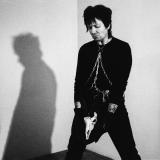
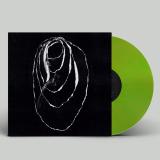
Following the release of Chris Liebing's 'Evolver' album this spring, German duo FJAAK rework 'Higher Things' which appeared on the full-length, releasing via CLR on 29th May 2026. Long established as a formidable force within Techno, FJAAK are known for crafting high-impact, floor-focused tracks, often via their self-titled imprint, with the Berlin artists now joining a star-studded cast on Chris Liebing's latest full-length, including photographer and film director Anton Corbijn on photography, and collaborations with Charlotte de Witte, Luke Slater, The Advent, Speedy J, Terence Fixmer, Pascal Gabriel, and
Daniel Miller.
Their remix reshapes 'Higher Things' around a rattling dub techno framework, where molten chords soften the weight of mechanical kicks while resonant stabs and swelling textures steadily intensify. The result is a hypnotic yet forceful reimagining, balancing atmospheric depth with anthemic, warehouse-ready pressure.
The original version of Chris Liebing's 'Higher Things' appears on his debut solo LP, 'Evolver', released 27th March 2026 on CLR. Marking a distillation of over three decades at Techno's core, the album pairs introspective depth with immediate, floor-driven impact, bringing together contributions from the likes of Luke Slater, Charlotte de Witte, Speedy J and The Advent, while ultimately remaining rooted in Liebing's singular vision, channeling the raw, industrial energy of classic club spaces into a refined, forward-facing long player.
Grammy award-winning titan of dance music Purple Disco Machine joins the illustrious list of Defected House Masters with a celebratory compilation. The German producer, DJ and global household name Tino Pointek, AKA Purple Disco Machine, is the blueprint for what makes a successful dance music artist in the modern age; respected on the underground scene while achieving major crossover success with remixes for the likes of Sir Elton John, Dua Lipa and Mark Ronson. The crate digging kingpin of house and disco first landed on Defected over a decade ago, and has since delivered remixes of iconic tracks like Fatboy Slim’s ‘Praise You’ and the London label’s top tracks including Shakedown’s ‘At Night’ and ‘Coma Cat’ by Tensnake – as well as striking originals like ‘Beat Fantasy’. From edits of the classics to remixes of the modern, as well as uplifting originals, Purple Disco Machine has birthed a distinct sound that is instantly recognisable, one that is not afraid to reference or not reference and is always bursting with joy. Across Defected presents House Masters: Purple Disco Machine, the full breadth of the iconic German selector’s sound is felt from the 2019 smash hit ‘Dished (Male Stripper)’ to deep cuts like his re-work of Fallout’s ‘The Morning After’ as well as remixes of legendary tracks like ‘Lola’s Theme’ by The Shapeshifters and Spiller’s ‘Groovejet’ featuring Sophie Ellis-Bextor. Defected presents House Masters: Purple Disco Machine is here to showcase the sound of a bona fide electronic maverick in full.
Baby T is a space away from her work as B.Traits in which Brianna Price can lean more into the junglist, drum ‘n’ bass and hardcore sounds which she loves so dearly. With BSHEE02, the second drop on Price’s own Banshee label, Baby T delivers a darkside masterclass of an EP. This record is a quartet of system blowers which doesn’t let up for a single second from start to finish.
Opener ‘Times Up’ is urgent from the off - the initial strains of this joint find sirens wailing in the monitors over a twitchy kick/drum/hats combo. From here on it’s distilled raver perfection, the drums taking us on a wild Wipeout-style ride as the subbiest of bass skulks at the bottom of the mix. Imagine a more technoid take on the classic breakbeat freerides of Skanna and you’re not far off the ‘Times Up’ sound.
A remix of ‘Times Up’ from man like Aloka leans with devilish glee into the murky underworld that lurks beneath Baby T’s original. Aloka’s version is extremely eerie in a manner which makes you think of the darkest corners of a DMZ party. When things really kick into gear, driven by an irresistible kick dembow, the effect is hypnotic - think the dubwise junglism of the UVB-76 cohort.
BSHEE02’s B-side kicks off with ‘Coercive Control’. This is a cut which delivers on its title in spades, putting the listener in a trance with an interplay of low-slung bass, whirligig synth tones and more of those perfectly executed broken beats. The acid starts to kick in around the minute mark, and it turns out to herald a total earworm of a lead melody.
There’s plenty of dimly-lit malevolence to BHSEE02 closer ‘Dense Dickwood’s grinding atmospherics and gurgling bass throbs. However, Baby T opting for a half-time drum break here gives the cut a vibe not dissimilar to the weightiest jams of classic Massive Attack - that is, until an absolutely remorseless switch-up occurs halfway through, delivering volley after volley of intense drum hits.
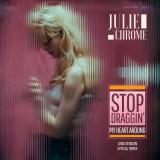
Some records feel like they should have existed. This is one of them.Originally buried as an album cut in the catalog of C. C. Catch, ‘Stop – Draggin’ My Heart Around’ never received the maxi single treatment it always deserved. For decades, fans of Dieter Bohlen’s signature sound have been left wondering what could have been… no extended mix, no dub, no proper club version… Until now.
Julie Chrome steps in with a strikingly faithful reinterpretation, capturing the emotional tone and melodic essence of the original, while Ryan Benson carefully reconstructs the sonic blueprint, staying true to that unmistakable mid-80s German disco aesthetic of Luis Rodriguez. Think shimmering synths, tight Linn-style drums and that bittersweet, dramatic tension Bohlen/Rodriguez and Co. perfected. But this release goes further than nostalgia. On this maxi, the track finally unfolds the way it always should have. Fully extended, club-ready, and built for the dancefloor. The Long Version delivers that essential 80s arc: slow build, emotional lift, and extended instrumental passages made for mixing. The Dub Version strips it back into a hypnotic tool, pure drums, synth stabs and atmosphere, tailored for late-night transitions and deeper sets. The Radio Version and Alternative Radio Version complete the package, offering two concise takes that still retain all the charm, drama and melodic punch of the original composition. This is more than a tribute, it’s a carefully crafted time capsule. From the production to the artwork and label aesthetics, everything here is designed to transport you straight back to 1986. For fans of classic German disco, collectors of lost Italo-adjacent gems, and DJs who know the power of a well-placed nostalgic moment – this one hits deep. A record that finally corrects history.
Telling a tale of house music’s early days or roots without mentioning Tony Humphries as a club DJ, remixer and radio disc jockey would make it an incomplete, forged and most of all a bit of a yawn.
Born in Brooklyn in 1957, Humphries’ musical journey is synonymous with New York City’s dance music history and the evolution from uptempo soul music to house: from being a dancer at David Mancuso’s infamous Loft parties to becoming a mobile DJ and getting the call from Shep Pettibone to become his right hand at
the then new Kiss FM radio station, followed by countless remix offers and a legendary residency at Newark’s Club Zanzibar. Next to that one, is was especially his work as a radio disc jockey for said station during most of the 1980s until 1994 that gave him majestic clout. Breaking new records week in, week out,
putting New Jersey acts like Adeva and Jomanda or countless up-and-coming producers from there on the musical map, while simultaneously playing the hottest imports from Europe, trax from Chicago, dance classics and all things straight from New York’s music factory that never seemed to stop.
Going to his vast and almost complete archive of radio shows from way back when he graced those airwaves, we at Running Back Records have pickedNew Release Information original recordings that symbolize his importance as an industry giant and ambassador of this style of music.
„But one thing I would like to point out is that, as a DJ, the music I play is not my music. I want to make it perfectly clear that it is music that is released, and it’s everyone’s music. I do not take any other credit than being the middle person exposing this music.“
(Tony Humphries in: What Kind of House Party Is This?, Jonathan Fleming, 1996)
As a group, Grand Puba, Sadat X, and Lord Jamar fused politically conscious lyrics with jazzy, sample- heavy production rooted in golden age boom bap. Widely praised by critics, \u2000One for All\u2000remains a cornerstone of early '90s East Coast rap. This box set includes the entire track list as 7" singles, including its most celebrated singles: "Brand Nubian," "Feel So Good," "Slow Down," "Wake Up" and "All For One.
Seven - a number steeped in mystery and meaning, woven into the very fabric of time and space. Throughout history, the number seven has stood as an immutable symbol: from the days of the week to the alchemical metals, from the kings of Rome to its seven hills. An archetype that unites astronomy, myth, and ancient civilizations, finding its deepest expression in Rome.
According to legend, the Eternal City guarded seven sacred relics, the Pignora Imperii, objects whose possession ensured divine protection, prestige, and political authority. Ovid referred to them as the "pledges of power": testimonies of Rome's Trojan heritage and its connection with peoples such as the Sabines, Etruscans, and Greeks. These artifacts, now lost, were:
I. Lo scettro di Priamo
II. Il velo di Iliona
III. Il Palladio
IV. Le ceneri di Oreste
V. Lo scudo ancile
VI. La quadriga di Veio
VII. L'ago di Cibele
From this mythology emerges the new project by Lykos Records: a narrative journey in seven chapters, each dedicated to one of these relics, unfolding through the various artists releases corresponding to catalogue numbers 7, 14, 21... up to LYKOS-XLIX.
Chapter I, "Lo scettro di Priamo" LYKOS-VII, is dedicated to the symbol of Troy's power, brought to Latium by Ilioneus on Aeneas' command as a pledge of alliance and reconciliation. It is said to have been kept on the Palatine Hill.
To inaugurate this journey, seven Roman artists - PixFoil, DJ Red, Brando Lupi, Luigi Tozzi, Feral, Sunday Bath, and Worg - will give life to a sonic mosaic celebrating the musical heritage of the capital. Their tracks will form a collective work that bridges generations and diverse artistic visions.
Each double vinyl will feature an original illustration by Roberto Mulliri, wrapping the entire front and back cover and included inside as a poster.
Within the Pignora Imperii lies the strength and power of Rome, witnesses of the city's epic saga; likewise, Lykos Records weaves its destiny into the history of these sacred Roman objects, becoming a messenger of their enduring legends.
Full Dose welcome DJ Firehouse to the fold with a four-track suite that drifts deep into fogged-out space. Rooted in the lineage of late-2000s innovators, this is a record that leans into atmosphere as much as it does low-end pressure.
“Hamilton Hill” sets the tone with metallic percussion and submerged chords, locking into a hypnotic groove that feels equal parts system music and head music. “Gardening” follows with a blurred palette, combining rippling textures, tape hiss and a hypnotic vocal loop to pull you further inward. On “Starpol 666”, Firehouse eases off the pressure with a more abstract, interlude-like piece, where drifting mid-range pads and liquid movement hint at a more experimental edge. Closing track “Cross Fader” stretches things out into a dubbed, slow-burning finale. Breathy ambient layers give way to dembow-leaning drums, with thunderous hits and long-tailed echoes building a quiet but undeniable tension.
Few songs from the late 90s managed to sound simultaneously utopian and paranoid quite like Jamiroquai's 'Virtual Insanity', a track that wrapped ecological anxiety and technological dread inside an absurdly slick jazz-funk strut. Thirty years on, it remains remarkably strange for a global pop hit. Jay Kay glides across bouncing basslines and gleaming Rhodes arrangements with irritating charisma, while the groove itself never stops twitching and mutating beneath him. 'Do You Know Where You're Coming From' goes further into sophisticated acid jazz territory through restless percussion and rich harmonic movement, then 'Bullet' adds a tougher funk bite. Some records become trapped by nostalgia, but this one still sounds futuristic.
If you’ve been keeping your ears to the ground, chances are this won’t be your first encounter with the glistening, shape-shifting sounds of Yushh. She has spent recent years DJing across the globe and releasing a series of standout tracks and remixes, cementing her status as one of the most vital flag-bearers of the Bristol continuum.
Somehow, it has been three years since her last solo outing. Making up for lost time, we finally welcome Yushh to Timedance for a searing five-track EP, “Full Body AXY”.
Yushh’s sound resists stasis, nothing feels formulaic. Instead, each track moves with an expert sense of detail, striking a rare balance between precision and instinct, dancefloor science and raw emotion. With a natural flair, she bends low-end pressure into something airborne. Heavy sub frequencies dissolve into a feeling of weightlessness that is both physical and elusive.
How can music hit with such precision and still feel like it floats beyond the rules of gravity? Yushh answers in her own language, where tension and release blur, where sounds flicker between density and light, and where the dancefloor becomes a space for both body-centric exploration and emotional catharsis.
Continuing its faithful documentation of the early years of Monolake, Field Records proudly present the first-ever vinyl pressing of seminal 1999 album Interstate. In a kaleidoscopic lattice of micro-rhythms and exquisitely dynamic textural work, Robert Henke and Gerhard Behles fully collaborated for the final time on this record — and created an electronica landmark in the process.
Monolake's evolution from their earlier dub-techno-tinted works saw their exploration of Max/MSP go further out. The duo yielded greater complexity in the behaviour of their sound palette to achieve an organismic quality that remains an enduring influence on so many strands of experimental electronic music today. Interstate is a vivid record that builds up eight different ecosystems of sound and subtly threads elegant grooves through their root structures.
There's a house-like undulation to the low-end driving 'Tangent-I' and 'Tangent-II', but the infinitesimally detailed layers of sound on top swoon from techno synth shimmers to trickling waters, snaking delay trails and pin prick percussion. You can hear the unmistakable, snappy rhythmic thrust of drum & bass driving 'Ginza', but here it's used as an engine for the crispest array of designer percussion and dub-soaked synth chirrups. Across every track, Henke and Behles demonstrate a potent combination, both groovily instinctive and eternally fascinating to try and pick apart.
After Interstate, Behles departed to focus entirely on the development of Ableton Live and Henke steered Monolake towards a leaner — but no less pioneering — sound. Every Monolake record has its own unique context and sound, and the circumstances of Interstate could never be repeated. Capturing the leaps in progress that were being made in digital music production at the end of the millennium, it's an information-rich document of a moment in time that still sounds wildly futuristic 27 years later.
Like a meteor striking earth, two forces hit each other. Merkelbach and Nathan Homan found each other in a shared vision in music, and this is the reason they’ve started the label Beau Brummel. Combine the two and you get the alias Merkoman. If you were to take a look at both of their agendas, you’d see Thursday crossed off because that’s Brummel Day. After two years of Thursday evening Brummel sessions, a big vault of music has been filled. The result is The Story of Brooks Pipe, a two-part story of a refreshing new sound that only Merkoman can achieve. In Part 1 you’ll find four tracks strictly made for all sorts of dance floors. An additional injection of creative artwork was given by Sjeng Schupp.
Network 23 Recordings proudly unveils its first full digital album release since its revival in partnership with Triple Vision Distribution. It will also release as 3 Vinyl EP's over the course of this year.
Better Than Drugs, the latest album from Crystal Distortion, delivers a high-impact sonic snapshot of both personal upheaval and the turbulent state of the world today. Framed by flashes of media soundbites old and new, the album tackles themes ranging from gentrification in Landlords Hooked On Crack (Breakbeat Version) to the right to protest in Got2StopThem, and the mass manipulation of society in The Chicken Strikes Back.
Launching with a hard-techno surge, the record moves fluidly through a spectrum of tough, mid-tempo rhythms, accented by breakbeats, electro-leaning syncopations, and bass-driven cuts like StepGPT-all while staying firmly rooted in dance-floor intent. Designed for movement and built for impact, Better Than Drugs is a versatile, high-energy release ready to ignite any setting.
Crystal Distortion is a pioneering force in the underground electronic music scene, known for fusing hard-driving techno, breakbeat energy, and improvisational live performance into a signature sound that helped define the European free-party movement. His work blends raw analog textures with relentless rhythmic experimentation, creating high-intensity sets that feel both chaotic and meticulously crafted. As a long-standing member of the Spiral Tribe collective, he has influenced generations of producers and performers, pushing the boundaries of what electronicmusic can be in both form and context.
Dario Rossi approaches electronic music like few others. His work as a percussionist has brought his unique rhythmic abilities to audiences around the globe. Born in Italy, Rossi combined percussion with samplers and synthesizers. His energy and talent have allowed these machines to be incorporated into his distinctive palette with very special results. 07Sep83 is his Bordello debut, with the title piece opening the four tracker. Beats cascade as analogue warmth laps the shore. Slow with a magnetic groove, elements of italo, wave and synth-pop intertwine to create a clean, bright sound that is at once familiar and totally unique.
Vocals arrive with “We’ll Meet Again.” Tempos rise while keys are emboldened by rich guitar strings. Lyrics counter with a melancholic tone that shifts into hope and fortified belief as melodies rise ever higher. The flip is “Lost.” Sharp drum patterns support notes that hark back to the majesty of Bobby O, the live sax by Augusto Pallocca and disco glory combining in this journey through genres. “Beat the Devil” closes. Sizzling from the outset, snares roll and snap. Rossi’s percussive prowess is on full display as synthlines flow over rhythmic ripples to the subtle and soulful strings that bring down the curtain.
POEME ELECTRONIQUE was Dave Hewson (synthesisers, production), Sharon Abbott (lyrics, lead and backing vocals), Julie Ruler (backing vocals) and Les Hewson (bass), formed in 1980 by Dave Hewson in South London, UK, in 1980. Dave was studying music and as a rare kind of student species he had a deep fascination for New Wave and electronic music thus also playing and recording electronic music ever since like using the Boss DR-55, Cosmo Sound Super Drum, Elka Rhapsody 610, EMS Synthi AKS, Korg MS-20(X2)/Polysix/Polyphonic Ensemble 1000/VC-10 Vocoder, Linn Electronics LM-1, Octave Kitten, Roland RS-09/VP-330 Vocoder Plus, Simmons SDS-V Kit and Yamaha CS-80 on this retrospective POEME ELECTRONIQUE album with original material from 1981/82 only. Over the period of more than two years, Dave has remastered these tracks using the latest high-end tools making them sound better than ever before. The deluxe 2LP vinyl album comprises 16 tracks of which 14 have never been published before. “The Echoes Fade” and “Voice” are the original versions taken off their original 7” from 1982. The album “The Echoes Fade” cannot be described other than being a masterpiece and one of the best-ever early 80’s electropop records ever, and it surely has to be lined up with Rational Youth or Experimental Products’ cult albums (in terms of being minimal synth/wave scene reference albums), but to be frank, Anna thinks that POEME ELECTRONIQUE were even above their level.
Truly, they had deserved to go on the successful path like Depeche Mode, OMD or Soft Cell, but fate was against them as it seems. The main difference to other electropop groups of the time was definitely that Dave did not only master his synths technically-wise, no, he also knew how to actually play, and when you hear his amazing multi-track ‘manual sequencing’, programming skills, great harmonies and melodies throughout the tracks, along with the two girls’ performances – well they can really sing! – you will agree there is some something remarkably extraordinary in these tracks. You will find minimal electropop super hits like “Rendezvous”, “She’s an Image”, “Fragile”, or “Dilemma”; hauntingly beautiful melancholic tracks like “A Mourner’s Lament”, “This Night” or “It’s in the Atmosphere”; darkest minimal electronics on “Inside his Head”; and even more poppier tracks like “Follow”. This record will hopefully be loved by any electronic music lover and most probably marks the highlight in the growing Anna Logue Records catalogue – therefore Anna did not shy away from any costs and the album is truly an outstanding release in every single aspect including sound and artwork presentation. Apart from the bonus tracks you will find in the 2LP deluxe vinyl edition glossy inner sleeves with lyrics to all songs, as well as individual mini 7” sleeves for each song designed by our dear graphic designer Steve Lippert plus many additional group photos on the gatefold sleeves’ inner. After so many efforts and more than two years passing by, Anna is so over the moon to see this release being ready now and we have done all we could to make this an outstanding release, so now it’s up to you to give the band their final glory, but Anna is in no doubt that – at least after hearing the sound samples – you will.
Mr Bongo presents a reissue of one of the rarest releases on the illustrious and now ultra-rare tax scam label TSG Records. A label with a checkered past, operated by Lloyd Price and with alleged ties to boxing promoter Don King. The album in question, Disco Party by Reality, is a stunning journey through ‘70s dancefloor-focussed funk into early proto-disco grooves. Back in mid-‘70s Manhattan, Dr. Otto Gomez and a group of fellow New York musicians including Tony Dixon, Norman Drayton, Tony Dupree, Al Jones and Fred Nanton were brought in for a recording session by songwriter and producer, Billy Nichols. Laying down one of Nichols' songs and a selection of the group's own, they were paid as session musicians and thought little of it. The tapes came to the attention of Lloyd Price who struck a deal with Nichols unbeknownst to Gomez and the rest of the band. Price then pressed the album and put it out in 1976 on a newly formed subsidiary label, TSG Records, that would later be documented as one of the US tax scam labels of the ‘70s. Such labels were created to exploit a loophole in the US tax system, running up inflated production costs / losses that investors or the parent label could write off against their tax bills. Releases on these labels were never intended to have commercial success. They would usually be produced in incredibly limited pressing numbers and have little to no promotion or distribution. As such many of these records instantly fell into obscurity, becoming mythical amongst DJs and record collectors. Sadly, this meant that artists like Dr. Otto Gomez and friends never had the chance for their record and their talents to shine at the time. In fact, it was only when Jazzman reached out for their 2022 reissue that Dr. Otto Gomez became aware that the album had ever been released and heard the story behind it. Disco Party is a time capsule where ‘70s instrumental funk edges and intertwines into an early disco sound. The sessions are for the dancefloor, minimalist and groove-based. The bass and drums are at the forefront, providing the pulse of the album. Driving funky guitar licks, and a brilliant horn section weave their way in and out of the productions. Highlights include the uplifting feel-good ‘Let's Party People’, the early disco swagger of ‘Reality’, and ‘Disco Party (Let's Have A)’ with its wah-wah groove and percussion break, which could easily have found its home on a Blaxploitation film soundtrack of the period. It’s not just rarity that makes this record so sought after, but rather the fact that it is a superb example of dancefloor-focussed mid ‘70s funk and disco.
Belgian saxophonist, composer, and producer Mattias De Craene (Nordmann, MDCIII) announces a new solo album, ‘A House Where I Dream,’ on VIERNULVIER Records. On his second album, he delivers a highly personal and healing journey, presented as an alternative soundtrack to the 1973 cult film ‘The Holy Mountain.’
The record will be released on October 11 on vinyl LP and through all digital platforms.
"The Holy Mountain" is a surreal Mexican film from 1973 directed, written, and produced by Alejandro Jodorowsky, who also stars in the film. The film holds a prominent place in avant-garde cinema and explores themes such as spirituality, mysticism, and the quest for enlightenment. It is in this vein that ‘A House Where I Dream’ is crafted.
“My mind and soul - and thus my music - come home to this motion picture” - Mattias De Craene
The album will be presented live with the film on October 16 at Videodroom during Film Fest Gent.
ABOUT THE ALBUM
With hypnotic tape loops, grainy textures, and mesmerizing saxophone, Mattias De Craene creates possible worlds that herald a spiritual transformation. From the Scottish Highlands and desolate mountains to the deepest recesses of the soul, this music has the power to create cinematic landscapes that transcend time and space. The sound of these 8 tracks is closely related to the minimalist compositions of Terry Riley, but the work of contemporary artists like KMRU or William Basinski is also drawn from the same material.
Above all, this album is a deeply personal journey and unintentionally serves as a metaphor for De Craene's ascent of his own mountain. For the Videodroom festival by Arts Center VIERNULVIER, the saxophonist began working on a new soundtrack for the film ‘The Holy Mountain’ in 2023, but his body and mind abruptly called him to a halt, forcing him to take a professional break. However, this project never left him, leading to an honest and raw quest to find himself as both a person and an artist, with Jodorowsky as a companion de route and music as an anchor. It initiated a long process of dismantling, searching, healing and back again. The album not only provides a sanctuary for dreaming to all who listen, but for its creator it also serves as both an outcry of despair and a source of comfort during challenging times.
All the tracks on 'A House Where I Dream' share an unfiltered grain of life, as one can almost feel the damp breath of the saxophone blowing.
The album opens with the three-part strong 'Transcention,' where the hypnotic interplay between soprano sax and lo-fi tape loops leads to higher realms of the mind and soul.
Alternating between deep frequencies and farout folk modalities, this mantra-like triptych acquires an alchemical character and ultimately transcends time and space.
In the ethereal 'Away,' one can peer into an abyss of resonance while a saturated tenor sax lends guidance in the spirit of Terry Riley's productions. 'You and Me' also bathes in a similar atmosphere, albeit in the vein of healing 90s ambient as granular sax tones converge with celestial chants. 'Gazing Upwards Towards The Sky,' offers different shades of blue as a slumbering tenor sax is juxtaposed to swift sax patterns. On 'A Stranger That Moved Me,' beauty lands in a soft and subtle manner, while the closing track 'Shepherd's Glow' drifts like a mountain wind flaring up at the darkest hour of the night.
The artwork is created by Gent-based artist Sam Timmerman, who portrays the world of 'A House Where I Dream' with playful repetition and mystique.
The Trip To Vega is about deep outer space odyssey that occurs in the process of traveling from Earth through the Cosmos to another "favorable" star system 25.3 light-years away.
The time is year 2097, Sept 23rd.
To this day, Earthlings have managed to dodge some of nature's more dangerous extremities, massive volcanic eruptions, Earthquakes, solar burst that knocked out the Planet's entire electrical grid for 3 years, numerous plagues of disease, food and fresh water shortages, domestic and International Wars and many other life-changing operas, but for this event, what remains is a realization that has no remedy. The cause: Earth's physicality has changed. It is no longer favorable for living things.
It is the constant shifting of the planet's internal tectonic plates which has unfortunately produced an unexpected and impassable dilemma.
Because of the collisions, deep within the planet's core, the planet is now producing an extraordinary amount of sound that includes a specific harmonic frequency that erodes the natural senses of all life on Earth.
It is intensifying. It is intolerable and it is unlivable.
Yet, some humans prefer to stay, to "ride it out" like the Titanic captain going down with his ship. Some, in total disbelief as some have concluded it is the second coming of Jesus Christ. But for most, the decision is clear. Tolive another day, leaving is the only rational choice.
At an increasing rate, scientific research data shows that humans and most animals, excluding the Jellyfish will eventually lose the usage of hearing and are to greatly suffer from an array of other neurological and psychological effects. The sense of touch and taste, sleep depreciation, severe nerve damage, constant hallucinations. Everyone will lose many of their cognitive abilities within an estimated 12 months from now.
On this day and every 7 days afterwards until all registered passengers have departed, the first of a fleet of large number of massive size spacecraft carrying approximately 1 million humans per vessel will permanently leave Earth to begin the long and adventurous trek across outer space to a new home: Vega.
This is not a precautionary tale as there is nothing to learn. Instead, a decision has been made and a Trip To Vega is the consequence.
Balancing glitch-pop and contemporary piano, the Belgian pianist explores the edges of her voice, language and twisted electronica
The Belgian pianist and producer maya dhondt releases a new album titled 'wow, x', marking her debut solo album under her own name. Navigating between bedroom glitch-pop and contemporary piano, she presents sounds of alienating beauty.
The album ‘wow, x’ will be released on September 13 on vinyl and all digital platforms via VIERNULVIER Records.
“I find beauty in the uncomfortable and disorienting" - maya dhont
The first single, 'desire,' is a mutated synth-pop track that gets under the skin. The song centralizes longing for something you don't know (yet). Perhaps it's the smell of damp earth, which can be both pleasant and unsettling? The single is now available on all streaming platforms and comes with a schizophrenic video by Sakis Brönnimann.
The first release show is scheduled for Saturday, October 5, at De Koer, Ghent.
More shows will be announced soon.
A postmodern cramp, that's how one could describe the music of pianist and producer maya dhondt. Her music is an intuitive and a never ending exploration that has the potential to be and become a multitude of things at once.
On her first solo album under her own name, 'wow, x,' she presents 10 varied tracks in which she creates equally idiosyncratic sound worlds. She takes the liberty to endlessly experiment with vocals, piano, and a mix of distorted lo-fi electronic sounds with an open mind. The result is sometimes synthetic and weird, sometimes compellingly beautiful, and always captivating, drawing you into its underlying melody. These intelligently crafted productions are connected by a penchant for alienating beauty: like a warm, but damp cave where it’s pleasant to linger just a little longer. Her original sound moves within a sonic spectrum reminiscent of contemporary artists such as Lolina, Astrid Sonne, claire rousay, aya or Carla Dal Forno.
"What I create never stands alone, it can be many things at once"
If the world were a sculpture garden, maya dhondt eagerly picks from it to draw inspiration from both visual and literary passages as well as personal experiences. Her highly personal bedroom productions are grounded firmly in the world due to philosophical references and politically charged messages. And the world she lives in is being questioned on 'wow, x', as the title refers to "What Or Why?". This is evident in the single 'desire': "What is the thing that matters / to exist / or to know you’re existing?" What does one choose in life: to live in the moment or to live to remember that moment?
In the lyrics on 'wow, x', maya dhondt plays - at times childishly - with language and its boundaries. On 'tip toe tip,' banal wordplay leads to an unexpected confession, and the seemingly simple phrases in 'untitled' conceal hidden life lessons. dhondt's world of words is multilayered and multilingual: Dutch ('kleine cijfers, groot verlies'), English ('desire'), and French ('untitled') are at her disposal. And on the fierce track that is 'minimalinvasiv,' not only she turns to hardstyle, but also to German - a language dear to her due to her Swiss heritage.
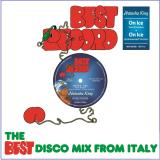
"This majestic Italo-Disco tune, arranged by Pierluigi Giombini, possesses something magical and mysterious. "On Ice" begins with Natasha King's a cappella vocals and a sweet piano melody by the same composer who wrote "Masterpiece" and "I Like Chopin" for Gazebo. A classic Italo-Disco piece from the mid-1980s, which, more than its sales, achieved success in live performances and on TV shows for the grace and charm exuded by the artist, who was also a dance teacher at the time. The elegance and precision of every move are the foundation upon which Natasha builds her technique. The reissue of "On Ice" was never fully embraced by lyricist Natascia ''Nati'' Maimone, straying from her tastes in soul, blues and jazz. It was also overshadowed by her previous hip-hop track, "AM-FM" - released from Best Record in 1983 - which made the artist world-famous at the age of twenty. This reissue in both original versions was also created to allow new generations to relive, at least in part, the great musical era of the 1980s, a period of incredible musical richness combined with a carefree spirit."
Hopeful, defiant, effusive, and ecstatic, Radio!! Radio!! is the 20th album from Erasure, one of pop’s most beloved songwriting partnerships.
The record finds Andy Bell and Vince Clarke continuing to refine and deepen the pop edifice they’ve been building over the past 40 years with a set of 10 songs about love, loss and injustice that speaks, powerfully, to our empathy-starved times.
A uniquely personal album, it was shaped by a period of profound grief. When the duo got together to write the album, it was as much in the spirit of uplifting an old friend as it was work – you can hear this thread of warmth and mutual care throughout.
The album that transposes the dazzling hugeness of the duo’s best work onto avowedly more personal, more reflective songwriting. Bell acknowledges that it would be easier, perhaps, for he and Clarke to go on autopilot, 40 years into their career. But how would that pass as Erasure? “It’s a two-person brain, and everything that we’ve gone through comes into it,” he says. “We have a sense of responsibility. We couldn’t ever do something throwaway.”
Radio!! Radio!! is rooted in Erasure’s unique synth-pop palette with some key augmentation: when working on the sound of this album, Clarke was unusually drawn to piano, as well as acoustic guitar. The use of these instruments adds drama and depth to their sound whilst leaving room for the kind of glassy synth pop that Erasure made their name on.
Hoffnungsvoll, trotzig, überschwänglich und euphorisch: Radio!! Radio!! ist das 20. Album von Erasure, einem der beliebtesten Songwriting-Duos der Popmusik.
Auf dem Album entwickeln Andy Bell und Vince Clarke das musikalische Pop-Gebäude, an dem sie seit 40 Jahren arbeiten, konsequent weiter und verleihen ihm zusätzliche Tiefe. Die zehn Songs handeln von Liebe, Verlust und Ungerechtigkeit und treffen damit auf eindringliche Weise den Nerv unserer Zeit, in der es so oft an Empathie mangelt.
Es ist ein ausgesprochen persönliches Album, geprägt von einer Phase tiefer Trauer. Als sich das Duo zum Schreiben der neuen Songs traf, ging es dabei ebenso sehr darum, einen alten Freund wieder aufzurichten, wie um die gemeinsame Arbeit. Diese Wärme und gegenseitige Fürsorge ziehen sich hörbar wie ein roter Faden durch das gesamte Album.
Das Album überträgt die schillernde Größe der besten Arbeiten des Duos auf ein bewusst persönlicheres und nachdenklicheres Songwriting. Bell räumt ein, dass es für ihn und Clarke nach 40 Jahren Karriere vielleicht einfacher wäre, einfach auf Autopilot weiterzumachen. Aber wäre das noch Erasure? „Es ist wie ein gemeinsames Gehirn zweier Menschen, und alles, was wir erlebt haben, fließt darin ein“, sagt er. „Wir verspüren eine gewisse Verantwortung. Wir könnten niemals etwas Belangloses machen.
“Radio!! Radio!! ist fest in Erasures unverwechselbarer Synthie-Pop-Klangwelt verwurzelt, erweitert diese jedoch um einige entscheidende Elemente: Bei der Arbeit am Sound des Albums fühlte sich Clarke ungewöhnlich stark zum Klavier und auch zur Akustikgitarre hingezogen. Der Einsatz dieser Instrumente verleiht dem Sound zusätzliche Dramatik und Tiefe, lässt aber zugleich genügend Raum für jenen glasklaren Synthie-Pop, mit dem Erasure berühmt geworden sind.
Hopeful, defiant, effusive, and ecstatic, Radio!! Radio!! is the 20th album from Erasure, one of pop’s most beloved songwriting partnerships.
The record finds Andy Bell and Vince Clarke continuing to refine and deepen the pop edifice they’ve been building over the past 40 years with a set of 10 songs about love, loss and injustice that speaks, powerfully, to our empathy-starved times.
A uniquely personal album, it was shaped by a period of profound grief. When the duo got together to write the album, it was as much in the spirit of uplifting an old friend as it was work – you can hear this thread of warmth and mutual care throughout.
The album that transposes the dazzling hugeness of the duo’s best work onto avowedly more personal, more reflective songwriting. Bell acknowledges that it would be easier, perhaps, for he and Clarke to go on autopilot, 40 years into their career. But how would that pass as Erasure? “It’s a two-person brain, and everything that we’ve gone through comes into it,” he says. “We have a sense of responsibility. We couldn’t ever do something throwaway.”
Radio!! Radio!! is rooted in Erasure’s unique synth-pop palette with some key augmentation: when working on the sound of this album, Clarke was unusually drawn to piano, as well as acoustic guitar. The use of these instruments adds drama and depth to their sound whilst leaving room for the kind of glassy synth pop that Erasure made their name on.
Hoffnungsvoll, trotzig, überschwänglich und euphorisch: Radio!! Radio!! ist das 20. Album von Erasure, einem der beliebtesten Songwriting-Duos der Popmusik.
Auf dem Album entwickeln Andy Bell und Vince Clarke das musikalische Pop-Gebäude, an dem sie seit 40 Jahren arbeiten, konsequent weiter und verleihen ihm zusätzliche Tiefe. Die zehn Songs handeln von Liebe, Verlust und Ungerechtigkeit und treffen damit auf eindringliche Weise den Nerv unserer Zeit, in der es so oft an Empathie mangelt.
Es ist ein ausgesprochen persönliches Album, geprägt von einer Phase tiefer Trauer. Als sich das Duo zum Schreiben der neuen Songs traf, ging es dabei ebenso sehr darum, einen alten Freund wieder aufzurichten, wie um die gemeinsame Arbeit. Diese Wärme und gegenseitige Fürsorge ziehen sich hörbar wie ein roter Faden durch das gesamte Album.
Das Album überträgt die schillernde Größe der besten Arbeiten des Duos auf ein bewusst persönlicheres und nachdenklicheres Songwriting. Bell räumt ein, dass es für ihn und Clarke nach 40 Jahren Karriere vielleicht einfacher wäre, einfach auf Autopilot weiterzumachen. Aber wäre das noch Erasure? „Es ist wie ein gemeinsames Gehirn zweier Menschen, und alles, was wir erlebt haben, fließt darin ein“, sagt er. „Wir verspüren eine gewisse Verantwortung. Wir könnten niemals etwas Belangloses machen.
“Radio!! Radio!! ist fest in Erasures unverwechselbarer Synthie-Pop-Klangwelt verwurzelt, erweitert diese jedoch um einige entscheidende Elemente: Bei der Arbeit am Sound des Albums fühlte sich Clarke ungewöhnlich stark zum Klavier und auch zur Akustikgitarre hingezogen. Der Einsatz dieser Instrumente verleiht dem Sound zusätzliche Dramatik und Tiefe, lässt aber zugleich genügend Raum für jenen glasklaren Synthie-Pop, mit dem Erasure berühmt geworden sind.
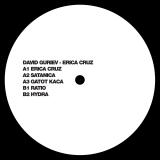
To get with down roots of the label you have to get down with its people. For one of these key roots, you have to hear and understand what David Guriev has to say with the audio message that’s getting translated to us as listeners. Being one of allies of the label and the non-stop behind the scenes inspiration, David has created a 5-track extended play named after one of his favorite female boxers named Erica Cruz. From the side of the cinematic importance, Erica has appeared momentarily in our lives, with a brief timing that the world has provided her. However she has never left the idea that has given the birth to this EP, and more or less has started the discussion of what it is to be or not to be like Shakespeare himself used to talk about after a good soul-searching session.
Precisely one year after Lézire, Crush of Souls is back with his third full-length album.
The musical endeavour of Charles Rowell – active in the indie/punk global scene since 2008 with bands like Crocodiles, Flowers of Evil, Issue – is just like its creator: always cooking up something. Relentlessly.
Now, as it was perceivable by the trajectory undertaken by after his previous LP, Captive Youth leaves goth rock and dark folk aside and head swiftly towards some old school 80’s EBM & 90’s Industrial dance vibe. After all, any album exploring themes of dystopia, politics and sexuality requires a strong rhythm. So how could this new chapter not mention seminal synth-pop and body music classics such as Technique by New Order, Belief by Nitzer Ebb, Towards Thee Infinite Beat by Psychic TV and Pressure Points by Anne Clark?
Forever a displaced soul, Charles’ album number three feels like a revision of Crush Of Souls and also a reanimation of his captive youth spent moving from town to town. The energy of the wandering worker poet. Warehouse basslines, artillery fire backbeats. Romance and melancholy wrapped in barbed wire. All this and more oozes from nine new tracks that inevitably deliver that blurry sexy urban vibe that’s become the project’s trademark.
Features collabo hit single Domination with Sade Sanchez from L.A. Witch.
Destination Unknown is an EP by Unpronounceable born from an archive of sounds collected between 2019 and 2024—sonic fragments that took shape without a predetermined direction guided only by an open idea in constant transformation. The original track conceived as a “destination unknown” composition developed its own independent identity. However precisely because of its fluid and cross-genre nature Unpronounceable chose not to place it within a traditional EP context instead opening it up to a multiplicity of perspectives by inviting five artists to reinterpret it freely without genre constraints.
The result is an EP that unfolds like an alternative map of the same sonic territory where each remix explores a distinct direction transforming Destination Unknown into a multifaceted and ever-evolving experience.
In Carl Finlow’s remix Destination Unknown takes on a strong cinematic and narrative dimension. Inspired by the title Finlow imagines a mysterious journey toward a futuristic dystopian city turning the track into a kind of electro soundtrack—dark yet ironic rich in character and capable of evoking vivid images and motion.
MANASYt pushes the track toward more physical and ritualistic territories focusing on the dark pads and the more oneiric vocal elements of the original. The result is a hypnotic pulsating tribal-industrial reinterpretation where rhythm and sonic material become central intensifying the track’s most visceral qualities.
With Gay Horror the focus shifts to an emotional and narrative dimension. The vocals are deliberately made elusive and undefined while the structure develops through a slow controlled crescendo that recalls the atmospheres of ’90s trip-hop. This version also reflects a long-standing human and artistic relationship conceived as a story that travels through time and reaches the present day.
Kevin Follet adopts a more conceptual approach overturning the perspective of the original track. Rather than working with its main elements he brings the underlying structures to the foreground transforming what usually remains hidden into the core of his reinterpretation. His remix is elegant and deep balancing sound exploration with a strong attention to songwriting.
Closing the EP is GP The Synth Roller with a radical and highly experimental reinterpretation. The track behaves like an unstable system: parameters shift without warning surfaces lose coherence sudden accelerations collide with moments of arrest. There is no resolution only a sonic condition in constant tension eventually condensing into a dark compact mass.
Taken as a whole Destination Unknown is far more than a simple remix collection: it is a collective exploration of the potential of a single composition. Unpronounceable’s original track and the reinterpretations by Carl Finlow MANASYt Gay Horror Kevin Follet and GP The Synth Roller move across electro techno industrial and experimental territories offering six different perspectives from the same starting point. An open journey with no fixed destination where every detour becomes an integral part of the path.
Massimiliano Pagliara celebrates 20 years of music production with a special anniversary compilation on Funnuvojere. The release brings together solo productions and collaborations spanning a rich and abundant period that began when Pagliara acquired his first analogue machines, five years after moving to Berlin from Milan, where he worked as a professional dancer and choreographer.
The compilation features 20 previously unreleased tracks, deeply infused with italo grooves, wonky bass-lines, balearic pads, drama, love, sex, and dreams. These tracks evoke a wide spectrum of moments, ranging from intimate, pleasure-driven home listening to full-blown dance-floor euphoria. Throughout the compilation, one can feel Pagliara’s enthusiasm for discovery—his excitement in encountering new machines and immediately putting them to work.
Pagliara’s sonic identity is unmistakable, present in every track and in the compilation as a whole. Like the facets of a crystal, the music reflects his many nuances while maintaining a strong, coherent core. Tracks such as Waves of Desire pay homage to Dream House, reimagined through contemporary production with cosmic tones and infectious drums. Flicker Of Us reveals a dramatic tension between a rowdy bass-line and melancholic pads, while We Can Touch The Sky features Pagliara himself on vocals, blending synth-pop with elements of new wave and glam rock. Cool Breeze unfolds as a sunlit, optimistic walk through a wide Berlin avenue—funky, warm, and filled with curiosity for what lies ahead.
A notable strength of the compilation lies in its collaborations, which highlight Pagliara’s joy in working with other producers and vocalists. Each collaboration reveals a distinct character: the balearic sensibility of A Journey of Discovery with Gatto Fritto, the French house flavour of Neon Memories with Alinka, the 70s disco inflection of It’s In Your Eyes with the late Aérea Negrot, and the driving techno attitude of Whirlwind with Fabrizio Mammarella, to name just a few.
Ultimately, this compilation stands as both a gift to Massimiliano’s long-time fans and an open invitation to new listeners. It offers entry into a world shaped by beauty, order, balance, and ecstasy—guided by an enduring love for the craft.
Jolene Cuts delivers a stunning 5-track vinyl-only release that reinvents the spirit of 90s French Touch for today’s dancefloors. No edits here—these are 100% original productions crafted by Danny & Mike, masters of filtered house grooves. From the funk-drenched “Without,” a Kool & The Gang-inspired house monster, to “Fall,” a euphoric blast reminiscent of the best Daft Punk moments, every cut is designed for maximum floor impact. “Mon ami Julien” dives deeper with a warm and hypnotic Scott Grooves vibe, while “Ready for Love” feels like Cerrone remixed by early Bob Sinclar at his peak—pure disco magic reimagined. The record closes with “Burning,” a banging, feel-good anthem built to ignite any set. This is a true celebration of filtered house, disco energy, and feel-good music—strictly vinyl, strictly limited, and packed with five undeniable club weapons. Perfect for DJs who want to tear the club apart, vinyl purists, and anyone who knows that real French Touch doesn’t need gimmicks—just groove, soul, and timeless dancefloor power. Once it’s gone, it’s gone.
DJ Support: Layne Fox (40 thieves), Dr Rob/Banbantonton, Don Letts, Sean Johnston, Tim Sweeney, Richard Norris/The Grid., Andy Sims/Soft Rocks, Stephen KIW, Alex From Tokyo, Pete Herbert, Pete Gooding, Ewan Pearson, Richard Sen, Balearic Mike(Down To The Sea And Back)
Craig Bratley’s sophomore album, Return To Bass, has been a long-time gestating, with a whisky-like distill time in the musical barrels from whence this came. His debut was in 2014 and 12 years later here he is again, in the blink of a, er, Jurassic age. In that time, he’s gathered a good deal of experience, released several musically varied 12-inches, as well as having Andrew Weatherall remix a few of his efforts (not completely surprising, since The Guv’nor also played Craig’s music).
Bratley has spent the last few years honing his musical and technical skills which are evident on this album, as are his influences, which can be heard on his impressively consistent back catalogue, include Italo-disco, British electropop, acid house and a slowed down version of Chicago house that lends it a heroin crawl. Added to that, though, is the dub reggae sound championed by King Tubby, Lee ‘Scratch’ Perry and our own Dennis Bovell, which is much in evidence on this set.
It seems apposite, in the wake of the death of Sly Dunbar (and, less recently, his partner, Robbie Shakespeare) that Craig’s album is now appearing, since Bratley’s sound is imbued with a dub sensibility and the engine of the whole set is built around the thud that Sly & Robbie brought to their greatest productions; the song titles are clues: ‘Plasticine Dub’, ‘Return To Bass’ and ‘No In Between Dub’.
The LP Features standout vocals from Amy Douglas, Thomas Gandey, and Ola, plus funeral-march trumpet work by Tim Hutton.
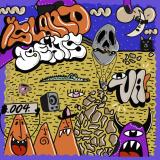
After years of building this project quietly and patiently, ISLA004 feels like a reflection of everything that shaped the island along the way.
Between hypnotic techno, trance, electro and synth-pop influences, this release moves through nostalgic melodies, dark textures and emotional tension balancing moments of introspection with the energy of the dance floor.
More than defining a genre, this VA captures a state of mind: late nights, distant memories and the feeling of getting lost in sound.
Six tracks. Six undeniable hits. Science can't explain it.
Four dazzling pdqb originals: pop-infused disco house transmissions where retro dreams collide with absurdly modern groove technology and hyper-modern circuitry. Hooks everywhere. Basslines that flirt shamelessly with eternity. Rhythms that know exactly what they're doing.
And then Roman Flügel arrives at the party. With two remixes of such dubby, technoid magnificence that they bend the laws of physics wherever they're played.
The cover? Pure gold. A radiant golden surface punctured by bullet marks - courtesy of world-renowned artist Maurizio Cattelan. When the music hits this hard, the artwork should too.
And the vinyl itself is no less extravagant: it reveals a dramatic close-up of the Direct Hit - a colossal crater surrounded by smoky burn marks, gleaming like a tiny golden monument to impeccable taste.
A small but undeniable upgrade to the cultural history of planet Earth. Play loud. Repeat often. History will thank you.
P.S. Real-world violence is neither glamorous nor welcome - this record stands firmly for peace, joy, and the radical idea that the only explosions worth having happen on dancefloors.
Little Beat More is delighted to present the new EP release from Grupo Jejeje, los místicos de la kumbia!
This release reflects the commitment of the duo founded by Turbo Sonidero and Arrabalero to musical exploration and innovation, blending synth-driven Mexican cumbia with hip-hop, electronic and Persian influences.
Whether it’s the hypnotic, bass-heavy pulse of "Sordeados Kasbah" or the wistful, laid-back tones of "Asuka," Grupo Jejeje’s music resonates with a rare depth and sophistication transforming their local roots into a global soundscape like sonic alchemists, and crafting a sound that feels both ancestral and futuristic.
Pressed on 7” vinyl, this release encapsulates what Grupo Jejeje does best: reimagining the essence of cumbia while anchoring it in a forward-thinking sound.
Let the mystics of cumbia guide you into uncharted musical territories.
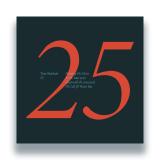
Tom Sharkett has been one to watch in the last year via his remix work for DFA, Sub Pop and more plus his edits that are quietly out there doing damage with those that know. Here he arrives on Test Pressing Recordings with ’25’. Hot on the heels of his remix of LCD Soundsystem’s ‘Home’ – ‘Easily one of the biggest records of the Summer’ (Phonica Records) – here is his first solo EP for the label. ‘Painting On Glass’ arrives and sets the mood. Heavy synths and breaks. ’25’ features the vocals of mui zyu and pulls from the likes of New Order but takes them somewhere new. The third track, 'Sleepwalk', sees mui zyu return — a love song that sets a mood then drops into a vocoder loop midway before a fitting finale. ‘I’ll Call If I Want You’ closes the EP with a vocal from Tom himself. It’s a perfect closer. This isn’t a straight up dance record. It’s an artist showing they’ve got big ideas and a home for them.
If – in some parallel universe (or perhaps a not-so-distant-future version of the one we’re already sentenced to living in) – the evil overloads of artificial intelligence were actually successful in their attempts to create convincingly enjoyable “original music,” more specifically tasked with wholly encapsulating my own personal tastes by data-chugging some cocktail of – oh, I don’t know – the posters on my wall, the records in my “most listened to” pile, the mixtapes I made for others, intensive physical scans of my auditory cortex, amygdala, hippocampus, heart strings, whatever else they have splayed out on their autopsy table with the intention of generating one all-encompassing “perfect band” based on the fruitful sum of their findings – that band, for me, would be (or would at least sound exactly like) the Tara Clerkin Trio. It is, quite simply, without exception, the music I wish to hear.
Formed in Bristol UK (where none of them are from yet all of whom are deeply engrained) in 2020, the Tara Clerkin Trio – as it somewhat democratically exists today, despite the singular authority implied by its name – consists of the titular Tara Clerkin, her partner Sunny Joe Paradisos, and Sunny’s brother, Patrick Benjamin. I’ll confess, I don’t know what their respective roles are within the operation and there’s only a very small part of me that cares to learn, as one of my favorite qualities in an objective listening experience is the mystery of who is playing what, which sounds are “authentic” versus synthesized, which chunks are performed “live” in a room together versus meticulously Frankenstein’ed from measure to measure, or how exactly the overall sound is so (seemingly) effortlessly achieved. Though, I suspect, if and when I do witness a live performance by this band at any point, my enjoyment of the music will not be lost in my better understanding of it.
With two extraordinary mini-albums – In Spring (2021) and On The Turning Ground (2023) – making a splash on London’s formidable World of Echo label in wake of their self-titled 2020 debut, this upcoming Somewhere Good LP is, in many ways, the band’s most realised work. In running their usual gauntlet of idiosyncratic (*an overused adjective for which here there is regrettably no sufficient alternative) approaches, Clerkin & co. colour in and outside of compositional lines over the course of 40+ celebratory minutes - never wallowing, despite inherently somber subject matters of self-defeat, disease, displacement, restlessness, gentrification - allowing their arrangements and improvisations ample space and time to situate, stretch out, breathe, cross-pollinate, and ultimately take deeper hold on the listener’s imagination – all while somehow sounding more like themselves than ever before.
Of course, there are traceable influences herein, if one felt that such comparisons were necessary to properly examine and enjoy this music (they aren’t)… Being the big dumb American from the small boring town that I am, cornfed on ‘90s alternative radio with the enchantingly exotic sounds of Maxinquaye and Mezzanine emanating from my chunky tube television, I can’t help but to make a blatantly obvious reference to a “Bristol sound”, ie the whole trip-hop trip, the pastoral crooning over the suggestive urban grime of cracked electro/piano treatments, the digitally-yet-primitively reconstructed James Bond soundtrack string-beats, etc.. But the Tara Clerkin Trio is so infinitely much more than that. There are elements of avant-pop, modern classical, kraut-folk, audio verité, dare I say indie rock (and not of the beer guzzling, masturbatory fuzz-flex variety but perhaps more like a Trish Keenan-fronted Faust, Adrian Sherwood at the mixing desk of If You’re Feeling Sinister, or – in expanding on our alternate reality – a world in which High Llamas cut a full-length for Warp Records with Andrew Weatherall on coffee duty).
The hazy, unmappable skyline-mirage of droning harmonium, upright bass, peculiarly accentuated wind instruments, acoustic guitar, hushed yet literally mighty keys combine to hypnotizing effect. The band may make underlying nods to jazz, sure, but it’s not appropriation, it’s that they have the actual chops to build it out. Beneath the janky samples and oddball percussive embellishment lies actually great drumming. Beyond the manipulated vocal witchery and woefully reflective plain-spoke moments are Tara’s subtly inspired melodies, sung with what might honestly be the glue to the whole crazy equation. A calming consistency throughout the otherwise unpredictably dynamic, boldly intuitive, uniquely British exploration of this (their own) universe in song. – Ryan Davis (Chicago, February 2026)
As the so-called “Latin boom” becomes a new anchor for hard-swung club sounds, it is crucial to recognize that the region’s musical culture extends far beyond dembow edits and the pop-trap hybrids that have edged into the mainstream. Monterrey-born, New York City-based producer and DJ Delia Beatriz, aka Debit, returns to NAAFI with Potpourri, a generous and kinetic collection of dancefloor-oriented tracks filled with percussive flourishes, squelching 303 basslines, and rhythmic mutations that actively challenge the status quo. Rather than rebuilding “Latin sounds” as a fixed category, the album rethinks their internal logic, tracing the evolution of techno and house in cities like Detroit, Chicago, and New York alongside parallel innovations emerging in Mexico, Colombia, and across the wider Latin world. Positioned on the bridge between Mexico and the US, Potpourri does not seek synthesis as a gesture of smooth fusion, but as a site of disruption.
The album can be heard as a loose follow-up to System (2018), Debit’s NAAFI-released EP that expanded the sonic potential of tribal guarachero through triplet-driven rhythms, industrial pressure, and noisy reconstruction. Potpourri retains guaracha as a structural backbone while drawing further influence from veteran DJ and producer Javier Estrada—who also appeared on System—and particularly from his fast-paced, nonlinear style of mixing. That approach becomes a formal principle here: canonical structures are dismantled, repetition is avoided, and tracks evolve without sacrificing propulsion. Coming after the introspective temporal inquiry of Desaceleradas and the speculative historical acoustics of The Long Count, Potpourri arrives as a deliberate surge of energy. As Beatriz explains: “It’s a manifesto for rethinking form and sound in dance music. By stepping outside traditional structures and embracing the potpourri approach, I’m creating new meaning with familiar rhythms. I’ve also been applying this to my DJ sets, using it as a tool to break free from established norms and explore new narrative possibilities.”
Years in the making, Potpourri imagines an alternate timeline in which the psychedelic squelch of acid—echoing pioneers such as DJ Pierre and Mr. Fingers—and the dub-inflected atmospheres of Basic Channel entered into direct and sustained contact with Latin American club mutations. Those references are legible, but never merely quoted. Instead, they are folded into syncopated hi-hats, overdriven kicks, and unstable arrangements that absorb both the intensity of the parties Beatriz remembers from Monterrey and the abrasive edge she sharpened at DIY noise shows in New England. The result is unmistakably a dancefloor record—heard in tracks as forceful as “Pero like” and the peak-time pressure of “tuvesuerte”—but one saturated with grotesque, psychedelic atmospheres, where sounds dissolve into hoarse croaks, acidic smears, and anxiety-inducing growls. Here, the rave becomes not simply a site of release, but a platform for navigating identity, hybridity, and artistic formation across borders. Moving through peaks and ruptures, Potpourri reveals a party narrative that is not linear but multidimensional.
By folding together the fluidity of DJ culture, the experimental charge of acid, and the rhythmic vitality of guaracha, Potpourri proposes a space of formal and political innovation within Latin America’s rapidly expanding electronic music landscape. It is a record that refuses containment, pushing against the templates through which Latin electronic music is often consumed, and insisting instead on friction, instability, and transformation as generative conditions for the dancefloor.
Hot on the heels of their debut LP Scimitar return with a lightning fast follow up simply entitled Scimitarium II.
Formed in 2024 by veterans of Copenhagen’s underground music scene including members of Slaegt, Gam, and Shaam Laerin, Scimitar released their debut LP in February 2025 to wide acclaim. Arriving as a fully formed force of nature with an album far beyond the reach and scope of bands significantly deeper in their discographies. It should come as no surprise that their follow up drinks even deeper from the same well of riches as their first effort. Somehow, this time around, there is more light in the dark, although the glimmers and rays only serve to amplify the heaviness of the utter pitch blackness.
Opening itself up in a wrenching moment of becoming, Scimitatium II begins like an infernal piece of machinery, a vast, complex engine of sound slowly but steadily finding its inexorable pace until vocalist Shaam A’s voice breaks upon its nascent rhythms like glass. Once velocity is reached there is seemingly no stopping this breathless journey as its angular guitar lines narrowly wend themselves through cavernous tunnels leaving echoing tendrils in their wake, all while the frantic rhythm section threatens to shake the whole damn thing to pieces.
The flaming Scimitar is born of smoke and ash, and mystic flame burning itself brightly for ritual rebirth; a self immolating operation capable of incredible creation and terrible destruction.
Baby T is a space away from her work as B.Traits in which Brianna Price can lean more into the junglist, drum ‘n’ bass and hardcore sounds which she loves so dearly. With BSHEE02, the second drop on Price’s own Banshee label, Baby T delivers a darkside masterclass of an EP. This record is a quartet of system blowers which doesn’t let up for a single second from start to finish.
Opener ‘Times Up’ is urgent from the off - the initial strains of this joint find sirens wailing in the monitors over a twitchy kick/drum/hats combo. From here on it’s distilled raver perfection, the drums taking us on a wild Wipeout-style ride as the subbiest of bass skulks at the bottom of the mix. Imagine a more technoid take on the classic breakbeat freerides of Skanna and you’re not far off the ‘Times Up’ sound.
A remix of ‘Times Up’ from man like Aloka leans with devilish glee into the murky underworld that lurks beneath Baby T’s original. Aloka’s version is extremely eerie in a manner which makes you think of the darkest corners of a DMZ party. When things really kick into gear, driven by an irresistible kick dembow, the effect is hypnotic - think the dubwise junglism of the UVB-76 cohort.
BSHEE02’s B-side kicks off with ‘Coercive Control’. This is a cut which delivers on its title in spades, putting the listener in a trance with an interplay of low-slung bass, whirligig synth tones and more of those perfectly executed broken beats. The acid starts to kick in around the minute mark, and it turns out to herald a total earworm of a lead melody.
There’s plenty of dimly-lit malevolence to BHSEE02 closer ‘Dense Dickwood’s grinding atmospherics and gurgling bass throbs. However, Baby T opting for a half-time drum break here gives the cut a vibe not dissimilar to the weightiest jams of classic Massive Attack - that is, until an absolutely remorseless switch-up occurs halfway through, delivering volley after volley of intense drum hits.
Roughly three and a half years since pushing the boundaries of 160BPM and stepping beyond the realm of footwork with the Reidai EP, Oyubi returns with an even deeper sound, dropping due yesterday.
This EP consists of four tracks that showcase a darker, more introspective side of the producer, stepping away from the ghetto and booty flavors found in his other releases. However, anchored by his signature sequence patterns, the sound design—striking a perfect balance between playful and profoundly dope—only serves to amplify the groove.
The ultimate embodiment of this evolution is the B1 track, "Taiko 2." While it inherits its name from "Taiko 160" on the Reidai EP, its form is entirely transformed. Relentless, high-speed drums and stripped-back minimal components take over the mind and body like a dark incantation. Packing a hypnotic power that far surpasses its predecessor, it's destined to be a killer weapon in any DJ set. It’s also worth noting that this track draws heavy inspiration from Kode9 & DJ Fulltono’s "TKO."
Naturally, the other three tracks are just as formidable. Infused with elements of dub, A1 "Erekiteru" centers around a pulsing bassline heartbeat, keeping the groove steady alongside crisp, dry claps. Meanwhile, A2 "Da Groove" and B2 "Wop Wop" heavily incorporate Baile Funk and Dembow influences. "Da Groove" is quintessential Oyubi: as the extended intro breaks and the four-to-the-floor kick drops in lockstep with the bass, it guarantees instant unity on the dancefloor. Finally, B2 "Wop Wop" relies on intentional distortion and subtle spatial processing to build its foundation, revealing a dark side akin to "Taiko 2"—complete with an exceptionally punchy snare.
Fully loaded with Oyubi's uncompromising dark-side approach, due yesterday is set to be a 160BPM masterpiece.
Ghetto Records was Latin music legend Joe Bataan’s way to get over on The Man and out of the ’hood, a bold move by an artist looking for independence and creative control in an industry that had exploited his talents and treated him like chattel.
As Bataan puts it today, “Ghetto Records was part of my journey, a stepping stone to everything else that I’ve done. I learned enough that it enabled me to get out of the box with my thinking, it showed me how to deal with adversity.” Like many dreams and schemes born of the street, this one was audacious, perhaps even reckless to a fault.
Hatched from desperation yet full of hope Ghetto Records came crashing down shortly after its inception. The seven albums in its discography languished out of print - until now.
Auntie Flo delivers two extended versions of Costa Rica based singer-songwriter Doe Paoro. If you liked Auntie Flo's 'Green City', check these...
Doe Paoro approached Brian d’Souza aka Auntie Flo to do a remix for her album 'Living Through Collapse' last year. He loved the parts she sent so much he asked her if he could do two remixes, press onto vinyl and release via A State Of Flo.
We're doing a limited run of 300 copies only, orange vinyl - so buy today if you don't want to miss out.
The tracks... Teach Us Of Endings - a classic balearic groove, gloriously uplifting disco-style strings and complete with Green City-style drum rolls and a killer Ziggy Funk bass line ... just waiting for those strings to come in...bliss
Maya - exotic, deep, hypnotic. Centred around a Ziggy Funk groove with analogue washes and Middle Eastern sounding instrumentation.
A State of Flo supports Earth Percent. 10% of the revenue generated from this release will be paid to environmental charities.
Support from Colleen ‘Cosmo’ Murphy, Luke Una, Dar Disku, Paula Tape, Sean Johnston, Gabriels, Batida etc