Strut Records proudly presents the first definitive expanded reissue of Somewhere Over The Rainbow, Sun Ra’s 1977 session recorded at the Bluebird in Bloomington, Indiana, presented across three Vinyl LPs or as a two CD set.
The Arkestra were at the peak of their powers in 1977, releasing revered albums like The Soul Vibration Of Man and My Favorite Things with Arkestra regulars Marshall Allen, Danny Ray Thompson, Michael Ray and Luqman Ali among the core musicians. Ra also continued his touring in Europe with historic gigs in Italy. During this period, Arkestra live performances were often loosely structured into thematic blocks that moved from reflections on jazz history to cosmic “space narrative” sections featuring collective chants, extended Africa/Egypt-inspired grooves and selections from the Great American Songbook. This recording brings in all of these features with re-imagined versions of standards like ‘Take The “A” Train’, ‘St. Louis Blues’ and title track ‘Over The Rainbow’ alongside rarely recorded Ra compositions like ‘Make Another Mistake’ and ‘Amen Meni Many Amens’. Ra conducted improvisations to guide the listener seamlessly from one musical scene to the next. As Sun Ra himself described it: “It’s like a party—we enjoy ourselves and everybody’s invited to enjoy it with us.”
The original version of Somewhere Over the Rainbow assembled a handful of clearly delineated tracks drawn from the flow of two complete concert recordings, re-arranged out of sequence. Strut’s new edition restores previously excised material and preserves more of the natural transitions between pieces, offering a fuller glimpse into the distinctive aesthetic of Sun Ra and his Arkestra.
This definitive reissue is pressed across two CDs, or three vinyl LPs housed in a triple gatefold sleeve, newly remastered by Technology Works from the original source tapes and features extensive new liner notes by Chris Cutler alongside video stills from the original concert.
out of Stock
Last delivered 3 months ago available to reorder, subject to availability
This is not a Ben Vida, Booker Stardrum, and Will Epstein record; it’s a Play Time record. That’s a subtle but important distinction, for a couple reasons. One, the sound of Magic Object—a polymetric blend of improv and pulse minimalism for saxophone, drums, and Moog—doesn’t really sound anything like any of their many other ensembles or respective solo projects. And two, it was only while making Magic Object, their debut album, that Play Time realized they were a band at all.
Let’s back up. The roots of the trio date to 2020-21, when Will and then Booker moved to the Hudson Valley, where Ben was already living. The three got into the habit of playing together at Ben’s house, and they soon realized that their hang sessions felt fundamentally different from making music in some falling-down studio in Bushwick. Where those experiences were rushed and cramped, a new sense of time and space now suggested itself. Where once they rat-raced the music, now they relaxed into it.
Early gigs yielded similar revelations. A booking at Tubby’s, the beloved Kingston venue, evolved into a kind of residency. Tubby’s is a small space, fitting around 100 people, with a bar in the front room and a stage in the back. Play Time decided that they didn’t want to play on the stage; they wanted to play in front, among the people in the bar. Rather than hogging the spotlight and overpowering the other voices in the room, they blended with the energy of their surroundings and emerged as a sort of minimalist-jazz-krautrock bar band.
Gradually, they discovered a newfound “elasticity”—Ben’s word—that reshaped the music from inside. “It’s this communal thing,” he says. “It’s vibes. And it’s embedded in the community up here, which feels really vital and nourishing.” They were jamming, but it wasn’t just a free-for-all; they found themselves listening to each other in new ways. “Ben and Booker joke that they’re always playing in different time signatures,” Will says. “We’re all going forward with our own ideas, but we’re open to each others’ as well, and they’re all sort of dancing together.”
“We all have our painterly solo projects,” Will says—where, Booker adds, “we do a lot of studio arranging and thinking and composition that takes shape over a period of time.” Play Time, on the other hand, is all about being in the moment. That spontaneity was key to the process of recording the album. They booked two days in their friend Joey’s studio, a converted wooden barn. “It’s just a live room,” Booker says. “There’s no separation or anything. So we’re all in the space together and it’s got this beautiful, woody sound, and that’s very much the sound of the record.” For two days, they just jammed, for seven or eight hours each day. When it was over, they went through, edited down the portions they liked, and added very judicious overdubs designed to enhance the original recordings without fundamentally altering them, staying true to the spirit of the sessions.
The result is something like a snapshot and a mission statement all rolled into one. “You’re hearing us discover the voice of the band in real time,” Ben says. “We finished those sessions and we were like, ‘Oh, that’s what our band sounds like now.’”
Now, with Magic Object, the rest of us get to find out too.
—
Balmat is a label with a cloudy outline. Jointly shepherded by Albert Salinas and Philip Sherburne, two friends living in Cardedeu, Catalonia, and on the Balearic island of Menorca, Balmat grew out of Lapsus Radio, a weekly show born almost ten years ago. Balmat’s mission is simple: to foster new ideas, expand upon personal obsessions, and put enveloping sounds out into the world.
“Balmat” means “empty” or “void” in Catalan. But quite apart from any negative connotations, we prefer to think of it in terms of possibility: a space waiting to be filled.
out of Stock
Last delivered 3 months ago available to reorder, subject to availability
Time to welcome Soul 223 to the label with his debut Delusions EP entitled Fear Of Stopping. Something of a complete legend in our eyes and ears, Steve Pickton has been releasing top drawer tuneage for over two decades both as Stasis on influential labels such as B12 and Peacefrog and more recently as Soul 223 on equally well regarded imprints like Delsin, Soul Jazz and Neroli. Always one to shy away from any limelight or self promotion it's true to say that this underrated British producer remains something of an anomaly, staying true to his underground roots where faceless, shadowy and obscure reigns supreme over the latest over-exposed cover star. This ethos naturally carries through into his music where you will always find both expansive beauty and unrefined rawness in equal measures ensuring his tracks always sound fresh rather than over produced or contrived.
Fear Of Stopping opens the EP with a low-slung disco groove providing the backbone for intermittent pad washes and reversing stabs. The focus here is firmly on the drums and simple conga riff with thankfully very little else to deter you from this sublime slice of abstract dance music.
Next up we have a remix from another ridiculously talented producer who chooses quality over quantity, having only ever had one release under his own name, albeit for one of the most respected labels in the world; Rush Hour. Maxi Mill came to our attention having released one of the tracks of 2011 namely To The Next. On this, his first ever solo remix he brings a brilliant bump to the EP with a raw, warehousey and bass-heavy workout. Just the right amount of strings and pads keep the deep vibe intact but the filtering bass and jacking drums definitely take this one to the floor.
Flipping over we have Walberswick in it's Hoist Covert Mix incarnation. Almost thirteen minutes of spaced out, deep Detroit house music awaits you, ready to lure you in and cocoon you with it's warm and hypnotizing machine funk. Lovely to hear the old Stasis influence working it's way into this one sounding both decidedly old-school and completely futuristic and otherworldly as only the best tracks ever do.
Closing the EP we have Birdbrook Rain dropping the BPM's for a beautifully sparse track that brings with it an almost desolate and disconnected feeling, echoing synths providing a naive melody while a dusty pad shifts simply beneath. A little slice of magic concluding a fresh and interesting EP, we hope you agree.
Somewhere between the after-hours haze and the first flicker of sunrise, Nebraska re-emerges - this time with a twist in the signal. Long respected for his deep-cut sensibilities and dancefloor intuition, Ali Gibbs returns to Delusions Of Grandeur not just as Nebraska, but with a handover to his new alias: Dubl Drat. The Alter Alter Ego EP plays like a transmission from both sides of his creative psyche - one rooted in warm, groove-led house and disco mutations, the other drifting deeper into dubbed-out, heady abstraction.
The A-side opens with Alter Alter Ego in its Nebraska OG Mix form - a crunchy, funked-up mid-tempo burner. Chopped Rhodes solos flicker in and out of the mix while a rolling bassline locks into a low-slung groove - equal parts party-starter and late-night dancefloor hypnosis. Next, The Teckel Track slides the tempo down into a proper slo-mo four-on-the-floor bumpy groove. Fat stabs punch through layers of glitchy FX while a melodic bassline snakes underneath, forming a hazy, infectious earworm tailor-made for those early-night mood-setting sessions. Closing the A-side, Olive (Dubl Drat Dub) signals a shift. Here, Gibbs leans fully into his Dubl Drat persona, dissolving structure into a blissed-out dub excursion.
Chopped breaks scatter across the stereo field, chiming melodies echo into the distance, and granulated percussion parts build a dense, immersive landscape - one to get lost in rather than dance through. Flipping over we have Alter Alter Ego (Dubl Drat Remix) which reconfigures the title track into a stripped-back boogie workout. The groove is leaner but no less potent, driven by a killer bassline and punctuated with signature Rhodes licks - pure, understated club pressure. Finally, Olive (Nebraska Version) offers a gentle comedown. This alternate take softens the edges, introducing additional guitar textures that drift into Balearic territory. It’s nostalgic, introspective, and quietly expansive - a closing chapter that lingers long after the last note fades. The Alter Alter Ego EP isn’t just a new release - it’s a dual-state exploration, a conversation between rhythm and space, between Nebraska and Dubl Drat, and marks the last ever Nebraska release as Ali closes the chapter and the alias for the final time.
out of Stock
Last delivered 67 days ago available to reorder, subject to availability
BERLINCIAGAY launches its first vinyl release, welcoming DJ Beluga92 for a dreamy and twisted journey through house, tech and electro. Rooted in analog textures and emotions,
BCG001 captures a driving and cinematic side of Berlin nightlife while still carrying enough tension for the late-night hours.
Mastered and lacquer cut by Mike Grinser at Manmade Mastering and pressed by Matter Of Fact, the EP feels intentionally physical and warm, embracing the depth and movement of analog sound.
DJ Beluga92 recently delivered a live set at Rex Club Paris, which can also be heard through the BERLINCIAGAY #10 mix series. We are very excited to finally present this release on vinyl.
A1 “Rip Meine Maschine” is Labelheads Tom Peters’ absolute favorite from the EP. A twisted roller driven by a distinctive male vocal, hypnotic groove and restless energy. The track became a closing moment during Tom’s latest US tour, where he played BASEMENT’s Studio in NYC, Vice Underground’s warehouse party in Los Angeles and Midnight Service in Miami.
A2 “System Effect” moves into a more dreamy and emotional direction. Floating vocals repeating “this is the sound” drift through housy pads and spacious textures, creating a track that feels both euphoric and trippy at the same time.
B1 “GA_Entry after 7AM” rounds off the record beautifully with spacey atmospheres, analog synth work, echoes and reverbs. It feels like the afterglow of a long night, designed for the early morning hours on the dancefloor or the journey home afterwards.
BERLINCIAGAY is a statement. A different perspective on Berlin club culture. Less aggressive, less functional, more emotional, dreamy and intimate.
out of Stock
Last delivered 7 days ago available to reorder, subject to availability
Get In Where You Fit In, was originally released in October of 1993 and would be his fourth album in a row to be certified platinum. Production was handled by Ant Banks and The Dangerous Crew, which featured live instrumentation, incorporated P Funk samples, and G Funk synths. The lead single "I'm a Player" sampled Bootsy Collins' funky bass of "Hollywood Squares" and Quincy Jones' son QDIII produced the epic Bay Area G Funk laden classic track "Just Another Day". And it wouldn't be a Too $hort record without some pimp and sex tales like "Blow Job Betty", "All My Bitches Are Gone" and the upbeat "Gotta Get Some Lovin". Bay Area legends Spice 1, Ant Banks, and Mhisani aka Goldy join in on the posse cut "The Dangerous Crew" followed by a track with more Bay Area legends Rappin' Ron and Ant Diddley Dog dissin' ex Dangerous Crew member MC Pooh on the title track. Get On Down has repressed this Too $hort 90's fan favorite album on Purple-In-Clear Colored Vinyl.
out of Stock
Last delivered 3 months ago available to reorder, subject to availability
After ten years 12 Inch Lovers has become a household name not only because of their parties but also because of the fantastic vinyl samplers they released over the past few years, which were sold out in no time and have become true collector's items.
They now continue in the same vein and once again bring a fresh and contemporary mix of hard to find, original house classics or even classics that never had a vinyl release.
These samplers should therefore not be missing from any 12 Inch Lovers collection.
"Gregor Salto" is at it again! Sampler 6 opens with that other and hard to find classic of his "Your Friend". A club classic that has won the hearts of countless clubbers and house fanatics around the world since 2009. And speaking of hearts; Belgian dj-producer "DJ Wout" released this beautiful and emotional remix of "D. Van Horn's" "Somebody Now To Love". A true trance classic and typical in sound for that period that you can find on A2.
On B1 we find a more recent track but which you can already say is a future classic. "MZ" from "Sascha Funke" is still played to this day by top DJs like Solomun and very hard to find on vinyl. A must have! Dutch producer "Karmon" delivered this catchy deephouse remix of "Fabo's" "Where I Stand" in 2012. You can find it on B2.
On C1 we find the beautiful "Andain" classic in the "Gabriel & Dresden Unplugged Mix". "Beautiful Things" was picked up by "Tiësto" at the time and has made it a true classic. Hard to find on vinyl.
"Moko" "Fly" on C2 is a very catchy and quirky track from 2010 that never had a vinyl release! Highly recommended!
D1 brings the dreamy and highly sought after "Today" from "POB & Taylor" in the "Seismic" remix after which we close with D2 with a true classic.
"My Moon My Man" by "Feist" is probably that record which remix is better than the original. "Boys Noize" was responsible for this in 2007 and the rest is as they say history.
Originally self-released in 2023, Stella Kola, the debut album from Beverly Ketch (Jow Jow, Weeping Bong Band) and Robert Thomas (Sunburned Hand of the Man, Dalthom), now returns in a renewed edition—bringing wider attention to a record that already felt like a quietly essential artifact from the moment it first appeared.
Given the pair’s respective roots—and the presence of collaborators drawn from across the Northeast experimental underground—one might expect “a brutal blast of acid swirl.” Instead, what emerges is something far more unexpected. The album is “steeped, not in noise and dissonance, but in the fragrant, captivating folk of Linda Perhacs, Judee Sill, Karen Dalton, and Bridget St John.”
From the opening moments, especially on “Rosa,” the record reveals its core sensibility: “a ballad that digs deep into the psychedelic-folk tradition until it takes root in a freshly sporous permaculture.” What follows is a set of songs that feel both carefully assembled and organically grown—delicate structures held together by a wide circle of contributing musicians, including Wednesday Knudsen (flute), P.G. Six (harp, guitars, keys), Gary War (synth), Jen Gellineau (viola, violin), Willie Lane, L. Gray, and others.
Rather than functioning as studio additions, these collaborators form a genuine collective presence. “The family affair feeds into the album’s charms,” and the feeling is unmistakably communal. Like many of the ‘60s folk records it echoes, Stella Kola carries “the feeling of community and camaraderie” at its core, shaping a warmth that runs through the entire release.
The album’s emotional palette leans toward a quiet, persistent melancholy: “the best records from that era also carried with them an inherent sadness and Stella Kola’s songs wash over the listener with a beautiful woe.” Its sound edges into the terrain of Fairport Convention and Pentangle, with references to “Beggar’s, Kings, Dark Damsels, and Tarot,” yet never settles into revivalism. Instead, Ketch and Thomas extend the tradition outward, refracting it through their own distinctly American, underground language.
As one early description of the album notes, “the masterful restraint of ‘Rosa’ and the rest of Stella Kola’s shimmering debut evokes Anne Briggs, C.O.B., Pentangle and similar ancestors that knew the best way to honor traditions was to widen the heritage even further.”
Even among a prolific and unpredictable network of underground musicians, Stella Kola stands apart. “It’s early in the year, but it’s hard to see an album, especially a debut, capturing the heart as hard as this one.” With its return in reissue form, the album reasserts itself not just as a hidden gem, but as an essential document of contemporary folk experimentation—an intimate, collective work that continues to unfold with time.
Alex Caballero, also known as Doctrina Natura (Seville, Spain), is known for his organic, nature-inspired sound, and this remix follows that style closely. It exists alongside my original track, like two versions in different universes with the same purpose.
In his version, the focus is on punchy, tight drums that give a 90s feel. The track starts dark and moody, then gradually builds into a more intense and powerful climax, keeping its natural and immersive vibe throughout.
This is the second time Alex has remixed one of my tracks. The first collaboration dates back to 2019 on Edgar’s Nferee. While my own sound has changed significantly since then, Alex has remained true to his distinctive style, steadily raising the quality of his work.
Double LP for the newskool Resist-Dance !!!
Bloody tunes bringing Insane Teknology or Protokick... in the meantime than discrete talents since ages like Piou... and new sounds...
Maria is the debut album from renowned Brazilian electric bassist and composer Moyses Dos Santos. A homecoming for the London-based artist, Moyses’ debut reconnects him with his North-Eastern roots while assembling an international cast of collaborators including legendary Brazilian arranger Arthur Verocai, US trumpet sensation Theo Croker and London-based vocal star Lynda Dawn.
After relocating from Brazil to London in the early 2000s, Moyses dos Santos quickly became one of the capitals’ most in-demand players, sharing stages, studios, and writing credits with best-selling artists including Nile Rodgers, Janelle Monáe, Emile Sandé, Gregory Porter and Omar.
In 2022, Moyses toured with Brazilian jazz-funk legends Azymuth, completing the rhythm section alongside Brazilian drumming master Ivan "Mamão" Conti. "It felt like he was my wise Brazilian grandfather figure." Moyses recalls. "When you spend so many years working internationally, you unconsciously start to leave certain parts of yourself behind. Mamão encouraged me to reconnect with Brazilian music, and that's where this record really began."
Brazil’s North-east, where African, indigenous and European traditions collided and fused most intensely, produced a musical heritage unlike anything else on earth, Moyses dos Santos is a product of this syncretism. On Maria, named after his mother, Moyses brings the musical vocabularies of his youth to the fore. From the soul of the church band where he began to learn his trade as a musician, to the rolling batucadas – maractus, baiaos, sambas and frevos – which he played throughout his teenage years.
Drawing on the lineage of North American electric bass giants like George Duke, Jaco Pastorius, and Stanley Clarke, Moyses runs Brazilian musical traditions through jazz, funk, soul and disco: his sound charged with the cosmopolitan energy of London's contemporary jazz scene.
Lead single and album opener “Boa Viagem’ is joyous, carnivalesque dancefloor jazz: a timeless groove for the nightclub and street party alike. Calling directly to a higher power “Brazilian Spirit” is an astral-jazz phenomenon, featuring the transcendent trumpet playing of Grammy nominated Theo Croker. On “Saudade” Moyses calls upon iconic Brazilian maestro Arthur Verocai, whose signature string arrangements cascade around the divine vocals of ascendant London artist Lynda Dawn.
With impeccable style, charisma, warmth and virtuosity, Moyses steps forward with his stunning debut Maria: out on vinyl, LP, CD and digitally on the 12th June 2026.
out of Stock
Last delivered 38 days ago available to reorder, subject to availability
Kennedy continues to sketch out imaginary worlds where thoughts and sensations are converted into sound via the power of machines. On this fifth instalment of Hi-Tech Soul, the Dutch producer channels fragments of midnight memories and daytime visions into something tactile yet elusive. As with previous chapters, the process remains shaped by surprise as hands and hardware entwine in a quiet, freeform dialogue.
The music itself drifts rather than drives, unfolding like shifting cloud forms that never quite settle. Loose, frayed house patterns hover in a state of flotation as basslines anchor just enough to stop everything dissolving completely. Each track has a sense of elevation where melodic synths filter through the mix like heavenly sunbeams breaking overhead. There's a constant progression to something that never comes, instead leaving you free to find your own meaning as textures blur into something soft, indistinct and gently euphoric.
A pure state of celestial suspension, 'Dream 5' is the newest offering in a series that takes you to a weightless world of infinite interpretations.
out of Stock
Last delivered 3 months ago available to reorder, subject to availability
Siren Selector launches its mixtape series with a companion release to Remy Solar’s - ‘Heavy Terrain’ cassette.
“Jamaican music grows in rings like an old tree. From a core of early riddims, the genius of Studio One, versions of original basslines and melodies evolve over time New releases of the same tune follow each other through the 70s, 80s, 90s, into this millennium. Generations of the same family. And then there’s the unreleased versions, the frontier dubs built strictly for sound systems, held close by those who got them and only gradually circulated into the wider audience of selectors and collectors. These are the ones where the bass is heavier, the echoes more mind- bending, the effects wilder and the drums harder. Older sound followers tell stories of how these dubs defined dances, flattened opponents in clashes, inspired a dozen rewinds. Younger followers remember these tales and pass them down. These dubs are folklore.
Who knows how many such versions there are in the vast worldwide archives of Jamaican music? Not me. But as a little taster of a lifetime’s musical journey you can open your ears right now to a few moments: Lacksley’s Castell’s “Unkind”, transported from the sprightly riddim which underpinned it on his Princess Lady album and reengineered into a thunderous version of Ras Michael’s None A Jah Jah Children; “Deceivers” by the Heptones, stripped back into something simultaneously ethereal and bathyspheric; Keith Hudson’s “I’m No Fool” emerging from a pressure cooker of bass and drum; Jah Lloyd’s “Black Moses”, busting down walls with its epic echo and siren opening.
I started collecting these dubs in the late 90s. We were going to Shaka at the Rocket, Aba Shanti in the Arches, then Imperial Gardens. Entebbe somewhere off Mare Street. Iration Steppas in Kingsland Road, Jah Tubby’s in the Rec. We were doing our own parties at the time in east London, Bohemia Place, then Trenz, Dungeons, the old social services office by London Fields. Building up a sound, taking it on the road, crew sitting on the speaker boxes in the back of a Mercedes 508. Under the stars or in warehouses with sweat dripping from the ceiling, lugging crates and amps across fields or up flights of stairs, stringing up boxes under bridges, in car parks or on roundabouts. Waiting for the moment to drop the dubs.
This tape is dedicated to my crew and all the music providers and anyone who also knew or wants to know these moments.“
Chicago funk band Royal Flush release sonly one full length on their local Texas label Lucky and that was Hot Spot. They did so in 1980 before later reissuing it via GEC and although it isn't one of the most well known albums amongst funk heads, we think that is rather a crime because it is a top notch if not underrated album. It is couched in the traditions of the genre but with nods to styles like P-Funk. If you can find an OG copy you will have to shell out plenty of money and although this same label put out a CD version in 1994, it has not been reissued on vinyl before.
out of Stock
Last delivered 3 months ago available to reorder, subject to availability
For nearly four decades, since its founding during the mid 1980s, the Belgian imprint, Sub Rosa, has continuously plumbed the depths of numerous, radical creative histories, assembling a catalog of releases that has almost no equivalent, while remaining nearly impossible to nail down. That said, for most of its run, Sub Rosa has been primarily recognized for its rigorous explorations of the lesser explored shadows of experimental sound practice (sound-art, sound-poetry, early electronic and electroacoustic music, free-improvisation, etc.), delivering a remarkable body of artifacts that have collectively helped to rewrite history in their wake. While it's always been impossible to anticipate where the label might take us next, threading their catalog are plenty of releases that throw further wrenches in the cogs, expanding our understanding of what they pursue, as in the case of a handful of titles, appearing as early as the 1980s, dedicated to ethnographic field-recordings from various parts of the world. Among the most striking and celebrated of these was 2017's Ethiopian Urban And Tribal Music: Mindanoo Mistiru / Gold From Wax, comprising an astounding body of recordings made by Ragnar Johnson and Ralph Harrisson in Ethiopia during 1971, reissuing material originally released by Lyrichord the following year. Now, Sub Rosa returns to the incredible work embarked upon by the pair and captured on that same trip with Ethiopian Musics 1971, comprising the recordings originally released by Ocora shortly after their completion, expanded in this edition to include an entire disc of never before released music. Widely regarded as some of the most important field-recordings ever made of indigenous Ethiopian folk music (as captivating and intoxicating as they are revelatory: providing insights into the roots of the country's singular traditions of popular music and jazz that have come to be celebrated the world over), this incredible collection is issued by Sub Rosa in a beautifully produced 2LP edition, complemented by a four page insert providing detailed descriptions of each song, as well as notes by the ethnomusicologists and recordists, as well as a 2CD edition, with a twelve page booklet. Insanely good and absolutely essential for any fan of field-recording, ethnomusicology, the music of Ethiopia, or the label's mission at large. Once again, Sub Rosa has defied our expectations and delivered a remarkably important intervention in the history of recorded sound.
Located in the Horn of Africa region of East Africa, few cultures are distinctly singular, while being so diverse (containing 80 distinct ethnic groups who speak 70 languages and 200 dialects) as that of Ethiopia. The home to some of the oldest surviving sects of Judaism, Christianity, and Islam (each contributing important aspects of its collective cultural body), particularly the country's culinary and musical traditions have become celebrated the world over, and (generally speaking) feel entirely independent of those of its neighbors. Given this, it's unsurprising that, during the summer of 1971, the young ethnographer, Ragnar Johnson, accompanied by Ralph Harrisson, traveled to Ethiopia to begin his brief career as a field recording ethnomusicologist, capturing material on reels of magnetic tape that would be subsequently released across three LPs for Lyrichord and Ocora, respectively, coming to form a cornerstone of documentation and study of the country's many indigenous musical traditions, as well as providing wide, global access to them for the first time. While Johnson's recording career was relatively brief, ending toward the end of the decade when he began to focus more on teaching in UK universities, with a focus on the anthropology of art and social anthropology, his impact on the field was lasting. Between 1971 and 1979, in addition to those he made in Ethiopia, he made hugely significant recordings in Yemen (also issued by Lyrichord before being reissued by Sub Rosa) and Papua New Guinea, which were originally released by David Toop's Quartz Publications to wide celebration, before being revisited by Ideologic Organ in 2023.
While it's worth noting that commercial releases of ethnomusicological recordings by labels like Folkways, Lyrichord, and Ocora were still in their relatively early days when he entered the field, Johnson's recordings quickly stood apart for their vivid qualities and clarity of space, allowing them to stand the test of time. As he later stated: "I used a Uher Report L stereo tape recorder, BASF quarter inch tapes at a recording speed of seven and a half inches per second with two directional microphones mounted to record an isosceles triangle of stereo sound," he reveals. "The location of the microphones and musicians was critical. The musicians were fully informed of all aspects of the recording process."
Johnson's recordings are extremely vivid, there is a clear sense of space and the cries of the flutes exist across the entire stereo field. It's a reflection of Johnson's skill as a field recordist that his recordings continue to be reissued over forty years later. "I used a Uher Report L stereo tape recorder, BASF quarter inch tapes at a recording speed of seven and a half inches per second with two directional microphones mounted to record an isosceles triangle of stereo sound," he reveals. "The location of the microphones and musicians was critical. The musicians were fully informed of all aspects of the recording process… I used to enjoy being in the moment and hearing something wonderful despite the stress of the vigilance required to ensure that the recordings were accomplished according to plan. The responsibility is to record and document the music as effectively as possible so that it has been preserved for posterity. It is better to actually record music than to sit in a seminar room debating the ethics of recording music." It is this very ethos and sense of clarity that can be encountered across the length of Ethiopian Musics 1971.
For the sake of clarity, the two LPs of material that comprise Ethiopian Musics 1971 should be regarded as a single body of recordings alongside those made in Ethiopia by Ragnar Johnson and Ralph Harrisson during the summer of 1971 (previously issued by Lyrichord and reissued by Sub Rosa), and as two that have, until now, remained historically distinct. The first LP gathers that material released by Ocora during the early 1970s on Musiques Ethiopiennes, while the second comprises (as far as we can tell) twelve never before issued recordings, expanding the journey and making this the definitive edition of the release with its incredible total of 23 recordings of songs, allowing it ever greater scope to achieve the recordists' modus operandi of capturing the broadest and most diverse cross section of Ethiopia's many musical cultures, ranging from different forms of urban music captured in Addis Ababa, documenting largely orally transmitted idioms within which lyrical content is given greater emphasis than the instrumental components (played on masenko fiddles, craar and bagana lyres, washint flutes and kabaro drums), to folk idioms hailing from the Danakil desert and the border regions with Sudan and Kenya. There are songs sung and played in bars, divination chants, laments, dances, Christian songs, and Amharic sung poetry, to only begin to scratch the surface.
Ethiopian Musics 1971 is one of those rare albums where each musical moment is pure, intoxicating gold, while also being greater through the sum of its parts. There are the many songs, forming a rich tapestry of remarkable range across the respective two LPs/CDs (moments that wondrously flirt with sonic abstraction; hypnotic rhythms; pulsing chant; melodies that, in structural arrangement and tonal combination, help us reframe how such a thing might be understood, and a great deal more), each imbued with a remarkable directness and emotive sensibility, and there is the stunning quality of these recordings themselves, transporting each sound to our ears as though we intimately share its creator's space, while being imbued with the pure heart and remarkable spirit with which they were made. As we said before, it's little wonder, once heard, why these recordings and this music feels as fresh and relevant (enduring more than 50 years) today as when they were made. Once again, Sub Rosa has raised the bar with this essential addition to the incredible work that Ragnar Johnson and Ralph Harrisson did back in Ethiopia during 1971, radically expanding our access to the sounds that they captured with these stunning, beautifully produced 2LP and 2CD editions. Absolutely engrossing from the first sounding to the last, this one can't be missed.
Random vinyl, ReVINYL Edition. The Tallest Man on Earth released The Wild Hunt this past April, and the album found its way into the hearts of fans everywhere. The connection that the Tallest Man on Earth (aka songwriter Kristian Matsson) has with his fans is a sight to behold - he has performed around the world, at clubs and festivals, and the bond between Matsson and his audience is breathtaking. Matsson is the rarest of performers, charismatic and captivating, and his passion for performance bleeds through every single time he takes the stage.At many of the Tallest Man on Earth shows this year, Matsson closed his set with a new song titled "Like the Wheel." It quickly became a fan favorite, with YouTube videos spreading virally, and the sets closing on a high note night after night."Like the Wheel," along with four other new songs, make up Sometimes The Blues Is Just a Passing Bird, an EP written entirely after The Wild Hunt. Recorded during a quick break from touring in the summer of 2010, "Like the Wheel" is joined by "The Dreamer," a soon-to-be-classic that Matsson performs on electric guitar. Sometimes The Blues Is Just a Passing Bird is an open and shut chapter in the Tallest Man on Earth's songbook - five new additions to those magical performances.
Big Crown Records is proud to present Adult Themes, the latest full length offering from El Michels Affair. This album takes the band's "Cinematic Soul" aesthetic literally and sends the listener on a journey through a whirlwind of moods and energies. With their 2005 debut album Sounding Out The City, EMA spearheaded an instrumental funk / soul movement that inspired a slew of bands and even lead to the creation of a few independent record labels. El Michels has since lent his signature sound to artists from Adele to Dr John, Lana Del Rey to Aloe Blacc, and a who's who list of others. In 2016 he co-founded Big Crown Records and has since produced the lion's share of its output. A short stint as the touring band for Wu Tang Clan in 2007 led to the cult classics Enter The 37th Chamber (2009) and Return To The 37th Chamber (2017). Adult Themes marks the long awaited, highly anticipated return to an album of original compositions from El Michels Affair. In 2017 in between producing, playing, and recording on other artists' records Leon Michels began creating compilations of short interludes intended to be sampled by hip hop producers. Some of these wound up becoming songs by Jay Z & Beyonce, Travis Scott, and Don Toliver. These minute-long snippets were inspired by the dense moody work of `60s composers like David Axelrod, and Francois de Roubaix, as well as Moondog's brand of classical jazz. Michels was having so much fun creating these instrumental / orchestral nuggets that he decided to expand on some of the ideas and create what would become the soundtrack for a movie that has yet to be made, an imaginary film entitled "Adult Themes." The album plays like the colors on an artists pallet. Songs like "Rubix" and "Villa" are densely orchestrated with the hard-hitting drums that El Michels Affair is known for. On "Life of Pablo", Leon's son makes his first appearance on record and intros a song with an epic arrangement and a moving mood. "Hipps" is a drum heavy ballad that could've easily fit on EMA's debut record, Sounding Out the City. Other compositions like "The Difference" and "Kill The Lights" are bare, melodic mood pieces with sparse drums and sophisticated chord movement. All of these tunes come together to make perfect backgrounds for dialogue and action. One of the beautiful things about instrumental music is that the listener can decide what the narrative is. With Adult Themes El Michels Affair has created a "choose your own adventure" in musical form.
Somewhere between krautrock, noise rock, decaying psychedelia, and pagan proto-punk, Dééfait makes music like one performs a ritual: in trance, on repeat, and without a safety net. From the chaotic arteries of Mexico City to the basement venues of the Paris suburbs, Dééfait sculpts noise rock in apnea. Their self-titled debut EP is a noise rite: a wall of guitars, incantatory percussion, and possessed voices. With Dééfait, sound twists, repeats, stretches, until exhaustion and ecstasy. Formed in 2023, Dééfait brings together the Valero brothers (Lucas on guitar / Pablo, ex-Pays P, on drums), Enir Da (bass - Temir Alcy, Dali Muru & the Polyphonic Swarm), Grégoire Couvert (guitar), and Riki Lara, a Mexican-born vocalist and performer whose lyrics _ chanted, whispered, shouted _ alternate in three languages: English, Spanish, and French. Active on the Paris underground scene since 2024 (La Mécanique Ondulatoire, Le Cirque Électrique, Nouveaux Sauvages_), Dééfait imposes a ritual tension, physical, almost hallucinatory. No choruses to hum along to, no comforting melodies _ just a dense sonic flow that seeps and vibrates. This debut EP, set for release in December 2025 on Ici, d'ailleurs (Zëro, Matt Elliott, Bruit Noir_), lines up six long tracks resembling pagan litanies. Six extended pieces forming a possessed monologue, as if a camera had been slipped inside a burning body. Everything pants. Everything overflows. From We Love Each Other So Much That We Won't Belong To Any Species Anymore, love exceeds expected forms and becomes an organic pact, a ritual of species departure: "Cut me like you want, in bloom your fire," "We scratch consanguinity / We don't belong to any species anymore." It quickly suggests a call to ecstasy, to trance. The EP as a whole navigates unstable zones where desire, sacrifice, and alienation entwine like serpents on acid. Molokh 8 chants an offering to a carnivorous deity, between severed tongue and chemical body. In Bondbondbond, voices entangle, seek each other in a delirious, sensual chiaroscuro where pleasure derails into compulsion. It's a dogma-free ceremony, a game of inverted masks. Alether _ a live-explosive track and perhaps the most powerful of this first project _ shatters frameworks: convulsive dancing, possessed rhythms drowned by waves of guitar. Finally, Ferreri, cook for us closes the EP as a dark farce: a deviant homage to Italian filmmaker Marco Ferreri, the track chews and regurgitates words as if digesting an overfed world. Recorded in the chaos of DIY and mixed as a raw work, the record captures Dééfait's electric discharge in its purest state. The sound is dirty, visceral, possessed. Think Terminal Cheesecake, Boredoms, Nick Cave-era Birthday Party on acid, but also CAN impaled on an autopsy table, or a Giallo under a strobe light_ Yet it emerges as a singular work.
DJ Support: Louie Vega, Ralf Gum, Jihad Muhammad, Zepherin Saint, Mr. V, Doug Gomez DjPope, DJ Beloved & Brutha Basil to name a few.
Sean McCabe’s Good Vibrations Music label opens the vault doors for a peek inside some of its closely guarded & much-loved releases courtesy of this special limited edition 12 inch. Featuring 4 new to vinyl releases & including a raft of luminary names from across the soulful spectrum this is sure to be a be a hot fave with long standing fans of the label.
Glenn Underground’s Jazz-Funk fuelled rework of 'This Place' kicks things off and needs no introduction… heavily supported & much loved through the soulful circles & beyond with the likes of Louie Vega, Dave Lee, Jimpster, Jamie 3:26 & Fred Everything (to name a few!) all loudly banging the drum – people have been clamouring for this to be on vinyl. You spoke, we listened!
Up next is 'Modulate', a collaborative force of the highest order between Sean & long-time friend Black Sonix. Expertly fuzzying the lines across Deep, Soulful & House is somewhat of a speciality for the duo respectively and there’s bags of all 3 intertwined throughout alongside a hefty sprinkling of sun-kissed, Latino-inspired pianos.
'Still Standing Here' kicks things off on the B-side and begin in March 2022 as vocalist Madeeha recorded an accapella vocal idea in a phone voice message, quietly singing into her phone to avoid waking the neighbours. She sent the idea to drum & bass producer from Bristol, DJ Mixjah, who then approached friend Sean McCabe with the idea. Together they produced a hypnotic afro-tinged soulful backing track to fit with the voice message, with an intention to re-record it in a studio environment. Sean and Mixjah soon realised that the music they had created blended perfectly with the sincerity, intimacy & rawness of Madeeha's heartfelt performance in the original voice message and decided to stick with it. A firm fave for Atjazz, Crackazat , DJ Spen & Emmaculate.
Wrapping things up is 'You Don’t Know', a slick & energetic dancefloor bubbler from London based producer/DJ ‘David Bailey’ and Canadian soulful songstress ‘MissFly’. David Bailey is a firm favourite amongst the London house music community. He’s produced standout releases on labels such as Idris Elba's 7wallace, Makin Moves, Good Vibrations Music, Rhemi Music & Unquantize. MissFly is known for her soulful serenades and ability to write songs 'on the fly' in the studio. She has carved out an impressive discography on soulful house nuggets such as '1972,' 'Wanna Love You' and 'Thankful'
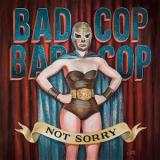
The 2015 debut album from female punk super-group back in print on new burgundy colour vinyl! NOT SORRY is the first full-length album from all female super-group BAD COP BAD COP. Aptly titled, NOT SORRY brazenly blasts out some of the most vibrant pop-punk around today. Laden with catchy hooks, three-part harmonies that'd make The Beach Boys jealous, and tons of attitude, all 13 tracks showcase BAD COP BAD COP's uncanny ability to blend aggressive instrumentation with polished vocals. A quick glance at the band's collective resume (Compton SF, The Radio Sweetheart, The D'Maggs, The City, Angry Amputees, and Cunt Sparrer) will disabuse any doubters of the notion that BCBC can't hand with the boys. From front to back, NOT SORRY brings the rock. Tracks like "Old Dogs", "Nightmare", & "Support", display the bands' hard playing style and strong sense of melody. One listen to NOT SORRY and you'll know why BAD COP BAD COP have generated so much buzz! "This badass bunch of melodic punk rock ladies have been releasing infectious 7" records for a couple years that just play too damn quickly... The album dashes by like a vacation_over sooner than you'd like." _New Noise Magazine "California's Bad Cop Bad Cop lay down the law with an incredible authority: the tunes are concise and compact melodic punk blazers, filled with equal amounts of bite and sugar-sweet harmony." _Alternative Press "These songs are full of three-part harmonies that can make Bad Religion's Greg Graffin and Brett Gurewitz retroactively jealous, and they're catchy enough that they could easily fit onto any of the early Fat Music comps." _Dying Scene Produced by Fat Mike (NOFX) & Davey Warsop (Suedehead) For Fans of: NOFX, Dance Hall Crashers, Masked Intruder Ongoing social media push via artist and label channels Social Media and Digital marketing campaign See Bad Cop Bad Cop on tour in Europe
Vacation. A backpack trip through Australia, a campfire in the Schrebergarten. Cruising in the car with friends through the Lüneburger Heide or just a short holiday in the mind, during a rainy lunch break or with a glass of Sprizz on the balcony. And this all includes music, music, music! Grooves which roll like an intercity train into the horizon, Rhodes chords as soft as sand on the beach and synthesizers that sparkle like the reflections on the ocean. Music as colourful as a Hawaiian shirt and as warm as the morning sun.
Welcome to Erobique’s second album “Erobique No. 2”. Here even the song titles are in a holiday mood: “Ahoj!” greets the young “Springinsfeld”. The “Mantas” glide elegantly around the “Acquamarina”. “Salut Les Copines!” we shout to the yacht next to us. “Come on the ‘Ravedave!’” they echo cheerfully. “Riding Low” is the motto while the “Arpeggiator” beautifully condenses the “Synaesthesia” of our dazed senses. The “Italotape” in the cassette deck plays the “Hitsong Von uns Beiden”. It’s all so beautiful “Verkackt”, it sounds like “Zukunftsmusik”!
Carsten Meyer released his debut album “Erosound” in 1998 under the name “Erobique”. Exactly 25 years later, the now 50-year-old releases his second Erobique album on his own label A-sexy. Thirteen diverse tracks ranging from holiday disco to rhythm box rave, recorded and produced with many of his friends and companions. Twenty-five years, that's pretty much the time it took disco to evolve from the legendary loft parties of pioneer David Mancuso to the impressive mass spectacles of Daft Punk's performances, or from Meyer's birth to his first full-length record. So why only now a second album as “Erobique”?
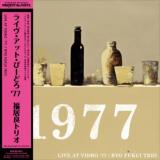
Who could have imagined that Ryo Fukui had left behind a recording like this? Captured on June 8, 1977, this previously unreleased live session was recorded at the Sapporo jazz club Vidro by Masataka Ito, the producer behind Fukui’s albums Scenery and Mellow Dream. It is unmistakably the Ryo Fukui Trio of that era, yet the performance possesses an overwhelming intensity and freshness that far surpass any studio recording—excitement in its purest form.
The 16-minute, searing performance of “Mellow Dream” is just the beginning. The propulsive energy of “Speak Low”, the beautifully woven lyricism of “Body & Soul,” the blistering drive of “Love For Sale”, the weighty depth of “Mr. P.C.”, and the crystalline fragility of “My Foolish Heart”—each track is delivered with feverish brilliance. It was this very live recording, excerpts of which were evaluated at the Trio Records headquarters at the time, that ultimately led to the production of Fukui’s second album Mellow Dream. In every sense, this is an extraordinarily precious document.
Capturing the full scope of the Straw Hat Crew’s journey into the Grand Line, this collection brings together the massive, high energy score by award winning composers Sonya Belousova and Giona Ostinelli. From the shores of Loguetown to the snowy peaks of Drum Island, every moment of the voyage is brought to life through soaring orchestral arrangements and unforgettable pirate anthems.
2LP Audiophile Black Vinyl: Two 12 inch records pressed on high quality black vinyl for a classic look and superior sound fidelity, delivering every orchestral swell with crystal clear precision.
Double CD Set: Two discs featuring the complete original score and songs, presented in a premium compact format.
Premium Packaging: A double gatefold jacket for the vinyl edition and a three fold digipack for the CD, both showcasing vibrant cinematic artwork of Luffy and the Straw Hat Crew.
Complete Soundtrack: Over 40 tracks spanning the entire second season, including character themes, emotional moments and epic battle motifs.
Whether at home or on your own journey, this release is the perfect way to keep the spirit of adventure alive, immersing you fully in the world of One Piece.
Netflix’s epic high seas pirate adventure, ONE PIECE, returns for Season 2, unleashing fiercer adversaries and the most perilous quests yet. Luffy and the Straw Hats set sail for the extraordinary Grand Line, a legendary stretch of sea where danger and wonder await at every turn. As they journey through this unpredictable realm in search of the world’s greatest treasure, they will encounter bizarre islands and a host of formidable new enemies
ALUNAH says: "Embers of Belief" features the first Alunah recordings with vocalist Daisy Savage and continues our long-standing relationship with Heavy Psych Sounds Records. We are both excited and proud to present our contribution to this split release - two brand new studio tracks that give a glimpse into where this new chemistry as a band is taking us creatively, alongside two live recordings which document and acknowledge the incredible job Daisy did in stepping up to tour and promote our previous full-length. This significant release is part of our "VINGT" celebrations, marking 20 years of Alunah with both new music and festival appearances, including Bloodstock Open Air and Desertfest London. To everyone who's stood by Birmingham, heavy rock, and doom through the years_this one's for you! SAMAVAYO says: Creativity _ it burns deep inside, demanding to be heard and when it wants out, ist has to get out. So here we are! Longing, recklessness and hope_three themes that couldn't be more human or more relevant right now. Samavayo present three exceptional tracks on their split release with Alunah: BAVAR is a crushing heavy piece built on the Fibonacci sequence, featuring Persian lyrics inspired by a poem from Siavash Kasraie. It stands as a defiant cry against grief and mortality_the narrator refuses to accept the death of loved ones, clinging instead to love, shared tears, and the breath of life as proof that loss can neither truly be believed nor surrendered to. Mottainai, the 2nd song takes aim at a reckless, consumption-driven mindset_the relentless pursuit of instant gratification and shortcuts. The song warns that this culture of excess and selfishness will ultimately leave a devastating legacy for future generations. California Sky is a psychedelic, acoustic ode to Samavayo's 2025 US tour, captures a paradoxical longing for the American desert landscape. It evokes a sense of spiritual belonging in the vast emptiness of Joshua Tree, while reflecting a deep yet helpless emotional connection to the United States and all its contradictions.
Transparent orange vinyl, limited to 300 copies. ALUNAH says: "Embers of Belief" features the first Alunah recordings with vocalist Daisy Savage and continues our long-standing relationship with Heavy Psych Sounds Records. We are both excited and proud to present our contribution to this split release - two brand new studio tracks that give a glimpse into where this new chemistry as a band is taking us creatively, alongside two live recordings which document and acknowledge the incredible job Daisy did in stepping up to tour and promote our previous full-length. This significant release is part of our "VINGT" celebrations, marking 20 years of Alunah with both new music and festival appearances, including Bloodstock Open Air and Desertfest London. To everyone who's stood by Birmingham, heavy rock, and doom through the years_this one's for you! SAMAVAYO says: Creativity _ it burns deep inside, demanding to be heard and when it wants out, ist has to get out. So here we are! Longing, recklessness and hope_three themes that couldn't be more human or more relevant right now. Samavayo present three exceptional tracks on their split release with Alunah: BAVAR is a crushing heavy piece built on the Fibonacci sequence, featuring Persian lyrics inspired by a poem from Siavash Kasraie. It stands as a defiant cry against grief and mortality_the narrator refuses to accept the death of loved ones, clinging instead to love, shared tears, and the breath of life as proof that loss can neither truly be believed nor surrendered to. Mottainai, the 2nd song takes aim at a reckless, consumption-driven mindset_the relentless pursuit of instant gratification and shortcuts. The song warns that this culture of excess and selfishness will ultimately leave a devastating legacy for future generations. California Sky is a psychedelic, acoustic ode to Samavayo's 2025 US tour, captures a paradoxical longing for the American desert landscape. It evokes a sense of spiritual belonging in the vast emptiness of Joshua Tree, while reflecting a deep yet helpless emotional connection to the United States and all its contradictions.
Random Color ReVINYL Edition. Never has a Songs: Ohia album's process been so integral to its overall feel as is the case with DIDN'T IT RAIN, the band's sixth proper full-length. The album, like the working class South Philadelphia neighborhood in which it was birthed, has a real used goods kinda feel to it. Engineer Edan Cohen employed what some may consider "old-fashioned" recording techniques -- the entire album was recorded live with no overdubs, the full band playing in one room with the players always within arms' reach of one another; singers Jason Molina, Jennie Benford and Jim Krewson (the latter two of Jim & Jennie And The Pinetops) sharing microphones singing live together, sometimes sitting in chairs, sometimes standing. The result is a sound which resembles the warmth and personality of the classic Muscle Shoals Sound recordings of the early- to mid-70s: Willie Nelson's PHASES & STAGES, the Rolling Stones' "Wild Horses", and others by Aretha Franklin, Boz Scaggs, Bob Seger, Lynyrd Skynyrd and Wilson Pickett.Inspired by the Mahalia Jackson song of the same name, the title track is a beautiful song about the shifting tides of life and the old cycle of "a lot of shit going down before shit clears up". It's a damn fine place to start an album that seems in no hurry whatsoever to make a universal statement, instead perfectly content to walk its own path toward resolution. And damn if Songs: Ohia principal songwriter Jason Molina hasn't gone and created a record that is even more intensely personal and healing than any of his previous works. Neil Young had his AFTER THE GOLDRUSH, this is Molina's DIDN'T IT RAIN. Indeed, this is the album with which Molina really leaves his mark as a serious songwriter and artist. On 1999's genre-bending Ghost Tropic full-length, Songs: Ohia made it clear that it could make a cohesive album that took its listener on a journey from front to back. Its dislocated feel set a haunting tone, and its largely instrumental and drone-like quality was the process of the Ohia eluding itself and its own tendencies, searching for the underside of its roots freshly yanked. With DIDN'T IT RAIN, Molina & Co. return to the beauty of the song form and offer up a startlingly soulful and introspective song cycle in which Molina -- accepting a comfortable degree of anonymity amongst the other players -- meditates on what it means to feel rooted again (in the city of Chicago, where he's called home for the past three years), sounding more sturdy at his core than ever.
Assault & Battery is the second studio album by Australian hard rock band Rose Tattoo and was released in 1981. Like the first album it was produced by the Vanda & Young team, who are most known for producing AC/DC's classic 70s albums).
Rose Tattoo (or The Tatts, as they;'re affectionately called) play peerless, street-level heavy blues with the emphasis on slide guitar and strident lyric statements.
After years of touring in Australia, Europe and America opening up for acts like ZZ Top and Aerosmith, the band started writing/recording their second studio album, Assault & Battery.
It includes fan favorites:"Out Of This Place" & "Rock n Roll Is King" & "Suicide City"
The album is noted for its "hard as nails," no-prisoners approach, described as a mix of AC/DC's power-chord style with a faster, punk-infused intensity.
Assault & Battery is available as a limited numbered edition of 1000 copies on black/white swirl vinyl.
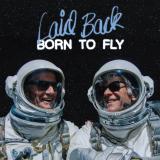
Laid Back in Top Form: New Music Flowing After 47 Years
After 47 years together, the iconic Danish duo Laid Back continue to defy expectations, entering a new and remarkably productive creative phase.
Their upcoming album, Born to Fly, captures their unmistakable sound while showcasing a renewed sense of energy and inspiration
“We feel like we are meant to make music. And when we play music, it feels like we’re flying,” says John Guldberg, reflecting on the album’s title and spirit.
Long known for their unhurried approach to releasing music, Laid Back now find themselves in unfamiliar territory. Guldberg describes a surge in creativity that has
turned their process on its head.
“It’s kind of funny — Laid Back has always taken its time making records. We’ve been behind schedule for most of our career. Now it’s the opposite:
I’m actually starting to worry about whether I’ll have time to release everything I’ve got in me,” he says.
Their current workflow reflects this momentum. Guldberg develops initial ideas,which he shares with Tim Stahl, who then brings them to life with vocals and instrumentation.
“When he sends me something and I start singing and playing on it, that’s when it really becomes Laid Back,” says Stahl.
The duo’s creative output has accelerated to such an extent that even ahead of the release of Born to Fly, they already have enough material prepared for more than a double album for their next project.
“It’s about making the most of the time you have left. I used to feel there was plenty of time and no need to rush. Now time feels much more valuable,” Guldberg adds
.
Alongside their creative resurgence, Laid Back are also seeing a shift in their audience demographics. Streaming data and live performances indicate a growing younger fanbase — a development that has taken the duo by surprise.
“I’m really looking forward to getting back out on stage. We still have the urge to perform, and we love making people happy. That’s what our music is for,” says Stahl.
Born to Fly is set for release across CD, vinyl, and digital formats. Laid Back will also perform in selected cities across Europe later this year 2026.
“We hope people can hear that we’ve grown — and that it still makes sense for us to make new music,” says Guldberg.
out of Stock
Last delivered 46 days ago available to reorder, subject to availability
5th anniversary limited‑edition vinyl, featuring standout tracks like “Woman,” “Need to Know,” and “Kiss Me More” ft SZA. Pressed on a translucent pale blue vinyl.
A collaborative classic from the Italian Avant-Jazz pioneers Zu and Chicago's Jazz mavericks Spaceways Inc Originally released in 2004, RADIALE is back, bringing together explosive energy, avant-jazz improvisation, and experimental rock in a landmark collaboration. Radiale (2004) by Zu is the band's second studio album and stands as one of the most defining releases in the European avant-garde scene of the early 2000s. With this record, Zu moved decisively away from the slightly more exploratory feel of their debut Bromio and developed a tighter, more aggressive sonic identity. The trio-- built around baritone sax, electric bass, and drums-- strips away almost all conventional melody, focusing instead on repetition, tension, and raw physical impact. Listening to Radiale feels less like following a sequence of songs and more like being drawn into a continuous sonic current. The music is driven by hypnotic, circular rhythms and abrupt dynamic shifts, moving from sparse, almost suspended moments to sudden, explosive bursts. The baritone sax often functions more as a percussive force than a melodic instrument, while the bass locks into distorted, looping figures and the drums maintain a relentless, tightly controlled intensity.
A collaborative classic from the Italian Avant-Jazz pioneers Zu and Chicago's Jazz mavericks Spaceways Inc Originally released in 2004, RADIALE is back, bringing together explosive energy, avant-jazz improvisation, and experimental rock in a landmark collaboration. Radiale (2004) by Zu is the band's second studio album and stands as one of the most defining releases in the European avant-garde scene of the early 2000s. With this record, Zu moved decisively away from the slightly more exploratory feel of their debut Bromio and developed a tighter, more aggressive sonic identity. The trio-- built around baritone sax, electric bass, and drums-- strips away almost all conventional melody, focusing instead on repetition, tension, and raw physical impact. Listening to Radiale feels less like following a sequence of songs and more like being drawn into a continuous sonic current. The music is driven by hypnotic, circular rhythms and abrupt dynamic shifts, moving from sparse, almost suspended moments to sudden, explosive bursts. The baritone sax often functions more as a percussive force than a melodic instrument, while the bass locks into distorted, looping figures and the drums maintain a relentless, tightly controlled intensity.
WRWTFWW Records unleashes the first ever release of legendary post-disco, funk, soul and electronic UK trio Imagination's cult album Night Dubbing in (well deserved) double LP format. The limited edition full-length comes with pristine audiophile treatment and luxurious packaging : a 45rpm and Half Speed Mastered DLP housed in heavyweight silver cardboard sleeve.
Imagination's singular 1983 album Night Dubbing is a refined deconstruction of black British soul and club pop, filtered through the deep studio and mixing techniques of dub music. Elegant, restrained, and, in its very own subtle way, radical, the record reshapes choice selections from the group's stellar catalogue into an immersive and out-of-this-world listening experience.
The special mixes on Night Dubbing are built on time and space. Basslines elongate and dissolve. Vocals appear, vanish, and reappear like ghosts. Drums fall away into vast silences, while echoes, tape edits, and precise engineering manoeuvres smoothly slide across the stereo field, revealing themselves like magic over repeated listens. Far from simple extensions or 12" versions, Night Dubbing treats the studio itself as an instrument, opening new dimensions of sound.
Often cited as a foundational record in the genesis of the house genre, the album also features the historic Larry Levan remix of "Changes", a Paradise Garage anthem that helped shape the direction of club music for decades to come.
More than 40 years on, Night Dubbing remains a seminal work. Its influence continues to echo through contemporary dance music, offering a blueprint for how pop could be transformed into something darker, stranger, more physical - a timeless sound that drifts effortlessly from the dancefloor into space.
Important note : it sounds amazing played on 33rpm too !
out of Stock
Last delivered 3 months ago available to reorder, subject to availability
Faellesskab reveals their most critical and emotionally charged work to date, a deeply personal voyage into the heart of Nordic black metal, where raw emotion and melodic depth keep reveling in sorrow and longing beauty. Translating to "Community", Faellesskab's six tracks weave a strong musical oeuvre within the Afsky canon; their walls of haunting melancholia, interwoven with vital intensity, have never been more powerful. Yet, this new work also sees the band at its sharpest in social criticism, as Ole Luk of Afsky notes: Faellesskab - Overture to the Downfall. Here, community is praised like herd animals fleeing responsibility.
A parade of moral superiority, where truth is trampled in the name of consensus. Where unity means silence, and doubt is a crime. Six songs of shame disguised as care, of freedom suffocated, and of the solitary few who still dare to question. A chorus of hollow words, where silence screams the loudest. Welcome to the celebration - the curtain hasn't just risen, it's been torn away! Afsky will mark the release with a special show in Copenhagen on October 17, graced by a full European album release tour kicking off the following week. Two singles are set to be unveiled in the lead-up to the release. While Afsky continues to refine their signature sound, this release is set to be another landmark in the band's uncompromising discography.
Discotchari unveils a full deadstock run of this rare 7 inch from 1970, found in original factory boxes and reissued as the first release of the label. It features previously unheard material from oud virtuoso John Bilezikjian and percussionist Raja Zahr, a Burbank via Beirut collaboration. The record will be available on vinyl and digital platforms from November 3rd, 2023.
Recorded under the name Something Different, the duo produced a single 45 RPM that was shelved as their solo careers took off. At just 21, Bilezikjian handles oud, bass and harpsichord, while Zahr delivers rich and inventive percussion.
Side A, Zulu Man, blends late 60s psychedelia with a more experimental edge, closer to underground acts than mainstream rock of the era. Carried by evocative vocals and expressive oud lines, the track unfolds like an epic narrative.
Side B, Chemical Reaction, is harder to define, moving between cinematic moods and rhythmic tension. The track evokes shifting landscapes and contrasting atmospheres, making it as intriguing as it is unpredictable on a dancefloor.
Random ReVINYL Edition. Black Mountain, the front-line soldiers for the Black Mountain Army, an arts collective from Vancouver, British Columbia, write, perform and record music that speaks (and sings) to this realization: that solutions are rarely simple, that the world is as complex as it is ambiguous, and that music sprinkled with an inoculating dose of madness may well be the Pied Piper that takes us all back into the primordial mountain, where our hearts can be made steady and our minds can be set free. Their debut self-titled record, like a space probe built of erector set parts and transmitting secret and arcane messages to earth by string, charts territories unknown yet remains grounded by the roots of classic rock and roll. It is easy to discern these roots: Black Sabbath, Animals-era Pink Floyd, Blue Cheer, Led Zeppelin and Can. Principal songwriter Stephen McBean's vocals are a smoother, bluesier amalgam of the voices of Neil Young, Mick Jagger and perhaps a James Brown loaded on cough syrup. And when Amber Webber's voice joins Stephen's, the combination brings to mind the potency and chemistry of Richard and Linda Thompson singing together on Shoot Out The Lights, or of Meat Loaf and Ellen Foley howling together on Bat Out Of Hell. Musical comparisons aside, the Black Mountain full-length is one part protest song, one part pop-cultural commentary, and one part sick-groove-rock casserole peppered with mesmerizing ballads and intoxicating ditties. "Modern Music" is the lead-off hitter and counts its way to the imposing and riff-rife "Don't Run Our Hearts Around". Immediately thereafter, the sludge-rock masterpiece "Druganaut" establishes the fecund heart and tone of the record. Black Mountain have also just recently released a 12-inch single (on Jagjaguwar), including an extended mix of "Druganaut" on the A-side. And the band's currently sexploitative counterpart The Pink Mountaintops, a band that also pipes into the prolific well-spring of Stephen McBean's mind, released their self-titled debut record (on Jagjaguwar as well) this past summer. A video by Heather Trawick of the song "Druganaut" is included on the CD version of the Black Mountain self-titled record.
RocAmeriKKKa 3 marks the third and most refined chapter in the ongoing alliance between Flee Lord and ETO—two architects of modern East Coast street rap whose chemistry is rooted in precision, pain, and unfiltered realism.
Building on the foundation laid by the previous installments, RocAmeriKKKa 3 sharpens the series’ core aesthetic: cinematic production, stark lyricism, and an uncompromising portrayal of survival and ambition. Flee Lord’s militant cadence and razor-edged delivery collide seamlessly with ETO’s calculated, introspective bars, creating a dynamic that feels both confrontational and methodical. The result is a body of work that operates like a street manifesto—cold, deliberate, and unapologetic.
The album is elevated by a heavyweight supporting cast. Conway The Machine brings his signature steel-plated intensity, reinforcing the project’s Griselda-adjacent grit. NEMS injects raw, high-energy aggression, while Vel Nine adds sharp lyricism and perspective that cut clean through the production. Starz Coleman and Mummz contribute distinct textures, expanding the sonic palette without compromising the project’s hard-edged identity.
Sonically, RocAmeriKKKa 3 leans into brooding loops, stripped-down drums, and ominous sample work—production that leaves space for bars to breathe while maintaining a sense of tension throughout. There are no gimmicks here—just calculated storytelling, street philosophy, and the kind of lived-in authenticity that defines both artists’ catalogs.
As the third installment, this project doesn’t merely continue the series—it solidifies it. RocAmeriKKKa 3 stands as a testament to consistency, evolution, and the discipline of two emcees who understand that longevity in this lane is built on substance, not spectacle.
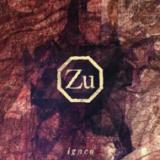
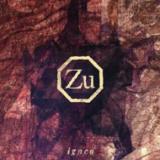
Recorded and mixed by Steve Albini at Electrical Audio in Chicago, the album captures Zu at their most raw and explosive -- where avant-jazz energy collides with the weight of experimental rock. Igneo (2002) by Zu is the band's debut studio album and marks the starting point of their distinctive sonic identity. Even at this early stage, many of the elements that would define their later work are already clearly present. The album emerges from a context deeply rooted in experimentation and exploration. Compared to their subsequent releases, the sound here feels more open and less tightly structured, with a stronger emphasis on improvisation and real- time interaction between the musicians. The trio--baritone sax, electric bass, and drums--develops a language that blends free jazz, noise, post- hardcore, and touches of contemporary composition.
Listening to Igneo, you can sense a balance between raw energy and expressive freedom. The baritone sax shifts between abrasive bursts and more spacious, stretched- out passages, while the bass moves from repetitive grooves into fragmented lines. The drums, in turn, alternate between tight rhythmic frameworks and looser, more fluid playing. There's a constant negotiation between control and release. Unlike the band's later, more disciplined records, the structures here feel more fluid and unpredictable. The tracks don't follow conventional forms; instead, they evolve like living organisms, marked by sudden changes, contrasting sections, and a persistent sense of instability. This gives the album a dynamic, almost volatile character. The title Igneo-- suggesting something fiery and primal-- captures the essence of the record quite well. The music feels warm, raw, and in continuous motion, as if it were constantly on the verge of erupting.
Recorded and mixed by Steve Albini at Electrical Audio in Chicago, the album captures Zu at their most raw and explosive -- where avant-jazz energy collides with the weight of experimental rock. Igneo (2002) by Zu is the band's debut studio album and marks the starting point of their distinctive sonic identity. Even at this early stage, many of the elements that would define their later work are already clearly present. The album emerges from a context deeply rooted in experimentation and exploration. Compared to their subsequent releases, the sound here feels more open and less tightly structured, with a stronger emphasis on improvisation and real- time interaction between the musicians. The trio--baritone sax, electric bass, and drums--develops a language that blends free jazz, noise, post- hardcore, and touches of contemporary composition.
Listening to Igneo, you can sense a balance between raw energy and expressive freedom. The baritone sax shifts between abrasive bursts and more spacious, stretched- out passages, while the bass moves from repetitive grooves into fragmented lines. The drums, in turn, alternate between tight rhythmic frameworks and looser, more fluid playing. There's a constant negotiation between control and release. Unlike the band's later, more disciplined records, the structures here feel more fluid and unpredictable. The tracks don't follow conventional forms; instead, they evolve like living organisms, marked by sudden changes, contrasting sections, and a persistent sense of instability. This gives the album a dynamic, almost volatile character. The title Igneo-- suggesting something fiery and primal-- captures the essence of the record quite well. The music feels warm, raw, and in continuous motion, as if it were constantly on the verge of erupting.
Chuck Berry (1926–2017) was one of rock ’n’ roll’s true architects, celebrated for his sharp songwriting, distinctive guitar riffs, and electrifying stage presence. With classics like “Johnny B. Goode,” “Roll Over Beethoven,” and “Maybellene,” he helped define the sound and attitude of 1950s rock. Blending rhythm & blues with country influences, he created a style that was energetic, rebellious, and unmistakably his own. His storytelling lyrics and groundbreaking guitar work laid the foundation for generations of rock artists, making this compilation a powerful tribute to one of music’s most influential pioneers.












![THE TALLEST MAN ON EARTH - SOMETIMES THE BLUES IS (...) [REVINYL]](https://www.deejay.de/images/l/0/7/1243807.jpg)