As Brice shares, "Anybody can see a sunset, but a sunrise, you gotta earn. Whether you're waking up or just pulled an all-nighter, I tip my hat to you, sunriser." Brice's sixth studio album delivers hopeful and resilient reflections on love, faith, and heartbreak for all sunrisers - from firefighters, nurses, and truck drivers, to blue- collar workers clocking out of graveyard shifts, to tired parents waking up to take care of little ones. Through the lens of what defines who he is -- God, country, and family -- the awardwinning Country star encourages listeners to keep rising.
The original intention of the Builders and the Butchers was to make funeral music, but on the way to the cemetery something changed. An album, like any piece of art, is an artifact of a time. In a world where the process of listening to and obtaining music has never been cheaper or easier, vinyl is a last hold out. You can tell when you\'re holding the weight of wax in your hand, that you\'re connected to what you are doing. The first Builders and Butchers record is also an artifact of a time. Recorded in the living room of a house on SE Division St. in Portland, Oregon in 2007. It was recorded with no expectation, just wanting to document the songs folks had been gathering to sing along to since our first shows in the fall of 2005. The songs having been played only on the street up to that time. At those shows anyone who showed up was handed an instrument and quickly made part of the band. During the recording we attempted to bring that organic singalong rowdiness of the live show into the recording. We brought in about 20 close friends for a Sunday morning booze soaked choir session. We made sure that every instrument of the recording was made of wood and powered by a musician, there are no electric instruments and hardly any effects on this record.
Often hailed as 'one of the defining glam rock albums', Mott the Hoople's All the Young Dudes was an influential record upon its release in 1972, and continues to impress listeners to this day.
Produced by David Bowie, the album contains a balanced selection of well-written songs by Ian Hunter and his bandmates. With Bowie on board to add his distinctive style to the songs, the band is on a roll, making this an essential record for '70s rock fans all over the globe.
All the Young Dudes is a limited edition of 1500 individually numbered copies on yellow vinyl.
GoldFord’s soul music is rooted in truth. His raw, unvarnished songs are a balance of introspection and catharsis, grappling with heartbreak, healing, and the quiet revelations that come with growth. After spending a decade in corporate America, the St. Louis native (now based in Los Angeles) turned to music as a means of survival following a devastating personal loss. “I was more afraid of dying with regret than I was of failing,” he says of his decision to finally choose the path at 30, a choice that set his entire trajectory in motion.
That initial fearlessness has since fuelled extraordinary momentum. With over 4 million monthly listeners on Spotify, GoldFord has rapidly become one of the most compelling emerging voices in contemporary music. His breakout EP, Orange Blossoms (Oct 2024), has surpassed 100M streams, and his latest project, Space of the Heart (Sept 2025), has already generated 90.8M streams, 2.7M saves, and over 153,000 pieces of user-generated content across TikTok and Instagram. The standout track “Easy Does It” has reached 43.5M streams and continues to accelerate with more than 250K new weekly discoveries on Spotify.
GoldFord’s touring trajectory has followed the music's rapid ascent. He began in intimate rooms like Los Angeles’ Moroccan Lounge and New York’s Baby’s All Right before embarking on a debut North American tour that sold over 25,000 tickets. This momentum carried over to his first UK and European run, which required multiple venue upgrades in cities like London and Manchester. The international momentum continued with an Australian debut in March 2026, alongside key festival appearances at Austin City Limits and Noah Kahan’s Out of the Blue. He is currently headlining 1,000+ capacity venues on the Space of the Heart North American tour, including sold out shows in historic rooms like The Fonda and Webster Hall, with upcoming festival slots at Shaky Knees and Oceans Calling.
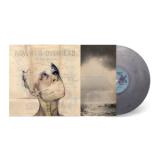
Hailing from Athens, Georgia, Now It’s Overhead is the acclaimed indie rock band fronted by Andy LeMaster. Emerging in the early 2000s alongside the era-defining Saddle Creek scene, LeMaster collaborated with artists including Conor Oberst (Bright Eyes), Michael Stipe (R.E.M.), Orenda Fink (Azure Ray), and Maria Taylor (Azure Ray).
During this period, Now It’s Overhead released three acclaimed full-length albums: Now It’s Overhead (2001), Fall Back Open (2004), and Dark Light Daybreak (2006). Available on vinyl for the first time, these long-awaited editions are essential for listeners and collectors exploring the indie rock landscape of the early 2000s. All three albums have been newly remastered by Andy LeMaster—musician, songwriter, engineer, producer, and visual artist.
The Associated Press described Now It’s Overhead as “a unique brand of organic and synthetic dark pop—made possible by LeMaster’s studio prowess—that remains distinctive even when Conor Oberst and Michael Stipe briefly stop by.”
Accompanying these reissues, Now It’s Overhead is also releasing new music for the first time in nearly twenty years. The five-song EP, in the beginning, arrives digitally on September 18, 2026.
Led by Samantha Martin's unmistakable powerhouse voice, Samantha Martin & Delta Sugar deliver an explosive blend of soul, blues, gospel and rock 'n' roll Backed by an 11-piece band featuring a three-piece horn section and soaring vocal harmonies, Martin commands the stage with equal parts grit, grace and emotional force. Two-time JUNO Award nominees and internationally recognized as one of Canada's most compelling live acts, the band has built its reputation through electrifying performances and a catalogue that carries the classic soul DNA of Mavis Staples, Sharon Jones and Otis Redding, delivered with the urgency, volume and energy of a modern rock 'n' roll revue. Released in May 2026, A Beautiful Buzz captures Samantha Martin & Delta Sugar at full flight during the Love Is All Around tour. The album generated immediate international attention, topping the Euro Americana, Big Blues and UK Independent Blues Broadcasters Association and Roots Music Report charts. Rolling Stone France Editor in Chief selected A Beautiful Buzz as one of its "10 Albums to Listen to, "With blazing horns, gospel- charged harmonies and Martin's commanding voice at the centre, A Beautiful Buzz recalls the joyful abandon of Joe Cocker's Mad Dogs & Englishmen while remaining unmistakably their own. Blue Matters described it as "the front row experience, bottled with warmth, fire and unmistakable soul," while Blues in Britain placed Martin "up there with the best of contemporary female vocalists." Building on the album's international momentum, Samantha Martin & Delta Sugar will bring their show to Europe and the UK in May 2027, followed by a second run in November.
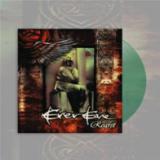
Their music was never confined by genre limitations. It drew equally from Doom Metal's oppressive weight, Gothic Rock's romantic desolation, and the emotional grandeur of Dark Wave, creating a soundscape that was uniquely their own. "Seasons " marked the beginning of this remarkable journey. A debut album rich in atmosphere and emotional depth, it introduced a band already possessing a mature artistic identity. Its songs unfold like chapters from a forgotten gothic novel, where every melody is wrapped in shadows and every lyric resonates with profound emotional sincerity. EverEve expanded their vision with "Stormbirds", an album that many regard as one of the defining moments of European Gothic Metal. Majestic, dramatic, and emotionally overwhelming, it elevated the band's songwriting to extraordinary heights. The interplay between crushing guitars, haunting keyboards, and deeply evocative vocal arrangements created a listening experience that remains as captivating today as it was upon its release.
Their music was never confined by genre limitations. It drew equally from Doom Metal's oppressive weight, Gothic Rock's romantic desolation, and the emotional grandeur of Dark Wave, creating a soundscape that was uniquely their own. "Seasons " marked the beginning of this remarkable journey. A debut album rich in atmosphere and emotional depth, it introduced a band already possessing a mature artistic identity. Its songs unfold like chapters from a forgotten gothic novel, where every melody is wrapped in shadows and every lyric resonates with profound emotional sincerity. EverEve expanded their vision with "Stormbirds", an album that many regard as one of the defining moments of European Gothic Metal. Majestic, dramatic, and emotionally overwhelming, it elevated the band's songwriting to extraordinary heights. The interplay between crushing guitars, haunting keyboards, and deeply evocative vocal arrangements created a listening experience that remains as captivating today as it was upon its release.
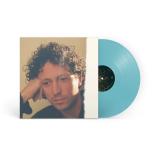
Eine Zündflamme ist eine kleine Flamme – eine Zündquelle für einen Gasbrenner, die traditionell ständig brennt. Für den Singer-Songwriter Liam Kazar dient sie als treffende Metapher für die Liebe, selbst wenn die Beziehung längst vorbei ist. Aus diesem Schimmer entsteht auch Liams lang erwartetes zweites Album, das nachdenkliche und elegant arrangierte „Pilot Light“. Produziert von Sam Evian. Mit Beiträgen von Sam Evian, Hannah Cohen, James Elkington, Spencer Tweedy und anderen.
The story of each re-release begins with the original. In the late 90s, Uwe Zahn (Arovane), along with Robert Henke (Monolake) and Stefan Betke (Pole), began releasing music on Torsten Pröfrock’s (Dynamo) newly launched DIN label. This was a very inconspicuous undertaking, but fans of the flourishing IDM, glitch, and constantly evolving abstract techno genres quickly picked up on the quality of sound coming out of Germany. After a few successful EPs, Zahn began working on his debut full-length, Atol Scrap. The release was a success, at least in the underground circles, where followers of the melodic harmonies, stuttering off-beat rhythms, and, most importantly, advanced sound design feverishly consumed the imprint’s output. There was only one thing missing – the album was never pressed on vinyl, and for decades remained in the digital domain. The fans, of course, inquired. There were multiple offers on the table, but Zahn retained control until he was assured that it was properly attained. “I thought of taking everything into my own hands and releasing the record myself,” says Zahn, “but at the end of last year, Matthias from Keplar asked me to re-release Atol Scrap on vinyl.” The label and its owner revolve in the Morr Music universe, and so it made sense for Zahn to trust the platform to treat the record right.
Listening to Atol Scrap over twenty years later it is inane not to admit how well it has held up. Where other genres clearly aged, becoming stale, bland, and dull, the music on eleven tasty tracks still keeps the neurons tickled with each note. More than an echo of the past, the bottled sound truly has matured. Many of the newly evolving techniques are recognizable on the album. “I created the digital artifacts with a digital multi-track recorder, the Fostex D80,” recalls Zahn. “The thing had a scrub wheel with which I could achieve wonderful glitch effects by winding through the audio data. I have sampled and further processed these artifacts.” And this approach is still embedded in Zahn’s sound design. “I still use my 24-track analog desk from Tascam to mix my audio. I love to use hardware synths and samplers. I’ve definitely built upon my studio experience in the 90s.” From this debut to the most recent output, Arovane’s sound has evolved to become more intricate, detailed, and pronounced. “My music has become much quieter and much slower. But that’s probably also due to the noise in the world.” And just as Atol Scrap reminds Zahn of the past, retaining charm preserved in a container traveling through time, it also jitters memories of long ago, when we were twenty years younger, less experienced, and bold. For me, among the many records of the time, this album held a special place in life, my heart, and many CD boxes moved across the world. And now I’m only happy to restock the vinyl space, where Atol Scrap belongs among the beloved records. Welcome home. - Mike Lazarev
Remastered and cut to vinyl by Kassian Troyer @ D&M. Cover art by Jim Kühnel based on a photograph by Uwe Zahn.
out of Stock
Last delivered 15 days ago available to reorder, subject to availability
Anting brings to vinyl the natural evolution of a project born on Bandcamp: a release built around honest audio and the human connection between the artists involved. It also gives a clear view into Alessio Landini’s musical universe, tied together by one thread: intense rhythms, hypnotic spaces, and raw analog textures, with a subtle nod to organic and traditional tones, all built for the sound system.
With contributions from Ketch and Uväll, the release opens up the palette while keeping it tight and coherent: a physical record that hits in the club and holds up for deep listening.
out of Stock
Last delivered 15 days ago available to reorder, subject to availability
Fohn conjures a dreamlike landscape of introspective beauty, loneliness and transience from analogue tape and field recordings on new album, Porcelain.
A late summer evening in southern France. The dry mistral wind billows the washing that hangs outside the windows on narrow streets, bringing with it the first whispers of autumn. In the distance children are playing in the square, their shouts caught in the dust whipped up by their feet. A bell tolls, the light dies, and a rich, compelling solitude descends.
Violinist and multi-instrumentalist Fohn, aka Tom Connolly, describes the act of making music as “building fictional environments that become places of solace,” and a process of translation and projection that bridges his internal and external worlds.
While musicians like John Also Bennett, Oren Ambarchi and Connolly’s own group Quade drift behind his sound, Porcelain draws its temperamental inspiration from films like Call Me My Your Name and Andrei Tarkovsky’s The Mirror, as well as the sculptures of Anthony Gormley, whose solitary figures stand isolated in expanses of water along the UK coastline.
How does Connolly describe the atmosphere he wants the music to evoke? “It's the feeling of the inevitability of something having to pass,” he answers. “It's compelling because it's fundamentally unattainable. You're searching and grasping for something that you can never fully hold.”
A moving, intimate and deeply personal album, Porcelain shimmers in the illusive light of melancholy. For Connolly it provided the release of catharsis, but it’s a feeling that will mean something different to everyone who listens.
out of Stock
Last delivered 15 days ago available to reorder, subject to availability
Ecstatic’s dreamiest cadets bliss out on a new album of acoustic and electric guitar, harmonium and synth tapestries, notably nestling a Romance cameo within a genteel toggle of atmospheric pressure.
Back on (side) road after releasing quietly acclaimed kosmische gem ‘I Had too Much to Dream Last Night’ back in 2021 and the lysergic lushness of ‘Listen to the Sky’ a couple of years later, Celestial suggest a more sublime return to earth with the shine-eyed wonders of ‘I Can Hear the Grass Grow’, an album that soothes to the supine in eight shimmering parts of pearlescent melodic motifs marbling harmonious backdrops intended to tenderly comb nerves straight.
The duo take their role as seductive sandmen with a curious melodic wit that leaves something to the imagination whilst nudging it along the album’s narrative thread. A courtly flamenco lick flickers in opener ‘The Endless Stair’, one of the most restrained recordings we've heard from the childhood friends; blessed with just a little reverb and echo, as if a mic's been lowered into some dimly lit basement while Celestial puzzle out mystifying, interlocking harmonies. It hits a mid-point between John Fahey's raga-inspired Americana and Vini Reilly's rain-soaked Northern blues - the emotion throbs from every note.
Celestial's music is never too polished, giving it the fuzzy, uninhibited flair of a long-lost mail order private press and instilling it with a level of humanity that's rare to discover in the new-new age. Even when mysterious labelmate Romance turns up to ornament 'Mermaid Boulevard' with backmasked electronics, it's their low-slung Ry Cooder-esque guitar/bass that provides the narrative anchor, while the title track and spongiform analog textures of ‘Song For The rainy Season’ dial it right down to a Harmonia-via-BoC pastoral sublime. Vini Reilly and Eno’s influence is most surely felt on the swaying elegance of ‘Sweet Sleep, Angel Mild’, with a central motif that lingers on the mind long after it’s stopped playing, whilst their closing couplet perfectly resolves the cycle with a melancholic kiss-off for the ages.
out of Stock
Last delivered 15 days ago available to reorder, subject to availability
The practice of dub techno and its tendrils is a fundamental for me, both aesthetically and from an engineering perspective.
I start every recording session with a dub inspired jam, the first piece I ever recorded in 1996 was an effort to recreate Phylyps Trak with only a Korg X3 and an Ibanez PUE5 (borrowed from Gary Howell). It was an awesome introduction to jamming, and the footing stones of noise, delay and saturation were explored with my foot hard on the enthusiasm pedal.
These practice jams are in some sense cathartic, the first step taken again & again, which helps me move forwards each session and additionally helps to 'warm the circuits' both of myself and the machines.
After realising the genius of Basic Channel is akin to the genius of peasant food, using every ingredient with nothing left to waste, (up to and including the oft maligned working noise of the machines themselves), this was a watershed moment for my own subjective progression. No longer tied to just emulation of something inspiring, but taking these learned tools into other areas of music helped to break free from a strong current of influence and also to progress into other areas with the new toolbox.
Dub:
The importance of the dub pioneers should never be understated, in modern music and my own practice. Yet with my initial inspiration being two german dudes issuing extreme techno variants with obscured label designs, who then signposted their listeners to their own inspirations (via their Wackies re-issues or nodded to on their Rhythm & Sound/Burial Mix sub-labels), meant that I started late and travelled backwards.
Learning to notice the live mixing of Mikey Dread or Lee Perry when the faders are bleeding through even when turned down, (echoed in BC's Quadrant Dub), or the brash send effects literally thrown into the mix also taught me that 'rough' mixing can inject a recording with life, uniqueness and the most right wrongness. Looking back Basic Channels very few elements helped me realise that the rules to be understood, are also the best ones to be broken.
Push the mixer into the red.
Amp that noise up from the tape delay cos it sounds sick.
Pseudo side-chain effects cos the kicks are way too loud and the mixer can't sum it nicely.
Spam the send knob into the delay units now, now and now.
Carelessness.
Noise:
Once I wrapped my head around the intrinsic 'noise' element that set those records apart, this became a torchlight into the alt noise movements which I was tentatively exploring at the time, and also is evidently a connection or thread into them.
Whether the Industrial/Post Punk UK scene (This Heat, TG, A Tent, F.E.) or the prolific output of the US Noise scene (Wolf Eyes, Live & Shave in LA, and subsequently following the lineage all the way back to Chrome's Alien Soundtracks), I had finally discovered a connection from techno to this 'free for all' corner of music.
This input from the Noise arena of sound is, in my experience, an all important step for a sonic artist, taking it's roots and extending out from Stockhausen/Pierre Henry and utilised/warped/mangled by thousands of adventurous pioneers ever since, I now see the line separating the high brow and the low brow is actually an artery carrying information from the head to the heart.
Vault is a selection of these jams that precede each of my solo recording sessions, for 30 years I've recorded hundreds of these 'workouts'. They are never intended as serious statements, just moments of naive enjoyment, yet most importantly they are time & space captured as practice.
The objective is always a warm up exercise, but sometimes those exercises turn a different corner, with a certain focus or direction dependent on what random samples are left in my machines from the previous session, instead of conscious choices, these unconscious elements can facilitate those 'positive mistakes' that make a piece of sound retain a different feel or colour and thus become special, or at least special to the creator.
I am quite conscious that the 'record everything' aspect of my ethos has been invaluable in cataloguing and saving these jams, while the attitude of carelessness during this process (after all, it's only a warm up jam) invites more enjoyment than seriousness ever could. Even if you don't feel the piece at the time, record it, because some years later it may well fit, or become relevant in a way you never intended.
-Miles
out of Stock
Last delivered 17 days ago available to reorder, subject to availability
Pressure is the medium of wind players. Wind instruments all sound thanks to pressure differentials, whether that’s the rush of wind over a lip plate or a steady, buzzing exhalation through pursed lips. Ka Baird and Chris Ryan Williams (HxH) are wind players well- schooled in the power of using pressure and movement to amplify the mystery of an invisible force animating a metal tube. They augment their instruments, flute and trumpet respectively, with electronics, sometimes obscuring the acoustic sound source, sometimes making it hyperreal. Flutters of lip and tongue slither over the listener’s ear, and sustained tones become a dense fog, pushing on other kinds of visceral, emotional pressure points.
On Enthalpy, Baird and Williams’ first album as a duo, the energy they conjure feels barely contained, the pressure built up to a breaking point before spilling out in multiple directions at various speeds. They borrow the title from thermodynamics, referring to the total energy of a system based on its pressure and volume. The music flies out in bursts; it seeps and oozes, flows with intention. It is an incredibly rhythmic work without any hint of meter, full of sounds that punctuate with the thud of a dart hitting a bullseye. Williams’ capability to conjure swirling atmospherics, as well as his remarkable ability to pull fragments of melody from the haze, fit puzzle-like into Baird’s exclamations and the eruption of electronics that often dovetail them. The duo draws on tones from nearly the entire range of human hearing, from nimble but bulbous throbs of sub-bass to pinprick flickers of ultra-high end.
The sessions that produced Enthalpy were completely improvised, showcasing a degree of mind-meld that belies each participant’s thrill at approaching the unknown. This isn’t a casual conversation, but an omnidirectional tangle that ties and reties itself into new knots as the album progresses. Williams and Baird have both become ubiquitous presences throughout the New York City experimental music communities, collaborating with innumerable others and learning how their unique approaches work in tandem with similarly expansive thinkers and players. Even in the album’s most spacious moments, there’s a tension between the feeling of being unmoored and yet completely locked in, like the abyss is just one more river to cross. They ford it together before moving on to the next idea in lock step.
For the listener, Enthalpy is often felt in the body as much as it reverberates within the ears. We’re tossed from side to side, made to shoulder the impact of detonating electronics, absorbing these sounds with the feet, gut, and crown. Baird reaches into the back of their throat for guttural growls, and we can almost feel the scratch. As we tread the border of the synthesthetic, it's a reminder of the physical nature of sound, that the space between our ears and the speakers is its own enthalpic system of energy conduction. Move with it, let it move you, and see how it feels.
»Pipe Dreams II & III« presents two new, side-long organ works by Mary Jane Leach, extending the sonic investigations of her 1989 landmark »Pipe Dreams«. Recorded in Ghent and Cologne, the two side-long pieces use shifting stops, resonance and beating tones to turn the pipe organ into a vivid, physical field of sound.
When »Pipe Dreams« was issued on vinyl for the first time by Blume in 2017, it was effectively the first time many of us encountered Mary Jane Leach’s music, finally placing her work in its proper historical context amid the searching Downtown milieu of Julius Eastman, Arthur Russell, Arnold Dreyblatt, Ellen Fullman, Philip Corner, Daniel Goode, and Peter Zummo. Leach collaborated with most of these artists at one point or another, either in Downtown Ensemble or as a guest on their records.
Now »Pipe Dreams II« and »Pipe Dreams III« arrive, recorded in 2023 and 2024 at Miry Concertzaal in Ghent, Belgium, and Kunst-Station Sankt Peter in Cologne, respectively.
»When I was a young child, my family lived next door to a church, where my mother was the organist. I spent many hours lying on the floor of the sanctuary listening to the music, letting the sound of the organ envelop me. I also liked to play the piano loudly with the pedal down, producing clouds of sound, much to my family’s annoyance. These two organ pieces explore some of my earliest musical interests and aesthetics.
In 1989, I lived in a tower attached to St Peter’s Church in Cologne, where I had access to its organ. It had two sets of pipes, front and back, which could create antiphonal effects. I spent countless hours exploring the possibilities of all the permutations of notes, space, and the resulting sound phenomena. I wrote »Pipe Dreams« for that organ. Fast forward to 2023, when I was asked to create a piece for organ for a concert at the Miry Concertzaal in Ghent, Belgium: »Pipe Dreams II«. I had a few days to familiarise myself with the organ, its available stops, and the layout of the console. I choreographed stop changes for a volunteer, as I couldn’t reach them myself. Some amazing sounds began to happen, and at one point the sound was so visceral that I felt as though I were taming a wild beast.
»Pipe Dreams III« was performed in 2024 on the organ that I had spent so much time playing in 1989–90. One big difference, though, was that the console was totally new and computerised. Having access to the organ for only a few hours before the concert, I decided that I did not have enough time to feel comfortable with the console and should not attempt to recreate the piece I had written in 1989. I would instead use the same sequence of stops and perform an improvised piece. I loved the sounds that were being created, and I was having so much fun that at one point I even started to laugh quietly. I began to visualise the beating notes as if they were atoms, opening them up to expose their innards, with the beating, higher-pitched notes — neutrons and protons — shimmering at the top, and the lower notes — the electrons — throbbing away at the bottom. I was playing notes not so much for their pitch value, but for how they affected the notes and sound phenomena already being played. Instead of a time signature, I timed the entries by listening to the beating patterns, waiting for the right moment to enter. And no, I wasn’t hallucinating.«
The Montréal psych-ambient synth-droners return with Sequence Three, their first album in five years and the final instalment in the group's opening trilogy of records that began with Sequence One in 2019. The spectral supergroup co-founded by Stephen Ramsay (Young Galaxy) and Jace Lasek (The Besnard Lakes), usually joined in some capacity by Lasek's Besnard bandmate Olga Goreas, deliver another dose of its trademark longform slowburn jams, forged from restored vintage synths and analogue electronic gear. Lasek and Ramsay don their seasoned producer hats to apply rockist sound design to minimalist tracks, saturated with tube compression, drenched in pink and brown noise, all queasy modulation, sparse beats, and languorous melodic lines. Evoking a humid dawn on a gas giant, these alien drone anthems meld the numinous transcendentalism of Spiritualized and Cluster with the eroded grit of William Basinski and GAS. Light Conductor has been tagged "heavyweight analogue synth nirvana" by Uncut Magazine and praised for its "fabulous, epic, shimmeringly radiant kosmische" by Electronic Sound, among other accolades. Sequence Three consolidates these strengths, while leaning into the darker disquietude that has always been an undercurrent of Light Conductor's aesthetic. Opener "She Glitters The Dust" fades up slow with intertwining detuned synth loops, a languorous lullaby beat dropping at the 3-minute mark, accompanied by insectoid shimmers and a tease of melody that's eventually given free reign over the song's second half. Aptly titled, it's as if a transmission captured within a cosmic dust cloud has provided the raw material for the band to jam on, tease out, and terrestrialize. An echo of that beat sets the tranced pulse for "Omenize", the centerpiece of Side One and the fulfilment of Light Conductor's one-vocal-track-per-album directive. With layered harmonies by Goreas and Lasek, this is the group at its ethereally anthemic best, the devotional floating-in-space bliss attenuated by another gently warped denouement. "Ghost City Radio" closes out Side One with the band's most overtly anxious tune to date, deceptively stolid in its simple bass guitar riff and filter-swept hi-hat: groove stripped to its minimum as the foundation for an extended spokenword sample of a doomsaying prepper/preacher, a sort of homage to that early hallmark of their Godspeed compatriots, done up through the lens of Light Conductor's inimitably destabilized celestial ambience. (Lasek mixed the most recent two GY!BE albums.) Side Two offers up "High In The Orange Air", a beatless, squelching, bubbling ostinato drone and the album's most orthodox ambient kosmische track. This provides the set and setting for 15-minute closer "Supercontinent", which starts off in similar territory but gradually yields to a submerged and reversed techno pulse pumping through coruscated chordal drone, gaining in woozy mesmeric psych intensity over its inexorable hypnagogic trajectory. Sequence Three rounds out a satisfying trio of full-lengths that Light Conductor has released on Constellation, featuring vibrantly minimal geometric cover art designed by label co-founder Ian Ilavsky that integrates the trilogy as a visual series as well. In keeping with the previous two albums in the set, the Deluxe 180gLP includes a 12"x24" art poster. Thanks for listening.
Jason Dungan (aka Blue Lake) and Johan Carøe find beauty in the rhythms
and repetitions of domestic life for collaborative album, 'Routine' - out September 25
Copenhagen-based multi-instrumentalists Jason Dungan and Johan Carøe didn't set out to make an album. Instead, as the title 'Routine' suggests, they found their way there through a process of habitual making and listening, developing an intuitive musical language to reflect the dreamlike meanderings and creative play of life's quiet moments. 'Routine' blends pop orientated sounds, Avant-garde minimalism, folk and new age with the emotive depth of film-score.
Their meeting was not entirely coincidental. Previously in bands such as Squares and Triangles, Jason Dungan has since recorded multiple albums under the moniker Blue Lake, including the lauded 'Sun Arcs', pursuing his passion for self-built percussion and multi-string instruments. Johan Carøe meanwhile is a composer whose film soundtrack work has seen him collaborate with Angelo Badalamenti, Arp, and Sofie Birch, at whose Andersabo residency (curated by Dungan) the pair first met, resulting in the highly praised album 'Repair Techniques' written by Birch and Carøe.
'Routine' emerged organically over many years against the backdrop of great personal change. As Carøe said goodbye to his father and welcomed his first child, the pair sent each other fragments of melodies and patterns, working up responses when time allowed to assemble a sonic palette that combined acoustic instrumentation of zither, clarinet, cello, saxophone (among others) with the textures of tape, drum machine and Yamaha DX7 synth. Inspired by the vulnerability and DIY ethos of Arthur Russell's home recordings, the vision of labels like Disques de Crepescule, and the art pop, experimentation inherent to late '70s and early '80s recordings from NYC and Japan alike, Dungan and Carøe conjured new forms for their folk, leftfield pop and avant garde influences from the low-lit living rooms of Copenhagen and rural Sweden. "I'm very interested in the ways in which music and art emerge from our wider experiences as people, workers, parents and in the daydreaming activity of making music," Dungan explains of a process which allowed the duo's individual styles to drift apart and merge together seamlessly. "I think the process was definitely capturing moments in time, but over a long time," Carøe adds. "It was a bit like improvisation, but with time stretched."
The music floats with grace and humility, remaining sophisticated yet acutely introverted.
Whether on 'Clouds', where soft layers of zither and clarinet are moved along by a featherlight bass riff and the hypnotic clip-clop of the primitive groovebox, or the gentle grandeur of cello rising and falling through 'Routine 1', the album reveals itself over 10 instrumental tracks, evoking the ineffable calm that descends when the light changes and the world turns inwards. The act of time passing became a key creative ingredient to the evolution of the album, enriched with the exciting challenge to transform their passing rounds of home recordings via a slow release musical dialogue. Jason found creative moments in the twilight hours to lay down zither, melodica, acoustic guitar to name but few, while Johan utilising "line-in and headphones" would manipulate, stretch and pitch Jason's melodic pathways during newly born naptimes.
Carøe rhythmically plucks and slides the stringed cello instrument, leaving palpable foundations on 'Hymn' and 'Chords', in a treated, stylistic approach akin to Mabe Fratti, while 'Silence' draws to a close with a gospel touch. Dungan's harp-motion zither flourishes reveal more classical connotations on 'Reunion' with inspiration of Bedroom Community's Nico Muhly as organs rise with Moogs, culminating with a climatic choral outro from friend, mezzo-soprano Anna Caroline Olesen.
'Routine' then is their first collaboration, an album of deep and sincere reflection with inviting overtones that gesture with unrushed authenticity. A document of a new-found friendship that opens a window into the most personal of spaces, where the daily practices of music and life exist side-by-side to wondrous effect.
The Yummy Fur’s first album of new material in over 25 years is seductive and ambiguous; a fast-paced flip through scenes from art, myth, life and fantasy; a witty whole made from glittering scraps. The band’s original incarnation – fronted by singer, songwriter and guitarist John McKeown from 1992 to 1999 – morphed from making quick-hit cartoon-art songs to Eno and Cale-influenced creepers, populated by characters from McKeown’s life in Glasgow and the films, books and poetry that he lived a parallel life through. Everybody Talks About The Weather delights in using every past iteration of the band as potent collage material: a melee of sounds and ideas existing at once, revealing themselves then dipping back into hiding.
Recorded by the original core trio of McKeown, Brian MacDougall (guitar) and Paul Thomson (drums), Everybody Talks About The Weather comes 17 years after the band reformed for sporadic live shows, and seven years after the release of their sorta-greatest hits compilation Piggy Wings (Rock Action). Ten tracks long with nothing to spare, it is as condensed and vital as their best songs, with a new clarity of sound that allows their ambiguities to come into the light.
The album begins with “Cogs”, a taunting inquisition from within. As McKeown stages a fight between his id and ego, the tension heats up between conversational guitar lines and minimalist repetition; threatening sing-song melody and real, palpable menace. The band members are forced in tandem only to break apart, sustaining a genuine sense of just-hidden danger throughout the whole record – except, arguably, “Headphones”, a looser moment which sees McKeown make an existential something out of nothing while waiting for someone in the car (“I should have brought a book.../My ears are bleeding from the compression on your album”)
The songs are riots of reference: “Unity Over Europe” is a slyly complex two act play about the Mitford sisters – Diana, Unity, and Nancy, in a wink to the YF canon – smashing tragic biographical detail together with allusions to Thomas Pynchon and Francis Bacon. Pynchon is also lifted to serve “Blue Sunshine”, a collision of school shooters, serial killers and fictional fuck-ups (“Fast forward to Compton/Fast forward to Pynchon/Fast forward to Columbine'”) whose buzzy guitar lines are taunting and confrontational like a smarmy teenager. The innocuous title of “My Lasagne” belies a song that exists in several time periods at once: a visit to see Guernica, 50 people with their backs to the portrait of Dora Maar; the time that Picasso painted from; the Reina Sofia and the dirty streets of the Malasaña; myth-making musicians and the myths they’re riffing off overlapping and leering at each other.
All this could be laboured in lesser hands, but cultural verbosity is second nature to The Yummy Fur, who transform all this source material into songs that are weird, sexy, funny and absurd. Meaning is not happily understood or flattened. Susan Sontag's essay Against Interpretation accompanied McKeown as he wrote this album, and she’s paraphrased in “Semolina Ballerina”, the album’s justification of artistic ambiguity. Thomson’s motorik beat leads a gathering of back-and-forth instrumental phrases – including a wiry contribution on saxophone – embodying the futility of trying to parse something definitive from repeated action. “Listen to the very first thing that’s in your head,” Sontag-via-McKeown commands directly, then slinks sideways: “Interpretation is a conversation in an unmade bed”
The album features two more focused portraits, or at least The Yummy Fur’s version of such a thing. “Wanda” merges the life of filmmaker Barbara Loden and the title character of her semi-autobiographical 1970 feature film, with Loden’s then-husband Elia Kazan joining the fray of no-good men in her film. It’s a mix of adaptation and avant-criticism, with McKeown’s wordplay and mannered pronunciation mirroring the way that non-fiction and fiction twist around each other in the song. The title track is a series of vignettes and impressions from the lives of the band’s ‘90s inner circle, positing painter Mac McNaughton as a kind of Falstaffian ringleader. As with Piggy Wings and the recent single “New T-Shirt”, McNaughton painted the cover of Everybody Talks About The Weather – like the album’s music, the image of a coy girl in a white dress is an uncanny amalgamation of styles, suggestions and references just out of reach, as though seen in an art museum in a dream.
The album ends with two reads of the same frustration. “King of Nothing” is the closest The Yummy Fur will ever get to sludge-rock: the band melts together into a dusty, dreary haze as McKeown drowns in a drudgery of personal struggle (“Two jumpers on in Babylon/And only cats to talk to”) and the rhythmic toppling of heroes (Rowlands, Duvall, Munro). The majority of visible dirt is cleaned off for “Say Hello”, an uncharacteristic depiction of throwing the windows open after a dark night of the soul. Here, the situation is still cold and hard (“When the sun burns gold, but the heat never reaches your fingertips”) but it feels surmountable. Everybody Talks About The Weather is an unpredictable album from an unpredictable group, but ending on a moment of almost uncomplicated light is maybe its biggest surprise. - Claire Biddles (2026)
The Yummy Fur’s first album of new material in over 25 years is seductive and ambiguous; a fast-paced flip through scenes from art, myth, life and fantasy; a witty whole made from glittering scraps. The band’s original incarnation – fronted by singer, songwriter and guitarist John McKeown from 1992 to 1999 – morphed from making quick-hit cartoon-art songs to Eno and Cale-influenced creepers, populated by characters from McKeown’s life in Glasgow and the films, books and poetry that he lived a parallel life through. Everybody Talks About The Weather delights in using every past iteration of the band as potent collage material: a melee of sounds and ideas existing at once, revealing themselves then dipping back into hiding.
Recorded by the original core trio of McKeown, Brian MacDougall (guitar) and Paul Thomson (drums), Everybody Talks About The Weather comes 17 years after the band reformed for sporadic live shows, and seven years after the release of their sorta-greatest hits compilation Piggy Wings (Rock Action). Ten tracks long with nothing to spare, it is as condensed and vital as their best songs, with a new clarity of sound that allows their ambiguities to come into the light.
The album begins with “Cogs”, a taunting inquisition from within. As McKeown stages a fight between his id and ego, the tension heats up between conversational guitar lines and minimalist repetition; threatening sing-song melody and real, palpable menace. The band members are forced in tandem only to break apart, sustaining a genuine sense of just-hidden danger throughout the whole record – except, arguably, “Headphones”, a looser moment which sees McKeown make an existential something out of nothing while waiting for someone in the car (“I should have brought a book.../My ears are bleeding from the compression on your album”)
The songs are riots of reference: “Unity Over Europe” is a slyly complex two act play about the Mitford sisters – Diana, Unity, and Nancy, in a wink to the YF canon – smashing tragic biographical detail together with allusions to Thomas Pynchon and Francis Bacon. Pynchon is also lifted to serve “Blue Sunshine”, a collision of school shooters, serial killers and fictional fuck-ups (“Fast forward to Compton/Fast forward to Pynchon/Fast forward to Columbine'”) whose buzzy guitar lines are taunting and confrontational like a smarmy teenager. The innocuous title of “My Lasagne” belies a song that exists in several time periods at once: a visit to see Guernica, 50 people with their backs to the portrait of Dora Maar; the time that Picasso painted from; the Reina Sofia and the dirty streets of the Malasaña; myth-making musicians and the myths they’re riffing off overlapping and leering at each other.
All this could be laboured in lesser hands, but cultural verbosity is second nature to The Yummy Fur, who transform all this source material into songs that are weird, sexy, funny and absurd. Meaning is not happily understood or flattened. Susan Sontag's essay Against Interpretation accompanied McKeown as he wrote this album, and she’s paraphrased in “Semolina Ballerina”, the album’s justification of artistic ambiguity. Thomson’s motorik beat leads a gathering of back-and-forth instrumental phrases – including a wiry contribution on saxophone – embodying the futility of trying to parse something definitive from repeated action. “Listen to the very first thing that’s in your head,” Sontag-via-McKeown commands directly, then slinks sideways: “Interpretation is a conversation in an unmade bed”
The album features two more focused portraits, or at least The Yummy Fur’s version of such a thing. “Wanda” merges the life of filmmaker Barbara Loden and the title character of her semi-autobiographical 1970 feature film, with Loden’s then-husband Elia Kazan joining the fray of no-good men in her film. It’s a mix of adaptation and avant-criticism, with McKeown’s wordplay and mannered pronunciation mirroring the way that non-fiction and fiction twist around each other in the song. The title track is a series of vignettes and impressions from the lives of the band’s ‘90s inner circle, positing painter Mac McNaughton as a kind of Falstaffian ringleader. As with Piggy Wings and the recent single “New T-Shirt”, McNaughton painted the cover of Everybody Talks About The Weather – like the album’s music, the image of a coy girl in a white dress is an uncanny amalgamation of styles, suggestions and references just out of reach, as though seen in an art museum in a dream.
The album ends with two reads of the same frustration. “King of Nothing” is the closest The Yummy Fur will ever get to sludge-rock: the band melts together into a dusty, dreary haze as McKeown drowns in a drudgery of personal struggle (“Two jumpers on in Babylon/And only cats to talk to”) and the rhythmic toppling of heroes (Rowlands, Duvall, Munro). The majority of visible dirt is cleaned off for “Say Hello”, an uncharacteristic depiction of throwing the windows open after a dark night of the soul. Here, the situation is still cold and hard (“When the sun burns gold, but the heat never reaches your fingertips”) but it feels surmountable. Everybody Talks About The Weather is an unpredictable album from an unpredictable group, but ending on a moment of almost uncomplicated light is maybe its biggest surprise. - Claire Biddles (2026)
Across a glitching, glimmering constellation of 10 tracks, the record redraws the boundaries of her own subconscious through daring harmonic modulations, glitchy electronica, and frenetic orchestral sequencing. Deeply informed by Nordic folklore, it moves through a journey confronting body dysmorphia, control, and a staccatoing sense of self - reaching toward creative and emotional liberation through ethereal, amorphous avant-pop.
Within the work, the artist made the deliberate choice to take the focus away from her physical self - a protest, but also a tribute to the countless versions that form one person. "It's not about disappearing or being anonymous," she says, "more about loosening the grip of appearance, and letting the work exist without being defined by it."
Named for Bach's Inventions - played on piano growing up - Inventio carries a Baroque sensibility: trilling polyphonic textures and lush vocal harmonies rising above it all. Sonic touchstones include Björk, Elizabeth Fraser, and the kulning-style singing of Lena Willemark. Made across three years in Sweden, the album was built without Murex knowing it would become one. Collaborators including Pelle Westlin, Isak Hedtjärn, and Elvira Anderfjärd gave the work what Murex calls "extra arms." All music videos are directed by Murex herself.
"Making this album gave me back authority and power. I hope it's just as freeing to listen to."
Welcome to Somewhere Else Entirely – a cinematic road trip to the sea, picking up traces of Indie Folk, Dream Pop and Neo-Soul along the way.
Floatist's debut explores finding connection in uncertain times through playful yet driving grooves, cinematic strings and hazy analogue soundscapes - embracing the unknown with curiosity, courage and joy.
Somewhere Else Entirely brings together twelve tracks that drift between worlds. Gentle, intimate voices tell stories and merge into immersive choirs, floating on airy grooves. The music invites the listener to sink in, get comfortable, roll down the imaginary window and lean their head into the warm rush of air, while sun-drenched maritime landscapes pass by and the salty breeze announces the approaching sea.
For fans of: Helena Deland, Nick Hakim, Puma Blue, Feist, Konradsen, Clairo, Alice Phoebe Lou, Lianne La Havas, Lutalo, Klangstof, Sam Evian, Hannah Cohen, Rosie Lowe
Montréal-based sound artist Steve Bates expands his strategies and stylistic influences on An Infinite Antenna, his second solo album for Constellation, giving freer reign to melodic components and textural dynamics: leftfield synth work, deconstructed drum machine, pointillist electric guitar, and radiostatic blur are all part of the new brew swirling around his bruitist signal-bending and field-recording sensibility. Arguably a more ambient album than his acclaimed 2022 Constellation debut, An Infinite Antenna is at the same time more densely packed with ideas, dynamics, evocations and earworms. Coming out of the anarcho-punk scene of the Canadian Prairies in the 1990s, Bates founded Winnipeg’s experimental sound festival Send + Receive in 1998 before moving to Montréal to become Sound Coordinator at Hexagram (Concordia University), delving further into sonic research and theory, tape-based composition, and installation work. Alongside the curatorial arc of his own sound art label The Dim Coast, Bates released several solo and collaborative albums on ORAL_records leading up to All The Things That Happen, the 2022 Constellation debut praised by Boomkat for its “grittily iridescent ambient billow rendering maximalist panoramas” and by Backseat Mafia as “extraordinary soundscapes of unstable, destructive cacophony and tender calm, echoes of the threat of power.” Where that album was noisier and single-minded, made with the self-imposed limit of a Casio SK-1, Bates plays more widely with instrumentation and atmospheres on An Infinite Antenna, also drawing on his post-hardcore roots in seeking a sort of track-by-track concision nonetheless driven by the album’s coherence as a seamless work. “I was trying to set durations I associate with punk rather than the longer, sprawling music coming from more ambient styles (that I very much love), and while I wasn’t able to quite pare it down to Minutemen durations, I had that reduction to essential elements as a sort of whisper over my shoulder.” Incorporating source recordings made throughout 2023-2025, including at artist residencies and site-specific sound installation visits in Bosnia and Herzegovina (the album’s cover photo was taken in Sarajevo), Austria, Greece, and Saskatchewan, An Infinite Antenna combines Bates’ “idea of slowly scanning a radio dial” with a soundworld of recurring timbral and textural touchstones that forge an integrated whole.
The album’s 12 tracks work effectively as stand-alone pieces, replete with shifting undercurrents, buried melody, and stuttering kinetics, and as a sequential flow where the brief interstitial silences between them are like short pauses to flip the next page in a sketchbook of perspectival studies of a wide but singular tableau. The glistening atonal synth expressionism of opener “Pink pink pink pink…pink pink” drifts gently toward submerged ambience, darkened by the noised rumble and static interference of “Green as a ghost”, which introduces broken beats and piano chords in its denouement. Tracks like “Battles and sieges and street trees” and “Easier sad than done” work the foundations of low-end field-recording resonance, but dappled with lovely melodic droplets of treated guitar and synth. “Waste, songs of the world” and “Disaster loans” are among the album’s most explicit stylistic references to posthardcore, with distorted ambient bass and gently abrasive drum sampling. Closing track “Swamps and factories”, the album’s longest piece, is perhaps most reminiscent of Bates’ previous record with its sustained dissonant glimmer-drone, but the journey An Infinite Antenna traces to get there is Bates at his most dynamic, diverse, distinctive, and engaging. Thanks for listening.
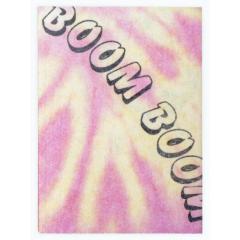
Boom Boom by Belgian photographer Jente Waerzeggers offers a unique glimpse into his work at night over recent years. In this book, Waerzeggers explores his deep fascination with self-expression in all its possible forms. Clothing, make-up, tattoos, piercings, hairstyles and accessories all reveal something about the individual. Presented as a series, the images reflect contemporary nightlife culture.
As an integral part of the nightclub’s scenography, the dancer becomes a body of symbols. Waerzeggers’ photographs are filled with bootlegged corporate logos, wordplay, subversion and references to pop culture.
Waerzeggers builds a relationship with his subjects that is entirely mutual. He documents while participating, and his subjects want to be seen. The night is dark and not easily captured, but Boom Boom succeeds remarkably well in doing so.
Jente Waerzeggers (•1999) is a Belgian photographer and musician. He is part of Not So Difficult Magazine, the label Kontakt Group, the band Lieve Jongens, and is the founder of (Y)-Publishing.
From 2018 until 2026 Jente Waerzeggers worked as a nightlife photographer; this book marks the end of that endeavour. Starting out at friends’ parties and ‘nacht’ in Stelplaats, Leuven, he has gone one to photograph for venues and collectives in Brussels, in Belgium and abroad such as V23, Slagwerk, Horst, C12, Listen Festival, Celebration of Life, and Dekmantel.
Waerzeggers is interested in the ways people consciously and unconsciously present themselves in society. What do their houses look like, their trash, their advertisements, their selfies? By sifting through his archive of photos and screenshots, he looks for through lines that paint a bigger picture.
280 pages
150x210mm
Soft cover with remarkable textile texture
Montréal-based sound artist Steve Bates expands his strategies and stylistic influences on An Infinite Antenna, his second solo album for Constellation, giving freer reign to melodic components and textural dynamics: leftfield synth work, deconstructed drum machine, pointillist electric guitar, and radiostatic blur are all part of the new brew swirling around his bruitist signal-bending and field-recording sensibility. Arguably a more ambient album than his acclaimed 2022 Constellation debut, An Infinite Antenna is at the same time more densely packed with ideas, dynamics, evocations and earworms. Coming out of the anarcho-punk scene of the Canadian Prairies in the 1990s, Bates founded Winnipeg's experimental sound festival Send + Receive in 1998 before moving to Montréal to become Sound Coordinator at Hexagram (Concordia University), delving further into sonic research and theory, tape-based composition, and installation work. Alongside the curatorial arc of his own sound art label The Dim Coast, Bates released several solo and collaborative albums on ORAL_records leading up to All The Things That Happen, the 2022 Constellation debut praised by Boomkat for its "grittily iridescent ambient billow rendering maximalist panoramas" and by Backseat Mafia as "extraordinary soundscapes of unstable, destructive cacophony and tender calm, echoes of the threat of power." Where that album was noisier and single-minded, made with the self-imposed limit of a Casio SK-1, Bates plays more widely with instrumentation and atmospheres on An Infinite Antenna, also drawing on his post-hardcore roots in seeking a sort of track-by-track concision nonetheless driven by the album's coherence as a seamless work. "I was trying to set durations I associate with punk rather than the longer, sprawling music coming from more ambient styles (that I very much love), and while I wasn't able to quite pare it down to Minutemen durations, I had that reduction to essential elements as a sort of whisper over my shoulder." Incorporating source recordings made throughout 2023-2025, including at artist residencies and site-specific sound installation visits in Bosnia and Herzegovina (the album's cover photo was taken in Sarajevo), Austria, Greece, and Saskatchewan, An Infinite Antenna combines Bates' "idea of slowly scanning a radio dial" with a soundworld of recurring timbral and textural touchstones that forge an integrated whole. The album's 12 tracks work effectively as stand-alone pieces, replete with shifting undercurrents, buried melody, and stuttering kinetics, and as a sequential flow where the brief interstitial silences between them are like short pauses to flip the next page in a sketchbook of perspectival studies of a wide but singular tableau. The glistening atonal synth expressionism of opener 'Pink pink pink pink_pink pink' drifts gently toward submerged ambience, darkened by the noised rumble and static interference of 'Green as a ghost', which introduces broken beats and piano chords in its denouement. Tracks like 'Battles and sieges and street trees' and 'Easier sad than done' work the foundations of low-end field-recording resonance, but dappled with lovely melodic droplets of treated guitar and synth. 'Waste, songs of the world' and 'Disaster loans' are among the album's most explicit stylistic references to posthardcore, with distorted ambient bass and gently abrasive drum sampling. Closing track 'Swamps and factories,' the album's longest piece, is perhaps most reminiscent of Bates' previous record with its sustained dissonant glimmer-drone, but the journey An Infinite Antenna traces to get there is Bates at his most dynamic, diverse, distinctive, and engaging. Thanks for listening
Courant Zéro is the new moniker of Montréal multi-media installation artist and Kohlenstoff label co-founder Maxime Corbeil-Perron, signalling his return to purely recording-based electronic music production following several years focused on award-winning experimental film and audio-visual works. Solari channels his cinematic sensibility and decade-long exploration of sound art and electroacoustic counterpoint into deep cuts of maximalist ambient electronica. Drawing on his early background as a pianist and jazz drummer, Corbeil-Perron weaves a fabric of melodic and rhythmic vectors with his unique timbral palette, intersecting modern composition, IDM, ambient, glitch, and noise on a debut album brimming with sonic detail and emotive resonance. A fixture of Montréal's sound art community as both creator and curator since the early 2010s, Corbeil-Perron's work has ranged from "hypnotic A/V onslaught" (FACT Magazine) to the "richly nuanced acousmatic journey" of his 2018 EP Polychrome (Bandcamp Best Contemporary Classical Of The Month), with earlier electronic and techno-adjacent projects like Political Ritual, Dresden, and Le poisson d'argent garnering accolades from avant-music outlets A Closer Listen, Silence and Sound, and Musicworks, among others. Courant Zéro mobilizes this cumulative wealth of explorative sonic experience in the service of distinctive compositional architectures and electronic music pathways that fans of Floating Points, Jan Jelinek, Squarepusher, Tim Hecker, and Oneohtrix Point Never should find compelling. Title track "Solari" opens the album with a cavernous ambient glitch-drone soundscape that envelops ever-shifting timbres of modular arpeggiation, serving as introduction to the clarion call of "En deçà du réel", an homage to video artist Manon Labrecque, where layers of interweaving melodic counterpoint played on Buchla and other synths slowly build to widescreen immersive intensities; "I have this vision of Labreque vibrating eternally between two frames of magnetic VHS tape_ the slow pace of the piece also inspired by Tarkovsky's approach to scenography" says Corbeil-Perron. "Strange Aorta" is ectoplasmic ambient with wistful melody lines transmuting along a central filament, awash in shifting waves of low-end and ricocheting tonal glitch, the title a reference to "the thumping rhythm beating around the main melody_and the heavy remnants of grief related to my father's passing and a brutal confrontation with my own mortality a few years back." Tracks like "La peau des dents" and "Eroding Us" are more firmly rooted in electroacoustic and aleatory systems music, where colliding loops are shaped into unstable flows of deconstructed slippage and reconvergence. Those two pieces bookend the album's pivotal center: the gorgeous piano digitalia of "Horizon n'arrête" and the skittering electronica of 9-minute opus "Unyeldd", its loping broken beat and cascading melodic glitter like a cluster of wind-up music boxes in a dappled forest _ and for Corbeil- Perron also partly inspired by now fellow Constellation labelmates Do Make Say Think: "I spent a lot of time rediscovering their records after seeing them last September 2024 which definitely influenced this piece." Courant Zéro's debut is a vibrant sonic rebus at the junction of electronic, electroacoustic, noise and ambient music that resists easy categorisation. Solari strikes a compelling balance of unsettled disorientation and hospitable warmth, teeming with real feeling throughout. The album's cover art painting Cryptography I by Yen-Chao Lin represents this prevailing sensibility, its mazelike circuitry distinctly carved and crisply rendered, while filigreed with handmade detail and artisanal patina. Thanks for listening.
Errands is the first duo recording from Marja Ahti, Swedish-Finnish sound artist and electroacoustic composer, and John McCowen, a native of Southern Illinois, now residing in Iceland, whose work centres on a radical exploration of clarinet multiphonics. Working without the aid of electronics, McCowen has spent years finessing performance techniques that allow him to layer beating patterns and split tones that belie their source in a monophonic instrument. Ahti, in contrast, has built up a stunning body of work in recent years using a classic electroacoustic palette of electronic, field recordings and instrumental sounds. Sharing a bill at the 2024 iteration of Stockholm’s Edition Festival, the pair discovered a sensibility shared across their different sonic means, beginning the collaborative process that would eventually result in the mercurial side-long pieces heard on Errands.
The word ‘errand’ suggests something purposeful but routine, and Ahti’s and McCowen’s work is suffused with the everyday. Meeting with McCowen to record in Iceland, Ahti used the opportunity to gather field recordings, capturing not the natural sublimity often associated with the country—think Chris Watson’s shifting glaciers—but everyday life in Reykjavik. Snatches of bustling streets and what could be humming engines thread between static sinewaves, stretches of clarinet resonances and fleeting textures, the latter often at once visceral and impossible to identify. Errands: we are a long way from the grandiose framing devices favoured by the pioneers of electroacoustic music, yet many of their principles are at work here. The gradual metamorphosis of one sound into another, the carefully achieved ambiguity between the acoustic and electronic, the treatment of the stereo field as a compositional element: all of these link Ahti and McCowen’s music to the electroacoustic tradition, yet their sensibility is radically different. The overall effect is a kind of stillness, but one at peace with continuous change. Like the unwieldy but somehow stylish everyday forms captured in the Hertta Kiiski photographs that adorn the record's sleeve, the music seems to prize a kind of deliberate awkwardness, interrupting static held textures not with an abrupt cut, but with a quick fade, suddenly revealing background as foreground.
Ahti and McCowen’s world is everyday and unornamented, but also shadowed by the numinous. Halfway through 'Chorales', we hear an arrangement for overdubbed recorders of an early motet of Messiaen’s, O sacrum convivium! Played on recorders, the piece shrinks into delicacy and dim memories of childhood music lessons, while at the same time its harmonies retain the grandeur of their liturgical origin. This double quality inflects much of what follows on Errands, including snatches of field-recorded water or air, which seem at once elemental and domestic. Enlivened with countless details that repay repeated relistening, Errands is a record that leaves the listener ready to open their ears anew to their own sound environment.
It pairs Virelles - who is known for his all-encompassing approach to creativity that is deeply-rooted in the Cuban influences of his upbringing - with two towering figures of creative music, whose individual work have helped shape the evolution of modern jazz for more than six decades. Together, they create music that is spacious, lyrical, and uncompromisingly inventive, grounded in profound listening and collective imagination. The group evolved out of Trio 3 , which featured saxophonist Oliver Lake alongside Cyrille and Workman. Following Lake's retirement, the remaining members invited David Virelles to help continue the group's legacy. Recorded at the legendary Van Gelder Studio , the album captures three master improvisers in an intimate, deeply expressive dialogue that unfolds through shared intuition, revealing an ensemble whose interplay is marked by subtlety, trust, and fearless exploration.
Some recordings herald the future in ways that are impossible to see in real time. Teodros Makonnen With His Organ (ቴዎድሮስ መኮንን ከኦርጋኑ ጋር), by the artist Teodros Makonnen, also known as Teddy Mak, is one of those. Today, electronic sounds, synthesizers, and digital production are taken for granted in Ethiopian music, but in the early 1980s, they were novelties that polarized opinion. Even to this day, the story of Teodros Makonnen’s legacy has never been properly told. He played a decisive role in defining the sound of the digital era of Ethiopian music that emerged in the 1980s and beyond, both as a keyboard player and as a producer, songwriter, performer, and sound designer.
Ethiopian music was at a crossroads in the early 1980s. Much like music in the rest of the world, technology and automation heralded either a quantum leap in musical development or the annihilation of musicianship, depending on who you’d ask. The changes were incremental nonetheless, but with the benefit of hindsight one can clearly see that the changes meant different things in different contexts. Drum machines and electric organs came to replace many hotel bands because, all of a sudden, one musician could control drums, melody, and accompaniment. Teodros was one of the first musicians in Ethiopia to explore the possibilities this opened up.
Teodros’ father, Captain Makonnen Beri, was a chief pilot at Ethiopian Airlines and a music enthusiast at that. This would prove important to his development, as Makonnen brought back a piano from Germany, which would lead to the first steps in Teodros’ long musical career. Captain Makonnen’s work as Head of Flight Operations and as a pilot exposed him to the wider world that was far from commonplace for most Ethiopians. In a house where music captivated the whole family, the piano gave Teodros’ talent an outlet. Not only was a piano at home rare in Ethiopian households, his father also brought an Indian teacher to their home to teach Teodros and his brother, Captain Samuel Makonnen, music theory (solfeggio or ear training) and piano. Teodros and his youngest brother, the late great Dereje, a member of both the legendary Ibex Band and the Ethiopian reggae group Dallol, took up music from that point onward, with Teodros beginning to develop his proficiency at the age of eight. His father encouraged him to practice tirelessly at home, and Teodros later received musical schooling at the German School in Addis Ababa. His obvious talent led to studies and formal education at the Yared School of Music, followed by continued studies in American jazz at Northern Virginia Community College in Virginia. Teodros cut his teeth professionally in his mid-teens, not only as a keyboardist, but also as an arranger for the Wabi Shebelle and Dahlak bands in the 1970s. He mastered electronic sequencing early, rising to prominence through the midnight recording sessions held during the military curfew. The pressures imposed by the curfew required precise and disciplined recordings, and Teodros delivered just that. This, in turn, led to collaborations with iconic artists such as Mulatu Astatke, Aster Aweke, Menelik Wossenachew, Tilahun Gessesse, Mahmoud Ahmed, and Alemayehu Eshete. In those days, he sat in as a keyboardist with the Dahlak Band when Dawit Yifru took a hiatus to study in Russia, and also with the Ethiostar Band. He secured a residency at the Wabi Shebelle Hotel with the Shebele Band, together with Zelalem Tadese (drums), later succeeded by Elias Bekele, Mulugeta Hailu (bass), Teferi ‘Bibisha’ Mengesha (guitar), Kumelachew G/Selassie (trumpet), and Teshome Deneke (saxophone). A friendly competition developed between the bands associated with the Ras Hotel (the Ibex Band), Ghion Hotel (the Dahlak Band), and Wabi Shebelle Hotel (the Shebele Band). The music scene at Wabi Shebelle saw teenagers commanding the spotlight in an industry otherwise dominated by musicians of an older generation. At the Wabi Shebelle Hotel, Teodros met a diplomat from Saudi Arabia and later visited him at his home in Addis Ababa, a meeting that had unexpected musical consequences. The man owned a Yamaha double-deck keyboard. That evening, they recorded Teodros Makonnen With His Organ (ቴዎድሮስ መኮንን ከኦርጋኑ ጋር) in one take. This recording, a cornerstone in the early digital sound of Ethiopian music, came about almost by chance, simply because Teodros got the opportunity. Traditional Ethiopian songs were cast in a wholly electronic style. Once freed from backing duties, Teodros’ keyboards could explore dreamlike soundscapes that took Ethiopian music in new directions. Even though the cassette contained well-known Ethiopian songs, they were given highly original arrangements, performed on an electric organ with drum machine backing and rhythm patterns that left the listener with suggestive, lingering sounds. “Libesh Kabashen” (also known as “Anchi Bale Game”) and “Odu Gol Golesa” wrap you in the very stuff that dreams are made of. Originally released on cassette only, this recording exudes a mystique that surpasses even some of the most obscure Ethiopian recordings of the day. It remained more or less unknown outside of Ethiopia until now. Some of the tracks, like “Addis Fikir,” are permeated with an almost naive buoyancy, free-floating sounds that lost contact with the ground the moment they were conceived. Others, like “Meche New Hageren Yemayew” and “Lelitu Alnega Alegn,” carry a moodier, quirkier timbre, with pulsating rhythms in the background. Yet even the darker pieces contain an unmistakable wave, something essentially Ethiopian. If most recordings of Teodros’s contemporaries at the time were teeming with atmosphere, his songs seem instead at home in the stratosphere, almost ethereal. Some of the music here could be filed under “lullabies,” were it not for the recurring, almost brooding feeling that engulfs the listener on the aforementioned tracks. You could easily be forgiven for drifting into a blissful haze as the music washes over you.
Up to the advent of electronic music production, Ethiopia was totally dominated by big bands on the one hand, and small groups on the other. The former were tied to large institutions such as the military, the latter emerged from the entertainment industry, in hotel bars and nightclubs. These groups were commercially driven, and bands ultimately had to foster a mercenary approach to employment, albeit not to the passion for music. In the light of this, Teodros’ musical legacy can be seen in two ways. On the one hand, he is a key player in Ethiopian music from the 1970s onwards, leaving an indelible mark through hundreds of compositions and arrangements, including soundtracks for numerous documentary films and advertisements for different companies. On the other hand, the way he and others employed electronics brought Ethiopian music onto a fork in the road.
The replacement of traditional instruments with electronic equipment was seen as impending doom by some. Others, like Teodros, saw new avenues for performance, production, and creativity. Just as later producers like Abegasu Shiota of Admas, Teodros was a trailblazer who opened paths that it took Ethiopian music as a whole more than a decade to rush into. The hotel scene had already been pushed toward electronic music by financial necessity and cost-cutting. Today’s revived global interest in Ethiopian music from the seventies and eighties, alongside a broader resurgence, has changed the reasons for using digital means of music production. They have become tools for musical dreaming. This is where the dreaming began.
out of Stock
Last delivered 11 days ago available to reorder, subject to availability
Riva Starr teams up with Australian duo Close Counters for a sun-soaked debut on Heist.
What do you get when you put an Italian house legend in the studio with 2 of the most talented artists from Melbourne? Have a listen to the newest release on Heist and you’ll find out. On their ‘Push your luck’ EP, Riva Starr, Close Counters and UK soul singer Andre Espeut bring a heavy dose of jazz & soul and most of all, upbeat dancefloor energy. Whether it’s the deep soulful vibe of the title track or the house meets jazz-funk energy of ‘Gearbox’, this EP brings together everything we love about house music.
‘Push your luck’ comes right in the middle of Close Counters’ world tour, just after Riva Starr’s album ‘Keep me on the dancefloor’ and is the follow up to their recent collab ‘Jinga’ on Riva Starr’s own Snatch Records. We all know Riva Starr from his 2013 Fatboy Slim collab ‘Eat sleep rave repeat’, his work with Groove Armada, and more recently his collab with Prunk on his PIV records debut album. Close Counters have already worked with Heist mainstays Fouk and had their breakthrough moment with their 2023 album ‘Soulacousta II’, which got wide support ranging from Gilles Peterson to Jyoto and Folamour.
Their ‘Push your luck’ EP kicks off with the title track featuring the silky vocals of Andre Espeut. When we first heard this song, we immediately got transported to the soulful sound of the mid 2000s led by Recloose’s unique track ‘Dust’ with Fat Freddy’s Drop singer Joe Dukie. It’s moody, stripped back, and bouncy at the same time. The lush chords, disco bassline, and vocal harmonies all make for a track that goes beyond genres and trends. This is a future classic.
‘Gearbox’ is a disco-tinged piano jam full of live elements, rolling congas and disco bleeps, where the musicality of the Close Counters boys comes in at full speed. This song takes its inspiration from the Brazilian jazz-funk of legends Marcos Valle and Azymuth, with a clear sense of modern-day dancefloors and a love for electronic noise. Also; 10/10 for creatively naming the track after the glitchy electronic sound that freaks & funks throughout the track.
On the flip, ‘Dizzy’ sees the trio go more into disco-house territory, again teaming up with Andre Espeut for a track that blends catchy vocal loops with a tight groove and lush chords. The EP finishes with a club dub of ‘Push your luck’ for those in favor of more groove and less vocals.
We’ve had Riva Starr and the Close Counters boys on our radar for a while, and they landed on Heist with the perfect combination of musicality and dancefloor power. We hope you like this release as much as we do!
As always, play it loud and share the music.
Lars & Maarten
out of Stock
Last delivered 16 days ago available to reorder, subject to availability
Japanese acid pop outfit Cho Co Pa Co Cho Co Quin Quin channel the globe-trotting spirit of Haruomi Hosono’s 1970s tropical boogie on their debut album, Tradition.
Named after one of the basic rhythms of Cuban folk music and drawing on influences from across the globe, Cho Co Pa Co Cho Co Quin Quin are quite simply a world unto itself.
Comprised of three childhood friends, Daido, Yuta and So, who reconnected during the coronavirus pandemic, Cho Co Pa initially emerged as a playful way for the three 23-year-olds to pass the time. Tapping into their youthful connection, they created a sound that exudes confidence and curiosity, a homage to the masterful world of YMO’s and Happy End’s Haruomi Hosono, rooted in the trio’s own idiosyncratic experience of the present.
Recorded at home and promoted on hugely popular DIY TikTok videos, their debut album Tradition is a technicolour exercise in armchair travelling – a kind of lockdown exotica for the housebound whose nostalgic flights of fancy are laced with a sense of whimsical melancholy for the lost freedoms of youth.
Referencing everything from Afro-Cuban percussion to lo-fi beats, Buddhist spirituality to trap, each member of the band brings different musical inspirations to the table. Latin American and Middle Eastern styles sit adjacent to a fascination for the electronic music of Aphex Twin, Dorian Concept, Underworld and Daft Punk. At times, the music verges on acid pop bliss, at others, it grooves with the instrumental funk sensibility of BADBADNOTGOOD.
“In the first place, when I create a song, my goal is to transport the listener to a mysterious place,” vocalist Daido explained in a recent magazine interview. Using lyrics as another sonic texture in the composition of ideas, Cho Co Pa paint beguiling sonic postcards of far-flung moods across 12 highly original tracks.
Marrying the organic and the electronic on rhythmically sophisticated compositions like ‘Chichibu’ and ‘Watatsumi’, it is on the album’s standout track ‘Gandhara’ that the experimental sound of Cho Co Pa comes to the fore. Referencing the ancient city of Gandhara through which Buddhism made its way from India to China, the track is a vocoder-trap-inspired, Udu drum-driven pop jam that lilts with unmistakable Balearic flair. If that’s difficult to imagine, then know simply that ‘Gandhara’ sounds like nothing else on this side of Saturn. Even Daido seemed surprised by the outcome: “I feel like we were able to create something that exceeded our abilities. That was huge!”
Hugely popular in Japan, with festival appearances lined up alongside BADBADNOTGOOD at Asagiri Jam in October, it's safe to say the success of Tradition has taken Cho Co Pa by surprise. You won’t have heard anything like it."
Children of Zeus return with their third studio album ‘As The World Burns…’
Five years on from their highly-acclaimed sophomore album ‘Balance’, Manchester’s kings of hip hop soul, Tyler Daley and Konny Kon, bring us a brand new 16-track opus.
Sonically the duo continue their story where they left off; crafting an amalgamation of street soul, alternative r&b and boom bap hip hop, with a sprinkle of flavours taken from their original multi-genre pirate radio influences, and a dash of forward-thinking new sounds, ensuring all tracks are destined to become future classics.
The features are sparing but powerful, enlisting the talents of revered UK rapper Knucks (‘Before We Drown’), Colorado-native Young Old Soul (‘Dopamine’), MCR family K S R (‘Do You Want To Get High’, & Australian/Mauritian up & comer Anieszka (‘Water & Vibes’).
As with previous projects, this album is largely produced by the duo themselves, though there are guest productions from previous collaborators too, including Grammy Award-winner Beat Butcha, Grammy-nominated Teo, and broken beat pioneer K15, along with an assortment of new players making moves in the underground neo-soul & beats circuit.
Conceptually, this project continues on with the story to date. An eternal search for sunsets and soulfood, as a respite to the anxieties of the modern world; personally, professionally and globally. Assertive swagger is matched with brutal but sincere candidity. As ever, it encapsulates the rough with the smooth, with reflections on where they’ve been, where they’re at and where they’re headed. There’s no preaching to be found here; just an acceptance of things as they are, an embrace of the environment and people they were nurtured by, and a celebration of some of the finer things in life; slow jams, weed & rum, water & vibes. Raps for listeners, blunt heads, fly ladies and prisoners. All packaged together as another perfect sonic love letter to sound system culture. 50 minutes of big people music.
Since the release of their anthemic debut single ‘Still Standing’ a decade ago, to the subsequent EP ‘The Story So Far’, and their critically-lauded debut album ‘Travel Light’, the duo have received numerous accolades, including nominations for AIM Awards & Worldwide Awards both, along with tons of ‘Album of the Year’ nods care of Clash Magazine, Bandcamp, Complex, Wordplay and many more. This along with huge swathes of support from DJs, radio stations, press outlets, tastemakers, luminaries & fellow artists across the globe.
Children of Zeus have performed sessions for COLORS, Soulection (Apple Music), DJ AG, Boiler Room, BBC 6 Music and at the infamous Maida Vale studios for BBC 1Xtra as well as touring across Europe, Australia and South Africa. This is in addition to collaborating & touring with Mercury Award Winner’s Ezra Collective, including a Wembley Arena show. Other collaborations over the years have included Shy FX, Juls, Goldie, Black Milk, Kofi Stone and the late great Lenzman.
From the Broke ’n’ English / Hoodman-era, to the present day, Children of Zeus have been omnipresent in the fabric of British black music. Proud ambassadors of Manchester music, and of UK soul, it really is “Zeus to the world”.
Children of Zeus have been adorned with plenty of flowers over their career. The unbridled quality and poignance of the music and the message on display throughout this project will see the algorithmic needle move some more. It’s undoubtedly set to be a Zeus Summer. As the world burns…
Available on all digital platforms and physical formats, Friday September 4th 2026.
t 07: Do You Want To Get High? (feat. K S R ) - Children of Zeus03:26
t 07: Do You Want To Get High? (feat. [ K S R ]) - Children of Zeus03:26
[t] 07: Do You Want To Get High? (feat. [ K S R ]) - Children of Zeus03:26
[g] B3 | Do You Want To Get High? (feat [ K S R ]) - Children of Zeus03:26
out of Stock
Last delivered 10 days ago available to reorder, subject to availability
Remastered limited edition double vinyl with double-sided screenprinted poster-cover (sleeve folds out to be one huge poster). A real collectors item!
When Off Off came out around June 1984, one couldn’t speak of an independent music scene in Portugal. Warm Records’ vague existence didn’t have any impact and Dansa do Som’s inaugural release appeared only in December. 10 years after the revolution, after two IMF interventions, a lot of political instability (not to say turmoil, in the first couple of years) and the natural excesses of a sudden burst of freedom, the Portuguese consumer had more choices but a generally poor standard of living. There was no entrepreneurial culture and serious second thoughts about investing private money in risky ventures.
After many complaints about the whole music scene (institutions, critics and record label executives, popular and classical music alike), something that would continue well beyond the end of the decade, Telectu decided to finance, record, produce, release and sell an album with complete independence from outside structures. Their karmic reward was profit. According to Vítor Rua, Off Off was the only album fully payed by the duo and the only one that really payed off. Not an easy accomplishment for a double LP housed in a large (also double-sided) screenprint with complicated cuts and folds. The artwork was conceived by António Palolo, a friend and multidisciplinary artist. It was based on a collage of heavily saturated and xeroxed polaroids framed in shocking pink and green. Palolo was considered the third member of Telectu, regularly producing slides, video and other visual support for their shows. The inspiration for the type of cover came from GRM’s Gramme series.
Off Off is divided in four distinct sides, each one corresponding to a “theme” or “function” related to Telectu’s manifold artistic interests and interactions. The titles are also gateways to influences and a small portion of Portuguese cultural life:
- Side 1 / “Diagonale” is dedicated to Egídio Álvaro, art critic and gallery director (he opened Diagonale in Paris). Performance art was arguably his main artistic concern over the years, so the music on this side is suggested for use by one or more performers in live or playback situations. The three tracks segue into each other, linked by a synth arpeggio much in the same way as Telectu’s previous “Belzebu” álbum (1983);
- Side 2 / “Anarké” is dedicated to the composer Filipe Pires, one of Jorge Lima Barreto’s recurring invocations when asked about worthwhile contemporary music in Portugal. It is subtitled “concert music”, proposing «a new form of listening». Three tracks also, and these are separated by “clap interludes”, which basically consisted in the following: JLB and VR each had a pair of headphones on, and they clapped their hands according to the rhythm of the music each one was listening. Both musicians were interacting with a different Steve Reich piece: Vítor with “Music for Mallet Instruments”, Jorge with “Six Pianos”. The result is disjointed clapping, an awkwardly deliberate celebration of their own music. Telectu applauded themselves.
- Side 3 / “Cornucópia” is subtitled “music for theatre” and dedicated to Luís Miguel Cintra and Luís Lima Barreto (JLB’s brother), both connected to the Cornucópia theatre company. The side consists of several short pieces previously used as interludes in the Cornucópia staging of “Mariana Espera Casamento” (1983). Field recordings, mood pieces, ambience and a numeric poem (“Soneto Soma 14x”, by E.M. de Melo e Castro) read by João Perry, a quite well-known stage actor. His voice is treated with a flanger effect;
- Side 4 / “Palolo” is “video music”. It’s a one-take mix recorded from cassette sources (Telectu studio experiences) and done live while watching António Palolo’s Om film (1978) projected on the living room wall. It’s a deep, immersive, quasi-mystical 20-minute piece perfectly suiting the meditative, abstract, fluid images created by Palolo by mixing paint and water inside a bathtub. One imagines the Cosmos, hardly suspecting the technique. The film is 90 minutes long, so the music on the LP is of course edited.
The six titles on sides 1 and 2 evoke demons, all of them with conflicting symbolism, since it varies from culture to culture, religion to religion. No explanation is given and Vítor Rua has no idea where this imagery comes from. During virtually the whole stretch of the 1980s, Jorge was the one in charge of titles and concepts, and Vítor didn’t bother too much even reading the liner notes :) In any case, when you synchronize the listening experience with the imagery, a powerful impression emerges, a feeling of being in the presence of these entities while placing yourself inside the sonic narrative.
Off Off is undoubtedly a seminal album in the history of electronic music, as much Heldon as Fripp & Eno, jazz and American minimalism, cosmic out-thereness, mantric miniatures. Telectu at the height of their powers, still very early on, delivering an album-manifesto advocating intermedia art and the fierce independence of Portuguese musicians «from the scum of capitalist music industry monopolies. It’s a path to follow, albeit one that requires enduring hardships and retaliation from music industry gangsters.» Despite a few journalists deemed «capable of being free», the media are «enslaved by the dominant and fascist imbecility of the speculators of light music.» Off Off is addressed to those journalists «and to an audience angry at the cultural misery imposed upon us ..., certain that this music will open new horizons of musical pleasure in the conception of Portuguese avant-garde music, and in the open consciousness of us all. OFF OFF repeats Freedom.»
Those two words are a direct lift from Alberto Arbasino’s 1968 book Off Off, the basis of which is a critical analysis of Theodor Adorno’s and Dwight MacDonald’s ideas concerning the stratification of culture in different levels (high, mid and low) and the pervasiveness of mass culture in the form of a culture industry. In very simplistic terms, and that is precisely the point that inspired Jorge, Arbasino argued that it was possible and desirable to effect a revolution from below, cultivating alternative circuits completely cut-off from what he termed the in-in reality. Telectu’s record was a deliberate demonstration that it could be done, displaying Freedom in the face of all the gatekeepers and other human obstacles.
Liam Hayes is an acclaimed American musical artist known for his songwriting and uncompromising approach to making records. He started cassette multitracking while a preteen and made his first real studio recording at twenty one. This started an obsession that ultimately led to his releasing a 7” single (Found A Little Baby/Three Quarters Blind Eyes) on a small US indie label. Those tracks garnered the attention of the UK music press, and on the strength of those songs a career was launched. The follow up was highly anticipated by critics and listeners alike, but rather than playing to expectations he delivered a highly personal album of solo piano/vocal songs (More You Becomes You). Not one to repeat himself, Hayes started off the millennium by serving up the extravagant pop/soul opus (Fed). Both records are now considered to be masterpieces.
Hayes’ songs are recognised for their exquisite melodies, poetic lyrics and distinctive vocals. He’s released seven albums, two singles and a soundtrack, and applies his craftsmanship to a variety of genres from orchestrated pop to stripped down rock. Comparisons to Brian Wilson, Laura Nyro, Carole King, Harry Nilsson, Badfinger (and even Prince) are numerous. His music takes the best of radio and stellar classic pop records of the 60’s and 70’s and brings it into the present.
Along with making records Hayes has appeared on screen performing his music in High Fidelity (directed by Stephen Frears) and A Glimpse Inside the Mind of Charles Swan III(directed by Roman Coppola) which he also wrote the soundtrack for.
In this, their first production for Hayes, are (executive producer) Terrence Washington and (multi-instrumentalist/producer/arranger) Vincent Carlo with additional contributions from Terrence’s father, legendary arranger TOM TOM 2084 (Chi-Lites, Phil Collins, Plush).
His latest album, Dancing Backwards, sees Liam stepping through the shadows in his life and into a new musical day.
The follow up to her UK number 1 album This Is How Tomorrow Moves, the stark and striking fourth album by beabadoobee is named for the electricity towers that dot every major artery in the world—the strong, spindly structures that reminded Beatrice Laus of her connection to friends and family at home while she was staring down extreme disconnection and isolation on tour over the past few years.
The title can also be read as an allusion to Laus’ spiky, forceful new sound—the waves of distortion that crash and shatter across this record’s 14 songs mirroring the intense crackle you hear when walking under power lines. The pylon is also a fitting symbol for an album that reckons with the repetitive anxieties of your mid-twenties: What if I’m always going to be this way? What if life is just pylon after pylon on the road?
The album’s first single is available to stream and buy from today: “Sun Has Set” introduces Pylon as, in essence, a set of songs that began as diary entries, words that Laus thought she’d never be able to say out loud. “A lot of the songs on this record are things I wish I could have said to someone,” she says. “This song has this petty tunnel vision—it’s like, I hate you. You’re gonna stay here and listen to how much I hate you. Because I never got to say that.” The single comes accompanied by a striking first person video directed by Bea’s partner and longtime visual collaborator Jake Erland.
Ever a devotee of pure rock music—both as something to be cherished and something to be played with—Laus casts these feelings in songs that touch on classic grunge, midwest emo and ‘90s radio rock, zeroing in on a sound that is both harsher and more direct than any of her previous records. She says the music she’s loved has “always been an influence” on her music, and so for B4 she went straight to the source. A fair few of Beabadoobee’s composite influences contributed to Pylon, a fact that speaks to the goodwill and respect Laus has amassed over the course of her relatively brief career.
Hayley Williams sings on “Nothing to Prove,” a deeply anthemic indie-rock song about getting your power back from fairweather friends who just want a bit of your success. The moody “Powerlines” features a verse from Turnstile singer Brendan Yates, a master of matching vocal force with emotional nuance. Elsewhere, you’ll find contributions from Pinegrove’s Evan Stephens Hall, Deftones’ Chino Moreno, and Title Fight’s Shane Moran, as well as, on “Write Me A Letter”, production work from Laus’ longtime friends and collaborators Matty Healy and George Daniel of The 1975.
Beabadoobee will debut songs from the record on the Powerlines Tour, her first ever arena shows and biggest tour to date, taking in shows across North America, the UK and Europe this autumn-winter. The Powerlines Tour kicks off 1 October and includes stops at Madison Square Garden, The Kia Forum, The O2 and more (full routing below). Support comes from Wisp in the US, Canada and UK and Violet Grohl in France, The Netherlands, Belgium and Germany.
Born in the Philippines and raised in London, Beatrice Laus emerged as a British alternative music icon across three acclaimed albums and five EPs. She has garnered multiple BRIT Award and BBC Sound Of nominations, and won NME’s Radar award, whilst amassing over 10 billion streams worldwide and more than 12 million followers across her social channels.
This Is How Tomorrow Moves became her first record to reach number 1 on the UK Official Album Chart in 2024, following her Top 10 albums Fake It Flowers (which reached number 8) in 2020 and 2022’s Beatopia (#4). Earlier this year, beabadoobee released the one-off single ‘‘All I Did Was Dream Of You,” teaming up with Grammy-nominated best New Artist The Marías, the result of a longtime mutual creative admiration between María Zardoya and Bea.
out of Stock
Last delivered 32 days ago available to reorder, subject to availability
Released in 1983, "En la guía, en el listín" remains a permanent anomaly in the history of Spanish pop music, with few clear predecessors and even fewer descendants. It is an imperfect yet fascinating catalog of the many faces Derribos Arias could reveal. Its sound combines odd electric rock, leftfield proto-hip-hop, and dark, immersive songs that simply defy categorization. An essential album. Includes liner notes and the artwork of the original insert. By late 1981, the San Sebastián-based group La Banda sin Futuro had already transformed into Derribos Arias. Their first two singles dazzled critics eager for new ideas capable of placing Spanish pop alongside the contemporary music increasingly arriving from abroad in real time. 'Branquias bajo el agua', the standout track from the band's debut single, topped the list of Best Songs of 1982 as voted by listeners of Diario Pop on Radio 3 (Spanish National Radio). With an expanded four-piece lineup and a larger budget than they had enjoyed for their earlier singles, the band entered the prestigious Kirios Studios to record their album, with Paco Trinidad serving as producer. The electric intensity of 'Intima decoración' and 'Crematorio' -angular, off-kilter reinterpretations of a strain of rock descended from The Velvet Underground and The Stooges, a style with virtually no precedent in Spain-are excellent examples of the band's sound. To aberrate was the key term Poch used to describe his ineffable working method: a fearless creative freedom without which songs such as 'Lo que hay' could never have existed. The track stands as a leftfield proto-hip-hop number, later reworked as 'Disco pocho,' demonstrating both his admirable lack of prejudice and his complete disregard for any commercial ambitions the album might have had.Unfortunately, this album would never have a follow-up.
Quaid + Shepherd’s “The Preset” 12” is a multi-mix single/release pushing and evolving the confines of the present funk sound. This London duo, which is composed of producer Quaid and vocalist Shepherd (who have been long-time collaborators), dives especially deep with these four banging club mixes of “The Preset”, channeled through the lens of 80s boogie-funk. Quaid explains that “early 80's boogie funk has always been a massive inspiration and a huge part of my day-to-day listening experience”, and these 4 mixes of “The Preset” serve to honor a “drum machine soul” tradition, while keeping the production and feel fresh for the dance-floor and the context of today. This release is stacked full of epic alternate mixes for listeners and DJs to experience: Most notably, there is a “Sysex” Mix from Atlanta’s elusive abstract boogie-funk producer Moon B (his first new production to release after a multi-year hiatus), which delves into his intangibly unique slanky-funk sound. Also included on the B side are the hypnotic and more uptempo “Wet Dreems” Mix and a “Dirty Dub” Mix from Quaid that truly leans into the quirky synth leads, crispy drum programming and heavy rolling bass.
Pioneering Ghanaian musician King Ayisobareturns September 4, 2026 with his forthcoming seventh album Pure Confusion, recorded and produced by On-U-Sound’s Adrian Sherwood.
Ayisoba is one of Ghana’s most distinctive musical voices. The world’s foremost player of the kologo - a homemade two-string lute fashioned from a calabash and covered in goatskin - he delivers fiercely political and socially observant songs using three different voices, including the voice of his grandfather that possessed him as a child. Sherwood meanwhile is the pioneering British producer and founder of On-U Sound whose hugely influential career has connected dub, post-punk, industrial, hip hop and experimental music through collaborations with artists including Lee “Scratch” Perry, Mark Stewart, Horace Andy, Sinéad O’Connor, Nine Inch Nails and Depeche Mode.
Ayisoba and Sherwood first collaborated during a BBC Radio 3 Late Junction session at Maida Vale in 2017, organised by Ayisoba’s long-time collaborator Arnold de Boer/Zea of The Ex. The pair immediately connected, and during the pandemic, when Adrian’s long-time African Head Charge collaborator Bonjo Iyabinghi Noah was in Ghana looking for musicians to collaborate with Sherwood suggested Ayisoba, who eventually featured on two tracks on African Head Charge’s 2023 album A Trip To Bolgatanga (Bolgantanga is the region Ayisoba is from). Ayisoba then returned to the UK in late 2024 and travelled to Sherwood’s Ramsgate studio where the pair laid down the songs that would become Pure Confusion: “All the songs were already in my head,” says Ayisoba. “This album is all recorded live, over one afternoon. Adrian only plays live, and I like that. And he works hard - he doesn’t sleep. I woke up in the night and he was still working.”
“In my role producing it, I just let it roll to make a good vibe,” says Sherwood. “We recorded it completely live, did some programming and processing on some tracks, using dub techniques live on the mixing desk and adding some slick touches. We wanted the colours on the album to swing off what Ayisoba was doing, so we invited some friends to participate. Doug Wimbish (Sugar Hill Gang) arrived from America and lent his services playing bass on a couple of tracks; the wonderful Ivan Hussey (Celloman) played bass, keyboards and cello - cello is not really featured on African recordings so we thought it would be really cool to try it. I'd been working with Alex White (Fat White Family/Primal Scream) on my album (The Collapse of Everything) and so he added sax to a few tracks and I brought Alan Glenn down especially - Alan was in Little Axe but also Nine Below Zero and played in the Yardbirds – to add some mouth organ; Mark Bandola added a bit of flavour with his Juno, Ayisoba’s long-time Ghanian collaborator Ayuune Sule added some percussion and vocals and Matt Smith did some programming.”
“King Ayisoba is quite amazing, so unique,” Sherwood continues. “He’s got his own handmade instrument and three different voices - when you’re listening you think it’s three different people. He’s a breath of fresh air, full of love for the music which he wants to share with everybody. Some tracks we kept very straight and others we experimented with - adding dubby psychedelic little touches to trip you out a bit. The added production we did at On-U has given it a shine while still keeping it vibrant, live and spontaneous. I’m really proud of this record”.
On Pure Confusion, Ayisoba documents the anxieties, contradictions and changing social realities of contemporary Ghana. “Land is a problem for everyone,” says Ayisoba of the opening track “Property”. “If you don’t build on your land they will take it away. Plenty corruption in Ghana, plenty confusion. They sell the land to two, three, four people and then everybody fights.”
Elsewhere Ayisoba explores illness, spirituality and social stigma on “Bemba”, warning against hiding sickness out of shame or fear of “bad juju”: “People hide their sickness and the sickness kills them.” “Tewigiloge” reflects on cultural difference and open-mindedness encountered through world travel: “We will tour the whole world and we will see many things we may not like or understand… your eyes will see, but don’t talk - you have to be open-minded.”
Spirituality runs deeply throughout the album. Ayisoba’s grandfather was a respected spiritual healer whose presence the musician says still guides him today. “The grandparents’ spirits are the ones you can contact,” he explains of the spiritual chant “Nkaase”. “This song talks about the forefathers.” The closing track “Leeda-Mampanga (It’s Not My Strength)” acts as a statement of humility and gratitude: “You have to be humble, even if you have talent. God gives you the power.”
For more than two decades, King Ayisoba has been one of Africa’s most distinctive musical innovators, transforming northern Ghanaian kologo traditions into a bold contemporary sound rooted in hypnotic rhythms, social commentary and spiritual intensity. Since the breakthrough success of 2006’s Modern Ghanaians, Ayisoba has built an international following through acclaimed albums, relentless touring and collaborations with artists including Lee “Scratch” Perry, Orlando Julius and African Head Charge. Performances at Roskilde, WOMAD, Le Guess Who? and the Barbican have further cemented his reputation as a singular live performer and cultural force.
For any collaborative project to succeed, the artists involved need a creative unifier – a meeting point, if you will, of their disparate interests and experiences. In the case of Mondo Love & Betrayal, the joint project of Nottingham musical mainstays Neil ‘Nail’ Tolliday and Henry Claude Scott, there were two creative unifiers: a mutual love of classic 1980s synth-pop, as well as shared admiration for each other’s work.
Even so, such shared interests and respect for prior mutual endeavours is no guarantee of success. Yet as their eponymous debut album emphatically proves, the duo’s disparate experiences, characteristics and musical strengths have not only dovetailed beautifully, but also resulted in serious sonic gold. Put simply, Mondo Love & Betrayal is a stunning debut album rich in emotive songs, colourful melodies, atmospheric chord progressions and infectious grooves. Throw in the sun-splashed warmth and saucer-eyed, loved-up tactility of late 80s dance beats, and you have a breakthrough album whose timelessness is evident from start to finish.
The project’s roots lie in Tolliday’s desire to work with Scott, a virtuoso guitarist, talented producer and secret songwriter best-known for his work alongside Huw Costin as Torn Sail, and John ‘Ming’ Thompson as Brown Fang – both projects known for prioritising organic instrumentation and sunset-ready soundscapes over dancefloor-rooted beats.
Tolliday, of course, is one of British electronic music’s true polymaths – a long-serving house producer best-known for his long-running Bent project alongside fellow Nottingham resident Simon Mills. He initially approached Scott with the idea of providing vocals on a house track he was working on, but quickly suggested something else: an exploration of a classic synth-pop sound inspired by his love of Pet Shop Boys, New Order, Depeche Mode and the producers who worked with them – the likes of Martin Hannett, Arthur Baker, Stephen Hague and John Robie.
Scott accepted the invitation, seeing it as an opportunity to explore a different side of his musical personality. Their first recording session resulted in the ear-catching and memorable brilliance of ‘Correspondence’ – a tongue-in-cheek breakup song inspired by the death of landlines and the rise of mobile communications – and soon they were working on their debut album.
The resultant 10-track set is simply sublime, with Scott’s expressive delivery of his own lyrics on life, love, heartache and rejection working in perfect union with Tolliday’s kaleidoscopic and pleasingly authentic backing tracks – gorgeous and beautifully rendered instrumentals rich in memorable melodies, bittersweet chords, and subtle nods to ‘80s and early ‘90s dance-pop culture, from Shep Pettibone style remixes and Bernard Sumner guitar licks, to Beloved-esque piano parts and Chris Lowe chord progressions. Some listeners may also draw favourable comparisons with 21st century synth-pop practitioners, particularly Parcels, Private Agenda and the deeply emotive songs showcased by Junior Boys.
For proof, wrap your ears around such album highlights as opener ‘Boo Boo’, where Scott warns that “love and betrayal will haunt you” atop sparkling synths and Vince Clarke style grooves, the Behaviour-era PSB melancholy of recent single ‘Your Latest’, the mid-tempo dreaminess of ‘Beyond The Rainy City’, the early Depeche Mode chug of ‘Whatever Happened To Me’ and the tactile warmth of ‘Across The Plane’.
We could go on. In truth, the whole album is – in Scott’s words – “magical musical alchemy”. Wherever they choose to go next, Mondo Love & Betrayal is a seriously good sonic statement of intent.
out of Stock
Last delivered 31 days ago available to reorder, subject to availability
With Random Constraint Satisfaction Problems, the ever elusive and shape-shifting Thomas Bush offers up a new album of category scrambling song craft. Since earlier solo efforts like Old And Red (2018), Preludes (2022) and The Next 60 Years (2024), Bush—currently based in Malmö—has traced a digressive path that has proven him capable of everything from murky wobbling dirges to uptight head-bopping laments to crystalline synth chords that hang precariously in the air over your new favourite bass line. Like its title, the album's songs/tunes/opportunities for pleasure offer the listener further evidence of a sensibility that is equal parts ambiguity and clarity.
In addition to his solo work, Bush has worked with a range of collaborators in one-off configurations and longer term projects like RAP (with Guy Gormley) and cATHOLIC CHURGH (with Jon Auman). Critical responses to Bush's output have often focused on his predilection for certain folk-ish impulses and instrumentation, but, judging from releases like 2026's guld, his definition of "folk music" seems to have as much to do with A Guy Called Gerald as it does with Shirley Collins or John Martyn.
For all of its diversity, what unites Bush's ever-expanding body of work is its dual commitment to experimentation and a job well done.
“Random Constraint Satisfaction Problems was recorded at Vista Studio 1, Malmö between 2022 and 2025. After creating an account at academia.edu for the purpose of reading a text now forgotten, I began to get emails asking me questions such as ‘Thomas Bush, did you write “Brucellosis and Sacroiliitis: A Common Presentation of an Uncommon Pathogen”?’ or ‘Are you the Thomas Bush who wrote “ATR-dependent phosphorylation of FANCA on serine 1449 after DNA damage is important for FA pathway function”?’, which began to make me wonder if I was, or if not, perhaps I should.
The resulting work is an attempt to find meaning in this, and other chaotic and ambiguous situations through analysis using materials and equipment available to hand. Being sensitive to signs and following them with enthusiasm. Both the source material and evaluation is presented.”