Fin Greenalls introspektives, philosophisches und sanft euphorisches Songwriting wurde mit den langjährigen Bandkollegen Tim Thornton (drums/git) und Guy Whittaker (bass) in völliger Abgeschiedenheit aufgenommen. Der gebürtige, in Berliner lebende Cornwaller suchte die Einsamkeit und Bodenständigkeit des kleinen Dorfes Zennor an der malerischen Atlantikküste Cornwalls, wo die Band das neu errichtete Studio des Produzenten Sam Okell einweihte, des Grammy-prämierten Tontechnikers/Mixers der Beatles-Alben "Get Back" und "Sgt. Pepper's Lonely Hearts Club Band - 50th Anniversary Release".
In der Vorstellung, dass so ein klassisch-englisches Lo-Fi-Folk-Album entstehen könnte, trieb die gemeinsame kreative Unruhe der Band und Okells "Beauty In Your Wake" stattdessen in die weitläufigen Gefilde von FINKs kommerziell erfolgreichen Alben der 2000-2010er Jahre und ist eine Rückkehr zu sich selbst. Die Musik von FINK war schon immer in ein breiteres globales Geflecht eingebettet, nicht zuletzt, weil sie in zahllosen Film/TV-Soundtracks wie "Better Call Saul", "The Walking Dead" und der neuesten Staffel von "True Detective" und "Ava du Vernays Origin" zu hören war, für die Greenall einen exklusiven Song schrieb.
Greenalls wurde 1997 bei Ninja Tune unter Vertrag genommen. Die neu formierte, klassische FINK-Besetzung ist dieselbe, mit der die Band ihr erstes Album "Biscuits For Breakfast" (2006) aufnahm, das sich als Sprungbrett für internationale Touren erwies. Nach drei weiteren Alben wurde die Band immer experimenteller, live und auf Platte. Mit der jungen Amy Winehouse unterhielt sich Greenall über seine Songwriter-Sessions und arbeitete mit so unterschiedlichen Künstlern wie Mahalia, Banks, Ben Howard und Pino Palladino im Studio und auf der Bühne zusammen. Zu seinen Auszeichnungen gehören drei BMI Songwriting Awards für die Arbeit mit John Legend an dessen "Evolver"-Album, der Nr.1-Single "Green Light" und dessen Soundtrack zu "12 Years A Slave".
quête:love international
Fin Greenalls introspektives, philosophisches und sanft euphorisches Songwriting wurde mit den langjährigen Bandkollegen Tim Thornton (drums/git) und Guy Whittaker (bass) in völliger Abgeschiedenheit aufgenommen. Der gebürtige, in Berliner lebende Cornwaller suchte die Einsamkeit und Bodenständigkeit des kleinen Dorfes Zennor an der malerischen Atlantikküste Cornwalls, wo die Band das neu errichtete Studio des Produzenten Sam Okell einweihte, des Grammy-prämierten Tontechnikers/Mixers der Beatles-Alben "Get Back" und "Sgt. Pepper's Lonely Hearts Club Band - 50th Anniversary Release".
In der Vorstellung, dass so ein klassisch-englisches Lo-Fi-Folk-Album entstehen könnte, trieb die gemeinsame kreative Unruhe der Band und Okells "Beauty In Your Wake" stattdessen in die weitläufigen Gefilde von FINKs kommerziell erfolgreichen Alben der 2000-2010er Jahre und ist eine Rückkehr zu sich selbst. Die Musik von FINK war schon immer in ein breiteres globales Geflecht eingebettet, nicht zuletzt, weil sie in zahllosen Film/TV-Soundtracks wie "Better Call Saul", "The Walking Dead" und der neuesten Staffel von "True Detective" und "Ava du Vernays Origin" zu hören war, für die Greenall einen exklusiven Song schrieb.
Greenalls wurde 1997 bei Ninja Tune unter Vertrag genommen. Die neu formierte, klassische FINK-Besetzung ist dieselbe, mit der die Band ihr erstes Album "Biscuits For Breakfast" (2006) aufnahm, das sich als Sprungbrett für internationale Touren erwies. Nach drei weiteren Alben wurde die Band immer experimenteller, live und auf Platte. Mit der jungen Amy Winehouse unterhielt sich Greenall über seine Songwriter-Sessions und arbeitete mit so unterschiedlichen Künstlern wie Mahalia, Banks, Ben Howard und Pino Palladino im Studio und auf der Bühne zusammen. Zu seinen Auszeichnungen gehören drei BMI Songwriting Awards für die Arbeit mit John Legend an dessen "Evolver"-Album, der Nr.1-Single "Green Light" und dessen Soundtrack zu "12 Years A Slave".
The daughter of a Brazilian mother and German father, Astrud Gilberto achieved international prominence with “The Girl From Ipanema,” an inauspicious debut
recorded for the landmark album her husband, Joao Gilberto, created with Stan Getz in 1963. Moving to the USA, where she was subsequently based,
she continued her solo career and also toured with Getz, with whom she later began a relationship. Over-the-top classic That Girl From Ipanema allowed
her to revisit the hit in the sweeping high-fidelity full-spectrum setting of a disco big-band,
the album overseen by MFSB and Salsoul mainstay, Vince Montana.
Along with individual takes of Cole Porter’s “Love For Sale” and Harry Nilsson’s “The Puppy Song,”
original “Far Away” benefits from the understated trumpet of Chet Baker, but the album ultimately revels in all things disco,
the Brazilian element coming courtesy of percussionist
Dom Um Romao on select tracks. Crank up the volume and tune in to the brass, piano and percussion that percolates under Astrud’s characteristically soft
and sultry vocals to fully experience this underrated gem.
We can't really say that Japanese jazzmen benefit (not justify in fact) from a great international fame. However, trumpet player Terumasa Hino is an exception, undoubtedly because since the 70s he has collaborated with numerous American musicians : Gary Burton, Roy Haynes, Herbie Hancock … On Into the Heaven, which was released in 1970, Terumasa Hino is surrounded by the same musicians as on Hi- Nology, released a year earlier : his brother Motohiko Hino on drums, Hiromasa Suzuki on electric piano, Kunimitsu Inaba on electric bass and Takeru Muraoka on tenor sax. The eponymous piece, which lasts more than 20 minutes, is a jazz fusion giving room to choruses and which is reminiscent of the music that Miles Davis then offered, in what we will call his "electric period". B side opens with "Love More Train", a brilliant and long hard bop song, while the album closes melancholy with the peaceful "Feeling Blues As You Are Feeling".
Der US-Hitmaker veröffentlicht sein Debütalbum
"Fireworks & Rollerblades?, während seine Single
"Beautiful Things? auf Platz 1 der deutschen
Single-Charts steht - und das nunmehr seit bereits fünf
Wochen. International sieht es nicht anders aus: In den
UK-Charts ist der Song ebenfalls auf Platz 1, in den USA
erreichte er #2 und in den "Global 200"-Charts von
Billboard stand "Beautiful Things" ebenfalls fünf Wochen
an der Spitze (aktuell #2). Beste Voraussetzungen also
für das Album, das voller großartiger Songs steckt.
"Fireworks & Rollerblades" beginnt mit einem
rauschenden Intro gefolgt von "Be Someone", einem
Track voller unterdrückter Leidenschaft und Sehnsucht.
Ebenfalls Teil des Albums sind die epische neue Single
"Slow It Down" - aktuell bereits ein viraler Hit -, der
Fan-Favorit "Cry" über die toxische Beziehung zu einem
narzisstischen Menschen und "Friend", eine liebevolle
Ode an die Menschen, die Benson auf seinem
atemberaubenden Weg zu weltweiter Bekanntheit begleitet
haben.
Die Veröffentlichung von "Fireworks & Rollerblades" ist
der nächste große Moment in der Karriere des Benson
Boone, der Anfang dieses Jahres von iHeart Radio zum
"On The Verge Artist" ernannt wurde, im vergangenen
Jahr kürte ihn MTV zum Global PUSH Artist Oktober und
seine EP generierte mit Songs wie "What Was?, "Little
Runaway? und "Sugar Sweet? mehrere zehn Millionen
Streams.
Ltd. Purple & Black Splatter Vinyl. It's been four years since Zach Saginaw, aka Shigeto, returned home to Michigan from a stint in Brooklyn, NY, and since then, the multi-faceted musician has become a part of the fabric of Detroit's music scene. While always having a personal approach to his projects, Saginaw's influences for his third album, The New Monday are more about the community of Detroit than anything else. Named after a weekly DJ event called Monday is the New Monday that Saginaw does at the unassuming Motor City Wine with a group of friends, The New Monday is the result of Saginaw diving into the city's deep record culture, where there legacy of artist's of the past help Saginaw embrace his own contributions. "It's focused on a couple things and they all kind of come together to represent dierent things," explains Saginaw. "My time back in Detroit, back living in Michigan and spending time with a lot of kind of original people who have always been here, learning from them, hearing stories from them, being influenced by them, and inspired by them." While, in the past, projects like Lineage or No Better Time Than Now were rooted in strong personal messages, family and relationships respectively, The New Monday represents a communal eort where solidarity is the key. Going for a simplified approach of just trying to make good tracks, The New Monday is diverse in its styles leaning more into a dance music direction - new ground for a Shigeto project. A new air of confidence in Saginaw has expanded his horizons since his return to Detroit, but traces of his past work will continue to be present. "I don't want people to think I'm leaving anything," says Saginaw. "I'm still me. It's a result of me being immersed in the culture, and inevitably making music that is influenced by that culture whether it be house, techno, jazz, rap. It doesn't matter. It's all coming from what I love about Michigan." While The New Monday still features the jazz textures long associated with Shigeto projects, the varied elements that make up the album cohesively come together to show the distinct inspiration that Saginaw has drew from since his return home to Detroit. Like on "Barry White", which features Detroit hip-hop artist ZelooperZ (a member of Danny Brown's Bruiser Brigade crew who Saginaw also has a side project with called ZGTO), Saginaw captures everything he's been doing all on one track. As much as it's hip-hop influenced, it's a mutant that encompasses elements of dance music, jazz, and ambient sounds. Throughout The New Monday, Saginaw poignantly references the musical influences that have either always been with him or newly discovered. It is Saginaw's interpretation of Detroit's rich culture of innovative artistry, but done so with respect for the history and to contribute, not disrupt. "I think over the past four years, I can confidently say that I found my place here," describes Saginaw. "I'm happy here and I feel that I have the respect from the people I need respect from, that I want respect from. It's all of the result of embracing it and embracing, not Detroit, but embracing community, embracing family,
f A2D (FT. ZEELOOPERZ & SILAS GREEN) AAPV
f A2D (FT. ZEELOOPERZ & SILAS GREEN) [AAPV]
We all hear the music of the World but we don't often stop to listen'. So says David Lyn by way of explaining the raison d'etre of his debut album The World I Hear (Essence of Life). This album is the first in a series that explores the elements of fire, earth, water and wind and focuses on the twin entities of love and water; both of which flow and ebb, trickle and crash. It is an album of songs and musical collaborations which interprets David's own visions of love as the foundation of everything. As he says, 'we all need more love'.
Releasing on the 1st of June on vinyl and digital The World I Hear (Essence of Life) will be available for pre-order from Friday 24th May with the two tracks, Drum Connection and Maria Juana, leading the release. Drum Connection has been remixed by Chicago legend and Frankie Knuckles protege Elbert Phillips whilst Maria Juana features the Ibero-Cuban artist and songwriter Arema Arega (Gilles Peterson's Havana Cultura) and the composer and producer Andrew Nicholas AKA Born74 (Earthsouls, Colin Curtis' Jazz Dance Fusion Vol. 4).
Engineered by Shamrock Guitar and mastered by Andy Compton at Peng Studios, with arrangements from Dr Bob Jones and Gee W and vocal contributions from Vuyelwa Mgatyelwa and Elena Rogozhina, The World I Hear (Essence of Life) truly is an international collaboration of music for the heart, the soul, the dance floor and the head. David Lyn, whose creative vision for this album is adulterated with his love of Jazz, Reggae and Country music, is playing the flute, clarinet, saxophone and piano and his vast experience of creating diverse DJ sets of Music Without Labels
Rare debut LP by the eccentric Peruvian singer Jean Paul "El Troglodita", known for his wild performances and extreme way of life. Enrique Roberto Tellería made his Peruvian television debut in 1965 under the stage name Jean Paul El Troglodita and wearing an imitation leopard skin suit. He would switch from melodic calm to shouting wildly or suddenly drop to the floor on his knees and smash the furniture like crazy. At the age of 19, DisPerú signed him to the label on the strength of these early performances. His first single included a freely translated version of 'Secret Agent Man' in Spanish. He began to work on the eleven cover versions that would feature on his first LP immediately, writing all his own lyrics and accompanied by the beat band Los Steivos. Despite the predominance of English beat music in Peru, the album only included three songs directly related to the British invasion: 'Bus Stop' by The Hollies, also played in raga rock style; 'Paint it Black' by The Rolling Stones; and 'The House of the Rising Sun', which follows the arrangement recorded by The Animals. So most songs come the American songbook. Apart from 'Tema de El Troglodita' (a versión of 'Secret Agent' by The Challengers), we find the bluesy 'Mustang Sally' (Sir Mack Rice). Two other US numbers, originally performed with orchestral accompaniment, were adapted to fit the rock band format: 'Poor Side of Town' (Johnny Rivers) and 'Take Me to the Moon' (Kaye Ballard). 'El verdadero amor' ('True Love'), an uncredited version is in a similar vein. The Spanish song 'Negro es negro' (Los Bravos) and the Brazilian track 'Que todo se vaya al infierno' (Roberto Carlos) also feature on the LP. El Troglodita's association with the so-called nueva ola, indicated on the back cover, needs clarification. In Peru, nueva ola was a mixed bag rather than a specific musical style and encompassed slow rock, twist, bossa nova and all the styles that the record industry produced to tame the wild rock 'n' roll impulses of teenagers in the early sixties. The Peruvian artists that performed these inoffensive Spanish adaptations of Paul Anka, Neil Sedaka or Frankie Avalon, were presented as successful models of youth culture. This was until 1964, when the Beatles with their mop-top haircuts hit the charts, vindicating rock 'n' roll and imposing the group format over the soloist model. Meanwhile the press continued to call any youth music recorded during the rest of the decade nueva ola. Jean Paul noted these distinctions early on and distanced himself from it in several statements. He saw his performance more in a style as a solo artist as following in the footsteps of e.g. Los Saicos. His 'hippie' lifestyle got him arrested by the new de facto military government in 1968, who accused him of promoting drug consumption and corrupting the Peruvian youth. The charges were soon dropped but his reputation was tarnished, and he ended up emigrating to Central America. The album includes Spanish sung versions of British beat songs and covers of the American songbook as well as various international hits.
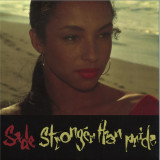
"Stronger Than Pride" erschien 1988, drei Jahre nach "Promise". Dieses dritte Album markiert mit den Titeln "Promise" und "Nothing can come between us" eine groovigere Richtung. "Stronger Than Pride" wurde erneut mit mehreren Platin-Alben ausgezeichnet und bestätigte Sades Status als sicherer Wert in der internationalen Musikwelt. Gemastert mit halber Geschwindigkeit von den Original-Mastern in den Abbey Road Studios. Das Mastering mit halber Geschwindigkeit erzeugt einen außergewöhnlich klaren Klang, der die Dynamik der Originalmischungen bewahrt. 180G Vinyl. Die Originalcover wurden einschließlich der Papierqualität und Druckmethoden reproduziert.
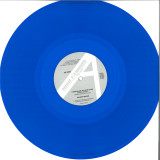
Can be either blue or black.
Originally a club hit in the early 1980s when recorded by American singer Sharon Brown, the niece of songwriter Phil Medley. Released in March 1982, by the legendary Profile Records label from NYC. It was the he first ever record produced by Eddie O Loughlin who would later establish the famous Next Plateau label. “I Specialize In Love” spent three weeks at number two on the US Hot Dance Club Play chart. The single also charted on the UK Singles Chart, and charted In the Dutch Top 15 thus becoming an international club hit. A remixed version of the song was released in 1994, entering the UK Singles Chart for a second time.
Ben Liebrand now steps up and delivers yet again with his Classic Rework and the more club oriented DJ Mix. He manages to retain the pure disco vibe of street and fusion sounds, that, along with a simple rap is total boogie pop. Fantastic and still sounding as fresh as it did forty years ago. A filler on the Dancefloor!
Reel People Music breaks new ground, in more ways than one, with the launch of fresh compilation series Broken, Deep & Dope. A spin-off from acclaimed compilation brand Soulful, Deep & Dope – introduced back in 2015 – this new series sees the much-loved independent imprint pushing further at the boundaries of soulful music. All with that customary Reel People feeling.
Broken, Deep & Dope 2024, the series’ first instalment, unleashes 20 superlative examples of the soulful ‘bruk’ (broken beat), nu beat and nu jazz sound that has so innovatively informed contemporary dancefloors around the world since its inception back in late Nineties West London.
Bringing together classic cuts from the Reel People Music stable (including those by Daz-I-Kue, Monkey Brothers and Reel People) and key productions from some of its closest affiliates and biggest inspirations (such as Vikter Duplaix, Jazzanova, Bugz In The Attic, Kaidi Tatham, and Sean McCabe), this white-hot selection nips and tucks beautifully between stuttered Latin and Afro rhythms, deep house-edged jams and soaring flights of soul-jazz fancy.
Reel People Music is a label borne out of the soulful success of acclaimed collective Reel People but representing so much more. Launched in late 2009, the imprint has built a fiercely loyal international fanbase through its passion for artist development, musicianship, song-craft and authentic soulful groove.
Broken, Deep & Dope 2024, with its scattered yet compulsive beats, frisky basslines and acrobatic melodies, promises to further expand Reel People Music’s reputation for soulful depth and drama. Gathering old and new favourites from some of the world’s finest taste-making DJs and producers, this is another scorching, oh-soul essential hustle. End of.
The inspiration to record this Album came from a difficult period in Zito's life when he was dealing with the death of his late wife Laura. A outpouring of emotion expressing the vulnerability and longing associated with the love and heartbreak surrounding the passing of Mike's wife Laura. Recorded at the legendary Sunset Sound Studios in Hollywood, California, under the watchful eyes of producers Joe Bonamassa and Josh Smith, "Life Is Hard is a complete work of
art for me. I believe this is the best album I've ever made in my life. My wife Laura and I planned this idea of pouring my heart out in music after her death from cancer." - Mike Zito
Mike is a chart topping Contemporary Blues artist racking up numerous independent, international and Billboard No.1 Albums. 'Life Is Hard' was officially released 23rd of February 2024 and achieved six weeks in the top 5 on the US Billboard Blues Chart!
Alongside this Mike has consistently received accolades from the likes of the Blues Federation and The Blues Music Awards, this year Mike is nominated for "Best Blues Rock Artist" and "Best Blues Rock Album". Gulf Coast Records will be rolling out adverts in Blues Matters, Classic Rock, Living Blues and Mojo.
- A1: Bring It On (2024 Remaster)
- A2: Prayer For The Dying (2024 Remaster)
- A3: Dreaming In Metaphors (2024 Remaster)
- B1: Don’t Cry (2024 Remaster)
- B2: Fast Changes (2024 Remaster)
- B3: Kiss From A Rose (2024 Remaster)
- C1: People Asking Why (2024 Remaster)
- C2: Newborn Friend (2024 Remaster)
- C3: If I Could (2024 Remaster)
- C4: I’m Alive (2024 Remaster)
- C5: Bring It On (Reprise)
- D1: Love Is Powerful
- D2: Manic Depression (Feat. Jeff Beck)
- D3: Blues In E
- D4: The Wind Cries Mary
- D5: Fly Like An Eagle
Celebrating its 30th, Seal releases a deluxe edition of his second studio album on 2CD + Blu ray, along with a 2LP Black vinyl set it includes the original album newly remastered, alongside a mix of alternate versions of albums cuts, previously unreleased music, and some unexpected yet satisfying covers.
Seal burst to the top of the pop charts with the release of his self-titled debut album in 1991. In 1994, he returned with a stylistic advance and another collection of pop, dance, soul fusion and electronic gems – all meticulously assembled on yet another self-titled album. Seal II, as It has come to be known, features the International mega-smash Kiss From A Rose, as well as the Wendy & Lisa featuring track Bring It On and a rare appearance by none other than Joni Mitchell on If I Could.
With two successful albums and a sold-out world tour under their belt, Paris-based L'Impératrice have matriculated from a good-times instrumental act created by music critic Charles de Boisseguin to a six-piece powerhouse whose sashaying mixes of funk and French Touch, disco and deep house now include the fetching vocals of singer Flore Benguigui. Their new album Pulsar, is a focused but far-reaching record, the jubilant testament of a band with plenty to say and the skills to say it themselves. Across 10 tracks, L'Impératrice move freely and authoritatively among the sounds they love, bridging hip-hop, kosmische, and modern pop with their most unabashed embraces of French Touch and international house ever. Benguigui, meanwhile, boldly sings of self-empowerment by shirking beauty standards, ageism, and drab normalcy, with a little help from an exciting set of new friends. A longtime fan who had seen the band multiple times, Maggie Rogers flew to Paris to lead the svelte and graceful "Any Way," approaching the song with an unabashed vim. They had a similar encounter with Erick the Architect, who was so enthusiastic about the sample- based and panoramic "Sweet & Sublime" that Benguigui scrapped one of her own verses to make more room for him. And Italian singer Fabiana Martone (Nu Genea) crafted the melody for "Danza Marilu" the moment she heard its disco thump. Throughout these 10 songs, L'Impératrice espouses the rare willingness to be real about life and its woes while also sounding like a perfect picture of joy. Pulsar opens like a window being slid open onto an unimagined world. During the title-track finale, where a casual confession of suffering climbs into a mighty climax rooted in redemption, the band intertwines dubstep, turntablism, and symphonic strings to offer a bracing conclusion: however we are is OK.
"Remembering is not the opposite of forgetting," Casey MQ sings at the start of Later that day, the day before, or the day before that, his new LP and Ghostly International debut. It's a phrase fittingly misremembered from something the LA-based, Canadian-born composer came upon as he spiraled into unconscious and subconscious-led writing sessions at the piano. Casey's known for his 2020 breakthrough release babycasey, which gave voice to songs seen through the lens of childhood, various film score work and collaborations with artists such as Oklou (who returns here), Eartheater, and Vagabon. His gifts as a producer and songwriter are rooted in textural world-building and the excavation of personal truth. With Later that day... he questions what is true entirely, understanding our mind's tendency to bend and project onto pictures of the past. Across vivid, baroque pop balladry, Casey MQ reorients his recording project and point of view under the notion that memories are malleable. All the joy, pain, love, and loss housed within remembrance is open to interpretation and deconstruction, which he does deftly, with curiosity and complete artistic freedom. "It's a memory album," Casey puts it simply, winding up for the deeper unpacking, "and it might be a breakup album, too_there are more questions than answers." Engaging his dreams and sitting with sheet music at his newly acquired piano, he looked to new and old inspirations including the works of Claude Debussy, Joni Mitchell, and Joe Hisaishi's beloved Studio Ghibli film scores. "Since I was young, I always wanted to write a piano album." babycasey's studied electronic sound isn't wholly abandoned on Later that day... instead, it comes through like an atmosphere, giving Casey's more spacious, minimal arrangements a distinct luster and sheen. The textures and tones shift from song to song as if mirroring the way our minds constantly recontextualize, remember, and forget. Cathartic opener "Grey Gardens" _ its title derived from a dream abstractly related to the Toronto restaurant, but not the 1975 film, which he cites as another coincidental false memory _ presents the record's plaintive, haunted feeling. "Even if not reading into lyrics, sonically I wanted it to feel like you're being pulled into a universe. Not fantasy or otherworldly per se, something more tangible, of the body and mind," Casey says. "Hearing it back, I realized this track was the key to unlocking it." His tender falsetto hovers above ambient washes and echoed keys, each word falling carefully in the crevices. "Asleep At The Wheel" unfolds on arpeggiated synth before a burst of symphonic color; the synth returns inverted to harmonize with the outro, "I love a car crash, I love a story, I love a memory, I swear it's real..." Casey leans into digital imagination on the warm, introspective "Me I Think I Found It." Subdued, stuttered percussion underscores the singer as he cycles through pixelated imagery _ screenshots, smiles, streetlights _ searching for higher meaning through love. Built on ascendent chord distortions, "Dying Til I'm Born" gives the record one of its boldest pulses of emotion. The back half stretches out; "Is This Only Water" is sparse and foggy, "Baby Voice" is intimate and desperate for something to remain. "Words For Love" grooves on guitar, and "Tennisman9" aches in heartbreak. French musician Marylou Mayniel, aka Oklou, appears as the collection's only guest for the closing duet, "The Make Believe," a bright and buoyant send-off that gives Later that day... both a sense of resolve and cyclical-motion. "We are young, under the sun," they sing together, a parting image brimming with lightness.
One of the best reggae albums of the ‘80s and one of the real highlights in the Real Authentic Sound label catalog finally gets an LP reissue! Lascelle “Wiss” Bulgin, Albert “Apple Gabriel” Craig, and Cecil “Skelly” Spence all contracted childhood polio, and met at a Jamaican rehab center; in the ‘70s, they formed Israel Vibration and their first record, The Same Song, released in 1978 on the Top Ranking label, was an international smash. But by the time they released Strength of My Life in 1988, it had been seven years since they had made a record, having fled Jamaica in the intervening years to seek better health care and to escape the dancehall scene. Against all odds, Strength of My Life turned out to be a triumph, the beginning of the group’s partnership with the Roots Radics and a reaffirmation of the love the group’s members had for each other and a celebration, as the title goes, of the strength of their lives (we defy you not to be moved by the title track). That’s Augustus Pablo on melodica on “Greedy Dog” and Dwight Pinkney on guitar on “Jah Love Me,” by the way. Roots reggae royalty!
When I arrived in Geneva, Claude picked me up in his Aston Martin. He had a tape deck playing Lowell Fulsom – a guy who used to come to Memphis a lot and I knew some of his musicians. I grew up around the Blues, so this was a natural sound for me. Claude didn’t tell me until much, much later that he played Blues harmonica. He took us to the hotel where we had a warm and cordial welcome. Montreux was a quaint and sleepy town in 1967. However, there was a palpable excitement in the air and we could feel it. Everyone seemed to know that they were about to launch something great – the Montreux Jazz Festival - and there was no turning back. I was their first international artist to perform there with my quartet with Keith Jarrett, Jack DeJohnette and Ron McClure.
We played two concerts at the Casino one in the afternoon and one at night. That was the start of three great and lasting friendships; Claude Nobs, Montreux Jazz Festival co-founder, Rene Langel, and the engineer of the recording, Pierre Grandjean, from Radio Suisse. And - a fourth person, who was 6 at the time, Yvan Ischer. We did not meet until many years later and have become good friends. It is thanks to Yvan’s persistent belief in this music and Pierre Grandjean’s safe keeping of the tapes, that we hear them now, more than fifty years later. live at Montreux Jazz Festival, June 18, 1967. Featuring Charles Lloyd, Keith Jarrett, Ron McClure, and Jack DeJohnette.
- A1: Playing It Cool 00 01:59
- A2: Playing It Right Dub 00 01:53
- A3: Trust & Believe 00 03:37
- A4: In I Dub 00 02:53
- A5: California 00 02:59
- A6: By Night Dub 00 02:53
- B1: Not Good For Us 00 02:52
- B2: Formula Dub 00 02:56
- B3: Be What You Want To Be 00 02:39
- B4: Be Good Dub 00 02:25
- B5: I Can't Do Without You 00 01:59
- B6: Still Need You Dub 00 02:01
Keith Hudson was a one-of-a-kind musical innovator with an impeccable track record from the start: his first studio recording involved former Skatalites, and his earliest releases provided solid-gold hits for Ken Boothe (“Old Fashioned Way”, 1967), John Holt, Delroy Wilson, U-Roy and the others.
With Pick A Dub Hudson produced one of the best dub albums ever, and with The Black Breast Has Produced Her Best, Flesh Of My Skin, Blood Of My Blood he released the first concept album in reggae history, bringing his all-around talents to full fruition as early as 1974. Thematically dedicated entirely to Black history, the latter of these two albums is a masterpiece that captivates with an atmosphere that is as dark as it is deeply spiritual, charged by Hudson's eccentric vocals. Like Lloyd Bullwackie Barnes, his splitting from tradition was dynamic and all his own.
As his career moved on, Hudson found himself working outside of Jamaica, more frequently in London and New York studios and for transatlantic audiences, his dark experimentalism becoming increasingly better suited to the LP than the cardinal 7” reggae format.
Playing It Cool & Playing It Right was released in 1981 on the Joint International label, in NYC, with Lloyd Bullwackie Barnes as the executive producer. The Love Joys and Wayne Jarrett, stalwarts of Barnes' record label, Wackies, would also inimitably feature Hudson at the microphone. Like Bullwackie, Hudson was a devotee of Coxsone Dodd’s Studio One and Playing It Cool & Playing It Right follows Dodd’s then strategy of overdubbing his signature rhythms. The Studio One sides were aimed at the dancefloor and Hudson’s reworkings of tracks like “Melody Maker” are more psychological. Here, deep Barrett Brothers rhythms are made deeper with reverb, filters and distortion; everything pitched down and overlaid with new recordings of guitar, percussion, keyboard, and voice, often heavily treated.
Playing It Cool & Playing It Right continues Hudson’s psycho-acoustic journey into the abysses of existence, and overwhelms with the beauty of artistic self-empowerment. "Too much formula," sings Hudson, whose voice is occasionally reminiscent of Sly Stone or even Tom Waits. "Darkest night," answers an echoing background choir elsewhere. Even more fascinating is Hudson's production, which reflects Black history in even the smallest sound detail, the flashing whip of the slave driver still echoes in the sound of the snare drum. Rarely has a roots sound been made so electrifying, so expansive in all directions, so crystal clear, so bass-warm and echophonic as on these 30 minutes of music.
Playing It Cool & Playing It Right is legendary, strange, utterly compelling music that has possibly never been more topical than it is today.
Sect have a lot on their minds. With the release of their brand new single, New Low and the promise of Plagues Upon Plagues, the follow up full-length to 2019’s Blood of the Beasts, Sect explore the intersection of issues which have cascaded over us for the last five years, the “plagues” of the title referring to the literal pandemic, and the metaphorical plague of the political state and the rise of fascism.
Comprised of an international cast of stellar musicians, who cut their teeth in a formative moment of political, cynical, antagonistic extremes, Sect unites Scott Crouse (Earth Crisis, Tooth & Claw) & Jimmy Chang (Undying, Catharsis) - guitars, Steve Hart (Day of Suffering, Mania For Conquest) - bass, Andy Hurley (Fall Out Boy, Racetraitor) - drums and Chris Colohan (Cursed, Unwell) - vocals. They released No Cure For Death in 2017 and Blood of the Beasts in 2019.
Plagues Upon Plagues opens with the bereft waves of “No Uncertain Terms”, a side of the band we haven’t seen before. Vocalist Chris Colohan describes this album as “a funeral rather than a trial”, the activism of previous releases fading to sorrow and grief.
Lead single New Low follows with the advent of marching drums, a funereal procession for the world we hoped to build. There’s frantic horror on the album too, with the track “Drowning in Sorrows” taking a look at the ways in which we numb ourselves as a society. “#ForeverHome” is a bitterly angry track about how people used animals for both narcissistic virtue signalling and one-way comfort in the pandemic, and abandoned them en masse just as selfishly when social life came back. Speaking to their straight-edge principles and how that continues to feed into their songwriting, Chris says, “the only kind of straight edge songs I’m interested in writing are dynamic ones that address human realities that you don’t have to be straight edge to engage with.”
On Plagues Upon Plagues, Sect pierce through the veil of complacency, forcing listeners to confront uncomfortable truths about the fragility of our world. The band wields their sonic arsenal like a prophetic warning and with raw vocals and uncompromising lyrics, they confront the harsh realities of existence in these tumultuous times. As society teeters on the brink of chaos, Sect's cold hard statement resonates with an urgency that cannot be ignored.