Repress back in soon, now on black vinyl. Genre: Rock-Alternative; Dreampop, Indiepop, Lo-fi. RIYL: Jesus and Mary Chain, Galaxie 500, Belle and Sebastian, Sarah Records.
The purest a band can aim for is to present their milieu as a time capsule from the morning of. April Magazine deals deep in the hypnagogic charm of their surroundings. Since the 2018 release of “Shirley Don’t” a sneaky classic that first turned ears outside their SF Bay Area home the band has stirred out a handful of cryptic indie pop recordings nestled in warm aerosol hiss and scrappy hand-drawn cover art. Music that glints in the far back of an urban daydream where guitars could be bells, bells could be voices, and voices hardly find use in words. If The Ceiling Were A Kite is a document of things losing definition and time gone slack. The songs on If The Ceiling Were A Kite were recorded over a span of about two years, after Peter, Mike and Kati started playing together around a four track cassette player in Peter’s bedroom. Other kindred spirits like Julia Waves, Ian Collins, Anthony Comstock OBC, Zach Vito, and eventually David Diaz joined in on some of the recordings and live shows adding to the collective ‘whatever works’ ethos of April Magazine. April Magazine is Peter Hurley, Katiana Mashikian, Mike Ramos, David Diaz.
Following the precursor singles of 2021, Formality Jerne-Site’s unveiling is finally cast upon her already-growing fanbase. Trained classically as a composer and completing a masters at the Royal Danish Academy of Fine Arts, Jura introduces a highly-anticipated playground of carefully sculpted characters, plots and lessons - sometimes charming, sometimes nefarious, always absolute and sincere. A fictional land opens its doors and roof to us. A trio of trans kids run amok in rural suburbia. Various sorcerers of the wild future enter the scene on some songs; on others, the mind is cast to sun-drenched drives and journeys of yesteryear. At the heart is a pop sensibility: yearning, reflections, vanity, guesswork, hope. Jura is adamant about practice and precision. Dead seriously she offers, about making music: ‘Nothing should be half-hearted or an accident.’ There’s a maturity and elegance to her compositions, arrangements that - although at first sound seem abstract - lean away from experimental, somehow. She sing-speaks in English, and somehow not typically theatrically for such a play of a record. The theatrics are all real. It’s a fantasy land for sure, but it's based on hard facts. Like academia subdivided into poetry. It’s that weird-ass specificity she mentioned. Opener ‘Someone’s Lifework’ introduces less a choir of voices, than a choir of personalities. The art of storytelling is at the center of the musical expression. A protagonist relinquishes control of chaos that’s bigger than them on a perilous journey on some vessel: they comfort their co-passengers. There’s a sense that the hero - or anti-hero - might be more canny and cunning than the sweetness they first sell to fellow players. 'Is this our getaway chance?’ sings fellow Copenhagener Ydegirl amongst swelling synths and reverb that become so definitely Jerne-Site as the quest continues. The search? For intimacy, perhaps. ‘Same late Age (dIcK bIfFeReNcE)’ imbibes at once, some further disorientation, perhaps a little hallucinatory feeling which may come over the listener. Through a synthesizing of political themes that work across time ‘Same Late Age (dIcK bIfFeReNcE)’ bears reminiscences of the musical expressions of anti-capitalism in the 1980es, although in a new body and context. “I have a feeling that music reconjures societal morals and ideas from the time in which it was written when we press play or hear a live performance. From the moment at a concert when the symphonic orchestra starts tuning in, the time traveling begins. So I imagined how it would be to be trans sitting there playing the first violin, having the job of producing that first tone that all the other musicians around me tune in ona, ” Jura explains. The listener yearns for more; and subsequent tracks deliver. On ‘How Intimate It Gets,’ Jura meditates on the futility of closeness, begging the audience to enter the blood and guts of their own entanglements, the blueprints of focusing entering. Jura sings richly about fingers being lines, pointing or bending, and we’re reminded of their own wicked ways we can’t control. A history of singing in choirs informs the harmony of myriad inner voices heard across the album. At once prophetic and enigmatic, some of the songs rearrange historical events out of pop musical language. The enormously entertaining ‘Pinot-Botticelli Toast to European Users’ conjures scenes of Cold-War world leaders stuck on a cruise in the Transatlantic vacuum, and the protagonist watches a devastating heartbreaker careen on into the picture, led by his own hips on ‘The Lasceaux Associate’. Finally, on title track ‘Formality Jerne-Site’, American English rises to the occasion like a verdict around the narrative of three trans teenagers in rural Colorado: language turns into something sensual and haptic, playing with the snare and sizzle of syllables. The words twist and bend, while the music follows its own synaesthetic logic: “around us pop culture made a vow to a normative desire, drawing in like water color percussion”. Anyines is a site of play and documentation, with a canon so far quite nice. Their future is one that envisions supporting the galaxies their dear friends embody, be it music, performance, video games or beyond. Highlights from their discerning back catalogue include myriad formats: live and digital, plus releases binded to physical artefacts that enhance the live experience such as sculptures and scents. Their history also includes disappearing time-sensitive shadow-tracked material and cross-disciplinary opportunities that reflect deep professionalism and a totally non-schooled semblance of sound and drama. Recent releases include a dance-theatre soundtrack, a traditional shiny pop record, and the acclaimed ML Buch sophomore, Skinned.
Martens: "Matthew Sage’s (Cashed Media, Fuubutshi) »The Wind of Things« and »Catch a Blessing« are two favorites of new music in my shelter. So when a little while ago he dailed in with this idea to make a Country Western album together, i saddled up and joined the stampede. The result is a universal coming of age story."
Sage: "I have always found the idea of whatever 'Western' means in America to be very elusive. It feels like a fantasy that we keep trying to relive by retelling exaggerated stories. An echo of an echo of an echo..."
Martens: "In them, the dissatisfied, unfolds that wide open road. With television infused meditations of packing a gun on horseback, and chasing a bison herd under torrential rains."
All music, recording: Matthew Sage, Lieven Martens Except: piano on track 7 by Wietske Van Gils, field recording on track 7 by Mick Sage, and carillon on track 10 by Luc Dockx
Mixing, editing: Lieven Martens; mastering: Roman Hiele; typography: Jeroen Wille; risograph printing: Jan Matthé
It's hard to believe it's taken this long for a proper retrospective of legendary Los Angeles collective CVE. "We Represent Billions" is a crucial portrait of one of the West Coast's most low-key influential crews - a hydra-like collective of rappers, producers, designers and engineers who were key members of the Good Life Cafe's open mic scene, going on to inspire artists like Jurassic 5, Kendrick Lamar amongst many other. Initially called Chillin Villain Posse before morphing into Chillin Villain Empire in the late 1980s, they eventually centered around the core trio of Riddlore, NgaFsh and Tray-Loc. The crew were years ahead of their time, self-producing music without samples and pioneering a stream of consciousness lyrics that still sound fresh and innovative. CVE were self-sufficient and motivated from the beginning, named "Chillin Villains" because that's how they were perceived by white America. This social motivation was channeled into their groundbreaking performances at Good Life Cafe, the South Central session that evolved into Project Blowed and later on came to influence LA club night 'Low End Theory'. It was chronicled by Ava Duvernay, herself an MC in short-lived duo Figures of Speech, in her "This is the Life" documentary, where she interviewed CVE alongside Jurassic 5, Freestyle Fellowship, Abstract Rude and Busdriver. On "We Represent Billions", we're treated to a snapshot of the CVE sound from 1993-2003, their most prolific era. The retrospective collects music from the handful of albums the crew released on their own Afterlife Recordz label (mostly as limited edition CD-R's) plus many previously unreleased tracks and highlights their untethered eccentric creativity and sheer breadth of influence. Whether twisting twitchy West Coast electro on 'All Over Da Globe' or free associating over horror synths and foley sounds on 'Made in Chillz Ville' there's a sense that their music was just too future for its time. Assembled from heaving industrial samples and graced by back-and-forth tongue twisting flows, 'Thugs and Clips' is as eerie and hard-hitting as anything 2Pac's "The Don Killuminati: The 7 Day Theory" full-length. Fuzzed-out and unsettling, 'Calistylics' welds an ambient synth loop and bone-rattling percussion to Tricky-esque percussion, while the flickering closer 'Unicycle' is a cross between Dr. Dre's icy G-gunk pressure and Three 6 Mafia's pitch black lo-fi funk. In many ways, 2022 is the perfect time to rediscover this music: an urgent, creative fusion of spine-tingling pre-grime electronic minimalism and mind bending wordplay that still sounds completely idiosyncratic and utterly alien. Tracks: 1 All Over Da Globe 2 Thugs and Clips 3 C.V. Vault 4 Made in Chillz Ville 5 Bring It On 6 Calistylics 7 No Feelins 8 Let's Get It On 9 Today Was A Fucked Up Day 10 Untitled (Freestyle) 11 Unicycle
It's hard to believe it's taken this long for a proper retrospective of legendary Los Angeles collective CVE. "We Represent Billions" is a crucial portrait of one of the West Coast's most low-key influential crews - a hydra-like collective of rappers, producers, designers and engineers who were key members of the Good Life Cafe's open mic scene, going on to inspire artists like Jurassic 5, Kendrick Lamar amongst many other. Initially called Chillin Villain Posse before morphing into Chillin Villain Empire in the late 1980s, they eventually centered around the core trio of Riddlore, NgaFsh and Tray-Loc. The crew were years ahead of their time, self-producing music without samples and pioneering a stream of consciousness lyrics that still sound fresh and innovative. CVE were self-sufficient and motivated from the beginning, named "Chillin Villains" because that's how they were perceived by white America. This social motivation was channeled into their groundbreaking performances at Good Life Cafe, the South Central session that evolved into Project Blowed and later on came to influence LA club night 'Low End Theory'. It was chronicled by Ava Duvernay, herself an MC in short-lived duo Figures of Speech, in her "This is the Life" documentary, where she interviewed CVE alongside Jurassic 5, Freestyle Fellowship, Abstract Rude and Busdriver. On "We Represent Billions", we're treated to a snapshot of the CVE sound from 1993-2003, their most prolific era. The retrospective collects music from the handful of albums the crew released on their own Afterlife Recordz label (mostly as limited edition CD-R's) plus many previously unreleased tracks and highlights their untethered eccentric creativity and sheer breadth of influence. Whether twisting twitchy West Coast electro on 'All Over Da Globe' or free associating over horror synths and foley sounds on 'Made in Chillz Ville' there's a sense that their music was just too future for its time. Assembled from heaving industrial samples and graced by back-and-forth tongue twisting flows, 'Thugs and Clips' is as eerie and hard-hitting as anything 2Pac's "The Don Killuminati: The 7 Day Theory" full-length. Fuzzed-out and unsettling, 'Calistylics' welds an ambient synth loop and bone-rattling percussion to Tricky-esque percussion, while the flickering closer 'Unicycle' is a cross between Dr. Dre's icy G-gunk pressure and Three 6 Mafia's pitch black lo-fi funk. In many ways, 2022 is the perfect time to rediscover this music: an urgent, creative fusion of spine-tingling pre-grime electronic minimalism and mind bending wordplay that still sounds completely idiosyncratic and utterly alien. Tracks: 1 All Over Da Globe 2 Thugs and Clips 3 C.V. Vault 4 Made in Chillz Ville 5 Bring It On 6 Calistylics 7 No Feelins 8 Let's Get It On 9 Today Was A Fucked Up Day 10 Untitled (Freestyle) 11 Unicycle
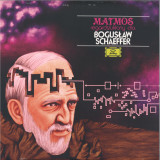
Matmos are one of the most prominent experimental electronic artists working today, crafting work by creating new conceptual frameworks & immediately testing those frameworks absolute limits. For Regards / Uklony dla Boguslaw Schaeffer they've focused on another artist known, in large part, for doing the same. Boguslaw Schaeffer was one of the first Polish artists creating electronic music. In step with American contemporaries like John Cage and Morton Feldman, he worked across the boundaries of classical composition, electronic experimentation, and radical theater in playfully form-breaking ways. Matmos are not the first ones to recognize the power of his catalog, from Solo (a 2008 documentary that garnered numerous international awards), to the annual Shaeffer's Era Festival (most recently celebrated simultaneously in Warsaw and Los Angeles) his work continues to inspire. Regards.. however, was not just inspired by his work, Matmos were given access to the entirity of Schaeffer's recorded works to use as they saw fit, commissioned by the prestigious Instytutu Adama Mickiewicza. They re-assembled & re-combined these recorded works with modern instrumentations in a way that only Matmos could, and what emerges is a composite portrait of the utopian 1960s Polish avant-garde and the contemporary dystopian cultural moment regarding each other across a distance. To facilitate the transcultural exchange that is the album's essential premise, all song titles and liner-notes are provided in both English and Polish. The album was mastered by Rashad Becker and features illustration and design by acclaimed artist Robert Beatty (Tame Impala, Osees, Mdou Moctar). Like the anagrams of the letters of Boguslaw Schaeffer's name that were re-assembled to create some of the song titles, the album itself is a musical re-assemblage of component parts into possible but unforeseen new shapes. Adding harp from Irish harpist Una Monaghan, erhu, viola and violin from Turkish multi-instrumentalist Ulas Kurugullu, and electronic processes from Baltimore instrument builder Will Schorre, and Horse Lords wunderkind Max Eilbacher, the resulting arrangements constantly toy with scale as they move from the close-mic-ing of ASMR and the intimacy of chamber music to the immensity of processed drones and oceanic field-recordings that close the album. Offering a "life review" of production styles, Regards / Uklony dla Boguslaw Schaeffer builds temporary shelters out of the panoramic wreckage of modernist composition, sixties tape music, seventies dub, eighties industrial music, nineties postrock and dark ambient, 2000s era glitch fetishism, and contemporary post-everything collage sensibilities.
out of Stock
Last delivered 4 years ago available to reorder, subject to availability
Much deserved, remastered reissue of ‘We Are I.E.’ by Lennie De Ice, arguably the first proto jungle tune, now coming correct with fresh remixes from Solo & Blades alongside Borai, as well as the sought-after Horsepower Productions remix.
Released in 1991 on I.E. Records, an imprint based out of De Underground Records, a store in London’s Forest Gate run by Mike De Underground alongside Uncle 22 and Randall, it famously featured elements that paved the way for the Jungle sound. Centered around the Amen break, ragga style basslines, vinyl spinbacks and gun shot samples, it stood out as something different back in ’91, A certified classic, rinsed on dancefloors everywhere and anywhere, from back in the day to the present.
Solo & Blades are the first of the new versions, hitting hard with a heavyweight jungle remix, as Borai steps up with a beefy bassline rework. Horsepower Productions killer and sought after remix rounds off the package.
DJ Feedback:
Foul Play
Moving Shadow
"All the remixes totally land, great package, respectfully done. gonna hear a lot of these over the summer I think."
Jerome Hill
Super Rhythm Trax, Don't, Kool FM
"Was a little sceptical seeing these were remixes as its such an iconic track - BUT fair play ! Borai and Ed Solo & Blades both knocked it out of the park and i'll be playing both these, plus replacing my personal (slightly. crusty) vinyl rip of the original ! Bigups !!"
Om Unit
"Untouchable until now tbh"
jd Twitch
optimo
"even though I have probably heard it ten thousand times you can't beat the original. remixes are cool though."
Louise Chen
"this hits so hard it's tough choosing a fave mix!"
Emerald
BBC 1xtra/ Rinse FM
"Yeeeeeh found the dubstep remix vinyl of this in barcelona recently"
Werdna (Circular Jaw)
"Classic, lovely to see Hooj bringing in the big guns for the remixes. These are going off!"
Cortese
"Sick breaks on this one"
Truss/ MPIA3/ Overmono
"wicked"
Oli Warwick
Crack/ RA/ International Orange/ JunoJuno Plus
"Absolutely seminal bomb drop here, and the remixes are no joke either!"
Chris Farrell
"Always good to see this come round again, original and borai mix for me"
Smolny
"CLASICK !"
Doc Martin
Sublevel USA/Fabric UK.
"Complete Rave Warehouse Flashbacks!!!!"
Lil Mofo
The Trilogy Tapes / Tokyo
"wow!"
Moody Boyz
all over the worldstudio rockers records
"classic tune feeling the Filter Dread Remix"
Ciel
Rinse FM / Refuge Worldwide
"really nice collection of tunes!"
dop
"love the original"
out of Stock
Last delivered 8 months ago available to reorder, subject to availability
Far Out Recordings proudly presents Milton Nascimento's Maria Maria. Recorded in 1974 and unreleased until almost thirty years later, the album was written as the soundtrack to a ballet which dealt with the legacy of slavery in Brazil. Raw, atmospheric and emotionally charged, Maria Maria reveals one of Brazil's greatest ever songwriters at his creative peak. Featuring an all-star cast of fellow Brazilian legends including Nana Vasconcelos, Joao Donato, Paulinho Jobim, and members of Som Imaginario, Maria Maria holds what Milton considers to be the definitive versions of some of his classic songs, including 'Os Escravos De Jó' and 'Maria Maria'.
Originally released in 2003 as a double CD package, with Milton Nascimento's 1984 follow up ballet soundtrack Ultimo Trem, Maria Maria will be available on vinyl for the very first time from December 2019, with Ultimo Trem set for vinyl release early 2020.
Milton Nascimento possesses one of the most immediately recognizable voices in Brazilian music: high and sweet and as breathtakingly sublime as that of any soul singer. It was this voice that the legendary Brazilian singer Elis Regina fell in love with back in 1964, having heard Milton perform his song 'Canção do Sal (Sultry Song)' at a private party in Sao Paulo. Ellis went on to record the song in 1967 -giving Milton his first hit in Brazil and beginning a career that has spanned over 50 years.
Born in Rio on the 26th October 1942, Milton moved with his adoptive parents at the age of 18 months to Tres Pontas, a rural town in the state of Minas Gerais, 500 miles north of Rio. He began his musical career as a young teenager, singing in a crooner style he learnt from listening to Brazilian singers and US groups such as The Platters on the radio. Hungry for more opportunities to perform, Milton moved to Belo Horizonte, the capital of Minas Gerais, at the age of twenty. By the beginning of the 60s Milton had made a name for himself both as an accomplished singer and guitarist.
Milton became part of a local network of musicians, film makers, dancers, theatre directors and writers that included the journalist and song writer Fernando Brant as well as lyricist Marcio Borges and his younger brother Lo Borges. Together these four wrote and produced what would become Milton's milestone album, 'Clube da Esquina (Club on the Corner)'. The originality of 'Club da Esquina' shaped the local scene, and it reflects the essence of 'the Nascimento Sound'. Milton's religious upbringing as an Afro-Brazilian Catholic saw him exposed to church choral music from an early age. His love of this genre of music is apparent in both his celestial falsetto and vocal choral arrangements. This collection also displays his early fascination with evocative, non-verbal, scat-style singing, spare, harmonic guitar work and local folk music, jazz and rock.
In 1976, Milton and Fernando Brant teamed up with a new contemporary dance company called Grupo Corpo, whose Argentinian choreographer Oscar Araiz, would become a collaborator with the two musicians. Together, they conceived a show based on the composite life story of the daughter of a black slave called Maria. Nascimento wrote music to Brant's lyrics and "Maria Maria" was premiered in the main theatre of the Belo Horizonte Palacio das Artes that year. "Fernando wrote the lyrics for the ballet, but there were originally no lyrics for the theme song, "Maria Maria'". Milton and Fernando worked on the lyrics together, basing them on folk stories about black women of the countryside. Adds Milton "These memories are mostly things that we witnessed – Fernando and I – rather than what we experienced ourselves.
Milton's music is impressionistic, emotional and romantic. Relying on songs without lyrics as well as evocative vocalizing and choruses, Milton experimented heavily with Afro-Brazilian percussion and taped jungle sounds. His composing method for these recordings was highly unconventional: "I wrote the music for 'Maria Maria' in a tiny Rio apartment with friends and their kids running around and having fun! I love to be in noisy places, surrounded by people", he says.
The music on 'Maria Maria' was performed by an impressive group of young musicians who are today household names in Brazilian music, including Naná Vasconcelos (percussion and effects), Toninho Horta (guitars) and Paulo Moura (sax). Several vocalist including Naná Caymmi, Fafá de Belém, Beto Guedes, and Milton himself, had hits in years to come with reworkings of these songs.
Milton says his compositions follow his visions "like a movie", and he believes that reflects his long love affair with cinema. "I only began composing because of enjoying the movies so much," he says. "I wrote my first song "Peace for the Coming Love" after seeing 'Jules et Jim' (the cult 60s French film directed by François Truffaut), with my friend Marcio Borges. We went early in the morning and watched it four or five times in a row, then went to Márcio's home and wrote the song."
The songs also include solo spoken passages set to music, clearly influenced by this style of French art cinema. On the title track, Maria's story is narrated and translated to music through the use of African Percussion, drums and metal signifying the field slave tools of the day. 'Trabalhos (Works)' runs to work rhythms and whipcracks: no words, just pain. 'Lília' documents the beating of the slave woman. After 'A Chamada (The call)' and the triumphant 'Era Rei e Sou Escravo (I was a king now I am a slave' things begin to turn and Milton employs tropical jungle cries to symbolize freedom. 'Santos Catholicos x Candomble (Catholic Saints vs Candomble)' represents the battle between African and European religions through the music of both sides. Milton's heavenly falsetto pours into 'Francisco' and 'Pai Grande (Great Father)' and the outstanding 'Eu Sou Uma Preta Velha Aqui Sentada no Sol (I'm an old black lady, sitting under the sun)' conjures images of an old woman sitting deep in the forest, her memories painted in drums, piano and voices.
out of Stock
Last delivered 6 years ago available to reorder, subject to availability
While awaiting the release of Dignity Of Labour, The Ex headed back into the studio in early 1983; this time with a new friend – The Mekons' Jon Langford – helping produce.
Originally released in April 1983 (only a month after Dignity Of Labour), Tumult marks a major evolution in Ex-sound. Opener "Bouquet Of Barbed Wire" emerges snarling out of post-punk atmospherics with Terrie Ex's glacial guitar, Bas Masbeck's loping bass and cascading tom-toms from new recruit Sabien Witteman, while "Fear" and "Survival Of The Fattest" bring to bear the rhythmic core of the band, their signature angular style.
Lyrically, the songs on Tumult cycle through a series of familiar concerns: animal rights, squatters, the working class, punk's penchant for radical chic and the creeping fascism of nationalist sentiments. G.W. Sok's voice is squalling and perfectly wry throughout.
Tumult remains a high-water point of early Ex, serving as both developmental guide and way-station. The next 18 months would see the departure of Bas and Witteman and the arrival of long-serving bassist Luc Klaasen and drummer Kat Bornefeld (whose supple rhythms propel the group to this day). The album stands as one of the most compelling and unique documents of early '80s DIY exploration. If Mark E. Smith had only one favorite Dutch punk band, then it would undoubtedly be The Ex.
This first-time vinyl reissue comes with 28" x 39" full-color poster
out of Stock
Last delivered 4 years ago available to reorder, subject to availability
Viele Songs der Sportfreunde Stiller sind Klassiker und aus der deutschen Musikwelt nicht mehr wegzudenken: „Applaus, Applaus!“, „Ein Kompliment“, „Wunderbaren Jahren“. Im September kommt „JEDER NUR EIN X“, gesprochen ”Jeder nur ein Kreuz” – das achte Album der Münchner Band, sehnsüchtig erwartet von Fans und Followern.
Der erste Single „I’M ALRIGHT!“ ist 100 Prozent Sportfreunde Stiller. „I’M ALRIGHT!“ macht Lustauf mehr: auf der Oberfläche die pure Lebensfreude – und ein paar Ebenen tiefer eben doch ein Nachdenken über die Welt.
After having released solo albums on Western Vinyl and Preservation, Domes presents the first entirely instrumental work of the California based multi-instrumentalist Heather Woods Broderick.
Domes is a collection of meditative pieces based around the cello. While not being her primary instrument, the cello holds a very special place for the artist. Throughout the past 2 years, Heather often felt the need to find moments of respite in response to the chaotic and turbulent times we all faced in that period. Her days started or ended with the cello. A single melody initiated a process in which new elements were gradually added to the initial loop until the sounds filled her up. This process and the instrumental nature of these pieces opened the path for self-reflection and enabled her to express emotions outside the world of words or lyrics:
“The cyclical nature of the loop combined with the sound feeling like it’s surrounding me feels serene and safe. My hope is that listeners experience this as well.” - Heather Woods Broderick
Domes is a documentation of that period and offers 7 pieces which to the artist feels like dense masses – strong grounding sounds that can hold weight or be used to disperse weight - in an emotional sense. The album title, Domes, reflects this idea as domes are made out of triangles – the strongest shapes in the physical world. Coincidentally, there are 7 different triangles. As such, the pieces on Domes each reflect a different triangle, a different strongest shape which offers the listener a solid basis to find rest and calmness.
Heather Woods Broderick is a composer, songwriter, and multi-instrumentalist. Growing up in a family of musicians, music took root in Heather’s life at a very young age. Evenings spent singing along to her parents folk music collection began to shape her sense of song as a child. After many years of classical piano training, she began to expand her musical toolkit by learning to play guitar, cello, and flute among others. Deeply influenced by rich tapestries of the natural world, she excels at crafting sonic landscapes that reflect both lushness and intimacy. Heather has released three solo albums to date, and over the years has recorded and toured extensively around the world with a multitude of artists including Sharon Van Etten, Efterklang, Alela Diane, Horse Feathers, Damien Jurado, Lisa Hannigan, Laura Gibson, and more.
The sound aesthetics of ‘Playground’ wants to restore Rookley’s dimension, made of dark, isolated environments, which echo his inner world. Where introspection is combined with the anger and anxiety of those who do not feel at ease in the here and now. Victim and executioner of an imprint made of dissatisfaction and the constant search for a peace that does not come. In the darkness and the discomfort, there is tension and, at the same time, warm abandonment, reassurance. The care for sounds and evoked emotions is the result of research aimed at achieving the exact representation of visceral, intimate, and extremely sincere sensations. There are no filters, everything is authentic, exposed living flesh, made up of significant experiences, alienation, nostalgia for an unwritten future. The language is personal and hermetic, but never encrypted.
out of Stock
Last delivered 4 years ago available to reorder, subject to availability
After an extended interval between releases, Data Arts Group owner/operator Document Swell (real name Simon Cotter), presents his first full length LP "Hybrid Emotion". Document Swell's first musical contribution to Data Arts Group is also the first vinyl release for the label and brings DAG into the new world of 2022 and beyond. Song-writing, and sound sketches for "Hybrid Emotion" took place over a time span of approximately 5 years in various bedroom studios and life-phases throughout northern Melbourne/Naarm, as well as small setups in the Berlin localities of Templehof and Schöneberg. Arranging and mixing was completed in Northcote, throughout that period of ample time in Melbourne's Covid-19 lockdowns. The album spans a rich tapestry of ideas and moods which can be perceived as something between Document Swell's classic playful dance floor style to a more reflective and brooding tone.
The opening track "River Heart", is built of rudimentary pitched percussion, warm Juno pads and randomised Blofeld synthesis to construct an electronic impression and nostalgic sense of life by the river. The title track "Hybrid Emotion" brings the album closer to the realm of the club with relaxed house grooves and moody but spirited melodies, along with hybridised vocal samples."Why Then Here" pushes the album's character towards something less human, with a more synthetic affection portrayed by repetitive vocal samples and individualistic synth tangents. "Now and Then" realigns the trajectory to a warmer and more predictable landscape with chugging Balearic rhythms, glassy synths and jottings of lush electric guitar. On the flip side, "Day of Thunder" drops things down into an animated variety of industrial darkness, with heavy weight kick drums, metallic percussion and bleak vocal messaging. "Little G", an ode to a well loved cat, lightens things up instantly with playful synth noodlings, disco beats and clatter from pots and pans. "Vergangenheit" exhibits Simon's explorations into the acid world, with 303 squawks, cassette crunched drums and shadowy synth pads. The closing track "Epic Sands" ends the album, not with an end note, but a sense of ongoing possibilities.
out of Stock
Last delivered 3 years ago available to reorder, subject to availability
Joona Toivanen Trio makes their We Jazz Records debut with their new album "Both Only", out 25 Feb 2022. A landmark work for the long standing group, the album showcases a new sound for the band, trekking deep into new ideas for an acoustic jazz piano trio. Since their formation as teenagers in mid-1990's, the trio of pianist Joona Toivanen, bassist Tapani Toivanen and drummer Olavi Louhivuori (of Superposition, Ilmiliekki Quartet and Linda Fredriksson "Juniper") has developed their remarkably coherent band sound step by step, touring the world over. Nowadays, the trio is geographically split between Gothenburg, Sweden (Joona), Copenhagen, Denmark (Tapani), and Helsinki, Finland (Olavi), but the unit has never sounded so together as one, and as adventurous as on "Both Only".
"Both Only" by Joona Toivanen Trio is a cocoon, a welcoming shelter of sound that opens up naturally for the listener to inhabit. The album is moody and introspective, even dark at times, but by the time you get to the closing track, "This and This", you'll likely notice something hopeful brewing up. This is not music dealing with nostalgia or a world lost. Instead, it's a body of work with delicate dynamics, taking a minute just to listen and to look inwards to learn something, to move forward.
The first single "Enlightened" is perhaps the most traditional piece on the album, yet it flows like a vessel beyond genre, conveying a mood, a feeling and an idea. Listen to how the piano, bass and drums discuss, how the groove moves with the instruments having their clear roles but also supporting each other and documenting a musical aging process exactly as that of a quality bottle of red wine. As a song like "Direction" proves, the melody is there all the way, yet there is nothing obvious about how it's carried by the trio. Things remain surprising, fresh and moving at all times. "Except For" keeps its intensity, while nearly erupting into a full on 4-to-the-floor banger. Nearly! The key here is how the energy sustains itself, building the intensity within the music.
"Both Only" is a powerful statement from a band ready to renew itself time and again, and one willing to do it slowly, outside of the hype. This process makes the impact enduring, nuanced and lovely.
WJLP37 Joona Toivanen Trio "Both Only" is available on vinyl as a black vinyl edition and as a LP+7" bundle also including WJ0716 "Except For (7" Edit)" / "Keyboard Study No. 2".
“More excellent poetic soundscapes from We Jazz! Love the flow through the tracks here – textural pieces moving into more rhythmic jazz abstractions. Beautifully recorded too.”
Quinton Scott — Worldwide FM
“Following on from the excellent Linda Fredriksson album We Jazz extend the journey with this innovative Joona Toivanen Trio set.”
Paul Bradshaw — Straight No Chaser
“You’ll look in vain here for extravagant splashes of color or bright swathes of sound, but what you will discover are a finely-chiselled set of compositions that make the most of the trio’s limited palette: flint-sharp melodies hewn from the ice, crisp and crackling rhythms.”
Cal Gibson — Ban Ban Ton Ton
“Incredible album from Joona Toivanen Trio and a strong start to the new year from We Jazz.”
Kerem Gokmen — Dubmission
“Encapsulating a new movement in jazz.”
Jay Scarlett — Sounds Supreme
“Interesting listen on the shortest day of the year. They have a very definite and saturated style.”
John Chacona — All About Jazz
“Airplayed the track”
Tom Ravenscroft — BBC6 Music
“Jazz album of the year released already in February?”
Ralf Sandell — Hufvudstadsbladet
“★★★★★”
Iida Simes — Voima Magazine
out of Stock
Last delivered 4 years ago available to reorder, subject to availability
"A collection of pieces about the discovery of sounds and sonic universes hidden in objects, places and within yourself." - Feldermelder & Julian Sartorius
Commissioned by the legendary concert venue Bad Bonn in Düdingen, Switzerland, and the KRAN project, 'Bonn Route' is a collaborative album by electronic musician Feldermelder and percussionist Julian Sartorius. A location- based sound walk that can be experienced both on-site in the village of Düdingen, and as a full-length album. The eleven tracks are a sonic homage to, and an artistic interpretation of, a small village in Switzerland's heartland.
Building on his practice of site-specific performances and percussive sound walks, Julian Sartorius captured sounds and patterns at eleven locations: the train station and cemetery, on the banks of a stream, on a bicycle path, and in an intimate cavern above the village's lake, amongst other locales. Sartorius documented the soundscape of the village in field recordings, recorded samples of objects and captured percussive patterns by playing on the architecture and vegetation found on-site.
Feldermelder then processed these recordings into eleven compositions, preserving the locations' acoustic identities, but expanding on Sartorius' material. Besides the bassline on 'Veloweg', Feldermelder used only sound reactive synthesis and resonators to create additional sounds, layers and tracks, thus multiplying the spectrum and rhythms of the original material. 'Bonn Route' is a musical journey rooted in the emittance of sound, and our resonation with the world around us.
Feldermelder is a Swiss musician, sound designer, producer and installation artist. He is co-founder of -OUS and part of the audiovisual collective Encor.studio. He has previously released several releases on -OUS, both solo and in collaboration with Sara Oswald.
Drummer, artist and percussionist Julian Sartorius' precise and multi-layered rhythmical patterns are keen excursions into the hidden tones of found objects and prepared instruments, bridging the gap between organic timbres and the vocabulary of (experimental) electronic music. He has previously released his album "Locked Grooves" on -OUS.
out of Stock
Last delivered 4 years ago available to reorder, subject to availability
The Ice Warriors is the 39th story arc of the series Doctor Who consisting of 6 parts and ran in the 5th season. Parts 2 and 3 are considered lost and were animated for DVD release in 2013.
Plot: The TARDIS materializes on Earth, where humanity is fighting a new ice age. At Brittanicus Base, scientists are trying to use an ionic device to combat the advance of a glacier. When a giant humanoid creature is discovered nearby in the perpetual ice, additional complications arise as the ice warrior comes to life after thawing. It is the captain of a spaceship from Mars that crashed centuries ago. Varga also wants to revive his comrades and conquer Earth, since life is no longer possible on Mars. The Doctor and his companions must not only prevent Varga's plans but also save the base's crew from the approaching glacier....
On three LPs in a deluxe box set, fans can now relisten to the four surviving original TV episodes from 1967. The 140 gr. LPs come in the special color Molten Ice vinyl. Elaborately illustrated sleeves on top.
He may not have known it before, but Toronto-born, New York-based
guitarist Matthew Stevens, prized for his forceful, distinctive electric
sound was an ideal candidate to make an album fully devoted to solo
acoustic guitar: the intimate, unadorned, straightforwardly titled
'Pittsburgh'
September 2020, Stevens was hunkering down in his wife's family's hometown of
Pittsburgh, while navigating his way through the crisis. He had with him a vintage
Martin 00-17, a small- body mahogany guitar. Practicing daily on the Martin, he
began generating a series of short song "starts" - ideas and sketches he thought
might lead somewhere. Then one rainy Pittsburgh day, Stevens' bike slid out from
under him and he broke his right elbow. Rather than getting derailed musically, he
became immersed in a creative process that led straight to 'Pittsburgh': a
document of those short song "starts" from the notebook, now hatched as
completed compositions. "Playing this music became a big part of my rehab,"
Stevens recalls.
As the album took shape, it became clear to Stevens that he was headed in the
direction of a wholly unaccompanied recital, with no overdubs or sound layering
of any kind. Just him and this special Martin, two Neumann U89 mics and enough
peace of mind across two separate sessions to make 'Pittsburgh' the triumph that
it is.
In addition to his extensive high-profile work with Esperanza Spalding (serving as
co- producer on 'Exposure' and '12 Little Spells'), Stevens is also a member,
songwriter and co-producer of Terri Lyne Carrington's GRAMMY-nominated Social
Science band. He has made vital contributions to groups led by Dave Douglas,
Linda May Han Oh, Christian Scott aTunde Adjuah, Ben Williams and more. With
tenor saxophonist Walter Smith III he co-leads the In Common collective. Stevens
has also amassed many credits beyond the jazz world, collaborating on
forthcoming releases by Anna B Savage, Jamila Woods, Tyler Armes
(Murdagang) and Berlin-based electronic artist Robag Wruhme.
Baby? are Erin Allen (Violence Creeps, High
Castle) and Max Nordile (Preening, Violence
Creeps, Uzi Rash).
This collaboration sprang from a singular epic
recording session. “Even though we hang 11 times
weekly, shouldn’t we remotely pile on overdubs ad
infinitum for havoc injection?” Did they really say
that? Did they really do all this on purpose?
For fans of Wild Man Fischer, Minutemen, Electric
Miles, Contortions, The Fugs, Preening.
Punked-up no-wave improv skronk to get you
going all night.
After her stunning collaboration with Jim O’Rourke (Le Piano Englouti, BT055), Brunhild Ferrari returns to Black Truffle with Stürmische Ruhe, her first duo with Christoph Heemann. A legendary figure in underground music, Heemann has quietly produced a unique body of work since his beginnings with the absurdist cutups of H.N.A.S. in the mid-1980, including collaborations with Merzbow, Organum and Nurse With Wound, the eerie psychedelia of Mirror (with Andrew Chalk), In Camera (with Timo van Lujik) and Plastic Palace People (with Jim O’Rourke), and the precise cinema pour l’oreille constructions of his solo works. Created together in Ferrari’s Parisian studio (once shared with Luc) between 2011 and 2014, Stürmische Ruhe is a single half-hour piece that folds rain and storm recordings into a intricately woven fabric of haunted electronics, unexpected edits and disorienting processing. Banging with the jarring thump of a slamming door (an element that will reappear periodically throughout the piece as a kind of punctuation mark), it is immediately obvious that concrete sound is used here in a free, poetic way outside of the strict confines of documentary field recording. The wind captured by Ferrari’s microphone roars and whistles, accompanied by thick clusters of wavering tones whose unpredictable rises and falls in volumes are synchronised with the bumping and thudding of windows and doors. At some points the microphone sound melts into a wavering low-bit digital smear before fanning out into broad, atmospheric depths. The cinema for the ear constructed here suggests not linear narrative or documentary, but an organic flow of cross-fades, double-exposures and abrupt cuts, a free-associative dream in which wind and water take on mythical characteristics. Throughout the piece's second half, layers of synthetic floating tones and pinging upward glissandi negotiate a constantly shifting balance with wind-borne whispers and rustles, at times dropping to silence, at others rising up with elemental force. As Ferrari explains in her liner notes, Stürmische Ruhe is a meeting of ‘completely opposite sound worlds’ in which ‘almost-violence’ is joined with a ‘reconciling harmony’. Reaffirming the infinite possibilities of the musique concrète tradition while avoiding its academic tropes, Stürmische Ruhe is accompanied by tri-lingual liner notes from Brunhild Ferrari and arrives in a sleeve graced with the beautiful art informel paintings of her father, Wolfgang Meyer Tomin. Cut at 45rpm for maximum fidelity.
out of Stock
Last delivered 4 years ago available to reorder, subject to availability
Planet Battagon – Episode 01, a labyrinth of different sounds and textures was created live, purely on machines. Creating Experimental and other-worldly tones, all three tracks hail from the quirky "Planet Battagon" world, with "Like You, Like Me" the most likely contender for Club play by the more adventurous DJs. Touching on early Techno and Space-Jazz, Episode 01 is certain to take you on a sonic journey like no other...
Gilles Peterson – “Love it, I can’t wait to play this one out”
Rob Da Bank - “ WOW what a fresh and unique sounding record…drumtastic! "
Felix (Basement Jaxx) - " It's like the Clangers playing at a bass music festival ”
Rhythm Doctor - “ Explosive, Techno Jazz experiment. . .will become a classic ”
Toddla T - "Refreshing, Sic!”
Further support from Riton, Sinden, Canblaster and Brodinski
Animal Records – founded by Chris Stein of Blondie fame – only ever released one album in its brief early-80s history, but what an album that was. Wild Style remains the most seminal soundtrack in hip-hop history, a snapshot of the scene as it evolved from the streets to the recording studio. But it’s not just a vital document, it’s also a damn good listen.
The line-up is a who’s who of those who stood out from hip-hop’s nascent block party days. The Double Trouble pairing of Rodney Cee and KK Rockwell, The Chief Rocker himself, Busy Bee, the mighty line-ups of both The Cold Crush Brothers and The Fantastic Freaks. The music captures the free-form, roaming nature of the film – it’s rough at the edges, it’s occasionally amateurish, but it’s completely, utterly glorious.
The original Animal tracklisting, of which this is a reissue, is full of recurring sounds and motifs, all of them co-produced by Chris Stein and Fab Five Freddy, stepping away from breakbeats to produce a sound that reminds you of them, while being totally unique. The epic drums are courtesy of Lenny ‘Ferrari’ Ferraro, a Vietnam vet and punk drummer whose career spanned stints backing Aretha Franklin and Lou Reed.
Over time, those sounds – the Charlie Chase and Grand Wizard Theodore scratches, the indelible lyrics - have become hip-hop touchstones, endlessly sampled and referenced, the bedrock of so much music to follow. That’s because the soundtrack perfectly encapsulated the essence of the film, the scene and hip-hop’s emergence from The Bronx to the attention of the wider world. Presented in this reissue with the original artwork, it remains the blueprint.
out of Stock
Last delivered 4 years ago available to reorder, subject to availability
Available on vinyl for the first time since it's original CD-only release in 2007. Tenor saxophonist Fred Anderson and drummer Hamid Drake had the closest of relationships, as close as a father and son might have. Their communication was at a higher level musically and emotionally. The music on this album reflects not only their masterful musical skills, but a conversation in music that is exceptionally powerful and unique. For From the River to the Ocean, they assembled a band consisting of fellow Chicagoans to record the most relaxed, perfectly balanced album they made together. It may seem hyperbolic to call From the River to the Ocean Fred Anderson's greatest album, but the empathy and cohesiveness of the ensemble, coupled with the saxophonist's brilliant, searching improvisations, makes it a powerful contender. From the River to the Ocean is an especially varied outing, ranging from Anderson's classic set-closing blues "Strut Time" to the meditative, spiritual, modal track "For Brother Thompson," dedicated to the late trumpeter Malachi Thompson and featuring bassist Harrison Bankhead on brooding piano and Drake chanting in Arabic. The record's title track and the closer, "Sakti/Shiva," find bassist Josh Abrams laying down an astounding bed on guimbri, the threestringed Moroccan acoustic bass familiar to fans of Gnawa music. Another of the album's delights is guitarist Jeff Parker, well known Jazz guitarist as well as member of Tortoise. Here, Parker displays an immense sensitivity and melodic genius, sharing solo spotlight with Bankhead's cello on "From the River to the Ocean" and sculpting a stunning array of shapes on the group's swinging take on Anderson's "Planet E." Underneath it all is Hamid Drake, an intensely creative soul continuing to challenge himself. Drake's growth is not measured in how many different instruments he plays - indeed, he's scaled back his arsenal over the years - but in the depth and musicality of his feeling. On this record he is remarkably light and airy, playing with tremendous delicacy and clarity. Propulsion can be introduced without a pneumatic drill, and Drake instigates an avalanche of rolling forward momentum on the opening moments, inspiring the two basses and guitarist to move, to make something moving, and in turn to further inspire Fred Anderson to some of his most forceful and imaginative playing ever documented. If the individual is a small receptacle of expressivity, a mountain spring if you will, then it is in ideal settings like this one that the springs join forces, turning into streams, then bigger and bigger tributaries, finally swelling into rivers that open into the oceanic creative waterways. Thank goodness Anderson and Drake tapped into that wellspring, drawing directly from the source
Available on vinyl for the first time since it's original CD-only release in 2007. Tenor saxophonist Fred Anderson and drummer Hamid Drake had the closest of relationships, as close as a father and son might have. Their communication was at a higher level musically and emotionally. The music on this album reflects not only their masterful musical skills, but a conversation in music that is exceptionally powerful and unique. For From the River to the Ocean, they assembled a band consisting of fellow Chicagoans to record the most relaxed, perfectly balanced album they made together. It may seem hyperbolic to call From the River to the Ocean Fred Anderson's greatest album, but the empathy and cohesiveness of the ensemble, coupled with the saxophonist's brilliant, searching improvisations, makes it a powerful contender. From the River to the Ocean is an especially varied outing, ranging from Anderson's classic set-closing blues "Strut Time" to the meditative, spiritual, modal track "For Brother Thompson," dedicated to the late trumpeter Malachi Thompson and featuring bassist Harrison Bankhead on brooding piano and Drake chanting in Arabic. The record's title track and the closer, "Sakti/Shiva," find bassist Josh Abrams laying down an astounding bed on guimbri, the threestringed Moroccan acoustic bass familiar to fans of Gnawa music. Another of the album's delights is guitarist Jeff Parker, well known Jazz guitarist as well as member of Tortoise. Here, Parker displays an immense sensitivity and melodic genius, sharing solo spotlight with Bankhead's cello on "From the River to the Ocean" and sculpting a stunning array of shapes on the group's swinging take on Anderson's "Planet E." Underneath it all is Hamid Drake, an intensely creative soul continuing to challenge himself. Drake's growth is not measured in how many different instruments he plays - indeed, he's scaled back his arsenal over the years - but in the depth and musicality of his feeling. On this record he is remarkably light and airy, playing with tremendous delicacy and clarity. Propulsion can be introduced without a pneumatic drill, and Drake instigates an avalanche of rolling forward momentum on the opening moments, inspiring the two basses and guitarist to move, to make something moving, and in turn to further inspire Fred Anderson to some of his most forceful and imaginative playing ever documented. If the individual is a small receptacle of expressivity, a mountain spring if you will, then it is in ideal settings like this one that the springs join forces, turning into streams, then bigger and bigger tributaries, finally swelling into rivers that open into the oceanic creative waterways. Thank goodness Anderson and Drake tapped into that wellspring, drawing directly from the source
• Revised reissue of the acclaimed first-ever book-length investigation into French Touch.
• Back in print for the first time since 2004.
• Updated version features previously unpublished interviews with Daft Punk, Laurent Garnier, Cerrone, Jean Jacques Perrey, Motorbass, Chris Le Friant (aka Bob Sinclar), Air, Etienne de Crecy, La Funk Mob, Cassius, The Micronauts, Stardust, Benjamin Diamond, Modjo, DJ GilbR, i-Cube, DJ Cam and many more...
During the second half of the 1990s, Paris experienced a dance music revolution thanks to groundbreaking artists like Daft Punk, Air, Super Discount, Motorbass, Cassius, Dimitri from Paris, Bob Sinclar and many, many more. It was a scene that became known as French Touch and was heralded throughout the world as the epitome of dance music cool, forever placing Paris on the dance culture map.
Journalist and author Martin James was there right from the start, documenting the scene from its inspirations to its earliest moments and onto its global breakthrough. In the process, he inadvertently provided the French Touch moniker that became adopted throughout the world.
Drawing on a dazzling array of exclusive interviews with the biggest names in French electronic music history, French Connections explores France’s significant contribution to dance music culture that paved the way for the French Touch explosion.
“Endlessly informative and thoroughly enjoyable, James manages to bring even the most boring artists (Air) to vibrant life with his energetic prose and rich imagery.” Bob Stanley, Mojo
“(James) has a rare, imagistic talent for evoking the unearthly sounds of modern dance music.” The Guardian
“Viva Monsieur James! Essential reading for all fans of Gallic grooves.” DJ Mag
“If ever a book was overdue then it’s this one, which charts the influence of French electronica on the world outside the hexagon over the past decade or so… tres bien.” Select
A spellbinding tribute from one multi-faceted artist to another. New York-based artist Aki Onda (b. 1967) conjured a transduction to the Korean multi-media pioneer Nam June Paik (1932-2006). Aki himself describes the project:
“Nam June’s Spirit Was Speaking to Me occurred purely by chance. In 2010, I was spending four days at Nam June Paik Art Center in South Korea for a series of performances and had plenty of free time to wander. The building was packed with Paik’s artwork and related material. I have always felt a close kinship with him as an artist, and so it was a great opportunity to immerse myself in his works and ephemera.
It was that night I made the first contact, via a hand-held radio in a hotel room in Seoul. It was literally out of the blue. Scanning through the stations, I stumbled upon what sounded like a submerged voice and I began to record it in fascination. I concluded this was Paik’s spirit reaching out to me.
The project continued to grow organically as I kept channeling Paik’s spirit over long distance and receiving cryptic broadcasts/messages. The series of séances, conducted in different cities across the globe, began in Seoul in 2010, and continued in Köln, Germany in 2012, Wrocław, Poland in 2013, and Lewisburg, USA in 2014. The original recordings were captured by the same radio which has a tape recorder, with almost no editing, save for some minimal slicing and mastering.
Paik is known for his association with shamanism, a practice that constantly surfaces in his works all through his career. In an interview, he stated “In Korea, diverse forms of shamanism are strongly remained. Even though I have created my work unconsciously, the most inspiring thing in my work came from Korean female shaman Mudang.” Paik himself was a master shaman and vividly used shaman rituals and symbols for staging his performances and installations.
These recordings also became a way for me to explore the mythic form of radio—a medium which is full of mysteries. The transmissions captured may be “secret broadcasts” on anonymous radio stations. There are in fact hundreds of those stations around the world, although the numbers dwindle as clandestine messages can now be sent via encrypted digital channels. Some of these stations were likely for military use or espionage or relics of the Cold War. But many others continue without apparent explanation. These are just some of the questions that remain unanswered.”
Commissioned in 2017 by documenta 14's radio program “Every Time A Ear di Soun,” these recordings were continually broadcast on eight radios stations around the world that year. Nam June’s Spirit is a beautifully formed homage, I cannot think of any other like it. An intimate, flickering language discovered through the air. The LP comes replete with a booklet of photographs of Paik on the set of Michael Snow’s unreleased film Rameau’s Nephew (1974).
Sean McCann, 2020
Aki Onda, 2017
20-page art booklet including rare photographs of Nam June Paik from the set of Michael Snow’s film Rameau’s Nephew (1974), two essays on radio-wave phenomenon (by Onda and Marcus Gammel), and a remembrance of Paik by Yuji Agematsu
Little Bihlman ist ein mit dem Emmy Award ausgezeichneter Singer-Songwriter, der schon mit legendären Künstlern wie John Fogerty, Trey Anastasio (Phish), Dug Pinnick (King's X) und dem legendären Blueser Son Seals gearbeitet hat und mit seinem Solo Album einen zeitgemäßen und doch sofortigen 10-Song-Klassiker abliefert.
Little Bihlman ist ein mit dem Emmy Award ausgezeichneter Singer-Songwriter, der mit "The Legend Of Hipster Billings" ein Americana beeinflusstes Rockalbum vorlegt.
Die originellen Songs und Geschichten sind geschnitzt aus den Kämpfen und Triumphen des Lebens, inspiriert von Motorrädern, Sonnenschein, Kaffee, Staub, Whiskey, Regen, Tattoos, Narben, Benzin und Herzschmerz. "The Legend of Hipster Billings" lädt ein zu einer musikalischen Reise durch das Herzland Amerikas ein. Von Chicago, nach Nashville über den großen Mississippi in die Badlands von Dakota, hinauf in die majestätischen Berge von Utah und hinunter in die Lichter der Großstadt Las Vegas.
"The Legend of Hipster Billings" wurde aufgenommen und produziert von Miles Fulwider (Wynton Marsalis, Willie Nelson, Norah Jones und Chick Corea) ud Andrew Glasmacher. Little selbst blickt auf seine eigene persönlichen Reise sowie auf die Zusammenarbeit mit so herrausragdenden Künstlern wie John Fogerty, Trey Anastasio (Phish), Dug Pinnick (King's X) und dem legendären Bluesman Son Seals.
Little gibt dem Americana-Rock eine neue, zeitgemäße Note, indem er tiefgründige Texte, dreckige Gitarrenriffs, Gospel-Harmonien und mitreißende Grooves zum Einsatz bringt, welche diesem Album eine besondere Kraft verleiht.
Bihlman's Songs verkörpern eine authentische Annäherung an die Essenz von Herz und Seele, welche uns alle zusammenhält.
Während seiner bisherigen Karriere war Little mit mehr als 50 Songs in TV/Filmen weltweit. Dabei so große Sender wie FOX, ABC, CBS und Netflix. Darunter die preisgekrönten Serien "Sons of Anarchy", "Days of Our Lives" und kürzlich "Big Sky".
Little Bihlman hat sich einen Weg über den amerikanischen Rock-Highway gebahnt und sich als vielseitiger Musiker und Singer-Songwriter etabliert. Als Tournee-Veteran hat Little mit vielen der großen Rock- und Blues-Legenden an weltberühmten Orten gespielt, darunter das Weiße Haus mit dem legendären Bluesman Son Seals. Im Laufe der Jahre hat Little mit Grammy-prämierten Produzenten wie Jim Gaines (Journey, Stevie Ray Vaughan, Huey Lewis ), Roy Thomas Baker (Queen, The Cars) und Bruce Robb (Cherokee Studios) gearbeitet, um nur einige zu nennen.
Die Songs auf diesem Album tragen Geschichten in sich, welche sich beim Hören auf mysteriöse und wunderbare Art entfalten.
Nachpressung 2022 auf weißem Vinyl (1000 Stück weltweit)! Re-Issue des ersten Studioalbums von PERE UBU. Heute ist das Album noch immer so direkt und kraftvoll wie damals beim ersten Entdecken, doch wenn man das PERE UBU Debüt "The Modern Dance" , hört, muss man sich immer wieder fragen, was zur Hölle man da eigentlich wahrnimmt. Der Begriff ,Art-Punk" mag da ein wenig helfen. Verrückte Sounds, manische Rock'n'Roll Riffs, comicmäßiger Gesang und ein typischen Garage Sound machen das Album zu einem Meilenstein experimenteller Rockmusik. Mit einem Sound, der sich irgendwo zwischen VELVET UNDERGROUND, den SEX PISTOLS und THE RESIDENTS einpendelt, sorgt diese durchgedrehte ,Art-Punk" Band für ein wahrhaft außerirdisches Hörvergnügen. Mensch ist geneigt, Allmusic bei deren Beschreibung zuzustimmen: ,man wird sich bald bewusst, dass das Punkrock ist, wie man ihn nie zuvor gehört hat." Für diese Edition hat Paul Hamann von Suma die ursprünglichen analogen Bänder vom Zweispurgerät auf höchste digitale Auslösung hochgezogen, die mindestens vier Mal besser als die des Originals ist. Die Tracks wurden sorgfältig vom Soundarchitekten Brian Pyle neu gemastert, um die einzigartigen versteckten Qualitäten weiter herauszuarbeiten.
Rolling Blackouts Coastal Fever return in 2022 with Endless Rooms, the Melbourne quintet's third album proper. Described by the band - comprised of Fran Keaney, Joe White, Marcel Tussie and brothers Tom Russo and Joe Russo - as them "Doing what we do best: chasing down songs in a room together", Endless Rooms stands as a testament to the collaborative spirit and live power of RBCF. While initial ideas were traded online during long spells spent separated by lockdowns, the album was truly born during small windows of freedom in which the band would decamp to a mud-brick house in the bush around 2hrs north of Melbourne built by the extended Russo family in the 1970s. There, its 12 tracks took shape, informed to such an extent by the acoustics and ambience of the rambling lakeside house that they decided to record the album there. The house also features on the album cover. For the first time, the band self-produced the record (alongside engineer, collaborator and old friend, Matt Duffy), creating their most naturalistic and expansive document yet. The result is a collection of songs permeated by the spirit of the place; punctuated by field recordings of rain, fire, birds, and wind. "It's almost an anti-concept album," say the band. "The 'endless rooms' of the title reflects our love of creating worlds in our songs. We treat each of them as a bare room to be built up with infinite possibilities."
out of Stock
Last delivered 3 years ago available to reorder, subject to availability
SUMMER OF SOUL (…Or, When The Revolution Could Not Be Televised) Original Motion Picture Soundtrack accompanies Ahmir “Questlove” Thompson’s directorial debut documentary SUMMER OF SOUL, which won the Grand Jury Prize and Audience Award at the Sundance Film Festival. Like the documentary, most of the audio recordings that were recorded during the 1969 Harlem Cultural Festival have not been heard for over 50 years, keeping this incredible event in America’s history lost – until now. The SUMMER OF SOUL (…Or, When The Revolution Could Not Be Televised) Original Motion Picture Soundtrack is a joyous musical celebration and the rediscovery of a nearly erased historical event that celebrated Black culture, pride and unity. For the album, Questlove carefully selected 16 live renditions of jazz, blues, R&B, Latin, and soul classics performed over the course of The Harlem Cultural Festival in 1969 as chronicled by the film. Performers include The 5th Dimension, Gladys Knight & The Pips, B.B. King, Nina Simone, The Staple Singers, David Ruffin and Sly & The Family Stone! Extensive promo & marketing activity across all media outlets. The CD format was released in Jan. Standard black vinyl 17 track double LP in gatefold sleeve. Promo/marketing activity.
Black Truffle is pleased to present Landscape and Voice, a radical new work (and rare vinyl release) from major Japanese sound artist Toshiya Tsunoda. Undoubtedly one of the most influential artists working with location recordings since the 1990s, Tsunoda’s work possesses a rigorously searching quality that sets him apart from his contemporaries. Tsunoda is known to many listeners for the subtle atmospheric poetry of his early Extract from Field Recording Archive series, which focussed on vibrations recorded in various indoor and outdoor environments in his native Miura Peninsula, often inside pipes, bottles and other vessels. In more recent years, his work has explored the implications of his claim that field recording should be seen as ‘depiction’ rather than ‘documentation’. He has explored disorienting editing and processing in his works with Taku Unami, and, perhaps most radically, represented Maguchi Bay as a kind of kinetic sculpture for shaking speakers by removing all but the inaudible low frequencies from a field recording (Low Frequency Observed at Maguchi Bay).
One of the recurrent concerns of Tsunoda’s recent work, as he explains in the crystalline liner notes accompanying this release, is ‘exploring how I can establish a subjective relationship with an environment, rather than seeing it merely as an object to be recorded’. This has taken various forms, from documenting simultaneously an outdoor environment and the blood flowing through the listener/recorder’s body (captured with a stethoscope) on The Temple Recordings, to representing his own experience of the landscape as made up of ‘grains of space and time’ by inserting looped fragments into field recordings in Grains of Spring.
On Landscape and Voice, this meeting between subject and object becomes an almost mystical union between the natural and the human. As with all of Tsunoda’s work, a relatively simple concept leads to compelling, thought-provoking results. Landscape and Voice combines vowel sounds spoken by six voices with short, looped fragments of field recordings, their noise character suggesting consonants: voice and landscape thus join together in something like words. The record consists of three pieces, each using a different, richly evocative field recording, which periodically freezes, catching on a looped fragment to which is synchronised an abruptly looped spoken vowel sound. The lengths between these interruptions vary, as do the tempi of the loops. The interruption of these lushly immersive recordings of the world – bristling with bird song, rushing water, distant traffic, and clinking metal – only serves to intensify them, as if the depicted environment itself had been returned to the listener each time it abruptly reappears. At the same time, the constant interruption creates an uncannily frozen effect, as if the recorded environment were an object rather than a stretch of recorded time. When combined with the bare human presence of the vowel sounds, the result is both austere and magical. Pressed on 45RPM for maximum fidelity, in a gorgeous sleeve designed by Lasse Marhaug with liner notes from the composer, Landscape and Voice is a radical proposition from one of the deepest thinkers in contemporary sound.
out of Stock
Last delivered 4 years ago available to reorder, subject to availability
In 2020, Sahel Sounds hosted a project called Music from Saharan WhatsApp. This series consisted of ephemeral digital EPs, documenting live performances by some of the most exciting acts in the Sahel playing music, including Nigerién techno, wedding rock, Woodabe guitar, WZN, traditional music, Mandingue music, and more.
Responding to an open call from our network of artists, musicians recorded a handful of tracks on their cellphone and sent them over the popular mobile app WhatsApp. Each session was hosted for a month on Bandcamp and sold on a sliding scale, with all profits wired directly to the musicians. After a month, the EP would disappear, replaced by another one.
Now, some of the label's favorite tracks from this series are collected for the first time outside of Bandcamp as the Music from Saharan WhatsApp compilation LP. This LP features tracks by established Sahel Sounds artists such as Etran de L'Aïr, Hama, Alkibar Jr, Amaria Hamadaler (of Les Filles de Illighadad), and artists new to the label like Bounaly and Andal Sukabe.
International Feel founder and guru of the sunset soundtrack, Mark Barrott returns with a new EP entitled Travelling Music. After spending the last few years writing & producing for other people, Mark is focusing his creative efforts inwards & rediscovering his own musical compass, calling it ‘the best medicine and therapy there is’. It’s this energy he looks forward to sharing via a number of releases over the coming months, including a new La Torre compilation, a series of Bandcamp only releases (Bandcamp Editions), the soundtrack to a new Japanese documentary (??) and this new vinyl release, Travelling Music.
He refers to the title track as Balearic trance. Not in the overblown Dutch sense, but trance as a metaphor/mechanism for an altered state, through hypnotic unraveling synth lines and a dash of wonkiness thrown in for good measure . Elsewhere on the EP, Arcade Scene flexes its melodic Italo dance moves with a slight nod to New Order, but a version of the group that’s beamed in from an alternate reality, where The Haçienda was called Il Tesoro and relocated to Ancona via a Gerd Janson DJ set circa 1991.
Chillin’ 4 work channels Aphex Twin from his easy listening Gentle People remix era, with added Sketches from an Island / Ry Cooder-esque guitars and the reprise of Travelling Music already feels like a La Torre sunset classic, bouncing with sequenced polyrhythmic arpeggios, before gently evaporating into a Vangelis-meets-Edgar Froese heat haze.
As with most of his work, Barrott calls this folk music…the telling of stories from everyday life and being Ibizan in origin, there are always a lot of varied & crazy stories to tell, but this chapter in particular feels like a deep burnt therapeutic transmission straight from the heart.
out of Stock
Last delivered 3 years ago available to reorder, subject to availability
Fuchs is a band that never was. It vanished as quickly as it appeared in the picture, much like the animal that can be seen on this album and after whom it was named. In 2005, Kante singer and guitarist Peter Thiessen travelled to Weilheim to visit Markus and Micha Acher in their studio, where they were joined, among others, by Notwist-affiliated musicians like Cico Beck, Robert Klinger, Carl Oesterhelt and Stefan Schreiber. Spirits were high, but schedules were full: after a week of improvised sessions, everyone went their own way. The recordings gathered dust until Markus Acher found them again in 2021 while cleaning out his studio. After carefully re-evaluating the rough mixes, the musicians decided to finally release them. The resulting album comprises six tracks that musically draw on jazz, aesthetically lean on dub techniques and ideologically pick up on krautrock: there’s no solos to be heard on this record, just a few equally skilled and open-minded musicians listening to each other carefully, providing each other with space in which to unfold. »Fuchs« is a document of egos dissolving in a collective spirit.
Thiessen and the Acher brothers met in the 1990s and bonded not only over their shared background in hardcore music and the DIY ethos in which it was rooted, but also over their love for jazz. »If you look at those two things combined, you will eventually become convinced that you don’t have to be formally trained to make music that at least resembles jazz«, says Thiessen today. He invited Micha Acher to join his band Kante on flügelhorn in 2004 for a tour that saw the expanded group play unusual encores after the official concert was over. »Micha had taught us some dixie pieces, so night after night we would play a freestyle dixieland ska set in front of the remaining audience!« Naturally, the Acher brothers didn’t have to ask twice when they invited him for a visit in Weilheim to further explore their mutual interests in a studio setting. »I got on my way immediately and took two or three loose ideas, a tape echo and a guitar on whose headplate you could create fantastic sounds with me«, says Thiessen.
Between immersing themselves in books by the photographer Leonore Mau, cooking together and drinking the occasional fruit schnapps, the trio went into the studio. Says Thiessen, »Micha brought his flügelhorn and some wonderful ideas with him, Markus an Indian harmonium and a plan, Carl Oesterhelt came with a glockenspiel and a Chinese zither and a bunch of amazing jazz musicians joined in, too.« He considers the resulting recording sessions to be a kind of attempt at musically translating their conversations during those days. They discussed different approaches to jazz, whether sampling and musical miscitations can unlock ecstatic potentials and the possible parallels between syncretistic religions and pop music. »There’s traces of glossolalia, it's like a blurry séance«, adds Thiessen in regard to the sessions.
It is especially this spirit that managed to live on even though the recordings themselves were abandoned. »What we all liked most when listening back to the recordings is probably their marginal and fragmentary character, the empty spaces—the moments in which the virtuoso solo never comes, in which the centre remains empty.« The six pieces on »Fuchs« are chock-full of exactly these moments. When at one instant, the players seem to disperse and improvise freely, they always meet again on common ground a short time later, continuing on their way together. There are no conventions or even previous agreements that guide them, just a shared will to explore a vast range of curious sounds and unusual rhythms together as a truly unified constellation of very different musicians. Fuchs is a band that never was. Its ideas still reverberate vividly even 17 years later.
As Motorist, LA native Joe Rihn makes music which points in the direction of the soulful, jazz inflections of artists like Wax Doctor and Peshay. Time Is Now White Vol.20 pays testament to his dexterity in creating fully-immersive atmospheres, as well as his penchant for rhythmic experimentation.
The EP's smooth-as-silk opener 'Drip' typifies this, luring you in with the psychedelic-funk tones of wah-pedalled guitar plucks, and the instrumental quality of percussion which cruises along at half-time before Amen breaks pick up the pace. 'Balamb Garden' captures D'n'B's meditative potential, driven by a dynamic syncopation which swings beneath airy pads and piano tinkles before the harder-hitting raw club track 'Caldoria' brings the A-side to a storming close.
'Blast Route' picks things right back up again, together with 'Prism', which nod more to the hardcore proclivities of the likes of DJ Die with distorted drum breaks and warped basslines. 'Rover' strips things back once more, boasting Motorist's capacity for teasing out the slower, more mellow side of 160.
out of Stock
Last delivered 4 years ago available to reorder, subject to availability
Peter Stanovsky stand schon einmal am Anfang einer Karriere. Mit seinem Projekt Kaind hatte er alles, was man braucht, um ganz nach oben zu kommen: Starke Songs, einen Major Deal im Rücken, aufwendig produzierte Videos und Fotos. Nachdem ihm klar wird, dass sein Projekt Kaind so aber keine Zukunft für ihn hat, taucht er ab, schreibt nur noch Songs für andere. Auf Dauer reicht das natürlich nicht: 2021 erscheint mit "Trockener Tabak" seine Debut EP. Er spielt Support für Clueso, auf dem Reeperbahn Festival und der C/O Pop. STANOVSKY's Songs verbinden musikalische Fragilität und eine textliche Raffinesse, die man auf Deutsch nicht oft zu hören bekommt. Referenzen sind schwierig zu benennen, der Umgang mit Sprache eigenartig einzigartig, die Bilder in den Songs momenthaft und illustrativ. "Komm lass uns versinken" singt Stanovsky im Titelsong seines Debütalbums Tiefenrausch. Und genau das erwartet den Hörer. Jeder Song eine Szene im Dunkeln des eigenen Kopfkinos. Ein Album wie ein Film, das melancholisch stimmt und uns doch mit einem warmem Gefühl wieder auftauchen lässt." Das Debütalbum erscheint am 10. Juni 2022 auf farbigem Vinyl (clear-transparent).
**180g heavyweight vinyl** Les Racines is the latest solo album from the eminent guitarist and songwriter Vieux Farka Touré, and his first for World Circuit Records. Known as the ‘Hendrix of the Sahara’, Vieux has released 4 critically acclaimed solo albums to date, extending the boundaries of traditional West African music into new and uncharted territory. He has also released audacious collaborations with the likes of Dave Matthews and jazz guitarist John Scofield, and albums with American singer-songwriter Julia Easterlin and Israeli singer-songwriter Idan Raichel. With Les Racines, which translates as ‘the roots’, Vieux documents a deep reconnection with the traditional Songhai music of northern Mali which is one of the traditions that has come to be known in the West as ‘Desert Blues’. Vieux’s roots run deeper than deep – he is the son of Ali Farka Touré, widely acclaimed as the finest guitarist Africa has ever produced. Recorded in Bamako in Vieux’s home studio, the timeless grooves of the album are steeped in the traditional music of West Africa. But the fire of Vieux’s guitar playing and the urgency of the messages in his songs add an entirely contemporary relevance. “We are nothing if we abandon respect for the past,” Vieux says. The resulting album, the most profound statement of his career to date, marks out Vieux as the great Ali Farka Touré’s rightful heir and a major artist in his own right. “Early in my career people asked why I wasn’t just following my father. But it was important for me to establish my own identity,” Vieux says. “Now people know what I can do, I can return to those roots with pride and I hope a certain authority.”
"bit by bit" is the first full-length release from Toronto-based singer-songwriter Evan J Cartwright. This self produced album from the go-to drummer/collaborator (The Weather Station, U.S. Girls, Brodie West) presents a highly singular songwriting vision that combines existential lyrics with masterful musicianship. Steeped in jazz melodicism, Cartwright’s trumpet-like phrasing mixed with contemporary composition presents an eclectic art song performed by an artist that could perhaps be best described as a post-modern Chet Baker. Deep poetic observations on love and time paint an affecting picture of an artist reflecting on life’s universal truths. Visual in nature, "bit by bit" places its audience within a world of musical leitmotifs extracted from field recordings of bells and birdsong. Collected during years of touring, these sounds evoke extant spaces beyond that which the music inhabits. The use of this source material in its unaltered form evokes the feeling of a technicolour European film at one moment and then, as the extrapolated melodies are meticulously translated into electronic tone bank sequences, a modernist setting the next. One carillon melody is used as the basis for a wealth of the album’s musical material before its origin is finally revealed by the chiming of bells in the last seconds of the album. The result is a fragment of space between the constructed world of the musical compositions and the candid world of documentation, inviting the listener to ponder whether those two worlds are distinct or whether the songs and music are not simply “field recordings” themselves. Throughout "bit by bit" Cartwright drops staggering revelations hiding in plain prose that often involve the contemplation of time. In I Don’t Know he states “if I only trusted time / then I would wish it all away” and nearing the album’s end he opens impossibly blue with the phrase “the impossible truth of time”, playfully inserting a pregnant pause before the word time. A drummer’s fixation, to be certain, the album’s recurring theme of time is eclipsed only by Cartwright’s contemplation of human relationships. Here he elaborates on some of the album’s subjects: “Many of the lyrics circle, and try to give a name to the illegible space between human beings. “i DON’t know” celebrates the fact that we will never truly understand what love is. Its message is one of assurance. It says that we can never really touch love, and that is ok. “and you’ve got nobuddy” refers to life’s great tragedy: that we are unable to read each others’ experiences, and in reaction to this, we separate ourselves.” The entirety of "bit by bit" is a continuous work. There is seldom a clear demarcation of where one piece ends and another begins and when this does occur, it is done crudely, as if someone is flipping through a series of broadcasted channels. At times words are sliced right out of their lines and replaced by pure tones. This is both a comical interpretation of censorship and a reminder that there are things in life that will forever remain unseen and illegible. In fact, this statement lies at the centre of the LP and although hidden beauty does reveal itself through repeated listenings, "bit by bit’s" eccentric world remains just out of reach — an imaginary second story room viewed from a crowded city street.