Following the release of Masters At Work remixes of ‘Antigravity Love’, taken from electronic hero Krust’s critically-acclaimed album ‘The Edge Of Everything’, the A-list versions keep flowing with Four Tet, Batu and Damian Lazarus each re-working a different track from the LP.
Sparkling like stars with a pretty melody, Four Tet’s interpretation of ‘Negative Returns’ also packs a deceptively heavy punch, maintaining the original’s hurtling velocity, fuelled by a huge sub-bass engine.
The spiralling beat-and-bass science of fellow Bristolian Batu’s version takes ‘Space Oddity’ and deconstructs it like a cubist portrait, matching the main man himself in pure outside-the-box expression.
Crosstown Rebels boss Damian Lazarus maintains Krust’s epic adventure narrative, retelling the tale in his own words, taking recognisable parts from the original and transposing them into a groovy cosmic house odyssey.
deleted
The Item is out of Stock. We will send You an Email as soon as it´s available again if you click on "in Stock Mail"
He is a drummer, electronic musician and producer living in Switzerland.
To expand his sound spectrum, he uses field recordings, analog synthesizer, tape machines, as well as self-constructed instruments and sound objects. His sound is characterized by prepared acoustic drums, various objects and sound manipulations.
Anklin collaborates with artists such as Dim Grimm, Kilchhofer, Janiv Oron and Wordcolour. He is one of the founding members of the open structured band «UFO» and the science-fiction ritual band «Liebeslied». He produces music for theater, dance and sound installations.
Inspired by the pureness of ritual and traditional music, Mekonium sounds like a documentation of a fictional ceremony. Topics such as temporal consciousness, minimalism and anti-virtuosity as well as sounds barely perceptible by our auditory system influenced the production process Drones, soundscapes and slowly morphing repetitive patterns establish a state of time.
To represent the concept of reduction, each track starts off with a single instrument or sounding object on which the composition slowly started to grow. Like grapes fermented into wine, acoustic sounds developed into different sound manipulations, still preserving the „taste“ of the original sound sources.
The Tracks „Exon“ and „Zymosis“ contain a musical deconstruction of Lucas Rössner’s bassoon. Sounds from the Instrument were dissected with different types of microphones and rejoined into a collage. Hagneck, a hydroelectric powerplant next to Lake Biel was stocked with a number of contact microphones resulting in a huge powerful drone which built the fundament of the track.
Mekonium deals with the feeling, condition and dilation of time. Musical fragments are played simultaneously at different speed, acoustic sounds were frozen, deformed, stretched and rearranged.
deleted
The Item is out of Stock. We will send You an Email as soon as it´s available again if you click on "in Stock Mail"
Melodies Of Ancient Beats Depth or Deep, (with Dep also meaning beautiful in Indonesian) is the meaning of this newly created persona from the artist DemoDc. After many years of experimenting with music making, releasing digital eps and albums, Demo has come to an end of a cycle arriving to a mature state of craftsmanship, ready to deliver his dream onto the vinyl medium.
This is the 2nd ep that continues a volume of a 5 ep project. Its own kind of album type edition so to speak. Everything Eye Love is a piece of electronic music that embodies much of what is personally loved when it comes to innovative techno. Broken beats with a gentle gallop of hop, whisking away into what seemingly can be taken as over melodic madness at 1st, yet when letting go of any expectation, a delightful swim of glistening magic dances with dedicated playfulness expressing a deeper emotion of heart felt delivery. Behind the scenes are a very reminiscent display of Detroit techno chords combining to give the track the old yet new skool vibe. Heart Tribal, is exactly that. Cutting through the ego, battling the darkness with dark undertones seeking to find the jewel of light through the denseness of dark reality, to find true centre. With tribal reflections and electric ground of beats, Heart Tribal extends itself into bridging the soul from dense reality into light. It also pays respects to the fact that when finding clarity in any given moment in everyday life, it doesn’t last long within this complex world of manipulation and dark intention that we seem to be living in. However, this is the meaning understood by MOAB DEP, does it resonate with you? Or does it speak to you entirely differently?
out of Stock
Last delivered 6 years ago available to reorder, subject to availability
Newly minted Berlin label Bulging Discs begins with a bang, with their first physical release from Novocastrian turned Berliner Okayokayokay. On the Zonts, is an introspective journey through a blend of nostalgic sounds from breakbeat, electro, garage, house and trance. While contrasting these eclectic and disparate influences via unexpected twists and turns, Okayokayokay uses these reference points to create something distinctly futuristic.
out of Stock
Last delivered 4 years ago available to reorder, subject to availability
Sam Wenc is a composer and multi-instrumentalist working with sound, text, and objects. He utilises guitar, pedal steel guitar, vibraphone, electronics, field recordings, and found objects to compose both structured and formless pieces that attempt to blur concepts of what constitutes “folk music”. He has released music on labels such as Noumenal Loom, Obsolete Staircases, Moon Villain, and his own label, Lobby Art. Below are Wenc’s own thoughts on his work and approach, which frankly do a far better job of capturing the essence of his spiritual, minimal, and transcendent pieces than we could…
“‘Heart Music’ was recorded over the course of 2019 and 2020. The initial intention was not necessarily to produce an album, but rather to explore composing from a percussive perspective and trying to avert relying heavily on the pedal steel guitar and guitar as primary modes of composing. The pedal steel guitar lends itself to such a soft sound palette so even in pieces that are highly structured (Always for Pleasure, Going Right to the Praying Mantis), I wanted to avoid the propensity to let the composition amble along, and rather create a brisk, biting percussive component. This can particularly be heard on "Del Mero Corazon", which pulses along with the droning bowing of the banjo and marimacho before drums kick in and later on the vibraphone.
Thematically, much of the music (to me) takes on a somewhat ceremonial feeling and explores the trajectory of exploring intrapersonal contradictions and what it means to navigate a disharmonious public sphere. Films was also a major inspiration for songs and their titles: Wiilka & Phaxsi (named for the characters in the film Wiñaypacha), Always for Pleasure (named for the Les Blanks film) was an attempt at writing something akin to a processional march, "Going Right to the Praying Mantis" & "That's the Boss, Not Some Human!" was a quote of Milford Graves pulled from the film "Full Mantis". On that note, the title of the album, "Heart Music", is in recognition of Milford's exploration of the internal data, knowledge, and ultimately music that is present within our bodies. More so than on previous albums, I felt myself letting rhythm, intuition, and improvisation guide the work, often resulting in longer form pieces that allows myself (and hopefully the listener) to listen deeply, observing moments of tension and harmony tangled, dependent, and resolved by one another.
One other noticeable addition is the introduction of poetry into "Madness is a Fully Instrumented Score" and "Evidence" (both spoken by Anna Jeters of the band Ancient Pools). This was touched on in my last album on the track "David's Death", but by bringing in the voice to create both parallel and perpendicular narratives, it creates another line to follow and bring the listener into a deeper state of listening. I like playing with blurred narratives, homespun ideas of conventional thoughts that are ever changing in a climate where fixed ways of relating to sound and composition can become something new and mangled in its own right.”
If you dig the following then this is most certainly one for you… Susan Alcorn, Alice Coltrane, Phil Cohran, Bobby Hutcherson, Henry Flynt, Jon Gibson, Mind Over Mirrors, Natural Information Society, Johnny Coley, Oren Ambarchi, Tortoise, Yasuaki Shimizu, Califone.
deleted
The Item is out of Stock. We will send You an Email as soon as it´s available again if you click on "in Stock Mail"
"Re-Calibrate", the companion piece to Donoso's 2018 acclaimed album "Calibrate" continues to obfuscate any clear definition of genre or style and continues to push his music into stranger, more complex and extreme territories. Equal parts tender and twisted, cynical and honest, beautiful and obnoxious, ‘Re_Calibrate’ shines through as a major point in the composer’s discography – and provides a glimpse into the new directions being taken. ‘Re_Calibrate’ is a challenging listen; void of any trendy tropes or appeal for consumers of watered down, homogenized and dogmatic electronic music.
“Quicksilver frequencies, gravelly formants and shimmering, mirage-like washes of tone. Sometimes his sounds feel like signals picked up by a radio telescope, or pure electricity poured through a sieve” Pitchfork
out of Stock
Last delivered 7 years ago available to reorder, subject to availability
I Always Tried To Give The Audience What They Wanted And In Return They Made Me Ridiculously Stinking Fucking Rich. Now, You Might Want To Hate Me For That, But Before You Do, Remember This, You Jealous Prick. I Earned My Right To Be Hated.
deleted
The Item is out of Stock. We will send You an Email as soon as it´s available again if you click on "in Stock Mail"
As a contrasting follow-up to our first single from Rooteo &
Mahura's Metta album, the second single on Made In Green
Records keeps the format intact with entirely different results. Deadbeat's remix on part one was both respectful and subtly transformative; on part two, New York's upcoming Max McFerren, whose busy 2015 included EPs on Ultimate Hits, Allergy Season, and 1080p, brings us a startling reinterpretation of album closer 'Harmal' very much in keeping with the vein of raw, aggressive house coming from Brooklyn since that scene's resurgence. The original version of 'Harmal' finishes the album in fine style, blending tablas, celestial electronics, and short melodica phrases that gradually swell with layers of vocal samples and orchestal pads before reaching a climax and slowly dying away in gradually receding layers of ambient electronics. McFerren's remix leads off with only a bare framework of techno percussion. The entry of a sampled section of melody from the original signals a rapid transition to more abrasive territory, with sheets of metallic noise slashing through the high end, short vocal syllables stuttering, and an insistent bass pulse building up and breaking down with at least one element constantly in motion.
Cabaret Voltaire co-founder Stephen Mallinder's second solo outing for Dais further distills his signature fusion of minimal synth, oblique wordplay, and "wonky disco" into a riveting rhythm suite ripe for our Age of Escalation: Tick Tick Tick. Channeling the temporal malaise of lockdown through a lusher palette of modular electronics and stereo strings, the songs embrace ambiguity and plasticity, loose systems of percolating circuitry and airless funk. Recorded across a handful of sessions at Meme Tune Studios in Cornwall with frequent collaborator Benge (aka Ben Edwards), Mallinder cites no guiding aesthetic premise for the collection beyond "cowbell on every track, and entirely no reverb." From the first coiled cybernetic groove of opener "Contact," the album's spatial dynamics are disorienting and asymmetrical, alternately cold and sensual, opiated and claustrophobic. But, throughout, "rhythm is the default, the bedrock, the building block-even the melodies are rhythmic." Across 40-plus years of electronic musicianship, Mallinder's sense of timing and tempo has honed into a rare tier of mastery, limber and fluid but knotted with strange frictions. Shades of Detroit technoid industrial ("ringdropp," "Shock To The Body") crossfade into now avy punk-funk ("Guernica Gallery," "Galaxy," "The Trial"), bad trip IDM ("Wasteland"), and jittery vapor house ("Hush"), at the threshold of modes both familiar and foreign. Lyrically the record is equally evasive, rich with allusions and associative linguistics, surveying liquid notions of societal noise, ecological ruin, art world pretension, and the trials of daily life. But the lack of fixed meaning remains Mallinder's main muse: "Music should draw you in; lyrics should make you think. Most interpretation is misinterpretation." This is music of countdowns and comedowns, fleeting pleasures and opaque futures, observing the great decline while dancing on its ashes. Flux is deathless and forever; the rest, illusion: "I will be a constant figure / Flickering a moving picture / Turning in your head forever / Split apart but held together."
Recordings of The pale faced family on the hill took place over a week in January 2020 in a small church hall on the outskirts of London. A small number of electronic music producers decided to form a collective and make heavy ambient music for raw pleasure in the agreement that their identity be withheld. They invited Oliver Coates as a session musician to contribute live cello drone which they would then add to, process, subtract from and mix with weather recordings and esoteric ways of generating sounds, including old sample packs and whatever else they had to hand. The results were mixed down to tape
live without further editing or arrangement. Wishing to work under a cloak of anonymity, the process freed the producers from their other lives and released output, allowing them to enter a new group alias, to induce heady states of sound and to become a group without hierarchies.
All music written and recorded by The pale faced family on the hill & Oliver Coates
Mastered by Rafael Anton Irisarri at Black Knoll Studio (NYC) Design by IDEEN
2022 Line Explorations
deleted
The Item is out of Stock. We will send You an Email as soon as it´s available again if you click on "in Stock Mail"
XKatedral Anthology I is the first in a series of archival releases dedicated to presenting music by XKatedral affiliated composers working within the realm of slowly evolving harmonic and timbral music. This double-vinyl set contains an array of pieces dating from 2010 - 2020. Four of the works included here were originally released on cassette tape early on in the label's history, while the two remaining pieces are presented by the label for the first time.
"The works Ir Himinn, Grooenn by Kristoffer Svensson, Disquiet (Heart) by Marta Forsberg and Lamé by Isak Edberg were first released on the compilation XKatedral Volume II in 2016. Svenssons piece from 2014 combines justly tuned gamelan percussion and prepared piano intricately interwoven in a way that obscures the boundaries between the two instrument groups. Forsberg and Edbergs pieces both use a monolithic form to explore the timbral and harmonic spaces provided by the Düben Baroque organ situated in Tyska Kyrkan in the oldest part of Stockholm. While similar in terms of instrumentation the two works differ formally - Edbergs Lamé composed in 2010 uses the registers of the organ to articulate a seamless spectral transformation while Forsbergs Disquiet (Heart) from 2014 deals in blocks of sound with a varying degree of opacity, saturation and intensity.
Glory for two electric guitars by Caterina Barbieri and Kali Malone was composed and recorded in Tempo Reale in Florence, Italy, and was originally released on the cassette compilation XKatedral Volume III in 2016. This music takes the form of an ever-evolving hypnotic pattern shared by the two instruments articulated through an additive and subtractive canon. Dissolving Ceremony, composed in 2012 by Edberg/Erlandsson/Lisinski, was first presented publicly on the self-released record Stratum. The music contained in that release was formed from a collection of gamelan percussion instruments augmented by two sets of live-electronic instruments tuned to the harmonic framework formed by the partials of the metal percussion. Originally positioned in the center of the record running order between two long monolithic process-based pieces, Dissolving Ceremony now stands on its own as a memory of a time and methodology from the not so distant past.
The newest piece in this set is Shipwrecks by Daniel M Karlsson. While this work is a recent one Karlsson should be considered one of the forerunners of the musical expression contained within this record set. Active within new music for two decades his strongly articulated musical ideas and constantly evolving craftsmanship has resulted in an enormous body of work, and has served as an inspiration for many of his fellow composers. This piece is a celebration of transposition and its immense capacity for timbral transformation using a vast array of instruments performed, recorded and electronically treated by the composer to form a liquid uncanny topography where a deeply personal harmonic language constantly shifts, slides and shivers."
out of Stock
Last delivered 4 months ago available to reorder, subject to availability
Stars of the Lids, Tim Hecker, Brian Eno, Manuel. Duo Consists of Jonas Munk (aka Manual) and Jason Kolb (guitarist from Auburn Lull). 4th album, 2nd for Felte and first one since 2012. Initially on blue vinyl. Past press by Pitchfork, XLR8R, Impose. Past project Releases on Morr Music, Darla, and more. Billow Observatory is the project of trans-Atlantic duo Jonas Munk (Denmark) and Jason Kolb (Michigan). Initially planned as a small sideproject from their main work in Manual and Auburn Lull respectively, the two quickly realized their collaborative experiments merited more time and attention. Using heavily treated cavernous guitars, subtle synths, and crackling radio transmissions, their self-titled debut was released in 2012 as a double LP and established Billow Observatory as purveyors of unhurried, highly detailed ambient immersion. The release pair of II: Plains/Patterns in 2017, and III: Chroma/Contour in 2019, on Munk's own Azure Vista Records, introduced a subtle underpinning of rhythm, pulse, and stutter among the washes, expanding their sound with a hint of understated electronica. Marking 10 years since debuting on Felte, 2022 sees the release of Stareside, their most forcefully elegant undertaking to date. A record of swaying quarantine temperament, Stareside's 9 tracks thread the needle between hope and hopelessness - daydreaming whilst watching the world go mad in the blink of an eye. Not shy of overt rhythm, soaring motifs, and daunting undercurrents, Stateside veers wildly in new directions, yet keeps one hand near the record bin of comforting nostalgia (think early Warp Records, Jon Hassel, and Conny Plank to name a few).
Cocteau Twins, Jefre Cantu-Ledesma, Julia Holter, DIIV, Washed Out, Broadcast, Insides, Beach House, Drug Store Romeos. Introducing Beneather, a BAFTA-nominated composer from North London obsessively crafting sad, lo-fi, cinematic, ambient scandi-dreampop submerged in gently fuzzy tape loops. Much like the paintings of Gerhard Richter or a heavy mist rolling through a familiar landscape, the debut long player from Beneather obscures and blurs ten beautiful tracks beneath washes of cinematic, ambient scandi-dreampop – details emerge and fade, voices ooze and flow, tunes soothe and unnerve, metronomic beats click and swing. It would not be out of place on a David Lynch or Jim Jarmusch soundtrack. Inspired by the likes of Jefre Cantu-Ledesma, Hammock, Grouper, Low, GAS, Huerco S., Emeralds, Jenny Holzer, William Basinski & ABBA!! Beneather is the solo project of Lewis Young - composer and collaborator in The Leaf Library, drone pop from north London. As a composer, Lewis recently scored the British short ‘Lucky Break’ which found its way into the BAFTAs short list only to narrowly miss out on the gong. Lewis is a multi-instrumentalist, producer, designer and filmmaker currently living in Walthamstow, London. He started as a guitarist in noughties math-rockers Tea with the Queen, shifting to bass for multi-harmonied Naomi Hates Humans before returning to thumping roots as drummer for The Leaf Library. Objects Forever - the imprint label created by The Leaf Library - has provided Lewis with the vehicle to jump back into experimental song craft, inspiring the genesis of Beneather. “I just needed to make a project which spoke to all the aspects of music I’ve loved creating as a multi-instrumentalist. Plugging things into things to make satisfying little electronic loops, then layering extremely minimal bass and guitar lines with a lo-fi aesthetic. Melinda and I spent a few days in the studio - picking out objects, patterns… items that could inspire a thread of instinctive wordless melody. I took that expressionism and sliced it to pieces, rearranging it into ambient vocal hooks.” Beneather is an exercise in hypnotic simplicity. Experimental, dream-like music built on layers of scratchy electronic tape loops, chiming spacious guitars and abstract pulsing vocals. These cinematic songs combine Grouper's wistful deviations with the warm fuzz of Jefre Cantu-Ledesma, the nocturnal hum of Emeralds, the crackling collapse of William Basinski and Low's glacial pop melancholy. Outside of compositions for film, TV and Podcasts - Lewis plays with the indie drone-pop band The Leaf Library, featuring Matt Ashton from John Peel faves Saloon (“World-weary yet innocent, blissful dream-pop” - UNCUT - 8/10). Lewis has supported the likes of Lali Puna, Joanna Newsom, Lætitia Sadier & Alexis Taylor.
Jimi Tenor war schon immer so etwas wie ein Renaissance man. Bereits als er seine Heimat Finnland zu Beginn der 1990er Jahre verließ, um zunächst nach New York zu gehen und später quer durch Europa zu ziehen, entdeckte er schnell das, was er als sein Ikigai bezeichnet, seine große Freude im Leben: Musik in DIY-Manier aufzunehmen und zuhause mit einfachen Mitteln zu produzieren, spontan und intuitiv. Daran hat Tenor über die inzwischen mehr als 30 Jahre seiner musikalischen Karriere hinweg stets festgehalten, ganz egal ob auf Solopfaden seiner frühen elektronischen Alben in den 90er Jahren oder später in den unterschiedlichsten Besetzungen und Kollaboration (u.a. Tony Allen, Kabu Kabu oder Abdissa Assefa). "Multiversum" ist nun sein drittes Album beim Hamburger Label Bureau B. Die Zusammenarbeit zwischen Jimi Tenor und Bureau B begann mit der Veröffentlichung der Werkschau "NY, Hel, Barca" im Jahr 2020 und setzte sich im Frühjahr 2021 mit Herausgabe der Raritäten-Sammlung "Deep Sound Learning" fort. Während Tenor in den vergangenen 20 Jahren vor allem Jazz und Afrobeat Platten aufnahm, kehrte er auf der Bühne weiterhin oft zu seinen minimalistischen Wurzeln zurück. Begeistert von dieser Space Musik, die Jimi Tenor nur mit Synthesizer, Flöte und Saxophon ausgestattet während seiner Solo Auftritte erschafft, lud Bureau B ihn ein, endlich auch eine Platte mit diesem einfachen, aber erstaunlich wirkungsvollen Setup aufzunehmen…
Jon Porras draws a staggering array of atmospheres out of even the simplest instrumentation. Across his work as one-half of psych-drone duo Barn Owl and his solo releases, Porras welds monoliths and ether into propulsive music that is deeply felt. Arroyo, named for the Spanish word for "stream" in a nod to Porras' heritage as a first generation Colombian?Japanese American, drifts gently from one tributary to the next in unhurried contemplation and euphoria. The portentous weight and abrasive textures of Porras' previous work give way to the trickle of richly detailed acoustic instruments slipping in and out of the fold. On Arroyo, Jon Porras evokes a distinct sense of resplendent anticipation and calm with a fathomless flow and softly gorgeous colors. For Porras, Arroyo became a rumination on simplicity and simple truths, a work of complete immersion and continuous motion where separate elements coalesce into an ever-changing whole. Porras spent the year leading up to 2020 living nomadically across Europe where he was able to soak in a deep appreciation for the effortless beauty of overgrown gardens, the basic principles of classical architecture and a more transient sensibility. The album was written and recorded in a time of even more change for Porras: after the birth of his daughter. Like a stream's steady glide across bedrock that waxes and wanes with each gradual turn, the music of Arroyo exhibits a transportive stillness. The compositions take on a light, gaseous buoyancy as discreet drones swell with measured fluctuations and ripples of piano rest atop the surface. Arroyo borrows harmonic concepts from modal jazz to create a unique sense of ease and endlessness. Each of the four pieces on the album centers around a single suspended chord, a chord most commonly associated with devotional music which embodies a space between harmonic tension and resolution. Porras embellishes that liminality with arrangements that feel less like distinguishable layers of instruments and more like one undulating nebula of sound. In the past decade of Porras' solo work, his music has grown increasingly engaged with elaborate synth textures and detailed processing. With Arroyo, Porras consciously takes a step back from those more intricate compositions and focuses on more organic, unadorned textures and places each sound with the same precision. Stark piano and guitar patiently hover over modest currents of Hammond organ and Yamaha DX7 with the sustain of each chord and phrase acting as a natural guide to the album's subtle rhythm. The four pieces that comprise Arroyo each encompass their own idyllic channel, slowly weaving their way in and out of the album's elegant stir. Porras' reflections on simplified elements take shape in gorgeous arrangements that impart clarity amidst a tranquil mist. Arroyo is an album that unearths splendor in a unified feeling of space, serenity in perpetual renewal
La nuit appartient aux forces de la Terre qui s’incarnent dans certains arbres, pierres, sources…avec lesquelles se lient les défunts. Au cours d’un rite de deuil, chacun se met à l’écoute du silence de la nuit, comme le Voyant aux sens en éveil. La mort est conjurée, détournée, afin que le souffle du défunt acquière la force de former un nouvel enfa
deleted
The Item is out of Stock. We will send You an Email as soon as it´s available again if you click on "in Stock Mail"
Deluxe Edition is on 180g transparent green vinyl, gatefold sleeve, printed inner-sleeve.
Los Angeles-based experimental producer Al Lover will release his new studio album ‘Cosmic Joke’ on May 27th via Fuzz Club Records.
A staple of the global psychedelic scene, Lover has spent nearly a decade fine-tuning a broken, abstracted form of electronica that pools together a tapestry of trip-hop, synthesised krautrock, dub and dark ambient. Utilising an arsenal of samples, drum machine, analogue synths and live instrumentation, Lover’s is a kaleidoscopic sound that’s J-Dilla, DJ Shadow and Lee Scratch Perry by way of Brian Eno, Kraftwerk and Kluster. Central to Lover’s music is a desire to explore the fringes of psychedelic music and the common threads that run through its far-reaching styles, drawing elements from the past and connecting them to the future. Through the years he has released a number of studio albums and beat tapes, remixed the likes of Osees and Night Beats, been resident DJ for the Levitation and Desert Daze festivals and collaborated with the likes of Goat, Anton Newcombe, Cairo Liberation Front and White Fence. Now, Lover returns with his latest studio album, ‘Cosmic Joke’ – a series of synthesised philosophical meditations on modern life, in all its tragicomic absurdity. "'Cosmic Joke' came from observing the rising, compounded absurdity in recent years and seeing structures of normalcy dissolving. It’s my attempt to view these things as part of a higher-order process, through a metaphysical lens rather than an ideological one. It’s been an exercise in holding the paradoxical relationship of comedy and tragedy, joy and pain, growth and decay, scale and decline as part of an interlocked system that, at a deep level, is essential to how we interface with the world.”
In his foundational essay on Los Angeles, L.A. Glows, the essayist Lawrence Weschler speaks on the city's uncanny, immediately recognizable light; "The late-afternoon light of Los Angeles—golden pink off the bay through the smog and onto the palm fronds." Weschler traces the city's mysterious refracted light from the iconic paintings of David Hockney through the city's frequent portrayal on film and TV, noting its ability to put residents into a state of "egoless bliss."
Similarly, Alex Ho's new album for Music From Memory, 'Move Through It', radiates with the unmistakable LA glow. While the Pasadena native's studio work is just now coming to light, Ho has long been a fixture in the Los Angeles dance music scene, throwing what are perhaps the city's most musically expansive warehouse events and carving out a singular voice as a DJ, as heard on his brilliant Moony Habits show for NTS. The eight-track record, however, lands in a more contemplative zone, better suited for a golden hour drive than a night out.
Though it's his first record, 'Move Through It' is the accomplished work of a fully-formed artist, produced patiently between 2017 and 2020 with help from friends including Baba Stiltz, Phil Cho, Damon Palermo and John Jones. "Mark," the Koanic track conclusion side A, is an arpeggiated slow burn reminiscent of Pino Donaggio's brilliant score for Brian De Palma's 1984 film Body Double. Ho's stunning, pure falsetto soars above gentle melodies. "Miss Suzuki," the piece that originally caught the ear of MFM's Jamie Tiller and Tako, opens the record with a blue, cinematic sway. Ho's facility for poignant melodies—easily conveyed through saxophone, vibes, various keyboards and his own voice—shines on "College Crest Drive," as well as the title track. The lyrical "Move Through It" and the restrained and beautiful closing cut, "TYFC," are abetted by glimmering Kraut guitar figures courtesy of John Jones.
While Ho's rhythms and melodies paint a crystal-clear musical vision, the music's emotional centre is more elusive, indicative of a yearning feeling synonymous with the City Of Angels. Hitting these hazy and subtle notes, Move Through It falls within a canon of sun-addled records spanning from Herb Alpert's "Rotation" to Dam-Funk's Private Life trilogy as Garrett. An immersive and concise statement, Alex Ho's 'Move Through It' is as warm and uncanny as the city that inspired it, a definitive LA album.
Boris Barksdale's first full length on the label is the final joyride of the human mind. Over two sides of screwed proto-beat, street electronics and twisted metal ambiance, Mind Over Matter picks apart the medias domination of the world we live in, drawing on internet advertising campaigns and social commentary to show you how messed up things have really become.
The record builds on from Boris' inclusion in Natural Sciences' Future Works & Age in Decline compilation series.
out of Stock
Last delivered 4 years ago available to reorder, subject to availability
Fuchs is a band that never was. It vanished as quickly as it appeared in the picture, much like the animal that can be seen on this album and after whom it was named. In 2005, Kante singer and guitarist Peter Thiessen travelled to Weilheim to visit Markus and Micha Acher in their studio, where they were joined, among others, by Notwist-affiliated musicians like Cico Beck, Robert Klinger, Carl Oesterhelt and Stefan Schreiber. Spirits were high, but schedules were full: after a week of improvised sessions, everyone went their own way. The recordings gathered dust until Markus Acher found them again in 2021 while cleaning out his studio. After carefully re-evaluating the rough mixes, the musicians decided to finally release them. The resulting album comprises six tracks that musically draw on jazz, aesthetically lean on dub techniques and ideologically pick up on krautrock: there’s no solos to be heard on this record, just a few equally skilled and open-minded musicians listening to each other carefully, providing each other with space in which to unfold. »Fuchs« is a document of egos dissolving in a collective spirit.
Thiessen and the Acher brothers met in the 1990s and bonded not only over their shared background in hardcore music and the DIY ethos in which it was rooted, but also over their love for jazz. »If you look at those two things combined, you will eventually become convinced that you don’t have to be formally trained to make music that at least resembles jazz«, says Thiessen today. He invited Micha Acher to join his band Kante on flügelhorn in 2004 for a tour that saw the expanded group play unusual encores after the official concert was over. »Micha had taught us some dixie pieces, so night after night we would play a freestyle dixieland ska set in front of the remaining audience!« Naturally, the Acher brothers didn’t have to ask twice when they invited him for a visit in Weilheim to further explore their mutual interests in a studio setting. »I got on my way immediately and took two or three loose ideas, a tape echo and a guitar on whose headplate you could create fantastic sounds with me«, says Thiessen.
Between immersing themselves in books by the photographer Leonore Mau, cooking together and drinking the occasional fruit schnapps, the trio went into the studio. Says Thiessen, »Micha brought his flügelhorn and some wonderful ideas with him, Markus an Indian harmonium and a plan, Carl Oesterhelt came with a glockenspiel and a Chinese zither and a bunch of amazing jazz musicians joined in, too.« He considers the resulting recording sessions to be a kind of attempt at musically translating their conversations during those days. They discussed different approaches to jazz, whether sampling and musical miscitations can unlock ecstatic potentials and the possible parallels between syncretistic religions and pop music. »There’s traces of glossolalia, it's like a blurry séance«, adds Thiessen in regard to the sessions.
It is especially this spirit that managed to live on even though the recordings themselves were abandoned. »What we all liked most when listening back to the recordings is probably their marginal and fragmentary character, the empty spaces—the moments in which the virtuoso solo never comes, in which the centre remains empty.« The six pieces on »Fuchs« are chock-full of exactly these moments. When at one instant, the players seem to disperse and improvise freely, they always meet again on common ground a short time later, continuing on their way together. There are no conventions or even previous agreements that guide them, just a shared will to explore a vast range of curious sounds and unusual rhythms together as a truly unified constellation of very different musicians. Fuchs is a band that never was. Its ideas still reverberate vividly even 17 years later.
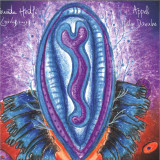
Phantasy are proud to introduce the first reverberations of a new project from Tunisian multi-instrumentalist Houieda Hedfi, produced alongside Olof Dreijer, best known for his work in The Knife and as Oni-Ayhun. Foreshadowing an upcoming full-length album, two distinctive tracks are accompanied by a remix from Portugese DJ/producer Nídia.
‘Appel du Danube’ gradually expands from twinkling glass to lucid strings and classical piano, a startlingly emotive composition that’s cinematic in scope and ambition. Hedfi and Dreijer both feature on title track ‘Echos de Medjerda’, inviting listeners to lean into a spacious circle of percussive sound, conducting a brief journey full of melodic lurches and static interference, hinting at both magic and menace.
Nídia, a key member of Lisbon’s hugely influential Principe collective, continues the fluid nature of the project by contributing tarraxo and kuduro influences to the traditional Tunisian rhythm elements throughout ‘Echos de Medjerda’.
deleted
The Item is out of Stock. We will send You an Email as soon as it´s available again if you click on "in Stock Mail"
With its saturated sounds, clipped beats and spacey pads, Walk Again opens a portal to a place full of mystery and promise.
Across 11 tracks, John Lord Fonda confirms that he is not only capable of writing techno bombs like We Can’t Breathe and Race For Nothing, but also breakbeat-tinged gems like Little Jazz.
The soaring melodies of Antarctica and Creme bring a dreamlike intensity to the project, while new-wave wannabee Together Again (featuring vocals by Gabriel Afathi of The George Kaplan Conspiracy) enlarges the musical horizon, planting its flag as an evolved piece of techno not afraid to mix genres.
Calmer moments such as Walk Again and A Descent Melody continue our journey into the richest of techno landscapes, where intriguing, fascinating tracks like They Will Fight For You.
Dazzling and cold, brutal and soft, the album marries a fluid, coherent mix of cerebral techno and poetic melodies, both calm and calming.
Walk Again, dance again, live again.
out of Stock
Last delivered 4 years ago available to reorder, subject to availability
Premium solo material from Jordan CGZ (Magic Mountain High, Juju & Jordash). An unbounded trip around the producers musical universe. Sounds ranging from icy futuristic soundscapes to crunchy melodica techno workouts, Other-wordly Jazz explorations to hazy Rhodes washed Deep house memories.
“I feel that Jordan’s album is an innovative masterpiece that will stand the test of time” Terrence Dixon
Pressed In Detroit, MI , Artwork by Karl -Otto von Oertzen
deleted
The Item is out of Stock. We will send You an Email as soon as it´s available again if you click on "in Stock Mail"
Limited 300 180g white vinyl LPs with printed inner Discobag and digital download.
500 CDs in gatefold digifile sleeve.
Each drum controls a virtual musical instrument (synthesizers, samplers, arpeggiators, etc.) within Ableton Live music software that, in combination with a custom step sequencer developed with MaxforLive app, allows Davide to perform real melodies/electronic orchestration without the use of any backing track. 100% live. In addition to that, he also uses a microphone set up in the middle of the drumkit to capture the dynamics of the acoustic drums and translate them through an 'envelope follower' into electronic parts in several ways. About ‘Perceive Reality’: Opener Belief bursts the record into life, as skittering arpeggios spin across a vast open plain of pad synths, before the ground splits beneath it with thrashing drums. On Conceived, Davide creates a simultaneously dark and euphoric wall of crystallised sound, a cacophony of pounding drum hits and icy electronic stabs, with an intensity that continues into Collide. With its shuddering, cut-out reverbed synth pads split in two by crashing cymbals and snares, the song spins itself into a transformative cycling trance, before slowly fading and washing away into silence, only to be broken by Conjectures’ sudden cymbal slams and transfixed toms that roll like thunder into a frenzy, before their final lightning strike. On Subjective, arpeggios twist around beating kick drums and toms, quickly scaling to a furious yet tightly wound sequence that envelops the listener, before Relief, where the album finally takes the shape of a huge wave of calm, glimmering hope and reflection. About the concept behind this latest album, Davide says, “Perceive Reality is a vivid exhortation to deepen the relationship with reality, avoiding simple and often illusory visions. In a historical context that fosters the proliferation of dual information and visions, individuals are increasingly exposed to the danger of perceiving less the complexity of events, thus losing the training to express complex and articulated opinions, the result of a reflection, whether individual or collective. Without having the presumption of resolving epochal issues, the project alerts to the fact that univocal answers do not exist and that only by developing a path of knowledge and giving ourselves the opportunity to examine things in depth, can we enter into the relationship with the existing.” Press highlights so far: Video premiere on Rumore.IT (Italy).
Matmos are one of the most prominent experimental electronic artists working today, crafting work by creating new conceptual frameworks & immediately testing those frameworks absolute limits. For Regards / Uklony dla Boguslaw Schaeffer they've focused on another artist known, in large part, for doing the same. Boguslaw Schaeffer was one of the first Polish artists creating electronic music. In step with American contemporaries like John Cage and Morton Feldman, he worked across the boundaries of classical composition, electronic experimentation, and radical theater in playfully form-breaking ways. Matmos are not the first ones to recognize the power of his catalog, from Solo (a 2008 documentary that garnered numerous international awards), to the annual Shaeffer's Era Festival (most recently celebrated simultaneously in Warsaw and Los Angeles) his work continues to inspire. Regards.. however, was not just inspired by his work, Matmos were given access to the entirity of Schaeffer's recorded works to use as they saw fit, commissioned by the prestigious Instytutu Adama Mickiewicza. They re-assembled & re-combined these recorded works with modern instrumentations in a way that only Matmos could, and what emerges is a composite portrait of the utopian 1960s Polish avant-garde and the contemporary dystopian cultural moment regarding each other across a distance. To facilitate the transcultural exchange that is the album's essential premise, all song titles and liner-notes are provided in both English and Polish. The album was mastered by Rashad Becker and features illustration and design by acclaimed artist Robert Beatty (Tame Impala, Osees, Mdou Moctar). Like the anagrams of the letters of Boguslaw Schaeffer's name that were re-assembled to create some of the song titles, the album itself is a musical re-assemblage of component parts into possible but unforeseen new shapes. Adding harp from Irish harpist Una Monaghan, erhu, viola and violin from Turkish multi-instrumentalist Ulas Kurugullu, and electronic processes from Baltimore instrument builder Will Schorre, and Horse Lords wunderkind Max Eilbacher, the resulting arrangements constantly toy with scale as they move from the close-mic-ing of ASMR and the intimacy of chamber music to the immensity of processed drones and oceanic field-recordings that close the album. Offering a "life review" of production styles, Regards / Uklony dla Boguslaw Schaeffer builds temporary shelters out of the panoramic wreckage of modernist composition, sixties tape music, seventies dub, eighties industrial music, nineties postrock and dark ambient, 2000s era glitch fetishism, and contemporary post-everything collage sensibilities.
out of Stock
Last delivered 4 years ago available to reorder, subject to availability
Pauline Oliveros' The Wanderer is available on LP for the first time since it was originally released in 1984. Cut at Golden and pressed at RTI for maximum fidelity.
An utterly essential document of early American minimalism from this Pauline Oliveros. The Wanderer is the sister record to Accordion & Voice, also available on LP from Important Records.
The Wanderer is based on a single modal scale (B C# D D# E F# G#) and rhythmic modes based on a meter consisting of ¾ and ⅜. Part I, Song, is intended to explore the unique resonant qualities of accordion reeds through long sounds. Subtle variations come about from differences in tuning and air pressure. Part II, Dance, demonstrates the sharp accenting power of the accordion bellows in a mixture of cross-rhythms characteristic of jigs, reels, batucadas, Bulgars, klezmer forms, Cajun dances, and music of other diverse cultures.
The Wanderer was composed in November, 1982 especially for the Springfield Accordion Orchestra, directed by Sam Falcetti. This recording documents The Wanderer's world premiere, as it was performed 27 January, 1983 at Marymount Manhattan Theatre. The orchestra consists of twenty accordions, two bass accordions, and five percussionists, with Pauline Oliveros as soloist, Sam Falcetti conducting.
Horse Sings From Cloud, written in 1975, is one of Oliveros' best known works. Like most of her Sonic Meditations, it can be performed vocally and/or instrumentally, solo or in collaboration. A solo version of Horse Sings From Cloud has been recorded on Accordion & Voice. An early version of the score reads, “Sustain a tone or sound until any desire to change it disappears. When there is no longer any desire to change the tone or sound, then change it.” This time, Horse Sings From Cloud is performed in ensemble. Joining Pauline Oliveros on bandoneon are Heloise Gold on Harmonium, Julia Haines on accordion, and Linda Montano on concertina. This quartet version incorporates the microtonal differences in tuning of the selected instruments, creating shimmering reed sounds somewhat similar to the shimmering of a Balinese gamelan.
Pauline Oliveros' Accordion & Voice is available on LP for the first time since it was originally released in 1982. Cut at Golden and pressed at RTI for maximum fidelity.
Pauline Oliveros was an electronic music pioneer, accordionist, composer and educator who resided in Kingston, New York. Her instrument was tuned in Just Intonation and she often included it in her meditative improvisational music. Her music is not meditative in the sense that it is intended for listening to while meditating, rather each piece is a form of meditation, such as her aptly titled Sonic Meditations.
A central figure in post-war electronic art music, Oliveros is one of the original members of the San Francisco Tape Music Center (along with Morton Subotnick, Ramon Sender, Terry Riley, and Anthony Martin), which was the resource on the U.S. West coast for electronic music during the 1960s. The Center later moved to Mills College, where she was its first director, and is now called the Center for Contemporary Music. Oliveros often improvises with the Expanded Instrument System, an electronic signal processing system she designed, in her performances and recordings.
“Accordion & Voice was the first of my recordings as a soloist. I was living in an A-frame house in a meadow just below Mount Tremper at Zen Mountain Center. I had a wonderful view of the graceful saddle mountain top. When away on a performance trip I would imagine the mountain as I played Rattlesnake Mountain. I followed the feelings and sensations of my many experiences of the mountain - the changing colors of the season, the breezes and winds blowing through the grasses and trees. Horse Sings From Cloud taught me to listen to the depth of a tone and to have patience. Rather than initiating musical impulses of motion, melody and harmony I wanted to hear the subtlety of a tone taking space and time to develop. The tones linger and resonate in the body, mind, instrument and performance space. My thanks to Important Records for bringing these pieces to be heard again.” ~ Pauline Oliveros, 2007
The relationship between Central Processing Unit (CPU) and Shun begins in 2018, when the British label decamped to Tokyo to throw a party in the Japanese capital. Alongside a lineup which contained the likes of Fleck E.S.C., Shun was one of the local artists who DJed that night. Now, four years on, he links up with the Sheffield imprint in order to deliver dancefloor destruction in the form of new EP The Door.
There is some seriously tough club tackle here. Regular followers of CPU will be able to identify many of the sonic archetypes which have made the label a leader in the field of modern electro. These four tracks are backed by broken-beat machine-funk snaps in the vein of Drexciya, Jensen Interceptor and the like, and one finds a sense of dystopian futurism running through The Door which links it to other CPU drops.
However, there is also a gritty, saturated feel to these productions which marks Shun out from the pack. With their writhing, insistent bass melodies and heat-treated drum programming, opening cuts 'Digital Slave' and 'Kishibi' have plenty in common with the underground wiggle of labels like Super Rhythm Trax, while prominent use of 303s also provide these tunes with an acidic tang.
Another quality which distinguishes Shun's vision is the inspiration he draws from anime. Track titles like 'Kishibi' and 'Rohan' are references to Kishibe Rohan, a figure from the manga 'JoJo's Bizarre Adventure' in which the names of characters and their specific techniques are drawn from musical sources. This give and take with influences outside of music is further felt in how Shun makes liberal use of keyboard melodies that nod to horror and sci-fi movies - the introduction of such synths into 'Kishibi' and 'Rohan' give The Door an almost cinematic quality which is amplified still further by the vocal snippets which flit around the mix on several tracks.
Japanese producer Shun debuts on Central Processing Unit with The Door, an EP of hard-bitten, acidic electro bangers.
RIYL: Jerome Hill, DMX Krew, Drexciya, Jensen Interceptor
deleted
The Item is out of Stock. We will send You an Email as soon as it´s available again if you click on "in Stock Mail"
Vinyl is limited to 500 copies on black vinyl, no download card. Sunzoom have been making a stir from their Liverpool base and this highly anticipated debut is not to be missed. Lo-fi and DIY in equal measure, the record was only conceived of 4 weeks into the first lockdown when songwriter Greg McVeigh decided that recording music was the only way to stay sane. Building a makeshift studio in the kitchen of his North Liverpool home (and deciding to name the new project SUNZOOM after a favourite Captain Beefheart track) Greg set about learning the processes of home recording from the ground up. The album theme draws upon the peculiar aspects of lockdown; isolation, spiritual introspection, longing to be somewhere else, weird dreams, drinking too much and takes the listener on a journey of escape. The songs move the record through fields, countries, time, space, memories and longings to finally end back at home in the reality of the four walls. Digging into some past unreleased recordings, poems, unfinished snippets of tunes and writing new songs (usually sung into his phone during months of daily beach walks with his dog) Greg began to build a record within the claustrophobic environment of summer 2020. Friends were able to collaborate (by the magic of old recordings and new parts sent via email) and in early 2021 Sunzoom entered ARK Recording Studios in Liverpool to add live drums and vocal parts subsequently spending a month mixing the record back home in the familiar surroundings of the kitchen where the concept first began. The result is a snapshot of the period that magically transforms personal and public strife into glorious pop-folk psychedelia.
Vector Music by Suren Seneviratne is a true homage to the Yamaha TG33, a synth that he was hoping to keep forever, or at least a very long time until Covid-19 struck.
During the early months of 2020, Suren, like many other artists, went without work and was forced to sell surplus belongings to help subsidise food, rent and other necessities. Some sneakers and clothes went first but he avoided considering his music gear for as long as possible. As the pandemic continued to cause havoc throughout the year, selling gear was inevitable. The rare Yamaha TG-33 programmable synthesizer module was next.
By bittersweet chance, this was the perfect opportunity to make use of this unsung synthesizer one last time, and to make it count. The synth sold via Twitter and Suren suddenly had a deadline in which to make the most of it in the two days before it would be gone forever and so he decided to record a body of work using only the TG33, to shine a spotlight on its quirks and idiosyncrasies and give it the attention it deserved. This ultimatum proved to be really fruitful and resulted in the recordings that form the eight tracks on this album “Vector Music”; a raw and intimate portrayal of a forgotten digital instrument from the 1990s. The broader collective sentiment of loss, anxiety and seasonal depression during the thick of the pandemic mixed with feelings of uncertainty, distress and fear binded throughout the recording process and became sewn into the very fabric of the music.
The song titles are taken from various stages of sleep: the once instinctive process which, since 2020, was radically altered and experienced a new for millions of people around the globe due to the phenomena known as Pandemic Dreams.
Composed and produced by Suren Seneviratne
Mastered by Luca Sammartin
Original artwork and layout by Marco Ciceri
Tibor Szemző's new LP features two composition, »The Other Shore« & »CUBA«. As the album title implies, »Snap #2« can be considered a sequel to his cult album »Snapshot from the Island« (released in 1987). Back then the island was a metaphor for isolation, while »Snap #2« offers Szemző’s reflections of his visits to real islands, Cuba (1988-1990) and Japan (1992-1994). As usual, Tibor Szemző processed the themes both visually and musically and has presented them many times live as cinematographic performances.
A previous version of »The Other Shore« was released in 1999 on CD. On this album, the original recording from 1997 is used; it has been recomposed, remixed and remastered and some additional recordings have been included. The core of Szemző’s Gordian Knot ensemble of the mid-nineties (Tibor Szemző on bass flute, Péter Magyar on drums and Tamás Tóth on bass guitar) has been enlarged by a string section and additional percussionists. The Other Shore composition has a multilayered texture; it starts with strings and is followed by prerecorded voices reciting the Sutra of the Lotus Flower of the Wonderful Law (Myôhô-Renge-Kyô in Japanese), the most important sutra of Mahayana Buddhism. Then percussion introduces the basic beat of the piece and the voice of the 102 year-old Buddhist priest Ônishi Ryôkei giving a lecture on Kannon sutra is heard. The following uneven entries of drums and bass guitar are like paint brush strokes in Zen calligraphy. The long tones of Szemző’s bass flute enters the piece as the last element suggesting itself as a connecting thread through all previous layers.
When Tibor Szemző first visited Cuba in 1988, he had just started shooting film on 8mm, something of a personal diary. When he met Jonas Mekas in Budapest a few years later, he realized that this footage could be screened publicly and also be an integral part of live performances. »CUBA« is the recording from 2000 of one such performance and was remixed by the author in 2021. It is as similar to and yet different from »The Other Shore«. The Gordian Knot band seemingly structures the piece in the same way, but the resulting sound is much heavier especially thanks to drummer Péter Magyar. Nevertheless, the contributions of Szemző on bass flute, Mihály Huszár on electric bass and T. Bali on prepared electric guitar also inject the proper rock sting. Incorporated Havanna street sounds and local radio broadcasts recorded by the author provide even more steamy roughness to the sound of Szemző’s »CUBA«.
The cover design of the »Snap #2« with photo reproductions from Szemző’s films reflects the aesthetics of the Snapshot from the Island album. This vinyl LP runs at 45 RPM for better sound quality.
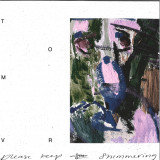
Please Keep Shimmering marks Tom VR’s fourth appearance on Seb Wildblood’s ‘All My Thoughts’. The end result of a long, turbulent creative process, it's an album about perseverance and finding inspiration in the face of monotony and self-doubt.
First emerging through the Leeds scene, Tom VR gained traction and attention as a producer through a rapid series of releases on AMT and his own label, Valby Rotary. His debut album Films was released in 2018, a rich and eclectic collage of house, electronica and field recordings. Since then, he has finely tuned a style to call his own - detailed and intricate but grounded by a feeling of warmth and propulsive forward motion - its a sound crystallised on the widely acclaimed ‘Fast Track To Bliss’ EP, which was released in 2021 on Midland’s INTERGRADED.
Work started on Please Keep Shimmering in the aftermath of Films in 2019. Relocating to London via Manchester, Tom juggled his creativity with a 9-5 in customer service. During 2020, over the course of months in isolated lockdown, anonymous abuse from customers on social media platforms skewed the perception of the outside world. ‘It permeates through the screen of your computer and into your life’ he explains ‘As you much as you try to disconnect afterwards, doing this every day while isolated in your home, can get strange. I started to lose confidence in what I was doing creatively and why I was doing it.’
Please Keep Shimmering soundtracks this moment of internal fracture, but also the experience of coming out on the other side, of reassembling the pieces. Weaving together fragments and textures with signature delicacy, the album moves from pulsing ambient on the aptly named ‘Colour Dance Behind the Eyelids’ to brooding downtempo on ‘Keep Shimmering’. Hidden between these moments of introspection are flashbacks to the dancefloor - the lean, broken beat and glittering melody of ‘Partner’, the echoes of jungle on ‘October’, and the rattling, hi tech two-step of ‘Blue Sky Unravel.’ Tom draws on these dancefloor memories to sketch a vision of the future. On the closer ‘Well Are You Hope?’ we get a cautious glimpse of the realisation that things might get better, that these moments are only temporary.
At its core, Please Keep Shimmering is driven by an infectious sense of hope. But it’s not mere escapism - this is the kind of optimism you have to fight for, in which you still hear the echoes of what came before. In the producer’s own words: ‘I sometimes envision my creativity like a flame shimmering. I was constantly worried about it fading out. This album is a sonic reminder to anyone that when you feel burned out and exhausted, searching for the spark deep in your chest can feel impossible, but you have to believe it still exists.’
deleted
The Item is out of Stock. We will send You an Email as soon as it´s available again if you click on "in Stock Mail"
Tony Rolando's debut »Breakin' Is A Memory« could be your soundtrack. This worldbuilding album of electronic music leaves room for the listener to make big personal connections through subtly complex music resembling a sonic mobile which, as it spins, reveals new forms and colors. This is a collection of very human music with a deceptive simplicity and relaxed intensity. RIYL early OPN, Alessandro Cortini, Caterina Barbieri, Tangerine Dream.
These is cleverly assembled music that you want to flip over and play again, like Rolando's recent cassette on Imprec's Cassauna label. As with all Imprec vinyl releases, great care has been taken to ensure that this is a high quality pressing with low noise floor and loads of sonic detail.
On "Breakin' is a Memory" Tony Rolando invites the listener on tiny adventures questing insignificant treasures. Minimal percussion only suggests rhythm, allowing your mind to wander the crystalline lattices Tony weaves from handfuls of simple arpeggios. Soft analog bass frequencies make your travels more comfortable and the Strega instrument, a recurring recognizable character, is there to lead when you are too lost. The pace of "Breakin' is a Memory" oscillates from restless roadway motion to meditative exploration. The record closes with a celebratory decimation of the graphic memories of these tiny adventures. Play it again to rekindle them.
For more than a decade, Tony Rolando has composed electricity into musical instruments at Make Noise. When he collaborated with Alessandro Cortini in 2019 to create the Strega instrument, the experience rekindled Tony's love of composing and recording music. In 2021 he released "Old Cool Echoes" with IMPORTANT Records/ Cassauna. A third release of music composed entirely for the Shared System instrument he designed will follow later this year.
Bone colour vinyl, insert with lyrics & download.
Previous collaborations with Charli XCX, Pharrell Williams and Justice.
First album since 2019s Tokyo Love Hotel.
Released on Toro Y Moi's Company Records.
Videos in the works for Dominoes, Sophia & Where Does The Party Go?.
Welcome to Uffie’s new album Sunshine Factory – an alternate reality that is only accessible to those yearning for escape. A nod to the ballroom scene, it is a place where you can be your most authentic self. Inside this trippy wonderland, you’ll meet Uffie, dancing amongst the lights of your hallucinations. Sunshine Factory is a wonderfully restless record. It’s a joyride through the club, hurtling into the forest, and crowd surfing into the arms of a lover… and yet it’s also the sound of waking up to a heap of champagne soaked jeans, the bass of your heart still throbbing along to last night’s melodies.
A decade after her first record, which included–debatably–the internet’s first viral hit, the electro smash “Pop The Glock,” Uffie “the French-American singer/rapper/DJ/fashion designer who took the internet by storm” (Brooklyn Vegan) is most definitely back. Raised between Florida and Hong Kong before moving to Paris with her British father, the now Los Angeles-based Uffie is undeniably a “child of the world;” unsurprisingly, the making of this record clocked up a few air miles as well. Birthing what would become the Sunshine Factory in Fonte da Telha, Portugal collaborating with Norwegian savant Lasse Lokøy, Uffie soon found a home for these songs back in California with Chaz Bear of Toro y Moi–who co-produced several of the tracks–and his Oakland-based label, Company Records. The resulting album is one of intricate production, sonic experimentation, and subtle poetic brilliance amongst a few Fleabag glances to the camera.
Amidst double entendres galore, her record exists in a curious space between punk and pop, which can be heard in the ska-meets-fashion week “dominoes.” Contrarily, “sophia” – which marked the advent of Uffie and Chaz’s creative partnership several years ago – poises Sunshine Factory as an otherworldly dance record one would hear in Berlin’s famous Berghain nightclub. She is the party girl who is at her most vulnerable in the chaotic “where does the party go?” where she reckons with facing who she truly is when she’s all alone. It’s in these dualities and juxtapositions that the joy of Uffie writhes.
The album also has a cameo or three, including the one and only Peaches. And after finding kinship and admiration in the genre-defying NNAMDÏ, she tapped him for the record’s sole feature on “month of mondays.” It is at this point in the record that the beloved je ne sais quoi that Uffie has always possessed really emerges. When the comedown begins and the insatiable few remain on the dancefloor, “a month of mondays” is the knowing nod to a stranger signaling the night’s shift in course. With Sunshine Factory, it’s a pop-up party wherever you can find some speakers. Cool.
deleted
The Item is out of Stock. We will send You an Email as soon as it´s available again if you click on "in Stock Mail"
Touch Sensitive is honoured to dig into the vaults of legendary cult French group Vox Populi! with a collection primarily pulling from their creative highpoint of 1986-1990. The vast majority of the works are unreleased and all make their first appearance on vinyl. The recordings have been licensed from the group's extensive archive, mastered by Rupert Clervaux and cut by Andreas Kauffelt at Schnitstelle. The release is completed by liner notes focusing on Vox Populi!'s creative process and prolific output. Springing from the rip it up restart of post-punk in 1980 and primarily active throughout that decade, Vox Populi!'s discography is a perfect showcase of an almost unclassifiable group. The often-used 'ethno-industrial' tag - even if not approved by the group - goes some way to describing a melting pot of primarily self-taught techniques and vast cultural influences. Founding member Axel Kyrou's parents were avant-garde musicians and filmmakers resulting in a heavy cultural immersion from a young age. His partner and bandmate Mitra moved from Iran to Paris in 1978 - followed a few years later by her virtuoso brother Arash who joined the group at the age of 14. Based in their 14th arronidissement studio - previously Axel and his brother's family playroom - Vox Populi! quickly became a lynchpin in the Parisian experimental scene and beyond through the burgeoning mail-art scene. The group contributed work to a huge number of independent labels. Their music and approach quickly progressed from rudimentary experiments to harness transcendental spiritual qualities and moments of intense beauty. In this collection, we can feel the vibrations of Don Cherry's Organic Music Society, Faust's communal explorations and King Tubby's forward-thinking studio experimentation. "We recorded everything - every idea. We would always have a cassette or a reel running. We made such different styles - freaky, alternative, experimental, industrial etc. We had no rules and no plans - our main motives were play and pleasure. I think that many people can feel that in the music." Three tracks recorded in 2017 by a reconfigured Vox Populi! sit perfectly with music from 30 years previous - "We were never defined by fashion or the zeitgeist. So we remained ourselves. Our sound is still natural. We had to be turned on by our own music and we wanted the music to have an impact on consciousness. We were the subjects of our own experiments and there was also a kind of mystery - even for us." The Psyko Tropix collection is another magical and mysterious addition to the open-hearted and open-eared world of Vox Populi! "The music of Vox Populi! found me several years ago and it was one of my record digging highlights. Their stark contrast of dark and light paints a beautiful picture of the physical and mental world we all live in. This new album doesn't miss a step in exploring further in both directions" Cut Chemist
out of Stock
Last delivered 4 years ago available to reorder, subject to availability
PYRAMID TRANSMISSIONS end 2021 with a Full on Electro Assault from the one and only WEE DJ's, bringing a slamming 4 track Vinyl ep from the Edinburgh Master.
deleted
The Item is out of Stock. We will send You an Email as soon as it´s available again if you click on "in Stock Mail"
First released in 2013,Wilkinson's Afterglow - featuring the vocals talents of Brit Award winner Becky Hill - took over drum & bass dancefloors across the world and even broke into the UK Top Ten charting at number 8
deleted
The Item is out of Stock. We will send You an Email as soon as it´s available again if you click on "in Stock Mail"
Yamila reveals her most intimate catharsis in Visions, an album that brings together and provokes the hallucinatory powers of music. Like an ancient herald, she announces the profound feminine mystique while crossing epic melodies full of pleasure and pain. This album is a journey that prodigiously unites baroque accents, Spanish folklore – such as flamenco – and contemporary electronic music.
Her voice and music – sometimes torn and others buoyant – could resemble the score for a biblical passage (ie. visions of the Apocalypse), for they are overflowing with physical ecstasy and sounds that one can touch. Visions is composed of different forms and rhythms. Pieces like "Visions V" evolve intensely with sharp and systematized hits –– powerful layers that bring us closer to Alessando Cortini's Forse era. "Visions II", for its part, shares intensity and power with flamenco ritual patterns, as if it were an old Andalusian scene dripping with oscillations and electric shocks. Yet there are luminous vocal pieces such as "Visions I" (featuring Rafael Anton Irisarri), inspired by Manuel de Falla's Suite Española composed in 1922. Here, an aural chiaroscuro with beautiful voices and choirs is deeply fused with daring drones. And it is in the ensemble of moments of Visions where Yamila's conceptual axis is rendered solid. Pain and glory, lacerating religiosity, feminism cauterized by power, and hallucinations as a source (or pretext/tool) to be heard.
Yamila exhibits a profuse aesthetic with her music that calls for a look at the far-past with romanticism and nostalgia. Visions is radiant, intense. A unique album.
All songs written and performed by Yamila Ríos (Spain), except “Visions I”, which features Rafael Anton Irisarri. Recorded between the Swedish winter and the Belgian countryside. Additional musicians: Simbad guitar on V-IV and V-I, Vera Cavallin harp on VIV. Mastered by Rafael Anton Irisarri at Black Knoll Studio. NY. Photos by Virginia Rota in Madrid. Design by Daniel Castrejón in Mexico City.