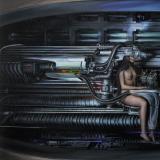
rand, the exciting new collaboration between pianist Jan Gerdes and electronic music producer Frank Bogdanowitz, is proud to present their debut album "Peripherie".
With Gerdes' background working alongside renowned composers such as Karl-Heinz Stockhausen, Wolfgang Rihm, and Helmut Lachenmann, and Bogdanowitz's extensive touring experience as Dr.Nojoke in the experimental minimal techno scene, rand brings together the worlds of acoustic and electronic music in a unique and captivating way.
Recorded live in 2019 at Berlin's Chez-Cherie Studios with no overdubs, the pieces were created through both improvisation and composition with Gerdes having access to three pianos during the recording process.
The resulting music is characterized by atmospheres that exist away from the conventional limelight, with musical elements blending together in a fluid indeterminacy.
The album showcases rand's ability to blur musical edges and create a wide ocean of sound, with piano and electronics taking listeners on a journey between detachment and connection.
rand's "Peripherie" represents the next step in their musical journey, following the release of EPs "I" and "II" on Bandcamp, a one-hour music improvisation for The POOL Berlin collective,
and a track on the Nonclassical label's "I hope this finds you well in these strange times Vol. 4" sampler.
The cover painting for "Peripherie" was created by Jan Gerdes, adding another layer of artistic expression to the project.
With their debut album, rand is set to make a name for themselves on the international stage and push the boundaries of what is possible in the world of contemporary music.
After years of shaping dancefloors worldwide and carefully curating the sonic and visual identity of Up The Stuss, Dutch favourite Chris Stussy presents his most expansive and personal statement to date with his debut album, ‘Lost, Found & Forgotten...’. Landing on 3rd April, the album unfolds across three interconnected chapters - ‘Lost’, ‘Found’, and ‘Forgotten’ - each revealing a different side of his creative world across 19 tracks while remaining tethered to a singular wider vision.
At its core, ‘Lost, Found & Forgotten...’ is an exploration of creative freedom. Visually and conceptually guided by the image of a kite, the album reflects movement, perspective, and balance. Floating freely yet always anchored, the kite mirrors Chris’s approach to music: unrestricted in emotion and imagination, but grounded in groove, craftsmanship, and intention. It’s a symbol that naturally extends the Up The Stuss identity; pointing skyward, embracing openness, and encouraging curiosity.
“This album has been a long time in the making, and I’m excited to finally share it with you. The process behind it - exchanging ideas with other artists and creating music outside of my comfort zone - has been an incredible experience. It gave me a true sense of freedom, allowing me to not think about boundaries or expectations. I’ve never been more proud of a project than this one. It’s deeply personal, and it represents my sound as a whole. I hope you listen with an open mind and find something in it that resonates with you.” - Chris Stussy.
The ‘Lost’ chapter opens the album by giving new life to music once left behind. These are tracks written across different moments in Chris’s journey, ideas that never quite found a home until now. Rather than relics of the past, they emerge re-discovered, refined, and fully realised. ‘
Found’ represents inspiration in motion. Sparked by collaboration, digging, and shared creative exchange, this chapter captures the moment when ideas connect, and colour floods the sky.
The album closes with ‘Forgotten’ - a nod to the deeper cuts, the B-sides, and the moments that reward patience. This chapter is for the heads and diggers; tracks that may not demand immediate attention but reveal their value over time.
Here is the debut, self-titled album from a.s.o., singer/songwriter Alia Seror-O'Neill, and producer Lewie Day. 'a.s.o.' is a thematic consolidation of the previous three singles and an impressive artistic progression. Day and Seror-O'Neill show they've mastered the format of the radio-friendly pop song and found how to subvert it completely. Across eleven songs, they have built a rich and compelling body of work.
We know where we are now, emotionally complex, trip-hop torch songs for club freaks. But the palette has broadened to encompass ethereal dream pop à la Cocteau Twins, slow- burning AOR-soul, and dubwise stylings. As a result, 'a.s.o.' is a satisfyingly coherent listen but never a musical monoculture. Variously there are nods toward Julee Cruise, Fleetwood Mac, and the uneasy listening of Portishead. It's an album that wears its influences lightly, is never weighed down by them, and always sure of its own identity.
It's anchored by Alia's unique voice. Her words speak of restraint and release, taking us from the elegiac to the euphoric. This elegantly crafted, perfect pop music sounds like it has had enough of your shit. And Day's music is the perfect foil; deep, slightly menacing, restrained, and powerful. The album has a cinematic texture, as with David Lynch; the seemingly familiar becomes uncanny and strange the closer we look. a.s.o. take our emotions for a joyride before leaving us floating in space.
'a.s.o.' is a journey; by its end, we all are changed
* very limited edition
GRANULAR POLYPHONIES SHOOTING THROUGH LIKE BOLTS
For over ten years, Brussels-originals ladr ache have dipped their toes and vocal chords in all matter of
musical mischief as only they know how. With éclats z, their latest recorded offering, new canons arise
that belong to no place or genre. Between the layers of chant, other voices turn up in old tongues and
secret languages, gliding alongside pipes and electronic warps, pulsing in time with the granularity of
choice. Recorded over two years in different times and spaces, the living textures that emerge are sonic
libations as much as modern lullabies, inhabiting zones of ancient passages and timeless exploration.
a t (Lena Platonos) is a Greek musician, pianist and music composer. Her third solo album, 'Lepidoptera' was produced in 1986 and reissued by Dark Entries in 2018. Inspired by a scientific book on butterflies she found in a trashcan one day, the compositions follow minimalistic motifs and carefully-staged soundscapes. Lena narrates each song in deadpan fashion, skillfully reciting her surreal Greek poetry.
We've recruited 4 contemporary Greek producers to remix their favorite tracks from 'Lepidoptera'. First up is 'Cyaniris' remixed by Anatolian Weapons who delivers an enchanted late-night journey through the New Wave forest. Next is 'Araschnia Levana' remixed by Pasiphae who speeds up the pace with machine driven melodic electro pulses. On the B-side we have June remixing 'Cyaniris' twirling the track into a complex deep sea dive with lush drum kicks and pads. Closing out the EP is a remix of 'a Gee´a ´ Aporia Maturna' by Morah who leads us to the underworld of Hades via sinister squelches and full-on apocalyptic rave breakdown. All songs have been mastered for vinyl by George Horn at Fantasy Studios in Berkeley. The jacket is a reinterpretation of the original 'Lepidoptera' cover, isolating the illustration of the butterfly/woman designed by Eloise Leigh.
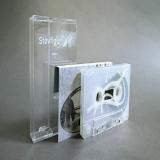
Danish electronic and ambient dub-techno explorer Stovfigur (an apt alias that comes from Danish words stov ("dust") and figur ("form" or "figure")) opts to self-title his debut album, which suggests he feels it is the most honest representation of who he is as an artist. Across nine cassette cuts on Taylor Deupree's 12K label, he fits plenty of detail into vast atmospheric soundscapes. Wispy pads are barely there; a subtle static fuzz hums like an electronic device hidden somewhere in your bedroom that you can't quite locate and pads are billowy and vaporous. It's magnificently heady and immersive and a perfect excuse to untether from the world and get lost in your own thoughts.
Geese kehren mit ihrem dritten Album „Getting Killed“ zurück. Die Aufnahmen mit Kenneth Blume fanden in zehn temporeichen Tagen statt. Mit wenig Zeit für Overdubbing entstand eine chaotische Komödie, chaotisch in der Struktur, aber leidenschaftlich vorgetragen, geprägt von einer präzisen Vision. Kräftige Riffs überlagern Chorsamples; leise pulsieren zischende Drum Machines hinter kreischenden Gitarren. Sie balancieren entwaffnende Zärtlichkeit mit gesteigerter Wut und tauschen ihre Liebe zum Classic Rock gegen eine Verachtung der Musik selbst.
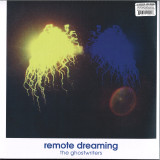
"A landmark in 80s experimental ambient music - previously tape-only, here released for the first time on vinyl, spread across a double LP with five additional tracks, four of which were previously unreleased. Remote Dreaming has been freshly remastered and includes an insert with photos and liner notes.
Dark Entries summons Philadelphia synthesizer scribes The Ghostwriters to rouse their ambient masterwork Remote Dreaming. The late Buchla maestro Charles Cohen and multi-instrumentalist Jeff Cain joined up in 1971 to craft electroacoustic chaos as Anomali, later renaming themselves The Ghostwriters.
Their collaborations with choreographers and visual media artists led to their singular style, straddling improvisation and composition, the oneiric and the immediate. Following their debut album, Objects in Mirrors Are Closer Than They Appear, they were approached by ambient outlet Mu-Pysch. Remote Dreaming would take shape in various studios over nine months. Jeff Cain's instruments on this project included electric and acoustic pianos, the Juno 106 synthesizer, and a Mirage sampler, while Charles Cohen used his signature Buchla 200 Series Electronic Musical Instrument. A stark departure from the tightly wound first LP, Remote Dreaming shows the duo unfurling with soothing pianos and psychoacoustic textures, its somnambulant drones just skirting the edges of the uncanny. Although ignored in its time, Remote Dreaming is now heralded as a landmark in 80s experimental ambient music.
Proceeds will be donated to SOSA (Safe from Online Sex Abuse), a nonprofit that combats online child sex abuse and trafficking"
Put out on the circuit in 2011 as a collaboration between Leipzig's Flop Beat Disk and the
Alphacut subsidiary operating under the name Alphacute this limited to 200 copies split 7“
vinyl features contribution by both Thee Vaporizer as well as Romanian producer Yvat.
Whilst Thee Vaporizer operates in a grey area between Glitch, lo-fi IDM, decaying
DarkJungle x Breakcore and cheesy melodies with an almost childlike positivity Yvat
brings on a rather distinct take on fragmented, highly detailed Glitchtronica with a
signature Phonk twist.
Limited pressing of 200 copies on turquoise vinyl.
Reverse board tip on with silver pantone print. The first ever reissue of Dorothy Carter's 1978 folk/psych/drone masterpiece. A truly unique album in Dorothy's catalog of otherwise traditional psaltery folk music, Waillee Waillee's essence sits in the confluence of Dorothy's mastery of the dulcimer; its shimmering notes fully enmeshed with the tremulous, cavernous drones of Bob Rutman's bowed steel cello. The core of this album, Dorothy's only with a full band, lies in the contradiction of traditional psych-folk idioms and the minimal avant-garde, referencing Henry Flynt and Laraaji as much as Karen Dalton. This LP version includes 12 page booklet with unpublished manuscripts, drawings, photographs, and songbooks of the songs from the album, as well as extended liner notes from friends and family of Dorothy Carter, including notable musicians such as Laraaji, Bob Rutman, and Alexander Hacke (of Einstürzende Neubauten). Drops soon - a joint release between Palto Flats & Putojefe Records.
Dorothy Carter was many things - a virtuoso player, storyteller, historian of Celtic and Appalachian folk music, avid lifelong busker, avant-garde musician, and itinerant troubadour, laying a framework for music that existed both within and outside of standard folk idioms - never better represented than on her 1978 masterwork, Waillee Waillee. Underscored by Bob Rutman’s cavernous bowing of the steel cello, the richness of Waillee Waillee’s sound produces an album unlike any other in her discography. In particular, its two side-ending pieces, “Summer Rhapsody” and “Tree of Life,’’ glide with the shimmering filigree of hammered dulcimer and Dorothy Carter’s ephemeral voice floating over Rutman’s droning buzz of the steel cello. The elements of these two tracks suggest something akin to a transcendental Appalachian raga or whirling cosmic folk music, an effortless combination that serves to add additional substance to the remaining tracks on the album.
The title track is one of her most enduring compositions, often performed in stripped down versions throughout her career, and one of her sole recordings featuring a full band, with the contrapuntal interplay of tremulous flute, vibrating steel cello, bass and drums. Lyrically and tonally, her voice would never sound as stirring and refi ned as on this, her most outwardly accessible song.
She counted musical colleagues as diverse as Constance Demby, Einstürzende Neubauten and Laraaji, as well as her lifelong artistic partner and friend Bob Rutman, whose imprint is felt throughout the grooves of this record. The master tapes for this recording were fortuitously discovered in Rutman’s Berlin studio, many, many years later. As recounted in Laraaji’s contribution to the liner notes, Dorothy was “someone who really influenced my early zither exploration and vocabulary and inspired my shift toward hammered zither performance and recording,” after encountering him busking on the sidewalk one day in the 1970s. Later, when living in Berlin in the early 1990s, Dorothy would begin work on manuscripts detailing the history of the dulcimer family and providing extensive sheet music, selected material of which is reproduced in the twelve page booklet included with this release. Dorothy would find later success touring and performing in the late 90s with the ensemble Mediæval Bæbes, which she led with British musician Katherine Blake, playing a prominent role on their first four albums.
Magical cinematic jams from ION LUDWIG and multi-instrumentalist TWAN SALLAERTS.
A mysterious and peaceful sounding, beautifully vibrating LP.
It presents compassionately played and carefully recorded electroacoustic-ambience pieces.
Part of the Meander Horizon Pi Series.
maya ongaku has always been searching for what exists just beyond the edge of perception. Since forming in the seaside towns surrounding Enoshima, the trio has followed a path guided less by intention than intuition, allowing songs, ideas, and experiences to emerge through a process they describe as 自然発生 (shizen hassei), spontaneous occurrence. Nothing Space Music is the deepest expression of that philosophy to date.
Written in the aftermath of several years of international touring, the album emerged from a growing desire to reconnect with silence. As stages became larger and the world around them moved faster, the band found themselves drawn toward the quieter spaces beneath it all. What began as a reflection on stillness & silence eventually expanded into the idea of "Nothing Space". To realise the album, maya ongaku created an entirely new environment for themselves. Near a seaside shrine in their hometown, the trio transformed a large soundproof building into Nothing Space Studio, a space built specifically around the needs of this record.
Nothing Space Music: a meditation on presence, perception, and the possibility of rediscovering the world through attentive listening.
out of Stock
Last delivered 9 days ago available to reorder, subject to availability
The International Archives of Popular Music (AIMP), affiliated with the Ethnographic Museum of Geneva (MEG), is a label and collection dedicated to the preservation of world music. Founded in 1944 by musicologist Constantin Brăiloiu, it gathers over 18,000 recordings, from wax cylinders to digital formats. AIMP releases albums and collaborates with artists such as Midori Takada, exploring the connections between sound archives and contemporary creation. Through these projects, the label preserves and reinterprets musical traditions on a global scale.
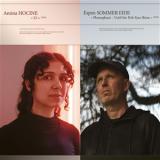
,X3" von Amina Hocine greift schrittweise, subtil und unaufhaltsam auf die Komplementarität verschiedener Klangmaterialien zurück. Durch die geduldige und feinfühlige Verschmelzung von reinen Sinuswellen, Feldaufnahmen und Klängen, die mit einer ,Nebelhorn-Orgel" (einem von Hocine selbst entwickelten Instrument) erzeugt wurden, lädt ,X3" sowohl zur Selbstreflexion als auch zur Kontemplation ein. Inspiriert von einem Symbol des dänischen Mystikers Martinus Thomsen, das die Entwicklung eines Wesens in der physischen Welt darstellt, nimmt uns Amina Hocine mit auf eine lange Reise, die mit seltener Eleganz und Anmut zwischen dem Statischen und dem Wandelnden, zwischen dem fast Unwahrnehmbaren und dem Grandiosen balanciert. Es ist eine Musik des Übergangs, die Amina Hocine uns bietet, eine Musik, in der die Vermittlung von Klang, Welle für Welle, zur Meditation wird. In ,Until the Fish Eyes Shine" wirft Espen Sommer Eide einen inspirierten, umfassenden und rückblickenden Blick auf sein musikalisches Schaffen, das er oft unter dem Pseudonym Phonophani produziert hat. Indem er die Klänge seiner frühen Jahre vor dem Hintergrund der Ambient-Techno-Szene in Tromso Ende der 1990er Jahre neu aufgreift und neu interpretiert, beschwört Eide eine Musik herauf, die alles andere als nostalgisch ist, sondern vielmehr eine Art ,geologische Schichtung" bietet, in der Epochen und Stilrichtungen aufeinanderprallen, sich überschneiden und ergänzen und so die bemerkenswerte Einzigartigkeit der Klangpalette des norwegischen Künstlers offenbaren. Das Stück bringt zudem die extreme Beständigkeit und Authentizität seiner musikalischen Vision zum Ausdruck - einer Vision, in der technologische Innovationen, die reflektierte Umgebung und gelebte Emotionen in einem eigenen Raum zusammenfließen: dem der traumhaften Musik, die immer neu erfunden wird, immer in Bewegung ist, immer im Wandel begriffen ist.
For Louis Johnstone, making music has never been about waiting for the right equipment, the right environment or the right moment. Across more than a decade of work as both Wanda Group and A Large Sheet Of Muscle, the Huddersfield-based musician has built one of British experimental music's most singular bodies of work by embracing whatever happens to be within reach, allowing instinct, improvisation and circumstance to shape the outcome as much as conscious composition.
"'Chinese Benefits' was made over a year ago on an iPhone that had a broken microphone and was on its way out," he explains. "I have made many records after this with clearer sounds. Sharper ideas. That is never the point, though. You work with what you hold in your hands."
Recorded entirely on a failing iPhone 6 that stopped working shortly afterwards, 'Chinese Benefits' isn't a record about damaged technology. It is a record shaped by it. Rather than resisting the limitations of the device, Johnstone allows them to become part of the music itself, where distortion, interference and deteriorating fidelity are inseparable from the recording process.
Across twenty brief but disquieting pieces, corroded spoken word, environmental recordings, abrasive noise and fractured electronics continually emerge and dissolve. Voices drift in and out of range, reverberation stretches everyday sounds beyond recognition, and bursts of white noise interrupt moments of uneasy calm. There are echoes of radio transmissions, field recordings and musique concrète throughout, yet 'Chinese Benefits' never settles comfortably into any one tradition. Instead, it inhabits a space where accident and intention become almost impossible to separate.
That philosophy has long defined Johnstone's work. Through a vast catalogue of self-released recordings on his Umbro G imprint, alongside releases for labels including The Trilogy Tapes, he has consistently favoured immediacy over refinement, embracing imperfection not as an aesthetic but as a practical reality. His recordings are less concerned with perfection than with capturing the conditions in which they were made.
Looking back on 'Chinese Benefits', however, Johnstone's own assessment is characteristically understated.
"Listening back fully, it's quite a nice record actually. Fair enough, I make them and never really listen again TBH. Even better, it was the last Large Sheet Of Muscle record made on that phone with grit and damaged guts."
Like much of his work, 'Chinese Benefits' offers few fixed meanings. Its titles remain cryptic, its voices partially obscured and its structures deliberately unstable. What emerges instead is a deeply personal document of process over perfection, where the limitations of the tools become inseparable from the music they produce, and where the act of making something matters far more than the conditions in which it was made.
In ,An Iris Crackled Like Eyelids" erkundet Jules Négrier zwei Sätze, zwei innere Momente, die durch die schwebende Zeit eines ,knisternden" Augenlids voneinander getrennt sind. Der erste Satz beginnt, wie eine Geschichte endet - mit einem Ausbruch roher Emotionen -, um dann in eine weite Fläche harmonischer Divergenzen zu münden. Der zweite Satz führt erneut eine Verflechtung aus Rhythmen, Verdrehungen, Abwärts- und Aufwärtsbewegungen ein, um einen paradoxen Raum zu offenbaren, der sich in der Zeit einer ungelösten Beruhigung entfaltet. Indem er auf inspirierte und komplexe Weise Klänge offenlegt, die zugleich durchscheinend und gewunden sind, komponiert Jules Négrier eine geheimnisvolle Musik - eine Musik, die aus den Qualen elektronischer Materie schöpft, aus Formen und Werden, die allmählich in den Bereichen der Einfachheit Fuß fassen. In ,All Solids Melt Into Aether" verwebt Maria W Horn Akkorde, die mit einer bis an ihre Grenzen getriebenen Orgel erzeugt wurden, mit den unerbittlichen Texturen computergenerierter Klänge. Zwischen der extremen, kalten Präzision der elektronischen Töne und der Instabilität der warmen Orgelakkorde, die Druckschwankungen ausgesetzt sind, entfaltet sich ein stilles Drama, aus dem eine komplexe Welt entsteht, die aus harmonischen Zuständen besteht, welche von ihrer Entstehung bis zu ihrem Zusammenbruch eine kraftvolle und ergreifende Metapher hervorrufen und Bilder eines ewigen, urzeitlichen Kampfes heraufbeschwören. Dieser Kampf ist derjenige, der in jedem Augenblick zwischen zwei gegensätzlichen Energien stattfindet: Die eine bildet das Verlangen nach einem stabilen Zustand, sucht ein zerbrechliches Gleichgewicht - eine Energie, die unerbittlich durch die Kräfte der Entropie und des Chaos eingeschränkt und widerlegt wird. In dieser Hinsicht liefert Maria W. Horn mit ,All Solids Melt Into Aether" ein Werk von suggestiver und introspektiver Kraft, das wahrhaft faszinierend ist.
Manchmal beenden Nicole Mitchell und Joe Westerlund gegenseitig ihre Sätze. Genau diese telepathische Verbindung prägt ,Written in the Universe", ein Album, das aus jahrelangen gemeinsamen Auftritten in Durham, North Carolina, entstanden ist. Mitchell - eine international gefeierte Flötistin, Komponistin und ehemalige Vorsitzende der Association for the Advancement of Creative Musicians (AACM) in Chicago - und Westerlund, ein Schlagzeuger, dessen Werk von experimentellem Rock über Jazz bis hin zu elektroakustischer Improvisation reicht, schaffen Musik, die sich gleichzeitig geerdet und weitläufig anfühlt: echo-getränkte, elektronisch geprägte Improvisationen, die von Westerlunds tief verwurzelten Polyrhythmen getragen werden. Das Album wurde an zwei Tagen bei ,Betty's" aufgenommen, einem ländlichen Studio mitten im Wald außerhalb von Chapel Hill, und fängt die Spontaneität einer Live-Performance ein. Anstatt die Aufnahmen durch Overdubs oder umfangreiche Bearbeitung zu verfeinern, hat das Duo die intuitive Energie jedes Takes bewahrt. Die umgebende Landschaft - ihre Wälder, die freie Natur und das Gefühl von Weite - wurde zu einem stillen dritten Mitwirkenden, der den organischen Fluss der Musik subtil prägte. Das Ergebnis ist ein Album, bei dem es mehr um die Entdeckung als um das Ziel geht. Auf ,Written in the Universe" verweben sich Mitchells ausdrucksstarke Flöte und Live-Elektronik mit Westerlunds einfallsreicher Percussion zu einer Musik, die sich in Echtzeit entfaltet und die Zuhörer zu einem gemeinsamen Hörerlebnis einlädt, bei dem spontane Komposition und Intuition untrennbar miteinander verschmelzen.
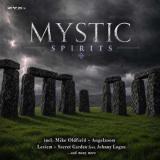
Tauchen Sie ein in eine faszinierende Welt voller mystischer Klänge, sphärischer Melodien und geheimnisvoller Atmosphären. „Mystic Spirits“ entführt den Hörer auf eine musikalische Reise zwischen Meditation, Mystik und entrückten Klanglandschaften.
Sanfte elektronische Sounds, eindrucksvolle Arrangements und geheimnisvolle Stimmen verbinden sich zu einer außergewöhnlichen Klangwelt, die zum Träumen, Entspannen und Abschalten einlädt. Die Compilation vereint
stimmungsvolle Titel, die eine ganz besondere Atmosphäre zwischen Spiritualität, Fantasy und New Age schaffen.
Mit dabei sind hochkarätige Künstler wie Mike Oldfield, Lesiem und Angelzoom, deren charakteristische Sounds perfekt in das mystische Konzept dieser Zusammenstellung passen. „Mystic Spirits“ – eine musikalische Reise in geheimnisvolle Klangwelten für alle, die außergewöhnliche Musik mit Tiefe und Atmosphäre lieben.