2 track Single from The Valentines released by Gay Feet/Dub Store Records
b B1. Stop the Violence (Peace Treaty) Alternative Take
Order now and we will order the item for you at our supplier.
2 track Single from The Valentines released by Gay Feet/Dub Store Records
b B1. Stop the Violence (Peace Treaty) Alternative Take
Order now and we will order the item for you at our supplier.
HUUGE compilation of music where Erick Cosaque was involved with during 1973 - 1995. Killer Gwo Ka / jazz crossovers from his early days to the more digital zouk bangers he produced in the 80's / 90's.. Almost never reissued or compiled before, this is a big one for the tropical music heads! Comes on a double LP -Including booklet with 8 pages of biography and track by track, translated in English, French and Créole.
Some words from the label:
A strong, rough, plump voice with the typical tone heard in the creole outdoor musical gatherings. Erick Cosaque’s voice is made to go over and above the two boula drums and the makè drum which are associated in general, along a few light percussions, with the Guadeloupean gwo ka. Whether heard at an informal street corner kout’ tanbou, during a traditional evening at someone’s place or in the musical léwoz of a community center, his warm yet imperial voice has been known by West Indians, in the islands and in the mainland through music, radio and television thanks to a career spanning more than forty five years – about twenty solo albums, forty or so participations and collaborations with artists of all generations and genres within the Caribbean music scene.
Although Erick Cosaque is a major figure in Gwo ka, he managed to avoid being part of any institutional system – no label, no alliance, no funding. His voice, one of the strongest in that genre, has been significant since the early 70’s for restoring the original spontaneous and rebellious spirit present in gwo ka with artistic creations starting in the age of vinyl and continuing in the digital era.
Erick Cosaque resembles Gwo ka, whose music has simple components but is deeply rooted in a complex historical and social context made of fights, pleasures, memories and desires.
The Item is out of Stock. We will send You an Email as soon as it´s available again if you click on "in Stock Mail"
At the start of the year, Rocafort Records treated us to it's first roots reggae outing in the form of 'The Circle of Confusion' featuring the legendary Studio #1 vocalist 'Cornel Campbell'. ... Warm, feel-good, socially conscious, intergalactic dub.
We hoped for more, and finally it's here! Although slightly more digital in production, "Yesterday was History" cannot be claim to differ enormously from its predecessor. But hey, why mess with the formular when the results are pure and damn-near perfect ... ?
'The Circle of Confusion' are a Swiss production duo: Seb.K (Shakedown productions) and Phil'eas (Black Diamond Sound).
Recorded at Addis records in Geneva on the day of Mandela's passing, this track is another slice of dubby humanity-driven peace and love that buoyantly skips along aided by the sweetest scatting voice in reggae, (not showing any signs of it's 73 years), and all the appropriate studio space-age sound effects, harmonics and vintage keys. Modern roots reggae at its best, where the dub version is as banging and cosmic as the A Side.
Order now and we will order the item for you at our supplier.
Funky tropical party starting disco with African and Antillean influences featuring the amazing Nidia Gongora on vocals for the A-Side. The flip drops the bpm with a tastefully dubbed out percussion heavy reggae / cumbia / dancehall amalgamation featuring Camilo Tumbao on vocal duties. He lands somewhere between classic roots reggae vocal stylings and MC.
The Item is out of Stock. We will send You an Email as soon as it´s available again if you click on "in Stock Mail"
When acclaimed South African musician Guy Buttery first sought out Dr. Kanada Narahari in late 2016, it was as his patient.
“It was a dark time.” Buttery recalls, “I had been bedridden for months and had been suffering from debilitating bouts of fatigue which no diagnosis or medication could help me get to the bottom of. When I first met Kanada, I was at the stage where even picking up my guitar to make music had become a joyless and taxing exercise.”
As Buttery’s searched for a cure, a family member recommended he see Kanada an Ayurvedic doctor who had relocated to South Africa from India and set up a practice in Durban. It was during this consultation, that the musician first experienced how Narahari infused the healing properties of Indian Classical music into his practice. Rather than treating him with a smorgasbord of pharmaceuticals, Narahari played his sitar and set Buttery on a strict daily diet of Raga’s to fast track his recovery.
Buttery was not only struck by his doctor’s musical talents but by the powerful healing properties inherent in his sitar compositions. When he left Narahari’s doctors room that afternoon, he asserts he was feeling decidedly clearer, lighter and stronger.
“Diving into Kanada’s music was definitely one of the reasons I'm still here today.” he admits. “The consistent tonal centre at the heart of Indian Classical Music, literally became my support pillar over this period. A central core of sorts in which to fall back on, strengthen and discover.”
Narahari as it turned out, was not only a prominent music therapist (and one of the only Ayurvedic doctors practicing in South Africa) but like Buttery, a highly accomplished musician with a devoted following back in his homeland.
Born in a small village along the Western Ghats in Karnataka, India, Narahari, at the age of nine, had enrolled to study Carnatic classical vocal and developed an interest in Hindustani Classical music with a particular passion for the sitar. While Buttery had secured his reputation as one of South Africa’s musical treasures, a multi-instrumentalist who commands sold-out performances both locally and internationally and more recently had been awarded the prestigious 2018 Standard Bank Young Artist for Music.
From this consultation, a friendship developed between the two musicians with Buttery soon inviting Narahari to join him in his studio. But it wasn’t all plain sailing in the beginning. While Buttery and Narahari’s sensibilities were very much aligned, there were a range of cultural and musical influences, nuances and inflections that first needed to be navigated and understood.
“I suppose we had to find a common ground.” Buttery says, before adding, “Which in the end turned out to be pretty "uncommon ground" for the both of us.”
It was after a few intensive sessions together that something exhilarating began to emerge. What began as a few idle improvisations soon evolved into feverish and lengthier jams. Whenever time permitted, the musicians would meet, descending deeper into the emerging sounds, while reimagining the realms that existed between their African and Indian heritages.
Over the next few months, the duo would rack up over fifteen hours of recordings in studio, and it was up to Buttery to shape the material into an album which they collectively titled Nāḍī, which Narahari translates from the Sanskrit as "The Channel" or "An Internal River".
During this period, Narahari bestowed upon Buttery, the moniker Guruji while Guy would refer to him, in affectionate return, as Panditji. Each time the musicians would meet, the studio space would be cleared by an impromptu ritual, with Guruji burning African Imphepho while Panditji would chant a Sanskrit mantra dusting Indian Agarbatti clouds over their instruments.
Once the room had been made hazy with this aromatic alchemy (with the ancestors welcomed in) the musicians would pick up their instruments and plunge into shimmering tides of sound. Reflecting on these sessions, Narahari recalls the immense creative freedom he felt throughout: “Guy and I tried to wander as much as possible, without any speculative, preoccupied ideologies or limitations. Love remained at the forefront of our journey together.”
“Those evenings we spent together in the studio” adds Buttery, “felt incredibly rich with purpose and a profound sense of freedom. While improvising, anything could happen and mostly did.”
On a first listen, the tracks on Nāḍī emerge as salty, humid invocations to the inscrutable depths and misty myths of the Indian ocean-- that vast body of water that stretches between, and laps the shorelines, of the artists’ respective homelands.
When asked to describe the sound him and Narahari refined, Buttery prefers to relay a series of evocative images.
“For me” he explains, “Nāḍī is a lighthouse, a beacon that resides at the bottom of the ocean.” As Buttery envisions it, “what once offered light to guide ships to safety, has been submerged and re-purposed by marine life as a coral-reef temple. Similarly, this sunken lighthouse exists as a concealed cenotaph, memorializing the ancient sea-routes and passages that once connected the two distant lands.”
On paper this may sound obscure but listening to the songs, it serves as an apt metaphor.
Across each meditative movement, listeners are able to relive the journey, immersing themselves in a series of incantations, replete with high dynamics, delicate African-Indian inflections and virtuoso string playing of an entirely new order. Further complimenting the fusion of musical dialects are a range of guest artists including Shane Cooper on bass, Thandi Ntuli on vocals, Chris Letcher on organ, Ronan Skillen on tabla and percussion and Julian Redpath on guitar, synth and backing vocals.
Now like the submerged lighthouse, the recordings stand as a monument, a marker and snapshot of this fortuitous meeting, a tribute to the healing gifts of Guruji and Panditji in performance. It’s a process that already, both musicians look back on with reverence and nostalgia.
Buttery ruminates in closing, that when he first met Kanada his illness correlated with the biggest drought South Africa had experienced in many years “…for whatever reason, whenever we would connect and make music together, the sky would tend to open. Even if it was just a few drops. This went on for months, until finally the drought dissipated and my health had been restored.”
By the time the heavens did open across the East Coast, a deep friendship had been forged and with it abundant musical offerings poured down. A treasured sample of which we able to share in every time we press play and immerse ourselves in the sacrosanct musical universe that is Nāḍī.
Order now and we will order the item for you at our supplier.
Industrial techno doom jazz meets Touareg percussion and mantric chanting
Soundway presents the unique results of a one-off 2018 meeting in Marrakech between Belgrade-based tribal/ techno/industrial outfit Tapan and the nomadic Touareg electrified desert-blues group Generation Taragalte.
Tapan is not an ordinary “techno” project, rather it escapes easy categorization. It is the Belgradebased production duo of 20/44 club resident Nebojša Bogdanović (Schwabe), and Goran Simonoski, a producer behind music projects such as Belgradeyard Sound System, Piece of Shh and more. Both have been active in the Belgrade music and nightlife scenes since the 1990s, and since 2015 have brought together their diverse musical experience under the collaborative moniker of Tapan.
While performing at the Atlas Electronic festival in Morocco in 2018, they encountered Generation Taragalte of southern Morocco, and recorded the initial music for the Atlas EP in an improvised studio on the festival grounds, followed by final production on returning to Belgrade. The result was the 4-track EP “Atlas”, a dark, desolate and potent collision of the electronic drone-jazz of Belgrade and the windswept, desiccated psych-guitar riffs of the Moroccan Sahara.
Order now and we will order the item for you at our supplier.
Mysterious trio Mount Kismet are dropping debut single ‘Teenage Fantasy’ on Oct 11th, and their debut album “Warmer Lanes” on Nov 15th via Disco Halal.
Strung together by the dark, alluring vocals of French-Canadian artist C.A.R., the 1st single, ‘Teenage Fantasy’ combines sparse, synth-driven cold wave with the kind of Middle Eastern electronic elements that have become synonymous with Disco Halal. The track will feature alongisde 9 other tracks on Warmer Lanes.
Based between Berlin and London, Mount Kismet is a project driven by an eastern music obsession and a taste for the heavy pulse of drum machines and the rumbling of analog synthesisers. The group’s only other release, the track ‘Prunes & Dunes’, was included in Perfect Strangers, a ‘various artists’ compilation put out on Disco Halal last year.
An established artist in her own right, C.A.R. has previously collaborated with the likes of Maceo Plex, Red Axes and Bawrut.
Based in Berlin, but firmly rooted in the diverse and forward-facing musical scene of Tel Aviv, Moscoman’s Disco Halal label hails from beneath the minarets of the Holy Land. The imprint exists to present a tight-knit and growing community of musicians and producers, each transmitting their unique musical identity, yet each united by a unique sensibility, as well as a harmonious balance of rhythm and experimentation
The Item is out of Stock. We will send You an Email as soon as it´s available again if you click on "in Stock Mail"
Comp of funky, tropical tunes from all over the place.
Straight From The Decks compiles seventeen tunes that constitute the true essence of Gut's DJ sets.
To listen at home, or to remind you of the atmosphere you may have experienced at one of them.
The Item is out of Stock. We will send You an Email as soon as it´s available again if you click on "in Stock Mail"
My life with M. - an organic contact with sound where theatre and music could be perceived as a tool for the creation of a distant dream. Doerell’s sonorities transpose a nostalgia for something never met or somewhere never been, an osmosis of absence and memory interrupted by scattered fragments of abstraction.
The album reveals Oliver Doerell’s artistic collaboration with German-Iranian dancer and choreographer Modjgan Hashemian. All pieces are reworked compositions for theatre plays from 2008 to 2018. A wide acoustic spectrum is built throughout the merge of home-made instruments, electro-acoustic and digital means. The artist is subtly mastering sound textures, distortions, altered frequencies, voice insertions and blends reality and mysticism into his unique soundscape.
The founding member of Dictaphone/ SWOD, Oliver Doerell (aka Cummi Flu) releases the first album under his artist name and invites the listener to contemplate and to discover another one of his artistic personas. Grab a comfortable chair and enjoy the audition.
The Item is out of Stock. We will send You an Email as soon as it´s available again if you click on "in Stock Mail"
'Baby' - cross it off your Wants List at last. Written by Caetano Veloso, arranged by Arthur Verocai, covering Gal Costa. An absolutely killer Brazilian modern soul jam - a rarity in Brazil - that we hammer in DJ sets and have been wanting to release for a while. Taken from the Quinteto Ternura self-titled LP
from 1974. 'Filhos De Zambi' is uptempo samba-funk of the highest order, and now very difficult to find at a decent price in it's original RCA 'compacto' format. Percussion high on the mix, hands claps and a brilliant harmonised chorus line.
The Item is out of Stock. We will send You an Email as soon as it´s available again if you click on "in Stock Mail"
Club Internacional dig deep to launch their new global reissue series in style with two long lost cuts from Rio-based label Top Tape. First up is Jose da Silva aka Zeca Do Trombone.
A massively respected instrumentalist, he has worked his trade over the years with many of Brazil's leading artists such as Tim Maia, Milton Nascimento, Elizeth Cardoso, Beth Carvalo, Martino Da Vila, Gonzaguinha and Carlos Dafe amongst others.
He also produced a very much sought after LP in 1976 alongside Roberto Sax which was finally re-released this year on Mad About Records. Tema Do Brisa dates from a few years later in 1978 and is Zeca's only solo 45 single. Never released on digital and never reissued on vinyl before, it is with great pleasure that Club Internacional re-launch this psychedelic jazz and heavily funk influenced gem with its still stunningly fresh sounding drum patterns to a new generation of listeners. Fans of jazz, funk, rare groove and Brazilian music in general will appreciate the strong vibes of this original track and be delighted to finally have this record in their hands. The track represents a unique moment in the career of a great musician fully in control of his instrument and more than willing to test its musical boundaries. Zeca continues to play out as an artist regularly in Brasil right up to the present time.
On the flip side, Sambacanas, or Os Sambacanas as they were sometimes also known, were a group of Samba musicians recorded by the Sao Paulo based producer Julio Nagib.
Although they were mostly known for a samba covers LP entitled 'Sucessos Da Juventude Em Tempo De Samba' (re-released in the UK under the title 'Fly Me To Brazil'), this song, Panga, Danga, Panga, was the A side of their only 45 single release for Top Tape which came out in 1976. Again this track has never been re-released before in its 45 single version, and has not been made available digitally. A beautiful example of raw and simple Batucada-style Brazilian samba music infused with Latin funk vibes, it features excellent vocals and percussion including the berimbau and cuica. Club Internacional hopes you enjoy this journey back to rediscover these very different, but wonderful, long lost sounds of Brazil on this limited edition vinyl 45 pressing to add to your record collection. Each Club Internacional edition may take some time, but it will be worth the wait!
Order now and we will order the item for you at our supplier.
Thrilling dancefloor subcurrents from Egypt’s Mahraganat / Electro-Chaabi scene on this incredible compilation showcasing the main players and their percussive dialogue with the likes of Nervous Horizon’s DJ Plead and DJ Haram of Hyperdub and the DiscWoman collective. It’s a vital survey of some of the most thrilling and forward dance music you’ll hear this year - if you grabbed that insane 1127 LP on Nashazphone, DJ Haram’s Hyperdub debut, or any of Eek & Islam
Chipsy’s mad LP’s - this one’s pure fire.
Cairo Concepts is the first series dedicated to documenting the trajectory of the current, road-level Egyptian subculture known as Mahraganat. Like Nyege Nyege Tapes at the other end of the
Nile, down in Uganda, Cairo Concepts reveals thrilling club heat some from way off the usual roadmap, and the way in which it is directly influencing club music’s international hotspots. In a double refraction of influence, the local and international artists on ‘Cairo Concepts’ offer a global exchange of rugged bass pressure, ornate percussion and autotuned rap vocals.
Nervous Horizon’s DJ Plead provides two big highlights with the tucked 2-step and killer hand-drum fills of ‘Battiekh 3’ recalling Mutamassik’s classic ‘War Booty’ 12”, while her vinyl-exclusive
‘Ana Ho’ features Cairene MC Alaa 50 on a prime, Timba-style flip of Dr. Dre. And fresh from her wicked Hyperdub debut, DJ Haram follows suit with a strong vocal cut ‘Blessed’ starring a barking
Nustaliga over sizzling hi-hats, quaking bass and snake-hipped flute melodies, also included as a stripped down and useful instrumental.
Nustaliga also serves solo highlights with the swaggering nstrumental ‘Mezmar’ and the hard hunch of ‘Mahragan El Share3’, whose combo of buzzing horns and trilling drums should recall the street rave sound of Eek and Islam Chipsy, while 3Phaz tends to the set’s wildest moment with a blown-out banger ‘Phazbaz’ reminding of that amazing 1127 LP on Nashazphone, and Tor5y absolutely slays it with the stuttering drum and vocal edits of ‘Wala3.’
The Item is out of Stock. We will send You an Email as soon as it´s available again if you click on "in Stock Mail"
(180 Vinyl LP) With their authentic formula - jazz musicians in a Jamaican-wise context - Jamaican Jazz Orchestra come with a second album that feels like a fresh dive in the lake on a humid tropical day. High quality musicianship and clever compositions recorded analog on tape, guided by producer Tom Callens (Lady Linn, Lester's Blues, South of the Border, Tiny Legs Tim)...
Order now and we will order the item for you at our supplier.
“Osondi owendi. What is cherished by some is despised by others. One man’s meat is another man’s poison. Different strokes for different folks. To each their own. Osondi owendi.
It’s a conventional aphorism in the Igbo language but if you utter the word “osondi owendi” in Nigeria today, the first thing that comes to anybody’s mind is the cucumber-cool highlife music maestro Chief Stephen Osita Osadebe and his legendary album that takes its name from the adage. Released in 1984, Osondi Owendi was instantly received as Osadebe’s magnum opus, the crowning event of an exalted career stretching back to the early years of highlife’s emergence as Nigeria’s predominant popular music.
Stephen Osadebe first appeared on the music scene in 1958 as a spry, twenty-two year-old vocalist in the Empire Rhythm Skies Orchestra, directed by bandleader Steven Amechi. With his dapper suits, urbane Nat King Cole-influenced vocal stylings and jaunty, uptempo, calypso-scented dance tunes, he personified the frisky spirit and anxious aspirations of a young, educated generation that had come of age in the wake of the Second World War, in a Nigeria that was rapidly shaking off British colonization and marching towards an independent future. 1959 would be the year that he truly made his mark in the business with his debut solo single “Lagos Life Na So So Enjoyment.” A giddy exhortation of the music, sex, fun and freedom availed by life in the big city, the song became a sensation and an anthem, and Stephen Osadebe became the leader of his own popular dance band, the Nigerian Sound Makers.
Osadebe would ride this wave of acclaim through most of the nineteen sixties, but a change in direction would be called for at the dawn of the seventies. As Nigeria emerged from a devastating civil war, so did a new generation of youth inspired by rock and funk, confrontational sounds reflective of a more violent, less idealistic era. All of the sudden, the idioms of the post-WWII dance orchestras that nurtured Osadebe’s cohort seemed quaint, the stuff of nostalgia. Osadebe needed to evolve to respond to the new tumultuous, turned-up times.
His response? He cooled it down.
Abetted by a new crop of fire-blooded young players, Osadebe slowed his music to a mellow, meditative tempo, brought forward the lumbering, Afro Cuban-accented bass and percussion, from the rockers he borrowed searing lead lines on the electric guitar. Over this musical bedrock, doesn’t so much as sing as he dreamily muses, coos, sighs aphorisms, words of wisdom and inspiration. “When one listens to my music, all I say appears meaningful,” Osadebe explained his lyrical approach, “at times they are in the form of proverbs which provoke much thought afterwards.” The result is a blend that is both rollicking and soothingly languid. Osadebe christened the style Oyolima—a tranquil, otherworldly state of total relaxation and pleasure. Osondi Owendi represents oyolima at its finest, and possibly Nigerian highlife in epitome.
Osondi owendi. What is cherished by some is despised by others. In some way, the album’s title constitutes a paradox. Because Osondi Owendi is a record that it’s almost impossible to imagine being despised by anybody."
Order now and we will order the item for you at our supplier.
When acclaimed South African musician Guy Buttery first sought out Dr. Kanada Narahari in late 2016, it was as his patient.
“It was a dark time.” Buttery recalls, “I had been bedridden for months and had been suffering from debilitating bouts of fatigue which no diagnosis or medication could help me get to the bottom of. When I first met Kanada, I was at the stage where even picking up my guitar to make music had become a joyless and taxing exercise.”
As Buttery’s searched for a cure, a family member recommended he see Kanada an Ayurvedic doctor who had relocated to South Africa from India and set up a practice in Durban. It was during this consultation, that the musician first experienced how Narahari infused the healing properties of Indian Classical music into his practice. Rather than treating him with a smorgasbord of pharmaceuticals, Narahari played his sitar and set Buttery on a strict daily diet of Raga’s to fast track his recovery.
Buttery was not only struck by his doctor’s musical talents but by the powerful healing properties inherent in his sitar compositions. When he left Narahari’s doctors room that afternoon, he asserts he was feeling decidedly clearer, lighter and stronger.
“Diving into Kanada’s music was definitely one of the reasons I'm still here today.” he admits. “The consistent tonal centre at the heart of Indian Classical Music, literally became my support pillar over this period. A central core of sorts in which to fall back on, strengthen and discover.”
Narahari as it turned out, was not only a prominent music therapist (and one of the only Ayurvedic doctors practicing in South Africa) but like Buttery, a highly accomplished musician with a devoted following back in his homeland.
Born in a small village along the Western Ghats in Karnataka, India, Narahari, at the age of nine, had enrolled to study Carnatic classical vocal and developed an interest in Hindustani Classical music with a particular passion for the sitar. While Buttery had secured his reputation as one of South Africa’s musical treasures, a multi-instrumentalist who commands sold-out performances both locally and internationally and more recently had been awarded the prestigious 2018 Standard Bank Young Artist for Music.
From this consultation, a friendship developed between the two musicians with Buttery soon inviting Narahari to join him in his studio. But it wasn’t all plain sailing in the beginning. While Buttery and Narahari’s sensibilities were very much aligned, there were a range of cultural and musical influences, nuances and inflections that first needed to be navigated and understood.
“I suppose we had to find a common ground.” Buttery says, before adding, “Which in the end turned out to be pretty "uncommon ground" for the both of us.”
It was after a few intensive sessions together that something exhilarating began to emerge. What began as a few idle improvisations soon evolved into feverish and lengthier jams. Whenever time permitted, the musicians would meet, descending deeper into the emerging sounds, while reimagining the realms that existed between their African and Indian heritages.
Over the next few months, the duo would rack up over fifteen hours of recordings in studio, and it was up to Buttery to shape the material into an album which they collectively titled Nāḍī, which Narahari translates from the Sanskrit as "The Channel" or "An Internal River".
During this period, Narahari bestowed upon Buttery, the moniker Guruji while Guy would refer to him, in affectionate return, as Panditji. Each time the musicians would meet, the studio space would be cleared by an impromptu ritual, with Guruji burning African Imphepho while Panditji would chant a Sanskrit mantra dusting Indian Agarbatti clouds over their instruments.
Once the room had been made hazy with this aromatic alchemy (with the ancestors welcomed in) the musicians would pick up their instruments and plunge into shimmering tides of sound. Reflecting on these sessions, Narahari recalls the immense creative freedom he felt throughout: “Guy and I tried to wander as much as possible, without any speculative, preoccupied ideologies or limitations. Love remained at the forefront of our journey together.”
“Those evenings we spent together in the studio” adds Buttery, “felt incredibly rich with purpose and a profound sense of freedom. While improvising, anything could happen and mostly did.”
On a first listen, the tracks on Nāḍī emerge as salty, humid invocations to the inscrutable depths and misty myths of the Indian ocean-- that vast body of water that stretches between, and laps the shorelines, of the artists’ respective homelands.
When asked to describe the sound him and Narahari refined, Buttery prefers to relay a series of evocative images.
“For me” he explains, “Nāḍī is a lighthouse, a beacon that resides at the bottom of the ocean.” As Buttery envisions it, “what once offered light to guide ships to safety, has been submerged and re-purposed by marine life as a coral-reef temple. Similarly, this sunken lighthouse exists as a concealed cenotaph, memorializing the ancient sea-routes and passages that once connected the two distant lands.”
On paper this may sound obscure but listening to the songs, it serves as an apt metaphor.
Across each meditative movement, listeners are able to relive the journey, immersing themselves in a series of incantations, replete with high dynamics, delicate African-Indian inflections and virtuoso string playing of an entirely new order. Further complimenting the fusion of musical dialects are a range of guest artists including Shane Cooper on bass, Thandi Ntuli on vocals, Chris Letcher on organ, Ronan Skillen on tabla and percussion and Julian Redpath on guitar, synth and backing vocals.
Now like the submerged lighthouse, the recordings stand as a monument, a marker and snapshot of this fortuitous meeting, a tribute to the healing gifts of Guruji and Panditji in performance. It’s a process that already, both musicians look back on with reverence and nostalgia.
Buttery ruminates in closing, that when he first met Kanada his illness correlated with the biggest drought South Africa had experienced in many years “…for whatever reason, whenever we would connect and make music together, the sky would tend to open. Even if it was just a few drops. This went on for months, until finally the drought dissipated and my health had been restored.”
By the time the heavens did open across the East Coast, a deep friendship had been forged and with it abundant musical offerings poured down. A treasured sample of which we able to share in every time we press play and immerse ourselves in the sacrosanct musical universe that is Nāḍī.
The Item is out of Stock. We will send You an Email as soon as it´s available again if you click on "in Stock Mail"
Mit ihrem sechsten Album kehren die Casady-Schwestern Bianca und Sierra zum bewährten Erfolgsrezept
ihrer früheren Releases zurück. Im Gegensatz zu den mehr psychedelisch-elektronischen Erkundungen der
beiden letzten Veröffentlichungen "Tales Of A Grass Widow" (2013) und "Grey Oceans" (2010), streift
"Heartache City" wieder durch staubig-poetische Gefühlswelten längst vergangener Tage. Ihren Anfang
nahmen die zehn Tracks von "Heartache City" wie gehabt im südfranzösischen Landgut der Casadys, wo
sich die beiden Geschwister ein lauschiges Studio eingerichtet haben. Dort sammelten sie Ideen und
schrieben Songs, die sie bei Gelegenheit mit minimalem Equipment, antiken Instrumenten und Vintage-
Spielzeug vertonten und ganz nostalgisch mit einem alten 4-Spurgerät aufnahmen, nur zu zweit, rein
akustisch und ohne digitalen Firlefanz. So entstanden relativ reduzierte Songs, die ihren Weg letztlich in
Argentinien in die Händen ihres Produzenten Nicolas Kalwillwith, und um eine Prise Buenos Aires
angereichert, ihren krönenden Abschluss fanden.
Order now and we will order the item for you at our supplier.
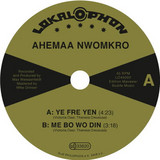
As Lokalophon's first single (Chris De Wise Shepherd, LO45001) shows the one side of the label - licensing of alredy locally released music, Ye Fre Yen by Ahemaa Nwomkro shows its other side - the recording of local styles by ourselves directly on site.
Ahemaa Nwomkro, which means queens of Nwomkro, are Victoria Osei and Theresa Owusuaa. Nwomkro is an old Ashanti musical style, which played an influencial role in the origin of the typical more roots-like Highlife style of Kumasi, the cultural capital of Ghana in the middle of the jungle.
The Item is out of Stock. We will send You an Email as soon as it´s available again if you click on "in Stock Mail"
For the first time this massive tune by Esnard Boisdur is pressed on record..One of the standouts in the Gwo-Ka genre.. Comes with a rework on the flip by Africaine 808 (Hans Reuschl & Dirk Leyers) - they used the original stems and added drumcomputer and extra live percussion, synthlines, little dub effects.. Not the ''usual standard threatment'' here!! This is class!
“You don’t need to be a fan of Gwoka or even Antillean music in general to fall in love with the deep, expressive voices of the singers of the genre. Artists like COSACK, ANZALA and ESNARD BOISDUR have fascinated music lovers around the globe for decades. It’s not only the drumming style accompanied by their beautiful melodic intonation, but also the revolutionary spirit of these songs that make them a unique and powerful document of the culture and the history of the Antilles and the Caribbean.
Order now and we will order the item for you at our supplier.
Debut album by Sierra Leonian duo, priority artist project for Strut in 2017 includes the single 'Yeanoh' which was no. 1 viral track on Spotify in early 2017 Considerable early DJ support including Gilles Peterson Lefto and Joe Goddard Supported by worldwide touring booked by Eiden Agency following acclaimed performances at WOMEX and Transmusicales
(Chief Boima remix)
The Item is out of Stock. We will send You an Email as soon as it´s available again if you click on "in Stock Mail"
Already a certified banger on dance floors worldwide, Dem say ah, the afrobeat infused scorcher, has been a secret weapon to DJ's like Bobbito Garcia, Nightmares On Wax, Mitsu the Beats and Giles Peterson, amongst others.
Long out of print and commanding a good amount of coin online, the song returns on a beautifully pressed '45 with a fresh new mixto boot, courtesy of DJ Center and Akoya Afrobeat.
On this 7" inch version- the live 'Akoya Re-Rub' mix, was cut straight to 2" tape at Electric Garden Studios in Brooklyn, New York and mixed by grammy award winning engineer, Ben Kane (D'angelos's Black Messiah).
The flip is a 7-inch edit of the original version, mixed by the lengendary DJ Spinna and features Ticklah (Antibalas, Sharon Jones and the Dapkings, Mark Ronson) on keys.
Each drum heavy '45 comes in a 'one of a kind' hand stamped sleeve. Watch dem say!
The Item is out of Stock. We will send You an Email as soon as it´s available again if you click on "in Stock Mail"
Official first reissue of this Senegalese gem recorded in 1981 and produced by Ibrahima Sylla.
Remastered, available on a limited LP with 4 pages booklet.
At the dawn of the 1980s, Senegal was immersed in the "beautiful era" of Cuban influences, African-American soul and funk.
A group of passionate musician friends want to shine in this construction of a revolution in Senegalese music. Their credo will be to claim a spiritual search, that is the meaning of the word Gestü in Wolof. The group of friends gathers around the young guitarist leader As El Haji Malick Diouf who is joined on vocals by Tidiane Bathily, reinforced by Couri Ndiaye and Abdou Bâ, on drums Abdou Kane, on bass guitar Jean-Pierre Gomes, Madiama Diop (saxophone, clarinet) and finally on tumbas Djiby Ndiaye.
They released their first album Diabar in 1981, recorded at Golden Baobab studio under the direction of Senegalese producer Ibrahima Sylla. This unique record of the group will leave the youthful and dynamic imprint of a Senegalese musical revolution like the Orchestra Baobab or the Etoile de Dakar.
Order now and we will order the item for you at our supplier.
Shackleton works up a hypnotic group energy alongside avant-goddess Heather Leigh, percussionist Takumi Motokawa, and mallet player Raphael Meinhart in their debut as Tunes of
Negation for Shapednoise’s label; Cosmo Rhythmatic
‘Reach The Endless Sea’ is a heady blast of lysergic, chromatic colour and syncopated rhythms that partly imagines an alternative musical timeline where the Hawkwind and Ashra Tempel fans,
proto-Humanoid types, and new age travellers who made up the UK’s rave vanguard prevailed against the law to enact a freely psychedelic dance music. The album follows in the vein of
Shackleton’s previous trio of vocal-focussed trips for Honest Jon’s and his Woe To The Septic Heart! label to find the mystic pied piper’s spirit bolstered and tempered by a collaborative, multi-
directional flow of energies.
Gushing in five durational parts running between 10-15 minutes each - or long enough to draw listeners into their dilated temporality - the music comes in waves of pointed, timeless intensity and illusory suggestion, subtly shifting pattern with an acid-dosed logic. Following her triumphant ‘Throne’ LP’ in 2018, Heather Leigh provides sacral vocals to the canto couplet of ‘The World Is A Stage’ and ‘Reach The Endless Sea’, providing an elevated constant between its moire of possessed vibes and lilting rhythms, before the trio of instrumentalists take the reins on a mazy trajectory between the harmonic lather of ‘Tundra Erotic’, thru the sanguine meditation of ‘Nowhere Ending Sky’, and an epic, 15 minute invocation of ancient Indian raga traditions and mountaintop kosmiche in ‘Ruckschlag Rising Then Resonant’, before they all come down together in the Amazonian delta flow and oozing sprawl of ‘The Time Has Come.’
While no single description will sum up the potency and conviction of Tunes of Negation, their mission can be summed in a line from a poem by 13th C. mystic Jalalu’I-Din Rumi which inspired the album’s title, stating that ‘Reach The Endless Sea’ strives to “aid transmutation and enter into the light.”
The Item is out of Stock. We will send You an Email as soon as it´s available again if you click on "in Stock Mail"
Cosmocities Records presents their first triple LP compilation
A trip through electronic world with rare and beautiful instrumental tracks.
500 copies . Vinyl only .
The Item is out of Stock. We will send You an Email as soon as it´s available again if you click on "in Stock Mail"
Reissue of the massively in-demand Soca cover-version of Sade’s classic cut “Sweetest Taboo” by Caribbean band Rebles from 1986.
In the late 80s, as electronic music permeated popular culture, Rebles helped define the soca genre outside of the Caribbean. Also known as D’ Rebel’s Band and led by St Vincentian band-leader and trombonist Denniston Young, the group were the 1980s house band for probably the largest Caribbean label, Strakers Records, based in Brooklyn, New York. Strakers released hundreds of Calypso and Soca releases over a thirty year period from 1970 to 2000.
Finally available again after becoming a big record with a number of open-minded contemporary DJs who play Soca, Zouk, Highlife and Soukous alongside Disco and House, the 12” has been officially licensed and re-mastered ready to hit the summer party season head-on.
This 12” paves the way for a big compilation album of Soca crossover sounds coming later this year on Soundway.
The Item is out of Stock. We will send You an Email as soon as it´s available again if you click on "in Stock Mail"
You go 1500 km from Moscow in Siberia direction and you find Orenburg, the city located in the vast steppes, where «Serenades» come from. Started as a local music community, «Serenades» became a real hotspot involving dozens of international musicians and djs with podcasts and parties. Being true aficionados of music which lays between ethnic and electronic, «Serenades» have created a real oasis in Russian snow.
In 2019, «Serenades» continue their story with the first ever release - a big & eclectic compilation where every track is exclusively produced for the label concept by musicians from all over the world.
Shamanic ambient, percussive drums, slow industrial beats from the compilation clearly represent Serenade's taste in contemporary world music.
The Item is out of Stock. We will send You an Email as soon as it´s available again if you click on "in Stock Mail"
A collection of bedroom-engineered rhythms, psyched out slow jams and 4-dimensional steppers by GF. Very low business risk. Brought to you by Max & Can. Fictional Background: The cinematic vision of an unfinished short film project entitled ULAM SPIRAL served as the main inspiration for the score composed by Gerry Franke. Farcically over-dimensioned, the film was impossible to realise from a financial and practical perspective - a psychedelic blast of visual concepts, that lead to the unique narration style in which Franke tells an exotic story of death, a madness created by obstinacy, intrigue and coincidental creation. In 1963 Stanislaw Marcin Ulam (1909-1984) discovered a remarkable spiral formation while sketching with numbers during a mathematic lesson. He drew the natural numbers starting with 1, continuing in a left spiral and highlighting all prime numbers. Soon an unexpected pattern emerged from the sketch: The Ulam Spiral. An unexperienced director, who everyone referred to only as "Stab", was determined to realize an optical idea that alledgedly came to him while being on a trip to Jordan reading about Ulam and his spiral discovery, which initiated ideas of the connection between regularity and coincidence in Stab's mind eventually leading to the abstract script for the short film in 1993. When Franke was approached by Stab to compose the score of the film, he loved the wild imagery and the complex themes and decided to record music for ULAM SPIRAL in early 1995. A few months later Stab disappeared and Franke took a break from producing the soundtrack to focus on his band. In 1998 Stab reappeared with new ideas and convinced Franke to proceed with the score for the film, only to vanish again a couple of weeks later. Fed up with the inconsistency of the project, Franke decided to finish the soundtrack for his own listening pleasure in 2001 and kept it a secret - until today.
The Item is out of Stock. We will send You an Email as soon as it´s available again if you click on "in Stock Mail"
DJ Nigga Fox’s most substantial release to date sets a new benchmark for Lisbon’s revered underground ghetto dance scene, pulling traces of jazz, acid house and cinematic sound design
into his deeply rugged and exceptional sound with effortless style. Highlighted as one to watch in Lisbon’s virulent club scenius since appearing on the ‘Bazzerk’ compilation which introduced many
ravers to Kuduro in 2011, DJ Nigga Fox’s productions have become acclaimed for a mix of abstract weirdness and proper dancefloor impact that’s hit ‘floors hard across the world. Following 2018’s
‘Crânio’ 12” and remix of How To Dress Well, he now returns to the Príncipe powerhouse, home of his first trio of 12”s, with a definitive statement that arguably ranks among this year’s strongest,
rhythm-driven LPs, bar none.
In a way that mirrors UK dance music’s transition in the ‘90s from hardcore jungle to garage and D&B, or in the ‘00s from grime and dubstep to more “sophisticated” styles of deep house,
broken beats and UK Funky, Nigga Fox’s longest release to date appears more layered, plusher and, ultimately “musical” when compared to his earlier work. Using sparing but knowing dabs
of noirish jazz keys, live-sounding double bass and expressively off-kilter synth tones, he binds rippling, colourful flesh to his flexing, bare bones drum torque in a way that boldly blazes a trail for his local scene without ever losing sight of what makes it so thrilling in the first place.
This inch-tight refinement of Nigga Fox’s already distinctive style is characterised by the twisting,
unpredictable arrangement of ’Sub Zero’, where stealthy waves of swingeing drums and vintage horror movie tropes are ramped with feral electro scuzz to killer effect, or equally in the freaky tension between lissom jazz chords, jaws-harp buzz and wild acid lines on ‘Faz A Minha’, and likewise the way he meshes roiling drums with complex, asymmetric electronics on ‘Vicio’, or simply forges his own, outstanding form of slow, psychedelic dance-pop replete with his own,
Quasimodo-Styled vocal in the shocking closer ‘5 Violinos.’
By any measure ‘Cartas Na Manga’ is a singular album-length EP that stands miles out from the crowd. Its only comparisons really lie within Lisbon’s club scene, with the likes of DJ Firmeza,
Marfox or Nervoso. As such it’s best taken as symptomatic of their collective scenius, and is keenly ready to be mixed with music from all corners of the Black Atlantic.
The Item is out of Stock. We will send You an Email as soon as it´s available again if you click on "in Stock Mail"
Maybe it’s too much to ask for a moment of your attention. As we grow older and keep
diving into this era of information, disinformation, fake news and all that, we also tend to
take a step back and listen to the intents of those social media adverts that tell us to slow
down, breathe in, breathe out, enjoy everything around you a little bit. So, if it’s not too
much to ask, you can press play and start enjoying “D-A-D”. If you’re doing that, you can
even stop reading this, because you don’t need further instructions.
It’s the second time in less than two years that we release music from London based
Greek musician Tasos Stamou (Athens, 1978). The wordplay of “Musique Con Crète”
(CREP54, 2018) was a backdoor to an adventurous and ‘concrete’ experience with
sound. “D-A-D” follows up on that. Recorded between 2015-2018 as an homage to both
his Dad and the more commonly used tuning on the Greek Bouzouki, D-A-D, Stamou
delivers 40 minutes of music that explores ancient and modern languages, while crossing
his unique instrumentation with celebrations of new/old folk, field recordings and
electronics. In his music, there’s a constant flow of ideas that defy standard tonalities and
the conception of “traditional”.
Improvisation was the starting point for the creation of some of the nine pieces Tasos
Stamou wrote for “D-A-D”. The electronics often serve to interact with field recordings that
are wisely manipulated, while acoustic instruments, like a Bouzouki, build up the
connection with the tradition and the necessity to slow down.
With his unique atmospheres, Tasos is whispering some life hacks to build a better life.
Nowadays, it’s quite rare for a record to organize the way the listener wants to listen to
music, to sounds. “D-A-D” creates a beautiful systematization between old and new,
folk/traditional music and the technology in sound. There’s – still - some boldness in that.
All songs by Tasos Stamou
Mastered and Cut by Rashad Becker
Order now and we will order the item for you at our supplier.
The 1966 debut album from the legendary Mahotella Queens and the very first LP on the iconic MOTELLA label. Deluxe vinyl and digital reissue
"Not long ago - about two years - the country was swept by a craze for a fantastic new kind of jive. First presented and popularised by The Mahotella Queens, it shows no signs of decreasing - in fact it gets bigger and bigger with the release of each new "Queens" record. Demonstrating the dance all over the country, The Mahotella Queens (not to forget their "King", Mahlathini Nkabinde) have become the idols of the young "with it" crowd. Growing from original "Jive Motella" many other fads and variations have recently hit the scene - all of them introduced and demonstrated by The Queens and their King: Jive Mgqashiya (which is available on MO 33 and, incidentally, is named after the word meaning the Bantu traditional way of dancing), Jive Jibav (on MO 50) and most recently a wild, crazy jive called 'S' modern.'
The charm, vivacity and ultra-modern, go-ahead spirit of these vital young artists fully deserves to have captivated the country. Ever since they started, back in Johannesburg in 1963, their fame has been growing by leaps and bounds. Today they have no equal in their field. But although they are the ones who glory in all the limelight, they owe on enormous debt to the "man behind the scenes". He is the "brain" who guided, formed and trained the group - Rupert "Bops" Bopape."
The Item is out of Stock. We will send You an Email as soon as it´s available again if you click on "in Stock Mail"
The 1966 debut album from the legendary Mahotella Queens and the very first LP on the iconic MOTELLA label. Deluxe vinyl and digital reissue
"Not long ago - about two years - the country was swept by a craze for a fantastic new kind of jive. First presented and popularised by The Mahotella Queens, it shows no signs of decreasing - in fact it gets bigger and bigger with the release of each new "Queens" record. Demonstrating the dance all over the country, The Mahotella Queens (not to forget their "King", Mahlathini Nkabinde) have become the idols of the young "with it" crowd. Growing from original "Jive Motella" many other fads and variations have recently hit the scene - all of them introduced and demonstrated by The Queens and their King: Jive Mgqashiya (which is available on MO 33 and, incidentally, is named after the word meaning the Bantu traditional way of dancing), Jive Jibav (on MO 50) and most recently a wild, crazy jive called 'S' modern.'
The charm, vivacity and ultra-modern, go-ahead spirit of these vital young artists fully deserves to have captivated the country. Ever since they started, back in Johannesburg in 1963, their fame has been growing by leaps and bounds. Today they have no equal in their field. But although they are the ones who glory in all the limelight, they owe on enormous debt to the "man behind the scenes". He is the "brain" who guided, formed and trained the group - Rupert "Bops" Bopape."
The Item is out of Stock. We will send You an Email as soon as it´s available again if you click on "in Stock Mail"
Following On From Their Standout Debut Release, Viaggio Return With Another Collection Of Global Grooves, Formulated By Co-captain Of Viaggio Recordings, Musta. Nestled Alongside Musta's Productions, Disco Halal Affiliate And Man Of The Moment, Kincaid Takes To Remixing The Mind Bending 'cantana'.
The A Side Is An Invite Into The Inner Circle Of The Tribe, With Melodic Messenger Musta Leading The Dance. Rome Born, Sardinia Based, He Channels The Sounds, Sights And Feelings Of His Time Spent Living In South America Into The Tribalistic 'cantana'. Hypnotically Rhythmic, Drawing On Local Samples And Entrancing, Percussive Loops, Musta Weaves Organic, Analog Synths And Beating Kicks To Form Its Basis. The Energy Conjured Is Animalistic, Moving Bodies With A Purpose Drawn From Deep Within. Enter The Spiritual Vocal - As Infectious As They Get, It'll Have Dancers Imitating The Chants Without Them Even Knowing What They're Doing.
Who Better To Remix This Far-flung Treasure Than Rising Star, Kincaid. Taking 'cantana' And Twisting It Into A Tripped Out Roller, That Transplants Musta's Exotic Soundscapes Into A Distant Cosmos. Surging Synthesis, Tectonic Echoes And Wobbly, Otherworldly Tinges Pop And Crackle Throughout. It's A Grittier, Glitchier Affair With A More Electronic, Distorted Feel, Yet It's Roots Still Remain In That Warm, Earthy Aesthetic With Its Rich, Tactile Tones.
The Item is out of Stock. We will send You an Email as soon as it´s available again if you click on "in Stock Mail"
Following on from the inaugural Dancing People release in July, which sold out in a matter of weeks, the series returns with two more stonking edits for your dancing pleasure. Same drill - Vinyl only, 300 copies. Cut loud for the dance.
Dancing People is an edits label embracing sounds from around the globe, with the focus firmly on making you move. These DJ friendly cuts are ready for dancefloors far and wide, paying respect to the original versions by enhancing their energy, vibe and musicality.
a a1. Dancing Time Nick XOA + HWRD edit
[b] b1. Dankasa [Nick XOA + HWRD edit]
The Item is out of Stock. We will send You an Email as soon as it´s available again if you click on "in Stock Mail"
“Valentina Magaletti and Julian Sartorius maintain a dialogue of irregular tempos and off-kilter percussion on their first collaborative record titled Sulla Pelle.
Valentina is a force in the world of electronic and experimental music - working with Tom Relleen under Tomaga, jazz/pop band Vanishing Twin, the collective ‘UUUU’ with a couple of releases on Editions Mego, as well as various collaborations with the likes of Nicholas Jaar and Raime/Moin to name a couple.
Julian Sartorius is a denizen in and of the beat – he's collaborated with artists such as Matthew Herbert, Shahzad Ismaily, Sylvie Courvoisier, as well as touring worldwide and widely through Europe with his solo show on the bill with the likes of Deerhoof, Faust, and Jaki Liebezeit. It’s apparent that time is not perceived in an ordinary manner by Julian – he's released a “Beat Diary” consisting of 365 beats and, on a daily basis, adds an element to his collage and modifies an 8-second audioloop under the project called Morph. More recently, he played percussion on the track ‘Firesmoke‘ on Kate Tempest‘s new record ‘The Book of Traps and Lessons‘.
Sulla Pelle chisels away at your headspace at varying velocities with a harmonious flow - at times gently carving out channels that dramatically flood with syncopated kick drums and shifting propulsive beats. It’s as much about monotonous playing as it is about those moments where it seems as though every vertebra branches into tentacles and antennas ricocheting hits in foreign symbiosis.
The Item is out of Stock. We will send You an Email as soon as it´s available again if you click on "in Stock Mail"
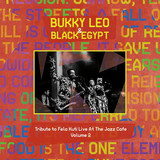
Originally inspired and having had the honour of playing alongside the legendary musical innovator Tony Allen, Bukky is undoubtedly one of the most important afro beat musicians alive today. Fusing the sounds of afro beat, jazz and funk, Bukky has clocked up an incredible amount of Live gigs taking in festivals suchas Love Supreme, WOMAD,Africa Oyé& The Brighton Festivaland legendary venues such as Jazz Café, Ronnie Scotts, Dingwalls & Passing Clouds.Two years ago on the 20th Anniversary of Fela Kuti's death, Bukky staged a 'Felabration' show at London's legendary Jazz Cafe - a homage to the great man's music - which was so successful that he's been touring this show ever since and which has also been captured on two highly sought-after, limited edition 'Live at The Jazz Café' vinyl EPs.
The Item is out of Stock. We will send You an Email as soon as it´s available again if you click on "in Stock Mail"
After their brilliant label debut with "Grow Yes Yes" in 2017, Professor Wouassa now returns with their brand new third album on Matasuna Records.
The Swiss band's career spans more than 15 years, where they have played at many major festivals in Switzerland and abroad. The 11 members of the band have perfected their musical qualities over the years and captivate as a well-rehearsed live band with their energetic and rousing shows. So it isn't surprising that they supported concerts of Afrobeat legends like Ebo Taylor or Seun 'Anikulapo' Kuti.
Their still exuberant creativity can also be heard on their new work entitled Yobale Ma!, which in Wolof's language can be translated as "take me" or "get me". With their new album they take the listener to their musical island to explore the borders of Afrobeat and beyond.
The song Fallou Fall opens the album in a jazzy & big band way, and quickly switches to an afrobeat theme and solo. In the middle the song breaks into an Afro-style pattern, which is performed by Thaïs Diarra in Bambara (Malian dialect) in a traditional Mandingo way of singing. The track ends with a Sabar percussion part - a traditional Senegalese drum.
Yobale Ma is the single of the album, which is inspired by the funky guitars of a Nile Rodger and some typical fast Ghanaian highlife of Ebo Taylor.
The track Thiaroye Gare is about the Tirailleurs sénégalais, a unit of the French army who fought for France in WWII. After returning from captivity they were taken in Camp Thiaroye northeast of Dakar. Corrupt and racist colonial officials led to a revolt, which was bloodily suppressed by French troops.
From the musical point of view the song shows a link between afrobeat and funky James Brown rhythms, which ends in a fast afrobeat style with baritone saxophone and trombone solos.
Beguente Len in the middle of the album is a kind of interlude that represents Wouassa's own way of interpreting traditional afro beats and rhythms.
With the two songs Djongoma and Sama Yone Professor Wouassa leaves his usual afrobeat path to explore the "sound of the islands" (Mauritius, La Réunion, Cape Verde or Cuba) and blend it with their personal and unmistakable style.
With Iba Niawoulo the professors investigate a kind of Ghanaian highlife medium tempo with a chord progression from Serge Gainsbourg's song "Initial BB". The tracks change in the middle to a fast Rhythm'n'Blues beat, which is accompanied by afro guitars. The singer "Mamadou Diagne" talks about his alter ego in Dakar.
In Djougoudja typical afro rhythms are mixed with pure Ethiopian 70's brass sounds and funk guitars. As heard several times in other songs, the track breaks into a very personal and hard to describe Wouassa beat in it's middle. At this time, Mamadou Diagne recites a big slam about the spiritual ideas and the history of the famous senegalese theologian and poet Serigne Touba (Cheikh Ahmadou Bamba). Under his flow some sabar percussions (typical senegalese percussions) build a strong and intense musical rug.
Order now and we will order the item for you at our supplier.