With Horror Spectrum, Bunnies plunges headfirst into the shadowy abyss of their art-rock multiverse, unearthing sounds that slither, shimmer, and scream.
Equal parts psychedelic hallucination, krautrock ritual, and noise rock exorcism, this record feels like the sonic aftermath of mad scientists summoning ghosts through an analog synthesizer they excavated from a cursed tomb. It's less an album and more an experiment gone deliciously wrong—a séance that channels the chaotic energies of dimensions better left untouched.
From the extraterrestrial pulsations of “Eyer of Ire” to the technicolor bliss of “That Evil Ghoul,” Horror Spectrum is a seven-track odyssey that detonates the boundaries of Bunnies’ already unhinged catalog. These tracks drag you by the ankles into realms where sound has teeth, time melts into warped rainbows, and the music feels like it’s plotting something sinister. Few bands dare to tread where Bunnies boldly hop, but here they are, mapping out mythical soundscapes with the glee of cartographers lost in their own creation.
This freakish entity of a record is profoundly unsettling and weirdly exhilarating. Horror Spectrum is the sound of a band digging deep into their subconscious and inviting you to get lost in the labyrinth.
Johnny Mathis (born September 30, 1935) is an American singer. He is one of the best-selling recording artists of the 20th century. Starting his career with singles of standard music,
Mathis became highly popular as an album artist, with several of his albums achieving gold or platinum status and 73 making the Billboard charts. Mathis has received the Grammy Lifetime Achievement Award and has been inducted into the Grammy Hall of Fame for the single “It’s Not For Me To Say”. Although frequently described as a romantic singer, his discography includes traditional pop, Latin American, soul, rhythm and blues, soft rock, blues and country music.
On this compilation some of his greatest hits like “Wonderful, Wonderful”, “Chances Are”. Johnny’s voice & music has been used in countless Hollywood movies, TV shows, and even video games for theme songs & background music to enhance a particular setting or segment. Just to name a few: Family Ties, Gremlins, Criminal Minds, Soul Train, Goodfellas, The Simpsons, Desperate Housewives, EastEnders, Mad Men, and Close Encounters of the Third Kind.
All Bad, the latest album from Nick Shoulders, ultimately encapsulates everything that makes Shoulders’ inimitable form of country music so vital: a heady balance of dazzling musicianship and punk defiance, coupled with gritty eccentricity and a generational connection to the roots of the genre. With a singing style inherited from his family’s vocal lineage, Nick’s songs achieve the rare feat of imparting difficult truths while inciting a certain joyful abandon, balancing a sound forged by years of hard travel with a heartfelt reverence for the origins of country music. In the spirit of Hazel Dickens and Jimmy Driftwood, the incisive yet wildly jubilant All Bad vocally objects to the reckless destruction of the natural landscape and development run rampant, while still offering plenty of joy and dance-ready rhythms. Spanning a variety of early country styles, the album’s infectious harmonies shine alongside everything from jangling cajun waltzes to surf-rock infused bluesy ballads–all tied together by a voice seemingly out of place in this century, yet ever ready to speak up about its problems.
Released via Gar Hole Records (a label founded and co-owned by Shoulders), All Bad marks the first LP made with his longtime band, the Okay Crawdad, since 2019’s premier full-length Okay, Crawdad and their subsequent pandemic-imposed hiatus. After writing most of the album from the front seat of a tour van, the Fayetteville, AR-based musician and bandmates Grant D’Aubin (harmonies/bass), Cheech Moosekian (drums) and Jack Studer (lead guitar) recorded the album in a home studio on the banks of the mississippi river with New Orleans collaborators Ross Farbe and Sam Doores.
The wonderfully favourable response to our first CD and double vinyl volume of the original A and B sides of the singles of the late great Isaac Hayes – as originally released on Stax’ Enterprise subsidiary between 1969 and 1972 – has forced us to bring forward, this month, the release of “Hot Buttered Singles 2” to cater for what Ace is sure will be just as great a level of popular demand.
This volume picks up where “Hot Buttered Singles Vol 1” left off with Hayes’ final 45 of 1972, and carries his seven inch story through to 1976 – by which time Stax was defunct, and Hayes’ was on his own Hot Buttered Soul label via ABC Records. It features eight US R&B chart hits including the much sampled ‘Hung Up On My Baby’ and ‘Chocolate Chip’, Hayes’ biggest hit of this period ‘Joy’ and the ever-popular 1976 instrumental ‘Disco Connection’, which finally gave Hayes’ his second UK Top 20 hit after ‘Shaft’.
All tracks match the original single edits, and wherever possible are taken from digital transfers of the original Enterprise singles masters. Where the original 45s came in two parts, they also do so here. And where original singles masters no longer exist, as was the case for two tracks, Ace’s engineers have re-created them beat for beat from the longer album versions. (Have fun guessing which two they were…)
Die Violinistin Esther Abrami wirft auf ihrem Album "WOMEN" neue und erhellende Schlaglichter auf Komponistinnen. "Women" legt den Fokus auf die außergewöhnlichen Talente von 14 Komponistinnen aus unterschiedlichen Epochen und Genres und enthält neue Kompositionen der Oscar-Preisträgerinnen Rachel Portman und Anne Dudley sowie neue Arrangements von Werken historischer Komponistinnen wie Pauline Viardot, Chiquinha Gonzaga, Teresa Carreño und Ethel Smyth. Esther Abrami hat selbst einige dieser Stücke neu arrangiert und mit "Transmission" ein eigenes Orchesterstück für das Album komponiert. Im Mittelpunkt von "Women" steht die Weltersteinspielung von Ina Boyles Violinkonzert, eine poetische, spätromantische Komposition. Esther Abrami hat jedes Stück für das Album aufgrund einer besonderen emotionalen Verbindung zu den unterschiedlichen Frauen hinter der Musik ausgewählt: "Solange ich mich erinnern kann, war die einzige klassische Musik, die ich je gehört habe, von männlichen Komponisten geschrieben. Ich habe über 15 Jahre lang klassische Musik an renommierten Musikschulen studiert, aber in all den Jahren kein einziges Stück von einer Frau gespielt. Es war nicht so, dass ich sie diese Stücke aktiv vermieden hätte - sie waren einfach nicht Teil des Kanons. Ich fragte mich 'haben Frauen jemals klassische Musik komponiert?' und es stellte sich heraus, dass sie es taten, und ich entdeckte einen verborgenen Schatz. Ich verbrachte Monate mit Recherchen und tauchte in eine völlig neue Welt der Musik und faszinierenden Geschichten von Frauen ein, die im Schatten der Geschichte geblieben waren. Dieses Album ist meine Hommage an sie und eine Reise durch Jahrhunderte der Musik, erzählt durch die Stimmen von Frauen, die trotz aller Widrigkeiten komponierten, kämpften, lebten und schufen. Die Geschichten dieser Frauen inspirierten mich für meinen Karriereweg und zeigten mir wie wichtig es ist, dass zukünftige Generationen diese entdecken können. Ich hoffe, 'Women' kann eine neue Generation junger Mädchen dazu inspirieren, zu komponieren." Über ihre gesamte noch junge Karriere als professionelle Musikerin hinweg hat sich Esther Abrami dafür eingesetzt, Komponistinnen eine Stimme zu geben. In ihrem Podcast "Women in Classical" spricht sie mit einflussreichen Musikerinnen über ihre Karriere. Auch mit ihrer EP "Spotlight" mit dem Londoner "Her Ensemble", das ausschließlich aus Frauen und non-binären Musiker*Innen besteht, hat sie bereits wortwörtlich ein Schlaglicht auf Komponistinnen geworfen. "Women" führt diesen Weg konsequent fort und versammelt eine Reihe außergewöhnlicher Mitwirkenden, wie das ORF Radio-Symphonieorchester Wien unter der Leitung von Dirigentin Irene Delgado-Jiménez, die Pianistin Kim Barbier, die Harfenistin Lavinia Meijer und das Esther Abrami Quintet."Ich bin unglaublich glücklich mit einem so großartigen Orchester und tollen Musikerinnen an einem so persönlichen Projekt zu arbeiten. Diese Kompositionen mit einem Orchester zum Leben zu erwecken, ist eine Erinnerung, die ich nie vergessen werde."
CALIFORNIA GIRLS is a six-track collaborative EP between Lil Peep and producer Nedarb Nagrom. Recorded throughout the winter of 2015-16, it was made entirely via email before the two met in person and features one of Peep’s biggest hits, “Beamer Boy”. Nine years since its initial release, CALIFORNIA GIRLS remains a favorite amongst fans for its emotive lyrics and catchy hooks. For the 9 year anniversary, CALIFORNIA GIRLS will be available on vinyl, CD, and cassette.
Nach den letzten Jahren, die durch ein mit dem American Music Award und dem iHeart Radio Award ausgezeichnetes internationales Nummer-1-Album ”Impera”, das auch in Deutschland die Spitze der Charts
eroberte, eine RIAA-zertifizierte Platin- und eine UK-zertifizierte Gold-Single sowie eine massive Welttournee, die in dem rekordverdächtigen Kinofilm ”Rite Here Rite Now” verewigt wurde, welcher es bis auf
Platz 3 der deutschen Kino-Charts schaffte, geprägt waren, wird 2025 für GHOST das bisher geschäftigste,
ehrgeizigste und schlichtweg größte Jahr werden. Mit der Enthüllung von SKELETÁ, dem kommenden
sechsten Album der GRAMMY-gekrönten schwedischen Theatralik-Rock-Ikonen, und der heimtückischmelodischen Leadsingle „Satanized“ hat GHOST gerade erst die nächste Phase ihres unausweichlichen
Weges zur Weltherrschaft eingeleitet. Mit Hunderttausenden von bereits verkauften Tickets für den ersten
Teil einer weltweiten Arena-Tournee, bei der die Band zum ersten Mal als Headliner im Madison Square
Garden auftritt, ist GHOST bereit, das introspektivste und nach innen gerichtete Material der Bandkarriere
zum Leben zu erwecken - und das in einem angemessen grandiosen Stil: Auf der Tournee zu SKELETÁ
wird der neu getaufte Papa V Perpetua sein Debüt geben, der einer phantasmagorischen neuen Produktion
vorsteht, die verspricht, die Live-Rituale zu übertreffen, die den Debütfilm der Band, RITE HERE RITE
NOW, zum umsatzstärksten Hardrock-Kinoereignis der nordamerikanischen Geschichte machten
For a project which made its debut in 2024 with next to no fanfare nor hype, rush2theUnknown managed to capture the attention and the imagination of a number of notable DJs across genres, tempos and timezones in their debut year. From legendary chillers Kruder & Dorfmeister picking up on the more Japanese VGM influenced side of their music, techno DJs like Courtesy, Anastassia Kristensen and Nastia drawn towards their more celestial-tinged breakbeat offerings and key support coming in from many trailblazers past and present of the genres that shaped the duo thirty years back. Support from artists and DJs around the world saw rush2theUnknown's music aired across Kool FM, Rinse FM, NTS, BBC Radio One, and thanks to impassioned support from punky-reggae icon Don Letts, multiple spins on the Rebel Dreads legendary BBC Radio 6 show.
With the foundation laid rush2theUnknown return to Diskotopia with the "Yugawara" EP.
Early support for the Yugawara EP has already seen responses from and tracks from the EP played by DJs like Machinedrum, DJ Flight, Addison Groove, dBridge, Gyrofield, Joakim, I:Cube, Courtesy, Cici, Sakura Tsuruta and more in clubs and on radio like NTS, Kool FM, Rinse FM and BBC Radio One, and BBC 6 Music.
Born from a journey out of Tokyo to the seaside town of Yugawara in the northeastern end of Izu Peninsula, the EP channels the energy, spirit and mathematically impossible coincidences that seem to come with each adventure the duo has in that part of Japan. Each morning the duo would leave their makeshift studio and wander across the hills of Yugawara. Be it a random encounter, a conversation or mental picture sparked by the visual scenery before them, new tracks came to life each day. As with their Diskotopia debut, each EP is a mix of the myriad influences the duo have accumulated since their teenage years living on outer ends of the Pacific Ocean.
From the technicolour aqua-jungle of "View From Fuua" which bursts with Logical Progression era Good Looking Records exo-planet optimism, through to the EPs closer, "Zuio-ji" a track that owes as much of a debt to the ancient Japanese court music of gagaku, as it does the 1960s soundtrack work of composer Toru Takemitsu and the jidaigeki infused breakbeat experiments of a mid 90s Rupert Parkes. Shades, tones and hues plucked from CD-ROM era "Visual Scenes" 80s CM Music and the techno-animism of synth-heavy anime soundtracks can be found on the EPs more VGM-leaning excursions "光のトンネル" and "夜明けの真鶴岬" whereas tracks like "Physical Reality" continue the question posed on their debut:What would a breakbeat tradition look and sound like, had it been forged a billion light years away?
The Rough Trade Singles collects The Fall's four singles recorded for this influential label in 1980 and 1983 – How I Wrote 'Elastic Man' / City Hobgoblins, Totally Wired / Putta Block, The Man Whose Head Expanded / Ludd Gang and Kicker Conspiracy – none of which appeared on any of the band's studio LPs. With 7-inches being the era's vehicle for buzzing communiqués, The Fall would use the format for short-form, standalone works rather than as mere promotional devices for forthcoming albums.
"Totally Wired" is often cited (and rightfully so) as The Fall's most infectious tune – an amphetamine-fueled anthem with stuttering nods to forebears, yet too incisive to have been made by anyone else. "How I Wrote 'Elastic Man'" is another mad hoedown, one reimagined for the post-punk age. While the playful rhythm machine on "The Man Whose Head Expanded" almost suggests danceability, Mark E. Smith's idiosyncratic shriek on "Kicker Conspiracy" pierces through the twin drumming of Paul Hanley and Karl Burns and the group's unpredictable / unmistakable racket. Together these songs remain some of the absolute best material The Fall would ever release.
Superior Viaduct's edition is the first time that The Rough Trade Singles has been available on vinyl domestically. Liner notes by Brian Turner.
Hollows Made Homes In Their Sunken Cheeks came into existence as a result of Jon's wishes to take the Ungraven sound somewhere other than a standard 'rock band' setup. Moving away from the traditional 'drums / bass / guitar' structure has allowed Ungraven to experiment further with both sound and composition. 'Hollows_.' Is an experiment in sonics and allows both Davis and Perry to perform a sickening sonic duet as their respective instruments carve a universe shaped hole in your consciousness. Inspired by the duo's past collaborations on Conan tracks such as "Older than Earth" and "Grief Sequence" as well as artists such as Tangerine Dream, Circle, Zombi and Harold Budd. Hollows is a combination of composed and improvised elements, constructed remotely from their bases in England and Denmark. The addition of Perry's synth, organ and piano to Davis's slab like 6 string delivery has produced two epics that are both introspective and pummelling at the same time. Fall untethered into a bleak and expansive soundscape of psychedelic terror, experience a new chapter in Ungraven's tome of tone.
out of Stock
Last delivered 17 months ago available to reorder, subject to availability
Tanzform Classic Tote Bag in Green. Made with 100% upcycled fabric.
Sustainable & Stylish: Made from 100% upcycled cotton fabric
Eco-Friendly Fashion: Reusable, durable, and perfect for everyday use
Minimalist Design: Features the Tanzform logo in elegant grey
Web Web mit ihrem sechsten Album in sieben Jahren und mit einem neuen Touch. Mehr psychedelisch, mitunter krautiger als zuvor.
Dazu haben sich WEB WEB diesmal (wieder) in Originalbesetzung (ohne Max Herre) einen besonderen Gast ausgesucht: JJ Whitefield (The Poets Of Rhythm / Karl Hector & The Malcouns / Syrup), der den fantastischen Gitarrensound beisteuert. Seine Riffs sind manchmal funky wie bei den Poets Of Rhythm oder Syrup, oder psychedelischer wie bei Karl Hector & The Malcouns oder seinen vielen Live- und Studioaufnahmen mit Embryo. Die Soundfarbe seiner Gitarre gibt dem Album den Schub in die wunderbare Atmosphäre spaciger Jazz-Kraut Bands der Siebziger. Das Konzept des Albums sollte das exakte Gegenteil zum vorigen WEB MAX Album (WEB MAX II) darstellen: Wieder zurück zu den (WEB WEB-) Wurzeln, mit spontanen, improvisierten Stücken, Fragmenten, Ideen, die größtmögliche Freiheit und Live Spirit bedeuten. Und genauso unvorhersehbar und improvisiert war auch die Idee, JJ Whitefield mit ins Boot zu holen: Einen Tag vor der Session dachte sich Roberto Di Gioia: "JJ und ich leben seit jeher in München. Wir sind uns aber leider nie wirklich über den Weg gelaufen. Ich bin ein großer Bewunderer seiner Kunst, seiner Musik, seiner Art zu spielen. Er ist so inspirierend, weil er keine Kompromisse eingeht. Er spielt auf seine so eigene Art und Weise, er ist keine Kopie von irgendwem und irgendwas."
Die 14 Kompositionen entstanden an zwei Tagen, aufgenommen von Jan Krause (Beanfield) in München. Die energetische Live-Session ging über zweimal 10 Stunden, und alle - Roberto Di Gioia (Rhodes, Fender Precision Bass, Moog, Mellotron, Percussion), Christian von Kaphengst (Fender Precision Bass, Rhodes), Peter Gall (Drums, Percussion, Fender Rhodes), Tony Lakatos (Tenorsaxophon, Querflöte) - waren bis ins Mark "on fire". Dabei wechselten die Musiker die Instrumente, um einen vollkommen anderen Gesamtklang zu erzeugen: Kaphengst am Fender Rhodes klingt anders als Roberto, sein Spiel hat einen anderen harmonischen Aufbau, und Roberto am Bass kennt man von zahlreichen Max Herre Aufnahmen, oder von Till Brönners Album "Till Brönner", und natürlich auch bei dem von ihm produzierten "Let Yourself Be Loved" von Joy Denalane, das auf Motown Records erschienen ist.
out of Stock
Last delivered 17 months ago available to reorder, subject to availability
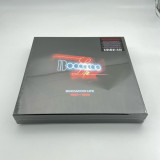
(10x12" box set, limited to 1000 copies, with premium finishing, uniquely numbered, incl. 10 records in individually printed sleeves, a booklet detailing the club's history & exclusive stickers) Boccaccio has secured its place among legendary venueslike Paradise Garage in New York and The Hacçinda in Manchester. Its bold fusion of emerging electronic genres such as New Beat, Acid, House, and Techno was way ahead of its time, drawing music lovers and clubbers from across Belgium and beyond.
Belgian label Music Man Records presents Boccaccio Life 1987-1993, a new compilation offering a fresh perspective on the legacy of the iconic Belgian club Boccaccio - often associated with the short-lived New Beat movement. The 40-track compilation highlights the raw and futuristic early house and techno sounds that were heard in the pioneering club.
Located in rural Destelbergen (Belgium), just a stone's throw from Ghent, Boccaccio has secured its place among legendary venues like Paradise Garage in New York and The Hacçinda in Manchester. Its bold fusion of emerging electronic genres such as New Beat, Acid, House, and Techno was way ahead of its time, drawing music lovers and clubbers from across Belgium and beyond. Sundays at Boccaccio were unlike anywhere else-offering sounds you couldn't hear anywhere else.
Boccaccio Life 1987-1993 is carefully curated by resident DJ Olivier Pieters and club regular Stefaan Vandenberghe, standing as the ultimate testament to a club that was more than just a venue. For those who experienced it, it was a community - a way of life. Hence the club's full name: Boccaccio Life.
This compilation stands as a testament to an innovative time in electronic music, capturing the raw, futuristic sounds of early house and techno. It sheds light on another side of Boccaccio, one that goes far beyond the short-lived New Beat scene. A carefully curated selection of 40 tracks, resonating with those who were there by offering familiar classics, while also reaching a new generation-those who never experienced it firsthand.
With tracks from Blake Baxter, Virgo, Frankie Knuckles, Tyree, and A Guy Called Gerald, the unmistakable influence of black American pioneers is clear-the originators of the firstanalog house and techno sounds. On the other hand, UK sound innovators such as The Orb and LFO bring both sharp textures and rough breakbeats to the table.
Club staple tracks include dreamy excursions from Roger Sanchez under his Egotrip moniker, the relentless basement house of Circus Bells by Robert Armani on Dance Mania, an uplifting take on a hip-house cut from The D.O.C. (Portrait of A Masterpiece in the CJ Ed-Did-It Mix), a timeless remix of UK Formation's Age of Chance from 1994, and an alternate take on The Tape by Boccaccio club regular and Belgian producer Frank De Wulf, taken from his B-Sides project.
While not always the obvious hits, these tracks have gracefully withstood the test of time, and were exclusive to Sundays at Boccaccio. Now, they are finally available to experience together in one collection, offering a timeless snapshot of a unique era.
out of Stock
Last delivered 14 months ago available to reorder, subject to availability
An Introduction To Syd Barrett, is a reissue of the 2010 collection that brought together for the first time the tracks of Pink Floyd and Syd Barrett on one compilation.
David Gilmour, who originally worked on Syd Barrett's two solo albums, as co-producer of The Madcap Laughs and as producer of Barrett, was the executive producer for the album. Damon Iddins and Andy Jackson at Astoria Studios remixed five tracks including ‘Octopus’, ‘She Took A Long Cool Look’, ‘Dominoes’ and ‘Here I Go’, with David Gilmour adding bass guitar to the last track. Pink Floyd's ‘Matilda Mother’ also received a fresh 2010 Mix.
The album features the original 24-page booklet and graphics plus all lyrics, and was designed including the cover art by long time Pink Floyd associate the late Storm Thorgerson and his estimable studio.
Born in Cambridge in 1946, Roger Keith 'Syd' Barrett was the primary songwriter, guitarist and original lead vocalist in the first incarnation of Pink Floyd. He formed the band in the mid-1960s with drummer Nick Mason, bassist Roger Waters and keyboard-player Richard Wright. With their groundbreaking, semi-improvised sets at the legendary UFO Club in London's Tottenham Court Road, they became the prime movers of British psychedelia.
Barrett wrote the warped pop vignettes ‘Arnold Layne’ and ‘See Emily Play’, the group's two hit singles from 1967, as well as 'Apples And Oranges', and the lion's share of the material – the dreamy ‘Matilda Mother’, ‘Chapter 24’ and the whimsical ‘Bike’ – on their debut album The Piper At The Gates Of Dawn. Recorded at EMI's famed Abbey Road Studios while the Beatles were making Sgt Pepper's Lonely Hearts Club Band, Pink Floyd's first album has proved an enduring classic, referenced by everyone from David Bowie to Spiritualized via The Damned.
Barrett contributed ‘Jugband Blues’ to A Saucerful Of Secrets, the band's follow-up, but his behaviour became increasingly erratic and he left in April 1968, a few months after the addition to the group of his Cambridge friend David Gilmour on guitar and vocals.
Syd Barrett's first solo album, The Madcap Laughs, was a long time coming but made the Top 40 on its release in January 1970. Barrett followed in November that year, and contains tracks such as ‘Baby Lemonade’ and ‘Gigolo Aunt’ that provided the names for two cult US groups in the 80s and 90s.
Over the last four decades, Syd Barrett has become the ultimate rock enigma. In 1975, he paid an eerie visit to his former band mates at Abbey Road while they were recording ‘Shine On You Crazy Diamond’, the centrepiece of the Wish You Were Here album he had inspired. He never entered a studio again. In 2001, he was the subject of a BBC Omnibus documentary.
He died in July 2006 but his legacy lives on in the music of R.E.M., Robyn Hitchcock, Julian Cope, Spiritualized, Blur and countless other groups. Earlier this year, Faber and Faber published Syd Barrett: A Very Irregular Head, an exhaustive biography by long-time fan Rob Chapman.
An Introduction To Syd Barrett provides a handy overview of this visionary talent, this madcap genius whose star shone brightly yet burnt out all too quickly.
out of Stock
Last delivered 17 months ago available to reorder, subject to availability
Madteo is one of the great eccentric visionaries of Electronic Music and his new album Misto Atmosferico E Ad Azione Diretta on Unsure once more happens to be a mind-bending piece of art. Misto Atmosferico E Ad Azione Diretta shifts between focused gritty grooves and the long freeform associative adventures that you haven't heard before, never static, sometimes overwhelming, always on edge.
The opener Cans People is an archaic rave monster, To Know Those Who is non-linear dub techno, Nocturnal Palates expands the Filter House universe and Rave Nite Itz All Right hits you hard and strange (yet subtle, in a way). The last two tracks then let loose; Madteo manipulates time, space and sounds to create the psychedelic secrets of Luglio Ottantotto. And Emo G (Sticky Wicket) explores the outskirts not only of House or Techno or whatever but music in general, a 15-min-trip through the low frequencies, the rumble, the dark hearts and the enchantment. Breathtaking. Bring The Voodoo Down.
out of Stock
Last delivered 17 months ago available to reorder, subject to availability
Edits by Mr K
Edit heavyweight Danny Krivit edges close to full-on remixes with these two extended takes on soul genius Stevie Wonder’s timeless tunes. Using isolated instruments and vocals, the familiar classics take new shape in the able hands of Mr. K, providing a fresh look at cuts that have never faded in popularity. ‘Master Blaster’, Stevie’s tribute to Bob Marley, gets an attention-grabbing intro that is tailor-made to slide right into DJ sets, while the flip, the R&B essential ‘I Was Made To Love Her’, is filled with breakdowns and clever cuts that will open the eyes and ears of even the most jaded soul fanatic. Masterful work from NYC’s edit king and a fitting tribute to the Motown legend on a loud 12-inch readymade for club play. Record Store Day special!
out of Stock
Last delivered 17 months ago available to reorder, subject to availability
For their second album 'The Foel Tower', Quade holed up in an old stone barn in the cradle of a Welsh mountain valley.
The valley was a stark and windswept backdrop with little daylight, as the band would huddle around crackling fires each evening. “There was very much a feeling of being on the complete fringes of society,” the band says. “The last vestiges of settlement before the unrelenting barren moors that loomed over us.”
It was an environment that would shape the band – a Bristol four piece made up of Barney Matthews, Leo Fini, Matt Griffiths and Tom Connolly – and the record they have made. It’s an album that is as dreamy as it is melancholic, and as quiet and tender as it is forceful and potent – gliding across genres like winds blowing over those wide-spanning Welsh hills – to arrive at something the band half-jokingly, yet somewhat accurately, describe as “doomer sad boy, ambient-dub, folk, experimental post-rock.”
Quade is a band but it’s also a very close-knit group that have been friends since childhood who use this musical vehicle for interpersonal explorations and connections. “We’ve individually experienced a lot of difficulty over the last several years and Quade has represented a space to shelter from these,” the band says. “This means we often communicate extensively with each other about the issues affecting us individually and collectively. These conversations and concerns are central to The Foel Tower.”
In many ways, the making of this record – or any Quade record – goes way deeper than the simple writing, construction and recording of music. It is a profoundly deep and meaningful experience. “A key theme of the album relates to why we connect with specific places in the way that we do,” the group says. “We often remove ourselves to isolated valleys, sheltered from some of the painful personal struggles that we have experienced as a band. These become spaces in which we collectively purge ourselves of some of these difficulties hoping to make Quade a physical and emotional place of solace. This album celebrates these places that we’ve been able to retreat to and recuperate.”
It is a deep, dense record that is stuffed with musical, cinematic and literary influences – from Ursula La Guin and Cormac MacCarthy through to RS Thomas and Yeats – but despite the heavy, introspective and anxious nature of some of the material, it is also a record that is remarkably deft, agile and considered.
Made with producer Jack Ogborne and mixer Larry ‘Bruce’ McCarthy, there is a pleasing duality to the final sound of the record. One that feels fragile and intimate but also powerful and forceful, as introspective as it is expansive, and a record that is as detailed and textured as it is wide open and spacious.
The album title also pays homage to the place that shaped it so greatly. Within this remote Welsh valley stands the Foel Tower, a stone structure filled with valves and cylinders that can raise and lower the level of the reservoir to draw off water. Which it can then send as far as 70 miles to Birmingham. However, in the late 1800s this land was occupied by local farmers and families in the hundreds until the British Government acquired the land, cleared the valleys, and promptly displaced them in order to begin serving the vastly expanding industrial English city. The band dug into the history and politics of this and wove it into the themes they were already thinking about, using what the Foel Tower stands for as something of a contemporary metaphor. “This tension was something that we wanted to explore without the haughty judgement of our more metropolitan lifestyles,” they say. “And to explore how this specifically relates to ourselves: how can we envisage a genuinely ecological future for ourselves – one that is accessible, affordable and in harmony with endangered rural practices.”
What makes The Foel Tower such an incredible record is that it feels born of a time, place and situation that only existed in that very moment. It’s a snapshot of those 10 days spent in rural Wales and all the feelings and anxieties the band were experiencing at that specific time, magically caught on tape. “The album very much feels tied to this valley for us and the conversations and experiences we shared there,” they say. “It brings up a great deal of poignancy for us, an emblem of some fleeting respite from the strains we all have to experience. But there’s also deep sadness knowing how transient these moments are – in fact, there’s just a great deal of sadness in this album. But it’s also a record that while personal, resigned, and emotionally burdened, is ultimately hopeful.”
out of Stock
Last delivered 17 months ago available to reorder, subject to availability
The Ibex Band, with Giovanni Rico and Selam Woldemariam at the creative helm, provided the musical backbone for legends like Aster Aweke, Girma Beyene, Tilahun Gessesse, Mulatu Astatke, and Mahmoud Ahmed, including the iconic album Ere Mela Mela, shaping modern Ethiopian music as we know it today. This 1976 album (Ge’ez Year 1968) played a pivotal role in that legacy and has now resurfaced to set the record straight.
There’s a tendency to talk about the seventies as a golden age of Ethiopian music. There are good reasons for that, and just as good reasons against it. However, the notion of a golden past privileges the role of Western explorers and suggests that the pinnacle of Ethiopia’s musical culture is something only a foreigner can appreciate and unearth. It downplays the complexities of Ethiopia’s culture and history, creating an artificial divide between then and now. And it underestimates the constantly evolving sound that has followed.
The legendary musical outfit The Ibex Band, later metamorphosed into The Roha Band, has played a central role in defining the sound of many of the greatest stars on the music scene of Ethiopia from the mid-seventies onwards–but their golden output has never really waned. The story of the origins of the band that provided the musical backbone for greats such as Aster Aweke, Girma Beyene, Tilahun Gessesse, backing the solo career of group member Mahmoud Ahmed as well as backing Mulatu Astatke and many others has yet to be properly told.
Two misconceptions plague the image of Ethiopian music, one is that the music is pure because it is, by some notion, unexploited, the other is that it is all traditional. To begin with, a combination of political changes between the late sixties and the mid-nineties created an environment where only the most dedicated and skilled musicians struggled on and pursued a musical career against fierce odds. The whole Ibex Band, with Giovanni Rico and Selam “Selamino” Seyoum Woldermarian at the creative helm, are arguably the origo of the vibrant scene in the mid-seventies, and the said pair are foremost responsible for not only navigating the band through troubled times, but also modernizing the 6/8 chickchicka rhythm to a contemporary form. Giovanni laid the rhythmic foundation with heavy looped basslines that reinvented traditional melodies as dance music, and with Selamino’s innovative guitar work they influenced scores of musicians from Abegaz Kibrework Shiota to Henock Temesgen. Even Giovanni’s Fender bass and Selamino’s Gibson guitar inspired younger musicians in their choice of instruments. Not only in choice of instruments but also in sound–even as the digital revolution hit Ethiopian music, a lot of popular music still took its cue from the masters from Ibex and Roha.
Ibex emerged out of the ashes of the sixties group the Soul Echos band, adding Giovanni and Selamino to their ranks and taking their cues from a slew of influences, such as Motown and The Beatles, fused with traditional music. A tighter-knit unit than most bands at the time – Ibex has remained six to seven members throughout their whole career, compared to many bands that were as large as fifteen or sixteen men strong when Ibex set out. Their playing has been viciously focused, economical yet heavy. Just a year before the recording sessions of the album in your hands, Giovanni and Selamino made a contribution to the popular musical lexicon of Ethiopia that was simply defining the popular sound: their arrangement and recording of bandmate Mahmoud Ahmed’s solo effort and real commercial breakthrough tune and eponymous album, Ere Mela Mela, from 1975.
Selamino has never limited himself to being an adroit lead guitarist, but has always been a scholar of history, and as such he has probably contributed as much to modern Ethiopian music with his guitar playing and compositions as with a deepened understanding of modern or contemporary – Zemenawi – Ethiopian music. Selamino’s contributions serve as a metaphor for those of the whole band, at one and the same time creating and defining a new, danceable and updated sound anchored in Giovanni’s bass, whilst also elevating the broader scene through their support for others on the scene and on top of that, increasing the understanding of the music.
There is an understandable desire to romanticize the musical heyday Ibex and Roha were at the forefront of, because so much of the output is sorrowfully hard to come by. Ibex creativity was nothing short of ridiculously fierce compared to many of their Western contemporaries. Based on their sheer recorded output alone they could have usurped the title “hardest working in show business” from James Brown, recording more than 250 albums or 2500 songs in the seventies and eighties. Some only surface as cassettes today, others were never given full LP release, and some are simply impossible to find today. In the light of that, it’s nothing short of a miracle that the recording Stereo Instrumental Music from 1976 (Ge’ez Year 1968) has resurfaced. Unearthed in perfect condition on a chrome cassette, this is musical history comes alive–to set the future straight. Stereo Instrumental Music was recorded in collaboration with Karl-Gustav Lundgren, a Swedish national working for the Radio Voice of the Gospel. It took two sessions at the Ras Hotel ballroom in Addis Ababa. The Ibex Band was the first band in Ethiopia to employ a four-track recorder for their recording (the first available in the country, lent by Karl-Gustav). Later the same week, Giovanni and Selamino realized that, lengthwise, the recorded material fell short of what they wished for, so they recorded four more tracks in one more session on a single-track recorder. The Ras Hotel and Ghion Hotel, where the Ibex Band held musical residencies were to Ethiopia in general and Addis Ababa in particular what Motown was to the USA and Detroit a few years earlier – a hotbed of musical creativity and showmanship.
The most astonishing thing about Ethiopian music of the last half century is how tradition and modernity are intertwined. Because of this feature, it’s kind of hard to tell when there ever was or when we are in a “golden age”. So much of music from the past has been criminally neglected, but because of the hardships in the past, it would be an oversimplification to say that said past was a golden age. Probably, the golden age is what we are approaching, because for the first time both the past and future are accessible, and the monumental contributions from before can lay a firm foundation for a thriving music scene today. The Ibex Band stands firmly in the past, present and the future. That, if anything, is golden.
The detailed history of Stereo Instrumental Music is in many ways unique. To begin with, it couldn’t have been recorded earlier (there were no four-track recorders available) and it really couldn’t have been recorded afterwards either, at least not in the years directly following, because of the toll the musical scene took from the unfavorable political climate that followed when the nascent Derg regime and rival groups tried to assert themselves, the musical equipment lent from The Voice of Gospel Radio simply disappeared from Ethiopia when the radio station folded in 1977. Karl-Gustav Lundgren,
the Swedish foreign national who assisted during the recording, worked with the Ethiopian Evangelical Church Mekane Yesus at the time, recalls how they only had about fifteen minutes to get the microphones in place for the recording as to not alert neither the management at Ras Hotel nor the authorities and most importantly, to complete the recording before the curfew came into effect at midnight. In leaping to the opportunity to use previously unavailable equipment to push their sound forward and improvising to meet the logistical challenges, the Ibex Band displayed the very avant-gardism and adaptability that explains their longevity as a band through the years. The recording of Stereo Instrumental Music is from a given time in history, but it sounds as beyond time.
Much of the energy that burst out of the scene that Stereo Instrumental Music came out of dissipated or got sidetracked during the societal changes Ethiopia went through in the 1970s and 80s. Whilst leaders might have professed to be revolutionary, the work ethic of the Ibex Band can truly be described as that. They never called it quits, but adapted, toured extensively abroad in Africa, Europe, and the Middle East, and found ways to work even in the face of the curfew that curtailed a lot of musical life. They even played major arenas in the nineteen eighties, despite said curfew and restrictions. The whole extent of their legacy has never been told, but their music speaks louder than words, so therefore… tune in to the Ibex Band’s Stereo Instrumental Music.
out of Stock
Last delivered 15 months ago available to reorder, subject to availability
After “A Journey Into Abstract HipHop” and “Snap Your Neck Back” 7inch EP vinyls , the series continued with "Fuck You I'm 21" EP, which was released digitally only on April 1st 2023…celebrating the 21th anniversary of the first EP ever released back in 2002.
Today we release the 7inch vinyl version of this new EP.
For the occasion, DJ/beatmaker Ugly Mac Beer drops an exclusive B-side track, “Human Sucks”, custom-produced in the spirit of the Gasoline collective project.
Only 500 copies of this gold-colored vinyl will be released, a must-have item.
out of Stock
Last delivered 15 months ago available to reorder, subject to availability
Wild ecstatic vocals, distorted electric guitars, rocket bass, and the amphetamine beat! // Unlike anything else, this is THE high life music you've always wanted // Ceremonial music played with abandon and extreme intent, honoring the living and dead alike // Recorded on location in SW Madagascar by Maxime Bobo // “Tsapiky music from Southwest Madagascar features wild ecstatic vocals, distorted electric guitars, rocket bass, and the amphetamine beat! Unlike anything else, this is THE high life music you've always wanted - ceremonial music played with abandon and extreme intent, honoring the living and dead alike. In Toliara and its surrounding region, funerals, weddings, circumcisions and other rites of passage have been celebrated for decades in ceremonies called mandriampototse. During these celebrations – which last between three and seven days – cigarettes, beer and toaky gasy (artisanal rum) are passed around while electric orchestras play on the same dirt floor as the dancing crowds and zebus. The music, tsapiky, defies any classification. This compilation showcases the diversity of contemporary tsapiky music. Locally and even nationally renowned bands played their own songs on makeshift instruments, blaring through patched-up amps and horn speakers hung in tamarind trees, projecting the music kilometers away. Lead guitarists and female lead singers are the central figures of tsapiky. Driven as much by their creative impulses as by the need to stand out in a competitive market, the artists distinguish themselves stylistically through their lyrics, rhythms or guitar riffs. They must also master a wide repertoire of current tsapiky hits, which the families that attend inevitably request before parading in front of the orchestra with their offerings. This work, a constant push and pull between distinction and imitation, is nourished by fertile exchanges between various groups: acoustic and electric, rural and urban, coastal or inland. What results during these ceremonies is a music of astonishing intensity and creativity, played by artists carving out their own path, indifferent to the standards of any other music industry: Malagasy, African or global. Recorded live on location by Maxime Bobo, this vinyl LP includes a 4-page full-color insert with detailed liner notes plus photos of the musicians and surroundings.”
Pink vinyl, limited to 350 copies. Hollows Made Homes In Their Sunken Cheeks came into existence as a result of Jon's wishes to take the Ungraven sound somewhere other than a standard 'rock band' setup. Moving away from the traditional 'drums / bass / guitar' structure has allowed Ungraven to experiment further with both sound and composition. 'Hollows_.' Is an experiment in sonics and allows both Davis and Perry to perform a sickening sonic duet as their respective instruments carve a universe shaped hole in your consciousness. Inspired by the duo's past collaborations on Conan tracks such as "Older than Earth" and "Grief Sequence" as well as artists such as Tangerine Dream, Circle, Zombi and Harold Budd. Hollows is a combination of composed and improvised elements, constructed remotely from their bases in England and Denmark. The addition of Perry's synth, organ and piano to Davis's slab like 6 string delivery has produced two epics that are both introspective and pummelling at the same time. Fall untethered into a bleak and expansive soundscape of psychedelic terror, experience a new chapter in Ungraven's tome of tone.
Eridu's 'Nous Sommes' EP prepares us for the first open-air house sessions of Spring 2025! The A-side starts off with 'Nous Sommes' where a bouncy bassline is countered by a French vocalist, balancing style and punch. The Belgian trio continues with 'Je M'en Fous', ready to get the crowd in a 'carefree' mood with the funky elements we all enjoy. The real French touch comes with the B-side where they start off with a long-lost house gem 'Jean Babbie's Theme', finally seeing the light on a record. 'Mad About' catches you in a warm texture of classic samples that will keep you busy long after the last note has faded.
out of Stock
Last delivered 10 months ago available to reorder, subject to availability
Carrying on their longstanding dedication to the seminal output of Merzbow, Urashima returns with what is unquestionably their most ambitious release to date: “Collection 001-010”, a deluxe, 10 LP vinyl box set limited to 299 copies, gathering together the entirety of the project’s first ten releases, originally released in 1981. Encountering the band in its early incarnation of the duo of Masami Akita and Kiyoshi Mizutani, raw, exposed and bristling with energy, foreshadowing numerous trajectories they would follow over the coming years, these astounding full lengths - the majority of which have never been released on vinyl - come housed in a beautifully produced, deluxe wooden box, with each LP in its own individual sleeve reproducing the original artwork, and a LP-sized 32-page book containing reproductions of artworls and collages by Masami Akita, an interview conducted by Jim O'Rourke, and liner notes penned by Lasse Marhaug, Thurston Moore, and Akita himself, amounting to what is unquestionably one of the most historically significant releases we’re likely to encounter in 2025.
Deluxe Edition of 299 copies, remastered from the original analog tapes by Masami Akita, each LP comes in its individual sleeve reproducing the original artwork, also includes a LP-sized 32-page book. ** Since its founding during the late 2000s, the Italian imprint, Urashima, has become a definitive voice in the landscape of noise. Bringing forth beautiful limited edition releases, they’ve sculpted a singular vision of one of the most vibrant and revolutionary bodies of experimental sound to have graced the globe. Among the many projects that they have supported over the decades, there has been an undeniable dedication to the output of the seminal Japanese noise outfit, Merzbow, making a significant amount of the project’s out of print back catalog available across a range of formats. Now they return with what is arguably their most stunning and ambitious release dedicated to the project to date: “Collection 001-010”, gathering the entirety of Merzbow’s first ten releases, largely privately released by the band on cassette across 1981, in a deluxe, 10 LP vinyl box set. Representing what is effectively ground zero in Japanese noise and collectively amounting to some of the most sought after releases ever produced within that movement, Urashima’s truly beautiful collection comes fully remastered by Masami Akita himself from the original tapes, presenting all but a small number in their first ever vinyl pressings, with each LP housed in its own individual sleeve reproducing the original artwork, alongside a LP-sized 32-page book containing reproductions of artworks and collages by Masami Akita, an interview conducted by Jim O'Rourke, and liner notes penned by Lasse Marhaug, Thurston Moore and Akita himself. Towering with energy and groundbreaking creative vision, within the realms of noise and experimental music, releases don’t get more monumental or historically important than this!
Merzbow came roaring onto the Tokyo scene in 1979, and remains, to this day, one of the most prolific and aggressively forward-thinking projects in experimental music. Eventually becoming the solo vehicle for the efforts of Masami Akita, in its earliest incarnation the project was the duo of Akita and Kiyoshi Mizutani, taking their name from German artist Kurt Schwitters' pre-war architectural assemblage, The Cathedral of Erotic Misery or Merzbau, and quickly set out to challenge entrenched notions of what music could be. Embracing technology and the machine, even in its earliest iterations, Merzbow pushed toward new territories of the extreme, arriving at a space of pure, unadulterated sonic onslaught that has continued, for over 40 years, to set the pace for the entire genre of noise, and has remained one of the movement’s most important, definitive voices, continuously laying the groundwork for countless artists who have followed in its wake.
When dealing with historical gestures, there’s an invertible aura surrounding original line-ups and early statements, and rightfully so. It is often within a band’s debut that we catch the purest glimpse of the raw energy and creative ferment that made them what they are. This is certainly the case when regarding the coveted early releases of Merzbow, capturing the emergence of the project in its form as the duo of Masami Akita and Kiyoshi Mizutani as they helped set the blue print from the then emerging movement of Japanese noise. Over the course of its nearly five decades of activity, Merzbow has always been noted for how prolific and ambitious the project is. This was no less the case in the very beginning. While they were active for roughly two years prior, in 1981 alone they issued ten self-released cassettes numerically titled “Collection 001-010”, albums which have both individually and collectively become holy grails in the realms of noise, with only two - “Collection 007” and “Collection 009” - ever receiving vinyl reissues prior to now.
As Lasse Marhaug deftly articulates in the newly commissioned liner notes for “Collection 001-010”, despite having been recorded in different location across a span of time, the sum total of Merzbow’s first ten releases might be best regarded as a single release to be listened to in the same, durational sitting, with the material standing well apart from what most came to expect from Merzbow, while foreshadowing numerous trajectories the project would take over the coming years. Not only do these recordings feature a vast array of instrumentation - tapes, acoustic and electric guitar, violin, drums, voice, recorder, organ, found sounds, clarinet, homemade and prepared instruments, a vast arsenal of effects and electronics, and piano, to only begin to scratch the surface - the majority of which would disappear from the project’s active sources of sound generation over the subsequent years, but there is a slow pacing and raw sense of openness and exposure that reveals strong connections to the avant-garde improvisations of groups like AMM, Musica Elettronica Viva, and Gruppo di Improvvisazione Nuova Consonanza, the psychedelia of groups like Taj Mahal Travellers and Flower Traveling band (both of whom Akita mentions having seen in youth within his interview with Jim O’Rourke), and rock in general - albeit in fully abstracted forms - unspooling as brittle, pointillistic, textural, raw and abrasive forms, that occasionally flirts with unexpected tonal sensibilities. As Marhaug describes it in his excellent liner notes: «Sonically, “Collection” sounds more sparse and stripped. It’s dry sounding, up-front, no reverb, and there’s less heavy low-end grime and thin on the signature frequency sweeps. Viewed in a 1981 context, musically, it’s more akin to what the LAFMS (Los Angeles Free Music Society) pool of artists were doing at that time than what was happening in industrial music... There’s a strong playfulness throughout, like the sound objects are being explored for the first time, without neither restraint nor hurry. Events are allowed to be fully examined before the music moves on, or simply cuts off. To a large degree, the music on “Collection” feels acoustic in nature, although a Electro-Harmonix ring-modulator features prominently throughout.»
Easily described as a rarely encountered revelation into the original and earlier documented studio sound of Merzbow, “Collection 001-010” collectively amounts to an engrossing sonic journey in its own right, while also allowing for important, often overlooked connections drawn from numerous other creative wellsprings, notably free jazz, underground rock, the output of European and Japanese avant-garde music, as well as Dada, Fluxus, and Mail Art, much of which, beyond the illumination made possible by the sounds, Jim O’Rourke’s fantastic interview with Akita, published in the booklet, further explores, offering great insights into the origins of Merzbow and the thinking behind the project, as well as aspects of the earliest days of Japanese noise.
KZ1 originally came from Fair Oak, Southampton and during the early 90’s he worked for Fantazia as their event photographer whilst also employed as a writer and record review for Mixmag, Blaze, Wax and Hit The Decks. Known locally as a solid DJ, his decks were used by the DJ Format and by Brent from Aquasky to practise on before they could afford their own.
He only released one record back in the day for Madison’s resident DJ Stu J’s label Adrenalin Records (Drop The Bass/I Know I Can Make It – repressed by Vinyl Fanatiks in 2022) and remixed a couple of tracks for 3rd Rail on Delirious Recordings (repressed by Vinyl Fanatiks in 2019). Then he vanished, work taking him away from the rave scene and to pastures new in Swindon.
Enjoying being back in the scene again via the represses, he decided he would hunt long and hard for some tracks that he wrote in 1993 but never released… and finally he found them. Using the mastering skills of Dapz at Compound Audio, the tracks were brought back to life and pressed on this beautiful bubblegum pink vinyl.
Own a slice of the nice… 4 tracks from an era of music that was made for partying… and partying hard!
Take me away!
out of Stock
Last delivered 2 years ago available to reorder, subject to availability
As they celebrate the 10 year anniversary of debut album 'MISERY', DISENTOMB have smashed through Australian tours with Sanguissugabog in March, Europe in August with STILLBIRTH as well as annihilating the European Festival circuit, before finally unleashing new EP 'NOTHING ABOVE', in OCTOBER 2024 with a run of headline shows across Australia, as well as a headlining appearance at Souther Death Festival. The release of NOTHING ABOVE coincides with Disentomb marking 10 years since the release of their 2014 sophomore album Misery which has become a classic in the genre of Brutal Death Metal. Fresh from laying waste to some of the biggest summer festivals in Europe, Disentomb will be bringing out slam pioneers Internal Bleeding for three exclusive shows in October in Melbourne, Sydney and Brisbane, which will see the band performing Misery in full for the first time. Grab tickets to DISENTOMB, INTERNAL BLEEDING (US), HONEST CROOKS and DELIQUESCE The NOTHING ABOVE EP marks the first Disentomb release following their third album The Decaying Light and delving further into the sound of dissonant and bleakened Brutal Death with the writing from the band's bassist Adrian Cappelletti. NOTHING ABOVE is four tracks of the band experimenting with their sound while maintaining the guttural brutality that originally made Disentomb's mark when they exploded onto the worldwide scene in 2008. Vocalist Jord said the EP was an opportunity for fans to hear a more experimental side of Disentomb. "While we're hard at work writing Album IV, we wanted to put out some songs in between albums that show a more evolved sound that we have developed over the years. With the writing done by our bassist Adrian, you can hear the mix of brutality while also some more experimental elements."
"As one of the founders of Philadelphia soul, Harold Melvin & The Blue Notes played & recorded for a few decades, but the musical highlight of their career must have been when Teddy Pendergrass joined ranks between 1972 and 1975. Wake Up Everybody from 1975 is the last album on which you can hear his sultry vocals before he went solo, and it is filled with profound, uplifting & thought provoking songs that in some cases are better known for their covers than for their originals. The song ""Wake Up Everybody"" was a radio hit for John Legend & The Roots, and ""Don’t Leave Me This Way""’ is a disco classic that was made even bigger by Thelma Houston. This 180 gram audiophile vinyl version has a special bonus track: an 11-minute remix of ""Don’t Leave Me This Way"" by inventor of the remix and the 12”: Tom Moulton! Wake Up Everybody is available as a 50th anniversary edition of 750 copies on dark green coloured vinyl."
Limited repress of 2024 critically acclaimed album ‘A Firmer Hand’ on Canary Yellow Vinyl
“Writing this album, I opened up my closet, and a skeleton came out.” In a café just around the corner from his Edinburgh flat, Hamish Hawk is contemplating his extraordinary new record, A Firmer Hand. “The thing that links all of the songs is a sense of the unsaid, whether out of guilt, shame, repression, embarrassment, coyness, whatever it might have been. I realised: I am going to say these things, and not all of them are going to make me look good. The album made so many demands, and I just gave myself over to it.”
Joker Marble Vinyl. Romantic is Mannequin Pussy's standout 2016 album. Mannequin Pussy are a beloved rock band from Philadelphia. Their music feels like a resilient and galvanizing shout that demands to be heard; across four albums, the band has made cathartic tunes about despairing times. Romantic is the band's second full-length album, and it was widely critically acclaimed in NPR, Pitchfork, Stereogum, and many many. Stereogum named the title track, "Romantic" the #14 song of the year in 2016.
past present (tone poems across time)" is Mark de Clive-Lowe's exquisite new solo album and his debut for Greg Boraman's Impressive Collective label in partnership with BBE Music. Previously the pair released the Pharoah Sanders tribute album 'Freedom', and the equally lauded 'Hotel San Claudio' in collaboration with Shigeto & Melanie Charles. A deeply personal sonic exploration by Mark, "past present" is a reflection on family, heritage, and healing which was created in tandem with retracing his late father’s journey across Japan 70 years ago. The project is a collection of ambient jazz, emotional cinematic soundscapes that weave analog synths with field recordings from Japanese sacred sites and nature locations. "past present” partially came into existence thanks to the perseverance of producer, percussionist and Mark’s friend Carlos Niño, who after experiencing Mark's multi-layered motifs in the studio and in live contexts over many years explains, "I kept hearing him make an album like this, I kept telling him that he needed to, and that it would be his best album yet. Subtle, poetic, solo, texturally rhythmic, expressive, full of rippling layers, and arrangements representing such profound thoughts, feelings, relationships, and memories". Mark also took on board Carlos' recommendation of recording the bulk of "past present" at Ken Barrientos’ analog synth studio, 'The Breath' in Pomona, California - where he utilized no less than 22 different keyboards to create the ethereal and engaging soundscapes across all 11 tracks, also intertwining his own field recordings made during a long, explorative stay in Japan. Being such an individual and personal concept, it was only correct that Mark wrote the extensive album liner notes, to fully illustrate the decades-long backstory to this stunning collection. Mark completes the album's presentation using archive images from his family's private photo collection - an entire process he likens to time travel and signs off to the listener by stating that he hopes "it takes you on your own journey of imagination and reflection, leading to unexpected places, just as it has for me
Rhiannon Giddens reunites with her former Carolina Chocolate Drops bandmate Justin Robinson on What Did the Blackbird Say to the Crow, an album of North Carolina fiddle and banjo music. Produced by Giddens and Joseph "joebass" DeJarnette, the album features Giddens on banjo and Robinson on fiddle, with the duo playing eighteen of their favourite North Carolina tunes: a mix of instrumentals and tunes with words.
Many were learned from their late mentor, the legendary North Carolina Piedmont musician Joe Thompson; one is from another musical hero, the late Etta Baker, from whom they also learned by listening to recordings of her playing. Giddens and Robinson recorded the album outdoors and on location at Thompson’s and Baker’s North Carolina homes, as well as the former plantation Mill Prong House. They were accompanied by the sounds of nature, including two different broods of cicadas, which had not emerged simultaneously since 1803, creating a true once-in-a-lifetime soundscape. The duo, along with four other string musicians including the multi-instrumentalist Dirk Powell, will embark on the Rhiannon Giddens & The Old-Time Revue North America tour in April.
“With the assaults on reality going on in the world today, we wanted to offer another kind of record, like walking back onto a gravel or dirt road while a stampede goes the other way,” Giddens says. “With the cicada choir, this record could’ve only happened at a certain time in the last 120 years. We doubled down on place, time, realness, and old-fashioned front porch music. It’s a reminder that another way exists, with music made for your community’s enjoyment and for dancing–not solely for commercial purposes.
“What is the role of music in our society?” she wonders. “How do we de-couple it from unfettered capitalism, where music is a product and musicians are incidental? How do we use the tools and system that we have been bequeathed in a way that reminds us of other ways of being?” Robinson adds, "Recording this album felt like being back in the saddle. Just this time Joe is not here, and his fiddle is under my chin. The album is about home, the cicadas, the storms, the music, and the people who make it feel like home."
Thompson was one of the last musicians of his era and his community to carry on the southern Black string band tradition. He played a crucial role in the lives of Giddens and Robinson, who, along with their Carolina Chocolate Drops bandmate Dom Flemons, spent their formative years learning from Thompson in traditional apprentice/mentor relationships. His influence has guided all of their artistic journeys as well as their mission to keep the legacy of the Black string band tradition alive.
In further tribute to Giddens’ North Carolina roots, What Did the Blackbird Say to the Crow will arrive just a week before Biscuits & Banjos, the inaugural edition of her first festival, which highlights the deep roots and enduring legacy of Black music, art, and culture while fostering community and storytelling. The sold-out festival will feature a much-anticipated Carolina Chocolate Drops reunion, their first performance together in more than a decade.
“Egypt’s “official” popular music throughout much of the 20th Century was a complex form of art song steeped in tradition, well-loved by the middle and upper classes, and even accommodating to certain non-Arabic influences. It was highly structured by professional musicians working an established industry centered in the capitol, Cairo. However, far from the bustling cosmopolitan center of Cairo, north and northwest, in towns like Tanta and Alexandria and extending across the Saharan Desert to the Libyan border, dozens of fully marginalized artists were developing a raw, hybrid shaabi/al-musiqa al-shabiya style of music, supported by smaller upstart, independent labels, including the short-lived but deeply resonant Bourini Records. Launched in the late 1960s in Benghazi, Libya, Astuanat al-Bourini اسطوانات البوريني (Bourini Records) published some 40 to 50 titles from 1968 to 1975. Bourini released 7-inch 45 RPM singles by 15 artists, all but one of them Egyptian, igniting brief careers for Alexandrian singer Sheikh Amin Abdel Qader and the blind Bedouin legend Abu Bakr Abdel Aziz (aka Abu Abab). The tracks compiled here comprise a full range of styles covered by the label, while highlighting some of its most gobsmacking moments, from Basis Rahouma’s beastly transformation into a growling and barking man-lion by the end of “Yana Alla Nafsa Masouda,” to Reem Kamal’s hopeful-if-bitter handclapping party pivot “Baed Al Yas Yjini,” which descends into an almost Velvet Underground outro-groove of nihilistic dissonance. All the tracks on this compilation were laid down in stark divergence from the mainstream Egyptian popular music topography of heightened emotions buoyed by lush arrangements. The contrast is most evident in Mahmoud al-Sandidi’s “Ana Mish Hafwatak,” wherein his voice weaves heavily but deftly through a constant accordion drone, and Abu Abab’s “Al Bint al Libya,” a sparse, slow-burning lament with minimal percussion, violin, and Abab’s nephew Hamed Abdel Muna'im Mursi on lyre. Whereas the Egyptian mainstream was aspirational, attempting to reflect Egyptian culture at its most refined, the performances captured by Bourini were manifestations of everyday life lived by the mostly otherwise ignored masses. More than half century old, this music has lost none of its urgency, presence, or relevance. We hear these artists as if they’d just joined us in our living room, and not on a stage decades ago surrounded by tens of thousands of long-forgotten acolytes.
Jess Sah Bi is well-known as half of the legendary duo Jess Sah Bi & Peter One who brought homegrown Country-Americana to the West African masses with their smash debut Our Garden Needs Its Flowers in the mid-1980s. Touring stadiums and reaching listeners worldwide, their music has racked up millions of spins on YouTube and remains imprinted in the hearts of Ivorians of a certain age. ATFA reissued their album in 2018, garnering critical acclaim from publications including Pitchfork and Rolling Stone and reaching a new generation of listeners outside Ivory Coast (Cote d'Ivoire). Sometime in the early 90s, Die Sahbi - or Jesse, as he known to friends-became gravely ill with an unknown ailment and almost died. He visited various doctors and all kinds of religious healers and nothing helped. One day he went down to an Evangelical Christian revival in his neighborhood. They prayed over him and he was delivered. He says, "Their prayers helped chase out whatever demons and unhealthy spirits were inside me. After that my illness went away. When I went to the United States a few months later on an exchange program I wanted to make music to thank God because I was saved." He recorded an album of music praising God in order to honor a promise he made to himself at the depths of his desperation in the hospital. The album Jesus-Christ Ne Deçoit Pas Jesus Christ Does Not Let Us Down came out in 1991 and sold around 3000 cassettes in Ivory Coast. The master tape was lost along the way so the recording has never been on digital platforms until now. Jesse didn't have much time to record while visiting South Carolina, hence the relatively short album, 6 songs including two reprises for filler. A local pastor connected him with a studio and some American musicians (Robert Fortner and Gary Davis) to help. They added acoustic guitar, percussion and keyboard accompaniment to Jesse's soaring French and Gouro vocals, harmonica and finger-picked acoustic. The resulting recording is deeply soothing and contemplative music that perfectly compliments the songs already embraced by millions. But he had to find the rest of the studio expenses-$600 total-which he secured drawing cartoons for UNICEF. Jesse is Ivory Coast's first political cartoonist, a vocation for which he was widely celebrated at the time. It also made him a few enemies which lead to him leaving the country permanently a few years later. Jesus-Christ Ne Deçoit Pas is Jess Sah Bi's first and only gospel album. Fortunately, fans responded with enthusiasm: widespread radio airplay and concerts followed, along with a growing solo profile in the country. The first big gospel artists in Ivory Coast were the duo Mathieu et Constance, who emerged in 1989. There was a bigger gospel music movement in English-speaking counties like Ghana and Nigeria (Christians make up roughly 40% of the population in Ivory Coast, slightly less than Muslims). Jesse didn't have any intention of working in Christian music but he realized, "You don't make music to make money-you want to send a message." In the years since Jesus-Christ's release, gospel music in Ivory Coast has grown to become a key part of music culture in the country. Spiritual music appears in community actives across the public and private spectrum from religious gatherings and parties to television broadcasts and music festivals. And, as it has evolved and indigenized locally, gospel music has picked up elements of traditional Ivorian music, reggae and soul. The album ultimately precipitated the demise of the duo, who were soon separated geographically as Peter One relocated to Nashville. He went on to become a nurse and release a successful solo album on Verve following the ATFA collaboration. Nowadays Jesse lives in the Bay Area and continues to record and perform music wherever and whenever he has the chance. He is publishing a new book of humorous cartoons in 2025 and his most recent album Never Give Up came out in 2020
out of Stock
Last delivered 18 months ago available to reorder, subject to availability
Seasons Limited made a welcome return in 2024 and now keeps up that good momentum with another big single from French house mainstay Franck Roger with some fine vocals by Paul B. It's a super smooth sound with drum swaying back and forth, molten synth adding late night and tissue soul and the tender vocal adding intimacy and late night romance. Rocco Rodamaal steps up for remixes and first of all he pairs things back to a sedate, seductive deep house roll then fleshes out the drums with some dubby weight to finish.!
out of Stock
Last delivered 18 days ago available to reorder, subject to availability
We shall never apologise for our love for the work of Steve O'Sullivan. His contributions to the world of dub techno are second to none. They are also mad consistent both in style and quality which means they never age. Here he steps up to Lempuyang with his Blue Channel alias alongside Jonas Schachner aka Another Channel for more silky smooth fusions of authentic dub culture and Maurizo-style techno deepness. Watery synths, hissing hi-hats with long trails and dub musings all colour these dynamic grooves. They're cavernous and immersive and frankly irresistible and the sort of tracks that need to be played loud in a dark space. In that context, you'll never want them to end.
out of Stock
Last delivered 8 months ago available to reorder, subject to availability
The Delights formerly unissued recording “Listen To Me Girl” first made it’s vinyl debut during 2017 when released back to back with Tearra’s modern soul anthem “Just Loving You” (SJ1008). Having sold out very quickly this release now commands a price of £60.00 a copy. So, with demand still high we have decided to release “Listen To Me Girl” for a second time with the addition of two recently found unissued master tape tracks, which make their vinyl debut as part of this 3 track EP.
The Delights story began in the early 1960’s while as a children’s group from Chester PA. known as ‘The Twilights’ they began entering local talent shows which culminated in a performance at Philadelphia’s prestigious ‘Uptown Theatre’ during 1963. ‘The Twilights’ made their professional recording debut in 1964 for Weldon McDougal III, Johnny Stiles and Luther Randolph’s Harthon Production’s label with “It’s Been So Long/She Put Me Down” (TW-34). A second Twilights 45 came in 1967 “Shipwreck/For The First Time” (TW-35) which sold sufficiently well to be picked up for national distribution by Cameo Parkway. The group consisted of four male vocalists, brothers Kemp “Toppy” Hill, Ellis “Butch” Hill (the eldest) and Jaime “Peanut” Hill and their friend Raymond, plus lead singer and only female member Brandi ‘Peaches’ Wells (born Marquerite J. Pinder) who was only 9 years old when she sang on the group’s first Harthon 45, (Jaime Hill reputedly never featured on either of the two Harthon 45 recordings).
The Hill Brothers were cousins of Manny Campbell and it’s through this family connection that the group came to Emandolynn Productions initially as backing singers before being persuaded by Manny to drop their former performing name of ‘The Twilights’, to become ‘The Delights’. Under Manny and fellow Philadelphian Charles J. Bowen’s tutelage they recorded the delightful crossover dance track “Listen To Me Girl” during the months of July and August of 1968. Recent unearthed master tape finds from these early sessions have since yielded the featured “Come And Rejoice” an energetic subtle gospel influenced dance track which Manny wrote and produced on them in the hope of giving them a wider body of work and appeal as he shopped their demos around local record companies. The original backing track to “Listen To Me” is also featured on this release.
During the mid-1970’s ‘The Delights’ under the tutelage of respected Philly producer, arranger and songwriter Morris Bailey Jr recorded two 45 releases for the Jamie/Guyden distributed Phil-L.A Of Soul label “It’s As Simple As That/I’ve Got Enough Sense” (PH-374) and “Face The Music/Things Ain’t What They Used To Be” (PH-379). Brandi Wells had left the group prior to the Phil-L.A Of Soul releases to firstly join Major Harris’s backing singers ‘Brown Sugar’ before forming the group ‘Breeze’ who backed fellow WMOT label stable mates Billy Paul, Fat Larry & Philly Cream (a.k.a Ingram). Breeze later evolved into the group Slick who recorded the self-named album which produced the chart hits “Space Bass” and “Sexy Cream”. In 1981 Brandi recorded her first solo debut album ‘Watch Out’ which reached #37 on the Billboard R&B Chart, her second solo album entitled “20TH Century Fox” followed in 1985 for the Omni label. She recorded the Butch Ingram penned “I Love You” 12” single for Butch’s Society Hill records in 1992. Sadly, Brandi Wells passed away in 2003 at the age of 47.
out of Stock
Last delivered 18 months ago available to reorder, subject to availability
”Operation Timeframe” is a fusion of styles between two artists who have made waves in their careers: Franco Falsini and Saverio Celestri. On one side, we have a pioneer of electronic music; on the other, the product of years of evolution.
Franco has a rich musical history and a diverse array of influences: starting from progressive rock and arriving at electro-pop, he approached electronic music with a substantial musical background. After founding and participating in various bands across the United States and England, he collaborated with the renowned record label Polydoor. In the early 1990s, he combined his skills as a guitarist and producer, beginning to perform worldwide. In track A2, “A Molecular Affair,” you can clearly hear this blend, which transports us back a few decades and lets us savor a gem deeply rooted in a quality-rich past.
Saverio also had an initial approach to electronic music partly rooted in rock, though more toward alternative rock. Moving to Berlin at a young age, he developed his sense of electronic music in a city teeming with inspiration. Here, he combined his background in electronic, pop, and rock to create brilliant tracks that captivate dance floors worldwide with his Electro, EBM, Synth-Pop, and more. With the B1 track “Veleno,” Saverio follows in the footsteps of his friend Franco, closing the album with “Traveling,” a track structured in Synth Pop, enhanced by the crystal-clear voice of Brazilian artist Lourene.
This is a record that focuses on that frame in which the two artists perfectly align their past and future, projecting it directly into the present, as only two geniuses can.
out of Stock
Last delivered 15 months ago available to reorder, subject to availability