Reissue of the 3rd full length by Thomas Bücker aka Bersarin Quartett.
Melancholia. Longing. It is difficult to speak about these moods or states of the mind without invoking stereotypes. In ancient medicine, melancholia was considered to be one of the four temperaments, matching the four humours. In fact, melancholia, meaning "black bile" in Ancient Greek, was thought to be caused by an excess of this very body substance. By contrast, in more modern interpretations, literates and Freudians relate many variations of longing to the one primordial longing, the desire to return to one's mother's womb. In this context, the womb is considered to be the place of absolute comfort and cosiness, of total bliss. Thus it should not be surprising that to many of us melancholia is a mood which we like to invoke and to maintain, we like to envelop ourselves in it like in a warm blanket. Our brain and our sensory systems appear to be made for perceiving and emotionally responding to music in a very immediate fashion. Consequently music is the obvious drug for all of us melancholia-addicts. However, there is a thin line between melancholia and sadness, and music which is meant to be melancholic too often crosses this line by far. Only very few artists succeed in avoiding this crossing, and in creating music which is melancholia in its most pure form. It is safe to say that BERSARIN QUARTETT - the electronic music project of Thomas Bücker - is one of them.
After his debut in 2008 and the sophomore "II" in 2012 - album of the month in many magazines and in numerous "Best of the year" lists - Bücker in 2015 returned with his third BERSARIN QUARTETT album "III". Much like his two predecessors, III is a pure paradox. It is the creation of a perfectionist, an adamant control freak. Every element, be it a note, an ambience layer, a string arrangement, a field recording, a baseline, a vocal (Clara Hill on Track 11) or a beat, is meticulously modified and then assigned its place in Bücker's vast but still minimalistic arrangements. Thus, superficially Bücker's pieces seem to radiate a certain mechanical bleakness. However, there is a unique reduced warmth and liveliness emerging from these stainless compositions and transcending them. This transcendence is precisely the point where Bücker ironically looses control over his creations. In contrast to the first two BERSARIN QUARTETT albums, III offers a few darker shades and succeeds even further in narrowing down the arrangements to the absolute essentials without loosing the characteristic grandeur of Bücker's sound. Whereas BERSARIN QUARTETT's debut was merely a description of melancholia in its most pure form, III maybe even goes as far a defining what melancholia really is. It is the only emotion in the vast spectrum of human states of mind which one can bear forever.
out of Stock
Last delivered 9 months ago available to reorder, subject to availability
A rhythmic minimal ambient piece played with organic electronic sounds. Elements of electronic, psychedelic, and ethnic music are interwoven. The vinyl debut of Japanese composer / electronic musician NAT000. Mastered by ISAO KUMANO of Phonon, a Japanese audio equipment manufacturer. NAT000 : After performing live as a one-man drone under the name sonic mainly at 20000v in Koenji Tokyo and DOM in Nishi-Shinjuku (now EARTHDOM in Shin-Okubo), he became a band member of the hardcore bands BUTTHEAD SUNGLASS and ABRAHAM CROSS, which gained popularity in the underground scene in Tokyo in the 2000s.The Band has been performing in parks, abandoned buildings, and campgrounds. Since turning solo again, he has been producing electronic music and performing live using analog synths, samplers, drum machines, software, and effectors, and has privately released a CD of self-produced recordings. This album is a compilation of past works from those CDs and newly produced works for the album.
Brixton Heights Records proudly presents the brand new single ‘Am I the Same Man?’, a soulful roots-reggae gem featuring a heavyweight all-star lineup including: Mafia & Fluxy on drum and bass respectively, the Ital Horns on brass, Gussie Clarke on mastering and Gaudi on falsetto vocals + BVs, dub mixing, piano and co-production alongside The Brixton Heights Orchestra.
Drawing inspiration from the timeless instrumental groove ‘Soulful Strut’ by Young-Holt Unlimited, the track channels vintage soul through a deep lovers-rock lens. A fresh and earnest reinterpretation of Barbara Acklin’s 1968 classic ‘Am I the Same Girl?’, this version flips the narrative with an adaptation on the lyrics voiced by none other than Gaudi singing in falsetto, resulting with a smooth, dub-infused love song that combines classic soul and international reggae into a modern masterpiece.
Gaudi is not stranger to falsetto-singing and backing vocals, in fact he has lent his distinctive vocal talent to albums by reggae giants such as Steel Pulse, Horace Andy, Lee “Scratch” Perry, Don Letts, Johnny Clarke, Mad Professor, Hollie Cook, Michael Rose, Creation Rebel, Africa Unite, Awa Fall, African Head Charge, Lion D & Capleton.
Mixed and co-produced by Gaudi at his Metatron Studio in London UK and mastered by Gussie Clarke at Anchor Studios in Kingston Jamaica, ‘Am I the Same Man?’ is more than a cover version, it’s a heartfelt transformation that captures the emotional core of the original song while creating a whole new vibe that speaks to today’s lovers and soul seekers alike.
The B-side presents a meticulously crafted dub version by Gaudi, produced exclusively with analogue equipment and vintage studio hardware. The mix brings forward the intricacies of the original instrumentation and enhances the lyrical elements through spacious delays and warm, analogue textures. Last but not least, in order to maintain the highest level of authenticity and an organic sonic texture, all recordings were done at 432Hz, tuned to resonate naturally.
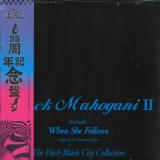
Released in limited numbers in tandem with Black Mahogani back in 2004 and never repressed. Black Mahogani II was a departure from Kenny Dixon Jr's usual house based music and featured cuts from Kenny Dixon Jr's late night jazz band sessions
The centrepiece is the eighteen minute 'When She Follows', a deep jazz session skittering live drum rolls into an electric Fender Rhodes, loping acoustic bass and distant saxophone all wrapped up in an amorphous vocal that drifts ever onwards like some epic detroit techno cut replayed by Gil Scott Heron's band in 1970. Incredible music.
'Rectify' follows in a similar mode, jazz in a detroit techno framework, while the final two tracks 'Dirty Little Bonus Beats' and 'When She (Reprise)' are revisions of the main cut, the former altering the bassline, adding vocal sighs and more rhythmic drums, while the latter shifts up the tempo with a wigged out techno synth element.
Stone, cold.
out of Stock
Last delivered 7 months ago available to reorder, subject to availability
Composer, arranger, and multi-instrumentalist Yoshiharu Takeda's long-awaited first album, released in 2018, is now available as a Cassette Tape.
He plays various instruments himself, including piano, clarinet, pedal steel guitar, and percussion.
Fantastical, crystalline melodies constructed through masterful use of multi-tracking and programmed elements.
This richly textured work possesses an organic quality, unfolding dynamically through colorful arrangements while maintaining a mysteriously serene
atmosphere. Highly recommended not only for jazz and world music fans, but also for enthusiasts of ambient and new age music.
Evolving further with each release, ASC delivers his latest monumental album on Spatial, a varied and memorable journey through stunningly realised fusion of modern and classic atmospheric breakbeats.
A1 - Mystic Street
Setting a murky tone with light cymbals and synthwork flecking the intro, Mystic Street calmly purrs and growls towards a drop of analogue kicks and a sparse, menacing drum pattern to kick off this incredible album. Enveloped by a dense cloud of darkly atmospherics, the track coils with tension, each element rippling through the mix like distant memories as the suitably enigmatic bassline rumbles beneath.
A2 - Convergence
Straight into the beats with a DJ-friendly two step intro, ASC utilises sparse, sci-fi hits and persistent danceable breakbeats with a melodic bassline. As the atmosphere builds, percussive tones punctuate the swirling pads, creating a luscious sense of forward motion with echoing samples and effects combining in the mix to create a dreamlike soundscape perfect for the dancefloor and headphones alike.
B1 - Invisible Borders
No ASC album would be complete without an amen workout, and we certainly have that here as Invisible Borders rushes into view with simmering intent, melodic samples tore from battlegrounds of yesteryear providing a truly epic atmosphere, rippling breakbeat trickery teasing the listener before crushing full contact amens arrive with panache and veracity - twisted across yearning bass with an unflinching fighting spirit.
B2 - Celestial Bodies
Up next a moment of calm as we soak up the charms of the dreamlike Celestial Bodies, a soothing journey of beats, breaks and atmosphere from Spatial's label head. Melodic notes ripple across the mix with old school breaks filtering to and fro, conjuring images of a cosmic journey unfolding, where old school breakbeat rhythms pulse like distant constellations, echoes shimmering in the vast expanse of ASC's versatility.
C1 - Losing Track Of Time
Into an absolute stunner next as ASC unleashes a modern classic which has a wonderfully instant familiarity to it - like it was lifted directly from the golden era of atmospheric drum & bass. The old school breaks have a distinctive feel while a variety of pads teaming with life swirl around above. A myriad of spirited melodies develop and maintain your attention with classic 808 basslines to complete this remarkable composition.
C2 - Slipstream
Switching up the vibe in style, ASC delivers an intense, cosmic intro to Slipstream which builds gradually with whooshing effects and long female vocals before a crisp, crunchy slice of Hot Pants breakbeat heaven tears through the mix, chock-full of excitable edits portrayed in a brilliant clarity. Warm sub bass punctuates the track while a reverberating earworm melody slowly etches itself into your mind.
D1 - Paradigm Shift
A good old fashioned roller up next as Paradigm Shift sees ASC blend a superb 2-step rhythm with a sumptuous smooth bassline - guaranteed to move the dancefloor. Atmospherics take no back seat either as elegant synthwork swirls and washes across the soundscape with subtly used vocal samples adding texture and warmth to an impressively layered mix that maintains its pace right through to an echoing conclusion.
D2 - Transmitter
Sending us back to interstellar space for an inspired mission through vast unexplored star systems, Transmitter sees ASC create a stunningly evocative, ethereal collage of atmospherics with sonar-like beeps punctuating and persisting throughout. Driving the track along are the superbly programmed drums, filtered and layered with twisted, distorted vocal samples to complete this exhilarating album in pure Spatial style.
out of Stock
Last delivered 8 months ago available to reorder, subject to availability
Drumcode launches a new V/A series ‘DC4’ inspired by their popular A-Sides compilations. ‘DC4’ showcases a quartet of sure-fire heaters from the label’s extended family of artists. The EP features two mainstays of Drumcode, Timmo and Mark Reeve, while fleshing out the techno sides of Kaufmann and Goom Gum (in collaboration with rising London artists RDNK) after they debuted on Truesoul in recent times. Kaufmann’s curiously titled ‘Broncho’s Sandman’ kicks things off, a punchy slice of dancefloor tackle marked by a catchy vocal line, with a foot in techno and progressive alike. Timmo follows up last year’s tidy contribution to A-Sides Vol.13, with a technicoloured techno cut that bubbles with bags of personality, as any cut titled ‘Miami Vice’ should! The Bulgarian has poured plenty of hours into the creation of the track, which espouses an otherworldly celestial energy. It's been four years since Mark Reeve’s last contribution on Drumcode, with the excellent mini album ‘Breathe’. The Frankfurt-based British producer makes a timely return with the storming ‘Stop, Go’, that fuses together elements of techno, hard trance and pop for an inspired five minute dancefloor workout. Goom Gum & RDNK team up for the first time ‘It’s Time To Get High. The track begins life as a crisp melodic cut, before transforming into a trippy slab of psychedelia in the second half. This is begging to be rinse in an outdoor party setting.
out of Stock
Last delivered 31 days ago available to reorder, subject to availability
Der Erfolg von Pavement mit ihrer ausverkauften Reunion-Tour, den goldenen Schallplatten oder jüngst dem von der Kritik gefeierten "Pavements"-Film ist ein Beweis für ihr großes Erbe, welches bis heute junge Newcomer-Bands beeinflusst. Obwohl sie in ihrer ursprünglichen Zeit von 1989 bis 1999 zu einer der einflussreichsten amerikanischen Indie-Rock-Bands wurden, erreichten sie nie den Mainstream-Erfolg anderer Kollegen dieser Zeit. Ihr Lo-Fi-Stil und die oft ironischen, abstrakten Texte haben allerdings eine treue Fangemeinde aufgebaut. Wie seltsam bahnbrechend diese wunderbar verspulte wie verspielte Band ist, wurde einem gerade erst jüngst wieder im Kino durch den Film "Pavements" bewusst, dessen Soundtrack jetzt auf Vinyl und CD erscheinen wird. Der Soundtrack, zusammengestellt vom Pavement-Produzenten/Cutter Robert Greene und der Band selbst, vereint disparate Elemente des Films. Dazu gehören Dialog-Ausschnitte, Szenen aus dem fiktiven Oscar-Köder-Biopic "Range Life", sowie Aufnahmen der Besetzung aus dem Jukebox-Musical "Slanted! Enchanted!". Ergänzt wird das Ganze durch Live- und Probe-Aufnahmen der Reunion-Tour der Gruppe im Jahr 2021. Die Aufnahmen der kompletten Band wurden von Bryce Goggin abgemischt, der bereits an den Pavement-Klassikern "Crooked Rain Crooked Rain", "Wowee Zowee" und "Brighten the Corners" mitgewirkt hat.
out of Stock
Last delivered 11 months ago available to reorder, subject to availability
Osaka-based producer and beat-maker Altz reinterprets and remixes Roland P. Young's spiritual jazz classic, Isophonic Boogie Woogie for the EM label!Intergenerational gene-splicing from EM. Roland Young's Isophonic Boogie Woogie, tripped-out minimalist spiritual free jazz from 1980 (previously reissued by EM as EM1045CD/LP), is here mutated, masticated and machined by Altz, renowned "organic electronicist" from Osaka. Maintaining and magnifying the cosmic bliss-vibe of the original release, Altz lovingly massages Young's sounds into the year 2009. Sounds are layered and treated, atmospheres extended, and propulsive elements from Young's original recordings are bolstered (there is some fine drumming here from former Boredoms drummer Muneomi Senju). Altz also respects Young's more absract side, following the elder master into atmospheres of freedom, unrestrained by the gravity of the beat and the conventions of the dance floor.
Anushka Chkheidze + Robert Lippok’s »Uncontrollable Thoughts« on Morr Music is the duo’s debut joint release. The Netherlands-based Georgian composer and the German sound artist from Berlin first met in 2019 in the context of a workshop programme that took place in Tbilisi, and later worked with Eto Gelashvili, Hayk Karoyi, and Lillevan on the massive »Glacier Music II« music and book project, released in 2021. This led them to engage in a less conceptually driven form of musicking and real-time composition that corresponds with their respective environments. They draw on traditions such as minimal music or late 1990s and early 2000s electronica to integrate subtle beats with elegiac organ drones, playful melodies with lush textures. The first document of an ever-shifting intergenerational dialogue, »Uncontrollable Thoughts« is a product of mutual listening outside time.
Though Chkheidze and Lippok had access to professional studios, they chose to rent a simple rehearsal space, equipped with only the bare essentials—bass and guitar amps as well as a small PA—to maintain immediacy in their working process. The music they made together corresponded to and drew on the respective possibilities and shortcomings of this studio, much like their collaboration in general is characterised by the care with which they approach each other's talents and ideas. While both had loosely defined roles—Chkheidze was responsible for the free-flowing beat programming and the evocative distortion came courtesy of Lippok, for example—they individually contributed in different ways to their joint process, which is as free of hierarchies as it is limitless. Hence, the duo’s focus on spontaneity and out-of-the-moment emergence makes them organically move beyond tried and tested conventions, resulting in music that seems to suspend time altogether.
When the first chimes on »Bird Song« announce a piece that sets rattling kickdrums against a backdrop of layered drones and rhizomatically entangled melodic elements, it becomes clear why »Uncontrollable Thoughts« carries this title: The album follows the constant detours of the subconscious of its makers, letting them explore moments of ecstasy such as on »Rainbow,« melancholy with »Field,« and the interplay of suspense and release through the ten-minute-long title track. But the different pieces also tie into one aother in various ways. The dirge-like organ drones on which »Rainbow Road« ends reappear in the beginning of »Uncontrollable Thoughts,« much like Chkheidze’s gentle yet emphatic piano chords on »Field« seem to provide the starting point from which the artist develops the striking motifs of the final piece »Opening«, whose title itself suggests that the record as a whole can and should be enjoyed as a loop. All this creates a unique, idiosyncratic temporal logic.
While there is much that sets Chkheidze and Lippok apart as solo artists, the major shared leitmotif in their respective bodies of work is the sonic engagement with space. »Uncontrollable Thoughts« is hence best understood as an extension of this practice; as an album that maps the geographies of their minds in motion, tracing musical movements as they melt into each other.
out of Stock
Last delivered 6 months ago available to reorder, subject to availability
Friend Of A Phantom is the third studio album by the Danish progressive metal band Vola, released under Mascot Label Group. This highly anticipated album showcases Vola's signature blend of intricate rhythms, soaring melodies, and thought-provoking lyrics.
With tracks like "Straight Lines" and "These Black Claws," Friend Of A Phantom takes listeners on a musical journey that seamlessly combines heavy riffs with electronic elements, creating a dynamic sound that is both captivating and innovative.
Vola's musicianship shines through in every song, from the complex drum patterns to the mesmerizing guitar solos. The band's ability to craft intricate arrangements while maintaining a strong sense of melody sets them apart in the progressive metal scene.
The production quality of Friend Of A Phantom is top-notch, allowing each instrument to shine through while still blending together to create a cohesive and immersive listening experience. The album's rich textures and layers reveal new details with each listen, making it a rewarding choice for fans of progressive music.
Overall, Friend Of A Phantom is a must-have for any music lover looking for an album that pushes boundaries and challenges traditional genre conventions. Vola's unique sound and innovative approach make this album a standout release in their discography.
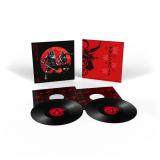
- 29 Tracks aus dem Open-World-RPG-Actionspiel von 2025
- Artwork von Ubisoft
Ubisoft und Laced Records haben ihre Zusammenarbeit erneuert, um die Musik von Assassin's Creed Shadows auf Vinyl zu veröffentlichen.
"Assassin's Creed Shadows" entführt die Spieler:innen in die reiche Kulisse des feudalen Japans und wird von einem Soundtrack untermalt, der traditionelle Instrumente mit verspielten, modernen Techniken verbindet.
Das Komponistenduo The Flight (Joe Henson und Alexis Smith) kehrt zur Assassin's-Creed-Reihe zurück und liefert einen Soundtrack, der traditionelle Instrumente mit zeitgenössischen orchestralen und elektronischen Elementen verbindet. So entsteht ein unverwechselbares Gefühl für Zeit und Ort, während spielerisch auf die Science-Fiction-Themen der Serie angespielt wird.
Die beiden Protagonisten von "Assassin's Creed Shadows" werden mit unterschiedlichen Instrumenten und musikalischen Ansätzen dargestellt: Die verstohlene Shinobi-Adeptin Naoe wird mit dem Instrument ihrer Wahl, der Tonflöte (Tsuchibue), und dem körperlosen Flüstern während der Stealth-Momente dargestellt. Der legendäre Samurai Yasuke wird mit den schärferen Klängen der Shamisen und rhythmischer Intensität dargestellt.
Für die Darbietung der japanischen Instrumente hat The Flight auf Meisterspieler wie Keiko Kitamura (Koto) und Hibiki Ichikawa (Shamisen) zurückgegriffen. Weitere Interpreten sind die Sängerin Akari Mochizuki, die Flötisten Kristin Naigus, Oriol Singh und Andy Findon sowie Michael Georgiades, der musikalische Mitarbeiter von The Flight bei Assassin's Creed Odyssey.
We're proud to present our third vinyl release, showcasing one of the rising talents in the contemporary electronic music scene.
M.I.T.A. lands on Chapeau Music with a 4-track EP that moves between straight grooves and refined sampling work.
The title track, 'Money Driven', goes straight to the point: groove, cadence, and a punchy vocal, essential elements finely designed to lock the dancefloor into motion. The A-side is completed by a sharp and highly functional remix by Elisa Bee.
Flipping the record, 'My Love' delivers a filtered, groove-heavy anthem, radiating a rush of joy while maintaining a tight, practical structure.
Closing the record, 'Movie Scene' finds M.I.T.A. at his creative freedom peak, where delicate melodic fragments and high-pitched vocals float above the groove, perfectly balancing the rhythm.
out of Stock
Last delivered 38 days ago available to reorder, subject to availability
Clear Vinyl. Mit ihrem Debüt The Empty Space Between A Seamount And Shock Headed Julia hinterließen The Black Cat's Eye 2023 ein bemerkenswertes Echo in der Szene - ein energetisches und atmosphärisches Werk, das Psychedelic- und Postrock-Elemente auf einzigartige Weise vereinte und schnell vergriffen war. Nun, zweieinhalb Jahre später, präsentiert das Frankfurter Quintett sein neues Album Decrypting Dreams Of Weird Animals And Strange Objects. Auch diesmal lotet die Band die Grenzbereiche zwischen Psychedelic-, Kraut- und Post-Rock aus. Die Musik oszilliert zwischen hypnotischem Drive, verträumten Gitarrenflächen und dynamischen Spannungsbögen. Das Album umfasst sechs Songs, deren Spannweite von fünf- bis zehnminütigen Klangreisen reicht. Neu ist, dass diesmal zwei Bandmitglieder Kompositionen beisteuerten: Neben Gitarrist und Bandgründer Christian Blaser stammt die Hälfte des Materials von Bassist Jens Cappel. Sein kraftvoller, direkter Stil ergänzt Blasers atmosphärischen Ansatz ideal. Blaser: ,Auf dem Debütalbum stammten alle Stücke von mir. Als Gründer der Band lag mein Fokus zunächst darauf, eine musikalische Vision und Richtung vorzugeben. Jens war zu diesem Zeitpunkt noch nicht so in die kreativen Prozesse eingebunden, obwohl er ein außerordentlich talentierter und umtriebiger Musiker ist. Er veröffentlicht regelmäßig großartige neue Musik auf den Bandcamp-Seiten seiner eigenen Projekte, zum Beispiel The Black Black Paint. Als es dann an das Schreiben neuer Songs für das zweite Album ging, brachte Jens einige wirklich tolle Demos mit ein." Stilistisch verbindet das Album, wie schon der Vorgänger, klassische 70er-Einflüsse mit zeitgenössischer Rockmusik - man hört Anklänge an Can, Motorpsycho, Neu!, Indie- und Stonerrock, aber auch an David Gilmours Gitarrenästhetik. Die Musik ist instrumental, einzig im finalen Stück ,The Magic Balloon" übernimmt Jens Cappel den Gesang. Ähnlich rätselhaft wie bei der ersten Platte klingt der Albumtitel: Decrypting Dreams Of Weird Animals And Strange Objects. Blaser erklärt: ,Der Titel ist inspiriert von einem faszinierenden Aspekt der US-amerikanischen TV-Serie Westworld. Dort werden humanoiden Robotern Gefühle und Träume einprogrammiert. Doch weil diese Androiden dadurch immer menschlicher werden, geraten sie außer Kontrolle - die Programmierer suchen daraufhin den Fehler in den von ihnen geschriebenen Quellcodes, analysieren die künstlichen Gefühle, Gedanken und Träume mithilfe ihrer Computerprogramme. Übertragen auf unsere Realität ist der Titel durchaus ironisch gemeint. Unsere moderne Technik vermittelt den Eindruck, wir könnten jeden Bereich unseres Lebens vollständig steuern. Selbstoptimierung und die Kapitalisierung des eigenen Ichs werden zum obersten Prinzip. Eine trügerische Illusion, denn wir sind nur winzige Teile eines größeren, für uns unergründlichen Ganzen. Vor diesem Hintergrund stellt sich die Frage: Was kann Kunst zu unserer Wahrnehmung der Welt beitragen? Welche Bedeutung hat es, sich mit musikalischen Mitteln auszudrücken? Durch Technik, Mathematik, Physik und reine Vernunft kommen wir dem Wunder des Lebens und dem Sinn unserer Existenz nicht wirklich näher. Was uns bleibt, ist das Ritual, die Beschwörung, die Ekstase. Musik, Tanz, Malerei, Geschichten - sie offenbaren für kurze Momente den wahren Kern des Lebens, richten unser Verhältnis dazu neu aus und verbinden uns mit dem Universum." Aufgenommen hat die Band wieder im Tonstudio Bieber in Offenbach am Main. Oli Rüger, Studiobetreiber und selbst Musiker, hat langjährige Erfahrung mit dem Aufnehmen von Gitarrenbands. Innerhalb von drei Tagen spielte die Band die Basic Tracks live ein, anschließend ergänzten sie diese durch Overdubs. Rüger war auch als Co-Produzent beteiligt. Cappel: ,Oli hat das richtige Händchen für die perfekte Balance zwischen rohen, heftigen und filigranen Sounds, ohne gleichzeitig den Blick für das große Ganze zu verlieren." Das Werk wurde final von Krautrock-Legende Eroc gemastert - eine passende Wahl für eine Band, die sich nicht nur als Erben der 70er sieht, sondern diese Tradition aktiv in die Gegenwart weiterdenkt. Das monochrome Cover-Artwork unterstreicht eindrucksvoll die dunkle Atmosphäre der Musik. Es verdeutlicht den konzeptionellen Ansatz der Band, Musik nicht nur als Klang, sondern als Raum, Konzept und visionäre Erzählform zu begreifen. Das Titelbild - eine scheinbar endlose Spirale, Symbol für DNA-Strukturen und Ewigkeit - wurde vom italienischen Grafiker Daniele Stochino entworfen. Die Innenseite des Gatefolds verbindet dieses Motiv mit einer Illustration des in Berlin lebenden Grafikers und Musikers Max Emil Hurlebaus. Durch farbige Akzente eröffnet sie kontrastreich neue Perspektiven.
Guedra Guedra ist das elektronische Musikprojekt des marokkanischen Produzenten Abdellah M. Hassak. Der Sound von Guedra Guedra ist eine schillernde Mischung aus visionärer elektronischer Musik und musikalischen Traditionen des gesamten afrikanischen Kontinents! Tipp!
MUTANT ist das zweite Album von Guedra Guedra und das erste auf Smugglers Way. Auf MUTANT mischt Abdellah M. Hassak analoge Synthesizer und Drumcomputer mit Field Recordings aus Marokko, Tansania, Guinea und anderen Ländern, die er auf seinen Reisen durch den Kontinent gesammelt hat. MUTANT erforscht Themen wie Identität, Panafrikanismus, Afrofuturismus und Dekolonisierung und verbindet das musikalische Erbe des Kontinents mit Elementen von Techno, Bassmusik und Dub. "Ich wollte einen kulturellen Sound schaffen, der Innovation mit afrikanischer und diasporischer Musik sowie den Vibes von Rhythmus und Bass erforscht", sagt Abdellah. Die Musik von Guedra Guedra ist durchdrungen von Abdellahs Vision der kulturellen und technologischen Dekolonisierung. Eine Vision, die den Panafrikanismus feiert und die Art und Weise hinterfragt, wie Mainstream-Produktionswerkzeuge nicht in der Lage sind, nicht-westliche musikalische Ausdrucksformen zu erfassen. "In afrikanischen Traditionen ist der Rhythmus, insbesondere in seiner polyrhythmischen Form, nicht nur ein Puls oder ein Takt, sondern eine Kartographie des Lebens. Er drückt soziale Komplexität, vielschichtige mündlicher Überlieferungen, Gemeinschaftsdynamik und die spirituelle Dimension der Existenz aus", sagt Abdellah. "Die Weitergabe dieses Reichtums von Generation zu Generation durch Üben und Zuhören ist auch ein Akt des Widerstands, ein Weg, Wissen und Sensibilitäten zu bewahren, die die herrschenden Erzählungen lange Zeit zu marginalisieren oder zu vereinfachen versucht haben.
- 140G schwarzes Biovinyl inkl. vierseitigem Booklet und Downloadkarte
out of Stock
Last delivered 11 months ago available to reorder, subject to availability
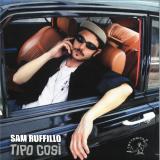
Italian producer, musician, DJ, and groove architect Sam Ruffillo drops his long-awaited debut album Tipo Così on Toy Tonics – a sun-drenched, genre-blurring statement that blends classic house with Mediterranean flair, romantic funk, and tongue-in-cheek Italo vibes. Over 11 expertly crafted tracks, Ruffillo delivers a dancefloor-ready, emotionally rich LP that connects deep musicality with irresistible rhythm and light-hearted elegance.
After three acclaimed EPs and collaborations with revered artists such as Barbara Boeing, Kapote, and Fimiani, Ruffillo has firmly cemented himself as a core artist on the Berlin-based label. Known for his unmistakable signature sound — a warm mix of vintage disco, 90s house, and Italian vocals — Sam’s music has garnered widespread DJ support from tastemakers like Gerd Janson, Palms Trax, Seth Troxler, and DJ Tennis, while becoming a staple on Italian airwaves. His infectious summer anthems like Danza Organica and Perfetta Così have soundtracked countless club nights and festivals, creating a loyal following that eagerly awaited this full-length debut.
Tipo Così is the natural culmination of a musical journey that’s both playful and profound — a travel diary written in grooves, synth stabs, and melodies that feel like postcards from a parallel Mediterranean universe. The album expands and deepens Ruffillo’s world into a fully immersive experience: lush emotional chords meet tight syncopated grooves, vintage synth textures collide with irresistibly catchy pop refrains, and the boundary between sincerity and playful irony is exquisitely blurred.
Entirely written, produced, and recorded in Italy, in his beloved hometown of Bologna, the album finds Ruffillo at the helm on keys, drum machines, and production, supported by a talented cast of musicians contributing live bass, guitar, and other organic elements — further enriching his trademark fusion of electronic grooves and natural instrumentation. There’s a tactile warmth in these tracks, a hands-on feel that adds soul and depth to every beat.
This album also marks Ruffillo’s heartfelt return to singing in Italian, with standout tracks like House Tipo Così, Mi Fa Volare, Ancora, and Dentro Di Me, where romantic naïveté meets pulsing club energy in a way that feels both timeless and refreshingly new. The vocal performances add an intimate, human touch to the music, reinforcing the personal stories woven into each song. There’s poetry in the casual, a bittersweet elegance in the way the lyrics float over groove-heavy production.
Having toured extensively across Europe, Australia, Indonesia, New Zealand, and Mexico — with sets at iconic venues like Panorama Bar and festivals such as Sónar Barcelona — Ruffillo has fine-tuned much of this album in front of live audiences. The real-world testing ground infused the record with a dynamic energy and immediacy that only comes from genuine crowd interaction. These songs weren’t just made in the studio — they were lived on dancefloors around the world.
Tipo Così is not just a collection of tracks. It’s a philosophy — playful, stylish and unmistakably personal. A modern club album bursting with heartfelt emotion and sophistication. Music for dancers with taste; for lovers of beauty, rhythm, and the little imperfections that make things feel real.
But what exactly is Tipo Così? More than just a phrase, it’s a way of being. It’s about embracing elegance without effort, mixing irony with sincerity, and letting nostalgia slip into the room without taking over the party. It’s Sam Ruffillo’s signature language: relaxed, confident, meticulous yet never rigid — where a chord progression can say as much as a lyric, and every beat carries intention.
The album’s visual identity complements this vision perfectly. The artwork and promotional materials lovingly reference Italian design from the ’80s and ’90s, combining bold graphic elements with playful pop culture nods. This aesthetic mirrors Ruffillo’s music — a fusion of vintage warmth and contemporary freshness, delivered with authenticity and charm.
Sam Ruffillo belongs to a new generation of European artists who are reshaping electronic music by blending past and present, analog and digital, groove and emotion — without nostalgia or pose. His artistic universe is coherent, vibrant, and alive; a rich tapestry of sound, images, and stories that coexist with lightness, precision, and a distinctive voice.
Reflecting on his artistic journey, Sam describes music as a vital, deeply human impulse — a tribal connection to rhythm and body that has driven him since he was a teenager. His creative process balances meticulous planning with room for spontaneity, usually sparked by clear melodic ideas that evolve naturally. Collaborations with close friends, especially vocalists like Ninfa, add warmth and authenticity, exemplified in tracks like “House Tipo Così.” For Sam, music is honest self-expression — crafted for listeners who crave memorable melodies and rhythms imbued with genuine feeling.
While technical perfection is tempting, Sam prioritizes emotion, knowing that what truly resonates is the soul behind the sounds. His long-standing partnership with Toy Tonics has been key in nurturing his vision, offering a blend of creative freedom and professional support. Looking ahead, Sam Ruffillo is excited to broaden his live performances, and release new projects that continue to blend electronic grooves with organic, heartfelt sounds — maintaining the delicate balance between playful irony and sincere emotion that defines Tipo Così.
Kurzversion:
Italian DJ, producer and musician Sam Ruffillo drops his debut album Tipo Così on Toy Tonics - a sunny blend of house, funk, Italo and pop, full of groove and emotion. Written and recorded in Bologna with live instruments and Italian vocals, it’s a playful, elegant journey shaped on dancefloors worldwide. A stylish, sincere club album where nostalgia, irony and rhythm meet in perfect harmony.
- Mi Fa Volare
Road-tested across continents and now finally released, “Mi Fa Volare” channels 90s uplifting euphoria with big breakbeats, lush chords, and Italian vocals built to stick. Somewhere between balearic bliss and piano house nostalgia, it’s a feel-good club weapon made for peak-time moments - already sung back by crowds after just one listen.
- Ancora
“Ancora” is a vibrant hi-NRG track inspired by 80s Italo disco, sung entirely in Italian. It blends driving rhythms with dreamy melodies, capturing the radiant spirit of the decade. This fresh yet nostalgic song delivers euphoric vibes and timeless energy, making it a perfect fit for both dancefloors and reflective listening moments worldwide.
- Dentro Di Me
“Dentro Di Me” channels ‘90s sensuality through a fast-paced, UK house-inspired lens. Entirely in Italian, it’s a bold and contemporary dance track where hypnotic vocals meet high-energy grooves. Blending nostalgic textures with forward-thinking production, the result is a seductive and euphoric trip - equal parts emotional and club-ready.
- Amigo
“Amigo” blends Latin groove, acoustic guitar-driven rhythm, and Mediterranean flair into a warm, magnetic, cross-cultural dance anthem. Sung in Spanish and Italian, it celebrates connection, inclusivity, and the joy of moving together - whether stranger or friend. With its unstoppable rhythm and vibrant energy, it’s a feel-good track with a unifying spirit.
- Ma Sei Fuori
“Ma Sei Fuori” is a tongue-in-cheek dancefloor bomb blending raw house energy with catchy vocal phrases and a nod to classic French touch. Driven by hypnotic vocal lines and a playful attitude, it doesn’t take itself too seriously - while still proving serious club impact. Built for late-night moments, it’s bold, bouncy, and impossible to ignore.
Furthering the passionate exploration of cinema that has guided her two previous LPs - 2017’s ‘Fassbinder Wunderkammer’ and 2020’s ‘I Should Have Been a Gardener’ - the Milanese guitarist/composer, Alessandra Novaga, returns to Die Schachtel with ‘The Artistic Image Is Always a Miracle’, two sides off shimmering, tense compositions – culminating as one of her most creatively ambitious and conceptually rich outings to date – freely inspired by the life and work of the Russian director Andrej Tarkovsky and the music of Johann Sebastian Bach.
Classically trained at the Musik Akademie in Basel, Switzerland, over the last decade Alessandra Novaga has emerged as one of the leading figures within northern Italy’s thriving new, experimental, and improvised music scene, rendering striking solo efforts, in addition to collaborations with Loren Connors, Stefano Pilia, Elliott Sharp, Nicola Ratti, Paula Matthusen, Sandro Mussida, Kid Millions, Travis Just, Francesco Gagliardi, and others. Remarkably ambitious and forward thinking, her approach to the guitar embarks upon a relentless deconstruction and rethinking of her instrument’s unique properties through distinct applications of structure, resonance, space, and tone, creating in a deeply personal and emotive music, seeking narrative and meaning within the abstractions of sound.
In 2017, with the LP, ‘Fassbinder Wunderkammer’, issued by Setola Di Maiale, Novaga embarked upon the exploration of her love of film. Having begun with Rainer Werner Fassbinder, this was followed in 2020 by Die Schachtel’s release of ‘I Should Have Been a Gardener’, a deeply intimate mediation on the life and work of Derek Jarman. Rather than focusing on a fixed point of inspiration or a single film to work from, these pieces achieve a form of abstract portraiture, distilling elements drawn from these filmmaker’s life and work into ambient networks of texture and tonality. ‘The Artistic Image Is Always a Miracle”’ freely inspired by the Russian director Andrej Tarkovsky and the music of Johann Sebastian Bach, finds Novaga radically expanding her sonic palette within this approach.
The seeds of ‘The Artistic Image Is Always a Miracle’ can be traced to a conversation that Novaga had with Alan Licht (contained in the highly regarded Common Tones: Selected interviews with artists and musicians 1995–2020, Blank Forms, 2021), relating to the connections between music and cinema, which led her to consider Andrej Tarkovsky’s use of Bach's music within a symbiotic framework: how the music illuminates the imagism of the films, and the film illuminates new dimensions of the music. Slowly developing over the subsequent years, the resulting album comprises six individual works, some of which draw directly upon pieces of Bach’s music that Tarkovsky used in his films – specifically 'Erbarme dich, Mein Gott', 'Das alte Jahr vergangen ist', and 'Ich ruf zu dir, Herr Jesu Christ' - while others draw upon the sensibilities and moods evoked in the imagination by the director’s films.
As a point of departure and illumination into the process and spirit that underscored the creation of the album, Novaga points toward a passage in Tarkovsky’s "Sculpting in Time”:
“Art is born and takes hold wherever there is a timeless and insatiable longing for the spiritual, for the ideal: that longing which draws people to art. Modern art has taken a wrong turn in abandoning the search for the meaning of existence in order to affirm the value of the individual for its own sake. What purports to be art begins to look like an eccentric occupation for suspect characters who maintain that any personalized action is of intrinsic value simply as a display of self-will. But in artistic creation the personality does not assert itself, it serves another, higher and communal idea.”
‘The Artistic Image Is Always a Miracle’ can be understood as a realisation of the collectivism of which Tarkovsky speaks, in the service of something far beyond the expression of self. Encountering Novaga moving into fairly uncharted waters, three of the album’s pieces incorporate the human voice we encounter the voices of others: that of the poet Arsenij Tarkovsky, the director’s father; a singer from Bach’s ‘Erbarme dich, Mein Gott’, capturing a broadcast in an underground parking lot, and Novaga’s own, rendering the melody from Bach’s “Ich ruf zu dir, Herr Jesu Christ”. Roughly alternating between solo excursions on guitar and bristling electroacoustic pieces, over the course of the album’s two sides Novaga weaves one of her most abstract and ambitious bodies of recordings to date, shifting between the complex tonal mediations generated by the six strings of her instrument, and phycological densities activated by the expanded pallet of sonority made possible by the tactics and approaches of musique concrète.
An immersive, deeply engaging meeting of beauty and melancholy within a labyrinth of voices and ideas, ‘The Artistic Image Is Always a Miracle’ transfigures the life and work of Andrej Tarkovski – one of the greatest auteurs in the history of cinema – into a singular, experimental statement of collective truth. Belonging to recent, ambitious stream of contemporary new music releases on Die Schachtel that’s already included Novaga’s ‘I Should Have Been a Gardener’, Stefano Pilia’s ‘Spiralis Aurea’, Jim O'Rourke & Giovanni Di Domenico’ ‘Immanent In Nervous Activity’, Claudio Rocchetti’s ‘Labirinto Verticale’, and Damāvand’s ‘As Long As You Come To My Garden’, among others, ‘The Artistic Image Is Always a Miracle’ is available on as a limited edition of 300 dark turquoise vinyl LPs released on June 21, 2024. The LP, designed by Bruno Stucchi / dinamomilano, comes with an 8-pages insert illuminated by Alessandra’s text as well as the lovely and intense photographs of Matilde Piazzi.
out of Stock
Last delivered 12 months ago available to reorder, subject to availability
After releasing my 300 DEGREES - "Naujas" album on Little Beat Different label, I wanted to continue the theme of making an acid-techno album, but taking out all the main elements like kick and other drum sounds, yet leaving the groove going, making it in to ambient. I have been falling asleep to this album many times my self. This sound became special to me and thanks to all of you, who have bought my previous tape and vinyl releases, it enabled me to fund and release this album on vinyl.
out of Stock
Last delivered 12 months ago available to reorder, subject to availability
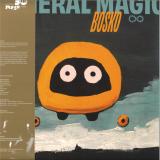
Editions Mego presents Bosko, landing exactly 30 years after the initial General Magic flights into the fantastic; the legendary first Mego release, a collaboration with Pita whereby all sounds were harnessed from the buzzing, drinking, humming sounds of fridges MEGO 001 General Magic & Pita and a 12” with Elin called Die Mondlandung (The Moon Landing) MEGO 002 which embarked on a minimal techno template so austere and strange it was one of the historic progenitors of austere and wonky rhythms alongside Sakho and other European explorers.
The initial return of the playful and mystical Austrian outfit General Magic came with the 20th year anniversary vinyl reissue of their classic debut Frantz eMEGO 010. A record so audacious and playful it still baffles as much as it entertains. At some point whilst working on this reissue GM’s Ramon Bauer and Andi Pieper were spurred on to rummage around with ideas and tools once more and after more than two decades of inactivity sonic sorcery was conjured once again. Live shows in honour of Peter Rehberg were performed in Vienna and London. Softbop, a limited risograph collaboration with Tina Frank came with the first new recordings as a digital download came out discreetly online. The first full length album following Rechenkönig in 2000 MEGO 032 “Nein Aber Ja” released in 2023 on Finlay Shakespeare’s GOTO Records on CD and cassette. An ongoing series of mix tapes online further highlights their interests encapsulating a new found angle on electronic mayhem. All of these elements retain the wildly eclectic and ecstatic glow that only they can harness and hand out to an unprepared world.
Now, we have General Magic’s second official full length comeback recording, Bosko. The new album is initially notable prior to the needle hitting the wax or the cursor identifying a track due to the artwork. Made by long term collaborator Tina Frank, this is Frank’s first analogue artwork, with a painting of a happy/nervous machine thing hovering in a landscape of no discernible identity. It’s quasi science fiction hovering amongst the potential for fun. Suited to the music? Natürlich.
Bosko sees Bauer and Pieper update and reframe their original investigations with a fresh supply of head scratching, heart racing tunes that hit the inexplicable with a wild mesh of drums, pianos, synthetic voices and all manner of immaterial sonic play. Startling sonics shock the ears on Club Duchamp which sounds like a conversation between synthetic adult ants in an environment still in development. Elfer features vocals supplied by a female-ish voice who, whilst grappling melody, has trouble executing a firm identity. Noorenhalt catapults along a mainframe of syncopation so unwieldy it feels like the voice, which is utterly alien, provides the only comfort. Seite 5 inhabits a fuzzy zone where a synthetic Horn of Jericho type ambience competes with rhythms never quite sure of who they are. Rise of the Ombré raises the spectral dread. Is this Science Fact? Absolutely nothing within Bosko is predictable.
The amount of change in the miasma of existence and the things we touch in order to make things has shifted so exponentially we are at the point where minds are starting to glaze over. All of this makes the return of the always original, always surprising, always fresh and exciting General Magic totally in tune with the artificial intelligent apocalyptic age we currently inhabit. The tools may have changed but the wonderfully warped gaze of Bosko offers a fresh new vision of perplexing funk and robotic punk.
out of Stock
Last delivered 13 months ago available to reorder, subject to availability
Ahead of a full-length album coming on Glitterbox Recordings, the king of disco re-edits Dr Packer presents the second instalment of this 12' series. 'Different Strokes Part 2' features four Dr Packer versions of soulful house favourites, giving a flavour of what's to come from the LP. Kicking off with a bonafide classic, Dr Packer's take on Soulsearcher's 'Can't Get Enough!' maintains all its most iconic elements, the euphoric vocals and timeless groove given a fresh-sounding elasticity. Next up is Dr Packer's remix of The Shapeshifter's evergreen 'Lola's Theme Recut' appearing for the first time on vinyl. An exclusive to this vinyl release, a remix of Johnny Corporate's 'Sunday Shoutin'' picks up the pace with a funking bassline to suit any dynamic disco set. Rounding off this foursome of impeccable remixes is Cleptomaniacs featuring Bryan Chambers 'All I Do', a vocal house classic from the early noughties, reinterpreted masterfully for today's Glitterbox dancefloor,r which was originally featured on the label's A Disco Hï compilation. Dr Packer has done it again, breathing new life into your most beloved dance records so you can fall in love with them all over again.
It’s very difficult to describe someone as prolific as Misha Panfilov. So, I feel the best way to define him is to think of a “Trivial Pursuit Playing Piece,” where each pie piece represents one of the bands he heads up, and each band has its own distinct style and genre. Yet, when looked at all together, create the whole musical persona of Misha. This is the lens I would like to view his latest endeavor, Days As Echoes.
The vibe on this sophomore release channels Krautrock philosophy and Library music, peppered with elements of jazz, Ethiopian, cinema, ambient and bits of everything between. This atmosphere is created from all the instruments Misha uses and the resulting compositions are heard as repetitive patterns that are forged from the multiple layering of melodies. Thus, creating six unique songs with emotional granularity, yet collectively encompass a genuinely positive “feel good” vibe…with a hint of nostalgia.
Moods of the day, moods like echoes say, A future of hope is yours, by following the Sun’s ray.
The opening track, “Days As Echoes,” is a dedication to a much simpler time when the sky was bluer and the snow was whiter…just like how you remember it when you were a child. A time when people honestly cared more about everything as a given, and not as a selfish accolade. A time when optimism seemed within reach. In other words, nostalgia marred by awareness.
…Leading to a path where the skies are not gray. Where dreams of castles in the air are the mainstay.
“In A Dream” has a style that pays homage to both spiritual jazz and ambient music. A simple theme is introduced and leads to the climax of this stormy dream, putting it all in perspective. That pivotal point when one realizes the truth by re-tracing the events, which led to the epiphany of how to find the answer while traveling within this airy soundscape.
…Diurnal or nocturnal, day or night, Traveling the path of truth must be done without fright.
One can’t help but feel a definite traveling vibe that comes from “Moonscape Waltz” To me, it has a dual-characteristic that can be visualized as a train trip, either at sunrise or sunset. Regardless, the time is not of major relevance, but the actual pursuit is. Lao Tzu said, “The journey of a thousand miles begins with that first step.” This track takes you beyond that initial step into this vast world toward your destination as you search for the truth.
…The unknown is real, but you know the deal. People need people to show which direction you point the wheel.
“Together” is the most peaceful and solo oriented compositions of this album. It shows how one cannot achieve happiness alone, but the importance of having someone special or a group of others to help along the way. Not only to help seek your goal, but also the ability to enjoy the scenery while on your journey
…The end of this tunnel has a light that’s so bright. Illuminating the trodden way, your destination, now in sight.
One is free from the chains of the unknown as you listen to a “Few Layers For Smith”, a dedication to a friend. A song that draws energy from the ECM works of Steve Reich, thats married with a primitive lo-fi basement setting. Its positive force breaks those encumbrances and gives you a glimpse of your prize. But you ruminate on this and come to the conclusion that the path that led you there is equally important as the goal itself. Question is, how do you share your realizations and experiences?
…The route was cast, the trials have passed. The glittering treasure you sought is yours now, at last.
“Ocean Song” meanders from the ritual rhythms of its shoreline to the crashing riptides of unbridled guitar feedback, creating this raging ocean atmosphere. However, its message is quite clear and states that people’s goals and experiences are not just meant for personal growth, but to be shared with
others, so that they too can live vicariously thru your story and somehow utilize it for their own.
…The prize has been won, but the journey is never done. You now have the responsibility to share everything under the Sun.
These six songs, each with its own sound, collectively comprise the vibe of this album. One cannot help but feel a sense of joy and fulfillment when listening to it. Each song has its own unique mood, yet together create an atmosphere of hope and happiness that has no choice but to spill out of the listener. I feel this was the ultimate goal of Misha’s on this record. Quite a challenge for the man who never sleeps, but is always searching for the perfect beat. One may not fully grasp his musical mind, but this album does give you a gateway into the moods and magic of Misha!
- Brent Sawicki
out of Stock
Last delivered 79 days ago available to reorder, subject to availability
The discovery of Doris Dennison's score represents a genuine musicological breakthrough—what once would have been "a tree falling in the woods" thirty years ago now holds the potential to render "a thunderous clap in our minds." While researching Anna Halprin's lesser-known collaborators, scholar Tom Welsh uncovered the archives of AA Leath, one of Halprin's principal dancers. Buried within these materials was Dennison's handwritten score for Earth Interval, dated May 1956. Born in Saskatchewan, Canada, in 1908, and raised near Seattle, Dennison (1908-2009) encountered John Cage while teaching Dalcroze eurythmics at the Cornish College of the Arts. She joined Cage's earliest percussion quartet—alongside Margaret Jansen, the composer and his wife Xenia—in the group widely regarded as having performed the first complete concert of percussion music in the United States. This historic December 1938 concert was followed by tours and the landmark May 1941 performance at the California Club, comprising Cage and Lou Harrison's Double Music, the premiere of Cage's Third Construction, and Harrison's 13th Simfony.
As Bradford Bailey observes in his extensive liner notes, Earth Interval demonstrates "an extraordinary balance of elements that imbues the piece with a sense of clarity, directness, and constraint that is both distinct and ahead of its time." The work's most remarkable innovation lies in its approach to extended techniques, particularly Dennison's notation for the central movement: "In 2nd movement, 1st player lowers + raises a gong into a tub of water while beating." This technique, absorbed from Cage's experimental vocabulary, generates what Bailey describes as "fields of acoustic abstraction that bend and warp time through sustained resonances, beat, and space." The temporal sophistication of these manipulations anticipated Karlheinz Stockhausen's Mikrophonie I (1964) and Annea Lockwood's water-based sound investigations by over a decade. After joining Mills College as dance accompanist, Dennison maintained crucial connections to the Bay Area's experimental scene, collaborating with figures like Merce Cunningham and programming Cage's music throughout the 1950s.
Comprising three movements—Land Form, Air Tide, and Earth Play—Earth Interval is scored for recorder, drums, gongs, maracas, muted gongs, and bowl gongs. In total, the piece is just under eight minutes: "a fleeting glimmer of moment in time, a life spent at the cutting edge, and a singular creative vision that packs a powerful punch." When viewed in historical context, placed in contrast to roughly contemporaneous avant-garde percussion works by Cage, Harrison, Louis Thomas Hardin (Moondog), and Harry Partch, or important precursors like Edgard Varèse's Ionisation (1931) and Henry Cowell's Ostinato Pianissimo (1934), it's clear that Dennison was following her own path. Earth Interval is not derivative. It is a precursor to what was yet to come, alluding to developments of avant-garde and experimental music that wouldn't begin to appear on the cultural landscape until the 1970s and '80s, with the emergence of Post-Minimalism and more idiosyncratic artists and ensembles like Midori Takada, Ros Bandt, Peter Giger, Frank Perry, Christopher Tree, Michael Ranta, Gamelan Son of Lion, and Niagara.
This recording by Chicago's Third Coast Percussion, captured in March 2022, represents the first complete documentation of this pioneering work. The ensemble's interpretation reveals the piece's remarkable contemporaneity while maintaining its historical specificity. Where Cage, Harrison, and Partch employed "self-consciously off-kilter polyrhythms," Dennison's rhythmic sensibility anticipates minimalist developments by nearly a decade, yet integrates "forceful rests, as well as sharp shifts in sonic character, tempo, and meter, that break the momentum and breathe a sense of life into the piece's structure." This positions her work closer to Post-Minimalism decades before its emergence. The architectural approach demonstrates Dennison's understanding that "the composer almost entirely disappears" in favor of phenomenological listening experience, creating what might be called an egoless music that places its realities and meaning entirely in the ear of the beholder. The present recording, realized by Chicago's distinguished Third Coast Percussion ensemble, represents a significant achievement in experimental music scholarship and performance practice. As specialists in the Cage tradition and contemporary percussion repertoire, Third Coast Percussion approached Earth Interval with the historical sensitivity and technical precision required to illuminate Dennison's subtle compositional innovations. The March 2022 recording sessions, engineered by Colin Campbell, capture both the work's intimate chamber music qualities and its bold exploration of extended techniques. The ensemble's interpretation reveals the piece's remarkable contemporaneity—its ability to speak directly to current musical concerns while maintaining its historical specificity.
This recording serves multiple scholarly functions: it provides the first complete documentation of Dennison's compositional voice, offers insight into the broader network of experimental music practitioners surrounding Cage and Harrison, and demonstrates the sophisticated level of compositional thinking that was occurring within the Bay Area's dance-music collaborations of the 1950s. The work's emphasis on phenomenological listening—what might be called an "egoless" approach to musical experience—places it within a lineage of American experimental music that prioritizes perceptual process over compositional personality. The work's original obscurity—limited to AA Leath's performances at venues like the 1957 Pacific Coast Arts Festival at Reed College—paradoxically allowed it to remain "entirely on its own terms," free from the constraints of historical categorization. Drawing on Jacques Derrida's Archive Fever, the argument emerges that "the archive can acknowledge, celebrate, and resurrect" overlooked voices, transforming our understanding of experimental music history. The present Blume edition, featuring Third Coast Percussion's authoritative interpretation, includes a lavishly illustrated 16-page booklet designed by Bruno Stucchi / dinamomilano, containing complete scholarly apparatus, historical photographs, and detailed production notes. This recording enables "cross-temporal intersectionality," allowing Dennison to "belong to a newly formed and more dynamic understanding of the present and past," demonstrating how forgotten voices can reshape entire historical narratives when given proper scholarly attention and performance advocacy.
The extroverted blend of attitude, energy, and ostentatiousness that spills from the New York Dolls’ self-titled debut can be seen in full view on the album cover. Depicting the quintet in its hallmark flash-and-trash apparel and in drag appearance, the 1973 album scared away a considerable amount of potential listeners while capturing the attention of a sizable audience that recognized the band for what it was: zeitgeist pioneers who helped develop the punk and glam rock movements.
Named by Rolling Stone the 301st Greatest Album of All Time and by Mojo the 49th greatest album of all time, New York Dolls receives long-overdue audiophile treatment on Mobile Fidelity’s numbered-edition 180g 45RPM 2LP set. Sourced from the original master tapes, pressed at Fidelity Record Pressing in California, and housed in a Stoughton gatefold jacket, this collectible version marks the first time the group’s career-making statement is available to be experienced in audiophile quality.
Far from harboring the crude elements that became associated with the punk scene, New York Dolls benefits from keen production overseen by none other than Todd Rundgren. Though more accustomed to working far higher-caliber musicians, Rundgren — taken by the New York Dolls’ charisma and cool, if not their instrumental approach — fully understood the ensemble’s aesthetic. He captured what went down at New York City’s Record Plant with an astute blend of live-on-the-floor feel, raw authenticity, and professional acumen.
On Mobile Fidelity’s definitive-sounding reissue, you can hear those facets as well as key details, dynamics, and textures with previously unimaginable insight. Rundgren preserved generous degrees of grit, grime, and grease while bestowing the raucous music with elevated levels of separation, solidity, and impact every landmark recording deserves. His vision extends to introducing choice accents — barroom piano notes, Moog synthesizer passages, Buddy Bowser’s honking saxophones — that add to the songs’ appeal without interfering with the primary architecture.
Afforded extra groove space on this pressing, the tenor, presentation, and attack of both vocalist David Johansen and now-iconic guitarists Johnny Thunders and Sylvain Sylvain come across with stunning vibrancy and vitality. The New York Dolls often seem headed off the rails and into the red, but somehow, the strut, swagger, and sloppiness — and the associated sleaze and scruff, scrape and snarl, frenzy and feverishness those characteristics entail — remain together as a whole that shakes its collective fist at the frustrations, isolation, disarray, and disillusionment of youth chaos and urban decay.
Kicking off its debut with “Personality Crisis,” cited by Rolling Stone as one of the 500 Greatest Songs of All Time, the band makes obvious its grasp of alienation, deviance, displacement, and suburban disaffection — as well as its capacity to play hanging-by-a-thread boogie, noisy rock ‘n’ roll, and Brill Building-inspired pop. The lipstick-kissed New York Dolls possesses traits many of its harsher predecessors would overlook: joyfulness and melody, topped with a knack for knowing how and where to take a song inside of three-and-a-half minutes.
Dive and dash with the belligerent “Looking for a Kiss”; stomp your feet and clap your hands to the big choruses of “Jet Boy”; surrender to the demands and provocations of the coded “Vietnamese Baby”; decide whether “Bad Girl” yearns to explode or implode. It’s one of several tunes here that allude to the world coming to end. Of course, that doesn’t mean there isn’t time for a fling before everything burns. “There’s no place I gotta go,” yowls Johansen. And he means it.
Adorned with tonal crunch, glitter, and gristle, New York Dolls takes pride in its brashness and brattiness. The rambunctious effort, which earned the band the distinction of being voted both “Best New Group of the Year” and “Worst New Group of the Year” in the pages of Creem, displays knowing reverence for the blues without calling attention to the style. The folk-laden “Lonely Planet Boy” is nothing if not a collision of heart-on-the-sleeve emotions and the desire in the face of challenges to maintain a tough-skinned exterior. An interpretation of Bo Diddley’s “Pills,” complete with shivering harmonica and clattering rhythms, announces there’s no cure for what infects this band. It’s that contagious. And how.
His deliveries gushing with campy fun, playful irreverence, and sheer decadence, Johansen doubles as the equivalent of an open fire hydrant that spouts at will. He’s at once tender and vicious, serious and tongue-in-cheek. On arguably his finest hour on the album, Johansen’s phrasing, passion, and lyrical ambiguity alone turn “Trash” into an insistent glam-rock gem whose echoing harmonies and girl-group references stamp it a pop classic.
Too much, too soon? Only for those averse to some of the finest rock ‘n’ roll ever put on tape.
Cosmic JD kicks off the EP with the subtle and elegant Just Smoked it I Don't Know, a track ideal for the warm-up phase, combining delicate melodies with raw drums.
Ildec's Give Me is a hypnotic and analogue-sounding track with bass lines and repetitive electro elements that maintain tension.
Felipe Valenzuela & Dani Casarano with Odyzer, a track designed to address the peak of the night where drums and bass intertwine with surprising variations.
Dani Casarano & Matías Puente with Bass Mod, a composition that expertly captures the essence of the 80s, fusing percussion with immersive bass and atmospheric pads to create a thoughtful ambiance.
out of Stock
Last delivered 45 days ago available to reorder, subject to availability
Representing the spirit of the underground in Dubai, Shadi Megallaa is a multifaceted music lover whose unwavering passion for music permeates throughout all of his endeavours. A pioneer of Dubai’s electronic music culture, Shadi’s roots lie with the foundations of modern day electronica: all shades of house, techno and beyond. His commitment to preserving and evolving the culture is inherent in his record shop, The Flip Side, which has been intrinsic to the growth and development of music culture in Dubai. As a DJ and producer he draws on a multitude of experience, diverse taste and a refined ear that has instilled the ability to craft compelling productions. On Spirits Of The Deep we find Shadi exploring the deeper side of electronic music, creating layers of vibration designed to immerse the listener in layers of positive vibration.
As prescribed by Shadi himself, we start the traditional way, with Side B (the info side), where ‘Microgravity’ transports us into the cosmos. Soothing sonics envelop a taut low end with crisp percussion and swathes of pad work cultivating an interstellar atmosphere. Subtly shifting layers keep you locked into a groove, as the track maintains its energetic pulse. The synth lines increase with intensity midway through, adding more potency. Across almost nine minutes Shadi takes us on an excursion beyond the stars…
This is followed by ‘G-Dub’, a smooth jazz-inflected piece full of soul nourishing goodness. Intuitive drum programming with a groove-laced low end form the propulsive backbone of this track. The dreamlike melodic elements are almost transcendent in their illuminating impact. With all of its elements combined, ‘G-Dub’ is a glorious foray into the depths of true deep house. Shadi keeps things interesting throughout, adding and subtracting layers to complement the pace. Those hi-hats and intermittent cymbal crashes are especially impactful. A delight.
On the flip we have ‘Pressure’, where Shadi’s UK breaks influence comes through. A characterful vocal sample features throughout the intro before we enter a world of unusual sounds. The beats are, once again, impeccably executed, accompanied by a dubby bassline and an ever-evolving cacophony of squelchy sounds and chirps. Running at just over 9 ½ minutes, ‘Pressure’ sees Shadi flexing his creative muscles with a heady, expansive composition that invites us on a deep musical trip.
Finally, ‘The Poet’ closes out the EP on an emotive tip. The track is dedicated to the Palestinian poet and activist Refaat Alareer, who was killed during an airstrike on Gaza in December 2023. It utilises Refaat’s powerful poem If I Must Die, with the spinetingling words taking centre stage, as Shadi’s beats, bass and bright pads provide the backdrop. A piano-led melody appears in the latter part of the track, amplifying its emotionally-charged atmosphere. A wonderfully imagined homage to a martyr for peace. As the samples state, Let it bring hope…
out of Stock
Last delivered 9 months ago available to reorder, subject to availability
Teasing dread atmospheres and zooming in on microscopic details that bring every beat in every bar to life, Seb Uncles returns to Samurai Music with another deep dive into his exquisitely crafted, cinematic progression of the drum & bass tradition.
Even a cursory glance at the Eusebeia back catalogue tells you Uncles is an artist committed to the storytelling promise of breakbeat culture. His work has been heavily tipped towards albums since he first broke through around 2015, and across more than 10 long-players he's cultivated a strong line in moody, evocative jungle and drum & bass more concerned with world-building and subtle detail rather than aggression and intensity.
Following up on his 2023 LP for Samurai, X, on Undertones Uncles applies his signature meditative tones to a broad expanse. There's a consistent sound palette that leans on the warm snarl of monosynth low end and aqueous pads, delicately edited breaks and crisply sculpted synth percussion, but Uncles moves with dexterity around different tempos and structures within this considered sound world. The overarching notion is one of things lurking beneath the surface - a comfortably open theme to be approached and understood from any number of angles. It certainly chimes with the upfront detail and brooding tension that gives the Eusebeia sound such depth.
There are moments of direct drum pressure, such as fierce opener 'Undertones' with its diced-up breaks and icy chords, the boisterous jungle dread of 'Uncover' and chasmic roller 'Root Out', but on the likes of 'Beneath The Surface' and 'Out In The Open' it's the mellow elements that take precedence over the deft drum science. The motion is persistent and nuanced, but it's achieved without deferring to default dancefloor tropes.
'Emergence' marks a pointed shift towards a delicate strain of techno that maintains the album's sound at a mid-paced pulse, focusing on synth shapes and textures to achieve propulsion with only the lightest of drum parts. Alongside the energetic intrigue of Uncles' sonic choices, the melodic make-up of the track is a compelling showcase for his emotionally ambiguous approach, both rousing and chilling in the same curious chord shapes.
From the half-time prowl of 'Lifting The Veil' to the creeping textures and haunted phrasing of 'Brought To Light', Undertones is another stunning exercise in widescreen jungle. It flows naturally from the rich body of work Uncles has cultivated over the past 10 years while carving out its own unique pocket - a reminder if you needed one of the profound sound bedded into the Eusebeia project.
out of Stock
Last delivered 16 days ago available to reorder, subject to availability
Returning to the Bordello, and the seven-inch, is Real Velour. This secretive figure reappears with two tracks of indie dance that bend and re-shape elements of italo disco, minimal pop and synth wave to create an utterly unique experience. Sleazy basslines and tropical percussion give way to heavily vocodered words in “Lover”, machine amor breaking to spoken human voice as melodies twirl. The romance described is one of passion, of friendship and of fidelity; but, with a hint of control. Clever and addictive, the composition cherry-picks bittersweet sounds to depict this relationship. The flip, “Look What You’ve Done”, maintains the candystore keys of the A-Side; the tone shifting as lyrics adopt a brazen and fortified vigour. It appears maybe that the promises of “Lover” have been shattered. While the love story turns to hurt feelings and regret, Real Velour keep the energy high to revel in the final break-up.
out of Stock
Last delivered 12 months ago available to reorder, subject to availability
A highly respected figure for dancers and artists alike, Markus Suckut offers his signature built-to-last sound to Fuse with 'Moments'. In this style, confidence is key and Suckut provides soul to club music in a way few have been able to. Simple yet ever so refined, the German artist furthers his sound with the Belgian label with rolling tracks that reach beyond the dancefloor yet again. 'Moments' is just that, a collection of instances spent inside the mind or outwards into the world in order to move and connect.
The A1 remains usually the first impression of every record, so it makes sense that 'Patience' would mark the beginning of this eight release for the Brussels' club. A bubbly yet impactful track, 'Patience' rolls through six minutes in no time with eccentric percussion and a viscous low-end. Unafraid to break the codes in order to push his sound forward while respecting the essence of what makes the genre great, Suckut puts years of mastery at work in order to find balance and air between his elements. This impressive low-end rhythm is continued into 'Resurrection' - which is more of an exploration of dissonance and texture than its predecessor. With hi-hats whipping around the stereo field through metallic bends and a harmonic kick/bass, the record knows for what context 'Resurrection' is reserved for. 'Myth' then comes along to lighten the load with a positive groove and an extraverted arrangement, maintaining balance to the overall EP. Complete with a subtly modulating live-played percussion that echoes the character of a vocal and layered over an almost vintage drum sequence, the persistence of 'Myth' finds a sweet spot between techno and house, making it a versatile tool in almost any record bag. The soul of the EP, however, belongs to its title track 'Moments'. Appropriately named, this fourth piece concludes Markus Suckut's latest statement for the dancefloor. A suspension of time in structure as much as in melody, the producer takes the time to unveil each element of the record while maintaining a burning intriguing throughout. A truly timeless piece reserved for only the most special moments and most deserving crowds, Suckut proves once again that his understanding of emotion through his medium will echo his music across the world for years to come.
"Chasing the funky symphonies that filled my head and my dreams..."
December 25th, 2023 - an Instagram post. Stimulator Jones shared half a dozen FIRE tracks from his beat tape archive. We were immediately drawn to the rough hewn boom bap.
"I'd release that", Rob commented.
Hours of material was shared and the result is this: Cool Green Trees (1999-2005). A collection of beats and loops Stimulator Jones created between the ages of 14-20 at home in his basement, bedroom and computer room in Roanoke, Virginia.
You will not believe the profound soulful genius contained within these naive schoolboy melodies.
December 25th, 1998 - 25 years ago to the day and his much-coveted Yamaha SU10 sampler was finally bestowed upon young Stimmy AKA Sam Lunsford: "I immediately hooked up a CD Walkman to the input jack and looped the beginning two bars of Grover Washington Jr.'s "Mercy Mercy Me". I don't know what exactly was so thrilling about hearing two measures of music repeating over and over but it was so infectious and hypnotizing and enthralling to me. I'll never forget that ecstatic rush of making my first loop - an uncontrollable, gleeful smile plastered all over my face." When you hear the pocket breakbeat symphonies featured here on Cool Green Trees, you'll feel the same sense of frisson.
In the wake of his Stones Throw breakthrough - Exotic Worlds & Master Treasures - Stimulator Jones was pegged by many as a 90s throwback artist. However, he literally IS a 90s artist. He's been recording music most of his life and he's now 40. He created the bulk of Cool Green Trees as a teenager. Everything before 2004 was recorded when Sam was still in school. He was in 8th grade when he made the 1999 tracks - he didn't even have his learner's permit. This album is a snapshot of a young man in a simpler time. Things were still mysterious back then and he was flying blind, relying on his ears and having to figure things out for himself: "I had no road map for becoming a beatmaker. I have been collecting music since I was a kid, I am a lifelong digger and seeker of cool and interesting sounds. I was there in the golden age of Hip Hop, and while I may have been a suburban white kid in Roanoke, Virginia, I was tuned in and I bought so many classic albums when they came out. I was attracted to Hip Hop because of the musical and poetic quality. I was hypnotized by the rhythms, partially because I was a drummer. I didn't brag about collecting my breakbeat records or making beats - it was something I did in isolation. It wasn't something I generally wanted to bring attention to and it didn't really score me any cool points. I certainly wasn't flexing on social media about it."
Hell, he can do that now!
Opener "Pharoah Jones" was inspired by Yesterday's New Quintet and Madlib's ability to capture that classic 70s sound whilst playing all the instruments. Sam created this one stoned afternoon by laying down a 2 bar loop and a shaker loop on his Yamaha SU700 sampler. He hung a microphone from the ceiling and played his Yamaha Stage Custom drum kit over the top before adding ender Rhodes and playing his dad's Selmer tenor sax through an Electro Harmonix Memory Man echo pedal. Yes! Up next, "Ghost Gospel" utilises a dope loop from a gospel record and adds some soul-funk drums overtop, whilst working that filter knob. Says Sam: "The loop reminded me of something Ghostface would rap over. The sample was in 3/4 waltz time but I flipped it for a 4/4 groove, a technique I picked up from RZA. "Ill Feeling" uses sped-up pieces from a dusty old funk record and putting them over a classic NOLA drum loop; gain chopping up a slow, bluesy 3/4 time signature and bending it to a 4/4 groove. Classy shit. "Capital Punishment" features drums tapped in live, inspired by MF Doom's Special Herbs series. "Do Not Adjust" consists loops found on a compilation of 70s French music at Happy's Flea Market, a classic Roanoke digging spot.
The sublime, evocative title track, "Cool Green Trees" was created when Sam was still living at home. He dumped samples off his SU10 into the family desktop and arranged them in a demo version of Pro Tools: "This track was sort of my ode to the DJ Shadow style of sample based production. Super spacey, slow, and moody. The heavily filtered drums were inspired by Alec Empire's 'Low on Ice' album. I later added some scratches and sounds from a Spider Man storybook record." "Chill Scratch" snags the final bit of a bossanova record and pairs it with a drum loop before adding experimental scratching run through an Electro Harmonix Memory Man echo pedal. "Poisonous Fumes" was made using a sampler, mixer and a turntable; a kind of mixtape beat collage with added scratches and sounds from various records. Using dialogue from superhero records was a nod to Madlib. "Welcome Aboard The Starship" is dark, downtempo trip-hop with a spooky bent. Sam paired a slow, hard drum loop with a guitar sample grabbed off a psychedelic rock record. To finish, he added various backwards sounds and weird atmospheric effects and a little scratching. Swoon.
Side B opens with "Keep On Runnin", made on a borrowed Roland SP202 sampler. Having always loved the sound of the Lo-Fi filter on those machines, reminiscent of the Emu SP1200, Sam always imagined Del or another of the Hieroglyphics crew rapping over this beat. You can certainly hear why. "Sounds Impossible" sees Sam experimenting with layering multiple kick samples at different volumes to create patterns similar to those heard by Showbiz and Lord Finesse during their God-level 1995 period. "Painted Faces" was made by chopping up a REDACTED record which he had gotten from Happy's Flea Market and paired it with a REDACTED drum loop. By the time Sam recorded "The Knew Style", he had acquired a shitty old 1960s portable turntable off eBay. It didn't function properly when he bought it but his brother opened it up, cleaned it out and got it working: "I remember he told me that there was a bunch of sand inside of it when he opened it up, as if its previous owner had taken it to the beach. I would take that turntable on my Happy's Flea Market digs so I could preview records...that's how I found this loop."
"Chicken Wing Blues Sauce" loops up a classic blues joint and pairs it with some REDACTED drums. A bit of filtering and arranging et voilà! "Kool Breeze", from 1999, is one of Sam's oldest surviving beats, as is "Sexx Bullets". The Roots sampled the same record, leaving Sam frustrated yet vindicated. "Soul Child" was an early SU10 creation, looping a dusty old Soul Children 45 and pairing it with 70s rock drum loops to great effect. "Take Off Runnin" was another loop found digging with a portable turntable. Paired with some boom bap drums it makes for a hypnotic head-nod groove. "Centurian" was intended to be a little beat interlude a la Pete Rock. The sample is from a sun-dappled soft-psych record and it's paired with a Robin Trower drum loop that just happens to fit perfectly. Sometimes you slap things together kind of haphazardly and magic happens. "Bozack" was the first beat Sam made using Pro Tools, his first foray into using chopped sounds instead of loops, an exciting new world. "Church" is beat interlude using a Phil Upchurch loop with the "Long Red" drums - a favourite break of Dilla et al. Sam was really on a tear in late 2004, probably because he was unemployed and phoneless and able to just make beats all day. He made "Splash One" on a borrowed Yamaha SU700 and again was experimenting with tapping the drums in live with his fingers, instead of using a loop or sequenced pattern. Channeling 9th Wonder, Sam used a water splash sound effect from a Batman record as a percussive element, hence the title (also a 13th Floor Elevators reference). The main loop is a backwards portion of one of his favourite Roy Ayers songs.
"Hank" is another fun little beat interlude thing, created on a borrowed Roland SP202 sampler with the fantastic Lo-Fi effect that resembled the Emu SP1200 at a fraction of the price. "73 goatee", from 99, is another of his oldest surviving beats, created in his bedroom with his Yamaha SU10 and his brother's Vestax MR-300 4-track recorder: "This one will always feel special. I can remember having a feeling all the way back then on the night that I created it that this was a solid beat with a catchy loop. There was something in the Fender Rhodes melody that resonated with me emotionally, and I had never heard a producer sample that portion before. I felt like I had found my own unique sound, my own unique loop. It came from an Ahmad Jamal '73. I actually even recorded myself rapping and scratching over this beat way back then, I still have that version in all its imperfect sloppy glory."
Sam explains just how much these tracks mean to him: "They all have immense historical and sentimental value and I'm proud of them. These beats come from an innocent, simple time when I was just figuring out how to craft these sounds. They're something very personal to me. They are the initial part of a journey that I really was taking *alone*. There was no YouTube. I couldn't Google shit. I didn't even know any other beatmakers, producers or DJs in my town that could teach me anything. It was always just me, alone, in a room with some equipment - chasing the funky symphonies that filled my head and my dreams. What I was doing wasn't cool. Most of my peers thought I was a weirdo and couldn't care less. Creating these sounds was an anti-social endeavour. In a sense, I felt like it was me against the world, and all I had to instruct and assist me were the recordings produced by my heroes - RZA, DJ Premier, Erick Sermon, Beatminerz, Showbiz, Diamond D, Beatnuts, Prince Paul, The Bomb Squad, Pete Rock, Q-Tip, E-Swift, Mista Lawnge, DJ Shadow, Cut Chemist, Peanut Butter Wolf, El-P and so many more...I dedicate this collection to them, and to my older brother Joe who has always been a musical and technical guiding light for me.
This was a time before every kid was a self-described producer and beatmaker, before everyone had a DAW, before Kanye and "chipmunk soul", before Red Bull beat battles, before there was any social media beyond chat rooms and AOL Instant Messenger, before Soundcloud, before SP-404 mania, before lo-fi beats to study to, before Splice, before targeted ads for MIDI chord packs, etc. In 99 when I told people that I had a sampler and made beats I was mostly met with bewildered confusion and indifference. Kids and adults alike would wonder why I got this weird machine for Christmas instead of something worthwhile like a Playstation or a mountain bike or even a guitar for that matter because at least that could be used to make "real music". Back then, sampling was still not widely respected as an art form - it was seen as lazy, talentless and unoriginal at best and outright criminal theft at worst. I had gotten respect for playing drums and guitar and things of that nature but this was a step in the wrong direction in the eyes of many."
The cover photo is a picture of Sam standing on his back porch in the latter part of 1998, just before he got his first sampler. He was 13 years old, in 8th grade. His dad took the picture with his 35mm film camera: "I actually wanted to be pointing my dad's .22 pistol at the camera lens but he wouldn't let me. He gave me an old walking cane to use instead. The Tommy Hilfiger puffer jacket came from the lost and found at William Fleming High School where my mom worked as a secretary. I was thrilled when she brought it home because we never spent money on expensive name brand clothing like that - we were for the most part strictly a sale rack, bargain bin, thrift store, yard sale, flea market kind of family when it came to clothes. My watch is some cheap off-brand fake gold department store watch." Mastering for this vinyl edition was overseen by Be With regular Simon Francis and it was cut by the esteemed Cicely Balston at Abbey Road Studios to be pressed in the Netherlands by Record Industry.
out of Stock
Last delivered 15 months ago available to reorder, subject to availability
“Ti Ho Sposato Per Allegria” (1967) is a comedy directed by Luciano Salce, taken from the theatrical play of the same name (1965) by Natalia Ginzburg. The main characters are Pietro and Giuliana, respectively interpreted by Giorgio Albertazzi and Monica Vitti. A lawyer from a good family, serious, accustomed to a calm and regular life who got married to a indolent and dazed girl with a difficult past a month after meeting her at a party. Despite Giuliana's inability to transform herself into a good housewife, his relationship with Pietro continues to flourish, because he seems to find enjoyment in each of his wife's many mistakes. The reason for their union lies not in love but, perhaps, in a genuine sympathy, as strong as it is mutual. The story has become a minor classic with each new representation. On both stage and screen the themes of everyday life, and the more complex and existential ones, are addressed. The subtle irony of the work relies on recounting problematic events in a carefree tone: realities such as abortion, death, separation and the couple's incommunicability are underplayed with naturalness. The funny events of the film are commented on by Piero Piccioni's music, published for the first time on vinyl by Musica Per Immagini, with an harmonious tracklist. For this first orchestra rehearsal with the director, which will be followed by other important soundtracks, the composer makes an effective and elegant synthesis: on the one hand he reworks moods and aesthetic intuitions of some previous and happy experiences, while on the other he identifies and anticipates the first bars of that unmistakable sound between bossa nova, funk and lounge nuances that will characterize almost all the production of the Seventies. In fact, the Turin-native artist simplifies in a positive sense the articulated harmonic structures that have always distinguished his authorial figure – where the so called jazz features are to be considered more than central in the musical texture, as prominent elements of the harmonic syntax – and he tries a melodic reduction that will make the compositions more catchy or memorized, but not easier for this. Lightness of spirit and rarefied elegance are the keys of this new Dionysian world.
out of Stock
Last delivered 15 months ago available to reorder, subject to availability
Green vinyl, limited to 500 copies. Helheim, one of the founding pioneers of the Norwegian viking metal genre, are ready to release their 12th studio album "HrabnaR / Ad vesa". On this record, Helheim has made a split album with themselves. For the first time, the main songwriters V'gandr and H'grimnir have divided the album in two, where they solely take care of the vocals on the part they represent musically. This has resulted in two very different expressions - not uncommon for this band, but never as clearly as here. The first half, "Hrabnar", contains four stand-alone songs written by H'grimnir. The second part, "Ad vesa", is about the four components in Norse mythology that we know collectively as the human soul. In pre-Christian Norway, the concept of the soul was not a singular, unified entity, but a composite of many elements, of which the four key components were Fylgja, Hamr, Hugr, and Hamingja. Founded in 1992, Helheim are known and renowned all over the world for their authenticity and integrity when it comes to portraying their Norse heritage. Constantly growing and evolving, and staying clear of musical trends and fads, they've carved their own way for more than 30 years. This split album is no exception. Recorded in Duper and Solslottet Studio in 2024/2025, the album was engineered, produced, mixed and mastered by Iver Sandoy.
Khadim is a stunning reconfiguration of the Ndagga Rhythm Force sound. The instrumentation is radically pared down. The guitar is gone; the concatenation of sabars; the drum-kit. Each of the four tracks hones in on just one or two drummers; otherwise the sole recorded element is the singing; everything else is programmed. Synths are dialogically locked into the drumming. Tellingly, Ernestus has reached for his beloved Prophet-5, a signature go-to since Basic Channel days, thirty years ago. Texturally, the sound is more dubwise; prickling with effects. There is a new spaciousness, announced at the start by the ambient sounds of Dakar street-life. At the microphone, Mbene Diatta Seck revels in this new openness: mbalax diva, she feelingly turns each of the four songs into a discrete dramatic episode, using different sets of rhetorical techniques. The music throughout is taut, grooving, complex, like before; but more volatile, intuitive and reaching, with turbulent emotional and spiritual expressivity.
Not that Khadim represents any kind of break. Its transformativeness is rooted in the hundreds upon hundreds of hours the Rhythm Force has played together. Nearly a decade has passed since Yermande, the unit's previous album. Every year throughout that period — barring lockdowns — the group has toured extensively, in Europe, the US, and Japan. With improvisation at the core of its music-making, each performance has been evolutionary, as it turns out heading towards Khadim. “I didn’t want to simply continue with the same formula," says Ernestus. “I preferred to wait for a new approach. Playing live so many times, I wanted to capture some of the energy and freedom of those performances.” Though several members of the touring ensemble sit out this recording — sabar drummers, kit-drummer, synth-player — their presence abides in the structure and swing of the music here.
Lamp Fall is a homage to Cheikh Ibra Fall, founder of the Baye Fall spiritual community. The mosque in the city of Touba is known as Lamp Fall, because the main tower resembles a lantern. Soy duggu Touba, moom guey séen / When you enter Touba, he is the one who greets you. After a swift, incantatory start Mbene sings with reflective seriousness. Her voice swirls with reverb, over a tight, funky, propulsive interplay between synth and drums, threaded with one-two jabs of bass. Cheikh Ibra Fall mi may way, mo diayndiou ré, la mu jëndé ko taalibe... Cheikh Ibra Fall amo morome, aboridial / Cheikh Ibra Fall shows the way forward, he gives us strength, he gathers his disciples... Overflowing with grace, Cheikh Ibra Fall has no equal.
Interwoven with Wolof proverbs, Dieuw Bakhul is a recriminatory song about treachery, lies, and back-biting. Over moody, roiling synths and ominous, lean bass, Mbene throws out fluttering scraps of vocal, as if re-running old conversations in her head. The music shadows her despair to the verge of breakdown, at one moment seemingly so lost in thought and memories, that it threatens to disintegrate. Bayilene di wor seen xarit ak seen an da ndo... Dieuw bakhul, dieuw ñaw na / Stop judging your friends and companions... A lie is no good, a lie is ugly.
Khadim is a show-stopper; currently the centrepiece of Ndagga Rhythm Force live performances. The song is dedicated to Cheikh Ahmadou Bamba, aka Khadim, founder of the Mouride Sufi order. Serigne Bamba mi may wayeu / Serigne Bamba is the one who makes me sing. The verses name-check revered members of his family and brotherhood, like Sokhna Diarra, Mame Thierno, and Serigne Bara. Though Islam has been practised in Senegal for a millennium, it wasn’t until the start of the twentieth century that it began to thoroughly permeate ordinary Senegalese society, hand-in-hand with anti-colonialism. The verses here recall Bamba’s banishment by the French to Gabon, and later to Mauritania, in those foundational times. During exile, his captors once introduced a lion to his cell: gaïnde gua waf, dieba lu ci Cheikhoul Khadim / the lion doesn’t budge, it gives itself over to Cheikh Khadim. Deep, surging bass, steady kick-drum, and simple, reverbed chords on the off-beat lend the feel and impetus of steppers reggae. A reed plays snatches of a traditional Baye Fall melody; the dazzling polyrhythmic drumming is by Serigne Mamoune Seck. Mbene compellingly blends percussive vocalese, narrative suspense, exultant praise, introspection, and grievance.
Nimzat is a devotional tribute to Cheikh Sadbou, a contemporary of Bamba, buried in a mausoleum in Nizmat, in southern Mauritania. Way nala, kagne nala... souma danana fata dale / I call upon you and wonder about you... If I am overwhelmed, come to my aid. The town holds special significance for Khadr Sufism. An annual pilgrimage there is conducted to this day. The rhythm is buoyantly funky; the mood is sombre, reined-in, foreboding. Punctuated by peals of thunder, Mbene sings with restrained, intense reverence; huskily confidential, steadfast. Nanu dem ba Nimzat, dé ba sali khina / Let us go to Nimzat, to seal our devotion.
Mbene Diatta Seck: vocals.
Bada Seck: bougarabou, thiol, mbeung mbeung bal, tungune.
Serigne Mamoune Seck: bougarabou, khine, mbeung mbeung, tungune.
Text by Mark Ainley (Honest Jons).
Mastered by Rashad Becker.
Everything else by Mark Ernestus.
out of Stock
Last delivered 3 months ago available to reorder, subject to availability
Cyphon is excited to announce the release of an amazing new EP from Domenic Cappello. Titled Galactic Praise, this four-track masterpiece pays homage to the rich heritage of Detroit Techno while seamlessly incorporating Cappello's innovative sound design, displaying his golden ear for what makes a discerning dance floor tick.
A key figure in the electronic music scene through his long-standing residency at Glasgow's legendary Sub Club, Domenic captivates audiences globally with his unique blend of tough, pulsating beats, heartfelt melodies, and deeply immersive soundscapes. His position as booker and resident (alongside Harri) at Sub Club has allowed him to hone his craft and connect with some of the finest talents in House and Techno, influencing his distinctive style. With Galactic Praise, he takes listeners on an exhilarating journey through the heart of techno, inspired by the pioneering music that emerged from the golden era of Motor City sounds.
Dat Thing sets the tone. A driving house track that encapsulates the raw energy and spirit of Detroit, featuring hypnotic synth lines and robust bassline that give a hint of melancholy whilst maintaining a stripped back groove for maximum club impact.
Niamh’s Song is a deeper exploration of melody and rhythm, showcasing Cappello's masterful ability to weave complex harmonies into an intoxicating, otherworldly groove.
Flip over for Galactic Praise, a tribute to the roots of Techno, this track combines classic 909 and 303 elements with ethereal pads creating a heavier, timeless sound that will resonate with both longtime fans of the genre and newcomers alike.
Closing out this special EP we have Neon Skyline, a pumping yet reflective piece that captures the essence of late-night drives through urban landscapes blending chiming arpeggios, a driving synth bassline and tough beats making for an immersive experience.
As Domenic puts it: 'This EP is a tribute to the roots of techno that have inspired me since my formative years. My experiences at the Sub Club have been crucial in shaping my sound and approach to my own productions, inspiring me to create something that captures the energy and emotion of that packed dance floor and incredible sound system. I can’t wait to share it with everyone!'
out of Stock
Last delivered 16 months ago available to reorder, subject to availability
Iori Wakasa, one of the leading lights of the Tokyo club scene is set to release his second 12” from his own label, “BOTANICA” which he established to express his own primal sensibilities.
The Concept of the Label:
Tokyo-based DJ/producer, Iori Wakasa launched BOTANICA to assert that his label’s activities in itself is art and a palette for his creative, self-expression. It is also based on 2 main concepts: To integrate the sensibilities of both "nature" and “artificial and human activities" and to “contribute music that presents a scenery from the listener's point of view”.
For Iori, his label is an interface of some sort and is also a symbol of his own personal musical expectations.
Iori produced these 2 new tracks during the recent pandemic when the world was under severe restrictions. While taking into account and focusing on both 'his current outlook' and returning to “the roots of his own production aesthetic', he strived to produce something that would substitute it and as a result, created these two new tracks and the artwork that are presented in the label's second release, 'The Party Is Here EP’.
In this EP, he also attempts to express the sentiment that 'the experience that music provides to people is invaluably infinite' and that 'if you truly want to go out and party, it will happen, then and there!’.
About the tracks:
For the track, ’Bedroom Disco’, Iori tries to express his memories of 'a virtual night of partying’ that he experienced during Covid and created this track while being ‘in a state of wanting to break free from oppression’ and reminiscing about a party in a bedroom at night.
He also wanted to express the idea that no matter what situation or environment you are in, you can go to anywhere you want if you really want to and with that sentiment, he wanted to express a scenerio that transcends it and at the same time, he also wanted to convey his feelings of nostalgia for the past, rebellion against the environment and his feelings of desire.
For this track, Iori did not use any sampled voices or field recordings and created it by layering pure sonic imagery repeatedly folded and desolved which triggered the creation of new developments while imagining the thought that “a party actually begins when you step out” and the swaying of emotions that take place from it.
’Tropica' is a track that Iori produced by heavily mixing a utopian feel that people have inside of them with his own sensuality and is designed to ‘guide you to a tropical seaside', regardless of what the listener may have experienced in the past.
Unlike 'Bedroom Disco', this track uses a variety of samples and envisages "many elements intertwining with each other, working together to create this sound structure”. And it also expresses that equal opportunity exists for anyone who wants to visit an imaginary tropical land as well as the hope that even a brief break of the mind can be created by yourself and those close to you, if one pursues it.
About the artwork:
The cover of this new EP, the concept text 'Is your window open?', and the label's logo was designed by illustrator, HILOSHI SHINOZAKI who also worked on the first release, BOTANICA EP. For over 10 years, he has been a regular visitor of Hawaii, where he tries to cultivate his "true way of life” in his art.
And, artwork for the cover and label design of the EP is complemented by the label design and art direction of the record by hiro, a graphic designer who has been his partner and best friend since the first Botanica EP.
hiro expresses Bedroom Disco track's shifting compositional changes and its complex series of sound waves by creating an intricately multi-layered design that is a perfect representation of the way he sees it.
Also initially inspired by the fluctuations of waves, islands, sun, rays, sky and time, the artwork of Tropica also found inspiration from a drawing that made by Iori’s daughter who drew a picture of a scenery when she listened to the track. So through this design, one of the label’s concept of “the label’s activities is in itself art” was realised via the surprising contribution coming from his own family.
out of Stock
Last delivered 16 months ago available to reorder, subject to availability
Ukrainian composer Katarina Gryvul presents her third LP, SPOMYN, on Subtext. SPOMYN ('recollection') is an exploration of memory’s fragile, fragmented nature, revealing how it shapes the core of who we are. Each track is a fragment — a flicker of something lost, distorted, or forgotten — brought to life through unmediated emotion, acting as an invocation of continuity, connecting us to those who came before us and the fleeting moments of their existence that still resonate within us, and become elements in the lattice of our own selves. Gryvul’s corrupted choral pop compositions, augmented with full frequency electronic and organic experimentation, characterize SPOMYN’s uncanny and chimeric sound. Much like the blurred edges of memory itself, SPOMYN resists resolution, inviting listeners to disintegrate into worlds that linger in shadow and evoke the beauty of the unknowable.
Following her last LP Tysha (‘silence'), released in early 2022 on the Ukrainian imprint Standard Deviation, SPOMYN finds itself in a changed and fractured world in which the urgency to maintain a clear remembrance of the past in the face of erasure and misinformation is ever increasing.
Katarina Gryvul explores the simultaneously fixed and fluid nature of collective and personal narratives by filtering the remembrances of her cultural and musical experience through an idiosyncratic and intuitive approach to music production. The result is aggressively iconoclastic while holding dear the essence of the traditions she has inherited. Katarina Gryvul is a classically trained composer, violinist, and music producer. She blends concept of holophony with avant-garde techniques to develop distinct soundscapes through instruments, voice, analog synths and spatial audio.
Stabbing Westward's 1996 album Wither Blister Burn + Peel is a defining release in the industrial rock genre. The album features a dark, aggressive sound with intense lyrics exploring themes of pain, heartbreak, and inner turmoil. The standout singles "What Do I Have to Do?" and "Shame" propelled the band into mainstream success, thanks to their haunting melodies and heavy guitar riffs. Produced by John Fryer, known for his work with Nine Inch Nails, Wither Blister Burn + Peel blends harsh electronic elements with raw emotion, creating a brooding atmosphere that resonated with fans of alternative and industrial rock. The album solidified Stabbing Westward’s place in the 90s rock scene, offering a perfect balance of angst and melodic hooks. For fans of industrial rock, Wither Blister Burn + Peel is a must-listen, capturing the dark energy of the era. Wither Blister Burn + Peel is a release on black vinyl.
Cindytalk is the mercurial, expressionist outlet of Scottish artist Cinder, inspired by the crossroads of exploratory UK post-punk and early European industrial. Her work thrives on chance and transformation, collaging elements of noise, balladry, soundtrack, catharsis, and improvisation. "We were trying to find our own space," says Cinder of the formative period Camouflage Heart emerged from, amidst a move from Edinburgh to London and Cinder's evolving exploration of gender identity, well before culture at large was equipped to understand. With contemporary discourse we see that the project manifested her transgender ideas as visceral music. The guttural, feral sound marked a notably darker turn from The Freeze's sixyear run on the fringes of punk. Changing the project's name became vital, not just because they kept hearing the former was already taken, but the desire to embody the spiritual and sonic shift, "to uncover new pathways_to feminize it," she says. Cinder, with bandmates David Clancy and John Byrne, arrived at Cindytalk, a winking nod to Sindy, the British fashion doll rival to Barbie known then for its pull-string talking mechanism. "The goal was to have a more interesting narrative, more interesting dialogue. Music was ultimately my only way of talking to people. That was my conversation with the world, an abstracted conversation_an attempt to make some kind of tiny, tiny mark, if possible, you hope somebody will notice." Over the years, Cinder has heard from fans who did pick up on the signals and find refuge in Camouflage Heart. Camouflage Heart plays with tension and pace, from creeping to feverish to claustrophobic. The percussion moves between restless marches and barely-there pulses; for some parts, they scratched and hit a tin bath, among other objects. Guitar lines vibrate and stab as Cinder contorts her voice freely. She pulls poetry from a cerebral abyss, like "make the snake in your eye, pierce the camouflage heart" on the slow-droning centerpiece "The Spirit Behind the Circus Dream." In that register is raw power, both vulnerable and menacing, an ability to locate something deep and emotionally charged within. "I still remember that person who was way too intense for their own good," Cinder reflects. "I couldn't make a record like that now, certainly not vocally, while that anger hasn't dissipated; there's still a kind of warrior." For all the destruction and disintegration of Camouflage Heart, Cinder maintains the objective was never full-on fatalistic; these songs seek not to destroy but to poke and provoke, to transform and heal, to find cracks of light in a crumbling world. She points to the last lines of the opening track, "It's Luxury": "Don't look down," the lyric pines through static and rhythm. Cinder extrapolates, "I'm essentially saying, just keep fucking going. As time went on, for me, that falling became flying. Camouflage Heart is the beginning of believing in flight."
Man was meant to replace God as the universal measure. The events of the 20th and 21st centuries, however, have brutalized the creature once known as Man beyond recognition. There is no going back. We are left with an erased image, a misnomer-a sacred animal wasting away in a profane world. Man is both insufficient and irreplaceable. Man Under Erasure is a musical exploration of this new, uncertain universe, where the last remnants of humanist hopes and dreams have been reduced to embers-barely legible carvings etched into eroding earth. Our trust in ourselves has been misplaced. Everything we ever knew will be erased. Feversea is a post-metal band from Oslo, Norway drawing on influences from black metal, sludge metal and shoegaze. Their music lies in the intersection of fast black'n'roll ferocity, heavy and fierce metal riffage and ritualistic and ethereal soundscapes. Musically, their debut album Man Under Erasure draws from various forms of metal while incorporating influences from neofolk and post-punk. The album is melancholic, despairing, and cathartic. Haunting and melodic while maintaining a strong sense of structure with recognizable riffs-an element often lacking in atmosphere-driven music. Fluctuating between song and scream, the voice is both from beyond and from below. Lyrically, it is deeply personal but delivered through impersonal images, parables, and riddles-like a spiritualist or Orphic medium carrying messages from beyond. A muffled scream buried under several inches of ice. The album begins in sardonic despair and ends with uneasy, desperate acceptance.
Eleven is a magic number in many cultures, for us maybe it is… or not, anyway our eleventh release is going to be something special with vinyl again as the main format after some only digital releases.
The man in charge of production duties is well known for crafting merciless techno exercises all over the place, RNGD is not a newcomer at all, his roots come from the late nineties and you can somehow feel that into his modern tunes.
These four cuts have a strong link with the classic Birmingham school, Regis,
Downwards, Female, Surgeon… but with a personal and unique twist.
Direct Source is a clear example of what I mentioned before, a few elements are enough to make the funk happen: a solid sequence, proper drums and a hypnotic arrangement.
Same approach on 037, proper neural funk with basic elements administered properly. B side opens with Degradation, again with the same mantra, anabolic, gymnastic and physical.
To close the release Diabólica, providing the mental slice of the pie with the
occasional pad and vocal samples but yet energetic and direct to the floor.
This is the true spirit of techno, don’t be fooled for the new trends. Timeless is the word here.
Text by Luis Rozalén / Hd Substance
out of Stock
Last delivered 11 months ago available to reorder, subject to availability
TOTEMIC MODULATIONS, UNEARTHED FROM WIND AND WORDS
“The album Chênes mainly brings together songs. These songs are narratives of scenes that unfold in the forest, or in the city but with animal and plant protagonists. One song also tells the story of a solitary walk in the mountains. They are like zoomed-in snapshots of the world of insects, amphibians, birds, and mammals. They are also celebrations of growing life, and the pleasure and joy it brings.
Composed over the course of about two or three years, it was a deliberate choice to bring them together for this album, even though they were not initially connected to one another. One of them is an exception and is more of a collection of vocalizations and cries without actual words, composed in a language incomprehensible to humans because it is nonverbal.
This collection of imitated chants and sung songs had to be illustrated by the collages of my friend Fen. Even though the stories describe real species and elements, they are indeed imagined tales. Her collages are, too. There’s also the violin that adds a wandering touch to the pieces, and other instruments that shape the environment and setting of these stories. Bells, bird calls, whistles, flutes, jaw harp, harmonica — all imitate more or less imaginary species. Each has its role and its life, down to the horsehair of the bow that rubs the strings of my violin to bring forth the sound.
Chênes is a title that pays homage to trees I love so much, though without preference over others. They have embodied several giants that I’ve often come across, greeted, and embraced” ~ Roxane Métayer