DJ Support: Danny Krivit, Mark Knight, The Shapeshifters, Michael Gray, John Morales, Young Pulse, Hector Romero, Birdee, Hot Mood, Mark Lower
Da Lukas's Doin’ Me Wrong EP is a Two-track full of disco goodness that opens with the title track, a driving, percussive workout with a powerful vocal performance. ‘Good Man’ continues the party music with a dynamic horn section and disco breakdown. Da Lukas' tracks are nicely crafted, with a deep understanding of the disco and Funk genres. This 45 is a must-have for fans of disco and nu disco alike.
Welcome to the SKA BEAT!.
The sound that came from Jamaica between 1961-67.
Based on the American RnB and Doo-Wop records that Sound Systems in Kingston Town used to play.
The American records style started to mellow out while the Jamaican preferred a more upbeat sound..
So to meet this demand the Sound System bosses became record producers to cater for this demand.
Sir Coxonne and Duke Reid lead the way by putting the top musicians on the Island in the studio to make this Ska Sound!!
Here for your enjoyment is a selection of the some of the top tunes that made Ska so great...
We hope you enjoy the best....
"The latest release on Textasy's Berlin-based imprint further mines the interface between electro and jungle. DJ DR-660's EP is, as the name suggests, dedicated to carnal pleasures, whether it's cleverly flipping a familiar spoken word sample into speedy bass-heavy beats and slow jam smoothness on 'Talk 2 Me (Consent)' or combining Miami bass style lewdness and rolling breaks on 'Fuk Me From The Back (Da Bomb Edit)' The latter is especially good, fluidly alternating between rhythms and hip hop samples in a way that will excite dancefloors. Elsewhere, 'Rhodes Rec' has the kind of smokey keys you could expect in an ambient d&b number, but riding speedy juke/ghettotech drums and another rude vocal. The whole EP is fire. 9/10' - DJ MAG (words by Ben Murphy)
Statik Selektah is a renowned DJ and Producer based in NYC, born and raised in Boston.
Statik hosts a weekly radio show on Sirius / XM Shade 45 every Thursday from 7PM to 9PM.
Statik has produced recent tracks for Eminem, Joey Bada$$, Action Bronson, Danny Brown, Royce Da 5'9' and Dej Loaf.
In 2014, Statik Selektah released his album, 'What Goes Around' (DDM CD 2375), and in 2015, Statik Selektah put out his 7th studio album, Lucky 7 (DDM CD 2430). He is now prepping his 8th album, '8,' for a December 8th release date.
out of Stock
Last delivered 7 years ago available to reorder, subject to availability
Celebrating its 50th birthday this year, Westbound Records is the Detroit institution that discovered Funkadelic and the Ohio Players, with a rich catalogue that is probably amongst the most sampled in the world.
Our 'Super Breaks' series makes a welcome return, throwing the spotlight on the records which have been sampled on both Westbound and its Eastbound subsidiary. These come not only from the more obvious names such as the Detroit Emeralds, Denise LaSalle, Junie Morrison, Funkadelic and Ohio Players, but also the lesser-known Pleasure Web and the Magictones.
The list of artists who have sampled these records reads like a Who's Who of the hip-hop and dance worlds. These tracks will be recognised from well-known records by Kanye West, Dr Dre, Snoop Dogg, A Tribe Called Quest, De La Soul, Fatboy Slim, and many more.
Both the double vinyl and the CD come with extensive sleeve notes and a breakdown of where each track has been sampled.
Moullinex is back with his finest album up to date, HYPERSEX, a collective love letter to club culture and its celebration of difference, freedom and love. In his third length, Moullinex reached out to several guest singers: Fritz Helder (Azari & III), Georgia Anne Muldrow (Flying Lotus, Mos Def), Iwona Skwarek (Rebeka), Best Youth, Marta Ren, Da Chick, UhAhUh and Tee Flowers, crafting a uniquely fresh piece that combines many of his musical influences, from the funk, groove and sunshine of his debut "Flora" to the psychedelia and tropicalia of 'Elsewhere'. Moullinex is the alter ego of the Portuguese producer and multiinstrumentalist Luis Clara Gomes. He's established himself as one of the leading artists in the modern disco scene, with several singles such as 'Take My Pain Away' and 'Maniac' ft. Peaches, and remixes of acts like Røyksopp, Cut Copy, Two Door Cinema Club and Grammyawarded artist RAC. The road to HYPERSEX has been paved by various singles and videos in 2017, expanding the spirit of collaboration to directors and visual artists, and gathered wide support from international tastemakers across the globe, including Vice, NPR, KCRW, Triple J, Majestic Casual, Les Inrockuptibles and Tsugi Mag. HYPERSEX is like Hypertext between humans, a system designed to multiply ideas and connections between people. The dance floor is the perfect medium.
The main man returns with three typically raw and jacking cuts referencing some of the older FXHE material, and replete with the usual mad artwork skillz! A return to form for AOS, and certainly not one you want to be missing.
out of Stock
Last delivered 14 months ago available to reorder, subject to availability
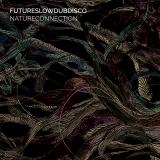
Nearly two years after "Superpaesaggio," Futureslowdubdisco rematerializes with a new album rooted in deconstructed rhythms, suspended atmospheres, minimalism, emotional tension, and ethnic echoes. Simone Ticconi and Francesco Colagrande, true explorers of sound, first delve into dark and shadowy ravines ("Shaman"), then descend into ocean depths ("Wendigo"), and make their way through impenetrable forests ("Natureconnection"), finally reaching the slopes of an active volcano ("Manitou").
The adventurous journey is rounded out with two more danceable remixes by Virtual Reality and Adelmo.
The crowning achievement is the artwork created by Awer, which pairs with the previous work by Flavia Mastrella.
Postmodern library music of great pathos. Giosue' Impellizzeri.
FUTURESLOWDUBDISCO is a project born from the meeting of producers Simone Ticconi and Francesco Colagrande. The duo explores sonic territories that combine downtempo, minimal techno, and dub. A blend of deep and hypnotic atmospheres, capable of moving between the contemplative dimension of listening and the pulsating energy of club culture, for an unforgettable rhythmic, ethereal, and psychedelic journey.
The almighty Joe of the Farr’s is a highly accomplished UK techno DJ, producer and mastering engineer. Originally associated with Bristol's electronic music scene, Joe studied TV and film sound design before building a solid reputation through hard-hitting, technically sophisticated techno releases on labels including Turbo, DSNT, Bloc, Soma and Power Vacuum. His concentrated output combines aggressive club-focused rhythms with melodic and IDM-inspired elements. Now based in Wales, performing internationally and on home turf, he also operates a professional mastering engineering operation of the highest esteem of which RIOT could simply not operate without, as many others will gladly attest too.
Continuing with the ‘Limited As Fuck’ series of releases, on our fiercely independent techno label based in Scotland, we’ve finally let loose the screamer of a release, from such an integral member of RIOT HQ, that’s been patiently ‘Left Alone’ and waiting for the right time to unleash its User Experience. Joe’s totally went one step beyond and cranked out a pressure filled release of not only persistent anthemic prowess but one of such rigorous determination, all those on the dance floor MUST ‘Obey’ to its diligent beats. And with Rant & Rave Records boss Maedon serving up such an iconoclastic relentless remix, you will absolutely need to submit complicitly to all things RIOT.
The full digital release also features two bonus meticulously disciplined tracks to fulfil your obedient, subservient requirements.
WARNING: NON STOP BREAKIN’ N’ STOMPIN’ N’ BOPPIN’ TO THE RIOT BEATS WILL MANIFEST ITSELF
For over 30 years the Midwest machine menace that is Paul Birken has been developing and exploring his love for the limitless potential that exists when you chain together synths, sequencers, samplers and beat makers, he is a true audio explorer communicating his own unique sonic exploration through his machines + odd dreams. Starting out back in the day merely with a Commodore 64 computer and a few synths, his studio gear arsenal has constantly evolved over the years into a myriad of unfathomable boxes, cables and bangin’ in his attic allowing him to freely manipulate his random audio creations into the most serious and fun grooves anywhere in the techno realms. Along-with his own imprint Tonewrecker Recordings, Paul’s appeared on a huge stack of the most impressive labels including Don’t Recordings, Fun In The Murky, Earwiggle, Mord and of course a plethora of remixes and tracks on our very own RIOT Radio Records.
From within a tomb in ancient lands comes this 'Bandage Boogie.' A hallowed homage to all things that are non-stop breakin' n' stompin' n' boppin' to the RIOT beats that have now manifested themselves on a 'Mummificated' dance floor near you. This aint street life, this is tomb life, and you'll need as many sacred tanna leaves to keep you movin’ as your fiendish high priest will bestow upon you. This brewed techno fluid that we're administering will ultimately invoke 'The Curse of RIOT’ and you’ll be doomed to eternal bouncin' aboot to its 'Pyramid Pongo' beats that go mysteriously THUMP in the night. Each track on here, and especially in his infamously legendary live sets, are unique in that they get erased from his machines after their creation and won’t ever be spawned again, but ssssssssssssssh, Mummy's the word.
The full digital release also features two bonus immortal tracks delving you deeper into the life-giving sounds of this ‘Mummy Wrapsody.’
WARNING: THESE UNWRAPPED TECHNO BEATS CREATE A WONK-A-THON YOU WILL NOT ESCAPE FROM
"Spiritual Jazz 19" besteht aus zwei Doppel-LP-Sets, die den Einfluss und die Ausdrucksformen jenes Underground-Jazz beleuchten, der sich in der zweiten Hälfte des 20. Jahrhunderts in Kalifornien und den angrenzenden Bundesstaaten entwickelte. Die insgesamt 24 Titel erscheinen in Gatefolds und enthalten Liner Notes, Fotos und Download-Codes.
Die US-Westküste wird oft mit dem Boom des Cool Jazz in den 1950er Jahren in Verbindung gebracht; doch überall dort, wo Jazz gespielt wurde, florierten auch modale, afrozentrische und spirituell geprägte Strömungen – und die Westküste bildete da keine Ausnahme. In der Nachkriegszeit rangierte die Central Avenue in L.A. als bedeutendstes Jazz-Viertel Amerikas direkt hinter Manhattan. Auch wenn Manhattan in jenen Jahren das faktische Zentrum des Jazz-Universums war, übte Kalifornien eine stärkere Anziehungskraft auf die Kultur im Allgemeinen aus und zog Menschen aus dem ganzen Land in den Bann seiner aufkeimenden Gegenkultur der 1960er Jahre.
Hier untersuchen wir die Auswirkungen dieser Gegenkultur auf den Jazz. Wir beleuchten den Einfluss der Black Panthers – der prägendsten Kraft innerhalb der schwarzen politischen Bewegung nach der Ära der Bürgerrechte – und widmen uns den neuartigen spirituellen Praktiken und Religionen des aufkommenden New Age. In Kalifornien waren zahlreiche eigenwillige Independent-Labels wie Arhoolie, Theresa und Nimbus sowie viele weitere private Unternehmungen ansässig; wir präsentieren die Ergebnisse ihres Strebens nach musikalischer Freiheit. All diese Faktoren beeinflussten die Entwicklung und Blütezeit des Jazz und der Jazzmusiker an der Westküste – und die Evolution des Spiritual Jazz in dieser Region wird hier eingehend betrachtet.
Spiritual Jazz 19" besteht aus zwei Doppel-LP-Sets, die den Einfluss und die Ausdrucksformen jenes Underground-Jazz beleuchten, der sich in der zweiten Hälfte des 20. Jahrhunderts in Kalifornien und den angrenzenden Bundesstaaten entwickelte. Die insgesamt 24 Titel erscheinen in Gatefolds und enthalten Liner Notes, Fotos und Download-Codes.
Die US-Westküste wird oft mit dem Boom des Cool Jazz in den 1950er Jahren in Verbindung gebracht; doch überall dort, wo Jazz gespielt wurde, florierten auch modale, afrozentrische und spirituell geprägte Strömungen – und die Westküste bildete da keine Ausnahme. In der Nachkriegszeit rangierte die Central Avenue in L.A. als bedeutendstes Jazz-Viertel Amerikas direkt hinter Manhattan. Auch wenn Manhattan in jenen Jahren das faktische Zentrum des Jazz-Universums war, übte Kalifornien eine stärkere Anziehungskraft auf die Kultur im Allgemeinen aus und zog Menschen aus dem ganzen Land in den Bann seiner aufkeimenden Gegenkultur der 1960er Jahre.
Hier untersuchen wir die Auswirkungen dieser Gegenkultur auf den Jazz. Wir beleuchten den Einfluss der Black Panthers – der prägendsten Kraft innerhalb der schwarzen politischen Bewegung nach der Ära der Bürgerrechte – und widmen uns den neuartigen spirituellen Praktiken und Religionen des aufkommenden New Age. In Kalifornien waren zahlreiche eigenwillige Independent-Labels wie Arhoolie, Theresa und Nimbus sowie viele weitere private Unternehmungen ansässig; wir präsentieren die Ergebnisse ihres Strebens nach musikalischer Freiheit. All diese Faktoren beeinflussten die Entwicklung und Blütezeit des Jazz und der Jazzmusiker an der Westküste – und die Evolution des Spiritual Jazz in dieser Region wird hier eingehend betrachtet.
'Everyone' was Recorded in Tokyo, Japan over two days in late September 2025. The album musically chronicles Greg Foat's first tour of Japan. The album was commisioned by Tokyo based clothing Label 'Everyone' and is a fantastic mix of Ambient, Jazz and Electronic music genres
Each track celebrates a special memory of the tour, from the opener 'Shirahama Beach' home to the wonderful FFKT festival to the playful 'Lake Haruna Boat Ride'.
The album also features Tokyo based jazz musicians Kensuke Miyaki on Baritone Saxophone and Bass Clarinet and Yoshihiro Kaneko on Double Bass. Limited to 700 vinyl copies only with obi strip.
For the 10 year anniversary of La Luna, we are excited to share with you this special 007 from Akasha Chronicles, an alias of Silat Beksi.
Akasha Chronicles released his first EP on the Wex sub-label, AHAAD, back in 2018.
After 8 years, he returns with this sentimental mini LP dedicated to his home country, Ukraine.
This release holds a special place in his heart, as he transformed his pain and dealings with the ongoing war into these six tracks which make up History of Great People.
He also wrote a manifesto about the album, his feelings, and the process behind the creation of the album.
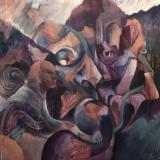
Berlin-based artist Memo, who also did the artwork on the first La Luna, returns after 10 years to gift us with another one of his trippy and complex paintings, filled with different worlds the more you observe.
A portion of the sales will be donated to the Ukrainian NGO Repair Together, which focuses on dancing and raving to electronic music while they repair houses destroyed by the war in Ukraine.
Written and produced by: Anatolii Antipin Artwork by Memo Mastered & Cut by Analogcut, Berlin
Limited 200 copy press.
CLUB U NITE RECORDS PRESENTS: HIS MASTER’S VINYL EP
Club U Nite Records takes it straight back to the early ’90s with four raw and swinging house cuts.
Manhattan Project opens with “Shufflin’ On” – a fat, slamming shuffle groove packed with jazzy touches, swinging drums and a classic old-school organ. “Everybody Move” follows with chunky Rhodes loops, soulful samples and a straight-up floor-moving vibe. Killer!
On the flip, Black Chunes Productions delivers “Jerk Yu Body”, channeling the raw swing and chord-driven energy of the early-’90s New Jersey vibe. Shuffled hi-hats, snares and dark leads bring the groove of that era straight back.
Reign Of Rhythm closes things out with “Organic Pressure” – stripped-down, driving, dope organ house. Minimal, but seriously fat.
Following the beginning of its vinyl series, Rinascimento Elettronico returns with its second physical/digital release, a five-track journey shaped around hypnotic tension, bleep-driven patterns and deep, groove-oriented rhythms.
Manuel Di Martino delivers two dancefloor-focused compositions where driving percussion and intricate grooves meet the hypnotic and mental side of techno. Framing the release, an intro and outro create a continuous listening experience, setting the atmosphere and bringing the journey to its conclusion.
Completing the EP, Orbe reinterprets “Materia” through his distinctive hypnotic approach, pushing the sound deeper into a mental and immersive dimension.
YL Hooi returns with 'Running Around (83)', the project's first release since 2019's Untitled. Valya Ying-Li Hooi and Tarquin Manek finally commit a long road-tested live favourite to tape, welding together engine room doom, disembodied vocals, cryptic lyricism and a smouldering dub-techno bassline, recast and overdriven.
The hand-stamped white label 12" honours its roots with three heavyweight remixes. After corrupted audio files erased YL Hooi's recent live collaboration with Mad Professor, the Ariwa boss gives their encounter lasting form with a percussion-dripped halftime stepper featuring veteran Black Steel and new blood Karmelody.
The flipside immediately detours with Ulla's full-scale tear down and rebuild, layering woodwind, keys and subtle percussion into an improbably elegant convergence of ambient, minimal jazz and modern classical. John T. Gast's Midas touch then drags it into bardo dancehall territory, a rugged soundsystem destroyer that's scuzzy, screwed and wired with punk instinct.
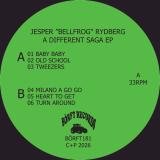
Helsingborg music hero known locally as DJ Jespha Galore strikes back with a EP containing 6 perfect length tracks somewhere in the borderlands of acid house and electronic disco. Instant 90's vibes without feeling retro and all recorded early 2026 in his new studio housed in an old cinema lobby downtown Helsingborg. These are spontaneous and raw instinct productions from a man who lived thru the 90's behind the turntables at underground parties and still doing it to this day. Highly recommended! -Joakim Cosmo
CER015 sees Celestial Echo bring back one of the great modern soul 45s, Ramsey & Company – “Love Call”.
Coming out of New York in the late ’70s, Ramsey & Company was led by Mainor Ramsey, with the group originally playing the Catskills supper club circuit. Their only single was released privately on Ramsey’s own Ramco label, with copies sold at shows and barely making it into wider distribution. Like so many great soul records, it found its real afterlife much later, becoming a favourite across the UK modern soul and rare groove scene.
“Love Call” is the reason this record has carried such a reputation for so long. A beautifully arranged modern soul dancer, it has that perfect late ’70s balance of groove, song and musicianship. On the B-side, “Leg Grease” brings the funk.
Original copies are now almost impossible to find, often selling for serious money when it turns up and even the Lotus Land reissue has become expensive in its own right. This Celestial Echo edition puts the track back into circulation properly, cut loud and ready for the DJs and soul heads who have been waiting on a clean copy.
Celestial Echo is here to put proper soul records back into circulation — respectfully cut, properly pressed, and ready to play.
Repress 2026
The Visions EP is the debut release from London based DJ/Producer duo Suburban Architecture. Drawing heavily on influences from one of Drum & Bass' most innovative and rapidly changing eras, the mid to late 90s, the duo's productions place a contemporary spin on sounds rooted in this golden era of dance music.
This 4 track EP explores a selection of sounds that meet at the intersection of nostalgia and modern production: "Visions '96" fuses atmospheric jazz samples and haunting horns with fractured drums in a manner reminiscent of Source Direct, Photek et al. "Equilibrium" meanwhile gives a modern take on the classic roller, complete with lush synth pads and rolling Amens. On the flip are a pair of jazzy steppers: "Cubic Nature" delivers more lush pads, this time paired with subtle vocals and deep atmospherics whilst "Pulses" brings some bounce to proceedings fusing 80s soul style keys and jazzy horn licks giving stylistic reference to material by the likes of Alex Reece.
It’s not just since James Bond and the introduction of World Overshoot Day that we’ve known: The world isn’t enough. We need an Extrawelt! Arne Schaffhausen and Wayan Raabe have been tinkering with this celestial body for over two decades, and it seems to be slowly nearing completion. You certainly can’t accuse Extrawelt of lacking ideas. They are, so to speak, the legitimate descendants of the legendary planet designer Slartibartfast from Douglas Adams’ “The Hitchhiker’s Guide to the Galaxy”. No doubt, the downright insanely creative bossa nova-techno bastard “Honey Hunter” will be mentioned in the same breath as Slartibartfast’s award-winning Norwegian coastlines by future civilizations. The other three tracks aren’t half bad either. Take our word for it.
Nicht erst seit James Bond und der Einführung des world overshoot days wissen wir: Die Welt ist nicht genug. Wir brauchen eine Extrawelt! Die Herren Arne Schaffhausen und Wayan Raabe werkeln seit über zwei Jahrzehnten an diesem Himmelskörper und er scheint so langsam bezugsfertig zu sein. Man kann Extrawelt nun wahrlich keine Ideenarmut vorwerfen. Sie sind quasi die legitimen Nachkommen des legendären Planetendesigners Slartibartfast aus Douglas Adam’s “Per Anhalter durch die Galaxis”. Der geradezu irrwitzig kreative Bossanovatechno-Bastard “Honey Hunter” wird von künftigen Zivilisationen in einem Atemzug mit Slartibartfast’s preisgekönten norwegischen Küstenlinien genannt werden. Auch die anderen drei Tracks sind nicht von schlechten Eltern. Glaubt’s und werdet selig.
Downloads
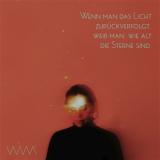
Für die Feier des Miteinanders! Mit ihrem zweiten Album "Wenn man das Licht zurückverfolgt, weiß man, wie alt die Sterne sind" gelingt WIM ein eindrucksvoller Schritt nach vorn. Die Hamburger Künstlerin verbindet erstmals ihre poetische Tiefe mit einem neuen, synth-poppigen Sound, der Raum für Leichtigkeit und Bewegung schafft. In zehn Songs erzählt sie von prägenden Momenten, Verlust, Erinnerung und dem, was Menschen im Verborgenen formt. Dabei entsteht ein Album, das Empathie einfordert, ohne zu beschweren - und das zeigt, dass selbst schwere Themen tanzbar sein können. Produziert von Tobias Siebert (Kettcar, Enno Bunger), klingt die Platte organisch und frisch - unverkennbar WIM, aber mutiger und offener als je zuvor, fast schon moderner, urbaner XL-Pop: Die Songs werden rhythmusgetriebener, luftiger und teils konsequent vom Beat getragen. Und wenn es inhaltlich doch zu schwer wird, tanzt WIM im Studio zu Paula Hartmann, hört Chappell Roan und lässt sich von Wir Sind Helden inspirieren. LP farbiges Coke Bottle Green Vinyl (140g), CD Digipak mit Posterbooklet.
Plush shag carpeting, jazz flutes, analogue synths, funk grooves, exotica, and sultry, Italian-style vocalising: Erotica 70 is the new album from Larry Manteca, known for their inventive, tongue-in-cheek reimaginings of classic Italian soundtrack aesthetics.
This time around, the Milanese collective sets its sights on the distinct sonic landscape of 1970s commedia sexy—a film genre that, for better or worse, defined an era and fed richly into the cinematic education of Larry Manteca’s members.
Through this lens, Erotica 70 also becomes a way of celebrating Piero Umiliani in his centenary year—a composer whose name is closely linked to the erotic comedies of the time.
The nod to Umiliani is baked right into the details, starting with the choice of vintage gear like the Eminent synth and the Wurlitzer electric piano. These instruments deliver that particular blend of jazz, groove, electronics, and sensual charm that made the golden age of Italian film music so unique.
Standout track “Lando” is a joyful, playful homage to actor Lando Buzzanca, who starred in numerous films scored by Umiliani, including the iconic 1973 comedy La schiava io ce l’ho e tu no (My Darling Slave).
Larry Manteca is spearheaded by multi-instrumentalists Alessandro Paiola and Riccardo Danieli, flanked by the cinematic flute of Carlo Pelsa, the swinging drums of Andrea Quattrini, and the magnetic vocals of Valentina Castelli and Alessandra Maria Manzoni.
Recorded across various studios in Northern Italy, Erotica 70 is the imaginary soundtrack to an Italy that no longer exists, recreating its atmosphere while rendering it in full, vivid colour. It’s a record whose music seems to come straight out of a provincial cinema, a smoky late-night club, or a long-lost 70s film. But while it looks back to a bygone era, it does so only to bring it straight into the present, making the past sound surprisingly fresh and contemporary.
ADULT. kooperiert nicht. Seit über 25 Jahren verkörpert die dystopische Detroit-Synth-Punk-Institution, gegründet von Nicola Kuperus und Adam Lee Miller, unbeirrbare Frustration, Misstrauen und Beklemmung. Man könnte erwarten, dass sich die Kanten mit der Zeit abschleifen, doch ADULT. hat kein Interesse am Komfort eines Vermächtnisses. Noch nie klang die Musik des Duos so unmittelbar, so dringlich und so unverhohlen wütend wie auf dem abschließenden, kompromisslosen Kissing Luck Goodbye.Mit aufgerüstetem Equipment und einer neuen Klangbibliothek gebaut, ist das Material erdrückend dynamisch, lauter - und zugleich klarer. Kuperus' dominante Darbietung rückt im Mix stärker in den Vordergrund und skizziert ein Arsenal aus lebhaften, ätzenden Rufen, Sprechchören und Gedankensplittern. Lachen - ob in den Texten oder als besessene Präsenz - fungiert als Leitmotiv und verweist auf die bedrohliche Absurdität der modernen Zeit.,THE CHAOS IS WHAT THEY WANT", singt sie in ,R U 4 $ALE" - zugleich eine Absichtserklärung: einer brennenden Welt aus Gier und Unordnung mit trotzigem, meisterhaft zusammengebautem Chaos zu begegnen. ,Du hast in dieser Höllenlandschaft, in der wir gerade leben, zwei Möglichkeiten: kämpfen oder depressiv sein", sagt Miller. ,Beides ist okay. Aber, na ja, die Entscheidung war einfach."ADULT. ist bekannt für hochriskante Katharsis auf der Bühne und griff kürzlich auf seinen Backkatalog an Bassgitarren-Songs aus den 2000ern zurück, wobei sie die vorausschauende Anxiety Always-Ära erneut nachzeichneten - teils aus Notwendigkeit angesichts der heutigen politischen und technologischen Angsttemperatur. Die Reaktion war sofort spürbar: ,Wir waren in Paris, und die Kids sind von der Bühne gesprungen. Und ich dachte nur: Das ist großartig. Das ist irgendwie die Energie, in die ich wieder zurückwill", sagt Kuperus.Diese Erkenntnis fiel mit einer Reihe von Rückschlägen zusammen - Kuperus' Anfällen von chronischem Schwindel, dem Verlust ihres engen Freundes und Kollaborateurs Douglas McCarthy von Nitzer Ebb, dem das Album gewidmet ist - alles unter dem drohenden Regime noch einmal erheblich verschärft. ,Wir dachten nur: Alles zerbricht. Wir zerbrechen. Wir sind kaputt." Dieses Gefühl hielt jedoch nicht an, denn letztlich waren sie viel zu sehr von Wut aufgeladen, um stillzuhalten. Die Stimmung vor Kissing Luck Goodbye waren vier Mittelfinger, die kerzengerade nach oben zeigten.Anstatt sich zurückzuziehen, konzentrierten sie sich auf den Prozess und überarbeiteten ihr Setup - inklusive der ersten neuen Mikrofone seit 20 Jahren. Hält man das Album an irgendeiner Stelle an, zählt man wahrscheinlich ein Dutzend Dinge, die gleichzeitig passieren, in seltsamer, schwindelerregender und dissonanter Harmonie. ,No One Is Coming" attackiert Untätigkeit angesichts des Faschismus - ,NO ONE IS COMING TO YOUR RESCUE". ,None of It's Fun" feuert mit atemloser Dringlichkeit, rasenden Glissandi und pointierten Zeilen wie: ,OH I AM TEARING MY GUTS OUT / LOOK AT ME_ DO YOU THINK THAT THIS IS AMUSING?"Eine geradlinige Basslinie und Kickdrum prallen im Abschlusstrack ,Destroyers" auf pulsierende Mantras, werden dann vollständig gesättigt und kakophonisch. Ihre jüngeren Ichs hätten den Song vielleicht sich selbst zerstören lassen, doch hier gelang es ihnen, die Lautstärke durch alle Extreme hindurch zu stabilisieren und Raum für ein eindringliches, abschließendes A-cappella zu schaffen: WE PAY THE PRICE FOR THOSE IN POWER EXPLOITING YOU EXPLOITING ME CONSUMING YOU CONSUMING ME SICK SICK SICK SICKENING IT IS US THAT ARE DEVOURED BY EVERYTHING I WILL EAT YOUR HATE
A stylish selection of city pop, funk and modern soul from Japanese label Nippon Columbia, selected by DJ Notoya and featuring cult classics and rarities by Hiroshi Sato, Hatsumi Shibata, Hitomi 'Penny' Tohyama & many more.
Annotated by Notoya with journalist Nick Luscombe and artwork by Optigram.
Newly remastered audio.
The selection on ‘Tokyo Glow’ starts with 'Kimugare' a relaxed mid-tempo track by Kumi Nakamura, actually a famous actress who only recorded one album in 1980 for Columbia.
The set continues and flows effortlessly with the sunshine grooves of Miyuki Maki, Hatsumi Shibata and cult keyboard player Hiroshi Sato before the pace starts going faster and funkier with New Generation Company, Kengo Kurozumi - with his superb boogie, 'Juggler'
- and one of the queens of the genre, Hitomi 'Penny' Tohyama with 'Tuxedo Connection'.
Another fine example on the set is the mid-tempo groove of "I Wander All Alone Part III" by New Generation Company, an aggregate group of some of the best Japanese session musicians led by arranger Katz Hoshi and including Hiroyuki Namba (key), Kazuo Shiina (gtr) and Yutaka Uehara (ds) who all played with Tatsuro Yamashita among many others.
There are many other excellent examples in 'Tokyo Glow', showcasing the diversity and specificity of Japanese City Pop during the late 70s and 80s.
Nippon Columbia opened their much-guarded vaults to curator DJ Natoya. Tracks were remastered in Tokyo and the result, ‘Tokyo Glow’, is a unique insight into a most creative period in Japanese music.
On Last Night At Marienbad's latest, the imprint brings together three of the brightest souls found within the realms of Jazz, namely Mauricesax, 9ick and Milan93, with their collective talents synergising effortlessly on 'A Garden Between Us', alongside a stellar cast of remixers who add even further delight between the grooves….
As a genre, Jazz has perhaps lent itself the most to other musical universes, in that its curious heart, endlessly experimental nature, and parameter-defying spirit have wrapped itself deep within the core of countless albums, scenes, and music makers. It's a genre that welcomes reinvention, consistently defying its contents and always reaching out to find new methods of expressionism. Electronic music, in its many forms, has truly embraced Jazz perhaps like no other movement of music has, with a truly astonishing array of records surfacing in the past 40 years which have blended Jazz's unique motifs with grooves, chords, and emotive excellence. From 90s Jazz house and UR Techno, through to Future Jazz, downtempo, and Hip Hop, and around many other suns, there remains such an intrinsic and symbiotic relationship between the two musical realms that caters to those who wish to live music both within and out with themselves.
As practitioners of blending electronica and Jazz, few do it like the trio of Mauricesax, 9ick, and Milan93. All three are known for their distinctive soundscapes, yet share commonalities in terms of musical language, feel, and sense of progression. Bringing them together allows for overlaps in their sounds to emerge, and just like Jazz itself, this is where the intrinsicness of sound begins to blossom. 9ick brings his softly evolving vibe to the table, one which was so prevalent and celebrated on his 2025 album 'SMIL'; Milan93 draws from his focal point of exploring fill-laden grooves and a myriad of emotive sensibilities; and Mauricesax draws up his extensive musicality that exists at the corner of jazz, electronic, and experimental music, along with running musical workshops all over the globe.
'A Garden Between Us' represents the trio's core tenets, with this immediately obvious from the record's opener, 'Rhodora'. A gentle solo piano quickly evolves into a series of powerful rhythmic pulses, with brass lines bringing vitality and feel to proceedings. The track shifts gears with purpose, transitioning between musical vignettes of the highest order, with the synth work doing much to bind the transitions together. 'Tulip' emerges slightly differently, with glossy Rhodes tones and an unravelling rhythmic undercurrent setting an enthralling stage. The track flourishes amongst sweeping textures, coming up for air amongst a deeply hypnotic rhythmic section that holds on and never lets up. 'Honeysuckle' lands next, which sees the trio emerge with a boundless, dynamic soundscape. The drums shift within the undertones, as keys, chords, horns and hip-hop vocal samples dance around the pulse, capturing the imagination with their narrative-like placement. Wrapping up the A side comes 'Camellia'. A dazzling array of harmonic sounds converges around the transfixing rhythm section, which emerges from deep below to lavishly roll out over the midsection, with the delicateness of the instrumentation a real highlight here.
The B side features two exquisite remixes, with Pacific Coliseum's version of 'Tulip' landing first. Beginning with a signature four to the floor to get things going, his careful handling of the source material is seen in the tactful introduction of the blissful elements that made the original cut so impactful, with great focus placed on emotive fidelity. The result is a summer-bound house number that reimagines the original in all the right ways, flipping it into a euphoria-driven jazz-laden pacer that reaches for the heavens as much as it drives right into the heart. Teuteu then showcases their take on 'Honeysuckle', and at 9 minutes long, represents the longest cut on the record - and the experience is all the richer for it. Leaning heavily into dance music flavours, Teuteu shifts perspective totally into the realm of the club, with the walls beating hard to the kicks. The sax lines that drift ethereally up top keep eyes closed and souls full, as the dance shifts into the next phase.
An experience that drifts from the daydreaming, to soul-warming through to the club shaking - what else is left to experience, except for 'A Garden Between Us' and how it will brighten up life itself….
In 1990, Pop Will Eat Itself released their third studio album. The British alternative rock band drew on many popular genres of the time, making them their own. Hip hop, industrial rock and alternative dance are all featured on Cure For Sanity.
The band also enjoyed success in the UK Singles Chart, with four singles reaching the top 40.
This album contains 1991 reissue of the album and is now available on a 2LP set for the first time.
Cure For Sanity is available as a limited edition on purple coloured vinyl and includes an insert.
The small print:
• Due to rights restrictions, this item is only available for customers in Europe.
* long version / previously unreleased on vinyl
** exclusive / previously unreleased
Felix Laband's highly acclaimed electronica masterpiece album "Dark Days Exit" (2005) is now available as an Extended Version 2LP vinyl. Originally planned for last year's 20th anniversary, this special edition features a new design by Felix Laband and includes a double-sided DIN A2 art print. Dark Days Exit features four exclusive tracks, alongside five vinyl-only tracks available for the first time in their original long versions. Listening to the key track, Sleeping Household, on Dark Days Exit is unsettling: like being an impostor rambling around an uncanny house, a Lynchian leitmotif in the form of a young girl divulging secrets that you probably shouldn't hear. Dark Days Exit is an album that paints an interior landscape, an invitation to transgress private thresholds. Made with old-school production tools that require hands-on application, Dark Days Exit is a sound-production tour de force. The music is as wide as the savannah and microscopic at the same time, a lesson in what can be achieved when 'music' is placed on an equal footing with sound as a phenomenon, by an artist who decides to apply themselves without reserve. The masterful manipulation of reverb and delays and hyper-detail was a generation ahead of its time, and Dark Days Exit is preferred by audiophiles for testing their systems. Dark Days Exit is intimate, demanding, and a masterclass in tension, and Laband's ability to use all sound without hierarchy to paint a detailed personal vision — one that is less overtly political and streetwise than on subsequent albums — is unsurpassed. Most discerning listeners are into music because, in the hands of a master, it can manipulate our mood and transport us. Felix Laband opens with a sonic portrait of spring happiness and gradually dismantles the atmosphere in front of our ears, as epitomised by the haunting track Black Shoes. No sooner are we afraid than the artist drops us off where we started. In many ways, the intimacy derives from the tight group of friends and believers whom Laband corralled as contributors: Mark van Niekerk (xylophone, "Miss Teardrop"), Jane Rademeyer (clarinet, "Black Shoes," "Radio Right Now"), Brendon Bussy (mandolin, "Black Shoes"), and Derek Gripper (sampled violin, used throughout) and Alex van Heerden on Minka. The difficulty in categorising Dark Days Exit is probably due to Laband listening mostly to ambient and classical music at the time, and consequently registering the album at the lush, cinematic end of the electronic spectrum. There is poise and restraint in the spare use of beats, and when they do appear, they hit hard. Forged in the optimistic post-apartheid years, Dark Days Exit is music about life and death, spanning hope, despair, terror, tension, with humour and empathy. Twenty one years on, the album's gravity endures, due to its almost perverse authenticity, its timeless themes of hope and despair, and its apex level of technical mastery. The additional, immaculately produced tracks add new rooms to the uncanny house we are invited into.
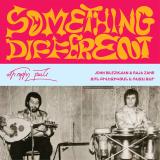
Discotchari unveils a full deadstock run of this rare 7 inch from 1970, found in original factory boxes and reissued as the first release of the label. It features previously unheard material from oud virtuoso John Bilezikjian and percussionist Raja Zahr, a Burbank via Beirut collaboration. The record will be available on vinyl and digital platforms from November 3rd, 2023.
Recorded under the name Something Different, the duo produced a single 45 RPM that was shelved as their solo careers took off. At just 21, Bilezikjian handles oud, bass and harpsichord, while Zahr delivers rich and inventive percussion.
Side A, Zulu Man, blends late 60s psychedelia with a more experimental edge, closer to underground acts than mainstream rock of the era. Carried by evocative vocals and expressive oud lines, the track unfolds like an epic narrative.
Side B, Chemical Reaction, is harder to define, moving between cinematic moods and rhythmic tension. The track evokes shifting landscapes and contrasting atmospheres, making it as intriguing as it is unpredictable on a dancefloor.
Die Welt war nie bereit für The Monsters, und The Monsters waren nie bereit für diese Welt. Nach vierzig Jahren, in denen sie zu einem echten Monster aus Fleisch und Blut herangereift sind, präsentieren sie ihr neuntes Album: gut ein Dutzend kompromissloser, wilder, lärmiger und fuzz-geladener Tracks. Ein Mix aus Ein-Riff-Beat, Trash, Garage, "Bern Metal", Boogie, Punk und Grunge - Songs, die einen von innen nach außen stülpen, aufgenommen mit "Miracle" Robert "Worker" Butler und abgemischt von Jim "Dirtbomb" Diamond - ein echtes Garage-Punk-Dreamteam. Vor vierzig Jahren, 1986, war die Jugendkultur-Revolution in Bern (Schweiz) in vollem Gange, Jugendliche und junge Erwachsene wollten sich aus den konservativen Fesseln befreien. Die Straßen brannten, Clubs entstanden und eine neue Schweizer Musikkultur wurde geboren. Dies markierte auch den Beginn von The Monsters. Vierzig Jahre später hat sich der Zustand der Musikkultur - oder vielmehr der Welt im Allgemeinen - wohl eher verschlechtert. Individuelles Denken und Schaffen sind nach wie vor nicht sonderlich anerkannt oder gar erwünscht (Hey KI!). Im März 2026 blieb der Band also nichts anderes übrig, als ihre Instrumente, das Aufnahme-Equipment und ihre Ideen in den Proberaum zu verfrachten. Sie verbrachten einen Monat mit Robert Butler (u. a. The Miracle Workers) und seinem mobilen "Two Cent Recording Studio". Sie schrieben Texte (insgesamt etwa 100 Wörter - mal sinnvoll, mal unsinnig, über das ganze Album verstreut), tüftelten am Sound und nahmen Gitarren in allen erdenklichen Variationen auf. Das Ganze wurde gewürzt mit Percussion, Schlagzeug, Bass sowie obskuren Orgeln und Synthesizern, die sie auf Flohmärkten oder in den Kellern von Freunden aufgetrieben hatten. Nach diesem vierwöchigen Trip schickten sie das gesamte Chaos an Jim Diamond (Ghetto Recorders Studios in Detroit, Dirtbombs, White Stripes, Gories, André Williams... klar, worum es geht, ne?!), um es einem umwerfenden Mix-Abenteuer zu unterziehen. Das Ergebnis ist ein Dutzend Songs ohne Kompromisse, Schwächen oder Stärken. Einfach nur roher, ungeschliffener Lo-Fi-Garage-Punk'n'Roll voller Energie - und das mit vierzig Jahren "Nicht-Erfahrung". Erhältlich sind schwarzes Vinyl und eine pinke Picture-Disc (beide mit Insert & DLC), eine höchst audiophile CD sowie Kassette, die bei doppelter Geschwindigkeit leiert! Für Fans von Reverend Beat-Man, VRR, The Mummies, Oblivians, Billy Childish, Damaged Goods, Monks, very early Hives, Garagepunk, Lo-Fi-Roll, Alternative Beat
Die Welt war nie bereit für The Monsters, und The Monsters waren nie bereit für diese Welt. Nach vierzig Jahren, in denen sie zu einem echten Monster aus Fleisch und Blut herangereift sind, präsentieren sie ihr neuntes Album: gut ein Dutzend kompromissloser, wilder, lärmiger und fuzz-geladener Tracks. Ein Mix aus Ein-Riff-Beat, Trash, Garage, "Bern Metal", Boogie, Punk und Grunge - Songs, die einen von innen nach außen stülpen, aufgenommen mit "Miracle" Robert "Worker" Butler und abgemischt von Jim "Dirtbomb" Diamond - ein echtes Garage-Punk-Dreamteam. Vor vierzig Jahren, 1986, war die Jugendkultur-Revolution in Bern (Schweiz) in vollem Gange, Jugendliche und junge Erwachsene wollten sich aus den konservativen Fesseln befreien. Die Straßen brannten, Clubs entstanden und eine neue Schweizer Musikkultur wurde geboren. Dies markierte auch den Beginn von The Monsters. Vierzig Jahre später hat sich der Zustand der Musikkultur - oder vielmehr der Welt im Allgemeinen - wohl eher verschlechtert. Individuelles Denken und Schaffen sind nach wie vor nicht sonderlich anerkannt oder gar erwünscht (Hey KI!). Im März 2026 blieb der Band also nichts anderes übrig, als ihre Instrumente, das Aufnahme-Equipment und ihre Ideen in den Proberaum zu verfrachten. Sie verbrachten einen Monat mit Robert Butler (u. a. The Miracle Workers) und seinem mobilen "Two Cent Recording Studio". Sie schrieben Texte (insgesamt etwa 100 Wörter - mal sinnvoll, mal unsinnig, über das ganze Album verstreut), tüftelten am Sound und nahmen Gitarren in allen erdenklichen Variationen auf. Das Ganze wurde gewürzt mit Percussion, Schlagzeug, Bass sowie obskuren Orgeln und Synthesizern, die sie auf Flohmärkten oder in den Kellern von Freunden aufgetrieben hatten. Nach diesem vierwöchigen Trip schickten sie das gesamte Chaos an Jim Diamond (Ghetto Recorders Studios in Detroit, Dirtbombs, White Stripes, Gories, André Williams... klar, worum es geht, ne?!), um es einem umwerfenden Mix-Abenteuer zu unterziehen. Das Ergebnis ist ein Dutzend Songs ohne Kompromisse, Schwächen oder Stärken. Einfach nur roher, ungeschliffener Lo-Fi-Garage-Punk'n'Roll voller Energie - und das mit vierzig Jahren "Nicht-Erfahrung". Erhältlich sind schwarzes Vinyl und eine pinke Picture-Disc (beide mit Insert & DLC), eine höchst audiophile CD sowie Kassette, die bei doppelter Geschwindigkeit leiert! Für Fans von Reverend Beat-Man, VRR, The Mummies, Oblivians, Billy Childish, Damaged Goods, Monks, very early Hives, Garagepunk, Lo-Fi-Roll, Alternative Beat
Die Welt war nie bereit für The Monsters, und The Monsters waren nie bereit für diese Welt. Nach vierzig Jahren, in denen sie zu einem echten Monster aus Fleisch und Blut herangereift sind, präsentieren sie ihr neuntes Album: gut ein Dutzend kompromissloser, wilder, lärmiger und fuzz-geladener Tracks. Ein Mix aus Ein-Riff-Beat, Trash, Garage, "Bern Metal", Boogie, Punk und Grunge - Songs, die einen von innen nach außen stülpen, aufgenommen mit "Miracle" Robert "Worker" Butler und abgemischt von Jim "Dirtbomb" Diamond - ein echtes Garage-Punk-Dreamteam. Vor vierzig Jahren, 1986, war die Jugendkultur-Revolution in Bern (Schweiz) in vollem Gange, Jugendliche und junge Erwachsene wollten sich aus den konservativen Fesseln befreien. Die Straßen brannten, Clubs entstanden und eine neue Schweizer Musikkultur wurde geboren. Dies markierte auch den Beginn von The Monsters. Vierzig Jahre später hat sich der Zustand der Musikkultur - oder vielmehr der Welt im Allgemeinen - wohl eher verschlechtert. Individuelles Denken und Schaffen sind nach wie vor nicht sonderlich anerkannt oder gar erwünscht (Hey KI!). Im März 2026 blieb der Band also nichts anderes übrig, als ihre Instrumente, das Aufnahme-Equipment und ihre Ideen in den Proberaum zu verfrachten. Sie verbrachten einen Monat mit Robert Butler (u. a. The Miracle Workers) und seinem mobilen "Two Cent Recording Studio". Sie schrieben Texte (insgesamt etwa 100 Wörter - mal sinnvoll, mal unsinnig, über das ganze Album verstreut), tüftelten am Sound und nahmen Gitarren in allen erdenklichen Variationen auf. Das Ganze wurde gewürzt mit Percussion, Schlagzeug, Bass sowie obskuren Orgeln und Synthesizern, die sie auf Flohmärkten oder in den Kellern von Freunden aufgetrieben hatten. Nach diesem vierwöchigen Trip schickten sie das gesamte Chaos an Jim Diamond (Ghetto Recorders Studios in Detroit, Dirtbombs, White Stripes, Gories, André Williams... klar, worum es geht, ne?!), um es einem umwerfenden Mix-Abenteuer zu unterziehen. Das Ergebnis ist ein Dutzend Songs ohne Kompromisse, Schwächen oder Stärken. Einfach nur roher, ungeschliffener Lo-Fi-Garage-Punk'n'Roll voller Energie - und das mit vierzig Jahren "Nicht-Erfahrung". Erhältlich sind schwarzes Vinyl und eine pinke Picture-Disc (beide mit Insert & DLC), eine höchst audiophile CD sowie Kassette, die bei doppelter Geschwindigkeit leiert! Für Fans von Reverend Beat-Man, VRR, The Mummies, Oblivians, Billy Childish, Damaged Goods, Monks, very early Hives, Garagepunk, Lo-Fi-Roll, Alternative Beat
Once upoun a time Fat Mike came up with the idea of calling up 101 of the best old and new punk rock band around, have them each record a 30-second long song, then put all the tracks out on one record to make the best punk compilation ever. And guess what, the dream came true. The 101 most famous punk rock bands around doing each a 30 seconds long song Back in print for the first time in ten years! Pressed to Lime Vinyl Features super rare songs (recorded exclusively for this compilation) by Green Day, The Offspring, Blink- 182, Pennywise, Rancid, Less Than Jake, The Vandals, Bad Religion, and more
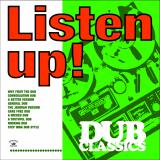
Welcome to the DUB SOUND from Jamaica. The vocal records cut back to the bones of bass & drums, with the instruments and vocals faded in and out sometimes with echo and reverb to make a great new VERSION!!.
Although remembered as an early 70’s phenomenon, the dubbed sound can be dated back as early as 1968. But by the mid– seventies it became the norm for records to carry a Version (dub) b-side and in fact many records were brought for this reason especially if they were known to come from the hands of the dub master himself King Tubby. So, sit back and enjoy this dub excursion, many from the hands of King Tubby but, all classics in their own right.
Yesca is back on Shall Not Fade with ‘Paint on Walls’ 12” EP.
2024’s Yesca EP on SNF - “Mood Loops” - set a high bar, so when we say this record is something special you should take note. Of course if you already know Yesca’s music or have had the pleasure of a Yesca DJ set then you will have already this queued up.
Sweet Spot: Ben Sims, Deetron, Oliver Ho, Vince Watson, Grain (Artwork’s Techno alias). Planet-E, Primate Recordings, Paul Mac & Stimulus Recordings found the sweet spot.
According to the OED the first use of the phrase “Sweet Spot” was in 1976 in reference to tennis rackets and golf swings. It’s where everything hits just right. And that’s what this EP does, hits just right. What strikes me is how descriptive the phrase ‘Sweet Spot’ is. Given enough swings and some luck we all know what it feels like to hit the sweet spot in some regard. Finding the sweet spot regularly though takes time and skill. But being able to hit the sweet spot by design every time, well that’s something different. That’s what makes the greats great.
For us at SNF there’s a consensus that in the lineage of electronic music there have been many moments where artists & labels converged on a sweet spot. One such sweet spot for us is in Techno
around 2003 when at the tail end of Hardgroove tempos began to slow and a groovier more refined tech house infused goodness appeared in the racks from a group of killer techno labels & artists (some mentioned above) that moment before the fuller emergence of the 2nd wave of Tech House in the mid 00’s.
That sound, while often emulated, never quite hit the same for us at least – until Yesca came along. His music has everything that we love about that sweet spot. Raw driving groove, rolling basslines and hip shaking percussion. What’s different on ‘Paint on Walls’ is that Yesca stepped on - he had already found the sweet spot on 2024’s Mood Loop EP - now his sound (or swing) is natural. Repeatable, refined and seemingly effortless. To revisit the tennis and golf analogy, this is the start of a Grand Slam run from an artist ready to etch their name in dance music history. Tiger..... Serena......Yesca.
Run the Tracks:
‘How I Do It (They Wonder)’ - A masterclass in less is more, and a serious DJ tool. Full of groove - slow it down and it will light the touchpaper in a house set - speed it up and you’ve got techno weaponry. Forget gatekeeping, this will make you feel like you just found a 2004 techno white label from the likes of Grain or Ben Sims.
‘I Desire’ - House music that I reckon Deetron would be proud of... Blissed out machine funk, whispered vocals, slick jazzy chords and dubbed out techno stabs are all grounded by Yesca’s impeccable, loopy drum programming. The best tunes always end too soon.
‘Domination’ - The ever rising bass, err, dominates this track and this track will dominate on many a dancefloor, but Yesca's knack for dubbed out swinging synth lines has to get a shout out here too. He turns what would be melodic elements into what feels like part of the percussion. Double Threat. Hands Up and Heads Down business.
‘Paint on Walls’ - It would be a tough call to say Yesca’s saved the best til last with the EP’s eponymous track given what’s come before, but Paint On Walls works all the highlights from the rest of the EP into a latin techno/house infused anthem. Skittering percussion, a hint of Detroit goodness and a deep deep rolling bassline and THAT vocal. In every way hopeful yet resistant, and that is what techno is all about.
Wewantsounds it delighted to announce a deluxe reissue of Frank Foster's 'The Loud Minority' LP. Released on Bob Shad's Mainstream Records in 1972, it's a landmark album and one of the key political works of the 70s. Featuring an all-star cast of superb musicians including Elvin Jones, Stanley Clarke, Airto, Cecil Bridgewater and Marvin 'Hannibal' Peterson, it is also Dee Dee Bridgewater's earliest full recordings. This special edition includes a 20-page booklet featuring amazing unseen session photos recently unearthed, an introduction by Judd and Mia Apatow (Shad's grandchildren), an essay by British journalist Kevin Le Gendre and an exclusive interview of Cecil and Dee Dee Bridgewater by Paul Bowler. The album's original artwork as been recreated with original photos and the audio newly remastered from the original tapes.
When he recorded "The Loud Minority" in 1972 for Bob Shad's Mainstream Records, Frank Foster had been a solid sax player for nearly twenty years, playing with the likes of Donald Byrd, Thelonious Monk and The Count Basie Orchestra. For this special session, he gathered a stellar line up of old fellow musicians like Elvin Jones and Harold Mabern and young turks including Stanley Clarke, 'Hannibal' Marvin Peterson, Cecil and Dee Dee Bridgewater. Cecil Bridgewater remembers: "Frank, his thing was, any group that he had he wanted to give young musicians a chance." As usual for Mainstream sessions, the studio was booked for two days and the record was cut live, supervised by Bob Shad's trusted men, arranger Ernie Wilkins and engineer Carmine Rubino.
What came out of these two days is now the stuff of legend, four long funky jams fuelled by two distinct line ups playing simultaneously augmented with a powerful 6-piece brass section led by Foster. The album kicks off with the anthemic "The Loud Minority" (sampled by United Future Organization and DJ Shadow) with its long brass introduction followed by Dee Dee Bridgewater fiery poem, a politically charged statement expressing the fight for civil rights, before the whole group comes together for a funky explosion clocking at 14 minutes. "That was a period where we were really into our African consciousness" reminisces Dee Dee in the interview.
The album continues with the funky uptempo "Requiem for Dusty" while "J.P.'s Thing" adopts a slightly more spiritual feel, with a beautiful Fender Rhodes solo and Foster's soprano sax improvisation. The album ends with "E.W. Beautiful People", a long dreamy improvisation climaxing with Dee Dee Bridgewater's poignant vocals.
The Loud Minority is a key militant jazz manifesto and one of the landmark jazz funk albums of the 20th Century. The album was recorded in two days but its legacy lives on and still resonates loudly in the BLM days. Wewantsounds is delighted to reissue this major works with newly remastered audio and a deluxe 20-page booklet full of breathtaking unseen session photos and insightful texts telling the whole story of this superb album.
What an unbelievable record. From the wild cover to the iconic breakbeats, Roots from Ian Carr’s Nucleus is one of the dopest albums we know. This is seriously thick, funky-prog jazz-rock heaven. Originally released on Vertigo in 1973, other than a couple of versions at the time for other territories, Roots was never re-pressed since so it’s gone on to become another one of those impossible to find records.
Maybe it was a little too out there for the time, but it’s aged very, very well indeed and this Be With re-issue, re-mastered from the original analogue tapes, shows off just why this deserves to be back in press.
Genius trumpeter and visionary composer Ian Carr was one of the most respected British musicians of his era. He was a true pioneer and saw the potential in fusing the worlds of jazz with rock, just as Miles Davis and The Tony Williams Lifetime did in the US. In late 1969, following the demise of the Rendell-Carr quintet, and tiring of British jazz, Carr assembled the legendary Nucleus. Regarding music as a continuous process, Nucleus refused to “recognise rigid boundaries” and worked on delivering what they saw as a “total musical experience”. We can get behind that.
Under bandleader Carr, Nucleus existed as a fluid line-up of inventive, skilled musicians. This constant evolution and revolution was all part of the continuous musical exploration and discovery that took jazz to new levels.
Working together with producer Fritz Fryer and engineer Roger Wake, the seven compositions by Carr, Brian Smith and Dave MacRae that make up Roots flirt with perfection, and Nucleus at that time made up of the cream of 1970s UK jazz with Brian Smith on tenor saxophones and flutes, Dave MacRae on piano and electric piano, Jocelyn Pitchen on guitar, Roger Sutton on bass, both Clive Thacker and Aureo De Souza on drums and percussion, Joy Yates delivering the vocals and of course Carr on trumpet.
The spellbinding title track immediately renders the album indispensable. Riding the illest of loping breakbeats, “Roots” is low-slung, doped-out heist-funk. An absolute monster. If it sounds familiar then that’s likely down to it being sampled by Madlib for Lootpack and Quasimoto’s “Loop Digga”, as well as by a whole host of beat manipulators. “Roots” conjures prime instrumental hip-hop / beat music, only 20 years ahead of its time. Truly, these are the roots. Through sinuous bass, twinkling keys and a hypnotic guitar riff, a smoky brass motif weaves its way into a gloriously deep haze around Carr’s solos. “Roots” is over 9 minutes long, but there’s not a single wasted second, not surprising given that this is a condensed version of an originally 40 minute long commissioned composition.
The soothing vocal fusion delight of “Images” follows. Meticulously constructed, with gorgeous flute work from Brian Smith, with Joy Yates’ silky vocals and Dave MacRae’s Rhodes never sounding better. The cool, driving “Caliban” closes out the first side. Originally the third movement in a four part commission to celebrate Shakespeare’s birthday it stands up on its own, all robust rhythms and blended brass. Keyboard colour and Carr’s trumpet are splashed across the funk drums and basslines (and there’s even some bamboo flute). This really is fusion: the elements of jazz and rock coming together in beautifully synthesis.
Side two opens in riotous fashion with the short, thrilling samba of “Wapatiti”. Next up, “Capricorn” forms a smoothed-out, jazzy constellation. Mellow and dreamy, its twinkling percussion and languid horns slowly build the vibe before head-nod drums and a killer bassline enter the fray. With a distinct heaviness that Black Sabbath would’ve envied, “Odokamona” is a venomous slice of riff-soaked jazz metal (yes, you read that right), elevated by Carr’s wah-wah horns.
The album closes with MacRae’s exceptionally cosmic “Southern Roots and Celebration”. Very much in conversation with Weather Report, it opens as a languorous, spiritual jazz of chiming keys and serene guitar that turns slowly, gorgeously into a mid-paced, brass-laced banger. It’s another sure-fire party starter and the sound of the band having a righteous blast, building an ecstatic chaos that ends with Yates screaming.
And of course we need to talk about Keith Davis’ cover for Roots. Perhaps the coolest record cover of all time? Certainly one of the most bonkers. Just your run-of-the-mill high-gloss, acid-tinged airbrush dystopian/utopian living-room party scene. Consider this your chemical flashback trigger warning.
Front-and-centre the hip-to-death green robot holds court with their giant ball of yellow barbwire wool, hooked up to… something(?) being teased out from under the stairs (probably best not to ask). A thoroughly zoned-out, long-legged Pop Art party-goer lounges half-plugged in to the painting behind her as a pair of legs flail into shot from the the top of the stairs opposite. We won’t even begin to guess what the chap’s up to in the middle, but the view out of the windows is rather nice, and someone’s already got the hoover out ready to tidy up. All of the Nucleus sleeves are something special, but this particular one? Crikey.
This Be With edition of Roots has been re-mastered from the original Vertigo master tapes, Simon Francis’ mastering working together with Pete Norman’s cut to weave their usual magic with these wonderful recordings. The crazy cover has been restored at Be With HQ as the finishing touch to this long overdue re-issue.
V Don and Da$h are not strangers to each other. Connecting in the past for memorable tracks like “Glad Bag”, “Redrum”, and “Now or Never”. They picked right up where they left off with a menacing five track EP back in July. “5 Deadly Venoms” put V Don’s expert production and the many flows of Da$h on front street. A duo that has always held themselves to high standards.
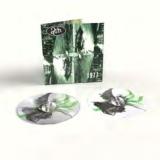
Das 1996 erstmals erschienene Debütalbum „1977“ erreichte Platz 1 der Charts und erreichte Platinstatus. Es katapultierte Ash vom Teenager-Newcomer zum Indie-Rock-Pionier. Drei Jahrzehnte später feiert
diese Jubiläumsausgabe das Album, das mit seiner mitreißenden Energie, den eingängigen Melodien und
unvergesslichen Hymnen wie „Girl From Mars“, „Goldfinger“, „Kung Fu“ und „Oh Yeah“ eine ganze Generation prägte. Die Jubiläumsausgabe erscheint als Doppel-LP (EcoRecord InkPlosion) im Gatefold-Cover,
als Doppel-CD im Digisleeve mit Booklet.
Riding high off their Movement Detroit b2b set at the Pyramid stage, Rocksteady Disco right-hand man Eddie Logix and head-honcho Peter Croce finally share a split 12" of some of their choicest edits. Eddie takes the A-side, starting the release with the blistering and tropical "Fire Dance". "Good Time" is up next, a midtempo groover full of talking drum and juju guitar dubness. Mr. PC takes the flip, with the disco-meets-folk-meets-almost-gospel "Brothers & Sisters", which he originally made for his first Movement Detroit set. The slomo sleazy groove of "I Wouldn't Want To Be Like You" rounds out the release. Instant cop!
With her fifth solo studio album, Half An Owl And A Full Moon Rising, landing on Dekmantel Records, Steffi harnesses the energy of the dancefloor for a powerful, uplifting ride into the core of what makes this culture so transformative. From her years as a dedicated raver in the late 80s, through to her global tours, prolific production and ceaseless love for music in its many forms, Steffi's innate understanding of the dancefloor informs this new body of work. Key to all of this is the joy of the club experience: the high energy and the vibrational field that's created when the DJ, their musical selections and the dancers align on the same wavelength. The "Feel Factor" as she calls it. Even the title is a reference: half an owl meaning half a pill.
Each track is imbued with pure, unfiltered club energy. Steffi's approach with her albums is to start from scratch, working up and out from a core idea rather than compiling music from an existing collection, and Half An Owl And A Full Moon Rising is comprised of eight cuts, whittled down from over 40. Opening with 'The Rolling Wave', the album immediately transports the listener into a world of emotionally and physically moving soundscapes. Across all eight tracks Steffi weaves together potent drum programming with ethereal pads, strings, heartrending melodies and straight up grooves: honest, no fluff productions that are designed for a very specific purpose. Listening to cuts like 'Sweeping Leaps', you can hear echoes of the huge variety of house and techno Steffi has absorbed. The title track wraps you up in its scintillating rhythms and heady strings, while, midway through, 'Acoustics Of Space' fires on all cylinders with its dynamic tempo, relentless drums and euphoric pad work.
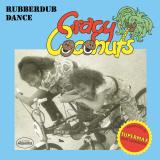
Of course everyone knows Kurt Hauenstein aka Supermax. He was one of the few Austrians to shape the sound of late-1970s disco, performing and selling records around the world. Not many know his daughters Judy and Nicola, however, and the fact that they in 1987 wrote a song that they recorded together with their father. Well, here it is: Cracy Coconuts, “Rubberdub Dance” – a true Hauenstein family affair. We are proud to re-release this super rare 7” that proves, once and for all, that Austrians can excel at digi-dub. Timelessly tropical and beautifully bouncy, its vibe is quite different from the iconic Supermax productions. Here, Judy and Nicola’s sweet yet confident vocals replace the moustache-driven sotto voce singing that we love Supermax for. The result is oh-so-catchy and bound to be a hit.
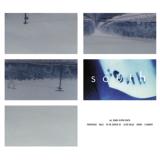
Das selbstbetitelte Debüt von South 1998 (ehemals South) ist vielleicht das, was dem alten Label Jagjaguwar jemals am nächsten kam, Musik zu veröffentlichen, die sich auch bei, sagen wir mal, ECM Records wie zu Hause anhören würde. Spitzt die Ohren, und ihr werdet es hören - Pat-Metheny-artige, klare, ausgefallene Gitarrenklänge, die geduldig zu trägen, hypnotischen, an Steve Reich erinnernden mathematischen Sackgassen geschichtet werden; ineinandergreifende Hackbretter und Vibraphone, die fallen und wogen wie an einem seltenen Tag mit starkem Schneefall in einer Stadt im Süden; die leisen und selbstbewussten Gesänge von Patrick Phelan und Nathan Lambdin, untermalt von den gleichmäßigen Rhythmen des Schlagzeugers Tod Parkhill. Bei der Erstveröffentlichung bezeichneten wir das Projekt aus Richmond, Virginia, als ,Exegese der großen Ambient-Rock-Momente des 20. Jahrhunderts". Daran halten wir fest. Doch bei näherer Betrachtung und mit dem Rückblick auf fast 30 Jahre seit der Veröffentlichung der LP sind ihre kleinen, kniffligen Schätze erst richtig zur Entfaltung gekommen. Es fällt schwer, keinen Vergleich zu einer zeitgenössischeren Künstlergeneration anzustellen, wenn man ,South 1998" wiederentdeckt, das nun aus SEO-Gründen umbenannt wurde (wer hätte das damals gedacht!?!?). Der experimentelle Slowcore-Experimentalismus von Escho Records aus Kopenhagen und ML Buch; ein bisschen von den Vorreitern der Cloudrock-Szene (und Jag-Labelkollegen) Chanel Beads; eine ganze Reihe von Veröffentlichungen des angesehenen (und unterschätzten) norwegischen Labels Hubro. Aber es verdient auch einen Platz im Regal neben seinen zeitgenössischen ,Post-irgendwas"- und ,Pre-irgendwas"-Kollegen von damals - Tortoise, Bark Psychosis, The Sea & Cake. ,South" von 1998, ein unbestrittener Jagjaguwar-Klassiker, war an sich nie verloren gegangen, aber wir haben es für euch wiederentdeckt - zum ersten Mal überhaupt auf Vinyl, als Teil unserer Feierlichkeiten zum 30-jährigen Jubiläum.
This five piece combines their love for pop music and dark sentiments with a punk ethos. Drawing inspiration from a wide range of artists they've crafted a sound that's truly and twistedly their own. Part of the Dutch indie wave that includes bands like Personal Trainer, Real Farmer, Lewsberg and Pip Blom, The Klittens consists of Yaël Dekker (vocals), Winnie Conradi (guitar), Katja Kahana (guitar), Marrit Meinema (bass guitar), and Laurie Zantinge (drums) (vocalist Dekker is also a member of The Hobknobs with Lewsberg's Arie van Vliet). This debut album follows their EP's "Citrus" (2022) and "Butter" (2024). With these EP's the band has toured extensively across Europe and the UK, including as the support for Otoboke Beaver and BODEGA during their European tours. The band combine their love for pop music and dark sentiments with a punk ethos, drawing inspiration from a wide range of artists - such as The Ronettes, MF Doom, Dry Cleaning and Kate Bush - crafting a sound that's truly and twistedly their own. Reviews for Klittens Butter EP: 'Ambition meets weirdo cool on Amsterdam gang's superb EP. By executing both indie-pop and brittle post-punk styles with ease, the band unearth a vibrant space of their own' NME, 4/5 - 'With glorious harmonies, off kilter beats, jangly guitars and a whole manner of instruments throughout it's a joy.' CLASH
For Louis Johnstone, making music has never been about waiting for the right equipment, the right environment or the right moment. Across more than a decade of work as both Wanda Group and A Large Sheet Of Muscle, the Huddersfield-based musician has built one of British experimental music's most singular bodies of work by embracing whatever happens to be within reach, allowing instinct, improvisation and circumstance to shape the outcome as much as conscious composition.
"'Chinese Benefits' was made over a year ago on an iPhone that had a broken microphone and was on its way out," he explains. "I have made many records after this with clearer sounds. Sharper ideas. That is never the point, though. You work with what you hold in your hands."
Recorded entirely on a failing iPhone 6 that stopped working shortly afterwards, 'Chinese Benefits' isn't a record about damaged technology. It is a record shaped by it. Rather than resisting the limitations of the device, Johnstone allows them to become part of the music itself, where distortion, interference and deteriorating fidelity are inseparable from the recording process.
Across twenty brief but disquieting pieces, corroded spoken word, environmental recordings, abrasive noise and fractured electronics continually emerge and dissolve. Voices drift in and out of range, reverberation stretches everyday sounds beyond recognition, and bursts of white noise interrupt moments of uneasy calm. There are echoes of radio transmissions, field recordings and musique concrète throughout, yet 'Chinese Benefits' never settles comfortably into any one tradition. Instead, it inhabits a space where accident and intention become almost impossible to separate.
That philosophy has long defined Johnstone's work. Through a vast catalogue of self-released recordings on his Umbro G imprint, alongside releases for labels including The Trilogy Tapes, he has consistently favoured immediacy over refinement, embracing imperfection not as an aesthetic but as a practical reality. His recordings are less concerned with perfection than with capturing the conditions in which they were made.
Looking back on 'Chinese Benefits', however, Johnstone's own assessment is characteristically understated.
"Listening back fully, it's quite a nice record actually. Fair enough, I make them and never really listen again TBH. Even better, it was the last Large Sheet Of Muscle record made on that phone with grit and damaged guts."
Like much of his work, 'Chinese Benefits' offers few fixed meanings. Its titles remain cryptic, its voices partially obscured and its structures deliberately unstable. What emerges instead is a deeply personal document of process over perfection, where the limitations of the tools become inseparable from the music they produce, and where the act of making something matters far more than the conditions in which it was made.
An evolution of her radio show, event series and Bandcamp community under the same name, this compilation plots a globe-spanning day-into-night voyage across 16 tracks, from artists, countries and scenes that have shaped Jamz' musical worldview. Each track, many of which are exclusive to this comp, tells a story of heritage and roots, whilst pushing boundaries and pioneering new sounds in their respective regions. From the Reunion Island to Latin America, East Africa to the Caribbean and Pacific, it's a 24-hour cycle moving from downtempo to dancefloor. The concept of Dance Around The World began in the summer of 2025 but has ultimately been a part of Jamz' journey in music since the beginning. At the centre of it is her 15-year career as radio presenter - her tastes evolving from the early days on Reprezent Radio, to a 1Xtra residency and now a Saturday daytime show on BBC 6Music. There has always been a desire to highlight music from underrepresented scenes to new audiences.
Re-issue of Klakson 16! Dutch producer Frank de Groodt, well known for his projects like The Operator and Sonar Base, produces his 4th release under the name Fastgraph. He already made big impact on Adults Esatz Audio label and kicked ass with 2 releases on Klakson. Again he drops 4 deep and dark Drexciya style electro tracks!! The raw deal for what he is best known for.
Marlon Plein also known as Driven By Attraction, one half of Watching Airplanes is releasing a new solo EP on klakson! Watching Airplanes' 'blue is dope' was already one of the pleasant surprises featured on the klakson 20in20 compilation and the journey continues with 'Last Days Of Innocence'. 4 distinguished contemporary electro funk driven dance floor stompers with an ultra deep twist. Mandatory for serious record bags!!!!!!
After a savage summer of performing over 35 festival shows, COLLIGNON continue their journey with the release of Bicicleta.
Bicicleta was written and recorded right in the midst of the band's summer tour. Gino, Yves and Jori seized the moment, the album captures exactly where they currently stand as a band: thriving on the energy of their live performances, with the desire to dive deeper into their music.
The result is Bicicleta—a diverse and authentic album that stays true to COLLIGNON’s distinctive blend of wildly grooving beats, psychedelic guitars, and sharp keyboard riffs. The music transports listeners across many borders, all while maintaining their signature COLLIGNON sound.
This album was made with vinyl in mind, designed to be experienced as a complete journey. From the first Maloya rhythms of "Fonkér la Mér" (Kreol for 'fond du cœur de la mer', meaning ‘from the bottom of the heart of the sea’) to the Brazilian groove and cosmic crescendo of "Vai Vai Vai (Into the Stars)", Bicicleta is a trip that flows from track to track.
The album, recorded while Jori left his Portuguese studio for a year-long stay in the Netherlands, pays homage to what -without engine, exhaust or pollution- might be considered the finest emblem of Dutch culture: the bicycle.
The words of adventurer Nellie Bly, written in 1896, still ring true today: ‘In a frenetic era of expanding possibilities, cycling offers a journey into a landscape of dreams. The bicycle has always signified independence and freedom in steering one’s daily course and the byways of its occasional adventures.’
To truly experience this album, nothing compares to holding the vinyl sleeve in your hands and spinning the record on your turntable.
The Soft Chaos captures the essence of music “in the moment “ - the interaction of three musicians within the improvisation. It embodies the true spirit and essence of “jazz” - music created spontaneously, yet within the boundaries of an art form that has influenced the sound of modern music and many genres for nearly a century.
A collaborative, improvisational, and free-form trio project led, produced, and mixed by Nathan Haines with Joe Kaptein (keyboards) and Elijah Whyte (drums), recorded in just one day at Auckland Lab Studios.
The Soft Chaos showcases live, in-the-moment, top-quality musicianship with a vintage vibe reminiscent of classic 1970s experimental jazz rock, but with a modern jazz-house aesthetic, featuring live human lead drums and synthesisers rather than programmed beats.
Argentinian artist Juan Hansen presents his debut album 'Ultrasonido'; twelve tracks spanning indie dance, tech house, and soft melodic house, released on his own newly founded label Ultrasonido, with the second single 'Inside My Mind' coming out via belonging by Innellea.
After his breakthrough Boiler Room appearance in 2019, Juan has been on a relentless quest to push the boundaries, playing major stages around the globe, becoming one of the figureheads of the Argentinian electronic music world. As an exceptional live artist, multi-instrumentalist and vocalist, Juan brings a real sense of groove to the stage, merging two worlds effortlessly: deeply emotional songwriting and direct, dancefloor-focused club tracks. 'Ultrasonido' brings both sides together. The album is a clear evolution of Juan Hansen, presenting a wider range of his sound, which he also presents in his live performances. A journey through the musical world of Juan Hansen.
Across twelve tracks, with contributions from Clér Letiv, Santi Portillo, Franco BA, Rocio Giorgi, Miko Franconi, Brigado Crew and Marley Waters, Juan shifts between club-focused tracks and more intimate, song-driven moments, moving naturally between Spanish and English. It’s a debut album that captures both his roots and the direction he’s evolving toward.
Juan Hansen's story doesn't start on the dancefloor, it starts with acoustic instruments. He built his foundation in the indie and rock scenes of Argentina before crossing into electronic music, a journey that's still audible in every track he makes. After years of building his profile with live performances, mesmerizing audiences from Cosquín Rock and Ultra in Argentina to Watergate in Berlin, Burning Man in the Nevada desert, and Grand Factory in Beirut.
His search is real and visceral; a search for the different, mixing genres without prejudice, with a seriously playful attitude. Positioned within a new generation of artists dedicated to improvising on stage, Juan fuses electronic sounds with analog instruments and organic soundscapes. There's no genre cage. 'Ultrasonido' is his debut album and the launch of his own label, also named Ultrasonido. A long-form statement after years of singles, EPs, and shows around the globe.
"Steve Watson's roots lie in Paramaribo, at that time the capital of the Dutch colony, where he won the 1975 Suriname Song Festival. This artist had a very strong connection with the music of his country, although unlike other artists - such as Max Nikman, for whom he acted as vocalist too - he performed his songs in English. Siegfried Boerleider, his real name, moved shortly thereafter to the Netherlands, where he also played in the groups The Backlot (with Laura Fygi and Rowan Moore) and Soul Conference. He released several singles on various labels, shaking off the "kaseko" music genre, which fused many different styles from Africa, Europe and the Americas, but considered rhythmically complex. He took time to move toward a simpler, yet well-structured, melodic genre in the recording studio, producing songs that were enjoyable to listen to on the radio and sensually danced to in the disco. With 1981's "Born To Boogie," we risk a seductive journey into the soul music of Suriname, which also possesses the fragrance of Dutch tulips. Then thanks to its charm, exploded in the Netherlands and subsequently in the world. Steve Watson - in addition to his personal style, rich in that simple and genuine expressiveness - also deserves recognition for his excellent songwriting, which led him to write for other Dutch artists, even though his two best songs are on this vinyl: "May Little One" and "Born to Boogie", ....the latter title has never been more fitting !!! Listen to it and go crazy !!!"
SECOND REISSUE ON THIS HEAT’s OWN NEW IMPRINT FOLLOWING ‘THIS HEAT’ (TH01LP) WHICH WAS UNCUT ‘REISSUE OF THE MONTH’ RECENTLY WITH 9/10 REVIEW + 4-PAGE FEATURE WITH Q+A.
*24 bit/96 kHz re-master from original analog tapes.
*Heavyweight 180gm vinyl and heavyweight sleeve with pantone printing to match original 1979 release.
Simon Reynolds on Health and Efficiency:
“For some fans, Health and Efficiency is This Heat’s peak achievement – their most concentrated blast of visceral intensity and wayward experimentalism….Lead track “Health & Efficiency” combines fierce angular rock that fully lives up to Cunningham’s belief that This Heat could become a postpunk King Crimson, with a multi-part babble of vocals, clattering percussive timbres, and found sounds.’’
Flipside “Graphic/Varispeed” is more subdued and hypnotic: a wavering tonescape whose duration depends on whether you play it at 45 rpm or 33 rpm. This reissue reproduces the original release’s striking cover image of a human figure painted in blue by Pete Cobb, along with the cryptic flipside of text in many different languages.
Although widely considered to be Post-Punk’s finest, This Heat actually began performing and recording their music in 1976, the early days of London’s punk era. Within their two albums and an EP they perfected a strange and volatile new strain of avant-garde rock that time has proved to be massively influential, a blueprint for much that would follow: post-rock, math rock, homemade musique concrète, experimental electronica. Numerous critics have recognised the band's influence on the music of Sonic Youth, Glenn Branca, Steven Wilson, Public Image Ltd., Radiohead, Swans, Shellac, Young Knives, Black Dice, Lightning Bolt and numerous other experimental and post-rock bands.
Disbanding in 1982 they have left an undeniable legacy that has only continued to grow in stature and relevance.Having recently passed the 50 year anniversary of their first gig, and the recording of material that appears on their debut album, the group’s surviving members Charles Bullen and Charles Hayward, true to their DIY roots, have set up an imprint to release their recordings for their growing fan base that is increasingly recognising their influential place in music history.
‘They went beyond punk before punk had properly started…the entire album is a controlled explosion of ideas. Nearly fifty years on, This Heat’s debut is something the world has still not completely caught up with.’ - Simon Reynolds
‘Over the years, there have been bands to play as aggressively, or even as strangely, but very few have been able to rise from their collective influences and histories to create music so singularly distinctive and inspiring.’ – Pitchfork 9/10
‘This Heat sounded like the future then ... and still do now.’ - Dan Snaith (Caribou)
‘This Heat had a certain kind of force the post-punk bands were unable to adequately control without falling foul of rawk excess, and which the punk bands—albeit blitzing and rowdy—were too basic in form to build.’ – John Calvert , The Quietus
On "Chauffeur," The Womack Sisters reflect on the trials and tribulations they each faced while trying to make rent as car service drivers. A HARD-HITTING groove, and impassioned background vocals drive the song as the sisters plea "How many miles do I have to burn... Just to keep my place?"
There are no flowery metaphors here. This song is about the real struggles people face to survive everyday, in this case grappling with the futility of trying to stack meager fares into rent money.
There is a hush most of us only knew as children, the warm drift between familiar household sounds and being carried to bed, a place that belongs to you and to some self you have not met yet. June McDoom’s debut full-length, Follow the Light, lives in that dream space and then keeps walking, slipping out of time and waking somewhere new, barely familiar enough to feel like home yet wholly your own. She came up in a Jamaican household on the edge of the Florida Everglades, an existence built of extended family, communal care, bass and harmonics. Her father, a carpenter and a student of sound, built his own speakers and kept three sound systems going across as many rooms. His low end would rise through her bedroom floor like some wayward cat while she lay above it with folk records, finding harmonies that were new and hers alone. Two musics in one room. Lushness as past and premonition. She found folk on her own, somewhere between the cast recording of The Sound of Music and Simon and Garfunkel, while everyone around her called it sleepy music. She did not mind being the only one. The solitude let her fall for harmony first, before words, before anything else, and harmony is still the thing she reaches for. Generationally speaking, the music was already in the air. Her grandfather, Colin Smith, is a distinguished mento man who played banjo and guitar and built his own rumba boxes, worked to keep Jamaica’s oldest acoustic folk form alive. Mento is the root of all of it: ska, rock steady, reggae, dub and everything after. He is the one who put a guitar in her hands. An inheritance, a gift and a map. Even her name is part of it, though she will tell you she landed on it more by feel than reason. She records as June McDoom, born Alyssa, June being a nickname one of her grandmothers, Joan, went by, a name she thought was cool to carry and simply liked the sound of. An etheric channel that reverberates all the same. A dub all its own.
Made slowly and by hand with her longtime partner Evan Wright, Follow the Light lays the harmony of folk over the rhythm of dub, with Dionne Warwick, Minnie Riperton, Pentangle and the washed guitars of Cocteau Twins haunting its outer edges. Voice and guitar seeking each other out first, then everything else stacked across long days in the studio they keep at home, restraint kept on purpose. The lead single “Without You” is the whole method surfacing, split open and sparkling like a geode in a creek bed. Angelic heroics, and nothing less.
At the heart is family. Her grandmother Aggie, the light behind “Memory,” guiding still. And underneath, the quieter truth the record keeps: none of us are only one person, but a continuum of selves, the ones who shaped us and the ones we have yet to meet. Future you is an ancestor your current self gets to greet. Press play and the same invitation is yours: A few minutes out of time, a place that turns familiar the longer you stay until you surface somewhere new and find it was yours all along
There is a hush most of us only knew as children, the warm drift between familiar household sounds and being carried to bed, a place that belongs to you and to some self you have not met yet. June McDoom’s debut full-length, Follow the Light, lives in that dream space and then keeps walking, slipping out of time and waking somewhere new, barely familiar enough to feel like home yet wholly your own. She came up in a Jamaican household on the edge of the Florida Everglades, an existence built of extended family, communal care, bass and harmonics. Her father, a carpenter and a student of sound, built his own speakers and kept three sound systems going across as many rooms. His low end would rise through her bedroom floor like some wayward cat while she lay above it with folk records, finding harmonies that were new and hers alone. Two musics in one room. Lushness as past and premonition. She found folk on her own, somewhere between the cast recording of The Sound of Music and Simon and Garfunkel, while everyone around her called it sleepy music. She did not mind being the only one. The solitude let her fall for harmony first, before words, before anything else, and harmony is still the thing she reaches for. Generationally speaking, the music was already in the air. Her grandfather, Colin Smith, is a distinguished mento man who played banjo and guitar and built his own rumba boxes, worked to keep Jamaica’s oldest acoustic folk form alive. Mento is the root of all of it: ska, rock steady, reggae, dub and everything after. He is the one who put a guitar in her hands. An inheritance, a gift and a map. Even her name is part of it, though she will tell you she landed on it more by feel than reason. She records as June McDoom, born Alyssa, June being a nickname one of her grandmothers, Joan, went by, a name she thought was cool to carry and simply liked the sound of. An etheric channel that reverberates all the same. A dub all its own.
Made slowly and by hand with her longtime partner Evan Wright, Follow the Light lays the harmony of folk over the rhythm of dub, with Dionne Warwick, Minnie Riperton, Pentangle and the washed guitars of Cocteau Twins haunting its outer edges. Voice and guitar seeking each other out first, then everything else stacked across long days in the studio they keep at home, restraint kept on purpose. The lead single “Without You” is the whole method surfacing, split open and sparkling like a geode in a creek bed. Angelic heroics, and nothing less.
At the heart is family. Her grandmother Aggie, the light behind “Memory,” guiding still. And underneath, the quieter truth the record keeps: none of us are only one person, but a continuum of selves, the ones who shaped us and the ones we have yet to meet. Future you is an ancestor your current self gets to greet. Press play and the same invitation is yours: A few minutes out of time, a place that turns familiar the longer you stay until you surface somewhere new and find it was yours all along
For more than two decades, AJJ has been writing albums that attempt to make sense of an increasingly confusing world. And the Arizona band has repeatedly succeeded, somehow managing to find the small traces of hope and beauty buried in the wreckage of a decaying planet. But on their ninth album, Dirty Old Power, they are coming to terms with the fact that they may no longer have the words to express it all. In fact, the proper words of communication may not even exist anymore.
Dirty Old Power takes stock of this surreal moment in American history where the post-World War II power structures of capitalism have given rise to full-on techno-fascism, and where humanity is being displaced by data centers, VR headsets, doomscrolling, and artificial versions of our loved ones.
To capture the disparate array of unique styles that make up Dirty Old Power, AJJ returned to Animal Rites studio in Los Angeles to record with their pal, Grammy-winning producer John Congleton, who also produced 2014’s Christmas Island and 2016’s The Bible 2. And for the cover artwork, the band turned to Winston Smith, the legendary visual artist known most famously for his iconic designs and logo for Dead Kennedys.
After the acclaimed Bar Mediterraneo, Massimo Di Lena and Lucio Aquilina return with People Of The Moon, expanding their sound into a space of creative freedom. The “People of the Moon” are not fictional, but a dimension within us all: a deeply personal yet universal force, an alternative mindset that emerges when freed from social constraints.
Under moonlight, the album explores anxieties and aspirations through groove and rhythm, expressed in Neapolitan, Arabic, English, Spanish, and Portuguese. It moves fluidly from Afro-Cuban influences in “Celavì” to Anatolian textures in “Ma Tu Che Bbuò”, blending highlife guitars with Nu Genea’s signature mandolins-new rhythms filtered through an Italian lens.
The first single “Sciallà” (2025) introduced this direction: dance as catharsis, not escape. The title track reflects a quiet resilience-persistent rather than triumphant. “Onenon”, featuring Tom Misch, channels Mediterranean brit-funk, while “Acelera”, with María José Llergo, evokes a flamenco-tinged pursuit of the unattainable.
“Puleza” recalls Nuova Napoli with driving energy and vintage synths, while “Shway Shway”, sung by Celinatique, captures the album’s orbital flow-measured, rich, and rhythmically complex, echoing afrobeat explorations with Tony Allen.
Melody remains central, as in “Carè”. Across ten tracks, falling, flying, and dancing merge in a suspended groove. Gabriel Prado’s “Ondas Do Mar” embodies this pull: a cyclical motion, like the tides—irresistible, transformative, and alive within us.
Back in November 2015, after years of collaborations with such as Ghostface Killah, Raekwon, Obie Trice, Sean Price, Kool G Rap, Eternia and countless others, Toronto-based producer MoSS released his debut producer album entitled "Marching To The Sound Of My Own Drum". Since the beginning of his career, the Canadian beatsmith, record digger and music connoisseur has been making a name for himself with his signature sound and on this record he gives an amazing display of what he's capable of doing being backed up by an all stars team that features AZ, Havoc, Slum Village, Onyx, Inspectah Deck, Ill Bill, Skyzoo, Guilty Simpson and 20+ other legendary MC's. A few years after its original release, we've decided to team up with MoSS to bring you this masterpiece on wax and, for the occasion, he's also added an unreleased bonus track called "We Here" that features Smif-N-Wessun that, together with "Emotional Redux", we've put on a 7" together with its instrumental. Limited edition of 500 hand-numbered copies, with the first 200 pressed on orange/black A-side B-side vinyl, and 300 on black vinyl.
BONUS 7”
A1. Emotional Redux (feat. Big Gov, Guilty Simpson, Jon Connor, Vstylez, Willie The Kid)
B1. We Here (feat. Smif-N-Wessun) UNRELEASED
B2. We Here (Instrumental)
NNHMN — DARKLINGS: a lethal club edge of dark electronic, pounding EBM and gothic synths that turn floors into battlegrounds. Headliners at Ombra, Grauzone, Extramuralhas, Subkult, Infest and Unterwelt Berlin.
Opera of Lust & the Art of Sorrow II — an intoxicating, cinematic opera of longing and loss: razor‑sharp arpeggios, cavernous bass, hypnotic rhythms and ghostly vocals—sensual, melancholic and brutally dancefloor‑proven.
The Rio-based project Pra Gira Girar presents a new interpretation of the song Atabaque Chora, originally made famous by the trio Os Tincoãs. Written by Dadinho and Mateus Aleluia, the piece opens the group’s iconic 1977 album Os Tincoãs —and has now been chosen to mark the beginning of Pra Gira Girar’s own recording journey.
Formed by Alvaro Lancellotti, Michele Leal, and Alan de Deus on vocals, Pedro Costa on guitar, Kassin on bass, Zé Manoel on piano and vocals, Zero Telles (in memoriam) and Anna Magalhães on percussion, and Diogo Gomes on trumpet, the project was born from Alvaro Lancellotti’s long-standing admiration for the work of Os Tincoãs and his wish to create a live show celebrating the legendary trio.
For a year, Alvaro, Michele, Alan, and Pedro made up the core of the group, meeting weekly for rehearsals that became a deep dive into Os Tincoãs’ intricate vocal arrangements. These sessions were essential to recreating the grandeur and complexity of the Bahian trio’s music. Pedro Costa transcribed the vocal lines and, together with Michele Leal — a singer-songwriter with a background in choral singing — adapted the arrangements for a formation that, unlike Os Tincoãs, features a female voice.
Iconic Dutch techno pioneer Stefan Robbers returns to De:tuned with Nodes, a mesmerizing new 8-track album under his legendary Terrace alias. Serving as the sixth Terrace LP and the highly anticipated follow-up to 2025's Branches, Nodes further refines Stefan's signature blend of Detroit-inspired futurism and warm, dub-infused textures. Drawing on decades of studio experience, he delivers another finely balanced collection of expertly produced techno, enriched with warmth, groove and precision. Stefan's relationship with De:tuned spans many years and reflects a shared passion for timeless electronic music. From his acclaimed Phosphenes EP (2017) and his memorable remix of LA Synthesis - Agraphobia, to standout appearances on label compilations such as 10 Years of De:tuned with Estrings, Terrace has remained an integral part of the label's catalogue. Nodes is the latest chapter in that enduring collaboration. Rich in detail, depth and emotion, Nodes once again demonstrates why Terrace remains one of the most respected and enduring names in Dutch techno. The creative heartbeat of Eindhoven is still beating stronger than ever. Artwork has once again been created by Al White and Kevin Foakes (Openmind, DJ Food, Ninja Tune), while mastering duties were handled by Matt Colton at Metropolis. A separate digital edition will also be available through all major digital platforms.
Iconic Dutch techno pioneer Stefan Robbers returns to De:tuned with Nodes, a mesmerizing new 8-track album under his legendary Terrace alias. Serving as the sixth Terrace LP and the highly anticipated follow-up to 2025's Branches, Nodes further refines Stefan's signature blend of Detroit-inspired futurism and warm, dub-infused textures. Drawing on decades of studio experience, he delivers another finely balanced collection of expertly produced techno, enriched with warmth, groove and precision. Stefan's relationship with De:tuned spans many years and reflects a shared passion for timeless electronic music. From his acclaimed Phosphenes EP (2017) and his memorable remix of LA Synthesis - Agraphobia, to standout appearances on label compilations such as 10 Years of De:tuned with Estrings, Terrace has remained an integral part of the label's catalogue. Nodes is the latest chapter in that enduring collaboration. Rich in detail, depth and emotion, Nodes once again demonstrates why Terrace remains one of the most respected and enduring names in Dutch techno. The creative heartbeat of Eindhoven is still beating stronger than ever. Artwork has once again been created by Al White and Kevin Foakes (Openmind, DJ Food, Ninja Tune), while mastering duties were handled by Matt Colton at Metropolis. A separate digital edition will also be available through all major digital platforms.
Corps Perdu emerges from Lamin Fofana’s ongoing practice of creating immersive and multisensory sound environments, informed and inspired by the historically rich texts of scholars and poets working in the tradition of Black Studies. The words of W.E.B. Du Bois, Sylvia Wynter, Dionne Brand, Fred Moten, Édouard Glissant, Suzanne Césaire and Aimé Césaire are transmuted and circulated as sound, offered to listeners through radio, live events, albums and installations. Fofana honours his sources with an audible historical awareness, yet his sounds always simultaneously open out into the turbulent uncertainties of the present.
The music we hear on the album Corps Perdu was previewed within a series of collective reading and listening sessions carried out in Paris, Barcelona, Tunis and New York City, where voices from the audience read aloud fragments from a body of texts Fofana had selected. The spontaneous unfolding of close reading and listening, mixed live by Fofana in these collective listening experiences, speaks to the open-ended quality of Corps Perdu. The album, now published, is but one iteration of this ongoing inquiry into the relationship between sound and text.
Corps Perdu presents an introspective journey with no return, and as such is full of omens of all kinds. Across ten tracks Lamin Fofana creates a sibling or companion to the transformation he initiated in his previous album Works in Metal, building a narrative that takes us into Krakatoa prior to its eruption, and lets us listen to Césaire’s ‘flying seed dreaming very loudly’. The album’s track titles and narrative arc hum in and out and alongside Césaire’s poetry, mainly Césaire’s 1950 collection Corps Perdu, in which the ten poems are accompanied by engravings by Picasso merging fragments of bodies and plants—a collaboration that emerged from their first encounter two years earlier, at the Communist-led World Congress of Intellectuals for Peace, in Wroclaw, Poland.
The music on Corps Perdu labours intuitive hand-held melodies through dense processing. There are many rhythms throughout, though these never surrender to the density of the dancefloor grooves we’ve heard Fofana craft on previous albums (think of the ‘Obscure Light’ pair from Works in Metal for example). Instead, Fofana gently releases the clenched hands Césaire’s Corps Perdu begins with: ‘Among me, from myself, to myself, outside any constellation, clenched in my hands only, the rare hiccup of an ultimate raving spasm, keep vibrating word’. The album carries through sound the scattering and liquid fragmentation that shape the desperate metamorphosis of a ‘lost body’.
In a blizzard of crushed breaks and dissonant tones, Shelley Parker lands on Sneaker Social Club with her third album, Screed. Taking a forensic approach to noise sculpture and harmonic interference, the UK-based artist maintains a fringe perspective on the legacy of hardcore-derived dance music, extrapolating the renegade spirit of the earliest innovators into unexplored zones where sound art and sound systems collide.
Parker's path through the underground has been informed by her art school background, equally at home in the parallel world of galleries, installations and institutions as she is in the club. This dualistic dimension to her practice charges her music with an outsider spirit that manifests across 10 striking new productions on Screed. Focusing on the sound over an umbrella concept, it's an album that rejects comfortable, functional formulae in favour of original expression.
There are plenty of forthright structures for DJs and dancers to lock onto, from the militaristic techno thrust and tightly clipped breakbeat loop of 'Relentless' to the splayed boom bap guiding the giddy string sequences of 'Stargazer Lily'. The insistent pulse of 'April' meanwhile offers only the faintest of paths to navigate dense thickets of jerky, swinging static and metallic clamour. 'Georgian Wire' closes the record out on dissembled drum licks with a brittle patina - a scooped out closer with the skeletal remains of a rave dialect that's second nature to someone with as much skin in the game as Parker.
In amongst those tracks lies a wide-ranging tapestry of rhythmic, textural and emotional approaches, from head-knocking beatdowns to billowing clouds of dub techno, angular stabs and industrial smudges. On Screed, Parker proves herself to be peerless and purposeful in her quest to find new forms within the well-worn canon of hardcore and rave.
Die hochgeschätzte Sängerin, Songwriterin und Produzentin Mary Bragg aus Nashville legt ihr erstes neues Album seit über vier Jahren vor, das in den FAME Studios in Muscle Shoals zusammen mit dem Grammy-Gewinner John Paul White und dem gefeierten Produzenten, Toningenieur und Keyboarder Ben Tanner aufgenommen wurde. Jeder Song ist im Grunde ein Geheimnis, das man einem Fremden anvertraut. Wenn die Wahrheit klar wird, erkennt sich der Fremde darin wieder. Mit ihrem sechsten Album in voller Länge präsentiert Bragg der Außenwelt eine Sammlung zutiefst persönlicher Geschichten. Mary Bragg wird von einer Begleitband aus Größen des Southern Rock unterstützt, darunter Chad Gamble (Jason Isbell & the 400 Unit), Zac Cockrell (Alabama Shakes) und Jay Gonzalez (Drive-By Truckers), und liefert ein Album, das zugleich weitreichend und intim ist. Secrets to Strangers" ist ihr eindrucksvollster Beweis für Seele, Verletzlichkeit und hart erkämpftes Selbstbewusstsein, getragen von prägnantem Songwriting und unbestreitbarer Kunstfertigkeit. Auch wenn frühere Beiträge in Rolling Stone, NPR und Forbes bereits für sie gesprochen haben, zeigt sich Bragg hier in absoluter Bestform.
‘I have always been drawn to those ambiguous territories between beauty and terror, and the Trinity test is their epitome: magnificent, sublime, terrifying, annihilating. A destructive power that, somehow, only love can compare with.’
The prescriptive art and performance of Berlin based, French producer, Julienne Dessagne, has concluded with a starkly beautiful reimagining of Chris Isaak’s Wicked Game.
As Fantastic Twins, her continuing creative manifestation for music and performance, has released an array of electronic art for the body and mind. A sonic exploration of dual characters shaped through experimental pop, cinematic electronics and the outer edges of techno.
First appearing on the cult Hippie Dance label, before establishing a long and warm collaboration with Keith McIvor aka JD Twitch and his inspiring Optimo Music label, as well as her own House Of Slessor label, this release comes full of mythology and symbolism.
Immersive sound design, narrative tension, and emotionally charged atmospheres, the origin of the project – Wicked Game (Trinity Version) – was composed for a live performance at the Beta Biennale Of Architecture Of Timișoara in September 2024 and given a limited digital release soon after.
The impact on the artist and the music was multi-layered:
‘While recording this cover, images of the Trinity nuclear test, as reimagined by David Lynch in Twin Peaks (Season 3 / Episode 8) kept resurfacing, almost on a subliminal level, suggesting another wicked game: humanity’s love affair with science and technology, driven by the same mix of desire fascination and inevitability that animates Chris Isaak’s original song.’
Approached by Emotional Response, this updated “vinyl” edition is re-recorded / remastered and comes with new interpretations by Julienne herself, as well as remixes by Aho Ssan and Optimo (Espacio).
Dessagne offers a spectrum of mixes and moods; the centrifugal ‘Trinity Version’ a sweeping cinematic masterpiece, between beauty and terror, the artist transmits the aesthetics of sublime; while ‘Thousand Suns Version’ fuses industrial and techno soundscapes for a beatdown reimagining; the melancholia ‘Atomic Love Version’, where the beautiful vocals are matched with a glitchy, clipping ambience; and the finale, the ‘Core Version’ shines a personal, drifting odyssey.
The accompanying remixes see Aho Ssan (Niamké Désiré), composer and sound artist, his remake merging a love of darkcore drone with moments of uplifting energy, the ‘Core Version Aho Ssan Remix’, a fusion of craft and Dessagne’s vocals.
To close, taking up the Optimo remix mantle, Jonnie Wilkes embraces the propulsion, his ‘Thousand Suns Version Optimo (Espacio) Remix’, offering brooding, electro-driven percussion that overflows with emotion and completes this stunning, evolving, organic and singular remake.
Following hot on the heels of the Frequency Damage EP, DJ Quest returns to Cyberfunk with Squeaks / Snake Style— a two-track release that dives deep into the unmistakable sound that made Quest’s productions stand out during the early 2000s.
Rather than simply recreating the past, both tracks tap directly into the DNA of the original Cyberfunk sound: rolling breakbeats, huge basslines, twisted analogue synths and the kind of distinctive production that became synonymous with DJ Quest at the height of the Bassline Breaks era.
Built around original analogue synth work throughout, Squeaks / Snake Style is a deliberate throwback to the raw, futuristic sound of the early 2000s, produced with the weight and clarity needed for today’s sound systems.
It’s classic Quest, strange noises, big bass, rolling drums and plenty of attitude.
A. Squeaks
Everything DJ Quest became known for rolled into one track. Squeaks is an unapologetic throwback to the classic Quest sound of the early 2000s, driven by heavyweight breaks, deep bass and original analogue synth work throughout.
Twisted electronic squeaks and evolving analogue sounds weave their way around the drums, giving the track that instantly recognisable combination of funk, darkness and futuristic weirdness that characterised so many of Quest’s early productions.
Raw, energetic and built firmly for the dancefloor, Squeaks takes the spirit of the original Bassline Breaks era and brings it straight back onto a modern sound system.
AA. Snake Style
On the flip, Snake Style takes the same analogue-driven approach but moves into deeper rolling territory.
A more hypnotic, heads-down breaks roller, the track develops around a heavyweight bass groove, rolling drums and constantly shifting analogue synth lines. There’s less emphasis on the immediate impact of the A-side and more on building a groove that locks into a DJ set and keeps moving.
Still unmistakably Quest, Snake Style combines the rawness and character of early-2000s breakbeat with modern low-end weight and production, proper rolling Cyberfunk business.
Special Vinyl Edition
Making this release particularly special for collectors, the 12” vinyl comes with an exclusive book showcasing the artwork from some of DJ Quest’s biggest and most memorable releases.
The book looks back through Quest’s extensive catalogue and the visual identity that accompanied the records, bringing together a selection of classic release artwork from across his career plus photo collages of memories made across his journey.
It turns Squeaks / Snake Style into more than just a new DJ Quest 12”, it’s also a celebration of the music, artwork and history surrounding one of the original pioneers of the Bassline Breaks sound.
For long-time followers it offers a piece of Quest history alongside two brand-new productions, while newer listeners get an introduction to the catalogue and imagery behind the sound
Life In Patterns welcomes Uncertain for his first appearance on the label with “Defeat”, a five-track EP bringing together five warehouse-focused techno tracks, moving between darker industrial tones and the classic rave influences that have long been part of his sound. “Defeat” will release on vinyl and digital formats on 16 October 2026. Across the EP, Uncertain explores a broad range of peak-time energy. “Anxiety” and “Dismiss” take a darker route, built around tense atmospheres, heavy percussion, and industrial textures, while the remaining tracks introduce classic rave chords and a more open, melodic character. Despite the differences in tone, the five tracks share the same directness and focus, designed with the dance floor firmly in mind. Uncertain, formerly known as Boriqua Tribez, has been active in electronic music since 1989. Over the past two decades, he has released and remixed more than 50 tracks for labels including KMS, Recycled Loops, and Ingoma, before starting a new chapter under the Uncertain name in 2018. Since then, his more frantic approach to techno has found a home on labels such as Rekids, Symbolism, Beard Man, H-Productions, WRKTRX, ANAOH, Illegal Alien, Mind Medizin, Intec, and Uncage. Alongside his productions, Uncertain is an experienced DJ known for fast, precise three-deck sets, with international performances and support from artists including Ben Sims, Radio Slave, Truncate, Mark Broom, Carl Cox, Blasha & Allatt, Chris Liebing, Richie Hawtin, Luke Slater, DJ Rush, DJ Bone, and others. With “Defeat”, Uncertain makes his Life In Patterns debut with a focused collection of five techno tracks — from dark industrial pressure to classic rave energy, all built for the warehouse.
David Norland is an Emmy-nominated English composer, known for his scores for drama and documentary, alongside his experimental choral and electronic music. Bringing stories to life through sound, he received critical acclaim for his debut solo album ‘Glam Tear Stain’ (2019) and is set to release follow-up album ‘La Source’ in June 2026 via Denovali Records.
Relocated back to his London home after many years in Los Angeles, and free from years of drug and alcohol problems, recent commissions for two choral works allowed Norland to return to the innocent origin of his musical world, and his experience as a parent prompted a lot of outward reflection. What kind of world are we leaving to our children?
Inspired by his score to the forthcoming silent black and white film ‘Carousel’ (2026), Norland found other music emerging that refused to be ignored. The film’s director opened the door to an entirely free scoring process – no temp music, no expectation, no guidelines, just pure intuitive expression. ‘La Source’ draws on this experience, alongside his childhood as a touring chorister, the honkytonk upright piano in the north-east London bedroom of his early 20s, his early recording experiments with a TASCAM 4-track cassette recorder, and his intense preoccupation with bells, flutes, stone architecture, and mysticism.
From the haunting, choral beauty of ‘E-Car Soul’ to the breezy album title track, Norland blends minimalist classical structures with electronics. A unified tapestry of blended voices, harmonies and textures, ‘La Source’ is a deeply emotional and melancholic journey for Norland. “In the end, I’m looking to find meaning through the music, like when I was a kid singing in choirs. But I get the most sense of meaning through transcendent experiences, rather than anything intellectual or dogmatic. I have to feel it, not think it. I’m trying to make work that’s luminous, wondrous, shimmering and strange, so I can keep having those experiences,” says Norland.
On his inspiration for the album, Norland adds, “I love making patterns in things and finding patterns. That’s why minimalism was so enticing to me, the patterns are so explicit. I love word play and anagrams. The big sadness coming through as I was making the record is this clarity over the future of my kids. Everything else is a complete distraction. This incredible nurturing planet and its ecosystem are being rapidly destroyed, and the forces destroying it are relentless and punitive. And they seem to be fine with consigning our children to live in an ever-more-hostile wasteland. You can’t pretend that’s not coming, if you do I think you’re lying to yourself. And perhaps eventually it will be the fact that people love their kids that will stir wider fear and action. It’s hard to think of anything more connected to the idea of spirit.” The result is the reflective, ecstatic, mystical and sad world of ‘La Source.’
Norland’s screen work includes the award-winning documentary Anvil! The Story Of Anvil (2008), directed by Sacha Gervasi, and since 2010, he has composed much of the music for US broadcasting giant ABC’s primetime news documentaries. His work for ABC is broadcast in the US and around the world on a daily basis.
In 2012, he was the music supervisor for Hitchcock (2012) featuring Anthony Hopkins, Helen Mirren & Scarlett Johansson and in 2017, he teamed up once again with Gervasi for the score to November Criminals starring Chloe Moretz and Ansel Elgort. The following year, he composed the score for the Emmy-nominated HBO film My Dinner With Herve, starring Peter Dinklage and Jamie Dornan.
Norland will be performing the score of Carousel later this year, and the score itself will be a forthcoming release on Denovali. 2026 will also see the release of documentary All Permits Secured, a valentine to the history of EDM, featuring Norland’s score.
Another Day on Earth (2005) was Brian Eno’s first song-based album since Nerve Net in1992, and remains one of his most acclaimed solo records. It featured a young Jon Hopkins alongside long-standing collaborators Nell Catchpole, J. Peter Schwalm and Leo Abrahams, with lyrics co-written by Michel Faber and Danny Hillis. The album was launched with a public conversation between Eno and the writer Michael Bracewell at the Marble Palace in St Petersburg and its cover photograph was taken by Eno himself in Beijing, during his first Chinese audio installation in the city’s Ritan Park. Following Warner Bros’ purchase of Hannibal Records in 2006, the licence for Another Day on Earth lapsed in 2008 and the album has been unavailable outside Japan ever since.
“Grand, sweeping choruses ... that insinuate themselves deep into the memory, but also moments of whispering intimacy - a wistful, haunting record that runs warm with understated emotion. ★★★★★” - Matthew Collin, The Observer (2005)
GEORG DANZER - "JAHRESZEITEN" - Das Beste aus fünf Jahrzehnten Anlässlich des 80. Geburtstags des großen österreichischen Liedermachers GEORG DANZER veröffentlicht Sony Music eine von Georg Danzers langjährigem Wegbegleiter und Manager Franz Christian Schwarz liebevoll kompilierte Best Of mit dem Titel "Jahreszeiten". Das auf farbiger 2LP sowie auf 1CD erhältliche Album umfasst Lieder aus jeder Schaffensphase des 2007 verstorbenen Künstlers, dessen musikalisches Erbe die österreichische Musik nachhaltig prägte. Das Albumcover setzt sich aus vier Portraits Georg Danzers zusammen, die von Nina Maron, Tochter des unvergessenen Sigi Maron, gemalt wurden. Franz Christian Schwarz beschreibt die Zusammenstellung der Best Of mit folgenden Worten: "Alle meine Lieder sind wie Sonne Mond & Sterne" ist der Beginn eines Liedes auf der CD-Single "Sonne, Mond & Sterne", die anlässlich der gleichnamigen DVD-Veröffentlichung von Georg Danzer erschienen ist. Diese Liedzeile gab auch den Ausschlag, die vorliegende Doppel-LP "Jahreszeiten" zu nennen, um die Bandbreite von Danzers musikalischer Vielfalt unter Beweis zu stellen. Danzer schaffte es wie kaum ein anderer Beobachtungen, Erzählungen, Gedanken und Emotionen in Worte und Melodien zu fassen. Mit über fünfhundert veröffentlichten Liedern für sich selbst und andere Interpretinnen und Interpreten zählt Danzer zu den produktivsten Liederschreibern des Landes. Einige seiner Lieder hielten auch in Schul- und Notenheften Einzug. Die vorliegende Doppel-Vinyl und die um einen Titel verkürzte CD-Version wurden eine spezielle Zusammenstellung, auf der neben bekannten Liedern auch solche zu hören sind, die entweder bisher unbekannt oder dem Zuhörer nicht so geläufig sind, aber das musikalische Spektrum des großartigen Poppoeten widerspiegeln. Sie dient zur Auffrischung von Erinnerungen ebenso wie als Anreiz, sich mit dem Werk Danzers vertraut zu machen oder es neu zu entdecken. Der Frühling ist für viele Menschen ein Zeichen dafür, das
Originally released by Umor Rex on cassette in 2018, Rafael Anton Irisarri’s Sirimiri is now available on vinyl for the first time, newly remastered for this edition. This LP marks the fourth and final installment in a series of four reissues released throughout 2026 to celebrate the 20th anniversary of Umor Rex.
It is a fitting way to close such a special anniversary year. Rafael is not only an artist who has released three albums on Umor Rex, but someone who has been part of the label’s history for more than a decade. His sensibility and way of listening have complemented and nourished the label throughout the years, while his mastering work has helped shape the sound of many of our releases. A close friend, and an essential part of what Umor Rex is today.
Sirimiri roughly translates as “drizzle” in Basque, and we can’t think of a better word to describe its content. The album consists of four long-form pieces, each shaped through different processes and with its own distinct identity, in which Irisarri seeks to blend subjective time with the listening experience through loops, repetition, and subsequence-based sound. Following Eno, nothing happens in quite the same way twice: perception is constantly shifting, and nothing stays in one place for long. The desolation and despair—in a strangely positive way—that we heard in The Shameless Years (Umor Rex, 2017) and later in FAÇADISMS (Black Knoll, 2024) are present here, but the impression is more concrete, unfolding through rawer, less rhetorical landscapes. If The Shameless Years existed somewhere between beauty and active tragedy, this record travels through the beauty and melancholy of an observing eye—a quiet, rebellious insurrection.
Written, produced, mixed & mastered by Rafael Anton Irisarri at Black Knoll Studio, NY. Carl Hultgren: Guitars on “Sonder”, Taylor Jordan: Electric Piano on “Mountain Stream”. Design by Daniel Castrejón.
Fontaines D.C. announce their fifth studio album, Dopamine Chamber, released on 16th October via XL Recordings. Produced by James Ford, it is the follow-up to 2024’s UK platinum-certified Romance – and the sound of a band moving decisively away from the guitar language of their early records into something colder, stranger and more synthetic. It arrives today alongside lead single “Marianne” and its accompanying video, directed by Dave Meyers.
Dopamine Chamber arrives like a constellation behind undulating sighs of smog: potent balladry, anthemic melodies glinting through the murk. In a world tipping towards collapse, it asks how pleasure mutates amid peril—and what our pursuit of it reveals about us. Across the album, Fontaines D.C. – Grian Chatten, Carlos O’Connell, Conor Curley, Conor Deegan and Tom Coll – move between gratification and dread until the two meld together, reflecting the overwhelm of artificial intelligence, environmental collapse and political violence all riding the same algorithms as memes, jokes and celebrity culture. “The album itself is a dopamine chamber,” says Chatten. “You step inside and we test these different mind- or mood-altering pieces of music on you.”
Where Romance held its tension in balance, this record tips it. “I think Romance was maybe 60 per cent human and 40 per cent corrupted by automation, and a loss of feeling,” says Chatten, who spent time among the faded grandeur of Venice, Vienna and Sicily in search of lyrical inspiration. “This one feels more like 60 per cent corrupted — the mask is wearing the face a little more.” He resisted any pull towards easy optimism: “I felt it would be more powerful to leave the hope out and reflect the ugliness honestly. This one needed to feel more like a catastrophic warning.”
“Our albums have always questioned a sense of place,” says bassist Conor Deegan. “First Dublin, then being away from Dublin, and then trying to find the romance elsewhere. On this record, the question became: where do you escape to?” Into the self, perhaps – or hedonism, fantasy, cosmetic perfection, eternal youth or the endless refresh of a screen.
Fontaines D.C. have spent five albums refusing to repeat themselves – from Dogrel (2019) through A Hero’s Death (2020), the No. 1 Skinty Fia (2022) and the anarchic, kaleidoscopic Romance (2024). Dopamine Chamber is their most radical turn yet: cold synthesiser tones, marching drums, samples and triggers, several songs with no guitars at all, and the swooning strings of 1960s Italian pop pulled into something synthetic. For guitarist Conor Curley, the aim was to break from the band’s own reference points: “I was trying to find stuff that pointed into the future.” It was made with James Ford between London, the English countryside and Palermo, where Chatten recorded vocals in a makeshift booth built from mattresses and cushions.
“There’s a poignant sense of us being on the brink of some other kind of form of humanity, or non-humanity,” says Chatten. For their fifth album, Fontaines D.C. have built the chamber. What happens to the listener inside it will be the experiment.
Fontaines D.C. announce their fifth studio album, Dopamine Chamber, released on 16th October via XL Recordings. Produced by James Ford, it is the follow-up to 2024’s UK platinum-certified Romance – and the sound of a band moving decisively away from the guitar language of their early records into something colder, stranger and more synthetic. It arrives today alongside lead single “Marianne” and its accompanying video, directed by Dave Meyers.
Dopamine Chamber arrives like a constellation behind undulating sighs of smog: potent balladry, anthemic melodies glinting through the murk. In a world tipping towards collapse, it asks how pleasure mutates amid peril—and what our pursuit of it reveals about us. Across the album, Fontaines D.C. – Grian Chatten, Carlos O’Connell, Conor Curley, Conor Deegan and Tom Coll – move between gratification and dread until the two meld together, reflecting the overwhelm of artificial intelligence, environmental collapse and political violence all riding the same algorithms as memes, jokes and celebrity culture. “The album itself is a dopamine chamber,” says Chatten. “You step inside and we test these different mind- or mood-altering pieces of music on you.”
Where Romance held its tension in balance, this record tips it. “I think Romance was maybe 60 per cent human and 40 per cent corrupted by automation, and a loss of feeling,” says Chatten, who spent time among the faded grandeur of Venice, Vienna and Sicily in search of lyrical inspiration. “This one feels more like 60 per cent corrupted — the mask is wearing the face a little more.” He resisted any pull towards easy optimism: “I felt it would be more powerful to leave the hope out and reflect the ugliness honestly. This one needed to feel more like a catastrophic warning.”
“Our albums have always questioned a sense of place,” says bassist Conor Deegan. “First Dublin, then being away from Dublin, and then trying to find the romance elsewhere. On this record, the question became: where do you escape to?” Into the self, perhaps – or hedonism, fantasy, cosmetic perfection, eternal youth or the endless refresh of a screen.
Fontaines D.C. have spent five albums refusing to repeat themselves – from Dogrel (2019) through A Hero’s Death (2020), the No. 1 Skinty Fia (2022) and the anarchic, kaleidoscopic Romance (2024). Dopamine Chamber is their most radical turn yet: cold synthesiser tones, marching drums, samples and triggers, several songs with no guitars at all, and the swooning strings of 1960s Italian pop pulled into something synthetic. For guitarist Conor Curley, the aim was to break from the band’s own reference points: “I was trying to find stuff that pointed into the future.” It was made with James Ford between London, the English countryside and Palermo, where Chatten recorded vocals in a makeshift booth built from mattresses and cushions.
“There’s a poignant sense of us being on the brink of some other kind of form of humanity, or non-humanity,” says Chatten. For their fifth album, Fontaines D.C. have built the chamber. What happens to the listener inside it will be the experiment.
The Lemonheads release a strictly limited edition 12” single on 21st September featuring three classic tracks on white vinyl. Lead cut is ‘Roky’, Evan Dando’s homage to the late, great outsider genius Roky Erickson (of garage psyche legends 13th Floor Elevator and much solo strangeness).
"If Roky Erickson had vanished from the face of the earth after The 13th Floor Elevators released their epochal debut single, ‘You're Gonna Miss Me’, in early 1966, in all likelihood he'd still be regarded as a legend among garage rock fanatics for his primal vocal wailing and feral harmonica work." AllMusic
‘Roky’ is Evan's incisive take on the songwriter’s struggles and features a searing guitar break from the song's co-writer Nick Saloman (The Bevis Frond)
The Bevis Frond toured with The Lemonheads in support of the latter’s much-praised ‘Love Chant’ album of 2025 from where ‘Roky’ originally comes. And, to complete this unique package, the Frond cover two Lemonheads’ songs, ‘The Great Big No’ and ‘My Drug Buddy’; both sounding like the kind of UK-based left field power pop that inspired Kurt Cobain in the formative days of grunge – indeed, they could have snook out on the original Rough Trade or 53rd & 3rd labels at any time.
Fact fans looking for Roky-styled curveball ley line between events, might note that The Lemonheads covered The Bevis Frond’s ‘Old Man Blank’ on 2019’s ‘Varshons II’, the same year that Roky sadly passed.
Stars & Quotes:
“One of the most distinctive voices of the ‘90s” The New York Times
“The Lemonheads are one of my favorite bands” Jimmy Fallon
“Gloriously euphoric melancholy” MOJO (on Roky)