Ltd 180g Clear Vinyl + DL Code (BU126LPC) is for Indies only. Black vinyl is 180g with DL. File Under: Funk, Dance, Breaks, Latin Soul. Harlem Hipshake sees the welcome return of The Bongolian AKA multi-instrumentalist and Big Boss Man front man Nasser Bouzida. This, the sixth album under The Bongolian moniker, follows the highly acclaimed Moog Maximus. Harlem Hipshake finds The Bongolian deeply immersed in his lifelong love for the music of the sixties New York's Latin Soul scene, particularly the music of Ray Barretto, Mongo Santamaria and Joe Bataan. Principally a drummer, percussionist by trade, Nasser has once again delivered another set of heavy breaks and percussive grooves underpinning this brand-new collection of songs which he has written and produced. Whilst Nasser performs many of the instruments (as is usual with Bongolian albums) on the album, it also features a prominent use of additional UK musicians on brass duties. These include Terry Edwards (Trumpet, Trombone, Sax, Flute), Gareth James Bailey (Trombone) and Craig Crofton (Alto Sax), James Morton (Alto Sax), Andrew Ross (Tenor and Baritone sax) and Ralph Lamb (Trumpet). From the East Side to the West Side, get ready for the Harlem Hipshake. Quotes about previous album 'Moog Maximus': All I know is that it makes me want to dance" Craig Charles House Party (Radio 2) // "That is sheer musicality" Cerys BBC 6 Music "Terrific stuff, that is" Gary Crowley BBC London // "Beautiful new breaks" Nemone BBC 6 Music "A brilliant, brilliant funk" Chris Hawkins BBC 6 Music (Googa Mama) // "Guaranteed to keep the party going" Vive Le Rock "This is the feel-good album. 9/10 " Louder Than War + // "Hipper, groovier, and funkier than ever before! Imagine Booker T & The MGs, The Duke Of Burlington, and Alan Hawkshaw taking a trip to the stars" DUSTY GROOVE (review of Outer Bongolia) // "A Latin-flavoured jazz-funk odyssey" Q "Forget your preconceptions, this is the REAL incredible bongo band." CLASH
Suche:man make music
- 1: The Modern Tropical Quintet – Midnight In Moscow
- 2: James Reese & The Progressions - Throwing Stones (Kenny Dope Mix)
- 3: Cindy & The Playmates - Don’t Stop This Train
- 4: Carnival - Eyes Growing Wider
- 5: Azwon - Paradise Island
- 6: Carlos Puebla And Santiago Martinez And Pedro Sosa - Sun Sun Damba E
- 7: Pepe Sanchez – Sentimiento
- 8: Dj Format & The Simon Sound – The Peruvian
- 9: Hamlet Minassian - Al Elnim
- 10: Idrissa Soumaoro, L´eclipse De L´ I.j.a. - Nissodia (Mike D Remix)
- 11: Teaspoon Ndelu - Sputla
- 12: The Mombassa Vikings –Mama Matotoya
- 13: Lincoln - Amanhã O Tempo Muda
- 14: Don Ricardo - Sonho Lindo 15. Zé Roberto - Lotus 72 D (Fast)
- 16: Wax Machine - Extralude (Wyndham Earl's More Than-An-Interlude Remix)
- 17: Matty – Selfportrait
The latest release in the much loved Mr Bongo Record Club Series, Available on CD, 2LP Standard Vinyl & Special Edition 2LP Pink Translucent Vinyl.
Curating the tracks for a Mr Bongo Record Club compilation is always such a pleasure. At a time when the expression "Music is My Sanctuary" has an even greater cathartic impact for many people, we set out to make this volume an extra special one - like an old favourite mixtape or playlist.
For Volume 4 in this series we continue in the same mould as with previous editions, selecting current favorites and rare lost gems from the Brazilian, African, soul, funk, and disco genres. We present tracks from artists such as Azwon, Cindy & The Playmates, and Zé Roberto to name just a few. However, one main departure and progression to this edition is the first time inclusion of recordings by contemporary artists. These come from Matthew Tavares (of BADBADNOTGOOD fame), Wax Machine, and DJ Format & The Simonsound, which were originally featured on either limited private press vinyl releases or were previously only available digitally. We felt their inclusion was important and wanted to share these wonderful discoveries with a wider audience. They also complement, enrich, and fit perfectly with the flow and journey of the compilation.
Here at Mr Bongo we hope you will enjoy this selection of seventeen eclectic songs (in tempo and style) as much as we do, whether they make you move your feet, take you on a trip somewhere, or trigger a happy memory.
Released on 20/11/20 on double vinyl and CD with artwork illustration by Nicolas Burrows.
Hungarian “minimalist” instrumentalist/composer Tibor Szemző is considered a genius by many, although his accomplishments as an artist are sometimes overshadowed by the likes of superstars, Steve Reich and Philip Glass. Snapshot From The Island was originally released by Leo Records in 1987 and now 33 years later the album gets the proper reissue on his own label.
Snapshot From The Island is a wonderful excursion into ambient-electronic-acoustic dreamscapes which could also be considered an offshoot of what many call the “minimalist movement” The title track, “Snapshot From The Island” is a 24-minute tone poem featuring Szemző performing on computer drums and flutes of various pitch. Here, Szemző provides a soft rhythmic undercurrent to balance the somewhat ethereal and delightfully hypnotic motif as he also electronically emulates bird and animal sounds which magnifies the mood or imagery of a far away “Island” paradise.
Szemző is a true artist, a painter with a fertile imagination, as he invites the listener into his introspective world of thoughts and dreams. Szemző’s lush, yet subtle flute work evokes a surreal landscape on ”Water-Wonder”. On this piece, Szemző pursues circular passages while also intelligently utilizing a dash of echo to enhance the aura of a magical or mystical place, which for all intents and purposes seems timeless or otherworldly. “Let’s Go Out And Dance” is a dream-laden piece, featuring Szemző’s “cosmic” flute performances atop a soft pulse and László Hortobágyi’s synthesizer backwashes which conveys a sense of fulfillment or perhaps a scenario of – peaceful celebration. Again, Szemző offers up more visions of paradisen, which could very well have been a subtitle to this beautiful recording. The overall organic nature of Tibor Szemző’s music makes it all seem so real or something that our imaginations can easily grasp. There are no hidden clues or underlying mysteries behind all of this as Szemző’s artistry speaks for itself. A museum piece for the ears.
Tibor Szemző - flutes, voice, drum computer, sound installation
László Hortobágyi - synth. on "Let's go out and dance”
Mixed by László Hortobágyi and Tibor Szemző
Remastered by István Szelényi 2020
Called “a killer album of funk and soul” in an internet reminiscence, Magnum’s combination of jazz and funk were advanced for their
time when the album came out originally in 1974. The sound is still fresh almost 30 years later with songwriter and vocalist Michael Greene’s groovy organ licks played against Harold Greene’s smooth bass. The eight-member group collaborates on many songs, bringing a variety of sound that ranges between sweet soul ballads and aggressive funk. Producer Cal Wade generates all the heat and light that bring to mind Tower of Power and made this a lost funky classic for a quarter century. Their small but devoted following has persistently requested the album in its original vinyl form. This remastering by Tom Moulton brings out the music digitally in its full stereo strength.
Oldies fact: Phoenix Records was a West Coast label distributed nationally by Jamie/Guyden. The label’s only two groups were Magnum and Great Expectations.
- A1: Every Day I Have The Blues
- A2: When My Heart Beats Like A Hammer
- A3: Bad Luck Soul
- A4: You've Been An Angel
- A5: Get Out Of Here
- A6: My Sometime Baby
- A7: Good Man Gone Bad
- B1: Someday
- B2: You Done Lost Your Good Thing Now
- B3: You Know I Go For You
- B4: Please Accept My Love
- B5: Lonely
- B6: Days Of Old
- B7: Bad Luck
- C1: 3 O'clock Blues
- C2: Fishin' After Me
- C3: Don't Cry Anymore
- C4: The Woman I Love
- C5: Going Down Slow
- C6: Sweet Little Angel
- C7: I Am
- D1: Bad Case Of Love
- D2: I Wonder
- D3: Mean Ole Frisco
- E1: Sugar Mama
- E2: Things Are Not The Same
- E3: My Reward
- E4: Be Careful With A Fool
- E5: Don't Look Now, But I've Got The Blues
- E6: Walking Dr Bill
- E7: Gonna Miss You Around Here
- F1: Hully Gully Twist
- F2: Lonely Lover's Plea
- F3: Peace Of Mind
- F4: Early In The Morning
- F5: Time To Say Goodbye
- F6: Dark Is The Night (Part 1)
- F7: Partin' Time
- D4: Sweet Sixteen (Part 1)
- D5: Sweet Sixteen (Part 2)
- D6: Worry Worry
- D7: Quit My Baby
This 3LP compilation documents B.B.King's breakthrough years, when, initially signed to the Bihari Brothers' RPM label, he unleashed a torrent of superb recordings that would establish him as the world's most famous blues singer-guitarist. He made scores of remarkable recordings during his career - but the ones on this compilation represent that marvelous moment in time when Riley King and Lucille combined to make their indelible mark on the history of the blues.
Ike Yard remain a legendary band of early '80s New York City – at once immensely influential, yet obscured by a far-too-brief initial phase. Their debut EP, the dark and absorbing Night After Night, sounds almost like a different group, so rapidly would Ike Yard evolve towards the calmly menacing electro throb of their self-titled LP.
Originally released on Factory in 1982, the album put Ike Yard's indelible mark on the synth-driven experimental rock scene then emerging all over the planet. While historical analogues would be Cabaret Voltaire's Red Mecca or Front 242's Geography, opening track "M. Kurtz" makes starkly clear that Ike Yard is a far heavier proposition.
With a thick porridge of bass, ringing guitar and strangled/stunted layers of voice, these six pieces are densely packed and perversely danceable. "Loss" sounds like a minimal techno track that could have been made last week, while "Kino" combines Soviet-era imagery with sparse soundscapes à la African Head Charge's Environmental Studies.
Ike Yard somehow pull off the toughest trick in modern music: making repetition hypnotically compelling through subtle variation. The effect of Ike Yard's first LP can be heard in many genres – from industrial dance labels like Wax Trax to electro-punk bands and innumerable European groups (Lucrate Milk, Red Lorry Yellow Lorry, etc.).
The fact that the cover artwork does not include any photos of the band, but rather features the original catalogue number (FACT A SECOND) only further illustrates the release's importance and Ike Yard's timeless mystique.
- A1: Xtra Brux - Hot Shot
- A2: Cengiz - Reminiscing
- A3: Entek - Yeye
- B1: Reginald Omas Mamode Iv - 400 Years
- B2: Wonky Logic - Boss Slug
- B3: Trev - Of The Sorcerer
- B4: Turbojazz - Rewind
- C1: Namebrandsound - Home Demo (Feat Aleisha Lee)
- C2: Szajna - Wriggle Shuffle
- C3: Evm128 - Bun Dat
- D1: Lcsm - Virtual Signal
- D2: Sivey - Secret Circuit
- D3: Coach Leo - Give It Up (Groove Chronicles Remix)
CoOp Presents an all-new double-album compilation entitled 'Plug One'. It features a plethora of global talent from in & around the world of bruk and beyond - some already well-established in the field, some very much on the come-up and some brand new artists - this compilation is an acknowledgment of a continually evolving sound from the label formed by IG Culture & Alex Phountzi a few years ago. 'Plug One' affirms this electric movement, with a deeply fluid current running throughout, with tracks ranging from the cosmic psych jazz of LCSM, to the classic UKG tweaks of Groove Chronicles, to the thought-provoking vibes of Reginald Omas Mamaode IV, to a veritable who's who of 2020 bruk talent including Xtra Brux, Sivey, EVM128, Cengiz, Wonky Logic & many more.
From its beginnings as a classic club night and label in the early 2000's, CoOp always carried an undefinable and potent creative energy. A sense of freedom and uninhibited exploration was positioned at the core of CoOp's sprawling community and consciousness, communicated via movement and sound. From this seed and throughout the years that followed, this same energy permeated the worldwide underground music ecosystem. As CoOp's legacy continued to influence new generations of music makers far and wide. The syncopated rhythms, soulful keys and infectious grooves synonymous with the broken beat sound, now known simply as Bruk, became entwined with new concepts and progressions, leading to new movements carrying on the essence of the bruk energy.
IG Culture and Alex Phountzi took the helm of their CoOp Presents label in 2018, with the vision of championing these new waves of emerging artists, continuing the all-important exchange of energy at the heart of the original CoOp movement, but also giving room for the music to be pushed into new and uncharted territories. With burgeoning producers from around the globe being drawn to the explorative and expressive nature of the project, an incubator was created, providing a space and platform for these ideals to take on new shapes and sounds. Just as every generation must rewrite its own history books, CoOp Presents was born from a combination of influences, ideas and personalities, and in turn is now encouraging the next generation to do some re-writing of its own.
'Plug One' will be released on vinyl & digital on CoOp Presents in November 2020.
Recorded between 1985 and 1987, this album brings together the two founders and leading performers of candombe-beat, Ruben Rada and Eduardo Mateo. They hadn´t collaborated in a project since 1969. Both artists had reached their creative prime, with Mateo having released “Cuerpo y Alma” and Rada, “La yapla mata” (which included the classic song ‘Tengo un candombe para Gardel’). 140 gram vinyl with OBI & Insert
This initiative sprang from the artists themselves. But when it was time to create, they rarely got together in the studio, preferring to work on their own. Once finished, the album failed to make an impact, since neither of them promoted it.
This revival brings that semi-hidden treasure to light. It includes two tracks of the artists strictly performing a duet, the only recordings of Mateo and Rada working alongside each other and no one else. It also contains two additional tracks where you can relish Rada accompanied by Mateo’s guitar and Mateo backed by Rada’s percussion. It includes a track where Mateo commands the instruments (as in Mateo solo bien se lame) and another with Rada’s solo on vocals and percussion. There are instances when Rada’s band of that moment and “super-group” (with Osvaldo Nolé on keyboards, Ricardo Lew on electric guitar, Urbano on the bass and Osvaldo Fattoruso on drums), makes an appearance. Sometimes, Urbano comes forth as lead singer, completing the triad of singers of “El Kinto”. All excellent songs.
This album is exceptional and one-of-a-kind, an overflow of talent, musicality, swing, imagination, rhythm, spark, and transcendence.
Guilherme de Alencar Pinto
The sound of sound of T.E.W. is something out of time, with no context and far from any idea of business, all features that make their music so current. Every time someone put their records on a turntable, their music is able to open a way to suggestions, memories and reasonings that make us feeling their own language so deeply, a kind of sound that has really something to say.
On 2019 T.E.W. are back with a new Habitat release, iPHiiUNiCi 1/3, the beginning of a new musical phase from the duo that many people admitted as one of the absolutely most underestimate techno projects.
In 2020 the second episode: iPHiiUNiCi 2/3 and from the title we don't believe it will be the last of the series..
SUMMER OF SEVENTEEN are MONIKA KHOT (NORDRA, ZEN MOTHER), WILLIAM FOWLER COLLINS, DANIEL MENCHE, FAITH COLOCCIA (MAMIFFER), and AARON TURNER. (SUMAC, SPLIT CRANIUM).
Wildfires plagued Washington state during the summer of 2017, their smoke drifting westward toward the Seattle area and toxifying the air. Shortly before that trauma, MONIKA KHOT, WILLIAM FOWLER COLLINS, DANIEL MENCHE, FAITH COLOCCIA, and AARON TURNER had gathered at the latter two musicians' House Of Low Culture studio on idyllic Vashon Island with revered producer RANDALL DUNN. There they cut eight songs that capture the makeshift band's feelings of what COLOCCIA calls "a kind of doomsday lurking in the background." It's as if these highly attuned players had a premonition.
"Summer Of Seventeen" -which was edited and arranged by MONIKA KHOT, who records apocalyptic music solo as NORDRA and plays in the avant-rock band ZEN MOTHER—is a nuanced admixture of these musicians' sounds and a culmination of all of their previous collaborations. COLOCCIA and TURNER have created eldritch folk and chamber rock for over a decade in MAMIFFER while engaging in various solo and group projects that explore their profound spirituality in sound. MENCHE has been a fixture on the abstract composition scene for 31 years and COLLINS is a savvy explorer of drone and ambient forms. Their ephemeral summit meeting has yielded a masterwork for the ages.
A heaven/hell and beauty/beastliness dichotomy pervades the album—as if a titanic struggle was transpiring in that small studio. The fearsome trumpet fanfare that starts "Chorus Of The Innocents" heralds a baleful fate. With a subliminal industrial rhythm bristling beneath the eerie exhalations, the song submerges us in a slow-motion maelstrom, a horror-film facsimile of MILES DAVIS' "Bitches Brew". "Perceived Slight" threads death-metal screams through a stark, suspenseful atmosphere, with austere glints of guitar and beats like fists on a casket lid intensifying the dread.
Angelic chants and celestial drones perfume the air in several of the songs on "Summer Of Seventeen", countered with muted blast beats, serrated hums, jagged glitches, simulacra of grinding gears and lightning. It's as if no good deed goes unpunished. "Spirits Of Redeemer" could be an elegy for the human race while "Cultural Orphan" sounds like a symphony for a malfunctioning factory. The album ends with "Theatre Needs An Audience," a harrowing ballad somewhere between EINSTÜRZENDE NEUBAUTEN and MERZBOW; it's a savage rent in the space-time continuum.
"Thinking about this record now," COLOCCIA recalls, "it seems like we were all sort of anticipating something like this current pandemic happening, although we were thinking about it as fire in the hands of man (literal fire, and also gunfire) that would overturn the normal running of things and reveal the current false beliefs systems holding up most of America."
That grave aura infiltrates "Summer Of Seventeen", However, a hopefulness bubbles beneath the foreboding architecture of sound and noise summoned here. The bunker is the new penthouse.
-Dave Segal, April 2020
Fischgeist was recorded in a former water tank in Berlin-Prenzlauer Berg in August 2019. The nineteenth-century brick building consists of five layered circles, with a spiral staircase in the middle leading up to an exit to a hilltop. Inside, it’s humid and cold, the temperature always around 8–10 C°. The building’s acoustics produce a long reverberation that lasts up to 20 seconds.
‘One day between recording sessions, a man, a passerby, wanted to look inside the building. He told me that it used to be full of fish. For a second I imagined a huge round aquarium with loads of fish swimming around in circles. Then I realized that he meant dead fish were kept there, to be sold on markets during the GDR era. But the image of fish swimming in the space stayed with me.’
In conversation with the space of the water tank, Tomoko Sauvage searches beyond the limits of her self-invented ‘natural synthesizers’: porcelain and glass bowls, filled with water and amplified with hydrophones.
While she continues to develop some of the classic techniques heard on her previous album Musique Hydromantique (Shelter Press, 2017) – hydrophonic feedback (Kinetosis Study) and ‘fortune biscuits’ (porous pieces of terracotta that emit tiny singing bubbles) (Deluge) – here new elements are combined with delicate gestures to make curious noises: stroking bowls’ surfaces to imitate the voices of sea mammals (Metamorphosis), drawing dots and circles by rubbing stones against stones underwater (Exit) … The underwater amplification of quasi-inaudible sound is even more magnified in the air by the echo of the water tank. Not only tiny bubbles, but also micro-movements of the bones and veins of the hand holding the sonorous objects in the water, are intensely amplified – sounding like a tempest on the opening Deluge. Sauvage’s longtime research into hydrophonic feedback develops with her new obsession with natural harmonics and sympathetic resonance. In Flying Vessels, the percussive notes of struck bowls resonate and turn into feedback loops before decaying, fueled by electric signal gain. Kinetosis Study is a sonic etude on fluid dynamics – the flow velocity, pressure and density of manually shaped water waves directly controlling the aquatic synthesizer’s parameters.
August, when the mid-summer Ghost Festival is held, is traditionally known as the Ghost Month throughout East Asia. The spirits of the dead visit their living families, who welcome them with feasts, dancing and music. Miniature lantern-laden boats are released in rivers, to help lost ghosts find their way home.
Animated by formless matter – water, electricity, sound – Fischgeist celebrates a phantasmagoric journey, as the souls of aquatic lifeforms find their way out of the labyrinth of the water tank.
Credits
Composed, performed and mixed by Tomoko Sauvage
Recorded and produced by bohemian drips prior to ‘Speicher’ festival in Berlin, August 2019 (binaural recording with a KU-100 dummy head microphone)
Mastered by Andreas Kauffelt in Berlin
Cover drawings by Baien Mōri (1798-1851)
© Tomoko Sauvage and bohemian drips – all rights reserved
Posthuman makes his Food Music debut with the infectious “You’re Mine”.
The Frank DeWulf-esque stabs and swagger from this tune have already had many "ID?” requests from people since airing on Rinse FM and a DJmag social media video over the last few weeks and months. Posthuman has taken his sound to a fresh area which is complimented by remixes by none other than Luke Vibert, with an ice-cool swung-groove, Black Girl/White Girl with a full on pounding Techno workout and on the digital package, newcomers Mac & Ward do the big room House thing to perfection! In addition we’ve included “Find Me On The Edge of Town”.. an acid-kissed piece of Techno which sits the cherry ontop of an awesome release for us on Food.
Grammy nominated & Defected Records signing Michael Gray is a hugely respected and established British DJ and music producer, and is also one half of the dance music production and remixing duo ‘Full Intention’ who have been at the forefront of Dance music since the early 90s. He’s also known for his solo hits ’The Weekend’ & ‘Borderline’ and recently ‘the Sun’. #2 Soul /Funk /Disco Artist by Traxsource in 2019. Currently his latest remixes include Louie Vega produced Anane - ‘Get on the Funk Train’ (Michael Gray & Mark Knight Remix) which has recently gone to No. 1 on the overall traxsource chart, Serious Intention - 'You don’t know’, Raze - Break for Love, Sylvester - You make me feel (mighty real) Records) and his Sultra Remix of his single ’The Weekend’ (First played by Pete Tong on Radio 1) He has played for nights such as Glitterbox at The Ministry of Sound, Hi Ibiza, Fabric, Downtown Disco and recently for The Glitterbox Virtual festival.
Kelli Sae is a New York born and bred Performer, Singer, Songwriter, Actress, Composer, Comedian and Playwright. Born of Puerto Rican and African descent, her music is a masala of sounds, cultures and influences that drive her instincts.
Kelli has worked with Tina Turner, Paul Simon, Seal, Chaka Kahn, Gladys Knight, Lionel Richie and many more. Kelli is also a Principal Vocalist Monday night’s on ABC’s hit Reality Television Show Dancing With The Stars. Other Television shows she’s worked on are I Can See Your Voice, Rising Star and The Singing Bee.
- A1: Soul A Go Go - Soul Messin Allstars Ft Josh Teskey
- A2: Superfly (Sam Redmores' Exclusive 'Trunk Of Funk' Edit)
- A3: Boogie Down - Roy Ayers
- A4: Hold My Hand - Laneous
- A5: Pata Pata - Miriam Makeba
- A6: African Rhythms - Oneness Of Juju (Exclusive 'Trunk Of
- A7: Medicated Goo - Pp Arnold
- A8: Take A Shot - The Fantastics! Ft Sulene Fleming
- A9: Give Me The Night Ft Xantone Blacq - Juan Laya & Jorge
- A10: Out Of The Ordinary Ft Mike Keat & The Bevvy Sisters
- B1: Forget Me Nots - Patrice Rushen
- B2: People Get Ready Ft Natalie Williams & Noel Mckoy - The
- B3: Hangin' On - Monophonics
- B4: The Old Place - Nick Waterhouse
- B5: Victory! - Michelle David & The Gospel Sessions
- B6: Beggin' - Magnus Carlson
- B7: Telling You Lies Ft Jam Jam - Alex Opal
- B8: Help Me Ft Ian Whitelaw - Badge And Talkalot
- B9: The Only Difference - Beatchild & The Slakedeliqs
- B10: Clap Hands - Honeyfeet
Craig Charles has been a soul & funk fan since his teenage years in Liverpool, going to see local heroes The Real Thing live, and wearing out his shoe leather dancing in the city's many underground clubs. Craig has been sharing that passion for the music via his 6Music and BBC Radio 2 shows and DJ nights for nearly 20 years. His brand new 'Trunk Of Funk' compilation series, blends up-tempo club classics, with fresh music from the cream of the crop from the contemporary soul and funk scene, and will be Craigs very first vinyl release - a beautiful, double vinyl gatefold LP and he's certainly excited about it, stating; "I can't wait to bring you big beats, bass lines and booga-bloomin-loo! Presenting The Craig Charles Trunk Of Funk Volume 1 as my first ever vinyl release has put a proper wiggle in my walk!" This collection of 21st century disco, soul, funk & afro grooves from includes tracks from contemporary heroes of the scene such as Monophonics, Amp Fiddler and The James Taylor Quartet, it's also peppered with some old school classics and rare grooves from legends such as Roy Ayers, PP Arnold, Miriam Makeba and Patrice Rushen. Craig has personally selected and sequenced this collection to take the listener of a musical journey, the closest thing to having Craig visit and personally DJ for you in the comfort of your own home! It also includes two 'Trunk Of Funk Edits' that are 100% exclusive to this compilation and not available anywhere else.
East London record shop World of Echo debuts on the other side of the counter with a reissue of Two Wishes, the solitary 12" by Anglo-German collective, Mutabor!. Seemingly lost to time, Mutabor! were first brought to World of Echo's attention when drummer/singer, Gary Asquith, played at the shop's first birthday celebrations while promoting one of his other bands, Rema Rema. And so the story goes...
Mutabor! emerged wraith-like from the monochromatic grit of Berlin's art punk underground late in 1981 when Asquith left London to set up temporary residence in the city following a chance meeting with Malaria's Bettina Koster backstage at a Birthday Party gig at the Lyceum earlier that year. Beguiled by the possibilities of collaboration, musical and otherwise, he was soon to make his own contributions to what was an already fecund scene. Partnering with Koster, and Gudrun Gut and Manon Duursma also of Malaria!, Mutabor! were publicly birthed via an impromptu performance at punk rock polestar the Risiko. Asquith found himself playing percussion in what would be a first, while the rest of the band ossified in front of him in typically idealistic post-punk democracy. Little documentation of the performance survives beyond that which exists in the memories of those playing - that itself shaky enough - though there was clearly sufficient encouragement for them to commit to a recording session.
Later that winter, the four booked time at Music Lab, the studio operated by Harris Johns, for what would ultimately be their only studio visit. Two songs were laid to tape, and soon after a photoshoot was to take place at Koster's flat, resulting in a handful of images that, along with the music, comprise the sum total evidence of the band's existence. 1001 Nights and Treats both found their way to Peter Kent, a co-founder of 4AD who had recently left the label with the ambition of starting his own imprint. Entitled Two Wishes, the two track 12" was to be the first and only release on Loaded. It seems that Mutabor! were to represent a series of firsts and lasts, a trend that continues now as they open the World of Echo imprint.
It's fitting to think of Mutabor! in these prescient terms given how they sounded. Berlin at that time shared a spiritual axis with New York, the conceptual & aesthetic discordance of no wave and a nascent off-beat dance culture underpinning much of the respective creative activity. There are shared signifiers, but even in that context, Two Wishes sounds oddly out of step, moving to its own unusual rhythm. 1001 Nights stutters along on a tribal beat that seems to run independent of skronking sax, spidery guitar lines and deadpan vocal incantations, the ghosts of two songs meeting in some kind of incompatible voodoo union. On the reverse, Treats slows down and dims the lights further, as Asquith sardonically recites desirous threats as an increasingly malevolent sax and guitar grinds behind him. No surprise the darkness within the music given the parent bands and the backdrop of a crepuscular early 80s Berlin, though there remains a complex compositional element to these songs that suggests a broader spectrum of emotion - desire, romance, and ultimately, infinite possibility.
Recut and mastered, Two Wishes is now presented with the original front cover artwork alongside additional imagery, including a 16 page booklet, all culled from Asquith's own archive. A brief bolt of energy at a crucial juncture in music history, Mutabor!'s story is emblematic of the mutli-verse of post-punk and the creativity its ideology necessitated.
- A1: Diana Krall Night And Day
- A2: Madeleine Peyroux Dance Me To The End Of Love (Album Version)
- A3: Till Brönner Stand By Me
- A4: Gregory Porter Hey Laura
- A5: Melody Gardot Baby I'm A Fool
- B1: Max Mutzke Me & Mrs Jones
- B2: Amy Winehouse You Know I'm No Good
- B3: Robbie Williams Beyond The Sea
- B4: Norah Jones Don't Know Why
- B5: Fever
- C1: Jamie Cullum Don't Stop The Music (Album Version)
- C2: Corinne Bailey Rae Put Your Records On
- C3: Mornin' (Album Version)
- C4: Frank Sinatra You Do Something To Me
- C5: Peggy Lee Black Coffee (Single Version)
- D1: Trombone Shorty (Troy Andrews) Backatown
- D2: Esperanza Spalding Black Gold (Special Guest: Algebra Blessett)
- D3: José James Trouble
- D4: Sarah Vaughan Tenderly
- D5: Aretha Franklin Ain't No Way
- E1: Chet Baker My Funny Valentine (Vocal Version)
- E2: Dusty Springfield The Look Of Love
- E3: Herbie Hancock Cantaloupe Island
- E4: Dave Brubeck Take Five
- F4: So Many Stars (Album Version)
- F5: Henry Mancini Moon River
- G1: Summertime
- G2: Etta James At Last
- G3: The Girl From Ipanema (Single Version)
- G4: Sergio Mendes & Brasil '66 Mas Que Nada
- G5: Sarah Mckenzie Quoi, Quoi, Quoi
- G6: Quincy Jones Soul Bossa Nova
- H1: Nina Simone Feeling Good
- H2: Louis Armstrong What A Wonderful World (Single Version)
- H3: Us3 Cantaloop (Flip Fantasia)
- H4: Lizz Wright My Heart (Album Version)
- H5: Je Veux
- H6: Soda Pop
- E5: Dinah Washington Mad About The Boy
- F1: Miles Davis Blue In Green
- F2: Duke Ellington Take The "A" Train
- F3: Curtis Stigers You Make Me Feel So Young
Running the anything goes travelling warehouse rave "Fusion mes Couilles"
Emma DJ and Ishaq have created a unique situation with their party series in Paris. The two have been able to do what not many have, which is create a party environment strictly on their own terms, with no outside influence, no pandering to agents or the trends of the day and no outside money rearing its head trying to influence. This endeavor is no small feat considering the oversaturated and bland nitelife climate over the last years in the city. The result of their hard work, has been a large scale dedicated fanbase that trust them, hands down.
Over these years both Emma DJ and Ishaq had been working independently on their own productions as well, with Emma DJ recently releasing a slew of tapes in a hyperactive, machine gun manner, while Ishaq makes his first appearance on wax here.
On the "Fusion" split lp we get four tracks from Emma DJ on the a-side and four tracks from Ishaq on the b-side...both artists bring their unique takes on modern dance music on each side of the record from gnarled acid, to tweaked IDM, to broken techno, or ADD chopped guitar loop beats, this is a truly unique release documenting the sound of the top crew in the Paris underground.
Artwork licensed from NYC street photographer Richard Sandler
Somewhere over western Europe, an un-identified falling object crashed landed causing a massive bang, and a ginormous Banana shaped smoke cloud. Frederic, a local artistic young chap was so inspired by this hilariously funny giant cloud that covered the whole sky as far as he could see; he ran indoors to take cover, and wrote a little summer step d&b beat, called 'Laughing at Clouds' - which seemed to draw a lot of attention. Out of the studio window, Frederic could see what seemed to be a pink giraffe giving it some serious head-nodding action. By the second drop Leonard (The pink giraffe) was dancing so heavily that he caused a small tremor somewhere over in the states, where young up & coming producer Melo seemed to pick up the transmission. While in his sonic laboratory he managed to transfer his latest project (Affirmation) through the current, where Frederic decided to make his first remix project, which pretty much made Leonard pass out after all the summer stepping....
180g black vinyl Star Birth and downloadcode for "Star Birth" and "Star Death". Gatefold.
'Star Birth' is a flung fisherman's net, mighty in scope, irrevocable as looking up from the stone floor of a cathedral – there is space, yet there is profound intimacy from the immediacy of the lyrics, our thoughts rattling around like panicky goldfish. Race has taken aspects of areas
previously explored, and made a quantum leap into the unknowable. With opening track Can't Make This Up, the gauntlet is flung down – 'what is need, what is greed / it's a new crush, the brain trust/ hive mind rewrite rewind/ falsehood streaming'
'Star Birth' is international maverick and music icon Hugo Race's 15th album with his band of True Spirits. It's a double album and the twin album's name is 'Star Death'. Star Birth was recorded during Australia's bushfire summer apocalypse of 2019 and mixed as the 2020 covid-19 pandemic hit. When the stars align it all makes sense, Hugo explains, adding that one oceanic evening while writing the album a bright star exploded right before his eyes, the sign of a sudden end and a new beginning...
Hugo's writes of trials, tribulations, hopes, fears, heartaches, loves, losses, highs and lows – 'everyday I die a little bit more, in a thousand ways I fight my little wars – and he sings with exquisite pathos and depth, like he's singing just for you about the times in which we live –
political disasters, our planet, the absence and the presence of spiritual values, broken promises, cracked hearts and if any of it really matters anyway. With hell raising lyrics like,Expendable, you'd have to wonder if anyone of us will make it through alive – 'hey sister, are
we all expendable? nobody wins, but so many of you think they do / don't try to fool yourself people, deep down you know the truth - everybody gets their one hot shot but no one's bullet proof'. But then The Rapture reminds us that there will always be stars dying in the glory of
new life – 'give us this day comfort and bread / implant in us the living word / empower us with divine love and deliver us from evil / for you are the one true light / the power and the glory / forever /amen'
Hugo's True Spirit deliver a lush, sonic love letter of rock, electronica and dramatic orchestration, based in blues, hypnotic repetition and sonic exhilaration. Michelangelo Russo is a huge part of this atmosphere; his approach to music is that of an artist with a palette of
mysterious implements and machinery, but the entire band and production is incredible from start to finish. Star Birth is 48 minutes of mind expanding, mind blowing, heel tapping tunes, with its sister album 'Star Death', a dub version of remixes that will send you searching for
your own exploding star somewhere in the sky…
- A1: House Gospel Choir & Todd Terry - My Zulu
- A2: House Gospel Choir & Adelphi Music Factory - Hallelujah Anyway
- A3: House Gospel Choir & Todd Terry - Blind Faith
- A4: Latch
- B1: Salvation (Acoustic)
- B2: Salvation
- B3: Gypsy Woman (Place To Stay) (Place To Stay)
- C1: Everything Is Love
- C2: I Don't Know What You Come To Do (Feat Daniel Thomas)
- C3: Gabriel
- D1: No Defeat (Feat Becca Foulkes)
- D2: Most Precious Love
- D3: Battle
MEET THE CHOIR THAT HOUSE BUILT
The late great Frankie Knuckles once called house music: “church for people that have fallen from grace.” Anyone who has been caught up in the rapture of a true house classic can testify to its power to unify and uplift.
HGC is an electrifying House meets Gospel experience that never fails to get audiences clapping, dancing and singing along. HGC shows bring together a group of outstanding singers, a full house band and DJ, creating an effortless live fusion of the biggest house and gospel tunes that never fail to raise the roof!
House Gospel Choir’s magic is their ear for production, thanks to the songwriters, producers, vocal arrangers and selectors who make up the collective. The choir have been bubbling away in studios across London, working with a roll call of iconic dance music producers, from global house icons Todd Terry, DJ Spen, Grammy Award winner Alex Metric, to Toddla T and UK gospel icon Nicky Brown. Their monthly public Mass Choir open rehearsal, at Rich Mix in East London, has featured guest appearances from house and techno icon The Black Madonna, and electro pop singer Georgia.
The current House Gospel Choir has grown to over 150 members of all religions and backgrounds. They take us to church, literally and metaphorically and remind us, whatever spiritual inclination we may have, of the sonic swells in our ribcage that truly great harmonies can inspire.
We Are One has become the choirs mantra, Founder & Creative Director Natalie Maddix explains “We can’t all speak at the same time and have our voices heard, but we can sing together as one voice and be understood”.
“The choir have a really unique energy. Beyond the uplifting vibes of Gospel Music…they’re like family” Annie Mac
“I’m so crazy about them” – THE BLACK MADONNA
Following up on their debut LP Kick Drunk Love for Marcel Vogel’s Intimate Friends imprint a few years back, we are proud to present the next installment in the sporadic KAMM legacy: Cookie Policies.
Far more sonically rich and musically adventurous than its predecessor, Cookie Policies sees the band make bold strides into new territories where classically hardwired categories such as jazz, indie rock, and electronica melt into one another with immaculate, timeless ease.
The band members’ positions are more clear cut as well this round, with Marc David Barrite (aka Dave Aju, who also did one of his coveted mix engineering jobs on the LP) on prominent lead vocals in many of the pieces, Alland Byallo on trumpet, Kenneth Scott on synth bass, and Marc Smith adding guitar sections while the others shared the arranging and programming duties. This makes for a deeper continuation of the otherworldly combination of their known individual production styles, as well as a musical whole truly greater than the sum of its parts.
The set starts off with “Bird Call”, whose opening ode to Morricone ok corral-meets-samurai showdown riffs flow into a loose and drifting psychedelic boom bap blip, building until a glorious change-up of key and energy brings the track to its peak and deconstructed back down. “Rachel, the Largest Bullfrog” then takes things in a sweeter, slightly more traditionally-structured direction where dusty indie-folk ballad vibes intersect with an array of twisted cosmic tones, bits of computer keyboard percussion, and deep rolling sub bass. “Buckle Down” then moves things back away from acoustic restraints into a beautiful synth-laden musing on potential regret, with an ultra-potent horn section from Byallo vs a nasty stacked Roland SH-101 finish.
“CCBPGC” cools things off for a few minutes with an ambient field recording slice-and-dice motif, which slowly but surely evolves into a slinking jazz noir groove from another dimension. The more traditional song structures return on the lovely “La Luna”, where Barrite’s pen and soulful voice take to nautical longing themes over apropos waves of sonic textures. The ebb and flow of the verse/chorus sections eventually rise and give way to an absolutely gorgeous denouement. “Shleem” then takes us into pure unadulterated soaring sci-fi soundtrack ambient blast-off bliss, while the epic closing track “The Soft Glow of Electric Sex” gives a hearty nod to early masters of sprawling psychedelic jam sessions, from Pink Floyd and Can to In A Silent Way-era Miles and Liquid Liquid, while bringing it clearly into futurist millennia. The gradual evolution of the piece into its grand finale is the stuff we true music-lovers live and die for. We hope you enjoy the ride as much as we do.
Videosphere, the debut album by Kompakt’s latest signing, the London-based artist Lake Turner (aka Andrew Halford), swoons into focus with “The Sunbird”, a teasing drift of lilting, ambient tones, riding out a submerged piston-pulse rhythm. Across its brief 109 seconds, it manages to traverse evocative terrain – something mythopoetic, something both humble and grandiose, a glimpse of the other behind the sky’s curtain. “I wanted to conjure up something resembling an ancient ceremony or death procession,” Turner nods. “Like a hymn to the surroundings of a faraway hill.” It’s both sky-bound and earthen, a ritual incantation to call in the music of the spheres.
Turner was introduced to the Kompakt family by his sometime collaborator Yannis Philippakis of Foals. He’d previously made music in post-punk and indie groups Great Eskimo Hoax and Trophy Wife, but Videosphere is the first time he’s fully articulated his own vision of electronic music, aside from one limited lathe-cut 12”, 2018’s Prime Mover EP, on Algebra. The lush ambient-disco-techno dreams of Videosphere were constructed and completed in his London studio and at his parents’ arable and sheep farm in Worcestershire, which might help explain the hazy, unhurried pastoralism of the album.
“There was a slight bittersweetness in finishing the record (in Worcestershire) as my parents were in the middle of selling my childhood home,” he sighs, before quipping, “on the plus, I ended up shearing a lot of sheep over the summer.” A student of archaeology and ancient history, Turner is no doubt carefully attuned to the twisting cogs of history and memory, and it’s no surprise that Videosphere has a nostalgic, melancholic cast; much of its beauty rests in the way it tugs, gently, at the heart strings – see the tear-stained cheeks of the lush, dappled “Honeycomb”, or the sweetly sad electro-roundelay of “No Way Back Forever.”
It’s not all drift-dream hypnosis, though – Videosphere is very much grounded in the now. ““No Way Back Forever” is a nod to the linear nature of time,” Turner explains by way of example, “and the tipping point of the world climate crisis that scientists have now declared.” Jayne Powell’s vocals are sent spinning through the song, wound like candyfloss; she takes centre stage on the techno hymnal title track, too. Throughout, there’s a sense of forward movement, despite the life stasis we find ourselves collectively bound by in mid-2020; there’s also a yearning for the communal, for community, that’s captured in the album title, a nod to an object Turner encountered at London’s Geoffrey Museum, “a television set in the shape of a spaceman’s helmet from the 1970s.”
“The vision I loosely had was to make an electronic record that had a communal warmth and almost ceremonial or ritual feel. I wanted to examine the relationship of our archaic minds in the trappings of the modern world,” Turner concludes. “What the Videosphere also symbolizes for me is the oneness of humanity and community, prevailing.”
Eröffnet wird "Videosphere", das Debütalbum von Kompakts jüngstem Signing, dem in London ansässigen Künstler Lake Turner (alias Andrew Halford), mit "The Sunbird" - einem herausfordernden Strom aus Ambient Sounds, die zu schweben scheinen, um sich dann in einen subtilen, maschinellen Rhythmus zu verwandeln. In gerade mal 109 Sekunden gelingt es dem Stück, ein gewaltiges Terrain abzuschreiten - etwas Mythopoetisches, bescheiden und grandios zugleich, gibt uns eine Ahnung davon, was sich hinter dem Himmel verbirgt. "Ich wollte etwas heraufbeschwören, das einer alten Zeremonie oder Totenprozession ähnelt", sagt Turner, "wie eine Hymne an die Umgebung eines weit entfernten Hügels." Himmlisch und irdisch zugleich, eine rituelle Beschwörung von Sphärenmusik.
Der Kompakt Label-Familie wurde Turner von dessen zeitweiligen Mitarbeiter Yannis Philippakis (Foals) vorgestellt. Zuvor hatte er in den Post Punk- und Indie-Bands Great Eskimo Hoax und Trophy Wife gespielt. Bis auf eine limitierte lathe-cut 12", der "Prime Mover EP" auf Algebra von 2018, artikuliert Turner mit "Videosphere" zum ersten Mal seine eigene Vision von elektronischer Musik.
Die üppigen Ambient-Disco-Techno-Träume von "Videosphere" hat Turner in seinem Londoner Studio und auf der Schaffarm seiner Eltern in Worcestershire produziert, was den nebulösen, gemächlichen und beinahe pastoralen Charakter des Albums erklären könnte.
"Es gab einen bittersüßen Moment als ich mit der Platte (in Worcestershire) fertig geworden war, da meine Eltern gerade dabei waren, das Haus meiner Kindheit zu verkaufen", seufzt er, bevor er witzelt, "das Positive war, dass ich im Laufe des Sommers eine Menge Schafe geschoren habe". Als Student der Archäologie und der Geschichte des Altertums ist Turner zweifellos mit den sich unaufhörlich drehenden Rädern der Geschichte und der daran geknüpften Erinnerungen vertraut, und es ist keine Überraschung, dass "Videosphere" einen nostalgischen, melancholischen Einschlag hat; viel von seiner Schönheit liegt in der Art und Weise, wie es einem sanft ans Herz geht - die Tränen benetzten Wangen von "Honeycomb" oder der ambivalente Elektro-Reigen von "No Way Back Forever".
Trotz allem hypnotischen Driften und Träumen - Videosphere ist sehr stark im Jetzt verankert. "`No Way Back Forever`ist eine Anspielung auf die lineare Natur der Zeit", erklärt Turner beispielhaft, "und auf den Wendepunkt der globalen Klimakrise, den Wissenschaftler gerade ausgerufen haben". Jayne Powells Gesang wirbelt dabei wie Zuckerwatte durch den Song und steht auch im Mittelpunkt des technoid hymnischen Titelstücks. Überall ist ein Gefühl der Vorwärtsbewegung zu spüren, trotz der Stagnation, in der wir uns Mitte 2020 kollektiv befinden; trotzdem existiert eine Sehnsucht nach dem Gemeinsamen, nach Gemeinschaft, die im Albumtitel eingefangen ist - eine Referenz an ein Objekt, dem Turner im Londoner Geoffrey-Museum begegnete, "ein Fernsehgerät in Form eines Raumfahrerhelms aus den 1970er Jahren".
„Die lose Vision, die ich hatte, bestand darin, eine elektronische Platte zu machen, die eine soziale Wärme und eine fast zeremonielle oder rituelle Atmosphäre ausstrahlt. Ich wollte die Beziehung unseres archaischen Geistes in den Fallstricken der modernen Welt untersuchen", so Turner abschließend. "Was `Videosphere` für mich auch symbolisiert, ist die Einheit von Menschlichkeit und Gemeinschaft, die am Ende obsiegt".
Traditionally the liner notes of an album take on a kind of third-party address, where a writer is delivering their thoughts about how an album makes them feel without breaching that space where they are representing themselves or the moment in time directly to the reader. The goal is typically a kind of timelessness, but as we live in unprecedented times, unconventional methods take on new life, and hopefully importance. In the spirit of that idea... man, is this the kind of album we all need right now. So many of us feel like we're constantly walking a tightrope, are feeling like we can't unwind, are in genuine need of a few moments of respite. Every so often an album emerges from an artist that most likely did not realize when they were composing how timely the results would be, and Lofi Dimensions is exactly that kind of record. It doesn't really matter why it's coming when it is, what's important is that it's here, offering peace to the perturbed and inspiration for the downcast. The American Dollar have long been one of those artists operating in a kind of middle ground, a band with a long history of creating moving instrumental rock that has somehow avoided ever becoming synonymous with modern American post-rock acts. They retain a sort of autonomy in a valued position just outside the boundaries of classification. Blending electronic textures with moving guitar and keyboard melodies, their music has always traveled somewhere in the spaces between trip-hop, electronic, post-rock and ambient, and this inability to be defined is ultimately what sets them apart from the trappings of genre, allowing them to be whatever they want The American Dollar to be in a given moment, always on their terms.
- A1: Telgor, - Lied Entgegen Der Reue
- A2: Forerunner (Thema)
- A3: Z B. Der Kampf Mit Dem Engel
- A4: Jungbauern
- B1: Brachet
- B2: Frei, Ohne Idol, - Verschränkt
- B3: Die Sonne Verschlingt Die Welt In Ruhe
- B4: Leck Gescheit, Du Dieb (In Krankheit)
- B5: Weihe Und Schau
- C1: Mit Dir Wohin!
- C2: Janusz
- C3: Man Könnte Ja Teil 1
- C4: Man Könnte Ja Teil 2
- D1: Aber Mich Macht_S Traurig
- D2: Erhöhung Aller Kinder
- D3: Seminar
- D4: Weil Sie Allein Gehen Kann
Aber mich macht’s traurig ("But It Makes Me Sad") is Kai Althoff’s first regular release after several records as Fanal and before with his band Workshop. The music for the double album was recorded by Kai Althoff between 2016 and 2019 with numerous instruments - including synthesizers and various flutes, guitars and African drums, rattles, cymbals, ratchets and Japanese string instruments.
"Nobody had to bear this music, neither was it thought out by anyone, played by none, nor dedicated to someone. Also, one no longer is, and therefore this utterance generates itself and is music to nobody’s ears.
Organizing the entombed power structures, paving alongside the most beautiful nettle-seamed trickle of remembered civilization on one’s own authority, which eventually gives in to its assumption; its mouth pasted (over) with the dried-up vomit of its intentions, never to open again. It carries this desparate melancholy, always ready to ridicule all of its (own) forms, to get to the bottom of all matter. Poking in the flesh of doggedly pursued gnosis with fingers, with weary despisement, deflating to crinkly tissue after life’s bloating :Oh, seriously! How could I be sad, the way they carry themselves and sing as they do that Alas, those whose fingers these are, just take those flutes and instruments! —- in liberation without the Idol, to no longer play something."
A.M.
The global lockdown has seen a number of new hobbies and skills adopted. Yoga mats now decorate homes. Bread makers jockey for space in kitchens. Soiled paint brushes caked in acrylics lie abandoned. At Frigio Records HQ, confinement might have changed the rhythm but it hasn’t changed the aim; to find new and exciting music for 2020. The result? Frigio Allstars 3.
Daniel Holt returns for this new instalment in the Allstars series. Diving deep into the darkness, Holt resurfaces with the nine minute industrial throb of “Vaccuous Transient.” A stomping beat pierces sci-fi score synthlines in a track brimming with menace. Staying in the US, Grey people debuts on Frigio with the grime smeared jack of “Bruxism.” The flip is all first timers to the Madrid label with Scannoir offering “De Panaesher.” Sitting somewhere between synth lament and uplifting wave, this track is a true modern classic from a member of the GOTT camp. Madrid’s very own Negocius man follows with “101 Wars” a winding worming work of glazed electronics to kill any dance floor and the amazing finale, “The Smile Of The Body” coming care of Bari’s talent based in Berlin under the moniker of Sons Of Traders.
Frigio Allstars 3 comes from the murky underbelly of electronics, where the nights are long and the days are short. Ashen tones pricked with lighter shades, all smeared with attitude in this collection of underground tracks made for the underground.
Reissue of this long lost funky Afrobeat/Reggae classic from 1978
For fans of Fela Kuti, Peter Tosh, Bob Marley, Segun Bucknor
The year is 1978 and one hot thing from the musical underground is Reggae music from Jamaica, the USA or the UK, where most of the acts had musicians of Caribbean descent. Reggae had the groove, the rebel spirit, and the relaxed attitude all in one, to enchant a big part of the world’s inhabitants. And while at least Jamaica as a relatively poor and so-called "Third World“ country proved to spawn Reggae acts of the highest quality, literally nobody dared to look further and dig deeper into the underground except of a few maniacs who were not satisfied with spinning Marley over and over again. And maybe they stumbled over the 1970s Afro Beat sound from countries like Zambia or Nigeria and then got interested. What did they find in the simmering metropolises of this still mysterious continent? Somewhere in Nigeria, they would have certainly caught a glimpse of mind-blowing performances of The Sea Lions, a six-piece group mixing the then hip Reggae and Afro Beat styles to generate fresh and furious music with a hypnotizing atmosphere.
Polyrhythmic beat patterns build the foundation, the utterly fruitful soil for the heartwarming melodies wailed out by the guitars and the commanding vocals with their conjuring charm. Great organ work builds the link between the groove section and the melody instruments. You can imagine what a pleasant experience this band might have been live back in 1978 when their sole album "Free The People“ got released. And this album, of which copies in only good conditions already fetch prices of $450, while nice clean pieces might go up to $1200, lives up to the expectations one might have from watching a live show by the Sea Lions. The sound is vivid, transparent, powerful, and clean enough to make the music a real pleasure listening to, but earthy enough to present nothing but the band going wild here. The songs all have a similar pace, not too fast, but swinging and pulsating to spread their energy to and among the listeners. The melodies are simple but come from the depth of the heart. This feels typical for African 70s music and despite being kind of reduced, these melodies keep haunting you still even hours after the record been taken off the turntable and put back into its sleeve. They bring images of an ever pulsating city by night, warm climate, palm trees, people at the bar, a witches cauldron of sounds, smells, voice, and pictures. And you feel the magic floating through the air while this groove will not let you go so easily.
You can either dance your soul out to this ultimate reissue or you can sit down, listen and let the music tell you a story of the dark corners of the big city, the narrow alleys that lead you into a boiling labyrinth of mystical dreams. And in songs like "You Can Make It If You Try“ you will find the whole magic of the African world, a world so fascinating for us Europeans but still so unapproachable in some ways and dangerous for the weak. Do not try to resist, this is your pleasure. Grab a copy and the Sea Lions will carry you off to their place. I haven’t heard such a killer Afro Beat and Reggae album with songs this exciting and wild in a long time. If you equally love Peter Tosh, Bob Marley, Segun Bucknor, and Fela Kuti, look no further. Here is the spiritual essence of all these great artists merged into one giant act.
Counterchange presents 'Eigenlicht' by Portuguese-German multi-instrumentalist, producer and award-winning film composer John Gürtler.
Gently teetering between krautrock-influenced synth mantras and saxophone improvisations, down-tempo electronica, sound design experiments and moments of rich ambience, 'Eigenlicht' is a diverse album of electro-acoustic music. The 11 tracks were recorded between two studios and on location at Berlin's infamous Teufelsberg, the abandoned Cold War era US spy-radio and radar outpost named 'Field Station Berlin', surrounded by forest to the west of the city.
A document of Gürtler's development, many of the pieces here were first laid down in his bunker-like former basement studios at Drontheimer Straße in north Berlin, before he eventually elevated above ground - both physically and musically - building his current Paradox Paradise studio and becoming an established film music composer. In 2019 John won the European Film Academy Award for Best Score, for his soundtrack for Nora Fingscheidt's debut feature 'Systemsprenger' (System Crasher).
In recent years John collaborated on a number of projects with acclaimed German producer and composer Phillip Sollmann aka Efdemin, performing live and releasing the 'Gegen Die Zeit' EP on Sky Walking, a subsidiary of Dial records where he also remixed Efdemin's 'Parallaxis' under the moniker The Borderland State.
In part an ode to the Macbeth Systems M5 modular synthesizer, with its three oscillators, much of the album features the towering instrument, whose uniquely rich tone and rumbling, pure bass end characterises tracks like 'Eigenlicht', 'M5', 'Synthetics' and 'Five Voice'.
"The M5's built in spring reverb and huge sliders and faders - as opposed to all the tiny knobs on Eurorack synths - make it as playable as any acoustic instrument."
John's primary background is in acoustic music, coming from woodwind and keyboard instruments, improvisation and composition. The leap into working with computers and electronic instruments found him exploring ways to make synths and samplers sound as organic as possible.
- A1: Think
- A2: Don't Play That Song (You Lied) (You Lied)
- A3: I Say A Little Prayer
- A4: A Brand New Me
- A5: (You Make Me Feel Like) A Natural Woman (You Make Me Feel Like)
- A6: Angel
- B1: Border Song (Holy Moses) (Holy Moses)
- B2: Let It Be
- B3: People Get Ready
- B4: You're All I Need To Get By
- B5: Son Of A Preacher Man
- B6: Respect
In January 1967, a 24-year old Aretha Franklin signed to Atlantic Records and began one of the most legendary runs in music history, releasing five U.S. hit singles in that year alone. Rhino celebrates the 50th anniversary of Franklin's historic signing with an opportunity to hear her classic Atlantic masters like never before.
A BRAND NEW ME: ARETHA FRANKLIN WITH THE ROYAL PHILHARMONIC ORCHESTRA pairs classic vocals from some of the most iconic songs that the Queen of Soul recorded for Atlantic Records with new arrangements performed by The Royal Philharmonic Orchestra, recorded the music at Abbey Road Studios in London, with brand new backing vocals led by Grammy®-winning singer Patti Austin.
The result is another timeless record that retains the soul, groove, and gospel power of Franklin's revered talent. Among the standout tracks are newly re-imagined versions of classics like the Billboard #1 R&B hits Respect,' Think,' Don't Play That Song (You Lied),' and Angel.'
The album was produced by Nick Patrick and Don Reedman, the masterminds behind the massive worldwide success of If I Can Dream: Elvis Presley With The Royal Philharmonic Orchestra, which recently topped the charts in multiple countries and has sold more than 1.5 million copies.
"Secretsundaze continue their quest to uncover amazing new music with the signing of exciting young Dominican artist Boundary. At just 19 years old Boundary aka Josue Suero makes music that is brimming full of ideas and influences that belie his young age. The 'Interlazados' EP is his debut release for a UK label.
Taking cues from his fascination with video game music, his first real gateway to electronic music, the four track EP showcases Boundary's melodic sensibilities and ear for a killer rhythm.ALead track 'Opticamente Avanzando' unwinds over 12 minutes of deep, mesmeric melodic, contemplative electronica with hints of 90's UK rave influences.ACheck the grins when the killer bassline drops half way through!A
The glossy melodies, jazzy motifs and hip-tugging bass of 'OP.AV' and the breakbeat house of 'Interlazados' channel more lo-fi, ambient house influences but all sent through that unique Boundary filter. Finally, the brain-warming, hypnagogic, tempo-changing rhythms of 'Planos de Ausencia Casualidad' could be the EP highlight and recalls the work of Lone and Actress.
You could listen to these tracks and be mistaken for thinking this is an artist who has maybe been lost in the throws of extended Villalobos DJ set or the deep pads of old Sun Electric records, but as an artist who is an outsider to the European dance scene, his inspiration comes from closer to home, as Boundary explains:
"For this EP I was interested to see if i could hit close to the feelings i have when I listen to certain video game music, how I could convey the amazing and deep storytelling in these songs. I really wanted them to feel like a ride/adventure. 'Opticamente Avanzando' ('Optically Advancing' in English) for me is like a venture into a machine that analyses a bunch of electronic music genres and it outputs as many different variations of these genres it can, each with their own little quirk/details, creating something unique in the process."
With previous releases on LA based label, Point Records, and Paris' Third Try label (Axel Boman, SFV Acid) Boundary's emergence represents a promising prospect for the electronic music world and 'Interlazados' another essential release on Secretsundaze."
- A1: City Of Sin (Feat Ed Sheeran - Intro)
- A10: Gucci Flip Flops
- A2: No Smoke (Feat Miguel, Travis Barker)
- A3: Five Hundred Dollar Candles (Feat Dom Kennedy)
- A4: The Light
- A5: Carmen Electra (Feat Mozzy, Osbe Chill, Tobi)
- A6: Dead Homies (Feat Red Cafe)
- A7: Good Daytonas (Feat Dom Kennedy)
- A8: Westside
- A9: 40 Ounce Love (Feat Just Liv)
- B1: Born 2 Rap
- B10: Gangsatas Make The Girls Go Wild (Feat Chris Brown)
- B11: Blood Thicker Than Water (Feat Trey Songz)
- B12: Rewind Ii
- B13: One Life (Feat J Stone, Masego)
- B14: Cross On Jesus Back (Feat D Smoke)
- B15: Roadside (Feat Ed Sheeran)
- B2: Welcome Home (Feat Nipsey Hussle)
- B3: Interlude. Help Me (Feat Sly)
- B4: I Didn't Wanna Write This Song
- B5: The Code (Feat Marsha Ambrosius)
- B6: Stay Down (Feat 21 Savage)
- B7: Hug The Block (Feat Bryson Tiller)
- B8: Ask For Me
- B9: Stainless (Feat Anderson Paak)
The Games new album - Born 2 Rap - gets a limited 3LP unoffical Record Store Day release!
• ***PLEASE NOTE THAT THIS IS A NON-DISCOUNTED TITLE***
• The Game, two-time GRAMMY® Award nominated multiplatinum Compton rapper, songwriter, producer,
actor, and entrepreneur. He locked down a place in the pantheon alongside greats of both coasts by a
combination of bar-for-bar bravado, provocative observation, hard-hitting hooks, and sharp introspection.
And now the prolific rapper returns with his 9th album fittingly titled, Born 2 Rap. Collaborated on the
album with artists such as Ed Sheeran, Miguel, Anderson .Paak, Nipsey Hussle, 21 Savage, Bryson Tiller,
Chris Brown, Trey Songz, and many more.
• The Game’s prior album 1992 debuted #1 on Billboard’s “Top Rap Albums Chart” and tied Drake for most
#1 album debuts since the chart began in 2004. Also, the album gave The Game his eighth #1 on
Billboard’s “Top R&B/Hip-Hop Albums Chart” tying him for third with 2Pac and Lil Wayne. He started this
impressive legacy with double platinum 2005 full-length debut, The Documentary. It not only bowed at #1
on the Billboard Top 200 and garnered GRAMMY® nods in the categories of “Best Rap Song” and “Best
Rap Performance By a Duo or Group,” but it also emerged as a classic avowed by Pitchfork among the
“Top 50 Albums of 2005”. The 2006 followup Doctor’s Advocate retained his spot at #1 on the Billboard
Top 200 and went platinum. Maintaining positions in the Top 10, he ignited a prolific string of blockbuster
releases—L.A.X. 2008, The R.E.D. Album 2011, Jesus Piece 2012, Blood Moon: Year of the Wolf
2014, The Documentary 2 2015, The Documentary 2.5. [2015], and 1992 [2016].
• “Born 2 Rap” has over 75 million streams worldwide and peaked at #2 on Billboard charts
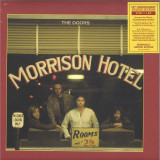
The Doors returned to their roots and were reborn a rock ’n’ roll band on Morrison Hotel, the group’s fifth studio album. Completed in only a few weeks and released in February 1970, the hard-charging album took its name from the Skid Row hotel in downtown Los Angeles that’s featured in the iconic cover photo taken by Henry Diltz.
Morrison Hotel: 50th Anniversary Deluxe Edition includes the original album newly remastered by The Doors’ longtime engineer and mixer Bruce Botnick, plus a bonus disc of unreleased studio outtakes, and the original album on 180-gram virgin vinyl. The music will also be available from digital and streaming services the same day.
For this new collection, the original album has been expanded with more than an hour of unreleased recordings taken from the sessions for Morrison Hotel. These 19 outtakes transport listeners into the studio with Jim Morrison, John Densmore, Robby Krieger, and Ray Manzarek for an unprecedented perspective on the making of the album. Botnick says: “There are many takes, different arrangements, false starts, and insightful studio conversations between the band – who were in the studio – and producer Paul Rothchild – who was in the control room. It’s like being a fly on the wall.”
Several of these unheard recordings spotlight how Queen Of The Highway and Roadhouse Blues evolved across multiple sessions. It’s especially interesting to hear how the band played with different bass players on Roadhouse Blues. Early versions include Harvey Brooks, who played on the band’s previous album, The Soft Parade. Later takes feature guitar legend Lonnie Mack on bass along with The Lovin’ Spoonful’s John Sebastian on harmonica who, due to contractual restrictions at the time, had to be credited as G. Puglese.
Among the treasure trove of unreleased outtakes are also rough versions of Morrison Hotel tracks Peace Frog and Blue Sunday, as well as The Doors rarity I Will Never Be Untrue. The collection also captures some incredible session outtakes of the band jamming on cover versions of the Motown classic Money (That’s What I Want) and B.B. King’s Rock Me.
- A1: Sofia Suicidou-Se (Da Serie Samba Policial) (Da Serie Samba Policial)
- A2: Pecou A Rosa - Samba
- A3: Um Assalto No Morumbi (Da Serie Samba Policial) (Da Serie Samba Policial)
- A4: Incendio (Da Serie Samba Reportagem) (Da Serie Samba Reportagem)
- A5: Frida - Poema/Frida - Samba
- A6: Brasilia Seculo 1 - Samba
- B1: Um Crime (Da Serie Samba Policial) (Da Serie Samba Policial)
- B2: A Lenda Da Chuva - Poema
- B3: O Sorriso Da Praia - Samba
- B4: Mar De Sal - Samba
- B5: A Morte Do Violao - Samba
- B6: E A Chuva Nasceu - Samba
- B7: Samba Gregoriano (Da Serie Samba Erudita) (Da Serie Samba Erudita)
A virtuoso pianist and composer of seminal works in early electronic and experimental classical music, Jocy de Oliveira’s musical output has had a great influence within Brazil and abroad. Her sole contribution to Brazilian popular music, her 1959-recorded album, ‘A Música Século XX de Jocy’ in many ways stands apart from the rest of her artistic oeuvre.
The original vinyl release marketed the record as adding to Brazil’s samba heritage with a ‘simple and original dialectic’, naming its style ‘vanguard samba’, which differs from both traditional samba and Bossa Nova, in its infancy at the time.
Listening to Jocy’s ‘20th century music’ in the context of the contemporaneous and vastly more influential Bossa Nova style is especially striking. Where Bossa Nova’s innovators incorporated influences from jazz and French piano music to a samba foundation, Jocy de Oliveira took a greater leap, wedding her century’s classical music to samba. Where Bossa Nova dawned a new epoch of poetic lyricism in Brazilian popular songs with great poets such as Vinicius de Moraes and themes of longing, love and nature, Jocy de Oliveira’s lyrics are concerned with scenes of urban tragedy and decay, presenting an alternative vision to Brazil’s stereotypical tropical paradise image almost 10 years before the emergence of the Tropicália movement.
The sounds and lyrics of Jocy’s landmark release still shock today. Put in the context of a conservative Brazil on the eve of Brasília’s inauguration, it is even more startling that this record ever got made. An unconventional mix of classical and popular musical influences combined with socially critical, ironic and at times journalistic lyrics make for a unique listening experience.
A unique representation of Brazilian popular music, Jocy de Oliveira’s masterpiece ‘A Música Século XX de Jocy’ is reissued for the first time. Meticulously remastered, the record is pressed on high-quality 45-RPM vinyl, with a modernised back cover and printed inner sleeve including previously unseen pictures taken for the record’s release in 1959.
Even if you don't know her name - you will know her voice. It's 'Melbourne's High Priestess Of Soul' Kylie Auldist's unmistakable vocals on the 2016 global dance hit 'This Girl' by Kungs vs Cookin' on 3 Burners - the track that not only topped almost every pop chart across the planet, featured in many TV shows, adverts and films and social media memes, and has achieved over 1 billion streams & climbing. But of course, that's far from the whole story. Kylie established her enviable reputation as the featured vocalist in the awesome Australian outfits The Bamboos, and Cookin' On 3 Burners, and her fantastically well received solo albums for Tru Thoughts; 'Just Say' (2008), 'Made of Stone' (2009) and 'Still Life' (2012) and 'Family Tree' Freestyle Records (2016). Kylie's brand new album - 'This Is What Happiness Looks Like', her first for Greg Boraman's brand new label Soul Bank Music, further develops the musical approach she began on it's predecessor 'Family Tree' - and is very firmly entrenched on an electro boogie tip, rooted deep in the New York club scene of the early 80's. The opening track 'Everythink' sets out that 1980's electro-boogie sound and then fuses it with the song writing of a classic Wham or Hall & Oates tune - it has an infectious, slinky Moog synth bass line that will lodge itself in people's minds. Kylie's simply stunning vocal performance on this breezy and summery tune will surely make it a future classic. Producers Warren Hunter and Lewis Moody skills in the studio have brought forth many musical highlights on this album, but special mention has to be made for Is It Fun? This is where a brilliant and incredibly infectious composition is further enhanced by some top notch instrumentalists, perfectly executed production, a simply beautiful vocal performance, and results in what should surely end up being an anthemic, brand new 'soul weekender' style classic. Soul boys & girls, funkateers and disco fans won't be able to stop themselves falling deeply for this new collection of tunes, because it's not only a highly original take on a classic sound, but it was conceived, performed and recorded with a genuine passion and love, as Kylie says "Some albums are written fast, some take a long time, some albums experience setbacks, become beset by creative blocks and personal issues, and can generally be a whole lot of hard work which makes you question why you even bothered to start it in the first place - this was not one of those albums - hence the title 'This Is What Happiness Looks Like'!
More glorious heat from the vaults of NYC's Disco powerhouse - P&P Records!
One of many labels operating under the equally legendary tutelage of Patrick Adams and Peter Brown, two truly colossal figures in NYC's music scene, the P&P records catalogue is still fascinating underground dance music lovers to this day. Covering a wide range of styles including Gospel, early Rap and Disco the label's output continually finds its way into the playlists of respected DJ's and selectors across the globe. This latest repress from the vaults is a real biggie - a true NYC underground disco CLASSIC!
Cloud One was one of Adams' numerous studio outfits, featuring a ridiculously healthy dose of the man's virtuoso keyboard and synth playing. This was a progressive Disco sound, the pairing of extremely danceable funk and R&B with some spaced out over-dubbed analogue synthesizers and keys made for a heady concoction indeed, especially in 1976 when this cut was released. This was one of many Cloud One trademarks and one of the things that make these records still sound so way out today! 'Atmosphere Strut' could not be a better title for this immense slice of true NYC space Disco - it's got it all - the driving rhythms of the Cloud One band, the killer vibes, celestial vocals and Adams' totally wigged out synthesizer workouts. On top of all this goodness, the main man Kon, Boston's editor supreme and self confessed DIsco fiend and digger, has dropped a stellar and respectful edit of Atmosphere Strut' for all your disc jockeys out there, featured here across the length of the B-side thus making this an essential repress of this legendary 12". If you don't know this jam, and you're a Disco head - you're in for a treat! You're gonna fly......!
This is a 100% legit reissue, made in conjunction with Above Board distribution and the Phase One Music group, lovingly remastered with love by Optimum Mastering, Bristol UK.
Rocksteady and Reggae have long been a part of the rare soul scene, since its inception in the early Sixties. It’s easy to hear the influence of early American R&B in the development of ‘Ska’ and as ‘Soul’ music took over as “the sound of young America”, in the mid-Sixties, it too tinged the sound of Jamaica. No more so than our dance floor anthem “I Feel So Bad” by the legendary JACKIE EDWARDS.
Edwards was born Wilfred Gerald Edwards in Jamaica in 1938 and by the age of 22 had already scored a No.1 record on the island. He’d had four chart-topping hits before signing to Chris Blackwell’s new ‘Island’ imprint in 1962. He became an integral part of Island Records, as a prolific artist, songwriter, producer and general helper. He wrote “Keep On Running” and “Somebody Help Me” for the British R&B band The Spencer Davis Group, both of which went to No.1 on the U.K. pop charts.
“I Feel So Bad” was released on the distinctive ‘red and white’ Island logo in 1967 and was adopted by the burgeoning U.K. underground soul scene, most notably at the Twisted Wheel club in Manchester. It has been played on the ever evolving Northern Soul scene ever since and, a half-century on, commands a price tag of £700+ for a mint original. Fortunately our devastingly good-looking “official” reissue can be bought for a more modest sum.
Jackie Edwards is also responsible for our flip-side “Baby Don’t Wake Me” which he wrote and produced for reggae singer DEL DAVIS at the turn of the Seventies. The combination of Jackie’s well-honed soul-induced musicianship and Davis’ gravelly soulful vocals create the perfect Northern/Crossover dancer.
Two fabulous reasons to make this one of the top reissue 45s of 2020!
- LP 1: – Bob Mould - Workbook (1989)
- A1: Sunspots
- A2: Wishing Well
- A3: Heartbreak A Stranger
- A4: See A Little Light
- A5: Poison Years
- A6: Sinners And Their Repentances
- B1: Brasilia Crossed With Trenton
- B2: Compositions For The Young And Old
- B3: Lonely Afternoon
- B4: Dreaming, I Am
- B5: Whichever Way The Wind Blows
- LP 2: – Bob Mould - Blacksheets Of Rain (1990)
- C1: Black Sheets Of Rain
- C2: Stand Guard
- C3: It’s Too Late
- C4: One Good Reason
- C5: Stop Your Crying
- D1: Hanging Tree
- D2: The Last Night
- D3: Hear Me Calling
- D4: Out Of Your Life
- D5: Disappointed
- LP 3: – Sugar – Copper Blue (1992)
- E1: The Act We Act
- E2: A Good Idea
- E3: Changes
- E4: Helpless
- E5: Hoover Dam
- F1: The Slim
- F2: If I Can't Change Your Mind
- F3: Fortune Teller
- F4: Slick
- F5: Man On The Moon
- LP 4: – Sugar – Beaster (1993)
- G1: Come Around
- G2: Tilted
- G3: Judas Cradle
- H1: Jc Auto
- H2: Feeling Better
- H3: Walking Away
- LP 5: – Sugar – File Under: Easy Listening (1994)
- I1: Gift
- I2: Company Book
- I3: Your Favorite Thing
- I4: What You Want It To Be
- I5: Gee Angel
- D6: Sacrifice / Let There Be Peace
- J1: Panama City Motel
- J2: Can't Help You Anymore
- J3: Granny Cool
- J4: Believe What You're Saying
- J5: Explode And Make Up
- LP 6: & 7 – Sugar – Besides (1995)
- K1: Needle Hits E
- K2: If I Can't Change Your Mind (Solo Mix)
- K3: Try Again
- K4: Where Diamonds Are Halos (Live At The Cabaret Metro, 22Nd July 1992)
- K5: Armenia City In The Sky (Live At The Cabaret Metro, 22Nd July 1992)
- L1: Clownmaster
- L2: Anyone (Live At The Cabaret Metro, 22Nd July 1992)
- L3: Jc Auto (Live At The Cabaret Metro, 22Nd July 1992)
- L4: Believe What You're Saying (Campfire Mix)
- L5: Mind Is An Island
- M1: Frustration
- M2: Going Home
- M3: In The Eyes Of My Friends
- M4: And You Tell Me
- N1: If I Can't Change Your Mind (Bbc Radio Session)
- N2: Hoover Dam (Bbc Radio Session)
- N3: The Slim (Bbc Radio Session)
- N4: Where Diamonds Are Halos (Bbc Radio Session)
- LP 8: – Distortion Plus:1989 – 1995
- O1: All Those People Know
- O2: No Water In Hell
- O3: Dying From The Inside Out
- P1: Dio
- P2: Hickory Wind
- P3: Can’t Fight It
- P4: Turning Of The Tide
Demon Records presents Distortion: 1989-1995, the first in a series of four expansive vinyl box sets chronicling the solo career of legendary American musician Bob Mould. Bob Mould’s career began in 1979 with the iconic underground punk group Hüsker Dü before forming the beloved alternative rock band Sugar and releasing numerous critically acclaimed solo albums. Volume one in this new series covers 1989 to 1995, beginning with Mould’s first post Hüsker Dü album Workbook and continuing through to Sugar’s final studio album File Under: Easy Listening.
Each album is presented with brand new artwork designed by illustrator Simon Marchner and pressed on 140g clear vinyl with unique splatter effects.
Includes a 28-page companion booklet featuring: liner notes by journalist Keith Cameron; a foreword by writer and actor Fred Armisen; a tribute from Richard Thompson; lyrics and memorabilia.
Mastered by Jeff Lipton and Maria Rice at Peerless Mastering in Boston.
Featuring an array of bonus tracks including Sugar’s 1995 collection of Bsides and non-album tracks Besides, along with Distortion Plus: 1989-1995 a new and exclusive collection of rarities and collaborations (pressed on clear vinyl).
Freshly signed artist named Ian Ash (also know as “H” and Sunny G) delivers a massive filtered boogie house track. So What U Want will also come with a Lord Funk remix which sound a bit more electro funk to blast the dancefloor.
This track is a radio killer and should be loved by many musiclovers including DJs, producers or simply people who like to listen to mainstream vocal house as French touch production. A bunch of samples and played instruments make it efficient and support the
sweet voice of the singer Djemaïli. He is known first as an R’n’B singer, but he liked to perform on this future classic – and you can hear it! Ian Ash is known as a resident DJ of the World-famous Montreux Jazz Festival where he has spun records yearly between 2001 and 2019. Including 1st and 2nd parts of George Clinton Parliament Funkadelic, Spearhead feat. Michael Franti, Doctor L, Tony Allen,Jean Grae, Raphael Saadiq, Will Calhoun, Common,Dj Cam, Mister Mike, Benji B, Souljazz, Andy Smith,Buddah Monk, Jimmy Cliff back band, Jamie Lidell, and Claude Nobs himself! He spun also at Cargo (London), SPACE (Ibiza), NL (Amsterdam), Divans du Monde
(Paris), etc. He surely is in the top 10 Funk DJs in Europe. He also has been stage and studio audio engineer for 2 decades and has mixed a couple of live artists such as Joe Sample, Mandrill or even AIR. He has mixed more than 90 concerts at Montreux Jazz Festival 2002 and deeply participated in producing 4 Days in Geneva by Ohmega Watts
more recently.
The Detroit assault continues with the second release in the WPH U.S. Series coming courtesy of Brian Kage. Brian has been an integral part of the fabric of Detroit’s house & techno scene for as long as you can remember and has released many timeless grooves on his own Michigander label and many other outlets, including the brilliant ‘Shut Your Eyes’ on the Omar S-run FXHE label.
Opener ‘Werkit’ sets the bar high with a chugging groove, mind-melting strings and piano chords, all produced to perfection. The challenge is met by the two remixes. Detroit’s Patrice Scott goes on his classic deeper tangent that never fails to deliver and WPH boss Red D fires up an electro banger reminiscent of 313 staple Aux 88. Brian rounds things off himself in style with ‘Groove La Tape Deck’, a serious slice of hypnotic house music that will make you nod more than just your head. Timeless stuff once again from the WPH camp!
- A1: Et Le Vent
- A2: Les Autres
- A3: Première Vie Feat. Hyacinte
- A4: Steve Feat. Léonie Pernet
- A5: L'exode Video
- B1: Une Belle Personne Feat. Oré
- B2: Hope Feat. Hier Soir
- B3: Idem
- B4: Normal
- B5: Parfois
- C1: Walk Feat. Awir Leon
- C2: Sans A Coup
- C3: Minuit
- C4: Tout Ira Bien
- C5: Holy Feat. Pénélope Antena
- D1: Décor
- D2: À Demain
- D3: Aléa (Live Version)
- D4: Huit Jours (Live Version)
After spreading several music videos and EPs all year long, Jumo starts the decade with a first much anticipated album. More than a compilation of his past works, “Et le vent?” extends the artist’s experiments and add new colors to his palette.
Featuring Léonie Pernet, Pénélope Antena, Hyacinthe.
Staying on the line traced by the previous tracks, “Et le vent?” perpetuates Jumo’s taste for narration with all its forms.
Six years ago Clément Leveau gave birth to Jumo a musical avatar with whom he asserted a singular identity characterized by a sophisticated production of heady melodies and a cinematographic atmosphere allowing him to give free rein to his passion for the image. The release of the Radio Nova hit 'Aléa' marked the beginning of a fruitful collaboration with the Parisian label Nowadays Records (Fakear, La Fine Equipe, Clément Bazin, Leska). As a graphic designer Clément makes Jumo a true transdisciplinary project in which sound and video feed off each other, putting his collective Cela at the service of a dark and arty visual universe that perfectly matches the contours of his music.
After spreading several music videos and EPs all year long, Jumo starts the decade with a first much anticipated album. More than a compilation of his past works, “Et le vent?” extends the artist’s experiments and add new colors to his palette.
Staying on the line traced by the previous tracks, “Et le vent?” perpetuates Jumo’s taste for narration with all its forms. “L’exode”, first single of the album, is a perfect example. It gives the album’s tone and also dives us into Jumo’s powerful aesthetic thanks to the music video.
“Steve (Ft. Léonie Pernet), is a tribute to Steve Maia Caniçot, young man who dramatically died during a police charge on Nantes docks on June 21st, 2019. A track on which Jumo confronts with Léonie Pernet’s grunge intonations, an unexpected collaboration sounding like an evidence.
Another main track of the album is “Une Belle Personne (Ft. Oré)” where the producer’s synths converse with the French singer and offer us an original and efficient pop song.
The great Awir Leon, the French rapper Hyacinthe, Hier Soir (Jumo’s side project) and Penelope Antena complete the cast of an album that goes from the calm contemplation of the world to the underground clubs filled with energy.
It's been three years since the last vinyl by Ntogn was unveiled and now we're glad to share with you the result of his venture through the recent winter.
'Smedjan' is inspired by the dwarven craftsmanship of Norse mythology. It is made completely with organic sounds gathered from, and recorded in, the forests of Bålsta which is rich with northern heritage. Everything you hear is either processed textures of birch wood blocks, layers of a custom made Ukrainian artisan mouth harp or the artist's own voice.
There is no synthesis in this record. The kick drums are made by hitting these pieces of wood against each other with contact microphones. Bass layers are extracted from bark scraping against bark. Hi hats are crafted by recorded fire of the same wood logs burning and ambiance is built from the forests where the trees grew and from the woodshed where the artist chopped the wood during winter to keep his cabin warm. The rhythms and sounds in this shed is what inspired the making of this record.
By shaping these sounds of wood and metal Ntogn strives to create a sonic experience that connects the listener to the old Norse stories of the dwarven craftsmanship of Svartalfheim. It is they who made the famous trinkets and weapons that empower the gods of Asgård through stories of trickery and despair which has later inspired tales and literature for over a thousand years.
The record has been distilled from material that was meant to become a two-hour live set specifically made for Mo:dem festival which was unfortunately cancelled due to the corona pandemic. It was also the foundation of the artist's thesis at the university of sound design where he made a study of the effects of organic sound on an electronic expression such as techno music.
It will be released digitally and as a 200 copy limited edition black vinyl adorned with an artwork drawn by the artist's partner Gabriella Holmström using the ashes of the same birch wood blocks that was used to make the sonic content.
The record has received early support from Francois X, Takaaki Itoh, Abstract Division, BLNDR and Rambadu to name a few.
*:・゚✧*:・゚✧
Ntogn en'togg-n is a conceptual electro-acoustic project developed by Hypnus Records' founder and sound design graduate Michel Iseneld (b. 1988, Sweden). It aims to breath life into a fascination for magic with the use of contemporary and classic sound design techniques. This has resulted in what Resident Advisor's William Lynch describes as 'fierce, artistic techno that sounds like little else out there' and a discography ranging from earth-shattering techno to dark, throbbing ambient excursions.
After spending nearly three years in isolation, deeply lost in literature on history, philosophy, occultism and epic fairy-tales; Michel developed an inner world which eventually found an outlet through the means of music in 2013. By the use of field recordings and various samplings of his voice and surroundings, something peculiar sprouted as his inner images started to manifest and mature into an organic sound inspired by the emerging hypnotic deep techno scene.
Today, all music is released on his own imprint Tome in order to preserve the projects' artistic freedom and originality. After two years of sound design studies at the university and a new-found passion for modular synthesis; there's plenty of music in store aimed to satiate the curious minds.
limited vinyl
The Sweethearts is a project by Tyler Thacker together with Sam Mehran (ex Test Icicles).
Songs were written on a tiny casio between Sam and Zak Mering. Tyler pretty much played all the instruments.
As Tyler explains:
This album was recorded a decade ago underneath a bunkbed in a crowded apartment we shared in Brooklyn. At the time, ‘The Sweethearts’ was just another anonymous moniker among many, intended as a pop-minded musical outlet between primary contributors myself, Zak Mering and Sam Mehran, featuring whatever friends happened to be passing though that day including but not limited to Morgan Whirledge, James Ferraro, Zak Davis, Aaron Frankle, Ian Drennan, Ariel Pink, Ryan Howe.
Like so many of the collaborations from those years, these songs and many more floated to the wayside as we each barreled through various other configurative projects, eventually retired to failing hard drives. But the specter of this specific catalogue always haunted me despite shifting primary focus to painting shortly thereafter. Two years ago in July, the world lost one of its most fearless creators, Sam Mehran , and I lost one of my best friends who oozed melody as effortless as breath.
These songs are letter bombs to adolescence in the information age: reterritorializing the tropes of heteronormative psycho-sexuality proliferated throughout western pop music on top of self-deprecation, heartbreak, disappointment, indulgence, and loss of innocence.
At one point, I caught myself singing harmony to Zak and Sam on a song called ‘Tonight’s the Night’ and it was in that meeting place between the metaphysical and the spirit world, that I finally got to say goodbye to Sam.
“Don´t go out there, you might get shot” was the warning from Donna Maya relatives when she visited Detroit two years ago. That makes her even more curious to explore the city. Disturbed by, as well as fascinated from the dystopian state of Detroit she recorded many places that made (industrial) history, including the Ford factory, the world’s tallest, now abandoned central station and the once magnificent Michigan Theater, that was brutally converted into a parking garage. Donna Maya transformed the sound recordings into artificial sound sculptures combined with electronic beats. Every track is dedicated to one of those places and makes it musically alive. With her theremin Donna Maya guides the listener deeply inside. The result of Donna Mayas 6 weeksstay in Detroit is her album “Lost Spaces -> Detroit". “Lost Spaces ? Detroit” is about how to handle crises, how individuals get along with it and the relationship of society to its culture. Donna Maya understands Detroit as a perfect example for what capitalism does when people give up cultural values. With “Lost Spaces ? Detroit” Donna Maya draws a musical picture of how she experienced Detroit that shows that not only a city got lost, but a living space for everyone: Pure urban experimental electronics with theremin.
Hypnoskull is part of the global anti-music conspiracy networkTM (since 1992). Hypnoskull was created in 1992 as a solo project in order to experiment in the area of electronic noise combined with rhythmical structures. In the first years of its existence, Hypnoskull was releasing cassettes and tracks on international labels in the so-called cassette network, a widely spread network of independent and experimental musicians and artists who expressed themselves throughout limited tape releases often including artworks, ideas, texts. In 1998, hypnoskull signed to the German label ant-zen and up to today he is still releasing his albums on this highly influential record label. That is not a coincidence: ant-zen stands for ‘anti-zensur’ (anti-censorship), one of the main starting points of the provocative hypnoskull project. Patrick Stevens does not limit himself to just producing music as such, albums always include a severe message, a thought-provoking underlying concept text, questions. The main philosophy: ‘the dance floors, the clubs, the festivals,… are staged warzones with a different set of rules – a therapeutic zone where hidden anger and even aggression of both the artists as well as the spectators can be released in a proper, human way. Music as a means to open up the deepest anger inside human beings, letting it out in a way which is not harmful to others. A strange symbiosis between the two worlds Patrick Stevens is a part of: the techno and the industrial scene. Techno being a genre promoting a peaceful yet hedonistic way of life, industrial on the other hand being a highly nihilistic, philosophic but pitch black reflection on society. The mix of both musical as well as content wise elements of these genres result in what hypnoskull is all about. Added to this an explosive mixture of post-war and contemporary western subversive philosophy – in a rather impulsive manner – makes the project what it is today, after 30 years of existence.
For anyone who can remember, Arca's &&&&& was a moment. Its 25-minute stretch of coiling, contorted grime and glitch; dub and hip hop dropped with the buzz of an impending co-production credit on Kanye West's Yeezus in 2013. It included cuts of sound and beats that were too weird for that pop project, while becoming a piece of experimental art that what would come to define what is by now broadly known as a `post-club' sound. It's music that is as visceral as it is experimental; made as much for the mind, as it is for the body. Released with no warning seven years ago, &&&&& became a bridge between Alejandra Ghersi's time partying and collaborating with her queer peers, while still living in New York to the next stage of her career releasing on Mute in London. She'd go from making beats for rapper Mykki Blanco and fashion label Hood By Air, posting lurching bass reworkings of pop hits on YouTube, and producing her first fluid mixtapes with DIS Magazine, to finishing off this seminal mixtape on the synths in Daniel Miller's studio. After dropping three impressive EPs the year before, &&&&& marked a transition. Continuations and extrapolations of material from Stretch 1 and Stretch 2 appeared in the mangled RnB sampling of "Century" and Arca's signature vocal layering in the pitched flow of "Waste". Along with the fluttering, muted heartbeat of "Obelisk", and the lumbering piano chords of "Mother", fourteen sonic sketches were elegantly woven together into a single, downloadable whole. As Alejandra's course turned toward moving to Europe from the United States, &&&&& became a remarkable challenge to the form of the mixtape, which was a relatively new trend taking hold of the online-oriented underground at the turn of the 2010s. But where many, if not most mixtapes where treated simply as a showcase of individual tracks presaging a more `official' release to come, &&&&& was a complete piece in its own right. "I wanted to make something that was my best work," Alejandra says about a record that has stood the test of time, "I listen to it very fondly today." This reissue of Arca's 2013 debut mixtape &&&&& features an etching on side B of the vinyl.
When Joakim aka Cray76 moved back from NYC to Paris in 2019, he knew he wouldn't have access to a studio for a little while. And although he welcomed that forced pause in making music, he felt the need to take at least one piece of gear with him in his suitcase. It was the legendary Roland TB303, one of the simplest and quirkest synth ever made and maybe the one that had the most important influence on electronic music since the mid 80s. Having recorded a few beats on his Roland TR808 before he packed his studio in Brooklyn to be shipped back to France, Joakim decided to make a record only using those 2 machines, an « exercice de style » that is a tribute to 30 years+ of acid house and techno and a way to make tools that he could use in his DJ sets. It goes deep, it goes hypnotic, it goes rough, many flavors of acid are packed in this 808+303=1111 12inch.
- A1: Check Your Groove
- A2: Down To The River
- A3: Living In Colour
- A4: One Of My Heartbeats
- A5: Close To You Tonight
- B1: Half Moon In The Crescent City
- B2: Think Small
- B3: I Can't Help It
- B4: I'm Gonna Make You Love Me
- B5: Love Won't Let Me Wait
Widely and rightly regarded as one of the best ever soul and funk bands, the now legendary Average White Band tore-up the rule book and conquered the US, UK & International charts with a series of soul and disco hits between 1974 and 1980.
AWB’s repertoire has been a source of inspiration and influence for many R&B acts and they are one of the most sampled bands in history, remaining relevant today, continuing to reach new generations of younger audiences.
Snoop Dogg, Fatboy Slim, Ice Cube, Puff Daddy, TLC, Rick Ross, will.i.am and Mark Ronson amongst countless others, have all borrowed sections of their grooves.
Following a seven-year break, Average White Band returned in 2003, with their most recently released wholestudio album, ‘Living In Colour’, which includes two soul classics in ‘I’m Gonna Make You Love Me’ and Major Harris’ ‘Love Won’t Let Me Wait’.
The full album line-up comprised Alan Gorrie, Onnie McIntyre, Klyde Jones, Fred Vigdor and Brian Dunne, along with additional musicians Eliot Lewis ,Cliff Lyons, John Fumasoli, Tony Kadleck, Bill Harris, Carlos Gomez, Joe Najmy and Rob Aries.
From Nantes, France, NABTA is equal to EBM, minimal synth and electroclash as its best. They perfectly define and describe their music as “an electronic ceremony where comets of beats crashes into a oceans of colours, tumbling into the sombre side while sweet darkness binds you in a trance and makes you dance, dance and dance”. We like that vision!. All tracks have been specially remastered for LONG CUT vinyl by Aria Z.
THE KILIMANJARO DARKJAZZ ENSEMBLE are a project which has always been tied to films. Films are luxurious because they dispose of all these boring, unimportant, and trivial parts of our lives. This allows them to fully control our sensations, to put us in a very specific mood. Joy and sadness are occasionally OK, endless joy or endless sadness are clinical. But there is one sensation which can be persistent and unconditionally bearable at the same time. In the absence of a better alternative, let's call it "the mood". The mood is what TKDE are aiming at. The mood.
The mood is infinite and illimitable, but not uniform and unique. On "From The Stairwell", TKDE deliver eight new incarnations of the mood. Stairwells have always been intriguing. They appear to unavoidably lead you to your destination, but they only disclose the path bit by bit. What lies far ahead of you and far beyond you is hidden in the shadows. The stairwell could just as well be infinite. You climb up this murky stairwell, passing by many doors. Every door contains a variation of the mood, a short film, a song. You open the first one, "All Is One". The evaporating mist discloses a large and empty room with a barstool in the middle. On the barstool, a chanteuse from the roaring twenties. Her voice starts to trigger vibrations of the ground, the walls start spiralling around her, but she remains untouched in the eye of the storm. Second room, "Giallo". Sly guy, telling smile, nice suit. Walking down the streets in the dusk. The ambience starts to get out of phase, the guy stumbles in horror while blending with the surrounding to a brown soup. Fourth room. "Cocaine". Naked people with pig heads crawl on the floor, on the walls, on the ceiling. They try to hopelessly suck up the white dust which covers every single piece of this room and is constantly spit out by tubes coming out of the walls. Dissonant sounds accompany the work of this desperate hive. As the people manage to counteract the tubes, fragile melodies start to overpower the dissonances. Sixth room, "Cotard Delusion". Baby morphing into a black fluid morphing into an old man which turns his eyes inwards and finds his inside to be completely empty. The journey up the stairwell, down the stairwell, continues. The pictures fill your head and make you forget where you wanted to go in the first place.
"From The Stairwell" is a surprise and a logical step at the same time. It is a surprise because the songs are far less beat-driven in comparison to TKDE's earlier works, and even contain a few hopeful tints here and there. It is a logical step because in the end each song turns to have a very diverse dramaturgic flow. This could raise the conjecture that TKDE, initially started out to make music for existing and non-existing films, wanted to incorporate the audiovisual impression completely into songs, making the films superfluous. At times, "From The Stairwell" makes you think of 60's soundtracks, but the organic feeling of those is always interwoven with mechanical elements. Altogether, every single of the numerous details present in TKDE's new songs feels to be at the right place and you can either just dive into the mood or pick one of the many aspects and enjoy it on its own - be it Gideon Kiers' beats & fx, Jason Köhnen's bass & piano, Hilary Jeffery's trombone, Charlotte Cegarra's voice & piano, Eelco Bosman's guitar, Nina Hitz' cello, Sarah Anderson's violin, or - appearing as guest musicians - Eiríkur Óli Ólafsson's trumpet and Coen Kaldeway's saxophone & bass clarinet.
A memorable name with an outstanding cover, Fuzzy Duck is a classic slice of underground London art rock and melodic psychedelia. Originally released on MAM in 1971, it’s truly a musical force of infectious riffs and fiery solos, sharp tempo changes, a tight rhythm section and heavy, Hammond-drenched grooves. With echoes of Spencer Davis Group, early Grand Funk and Vanilla Fudge, it comes on like a heavier Soft Machine or Caravan. No wonder Fuzzy Duck’s cult appeal has endured.
The album features Mick Hawksworth (Five Day Week Straw People, Andromeda) on bass, acoustic 12-string, electric cello and some of the vocal duties, and also Roy “Daze” Sharland (Crazy World of Arthur Brown, Spice) on organ and electric piano. Accompanying those two were Paul Francis on drums and percussion, and Grahame White on guitars and the rest of the vocals.
Originally released in an edition of 500, Fuzzy Duck became legendary all over the world through a holy trinity of scarcity, personnel and its sheer brilliance.
The album kicks off with a heavy, bass-fuelled, Hammond rocker titled “Time Will Be Your Doctor”. This is pure hard-edged blues rock, brilliantly played. Its drum break intro was sampled by DJ Premier for Gang Starr’s “Mostly Tha Voice” on 1994’s legendary Hard To Earn. And we can hear its personality all over Harvey and Thomas Bullock’s Map Of Africa.
Rollicking highlight “Mrs. Prout” follows. At nearly 7 minutes long, it incorporates more psych-leaning guitar and drawn-out keyboards à la Ray Manzarek with the band effortlessly switching from jazzy rhythm section to a progressive one. That magnificent instrumental jam that starts half-way and continues through to the end is a true wonder.
“Just Look Around You” is propulsive folk-rock with a soaring, proto power-pop chorus, backed by frenetic organ and heavy bass high in the rich, intoxicating mix. Back comes the heavy, strung-out psych to both close out side one with “Afternoon Out” and kick off side two with “More Than I Am”. Both tracks are improvisational winners that stylistically nod to the late sixties and “More Than I Am”’s guitar hook, catchy organ and memorable chorus would’ve surely made it a great single.
“Country Boy” quenches the thirst for rhythm and melody, only the lyrics and vibe are wonderfully creepy. The sudden cut of the groove and the drop into a more sinister tempo will make you stumble, before the band pick up speed and toss you back again into the opening jam, this time with a badass organ to ride you home. The final, fully fleshed out track is the majestic “In Our Time”, which oscillates between endless organ-driven boogie and heavenly, genuinely moving vocals. Just stunning.
Infamous instrumental cut “A Word from Big D” rounds out the album. Yes, that’s the band jamming with duck quack sound effects accompanying the music. “Ducking vocals” as the sleeve says. You know, just in case the whole “duck” theme had passed you by. It’s an appropriate closer for what sounds like an album that must have been *a lot* of fun to record. It’s definitely fun to listen to.
Mastered by Be With’s chief sound duck Simon Francis and cut with glee by the veteran Pete Norman, this reissue of Fuzzy Duck’s one-and-only LP sounds as mighty as it should. That unforgettable sleeve artwork has been carefully restored and the records pressed by the wonderful Record Industry in the Netherlands. Essential.
HIGHLIGHTS First ever reissue of "Kabwlú", a very hard-to-find album released by Discos Fuentes in 1965. The mysterious Los Picapiedra (which translates as The Flintstones, inspired by the 1960s American cartoon show), was a short-lived studio group with one albumto their name, "Kabwlú", mixing 'folkloric' and 'modern' elements with calculated 'caveman' humor. It is very musically diverse; not only are there the requisite genres that could be found on similar Colombian teenage-oriented groups' records of the time, such as cumbia, gaita, rock, twist and pachanga, but there is also a smattering of surf, doo-wop, Latin jazz, guajira, ska, and calypso. But what makes the whole thing so special is the odd, off-kilter arrangements, spooky tunings, rudimentary clanging percussion, invented 'cave' language, prominent twanging electric guitar and many zany sound effects. Several of Los Picapiedra's songs became very popular in Colombia as well as Venezuela and especially in the 'rebajada' (slowed down) version as played by the 'sonidero' sound system DJs in Mexico, such as "La Hossa". Presented in its original artwork and pressed on 180g vinyl. Part of Vampisoul's reissue series of classic Fuentes LPs. DESCRIPTION While Discos Fuentes was known for recording all sorts of interesting sounds from traditional folkloric Colombian music to the latest popular international styles, every once and a while they would put out a "novelty" record, perhaps to exploit a passing fad, and at times the label would green-light something strange or even outlandish. Many of those left-field releases have their merits and have subsequently become collectors' items over the years. One such case is the mysterious Los Picapiedra (which translates as The Flintstones, no doubt inspired by the 1960s American sitcom cartoon show), a short-lived studio group with one album to their name, "Kabwlú" (an unpronounceable, invented "caveman" term that is also untranslatable, but seems to have been the 'traditional rhythm' of Los Picapiedra's 'homeland'). What is interesting about the record is that it is very musically diverse; not only are there the requisite genres that could be found on similar Colombian teenage-oriented groups' records of the time, such as cumbia, gaita, rock, twist and pachanga, but there is also a smattering of surf, doo-wop, Latin jazz, guajira, ska, and calypso. But what makes the whole thing so special is the odd, off-kilter arrangements, spooky tunings, rudimentary clanging percussion, invented 'cave' language, prominent twanging electric guitar and many zany sound effects. Much like its namesake American cartoon The Flintstones, "Kabwlú" trades in creative anachronism, mixing 'folkloric' and 'modern' elements with calculated 'caveman' humor that works on many different levels. For instance the title tune seems to have been inspired by the pachanga craze and recalls the vibe of Ray Barretto's massive 1962 hit, 'El Watusi', but it has a certain joyful simplicity and rock-solid underpinning that elevates it beyond mere novelty or exploitation - and argues for its timely reissue for today's audience. The band was a studio invention that had no major significance in Medellin's live music activity. However, several of Los Picapiedra's songs were very popular in Colombia as well as Venezuela and especially in the 'rebajada' (slowed down) version as played by the 'sonidero' sound system DJs in Mexico, such as "La Hossa". Pablo E Yglesias (aka DJ Bongohead, Peace & Rhythm) Additional research by Luis Daniel Vega
Sublime, unique, sexy and peculiar unreleased scores by electronic and jazz pioneer Ron Geesin, made for the sublime, unique, sexy and peculiar films by maverick director Stephen Dwoskin. There. we’ve said it. And if you have not heard of one or either of these two dudes it doesn’t really matter. Geesin made great music and worked with Pink Floyd. Dwoskin made odd films, most of them are in the BFI permanent collection. They are great and a bit strange.
These superb unreleased soundtracks come from a fascinating, progressive and important period in British film history. They represent an intriguing collaboration between the lively Ron Geesin from Scotland and the American Stephen Dwoskin, who both met in London.
Musically they are minimal, charismatic and quite groundbreaking. Here is the story…
HISTORY:
Steve Dwoskin arrived in London in 1964, aged 25, with several 16mm films in his trunk, shot in the cold-water flats of Greenwich Village. He had been on the fringe of the Factory scene, and some of his films starred Beverly Grant, ‘the queen of the underground’. But they had scarcely been seen, and they didn’t have soundtracks. For almost a year they stayed in the trunk, and stayed silent. Then he met Ron Geesin, somewhere around Portobello Road.
‘Slept last night, completely dressed after working over 12 hours on sound tracks at Ron’s,’ wrote Dwoskin in his diary for 29 July 1965. ‘My films are not anywhere near being anything. I need more energy, more concise and positive ideas and less inhibition. And of course space, money and people.’ Dwoskin, who taught and practised graphic design by day, had recently decided to stay in London beyond the term of the Fulbright scholarship that had brought him there.
Ron, living with Frankie in a basement flat in Elgin Crescent – they would marry the next year, with Dwoskin as best man – was about to leave the Original Downtown Syncopators, the trad jazz band he had joined aged seventeen-and-a-half, and was trying to go solo. On stage he would make vigorous use of piano and banjo; at home Frankie had bought him a new kind of instrument – a tape recorder. ‘Soon I had one tape recorder, two tape recorders, three tape recorders.’
Ron, wrote Dwoskin in his unpublished autobiography, ‘loved to record, and to cut and splice the quarter-inch recording tape to make new sounds. This triggered in me the idea of getting back to my films and finishing them’. Soon he was living in a dank basement in Denbigh Road, a few minutes’ walk from Elgin Crescent. Ron’s soundtracks for Dwoskin’ films, recorded in the Geesins’ flat, encompassed Ron’s very eclectic range of styles – madcap piano and fretted banjo as well as tape manipulation.
Aside from Ron’s soundtracks, some of which belong to films that no longer exist (including Pot Boiler), Frankie would act in one of the films that Dwoskin either lost or never finished during these years. He was disabled, having contracted polio as a child, and Ron and Frankie were both carers and collaborators; Ron had met him when he was struggling into his car.
There was no London equivalent to the underground film scene that Dwoskin had known in New York, and his films remained unseen until such a scene began to come into being, in the autumn of 1966. Some of them made their debut at the Mercury Theatre, near Notting Hill Gate, that September. Dwoskin wrote that Alone, starring Zelda Nelson (from Ron Rice’s Chumlum), and Chinese Checkers, with Beverly Grant and Dwoskin’s friend Joan Adler, went over best.
Soon both Dwoskin and Geesin became involved in the nascent London Film-Makers’ Co-op, which put on screenings in Better Books on Charing Cross Road – ‘if you can call them screenings,’ Ron recalls; ‘I’d call it fifteen blokes in various stages of disarray, peering through the smoke’. One or more of the films had been ‘striped’ with magnetic audiotape; with others ‘we had no means of direct syncing to the picture, so he started the film and I started the tape recorder’.
In the same autumn, Dwoskin moved into a flat almost opposite the Geesins on Elgin Crescent. More collaborations followed, including Naissant, on which Gavin Bryars, whom Geesin had met during a stint on the northern club circuit with novelty act Dr Crock and His Crackpots, played double bass.
Around the end of 1967 Geesin released his first solo LP, A Raise of Eyebrows, and Dwoskin won recognition the Fourth Experimental Film Competition, aka EXPRMNTL 4, an occasional film festival staged at Knokke-le-Zoute in Belgium. By now the films had optical soundtracks.
It was only after this that Dwoskin completed his first ‘British’ films, including Me Myself and I, with Barbara Gladstone, an American dancer who had appeared in Barbara Rubin’s Christmas on Earth, and with whom Dwoskin and Geesin had at one point devised a stage show, never produced. For Moment, a single-shot film, Geesin provided his most experimental score yet. At the time of its debut in 1970, Dwoskin and the Geesins were sharing a house in Ladbroke Grove.
By then, Ron was working with Pink Floyd, and soon afterwards he and Frankie moved out to the country, to be replaced by Bryars both in the house and as Dwoskin’s principal collaborator.
Until now these scores have remained part of the Geesin Archive and have never been issued.
The man in the crowd is a wonderer with relaxed habits. In him the course of things and movement of the city is reproduced. The Düsseldorfer Detlef Weinrich is such a man in the crows. Some one who is constantly listening to future winds through rushes of the past. He loves the night for its free will. And his music tells stories about it. You might know him as a member of the band Kreidler. As a solo artist he goes under the name Tolouse Low Trax. And he's already got three Eps and two albums under his belt. His first solo album „Mask Talk“ thrives on a feathery beat frequency and cool new-wave-strength. His recently released piece „Corridor Plateau“, which appeared as a limited edition to accompany the exhibition „Corridor Plateau“ contains percussive electronics and Industrial sounding like its from the second industrial revolution. His third album „Jeidem Fall“, is also not from here. It sounds like music brought down to earth from the heavens. But its a dark cosmos in which there are only fleeting glimpses of light. All eight tracks were composed in a short space of time over the period of just a few months and fit together perfectly atmospherically. With a musical expressiveness that undoubtedly twists your emotions, „Jeidem Fall“ attacks the subconscious and clouds the mind. The drums have more movement that on „Mask Talk“. Along with the constant tapping of drumsticks goes melodical arpeggios dancing dark and dirty. At times longing vocals drift abstractly through the room, as on „Sa Seline“ or „Geo Scan“, without telling any obvious story.
To sound like stylistic cross references from the present and past is all just speculation for nothing on „Jeidem Fall“ really sounds like anything that has gone before. You could compare the dark minimal timbre of the drum computer aesthetic with Craig Leon's first reductive album „Nommos“. There is also a hint of the minimallist industrial of the Spanish band Esplendor Geometrico in the bubbly textures. But Tolouse Low Trax is still looking from the present into the future and filter and filters all his personal preferences through his MPC and his small synth setup to make them come alive here and now in a new way. Again Tolouse Low Trax has created a truly mysteriously vibrating drum computer music which offers hypnotic magic for the shadowy dance floor. Only a little light should illuminate the whole thing and the bodies that move above them should have no fear from threatening percussion which are displaced into a misty trance. A dark swaying shadowy mass, ideal for a journey at the end of the night and all those non-places where longing sleeps and the last romantics dance while getting drunk.
Berlin-based Swedish saxophonist Otis Sandsjö returns with the eagerly-awaited sequel to "Y-OTIS". On "Y-OTIS 2", released by Helsinki's We Jazz Records on July 24, Sandsjö and his close associate, bassist/producer Petter Eldh (of Koma Saxo), deepen their vision of genre-bending, forward-looking "liquid jazz" of tomorrow. The core group also includes Dan Nicholls on keys and Tilo Weber on drums, and also featured on the album are Swedish jazz greats Jonas Kullhammar (of Koma Saxo) and Per "Texas" Johansson, cellist Lucy Railton and trumpeter Ruhi-Deniz Erdogan.
Diving deeper into "Y-OTIS 2", you'll find details and ideas galore. The album is an inviting and inspiring audio mosaic, which links back into the previous Sandsjö/Eldh collaborations, namely "Y-OTIS" and "Koma Saxo". The result is a balanced album which quenches your thirst while making you more thirsty in the process. In other words, the many micro moods and sonic levels herein invite repeated listening, while the underlying rhythmic approach is informed as much by hip hop and electronica as by jazz, making the music approachable in a very natural way.
It seems unnecessary to pull the album apart by name-checking individual tracks but just for the sake of easy introduction, the single cuts "tremendoce", "ity bity" and "abysmal" offer one idea of signposts along which to navigate. "tremendoce" brings in Swedish jazz great Jonas Kullhammar (of Koma Saxo) and Per "Texas" Johansson, introducing an infectious flute loop integrating into the Y-OTIS sound, making it organic to the bone. "ity bity" could be built on a new wave synth sample (but it's not) and "abysmal" brings more serene, even ambient-sounding sonic pathways onto the map. It all belongs together, and makes for a sound that is instantly recognisable and constantly fresh. This is "Mauerpark liquid jazz" for the new decade.
- 1: Waldo (Feat. Petter Eldh, Dan Nicholls & Tilo Weber)
- 2: Tremendoce (Feat. Petter Eldh, Dan Nicholls, Tilo Weber, Jonas Kullhammar & Per "Texas" Johansson)
- 3: Oisters (Feat. Petter Eldh, Dan Nicholls & Tilo Weber)
- 4: Abysmal (Feat. Petter Eldh, Dan Nicholls & Tilo Weber)
- 5: Koppom (Feat. Petter Eldh, Dan Nicholls & Tilo Weber)
- 6: Ity Bity (Feat. Petter Eldh, Dan Nicholls & Tilo Weber)
- 7: Sapiens (Feat. Petter Eldh, Dan Nicholls & Tilo Weber)
- 8: Bobby (Feat. Petter Eldh, Dan Nicholls, Tilo Weber & Ruhi Erdogan)
- 9: Fruehling (Feat. Petter Eldh, Dan Nicholls & Tilo Weber)
- 10: Atombahn (Feat. Petter Eldh, Dan Nicholls & Tilo Weber)
Berlin-based Swedish saxophonist Otis Sandsjö returns with the eagerly-awaited sequel to "Y-OTIS". On "Y-OTIS 2", released by Helsinki's We Jazz Records on July 24, Sandsjö and his close associate, bassist/producer Petter Eldh (of Koma Saxo), deepen their vision of genre-bending, forward-looking "liquid jazz" of tomorrow. The core group also includes Dan Nicholls on keys and Tilo Weber on drums, and also featured on the album are Swedish jazz greats Jonas Kullhammar (of Koma Saxo) and Per "Texas" Johansson, cellist Lucy Railton and trumpeter Ruhi-Deniz Erdogan.
Diving deeper into "Y-OTIS 2", you'll find details and ideas galore. The album is an inviting and inspiring audio mosaic, which links back into the previous Sandsjö/Eldh collaborations, namely "Y-OTIS" and "Koma Saxo". The result is a balanced album which quenches your thirst while making you more thirsty in the process. In other words, the many micro moods and sonic levels herein invite repeated listening, while the underlying rhythmic approach is informed as much by hip hop and electronica as by jazz, making the music approachable in a very natural way.
It seems unnecessary to pull the album apart by name-checking individual tracks but just for the sake of easy introduction, the single cuts "tremendoce", "ity bity" and "abysmal" offer one idea of signposts along which to navigate. "tremendoce" brings in Swedish jazz great Jonas Kullhammar (of Koma Saxo) and Per "Texas" Johansson, introducing an infectious flute loop integrating into the Y-OTIS sound, making it organic to the bone. "ity bity" could be built on a new wave synth sample (but it's not) and "abysmal" brings more serene, even ambient-sounding sonic pathways onto the map. It all belongs together, and makes for a sound that is instantly recognisable and constantly fresh. This is "Mauerpark liquid jazz" for the new decade.
The Oystercatcher is the first collaborative LP from Cucina Povera (Maria Rossi) and ELS (Edward Simpson)
Recorded in London over two days, hours' worth of improvisations have been edited down to form these six tracks.
A fragile interplay is at work between Maria's drifting vocals and the ominous churn of Edward's modular synth. Each sonic element takes a turn at leading the way.
The opening track 'Mantle' is formed from sparse, monolithic electronics, woven gently with a thread of vocals. In the closing track 'Eon' Maria's voice shepherds spontaneous bursts of sounds, almost Rave-like if order were imposed, through 15 minutes of turmoil and resplendent until the end.
Maria's vocals make their own trails amongst the noise, bringing to mind the the exploratory language from Ursula K. Le Guin's album 'Music and Poetry from the Kesh', recalling the same understated mystery.
The overall effect of this collaboration is a completely unique creation albeit within a recognisable lineage of predecessors.
The artwork reflects the vision of these two artists, collaged together. Both images are from a trip to Helsinki. Edward's photograph of Tulips caught after dark are reviled by a flash. Maria's seemingly abstract drawing is a graphite rubbing taken from a granite slab of a pavement somewhere in Kallio. Together the two images represent two different methods for capturing a city's haptic landscape.
The album moves with a feeling of transience, which is no surprise given that the idea to collaborate was formed in Helsinki, realised in London and edited together in Rotterdam.
The Oystercatcher tells a fragile tale, one that spins out into the unknown. A cold union of voice and machine, still tentative and probing, learning to co-exist. A kind of fundamental shift whereby shared moments have been turned to sound.
The Oystercatcher is a bird that can freely travel between the earth, sea and sky. The motif is taken from a Tove Jansson short story. A dead bird washes ashore, two different versions of events are presented to how the bird came to die. The album feels like two different stories being presented on top of one another but ultimately coming to the same tragic conclusion.
Cucina Povera is Maria Rossi - Vocals
ELS is Edward Simpson - Synthesisers
Recorded in London across two days during the Summer of 2019
Mastered by Russell Haswell
The next release in the Phonica Special Edition series comes from Ukrainian duo Asyncronous who first came to our attention after hearing their critically acclaimed debut on Berlin label Slow Life, 'The Art of Fighting In A Dream'.
A Phonica favourite, it provided the soundtrack to many days in the shop throughout the year, culminating in its inclusion in our top ten Best Singles of 2019!
The Phonica Special Edition series is focused on one-off projects, special remixes or collaborations, highlighting music that is slightly left of the dance floor and pairing it with unique artwork.
This time featuring a beautiful piece by celebrated Ukrainian artist, Mykyta Storozhkov.
The pair initially joined forces in an effort to explore human imagination and life experiences through music, focussing on creating feelings and atmosphere rather than be constrained by genre limitations. The result on this EP is a hazy cosmic trip through their universe of synth swells, deep sub bass and meticulous percussion.
The journey begins on 'Padma Kirtanam' with a constant drone providing the backbone to a building tension scattered with drums. The tension releases and makes way for A2 'Shinkansen', a beautiful track with minimal drums and dubbed out synths which echo around the listener's ear. Closing the A side 'Volta' continues this aesthetic but adds a 4x4 kick drum upping the groove to a cosmic deep house jam.
'Avalanche' kicks off the B side of the record with a syncopated bass line and skitterish hi hats. The energy is at its highest level here and only stops to make way for the next track 'Blocks of Despair'. The tempo drops and drum hits reverberate above stretched out bass notes creating arguably the most heartfelt tune of the release.
The EP ends with 'Midnight Sun' an ambient excursion that invites you to drift off with Asyncronous into outer space.
Today we have many opportunities to discover the world and travel through it without leaving your own room. In the age of globalisation, with the help of knowledge, technology and imagination, you can instantly teleport yourself to mystical temples of India or see the sun above the polar desert at midnight. No more borders - we are connected like never before, as if we are not at different ends of the globe, but on a single and indivisible continent that is not mapped but exists in a plexus of global events, information flows and digital environment.
This is our common home. Our new Pangaea.
Conrad Van Orton and Jheal sign the third release for Eyes Have It, 30D sub-label that, as usual, explores the darkest, coldest and even suffocating side of the techno spectrum.
As it happened in the second release (‘Sei Tracce In Nero EP’ by Reeko & Group), the high contrast between both sides gives sense to the album, giving it a strange but perfect balance, this time quite more oriented to the dance floor. It’s for sure that some people will think that CVO and Jheal might use elements that at first sight might be familiar but, let’s be honest, both have the ability to make everything sound very original.
On the A side Conrad Van Orton, an Italian producer with a lot of experience in techno and the most experimental electronics, elevates the listening to a sonic musical experience, literally. The three tracks, although ‘Dysfunctional Organic Device’ is probably the best example, are pure techno brutality, as highly raw, energetic and obsessive as they are obviously functional. Three true ‘monsters’.
On the B side Jheal, a face already known to the label thanks to his brilliant participation in ‘Close Encounters 002’, brings melancholy (‘150 Wreaths’) and tons of introspection (‘Our Fathers’) to the record. It is not easy for industrial techno to sound as emotional as when Alejandro manipulates it, something especially remarkable for such a young producer. Congratulations.
L’Escalier des Aveugles, or The Stairway of the Blind, was commissioned in November 1990 by Spanish National Radio (Radio Nacional de España). Asked for a piece to premiere as part of the European Day of Music, Luc Ferrari returned with a radiophonic concept that organised his anecdotal music into montage form, sequencing short, elusive narratives in a successive way.
The completed composition is formed of thirteen chapters containing a mixture of environmental and synthesised sound, commentary, chatter, and encounters with people and places. Each focuses on a small event within this playbook, and Ferrari notes that each “in addition to being a realistic photograph, will be the subject of a ‘setting to music’: fragments of voice and atmosphere will be sampled and will produce musical matter or a ‘song’.”
The sonic language of Madrid forms the setting to which Ferrari lays out the persistent theme of the piece, that of the composer being guided throughout the city by a young woman. Using a game-like structure (liners for this edition include Ferrari’s “Regles de Jeu”, or “Rules of the Game” which act as a script or score to the piece) the motivation is posed: imagine that one day you are told “I know a place in Madrid that sounds amazing (or bizarre)”, to which you reply “Let’s go to it together.” The recordings toy with the relationships between guide and tourist, translator, director and actress, and masculine and feminine that emerge as Ferrari and the actresses follow this action, documenting the shared experience and connections they make as they visit these places.
Six actresses guide Ferrari (and the listener) through locations simultaneously ordinary and sonically rich: the metro; the El Corte Inglés department store where we hear the gossip from changing rooms set against music emanating from the PA; vagabonds declaiming their political stance in the Conde de Barajas plaza; interactions buying apples in a market; the reverberant and spacious halls of the Prado Museum where one actress gives a moving description of her favourite painting - Goya’s The 3rd of May 1808.
Ferrari replies in French to their comments in Spanish, and there are several self-referential plots, devices, and word games that flirt with the poetics and rhythm of language and sound. A recital of Lorca’s poem "La Casada Infiel" in “Hommage À Lorca” in amongst the location recordings feels striking, and the call and response of “La Nouvelle de L’Escalier”, where one of the actresses descends the staircase of the blind - a long stone stairway in Madrid proposed to Ferrari as an interesting location to visit during the trip by producer José Iges. She replies to Ferrari’s vocal enunciation of the place (and title) in French - L’Escalier des Aveugles - with the place-name in Spanish: La Escalera de los Ciegos.
Using this repeated title and image of the staircase of the blind as a symbolic place, a line is drawn to a situational landscape experienced and diffused through snapshots and allusion rather than holistically overviewed, sound conjuring pictures within the imagination. In the sensorial qualities of Ferrari’s treatment of emotion and language—fortified with electro-acoustic motifs and musical properties—the piece accelerates towards a render that is truthful, beautiful, yet also surreal; somewhere between theatre and reality, a gonzo cinema of the ear.
Belgian techno wizard Cri Du Coeur is back with a new 2-part vinyl release on his label Arkham Audio titled 'Erickson' & 'Erickson on Acid', which features remixes exclusively from French artists. Jerome D., the man behind the Cri Du Coeur alias, is prized in the industry for giving platforms to Belgian and French artists throughout his career, so it comes as no surprise that he is showing his francophile roots by having a solely French lineup for the remixes on this release. Following the recent release of his EPs 'Diaphragm' and 'Warning', and now bringing us the inebriating 'Erickson' & 'Erickson on Acid', Cri Du Coeur has established that his new alias and freshly-founded but tenacious Arkham Audio label are a force to be reckoned with. The entrancing yet adrenalizing sound that he has adopted shows that his approach to industrial electronic music knows no boundaries or compromises.
The first part of this release features the original mix of 'Erickson' by Cri Du Coeur and remixes of the track by Electric Rescue, Wex 10 , and Trunkline. The second part 'Erickson on Acid' puts a squelching acid twist on things and features remixes by Roman Poncet, Umwelt, and Zadig.
The original mix of 'Erickson' leads with a strong beat and a mixture of industrial sounds that makes for a sublime dark dancefloor track. Electric Rescue follows on with a remix that engages the listener with a terrorising yet intoxicating heavy baseline. Next up is Wex 10 who enchants us with a bouncy laserbeam rhythm and muffled looping vocals. Last but not least on the 'Erickson' lineup is Trunkline's remix which delivers an addictive hazy melody and a deep and dirty mechanical synth horn.
Cri Du Coeur plays with tensions in 'Erickson (on Acid)', putting the listener into a state of hypnosis with squelching sounds that give the song a raunchy character. We are implored to dance as Roman Poncet's remix bears layers of lively percussion beats with twangy synth melodies. The mood intensifies once more as Umwelt's remix features a dark and fuzzy baseline that contrasts with a screeching siren sound creating an ultimate thrilling experience for the listener. Zadig closes off this immense concoction of remixes with a relentless distorted base and scintillating machinelike background noises.
Cri Du Coeur has outdone himself by bringing together such a well-suited selection of artists to create a visceral and magnetizing collection of tracks that showcases his competence in making industrial techno.
Belgian techno wizard Cri Du Coeur is back with a new 2-part vinyl release on his label Arkham Audio titled 'Erickson' & 'Erickson on Acid', which features remixes exclusively from French artists. Jerome D., the man behind the Cri Du Coeur alias, is prized in the industry for giving platforms to Belgian and French artists throughout his career, so it comes as no surprise that he is showing his francophile roots by having a solely French lineup for the remixes on this release. Following the recent release of his EPs 'Diaphragm' and 'Warning', and now bringing us the inebriating 'Erickson' & 'Erickson on Acid', Cri Du Coeur has established that his new alias and freshly-founded but tenacious Arkham Audio label are a force to be reckoned with. The entrancing yet adrenalizing sound that he has adopted shows that his approach to industrial electronic music knows no boundaries or compromises.
The first part of this release features the original mix of 'Erickson' by Cri Du Coeur and remixes of the track by Electric Rescue, Wex 10 , and Trunkline. The second part 'Erickson on Acid' puts a squelching acid twist on things and features remixes by Roman Poncet, Umwelt, and Zadig.
The original mix of 'Erickson' leads with a strong beat and a mixture of industrial sounds that makes for a sublime dark dancefloor track. Electric Rescue follows on with a remix that engages the listener with a terrorising yet intoxicating heavy baseline. Next up is Wex 10 who enchants us with a bouncy laserbeam rhythm and muffled looping vocals. Last but not least on the 'Erickson' lineup is Trunkline's remix which delivers an addictive hazy melody and a deep and dirty mechanical synth horn.
Cri Du Coeur plays with tensions in 'Erickson (on Acid)', putting the listener into a state of hypnosis with squelching sounds that give the song a raunchy character. We are implored to dance as Roman Poncet's remix bears layers of lively percussion beats with twangy synth melodies. The mood intensifies once more as Umwelt's remix features a dark and fuzzy baseline that contrasts with a screeching siren sound creating an ultimate thrilling experience for the listener. Zadig closes off this immense concoction of remixes with a relentless distorted base and scintillating machinelike background noises.
Cri Du Coeur has outdone himself by bringing together such a well-suited selection of artists to create a visceral and magnetizing collection of tracks that showcases his competence in making industrial techno
Re-release of the record originally released on 2016-02-05!
Remastered and cut by Rashad Becker at D&M Berlin and presented in an exact replica sleeve of the original 1966 release by Stephen O'Malley.
sales information: Black Truffle is honoured to present the first vinyl reissue of the classic debut album from AMM, AMMMusic. Coinciding with the 50th anniversary of its recording in 1966, this reissue makes one of the cornerstones of the experimental music tradition available again in its original form, replete with Keith Rowe's beautiful pop art cover and the terse aphorisms by the group that served as its original liner notes. A testament to the interaction between the experimental avant-garde and the countercultural underground, the album was originally released on Elektra, recorded by Jac Holzman (the label's founder, responsible for signing The Doors, Love, and The Stooges) and produced by DNA, a group that included Pink Floyd's first manager Peter Jenner. (Pink Floyd paid tribute to AMM's influence on their improvisational sensibility with the track 'Flaming' on their debut album, named after the piece that occupies AMMMusic's first side, 'Later During a Flaming Riviera Sunset').
Formed in 1965 by three players from the emerging British jazz avant-garde - Keith Rowe and Lou Gare had played with the great progressive big band leader Mike Westbrook and Eddie Prévost played in a post-bop group with Gare - AMM quickly evolved from a free jazz group into something decidedly more difficult to categorise. By the time these recordings were made, two more members had joined the group: another Westbrook associate, Lawrence Sheaf, and the radical composer Cornelius Cardew. Then at work on his masterpiece of graphic notation Treatise, Cardew brought with him extensive experience of the post-serialist and Cageian currents in contemporary composition. Using a combination of conventional instruments and unconventional methods of sound production (most famously Keith Rowe's prepared tabletop guitar, but also prepared piano and transistor radio), the group performed improvised pieces often running for over two hours and ranging from extended periods of silence to terrifying cacophonies.
Evan Parker famously described the improvisational logic of AMM's music as 'laminal', in contrast to the 'atomistic' approach more common among the generation of British improvisers (Bailey, Rutherford, Stevens and co.) to which he himself belonged. AMM improvised in layers: layers of sound subtly rising and falling or abruptly starting and stopping without being propelled by the implied pulse of free jazz improvisation. Rather than a pulse, AMM's music began with the sound of the room in which it was played, the Cageian anarchy of silence. By embracing the non-synchronous simultaneity of layered sound, AMM was able to create a musical container into which nearly anything could be incorporated at any moment: on AMMMusic, long tones sit next to abrasive thuds, the howl of uncontrolled feedback accompanies Cardew's purposeful piano chords, radios beam in snatches of orchestral music (and, on the LP's second side, an extended fragment of 'Mockingbird').
AMM's clearest break with jazz-based improvisation concerned the idea of individuality. Where improvised music has tended to foster the development of idiosyncratic stylists who move freely from one group to another, AMM, initially through an engagement with eastern philosophy and mysticism and later though a politicized communitarianism, sought to develop a collective sonic identity in which individual contributions could barely be discerned. In the performances captured on AMMMusic
the use of numerous auxiliary instruments and devices, including radios played by three members of the group, contribute to the sensation that the music is composed as a single monolithic object with multiple facets, rather than as an interaction between five distinct voices.
- Francis Plagne
Black Truffle is pleased to announce a new solo album by Eiko Ishibashi, her first for the label, following on from the duo recording Ichida alongside bassist Darin Gray. Hyakki Yagyō (Night Parade of One Hundred Demons) was produced for the ‘Japan Supernatural’ exhibition at The Art Gallery of New South Wales, Sydney focusing on ghost stories and folklore from the Edo period onwards. As with The Dream My Bones Dream (Drag City, 2018), the album is a response to troubling questions about Japanese history, and the influence of the past upon the present, but finds Ishibashi shifting further away from her earlier piano-led songwriting and showing a deepening interest in electronics and audio collaging.
The two sidelong parts of Hyakki Yagyō feature layered synthesisers, acoustic instrumentation, recited verse and field recordings, at times densely mixed but always with a subtle interplay of changing elements. The influence of European and American forerunners as diverse as Alvin Curran, David Behrman and Strafe Für Rebellion can be traced, yet at the same time Ishibashi evokes the flute and string sounds associated with Japanese storytelling, and draws directly on the subversive literary tradition of Kyoka (‘mad poetry’) with a verse by the 15th-century poet Ikkyū Sōjun repeated throughout the album. Revisiting what has gone before, re-thinking what is possible musically, as a way of articulating what else might be possible in the future.
As Ishibashi’s liner notes make clear, the album reflects an attention to persistent dangers, myths and evasions in Japanese culture – as well as the lurking uncertainties that might threaten positive change. This would seem to be manifested in the emerging melodies soon met by dissonance, erratic collisions and near silence, as well as the eerie manipulation of the double-tracked vocals. Ishibashi’s underlying concerns ring true more widely of course. Hyakki Yagyō is a work of multiplicities, and mystery, a landscape where nothing is as it seems at first, and everything is vulnerable to sudden violent interruptions.
The album was produced with regular collaborators Jim O’Rourke (double bass) and Joe Talia (percussion), and features dancer and choreographer Ryuichi Fujimura performing Ikkyū’s satirical tanka. O’Rourke’s immersive mix creates a three-dimensional effect, with Ishibashi’s various sound sources enmeshing and interacting in captivating ways.
Pressed on coloured vinyl and presented in a deluxe package with an inner sleeve featuring and artist portrait and liner notes from Eiko Ishibashi. Cover and label design by Shuhei Abe.
Back cover design by Lasse Marhaug. Mixed and mastered by Jim O’Rourke.
key selling points:
- Black Truffle is pleased to announce a new solo album by Eiko Ishibashi, her first since her acclaimed 2018 Drag City release The Dream My Bones Dream.
- This album finds Ishibashi shifting further away from her earlier piano-led songwriting and showing a deepening interest in electronics and audio collaging.
- Hyakki Yagyō (Night Parade of One Hundred Demons) was produced for the ‘Japan Supernatural’ exhibition at The Art Gallery of New South Wales, Sydney focusing on ghost stories and folklore from the Edo period onwards and is a response to troubling questions about Japanese history, and the influence of the past upon the present.
- Produced with regular collaborators Jim O’Rourke (double bass) and Joe Talia (percussion), O’Rourke’s immersive mix creates a three-dimensional effect, with Ishibashi’s various sound sources enmeshing and interacting in captivating ways.
- The two sidelong parts of Hyakki Yagyō feature layered synthesisers, acoustic instrumentation, recited verse and field recordings, at times densely mixed but always with a subtle interplay of changing elements, hinting at an influence of European and American forerunners as diverse as Alvin Curran, David Behrman and Strafe Für Rebellion.
- Pressed on coloured vinyl and presented in a deluxe package with an inner sleeve featuring an artist portrait and liner notes from Eiko Ishibashi. Mixed and mastered by Jim O’Rourke.
BB Soul are the official Boogie Back productions and remix team,
founded by bassist and producer Ernie Mckone, and multi
instrumentalist Toby Baker.
They are already responsible for many successful remixes from artists such as Kindred & The Family Soul, Paul Johnson, Agape Soul, The O’Jays and many more.
Under the name BB Soul they are producing Original Soul Dance
music for Boogie Back Records, this time on their latest release ‘Make
It Alright’. The Single features the wonderful Laura Jackson, known for her work with the band Cool Million.
- A1: Walkin' My Baby Back Home (Nat King Cole With Orchestra)
- A2: What Does It Take
- A3: Walkin
- A4: I'm Hurtin
- A5: Where Were You
- A6: Angel Eyes
- A7: Nature Boy
- B1: I'd Rather Have The Blues (Nat King Cole In The Charts)
- B2: Unforgettable
- B3: Autumn Leaves
- B4: Pretend
- B5: Mona Lisa
- B6: Too Young
- B7: Smile
- C1: Hit That Jive Jack (The Nat King Cole Trio)
- C2: (Get Your Kicks On) Route 66 (Get Your Kicks On)
- C3: Sweet Georgia Brown
- C4: Straighten Up & Fly Right
- C5: Laura
- C6: Embraceable You
- C7: Dream A Little Dream Of Me
- D1: Besame Mucho (Nat King Cole Goes Latin)
- D2: Rex Rhumba
- D3: Rhumba Azul
- D4: Calypso Blues
- D5: Boulevard Of Broken Dreams
- D6: Rhumba Blues
- D7: Papa Loves Mambo
With the sole exception of Louis Armstrong, Nat "King" Cole was one of therare black artists to enjoy such celebrity in the Forties and Fifties. He began his career as a pianist, forming a trio in 1937 with guitarist Oscar Moore and bassist Wesley Prince, but he was so successful as a singer that he went on to make many recordings as a vocalist.
Capitol, his record label, was quick to capitalize on Nat Cole's velvet tones. The hits came one after another: Straighten Up and Fly Right (1943) sold a million copies, and Nature Boy (1948) and Mona Lisa (1950) sold over three 3 million each. Some of his other (numerous) popular hits can be found on Side B.
Nat Cole's popular songs, however — some were so sentimental they were even slushy — should never conceal his talents as a pianist and musician, which he displayed with the best jazz orchestras around (Side A), his own trio (Side C) or in outings with Latin rhythms (Side D).
His fame earned him his own NBC television show in 1956, while Presidents Truman andKennedy would consult Nat on complex racial issues. He also appeared in some fifty films, and continued to record profusely (at least a hundred of his titles entered the sales charts). Nat "King" Cole deserved his title: not only did he sell over fifty million albums, but he also belongs to those artists who wrote jazz history.
What is Randolph & Mortimer? A folk duo, a pair of accountants, a techno act…a law firm? What started off as an ‘art project’, influenced by 80s Industrial, 90s rave music and inspired by the documentaries of Adam Curtis, has morphed into a full on New Beat / Body Music dance-floor moving machine. Their studio releases have gained support from some of the biggest underground DJ’s in the world like Ancient Methods and gone on to top various genre sales charts on Bandcamp. Whilst the R&M live shows have seen them share bills with Godflesh, Youth Code, PIG and 3Teeth.
In 2019 it was time for R&M to throw a marker down and so came “Manifesto For A Modern World”, the debut album comprised of tracks from the “$ocial £utures”, “Hope Tragedy Myths” and “Citizens” EP’s plus some additional songs. This album is basically a greatest hits of Randolph & Mortimer. A statement of intent. All killer and no filler. The original limited edition CDs and tapes sold out and it had some incredible reviews. A Model Of Control called it “An absolutely outstanding release” and super cool New York DJ Andi Harriman (Synthicide) made it one her of top 10 albums of 2019 on Post-Punk
So here we are in 2020 and the Randolph & Mortimer story has seriously stepped up a gear with this double vinyl version of the album featuring all Manifesto tracks plus the acid styled dance-floor favourite “Apply Yourself” and four brand new tracks (“Crystal Peaks”, “Stateless”, “What Are You?”, “Fantasy Land”) which make up a whole new EP.
Limited edition of 400 copies with folded poster/insert and sticker.
Nightports is based on a simple but unbreakable rule of restriction: only sounds produced by the featured musician can be used. Nothing else. These sounds can be transformed, distorted, translated, processed and reprocessed, stretched, cut, ordered and reordered without limitation.
Nightports is about amplifying the characteristics of the musician – celebrating what’s particular about them, finding sounds that nobody else can make, constructing a complex sonic weave that, however radical the transformations, still bears the watermarks of its origin.
“Within the depths of the drum takes, we found hidden melodies, chords, structures and bass lines which we distilled and exaggerated to realise this album,” Slater explains. “On the one hand, this album is fully improvised in that all drum performances were spontaneous, intuitive and responsive; however, they were then subjected to editing and manipulation to arrive at a sound that is neither purely improvised nor constructed.”
Nightports w/ Betamax will be released on CD, digital and limited edition vinyl LP. As with the prev-
ious album, the vinyl is packaged in an intricate die-cut sleeve, designed by Split.
Recorded in one day in February 2018 with The Comet Is Coming’s Betamax at Malcolm Catto’s Qu-
atermass Sound Lab studio.
The Comet Is Coming continue their stratospheric trajectory, this record follows 2019’s Trust In The Lifeforce of the Deep Mystery.
As a long-time admirer of his work, R&S/Apollo boss Renaat has signed up Italian craftsman Nuel for a stunning concept album that finds the artist becoming "my own imaginary band" after ten years of personal growth and exploration. Nuel has been revered in underground techno circles for many years. He is a meticulous sonic sculptor who has made some of the most meditative and hypnotic electronic grooves of the last decade on labels like Semantica, Kontra-Musik and Sublunar. He also put out cult classic and highly sought after album 'Trance Mutation', which found him playing all the sounds himself on a wide array of instruments. 'Fantasia' is physical, dance-able music but crafted from unfamiliar sound sources that make it as suited to a campfire gathering as an experimental club setting. It's expertly assembled and utterly unique.
Like many electronic artists, Ryan Lee West aka Rival Consoles spent his early years experimenting with IDM, glitch and dance, but one consistent element in his musical journey has been his desire to create a more organic, humanised sound. Through these experimentations he has found a process of producing electronic music that feels close to this urge. Restricting himself to a small selection of analogue equipment, West engages his hands directly with instruments and is very selective about what he then records into the computer. He reduces musical parts even further, leaving enough space around the sound for it to breath.
‘Odyssey’ is a reflection of West’s quest to create atmosphere and space from minimal arrangements. ‘I don’t like music to sound overly laboured, so I restrict how much is going on. I’m kind of obsessed with the idea of reduction.’ The new 5-track EP was mastered by Naweed and will be released worldwide on October 21 in the form of a 12" Vinyl and Download via Erased Tapes.
‘Odyssey’ and ‘Voyager’ are both incredibly stripped down and have a great sense of space throughout them. It's all about using the right ingredients at the right points in time. A lot of these ingredients are short recordings, such as ice cracking, mechanical clicks, clicks from synth errors, sounds of debris, guitar plucks etc., which interact with the simple arrangements and create little hints of rhythm. I also love the technique of swelling in music, but I realised that hardly anyone has done that in electronic music. So when I first got the synth to swell in and out with the opening chords of ‘Philip’, it was a great moment. Because it creates a human mood in a matter of seconds, which is very difficult to do with electronic sounds. That track is very important to me, and I think it will influence how I make music in the future.’ – Ryan Lee West
West will perform alongside his contemporary composer mates Ólafur Arnalds and Nils Frahm for a special electronic Erased Tapes night as part of London’s The Hydra series on October 18. The same day will also see a special in-store event at Phonica Records, where West will showcase the ‘Odyssey’ EP amongst other tracks on his beloved analogue gear, joined by South London artist Supermundane creating a live art piece in the shop window.
For their sophomore album, Chemical Reaction, Galaxians have stripped back the music and pumped up the vocals. Emma Mason's unstoppable voice elevates the group to a fully-formed musical act. This new LP is all about her voice.
Mason's powerhouse vocal on the West End Records-inspired Chemical Reaction beckons you onto the dancefloor. Jed Skinner's bright and breezy synth melodies allow the song to really breathe, whilst Sam Bell's front-and-centre conga groove (straight out of Double Exposure's My Love Is Free) and Matt Woodward's intricate rolls ramp up the track's energy and momentum. The shorter Mama Ghetto Vogue Edit is brought to life by Darren Pritchard, vogue dancer and mother of Manchester's House of Ghetto, who meets a neon wonderland in the electrifying video.
Elsewhere on the album, Heartbreaker champions female empowerment and personal freedom over a pounding boogie groove. It's a tight arrangement which drops into a delay-drenched Levanesque drum break before crescendoing back into a final chorus via one of Skinner's trademark JX-3P synth solos.
On the proto-house funk of Fight For Love, where Emma flexes her vocal chords to jaw-dropping effect, a failing relationship is thrust into the spotlight over a punchy Linn Drum groove. On the silky shuffle of after-hours jam Work It Out, which brings to mind the classic Sly & Robbie Compass Point productions, Emma croons about a lover, her voice cast in a softer, more subdued glow. Heat of the City sizzles with the essence of an urban summer, and is peppered with heart-stopping hand claps.
Third single Horizon sees the band in more reflective low-key mode, and could be their minor hit of the summer. There's some neat drum programming here, intertwined with Woodward's intricate fills and hi-hat playing.
On Not The Money, Mason's vocal shifts to a lower register in the mid-section, bringing to mind Grace Jones at her most commanding.
All in all it's a life-affirming experience, one born out of a sense of community and collaboration. Seven years on from their early explorations Chemical Reaction sees Galaxians retain sight of the principles that make their output, and dance music as a whole, so vital - commonality of experience, singular moments shared by a crowd, and rhythm as the best medicine.
Black Truffle’s documentation of the prolific recent work of legendary American composer Alvin Lucier continues with Works for the Ever Present Orchestra. This is a very special release for the composer, as it presents pieces written for the thirteen-member Ever Present Orchestra, formed in 2016 exclusively to perform Lucier’s works. At the heart of the ensemble are four electric guitars, an instrument Lucier began composing for in 2013 with Criss-Cross (recorded by two core members of the Ever Present Orchestra, Oren Ambarchi and Stephen O’Malley, for whom it was composed, on Black Truffle 033). Through the use of e-bows, the guitars take on a role akin to the slow sweep pure wave oscillators heard in many of Lucier’s works since the early 1980s, but with added harmonic richness. Like much of Lucier’s instrumental music, the pieces recorded here focus on acoustic phenomena, especially beating patterns, produced by the interference between closely tuned pitches. The work presented here is some of the richest and most inviting that Lucier has composed. Though all of the pieces clearly belong to the same continuing exploration of the behaviour of sound in physical space and make use of related compositional devices, each takes on a strikingly different character. Titled Arc, for the full ensemble of four guitars, four saxophones, four violins, piano and bowed glockenspiel inhabits a world of sliding, uneasy tones, punctuated by a single piano note. Where Double Helix, for four guitars, rests on a pillow of warm, low hum, EPO-5, for two guitars, saxophone, violin, and glockenspiel possess a limpid, crystalline quality. Accompanying the four new compositions are two adaptations of existing pieces for radically different instrumentation, demonstrating Lucier’s excitement about the new possibilities suggested by this dedicated ensemble. Works for the Ever Present Orchestra is an essential document of the current state of Lucier’s continuing exploration, as well as offering a seductive entry-point for anyone who might yet be unacquainted with his singular body of work.
Presented in a deluxe gatefold sleeve with cover artwork and liner notes from Alvin Lucier. Includes a download code featuring hi-res vesions of the LP material. The download code also includes the bonus Adaptions for the Ever Present Orchestra featuring two pieces (“Two Circles” and “Braid”) that are not included on the LP version. Mastered by Rashad Becker. Design by Lasse Marhaug.
»Efia,« the sophomore album by Rosaceae, picks up where the Hamburg-based sound artist’s 2019 debut on Neoprimitive left off, further exploring the topics that had already informed »Nadia’s Es- cape«. From its confrontative front cover to the eight tracks on the album, »Efia« is fully dedicated to the motif of resistance, but does not exhaust itself in polemics. Rather, it masterfully translates the complexities of its underlying central themes into a visceral narrative.
»Efia« was originally conceived as a commissioned work for the 2019 edition of Hamburg’s Noise- xistance festival and departed from a sentence uttered in the British 1980s TV show »Sapphire & Steel« which inspired cultural theorist Mark Fisher in his analysis of what he had coined »hauntolo-gy,« a term originally coined by the Algerian-French philosopher Jacques Derrida in the early 1990s: »There is no time here, not anymore.«
The album again showcases Rosaceae’s knack for combining abstract experimental sound art with a form of storytelling that had already been at the centre of »Nadia’s Escape« and which relies on both verbal and musical means of giving a voice to the voiceless. The disembodied voice of - amongst others - Jesseline Preach and manipulated vocal samples blend in with dense soundscapes, elements of Neue Musik and occasional pure harsh noise. It’s a mix that deliberately puts different artistic tradi-tions into a dialogue with each other: the hallmarks of European salon culture are con- fronted with Kurdish wedding music and the unnerving loop of someone demanding a »Zugabe« (»encore«).
Thus, »Efia« not only blurs the lines between cultural and regional traditions, but also conjures up the ghosts of a past, ghosts that are more than ready to haunt the timeless present trying so hard to repress the atrocities happening at its fringes. As a whole, this makes »Efia« both a chilling work of sound art and a vibrant political statement fuelled by burning hot energy.
Ambient and environmental Japanese scene has flourished stronger than ever in the last years. The pioneers of this sound and the creators of an innovative way of making and understanding ambient music, such as Hiroshi Yoshimura, Yoshio Ojima, Toshifumi Hinata or Takashi Kokubo have been championed and their works have been successfully unearthed by reissue labels.
Continuing in this endless path, Glossy Mistakes adds Takashi Kokubo’s brilliant “Volk Von Bauhaus” to its catalogue, with the Japanese masterpiece as the third official release of the Spanish label.
As most of 80’s Japanese ambient and environmental music, “Volk Von Bauhaus” is an audio impression designed to give a multi-sensory experience to the listener. An effort to make things audible, an exercise of understanding and soundtracking objects or situations. The main objective of this sound is to create an iconic musical landscape to accompany a specific place.
Though his name might be unfamiliar to many, Kokubo has crafted music that has impacted virtually all of Japan, from national mobile phone earthquake alerts to contactless card payment jingles. He was one of the first artists to create ambient music strictly through loops. As he mentioned when release this album, "this recording used no keyboard players, no multitrack tape recording techniques, no analog sounds”. A shift on the process of imagining sound.
“Volk Von Haus” is and ode to this ambient, new age and environmental music created in Japan throughout the 80’s. Throughout 9 cuts, Kokubo handcrafts his own sound and immerses the listener in a peaceful yet challenging adventure. The record is the first piece of his Digital Soundology series, and arguably his most interesting work due to the groundbreaking techniques he used.
"A revolutionary musical expression that shatters the old values”, explains Kokubo about this piece. And its just what we can hear when we play “Volk Von Haus”.
The album includes an unheard exclusive track by Takashi Kokubo an insert with an interview made by Takashi Kokubo. A true gem that must land in every ambient head’s musical library.
Remastered from master tapes by Frederic Stader.
Trad Vibe Records is proud to announce the Cassettes of the three first albums by French Jazz-Funk band, Cortex: Troupeau Bleu, Cortex Vol.2 and Pourquoi, all originally recorded between 1975 and 1978.
This is the very first time that these 3 masterpieces will be available together in Tapes. This French Jazz group has become a cult classic for Jazz-Funk addicts worldwide. From the US to Japan and across the world, many are the stars of Hip-Hop, Rap and Electronic music, who have sampled the compositions of Alain Mion with Cortex. These 3 albums have become mythic collectable classics and a favorite for international funk collectors for years! Everyone will now be able to discover or re-discover this trilogy; and one of the finest and most representative bands from the French Jazz scene of the 70
The Bees are a textbook case of the chew and spit cycle that was the late 80’s South African music industry. Although their unknown story is likely unique, it is just as likely that it is no different to that of many other young artists who dreamed of getting their music heard at the time.
By 1988, the independent record label was no longer as uncommon as it had been at the beginning of the decade. As the 80s went on, more seasoned A&R reps and Producers that had gained experience and connections from their work under major labels would be trying to cash in on a market they helped create. Without the need of big rooms or expensive recording equipment, the digital advancements allowed many Producers to open or work in smaller studios and promote unknown artists under their own imprints. They would then have their catalogs marketed and distributed by the same major labels they had been working for just years prior. This would open up the possibility of a new era of stars as potential talent no longer had to be pitched to major labels in hopes of them taking a chance on a new signee over their already established artists. With the market growing and a struggle to keep up with the demand for new sounds this agreement would allow the major labels to put new emerging artists or groups on their catalog with little investment and high reward if it happened to be a hit.
ON Records was just one of the independent players at the time. Ronnie Robot had just signed the unlikely trio The Bees in hopes of adding a hit group to his label roster that consisted of solo acts. Despite the debut’s fresh house inspired sound, it failed to catch on was outsold by the bubblegum disco the label was known for. Over the years unsold back stock and promos would build up with the distributor. Luckily this allowed sealed copies from the label’s catalog to survive into the 90s when the distributor’s stock was unloaded and picked up by legendary Johannesburg jazz shop Kohinoor. Here sealed copies of the Bees first attempt sat under appreciated for over 20 years before becoming a hot title after they started circulating online and became club staples. This is how the first album of an unknown group with no success was able to become a collectors item and earn a reissue over 25 years later.
With their first record behind them The Bees were ready move forward and get back into the studio. A suggestion from producers had the trio change camps and go work with the newly formed Creative Sound Recordings, the label that promised “Music for the Future” and ended up being an essential studio in the early years of Kwaito. They would work with producer Chris Ghelakis and guitarist George Vardas, while a young Marvin Moses sat behind the desk. Musically the sophomore album was as good as a follow up as you could get. Building on the first album, Mashonisa delivers catchy melodies backed by heavy drum programming that would score points with any Pantsula. The Black Box inspired “ Never Give Up” was one of two tracks chosen to be pressed as the promo for the album, hoping to trick listeners with their catchy version of the hit( A year later the label would release their first volume of Black Box covers sang by neo soul diva BB, it would be a great seller). The label printed up an unknown amount of these in a last attempt to push the release in Shabeens and on Radio. The cheaper route of flooding the market with promo copies would only pay off 25 years later when unplayed copies started being rediscovered and had survived the years in a quantity that original run of the full album could not. Once again it was clear that with no mainstream appeal, the quality of the music on its own was not enough to garner any success at the time. The album flopped worse than their first and failed to make it past it’s initial run, making it one of the harder titles to get from the CSR catalog.
Mashonisa would be the last attempt from the Bees. They would disappear from the scene as quickly as they appeared. Of the three members it is only known that lead Singer Solomon Phiri continued in music fronting a wave dance group before he mysteriously vanished in 1993, never to be heard from again. Through a combination of luck and circumstance the group, which is unknown in South Africa to even the most plugged in musicians, producers and radio hosts of the time, managed to finally get some of the recognition they deserved 30 years later. Unfortunately this small blip of fame would happen with none of the band members present to give their side of the story, or even aware of how their two albums became popular enough to be printed on different continents in a new millennia. The Bees suffered the same fate as countless other artists of the time, who thanks to emerging independent labels and willing producers were given an opportunity to have a short career, only to be replaced by the meat grinder of the music industry when they failed to produce a hit.
The premise for Quindi Records is simple – to represent music with a universality at its core.
Without adhering to specific genre tropes, the releases are intended to have a meaning and purpose in all kinds of situations – a social soundtrack as much as a stimulating experience,
feeding emotions and the psyche with a sentimental palette of sounds. Lovers’ music, loners’ music, music for friends and family alike.
Woo makes for a perfect choice to meet this loose concept head-on – the music of Clive and Mark Ives straddles disparate worlds and finds its own peculiar balance. On one hand it’s delicate synthesizer music with a minimalist bent, while on the other their joyous, twinkling harmonies have an immediacy that speaks to the soul. You can detect privacy in their craft – the brothers originally recorded their music in relative isolation in London in the 70s, 80s and early 90s. It’s only in recent years their sublime work has enjoyed a wider audience through an extensive run of reissues.
Arcturian Corridor ? presents a rare, previously unreleased piece of music from Woo – the expansive suite of the title track that unfurls across five parts. It’s an enchanting listen that shows a new breadth and depth to the duo – detailed drum programming and a broader palette of synth tones cascading in elegant unison. The name refers to Arcturus, the fourth brighteststar in the night sky. As Woo themselves explain, “The Arcturian Corridor is said to be a channel of light that brings unconditional love and wisdom from Arcturus to Earth.”
In addition to the 20-minute A-side piece, Woo also presents a new version of “Love On Other Planets”, a standout piece from their 1990 album ?Into The Heart of Love? . The fragile subtlety of the original has been embellished here with rich new passages that turn it into a kind of electronica epic, although still marked out with the sensitivity one expects from a Woo record.
Two remixes complete the set, both furthering Quindi’s modus operandi as a genre-agnostic force for cosmically charged music. Dublin’s Wah Wah Wino collective present their Wino Wagon manifestation for a tastefully strange house version of the fifth part of “Arcturian Corridor” that channels the freakiness of Pepe Bradock, the robo-funk of Metro Area and a soupcon of pop nous. British duo Ultramarine maintain the stylistic ambiguity as they channel decades of expressive experimentation between live band dynamics and machine soul on their version of the title track’s second chapter.
- A1: Mind Up (Feat Andrew Ashong)
- A2: Future (Are We Living!?) (Are We Living!?)
- A3: String Stingalings
- B1: Us (Feat Afua)
- B2: Check (Feat El Train)
- B3: Choppa Fiesta
- C1: Give Me Some Of That (Feat Afua)
- C2: Good Ol' Love (Feat Sol Goodman)
- C3: Whole Again Hooligan (Feat Sol Goodman)
- D1: Glide (Feat Emeson)
- D2: Take Me To The Gutter (Feat Sol Goodman)
- D3: I Remember
Producer and multi-instrumentalist J-Felix returns with his
future blend of boogie, p-funk, disco and soul on his
sophomore album ‘Whole Again Hooligan’. Influenced by the
musicianship of Roy Hargrove’s The RH Factor, James
Brown and George Clinton, Joe elaborates on the concept of
the record: "My mum used to call me a hooligan when I was
growing up which was probably quite accurate, but there's
something about finishing a creative project as a musician that
makes you feel whole again”.
‘Whole Again Hooligan’ features a plethora of guest talent
including Brighton producer El Train, vocal flair Jerry Clavier
aka Sol Goodman, soul veteran and stellar DJ – Emeson,
and classically trained musician Afua. The records magic
moments are catalysed through a collaborative ethos, a skill
honed on J-Felix’s debut LP '101 Reasons'.
Constantly soaking up a mind-boggling array of influences –
through touring internationally as Alice Russell and Swindle's
guitarist, being an in-demand DJ (holding residencies at
Patterns, Brighton and Queen of Hoxton, London), hosting
a radio show on 1BTN, supporting the likes of Roy Ayers and
George Clinton, the list is endless... through which J-Felix's
penchant for all things funk has been perfected.
“The spirit of disco is more than alive and well for this” – Mixmag
“This guy’s got it going on!” - Huey Morgan (BBC 6Music)
“A sublime journey through squelchy electro-funk, tripped-out neo-soul and woozy hip-hop beats” - NME
“J-Felix aka Joe Newman crafts a solid tune with smooth gliding funk guitars, an undeniable bassline that magnetizes the eardrums and hard-hitting groove to match.” – EARMILK
“Excellent.. So many reasons to listen to J-Felix’ music” – FIP
“Tru Thoughts’ rising talent” – The Telegraph
"WOLF Music" offer up something a little different to their usual tip, enlisting the warm dusty reverberations of four-piece, jazz-not-jazz collective Velour for a 7" of hazy, genre traversing rhythms. Alongside being producer for the Velour project, long-standing member of the WOLF pack Mr. Fries gives his own distinctive house touch to the flip side remix.
Perfectly capturing the new school of jazz, Essen-based Velour crisscross genres drawing on elements from each yet anchoring their roots in the richness of jazz’s deft melodies and percussive touches. Head-nodding down the open road, ‘Pose’ is that undeniably soulful, first swig of summer many tracks strive to be. Morphing into a woozy affair as the sun sets midway through, Velour’s songwriting talent well outstrips their years. Throw WOLF pack member Mr. Fries into the mix, kneading in his signature production style and the freshly baked result straddles the intersection between jazz, broken beat, house and soul.
Fries then takes on remix duties for the flip, maintaining that dusty demeanour yet going for a full frontal Moodymann-esque house interpretation. The smokey jazz bar sax, background hustle and weighty beat make for a summertime heater served straight from
the grill, garnished just right with Mr. Fries own vocals over the top.
Presenting Shirley Scott’s deeply personal album, ‘One for Me’ - a defiant tribute to the music she always desired to create but was shrouded by the demands of her vibrant career. Thoughtful curation of the band, tracks, and completely self-funded, this project set off on an innovative trajectory supported by Harold Vick on tenor saxophone and Billy Higgins on drums. Originally released on the revolutionary artist-owned label, Strata-East Records, in January 1975, this unique project will be available to enjoy again on Arc Records from 15th May 2020.
The impetus for this record was a real desire for Shirley to express herself more freely and create something for herself, taking back the power she’d seemingly relinquished throughout her career. Maxine Gordon, Scott’s close friend, and executive producer on the original record, expresses thatthey often had intimate discussions about how Scott was being told what to play, what to wear, how to look and how to speak in public for many years. Having had enough of these restrictions, she created this record to please no one but herself.
As Scott expresses on the back of the original LP sleeve:
“All of the music recorded in this album is both personal and very purposeful to me, because it is the first step toward honesty about what and how I want to play. I’ve done a lot of other albums, a lot of different ways for a lot ofdifferent people and now, with the help of the Creator, in whom all things are possible, I have done one for me too.”
Having self-raised funds to make the record, with complete control over the masters, and with her dream band together, Scott recorded at Blue Rock Studio in November 1974. Harold Vick, often referred to as one of the “unsung tenor saxophonists” of his time, was cherry picked to bring Scott’s vision to life. Throughout his career, he released records on Blue Note, RCA as well as performing and recording with a string of legendary artists such as Ray Charles, and Aretha Franklin. Completing the dream trio was highly sought out drummer Billy Higgins, who is the most recorded drummer in the history of Blue Note Records, having played on 45 Blue Note albums. The key to their success was that Higgins tuned his drums to fit with the organ’s bass sound which, of course, Scott played with her feet.
Scott was also known as “Little Miss Half-Steps,” a name given to her by tenor saxophonist George Coleman, (who wrote a composition by that name in her honor) - she regularly played with both George & Harold. Coleman is known to have admired Scott’s half-steps (when you play two adjacent keys on the organ or piano) and their close bond and mutual respect is solidified on this record through a track titled ‘Big George’ - specifically written for Coleman.
“Queen of the Organ”, Shirley Scott was born in Philadelphia in 1934 and lived there most of her life until her early death in March 2002 at the age of 67. Having mastered the piano at an early age, Scott switched from piano to organ at the tender age of 21. Scott had a legendary recording career as a leaderwith 45 albums mainly released on Impulse and Prestige and is often remembered for her work with Eddie “Lockjaw” Davis and Stanley Turrentine.Boasting a thriving career as a musician and composer, Scott progressed to a professor at Cheyney University in her later years. She was a treasured mother and grandmother, and a cherished friend of music scholar, Maxine Gordon, who’s honour it is to collaborate with Arc Records on shining a new bright light on this monumental body of work.
Oracolo is Skinshape’s second full length originally released in 2015 and now remastered for 2020. The album plays out like the soundtrack to a psychedelic Spaghetti Western. ‘Old Days’ is one of a handful of vocal-lead tracks on the release that along with ‘Summer’ and the cinematic album title track, ‘Oracolo’ conjure references to bands like Can, The Bees or modern pysch pioneers Tame Impala. The instrumentals peppered throughout like the Quentin Tarantino-esque gem ‘Mandala’ and Motown reminiscing ‘Rubber Gloves’ highlight Dorey’s superb talent as an arranger and composer. Don’t let the vintage sound fool you either. All of his magic is original, without a sample in sight. Every instrument either played by Dorey himself, or his array of guest friend musicians. For the Oracolo artwork, Skinshape joined forces with acclaimed New York based artist Jared Buschang. This is one of Buschang’s early pieces simply named ‘Untitled’. The Picasco-esqe style makes the perfect visual representation for the music within.
Cap'tain Créole - formerly known as Trenchtown Meditation - was a band formed in 1984 by Clément, José, Jean-Pierre and Serge.Cap'tain Créole was a pioneering creole-speaking French reggae band with the aim of exploring new musical horizons. With the help of 3 new members - among them a sax player and a trumpet player, both coming from the jazz scene, Cap'tain Créole recorded their unique outing, Ni Bel Jounin.
A single composed of 2 titles Fré Moin / Ni Bel Jounin, both sung in creole, using with great impact some subtle electronic elements.Both tracks are at the crossroads of many universes: Afro, Rock, Funk, Reggae. The result is quite unique and foremost, the spiritual vibe that oozes from the record is an obvious marker of their reggae roots.Privately pressed and self-distributed in small quantities at the time, BeauMonde is proud to make the one and only record of Cap'tain Créole available again
The third release from Night Dreamer’s essential “Direct-to-Disc” sessions sees an incredible meeting between legendary US saxophonist Gary Bartz and leading UK spiritual jazz ensemble, Maisha, featuring two Bartz classics and three brand new joint songs written by both Bartz & Maisha in close collaboration. Having cut his teeth playing with the likes of Charles Mingus, Max Roach, Art Blakey and finally in 1970, Miles Davis at the peak of his electric period, Gary Bartz became a leading figure of the early-to-mid 70s spiritual jazz movement, releasing a string of ground-breaking albums on legendary NYC jazz label Prestige Records with his NTU Troop, featuring classics such as “Celestial Blues”, “Uhuru Dance” and “I’ve Known Rivers”, before collaborating on Blue Note Records with the Mizell Brothers on the anthemic jazz funk of “Music Is My Sanctuary”. An oeuvre much loved by soul jazzers and hip hop fans alike. Led by drummer Jake Long, Maisha have been central to the UK’s jazz explosion, and have fast become the UK’s most exciting and in-demand young spiritual jazz ensemble, from steller shows at Jazz re:freshed, Total Refreshment Centre & Church of Sound and supporting the Sun Ra Arkestra, to releasing their critically acclaimed debut LP, “There Is A Place” on Gilles Peterson’s Brownswood Recordings in 2018. Theirs is an organic & explosive sound that blends influences from afrobeat and broken beat to Persian music, with a deep love and understanding of jazz, particularly the heritage of spiritual jazz led by titans such as Pharoah Sanders, Alice Coltrane and of course, Gary Bartz. Which makes this collaboration even more special. Bartz was first invited to share a stage with Maisha by Gilles Peterson to headline the inaugural We Out Here festival. Their chemistry was rich and instantaneous, certainly a two-way street, with the young musicians reinvigorating the legend’s performance and wowing the intergenerational festival audience. A European tour followed, including a London Jazz Festival highlight at the Royal Festival Hall, celebrating the 50th anniversary of his album “Another Earth”, originally featuring fellow legends, Pharoah Sanders, Charles Tolliver, Stanley Cowell, and John Coltrane’s own bassist, Reggie Workman. Now the relationship has evolved into a special straight-to-disc recording for Night Dreamer Records, that captures the vitality of their collaboration. Whilst Bartz and Maisha reinvent classic Bartz compositions “Uhuru Sasa” and “Dr Follows Dance”, extending the pieces into long piece improvised grooves, their recording session gave birth to three brand new joint compositions, written the very same day. These include the propulsive “Leta’s Dance” that magically combines the Bartz’ soulful musical lyricism with Maisha’s African-jazz influences, and the organic jazz funk of “Harlem to Haarlem”, featuring a hot solo from guest trumpeter Axel Kaner-Lidstrom of Cykada & Levitation Orchestra fame. Like previous Night Dreamer efforts from afrobeat star Seun Kuti & Egypt 80, and the beautiful
collaboration between Brazilian stars Seu Jorge & Rogê, the album was recorded in Haarlem’s Artone Studio, a stones throw from Amsterdam, in just one-take, straight-to-disc, avoiding postproduction embellishments and retaining the purity of the performance lost in modern recording techniques. This record really is an event, in and of itself, a meeting of talents, minds, generations and zeitgeist moments, captured in a unique and pure manner. The music does not disappoint, as Maisha have been inspired to reach new heights whilst we find Bartz truly reinvigorated, and both artists in tune to the spirit of the other.
After humble lo-fi beginnings in the Australian Art-Pop Underground, Donny Benet has expanded his cult-like following across the Globe with a resonant Array of danceable Repertoire dealing with Love- and Affection. New album "Mr Experience" marks a new chapter, informed by a wealth of musical- and personal development.
For Mr Experience, Donny envisioned a Soundtrack to a Dinner-Party- Set in the late 1980's. While his earlier Recordings drew Inspiration from DIY Pop Conspirators such as Ariel Pink & John Maus, Donny channelled the Stylings of Bryan Ferry & Hiroshi Yoshimura as the Impetus for new Material, evident on the Intimacy found on ‘Girl Of My Dreams’ and it's lush production- with a soothing whistle-along Chorus for good Measure!
Sincerity has been a key component of Donny Benet’s output since the beginning. His songs deal with genuine Emotion served on a kitsch Platter. An alter-ego manifested in the beginning of the 2010's, Donny has blurred the Lines of Artifice to create a back- Catalogue that can embrace- and challenge, often simultaneously, - the notion of Irony in Art.
"Mr Experience" moves further away from ironic Notions as Donny explores lyrical- and musical themes which embody Observations of Maturation in his audience, his tightknit musical Community- and himself. While ‘mature’ is a term that often rings hollow as an album descriptor, the term couldn’t be more apt for Mr Experience.
Previous album The Don was created with the luxury of time. The phenomenal Response to that Album across Europe- and the United States - fuelled by accompanying Music Videos clocking in Views in the Millions- meant that there were scant Windows of Opportunity to write- and record a follow-up.
With a legacy in Sydney’s music community, working with Sarah Blasko, and tightknik collaborators Jack Ladder & Kirin J Callinan, Donny Benet is accustomed to collaboration on the Stage- and in the Studio, mostnotably on the 2014 full-length release Weekend At Donny’s.
“There is such immense talent evident in every aspect of the Donny Bene experience - the vision of the character, the steadfast adherence his narrative and the musicality of Benet himself all combine to makesomething truly genius.” - Double J, Australin.
“Donny Benet makes feminine music for everybody” - Vice, Netherlands.
“The Don does not sound like amusical copying machine”. - 3voor12 National, Netherlands.
“The set was punctuated with virtuosic solos and exquisite harmonies, and added another layer of genius to the show.
We almost couldn’t handle it... Donny for president!" - Indie Berlin.
“Everyone loves Donny Benet” - Feature in Gonzai, France.
“Phenomenal Australian Showman... Offers Top-Class Dance Music with Virtuose-Bass Guitar- and Keyboard Parts & incredible Sound-Colour feel.” - Podujatie.sk, Slovakia.
Donny has toured Europe five times since the start of 2018 and has played in the UK, Austria, Germany, Slovakia, France, Netherlands, Spain, Portugal, Belgium, Denmark, Switzerland, Czech Republic, Greece and Sweden. The Don will revisit Europe twice in 2020, once for his own headline shows in May then back again in August for festivals!
new quartet by Samuel Rohrer, Max Loderbauer, Stian Westerhus & Tobias Freund In the present era of media saturation, the artist's dilemma has shifted away from the question whether to fuse disparate stylistic elements, towards the decision of which energies to draw upon: a situation most rewarding for those who listen to musicians navigating this limitless terrain. One such journey, the captivating full-length release from Samuel Rohrer's new Kave quartet coming out this May, is bringing together players who are equally well-versed in the quick-thinking mechanics of free group improvisation and the compositional strategies of contemplative / ‘ambient’ electronic music. With Rohrer acting as creative director and most of the quartet sharing synthesizer duties, there’s a strong sense of unified purpose to this set, and a narrative flow that never causes the listener to focus on one constituent part at the expense of the whole. At the same time, the players know all well that cohesion counts for little without those constituent parts being compelling in their own right. Rohrer and Loderbauer, for example, have previously crafted a unique techno-organic approach with the Ambiq trio, and the lessons learned from that partnership are put to inspired use within this new configuration. Stian Westerhus’ contributions on guitar and vocals, along with Tobias Freund’s electronic reinforcements - Freund also has worked since many years with Max Loderbauer as NSI - all conspire to make something that Rohrer aptly compares as “forest”-like. It’s a descriptor that will have vastly different meanings for each listener. For Rohrer, it refers to music that is confident in the “deep-rootedness” of its foundations and defined by a density and mystery easily confused with darkness, while nevertheless proving its bright vitRight away, on the introductory odyssey 'Cambium' the quartet sets out to make good on this metaphor, creating a hypnotic foundation for what is about to unfold during the next 42 minutes, with brooding, slow, 'searchlight in a fog,' synth washes and percussive stridulation. The twin 'Hibernation' tracks show all the unique elements beginning to coalesce: the emotional tenor is one of vulnerability that melts into the determination of 'staring into the void', a temperamental state challenging to represent authentically in music. The atmosphere of psychic challenge effort lessly gives way to the faintly nostalgic glimmers of 'Giant Peach' - a literary reference to the macabre whimsy of Roald Dahl. The ultimate dissolution of barriers between organicism and synthesis is accomplished on the majestic 'Divided We Fall', a title referring to Westerhus’ smoky vocalization that winds into a double helix formed from electronic surges. Again, the ease with which it all comes together is mesmerizing, and while there’s an aura of risk accompanying this walk through the woods, there’s a much more enduring impression of carefully orchestrated growth and change.
2x12"
It’s taken Yotam Avni a little while to get to his debut album; almost a decade, really, since his debut 12”, “That’s What The World Needs”, on California’s Seasons Limited imprint. During that time, the Tel-Aviv based producer has refined his productions, tightening the groove and paring everything back to bare essentials; the power in an Avni cut is its combination of piston-pulse propulsion and a deep, but gently applied, musicality. This combination gives his techno productions added heft on the dance floor, but also a lyrical sensibility that places him squarely in a tradition of techno legends who somehow manage to make the four-to-the-floor a space of poetic intensity, of rigorous joy.
Avni’s been on Kompakt’s radar for a while, first appearing on the label last year, with his Speicher contribution, “Mañana Mañana”. (“Track For Agoria”, from that EP, also appeared on Total 19.) The connection immediately made sense – dance music that managed to feel both lush and streamlined across the same great gasp of late-night energy. But with Yotam Avni Was Here, he’s taken a huge leap. After a brief intro, Avni sets his stall with “Beyond The Dance”, which features slow-moving vocal melisma over sculptural, melting tonalities, a tintinnabulating, harpsichord-like two-note phrase pacing out the track. Then “It Was What It Was” comes into view, its strip-light textures suddenly placed into sharp relief by a muted trumpet figure that hangs in the air, melancholy and pensive.
It’s no surprise, at this point, to discover that Avni’s inspirations for Was Here took in the histories of both techno and jazz. “I wanted to try something more around Detroit Techno meets ECM,” he reflects, when explaining the motivating forces behind the album. “Carl Craig’s Just Another Day EP and Kenny Larkin’s Keys, Strings, Tambourines came out during my high school years and had huge impact on me.” Avni’s also appeared on Transmat compilations, and remixed artists like the Midwest’s Titonton Duvanté, and Orlando Voorn – the latter particularly important for the way he connected the Detroit and Amsterdam techno scenes – his career path is marked by ongoing connections, direct and indirect, to Detroit’s storied history.
“I always wanted to go back to those hi-tek soul roots on a full album,” he continues, and he’s definitely exploring that terrain here, with the sky-strafing brass on “Free Darius Now”, morse-code keys on “Vortex” and glitchy, microhouse tickles of “Know Hope” all contributing to an oblique narrative that seems to arc across Was Here – one fleshed out by guest musicians, who include dop and Gerog Levin on vocals, and trumpets by Greg Paulus (of Beirut and No Regular Play). The cover art makes the jazz connection explicit, riffing on the text-based, minimal design of The Modern Jazz Quartet’s 1955 album for Prestige, Concorde. But the way Avni has gathered around him both inspiring musicians and intriguing reference points makes me think of his broader career as well, the collectivism behind his AVADON nights in Tel-Aviv, his many and wide-ranging releases on labels like Innervisions, Hotflush and Stroboscopic Artefacts, and the openness of his productions, which seem to be all about the multiple, the possibilities of cross-pollination, of fusing this with that, of adding and subtracting, all under the pulsating thumbprint of techno.
Good things, after all, are worth waiting for.
The 2018 Meakusma Festival in eastern Belgium saw the first
ever joint live performance by Dman and Roger 23. »222« sees
the recorded rehearsal takes for that performance edited and
enhanced, conjuring up an album that consciously swerves in
and out of concrete and dreamlike states, updating 90s-like
ambient house and techno with a cavernous and conceptual
stance. Over the course of twelve tracks and two locked
grooves, »222« brings concrete ideas to conclusions that are
as coincidental as they are intentional. It is this dichotomy that
drives the album, its experimental nature touching upon
simplicity and complexity in equal measure. Infused by a
desire to fully execute ideas or have the ideas reach their own
conclusion, »222« has an explicit album structure, giving
space to long stretches of echo-laden experimental
soundscapes and beats that are introspective yet forward,
while its short tracks break open the mold and reset attention.
This is an album made by two forces of underground club
music in Germany. Their shared knowledge informs it with a
sense of history while at the same time updating and
commenting on that same history. It uses house and techno
as a portal into more experimental terrain. The album’s cover
image is taken from the book »Das Hohe Venn - Bilder einer
Landschaft« by Willi Filz. All track titles make explicit reference
to villages and towns in the Eifel region in western Germany
and eastern Belgium. All rehearsals and recordings took place
in Saarbruecken, exactly 222 km from Eupen. Roger 23 has
been carving out his own particular club music niche since
1998. In recent years, his production work has shown an everexpanding interest in ambient and experimental music. Dman
used to run the legendary HD800 club in Mannheim, Germany,
a catalyst for electronic club music in the south of Germany
In the late 90’s, east-side LA was in the throws of a post-indie explosion; a network of stoned bands ranging from neo-psychedelia to pseudo-country overran Spaceland (our generation’s Troubadour) and the local Silverlake Lounge. I was playing freakbeat records twice a week in dive bars, half of Spacemen 3 was crashing at my house (my drop-out roomate was Sonic Boom’s tour drummer) and it was during this blur that I met Raymond Richards, a clean-cut all-American pedal steel guitarist playing in Mojave 3 (the country-tinged side project of 4AD shoegaze royalty, Slowdive). I was instantly swept off my feet, head over heals in love with Raymond's weeping tone—the most chill-inducing, emotionally responsive dialog I’d had with music since discovering Satie as a child—it was then and it is now, truly haunting. After a year of personnel trials, my roomate and I stole Raymond for our own band, and not only did he smother our songs with his enchanting steel, he was virtuosic with a variety of atypical instruments such as baritone guitar and theremin, he utilized them all. The band was short-lived—I joined Ariel Pink, Raymond fled to Portland and me subsequently to New York City—but in founding the ESP Institute years later, there was always a recurring mental note; we must make Raymond’s pedal steel album. I had managed to wrangle his blessed performance on a remix for Project Club’s El Mar Y La Luna, but it took almost a decade until I once again wore the producer hat and we began working on The Lost Art Of Wandering, a title borrowed from Sam Shepard’s Stories. Spiritually candid, expansive yet enveloping, this is the strung-out, visceral country music that simply radiates from Raymond. Each song is his set of coordinates in a vast open terrain, holding a sentimental familiarity, a truthful longing for the simple comforts that diffuse life’s complications, a place to get lost. –Lovefingers
- A1: Les Troubadours Du Roi Baudouin - Dibwe Diambula Kabanda
- A2: Chuck Mangione - Land Of Make Believe
- B1: Wilson Pickett - Don't Knock My Love (Part 1)
- B2: Wilson Pickett - Don't Knock My Love (Part 2)
- B3: James Brown - Give It Up Or Turn It Loose
- C1: Jackson 5 - Hum Along And Dance (Uncut Version)
- D1: Brainstorm - Lovin Is Really My Game (12 Version)
- D2: Domenic Troiano - We All Need Love
- D3: Gladys Knight And The Pips - It's Time To Go Now
Part inspired by the prose of his favourite author James Baldwin, South Brooklyn's Korre 's experience of being a black man in America forms an integral part of his work, even if it's largely instrumental. "I always make sure my music has elements of pain, beauty, and darkness," says Korre in his bio. That vibe is certainly felt across his stunning debut EP for Utrecht's 030303 Records. 'End of Time' is a deep, dystopian piece of club music, as much suited for the floor as it is for the introverted mind. With virtually no intro, the listener gets sucked into the intenseness of the track right away. 'Crimson' is equally dark, filled with spooky vocal snippets and washed out acid sounds. 'Don't Wanna Wait' is a heartfelt ambient spacer, not unlike the eeriest work of Burial. 'Silver Exo' then is probably the best track on the record even if it's hard to pick a favourite. Korr? slowly brings the dancefloor back with this beautifully crafted builder, again filled with abstract vocal snippets. Closing this beast of a debut record is 'St Blues', consisting of a male monologue, captivating droney melodies and acid bubbles in the background. It's the conclusion of the first chapter by this artist we will no doubt hear more of in the future.
- A1: Lucid Dream - 04 54
- A2: La Marbrerie - 06 22
- A3: Sophora Japonica - 02 47
- A4: Ginkgo Biloba - 03 31
- B1: Nouveau Monde - 06 45
- B2: Room With A View - 03 31
- B3: Le Crapaud Doré - 03 30
- B4: Liminal Space - 04 05
- C1: Human - 06 55
- C2: Babel - 04 18
- C3: Esperenza - 04 22
- D1: Raverie - 07 56
- D2: Solastalgia - 04 00
- D3: Human 07:25
Color Vinyl[20,63 €]
2x12"
„Room With A View“ sees Rone returning to his musical roots and the set-up of his early albums: purely electronic, solitarily conceived without any musical collaborators. At the same time he was able to leave his comfort zone through a new kind of artistic liaison. The album was produced alongside a live show commissioned by the Théâtre du Châtelet in Paris and developed together with choreography collective (LA) HORDE and 20 dancers of the Ballet National de Marseille. This new kind of collaborative approach allowed Rone to produce his most sincere and far-reaching music in some time. Inspired by discussions of collapsologie and climate change, „Room With A View“ offers food for thought on how to deal with one of the most pressing issues of humanity.
The Fenchman manages to let his trademark sound shine in a new light, pleasing early fans as well as every electronica enthusiast. Typically melodic beats like „Ginkgo Biloba“ nestle against tracks that exhibit classic influences from Boards of Canada („La Marbrerie“) to SAW-era Aphex Twin („Raverie“), euphoric dancefloor rhythms sit next to contemplative synth work. Tracks like „Sophora Japonica“ showcase Rone’s mastership in atmosphere, which sometimes requires no drums at all. Elsewhere, Rone is clearly reviving the club-centric vibe of „Tohu Bohu“ and experimenting with elements of dub. It all makes for and adventurous and rewarding listen.
Most importantly, Rone is redefining the notion of „organic“ in electronic music through use of field and voice recordings. Be it his own child chattering, Aurelien Barrau or Alain Damasio debating, or the dance troupe rehearsing and discussing the show. "Because the writing process of the album was very machine focused, it seemed appropriate to feed back a human touch into the music and to still have bodies involved". Thus „Esperanza“ uses the steps of the dancers as a rhythm to start a new track, while in „Human“ they serve as a choir. This idea of extended human collaboration becomes apparent also on the album cover.
- A1: Lucid Dream - 04 54
- A2: La Marbrerie - 06 22
- A3: Sophora Japonica - 02 47
- A4: Ginkgo Biloba - 03 31
- B1: Nouveau Monde - 06 45
- B2: Room With A View - 03 31
- B3: Le Crapaud Doré - 03 30
- B4: Liminal Space - 04 05
- C1: Human - 06 55
- C2: Babel - 04 18
- C3: Esperenza - 04 22
- D1: Raverie - 07 56
- D2: Solastalgia - 04 00
- D3: Human 07:25
Black Vinyl[17,10 €]
2x12" Marbled Vinyl
„Room With A View“ sees Rone returning to his musical roots and the set-up of his early albums: purely electronic, solitarily conceived without any musical collaborators. At the same time he was able to leave his comfort zone through a new kind of artistic liaison. The album was produced alongside a live show commissioned by the Théâtre du Châtelet in Paris and developed together with choreography collective (LA) HORDE and 20 dancers of the Ballet National de Marseille. This new kind of collaborative approach allowed Rone to produce his most sincere and far-reaching music in some time. Inspired by discussions of collapsologie and climate change, „Room With A View“ offers food for thought on how to deal with one of the most pressing issues of humanity.
The Fenchman manages to let his trademark sound shine in a new light, pleasing early fans as well as every electronica enthusiast. Typically melodic beats like „Ginkgo Biloba“ nestle against tracks that exhibit classic influences from Boards of Canada („La Marbrerie“) to SAW-era Aphex Twin („Raverie“), euphoric dancefloor rhythms sit next to contemplative synth work. Tracks like „Sophora Japonica“ showcase Rone’s mastership in atmosphere, which sometimes requires no drums at all. Elsewhere, Rone is clearly reviving the club-centric vibe of „Tohu Bohu“ and experimenting with elements of dub. It all makes for and adventurous and rewarding listen.
Most importantly, Rone is redefining the notion of „organic“ in electronic music through use of field and voice recordings. Be it his own child chattering, Aurelien Barrau or Alain Damasio debating, or the dance troupe rehearsing and discussing the show. "Because the writing process of the album was very machine focused, it seemed appropriate to feed back a human touch into the music and to still have bodies involved". Thus „Esperanza“ uses the steps of the dancers as a rhythm to start a new track, while in „Human“ they serve as a choir. This idea of extended human collaboration becomes apparent also on the album cover.
- A1: Fists Of Fury
- A2: Can You Hear Him
- B3: Hub-Tones
- B4: Connections
- C5: Tiffakonkae
- C6: The Invincible Youth
- D7: Testify
- D8: One Of One
- E1: The Space Travelers Lullaby
- E2: Vi Lua Vi Sol
- F1: Street Fighter Mas
- F2: Song For The Fallen
- G1: Journey
- G2: The Psalmnist
- H1: Show Us The Way
- H2: Will You Sing
- I1: The Secret Of Jinsinson
- I2: Will You Love Me Tomorrow
- J1: My Family
- J2: Agents Of Multiverse
- J3: Ooh Child
Kamasi Washington's wide-reaching double album Heaven & Earth arrives on Young Turks. Much like his previous releases, Heaven & Earth once again finds Kamasi setting out to expand the minds and horizons of all who encounter his music. Recorded as a double album, this expanded canvas gives his trademark tones the opportunity to offer a wider than ever before selection of fully immersive, freestyling psychedelic jazz that carries a distinctly spiritual edge.In an instant, Heaven and Earth really burrows deeper into the external cosmos that we were left circling around the edge of with his debut long-player, The Epic (released in 2015 via Flying Lotus's Brainfeeder label), yet it also carries us further into the distance of the deeply cinematic overtones that his debut Young Turks EP, Harmony of Difference pointed us in the direction of. While it is both instantly recognisable as a Kamasi Washington recording, Heaven and Earth's luxurious running time matched with a searching narrative sees Kamasi breaking out of any sounds or scenes he may be associated with, smoothly transcending into new, dynamic and sonically experimental levels and counterpoints of his now widely praised signature sound.
Washington convened his band, The Next Step, as well as members of the long running collective The West Coast Get Down at Henson Studios in Los Angeles to record the 16 tracks on Heaven & Earth. The music was composed, written and arranged by Washington, with new arrangements of jazz and bebop legend Freddie Hubbard's 'Hubtones' and iconic kung fu film theme 'Fists of Fury,' as well as one song by bandmate Ryan Porter. Thundercat, Terrace Martin, Ronald Bruner, Jr., Cameron Graves, Brandon Coleman, Miles Mosley, Patrice Quinn, Tony Austin and many more contribute to the album.Stretching out at two and a half hours of entirely newly recorded music, Kamasi Washington paints a vision of Heaven and Earth that is spread across two sections with eight movements apiece. It sees him wrestling with and attempting to make sense of the meaning of both Heaven and Earth within his mind and his place within the wider universe as a whole, with the Heaven side representing the world Kamasi sees inwardly, the world that is a part of him, while the Earth side represents the world he sees outwardly, the world that he is a part of. An existential experiment with saxophones that's set to take you on a journey that is as widely thrilling as it is deeply searching.
ADULT. make a triumphant return after their 2018 album "This Behavior", dubbed "_one of the best records of their career_" by Ryan Lathan of Pop Matters. This chilling continuation takes the form of "Perception is/as/of Deception", an anxiety fueled cyclone of pandemonium that only ADULT. would know how to harness. While "This Behavior" was recorded in the isolated snowcovered woods of northern Michigan, "Perception is/as/of Deception" was given life in a temporary space the duo created by painting their windowless basement entirely black, with the sole intention to deprive their senses, question their perceptions, and witness the resulting ramifications. With over 23 years and a sprawling discography left in their wake, Adam Lee Miller and Nicola Kuperus have spent their entire career as ADULT. obscuring any defined genre or style. With a history as uncanny as ADULT., the pieces that making up "Perception is/as/of Deception" might be perceived as their most punk-infused and introspective work to date. The elements of frustration and apprehension that have consistently woven throughout their material are at full mast, although augmented by a strident and more "head-on" approach. Tracks like "Have I Started at the End" successfully maintain the duo's classic EBM signatures and synthesized aggression, cradled by a suspicious mantra that questions_.what's the point? "Why Always Why" offers a disorienting mutation of the heralded sounds of classic dance music, like a remix that escaped prison and is on the run. The dystopian anthem, "Total Total Damage", comes in full force with an frantic energy which jolts any bystanders to attention, with only the defiant chants of Kuperus' vocals outlining the ever-degenerating state of societal affairs. The dramatically glam synth parts scattered throughout the album, while at times ominous in nature, seem to also act as a merciful reminder that through the journey of "Perception is/as/of Deception", one can still enjoy the chaos. With the rampant sense of emptiness on the minds of many these days, there continues to be few attempts at scoring these common, unfortunate human qualities with pure sincerity. Thankfully, ADULT. has a long-standing reputation for creating the soundtrack for our insecurities, and "Perception is/as/of Deception" further solidifies their apprehensive position.
LTD. GREEN VINYL
ADULT. make a triumphant return after their 2018 album "This Behavior", dubbed "_one of the best records of their career_" by Ryan Lathan of Pop Matters. This chilling continuation takes the form of "Perception is/as/of Deception", an anxiety fueled cyclone of pandemonium that only ADULT. would know how to harness. While "This Behavior" was recorded in the isolated snowcovered woods of northern Michigan, "Perception is/as/of Deception" was given life in a temporary space the duo created by painting their windowless basement entirely black, with the sole intention to deprive their senses, question their perceptions, and witness the resulting ramifications. With over 23 years and a sprawling discography left in their wake, Adam Lee Miller and Nicola Kuperus have spent their entire career as ADULT. obscuring any defined genre or style. With a history as uncanny as ADULT., the pieces that making up "Perception is/as/of Deception" might be perceived as their most punk-infused and introspective work to date. The elements of frustration and apprehension that have consistently woven throughout their material are at full mast, although augmented by a strident and more "head-on" approach. Tracks like "Have I Started at the End" successfully maintain the duo's classic EBM signatures and synthesized aggression, cradled by a suspicious mantra that questions_.what's the point? "Why Always Why" offers a disorienting mutation of the heralded sounds of classic dance music, like a remix that escaped prison and is on the run. The dystopian anthem, "Total Total Damage", comes in full force with an frantic energy which jolts any bystanders to attention, with only the defiant chants of Kuperus' vocals outlining the ever-degenerating state of societal affairs. The dramatically glam synth parts scattered throughout the album, while at times ominous in nature, seem to also act as a merciful reminder that through the journey of "Perception is/as/of Deception", one can still enjoy the chaos. With the rampant sense of emptiness on the minds of many these days, there continues to be few attempts at scoring these common, unfortunate human qualities with pure sincerity. Thankfully, ADULT. has a long-standing reputation for creating the soundtrack for our insecurities, and "Perception is/as/of Deception" further solidifies their apprehensive position.
ALBUM: I came up with the album title after watching a YouTube video by the channel "Watch Mojo" entitled "The Top Ten Dead Music Genres". In this video, they claimed that Synthpop is dead. Since everybody said I was a Synthpop artist, I was astonished to discover that the genre I play is considered "dead". It's relatively tongue in cheek because I don't believe any musical genre is dead and everything can be revisited and everything evolves. That being said, this is an album in which, at least musically, I am working within the boundaries of this genre, while at the same time starting to experiment with other, more modern sounds and concepts. Thematically, I tackle various topics: dysfunctional childhoods (Shortcut), heroic love in a dystopian nightmare (Billions of Years), self-destructive behaviour (Drink and Drive), unrequited, criminal love (House Arrest) and many others.
BIOGRAPHY: Glitter, glam and good vibes from the heart of Berlin! Stephen Paul Taylor (SPT) is a Canadian artist who went viral in David Bowie's old stomping grounds and has played hundreds of concerts, festivals and weddings all over Europe. He makes Synthpop-Art-Punk with undertones of New Order and Talking Heads.
Taylor was in Post-Art Synth-Folk duo, Trike, for five years before branching off into his solo project in 2014. Trike won a $20K award from "The Gong Show" (in Vancouver) in 2011, toured 22 countries, recorded an album in Denmark and Belgium and played hundreds of shows. Taylor then went solo and began playing all over Europe, from Denmark rooftops to weddings in East Germany. He gained a name for himself after achieving viral status and has continued to play all over Europe ever since. Well known for being a street musician, he essentially quit playing in the street in 2018 and focused exclusively on playing on the stage
His music is a blend of both old and new. A strong beat pulses beneath the catchy melodies and captivating lyrics float atop the whole ensemble. His bittersweet words often contrast the happy melodies within the music. He tackles unique subjects that reflect the 'ennui' our our current cultural climate. His newest album "Synthpop is Dead" is an ironic interpretation of the notion of musical genres actually "dying". Did Synthpop actually die or did it evolve? His new album also touches on other themes, from our dependance on fossil fuels to our addiction to self-destructive activities, like drinking and driving. The album uses healthy doses of humour to hammer down its themes
A year after going solo, SPT went viral with his song "Shi*t's F*cked" (His channel has 7.5 million views on YouTube) and appeared on many TV shows and well-known media outlets, from RBB to Arte to Comedy Central. He was also featured on Germany's "Das Supertalent" in 2016. He has 1.5 million listens on Spotify. He's been on the radio in Italy, Latvia, Canada and Australia, to name a few. He was also signed with Budde publishing and his racord label, "SPT Records" is a subsidiary of "Shitkatapult Records"
Dieter Bolle said his "80's influenced" music was "sehr geile" (very beautiful). Electric Six frontman, Dick Valentine, said he's "a firecracker".
Studio Mule drops “Anthologia”, the final chapter of a close look on the work of the Tokyo born DJ and producer Takayuki Shiraishi, a jack of all trades, that sways through Tokyo’s vast music scene since the late 70’s, a time when post punk grooves called the tune. As part of the band BGM he released in 1980 the album “Back Ground Music” on the legendary Osaka based underground label Vanity. Last October Studio Mule reissued BGM’s no wave, free funk mini-mal treasure. A few Month earlier Studio Mule already published “Missing Link”, a thrilling retrospect on Takayuki Shiraishi's unreleased material from the late 1980s, a creative period of which only a little ever saw the light of the day.
And now “Anthologia”, a record that is dedicated to his work during the years 1990 to 1996, a time span, in which Shiraishi moved on to produce house, downbeat and playful electronica. In 1995 he released the ambient/techno 12inch “Spectral Colours” on the R&S sublabel Apollo under the alias Planetoid. Two years later he manifested his techno leaning creativity under his given name on the album “Photon”, a record that helped launching Japan’s techno scene. It was followed by two more long players, that display his wide musical taste with ambient, house, breakbeat and other genre blending styles. Besides producing, Shiraishi was also a prominent figure of Tokyo’s club nightlife, DJing alongside Jeff Mills as well as Krautrock icons like Holger Czukay.
“Anthologia” features three unreleased tunes of this lapse of time, as well as highlights some work Shiraishi produced together with his friend Jun Sonohara as Musica Nova and a hidden gem he tuned in for the “Isolated Audio Players 1” compilation, published by the Tokyo based Pickin' Mushroom Recordings label in 2000.
The three unreleased tracks display his love for diversification. “Distant Thunder” is a drone driven ambient voyage, that slowly melds into a gentle rhythmic sensation driven by loose hi-hat patterns and a soft chord crescendo. On the opposite, “Lapis Lazuli” comes around as a mellow melodic downbeat trip enlarged with twisted rhythms and cosmic infiniteness. “A Voy-age” shows his love for house music with a grooving arrangement that comes close to the kinky house gems of contemporary producers like Lowtec. Also, the already known “Isolated Audio Players 1” compilation tune “Flicker” is located in the house spheres, delivering nervous jacking minimal vibes emerging from a precise produced dance of melodies, grooves and sound effects.
In comparison, the four Musica Nova tracks show again another side of Takayuki Shiraishi’s many musical talents. “Birds in Paradise” is an elegant triphop tranquilizer, while tunes like “Nocturnal Tribes” and “Green on Green” express his passion for electronic arrangements that think out of the box with airy melodies, slow-motion big beat rhythms, jazz particles and an overall cosmic sound complexion. The tune “Shifting Sand” goes the same direction, while adding esoteric reverberations and a touch of Drum and bass.
Together the eight tracks turn “Anthologia” into something more than just an anthology of Takayuki Shiraishi’s work. In association, all compositions work like an album that overwhelms with a reasoned story-arc, who slowly rises to a hypnotizing peak, from where all downswings to a calm finish, that makes you want to start all over again.
It goes without saying that the global metal scene would not be the same without Sepultura. For 35 years now, the Brazilian icons are not only a band revered worldwide; they have been, are and forever will be at the very forefront of Thrash Metal, trailblazing ever since they released their long-since legendary debut album “Morbid Visions” in 1986.
While quickly establishing themselves as leaders of the second wave of Thrash already in the late eighties, to this day they never came even close to stagnation. “Quadra”, their mighty new undertaking, is proof of a will unbroken, a thirst unquenched and a quality so staggeringly high it’s a wonder this band doesn’t implode. Now three albums deep into what may very well be their strongest incarnation yet – uniting the talents of old-school members Andreas Kisser (guitars, vocals) and Paulo Xisto Pinto Jr. (bass), vocal force of nature Derrick Leon Green (vocals) and drummer Eloy Casagrande – Sepultura are an unleashed power to be reckoned with, uniting bucketloads of experience and youthful vigour in a totally revived way.
“On ‘Quadra’, we felt the urge to revisit that old thrash feeling of ‘Beneath the Remains’ or ‘Arise“,’ only seen through the eyes of today,” Andreas Kisser utters the magic words. “Add to that the tribal percussion, the orchestral elements, the choirs, the melodies and the clean vocals and you get a thorough run-through of our entire career, backed by a very contemporary approach.” Fuelled by an energy almost uncanny for a band that has been active for so long, Sepultura storm through a contemporary thrash monument, backed by sublime melodies, a very eerie atmosphere and a fiendishly high level of technicality. Kisser is appreciating these compliments, still maintaining his very down to earth approach. “We don’t heed the past and we don’t try to be preoccupied by the future too much,” he shrugs. “We’re in the now, trying every day to make Sepultura a little bit better. That’s what keeping us strong.”
And that’s what they have been doing for the last 30+ years. Album after album, tour after tour, no gap in between records longer than three years. “Music is all we do,” Kisser states matter-of-factly. “If it wouldn’t be for Sepultura,” he laughs, “I would be a sad and lonely guy. Sepultura is what we are.” And “Quadra” is living testimony to that. The old Sepultura echo through the very fibre of the songs in all its raw and morbid splendour, but yet it’s the present, the experienced and refined beast that is Sepultura in 2020 that’s blasting out thrash metal anthems for a fucked-up age.
With now 15 albums under their belts, Sepultura are the work horses of the metal world, always ready to attack. In many ways, “Quadra” broadens the vision the Brazilian thrash troopers had on “Machine Messiah” (2017), again relying on the impeccable talent of Swedish producing giant Jens Bogren and his Fascination Street Studios. “He is so full of passion, it’s unbelievable, man,” Kisser raves. “He’s really there, he really cares about the projects he’s doing. For Sepultura, he’s like the fifth member of the band. The chemistry was so amazing, 99 percent of what we were trying do to actually worked. That was insane!” Even after more than 30 years at the forefront of international thrash, guitarist Kisser sounds positively baffled by working with Bogren. “We felt like we were in our rehearsal room.”
Bringing together a monumental grandeur and a wild, untamed ferocity, Sepultura stepped up their game musically – and conceptually as well. “We were possessed by the number four, by the numerology of it”, Kisser starts to explain. “I divided the album into four parts as if we were doing a double vinyl. Side one is the pure and raw thrash side. Side two brings in the rhythms and percussion from our ‘Roots’ era. Three is getting a bit experimental and four brings forth the melodies and the acoustic guitars.” With John North’s book “Quadrivium” as a further source of inspiration, Sepultura dive deep into a mystical world full of hidden meanings. “You have four seasons and twelve month in a year just to pick one example. A lot of stuff in our culture is divided like that.”
Plus, Quadra also is the Portuguese word for ‘sport court’ that by definition is a limited area of land, with regulatory demarcations, where according to a set of rules the game takes place,” he adds. “We all come from different Quadras. The countries, all nations with their borders and traditions; culture, religions, laws, education and a set of rules where life takes place.” In the Quadra of thrash, however, we all are the same. And we bow our heads in unison to the mighty leader that is Sepultura.
Ital Tek (a.k.a. Alan Myson) returns to Planet Mu with his sixth album ‘Outland‘. The album was written during a period of new beginnings following a move out of the city to a quieter space and the birth of his first child. During this time of self-imposed isolation Alan recorded a huge amount of source material and spent weeks and months sitting up at night with his newborn, listening back and making notes on how the new record should take form, focusing and developing ideas to shape this lean ten-track album.
Alan talks of the record being a collaboration between two parts of himself, something that definitely comes across as the album unfolds. Textures are something Alan excels at and on his last album, the largely beatless ‘Bodied’, it felt as if he was building a new sound-world. On ‘Outland’ he expands upon this. The album brings together the extremes of Alan's sound, contrasting roughened bass and beats with starker more detailed atmospheres and emotions.
The most beat-driven song here is ‘Deadhead’, with its gnarled bouncing bass, angular distorted melodies and cavernous textures. On tracks like ‘Bladed Terrain’ the contrasts are even more defined with buzzing drones and razor sharp drums plunging into a grainy fog, giving the track a dramatic 3D feel.
Then there are the stop-start pauses of ‘Leaving The Grid’, where the song evaporates into space before reemerging with shuddering rhythms and ghostly textures. Melodies crawl around these tracks as if they’re just waking up, as heard on the atmospheric ‘Angel In Ruin’.
The sleep-deprived fraying of the senses became Alan’s routine and one which he says gave him a renewed creative energy; half-asleep, working through the night, and then into the daytime super-focused but exhausted. Prone to audio hallucinations whilst writing the album, he aimed to capture these distortions in his perception of pitch and time, and you can hear these effects interpreted on tracks like ‘Endless’ and ‘Open Heart’ as melodies phase and slip out of time like an emotional Doppler effect.
This is also true of the soaring atonal synths at the peak of ‘Diamond Child’, which feel like the aural equivalent of eye floaters. These intuitive feelings and functions are a difficult thing to capture in sound, but Alan manages it beautifully and always makes the result feel warm and adventurous, heartfelt and epic.
Red Vinyl
Directly influenced by the film noir tradition and the hardboiled detective novels of yesteryear, Aging craft gloom heavy mood music that aspires to create a cinema without image. ‘Sentenced To Love’ is the pinnacle of the band's work.
Led by David McLean, Aging’s fourth album is a direct continuation of the music he was commissioned to make during his 2017 Samarbeta Residency with The Crime Scene Ensemble, a 15 piece band of actors and jazz musicians formed to live soundtrack the short stories of pulp fiction writer and collage artist Phil Carney. Chronicling tales full of obsession, longing, double crosses and murder, the same thematic and melodic gravitas is present in ‘Sentenced To Love’, largely due to a handpicked selection of musicians from Manchester’s avant-garde and experimental music scenes being involved in both.
Whereas previous records by the band have largely been improvised, the six brooding scenes that complete ‘Sentenced To Love’ reveal a new compositional rigour and emotional weight, whilst still retaining pockets of nocturnal improvisation, each carefully crafted to create their own distinct and filmic sound world. From the low lit, dive bar blues of ‘Nights In Amber’ to the gun out chase theme of ‘The Trapped Man’, the nameless cowboy ghost story ‘A Shadow On My Name’ and the redemptive odyssey of ‘Cursed With The Thirst’, Aging’s detailed mise-en-scene full of brass, double bass, simmering drums and reverb drenched guitars conjures the pantheon of noir cinema. This is no truer than on the album’s title track, a vampiric torch song whose crescendo soars with Ali Bell’s lamenting, tremulous vocals, which act as a midnight confession of a doomed romance.
In an age where most musicians are attempting to free themselves from limitations, Aging’s ‘Sentenced To Love’ stands proudly as a genre record, one evoking the tradition of the jazz ballad, designed to swallow the listener into the dark cascade of its drama.
On his new record "Companionship", London-based Soft-Rock, Soul and Disco artist Joel Sarakula keeps the mood easy and the grooves deep. Ten new songs see Sarakula develop a deeper, more introspective lyrical style from his previous works as he celebrates and laments friendships, love and loneliness. Interspersed with a few standout up-tempo tracks to keep the ship sailing, "Companionship" is a chill-out album and listening experience of the highest order.
"Companionship" opens with "Midnight Driver", a driving soft-rock fantasy where the narrator laments his partner's nocturnal habits: 'When she's coming up, it gets me down'. The Californian sun-kissed guitars, vocal stylings and percussion all help to set a cinematic mood which unsurprisingly also makes it a great driving song. On the introspective "King Of Clowns", Sarakula creates a pop song that calls to mind the craftmanship of Hall & Oates and Elvis Costello. Both an admission of guilt and an unapologetic statement of intent, his low vocal careens in the dangerous divide between self-pity and self-parody: "My bad decisions worked out for a while, I'd do my dance tried to make you smile, I'll never wise up it's just the way I am". These confessions all occur over a down-tempo funk groove complete with some vintage synthesizer musings that makes the track ready to be sampled for a hip-hop record.
"Sunshine Makes Me" steps straight out of its mid-1970s swimming pool, heavily dripping in jazz fusion to dry off in the cold light of today's sunshine. The chorus is a mantra of desire, needs and reality that sees Sarakula sing 'Sunshine makes me lose my mind, thirty degrees and my eyes get so wide. Dreaming big and living slow, don't you know that time is on our side". On "Companionship", Joel Sarakula, prolific writer, producer, performer and multi-instrumentalist finally unleashes his chill-out pretensions. In this follow up to the critically acclaimed "Love Club" (2018) he develops a deeper and more mature compositions and production style. His love of all things vintage extends to a devotion to analog synthesizers and on "Companionship" you can hear a genuine love of synthesis that at moments is reminiscent of 70s synth production pioneers Todd Rundgren and George Duke.
Joel Sarakula will tour "Companionship" through Europe and the UK this Spring and Summer 2020 with his musical companions. Born in Sydney, based in London and a true internationalist, Sarakula tours with pickup bands sourced from each territory he plays in: a Barcelona band for Spain, a Berlin band for Germany and so forth. This cross-cultural exchange is a sly nod to the golden era of the 1960s and 1970s when travelling US pop, soul and blues artists would do the same.
Clear Smoked Vinyl
180 gram clear with smoke vinyl w/download card.
In sharp contrast to McCagh's commercial work for Huawei, Acura, and Volkswa-gen, "Altered States" is a detailed opening statement of experi-mental aural vignettes by an artist that has clearly spent the time to master his craft. Digitally manipulated acoustic instruments form the backbone for McCagh's wall-of-sound aesthetic painting pictures of bleak futures where the tracks dance, or more aptly, shiver their way to sharp collapse.
In short, McCagh makes ambient music with teeth. A form of experimental music with soul, or faded formation of industrialized machine music shrouded by layers of aural gauze, each piece emotively twist-ing and turning in and out of focus. "Altered States" is a brilliant inaugural proclamation from artist to watch.
Coastlines is the self-titled long player from the new Japanese production unit of DJ and producer Masanori Ikeda and solo artist, session musician and Cro-Magnon keyboard player Takumi Kaneko.
Masanori and Takumi have been part of the Japanese dance music scene for years and Coastlines was born out of their working together on soundtracks for video projects. The pair wanted to make laid-back listening music for now, laying Takumi’s playful keys over Masanori’s widescreen balearic jazz-fusion to conjure beautiful and breathtaking “coastlines”.
A couple of two-track 7"s put out in late 2018 and early 2019 on Japanese house music label Flower Records soon sold out. Those four tracks were expanded to a full album of music, “a joyous, relaxing, summery soundtrack for everyone’s after hours wind down” that was released just in time for summer. It soundtracked many a Be With BBQ in 2019.
The album opens in the horizontal with the sophisticated, cocktails-by-the-pool groove of “Sunset Reflection”. A lush, beatless wonder. Their re-imagining of Ralph MacDonald’s “East Dry River” removes all the original’s bells and whistles (quite literally) and re-gears it with a subtle balearic chug. The result is a percussive gem.
“Coastline” is a beach-jazz noodle. “Drifting Ice” is as chilled and glacial as its title would suggest, yet Masanori’s head-nod slo-mo house beats throb not far below the surface. “My Fire” is another soft killer, all swelling, swirling organ over muted kicks and snares. An elegant boom-bap.
A pair of insistent tunes of the deeply balearic variety raise the tempo, but not by too much of course. On “Woods And My Guitar” a half-heard vocal refrain breathes life into the synthetic xylophone and guitar. Deft piano-work turns “Half Moon Shadow” into lounge-house for the sophisticated beach bum. A classy duo.
The self-assured re-work of Azymuth’s “Last Summer In Rio” is arguably the album’s centrepiece. Ten minutes of casually propulsive slapped bass, steel pans and slick 80s soul beats. Cue the steel drum interlude of “Maracas Bay” before album closer “Down Town” transitions us one with a shuffling, string-hinted hit of ethereal, euphoric piano bliss. Gentle disco for the new decade.
As former Test Pressing scribe Dr. Rob observed on his ever-reliable Ban Ban Ton Ton blog, the Coastlines fusion is very much in conversation with their 80s counterparts, both at home and along the coastlines of different continents. So among the nods to revered Japanese artists like Hiroshi Sato, Sakamoto and Casiopea, there are also hints of Marcos Valle and Mtume, of the aforementioned Azymuth. “The production though is very much now, not then. Not retro, just proper”. We couldn’t put it better ourselves.
Coastlines was originally a CD release only available in Japan, with HMV putting out a super-limited vinyl version a few months later for Japanese Record Store Day. But this music is just too good, so when Be With was asked via Ken Hidaka to take care of a vinyl version for the rest of the world it wasn’t a tough decision.
Mastered by Simon Francis and cut by Pete Norman, just 500 copies of this double LP have been pressed by the good people at Record Industry.
- A1: Hot Sand Shuffle (3:50)
- A2: Sky Blue Sky (2:52)
- A3: Mystic Beach (2:44)
- A4: Crystal Forest (3:18)
- A5: Distant Shore (4:38)
- A6: River Run (2:24)
- B1: Catch A Wave (2:12)
- B2: Paradise Bird Bath (2:40)
- B3: Smooth Runnings (3:31)
- B4: Spirits Have Flown (3:21)
- B5: Rolling Deep (2:26)
- B6: Island Blues (3:29)
- B7: Sun Salute (3:14)
Jon Tye and Pete Fowler have been making music as Seahawks for a decade now. Given the sounds they’ve been exploring over those ten years it was a cosmic inevitability that they would be asked to contribute to the catalogue of the legendary library label KPM.
They replied with Island Visions, an exploration of sound for vision where they construct “audio micro-worlds to explore and inhabit”. A way to transport the listener away from the everyday without the bother of getting on an aeroplane. Mind travel is space travel after all, and much better for the environment.
Mostly recorded at The Centre Of Sound in Cornwall, with additional recording at Studio 34 in London, Jon and Pete’s travelling companions on this particular trip were boogie wunderkind Sven Atterton on fretless bass and keys, Nick Mackrory on percussion and the Seahawks live team of Dan Hillman and Alik Peters-Deacon.
From the grooves of Brian Bennett to the moog vibrations of Mike Vickers, the lush textures of Les Baxter to the experimental sounds of Delia Deryshire and David Vorhaus, this new music channels sounds and moods from across the KPM universe.
The spacious “Hot Sand Shuffle” opens the record with some of Seahawks’ familiar “deck-shoegaze”. The slinky digi-dub of “Sky Blue Sky” follows, gently encouraging us to lay back and relax. “Mystic Beach” is a refreshing ocean spray of a synthetic groove that clears the head, priming a pathway to receive “Crystal Forest”, a new age house groove of birds and flutes.
Dense, deep and dreamlike, “Distant Shore” is ambient rainforest house with a 90s vibe, its dense foliage clearing to let us bask in the shimmer and shine of “River Run”. Hang drum, electric gamelan, flute and loon close side A.
Side B bounces into being with “Catch A Wave”, an upbeat beach groover of synthetic guitar, effervescent synth and snappy drums. Equatorial bubbler “Paradise Bird Bath” soon glides in with marimba, crisp beats and fat synth bass. Fender rhodes, space echo and fretless bass make “Smooth Runnings” a laid-back poolside groove.
“Spirits Have Flown” conjures a hazy vibe with marimba, sax, synth funk bass and chilled beats before “Rolling Deep” serves up a light cocktail of sultry rhythms, refreshing textures, cooling sax and fretless bass. Almost-title track “Island Blues” brings the horizontal poolside feels with melodic chimes, oboe and more fretless bass for maximum vibrations. The marina drone of modular electronics, celestial trumpet and jungle ambience pay the album’s final respects to the cosmos on “Sun Salute”.
Like many KPM suites, this is a record of two distinct sides. The sunrise of side A brings a deep meditation, a journey within to renew the jaded self. Side B refreshes with cocktails by the pool and a chance to groove away the evening at some sunset beach party before dancing under the stars in the house of dreams.
Pete’s front cover for the LP is part map, part postcard: “the record has five different sections and I wanted to reference those in the worlds they created, musically and physically. From beach campfire, to poolside hanging and nighttime dancing. A kind of portal to those places and the pictures they inspired in my mind. All places we’d like to be in this turbulent year”. The track descriptions on the back help guide the way.
2020 marks 10 years since Ocean Trippin’, the first Seahawks release, and Island Visions is the perfect distillation of the sounds, sights, textures and moods that Jon and Pete have been exploring over the last decade. Sunrise to sunset condensed to two sides of an LP. The normal rules of space and time don’t apply here.
This is the first time Be With has worked with Seahawks, but individually Jon and Pete have been members of the extended Be With family since forever (Pete did those posters for our Ned Doheny tour and we worked with Jon on the vinyl version of Hatchback’s Colors Of The Sun). Of course we were going to put this out on vinyl.
Mastered by balearic engineer of choice (and Be With’s regular audio co-pilot) Simon Francis, cut by the legendary Pete Norman and pressed in the Netherlands by Record Industry, the sonic frequencies of these Island Visions have been precision tuned and encoded for optimum travelling conditions. Take the trip.
We’ve worked with Ian Willson to reissue his insanely good, self-released West Coast classic “Straight From The Heart”. Privately pressed and originally released in 1985, this is the only album Ian ever put out. A magical blend of AOR/sophisticated funk/synth-boogie/spiritual jazz and modern soul, it’s a spellbinding record of many colours.
You might already know “Straight From The Heart” for the dubby-disco paranoid-balearic anthem “Four In The Morning”, and it’s easy to assume this is probably just another one of those one-track LPs. But trust us when we say it’s definitely not. This is an impressively slick record from start to finish, just ask those modern soul DJs and AOR collectors who’ve managed to find a rare copy in the last 35 years. It could’ve (should’ve?) been number 1 all over the world back in 1985.
Album opener “Think About It” is all sorts of right. It’s emotional. It’s tops-off. It’s funk in its purest form. And take the proto-modern-funk of the title track (half Dâm-Funk / half Dâd-Funk).
The shimmering, spiritual Bossa-Jazz of “If I Were You” serves as the album’s soaring centrepiece. A gorgeous suite of Cosmic vibes to get Gilles frothing, it sounds like nothing else on the record which makes sense given that it was recorded a couple of years earlier, and is the only track on the LP that wasn’t recorded in Ian’s own studio.
Side B opens with the propulsive ode to love that is “Two Is Better Than One”. Wonderfully sparse when it needs to be, it’s also richly percussive and that special kind of California-warm. Frenetic, speaker smashing synth and horn workout “Funk Invasion” dares you not to dance and “A Game Called Love” is heavily indebted to Prince with its lush, deep funk stylings. The sweeping sax-drenched instrumental “Song For Katelyn” is head-nod, beat-heavy AOR for that melancholic magic hour we spend our days longing for. It all adds up to the ultimate BBQ record.
Almost all of “Straight From The Heart” was recorded over a few months between 1983 and 1984 on Ian’s brand new Otari 8 track in the Oakland, California studio he built just the year before. Only “If I Were You” was recorded elsewhere, at Bay Sound in 1982.
A “full time poor musician” at the time (and he says he still is), Ian produced the album himself and played all of the instruments, except for guitar. That’s Peter Fujii you can hear, his good friend from growing up together.
Tower Of Power, Average White Band, Earth Wind & Fire and Stevie Wonder was the list of influences Ian gave us when we asked. No wonder the record’s just so easy on the ears.
And why did he put the record out himself? Simple, he had no idea how to go about getting a record deal.
When we first got in touch with Ian he had no idea that “Straight From The Heart” had become something of a cult record, let alone that there were those of us out there that thought the album deserved to be pressed again. The original tapes have long since been lost so this re-issue was only made possible by remastering Ian’s one and only pristine copy of the finished LP.
The end results have been worth the work, including reproducing the original’s unmistakeable sleeve. Ian Willson’s “Straight From The Heart” is yet another Be With release that will find an easy home on the shelves of those of you who up to now have only dreamt of finding a copy and also those of you who who never knew it even existed.
Substance, the second album by producer Moisture, sets out to deliver an immersive tech-noir fantasy of emotional and physical deconstruction. Inspired in part by William S. Burroughs 1959 novel Naked Lunch, the conceptual narrative of the album follows a humanoid subject through an urban landscape and the exploration of its depravations.
Sampling and filtering sounds from other music, movies and own field recordings, the tapestry of Substance is a three-dimensional world of hard industrial spaces and fluid organic matter. While it's conception is rooted equally in literature and film as well as music, one can draw comparisons in particular to Barry Adamsons 1989 album Moss Side Story, in that it also works as a chronological narrative; the tracks aligning to make a world of its own.
And while Adamson was aiming to create an imaginary soundscape of his native Manchester, the geography of Substance is based on the city of Malmö. Using field recordings from it's city streets, the album paints a rain soaked, neon-clad portrait of the city's hedonistic nightlife.
On the opening "The Marketplace" we are teleported to Bergsgatan at night (the track title a subtle nod towards Eden Ahbez 1960 song of the same name).
This introduction is similar in line with the experience Burroughs once had in 1957 upon entering Malmö for the first and only time, which he details briefly in Naked Lunch: "averted eyes and the cemetery in the middle of town (every town in Sweden seems to be built around a cemetery), and nothing to do in the afternoon (...)"
This image of Malmö portrayed with dread and loathing holds a longstanding narrative tradition over the cultural geography of the town. Yet it is often paired with an image of great promise and bohemian splendor, seemingly a paradox but often perversely intertwined. This duality has always been a vital mindset in the underground music scene of the town and its illegal after hours clubs. Substance is a work steeped in the grayscale prism of techno and its post-industrial fetischism. Yet in picking it apart, one can find elements of everything from post-punk, drum & bass, trip hop and new age.
The theme of depravation that soaks through Burroughs Naked Lunch seems oddly befitting to this side of Malmö (one wonders what the author would have made of it had he stayed longer) Through rhythmic excursions and the exploration of repetition, the tracks of Substance are arranged to convey this self-destructive longing for depravity. Michel Foucault's ideas on limit experiences serves as context for this peculiar form of endeavour, as he puts it: "the point of life which lies as close as possible to the impossibility of living, which lies at the limit or the extreme."
Entitled ‘My Heart Is Hungry And The Days Go By So Quickly’ Danish singer and songwriter Jacob Bellens presents his fifth solo album. Thanks to his unique voice and his talent for heartfelt melodies, over the years Jacob, also known as frontman of I Got You On Tape and Murder, has become one of the most distinctive figures on the Scandinavian music scene. Slightly darker in tone than its predecessors ‘Trail Of Intuition’ (2018) or ‘Polyester Skin’ (2016), the new album lets us see the world through Jacob’s eyes.
Somewhere between left-field pop and a classical singer/songwriter approach, the songs were recorded in two sessions with producer Mads Brinch, drummer Tobias Laust, bass player Jonas Westergaard, keyboardist Malthe Rostrup and guitarist Tobias Fuglsang. “So many good friends and amazing instrumentalists have contributed to the sound“, explained Jacob. “And mostly, people were playing what they felt the song needed, which was an incredibly inspiring way of just letting the process develop naturally, and take on a life of its own.” As such, the recordings give off a distinct light-footed and organic feel. Rich in metaphors, the lyrics deal with personal perceptions based on everyday life occurrences that at the same time hint at the meaning of life in general - or at least suggest a higher perspective. The sonical expression is timeless but also modernistic and the lyrical point of view is refreshingly diverse, never just black or white. The sad songs have uplifting, often surreal qualities, and the lighter, uptempo songs also invite to a certain darkness. A flower basket full of difficult emotions, sprinkled with magical fairy dust that somehow makes everything worthwhile.
Los Afroins was the flagship salsa band of the obscure but beloved INS label from Colombia. Their 1975 LP "Goza La Salsa" is just as hard to find as their first record, and contains 10 bright and sassy salsa dura treasures that light up the dance floor with their incessant rhythms, syncopated trumpets and trombone and buoyant melodies. There are smoking covers of hits by Panama's Bush y sus Magníficos ('Salsa Al Pindin') and Bronx timbalero Orlando Marín and His Orchestra ('Está De Bala') as well as updated renditions of old Cuban chestnuts 'La Masacre' (written by Joseíto Fernández of 'Guantanamera' fame) and 'Matusa' (originally titled 'Macusa', composed by Francisco Repilado aka Compay Segundo).
The entire record makes for a very tasty and satisfying party platter filled with guaguancó, mozambique, pachanga, descarga and bolero that deserves to be more accessible and better known by today's fans of Colombian salsa who may have heard of The Latin Brothers or Sonora Carruseles, but have yet to discover the short-lived but highly sought after Los Afroins. "Goza La Salsa" is presented here in facsimile artwork and pressed on 180 gram vinyl.
“The aptly named Goza La Salsa (Enjoy Salsa) is the second album by Los Afroins, the flagship salsa band of the obscure but beloved INS label (Industria Nacional Del Sonido Ltda., Medellín, Colombia). The combo's repertoire focused mostly on cover versions hit tunes from New York, Cuba and Puerto Rico, both classic and contemporary, but for this record, their sophomore outing from 1975, their arrangements got tighter and there are more original compositions, which makes for a satisfying evolution in both style and content. Pianist Agustín "El Conde" Martínez, who would later work with Joe Arroyo and Juan Piña, led the group and did some arranging, with studio session production by INS artistic director Alfredo "Sabor" Linares. The vocals were handled by a pair of fresh-faced singers, Lucho Puerto Rico and Roy "Tayrona" Betancourt, who would later go on to fame in the 1980s, the former with his own Lucho Puerto Rico Y Su Conjunto Sonero and Conjunto Son Del Barrio (both in collaboration with Alfredo Linares), and the latter with Willie Salcedo, Reales Brass De Colombia, and Los Caribes. Additional arrangements were by Luis Felipe Basto of Los Black Stars and Luis E Mosquera, while the rest of the band was made up of INS related studio musicians. Goza La Salsa is just as hard to find as their first record and contains 10 bright and sassy salsa dura treasures that light up the dance floor with their incessant rhythms, syncopated trumpets and trombone and buoyant melodies. There are smoking covers of hits by Panama's Bush y sus Magníficos ('Salsa Al Pindin') and Bronx timbalero Orlando Marín and His Orchestra ('Está De Bala') as well as updated renditions of old Cuban chestnuts 'La Masacre' (written by Joseíto Fernández of 'Guantanamera' fame, and a hit for Cuarteto Caney) and 'Matusa' (originally titled 'Macusa', composed by Francisco Repilado aka Compay Segundo and made famous by Duo Los Compadres). This time around there are six excellent originals with the hottest pair being Lucho Puerto Rico's theme song 'Puerto Rico Power' and the percussion heavy final track, 'Alejada' sung and composed by Roy Betancourt. Just like the first album, the entire record makes for a very tasty and satisfying party platter filled with guaguancó, mozambique, pachanga, descarga and bolero that deserves to be more accessible and better known by today's fans of Colombian salsa who may have heard of The Latin Brothers or Sonora Carruseles, but have yet to discover the short-lived but highly sought after Los Afroins." Pablo E Yglesias DJ Bongohead of Peace & Rhythm
R&S welcome electronic composer Matthew Puffett AKA Future Beat Alliance with his killer single ’Never Forever’ a sublime slice of broken beat techno that originally had a limited release on his “Patience and Distance” album in 2009. It now comes backed with a first rate remix courtesy of R&S regular Afriqua.
A veteran of the UK electronic scene originally from Oxford but now located in Berlin, Puffett made his name in the late 90s with a string of sought after releases on Void Records under the aliases Mode-M and Soul Electrik before settling on the Future Beat Alliance handle. Notching up releases with the likes of Delsin, Rush Hour and Versatile as well as with the storied Tresor imprint, both as a DJ and an artist. In 2019 Matt started his new imprint Reward System to self release new creations.
Life long friend from Oxford, Mo’ Wax and Unkle maestro James Lavelle reached out in 2012, which led to a further creative chapter in Puffett`s story that culminated with him co-writing & programming on Unkle’s 5th studio album ’The Road Part 1’ as well as some singular work in film and television. “The moving image plays a key creative motive in my process,” Matthew explains. “Sound & picture married together is such a powerful combination that always inspires me every time to make my own version, 'Never Forever' is one of my many attempts to try and
capture that.”
Taking cues from modern cinema masters like Denis Villeneuve, Panos Cosmatos, Steven Soderberg and Jonathon Glazer and their respective composers, Puffett's widescreen sonic craftsmanship alongside his irresistible rhythmic sense are a key part of what makes Future Beat Alliance music so alluring; "I want my tracks to guide the listener on a exit route far from this world”
Following up on their explosive and critically acclaimed debut album Free To Believe (2015, Do Right Music), Canada's premiere deep funk outfit The Soul Motivators are back with their sophomore album Do The Damn Thing. The 9-track album delivers a heavy dose of the band's signature funk sound, incorporating the soulful sensibilities of lead vocalist Shahi Teruko, who has been performing and touring with the band for the past two years and makes her recorded debut here.
From the high-octane 'Mindblastin' and 'All the Way to the Bank' to the moody ''Black Rhino' and the car-chase MSFBs-inspired 'Savalas' which show off the Motivators' instrumental grooves, Do The Damn Thing is guaranteed to appeal to the most discerning funk fans.
The band continues to broaden their definition of soul music from a spiritual, political and social standpoint, as evidenced by the album's most poignant and introspective moment, 'Modern Superwoman' featuring lyrics penned by Teruko. The Soul Motivators have toured tirelessly in their hometown of Toronto and all across the country. Their diverse crowd always turns out for their propulsive live show, and their mandate has always been the same: inclusivity, community, togetherness, and getting down on the dancefloor.
- A1: Tromboranga - Chachacha Chatuchak
- A2: Alex Wilson - Ain't Nobody
- A3: Antoine Tato Garcia - La Rumba Me Va (Jeff The Fish Rework)
- B1: Camille - As
- B2: Camarao Orkestra - Afroben
- B3: Fabiano Chagas - Frevus
- C1: Juan Pablo Torres - All Rhythem Ahead
- C2: The Santiago Acevedo Ensemble - El Gato Del Raval
- C3: Mayomi - Conga Con Rumba
- D1: Ec3 - Manteca
- D2: Born74 - Alla Voy
- D3: La Calenda Beat - Es Mas Lindo
- D4: Jizue - Habana
Following on from the release of 'Modern Jazz Dance Classics, Volume One' in 2019, which was popular on the jazz underground, the Staubgold's MJDC sub label returns with another compilation comprising mainly of contemporary artists carefully selected by DJ Jeff The Fish, this time on a Latin trip for 'Sol Vibrations: Latin Dance Movements'.
There are carefully selected tracks from all over the world to make a great set and selection, including three acts based in Catalonia (Tromboranga, The Santiago Acevedo Ensemble and Antoine 'Tato' Garcia), some from the US (Camille, EC3), the UK (Alex Wilson, Born 74), France (Mayomi, Camarao Orkestra), Japan (Jizue), Brazil (Fabio Chagas), Cuba (Jean Pablo Torres) and Uruguay (La Calenda Beat).
For some time now in the continual hunt for new DJ material to play in the jazz scene, the Modern Jazz Dance Classics label (a division of Staubgold) has been coming across great tracks by current artists that are often only available on digital or CD format. The brainchild of French based DJ Jeff The Fish and Markus Detmer at the Staubgold record label in Germany, MJDC aims to provide DJs with this new music on vinyl and inject new sounds into the jazz dance scene.
- A1: Episode One - Fit The Twenty
- B1: Episode Two - Fit The Twenty-Eighth
- C1: Episode Three - Fit The Twenty-Ninth
- D1: Episode Four - Fit The Thirtieth
- E1: Episode Five - Fit The Thirty-First
- F1: Episode Six - Fit The Thirty-Second
‘Oh, baby, this is where it gets good.’ - Zaphod
The last ever BBC radio series of The Hitchhiker’s Guide to the Galaxy makes its vinyl debut! Materialising in the lavish packaging style of the preceding five series (Primary Phase, Secondary Phase, Tertiary Phase, Quandary Phase and Quintessential Phase) the Hexagonal Phase will make its presence known to all humanity on heavyweight Neon Geen vinyl! First broadcast in 2018, the Hexagonal Phase is based on Eoin Colfer’s And Another Thing…, the first - and, to date, only – official sequel to Douglas Adams’s original book series. This is also the first ever publication of the original radio edits of the Hexagonal Phase, as heard on their original Radio 4 broadcast. Arthur Dent and friends are thrown back into the Whole General Mish Mash in a rattling adventure featuring Viking Gods and Irish confidence tricksters, taking in a rare glimpse of Eccenrica Gallumbits and a brief but memorable moment with The Ravenous Bugblatter Beast of Traal.
Starring John Lloyd as The Book, with Simon Jones as Arthur Dent, Geoff McGivern as Ford Prefect, Mark Wing-Davey as Zaphod, Sandra Dickinson as Trillian/Tricia McMillan, Samantha Béart as Random and Jim Broadbent as Marvin, with a guest cast including Jane Horrocks, Lenny Henry, Jon Culshaw, Mitch Benn, Ed Byrne, Toby Longworth, Professor Stephen Hawking and many more, with music by Philip Pope. Adapted, Directed and Co Produced by Dirk Maggs, based on the novel And Another Thing… by Eoin Colfer, with additional material by Douglas Adams.
Presented on 3 x 180g heavyweight neon green vinyl, and
presented in illustrated wallets inside a rigid, bound 20 page book,
including a perspective sleeve note by Geoff McGivern and a
concluding overview of the series’ development by Jem Roberts,
Adams’s official biograph
You’re home just in time for tea.’ - Fenchurch
It's been a long, winding road to Hailu Mergia's sixth decade of musical activity. From a young musician in the 60's starting out in Addis Ababa to the 70's golden age of dance bands to the new hope as an emigre in America to the drier period of the 90s and 2000s when he mainly played keyboard in his taxi while waiting in the airport queue or at home with friends. More recently, with reissue of his classic works and a re-assessment of his role in Ethiopian music history, Mergia has played to audiences big and small in some of the most cherished venues around the world. With 2018's critical breakthrough "Lala Belu" Mergia championed himself and consolidated his legacy, producing the album on his own and connecting with listeners through the sheer creative power of his version of modern Ethiopian music. His subsequent performances revealed an artist who is in no way stuck in the nostalgia for the "golden age" sound. The press agreed, including the New York Times, BBC and Pitchfork, calling his music "triumphantly in the present" in its Best 200 Albums of the 2010's list. Mergia's new album "Yene Mircha" ("My Choice" in Amharic) encapsulates many of the things that make the keyboardist, accordionist and composer-arranger remarkable_elements that have persisted to maintain his vitality all these years, through the ebb and flow of his career. The rock solid trio with whom he has toured the world most recently, DC-based Alemseged Kebede (bass) and Ken Joseph (drums), forms the nucleus around which an expanded band makes a potent response to the contemporary jazz future "Lala Belu" promised. "Yene Mircha" calcifies Mergia's prolific stream of creativity and his philosophy that there is a multitude of Ethiopian musical approaches, not just one sound. Enlisting the help of master mesenqo (traditional stringed instrument) player Setegn Atenaw, celebrated vocalist Tsehay Kassa and legendary saxophone player Moges Habte from his 70's outfit Walias Band, Mergia enhances his bright, electric band on this recording with an expanded line up on some songs. Mergia produced the album which features several of his original compositions along with songs by Asnakesh Worku and Teddy Afro. An artist still reinventing his sound every night on stage during his marathon live sets, this 74-year-old icon refuses to make the same album twice. The album feels as urgent and risky as his concerts can be, pushing the band to the outer limits of group improvisation and back with chord extensions during his exploratory solos. "Yene Mircha" captures this live experience and fosters an expansive view of what else could be in store for this tireless practitioner of Ethiopian music.
"Available again for the first time since original release in 1974, Outernational Sounds proudly presents one of the deepest custom press jazz recordings of all – Jaman’s spiritualised and funky Sweet Heritage.
The history of jazz is often told as though it was principally a history of releases and recordings. On those terms, it’s easy to mistake a small recorded footprint for obscurity or silence. But that is to put the cart before the horse, for the true history of the jazz is the story of the music as it was played night after night in the clubs, bars, concert halls and backrooms of cities and towns across America and the world. Only a tiny fraction of this living tradition ever makes it onto a recording. The far greater part is embodied in the musicians and their music as they play it and live it. And even though 1974’s Sweet Heritage is James Edward Manuel’s only release, the pianist and educator better known as Jaman has undoubtedly lived it.
Brought up in Buffalo, New York, Jaman studied classical piano before beginning formal jazz studies under greats including Earl Bostic and Horace Parlan. Quickly becoming a respected regular on the club scene in Buffalo, Jaman held down innumerable residencies and worked with top local musicians – one of his early trios included the renowned bassist John Heard and drummer Clarence Becton, both of whom were poached one night by a visiting Jon Hendricks; sometime Sun Ra Arkestra bassist Juini Booth and regular Ahmad Jamal sideman Sabu Adeyola (also of Kamal & The Brothers) have graced his groups too. At famous night spots all over Buffalo’s East Side and on excursions to Manhattan’s storied jazz clubs, Jaman has shared the stage with some of the most illustrious names in jazz and blues: Big Joe Turner, Muddy Waters, Joe Henderson, Ruth Brown, Frank Morgan, Woody Shaw, Sonny Stitt, and too many others to mention. His eponymous group, Jaman, was formed in 1970; they toured the US and Canada steadily in the years that followed. He became, in short, one of Buffalo’s true jazz stalwarts, and so he remains.
But despite a life lived deep within the music, Jaman only recorded a single LP, 1974’s Sweet Heritage. Pressed in tiny quantities by the Mark Records custom service, and issued with a stock landscape cover, Sweet Heritage featured the regular Jaman group playing a mixture of covers and originals. The whole LP showcases an ensemble in compete control, and with the flying, spiritual sound of ‘Free Will’ and the upful, Latin-tinged ‘In The Fall of The Year’ – both Jaman originals – the album has since become a legendary collector’s classic. Unavailable since its original issue, Outernational Sounds is proud to present Jaman’s Sweet Heritage – the soulful and spiritualised sounds of a master at work."
- A1: Blood Bank
- A2: Beach Baby
- A3: Babys
- A4: Woods
- B1: Blood Bank (Live From Ericsson Globe, Stockholm Se, Oct 21 2018)
- B2: Beach Baby (Live From The Bomb Factory, Dallas Tx, Jan 23 2018)
- B3: Babys (Live From Eventim Apollo Hammersmith, London Uk, Mar 4 2018)
- B4: Woods (Live From Pitchfork Paris Presented By La Blogothèque, Nov 3 2018)
- Ursprünglich als EP zwischen den ersten beiden Bon Iver Alben veröffentlicht, enthält Blood Bank einige der beliebtesten Songs der Band - Erstpressung auf farbigem Vinyl - mit 4 brandneuen, exklusiven Live-Aufnahmen der EP-Titel, die auf der Tournee 2018, 10 Jahre nach der Entstehung der Songs, aufgenommen wurden - Bon Iver 2020 live in Berlin, Köln und München // Die "Blood Bank" EP wurde ursprünglich Anfang 2009 veröffentlicht, kurz nach dem geliebten Album "For Emma, Forever Ago". Die EP war der Vorbote eines neuen Sounds für Bon Iver: eine Bewegung weg von der akustischen Gitarren-geführten Instrumentierung des Debüts und der Beginn einer Erkundung der experimentellen Klänge, welche die Entwicklung von Bon Iver seitdem mitdefinieren. Die Neuauflage dieser bahnbrechenden EP ist gekoppelt mit brandneuen Live-Aufnahmen aller EP-Titel. Eine Reflexion über die Blood Bank EP von Ryan Matteson: When I reflect on the songs that make up the Blood Bank EP, I am drawn to mantras, both musical and lyrical. The driving and pulsating rhythm of the title track is held steady by the repeated refrain, I know it well, before it eventually yields to a beautiful array of guitar distortion and noise. These moments are significant through all four songs. When the steel guitar makes its entrance on "Beach Baby," it's transportive. A blissful, breezy feeling sweeps into the room and that puts you within the moment. Close your eyes and you can feel it. "Babys" follows perfectly. A piano guides your mind to the new beginnings that come with the changing of seasons. The awareness of time passes and makes way for another day. Then there's "Woods." A flawless finale. Foreign and new. Not just a new direction but a new beginning entirely. A place where boundaries don't exist. It was a signal change of things to come, laying the groundwork for new collaborations. A decade later, the song says so much in just three lines. Most significant to me are the words, "I'm building a sill to slow down the time." Time doesn't slow down, it races.
- A1: The Time To Kill Is Now 2:03
- A2: Make Them Suffer 2:50
- A3: Murder Worship 3:56
- A4: Necrosadistic Warning 3:28
- A5: Five Nails Through The Neck 3:45
- A6: Purification By Fire 2:57
- A7: Death Walking Terror 3:31
- B1: Barbaric Bludgeonings 3:42
- B2: The Discipline Of Revenge 3:39
- B3: Brain Removal Device 3:14
- B4: Maniacal 2:12
- B5: Submerged In Boiling Flesh 2:52
- B6: Infinite Misery (Instrumental) 4:01
Third time is a charm they say. But if the first 2 times were already so memorable, what more can you ask for?
Nebraska comes in with a bang for his third release on Heist after ‘Soften the Wireless’ EP in 2016 and ‘Metaphor to the floor’ in 2017. It’s hard to believe it has been 3 years since his last appearance on Heist, but with ‘Y’miss me baby?’, Nebraska takes back center stage with another releasefull of disco flavored electronics. Italian disco man-of-the-moment Giovanni Damico comes along for the ride and delivers a stunning 80’s flavoredremix.
It’s not to say that Nebraska (Alistair Gibbs) has been sitting still since 2017. He’s launched his own label ‘Friends & Relations’ where he explores his cut-and-paste style even more with some seriously cool disco dubs and other sonic adventures. Furthermore, he made a guest appearance on Aaron Dae and JKriv’s Razor ‘n tape Reserve. Apart from his regular musical explorations, he has also published a book (Surprise party every week) where we get a glimpse of how Gibbs sees the world.
His view is one of humor and positivity and one of creating new meaning through rearranging context. This is certainly true for his music and this new EP on Heist. The title track ‘Y’miss me baby?’ oozes funk with a clever combination of samples from different contexts put together to create something altogether new, yet familiar. The track has a real 80’s disco vibe to it and the vocoder adds even more to the ‘Zapp & Roger’ flavor of things. It’s a laidback track that feels like it was recorded on a gloomy Sunday evening with no pressure on anything and just room for fun.
The vibe takes a complete left-hand turn with ‘Dip and Flip’, a high energy house track that rattles, loops and bleeps into a full-on disco frenzy.
The b-side kicks off with Italian disco wizard Giovanni Damico remixing the title track. He’s had a great run recently with releases on Lumberjacks in Hell and more recently on Star Creature, where he’s found a home to explore his own view on modern day boogie. His ‘jam’ remix flips the track into a freeform arrangement where guitars, disco claps, delays and retro synth licks all work together for a great taste of Italian boogie.
The EP finishes off in true Nebraska style, with yet another curveball. ‘Xia long bao’ sounds like a lost Nick Holder track from the 90’s with its loopy island style Rhodes and lazy chanting. The choice of samples along with the catchy groove makes this a signature Nebraska track and a quality closer for this single.
We are super happy to have Nebraska back on Heist and with this amazing EP, you are certainly going to create smiles on your dancefloor of choice.
Yours Sincerely,
Lars & Maarten
7" Originally released in 1987 on Australian label Big Home Productions both tracks were later re-released in 1990 on Sarah Records together with the Goes so Slow single as a five track 7 inch EP titled Nothing Ever Happens.
This is the first time that the single has been released in the UK in it’s original format.
Even As We Speak is an indie band from Sydney, Australia. Formed in the mid 1980s, founding members Matthew Love (guitar, banjo, vocals) and Mary Wyer (vocals, guitar) were later joined by Rob Irwin (bass) Anita Rayner (drums, banjo, mandolin), Julian Knowles (guitar, keyboards, production), and Paul Clarke (guitar, vocals).
After a series of vinyl releases on Australian independent labels including Phantom Records, and success on the Australian indie scene, they came to the attention of BBC Radio 1 DJ John Peel who started to play the band’s ‘Goes So Slow’ Phantom Records release on his show. This brought them to the attention of UK audiences and began a relationship with UK indie label Sarah Records. The band released several singles and an album on Sarah Records, three of which reached the Top 5 of the Melody Maker and New Musical Express UK independent music charts in 1992 and 1993.
First vinyl reissue of this 1977 LP by one of the great figures of Brazilian music. Brilliant tracks like E necessario, Verao carioca, Venha dormir em casa or Musica para Betinha make it one of the strongest albums to come out of Brazil in the 1970s. Presented in facsimile artwork and pressed on 180g vinyl. TIP!
Tim Maia was born in 1942 in the suburbs of Rio de Janeiro and started his musical career at an early age, along with close friends such as Roberto Carlos or Jorge Ben. Carlos would eventually help him to get a deal for his first single at CBS.
During the 70s Maia started to incorporate soul and funk elements into his style. After a two-year period involvement in the Racional cult in Brazil, Maia's funky style was still at its best when he released this album in 1977. It was his first and only recording for Som Livre, the legendary label that became extremely popular due to the many soap operas soundtracks in its extensive catalogue.
Hailing from Cluj-Napoca, Heion is a producer, DJ, songwriter, music production teacher and label head of Redolent Records. Throughout a career spanning nearly a decade, he’s shared bills with the likes of David Morales, Ray Mang, Session Victim and Kraak & Smaak, performed with the Hungarian Opera Orchestra and always stayed committed to being a true dancefloor eclectic.
Heion’s latest release is Make Believe, an energetic four tracker on his own freshly launched imprint. It blends a variety of meandering synth solos and quirky analog licks, all wrapped up in the programmed yet deeply organic rhythms that have come to define Heion’s sound.
The release also marks the birth of Redolent Records, a label dedicated to being a true home for sonic excitement while pushing boundaries and inspiring deliberate, well-rounded creations. It aims to pay homage to artists that paved the way musically and to the ones that still inspire across soul, funk and disco.
Four synth-heavy jams explore everything from gratitude and creative doubt to the bittersweet joy of balancing out different influences. Solid grooves and chunky basslines drive each emotionally colorful tune forward, whether it’s heard during a starlit night drive or a thumping warm-up in a large, darkened room.
Heion has spent the past three years composing and recording in several studios, all the while exploring new instruments and gradually leaving his comfort zone behind; you can hear the fruits of this labor in a swirl of modern funk, soul and disco that leaves you feeling refreshed and optimistic.
- A1: China Crisis - Jean Walks In Fresh Fields
- A2: Turquoise Days - Grey Skies
- A3: Simple Minds - Real To Real
- A4: Illustration - Tidal Flow
- A5: Care - An Evening In The Ray
- A6: Soft Cell - Youth
- A7: John Foxx - Europe After The Rain
- A8: Patrik Fitzgerald - Personal Loss (Mono)
- A9: Eyeless In Gaza - Lights Of April
- A10: Orchestral Manoeuvres In The Dark - Sealand
- A11: Thomas Leer - Private Plane
- A12: The Electronic Circus - Direct Lines
- A13: The Pale Fountains - Unless
- A14: Chris & Cosey - October (Love Song) (Love Song)
- A15: New Musik - A Map Of You
- A16: The Human League - Wxjl Tonight
- A17: Paul Haig - Christiana
- A18: The Teardrop Explodes - Tiny Children
- A19: Oppenheimer Analysis - Behind The Shades
- A20: Trevor Bastow - Feather Bed
At the turn of the 80's, a new generation of musicians appeared who saw synthesisers not as dehumanizing machines but as musical instruments that could be coaxed into creating modern, beautiful and decidedly emotional music. It was almost as if the musicians were intentionally creating this music to prove the doubters wrong.
Compiled by Saint Etienne’s Bob Stanley and Pete Wiggs, “The Tears Of Technology” celebrates this brief period when scruffy synth duos from the provinces broke through and took over British pop. Like mellotrons before them, synths could project a strange and deep emotion; listen to OMD’s ‘Sealand’, or the Human League’s ‘WXJL Tonight’, and it was clear that something in the wiring had an inherent melancholy.
In the 60's and 70's, the synthesiser had mostly been regarded as either a novelty or a threat. Tomorrow’s World warned us that the cold, heartless synth would soon make orchestras redundant. But by 1980, Korgs, Moogs and Rolands were becoming affordable for all, and post-punk had created a safe place for new groups to experiment with these new toys.
The influence of Kraftwerk – who had made a landmark appearance on Tomorrow’s World in 1975 – is all over this collection. Big names rub shoulders with obscurities by Turquoise Days, Electronic Circus and Illustration, all highly prized recordings among ‘cold wave’ and ‘minimal synth’ afficionados. There are pioneers like John Foxx and Thomas Leer, alongside unexpected synth sadness from Simple Minds and the Teardrop Explodes.
“The Tears Of Technology” celebrates an era of electronic melancholia, synthesized intimacies and insights – even Tomorrow’s World didn’t see that coming.
B-tracks, the duo of Soren Jahan and John Barera, return with their first release together in many years. Unfolding across these six tunes is an extended EP of hard rocking, raw and rough house trax in the immutable b-tracks style – with no weak links. This loop digging, spliff making, track building duo have always been trying to channel the vibe of “real” and “proper” house and techno. B-Tracks are known for very successful and out of print club bombs like ìSpecializeî and ìCome Backî – as well as many headier and more techno oriented tracks. Here, they make their much welcome return to producing together.
Recorded in New York City and Berlin across a period of five years, these musicians were in no hurry to make this record. Rather, as always, they sought to make something timeless and classy that will make a lasting contribution to listeners and dancers. This record is a celebratory occasion, centered around the energy that could only come with two old friends working together, having fun and letting loose. ìWhat a Shameî is the B-Tracks vocal club bomb for 2020, hardwired to go off, catchy and bursting with energy. ìAlwaysî is vintage B-tracks – thumping, goosebump inducing house that expands and contracts. “What You Areî closes out side A with an introspective, yet still bumping slice of music.
On the flip, “Earth” unpacks their refined sense of melody, drama, and groove. ìSend Cashî is a pure beatdown for the DJs, and “Witness” closes out the EP in high style, with a soaring leads and strings, a celestial tune and a perfect end to this chapter. Don’t expect new releases to come very often from this Transatlantic duo, but when they do – it is something to really savor.
- A1: Africa Negra - Mino Bô Bé Quacueda
- A2: Africa Negra - Zimbabwe
- A3: Sangazuza - Sun Malé
- A4: Os Úntuès - Chi Bô Sá Migu Di Védê
- A5: Sum Alvarinho - M'konvètá Dédo
- B1: Conjunto Equador - Mad?
- B2: Tiny Das Neves - Cladênço Padê Cluço
- B3: Conjunto Mindelo - Taji Océdo
- B4: Africa Negra - Aninha
- C1: Pedro Lima - Nga Ba Compensadora
- C2: Sangazuza - Cortição
- C3: Os Úntuès - Piquina Piquina
- C4: Conjunto Equador - Meu Di Plôc?
- D1: Sum Alvarinho - Tólá Muandgi
- D2: Pedro Lima E Conjunto Os Leonenses - Esatela Licu
- D3: Agrupamento Da Ilha - Bô Gosa So Txi
"The two Portuguese-speaking African islands of Sao Tomé & Principe, located in the Gulf of Guinea, created an unique music called Puxa : a refined mixture of various musical components from both sides of the Atlantic Ocean. A blend of Semba, Merengue, Kompas, Soukouss, Coladeira patterns, often pushing forward with a voodoo-like energy, solid bass lines, delicate melodies and backing harmonies of the rich Sao Tomean melodic traditions. Very first compilation focusing on the golden age of these island’s sounds, the 16 tracks selected will surely set fire on all dance floors !
Léve-Léve is the first ever compilation devoted to music from São Tome and Principe, two small islands situated off the coast of Gabon in central Africa. The album unravels a story of liberation where the music of Africa, Europe and the Americas unify with a carefree spirit personified by a phrase the islanders use all the time: “léve, léve” (“take it easy”). With echoes of Angolan semba and merengue, of Brazilian afoxê, of coladeira from Cape Verde and dance music from the Caribbean, it is a sound fiercely proud of its island heritage, sung in local dialects and using distinctive local rhythms.
On this record you can hear the cultural and social history of São Tome and Principe, and how live music represented its beating heart. Once known as the “Chocolate Islands” (remarkably, these two tiny islands were the largest cocoa producers in the world, though now this title acts as a reminder of its colonial past), through the years leading up to independence from Portugal, music would be a fundamental voice of liberation and conviviality. Os Úntués were one of the first groups to make an impression, releasing a couple of 7 inches in Angola – the litmus test of success for any of the islands’ groups. They united unique rhythms and dances like socopé, puita and dança-congo – borne from the islands’ largely slave-descendant population – with the sound of pop music beamed in on the radio from Europe, even adding in a little bit of soukous and Brazilian instrumentation. Their main rivals were Conjunto Mindelo, who fused São Toméan rhythms with rebita, an Angolan style, to create high energy puxa, a truly original island rhythm.
From the mid-1970s, coinciding with independence from Portugal in 1975, the islands’ groups featured an even stronger African influence and nowhere was that more apparent than with Africa Negra. They would listen to the latest records from Gabon, Zaire and Cameroon, taking inspiration and trying out phrasing from the greats of Central African guitar playing, developing a devoted fan base off the islands, as well as on. A score of other bands would follow a similar musical path, with a few getting their dues overseas in Angola, Cape Verde, Portugal and across Africa.
Os Leonenses (led by the iconic Pedro Lima), Conjunto Sangazuza, Sum Alvarinho and Conjunto Ecuador were just some of the other bands that formed a lively home-grown music scene that lit up the islands’ bars and open-air shows from the 1950s through to the mid-90s. Regardless of class or age, they were responsible for keeping the population entertained come the weekend, with Sunday matinee shows the highlight of the week, the music not stopping from midday until midnight.
As a Portuguese island colony that was for many years populated with slaves brought from Africa, São Tome and Principe has much in common with other Lusophone countries and boasts a richly complex and idiosyncratic musical DNA. Whilst the musical tapestries of Angola and Cape Verde are well known, São Tome and Principe’s secrets were assigned to the islanders themselves. Until now."
Syrian wedding singer turned global dance icon Omar Souleyman releases his 4th studio album Shlon via Mad Decent / Because Music.
On Shlon (Arabic for “how,” or literally “which color”), Omar Souleyman presents 6 new techno-meets-dabke songs of romance and love — singing poetry of a woman’s lips as sweet as Hillah’s dates on “Layle”; an intriguing woman he watches from afar whose kiss would be worth 10 million other kisses on “Shlon”; a lover ready to offer his beloved anything she wishes under the sun on “Shi Tridin” (“What Do You Wish For?”); a man in admiration of a woman with green eyes and blonde hair on “Abou Zlilif” (“Her Face is Like The Moon”); a song about love that will last forever on “Mawwal”, a traditional — all superimposed on complex techno arrangements by Hasan Alo, and based on the hi-speed Kurdish and Arabic dabke and baladi styles with the exception of “Mawwal” being presented in its traditionally slower pace. Shlon features double keyboard work from Hasan Alo, a fellow native of the Hasaka region in Northeastern Syria who has recently been active in the vibrant nightlife scene of Dubai. Azad Salih, a young Syrian man currently living in Mardin, Turkey, accompanies on saz, with the lyrics and love poetry written on the spot during the album’s recording session by longtime Omar collaborator Moussa Al Mardood - also currently based in Turkey.
Omar Souleyman, who has collaborated with Björk and Four Tet, began his career as a prolific wedding singer, releasing nearly 500 live albums before civil war broke out in his native Syria in 2011. He then moved to Turkey and in 2013 released his Four Tet-produced debut studio album Wenu Wenu via Ribbon/Domino, which NPR called, "...a jam so visceral, thrilling and intense as to make the mysterious matter of earthly borders seem hardly worth the time to contemplate." His 2015 sophomore album Bahdeni Nami (various producers including Four Tet, Gilles Peterson and Modeselektor) garnered widespread critical praise including The Guardian, who proclaimed "It's so fast that the only appropriate way to engage with it is to wriggle your limbs. Melodies are both abrasive and ebullient, chattering endlessly like raucous birdsong," and 2017’s To Syria, With Love via Mad Decent placing Omar firmly in the canon of global electronic music.
Souleyman has bolstered his growing status as a world and electronic music icon establishing an extensive international following after touring widely and performing at major festivals including Glastonbury, Bonnaroo, Pitchfork Paris and Roskilde. Since its founding in 2013, Souleyman has been an advocate for the charity "Our Heart Aches for Syria," which operates in collaboration with Doctors Without Borders. In that same year, he performed at the Nobel Peace Prize Concert in Norway.
After a year of preparation on new project, we are back to Boogie your Butt again, this time is on a Samm Culley Band reissue. We are happy to bring back to your ears this giant artist, who across decade of music, with great personality had giving us so many groovy songs. Samm Culley is an R&B, Soul & Funk keyboard player, a dope songwriter. His music career started within the band « Tiny Tim & The Hits » with « Tom Price & Bill Collier ». This trio soon left Tiny to form them own group « The Diplomatics » with « Irving Waters » as lead singer. They later on became the legendary « Skull Snaps » (One Lp on GSF Records)… Over The Time Samm co-produced and (or) played with many unforgettable famous artists such as The Fatback Band, George Kerr, Patrick Adams, Vaughan Mason, Reggie Griffin, De-De, Van Mc Coy, Lloyd Price & even later in Hip Hop music with Marley Marl or Freddie Foxxx. Back in 1982, the original issue of the A Side “Walk”, a great killer dance floor tune, the sunny guitar hook make you feel the summer heat Jazzfunk Boogie, came out on a Silver Cloud Records 12inch, this track bring you light shine to dance as a Walk, close your eyes & easily imagine crazy tricks of Jazz Funk dancers, go fly with his sensual voice & let's tripp on sunshine... The B Side is a remix by our well known Lord Funk & his partner Moar, their wishes was to respect the original song, putting on a slight drums & effect. We hope you gonna like that new Boogie Slice!
Cai Bojsen-Møller co-founded the original Multiplex imprint and released his debut solo album A Bit of Something on the label in 1996. Cai is an accomplished drummer and his acoustic talents shine through in his electronic work and 909 skills. Out of the circuit for fifteen years, he now returns in stunning form!
Released as a two part EP, this is the second half of "The Spirit of Man and Machine". The idea behind which, evolved around the point where organic elements meet and elevates the programmed part of the music. Much music today is completely quantized, but to make things flawless, risks the loss of feeling to digital perfection. Emerging from the Danish rock scene in the early 80's, correctness was nothing to strive for. With the formula of analog synths through an analog mixer and the drums and sequences recorded live, with a mindset for the right vibe, Cai's new tracks ties in well with his 1990's productions.
Mark Broom returns to Multiplex to deliver his “Skank Mix” of Cai’s “Decomp” track, which Broom has churned into a massive, deep, thumbing, dub-techno tune. This is followed by the original version - a timeless example of chord-driven, minimalistic techno. On the flip side we find the beautiful melodies of the melancholic “FaxImprov”, before rounding things of with Skudge, who has remixed the track, resulting in his great signature sound for the dark floor.
London-based folk-psych-country band The Hanging Stars return with their eclectic third studio album, A New Kind Of Sky, due out on 21 February 2019. Carrying on their exploration of transatlantic psychedelic folk and cosmic country, the new album blends twelve-string, harmony-laden lullabies with soft rock anthems to create a guilded box of bucolic folk-rock. As well as the band’s signature wistful pastoral escapism, there are lyrical concerns about the recent past; the systematic division of people, values, facts and humanity in The West in general - and the UK in particular. The band weave the same thread they have always woven but this time with a more unified vision, creating a kaleidoscopic poncho for these times.
The Hanging Stars comprise songwriter, singer and guitarist Richard Olson, Sam Ferman on bass, Paulie Cobra on drums, Patrick Ralla on guitars, keys and vocals, and renowned pedal steel player Joe Harvey-Whyte. Returning guest Collin Hegna from Brian Jonestown Massacre plays an instrument called a Marxophone on “Choir of Criers”. They also welcome Sean Read of The Rockingbirds and Dexy's Midnight Runners, who adds horns to “Three Rolling Hills” and “I Was A Stone”.
The main bulk of the recording for the new album was done live in the studio at Echozoo in Eastbourne with Dave Lynch. For the first time, the band decided to dive straight in to the recording studio following their German tour in 2018. Having lived in each other’s pockets and playing their new songs every night, the band were as tight and primed as they could possibly be. There ensued a few, very long, days of recording, capturing the essence of the band in their element.
The songwriting process was even more collaborative for this album, with the usual co-writes between Richard Olson, Sam Ferman and Patrick Ralla enhanced by Joe Harvey-White’s arrangements and Paulie Cobra’s harmonies. The biggest difference is that Sam Ferman sings lead on the first single “‘(I’ve Seen) The Summer in Her Eyes”, a song about lost love and self doubt channeled through two and a half minutes of garage pastoralism.
The album’s title track “A New Kind of Sky” tells a story from the point of view of somebody who idealises a past that never existed. The band go glam-rock on the stand-out track “I Will Please You”, a tale of a cult leader/world leader and his irresistible (for some) charm from the point-of-view of his most recent victim and “Heavy Blue” is a country music tale of drunken debauchery seen through the eyes of an inexperienced young man. The triumphant trumpet-driven song “These Rolling Hills” is a minor-key tale of a journey into the hills of Marin County, California undertaken by Paulie and Richard to visit friends Asteroid No. 4, with a most interesting outcome.
The Hanging Stars released their debut album Over the Silvery Lake in 2016, which received plaudits from broadsheets such as The Times, who described it as; "An album with enough of a hazy, sun-dappled charm to make the capital's dreariest weather bearable”, as well as The Guardian, who said; “Mersey-laced harmonies and just a whiff of the Gun Club.” They picked up a good amount of support at 6 Music and “The House on the Hill” scored a much-coveted 10/10 by John Robb on Steve Lamacq’s Roundtable.
Their second album Songs For Somewhere Else in 2017 received critical acclaim from the likes of Uncut (Revelations article), Shindig (several features and 4* review) as well as The Quietus and The Line Of Best Fit, plus radio support from Gideon Coe and Bob Harris (they performed an Under the Apple Tree Session for Bob Harris in January 2019).
Whilst playing their own successful sold-out headline dates, the band were invited to share the stage with Teenage Fanclub, The Clientele, Wolf People, The Long Ryders and GospelbeacH, as well as playing festivals such as Liverpool’s International Festival of Psychedelia, Red Rooster, Ramblin' Roots, UK Americana Festival and The Long Road.
Maceo Plex's Lone Romantic welcomes ManEater for a superb debut single that comes backed with a remix from the ever-excellent Alinka.
ManEater is a mysterious name with no online profile but an evocative sound that goes way beyond the dancefloor and well into the future. They make music that is much more than club fodder, instead cooking up cinematic and evocative landscapes.
The excellent 'Hurry On Up' is an expansive electro trip to the edges of the cosmos. Distant pads shimmer like forgotten planets, crisp claps and slick drums make for a frictionless groove that always keeps you moving and the ominous bass and soulful vocal cries finish the whole thing in real style.
Chicago native Alinka is enlisted to remix. She is known for her weird and idiosyncratic take on house on labels like Crosstown, Classic and her own Twirl and is one of the most exciting names in the current Windy City scene. Her fantastic version of 'Hurry On Up' is harder hitting, with tough drums and a lead arp that lights up the whole track with a late night menace.
This is classy electro that really makes a mark.
Greek artist June makes his debut on Mannequin Records with the 'Silver Demon' LP. The album explores a futuristic dystopian world where transcendence and oppression coexist, where claustrophobia and infinite openness coincide. A world of contrasts that is the product of the artist‘s active imagination and conscious effort to confront the subconscious.
The album was recorded using original techniques from the golden era of electronic music (late 70s to mid 80s) with an arsenal of vintage analog synthesizers, drum machines and effect processors (originating) from the same time period. While the aesthetics of the classic precursors emerge through the minimal, deep, dark architecture of June's music, Silver Demon prevails with the artist's characteristic originality.
Mastered by Rude 66.
Graphic design by Lee Douglas.
Samuel Rohrer CONTINUAL DECENTERING With his Arjunamusic label and a growing catalog of categorydefying releases, Samuel Rohrer continues to quietly, yet confidently, make a name for himself as a genuinely unique Gigure within the European electronic music realm. In the current era, talk of blurring boundaries between musical genres and attitudes is more the rule than the exception, but not always something done with any degree of success. Rohrer is one of those rare alchemical explorers to have truly created a hybrid which is all his own, one that does not just exist to melt distinctions for its own sake, but is a natural result of years of experimentation with both the determination of electronic music and the ludic spirit of ‘free improvisation.’ On his newest offering, Continual Decentering, this vision is applied to a set of mostly in real time (live) performed explorations. In keeping with his many years’ worth of fruitful collaborations, the tonal palette on this new record is one that is expectedly rich for those familiar with his work, yet still surprising in terms of how exactly the differing tonal colors come together. Representative tracks like Spondee and The Fringe are brimming with dub pulses, noir shivers and blooming timbral variations that are in many places carefully isolated / focused and in other places blended together in vivid fusions. In terms of the emotional atmosphere created here, the pensive and questioning tone hearkens back to the ‘wide open’ state of electronic music in the mid-late 1990s, yet with a greater clarity and maturity of vision that makes this music feel like a possible answer to aesthetic questions being raised at that time. As with Rohrer’s most recent solo work, like the Range of Regularity LP, Continual Decentering showcases the artist’s skill in turning the drum kit into a lead instrument. While the term “lead instrument” denotes a kind of exuberant “Glash,” or a clear separation from the rest of the voices in an ensemble, we can take the term to mean something different throughout this listening program of 13 short vignettes: that is to say, everything else within the audible environment exists to complement the character of the percussive playing rather than to stand apart from it. It helps that Rohrer has, in fact, developed a unique and complex hybrid system in which drum hits trigger modular synthesizer processes, the use of which makes for an incredibly fluid response time between distinct sonic events. In contrast to the previous Range... LP, this new offering is propelled less by interlacing threads of intensity and more by a shared sense of deep listening. As displayed on pieces like All Too Human, there is a profound sense of attention to silences or thoughtful pauses that maybe hints at another crucial aspect of Rohrer’s style: over the course of this program, we tend to hear the player not only playing but listening, an activity which makes perfect sense given the sense of instrumental dialogue already mentioned. All of the above come together to give Continual Decentering a “live”-ness that will easily translate from recorded document to dynamic performance.
When Elena Colombi launched the Osàre! Editions label in the autumn of 2019, she explained that the label would become home to bold, daring, future-facing music rooted in experimentation and free-spirited musical abandon. These are all descriptions that could apply to the label’s latest release, a retrospective album of little-known works by Greek musician and producer Thanasis Zlatanos.
Many will not have heard of Zlatanos, or Nekropolis, the band he fronted alongside dear friend and regular collaborator Trygve Mathiesen, yet the music he made during the 1980s was otherworldly, intergalactic and undoubtedly alluring. These songs and instrumentals made extensive use of analogue synthesizers and lo-fi drum machines, as well as Zlatanos’s trusted Gibson Les Paul guitar and his own distinctive voice.
Stylistically, the musician and producer refused to settle on a specific sound, preferring instead to create inspired, often mind-altering pieces that join the dots between wave music, skewed leftfield pop, ambient, prototype electronic and Madedonian folk music. Operating for much of the period from a crumbling house earmarked for demolition, Zlatanos kept up a daily music-making vigil that resulted in a vast vault of music, most of which has remained unissued since the 1980s.
The breadth of and width of Zlatanos’s distinctive approach is laid bare on Retrospective, a compilation album prepared by Colombi and the artist himself that draws on tracks from his numerous albums, those by Nekropolis – whose sophomore set “The New Europeans” was banned in Norway – and his epic archive of previously unheard material.
The artist’s singular but wide-ranging musical vision is free for all to see across the 13 tracks stretched across the vinyl version of the album (digital buyers also get a further four superb cuts). It veers attractively from the ghostly, traditional-meets-futuristic new age electronica of “The Crystal Sight (Excerpt)” and the doom-laden coldwave throb of “Master Chameleon”, to the undulating, soft-touch creepiness of “Surreal Moment”, the Vocoder-laden operatic poignancy of “The New Barbarians” and the squally guitar solos and effects-laden electronics of “The Light”.
Words from the artist___:
"I live in the Internet. Visits from outer space make me compose. I breathe here. I am the master chameleon, the psychedelic clown. I am not here anymore, neither in the picture, nor the reflection. Our bed is a boat that takes us tomorrow without us.
Here is an album of dreams and digital emotions. Analogue recordings made with a Prophet, a Moog Rogue, a tape recorder and a Gibson Les Paul guitar.
As far as I can remember I have always been in a recording studio. I listen to, understand and live my life through songs and music. I have worked alone and with friends such as Trygve Mathiesen. Although I am a guitarist, I continue to work with synthesizers on music that blends elements of Macedonian folk music, recordings from the streets and embryonic electronic sounds.
Some of my albums have been critically acclaimed, others banned by radio stations. For years I worked on endless recording sessions in a crumbling house that should have been torn down. The music on this retrospective compilation was recorded at various points between 1982 and the present day. Some of the compositions first appeared on previous albums, while others have never been released before. They were sat on tapes waiting for a saviour. Now that saviour has arrived and they can be free.
For further proof of Zlatanos’s unique sonic approach, check the startling contrast between the bass-laden slacker pop headiness of “No Expectations” and the spacey ambience of “The Dead Don’t Remember”. Considered together, the selected pieces and those elsewhere on Retrospective forms a snapshot of a genuinely unique and visionary musician, composer and producer. It’s a celebration of someone whose work has previously been overlooked."
- A1: Brian Bennett - Canvas
- A2: Wil Malone - Death Line
- A3: Syd Dale - Huckleberry Fine
- A4: The Harry Roche Constellation - Spiral
- B1: The Ivor & Basil Kirchin Band - Jungle Fire Dance
- B2: The Laurie Johnson Orchestra - The New Avengers Theme
- B3: James Clarke & Sounds - Folk Song
- B4: The Reg Tilsley Orchestra - Strike Rich
- B5: The Barry Gray Orchestra - Joe 90
- C1: Keith Mansfield - Soul Thing
- C2: Ccs - Whole Lotta Love
- C3: Syd Dale - Artful Dodger
- C4: John Gregory & His Orchestra - Jaguar
- D1: Nick Ingman - Down Home
- D2: Barbara Moore - Steam Heat
- D3: Alan Parker - Angels
- D4: Alan Moorhouse - Face Up
The 36 track 2CD album comes with 50-page book featuring text, biographies and photography. It also comes in a limited run two volume double-vinyl super-loud super-heavy gatefold sleeve editions. Compiled by Stuart Baker (Soul Jazz Records) and sleevenotes biographies by Jonny Trunk (Trunk Records).
TV Sound and Image features British composers who worked in television, film and music libraries the second half of the 20th century.
Aside from John Barry, whose work on the James Bond films made him a household name, or Tony Hatch and Laurie Johnson, the majority of composers featured here - Simon Park, Keith Mansfield, Reg Tilsley, Syd Dale, Keith Papworth – remain relatively unknown. And yet ironically they have created some of the most recognisable songs in British popular culture, their music widely disseminated on television.
A quick role call of these would include Neil Richardson (who composed the theme tune to Mastermind) and Barry Stoller (who wrote Match of the Day). The Simon Park Orchestra’s Eye Level, theme song to the BBC series Van der Valk, reached number one in 1973. CCS’s cover of Led Zeppelin’s Whole Lotta Love was the theme tune to Top of the Pops. And so on.
This album is not however a stroll through the TV memories of the mind, but an exploration of the serious contribution that these creative musicians have on the landscape of popular music in Britain.
Here then is a guide to the amazing music of many of the composers (both well-known and obscure) responsible for some of the most widely known music ever to come out of Britain in the second-half of the 20th century.
Reviews:
Quietus
Der Spiegel: "spannende Klänge ... die oft funky und immer lässig klingen"
"thrilling sounds.... often funky and always chilled"
New Zealand Herald: ***** "Every track is a killer... This is more than just music to mooch too."
Irish Times: **** "downright funky"
Volkskrant: "Ze leverden spanning op maat, die onbekende makers van fenomenale Britse film en tv-muziek. Door de cd TV Sound and Image opnieuw in de aandacht"
Evening Standard: "deeply funky"
Uncut Magazine "excellent 36 track set ... welcome additions to your collection"
Q Magazine: ****
Repress
After recently making an appearance on the 100DSR compilation and having released on Ann Aimee in the past, Area Forty_One now steps up for a full EP on Delsin.
The Dutchman proves himself to be an elegant producer of electro that has a super future soul to it across the four tracks on offer.
First up, 'Nocturnal Passions Part I' skips on snappy drums through an ethereal galaxy lit up with neon trails and twinkling lights. It's a vastly spacious track full of celestial vibes and expert production before 'Reminiscence' deals in more serene pads and glassy melodies and conjures the sense that you are lost floating in deep space without a rudder. It's a beautiful place to be for the way it has no real drive or direction.
Then, 'Freefall' trudges along some heavy, gloopy drums. All around are huge mirrors of melody that shine and reflect light back at you and leave you marvelling at their sheer scale and sereneness. Final track 'Isolated Soul' sure does sound like a forgotten cut from the Blade Runner soundtrack with its sad synths, skipping beats and raining melodies. There's a rather menacing sense of tension pervading the whole track that makes it all the more engaging.
This is a truly captivating and musical EP that exudes a terrifically cosmic and celestial aura.. here's hoping it's the first of many from the still mysterious Area Forty_One.
"21" is the well-crafted, sharp and original first album by the duo HILA, composed by American cellist Artyom Manukyan (who already worked with Kamasi Washington, Daedalus, Flying Lotus, Run DMC, Gretchen Parlato, Raphael Saadiq, Clive Lowe Mark...) and french producer Dawatile.
The combination of jazz, Los Angeles beat-scene and the vibrations of 80s and 90s Soviet Armenia make it a striking and unprecedented fusion. These kind of nostalgic and unconventional references forcefully shake the codes of mainstream culture to create a sincere, raw and intimate expression.
"HILA" was born from a spontaneous and intense creative impulse between Artyom Manukyan, a Los Angeles-based Armenian celloist and his partner in crime, David Kiledjian aka Dawatile, a French multi-instrumentist of Armenian descent. This project is proving to be a true master stroke given that it only took 21 days for the duo to make it a reality.
"HILA" was made in less a moon cycle but captivates and electrifies audiences upon its first outings. "H.I.L.A" colors the warmth of the Californian "High" with Armenian vibes. The artists chose this name for their creation since both have a close and valuable connection to these locales. This journey began in 2007, on the day Dawatile went to Yerevan, the capital of this small country in the Caucasus mountain to realize a first fusion project centered around local folkloric music genres.
There he was introduced to local musicians including the Armenian Navy Band, one of the country's foremost groups in which Artyom played the bass and cello. In this context, he also met many musicians such as Tigran Hamasyan and Norayr Kartashyan. This will be the beginning of connections between Lyon, Yerevan and Los Angeles. The following year, the two artists will be be seen performing next to Taylor Mc Ferrin at the Jazz à Vienne festival. More recently, they partnered up again when the cellist, who had freshly relocated in California, invited Dawatile to produce his album. As soon as the studio’s threshold was crossed, they decided to postpone this record and create a joint project: Hay (as the Armenians call themselves) / High In Los Angeles. HILA was born at the end of these 21 days of intense creation. The association of Artyom Manukyan and Dawatile is the combination of two visions, two versions of Armenia, two personalities, the reunion of the Eastern and Western blocs.
One grew up nurtured by the sounds of hip-hop and jazz in Europe and the other by art music and Russian-influenced 1980s Armenian folkloric music before moving to L. A., Ca. The cornerstone of it all, the glue that unites everything : Armenia and music. They generate a new identity synthesizing two perceptions, their complicity transcending these cultural discrepencies. To achieve this, they will scour through images of Artyom’s childhood, within the popular culture of Soviet Armenia. Together, they revisit this decidedly retro vibe, based on the work of Caucasian groups inspired by African American music. This background is rehashed and fused with ancestral Armenian sounds. The DNA of the album "21" is molded by these dear influences.
We can also hear the ancestral sounds of Armenia, a country at the edges of both Europe and Asia. The presence on two tracks of Armenian music Master Norayr Kartashyan, infuses the languor of past melodies and traditions. These purposeful anachronistic sounds offer a fantastic depth to this powerful opus. Listening to the album, one can appreciate the successful fusion of styles and influences. Those combinations, however, manage to preserve individual identities only to enhance the art through an adamant musical dialogue.
Being driven by the urge to transpose Armenian musical traditions into a unique universe, the daring artists, offer an innovative combination by blending, for the first time, these ancestral sounds with the world of Los Angeles beat-scene and jazz. An invention largely fueled by the magic strings of Artyom and maestro Miguel Atwood-Ferguson, a pillar of the genre in Los Angeles combined. These associations resonate with a triumphant equilibrium. HILA is musical uncharted territory in which Artyom's cello strings intertwine to ignite the harmonies of keyboards, the machines, the vocals and electronic layers Dawatile pieced together. HILA plays the soundtrack of an adventure set between Armenia around the end of the Soviet era and a mysterious near future.
Artyom Manukyan grew up in Armenia in the 90s. At the time, he studied Russian classical music while learning jazz with assistance by his father, a music journalist. Being an unconditional music lover, he went on to sharpen his skills at the prestigious Berkelee College of Music. Subsequently, he’s been lucky enough to travel the world touring with numerous acts and mainly with the Armenian Navy Band. The group has fostered alacritous success honored by a BBC Award as a crowning achievement. He moved on 10 years ago and made his way to L.A. with his cello on his back. In the City of Angels, he quickly became a popular figure of the jazz and hip-hop scenes thanks to his first album "Citizen". He’s accompanied prestigious musicians such as Kamasi Washington, Melody Gardot, Daedalus, Flying Lotus, Run DMC, Gretchen Parlato, Raphael Saadiq, Clive Lowe Mark, or Vulfpeck. He released his solo album on the cello, "Alone" in October 2019.
Dawatile is a bold producer and multi-instrumentist as well as a passionate and resolute musician molded by jazz. As a versatile artist, he handles and juggles the saxophone, the keys, the bass and composition. Simultaneously, Dawatile produces cross-over projects and soundtracks for the movie industry. He, as well, has had the opportunity to be a part of many tours, including with his electro hip-hop band, Fowatile and more recently with the "Future Kreyol" trio, Dowdelin. Being the ever workaholic, he has under his belt a string of prestigious collaborations with the likes of Talib Kweli, Foreign Beggars, Roy Ayers, Tigran Hamasyan, Mathieu Boogaerts, Voodoo Game and Piers Faccini. His taste for developing new musical recipes and his know-how in production make him a much sought-after album producer. In concert, the HILA duo offers a sober, precise and rhythmic performance. "21" is an aerial and lively album taking the audience on an at times joyous and sometimes melancholic dreamlike journey. The magic of "HILA" operates at the speed of light and positions it already as an avoidable group.
A record to be enjoyed to its very last second AM Jazz is set to place this songwriter where he just might, finally, receive the recognition he deserves; from unsung hero to a truly worthy candidate for being called up to join the City of Manchester’s ranks of great musical icons. Whether you prefer to know him as Mr. Roberts or simply call him Al, it’s time to become acquainted with the real Jim Noir.
Tossing his bowler onto the hat stand and sliding on his slippers, AM Jazz sees ‘Jim’ putting his feet up whilst Alan Roberts takes the lead. A creative masterpiece for the record player and the mantlepiece, it’s a multi-layered album that features close friends including those dearly departed, and is his truest record to date, by a songwriter painting his own hypnotic Portrait of the Artist as a Young Man.
“I haven’t 'felt' like Jim Noir for a long time. I’m not sure I ever did; it was a construct of other people’s imaginations,” reveals Al. “AM Jazz is definitely the kind of music I make generally. It harks back to when I started making music years ago and didn’t worry about capturing a particular style. It will be nice to show people more of that.
It's the best album I've written; real hypnotic minimalism, the good stuff!” 15 years since he recorded the first ever 'Jim Noir' EP, AM
Jazz is the record all Noirheads won’t be surprised Al had inside him.
Letting the Beatlesesque stylings of his most recent album Finnish Line be (5 years ago no less), AM Jazz suits the Noir repertoire of his catalogue so far and is another homegrown offering which sees the Daveyhulme composer tinkering in his suburban Manchester studio once more, with the magic of his computer work sorcery, analog and tape recordings.
“For this I went back to the slightly more haphazard way I wrote my first album, Tower Of Love, wherein I’d use things in front of me, or a bit wrong like headphones for a microphone, to make the most Hi-Fi Lo-fi album ever.”
Whilst a brief disappearance of Jim’s online persona may have provoked bleak theories as to his whereabouts, Al had little time for digital distraction. Whilst writing and creating with friends, he has worked on electronic pet project, FAX with former Alfie guitarist, Ian Smith, and the vintage analogue house meets electro sound of his own solo EP Granada Personnel Recovery, as well as producing local band, Shaking Chainsor, and helping long-time musical colleague, Aidan Smith with his long-awaited 'The Planets' project; “I’ve been writing in dribs and drabs when I feel like it,” Al says. “I used to write all day everyday but it’s a lot harder now I’m (feeling) over 100 years old.” Never not sonically exploring or being inspired by the sounds around him, there was even a red-carpet moment when he appeared as a film premier guest after a couple of his songs were selected for the OST of director Jason Wingard’s film Eaten By Lions.
Performing all AM Jazz’s instrumental parts himself but also, at the right moment, bringing in present and past pals along the way, sexy lounge song, ‘Hexagons’ features 'Phil Anderson' and Mark Williamson singing and playing “legendary OTT guitar solo” respectively. Meanwhile the orchestration of ‘Peppergone’ waltzes like a beautifully romantic ode to Beethoven’s Moonlight Sonata – a tribute to dearly departed best friend 'Batfinks' who originally wrote the chords in his song 'Peppercorn.' “I hope he doesn’t think it’s shit,” Al jests. Listen closely and you may even find a few unsuspecting celebrity guest appearances as, perhaps, it could be the very first album to feature soundbites of podcasts sneaking onto the recordings. “I will have a podcast on if I’m recording; Adam Buxton, Athletico Mince, Frank Skinner or Richard Herring… I’m sure some mics will have picked them up, like in the old Tower of Love days,” he says referring to his breakout debut.
Culled from around 50 tunes AM Jazz moves like the time of the day, from dawn to night, stirring from the pop of ‘Good Mood’ and ‘Upside Down’s Beta Band groove. “As the album was playing, I imagined this smoky backstreet with all those neon signs outside clubs at about 4am,” Al says. Mellow ‘TOL Circle’ is like Percy Faith’s Theme From A Summer Place synthesized, capturing the style of TV library music or movie soundtrack obscurity that has always stirred Al’s curiosity, and the album plunges into a vast chasm of instrumental exploration with ‘Mystermoods,’ visiting Japan’s funky synth whiz duo Testpattern and Hakabashi Sakamoto. Darkening and deepening in intensity, ‘Eggshell’ is like an undiscovered gem from Angelo Badalamenti’s cutting room floor, the Panda Bear shimmer of ‘Lander’ is where blissful positivity and sadness meet, about another of his friends who left the world too young. “By the album’s close, its nearly time to let go and enter the ether,” he says of the album’s story. “Like one would do when they take their final sigh on this earth.”
Wah Wah 45's are proud to present "Cages", the third album from southern soul boys The Milk. Having released "Favourite Worry", their critically acclaimed sophomore album and first for independent label Wah Wah 45's, in 2015, the band are able to trace the seeds of the latest LP back to their recording sessions with producer Paul Butler (Andrew Bird, Michael Kiwanuka, Nick Waterhouse) almost five years ago, blending elements of soul, funk and rock together to create their own unique sound, inspired by some of their favourite artists such as Bill Withers, Traffic and the Isley Brothers.
"I can't wait to hear you write songs that look outward" - these words from Paul subconsciously had a lasting impression on the band. To atone for more inward-looking sentiments on "Favourite Worry", there had to be a shift in perspective. During the formative stages of the new album The Milk started pursuing a Nichiren Buddhist practice. The values and principles they discovered during this have informed every aspect of the record.
"We wanted to write an album that looked outside of the walls, to people, society and the environment - embracing real freedom in musical expression by utilising more complex rhythmic structures, extended harmony and dissonance to paint an original and authentic-sounding record" explains If their debut, "Tales from the Thames Delta", was inspired by hedonism and "Favourite Worry" by introspection, "Cages" is an impassioned conversation with the world. Racism and division are all on the rise. British society is being pulled apart by forces that seek to divide us and rip the compassion and empathy from our minds and hearts. We have become distracted from the more urgent challenges of boundless consumerism, climate change, and the mental health emergency reeking havoc on our streets.
We are the birds in the cage, tied by cheap thrills and fake news to a limited world vision that is no longer fit for purpose. The good news? We can all choose to challenge this view. "Cages" is equal parts the dark black shadow of how far we've fallen and the blazing sunlight whose rays of hope can still change the world. Four life-long friends, Ricky Nunn (vocals), Mitch Ayling (drums) Luke Ayling (bass) and Dan Le Gresley (guitar) formed their first band when they were still at school in Essex, playing countless working men's clubs, and finally became The Milk.
The band have built up a following of dedicated fans around the UK, which has resulted in them selling out venues such as Scala, Koko and Shepherds Bush Empire. Keen to get back on the road where they feel most at home and where the guys really shine, the band offer up a compelling set of diverse styles, matched with an ability to effortlessly intertwine songs together, gives their music a continuous feel to it. Since signing to Wah Wah 45's, the band released their second album "Favourite Worry", which became one of BBC 6 Music's albums of the year, sold out London's Union Chapel, toured with the Fun Lovin' Criminals and completed a sell-out UK tour climaxing at London's KOKO in Camden town. ... More live dates coming very soon!
Andy Ash has been quietly sneaking out seriously good analogue-driven electronic music on some of the best underground labels for over a decade.
The Liverpool-based producer, DJ and visual artist (the artwork for this re- lease is Andy’s own oil on canvas) has graced the likes of Chicago’s Stilove4music, NYC’s On The Prowl, Sydney’s People Must Jam and has remixed Fantastic Man for Detroit label Kolour LTD amongst many others.
The bottom line is that he’s definitely one of the UK’s unsung heroes when it comes to deep, raw, Chicago and Detroit-influenced house music and we’re proud to welcome him to Delusions Of Grandeur with an amazing three tracker entitled the Bottleneck EP.
The title track opens with snappy hats, flappy congas and sloppy baseline all sitting perfectly in the mix and with a looseness that is much harder to achieve that it may seem. A simple synth melody doubles up the bassline while an extra square wave lead adds that little extra hook without distracting us from the bouncing groove. With Bottleneck, less is definitely more.
Flipping over we have Hump, an altogether darker affair with a twisting acid line joining distorted 808 drums and tripped-out snippets of spoken word coming in and out of focus. The low-slung bumpy groove and spacey synth parts make this a compelling warehouse track which will draw everyone into it’s seductive confines.
Closing the release we have Actual Price, a shuffling, deep groover with rumbling low end and machine-like analogue synth part skipping around the crunchy beats. A cerebral yet punchy and dynamic closer to an excellent release!
It’s that time of the year again: we’re finishing our 6th year of Heist Recordings with our annual potpourri of remixes with this
year’s artists on ‘The Round up part VI’. This year, we’ve got a few really cool newcomers on the label like Demuir, Perdu and
Makèz, as well as label mainstays Fouk and yours truly delivering a great collection of remixes.
The EP starts off with label heads Detroit Swindle giving their high-energy take on Fouk’s ‘Need my Space’. They’ve chosen for
a stabby club version of the more introverted original, with different layers of synths building up alongside a pumping drum track
and a punchy Moog bassline. Check the break for a nice dreamy broken beat section before the track comes back into full
dancefloor madness.
Makèz have only just released their well-received debut EP and now they’re flanking Detroit Swindle on the A-side with their
remix of Perdu’s hit ‘Sacramento’. They replace the broken beat vibe of the original and instead go for a 4x4 track with a driving
bassline, warm pads and subtle placement of Perdu’s original elements.
On the B-side, we have Fouk reinterpreting Demuir’s take on Detroit Techno with their remix of ‘3nity returneth’. Their version is
a tom-heavy high-energy club track with a strong nod to the past, whilst still keeping that strong Fouk signature intact. They
mangle the vocal sample in a drunk and twisted break before setting the track back on fire with an extra acid line for good
measure.
The B2 goes to Perdu’s dreamy slow burning remix of Detroit Swindle’s classic house bomb ‘Music for clubs’. His version takes
the tempo down and dials the dreamy level up a notch. A mellow but punchy acid line and worldly synth hits give this remix it’s
cool twist and it’s a great showcase of Perdu’s view on the broad world of house music.
This year’s Round up finishes with Demuir’s trippy ‘playboy edit’ of ‘Random Visits’ by Makèz. He takes the vocal sample and
layers it behind a haunting string, dreamy keys and a steady groove. It’s got a funky vibe where Demuir’s knack for a good
groove fits perfectly with the fresh original.
The Round up is a special moment for us each year and we’re excited to share these reinterpretations of another year’s worth of
house from the world of Heist Recordings with you.
Yours Sincerely, Lars & Maarten.
Favorite Recordings proudly presents Recalling You, a dazzling Disco/Jazz-Funk new single EP by our longtime friend and label mate Andre Solomko. Born in Ukraine and based in Finland for a while, Andre Solomko is a rich and engaging personality, but above all, a talented saxophonist, composer and engineer, with contagious passion. Since they met 7 years ago, Andre and Pascal Rioux’s (founder of Favorite Recordings) collaboration resulted in 3 albums and a couple of singles acclaimed internationally. Primarily known for a sound mixing Jazz-Funk, with European Soundtracks, Pop and Soul influences, Andre Solomko’s skills for composition and production are much wider. Almost 2 years ago, he’s therefore demonstrated his versatility when delivering the hot Disco anthem “Le Premier Disco Sans Toi”. This first attempt definitely seduced many DJs and collectors, and it seems Andre enjoyed the trip too and decided to embark for it again with “Recalling You”. For this new single, Andre’s idea was to revive two of his past compositions, tailoring brand new glamorous Disco suit and arrangements for it. Backed again by a close team of musicians and the beautiful and charming vocals of Charlotta Kerbs, the new session was recorded live and analog as usual, and then brilliantly mixed in France by Jordan Kouby at Question de Son studios. It ended with what might be Andre Solomko’s best level of productions and sound so far. To make it short, “I Recall” and “Teasing You” felt in love and had a baby at the nightclub… here comes Recalling You, packed in a 45rpm 12inch vinyl edition and coming with a hot Dub edit by Charles Maurice on B-side.
On this Caribbean island that is Cuba, El Tipo is a pioneer of Hip Hop. The founder of Obsesion group with he has committed three albums, traveled Europe, Latin America, United States. He has invested the mythical scene Apollo Theater of Harlem, shared the stage with The Roots, Common or Kanye West, integrated the Gilles Peterson’s band for the Havana Culture Tour. 500 LTD!In the world of beatmaking, Al Quets (originally known as Quetzal) is a figure. An instrumental designer who cut, loop, program, cadence, compose. A name marked by 5 albums and collaborations with Onra, Guts, La Fine Equipe ou Milk Coffee and Sugar. Between the French beat maker and the cuban MC, there’s thousand of kilometers but a desire to connect so strongly that no force could have prevented the meeting. So, rather than exchanging digital files , Al Quetz preferred swallowing on the same frequencies. Together they drew on all the musical currents of the island and around, absorbed Afro- Cuban sounds, added the freedom of jazz, the metronome of hip hop grooves, smoking riddims and heavy bass of the Jamaican neighboor.
Still Loving You, by Twilight, was originally released in 1981. Housed in a low-fi generic album cover, this very polished, professionally produced record sounds like it was made by a super talented band. Strains of Earth Wind and Fire, George Duke and Roy Ayers, flow through a collection of tunes that effortlessly blend soul, disco, funk, Latin and Brazilian vibes.
But looks, as evident with the LP cover, can be deceptive. Twilight was not a band. In fact, with the exception of a guest horn section and one guest vocal, Twilight was, and still is, Lawrence Ross; one man with a clear vision of what his music should sound like, and how he would make it on his own. Working the nightshift at General Mills, Ross was a Head shift packer at a flour mill where, in the twilight hours, there was enough quiet time to create songs.
He estimates it took him about a year to write the album, but recording only took a week. Able to get by with only 3 hours sleep he recorded Still Loving You in a seven-day stretch between 10 am and 11 am every morning, just a few hours after finishing work. Ross showed-up to the studio with a master plan to make a record as he heard it in his head, by playing everything himself. “I laid out a tick track from begin to end on the first day,” he explains. “Then I went in and laid down the bass on the next day, and then drums, and then keyboards etc, with each process taking one hour of studio time each day.”
Cap'tain Créole - formerly known as Trenchtown Meditation - was a band formed in 1984 by Clément, José, Jean-Pierre and Serge.Cap'tain Créole was a pioneering creole-speaking French reggae band with the aim of exploring new musical horizons. With the help of 3 new members - among them a sax player and a trumpet player, both coming from the jazz scene, Cap'tain Créole recorded their unique outing, Ni Bel Jounin.
A single composed of 2 titles Fré Moin / Ni Bel Jounin, both sung in creole, using with great impact some subtle electronic elements.Both tracks are at the crossroads of many universes: Afro, Rock, Funk, Reggae. The result is quite unique and foremost, the spiritual vibe that oozes from the record is an obvious marker of their reggae roots.Privately pressed and self-distributed in small quantities at the time, BeauMonde is proud to make the one and only record of Cap'tain Créole available again
- A1: Pinta Manta - António Sanches
- A2: Dia Ja Manche - Dionisio Maio
- A3: Morti Sta Bidjàcu - José Casimiro
- A4: Pontin & Pontin - Bana
- B1: That Day - Fany Havest
- B2: Odio Sem Valor - Pedrinho
- B3: Mino Di Mama - Quirino Do Canto
- B4: Mundo D'margura - Tchiss Lopes
- C1: Po D'terra - Joao Cirilo
- C2: Corre Riba, Corre Baxo - Abel Lima
- C3: Ilyne - Os Apolos
- C4: Sintado Na Pracinha - Americo Brito
- D1: Capchona - Elisio Vieira
- D2: Djal Bai Si Camin - Antonio Dos Santos
- D3: Stebo Cu Anabela - Abel Lima
repress
2LP 140G VINYL + 12 PAGE BOOKLET.
"Space Echo - The mystery behind the "Cosmic Sound" of Cabo Verde finally revealed!" is the 20th release by the fabulous Analog Africa Label.
In the spring of 1968 a cargo ship was preparing to leave the port of Baltimore with an important shipment of musical instruments. Its final destination was Rio De Janeiro, where the EMSE Exhibition (Exposição Mundial Do Son Eletrônico) was going to be held.
It was the first expo of its kind to take place in the Southern Hemisphere and many of the leading companies in were all eager to present their newest synthesisers and other gadgets to a growing and promising South American market, spearheaded by Brazil and Colombia.
The ship with the goods set sail on the 20th of March on a calm morning and mysteriously disappeared from the radar on the very same day.
One can only imagine the surprise of the villagers of Cachaço, on the Sao Nicolau island of Cabo Verde, when a few months later they woke up and found a ship stranded in their fields, in the middle of nowhere, 8 km from any coastline.
After consulting with the village elders, the locals had decided to open the containers to see what was inside - however gossip as scintillating as this travels fast and colonial police had already arrived and secured the area.
Portuguese scientists and physicians were ordered to the scene and after weeks of thorough studies and research, it was concluded that the ship had fallen from the sky. One of the less plausible theories was that it might have fallen from a Russian military air carrier. The locals joked that again the government had wasted their tax money on a useless exercise, as a simple look at the crater generated by the impact could explain the phenomena. "No need for Portuguese rocket scientists to explain this!" they laughed.
What the villagers didn't know, was that traces of cosmic particles were discovered on the boat. The bow of the ship showed traces of extreme heat, very similar to traces found on meteors, suggesting that the ship had penetrated the hemisphere at high speed. That theory also didn't make sense as such an impact would have reduced the ship to dust. Mystery permeated the event.
Finally, a team of welders arrived to open the containers and the whole village waited impatiently.
The atmosphere, which had been filled with joy and excitement, quickly gave way to astonishment. Hundreds of boxes conjured, all containing keyboards and other instruments which they had never seen before: and all useless in an area devoid of electricity. Disappointment was palpable. The goods were temporarily stored in the local church and the women of the village had insisted a solution be found before Sunday mass.
It is said that charismatic anti-colonial leader Amílcar Cabral had ordered for the instruments to be distributed equally in places that had access to electricity, which placed them mainly in schools.
This distribution was best thing that could have happened - keyboards found fertile grounds in the hands of curious children, born with an innate sense of rhythm who picked up the ready-to-use instruments. This in turn facilitated the modernisation of local rhythms such as Mornas, Coladeras and the highly danceable music style called Funaná, which had been banned by the Portuguese colonial rulers until 1975 due to its sensuality!
The observation was made that the children who came into contact with the instruments found on the ship inherited prodigious capabilities to understand music and learn instruments. One of them was the musical genius Paulino Vieira, who by the end of the 70s would become the country´s most important music arranger. 8 out of the 15 songs presented in this compilation had been recorded with the backing of the band Voz de Cabo Verde, lead by Paulino Vieira, the mastermind behind the creation and promulgation of what is known today as "The Cosmic Sound of Cabo Verde".
The field of electronic music were involved. Rhodes, Moog, Farfisa, Hammond and Korg, just to name a few.
When 'Push Comes To Shove' is the seventh studio album by Artist 'Soft Riot', he's the stylised musical alter-ego of Glasgow-based Canadian artist JJD.
Resonating with references from all corners of the synthpop’s origins (DAF, Fad Gadget and John Foxx to name a few), Soft Riot’s latest release nonetheless manages to retain its own individual voice, melding and reinterpreting its antecedents with a personal twist and an impressive demonstration of synth-craft and programming. Following on from 2018’s The Outsider in the Mirrors, these eight tracks represent a change in themes and an evolution in production and sound.
The forthcoming single and album opener “Taking The Edge Off” sets out the Soft Riot manifesto, a propulsive future-synth tale of forging ever-forwards in an increasingly noisy world.
“It’s No Laughing Matter” is a hedonistic yet propulsive dance-floor slammer — shades of minimal synth and metallic Belgian new beat condense in side one closer “Fate’s Got A Bone To Pick With You” and the dizzying italo-matic muscle workout “Don’t Get Yourself Bent Out Of Shape” is the ultimate self-help smack down.
The outcome has been a sideways step into more new wave pop aesthetics, and a looser sound (underpinned by the warmth of the production). This overall makes the album groove into a more dance-floor orientated full sound, thawing some of the cold-wave angularity The Outsider In The Mirrors.
Soft Riot has previously released six studio albums, including a wide range of remixes for other artists including Lebanon Hanover, Keluar, Celebration and Attrition.
He is also regularly touring the European underground synth/wave/post-punk circuit and sometimes beyond -
(Possession Records with UPC 'PSSN04').
Influential UK artist Man Power makes his Skint Records debut this December with a thrilling new offering featuring Berlin’s Private Agenda.
Man Power is a true electronic virtuoso who has proven he can do searing acid, raw techno and expressive disco with equal elan.
As well as running his own Me Me Me labels, he has appeared on top outlets like ESP Institute and Correspondent and now impresses once again with the help of Berlin’s Private Agenda.
The electric original version of ‘Do It Thin’ is an intense and steamy affair with Eurobeat synths and Italo piano chords that are sure to make a huge impression on the crowd. Vocals that Bronski Beat would be proud of soar to the heavens and get hands in the air whilst the hard hitting drums drive things forward.
Dramatic chords build the suspense, leading you towards an epic, guitar laden breakdown with well sequenced synths adding weight and colour. Edgy and expressive, it is a real stomper with a fusion of myriad different styles.
An instrumental version is also supplied that removes the vocal and allows the studio skills and musicianship to really shine, this was a showstopper in Man Power’s recent Boiler Room set and it not to be missed.
Man Power marks his Skint debut here with the same sense of timelessness and quality that has defined his career to date.
“Osondi owendi. What is cherished by some is despised by others. One man’s meat is another man’s poison. Different strokes for different folks. To each their own. Osondi owendi.
It’s a conventional aphorism in the Igbo language but if you utter the word “osondi owendi” in Nigeria today, the first thing that comes to anybody’s mind is the cucumber-cool highlife music maestro Chief Stephen Osita Osadebe and his legendary album that takes its name from the adage. Released in 1984, Osondi Owendi was instantly received as Osadebe’s magnum opus, the crowning event of an exalted career stretching back to the early years of highlife’s emergence as Nigeria’s predominant popular music.
Stephen Osadebe first appeared on the music scene in 1958 as a spry, twenty-two year-old vocalist in the Empire Rhythm Skies Orchestra, directed by bandleader Steven Amechi. With his dapper suits, urbane Nat King Cole-influenced vocal stylings and jaunty, uptempo, calypso-scented dance tunes, he personified the frisky spirit and anxious aspirations of a young, educated generation that had come of age in the wake of the Second World War, in a Nigeria that was rapidly shaking off British colonization and marching towards an independent future. 1959 would be the year that he truly made his mark in the business with his debut solo single “Lagos Life Na So So Enjoyment.” A giddy exhortation of the music, sex, fun and freedom availed by life in the big city, the song became a sensation and an anthem, and Stephen Osadebe became the leader of his own popular dance band, the Nigerian Sound Makers.
Osadebe would ride this wave of acclaim through most of the nineteen sixties, but a change in direction would be called for at the dawn of the seventies. As Nigeria emerged from a devastating civil war, so did a new generation of youth inspired by rock and funk, confrontational sounds reflective of a more violent, less idealistic era. All of the sudden, the idioms of the post-WWII dance orchestras that nurtured Osadebe’s cohort seemed quaint, the stuff of nostalgia. Osadebe needed to evolve to respond to the new tumultuous, turned-up times.
His response? He cooled it down.
Abetted by a new crop of fire-blooded young players, Osadebe slowed his music to a mellow, meditative tempo, brought forward the lumbering, Afro Cuban-accented bass and percussion, from the rockers he borrowed searing lead lines on the electric guitar. Over this musical bedrock, doesn’t so much as sing as he dreamily muses, coos, sighs aphorisms, words of wisdom and inspiration. “When one listens to my music, all I say appears meaningful,” Osadebe explained his lyrical approach, “at times they are in the form of proverbs which provoke much thought afterwards.” The result is a blend that is both rollicking and soothingly languid. Osadebe christened the style Oyolima—a tranquil, otherworldly state of total relaxation and pleasure. Osondi Owendi represents oyolima at its finest, and possibly Nigerian highlife in epitome.
Osondi owendi. What is cherished by some is despised by others. In some way, the album’s title constitutes a paradox. Because Osondi Owendi is a record that it’s almost impossible to imagine being despised by anybody."
- A1: Miss Love (First Version)
- A2: Here Come I, Here Is Me (First Version)
- A3: Hospitals
- A4: One Moment It Will Last
- A5: North South East The West
- B1: The Rose (First Version)
- B2: Mister Nothing
- B3: Looking For
- B4: Roots Of Life
- B5: What's There Left
- C1: Twinkling Stars
- C2: Blinded By The Lies
- C3: Bullshit
- C4: Foolin
- C5: How's About The Aims In Life
- D1: Intro (Live In Queekhoven 1982)
- D2: Miss Love (Live In Queekhoven 1982)
- D3: Here Come I, Here Is Me (Live In Queekhoven 1982)
- D4: The Rose (Live In Queekhoven 1982)
- D5: Something Between You & Me (Live In Queekhoven 1982)
Early Days maps out Nine Circles interpretation of Cold Wave and Minimal Synth. Unbelievably the tracks are mostly from a brief time period, ’80—’82. Alienation and uncertainty course through the 2LP with heavy Yamaha chords, metallic machine beats and brittle vocals.
Nine circles was formed in the early 80s by Peter Van Garderen and Lidia Fiala. In 1980 there was a band called Genetic Factor. This band split up when their three members got girlfriends and they started to make music together with their girls. So at that time there were 3 bands living together in one house.
One of the couples were Peter van Garderen and Lidia Fiala. Lidia had been writing lyrics since she was 15 years old. Nine Circles was born. Within 2 years they wrote about 60 songs.
Also living in the house was Richard Zeilstra, who had a job at the VPRO radio, hosting a show called „Spleen“ where he gave New Wave bands a chance to play. He asked bands to send tapes to him and the best bands had the opportunity to play live at the radio and also got the chance to be on the „Radio Nome“ compilation. Peter and Lidia sent their tape to him and were the only ones from this house to be on the show. Richard knew their music was special. Nine Circles never played a live show on stage, only one concert live at the radio which is also featured on this LP.
Two years later Peter and Lidia split up and Nine Circles disappeared. In 2009 Lidia’s son googled her name just for fun and found a lot about the band Nine Circles. Lidia was surprised, she never knew how popular Nine Circles have been over the years. She got herself on Facebook and since then she got in touch with many people and decided Nine Circles should come back! Peter was not able to join the band these days, he had a different life but he was supporting Lidia and liked that she enjoyed doing music again. Peter still had all the old recordings and sent Lidia a lot of the music they made together back in the days. The best tracks are collected on this 2LP.
Together with Per-Anders Kurenbach Lidia revived Nine Circles. They recorded new material (released on the album „Alice“) and played live until Lidia had to stop playing live for health reasons in 2016. Nevertheless they‘re working on a follow-up album called „Emerge“ which is planned to be released in 2020 and hopefully Lidia will be able to go on stage again soon.
'Oval' marks Konrad Kraft's third release on the German label 'aufaabwegen/Cologne', and is his second release in his current series. Clear textures, wobbling rhythm structures and unexpected melodic particles develop into unusual soundscapes. Blurred and foggy layers give way to clear musical accents.During the recording of the album, KK used mangled and destroyed field recordings, only two software synths and a modular synthesizer. Making use of his favorite modules, he merged the two worlds of sound design, digital and analogue. The result makes interesting listening.
What more can be said about The Slackers? Having released over 20 albums and countless singles over a decades-spanning career that dates back to 1991, the New York City hometown heroes have managed to thrive both underground and internationally in the firmly entrenched revival scenes of ska, punk and rock 'n roll.
Their generational impact may be unmatched, especially considering the incredible run and reach that they've made throughout a myriad of tours across North America, Europe and South America.
Easily standard bearers for the modern day, working, independent musician, The Slackers have also embodied a very thoughtful and respectful brand of Jamaican roots music and production into their own skilled compositions and writing. It's a concrete connection to the musical roots that makes this particular one-off release on NYCT a prime example of The Slackers in their most classic and reverential stance.
Two unreleased exclusive instrumentals in the canonical Jamaican stylee: one ska, one rock steady, two burners on the preferred 7-inch format.
- A1: Laurent Garnier - Water Planet
- A2: Mono Junk - Beyond The Darkness
- B1: Psychick Warriors Ov Gaia - The Valley
- B2: Melody Boy 2000 - Plenty Of Love
- C1: Drax Ltd Ii - Amphetamine
- C2: Dan Curtin - 3Rd From The Sun
- C3: Front 242 - U-Men
- D1: The Prince Of Dance Music - E3 E6 Roll On
- D2: Pan Sonic - Lahetys/Transmission
- D3: Burial - Archangel
Beyond Space And Time is the new record label from Japanese music festival, Rainbow Disco Club (RDC). RDC has been welcoming music loving people to Japan for over a decade. Throughout the festival's history, RDC have been fortunate to constantly encounter performers and DJs who've collaborated with them in establishing a beautiful dance floor year in, year out. These relationships have lead RDC to start their own label, and now gives them the opportunity to reveal one of the best-kept secrets: What is in a DJ's record bag?
This time around, festival regular DJ Nobu kindly opens up his collection and shares the music he loves with us all. On visual duty we welcome Senekt - his representational yet contemporary drawing illustrates the emotion we feel from DJ Nobu.
We have much more music to come in future from artists that we trust and respect.
▼ DJ Nobu describes 10 tracks this way ▼
A1. Laurent Garnier - Water Planet
Highly respected French DJ/Producer Laurent Garnier has been releasing tracks for decades capturing the very essence of Detroit Techno and Breakbeat. He always manages to create something truly emotional. This is not his biggest hit, but it's my favorite.
A2. Mono Junk - Beyond The Darkness
This track represents the very early days of Techno with it's ravey atmosphere. It has a primitive feel, and the obscure mixdown sounds almost unbalanced. That said, this one really stands out when DJing. Very cool.
B1. Psychick Warriors Ov Gaia - The Valley
It was always my intention to include this track in a compilation if were I ever to do one. It has a fat underlying groove, with some indigenous spices thrown in. The whole thing is put together beautifully. No complaints!
B2. Melody Boy 2000 - Plenty Of Love
I wanted to include a track that had Jacking feel to it - that is my definition of dance music. This track mixes well in both Techno and House DJ sets.
C1. Drax Ltd. II - Amphetamine
This is my all time favorite track by Thomas P Heckman. It asks questions and strikes down all the boring 'wanna be cool' techno tracks. It is obviously a well known tune already, but I include it here because I'm often asked for it's track ID from new kids in the game. This is a classic that should be passed down.
C2. Dan Curtin - 3rd From The Sun
Curtin's refined synth grooves and bass lines make this a true timeless classic. It do not get tired of listening to his rhythms and melodies - he always gets it just right.
C3. Front 242 - U-Men.
The originator of Electric Body Music. Their husky vocals, hard rhythms and strong synth basslines made the group very popular at the time, and they are still to this present day. To me, this track represents what the Belgian New Beat scene is all about.
D1. The Prince Of Dance Music - E3 E6 Roll On
This is the track I played the most up until around 2006. It is a genuine house track that cuts through trends in music. A hidden floor killer.
D2. Pan Sonic - Lähetys / Transmission
Electronic music has existed for decades, and if you are to choose some of the best from all scattered & hidden places, Pan Sonic's 'Lähetys / Transmission' must be considered. The track emerges beautifully - breaking structures and transcending the past. Every layer of the piece is produced with such delicacy and care, that as a whole it magically drags you into the world of the unknown.
D3. Burial - Archangel
This track merges melancholic emotions with technological prowess at the highest level, and deeply impacted the dance music scene on it's release. I recently played this track at the end of my set at the forward thinking Terraforma Festival in Milan. It faded out to huge applause from the open minded crowd. A moment to be remembered.
The vitality you hear on Antique Blacks is a testament to the unique energy of the community around The Foxhole Cafe in Philadelphia, as Ra honed his unique brand of Afro-Futurism through the late 60';s and 70's. Cosmic theatre, spiritual chants, and experimental electronics make this record an essential document that was ahead of its time. Ancient to future! BIG TIP !
The 1970s saw change in Sun Ra's recorded output, and as far as we can tell, the content of his live performances. By the middle of the decade, Sun Ra's music no longer seemed comprehensible as part of the jazz New Thing – quirkier, more idiosyncratic elements were more to the fore.
At this time, 1974, every Sun Ra record still surprised, and seemed radically different from everything else he had released up to then. The musical universe proposed by free jazz had never circumscribed Sun Ra. He had been part of the movement, but was able to use the possibilities it suggested without being limited by its conventions.
The Antique Blacks illustrates this well. Recorded as a radio broadcast in Philadelphia, according to Dale Williams, it has a well defined but oddball structure. Sun Ra was a master architect, very concerned to use the unfolding of an album, a broadcast or a live performance to create a satisfying structure.
Song No 1 starts on an upbeat note, it's a lively, tonal introduction, featuring John Gilmre on tenor saxophone, Sun Ra on roksichord, Dale Williams, then aged 15, on guitar, and Akh Tal Ebah on trumpet.
Sun Ra's poetry is featured on There Is Change In The Air, a track which has on occasion been used for the album title: in its original incarnation as a Saturn LP, there was no dedicated sleeve artwork, and this record appeared under many names. Ra's poetry is allusive, elusive and paradoxical, and this was its first major appearance on a record. During instrumental passages, Dale Williams' guitar is heard, along with the saxophones of Marshall Allen and Danny Davis.
The Antique Blacks is a similar setting for a Sun Ra poem, which encompasses "spiritual men", and Lucifer as a dark angel. The Arkestra is heard in conducted improvisational ensembles, in between the sections of the poem.
This Song Is Dedicated To Nature's God has Arkestral vocals, with John Gilmore's voice in th foreground. Williams' guitar is once again prominent in the instrumental passages.
Sun Ra's poetic declamations provide the structire for The Ridiculous I and The Cosmos Me, which also has a fine unaccompanied tenor solo by John Gilmore, keyboard improvisations by Sun Ra, and closes with bass clarient from Eloe Omoe.
Sun Ra's keyboards are heard with minimal Arkestra support on Would I For All That Were – a fine synthesiser improvisation, with electric piano left hand accompaniment.
Tension is resolved by Space Is The Place, which rounds the album out in an upbeat mood, with Akh Tal Ebah, James Jacson and Sun Ra prominent among the vocalists. The closing section includes the chant Sun Ra And His Band From Outer Space, often used at the close of live performances. This isn't strictly live, though: in one line the vocal is played backwards on tape!
- A1: Truenos
- A2: Gavilán
- A3: Virgo
- A4: Baja Y Suda
- A5: Sum Sum (Cover)
- B1: Badman
- B2: Secreto Ritual
- B3: Clarividencia
- B4: Truenos (Instrumental)
- C1: Gavilán (Instrumental)
- C2: Virgo (Instrumental)
- C3: Baja Y Suda (Instrumental)
- D1: Badman (Instrumental)
- D2: Secreto Ritual (Instrumental)
- D2: Clarividencia (Instrumental)
Europe’s leading reggaeton experimenters DJ Clara! And Maoupa Mazzocchetti. exert a tripped-out spin on modern Latin dance and vintage Galician folk styles for Low Jack’s boundary-stepping club division of Editions Gravats. Following the duo’s 2018 debut EP
and Clara!’s ‘Meiga de Acero’ single in 2019 for Les Disques De La Bretagne, ‘Luna Nueva’ binds the duo’s astrological, spiritual and romantic dancefloor cues in a significant new take on Caribbean futurism.
Designed to make you sweat - and maybe check your head -
the album pairs Clara!’s effortlessly nimble vocals with lean and spacious co-production by Maoupa Mazzocchetti in a way that faithfully and daringly plays with reggaeton convention, and, by extension, offers a critique of global electronic dance music currents.
Based in Brussels, Belgium, but originally from northern Spain, Clara! brings a strong knowledge of reggaeton, perreo and trap absorbed from beach parties and clubs back home to a wickedly offset batch of productions by Maoupa, who’s arguably earned a mean reputation in recent years for his killer mixtapes with the PRR! PRR! gang, as well as a slew of 12”s for everyone from Unknown Precept and Mannequin to Arma since 2014.
Together they throw down eight distinctive vocal cuts on disc 1, while disc 2 is loaded with their singular instrumentals. Clara! dispatches ice cool but barbed bars in diverse flows, bewitching Maoupa’s rhythms with on point style in the dramatic ‘Badman’ - a bullet for the male gaze - while layering herself in choral cadence on a spellbinding cover of Faltiquera’s Galician folk song ’Sum Sum’ over unusual tablas and drones...
But while the finer details of Clara!’s pointed but humorous lyrics may be lost on non-Spanish speakers, her co-productions with Mauopa are bound to resonate regardless of tongue, with strong, dare-to-be-different highlights in the hard and psychedelic drive of ‘Gaviléan’ and the bolshy bashment grind of ‘Virgo’, along with straight up freaky gear such as ‘Baja Y Suda’, plus their cold fusion of reggaeton and Mahraganat influences in ‘Secreto Ritual’, and warped hypermodernism in ‘Clarividencia.’ No matter what angle or
language it’s approached from, ‘Luna Nueva’ cycles fresh and luminous with a steadfast yet experimental call to the ‘floor while the world collapses around them.
When acclaimed South African musician Guy Buttery first sought out Dr. Kanada Narahari in late 2016, it was as his patient.
“It was a dark time.” Buttery recalls, “I had been bedridden for months and had been suffering from debilitating bouts of fatigue which no diagnosis or medication could help me get to the bottom of. When I first met Kanada, I was at the stage where even picking up my guitar to make music had become a joyless and taxing exercise.”
As Buttery’s searched for a cure, a family member recommended he see Kanada an Ayurvedic doctor who had relocated to South Africa from India and set up a practice in Durban. It was during this consultation, that the musician first experienced how Narahari infused the healing properties of Indian Classical music into his practice. Rather than treating him with a smorgasbord of pharmaceuticals, Narahari played his sitar and set Buttery on a strict daily diet of Raga’s to fast track his recovery.
Buttery was not only struck by his doctor’s musical talents but by the powerful healing properties inherent in his sitar compositions. When he left Narahari’s doctors room that afternoon, he asserts he was feeling decidedly clearer, lighter and stronger.
“Diving into Kanada’s music was definitely one of the reasons I'm still here today.” he admits. “The consistent tonal centre at the heart of Indian Classical Music, literally became my support pillar over this period. A central core of sorts in which to fall back on, strengthen and discover.”
Narahari as it turned out, was not only a prominent music therapist (and one of the only Ayurvedic doctors practicing in South Africa) but like Buttery, a highly accomplished musician with a devoted following back in his homeland.
Born in a small village along the Western Ghats in Karnataka, India, Narahari, at the age of nine, had enrolled to study Carnatic classical vocal and developed an interest in Hindustani Classical music with a particular passion for the sitar. While Buttery had secured his reputation as one of South Africa’s musical treasures, a multi-instrumentalist who commands sold-out performances both locally and internationally and more recently had been awarded the prestigious 2018 Standard Bank Young Artist for Music.
From this consultation, a friendship developed between the two musicians with Buttery soon inviting Narahari to join him in his studio. But it wasn’t all plain sailing in the beginning. While Buttery and Narahari’s sensibilities were very much aligned, there were a range of cultural and musical influences, nuances and inflections that first needed to be navigated and understood.
“I suppose we had to find a common ground.” Buttery says, before adding, “Which in the end turned out to be pretty "uncommon ground" for the both of us.”
It was after a few intensive sessions together that something exhilarating began to emerge. What began as a few idle improvisations soon evolved into feverish and lengthier jams. Whenever time permitted, the musicians would meet, descending deeper into the emerging sounds, while reimagining the realms that existed between their African and Indian heritages.
Over the next few months, the duo would rack up over fifteen hours of recordings in studio, and it was up to Buttery to shape the material into an album which they collectively titled Nāḍī, which Narahari translates from the Sanskrit as "The Channel" or "An Internal River".
During this period, Narahari bestowed upon Buttery, the moniker Guruji while Guy would refer to him, in affectionate return, as Panditji. Each time the musicians would meet, the studio space would be cleared by an impromptu ritual, with Guruji burning African Imphepho while Panditji would chant a Sanskrit mantra dusting Indian Agarbatti clouds over their instruments.
Once the room had been made hazy with this aromatic alchemy (with the ancestors welcomed in) the musicians would pick up their instruments and plunge into shimmering tides of sound. Reflecting on these sessions, Narahari recalls the immense creative freedom he felt throughout: “Guy and I tried to wander as much as possible, without any speculative, preoccupied ideologies or limitations. Love remained at the forefront of our journey together.”
“Those evenings we spent together in the studio” adds Buttery, “felt incredibly rich with purpose and a profound sense of freedom. While improvising, anything could happen and mostly did.”
On a first listen, the tracks on Nāḍī emerge as salty, humid invocations to the inscrutable depths and misty myths of the Indian ocean-- that vast body of water that stretches between, and laps the shorelines, of the artists’ respective homelands.
When asked to describe the sound him and Narahari refined, Buttery prefers to relay a series of evocative images.
“For me” he explains, “Nāḍī is a lighthouse, a beacon that resides at the bottom of the ocean.” As Buttery envisions it, “what once offered light to guide ships to safety, has been submerged and re-purposed by marine life as a coral-reef temple. Similarly, this sunken lighthouse exists as a concealed cenotaph, memorializing the ancient sea-routes and passages that once connected the two distant lands.”
On paper this may sound obscure but listening to the songs, it serves as an apt metaphor.
Across each meditative movement, listeners are able to relive the journey, immersing themselves in a series of incantations, replete with high dynamics, delicate African-Indian inflections and virtuoso string playing of an entirely new order. Further complimenting the fusion of musical dialects are a range of guest artists including Shane Cooper on bass, Thandi Ntuli on vocals, Chris Letcher on organ, Ronan Skillen on tabla and percussion and Julian Redpath on guitar, synth and backing vocals.
Now like the submerged lighthouse, the recordings stand as a monument, a marker and snapshot of this fortuitous meeting, a tribute to the healing gifts of Guruji and Panditji in performance. It’s a process that already, both musicians look back on with reverence and nostalgia.
Buttery ruminates in closing, that when he first met Kanada his illness correlated with the biggest drought South Africa had experienced in many years “…for whatever reason, whenever we would connect and make music together, the sky would tend to open. Even if it was just a few drops. This went on for months, until finally the drought dissipated and my health had been restored.”
By the time the heavens did open across the East Coast, a deep friendship had been forged and with it abundant musical offerings poured down. A treasured sample of which we able to share in every time we press play and immerse ourselves in the sacrosanct musical universe that is Nāḍī.
We wanted to make a promo text for this release, but then this message by Alphabets Heaven came thru:
Subtitles is my love letter to salsa. A torn, scribbled, badly translated love letter to an old address that the resident left years ago. But fuck it, it's still a love letter.
Every since I heard Larry Harlow's La Cartera about 12 years ago I've been trying to find out as much as I could about salsa. So much of it runs counter to everything I know about dance music, and yet it so clearly bangs. So on and off for the last 10 years I've been buying salsa, trying to work out how many imprints of Fania there were, trying to get my head round the horn arrangements, and generally having a great time with basically no contact with anyone who was actually a part of the culture in anyway. My Spanish is pretty bad as well, so all I really know is quite a few songs are about farmers.
Subtitles is my shot at salsa. My completely uneducated stab at something that's way too complex to just guess at. Not surprisingly, it sounds nothing like salsa. What's weird is that it sounds like pretty much everything else I listen to. I think in many ways it's the most honest thing I've ever made. By completely failing at making salsa I've managed to blend together all the club music, art music and everything else I've loved. You might hear some UK funky, or whatever the 2019 version of that is called. You might hear some minimalism. You might hear some psyched out shit. You also might hear a gigantic fucking mess. Subtitles is a translation to a film done so badly you find out more about the person who translated it than the film. I was trying to tell you about the film, but maybe you'll like the subtitles.
Shout to London Afrobeat Collective for the horns Memotone for the cello Deft for the Woos. Shout out to Scratcha DVA for being Scratcha DVA.
pparel Music is delighted to welcome aboard one of the most talented house music producers in the scene, Goddard, who’s the protagonist of APLTD012. The twelfth release of the Apparel’s limited catalogue is a brand new 4 tracks EP called “Signals” by the Mancunian featuring a 4-hands collaboration with Harry Wolfman and a remix by Jad & The. Every single track has been chosen carefully since the beginning of the project to make this record a representative work of the artist who perfectly blends his musical knowledge with the label’s imprint. The opening track “Fourth Dimension” is a teamwork between Goddard and the above mentioned Wolfman and is the ideal start with its crunchy, slightly distorted beat, bold bassline and spacey chords and arpeggios, surely a track for the DJ’s out there to play out to a busy dancefloor. A2 is the title track “Signals” and it lowers the heartbeat, displaying all Goddard’s talent on the keys and creating an impeccable fluctuating soundscape of his musical characteristics: the beat is an oscillating, yet solid structure while the different timbres of his synths evaporate and reappear conceiving a dreamy, spacey track. Side B begins with the whimsical chords of “It’s Not So Cold In Tromso” where the artist takes the listener to a brief and intense trip to see the Norwegian northern lights; the track is made by a strong rhythm section and flighty, far-out, harmonies which really evoke Scandinavian landscapes. B2 is a free interpretation of the previous track by the Australian Jad & The who amalgamates a jungle-ish beat to Goddard’s introspective harmonic section telling his opinion on the trip to “Tromso”.
Signals EP will be released the 2nd of December on 12” vinyl and we’re more than happy to welcome Goddard to Apparel Music’s family.
A key player in the New York scene and boss of her own Dusk & Haze label, it was Francis Harris' Kingdoms that initially released Sophie Saze's standout two-part album, and that is where this forward looking package of highly original remixes lands. First up is German artist Roman Flügel, who’s responsible for a myriad of musical aliases and just as many different sounds. Here he is in experimental electronic mode and reworks 'Cure' into an elongated groove with twisted synth lines layering up over the shimmer, shadowy beats. It's a ghoulish track with a creepy atmosphere.
Swede Anthony Linell makes tripped out, heady techno on Northern Electronics, always with a stylish aesthetic. That continues here as he reimagines 'Aliens' as an absorbing cosmic soundtrack. Supple, rubbery drums bubble down low while broad pads and astral motifs colour the airways above and sink you into a state of trance. New York beat maker and Blueberry Records boss FaltyDL then steps up with a remix of 'Self'. It is a typically off-kilter groove that seems to float on post-jungle drums while distant synth details make for a dreamy atmosphere. Closing out this killer package is Saze's original track 'Dreams', an intense techno cut where coarse textures peel off the industrial clatter of the drums.
The music of Chel White is celebrated in Automaton, a collection of mostly unreleased recordings from 1985 to 1991, by this innovative animator, film maker and visual artist.
Having studied music theory in grade school, White taught himself drumming and played in a new wave band until, in 1981, together with Dan Gediman, they formed the minimal wave duo Process Blue (Alternative Funk, 1985 / Dark Entries, 2018). Here their experimentation went way beyond playing drums.
His interest in industrial music, fostered in the late '70s and early '80s while working in factories as a way to put himself through college, informed his use of electronic instruments, tape manipulation, noise and unconventional percussion.
By 1985, as a now solo artist buoyed by newly affordable audio sampling technology, White tapped into his earlier teenage fascination with the art and films of both the Surrealist and Dada movements - in particular their disparate and fragmented imagery and sound - as a means to create striking new sonic palettes.
Science & Industry - a track largely influenced by Balinese monkey chanting and the consumer excess of American in the 1980's - is a clear example of "music collage". Photocopy Cha Cha, made for the short animation film Choreography for Copy Machine (Berlin International Film Festival, 1992 / Sundance Film Festival, 2001) moved his music into the realm of early multi-media.
Experimenting further, tracks like Liquid Shadows and Pensive provide minimalist moments, before the drone-like Dream #630 and Forest Song point to a future that included music video works (David Lynch/Thom Yorke).
Apzolut & MC Goatzak are two brothers with a pretty damn unique background. These viking brothers measure over 2 meters in height each and most women out there wish they had long hair as good as them. Meeting them for the first time we expected them to come from somewhere near the fjords of Norway, but this turned out to be seriously mistaken...
These metal heads grew up in the Caribbean island of Aruba and lived there till somewhere in their 20's before finally making the move to the Netherlands. With no real metal scene on that tropical island
and definitely no breakcore scene it's still a bit of a mystery to us what drove these guys to start producing and playing such extreme music - but we are happy as f*** that they did.
This brand new 5 track EP is one seriously brutal death/black metal breakcore rave mash up. Definitely not suitable for the top 40 radio listening weaklings out there. But if you're a wo(man) that has a hard spot for extreme out of the box music, then this one just might be something for you.
To keep the nostalgic memories alive and as sort of an ode to those dark times years ago - when for a lot of the youth trading and copying cassette tapes was the only way to even be able to find and enjoy underground music - we've decided to make this release physically available only on cassette tape and those are limited to just 75 copies!!
Skyf Connection (pronounced skAyf) was a short lived project by long time friends Anthony Mthembu and Enoch Nondala. At the time they were working for Annic Music, an independent label run by married couple Anne and Nic Blignaut. Although the label was known mostly for Zulu, Sotho, Tsonga and other traditional styles, they had a few Disco releases on the label including groups like Keith Hutchinson’s Focus and Enoch’s discovery Lena, who went on to have huge success under the name Ebony a few years later.
In 1984, when an artist didn’t show up for a booked session they decided to make use of the studio time and began working on a demo. At the time Anthony and Enoch had been playing for a year at a new club called Gamsho, located on a farm on the outskirts of Kliptown Soweto. Along with Blackie Sibisi, Sepate Mokoena and Elijah “chippa” Khumalo they made up the resident house band. Due to cultural boycotts and American artists refusing to perform in the country, locals took it upon themselves to fill the market with the American sound the crowds demanded. The demo they recorded at Blue Tree Studios was going to be their product they could use to promote their brand of the American sound. They then took the demo to Universal Studios where their friend and trusted engineer Jan “fast fingers” Smit was working. It would be here that they would polish their demo into something they could take to their bosses and have pressed. Equipped with a DX 7, Linn Drum and some Juno synthesizers they were on their way. Jan lived up to his name and programmed the drums, it is rumoured he could program in almost real time, a skill that translated to the local arcade where he held high scores on many machines. Enoch would be singing and playing guitar while Anthony would do all the Bass and Keyboards. The result was 4 funky party anthems with synth work like no other recording at the time. Their take on what they believed the crowd would want to hear at the beloved club they called home.
From start to finish the 4 tracks portray what would have been a standard night at the Gamshu. Although the club would open earlier and the standard hours of most clubs was 6 to 6 , the band would start playing at 10pm. With their standard set time and Anthony and Enoch unique view on what a Disco should be, they chose the motto Ten to Ten as the album title because those were the hours when they were the stars and Disco ruled the dance floor. To get to the club was a bit difficult, you needed to drive along an empty road where thieves waited for any patrons trying their luck walking after dark. Since there was no transport during the night, the safest way to get home was to wait till the next morning to walk home. Even though in the summer months of Johannesburg light begins to peek in just after 4am, crowds refused to leave and stayed enjoying good music and company until 10am. The lead off track “Let’s Freak Together” has powerful lyrics encouraging people to let go of their worries, put aside any differences and let the music bring everyone to freak and dance together. The whole album is about the joy we can all feel when we share the same moments and how music can bring people together in a unique way, a philosophy shared with the original nightclubs of 70s New York. This approach to music is where the name Skyf Connection comes from, translating from slang to mean the connection we create through sharing, in this case Music and good times.
Skyf Connection would go on to play at Gamsho till the club’s closure in 1986. In those years their popularity lead to being booked for private events like weddings and birthday parties, as well as gigs in some other venues like Mofolo Hall. They would share the stage with many artists through the years learning artist’s songs and providing support as a backing band. After the club closed Anthony would go on to join the house band at The Pelican, another famous club located in Orlando East, as well as dabbling with songwriting for artists like Phumi Maduna and helping Enoch on many projects through the years. Enoch would ditch live music altogether and immerse himself in studio work, starting full time as a house producer and A&R for the recently formed Ream Music. He would go on to produce hit albums for pop artists like Percy Kay and Makwerhu but made his mark discovering countless artists that would become stars in the traditional market. They would remain friends until Anthony’s passing in 2016 and although Anthony is no longer with us his spirit lives in the grooves he left on this one of a kind record. His wife Vinolia will be accepting his portion of the profits on his behalf.
PINK VINYL WITH PINK SLEEVE.
Kungens Män hail from Stockholm, Sweden and have been around as a musical unit since 2012. Their inspiration comes from the drone, the rattle of the loose screw, the circuit failure of the effects, the phatness of the moog and from the very diverse wiring of a bunch of middle aged Swedish freaks. Kungens Män never plan the next musical move - it presents itself.
Nine months after their acclaimed album 'Chef' (also released on Riot Season) the band return with 'Hårt Som Ben’, a stunning follow up with a debut UK tour to coincide.
Echoes And Dust on ‘Chef’: “From pure psychedelic freak out, to exploratory ramblings, and all imbued with a sense of communal priority to create together a work of immense intelligence, Chef is an album which begs for continued listens and deep immersion. That it is so accessible too, makes that genius shine through even more so. Superb.”
At the end of May 2019 Kungens Män packed a couple of cars full of instruments and life supporting essentials and drove into the woods of Värmland to spend three days in the legendary Silence Studio. It has hosted recordings by bands and musicians like Bo Hansson, Motorpsycho, The Hellacopters, Bob Hund and Union Carbide Productions, the presence felt and seen all over the place. In between watching VHS tapes with Twin Peaks, Miles Davis and Roskilde Festival 92, cooking pasta, sleeping in bunk beds, Bruce Bannering shirts and chilling in the sun, Kungens Män managed to record about 13 hours of music. Some of it will never reach your ears, but here’s the first slab made public – Hårt som ben – Hard As Bone. Not very hard, that is.
For his return to Make Mistakes, Derek Russo ventures into the Belly of the Whale with three pieces of beautiful, retro future, dance floor chic.
Embryonic Speck opens up the record, evoking classic rave beats, in a crisp, clear, modern style. With this cut, Derek has crafted a late-night slayer for the discerning dance floor. A relentless groove drives the track along, creating the hypnotic, smoky dreams of rave’s past.
Night Sea Journey takes it down into disco depths. A wandering bassline swaggers through the track, crashing through dark waves of sound. Sexy and mysterious, made to drag the sweaty sea on the dance floor through the night.
Straddling, a piece of timeless, familiar house music, rounds things out by bringing in a touch more warmth and whimsy. Still for the darkness, but with a lighter mood, and booty wiggle bass. Deep, and grooving, with a playful sexiness, what more could you ask for?
“Consider the subtleness of the sea; how its most dreaded creatures glide under water, unapparent for the most part, and treacherously hidden beneath the loveliest tints of azure. Consider also the devilish brilliance and beauty of many of its most remorseless tribes, as the dainty embellished shape of many species of sharks. Consider, once more, the universal cannibalism of the sea; all whose creatures prey upon each other, carrying on eternal war since the world began.
Consider all this; and then turn to the green, gentle, and most docile earth; consider them both, the sea and the land; and do you not find a strange analogy to something in yourself? For as this appalling ocean surrounds the verdant land, so in the soul of man there lies one insular Tahiti, full of peace and joy, but encompassed by all the horrors of the half-known life. God keep thee! Push not off from that isle, thou canst never return!”
― Herman Melville, Moby Dick
- A1: Roy Head & The Traits - Treat Her Right
- A2: The Bob Seger System - Ramblin' Gamblin' Man
- A3: Deep Purple - Boss Radio (Feat Humble Harve)
- A4: The Village Callers - Hush
- A5: Buchanan Brothers - Mug Root Beer Advertisement
- A6: Chad & Jeremy - Hector
- A7: Paul Revere & The Raiders - Son Of A Lovin' Man
- A8: Paul Revere & The Raiders - Paxton Quigley's Had The Course
- B1: The Box Tops - Tanya Tanning Butter Advertisement
- B2: Mitch Ryder & The Detroit Wheels - Good Thing
- B3: Deep Purple - Hungry
- B4: Buffy Sainte-Marie - Choo Choo Train
- B5: Simon & Garfunkel - Jenny Take A Ride
- B6: Paul Revere & The Raiders - Kentucky Woman
- B7: Los Bravos - The Circle Game
- C1: Dee Clark - Boss Radio (Feat The Real Don Steele)
- C10: Summer Blonde Advertisement
- C11: Brother Love's Traveling Salvation Show
- C2: Buffy Sainte-Marie - Mrs Robinson
- C3: Neil Diamond - Numero Uno Advertisement
- C4: Robert Corff - Bring A Little Lovin
- C5: Paul Revere & The Raiders - Suddenly/Heaven Sent Advertisement
- C6: Jose Feliciano - Vagabond High School Reunion
- C7: I Cantori Moderni Di Alessandroni - Khj Los Angeles Weather Report
- D1: Don't Chase Me Around
- D2: Mr Sun, Mr Moon (Feat Mark Lindsay)
- D3: California Dreamin
- D4: Dinamite Jim (English Version)
- D5: You Keep Me Hangin' On
- D6: Miss Lily Langtry
- D7: Khj Batman Promotion
- C8: Vanilla Fudge - The Illustrated Man Advertisement/Ready For Action
- C9: Maurice Jarre - Hey Little Girl
The soundtrack for Quentin Tarantino’s heavily anticipated music laden film Once Upon a Time… in Hollywood, personally curated by Tarantino himself, the soundtrack is a love letter to the music of 1960s era Hollywood. The Once Upon a Time… in Hollywood soundtrack features over 20 standout tracks from artists such as Paul Revere & The Raiders, Deep Purple, and Neil Diamond, as well as vintage radio advertisements, creating a true time capsule of a golden era of filmmaking.
Quentin Tarantino’s Once Upon a Time… in Hollywood visits 1969 Los Angeles, where everything is changing, as TV star Rick Dalton (Leonardo DiCaprio) and his longtime stunt double Cliff Booth (Brad Pitt) make their way around an industry they hardly recognize anymore. The ninth film from the writer/director features a large ensemble cast and multiple storylines in atribute to the final moments of Hollywood’s golden age. Written and directed by Quentin Tarantino. Produced by David Heyman, Shannon McIntosh and Quentin Tarantino. Georgia Kacandes, YU Dong and Jeffrey Chan serve as executive producers. The film also stars Margot Robbie as Sharon Tate plus Al Pacino, Emile Hirsch, Timothy Olyphant, Dakota Fanning, Bruce Dern, Lena Dunham and more.